



Type 4 curls and braids get along best when the roots are treated with respect. Push too hard, and the style looks tight before it looks neat; leave enough room at the scalp, and even a heavy braid set can wear for weeks without that pulled, tender feeling.
That balance matters more on tightly coiled hair than people admit. Type 4 curls shrink, puff, and shift shape fast, so a braid that looks tidy on installation day can sit differently after a wash, a workout, or a night of sleep on a cotton pillowcase. The parting, braid size, and hair added to each section all change how the style feels on your head.
Some braid styles are built for speed. Others are about drama, sharp lines, or a softer finish with curls left loose at the ends. The right choice comes down to your scalp, your schedule, and how much weight you want hanging from your head by day ten.
1. Knotless Box Braids
Knotless box braids are the style I reach for when the goal is less tug, more movement. The braid starts with your own hair and the extension hair gets fed in gradually, so the root does not sit under that bulky knot that can make the first few days feel miserable.
On type 4 curls, that matters a lot. The coil pattern already gives your hair plenty of grip, so you do not need a harsh start to keep the braid in place. Ask for medium sections if you want a balanced look, or go smaller if you like more swing and less bulk around the head.
A clean part and a soft base make this style feel lighter than classic box braids. It is also one of the easiest braid styles to wear for a full stretch of time without your edges complaining halfway through.
2. Classic Box Braids on Type 4 Curls
Why do people still love the classic version? Because it gives that crisp, square-part look that reads clean from every angle. On type 4 curls, box braids can hold a neat shape for a long time, especially when the parts are straight and the braid size matches your density.
Why the Old-School Version Still Works
The square sections give the style a tidy grid that looks deliberate, even when the braids get older and the roots start to puff a little. That puff is not a flaw. It often softens the look and makes the style feel less stiff.
- Works well with medium to thick density
- Usually takes a bit longer than knotless braids
- Holds a defined shape when the parts are clean
- Can feel heavier at the root than feed-in styles
Try a slightly smaller section near the hairline. It helps the front stay neat longer and keeps the weight from sitting too hard on your edges.
3. Jumbo Box Braids
Jumbo box braids are for the days when you want the look without spending forever in the chair. Fewer parts mean a faster install, and the larger size gives a bold, chunky finish that sits well on dense type 4 hair.
They do ask for honesty, though. Large braids show every parting line, so sloppy sections will stare back at you in the mirror. The good news is that when the parting is clean, jumbo braids look polished with very little extra styling. One side part, a few cuffs, and you are done.
This style works well if your scalp likes a little breathing room. It is not the lightest option once the extension hair is added, but it can feel easier than a full head of tiny braids.
4. Micro Braids
Micro braids are tiny, detailed, and a little demanding. They look delicate, but the install time and the maintenance are not delicate at all. On type 4 curls, they can sit neatly and give a very full, fine-textured finish, though the small sections mean you need patience from start to finish.
The upside is movement. Lots of it. Micro braids swing like loose hair and can look almost woven when they are freshly done. The downside is tension: if your scalp is sensitive or your edges are thin, this is not the style to shrug off casually.
What to Watch For
- Ask for tiny sections only if your stylist is gentle with tension
- Keep them clean at the base with a focused scalp wash
- Avoid piling heavy oils on top; they make the roots gummy fast
A light hand is the whole story here.
5. Boho Knotless Braids
Boho knotless braids mix the structure of knotless braids with loose curly pieces left out through the length. That soft finish gives the style a less rigid feel, which works well when you want movement without losing the protective base.
On type 4 curls, this style can be a smart middle ground. The braid itself stays neat, but the curly strands break up the look and make the hair seem fuller around the face and shoulders. It also takes the edge off a long braid set that might otherwise feel too serious.
The loose pieces do need care. Sleep with a satin bonnet, and separate the curls gently with your fingers instead of raking through them. If you rough them up too much, they turn frizzy fast and stop looking intentional.
6. Lemonade Braids
Lemonade braids sweep to one side, and that angle changes everything. The style feels sleek, strong, and a little dramatic without needing a lot of extra decoration. On type 4 curls, it works especially well when the cornrows are tight enough to stay flat but not so tight that the scalp feels pulled.
What Makes Them Different
The side-swept direction is the point. It puts the braid pattern on display and leaves one side of the face more open, which can be flattering if you like a sharp frame around your cheekbone.
A few braids can be tucked behind the ear. Others can drop low over the shoulder. Both work.
- Good for oval and round faces
- Easy to dress up with cuffs or beads
- Looks clean with a side part or a deep swoop
- Takes less length to make an impact
If your hairline is tender, ask for smaller front sections. The style still reads bold, but the front sits gentler.
7. Goddess Braids
Goddess braids are thick, raised braids that sit proud against the scalp or hang in larger sections. They have a soft, regal shape that can look formal without feeling stiff. On type 4 curls, they are a nice choice when you want the hair off your neck and you do not want dozens of tiny parts.
The size of the braid does most of the work here. A single large braid down the center, or two thick side braids, can carry a whole look. Add a little sheen to the finished braid and the style looks intentional even with very little extra styling.
This is also one of the better choices for days when your hands are busy. Fewer braids, less fuss, cleaner shoulders.
8. Straight-Back Feed-In Cornrows
Straight-back feed-in cornrows are the cleanest answer when you want your hair laid flat and out of the way. The feed-in method means the braid starts light at the front and builds as it goes, which helps keep the first inches from feeling too thick.
The Look and the Feel
This style is tidy, athletic, and efficient. It is the braid pattern people pick when they want something that can survive a scarf, a helmet, or a packed week without turning into a mess.
- Best for medium to thick type 4 density
- Works well with a clean center or no part at all
- Keeps the scalp accessible for washing
- Can be finished with long lengths or tucked ends
A little gel at the roots helps the rows stay sharp. Too much, though, and the hair gets flaky at the base. That part is annoying to clean out later.
9. Stitch Braids
Stitch braids look like somebody drew clean lines across the scalp with a ruler. That is the whole appeal. The sections are marked in visible “stitch” segments, which gives the style a crisp, graphic feel that stands out on dense type 4 curls.
What makes this style special is the parting, not just the braid itself. A good stitch braid set can look architectural. If the sections are uneven, the whole thing loses that sharpness, so this is one of those styles where a patient stylist matters more than a fast one.
It pairs well with long extensions or a ponytail finish. Either way, the pattern at the root is doing the visual heavy lifting.
10. Fulani Braids with Beads
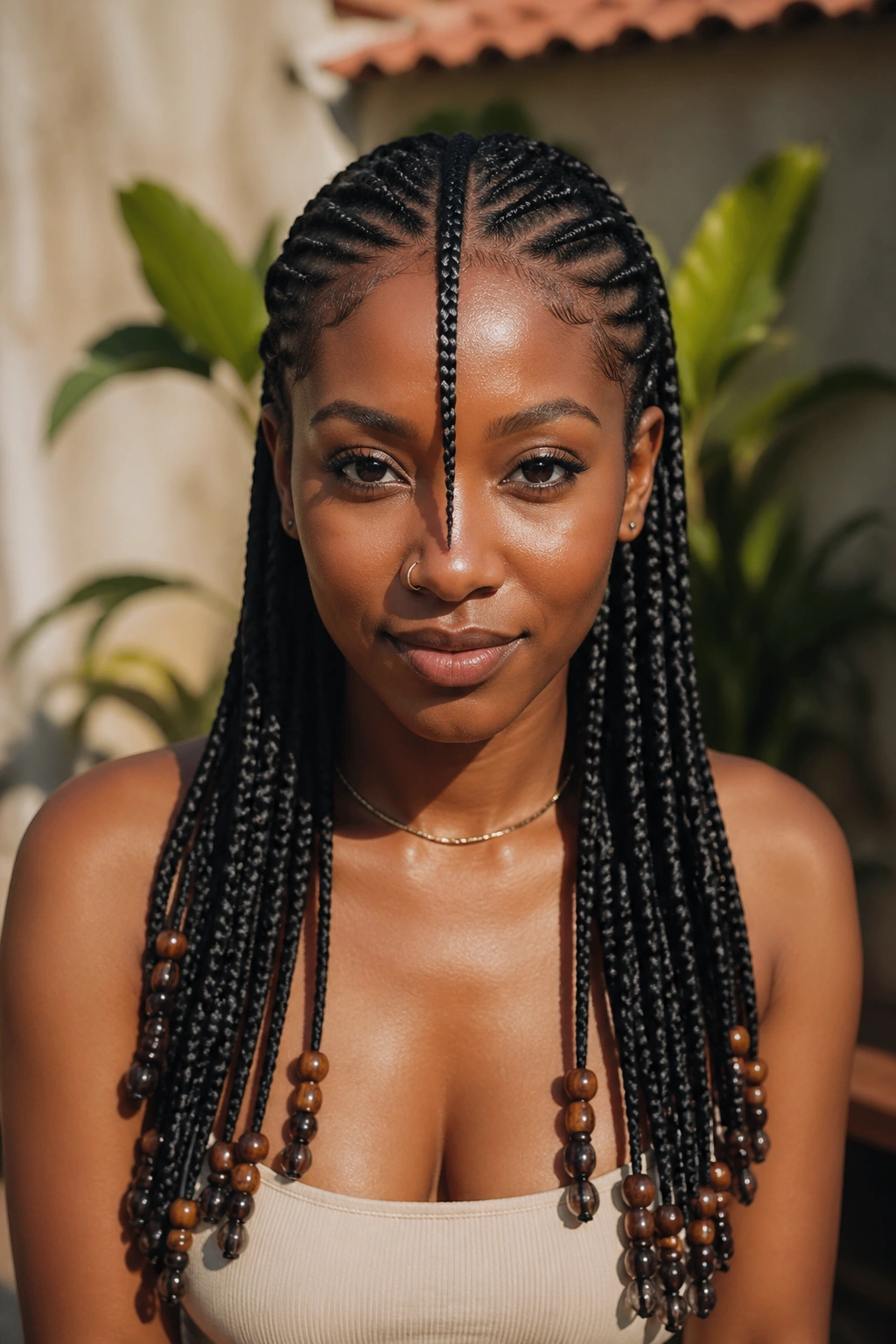
Fulani braids usually center a cornrow down the middle, then place smaller braids along the sides. Beads, cuffs, or shells can finish the ends and give the style a clear, rooted look. On type 4 curls, the center part and side detailing can frame the face in a way that feels balanced without being plain.
What to Ask For
Ask for one strong center braid, two to six smaller side braids, and enough length to let the beads rest without knocking against your jaw all day. Too many accessories can turn the style noisy fast.
- Works well with medium-length or long added hair
- Beads add weight, so don’t overload the ends
- The side braids can curve or sit straight
- A little face-framing leave-out softens the front
Keep the bead count moderate. One or two accents per braid usually looks better than a full stack.
11. Tribal Braids with Mixed Parts
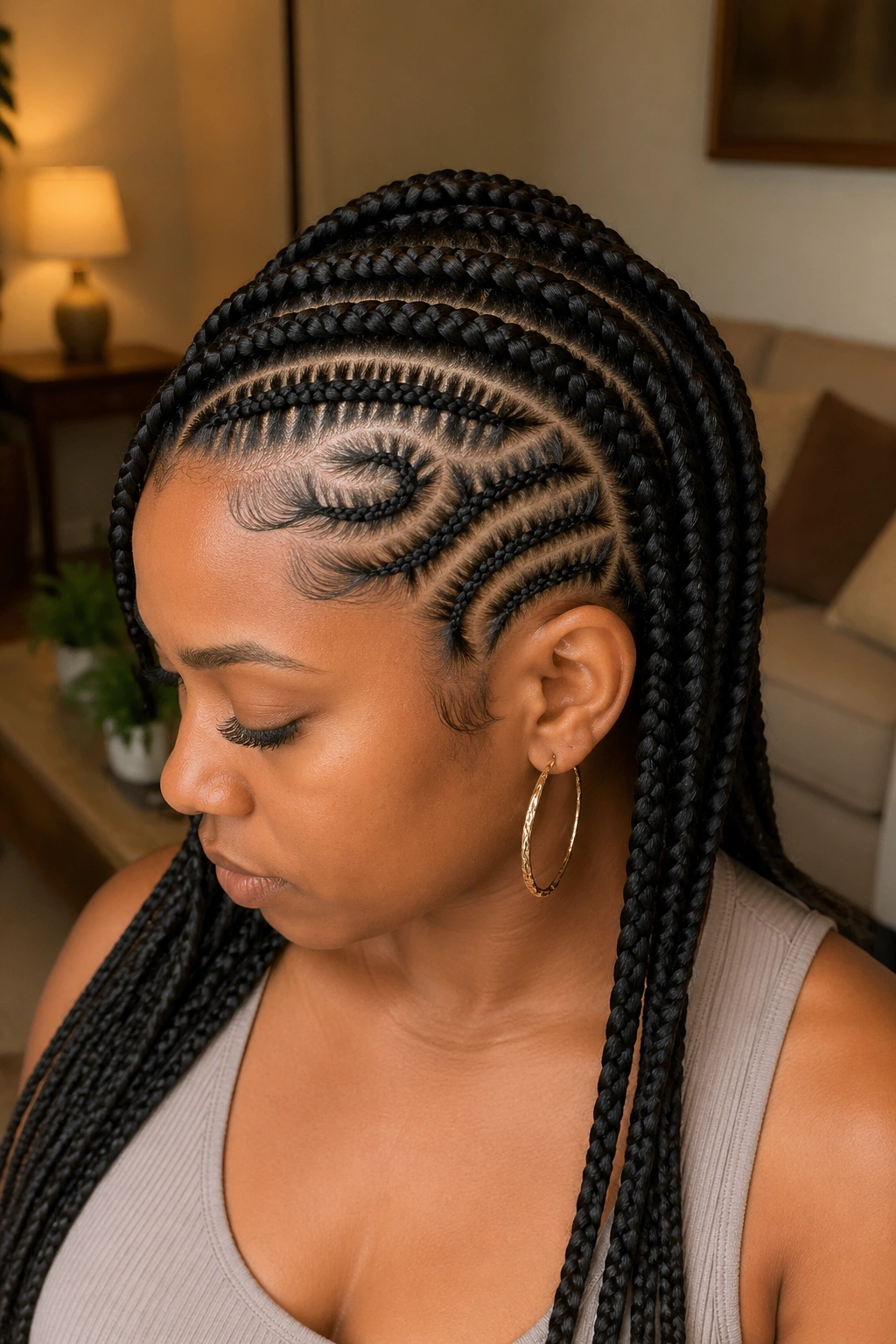
Tribal braids are the style for somebody who likes variety in one head. The parts can mix straight rows, curved sections, and side details, which gives the style a layered look without needing different braid types in each row.
On type 4 curls, the mixed parting helps avoid that flat “all one note” finish. It is a good option when you want your braid set to feel personal instead of cookie-cutter. The trick is keeping the overall pattern readable so it still looks intentional from the back.
You can keep the ends simple or add cuffs and thread. I prefer the cleaner version when the parting is already doing a lot. Too many extras can crowd the style.
12. Ghana Braids
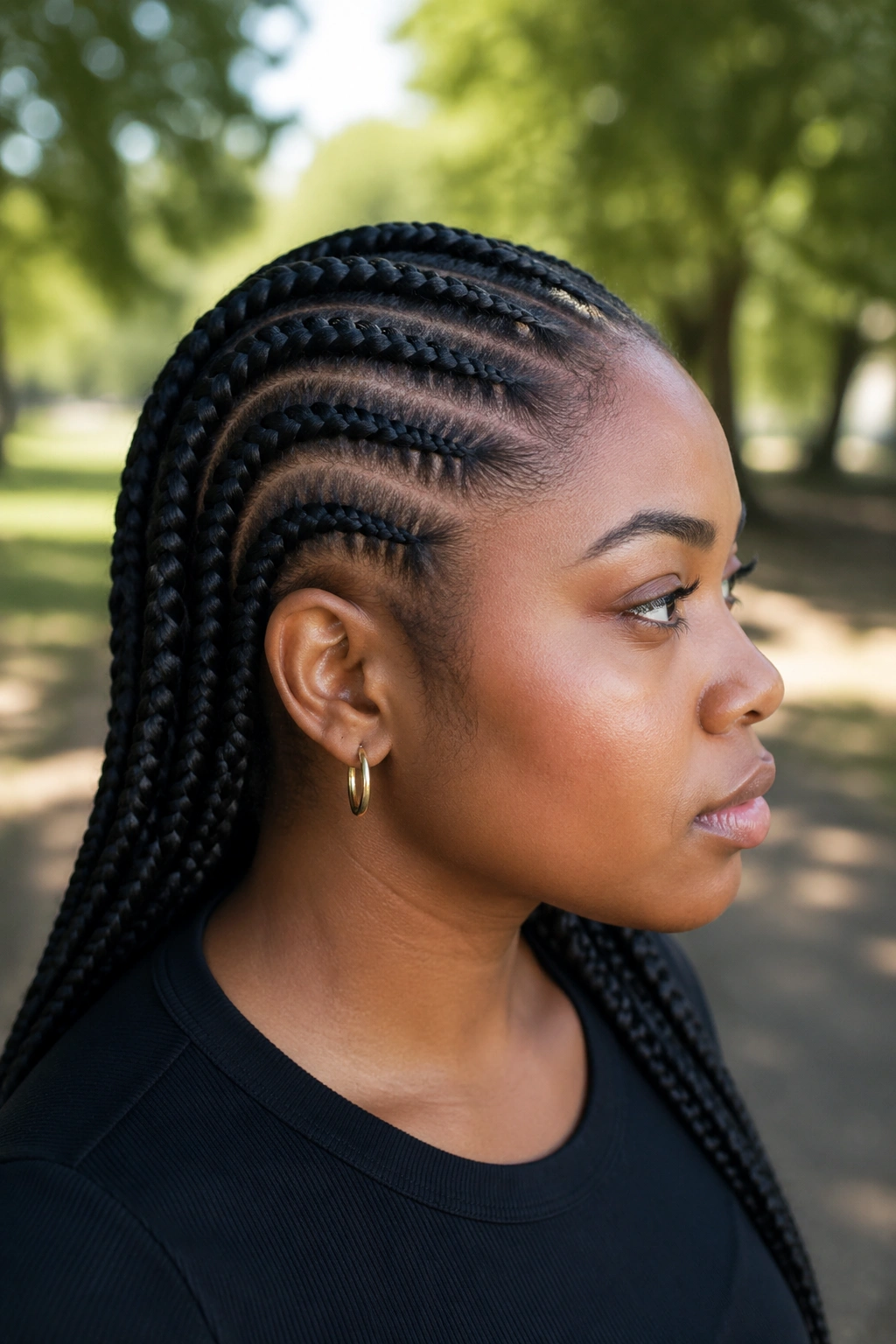
Ghana braids are bold, raised feed-in braids that start smaller and grow fuller as the braid moves back. That gradual build gives the roots a smooth look, which is a relief if you do not want a heavy start on type 4 curls.
They sit close to the scalp and have a strong, sculpted shape. That makes them a good match for people who like structure. A set of four to eight Ghana braids can look neat, powerful, and easy to keep tucked under a scarf at night.
Why They Hold Up Well
The feed-in shape helps distribute weight more evenly than a braid that starts thick right at the hairline. That can make a real difference if your edges are sensitive or your head is tender after a long install.
They also make a good base for buns and ponytails.
13. Braided Bob
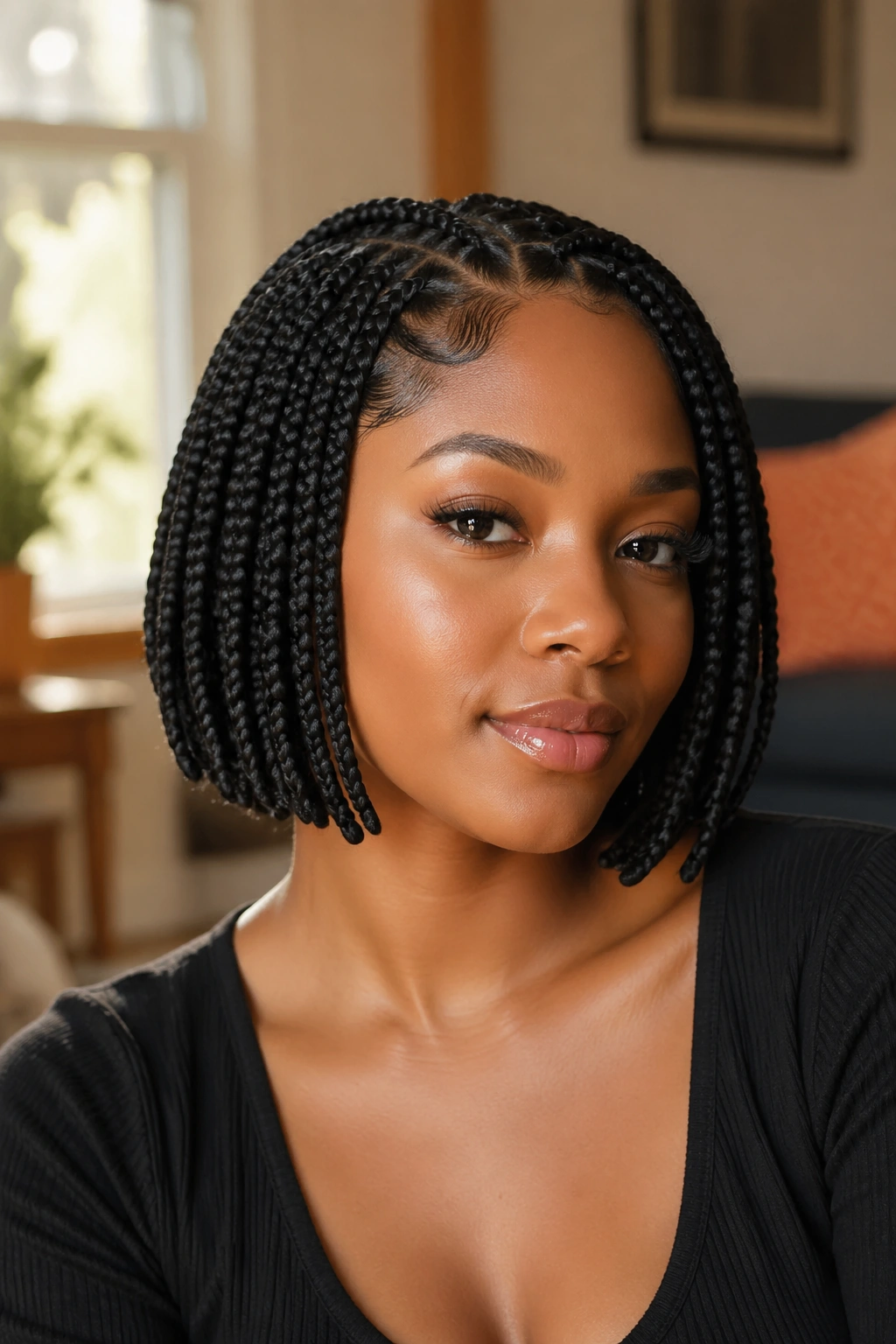
A braided bob keeps the length short and the weight manageable. That is the main appeal. On type 4 curls, a bob-length braid set sits easier on the neck and shoulders, and it can still look full because the curls underneath add density.
This style works well if you like a clean shape that does not drag on your collar. It also shows off earrings, jawlines, and strong cheekbones in a way longer braids sometimes hide. That shorter length can feel refreshing after heavier installs.
If you want the bob to sit sharply, have the ends trimmed evenly. If you want a softer finish, let a few pieces fall slightly longer in front. Both versions work.
14. Braided Ponytail
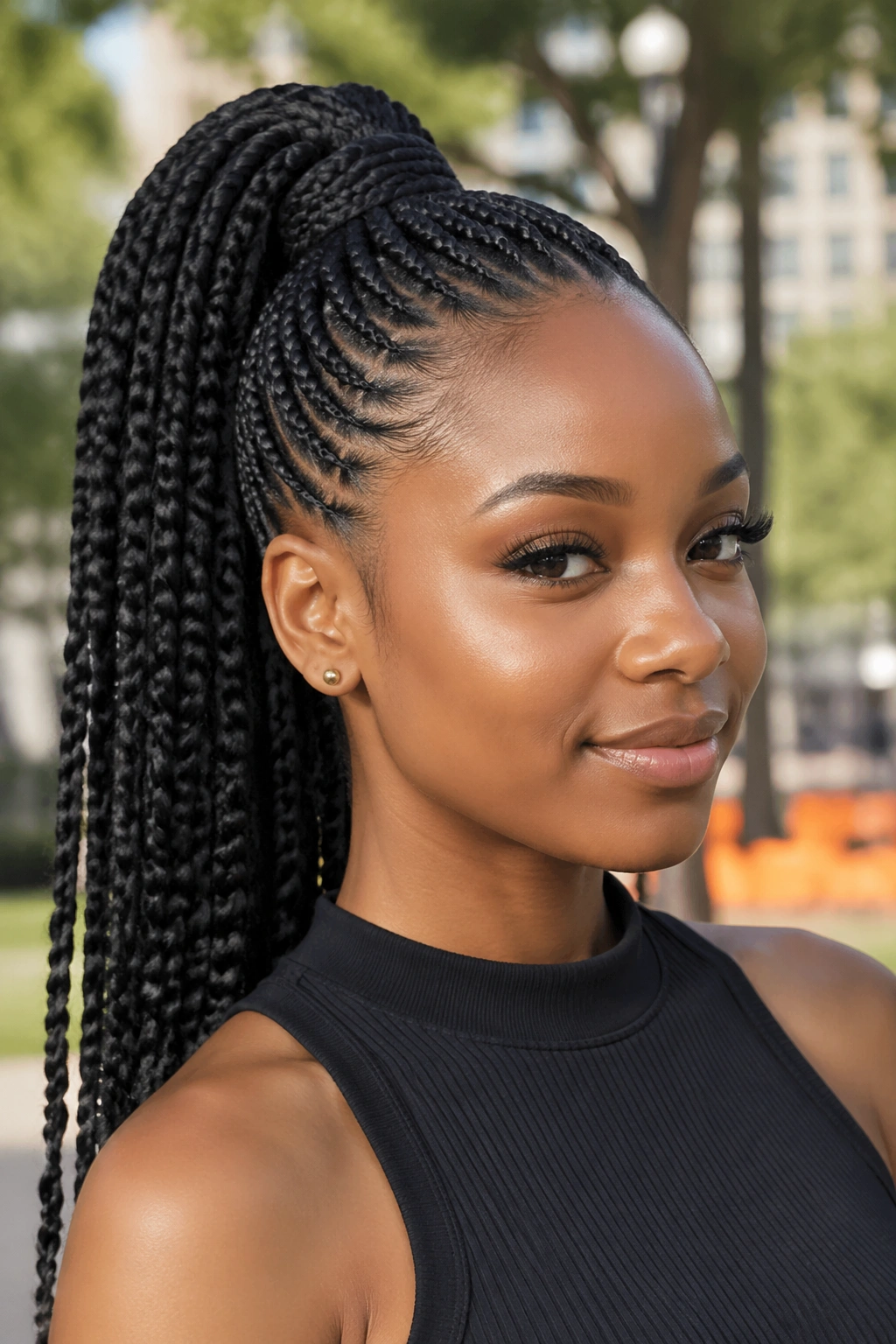
A braided ponytail gives you lift, swing, and a face-lifting effect without trying too hard. The base can be cornrowed or sectioned into feed-ins, then pulled into a ponytail high, mid, or low depending on the mood.
The Cleanest Way to Wear It
The magic is in the base. A smooth root with a wrapped ponytail holder keeps the style from looking bulky at the crown. On type 4 curls, that smooth foundation can make the whole head look more defined.
- High ponytails feel sharper and more dramatic
- Mid ponytails sit better for everyday wear
- Low ponytails are easiest on the neck
- A braided wrap around the base hides the band
A ponytail like this is one of the quickest ways to make braids feel dressed up without adding more braid work.
15. Braided Bun
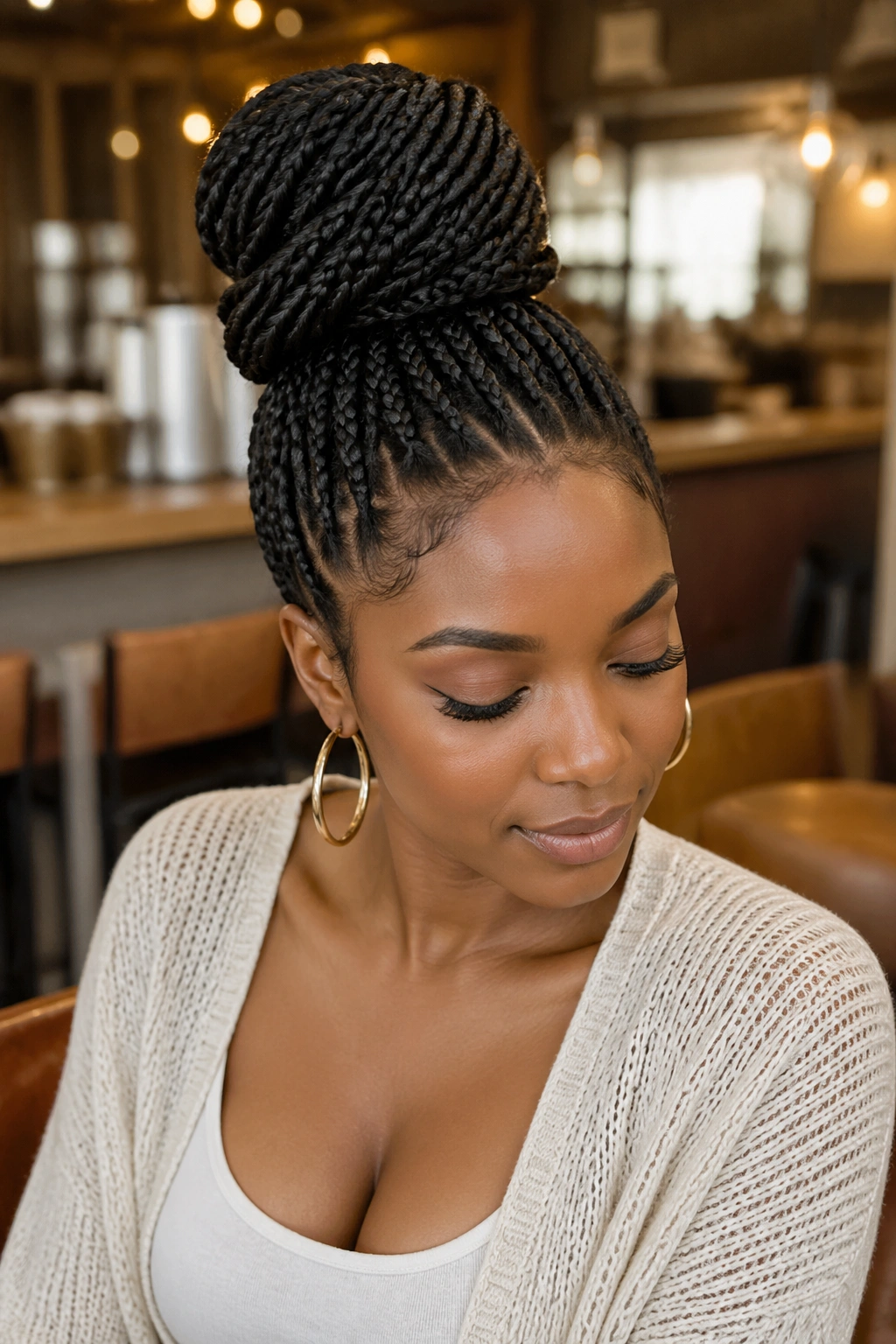
A braided bun is the style I like when I want my hair up and out of the way without giving up shape. The bun can sit high, low, or centered, and braided hair gives it enough structure to hold its form all day.
On type 4 curls, it is also a practical choice for warm days, long work shifts, or events where you do not want hair touching your neck. The bun can be tight and polished or a little fuller with wrapped braids pinned around the base.
It is one of the few braid styles that can go from casual to formal with almost no extra effort. Swap a few cuffs for plain pins, and the whole mood changes.
16. Half-Up, Half-Down Braids
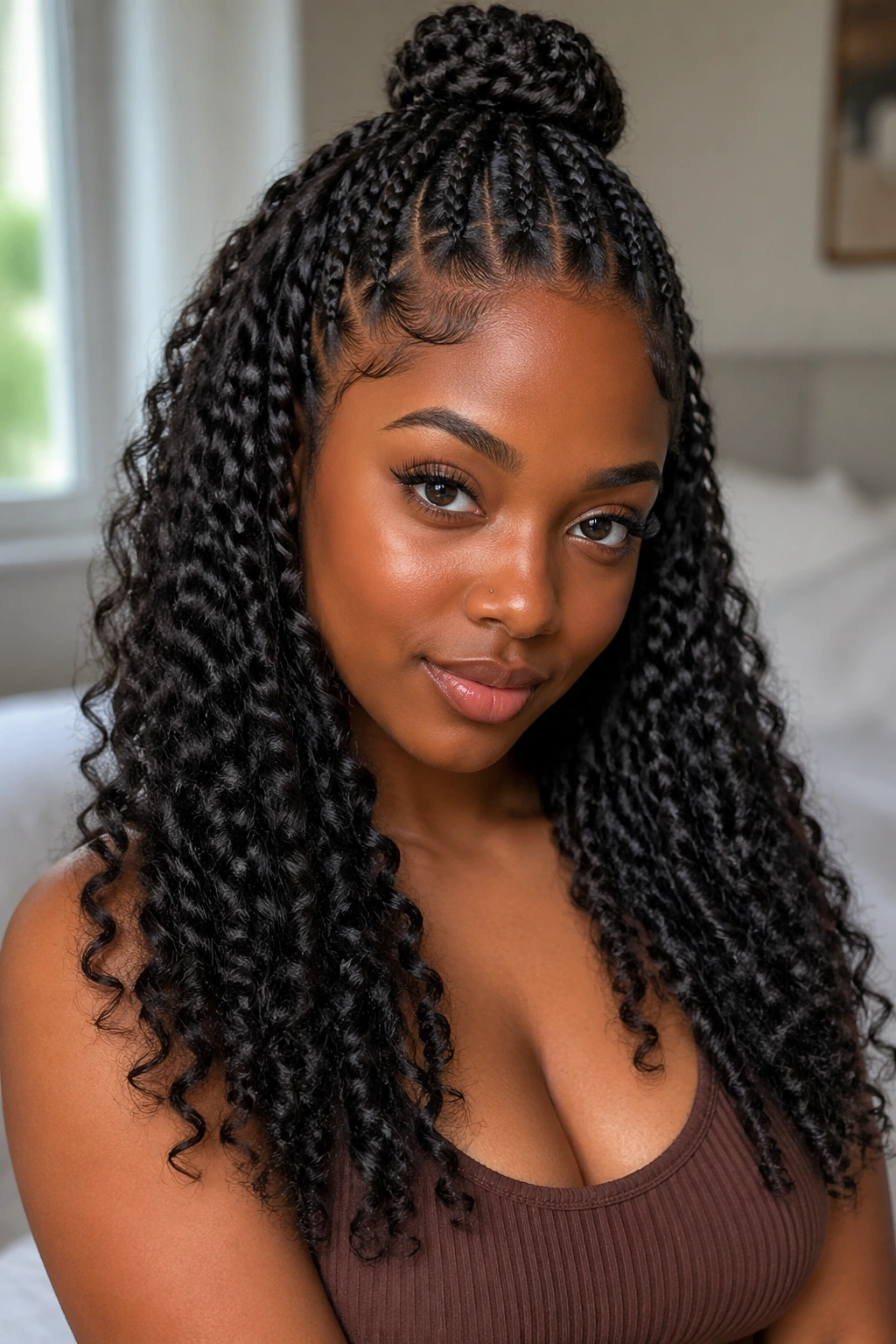
Half-up, half-down braids split the difference between a full fall of length and a style that stays out of your face. The top section gets pulled back, while the rest hangs loose, so the overall look has movement and structure at the same time.
For type 4 curls, this can be a very good shape when you want to show length without wearing all of it on your scalp. The top section takes some of the weight off the face and lets you play with a little height at the crown.
A Small Styling Note
A high half-up topknot gives more lift. A low half-up style feels softer. Both are better if the base is wrapped neatly, because messy roots make the whole style look unfinished.
17. Side-Swept Braids
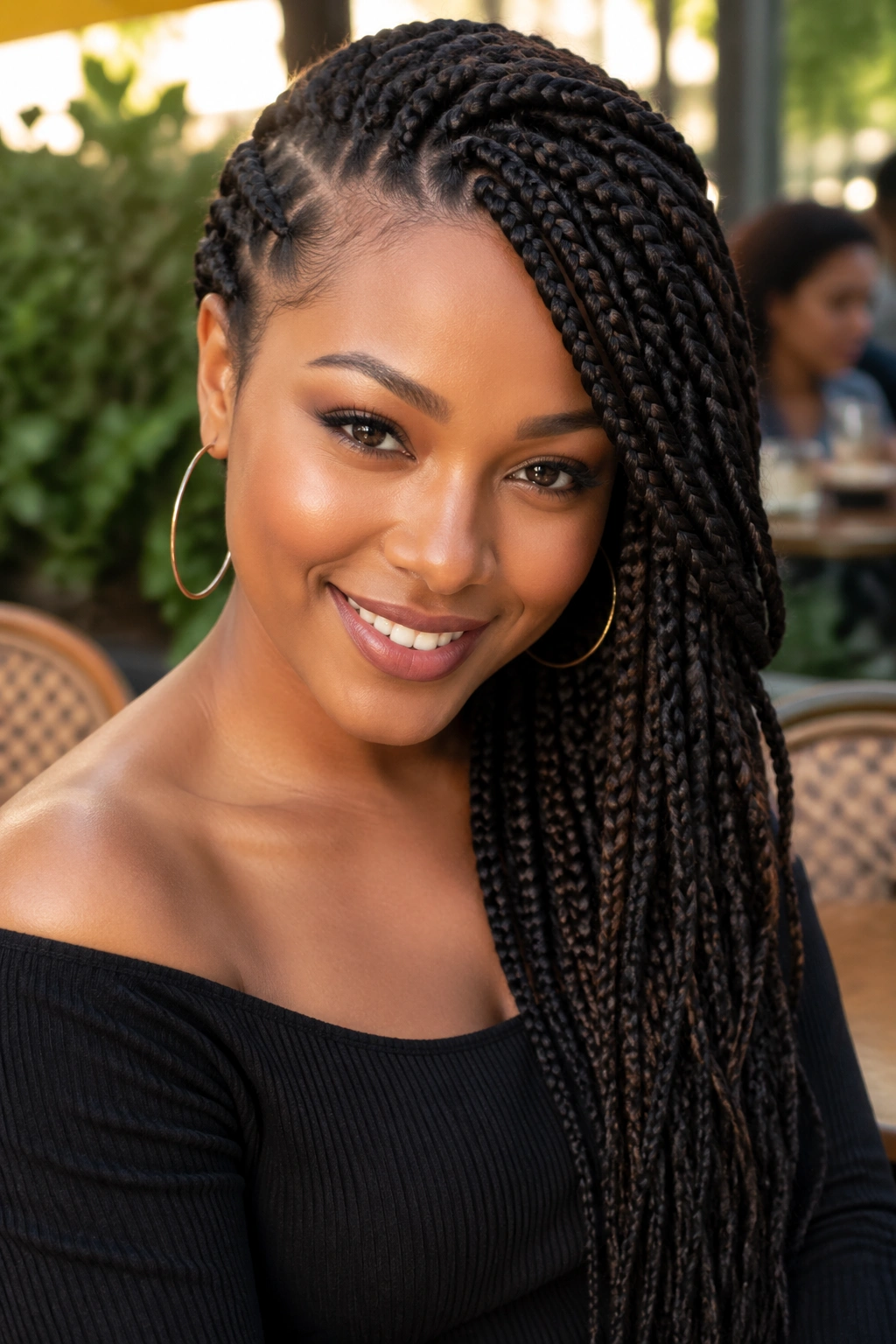
Side-swept braids feel a little more relaxed than a center-part set. One side carries most of the hair, which gives the face more room and creates a long diagonal line that can be flattering on type 4 curls.
The style works especially well when the braids fall over one shoulder. It is simple, but not boring. And that matters. Not every braid set needs extra parts, beads, or curls to make a point.
If you want the side sweep to last, keep the heavier side pinned or draped carefully at night. That stops the braid pattern from getting flattened in one spot and helps the style stay smoother for longer.
18. Triangle-Part Braids
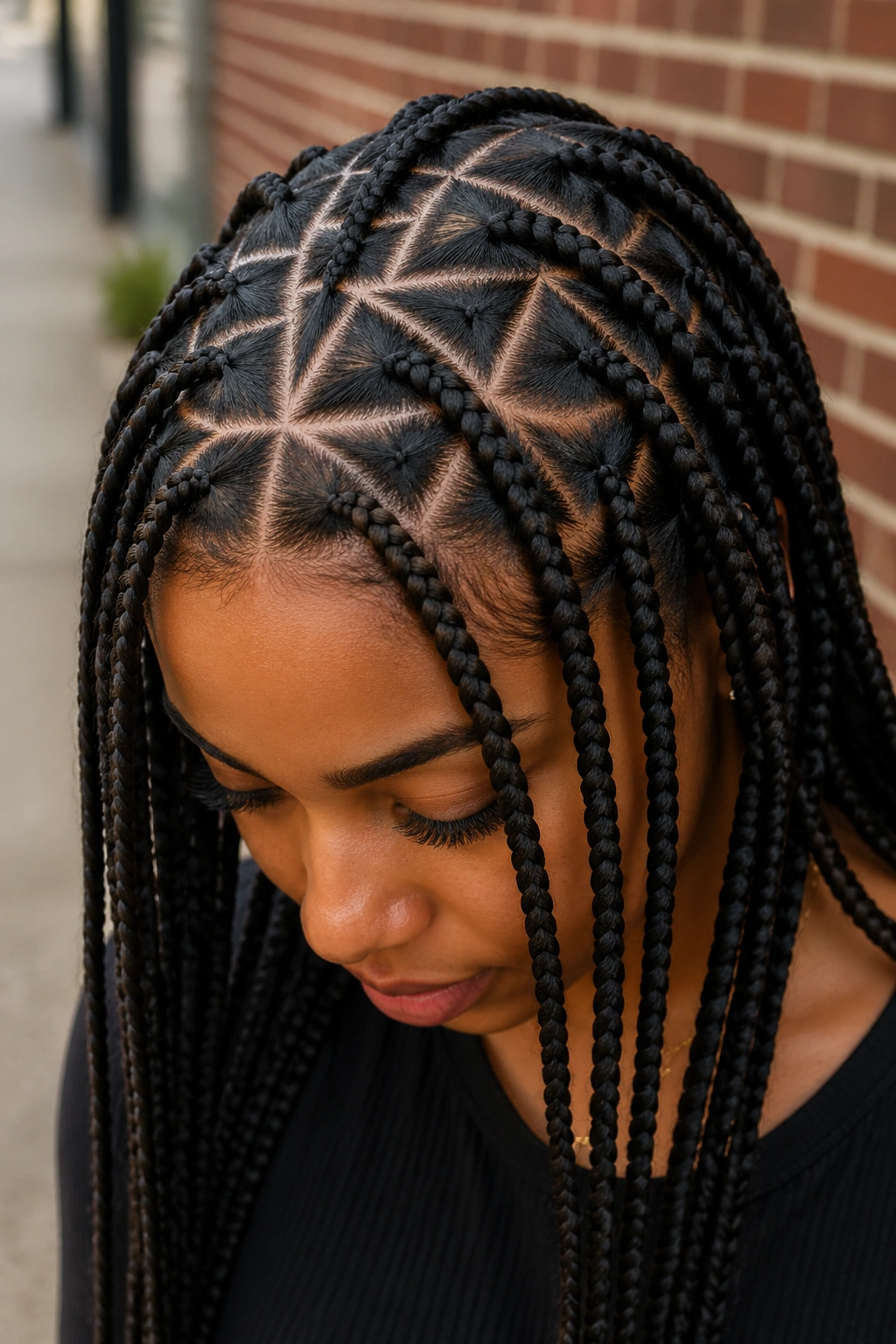
Triangle parts turn a standard braid set into something sharper. Instead of square sections, each braid starts from a triangular base, which makes the scalp pattern look more graphic and less predictable.
Why the Shape Matters
The triangle makes the parting itself part of the design. On type 4 curls, that is a nice way to add interest without changing the braid technique at all.
- Works with box braids, knotless braids, and longer feed-ins
- Gives a more custom look than square parts
- Shows best when the sections are clean and even
- Looks especially good with medium-sized braids
A triangle part set can read sleek or playful depending on the braid size. I like it most on medium braids, where the pattern is easy to see but does not overpower the rest of the style.
19. Diamond-Part Braids
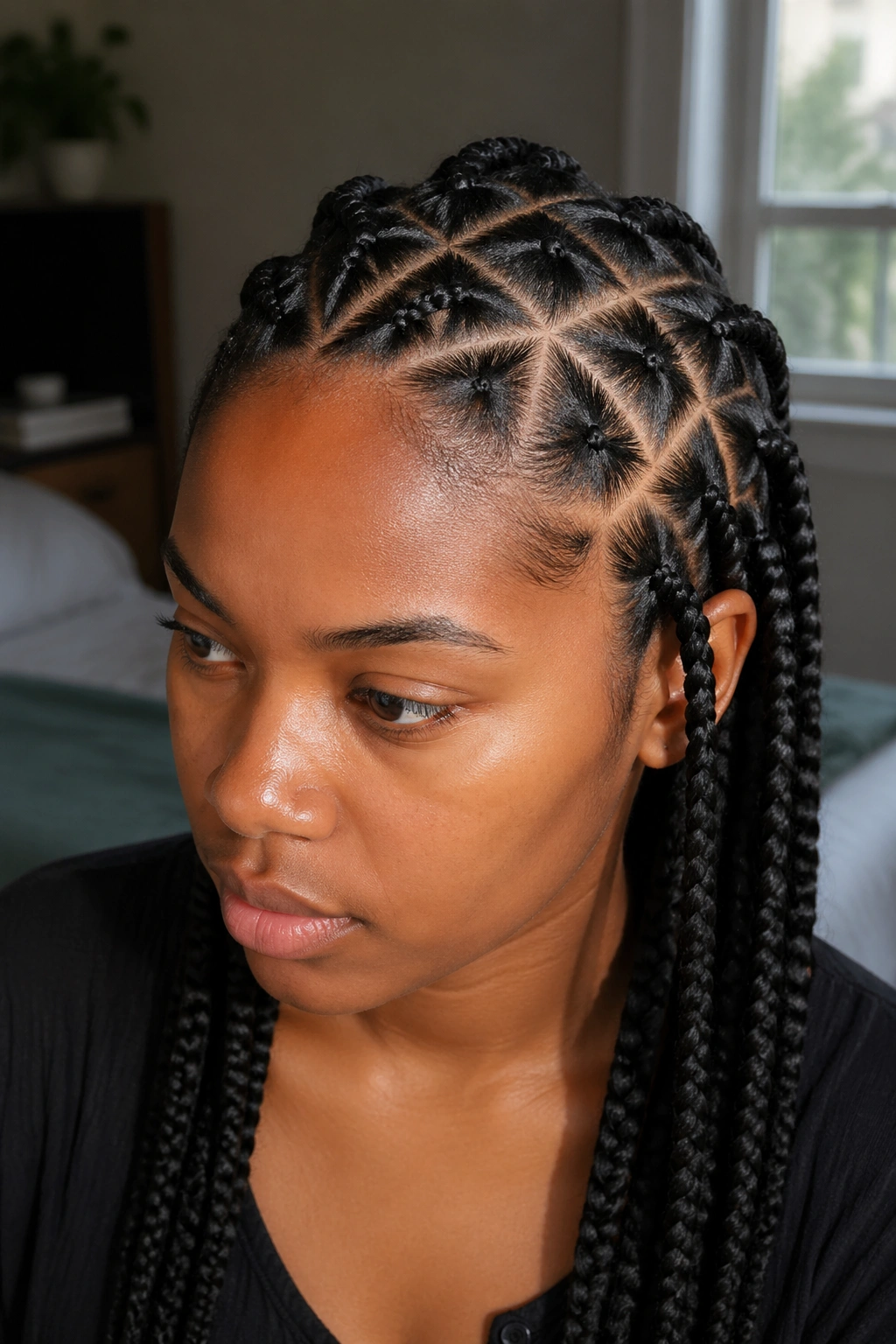
Diamond parts have a softer geometry than triangle parts, and that little shift changes the whole mood. The parting looks more ornate, almost like a small chain of shapes across the scalp, which works well on type 4 curls when you want detail without harsh angles.
The style can be subtle from a distance and much more interesting up close. That is part of the appeal. It rewards people who notice the hairline and the parting rather than only the length.
This is a good choice if you like box braids but want the parting to feel a bit more custom. It also photographs well in close-up shots because the sections have a clear shape.
20. Zig-Zag Part Braids
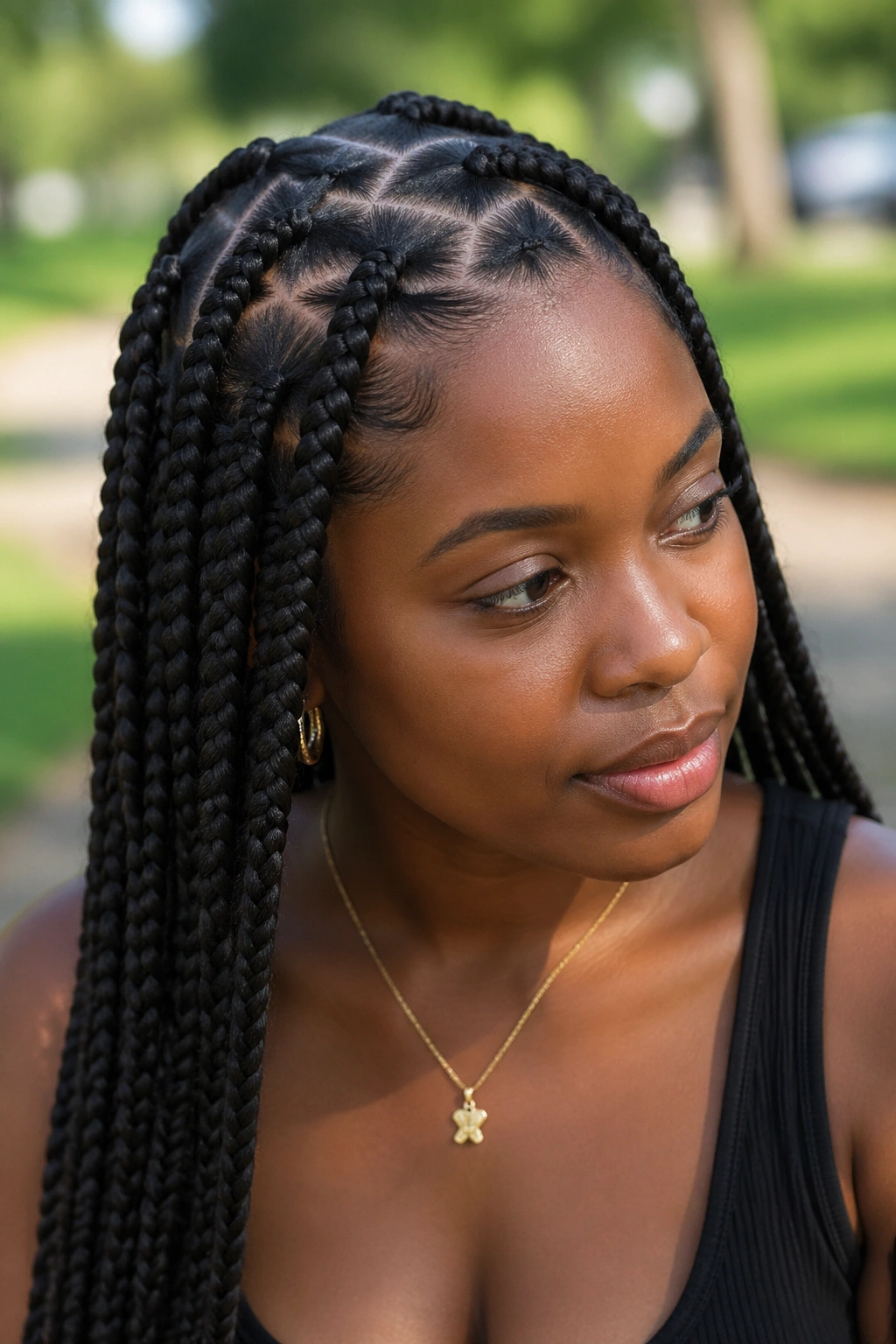
Zig-zag parts bring a playful edge to braids without changing the braid itself. The part line curves back and forth across the scalp, which gives the style movement before the braid even starts.
On type 4 curls, zig-zag sections are especially nice when you want a braid set that feels less formal. The style still holds up as a protective look, but it has a little energy to it. Kids wear it well, adults wear it well, and it never feels too stiff.
The only catch is precision. A weak zig-zag looks sloppy fast. Ask for clear, even turns in the parting so the pattern stays readable once the hair settles.
21. Criss-Cross Braids
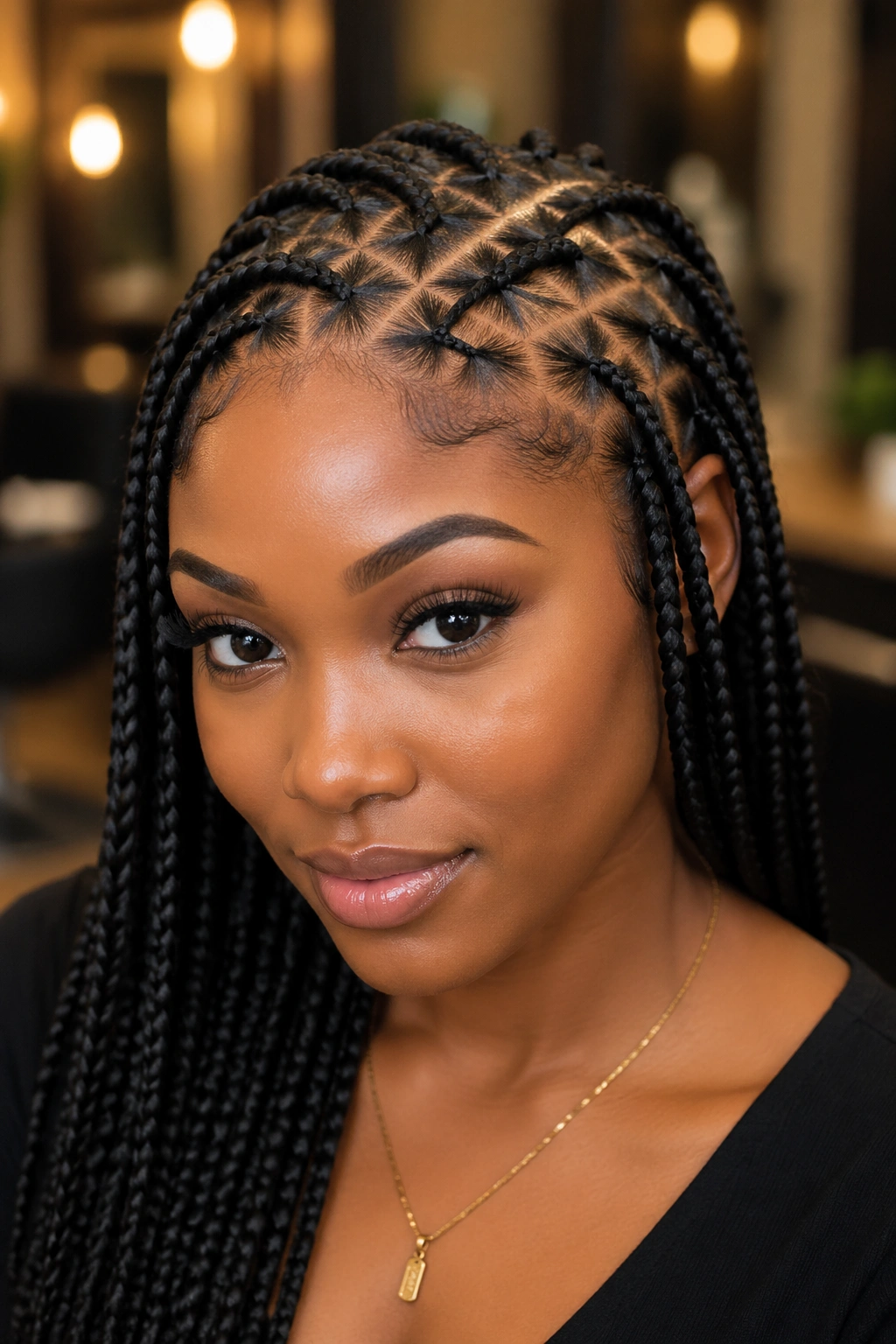
Criss-cross braids build visual interest by overlapping sections over one another before the braid drops into the main length. The result feels layered and a little architectural, which suits type 4 curls that already have plenty of natural texture under the style.
What Gives It the Edge
The overlap at the root does more than decorate the scalp. It changes how the style moves and lets the front read more detailed without needing extra length or extra hair.
- Works well for medium to long braid sets
- Needs a careful stylist, not a rushed one
- Looks best when the front sections are even
- Can be paired with ponytails or loose lengths
The front detail does a lot of the work here, so keep the rest of the style relatively simple if you want the pattern to stay the focus.
22. Crown Braid Updo
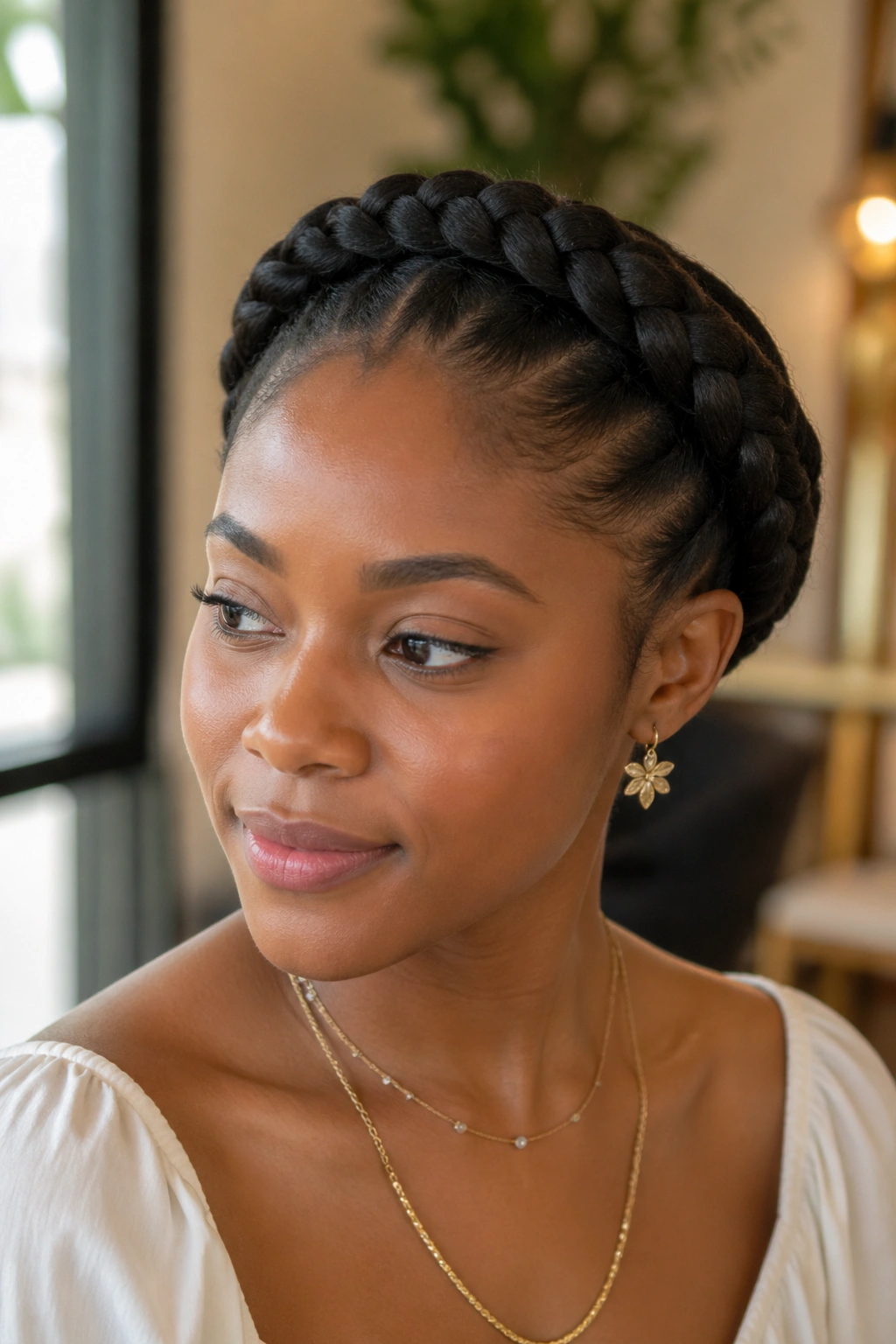
A crown braid wraps around the head like a halo of plaited hair, but the finish sits closer to a formal updo. On type 4 curls, it can look polished and secure, especially if you want a style that keeps the hairline neat and the neck clear.
This one is useful for events, but it is not only for special occasions. A crown braid can also be a smart weekday style if you want something that stays tucked away and does not snag on clothing or scarf ties.
The shape matters. Keep the braid line close enough to the head that it feels anchored, not loose and floppy. A few pinned ends can keep the back from puffing out.
23. Halo Braid
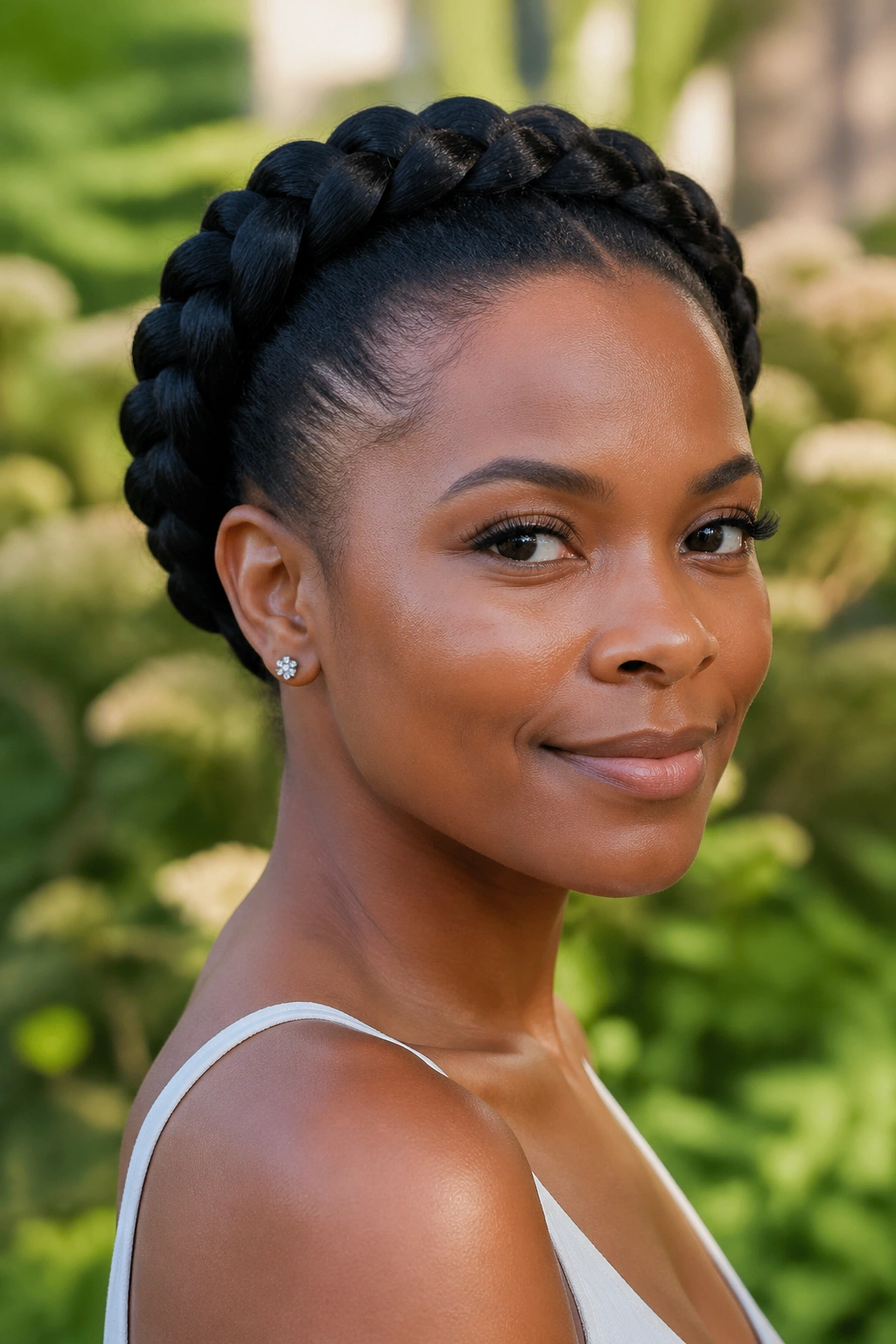
The halo braid feels softer than a crown braid. It circles the head with a cleaner, more continuous line, and it often leaves the rest of the hair tucked or blended in a way that gives the style a smooth edge.
For type 4 curls, this style works well when you want the face and neckline to stay open. It gives shape without heaviness. That can be a relief if you are tired of long braids brushing your shoulders all day.
It is also a good style to pair with plain earrings or a bold lip. The braid frames the face so neatly that you do not need much else. Keep the roots neat, though. A halo braid loses its charm fast when the base is fuzzy.
24. Braids with Curly Ends
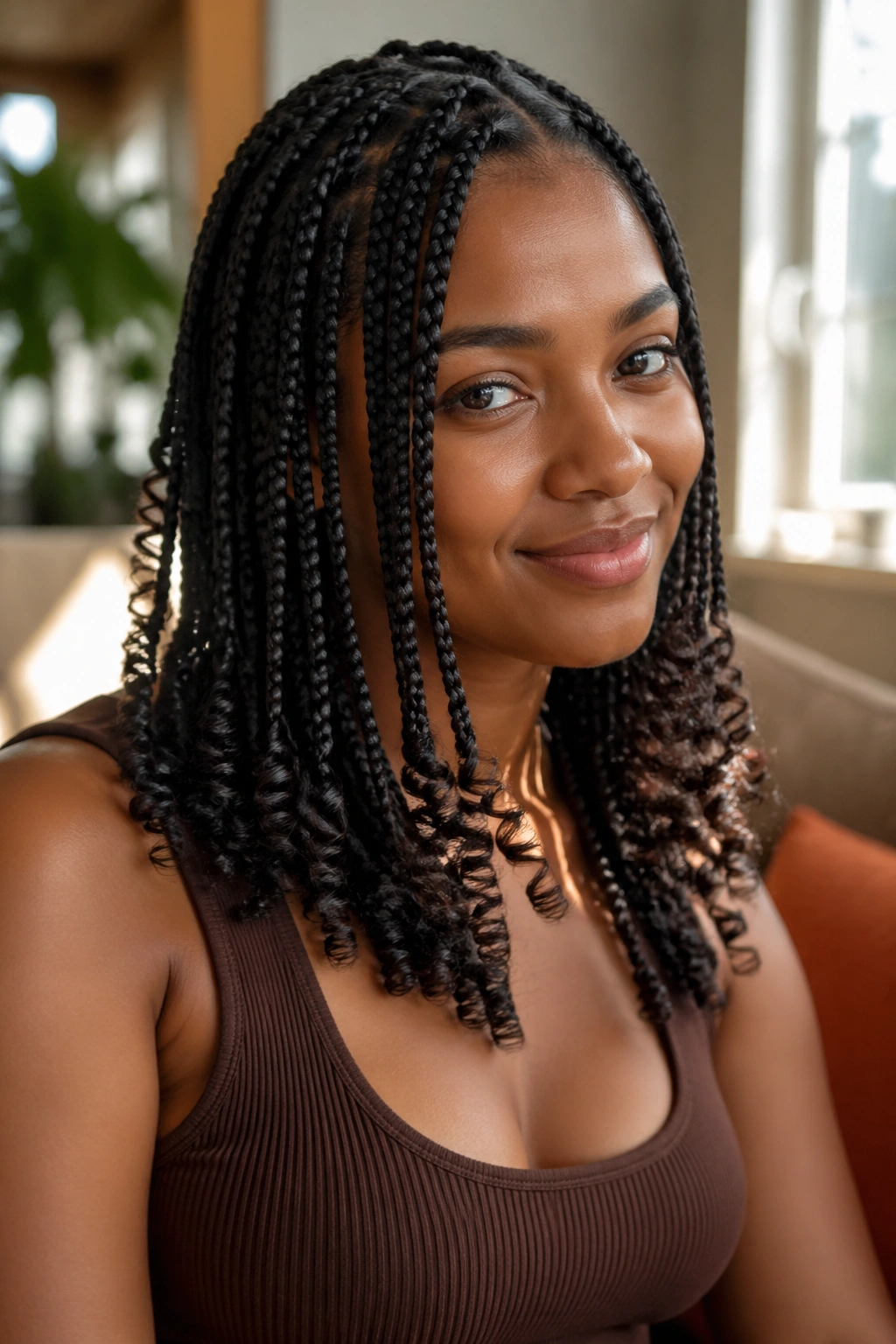
Braids with curly ends soften the whole style right at the finish line. The braid stays structured, but the last few inches spill into curls, which makes the set feel lighter and a little more relaxed.
The Finish Changes the Mood
That curl at the end is not decoration only. It changes how the hair moves, how it swings, and how formal the style feels. On type 4 curls, it also helps blend the braid with the hair’s natural texture in a way that looks less severe.
- Good if you want length without a blunt cut-off
- Works with knotless, box, and feed-in braids
- Needs gentle handling at night to keep the curls defined
- Looks best when the curl pattern is consistent across the set
A little mousse at the ends goes a long way. Too much product flattens them.
25. Burgundy and Copper Braids
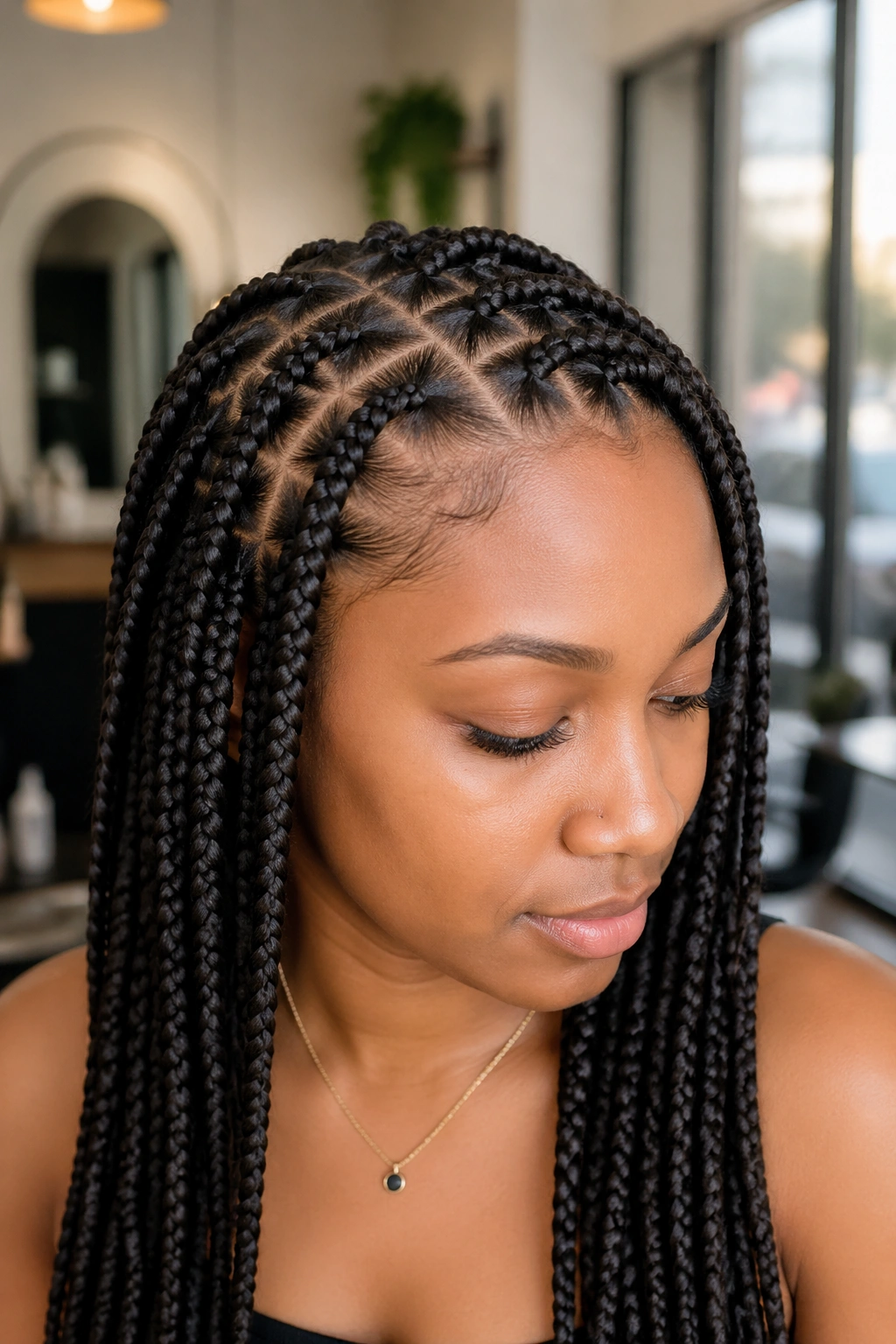
Color changes the mood of braids fast, and burgundy or copper is one of the easiest ways to shift a set from plain to expressive without changing the braid pattern at all. On type 4 curls, those warm shades show up clearly against the base and catch light in a way that black or dark brown hair does not.
The trick is choosing a tone that sits well with your skin and your wardrobe. Burgundy reads rich and deep. Copper feels brighter and more playful. An ombre mix can sit between the two if you want a softer transition.
I like color best on medium or long braids, where the shade has room to show. Short braids can wear color too, but the effect is less dramatic.
26. Beaded Braids
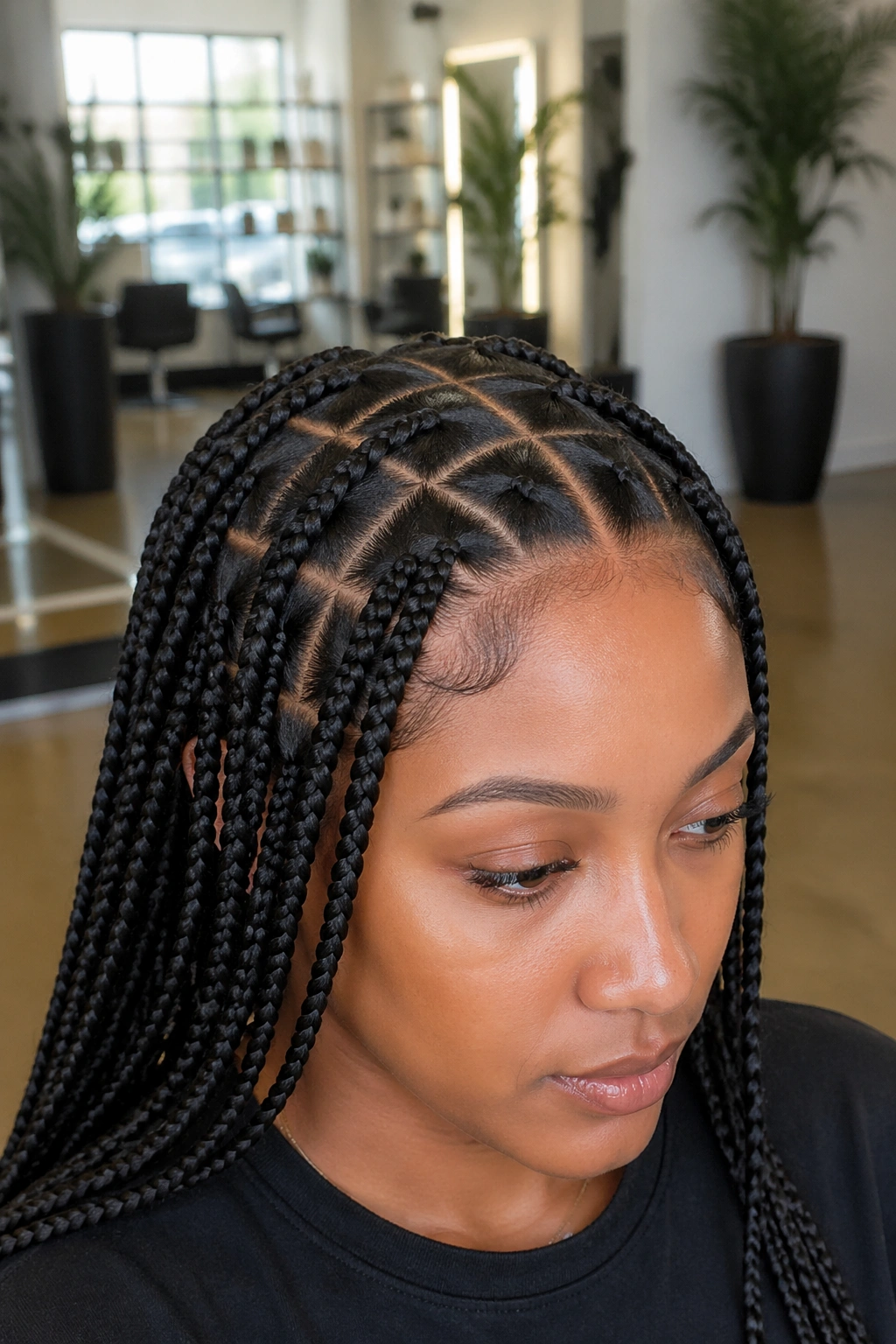
Beaded braids are about rhythm. The beads add weight, sound, and movement at the ends, and on type 4 curls they can turn a simple braid set into something that feels finished and personal.
A Few Practical Details
Beads work best when the braid length is long enough to support them. If the ends are too short, the bead weight pulls the hair awkwardly and the whole set starts to feel off.
- Use wood beads for a softer, warmer finish
- Use clear or gold beads for a sharper look
- Keep the count balanced so one side does not look overloaded
- Secure the ends well so the beads do not slide
Beaded styles can be playful or grown-up. It depends on the bead shape, the color, and how many you use.
27. Braided Mohawk
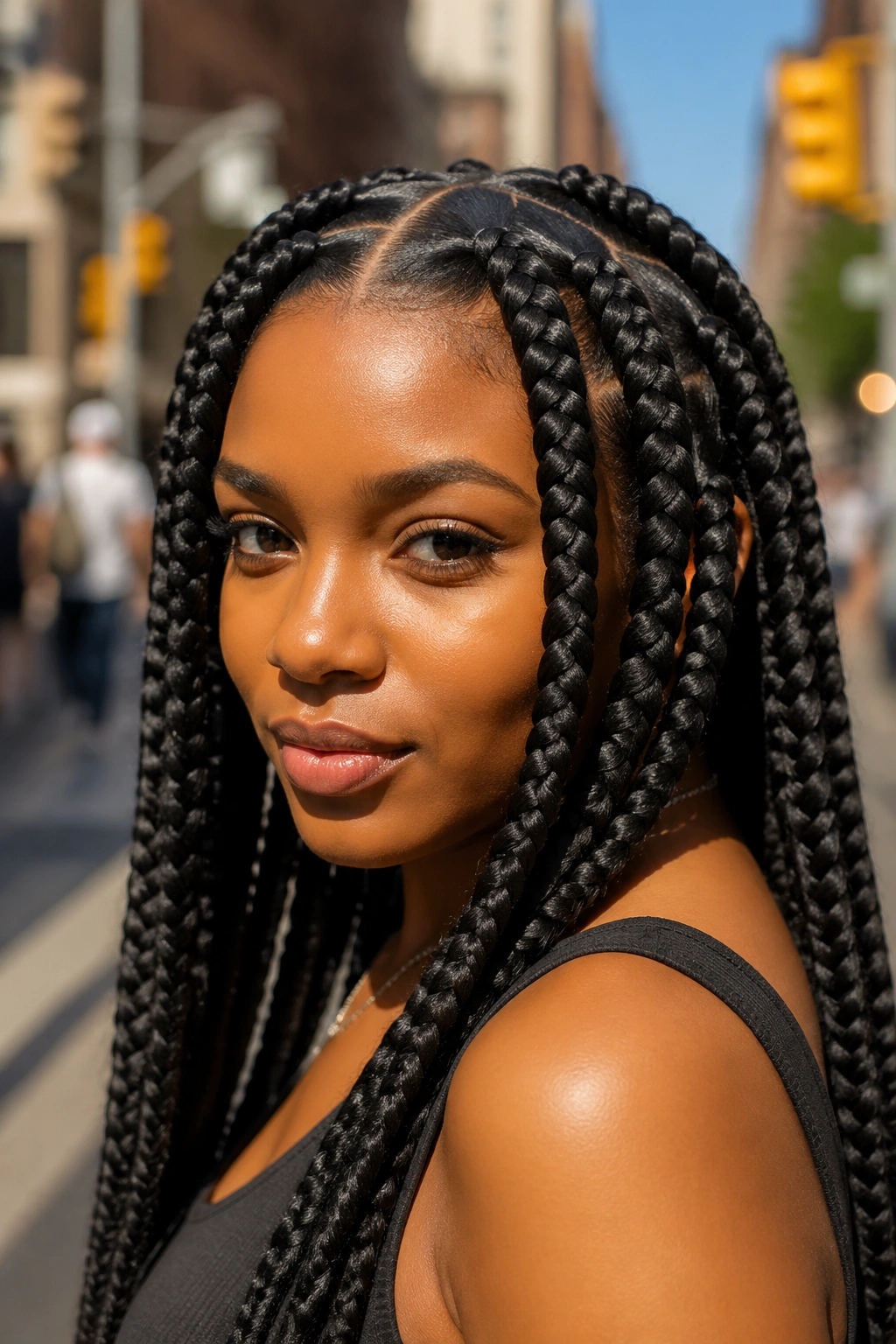
A braided mohawk builds height through the center of the head while the sides stay flattened, braided, or tucked close. The shape has attitude, but it can still be neat and wearable on type 4 curls if the base is done cleanly.
This is a good option when you want a braid style that feels bold without needing full length everywhere. The lifted center draws the eye up, which gives the whole face a stronger frame. It also works well with shaved sides, closely braided sides, or tight cornrows.
The style is at its best when the center has enough fullness to look intentional. Too little volume and it reads unfinished. Too much and it starts to feel bulky.
28. Space Bun Braids
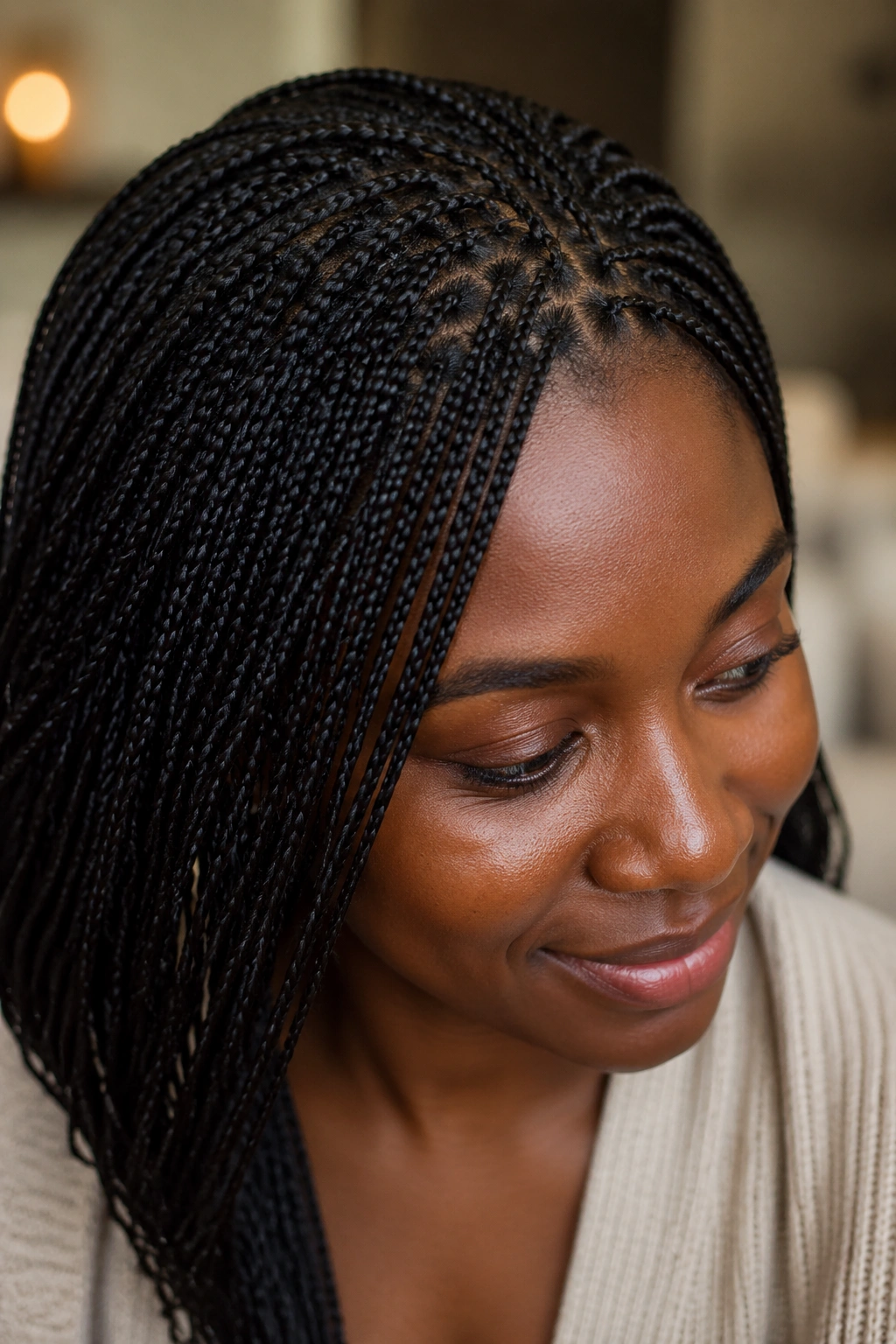
Space bun braids split the hair into two high buns, usually with braided sections feeding into each side. The result is playful, balanced, and surprisingly practical when you want your hair off your shoulders.
On type 4 curls, this style can be a nice change from the usual long drop of braids. It keeps the texture and braid detail while making the silhouette shorter and lighter. That matters on days when you want movement at the crown but less swing at the ends.
How to Wear It Without Looking Childish
Keep the buns clean and the parting sharp. A neat base, maybe with a center part or two curved rows, makes the style feel grown. Add a few cuffs or leave it plain. Either way works.
29. Two Jumbo Side Braids
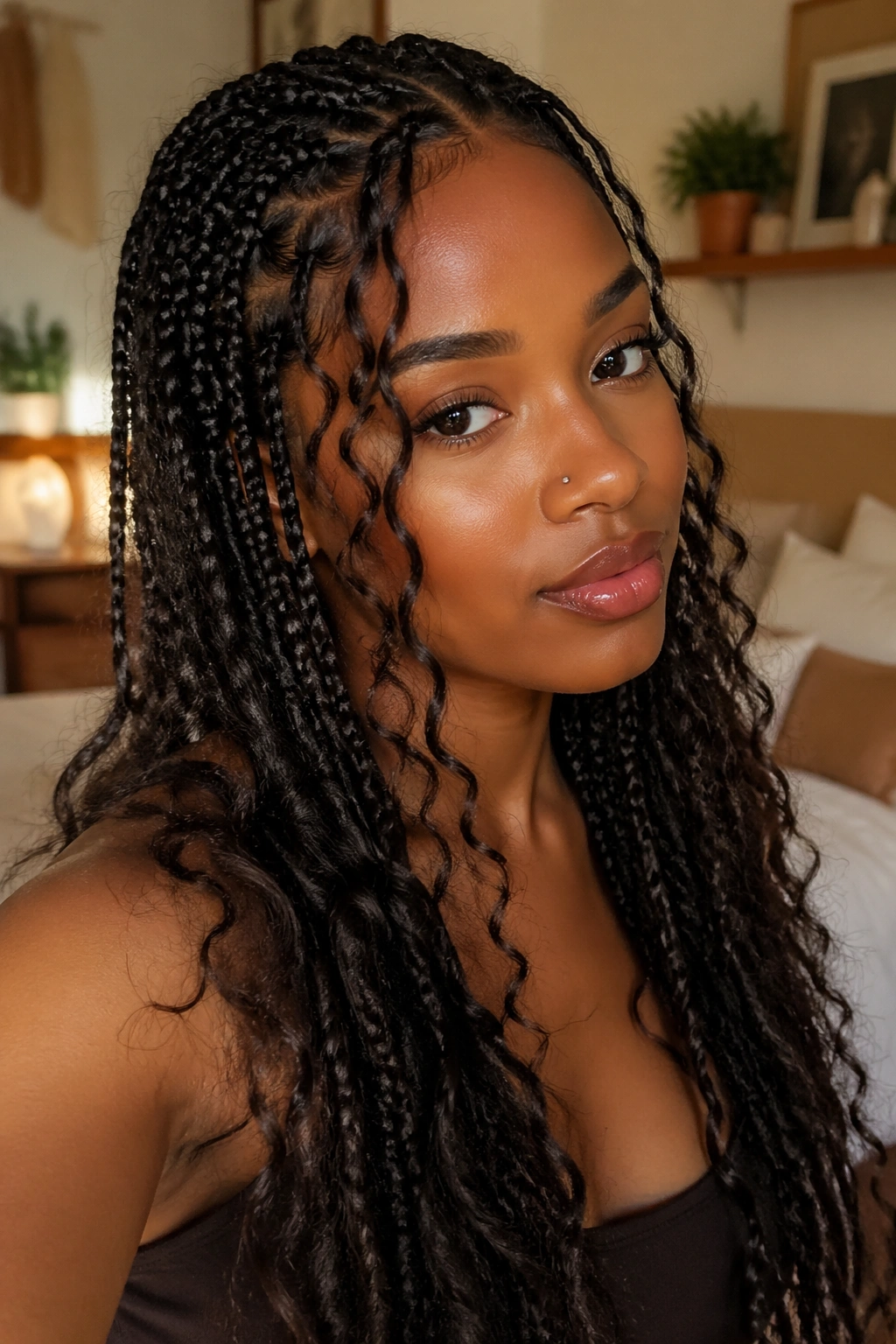
Two jumbo side braids are simple, direct, and easy to live with. Each braid sits over a shoulder, so the weight is spread across both sides instead of dragging straight down the back.
That sounds basic, and it is. But basic is not a weakness here. On type 4 curls, the style keeps the hair controlled while still giving enough thickness to look full. It is also one of the quicker braid looks to put together when you do not want a long install.
This style is strong on texture. The thicker the braid, the more the plait pattern stands out. If you want extra polish, wrap a small section of hair around each base to hide the tie.
30. Side-Part Feed-In Braids
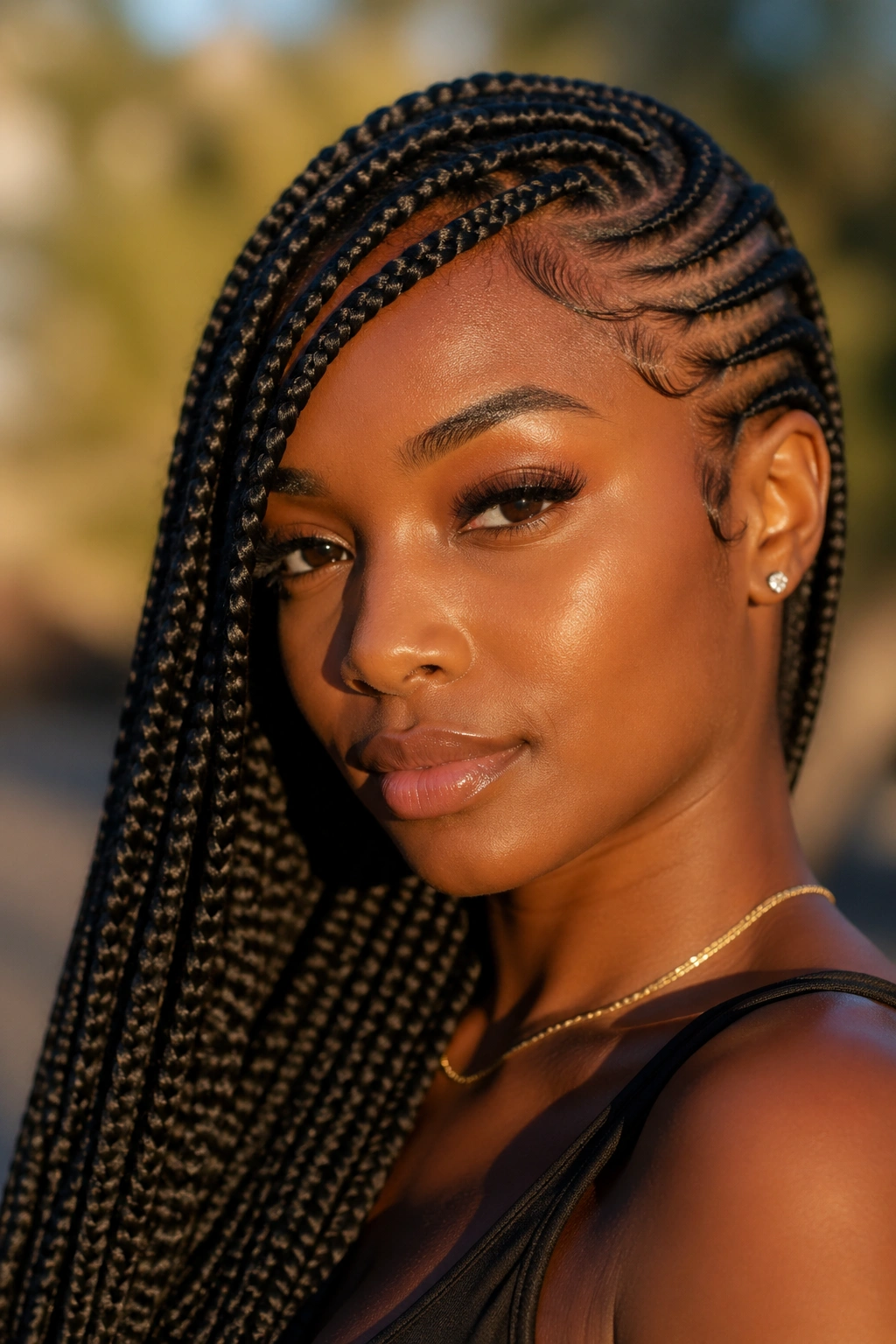
A side part shifts the whole balance of the braid set. Instead of sitting in the middle like a neutral lane, the parts angle from one side and give the front a little asymmetry. On type 4 curls, that can soften the face and make the style feel less rigid.
Where This Style Shines
Side-part feed-ins work well if you like clean rows but do not want a severe center line. The part can be deep or subtle depending on how much hair you want to swing over.
- Good for ponytails and long loose lengths
- Works with four, six, or more rows
- Lets you show off earrings on the open side
- Looks neat when the front edge is slicked cleanly
A side part also helps if your hairline does not love a hard middle. That small shift makes a big difference.
31. Heart-Part Braids
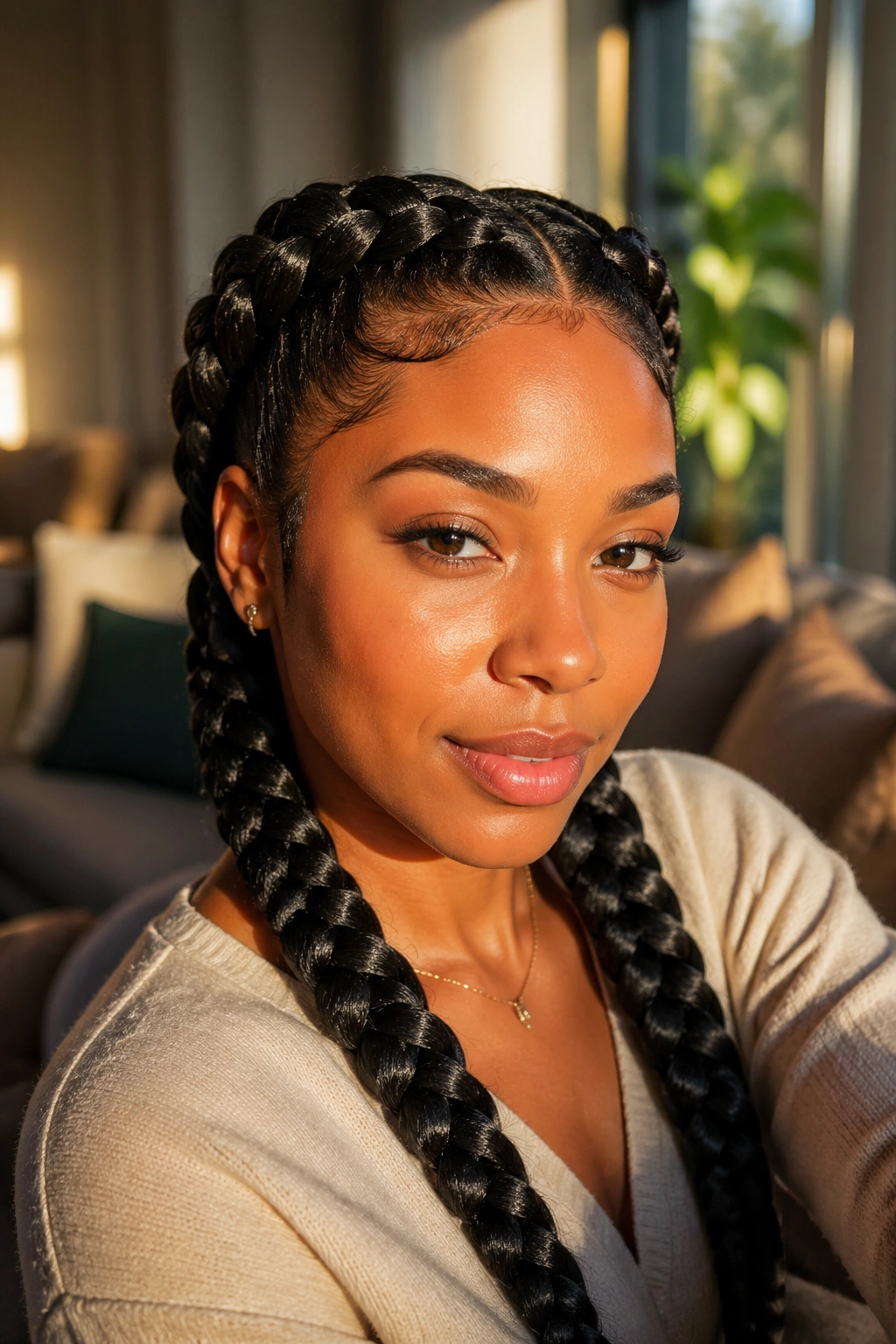
Heart parts are a little extra, and I mean that in the best way. The parting curves into the shape of a heart before the braid starts, which gives the style a custom, almost hand-drawn feel on type 4 curls.
This is the kind of braid detail that people notice up close. It is not subtle. If you want a set that feels personal without changing the whole braid pattern, a heart part does the job. It works especially well near the front, where the shape is easiest to see.
Keep the rest of the style simple. A bold part already carries visual weight, so plain lengths or a clean ponytail finish usually look better than piling on more detail.
32. Curved Feed-In Ponytail Braids
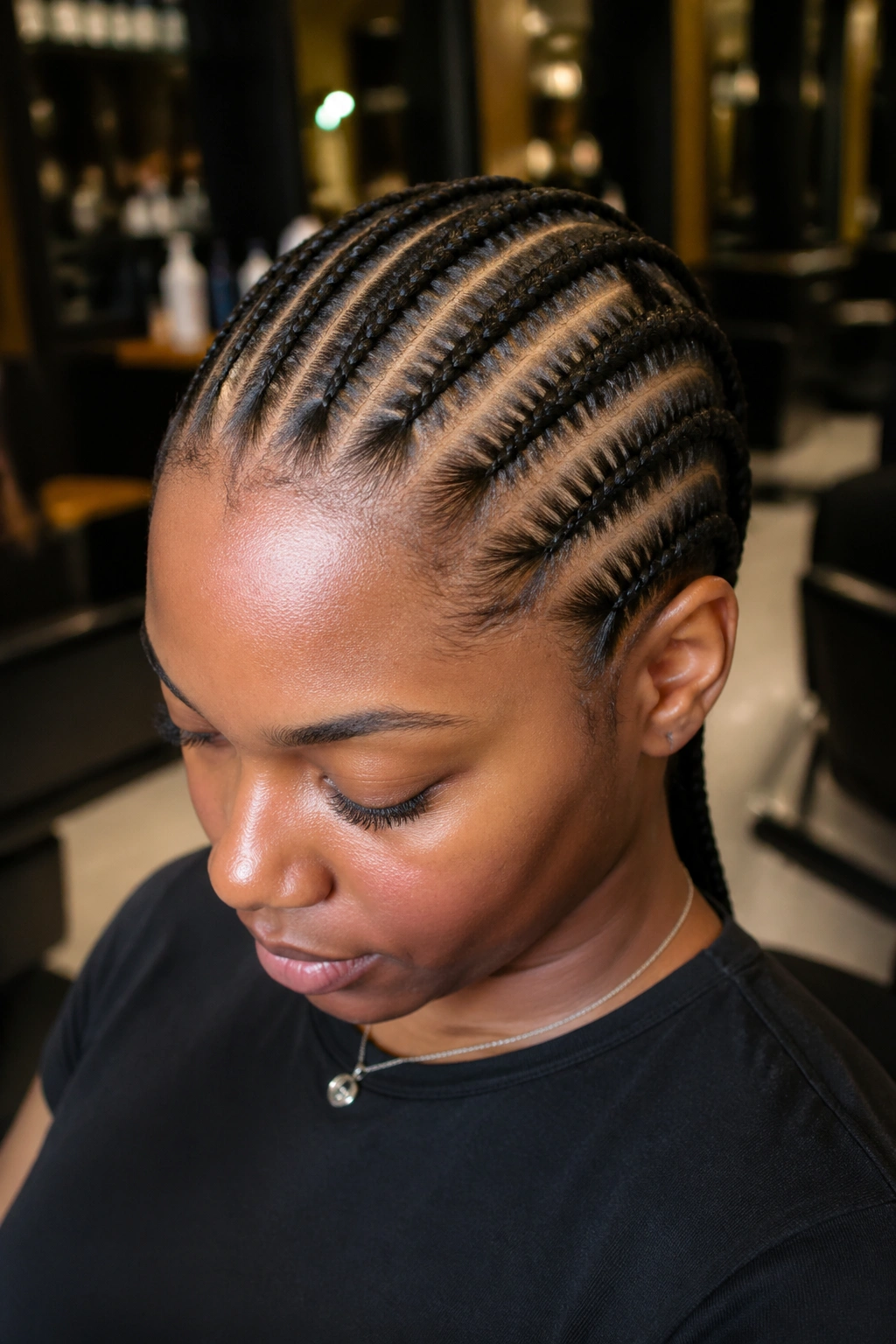
Curved feed-in ponytail braids sweep around the scalp in arcs before gathering into one ponytail. The curves soften the look, while the ponytail gives lift and movement. On type 4 curls, that combination can feel sleek without turning severe.
The shape is also practical. Curved rows can help the style follow the head naturally, which often looks better than forcing everything into straight lines. The ponytail can sit high for drama or lower for a calmer finish.
This is one of those styles that changes with the angle of the head. From the front, you get the curved parting. From the side, you get the ponytail. From the back, you get the clean gather. Three looks in one.
33. Asymmetrical Waist-Length Braids
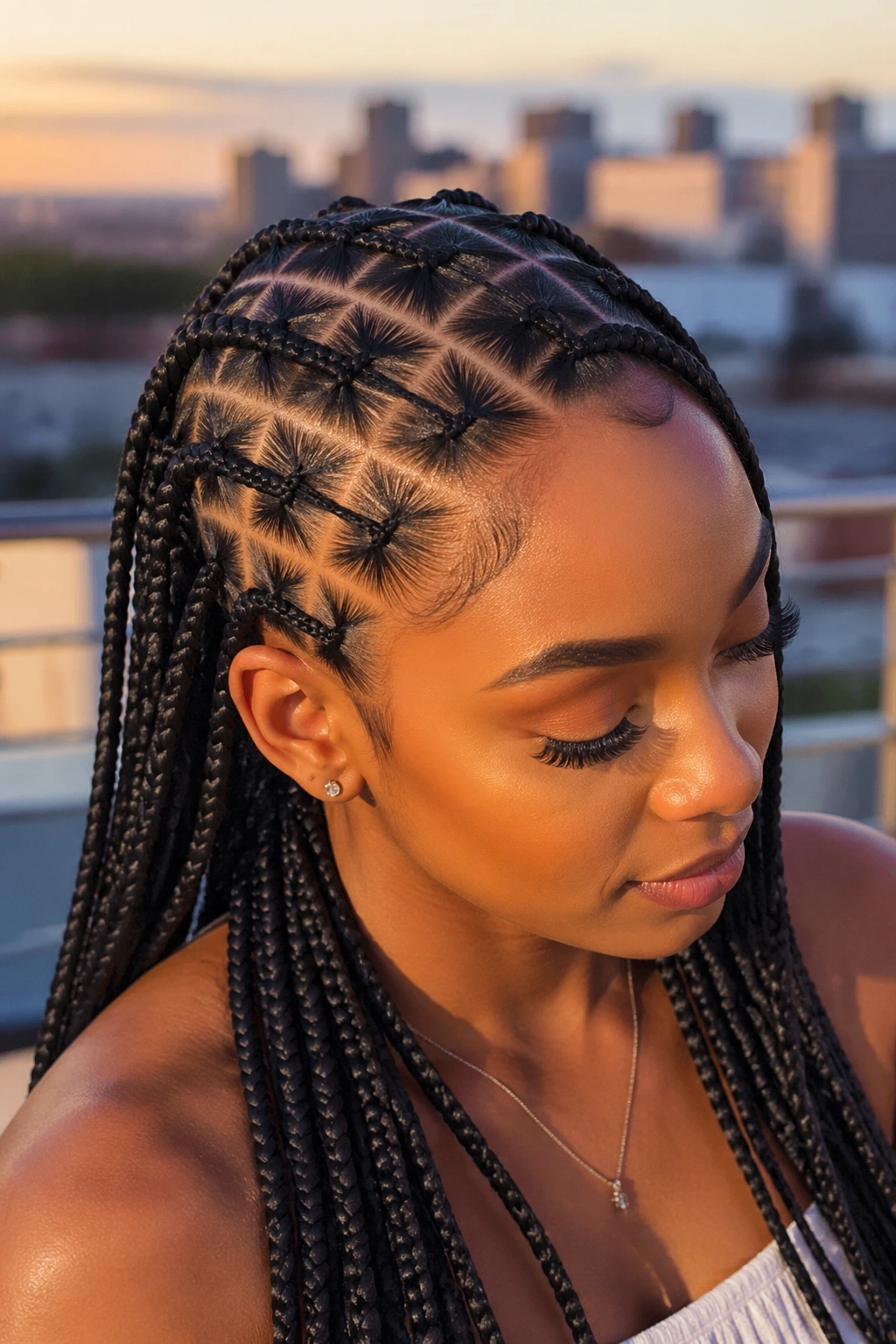
Asymmetrical waist-length braids give you length, but not in a straight, predictable fall. One side may sit slightly longer, heavier, or more layered than the other, which adds shape and movement to a style that could otherwise feel too uniform.
That long line works especially well on type 4 curls because the braid texture stays visible even at full length. The style reads dramatic without needing color or accessories. If you want the braids to feel more wearable, keep the front lighter and let the back carry the length.
A style like this needs regular care at the nape and along the parting. Long braids rub. They catch on coat collars, seat belts, and bag straps. Still, when they are kept neat, the shape is hard to beat.
Braids on type 4 curls work best when the style fits your scalp, not just your mood board. A tight, clean install will always beat a prettier style that leaves you sore by the second day. That is the part people forget when they are chasing a look.
If you are choosing between two braid styles, start with the one that respects your hairline and your daily routine. The rest tends to fall into place once the foundation feels good.
