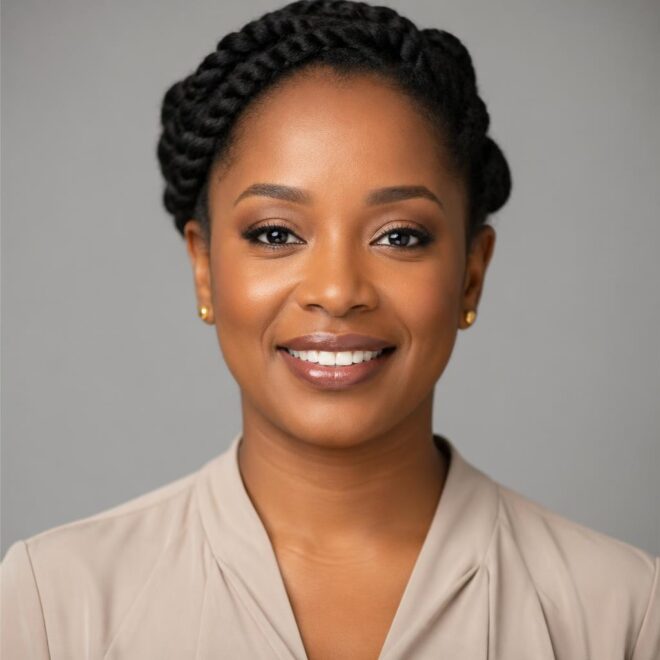


Square faces can carry a braid ponytail better than most people think. A strong jawline gives the style something solid to play against, and when the braid travels on a diagonal, the whole look starts to soften in a way that feels deliberate rather than fussy.
The mistake is usually placement. Pull everything straight back and tight, and the face can read wider or boxier. Add a deep side part, a bit of crown lift, or a braid that bends around the temple, and the proportions change fast. Small moves. Big difference.
I’ve always liked braid ponytails for square faces because they do two jobs at once: they keep hair controlled, and they break up the hard lines that can show up around the forehead and jaw. Some versions are sleek and clean. Others are loose and romantic. A few are sporty enough for a gym bag and still flattering enough for dinner.
The best part is that there isn’t one “correct” ponytail for this face shape. There are a lot of good ones. The trick is choosing the kind of movement that flatters your bone structure instead of fighting it, and that starts with the first braid.
1. Soft Side Dutch Braid Ponytail
A deep side part does a lot of quiet work here. The braid starts just above the outer eyebrow, then sweeps diagonally across the head before dropping into a low ponytail at the nape. That angle matters, because square faces tend to look best when the eye moves sideways and down instead of stopping at the widest part of the jaw.
Why it works
The Dutch braid sits a little higher than a regular braid, so you get a soft ridge without making the sides puff out too much. Keep the braid snug at the scalp, then loosen only the outer edges with your fingertips once it’s secured.
- Use a part about 1½ to 2 inches off center.
- Take 1-inch sections near the hairline so the braid stays neat.
- Tie the ponytail low and wrap one small strand around the elastic.
- Pull out two thin pieces near the cheekbones if you want even more softness.
Best trick: keep the braid diagonal, not straight back. That one choice changes the whole mood.
2. Low Bubble-Braid Ponytail
Bubble braids are underrated on square faces. The rounded sections create a string of soft shapes, and that roundness is exactly what helps take the edge off a strong jawline. A low placement keeps the look calm instead of bulky.
The cleanest version starts with a smooth ponytail at the nape, then clear elastics go in every 2 to 3 inches down the length. After each tie, gently tug the hair between elastics so each “bubble” looks full and even. Not perfect. Just full enough to read as intentional.
Texture helps here. If your hair is very silky, a little dry shampoo or light texturizing spray at the roots gives the style more hold. If your hair is thick, you can leave the bubbles tighter and let the shape do the work.
3. Crown French Braid Into a Sleek Ponytail
What if you want a style that feels polished but still flatters a square face? This is one of the easiest answers. The French braid begins near the temple and travels across the crown, which pulls the eye upward and makes the face look longer before the ponytail even begins.
Where to place the braid
Start the braid just behind the heavier side of your part, and keep the weave close to the head. You want clean lines at the crown, not a puffy helmet. That is the part most people get wrong.
Finish the braid into a mid-high ponytail and smooth the rest of the hair with a pea-sized amount of cream or gel. The contrast is the point: controlled top, sleek length. If you like a strong profile and a tidy finish, this one does the job without making the face look boxed in.
4. Fishtail Ponytail with Loose Tendrils
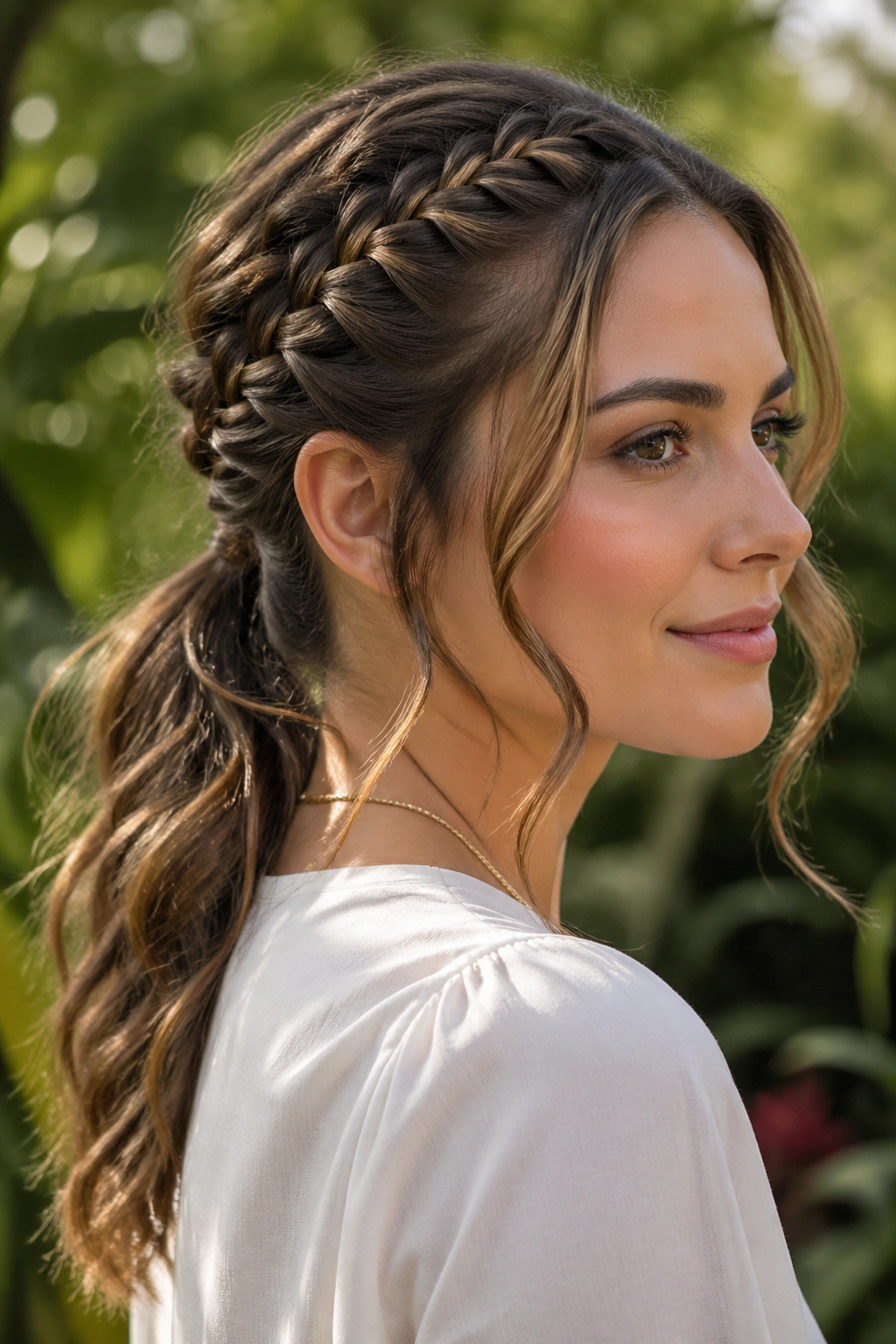
A fishtail braid has a thinner, more detailed look than a regular three-strand braid, which is useful when the face itself already has strong lines. The texture feels lighter. Less heavy. More movement around the cheeks, especially if you leave a few tendrils out at the temples and in front of the ears.
How to keep it soft
The braid doesn’t need to be tiny. It just needs to be neat enough to show the pattern. Aim for sections about the width of a pencil when you cross the outer pieces over. Once the braid reaches the back, secure it into a low ponytail and gently loosen the fishtail with your fingers.
- Leave 1/4-inch face pieces loose on both sides.
- Curl the ends of those pieces once with a 1-inch iron.
- Pull the braid apart just a little, so it doesn’t sit flat and skinny.
A square face often looks good in this style because the tendrils interrupt the jawline without hiding it.
5. High Wrapped Braid Ponytail
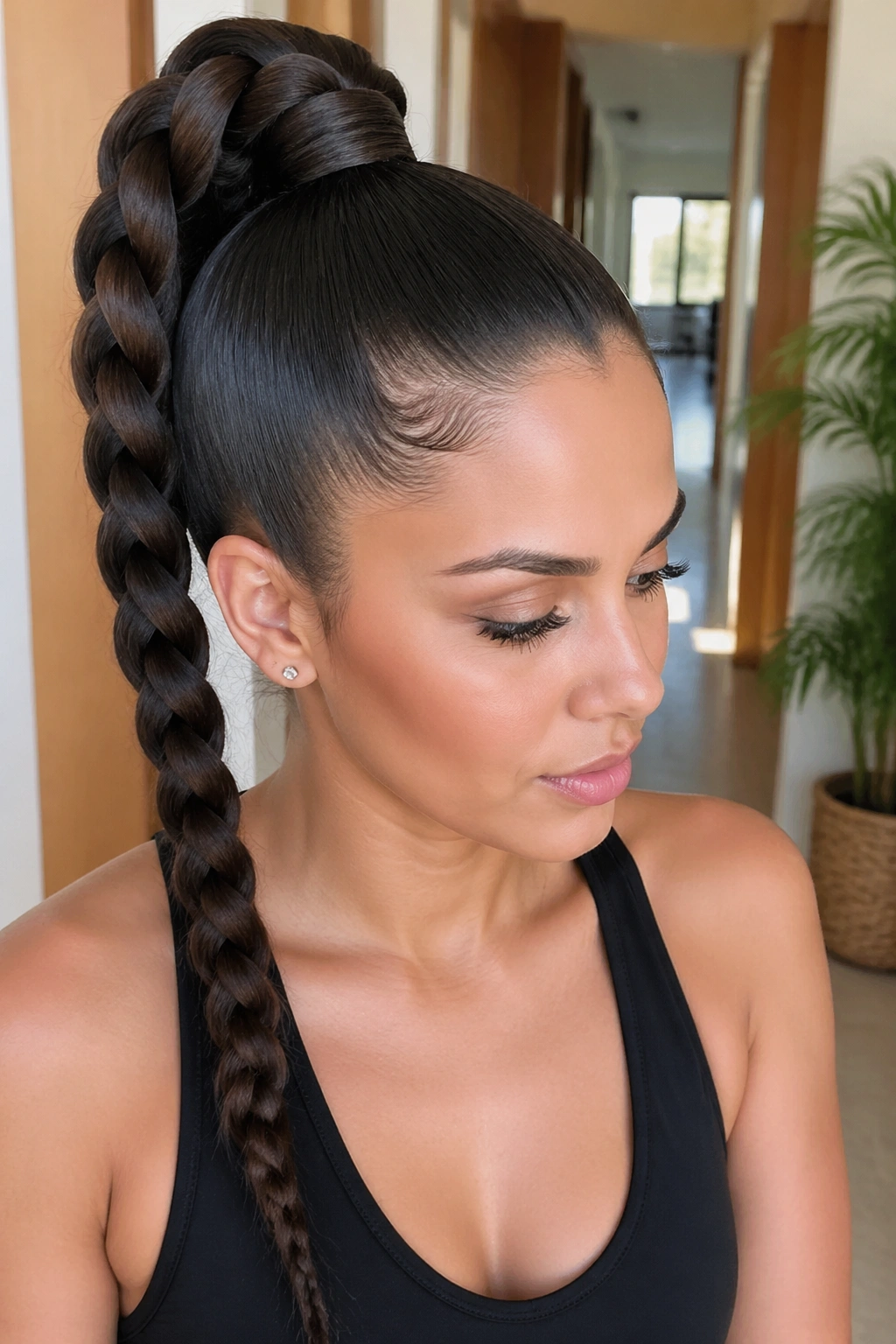
Height is a friend of a square face, but only when the top stays clean. A high ponytail lifts the eye line, and the braid wrapped around the base gives the style enough texture to keep it from looking severe.
The move here is simple: gather the hair at the crown, secure a high ponytail, then braid a small section from underneath and wind it around the elastic. Keep the rest of the pony sleek or lightly smoothed, depending on how much shine you like. A little sheen looks modern. Too much looks stiff.
This one works especially well if your jawline is broad and your forehead is not. The height lengthens the upper half of the face, and the wrapped braid keeps the style from feeling bare. Strong profile. Clean finish. No extra fluff needed.
6. Side-Swept Rope Braid Ponytail
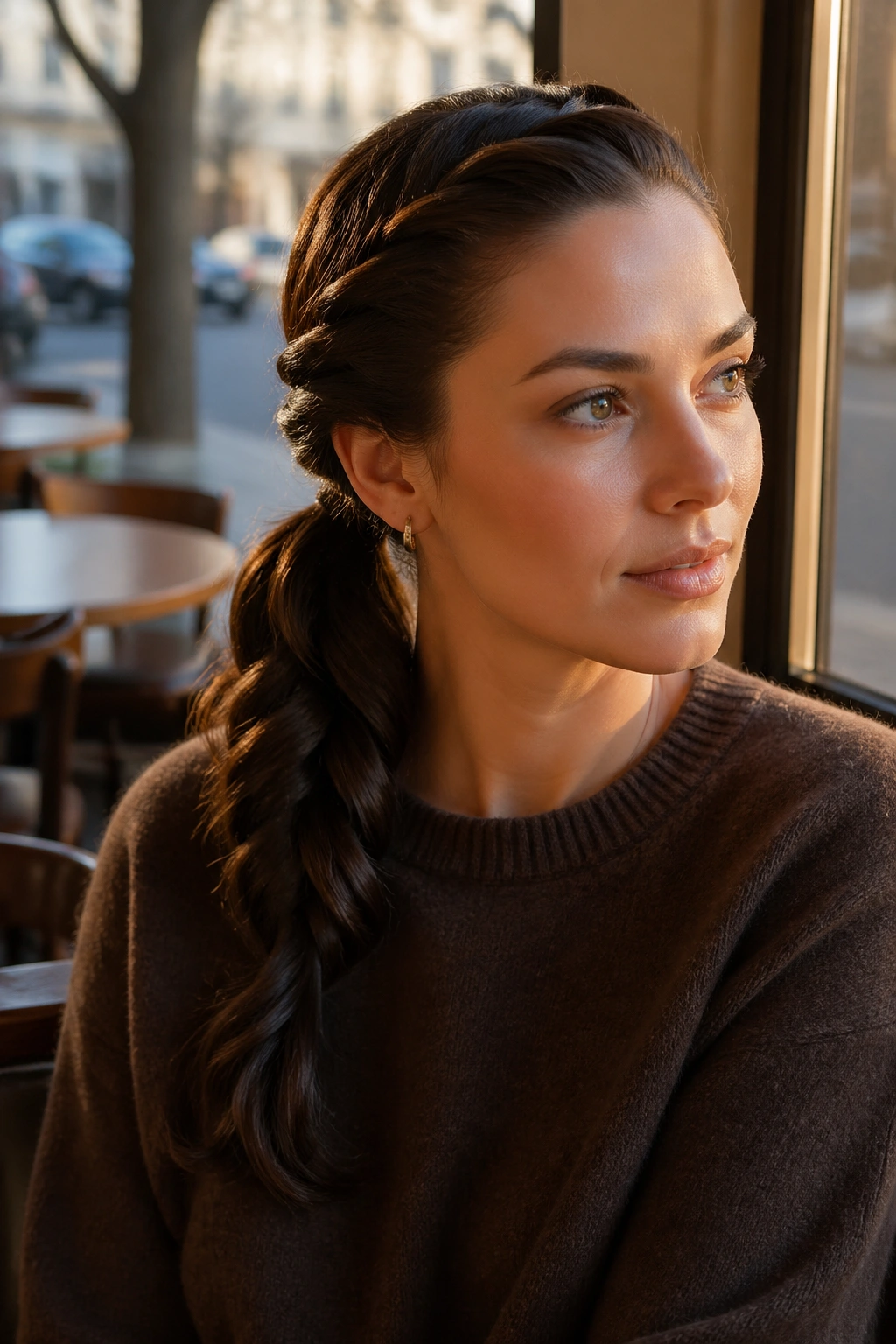
Unlike a three-strand braid, a rope braid gives you a smoother, shinier line. That makes it a nice choice when you want the ponytail to look controlled but not too busy. The side sweep is what flatters the face shape; the rope texture is what keeps it interesting.
A rope braid starts with two twisted sections instead of three crossed pieces, so it reads a little sleeker. Sweep it from a deeper side part into a mid-low ponytail, and keep the base close to the head so the top doesn’t widen.
This is a good option for straight hair that slips out of regular braids. It also behaves well on day-old hair with a little dry shampoo. If your face is square and your styling taste leans minimal, this is one of the neatest solutions.
7. Double Dutch Braids into One Ponytail
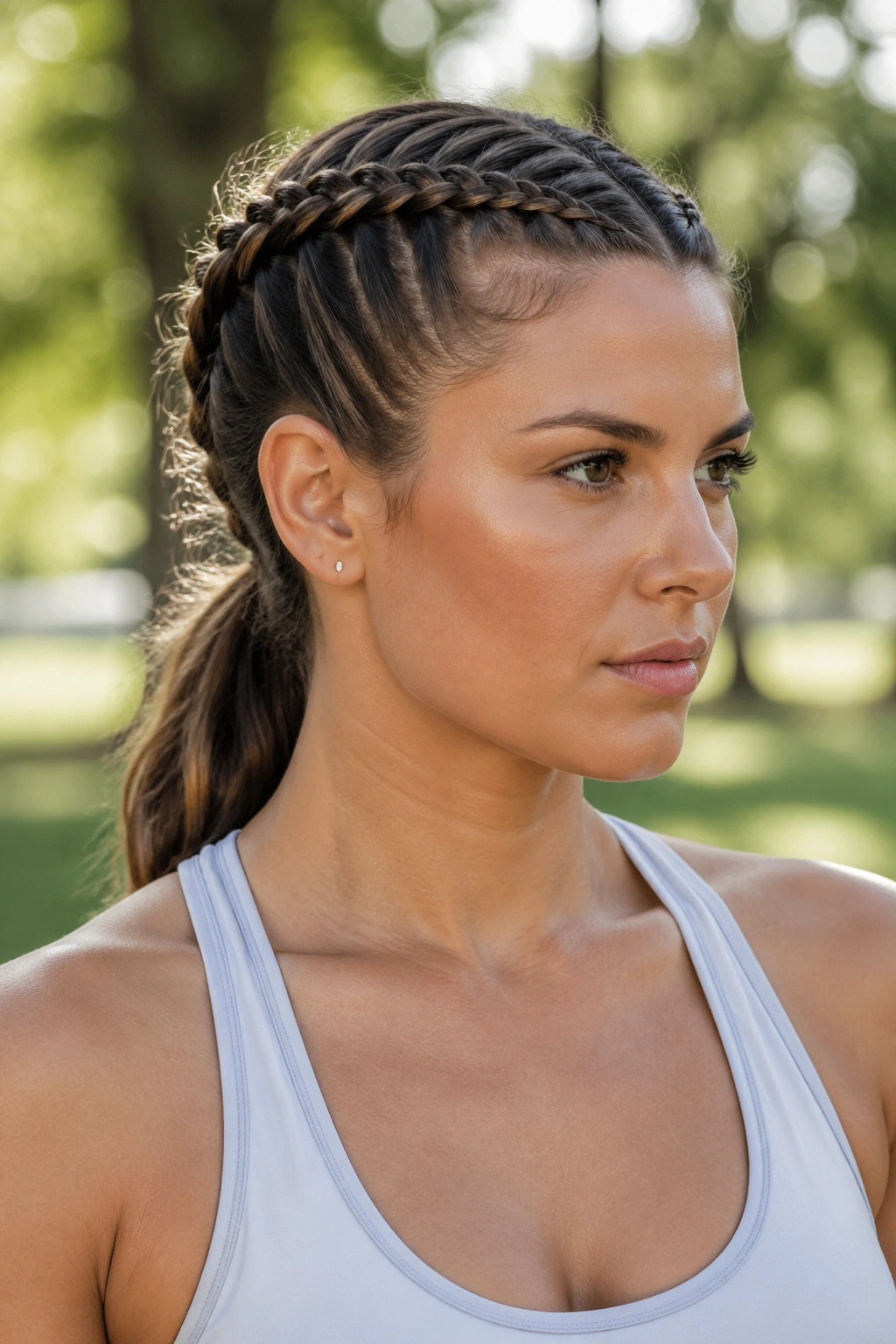
Two Dutch braids feeding into one ponytail can look sporty, but the style still flatters square faces when the braids stay narrow near the temples. That narrowness keeps the sides from bulking up too much, which matters if the jawline already feels strong.
Keep the braids narrow at the temples
Start each braid close to the hairline and keep the first few passes tight. Once both braids meet at the nape, tie them into one ponytail and leave the tail soft. If you pancake the braids too much at the sides, the face can look wider than you want.
This version is especially good for thick hair, workouts, or hot days when you need everything off the neck. It has structure, but not the kind that looks fussy. Just keep the part clean and the ponytail smooth.
8. Messy Braided Ponytail with Face-Framing Pieces
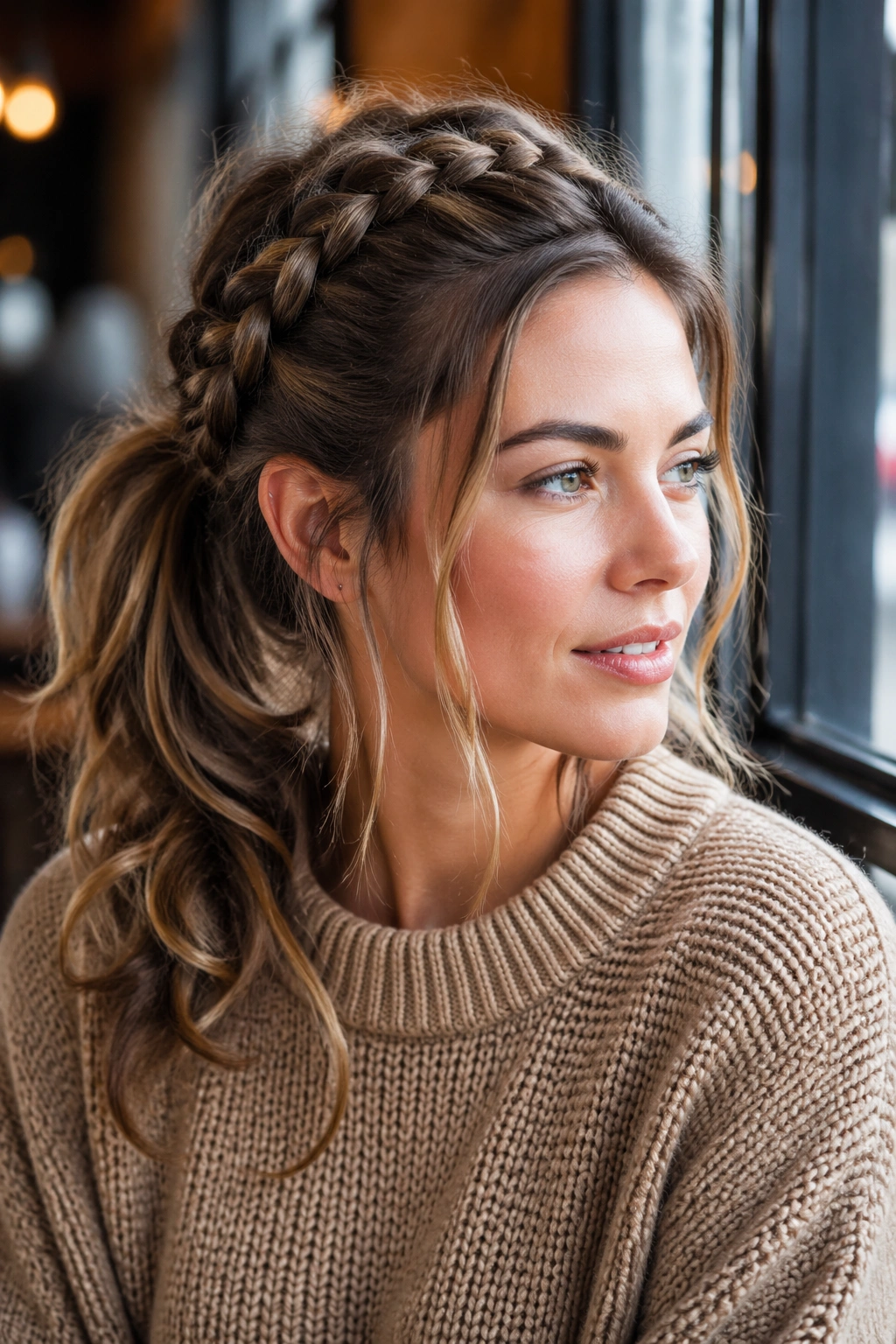
Not every square face needs a strict, tidy braid. A messier braided ponytail can soften the angles around the cheeks and jaw in a way that feels relaxed instead of staged. The trick is to keep the mess controlled.
Start with a loose braid from the crown or side, then gather it into a ponytail that sits at mid-height. Pull out a few thin pieces around the temples, and maybe one strand near the ear on the heavier side of the face. Those little slips of hair matter more than people think.
Use texturizing spray at the roots and a light hand when you braid. If you try to force every strand into place, the style loses its softness. This one looks best when it feels a touch undone.
9. Braided Mohawk Ponytail
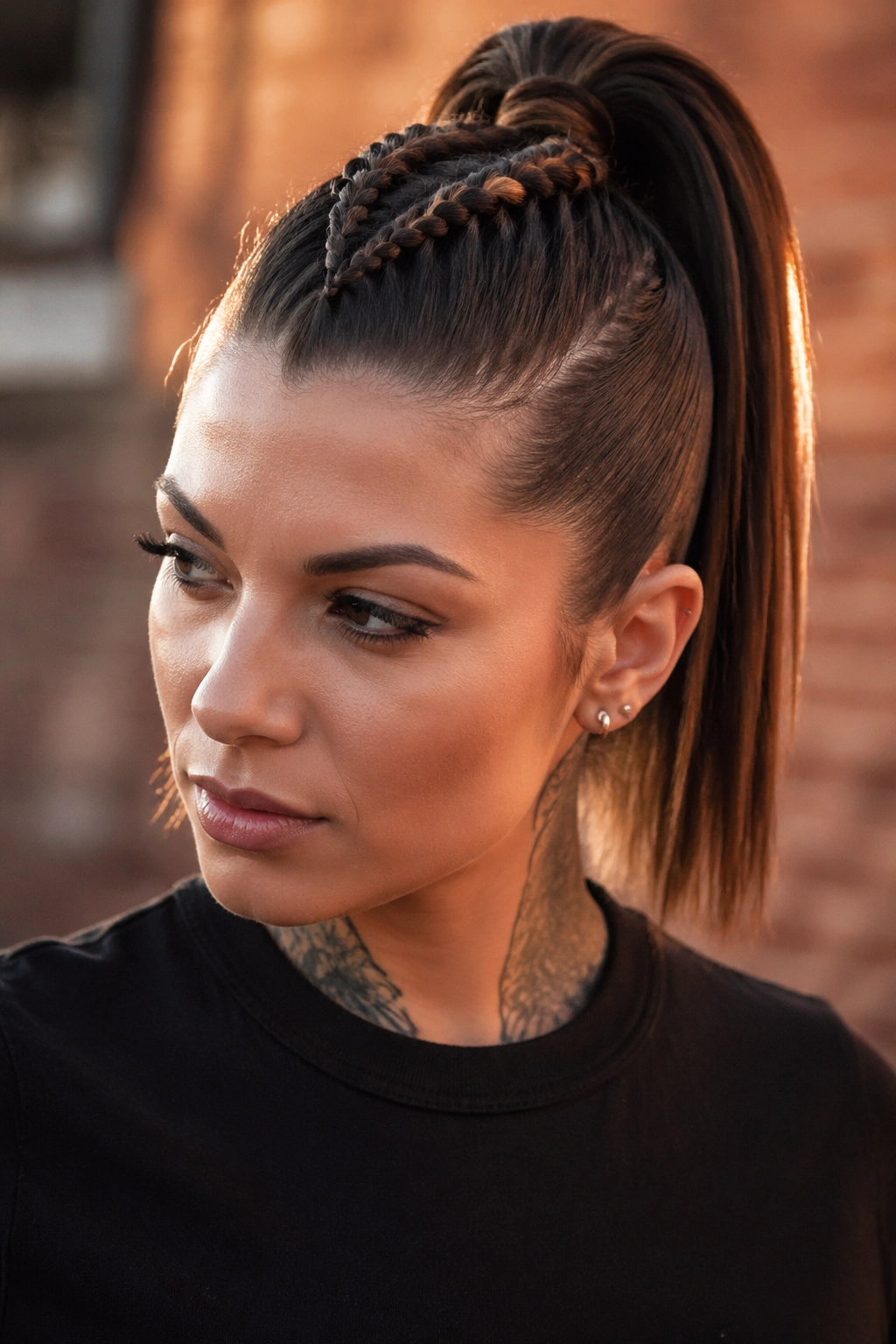
Want the face to look longer without adding more width at the sides? A braided mohawk ponytail does exactly that. The braid runs down the center of the head, the sides stay smooth or tucked back, and the final ponytail sits high enough to pull the eye upward.
That vertical line is the whole point. Square faces tend to benefit from styles that add length through the center, especially when the jaw is the widest feature. The mohawk shape does not hide the face. It just redirects attention.
Use gel or pomade on the sides if you want a cleaner finish, or keep a few soft hairs loose around the temples for a less severe look. Either way, this is a strong choice. It’s a little bold, and that’s half the fun.
10. Pull-Through Braid Ponytail
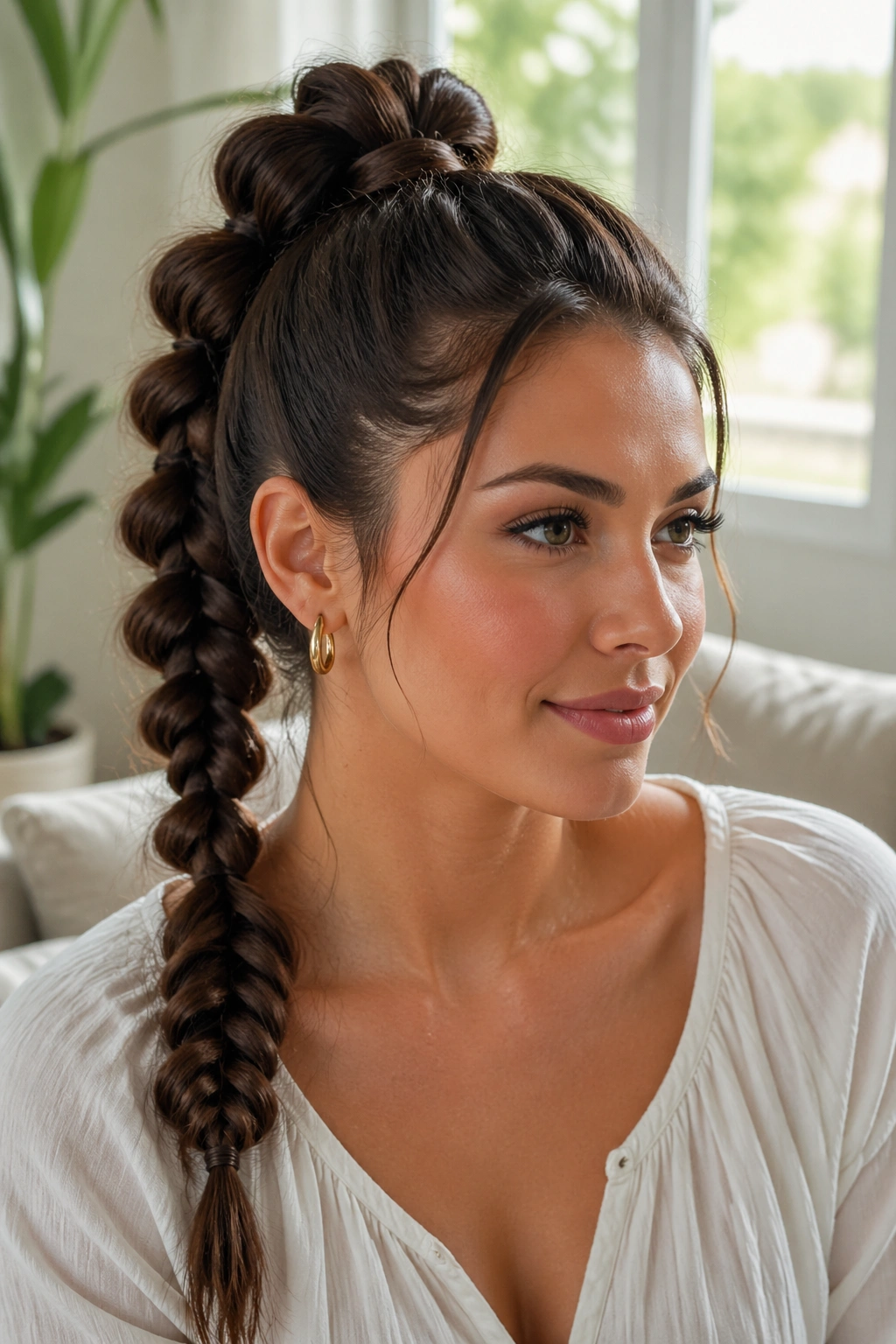
If your hair is fine and a regular braid disappears by lunchtime, the pull-through braid is a smarter fix. It creates a fuller-looking braid with a rounder shape, and that fullness helps square faces by adding vertical texture instead of wide side volume.
The style works by stacking small ponytails on top of each other and splitting them to form the “braid” shape. Each section should be about 2 inches apart. Once the whole thing is built, tug the loops gently until the braid looks plush.
It’s a clever choice for long hair that needs body. The style also holds up well for events, since the texture stays visible from the front and the side. If you like braid ponytails but hate how thin they can look on fine hair, this is the one to try.
11. Low Nape Lace Braid Ponytail
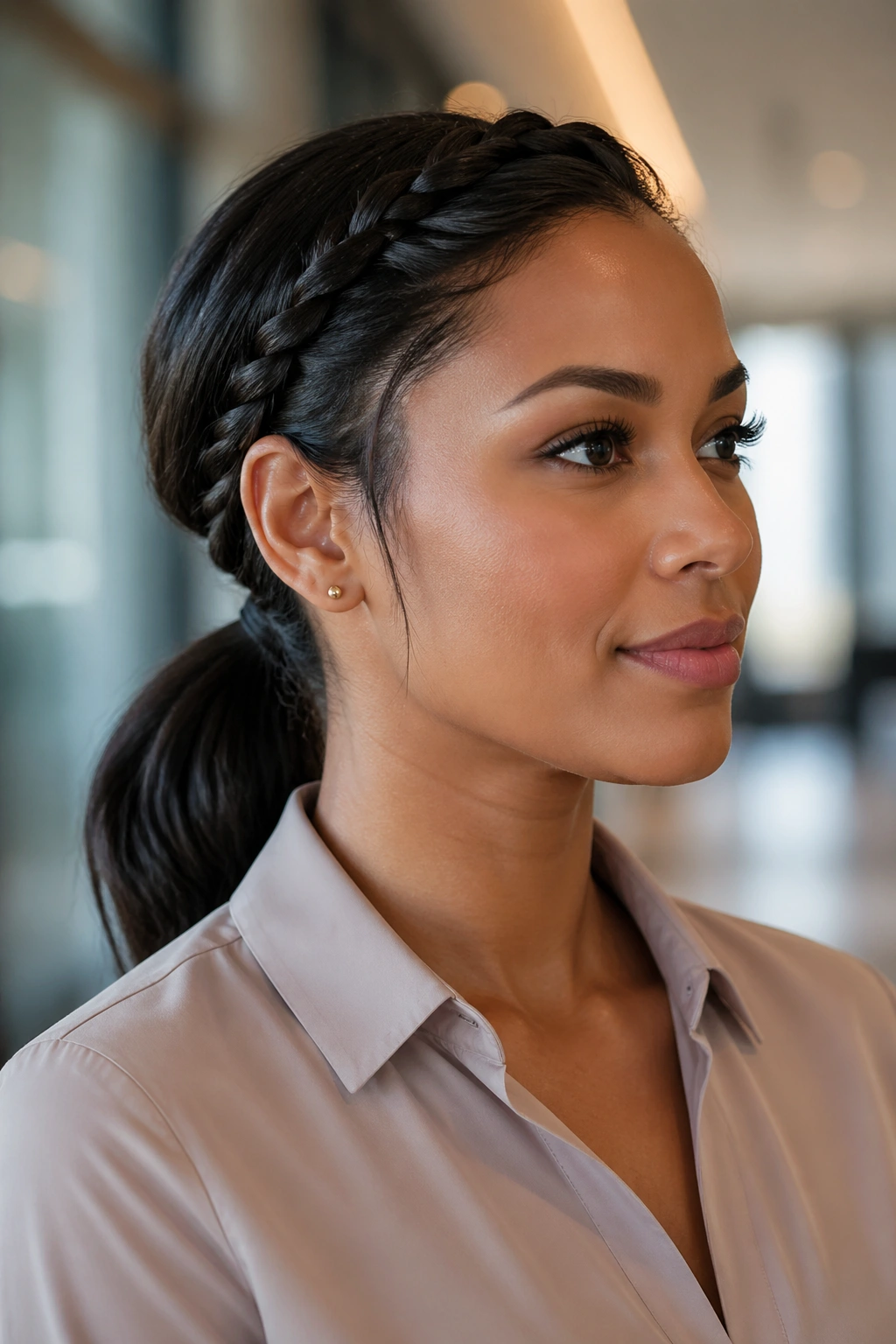
A lace braid is calmer than a French braid, and that makes it useful on square faces. Because new hair only comes in from one side, the braid naturally creates a gentle diagonal, which helps soften the hard line of the jaw without turning the style into a full halo.
Keep the braid low and let it feed into a ponytail that sits right at the nape. The shape should feel quiet, almost understated, but not flat. A little lift at the crown keeps it from sinking into the head.
This is a lovely option for work, dinner, or any day when you want hair back without looking severe. It also behaves well with layered hair, because the one-sided feed gives the shorter pieces somewhere to live instead of forcing them into a rigid pattern.
12. Pancaked Side Braid Ponytail
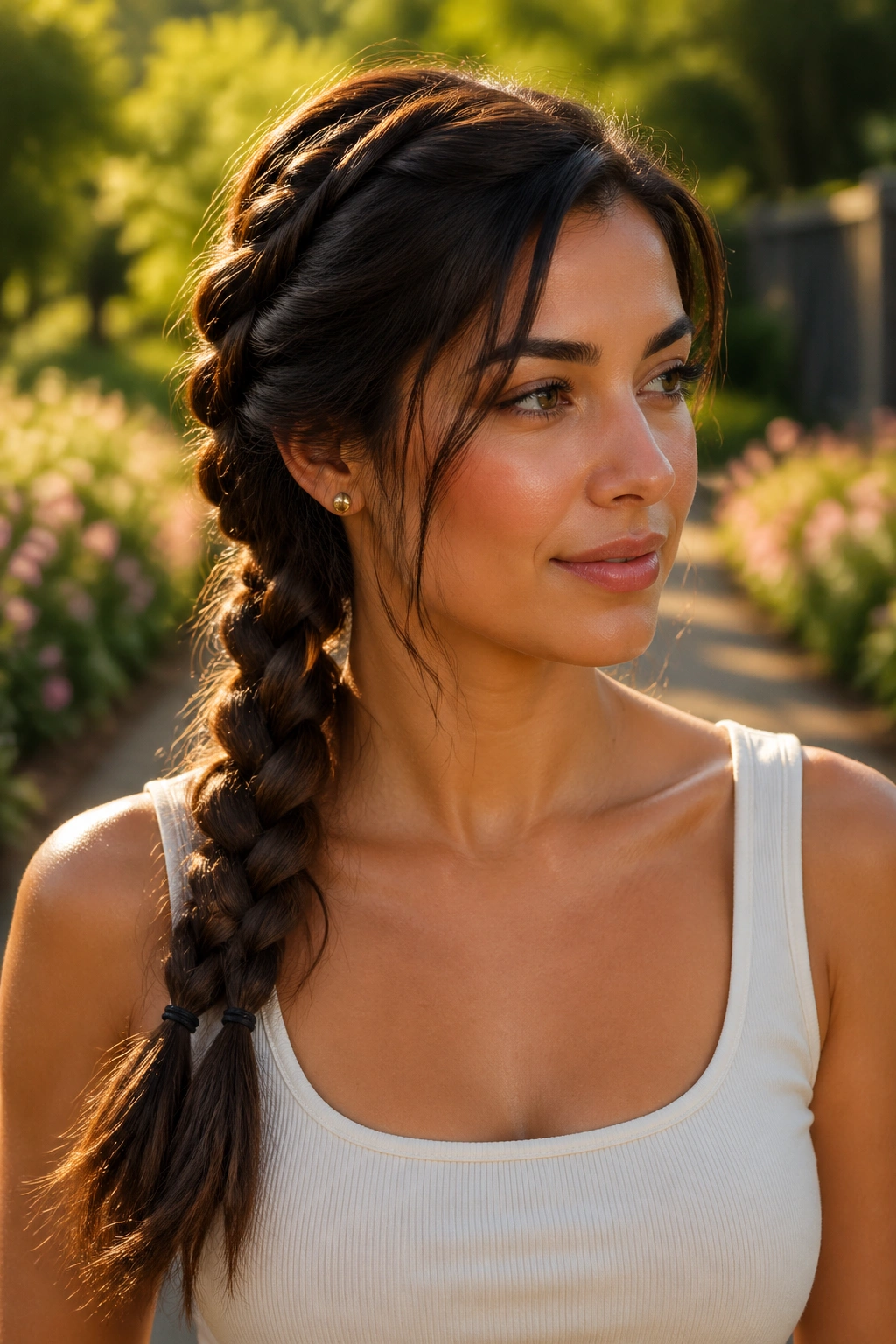
A pancaked braid is one of those tricks that sounds fussy and ends up being practical. Once the braid is finished, you gently pull the outer edges apart so the weave gets wider and flatter. On thick hair, that extra width gives the style a softer, more lived-in look.
For square faces, the benefit is simple: the widened braid creates a curve near the side of the head, which makes the jaw look a little less boxed in. Keep the ponytail low or mid-low so the braid doesn’t compete with the face shape.
What to watch for
Don’t pancake the braid near the scalp too much. That can make the crown look too big. Loosen the middle and lower thirds instead. That’s where the shape reads best.
13. Four-Strand Braid Ponytail
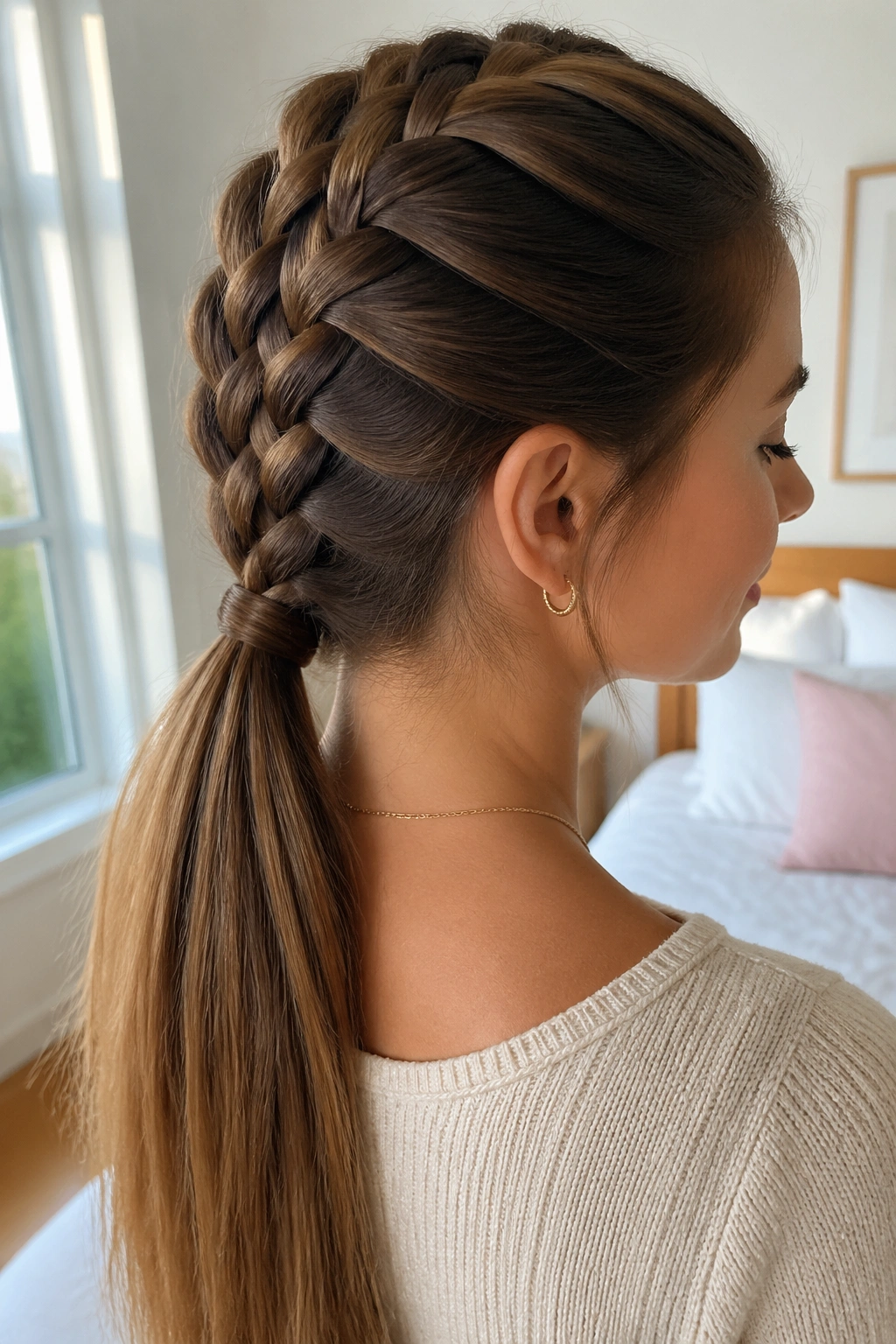
A four-strand braid gives you more texture than a regular braid without turning the style into a mess. The extra strand creates a smoother, woven look, and that fine detail sits nicely against a square face because it feels elegant rather than chunky.
This version shines on long, straight hair. Start the braid at the crown or just behind the part, and keep your tension even all the way down. If one side of the braid gets looser than the other, the whole shape starts to twist in a way that looks accidental instead of stylish.
Finish with a low ponytail and smooth the tail with a serum. The braid should be the detail; the ponytail should be the finish. Clean separation, no drama.
14. Curly Braided Ponytail
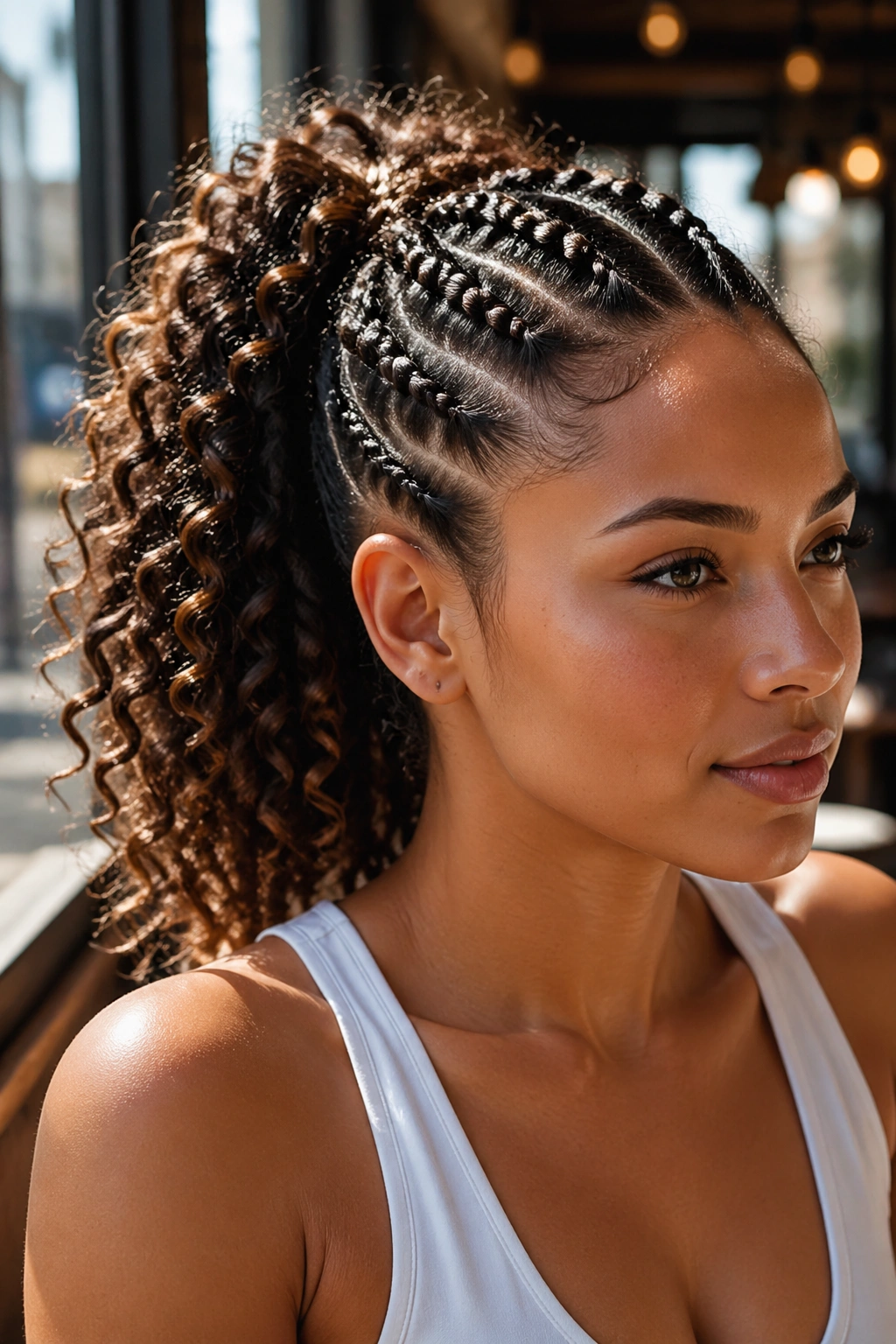
Curls are a fast way to soften a square jaw. A braided top section with curly ponytail ends gives you both structure and movement, and that mix tends to flatter strong angles better than stick-straight lengths.
Braid the top half of the hair back from the temples, then secure the rest into a ponytail and curl the tail with a 1-inch iron or flexi rods. If your hair is naturally curly, use a looser braid so the pattern doesn’t fight your texture.
The shape of the curls matters. Aim for loose bends, not tight ringlets unless that is already your style. The point is to let the ponytail swing a little and avoid a blunt edge at the bottom.
15. Boxer Braid Ponytail
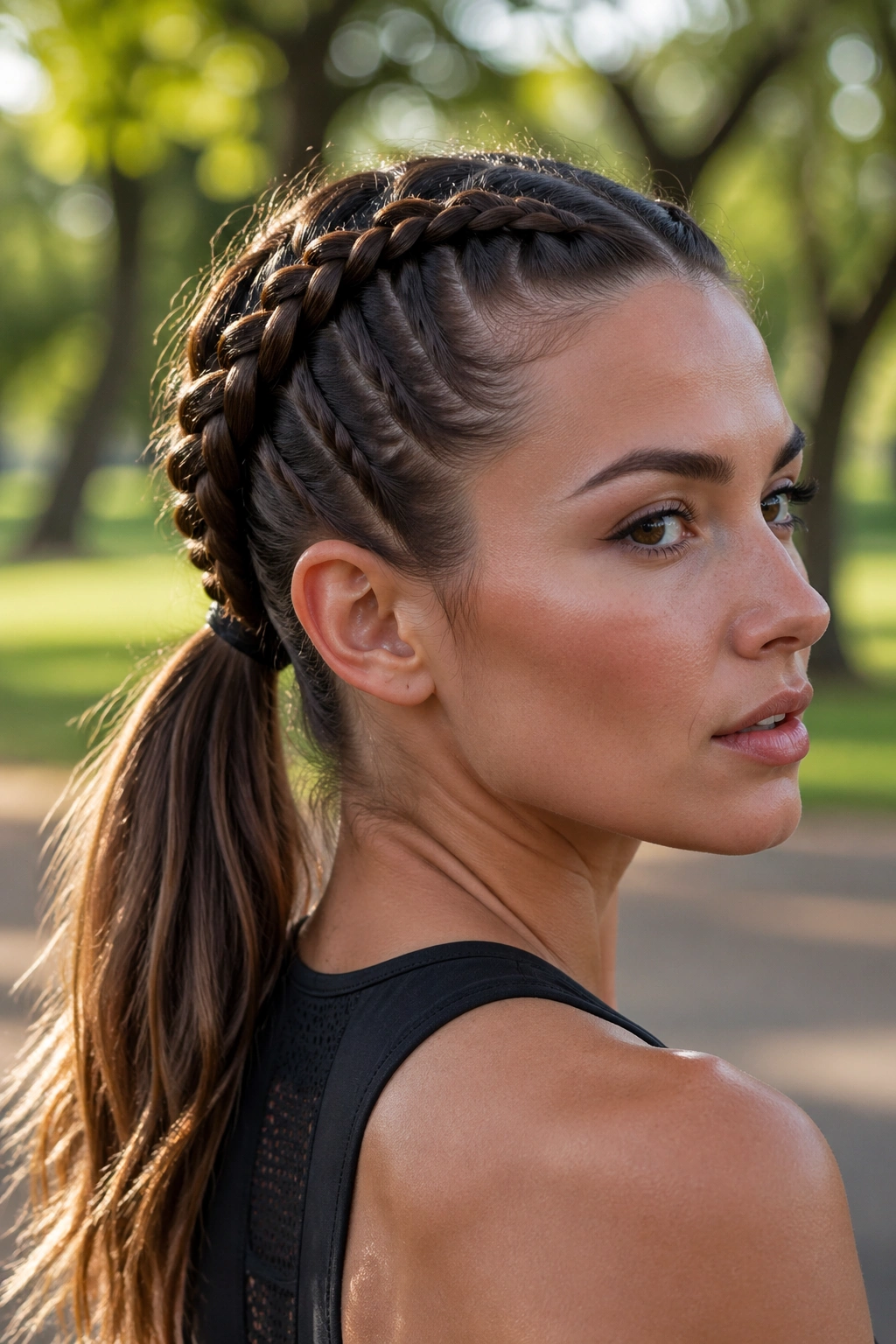
Boxer braids can look tough, and that’s fine. The style still flatters a square face if you keep the braids neat at the scalp and let the ponytail sit a touch lower than the crown. That keeps the top from feeling too wide.
This is a good daily style for active days, long errands, or travel. Two tight Dutch braids travel back along the head, then join into one ponytail that can be slick, braided again, or left loose. I like it best when the hairline stays smooth and the ponytail has a little swing.
The face-shape trick here is restraint. Don’t over-puff the braids near the temples. A snug start and a softer finish keeps the whole thing balanced.
16. Waterfall Braid Pinned Into Ponytail
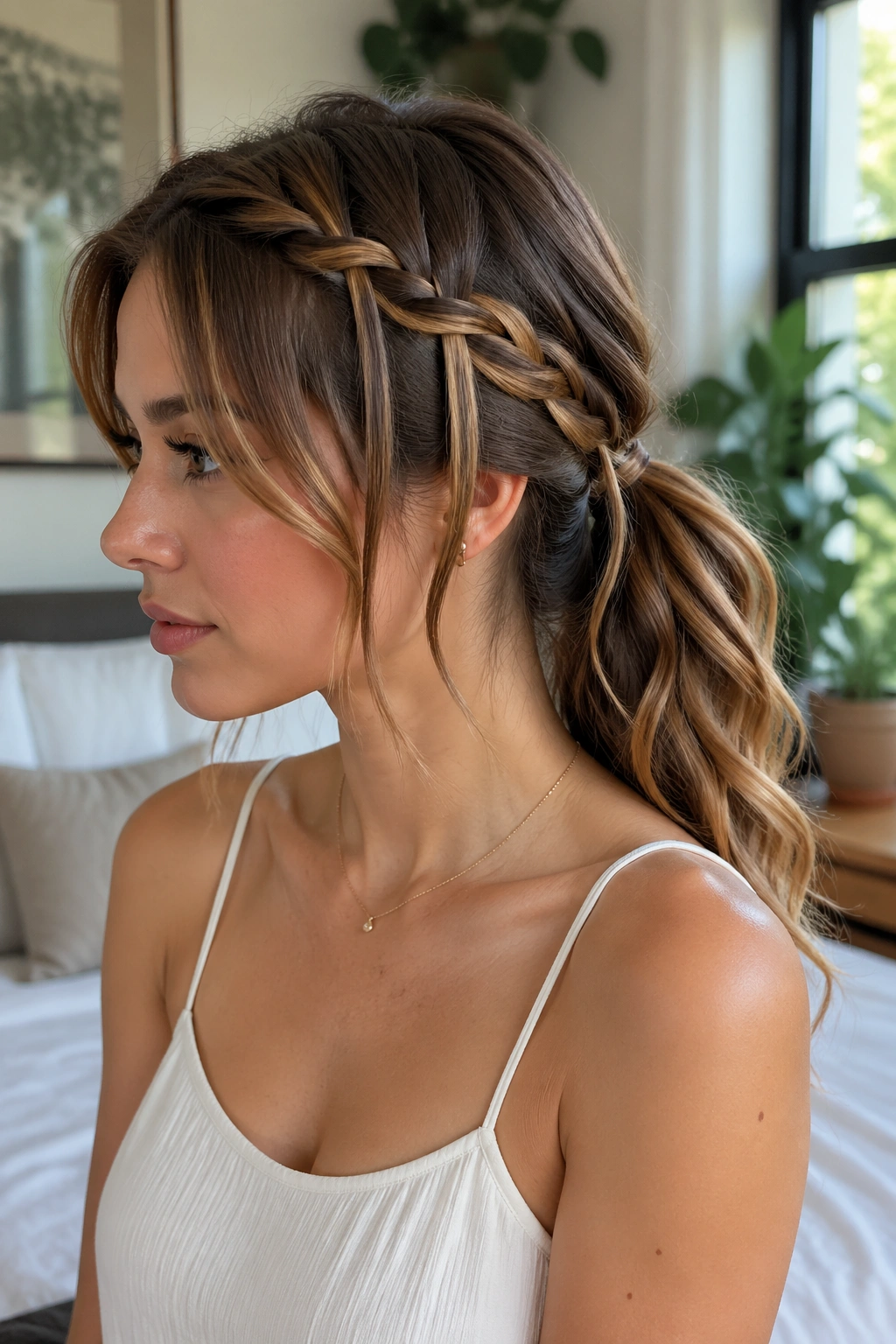
A waterfall braid leaves pieces dropping through the braid as it moves across the head, which sounds decorative because it is. Those dropped strands create motion around the face, and motion is useful when the jawline is strong and square.
How to place it
Start the waterfall braid near the heavier side of the part and carry it across the crown. Pin the end into a ponytail at the back, then curl the loose pieces with a medium iron if you want a dressier finish. The style works best on hair that has at least shoulder length, because the pattern needs enough length to show.
There’s a softness to this one that feels easy to wear. It’s not as structured as a crown braid, and not as sporty as boxer braids. That middle ground is where a lot of square faces look their best.
17. Braided Crown Into Ponytail
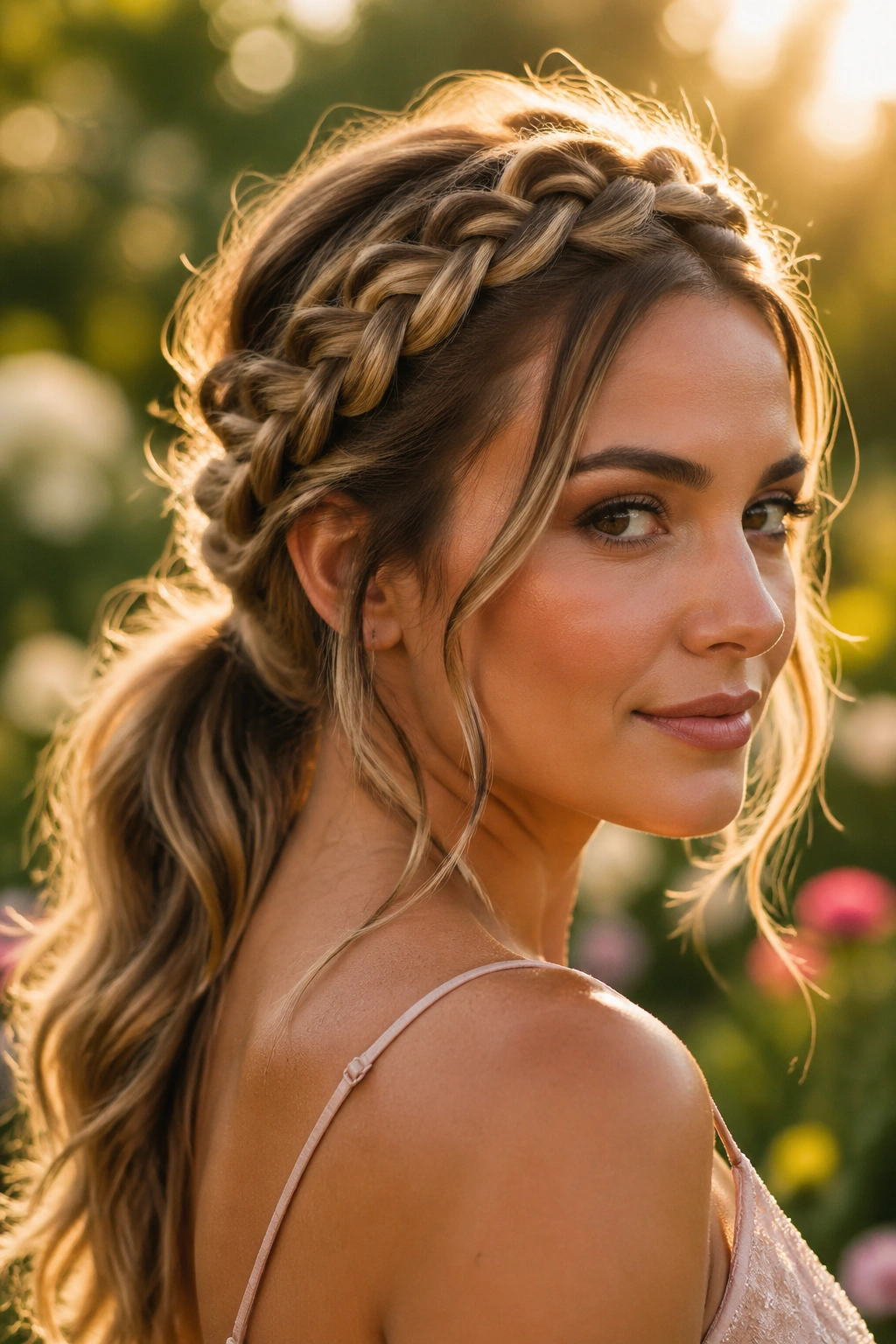
This one has a little ceremony to it, which is exactly why it works. A braided crown frames the top of the face with a curved line, and curved lines are the friendliest thing you can give a square jaw.
Keep the braid loose enough that it doesn’t sit like a hard band across the head. A soft crown braid that leads into a ponytail at the back looks romantic, but still stays grounded. If you want a more polished finish, tuck the ends under the pony and pin them cleanly.
This style is especially good for events, weddings, or days when you want something that feels dressed up without needing a full updo. It also photographs well from the side because the braid makes a clear line before it disappears into the tail.
18. Mid-Height Twist Braid Ponytail
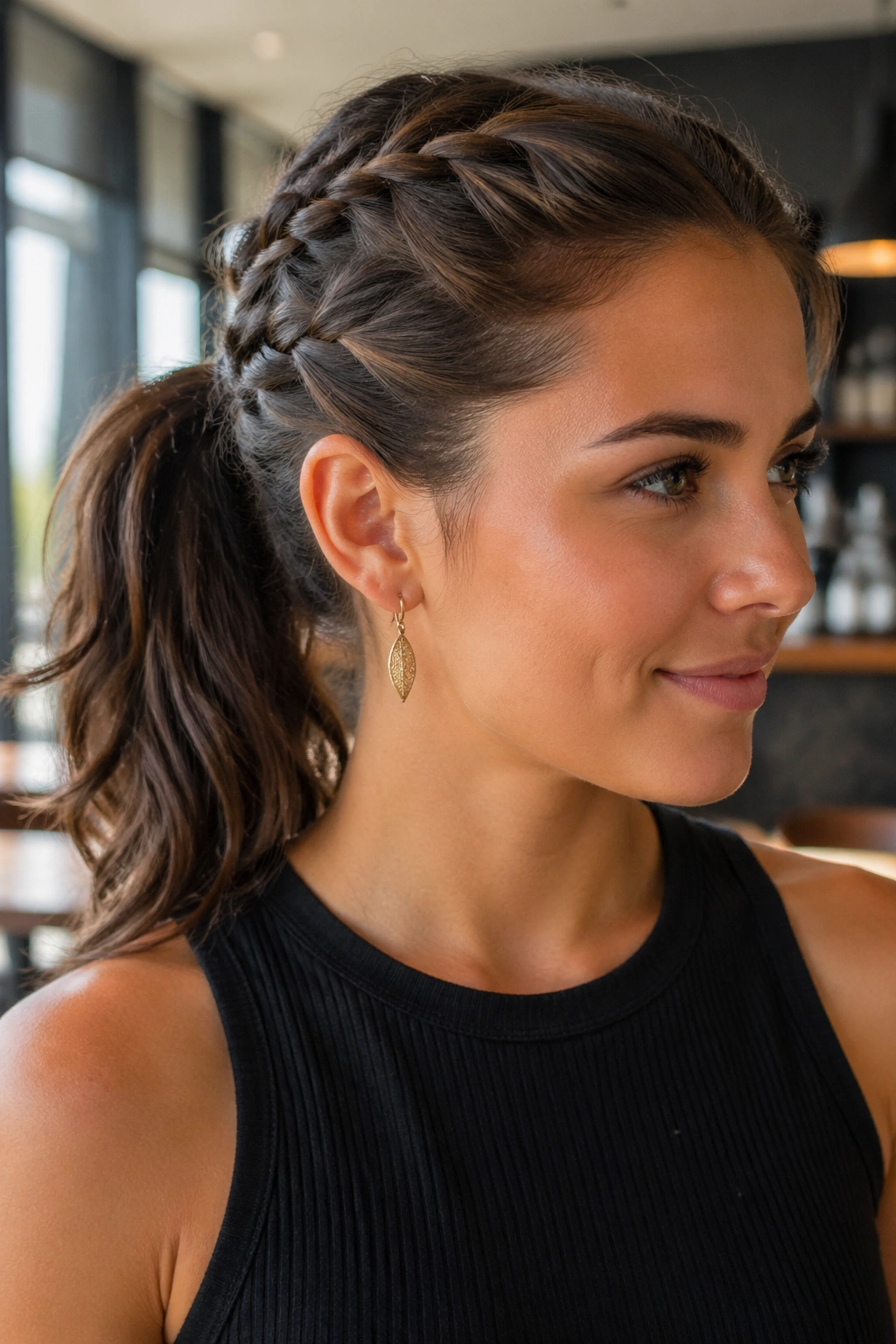
Can’t decide between high and low? Split the difference. A mid-height twist braid ponytail sits in the most balanced spot on the head, which can be a nice answer for square faces that don’t need extra width or extra height in extremes.
The twists at the sides should start near the temples and travel back with a bit of tension, but not so much that they pull the skin. Secure them into a ponytail that lands around the middle of the back of the head. Clean, simple, and easy to wear.
I like this one when the rest of the outfit already has strong lines. It keeps the hair calm instead of competing with the clothes. Sometimes that is the smartest move.
19. Half-Rope Accent Braid Ponytail
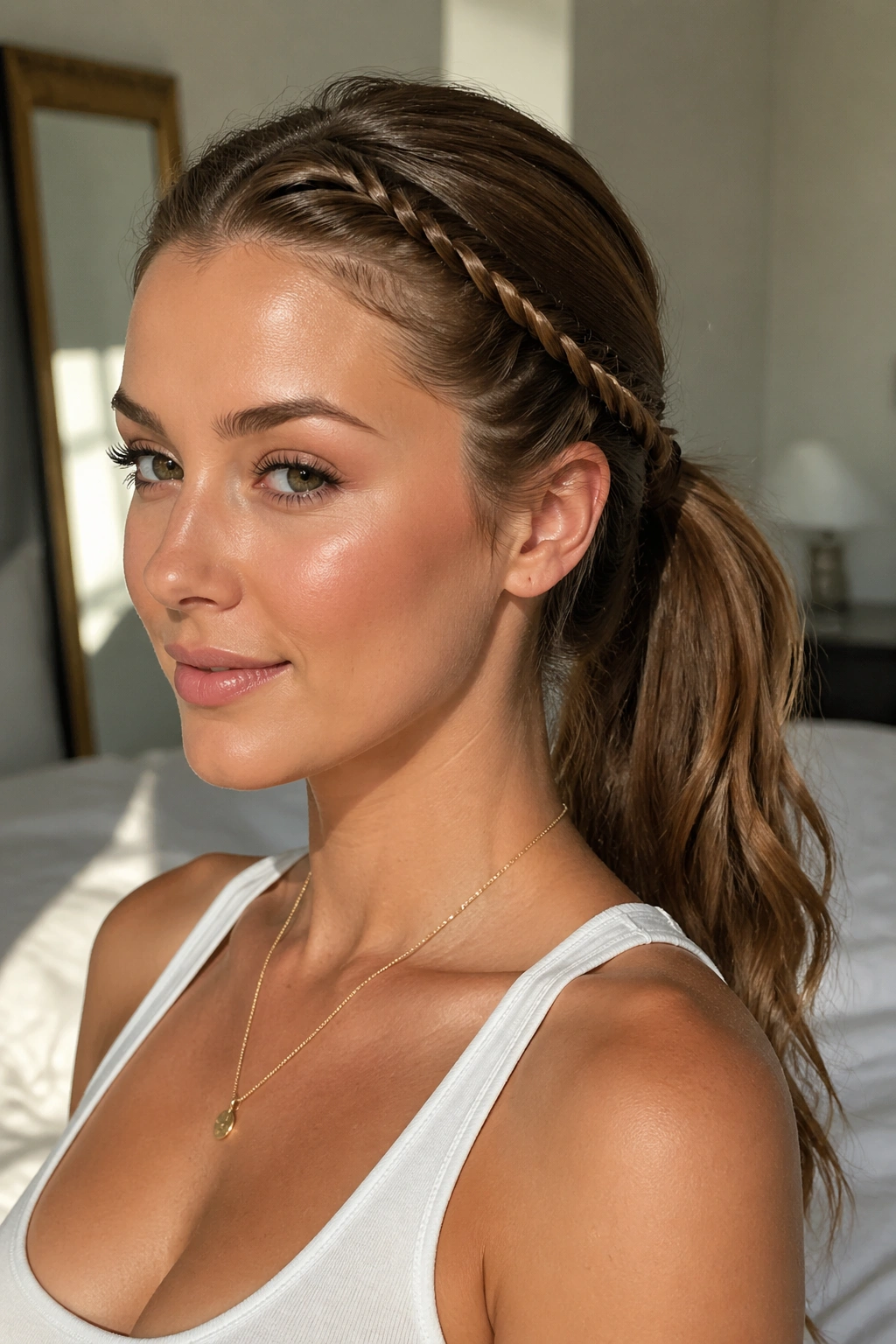
A small accent braid can matter more than a full braid when the hair itself is the main event. A half-rope accent braid adds just enough diagonal detail near one side of the head to soften the square shape, without taking over the look.
This style is a smart pick for fine hair or shorter layers. You braid a narrow section from the temple or above the ear, then merge it into a ponytail with the rest of the hair. The rope texture gives a tidy line, and the rest stays loose.
It’s also one of the easier ways to add interest to a plain ponytail without committing to a big styling session. Quick. Clean. More flattering than it sounds.
20. Low Fishtail Ponytail with Center Part
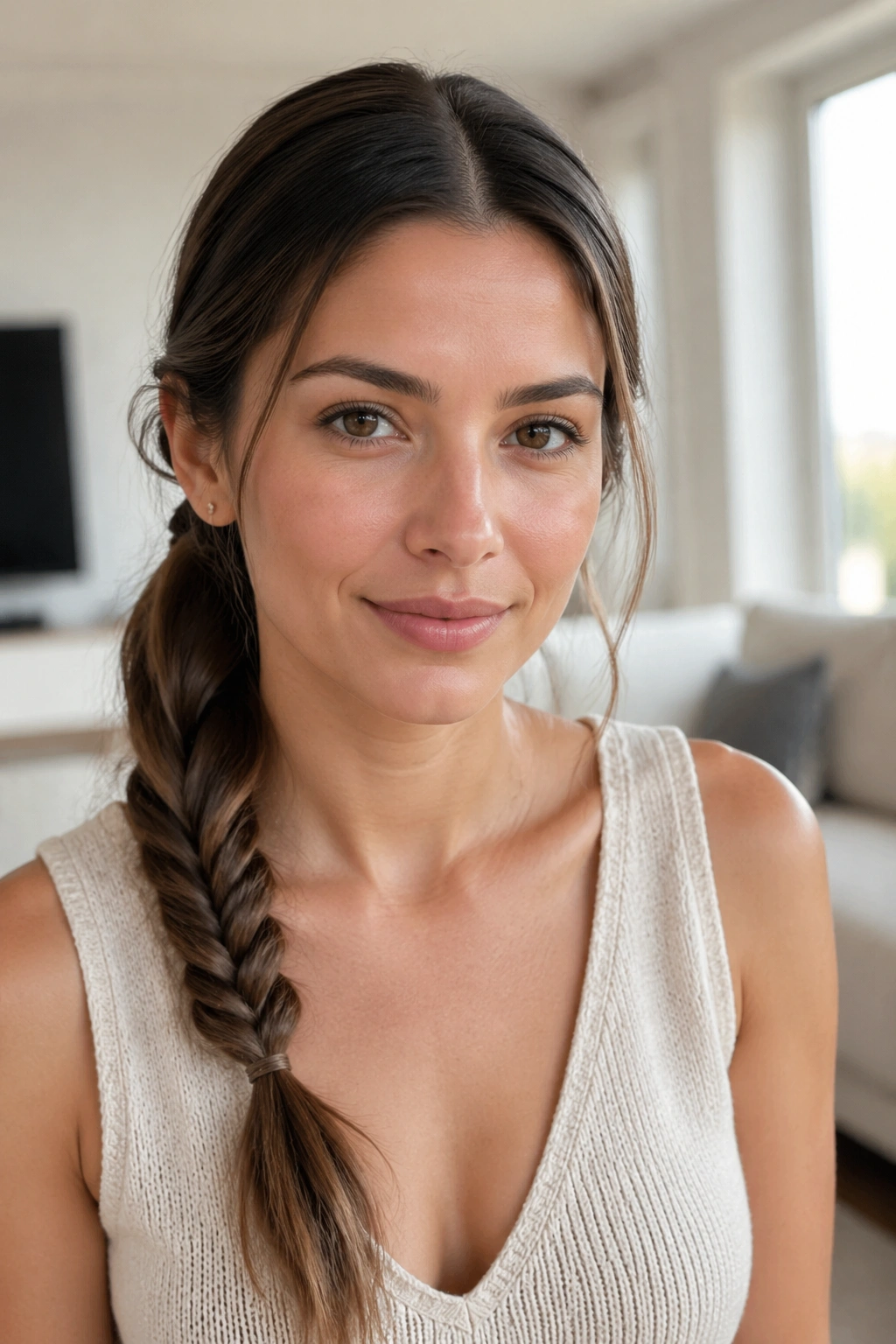
A center part can be tricky on a square face if everything else is sharp and tight. Pair it with a low fishtail ponytail, though, and the look becomes calmer. The fishtail adds texture, and the low placement keeps the face from feeling too long or too broad.
The key is to keep the ponytail at the hollow of the neck, not higher up. That spot gives the style a soft drop. If your hair is very straight, use a light wave through the tail before braiding so the fishtail has some movement.
This is a good choice when you want symmetry but not severity. The center part gives order, the braid gives detail, and the low placement keeps the whole thing from feeling like a school picture gone rigid.
21. High Ponytail with Mini Side Braids
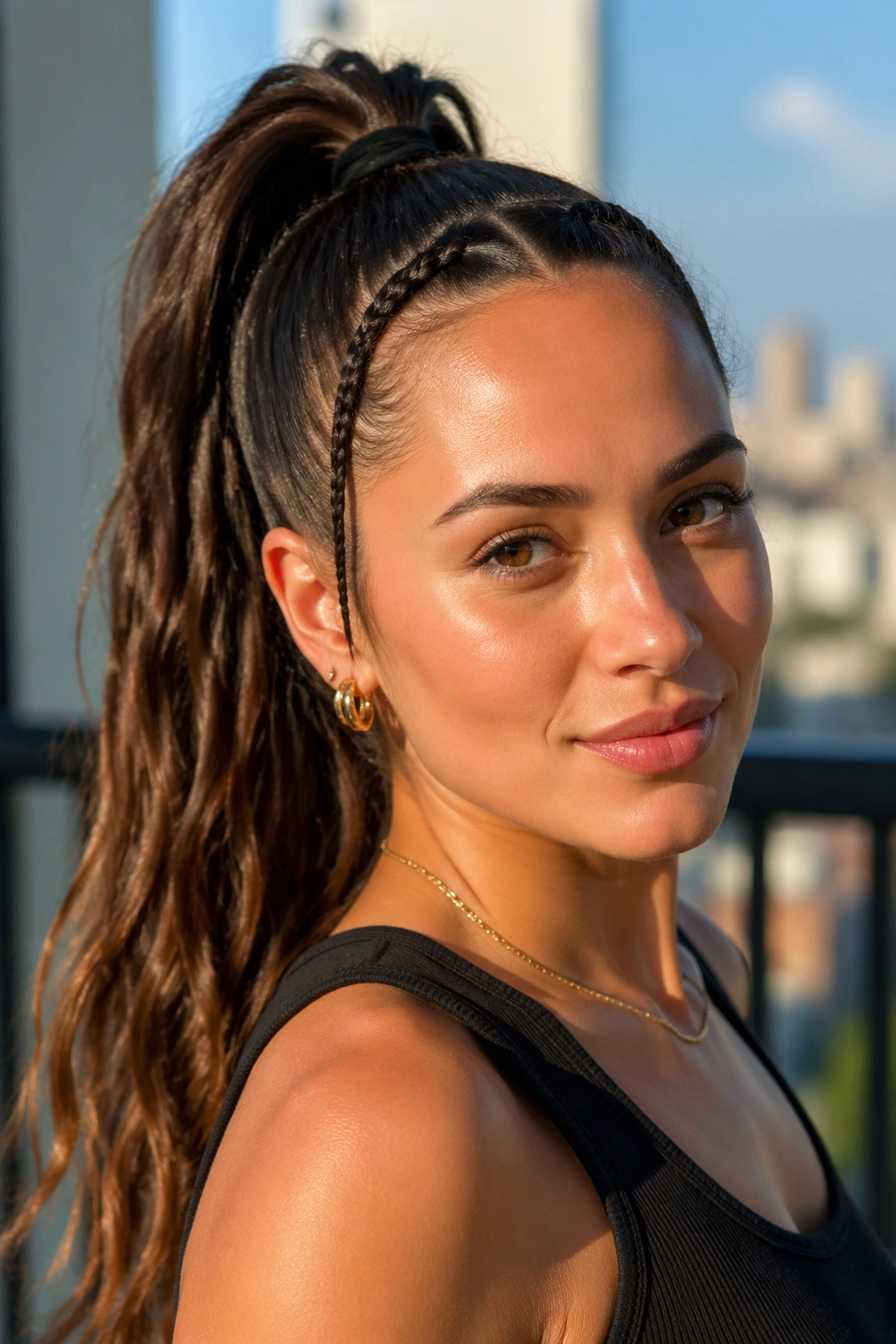
This is the ponytail that lets you cheat a little on the face-shape rules. The high placement lengthens the face, while the tiny side braids keep the hairline from looking too plain or too sharp.
Those mini braids should be narrow, maybe 1/2 inch wide, and placed close to the temples. They don’t need to be the star. They just pull the eye inward and upward before the ponytail starts.
This look works well with thick hair, long layers, or extensions, because the ponytail can carry the volume. If your hair is fine, backcomb the base a little and smooth the top layer over it. The style should feel playful, not stiff.
22. Side Braid Wrapped Ponytail
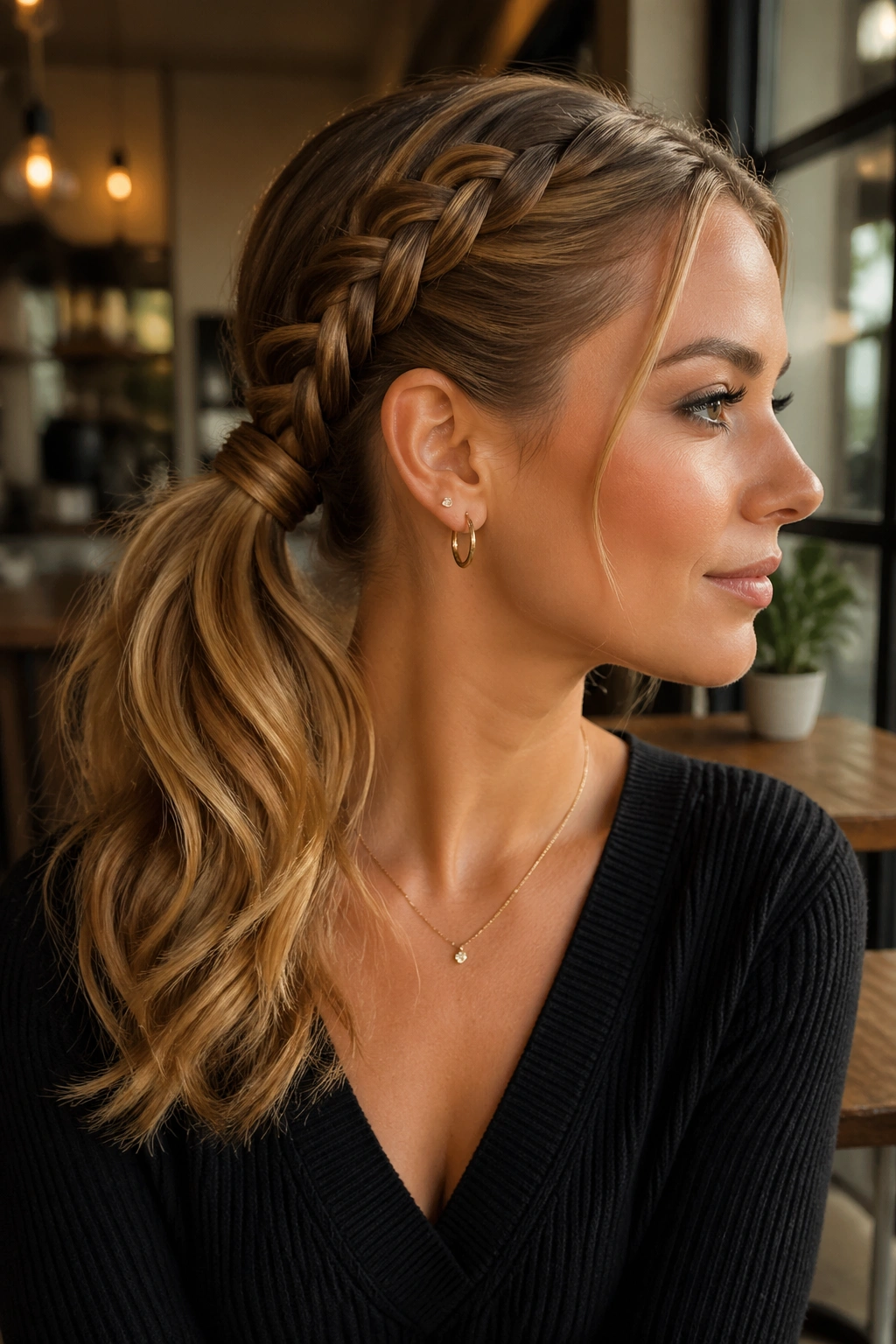
A side braid wrapped into a ponytail gives you built-in asymmetry, and asymmetry is one of the easiest ways to flatter a square face. The braid starts on one side, travels across the back, then wraps or pins into the ponytail base.
Why the asymmetry helps
The face stops reading as a straight box because the eye follows the braid’s path instead. That simple diagonal softens the jaw and keeps the style from feeling too centered or too blunt.
This version sits nicely at mid-low height and looks especially good with side-swept bangs or a deep side part. If you want one braid ponytail that can move from office to dinner without a change, this one does it.
23. French Braid Ponytail with Curtain Bangs
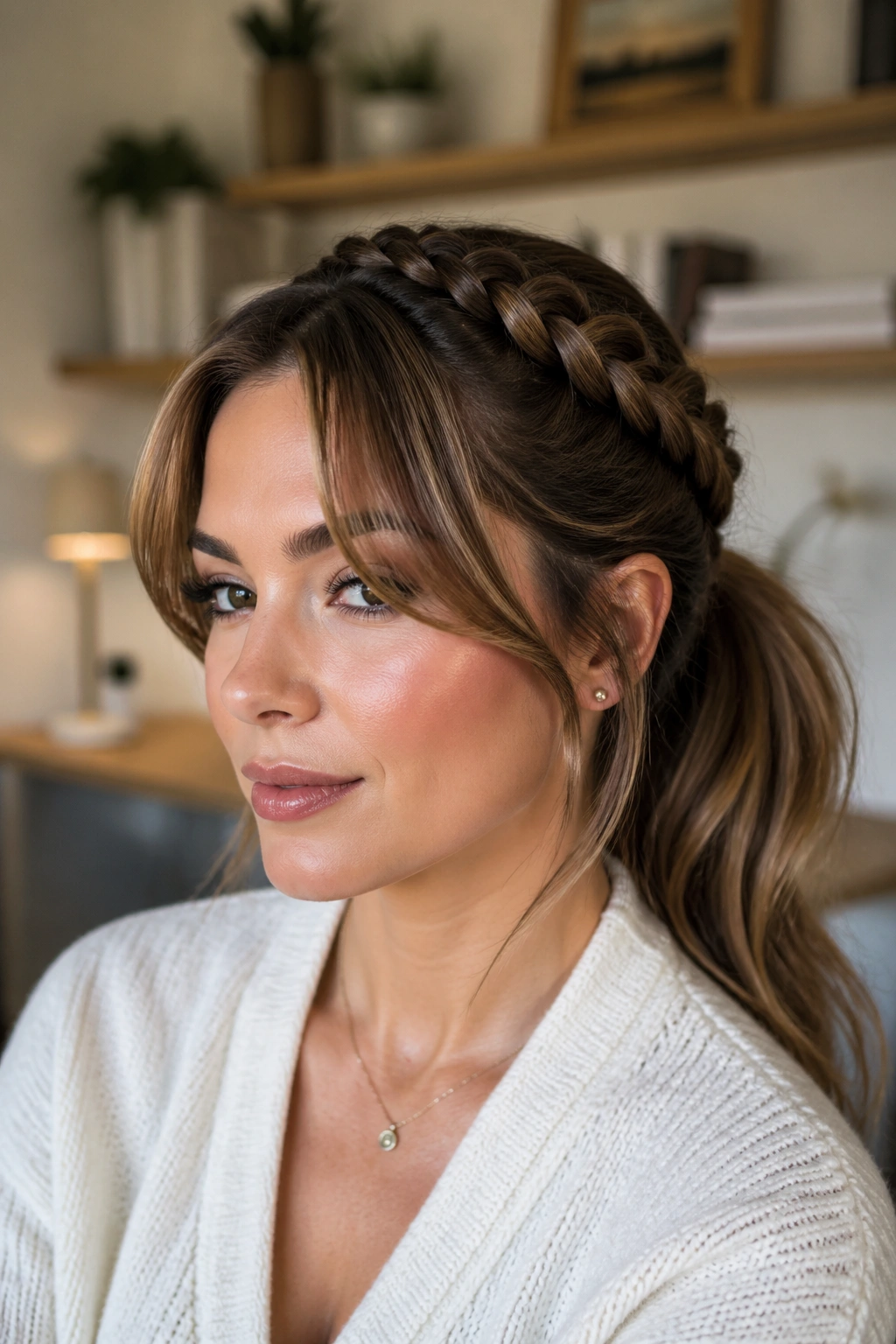
If you already wear curtain bangs, this style almost styles itself. The bangs soften the forehead, the French braid adds structure through the crown, and the ponytail keeps the length light enough for the face shape to breathe.
Start the braid just behind the bangs so the front stays soft. Then gather the braid into a ponytail at mid-height. You do not want the bangs and braid fighting for attention. One softens, one supports.
The best version of this look has a little movement near the cheekbones. If your bangs are longer, let them bend toward the jaw instead of hanging straight. That curve is the whole reason this combination works so well on square faces.
24. Textured Gym Braid Ponytail
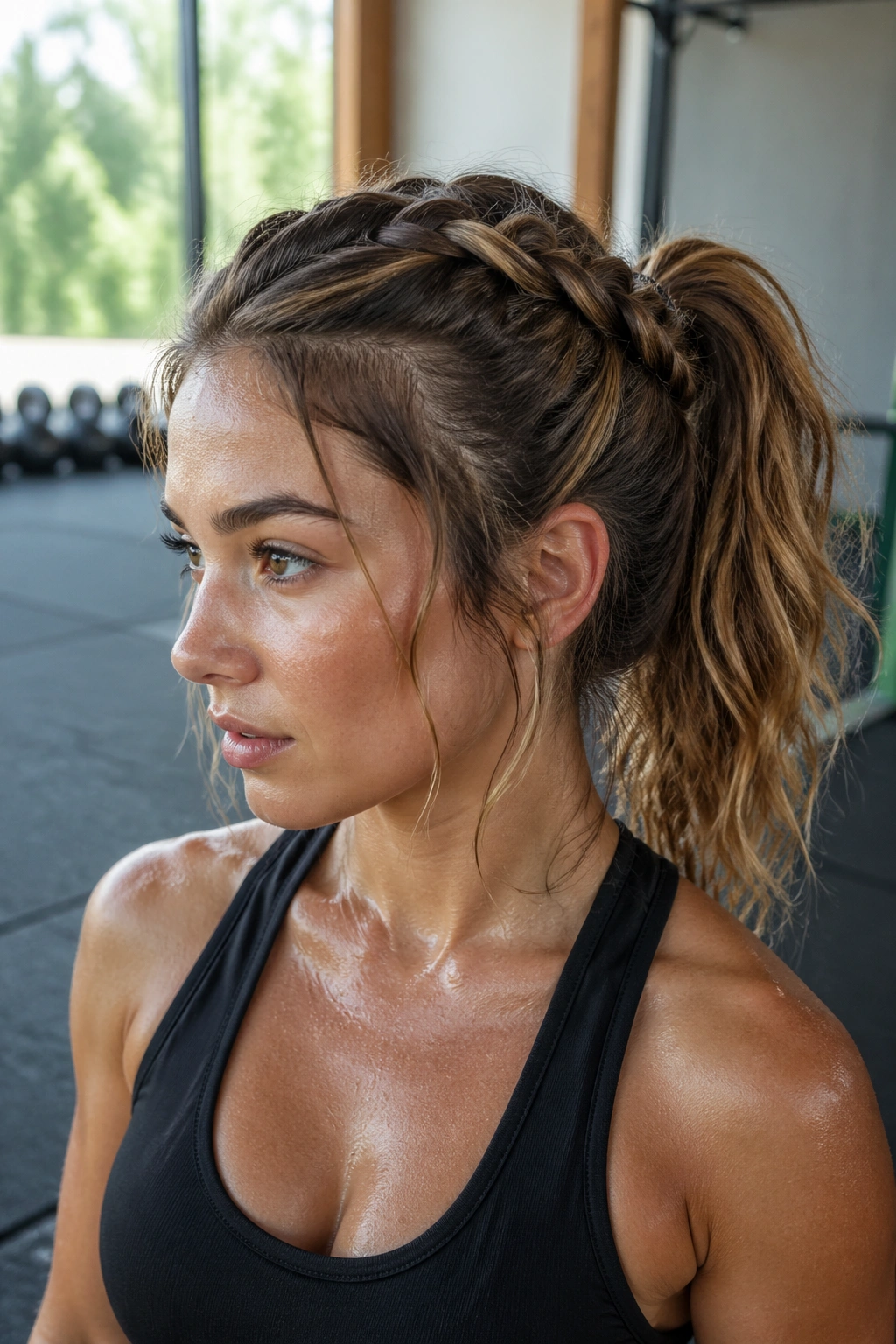
Second-day hair is not a problem here. It is the point. A textured gym braid ponytail needs a bit of grit at the roots so the braid stays lifted and the ponytail doesn’t collapse flat against the head.
Quick styling notes
- Spray dry shampoo at the roots, then rough it in with your fingers.
- Braid loosely enough that the scalp shows a little texture.
- Secure the ponytail at mid-height for balance.
- Pull one or two thin pieces loose around the temples if the face needs more softness.
This style is practical, but it still flatters a square face because the texture breaks up hard lines. It’s a good choice for active days, especially if your hair gets slippery fast.
25. Corset Braid Ponytail
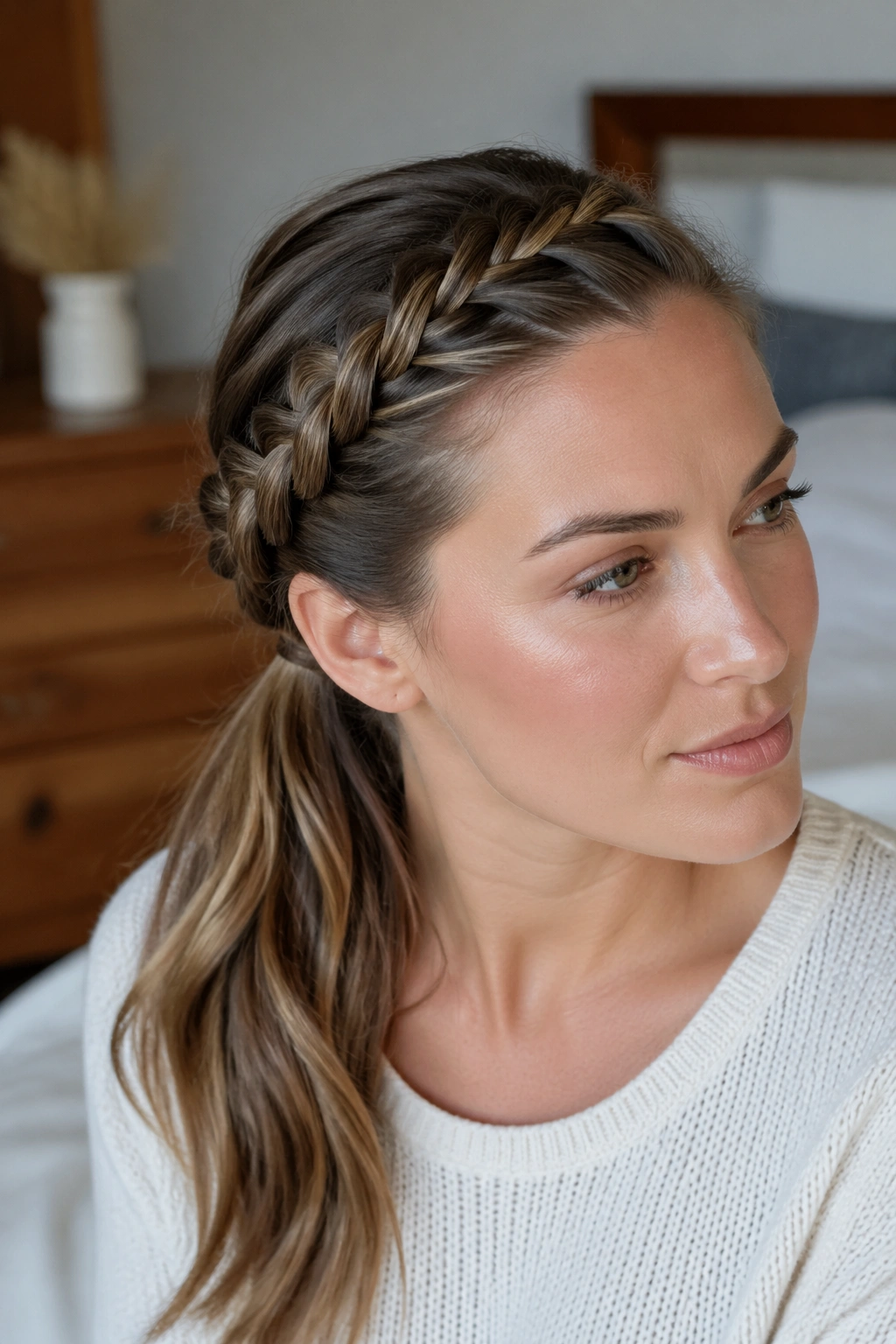
Corset braids are graphic. That is the point, and that is also the reason they need a little restraint on a square face. The crisscross detail already brings geometry, so the rest of the style should stay clean.
Keep the corset section centered or slightly off-center, then finish with a simple ponytail that doesn’t fight the braid. A low or mid-low placement usually looks best because it gives the eye a place to rest after the visual detail up top.
This is the style for days when you want something fashion-forward rather than soft. If your makeup or outfit already has a lot going on, keep the ponytail sleek. If the rest is simple, the braid can do more of the talking.
26. Spiral-Curl Braided Ponytail
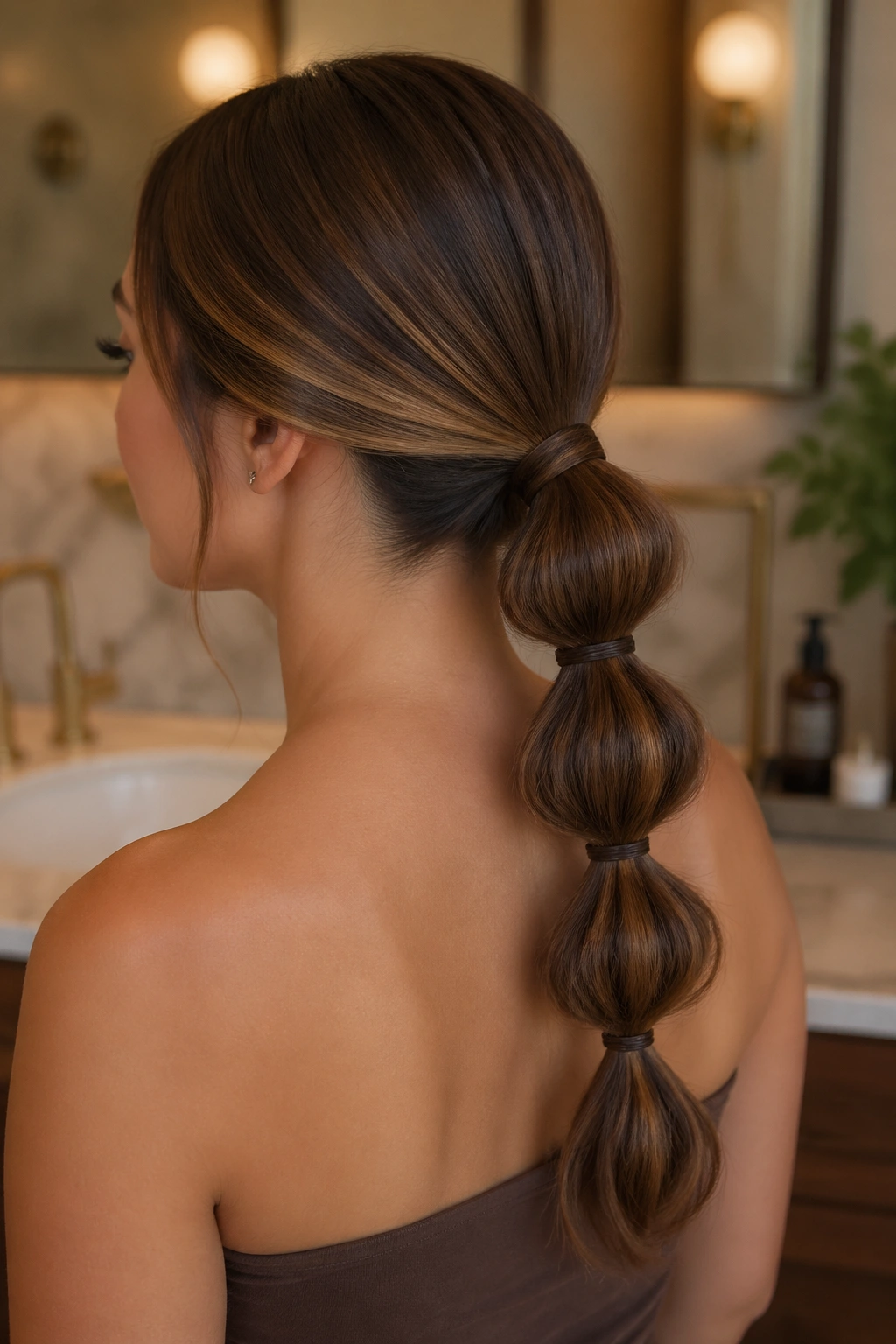
A spiral-curl ponytail brings in roundness from the end of the braid all the way down the tail, and roundness is exactly what helps a square face soften up. Start with a braid at the crown or along one side, then secure the rest into a ponytail and curl the length into loose spirals.
How to get the shape right
Use a 3/4-inch to 1-inch curling wand, depending on the length of your hair. Wrap each section for about 8 seconds, then let it cool in your hand before you touch it. That helps the curl hold instead of drooping into a wave right away.
This style looks especially good on long hair or clip-in extensions, because the spirals need enough length to show. It is romantic, but not precious. There’s a real softness to it, and square faces usually wear that well.
27. Soft Halo Braid Ponytail
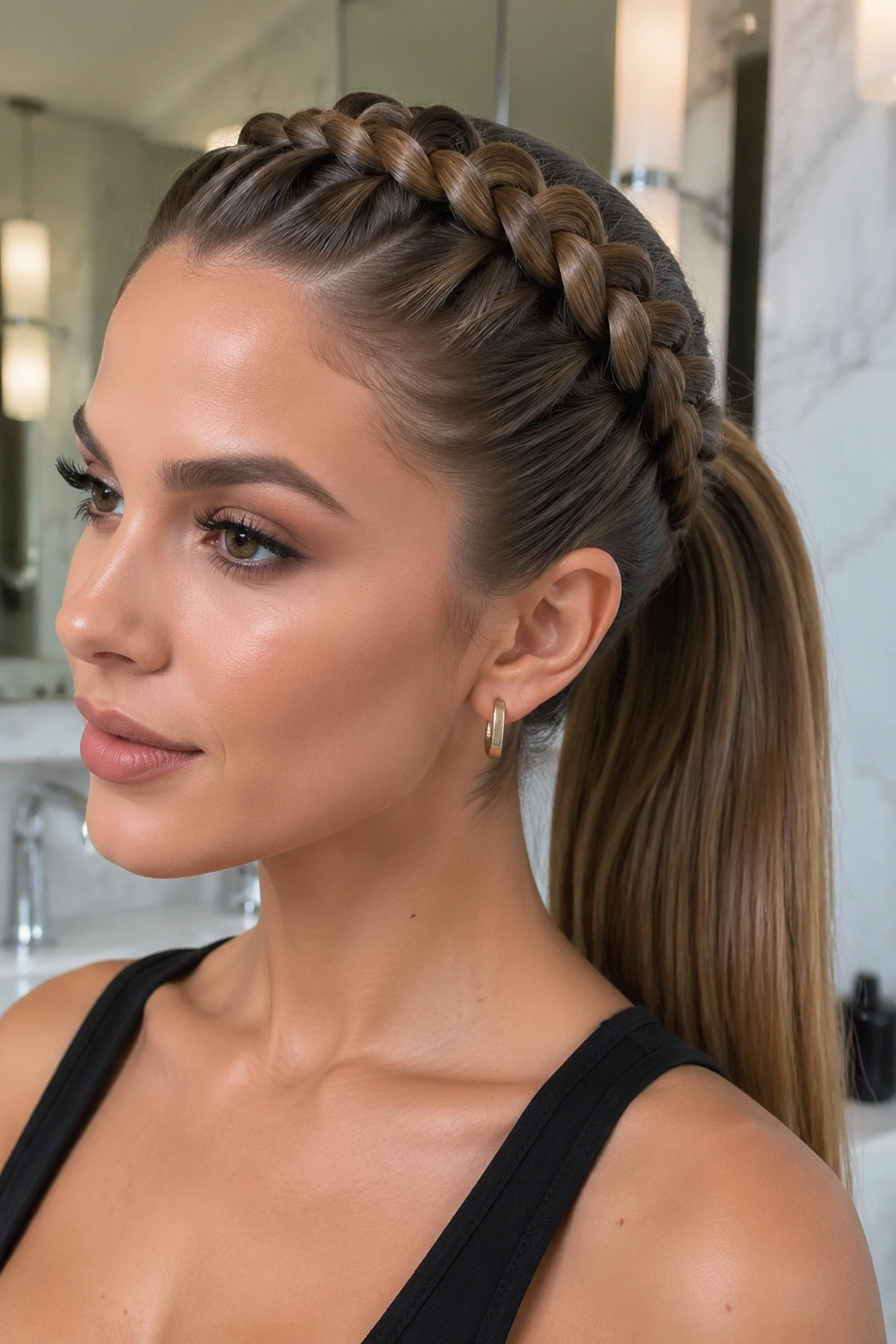
The soft halo version may be the prettiest of the bunch, but it earns its keep because it frames the face with a curve instead of a hard line. That curve matters when the jaw is angular and the forehead is broad enough to need a little balance.
Keep the halo braid loose around the hairline, then gather the remaining hair into a low ponytail at the back. The braid should feel like a frame, not a band. If you want the style to look less formal, leave two thin pieces near the temples and bend them once with a curling iron.
If one braid ponytail deserves a regular spot in a square-faced woman’s rotation, it’s this one. It’s soft, balanced, and easy to dress up or down without losing the shape that makes it flattering.