



Rope braids for beach wedding brides solve a very specific problem: you want hair that looks soft in photos, but does not collapse the second the wind starts messing with it.
That’s why I like them so much. They have shape, but not the stiff, shellacked feel that some bridal styles end up with after too much spray and too many pins. A rope braid — really a two-strand twist — gives you that corded, sculpted look without asking your hair to behave like it’s sitting still in a studio.
Beach weather changes the rules. Salt air can puff up the cuticle, humidity can blur clean lines, and even a gentle breeze can turn loose curls into a tangled mess. A good rope braid works with that environment instead of fighting it. It can look polished, but it still has movement, which is exactly what a shoreline ceremony calls for.
The tricky part is choosing the right version. Some rope braids need more grip at the crown. Some want soft ends. Some work best with a veil, while others look better when the dress and earrings are doing most of the talking. The styles below lean into those differences instead of pretending one braid fits every bride.
1. The Low Rope Braid Bun That Keeps the Nape Clean
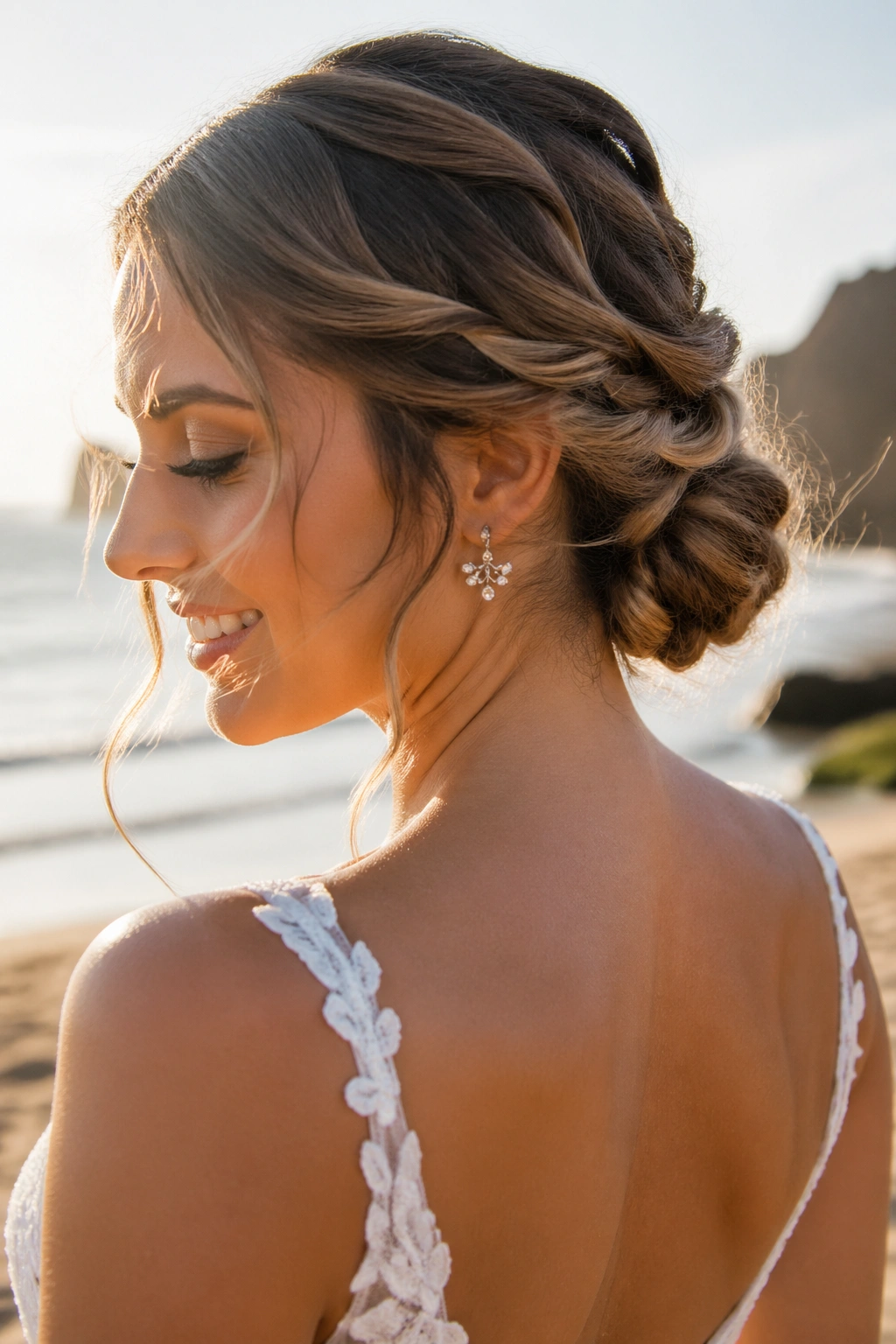
A low rope braid bun is the style I’d put at the top of the list when the ceremony is near actual sand, not just a pretty boardwalk.
It keeps the nape open, which matters more than people think. The back of the neck gets warm fast, especially if the ceremony runs long or the dress has a high collar, and a low bun avoids that sticky, fussy feeling that can make a bride want to take pins out halfway through dinner.
Why It Works at the Coast
The braid starts low, so the wind has less hair to grab. That alone makes a difference. Once the twisted lengths are wrapped into a bun, the shape holds better than a loose chignon, and it still looks soft if a few ends peek out.
- Best on medium to long hair
- Works well with a fingertip amount of smoothing cream at the roots
- Needs 4 to 6 bobby pins crossed in opposite directions
- Looks clean under a short veil or a comb placed above the bun
My tip: leave the bun slightly off-center if the dress has a one-shoulder neckline or a big earring moment on one side. Small shift, better balance.
2. A Side-Swept Rope Braid That Moves with the Wind
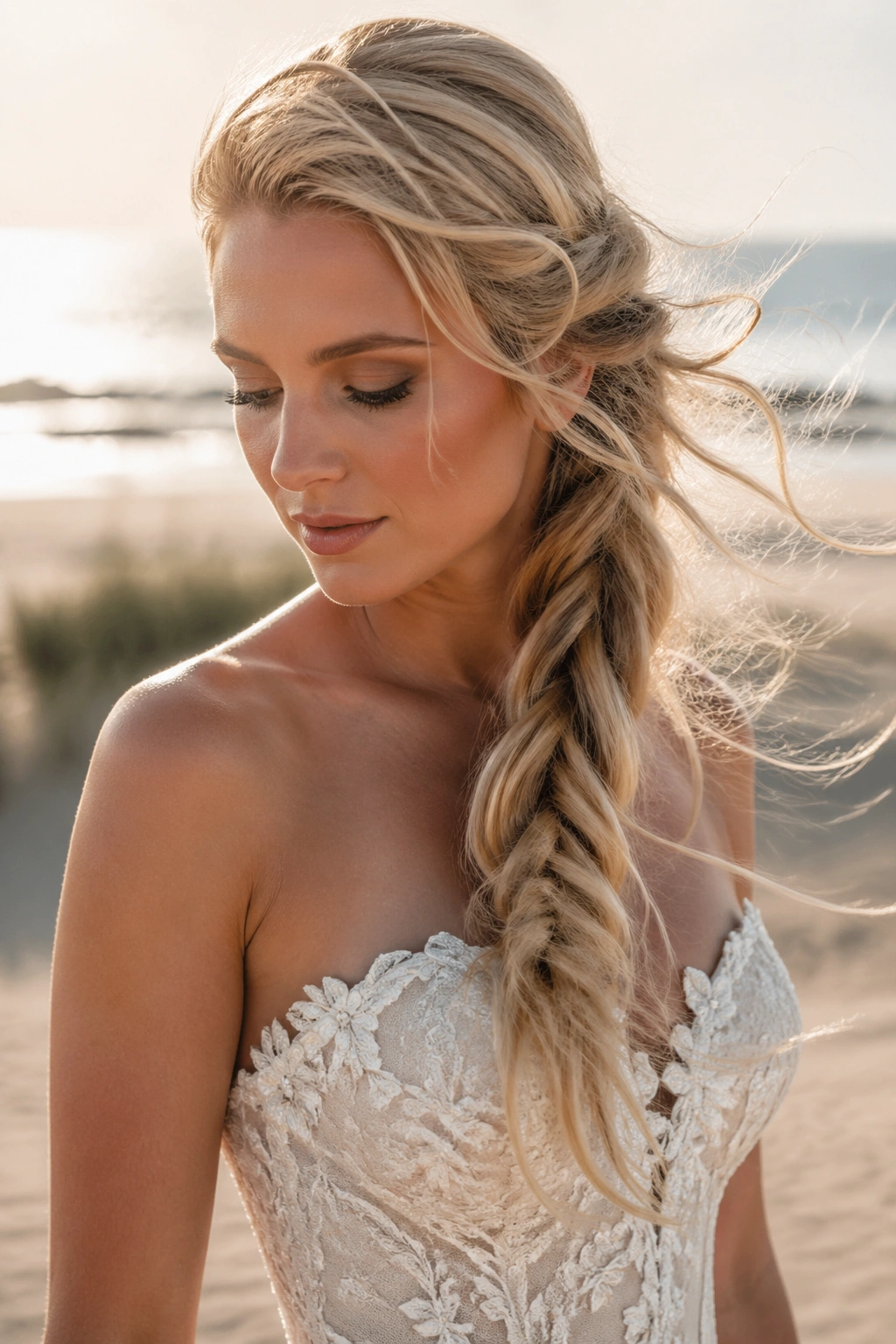
A side-swept rope braid is for brides who want to feel a little romantic without looking overdone.
This one sits over one shoulder, which gives the whole style a sense of motion. It also plays nicely with beach light. Hair over one side of the body creates a line that feels softer than a straight-down style, and that matters when the dress already has a lot going on at the bodice or hem.
I like this choice for brides who want their hair down but not loose. You get the comfort of wearing hair off one ear and down the other side, while the braid keeps the length from turning into a windy knot before the vows. If the hair is very fine, a little backcombing at the crown helps the braid stay full instead of flat.
The finishing touch is where most people go wrong. Don’t bury the whole braid in shine serum. That makes the hair slip and can flatten the twist. A light mist of flexible hold spray on the finished braid is enough, and it keeps the texture visible instead of greasy.
3. Half-Up Rope Twists with Soft Waves
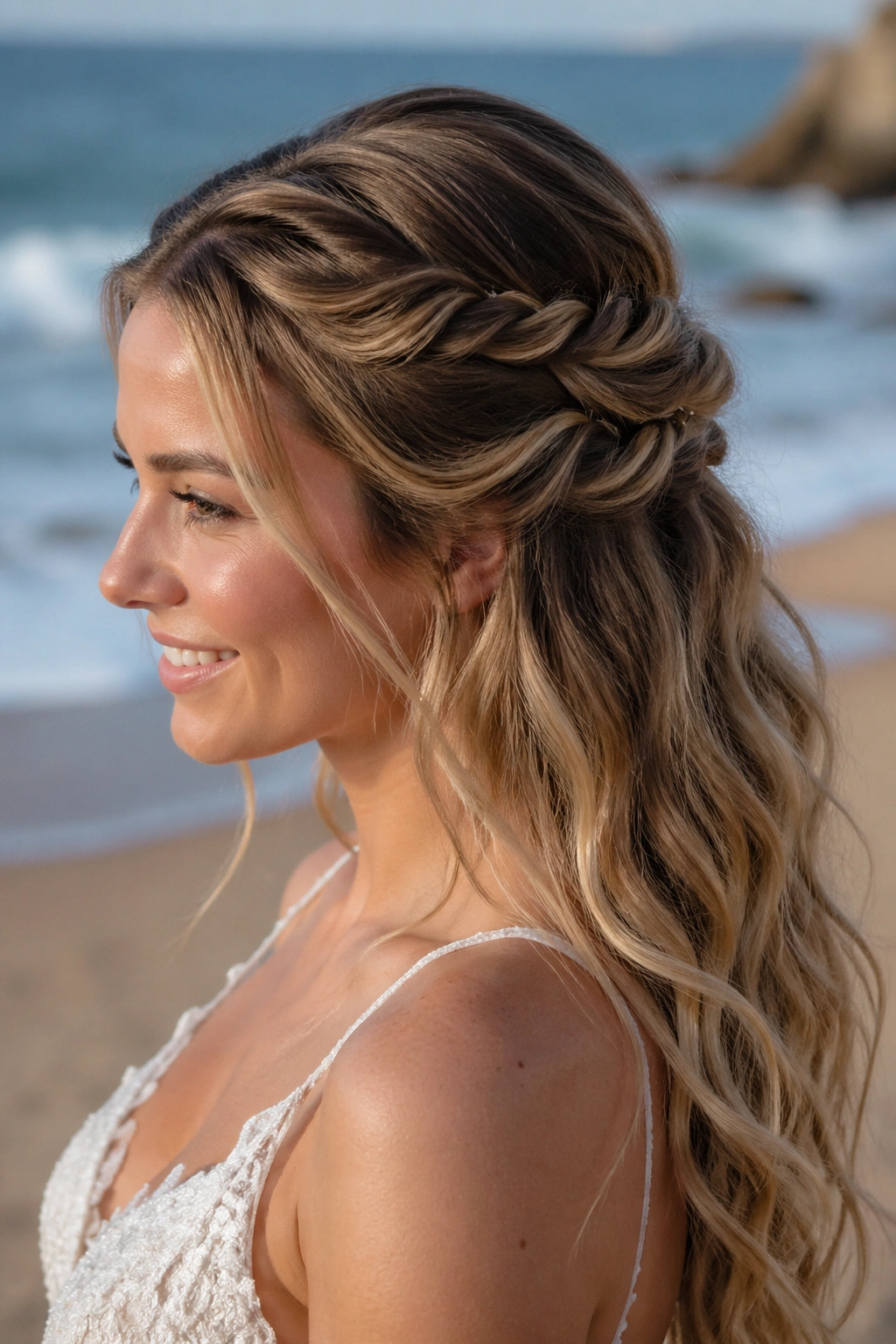
Why do half-up rope twists work so well for beach wedding brides? Because they give you shape at the top and softness at the bottom, and that mix is hard to beat.
The crown stays controlled, which means you are not constantly tucking hair behind your ears. The lengths stay loose, which means the style still feels airy and not too formal. It’s a good middle ground for brides who want movement but do not want hair falling into their lipstick every time they laugh.
How to Keep the Crown from Slipping
The top section needs more grip than people expect. Beach air can make freshly curled hair feel slippery, so a little dry texture spray at the roots helps the rope twists stay put. I also like a small clear elastic at the base of each twist before pinning them back.
- Curl the lower lengths in 1-inch sections for soft wave, not tight curl
- Twist the top sections away from the face for a cleaner front view
- Pin each side into the back with two bobby pins in an X shape
- Leave the bottom half loose enough to move, but not so loose that it tangles in humidity
This is a very good choice if you plan to wear earrings. The half-up shape shows them off without competing.
4. A Rope Braid Crown That Frames the Face
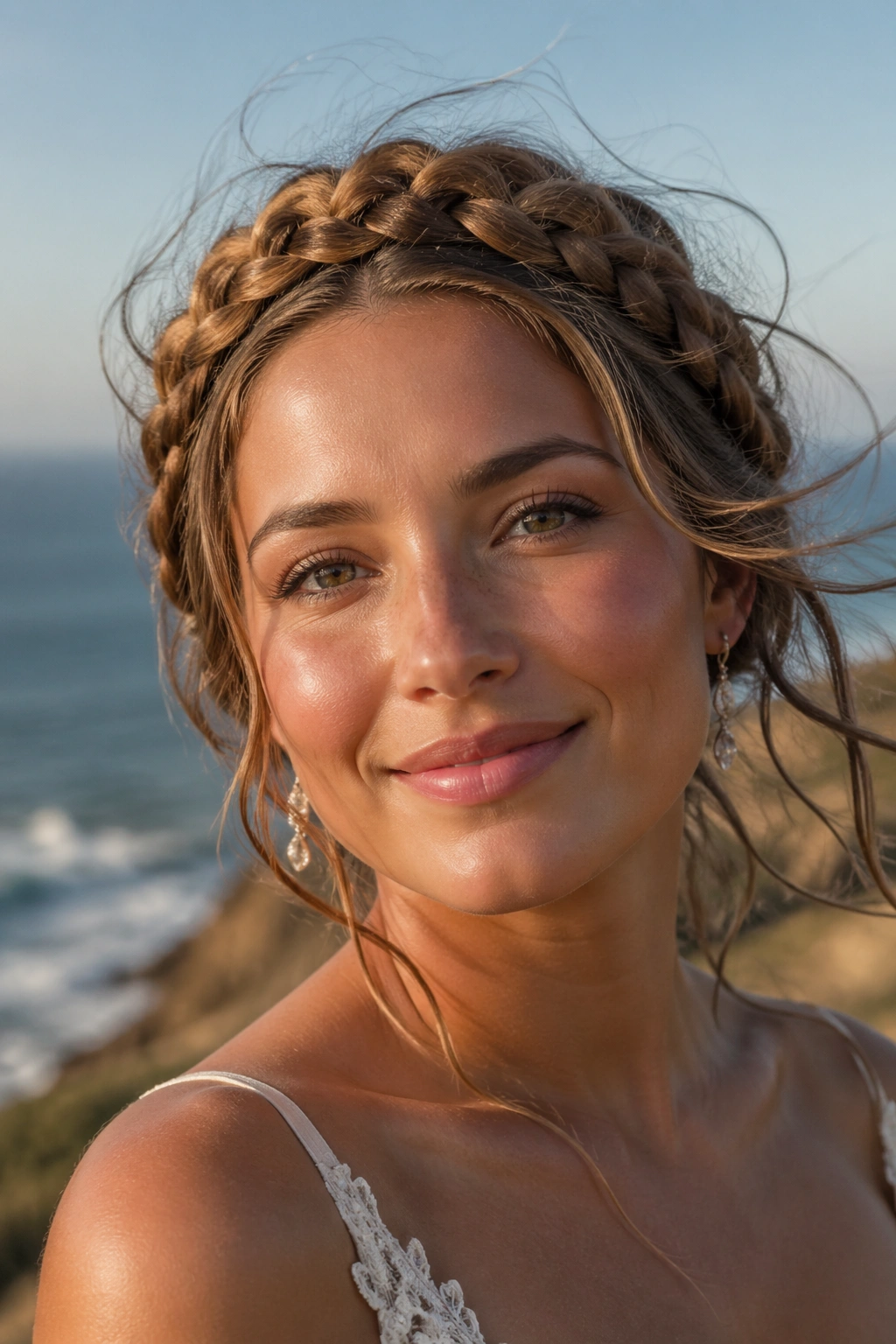
A rope braid crown is the style that saves you when the beach wind refuses to be polite.
Picture a ceremony on a bluff or a deck with a breeze coming straight off the water. Loose strands start flying around. Lip gloss is half an inch from disaster. The crown braid keeps the front of the hair anchored, which means the face stays open and the bride looks composed even when the weather is not helping.
This style sits around the head like a soft band, but it should never feel tight. Too much tension gives the face a pulled look, and nobody wants that on a day when they’re smiling in every direction at once. A better version keeps the braid close to the hairline, then gently loosens the outer edges with your fingers so it has a bit of width.
A few face-framing pieces around the temples keep it from looking severe. That little softness matters. Without it, the crown can start to feel costume-like, especially if the dress is plain and the makeup is minimal.
5. Two Rope Braids Rolled into a Low Knot
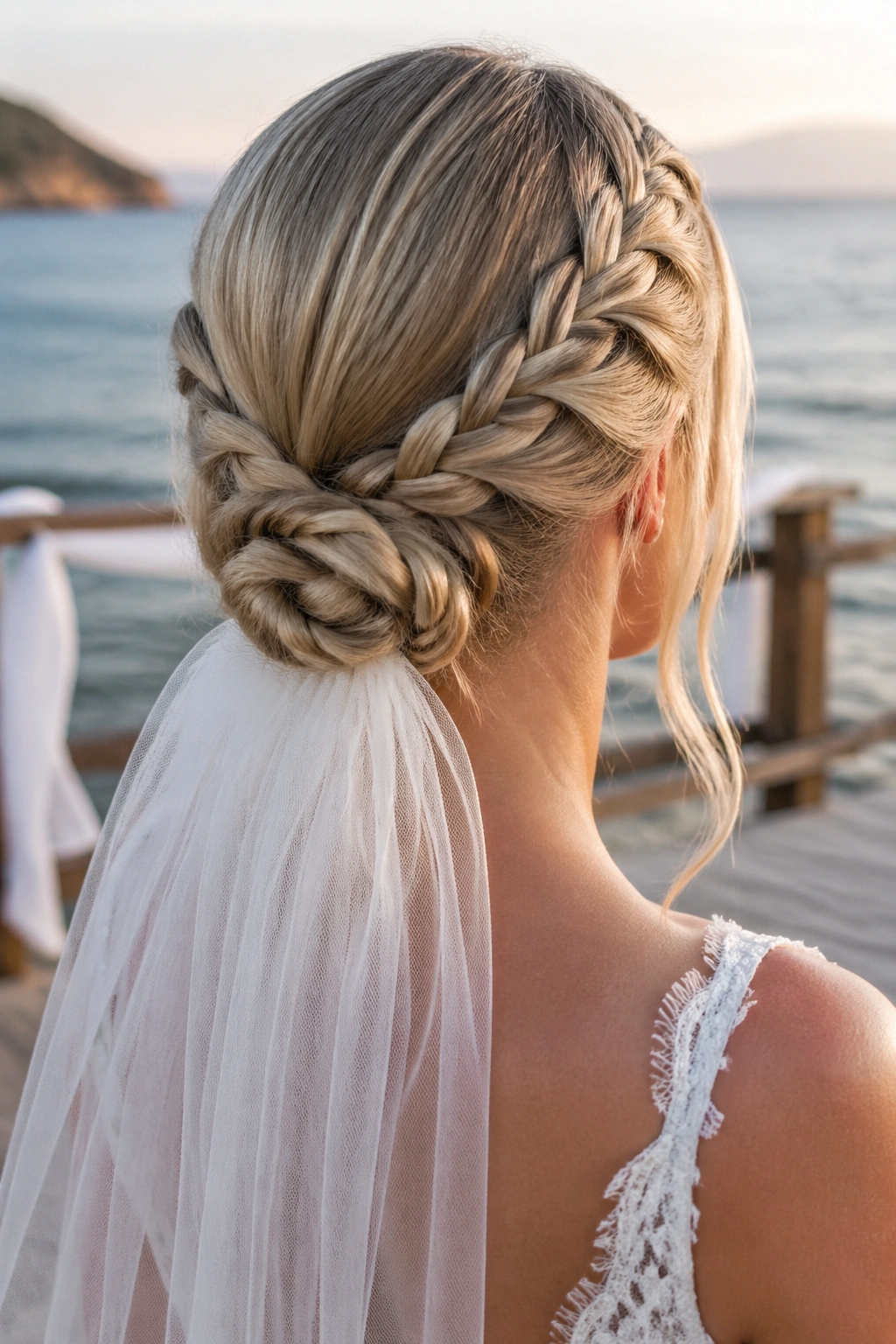
This is the style I reach for when the dress already has drama.
Two rope braids can start from either side of a center part or from just behind the temples. Once they’re twisted down, they get rolled into a low knot at the back. The result feels tidier than a single loose braid and less formal than a perfect bun. It has structure, but not stiffness.
What I like most is the way it handles thick hair. A single braid can get bulky fast, and a lot of brides with dense hair know that feeling of a style becoming too heavy halfway through the evening. Splitting the hair into two rope braids spreads the weight out. That makes the knot sit flatter against the head and helps the pins do less work.
It also plays well with a heavier veil. The knot gives the comb something solid to rest against, and the braid texture hides pin marks better than smooth hair does. If you want pearl pins, tuck them along one curve of the knot instead of scattering them everywhere. A few well-placed pins beat a dozen random ones.
6. A Pull-Through Rope Braid Ponytail for Extra Texture
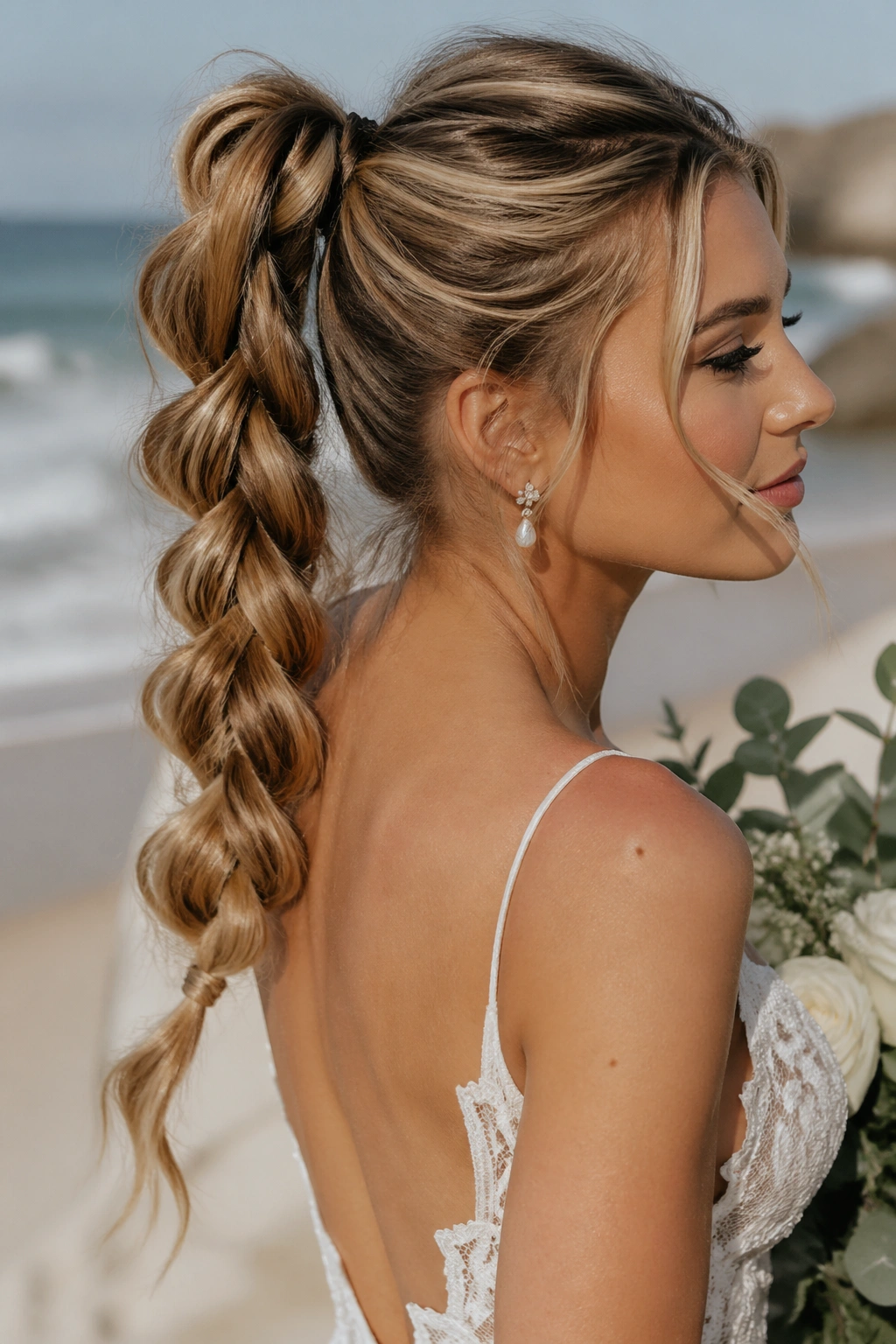
A pull-through rope braid ponytail gives you height, movement, and a little more edge than a standard bridal braid.
It’s a smart option for brides who want their hair to feel lively in motion. Every section has visible shape, so the ponytail keeps looking full from the front and the side. That matters during beach weddings because the profile view tends to show up in a lot of photos, especially when people are walking, turning, or standing near the water.
What to Tell Your Stylist
Ask for a secure base at the crown first. That can be a small ponytail, a padded lift, or a lightly teased section depending on how much volume you want. Then the rope sections can be built down the length with small elastics every 2 to 3 inches.
- Best for medium to very long hair
- Strongest when each section is lightly roughened first
- Looks fuller if the braid is pulled apart slightly after finishing
- Needs hidden elastics that match your hair color
This is not the softest option on the list. It’s a little more styled, a little less dreamy. But if your dress is sleek, the contrast works.
7. A Twisted Rope Braid Chignon with Pearl Pins
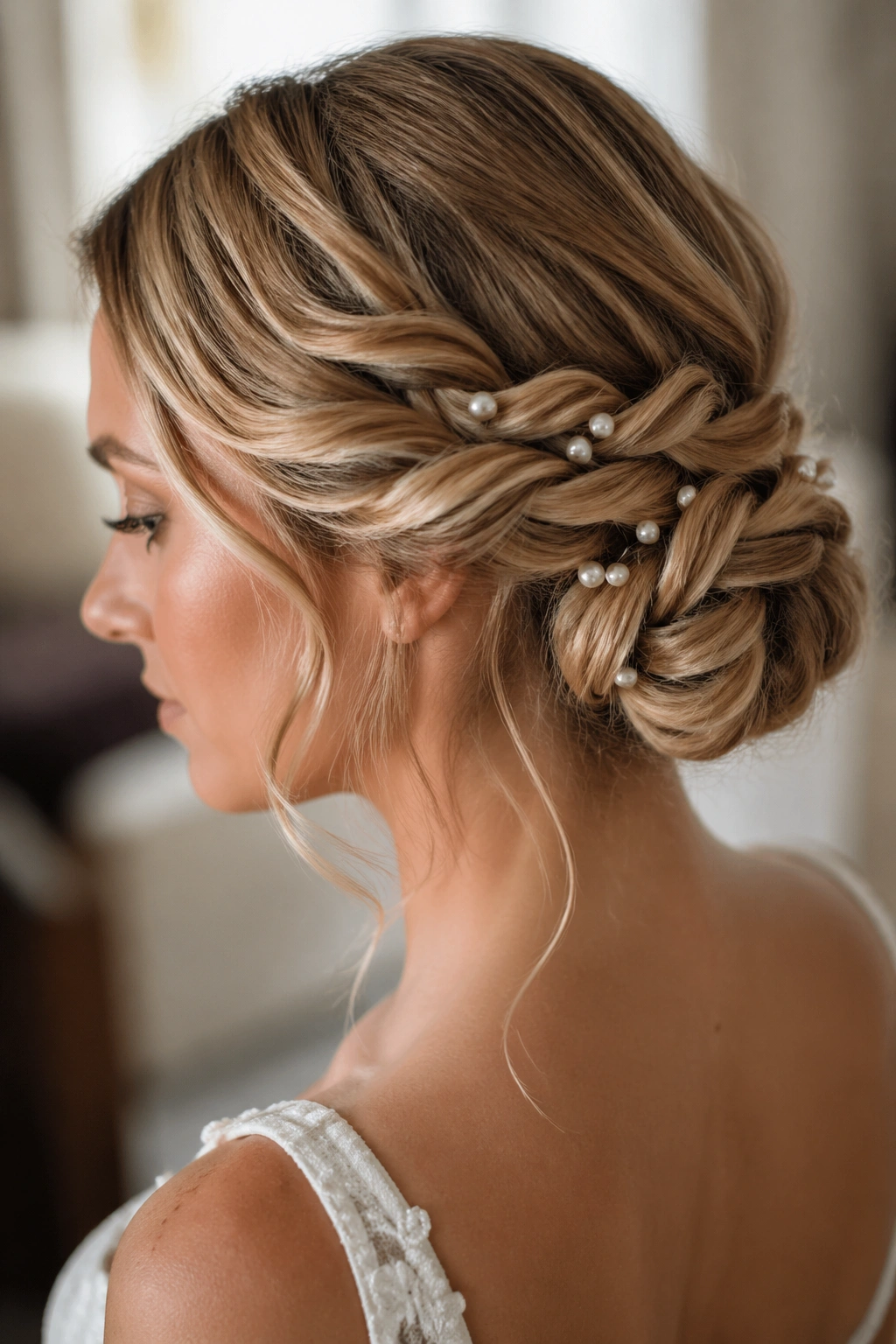
A twisted rope braid chignon feels polished without turning fussy, which is a rare thing in bridal hair.
The hair gets twisted into rope sections, wrapped into a low chignon, and then finished with pearl pins or tiny comb accents. I like this one for dresses with clean lines, satin fabric, or square necklines. The braid detail gives the style enough texture to keep it from looking plain, while the chignon keeps the silhouette neat.
Where the Pearls Should Go
Keep the embellishment small and deliberate. Three to five pins can be enough if they’re placed where the braid curves around the knot. More than that starts to look crowded, especially if the dress already has beadwork or a jeweled bodice.
What to Skip
Skip oversized floral clips here. They fight the shape of the chignon and can make the braid look like an afterthought. If you want ornament, go with pins, combs, or one narrow vine-style piece tucked low on one side.
This braid works well for brides who want to look composed from every angle. It stays tidy through hugs, photos, and long dinner tables. No drama. Good.
8. A Rope Braid Halo with Loose Face Pieces
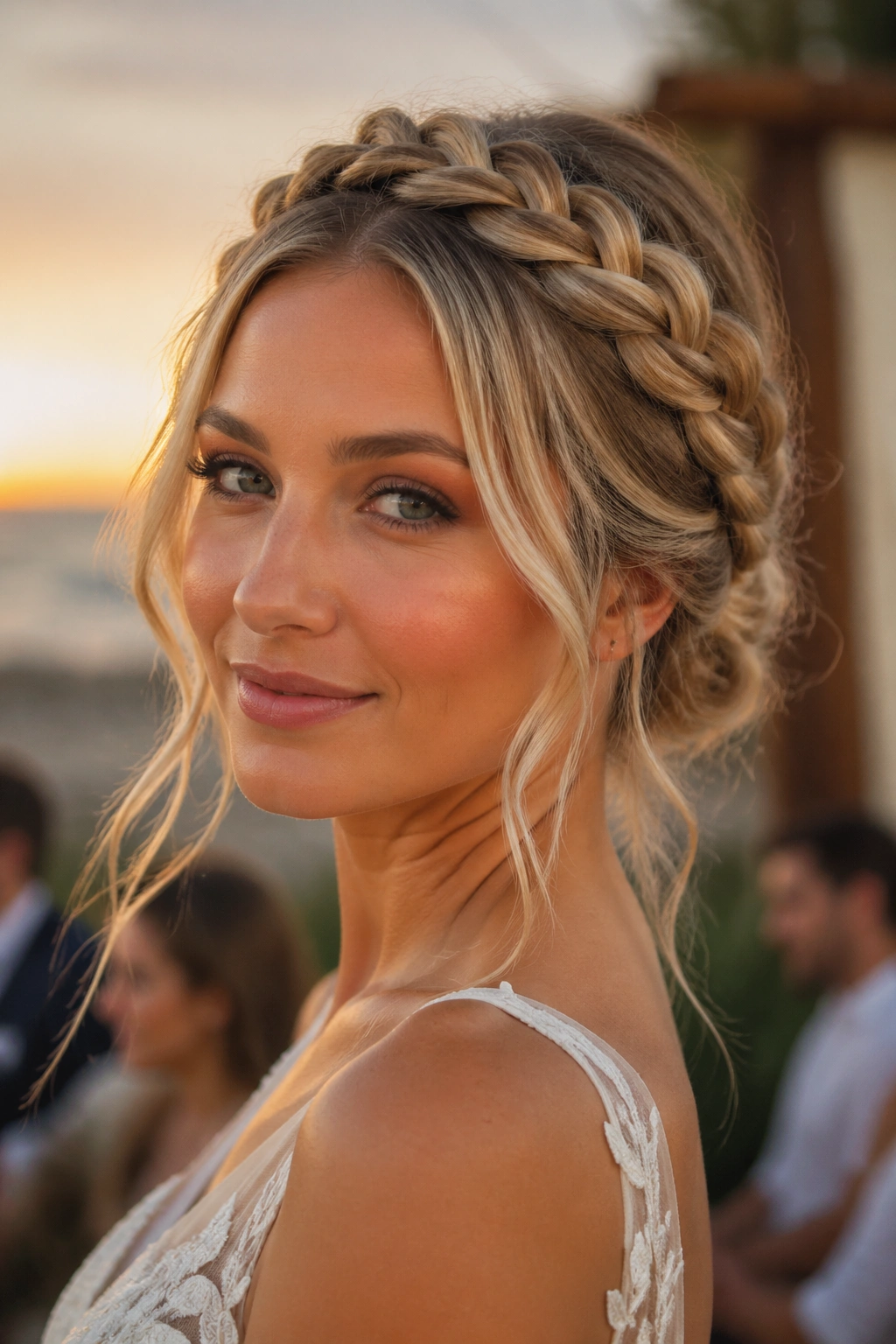
A rope braid halo is softer than a crown and a little more relaxed around the edges.
That difference matters. A halo sits lower and wraps farther around the head, which gives the hairstyle a gentler frame. It is a lovely choice when the bride wants the hair to feel intentional but not formal, especially with a breezy dress or bare shoulders.
I’ve always liked this style for sunset ceremonies because it catches the eye without taking over the whole look. The loose pieces near the jawline keep it from feeling too tight, and they also help if the face shape is angular or the features are strong. A few wisps near the cheeks soften the outline in a way that flatters almost everyone.
The trick is not to over-loosen it. A halo braid that gets pulled apart too much can lose the shape that makes it appealing in the first place. Keep the edges soft, yes. But leave the backbone intact. That way the braid still looks like a braid, not a half-finished idea.
9. A Waterfall Rope Braid with Free Ends
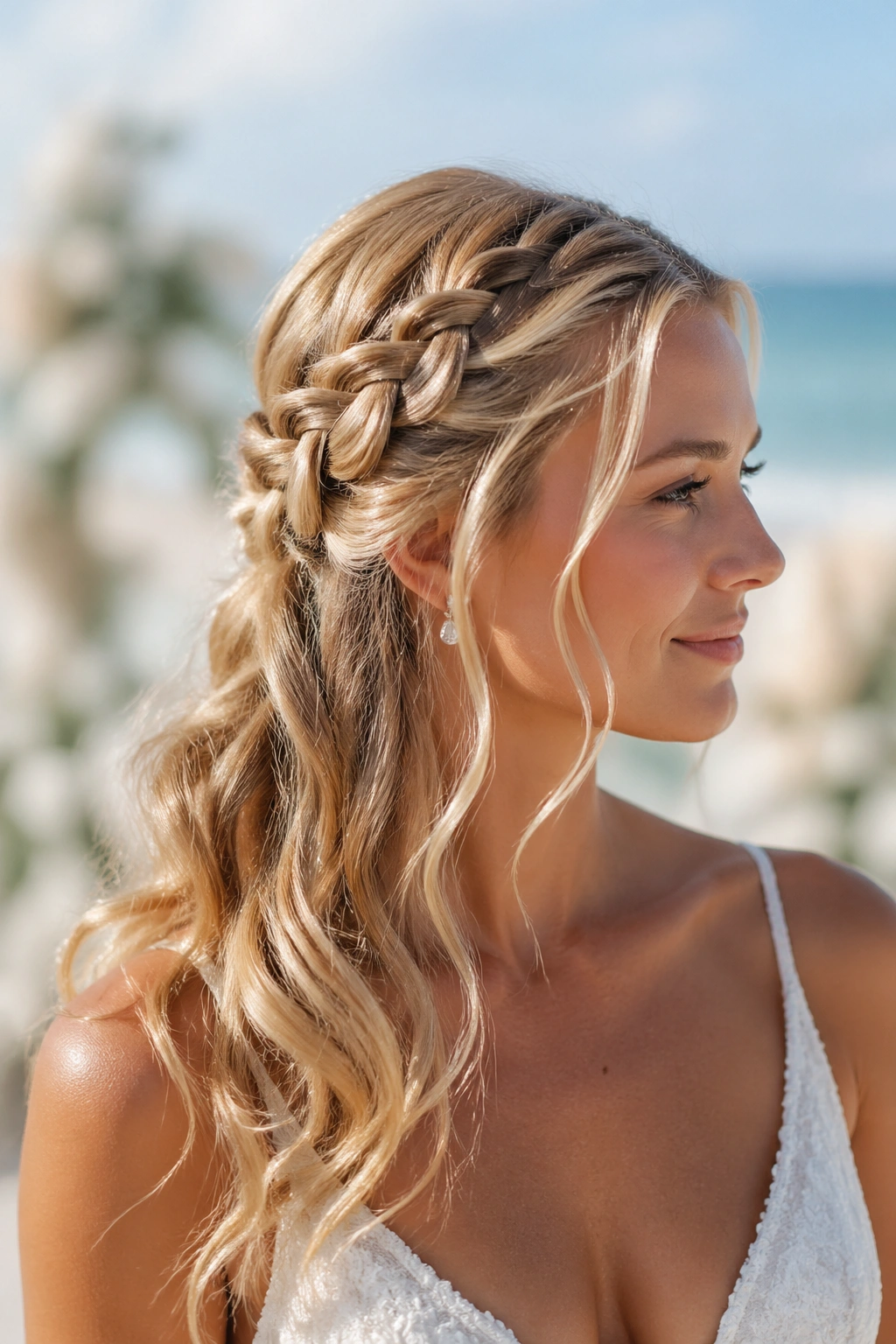
Why does a waterfall rope braid look so easy when it takes a fair amount of control?
Because the braid gives the illusion of movement without leaving everything loose. Pieces release into the rest of the hair, so the style feels light and a little undone, but the structure keeps it from sliding into chaos. For brides who want beachy softness without full boho mess, that’s a useful middle path.
The style works best when the released sections are curled first. Straight pieces can stick out in odd ways, especially if the hair is layered. A soft bend through the lengths makes the waterfall effect flow better and keeps the ends from looking harsh in profile.
How to Keep the Drop Section Neat
- Use a ¾-inch iron or wand for the released strands
- Secure each rope twist with a tiny clear elastic before letting a section fall
- Pin the braid base firmly behind the ear or temple
- Mist the finished style with a flexible spray, not a crunchy one
I like this style for brides who want detail near the face. It gives the front of the hairstyle a little architecture, which helps when the rest of the dress is simple.
10. A Rope-Braided Mohawk for Bold Dresses
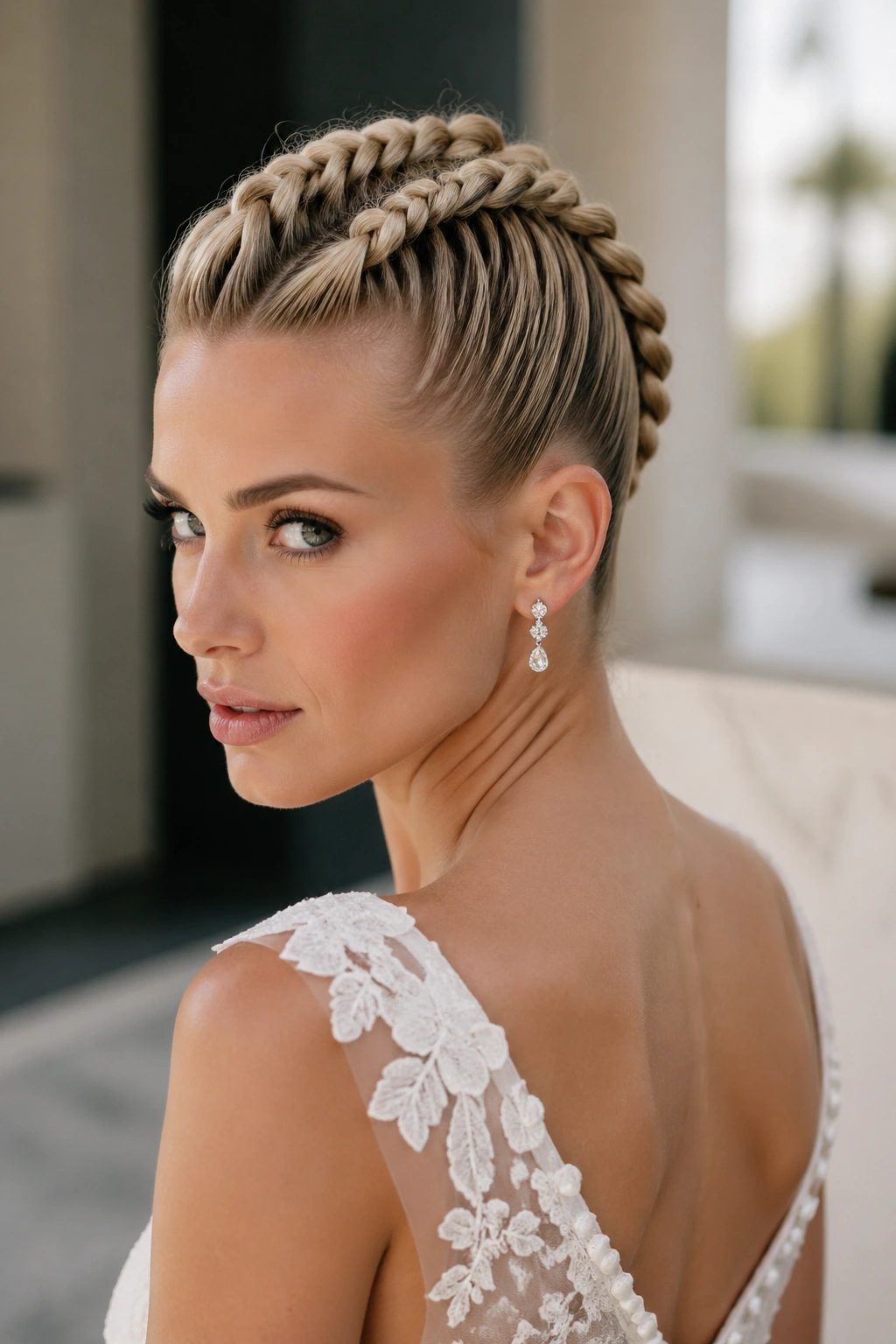
A rope-braided mohawk is not shy. That’s the point.
The sides get smoothed back, while one or two rope braids run through the center from the front hairline toward the nape. It creates lift, height, and a strong line through the middle of the head. If the dress has a dramatic back, a sculpted neckline, or sharp shoulders, this style can look sharp in the best way.
I think this one works especially well for brides who like a clean side profile. The ears stay more visible, the jawline stays open, and statement earrings have room to breathe. It also holds up surprisingly well in wind because the style is anchored close to the head. There is less hair hanging loose to catch the air.
It does ask for confidence. You can’t hide behind it. If you want hair that feels soft and sleepy, this isn’t the one. If you want something with shape and a little edge, though, it has real presence without feeling overly styled.
11. A Rope Braid Updo Anchored for Veils
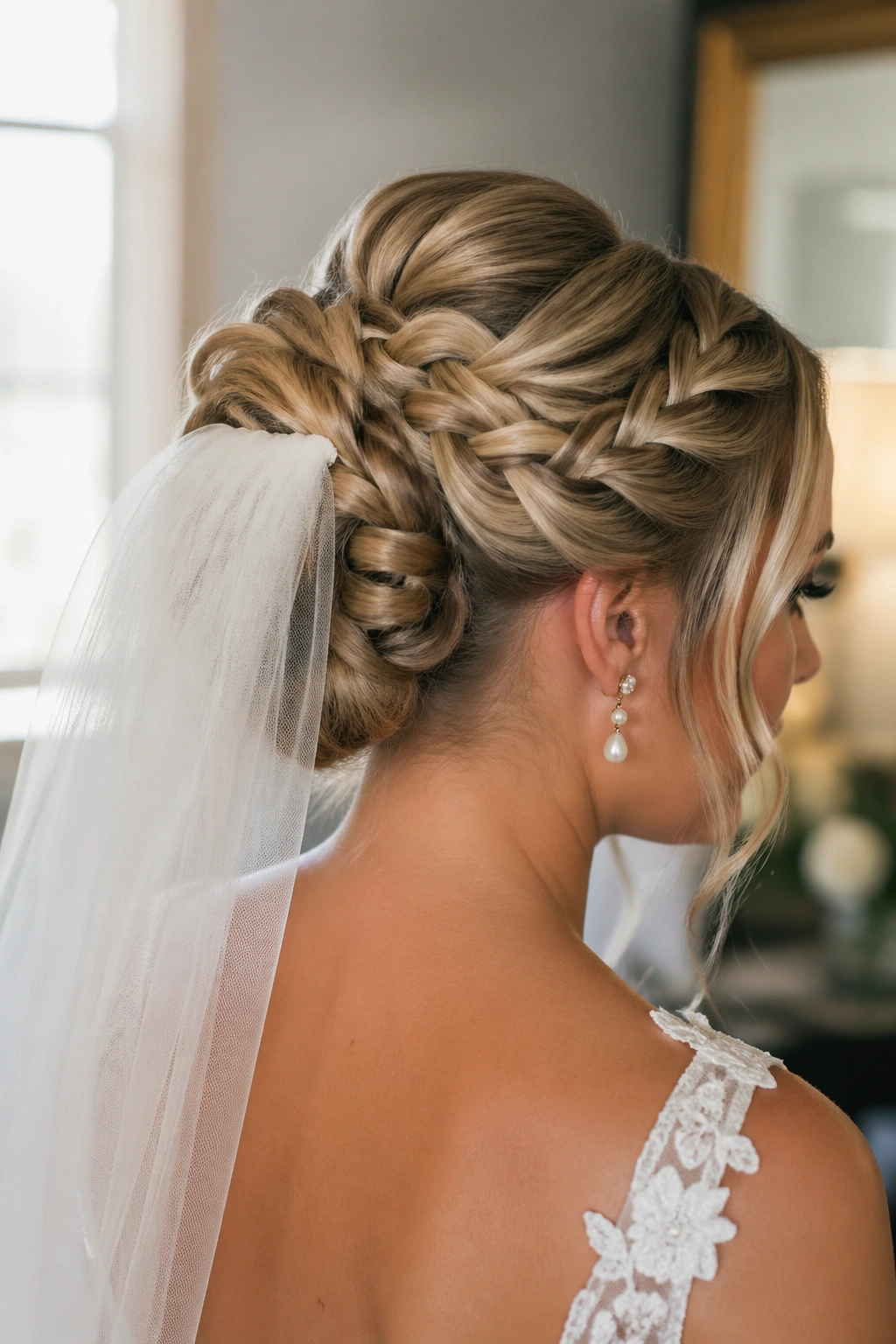
Veils and rope braids can get along very well, but the placement has to be thought through.
The biggest mistake is letting the veil comb sit directly in the most twisted part of the braid. That can loosen the style fast. A better setup is to build the updo first, then anchor the veil above the main braid knot or just under a supportive layer of hair. That keeps the weight distributed instead of pulling on one spot.
Best Veil Placement
A short or medium veil usually looks cleanest when the comb sits just above the braid line. For a longer veil, the anchor can sit lower, but it still needs a firm base. If the stylist uses a few crossed pins under the comb, the veil tends to stay put without denting the braid.
What to Tell Your Stylist
Ask them to leave a hidden support point where the comb can rest. That tiny bit of structure makes all the difference once the veil comes off and the hair has to stand on its own for the reception. You do not want a style that only works when the veil is hiding the weak spot.
This is one of the more practical bridal styles on the list. It looks elegant, but it also behaves.
12. A Messy Rope Braid with Textured Ends
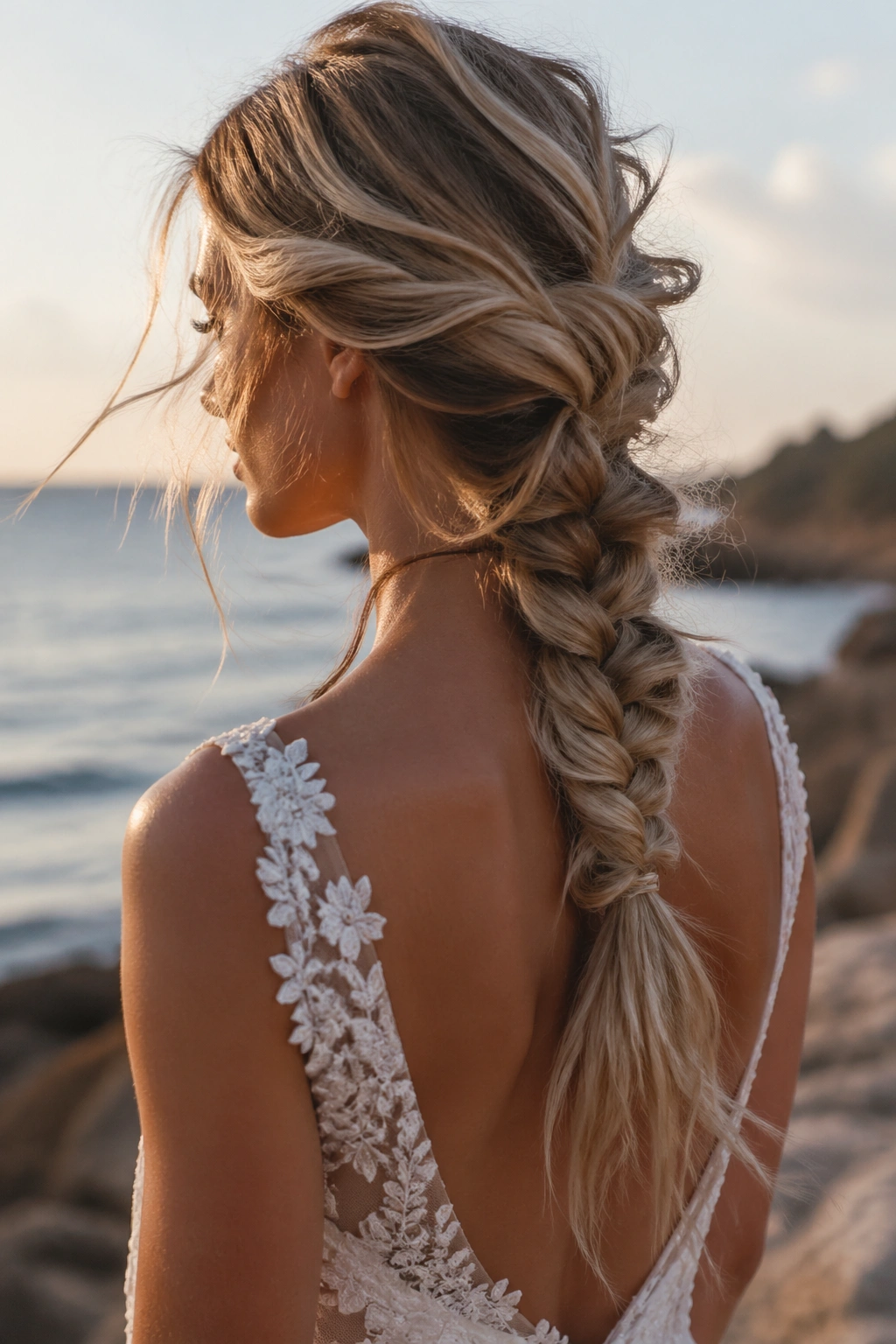
A messy rope braid can be the prettiest thing on a beach, if it’s still controlled enough to survive the day.
The key word is textured, not sloppy. You want soft separation between the twists, a little body at the crown, and ends that look lightly lived-in rather than frayed. Salt spray can help here, but only if you use a small amount. Too much and the hair starts to feel sticky instead of touchable.
I like this version for brides who are leaning boho and don’t want their hair to feel precious. It works well with flowy dresses, bare feet, and flower accents that are not too large. A smaller comb or one tucked sprig of greenery is enough. Anything bigger tends to fight the braid.
The Shape to Aim For
- Slight lift at the crown, not a big bump
- Looser twisting through the mid-lengths
- Ends left a little soft, not teased into a puff
- A few face-framing pieces left out on purpose
This style gives you room to breathe. It looks best when the bride looks comfortable, which is not a small thing at a beach wedding.
13. A Short-Hair Rope Braid for Lob-Length Brides
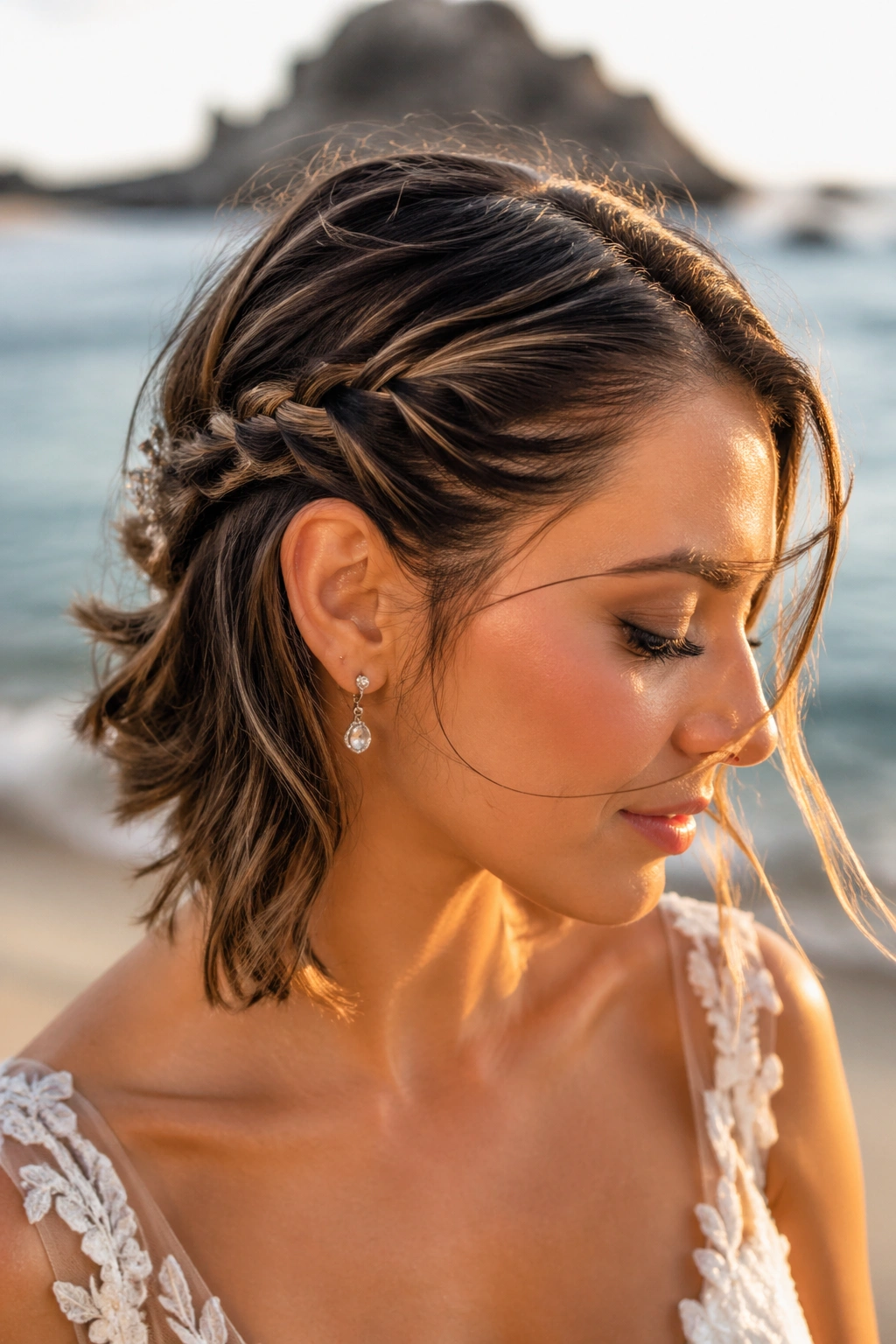
Shorter hair can do more than people think.
If your hair hits the shoulders or sits somewhere around a lob, a rope braid can still work — it just needs a smarter plan. Mini rope twists along the sides, a small half-up section, or a tucked braid at the back can all create that bridal feeling without pretending the hair is longer than it is. I actually think this kind of restraint looks better than adding too much fake length and making the whole style feel heavy.
The best move is to keep the braid placement deliberate. A twist that starts at the temple and disappears into pinned lengths reads cleaner than a braid that tries to travel too far. If you want extensions, choose ones that match your hair density as well as the color. Thick extensions on fine hair create a lopsided finish, and that shows fastest in side view.
Small details carry this style. A polished root, one good accessory, and ends that are tucked or curled inward can make lob-length hair feel bridal without any fuss. If the hair survives a hug, a head turn, and a little ocean breeze, it’s doing the job.
Final Thoughts
Rope braids work for beach weddings because they handle motion without losing shape. That is the whole trick. You want a style that can take wind, humidity, and a long afternoon of smiling, then still look like it belongs with the dress.
The best version is the one that fits the neckline, the veil, and the kind of photos you actually want. A low bun feels different from a side sweep. A crown braid says something else entirely. Pick the braid that matches the mood of the day, not the one that looks hardest to make.
