



Mermaid dresses do not forgive a lazy hairstyle.
That fitted shape already does half the drama for you. The hair has to meet it, not fight it. If the braid is too stiff, the whole look can feel heavy around the shoulders. If it’s too soft, the dress starts to carry all the visual weight, and that usually leaves the hair looking like an afterthought.
Prom braids are such a strong match because they give the top half of the look some structure. A good braid can sharpen a sweetheart neckline, clear space for beading, show off an open back, or soften the sharp line of a corseted bodice. And the small stuff matters more than people think — move the braid 1 inch off center, keep the crown slightly lifted, and the whole mood changes.
Some braids look sweet. Some look polished. The best ones do both, and they know when to stop before the dress starts competing with them.
1. Sleek Side Fishtail Braid
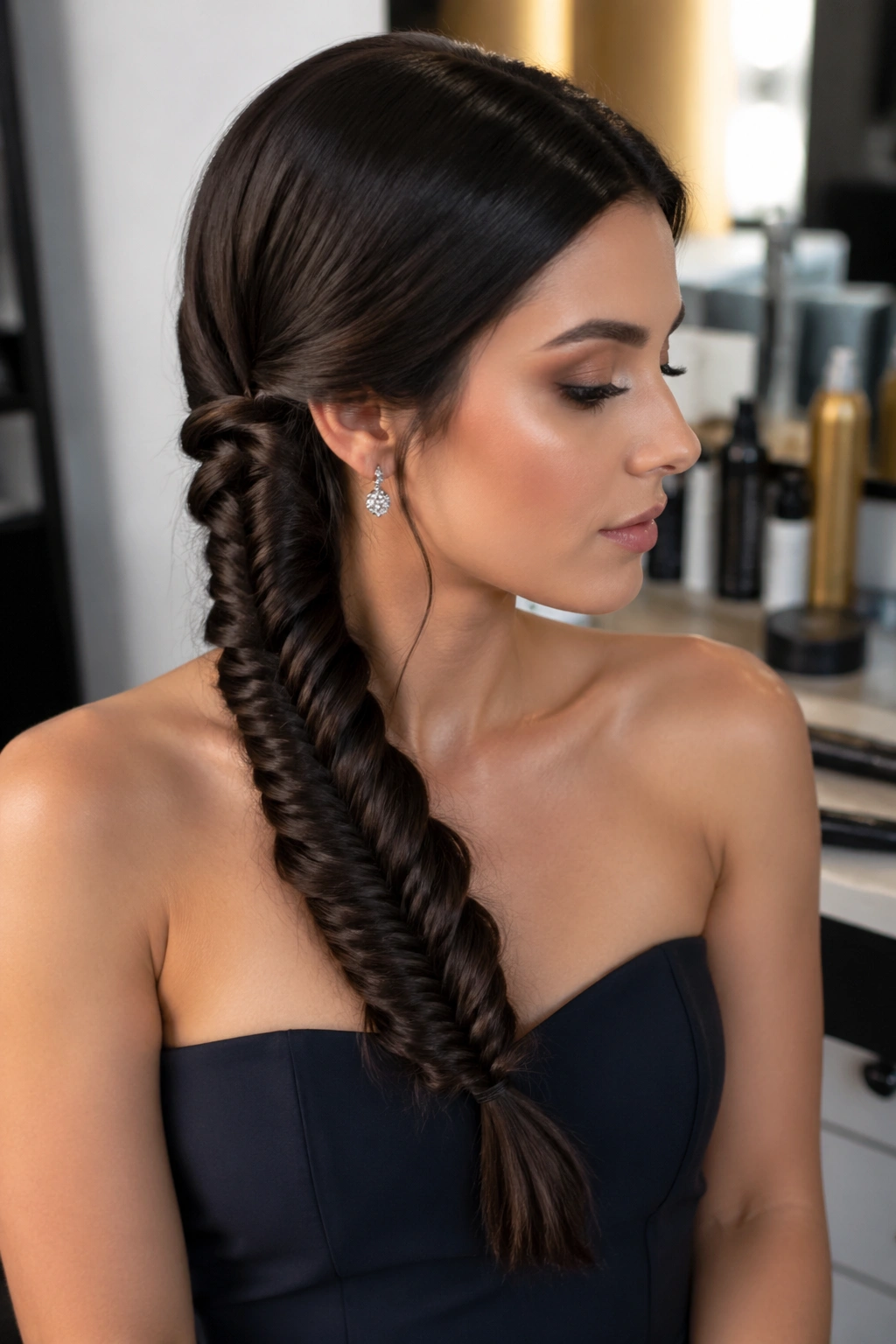
A side fishtail braid works because it follows the same curve a mermaid dress already loves. The eye moves diagonally, from shoulder to hip, and that makes the fitted silhouette feel even more dramatic. It’s one of those prom braids that looks expensive without trying to scream about it.
Keep the braid low and wide, starting behind the opposite ear so it falls across the front of one shoulder. Pull tiny sections — about ½ inch thick — so the weave stays tight at the top and fuller toward the end. Then gently pancake the braid by widening each outer loop with your fingertips. Not too much. Just enough to make the texture show.
A little shine spray at the finish helps if the dress has satin or sequins. The braid should look smooth, not crunchy.
2. Crown Braid with a Low Bun
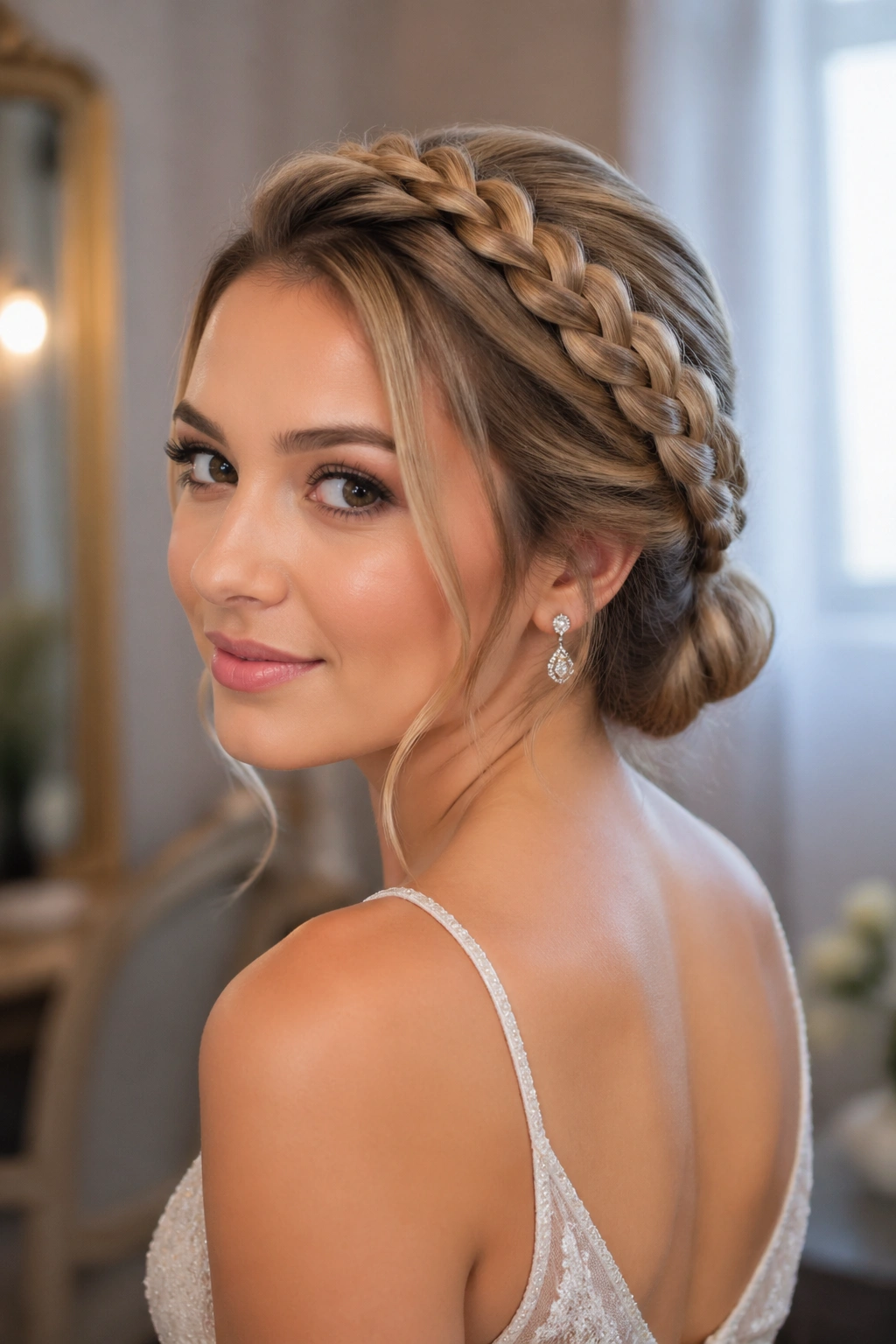
Why does this work so well with a fitted gown? Because it keeps the shoulders clean. A crown braid frames the face, while the low bun anchors everything at the nape, which is exactly where a mermaid silhouette needs balance.
Where to place it
Start the braid at one temple, trace it along the hairline, then tuck the tail into a low bun that sits just above the collar line. If the dress has an open back, keep the bun small and tight so the fabric and hair do not fight for space.
Styling details that matter
- Use a tail comb to keep the part crisp.
- Pin the bun with 6 to 8 bobby pins in an X pattern.
- Leave one soft piece near each ear if the neckline feels severe.
- Mist the crown lightly before braiding so the braid grips better.
This style has a formal feel, but it doesn’t look stiff. That’s the sweet spot.
3. Waterfall Braid with Loose Waves
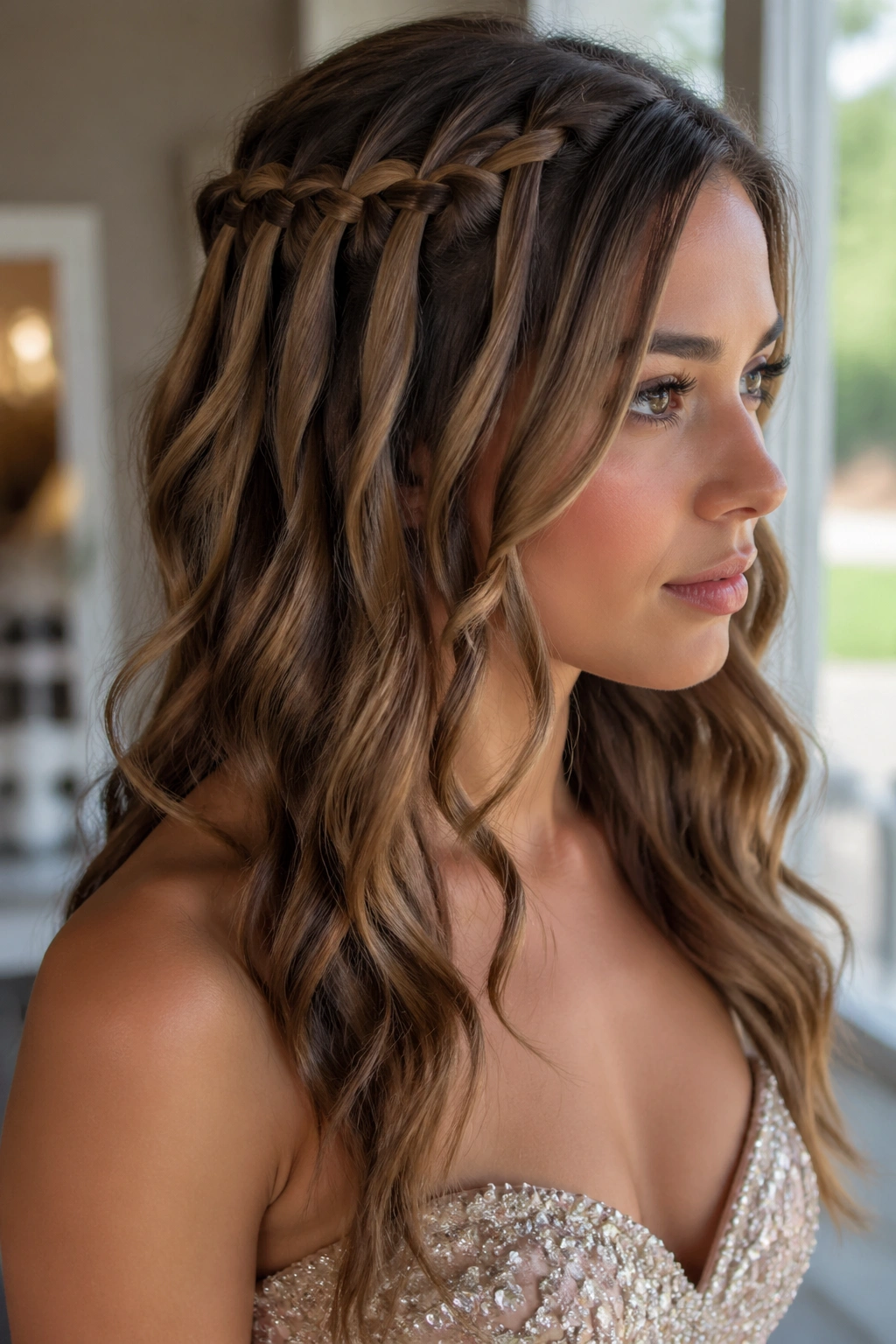
Waterfall braids bring movement, and that’s a smart choice when the dress already has a strong shape through the hips and knees. The braid lets the hair stay airy near the face while the rest of the length falls in soft waves. Nothing about it feels overworked.
I like this one on dresses with tulle overlays, floral appliqué, or softer beading. The braid sits best on medium to long hair, and it looks cleaner if the waves are prepped with a 1-inch curling wand before the braid goes in. The curls should be brushed out into loose bends, not ringlets. Ringlets can look too young next to a mermaid gown.
A tiny bit of texture spray at the roots helps the braid stay in place. And don’t make the waterfall sections too thick — skinny ribbons of hair look more refined.
4. Dutch Braid Ponytail
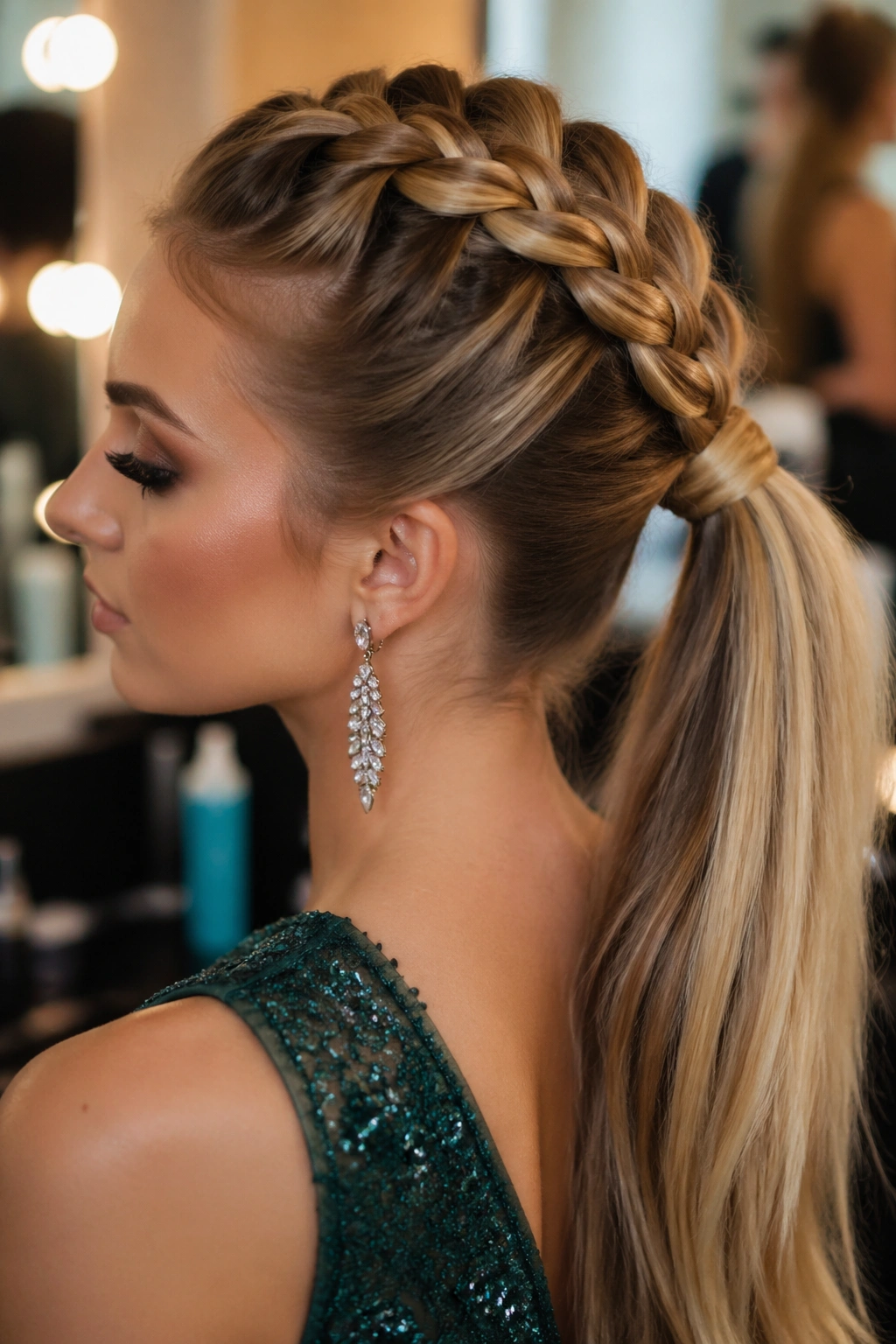
A Dutch braid ponytail is a blunt, confident choice. It gives the top of the head height, then pulls everything into a sleek tail that works especially well with structured bodices. If a dress has beading across the bust or a sharp V neckline, this braid keeps the hair from going soft and vague.
Why it feels so good with a mermaid dress
The braid runs up from the hairline in a raised line, which adds shape before the dress flares. That matters. The ponytail keeps the length visible, so you still get movement when you walk.
Keep it polished
- Braid from the hairline to the crown.
- Secure the ponytail 2 to 3 inches below the occipital bone.
- Wrap a small strand around the elastic for a cleaner finish.
- Smooth flyaways with a pea-size amount of styling cream.
This is one of those prom braids that reads modern without being cold. It has edge, but it still feels formal enough for a big night.
5. Halo Braid with Soft Tendrils
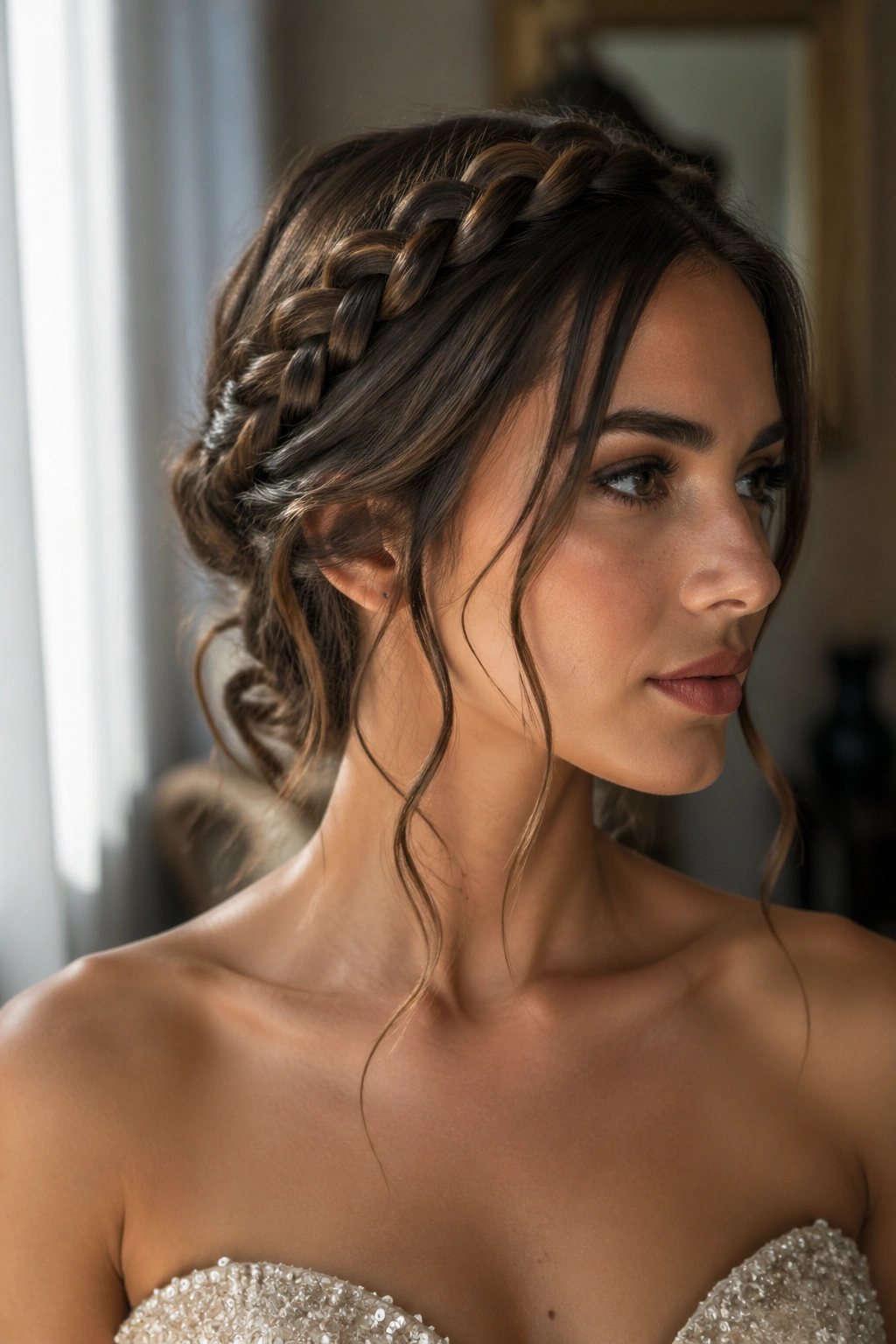
A halo braid can look a little too tidy if you lock every strand down. That’s the trap. When it’s loosened around the face, though, it gives a romantic frame that sits nicely beside a dress with a dramatic hem.
The braid should hover around the crown, not sit flat like a headband. Leave two narrow tendrils at the temples and one near the nape if the dress has a low back. That tiny bit of movement keeps the style from feeling rigid. I’ve always thought this braid works best with gowns that have a lot going on below the waist, because the hair stays calm up top.
If the fabric is heavy — velvet, satin, dense sequins — the halo braid gives the look a lighter top half. It’s a good trade.
6. Bubble Braid Down the Back
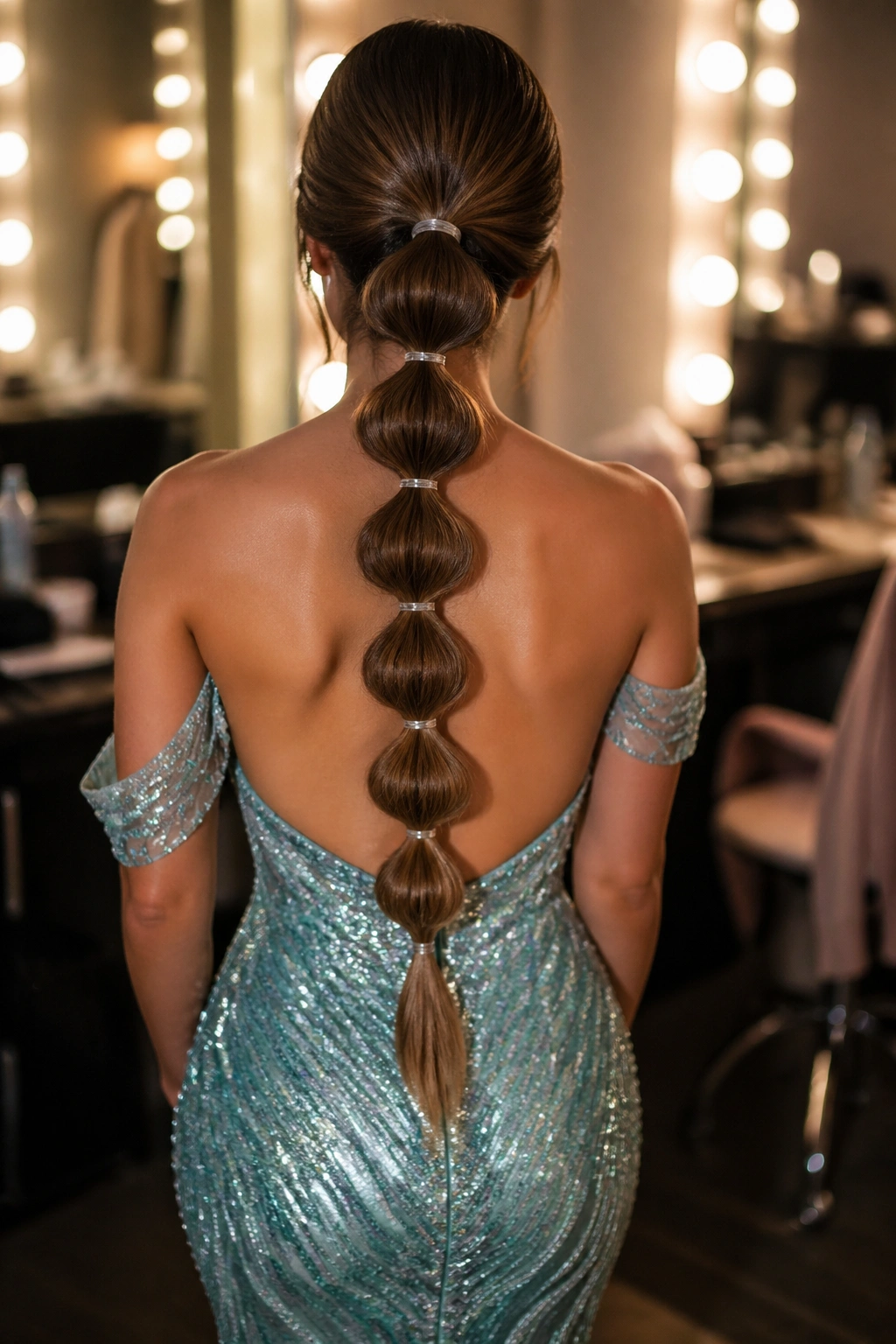
Bubble braids are underrated for prom. They give you shape and texture without the tight, woven look of a traditional braid, which can be a relief if the dress already has a lot of structure.
Simple. Not boring.
Create a low ponytail, add clear elastics every 2 to 3 inches, then gently tug each section outward until it rounds into a soft bubble. If the hair is thick, you can pinch each bubble a little wider; if it’s fine, keep the bubbles smaller and closer together. The effect should feel glossy and controlled, not floppy.
This style looks especially good with a mermaid dress that has a clean satin finish. The rounded sections echo the flare of the skirt in a subtle way. A tiny bit of serum on the ends keeps the bubbles from frizzing out under flash photography and warm lights.
7. Braided Low Chignon
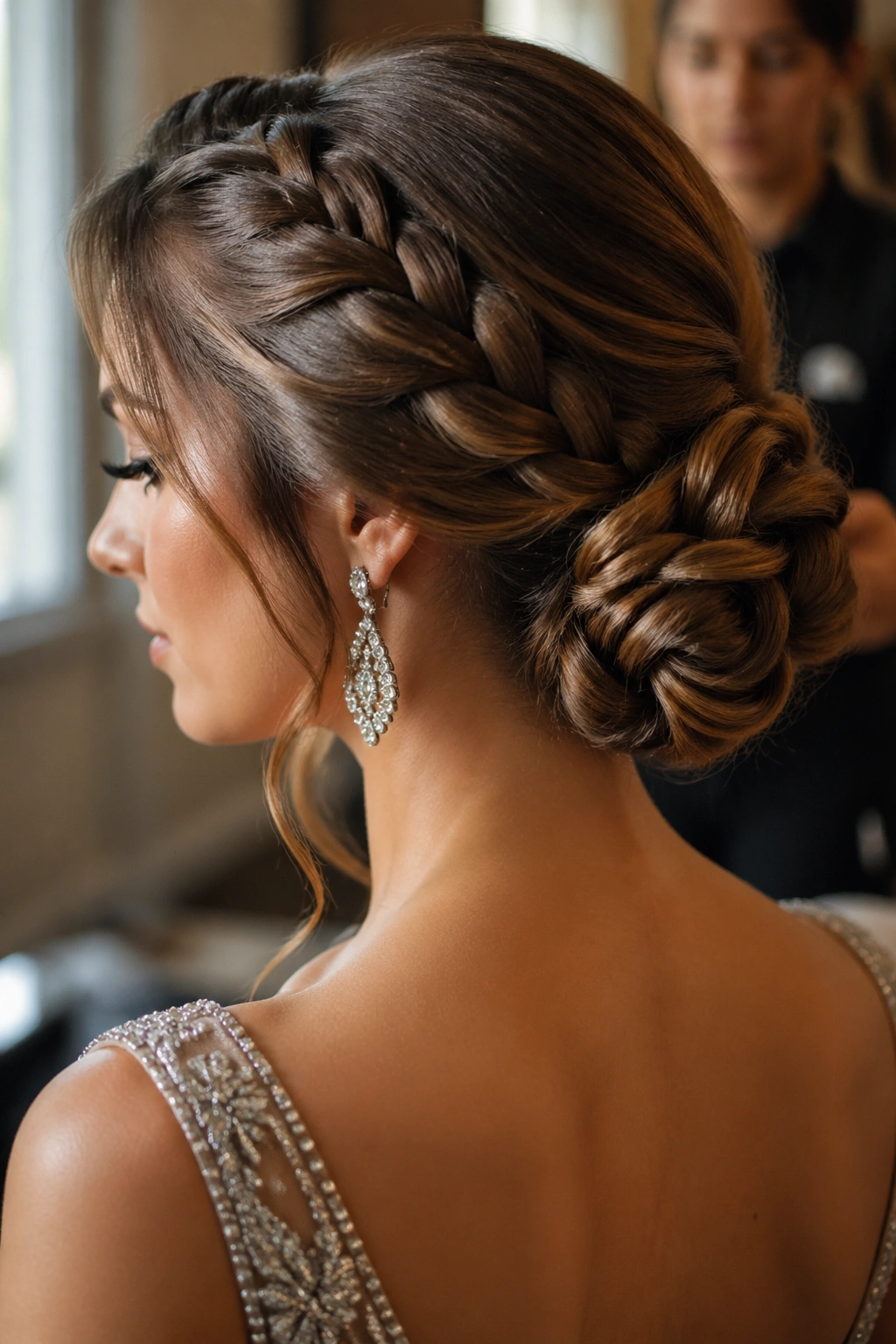
A braided low chignon is for the person who wants elegance with a little more texture than a plain bun. It sits low, which means it won’t crowd an open back or a dramatic necklace, and the braid gives the bun enough detail to hold up beside a heavily embellished dress.
Best place for it
Keep the chignon centered or slightly off to one side, about 1 inch above the nape. That placement keeps the neck long and the profile clean. If the gown has a sweetheart neckline, the shape feels balanced rather than top-heavy.
What helps it look finished
- Braid one section from the side and wrap it into the bun.
- Hide the elastic under the twist.
- Use 4 to 6 U-pins instead of big clips.
- Press the surface down with a soft brush and a light mist of hairspray.
This one reads polished in person. On camera, it holds its shape well because the braid gives the bun definition.
8. Side Rope Braid
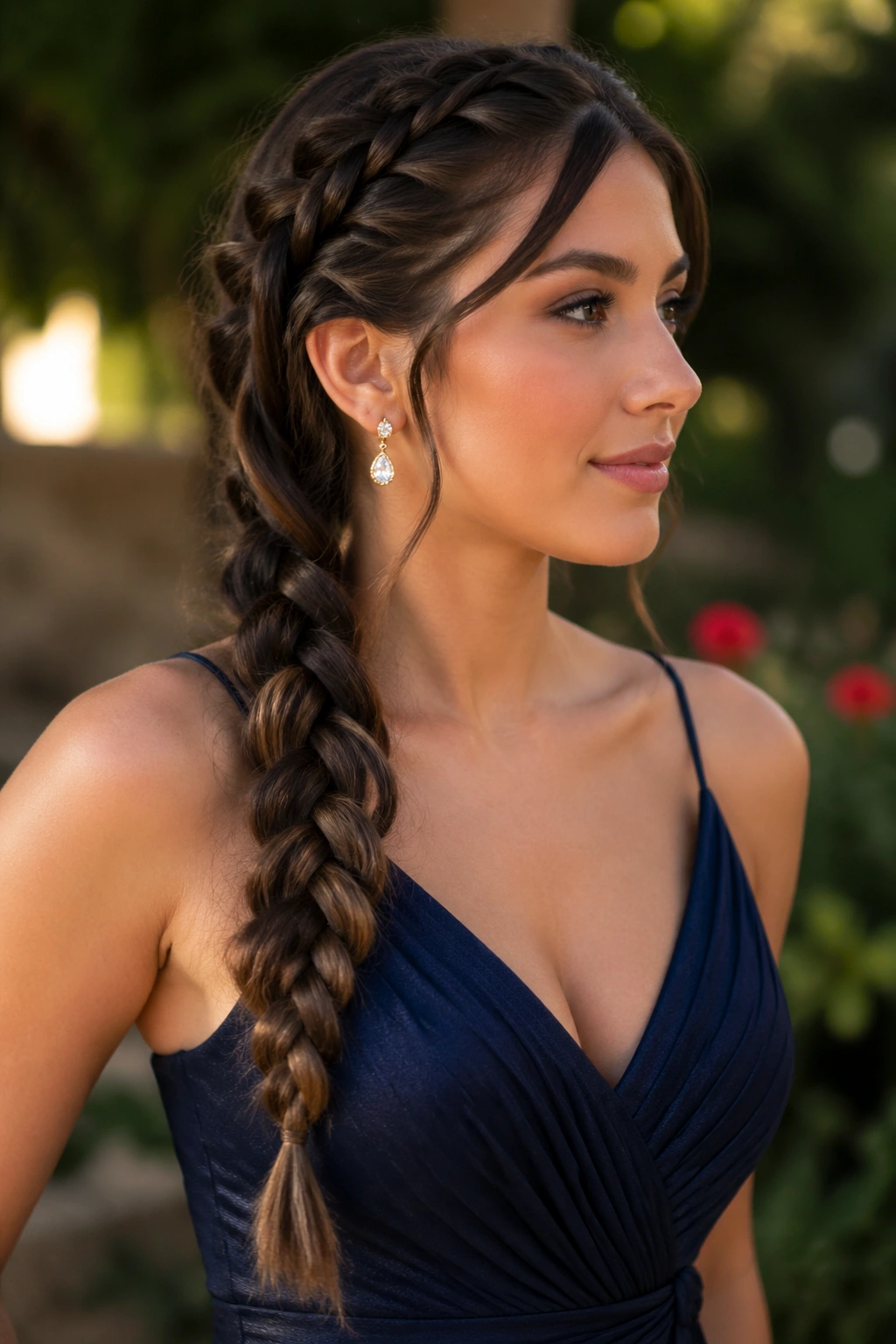
A rope braid is cleaner than a fishtail and less formal than a full crown braid. That in-between quality is exactly why it works with a mermaid dress. The dress brings the drama; the braid adds movement without looking fussy.
Start with a deep side part, twist two sections away from the face, and keep crossing them in the same direction all the way down. The twist should stay snug at the top and relax a little through the lengths. If the hair is layered, use a tiny clear elastic every 4 to 5 inches so the rope doesn’t unravel halfway through the night.
This style is especially good with one-shoulder dresses because it leaves one side open and lets the braid drape over the other. If you want it to feel less casual, wrap a small section of hair around the end and tuck the tail under the braid.
9. Double Accent Braids into Loose Curls
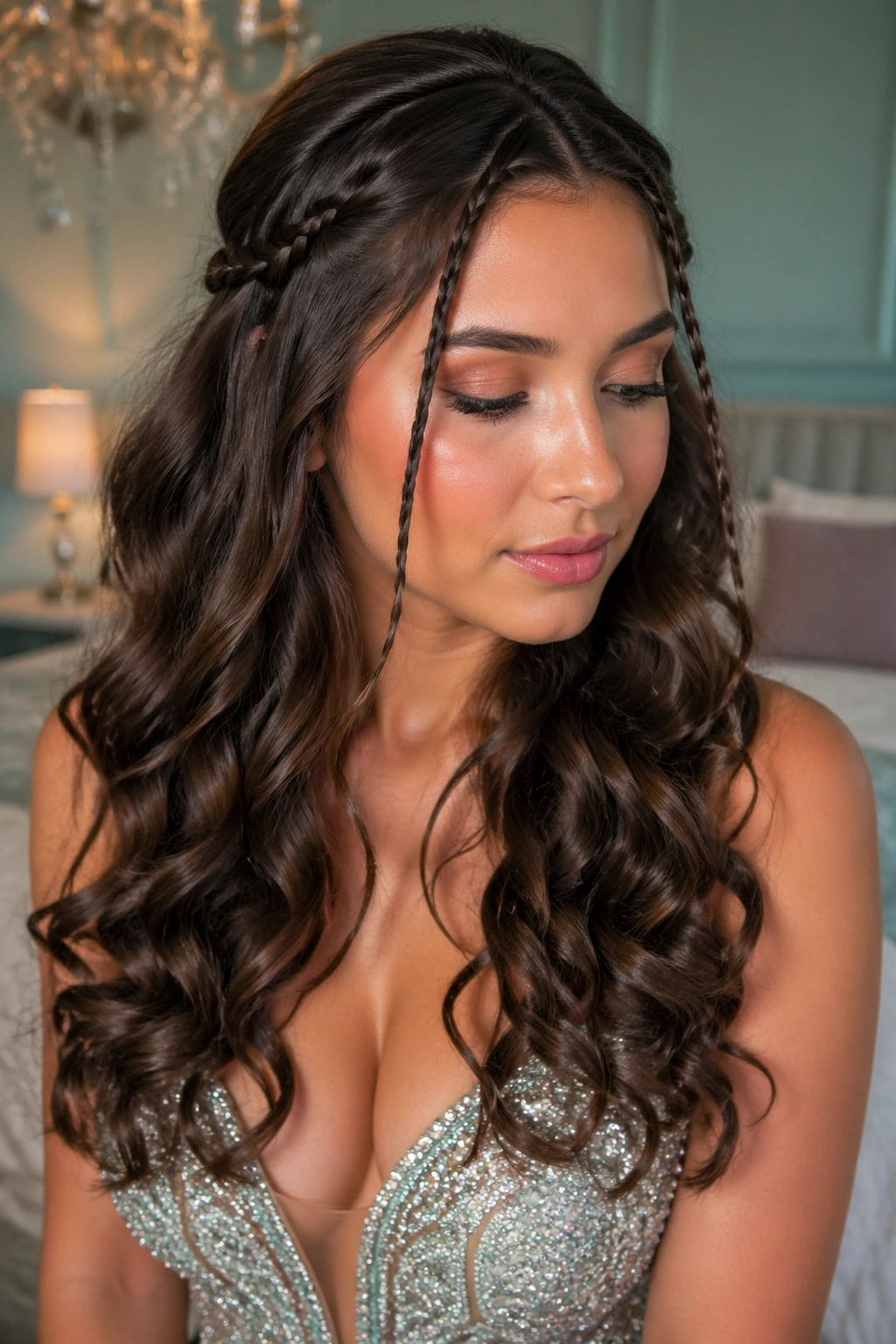
Two thin accent braids can change the whole look without taking over the hair. That’s the appeal. You get detail near the face, but the curls still do the main work through the length.
I like this for mermaid dresses with lace straps or a little sparkle at the bodice. The braids should start near the temples or just behind them, no wider than a pencil at the root. Then let the rest of the hair fall into brushed-out curls. The contrast matters — the braids give the top line some structure, and the curls keep the style soft enough for prom.
A small detail that helps
- Curl the lengths first.
- Braid second.
- Finish by loosening the curls with your fingers, not a brush.
- Pin the braids back if the face frame starts to collapse.
This is a good choice if you want the braid to feel like part of the style, not the whole story.
10. Pull-Through Braid with Glossy Length
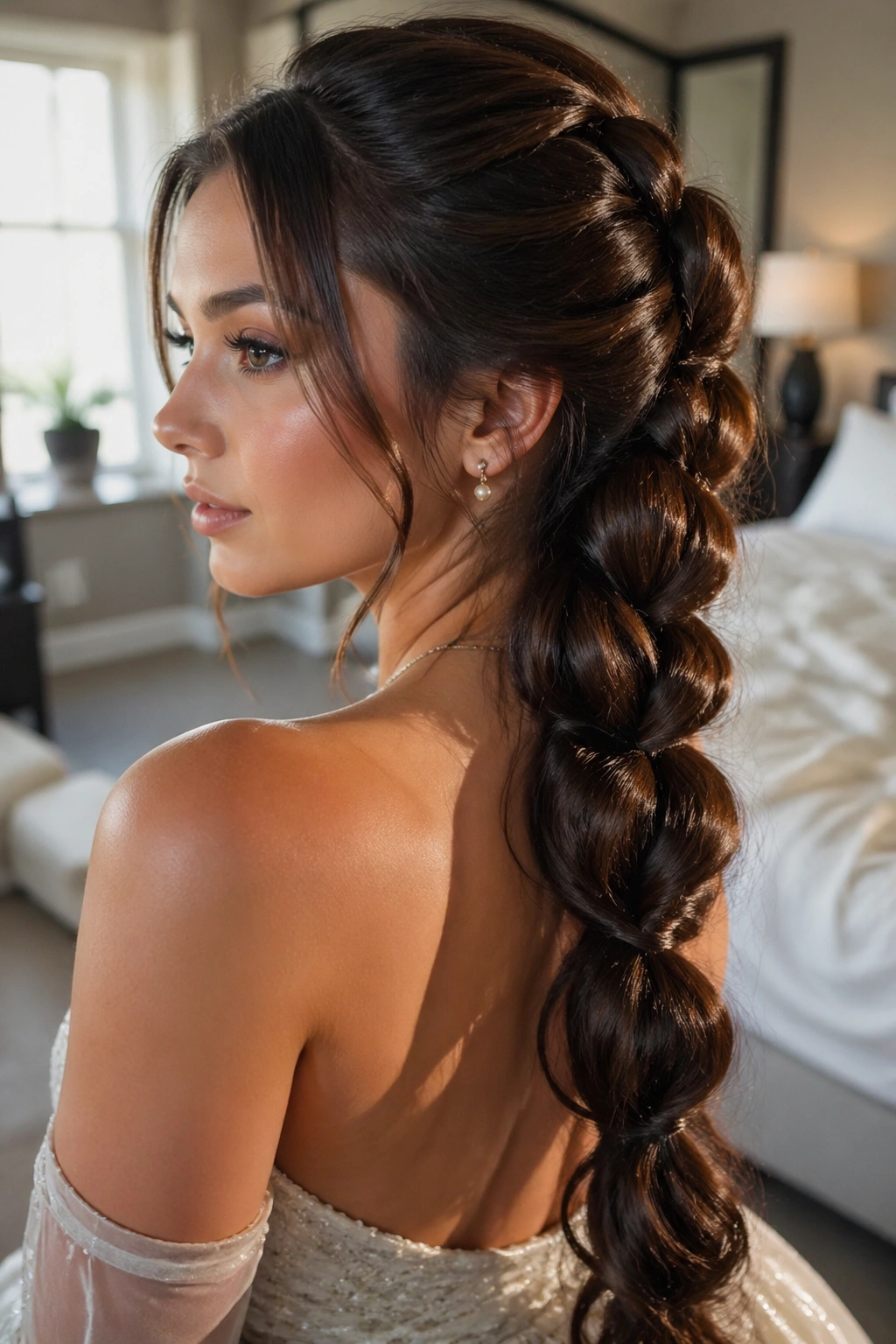
Need volume without a complicated weave? A pull-through braid gives you that. It creates the look of a thick braid, but the structure comes from a stack of ponytails and elastics, so even finer hair can hold the style.
The braid works especially well with a mermaid dress because the shape is bold but soft. It has those rounded sections that echo the curve of the skirt, and it looks especially nice when the hair is long and glossy. Build each section with 1 to 1½-inch pieces, then tug the outer edges gently once the braid is assembled. The goal is fullness, not puffiness.
I’d keep the base smooth and the finish clean. If the hair is too textured at the crown, the whole look can tip into busy territory. A light shine mist down the top and a firmer hold spray at the end usually solves that.
11. Half-Up Prom Braid Twist
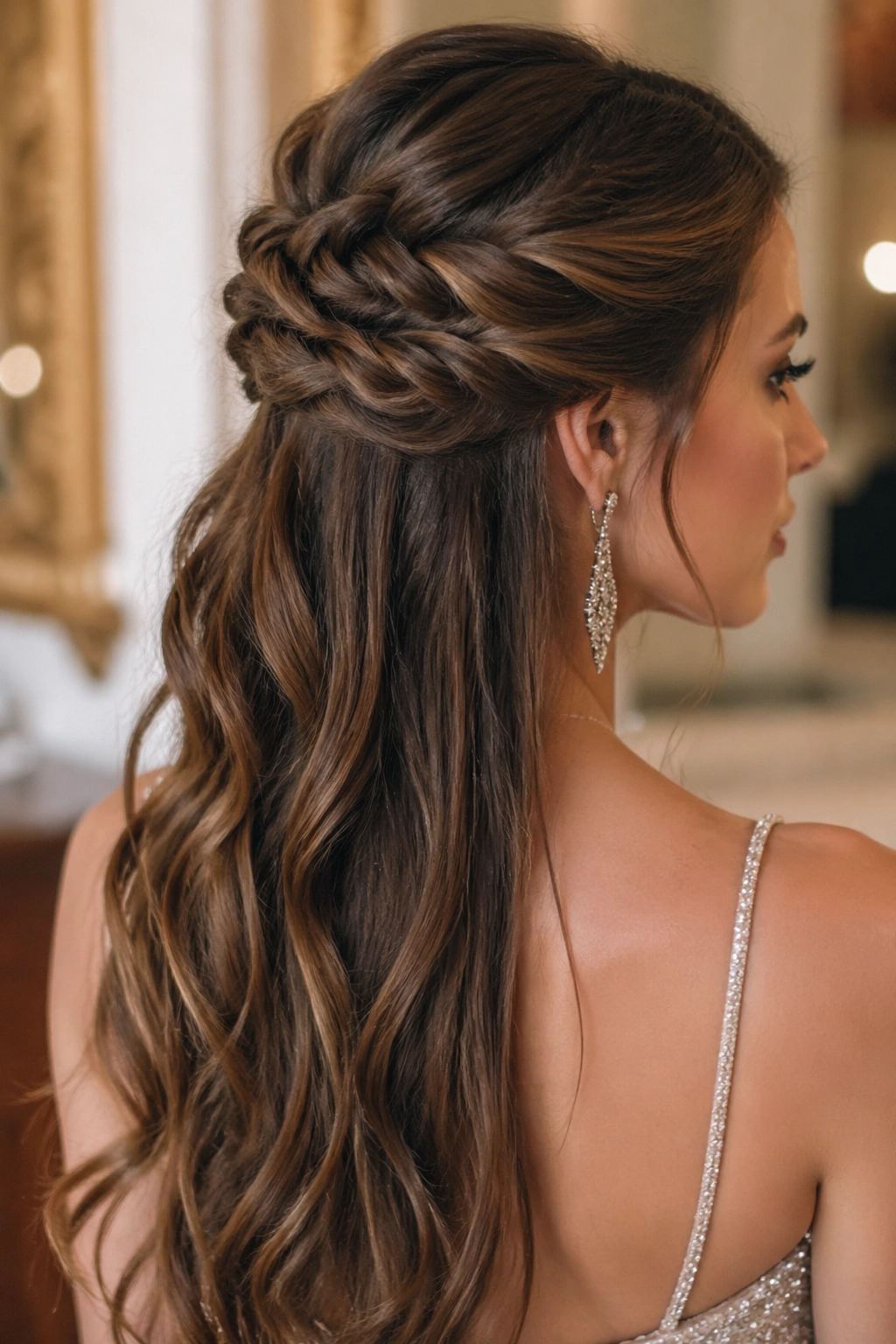
A half-up braid twist is the answer when you want the hair down but not loose around the face. It gives you a little lift at the crown, which is a gift with a fitted dress, and it keeps the back soft so the gown still gets attention.
Why it feels different from a simple half-up style
A braid across the back of the crown adds shape that plain twisting doesn’t. The braid gives a visible line, and that line helps the hairstyle look planned instead of casual.
How to style it
- Part the hair from temple to temple.
- Braid the top section into a loose Dutch or French braid.
- Secure it at the center back with two crossed pins.
- Curl the lower half in 1-inch sections for movement.
Leave the braid slightly open at the edges so it doesn’t look severe. This is a nice match for dresses with a deep back, because the length can stay down while the upper half still feels dressed up.
12. Milkmaid Braids for a Romantic Frame
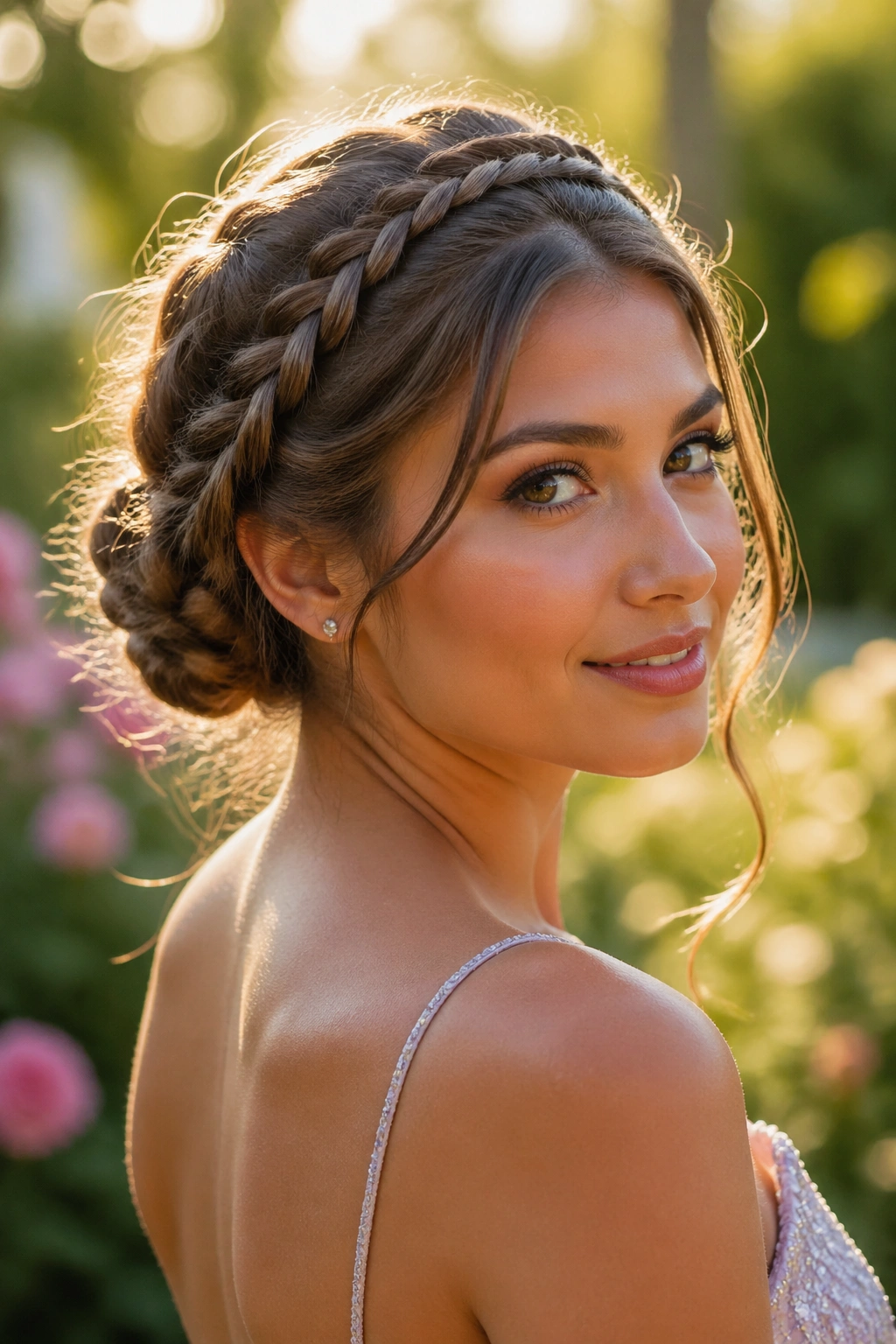
Milkmaid braids can go wrong fast if they sit too high or too tight. Keep them low on the crown, and they suddenly feel charming instead of costume-like. That tiny placement shift matters more than people think.
The shape is lovely with a mermaid dress that has soft details — lace, sheer sleeves, floral beading, a sweetheart neckline. Bring two braids around the head, then pin them where they meet so the seam hides under the braid itself. If your hair is long, tuck the tails under and pin them flat; if it’s shorter, small hidden pins will keep the ends from poking out.
I’d skip heavy face-framing pieces here. The braids already do a lot. A clean middle part can make the style feel more modern, while a side part softens it a little. Either way, keep the surface smooth and the braid width even.
13. Mermaid Braid with Loose Ends
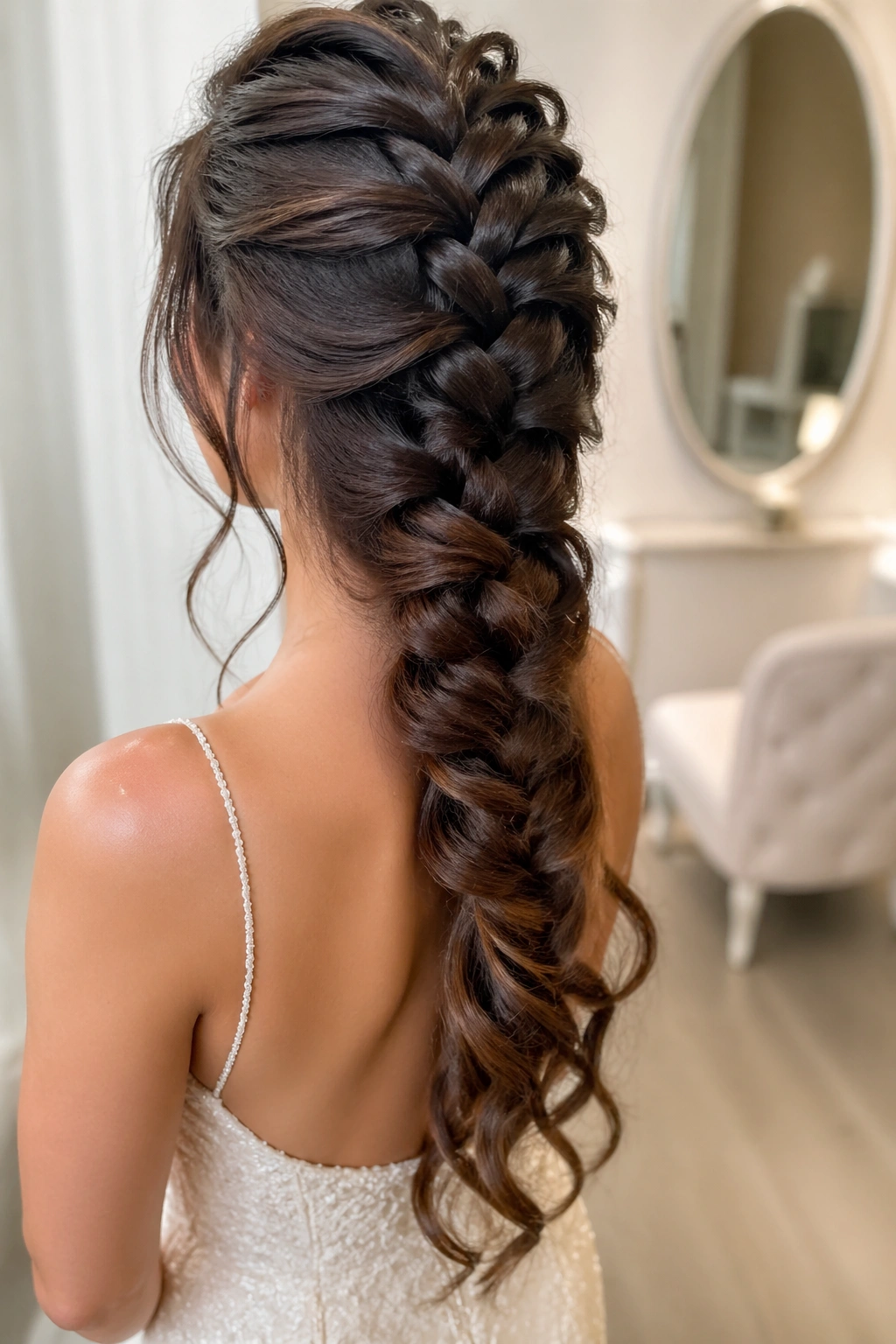
The name makes sense, and so does the shape. A mermaid braid has that long, flowing, scale-like texture that feels made for a gown with a flared hem. The hair echoes the dress instead of sitting in a separate visual lane.
This braid should start high enough to show the woven texture through the crown, then widen gradually as it travels down the back. Leave the last 4 to 6 inches loose and curled so the end doesn’t look chopped off. That loose finish is the part I like most. It keeps the braid from feeling too engineered.
How to make it feel polished
A side part gives the braid a little glam, while a center part makes it look cleaner. If the dress has sparkly straps, keep the braid sleek at the top so the two details do not compete. And if the hair is layered, a light mist of flexible-hold spray before braiding helps the shorter pieces stay where they belong.
14. Asymmetrical Shoulder Braid
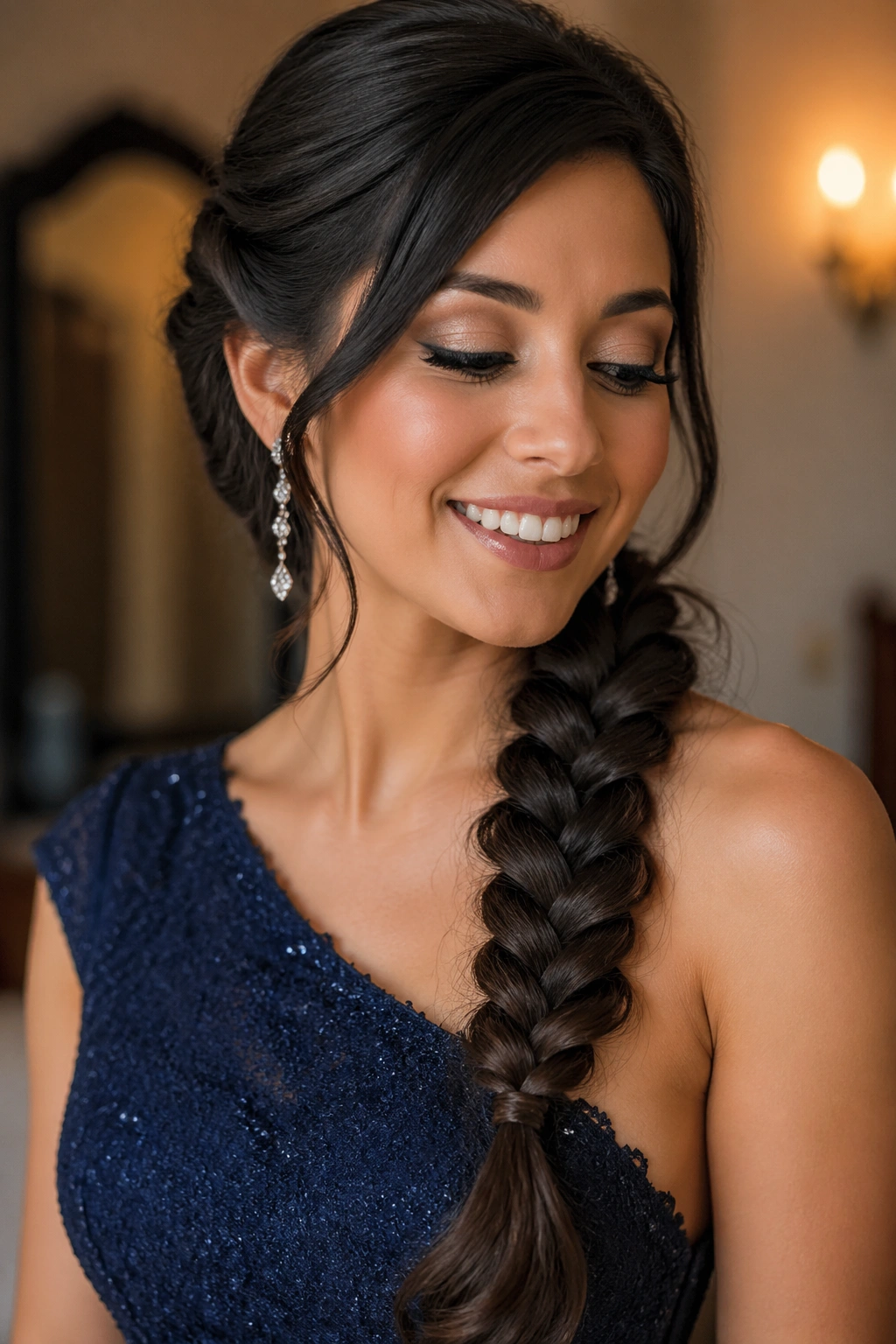
An asymmetrical braid is a smart fix for dresses that already have a strong shape on one side — one-shoulder necklines, angled straps, or a slit that draws the eye off-center. The braid can sit on the opposite shoulder or sweep across the front in a way that balances the dress.
The trick is not to make it too symmetrical. Let the braid begin slightly behind one ear and fall over the shoulder in a controlled line. If the rest of the hair is straightened, the contrast feels sleek. If it’s waved, the braid blends in more softly.
This style is good when you want movement without the weight of a full updo. A few hidden pins near the shoulder keep the braid from slipping, especially if the fabric is satin. Satin is slippery. That part matters.
15. French Braid into a Twisted Knot
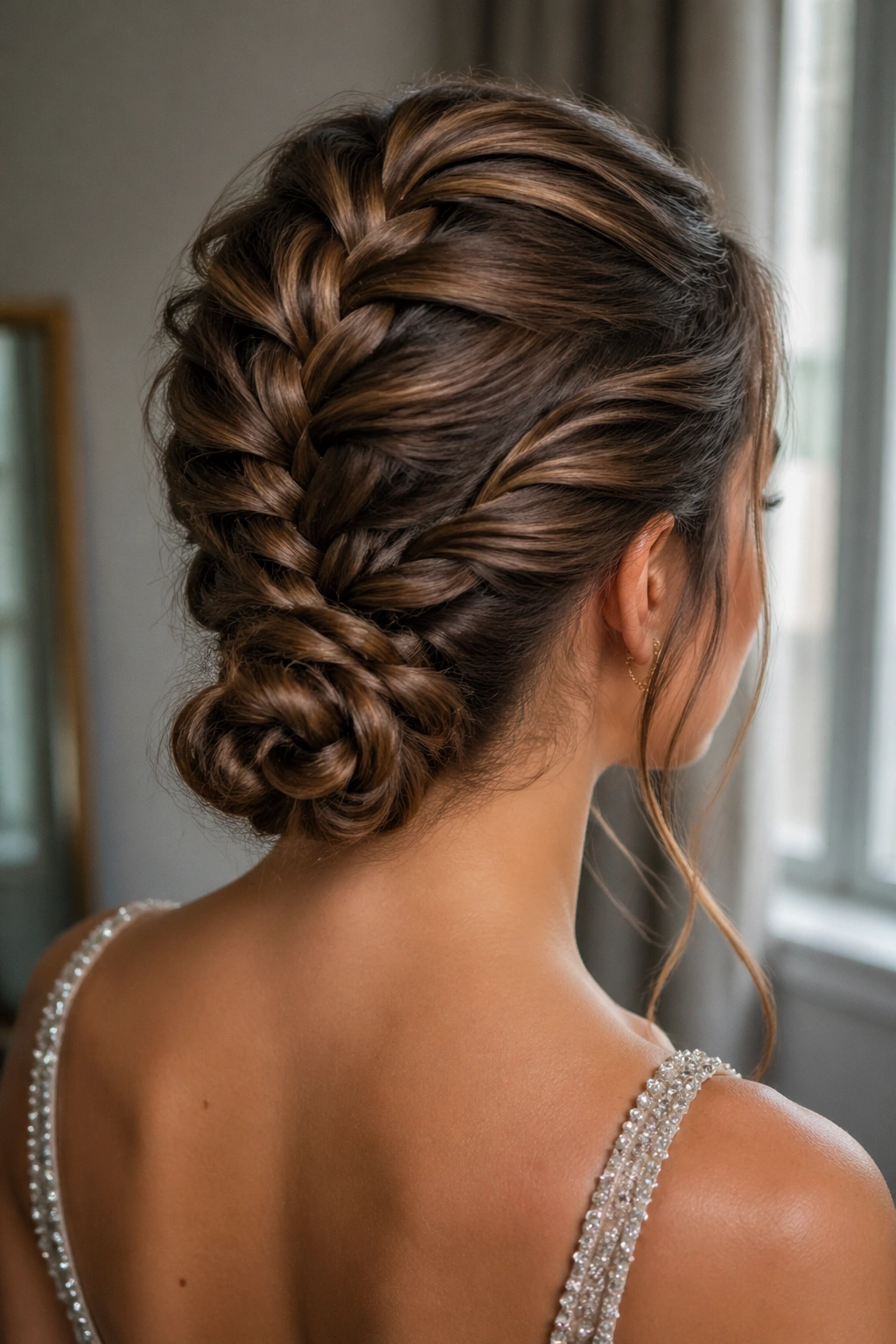
A French braid into a twisted knot gives you a neat top line with a bit of shape at the back. It’s one of those styles that looks more complicated than it is, which I always appreciate on a busy night.
Where to stop the braid
Braid from the hairline to about mid-head, then stop before the crown gets flat. That gives you room to twist the remaining length into a knot or small coil at the nape. If you braid too far down, the style can lose lift.
The finish should feel secure, not bulky
- Twist the tail in one direction only.
- Anchor the knot with pins from the underside.
- Tuck the ends in so they disappear.
- Smooth the sides with a brush before the final spray.
This braid works with a dress that has a lot of detail around the neckline because it clears the front and keeps the back tidy. Clean is good here.
16. Ribbon-Tied Braided Ponytail
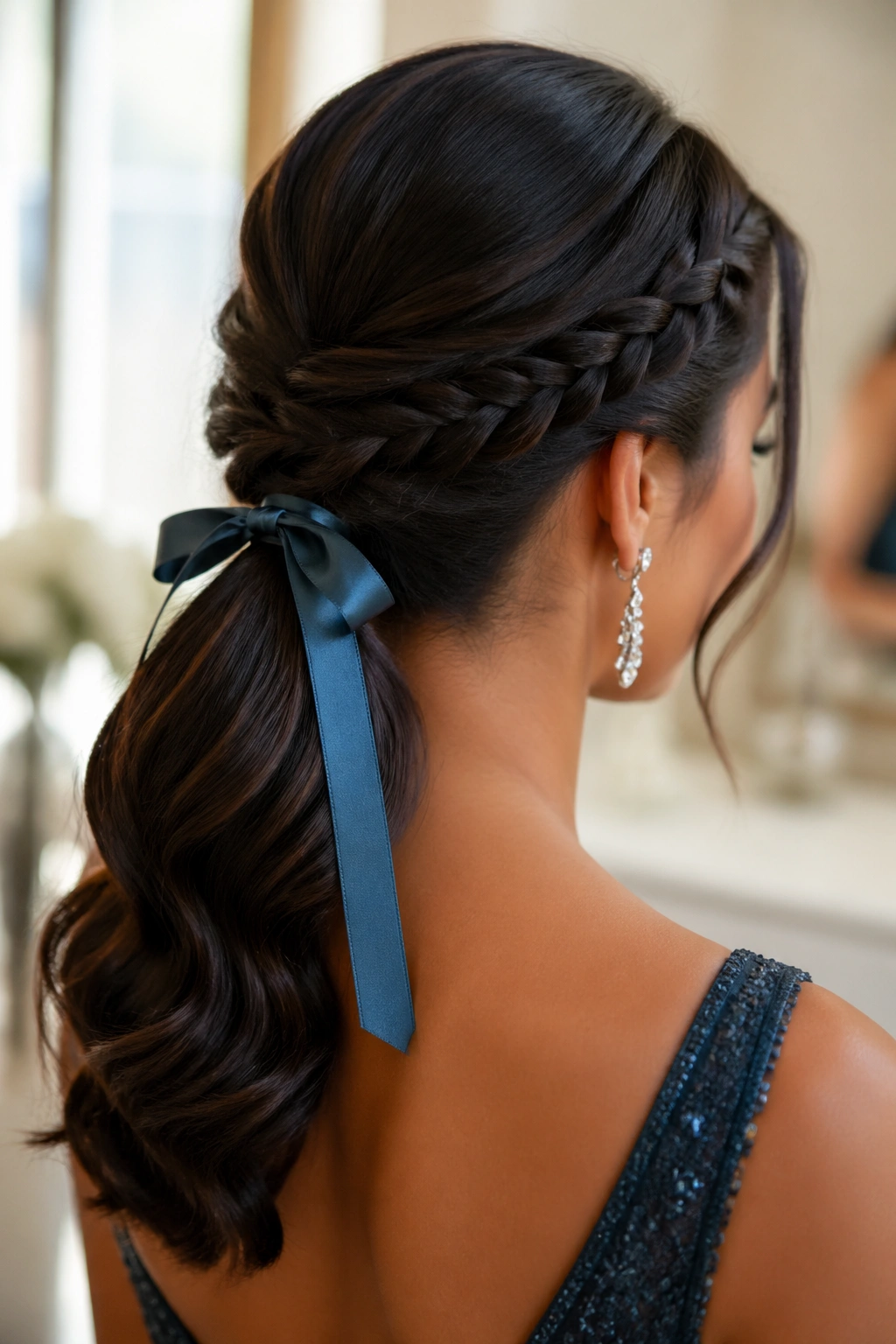
A ribbon-tied braid is a simple way to make the hairstyle feel finished without piling on extra pieces. The ribbon adds a line of color or shine, which can tie the hair to the dress in a way that feels thoughtful instead of matchy.
Choose a ribbon that’s about 1 to 1½ inches wide. Satin reads formal; velvet feels richer; a metallic ribbon works if the dress has silver or gold hardware. Tie it around the base of a low braid or weave it through a loose plait for a softer finish. If the gown is heavy with embellishment, keep the ribbon narrow so the look doesn’t go overboard.
The braid itself can be a classic three-strand, a fishtail, or even a pull-through style. What matters is that the ribbon sits flat and the knot is hidden under a layer of hair. Leave the ends long enough to drape past the braid by about 2 inches. Small thing. Big payoff.
17. Braided Bun with Crystal Pins
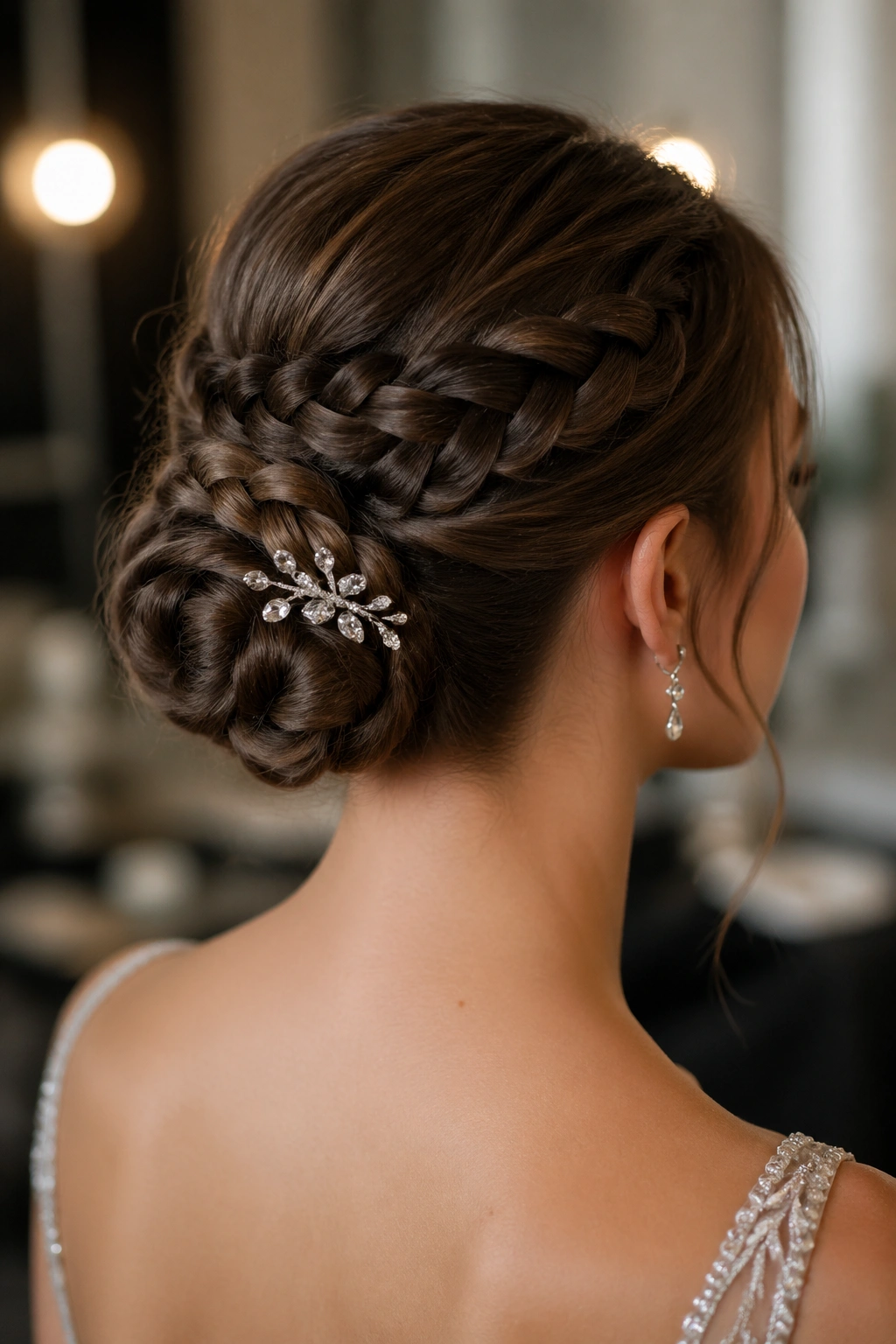
A braided bun is a great choice when the dress already has a dramatic neckline and you want the hair off the shoulders completely. Add crystal pins, and it picks up the light near the face without needing much else.
What to ask your stylist for
- One or two small braids wrapped into a low or mid bun.
- A clean base with the bun sitting just above the nape.
- Crystal pins placed where the braid folds over itself.
- Minimal texture at the top so the bun stays refined.
The bun should feel compact, not giant. A huge bun can steal attention from a mermaid dress, especially if the skirt already has movement. Keep the adornment close to the braid, and use pins sparingly. Four well-placed pieces often look better than ten.
This style works best with strapless or off-the-shoulder gowns because it shows the neck and collarbones. That open space is doing a lot of work here.
18. Side Braid with Hollywood Waves
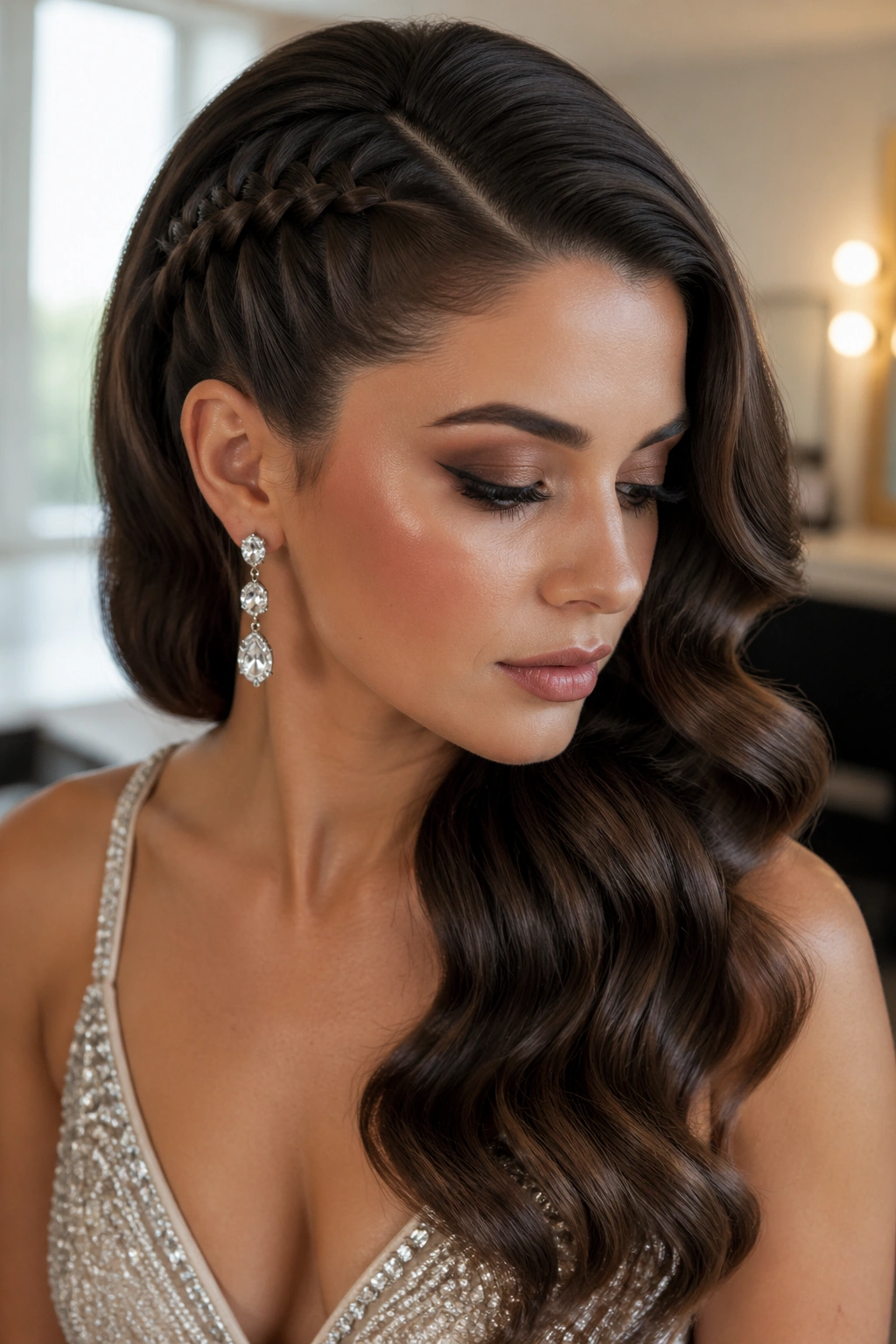
This is the braid for someone who wants one foot in classic glamour and the other in soft texture. A side braid tames the front, while the Hollywood waves keep the length formal enough for prom.
Start with a deep side part and a smooth curl pattern, ideally made with a 1¼-inch curling iron. Brush the curls into soft, uniform waves, then braid just the top section along one side so it sweeps back into the rest of the hair. The braid should disappear into the waves instead of sitting on top like an afterthought.
I like this on dresses with a clean satin finish or a simple, sculpted neckline. The waves carry the dress, and the braid adds a little edge. Keep the front glossy and the wave pattern consistent — sloppy waves can make the braid look disconnected.
19. Reverse Braid Bun
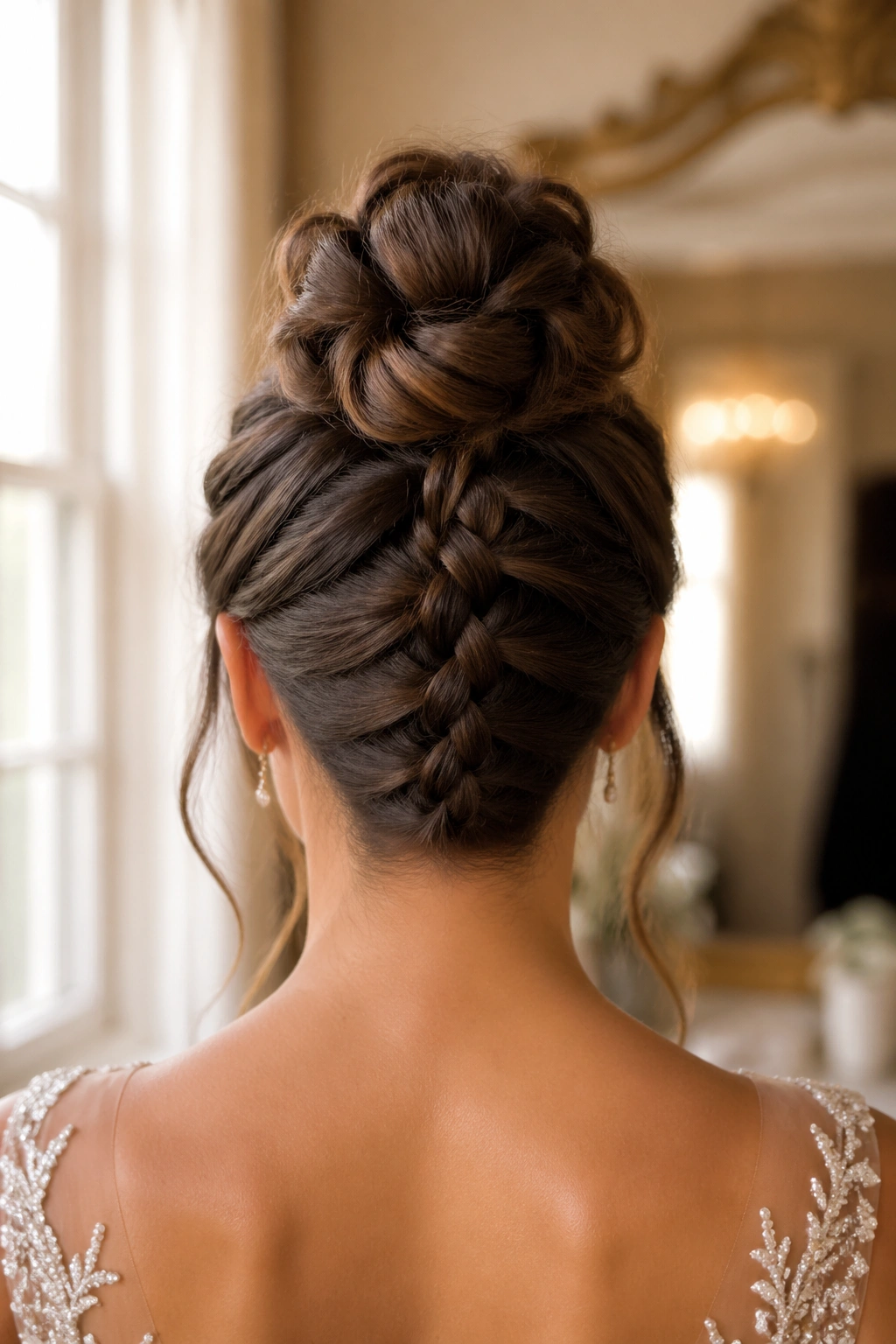
A reverse braid bun gives the back of the head some drama, which is useful when the dress has an open back that deserves a little frame. Instead of braiding from the top down, the braid starts at the nape and moves upward toward the bun, flipping the usual structure on its head.
That sounds fussy. It isn’t, once the sections are divided cleanly.
The style works best with medium-to-thick hair because the braid needs enough body to feed into the bun. Keep the braid tight at the base and a little looser as it rises, then coil the end into a compact knot. Six to eight pins usually hold it. If the gown has beadwork at the back, this style gives you a tidy finish that won’t snag on the fabric.
It’s a strong choice. Quiet, but not boring.
20. Accent Braids Tucked into Polished Waves
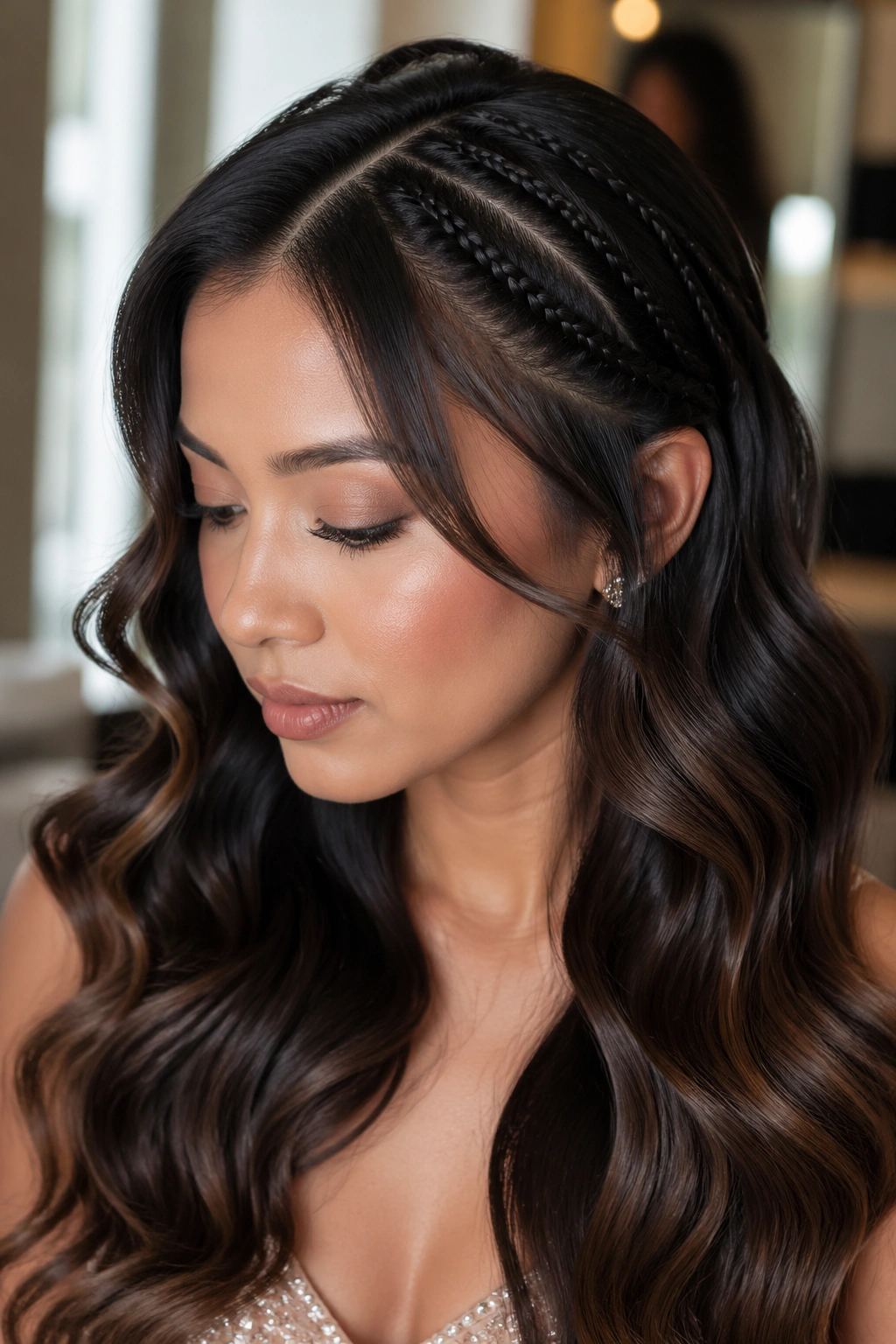
Accent braids are for the person who wants the hair to look styled from every angle without putting all the attention on the braid itself. A few thin plaits tucked into glossy waves do that job well.
The best version starts with smooth waves brushed into large bends, then two or three micro-braids are added near the part or temple and pinned back so they vanish into the length. The contrast between the neat braid and the soft wave is what makes it work. If the dress has layered fabric, sheer panels, or delicate straps, the hairstyle doesn’t need to be louder than the gown.
A tiny amount of serum on the ends helps the waves stay sleek. Keep the braids narrow — no wider than ¼ inch at the root — or they start to take over the style. That’s the line to watch.
21. Fishtail Crown with Sleek Ends
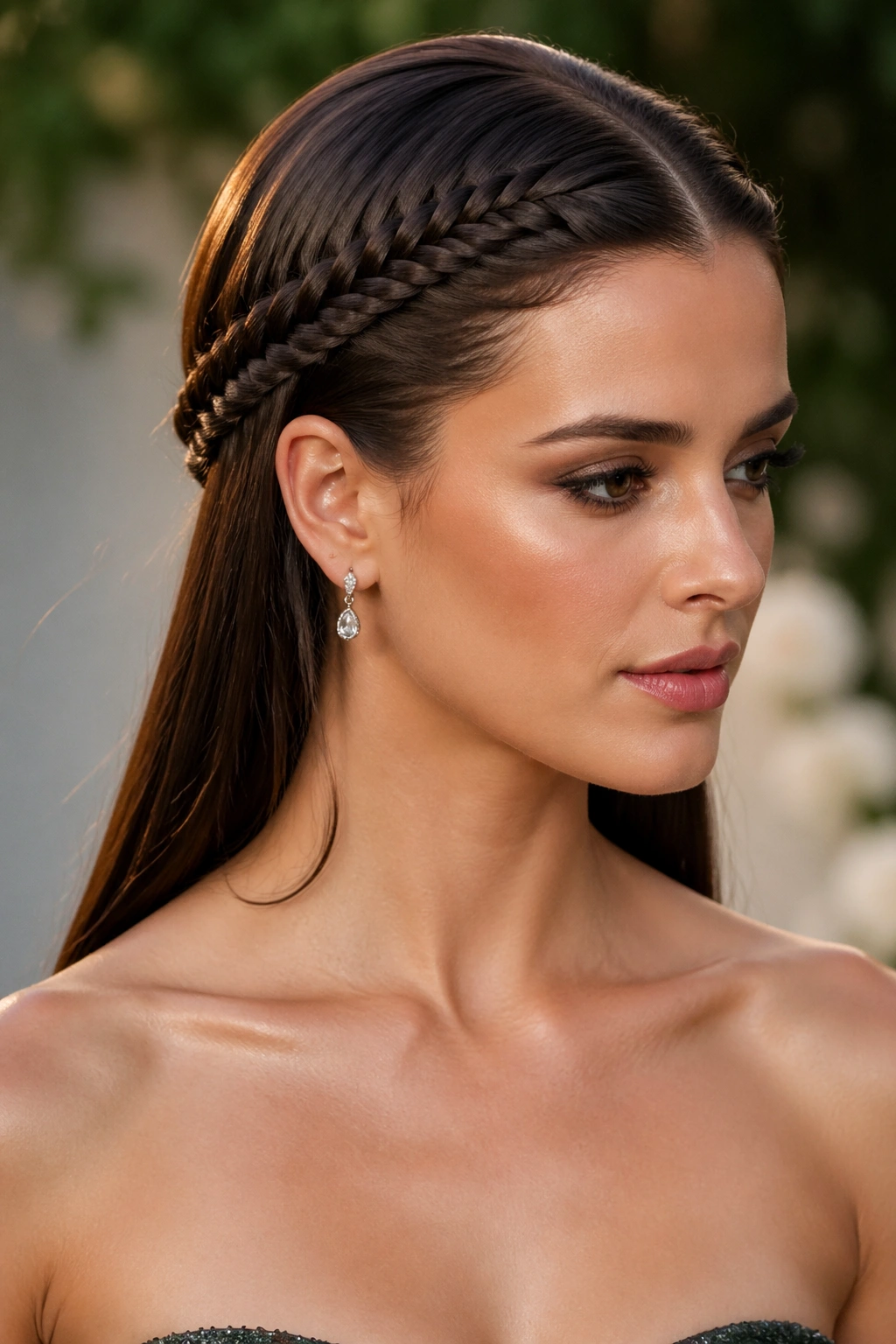
A fishtail crown is a more tailored cousin of the halo braid. It sits a little flatter, with a cleaner edge around the head, which makes it a strong match for a mermaid dress that already has plenty of curve in the skirt.
Why it works with off-the-shoulder bodices
The crown keeps the hair up and away from the neckline, so the dress can show its shape without interruption. Sleek ends keep the whole look from turning into a soft cloud.
Small decisions that improve it
- Start the braid just behind one ear.
- Keep the crown line neat and low.
- Leave the tail straight or lightly bent at the ends.
- Pin under the braid so the finish stays invisible.
If the dress has a very detailed bust, this braid keeps the top half clean. If the dress is simple, the braid becomes the detail. Either way, the contrast feels intentional.
22. Tiny Braids in a Smooth Blowout
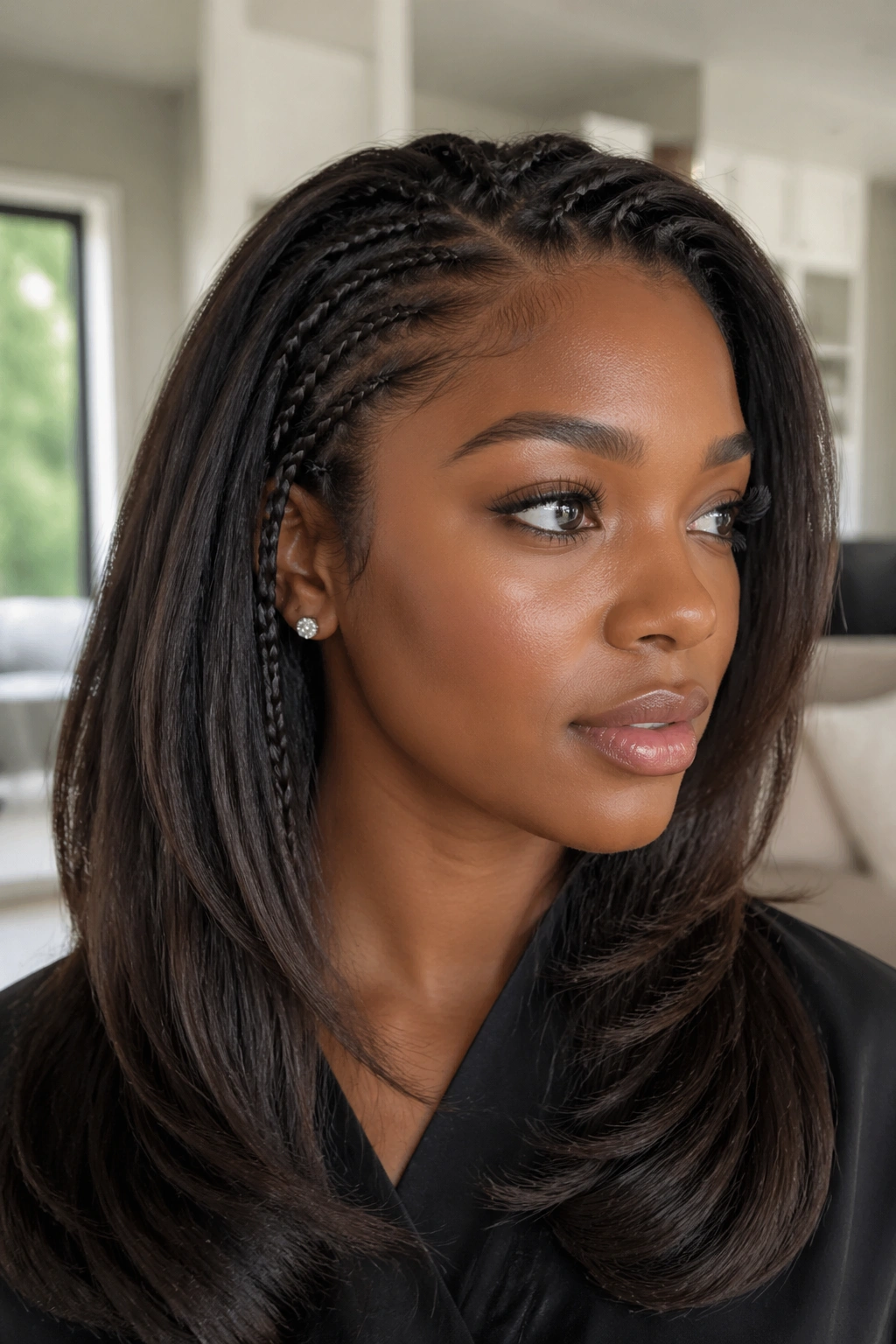
Tiny braids tucked into a smooth blowout are the easiest way to give the hair some personality without stealing attention from the dress. They work especially well when the mermaid gown already has the loud part covered — beading, satin shine, a dramatic flare, maybe all three.
Place one braid near the part, another behind the ear, and keep the rest of the hair blown smooth with a round brush and a touch of serum. The braids should be thin enough that they read as texture, not decoration. That distinction matters. A braid that is too wide can make the hairstyle feel busy, and a mermaid dress already has enough going on.
I like this choice for people who want polish but don’t want to commit to a full updo. It still looks done. It still feels special. And when the gown has that fitted-to-flare shape, the small braids help the whole look breathe instead of clumping up around the shoulders.
