


Mohawk braids for Black women on type 4 hair work because the hair already knows how to hold shape. The braid ridge gives all that density a clear direction, which is why this style can look neat, full, and a little daring without heat. If you’ve ever watched coily hair swell into a crown by day three, you already understand the appeal.
What makes the look so useful is that it doesn’t fight texture. It uses it. A good mohawk braid style can keep the sides close, build height through the middle, and still leave room for personality — cuffs, curls, beads, color, or a clean, stripped-down finish if that’s more your speed. And yes, a true mohawk silhouette does not need shaved sides. Braids can create the same shape with far less commitment.
The trick is choosing a version that suits your hair’s density, your scalp’s tolerance, and how much styling time you want to spend later. Tiny parts give sharpness. Bigger braids lower the installation time. Curly ends soften the whole thing. A little tension at the wrong spot, though, can ruin the whole experience. That’s the part people skip, and it matters.
1. Center-Part Feed-In Mohawk Braids
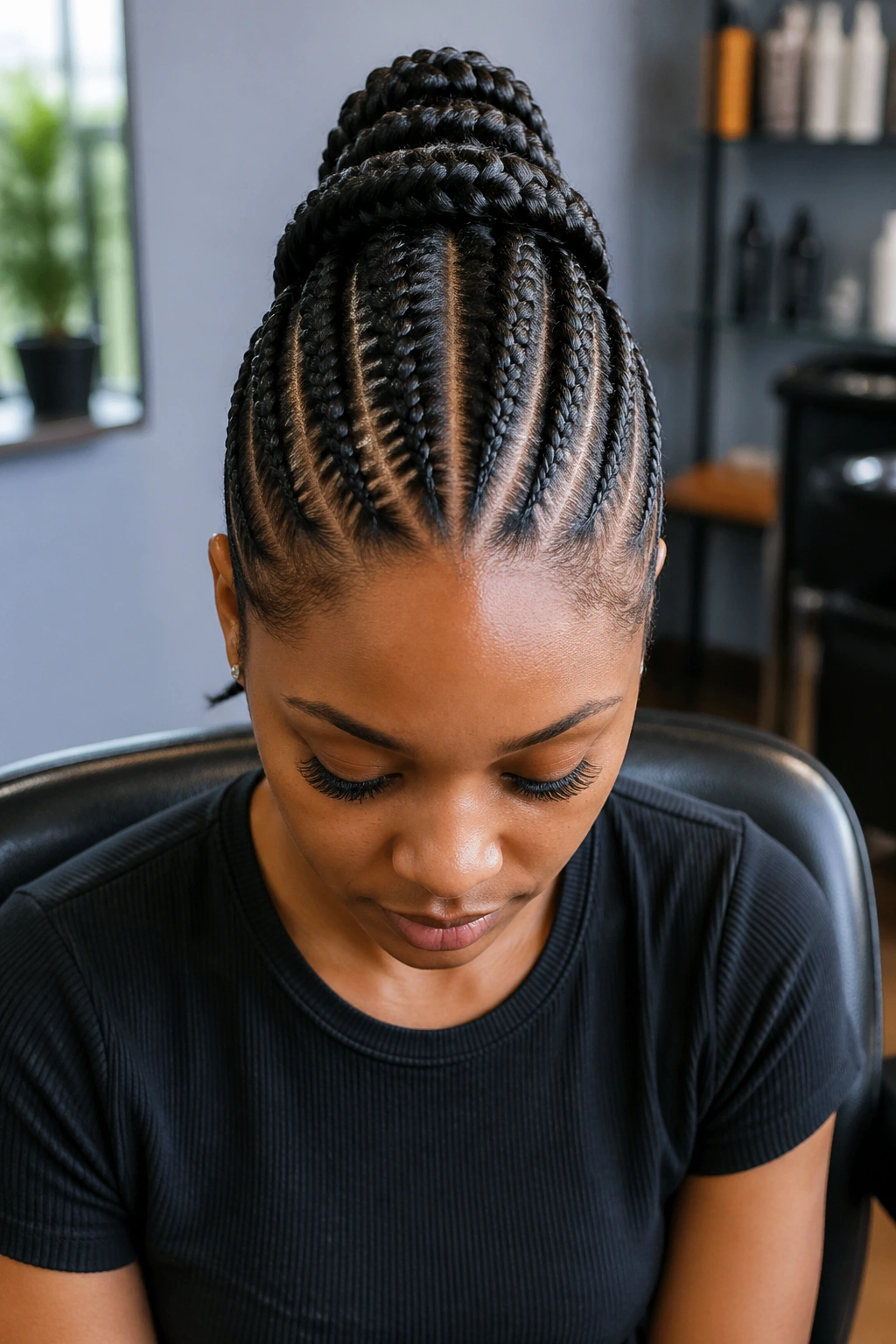
A straight center ridge is the cleanest place to start. It gives the whole style a spine, and on type 4 hair that spine looks strong without needing a ton of extra hair. Feed-in braids make the middle section rise gradually instead of starting with a hard, bulky knot. That small detail changes the whole silhouette.
Why It Sits So Well on Dense Coils
The center part keeps the style balanced from front to back, which is helpful if your hair is thick around the crown. Ask for the first inch or so of each braid to be small and tight to the scalp, then let it build as the braid moves backward. That keeps the ridge lifted without feeling heavy.
- Best if you like a clean middle line.
- Works well with medium or long extensions.
- Looks sharp with bare ends or a few gold cuffs.
- Easier to refresh than a style with lots of side detail.
Pro tip: keep the center part at least a fingertip’s width away from the hairline so the style has breathing room.
2. Curved Mohawk Braids That Follow the Hairline
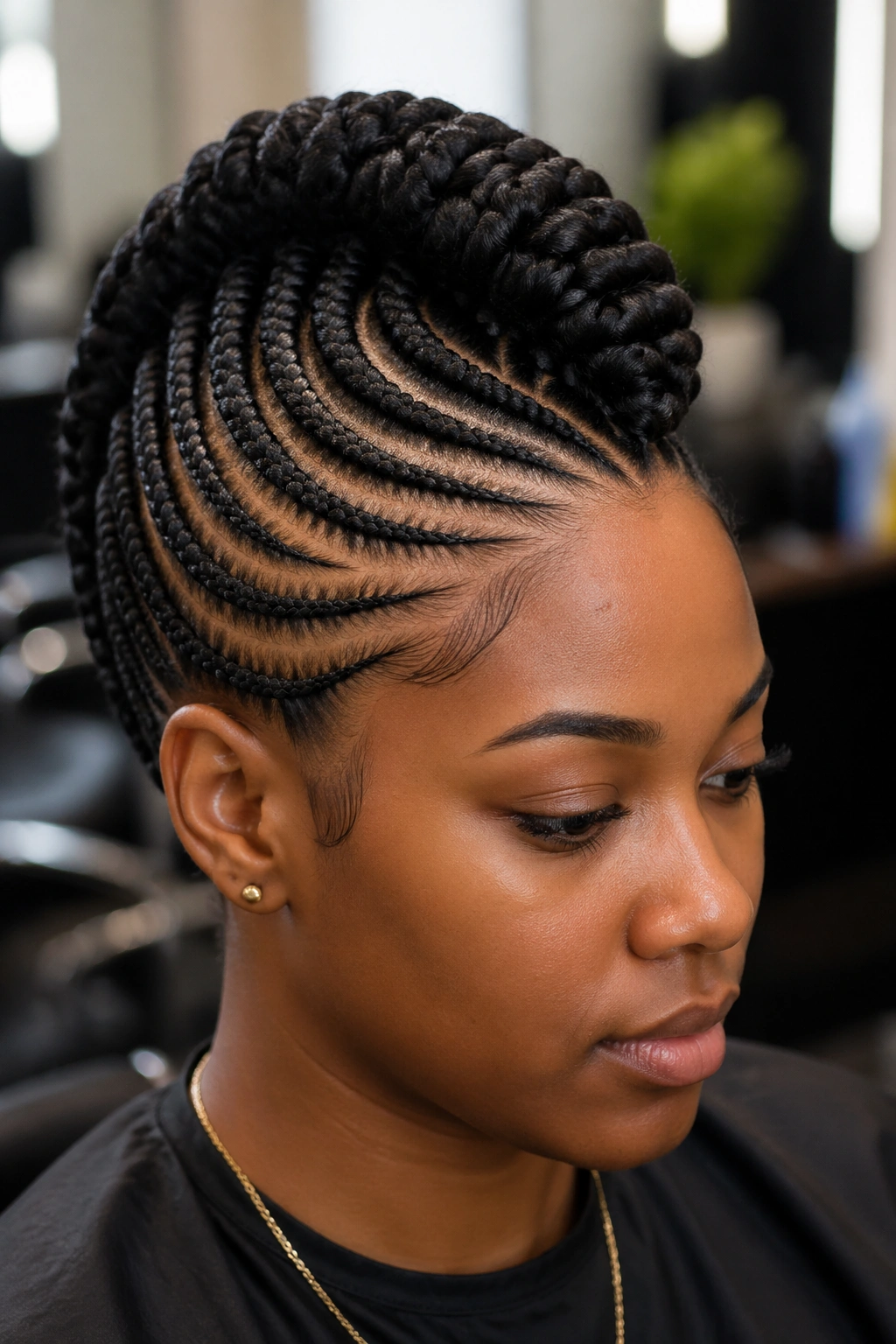
Curves soften the whole look. Instead of a straight row slicing across the scalp, the braids sweep gently from the temples toward the middle, and that movement changes the mood right away. It feels less severe, more shaped, and a little more forgiving if you want to frame the face.
Type 4 hair gives this style a nice body because the coils hold parting lines well once they’re set. The key is not to make the curves too tight around the temple. A wide arc looks smoother and causes less stress on the edges. Tight curves can look pretty on day one and feel annoying by day two.
I like this version for rounder face shapes or for anyone who wants the mohawk shape without the hard edges. It is also a smart choice if you wear hoops, because the braids and earrings end up talking to each other instead of competing.
3. Stitch-Braid Mohawk with Crisp Parts
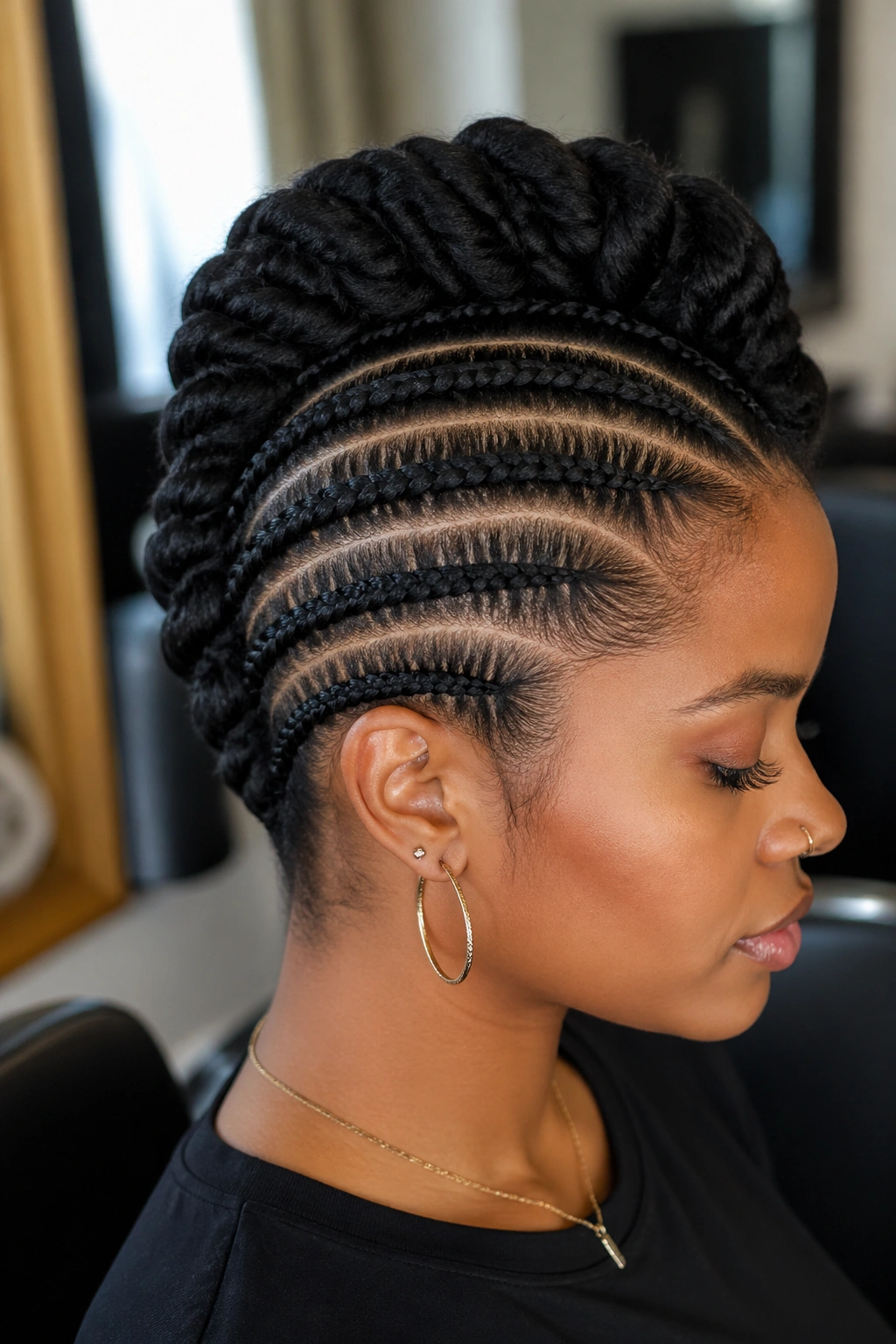
Why does stitch braiding look so good on type 4 hair? Because the texture helps the braid grip itself while the parting stays visible and sharp. You get those neat little horizontal “stitches” across the scalp, and the mohawk shape looks intentional from every angle.
How to Keep the Parting Clean
A rat-tail comb matters here. So does patience. The braider should part each section carefully, smooth the root with a small amount of gel or mousse, and keep the lines even before the braid starts moving. If the rows wobble in the beginning, they’ll wobble at the end too.
This style suits people who like structure. It is not the softest-looking mohawk braid, and that is exactly the point. It reads polished, tight, and controlled, which can be nice if your clothes lean tailored or you want the hair to do the talking.
Skip heavy edge control along the front if your scalp gets flaky. A light gel at the part is enough. Too much product sits on the roots and makes the crispness look greasy instead of sharp.
4. Jumbo Mohawk Braids with a Tall Ridge
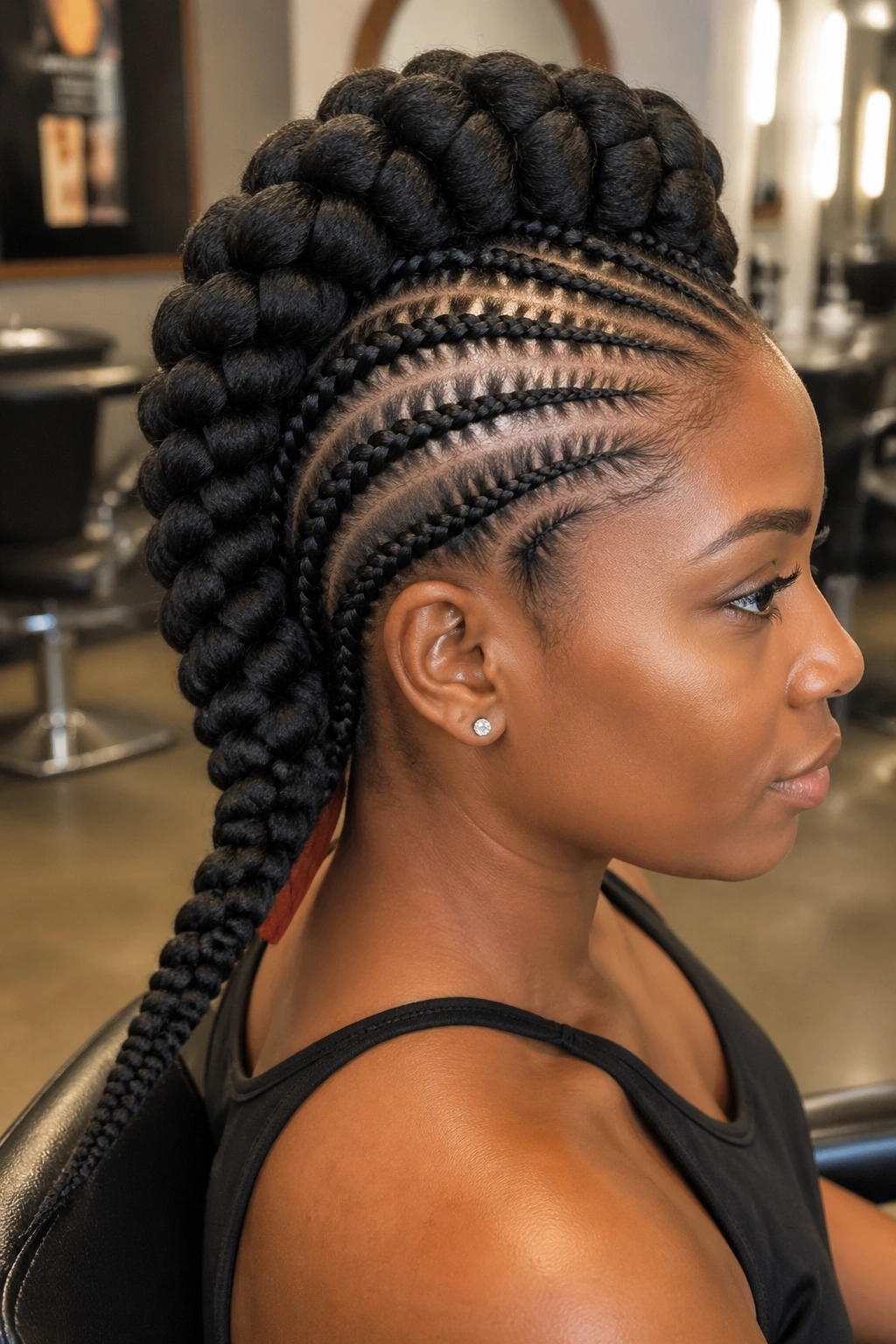
A few big braids can be more striking than twelve small ones. That surprises people, but it shouldn’t. Jumbo braids create a thick center ridge fast, and on dense type 4 hair they sit with real weight and presence. You see the shape before you notice the details.
What Makes It Feel Different
The fewer the braids, the less time your scalp spends under tension. That matters. This style is a good pick if you want the mohawk shape without sitting in a chair forever. The downside is that jumbo braids show parting mistakes more easily, so the lines need to be clean from the start.
Use this version when you want the hair to look bold with very little ornamentation. A single braid cuff near the front, maybe two, is enough. Anything more starts to clutter the silhouette.
- Great for thicker hair that can support weight.
- Easier to take down than micro braids.
- Gives a strong, lifted profile.
- Needs careful moisturizing at the roots.
One rule: if the braid starts pulling at your crown, it’s too heavy.
5. Mohawk Braids with Curly Ends
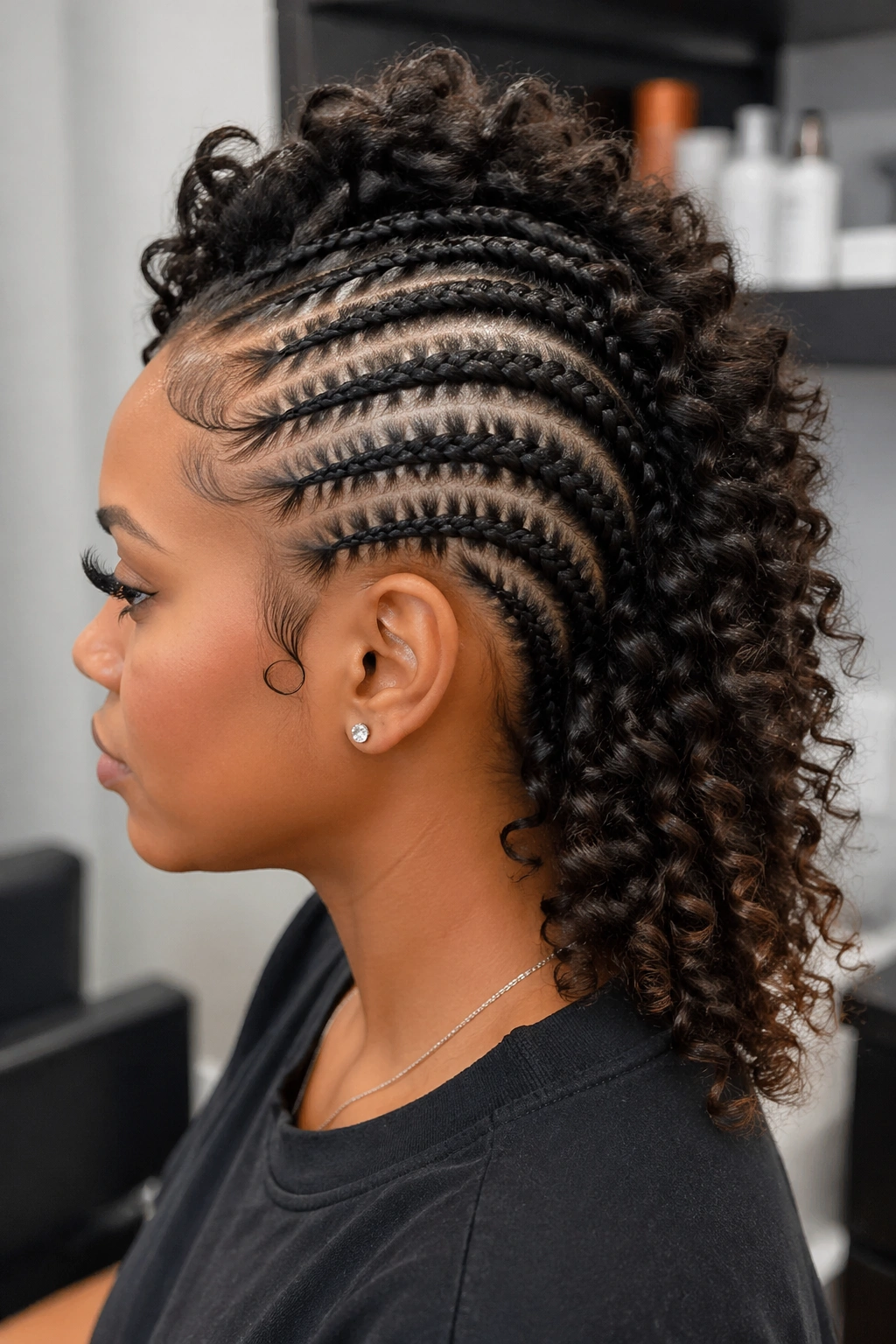
Curly ends change the mood completely. The braid stays disciplined at the scalp, then the finish loosens and moves, which gives the whole style a softer edge. It’s one of those looks that makes people think you spent far more time than you did.
The best version usually starts with neat feed-ins and ends with human hair or a curl-friendly synthetic that can be set on flexi rods or perm rods. The curl pattern does not need to be perfect. In fact, a little variation looks better. Uniform ringlets can make the ends feel stiff, while a looser curl keeps the style from looking overworked.
This is a strong choice if you want your mohawk braids to read feminine and full rather than hard-edged. Keep a light mousse nearby and wrap the ends at night with a silk scarf so the curls do not frizz into a fuzzy cloud.
6. Braided Mohawk Pulled into a High Ponytail
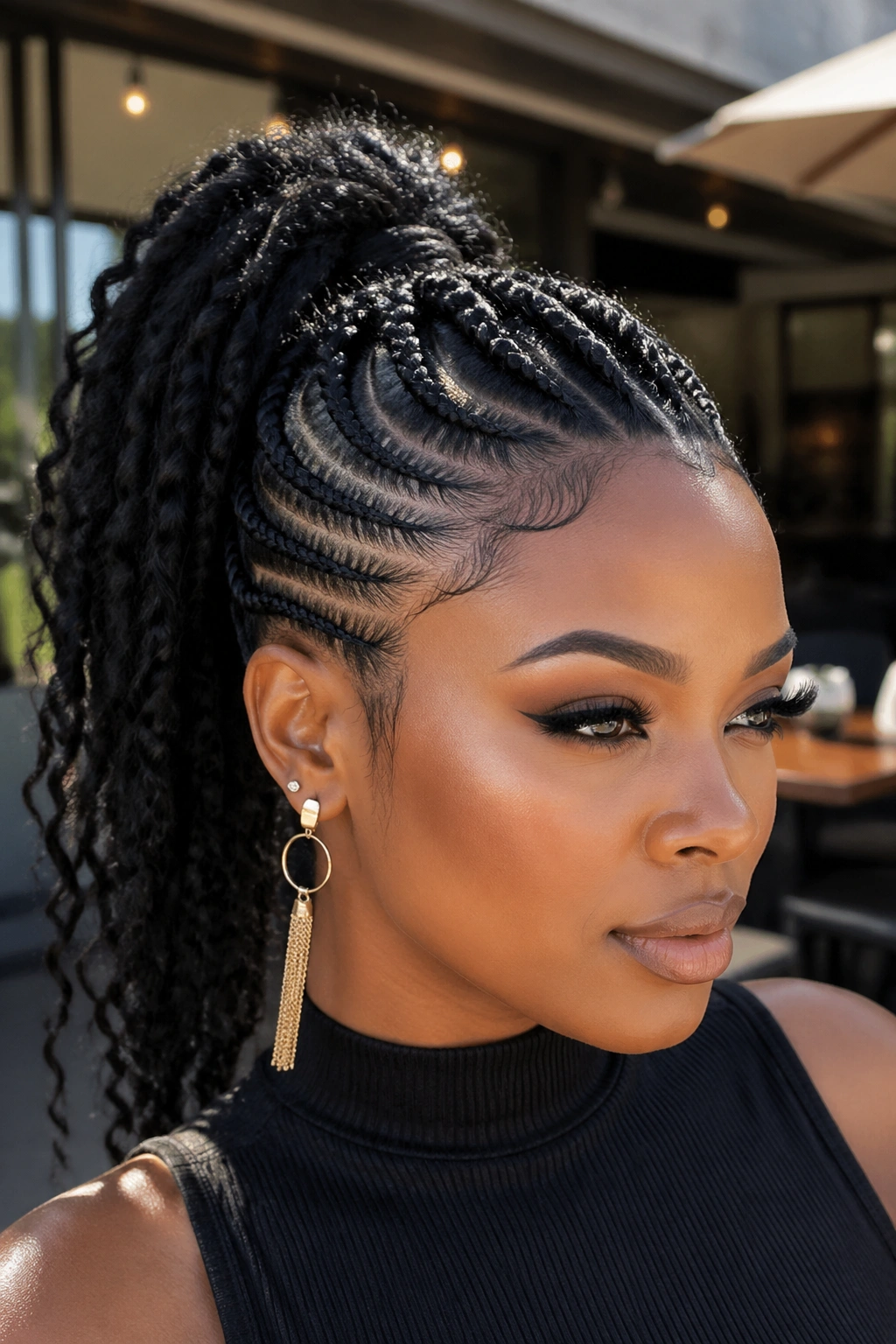
A high ponytail changes the whole attitude of the style. The braid ridge still does the work, but the length gets lifted off the neck and pulled up, which gives you more movement and less drag. It’s practical first, pretty second, and that’s a nice combination.
Unlike a mohawk that hangs down the back, this version lets you show off the braid pattern from the side and the back at the same time. It also works well on medium-length extensions because you do not need enormous length for the ponytail to feel full. The tie point should sit high enough to keep the shape open, but not so high that it flattens the front.
I’d pick this one for active days, crowded rooms, or any time you want the braids out of the way. It looks neat with a wrapped base, and a single braid tucked around the ponytail holder cleans it up fast.
7. Beaded Mohawk Braids with Shells
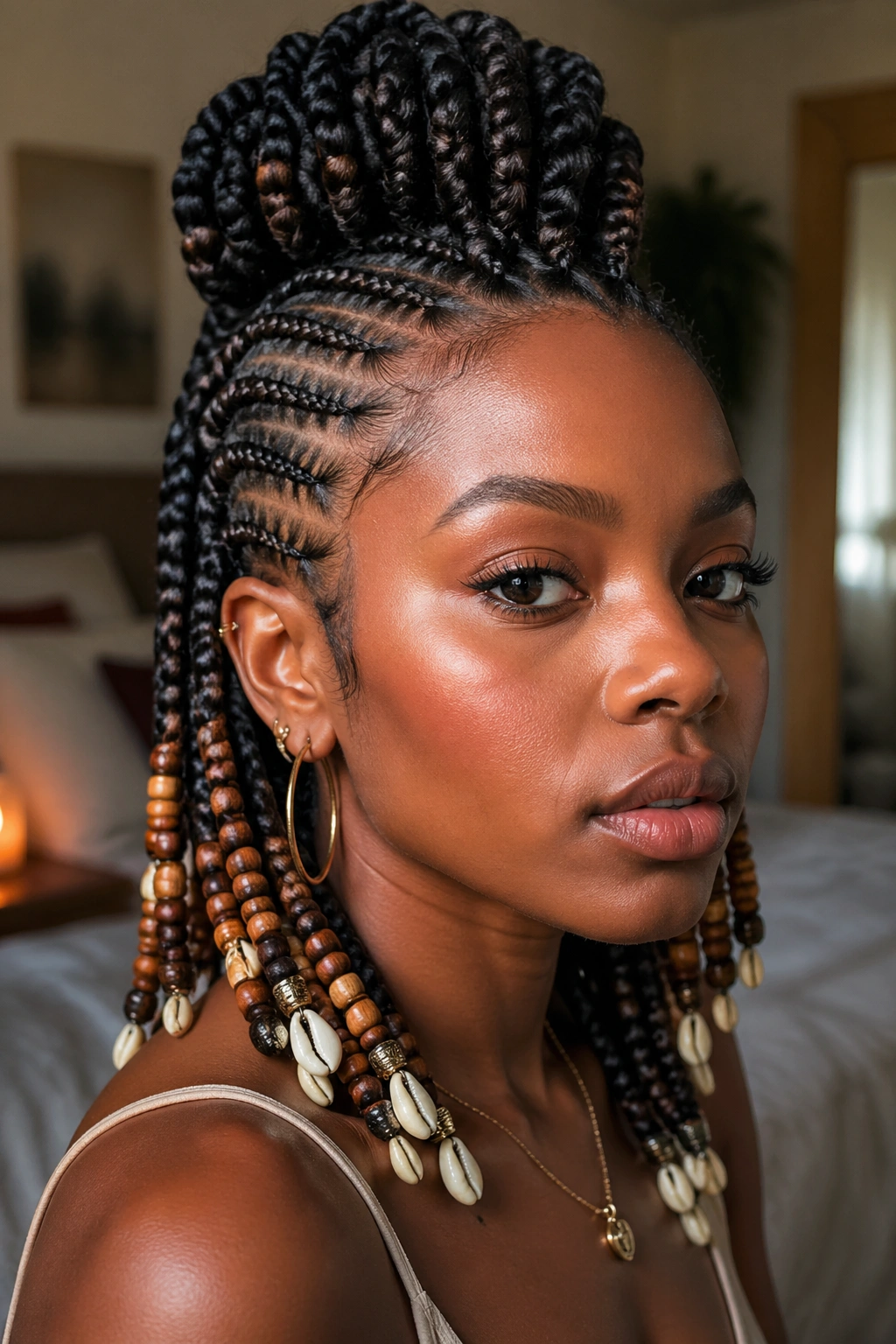
Beads give the style weight, rhythm, and sound. That last part people forget. A braided mohawk with beads doesn’t just look different when you move — it changes how the style feels when it swings. On type 4 hair, that can be gorgeous if the beads are placed thoughtfully.
What to Watch For
Keep the beads near the ends instead of loading them near the roots. The scalp does not need extra weight there, and the braids will sit better if the top stays lighter. Shells, wooden beads, and matte finishes tend to look less crowded than shiny plastic pieces.
This version has a strong cultural feel, and it suits anyone who likes hair with personality. If your wardrobe leans simple, beads can do the talking for you. If your clothes are already busy, choose fewer pieces and let the braid pattern stay visible.
A small practical note: secure the ends well. Loose beads are cute for about five minutes and then they become a nuisance in your pillowcase.
8. Triangle-Part Mohawk Braids
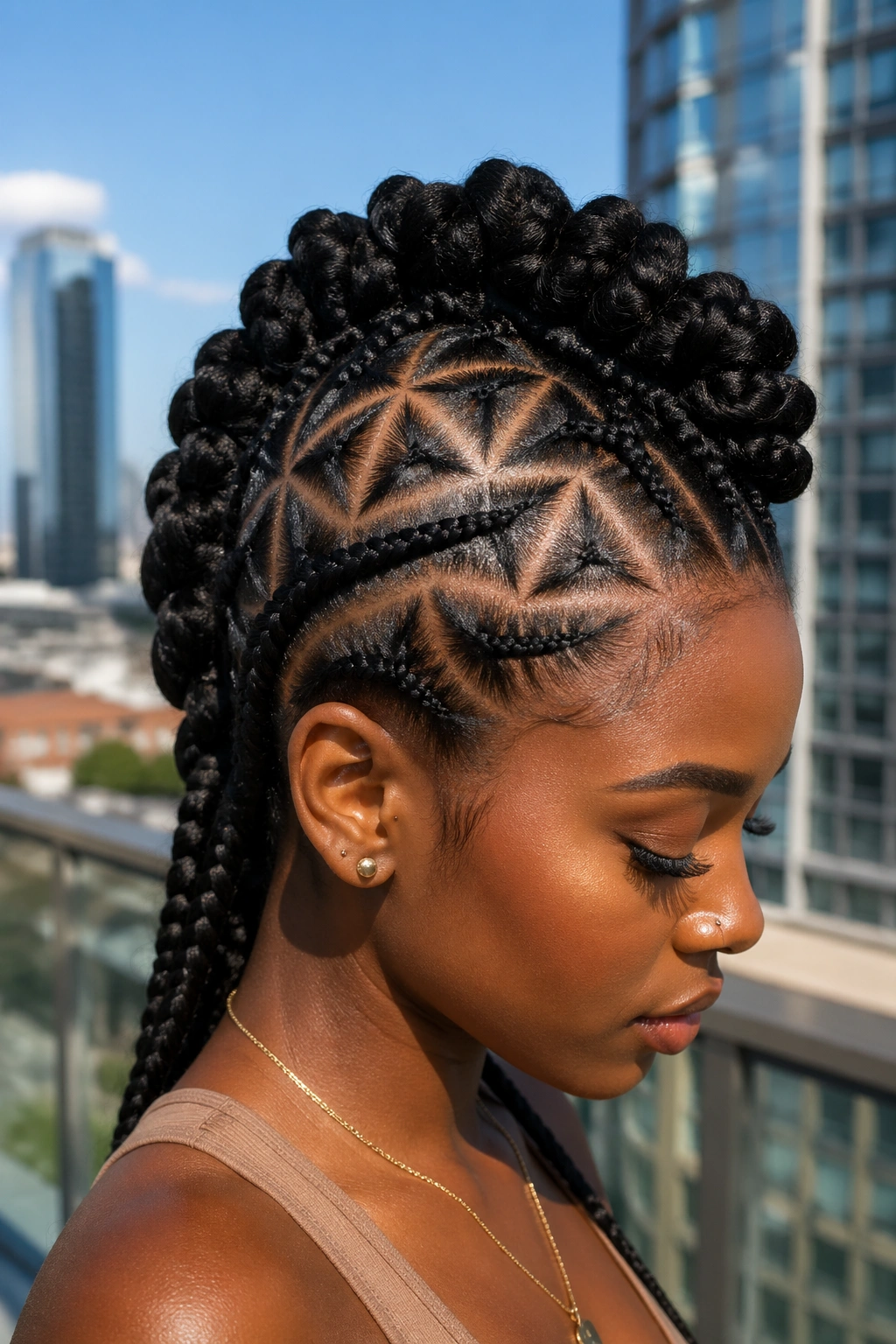
Triangle parts break up the usual grid, and that makes the whole style feel fresher. Instead of standard squares, you get angles that peek through the braid ridge and catch the eye in a different way. It is a tiny shift, but it changes the mood enough to matter.
How to Ask for the Parts
Tell your braider you want the triangles to be even and visible, not tiny and cramped. Bigger triangles show better on dense coils because they give the scalp room to breathe and leave the pattern readable. The braids can be medium or small; the part shape is the star here.
This works especially well if you hate grow-out lines that look too rigid. Triangle parts tend to age a little more gracefully because the shapes are already broken up. They also look good from above, which matters more than people think when the hair is pulled back.
If you want the mohawk to feel fashionable without loud accessories, triangle parts are a smart move. They do the visual work for you.
9. Short Mohawk Braids with a Tucked Bun
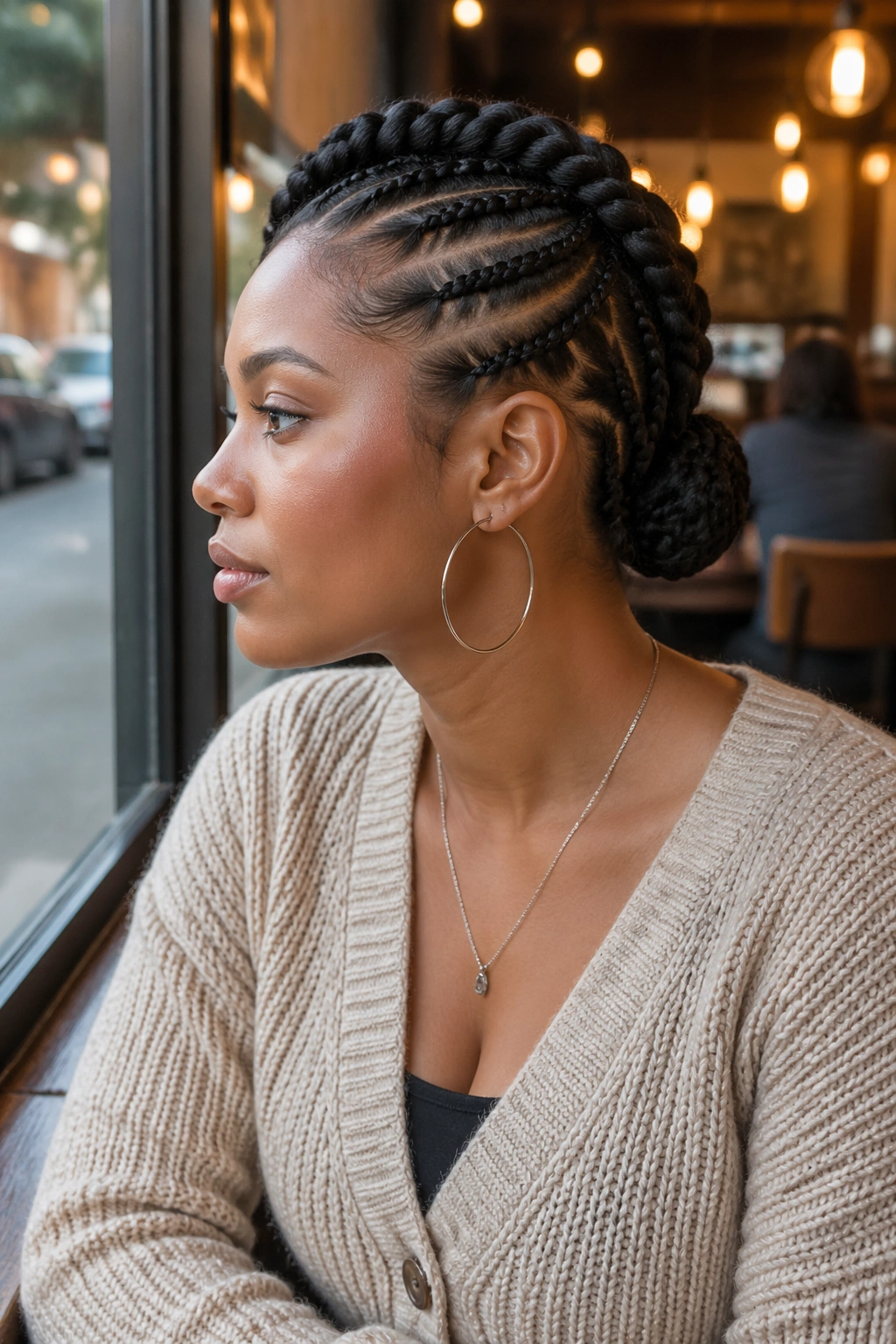
Shorter braids can still make a strong mohawk silhouette. In fact, the shorter length sometimes helps because all the attention stays on the shape instead of the swing. A tucked bun at the nape keeps the ends hidden and lets the center ridge stay the main event.
This is a useful style when your hair is shoulder-length or a little above it. The braids can be fed toward the middle and then wrapped into a low knot, or they can be tucked under with pins if the braid length is just enough to cooperate. Either way, the profile stays neat.
I like this one for work, errands, and long days where hair getting caught on jackets sounds annoying. It gives you the mohawk outline without asking for drama. And if your braids are freshly installed, it keeps the ends from fraying against collars.
10. Side-Swept Mohawk Braids
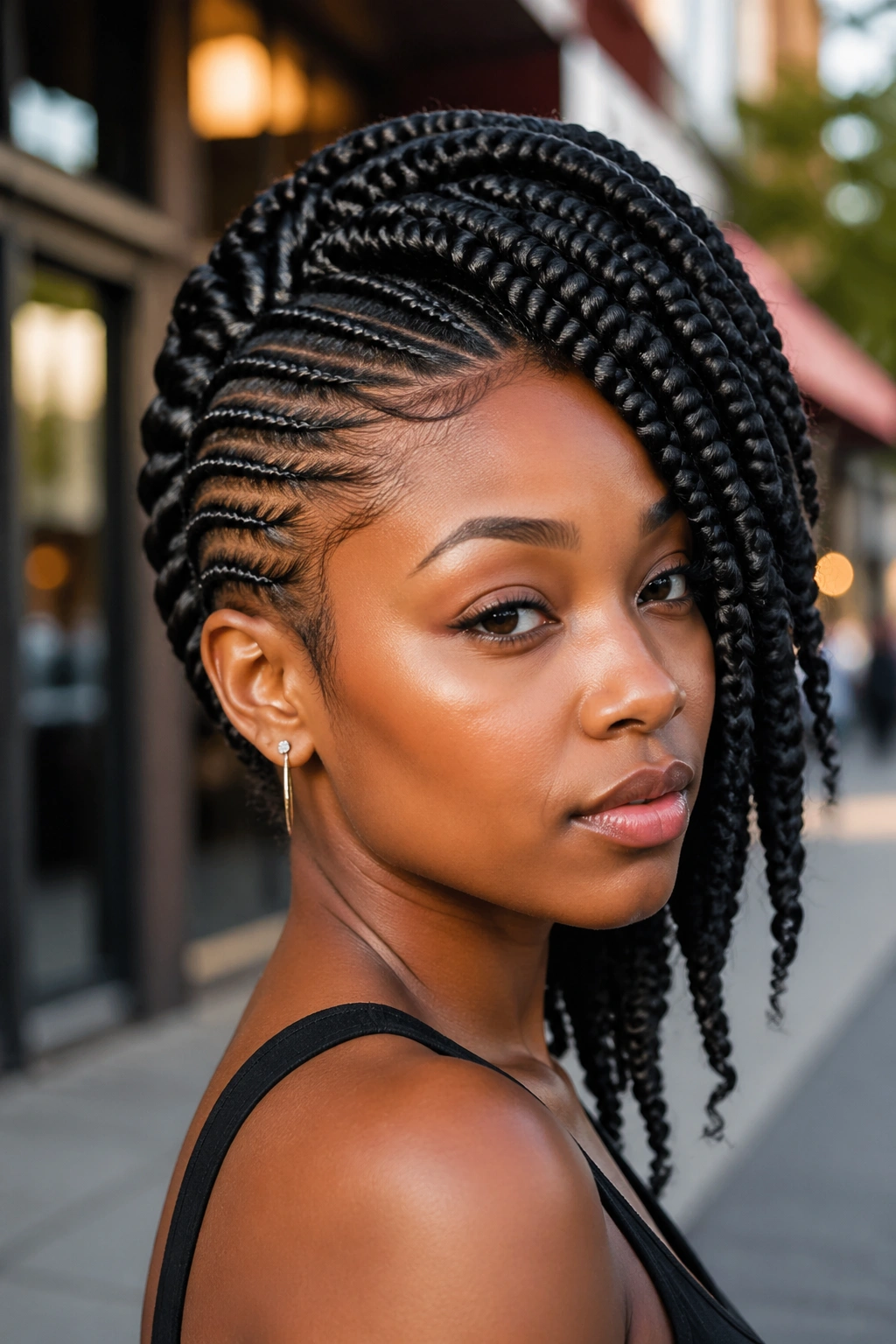
Side-swept braids bring a little asymmetry into the picture, and that makes the style feel looser right away. Instead of standing straight up the middle, the ridge shifts toward one side and creates a deliberate diagonal line. It is a good choice if you want something shaped but not stiff.
The beauty of this version is that it can flatter strong cheekbones and soften a sharp jawline at the same time. The sweep also lets you show off one ear more than the other, which is handy if you like earrings or cuffs. A clean side part at the front helps the look read as designed, not accidental.
I would choose this over a dead-center mohawk when I want the hair to feel a little more fluid. It has movement built in. That is rare in braided styles, and worth using.
11. Mohawk Braids with Twisted Ends
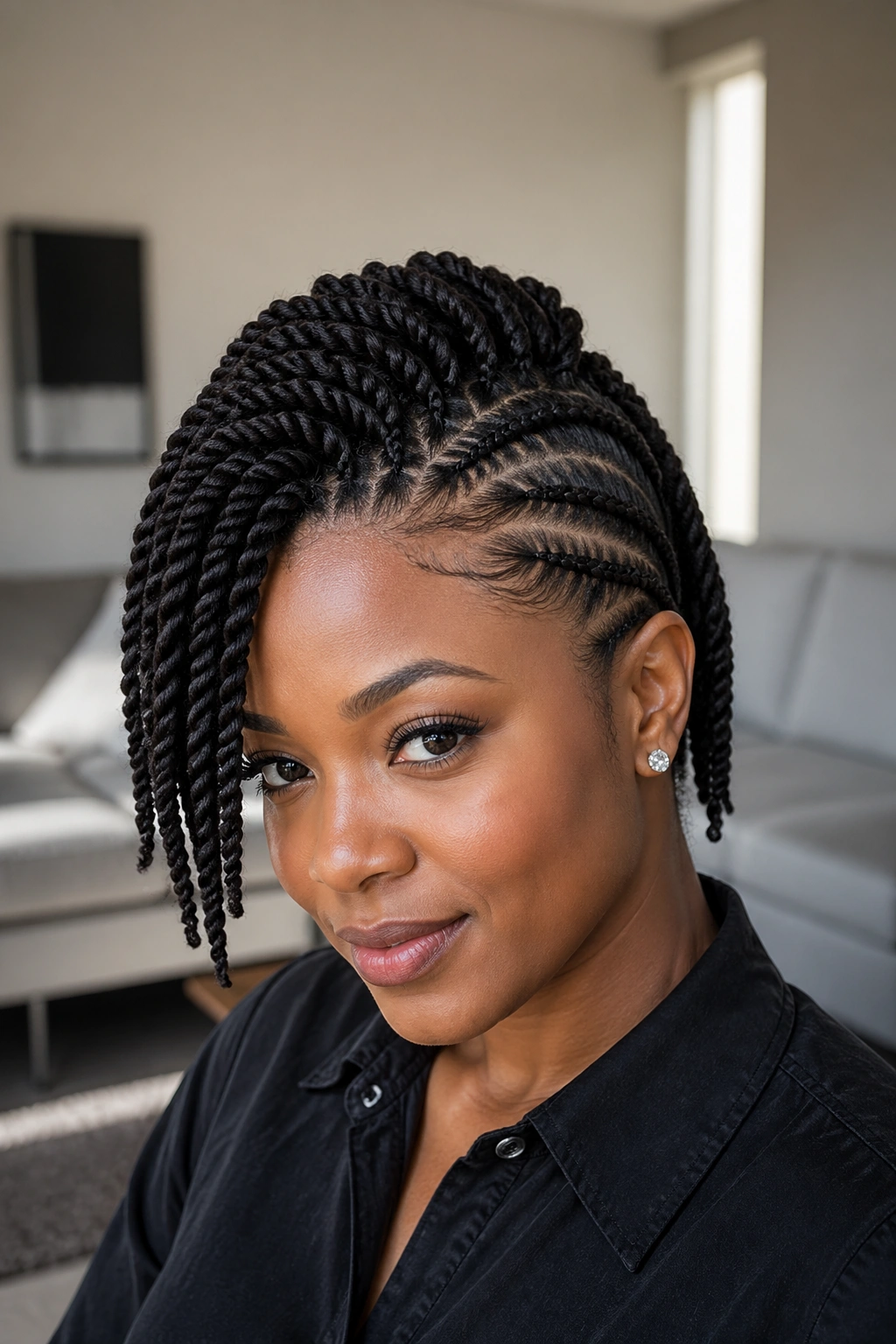
Twisted ends are a quieter finish, but they do a lot. The braid stays firm at the root, then the finish narrows and softens into two-strand twists, which makes the style look less bulky at the bottom. On type 4 hair, that lower bulk matters because the hair already has plenty of shape.
Unlike curly ends, twists keep the finish more controlled. They fray less, they feel lighter, and they are easier to tuck into a scarf at night. That makes them a good match for anyone who wants a braid style that behaves instead of puffing up faster than expected.
Where This Finish Makes Sense
- If you want less volume at the ends.
- If your braids are long and need a slimmer finish.
- If you like a neater silhouette for daily wear.
- If you do not want to deal with curl maintenance.
Small detail, big payoff: twist the last few inches firmly but not tight. The ends should feel secure, not stiff.
12. Goddess Mohawk Braids with Loose Curls
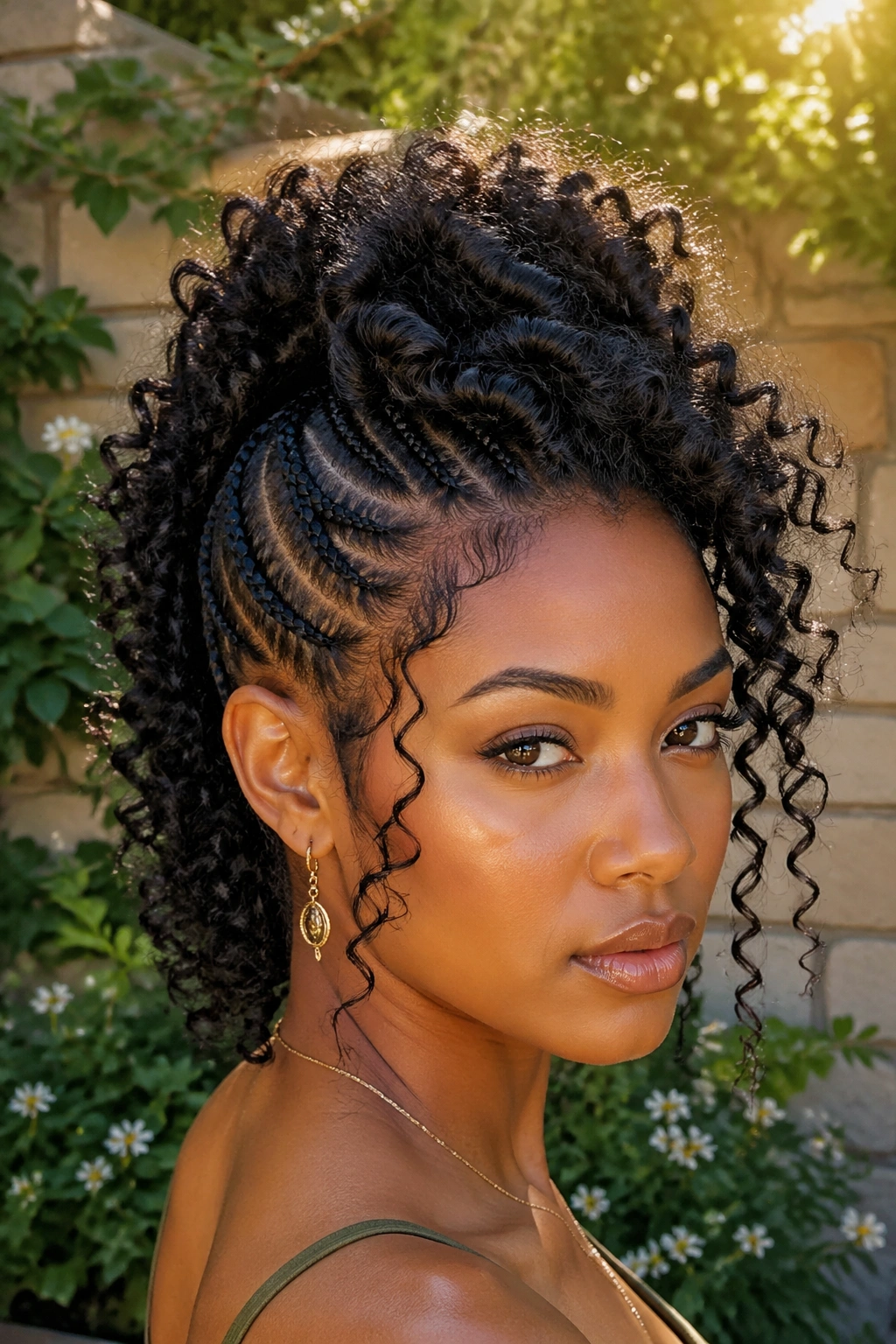
Loose curls bring air into the look. That may sound vague, but it is easy to see in person. The braid ridge stays structured, while the curls spill out around it and make the style feel softer, fuller, and more romantic without turning into a pageant hairstyle.
Why the Curls Matter
The curls also hide the transition between braid and extension, which is useful if you like a seamless finish. A little mousse helps the curl pattern stay defined, but don’t drown the hair in product. Too much mousse makes the strands gummy and dull.
This style suits longer faces, event looks, and anyone who likes movement near the shoulders. It is a little higher-maintenance than a plain braided mohawk because the curls need wrapping at night, but the payoff is easy to see. They catch the eye without shouting.
If you’ve ever wanted a braid style that feels less hard and more airy, this is the one to try.
13. Heart-Part Mohawk Braids
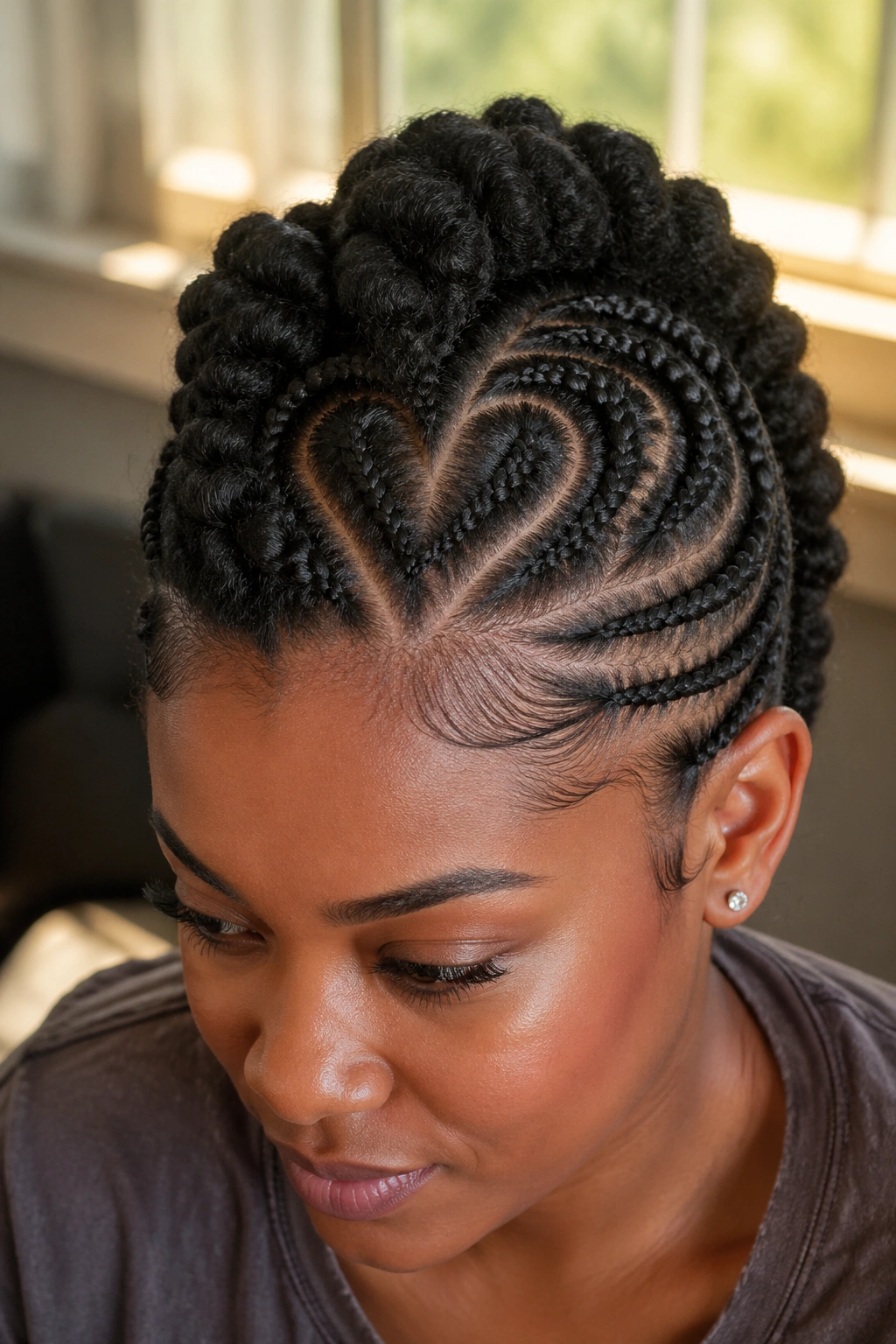
Heart parts are one of those details that sound extra until you see them done well. Then they make perfect sense. A heart-shaped part at the crown gives the mohawk a playful center point, and the whole style feels more custom because the part itself carries personality.
The shape needs a patient hand. No shortcuts here. The curve of the heart should be smooth, not lopsided, and the lines around it need to stay clean so the pattern doesn’t melt into the rest of the braids. On dense type 4 hair, the texture helps the part hold once it is set, which is lucky because a good heart part deserves to be visible.
I like this for birthdays, photos, or any day when you want the braid pattern to do more than sit there. It reads young, sharp, and deliberate without needing a ton of accessories.
14. Mohawk Braids for Short Type 4 Hair
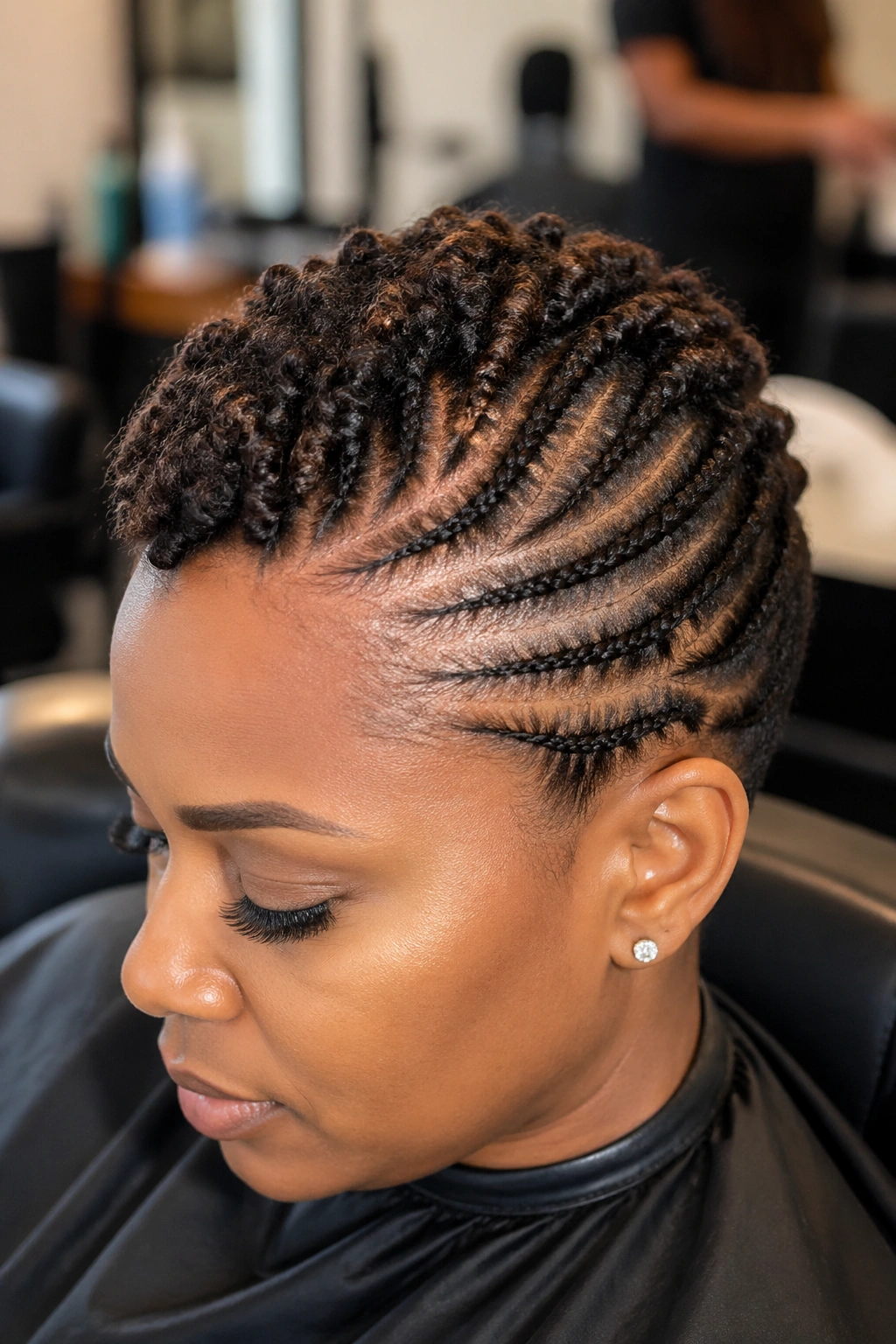
Can you do a mohawk braid style on short type 4 hair? Yes, if the grip is there and the braid size matches the length you have. Short coils can hold a lot more shape than people expect, especially when the style is kept small and close to the scalp.
What Makes Short Hair Work
The trick is not forcing the same braid size you’d use on long hair. Smaller cornrows and tighter shaping usually work better, because they reduce the chance of the braid slipping. A good stylist may also use a little added hair only where the length needs help, not everywhere.
This is a smart option if you are growing out a cut or if your shrinkage makes your hair seem shorter than it is. The mohawk shape gives the illusion of height even when the actual length is modest.
Pain is not a styling trick. If the roots feel hot, the braid is too tight.
15. Mohawk Braids with an Undercut Illusion
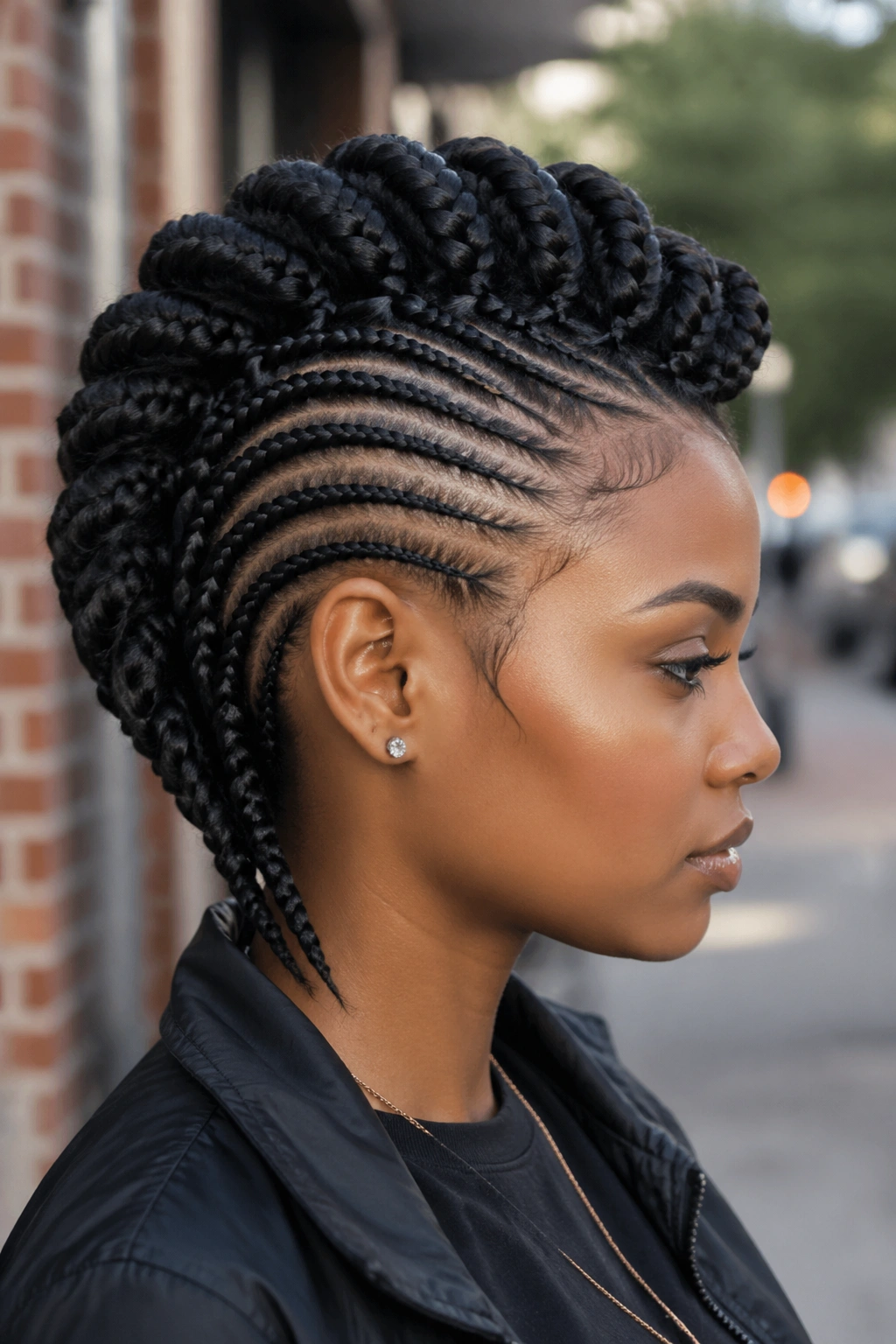
This look gives the attitude of an undercut without touching the clippers. The sides are braided flat and kept close, while the center ridge stays raised enough to suggest contrast. It is a clean trick, and it works because the eye reads the low sides as a cut even when nothing has been shaved.
That makes it a good pick for anyone who wants edge but isn’t ready to commit to a real undercut. The style also grows out more gently, which matters if you want to keep wearing it for a while. Side braids can be tiny or medium, depending on how strong you want the contrast to feel.
I’d recommend this version when you want the look to read sharp in profile. From the front, it can be sleek. From the side, it has a little bite.
16. Space Buns on a Braided Mohawk
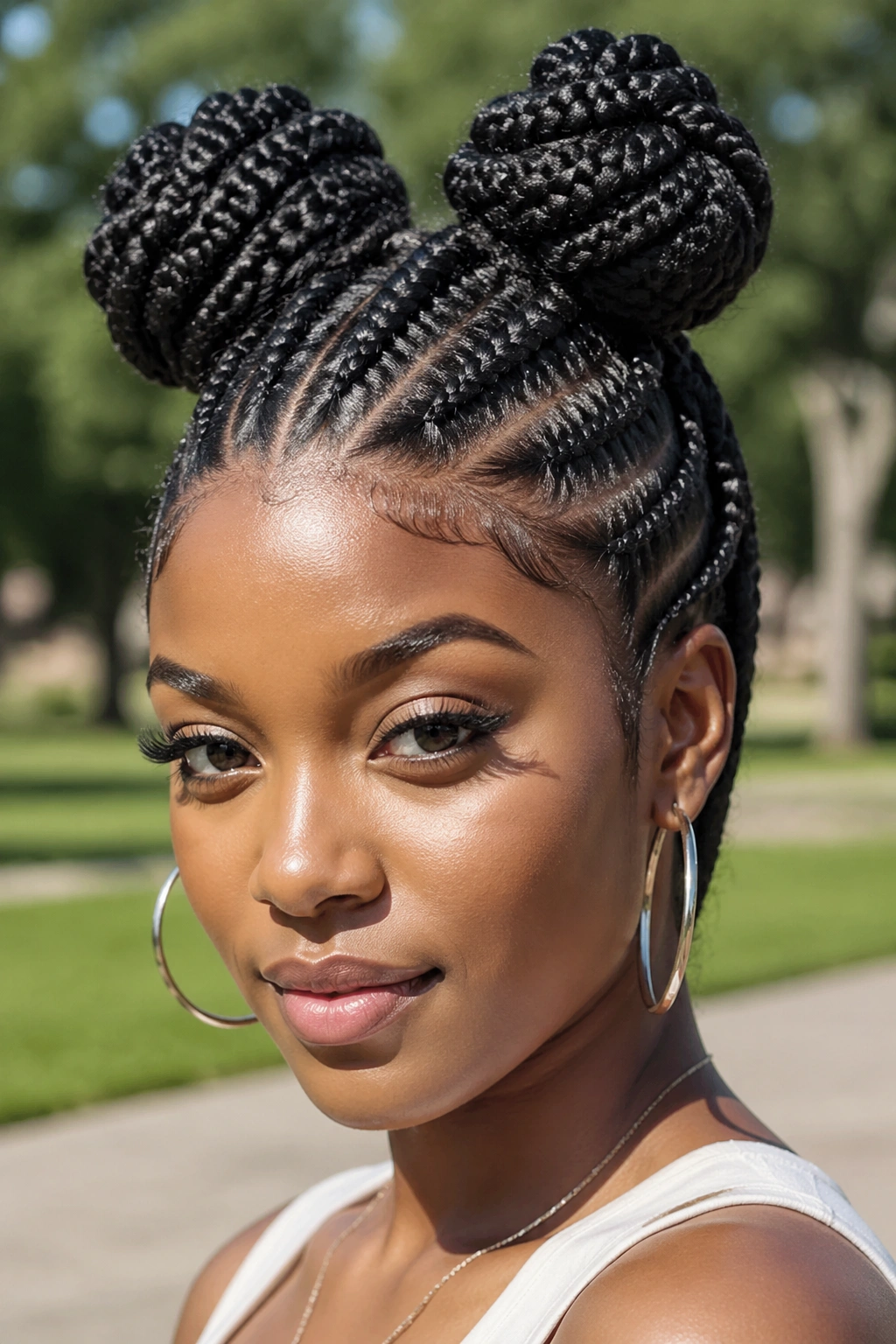
Space buns change the whole energy. Instead of letting the braids fall or wrapping them into one knot, you split the ridge into two lifted buns, and suddenly the style feels playful and a little cheeky. It is one of the easiest ways to keep long braids off your neck while still keeping the mohawk outline.
When to Reach for It
- Long extensions that feel heavy when worn down.
- Warm days when you want the hair up and out of the way.
- A casual style that still looks intentional.
- Braids that have enough length to twist into secure buns.
The buns should sit high enough to keep the silhouette clear but not so high that they drag on the scalp. If your braids are thick, use a few pins inside the buns rather than stretching the hair into a tight wrap. That keeps the shape plump.
It’s a fun style. Not everything needs to be serious.
17. Chunky Flat-Twist Mohawk Braids
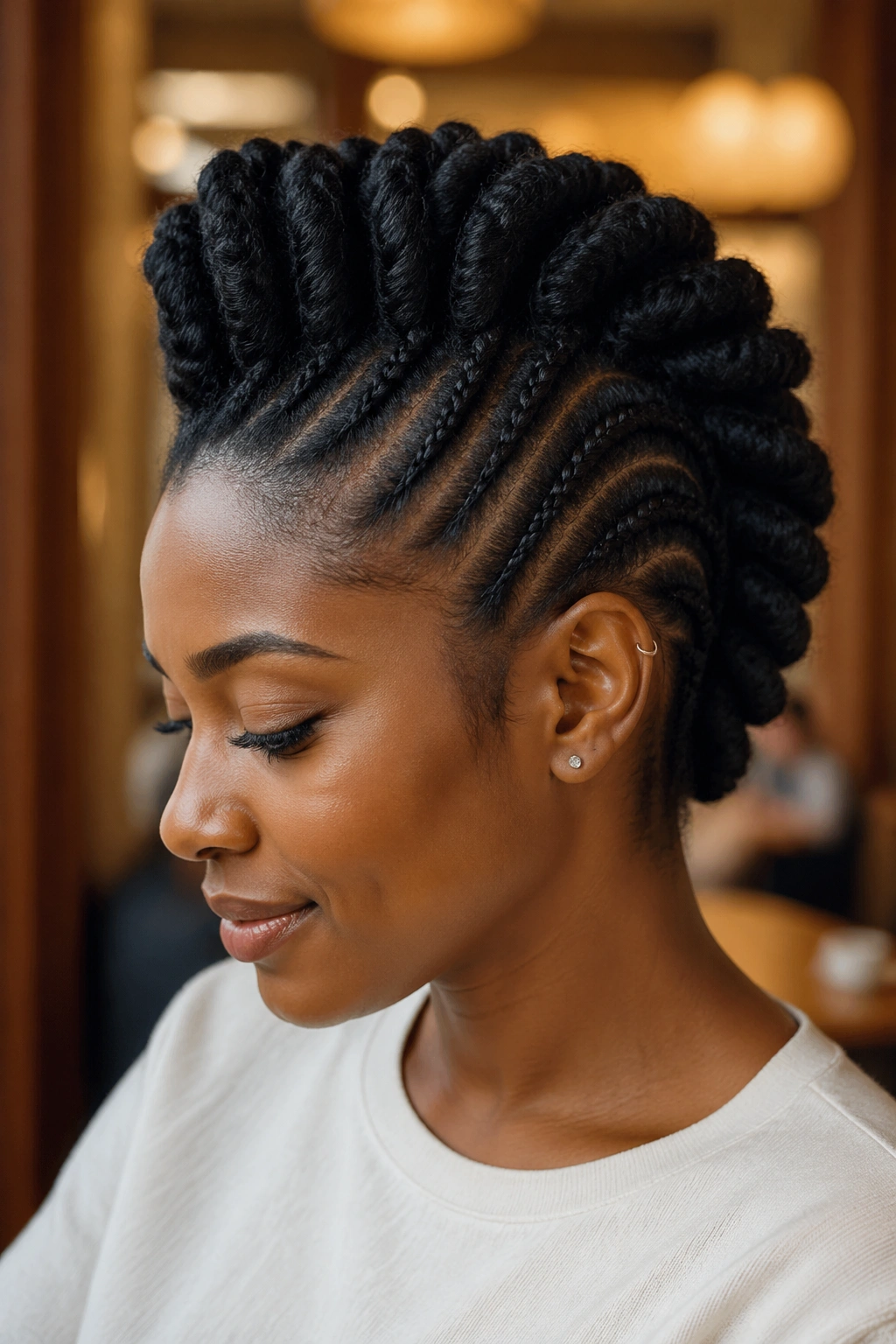
Flat twists deserve more credit than they get. They are gentler than many braid patterns because they do not always need the same grip at the scalp, and they give type 4 hair a broad, rope-like texture that looks rich instead of fussy. In a mohawk shape, that texture becomes the whole point.
Chunky flat twists are a good choice if your scalp prefers less tension or if you want a style that sits flatter through the sides. The twist lines can feed into a tall center ridge or a low braided knot, depending on how much volume you want. Either way, the look feels full without being overly busy.
I keep coming back to this style because it is practical in a way a lot of prettier styles are not. You can wear it for days, moisturize the roots easily, and still get a strong shape. That counts for a lot.
18. Mohawk Braids with Zigzag Parts
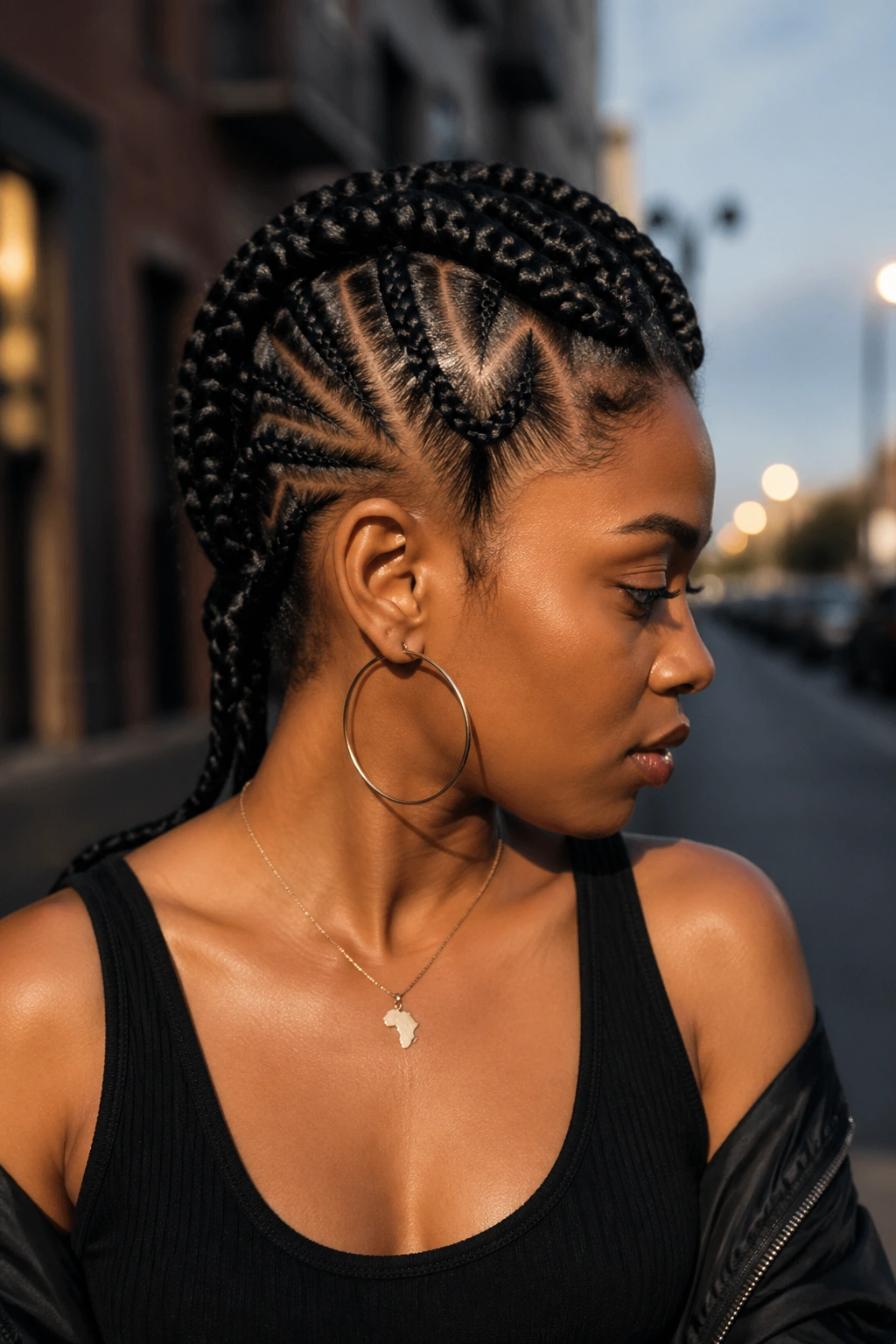
Zigzag parts bring movement before the braid even starts. You can see the pattern from across a room, and that is the whole charm. Instead of straight rows, the parts bend and shift, which makes the mohawk feel less predictable and more alive.
Why the Pattern Matters
On type 4 hair, zigzag parts are useful because they hide little irregularities better than straight lines do. A tiny wobble in a zigzag does not read as a mistake; it reads as part of the design. That’s handy if your hair is thick around the crown or if you want something that wears in nicely.
This style has a more playful feel than stitch braids or a clean center part. It pairs well with medium-sized braids, since the parting itself already gives the look enough detail. If the braids get too tiny, the part pattern can start competing with them.
I would choose zigzags when I want the hair to feel less strict and more graphic.
19. Mixed-Thickness Mohawk Braids
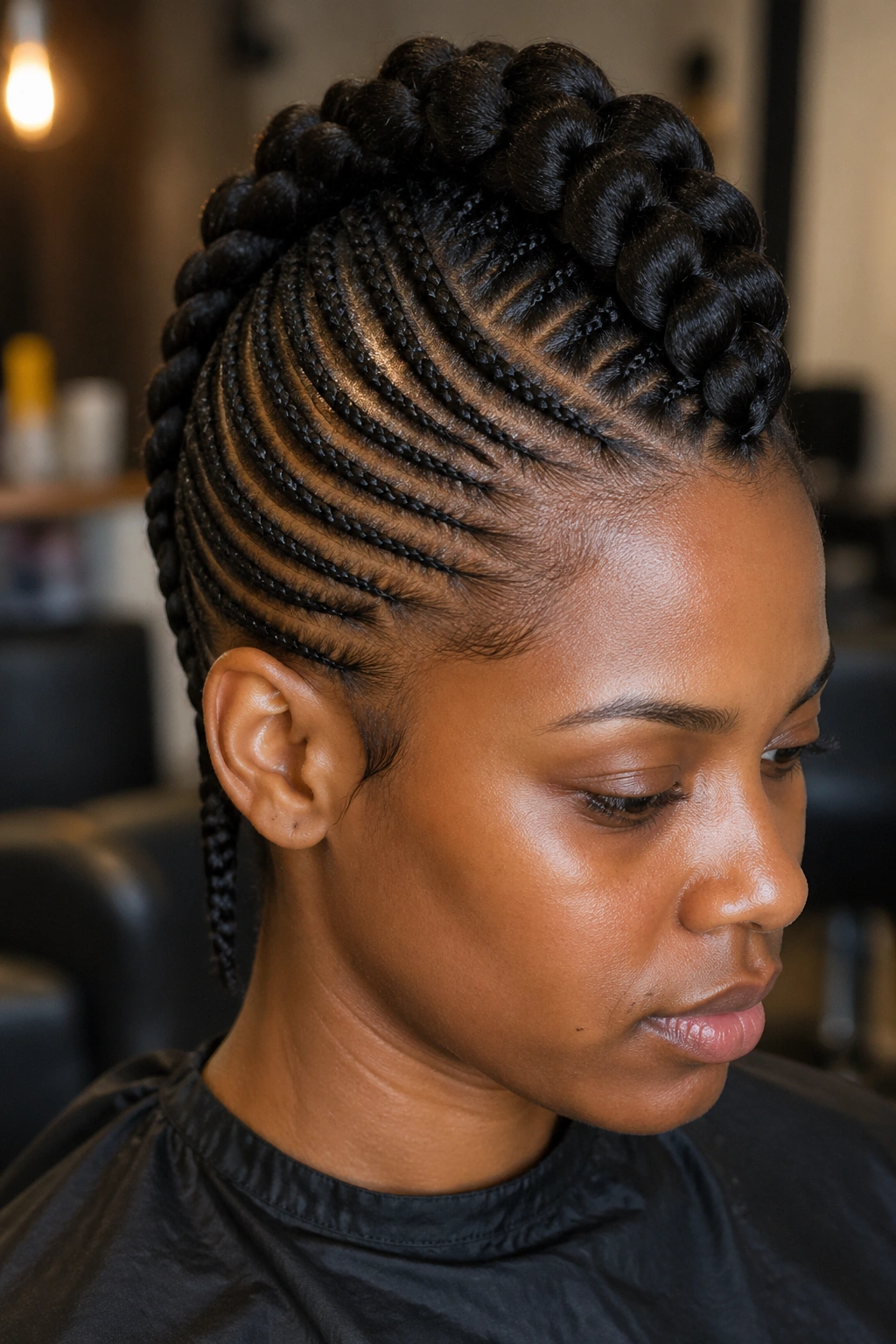
A mixed-thickness mohawk braid style uses contrast on purpose. The center row might be chunky, while the side braids stay smaller and tighter. That difference creates a clear visual path down the head, and it keeps the style from looking flat.
This is a smart move if you want the mohawk ridge to look fuller without making the whole install heavy. The larger central braids carry the shape, and the smaller side rows keep the outline neat. It also helps balance the style when one side of the head has more density than the other, which happens more often than people admit.
- Big center braids = stronger height.
- Smaller side rows = cleaner frame.
- Mixed sizes = less uniform, more custom.
- Good for hair that varies in density from front to back.
My take: this is one of the easiest ways to make a familiar mohawk braid look tailor-made.
20. Braided Crown Mohawk with a Lifted Center
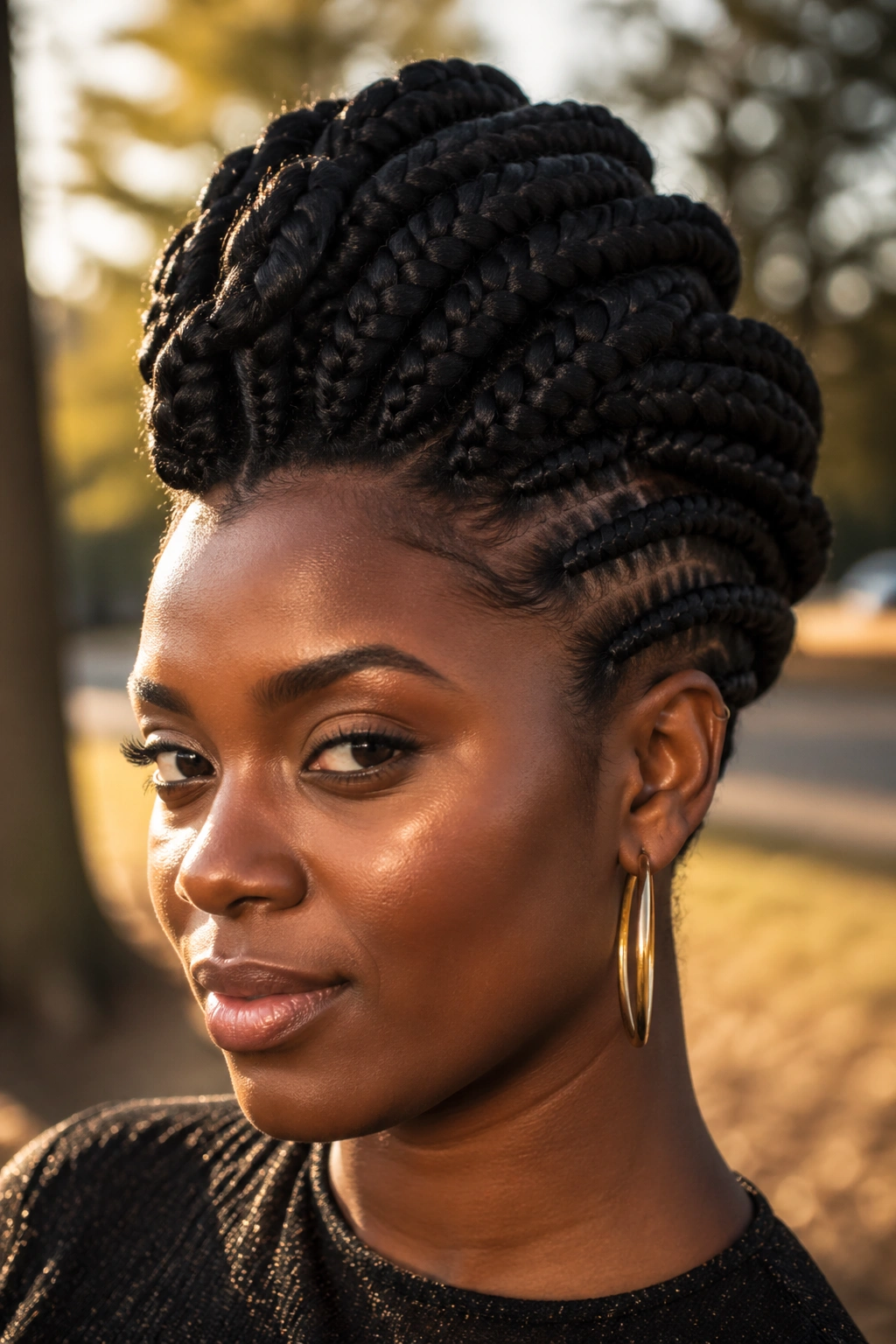
A braided crown changes the whole profile. Instead of focusing only on the middle ridge, the braids travel around the head and create a lifted frame that feels a little regal without getting precious about it. The mohawk shape stays, but the edges curve into a crown-like outline.
That makes this style a strong option for formal events or any situation where you want the hair to look finished from every angle. It also works well if you do not want the top of your head to feel too empty. Some mohawk braids can feel almost bare at the sides; a crown braid fills that space in nicely.
The crown effect looks especially good when the braid base is smooth and the finish is tucked low. It keeps the style from turning puffy around the ears, which can happen fast with dense coils.
21. Work-Friendly Mohawk Braids with a Low Profile

Not every mohawk braid needs to be loud. Some just need to be neat enough to get through a long week without tugging at your scalp. A work-friendly version keeps the ridge moderate, the sides tidy, and the accessories minimal. That’s the version I’d trust in a setting where you need the hair to behave.
What Makes It Office-Friendly
The parts should be clean, the braids should sit close enough to the head to avoid flopping, and the overall height should stay controlled. A low bun at the back or a softly tucked finish keeps the look from drifting into “I just wrestled with my hair in the parking lot” territory.
This is one of those styles where restraint helps. No heavy beads. No giant cuffs. Maybe one accent piece if you want it, but that’s enough. The braid pattern itself should do the work.
If your mornings are rushed, this version saves you. And that matters more than a lot of glossy hair advice wants to admit.
22. Event-Ready Mohawk Braids with Extra Length
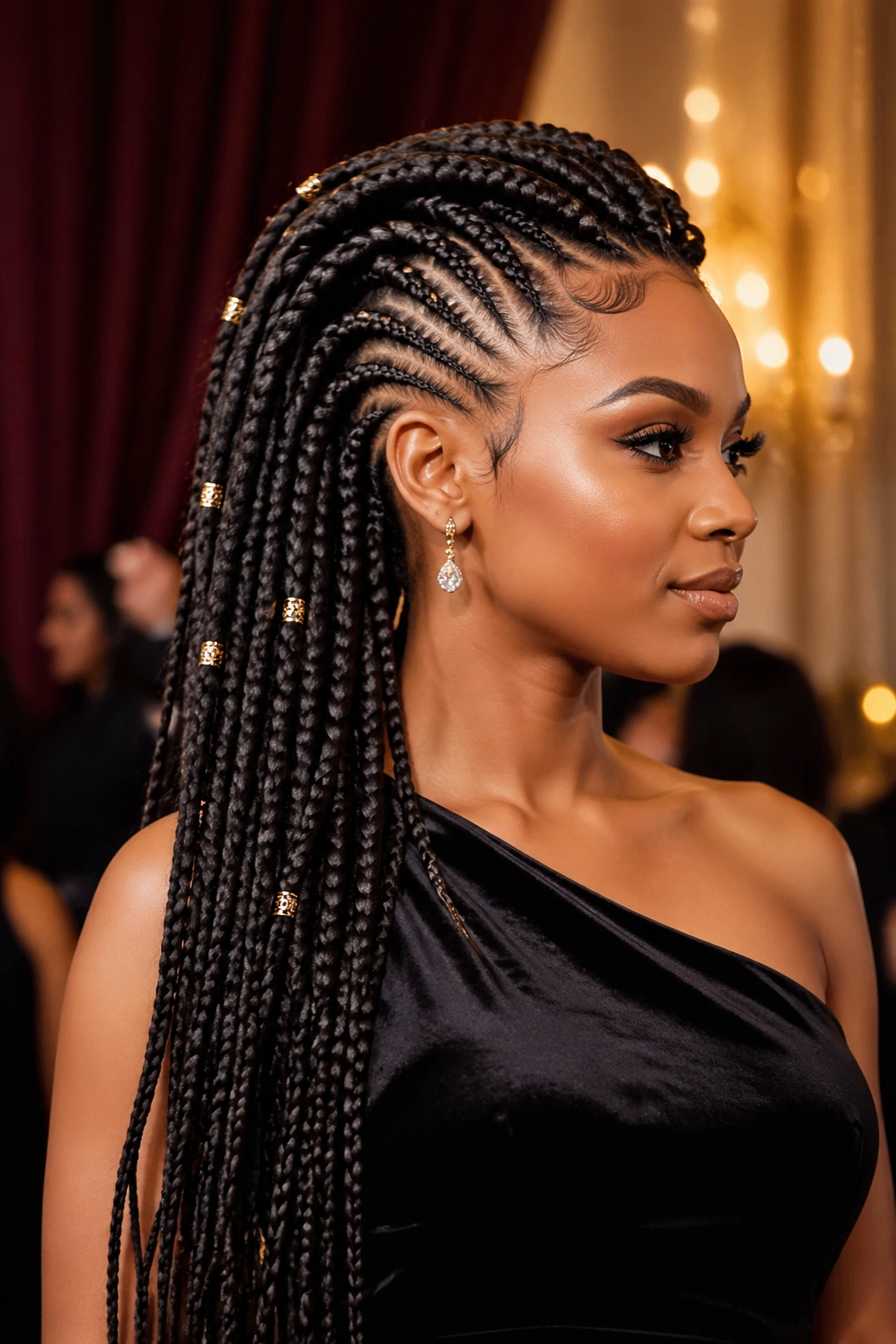
Long braids change the mood from stylish to dramatic pretty fast. When the length extends past the shoulders — or well below them — the mohawk shape becomes a full look, not just a hairstyle. It moves when you walk. It shows up in photos. It makes simple clothes look deliberate.
I like this version for events because it gives you room to play. You can wrap a few braids around the base, add cuffs near the ends, or leave the length loose and let the shape speak for itself. Extra length also gives your braider more freedom to create a tall center ridge without making the back feel sparse.
The one thing I’d keep an eye on is weight. Long extensions are beautiful, but they should not drag at the scalp. If the first hour feels heavy, the install was too much. A good event style should look polished and still feel wearable.
23. Mohawk Braids with Colored Extensions
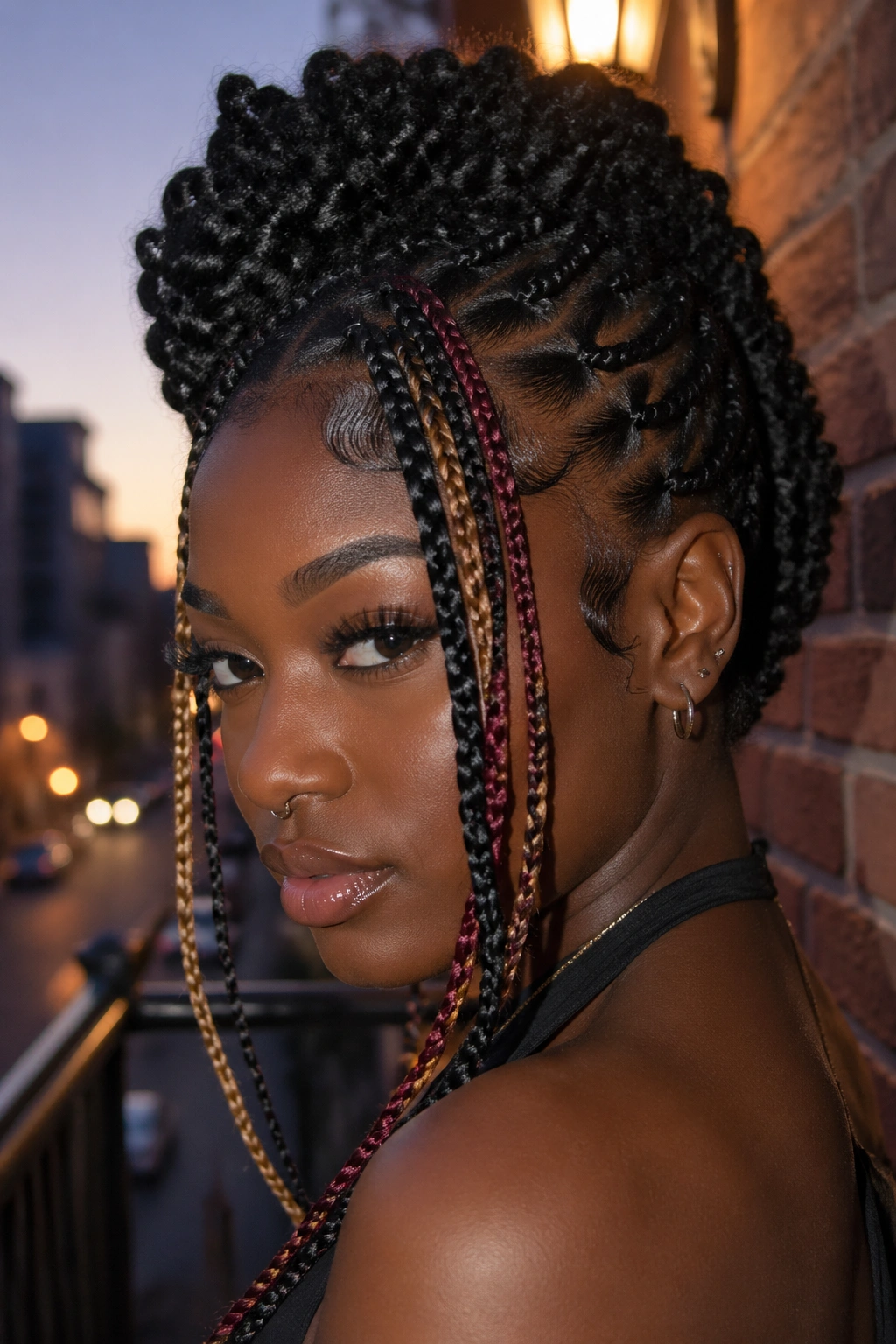
Color is the fastest way to make a familiar braid style feel custom. On dark type 4 hair, even a small amount of burgundy, honey brown, copper, or deep auburn can change the whole read of the style. The braid pattern stays the same, but your eye goes straight to the tone shift.
How to Use Color Without Overdoing It
You do not need a full-head bright shade to make an impact. A few face-framing braids in a lighter tone can be enough. So can a subtle ombré finish where the color appears only at the ends. That usually looks calmer and wears more easily than a loud full color block.
This style is for people who like the mohawk shape but want something less expected. It can be sharp, soft, or warm depending on the shade you choose. Gold cuffs and colored hair can clash if you’re not careful, so pick one star and let the other stay quiet.
The best color is the one that still looks good when you turn your head in bad light. That test matters.
24. Waist-Length Sleek Mohawk Braids with Tapered Ends
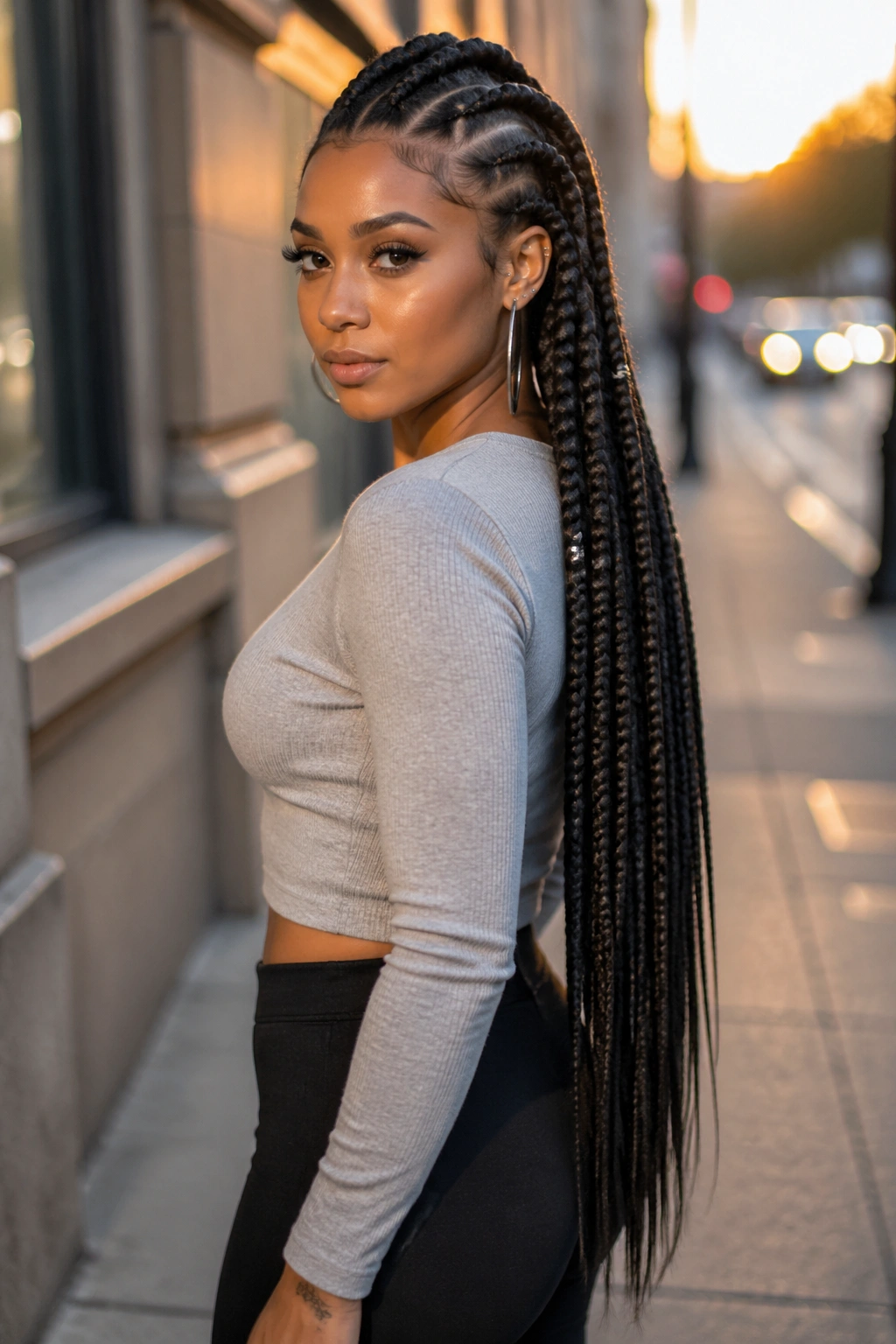
Long, sleek mohawk braids are the style that makes people stand up straighter when they see you. The center ridge stays clean and lifted, the sides stay controlled, and the tapered ends keep the finish from looking too heavy. On type 4 hair, that combination gives you length without losing shape.
This version works especially well if you like a braid style that can move from daily wear to something more dressed up without changing much. A satin scarf at night, a little scalp oil every few days, and a light mousse on the ends will keep the style from going fuzzy too fast. The tapered finish also helps the braids settle more neatly around the shoulders instead of stacking into a block.
If I had to leave you with one practical thought, it would be this: choose the mohawk braid shape that matches your scalp, not the one that looks loudest on a screen. The style that survives your real life — commuting, sleeping, sweating, sitting under bad lighting — is the one worth booking.