



A pixie haircut with bangs looks chic when the fringe does the heavy lifting. Short hair has a way of exposing everything at once — the shape of your forehead, the angle of your cheekbones, the posture of your cut — so the bangs matter more here than they do on longer styles.
That’s the part people often miss. A pixie without a thoughtful fringe can feel abrupt, even a little unfinished. A pixie with bangs can look soft, sharp, cool, polished, or a bit messy in the best way, all depending on where those front pieces land and how much texture the stylist leaves behind.
The sweet spot is usually in the details: a top that keeps some length, sides that taper cleanly, and bangs that are cut to move rather than sit like a helmet. On straight hair, that might mean a blunt line softened with point-cutting. On curls or waves, it usually means leaving the fringe longer than you think so it can spring up and settle into shape.
And that’s where the fun starts. The same pixie haircut with bangs can read classic, edgy, soft, or full-on fashion-forward with just a few inches of difference.
1. Soft Side-Swept Pixie with Long Fringe
A side-swept fringe is the easiest way to make a pixie feel gentle instead of severe. The longer front piece skims the forehead and blends into the top, which gives the cut a little swing when you move your head. It’s one of those styles that looks polished without trying too hard.
Why It Flatters
The trick is length. Ask for the fringe to sit around brow level on the longer side, then taper it gradually toward the temple so the line never feels heavy. That shape softens the face fast, especially if you want to blur a high forehead or take the edge off a very angular jaw.
- Keep the top around 2.5 to 3 inches so the bang has room to sweep.
- Leave the sideburn area soft, not clipped tight.
- Blow-dry the fringe with a small round brush and a side part.
- Finish with a pea-sized amount of light cream so the hair stays touchable.
Best move: dry the fringe in the opposite direction first, then sweep it over. It adds lift at the root and stops the bang from collapsing flat by noon.
2. Choppy Textured Pixie with Piecey Micro Bangs
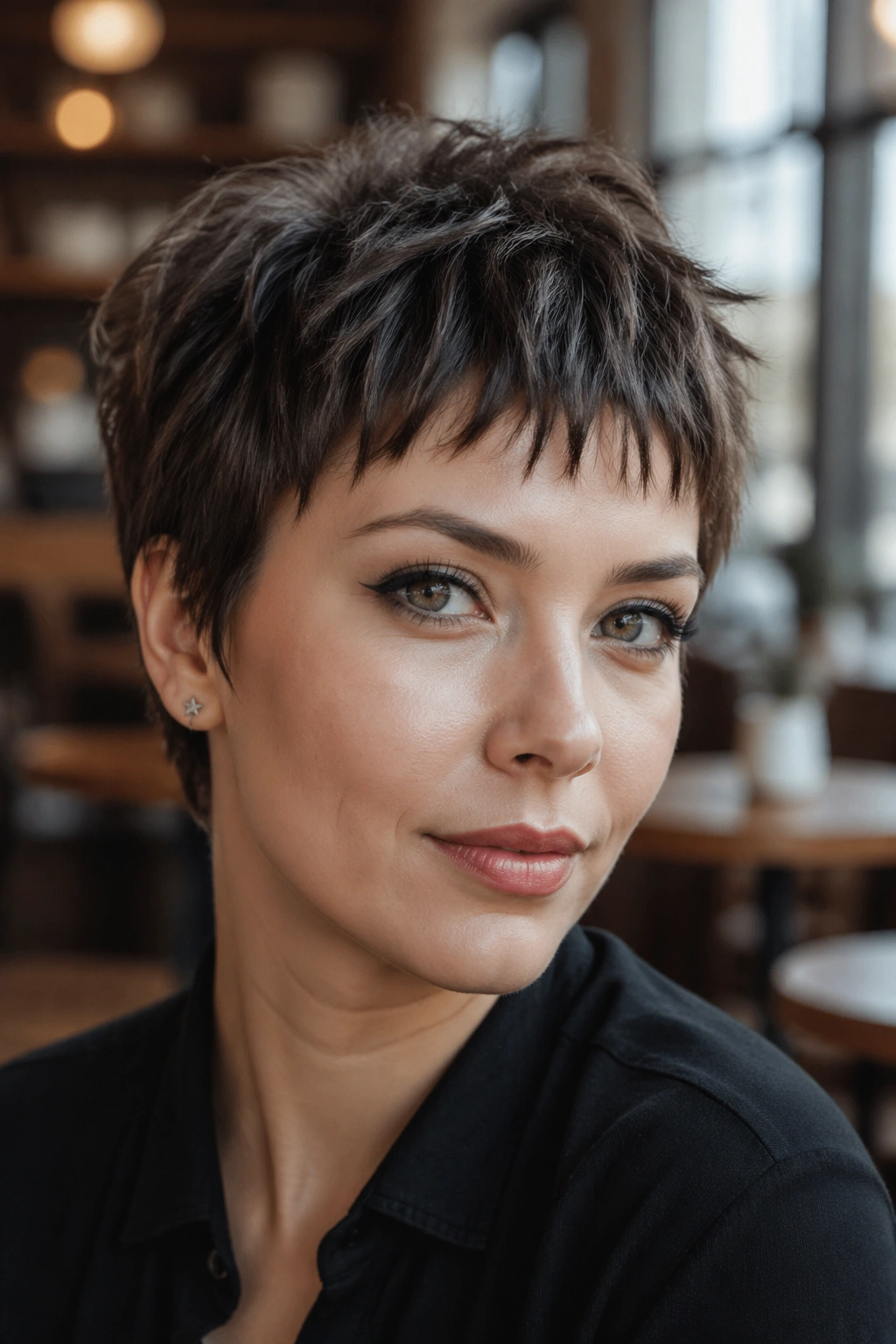
Bold claim: this is the cut that makes short hair look expensive. Not in a loud way. In a clean, intentional way. The choppy ends and tiny bangs create a sharp little frame around the eyes, and the texture keeps it from feeling stiff.
Micro bangs work best when they’re not cut as one solid block. You want tiny broken pieces, usually sitting just above the brows, with enough separation that you can see skin between some strands. That broken line is what gives the style its edge.
A razor or point-cutting shears helps here, because blunt scissors can make the fringe look too boxed-in. I’d also keep the sides slightly shorter than the crown so the top has a lifted shape instead of spreading outward. A matte paste, worked through dry hair with your fingertips, is enough. Too much product kills the whole point.
3. Curly Pixie with Airy Bangs
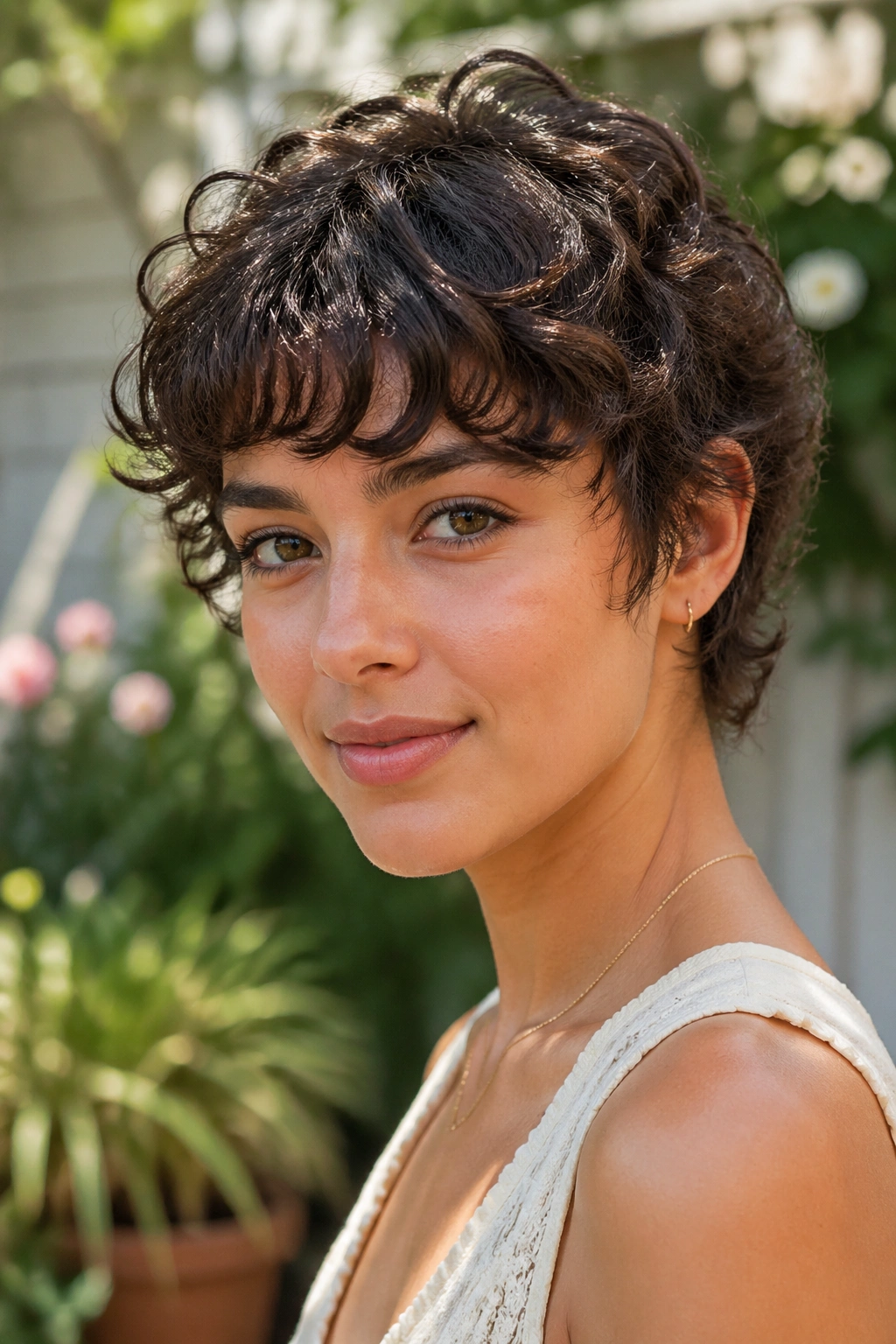
Can a pixie haircut with bangs work on curls? Absolutely, but the bangs need to be cut with the curl pattern in mind, not against it. Curly hair has its own agenda. Fight it and you lose.
How to Style It
The smartest version keeps the fringe longer than a straight-haired client might expect, because curls spring upward once they dry. A stylist who cuts curl by curl, while the hair is dry or barely damp, can shape the bangs so they land where you want instead of bouncing halfway to the hairline.
A soft curl cream and a small gel, applied to soaking-wet hair, help the fringe clump in a good way. Then you scrunch lightly and leave the curls alone. No brushing. None. If the bangs separate weirdly, twist two or three front pieces around your finger while they’re damp and let them set.
Ask for this: a bang that begins around the outer edge of the brow and blends into layers at the temple. That gives the cut room to breathe instead of puffing up like a triangle.
4. Long Layered Pixie with Swoopy Bangs
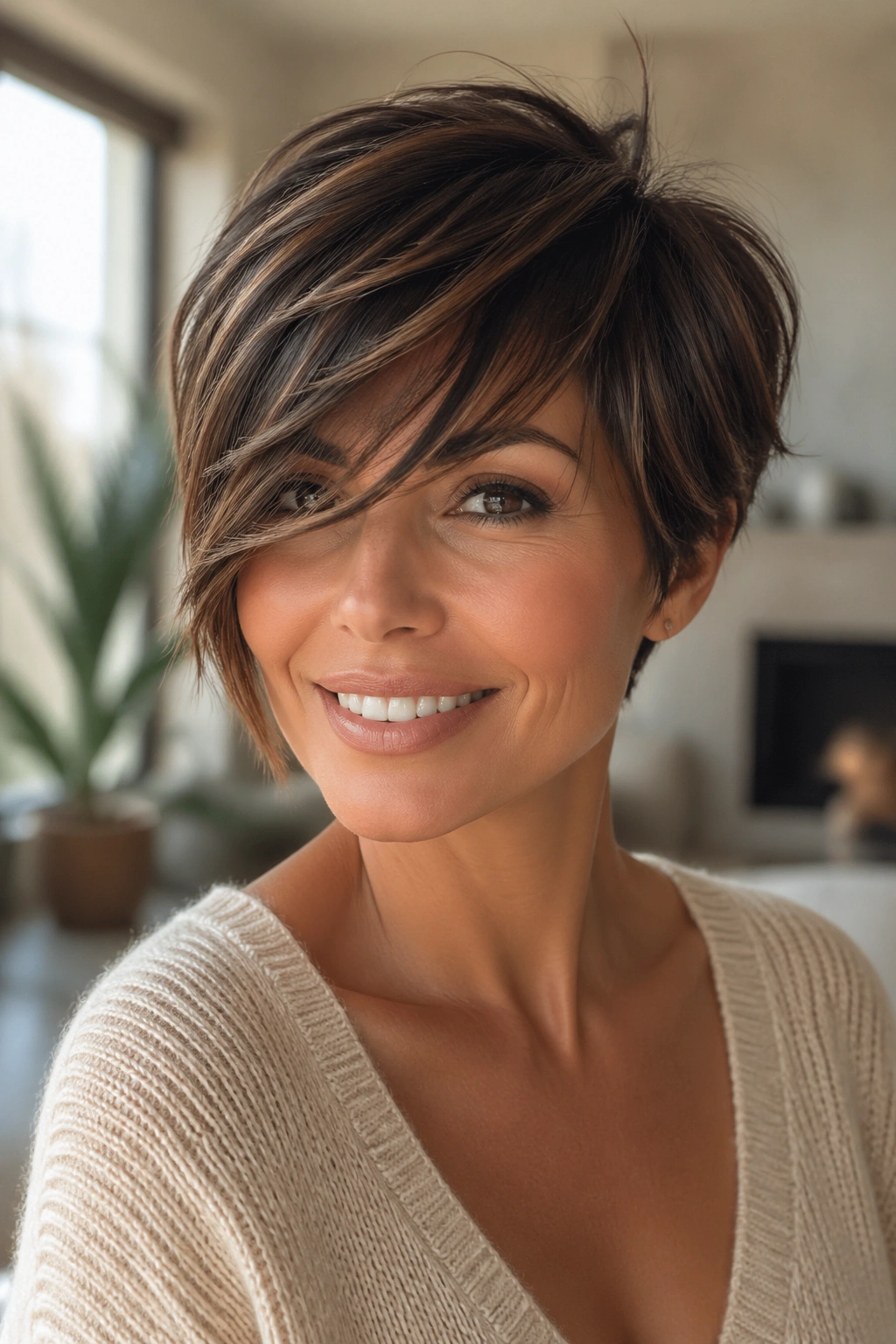
This is the cut I picture when someone wants short hair but doesn’t want to look like they lost a fight with the scissors. The layers stay long enough to move, and the bangs sweep across the face with a little attitude. It’s soft, but not sweet.
The shape works especially well if you’re growing out a bob or you just want more styling options than a super-short crop gives you. Keep the top close to 3 or even 4 inches at the longest point, then let the fringe fall diagonally into the cheekbone area. That extra length gives you choice. Middle part, side part, tucked back, brushed forward — all of it works.
A round brush and a blow-dryer nozzle are enough to make this one behave. Bend the fringe over the brush, dry it in the direction you want, then set it with a light mist of flexible spray. Heavy hairspray ruins the motion. And motion is the whole point here.
5. Asymmetrical Pixie with Deep Side Fringe
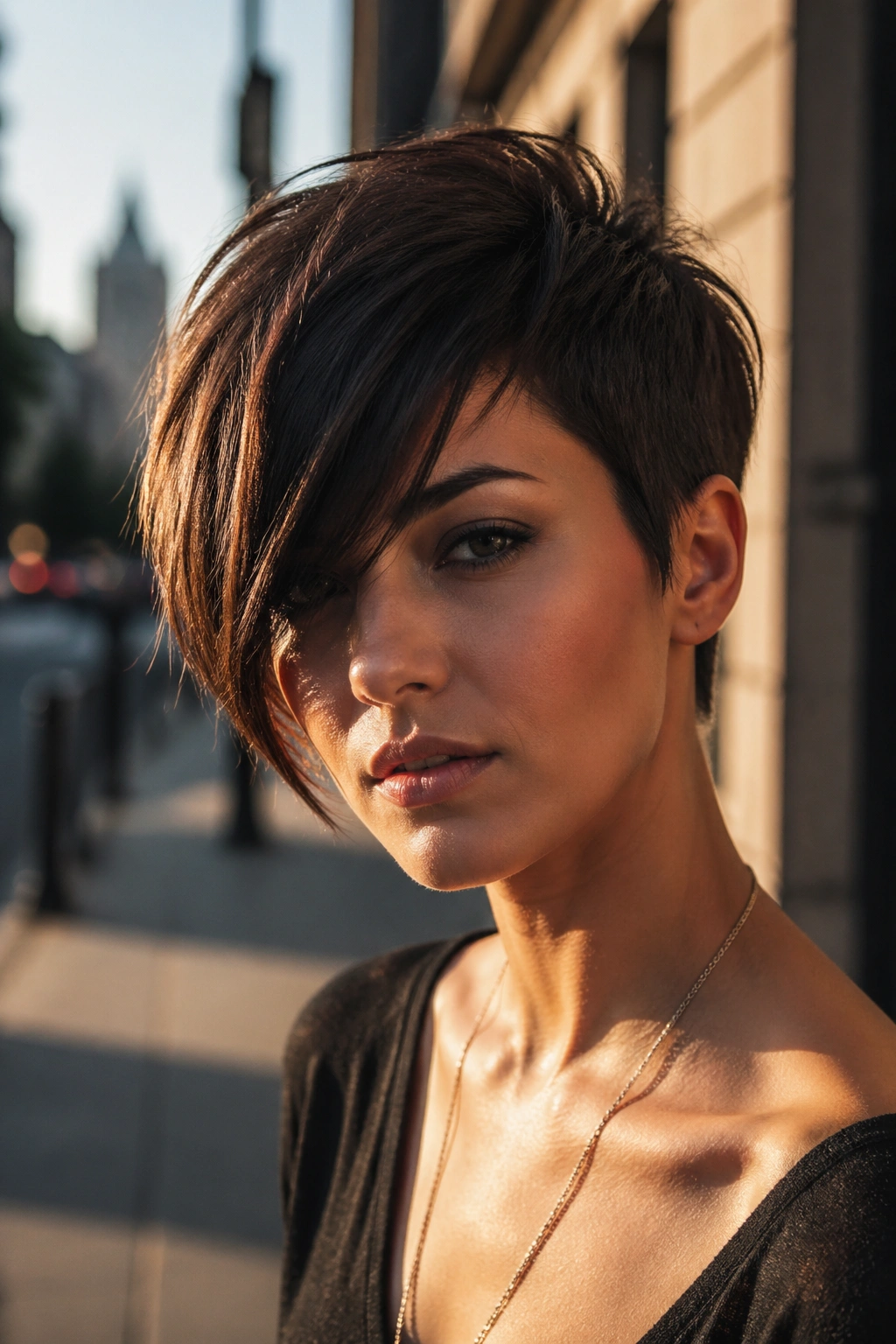
One side shorter, one side longer. Simple on paper, a little dramatic in person. That asymmetry gives a pixie haircut with bangs a sharp, modern line that looks deliberate from every angle, especially when the longer fringe drops diagonally over one eye.
What Makes It Different
The shorter side usually hugs the head or tucks behind the ear, while the longer side keeps enough weight to move. I like this cut on people who want something a little more striking than a classic pixie but don’t want to go all the way into punk territory. It has edge, not chaos.
Maintenance matters here. You’ll want the shape cleaned up every 4 to 6 weeks, because asymmetry grows out fast and starts looking accidental when the sides stop matching the plan. Styling is easy: a touch of wax at the ends, a comb for the part, and fingers to break the fringe apart.
If your hair is very fine, ask for the longer side to keep a little bulk. If it’s thick, the stylist can thin the interior while leaving the outer line clean.
6. Tapered Pixie with Wispy Bangs
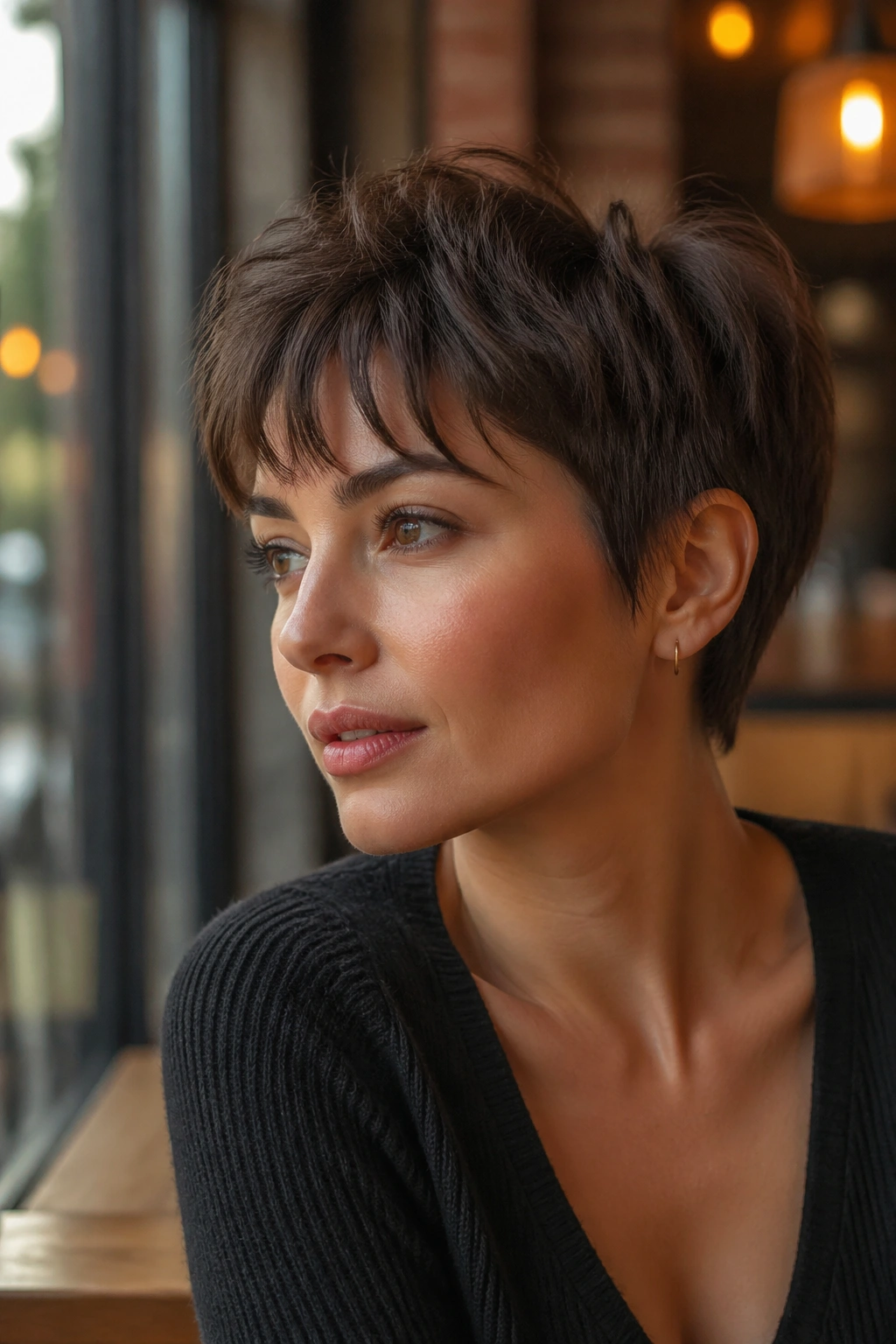
A tapered nape changes everything. It makes the haircut look neat from the back, which matters more than people think. The wispy bangs keep the front light, so the whole style feels airy instead of boxy.
Unlike a blunt crop, a tapered pixie narrows smoothly into the neck and ears. That shape is especially kind to thick hair, because it removes visual weight where hair tends to puff out. The bangs should be soft and slightly uneven, with the ends point-cut so they don’t form a hard line across the forehead.
This cut is a solid pick if you want something office-friendly that still has personality. A little mousse at the roots and a quick finger-dry is enough on many hair types. If your hair is coarse, a small amount of smoothing cream through the bang area keeps the fringe from sticking out like a shelf.
7. Feathered Pixie with Brow-Grazing Bangs
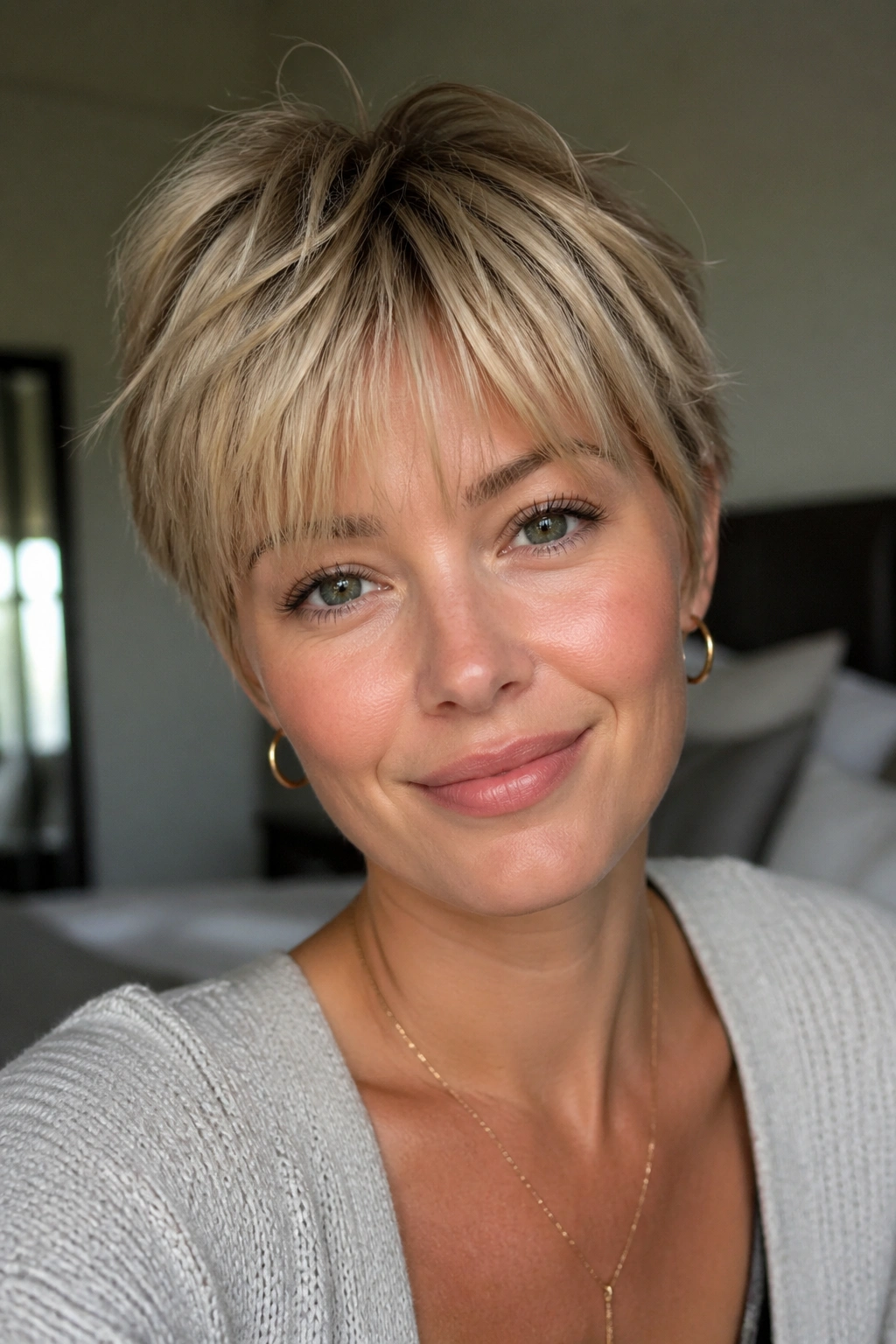
Feathering is one of those old-school techniques that still earns its keep. It takes weight out of the fringe and lets the ends fall in little soft strands instead of one solid block. On a pixie, that means the bangs can sit right at the brows without looking heavy.
Why the Layers Matter
The feathered pieces give the top some lift, which is useful if your hair tends to lie flat. Ask for the crown to stay slightly longer than the sides, then let the fringe blend downward in thin, soft sections. The result feels light around the face and a little more relaxed than a blunt fringe.
A blow-dryer with a nozzle pointed downward helps the feathering stay neat. Don’t rake the fringe side to side while it’s wet, or you’ll undo the shape before it sets. And if you like a little separation, rub one drop of serum between your palms and tap it onto the ends only.
Good fit: straight to lightly wavy hair that needs softness, not bulk.
8. Undercut Pixie with Blunt Bangs
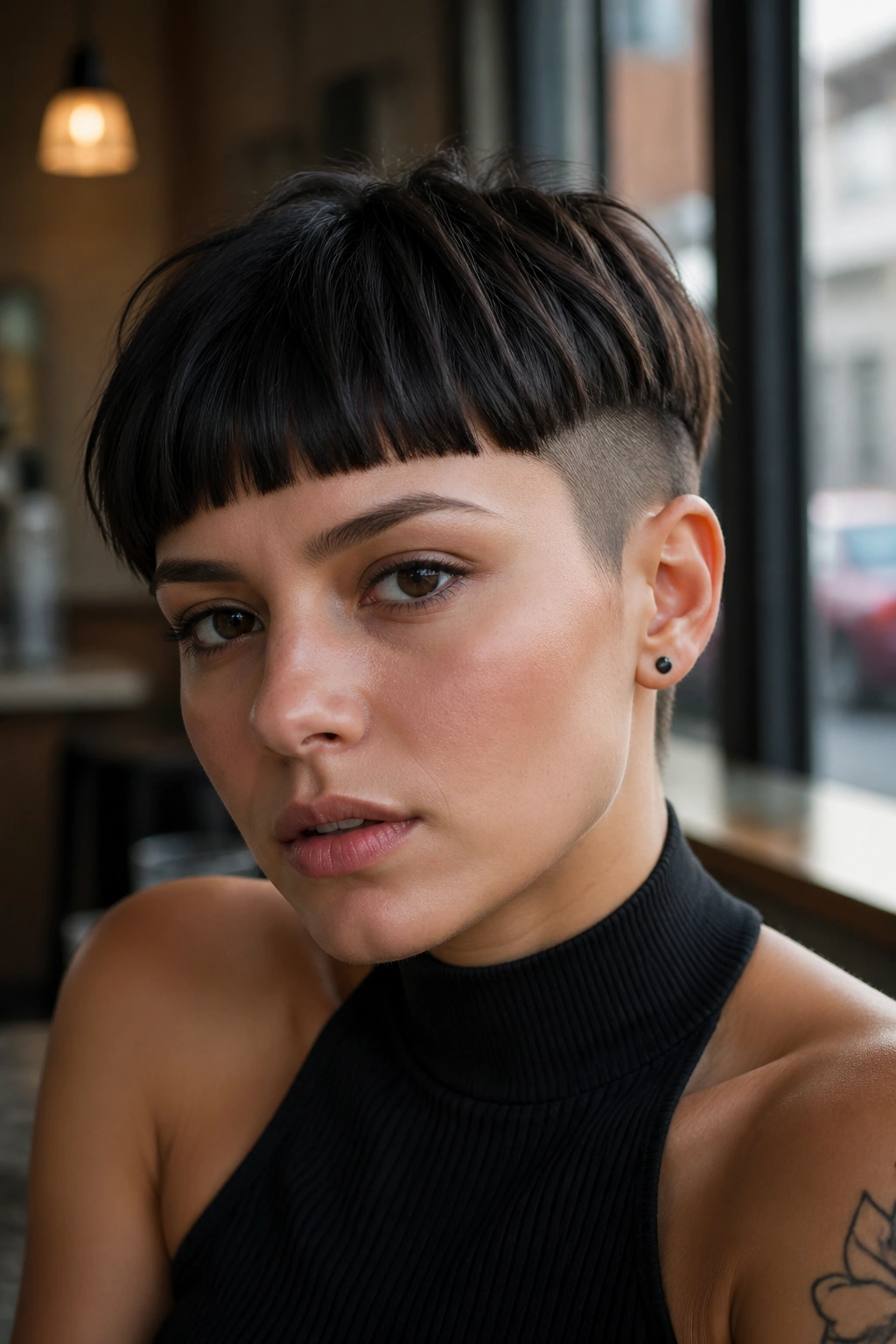
This one has attitude. The undercut removes weight from the sides and nape, while the blunt bang keeps the front strong and graphic. The contrast is the whole point, and it looks especially clean when the bang line lands right around the eyebrows.
A blunt fringe on top of an undercut can look almost architectural. That sounds fancy, but what it really means is this: the haircut has shape even when you haven’t styled it much. If your hair is thick, the undercut helps it lie closer to the head. If it’s fine, the blunt fringe creates the illusion of density.
The catch is grow-out. Short fringe lines don’t hide anything, so you have to be okay with upkeep and occasional awkward stages. A flat iron on low heat can tame the front if needed, but I’d keep the finish slightly textured, not poker-straight. Matte paste works better than shine-heavy products here.
9. Shaggy Pixie with Curtain Fringe
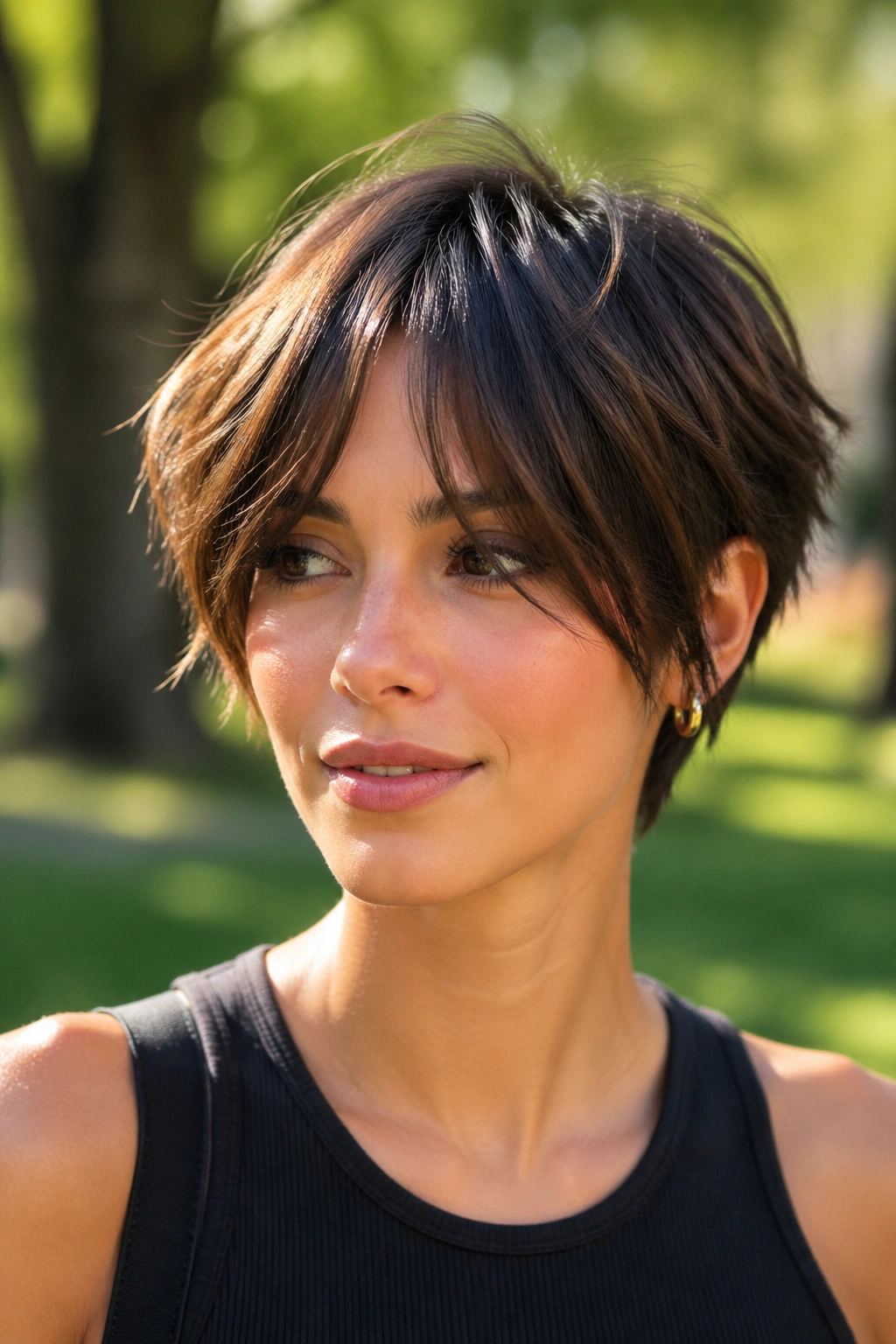
Does a curtain fringe sound too long for a pixie? Not when the top is cut with enough layers to support it. This version borrows a little from a shag, which gives the haircut a lived-in feel that never looks overworked.
The fringe parts softly down the middle or just off center, then falls open around the eyes and cheeks. That makes the face look longer and a little softer, especially if the rest of the cut is choppy. It’s one of my favorite options for people who want short hair but hate the feeling of having everything off the forehead.
Styling Cue
Use a dime-size amount of mousse on damp hair, then rough-dry the crown with your fingers until it’s about 80 percent dry. After that, bend the front pieces with a small round brush or just pinch them into place. The finish should feel imperfect. A little bend at the ends makes the cut look intentional.
10. Sleek Pixie with Polished Side Bangs
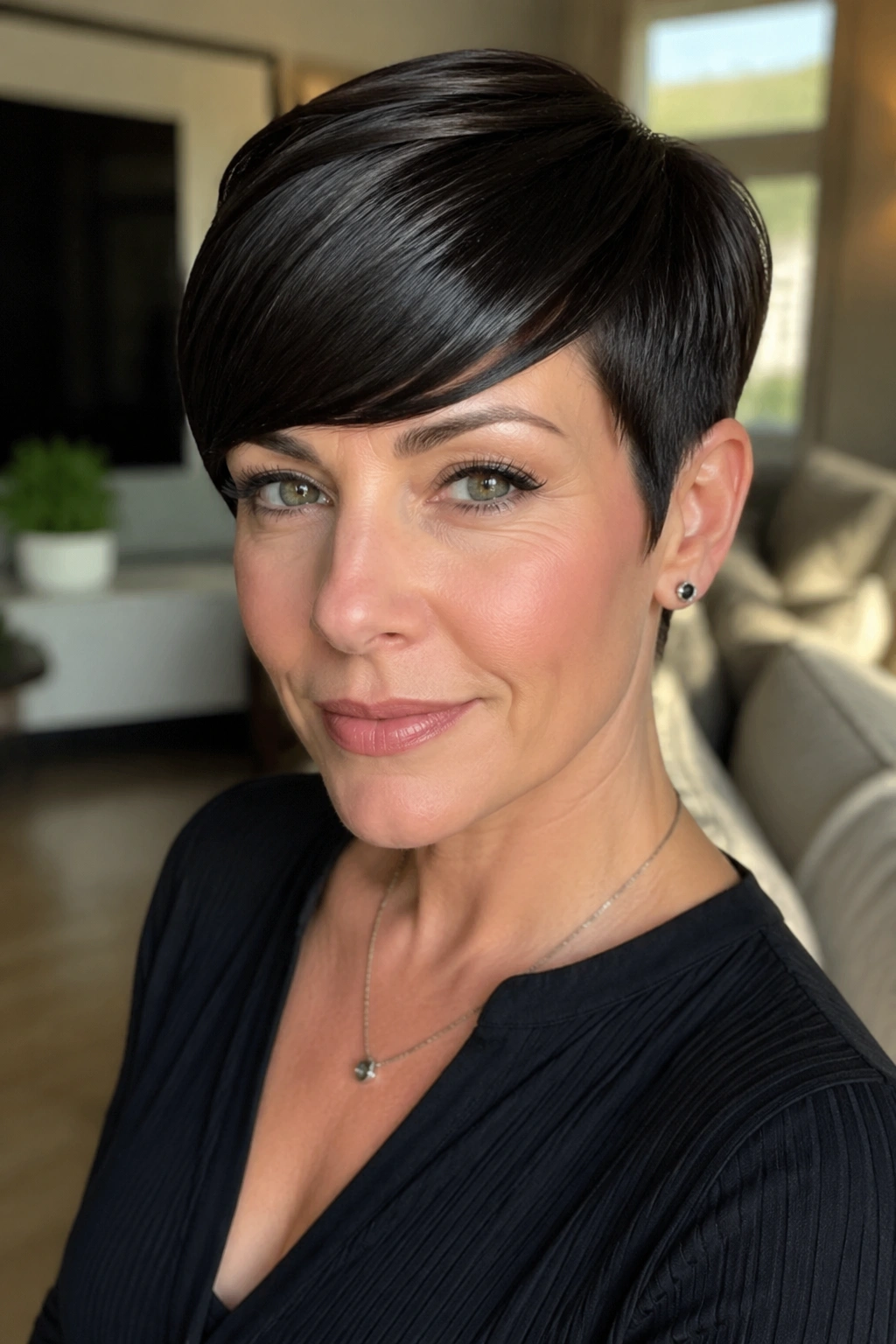
Some pixies want texture. This one wants shine. The side bang lies smooth and controlled, which gives the cut a dressed-up feel that works especially well with strong earrings, sharp collars, or a clean neckline.
A sleek pixie depends on precision. The fringe should be cut with enough length to sweep across the forehead, then refined so it sits flat without puffing at the root. If your hair frizzes easily, a smoothing cream before drying makes a real difference. Keep the heat medium, not scorching, and use a paddle brush to guide the bang in one direction.
I like this style when the rest of the cut is neat but not severe. It pairs well with straight hair, relaxed textures, and anyone who wants a short cut that reads polished at a glance. One tiny drop of serum on the ends is enough. More than that, and the hair starts looking greasy instead of glossy.
11. Baby-Bangs Pixie with Cropped Sides
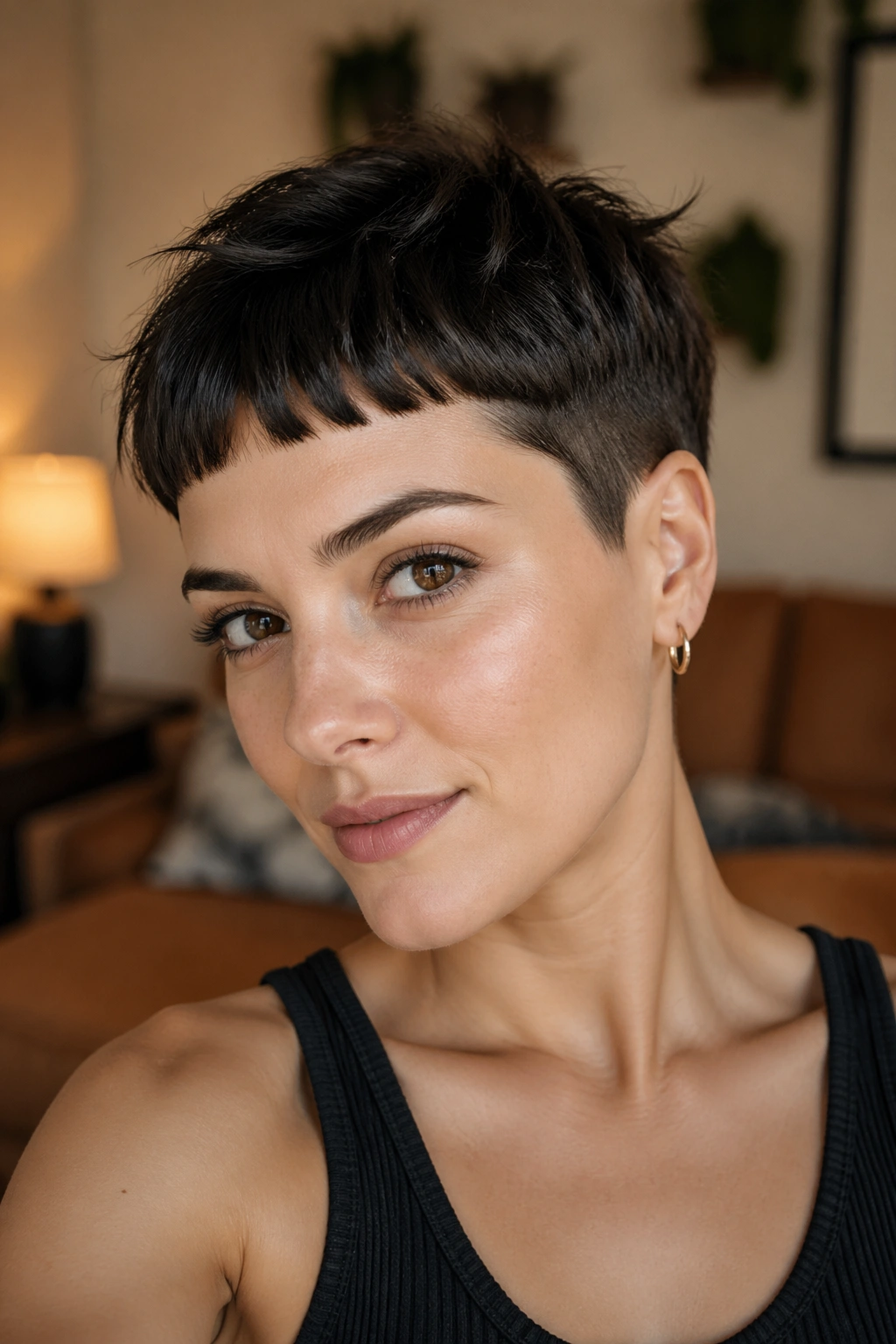
Baby bangs are not shy. They sit well above the brows, often around the mid-forehead zone, and they turn a pixie into a statement in about five seconds. The cropped sides keep the whole shape crisp so the fringe gets all the attention.
This style works best when the bang line is softened a little, even if it’s short. A dead-straight mini fringe can look harsh fast. Point-cutting the ends or letting a few pieces sit a hair longer on one side keeps it from feeling costume-y. That tiny unevenness helps a lot.
The best thing about this cut is that it makes the eyes stand out. The worst thing is that it exposes everything, so it rewards confidence and a good brow shape. A tiny amount of texturizing cream is usually enough. If you go too heavy, baby bangs can clump in a way that looks less chic and more messy after lunch.
12. Pixie Bob Hybrid with Full Bangs
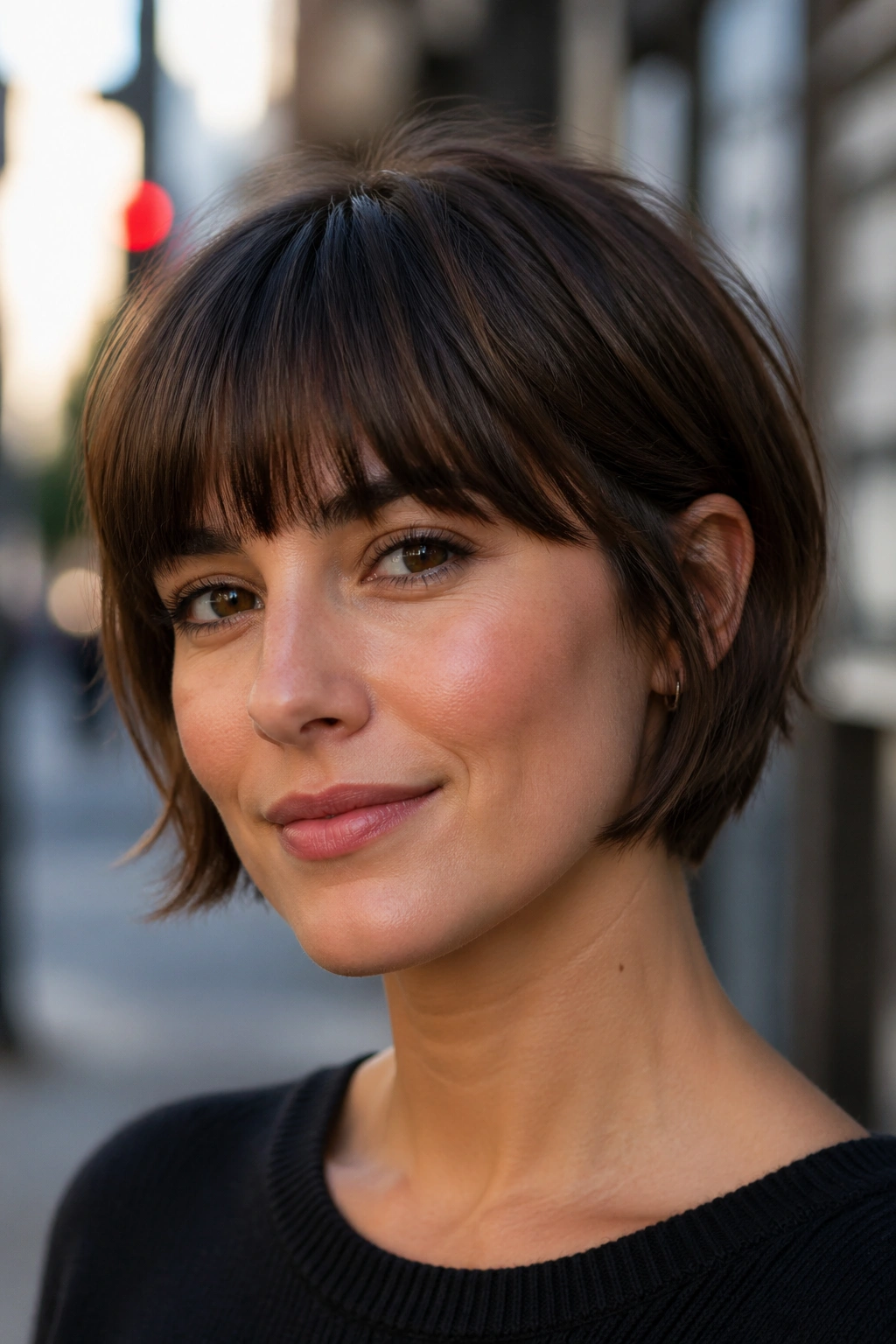
This is the bridge cut for people who aren’t ready to go fully short. It keeps a little more length around the ears and nape, so it lands somewhere between a pixie and a bob. The full bangs tie it together and make the front feel intentional instead of halfway grown out.
Unlike a very cropped pixie, this version gives you room to tuck the sides behind the ears or let the front hang over the brows. That flexibility is worth a lot. It also suits thicker hair because the extra length prevents the cut from ballooning out at the sides.
What to Ask For
- Keep the front fringe at brow to upper-lash level.
- Leave the perimeter around the ears long enough to tuck.
- Add soft internal layers so the shape moves.
- Blow-dry with a round brush to keep the bangs from splitting.
If you like low drama with a little polish, this is one of the safest chic options.
13. Razor-Cut Pixie with Shattered Bangs
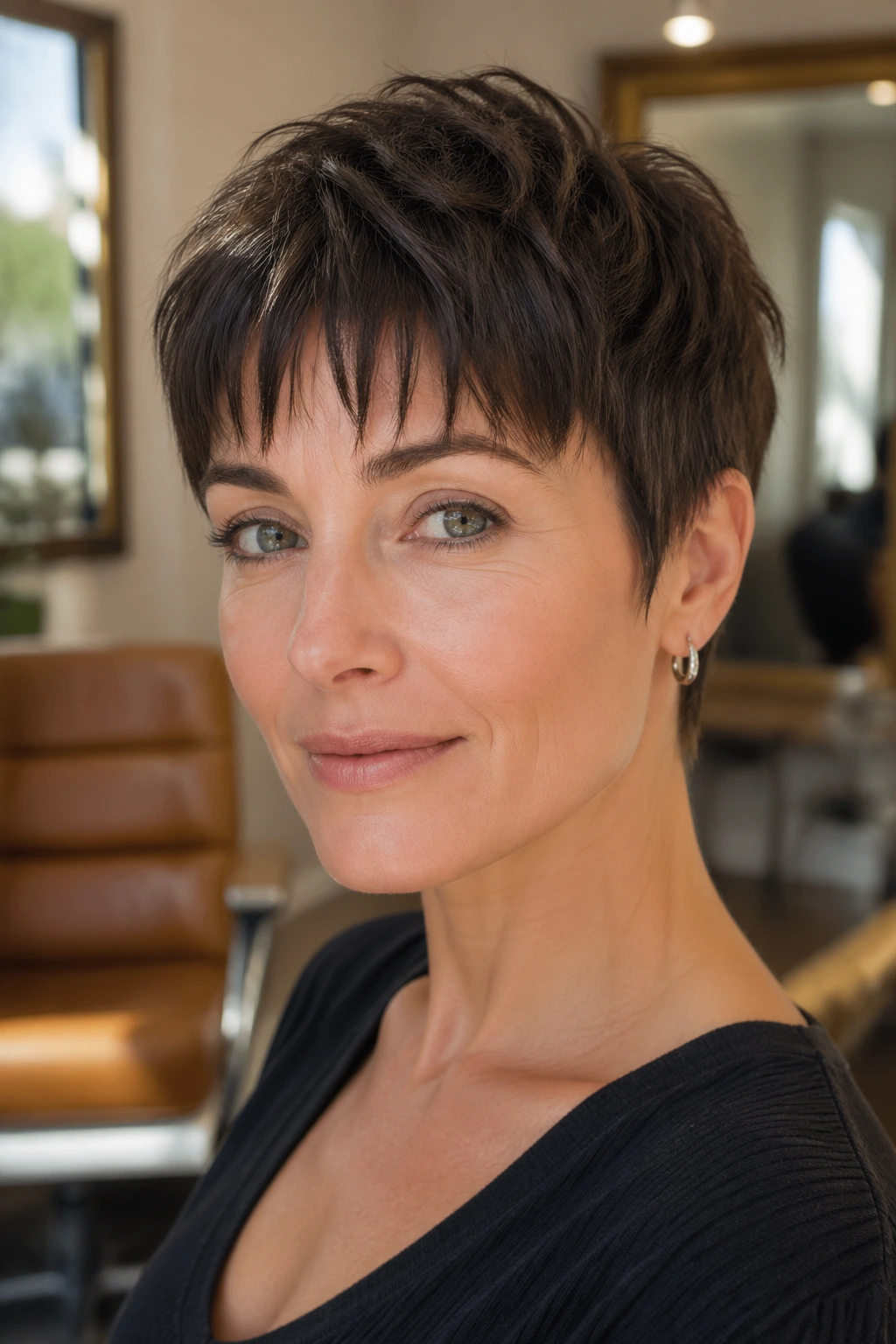
Razor-cutting gives the ends a lighter, airier finish than scissors alone. On a pixie, that’s useful because the bangs can feel too stiff if the hair is cut into clean blocks. A shattered fringe solves that problem fast.
The bang pieces should look like they’ve been broken apart on purpose — not ragged, just softly separated. That effect is excellent on dense hair, because it removes weight without making the shape collapse. The top can stay slightly longer than the sides, and the whole cut ends up with a bit of swing.
A texture spray at the roots and a dab of paste on the ends are usually enough. Don’t over-brush it. A razor-cut pixie is at its best when the pieces keep their uneven edges. If you smooth everything down, you lose the point of the cut.
14. Brushed-Forward Pixie with Short Fringe
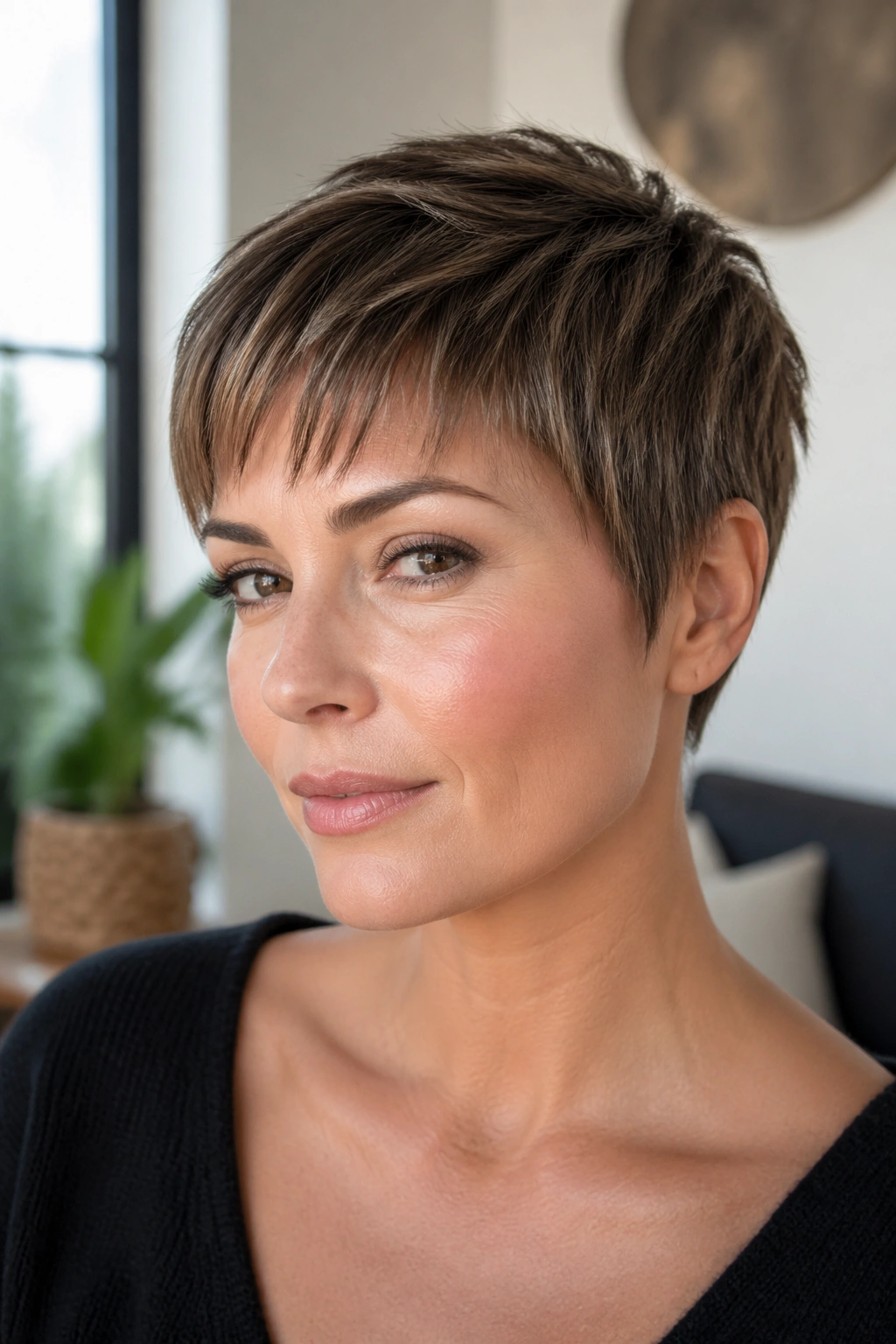
Here’s a version that looks fuller than it is. The hair is directed forward from the crown, so the fringe lands low on the forehead and the top creates a little density up front. That makes this style a smart pick for fine hair.
The short fringe should still have some softness; otherwise the cut can look too blunt and flat. Ask for the stylist to leave a touch of length through the center and taper the sides so the bang line doesn’t become a straight wall. A root-lifting mousse at the crown helps a lot here. Blow-dry forward with your fingers first, then finish with a small brush only if the front needs smoothing.
This cut has a cool, unfussy mood. It doesn’t need much polishing, which is part of the appeal. A quick spritz of dry shampoo at the roots the next day can revive the shape without making it stiff.
15. Tucked-Behind-Ear Pixie with Side Fringe
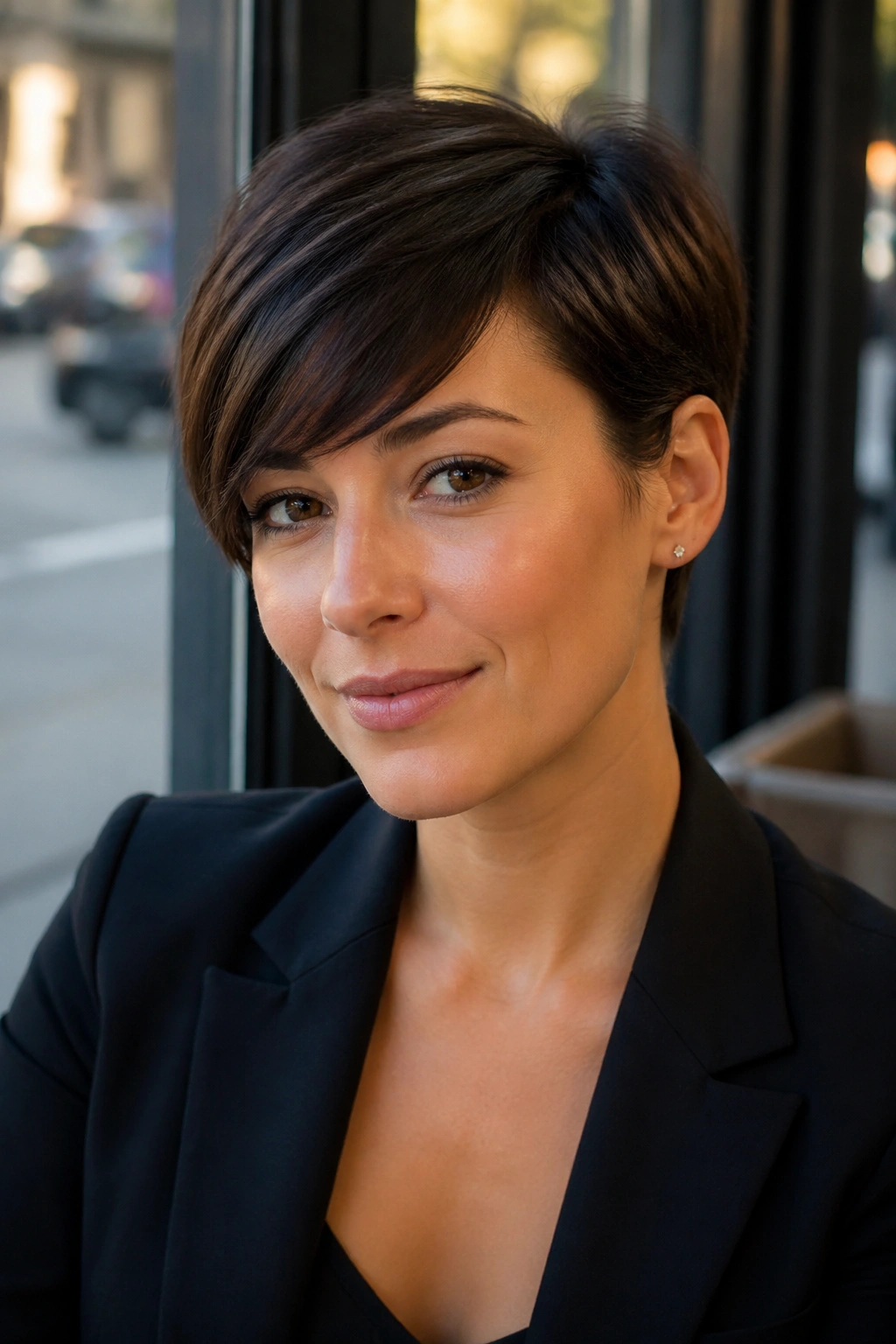
A tucked-behind-ear pixie has a quiet kind of chic that I always notice in real life more than in photos. One side stays a little longer, the fringe falls across the forehead, and then one ear gets revealed on purpose. That small shift changes the whole face.
Why It Works
The exposed ear makes room for earrings, glasses, or just a cleaner line along the jaw. Meanwhile, the side fringe keeps the front soft so the cut doesn’t turn severe. It’s a nice balance, especially if you like looking polished without looking overdone.
Ask for enough length around the temple to tuck, usually around 2 to 3 inches depending on your hair texture. The fringe can be swept with a little wax at the ends, but don’t glue it down. The charm of this cut is that it looks composed and slightly undone at the same time.
It’s also one of the easiest pixie haircuts with bangs to wear with a blazer or a simple T-shirt. The shape does the work.
16. Platinum Pixie with Choppy Bangs
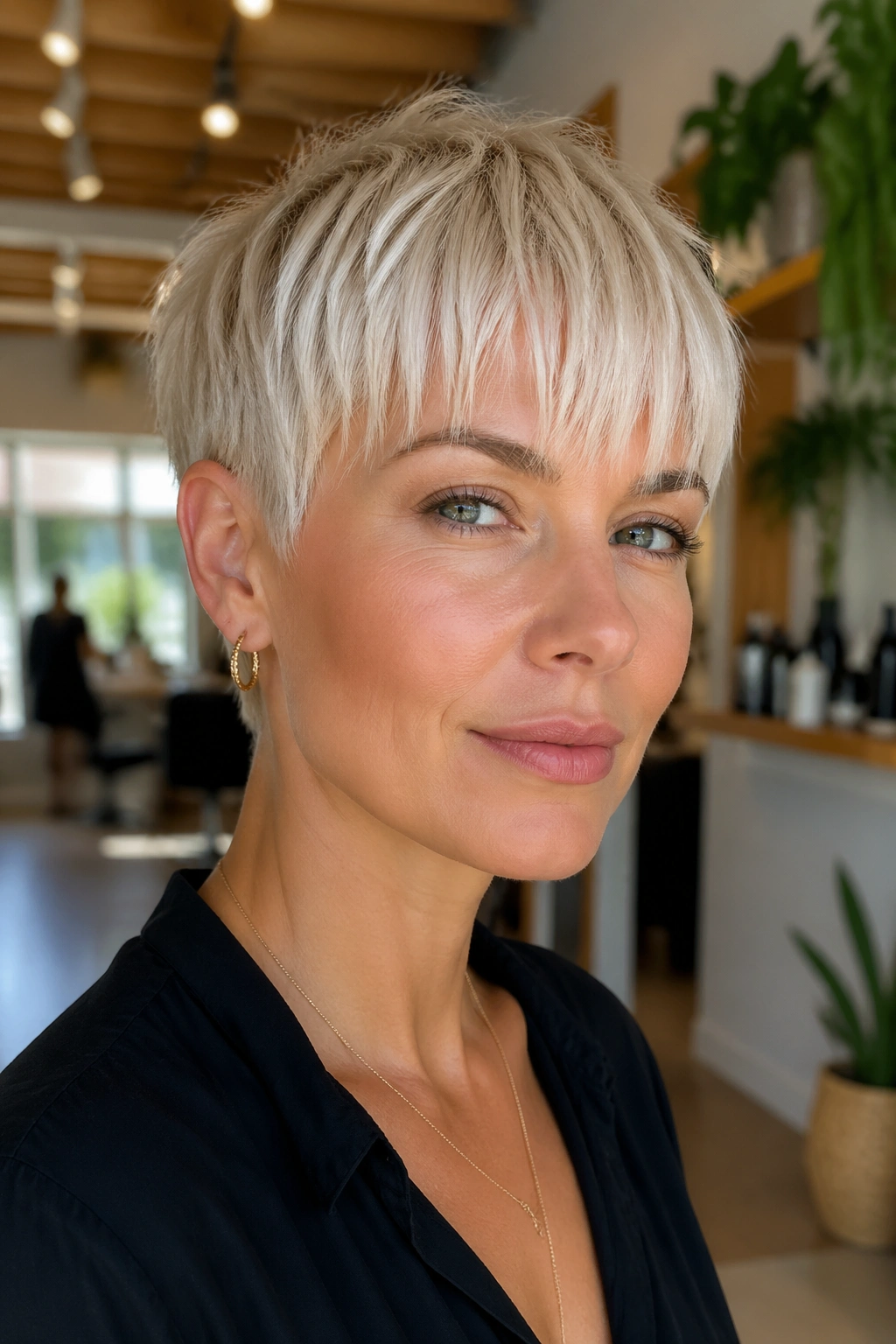
Color changes the read of a haircut faster than people expect. Platinum hair makes every edge look sharper, which is why choppy bangs look so good here. The texture pops, the layers show, and the whole pixie feels clean and bold without needing much extra styling.
This look does ask for maintenance on the color side. Purple shampoo once a week is usually enough for many hair types, but the real key is moisture. Bleached hair gets dry fast, and dry bangs can start sticking out in odd directions. A light leave-in cream on damp hair helps the fringe stay soft, while a matte paste on dry ends keeps the piecey shape.
If you want the cut to stay chic rather than harsh, keep the bangs uneven enough to move. One or two longer pieces at the temple can stop platinum from looking too severe. That little variation matters.
17. Wavy Pixie with Long Broken Bangs
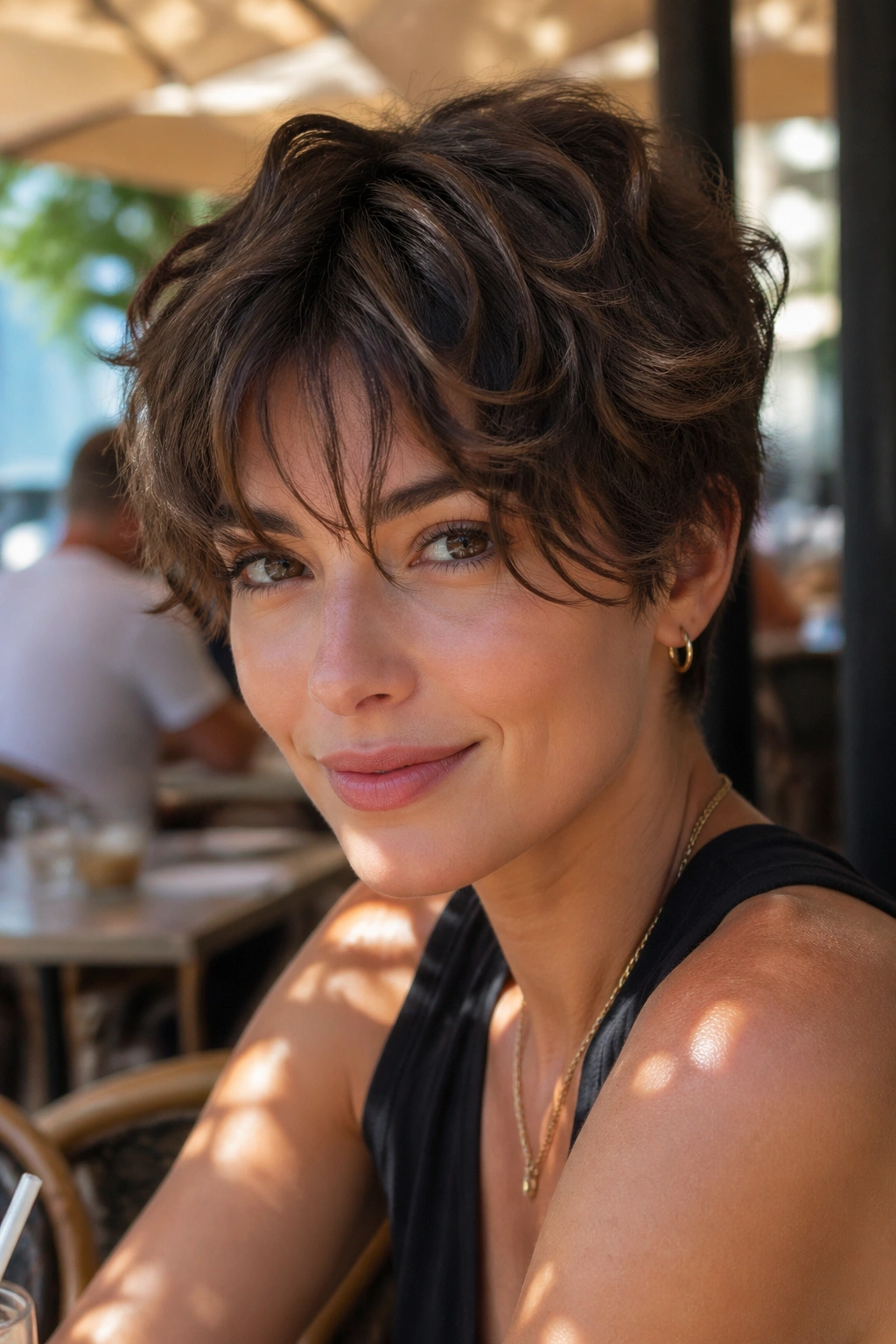
Waves love a broken bang. The front pieces can bend in different directions and still look good, which is a relief if you hate hair that has to sit perfectly in place. A wavy pixie with long bangs feels relaxed, but not sloppy.
The fringe should be left long enough to touch the brow or skim just below it, then cut into soft, disconnected pieces so the wave pattern has room to do its thing. If the bang is too short, the wave can spring up and feel puffy. If it’s too blunt, the front loses that easy movement.
Air-drying works well here. Scrunch in a small amount of mousse, twist the front pieces once or twice while damp, and let them dry. A tiny bit of sea-salt spray can add grit, though I’d use it sparingly because too much makes the hair rough. This style is casual in the best sense.
18. Bowl-Inspired Pixie with Soft Arch Bangs
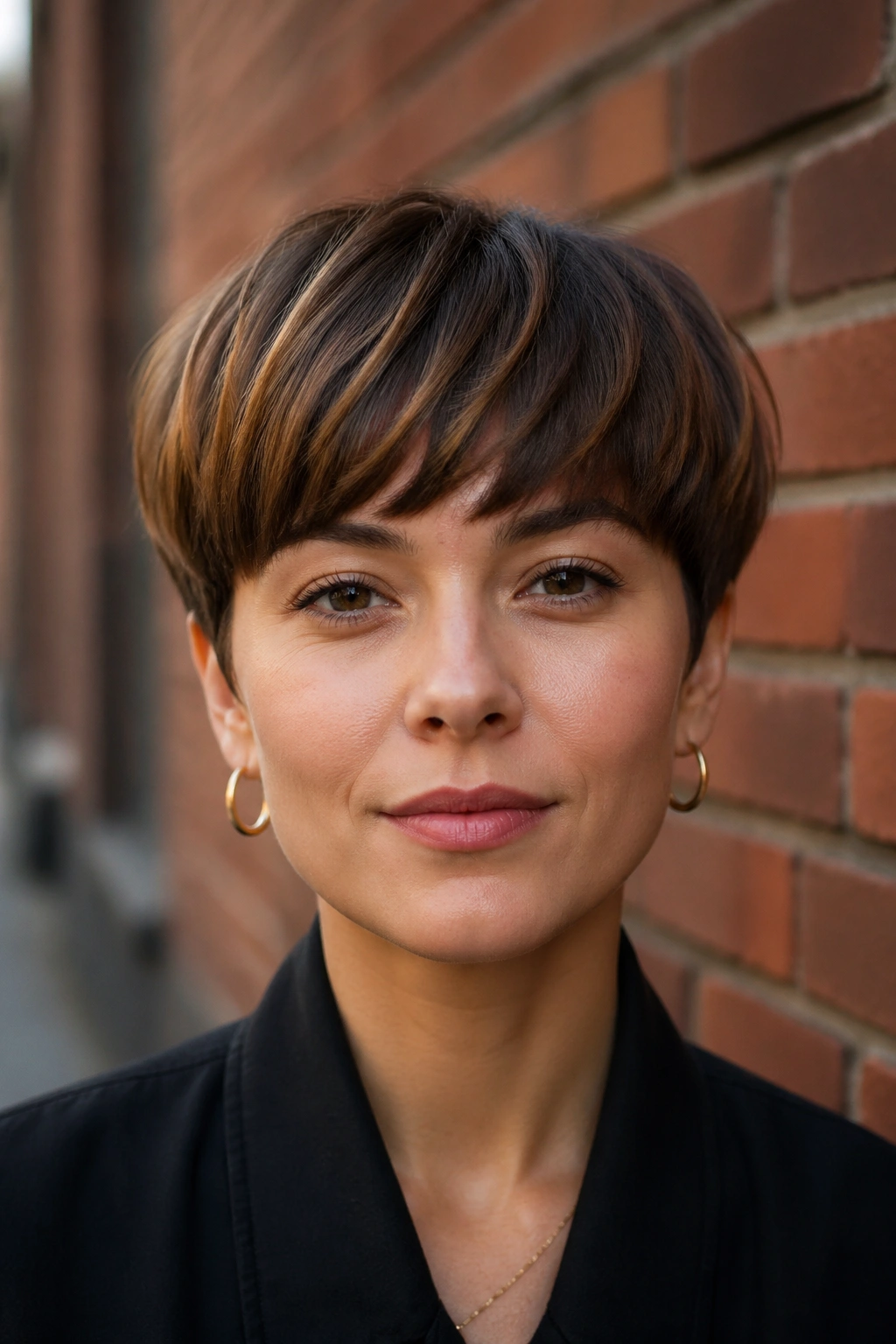
A bowl-inspired pixie can sound intimidating, but the softened version is much more wearable than the name suggests. The shape curves around the head, while the bangs form a gentle arch instead of a blunt horizontal line. That slight rounding gives the cut a fashion feel without turning it into a hard helmet shape.
The key difference is softness at the edges. The sides should be tapered, not heavy, and the fringe should fall a little longer at the corners so the eye line isn’t boxed in. If the middle is just a touch shorter than the temples, the shape reads deliberate and modern.
Who Should Try It
- People with straight or slightly wavy hair.
- Anyone who wants a geometric look but not a severe one.
- Readers who like a strong silhouette around the head.
- People willing to trim the fringe regularly so the arch stays clean.
A light smoothing cream and a flat brush are enough to style it. Keep the finish neat, not stiff.
19. Sculpted Pompadour Pixie with Lifted Bangs
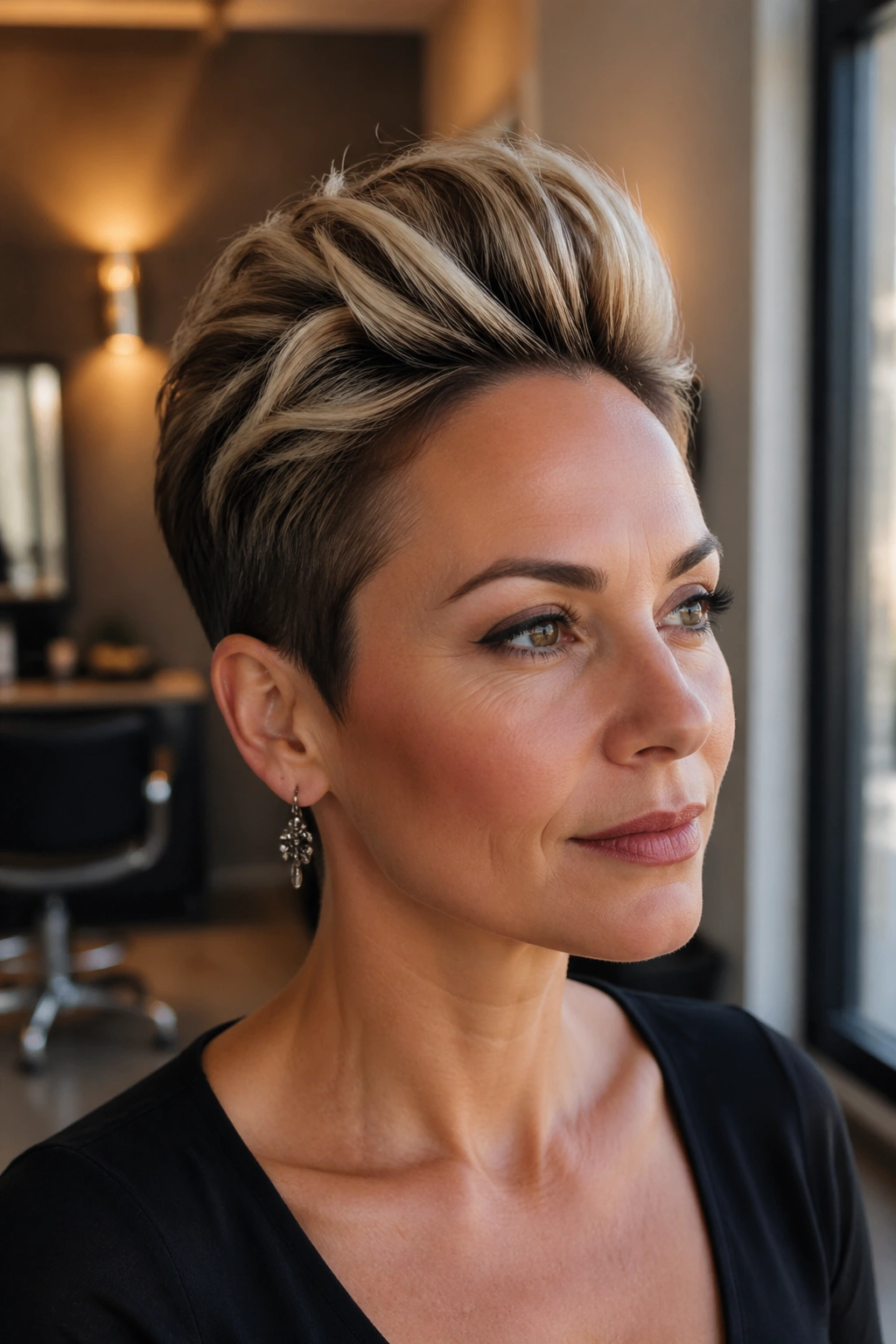
This one has height. Not cartoon height — just enough lift at the crown to make the face look longer and the haircut look more dramatic. The bangs rise from the forehead and sweep back or slightly to the side, which creates a strong shape from the front.
A sculpted pixie like this works best when the roots get some support. Mousse at the crown, a round brush, and a quick blast of warm air can do most of the work. If your hair is stubborn, a little root powder at the base gives extra grip. The fringe should stay flexible, though. A hard shell is not the goal.
What I like about this style is that it looks dressed up even with minimal clothing. It has that clean, lifted outline that photographs well in real life too, which is rarer than it sounds. Keep the sides neat and the top brushed upward, and the cut does the rest.
20. Low-Maintenance Pixie with Soft Fringe
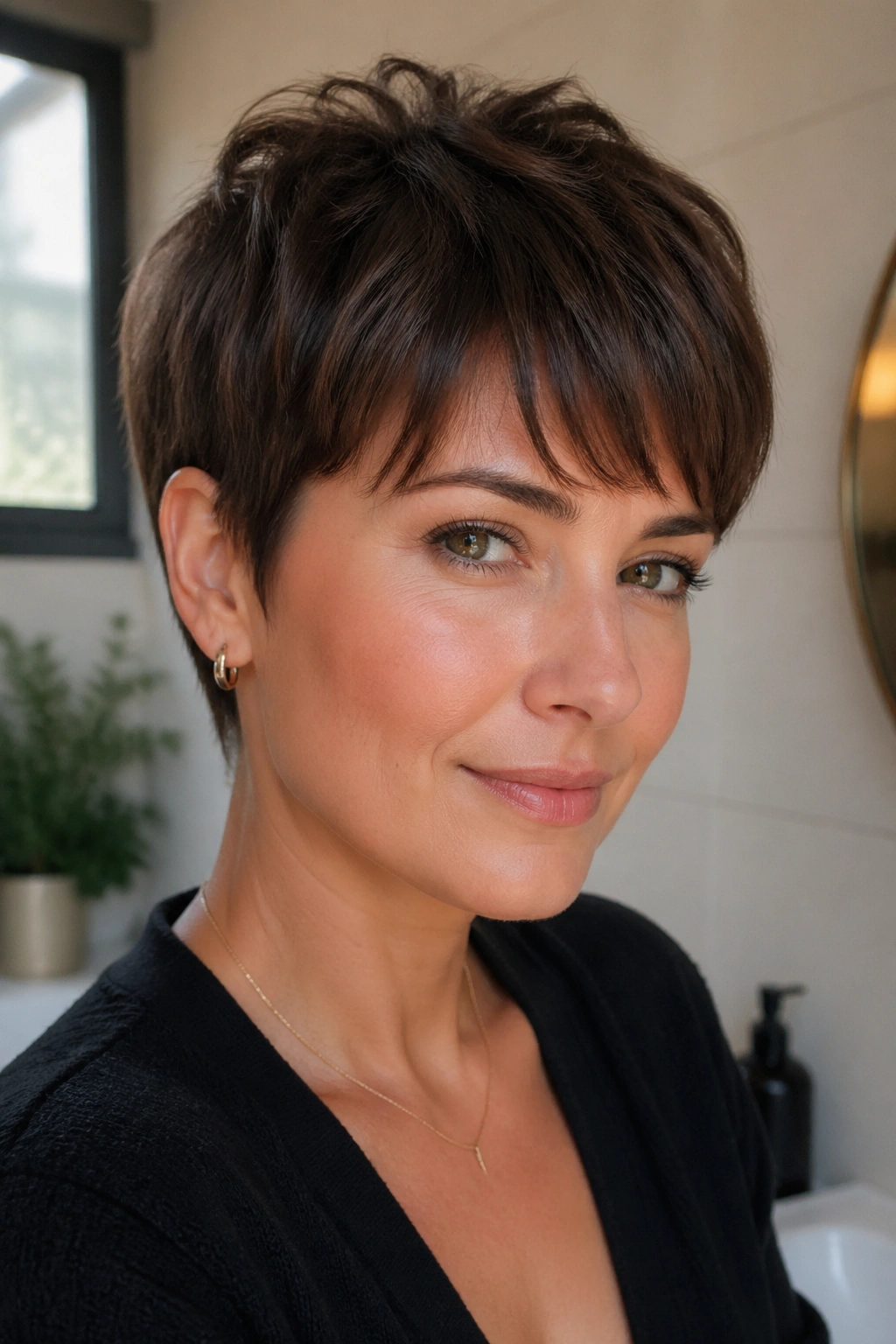
Some people want the chic part without the daily battle. Fair enough. This version keeps the fringe soft and slightly longer so it grows out gracefully, which means fewer emergency trims and fewer mornings spent wrestling with the front of your hair.
The bang should fall in a gentle arc, not a perfect straight line. Ask for the ends to be point-cut so they blend into the top rather than landing as one blunt shelf. That little detail makes the cut easier to live with when you’re between appointments. I’d also keep the nape tidy but not ultra-short. A tiny bit of length there helps the grow-out feel less abrupt.
Styling can stay simple: a cream, a quick finger-twist at the fringe, and maybe a side part if the front gets stubborn. This is the pixie haircut with bangs I’d point to for someone who wants short hair but doesn’t want short hair to become a second job.
21. Retro-Inspired Pixie with Rounded Bangs
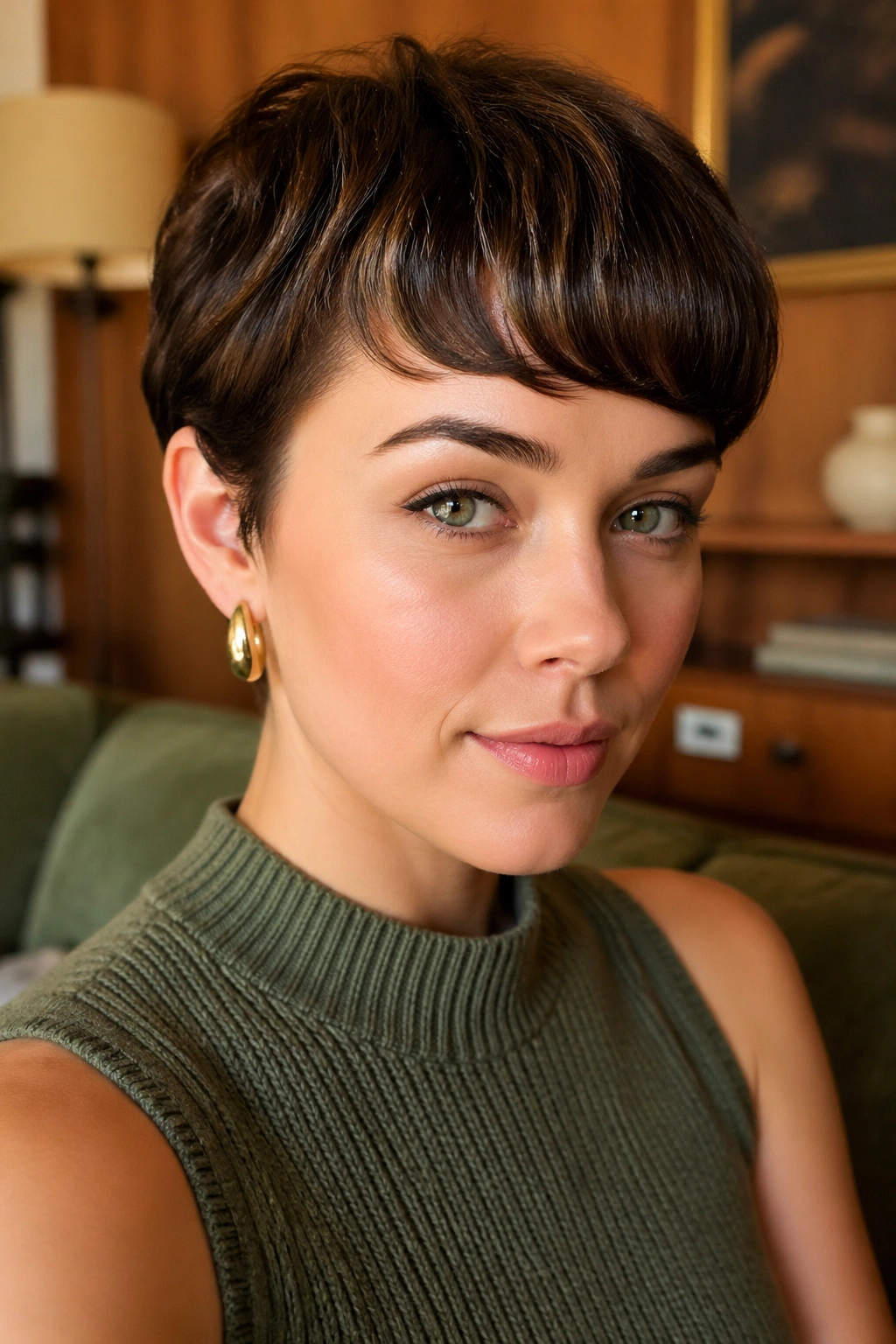
Rounded bangs bring a soft vintage feel that never looks forced when the cut is balanced well. The front curves gently across the forehead, which makes the eyes stand out and gives the whole pixie a little old-school polish.
Unlike a blunt fringe, the rounded shape is a touch longer toward the sides and slightly shorter in the center, so the line follows the face instead of cutting straight across it. That curve is what makes the style feel elegant rather than severe. It also works nicely with straight hair or hair that can be smoothed easily with a brush and a dryer.
A light serum on the ends helps the curve stay clean. Keep the blow-dryer moving in the direction of the bend, not against it. If you like a classic, face-framing look with a little softness around the brow, this is a strong choice.
22. Face-Framing Pixie with Longer Temple Pieces
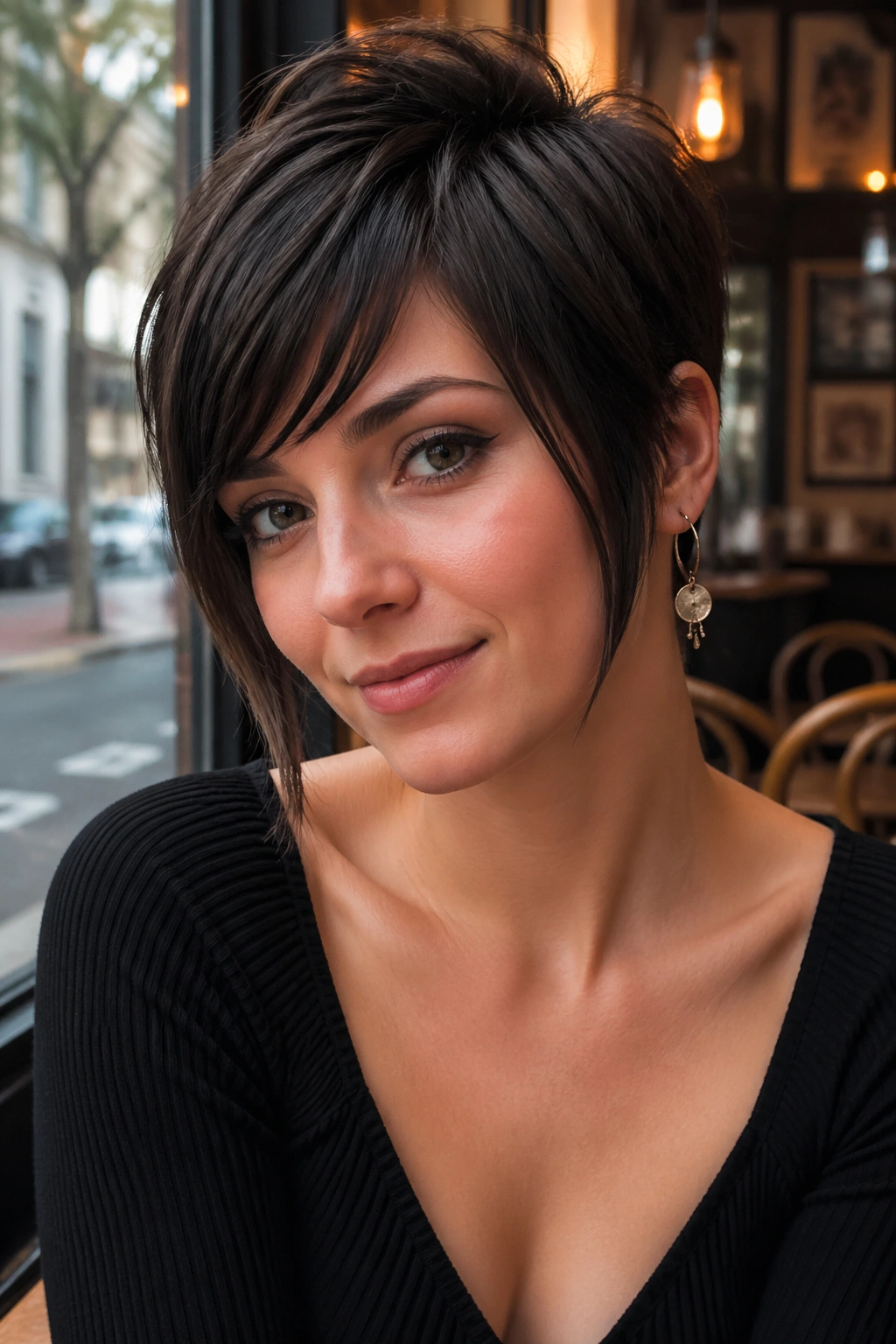
This is the version I recommend when someone says, “I want a pixie, but I still want something around my face.” The longer temple pieces act like little side curtains, and the bangs blend into them so the haircut feels less abrupt. It’s flattering without being fussy.
The shape depends on contrast. Keep the crown short enough to feel like a pixie, then leave the front and temple area long enough to skim the cheekbone or jaw. That extra length gives the cut a graceful line, especially if you want to soften a strong forehead or bring attention to the eyes. It also grows out in a way that looks deliberate instead of forgotten.
A small flat iron can bend the temple pieces inward, but I prefer a round brush and a touch of cream for this one. It keeps the movement softer. If you bring photos to a stylist, show the front and side view together; this cut changes a lot from angle to angle.
Final Thoughts
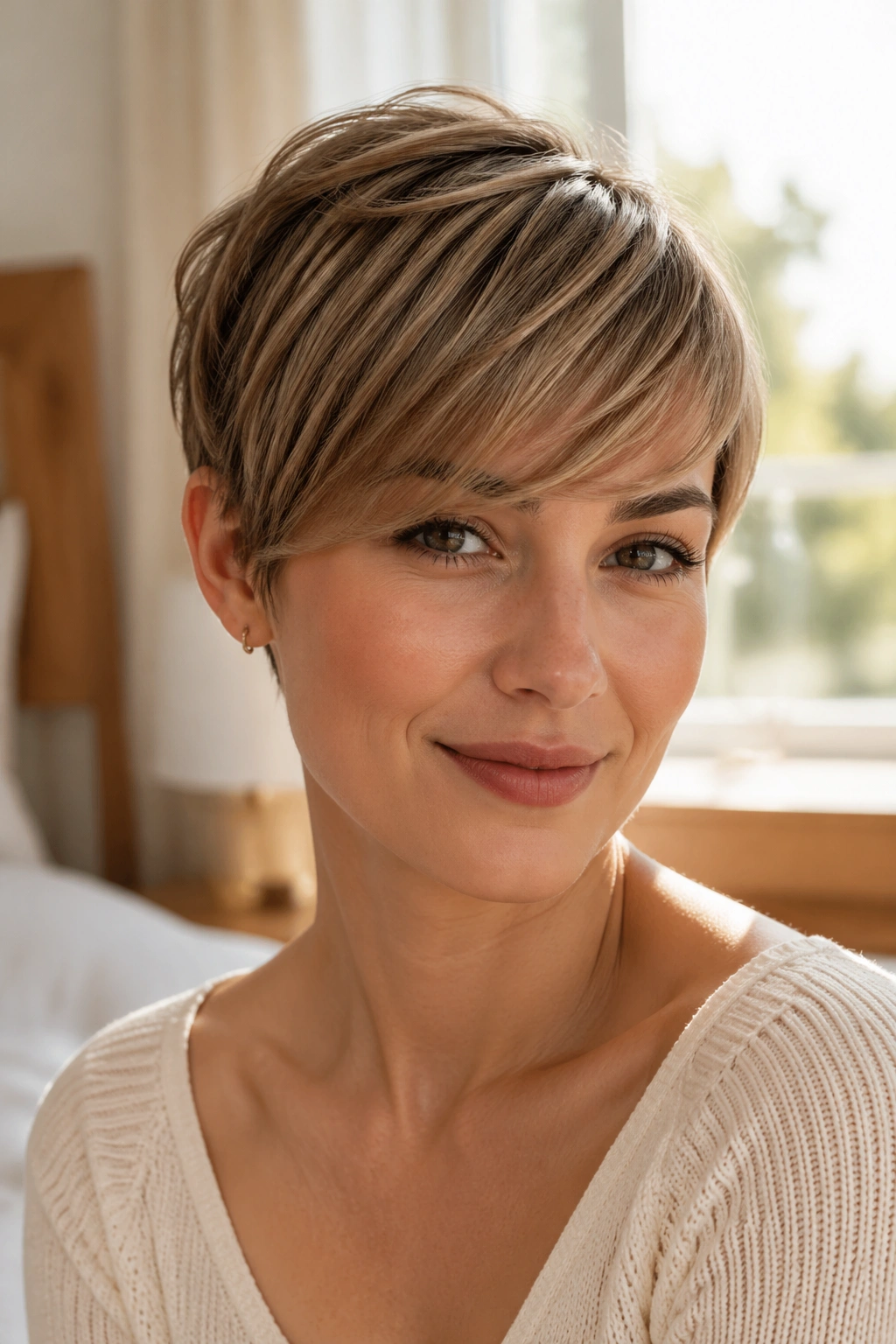
The chicest pixie haircuts with bangs usually share one thing: the front is never an afterthought. A few carefully placed inches can change the whole mood, from soft and airy to sharp and graphic, and that’s why this haircut has so much range.
If you’re choosing one, think less about a trend and more about shape. Bang length, temple pieces, crown height, and how the sides taper all matter more than most people expect. Small changes. Big difference.
Bring a photo of the front, the side, and the back to your stylist if you can. Pixies live and die by the silhouette, and the silhouette is what makes the cut look chic instead of merely short.
