



Pixie haircuts can go wrong fast. Too blunt at the temples, too much wax at the crown, too little length around the fringe, and the whole thing starts feeling stern instead of fresh.
Short hair has opinions.
The softest versions are the ones with movement baked in from the start: feathered edges, a little bend at the front, a tapered nape that doesn’t look shaved to the bone. That’s the trick people miss when they ask for a pixie and walk out with something sharp enough to make their cheekbones feel like they’re in a staring contest with the mirror.
A good pixie also changes once you live with it for a week or two. It settles. It gets a little better with rough drying, a little better with your fingers than with a brush, and a lot better when the cut is shaped to fit your hair instead of fighting it. That’s where the good ones live.
1. Feathered Pixie Haircut With a Soft Fringe
Feathered pixie haircuts are the easiest place to start if you want short hair that still feels light and friendly. The edge isn’t blunt, the fringe isn’t heavy, and the whole cut moves when you turn your head.
Why It Works
The magic is in the ends. A stylist usually uses point cutting or a light razor touch through the top and around the temples, which takes away that stiff helmet shape people worry about. The fringe can sit just above the brows or graze them in a broken line, so it softens the face instead of closing it off.
This cut is especially kind to fine hair, because the feathering gives the illusion of more lift without piling on product. A pea-size amount of mousse at the roots and a quick blast of air from a small dryer is usually enough.
- Best for fine to medium hair
- Ask for a nape taper, not a hard shave
- Keep the fringe a little uneven
- Use a light cream, not heavy wax
Tip: If the top is too polished, the whole cut loses its softness. Leave a little air in it.
2. Tapered Pixie With Side-Swept Length
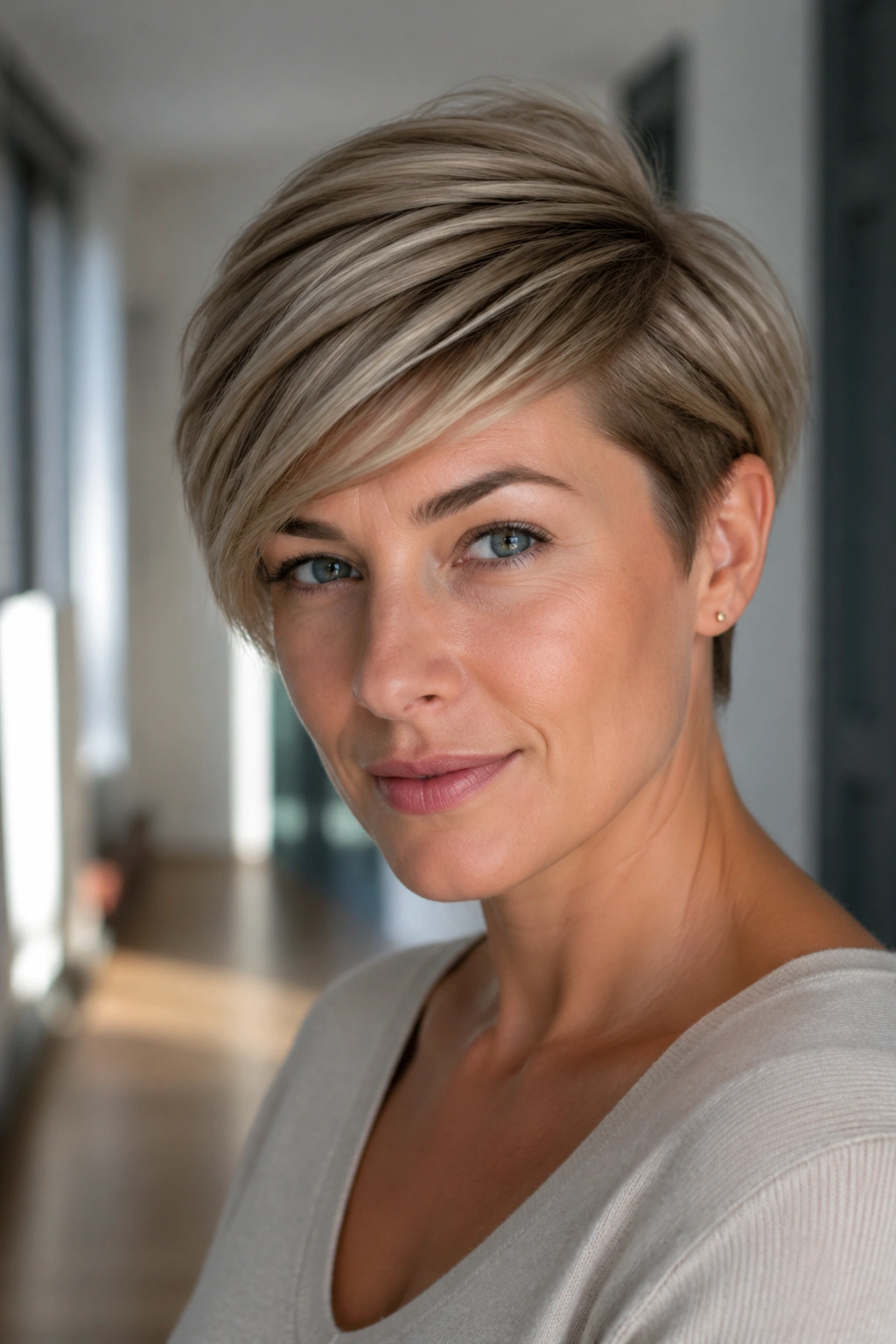
This is the pixie for someone who wants short hair without looking like they gave up length everywhere at once. The sides are snug, the nape is neat, and the top sweeps across the forehead in one clean arc.
It works because of balance. The shorter back keeps the shape tidy, while the side-swept front draws the eye diagonally, which tends to flatter round and heart-shaped faces. A stylist can leave about 2 to 3 inches on top and keep the side length soft enough to tuck behind one ear. That one detail changes the whole mood.
The styling is easy if you don’t overthink it. Blow-dry the front in the direction you want it to fall, then pinch the ends with a tiny bit of matte paste. Too much shine makes this cut look more formal than modern, and that’s not the point.
3. Choppy Micro Pixie
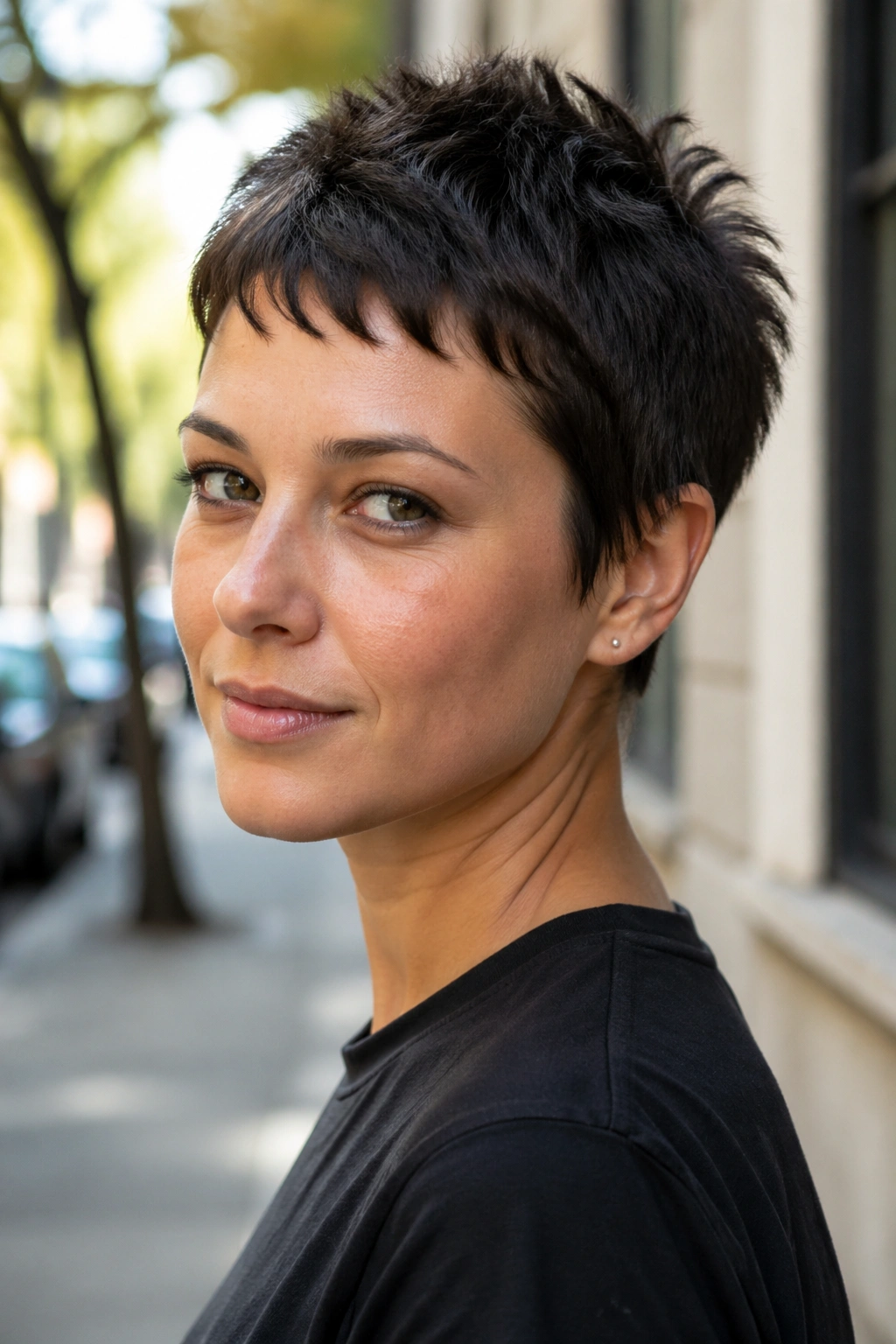
Why does a tiny pixie sometimes look cooler than a longer one? Because the shape is clean and the texture does the talking.
A choppy micro pixie keeps the length close to the head, but it avoids that solid, blocky look by breaking the perimeter into small, uneven pieces. The layers aren’t dramatic; they’re chipped in just enough to make the cut feel alive. On straight hair, that little irregularity matters a lot. On wavy hair, it keeps the cut from puffing out like a triangle.
How to Style It
Rub a rice-sized amount of styling paste between your palms, then press it into dry hair from the back toward the front. Don’t rake it hard. That usually makes the pieces clump in odd places.
A micro pixie is best if you like low-drama styling and don’t mind seeing your face fully. It’s not the friendliest choice for anyone who wants to hide the forehead or soften a very long face, but on the right person it looks sharp in a relaxed way. Strange combo. Works.
4. Grown-Out Pixie Bob
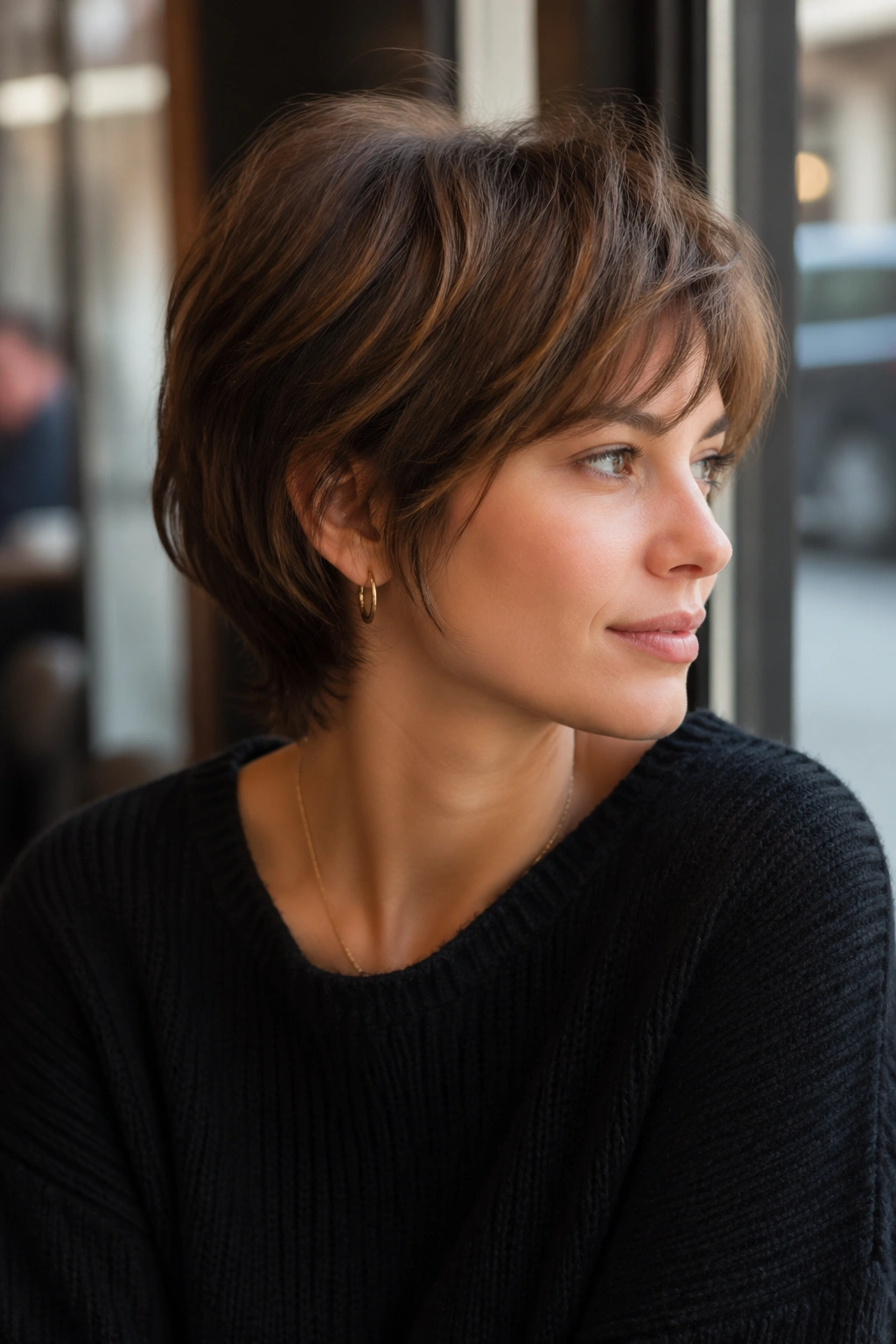
A grown-out pixie bob is what happens when you stop treating short hair like a countdown. The crown still reads pixie, but the nape and sides have enough length to brush the jawline, which makes the whole cut feel calmer.
I like this shape for people who are nervous about going too short, because it buys you room to move between a pixie and a bob without an awkward in-between stage. The silhouette sits closer to the head at the back and then drifts longer around the ears and cheeks. That soft curve is the whole point.
- Ask for a neckline that follows your natural hairline
- Leave the front long enough to tuck or flip
- Keep the crown layered, not bulky
- Blow-dry with a round brush for a smoother finish
It’s a smart choice for anyone who hates frequent trims. The shape grows out in a way that still looks deliberate, which is rarer than it should be.
5. Curly Pixie With Soft Crown
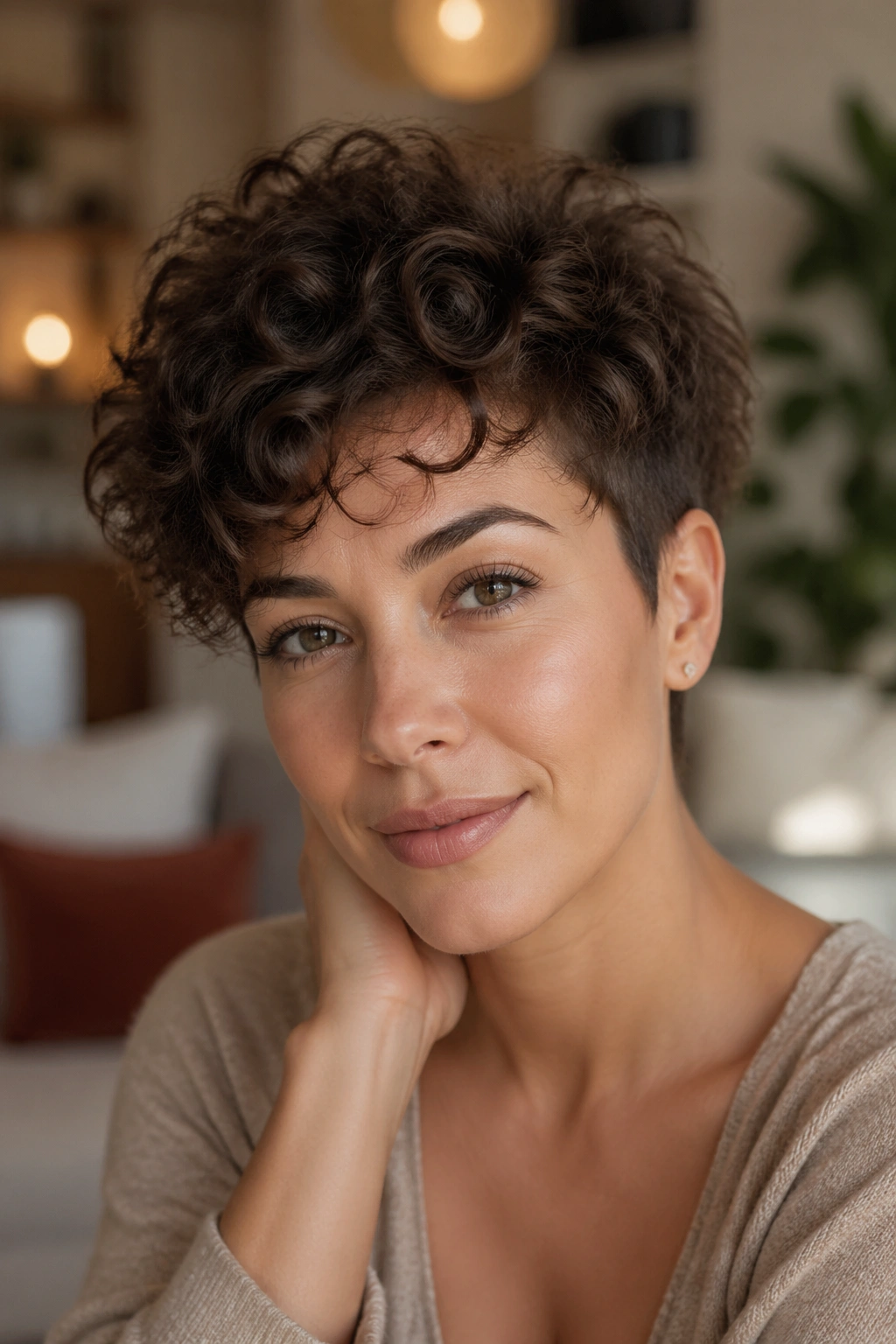
Curly pixie haircuts can be gorgeous when the crown is left a little longer and the sides are trimmed with the curl pattern in mind. Cut too short, and the curls spring up in a way that feels accidental. Cut with shape, and the whole head looks lifted.
The best version starts with a dry cut or at least a curl-aware trim, because curls lie about their length when wet. The crown usually keeps enough room for the curl to form, while the nape and sides are cleaned up so the volume stays where you want it. That means you get shape without turning the cut into a puffball.
Use a cream with slip, then diffuse on low heat until the curls feel set but not crispy. Hard crunch is the enemy here. A little frizz around the edges is fine; it often makes the cut look less precious and more real.
6. Asymmetrical Pixie With Long Bangs
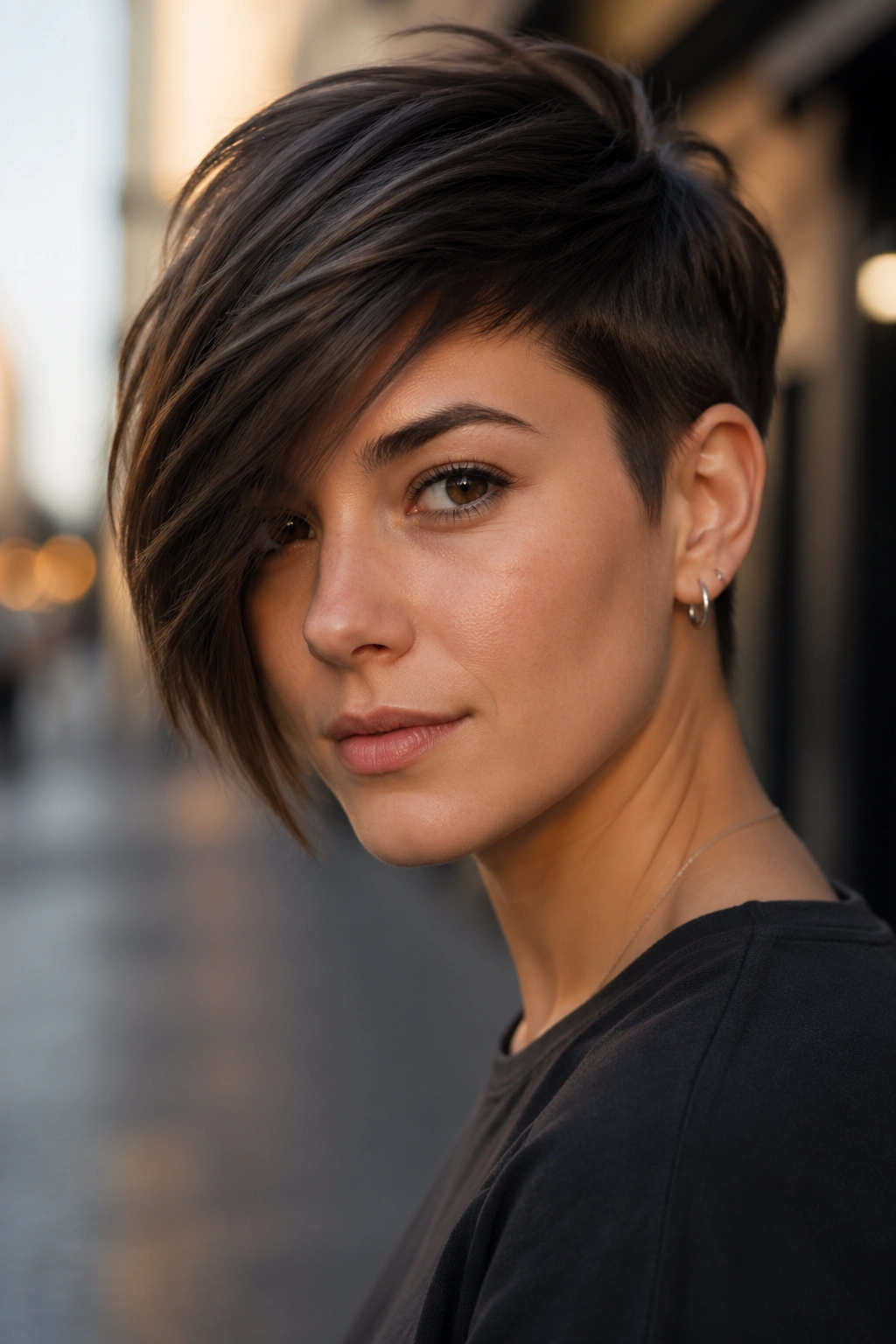
Unlike the classic even pixie, this one gives you a built-in focal point. One side carries more length, the bangs fall longer across the forehead, and the result is a cut that feels a little arty without trying too hard.
That asymmetry is useful if your face feels very symmetrical already, or if you want to pull attention toward the eyes. A longer bang can skim one eyebrow and then taper down toward the cheekbone, which is a nice way to soften a strong jaw or a broad forehead. Keep the contrast gentle, though. The cut works better when it looks intentional, not lopsided.
I’d ask for the longer side to sit somewhere between cheekbone and jaw length, then keep the shorter side soft around the ear. That gives the cut movement when you turn your head. It also keeps styling simple. A flat brush, a little bend at the front, done.
7. Shaggy Pixie With Airy Texture
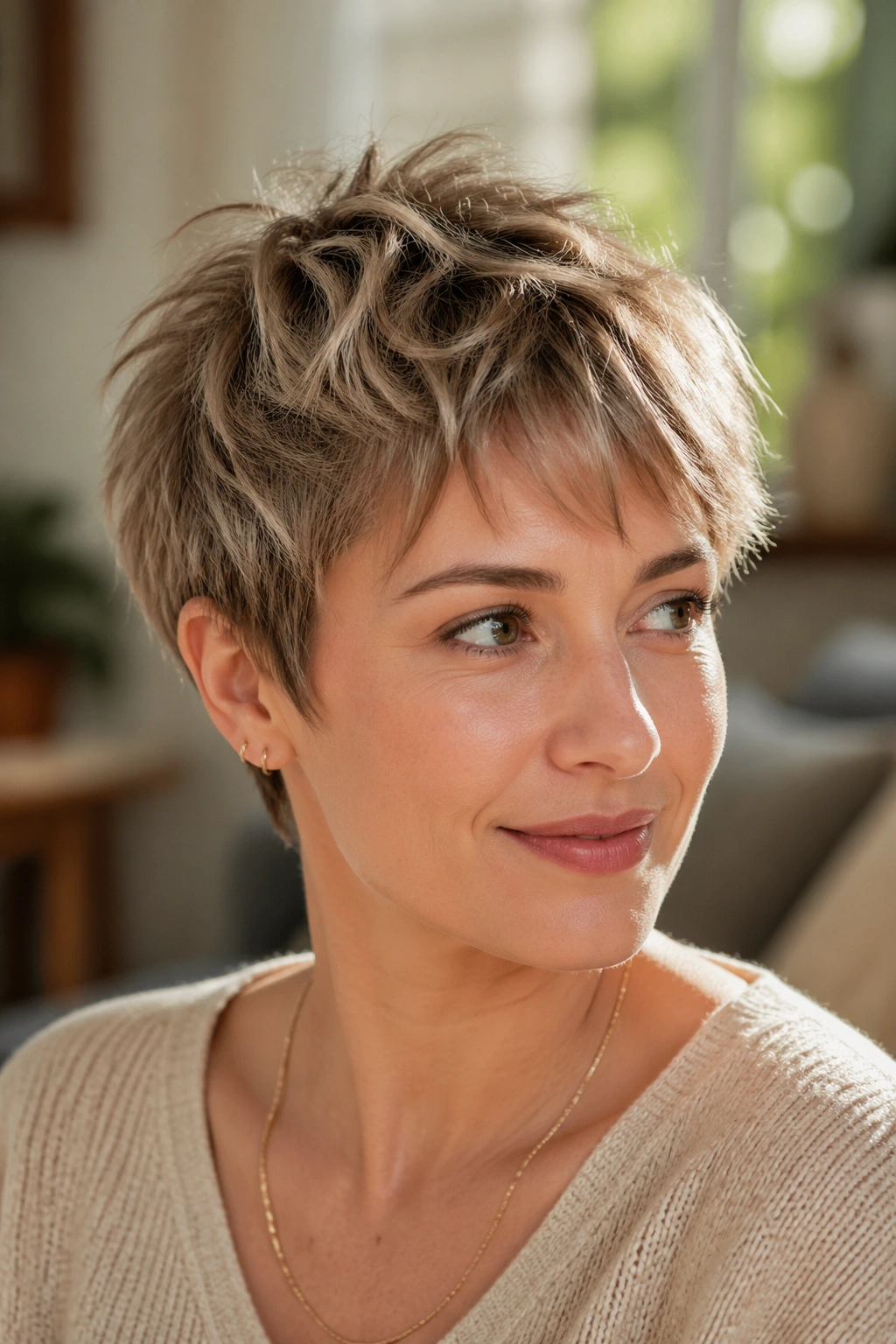
A shaggy pixie is what I reach for when someone says they want short hair but not a perfect little shape. The layers are broken up, the ends are light, and the crown has enough texture to feel casual.
What Makes It Different
The cut borrows from the shag without becoming shaggy in the messy sense. You still want a visible outline, but inside that outline the lengths should vary. A stylist might use slide cutting or razor work through the top to keep the texture airy. That creates separation, which is what gives the cut its cool, lived-in mood.
It’s a good choice for second-day hair, too. A dry texture spray at the roots and a dab of paste at the ends can revive it in under a minute.
- Works well on wavy hair
- Nice for people who hate precise blowouts
- Ask for soft internal layers
- Avoid heavy shine creams
Best move: Rough-dry until about 80 percent dry, then stop fussing with it.
8. Undercut Pixie With Long Top Layers
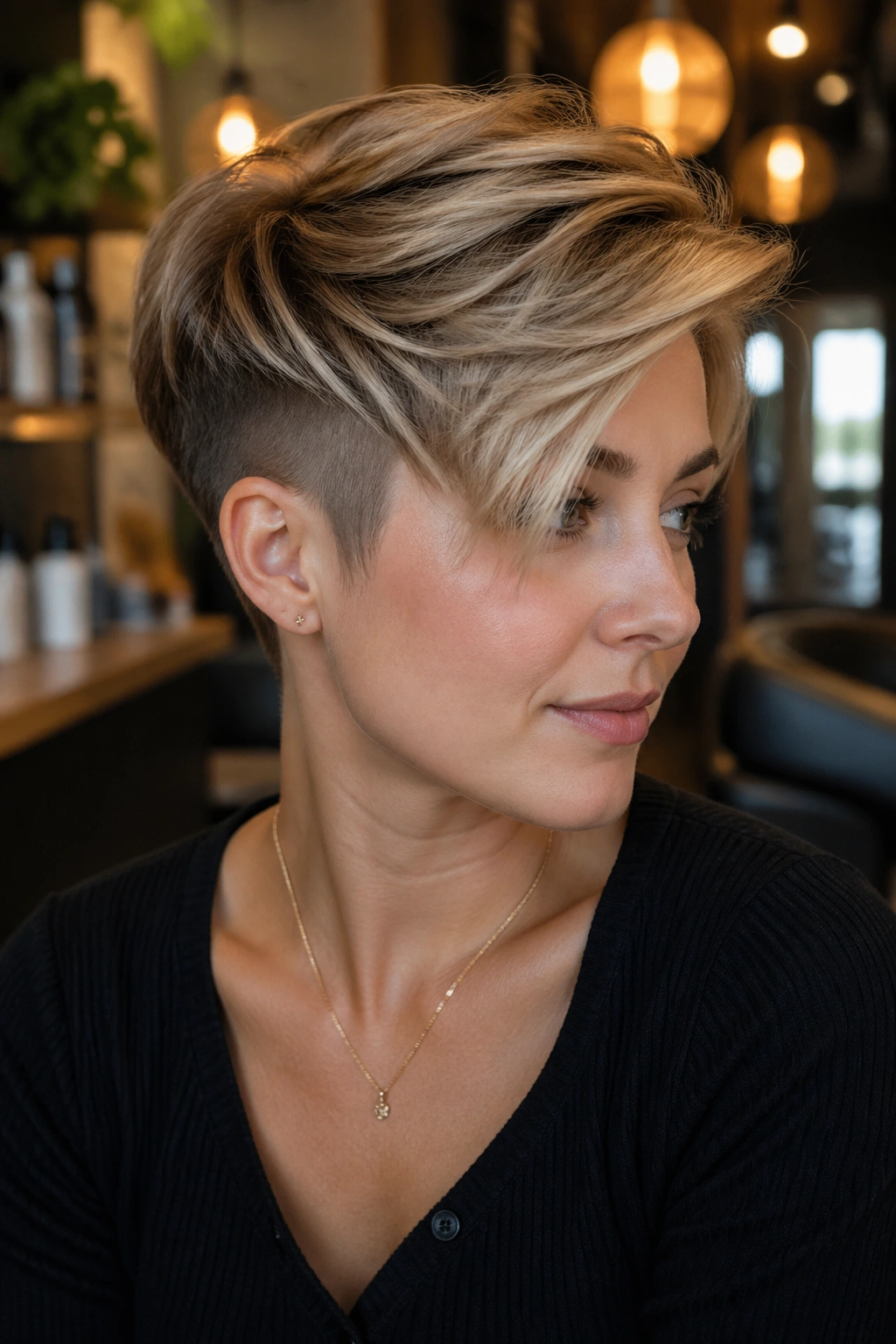
This cut is a cheat code for thick hair. The undercut removes bulk where you do not need it, while the top stays long enough to sweep, spike a little, or fall forward in a soft wave.
The contrast is what makes it modern. The underside can be clipped short at the nape and around the lower sides, but the top layers should still feel touchable, not stiff. If the top is too short, the cut starts looking like a buzzed crop instead of a pixie with range.
This is also one of the easiest ways to keep thick hair from ballooning at the sides. Ask your stylist to remove weight from the inside, not just the outside line. That difference matters. A hidden undercut can make styling faster, too, because the head shape stops fighting the cut.
9. Ear-Grazing Pixie With Wispy Ends
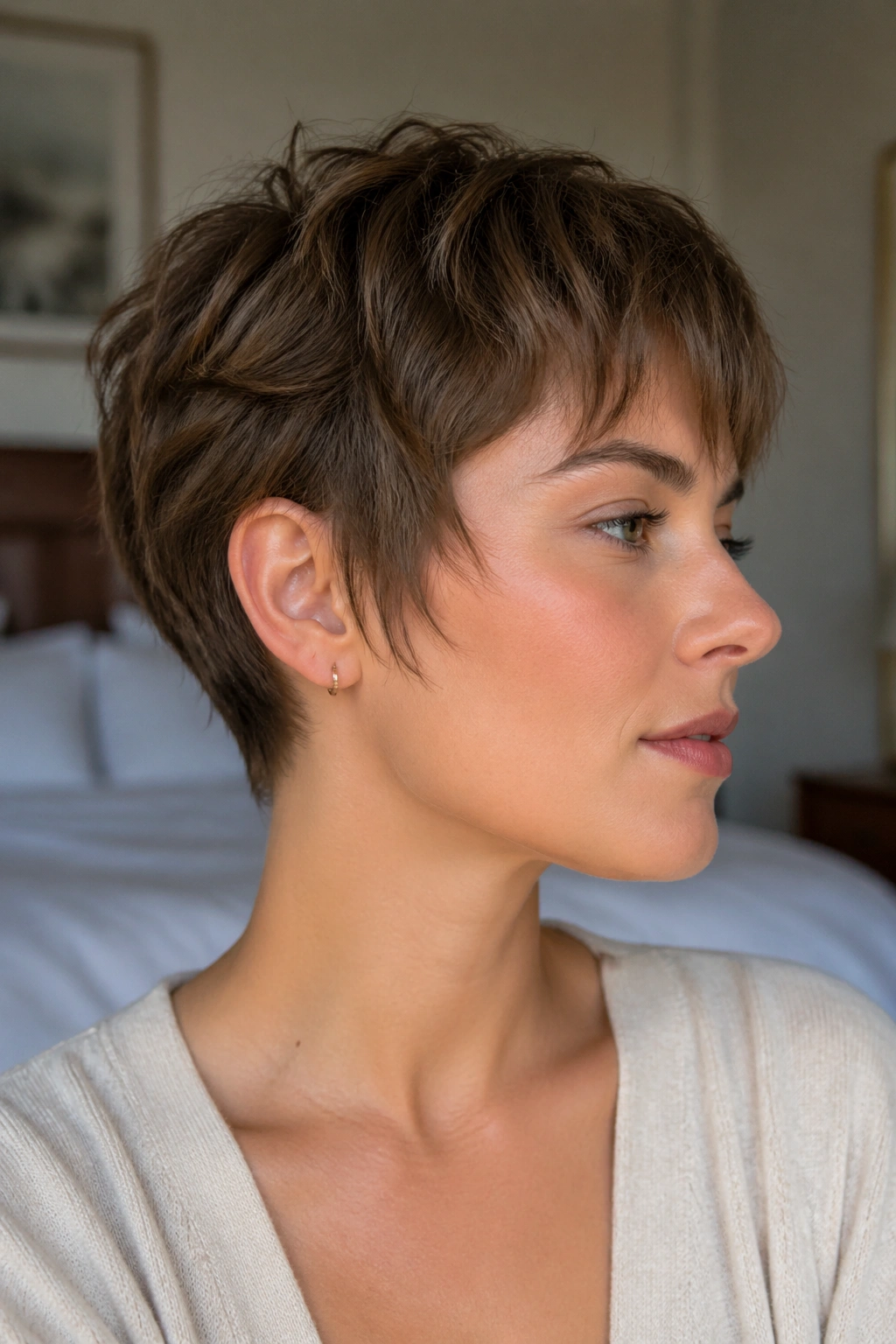
Why do some short cuts feel delicate instead of severe? Usually because the ends aren’t blunt, and the length sits right at the ears instead of above them.
An ear-grazing pixie does a nice thing for the face: it lets the hair frame the cheek without swallowing it. The wispy ends make the edge feel softer, so you can tuck one side back and leave the other side loose without looking overstyled. That makes the whole cut easy to live with on busy mornings.
How to Ask for It
Ask for length that touches the top of the ear, then have the stylist soften the perimeter with point cutting. Keep the fringe movable. If the front is too short, the cut loses that airy feel.
A small side part helps here, especially on straight hair. A few seconds with a flat iron at a low setting can bend the front pieces away from the face, which gives the cut a little lift without turning it rigid.
10. Platinum Pixie With Root Shadow
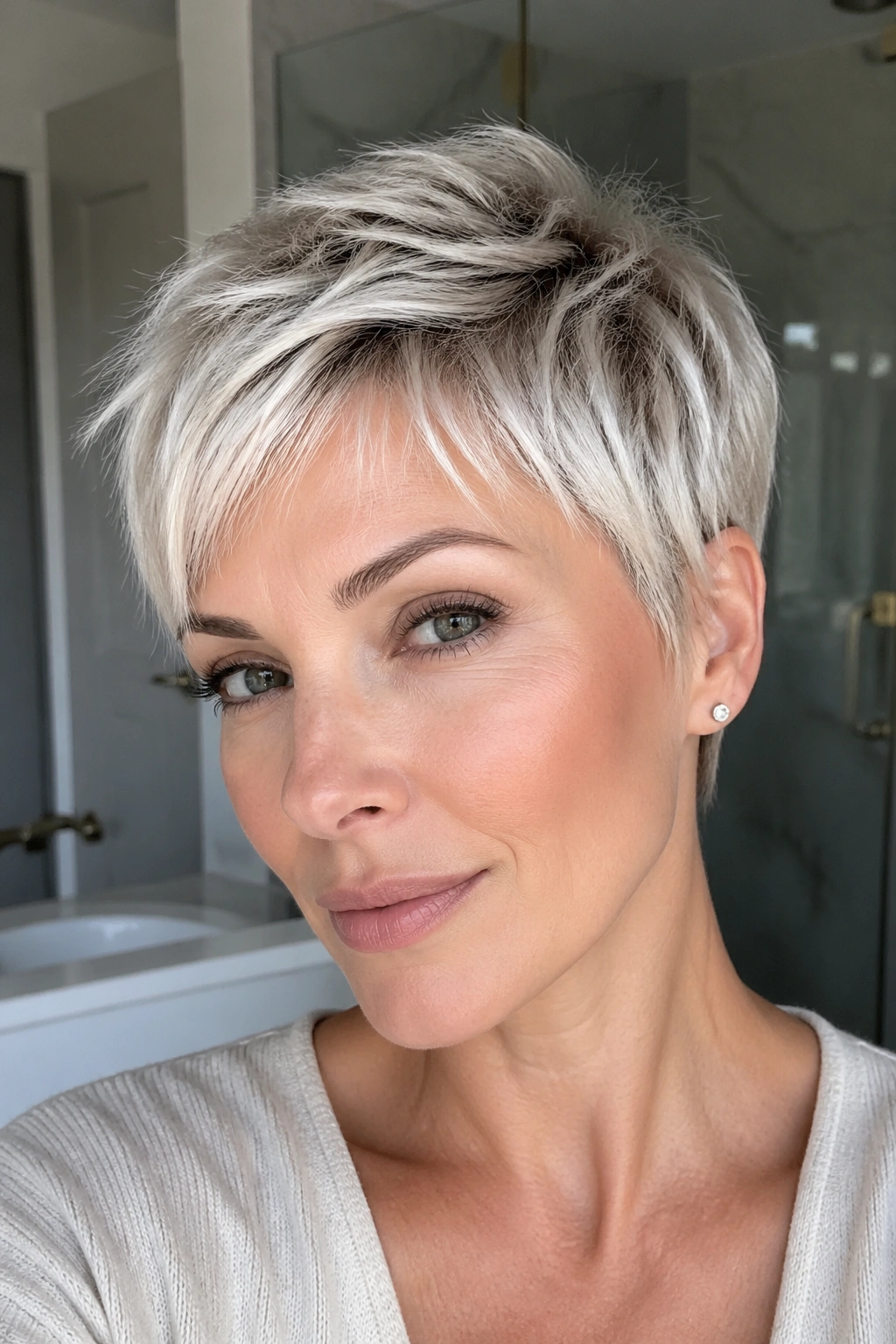
Platinum hair can look icy and fresh on a pixie, but only if the base isn’t stripped to the point of looking flat. A soft root shadow gives the cut depth, which keeps the bright blonde from looking helmet-like.
The trick is contrast. Very light ends with a slightly deeper root make the texture visible, especially when the cut has short layers around the crown. Without that shadow, the shape can disappear into one pale block. That’s not a flattering block. It’s the kind that shows every flat spot from a bad blow-dry.
- Keep a purple shampoo in the shower, but use it sparingly
- Plan regular toner refreshes
- Ask for soft babylights, not one flat bleach job
- Style with a light cream so the hair doesn’t look dry
Platinum pixies look best when the finish is a little airy, never crunchy. The hair should move.
11. Dark Pixie With Piecey Fringe
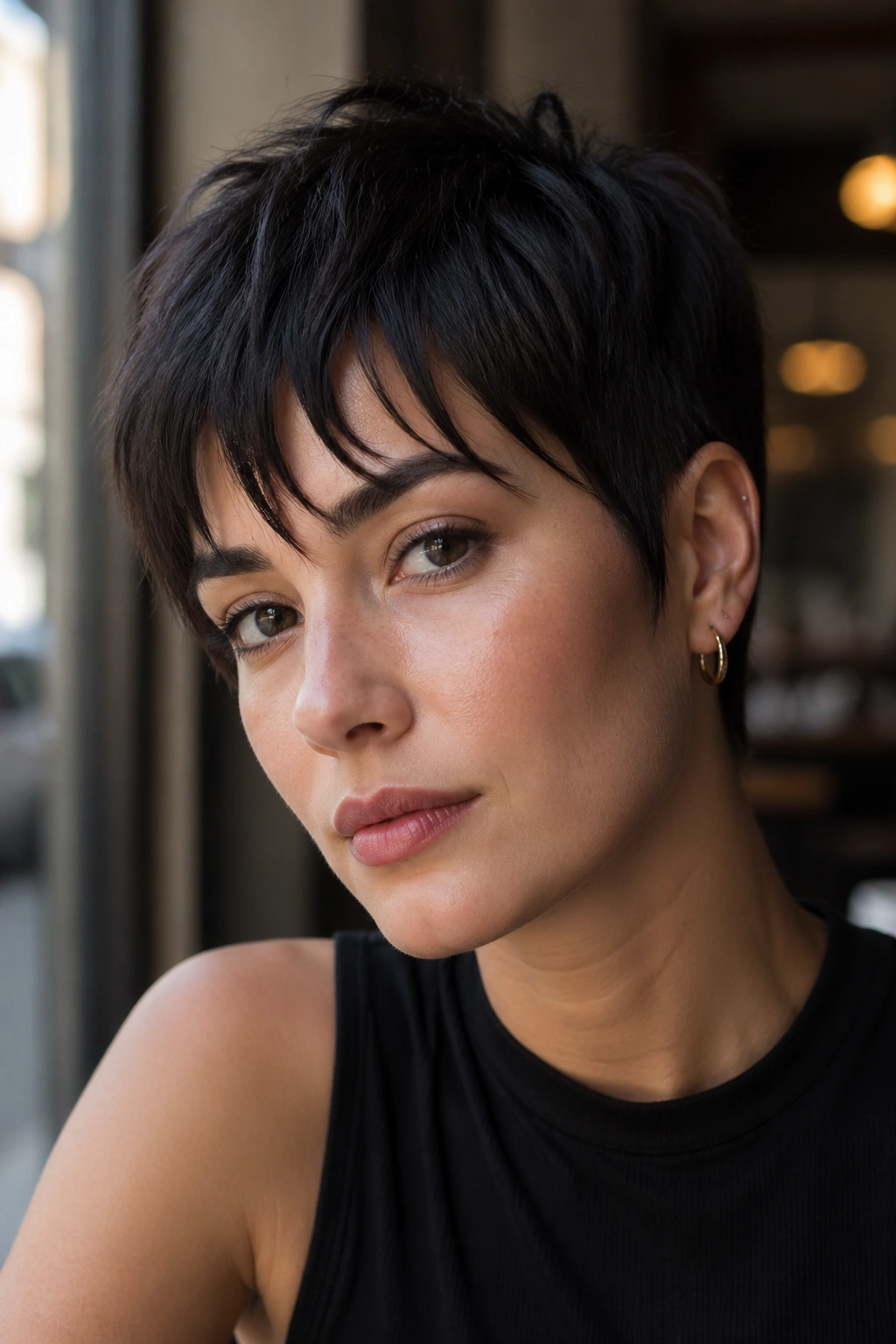
Dark pixie haircuts have a built-in advantage: the color makes the shape look richer, and a piecey fringe prevents the cut from reading too solid. On black or deep brunette hair, that separation at the front matters a lot.
The fringe should be cut into small sections rather than one heavy block. A little bend through the ends keeps the line from feeling hard. That’s especially helpful if your hair is naturally straight, because dark straight hair can go blunt fast. A touch of glossing cream on the ends makes the pieceiness stand out without making the hair greasy.
This is a great cut if you want something low-maintenance but not boring. It works with a turtleneck, a sharp jacket, or a plain T-shirt. The cut does the work for you. That’s the appeal, honestly.
12. Textured Pixie With Nape Taper
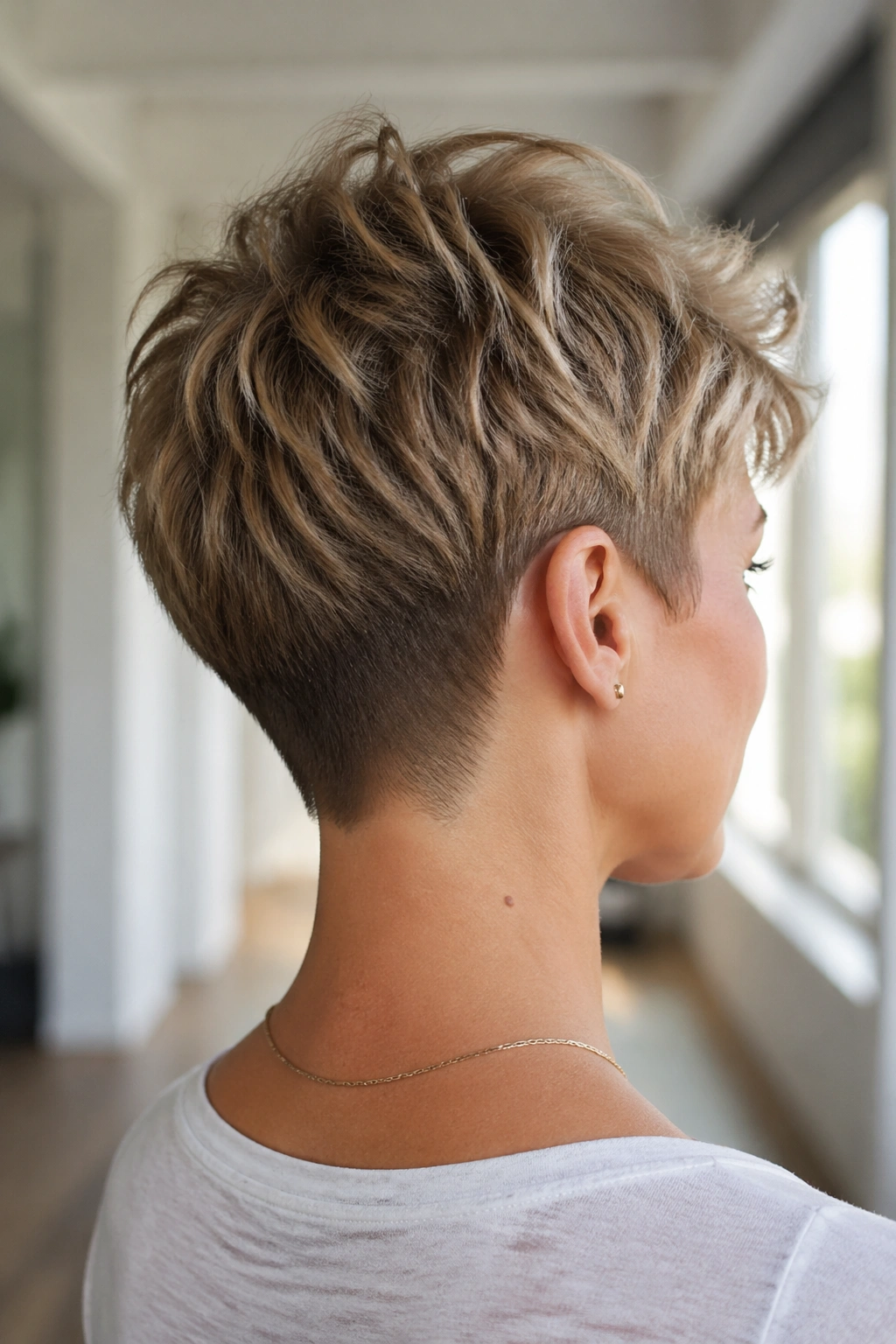
A tapered nape does quiet work that people often miss. It gives the neck a clean line, helps the head shape look slimmer from the side, and makes even a small pixie feel finished.
What makes this version stand apart is the texture on top. Instead of leaving everything smooth, the upper layers are broken up just enough to avoid that hard cap shape. The contrast between the neat back and the loose crown is what makes it feel modern. You get order and movement in the same haircut.
I’d recommend this if your hair grows fast at the neckline or if you hate the fuzzy triangle that shows up two weeks after a cut. A clipper taper at the nape, followed by scissor work through the top, usually gives the cleanest result. It’s tidy, but not severe. That’s a good line to stay on.
13. Soft Layered Pixie Haircuts for Fine Hair
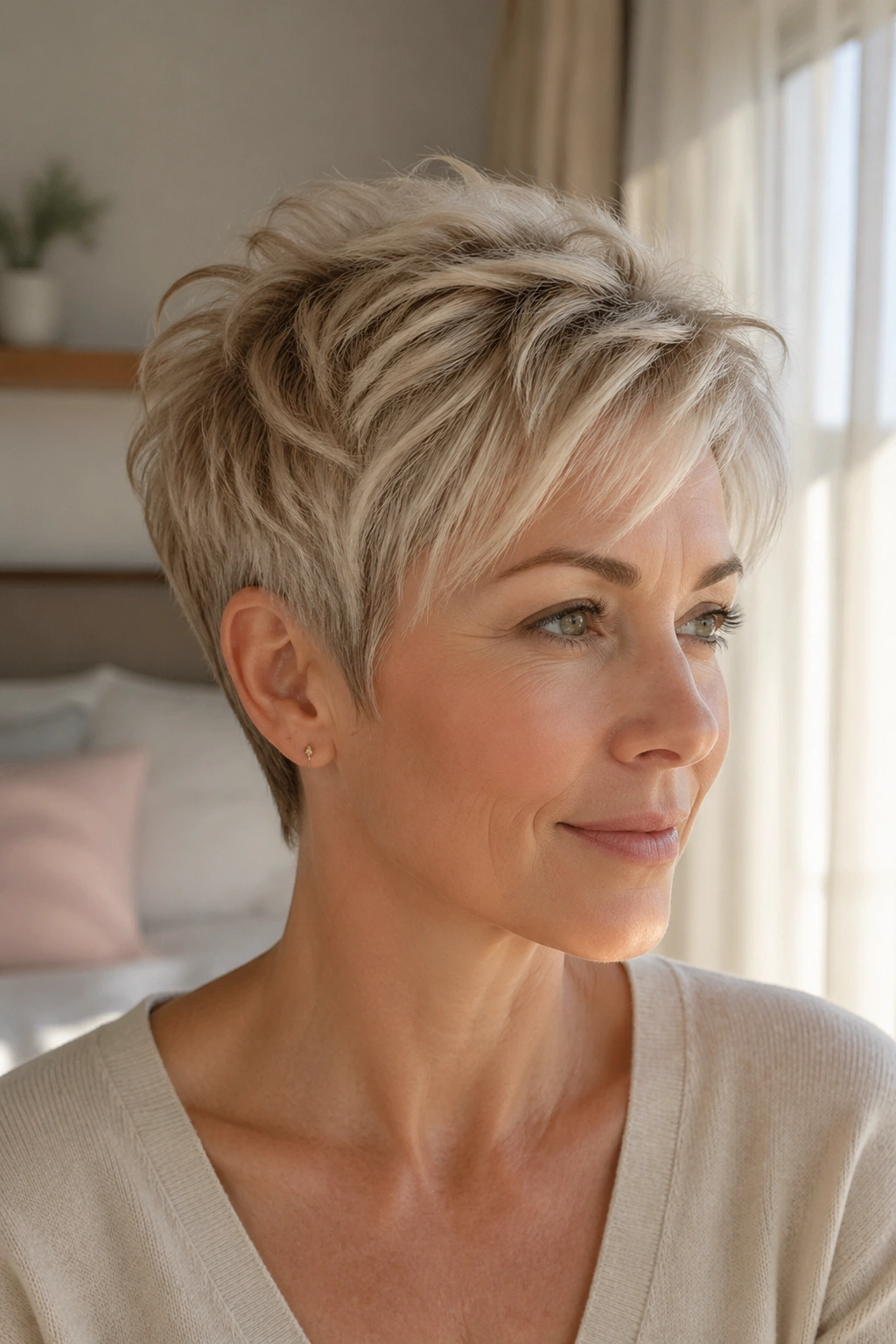
Fine hair likes structure, not bulk. A soft layered pixie haircut gives the hair lift without forcing it into a big, puffy shape that falls flat by noon.
The Layer Map Matters
The best layers on fine hair are hidden layers. That means the stylist removes weight from inside the cut so the outer line still looks full. If the layers are too short or too choppy, the ends can look thin and wispy in a bad way. You want movement, not see-through patches.
A root-lift spray at the crown and a small round brush can make a huge difference. Dry the roots first, then switch to fingers for the fringe. That keeps the front soft while the top keeps a little height.
- Ask for internal layering, not aggressive thinning
- Leave enough length at the front for sweep
- Use lightweight mousse before blow-drying
- Avoid heavy oils near the roots
One good rule: if the hair feels airy but still looks dense at the outline, the cut is working.
14. Thick-Hair Pixie With Internal Weight Removal
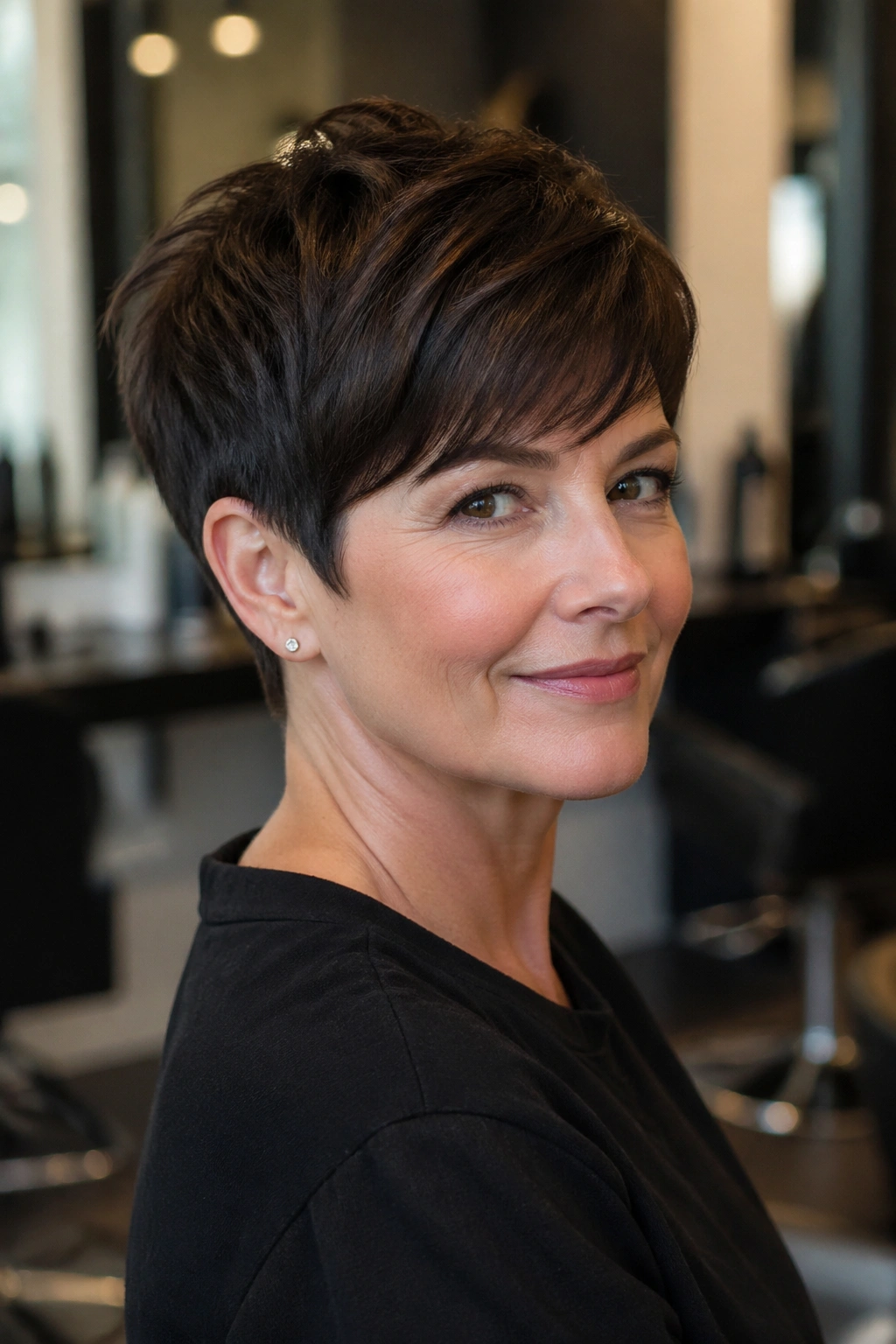
Thick hair needs control, not punishment. Too many people reach for aggressive thinning shears and end up with frizzy ends, weird puffing, and a pixie that refuses to sit down.
Internal weight removal is the smarter move. The stylist takes bulk from the inside of the cut, which keeps the outer surface smooth while making the shape lighter. That matters a lot on thick hair, because the goal is usually movement without helmet volume. A little length on top helps, too. It gives the hair somewhere to go.
The finish should still feel soft at the ends. If the layers are over-chipped, thick hair can stick out in odd directions, especially near the crown. I’d rather see a clean outline with a few broken pieces than a heavily textured cut that looks busy. Use a light cream and dry it with tension at the roots. That usually does the trick.
15. Side-Part Pixie With Tucked Ear Detail
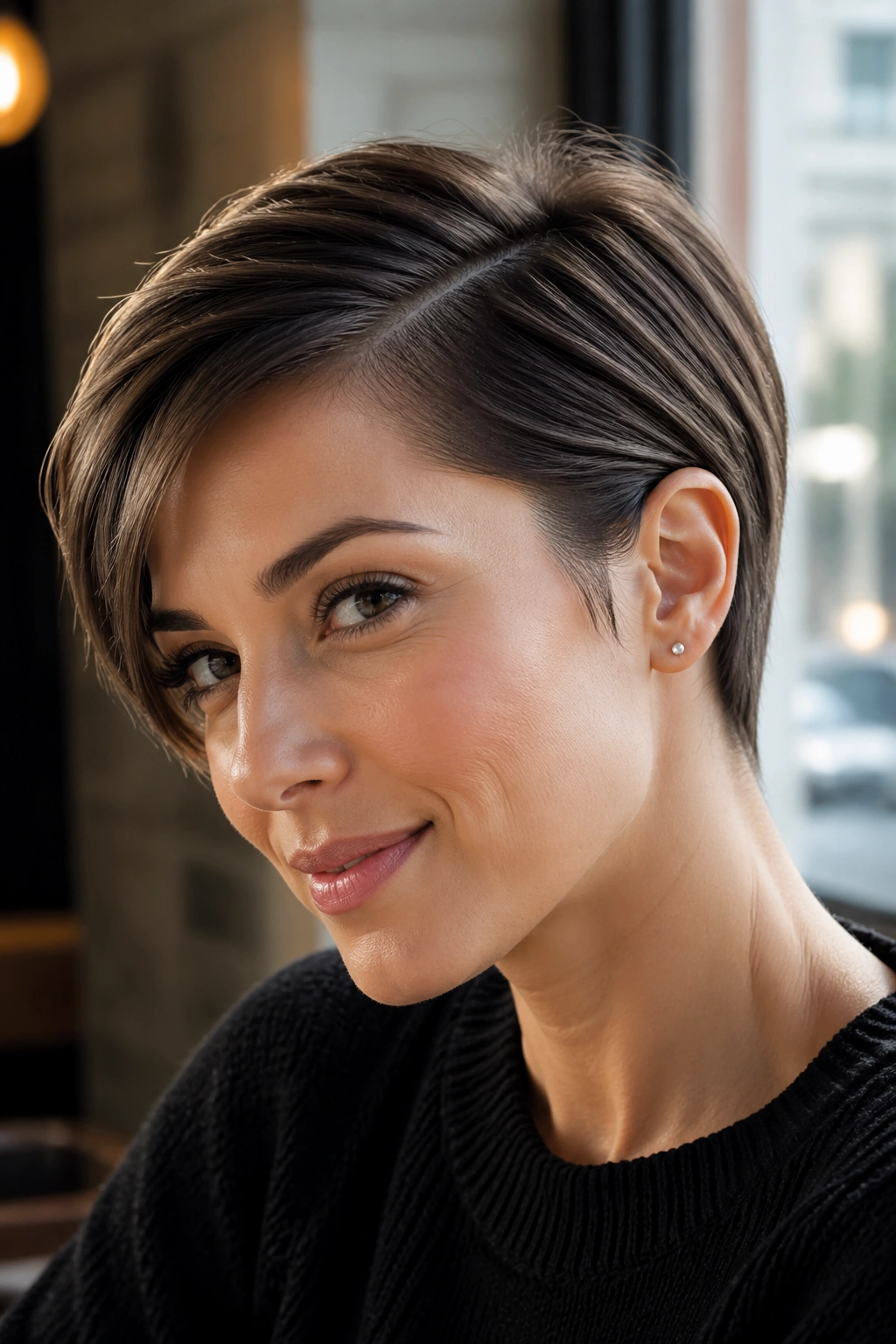
Can a side part really change a pixie that much? Yes. It shifts the weight, opens one side of the face, and gives the cut a quieter, more polished feel without making it stiff.
The tucked-ear detail is the best part. When one side sweeps back and stays tucked, the eye goes straight to the jawline and cheekbone. The other side can keep a little length near the temple, which softens the shape and keeps it from looking too severe. That contrast is subtle, but it’s effective.
Styling Note
Blow-dry the part first, then pin the longer side behind the ear while it cools for a minute. That tiny habit helps the hair remember where it should sit.
This version works especially well if your hair is straight or lightly wavy. On very curly hair, the tuck may need a few pins or a bit of cream to stay put.
16. Pixie With Baby Bangs and Soft Texture
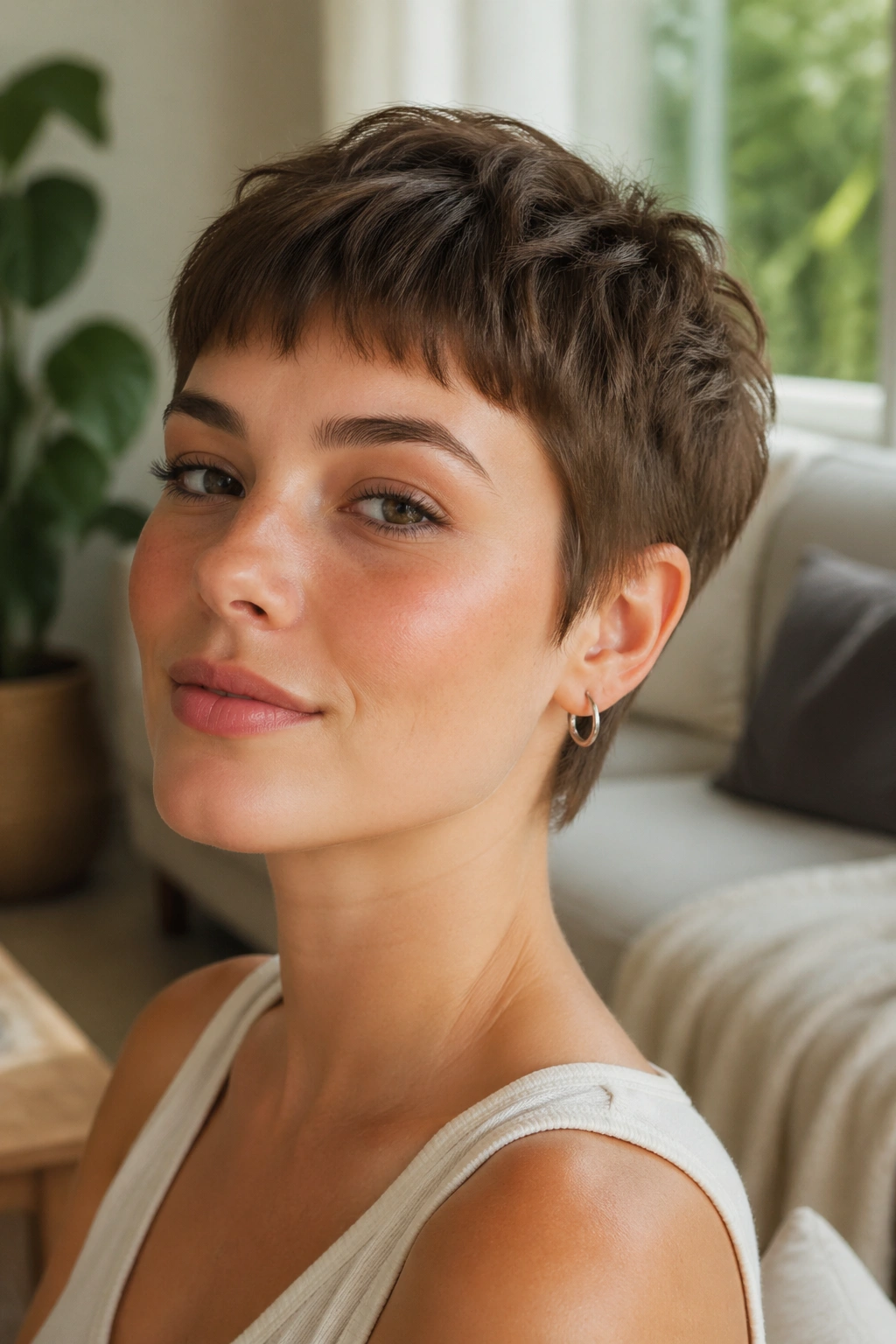
Baby bangs can look harsh when they’re cut too blunt. Soft texture saves them.
The front should sit short enough to expose the brows, but not so sharp that it feels like a dare. A few broken ends and a feathered finish at the temples keep the fringe from overpowering the rest of the cut. That’s the part people forget. Baby bangs are a statement, yes, but the pixie around them still has to breathe.
This cut is a strong choice if you like showing your face and you have brows worth showing off. It also works well with earrings, which sounds trivial until you see it in the mirror. Then it makes sense. Keep the styling light: a tiny bit of matte paste at the front, a touch of mousse at the crown, and leave the rest alone.
17. French-Girl Pixie
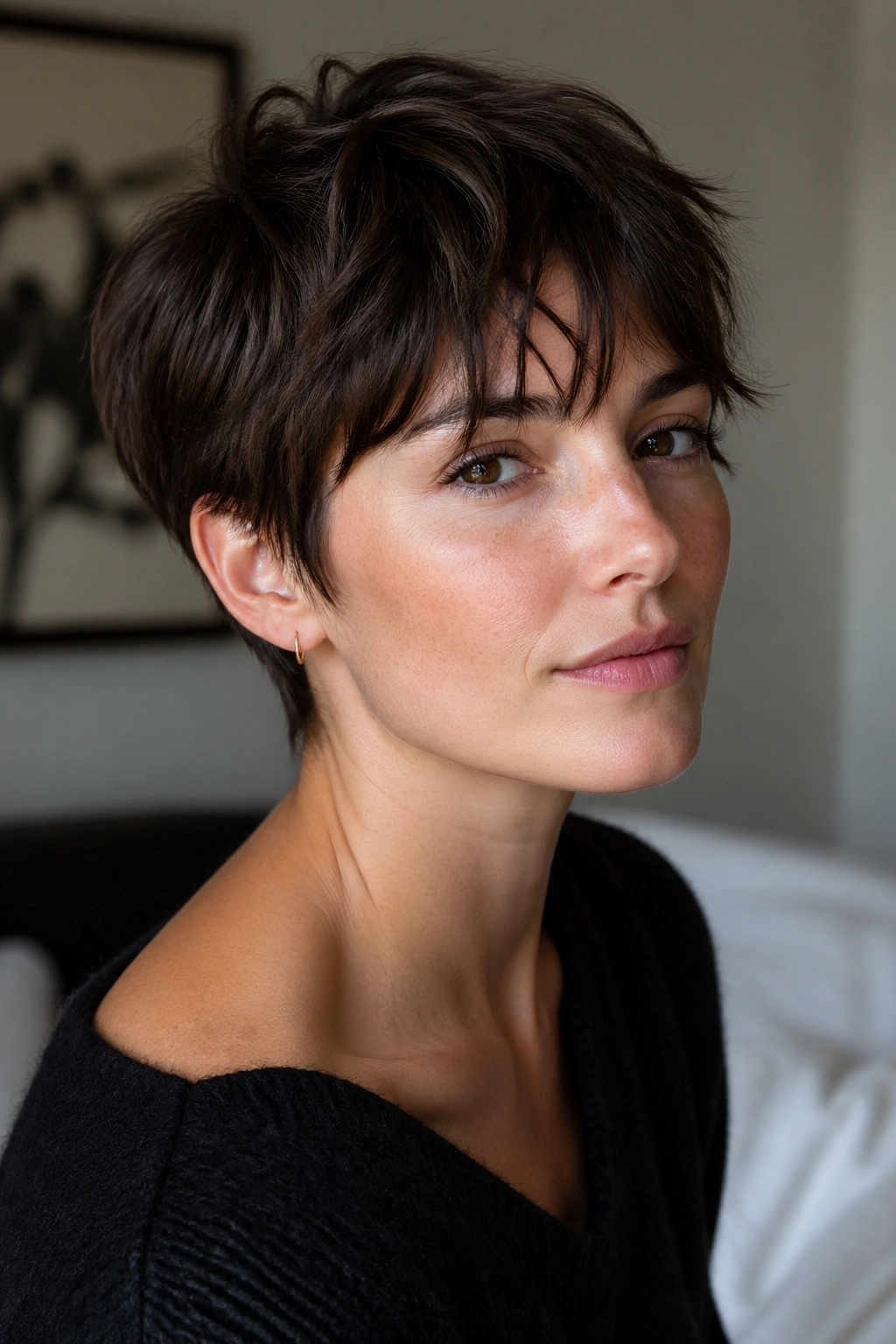
A French-girl pixie usually looks a little undone in the best way. The fringe isn’t too perfect, the sides aren’t too sculpted, and the whole thing has that casual, slightly lived-in feel that never looks forced.
The cut depends on softness more than precision. You want movement around the eyes, a gentle taper at the ears, and enough length on top that the hair can fall in a few different directions. A blunt finish would spoil it. A razor-soft edge is much better. The charm comes from the fact that it looks touched by hand rather than frozen in place.
I’d style this with a bit of cream on damp hair, then air-dry or diffuse until it’s only half tidy. Tuck one side behind the ear. Leave a few pieces loose at the temple. It shouldn’t look like you tried very hard, even though you probably did.
18. Slicked-Back Pixie Haircuts With a Soft Finish
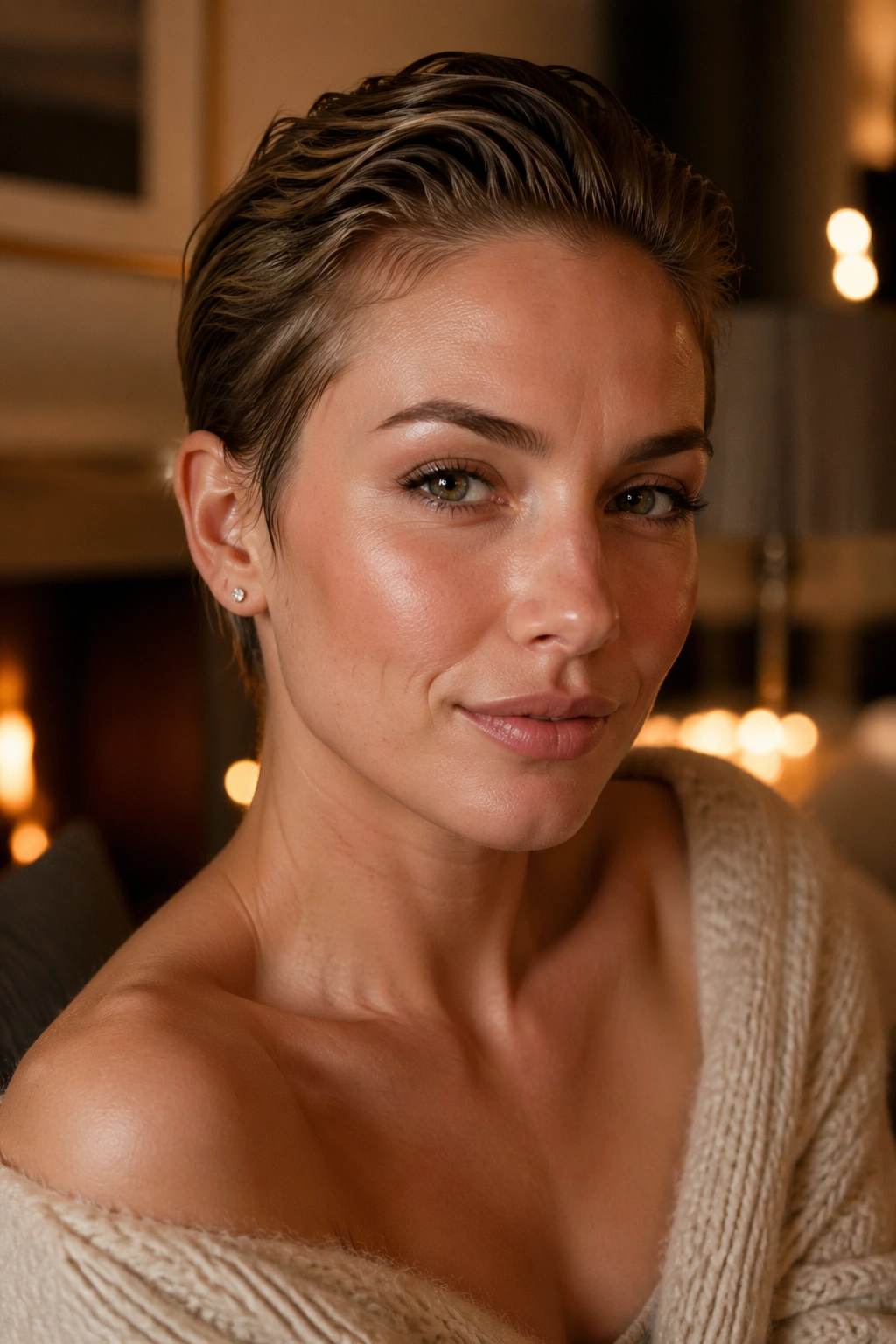
Slicked-back pixie haircuts can look severe when they’re drenched in gel, but a soft finish changes the whole feel. The hair still moves back from the face, yet the edges stay touchable instead of glassy.
That softer look comes from mixing products. A little styling cream blended with a small amount of gel gives hold without a wet shell. Brush the hair back while it’s damp, then stop before every strand is pinned flat. Let a few temple pieces escape. Let the crown keep a tiny bit of lift. Those small imperfections are what make it wearable.
This is a smart choice for evenings out, bad-hair days, or when you want your bone structure to do the talking. It also works better on hair that has some natural density, because very fine hair can disappear when slicked straight back. Use a wide-tooth comb first, then your fingers. The result should feel smooth, not glued down.
19. Wavy Pixie With Rounded Silhouette
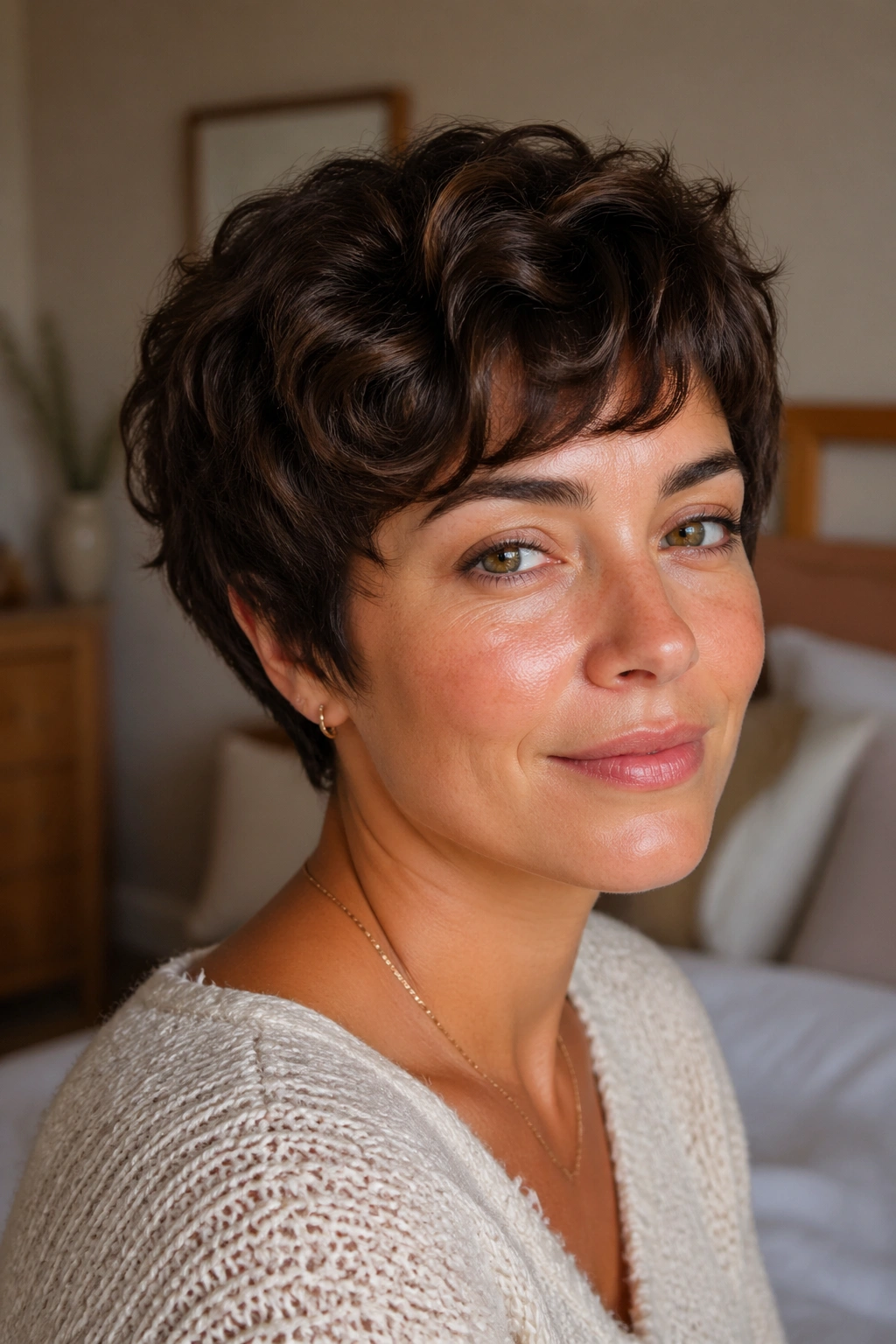
Waves and pixies get along better than people expect. The trick is to keep the silhouette rounded so the wave pattern doesn’t turn into side puff.
Why the Shape Matters
A rounded pixie follows the head shape instead of fighting it. The sides stay close enough to show the curve of the cheek, while the crown keeps enough length for the wave to bend naturally. That means you get softness at the perimeter and movement through the top without a weird triangle at the temples.
A diffuser helps, but don’t cook the wave into place. Dry until the hair is about 90 percent set, then stop. Scrunching too much can make the ends fray.
- Best for loose to medium waves
- Ask for soft shaping around the ears
- Keep the top long enough for a bend
- Use curl cream, not heavy butter
If your waves tend to collapse, a little root clip while drying can help keep the lift at the crown.
20. Bowl-Inspired Pixie With Modern Edge
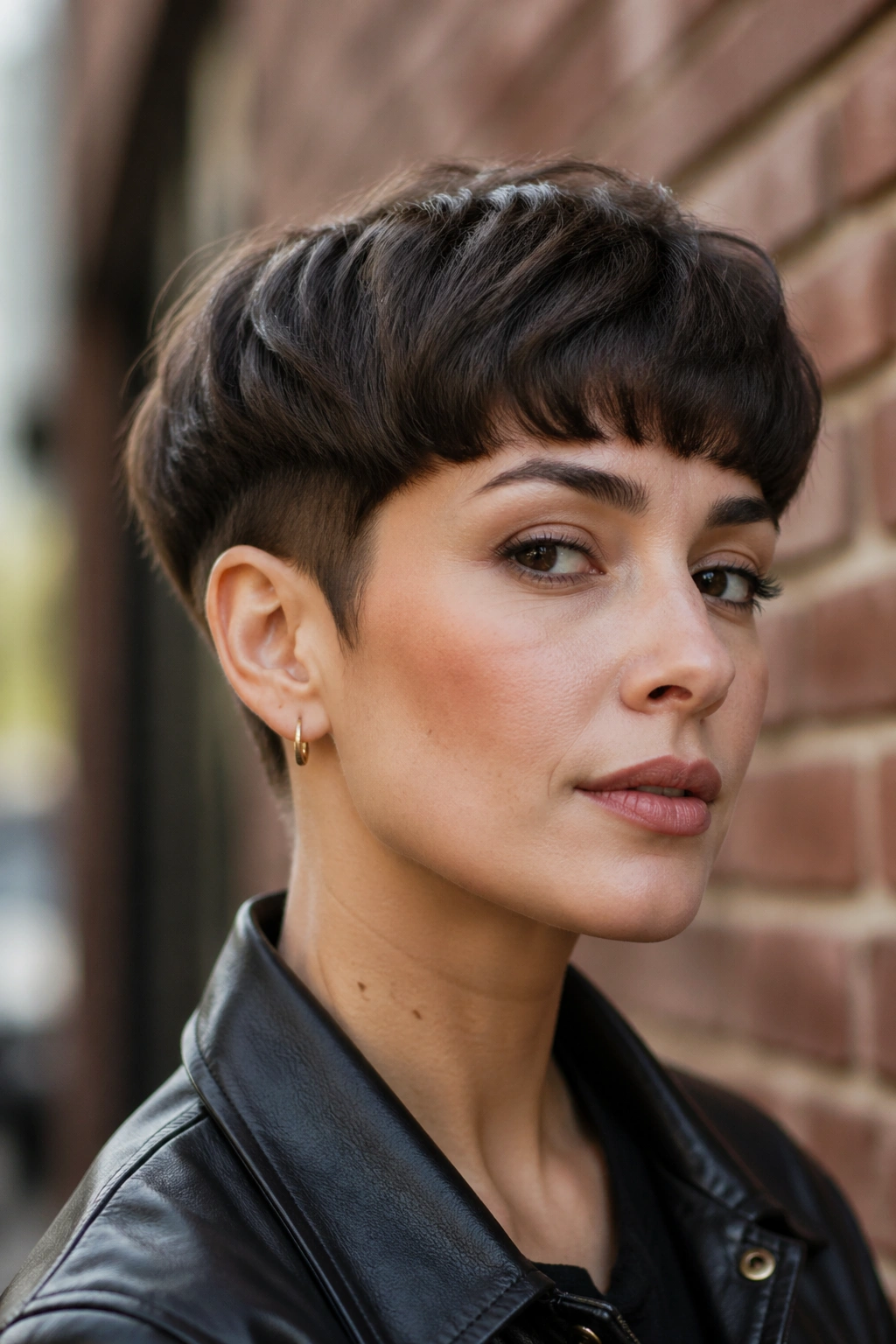
A bowl-inspired pixie sounds riskier than it is. The modern version doesn’t sit like a childhood haircut from a bad school photo. It’s softer, shorter, and broken up around the edges so the shape feels deliberate.
The line around the head is the key. You want a curved outline that follows the skull, with a little extra length in the fringe or crown to keep it from looking flat. A hidden undercut can help the top sit cleaner, especially if your hair is thick. If the perimeter is too heavy, the whole thing goes retro in a bad way. If it’s too thinned out, you lose the shape.
This cut favors people with strong features and a little style confidence. It looks especially good with a crisp collar, a sharp sweater, or a plain black tee. The haircut carries enough personality that you don’t need much else.
21. Copper Pixie With Soft Dimension
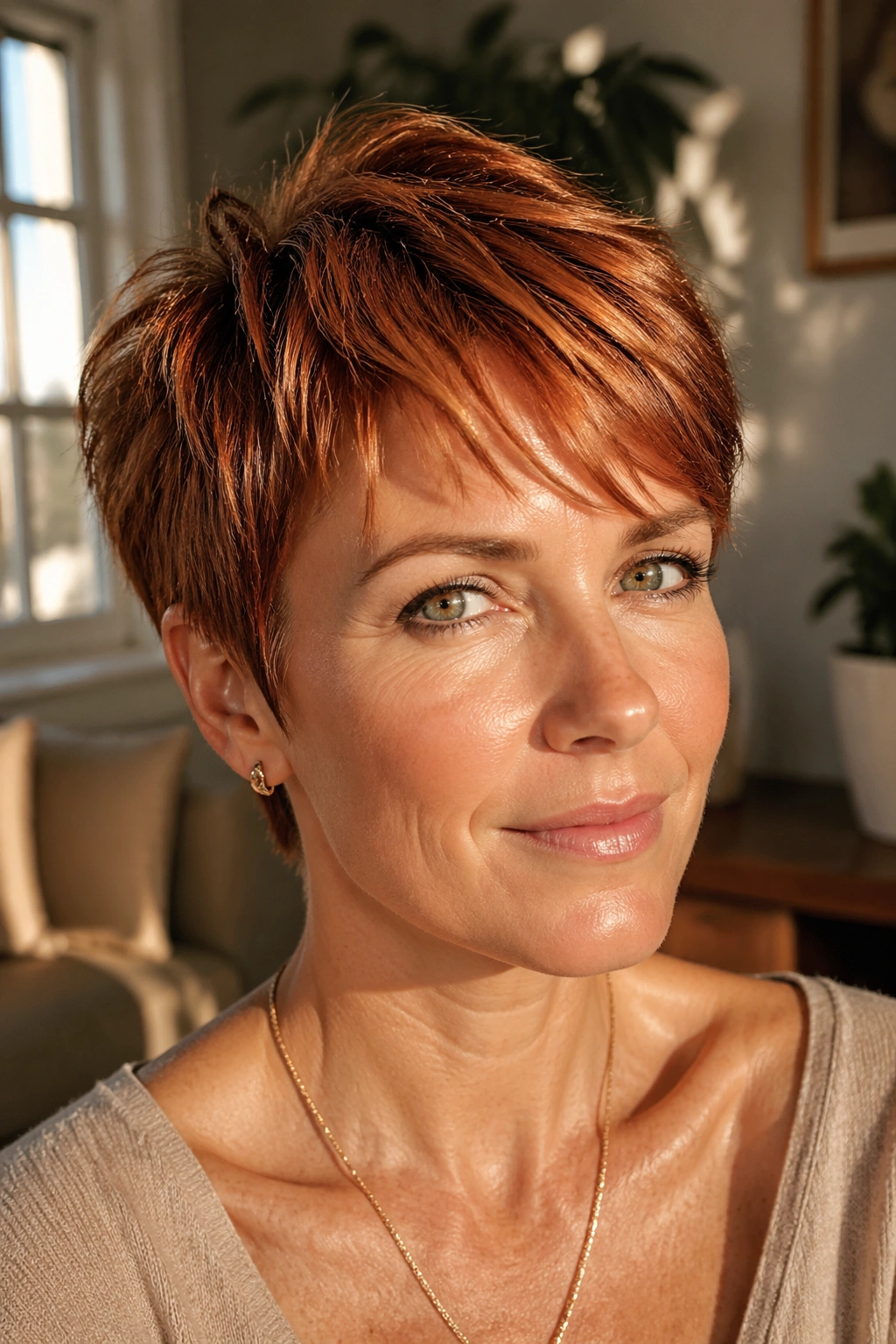
Can color change the way a pixie reads? Absolutely. Copper adds warmth, and warmth makes short layers look softer because the eye sees movement in the different tones.
A good copper pixie should not be one flat orange block. You want depth: a slightly deeper root, brighter pieces around the fringe, and maybe a gloss that keeps the color rich instead of chalky. That matters even more on short hair, because there’s less surface area for the tone to play across. A one-tone copper can still be lovely, but dimension gives it life.
What to Ask For
Ask for a shade that sits between ginger and bronze, not neon. Then have the stylist cut in soft layers that let the color show from root to tip.
This is a flattering choice for people who want a little glow without making the haircut scream for attention. It’s warm, but not loud. And yes, a copper pixie with a side part can look unusually flattering in dim light, which is a nice bonus.
22. Salt-and-Pepper Pixie
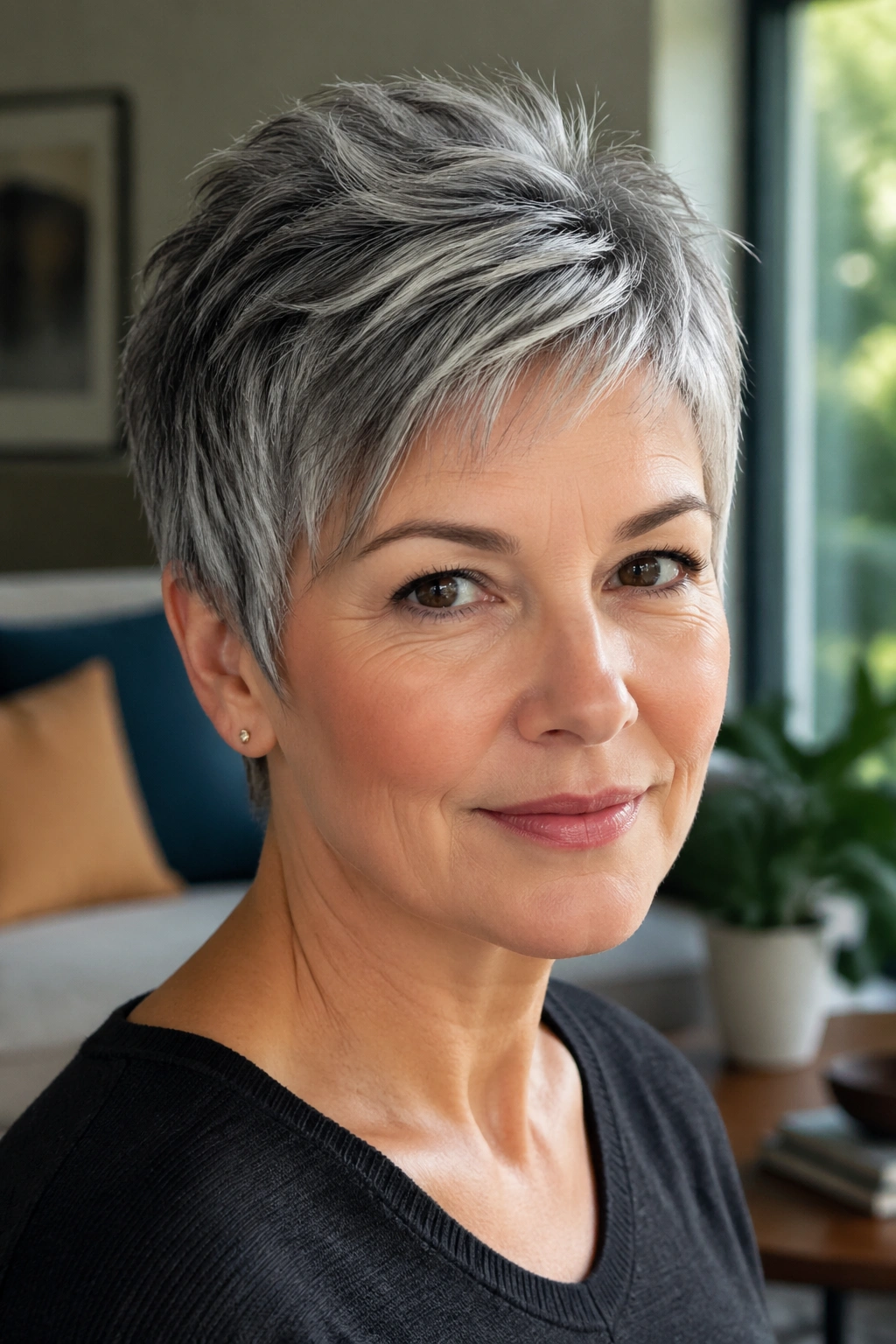
Salt-and-pepper pixie haircuts have a confidence to them that dyed hair can’t fake. The gray strands aren’t a problem to hide here; they’re part of the texture, and the cut should be shaped to let them show.
A soft layered perimeter works best because it prevents the hair from looking wiry at the edges. The top can be a little longer to keep lift, while the sides stay neat enough to frame the face. Shine matters, too. Gray hair can look dull if it’s overwashed, so a light conditioner and a smooth finish go a long way.
- Use a gentle shampoo
- Add a glossing cream on the ends
- Keep the fringe soft, not heavy
- Trim the nape before it gets fuzzy
This is one of those cuts that looks more expensive than it is. Not because of the price, but because the shape does not try too hard.
23. Hybrid Pixie-Bob With Neck Length
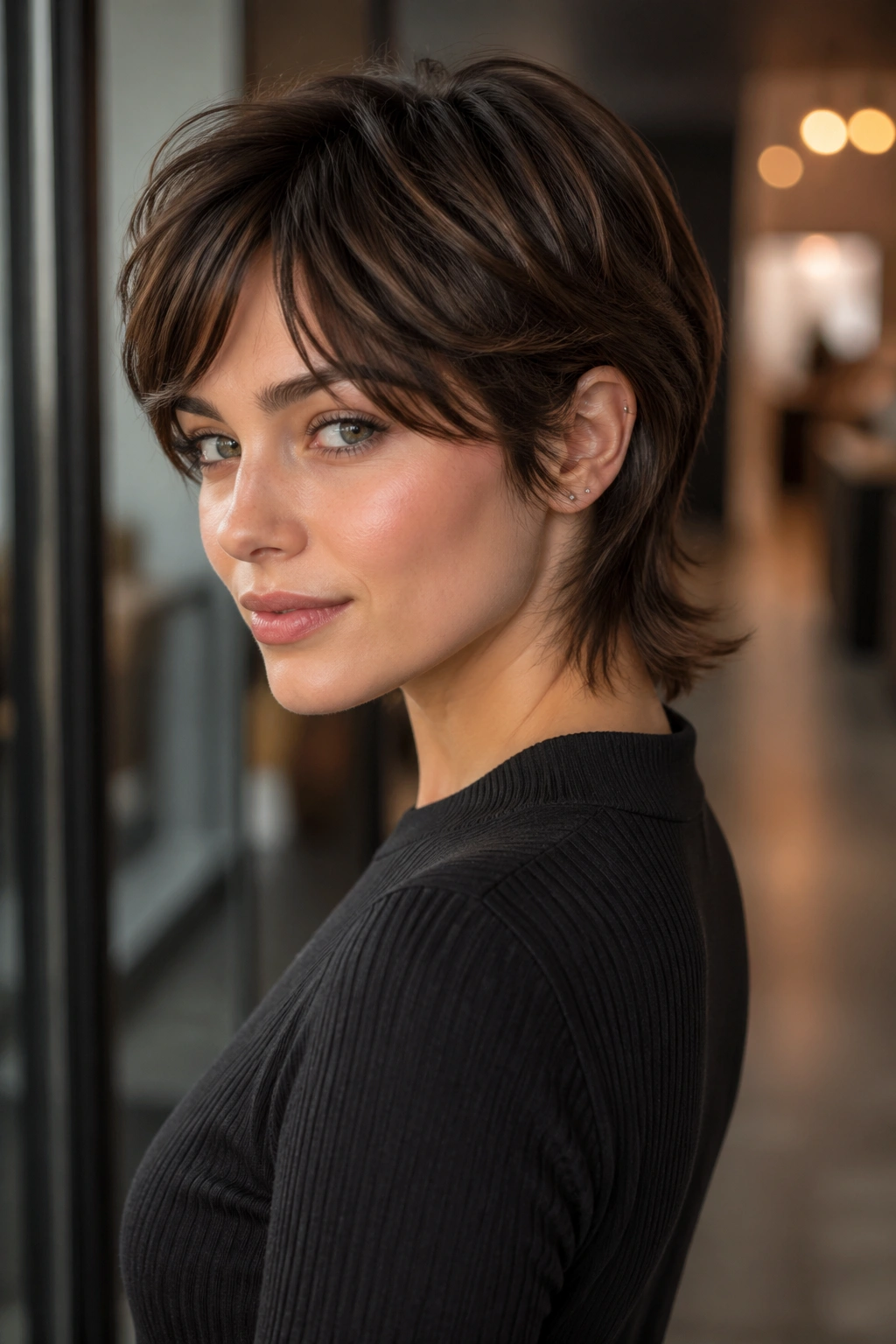
A hybrid pixie-bob is what I recommend when someone wants short hair but can’t quite let go of neck length. The cut sits between categories on purpose, and that’s what makes it useful.
The top still has pixie energy, but the back reaches lower, often brushing the base of the neck. That extra length makes the profile softer and gives you more styling choices. You can tuck it, flip it, smooth it, or rough it up a little and still have the shape hold. It also grows out gracefully, which matters if you hate awkward stages.
This version looks best when the layers are clean and the ends are softened rather than chopped. A blow-dryer brush can smooth the top in under ten minutes. If you like to air-dry, leave a little more length around the ears so the cut doesn’t cave in. That small adjustment pays off.
24. Razor-Cut Pixie With Soft Ends
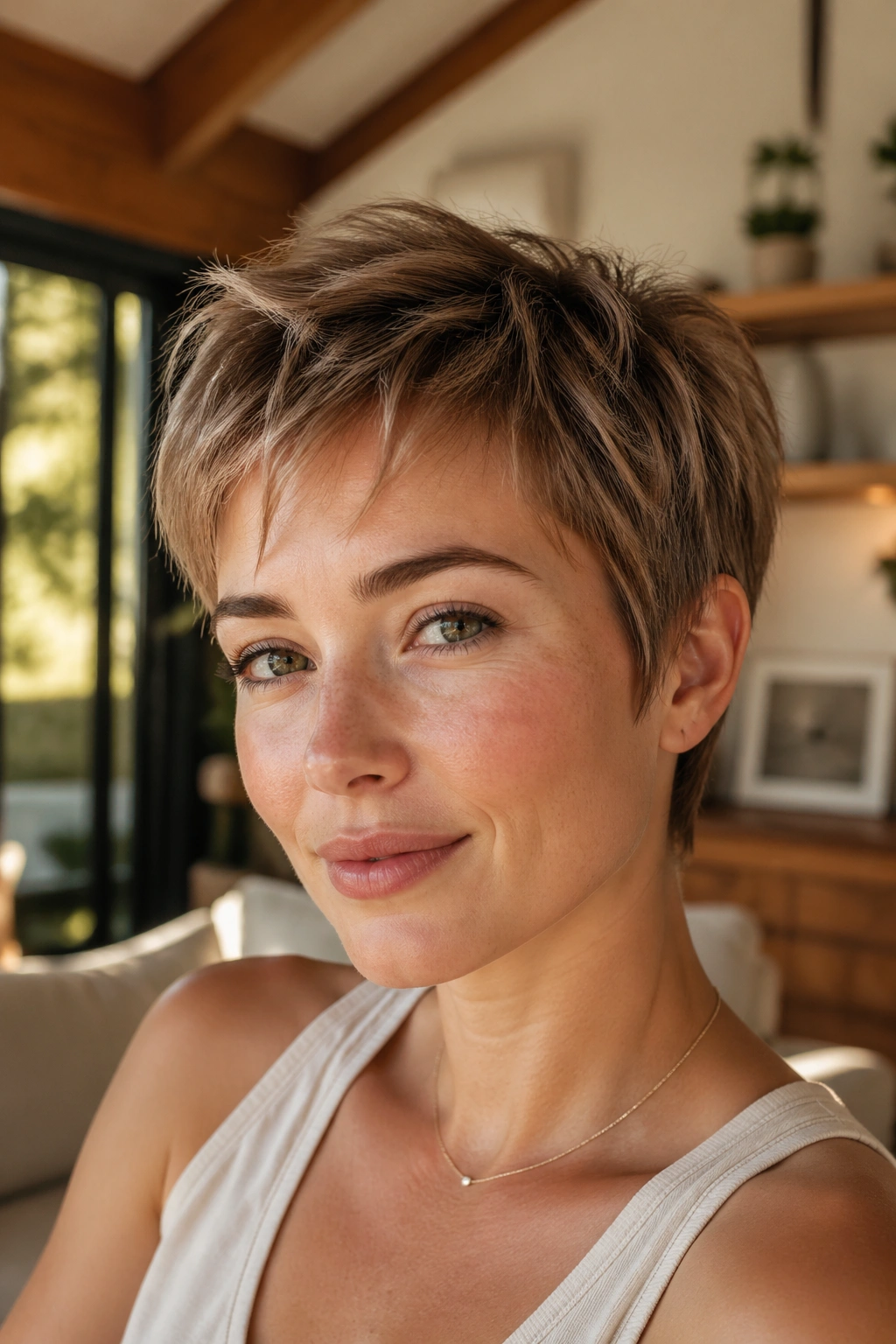
Razor-cut pixie haircuts are not for every head of hair, and that honesty matters. On the right texture, though, the razor creates ends that look airy and broken in a way scissors can’t always mimic.
The softness comes from the edge. A razor removes hair in a finer line, so the perimeter feels lighter and less blocky. That makes the cut especially nice around the fringe and crown, where you want movement instead of weight. The downside is that very fragile or frizzy hair can react badly if the razor work is too heavy-handed. So the stylist has to know when to stop.
I’d use this cut for straight to slightly wavy hair that can hold a piecey finish. A small amount of styling paste or cream on dry hair is enough. If the hair starts looking stringy, the cut was probably over-texturized. That’s the line to avoid.
25. Grown-Out Soft Pixie Haircut That Still Looks Intentional
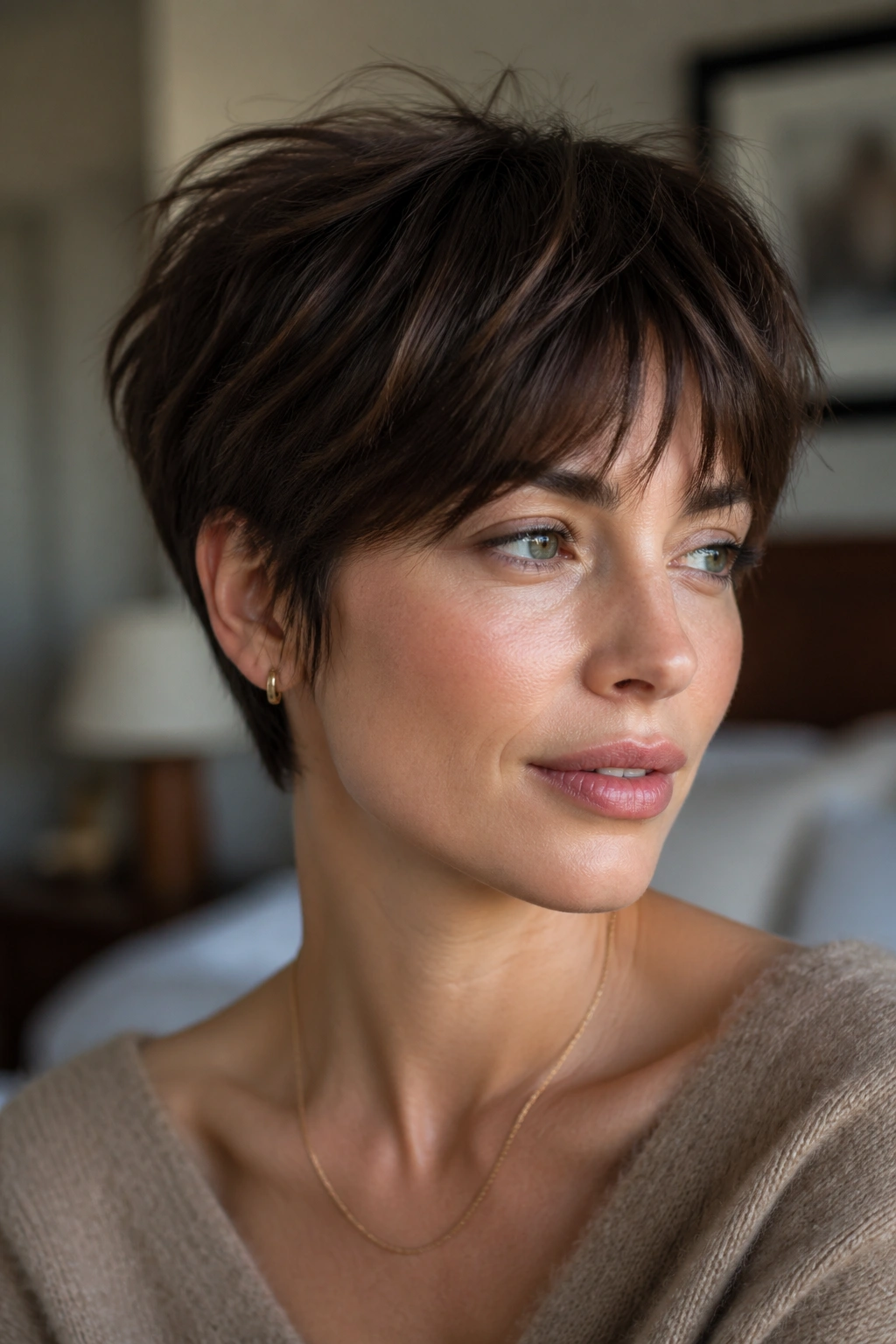
This is the pixie for people who want to stretch appointments without looking sloppy. The length is long enough to brush the ear, the crown still has shape, and the neckline stays soft instead of fuzzy.
The best part is how forgiving it is. A grown-out pixie can move through a messy phase and still look like a deliberate style if the layers were cut well in the first place. A side part helps. So does keeping the fringe a little longer than you think you need. That extra half-inch can save the whole cut when it starts to grow.
- Keep the top feathered, not bulky
- Let the sideburn area stay soft
- Ask for a gentle taper at the nape
- Use a dab of matte cream, then leave it alone
If I had to pick one pixie for someone who wants soft, cool, and modern without constant salon pressure, this would be near the top. It has room to breathe, and short hair that can breathe usually looks better.
