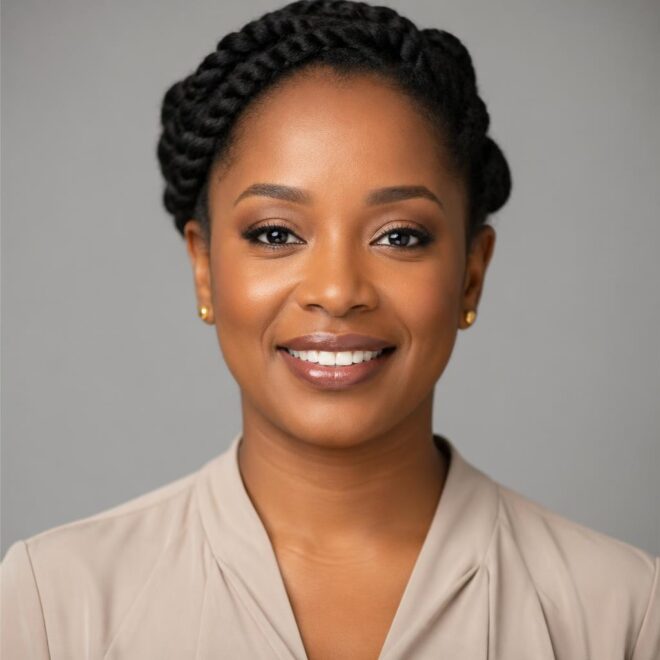


Waking up with a “helmet” of hair is a specific kind of frustration that only those of us with thick strands truly understand. You know the feeling—that heavy, hot, slightly overwhelming mass of hair that seems to have a mind of its own the moment humidity hits or you dare to skip a deep conditioning treatment. For years, the conventional wisdom was that if you have thick hair, you have to keep it long to “weigh it down.” But that’s a myth that has kept too many people trapped in a cycle of endless blow-drying and heavy ponytails.
Short hair isn’t just for fine-haired folks. In fact, thick hair often carries a pixie cut better because you have the natural volume and density to make the style look lush rather than limp. The trick isn’t just cutting it short; it’s about how the weight is removed. When you get the architecture right, a pixie cut becomes the ultimate low-maintenance solution. You go from a forty-minute styling routine to a five-minute “wash and go” situation.
I’ve spent a lot of time talking to stylists who specialize in short hair, and the consensus is always the same: density is a gift, but you have to carve into it. A great pixie for thick hair isn’t just a haircut—it’s a sculpture. You’re removing bulk from the internal layers so the hair sits flat where it should and pops where you want it to. It’s about creating air between the strands.
If you’re tired of the weight and ready for something that feels light, breezy, and incredibly chic, you’re in the right place. We are going to look at styles that actually work for your hair type without turning into a puffball three weeks after you leave the salon. These are cuts designed to grow out gracefully and require minimal daily effort.
The Secret to Managing Density in Short Cuts
Before looking at specific styles, we have to talk about the “why” behind a successful thick-hair pixie. Most people fear that going short will make their hair “poof” out like a dandelion. That happens when a stylist uses a standard “one size fits all” technique. For us, the secret lies in internal thinning and texturizing.
Think of your hair like a thick forest. If you just cut the tops of the trees, the forest stays just as crowded. But if you go in and remove some of the smaller trees in the middle, light and air can move through. Your stylist should be using techniques like point cutting, slicing, or even a razor to create “negative space” within the haircut. This allows the remaining hair to fall into place naturally without needing a round brush and a prayer.
Another huge factor is the nape of the neck. For thick-haired people, the hair at the back often grows fast and thick, leading to a “mullet” effect within weeks. A truly low-maintenance pixie usually involves a tapered or undercut nape. By keeping the hair at the very bottom extremely short, you extend the life of the cut by weeks. You won’t feel that annoying itch on your neck or see that bulk building up as soon.
1. The Classic Tapered Pixie
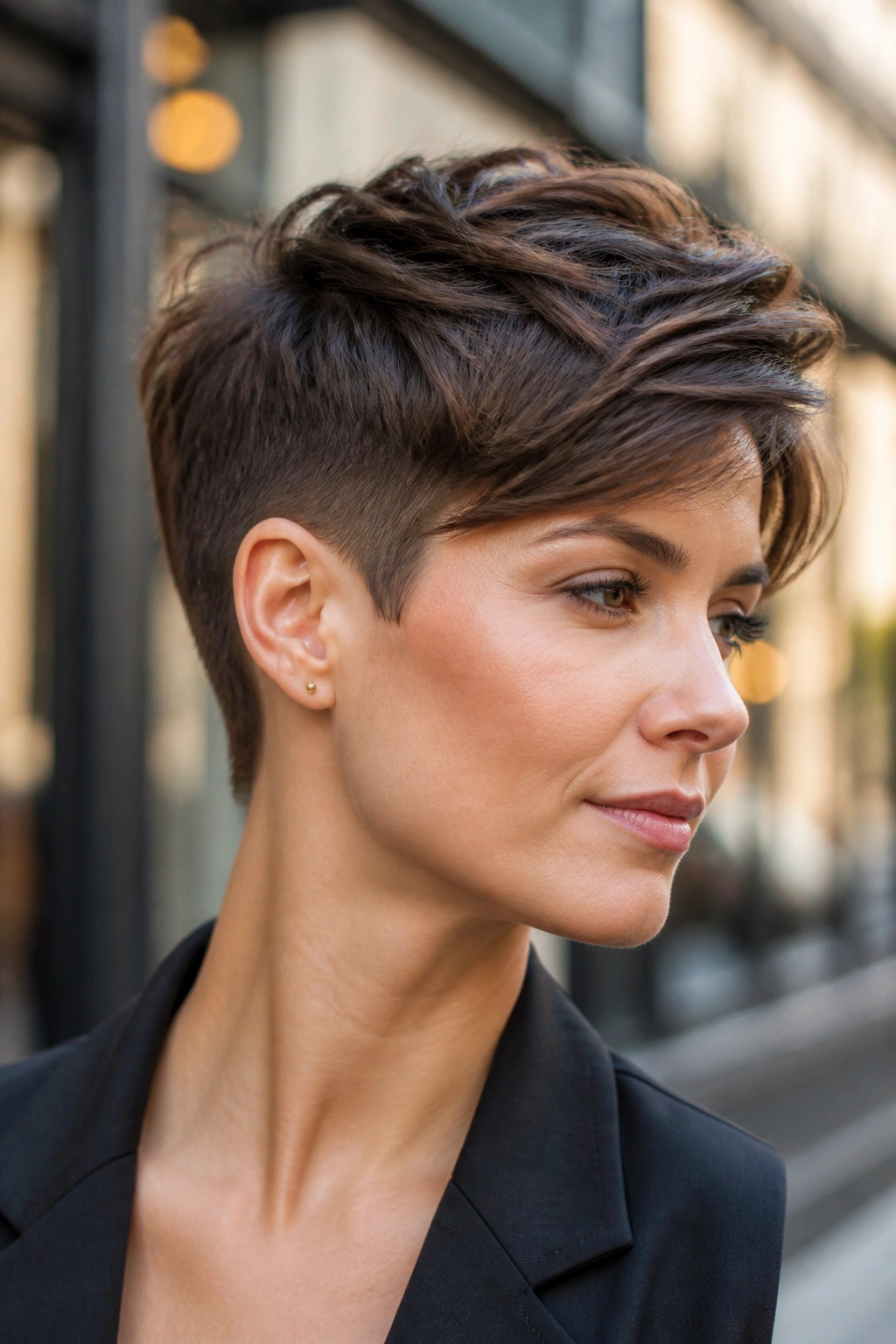
The classic tapered pixie is the gold standard for a reason. It features very short hair on the back and sides that gradually gets longer as it moves toward the crown. For thick hair, this is a dream because the shortest sections physically remove the most weight. You’re left with a beautiful, feminine shape that highlights your bone structure.
Why It Works for Thick Hair
This cut relies on a tight perimeter. By keeping the edges crisp and the bulk concentrated at the top, you avoid the dreaded “triangle head” shape. It’s a very balanced look that works for almost any professional environment or lifestyle.
Maintenance and Styling Facts
- Growth Pattern: The taper allows for a very clean grow-out period.
- Styling Time: Usually under three minutes.
- Product Needs: A light pomade or wax to define the ends.
- Tools: Just your fingers and a blow dryer on low heat.
Pro tip: Ask your stylist to use a “dry cutting” technique for the final stages. Seeing how thick hair lays when it’s dry is the only way to ensure they’ve removed enough bulk from the right spots.
2. The Textured Boyish Crop
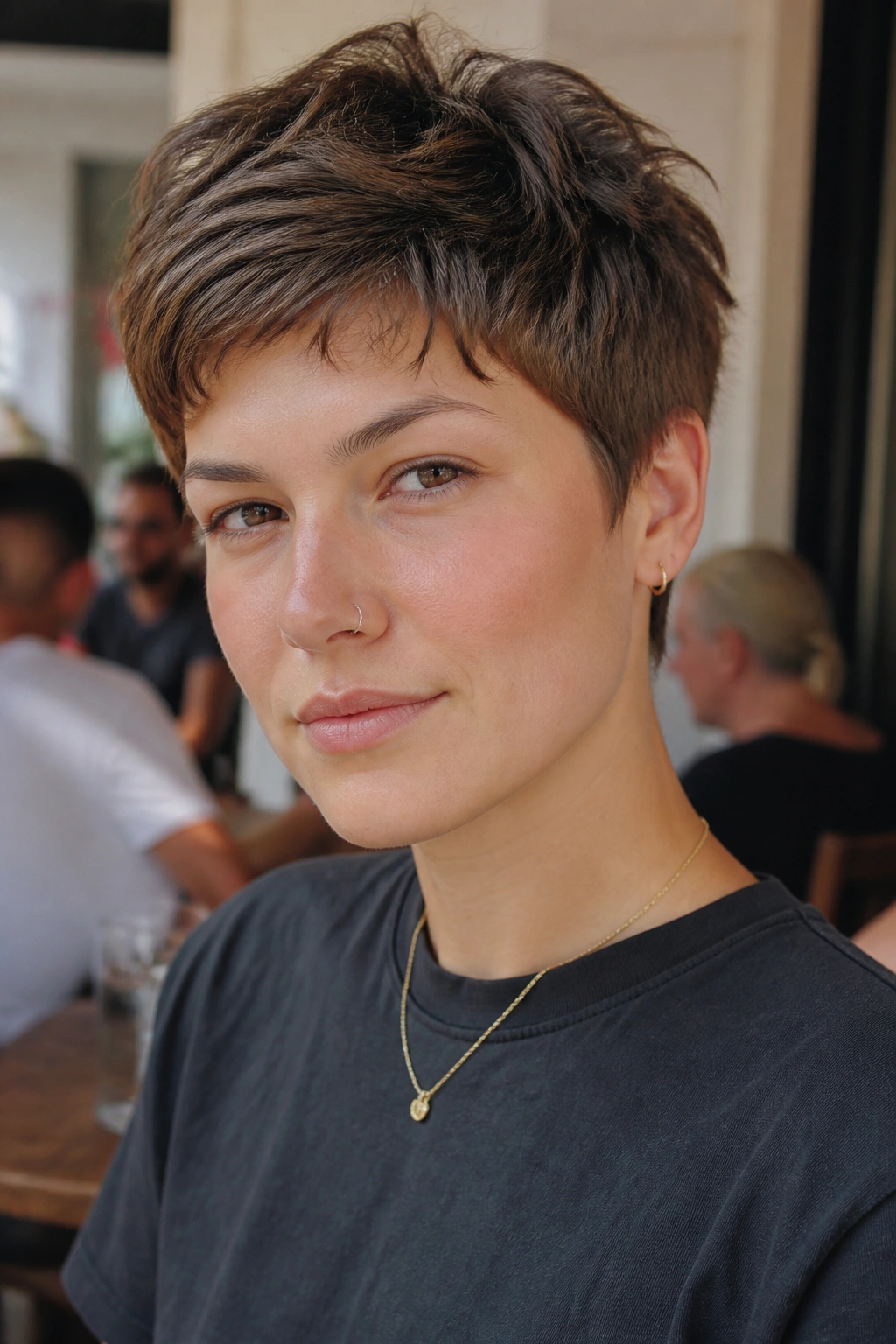
Don’t let the name fool you—this style is incredibly versatile and can be styled to look soft or edgy. It’s characterized by short, choppy layers all over the head. Instead of one smooth surface, you have dozens of little layers that create movement.
There is something so liberating about being able to run your fingers through your hair and have it stay exactly where you put it. With thick hair, a boyish crop works because the weight is evenly distributed. You don’t have one heavy section fighting against a shorter section. It’s uniform, it’s light, and it’s remarkably easy to wake up and wear.
How to Make It Your Own
If you have a rounder face, keep the top slightly longer to add height. If your face is heart-shaped, keep the sideburns a little wispy to soften the jawline. This cut is all about the “messy” factor, so you don’t have to worry about every hair being in its perfect place. In fact, it looks better when it’s a little lived-in.
3. The Disconnected Undercut Pixie
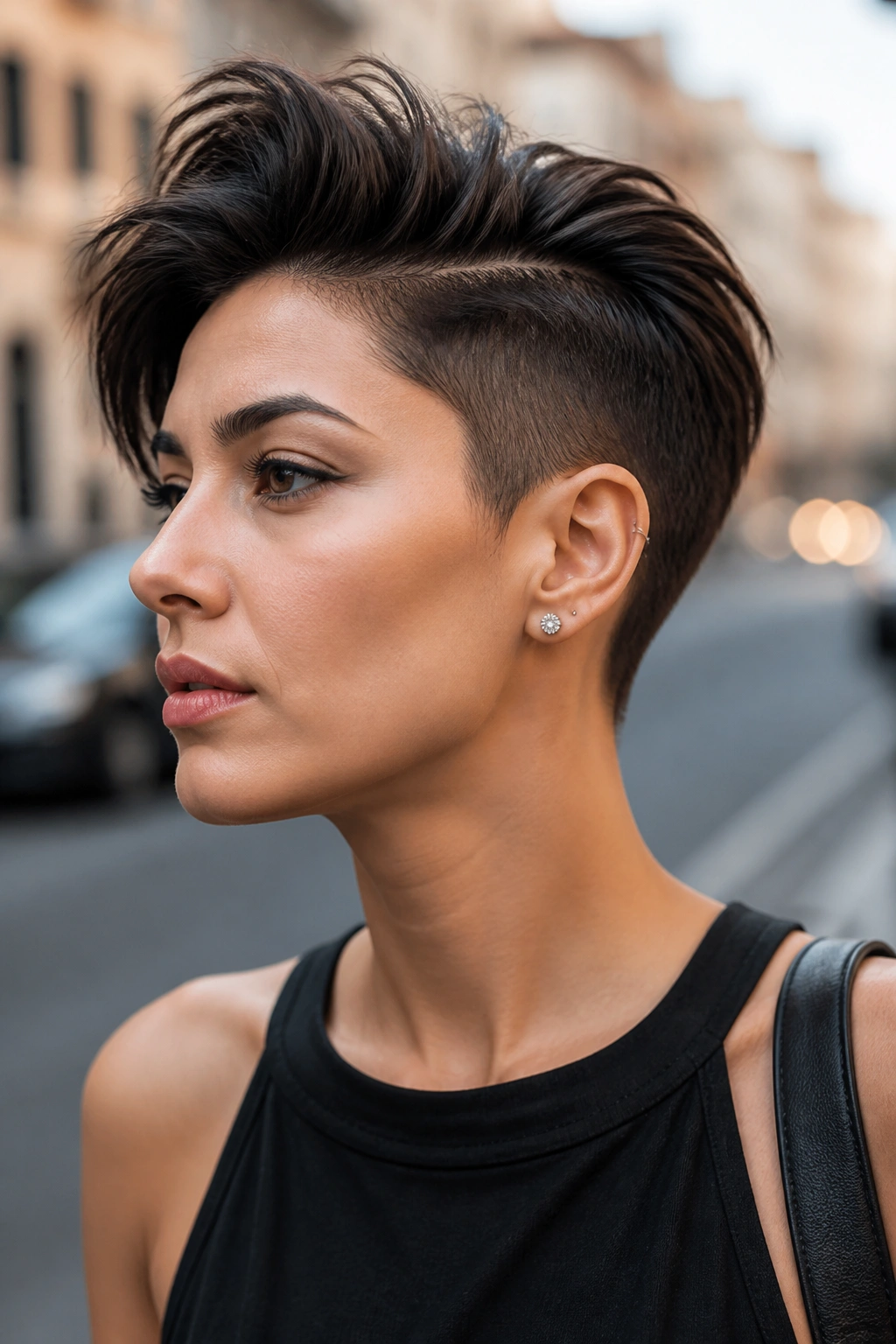
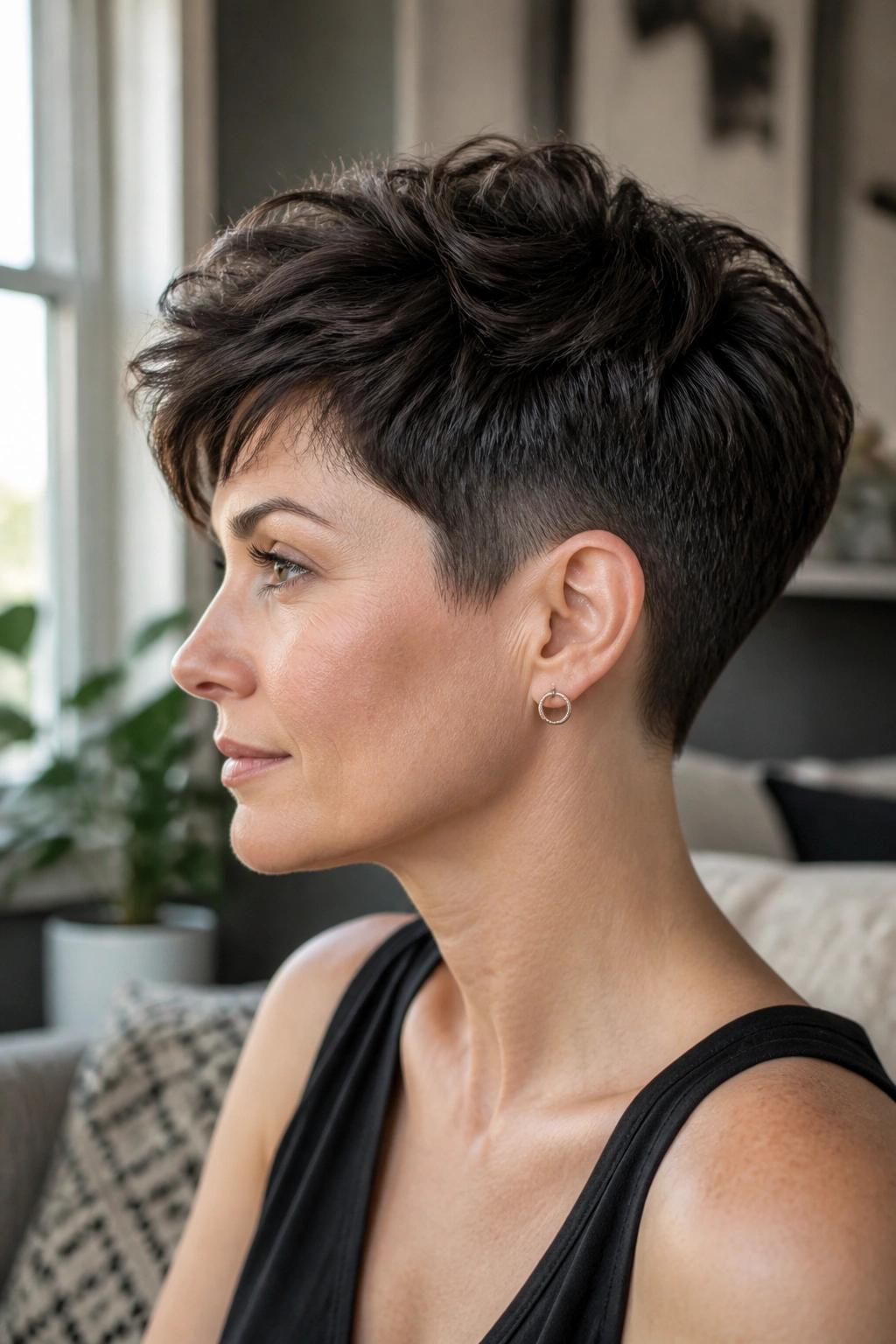
If you really want to “cheat” the system, the undercut is your best friend. A disconnected undercut means the hair on the sides and back is buzzed or cut very short, while the hair on top is significantly longer and hangs over the short parts.
Why Does This Work?
You are essentially getting rid of 50% of your hair. By removing the bulk from the sides and back, the top layer has room to lay flat. It’s the ultimate “secret” for thick hair. From the outside, it looks like a lush, full pixie, but underneath, it’s cool and manageable.
The Science of the Undercut
- Heat Management: Thick hair holds heat; an undercut lets your scalp breathe.
- Styling Control: The long top section is much easier to style when it’s not being pushed up by hair underneath.
- Visual Impact: It creates a sharp, modern silhouette that looks intentional and high-fashion.
4. The Long Side-Swept Pixie
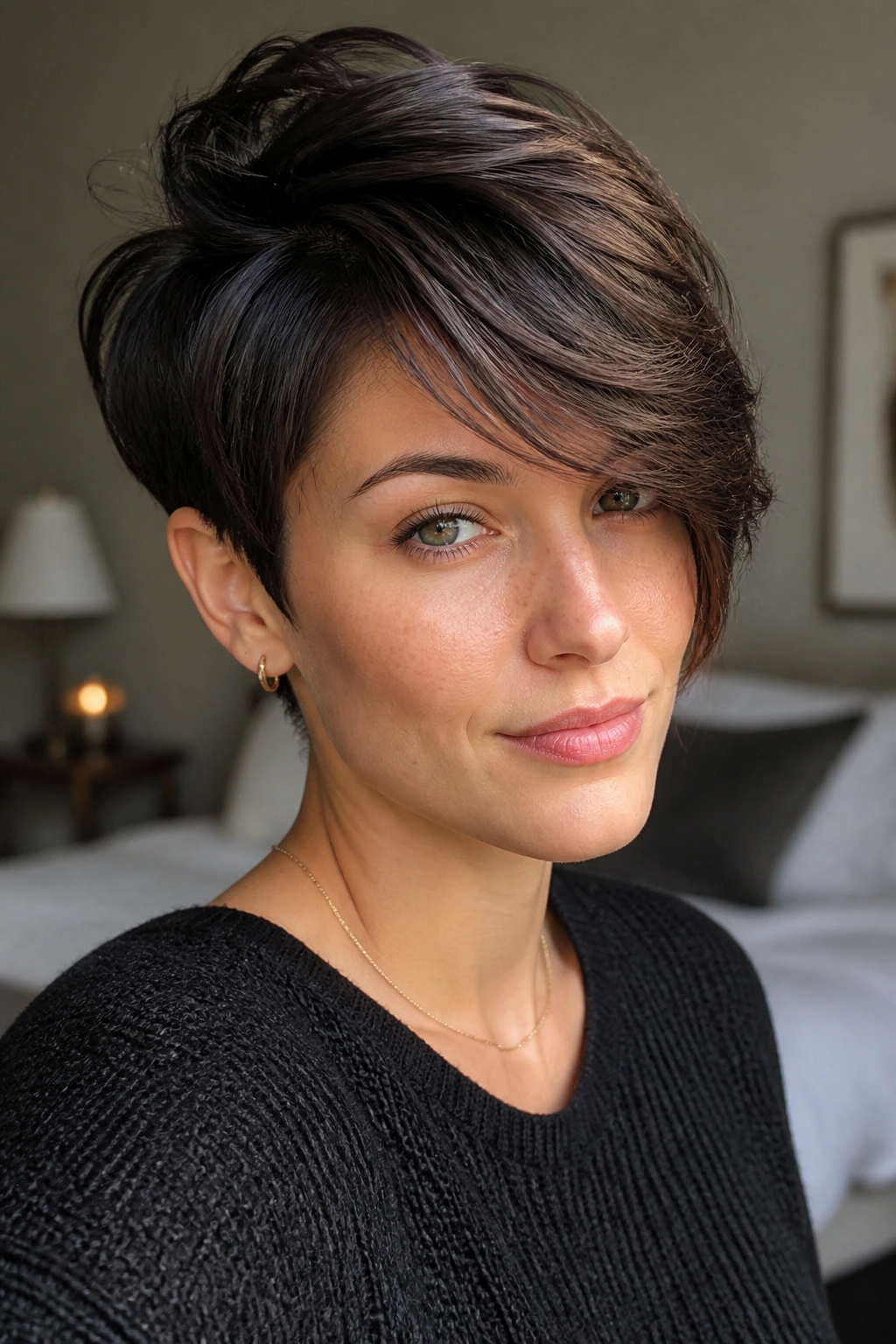
I once met a woman who had hair so thick it broke hair ties on a weekly basis. She finally switched to a long, side-swept pixie and told me it felt like “taking off a heavy winter coat in July.” This style keeps the length in the front and on top, allowing it to sweep across the forehead.
The Mechanism of the Sweep
The weight of the longer fringe actually helps keep the hair down. When you cut thick hair too short in the front, it can sometimes stand straight up or “sprout.” Keeping that extra inch or two of length uses the hair’s own weight to your advantage. It’s soft, romantic, and hides a multitude of “I didn’t wash my hair today” sins.
Practical Details
- Focus on the “swing.” You want the hair to move when you turn your head.
- Use a lightweight cream rather than a heavy wax to keep the movement fluid.
- This is one of the most “feminine” short cuts if you’re nervous about going too short.
- It pairs perfectly with statement earrings.
5. The Razored Shaggy Pixie
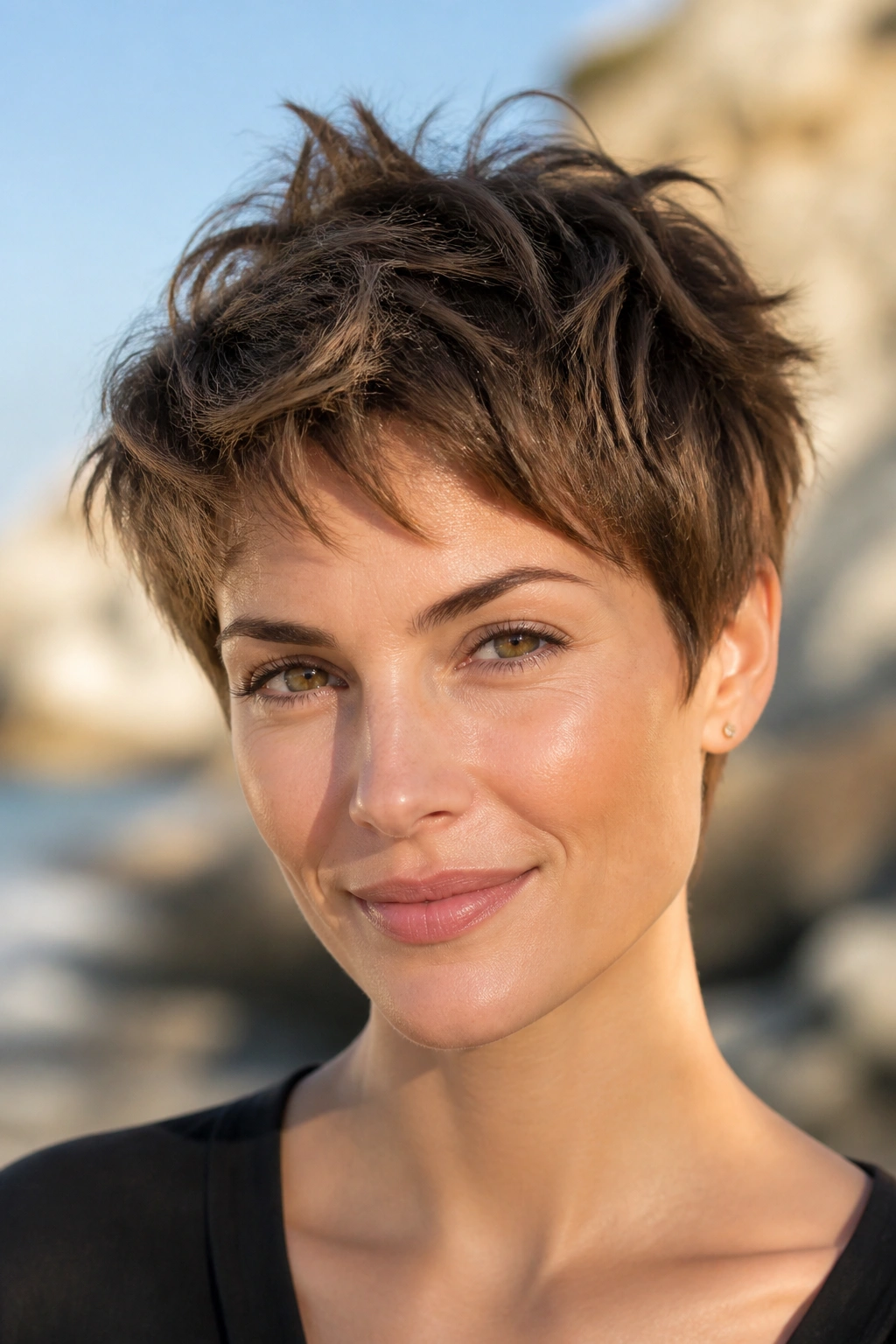
The razor is a tool that many thick-haired women have been taught to fear, but in the hands of a skilled stylist, it’s a magic wand. A razored pixie isn’t about blunt lines; it’s about feathered, “shredded” ends. This creates a shaggy, effortless texture that looks like you just rolled out of a French film.
Because the razor thins the hair as it cuts, it removes the “blocky” feel that often plagues thick-hair cuts. The result is a soft, blurred perimeter that doesn’t look like a bowl cut. It’s a very organic shape. You won’t see any harsh lines as it grows out, which means you can often stretch your salon visits an extra week or two.
This style is perfect for those who have a bit of natural wave in their thick hair. The razor encourages that wave to come out rather than forcing the hair to lay flat. It’s all about working with what you’ve got instead of fighting it.
6. The Choppy Spiky Pixie
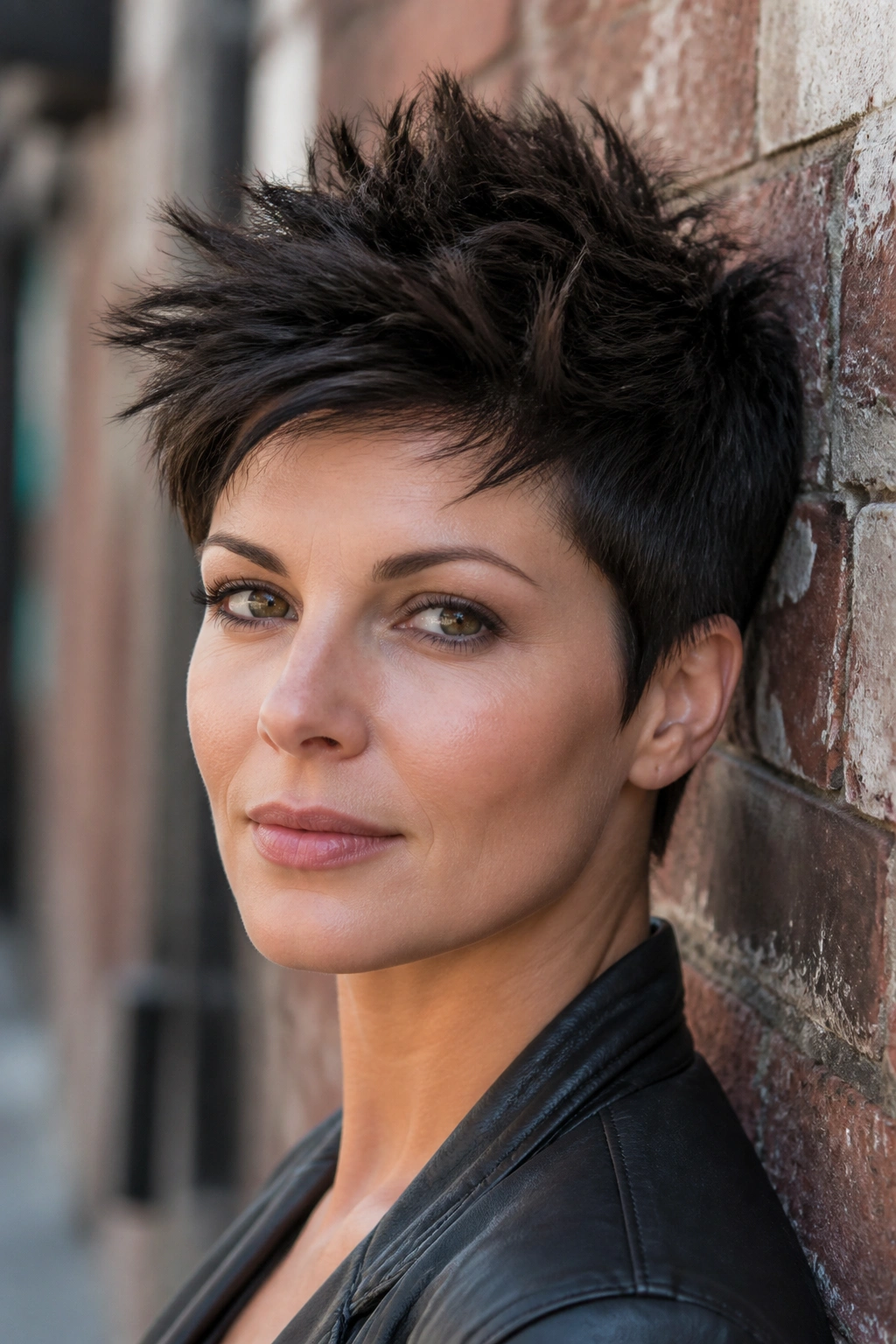
Unlike the soft, razored look, the choppy pixie is all about definition and “points.” It’s a high-energy style that works brilliantly for thick hair because you have the density to create real spikes and texture without seeing the scalp.
What Makes It Different
If you’ve ever tried to spike fine hair, you know it just falls over after an hour. Thick hair has the “structural integrity” to hold a shape. By using deep point-cutting techniques, your stylist creates peaks and valleys in the hair. When you rub a bit of clay through your palms and toss your hair around, these “peaks” stand out, giving you a cool, edgy look that stays all day.
Best Recommendations
- Who it’s for: People with active lifestyles who want a “set it and forget it” style.
- Product: A matte clay or fiber paste. Avoid anything shiny or “wet” looking, as it can make thick hair look greasy.
- Maintenance: You’ll want a trim every 4-6 weeks to keep the “choppy” bits from becoming “shaggy” bits.
7. The Asymmetrical Pixie
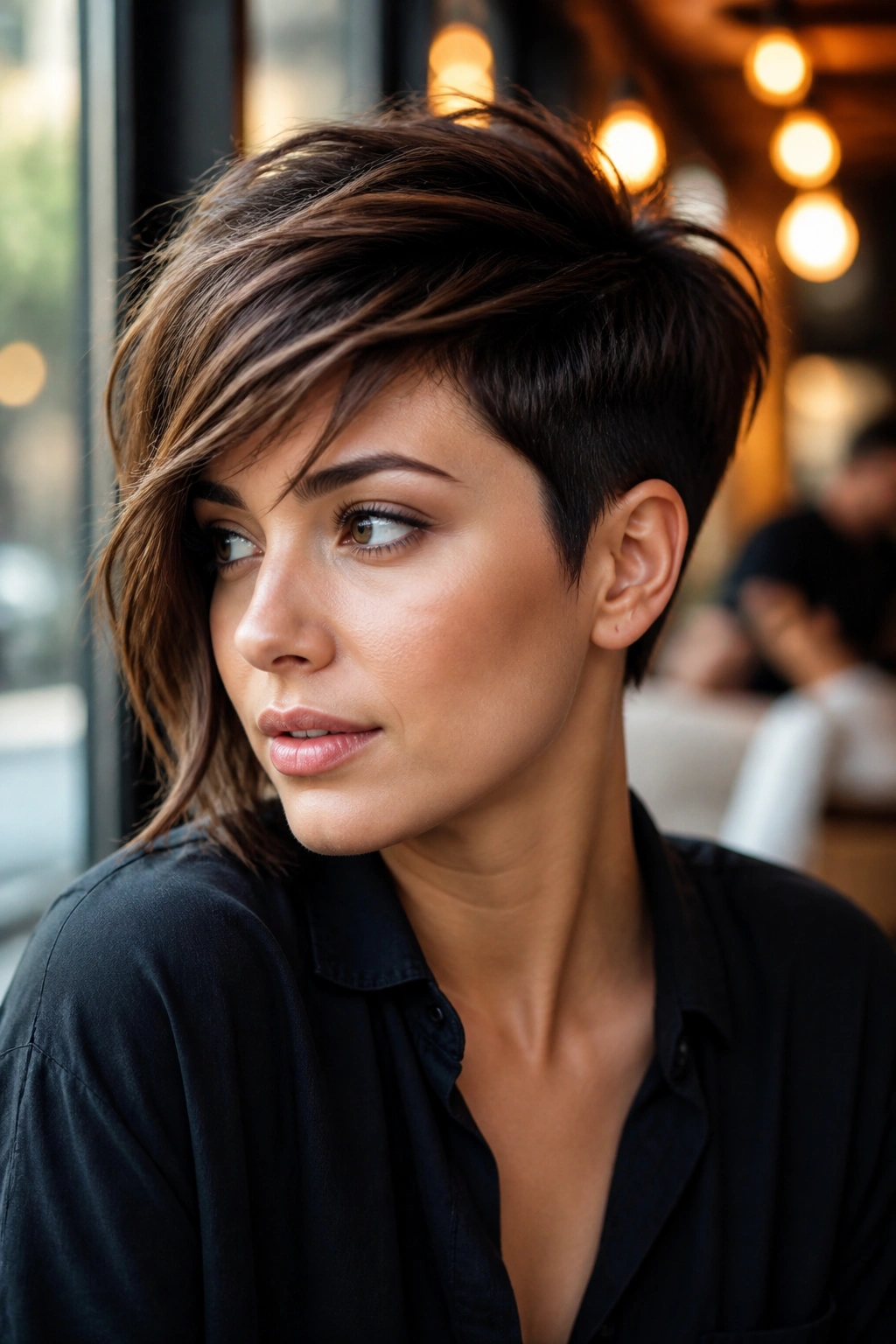
Asymmetry is a fantastic way to handle thick hair because it breaks up the visual weight. By having one side slightly longer than the other, you move the eye across the face rather than focusing on the volume of the hair itself.
One side is tucked behind the ear or cut very short, while the other side features a longer, textured bang. It’s sophisticated, slightly edgy, and very easy to maintain because the “messiness” of the asymmetry is part of the charm. If one side grows a little faster, it just looks like part of the design.
8. The Pixie-Bob (The “Bixie”)
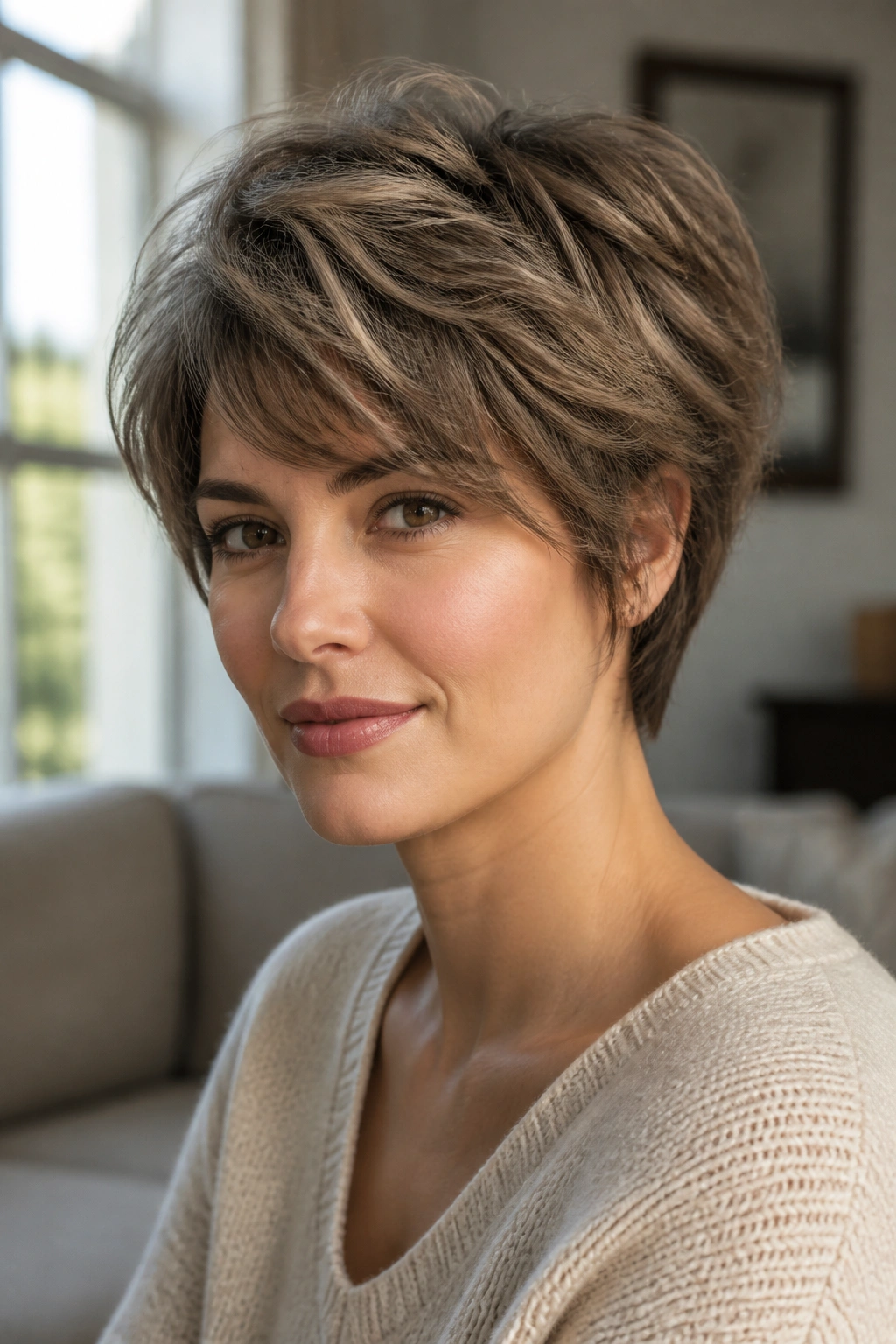
If you aren’t quite ready to commit to a true, short pixie, the “Bixie” is your bridge. It’s a hybrid between a pixie and a bob. It has the shaggy layers of a pixie but the length of a bob around the ears. For thick hair, this is a great way to transition into short hair without the shock of a buzzed nape.
The Structure of the Bixie
The key here is heavy layering. If a bixie is cut like a traditional bob, it will look like a mushroom on thick hair. It needs to be “carved” out from the inside. This style looks best when it has a lot of “air” in the layers, allowing the hair to flip and move.
How to Style It
- Apply a sea salt spray to damp hair.
- Rough dry with a blow dryer while scrunching with your hands.
- Once dry, use a tiny bit of texture spray to separate the layers.
- Tweak the pieces around your face to highlight your eyes.
9. The Curly Pixie with Tapered Sides
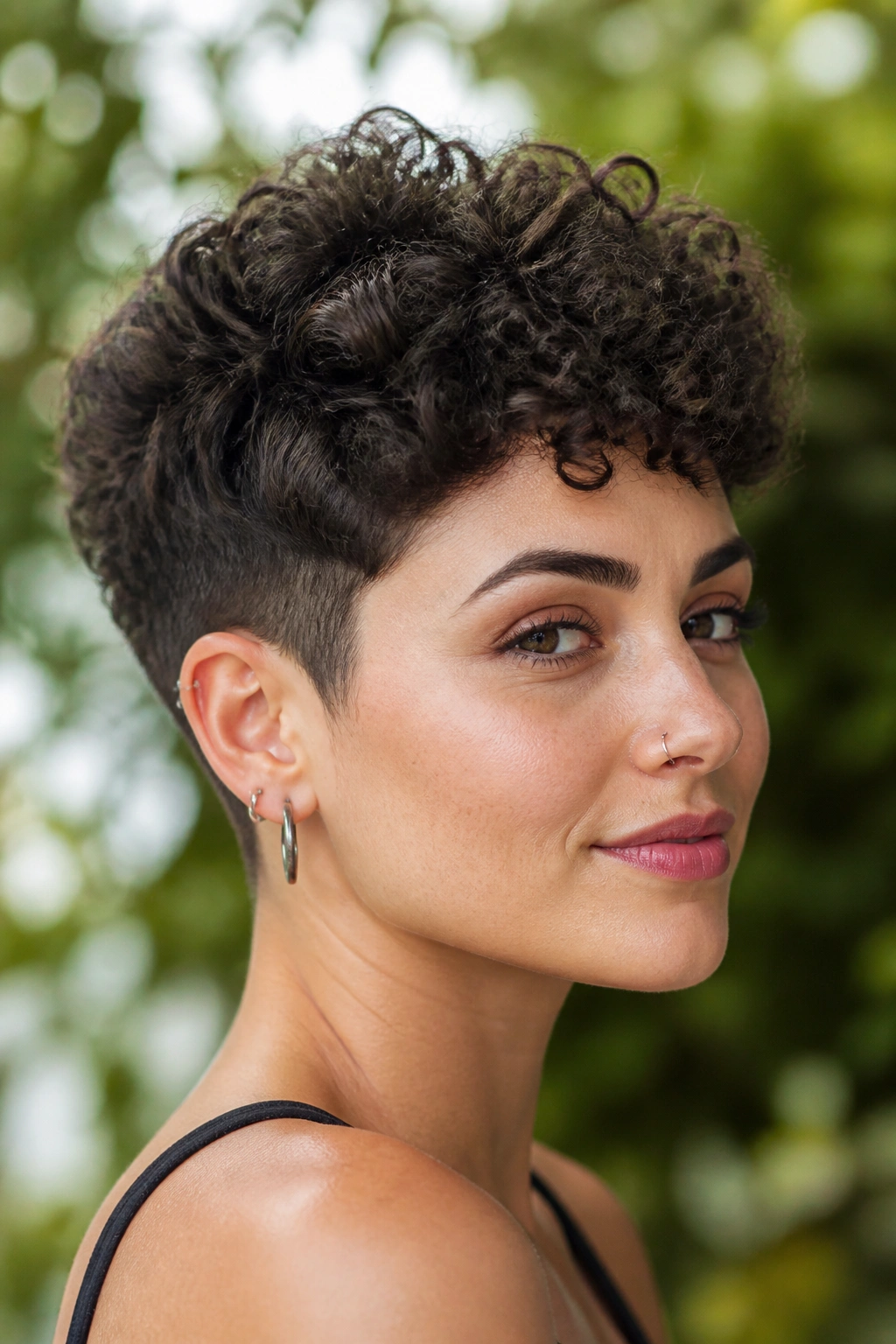
Thick, curly hair is beautiful, but it can be a lot of work. A pixie cut is often the best way to let your curls shine without the weight of long hair pulling them flat. By tapering the sides and back very short, you remove the “width” that can make curly hair look like a triangle.
The top is left long enough for the curls to form their natural shape. Because the hair is thick, you get a beautiful “crown” of curls that has height and life. It’s a very regal, intentional look that actually becomes easier to manage the shorter you go. You’ll find you use less product and half the time on your “refresh” days.
10. The Pompadour Pixie
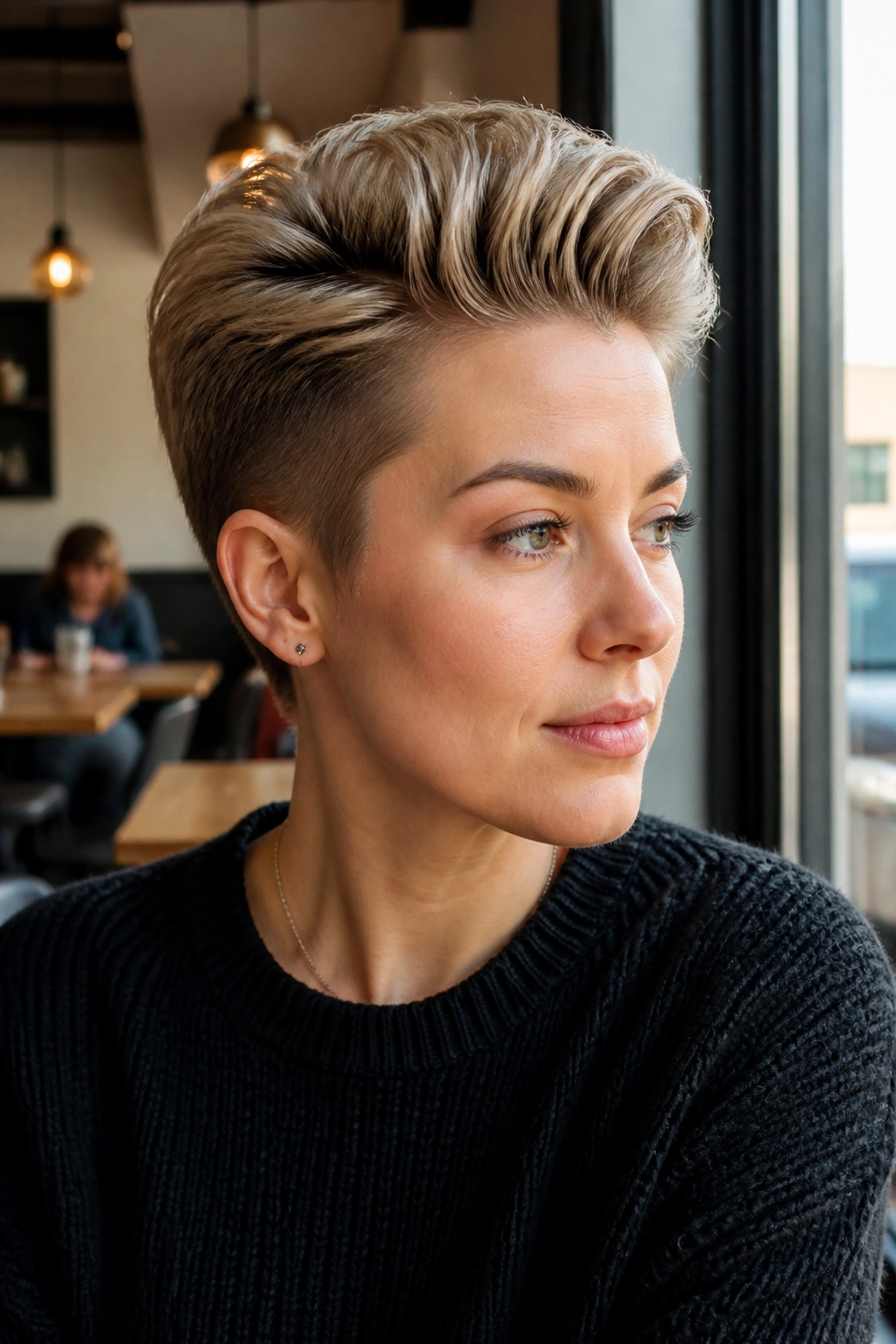
The pompadour is all about volume on top and sleekness on the sides. For thick hair, this is a natural fit. You already have the volume; you just need the right cut to direct it. This style keeps the sides very short—often faded—with a significant amount of length on top that is styled upward and back.
Why It’s Low Maintenance
While it looks high-fashion, the daily upkeep is surprisingly simple. Because the sides are so short, you only have to focus on the top section. A quick blow-dry upward and a dab of strong-hold pomade, and you’re done. It’s a “power” haircut that makes a statement without requiring an hour in front of the mirror.
Visual Depth
- The contrast between the skin-tight sides and the lush top creates immediate visual interest.
- It elongates the face, making it great for round or square face shapes.
- It stays off your face, which is a blessing during warmer months.
11. The Soft Wispy Pixie
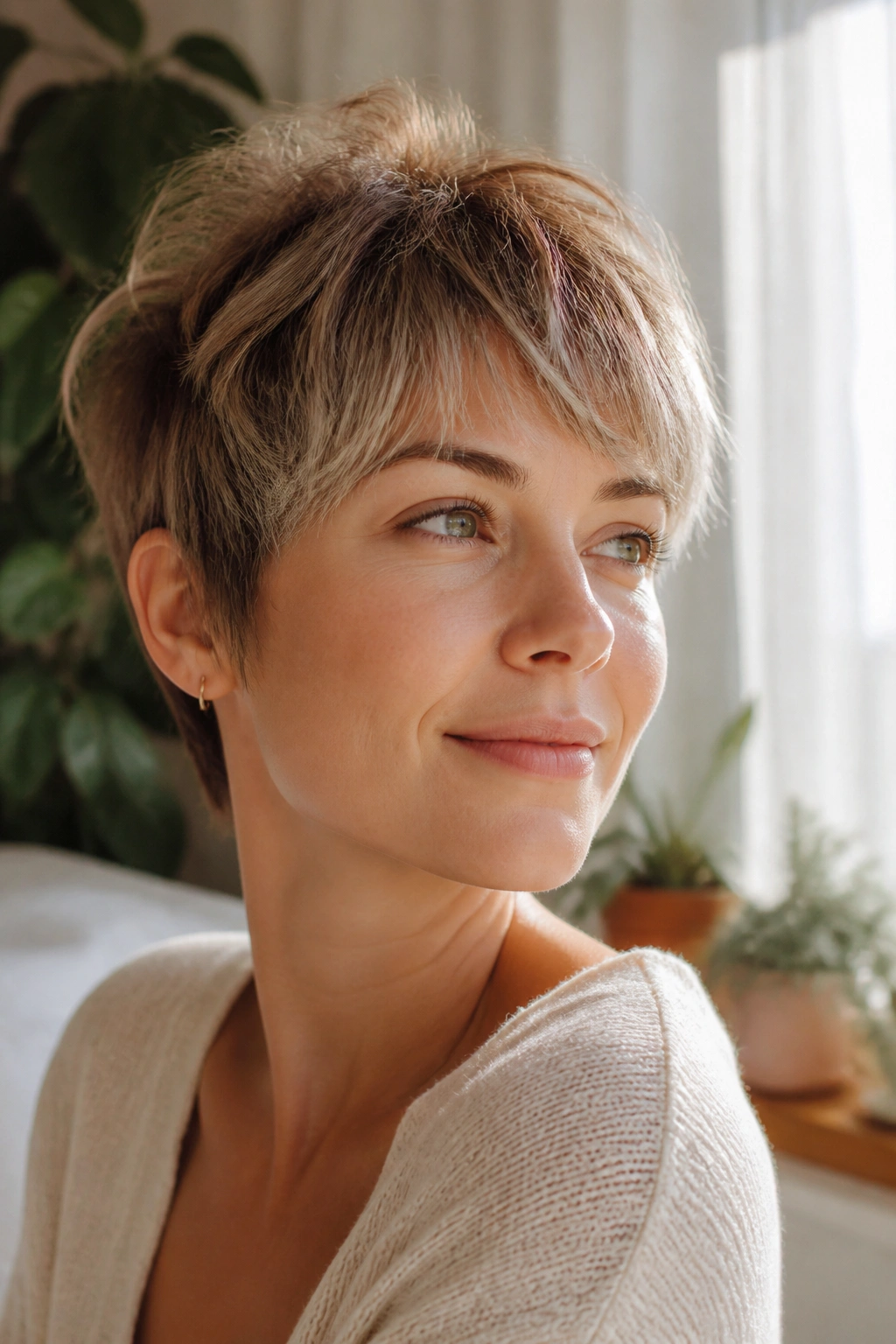
Sometimes thick hair can look a bit “harsh” when cut short. If you want to avoid that, the soft wispy pixie is the answer. This cut uses a lot of “shaping” around the ears and the forehead. The edges aren’t blunt; they are feathered out so they lay softly against the skin.
This style relies on very fine, thin layers at the perimeter. It’s a great option if you have thick hair but a very delicate face. It ensures that your hair doesn’t “wear you.” Instead, the hair acts as a soft frame. It’s a very “pretty” version of the pixie that feels airy and light.
12. The Wavy Pixie with an Undercut
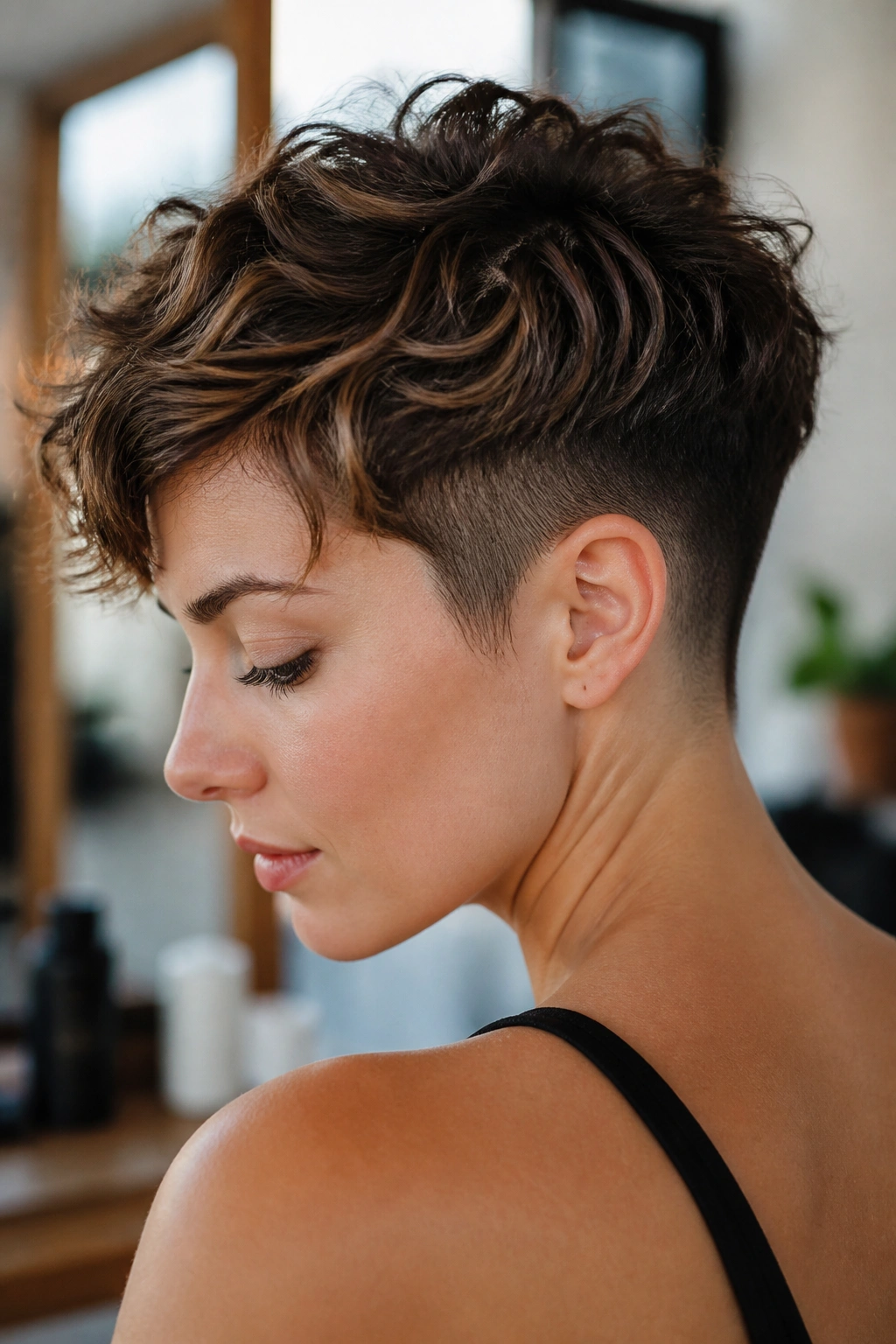
Wavy hair often sits somewhere between straight and curly, which can be tricky to style when it’s long. In a pixie, that wave becomes your best asset. By combining a natural wave with a hidden undercut, you get a style that has incredible texture but zero bulk.
The Benefit of the Wave
Waves give a pixie “automatic” style. You don’t need to do much because the hair already has a shape. The undercut ensures that the waves lay flat against the head rather than stacking up and getting too wide. It’s a very beachy, relaxed vibe that works year-round.
Quick Facts
- Dry Time: Usually air-dries perfectly in 15-20 minutes.
- Maintenance: The undercut will need a “clean up” every 3-4 weeks, which many people learn to do at home with a set of clippers.
- Vibe: Effortless, cool, and a little bit rebellious.
13. The Spiky Edgy Pixie with Micro-Bangs
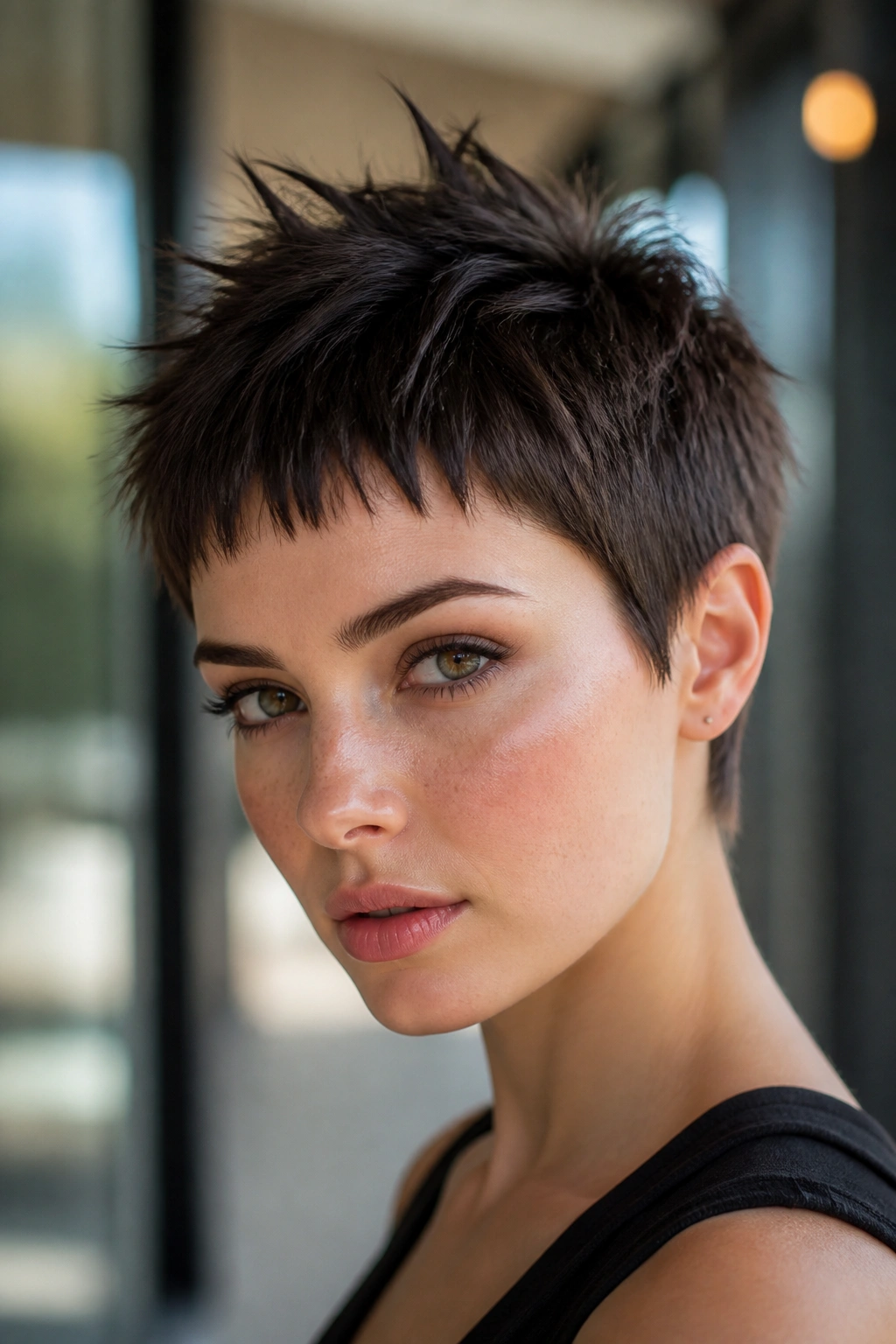
Micro-bangs (very short bangs) are a bold choice, but they are incredibly practical for thick hair. Long bangs can get oily or heavy, but micro-bangs stay in place and open up your face. When paired with a spiky, textured top, this cut is high-impact and very low-effort.
The Logic of Micro-Bangs
By cutting the bangs short and texturizing them, you remove the “weight” from the front of your head. You don’t have to worry about them falling into your eyes or needing to be flat-ironed every morning. They just “are.” It’s a very modern look that has been popular in creative circles for a long time.
14. The Sleek Side-Parted Pixie
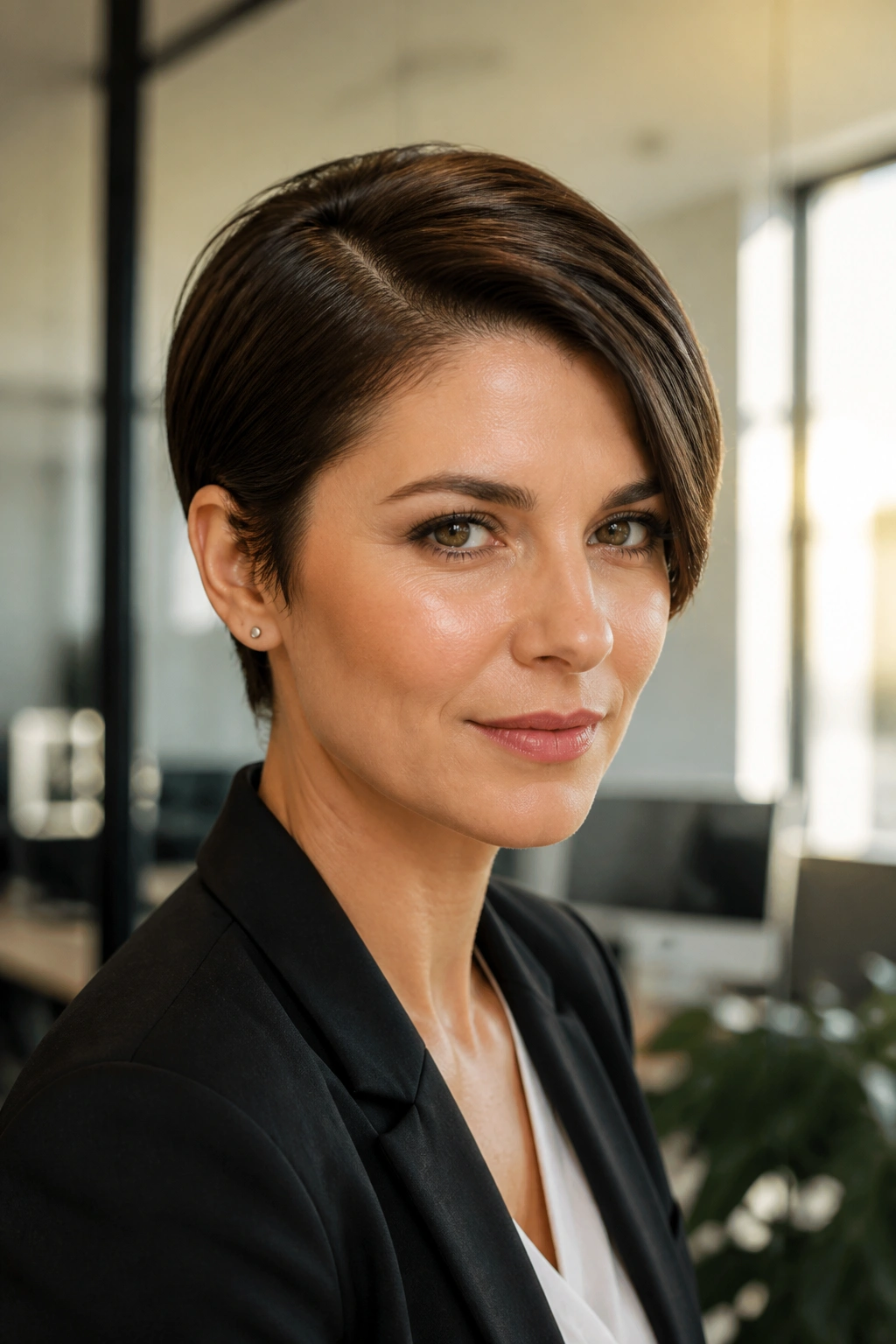
Thick hair doesn’t always have to be “messy” to be low maintenance. A sleek, side-parted pixie is the height of sophistication. This cut is slightly longer on top and is styled by combing it flat with a bit of gel or shine serum.
Why It Works for Busy People
This is the ultimate “I have a meeting in 10 minutes” hairstyle. You can literally style it while your hair is wet. The thickness of your hair provides a “solid” look that fine hair can’t achieve—it looks intentional and polished, like a classic Hollywood star.
How to Achieve the Look
- Start with damp hair.
- Create a deep side part using a fine-tooth comb.
- Apply a medium-hold gel from roots to ends.
- Comb everything down and let it air dry.
- Once dry, your hair is “locked” in place for the rest of the day.
15. The Choppy “Mop Top” Pixie
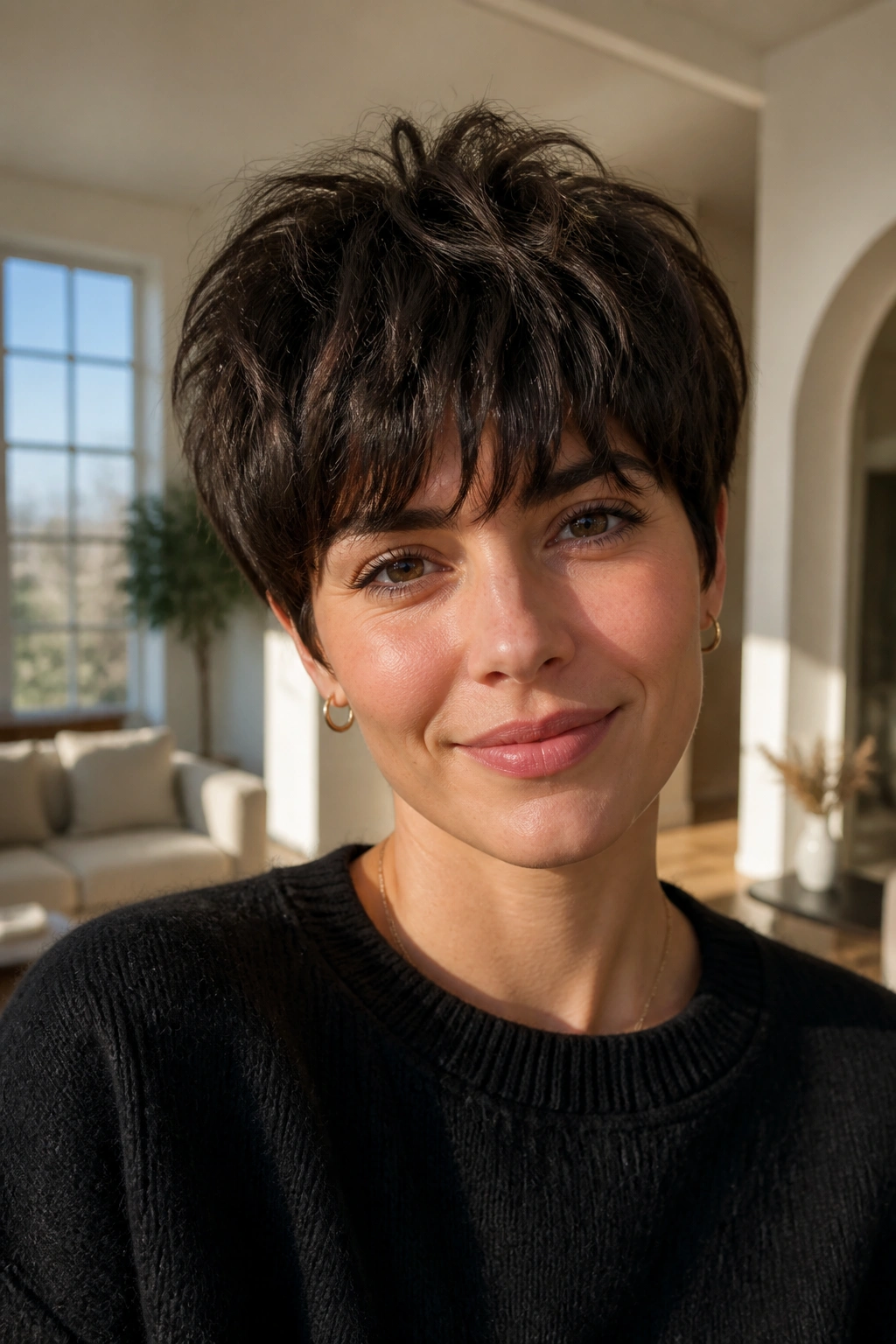
This style embraces the volume of thick hair rather than trying to hide it. It’s a longer pixie with heavy, choppy layers that fall forward from the crown. It’s often called a “mop top” because of the way the hair moves and bounces.
The Appeal of the Mop Top
It’s incredibly youthful and fun. Because the layers are so choppy, there are no “flat” spots. It’s a 360-degree haircut that looks good from every angle. It’s also very forgiving—if your hair is a bit messy or you’ve been wearing a hat, you just shake it out with your fingers and the volume comes right back.
16. The Faded Pixie
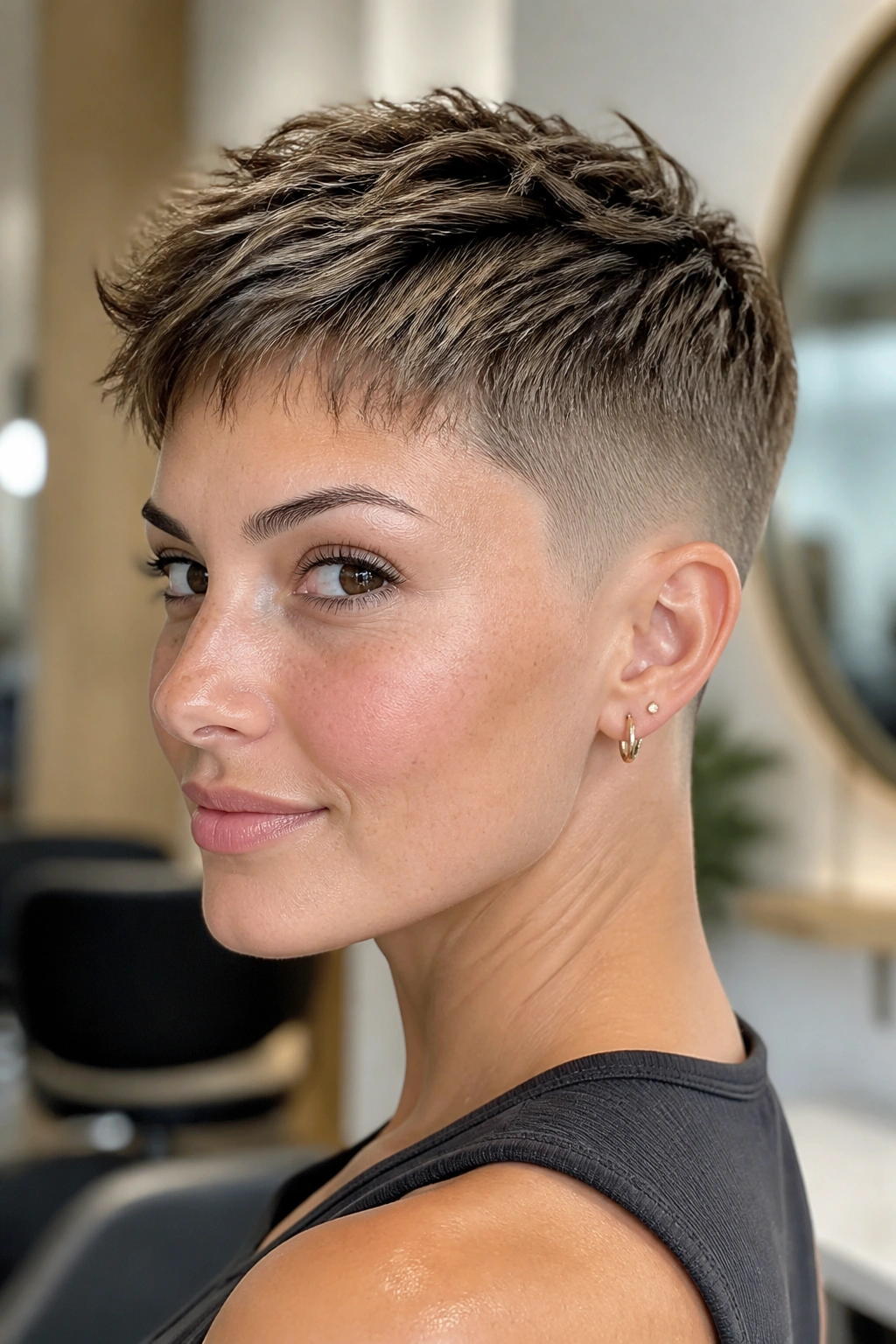
A fade isn’t just for men’s haircuts. A feminine fade involves a very gradual transition from skin-short hair at the nape and sideburns to longer, textured hair on top. For thick hair, this is the ultimate weight-remover.
The fade creates a very “clean” look around the ears and neck, which are usually the areas where thick hair looks the messiest. By keeping those areas extremely short, the rest of the haircut looks sharper and more intentional. It’s a bold look, but it’s one of the most practical styles you can choose.
17. The Silver/Platinum Textured Crop
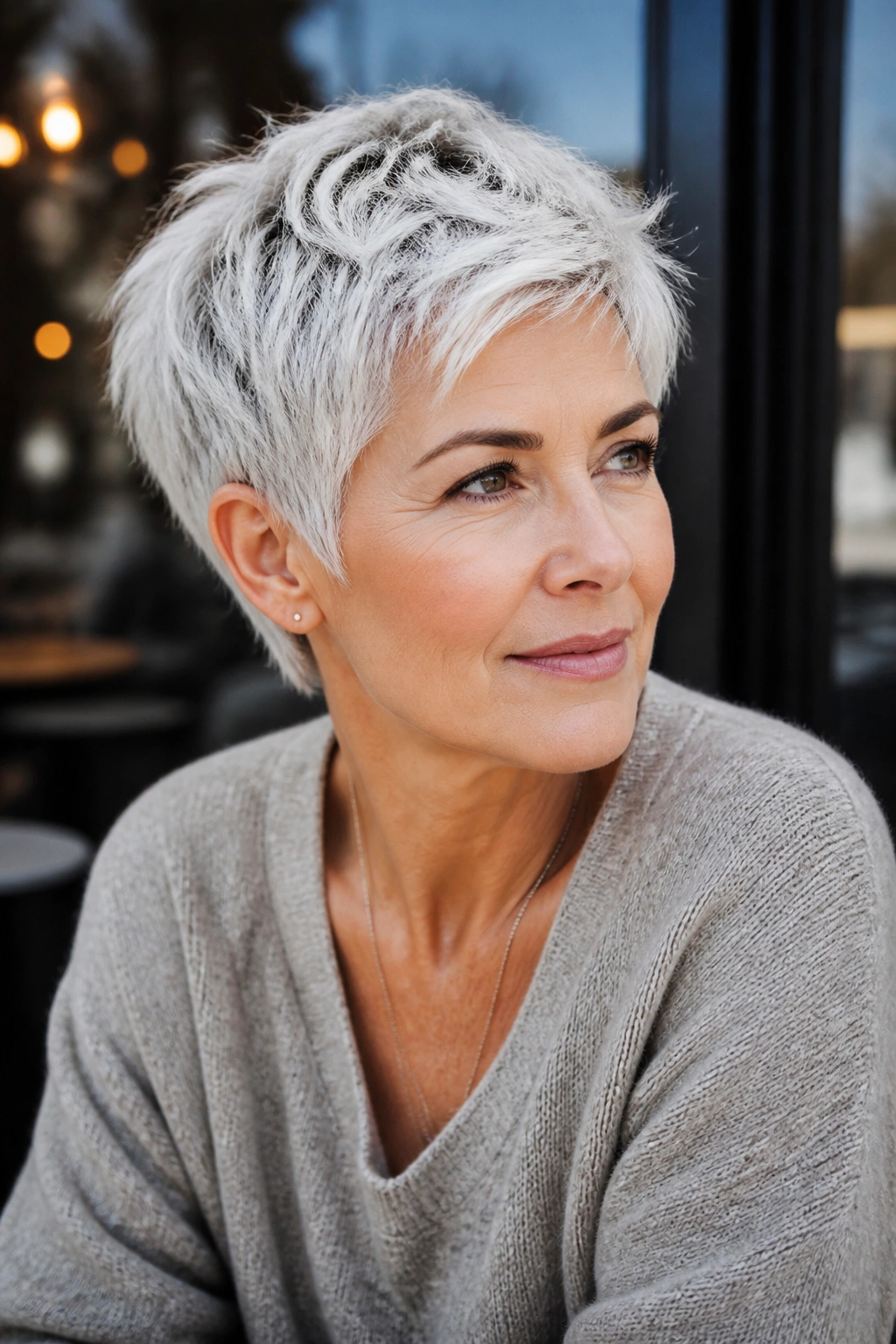
While color isn’t technically a “cut,” the combination of a short, textured pixie and a bold color like silver or platinum is a classic for thick hair. Light colors can sometimes make fine hair look thinner, but on thick hair, they highlight the depth and texture of the layers.
The Visual Impact
When you have a lot of hair, a solid dark color can sometimes look like a “blob” in photos. Lightening the hair—even just with highlights—allows the eye to see the individual layers and the work your stylist did with the scissors. It adds a “3D” effect to your haircut.
18. The “Ear-Tuck” Pixie
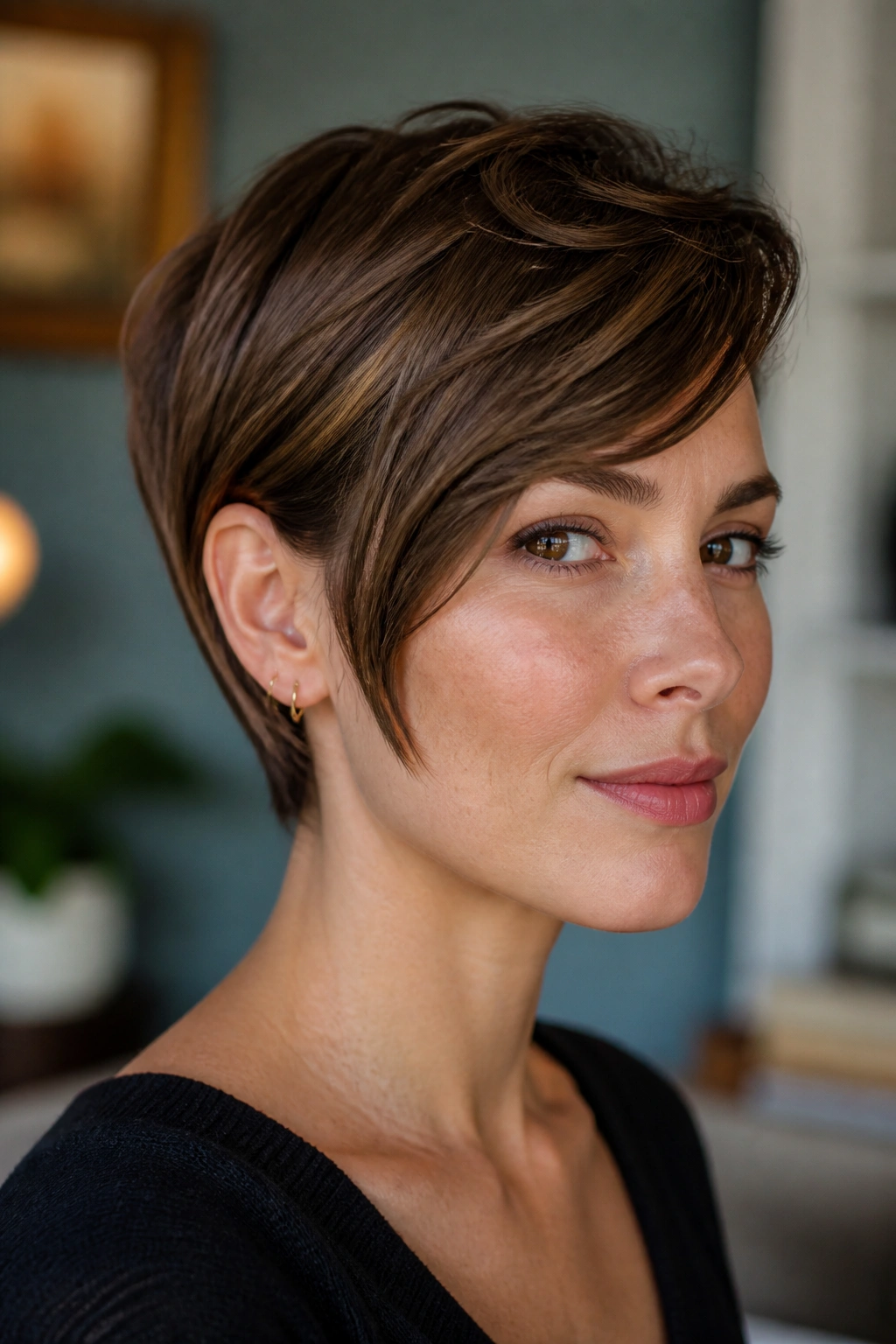
This is a specific type of long pixie where the sides are kept long enough to tuck behind the ears, but the back is kept short and tapered. It’s a “safety net” pixie for those who like the option of having hair around their face but want the ease of a short cut.
The Practicality of the Tuck
Tucking the hair behind your ears immediately slims down the profile of the haircut. It’s a great way to manage thickness on the sides without having to cut it all off. You get a “bob” feel from the front and a “pixie” feel from the back. It’s the best of both worlds.
How to Talk to Your Stylist About Your Thick Hair
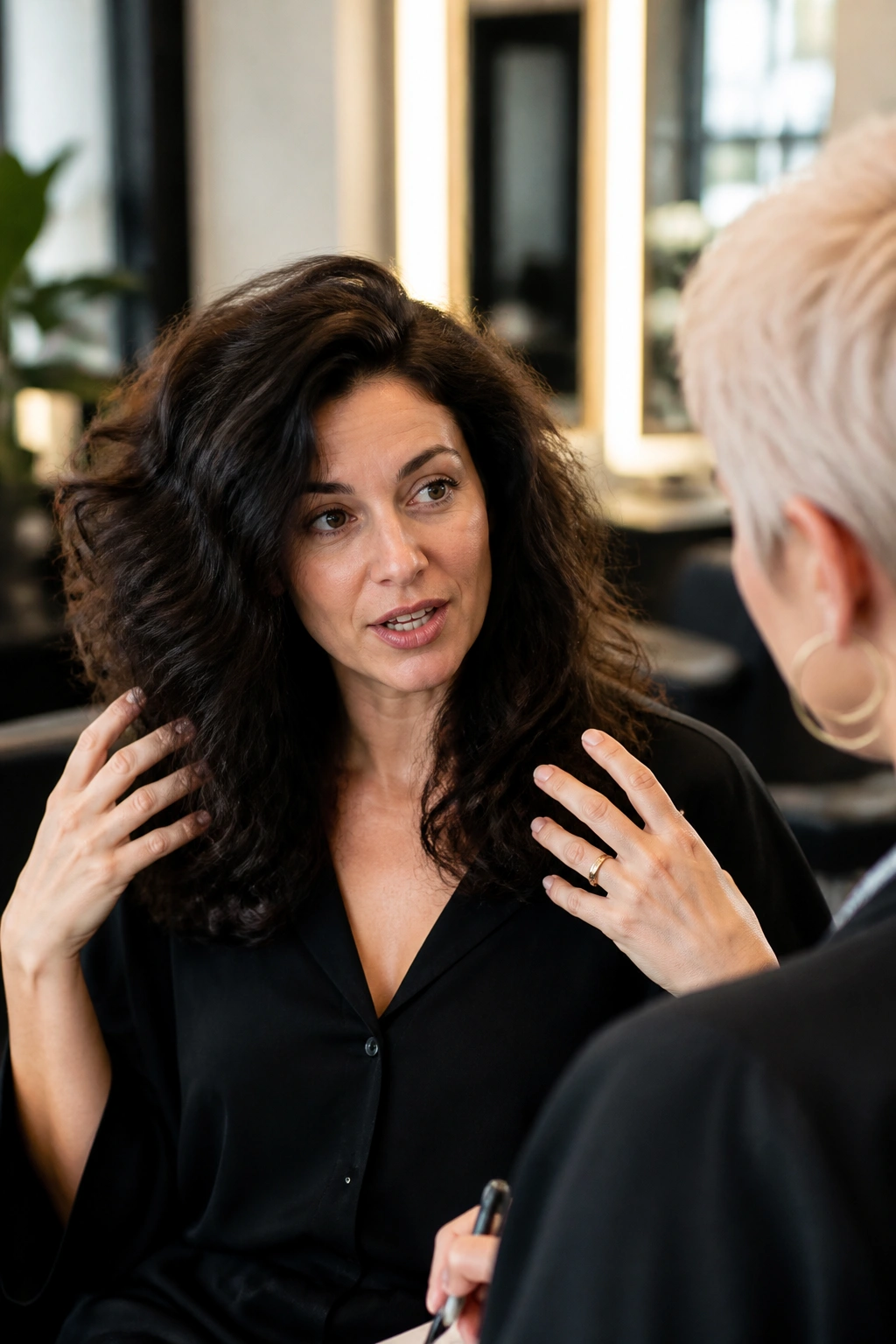
The most important part of getting a pixie cut is the consultation. If you just say “I want a pixie,” you might end up with something that doesn’t work for your texture. You need to be specific about your “thick hair struggles.”
Mention where your hair is the thickest—is it at the crown? The nape? Behind the ears? Tell them how much time you actually want to spend on your hair. If you say “five minutes,” they should know not to give you a style that requires a round-brush blowout.
Don’t be afraid to ask about their texturizing tools. A stylist who is comfortable with a razor or thinning shears is usually a good sign for thick-haired clients. If they seem hesitant to remove bulk, they might not be the right person for your short-hair journey.
Essential Products for the Thick-Hair Pixie
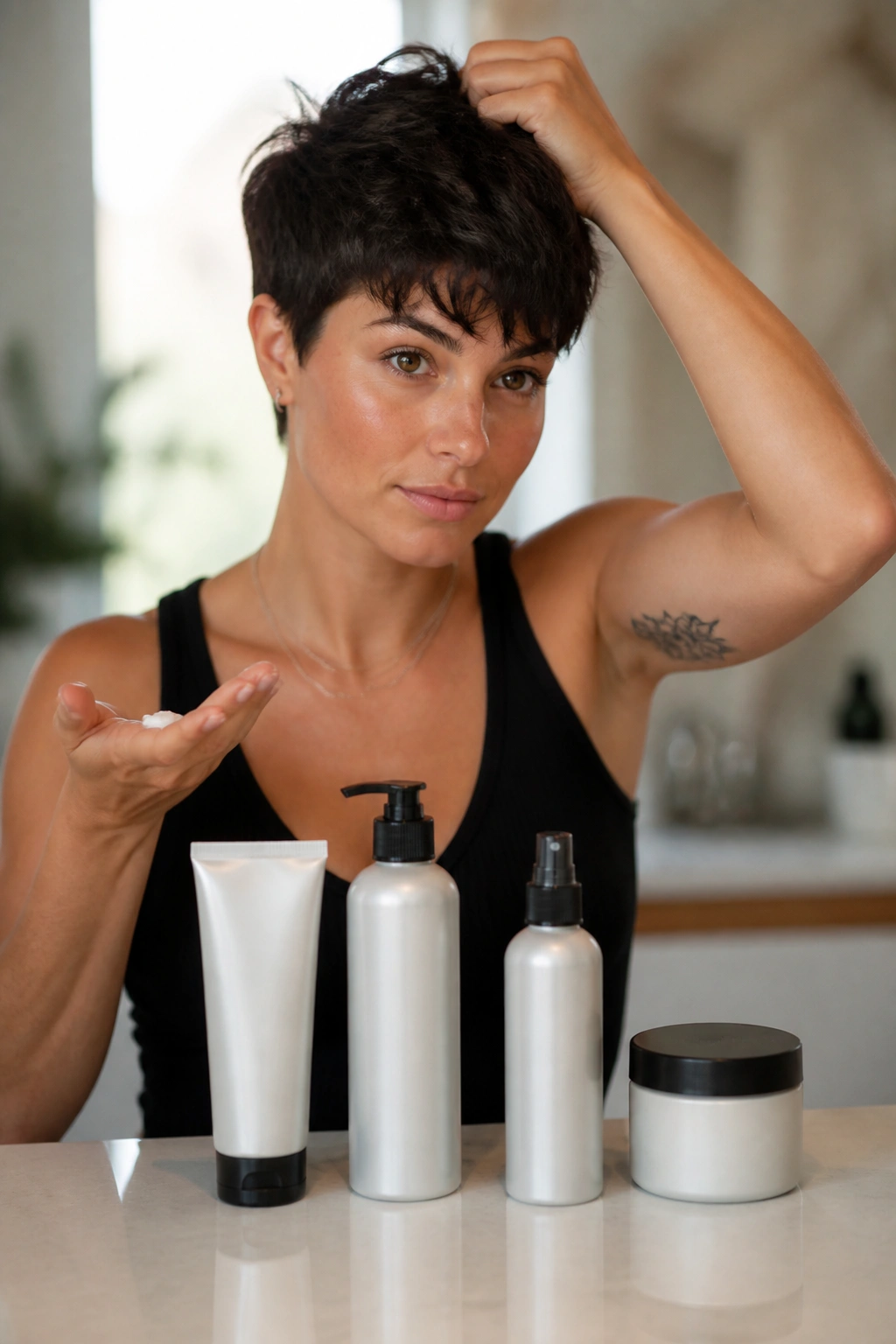
You’ve got the cut; now you need the “kit.” The good news is that you’ll need far fewer products than you did with long hair. For thick hair, you want products that provide control without adding weight.
- Matte Clay or Paste: This is your daily driver. It provides hold and texture without looking greasy. It’s perfect for those choppy, “undone” looks.
- Texture Spray: Think of this as a “dry” hairspray. It adds “grit” to the hair, which helps the layers stand out.
- Lightweight Shine Serum: If you’re going for a sleek look, a serum will help tame any “flyaways” that thick hair is prone to.
- Sea Salt Spray: Great for those with natural wave or curl. It encourages the hair to clump together into beautiful, textured pieces.
The Reality of the Grow-Out
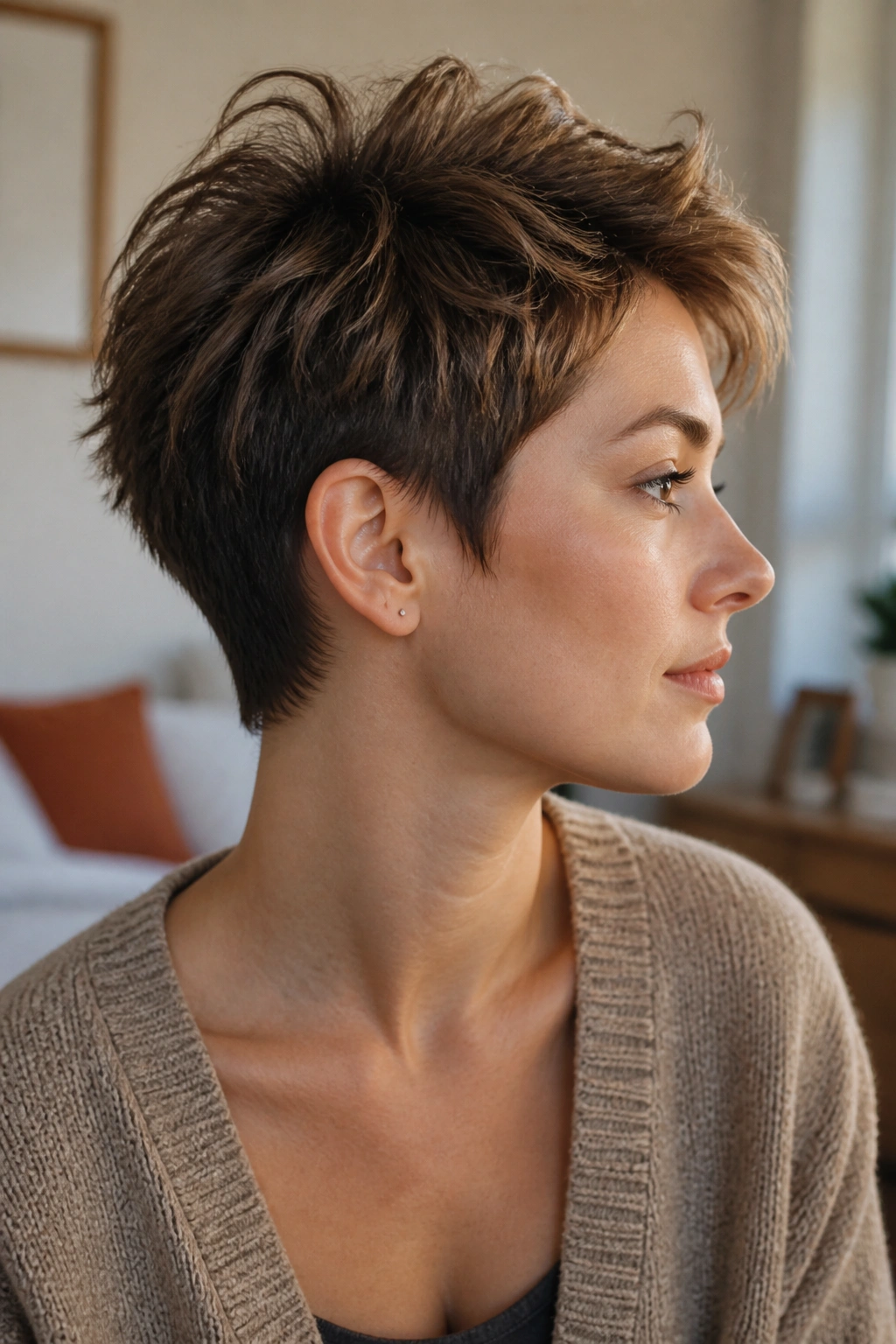
One of the biggest myths about pixie cuts is that they are a nightmare to grow out. While it’s true that you’ll hit some awkward stages, thick hair actually makes the grow-out easier. You have the density to “fill in” the gaps as the hair gets longer.
The key to a graceful grow-out is keeping the nape of the neck short. As the top of your hair grows toward your chin, keep visiting your stylist every 8 weeks just to trim the back. This prevents the “mullet” look and keeps the style looking like a deliberate “short bob” rather than a “forgotten pixie.”
Choosing the Right Cut for Your Face Shape
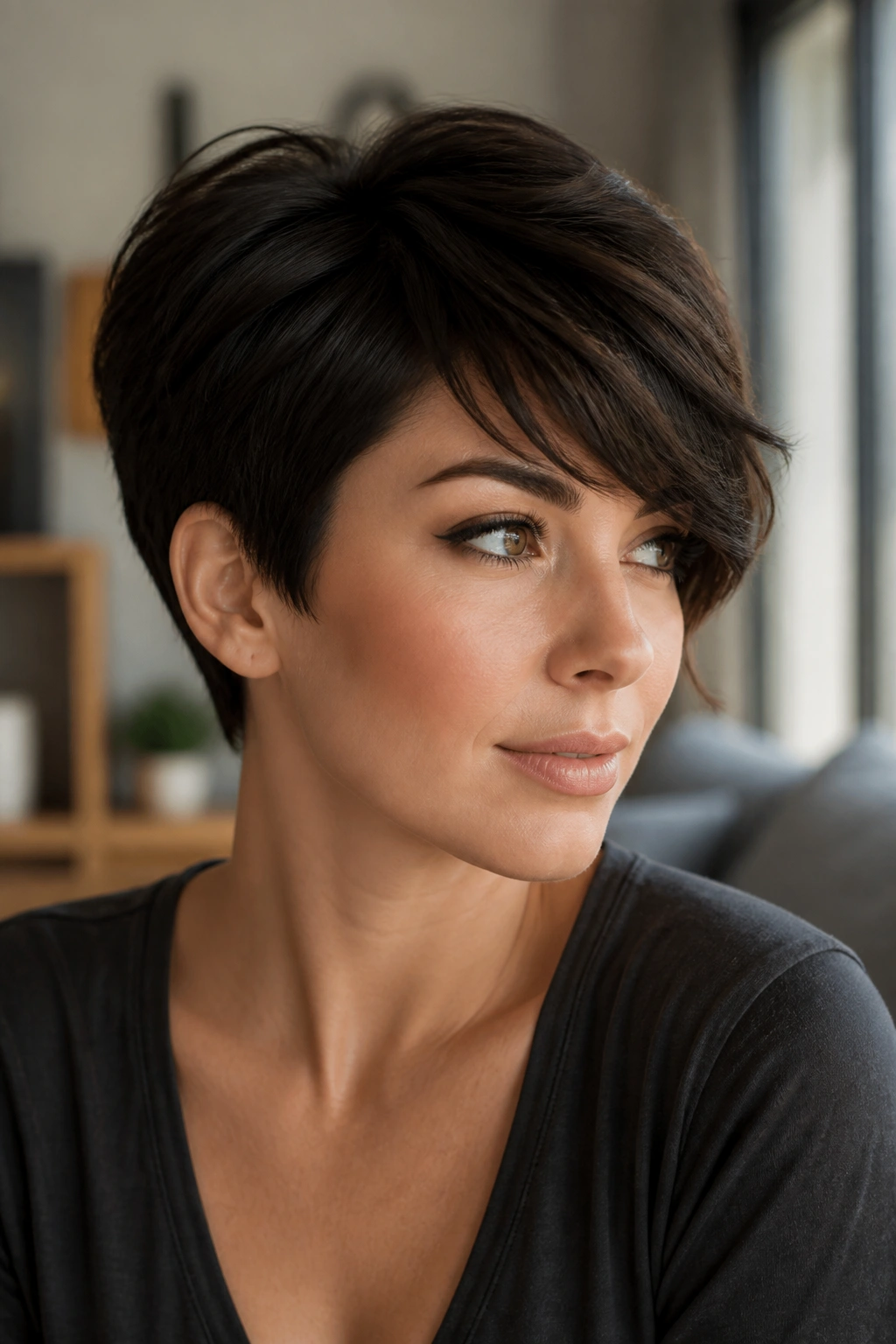
While these 18 styles are all great for thick hair, you can narrow down your choice by looking at your face shape.
Round Faces
Look for styles with height on top, like the Pompadour or the Spiky Pixie. This draws the eye upward and elongates the face. Avoid “round” cuts like the Bixie unless they have a lot of asymmetry.
Square Faces
You want to soften the angles of your jaw. The Soft Wispy Pixie or the Razored Shaggy Pixie are perfect because the feathered ends break up the “boxiness” of the face.
Heart-Shaped Faces
Balance a wider forehead with a Side-Swept Pixie. The bangs will cover part of the forehead, while the shorter sides highlight your cheekbones.
Oval Faces
You are the “lucky ones”—almost any pixie cut will work for you. You can go as short as you want with a Faded Pixie or keep it longer with an Ear-Tuck style.
Managing the “Poof” Factor
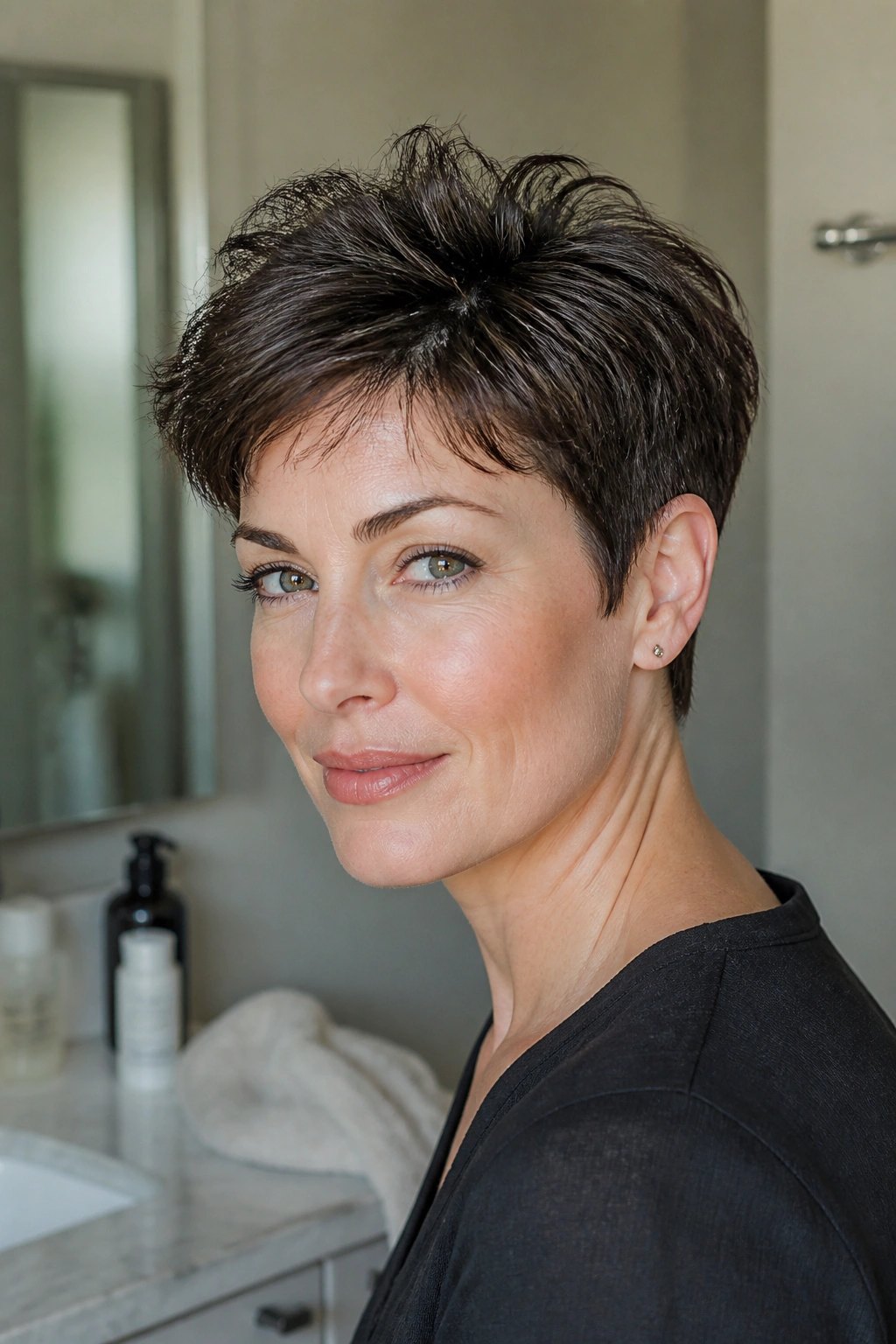
Even with a great cut, thick hair can sometimes get a bit “poofy” in high humidity. This is usually a sign that your hair is thirsty. When thick hair is dry, the cuticle opens up to grab moisture from the air, causing it to expand.
Keep your pixie “squeaky clean” but also well-moisturized. A weekly deep conditioning treatment—even on short hair—can keep the cuticle flat and the “poof” at bay. You only need a tiny bit of product, but it makes a world of difference in how your hair lays.
Final Thoughts
There is a profound sense of freedom that comes with cutting off several inches of thick hair. It’s more than just a style change; it’s a lifestyle change. You’ll find you spend less money on shampoo, less time in the bathroom, and you’ll finally be able to see your face without a curtain of hair in the way.
Thick hair is not a barrier to short hair—it’s an advantage. It gives you the “body” and “substance” that makes a pixie cut look expensive and chic. Whether you choose a bold undercut or a soft, wispy crop, the most important thing is that the cut reflects who you are.
The “right” haircut is the one that makes you feel like the best version of yourself. If you’ve been thinking about making the chop, let this be your sign. Your thick hair is ready to be light, breezy, and effortlessly beautiful. After all, life is too short to spend it all behind a blow dryer.