

Shaggy pixie haircuts for women over 60 work best when they make hair look lighter, not thinner. That sounds like a small distinction, but it’s the whole game. The right cut lifts the crown, softens the hairline, and keeps the shape from collapsing into the head by lunchtime.
Age changes hair in annoying ways. It often gets finer, drier, or a little more stubborn at the nape, and a blunt short cut can make those things more obvious than you’d like. A good shaggy pixie does the opposite: it uses short, broken-up layers to create movement, so the hair looks lively even when it isn’t trying very hard.
I’ve always liked shaggy pixies because they don’t ask for perfect styling. A little mousse, a quick blow-dry, maybe a dab of paste, and the cut still reads as intentional. The trick is shape. Too much thinning and the ends go wispy in a bad way. Too little texture and the whole thing turns boxy, which is a strange look on anyone and especially unfair on hair that already wants to lie flat.
The best versions have a useful little tension to them — soft at the edges, neat where it matters. That’s where the fun starts.
1. Feathered Pixie With a Side-Swept Fringe for Women Over 60
A feathered pixie with a side-swept fringe is one of those cuts that quietly does a lot of work. It opens the face, softens the forehead, and keeps the top from sitting like a cap. I reach for this shape when someone wants short hair but does not want short hair to look severe.
Why It Flatters Fine Hair
The feathering gives fine hair a little lift without stripping away the body it still has. Ask for 2½ to 3 inches on top, shorter sides that skim the ear, and a fringe that can sweep across at a soft angle. Point-cut ends matter here. Blunt ends make the shape look heavier, and this cut needs lightness.
A small round brush is enough at home. Blow-dry the fringe from the heavier side toward the lighter side, then tuck the front with your fingers while it cools. That tiny set makes the cut hold its shape for hours.
- Best on hair that feels soft or medium-fine
- Ask for feathering, not heavy razoring
- Use a pea-sized amount of lightweight mousse
- Keep the nape neat so the top does not feel floaty
Tip: If your fringe starts to split, your stylist likely left it too thin at the corners.
2. Choppy Pixie With a Tapered Nape
A tapered nape does more for shape than most people expect. It takes weight off the back of the head, which makes the whole cut look cleaner and a little more lifted. If your neck feels crowded by hair, this is the fix I’d reach for first.
The top stays choppy, usually around 2 to 2½ inches, while the nape is brought in close and softened just enough so it doesn’t look clipped to the skin. The sides should still have movement. You want a taper, not a fade that screams for attention every time you turn your head.
This version is especially good if you wear collars, scarves, or structured jackets. It sits well under clothing and doesn’t bunch at the neckline. A little paste at the crown and a finger twist through the ends is enough. No need to make it precious.
A blunt nape here would kill the shape. Keep it soft, short, and neat. That’s the whole point.
3. Curly Shaggy Pixie With Soft Halo Layers
Can curls survive a pixie after 60? Absolutely — if the cut respects the curl pattern instead of arguing with it. The best curly shaggy pixies leave enough length for the curl to form without turning the top into a round puff of noise.
How to Style It
Ask for halo layers around the crown and temple area, with the top sitting around 2 to 3½ inches depending on curl strength. The sides can be a touch shorter, but not so short that they spring up into a fuzzy edge. If your curls are springy, the stylist should cut them dry or mostly dry. Wet curls lie.
At home, scrunch in curl cream, then diffuse on low heat until the hair is about 80 percent dry. Stop touching it after that. Seriously. The more you fuss, the more the curl pattern frays.
The best thing about this cut is that it looks lived-in in a good way. Not messy. Not lazy. Just full of motion.
4. Long-Top Pixie With Piecey Texture
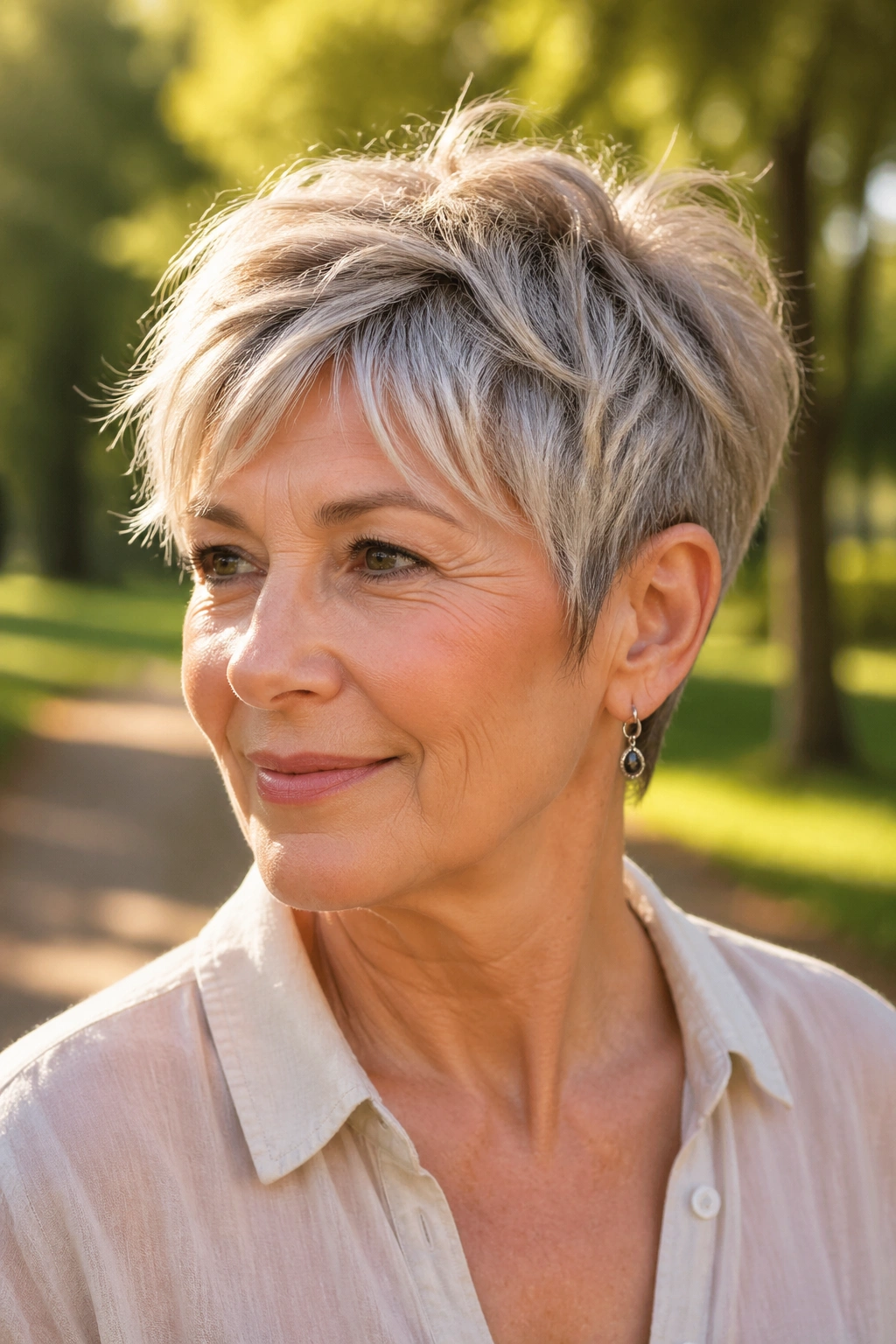
If you’ve ever looked in the mirror late in the day and found your crown flattened into the shape of your scalp, this cut makes a strong case for itself. The longer top gives you room to move hair around, and the piecey texture keeps it from looking too neat.
Ask for 3½ to 4 inches on top, then shorter sides that don’t overwhelm the face. The ends should be point-cut in little sections so the top breaks into separate pieces instead of one solid sheet. I like this cut on hair that has a little natural bend. Straight hair can wear it too, but it usually needs a touch more styling.
- Use a light wax, not a heavy cream
- Blow-dry the roots first for lift
- Push the top in different directions while drying
- Keep the fringe a little longer if you like softer cheeks
A cut like this is forgiving. That’s the nice part. If one piece sticks out, it often looks deliberate.
5. Silver Pixie With Micro Layers
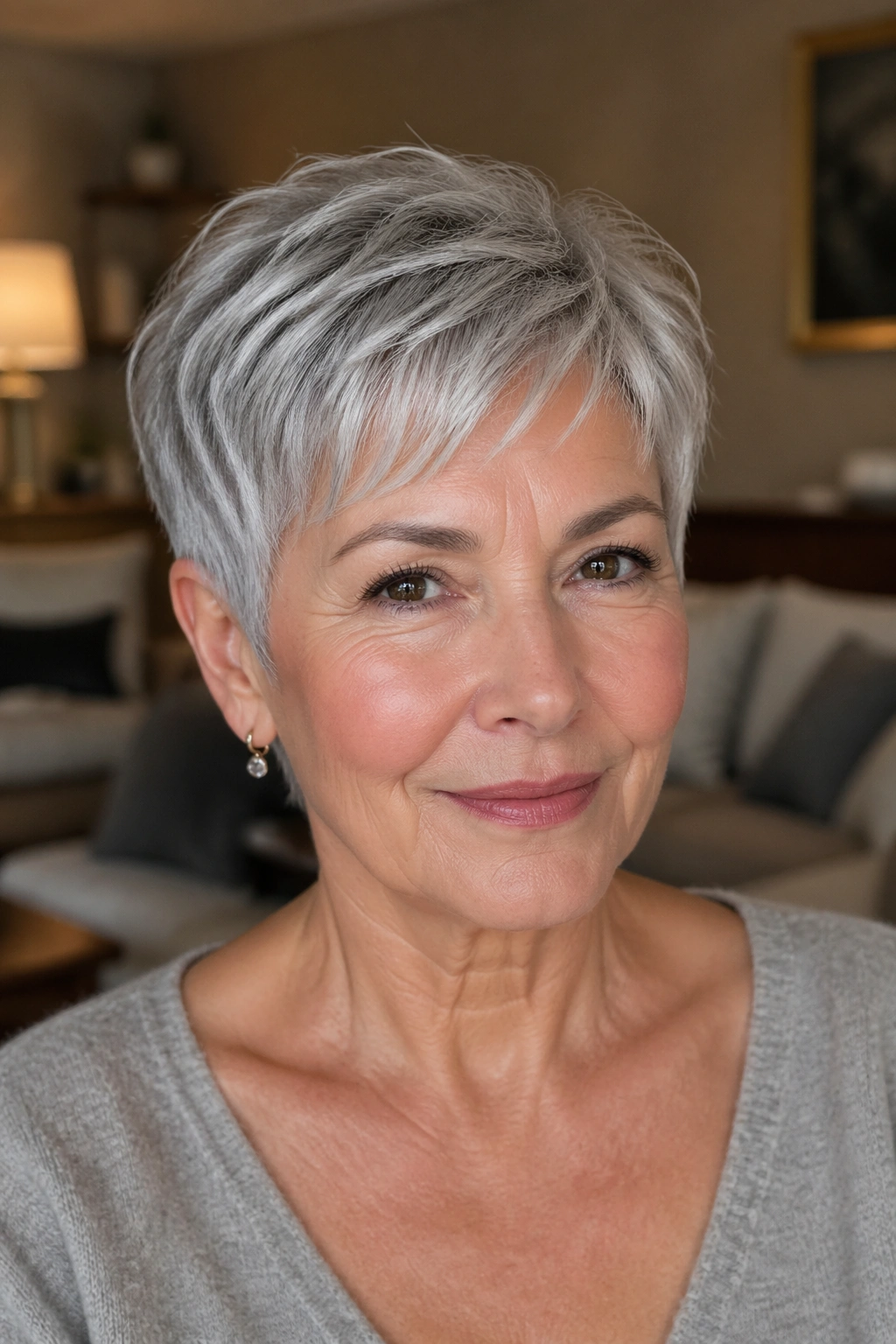
Silver hair loves a sharp outline, but it also needs softness near the face or the whole cut can feel hard. Micro layers solve that problem without stealing the density that makes gray and silver hair look elegant in the first place.
I like this shape when the hair has good texture but the silhouette feels too blocky. The stylist should add tiny internal layers around the temple and crown, then keep the surface smooth enough to show off the color. If the hair is coarse, the inner weight gets removed from inside the shape, not from the ends. That keeps the style from puffing out at the sides.
The best thing about silver in a shaggy pixie is that the layers catch the tone shifts in the hair. White, steel, pewter, a little salt-and-pepper at the nape — all of it gets visible. A clear gloss can help if the silver looks dull, and a purple shampoo once in a while keeps yellow tones from creeping in.
This cut doesn’t need drama. It already has enough texture.
6. Bixie With Shaggy Ends
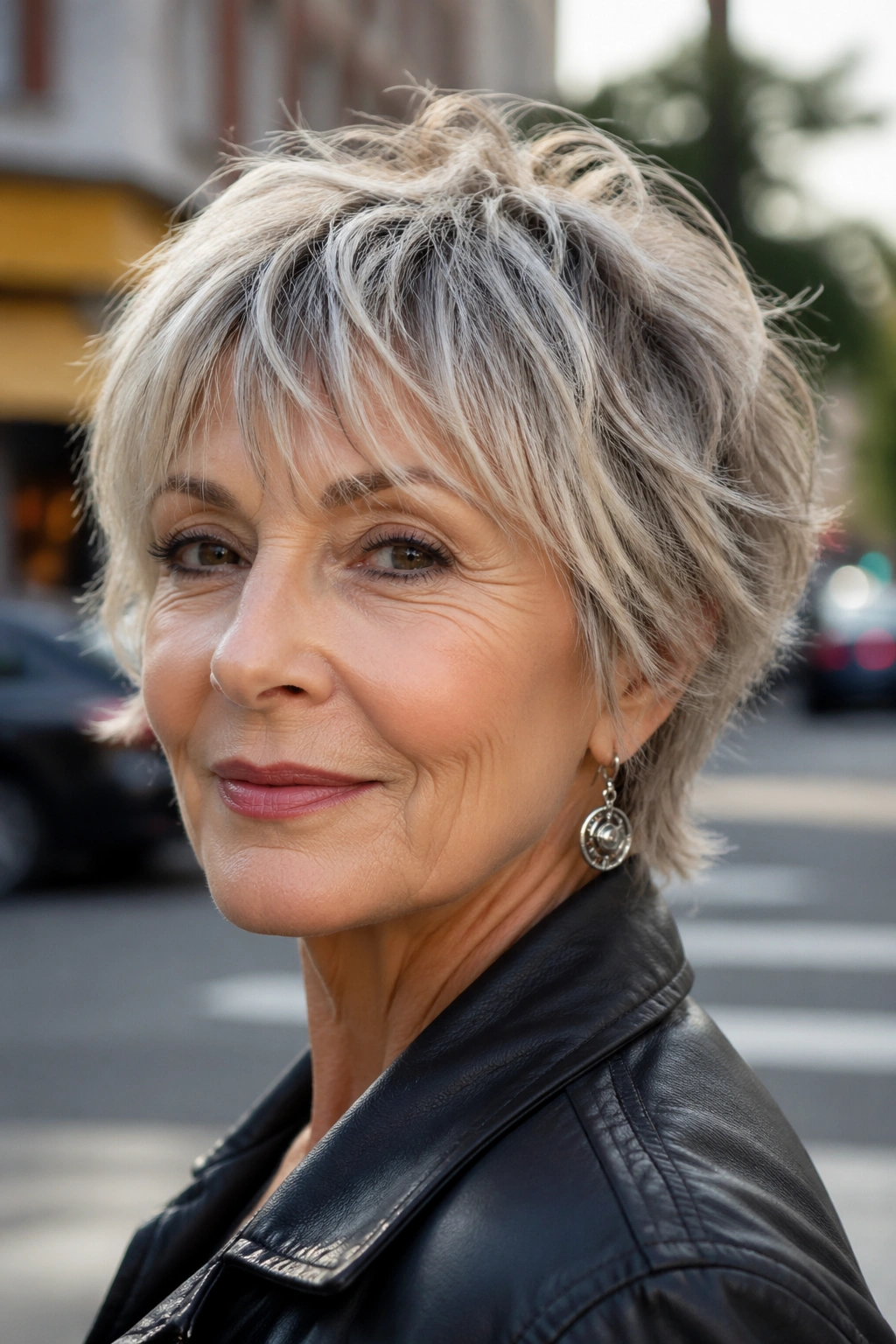
A bixie sits in that useful middle zone between a bob and a pixie, and I’m a fan when someone wants to go shorter without losing all the neck-skimming length. Unlike a strict pixie, this one gives you a little swing at the sides and a bit more cheek framing.
The shaggy ends matter more than the overall length. Keep the perimeter soft, with the front around 4 inches and the back closer to 2 to 3 inches depending on density. The ends should be broken up, not chopped blunt. That small detail keeps the cut from feeling helmet-like, which is a risk with any hybrid shape.
This is a good choice if you’re easing out of a bob. It still feels familiar. You can tuck part of it behind the ear, wear it a little messy, or brush it smooth for a sharper look.
If you want one haircut that doesn’t box you in, this is a strong one.
7. Tousled Pixie With Cropped Bangs
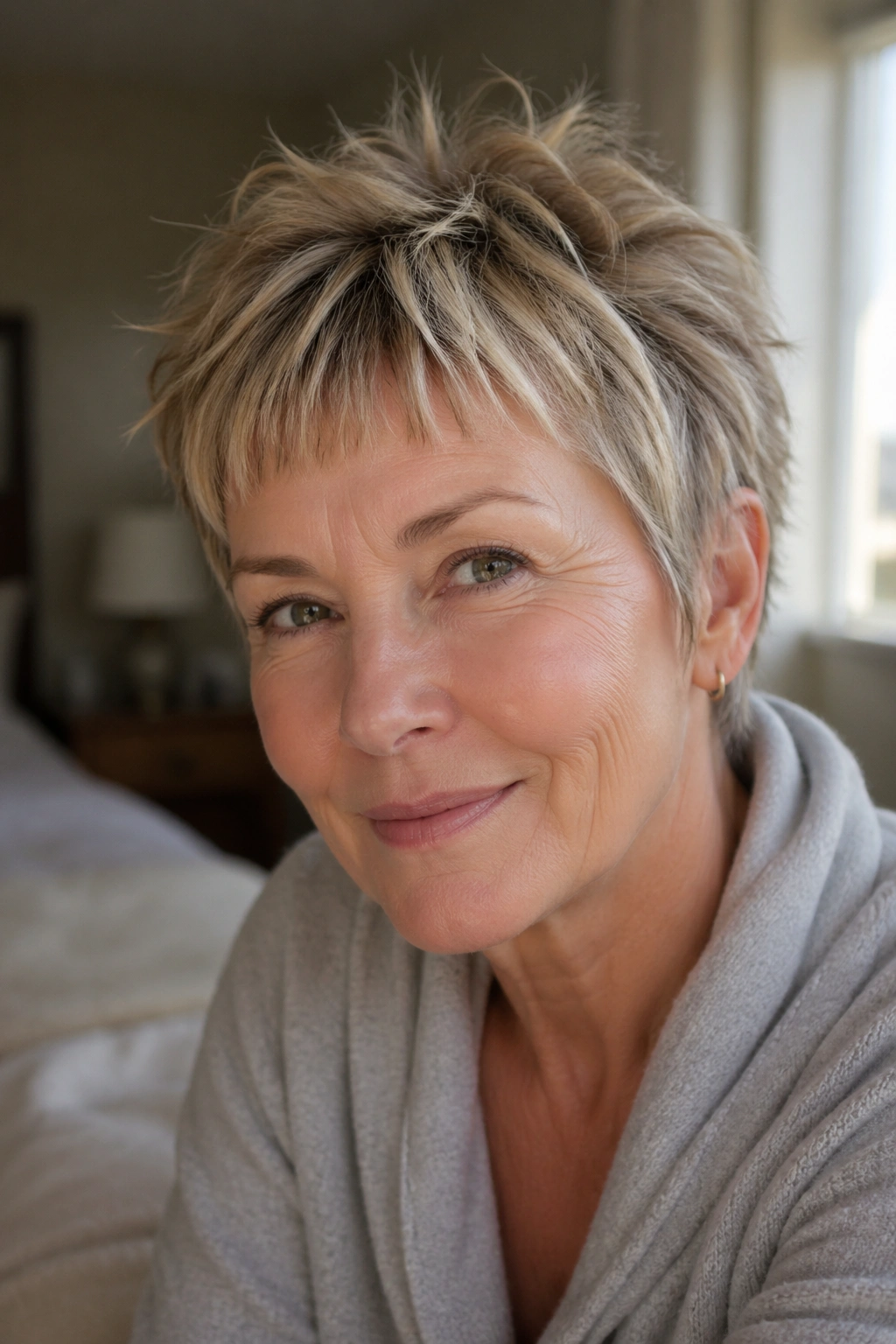
Short bangs can be tricky, and I say that as someone who likes them. Cropped bangs look charming when they sit light and broken, not heavy and square. The trick is keeping them soft enough that they move.
What Keeps It From Looking Harsh
The bangs should hit somewhere around 1 to 1½ inches, with the top layered just enough to blend into them. The crown can stay a little longer so the cut has a shaggy push at the top. If the fringe is cut too straight, it will sit like a shelf. Nobody needs that.
This style works well on smaller faces or on anyone who wants the eyes to be the first thing people notice. It also pairs nicely with glasses because the fringe can sit above the frames instead of crashing into them.
- Keep the fringe wispy, not blunt
- Dry it from side to side with fingers
- Use a small amount of paste at the tips
- Ask for texture at the temples so the bangs melt into the sides
The whole point is movement. A cropped bang with life in it looks playful. A stiff one looks like a decision made in a hurry.
8. Layered Pixie With Lifted Crown for Women Over 60
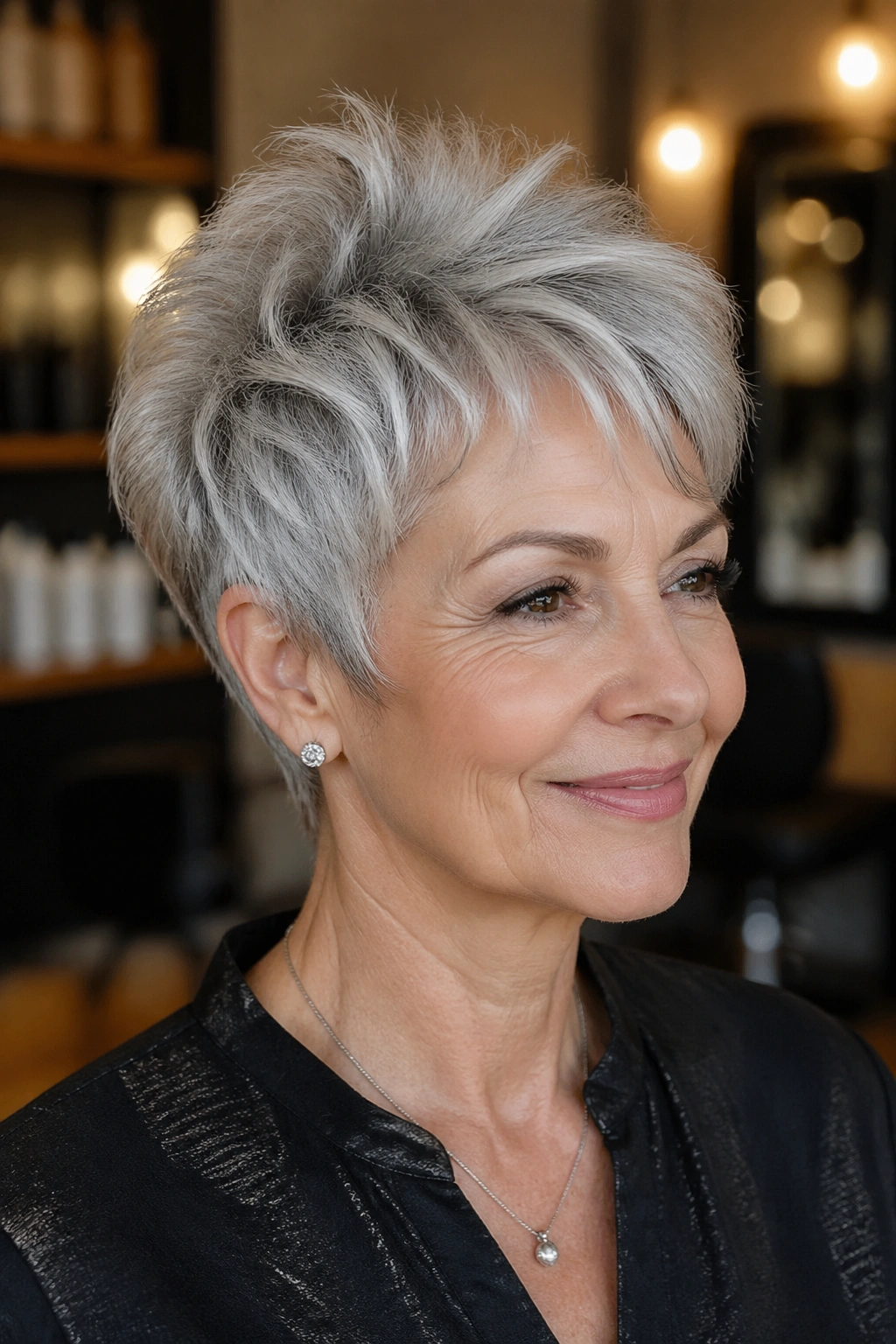
Flat crown, flat haircut. That’s the rule nobody wants to hear, but it’s true. If the top goes limp, the whole style loses energy fast, especially on finer hair or hair that has started to soften around the roots.
This cut builds the lift where it matters most. Ask for 2 to 3 inches through the crown, with short internal layers that encourage the hair to stand up a bit at the root and then fall softly. The back can stay neat and close, which gives the top somewhere to live. Without that contrast, the lift disappears.
I like to blow-dry this one with the head tipped forward for the first minute or two. Then direct the roots up and back with a small brush. A little mousse at the roots does more than a heavy spray ever will. Heavy spray tends to make the hair feel tired, and that defeats the point.
Flat hair ages a cut faster than gray does. Keep the crown awake, and the rest falls into place.
9. Airy Pixie With Swept-Back Top
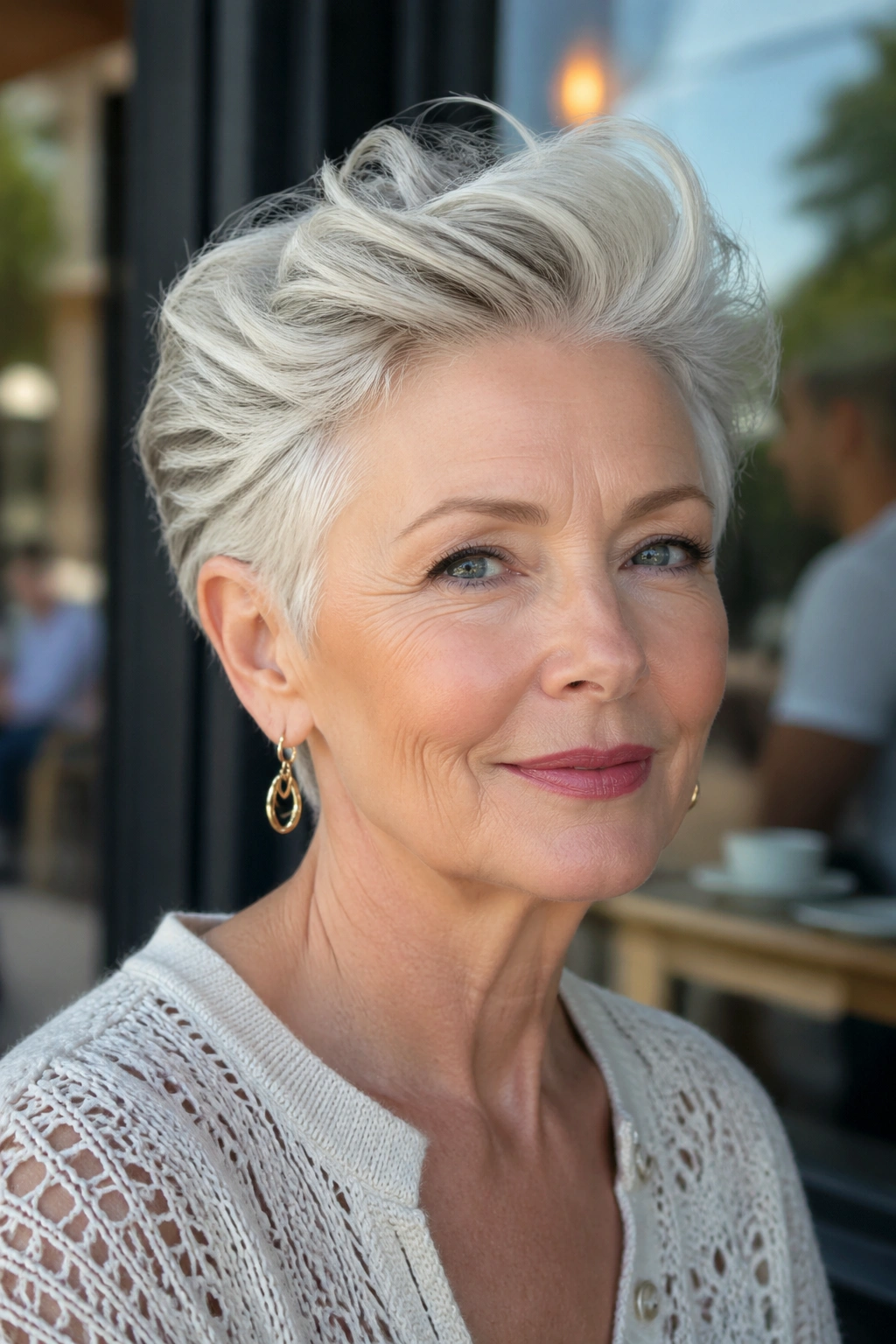
Want hair off the face without the hard, brushed-up look? This is the one. The top moves back softly, almost like it was lifted by a breeze, but it still has enough structure to hold shape.
The cut usually works best with around 3 inches on top and shorter sides that sit close enough to keep the silhouette clean. The swept-back motion opens the forehead and gives the face more room. That can be useful if your features feel crowded by hair that falls straight down.
How to Get the Most From It
Use a lightweight styling cream or a very soft mousse. Blow-dry the front upward first, then gently back and slightly to one side. If you brush it too flat, you lose the airy part and the cut starts to feel formal.
This version is lovely on straight or softly wavy hair. It has a bit of polish, but not the stiff kind. Think movement, not shellacking.
And yes, you can still mess it up on purpose with your fingers later. That helps.
10. Wavy Shaggy Pixie With Ear-Grazing Length
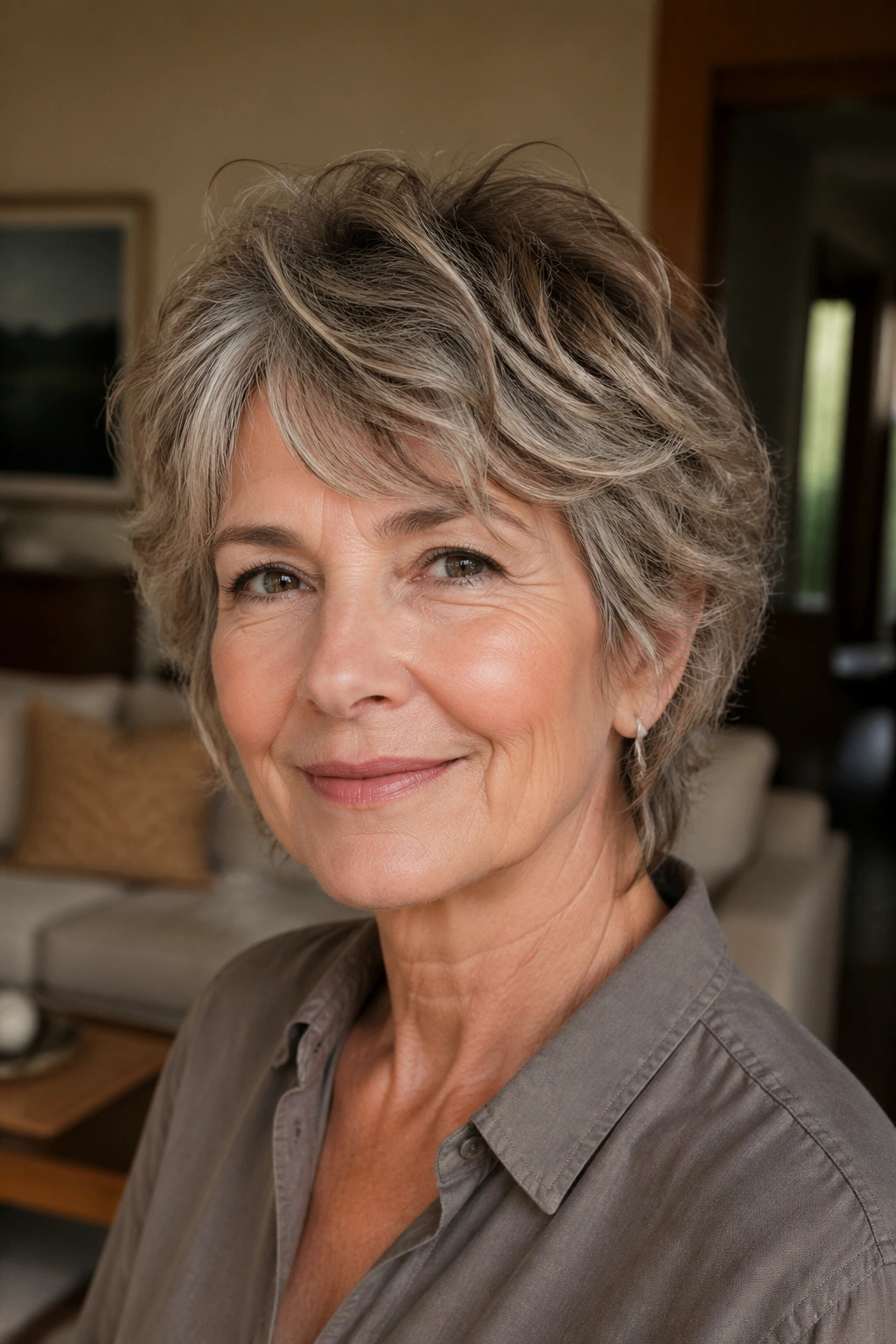
Wavy hair wants a little more length than straight hair does, and I’d argue that’s a good thing. A wavy shaggy pixie with pieces that graze the ears gives the wave room to bend instead of fighting to stay within a strict outline.
The sides should be long enough to move, usually just at or below the ears, while the top can sit around 3 inches with soft layers that follow the wave pattern. If you cut this too short, the waves can pop up in odd places and leave the shape lopsided. That’s the bad version. The good version looks easy and intentional.
Humidity is the one thing that can bother this cut, so keep the product light. A touch of cream or spray, not both at once. If the hair is coarse, a diffuser helps; if it’s fine, a little air-drying and finger shaping is usually enough.
This is one of those styles that looks better after a few hours of living in it.
11. Undercut Pixie With Soft Top
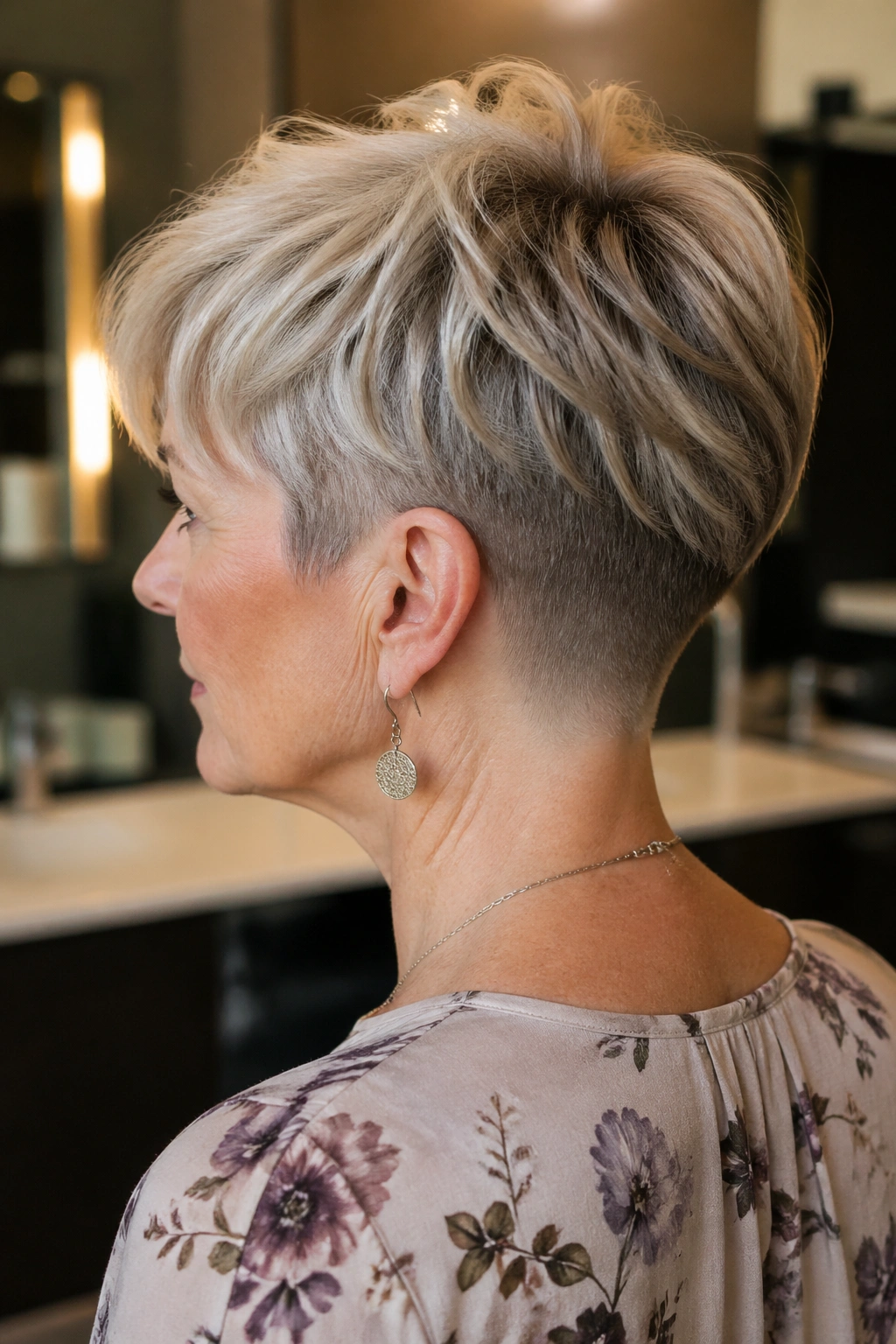
An undercut does not have to look edgy in the loud sense. When it’s done softly, it just removes bulk where the bulk gets annoying — around the nape, behind the ears, sometimes just under the top layer. That’s a huge help if your hair is thick or grows wide at the sides.
The top stays longer, often 3 to 4 inches, and the outline is kept loose enough to move. The undercut itself should be hidden unless you tuck the hair or wear it very short. I prefer that quieter version. It’s cleaner, and it doesn’t lock you into one look.
This cut is especially useful in warm weather, though that’s not the only reason to wear it. Thick hair can sit heavy on the neck and make every outfit feel warmer than it should. Taking out a little bulk changes the whole experience.
If you like the idea of short hair but hate the triangular puff at the sides, this shape solves a real problem.
12. Rounded Shaggy Pixie With Temple Length
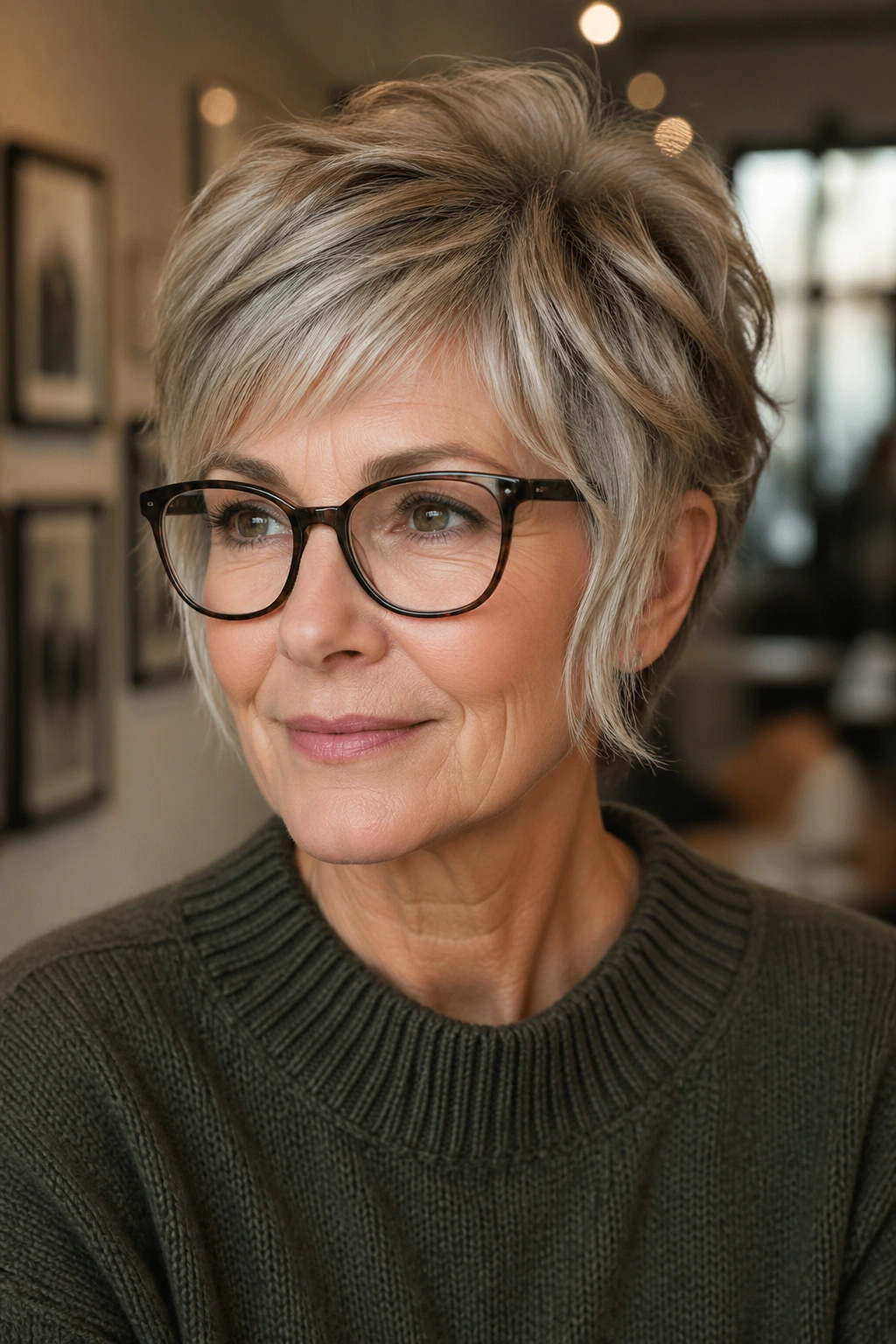
Not every short haircut needs sharp angles. A rounded shaggy pixie softens the sides and gives the face a little curve, which can be kinder around the cheeks and jaw.
The temple pieces usually sit around 2 to 3 inches, enough to graze the face without falling into it. The crown still gets texture, but the overall outline stays gentle and curved. That combination keeps the cut from looking severe. It also plays nicely with glasses, earrings, and necklines that already have structure.
Unlike a boxier crop, this one does not fight the natural shape of the head. It follows it. That’s why it tends to age well. Hair can thin a bit and the cut still feels balanced because the sides are not too stripped down.
Ask for roundness through the silhouette, not just layers. Those are not the same thing.
13. Asymmetrical Shaggy Pixie
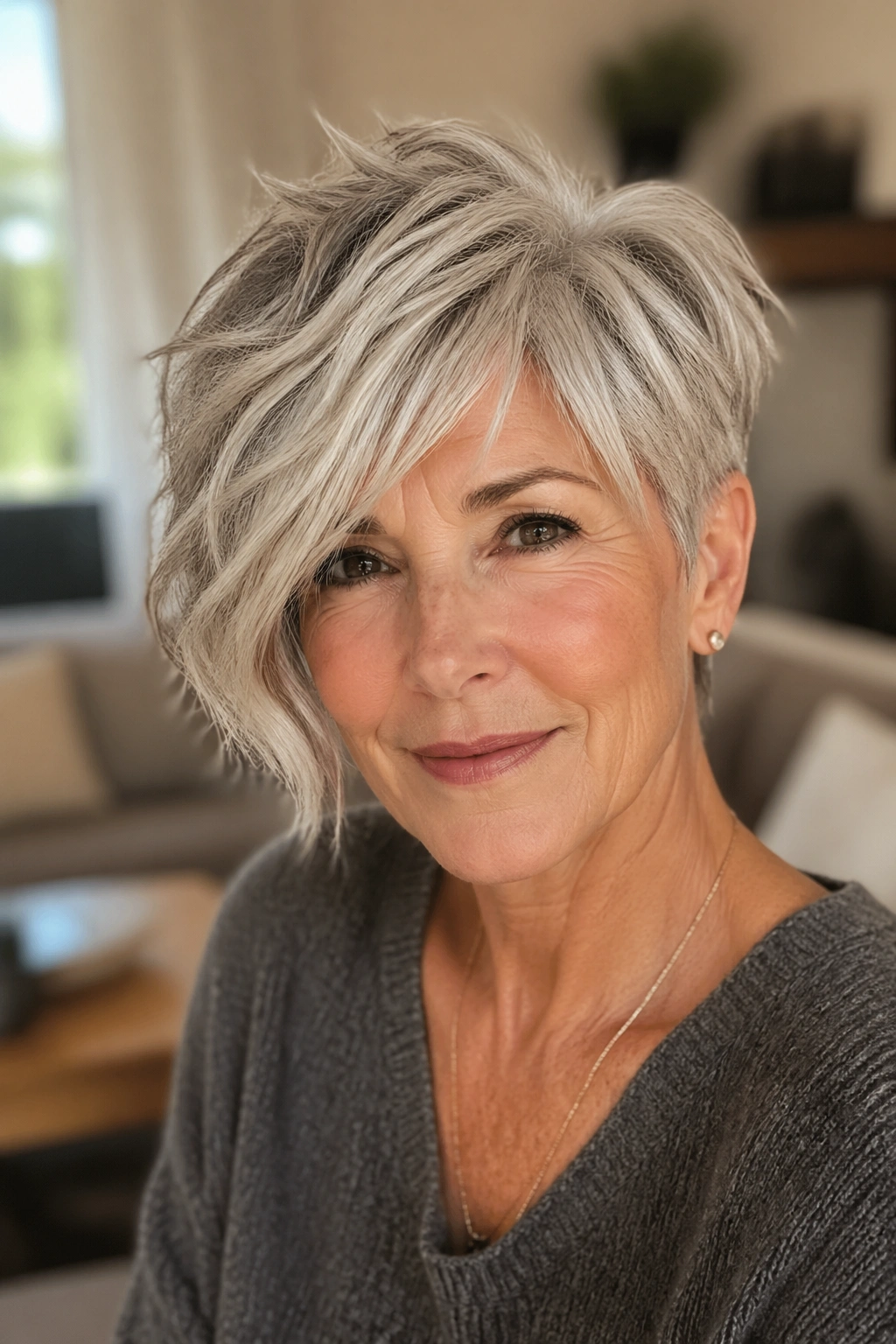
One side a touch longer, the other side tighter — that tiny imbalance changes the whole mood of a short cut. An asymmetrical shaggy pixie draws the eye across the face instead of stopping it in one place, and that can be useful if you want more cheekbone focus.
Why the Uneven Line Feels Fresh
The longer side does not need to be dramatic. An extra ½ to 1 inch is enough to create movement and a little visual pull. The shorter side keeps the shape clean, so the haircut still feels easy to wear. If the difference gets too big, the style starts to look staged.
This cut suits people who like a little personality in their hair but do not want a full-on fashion haircut. It looks especially good when one side can tuck behind the ear and the other side stays loose. That contrast is the whole point.
- Keep the longer side soft at the ends
- Style with fingers, not a stiff brush
- Ask for texture through the front, not just the crown
- Use a small amount of matte paste to separate pieces
It’s a neat little trick, really. The asymmetry gives the eye somewhere to go.
14. Side-Part Shaggy Pixie With Full Fringe
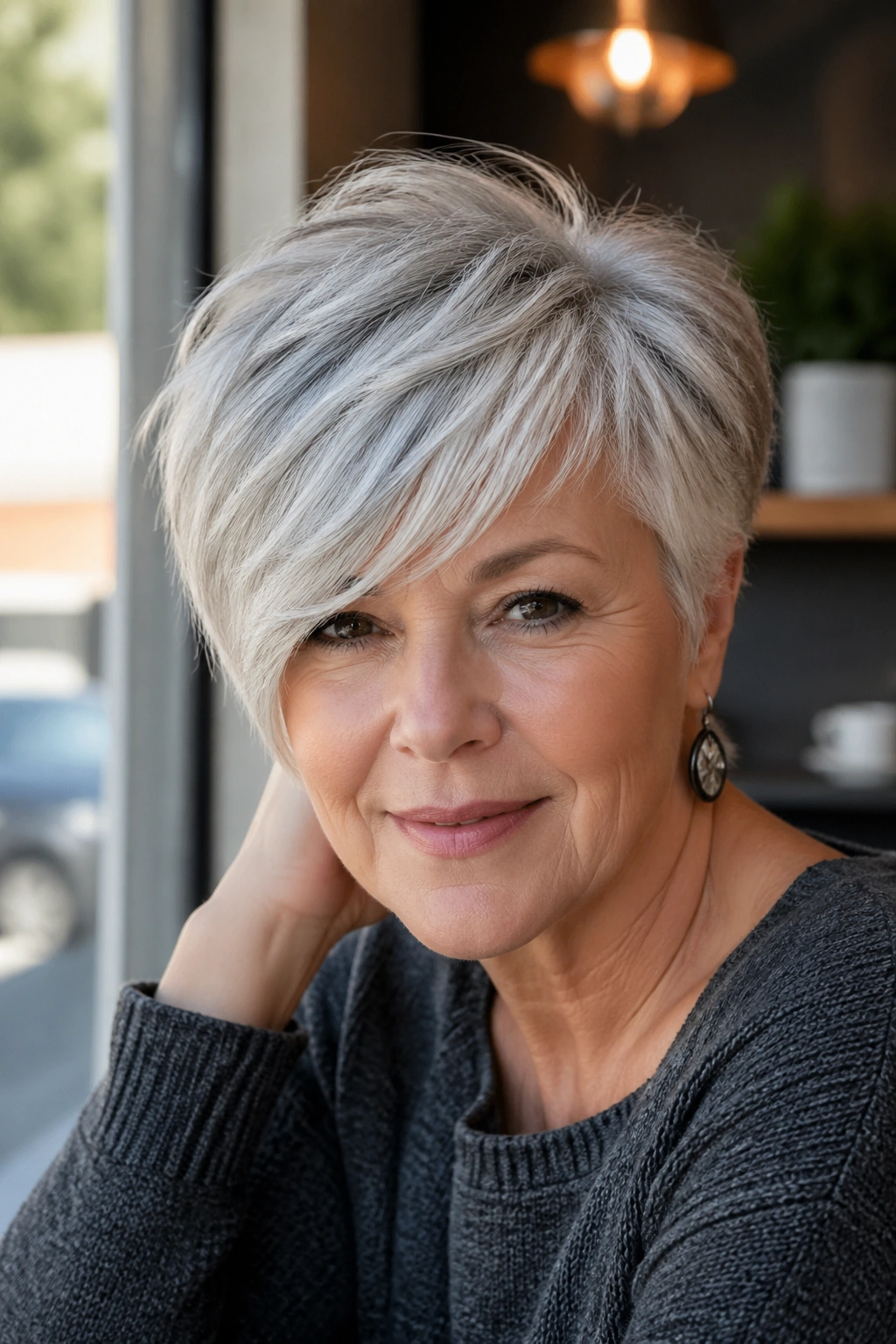
A side part is often the fastest way to get lift at the front. It breaks up the face, creates height where the hair naturally wants to lie flat, and makes a shaggy pixie feel a little more lifted without much effort.
The fringe should sweep across at an angle, with enough length to soften the brow and enough texture to avoid the heavy curtain effect. I’d usually keep the front somewhere around 2½ to 3 inches and let one side fall a bit longer than the other. That gives the part somewhere to live.
This shape is especially kind to fine hair because the part creates an instant shape change. The hair no longer falls straight down the middle of the head like it’s waiting for instructions. It has direction. That alone can change how a cut reads.
Use a round brush or your fingers to set the part while drying. Once the roots cool, they tend to stay where you asked them to be.
15. Salt-and-Pepper Pixie With Wispy Nape
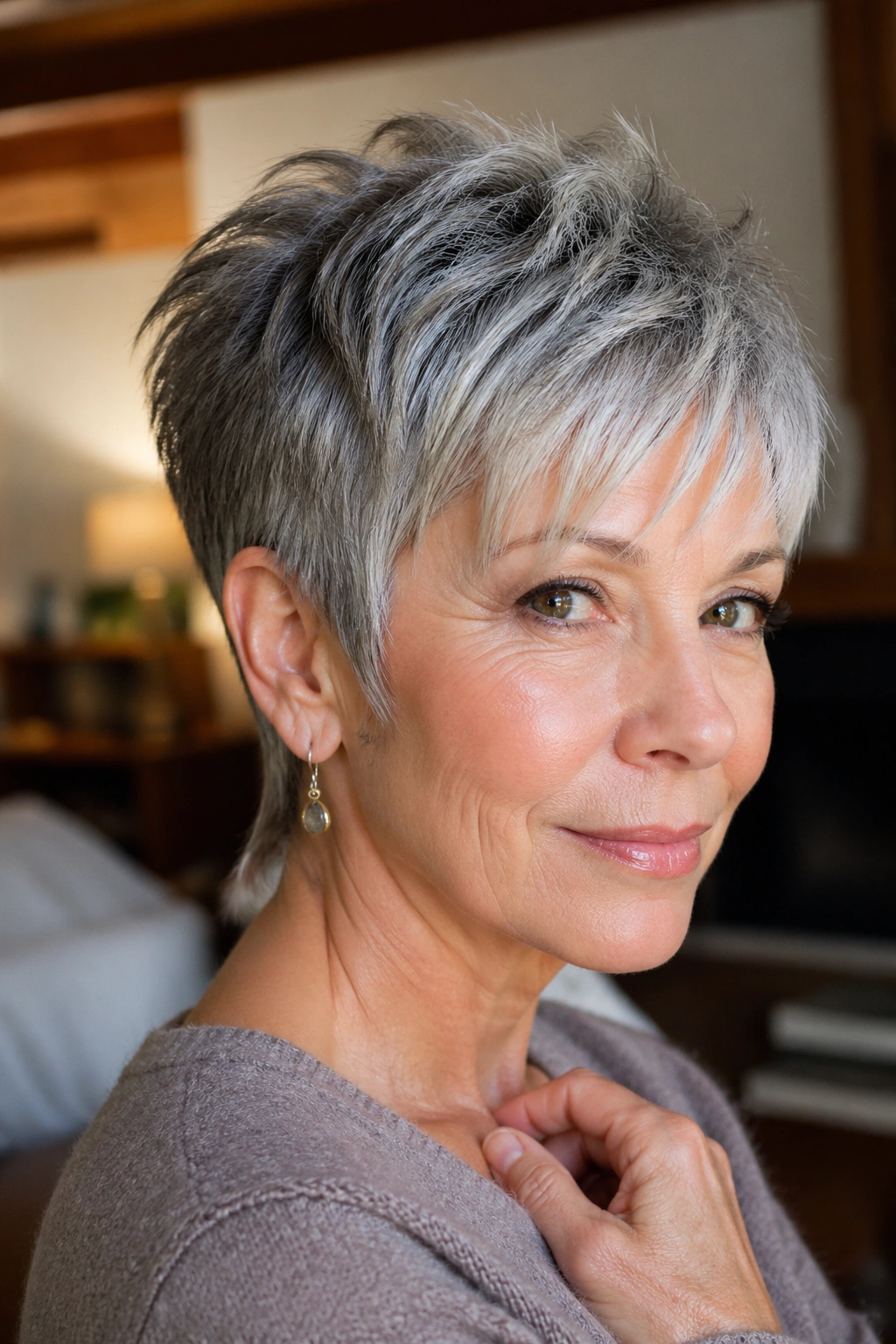
Do you need to cover every gray strand? Not at all. A salt-and-pepper pixie can look sharp when the cut is soft enough to let the color do its thing. The mix of tones gives the style more depth than a single-process color often can.
The wispy nape keeps the back light, while the temple area and fringe stay a touch longer to soften the face. That balance matters. If the nape is too blunt, the contrast with the silver and dark strands can feel harsh. If it’s too long, the whole back starts to look heavy.
What to Ask For
Tell your stylist you want the neckline to stay neat but not hard. Ask for texture through the top and a little softness around the ears. Those details stop the cut from looking like a uniform helmet shape.
A little shine cream can help salt-and-pepper hair look polished, especially if the texture gets wiry. Not much. Just enough to calm the edges.
This is one of my favorite combinations, honestly. The color already has character. The cut should keep up.
16. Tapered Shaggy Pixie for Glasses After 60
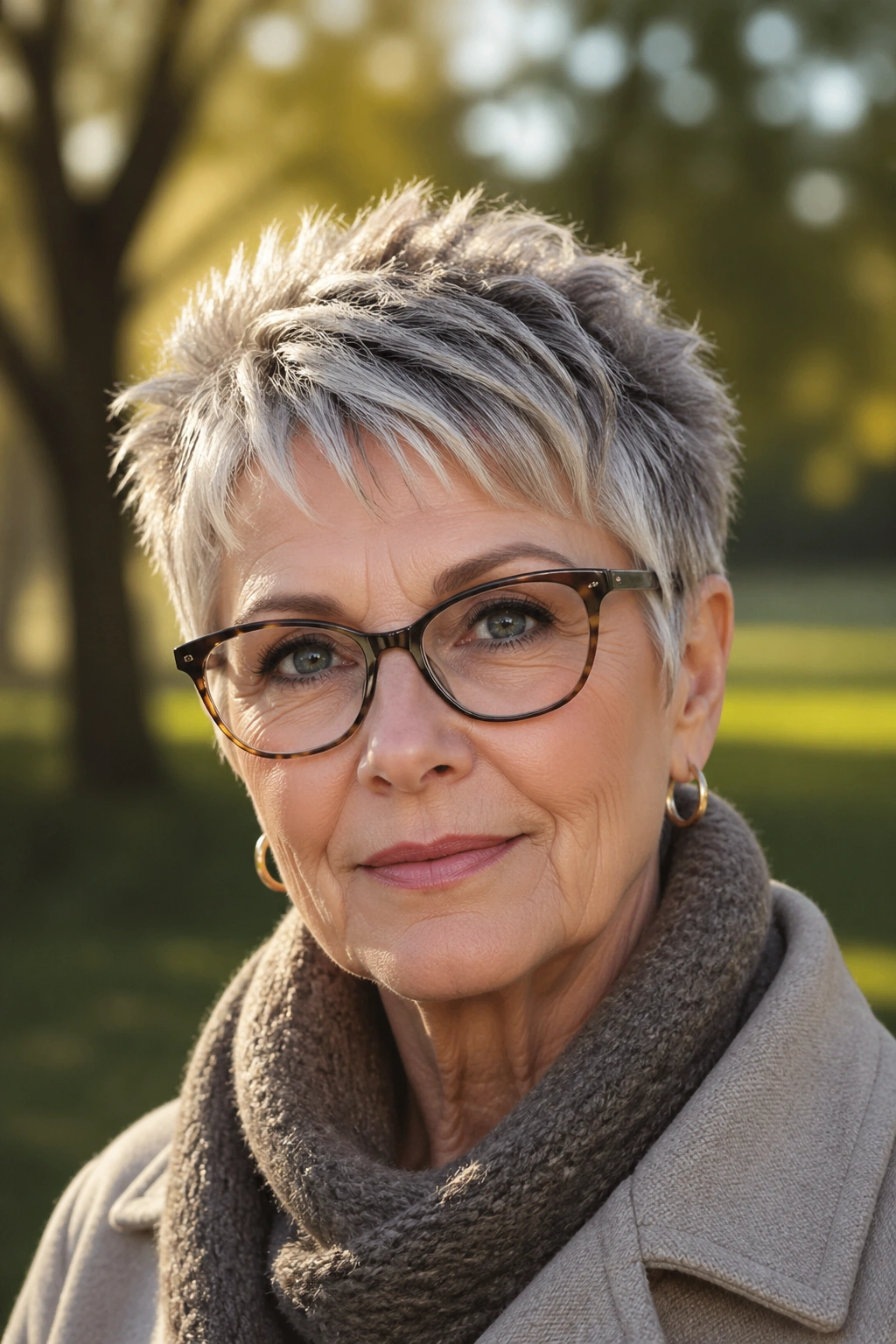
Glasses change everything. They add another line across the face, and a shaggy pixie needs to leave space around the frames or the whole look gets crowded fast.
This is where a tapered shape helps. Keep the sides soft but close, with the hair around the temples trimmed so it does not rub right against the arms of the glasses. The top can stay a little longer — around 3 inches is a useful starting point — so there’s enough texture to balance the frames. If the fringe sits too low, it fights your lenses every time you blink.
- Leave a little room above the frame line
- Keep the temple area light, not bulky
- Choose texture over volume at the sides
- Brush the front away from the lenses when drying
The best glasses-friendly pixies feel neat without looking strict. That’s the goal. You want the frames and the hair to meet each other instead of wrestling for space.
17. Messy Textured Pixie With Razored Edges
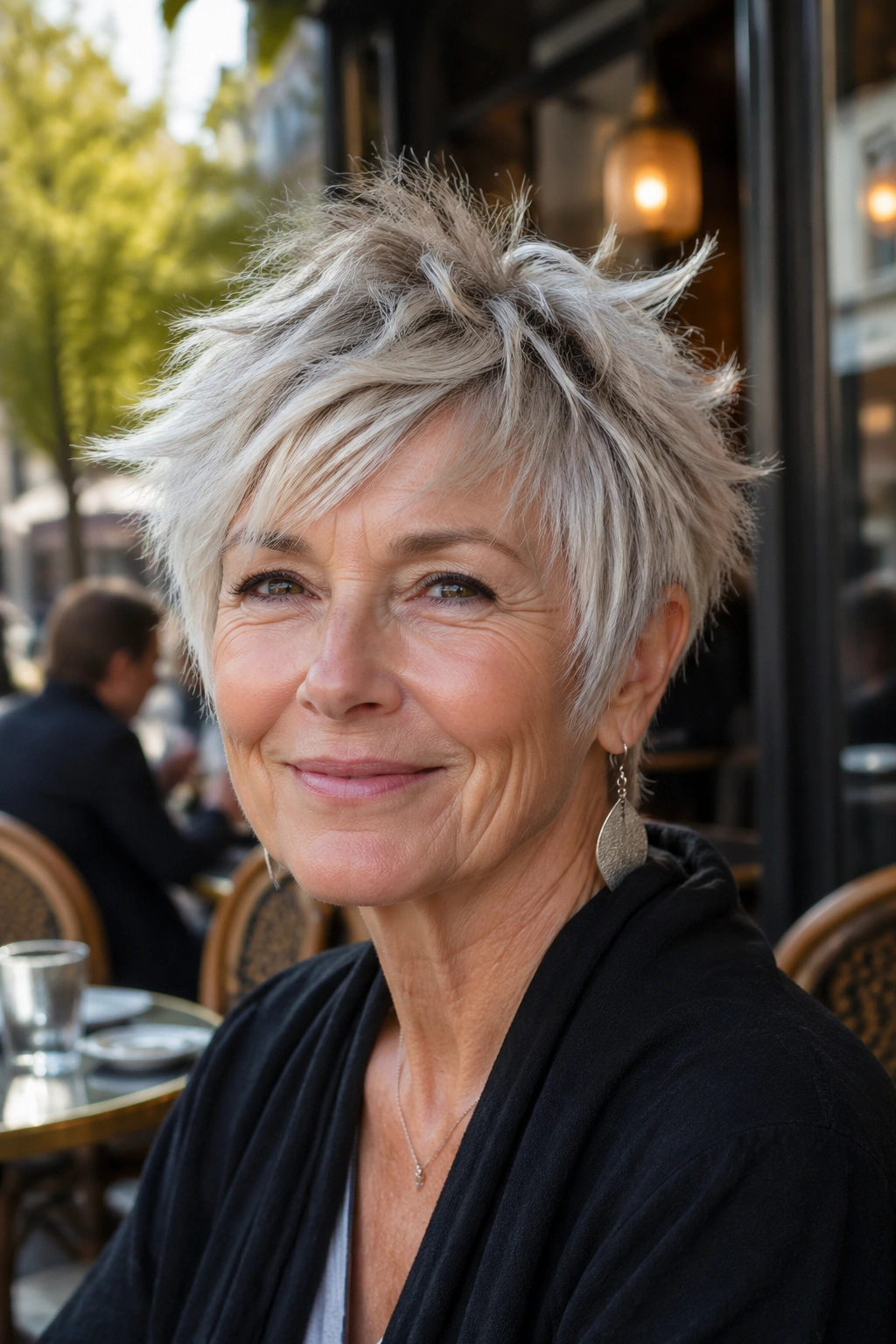
Razored edges can be brilliant on the right hair. They create that airy, piecey end that moves instead of sitting in one heavy block. But they need judgment. Too much razor on already fragile hair and the ends go fuzzy fast.
I like this cut on straight to softly wavy hair with decent strength through the ends. The stylist should use the razor lightly, mostly on the outer edge, while keeping the inside shape controlled. Think controlled roughness, not chaos. That’s a strange phrase, but it fits.
The messy part is part of the charm. You’re not trying to make every strand behave. You’re aiming for texture that looks lived-in and a little undone in a good way. A matte paste gives separation without shine, which suits this cut better than anything slick.
If you like a cut that looks better with a little movement in it, this one can be a lot of fun. If you want every hair to stay in place, skip it.
18. Soft Crop With Longer Sideburns
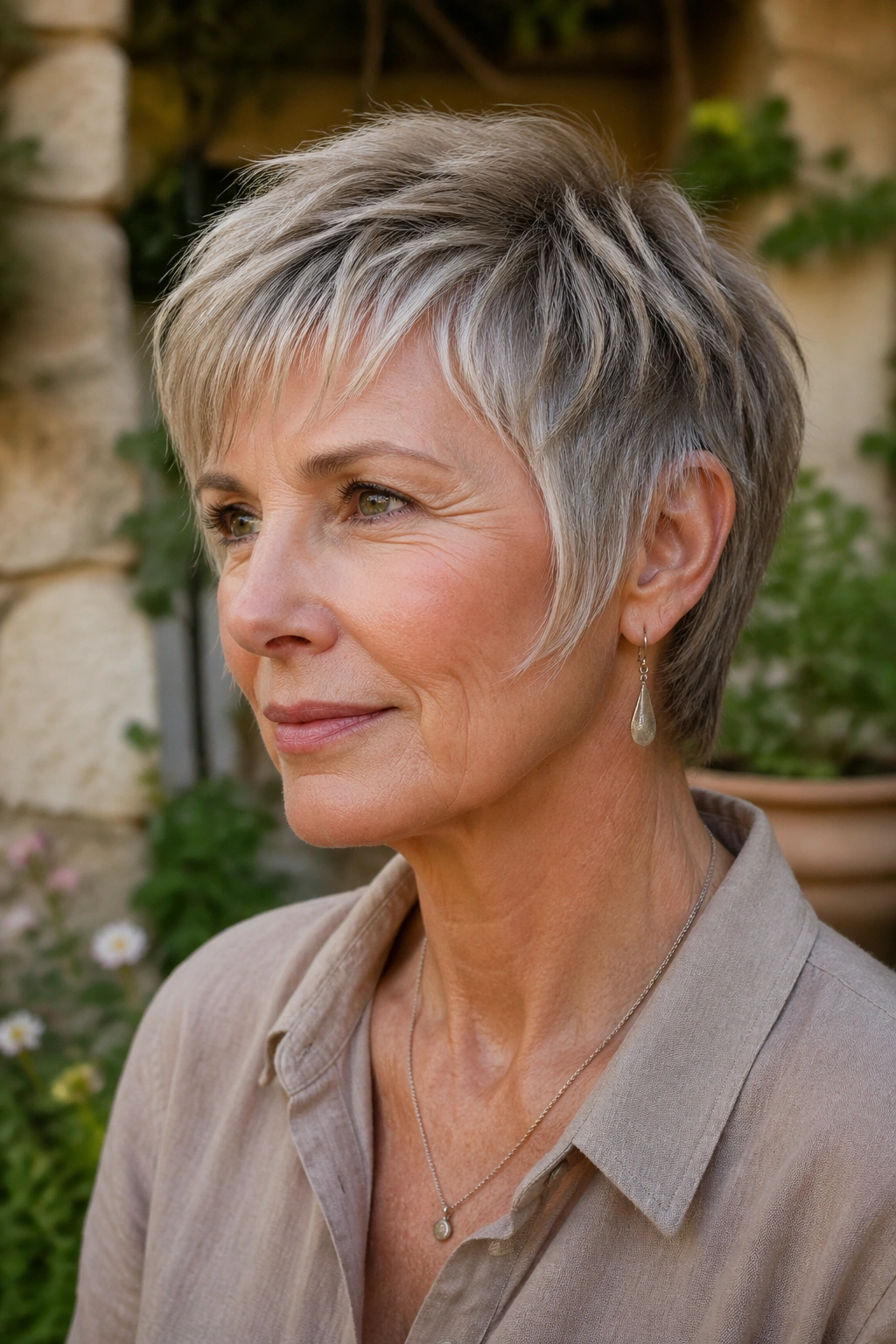
Longer sideburns are underrated. They soften the jaw, frame the cheek, and keep a short crop from feeling too abrupt around the face. It’s a small detail, but it changes the whole balance.
This version works well when the top stays short and textured, while the sideburns drop to about 1½ to 2 inches and taper gently into the rest of the cut. The effect is calmer than a hard crop. A little more feminine, if that word still means anything useful in a haircut conversation.
Unlike an ultra-short pixie that can expose every angle, this one gives the face a softer edge. It’s a good option if your jawline feels stronger than you want it to or if you prefer earrings and glasses to stay part of the picture.
Keep the sideburns narrow, not squared off. Square ends look stiff. Tapered ends move.
19. Shaggy Pixie Bob Hybrid
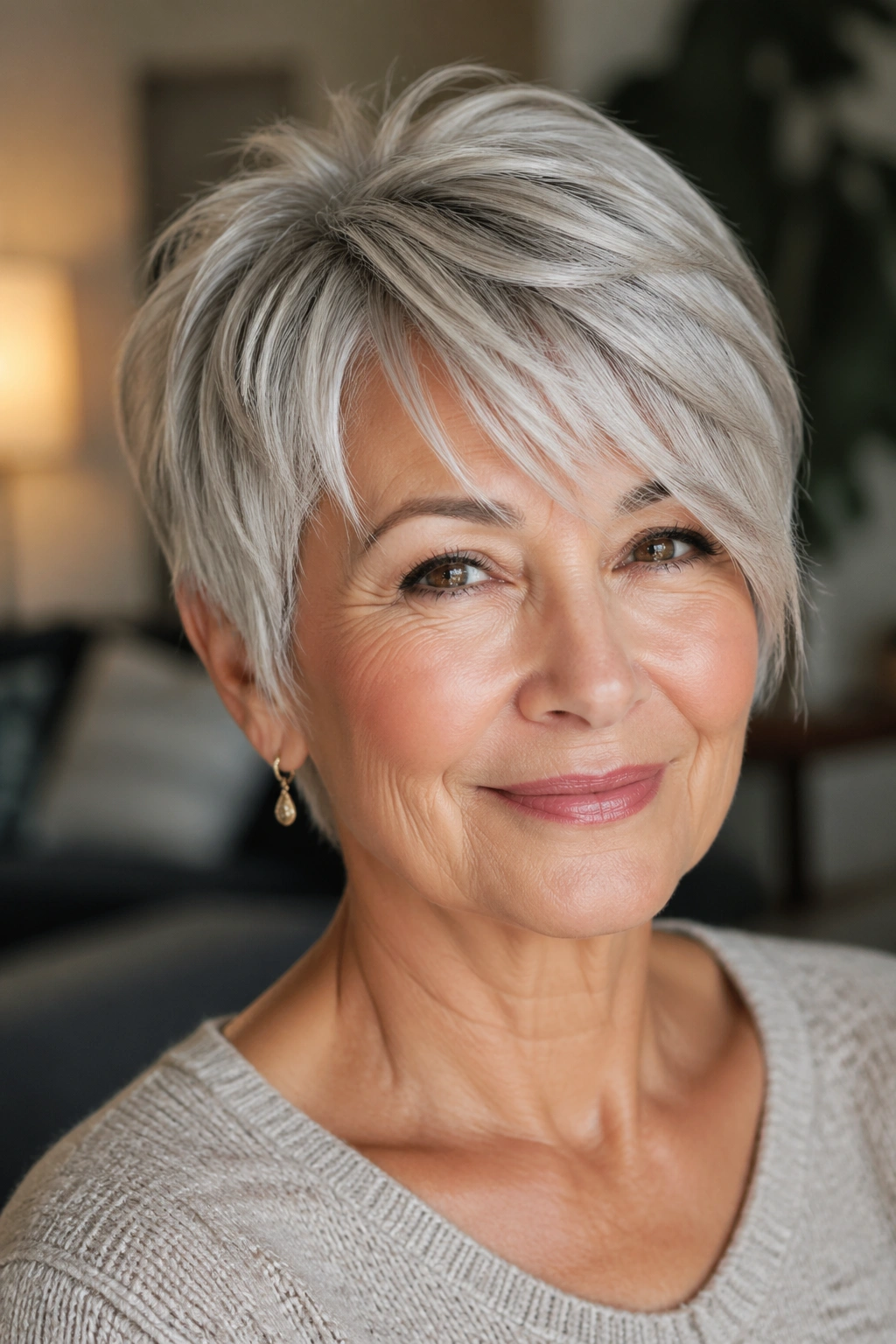
This is the cut for someone who says, “I want short hair, but not that short.” Fair enough. The pixie bob hybrid keeps a bit more length through the front and sides while the back is trimmed up enough to stay light.
Where the Bob Ends and the Pixie Begins
A useful range is 4 to 5 inches in the front and closer to 1 to 2 inches at the nape, depending on how much shape you want. The interior layers should be soft and shaggy so the hair can bend instead of sitting like a shelf. That matters most at the cheek and jaw area, where hair likes to puff or kink.
This cut gives you options. You can wear it tucked, swept to one side, or a little flipped at the ends. If you have been wearing a bob for years and want a shorter feel without a big leap, it’s a sensible move.
- Ask for a shorter back with a longer front
- Keep the perimeter soft, not blunt
- Use a round brush at the face only
- Let the top stay a little messy on purpose
It’s a bridge cut. A useful one.
20. Air-Dried Natural Texture Pixie
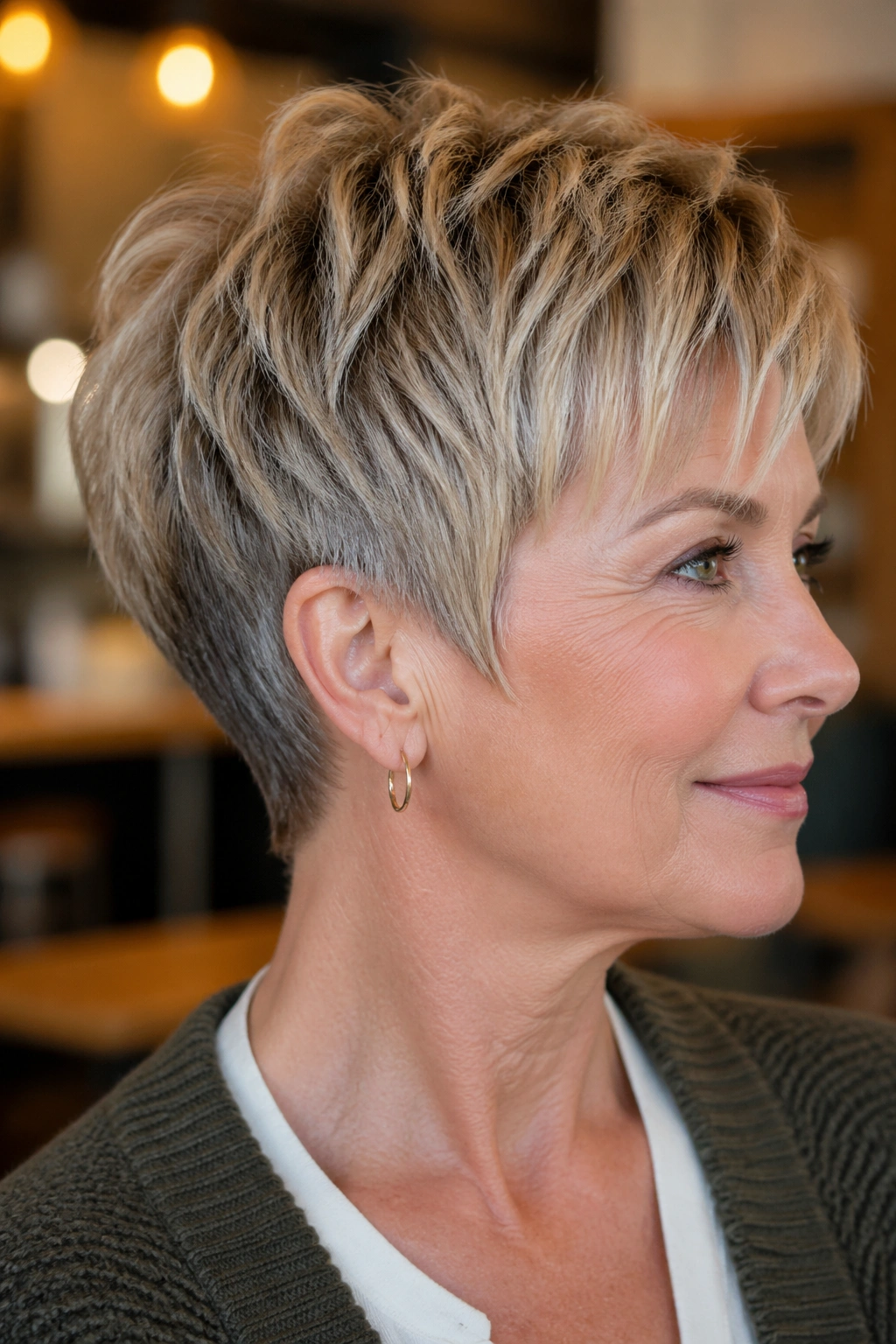
If you hate styling tools, the cut has to do the heavy lifting. This version is built for air-drying, which means the shape needs to follow your hair’s own bend instead of pretending it will act like someone else’s.
The best air-dried pixies keep enough length on top — usually 2½ to 3½ inches — to let waves or bends show up. The sides and nape stay neater, which prevents the style from ballooning out while it dries. A leave-in spray or very light cream is usually enough. Heavy product can make the hair collapse before it even has a chance to dry.
A microfiber towel helps more than people think. So does scrunching with the hands instead of combing through every section. You want the shape to settle, not get chased around the head.
This is the cut I’d pick for someone who wants easy mornings and does not care to negotiate with a blow-dryer.
21. Easy Grow-Out Shaggy Pixie That Keeps Its Shape
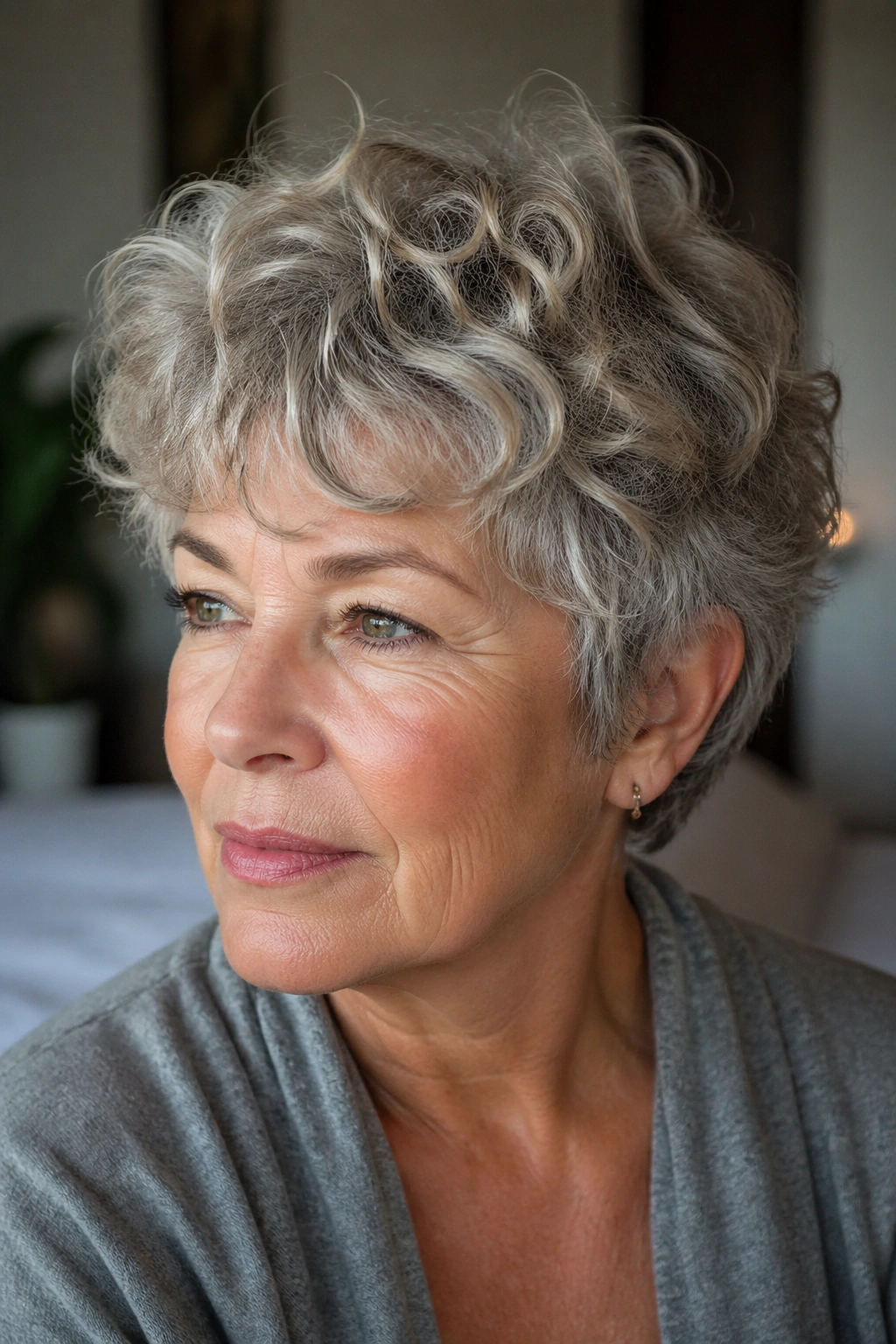
What if you want the cut to look decent even when it grows a little? Then this is the one to ask about. A good grow-out shaggy pixie has a soft perimeter, a controlled nape, and enough texture on top that the shape still reads as deliberate after several weeks.
The trick is leaving the front a touch longer than the back and keeping the fringe broken rather than blunt. When the hair grows, those longer pieces frame the face instead of hanging like a mistake. That’s the real value here. It buys you time between trims without turning into a helmet or a mushroom.
I’d ask for soft layers through the crown, a tapered neckline, and sides that can graze the ears without swelling out. If you like to go six or eight weeks between salon visits, this shape tends to stay friendly. It may not look salon-fresh forever — no short cut does — but it can still look tidy, which is worth plenty.
If you want one shaggy pixie that feels easy from day one and still behaves when life gets busy, this is the version I’d put near the top of the list.