



A pixie haircut for thick hair can look airy or boxy, and the difference usually comes down to one thing: where the weight gets removed. Thick hair has a habit of holding onto every ounce of bulk you leave behind, which is great when you want body and a little less great when you want a short cut that moves.
That’s why some pixies look crisp for a day and then puff out into a solid shape. The hair is not “bad.” The cut is too blunt, too heavy, or too even. A good short crop for dense hair makes smart choices: a tapered nape, lighter interior layers, and a front section that can fall or sweep instead of sticking straight out.
The styles that work best do not all solve the problem the same way. Some use feathering. Some use a hidden undercut. Some lean into texture and let the ends break apart a little. A few are soft enough to grow out without turning into a helmet.
1. Feathered Crown Pixie for Thick Hair
Feathering the crown is one of the cleanest ways to make thick hair feel lighter without stripping it bare. The goal is not to thin everything out until it’s wispy. The goal is to take density off the top so the cut sits close to the head and still moves when you run your fingers through it.
Why the Crown Matters
The crown is where thick hair can look like a solid cap. Once that area is softened with point-cutting or a light razor pass, the whole shape opens up. The sides stay neat, the top gets lift, and the cut stops looking like one heavy block.
Ask for shorter internal layers at the crown and slightly longer top pieces, usually around 2 to 3 inches depending on how much styling you want. That keeps the lift without turning the top into fluff.
- Blow-dry the roots up and slightly forward.
- Use a pea-size mousse or root spray, not a heavy cream.
- Finger-style first, then smooth only the pieces that need it.
Best tip: keep the feathering concentrated at the crown and upper back of the head. That’s where thick hair usually needs the most help.
2. Undercut Pixie with Long Top
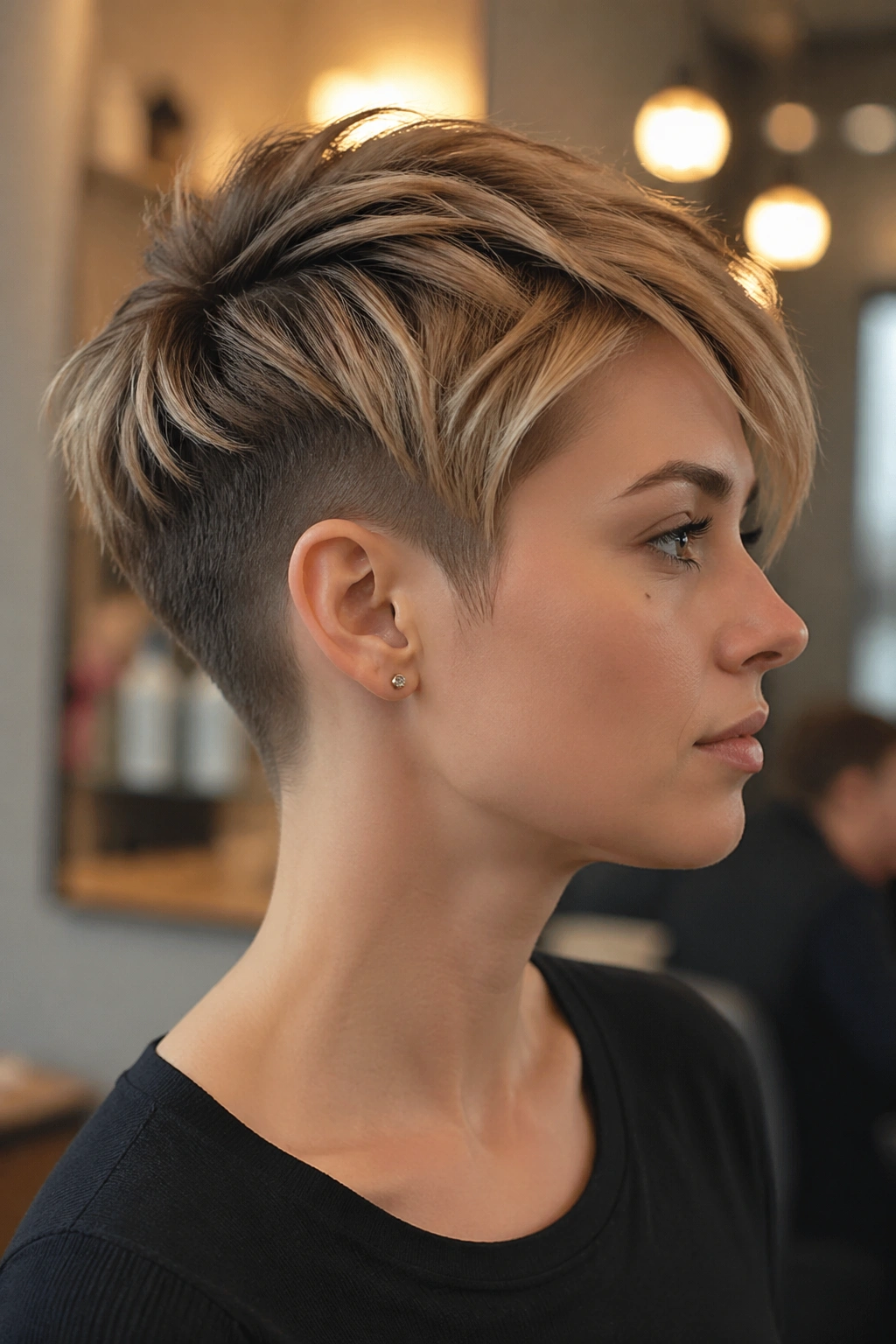
A hidden undercut is not a drama move on thick hair. It’s practical. If your hair is dense through the nape, temples, or both, removing a thin section underneath can make the top look twice as light without sacrificing length where you want it.
The trick is keeping the long top intentional. You want contrast, not accident. Let the top sit around 3 to 5 inches if you like sweeping movement, and keep the undercut tight enough that it disappears when the hair is worn down. That way the cut still reads polished, not shaved-for-shock-value.
This shape works especially well if you like changing your part, slicking the hair back, or pushing it forward with a bit of paste. It also grows out with less fight than people expect, because the top layer still has room to fall.
A small warning: if you go too short at the undercut and too blunt on top, the shape can become stiff fast. Better to leave a little softness at the seam.
3. Side-Swept Pixie with a Deep Part
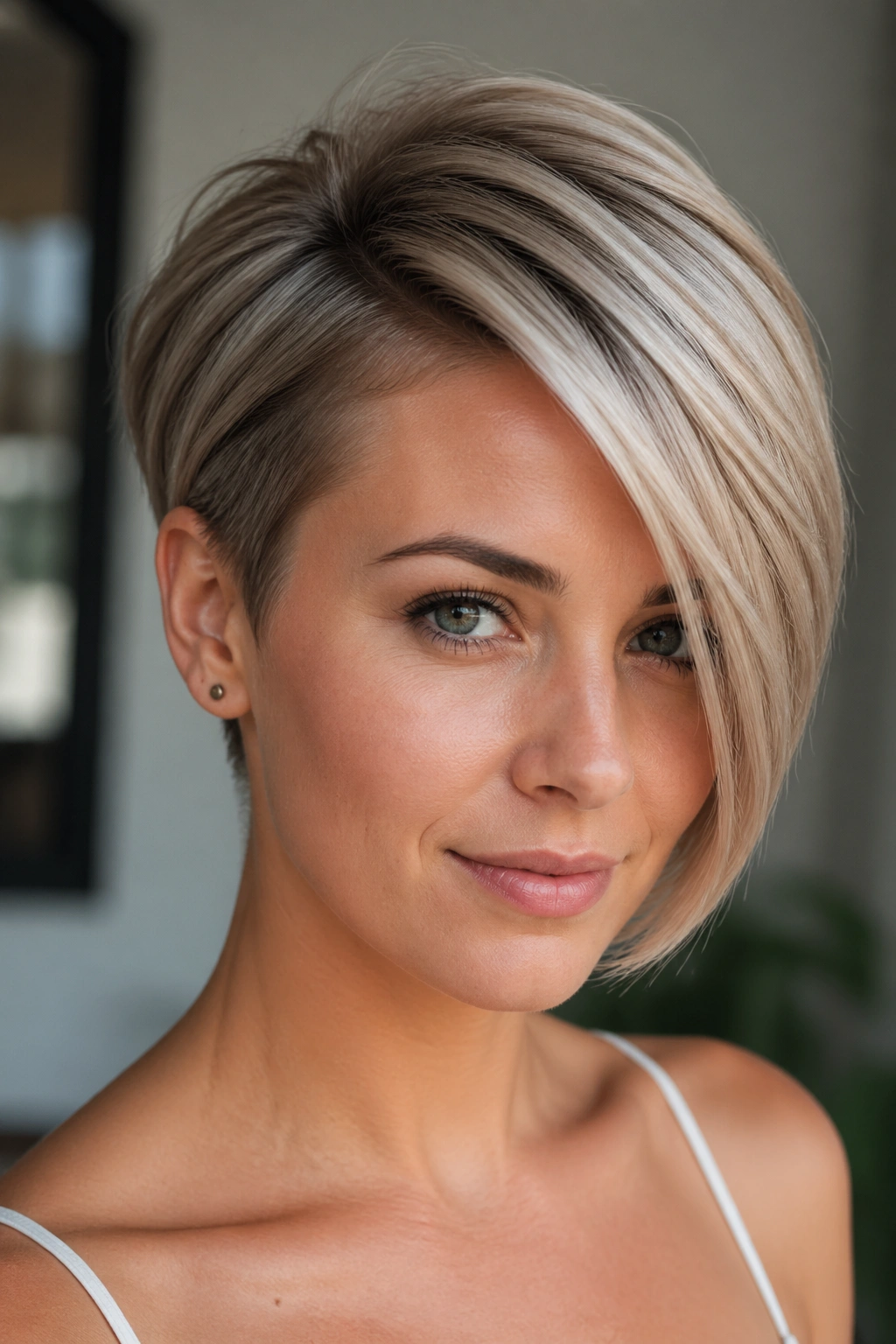
Why does a deep side part calm thick hair so quickly? Because it breaks the mass into two different visual planes. Instead of one wide, even shape, you get a diagonal line that pulls the eye down and across the face.
That’s especially useful if your hair tends to expand at the temples. A side-swept pixie lets one section carry more length while the other stays close to the head, so the whole style feels lighter even when the hair itself is still dense.
How to Style It
- Blow-dry in the opposite direction of your part first.
- Flip the top over once it’s about 80% dry.
- Finish with a light styling cream on the ends only.
Keep the longer side at cheekbone length or a little shorter if you want the style to stay crisp. If the fringe gets too long, it can drag the whole cut down. Too short, and you lose the softness that makes this shape work.
4. Tapered Nape Pixie for Thick Hair
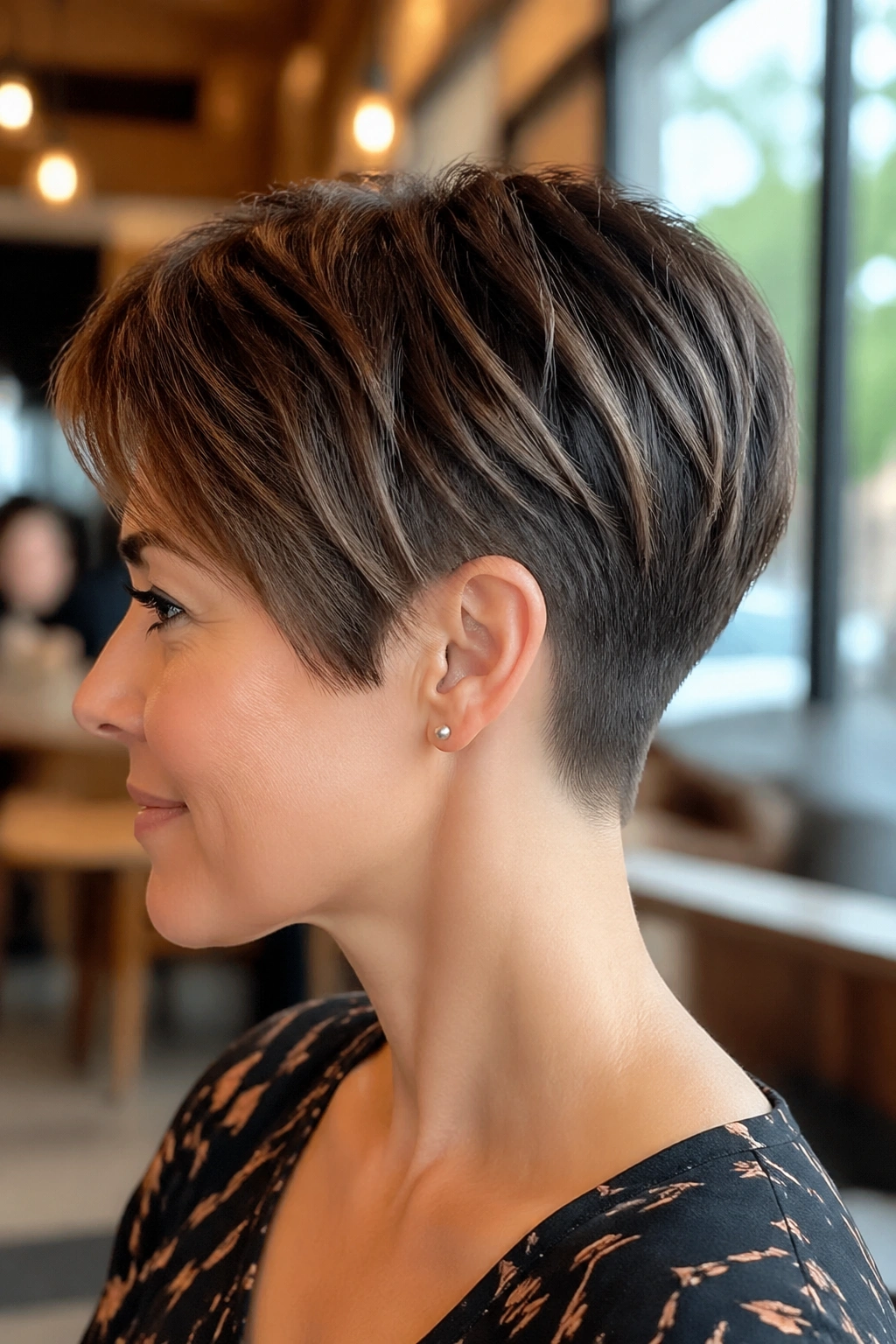
If the back of a pixie seems to balloon the second you step outside, the nape is probably the problem. Thick hair loves to collect weight there, and a blunt finish at the neck can make the whole cut feel chunky from behind.
A tapered nape solves that fast. It hugs the hairline, keeps the neckline clean, and lets the top carry the style instead of the back. I like this shape on people who wear scarves, high collars, or jewelry around the neck, because the haircut stays visible without looking crowded.
What to ask for at the salon:
- A close taper at the hairline, not a hard line.
- Slightly longer pieces above the taper for a smooth blend.
- Soft cleanup around the ears so the sides do not puff out.
This is one of those cuts that looks better from every angle when it’s done right. From the side, it feels crisp. From the back, it feels tidy. From the front, the eye goes up, not outward.
5. Shaggy Choppy Pixie
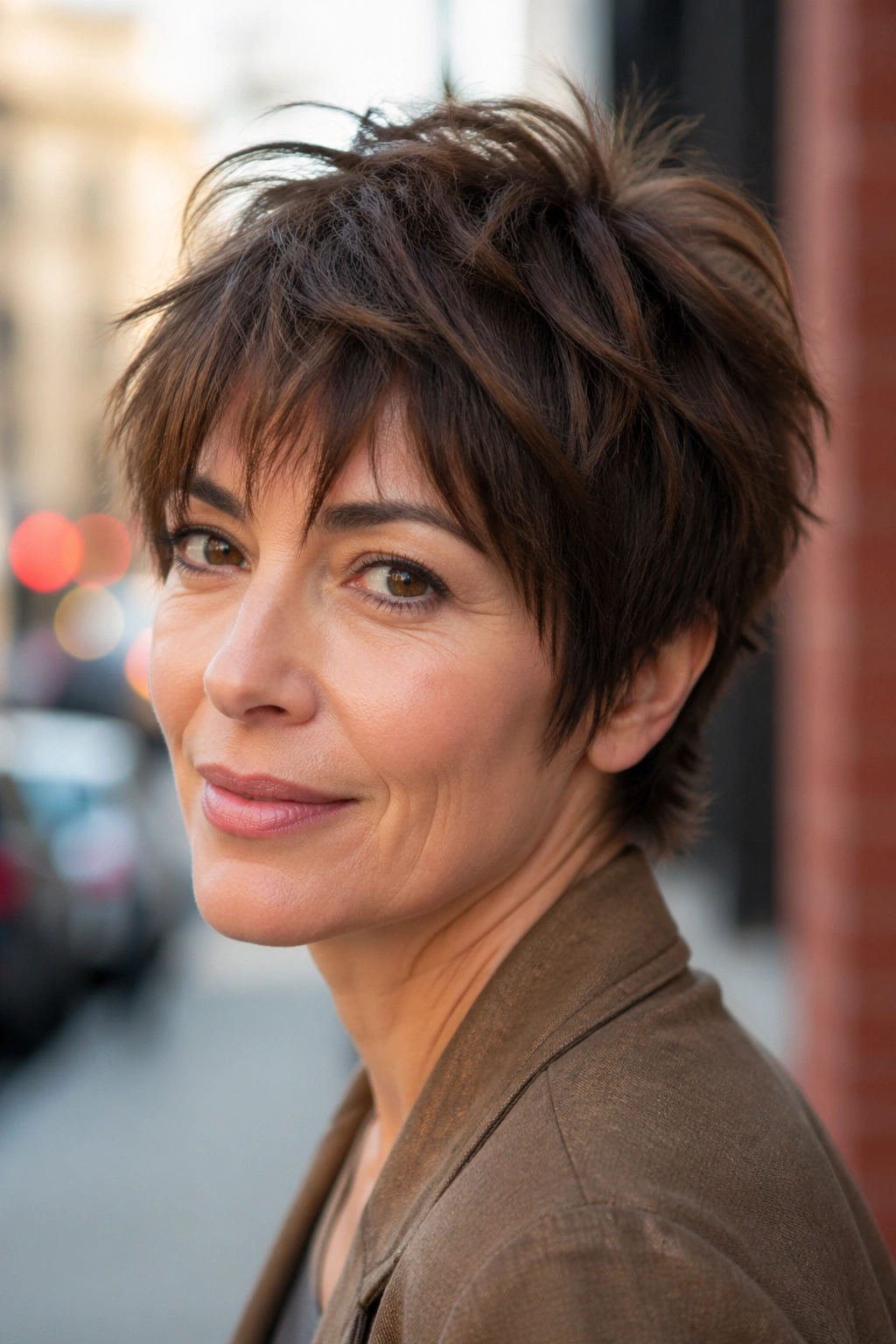
A shaggy pixie is not sloppy. On thick hair, it can be the most forgiving shape in the bunch, because the texture gives the cut its own movement. Choppy ends break up the mass and keep the style from sitting in one heavy sheet.
The key is restraint. You want separation, not fraying. Ask for pieces cut at different lengths around the top and sides, with enough blunt structure underneath to keep the cut from collapsing. Too much thinning can make thick hair frizz at the tips, and that usually looks worse than the bulk you were trying to remove.
This shape likes matte paste or a light texture cream worked through dry hair. Scrunch it a little. Then stop. If you keep fussing, it starts to look messy instead of easy.
It’s a good pick if you want a short cut that doesn’t feel precious. The grow-out is decent too, which matters more than most salon photos admit.
6. Curly Pixie with Soft Layers
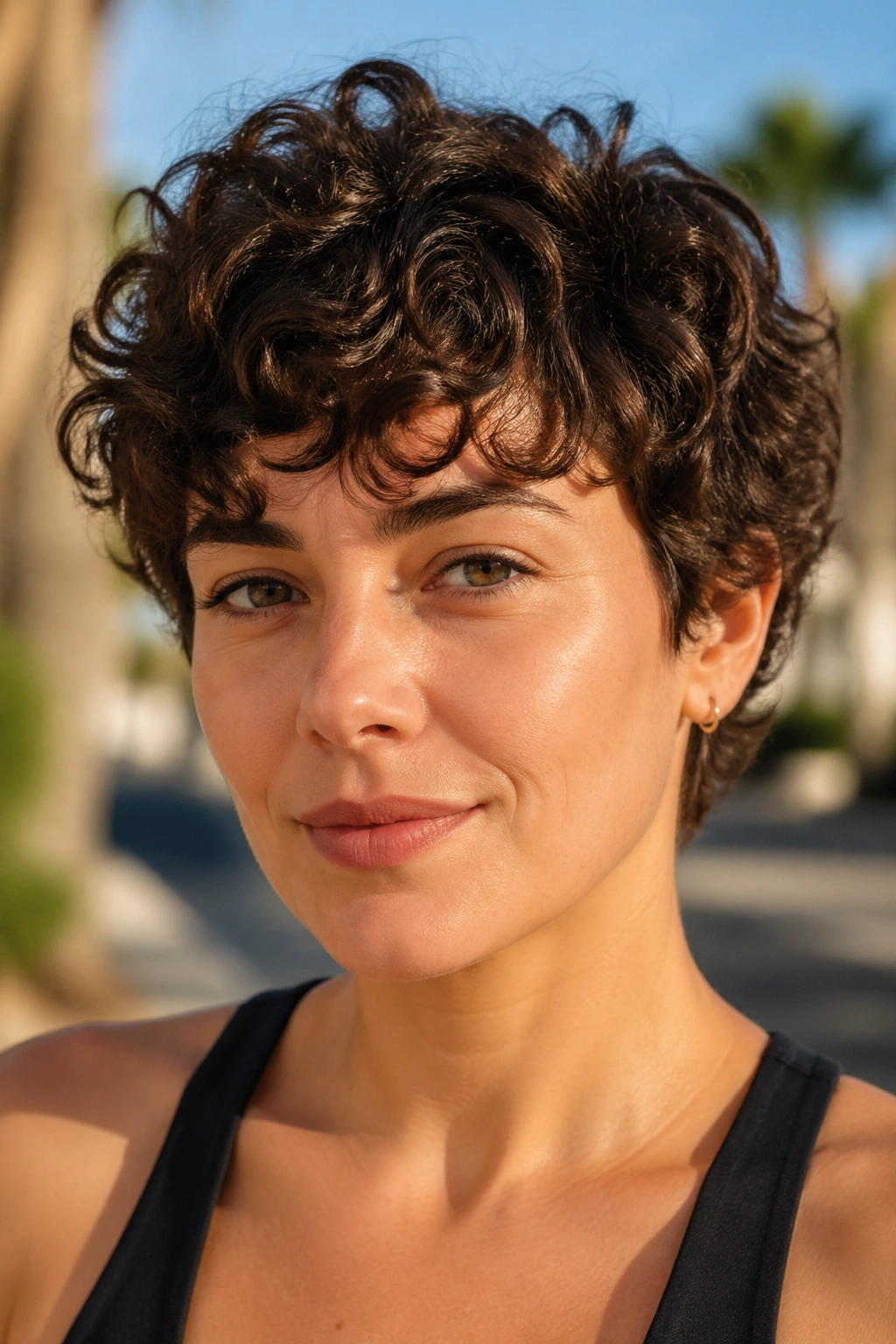
Curly thick hair does not need to be flattened into obedience. It needs space. When a pixie is cut too short all over curly hair, the shape can turn round in the wrong way and lose its bounce. Leave enough length for the curl to spring, and the whole cut looks lighter right away.
The smartest version uses soft internal layers rather than aggressive thinning. That lets the curls stack without building up into a triangle. A dry cut is often the cleanest option because curls show their true length only when they’re dry.
What to Ask For
- Keep the top long enough to show curl pattern, usually 2 to 4 inches.
- Remove bulk in small sections, not with heavy texturizing.
- Shape the fringe after the curls are dry.
If your curls are loose, a diffuser helps. Tight curls usually do better with a curl cream that has some hold, because the hair needs structure as much as softness. The wrong product can make the top puff out, and then the whole cut loses its shape by lunchtime.
7. Asymmetrical Pixie with One Heavy Side
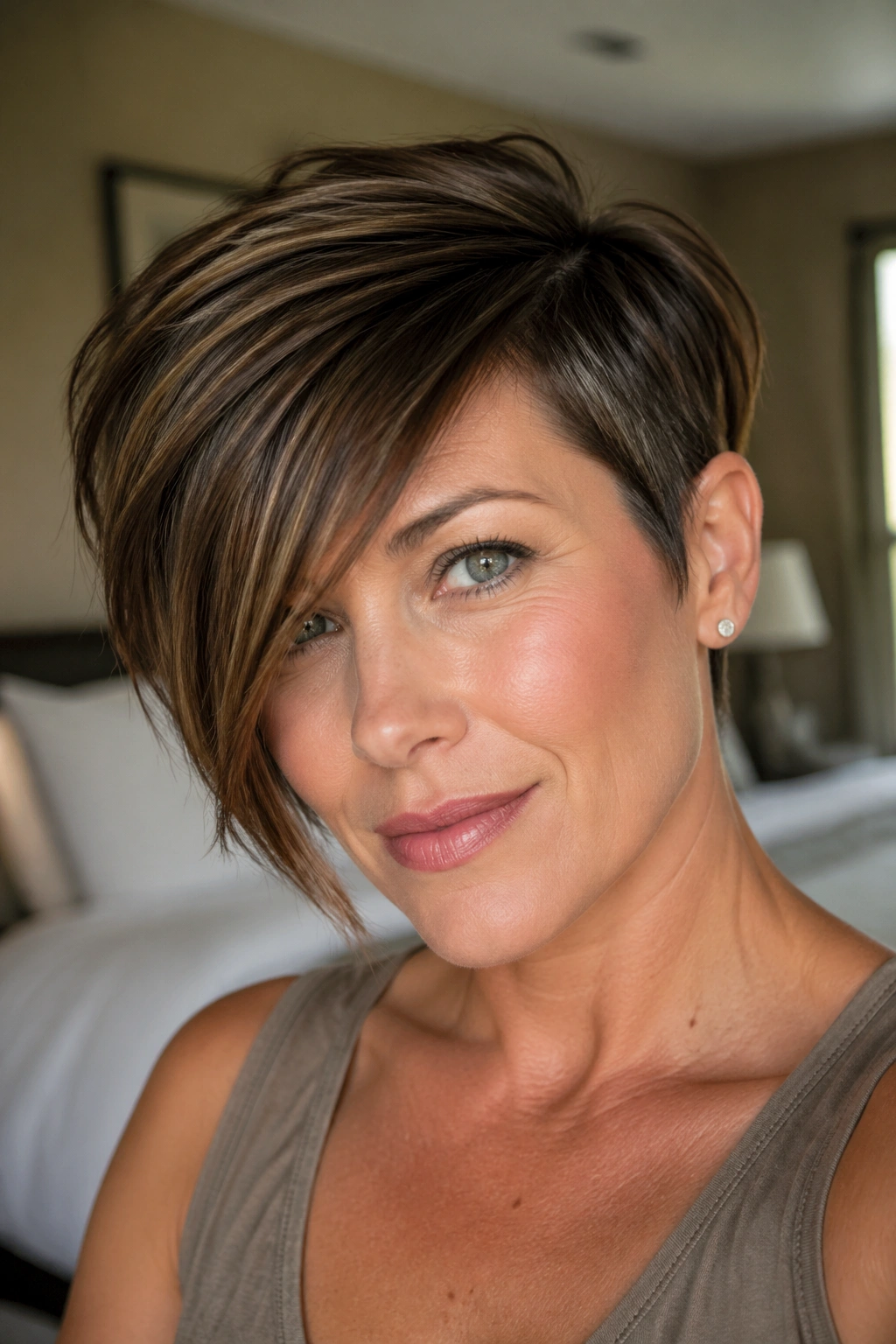
A good asymmetrical pixie should feel like one side is skimming the cheek while the other stays close to the ear. That single shift changes how thick hair sits on the head. Instead of spreading evenly, the hair falls in one direction and looks more deliberate.
This cut works because it creates a visible slope. Thick hair often looks wider than it needs to at the temples, and asymmetry pulls that width inward. It also gives you a place to tuck one side behind the ear, which helps the style feel lighter in real life, not just in photos.
What Makes It Work
- Keep the longer side at or just below cheekbone level.
- Leave the shorter side soft around the temple.
- Avoid a hard, disconnected edge unless you want a sharper look.
The downside is maintenance. Asymmetric shapes grow out unevenly, and you notice that faster than with a balanced crop. Still, if you like haircuts with a little attitude, this one earns its keep.
8. Soft Bowl-Crop Pixie
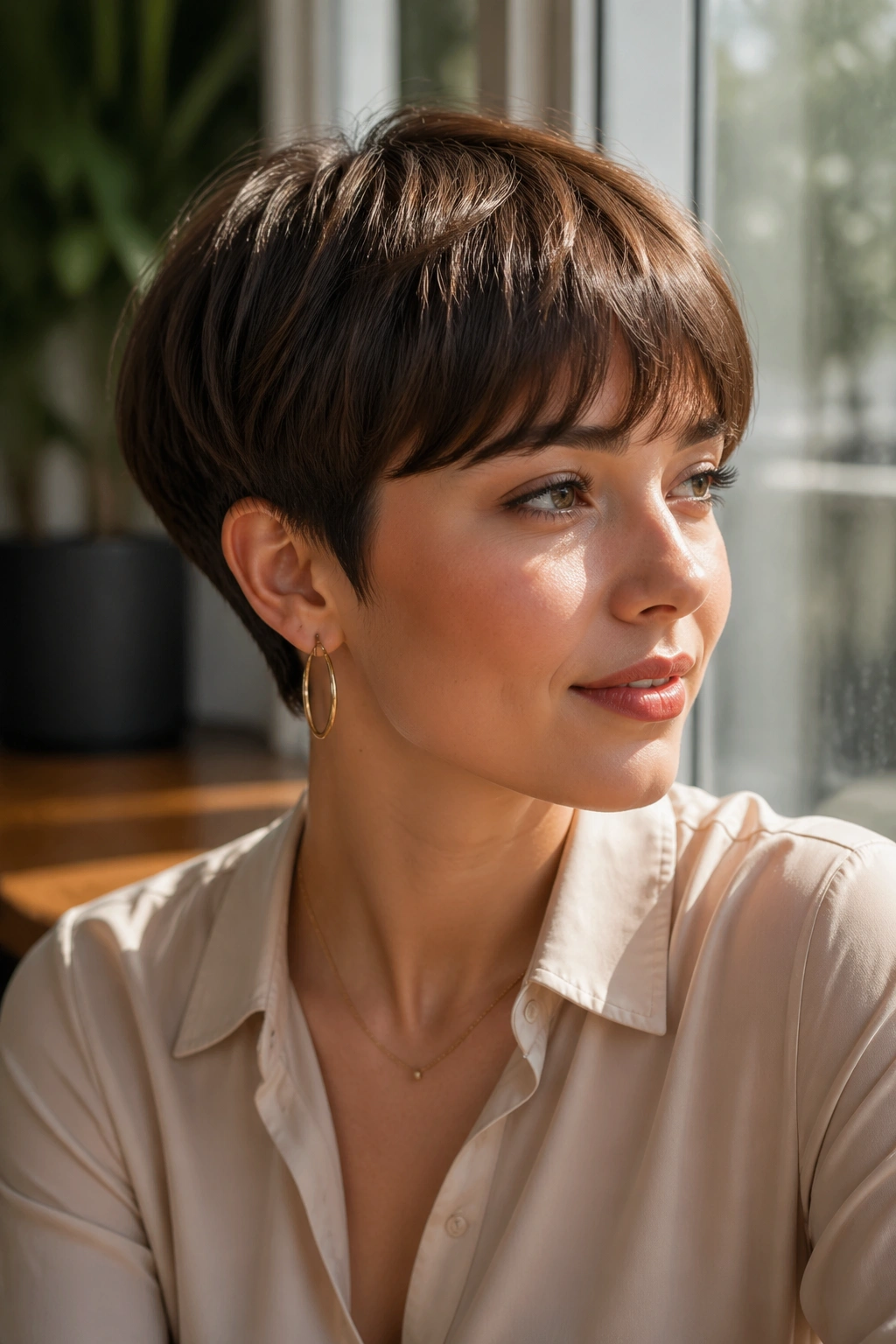
Unlike a blunt bowl cut, a soft bowl-crop pixie keeps the rounded outline but breaks the density inside. That matters on thick hair. You get the clean silhouette without the heavy, helmet-like feel that a strict one-length shape can create.
The best version has a curved fringe, short sides, and enough internal removal to let the top settle. The line should feel intentional but not hard. If the cut hugs the head too tightly and the fringe is too straight, thick hair can make it look severe.
I like this style on people who want something a little fashion-forward without going extreme. It has personality. It also works well with straight or slightly wavy hair, because the shape stays visible.
If you are nervous about going short, keep the perimeter soft around the ears and jaw. That small bit of softness makes the whole thing easier to wear.
9. Curtain Fringe Pixie
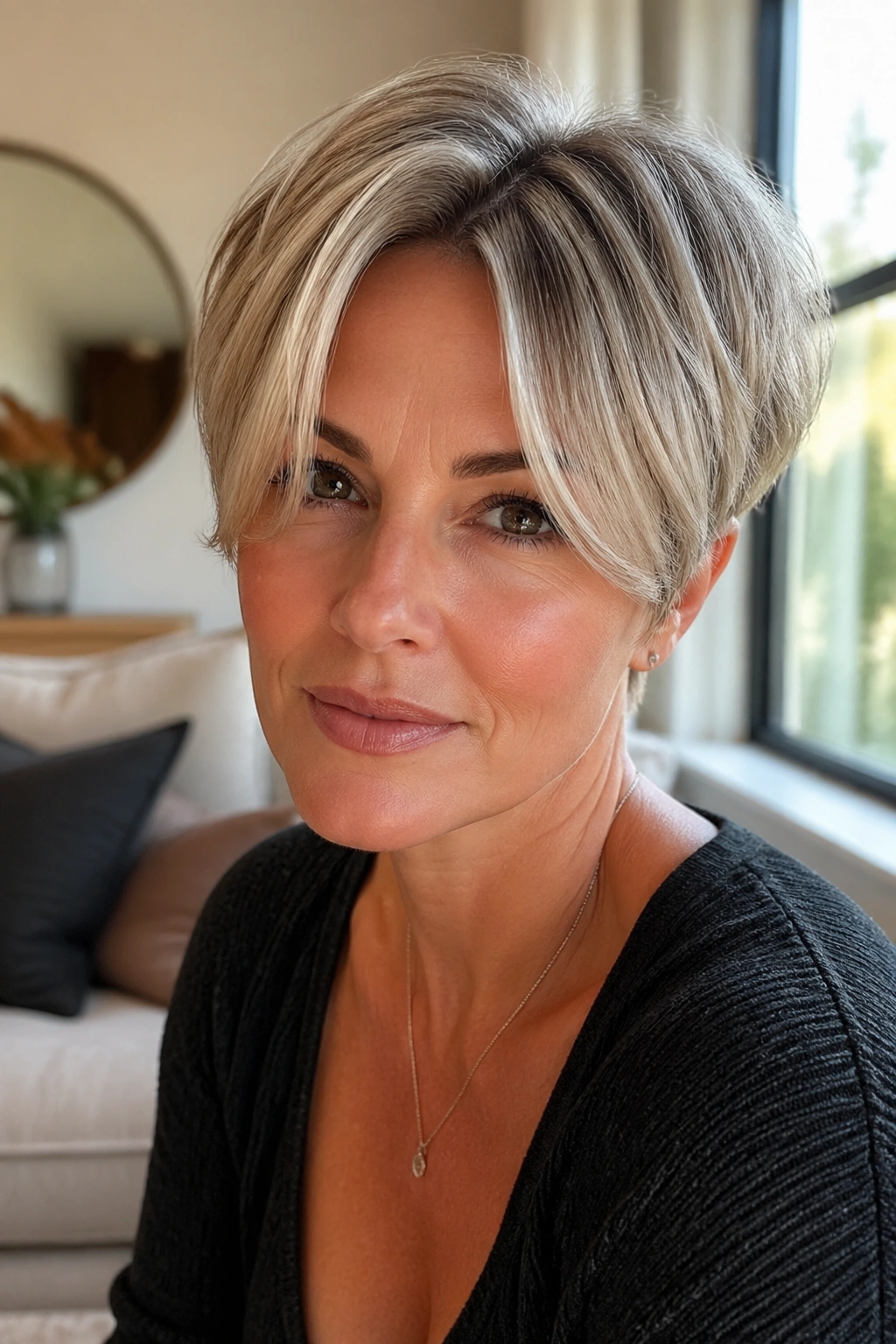
A short cut with a curtain fringe has a way of making thick hair feel lighter without losing face-framing softness. The fringe opens in the center or slightly off-center, so the weight at the front does not sit in one solid mass.
This is one of my favorite answers for people who want a pixie but still want a bit of length near the face. The fringe can be 2 to 3 inches long, depending on forehead height and how much sweep you want. Keep the sides tighter so the front has room to move.
A round brush helps if you like a polished finish. Fingers are better if you want that easy, broken-up shape. A tiny amount of styling cream on damp hair usually does more than a whole palmful of product.
It’s a softer answer than micro bangs, and it grows out more gracefully. That matters when your hair is thick, because growth tends to show in the fringe first.
10. Razor-Textured Pixie
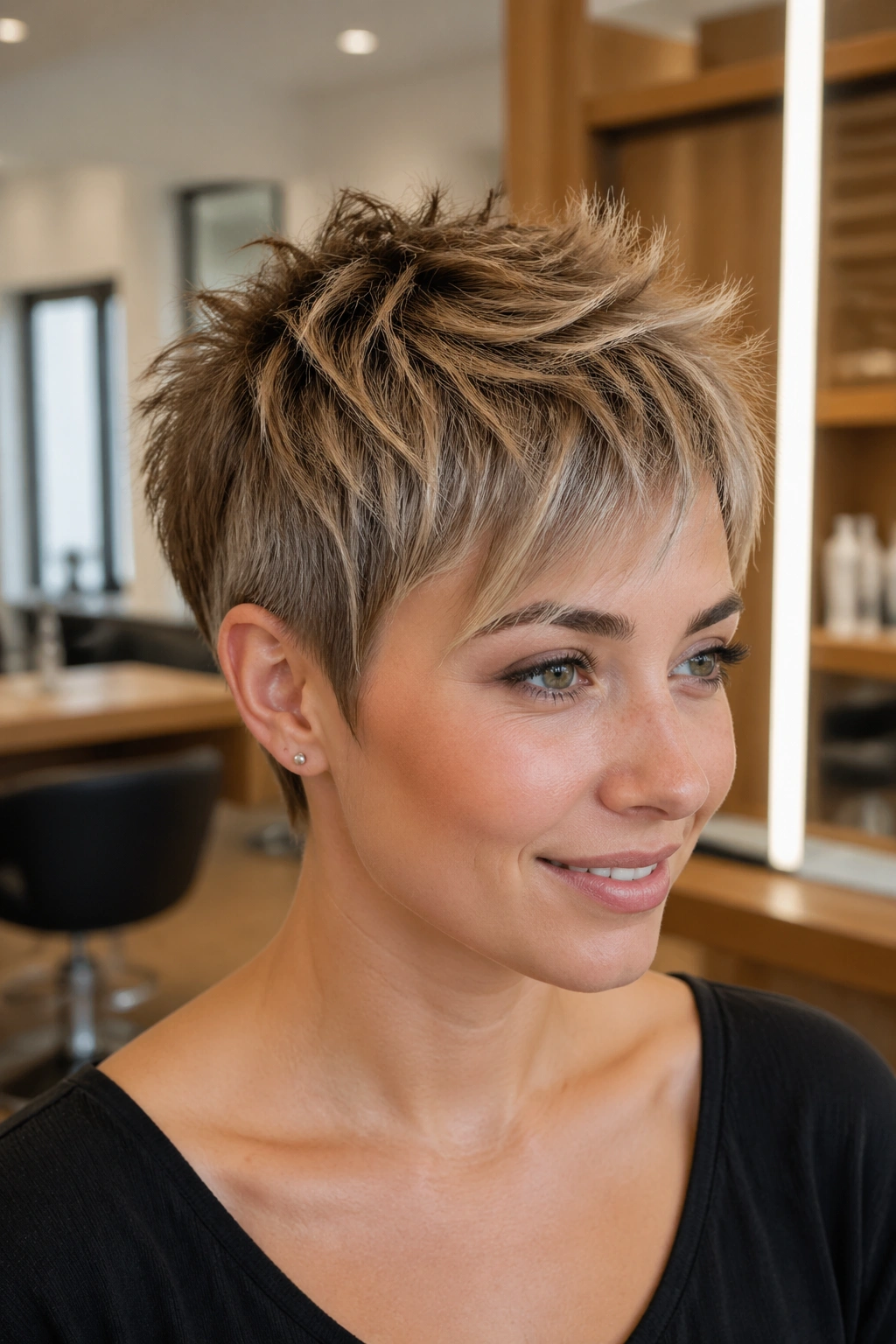
Does razor-texturing always help thick hair? No. On the right head of hair, it makes the ends softer and cuts the bulk in a way scissors sometimes can’t. On fragile or frizzy hair, it can make the ends look ragged fast.
When it works, though, it works well. The razor breaks up a dense line and gives the pixie that airy, separated look people want from short hair. It’s especially useful on straight to wavy textures that need movement more than softness.
How to Use It Well
- Ask for light razor work, not heavy slicing.
- Keep the interior stronger so the cut still has shape.
- Use a small amount of paste or matte cream after drying.
If your hair already frays at the ends, a scissor-cut with point-cutting may be safer. Razor work is a tool, not a rule. A good stylist knows when to stop.
11. Long Fringe, Short Back Pixie
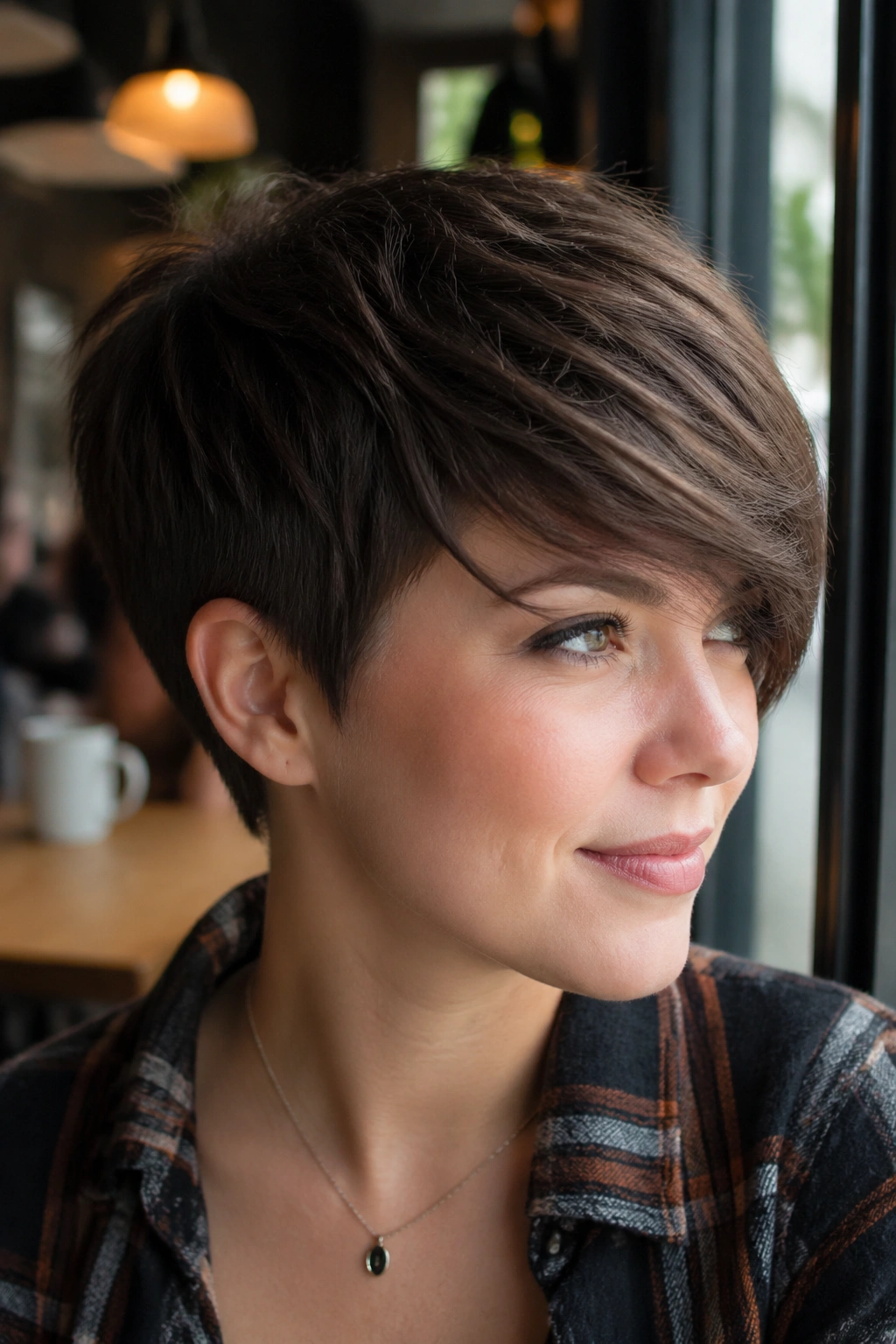
Keeping the front longer and the back short is one of the fastest ways to make thick hair look lighter. The eye goes to the fringe first, and the lighter nape keeps the cut from feeling boxy. That contrast does a lot of heavy lifting.
This shape usually leaves the front around 4 to 5 inches, sometimes a touch longer, while the back sits close to the head. The result is a short cut that still has swing. You can tuck it, sweep it, or push it forward without the hair feeling stuck.
It’s especially good if your face likes length through the front. Strong cheekbones, a square jaw, or a broad forehead all benefit from the extra framing. The short back keeps things neat. The longer fringe keeps the style from looking severe.
One nice side effect: it grows out into a very useful crop. You are not trapped between “pixie” and “awkward.” There’s a middle stage that still looks intentional.
12. French Cropped Pixie

If you want something chic enough for air-drying but not precious, the French-crop pixie is the one I keep coming back to. It works because it doesn’t fight thick hair. It shapes it.
The cut usually has a short, soft fringe, a close nape, and enough texture on top to break up the density. Nothing is too polished. Nothing is too sharp. That relaxed finish matters, because thick hair often looks best when it’s allowed a little movement instead of being forced into a glassy surface.
The Shape That Matters
The fringe should graze the forehead, not sit hard across it. The sides need to stay close enough to avoid puffing, but not so short that the cut loses softness. If the hair is coarse, a tiny bit of cream or balm on damp hair is usually enough.
This is a good choice if you want low effort during the week and a cleaner shape for dressed-up settings. It looks especially nice with natural texture and a simple ear tuck.
13. Invisible Layer Pixie
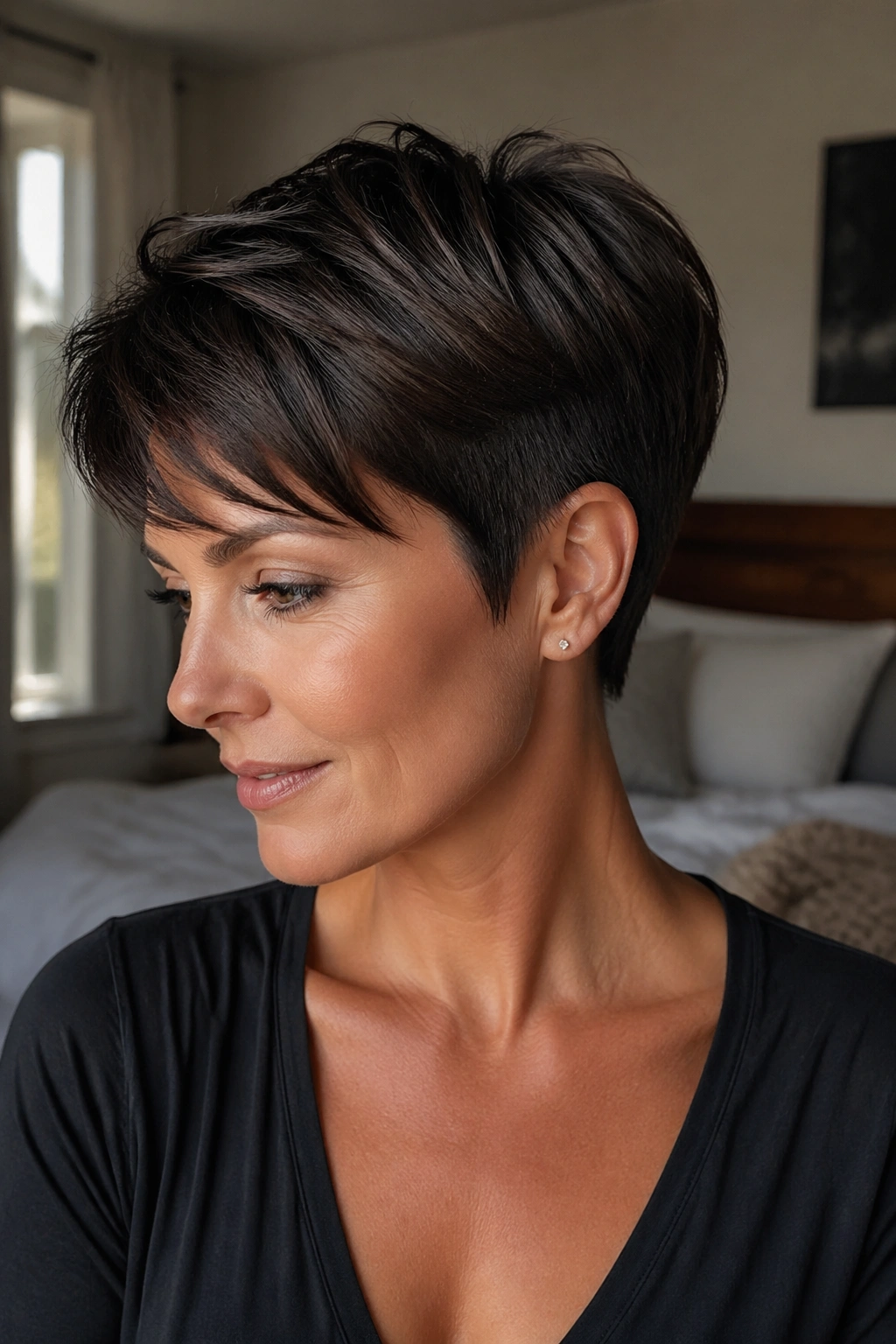
Invisible layers are the quiet trick in a thick pixie. They sit inside the haircut, so you feel the difference more than you see it. The surface stays smooth, but the bulk underneath is reduced enough that the hair moves instead of sitting like a solid shell.
That makes this style good for people who hate choppy ends. You still get lighter weight, just without obvious pieceiness. It’s a smart option if your hair is straight and dense, because too much surface texture can make straight thick hair look uneven.
Ask for layers that are removed from the inside of the shape, especially through the top back and crown. Keep the outline clean. That contrast between a smooth outer line and a lighter interior is what makes the cut feel expensive in a practical way.
It’s not the flashiest pixie on the list. It may be the most wearable.
14. Pixie Bob Hybrid
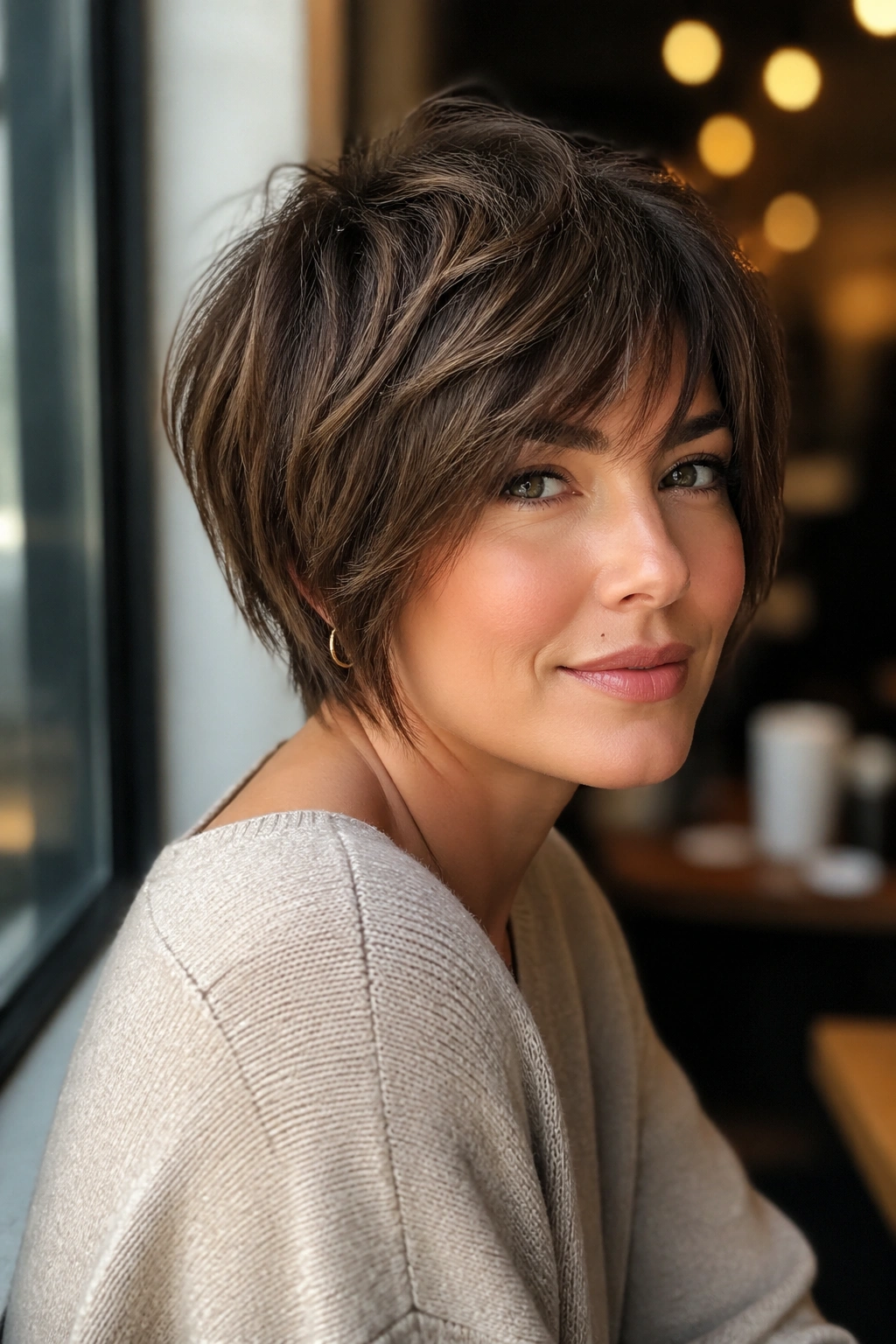
A pixie bob is the safest in-between if you want to go short without going all the way. Thick hair often behaves better with a little extra length, and this cut gives you that cushion. The shape usually sits somewhere between the cheekbone and jaw, with enough back length to keep the silhouette from ballooning.
I like this on people who are nervous about a classic pixie. It still feels light, but you do not lose all your styling options. You can tuck it, wave it, or let it dry with a soft bend and call it done.
The hybrid shape also buys you time between salon visits. Because the length is slightly longer, the cut can grow out into a neat short bob or a layered crop instead of jumping straight into that awkward middle zone.
If you have thick hair that tends to swell in humid air or puff at the neckline, this is one of the easiest cuts to live with.
15. Disconnected Pixie
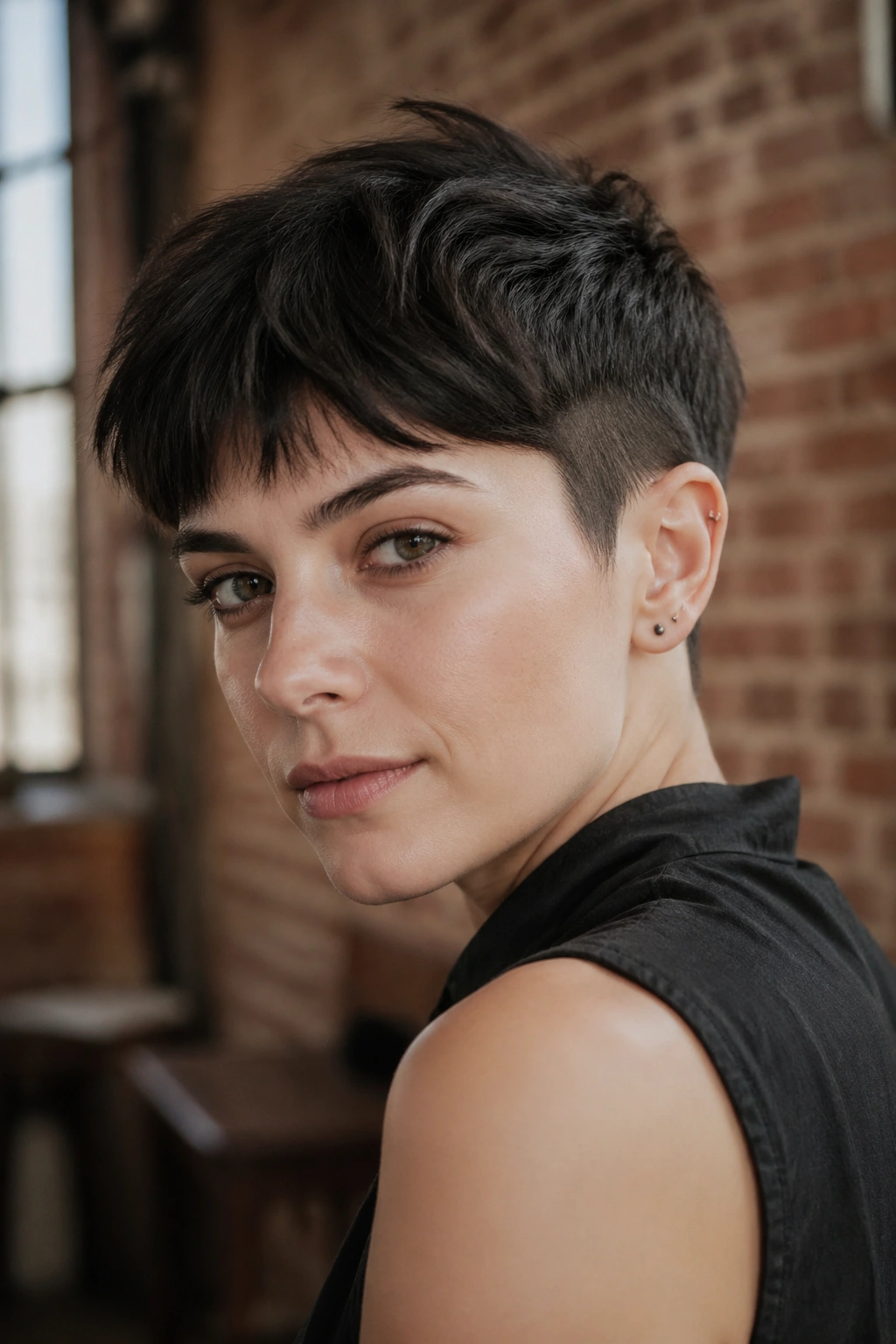
I like disconnected pixies on thick hair because they admit something a lot of cuts pretend not to: not every section has to blend perfectly. A little separation between the top and sides can make the style feel lighter and more modern, especially when the hair has natural bulk.
The top stays longer and fuller, while the sides and back are cut shorter and cleaner. That contrast keeps the haircut from reading as one heavy lump. It also gives you a strong shape without forcing every strand to behave the same way.
This is the kind of cut that looks best when it’s worn with a bit of attitude. A matte product, a side push, a rough-dry finish — all of that suits it. If you’re after softness, this isn’t your first stop. If you want a short cut that feels clear and a little sharp, it’s excellent.
One caution: the disconnect has to be deliberate. If the blend is sloppy, it just looks unfinished.
16. Swept-Back Wet-Look Pixie
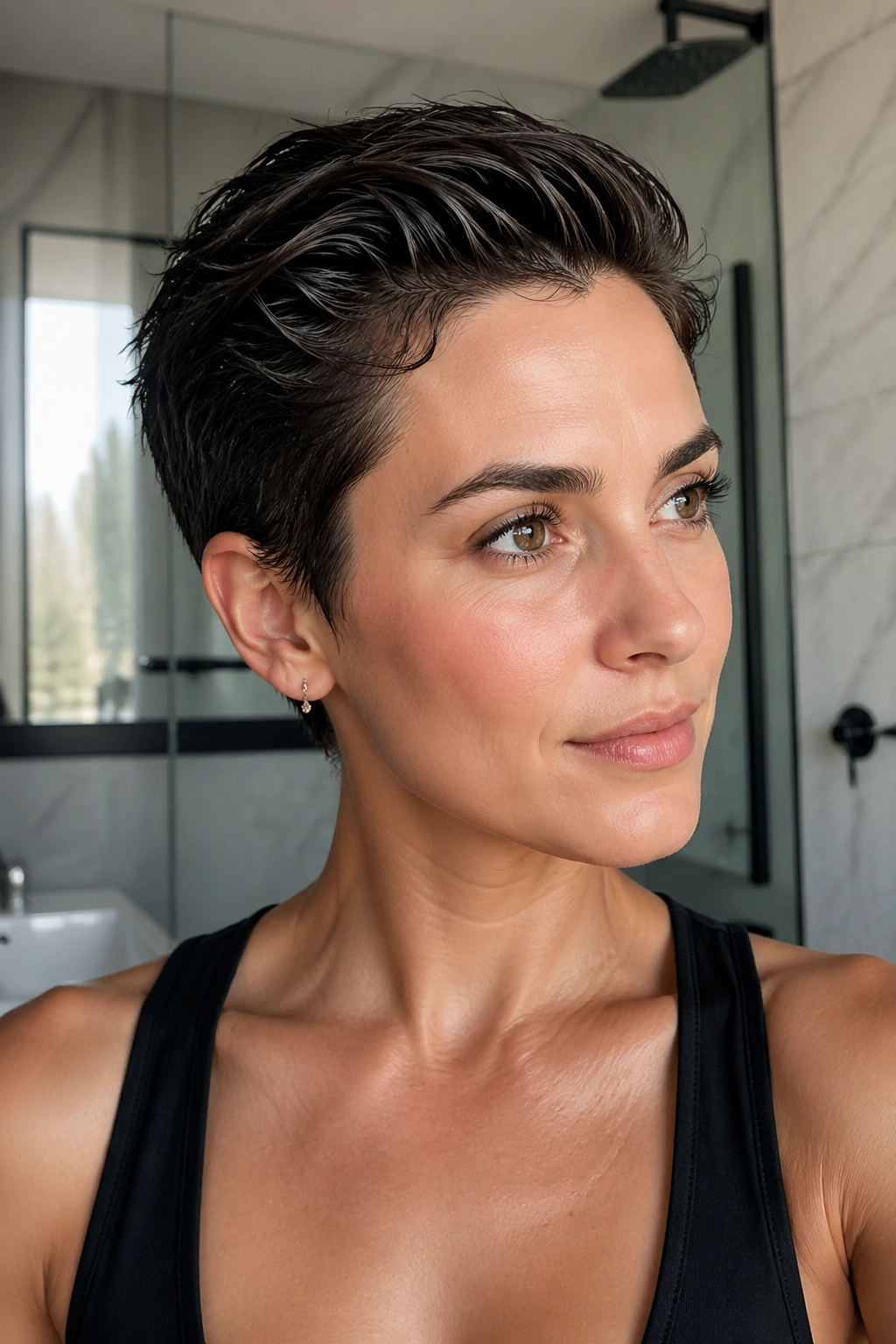
Can a wet-look pixie work on thick hair without turning greasy? Yes, if you keep the product controlled and the top length right. Thick hair can actually hold the sleek shape well, because the density helps the style stay put once it sets.
The hair needs to be towel-dried to damp, not dripping. Then a small amount of gel or styling cream goes through the top and sides. Comb it back with your fingers or a wide-tooth comb, and leave a little movement at the front so it does not look glued flat.
Best Way to Style It
- Start with a nickel-size amount of gel.
- Add more only if the hair still looks dry.
- Push the front back while the hair is damp, then let it set.
This cut looks strong with earrings, a bare neck, or a simple neckline. It also hides uneven texture on days when you do not want to fuss with styling tools. The look is clean, but not rigid.
17. Ear-Tucked Soft Pixie

The best ear-tucked pixie leaves enough softness around the temples that the hair slips behind the ear instead of fighting you. That small detail changes the whole feel of thick hair. The cut opens up the face, keeps the sides from expanding, and makes the style look lighter without chopping away too much.
The length around the ear should graze, not jam into, the top of the ear. Too short and the shape feels harsh. Too long and the hair starts to puff outward again. That middle zone is where this cut lives.
Where the Length Sits
- Keep the side pieces just long enough to tuck.
- Let the fringe stay soft and movable.
- Taper the nape so the tucked side does not look bulky from behind.
This is a nice choice if you wear glasses, because the soft tuck keeps the temples clean. It also works well for people who want a short haircut that still feels approachable. No sharp edges needed.
18. Layered Crown-Lift Pixie for Thick Hair
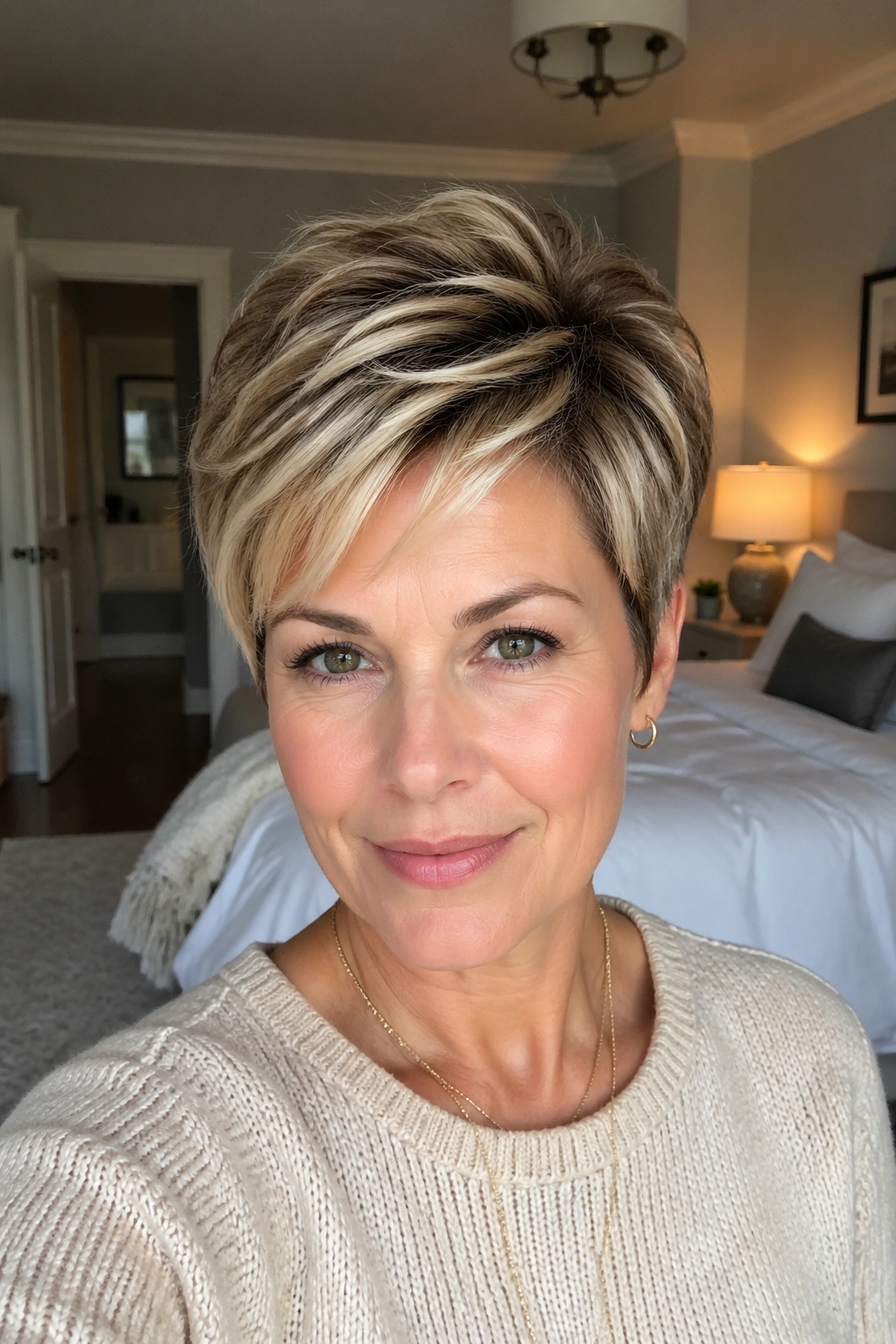
Crown lift is what keeps a thick pixie from collapsing into the head. Without it, dense hair can look heavy at the top even when the sides are short. With it, the cut gets room to breathe.
The most useful version uses short internal layers at the crown, slightly longer pieces toward the front, and a tidy nape to anchor the shape. That combination lifts the silhouette without making the top fluffy. It is a small difference on paper and a big one in the mirror.
Styling It at Home
- Blow-dry the crown upward with a small round brush or fingers.
- Aim the airflow against the natural fall of the hair first.
- Finish with a light mist of flexible-hold spray.
If your hair is coarse, a little root mousse can help the lift last through the day. If it’s fine but dense, go easier on product and focus on direction instead. Too much cream at the crown can flatten the very area you’re trying to open up.
19. Micro Bang Pixie
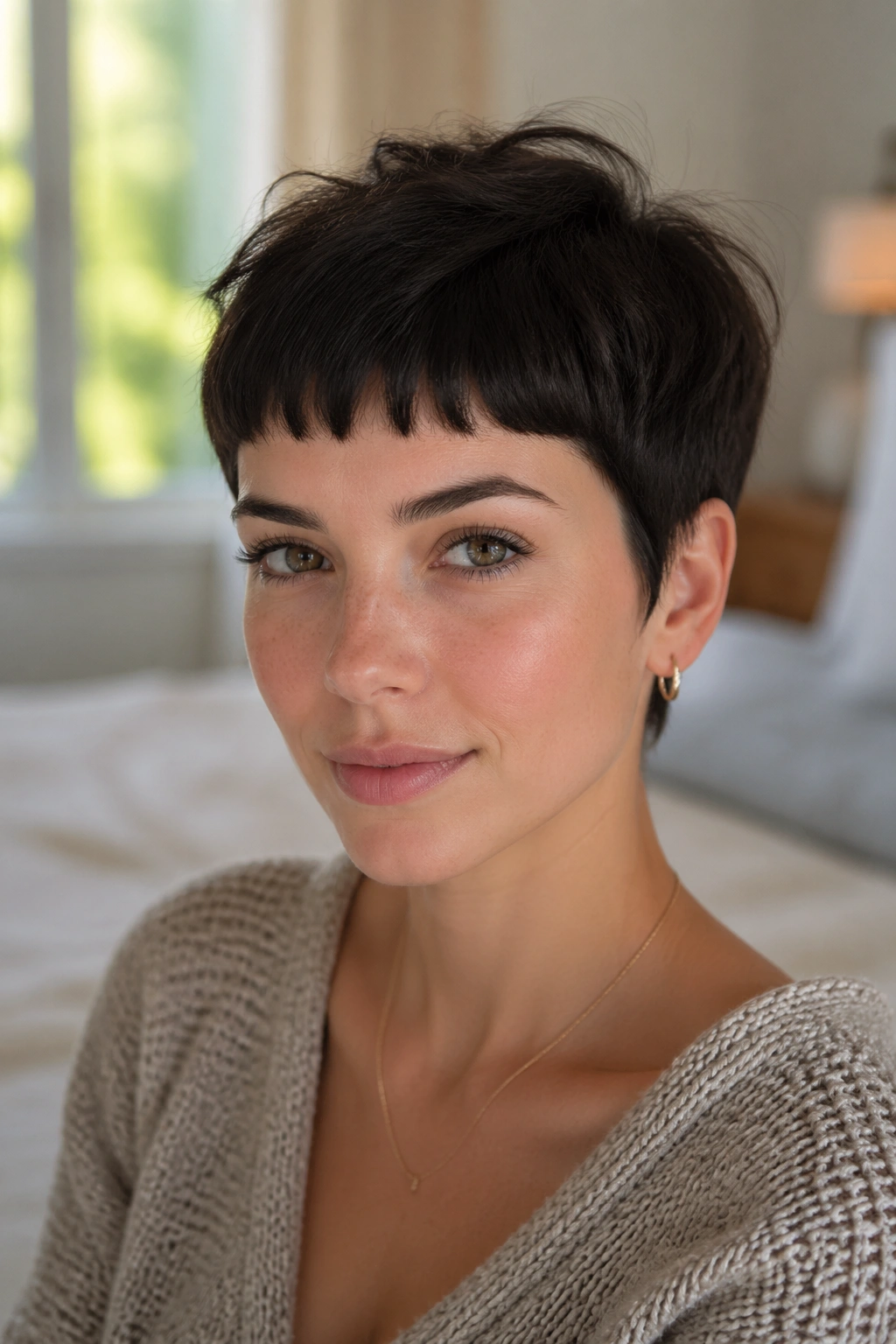
Micro bangs are not for everyone, but on a thick pixie they can make the whole cut feel lighter. That sounds backward until you see it. A shorter fringe removes weight from the front and shows more of the face, which makes the rest of the haircut feel open.
The catch is commitment. Micro bangs need regular trims, and they can look harsh if they’re cut too blunt on a very thick hairline. The best version is soft, slightly irregular, and kept in proportion to the rest of the crop.
This style works especially well if you like a little edge and don’t mind showing your forehead. It also pairs well with a short nape and clean sides, because the contrast keeps the fringe from dominating the whole cut.
If you’re unsure, ask for a fringe that lands just above the brows first. It’s easier to shorten later than to wait for a too-short fringe to grow out.
20. Soft Spiky Pixie
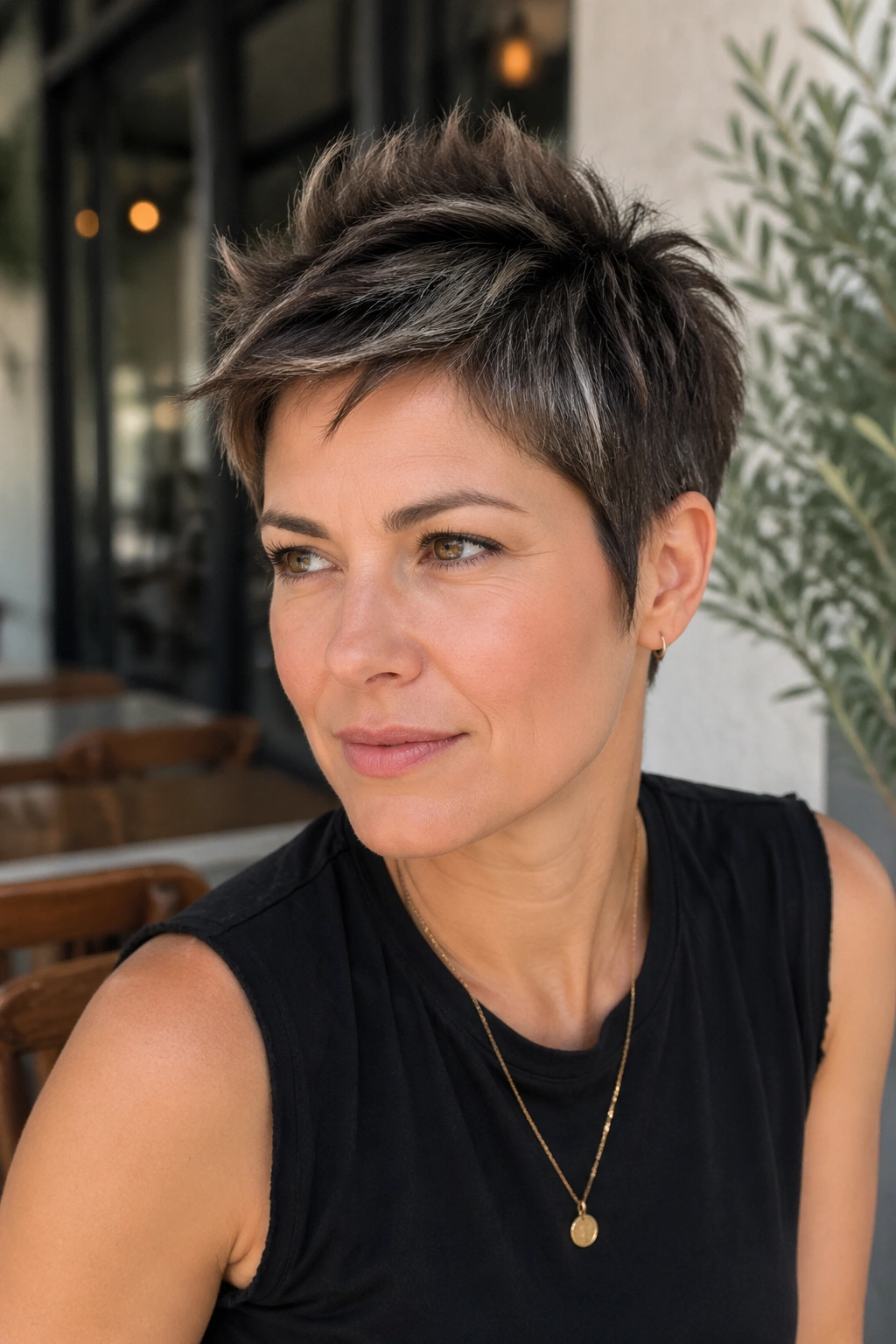
The first time I saw a soft spiky pixie done well, it looked more like lifted pieces than spikes at all. That’s the version worth copying. It keeps thick hair lively and separated without tipping into stiff, crunchy, or dated territory.
The trick is using a small amount of product on dry hair and pinching only the topmost pieces. You want direction, not a forest of points. Thick hair holds this shape better than fine hair because it has enough body to stand where you put it.
What Helps
- Use a matte wax or clay, warmed between the fingertips.
- Work in tiny sections at the front and crown.
- Leave the ends loose so the style still moves.
This cut can read sporty, edgy, or clean depending on how much you lift the top. It’s also good for days when you want texture fast. A minute or two is usually enough.
21. Airy Grow-Out Pixie
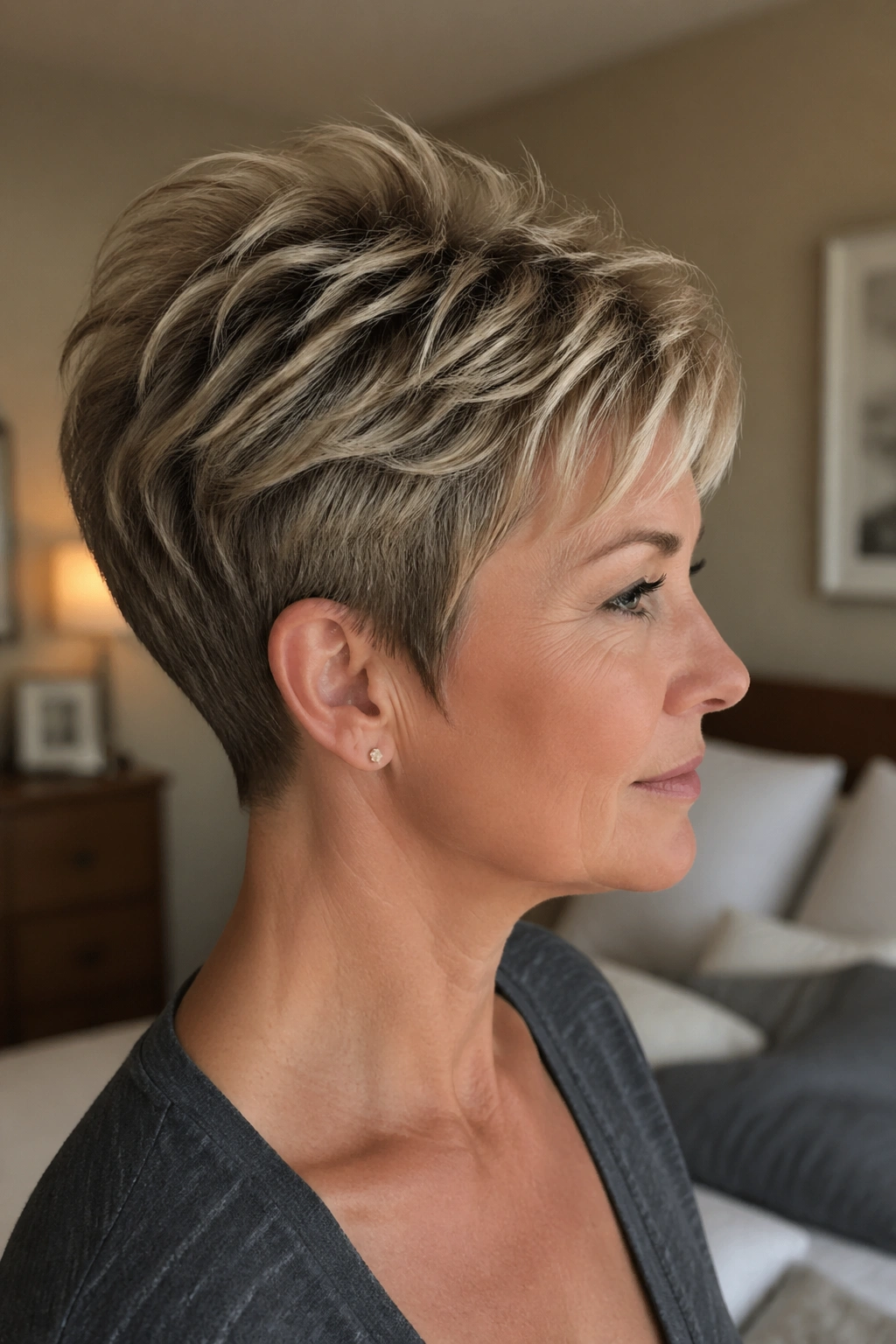
The grow-out stage is where many short cuts fail. A smart pixie doesn’t panic while it grows. It keeps enough shape at the nape and around the ears that the style still looks intentional when the top gets a little longer.
That’s why I like airy grow-out pixies for thick hair. They leave room in the crown, keep the sides light, and avoid a hard blunt line that turns bulky after a few weeks. The front can stay slightly longer than the back, which helps the haircut shift into a short crop instead of exploding outward.
If you want the most forgiving version of a pixie haircut for thick hair, this is a strong place to land. It’s easy to tuck, easy to style with a bit of cream, and less unforgiving than ultra-short cuts. Keep the nape neat, keep the top soft, and resist the urge to over-thin the ends. Thick hair usually looks best when it still has some substance left in it.
