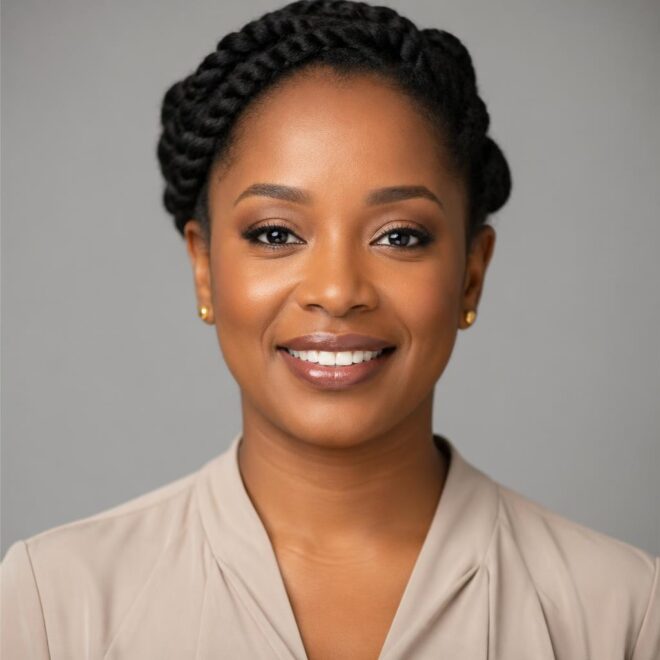


A good pixie haircut should make the face look brighter before anyone notices the cut itself. For women over 60, that matters more than chasing some overly stiff, over-sculpted style that falls apart the minute you wash it at home.
The best pixie cuts are not all about going shorter. They’re about leaving the right length in the right places — a little more through the crown for lift, a softer fringe for balance, a cleaner nape for shape. Those tiny differences change the whole mood of the haircut.
Gray hair, silver hair, fine hair, thick hair, curls, waves — they all behave differently. That’s the part people miss when they ask for “a pixie.” A pixie is not one cut. It’s a family of cuts, and the right one depends on how your hair grows, where it falls flat, and how much styling you’re willing to do before breakfast.
Some of these looks are polished. Some are messy in a good way. A few are bold. All of them work best when the shape is tailored, not copied from a photo without thought. The details matter. So do the edges.
1. Soft Layered Pixie
The soft layered pixie is the one I reach for when someone wants short hair but does not want to lose movement. The crown stays a touch longer — usually around 1½ to 2½ inches — and the layers are cut softly so the hair lifts instead of sitting in one flat block.
That little bit of softness makes a big difference on fine hair. Hard lines can look too blunt and a little harsh around the temples, while feathered layers blur the edges and make the cut feel lighter. It’s a friendly haircut. Never severe.
It also grows out well, which is half the battle with short hair. If you like a style that can go a few weeks between trims without turning into a mess, this is a smart place to start.
Best for: fine hair, soft features, and anyone who wants a feminine pixie without fuss.
Ask for: point-cut ends, a gentle taper at the nape, and a crown that is left slightly longer than the sides.
Style with: a pea-sized amount of lightweight cream worked through damp hair, then dried with your fingers.
2. Classic Tapered Pixie
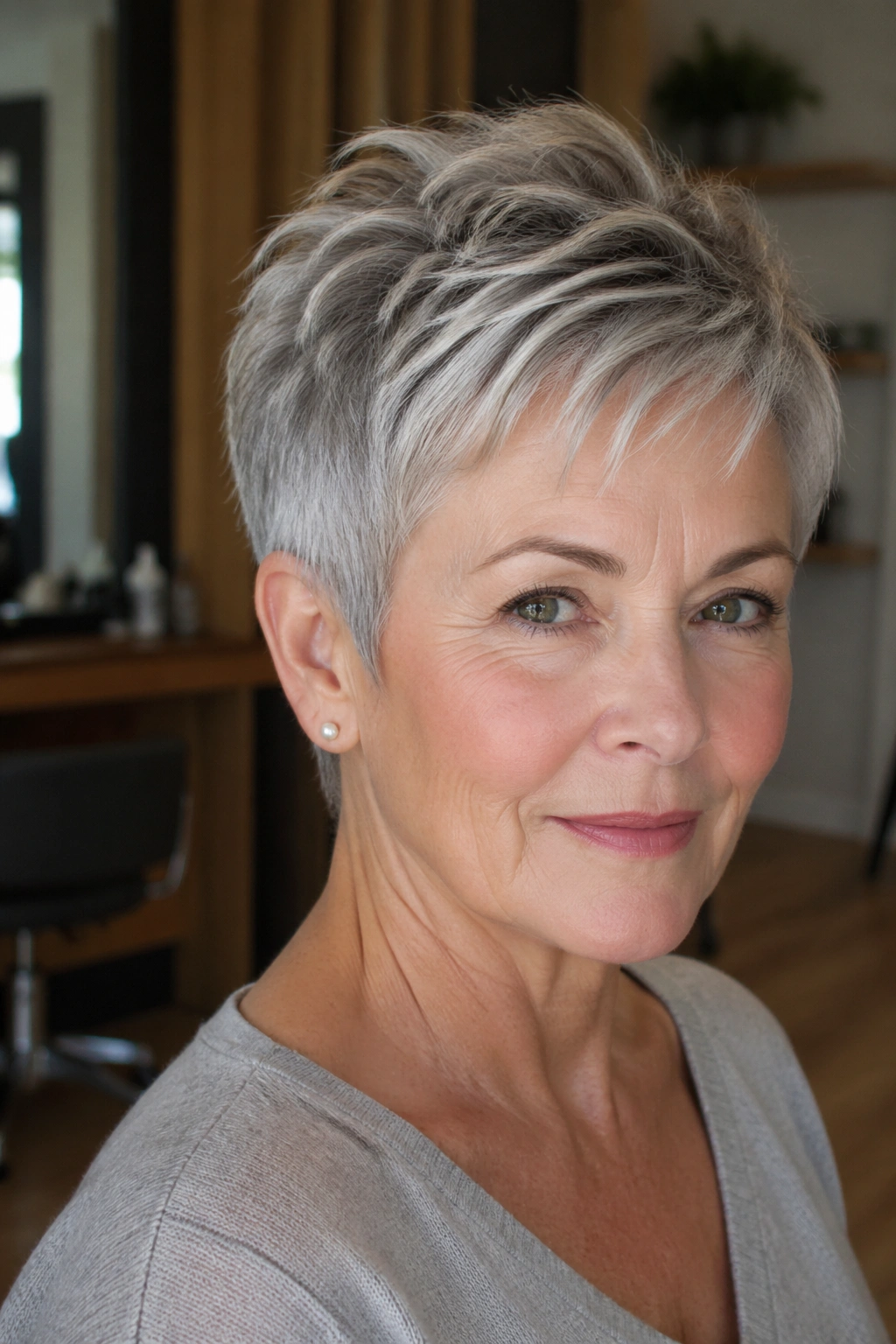
Why do so many stylists keep coming back to this shape? Because it works. The classic tapered pixie keeps the sides neat, the nape clean, and the top just long enough to give the haircut a little lift instead of a buzzed-down feel.
Why It Flatters So Many Faces
A taper draws the eye upward and keeps the haircut from feeling boxy at the jaw. That matters if your hair is dense or if the area behind the ears tends to puff out. A neat taper solves that without making the haircut look severe.
What to Ask For
- Keep the sides close, but not shaved to the scalp.
- Leave enough length on top to sweep forward or slightly back.
- Taper the neckline softly so it grows out without a hard line.
This is the pixie for women who like structure. It looks especially sharp with earrings, glasses, and a crisp side part. Clean. Easy. No drama.
3. Side-Swept Fringe Pixie
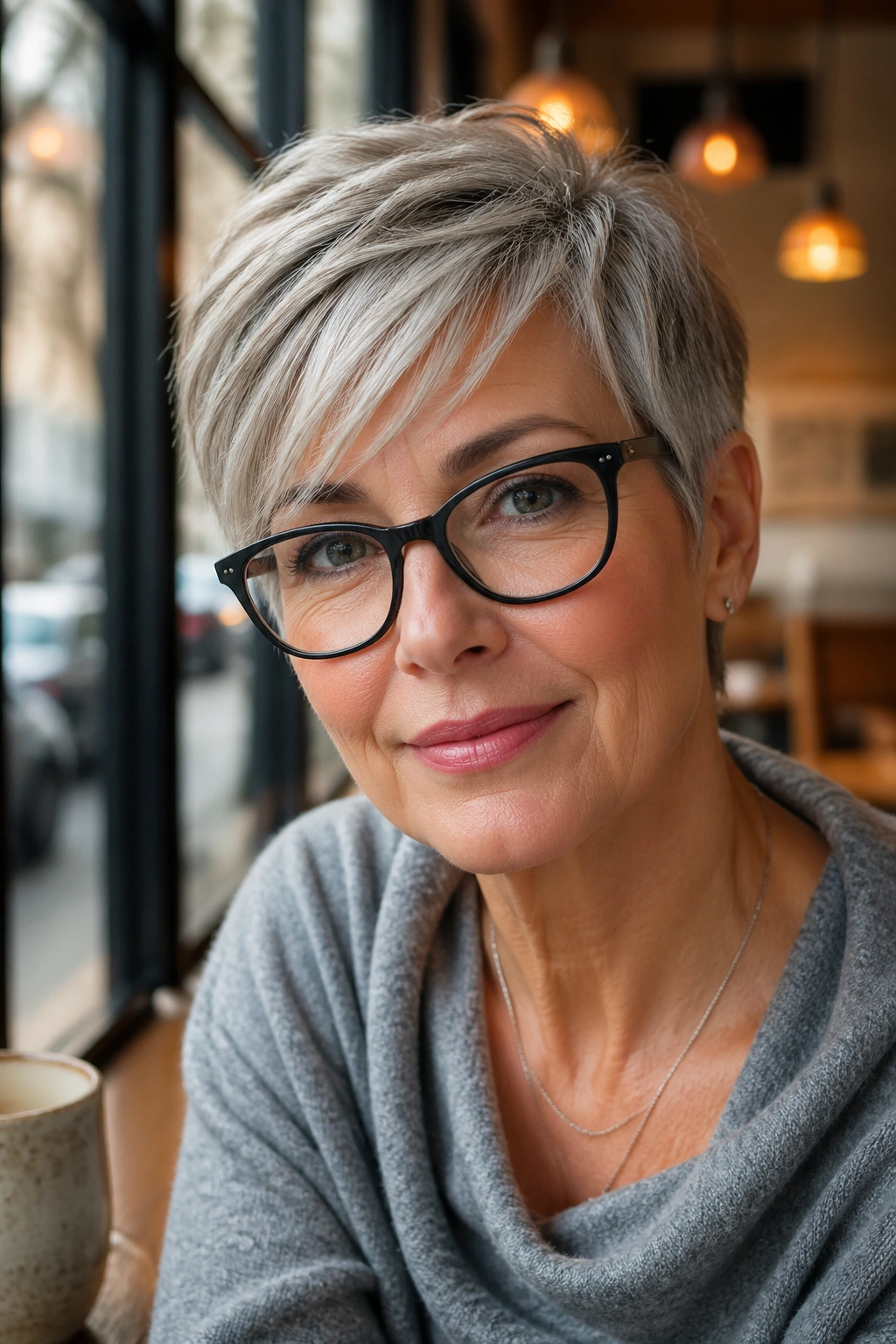
A side-swept fringe is the fastest way to soften a short cut. It gives the face a diagonal line, which is flattering on just about everyone, and it keeps the forehead from looking too open if that’s not your favorite look.
The fringe should start somewhere near the high point of the eyebrow and slide across without hanging in your eyes. Too short and it looks choppy. Too long and it turns into a curtain that needs constant pushing aside. That middle ground is where the magic happens.
This cut is especially nice if you wear glasses. The fringe can skim above the frames or tuck just behind them, which keeps the whole face from feeling crowded.
How to Wear It
Brush the fringe into place with a small round brush, or just guide it with your fingers and a little styling lotion. The goal is movement, not helmet hair. If the front falls flat, a quick blast of heat at the roots is usually enough.
4. Feathered Crown Pixie
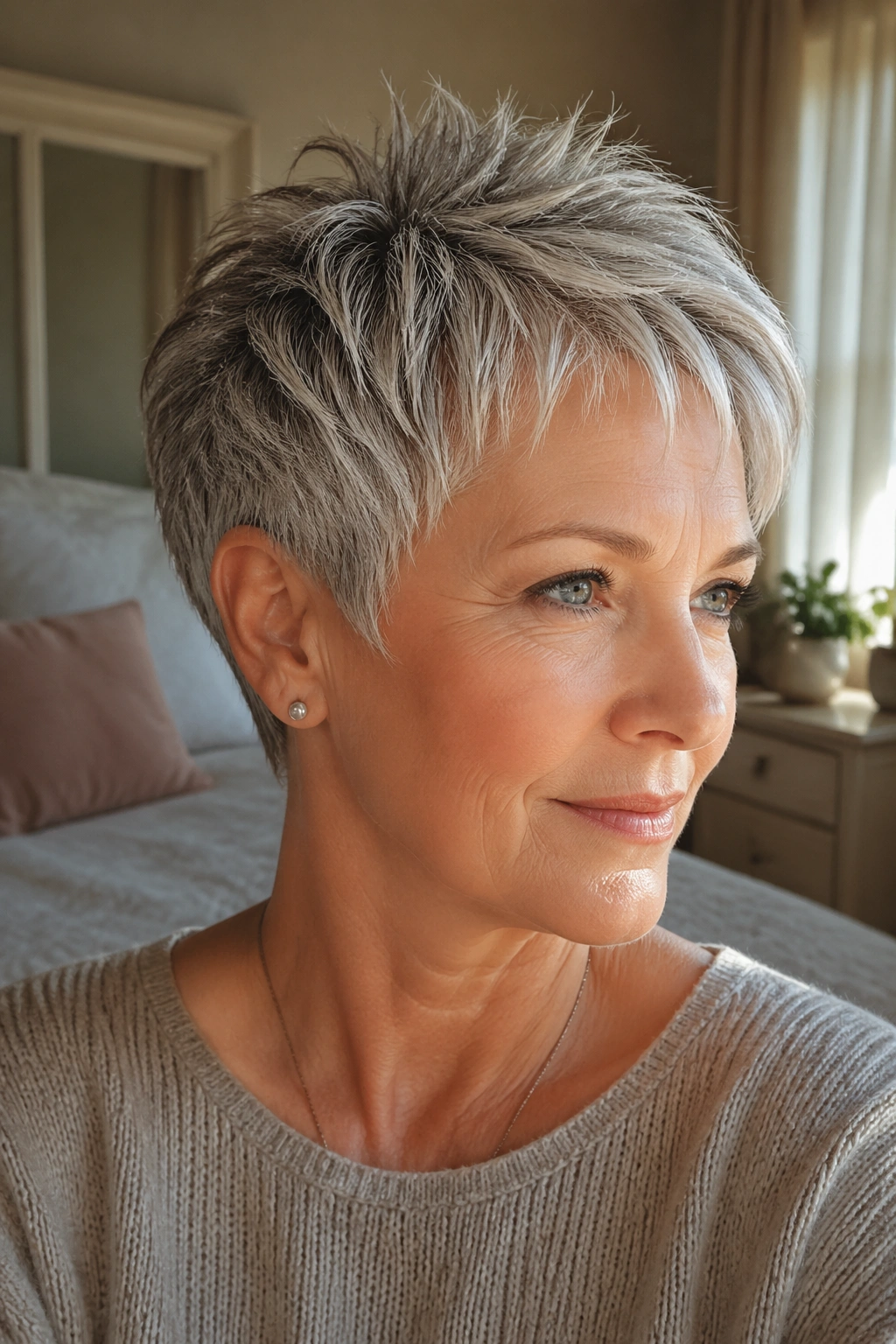
Touch the top of the head and you can tell almost immediately whether this cut will work. A feathered crown should feel light, not chunked up. The layers are lifted through the top so the hair rises at the crown instead of hugging the scalp.
That makes this style a quiet hero for women with fine or thinning hair. The feathering creates the look of fullness without a heavy product load. It also keeps the haircut from looking too close-cropped on top, which can be a problem if the sides are tidy but the crown is flat.
Ask Your Stylist For
- Feathering through the top 2 to 3 inches.
- Soft blending into the sides, not a hard shelf.
- A little extra height at the crown, especially if your hair grows forward.
Use a lightweight mousse on damp hair and lift the roots as you dry. A round brush helps, but fingers are fine too. The shape should move when you turn your head. If it doesn’t, the layers probably need more lift.
5. Choppy Textured Pixie
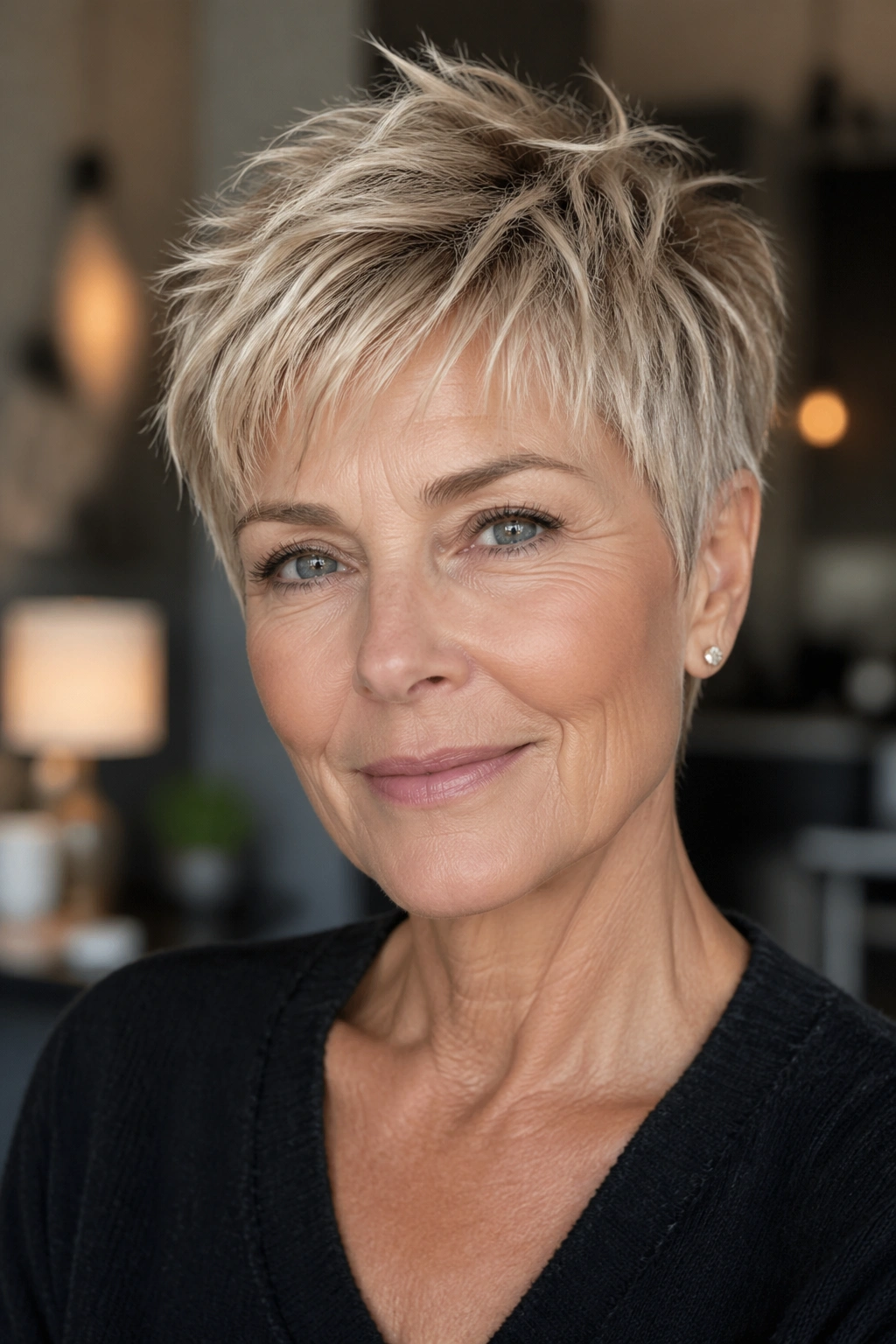
A choppy pixie has more edge than a soft layered cut. The ends are separated on purpose, which gives the haircut that piecey, modern look people keep asking for in salons. It is not messy by accident. It is messy on purpose.
This style works well on hair with natural body, because the texture helps the cut hold its shape. On very fine hair, it can still work, but the layers need to be handled carefully so the hair does not disappear at the ends. Too much texturizing and the cut starts to look thin. That’s the trap.
I like this one for women who do not want a fussy finish. A dab of matte paste, a quick rake with the fingers, and you’re done. No round brush required.
Watch out for: over-thinning, which can make the haircut look wispy in a bad way.
Best with: side bangs, strong brows, and a little natural wave.
Styling note: use less product than you think. A little separation goes a long way.
6. Long-on-Top Pixie

Long on top does not mean high-maintenance. That’s a myth, and a stubborn one. If the sides and nape are kept tidy, extra length through the top gives you choices: brush it forward, sweep it back, or push it to one side for a softer shape.
The top usually sits somewhere around 2½ to 4 inches, depending on hair density and how much movement you want. That extra length is useful if your hair flattens easily, because it gives you room to create height without making the rest of the cut bulky.
It’s also a good pick if you’re easing into shorter hair. The shape feels secure. You still have enough hair to play with.
A blow dryer and a small vent brush help here, but you do not need a full styling routine. Dry the roots first, then direct the top where you want it to live. That’s usually enough.
7. Asymmetrical Pixie
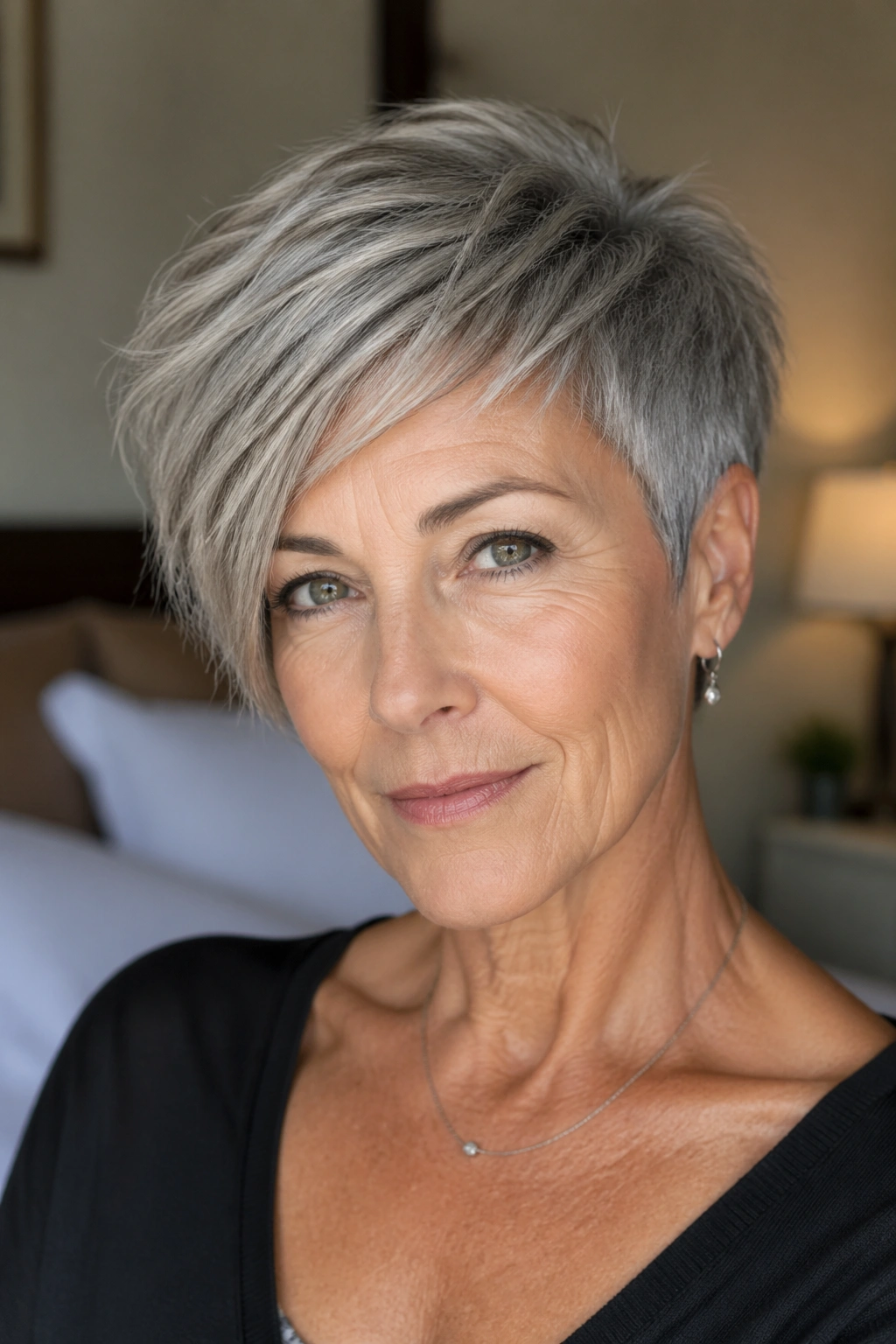
I like the asymmetrical pixie because it has a little attitude without turning into a costume cut. One side is kept longer than the other — sometimes only by half an inch, sometimes by a full inch or more — and that subtle difference keeps the haircut from feeling too predictable.
What Makes It Different
The asymmetry pulls attention toward the eyes and cheekbones. It can soften a strong jaw, and it gives straight hair a shape that feels deliberate instead of plain. If your hair falls flat on one side no matter what you do, this cut can work with that habit instead of fighting it.
Who It Suits Best
- Women who like a little edge.
- Hair that is straight or lightly wavy.
- Faces that look stronger with a diagonal line instead of a square shape.
Keep the asymmetry soft if you want something easy to live with. A subtle difference is usually more flattering than a dramatic one. Sharp can be fun, but subtle ages better.
8. Curly Pixie
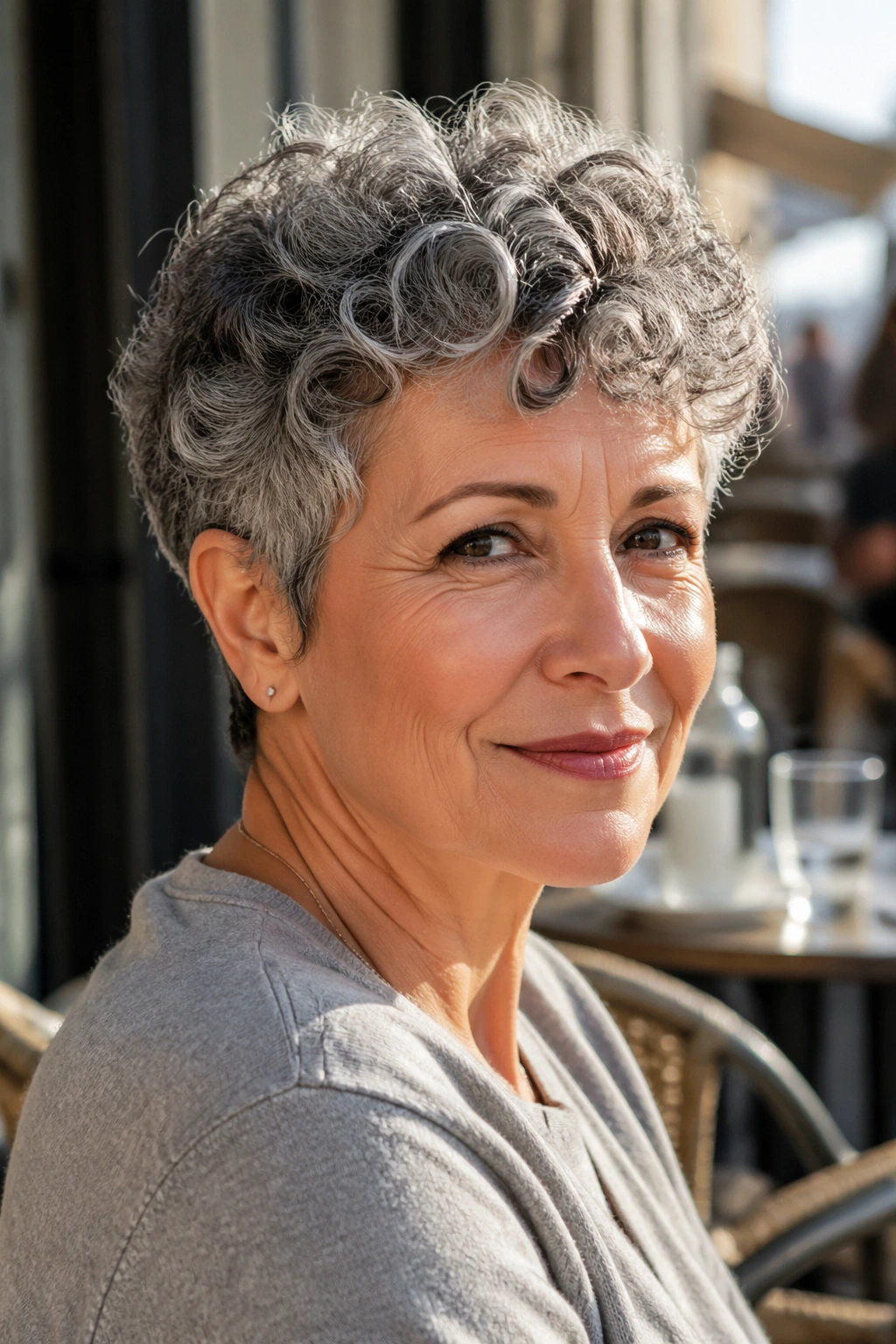
Curly hair changes the rules. A pixie on curls cannot be cut the same way as a pixie on straight hair, because the curls shrink, spring, and pile up in places that seem random if you’re only looking at the hair while it’s wet.
The best curly pixie leaves enough length on top to let the curl pattern form without squeezing it. The sides and nape are usually shorter, but not hacked down to nothing. That balance keeps the head shape soft instead of triangular.
The Part Most Stylists Skip
A curly pixie is often better when it’s cut dry or mostly dry. That way, the stylist can see where the curls actually land. Wet curls lie. They always do. And if the cut is based on where they look while soaked, you can end up with pieces that bounce up too far.
Use a curl cream or light gel, scrunch gently, and let the hair do what it wants. Don’t overtouch it. That ruins the pattern fast.
9. Silver Fox Pixie

Silver hair deserves a haircut with clean lines and enough texture to show off the color shifts. A silver fox pixie does both. It lets the white, gray, and steel tones catch the light in different ways because the cut has movement instead of one flat surface.
What Makes It Stand Out
This style is less about hiding gray and more about making it look sharp. That means neat edges, a controlled nape, and enough layering to stop the color from reading as one big mass. If your silver hair is coarse, a little internal layering helps the shape lie flatter at the sides.
A Few Good Habits
- Use a shampoo that keeps yellow tones down if your silver leans warm.
- Keep the cut crisp every 4 to 6 weeks.
- Use a light serum on the ends, not a heavy oil that makes the hair fall limp.
Silver hair can be gorgeous in a pixie because the cut lets the tone do the work. No need to dress it up too much.
10. Tapered Nape Pixie
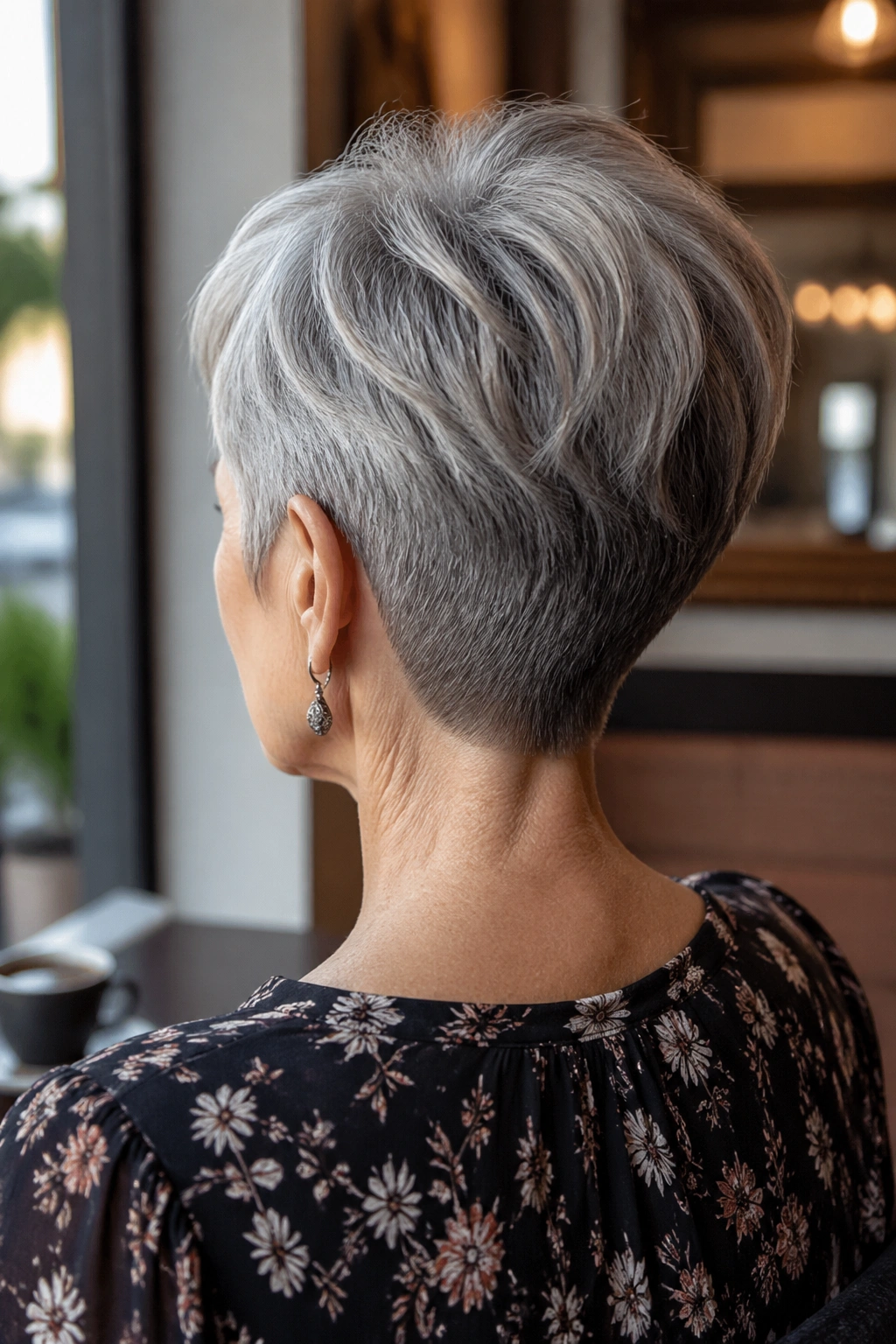
The nape is where bad pixies show themselves. If the back of the neck is bulky, the whole cut can look like it was forgotten halfway through. A tapered nape fixes that by narrowing the hair close to the neckline and keeping the shape clean as it drops toward the collar.
This cut is especially good if you like to wear collars, scarves, or earrings that frame the face. It keeps the back neat, which means the front gets to do more visual work. That clean finish also feels cooler on the neck, which some women love and some care about more than they admit.
Why It Matters
A tapered nape gives the haircut a finished look from every angle, not just the front. That matters when you turn your head, put on glasses, or pull on a sweater. A strong pixie should look good from the side and back, not only in a mirror shot.
11. Wispy Bangs Pixie
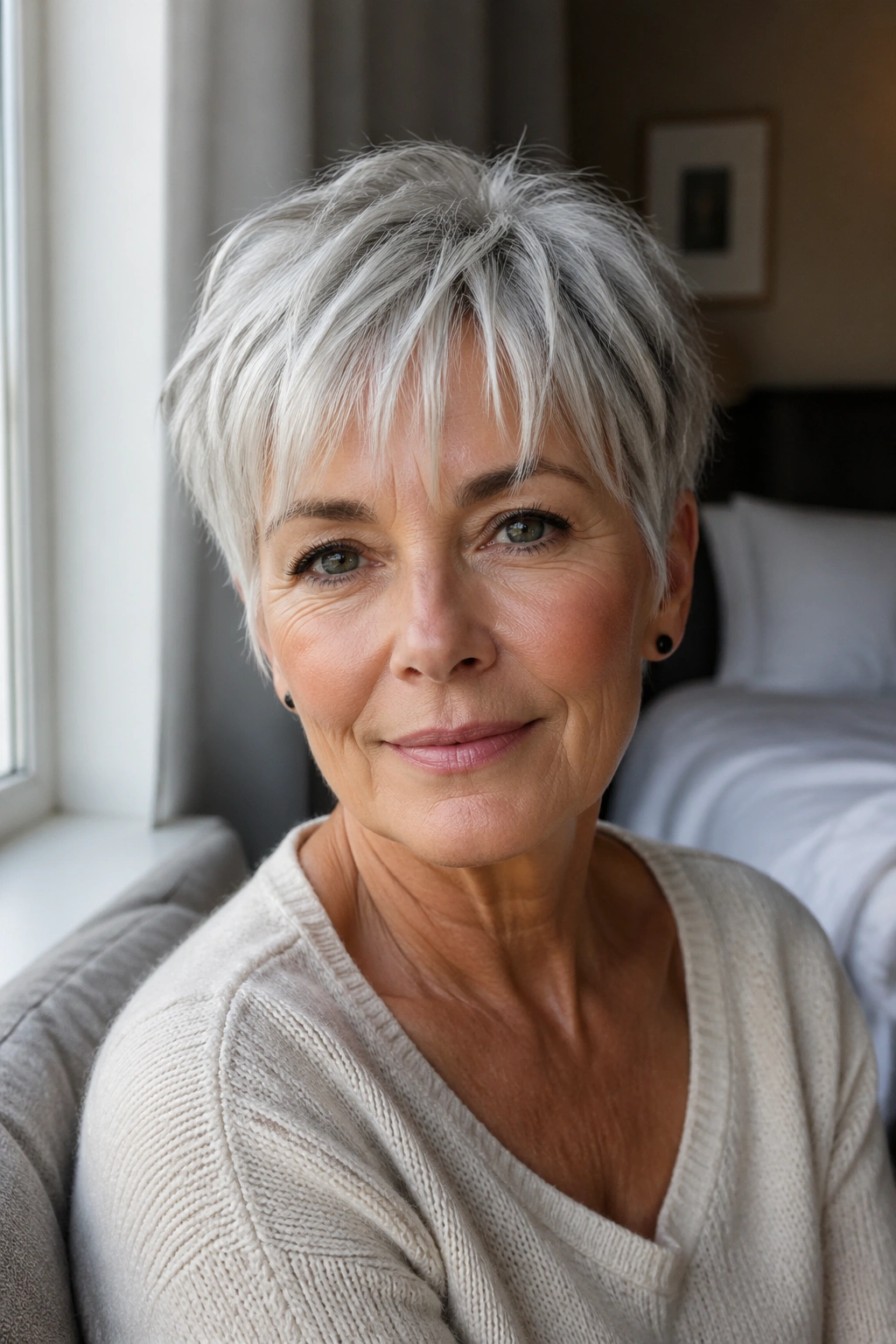
Wispy bangs can save a short haircut. They soften the forehead, blur a hard line at the hairline, and make a pixie feel a little less severe. The trick is keeping them airy. Heavy wispy bangs are not wispy anymore. They’re just bangs.
Keep them short enough to move easily, but long enough to skim the brows or sit just above them. That gives the face a soft frame without demanding constant trimming every ten days.
They’re also useful if your hairline has a cowlick or if the front wants to split down the middle. A light fringe gives the front somewhere to go.
A tiny bit of styling cream or a mist of flexible spray is enough. If the bangs look sticky, there’s too much product in them. That’s a common mistake, and it ruins the softness you were trying to get in the first place.
12. Brushed-Back Pixie
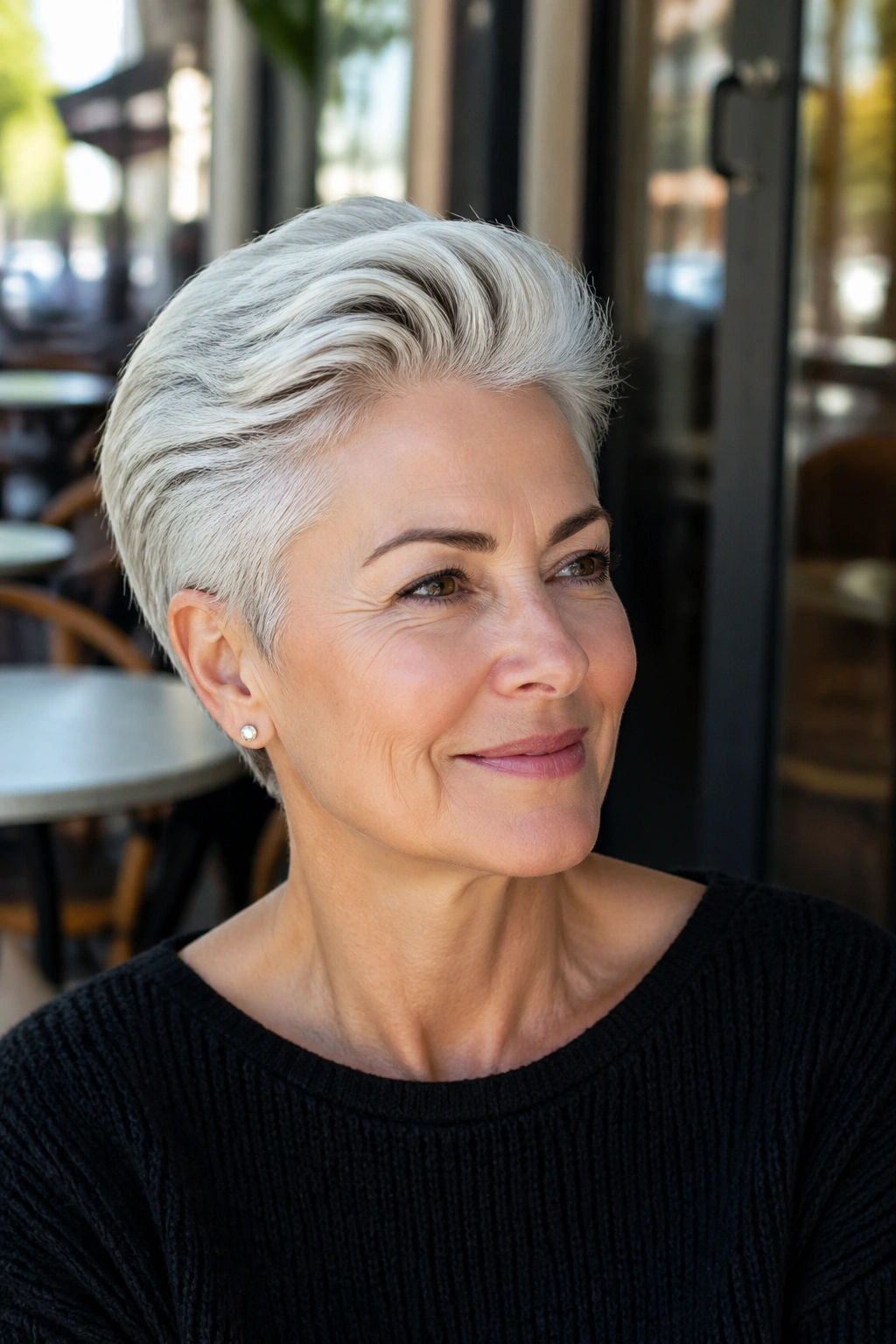
Brush it back and the whole face opens up. That’s the appeal of this cut. A brushed-back pixie lifts the front away from the forehead and gives the haircut a clean, confident shape without needing a lot of detail around the eyes.
It works well if your hair has a little natural bend or if your strands are straight enough to hold direction with a blow dryer. The top stays long enough to sweep back, while the sides and nape are kept lean so the style does not puff out.
This is one of those cuts that can look polished with almost no effort if the base shape is right. Dry the roots in the direction you want them to go, then use a light paste to keep the front from falling into your face. That’s it.
If you like the feeling of hair off your forehead, this one is hard to beat.
13. Micro Fringe Pixie
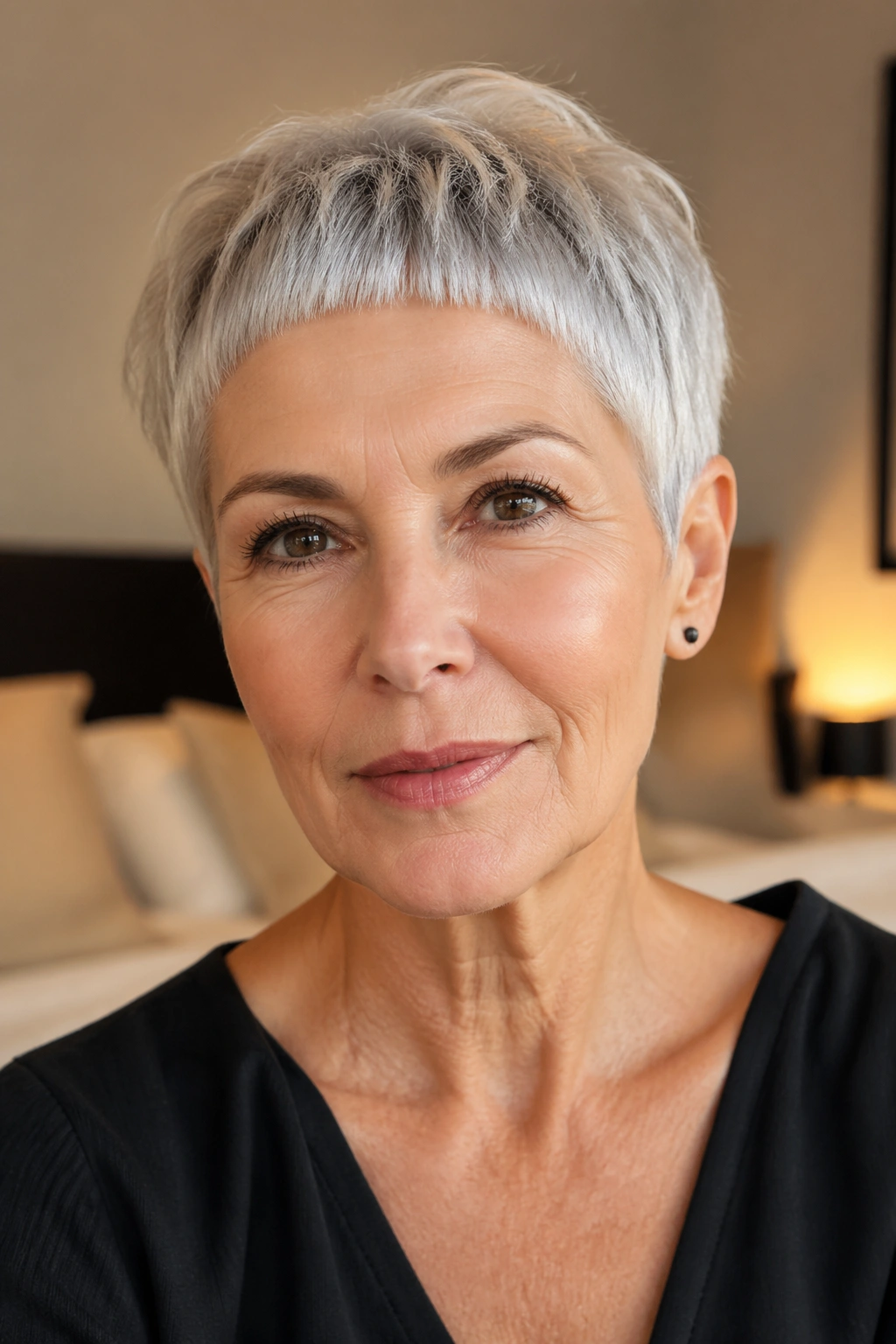
Micro fringe is the boldest choice in this group. The bangs sit short — usually well above the eyebrows — and the rest of the pixie stays clean so the tiny fringe doesn’t look accidental. It’s a strong look, and it needs a strong cut behind it.
How to Know If It’s Right for You
A micro fringe works best when you have a face shape that can handle a little visual contrast. It also looks sharper on straight hair, because the fringe stays neat instead of curling unpredictably. Strong brows and expressive eyes help too. The whole point is to let those features do the talking.
It is not the easiest cut to live with if you want to be hands-off. The fringe needs regular trims, sometimes every 3 to 4 weeks, because even a small bit of growth changes the shape. Short bangs have a way of showing everything.
Still, when it works, it really works. Sharp. Modern. A little fearless.
14. Rounded Volume Pixie
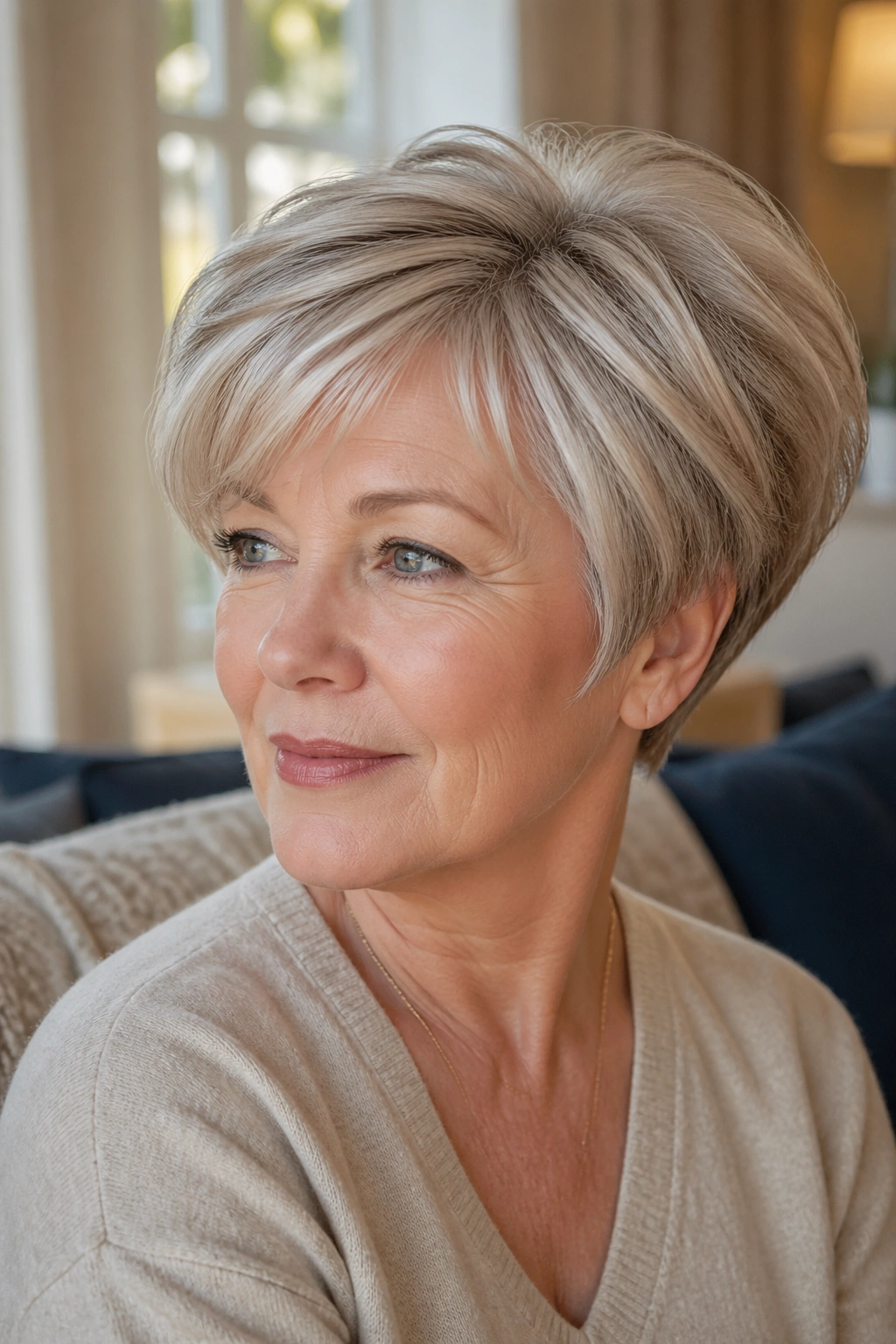
Rounded volume feels almost sculpted. The crown lifts gently, the sides curve in instead of flaring out, and the overall shape looks smooth rather than jagged. On fine hair, that rounded silhouette can create the sense of fullness without making the haircut look overdone.
Why It Works on Fine Hair
A rounder shape keeps the hair from collapsing at the corners. That means the cut holds its outline longer between salon visits. The top can be layered just enough to keep air in the shape, while the sides stay controlled so the haircut doesn’t turn into a puffball.
Styling Notes
- Blow-dry with a small round brush for lift at the roots.
- Use mousse at the crown, not the ends.
- Finish with a light hairspray if your hair falls flat by lunchtime.
This is a good option if you want softness around the face but still want the haircut to look deliberate. The shape does a lot of the work for you.
15. Shaggy Pixie
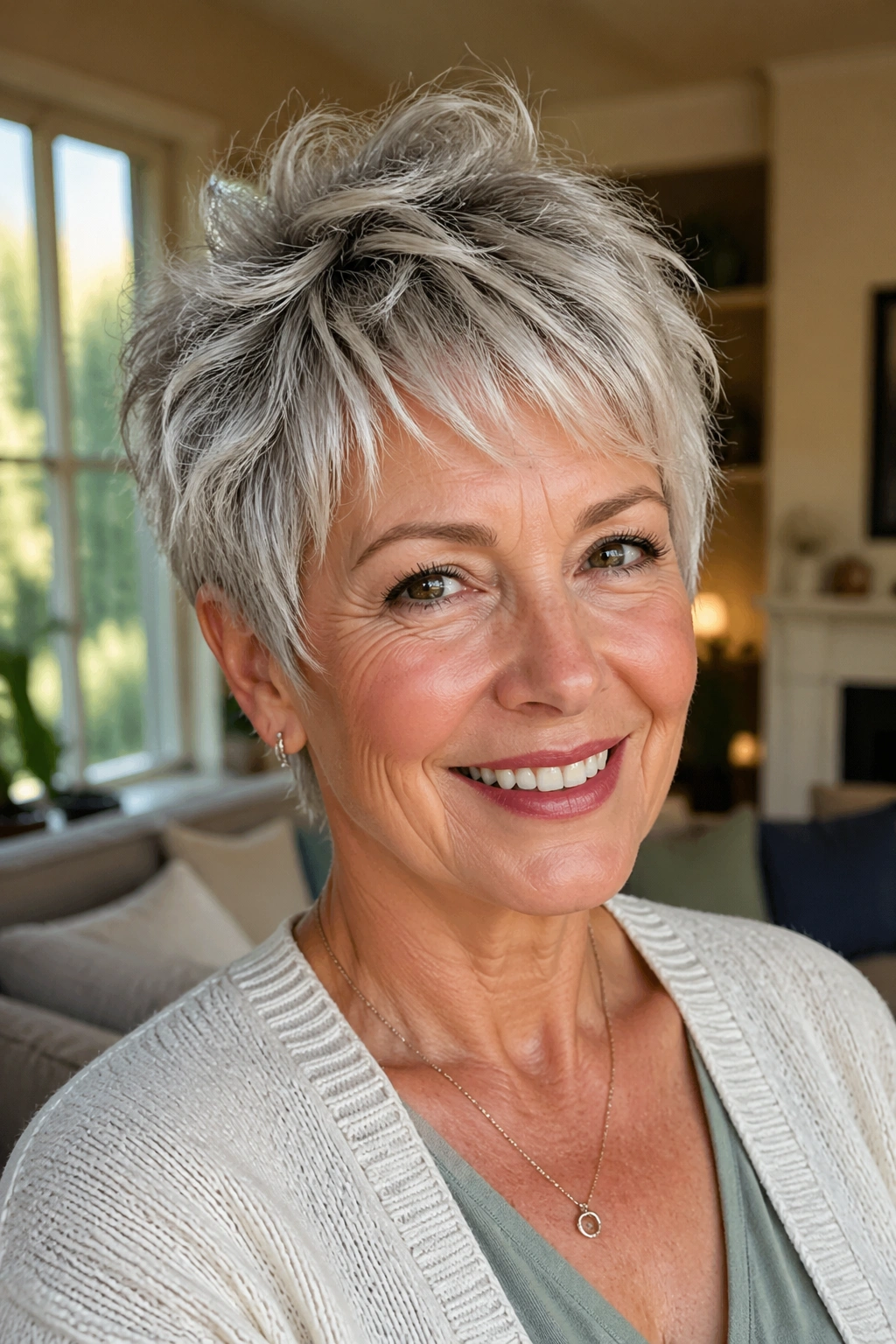
Shaggy pixies are the messy cousin of the neat short cut, and I mean that as a compliment. The layers are broken up, the edges are softened, and the whole style has a loose, slightly undone feel that works beautifully with natural texture.
It’s a strong choice for wavy or thick hair, because the cut uses movement instead of fighting it. If your hair has a bit of bend, a shaggy pixie can look alive with almost no effort. If your hair is straight, you can still wear it, but you’ll need a texture spray or a bit of paste to create separation.
What to Ask For
- Choppy layers through the top.
- Light thinning only where bulk builds up.
- A fringe that can fall forward or sweep to the side.
The best shaggy pixies never look careless. They look relaxed. There’s a difference.
16. Ear-Tucked Pixie
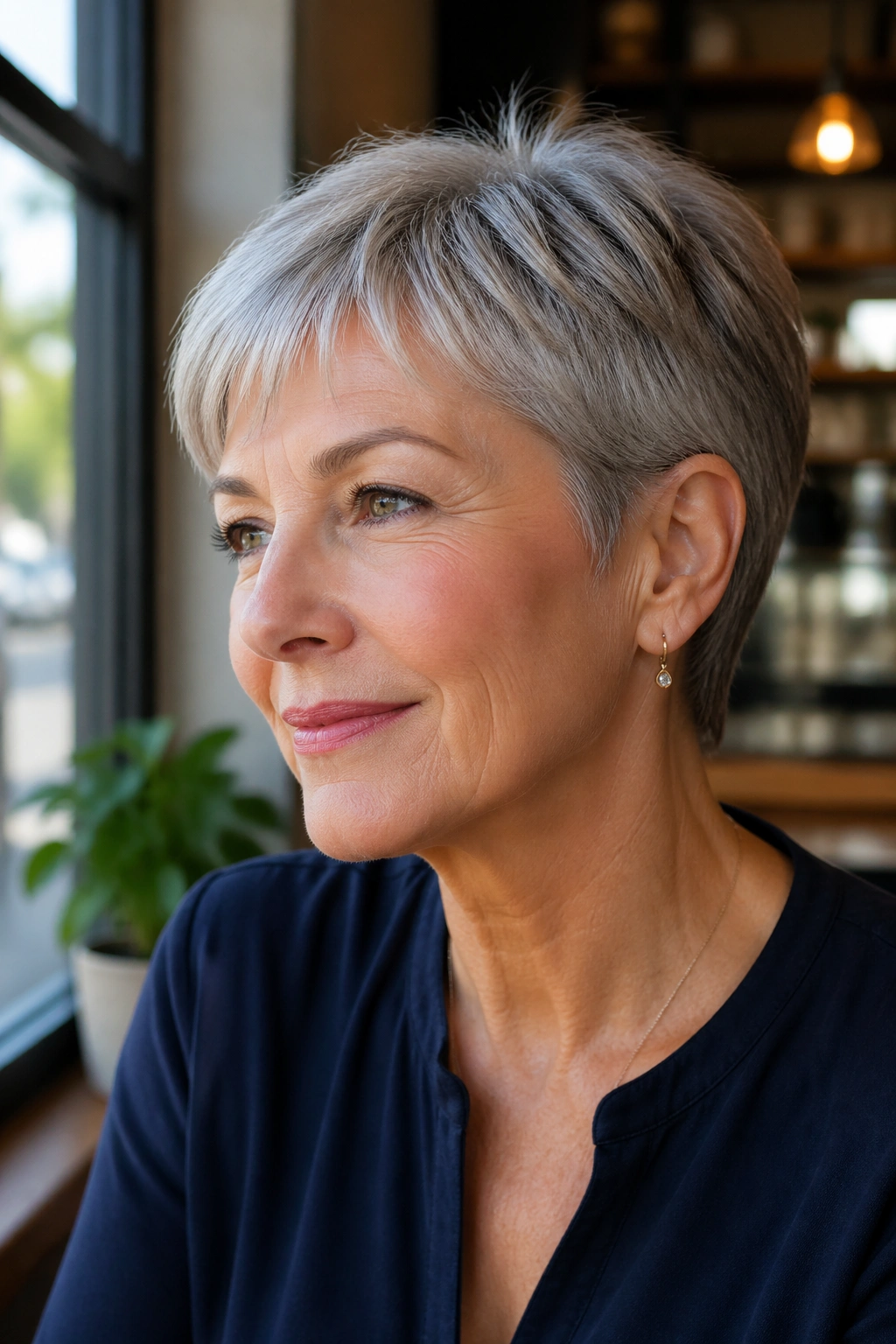
Ear-tucked sounds small. It isn’t. A pixie that can slide behind the ears changes how the whole haircut feels. You can show off earrings, soften the sides, and shift the look from neat to casual in about five seconds.
This is a smart style if you like a little flexibility. Some days the hair stays forward and frames the face. Other days you tuck one side behind the ear and let the neckline show. That small switch gives the cut a second life.
It also works nicely for women who wear glasses, because the hair can move around the frame instead of crowding it. That’s one of those details no one thinks about until they try a pixie that keeps poking into the temples.
Small move. Big payoff.
17. Salt-and-Pepper Dimensional Pixie
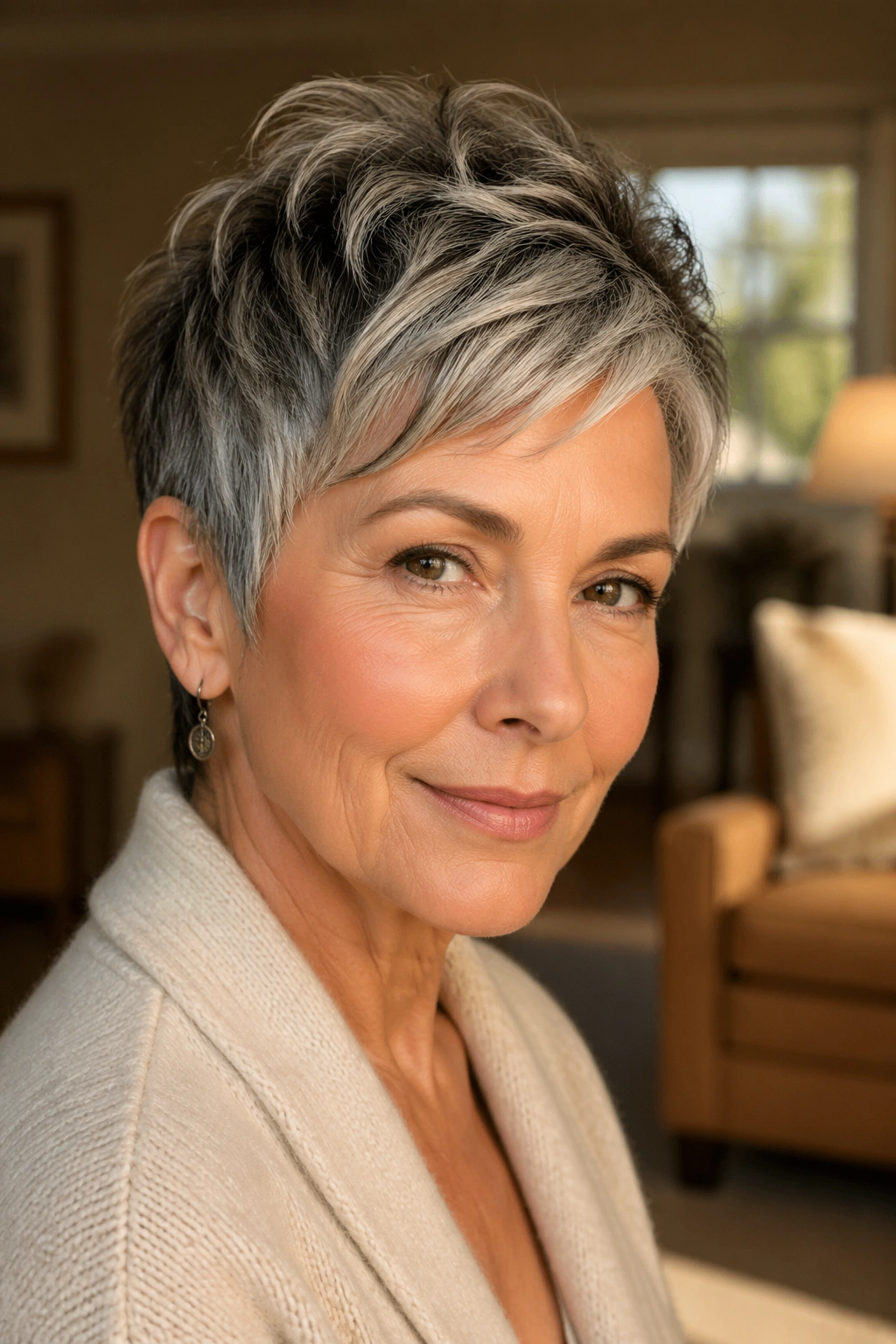
Salt-and-pepper hair deserves shape, not apology. A dimensional pixie lets the darker strands and the silver ones play against each other, so the hair looks alive instead of one-note. The cut needs enough texture to show off that contrast.
The Best Way to Wear It
A little layering through the crown and top keeps the color from blending into a flat surface. If the hair is coarse, soften the edges around the ears and temples. That prevents the whole cut from looking heavy, which is a real risk with denser hair.
Good Things to Tell Your Stylist
- Keep texture in the top so the mix of tones shows.
- Don’t over-thin the ends.
- Leave enough length around the front for movement.
This kind of pixie is one of the easiest ways to let natural color do the talking. You’re not fighting the gray. You’re giving it a shape worth looking at.
18. Spiky Textured Pixie

Spiky does not have to mean stiff or juvenile. If the spikes are small, soft, and controlled, the cut can look lively without drifting into costume territory. The trick is to keep the texture close to the head and separate only a few pieces.
That makes this style useful for women who want a little edge but do not want a full-on punk look. A matte paste works better than anything shiny here. Shine tends to make the pieces collapse. Matte keeps the ends lifted and a little piecey.
I’d avoid heavy wax unless your hair is very coarse. Too much hold turns spikes into clumps, and clumps are not the goal.
A short, spiky pixie can be surprisingly flattering around the eyes and cheekbones. It adds energy. That’s the best word for it.
19. Soft Pompadour Pixie
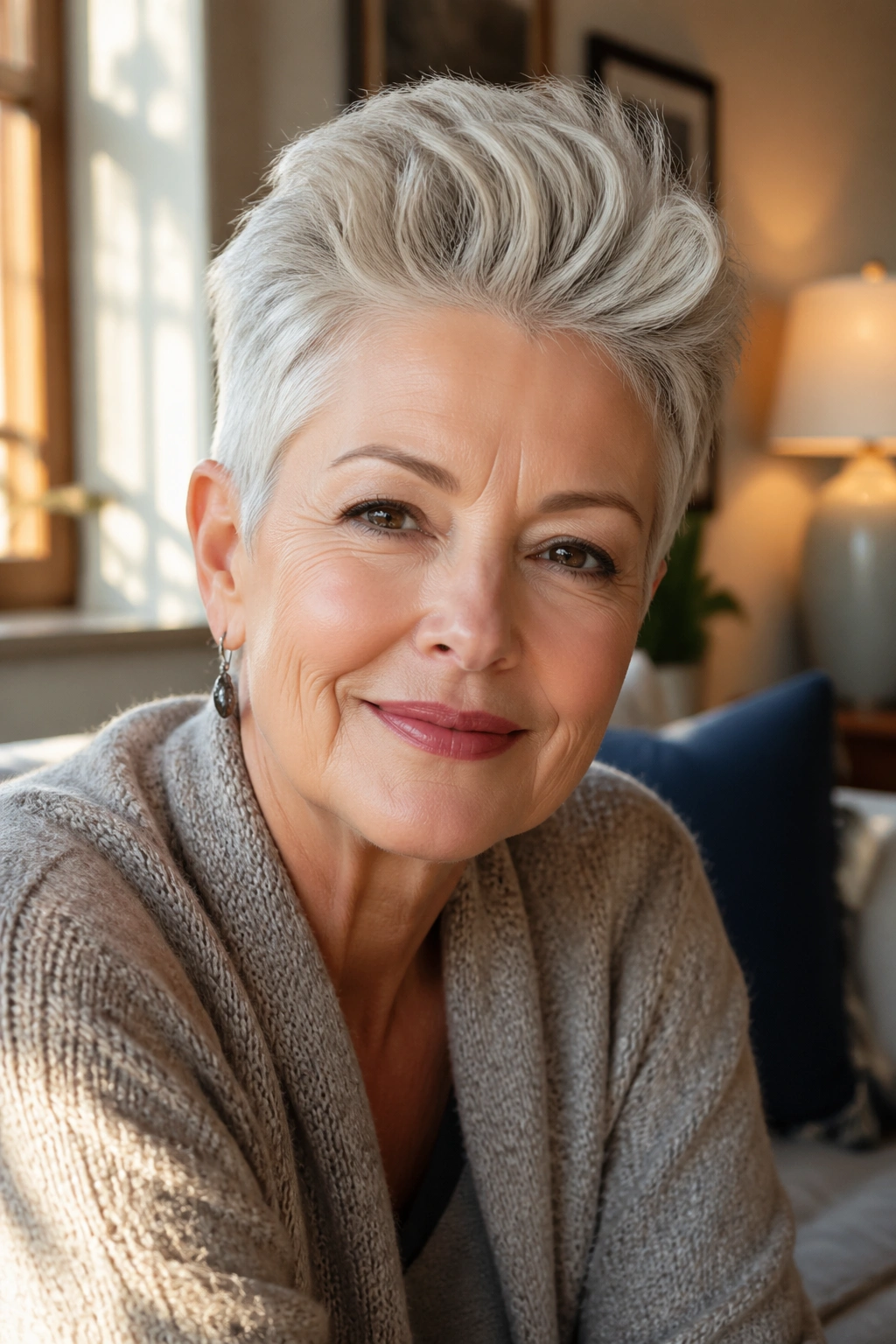
A soft pompadour pixie brings height to the front without making the whole haircut feel loud. The top lifts gently upward and backward, while the sides stay trimmed close enough to keep the shape elegant.
This cut is a good match if your hair grows straight down at the front or if you want more lift than a brushed-back pixie gives you. It also flatters a longer face because the volume sits where the eye wants to pause.
How to Style It
Dry the front section with a round brush, lifting the roots as you go. A small amount of root spray helps, but don’t drown the hair in product. The shape needs air. That’s the part people miss.
A soft pompadour can look very polished with an evening outfit, but it doesn’t have to be formal. If the rest of the cut stays textured, it reads as modern instead of old-school.
20. Pixie-Bob Hybrid
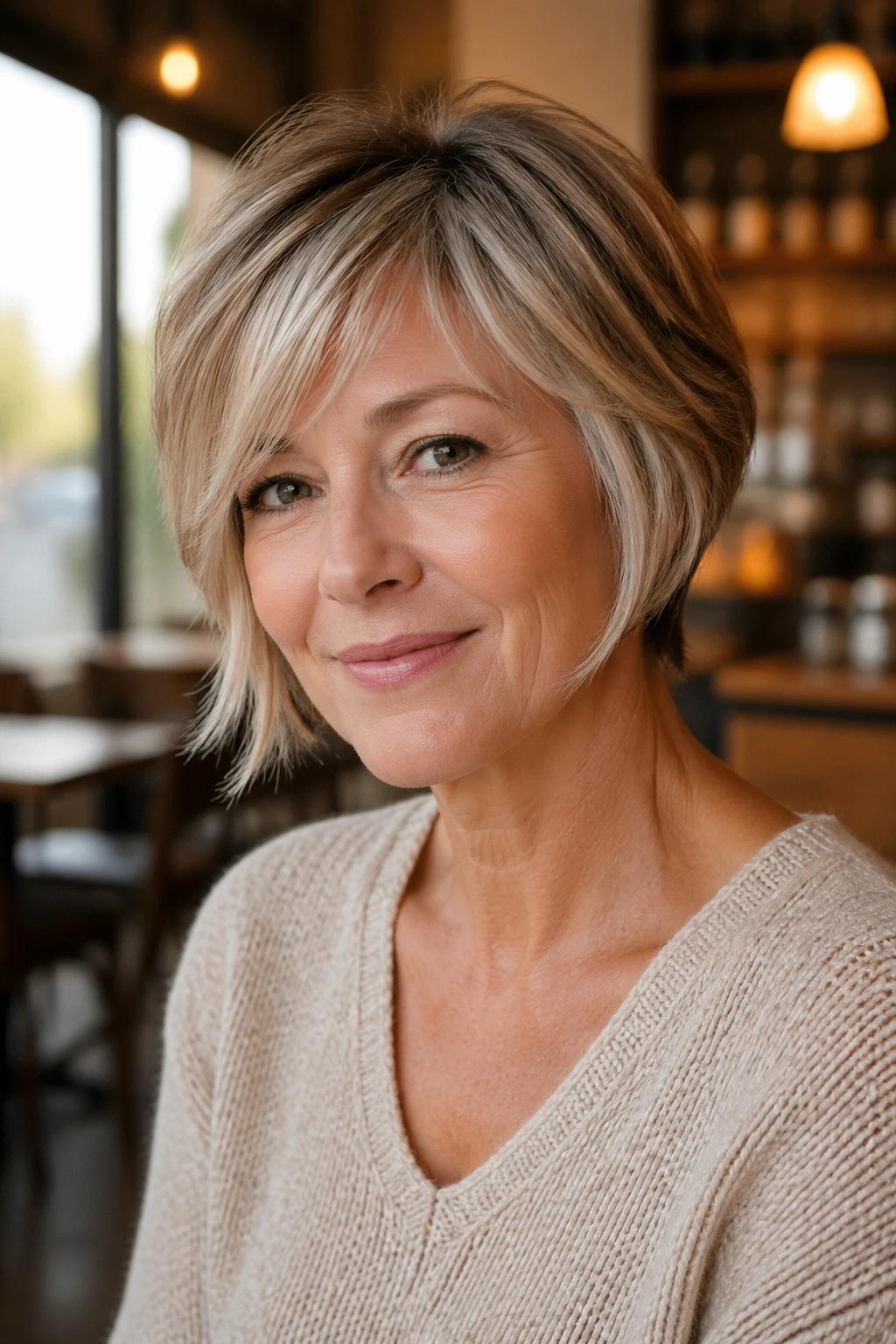
The bixie sits between a bob and a pixie, and that middle ground is exactly why so many women like it. You get the shorter nape and the lighter feel of a pixie, but with enough length around the ears and jaw to keep the haircut from feeling too exposed.
Why It’s a Smart In-Between
- It grows out more gracefully than a tight pixie.
- It gives you more styling room at the sides.
- It works well if you’re nervous about going very short.
The bixie is especially useful if your hair is thick or if you want to keep some weight around the face. A classic pixie can feel too lean on some head shapes. A bixie softens that line.
If you’re not ready for a cropped cut but you want more shape than a bob, this is the obvious stop on the way there. No big drama. Just a better fit.
21. Cropped Coily Pixie
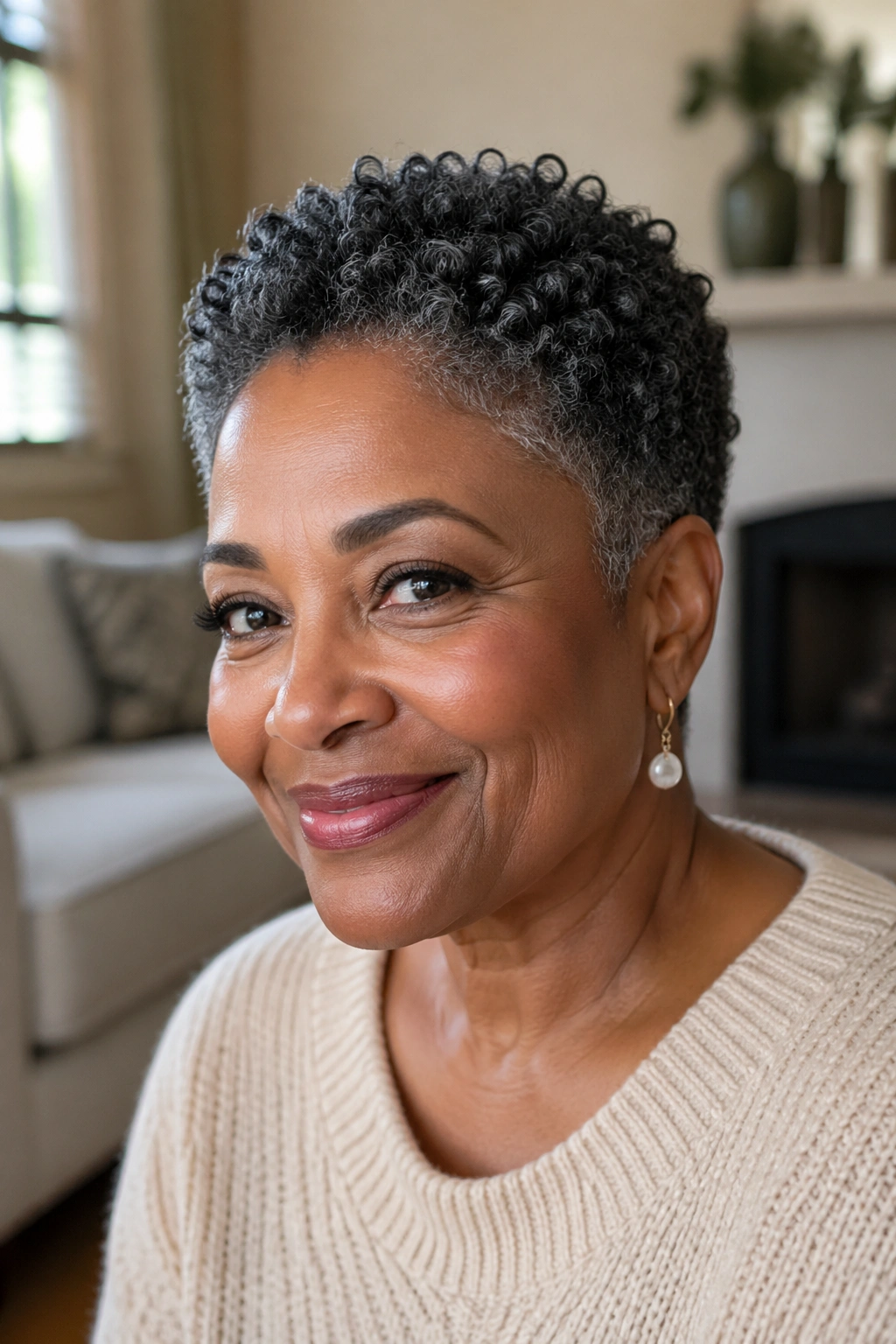
Coily hair needs a different kind of pixie. The cut has to respect shrinkage, curl pattern, and density all at once. If it’s too short in the wrong spots, the hair can stand up where you wanted it to lie down. That’s not a styling issue. That’s a haircut issue.
The best cropped coily pixies leave enough length on top for the coils to spring naturally, while the sides and nape are tapered so the outline stays clean. Cutting dry is often the safer choice, because the true shape of the curls shows up right away.
How to Keep the Pattern Intact
Use a moisturizing cream or curl butter sparingly. Too much product weighs the coils down and hides the shape. A diffuser can help, but low heat is your friend. High heat makes coily hair frizz faster than you’d expect.
This is one of the most beautiful short cuts when it’s done well. Shape first, styling second.
22. Nape-Hugging Pixie
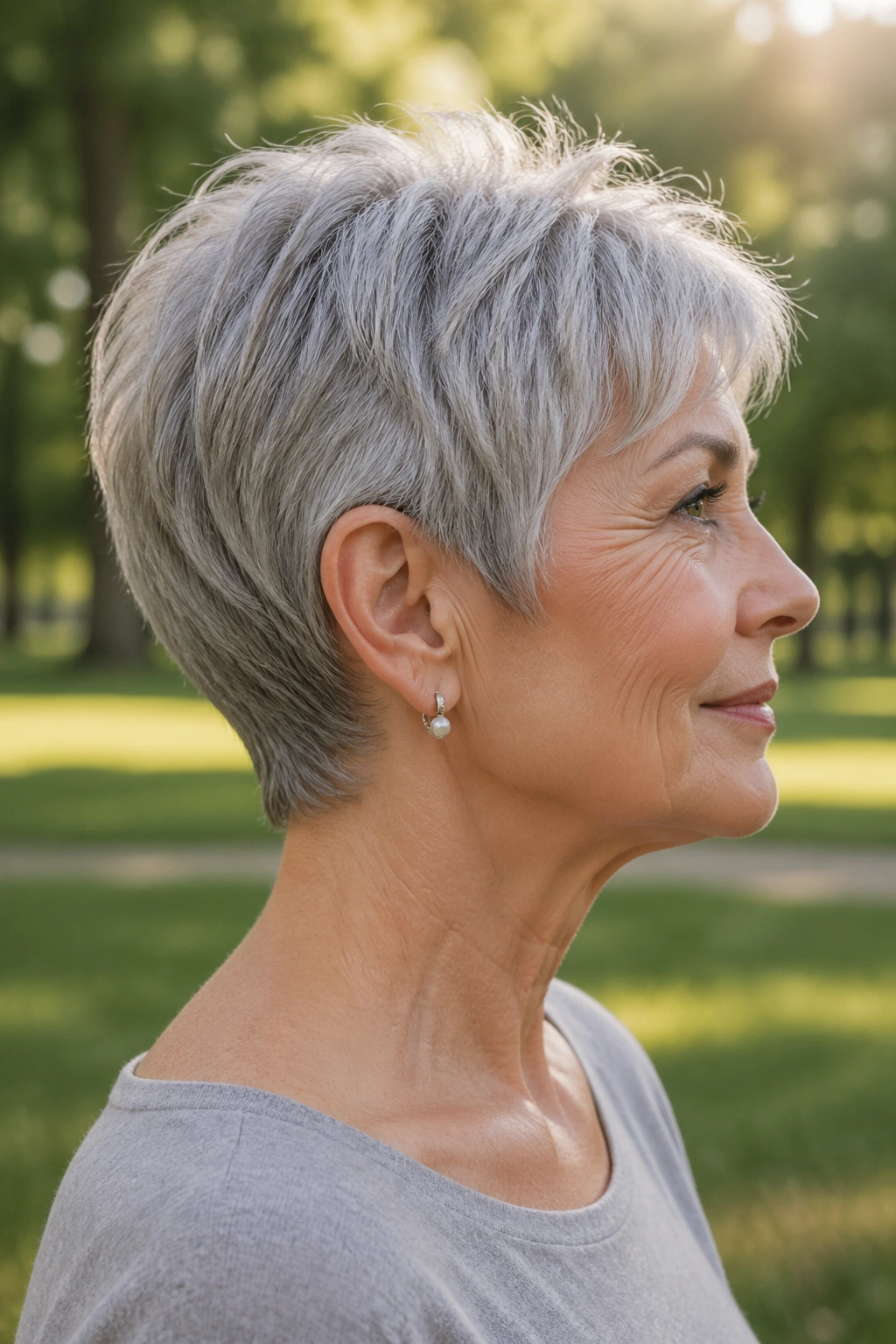
A nape-hugging pixie lies close to the neck and follows the natural curve underneath the head. It feels neat, almost tailored, and that clean back line gives the haircut a polished finish even when the top is soft.
It’s a smart choice if you like your hair off the collar and away from the neck. Some women love that feeling because it makes shirts, scarves, and jackets sit better. The cut also grows out softly if the nape is blended well, which is a nice bonus.
There’s something satisfying about this shape. It looks calm. It doesn’t fight the head shape. Instead, it follows it.
If you want a pixie that reads tidy from every angle, this is a strong one to bookmark.
23. Razor-Cut Airy Pixie
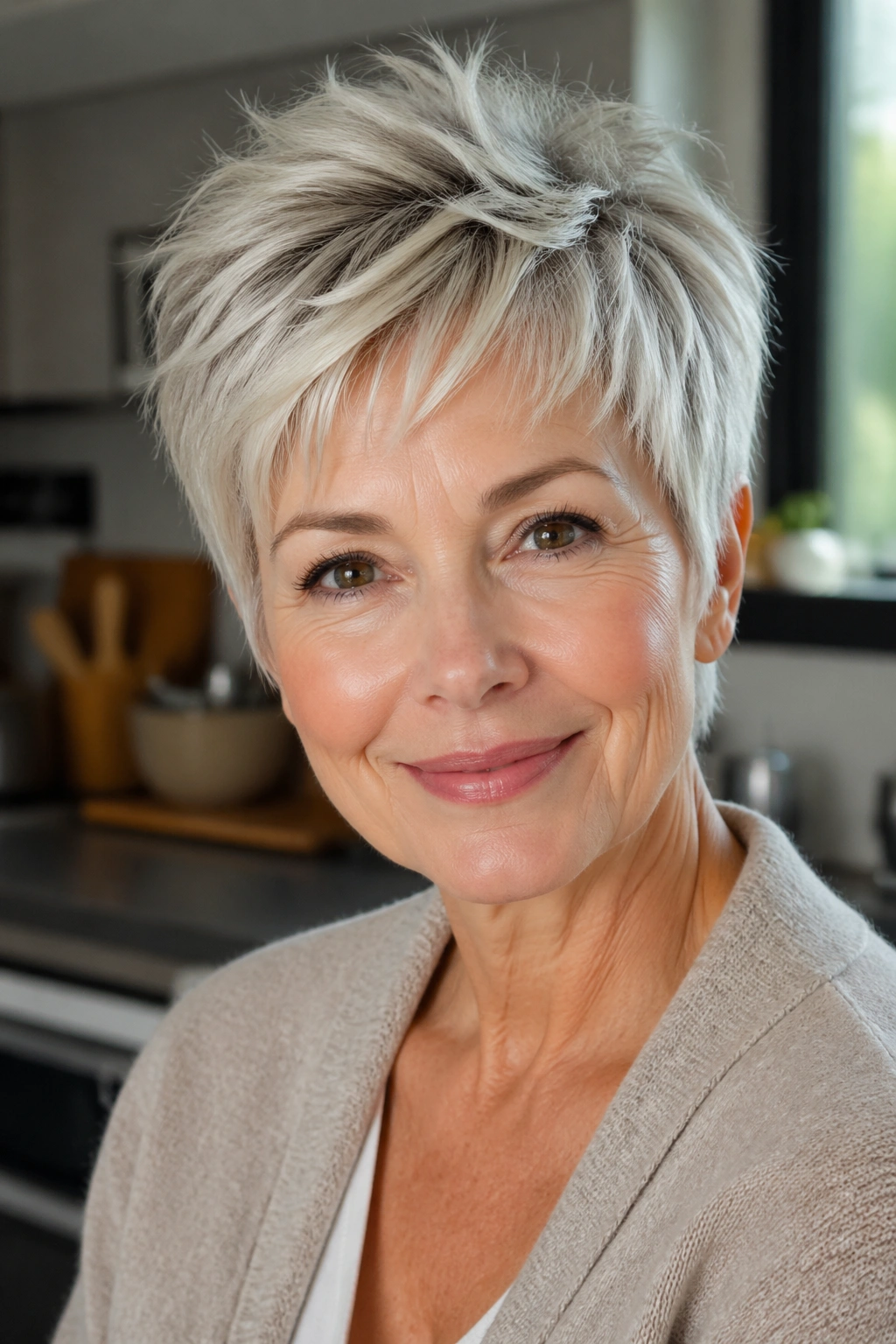
Razor-cut edges can make a pixie feel almost weightless, but only when the razor is used with restraint. The point is to soften the ends and reduce bulk, not to shred the hair into frizz.
This cut is especially good on straight to wavy hair that has too much density around the crown or sides. A razor lets the stylist remove weight in a way that leaves movement behind. On very dry or brittle hair, though, I’d be careful. A heavy razor pass can make the ends feel rough if the hair is already fragile.
What to Watch For
- Ask for soft movement, not aggressive thinning.
- Keep the crown light, but leave shape at the front.
- Use a smoothing cream if the ends feel fuzzy after drying.
The best razor-cut pixies look breezy, not choppy. That’s a fine line, and it matters.
24. Grown-Out Pixie
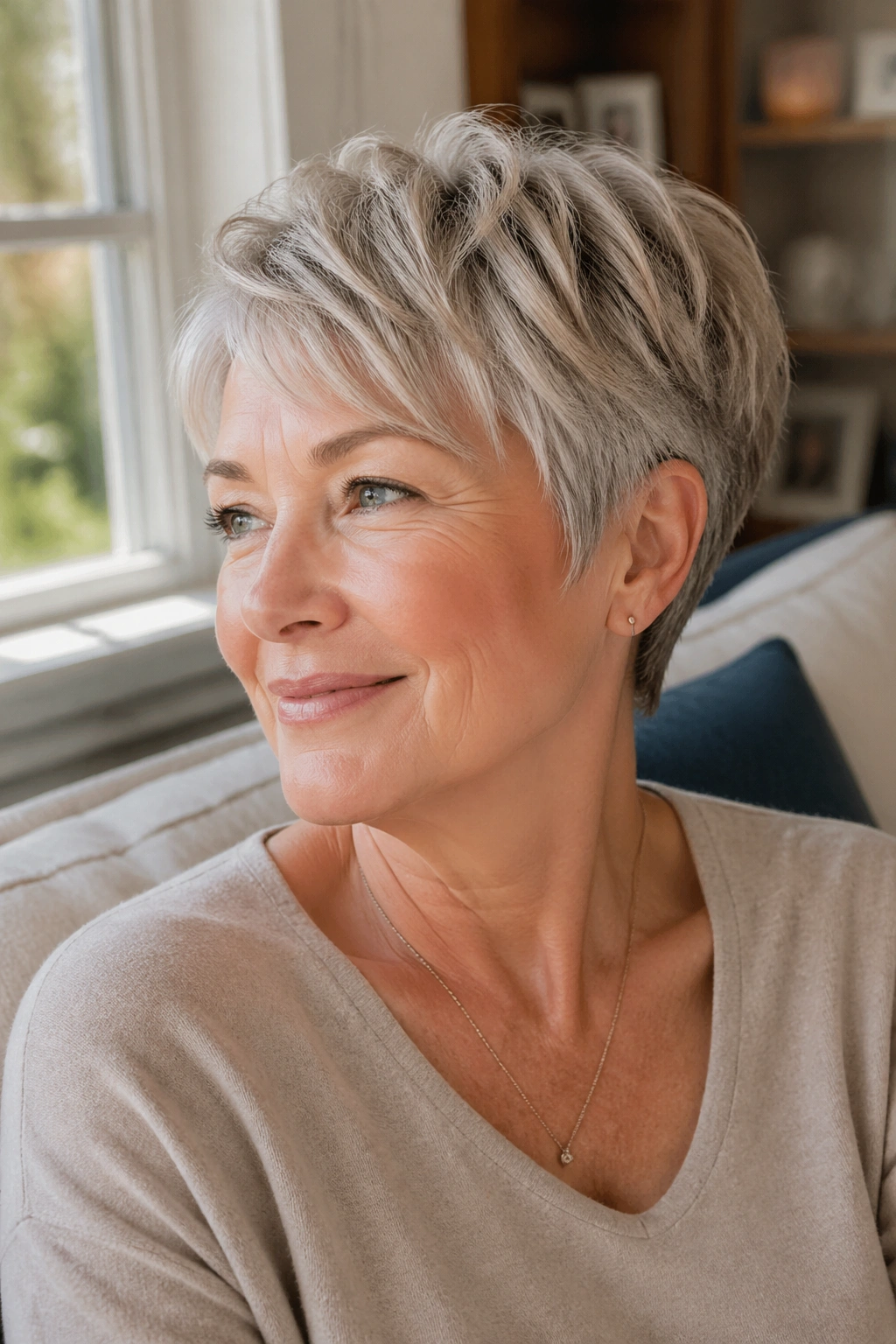
Why do some grown-out pixies look chic and others look like a cut nobody finished? Shape. A good grown-out pixie still has a plan: the top stays controlled, the sides keep some edge, and the neckline is cleaned up often enough that the shape never goes limp.
This is a great option if you don’t want to live in the salon every four weeks. Let the top drift a bit longer, keep the sideburns tidy, and ask for soft blending at the ears so the cut grows instead of explodes. That’s the whole trick.
A grown-out pixie can be one of the easiest short styles to wear between appointments if the baseline cut is smart. It doesn’t need to stay razor sharp. It just needs to stay intentional.
That’s a useful word here. Intentional.
25. Elegant Side-Part Pixie
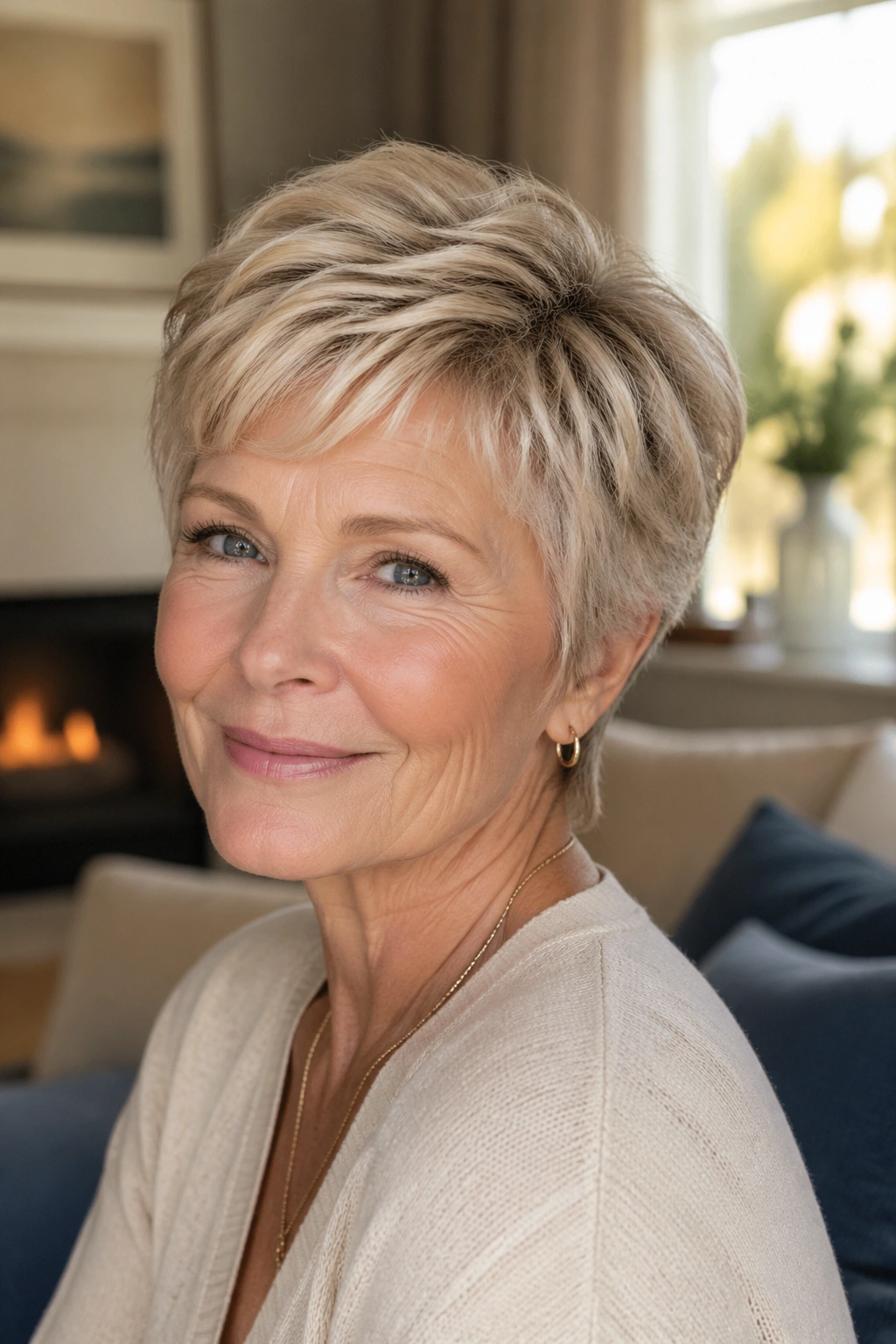
The side-part pixie is the one I recommend most often when someone wants short hair that still feels refined. It gives the face a clean diagonal line, keeps the top from looking too flat, and leaves enough movement to keep the haircut from feeling stiff.
A side part also works well with glasses, earrings, and softer makeup, because it frames the face without crowding it. The top can sit at 2 to 3 inches, the sides can stay close, and the front can sweep just enough to create shape without falling into the eyes. That balance is why it lasts.
If you want a pixie that feels elegant on a Tuesday and polished on a night out, this is the one. Ask for a part that starts where your hair naturally wants to split, not where a photo says it should. That little detail makes the whole cut easier to live with, and easier to like.