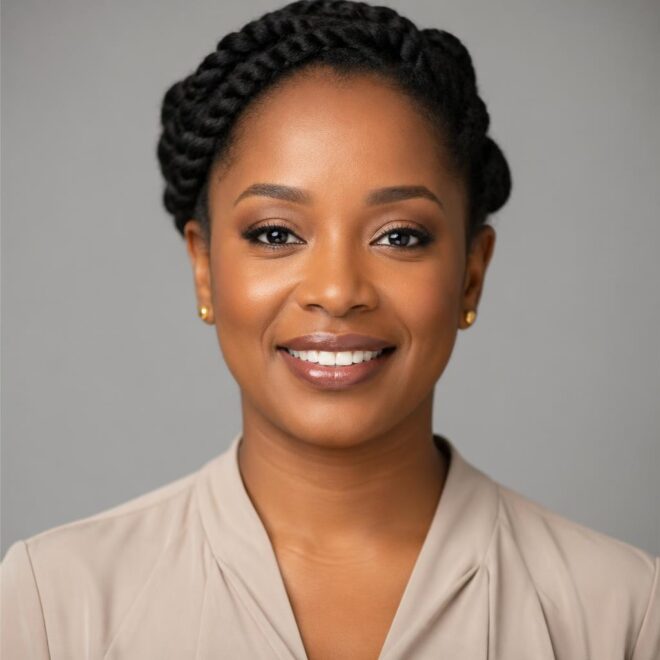

Glasses can make a pixie haircut look sharper, smarter, and more intentional than a longer cut ever does — if the shape is right.
The trouble is that frames sit right where a bad haircut tends to wobble: at the brow, the temple, and the side of the cheek. Women over 50 often want a little lift at the crown, softness around the front, and enough movement to keep the cut from feeling boxy. A strong pixie cuts for women over 50 who wear glasses has to respect all three.
That’s why the best versions don’t fight the frames. They leave space near the hinges, keep the fringe from cutting straight across the lens line, and build a shape that still looks good when you tuck one side behind your ear or wear your glasses up on your head for ten minutes and forget about them.
Some of these cuts feel polished. Some are airy and feathered. A few have a little edge, which is often where the fun starts. The right one depends on your hair texture, your frame shape, and how much styling you’re willing to do on a Tuesday morning.
1. Soft Side-Swept Pixie for Women Over 50 with Glasses
A soft side-swept pixie is the safest place to start if you want the haircut to flatter your glasses instead of competing with them. The front moves diagonally across the forehead, which softens the line of rectangular or square frames and keeps the face from looking too framed-in.
Why It Works With Glasses
The side-swept front creates a little motion where glasses often create a hard line. That matters more than people think. If your frames have a strong bridge or bold corners, a blunt fringe can make the whole face feel chopped up. A sweep, though, keeps the eye moving.
Ask for a front section that lands somewhere around the top of the brow or just below it, then tapers into shorter sides. The goal is softness, not cover-up. You still want your eyes visible.
A light mousse or a small round brush is usually enough to keep this shape in place.
- Best with medium to thick straight hair
- Nice with rectangular, square, or cat-eye frames
- Easy to wear with a deep side part
- Works well if your hair has a little natural wave
Tip: keep the temple area soft, not bulky. That one detail makes the glasses sit cleanly on the face.
2. Clean Tapered Pixie with a Slim Nape
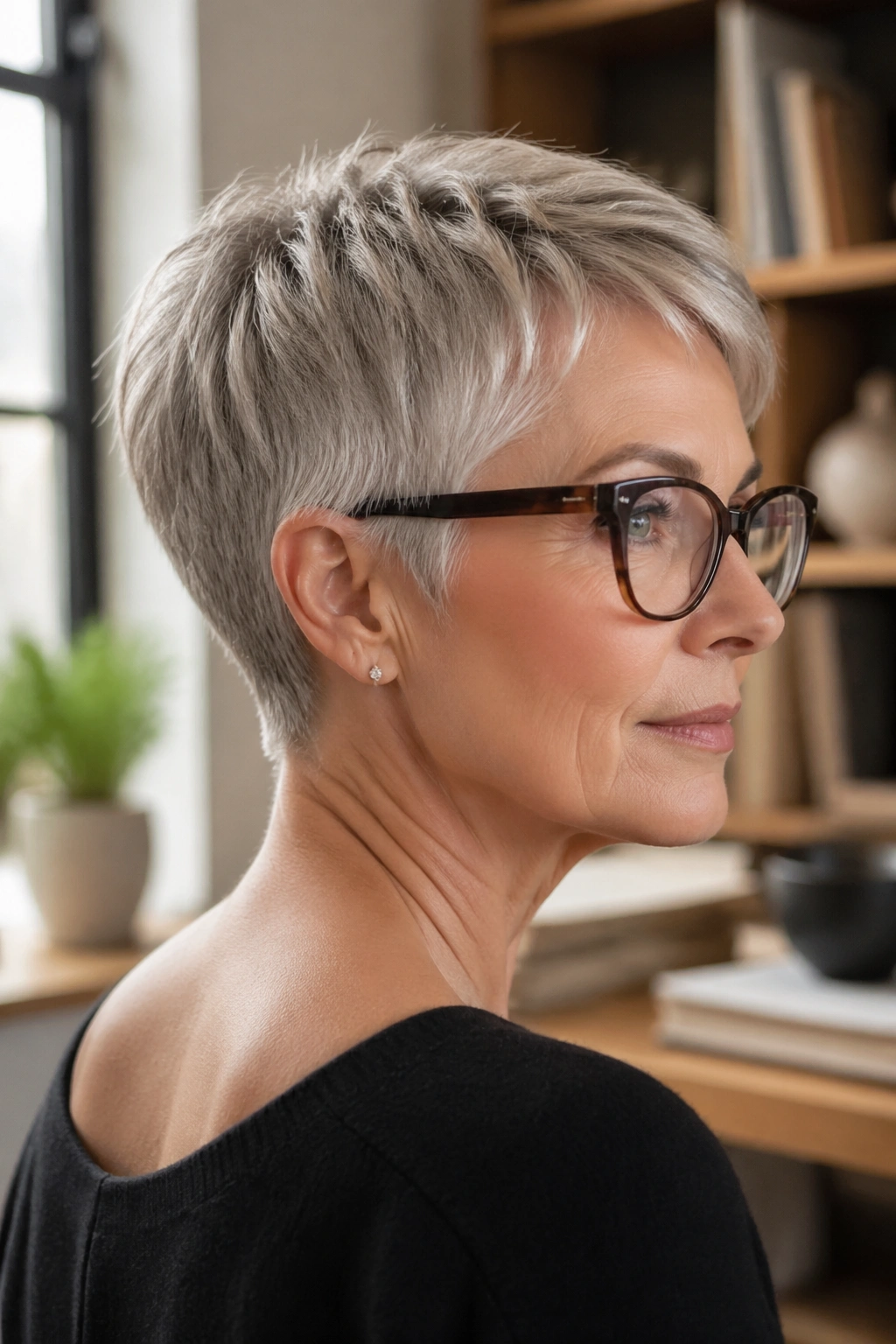
A clean nape changes the whole haircut. You feel it immediately when the neck gets a little longer and the back stops puffing out under the frame line of your glasses.
This cut is tidy without being stiff. The sides and back are tapered close, but not shaved down to nothing, which keeps it flattering on mature hair that may be finer than it used to be. A slim nape also helps if you wear heavier frames, because it gives the face a lighter visual base.
I like this shape on women who want a polished look with almost no fuss. It behaves well under scarves and coats, too. That sounds minor. It isn’t.
What to Ask For
- A tapered back that follows the head shape
- Softly blended sideburns near the ear
- A slightly longer crown for lift
- No bulky shelf at the occipital bone
If your hair grows out fast at the nape, this cut still looks decent for a while, which is a nice change. It doesn’t fall apart the minute the salon chair starts feeling too far away.
3. Choppy Textured Pixie
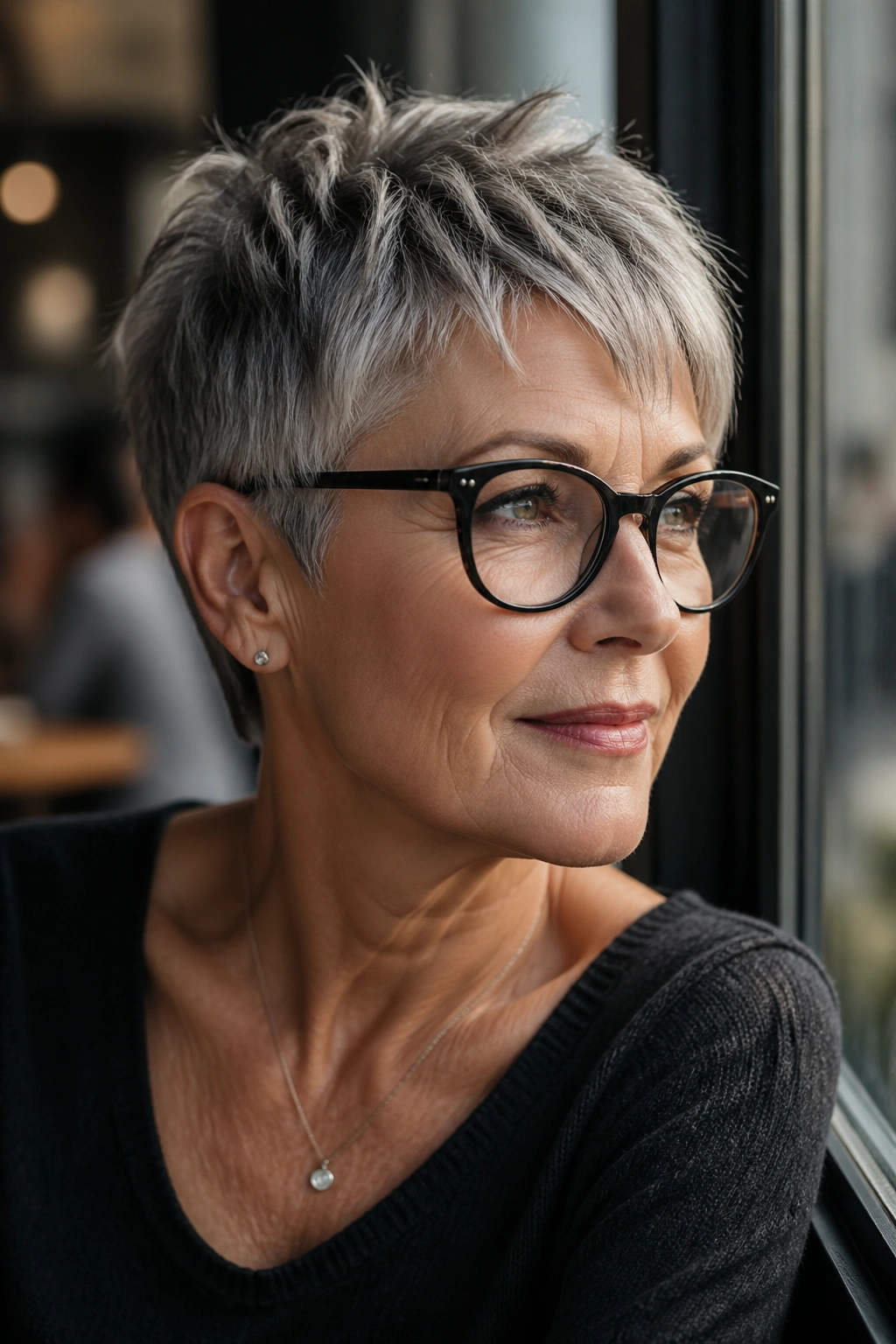
Need a cut that still looks good after you run your fingers through it twice and call it done? This is the one.
A choppy textured pixie breaks the hair into small, uneven pieces, which keeps the haircut from sitting like one solid cap around the head. That matters with glasses because texture gives the eye somewhere to go besides the frame edge. It also helps fine hair look fuller without requiring huge amounts of product.
The Texture Should Feel Intentional
A good choppy pixie is not random. It should have piecey movement at the top and softer, shorter layers around the sides so the glasses arms don’t fight with the hair. The texture should feel airy, not frayed.
A matte paste works better than a shiny cream here. Use a pea-sized amount, warm it in your palms, then pinch it through the ends. Too much product turns the cut into little spikes. Nobody wants that unless they do, in which case this is not the cut for them.
The best thing about this shape is that it looks a bit different every day. Some mornings it’s neater, some mornings it’s messier, and both versions usually work.
4. Longer Top Pixie
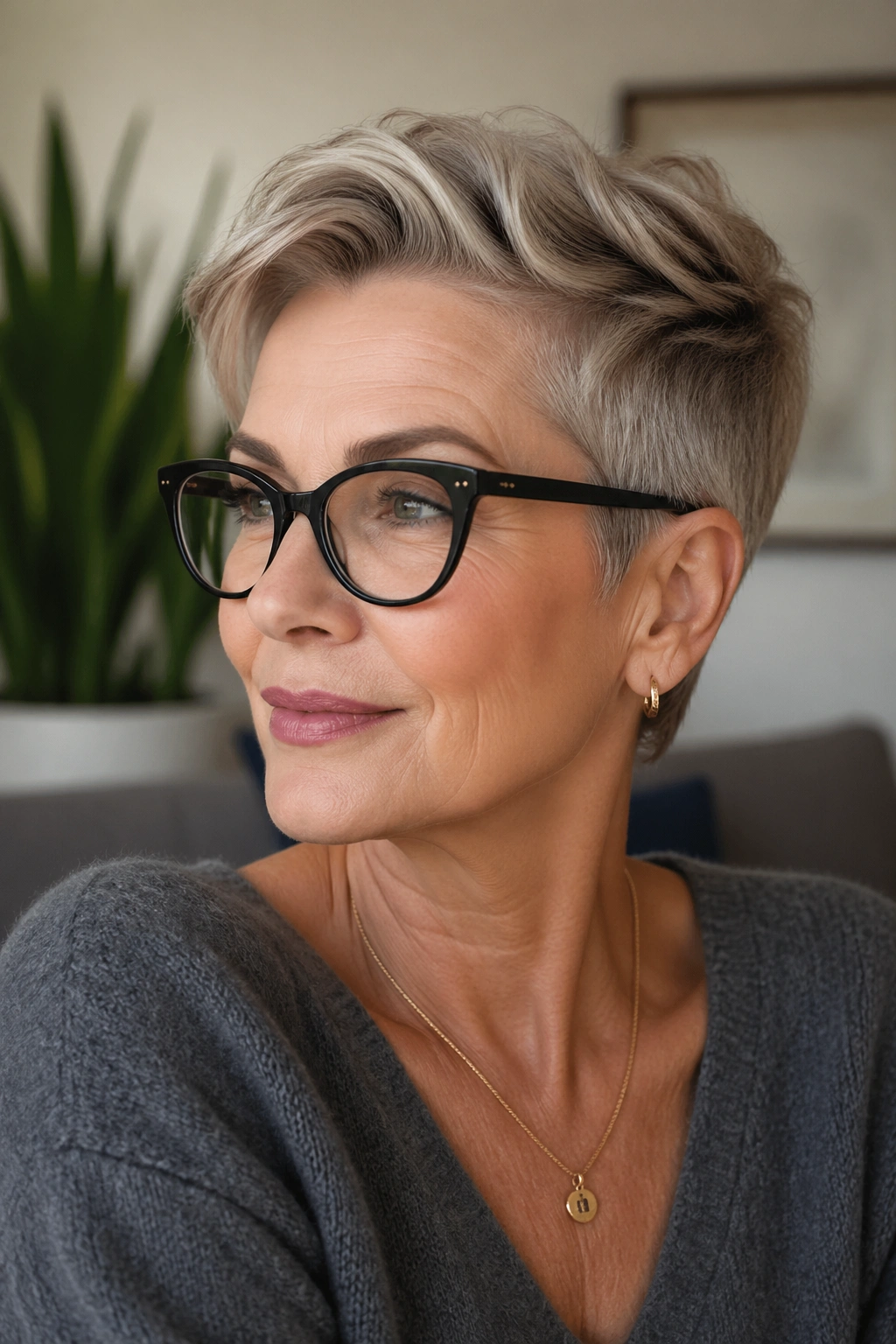
Short all over is not the only option, and honestly, it’s not always the smartest one.
A longer top pixie leaves you enough hair to sweep, tuck, or puff up at the crown while keeping the sides neat and short. That extra length is useful when your glasses have a strong frame or sit high on the nose, because the front can move away from the brow line instead of sitting right on top of it.
A Little Length Makes Styling Easier
Keep the top around 2½ to 4 inches if your hair can handle it. That gives you room to create a side sweep, a subtle quiff, or a soft brushed-back shape. The sides should stay tighter so the haircut doesn’t balloon out around the temples.
This one works especially well if you have a longer face or a high forehead, because the top length lets you control balance without losing the clean pixie outline. It also gives you a little more wiggle room on the days when your glasses, your earrings, and your mood all need something different.
A flat brush and a quick blast of air at the roots usually do the trick. Not glamorous. Effective.
5. Feathered Pixie with Wispy Fringe
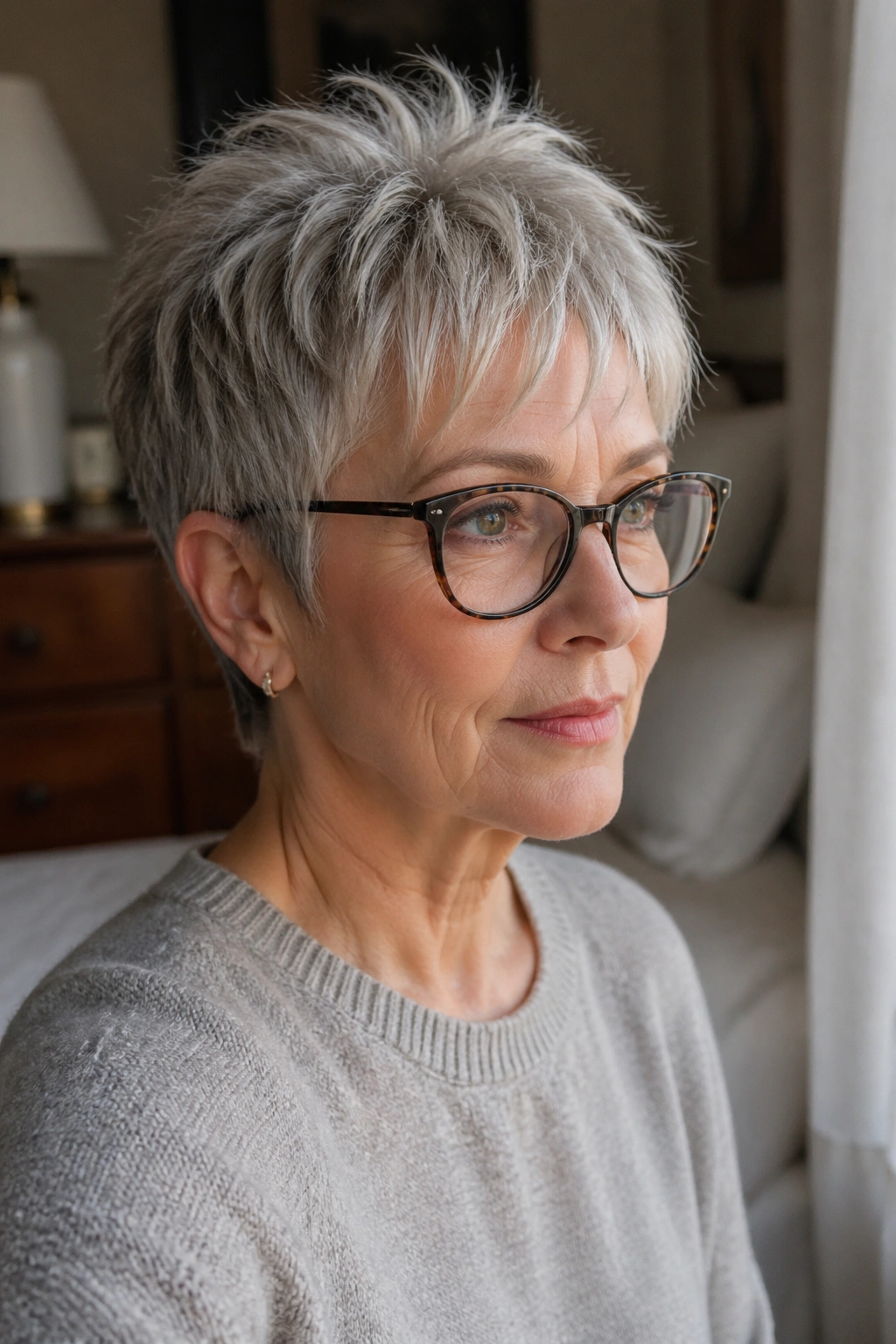
Feathered ends feel lighter the second you look at them. They move, they soften, and they keep the haircut from sitting too hard against the face.
A wispy fringe is a good match for glasses because it breaks up the line across the forehead without hiding your brows. That’s the sweet spot. If the fringe gets too dense, the frames and the bangs start arguing. If it’s too short, the haircut can look clipped in a way that feels severe.
Where the Fringe Should Land
The fringe should sit lightly around the top of the frame, not smack into the center of it. A little point-cutting at the ends keeps the line soft. Ask for feathering around the temples too, since that area is where glasses tend to add the most visual weight.
This cut is kind to softer faces and works well with round or oval frames. It also makes the cheeks look gentler, which is welcome if you’re wearing a chunky pair of glasses that already gives the face plenty of shape.
One warning: feathered does not mean flimsy. The haircut still needs structure in the back, or it starts to look unfinished.
6. Curly Pixie That Lets the Shape Breathe
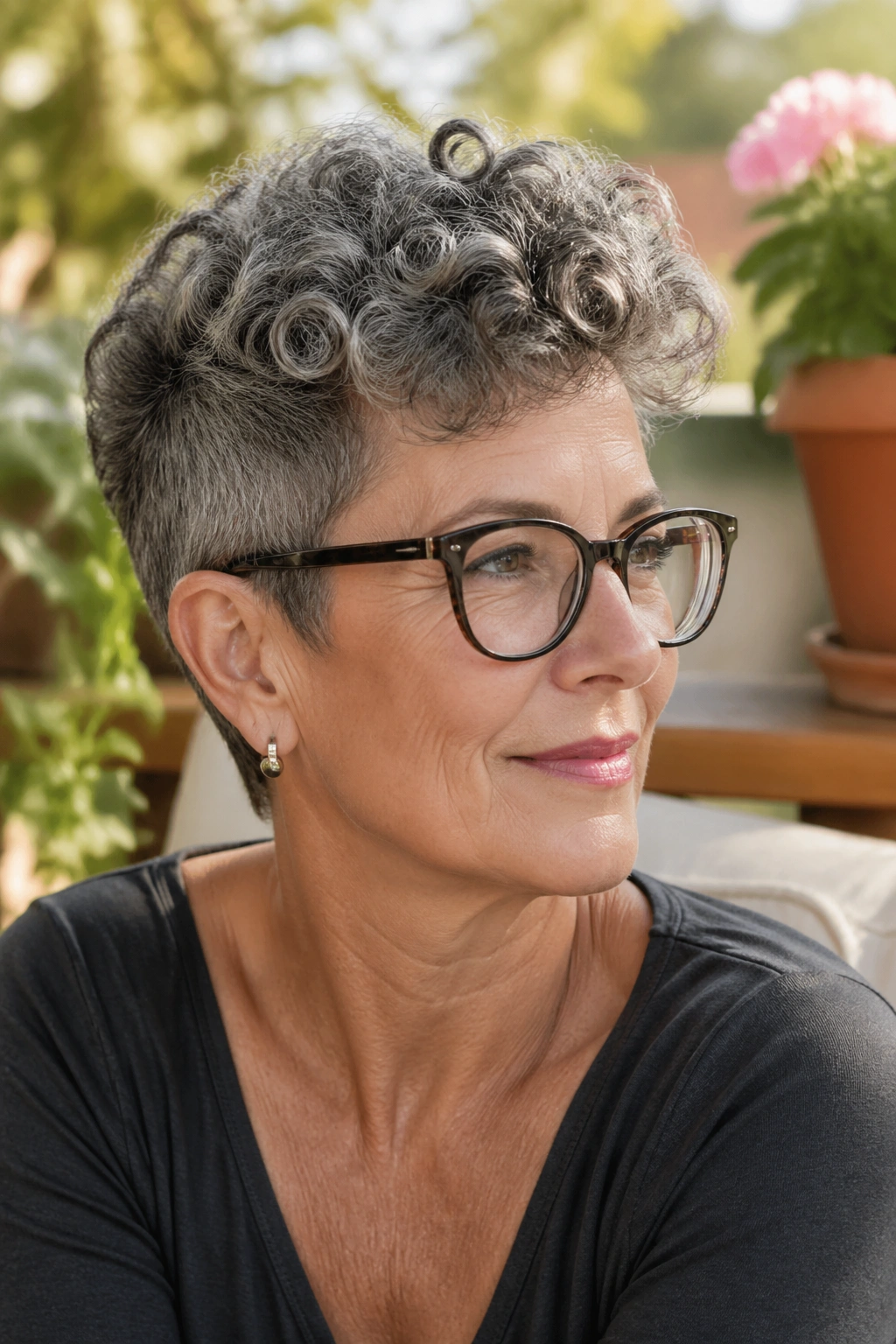
If your hair bends on its own, don’t spend your life fighting it.
A curly pixie can look fantastic with glasses because curls bring life to the top while the shorter sides keep the outline neat. The trick is giving the curls enough length to form, usually a little longer on top and slightly shorter around the ears. That way the shape stays airy instead of puffing out into a halo that crowds the frames.
How to Keep Curls From Crowding the Glasses
- Leave the top long enough for your curl pattern to form, usually around 2 to 3½ inches
- Keep the temple area lighter so the glasses arms do not disappear into the hair
- Use a diffuser on low heat to keep curl clumps intact
- Finish with a light gel or cream, then leave it alone
This cut is one of my favorites for women who want softness without fuss. It looks alive even when it’s a little imperfect, and glasses tend to look more natural against curls than against a stiff, overblown shape.
The only real danger is over-trimming the curl pattern. If the cut is too short, the curls spring up and sit right where the glasses need space.
7. Asymmetrical Pixie With One Longer Side

An asymmetrical pixie adds instant shape, and it can be a smart move when your glasses are a little bold or your face isn’t perfectly symmetrical. Most faces aren’t. Haircuts should stop pretending otherwise.
With this cut, one side stays shorter while the other hangs longer toward the cheekbone or jaw. That longer side can soften a sharp frame line, draw attention across the face, and make the whole look feel more deliberate. It has personality without needing a lot of styling drama.
Best Use Case
This shape shines when you wear frames that are thicker on one side, or when the temples sit a little high. The extra length on one side can balance that visual weight. It also works if you naturally part your hair to one side and hate fighting it.
Keep the longer side around 3 to 4 inches and the shorter side tight enough to stay neat around the ear. The line should feel purposeful, not uneven in a careless way.
If you like a haircut that looks styled even on a lazy day, this is a strong pick. If you want symmetry and calm, skip it.
8. Brushed-Back Pixie

Open the forehead, and the glasses start to look intentional instead of accidental.
A brushed-back pixie pulls the hair away from the face, which makes the frames take center stage. That can be fantastic if you wear statement glasses, especially thick acetate styles or strong cat-eye shapes. The face looks open, the brows stay visible, and the glasses stop competing with fringe.
You do need enough length at the top to push the hair back without it sticking straight up. Around 3 to 5 inches usually gives enough room, though thicker hair may need a little less. A light mousse at the roots helps the shape hold without turning crunchy.
It looks cleaner than it sounds. Really.
This is also a good cut if you don’t like hair touching your forehead during the day. Some people hate that feeling. If that’s you, this may be your favorite line on the whole list.
9. Classic French Pixie
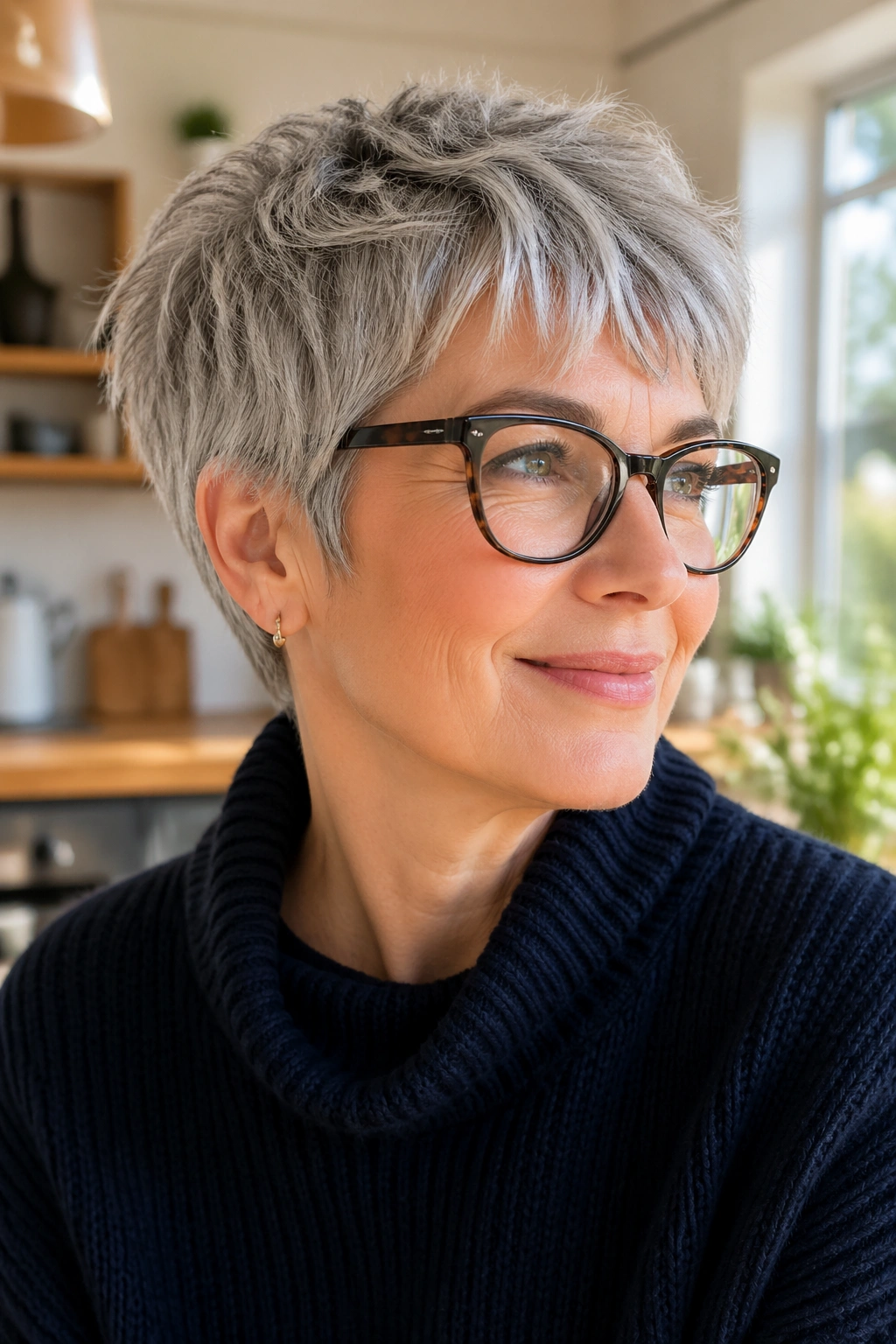
The classic French pixie has a tiny bit of attitude and a lot of restraint. It’s cropped, soft, and slightly undone, which makes it easier to wear with glasses than a hyper-structured cut.
The fringe is usually short and airy, the sides stay close, and the top has just enough movement to avoid looking helmet-like. That balance is what makes it work. With wire frames, it feels chic. With thicker frames, it keeps the look from getting too heavy.
This one suits women who want a haircut that feels low-key but not boring. It is especially nice if you have fine hair, because the shape doesn’t depend on tons of volume. A little root lift and a bit of finger styling are enough.
One detail matters: don’t let the fringe get too blunt. A hard line across the forehead can make the glasses look like they’ve been glued to the face. A soft, irregular edge is better.
10. Undercut Pixie for Thick Hair and Bold Frames
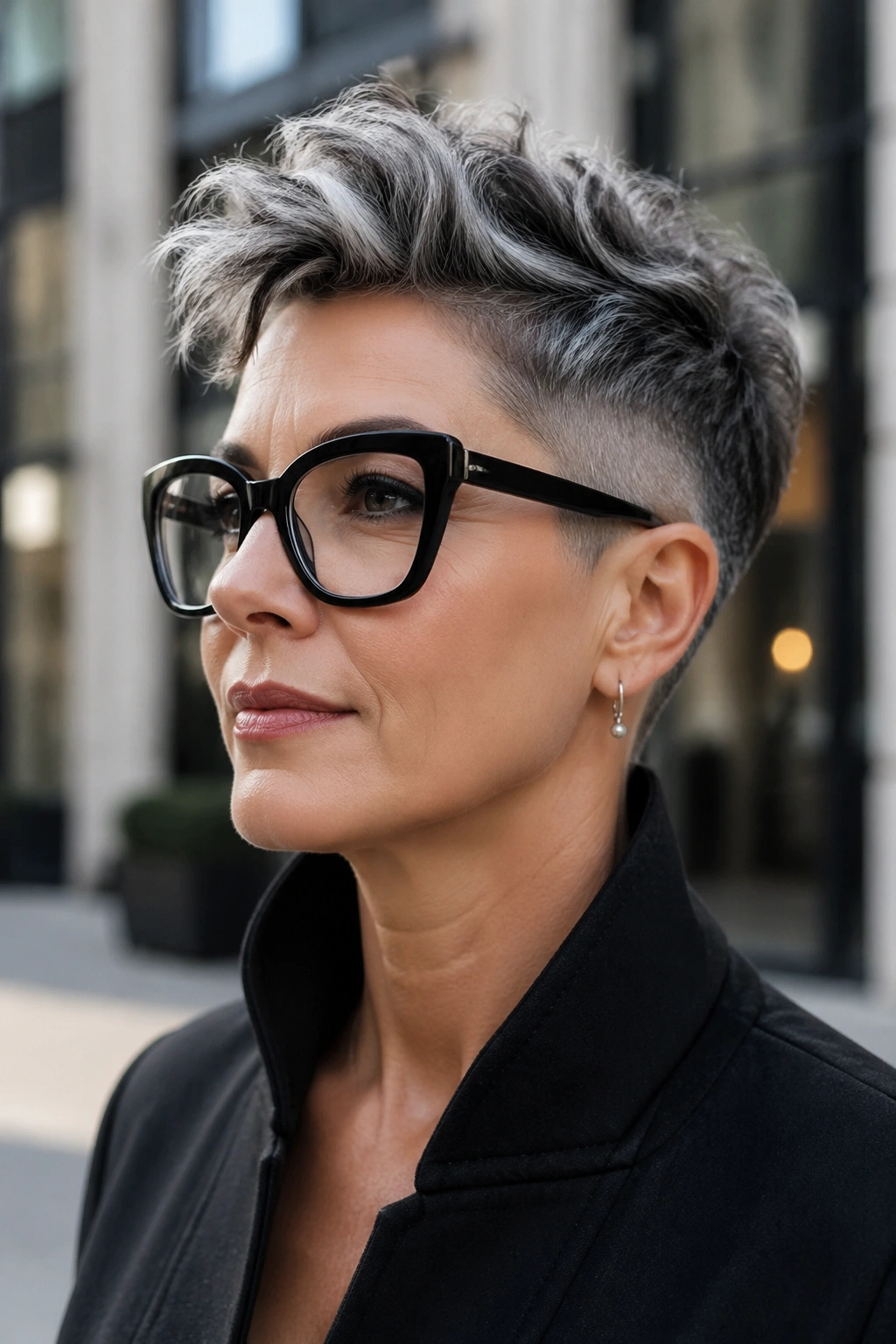
This is the one for thick hair that refuses to lie flat.
An undercut pixie removes bulk at the sides or nape, which keeps the head shape cleaner and the glasses from being swallowed by too much hair. The top can stay longer and more playful, or it can be sleek and controlled. Either way, the undercut gives the haircut breathing room.
Who Should Skip It
- Anyone who wants a very soft, rounded outline
- Anyone who dislikes regular trim appointments
- Anyone who wants to air-dry and leave the house with zero shaping
If you wear bold frames, this cut can look fantastic because the strong hair shape echoes the strong glasses shape. That said, it is not a shy haircut. If you prefer soft edges and almost invisible styling, this one may feel like too much.
A small warning: when the sides are cut too close and the top is too long, the contrast can turn harsh. The best versions are blended, not abrupt. The whole point is structure, not shock value.
11. Silver Pixie with Piecey Ends
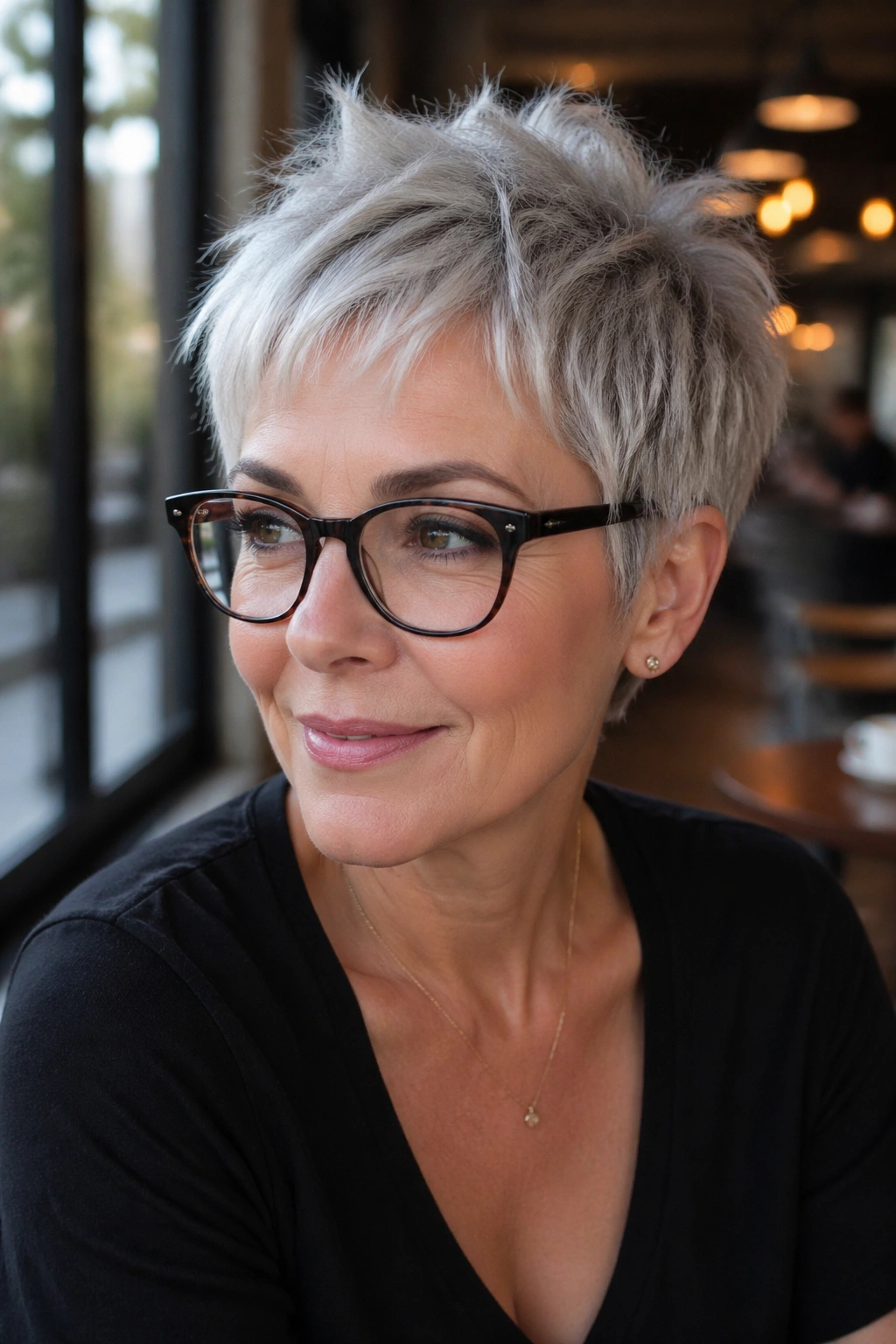
Silver hair and a good pixie are a natural match. The color shows texture well, and the cut keeps the shape from turning dull.
Piecey ends make silver hair look alive instead of flat. That matters because gray and silver strands can be coarse, soft, wiry, or all three in one patch. A pixie with small, separated pieces around the front and crown gives the hair some movement, which makes the glasses look like part of the style rather than an add-on.
A lightweight cream usually works better than heavy oil. Heavy product can flatten the silver and make it look darker than you want. If the color has a yellow cast, a toning shampoo every week or two can help keep it cleaner, but don’t overdo it or the hair can feel dry.
This cut looks especially good with tortoiseshell, pewter, or clear frames. The contrast is clean. Sharp, even.
12. Rounded Pixie That Softens the Whole Face

Want the softest silhouette on the list? This is probably it.
A rounded pixie follows the curve of the head and keeps the sides a little fuller, which can be lovely with angular glasses. The shape softens the frame line instead of amplifying it, and that helps if your features are already sharp or your cheekbones are high. It can also take years off the look in the most practical sense: not by pretending to be something else, but by removing visual harshness.
Best For
- Heart-shaped faces
- Narrow faces that need a little width
- Angular frames that would otherwise feel too severe
- Hair that sits flatter on the sides
A rounded pixie does need careful cutting around the ears and temple. If those areas get too puffy, the whole cut loses shape fast. The beauty of this style is in the curve, not in bulk.
If you like the idea of softness but don’t want anything fussy, this is a quietly smart choice. It doesn’t beg for attention. It earns it.
13. Micro Pixie With Sharp Edges
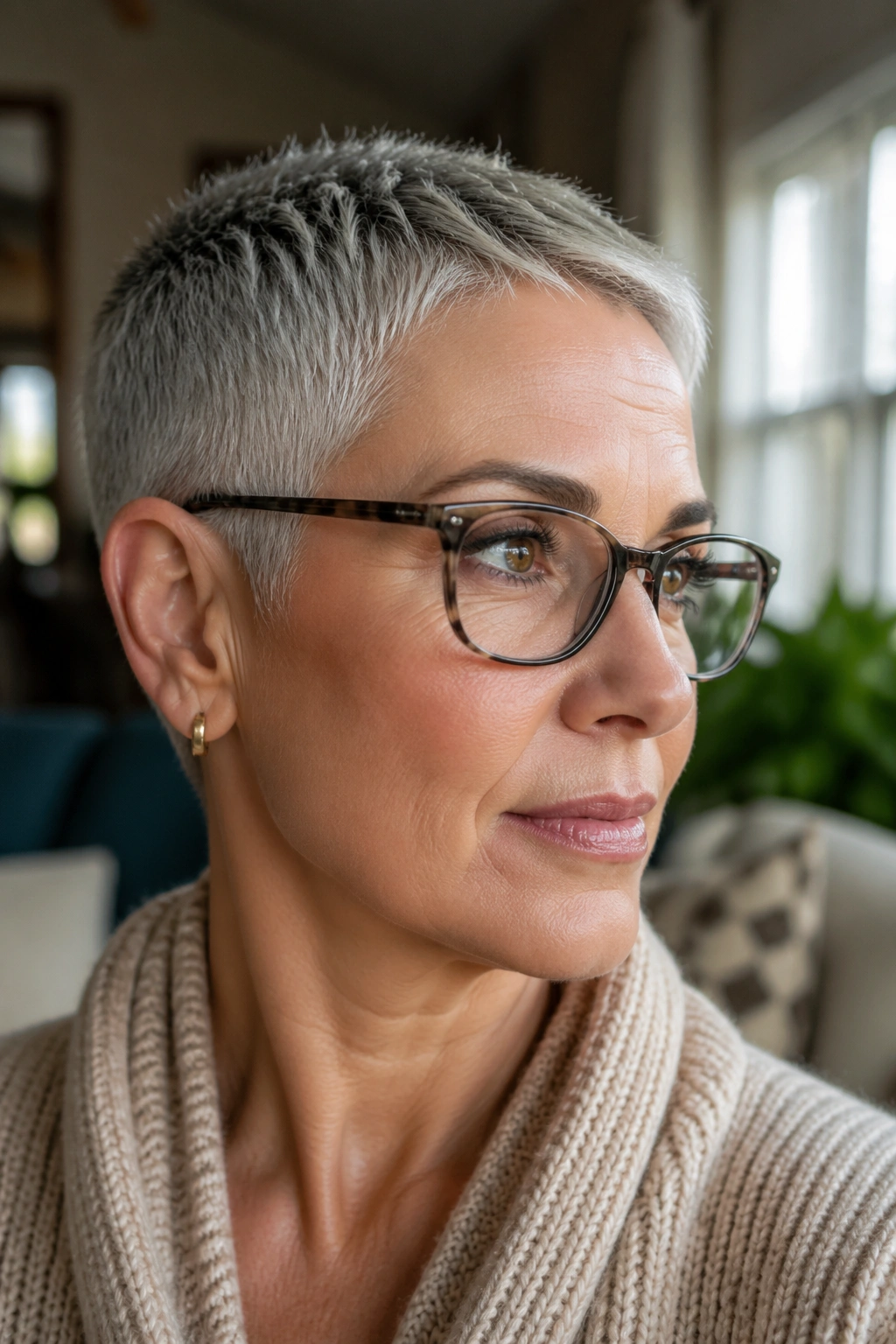
Tiny does not mean severe.
A micro pixie sits very close to the head, often with a short top and clean sides, and it can look terrific with delicate wire frames or small oval glasses. The eyebrows stay visible, the jawline gets more attention, and the whole face feels uncluttered. That’s the appeal.
But this cut needs confidence. It shows your head shape, your cowlicks, and your growth pattern. There’s nowhere to hide. If you like that honesty, great. If you don’t, look elsewhere.
What Makes It Work
- Top length around 1 to 1½ inches
- Tapered or clipped sides
- Light styling cream, never heavy wax
- Regular trims every 4 to 6 weeks
The good version of a micro pixie looks crisp and modern. The bad version looks like someone gave up halfway through. There is not much middle ground. That’s why I’d only recommend it to someone who already knows they like short hair on themselves.
14. Ear-Tucked Pixie With Soft Side Pieces
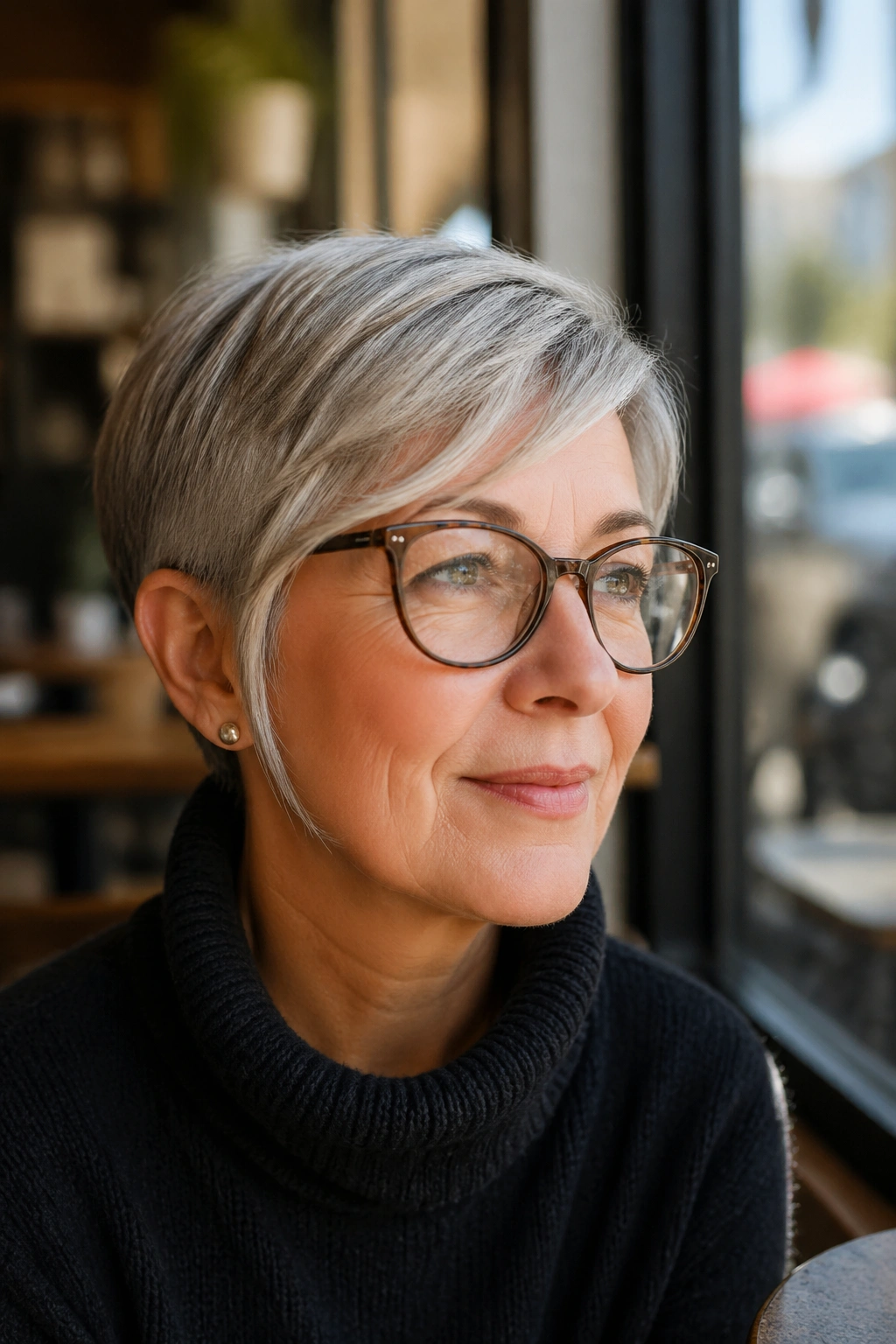
When the arms of your glasses sit low, hair near the ears can get fussy fast. An ear-tucked pixie solves that with side pieces that are long enough to tuck but short enough to stay neat.
This is one of the most practical cuts on the list. The hair around the temple and sideburn area is left soft, so it can skim the ear without creating bulk where the frame hinge sits. That keeps the glasses comfortable and the haircut tidy, especially if you wear them all day.
The trick is to leave enough length for flexibility. Around 2 to 3 inches at the sides usually gives you the option to tuck, flip, or let the hair rest naturally. If it’s cut too short, you lose the whole point.
This cut feels lived-in. Not messy. Lived-in.
It also works nicely for women who switch between regular glasses and sunglasses, because the side length adapts instead of fighting the frame changes.
15. Sweeping Fringe Pixie
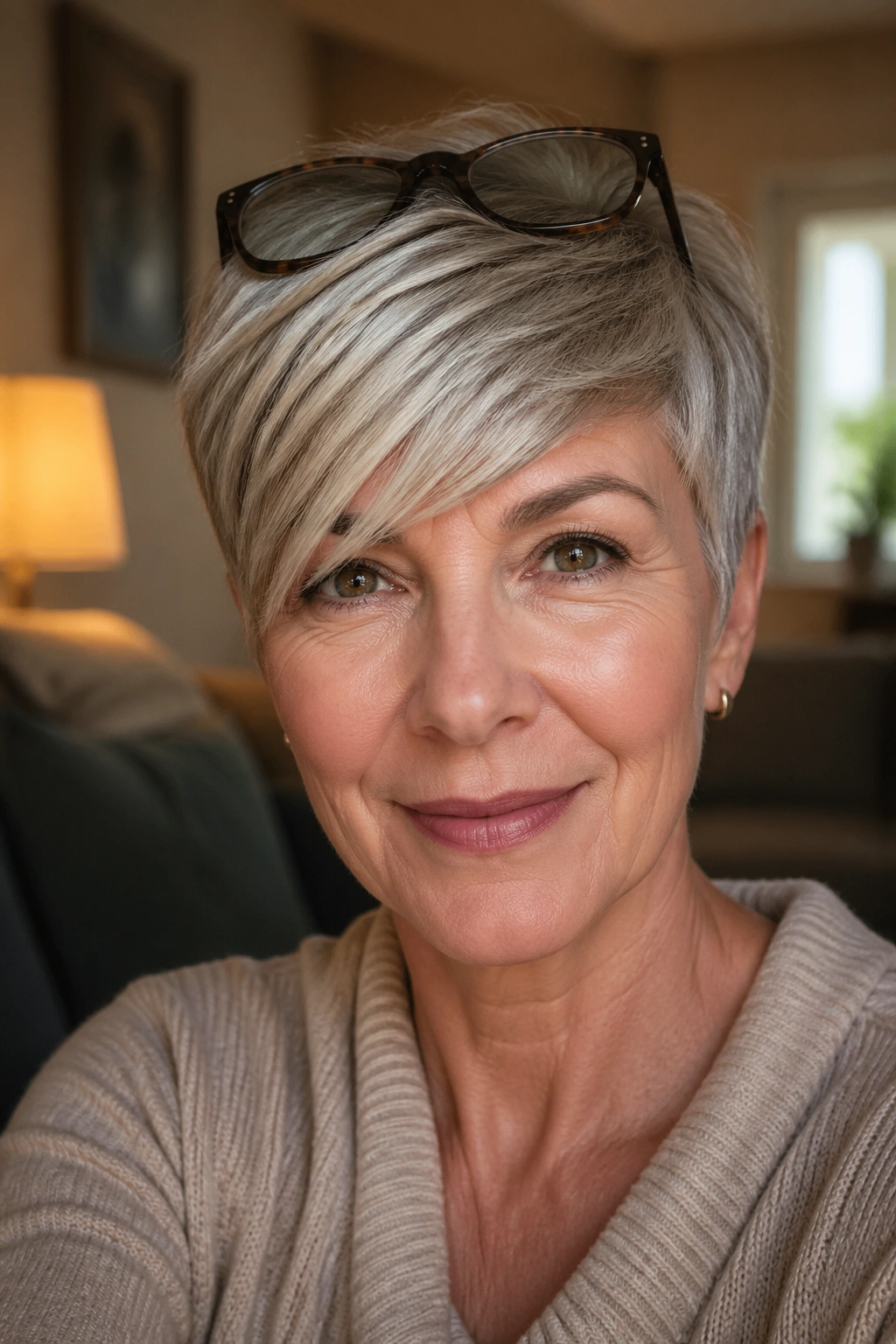
Want your eyes to be the first thing people notice? Then the fringe matters more than almost anything else.
A sweeping fringe pixie drapes diagonally across the forehead and can be cut long enough to skim the top of the frame without covering it. That line softens the face, balances a strong brow, and keeps glasses from looking too rigid. It’s one of the best choices if your frames are bold or geometric.
Best Frame Pairings
- Round glasses, because the sweep adds contrast
- Cat-eye frames, because the diagonal fringe echoes the lift
- Rectangular frames, if you want to soften the hard corners
The fringe should not be so thick that it hides your brows. Brows matter here. They keep the face animated and stop the haircut from feeling flat. A good stylist will thin the ends a little and leave enough weight at the root to keep the line from splitting open.
On humid days, this cut can get a little floppy. That’s normal. A quick pass with a blow-dryer and a round brush usually brings it back.
16. Crown-Volume Pixie for Thinning Hair
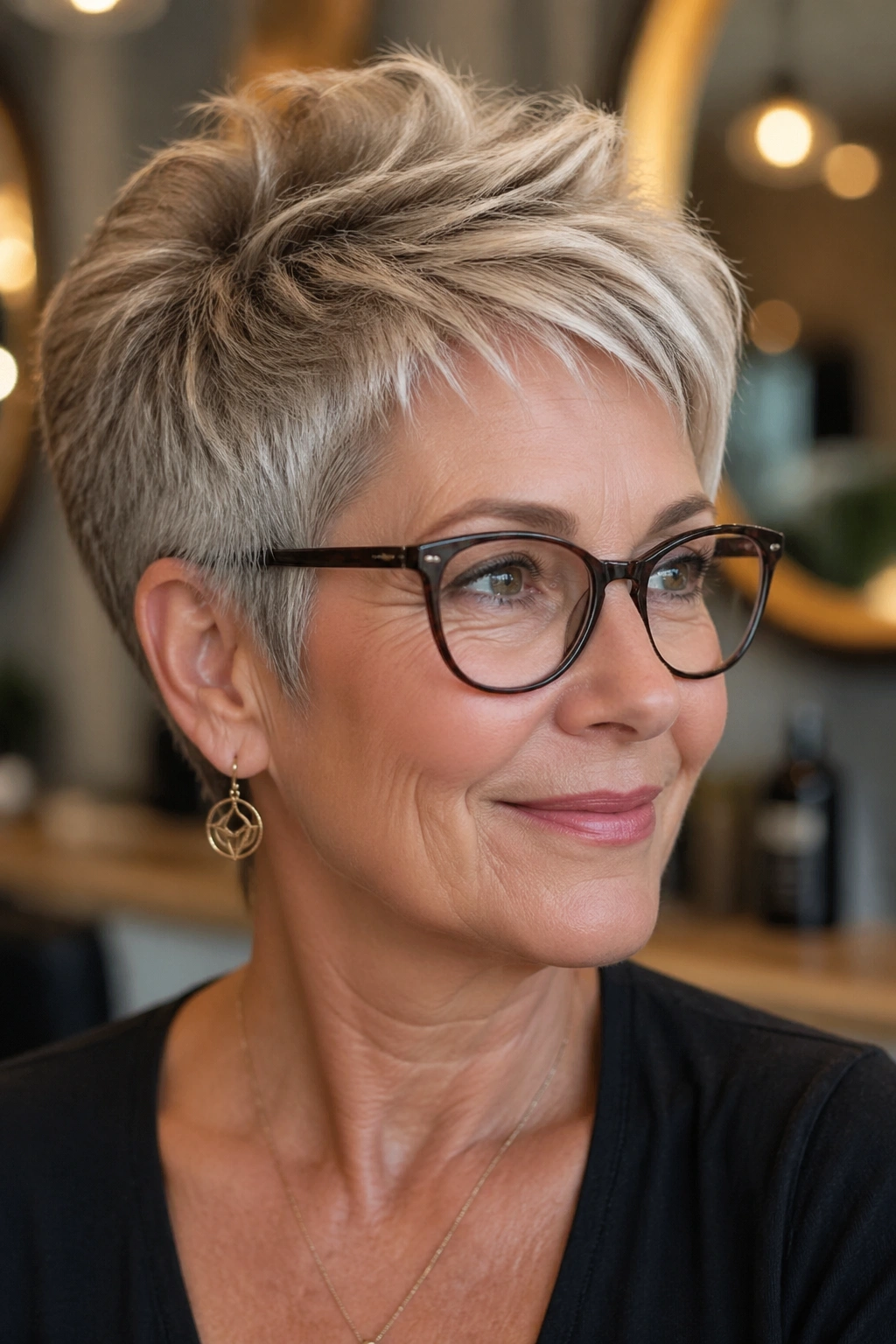
A little lift at the crown changes the profile more than another inch of length ever will.
This pixie is built for height at the top and control at the sides, which makes it a strong choice if your hair has gotten finer or flatter over time. The lift helps balance glasses because the face doesn’t collapse visually under the frames. It looks more open, more awake, and less like the hair is sitting on the skull.
How to Build Lift
- Blow-dry the roots first, aiming the airflow upward at the crown.
- Use a small vent brush or round brush to direct the hair back and slightly forward.
- Add a root spray or light mousse before drying, not after.
- Finish with a tiny bit of texture paste at the ends, never at the scalp.
Too much product kills the lift. That’s the usual mistake. The other one is leaving the sides too full, which makes the crown volume look fake instead of balanced.
This cut is strong with medium or large frames, especially if you want the haircut to soften the upper half of the face without losing shape.
17. Salt-and-Pepper Shaggy Pixie

There’s something honest about salt-and-pepper hair in a shaggy pixie. It doesn’t pretend to be anything else, and that’s exactly why it looks good.
The shaggy texture lets the mixed tones show up in layers instead of blending into one flat block. With glasses, that movement matters. It keeps the hair from feeling heavy around the temples and gives the whole face a little more energy. Warm frames, tortoiseshell especially, look excellent against this kind of cut.
This style works well if your hair is wavy or if it has a bit of natural bend. The layers can be left loose and air-dried, which is a blessing when you don’t want to spend twenty minutes on styling. If your hair is very straight, a little texture spray can keep it from looking too neat.
I like this cut because it never feels overworked. That’s rare.
18. Soft Mohawk Pixie
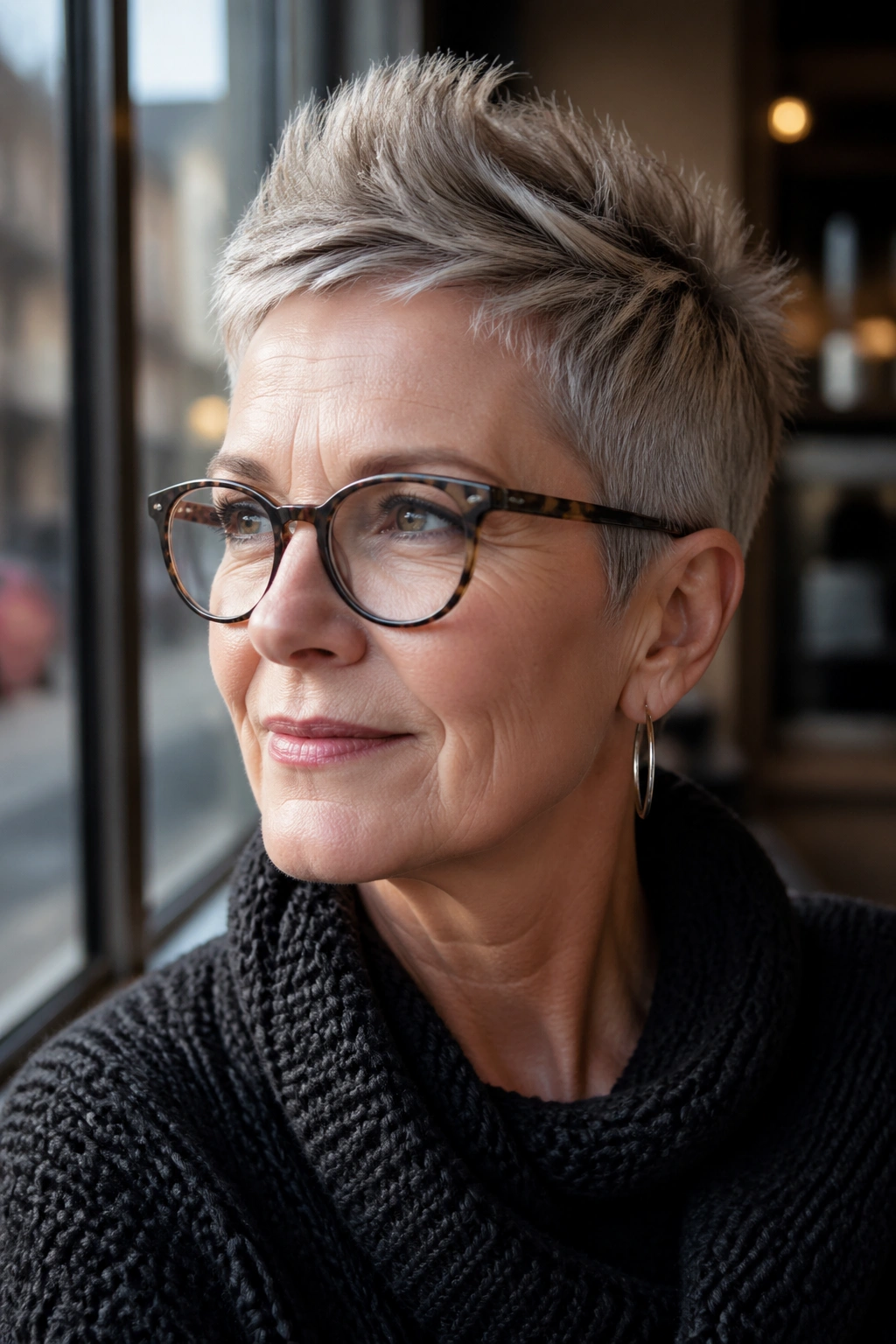
A mohawk shape can be surprisingly gentle.
The soft version keeps the sides short and the center ridge a little longer, but not punky or severe. With glasses, the line can look strong in a good way, especially if you wear round or angular frames and want the haircut to carry some presence. It gives the face a lifted center while keeping the sides under control.
What to Ask Your Stylist
- Keep the center section around 3 to 5 inches
- Blend the sides close, but not shaved to skin unless you want that contrast
- Soften the front so it can be styled forward or back
- Avoid heavy weight at the temples
This cut is not for someone who wants no maintenance at all. It needs a little shaping, and the product matters. A root lift spray or light styling cream helps keep the center up without turning it into a hard ridge.
If you like clothes with clean lines, strong jewelry, or big frames, this one has real presence. It is not shy.
19. Easy Grow-Out Pixie for Women Over 50 with Glasses
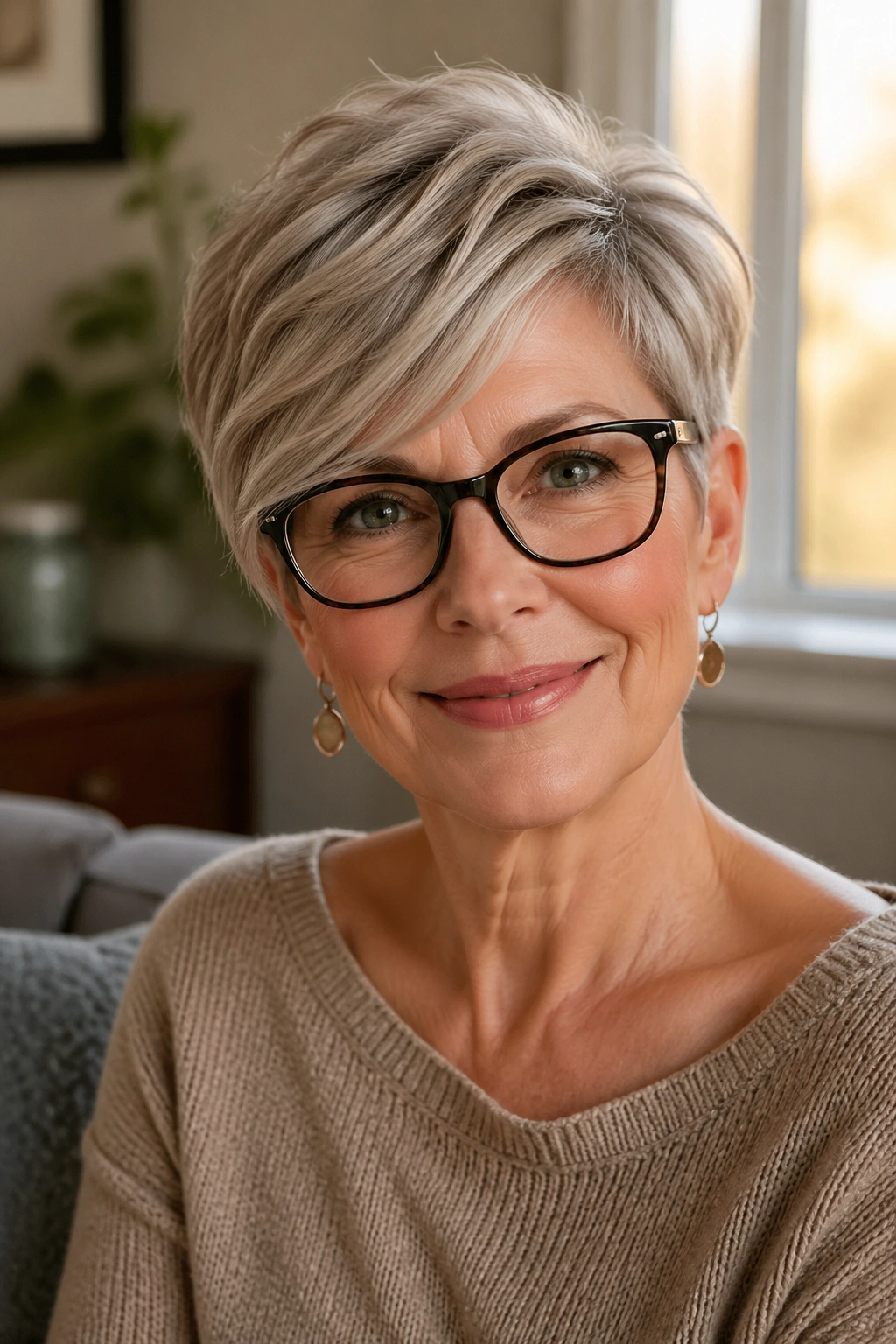
Some haircuts should look good on day one and day fifty.
That’s the whole point of an easy grow-out pixie. The shape is layered enough to stay flattering as it gets longer, with a soft perimeter that doesn’t collapse into a helmet or a helmet-adjacent situation. The top usually has a little more length, the sides stay neat, and the fringe is flexible enough to move with your glasses instead of against them.
This is the cut I’d recommend to anyone who wants a good-looking pixie without living at the salon. It’s forgiving. If you wear your glasses high one day and low the next, the haircut still holds up. If you tuck the sides behind your ears, it still works. If the crown gets a little fuzzy by week six, it usually looks like texture rather than neglect.
A grow-out-friendly pixie also gives you options later. You can push the fringe forward, part it to the side, or slick it back with a touch of cream. That flexibility matters more than people admit.
If you’re torn between two cuts, pick the one that leaves a little room around your frames. Hair grows. Glasses stay where they are.