



A pixie mullet has no interest in being polite. The front is cropped, the back hangs on a little longer, and the whole cut carries a kind of snarl that reads as style instead of mess. That is why pixie mullet hairstyles keep showing up on people who want short hair with a sharper edge.
The magic is in the proportions.
A tiny change in the crown, a cleaner taper at the temples, or a little more weight at the nape can swing the same haircut from sweet to punk to almost theatrical. That’s the part most people miss when they ask for “something edgy” and leave it at that. The edge lives in the silhouette, not in shock value.
Most versions work best when the shape is still readable after a day of wear. If the top goes flat, the back gets bulky, or the fringe falls into your eyes in a sad way, the cut loses its nerve fast. A good pixie mullet has movement, but it also has purpose. You want a haircut that looks like it knows where it’s going.
1. Choppy Crown Pixie Mullet
Sharp, messy, and a little rude — that’s the appeal here. The choppy crown version keeps the top piecey and lifted, which makes the shorter front feel deliberate instead of accidental. The back stays slightly longer and jagged, so the whole cut has that “I didn’t come here to behave” energy.
Why the Crown Does the Heavy Lifting
The crown is where this shape earns its keep. Keep about 2 to 3 inches on top, then ask for point-cut ends so the layers don’t sit in one blunt block. That little bit of broken texture helps the cut look alive even when you skip a full styling routine.
It works especially well on straight or softly wavy hair, because the chopped layers catch light and show off the shape. If your hair is fine, this cut can make it look fuller without needing a ton of product. If your hair is thick, ask for internal debulking near the crown so it doesn’t puff out like a helmet.
- Ask for short, tapered sides and a jagged nape.
- Use a matte paste or light clay, not a shiny cream.
- Trim it every 5 to 6 weeks or the choppy edges start looking sloppy.
Skip heavy conditioner at the roots. It flattens the lift that makes this version work.
2. Micro Fringe Pixie Mullet
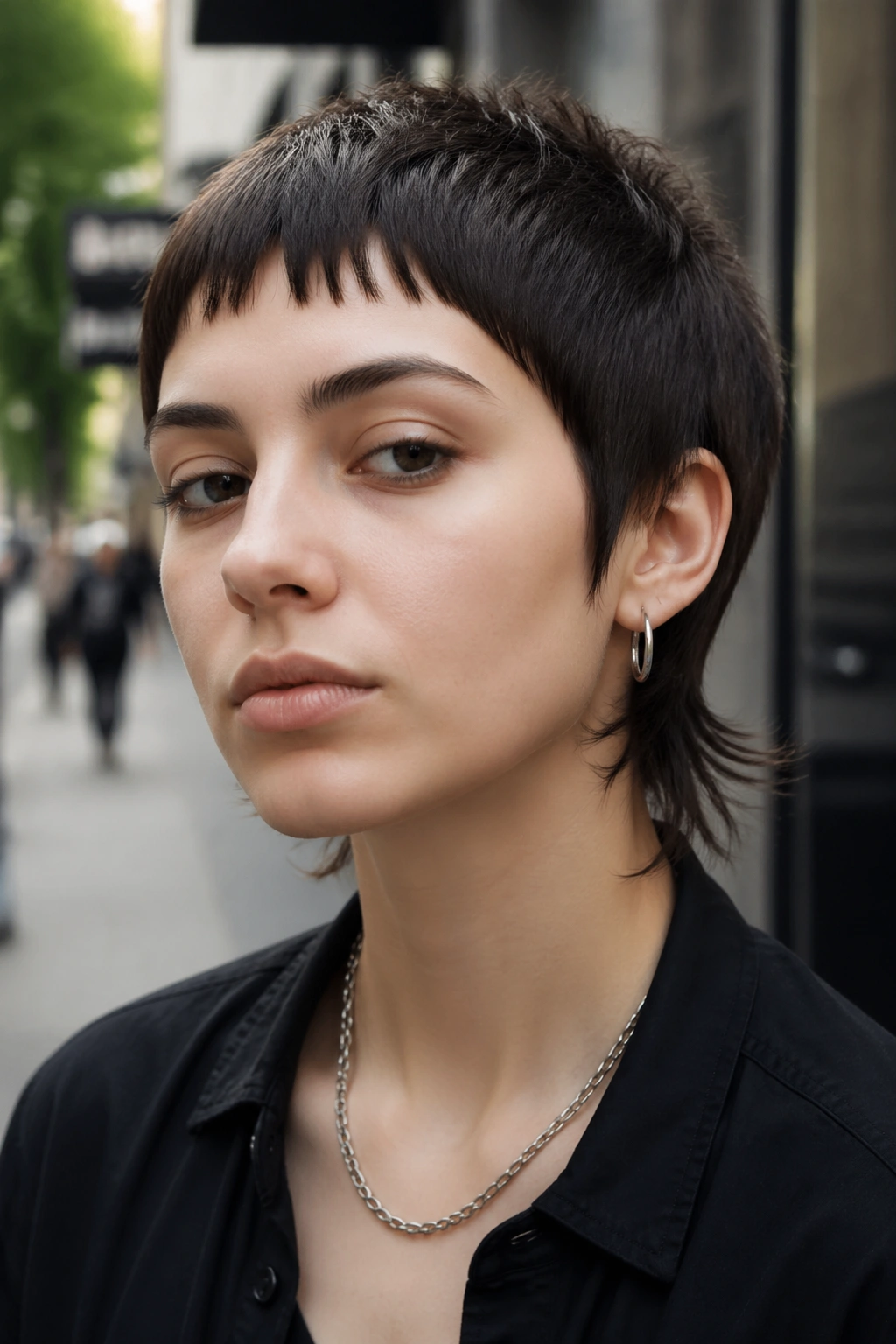
Can a tiny fringe make a mullet feel sharper? Absolutely. A micro fringe changes the whole mood because it pushes the eye straight to the face, then lets the longer back do the strange, stylish part. It’s small, but it changes everything.
How the Fringe Changes the Shape
The trick is keeping the fringe short enough to feel intentional, but not so short that it looks cut with a ruler. I’d keep it hovering about a finger’s width above the brows, with a slightly uneven edge so it doesn’t go too doll-like. That softer irregularity keeps the haircut from feeling costume-y.
This version likes angular faces, longer foreheads, and anyone who wants the front to feel bold without extra bulk. The rest of the cut should stay lean around the temples and airy through the back. If the fringe is heavy, the whole style gets weighed down fast.
How to Wear It
Blow-dry the fringe forward with a small round brush or just your fingers, then press a tiny bit of styling cream through the tips. The goal is control, not stiffness. A little mess is fine.
If you want this cut to read edgy instead of severe, keep the nape soft and the top slightly broken up. That contrast is what gives the fringe room to breathe.
3. Tapered Undercut Pixie Mullet
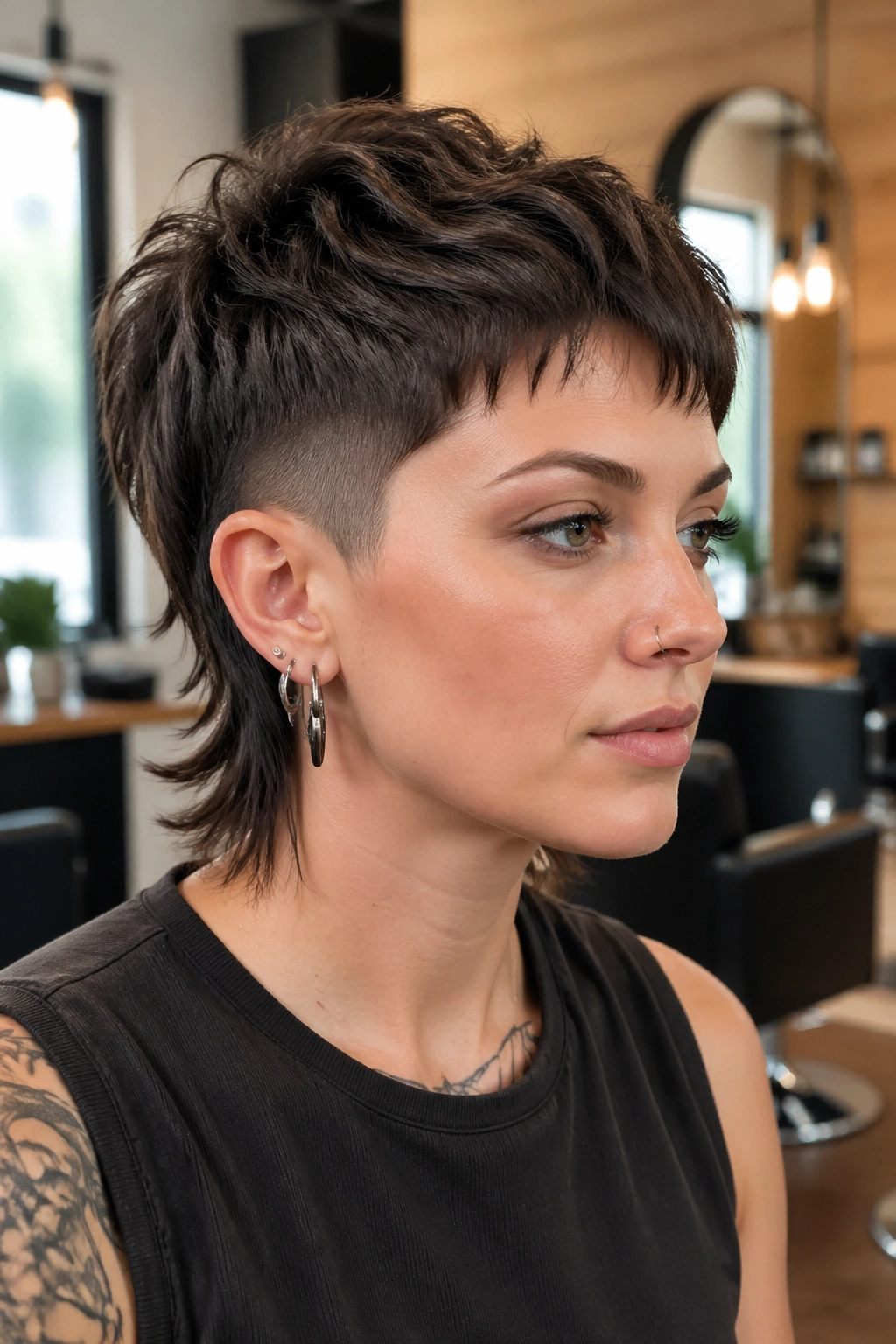
If your hair blows out at the sides the second you walk outside, this is the fix. A tapered undercut removes the bulk near the temples and behind the ears, so the rest of the cut can sit close to the head instead of flaring out. Clean. Fast. Useful.
What to Ask for
Ask for a discreet undercut that stays hidden unless the hair moves. You do not need to shave a huge section off. A narrow taper, cut close with clippers or very short scissors, usually does the job without making the cut look harsh. Leave more length on the top and back so the shape still reads as a mullet, not a buzzed crop.
This style is a good match for thicker hair, dense straight hair, and anyone who hates spending ten minutes trying to flatten their sides. It also works for people who want the haircut to dry fast. Less bulk means less fight.
- Keep the top around 2 to 4 inches depending on your hair density.
- Ask your stylist to blend the undercut so it doesn’t create a hard ledge.
- Style with a light cream or foam, not a heavy wax.
Don’t take the undercut too high. Once it climbs above the ear too much, the whole silhouette changes.
4. Curly Pixie Mullet with Shaggy Ends
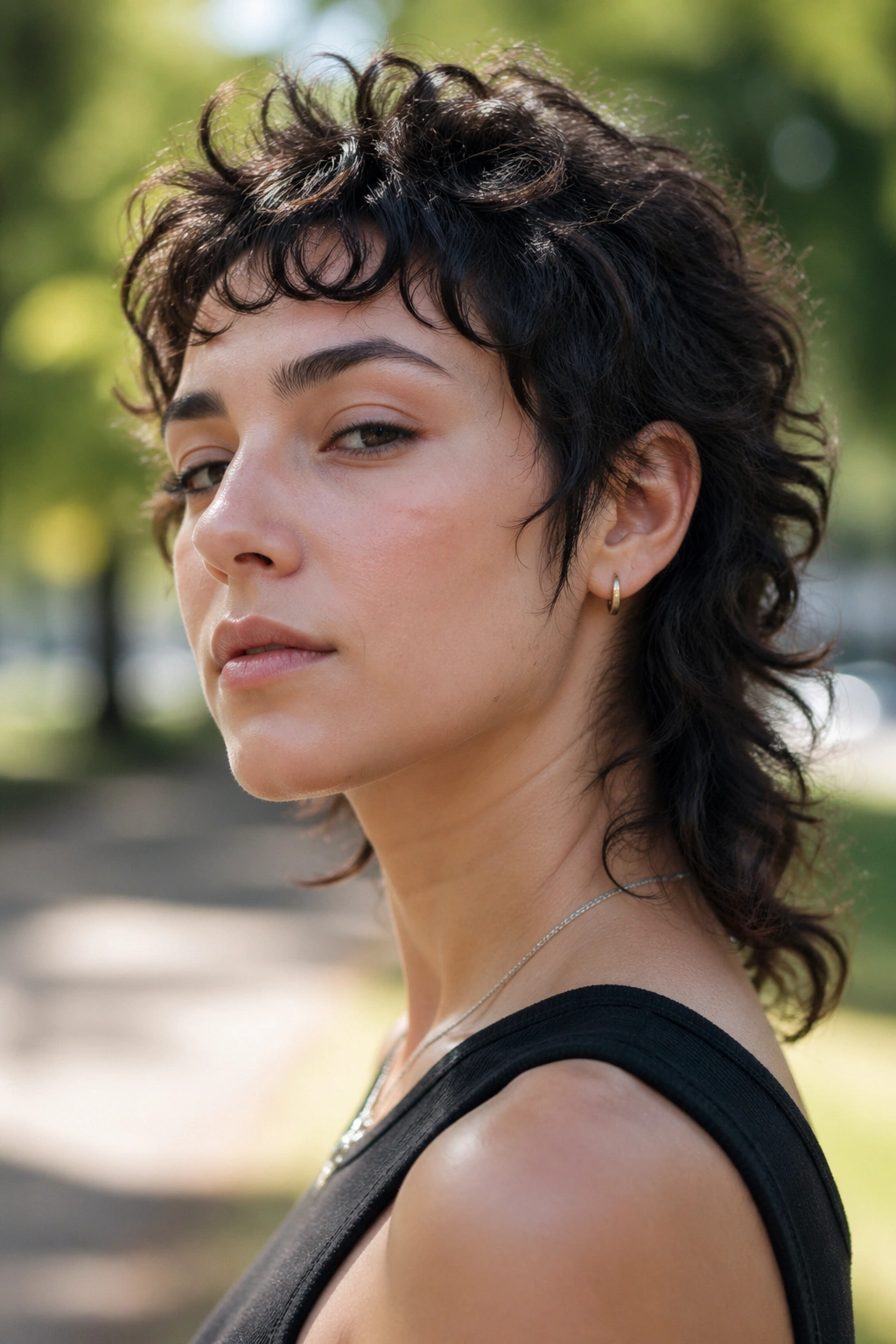
Curly hair does not need to be forced into a neat little box. The curly pixie mullet works because it lets the curls spring where they want, while the shorter front and longer back keep the shape from turning into a round puffball. That’s the balance.
Cutting Curls the Right Way
A curly version should usually be cut with the curl pattern in mind, not against it. Dry cutting often helps, because the stylist can see where the curls sit when they’re in their real shape. If the hair shrinks a lot, the back needs to stay a little longer than you think, or it can vanish.
The shaggy ends matter here. They break up the outline and stop the haircut from looking too neat. If your curls are tighter, ask for softer layering at the crown and keep the fringe longer than a straight-hair version would need.
Styling Without Crunch
Use a curl cream or a light gel, then scrunch while the hair is damp. A diffuser helps, but so does patience. Let the shape form before you touch it again.
Avoid over-thinning curly hair. It may look lighter for a minute, then frizz into a halo you did not ask for. A cleaner, more cautious cut usually behaves better.
5. Wet-Look Pixie Mullet
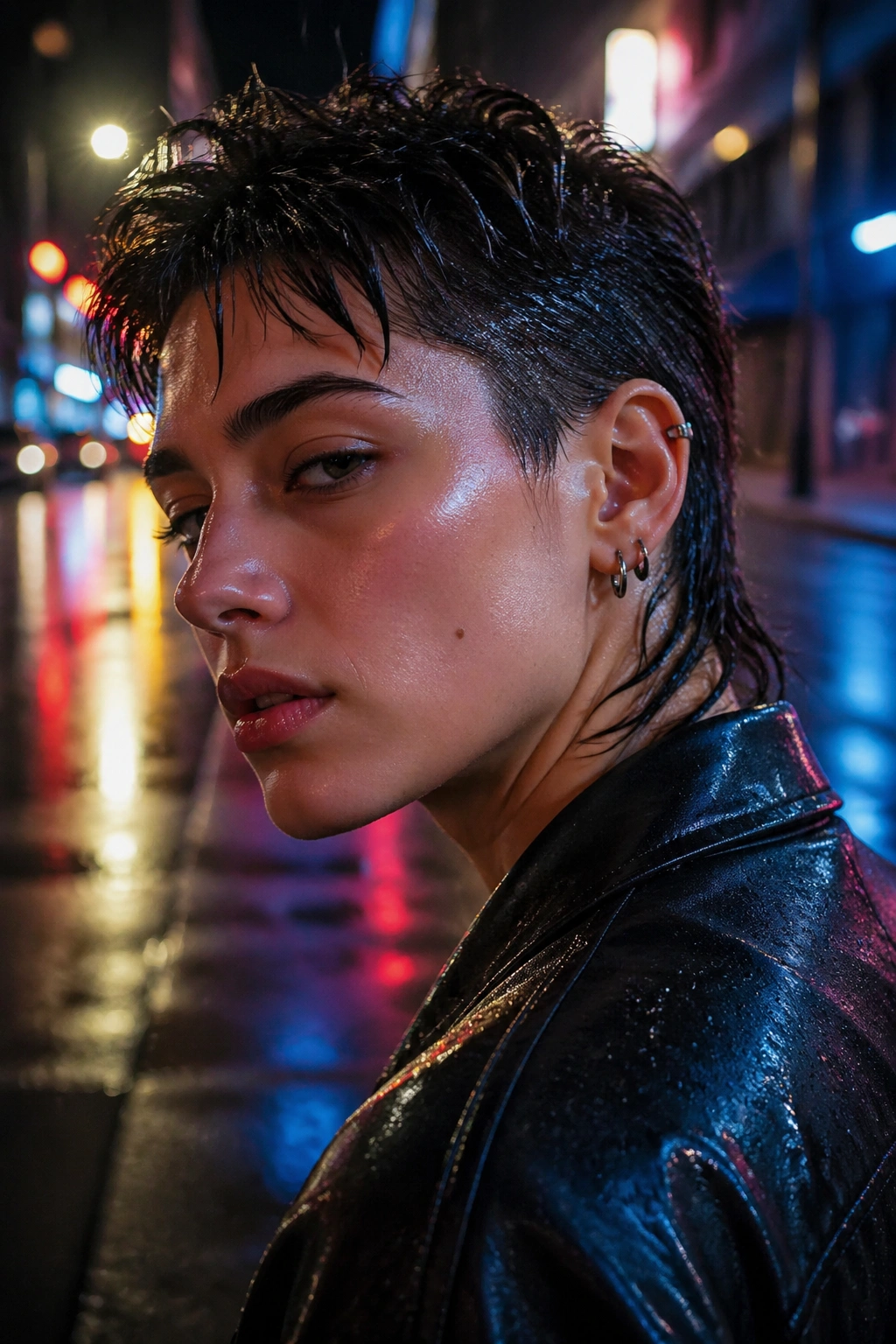
The shine hits first. Then the shape. A wet-look pixie mullet feels cool because it puts the whole haircut on display — every ridge, every point, every bit of movement along the nape. There’s no hiding here.
This version works best when the sides stay close and the top is long enough to comb backward or slightly off-center. Use a strong-hold gel on damp hair, then smooth it with a fine-tooth comb or your palms. The finish should look sleek, not helmet-like, so leave the very ends a little loose instead of sealing every strand into place.
I like this one for evenings, sharp earrings, and clothes with clean lines. It also helps if your hair naturally falls flat in a good way. If it’s ultra thick, the product can get heavy fast, so start with a small amount and build only where you need shine.
One practical note: the nape and temple area need to be neat, because every crooked line shows when the surface is glossy. That’s the trade-off. You get drama, but you also get honesty.
6. Feathered Pixie Mullet with Soft Layers
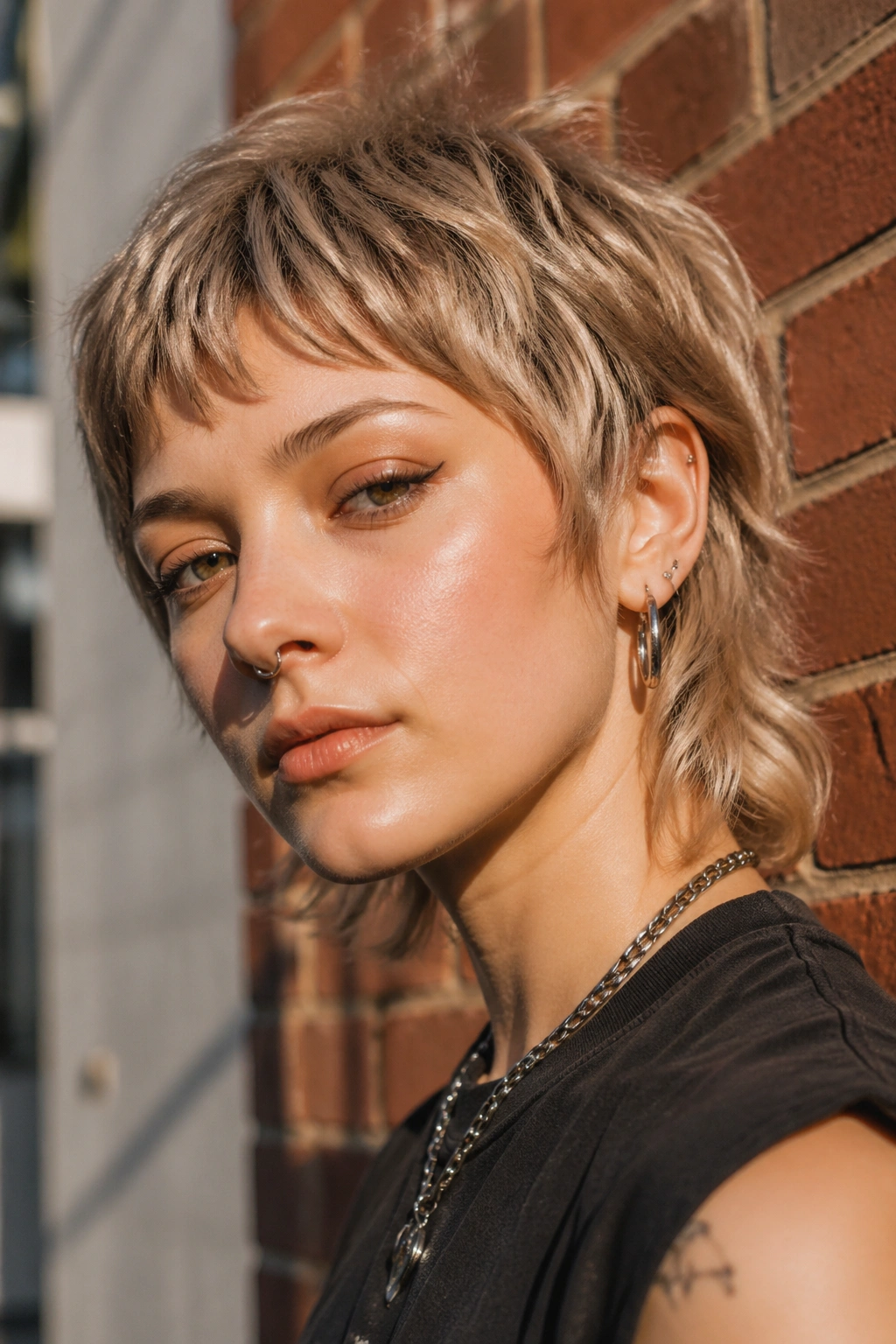
Three things keep this version from going limp: feathering, air, and a little length at the crown. The feathered pixie mullet is softer than the choppy versions, but it still has enough edge to feel interesting. It’s the one you pick when you want movement without looking shaggy in a tired way.
Why Feathering Helps
Feathered ends remove the blunt edge that can make short hair feel heavy. The layers flick outward a bit, which gives the back a softer drop and keeps the crown from collapsing into a flat cap. Fine hair especially likes this cut, because the airy ends create the illusion of more body.
Ask for light point cutting through the top and a gentle graduation at the nape. The front can stay short and wispy, but don’t let the stylist make every piece the same length. That’s how the shape goes dead.
Best Styling Move
A round brush and a small amount of lightweight mousse will do more here than a jar of thick paste ever will. Blow-dry the crown up and away from the head, then finger-comb the ends so they fall in broken pieces.
This is a better cut for people who hate spending time in the mirror. It still looks done when it’s a little imperfect.
7. Platinum Spiky Pixie Mullet
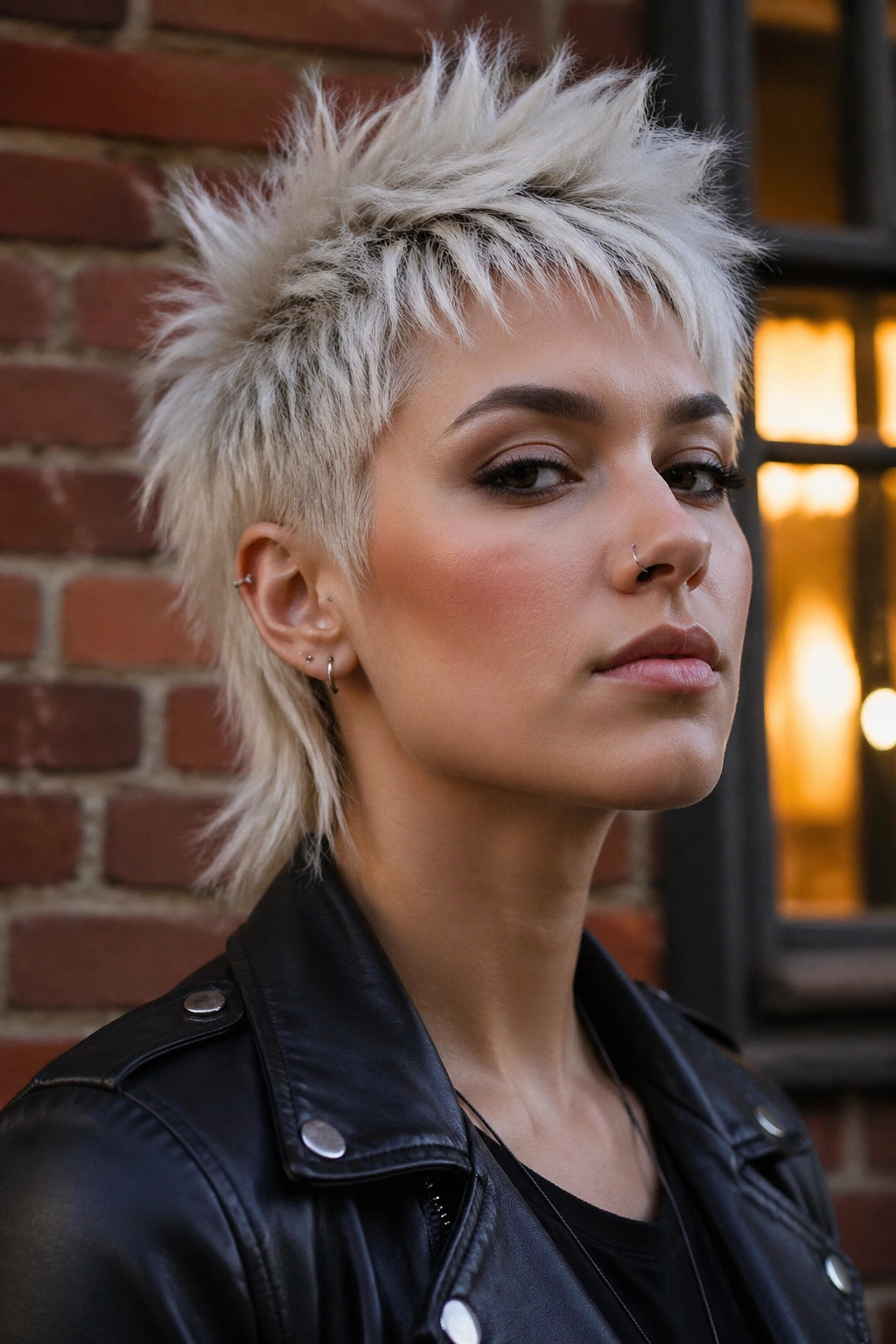
Bleached. Spiky. Unapologetic. That’s the whole mood, and it works because the light color makes every piece of texture visible. On a pixie mullet, platinum turns the haircut into a shape study. You notice the angles faster.
Where the Color and Cut Meet
A platinum version needs a solid haircut first, or the color just shows off bad lines. The top should be short enough to spike with wax or paste, but not so short that the back disappears. Leave enough length in the nape for contrast — that’s what keeps the style from becoming a standard pixie with bleach on top.
This cut looks best when the sides are tight and the crown has broken texture. If the hair is damaged, a spiky finish can look straw-like, so keep the ends healthy and ask for regular trims. The color is the loud part. The cut still has to do the work.
What to Keep in Mind
- Use a heat protectant before any blow-drying.
- Keep the top textured, not shaved flat.
- A soft root shadow can make grow-out easier and less harsh.
The maintenance is real. So is the payoff. A platinum pixie mullet has presence in a room.
8. Soft Wolfish Pixie Mullet
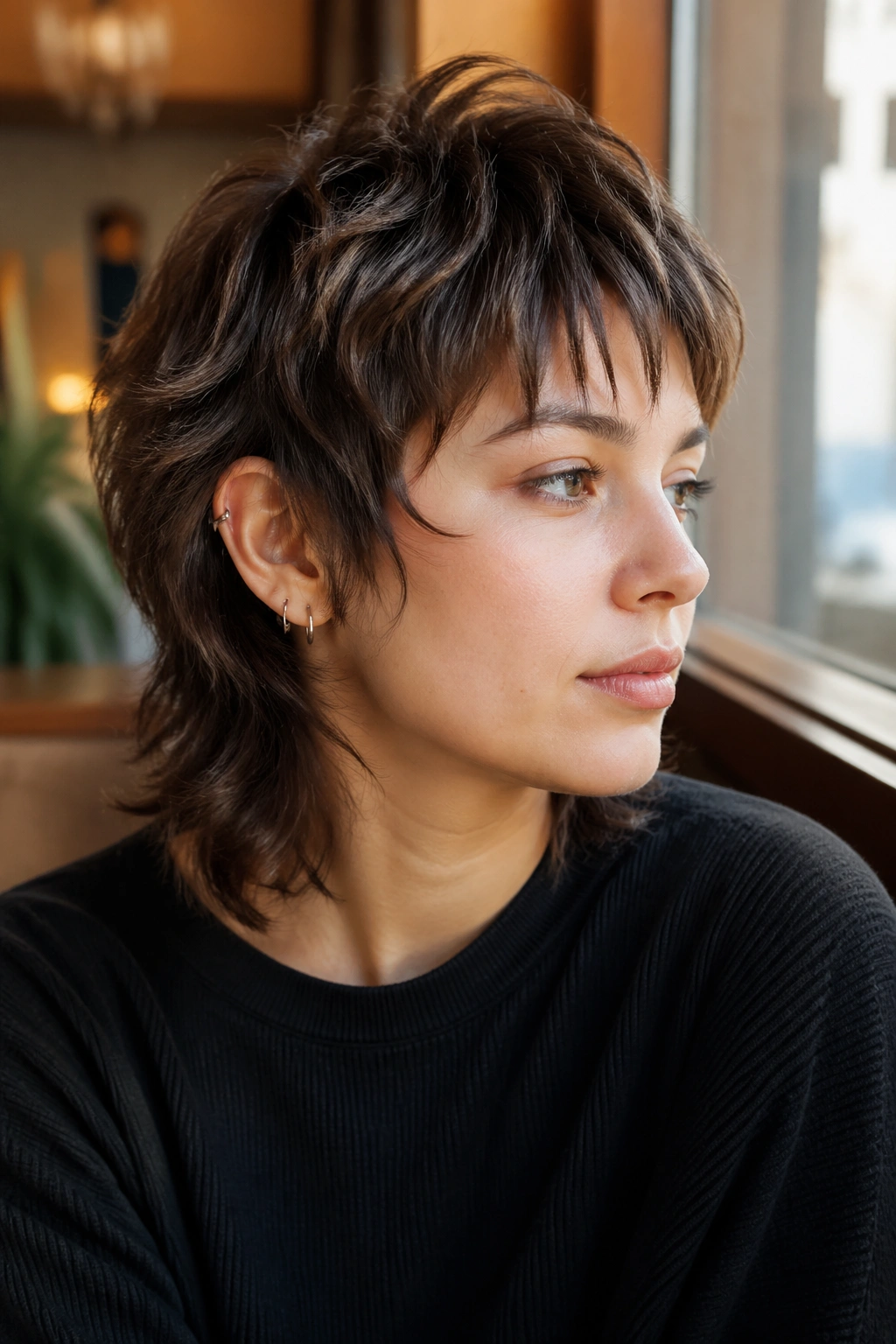
I like this cut when someone wants edge but still wants to tuck the hair behind one ear and carry on with life. The soft wolfish version sits between a shag, a pixie, and a tiny mullet, which sounds messy on paper and looks surprisingly easy when it’s done well.
Where It Sits Between Styles
The top keeps enough length to move, and the back drops into a longer, feathered tail without getting dramatic. The sides aren’t clipped too close, which gives the whole cut a softer outline. That makes it friendlier on people who like texture but don’t want a hard punk finish.
The better versions keep the fringe broken up and light. A solid block of bangs can drag the cut down. A little separation is what gives it that wolfish feeling without turning it into a full shag.
If your hair leans thick or wavy, this is a good place to start. It lets the hair have some personality without forcing a sharp line everywhere. And that matters, because not every edgy cut needs to shout.
9. Asymmetrical Pixie Mullet
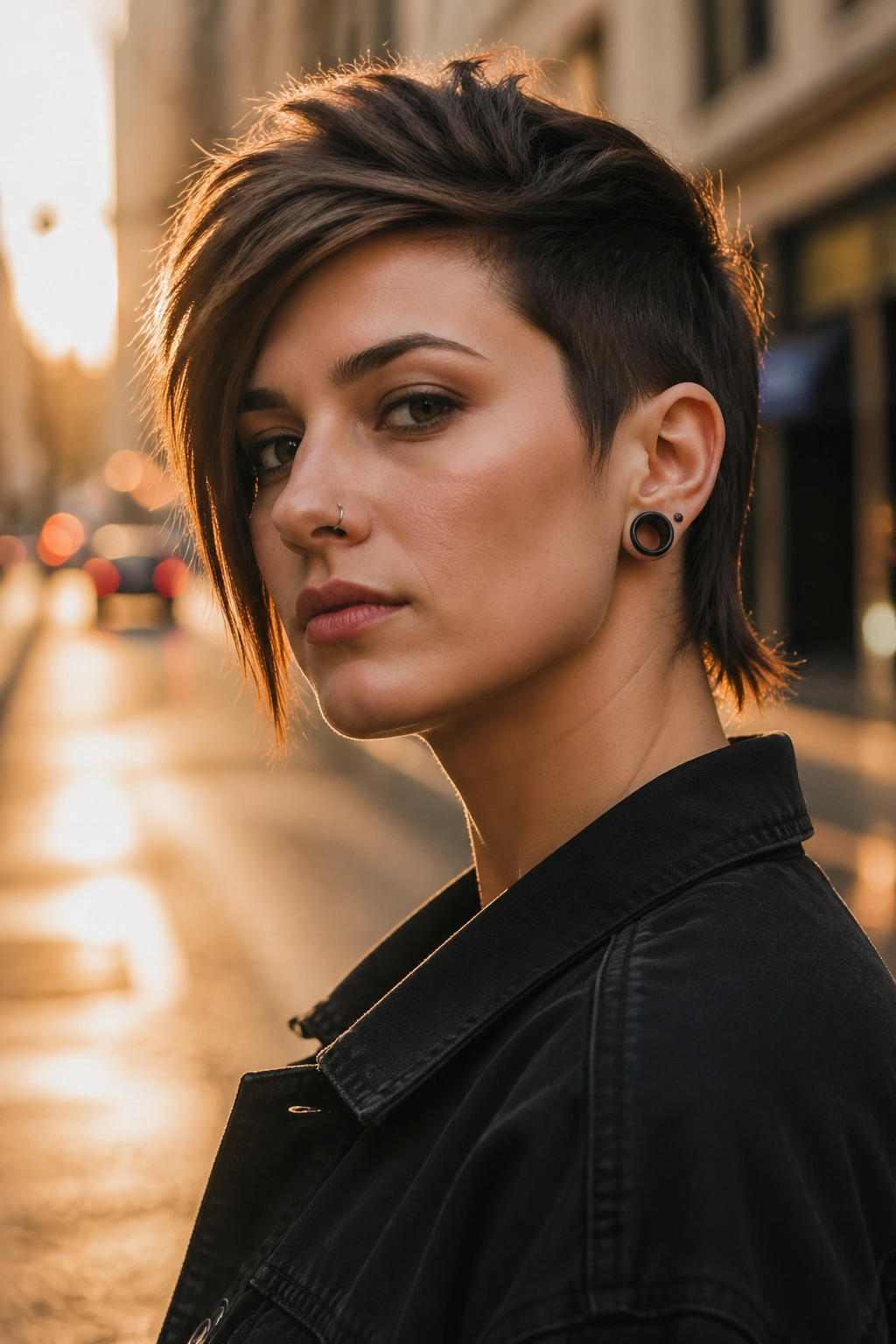
Want the haircut to look sharper from one side than the other? This is the one. An asymmetrical pixie mullet leans into imbalance on purpose, and that asymmetry makes the shape feel intentional even when the styling is loose.
The parting does a lot of the work here. One side can stay shorter and tighter around the temple, while the other side carries a little more fringe or cheekbone length. The back should still keep that longer mullet feel, but the side difference gives the cut some drama before you even touch product.
How to Keep It From Looking Random
The cut only works when the asymmetry has a clear reason. Don’t leave one side long just because. Leave it long to frame the face, to balance a stronger jaw, or to draw the eye toward one side. That’s the difference between edgy and unfinished.
A side part helps, and a small amount of paste on the longer side can keep the pieces from drooping. If your hair is straight, the contrast shows fast. If it’s wavy, the asymmetry softens a bit and feels less severe.
The best asymmetrical versions still have a clean nape. Without that clean anchor, the whole shape gets wobbly.
10. Pixie Mullet with Long Sideburns
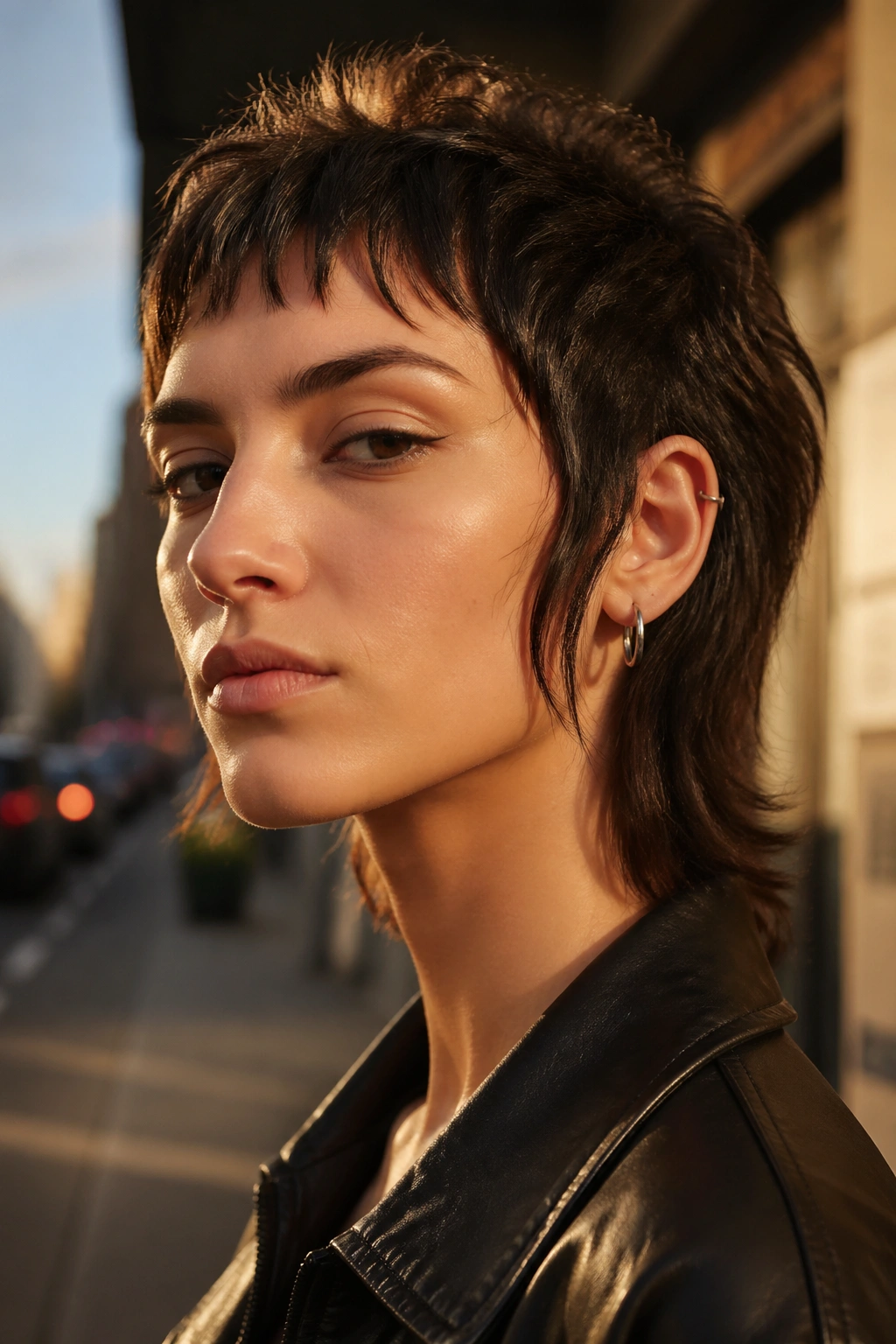
A lot of people forget the sideburns, which is a shame because they do some sneaky-good work. Long sideburns can soften a harsh crop, frame the jaw, and make the transition from short front to longer back feel smoother. Small detail. Big payoff.
Why the Temples Matter
When the sideburns stay a little longer, the haircut stops looking like it was chopped off all at once. Instead, your eye moves from the fringe, to the temple, to the nape. That flow matters on a pixie mullet because the whole style depends on motion from front to back.
This version is especially good if you want your ears partly covered or you like tucking one side back and leaving the other loose. It gives you options without making the cut floppy. Keep the sideburns tapered, not blunt, or they can look too heavy against the rest of the style.
Small Styling Move, Big Difference
A dab of cream through the sideburns keeps them from puffing out. If you use a brush, aim the hair slightly forward first, then let it fall where it wants. That little bend makes the whole cut feel more expensive — though really, it just looks thoughtful.
11. Razor-Cut Pixie Mullet
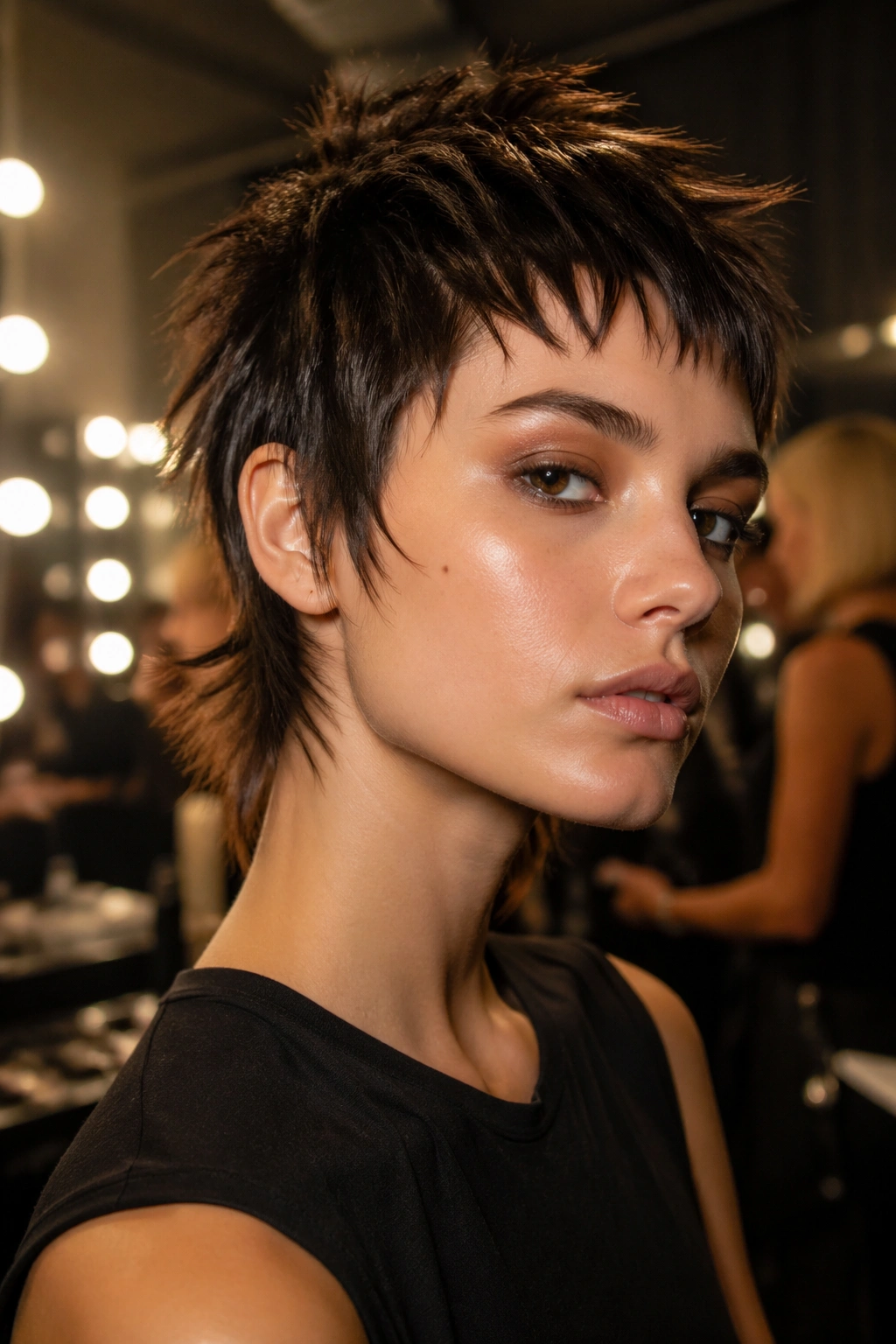
Razor cutting is where this style gets bite. The edges come out softer, choppier, and a little jagged in the best way, which suits a pixie mullet because the cut already depends on movement. A razor can make the ends flick and split instead of lying in one dull line.
When a Razor Helps
This technique works well on straight to slightly wavy hair that can handle a bit of texture. It’s also good if you want the fringe and crown to feel lighter. A razor can remove bulk without leaving the bluntness that scissor cutting sometimes gives, especially around the top layers.
There’s a catch. If the hair is already fragile, very curly, or prone to fraying, a razor can make the ends look rough faster than you want. In those cases, a skilled scissor cut may be smarter. That sounds less exciting, but hair that breaks doesn’t care about style language.
What to Ask For
Ask for soft razored movement through the top and around the fringe, then keep the nape cleaner so the shape doesn’t get fuzzy. The contrast matters. A razor everywhere can turn the whole look wispy in a bad way. Used in the right spots, though, it gives the haircut real snap.
12. Pixie Mullet with a Bold Color Streak
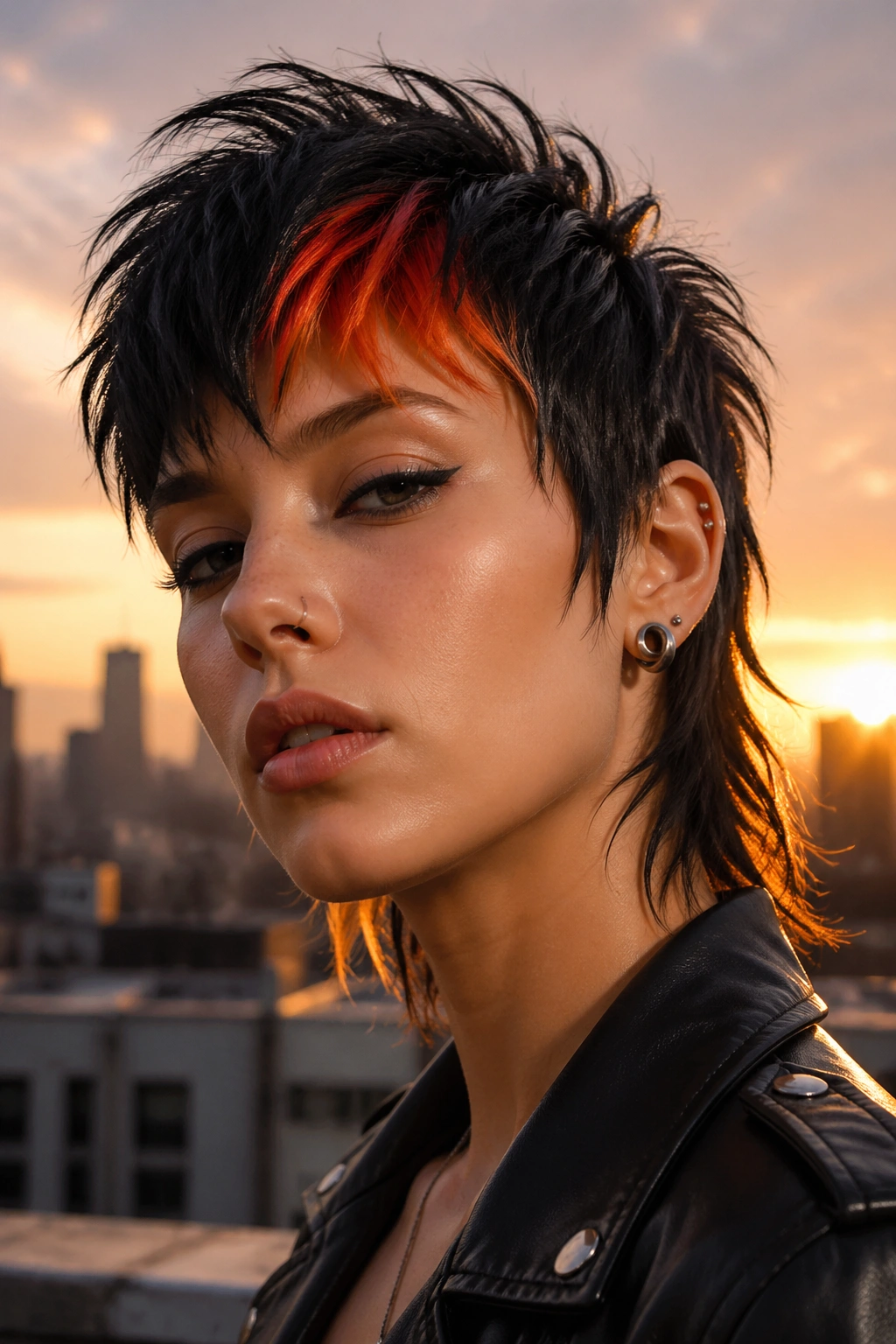
Does a short cut need a full color change? Not if one streak does the job. A bold streak can sit at the fringe, run through one side, or peek from the nape, and each placement changes the mood of the haircut in a different way.
Where to Place the Streak
A front streak grabs attention fast. It hits first and turns the fringe into the star. A side streak feels cooler and a little more hidden, especially if the rest of the hair is dark. A streak in the back is the sneaky choice — you see it only when the head moves, which gives the pixie mullet a little surprise.
That placement matters because the haircut already has a built-in contrast between the short front and longer back. A color block can sharpen that contrast or soften it, depending on where you put it. Copper, blue-black, violet, even a pale blonde stripe can work. The shape decides whether it reads playful or sharp.
Keep the color streak tied to one clear section. If it spreads everywhere, the haircut loses focus. One lane is enough.
13. Tousled Bedhead Pixie Mullet
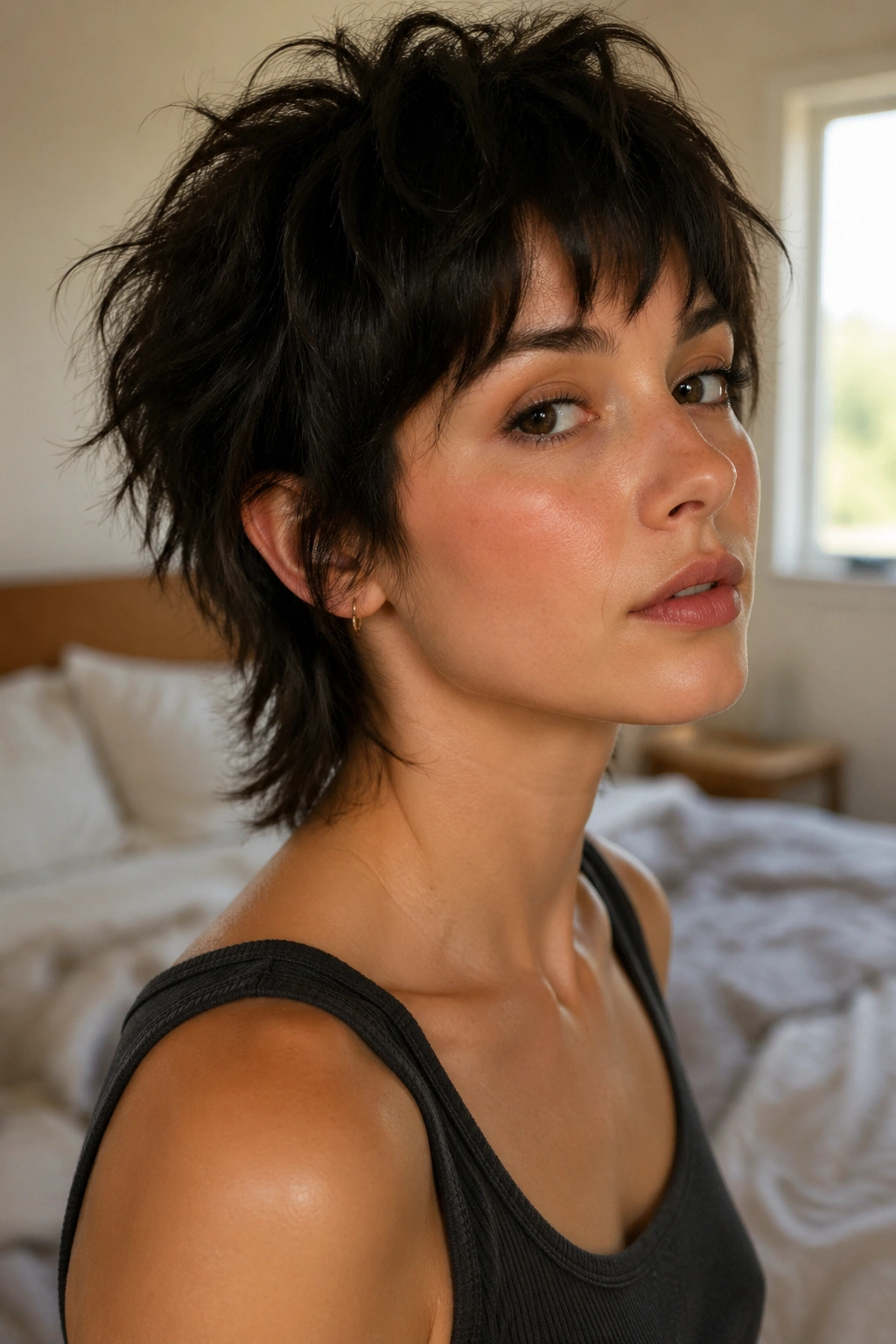
The best bedhead cuts look accidental but are mapped out carefully. This version of the pixie mullet keeps the ends broken, the crown a touch messy, and the back loose enough to move when you shake your head. It’s the haircut equivalent of good second-day hair.
How to Fake the Mess
Start with a light texture spray or a dab of dry shampoo at the roots. Then rough-dry the hair with your fingers until the crown lifts a little and the fringe stops lying flat. A tiny amount of paste on the ends can separate the pieces without making them sticky.
The cut itself needs short, uneven layers so the texture has somewhere to land. If everything is too even, bedhead turns into plain flatness. You want the ends to fall in little broken bits around the face and neck.
- Great for wavy hair that already has some bend.
- Works with dry shampoo on the roots and a texture spray on the mid-lengths.
- Needs a trim every 6 to 8 weeks so the mess stays stylish.
This is one of the easier versions to wear on rushed mornings. It forgives a lot.
14. Boxy Pixie Mullet Crop
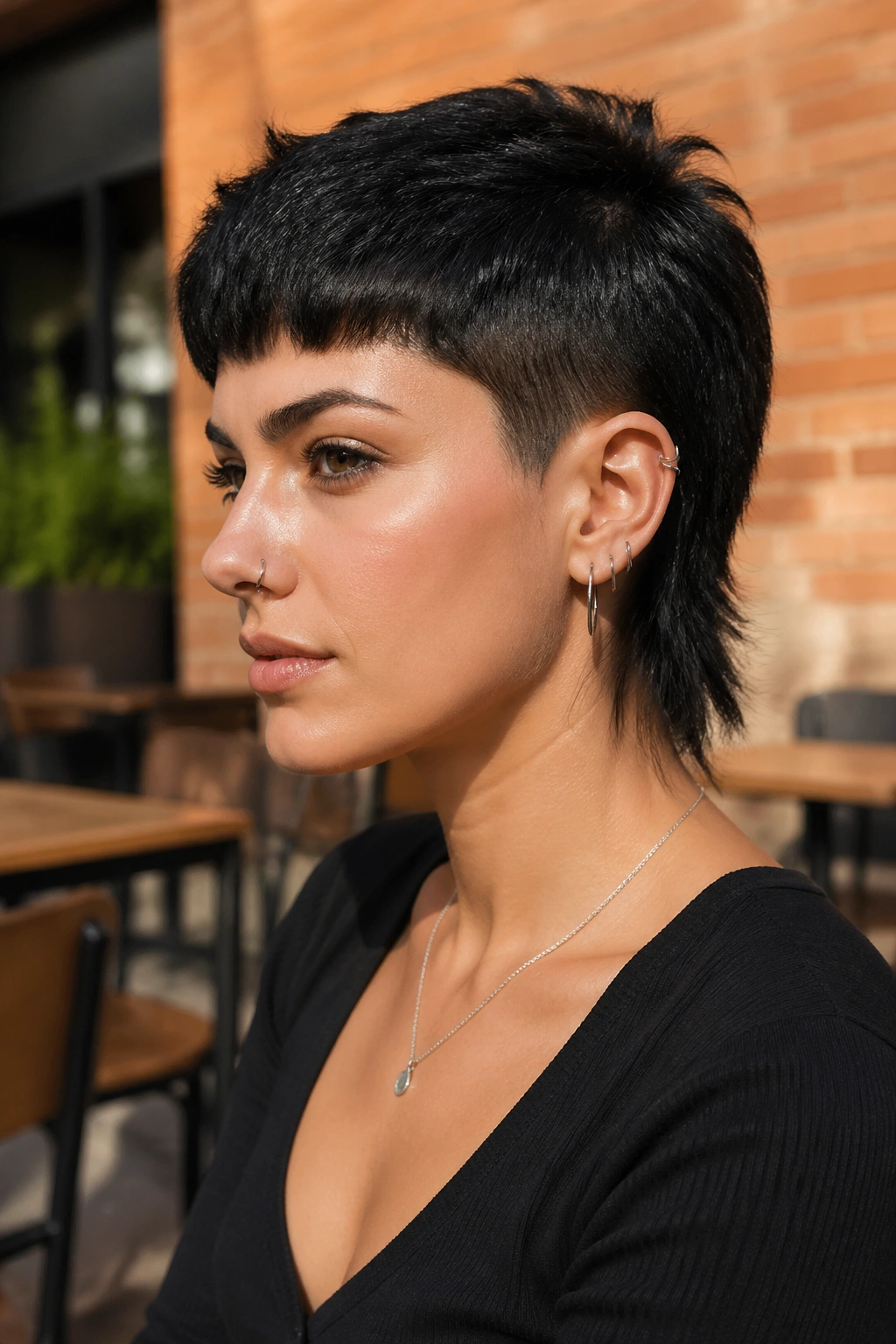
Not every edgy cut has to be shredded and soft. The boxy pixie mullet goes the other direction, with a more geometric top, a tighter side profile, and a clearer edge around the perimeter. It feels cleaner, more fashion-forward, and a little tougher.
Who It Suits
This shape is strong on oval and heart-shaped faces, where the corners of the cut can play against the face instead of fighting it. It can also look good on dense hair because the boxier outline keeps the bulk under control. If your hair is fine, ask for enough internal layering so it doesn’t turn into a flat square.
The important part is the corner at the back. The nape should still carry that longer mullet note, but the line needs to stay neat. A boxy cut loses its charm if it gets fuzzy around the ears or floppy at the ends.
Styling Note
Use a smoothing cream or a light balm to keep the sides in place. You want the shape to read as deliberate, not stiff. A clean part helps too, though you can push it off-center if you want the outline to feel less formal.
15. Curved-Nape Pixie Mullet
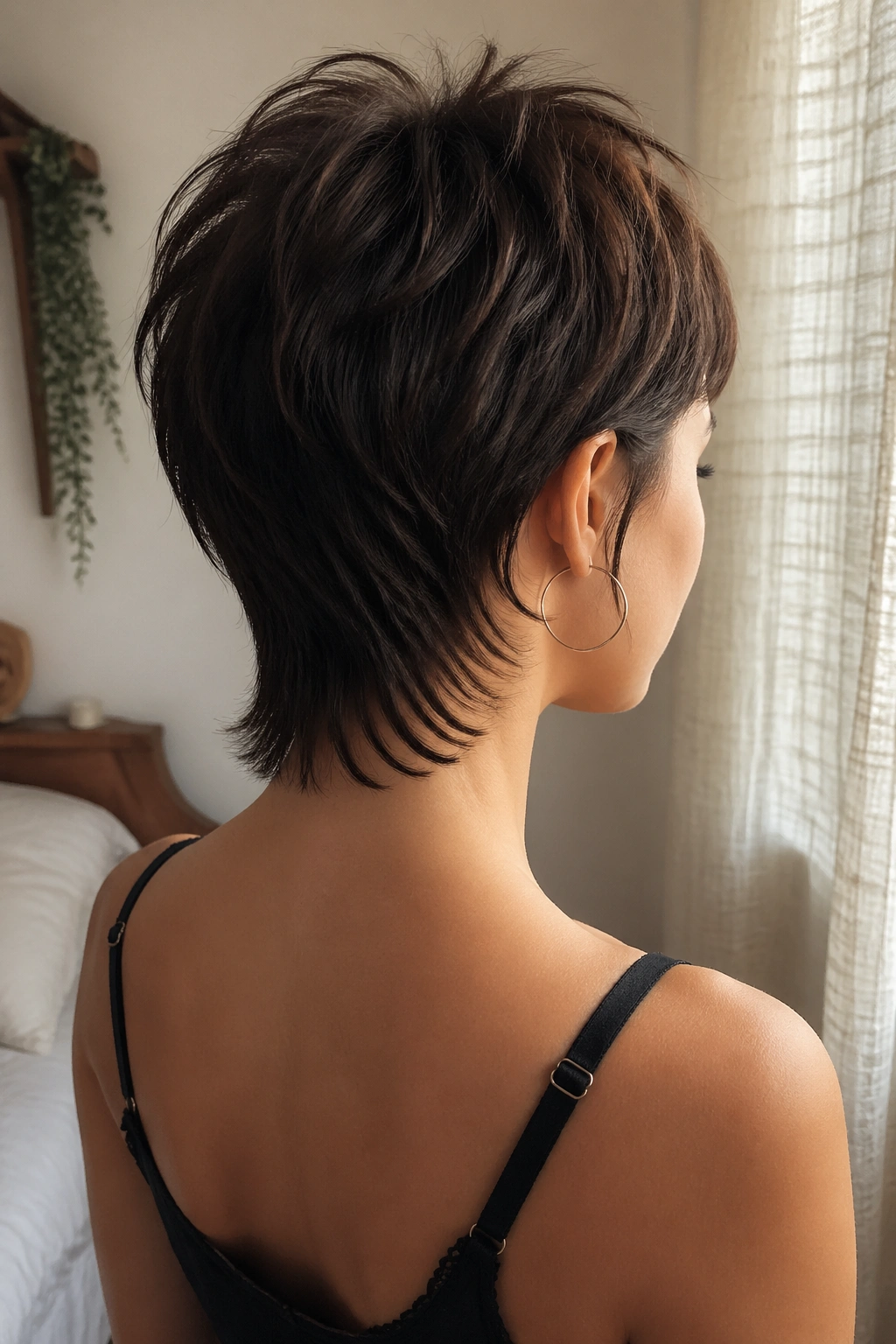
Run your fingers across the nape and you want a soft curve, not a hard shelf. That’s the whole point here. The curved-nape pixie mullet gives the back of the haircut a smooth bend that follows the neckline instead of sitting on it like a block.
Why the Neckline Makes the Cut
A curved nape is flattering because it keeps the back from looking bulky, and bulky napes are the fastest way to kill the shape on a short cut. The curve also makes the transition from short to long feel easier on the eye. That matters when the front is cropped tight but the back keeps some length.
This version is especially good if you wear earrings, collars, or jackets with high necks. The haircut sits neatly above all that fabric instead of fighting it. A precise cleanup every few weeks helps the curve stay visible.
Maintenance Matters Here
You do not need a full restyle every time. You do need the neckline trimmed before it gets fuzzy. If the nape starts spreading out, the whole cut loses its clean line and the curve turns into a lump. A little attention goes a long way.
16. Piece-y Fringe Pixie Mullet
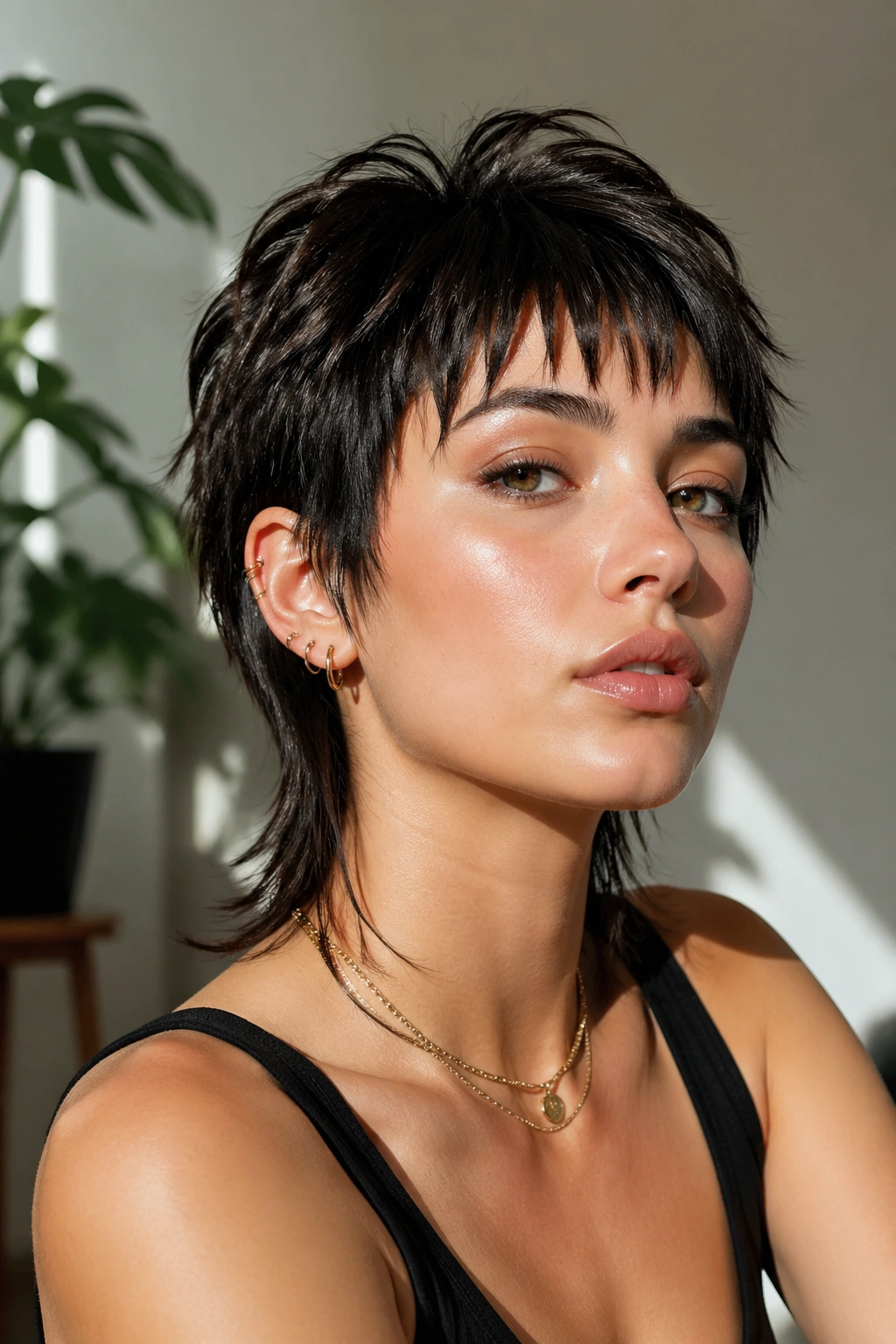
Two things matter here: separation and lightness. The piece-y fringe version keeps the front broken into narrow bits, usually five to eight slim sections rather than one heavy bang. That gives the face room to show through and makes the haircut feel sharper.
How the Fringe Should Fall
The fringe should not sit as one solid sheet. It needs little gaps, tiny differences in length, and a soft end that moves when you turn your head. That piece-y finish is what lets the pixie mullet avoid looking too tidy. It also makes the style easier to grow out, which people often appreciate after the first month or so.
A point-cut fringe helps a lot here. So does a dry finish with paste or styling wax worked through the tips only. If the fringe gets too wet or too dense with product, the pieces collapse into one line and the whole point disappears.
- Best for straight or slightly wavy hair.
- Use a fine comb to separate strands after styling.
- Keep the fringe a little longer if your forehead is short.
Tiny pieces beat one heavy block every time. The look depends on that air.
17. Slicked-Back Punk Pixie Mullet
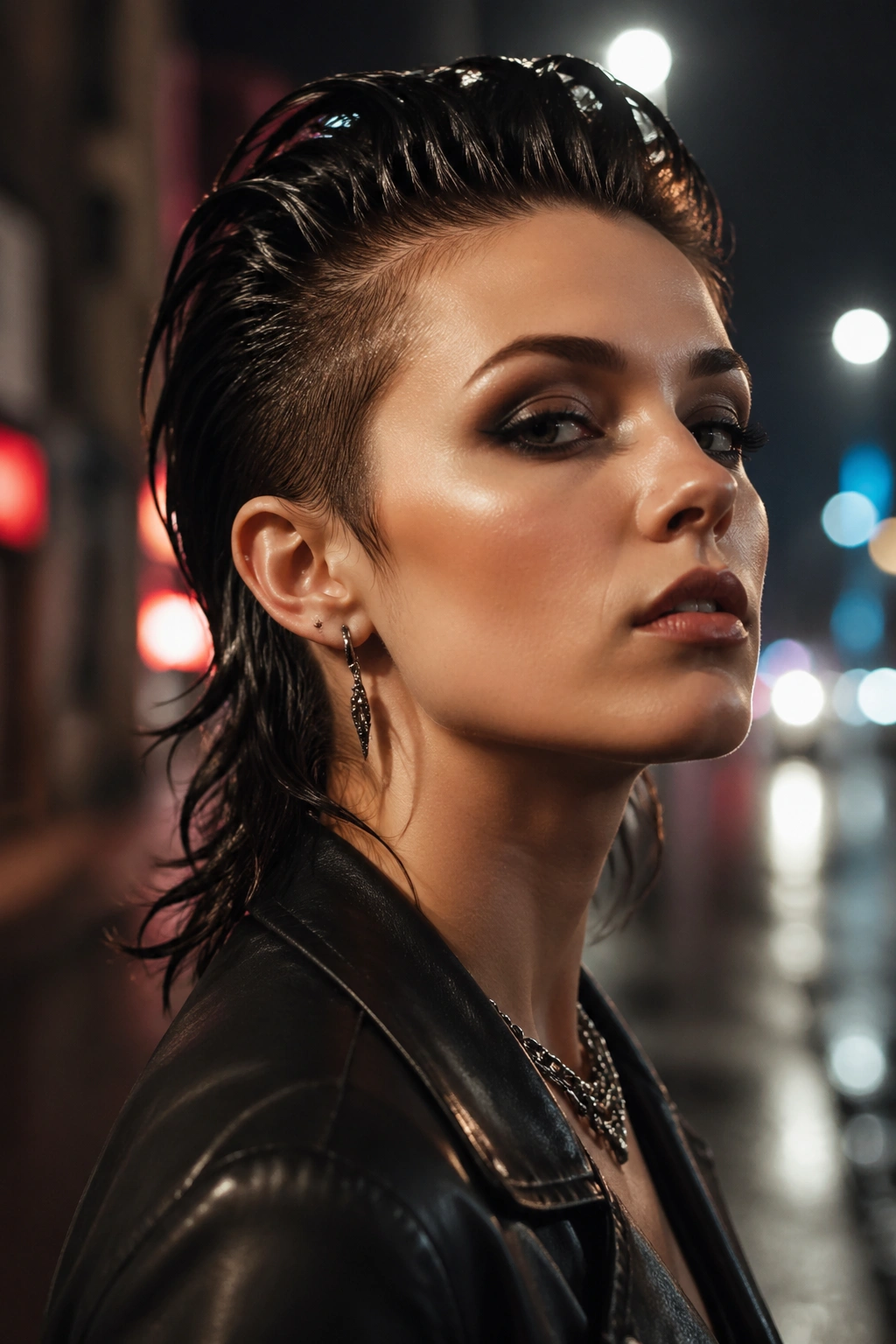
Back comb it. Pinch the ends. Done. That’s the spirit of a slicked-back punk pixie mullet, even if the actual styling takes a few more minutes. The point is to keep the front pushed away from the face while the back stays long enough to prove the haircut still has a mullet edge.
How to Keep It From Falling Flat
A little root lift at the crown helps, but don’t build the top too high or the shape turns cartoonish. Use pomade or strong gel near the front and side sections, then leave the back looser so it can move. That contrast between control and mess is what gives the style its bite.
This version suits thicker hair, strong jawlines, and anyone who wants a cut that looks ready for a loud night out. It also works if you like your hair off your face. A tiny bit of shine can help, though too much makes the style lose that punk grit.
If you have fine hair, the cut can still work, but the product load needs to stay light. Heavy product on thin hair tends to expose the scalp and kill the lift. That’s not the effect anyone wants.
18. Shag-Heavy Crown Pixie Mullet
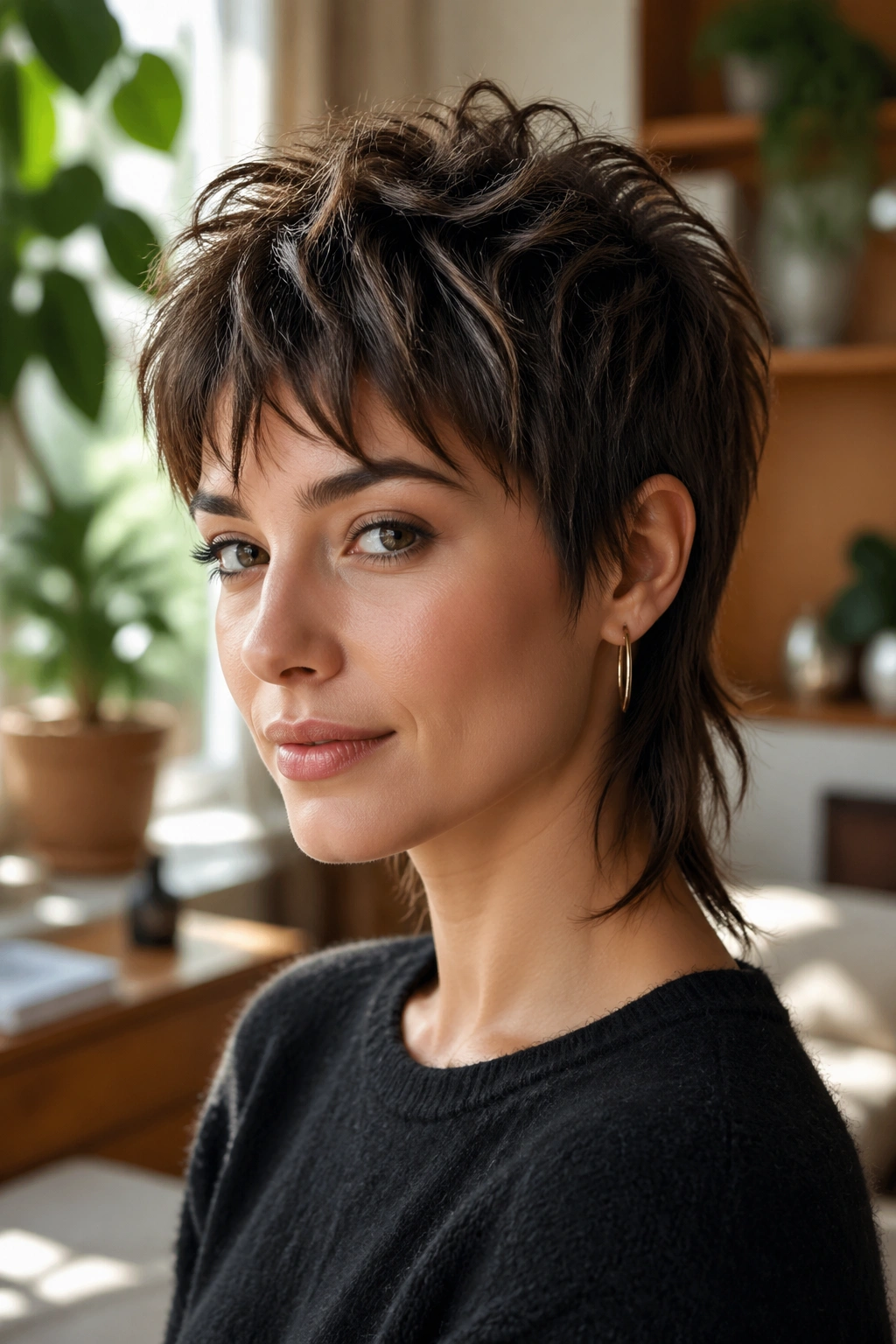
I reach for this shape when the hair is thick and wants to spread out. The shag-heavy crown pixie mullet uses layers at the top to remove weight while keeping enough length in the back to stay interesting. It’s less neat than some versions, and that’s a good thing.
Why It Behaves Better on Dense Hair
A dense head of hair can turn a short cut into a triangle fast. This shape fights that by carving movement into the crown and breaking up the bulk before it has a chance to balloon. The top sits a little softer, the sides taper in, and the back drops away instead of sticking out.
The shag influence also makes the grow-out friendlier. As the cut gets longer, the layers still have room to move, so you’re not stuck with one awkward shelf of hair. That’s useful if you do not want to live at the salon.
Styling It Well
Use a light mousse or cream and rough-dry with your fingers. A tiny lift at the roots is enough. Keep the ends piece-y, not stiff, or you’ll lose the shag effect and end up with a heavier crop than you wanted.
19. Minimalist Dark Pixie Mullet
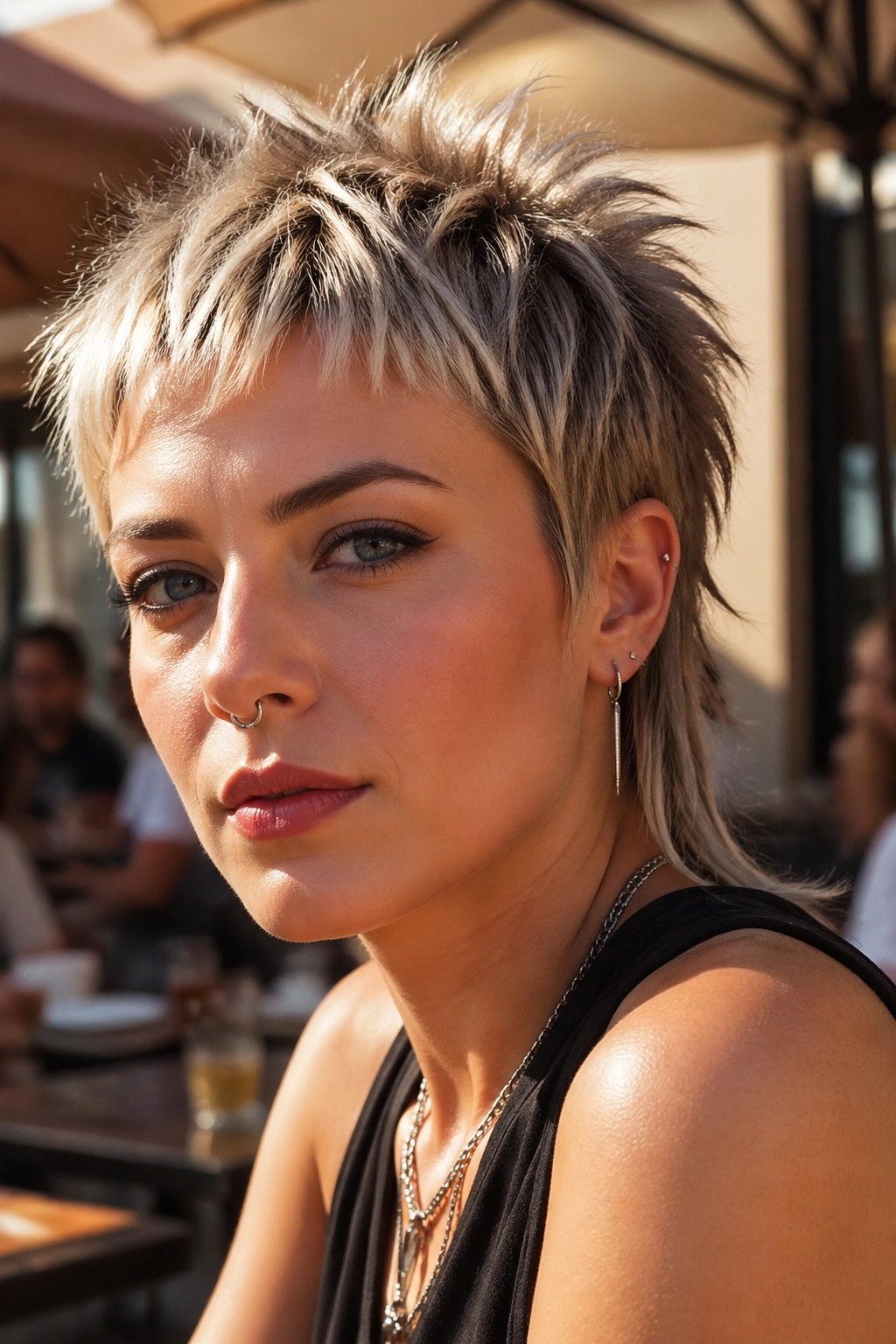
Sometimes the sharpest version is also the quietest. A minimalist dark pixie mullet keeps the lines clean, the color deep, and the styling restrained, which lets the shape do the talking without extra noise. It looks especially strong when the cut is precise and the nape stays tidy.
Why It Grows Out Cleanly
Dark hair makes the silhouette read fast, so every edge matters. A clean taper at the temples, a short front, and a slightly longer back create a tidy but edgy outline that still makes sense a month later. That’s why this version is such a smart pick if you want the haircut to age well between trims.
It also works for people who do not want to spend a lot of time on daily styling. A little cream, a quick finger-comb, and you’re done. If the cut is done well, the shape stays visible even when the hair is a little flat.
This is the version I’d point to if someone wants a bold pixie mullet hairstyle without color drama or extreme texture. It’s controlled, a bit severe, and easy to wear with a black tee or a sharp jacket. Clean lines. No fuss. And yes, it still has attitude.
