



Bubble braids on pixie cuts look like a styling trick that should fail. They don’t.
Short hair has its own kind of drama. You are not trying to force a long braid onto a cropped cut; you’re using tiny elastic sections, a bit of root lift, and smart placement to make the hair read fuller than it really is. A grown-out pixie, a tapered cut, even a tight undercut can hold a surprising amount of shape when the roots have grip and the parting is clean.
Short hair likes structure.
A tail comb, mini clear elastics, dry shampoo, and a couple of bobby pins can do a lot of heavy lifting here. If the hair is freshly washed and slippery, a mist of texture spray at the roots makes the difference between a style that collapses in ten minutes and one that still looks neat after a long day. The bubbles themselves do not have to be big. On short cuts, smaller often looks fuller.
1. Micro Crown Bubble Braids for a Pixie Cut
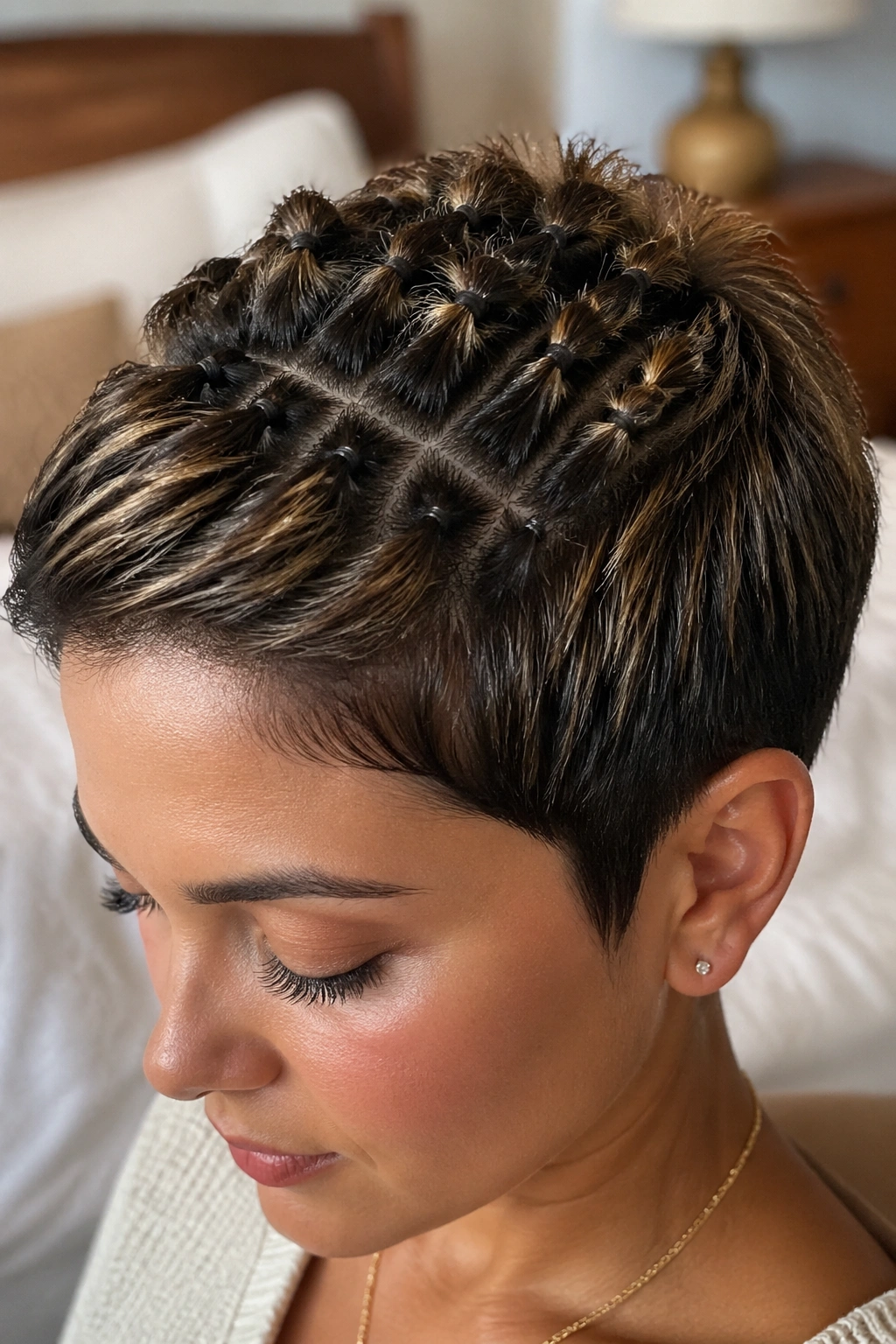
This is the version that makes the most sense when the top of the pixie is only a few inches long. You split the crown into two or three very narrow sections, secure each one with tiny elastics about ¾ inch apart, then tug the sides of each bubble until the whole row looks rounded and soft.
The trick is to keep the bubbles close together. If the gaps get too wide, short hair starts to look like it is fighting the style instead of cooperating with it. Close spacing gives the illusion of thickness, especially if you lightly mist the roots first and rough up the finish with your fingertips.
Why it works
The crown is where short hair can look flat first. A micro bubble chain pushes the eye upward and makes the top panel of the cut look denser than it is. That matters more than length.
- Best for pixies with 2 to 4 inches on top
- Works well with side-swept or slightly textured bangs
- Use elastics that match your hair color if you want the bubbles to blend in
Tiny sections read fuller than big ones on short hair.
2. Side-Part Bubble Braid with a Lifted Front
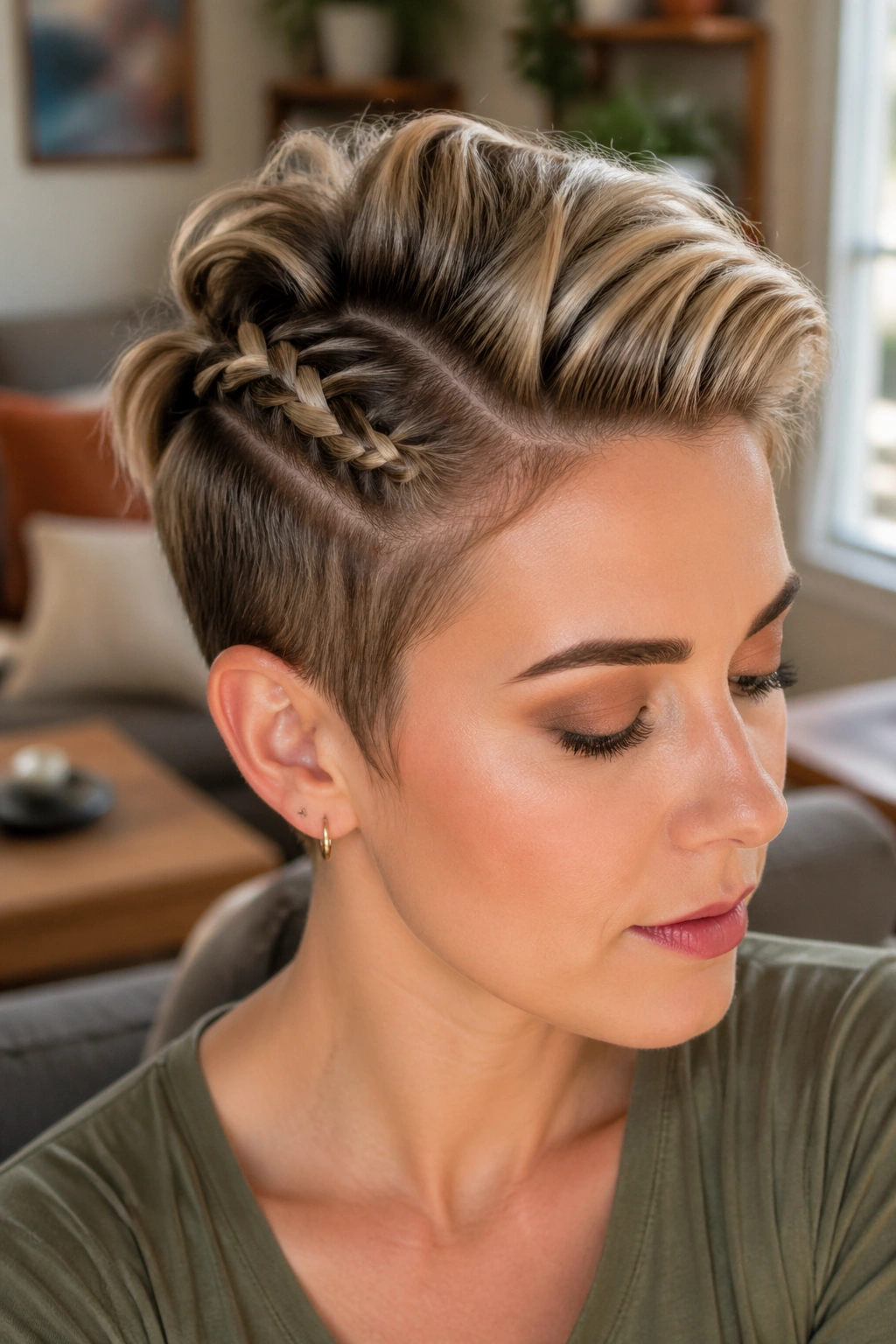
A deep side part changes everything. One side of the front section gets swept back into a short bubble chain, while the other side stays smooth and slightly lifted at the root. The result feels sharper and more directional than a straight-down style.
This one suits anyone who wants volume without a big crown puff. The side part creates the height; the bubbles simply keep that height from falling flat. It also works nicely when the fringe is long enough to tuck behind one ear, because the line of the style stays visible from the front.
How to style it
- Create a side part with the end of a tail comb
- Mist the root area with dry shampoo or texturizing spray
- Form two or three bubbles that curve back toward the ear
- Pin the tail under the top layer so the finish stays clean
A side bubble braid is one of those styles that looks casual from a distance and more engineered up close. That’s the appeal.
3. Half-Up Bubble Mohawk on Short Hair
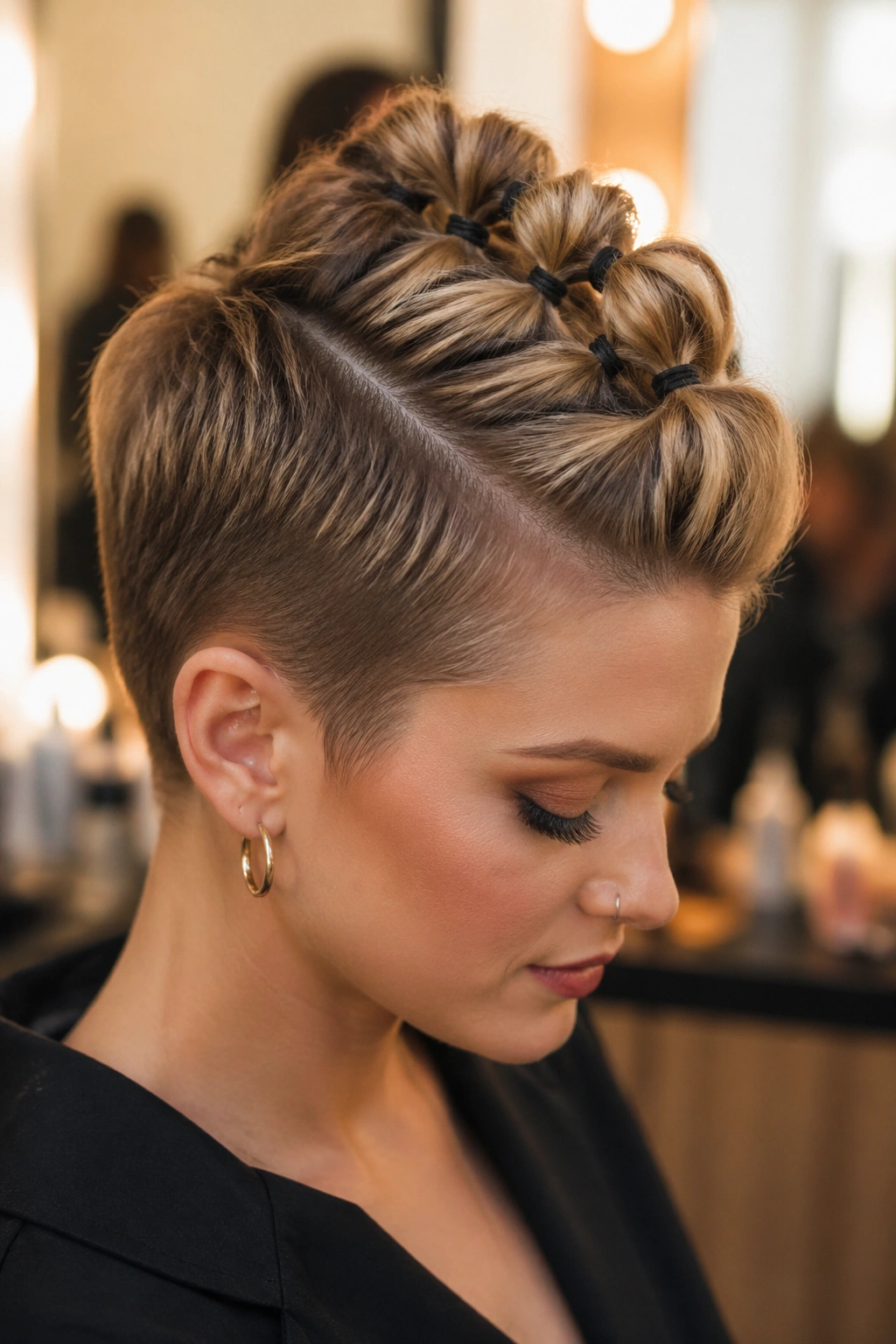
A half-up bubble mohawk gives a pixie cut more height than almost anything else on this list. You gather a narrow strip from the front hairline to the crown, then add elastics at 1-inch intervals and puff each section gently so the center ridge stands up instead of lying down.
The sides stay sleek. That contrast is doing a lot of work. When the temples are smoothed back and the middle rises a little, the whole cut reads taller, not just busier.
On a very short pixie, keep the first bubble small and snug. The style looks better when the lift starts close to the roots rather than halfway back on the head. If the hair is thick, you may need to lightly backcomb the root area before adding the first elastic. If it is fine, a matte spray is usually enough.
One warning. Do not pull the bubbles too wide. A mohawk shape needs height first, width second.
4. Double Mini Bubble Braids at the Temples
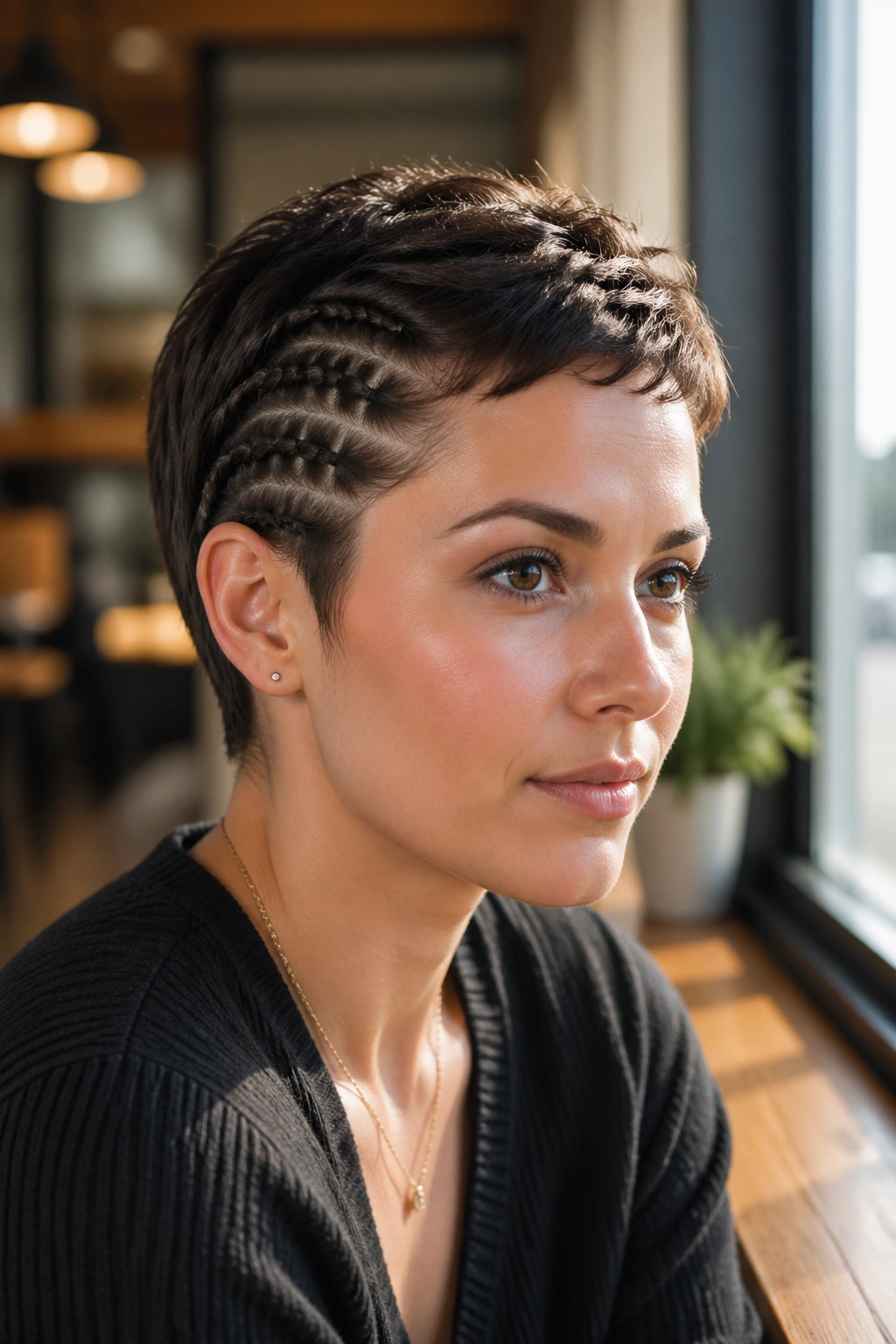
What if the volume lives at the sides instead of the top? That’s the whole point of this version.
You take a narrow section from each temple, secure a tiny elastic, then add one or two more bubbles as the hair moves back toward the ear. The look frames the face and gives a pixie cut a bit more width around the cheekbones, which is handy if the top is short but the sides are growing out.
Quick shape notes
- Keep each section slim so the bubbles stay neat
- Pull the first bubble slightly forward if the hairline feels too tight
- Finish with a touch of pomade on the edges for a cleaner line
This is a good choice when you want something sweet without making the top area taller. It also works on layered pixies that have too many short pieces to hold a center style. The temple placement catches all those little pieces and makes them look intentional.
5. Asymmetrical Bubble Braid Sweeping One Side Back
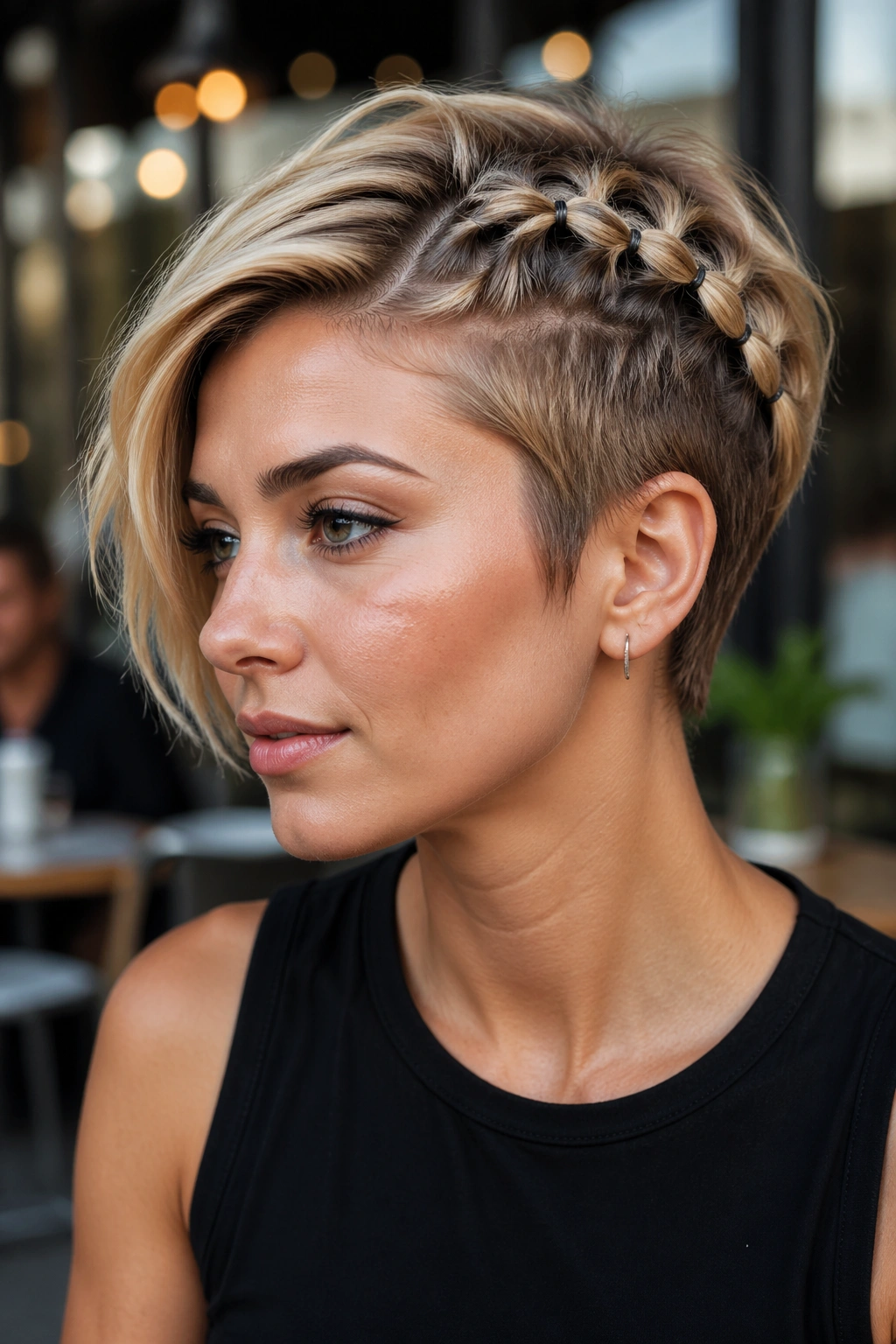
Unlike symmetrical styles, this one looks a little more grown-up. One side is left loose or tucked softly behind the ear, while the other side is turned into a bubble chain that sweeps back in a strong line.
The asymmetry is the point. It gives a pixie cut shape and attitude without needing much length. A deep side sweep also keeps the face open, which is useful if the haircut has heavy fringe or if one side is longer than the other.
You can keep the bubbles compact and polished, or loosen them slightly so the chain looks softer. I prefer the first bubble to sit a little higher on the temple. That keeps the style from dragging down the face.
A matte barrette or a flat clip works well here. Something shiny can look too formal unless you want that mood on purpose.
6. Tapered Nape Bubble Braids with a Low Finish
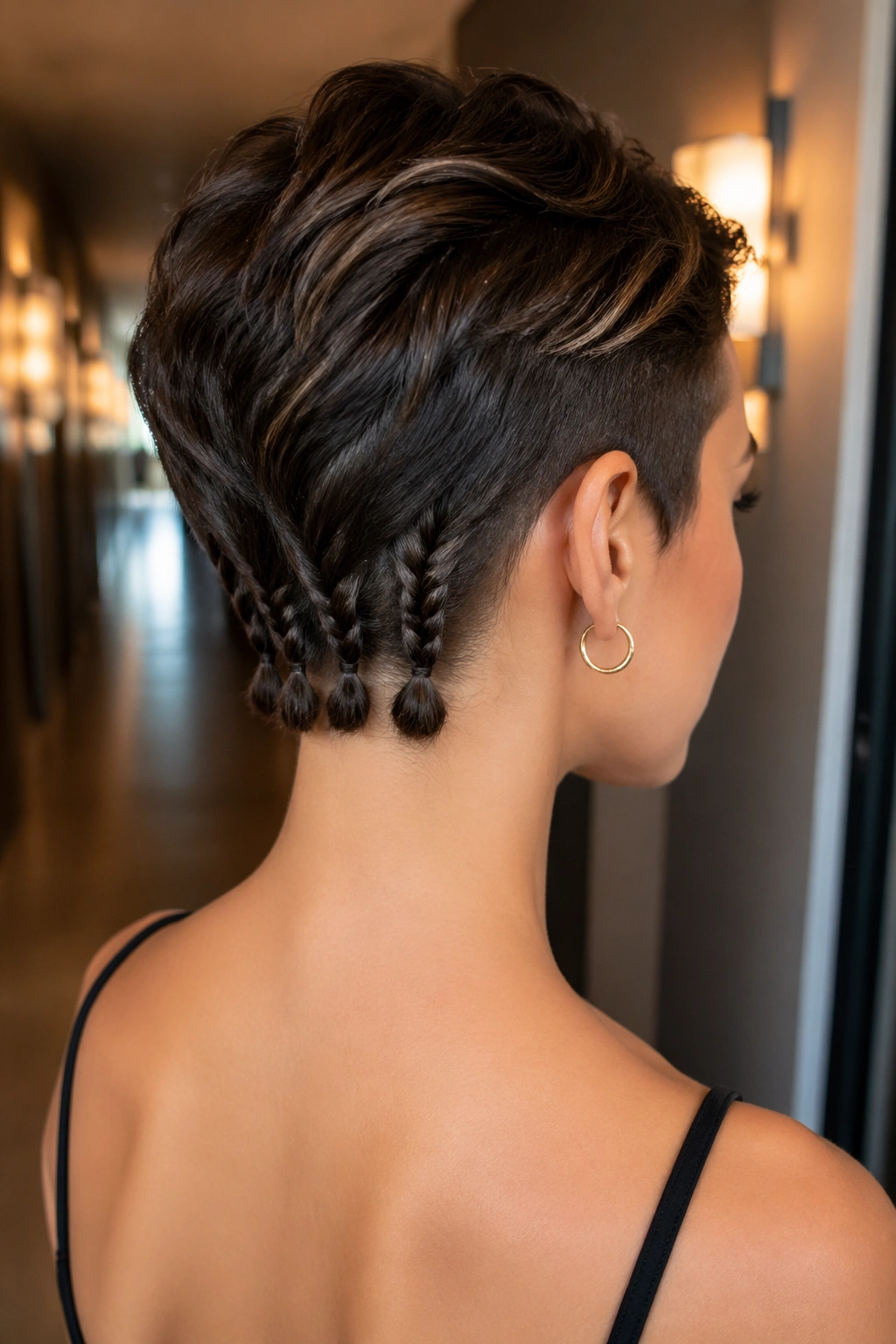
This is the quiet one. No drama at the crown, no big lift at the front. The interest sits low, near the nape, where the shortest parts of a pixie often get ignored.
You gather the back sections into one or two low bubble chains that sit just above the neckline. If the cut is tapered, the bubbles emphasize the clean shape of the neck and make the back of the style look fuller. That sounds small, but it changes the whole profile.
Why the low placement matters
A low finish is useful when the top already has enough height and the back needs more life. It also helps when the sides are short and the front is busy. The eye moves down, which balances the haircut.
- Use small elastics and keep them hidden under the outer layer
- Tug each bubble only a little; low bubbles can get floppy fast
- Smooth the nape with a dab of styling cream if flyaways are a problem
This is one of the easiest ways to make a pixie look polished without making it stiff.
7. Braided Bubble Ponytail on a Grown-Out Pixie
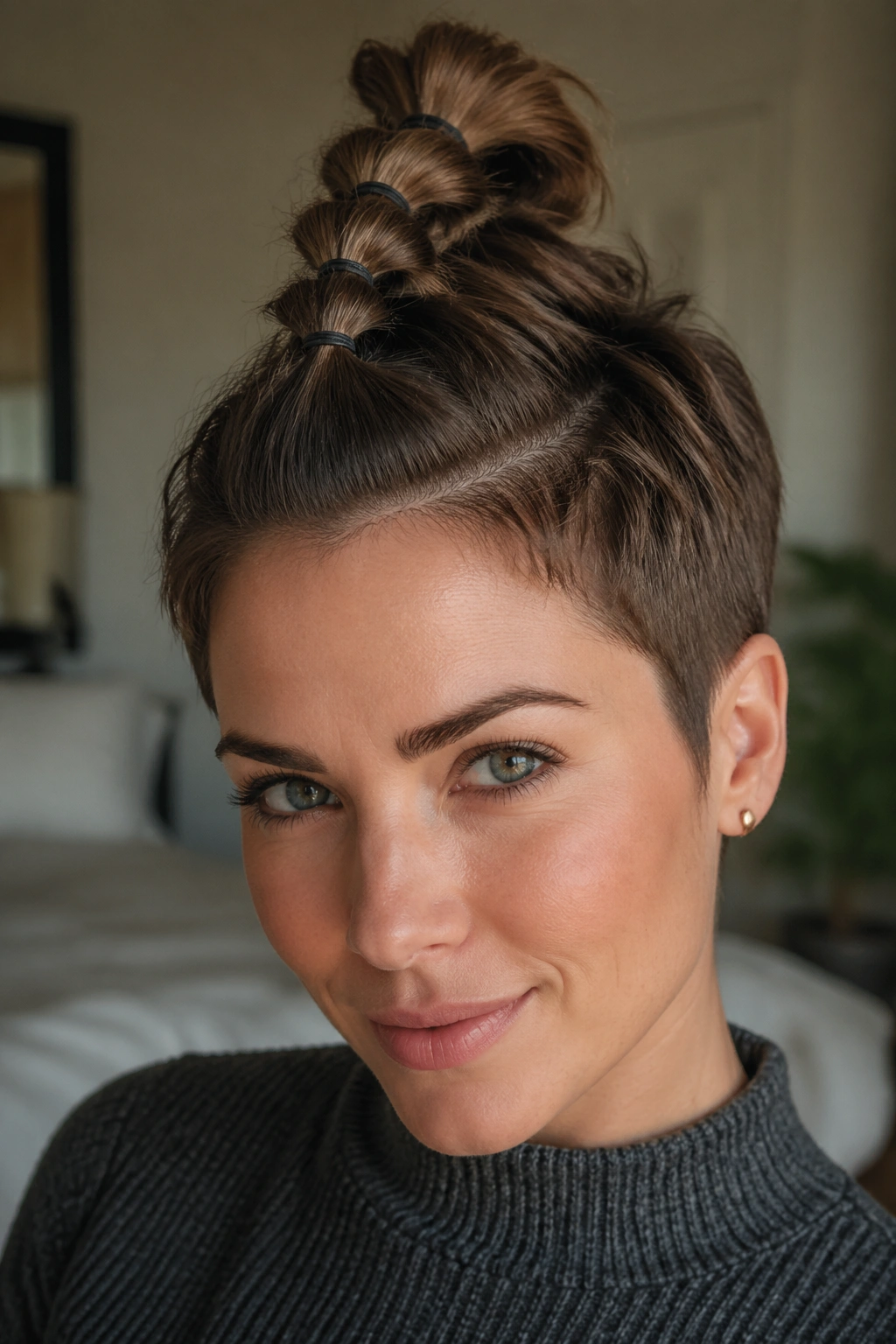
A grown-out pixie is often the easiest length for bubble braids. The top is long enough to gather, but still short enough that the style feels sharp rather than heavy.
Pull the crown and top into a tiny ponytail, add a second elastic about 1 inch below the first, then keep going until you run out of length. The bubbles can stay small and stacked, which makes the ponytail look denser than it really is. If the ends are too short to keep extending, pin them under the last bubble and call it done.
A little root backcombing at the crown helps here. So does a quick spray of flexible-hold hairspray before you start tugging the sections out. The style should move, not collapse.
This version is good when you want a clear “up” shape, not a soft one. It has more edge than the temple styles and more structure than the loose crown looks.
8. Faux-Hawk Bubble Braid for Extra Height
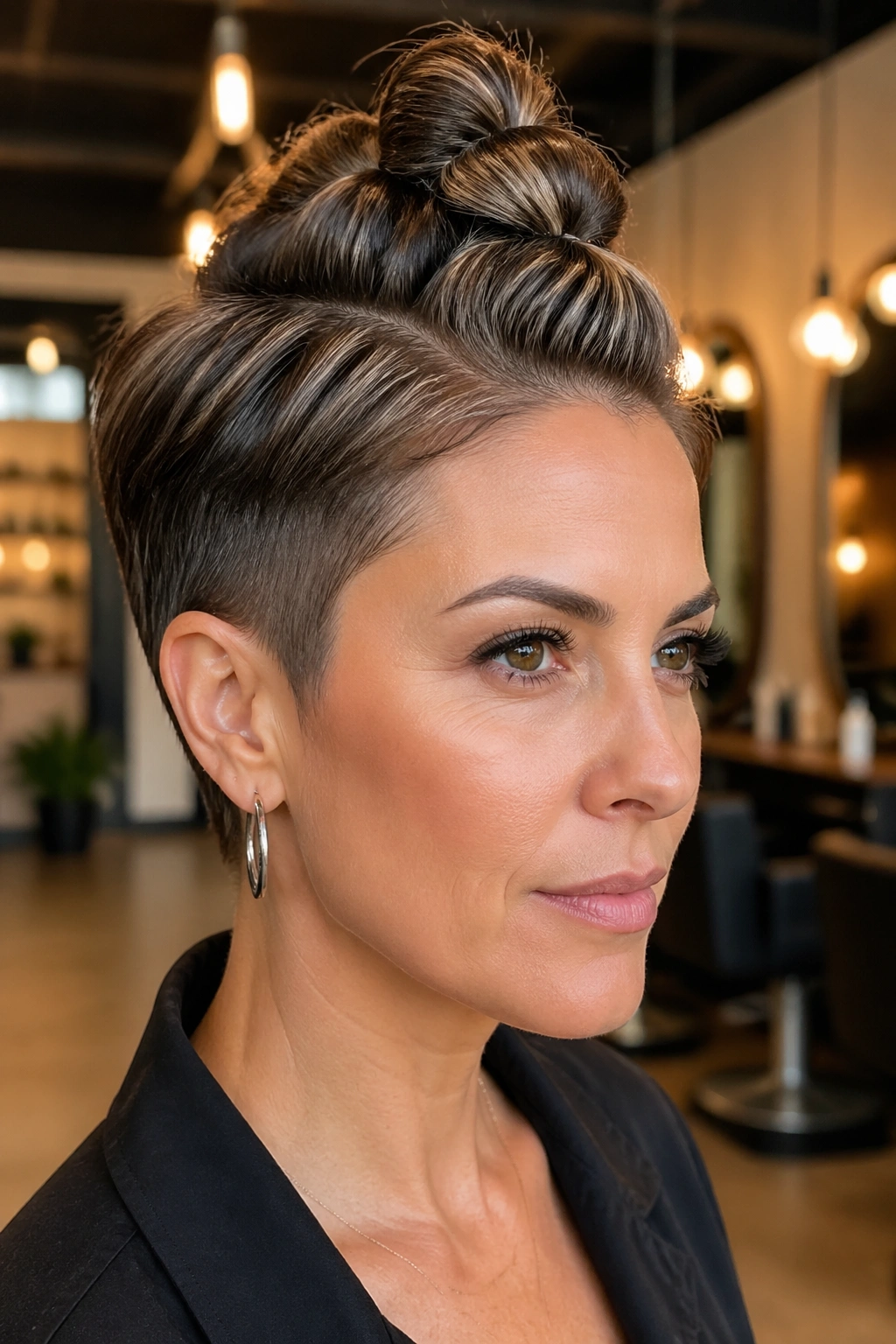
A faux-hawk bubble braid is the boldest shape in the group. The center strip gets teased at the roots, secured in short bubble sections, and flanked by smoother sides so the whole style stands up and forward.
This works especially well on textured pixies and undercut cuts. The contrast between the lifted center and the tighter sides gives the hair a stronger silhouette, which is exactly what short cuts need when they start feeling too flat.
What to watch for
- Keep the center section narrow, about 1 to 1½ inches wide
- Use a firm elastic so the bubbles do not slide down
- Pin the sides low and close to the head for cleaner lines
The faux-hawk shape can turn sloppy fast if the bubbles are too loose or too big. Keep the root lift close to the scalp, and the style stays sharp. It is a good pick when you want the pixie to look slightly tougher.
9. Bubble Halo Around the Hairline
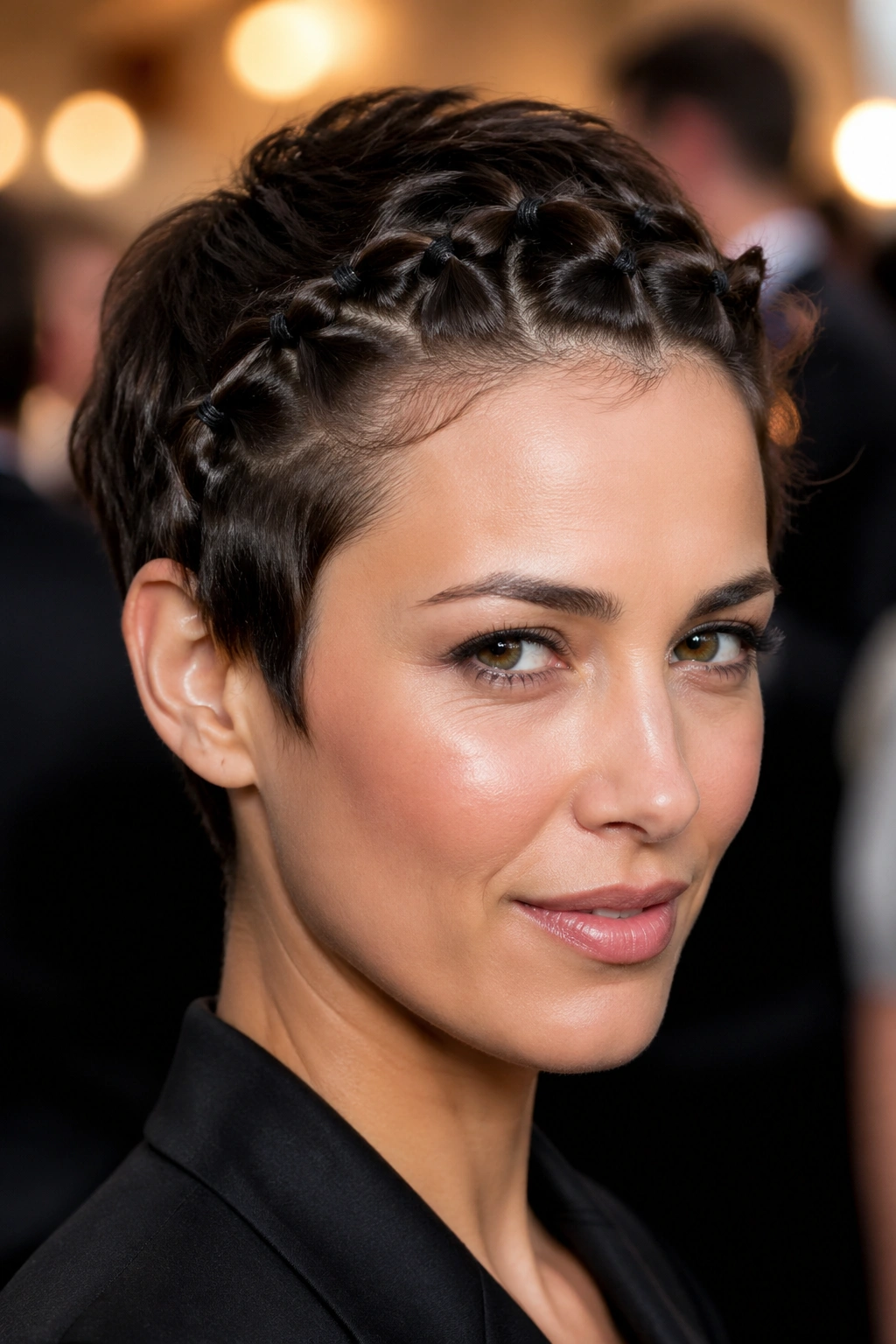
A bubble halo is softer than it sounds. You create a curved row of tiny bubbles that follows the hairline from temple to temple, almost like a crown sitting low on the head.
This is a nice move for short hair because the bubbles do not need length to make an impact. The eye reads the shape first, then the details. If the style is pinned carefully under the bubbles, the effect looks fuller than a simple row of clipped-back hair.
The halo works well for events, but it is not fussy if you keep the bubbles small and the parting neat. A side part or center part both work. I like a soft, slightly uneven spacing here, because perfect circles can look stiff on a pixie cut.
If the hair is fine, use a little powder or dry shampoo at the root before starting. The bubbles hold better and the halo keeps its shape longer.
10. Zigzag-Part Bubble Braids for Texture
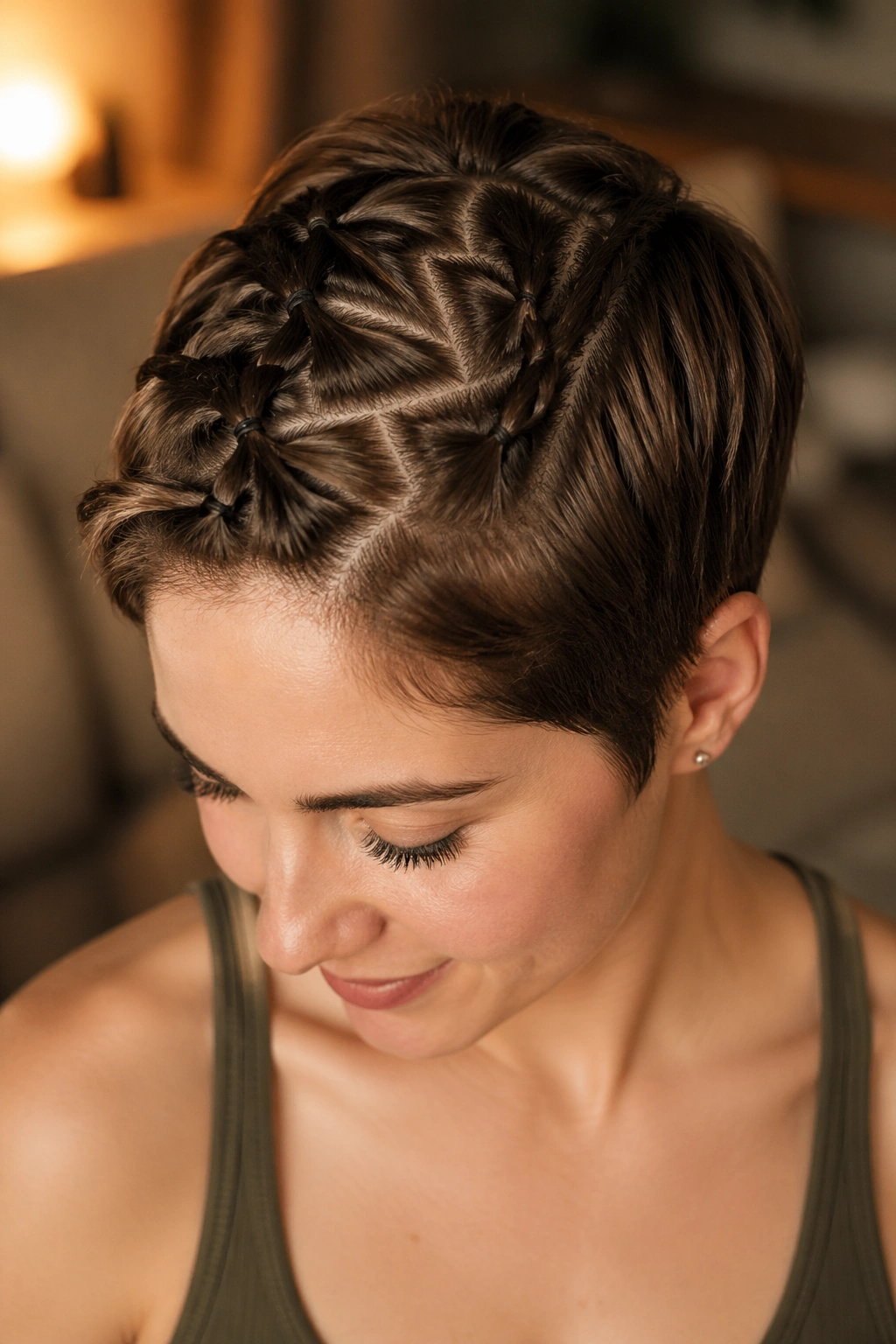
A zigzag part does more than look playful. It breaks up the flatness that short, straight sections can get, and it gives the bubbles a more lived-in feel.
You sketch the part with the point of a tail comb, following a gentle back-and-forth line across the crown. Then you build small bubble sections along that path, letting the angles of the part do half the styling for you. The result feels busier in a good way, especially on very smooth hair that tends to fall flat.
Quick style guide
- Best on straight or softly wavy pixies
- Use a comb with a fine point for the part
- Keep the bubbles slightly uneven to match the zigzag line
This style is not about precision alone. It is about texture. If every bubble sits at the same angle, the zigzag can look overworked. A little mess keeps it interesting.
11. Rope-Twist Bubble Braids for Short Hair
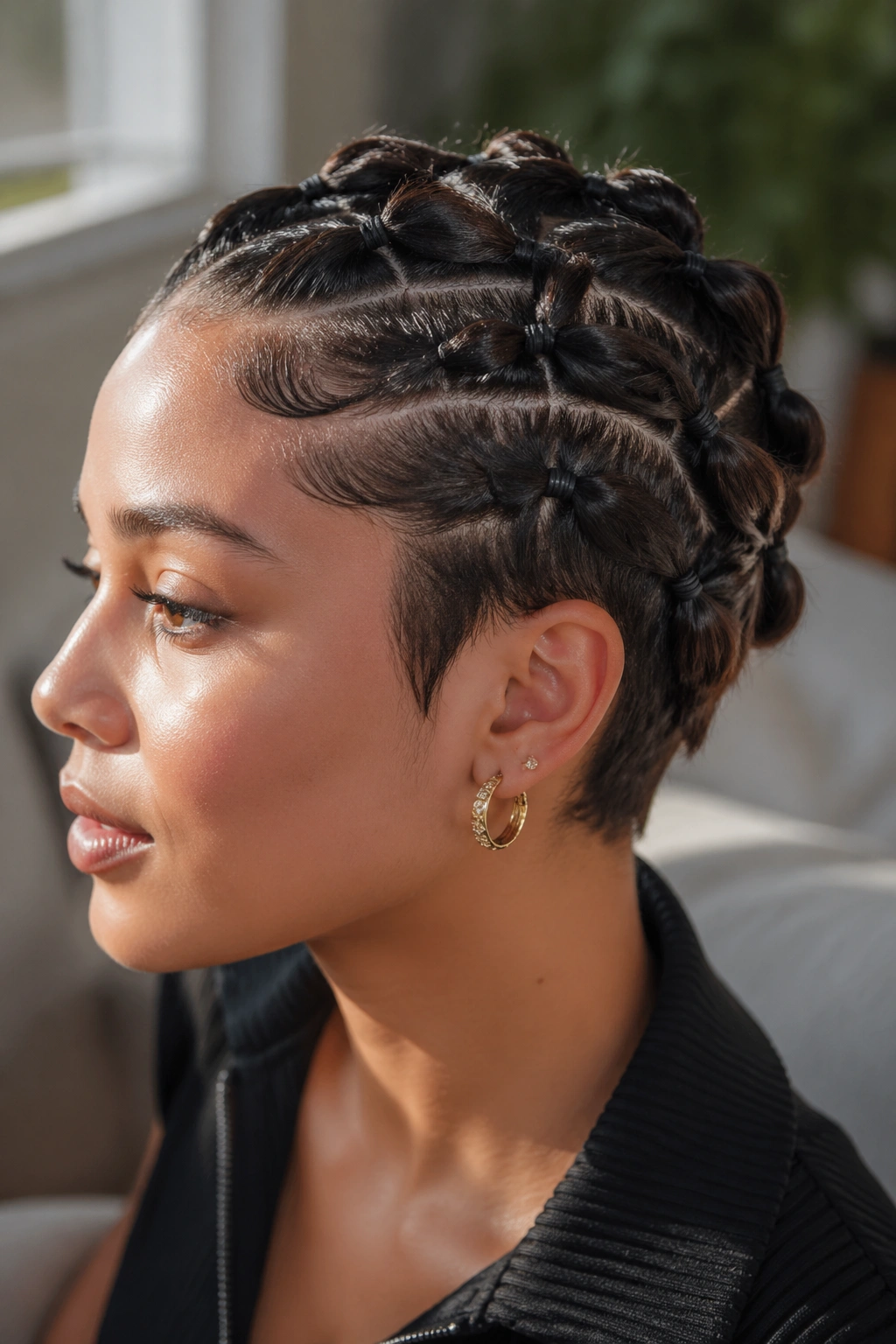
A rope-twist version gives short lengths more grip than a standard sectioned bubble braid. Instead of feeding hair straight into elastics, you twist two small strands around each other before securing the next bubble.
That twist matters. It helps slippery hair stay put, and it adds a bit of thickness to each section, which is useful when the pixie is fine or freshly layered. The finish looks tighter and more rope-like, with a neat spiral running into the bubbles.
How it feels different
Unlike a basic bubble row, the rope twist gives the hair more structure between elastics. You do not need much length for it to work, which is why it’s such a practical choice on a pixie cut.
The style is especially good if your hair tends to slide out of elastics by lunchtime. Start with a small amount of grip product, twist slowly, and do not over-pull the bubbles. Let the spiral stay visible. That is the whole point.
12. Accent Bubble on the Fringe
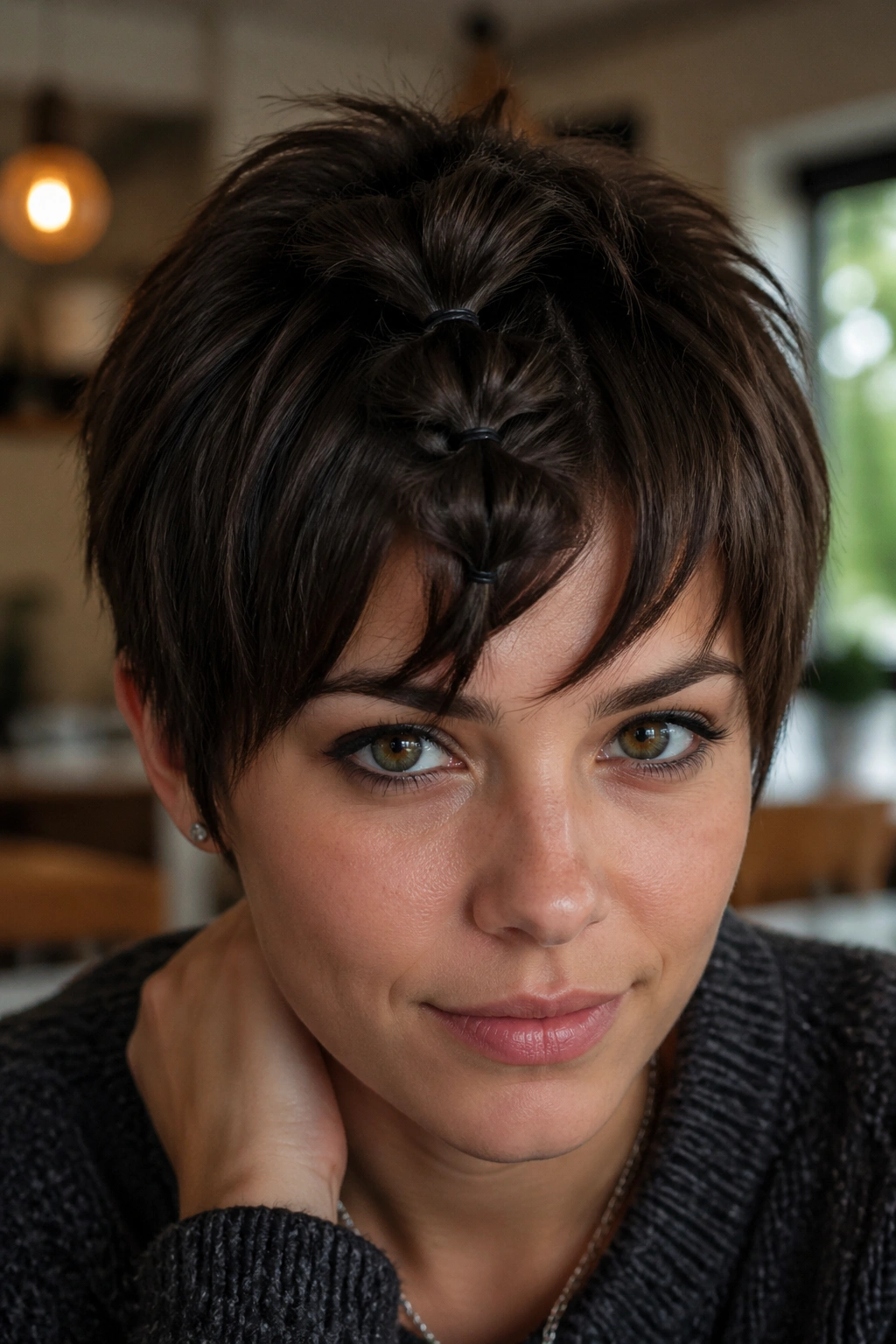
Do you need a full head of bubbles? Not at all.
Sometimes one tiny bubble sitting in the fringe is enough to give a pixie cut some lift and personality. You take a front section, secure it once or twice, puff it lightly, then pin the rest of the hair back or let it fall around it. The result is clean, minimal, and a little unexpected.
This works well when you want to keep most of the haircut visible. It is also a smart choice for glasses, because the style does not crowd the face. A single accent bubble can make the fringe look thicker without making the whole cut feel busy.
A fine hairline tends to love this one. Keep the elastic nearly invisible and place the bubble slightly off-center if you want it to feel softer. Centered placement reads sharper. Either way, it does the job fast.
13. Mini Space-Bun Bubble Braids for Pixie Cuts
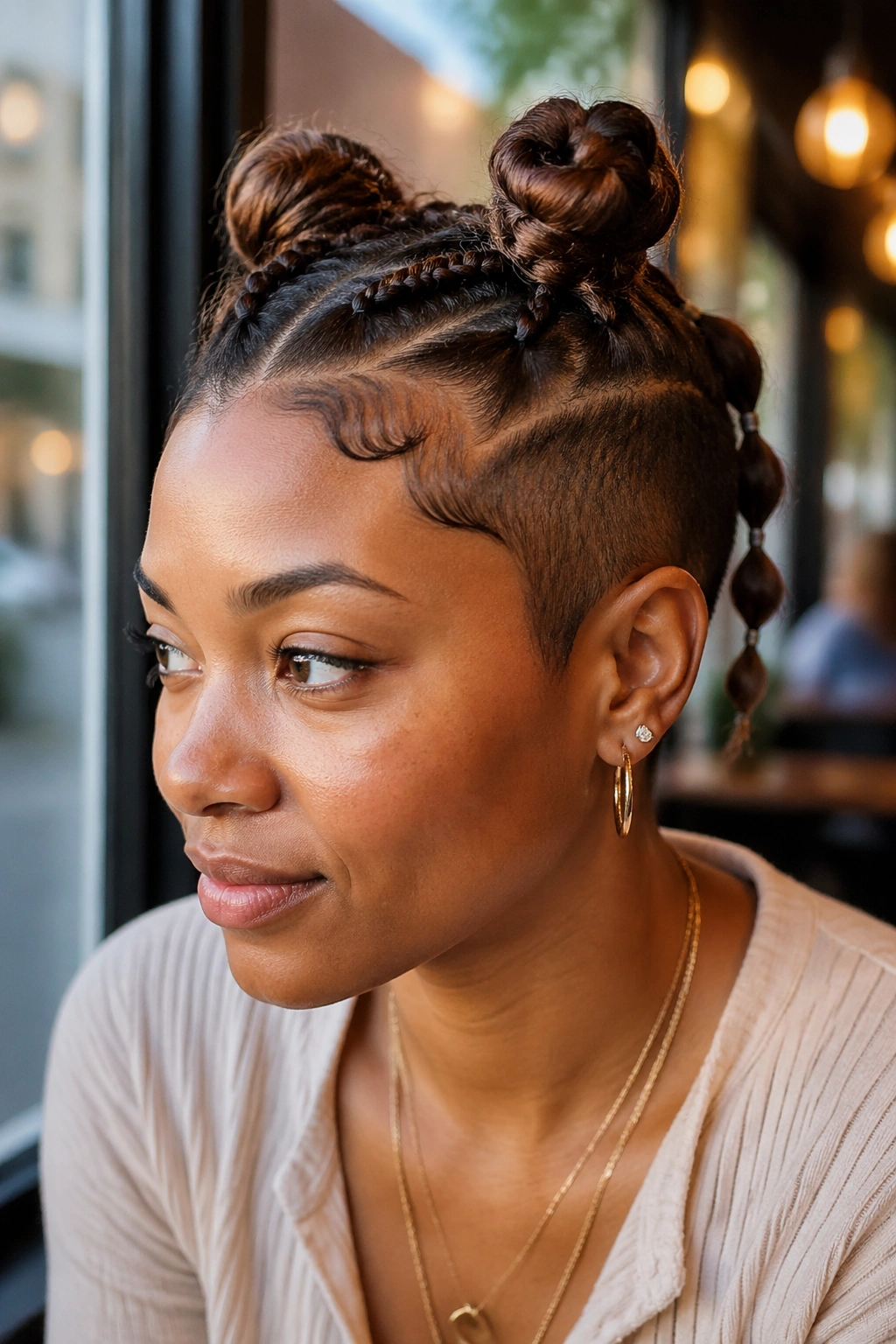
Tiny space buns can hold bubble tails, and the combo gives a pixie cut a playful shape that looks bigger than the length suggests. The buns sit near the crown, while the small bubble sections drop behind them or tuck into the sides.
It sounds a little theatrical. That’s part of the charm.
Why it flatters short cuts
The buns create height at the top of the head, and the bubbles extend that height downward without needing long hair. On a pixie, that extra vertical line can be enough to make the whole cut look fuller and more styled.
- Use two neat buns, not oversized knots
- Keep the bubble tails short and tidy
- Leave a few face-framing pieces out if the style feels too tight
This version works well for casual days, concerts, and anywhere you want the haircut to look more expressive. It is not subtle. It does not need to be.
14. Slicked-Back Bubble Braids with Glossy Edges
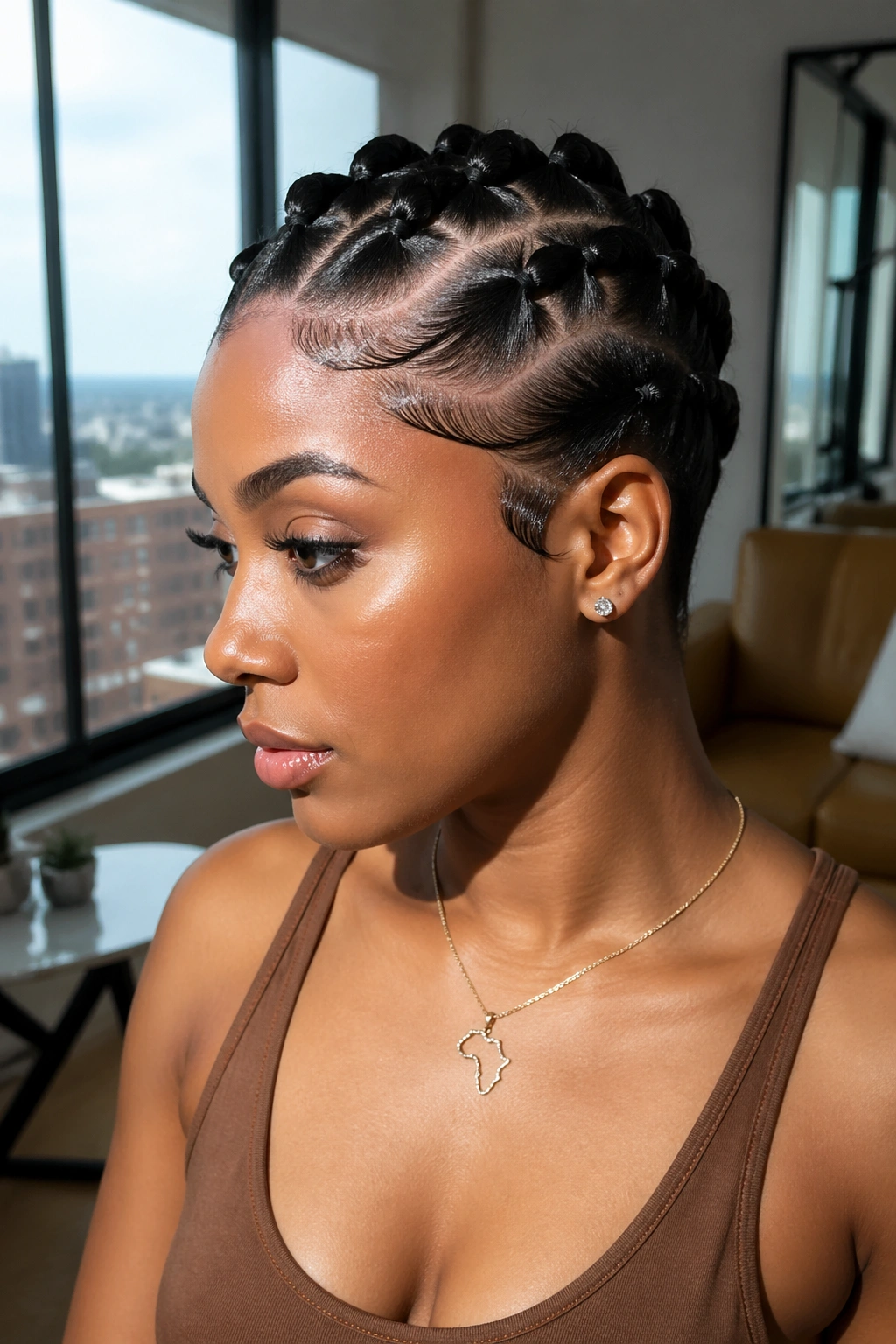
A clean pixie bubble braid can look sharper than a fluffy one. Slick the sides back with gel or a strong cream, then build bubble sections through the top where the hair still has enough length to puff out.
The contrast is the whole point. Glossy edges make the bubbles look fuller because the eye stops reading the sides as part of the volume. Instead, the top carries all the shape. That can be a good move if you want the haircut to look crisp and controlled.
Keep the bubbles medium-small. If they get huge, the slicked sides and puffy top start fighting each other. A soft brush helps flatten the product evenly, and a little hairspray at the end keeps the edges smooth.
This is the one I’d pick for a cleaner outfit or a night out. It has a deliberate, tidy feel without looking severe.
15. Loose, Gently Pulled Bubble Braids for Soft Volume
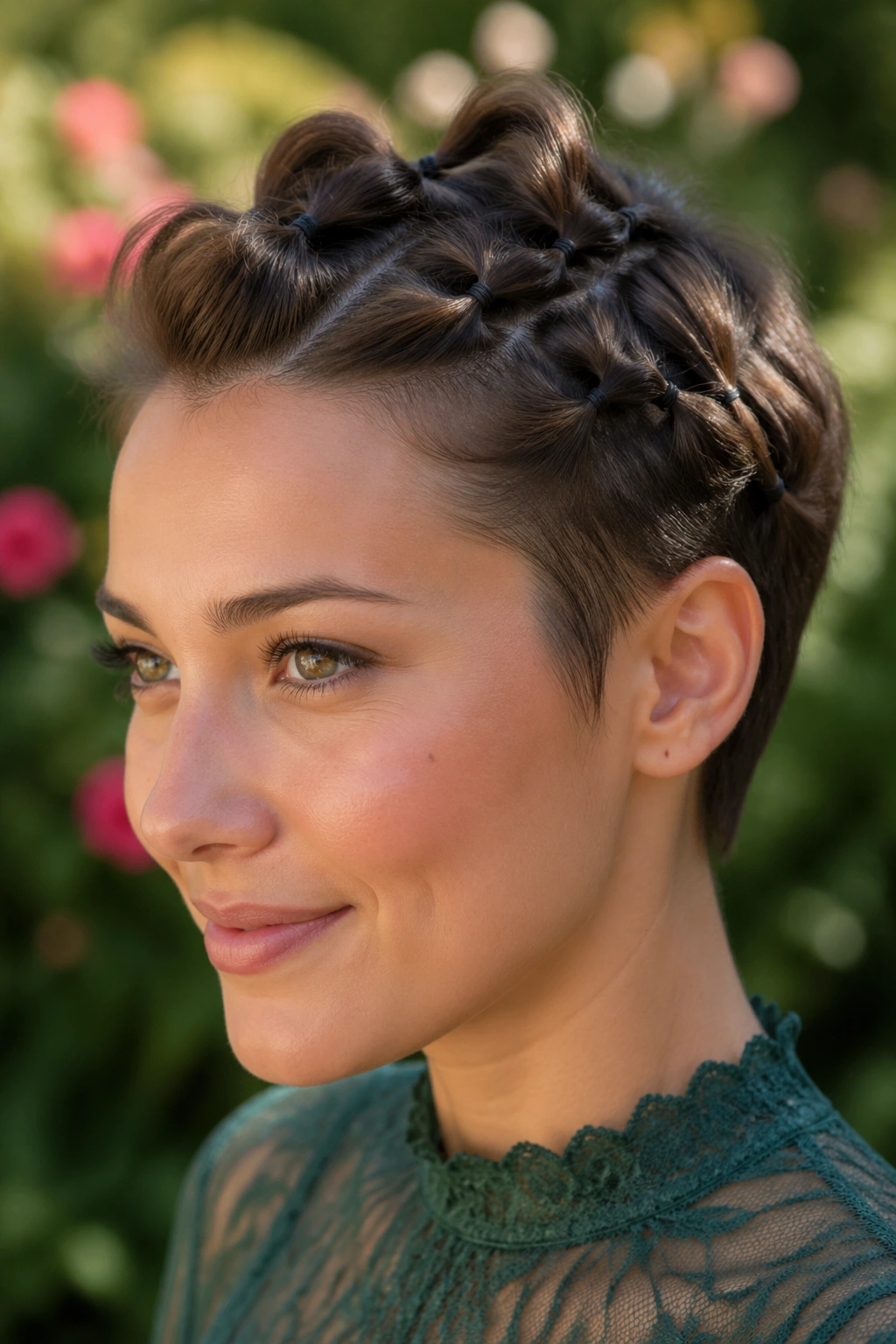
If you want the pixie cut to look fuller without looking built, this is the version to copy. You create the bubbles, then gently tug each side outward with your fingertips until the sections widen by a few millimeters.
That tiny adjustment changes everything. The hair suddenly looks thicker, and the bubbles feel less stiff. On short hair, you do not need a dramatic pull. Too much and the style starts to collapse. A little widening gives the illusion of body without exposing the elastics too much.
The finish works best on hair with some texture in it already. If the hair is too soft, the bubbles can lose shape before you leave the house. A dry texture spray or a light dusting of styling powder usually fixes that.
Keep the ends tucked in cleanly. Soft volume looks polished when the base stays hidden.
16. Crisscross Elastic Bubble Braids Along the Crown
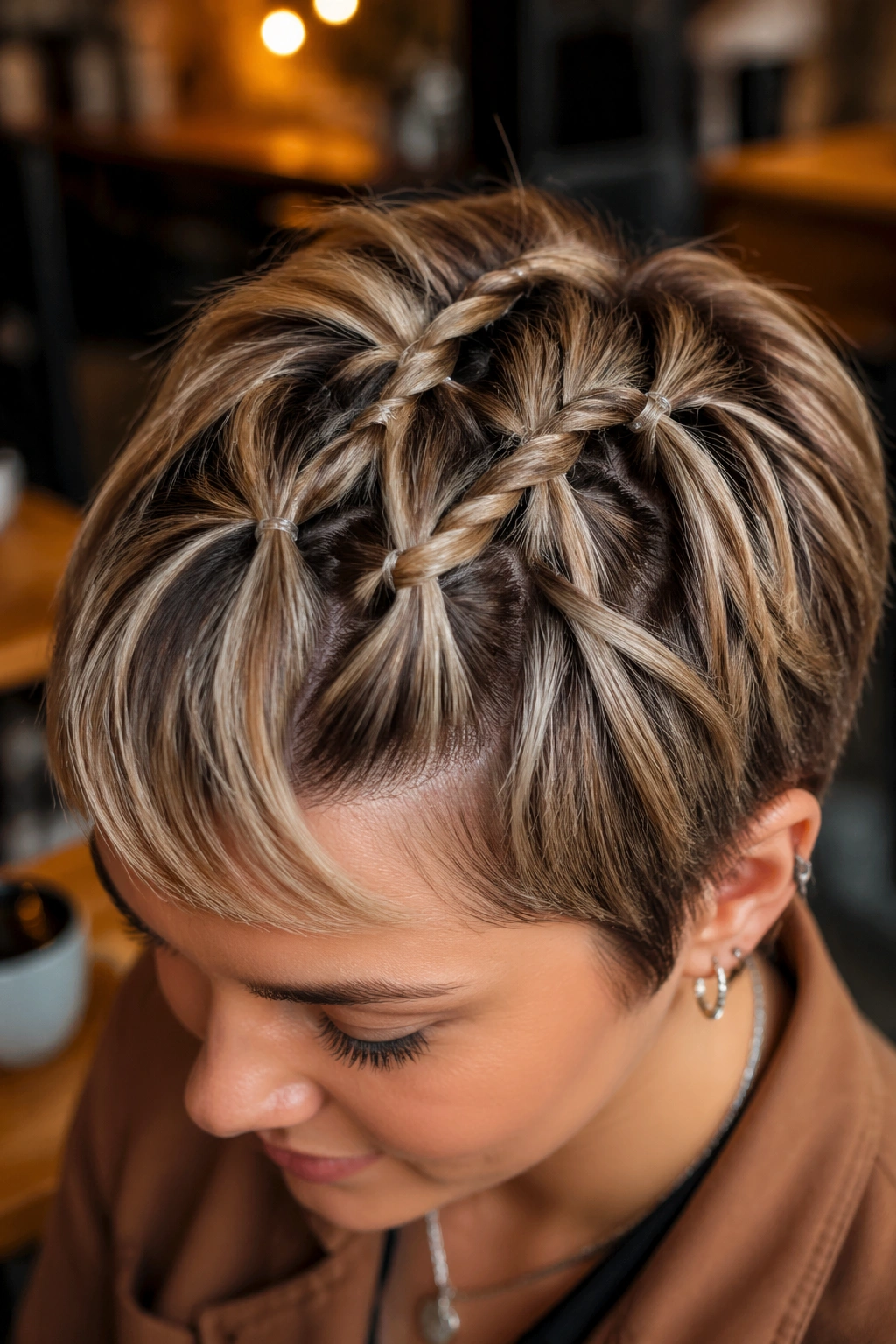
Crisscrossing the sections gives a pixie cut a more intricate look without needing more hair. You divide two narrow crown sections, cross them over each other, then secure each crossover with a small elastic and continue the pattern down the head.
The lattice effect is what makes this stand out. It creates the impression of density because the hair keeps moving in different directions. On short cuts, that directional change matters more than length ever will.
What makes it different
- The style uses pattern, not size, to create volume
- It works well on straight, fine, or layered hair
- The crossed sections should stay snug so the pattern stays readable
I like this one for the top panel of a pixie that tends to lie flat. It gives you shape at the crown and a little visual tension, which keeps the haircut from feeling plain.
17. Bubble Braids with Ribbon or Thread Wraps
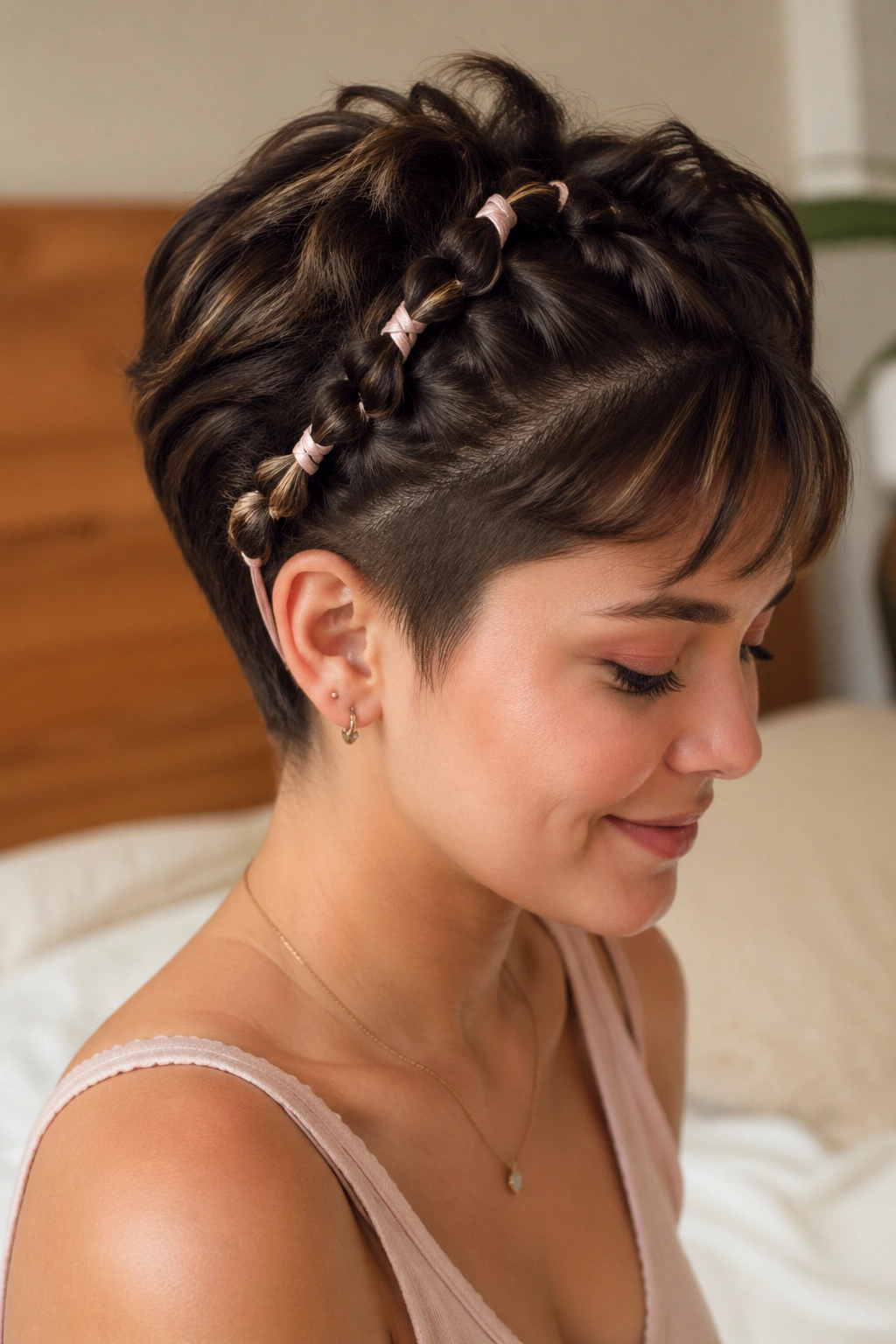
Accessories can carry a short style farther than extra length ever could. Wrap a thin satin ribbon, embroidery thread, or even a narrow strip of fabric around the elastics, and the bubble braid suddenly looks richer and more finished.
The wrapping hides the elastic, which makes the bubbles seem larger and the sections look cleaner. On a pixie cut, that matters because there is less hair to camouflage the bands. A color that echoes your outfit is nice, but a neutral tone can be even better if you want the style to stay subtle.
A narrow ribbon of about ⅛ to ¼ inch wide is easier to control than something bulky. Keep the wrap tight, but not so tight that it twists the bubble out of shape. This is one of those details that looks simple and takes a minute longer than expected.
Still worth it.
18. Curly Pixie Bubble Braids with Defined Puffs
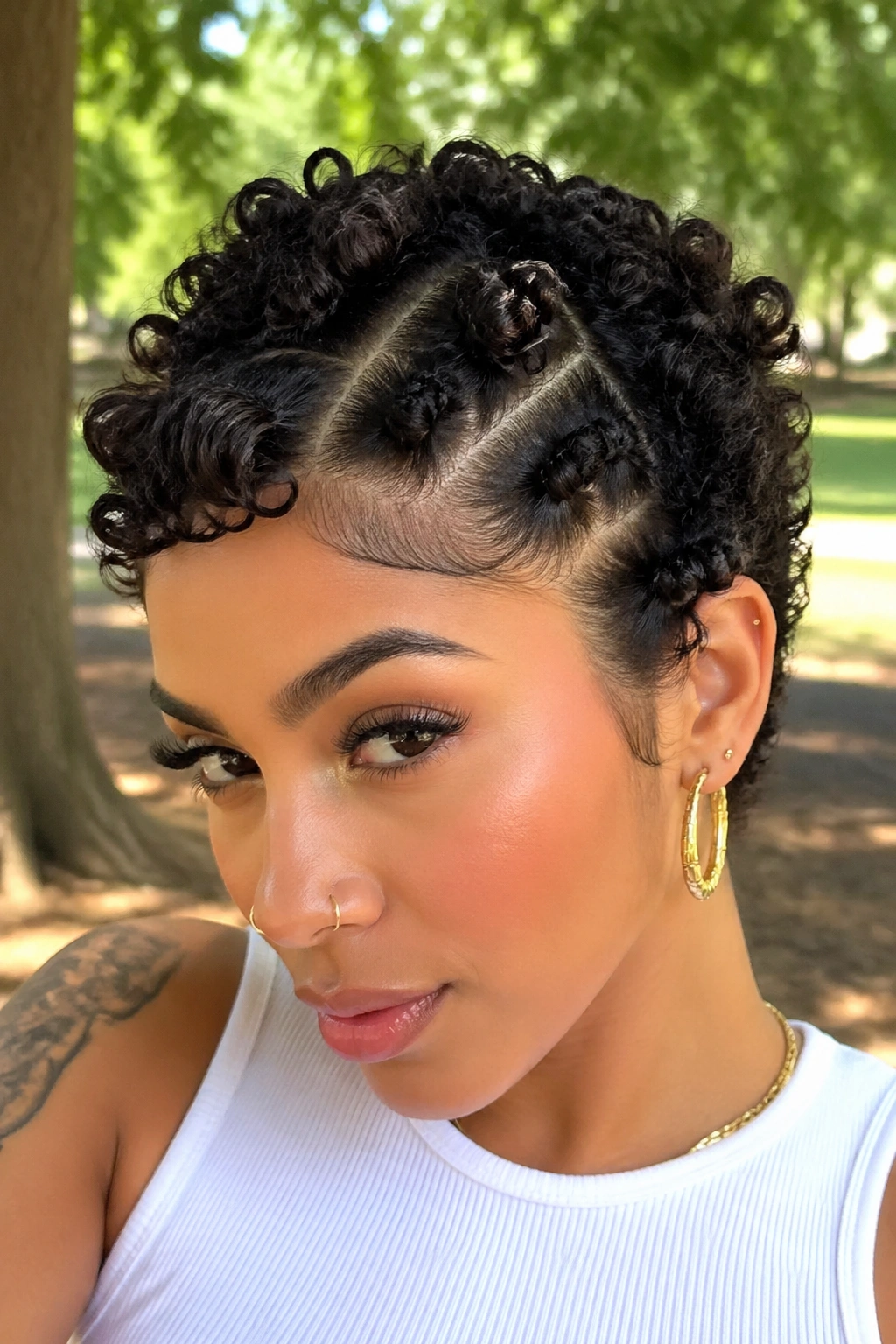
Curly pixies do not need much help making bubbles look full. The curl pattern gives the sections body before you even add the elastics, so the style can stay small and still read as thick.
Start on damp hair with a curl cream or a light mousse, then let the natural shape form before you section it. Pull each bubble only enough to keep the curl pattern intact. If you stretch the hair too much, the texture turns frizzy and loses that nice springy feel.
The best part of this version is that it looks different every time. A tighter curl near the crown creates a different bubble shape than a looser bend near the fringe, and that variation is what keeps the style from feeling flat or forced.
A diffuser helps if you want more lift. Air-drying gives a softer finish. Both work.
19. Undercut-Friendly Bubble Braids on the Top Panel
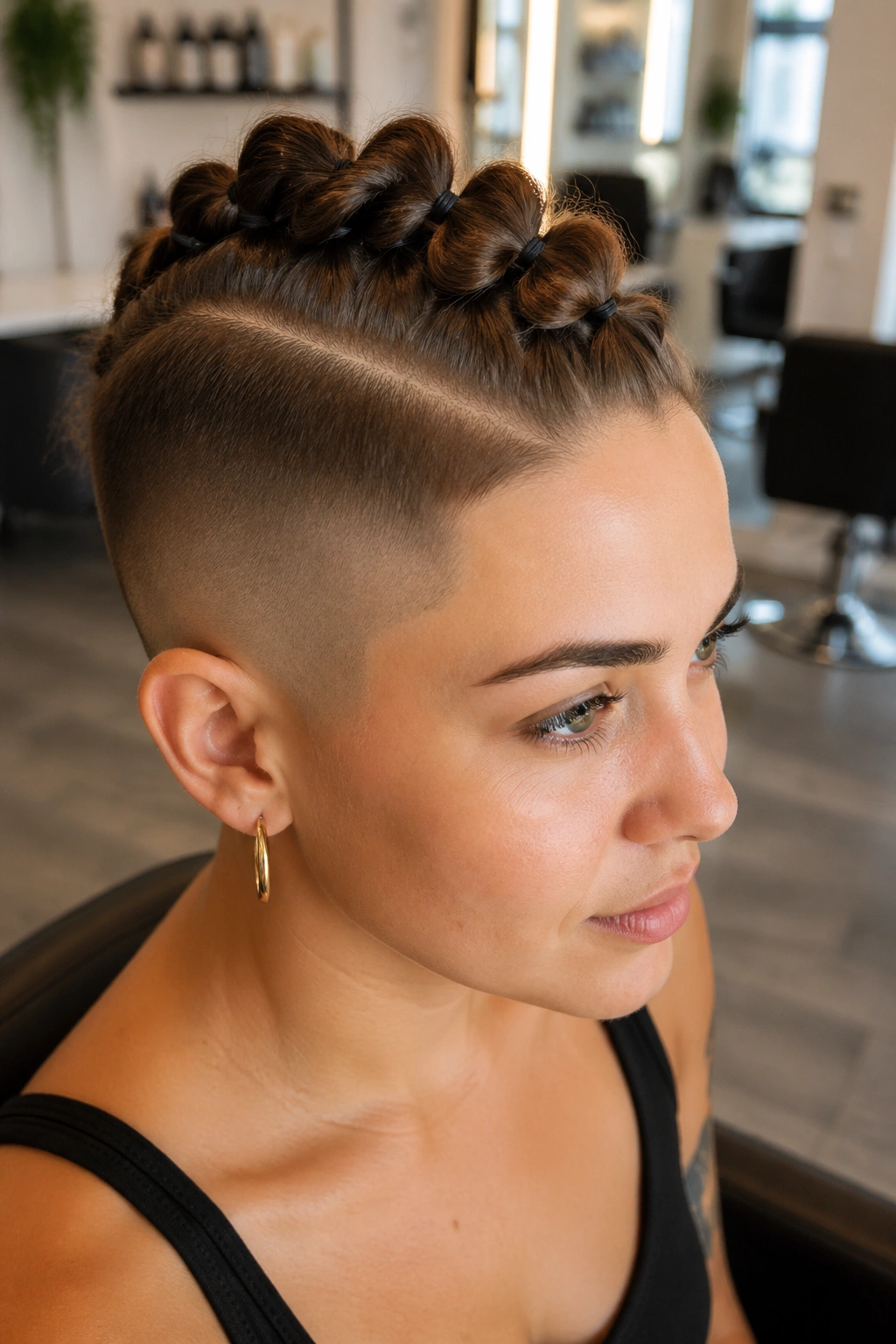
An undercut and a bubble braid are a good match because the contrast is already built in. The sides are tight or shaved, so all the styling energy lives on the top panel where the hair has enough length to make bubbles.
Keep the parting clean and the top section narrow. A single line of bubbles from the front hairline to the crown can look surprisingly strong when the sides are nearly bare. The shape is bold without needing much actual hair.
How to keep the line clean
Use a comb to separate the top panel from the shaved area, and smooth the border with a little cream or pomade. That edge matters. If the line looks fuzzy, the whole style loses its punch.
This is a good option for anyone who likes sharp shapes and low-maintenance sides. The undercut does half the visual work, and the bubble braid does the rest.
20. Feathered Fringe Bubble Braid Sweep
What if the fringe is the whole point? Then let it be.
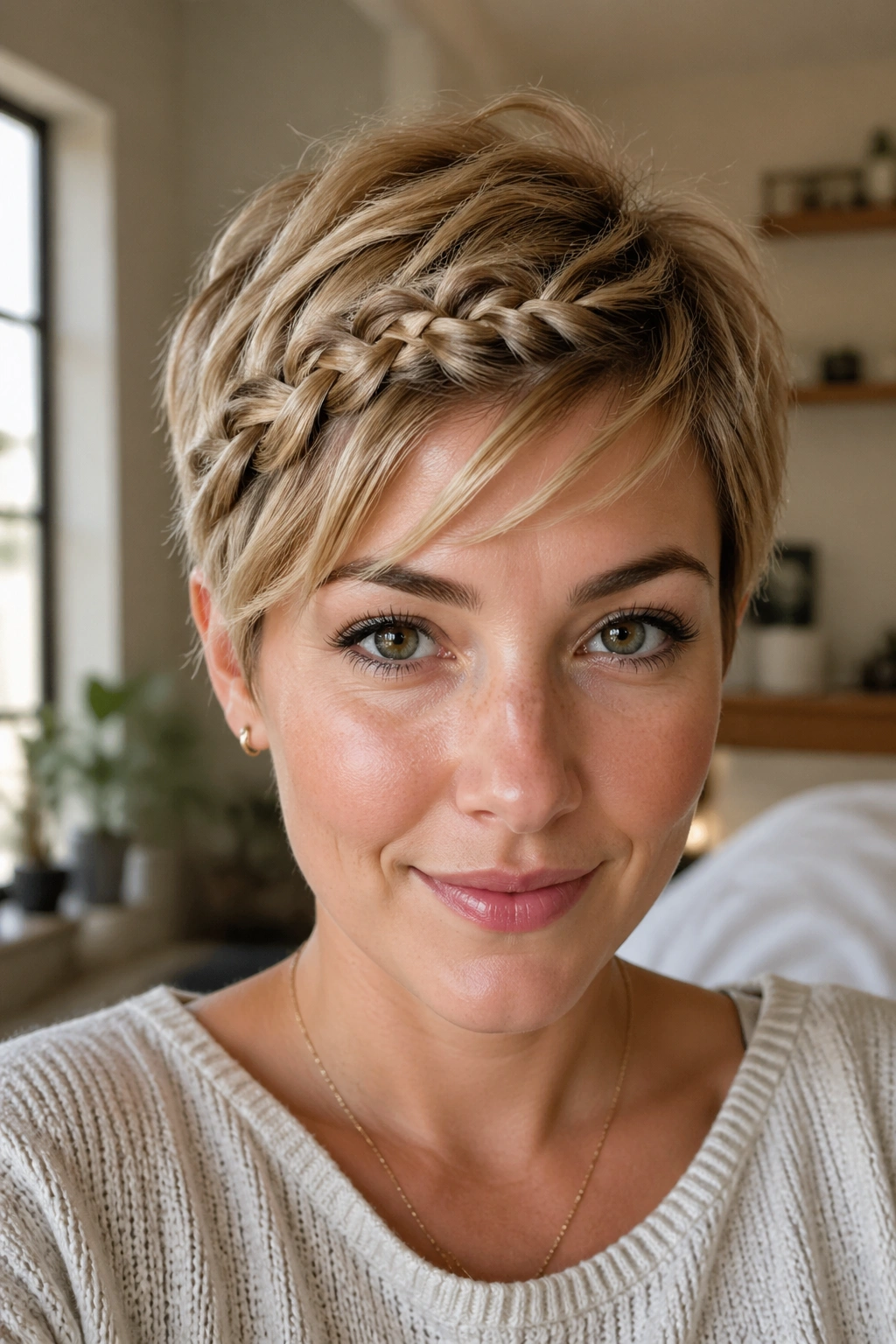
A feathered fringe can be swept into a small bubble braid that starts near one temple and moves diagonally across the forehead, with the rest of the pixie left textured and loose. The bubbles should stay small and slightly spaced, so the fringe still feels airy instead of packed down.
This style is good when the bangs are long enough to brush the brows. Shorter fringe can still work, but the look becomes more of a pin-and-bubble shape than a true sweep. The key is to keep the ends soft. A flat iron bend at the front helps the fringe curve where you want it.
You do not need much product here. Too much cream weighs the front down. A dry, piecey finish is better because it keeps the feathered shape visible.
21. Event-Ready Bubble Braids with Pins and Pearls
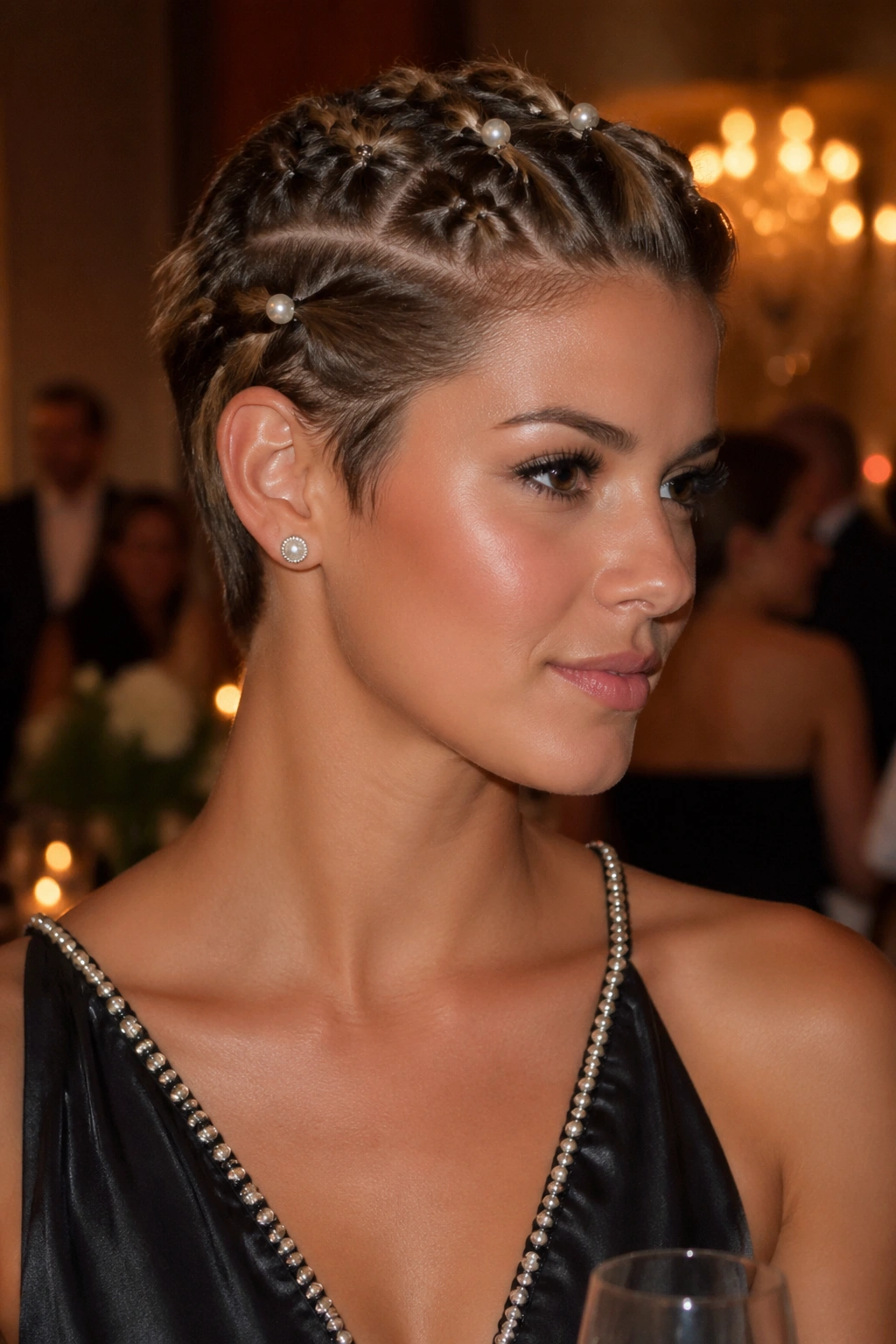
A pixie cut can look formal fast when you add tiny pins or pearl accents to the bubble braid. The bubbles themselves stay compact and neat, and the accessories do the heavy lifting.
I like this version for weddings, graduations, dinners, or any setting where the haircut needs a little extra polish. Place the embellishments at the center of each bubble or just off to one side. One or two small pins are enough. Too many and the style starts to feel crowded, which is the last thing a short cut needs.
A few details that help
- Use matte bobby pins if you want the bubbles to look clean
- Choose pearl pins no bigger than ¼ inch for short hair
- Mist the style lightly with flexible spray so the accessories stay put
This works best when the rest of the finish is neat. Smooth edges, controlled bubbles, no stray ends hanging out where they do not belong.
22. The Last-Minute Volume Bubble Braid for Short Hair
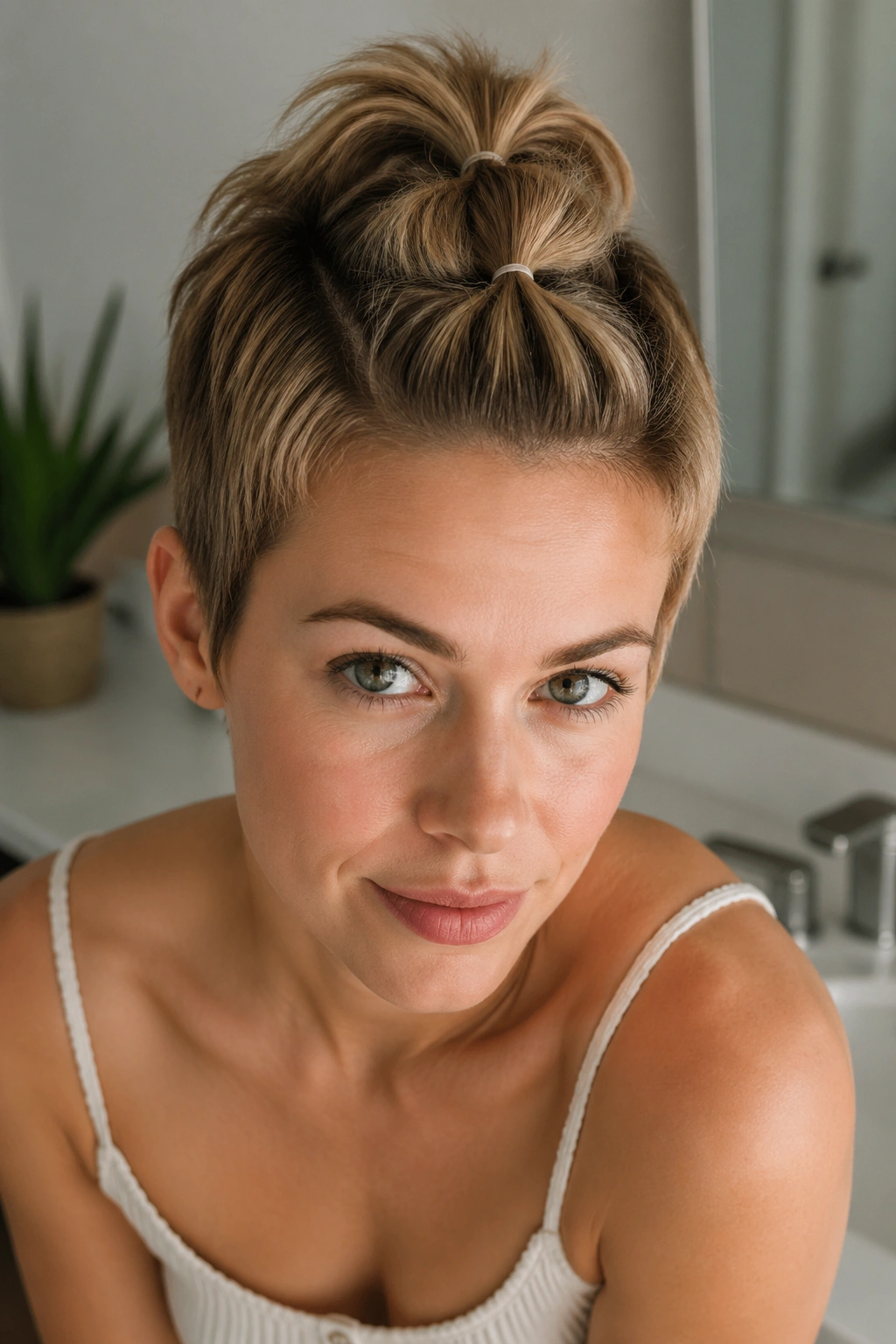
This is the one for the mornings when time is gone and the mirror is not being kind. You take the top section, secure one elastic at the crown, add a second elastic about 1 inch below it, puff the first bubble gently, and pin the sides back so the shape looks intentional.
That is enough.
The style works because it gives the top of a pixie cut a quick rise without asking the hair to do much. If the top is short, keep the bubbles tiny and the spacing tight. If the hair is slightly longer, widen the first bubble a touch and let the second one sit lower for a fuller finish. A small amount of dry shampoo at the roots helps a lot here, especially on soft hair that tends to fall flat as soon as you touch it.
Short hair does not need long lengths to look full. It needs the right spot, the right tension, and an elastic or two placed where the eye wants to see volume. That part never gets old.
