


A braid ponytail that survives burpees is a small miracle, and the difference usually comes down to where the braid starts and how hard the base is anchored.
A loose braid is cute in a mirror. In a workout, it slips, sways, and ends up brushing your neck every time you jump. A good braid ponytail does the opposite: it pins the top half of the hair down, keeps the tail compact, and stops the whole style from turning into a sweaty mess halfway through class.
That is why the styles that work best for training are usually the ones with a tight root, a small elastic at the braid’s end, and a plan for flyaways before they start. A bit of gel or mousse at the hairline helps, but so does common sense: if your ponytail is hanging too low for box jumps or too loose for a run, it will tell on you fast.
A few of these looks are sleek. A few are chunky. Some take three minutes, others take ten. All of them earn their place by staying put when your hands are busy and your hair is not.
1. Tight French Braid Ponytail
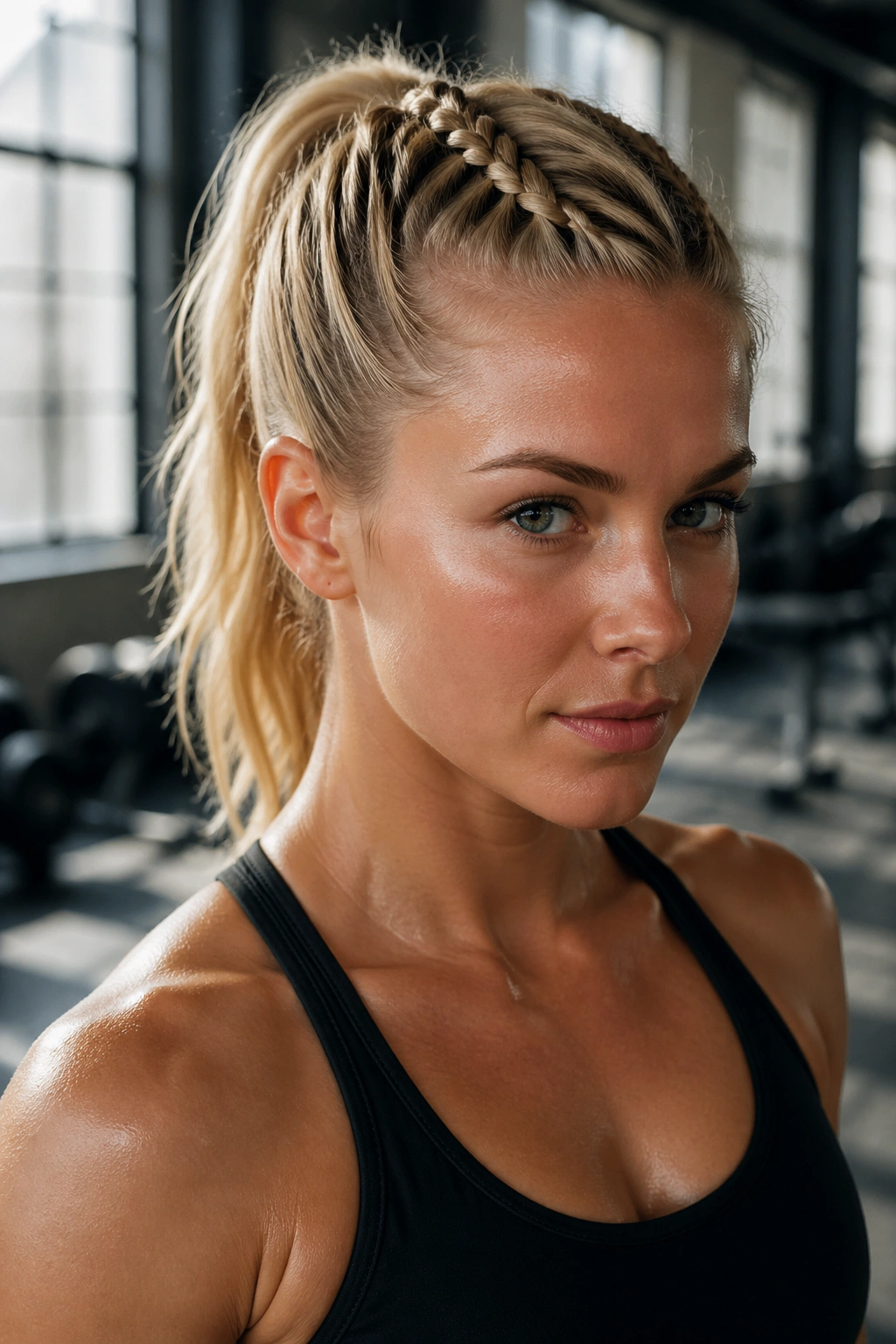
A tight French braid ponytail is the style I reach for when I want the hair controlled before the workout even starts.
The braid feeds hair into itself from the front hairline down toward the crown, which means the roots are already held in place by the time you tie the ponytail. That matters more than people think. Once the base is anchored, the tail can move a little without turning the whole style into a mess.
Why it holds the line
French braids grip the scalp in a way a regular ponytail never will. The braid doesn’t sit on top of loose hair; it gathers the hair as it goes, which cuts down on slipping during rowing, treadmill work, or anything with repeated head movement.
Quick facts:
- Best for straight, fine, or slippery hair
- Use a snug 1/8-inch elastic at the braid’s end
- Tie the ponytail at mid-crown for running, or lower for lifting
- A pea-sized dab of gel at the temples keeps the front neat
My one nonnegotiable: braid closer to the scalp than you think you need to. Loose French braids look soft. Tight ones hold.
2. Dutch Braid High Ponytail
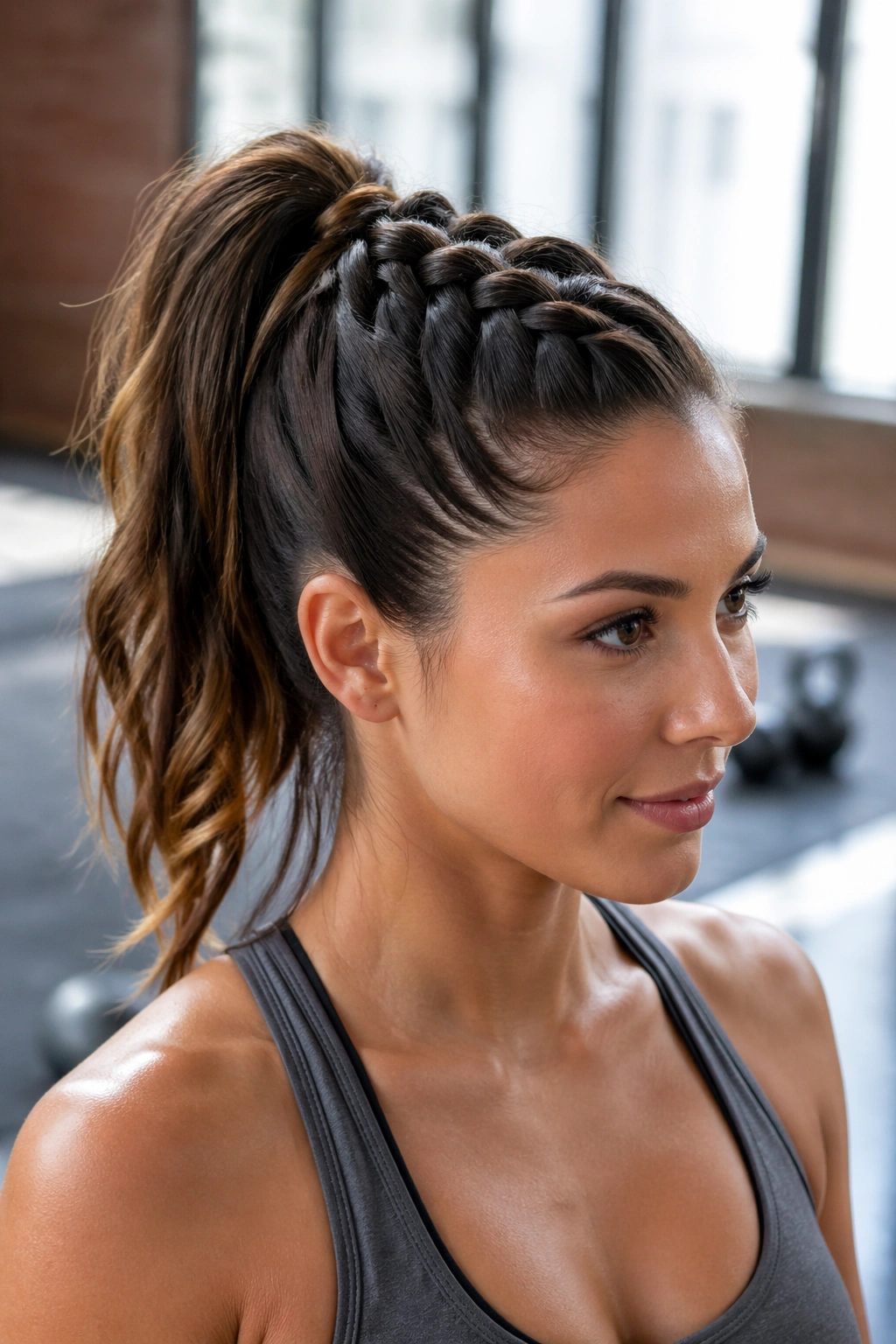
Need a style that stays visible and stays off your neck?
The Dutch braid high ponytail does both. Because the braid crosses under instead of over, it sits on top of the hair and creates a more raised, rope-like line. That little bit of height gives the style grip, and the high ponytail keeps the ends from dragging across your shoulders when you move.
I like this one for HIIT, stair climbing, and any workout where your head is bouncing around more than it should. The trick is not to start the braid too far back. Begin at the front crown, keep the sections even, and pull the braid tight enough that it feels firm but not painful. A high elastic at the end keeps the tail from sagging once sweat starts to break down the hold.
The style looks polished, but it is not fussy. That is the sweet spot.
3. Boxer Braid Ponytail
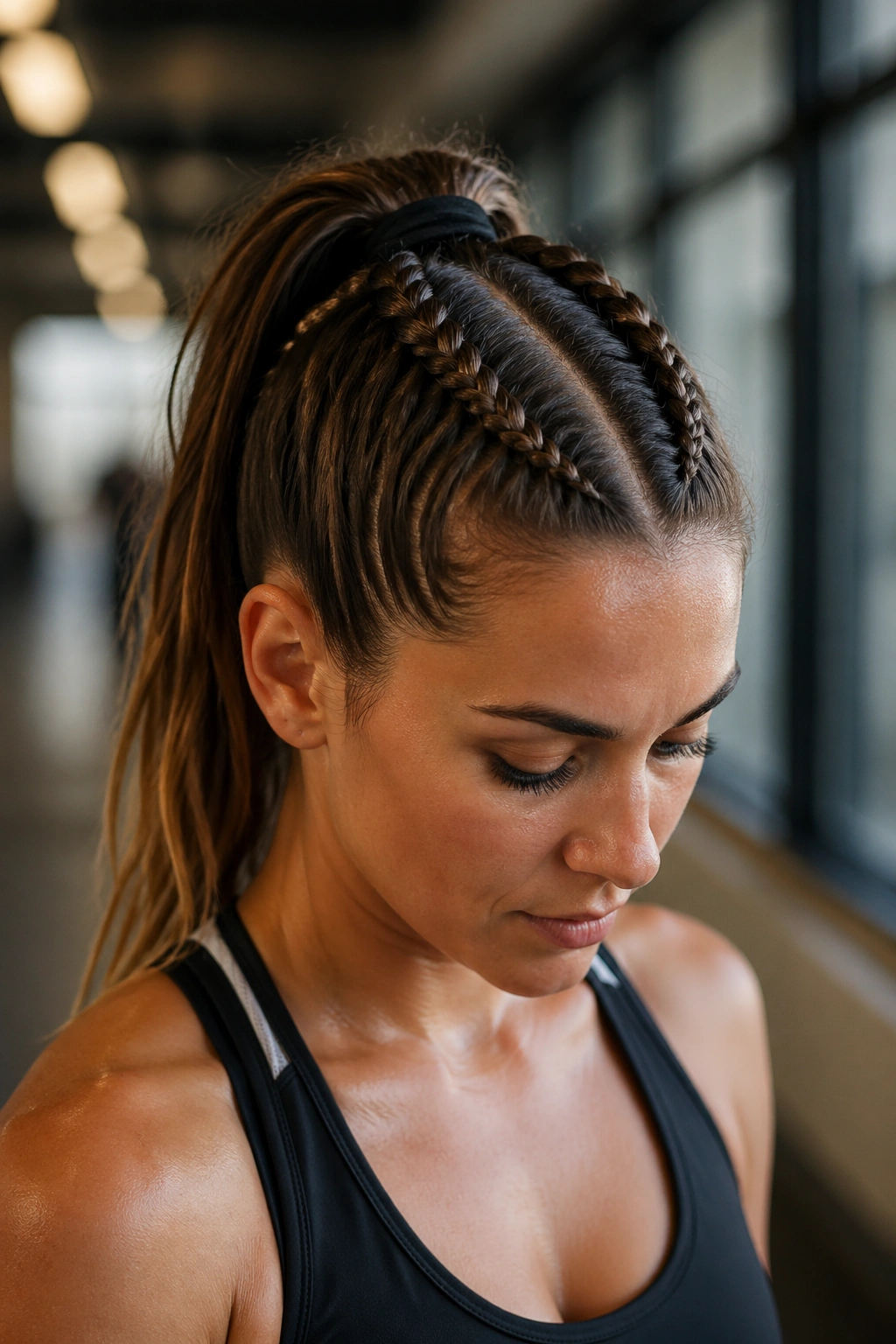
When your hair is thick and your workout is not gentle, boxer braids into a ponytail make a lot of sense.
Two Dutch braids start near the hairline, track back along the scalp, and meet at the nape or crown before being tied into one ponytail. The result is balanced. No heavy side gets to yank the whole style loose, and no single elastic has to do all the work.
How to wear it
- Part the hair straight down the middle
- Braid each side tightly from the forehead back
- Secure both braids with small elastics
- Join them into one ponytail with a stronger elastic
- Smooth the part with a little gel if you want the front cleaner
This style is especially good for running and jump rope because the braid lines keep the hair from swinging into your face. It also works well when you have lots of layers. The two braids catch the shorter pieces before they escape.
4. Fishtail Low Ponytail
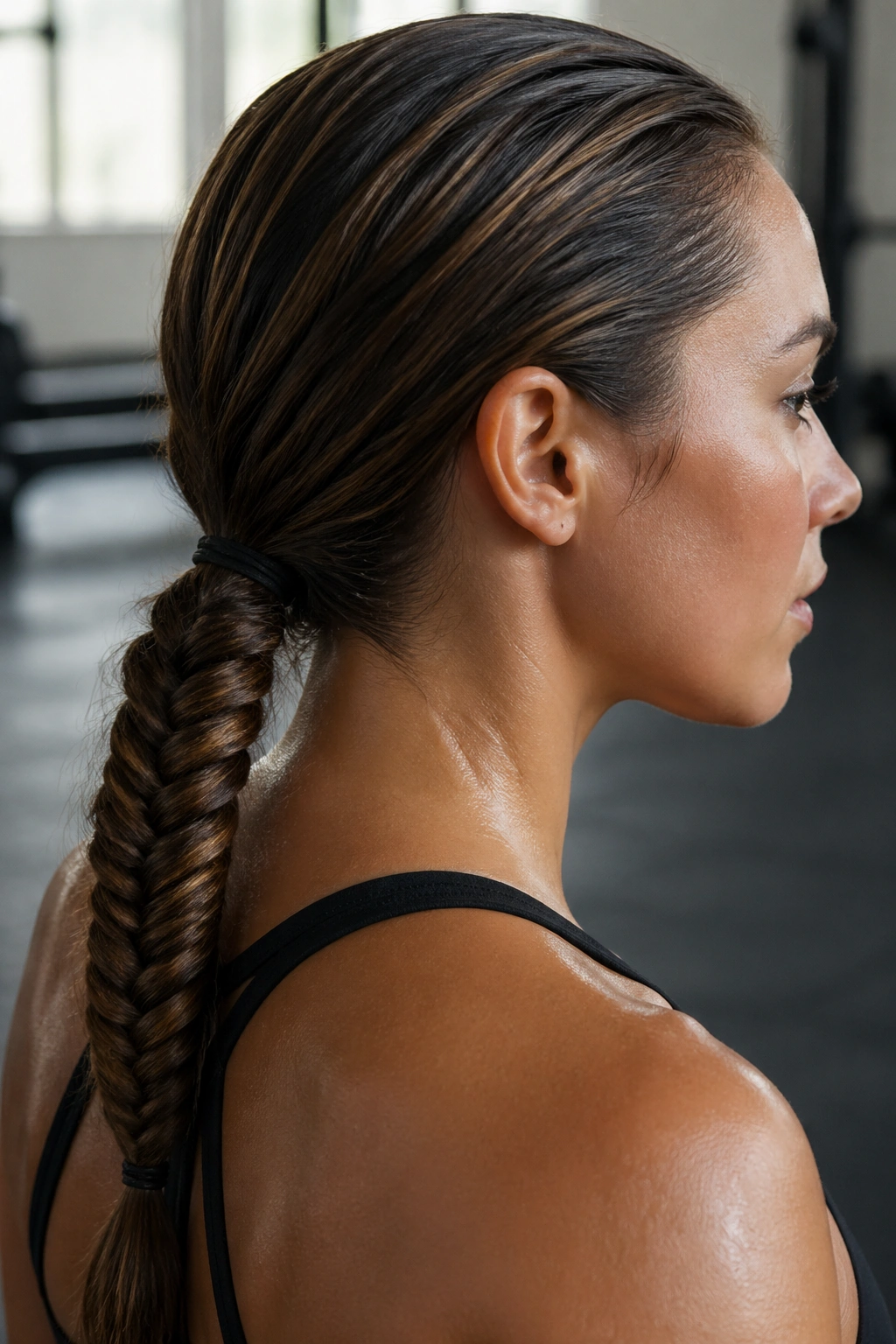
The fishtail braid gets treated like a dressy style, which is a little unfair.
If you keep it tight and low, it can hold through a workout better than people expect. The tiny overlapping sections create a dense weave, and that density helps the braid resist loosening when sweat softens the hair a bit. A low base matters here. High fishtails look pretty, but they whip around. Low ones stay calmer.
This version works well for lifting days, Pilates, and long walks on an incline. Start with a low ponytail, split the tail into two sections, then take tiny pieces from the outside and cross them to the other side. Keep the pieces small. Big pieces make the braid soft and floppy, which is not what you want here.
One warning: fishtails need tension. Not pain. Just tension. If the braid feels airy at the start, it will not improve later.
5. Rope Braid Ponytail
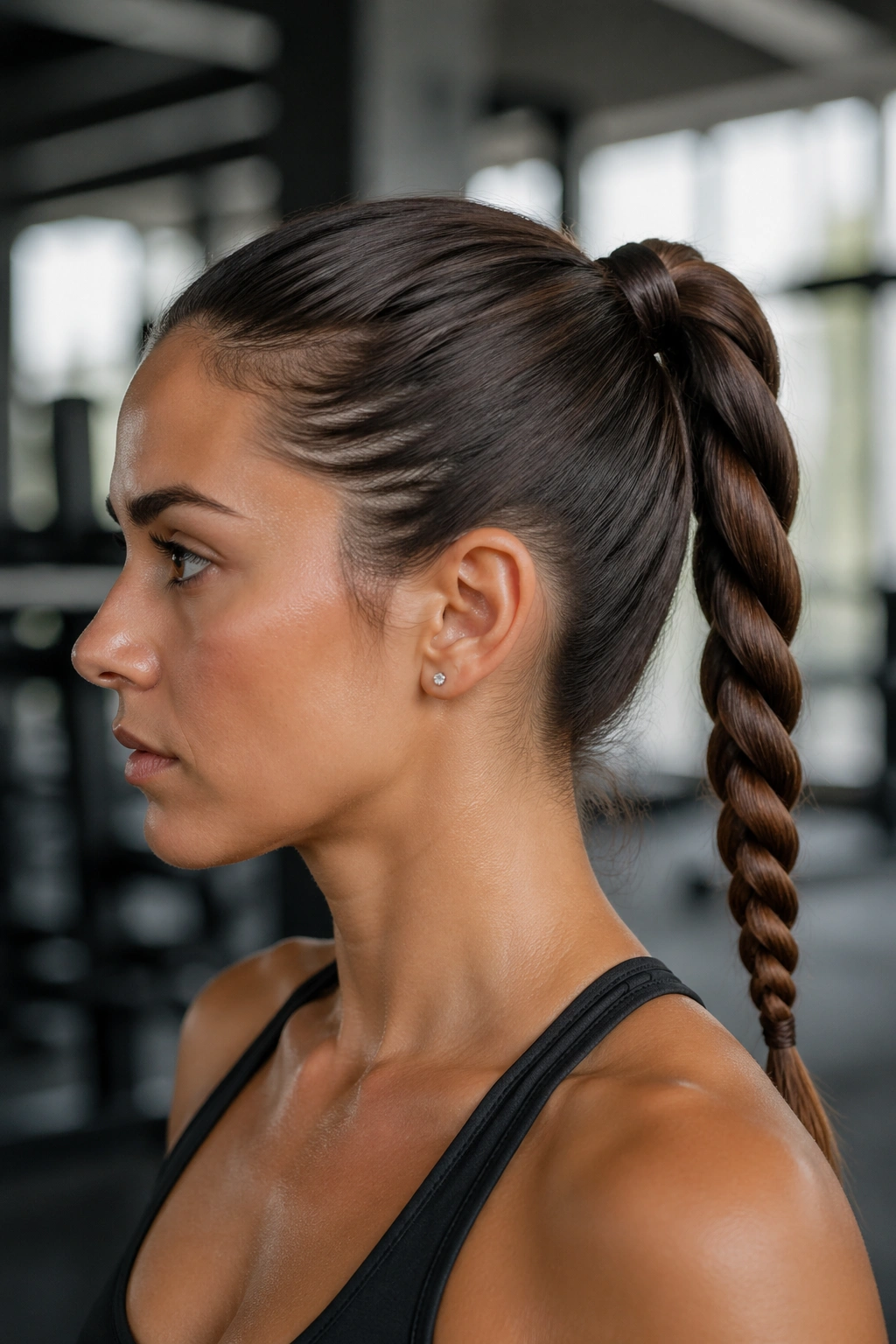
A rope braid feels like two cords twisted together until the ends lock.
That is why it works so well for workouts. It is fast, neat, and surprisingly secure when you twist each section in the same direction before wrapping them around each other in the opposite direction. That cross-locking is doing real work. It is not decorative fluff.
I like rope braid ponytails for warm-up days, short gym sessions, and any time you need your hair handled in under five minutes. The style also behaves well on second-day hair, which usually has a little more grip than freshly washed hair. If your hair is very soft and smooth, a light mist of texturizing spray at the lengths gives the twist something to grab.
Fast. Clean. Reliable.
That is the whole appeal.
6. Side Braid Ponytail
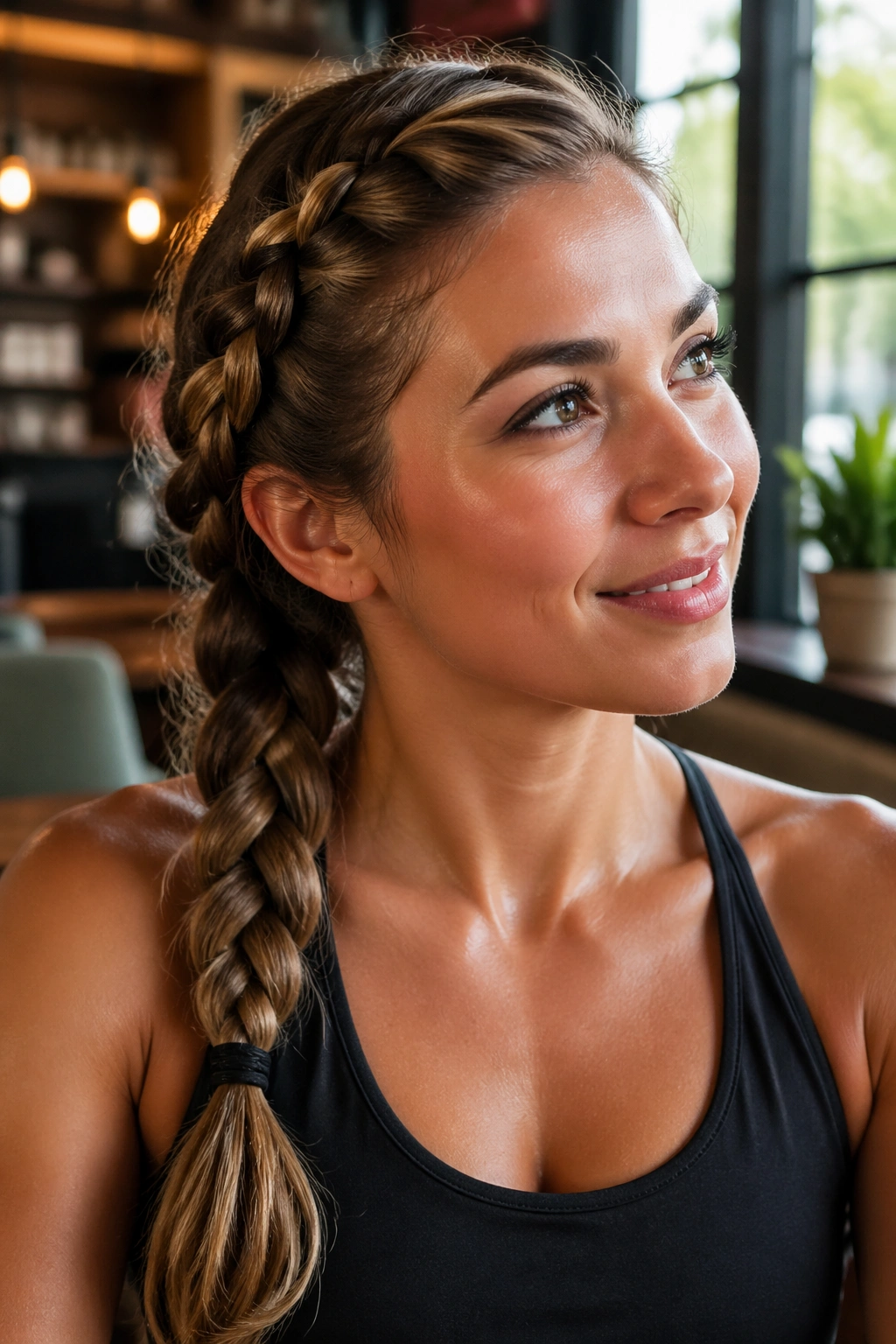
If your hair brushes your shoulders while you work out, a side braid ponytail can feel like a small mercy.
The diagonal line helps gather hair that would otherwise split apart at the back of the head. Instead of fighting the neck and both shoulders at once, the braid pulls the weight off to one side, then finishes in a side ponytail or a low back ponytail depending on how you like it to sit.
Why the diagonal line helps
A side braid changes where the tension lives. That sounds minor, but it matters if your hair is layered or if you hate the feeling of a center part creeping loose during a set of deadlifts. The braid can start near the temple and drop behind the ear, which keeps the front controlled without making the style stiff.
I’d pick this for low-impact cardio, strength work, and days when you want the style to feel a little less severe than a full high ponytail. It is not the most locked-down option on this list, but it is one of the easiest to wear for an hour or more.
7. Double Side Braids into a Single Ponytail
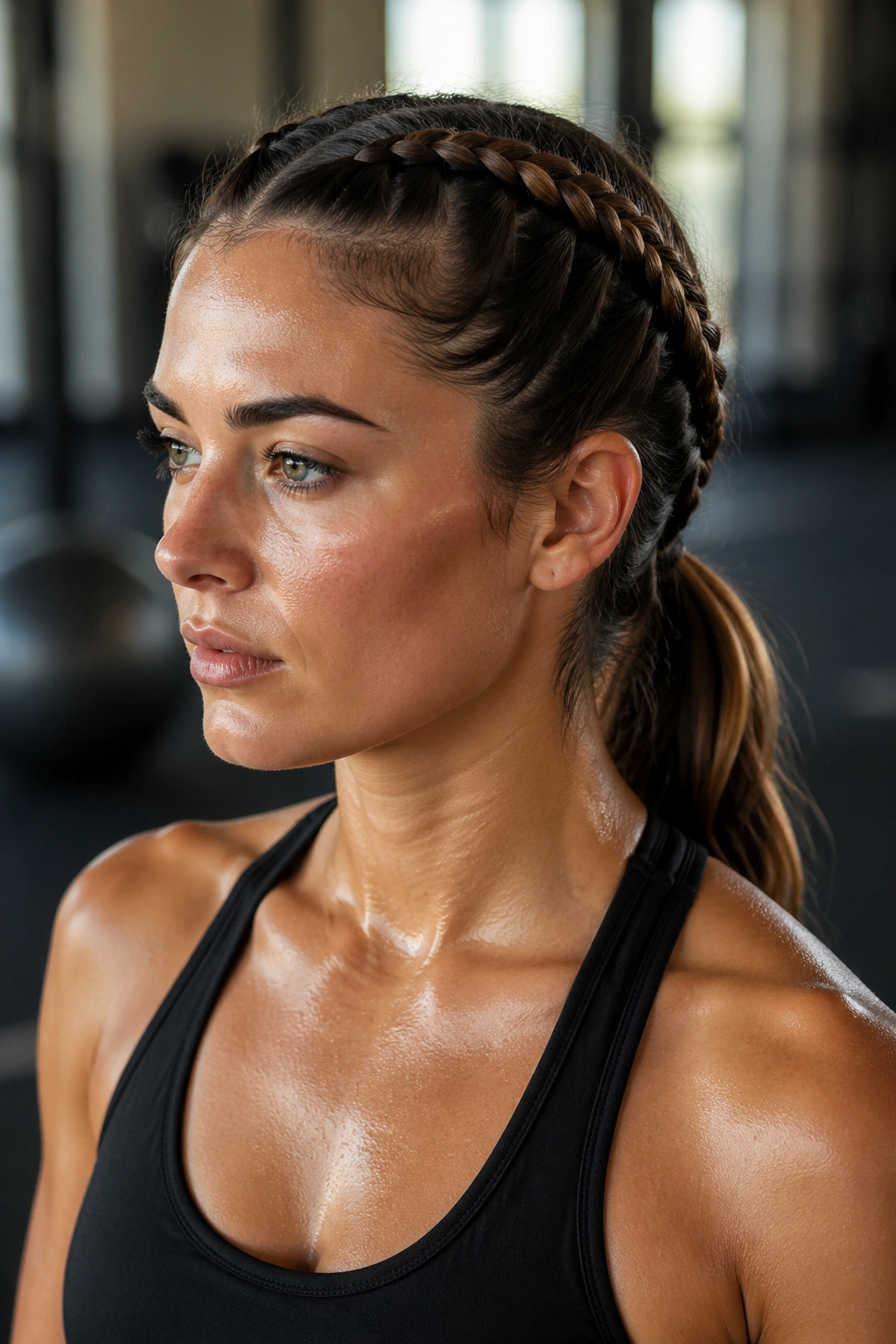
This is one of the easiest ways to make heavy hair feel lighter without losing hold.
Two side braids start near the temples or above the ears, then travel back and join into a single ponytail. The weight gets split early, so no one section is dragging all the hair backward by itself. That alone makes the style feel steadier during training.
Quick setup
- Part the hair into two clean front sections
- Braid each side tightly and keep the stitch pattern even
- Gather both braids at the back with a strong elastic
- Leave the ponytail low for lifting or mid-height for cardio
- Pin the join point if your hair is extra slick
It works especially well for thick hair and longer layers because the two braids keep the front from puffing out. If you have ever had a ponytail collapse into a single flat rope halfway through a workout, this is the fix.
8. Feed-In Braid Ponytail
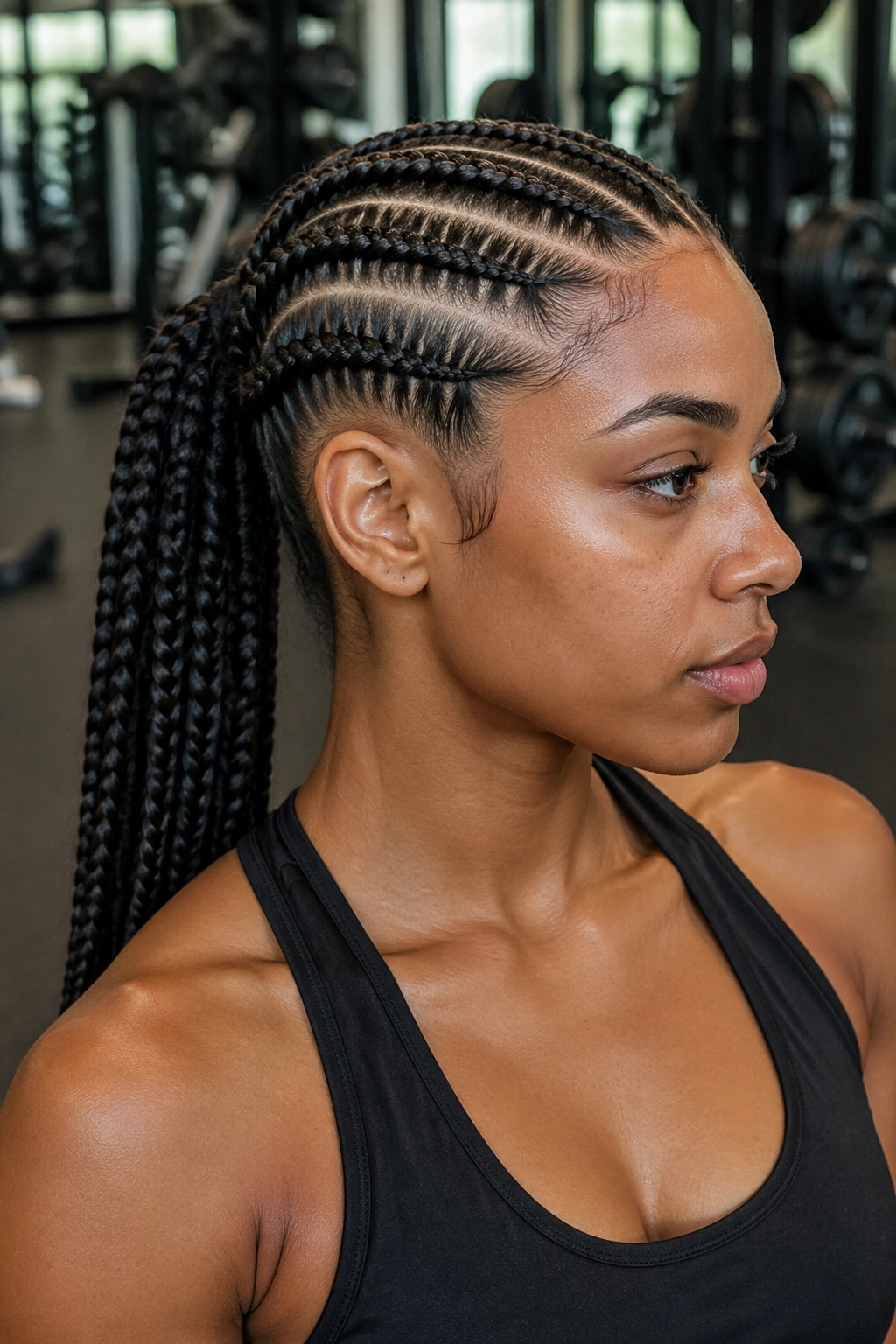
What if your hair hates bulky knots at the crown?
Feed-in braids solve that problem by adding small pieces of hair as you move back, which keeps the braid flat and close to the scalp. The finish is cleaner, and the base tends to sit more comfortably under sweatbands or caps. For textured hair, this style can be a lifesaver because it controls the root without building a huge lump where the ponytail starts.
The ponytail at the end can be high or low. High works better for cardio. Low works better when you are lying on a bench or doing mat work and do not want a knot digging into your head. Either way, the feeding motion gives the braid a smoother line and a more stable hold than a quick loose plait ever could.
It is one of the styles here that looks precise without being fragile.
9. Cornrow Ponytail
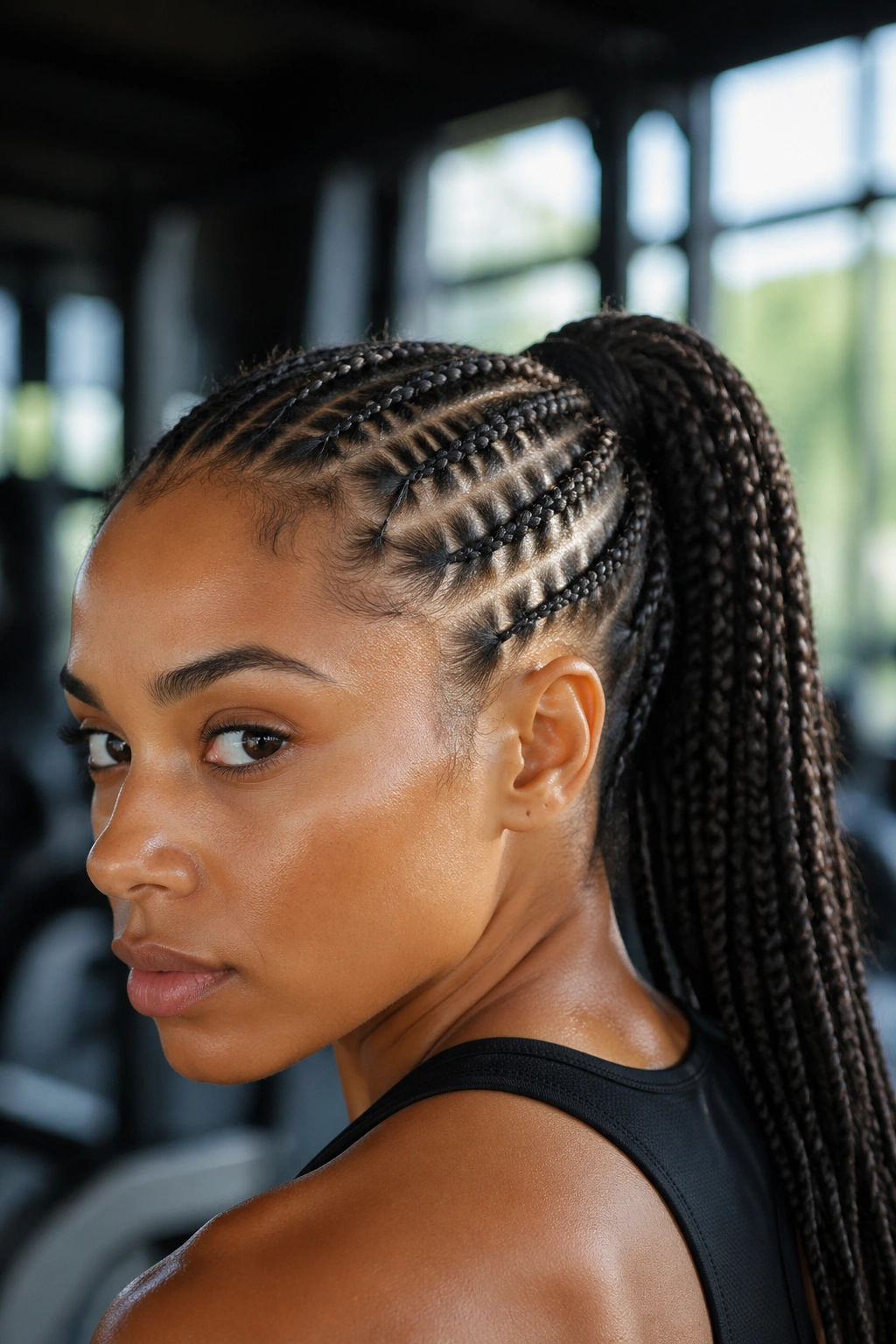
On a sweaty day, nothing behaves like cornrows.
Rows laid close to the scalp give you the strongest base on this list, and that base makes the ponytail feel almost anchored. A cornrow ponytail can be high, mid, or low, depending on how much bounce you want at the tail. The important part is the root work. If the rows are neat and the tension is even, the style stays put while you move.
Things that matter
- Use a rat-tail comb for clean parts
- Keep each row about 1 inch wide, or smaller for a tighter look
- Do not yank at the hairline; that tension gets miserable fast
- Finish with a firm elastic and, if needed, two crossed bobby pins at the base
This style is a strong choice for running, boxing, and high-sweat classes because the hair is already divided and controlled before the tail begins. It also makes the workout feel less fussy. Less hair to think about. That alone is worth a lot.
10. Pull-Through Braid Ponytail
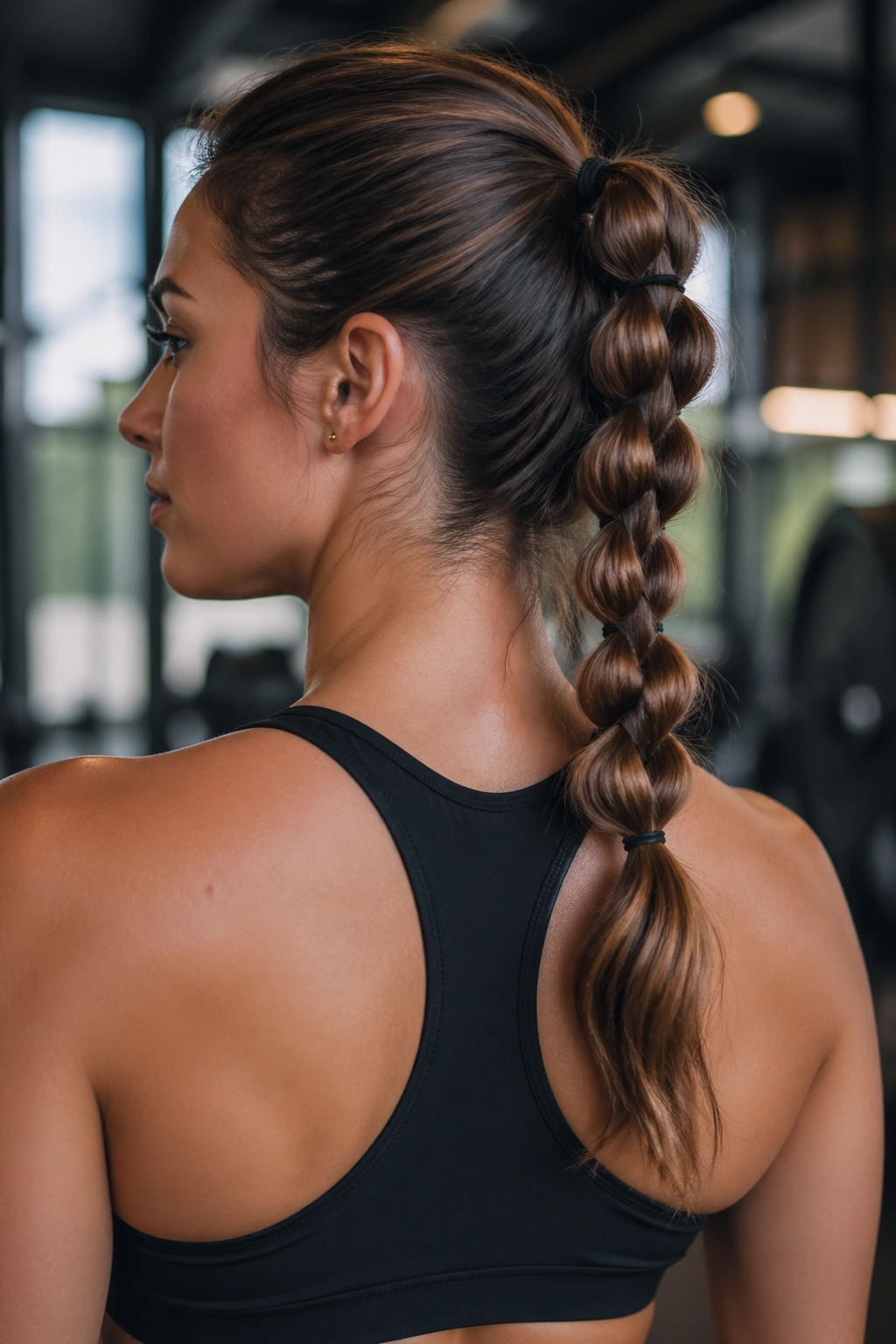
Technically, this is a braid impostor.
Practically, it works. A pull-through braid ponytail uses multiple elastics spaced down the length of the hair, with each section looped and pulled through the one above it. The result looks full, almost padded, and it holds well because the elastics do the gripping instead of relying on a single loose weave.
This style shines on long hair, especially when you want a fuller look that still survives a workout. Start with a high or mid ponytail, add another elastic two to three inches down, split the section above it, and pull the lower section through. Repeat until you reach the ends. It is especially handy if your hair is layered because the repeated elastics keep shorter pieces tucked in.
It is not the fastest style on the list. It does, however, hold up better than a lot of prettier braids that unravel once you start sweating.
11. Four-Strand Braid Ponytail
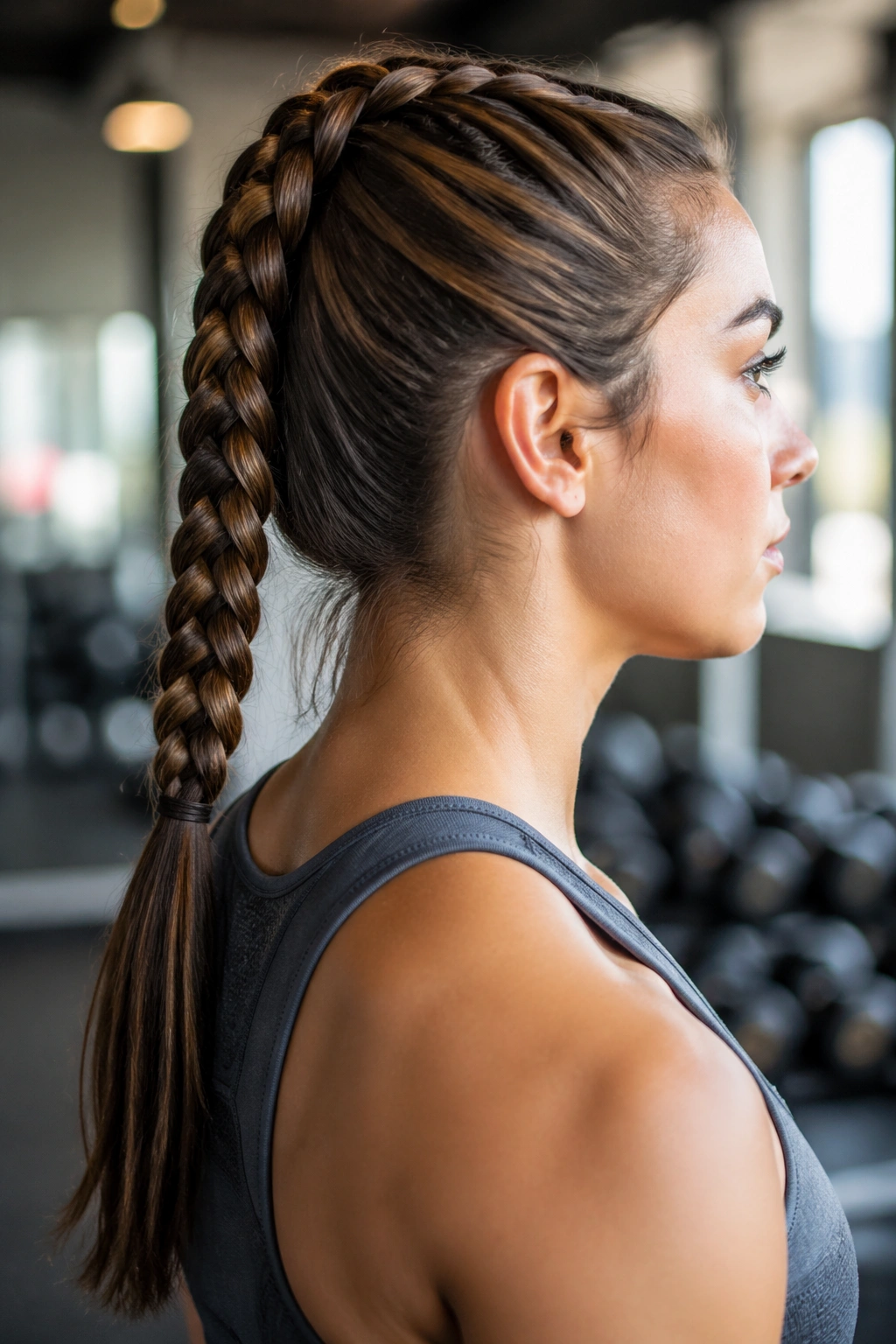
A four-strand braid looks denser the second you cross the first few pieces.
That density is the reason it holds so well. More strands mean more interlocking points, which makes the braid feel firmer and less likely to puff out during movement. If you have long hair that tends to split apart in a regular three-strand braid, this one often behaves better.
I would not call it beginner-friendlier than a standard braid. It takes a little practice, and the hand pattern can feel awkward at first. Still, once the motion clicks, the payoff is obvious. The braid sits flatter than a chunky plait and keeps the ponytail from feeling too loose at the end.
Slower, yes. Worth it? Usually.
Use this when you want the hold of a tight workout style but prefer the look of something a little more finished than a basic braid.
12. Five-Strand Braid Ponytail
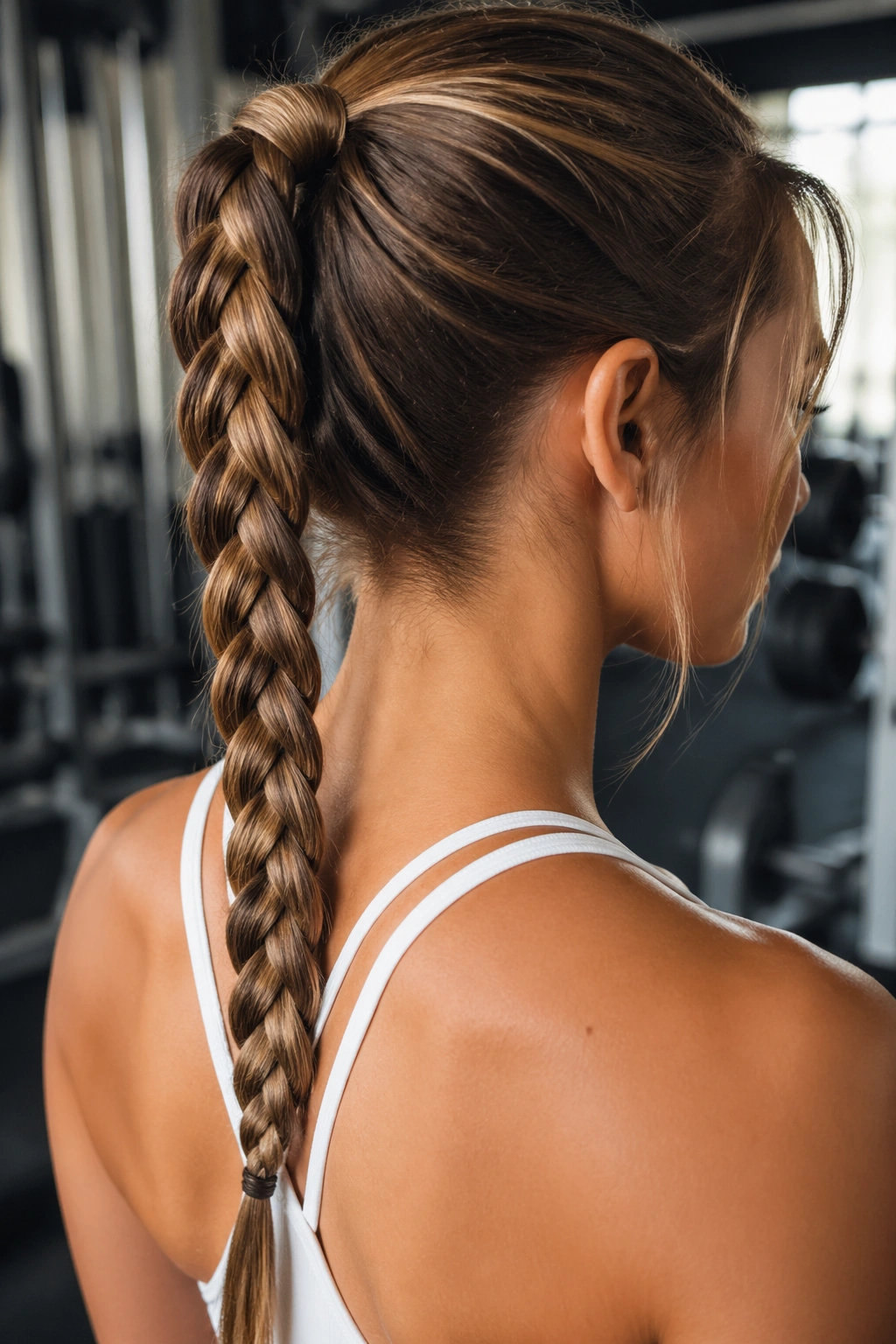
If you have medium-to-long hair and a little patience, a five-strand braid gives you one of the snugest tails on the list.
The extra strands create a tighter, more woven surface, and that helps the style stay compact when sweat starts softening the hair. It is a little more work than a four-strand braid, but the finished braid has a firmer body and a cleaner line. On a workout day, that means less fluffing out and less need to fix it mid-session.
How to keep it manageable
- Work on dry hair with some grip
- Use small sections so the braid does not get bulky
- Secure the base first, then braid the tail
- Keep your hands close to the hair rather than pulling the sections far apart
I would save this for days when you have five extra minutes and want a braid that stays neat all the way through cooldown. It is not the fastest option, but it does hold its shape well.
13. Halo Braid Ponytail
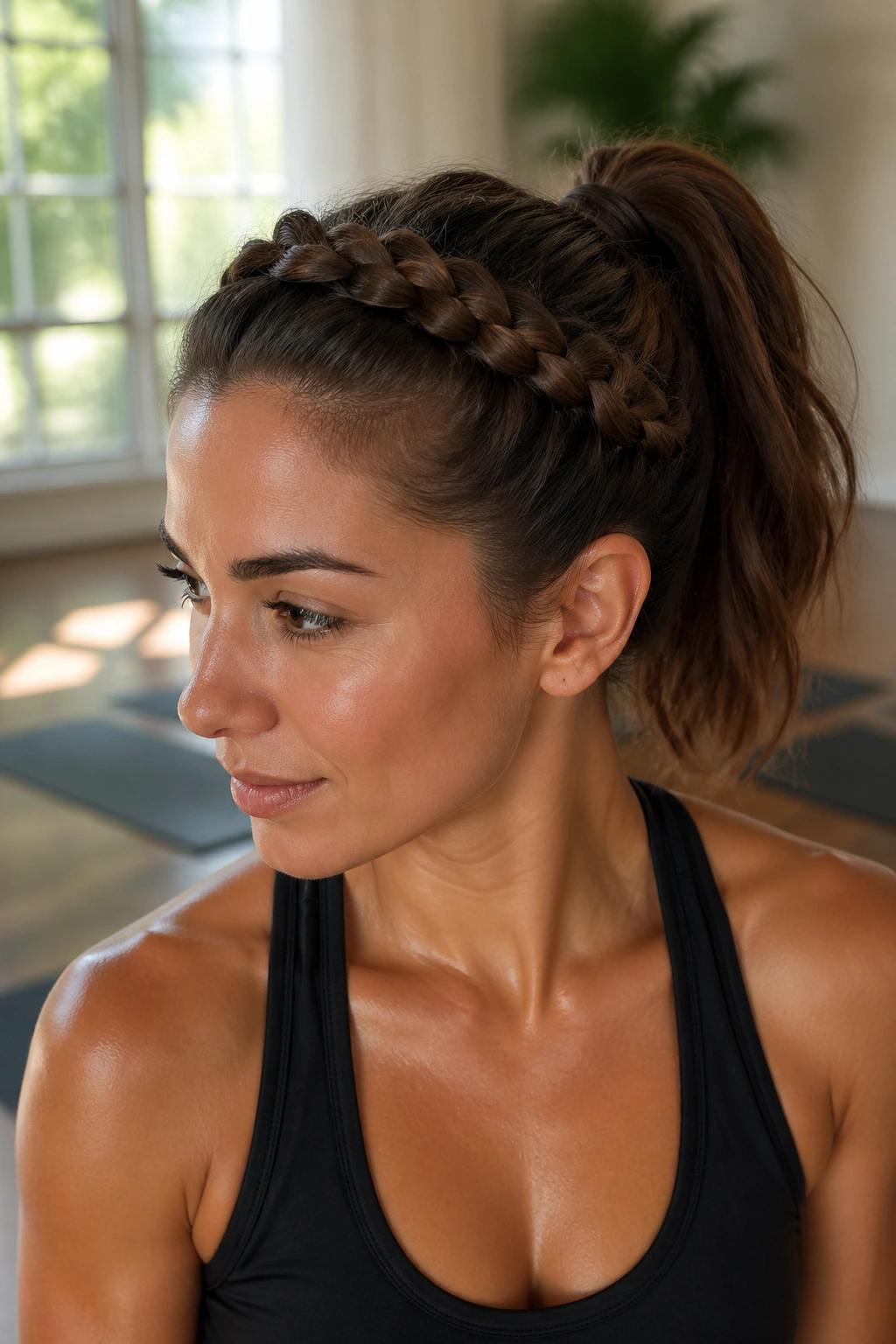
Hair that starts creeping toward your face during deadlifts will make you hate a workout fast.
A halo braid ponytail solves that by circling the hairline first, then pulling the rest into a ponytail at the back or crown. The front stays controlled, the sides stay smooth, and the finished ponytail has a tidy base that does not wobble much when you move.
This style is a strong pick for dance classes, barre, yoga, and strength sessions where you keep shifting from standing to floor work. The braid around the perimeter acts like a frame, which is useful if you have shorter pieces near the temples. Use a small amount of styling cream or gel before you braid, or those short pieces will poke out after ten minutes.
It looks more intricate than it is. That is one of the nicest things about it.
14. Reverse French Braid Ponytail
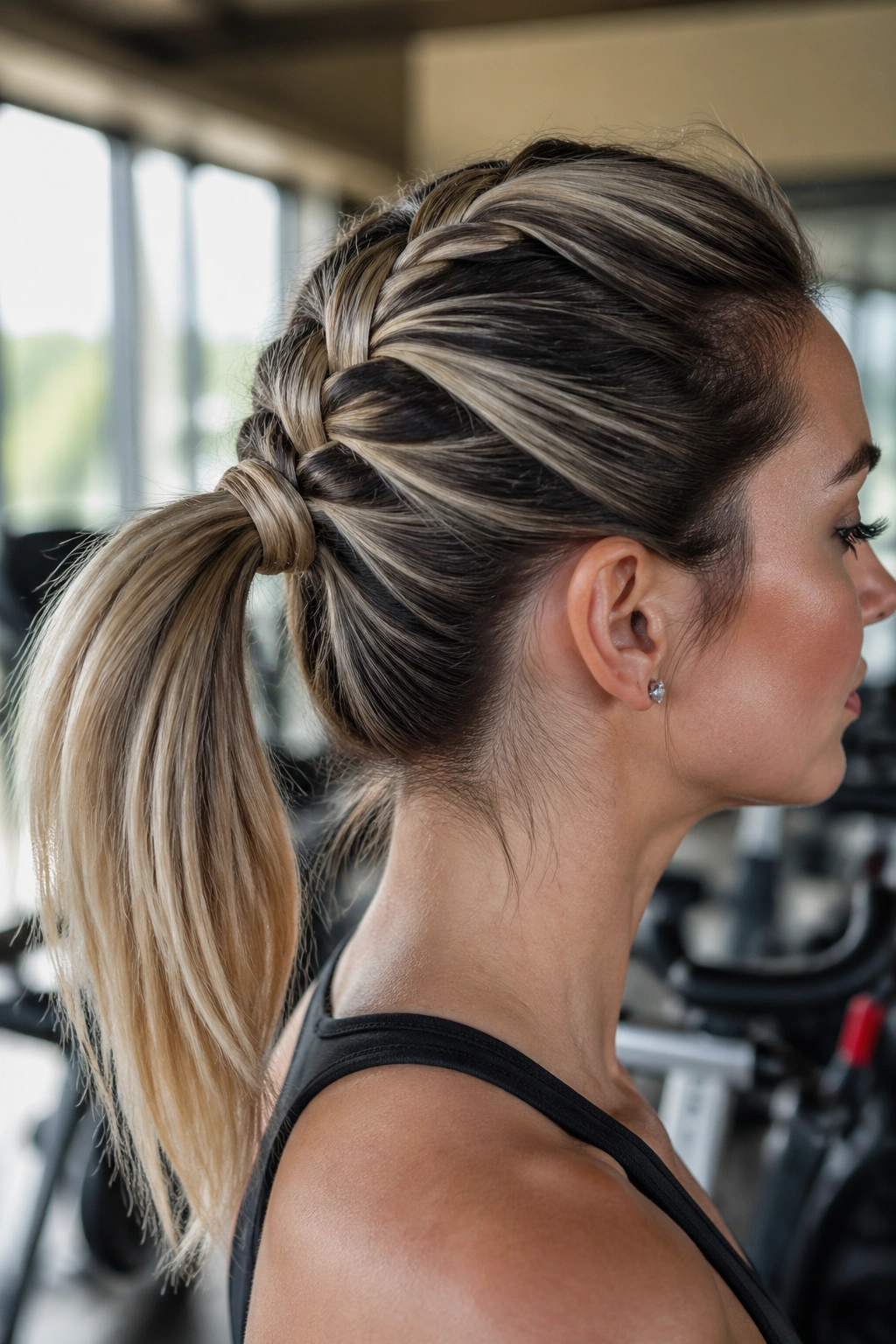
Want the grip of a French braid without the forward-heavy feel at the hairline?
Start at the nape and work upward. A reverse French braid ponytail does exactly that, feeding hair into the braid from the bottom toward the crown before finishing in a ponytail. It keeps the lower sections tight, which helps if your hair tends to slip out at the back first when you move.
This one is especially useful for cycling, incline work, and lifting days, because the base sits low and does not poke the back of your head when you lie down. I like it for hair that is fine at the roots but fuller at the ends. The lower braid holds the weak spot, then the tail can stay loose enough to feel comfortable.
It is a little unusual, sure. It also works.
15. Mohawk Braid Ponytail
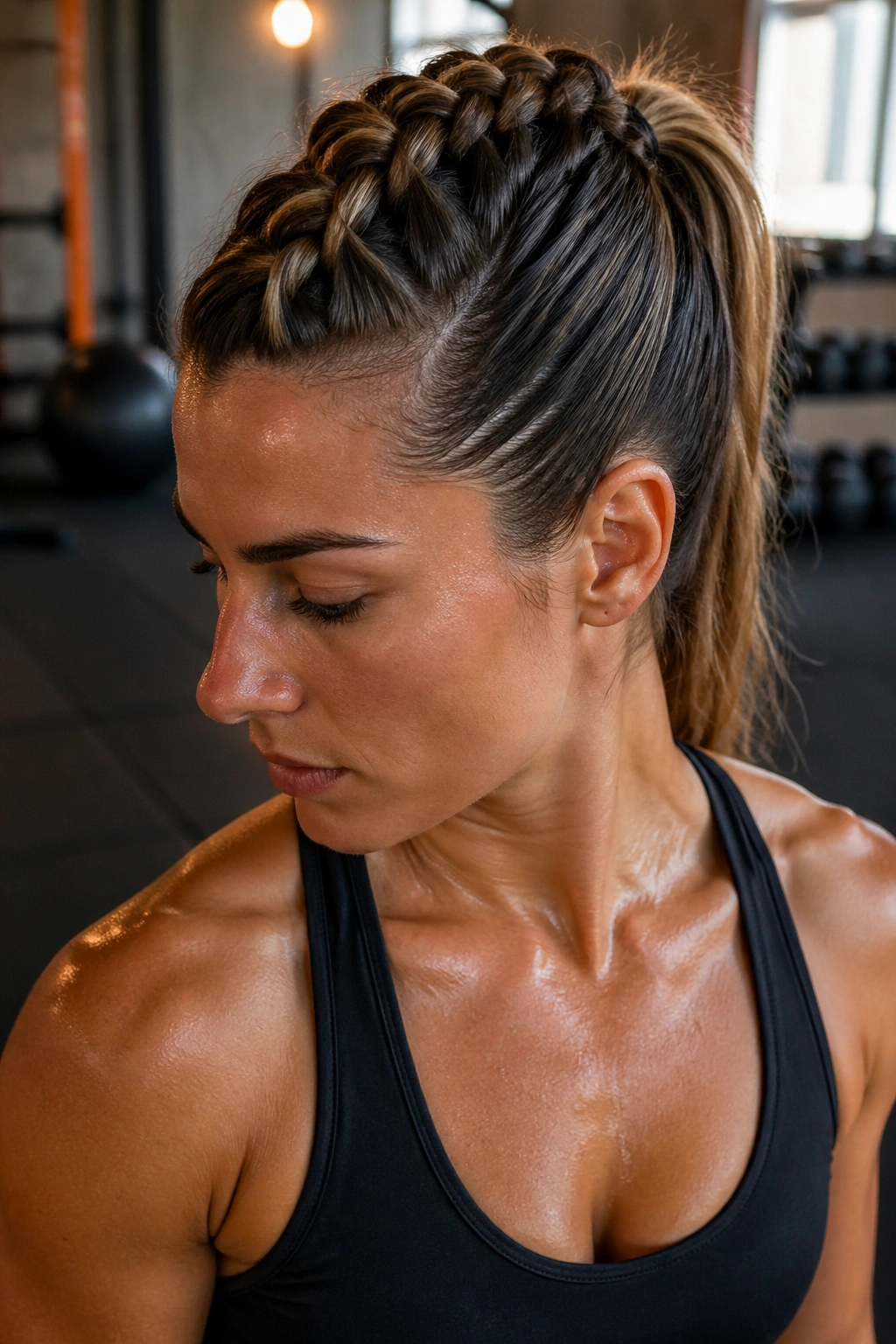
Picture a center braid with sleek sides and a high tail at the crown.
That is the shape here, and it is one of the better-looking styles for a hard workout because the hair at the sides gets controlled early. The middle braid acts like a spine, and the pulled-back sides keep everything tight against the head. The whole style feels stable, which matters when your class includes jumps or fast direction changes.
Best way to wear it
- Smooth the sides first with a light gel or water
- Braid the center section from forehead to crown
- Gather the rest into a high ponytail
- Wrap a small piece of hair around the elastic if you want a neater finish
This style is a favorite for HIIT because it keeps the front off the face and the tail off the neck. It is a bit bolder than a plain ponytail, which is part of the fun.
16. Braided Base High Ponytail
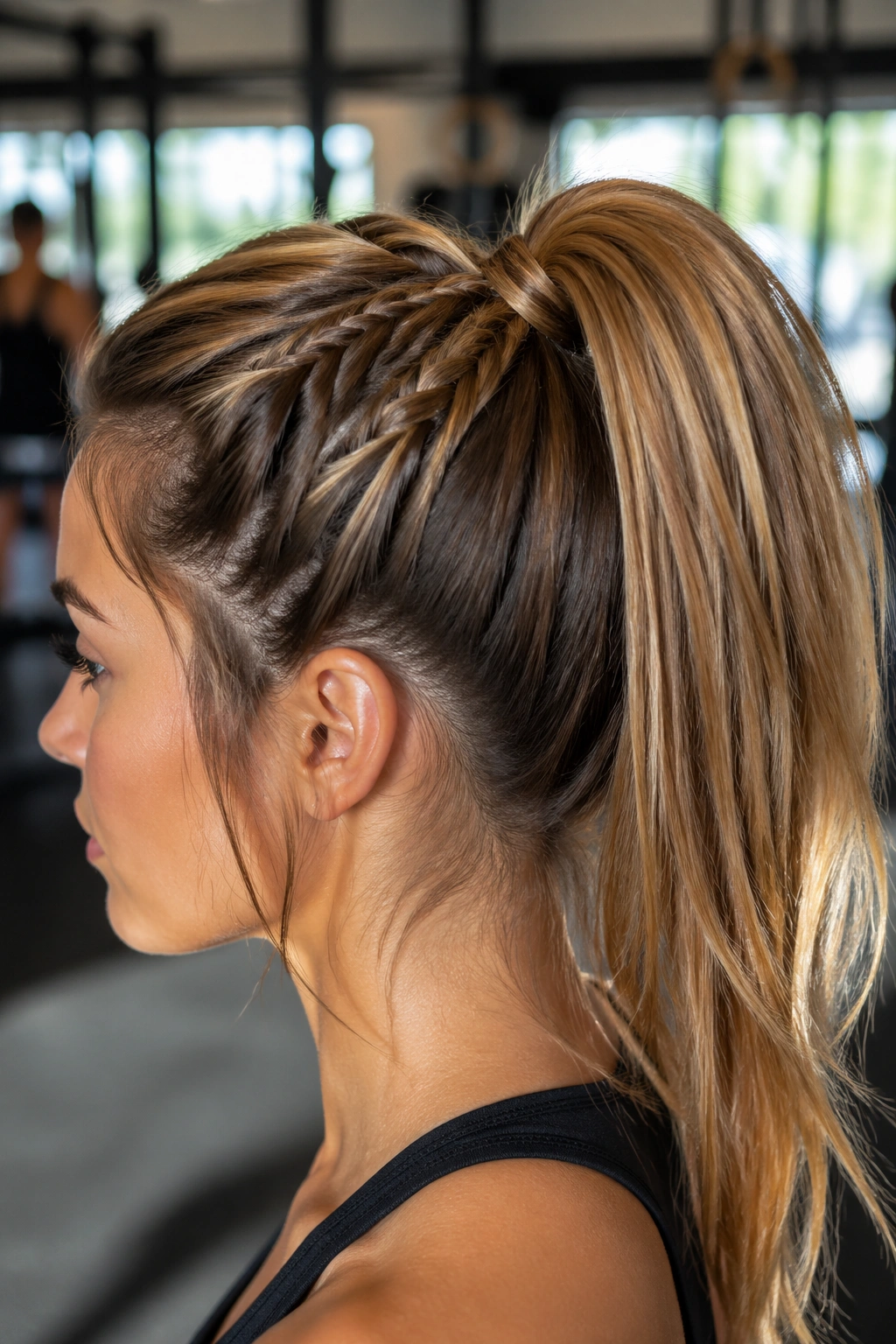
You do not need to braid the whole tail to get a workout-ready look.
Sometimes the smartest move is to braid the first few inches at the base, then let the rest fall into a high ponytail. That little braided anchor grips the roots and gives the elastic something firmer to sit on. It is also a good fix for layers that slip out of a plain pony almost immediately.
This is one of my favorite options for fine hair because it creates the feeling of structure without making the whole style heavy. Tie the ponytail high, braid two or three inches at the base, and secure the braid with a second elastic before the loose tail begins. If the ends are extra slippery, a tiny bit of mousse through the mid-lengths helps.
Simple. Fast. Less likely to collapse when you start sweating.
17. Micro-Braid Gathered Ponytail
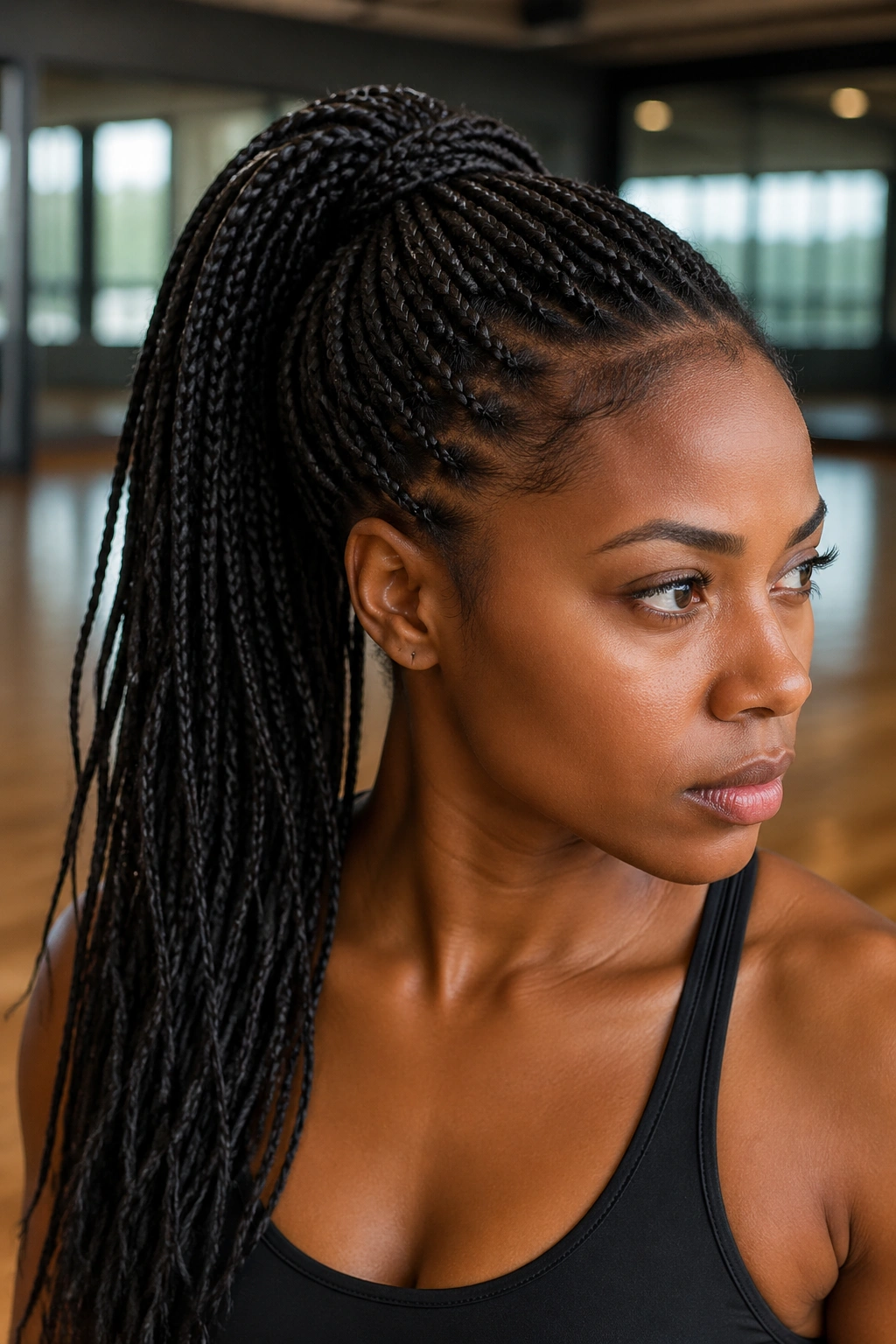
Tiny braids pulled into one pony feel almost armored.
That sounds dramatic, but it is true. When hair is divided into several slim braids first, each braid has less chance to unravel under motion, and the gathered ponytail at the end stays surprisingly stable. This style is especially useful for slippery hair, second-day hair, or hair that refuses to hold a big, smooth braid.
The look is not as sleek as a single braid, and that is part of its charm. It has texture. It also has grip. If you are doing a long workout and do not want to keep touching your hair, micro-braids are one of the better choices because they break the hair into smaller, easier-to-control pieces.
You do need a few extra elastics. Worth it.
18. Cross-Laced Braids
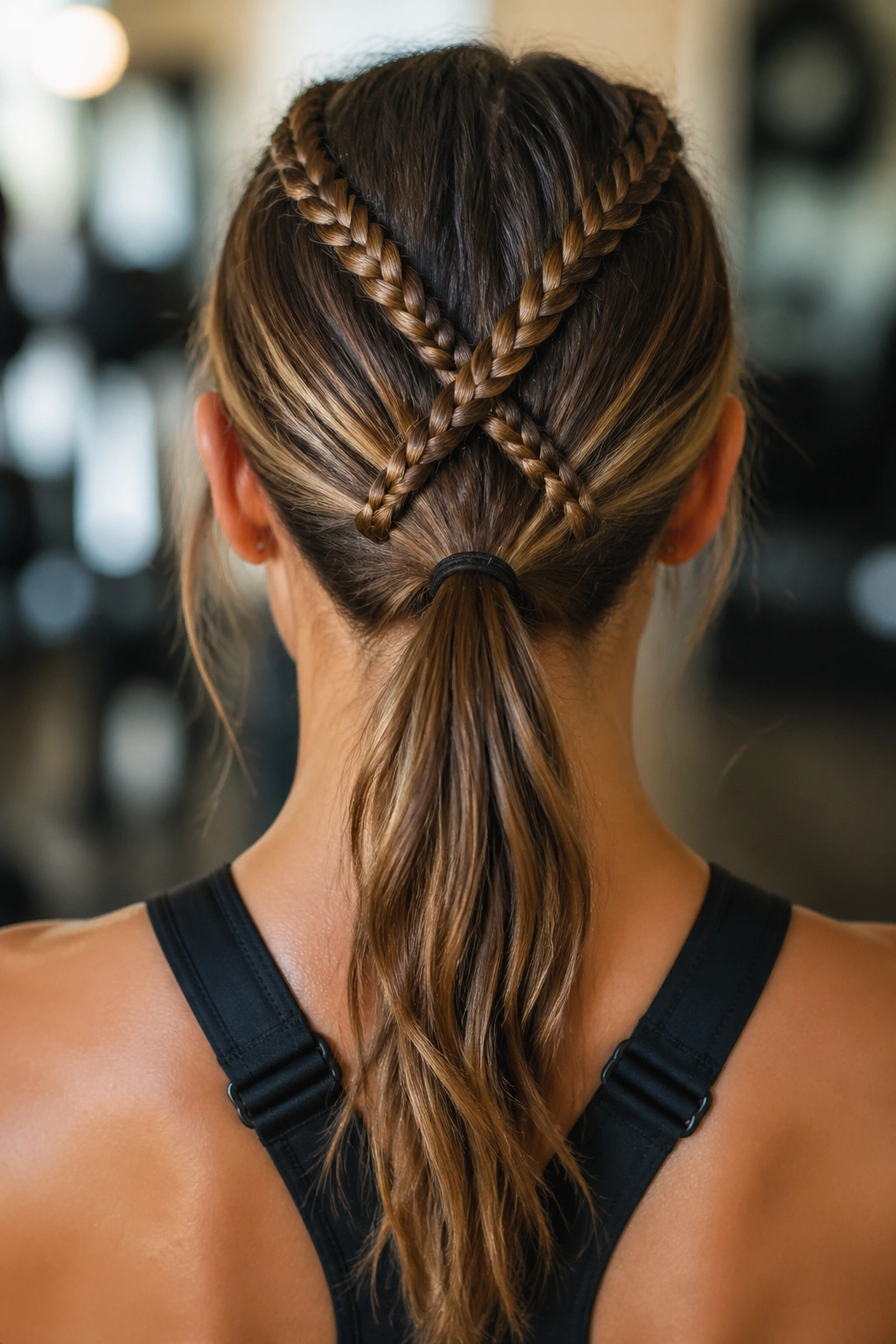
A couple of thin braids crossing at the back can hold more than you think.
The cross-laced look works by weaving two or more small braids together before they join the ponytail, which spreads movement across more than one anchor point. Instead of one fat section pulling against a single tie, the style shares the load. That is the real trick.
I like this for medium-thick hair because it gives you shape without making the crown too bulky. It also looks deliberate, which matters when you want the style to go from gym bag to dinner without feeling too sporty. Keep the braids narrow, cross them low or mid-back, then secure everything with one firm elastic.
This is one of those styles that looks more complicated than it feels once you’ve done it once or twice.
19. Zigzag Part Braid Ponytail
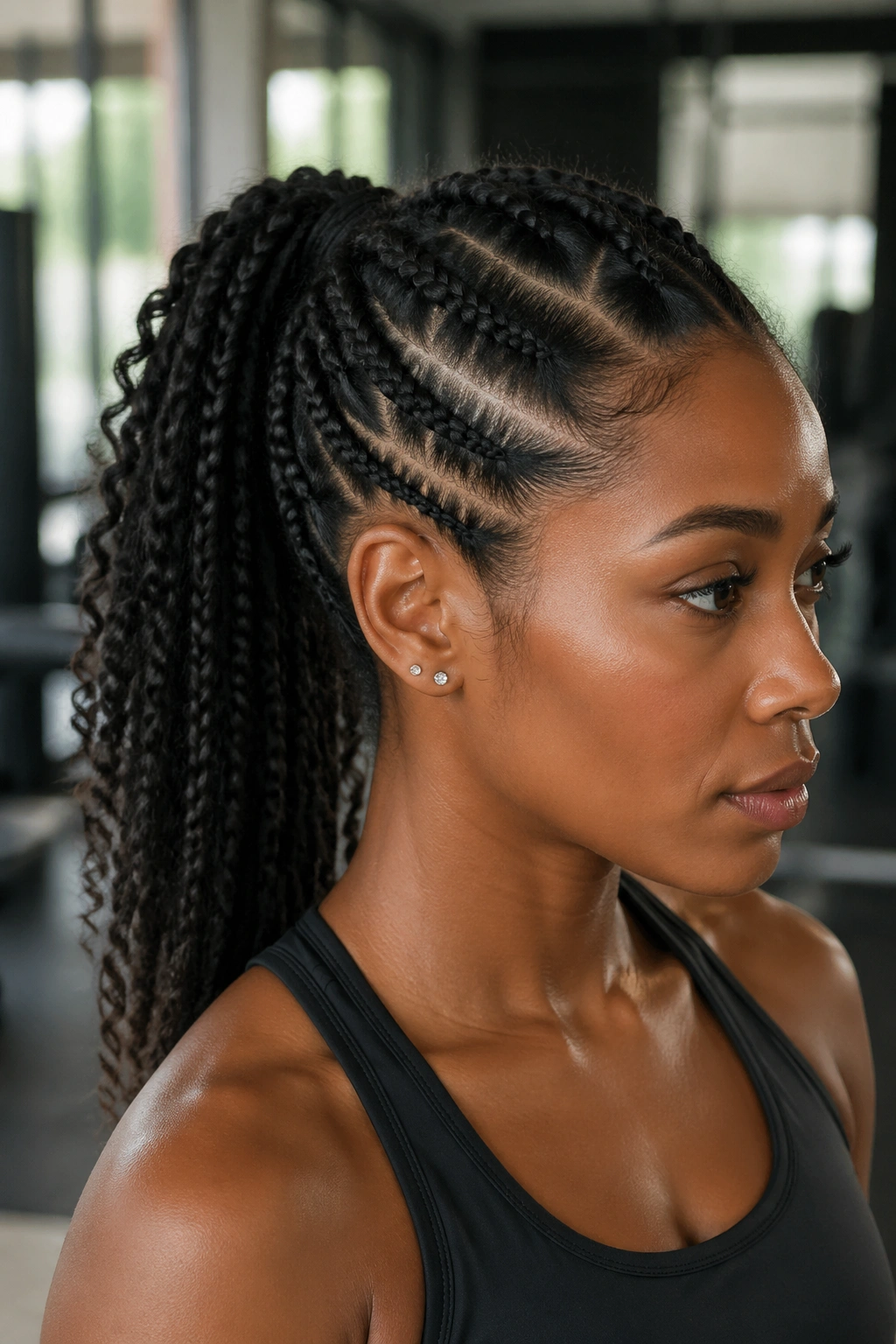
The part line matters more than most people admit.
A zigzag part can keep a braid ponytail from feeling too flat or too tight along one straight line. It also helps distribute tension across the scalp, which is useful if your hairline gets sore from the same center part every day. For workouts, that can make a bigger difference than the style itself.
How to keep the part neat
- Use a rat-tail comb and keep the zigzags shallow
- Clip each section while you work so the part does not drift
- Pair the part with a tight French or Dutch braid
- Finish with a mid-height ponytail if you want less bounce
This style is especially good for thick, curly, or coily hair because the zigzag softens the visual line and keeps the braid base from looking too severe. It is practical first, pretty second. That order is the right one for the gym.
20. Wrapped Ends Ponytail
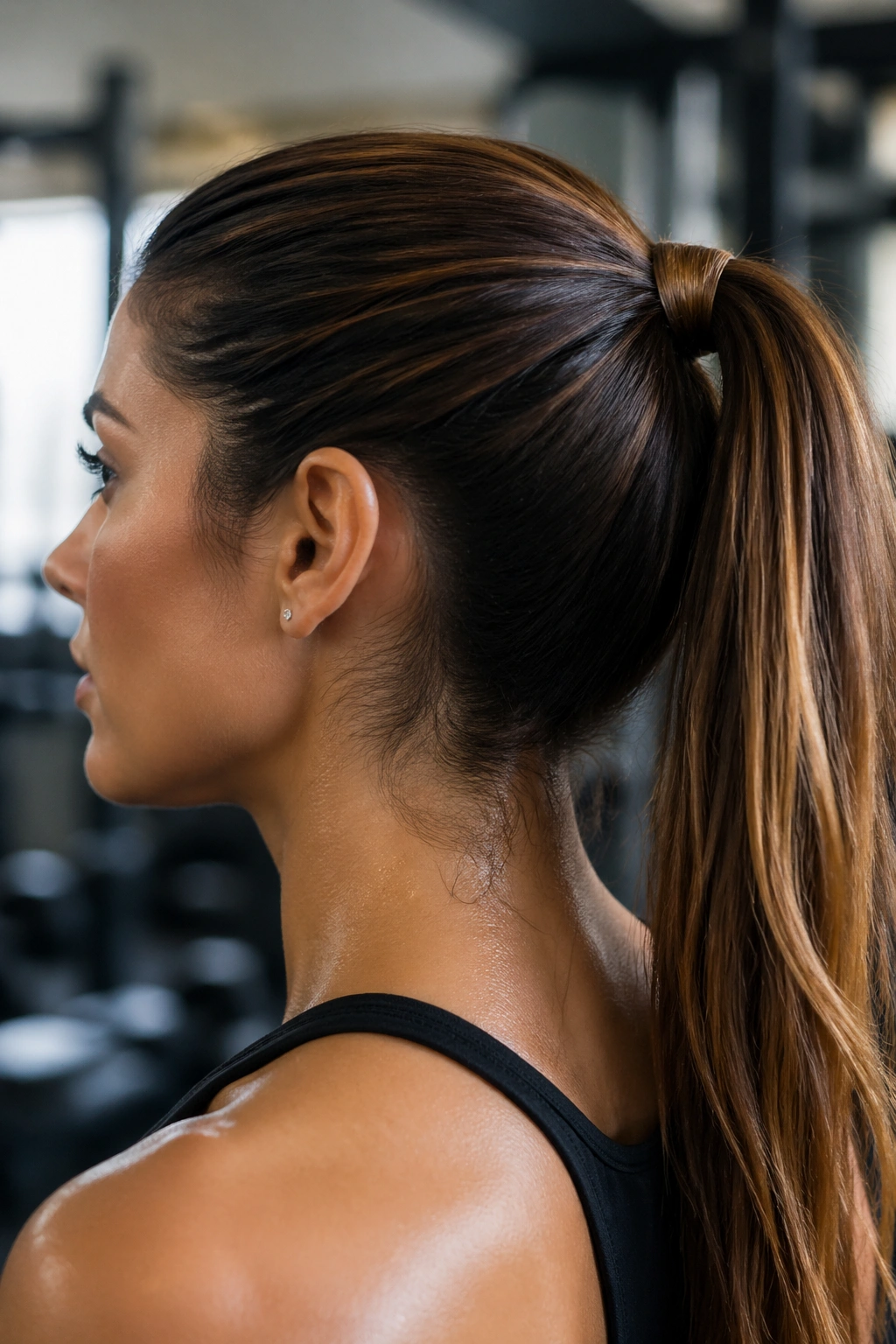
Want the style to look finished even after the workout is over?
A wrapped braid ponytail uses a small section of hair to hide the elastic at the base, and sometimes another wrap near the end to keep the braid tail from unraveling. The wrap is not just about looks. It also helps lock the tie down so it does not slide when sweat gets involved.
This one works well for office-to-gym days because it looks tidy without being stiff. Braid the hair into a ponytail, take a slim piece from underneath, wrap it around the elastic two or three times, and pin the end underneath with a bobby pin. If your hair is long enough, you can do the same at the tail end to keep the finish clean.
Small detail. Big payoff.
21. Low Wrapped Braid Ponytail
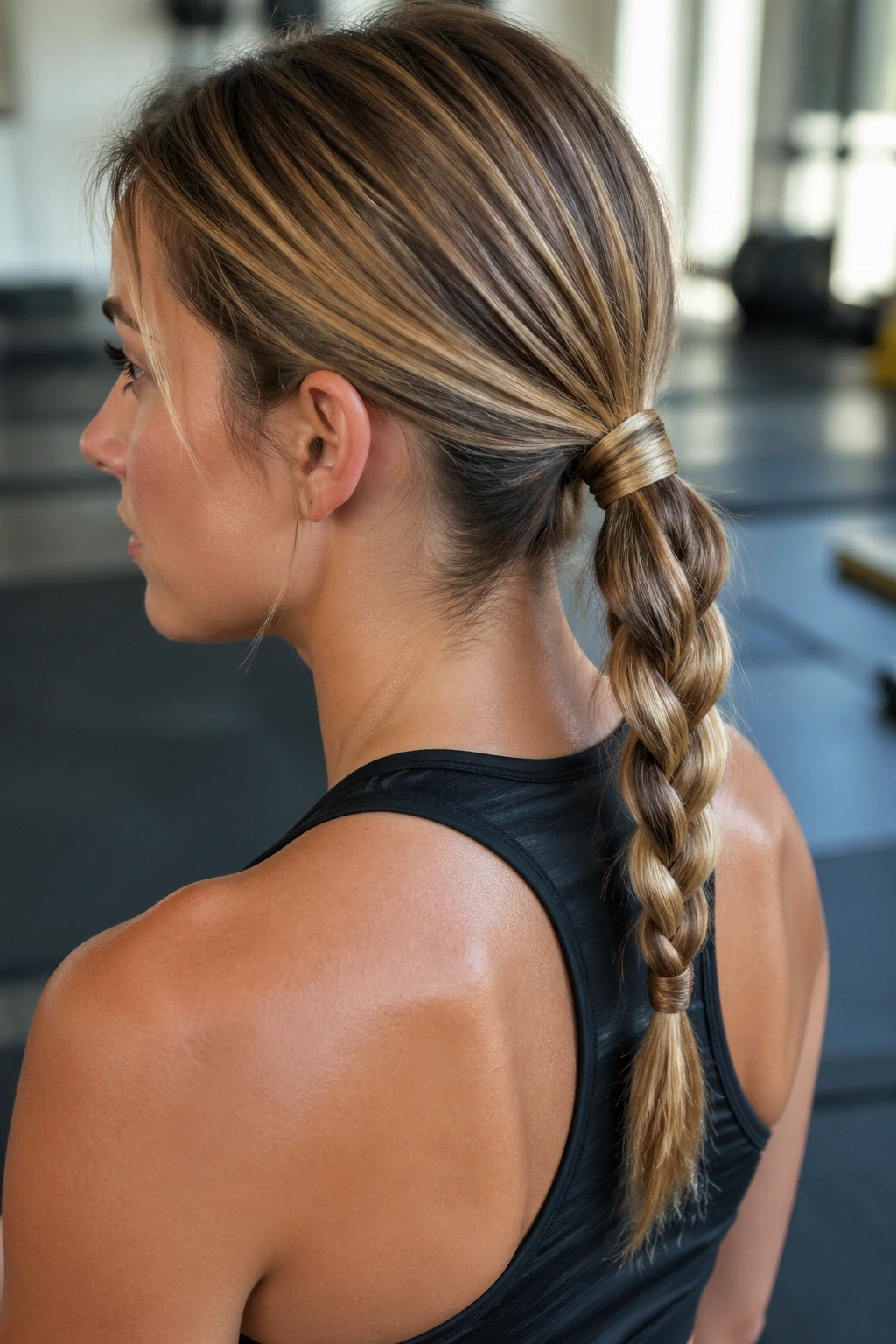
If I had to pick one braid ponytail for a long training day, I’d choose the low wrapped version.
It sits low enough to stay out of the way during floor work, but the braid and wrap keep the style from falling apart when you start sweating. That lower placement also means less bouncing during strength training and less tugging at the scalp when your head is down for stretches or rows.
This is the style I’d call the least dramatic and the most useful. Braid the hair tightly from the crown or just below it, gather the length at the nape, and wrap a slim section around the base so the elastic stays hidden. Finish with one bobby pin tucked upward, not sideways. Side pins slip more easily.
When the workout ends and your arms are tired, the best hair is the hair you do not have to think about. This is that style.