


A veil can be fussy, and halo braids are one of the few wedding styles that make it behave. The braid gives the comb something solid to grab, keeps the fabric from sliding into the wrong place, and softens the line between hair and dress so the whole look feels finished instead of pinned on as an afterthought.
That sounds small. It isn’t.
A veil that sits an inch too high can flatten the braid; one that sits too low can hide the shape you spent an hour building. The sweet spot changes with braid pattern, veil weight, hair density, and whether you want the veil to melt into the hairstyle or sit on top like a separate piece. A fine tulle blusher asks for something different than a heavy cathedral veil. So does a polished satin gown versus a soft lace dress. Small differences. Big impact.
The good news is that halo braids give you options. Some are tight and polished, some are loose and airy, some give the veil a tidy anchor at the nape, and some are built for drama from the first step down the aisle. The right one usually makes itself obvious once you stop asking which braid is prettiest and start asking which braid and veil can share the same space without fighting.
1. Classic Crown Halo Braid
The classic crown halo braid is the one most brides picture first, and it earns that spot. It wraps neatly around the head like a real braid crown, which gives a veil comb a stable place to sit without floating or slipping. It also works with almost any dress neckline because it feels tidy, balanced, and familiar.
Where the veil usually sits
The easiest placement is just below the braid at the back of the head, where the comb can tuck into the braid’s base and stay hidden. If you want a blusher, let it rest a touch higher so the front layer falls cleanly over the face without crushing the braid line.
- Best with fingertip or chapel-length veils
- Works well on medium to thick hair
- Keep the braid about 1 to 1½ inches wide
- Use two crossed pins near the comb for extra grip
My favorite detail: if the braid is loose enough to wobble, the veil will wobble too. Tighten the base first, soften the braid second.
A classic crown braid is also the safest pick when you do not want surprises. It photographs cleanly from the side, from the back, and in those awkward in-between angles where weddings seem to live all day.
2. Loose Dutch Halo Braid
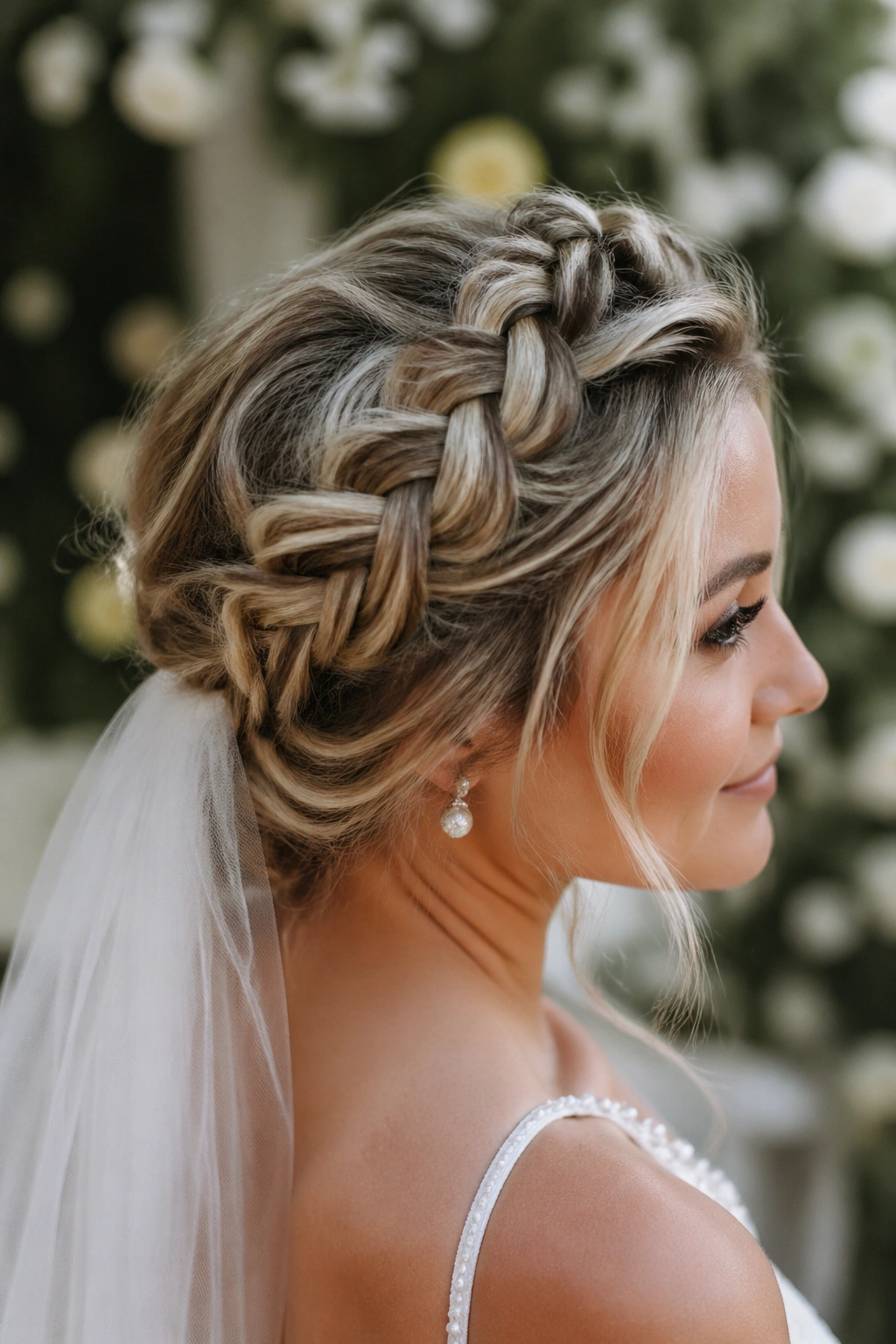
A Dutch halo braid gives you more height than a standard crown braid, and that extra lift matters under a veil. Because the braid sits on top of the hair instead of sinking into it, the texture shows up fast, even if your hair is thick or a little layered. It has presence.
That raised shape makes the veil easier to seat, too. The comb can nestle into the lower edge of the braid while the braid itself keeps the veil from pressing flat against the scalp. The result feels fuller, not heavier, which is a nice trick when you want the hairstyle to read from the back of the room.
This is the braid I’d pick if the dress is simple and the hair needs to carry more of the visual load. A chapel veil pairs especially well here because it can trail without stealing the braid’s shape. If your hair is slippery, mist the roots with texturizing spray before braiding. Not a lot. Just enough to give your fingers some drag.
It’s tidy, but not stiff. That’s the whole point.
3. Fishtail Halo Braid
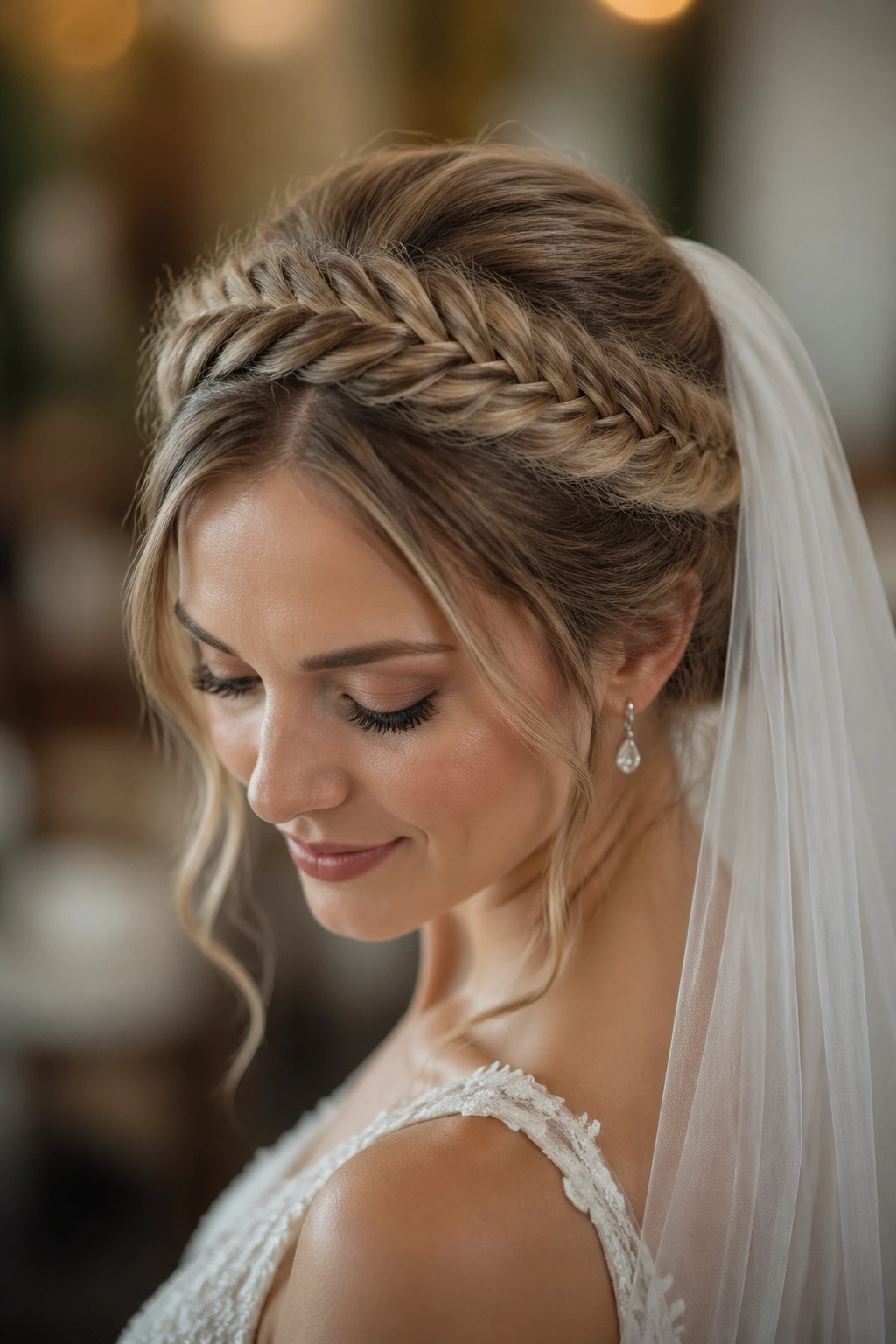
Why does a fishtail halo braid feel so bridal so quickly? Because it has that tiny, woven texture that looks delicate even when the braid itself is solid and secure. It reads as intricate from a distance, which is useful when the veil will cover part of it during the ceremony.
How to wear it with a veil
A light veil works best here. Sheer tulle, soft edge trim, and minimal embellishment keep the fishtail pattern visible instead of buried. If the veil is heavy or heavily beaded, it can sit awkwardly on the braid and make the whole style feel crowded.
This braid is especially good for fine hair. Fishtails make narrow sections look fuller without asking the hair to become something it isn’t. That said, they do take patience. If the ends slip apart too much, the braid starts to look shaggy instead of soft.
- Best for fine to medium hair
- Use a little mousse or styling cream before braiding
- Place the veil comb low enough to leave the braid pattern visible
- Keep the fishtail loose, not fuzzy
A fishtail halo looks best when the veil and braid are in conversation, not competition.
4. Messy Boho Halo Braid
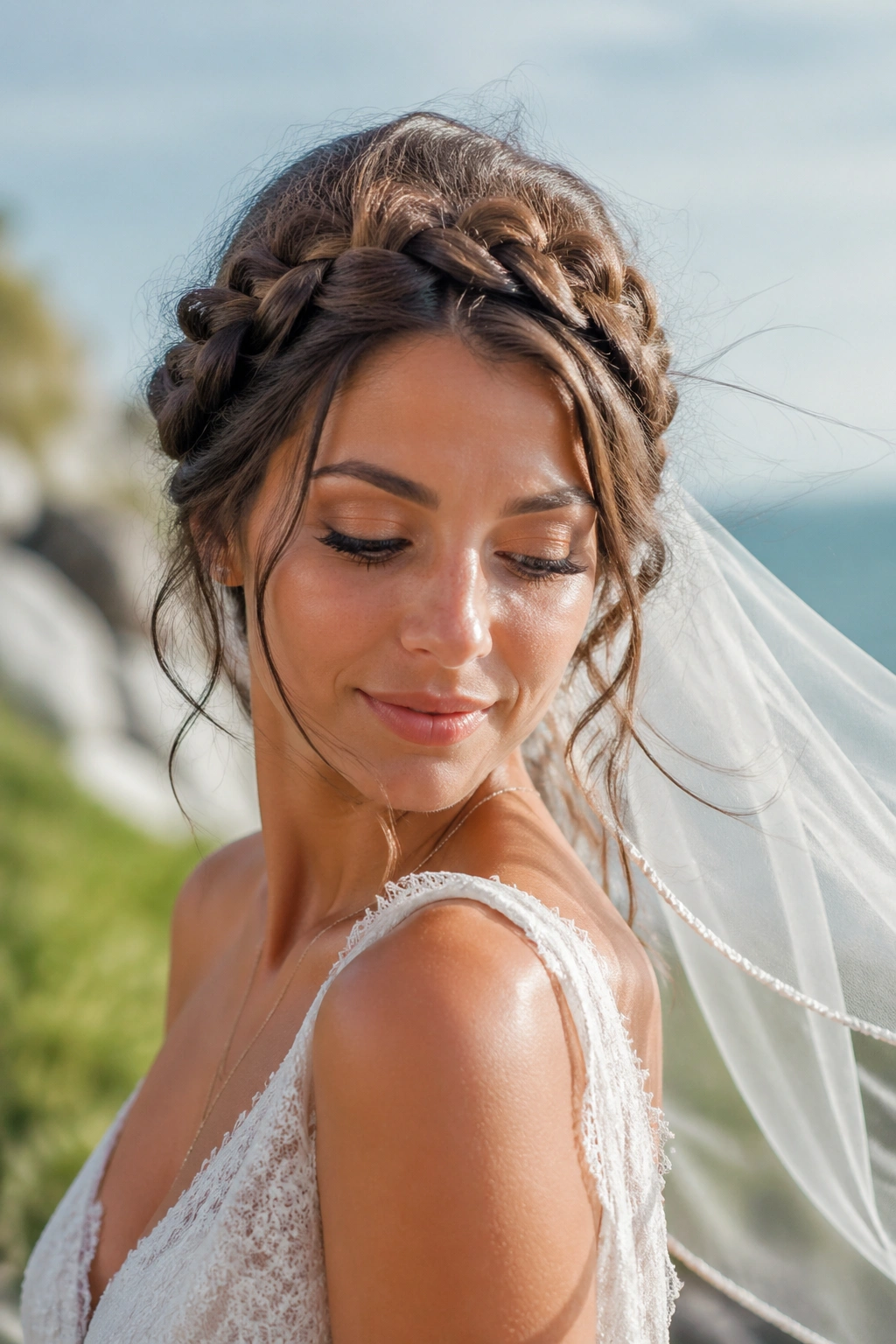
Picture an outdoor ceremony with a little breeze and a dress that moves when you walk. That is where the messy boho halo braid makes sense.
This version is intentionally relaxed. The braid is pulled apart slightly after it’s secured, the front pieces stay soft around the face, and the halo itself doesn’t need to be perfectly even. It feels a little more lived-in, which is exactly why it pairs well with a veil that isn’t trying to look rigid or formal.
A soft tulle veil is the easy match. I’d stay away from anything too heavy or too sparkly here, because the braid already gives you plenty of texture. Let the hair be the detail. Let the veil be the veil.
- Best with soft tulle or cut-edge veils
- Leave 2 to 4 face-framing pieces out
- Use matte texturizing spray before braiding
- Skip oversized crystal combs; they can overpower the style
One caution: if the braid is too loose, it can slide after a few hours of dancing, hugging, and general wedding chaos. Keep the foundation snug, then loosen the outer sections. That order matters.
This is the braid for brides who want softness without looking unfinished.
5. Sleek Low Halo Braid
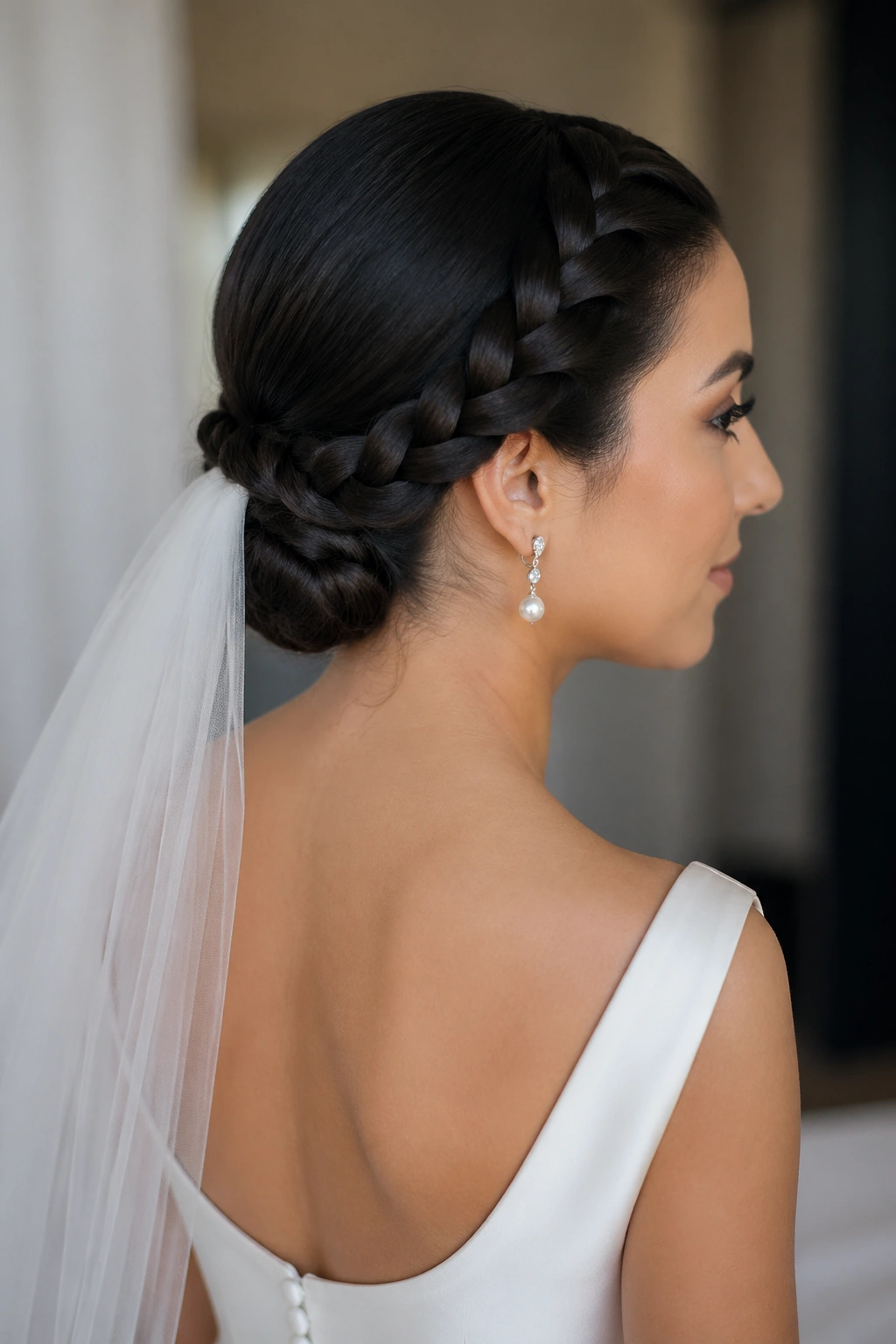
A sleek low halo braid has a very different mood. It sits closer to the hairline and the nape, so the shape feels polished rather than airy. If the messy boho braid is about softness, this one is about control.
That makes it a strong match for satin gowns, sharp necklines, or a veil that already has a lot going on. You do not want the hair fighting the fabric. A smooth halo gives the eye a clean line to follow, and the veil can settle into the braid without adding bulk where you least want it.
I like this style for brides with straight hair or hair that frizzes easily in humidity. Keeping the braid low helps everything stay calmer. A tiny bit of serum on the ends goes a long way, but keep it away from the roots or the braid may loosen faster than you’d like.
It also looks elegant from the back in a way that’s easy to miss until you see it in person. The shape is low-key, but not plain. There’s a difference.
If your veil has a clean edge or a long, uninterrupted fall, this braid gives it a neat place to start.
6. Half-Up Halo Braid
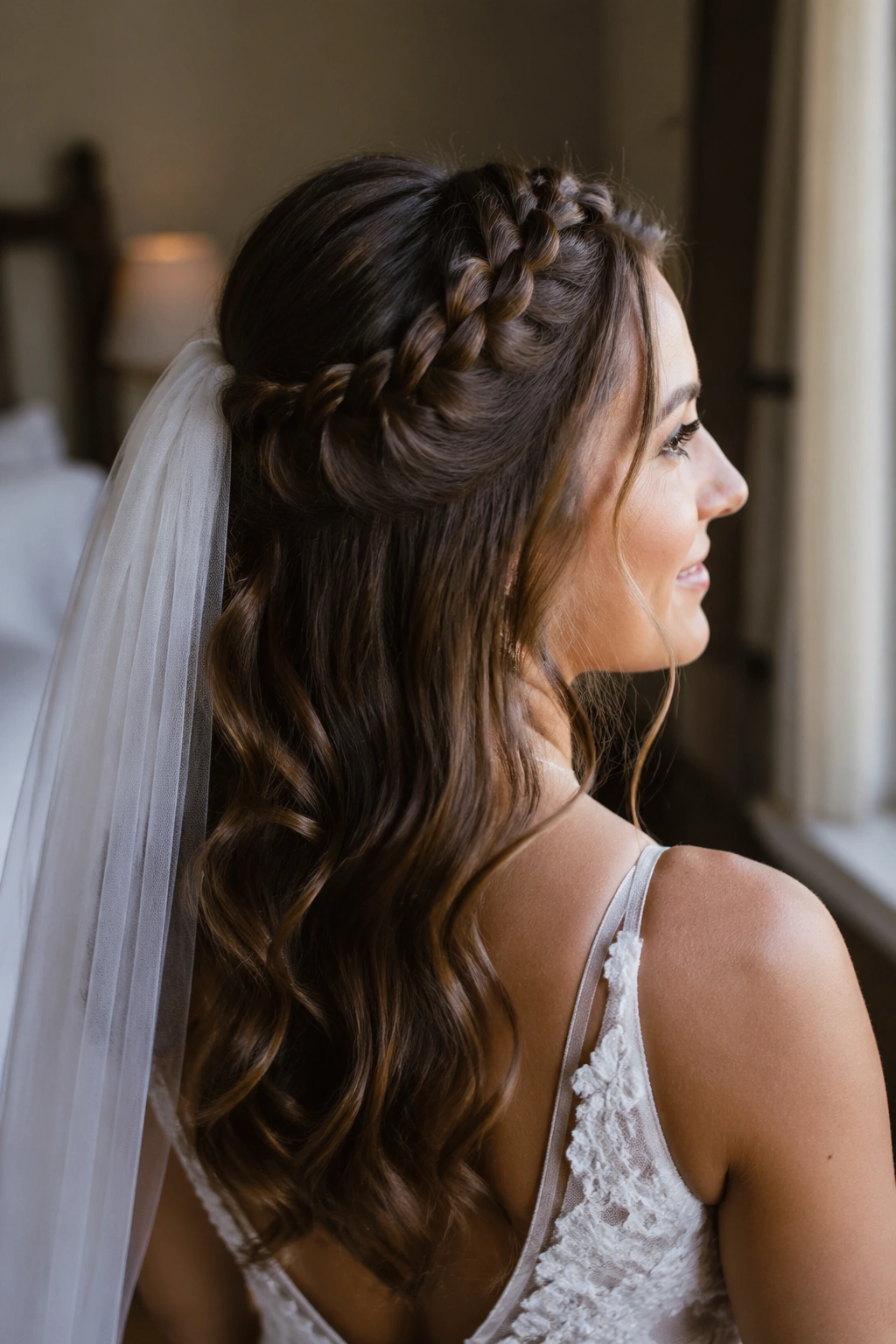
A half-up halo braid is the right answer when you want braid detail without giving up all your length. Unlike a full crown braid, it circles only the upper part of the head, which leaves curls, waves, or straight lengths visible below. That matters if you want movement after the ceremony.
The veil placement changes here, and that is the part people often miss. The comb usually sits just under the braid at the back of the crown, not buried deep inside it. That keeps the braid visible from the side while letting the veil fall cleanly over the loose hair.
What makes it different from a full crown
The half-up version feels lighter around the face and less formal at the nape. It also removes some pressure from the scalp, which can be a relief if you’ll wear the style for ten hours.
- Best for long hair with waves or curls
- Easy to remove the veil after the ceremony without wrecking the style
- Works with fingertip, chapel, or cathedral veils
- Great if you want to show length in photos
This one is a favorite for brides who keep saying, “I want both.” That’s the whole job of the half-up halo braid. It gives you structure and softness in the same look.
7. Double Halo Braid
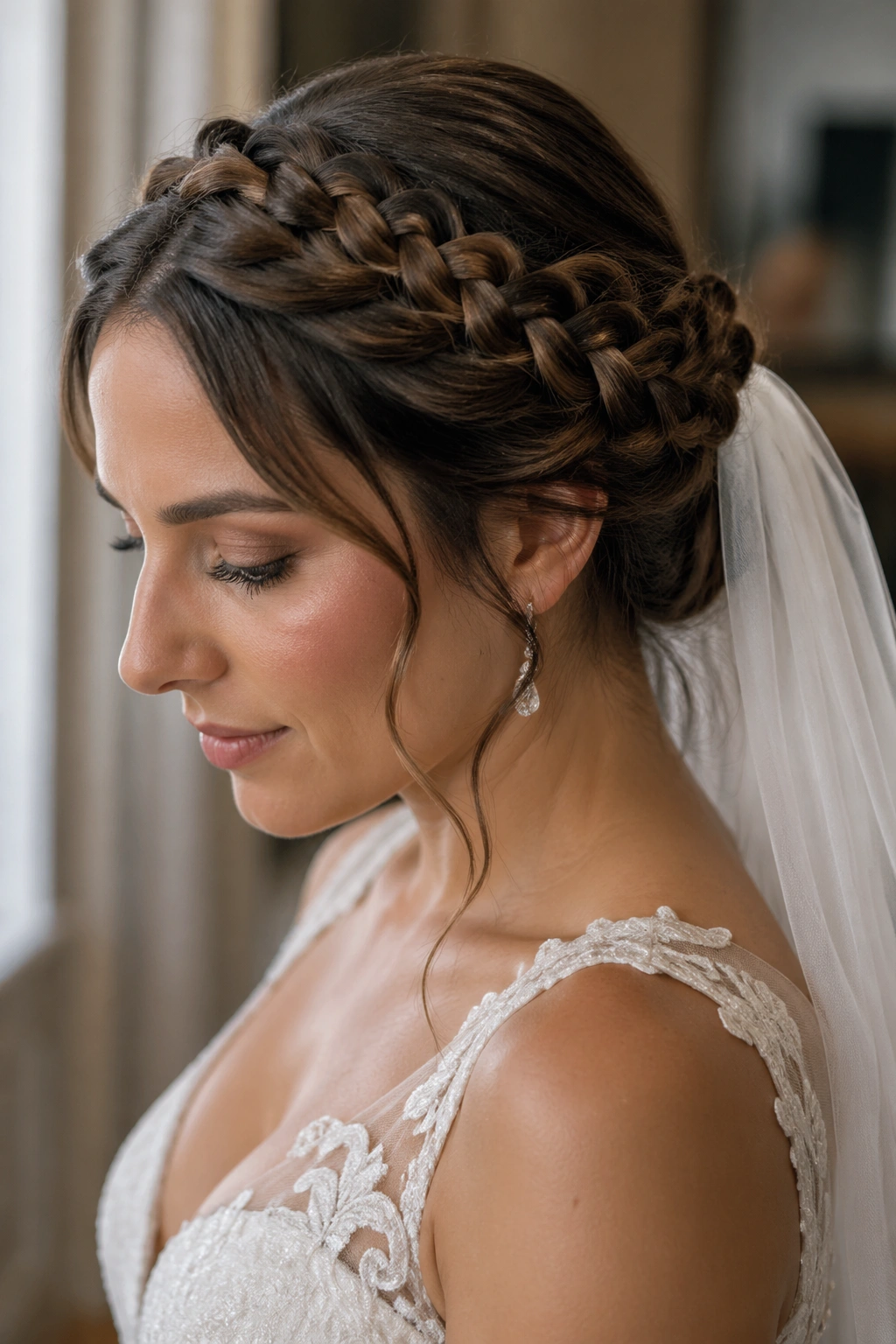
If you want a braid that stays put and looks intentional from every angle, the double halo braid is hard to beat. Two braided rings, one above the other or one feeding into the other, create a thicker frame around the head. It feels more substantial than a single halo, and that extra structure is useful when a veil is part of the plan.
The second ring gives the comb more to hold onto. That’s the practical part. The visual part is even better. A double halo reads almost like a braided crown and headband at once, which can be gorgeous with a cathedral veil or anything long and sheer that needs a strong anchor point.
This style loves thick hair. It also loves extensions if your natural hair is fine and you want the braid to look full instead of tiny. If you are worried about weight, keep the lower braid slightly looser than the upper one. That keeps the look from turning into a helmet.
A blunt truth: this is not the most casual braid on the list. It has ceremony in it already. That is why it works so well with a formal veil.
8. Rope-Twist Halo Braid
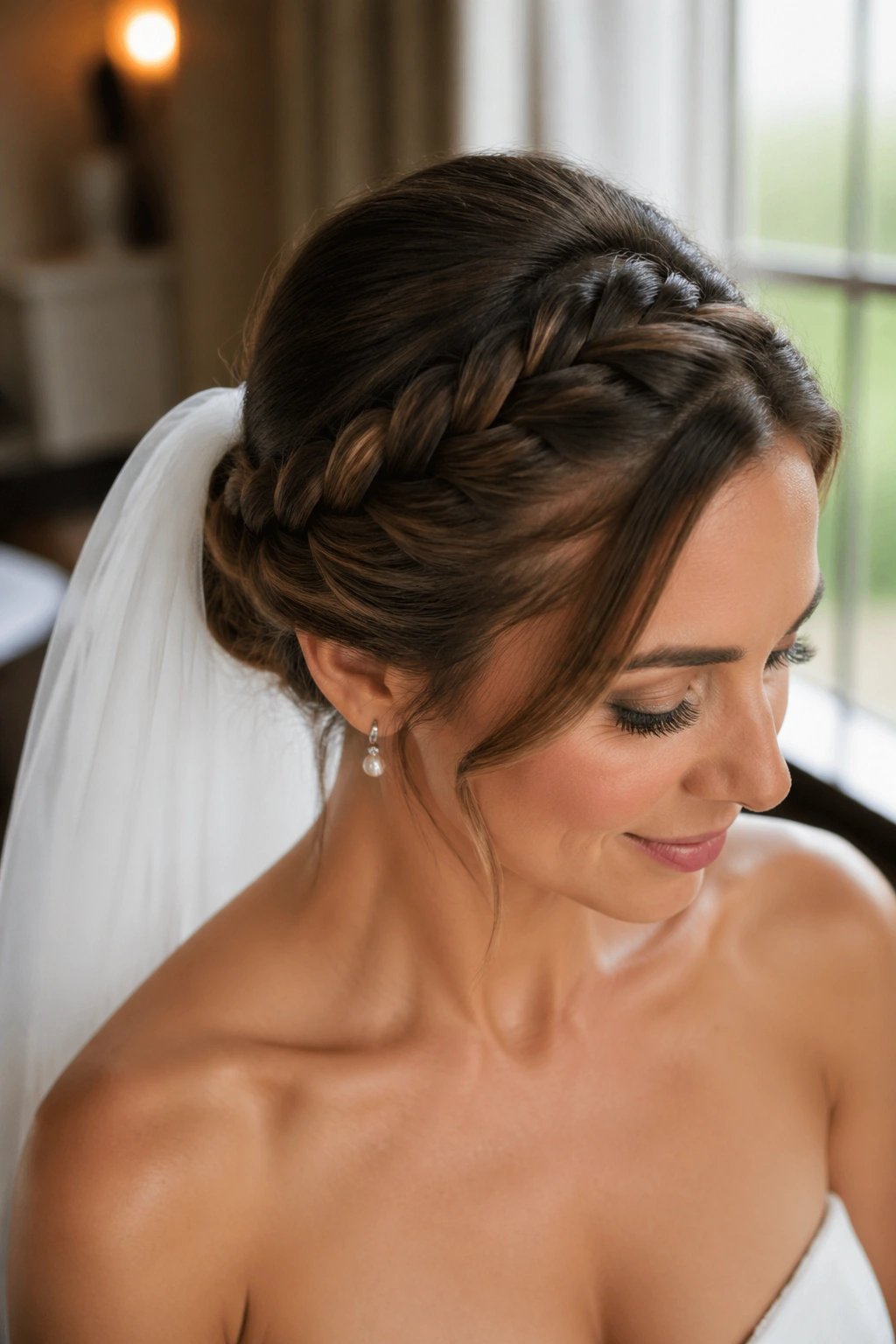
Why pick rope twists instead of a three-strand braid? Speed, mostly. And shine. Rope twists lie flatter on the scalp, which can be a relief if your hair is slippery, coarse, or so smooth that regular braids keep slipping apart by the time you finish the second side.
The look is softer than a Dutch braid and cleaner than a messy halo. It has a quiet, twisted texture that works well when you want the veil to do more of the visual work. The braid pattern is still there, but it doesn’t shout.
For the veil, tuck the comb between the twists at the back rather than over the top of them. That gives the veil a little pocket to sit in, and it helps the style feel locked in without a pile of pins. A lightweight blusher or chapel veil is usually enough. Heavy beadwork can drag the twist down and flatten the shape.
This is the braid I’d suggest for someone who wants something polished but not precious. It’s practical. A little underrated, too.
9. Side-Swept Halo Braid
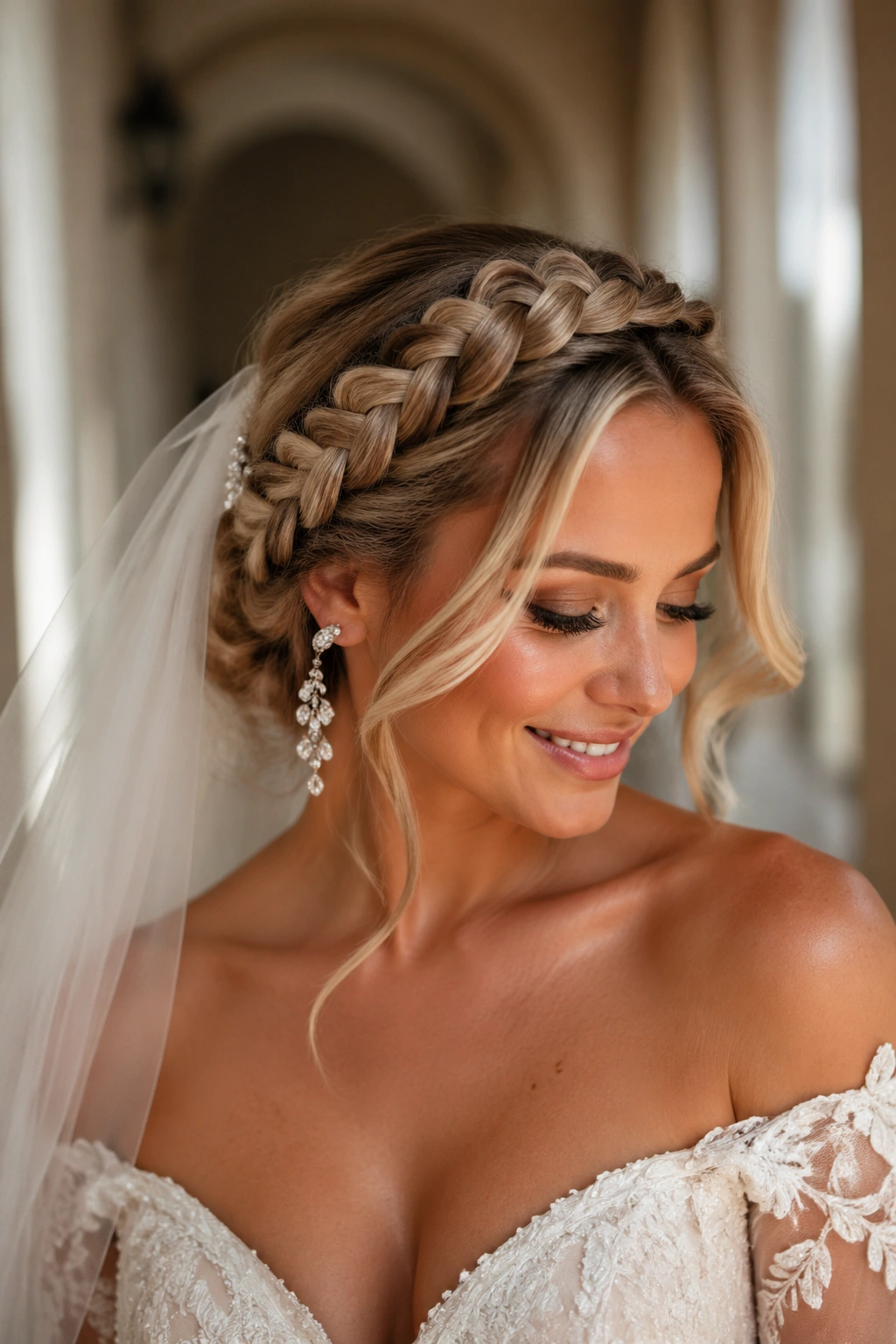
A side-swept halo braid makes sense the second you see an off-shoulder gown or a dress with one dramatic sleeve. Centered hair can feel too symmetrical for that kind of neckline. Shift the braid slightly to one side, and suddenly the whole look breathes.
That offset shape also gives the veil a different energy. Instead of dropping straight from the back center, the comb can sit just off-center, which keeps one side of the braid visible and leaves room for earrings or a shoulder detail to show. If you like an asymmetrical look, this is the one that does not look accidental.
- Best with one-shoulder or off-shoulder dresses
- Place the veil comb slightly off-center
- Let one side of the braid tuck behind the ear
- Wear statement earrings on the open side
It’s a small adjustment. It changes everything.
Side-swept braids also help when your face shape benefits from a little softness at one side rather than a perfect circle around the head. That’s less about rules and more about balance. Some styles are about symmetry. This one isn’t.
10. Halo Braid Bun
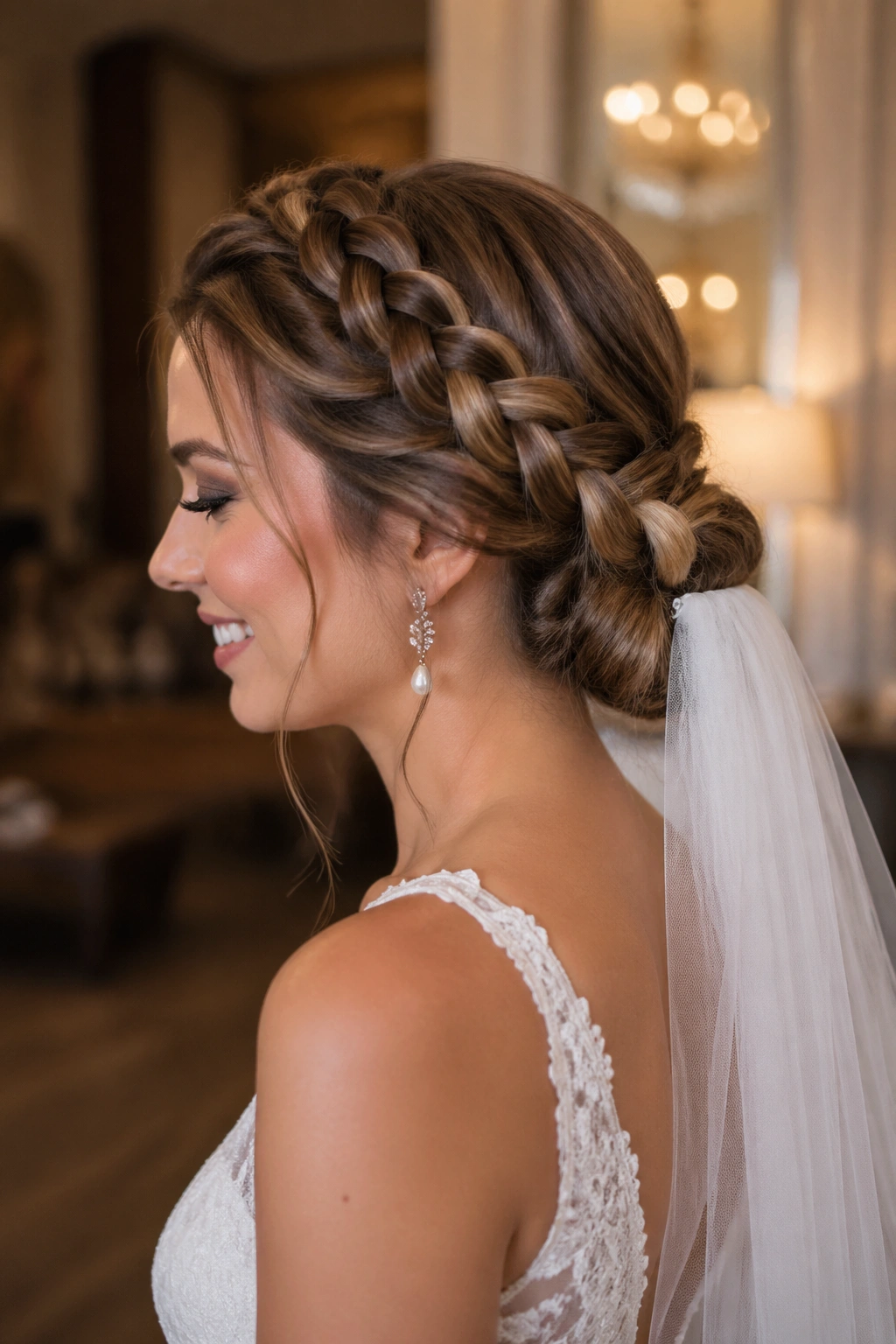
A halo braid bun is where the braid stops pretending to be casual. It wraps around the head and then folds into a bun or tucked chignon at the nape, which gives the veil a very solid landing spot. The shape feels formal in a way a loose braid never quite does.
The bun matters because it creates a built-in anchor. A veil comb can slide into the bun’s base, then get backed up with pins hidden inside the folds. That is the kind of support you want if the veil is long, lined, or a little heavier than average. If you plan to take the veil off after the ceremony, this setup also leaves the rest of the style intact.
I like this look with structured dresses and sharp necklines. It keeps the whole silhouette tidy. No stray ends. No loose tail swinging around in the wind.
Why it stays put
The braid distributes the shape, while the bun gives it a hard center. That combination makes the style feel anchored instead of assembled.
A halo braid bun can be polished or slightly soft around the edges. Either way, it has serious staying power, and that counts for a lot when the ceremony runs long.
11. Waterfall Halo Braid
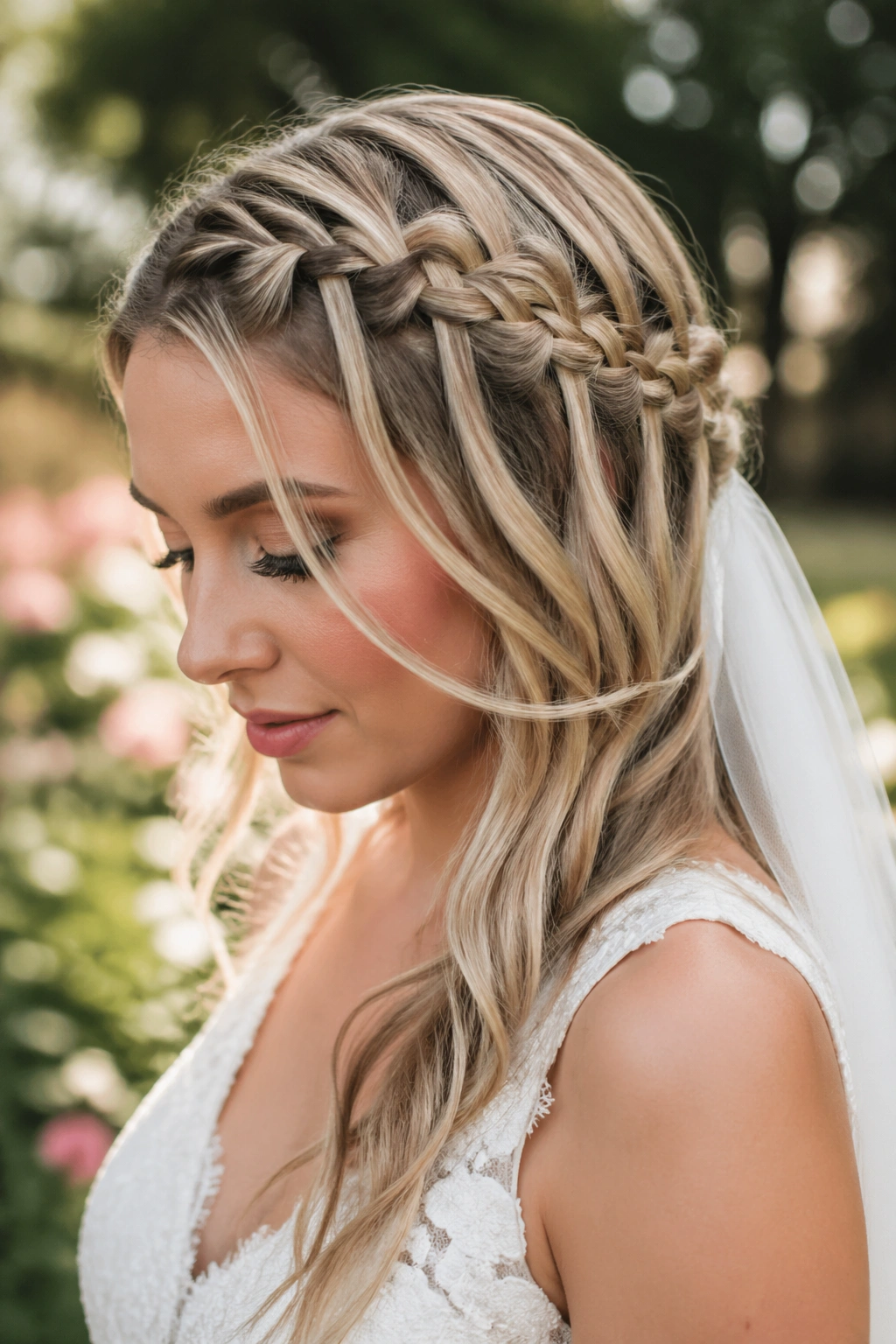
A waterfall halo braid is a softer, more romantic choice, and the veil needs to be handled with care. Because part of the braid lets strands drop through, the shape already has openings in it. A comb shoved into the wrong spot will break that pattern fast.
The best approach is to set the veil a little lower, where the braid is more stable, or slightly above the widest part of the weave if the braid is very loose. That keeps the waterfall detail visible. You want the braid to look airy, not pinched.
This style shines when you want movement around the face and a little lightness at the back. It is not the strongest option for a heavy cathedral veil, and I would not force that pairing unless the braid is reinforced underneath. A sheer veil works much better. It lets the openings in the braid keep their shape.
It also has a lovely side effect in photos. The little dropped strands soften the line between hair and veil, which can make the whole look feel more natural. Not messy. Just less engineered. There’s a difference.
12. Halo Braid with Flowers and Veil
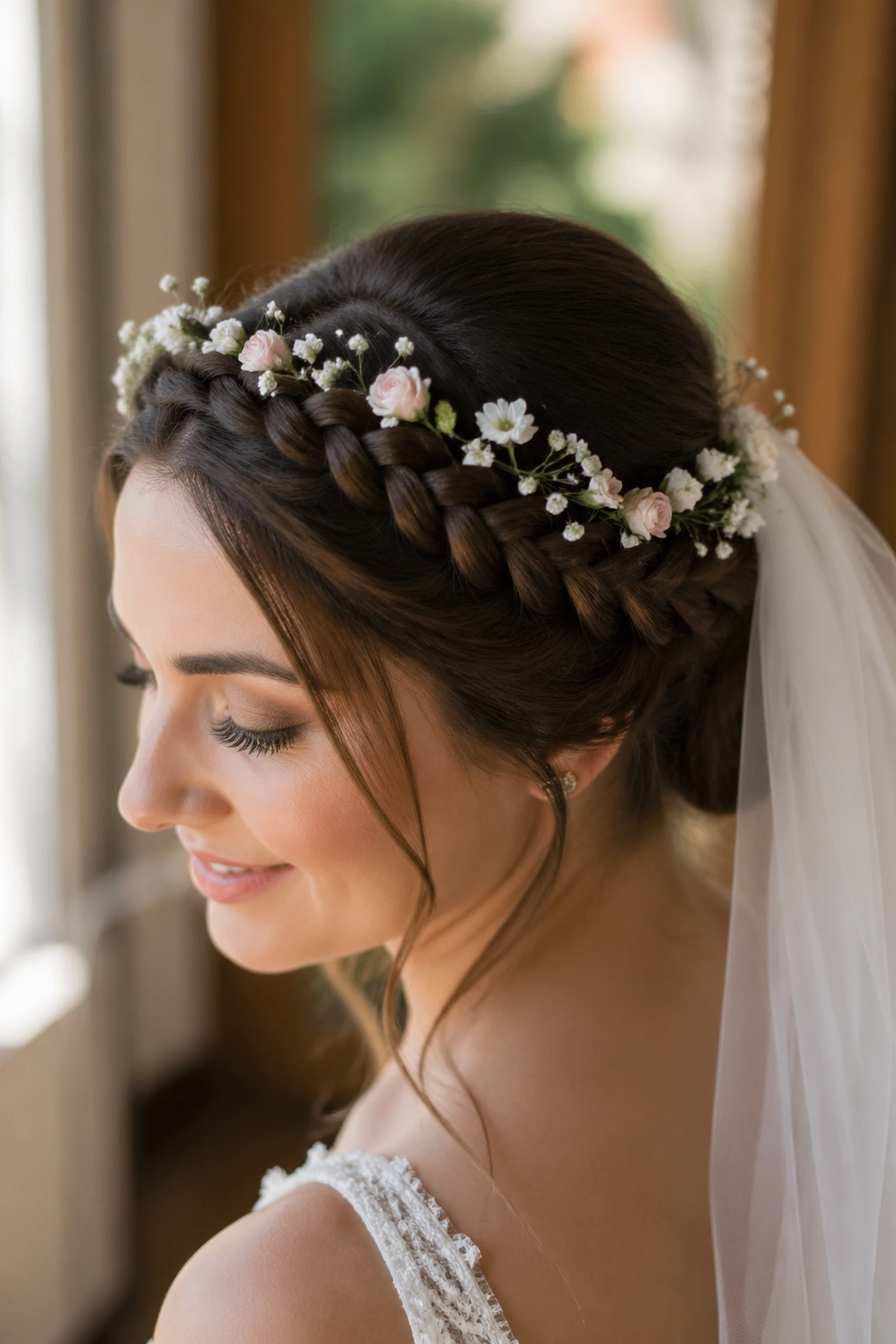
Once flowers enter the braid, the whole look becomes more directional. A plain halo braid can sit in any wedding setting. Add small blooms, and it starts telling the room where to look.
That is not a bad thing, but it does mean the veil has to be placed with a little care. If the comb sits too close to the flowers, it will crush petals, flatten baby’s breath, or shove the braid out of balance. Keep the veil anchor on the opposite side of the head or just below the floral cluster if you want the details to survive the day.
What to place in the braid
- 3 to 7 small flowers is usually enough
- Use wired buds if the veil is heavy
- Place blooms 2 inches away from the comb
- Choose sturdy flowers like spray roses, waxflower, or baby’s breath
- Save bigger flowers for one side only
A floral halo braid works best when the flowers look woven in rather than slapped on. That means a few intentional placements, not a garland that takes over the whole crown.
If your dress is simple and the bouquet is doing a lot of the talking, this braid can echo the flowers without turning the head into a second bouquet. That restraint helps.
13. Short-Hair Halo Braid
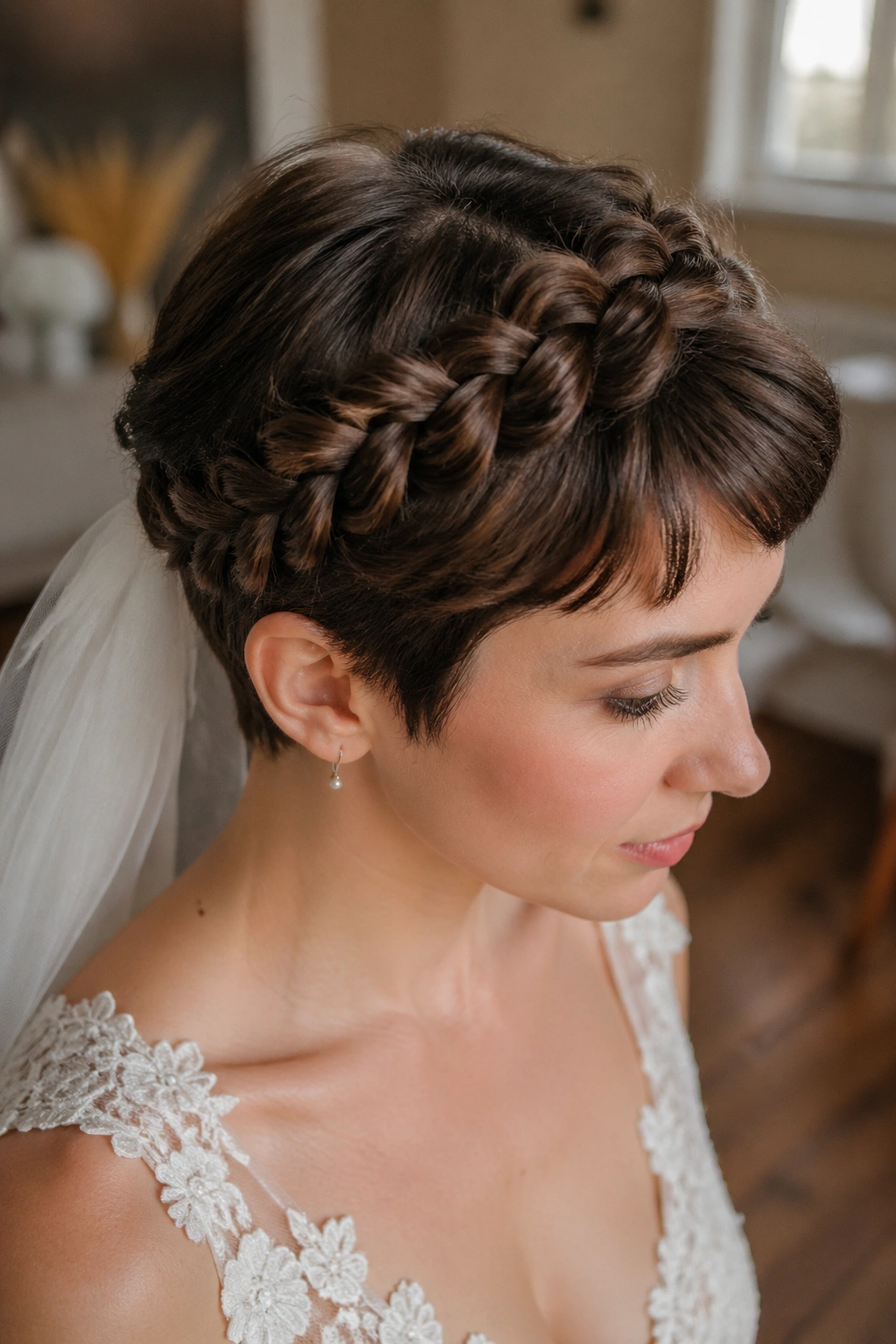
Short hair can absolutely wear a halo braid with a veil, and I wish more people were told that early. If your hair is a bob, a lob, or just too short to wrap cleanly all the way around, a faux halo braid can still give you the shape you want. The trick is to braid what you can, then pin the rest into a hidden circular line.
A stylist may use extensions, but they do not have to be obvious. A few well-matched pieces can provide enough length to finish the braid and create a stable spot for the veil comb. That matters more than pure volume. Stability first. Pretty second. Both if you can get them.
How to make it work
- Use a light to medium veil so the anchor does not tug
- Ask for hidden cross-pins under the braid line
- Keep the braid close to the head instead of oversized
- Let a few soft pieces stay loose near the temples
This is also a smart option if you like the idea of a halo braid but do not want your hair hidden under a full updo. The braid adds bridal shape without erasing your haircut. That’s a good trade.
Short hair with a veil is often about building the illusion of length without making the style feel fake. A well-pinned halo braid does that better than most people expect.
14. Regal Full Halo Braid with Cathedral Veil
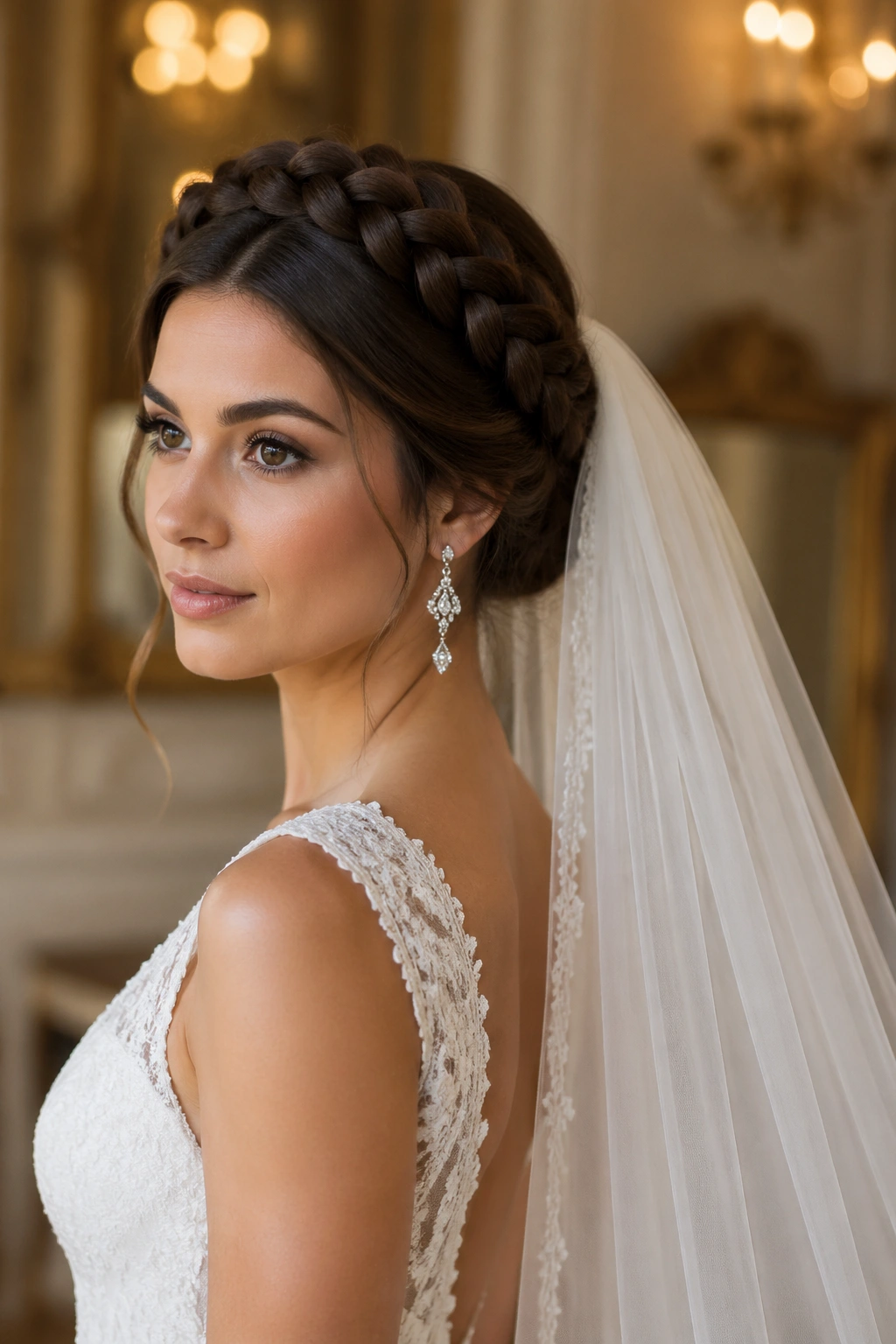
If you want the veil to feel like part of the hairstyle, this is the one. A full halo braid with a cathedral veil has presence. It is polished, formal, and built to hold a long fabric line without looking crowded at the crown.
The braid needs to be even and substantial, not skinny. I’d keep the width broad enough that the veil comb can rest inside the back section without showing. The veil then drops from that hidden point and trails behind the braid like it belongs there. That is the visual payoff. Nothing feels bolted on.
Why it holds up on the dance floor
A cathedral veil adds drag, and drag exposes weak pinning fast. This style gives you more braid surface, more anchor points, and more room to distribute the weight.
- Best with long or very long veils
- Works well on thick hair or with added hair pieces
- Use multiple pins under the comb, not just one
- Ask for a secure base at the nape and a smooth crown
This is the look I’d choose for a formal ceremony where the hair needs to stay composed from the first photograph to the last dance. It has that full, steady shape people remember.
It also works when you want tradition without stiffness. The braid keeps the head shape soft. The veil does the dramatic part. Together, they feel complete.
Final Thoughts
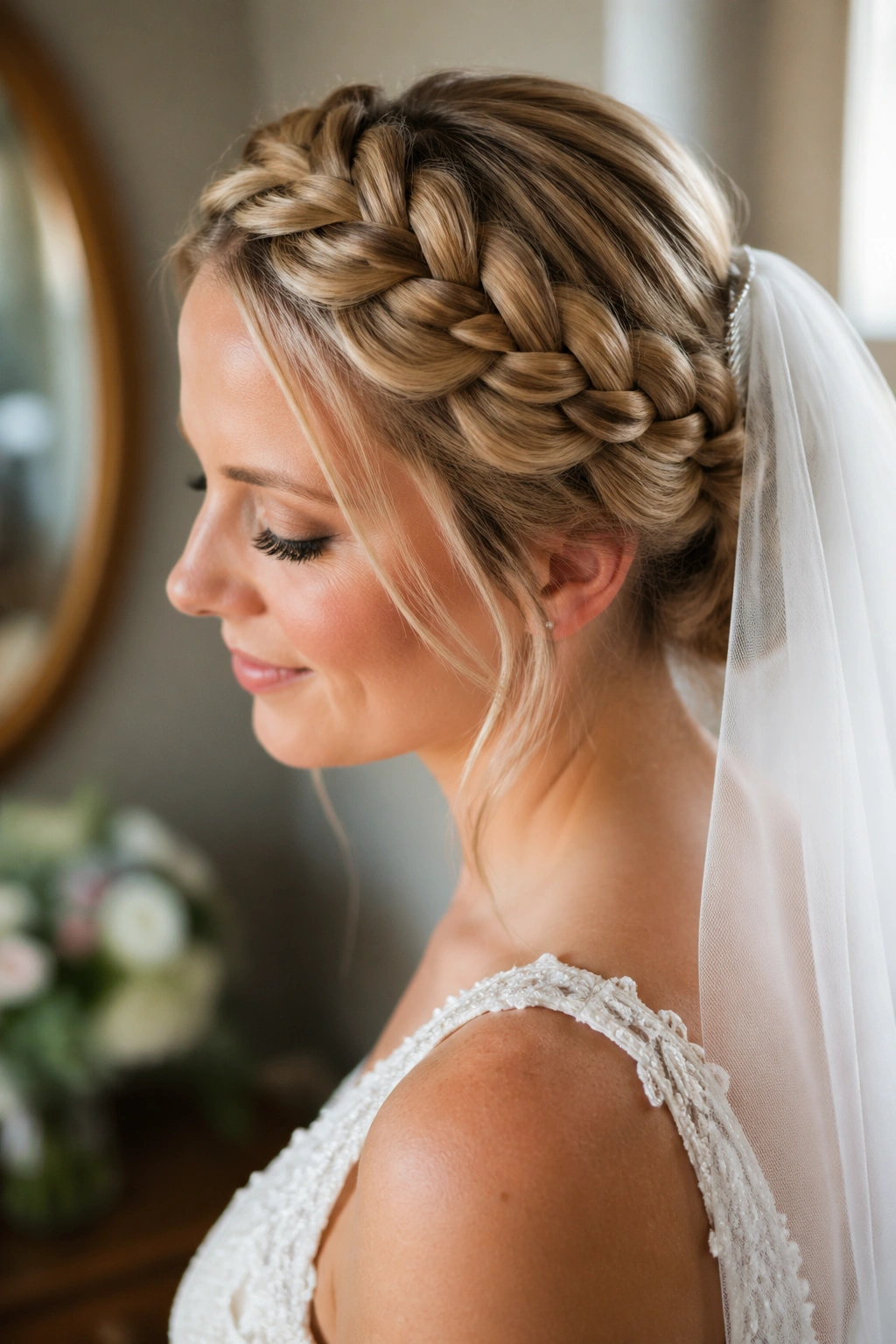
The nicest thing about halo braids and veils is that they do not have to compete. One gives shape. The other gives motion. When the placement is right, the whole thing feels like one idea instead of two separate ones glued together.
Bring the actual veil to the trial if you can. The comb shape, weight, and edge length change how the braid sits, and a style that looks perfect without the veil can collapse under it in ten minutes. A few extra pins, a little hidden padding if needed, and a calm test run with head turns will tell you more than a dozen mirror checks.
The bridal hair that lasts is usually the hair that has been handled with a bit of realism. The braid has to hold. The veil has to land somewhere sensible. That is the whole game, and once you get that part right, the rest becomes much easier.