


Braiding shoulder-skimming hair can be a little annoying in the best possible way. The length is long enough to braid, short enough to fight back, and layers have a bad habit of slipping free right when you think you’ve got them pinned down. That is exactly why the right braid styles for shoulder-skimming hair matter so much: they need enough grip to hold, enough structure to flatter shorter ends, and enough flexibility to work with blunt cuts, long layers, and everything in between.
There’s a sweet spot here that a lot of people miss. Hair that lands around the shoulders or collarbone often looks fuller in braids than very long hair, because the plait doesn’t get stretched flat by extra weight. But it also needs a little help. Day-two texture, a touch of dry shampoo, and small clear elastics can make the difference between a braid that stays neat and one that loosens halfway through lunch.
The styles below lean into that reality. Some are sleek. Some are soft and messy. A few are better for fine hair, while others are a lifesaver if your layers never behave. The common thread is simple: each one works with shoulder-skimming length instead of pretending you’ve got waist-length hair to play with.
1. Classic Side Braid
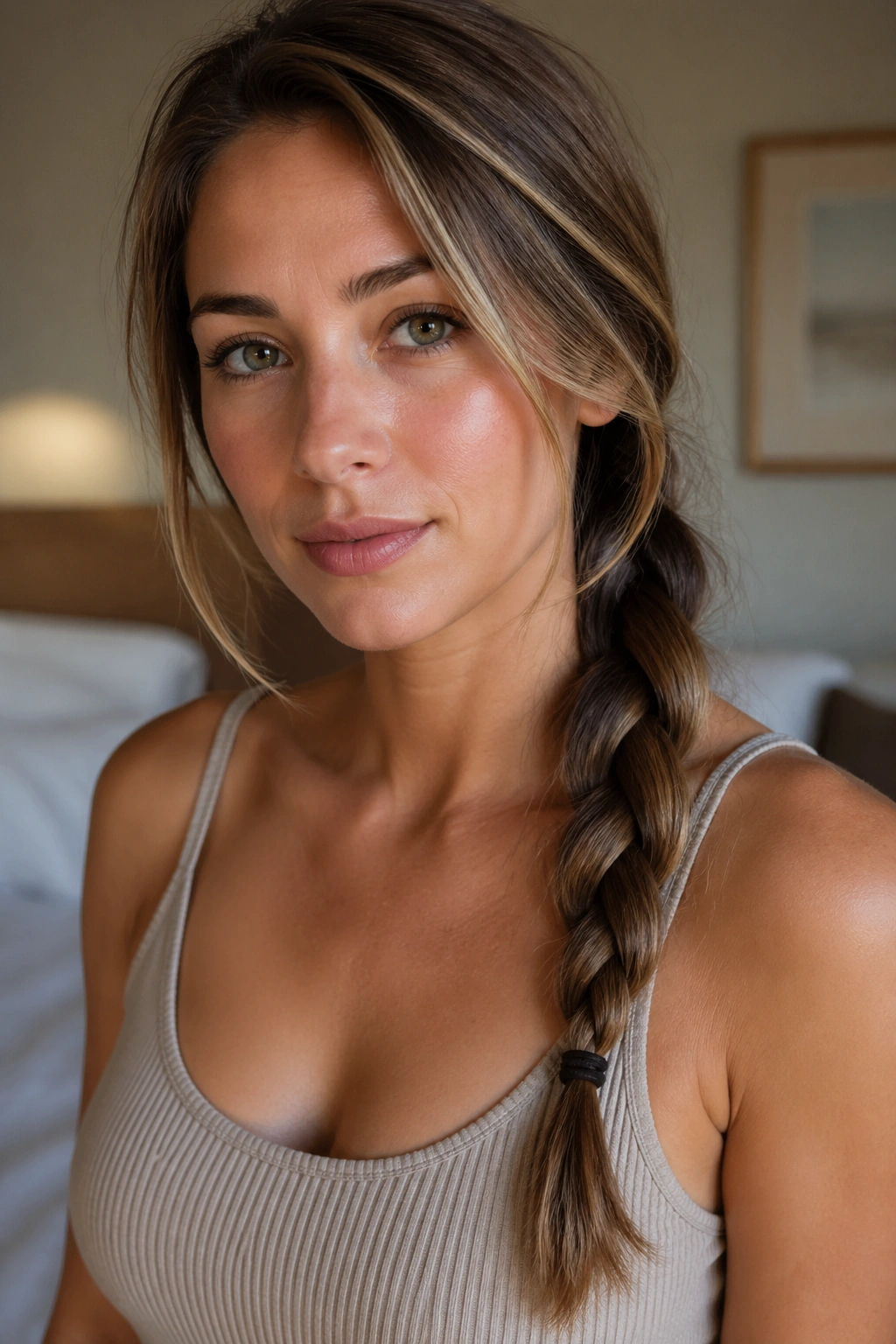
A classic side braid is the style I reach for when the hair is just long enough to braid cleanly but still a little slippery at the ends. Moving the braid off-center gives you more control, and it also makes shorter layers look intentional instead of escaped. The braid drapes better over one shoulder, which is useful when the ends stop right around the collarbone.
Why It Works So Well on Shorter Lengths
The side placement does half the work for you. It lets you gather hair from the heavier side first, so the braid has a stronger base and less chance of collapsing near the nape. That matters when your hair is shoulder-skimming and doesn’t have a ton of weight pulling it downward.
- Start with a deep or middle side part, then smooth the top with a brush.
- Bring the hair over one shoulder before you begin braiding.
- Use a small elastic with a firm grip, not a thick one that bulks up the end.
- Gently tug the outer edges of the braid once it’s secured to make it look fuller.
Best tip: let the braid start a little lower than you think. Starting too high can make shoulder-length hair look cramped.
2. Low French Braid
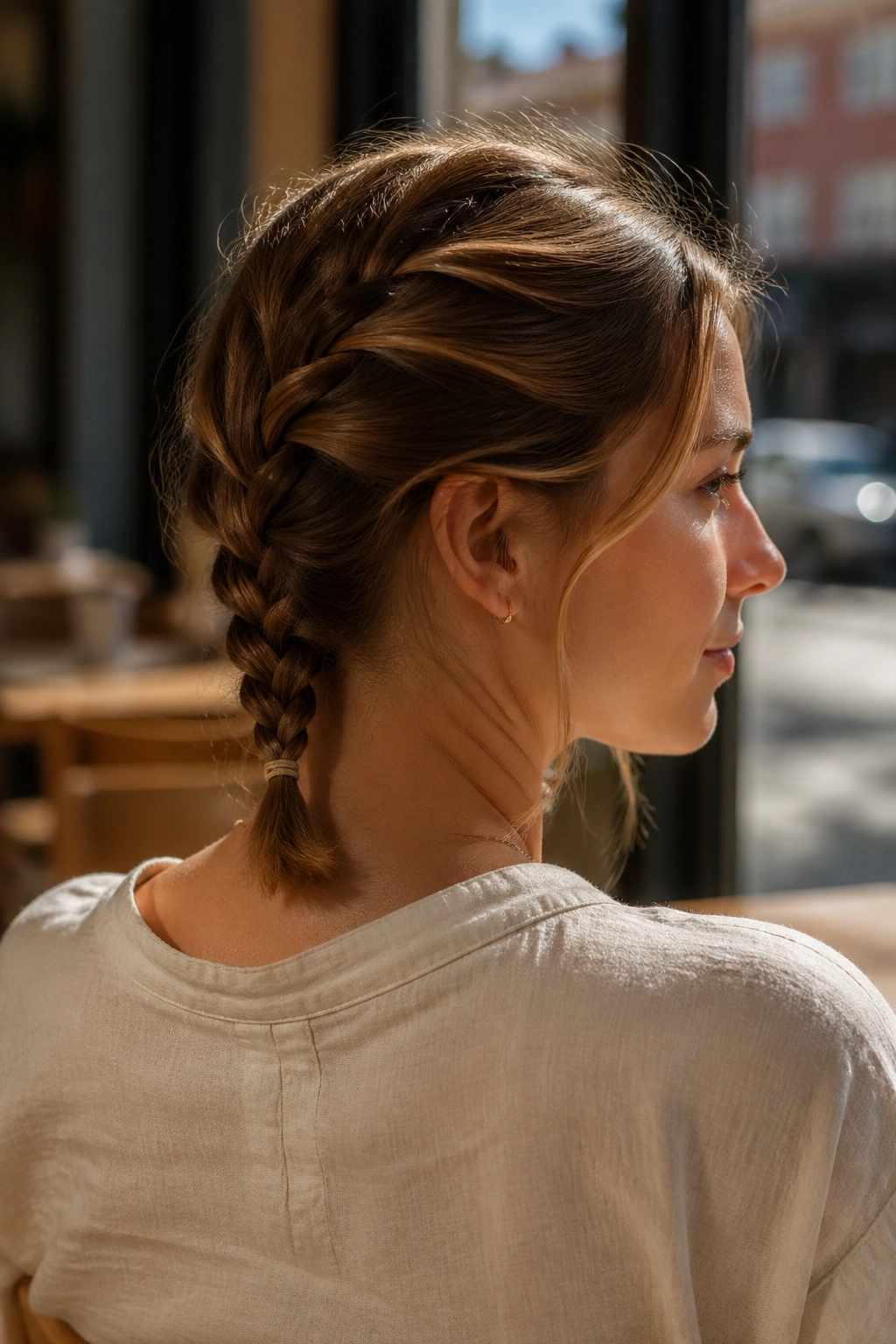
A low French braid is one of the most reliable braid styles for shoulder-skimming hair. It keeps the braid anchored close to the scalp, which stops layers from flaring out early and helps the whole style feel cleaner. If your hair falls apart in regular three-strand braids, this is the one that usually behaves better.
The reason is simple: the French braid keeps feeding in fresh hair as it moves down, so the braid has something to hold onto before the ends get too short. That is especially useful if your hair is thick at the roots but tapers at the bottom. The base stays tidy, and the lower braid can be finished with a tiny elastic right at the nape.
I like this braid for days when the weather is damp or windy. It stays put better than a loose braid, and it looks polished without being stiff. A small amount of styling cream at the crown helps a lot, especially if your hair likes to puff up around the face.
Use this one for work, travel, or any day when you do not want to think about your hair again.
3. Dutch Braid
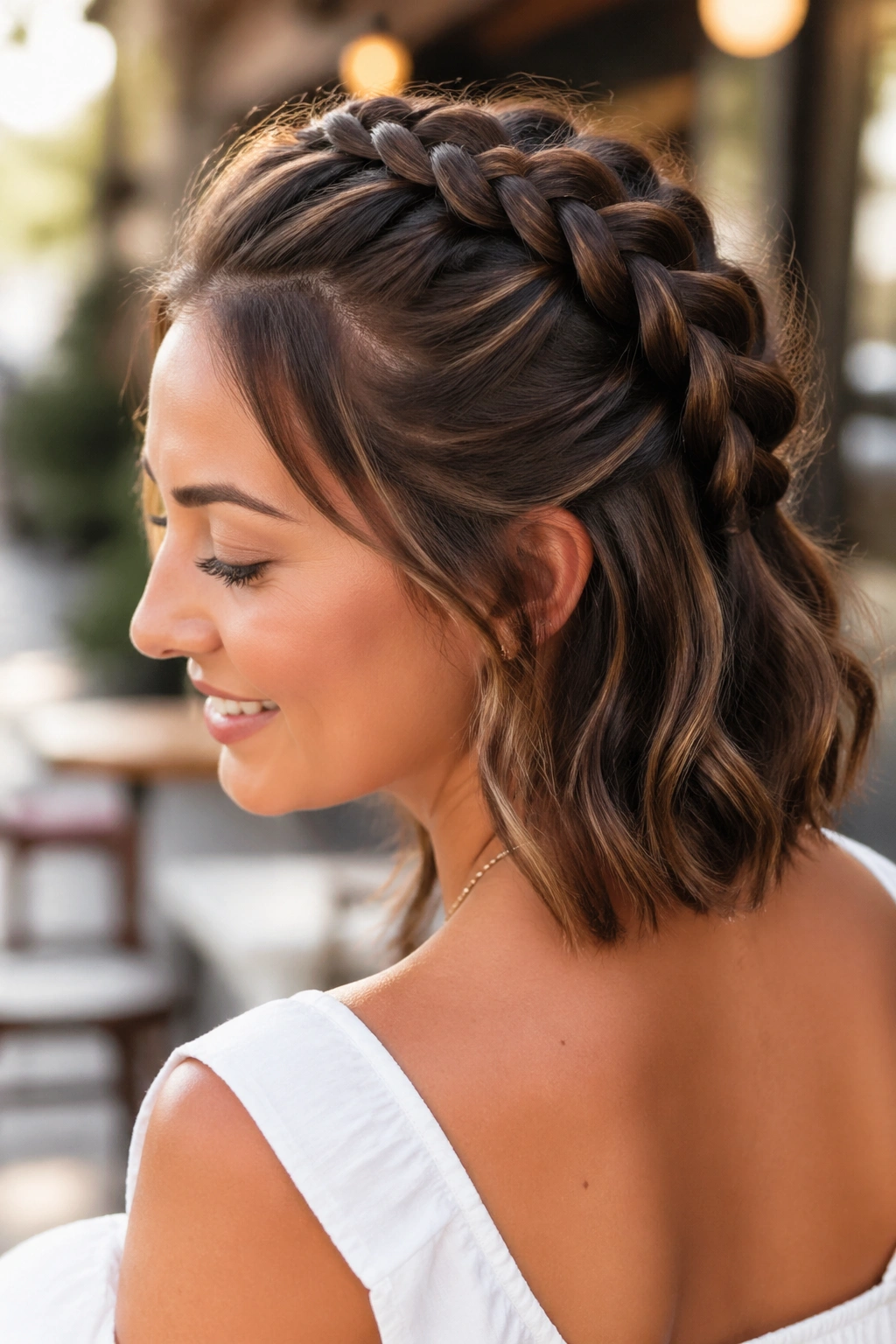
Why does a Dutch braid look so good on shoulder-length hair? Because the raised pattern gives the braid more visual thickness than a standard plait, and that extra height is a gift when your ends are on the shorter side. The braid reads bold and full even if your actual length is modest.
What Makes It Different
A Dutch braid is built by crossing sections under instead of over, which makes the braid sit on top of the hair rather than blending into it. That little change gives the braid a sharper outline. On shoulder-skimming hair, that matters because the braid doesn’t disappear into the rest of the cut.
How to Wear It
- Use texturizing spray before you start if the hair is soft or freshly washed.
- Keep the sections medium-sized; tiny sections can make the braid look too thin.
- Stop at the nape and finish with a low ponytail if the ends are too short for a full tail.
- Gently pancake the braid by pulling the outer loops loose, but only after it is secured.
Best for: fine hair, round faces, and anyone who wants a braid that looks fuller than it really is.
4. Fishtail Braid
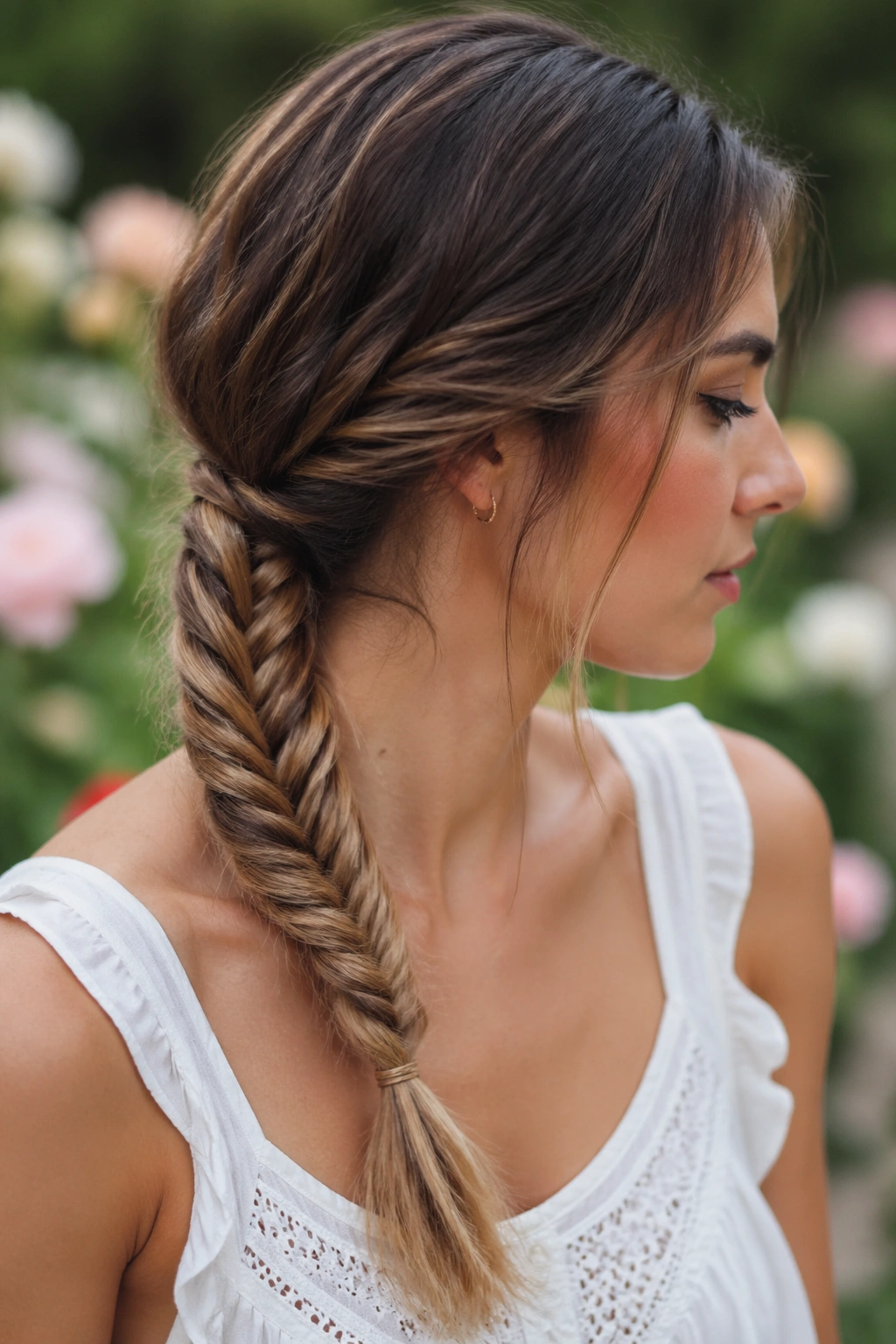
A fishtail braid can look complicated, but on shoulder-skimming hair it often feels easier than a standard braid because the sections are so small. The trick is starting with a low ponytail or a gathered base so the shorter ends stay tucked in long enough to cooperate. Once the braid gets going, it has a neat, woven look that hides uneven layers well.
I’ve always thought of the fishtail as the most forgiving braid for hair that is a little different on each side. One side has a chin-length layer? Fine. The ends flip out a little? Also fine. The tiny crossovers blur all that out in a way a regular braid sometimes cannot.
Quick Details That Matter
- Use a light hold cream or a drop of serum on the ends before braiding.
- Keep the crossed pieces thin; thick pieces make the braid bulky and awkward.
- Secure the start with a clear elastic if your hair slips easily.
- Finish by pulling the braid slightly apart for a softer shape.
The charm here is the texture. It looks detailed without demanding perfect length.
5. Waterfall Braid for Shoulder-Skimming Hair
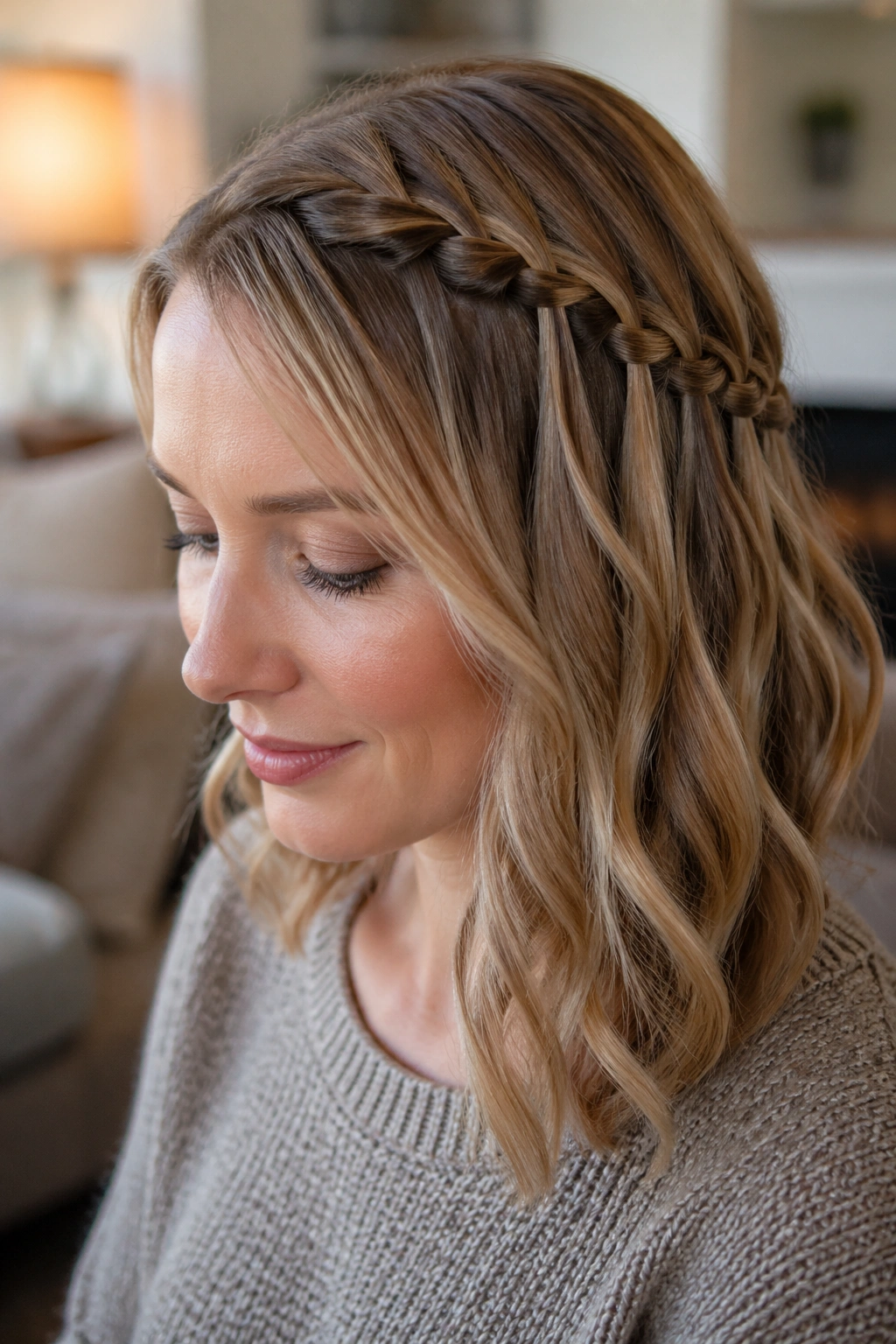
A waterfall braid may be the prettiest answer for shoulder-skimming hair when you want something soft around the face. The style lets pieces fall through the braid, so you are not asking the hair to behave like one long rope. That is a real advantage when your ends hit the shoulders and layers keep bouncing free.
The best version starts with smooth hair, but not bone-straight, limp hair. A little bend helps the dropped strands blend into the rest of the style. If your hair is layered, curl the ends very lightly with a 1-inch iron first. You do not need ringlets. You just need enough shape for the waterfall pieces to sit nicely instead of sticking out like odd little hooks.
This braid is lovely along one side of the head, especially with a deep side part. It frames the face and keeps the back from feeling too fussy. A couple of bobby pins hidden behind the ear usually make the difference between “cute” and “why is this sliding?”
The best part is that it works as a half-up style without stealing all the length you worked for.
6. Rope Braid
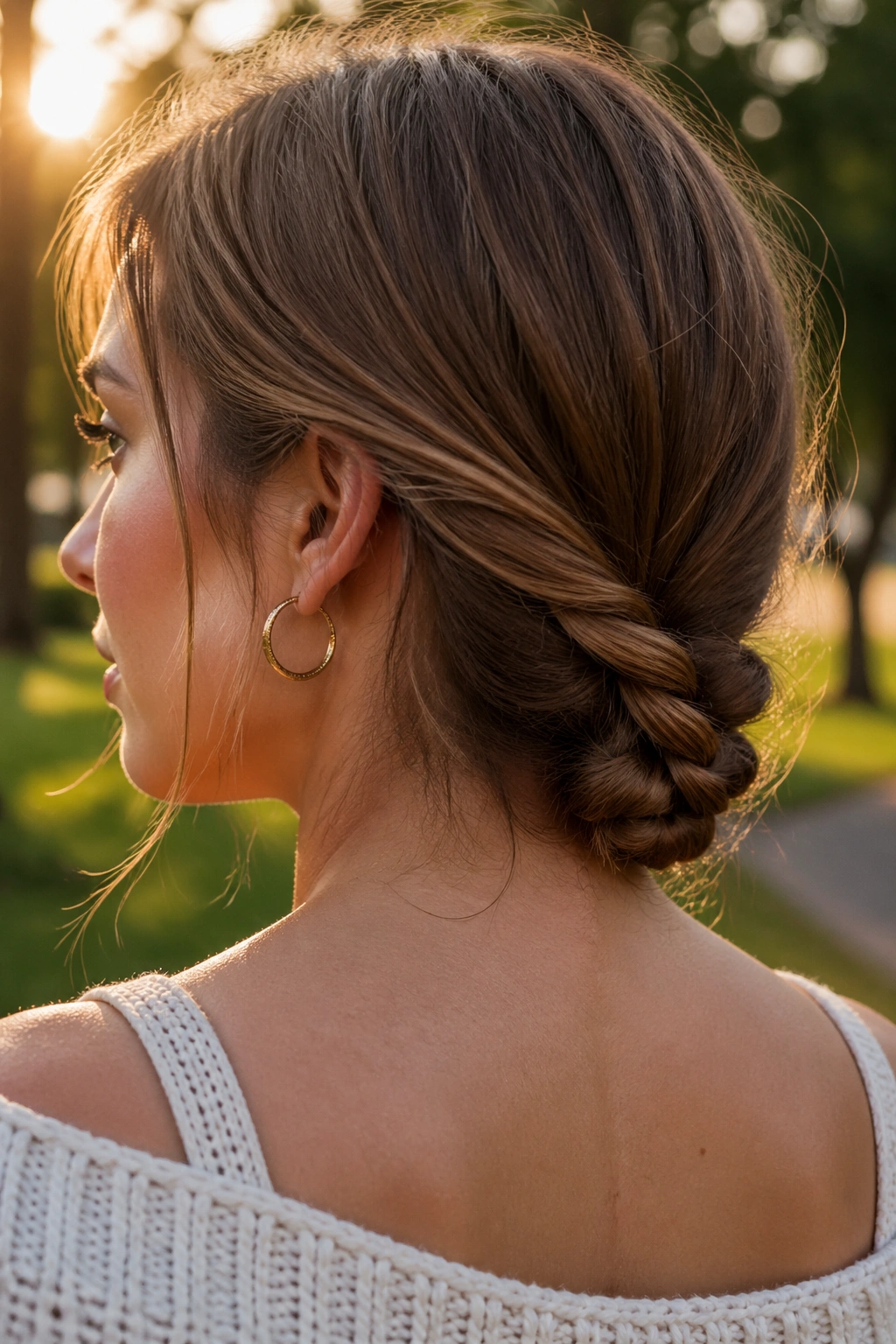
A rope braid is a smart choice when your hair is too soft for a three-strand braid to hold its shape. Unlike a traditional braid, it uses two sections twisted in opposite directions, then wrapped around each other. That twist gives shoulder-skimming hair a tighter, cleaner finish with less fraying at the bottom.
What I like about rope braids is how fast they are. You can make one low at the nape, use it as a ponytail detail, or twist two of them into small face-framing pieces. If your hair has a lot of slip, the rope braid often behaves better than a standard braid because the twist naturally fights unraveling.
It also reads a little sleeker. That can be useful if you want something simple that still feels intentional, not like you threw your hair back and hoped for the best. Add a tiny elastic at the end and mist the braid lightly with flexible hairspray.
Use this one when you want speed. It does not ask for much.
7. Crown Braid
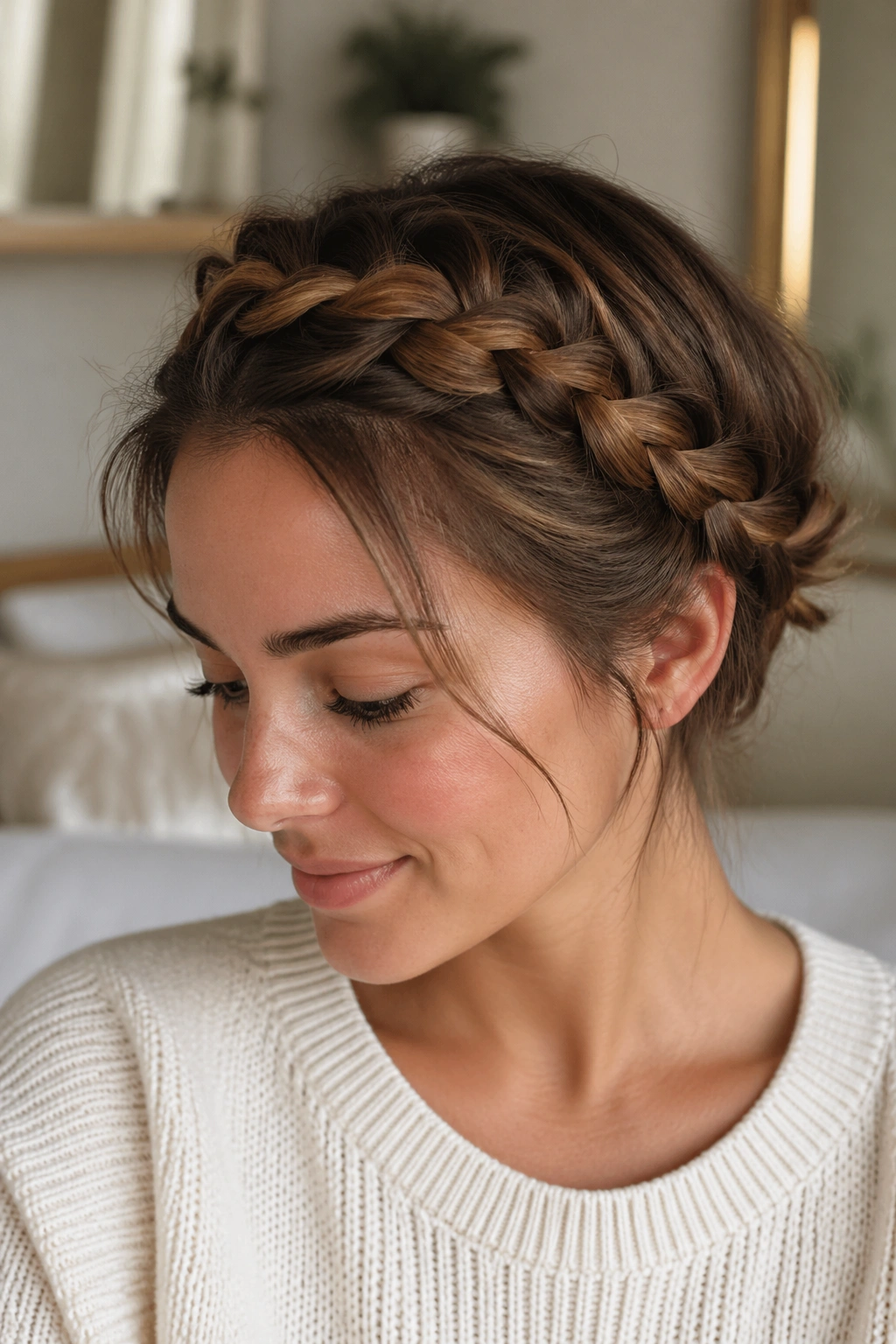
A crown braid can work on shoulder-skimming hair, but it works best when you stop expecting a full fairy-tale halo and start treating it like a practical pin-and-tuck style. The braid wraps around the head, which gives the cut a more finished shape and keeps short ends from flopping around the neck.
Why It Works
The braid follows the head’s curve, so the length does not have to stretch as far as it would in a long hanging braid. That makes it much friendlier to collarbone-length hair. If your layers are the problem, the crown braid tucks them into the path of the braid instead of letting them fall loose.
How to Make It Hold
- Use dry shampoo or texturizing spray first.
- Braid from one temple toward the back, then continue around the head.
- Hide the ends with bobby pins that match your hair color.
- Cross the pins in an X shape if the braid feels loose.
Small trick: if your hair is too blunt to make one full crown, braid two side sections and pin them together at the back. It cheats a little. It also works.
8. Milkmaid Braid
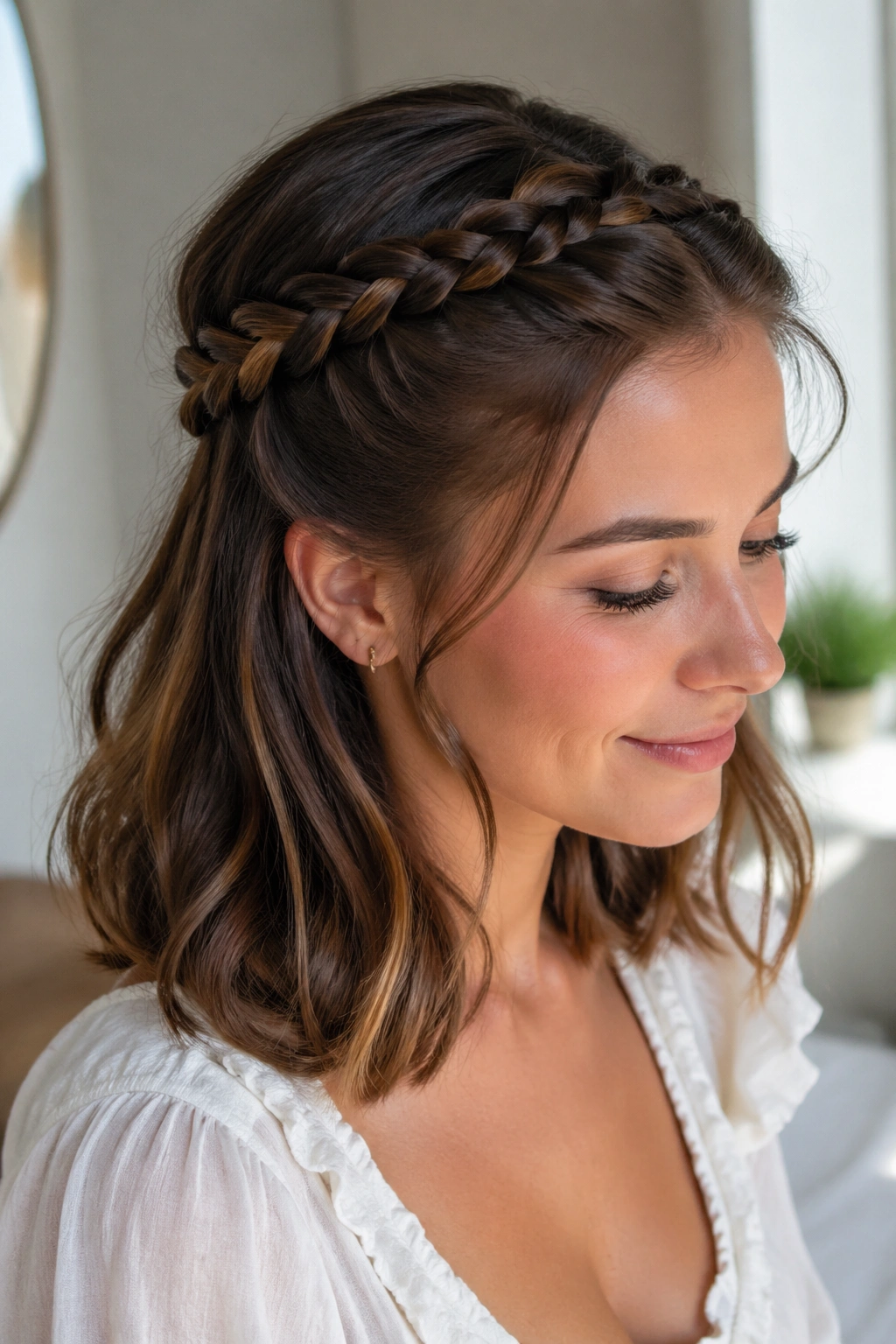
Milkmaid braids are far more forgiving than they look. On shoulder-skimming hair, the style often works better than people expect because it uses two braids pinned across the top of the head, so the length doesn’t have to hang freely all day. That makes it a strong pick for blunt cuts and medium-thick hair.
The best version is not over-tight. If you braid the sections too tightly, the braid looks stiff and the pinned shape starts to feel heavy. Keep the plaits soft, then lift them over the crown and pin them just above the ears. A few hidden pins do more work than a giant claw clip ever could.
I like this style for days when you want your hair off your neck but still want some shape around the face. It has a soft, old-fashioned look without being precious. And because the braids cross the head, shoulder-length ends are tucked where they can’t misbehave as much.
It’s one of those styles that looks more complicated than it is.
9. Accent Braid into Loose Waves
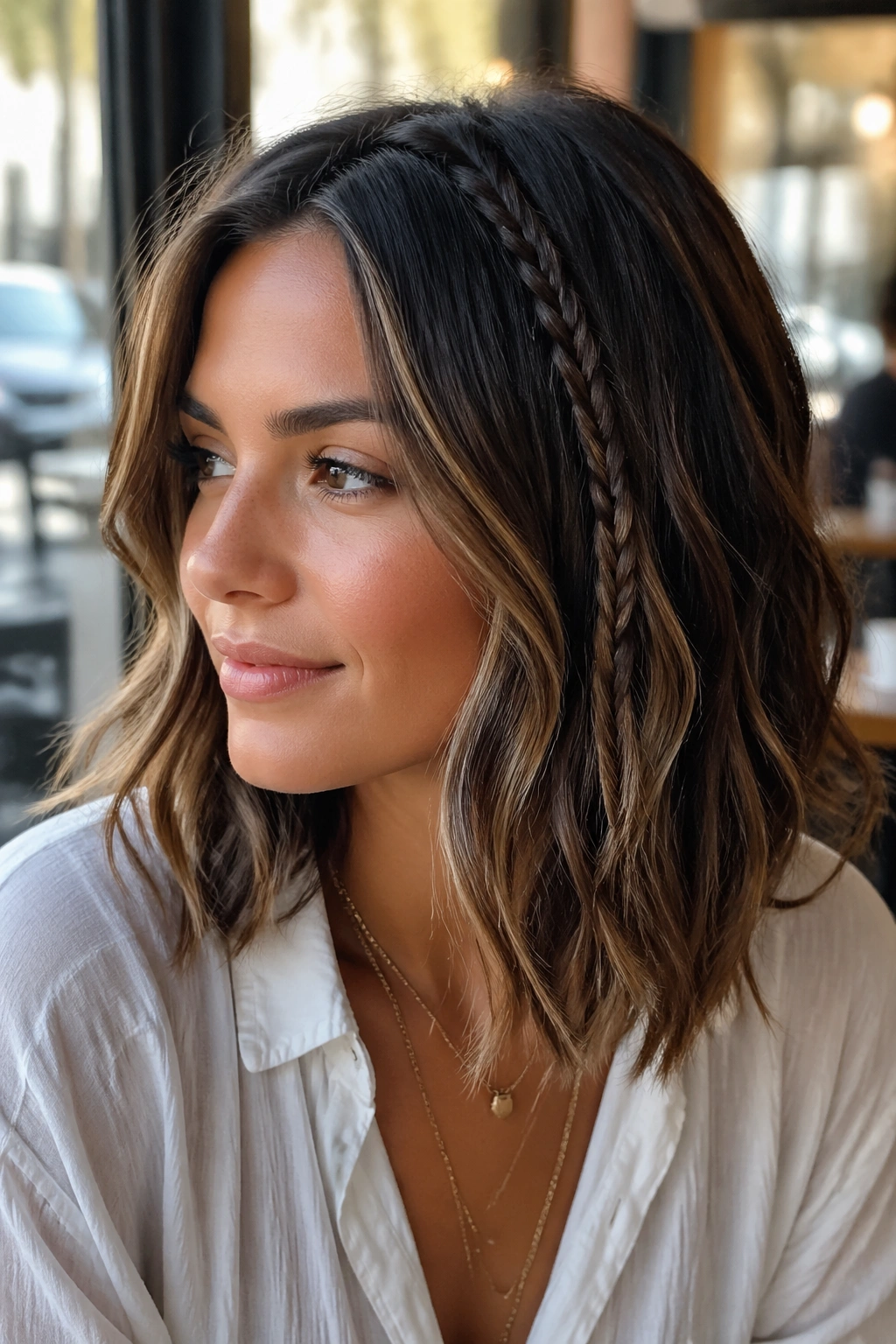
What if you only want a braid in part of your hair? Then an accent braid is the move. A single braid near the part, temple, or hairline gives shoulder-skimming hair a little detail without forcing all of it into a style that may not suit the length.
How to Use It
- Take a 1-inch section near the front and braid it tightly.
- Pin the end behind the ear or blend it into the rest of the hair.
- Leave the remaining hair loose, then add soft waves with a curling wand.
- Finish with a light mist of flexible hairspray so the braid does not puff out.
This style is especially good if your hair is layered. The braid controls the front pieces, and the loose lengths keep the style from looking cramped. It also works on second-day hair, which has enough grit to hold the braid but still moves nicely in the rest of the style.
The real benefit is balance. A tiny braid gives structure, while the loose waves keep the cut from feeling over-managed.
10. Boxer Braids
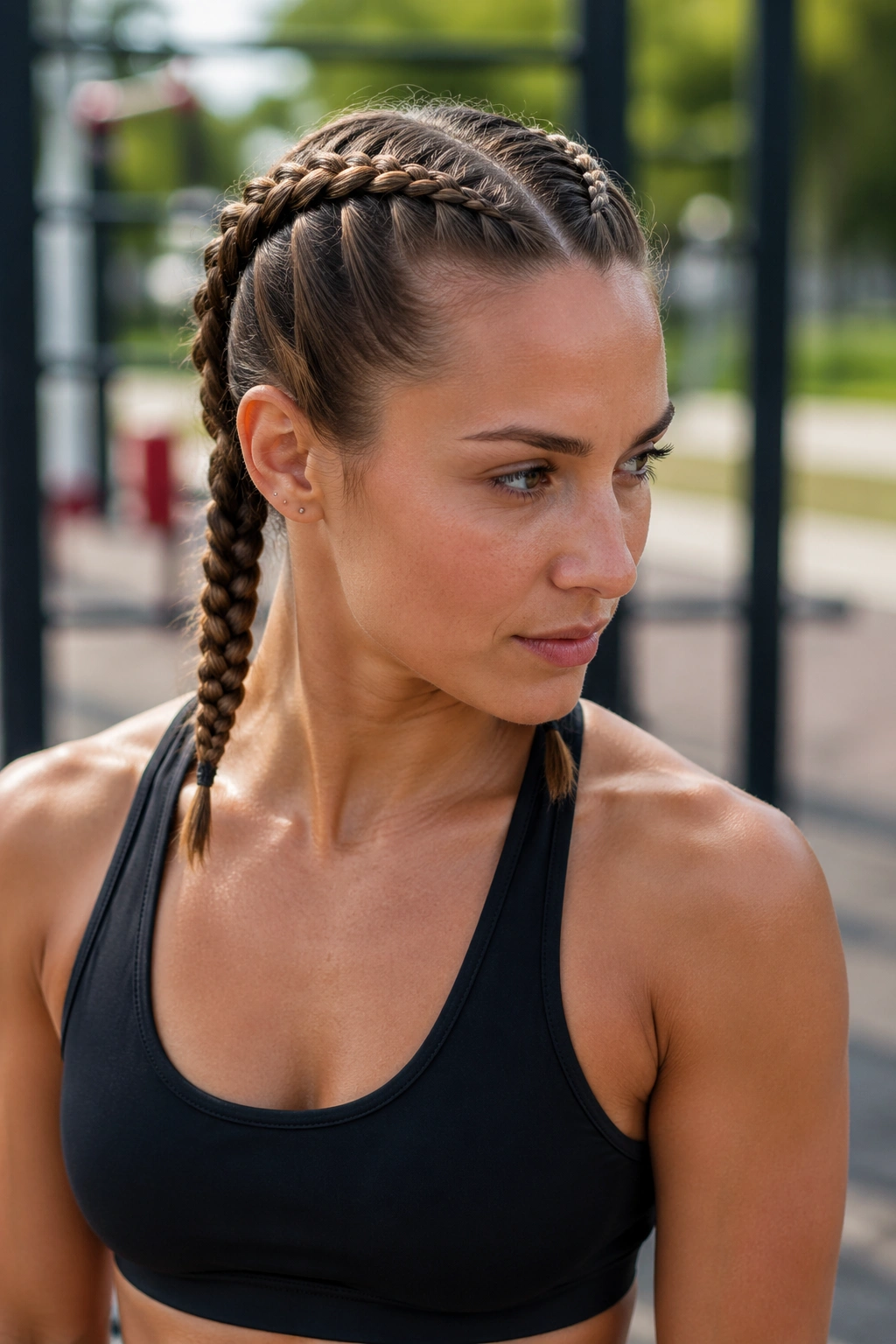
Boxer braids can be a lifesaver when shoulder-skimming hair is acting rebellious. The tight double braid layout keeps the hair close to the scalp, which is exactly what you want when the ends are too short to drape neatly. It also makes layered hair feel contained instead of fuzzy.
Picture a morning when your hair looks puffier than you want and you need it out of the way fast. Two Dutch braids down the scalp fix that in a hurry. They are firm, sporty, and excellent for holding hair through a long day, especially if you add a touch of pomade around the part before starting.
Key Points
- Make the center part as clean as you can.
- Braid both sides evenly so the style doesn’t lean.
- Use small elastics at the ends to keep short tails from slipping.
- Tug the edges only a little if you want a wider braid.
This is not a delicate, romantic style. That’s the point. It is sturdy, neat, and surprisingly flattering on shorter lengths.
11. Pull-Through Braid
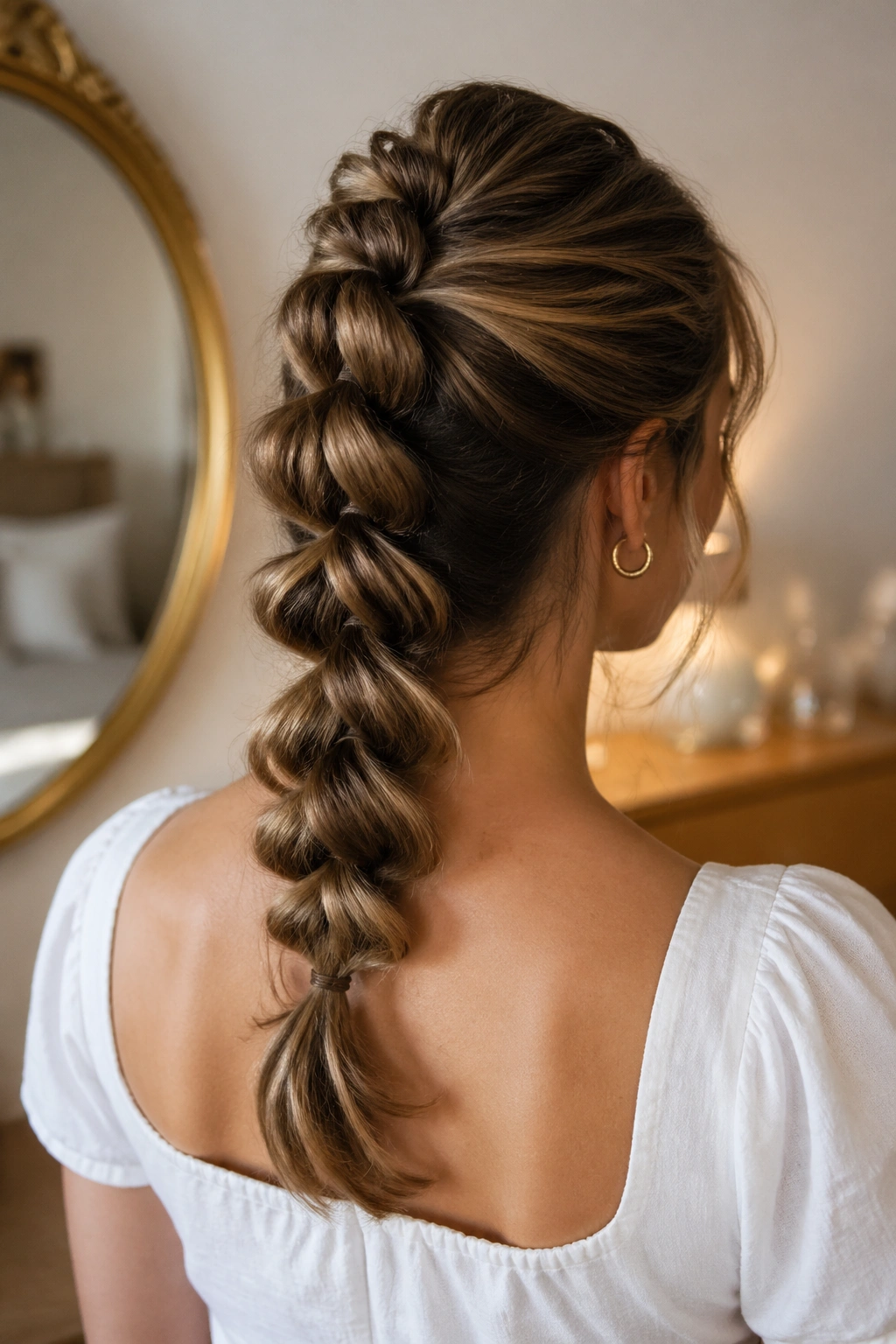
A pull-through braid is not technically a braid, and that is part of the appeal. It creates the look of a thick plait using a line of small ponytails, which is brilliant for shoulder-skimming hair because the style builds volume instead of relying on length alone. If your real braid feels thin or disappears halfway down, this one solves that problem.
The setup is simple: section the hair into ponytails, split the top ponytail, pull the next one through, and keep stacking the shape down the back. Clear elastics are your friend here. You may need four, five, or even six of them depending on how much hair you have, but each one should sit snugly without digging into the scalp.
What I love most is the way it fakes thickness. Fine hair looks fuller. Blunt ends look intentional. Even a little frizz becomes part of the shape, which is a mercy on busy days. It also holds up well if the hair is slightly dirty, because the texture gives the ponytails something to grip.
If you want a braid with drama and not a lot of struggle, this is one to keep handy.
12. Lace Braid
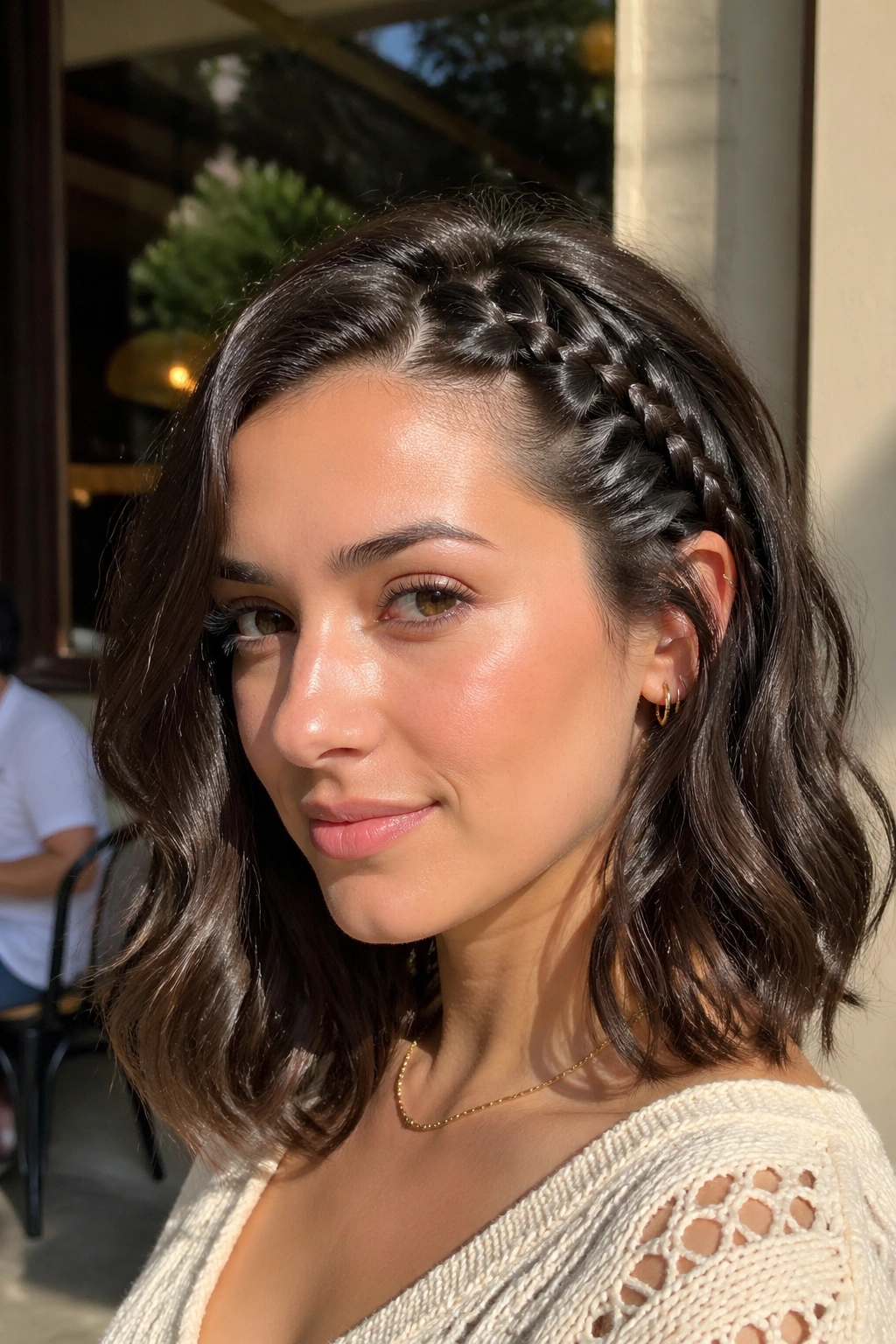
Unlike a French braid that keeps adding hair from both sides, a lace braid only feeds in hair from one side. That makes it a good fit for shoulder-skimming hair because it keeps the braid neat at the hairline while letting the rest of the length stay loose. The style reads clean, not crowded.
Best Use Cases
A lace braid works especially well when you want one side of the hair tucked back. It can trace the curve of the forehead, run along the temple, or sweep across the top of a half-up style. If your hair is a little too short for a full braid down the back, the lace braid still gives you that woven look without demanding every inch of length.
It also handles side-swept bangs better than a lot of other braids. The front pieces get folded into the braid, but the rest of the hair can still move. That balance is useful on shoulder-length cuts, where too much styling can make the whole thing feel boxed in.
Use a small amount of styling wax on the front pieces if they slip. Not much. Just enough to stop the flyaways from escaping.
13. Braided Ponytail
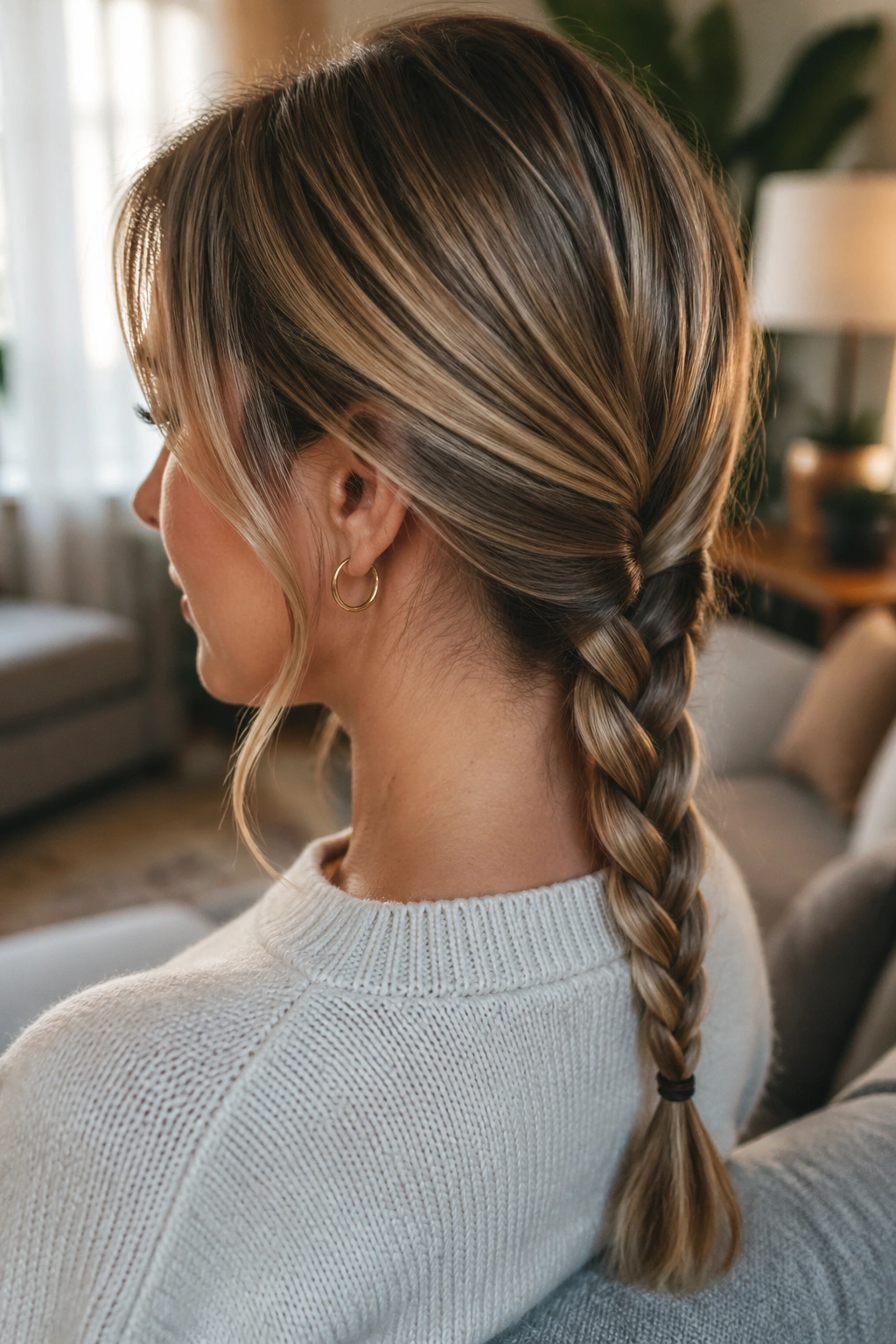
A braided ponytail is one of the easiest ways to make shoulder-skimming hair look more finished without overthinking it. You gather the hair first, then braid the tail, which solves a lot of the length issues that come up when you try to braid loose hair from the root. The ponytail acts like a built-in anchor.
Why It Works on Shoulder-Length Hair
The ponytail tightens everything at the crown, so the braid starts from a stronger point. That means the lower half of the style can be your actual braid, instead of a loose scramble of layers. It is especially good if your ends tend to stick out in a regular braid. Once they are caught in the tail, they behave better.
- Use a brush to smooth the crown before tying the ponytail.
- Place the ponytail low for a soft look or high for something sharper.
- Wrap a tiny section of hair around the elastic if you want it to look cleaner.
- Finish with a braid that ends in a small, secure elastic.
My preference: a low braided ponytail. It is less fussy and usually flatter at the back of the head.
14. Half-Up Braid
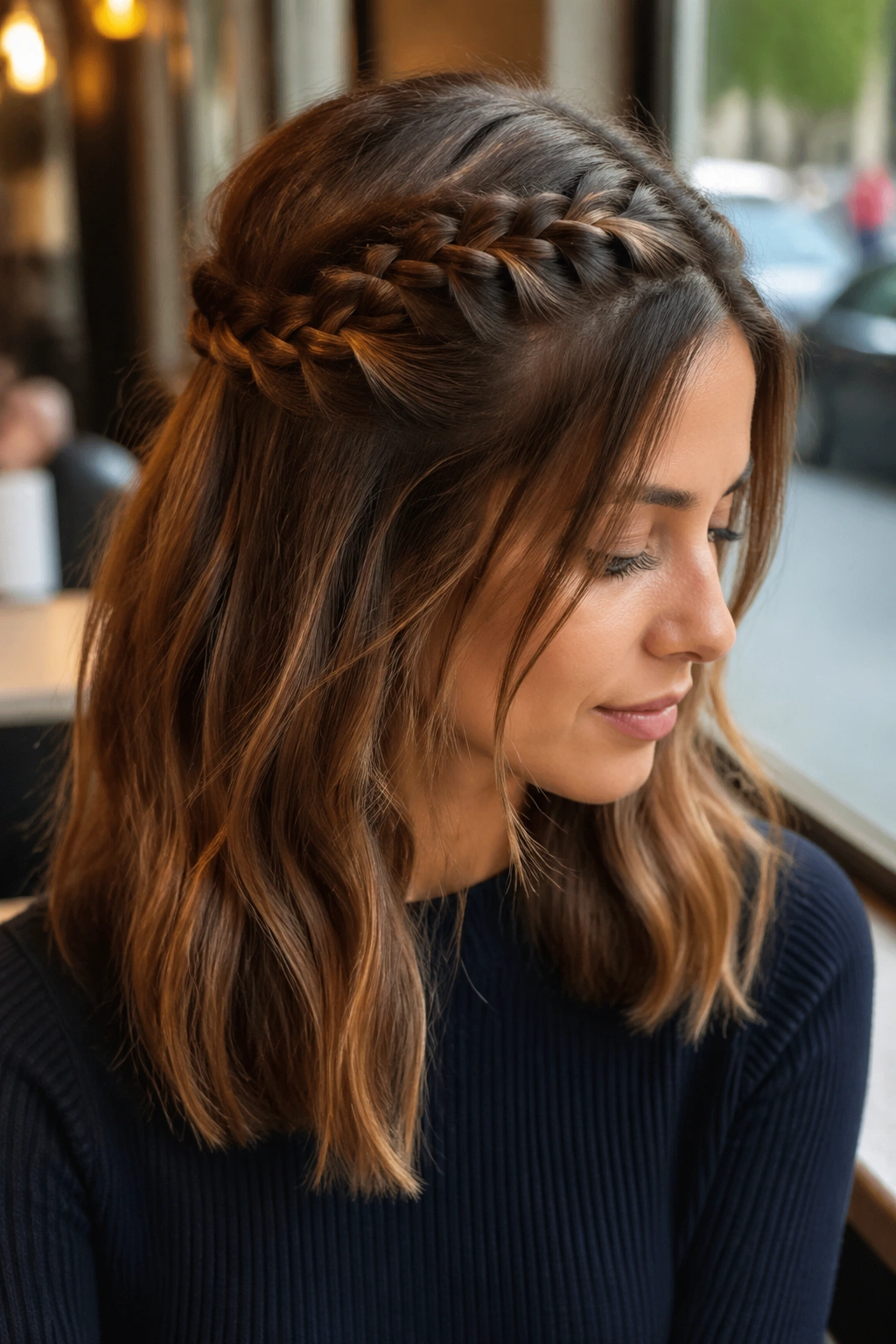
Half-up braids are where shoulder-skimming hair starts to feel easy. You get the tidy look of a braid across the top or back, but the rest of the length stays loose, which keeps the style from feeling overworked. That matters when your hair is long enough to braid but not long enough to want a heavy style hanging all day.
The nicest thing about a half-up braid is how it handles layers. The top section stays controlled, while the lower pieces can move naturally. If your ends kick out a little, no one notices because the loose part is supposed to be loose. That built-in slack makes the whole style more forgiving than a full braid.
You can keep it tiny and subtle or widen it into a chunky braid across the crown. A small barrette, a clear elastic, or a pair of pins can finish the look. If your hair is thick, leave a little more volume at the root so the style does not flatten too fast.
This is the braid you reach for when you want effort without the drama.
15. Braided Bun with Hidden Ends
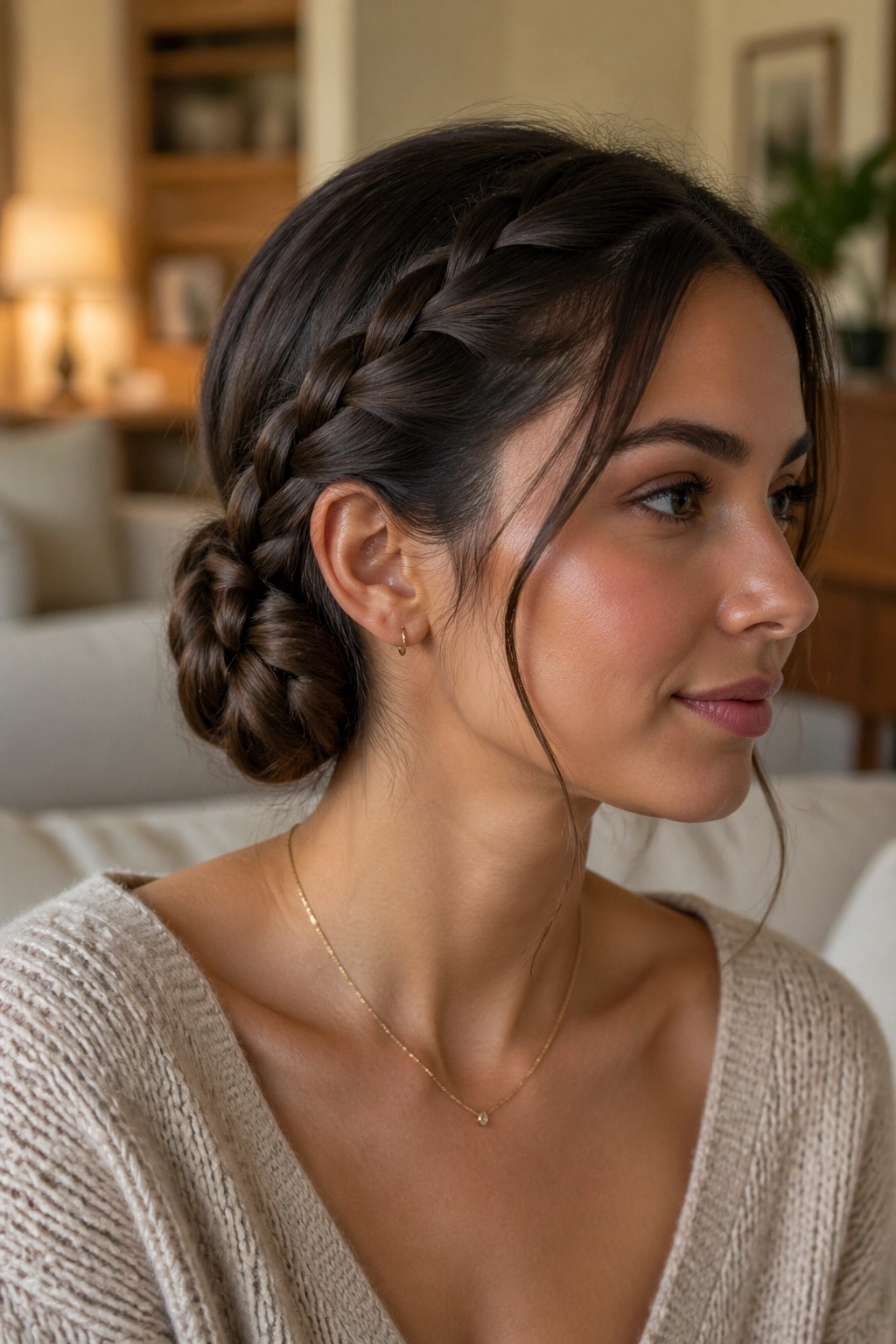
Can shoulder-skimming hair make a bun? Yes, if the braid does the heavy lifting. A braided bun works because the braid gives the hair enough structure to coil, pin, and tuck, even when the length would be awkward on its own. Without that braid, shorter hair often pops straight back out of a bun within an hour.
How to Use It
Start with a low braid or a side braid, then roll or wrap it into a bun at the nape. The ends may not circle all the way around, and that is fine. Pin the loose tail under the braid with two or three U-pins, then hide any stray ends under the coil. A small donut bun tool can help if your hair is fine, but it isn’t required.
This style works best with day-old hair or a bit of mousse at the roots. Freshly washed hair can be too silky, and the bun will feel like it wants to unravel every time you move your head. A few crossed bobby pins solve most of that.
It’s tidy, practical, and better than pretending a loose bun will stay put on shorter lengths. It won’t.
16. Micro Braids at the Hairline
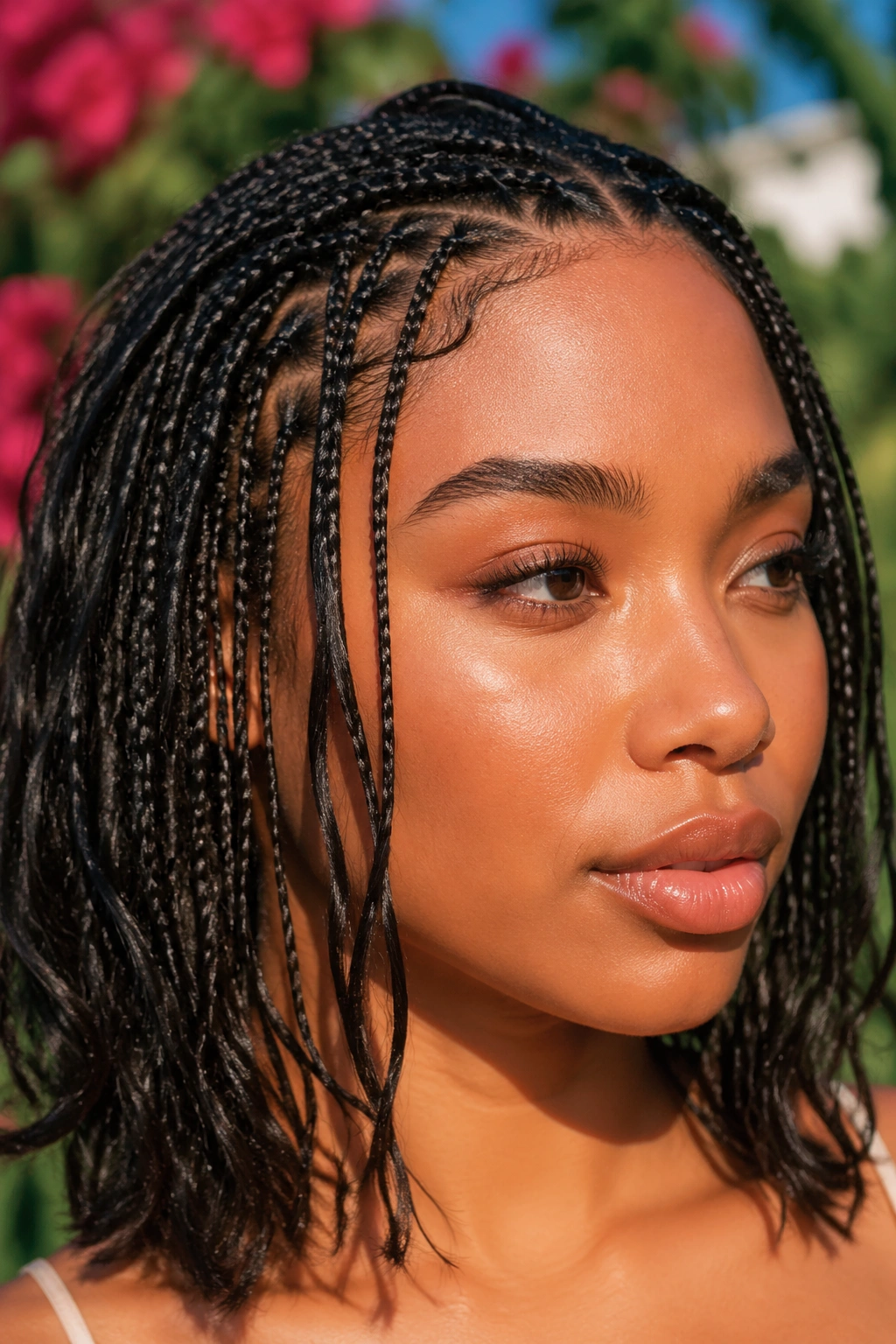
Micro braids at the hairline are a small detail with a big payoff. They are especially useful on shoulder-skimming hair when you want to tame baby hairs, grow-out pieces, or side layers that never stay tucked behind the ear. The braid itself is tiny, but it changes how the whole style sits.
A few narrow braids near the temples can frame the face without taking over the rest of the hair. They also give you a way to hold shorter front pieces in place while leaving the rest loose, which is a smart compromise on this length. If your hairline is a little uneven, these braids make it look deliberate.
What to Watch For
- Keep the sections narrow, around 1/4 inch wide.
- Use a fine-tooth comb so the parts stay neat.
- Secure each braid with a tiny elastic or hide the end under a top layer.
- Stop before the braids become too many; two or three is plenty.
This style is small, but it does a lot of work. It’s the quiet fix that saves a messy front section.
17. Mohawk Braid
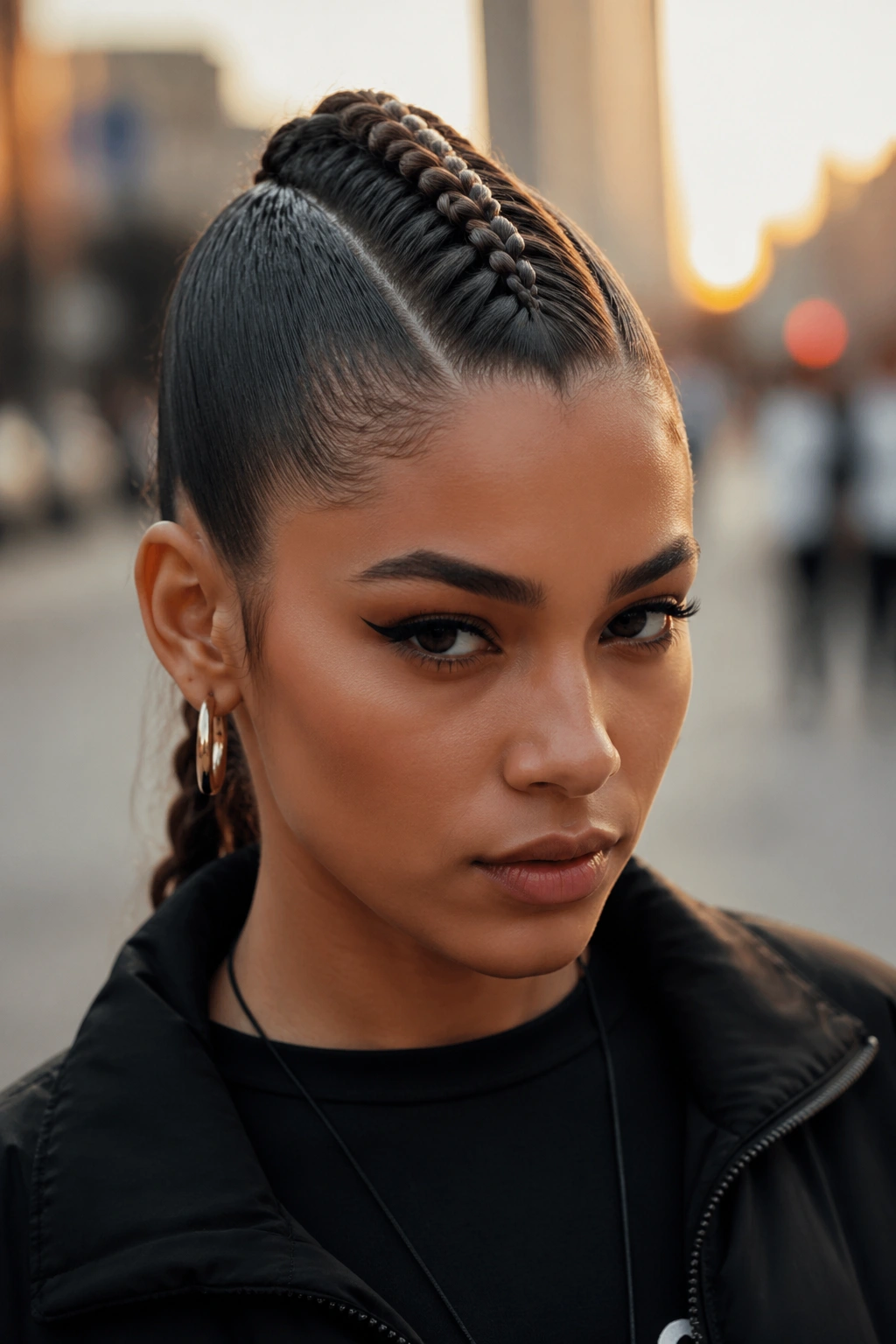
A mohawk braid gives shoulder-skimming hair a sharper shape than most people expect. The braid runs down the center of the head, while the sides are slicked back or pinned tight, so the style creates height where shorter hair usually falls flat. If your cut has layers on the sides, this is a clever way to keep them from breaking free.
The best part is that the braid itself can be customized. A Dutch mohawk braid sits high and bold. A French version looks softer. A pull-through version gives extra volume if your hair is fine. The shape stays the same: strong center line, controlled sides, and a finish that feels deliberate.
It helps to prep with mousse at the roots and a little smoothing cream around the temples. That keeps the sides from frizzing and lets the braid stay the focal point. If your hair is collarbone-length, you may want to braid only the top portion and tie the rest into a small ponytail.
This style has attitude. It doesn’t apologize for taking up space.
18. Braided Headband
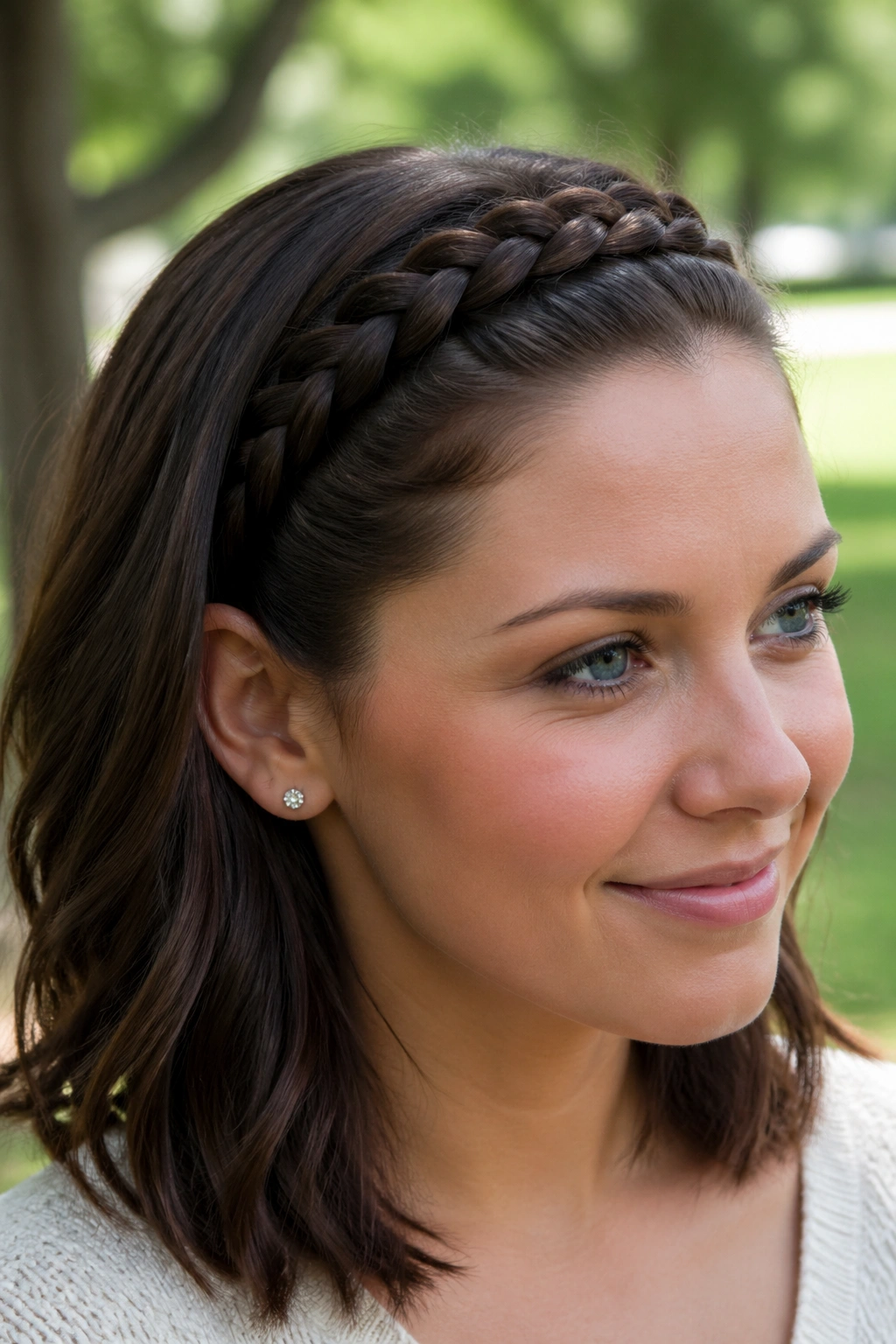
A braided headband is a smart choice when you want a braid that stays in the front third of the head and leaves the length loose. Unlike a crown braid, which wraps all the way around, a headband braid sits like a band of texture across the hairline. That makes it a little easier on shoulder-skimming hair and less likely to run out of length.
It works especially well with side-swept bangs or a soft middle part. You braid a section from one temple, drape it across the front, and pin it behind the opposite ear. The rest of the hair can stay straight, waved, or tucked into a low ponytail. That flexibility is the point.
Best For
- Quick styling before work or dinner
- Hiding oily roots at the front
- Keeping bangs or shorter front layers out of the face
- Adding detail without committing to a full updo
Use a couple of hidden pins and a bit of spray at the temple, and the braid usually stays put better than you’d expect. It’s one of the least fussy ways to wear braids on this length.
19. Twist-and-Braid Hybrid
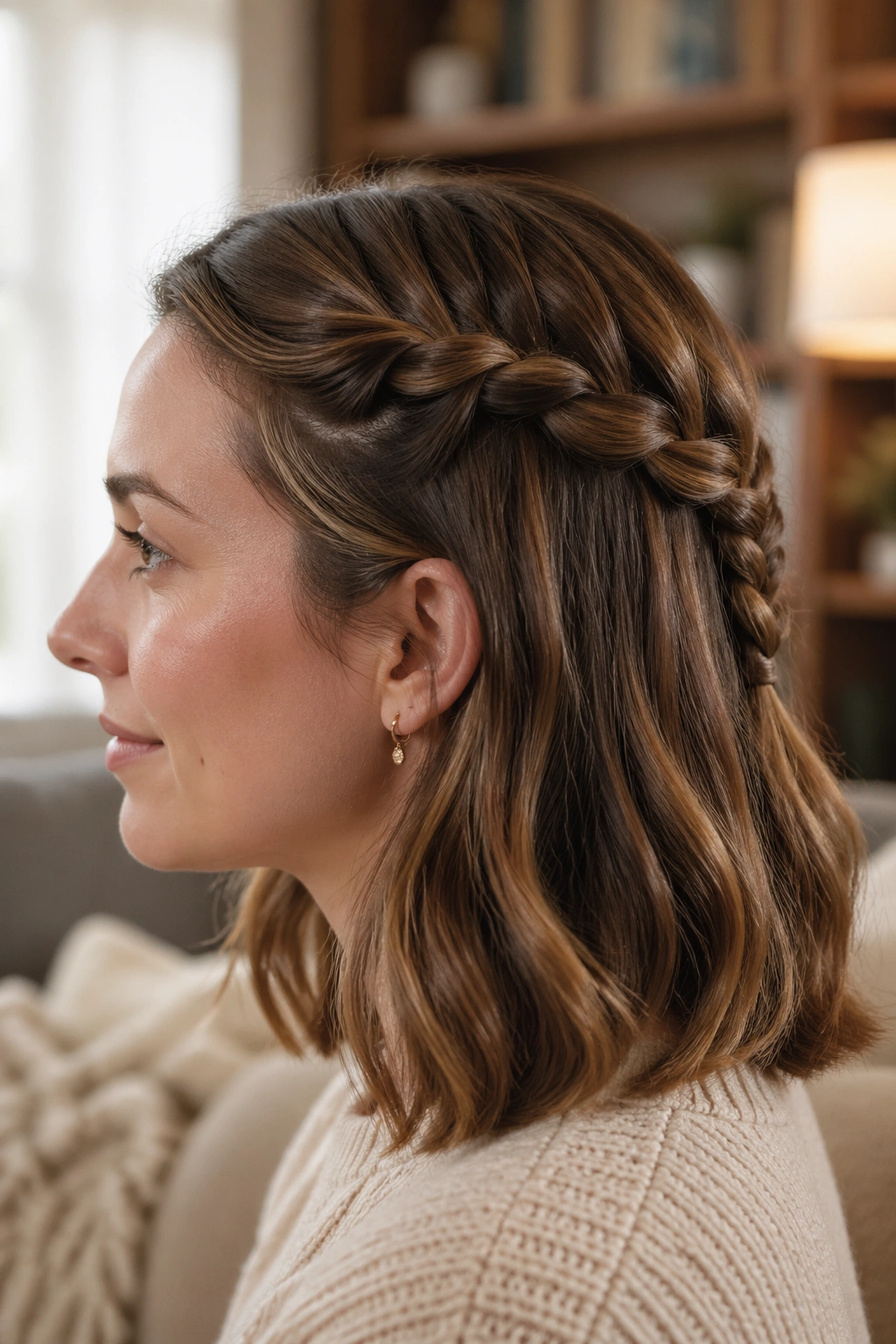
A twist-and-braid hybrid is a good answer when your hair is too layered for a perfect braid but still long enough to hold a pretty shape. You start with a twist at the temple or nape, then fold those sections into a braid once the hair is gathered. The result feels softer than a strict braid and more secure than a loose twist.
Why It Works
Twists grab shorter pieces better than a full braid at the very front, especially around the face. Then the braid takes over once there’s enough length to hold. That combination is useful for shoulder-skimming hair because the shorter front pieces get anchored early, before they have a chance to break free.
- Start with two small sections and twist them away from the face.
- Merge the twists into a three-strand braid at the back or side.
- Use a light-hold product so the twist doesn’t puff out.
- Keep the final braid relaxed if you want a softer finish.
Best result: a braid that looks intentional but not stiff. That’s a hard balance to get on shorter hair, and this style does it well.
20. Bubble Braid with Braid Detail
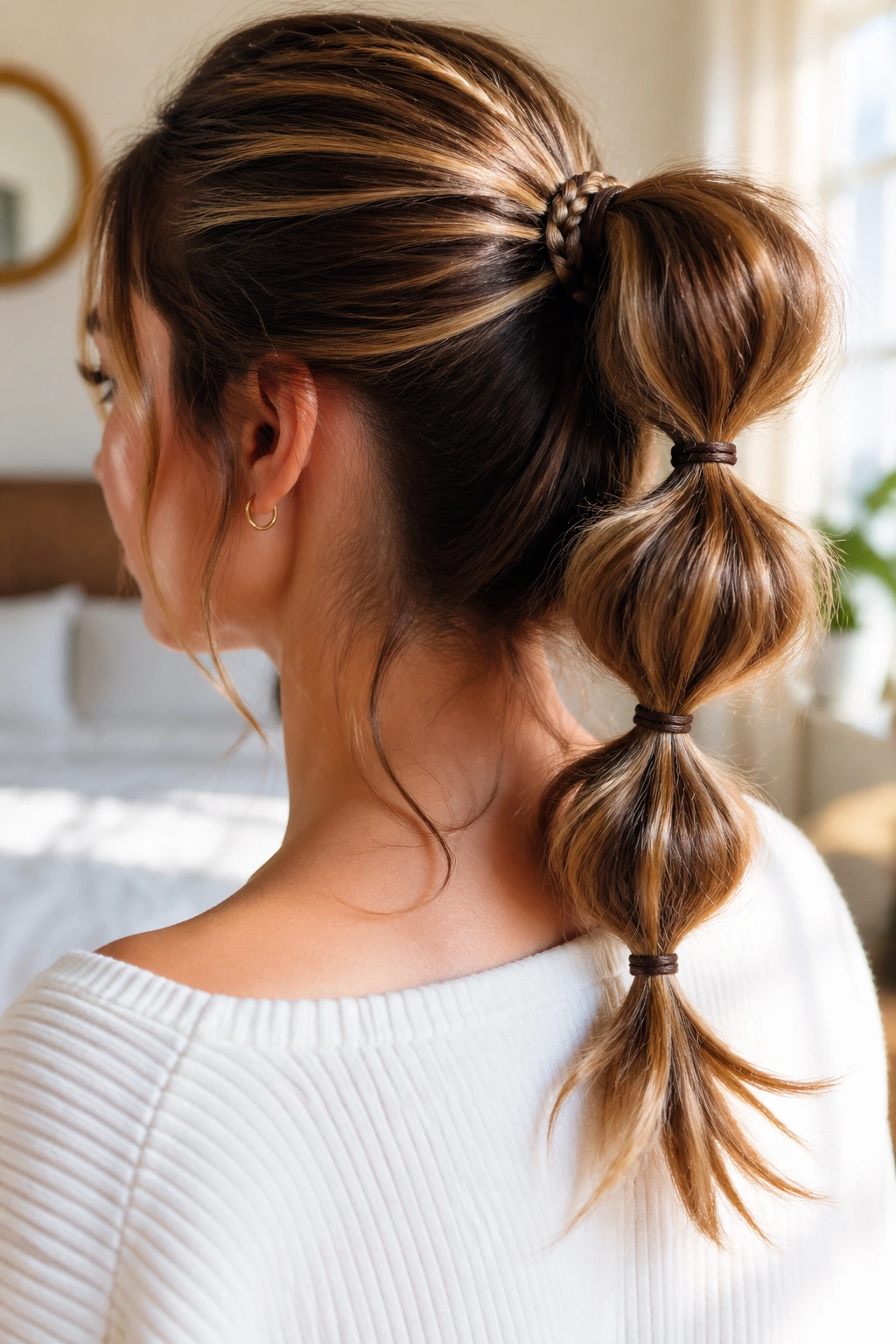
If your hair slips out of braids, bubble sections can carry the style. A bubble braid gives shoulder-skimming hair the illusion of length and thickness by using elastic-tied segments instead of relying on a long woven tail. Add a small braid at the top or base, and the whole thing looks much more finished.
The structure is easy: make a ponytail, add more elastics every 1.5 to 2 inches, then gently tug each section outward so it rounds into a bubble. If you want the braid detail, braid the first 2 inches of hair before switching to bubbles. That little woven start keeps the style from feeling too plain.
This works well on hair that is fine, slippery, or blunt at the ends. It also photographs nicely in motion because the bubbles hold their shape better than a soft braid on shorter lengths. A few bobby pins at the crown help if the base wants to slide down during the day.
It’s playful. It’s practical. And it cheats length in a way I respect.
21. Four-Strand Braid
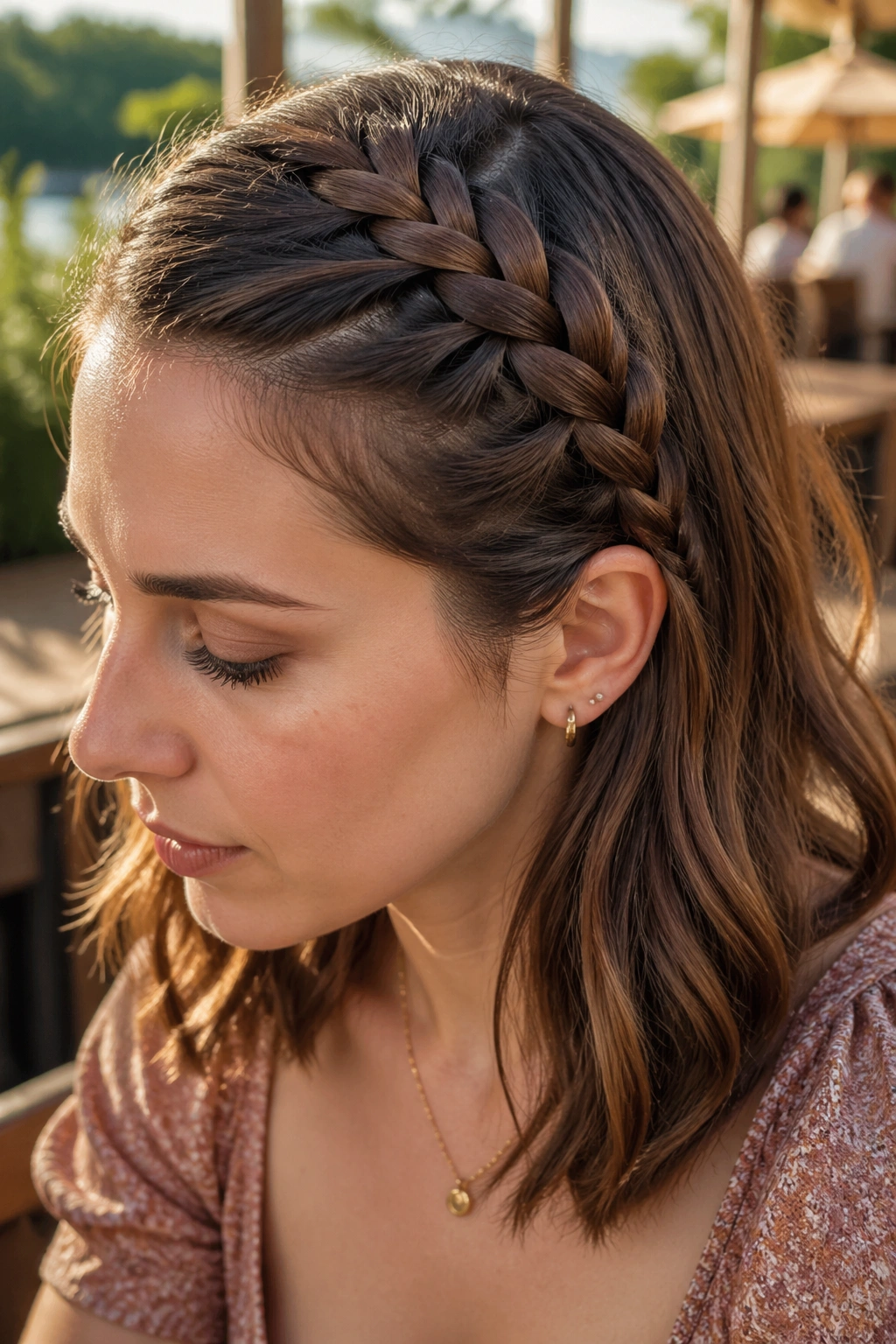
Need a braid that looks more intricate without asking for extra length? A four-strand braid does that nicely. It creates a broader, rope-like pattern that reads fuller than a regular three-strand braid, which is a real advantage when the hair stops around the shoulders and you want the braid itself to feel substantial.
How to Get the Most From It
The four-strand pattern works best when the sections are evenly sized and the hair has a little grip. Very soft, freshly washed hair can make the strands slip around too much. A light dusting of texturizing powder or dry shampoo at the roots helps the braid hold its shape while you work.
This style is especially good for people who think their shoulder-length braid looks too thin. It changes the whole silhouette. You get more width, a clearer pattern, and a braid that doesn’t vanish into the ends so quickly. If the braid feels too polished, tug it open a little for a softer finish.
It takes a bit of practice, but not much. After two tries, your hands usually catch the rhythm.
22. Messy Halo Braid
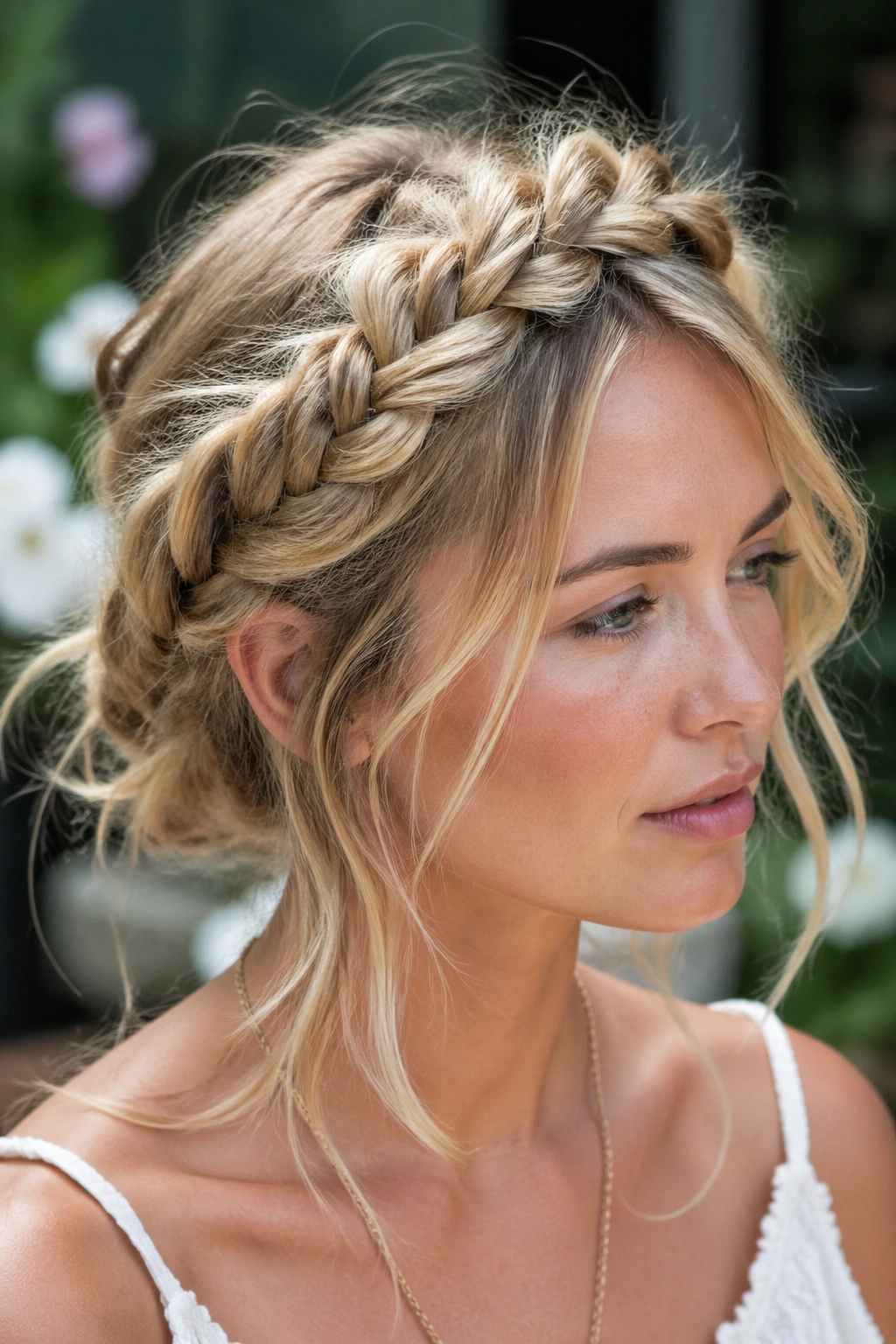
A messy halo braid is the style I’d save for the days when shoulder-skimming hair wants to look pretty but not precious. It sits around the head like a loose ring, but instead of being perfectly smooth, it leaves a few wisps and soft bends around the face. That looseness is exactly what makes it work on shorter lengths.
The braid does not have to travel in one perfect line. In fact, it usually looks better when it doesn’t. Start with a side braid or two smaller braids, then pin them around the crown and tuck the ends underneath. The soft, slightly undone finish helps hide any uneven layers or ends that are too short to fold in neatly.
Use bobby pins liberally. That sounds dull, but it matters. A halo braid on shoulder-skimming hair needs more support than the glossy photos suggest, and the hidden pins are what keep the style from sagging at the temples.
It’s the kind of braid that looks like you took your time, even if you didn’t.
If your hair sits right at the shoulders, don’t fight that length. Work with it. Smaller elastics, a little texture, and a style that respects the cut usually beat a long braid that spends all day unraveling. The best braids for this length are the ones that hold their shape near the head and let the ends stay neat, not the ones that pretend your hair has five extra inches to spare.
And honestly, that is part of the fun. Shoulder-skimming hair can wear braids with a sharpness that long hair sometimes loses. It has enough length to show pattern, enough movement to stay light, and just enough attitude to make a simple braid look deliberate.