

Butterfly braids have a rare quality: they can look polished without looking stiff. For Black women in their 30s, that matters more than most style roundups admit. You want hair that can handle meetings, errands, date night, school pickup, and the random “we’re going out after work” text without demanding a full rebuild every morning.
That balance is the whole appeal. Butterfly braids sit between structure and softness. You get the order of a braided style, then the loose loops and textured pieces that keep it from feeling severe or overworked. When they’re done well, they move. When they’re done badly, they can look bulky at the root or frayed at the ends. Small difference. Big result.
A good set also respects your scalp. That means the right length, the right part size, and enough tension control that your edges do not feel like they’ve been in a fight by day three. Not every pretty braid is a wearable braid, and the wearable ones are the ones that last in real life.
1. Waist-Length Knotless Butterfly Braids
If you want one style that looks finished the second you leave the chair, waist-length knotless butterfly braids are the reliable choice. The knotless base keeps the root flatter and softer, while the length gives you that long, clean line that looks good with a T-shirt, a silk blouse, or a sharp blazer.
Why the length works
Waist-length braids give the loose butterfly loops room to show up. On shorter styles, the texture can disappear a little. Here, it reads from across the room, which is part of why this version has so much presence. Ask for medium parts and a slightly tapered finish at the ends so the style doesn’t feel blocky.
- Best when you want a braid that looks polished from day one.
- Easy to pull into a low bun, a thick ponytail, or one braid over the shoulder.
- Safer on the scalp than a heavy knot at every root.
My favorite detail: keep the loops loose near the middle of the braid, not all the way at the ends. That keeps the style soft instead of messy.
2. Shoulder-Grazing Butterfly Braids
Shoulder-grazing butterfly braids are the version I’d hand to someone who likes clean hair but hates hair brushing every coat collar she owns. They have enough length to feel styled, yet they stay out of the way when you’re driving, carrying a tote, or leaning over a laptop all day.
They also age well in the best sense of the word. A shoulder-length braid style can look fresh for longer because it does not rub against your waist, the back of chairs, or the edge of your jacket as much. That matters more than people think.
The shape is nice too. It frames the face without taking over it, and it lets the butterfly texture do the work without leaning on drama. If your life is split between polished and practical, this is one of the easiest places to land.
3. Center-Part Butterfly Braids with Face-Framing Pieces
A clean center part changes the whole mood. It makes butterfly braids feel calm and deliberate, then the face-framing pieces soften the front so the style doesn’t turn severe. That contrast is what makes this version so wearable on women who want structure without stiffness.
A center part also plays nicely with earrings, a sharp neckline, or a bold lip. The eye has somewhere to go. If your face is round, the vertical line can lengthen things a bit. If your face is oval, it just looks neat and balanced. No drama. No fuss.
What to ask for
- A straight, clean part from the front hairline to the crown.
- Two thinner front pieces left a touch longer than the chin.
- Soft, loose loops near the temples so the front doesn’t look flat.
Best move: ask for the front pieces to fall a little unevenly. Perfect symmetry can make the style feel hard.
4. Side-Swept Butterfly Braids
Side-swept butterfly braids feel a little more relaxed, and that is exactly why they work. The sweep across one shoulder gives the style movement before you even touch it, which makes it a smart pick when you want softness around the face and a little less seriousness at the crown.
This version also plays well with statement earrings and layered necklaces. Hair that falls to one side leaves room for the rest of the outfit to breathe. If you like a neckline with shape — square, off-the-shoulder, boat neck — the side sweep frames it instead of competing with it.
There’s a practical side too. Side-swept braids are easier to tuck back when you need them out of the way, and they make a simple bun or half-tie look intentional rather than improvised. That sounds minor. It isn’t.
5. Jumbo Butterfly Braids for Faster Installation
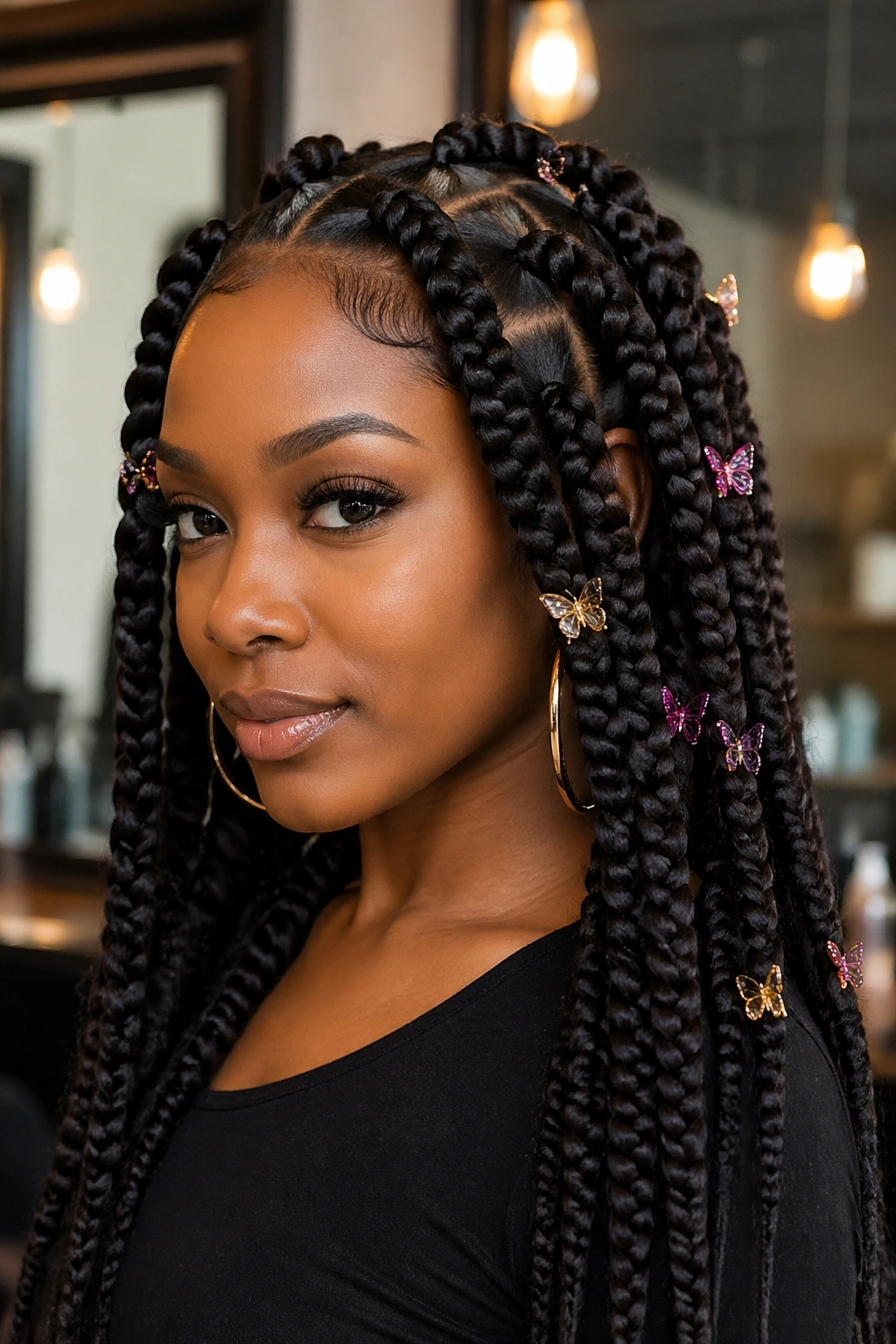
If you’ve ever sat through a marathon braid install and started bargaining with the universe by hour four, jumbo butterfly braids are the honest answer. Fewer braids mean less time in the chair, fewer parts to maintain, and a bolder shape that reads clearly even from a distance.
What makes them worth it
Jumbo braids show off the butterfly loops in a bigger, more graphic way. The texture has room to breathe, and the overall look feels confident without needing a lot of accessories. They also work nicely when you want a style that can be styled in seconds.
- Faster to install than small or medium versions.
- Easy to gather into one thick ponytail.
- Best when the parting stays neat, because sloppy sections stand out fast.
Watch the weight. Jumbo braids can feel heavy if they’re too long or made too dense at the nape, so size matters here more than people admit.
6. Medium Butterfly Braids for Everyday Wear
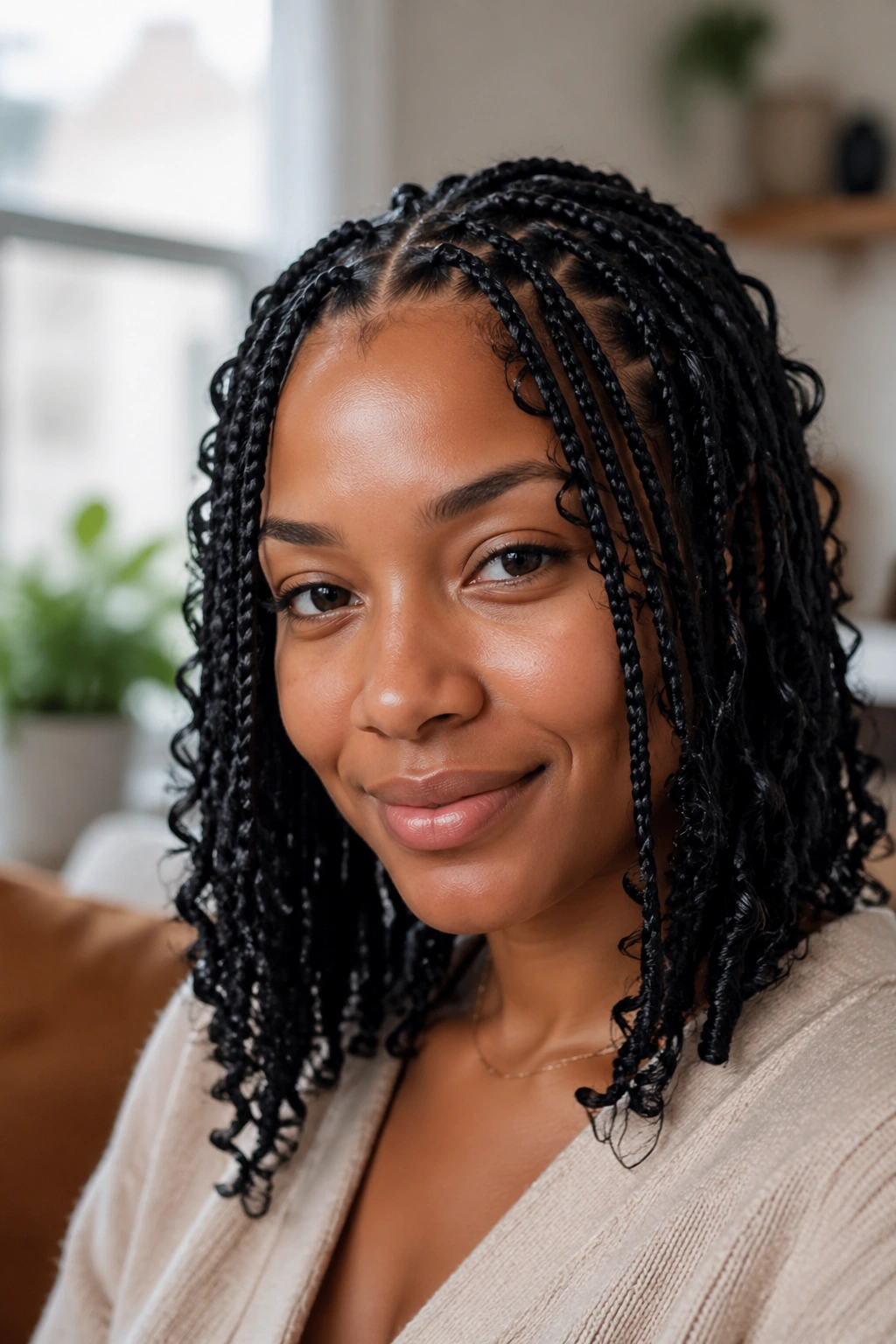
Medium butterfly braids sit in the sweet spot between tiny and oversized. That sounds boring until you realize boring is often what you want from a style that has to survive work, commuting, dinner plans, and the occasional last-minute errand run.
Compared with jumbo braids, medium ones look a little less bold but usually feel easier to wear all day. Compared with smaller braids, they install faster and are less fussy at bedtime. That balance is the reason so many women end up here after trying something more dramatic and deciding they want their life back.
They also give you options. Medium braids can look neat in a ponytail, soft in a half-up style, or polished in a low bun. Nothing about them locks you into one mood, and that flexibility is the whole point.
7. Triangle-Part Butterfly Braids
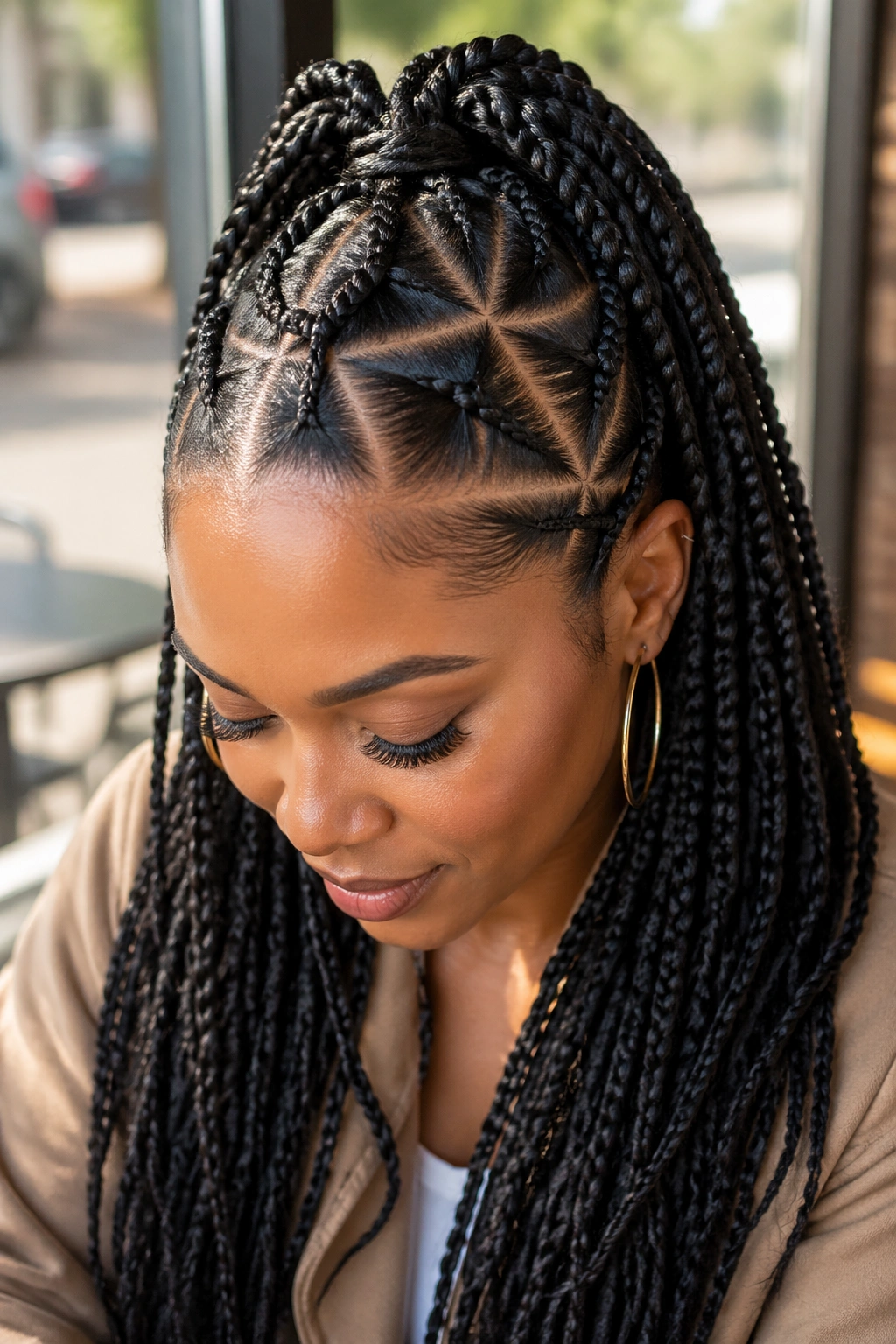
Triangle parts are one of those small details that change everything. The braid itself may be familiar, but the parting gives the style a sharper, more fashion-forward edge. It feels a little more designed, a little less standard, and that alone can make butterfly braids feel fresh again.
What to ask your braider
- Triangle parts that stay even across the crown.
- A clean front line so the geometry shows clearly.
- Minimal filler near the roots, especially if you want the part shape to stay visible.
The style works especially well if you wear your braids down most of the time. The parting becomes part of the look instead of a background detail. If you like hair that looks like someone thought about it, this is a good place to start.
8. Half-Up, Half-Down Butterfly Braids
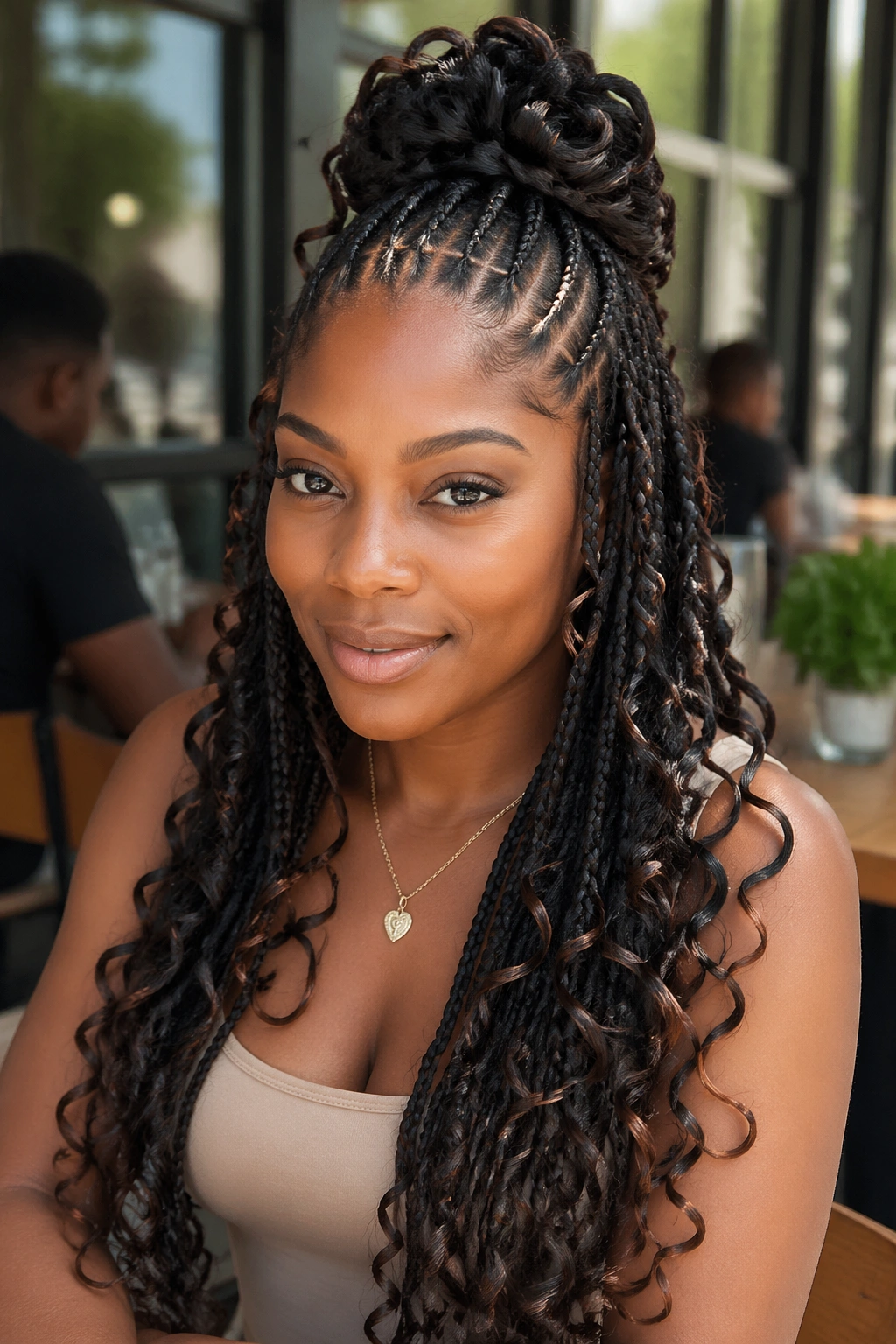
Half-up, half-down butterfly braids are for the days when you want your hair off your face but still want the movement of length. They are useful, yes, but they also have a kind of easy confidence to them that works at brunch, at work, and on a date when you do not feel like overdoing it.
The top section gives you structure. The bottom section keeps the softness. That’s the whole trick. You can gather the top into a small bun, a puff, a knot, or a wrapped ponytail, then leave the rest loose so the butterfly loops still show.
A good half-up style should not feel tight at the crown. If it does, the whole thing loses the easy part. Leave enough lift at the top so it sits naturally, not like it’s trying too hard.
9. Bob-Length Butterfly Braids
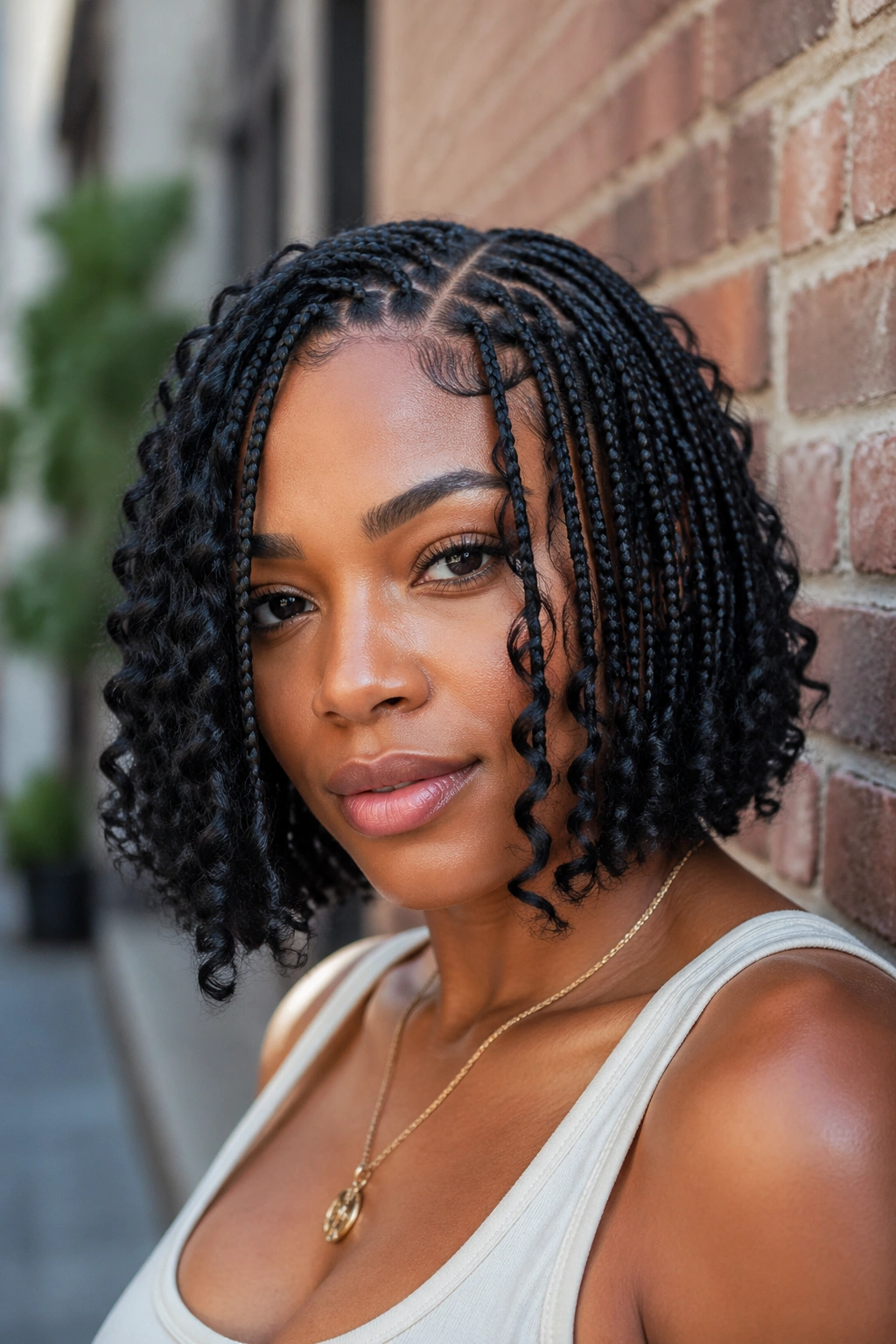
Bob-length butterfly braids are sharp in a way that longer styles are not. They land around the jaw, chin, or just above the shoulders, and that shorter length makes the braid pattern itself feel more visible. You notice the shape first, then the movement.
They’re also easier to live with. Less length means less snagging, less weight, and less hair sitting on the back of your neck when the temperature climbs or your schedule gets crowded. If you like neatness, this version makes a good case for itself.
A bob braid can look especially good with side parts, soft loops, and a few face-framing pieces. It gives grown-woman energy without looking severe. Short hair doesn’t always feel soft; this one does.
10. High Ponytail Butterfly Braids
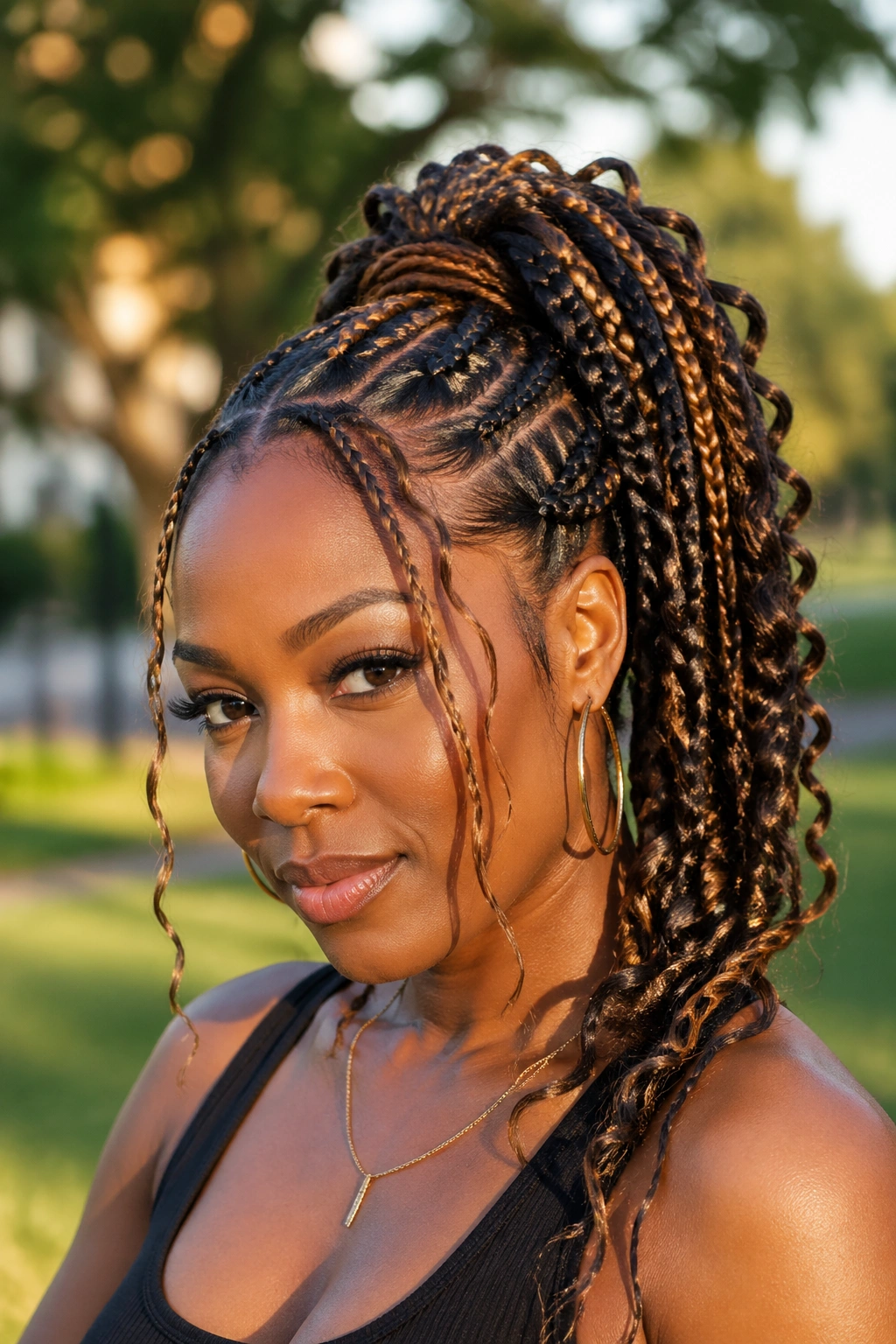
A high ponytail changes the whole braid story. Suddenly the style feels lifted, cleaner, and a little more playful, which is useful when you want your face open and your features framed. It also makes makeup and earrings pop without needing extra work.
How to wear it well
- Use a wrapped braid or braid hair to hide the base instead of a tight elastic.
- Keep the crown smooth, but not pulled flat to the skull.
- Let a few face-framing pieces stay loose if you want movement around the cheeks.
The high ponytail works because it gives you height without losing the braid texture. It can go sporty, polished, or slightly dramatic depending on how tight you make the wrap. Tight is not always better here. A little softness reads richer.
11. Low Bun Butterfly Braids
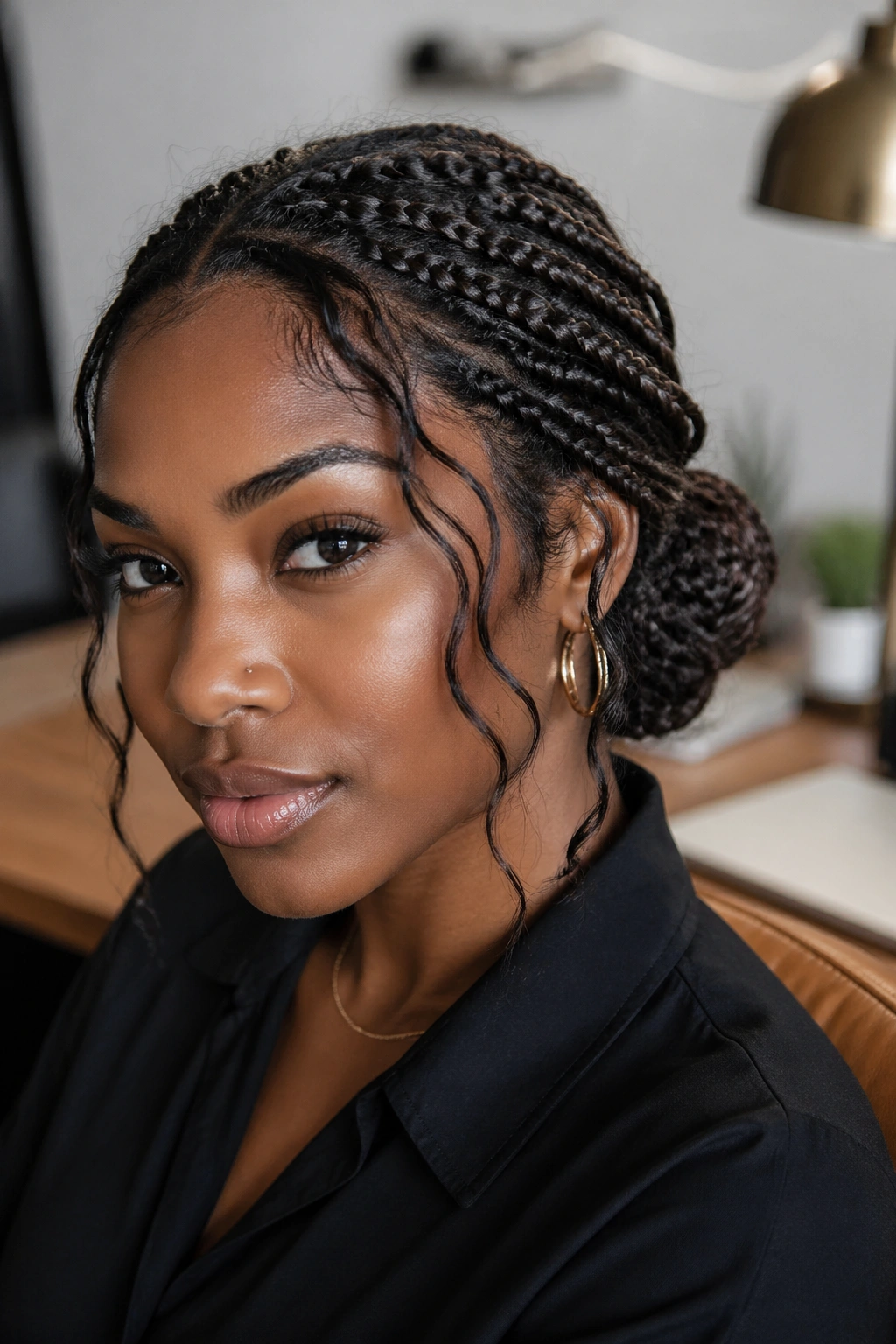
Low bun butterfly braids are one of the best “I have places to be” styles. They look tidy, they stay put, and they make it easy to move between a workday, a dinner reservation, and a late train without your hair turning into a project.
The bun doesn’t need to be perfect. In fact, a slightly loose wrap looks better than a hard, sculpted knot that feels overdone. Pull the braids back at the nape, twist them into a compact bun, and leave just enough texture visible so the butterfly detail doesn’t vanish.
This style is also kind to outfits with collars or structured shoulders. It keeps the hairline open and gives your clothes room to show. That may sound small. It isn’t. A low bun changes how the whole silhouette reads.
12. Butterfly Braids with Curly Ends
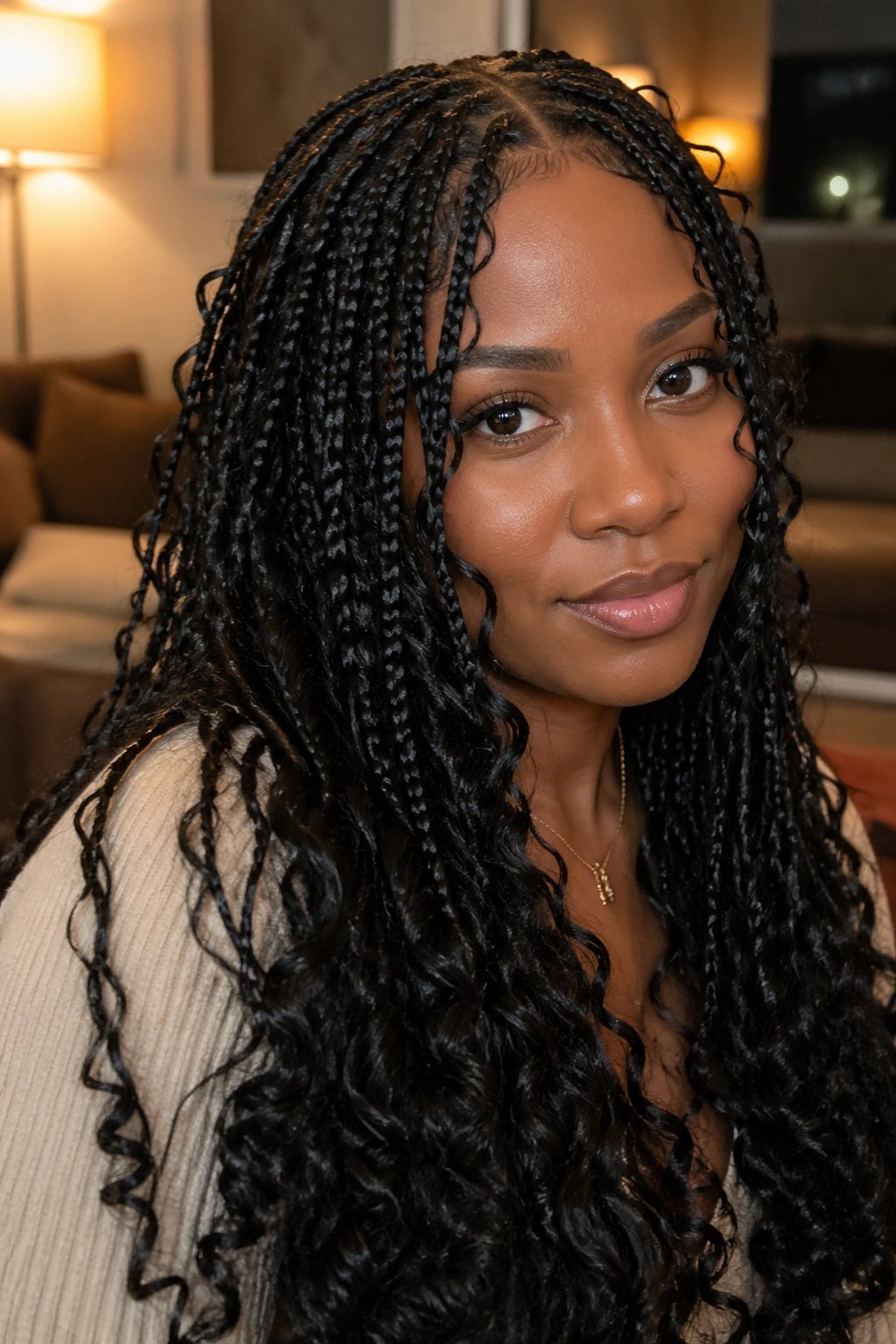
Curly ends are where butterfly braids get softer and a little more romantic. The braids still give you structure, but the ends break it up with movement, which makes the whole style feel less rigid and more lived-in.
That loose curl finish also helps if you like hair that looks a little undone in a good way. It’s not the same as frizz. Frizz is random. Curly ends are intentional, and they need care so they stay defined. A light mousse and a satin scarf at night go farther than people expect.
The catch is upkeep. Curly ends usually need more refresh work than sealed braid ends, especially if you wear the style for a long stretch. If you like clean maintenance, this may not be your first pick. If you like softness, it’s hard to beat.
13. Burgundy Butterfly Braids
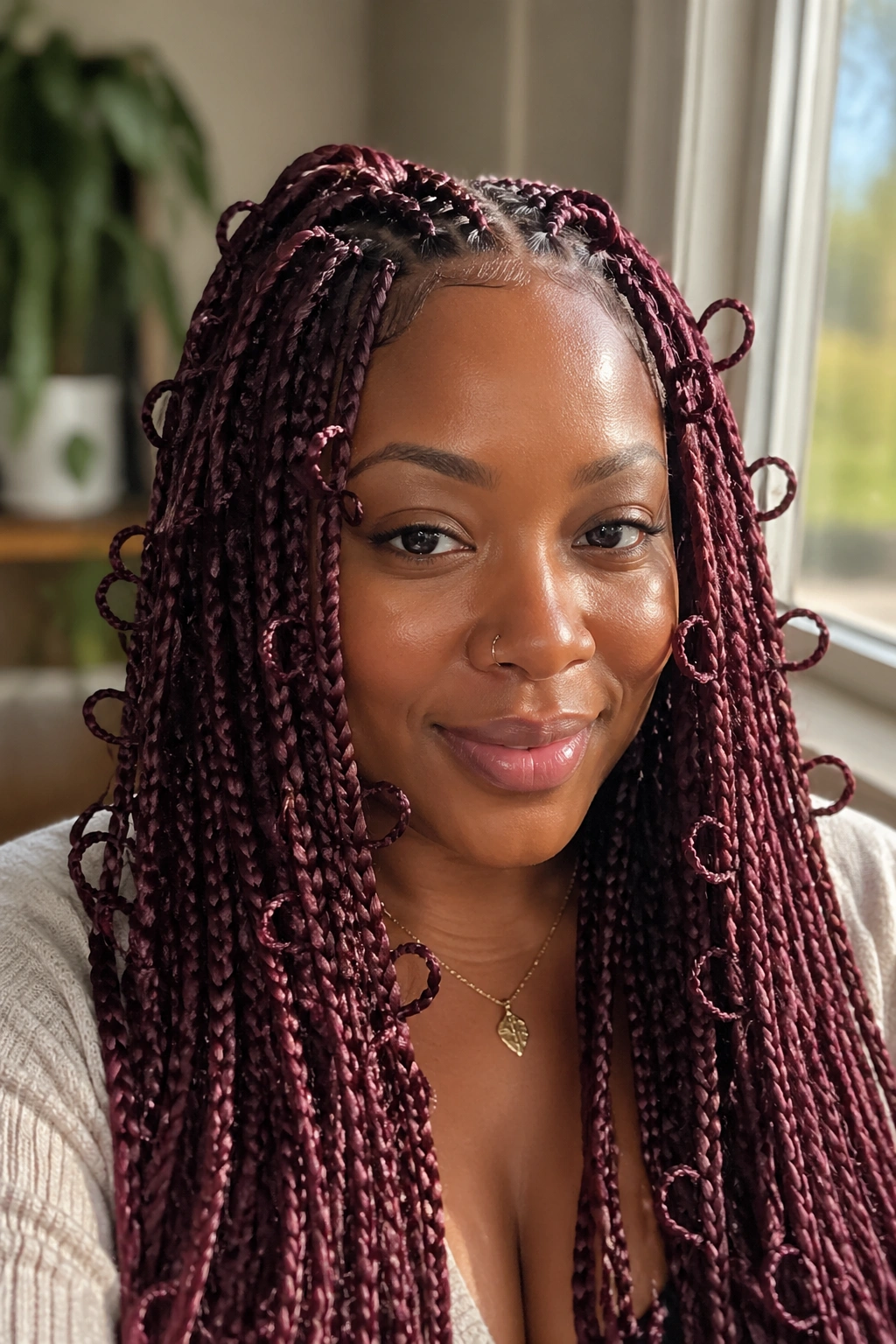
Burgundy butterfly braids have depth without screaming for attention. The color reads richer than plain black and softer than a bright red, which makes it an easy choice if you want color that feels polished enough for a serious outfit.
The shade is especially nice when the braids move. A little loop, a little twist, and the darker red tones catch light in a way that makes the style feel alive. It’s not flashy in a cheap way. It just has more dimension than a flat dark braid.
This is a good pick if you want a change but do not want to commit to a loud color story. Burgundy tends to sit well next to warm makeup, gold jewelry, and neutral clothing. Easy to wear. Hard to get tired of.
14. Honey-Blonde Butterfly Braids
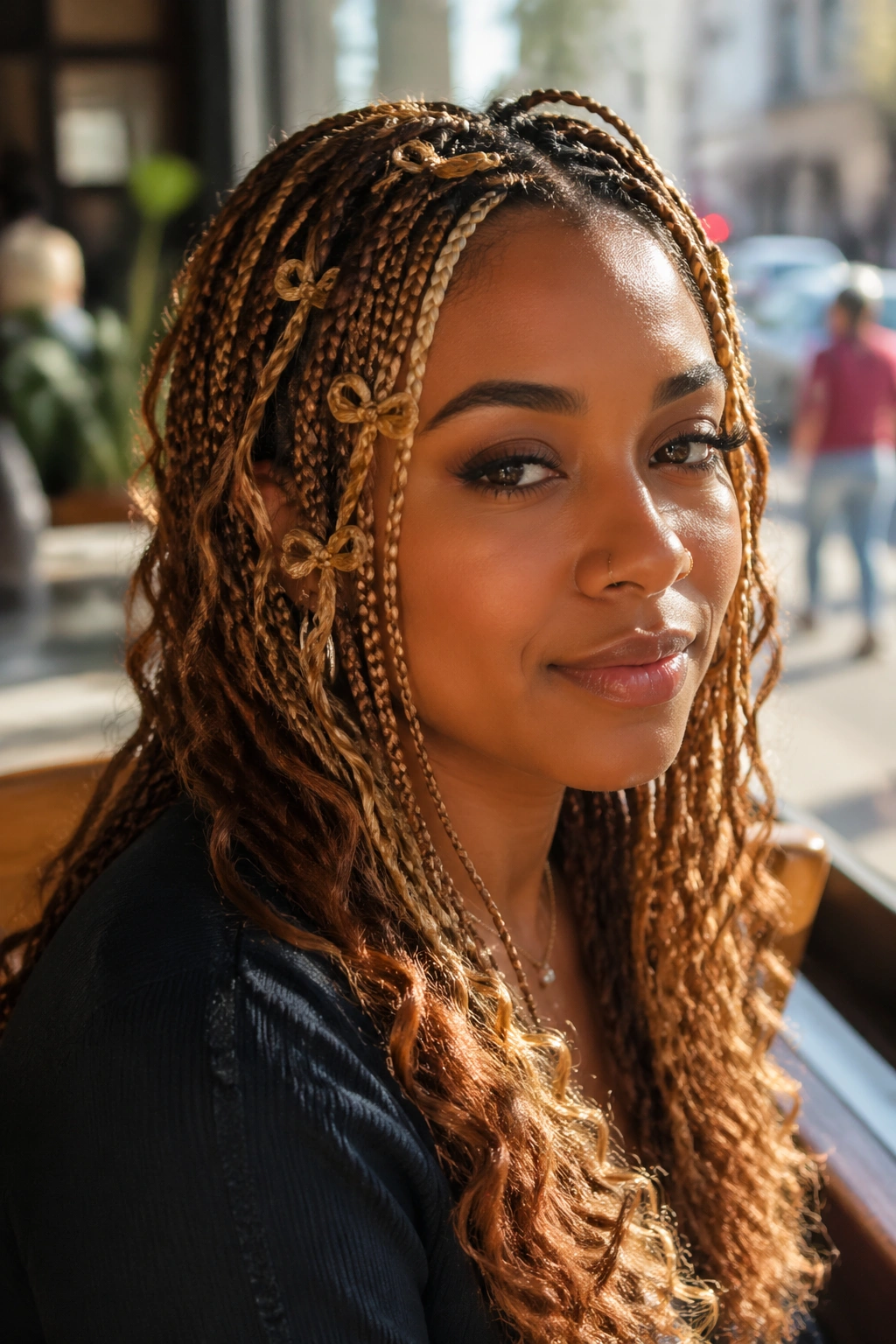
Honey-blonde butterfly braids bring brightness near the face without forcing the whole style into full light mode. That matters, because all-over blonde can look stunning, but it can also feel like a lot when you wear it every day. Honey tones keep the softness.
How to make the color look intentional
- Keep the blonde concentrated near the front or on the ends.
- Use one or two warm shades instead of three or four.
- Balance the color with clean parting so the style still feels finished.
The result is warm, glowy, and easy to pair with brown skin tones, rich lip colors, and simple gold accessories. I like this version when someone wants brightness but still wants the braid pattern to stay the star.
15. Fulani-Inspired Butterfly Braids
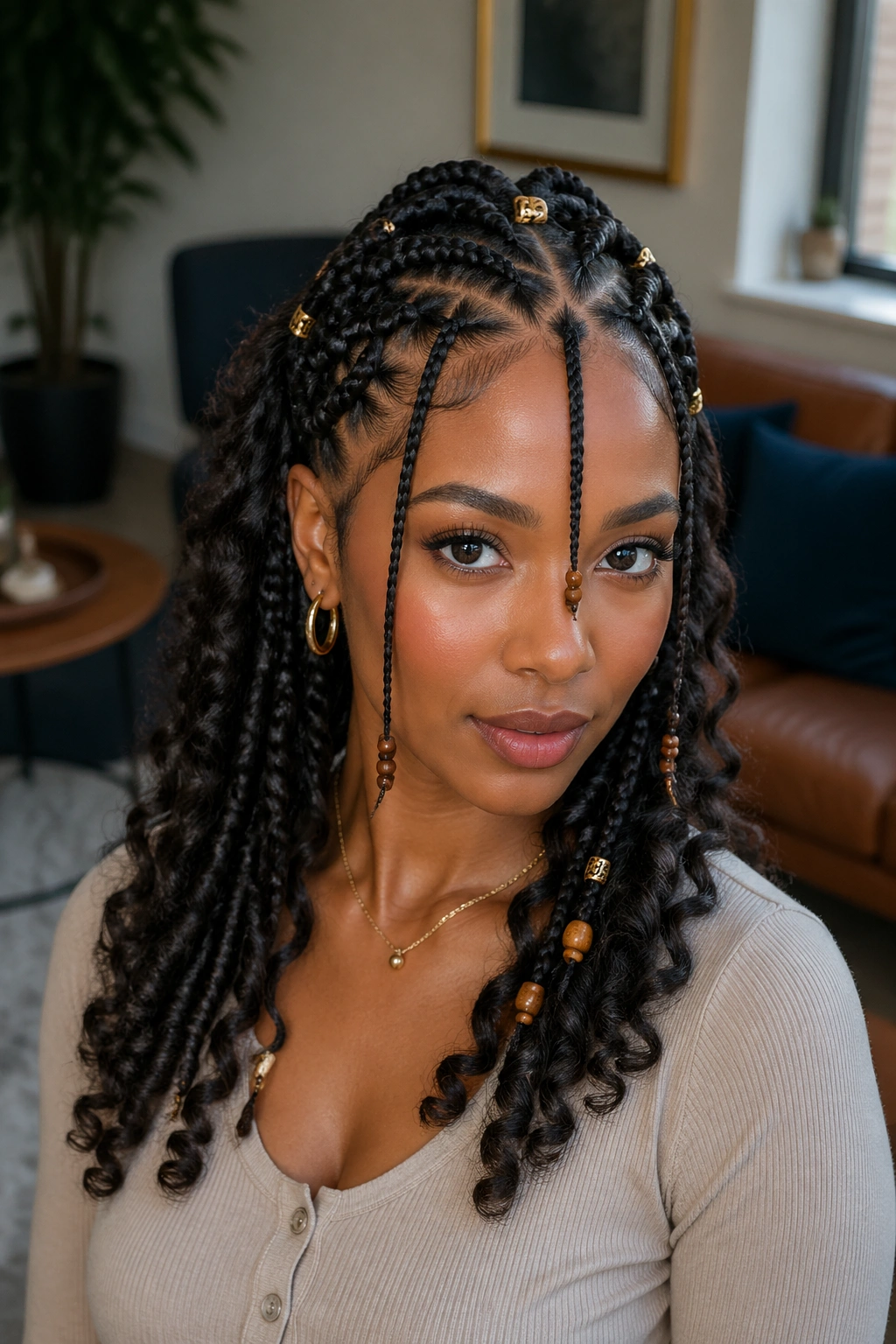
Fulani-inspired butterfly braids bring structure at the scalp and movement through the length. The center braid or cornrow detail gives the style a clear shape, while the looser butterfly sections behind it keep things from feeling rigid.
They also invite accessories in a way that feels natural. A few cuffs, a line of beads, or a small shell detail can sit right without making the whole head feel crowded. That restraint matters. Too many extras, and the look starts working against itself.
This style is a good fit when you want the hair to feel styled from every angle. Front, side, back — it all has something to say. If you like a braid set that reads intentional in photos and in person, this one does the job.
16. Goddess Butterfly Braids
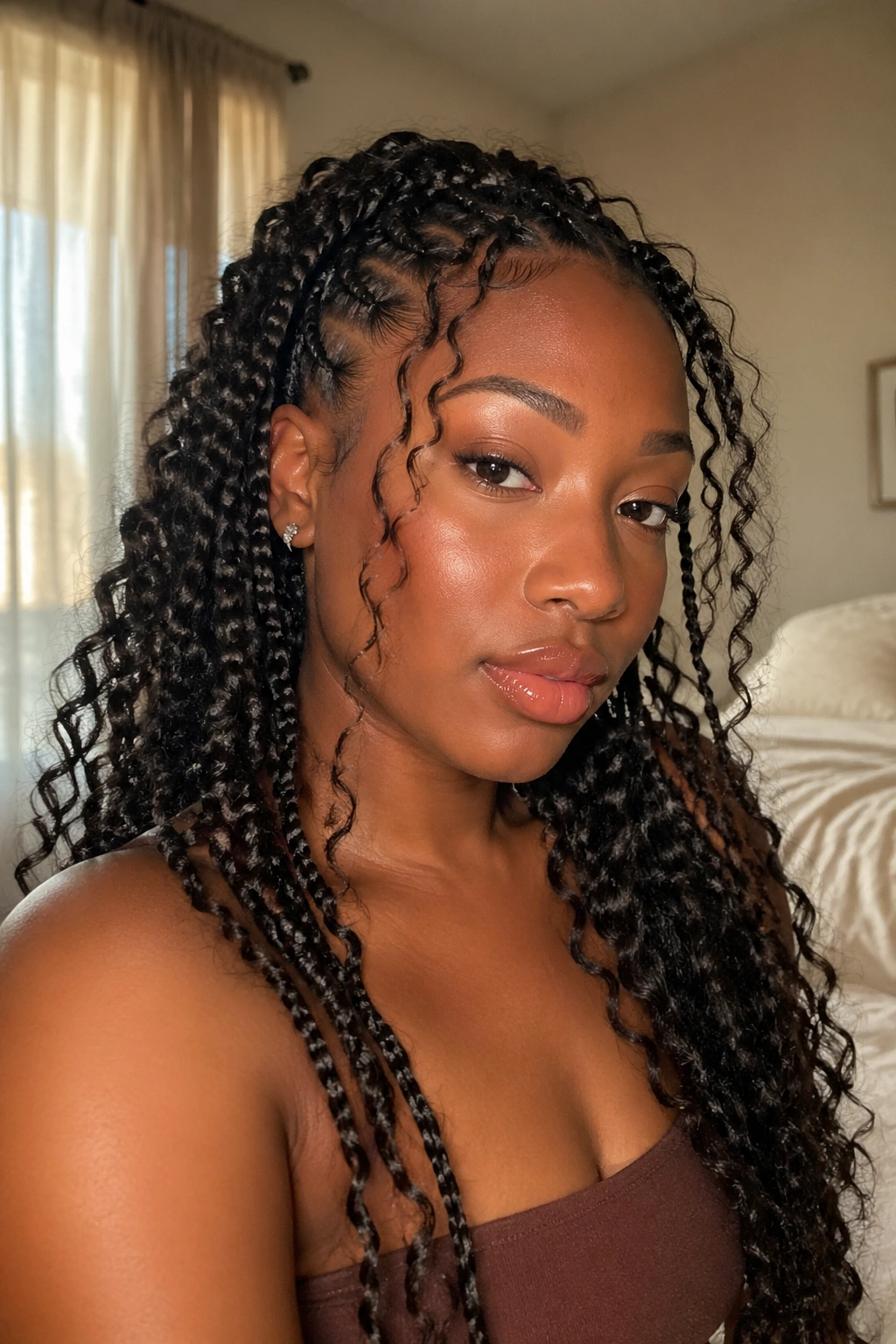
Goddess butterfly braids lean into softness more than most versions. The loose curly pieces threaded through the braids give the style more air and movement, which makes it feel romantic without getting precious.
That extra texture comes with a trade-off. You’ll need to refresh the curls more often, and sleeping with the right wrap matters if you want the style to keep its shape. Still, if you like hair that looks touchable and a little less rigid, this version is worth the extra care.
It works especially well when you want the braid set to soften a strong outfit. A tailored blazer, a crisp shirt, or a simple dress all look a bit less formal next to this kind of texture. That contrast is where it shines.
17. Beaded Butterfly Braids
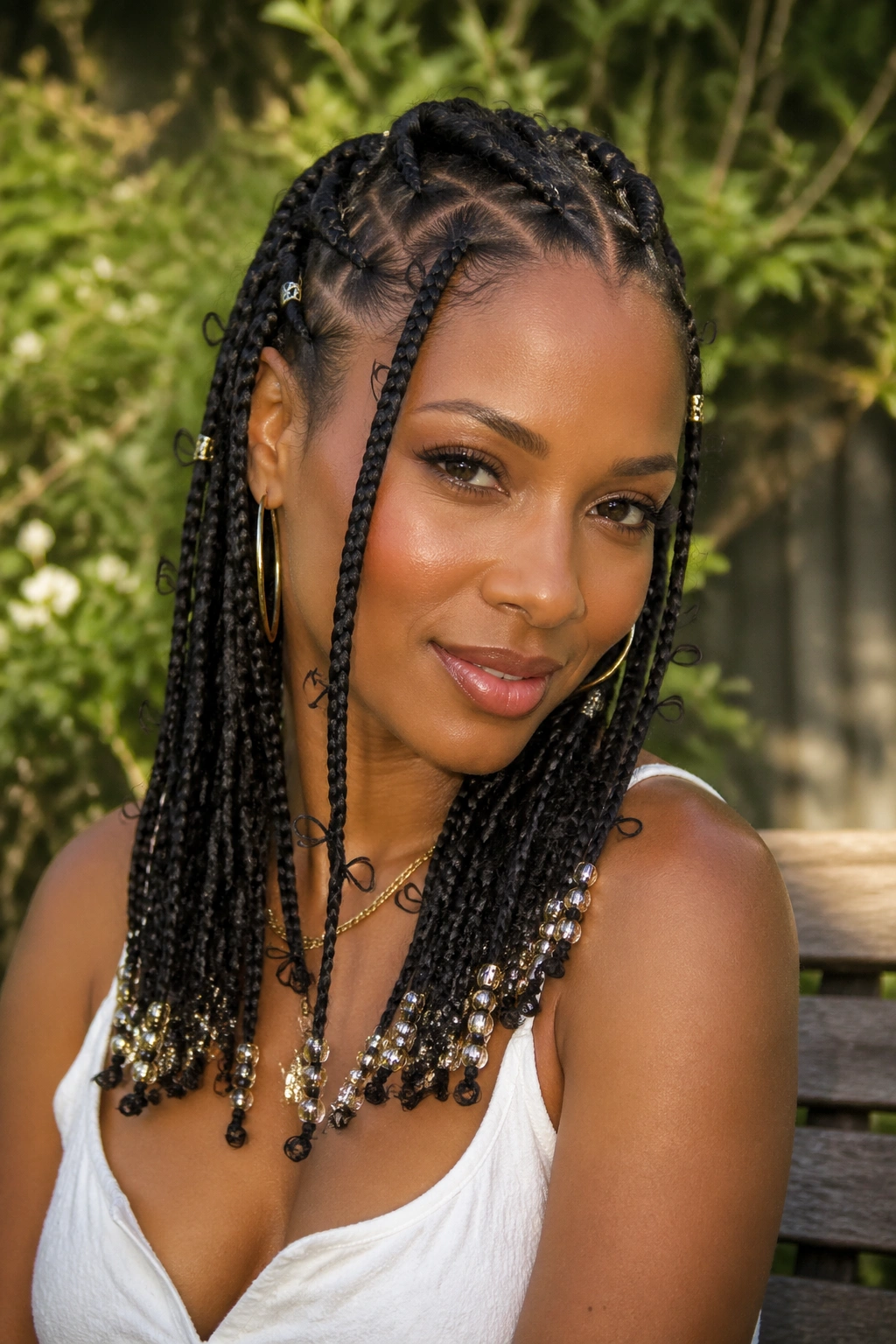
Beads can be a lot if you use too many. A few, though, give butterfly braids a crisp finish that feels playful and grown at the same time. They add weight at the ends, a little sound when you move, and a visible finish that catches the eye without taking over.
What to watch for
- Use lightweight beads so the ends do not feel draggy.
- Place them on a few braids, not every single one.
- Keep the rest of the style clean so the accessories stand out.
Gold cuffs work too, especially if you want something that looks a little more subtle than full beads. This style is best when the adornment feels intentional, not piled on.
18. Lightweight Scalp-Friendly Butterfly Braids
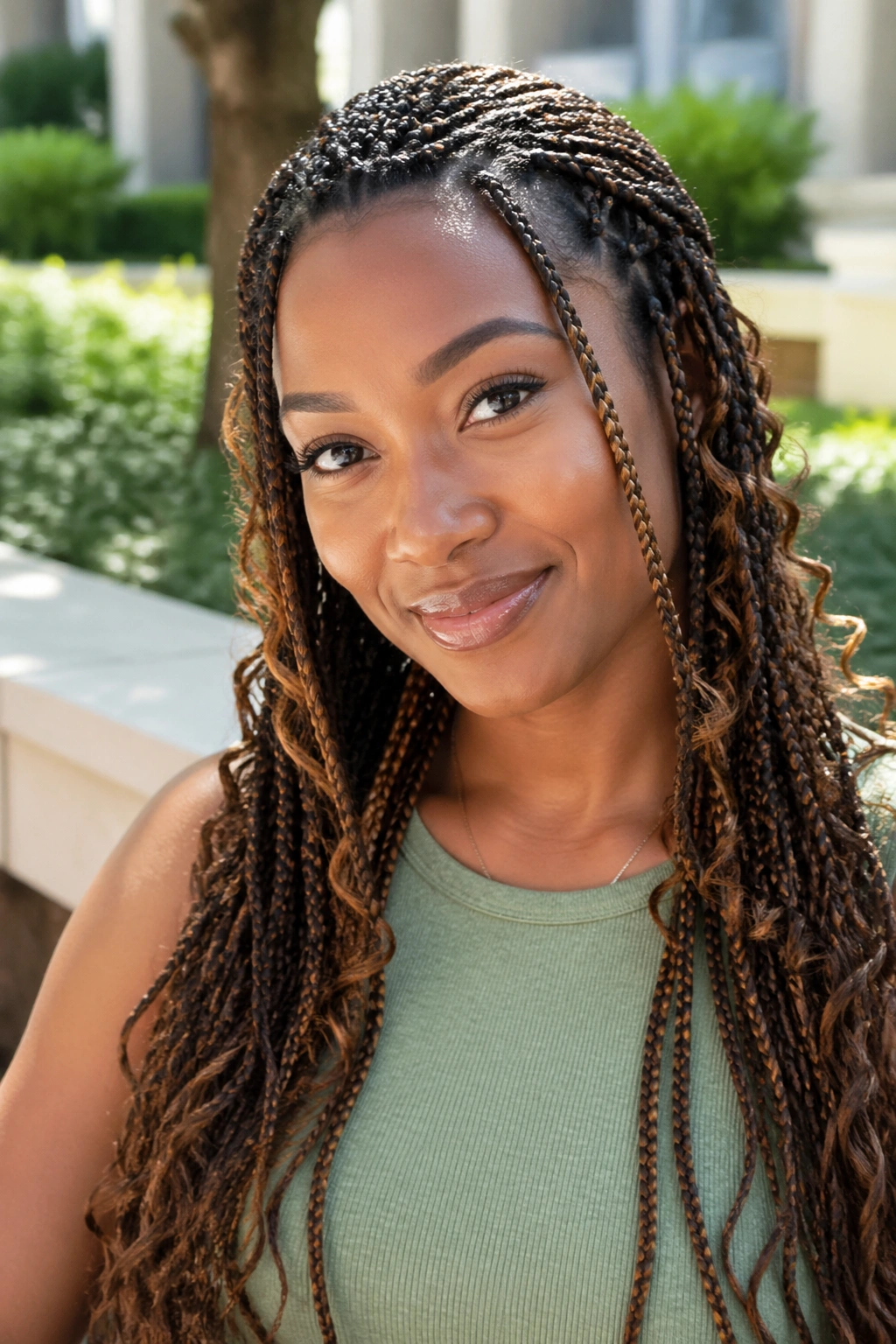
If your scalp gets tired fast, lightweight butterfly braids are the smarter move. They use less bulk, less length, and less tension at the root, which makes a noticeable difference when you know your hairline does not tolerate heavy styles well.
The trick is not to chase the biggest look. It is to choose a version that sits comfortably from day one. Shoulder-length or mid-back versions usually behave better than extra-long sets, and smaller sections near the front can help the style settle without pulling.
A few things that help
- Ask for lighter hair at the crown and temples.
- Skip extra-heavy ends if the install already feels dense.
- Keep nighttime wrapping consistent so you do not need to over-manipulate the roots.
Comfort is not a downgrade. It is the reason the style lasts.
19. Office-Ready Butterfly Braids with Clean Parts
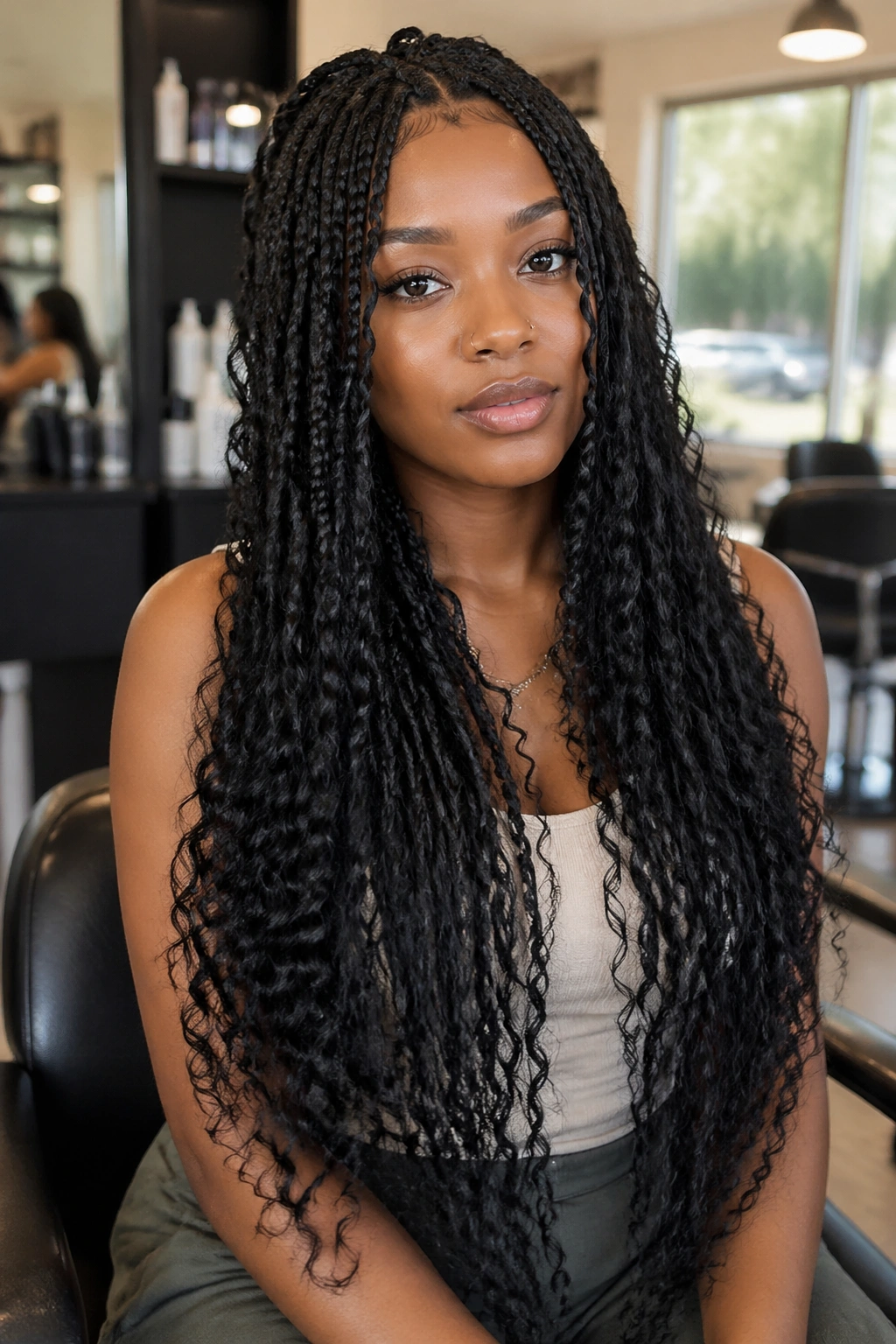
Office-ready butterfly braids are about restraint, which is not a bad thing at all. Clean parts, tidy roots, and minimal adornment make the style look intentional in a setting where you do not want hair stealing the whole conversation.
The best versions are not stiff. They just look controlled. A neat center part, a low bun, or shoulder-length braids with very little frizz can carry a blazer or button-down without fighting the rest of the outfit. That’s useful when you want your hair to support the look, not dominate it.
I’d skip overly chunky loops here. A softer texture at the ends is fine, but the scalp area should stay crisp. That little bit of discipline is what gives the style its polish.
20. Humidity-Hardy Butterfly Braids
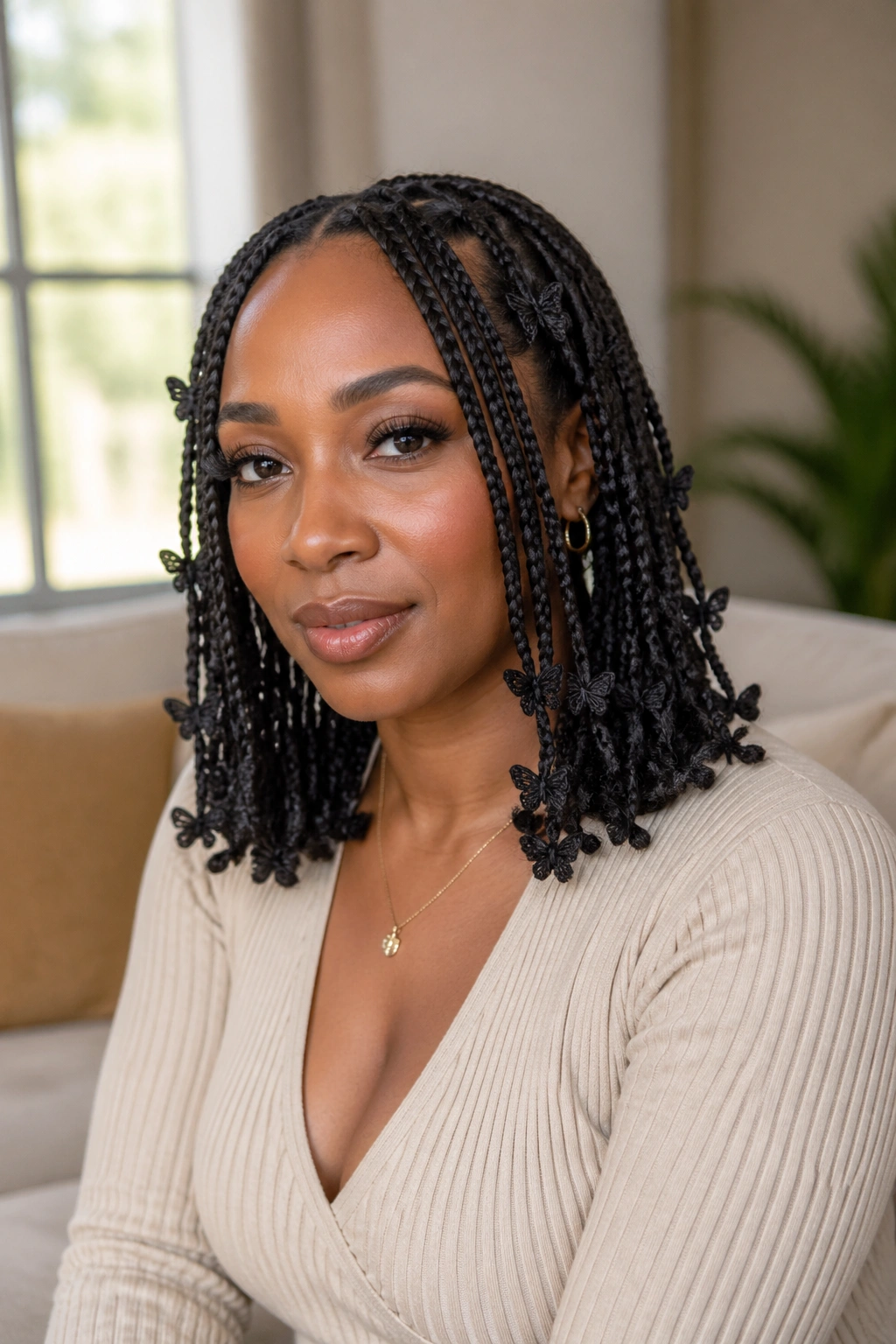
Humidity-hardy butterfly braids are for the days when smooth hair decides to have opinions. A braid style with a bit of texture can handle warm air better than something that depends on a sleek finish staying perfect all day.
What helps here is a slightly matte braid texture, not a slippery one. Styles that are too glossy can start to separate in odd ways once the air gets heavy. A light mousse, a good night wrap, and not overloading the roots with product tend to help more than piling on oil.
Shorter and medium lengths usually behave better than extra-long sets in this category. Less swing means less frizz. Less rubbing means fewer rough spots. It is not glamorous advice, but it is useful.
21. Tension-Light Butterfly Braids for Tender Hairlines
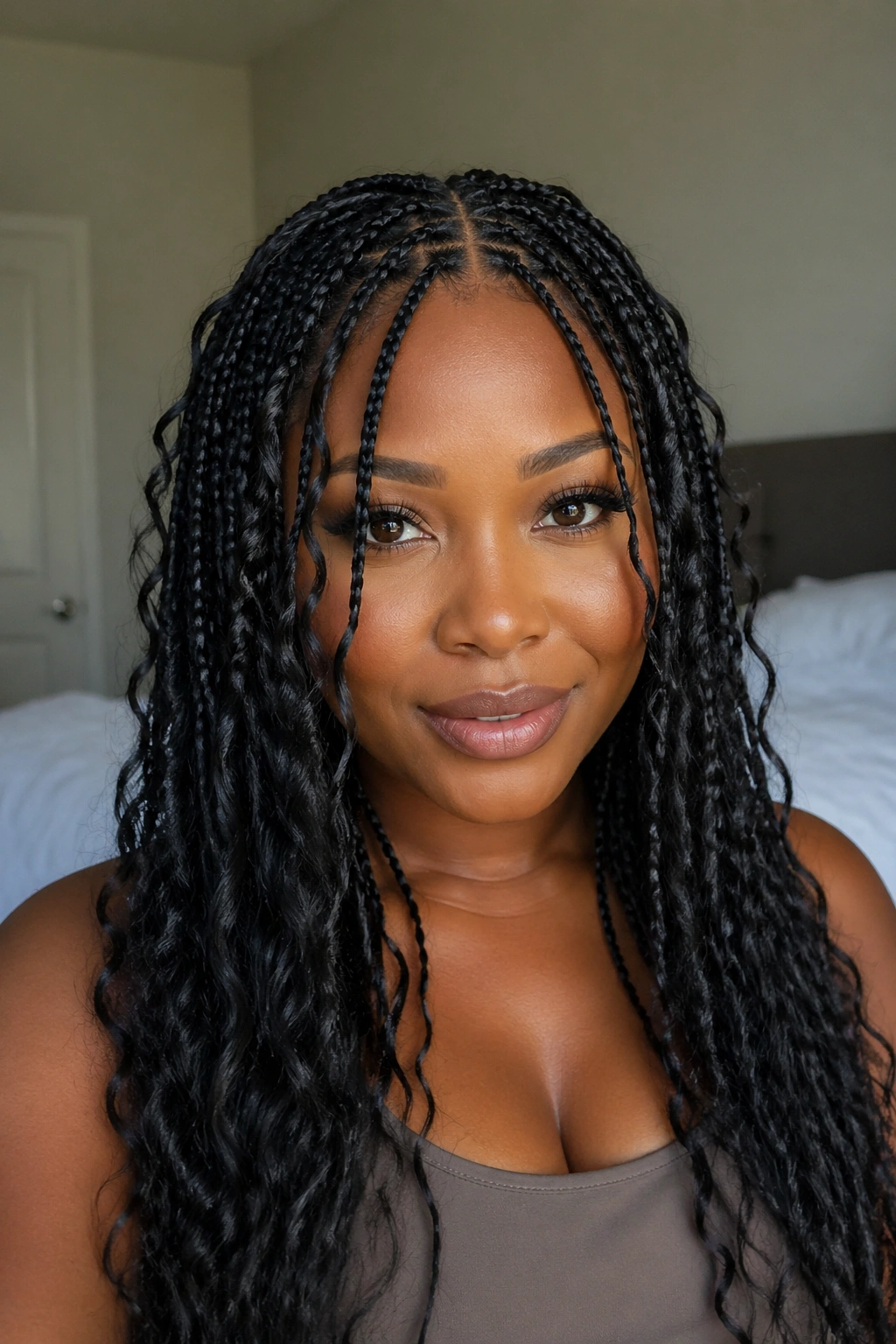
A tender hairline changes the whole conversation. If your edges or temples complain fast, the style has to be built around comfort first. Tension-light butterfly braids do that by keeping the root grip softer, the front sections smaller, and the overall weight more balanced.
That can mean fewer braids around the front, less pull on the nape, and no over-tight ponytail starts. It may not look dramatically different in a mirror, but your scalp will know the difference by the end of the week. And honestly, that is the point.
Skip the urge to pull everything sleek just because the style has braids. A little looseness at the root can still look neat. Neat is enough.
22. Layered Butterfly Braids with a Soft Finish
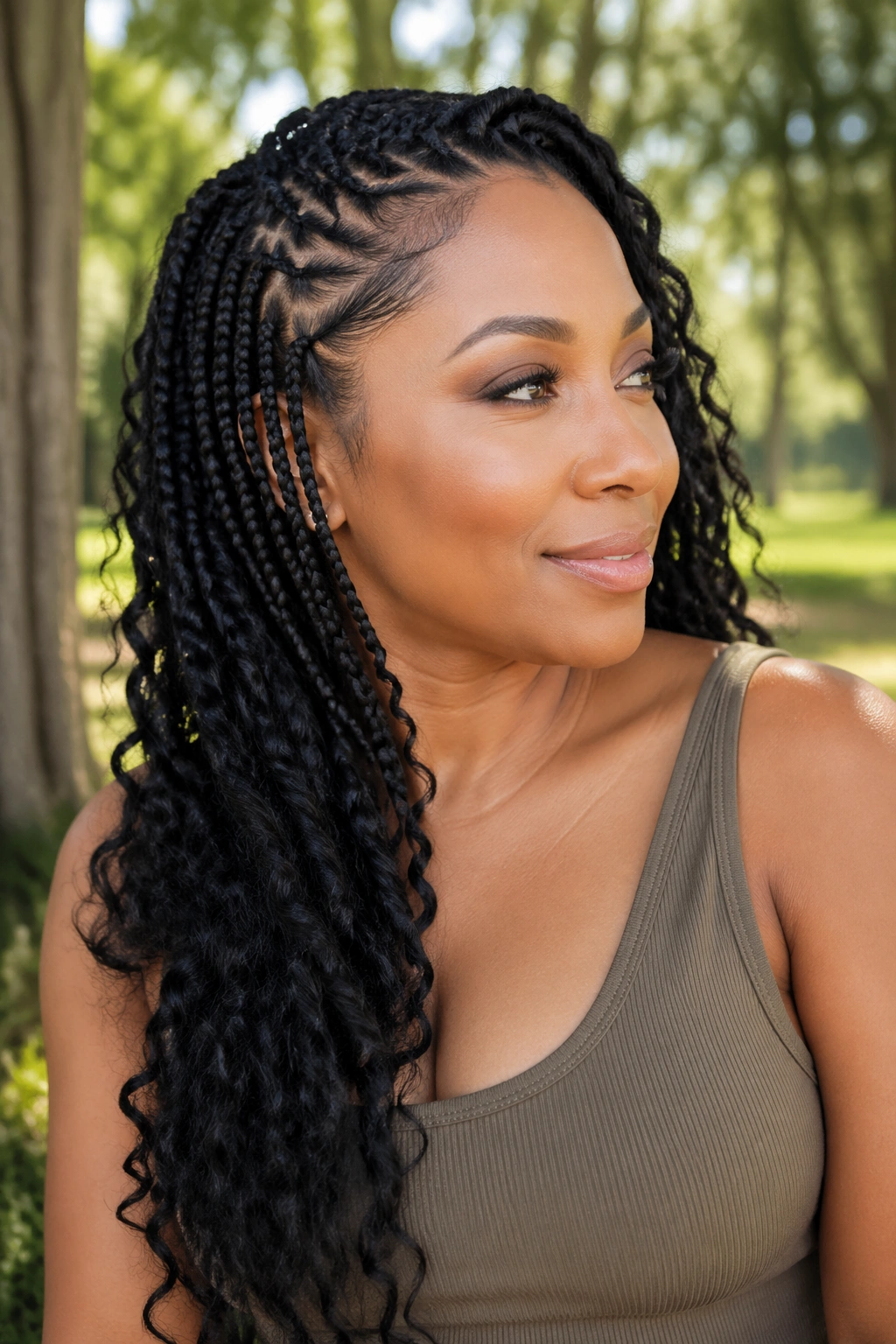
Layered butterfly braids are the version I keep coming back to when someone wants the style to feel soft from every angle. The lengths vary a little, the front pieces sit lower or higher depending on the face shape, and the whole thing moves instead of hanging in one blunt block.
That layered shape is useful because it breaks up weight visually. Long braids can sometimes feel heavy even when they’re not physically heavy, and a layered finish helps that. It also gives you a better chance of wearing the style loose without it overwhelming your frame.
If you want one butterfly braid look that sits between polished and relaxed, this is it. It does not shout. It doesn’t need to. The softness is the point, and the style knows it.