


Easy boy braids have a bad reputation. People picture a still child, perfect part lines, and twenty spare minutes you somehow do not have. That version is fantasy.
The real version is messier. A spray bottle, a dab of leave-in, a soft brush, and a style that does not ask too much from a wiggly head—that is the setup that actually works. On short or medium hair, the fastest boy braids are the ones built from clean sections and a calm hand, not from fancy parting.
Perfection wastes time.
I keep coming back to that because a braid that stays out of the eyes, holds through recess, and does not turn into a frizz cloud before lunch is doing its job. Start with the easiest patterns first, and the rest gets a lot less intimidating.
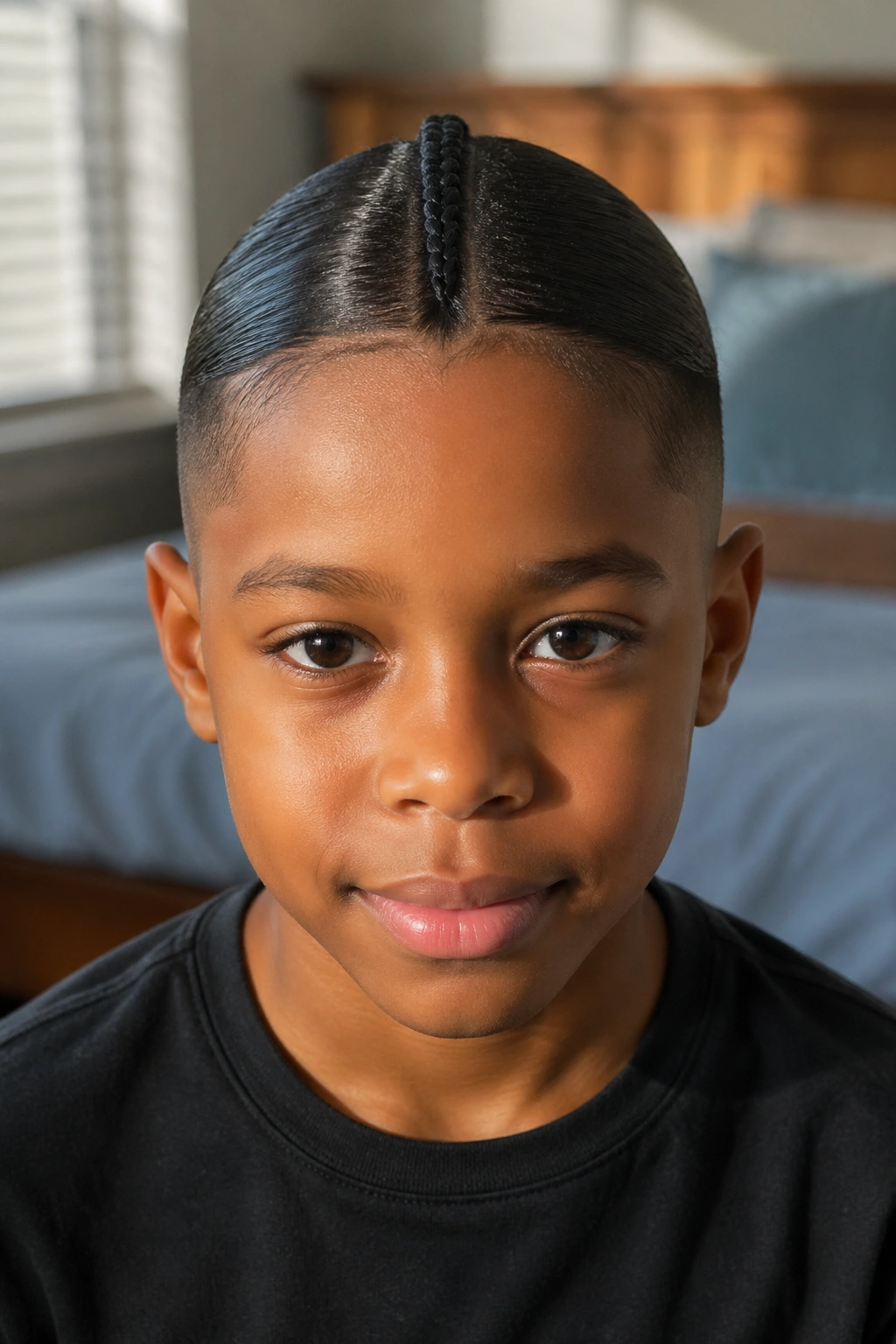
1. Easy Center Braid
This is the braid I’d hand to a parent who wants something simple and neat right away. One clean braid down the middle keeps hair off the face and takes less thinking than a full set of rows.
Why it stays fast
A center braid works because you only have one section to manage. That means fewer part lines, fewer clips, and fewer chances for the hair to puff back up while you’re still working.
- Best on short to medium curls.
- Use a pea-size amount of gel or cream.
- Keep the section wide enough to hold, not so wide that it slips apart.
- Finish with a tiny elastic at the end if the hair won’t hold on its own.
Tiny win: if the hair is already brushed straight back, this braid can be done in one steady pass.
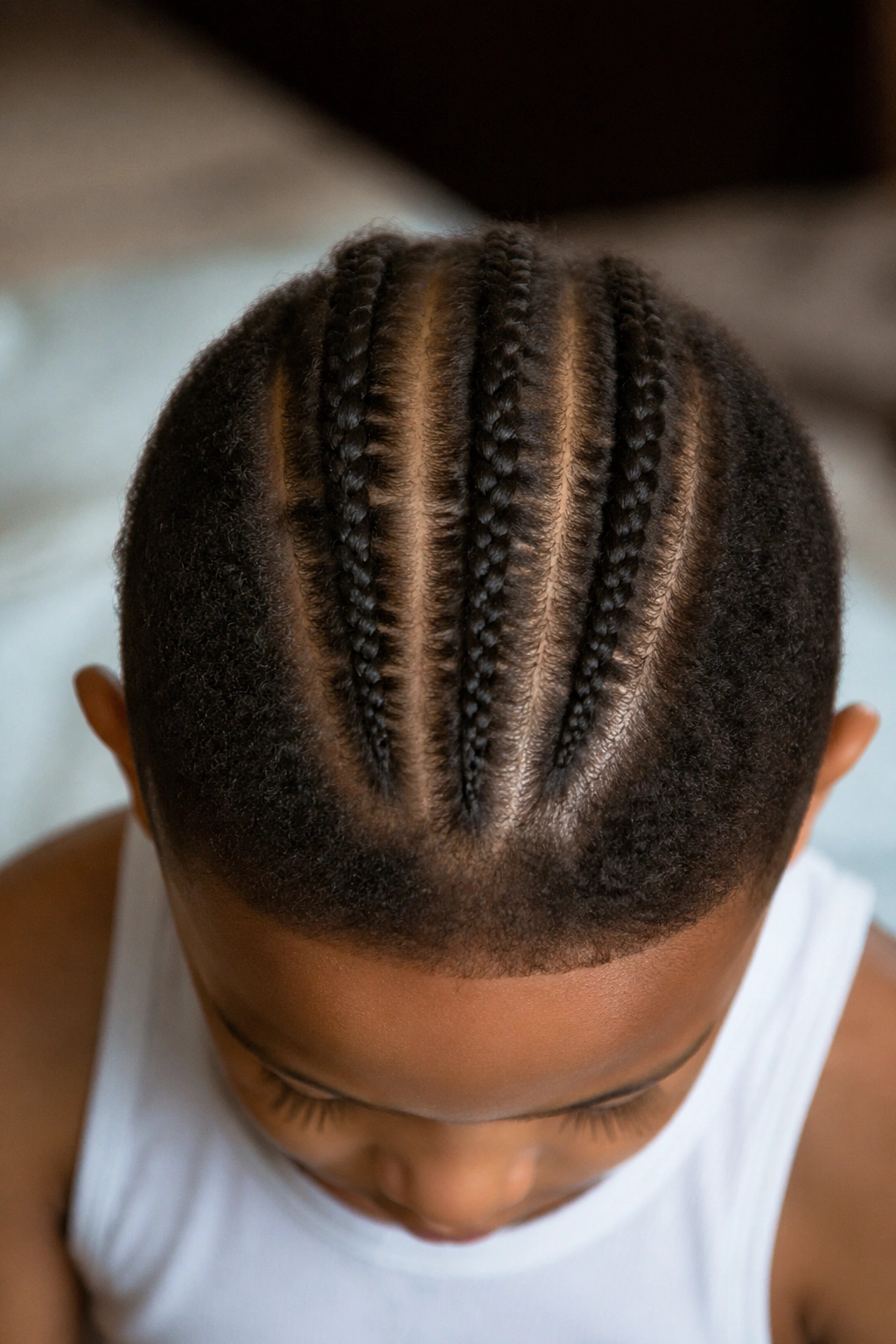
2. Two Straight-Back Cornrows
Can two braids really be faster than one? Often, yes. Once the center part is clean, two straight-back cornrows move fast because your hands fall into a rhythm and the scalp pattern stays easy to follow.
I like this style on boys with thick or coily hair because it sits close to the head and does not need much fuss at the ends. The look is tidy, practical, and hard to mess up if the parts are even. That matters on a rushed morning. A little moisture and a firm grip at the roots are enough; you do not need to load the hair with product.
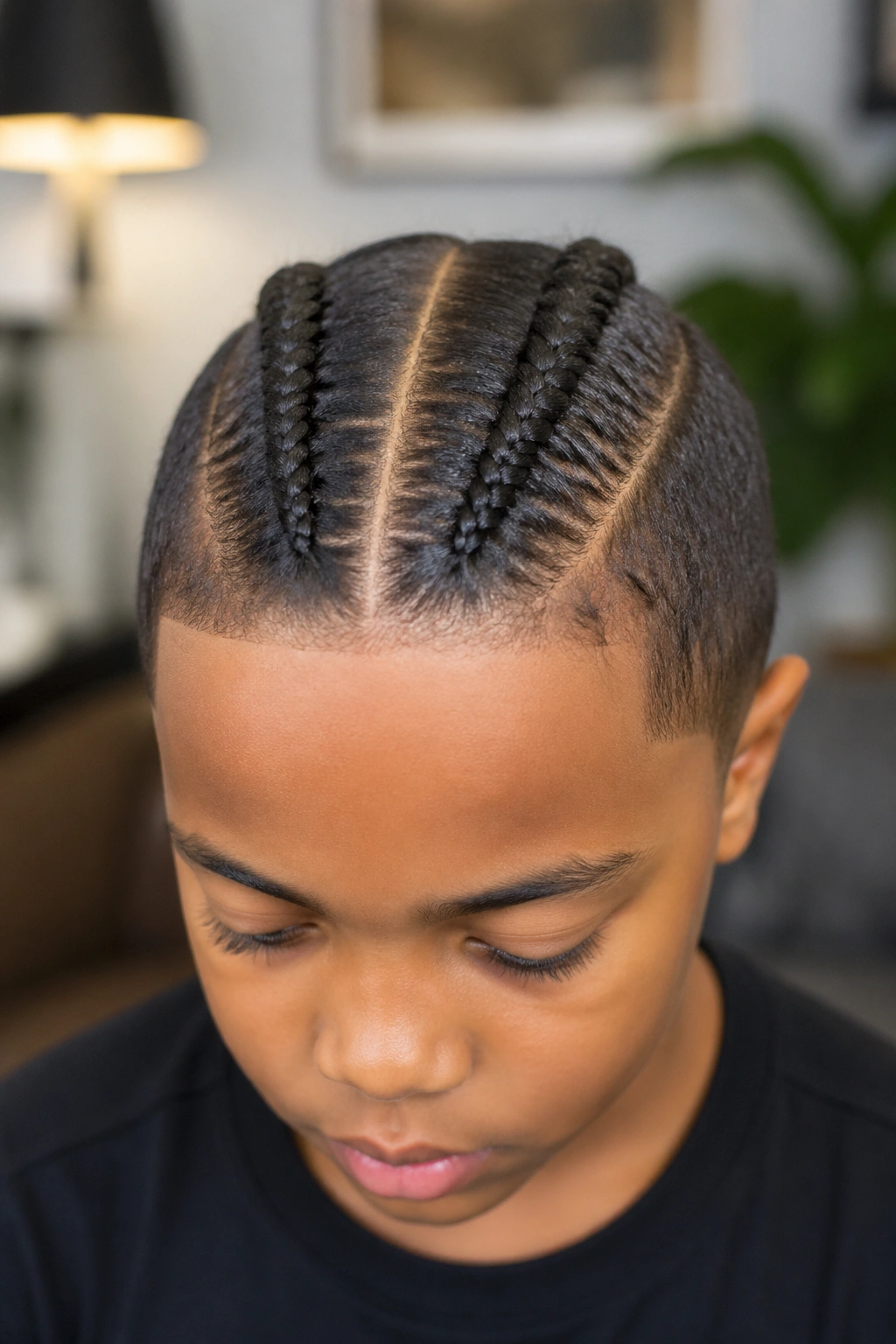
3. Three Slim Braids Across the Crown
A kid who wants “more than two” without waiting forever usually ends up here. Three slim braids across the crown look intentional, but they still move quickly because the sections are narrow and easy to track.
Best way to keep it moving
A rat-tail comb does most of the work. Make the parts once, clip each section aside, then braid from front to back with a steady hand. The trick is not making the parts fancy. Straight lines are fine. Clean lines are better than decorative ones when time is short.
- Works well on hair that is at least a few inches long.
- Keep each section about finger-width.
- Use light tension at the scalp.
- Stop braiding as soon as the hair gets too short to hold.
My rule: if one braid starts taking longer than the other two combined, the section is too thick.
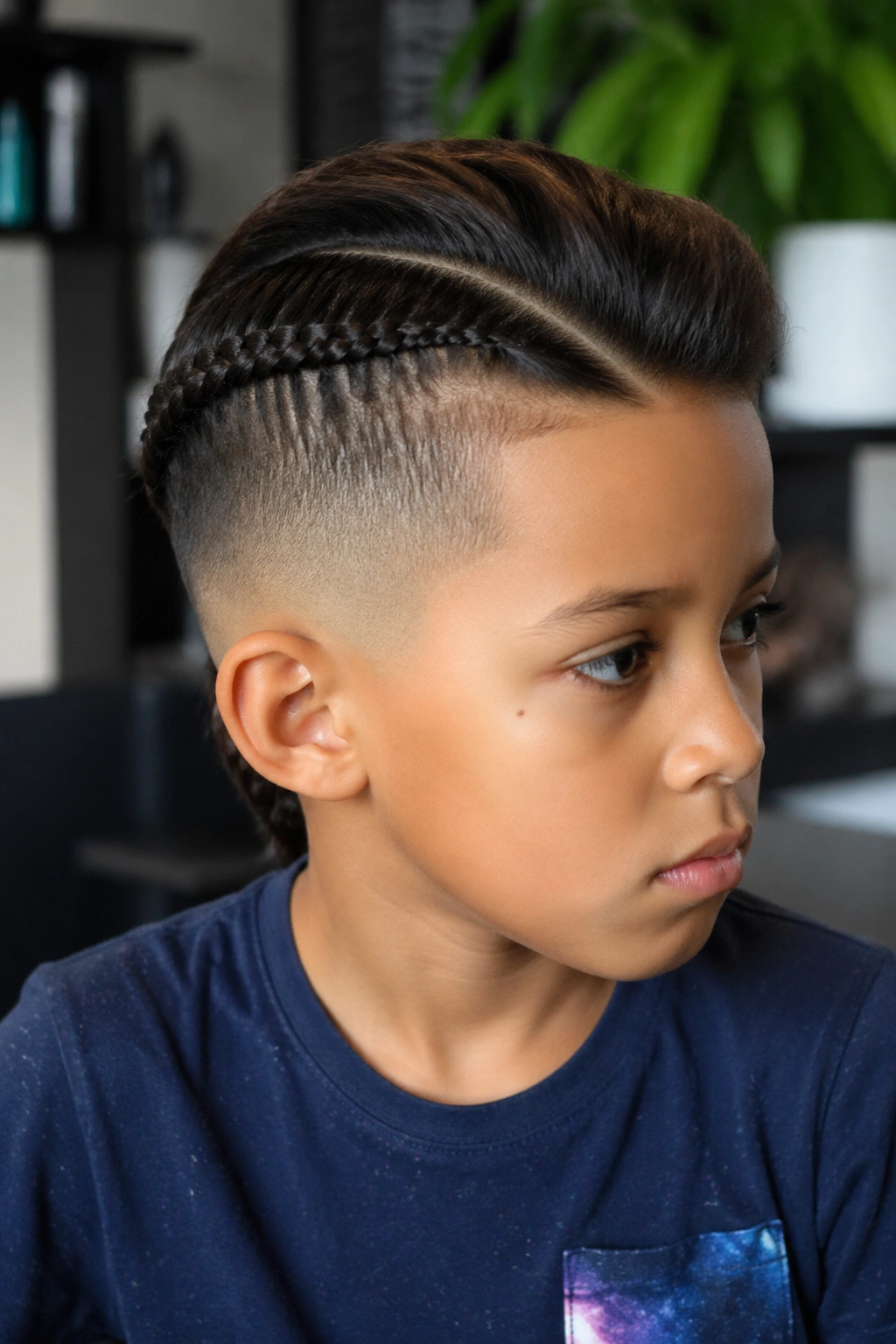
4. Side-Swept Braid with a Fade
A side braid looks sharper than people expect, especially with a fade or tapered cut on the other side. The haircut does half the styling for you, which is exactly why this one earns a spot on a quick list.
The braid follows the natural fall of the hair instead of fighting it. That’s the whole appeal. You part low on one side, braid back toward the crown, and let the shaved or shorter side stay clean. It feels polished, but it does not need a lot of braiding time. If the boy already wears a fade, this style almost finishes itself.
5. Short Braided Mohawk
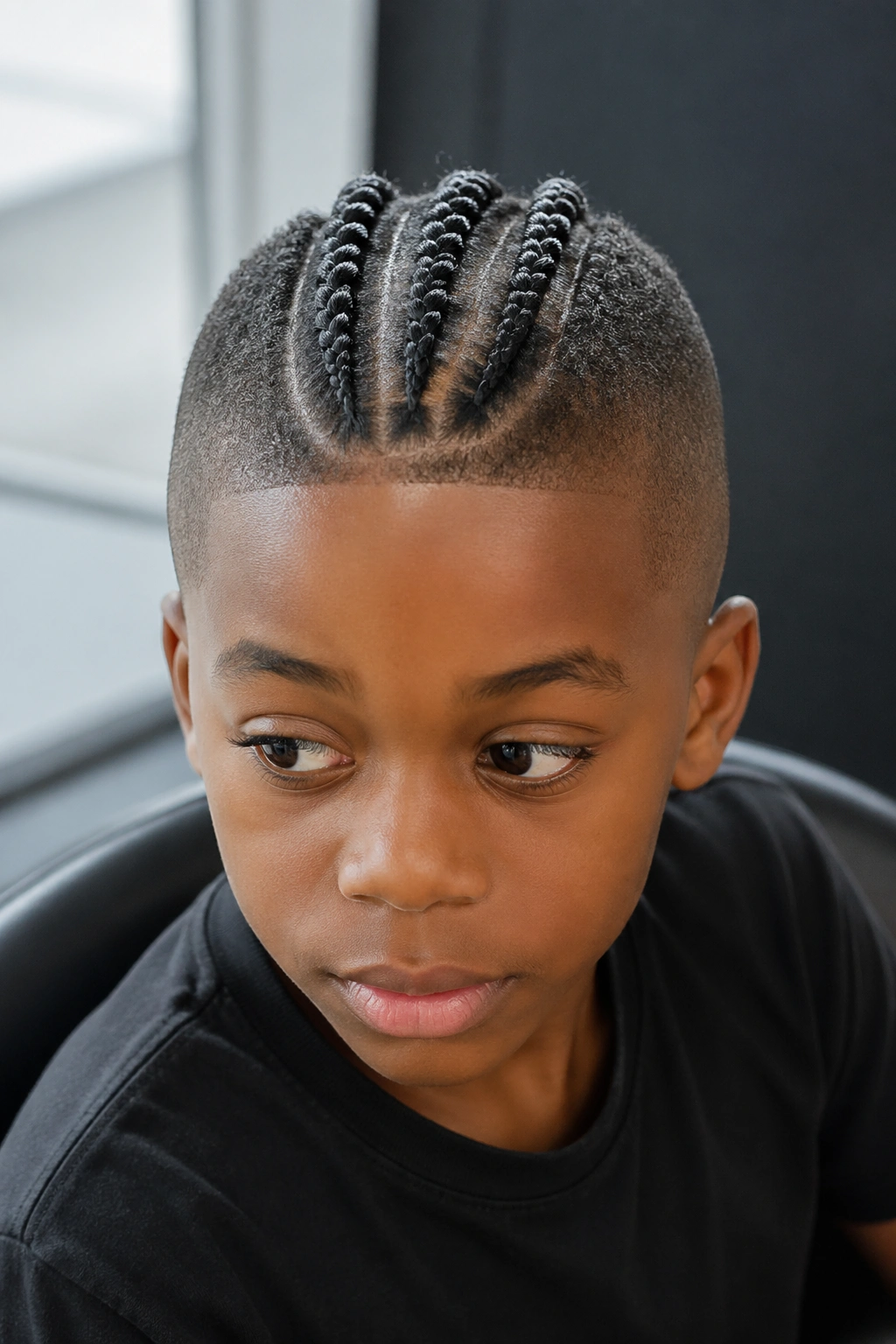
Why does a braided mohawk work so well on boys? Because you only braid the strip that matters. The sides can stay low, tapered, or simply brushed flat, while the center ridge gets the attention.
What to braid and what to leave alone
Keep the middle section narrow and run one or two tight braids from front to back. That shape gives you a bold look without turning the whole head into a project.
A lot of people overcomplicate mohawk braids and add too many rows. Don’t. Three center braids usually look better than six crowded ones, and they take less time to finish cleanly.
6. Mini Box Braids
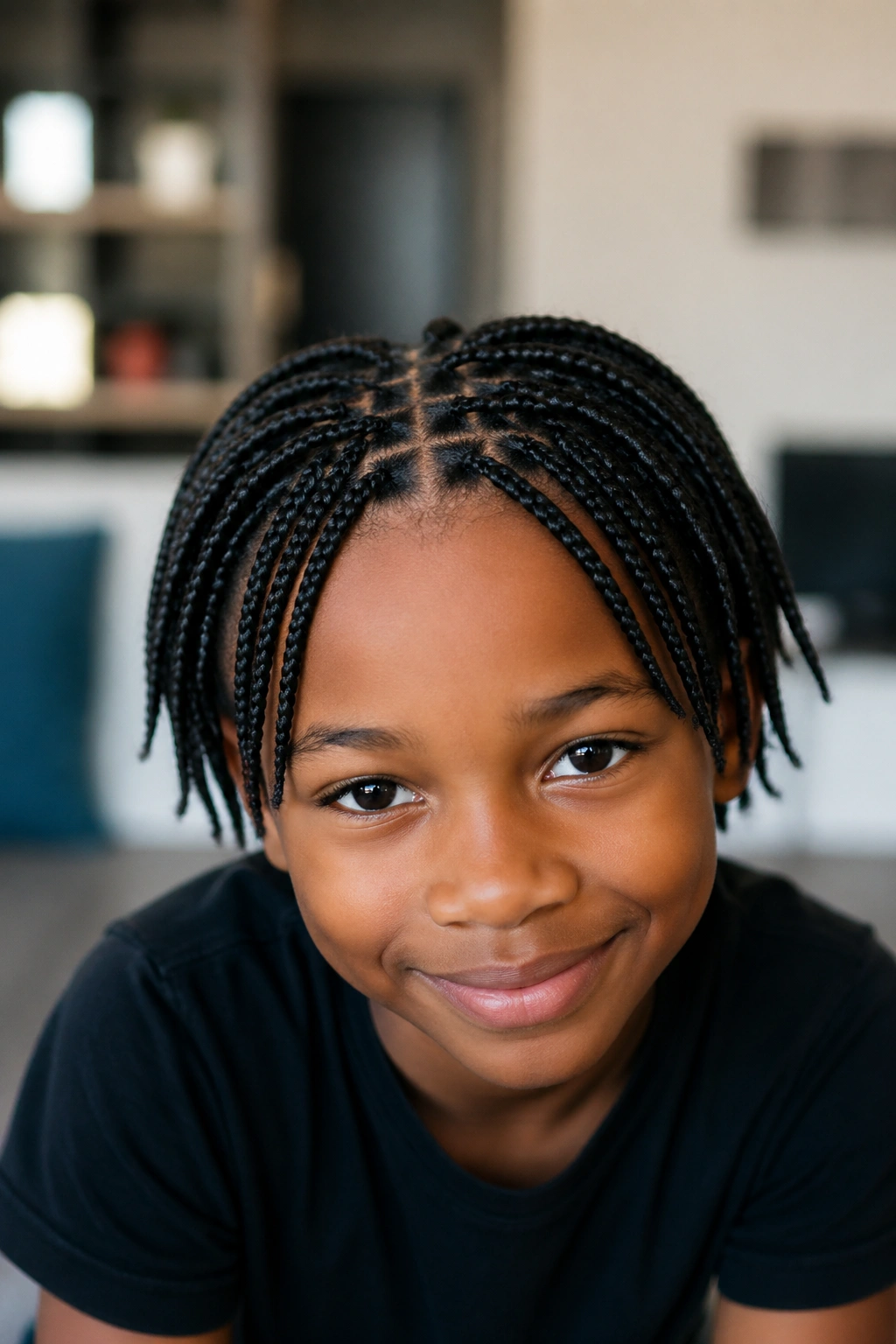
Mini box braids are for the kid who likes a little movement in the hair but still needs a quick start. The sections are small enough to look neat, yet they do not have to be tiny enough to eat up your afternoon.
I like these on short natural hair because the square parts give the style structure fast. You can make four, six, or eight sections, depending on how much time you really have. Keep the boxes clean, braid each one down a short distance, and stop before the ends get fussy. A little leave-in and a soft brush make a bigger difference here than fancy product ever will.
7. Feed-In Cornrows
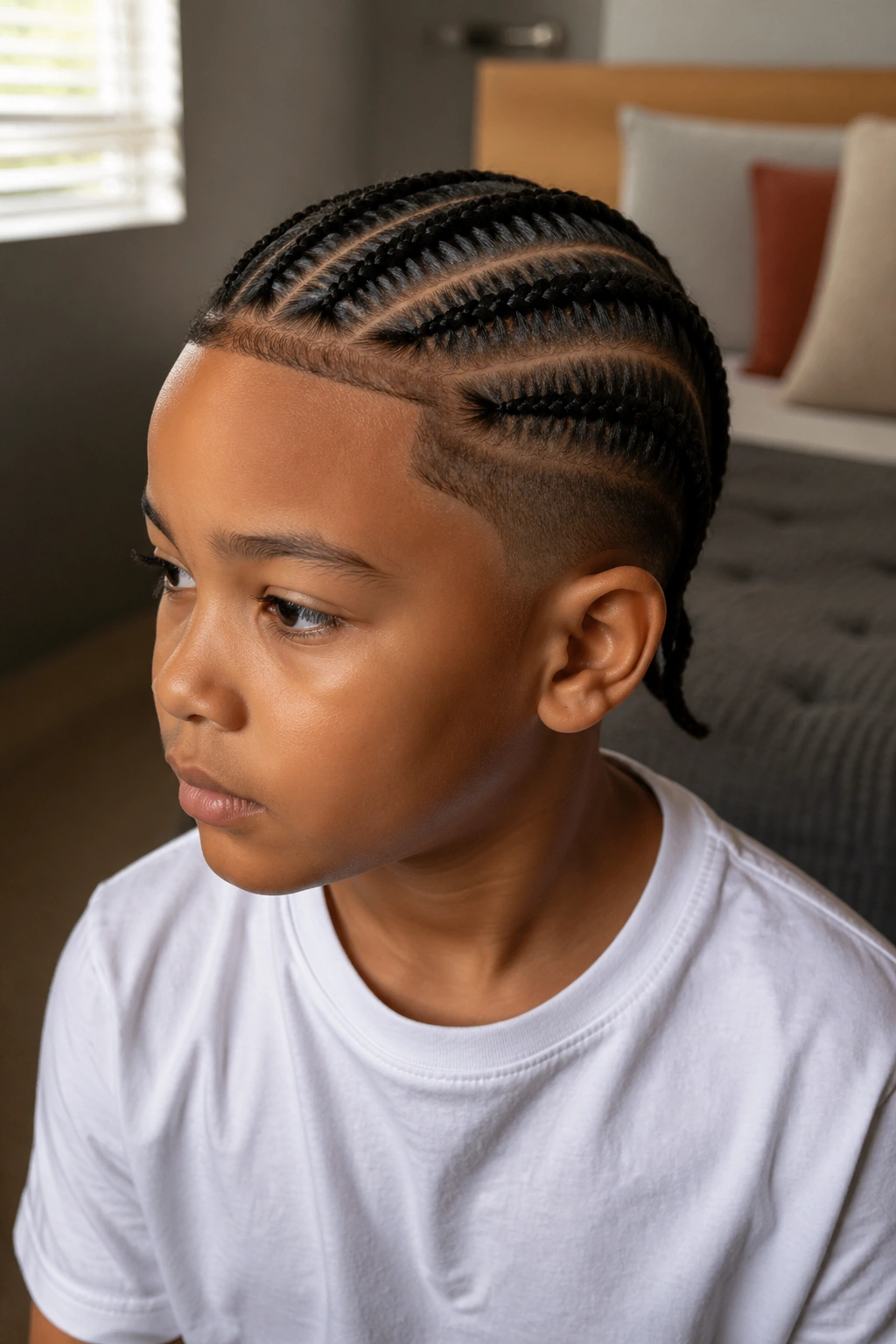
Feed-in cornrows look more detailed than they are. That’s the good part. You begin with a small base and add hair as you braid, which makes the style look smooth at the scalp without needing a long setup.
Why this one saves time
The braid grows as you go, so the early part of the process feels light in your hands. Once you get into the rhythm, each row moves quickly.
- Start with damp, detangled hair.
- Add hair in small pieces, not big clumps.
- Keep the feeding even so the braid does not bump up in one spot.
- Use a little edge gel at the front if the hairline needs control.
Practical note: feed-in braids look best when you resist the urge to overdo them.
8. Zigzag Part Braids
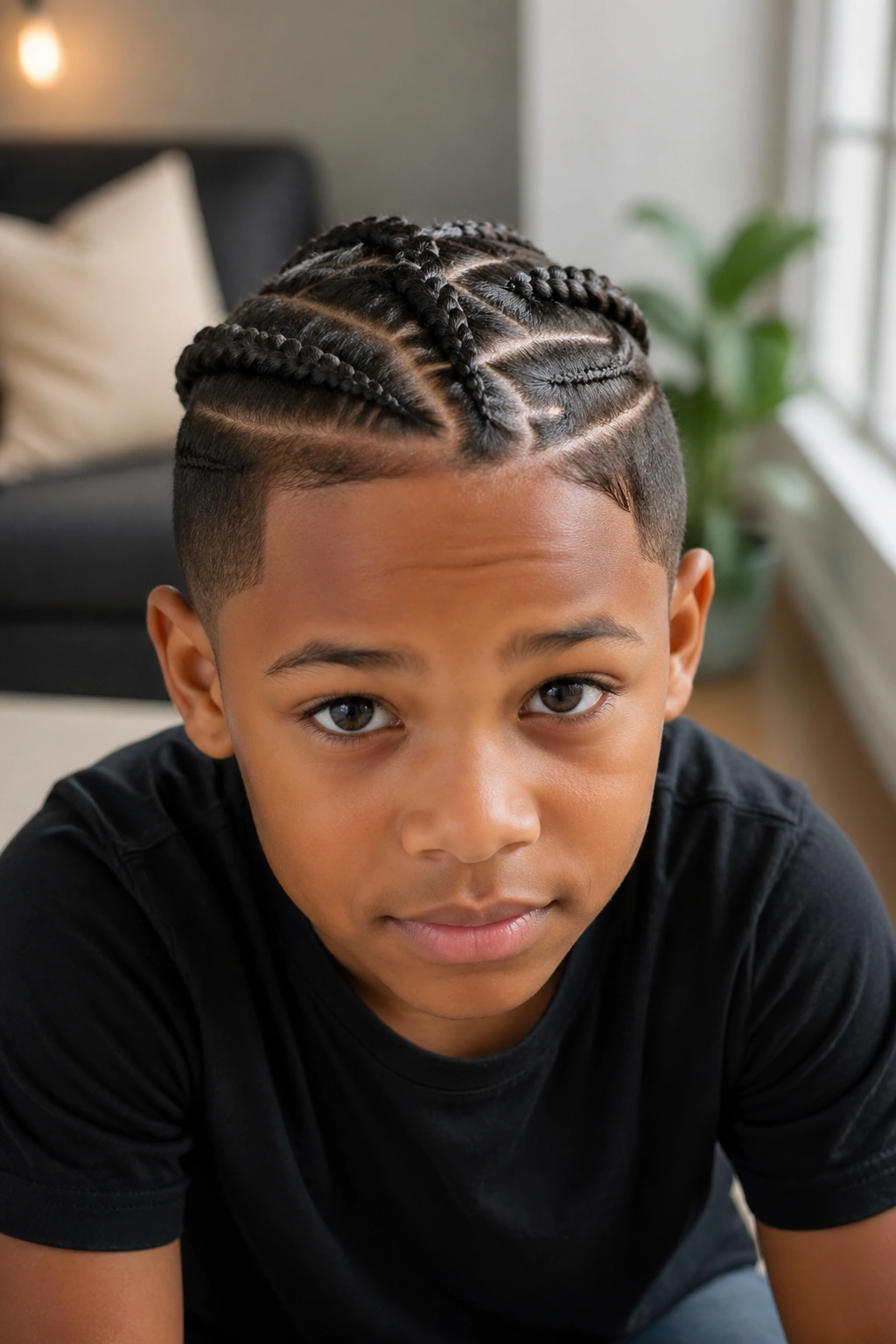
A zigzag part makes a plain braid look like you spent more time than you did. That is the magic trick here. The braiding itself stays simple; the parting does the visual work.
I’ve always liked this style on younger boys because it feels playful without being messy. Draw one zigzag part with the tip of the comb, then braid the sections straight back or downward. A clean zigzag only takes a minute or two if you keep your hand steady. The braid pattern can stay basic. The part is what gives the style its punch.
9. Stitch Braids
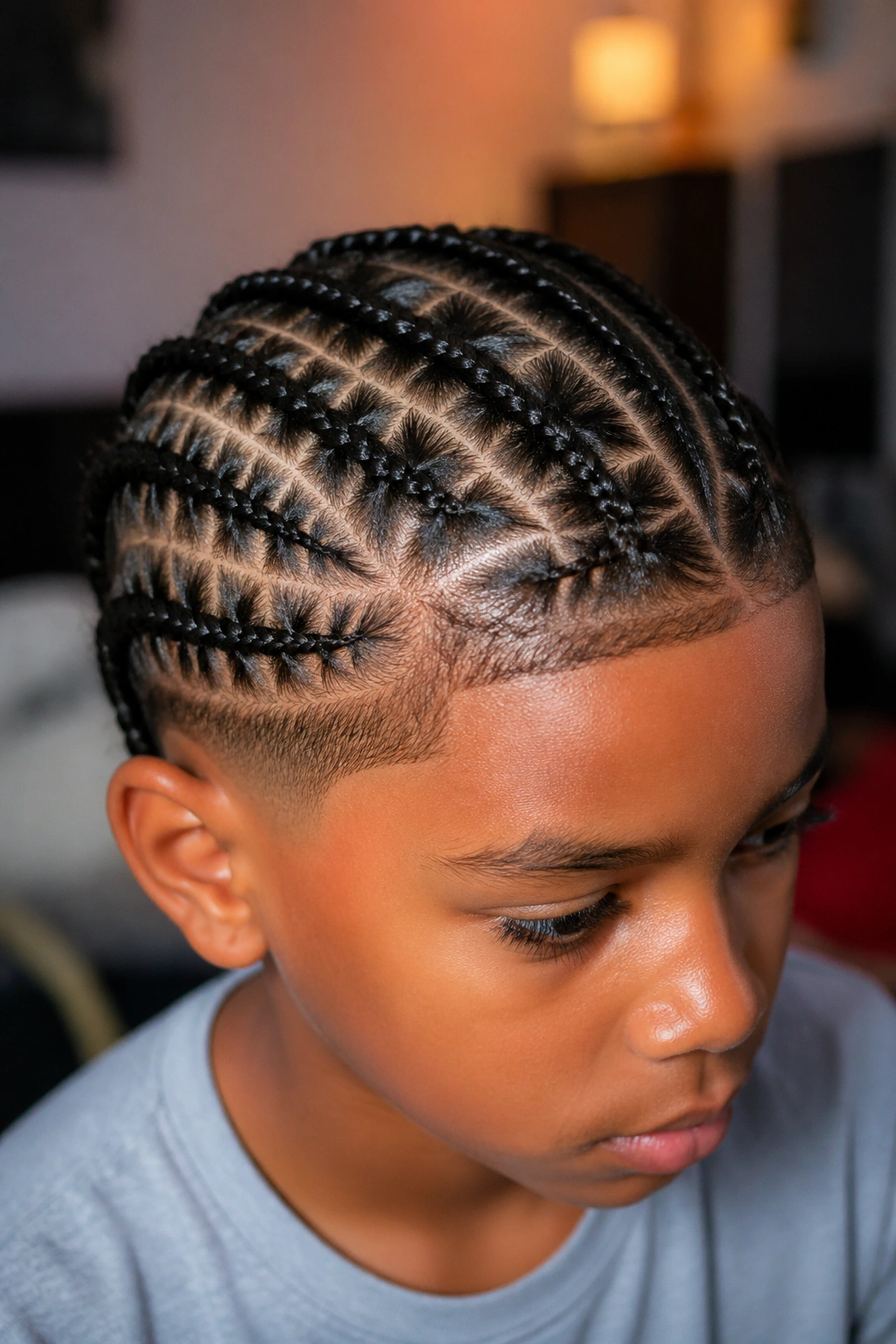
Stitch braids are the neat freak’s favorite. They sit flatter than loose cornrows and have that segmented, lined-up look that makes the style seem more advanced than it really is.
What makes them quick is the control. Once your comb line is set, you keep taking small slices of hair into the braid, almost like building a rail. That rhythm is easy to repeat. Boys with thicker hair often wear these well because the braid lies close to the scalp and stays put. If you want a style that looks crisp after school pickup, this is one of the better bets.
10. Front-Half Braids with Loose Back
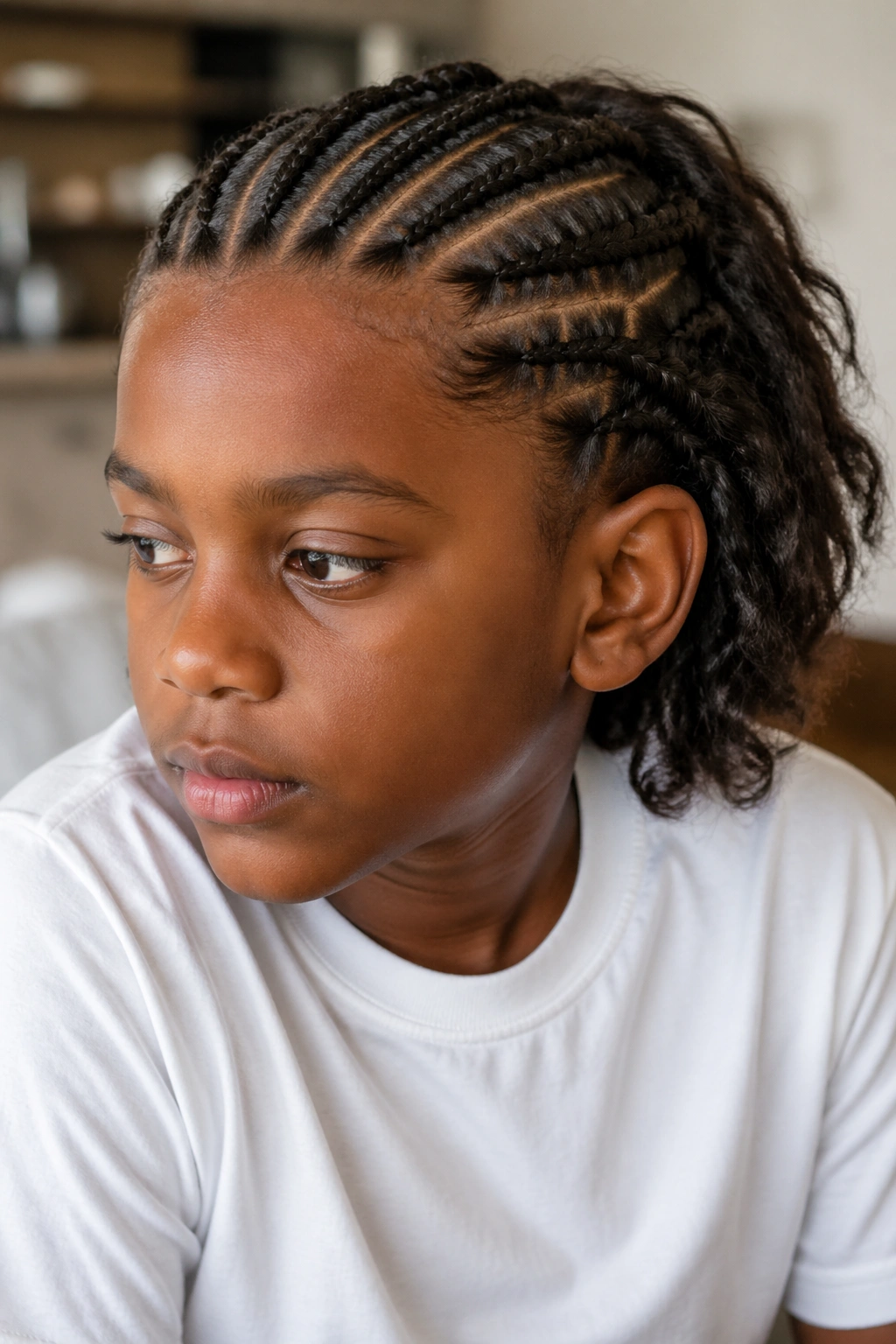
Sometimes the smartest move is to stop early. Front-half braids solve the main problem—hair in the face—without asking you to braid the entire head.
Braid two or three rows across the front, then leave the back loose and natural. That keeps the styling time down and still gives a finished look. I like this for boys whose hair is too short in back to hold a full pattern, or for days when you just want the hair controlled at the front. One honest braid in the front does more than a rushed full head ever will.
11. Braided Top Knot
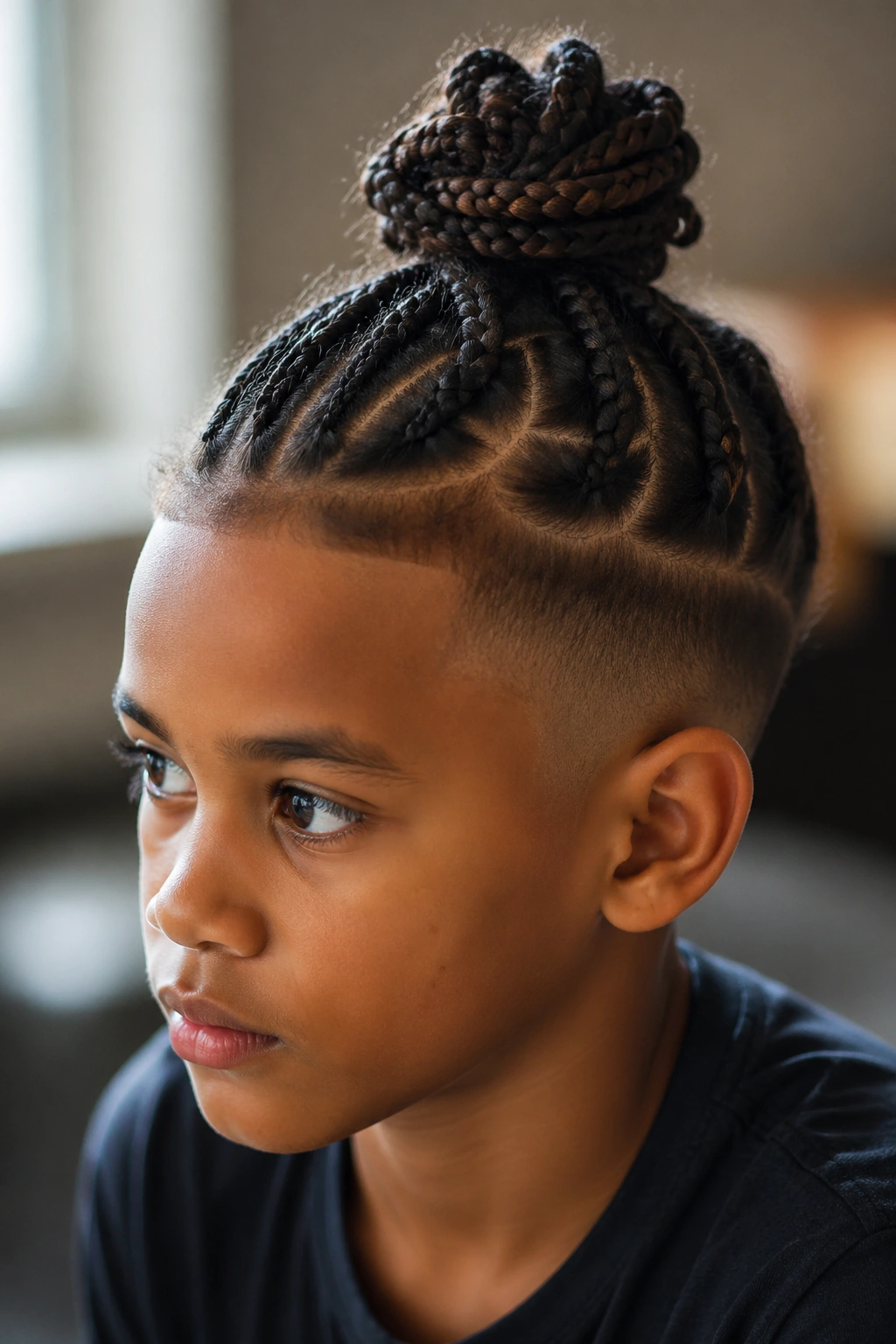
A braided top knot sounds fancier than it is. The braid does the organizing, and the knot does the cleanup.
How it works
Start with a single braid or two small braids from the front and guide the length upward. Twist the ends into a knot at the crown, then secure it with a small elastic or a pin if the hair is long enough. The shape keeps the style off the neck, which is useful when the kid runs hot or hates hair brushing his ears.
This one works best when the hair is medium length. Too short, and the knot fights back.
12. Crown Braid Along the Hairline
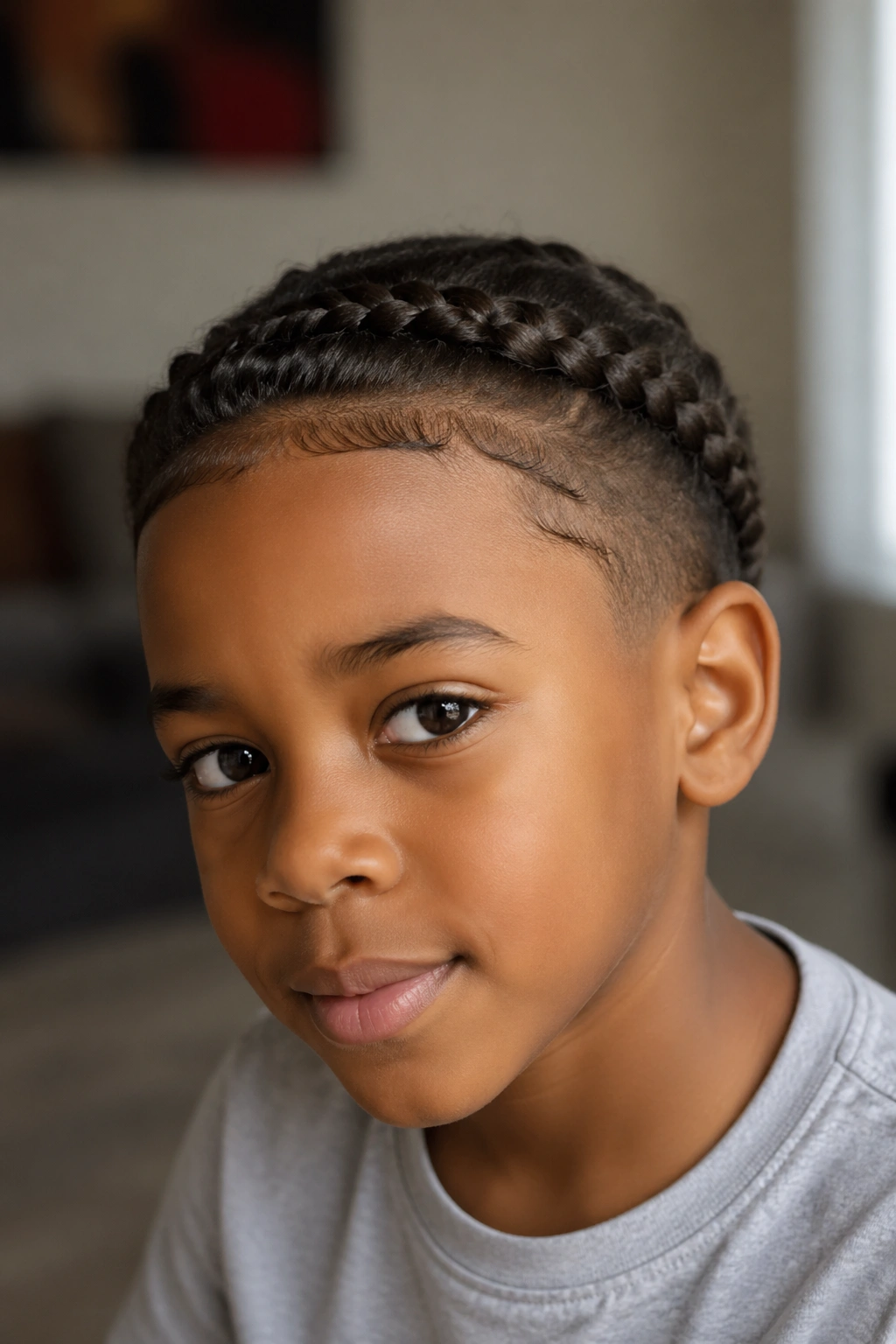
There’s something especially practical about a braid that hugs the hairline. It keeps the front neat, clears the temples, and gives the face room to breathe.
The braid follows the edge of the scalp around the forehead and down toward the ears. That shape takes a little care at the start, then settles into a simple rhythm. If the hairline is tender, use lighter tension and smaller grabs. I’d rather have a slightly looser crown braid that a child can wear all day than a tight one that gets tugged out before noon.
- Best for medium-length curls.
- Keep the braid close to the edge.
- Use a soft brush before you start.
- Finish with a small dab of gel where flyaways show.
13. Lemonade Braids for Boys
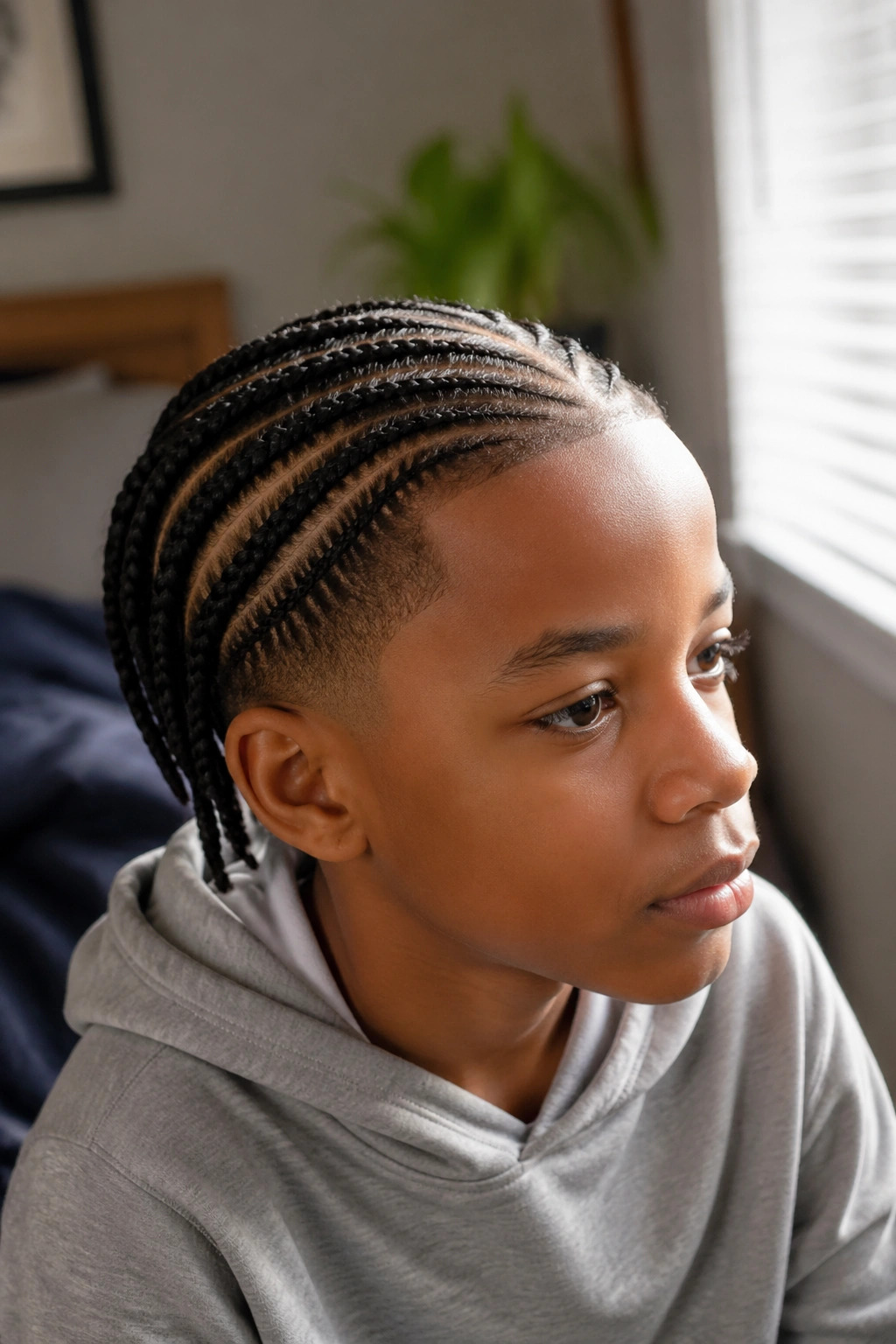
Lemonade braids are just side-swept rows, and on boys they can look unexpectedly sharp. The hair flows in one direction, which gives the style motion without making the braiding harder.
This is a good choice when the head shape seems to fight straight-back rows. A side angle often sits better, especially if the natural part already leans that way. I like this style because it looks deliberate with very little extra effort. The braid pattern does not have to be dense. Three or four rows can do the job well.
14. Triangle-Part Braids
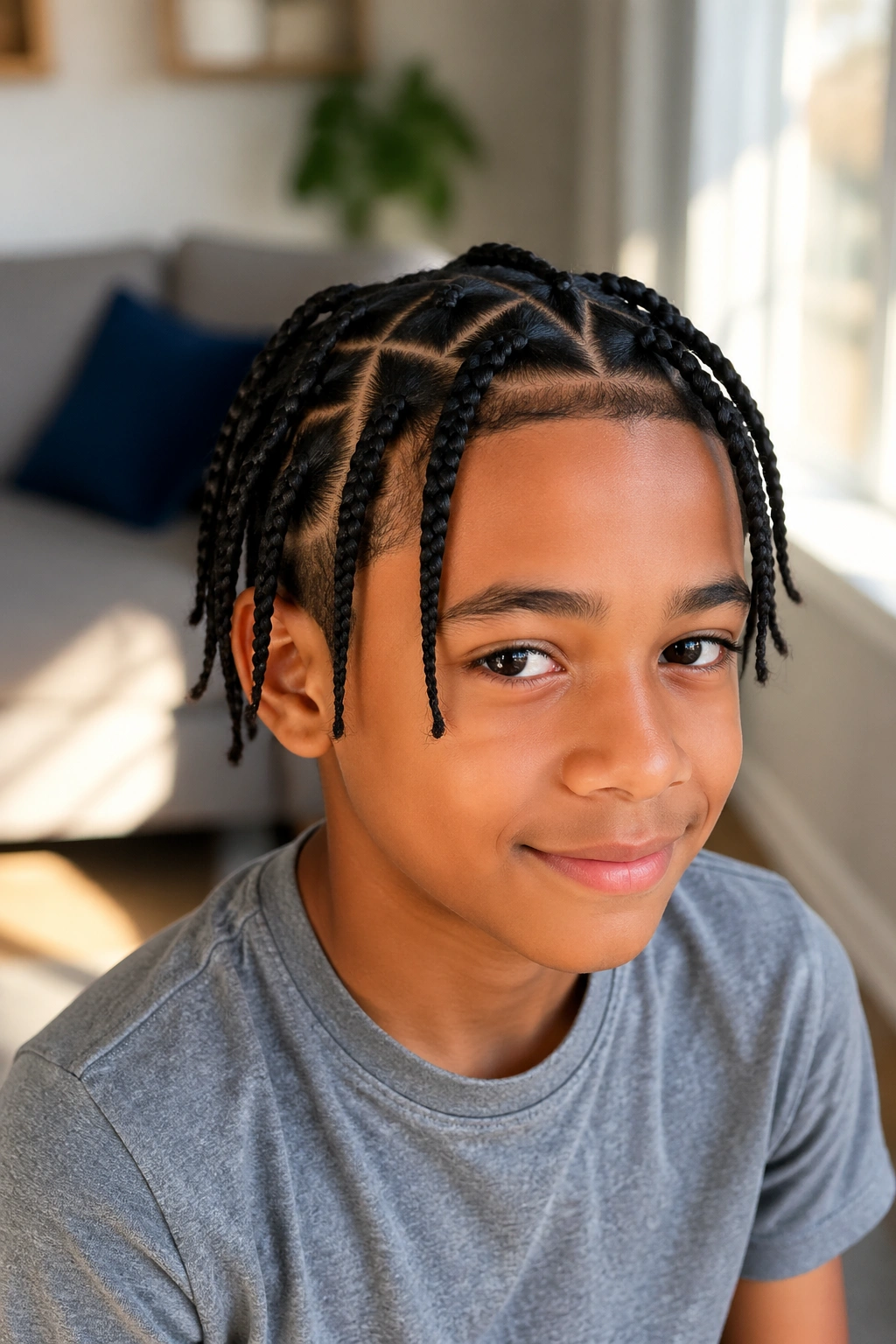
Triangle parts are one of my favorite small cheats. The braid can stay simple, but the parting makes the whole style feel thought out.
A triangle section is just easier on the eyes than a square one when you want a little design without extra work. Use the tip of the comb to draw the points, then braid each section normally. This is the kind of detail that looks impressive from across the room and takes almost no extra braiding time if your hand is steady. It is a good pick for boys who like something a little different but not flashy.
15. Front Braids with Loose Curls in Back
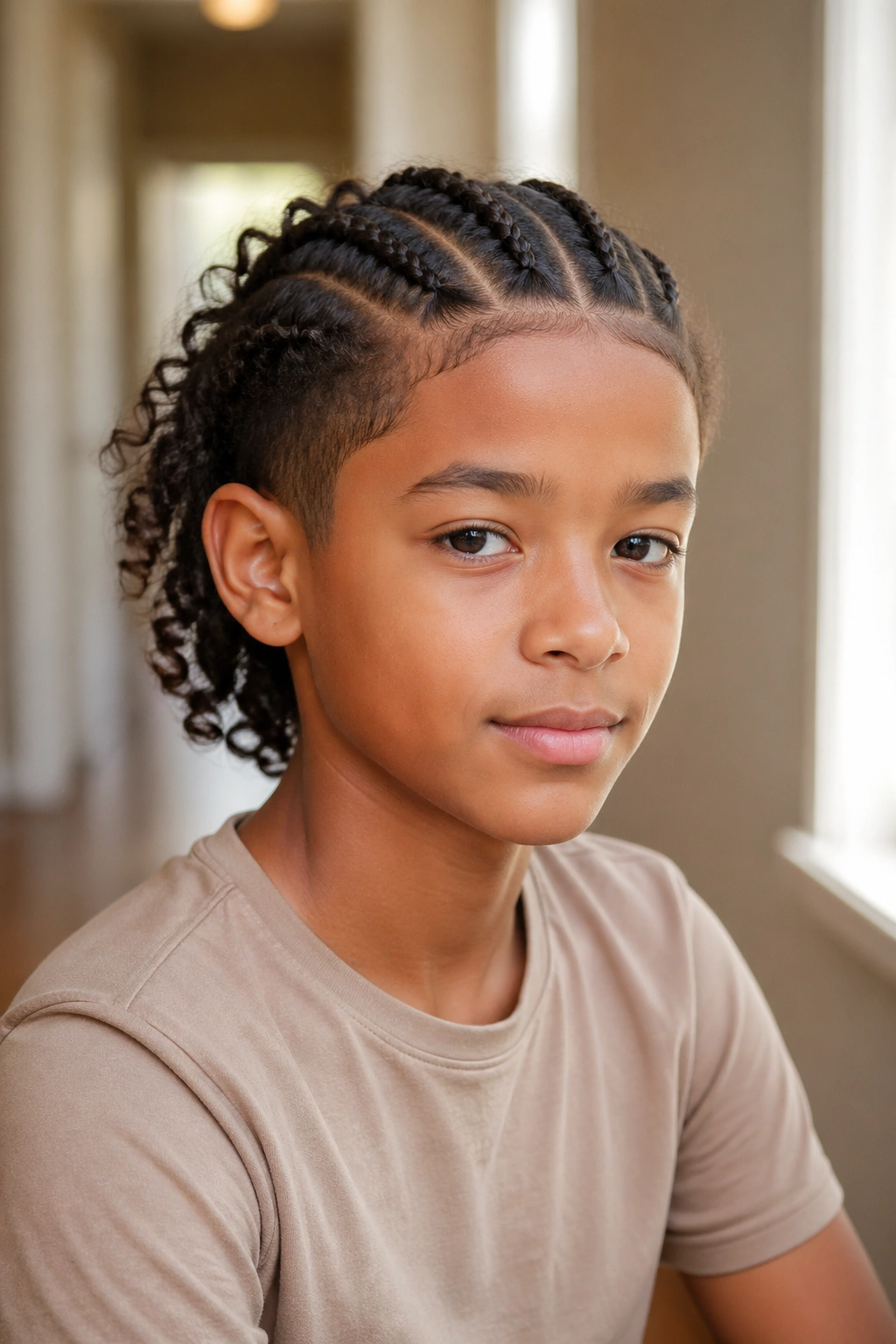
This style works because it respects the hair’s natural texture instead of trying to force everything into one shape. The front stays braided and neat. The back keeps its curls free.
You braid only the first row or two, usually from the forehead toward the crown, and let the rest hang. That keeps the style light and fast, especially on hair that has good curl pattern in back. I reach for this when the front needs control but the back still looks good on its own. It saves time and avoids the stiff, overworked look that some braid styles can have.
16. Crisscross Braids
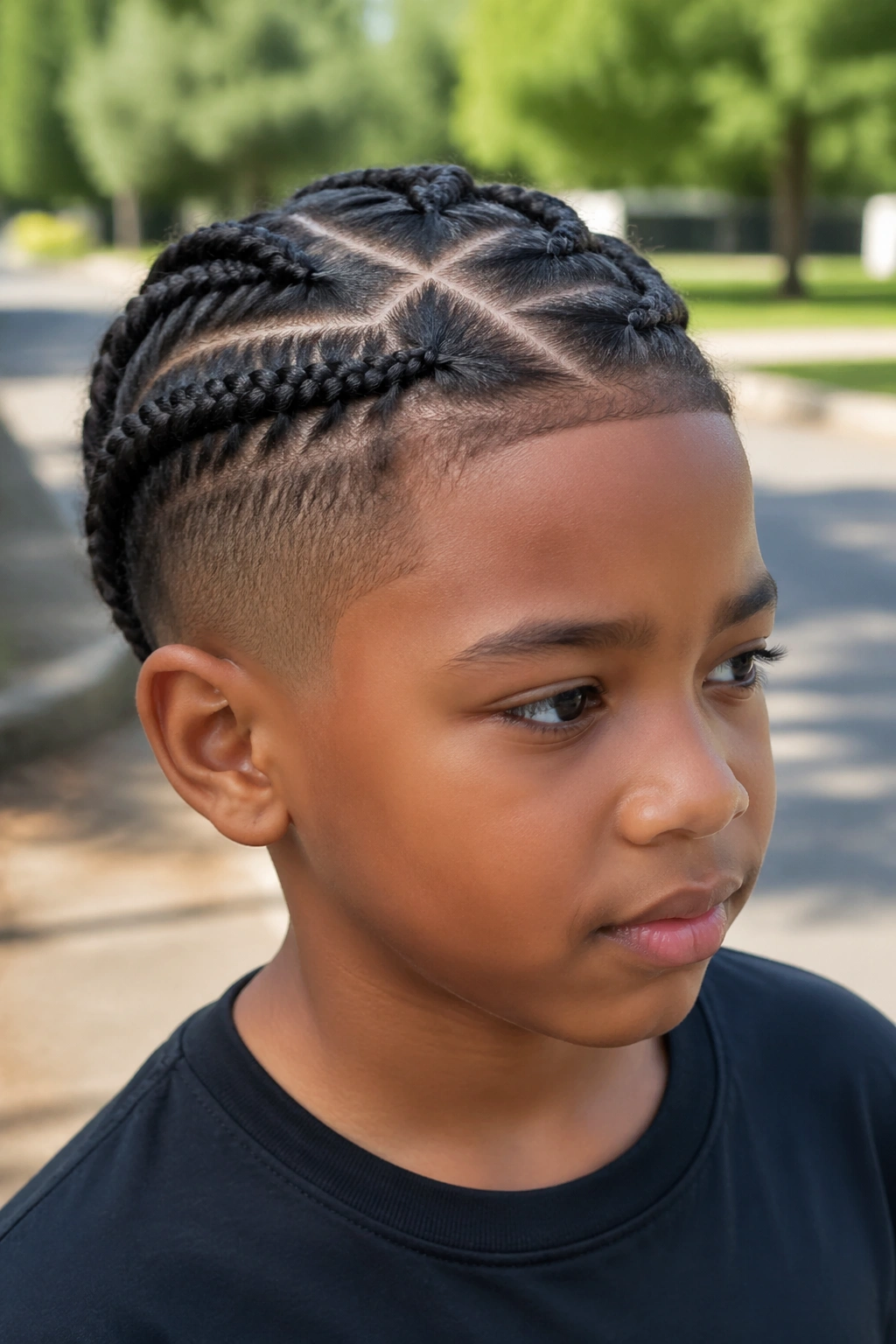
Can a crossed part make a braid feel special? Absolutely. The braid itself stays basic, but the parting crosses over once or twice, and that change is enough to wake the style up.
What to do
Map the hair with two crossing lines, then braid each section as usual. Keep the crossed areas clean and don’t chase tiny perfection. The point is shape, not microscopic symmetry.
A crisscross pattern is useful when a child wants something different but won’t sit still for a long parting session. It gives you visual interest fast, and the braids themselves can be short, medium, or long.
17. Braided Ponytail
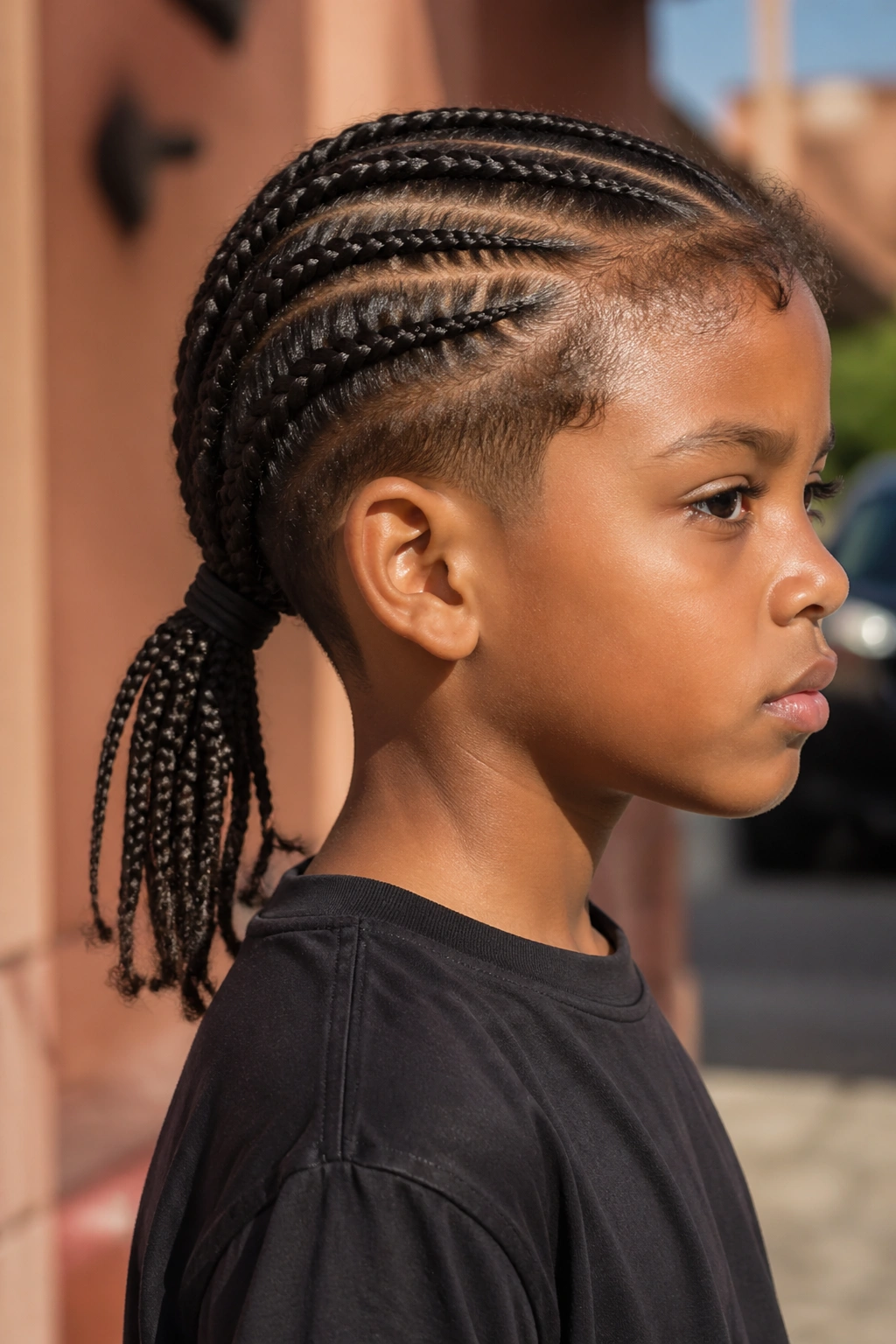
A braided ponytail is one of those styles that looks basic in the best way. The hair gets controlled quickly, then the braid drops into one neat tail at the back.
Start by brushing the hair back to the nape and gathering it low. Braid the ponytail as a single strand or split it into two pieces if the hair is thick and needs more grip. The style works because the whole head funnels into one point, which cuts down on parting time. I like it on boys who keep tugging at their hair, because the ponytail gives them less to fuss with.
18. Twin Braids with Tapered Sides
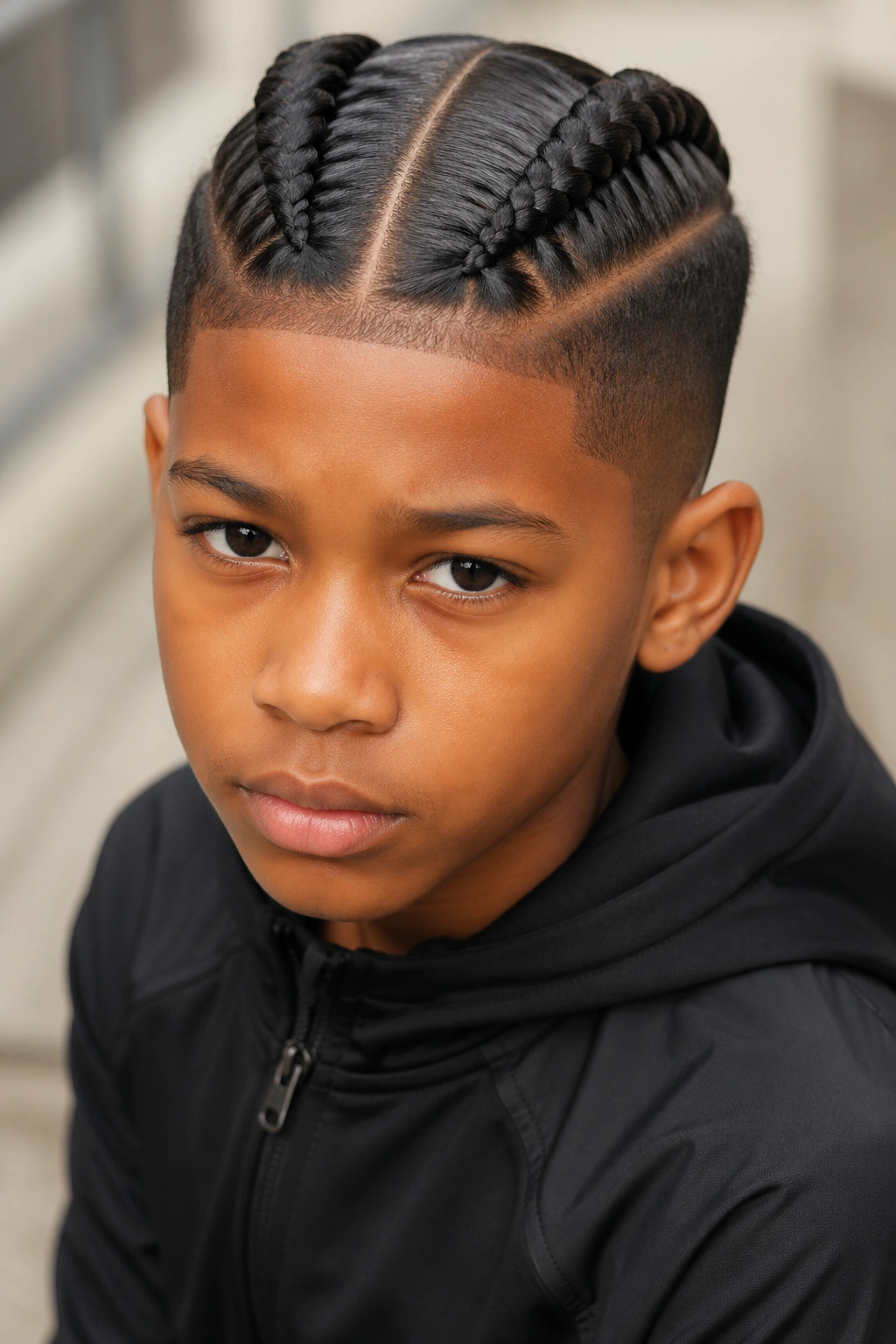
Two chunky braids can do a lot of work when the sides are faded or tapered. The contrast makes the braids stand out, so you do not need many of them.
This style moves fast because you only need two main sections. Part from the front hairline to the nape, braid each side, and keep the center line neat. The tapered sides make the whole thing feel cleaner, and that gives you a little extra visual payoff for almost no added time. On thicker hair, this is one of the easiest styles to keep even from left to right.
19. Braids with Beads
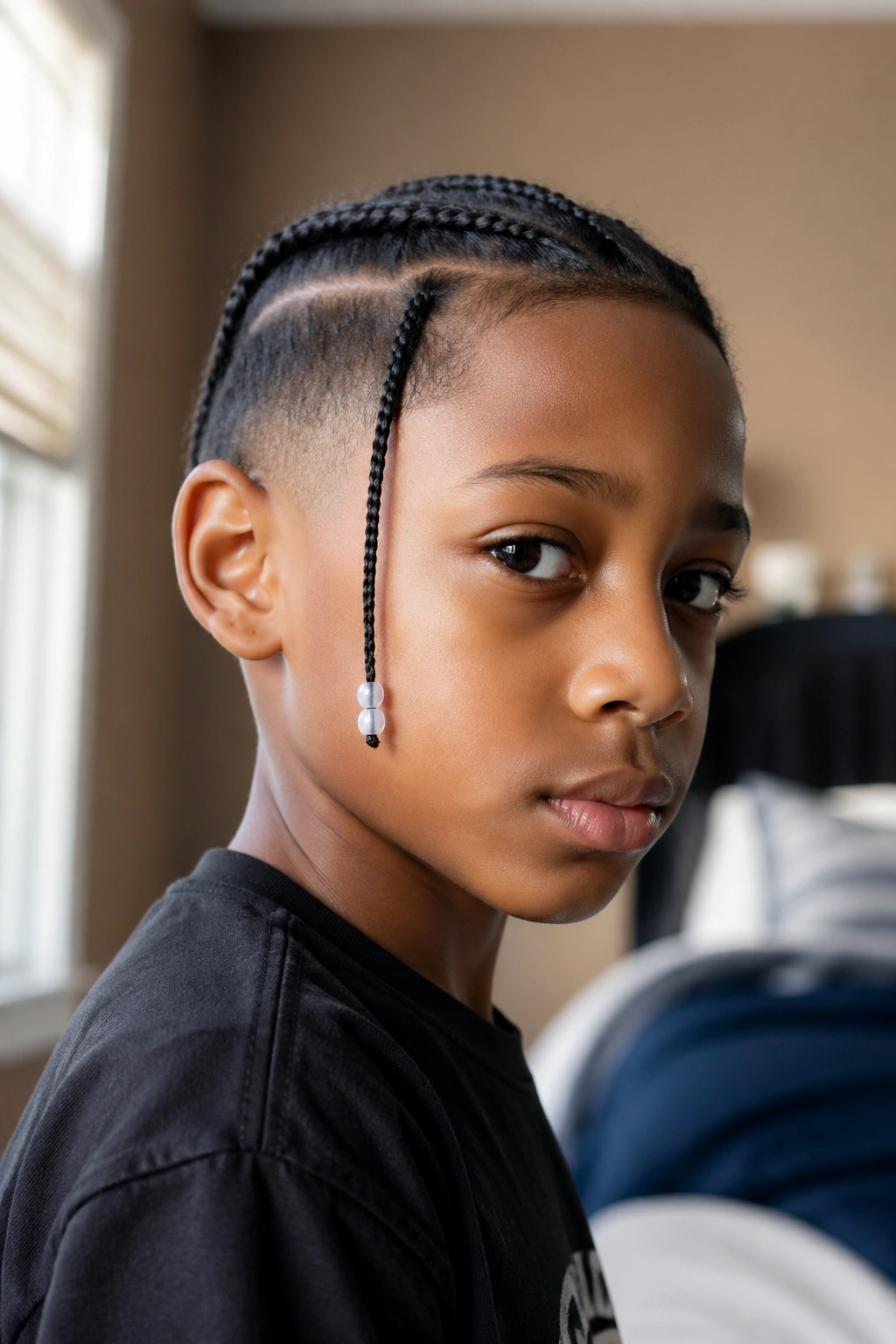
Beads change the whole mood of a braid. One simple braid can go from plain to lively the moment you add two or three beads at the end.
Keep the bead count sane
Too many beads weigh the hair down and slow you down. A small handful is enough.
- Use light beads, not heavy charms.
- Put them at the ends, not halfway up the braid.
- Match the bead size to the braid width.
- Check that the elastic or stopper is secure before you let the kid move around.
My take: the bead is the finish, not the main event.
20. Dutch Braids on Longer Hair
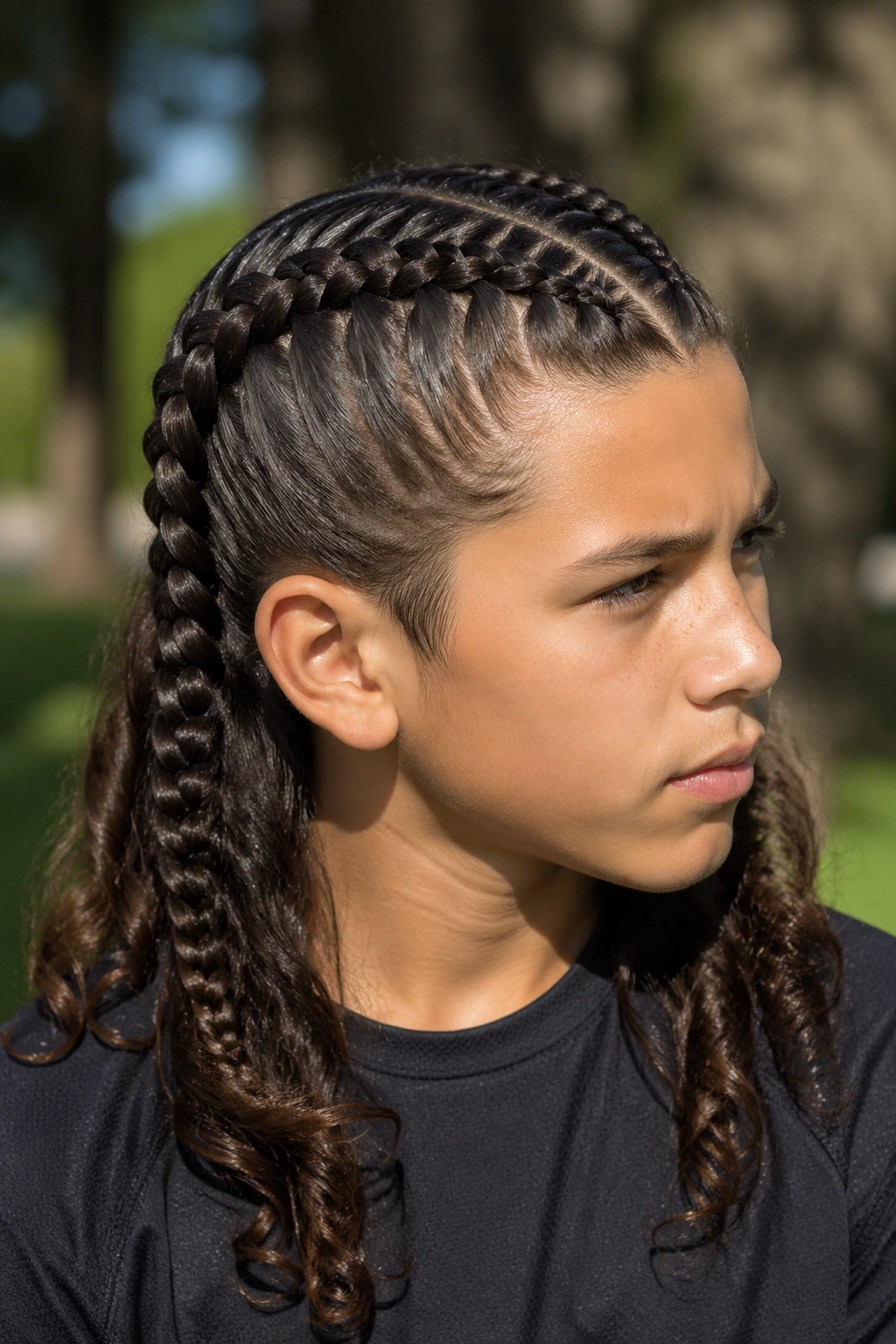
Dutch braids are the inside-out cousin of cornrows, and on longer hair they give you a raised braid that stands out right away. The braid sits higher, so the texture shows more.
They take a little coordination at the start, then the motion becomes steady. Underhand braiding keeps the braid lifted, and that shape works well if the hair is long enough to hold its own weight. I like Dutch braids when a boy wants something that feels a touch more athletic or bold. They are still quick if you keep the sections clean and do not keep restarting the part line.
Best use
- Longer top hair.
- Hair that slips out of flat cornrows.
- Styles where a lifted braid looks better than a flat one.
21. Braided Bun
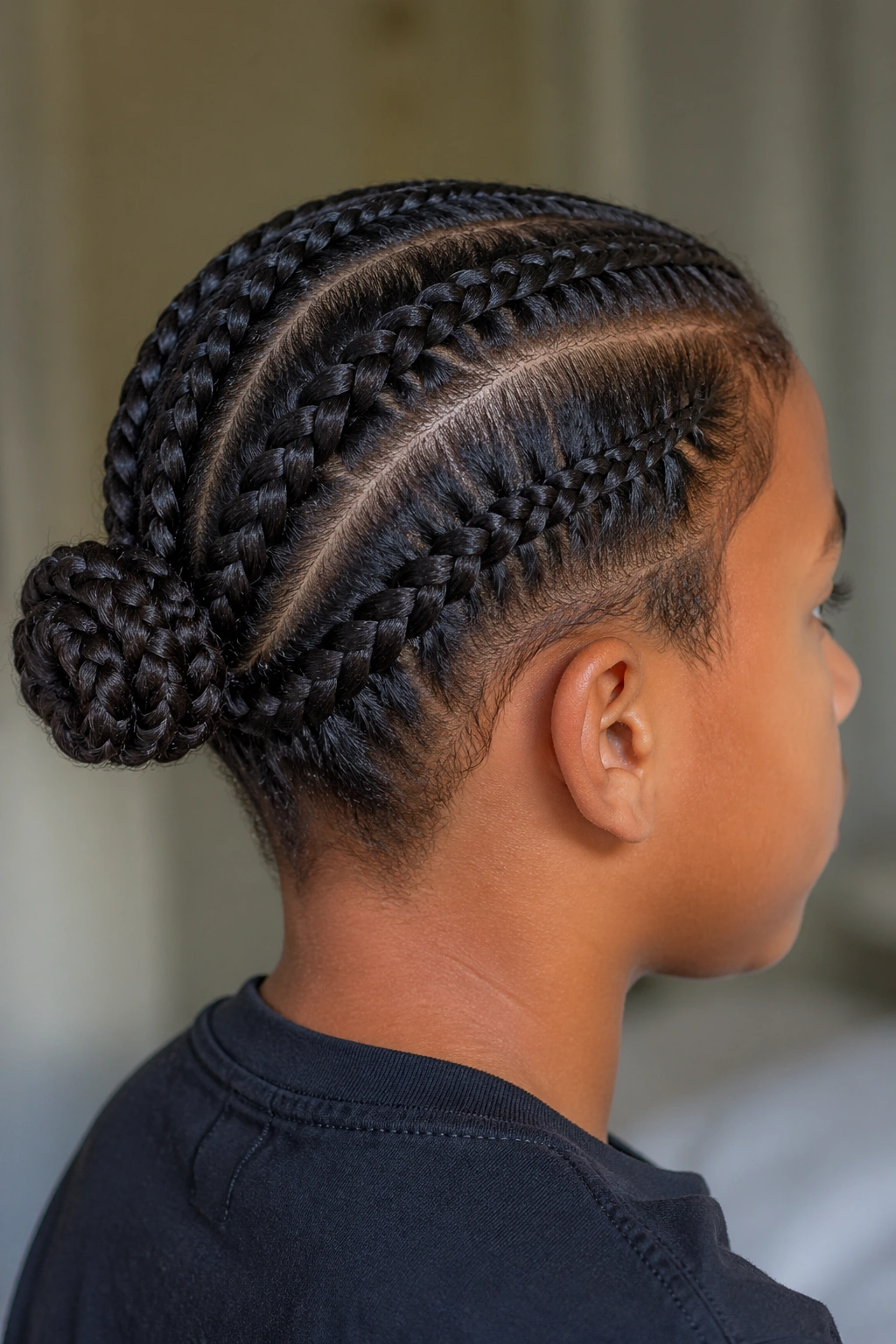
A braided bun is a smart fix when the hair needs to be up and out of the way. The braid keeps the length organized, and the bun finishes the job.
Braid the hair back, coil the end into a small bun, and fasten it low or at mid-height depending on the cut. This works well for school, practice, and any day when the boy cannot stand hair on his neck. It is not a complicated style, which is part of the appeal. You are not building a sculpture. You are making the hair behave.
22. Diagonal Back Braids
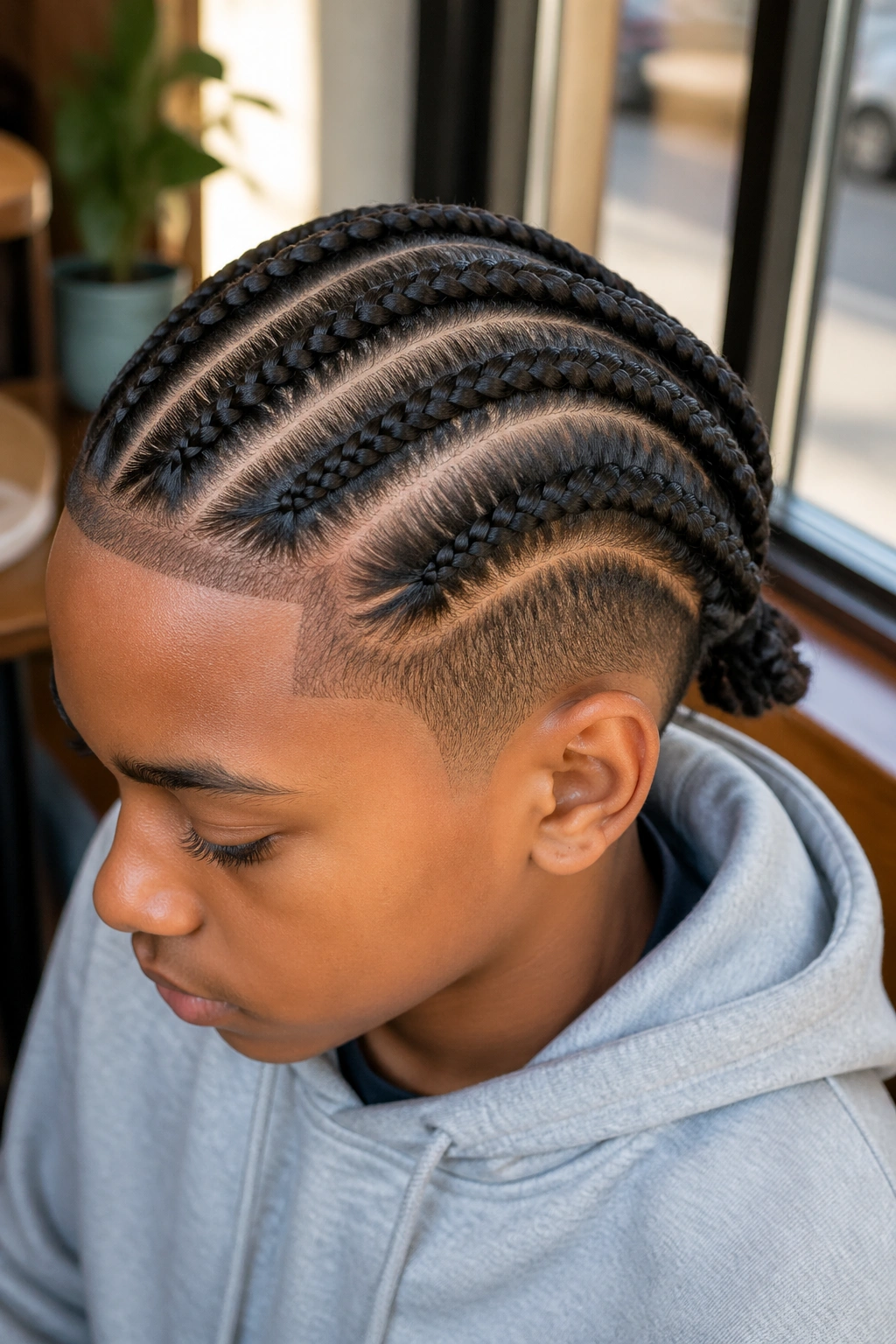
Straight-back rows are not the only fast option. Diagonal braids angle across the scalp and give a little motion even when the style is kept simple.
I like diagonals on heads that look a little flat with straight rows. The angle breaks up the shape and makes the parts look intentional. All you need is a clean starting line from one side of the forehead down toward the opposite nape. After that, the braid itself stays basic. It is a small change, but it changes the whole mood of the style.
23. Heart-Part Braids
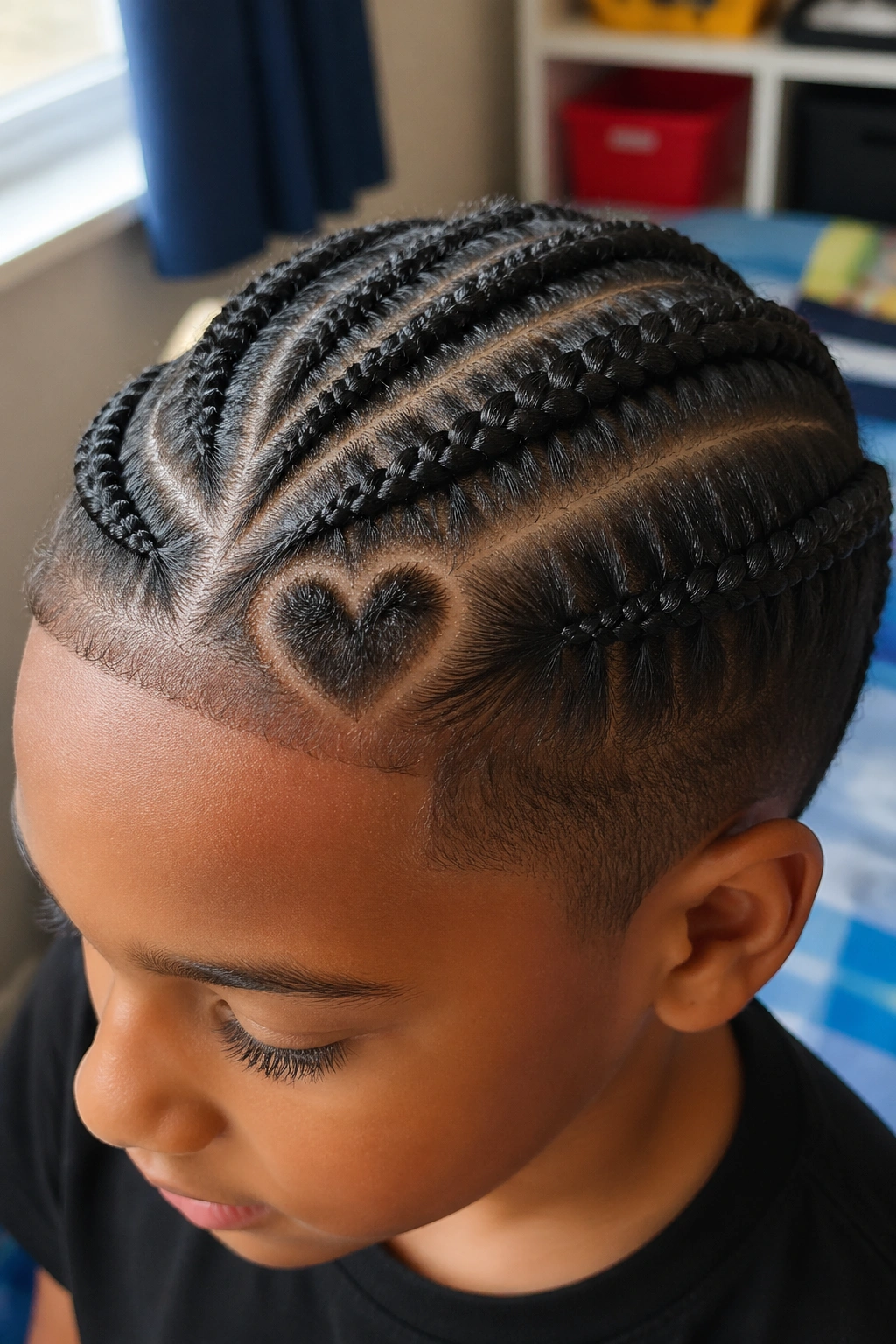
A heart part sounds dramatic, and to be fair, it can be. But one small heart at the front is enough to make a simple braid style feel special.
Keep the heart small
A large heart takes time. A small one at the hairline gives you the look without the drama.
Once the heart is drawn, braid the sections back in a basic pattern. That way the parting carries the style while the braiding stays quick. This is a nice choice for birthdays, school pictures, or any day a kid wants “something cool” but does not want to sit forever.
24. Temple Braids
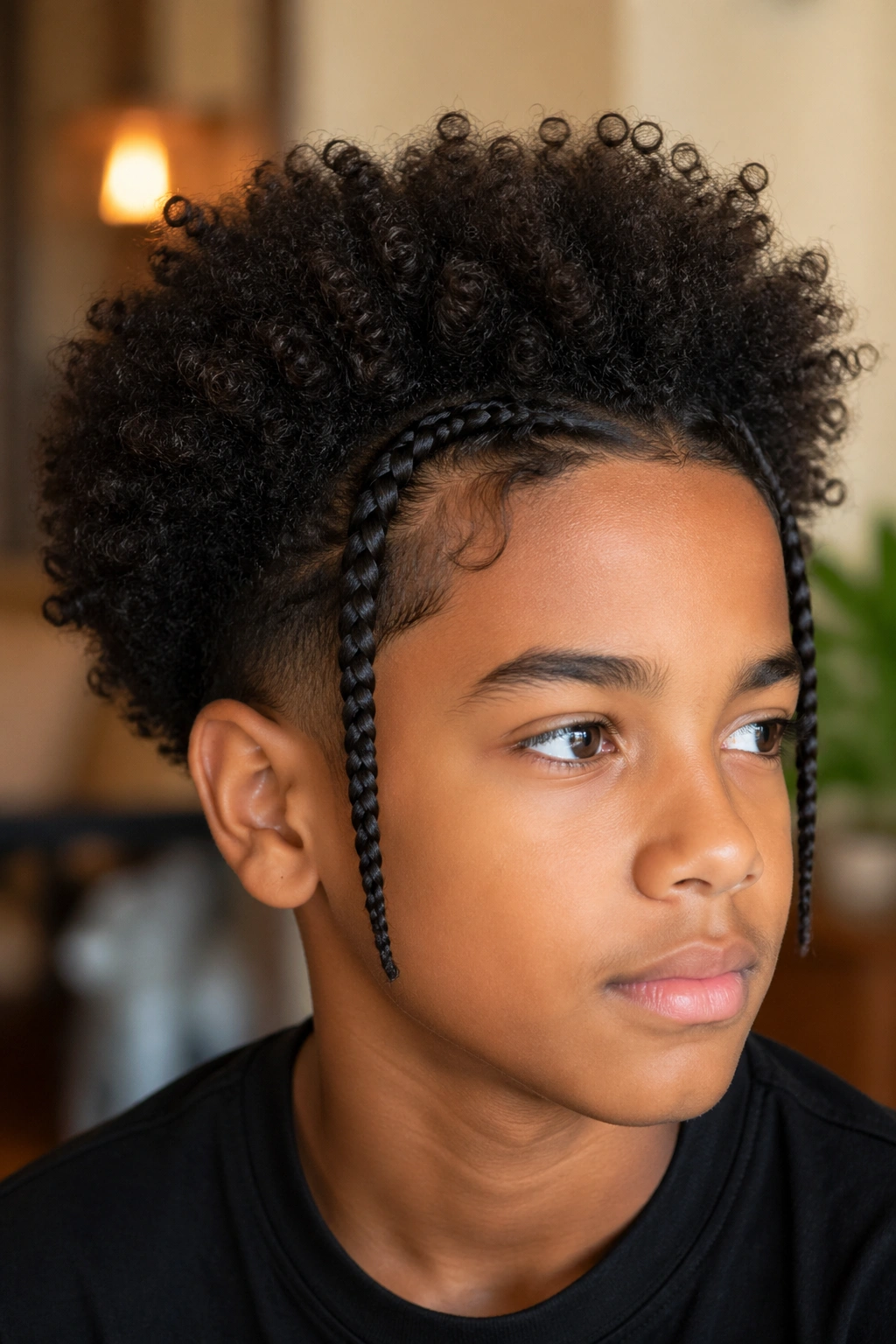
Temple braids are tiny rows placed near the sides of the head, and they’re useful for controlling hair that always escapes by the ears.
A couple of slim braids at the temples can clean up the whole face shape in minutes. The rest of the hair can stay loose, in a puff, or in a low tail. That flexibility is what makes this style so practical. You are fixing the problem spots instead of braiding every inch of hair. It’s a small move, but it saves time and keeps the style from feeling overdone.
25. Jumbo Box Braids
Jumbo box braids are the fast answer when you want box braids without the long sit. Fewer sections means less parting and less braiding.
Why jumbo works
You might think smaller means neater, but on a child’s head, larger sections often look cleaner because the parts stay visible and the braids finish faster.
- Use four to six sections on shorter hair.
- Keep each box even from root to root.
- Braid only as far as the hair can hold neatly.
- Don’t overload the roots with product.
If you want a tidy look in ten minutes, jumbo usually beats tiny.
26. Curved Cornrows
Curved cornrows are the move when straight lines feel boring or awkward. The braid itself is still simple, but the curve wraps around the head in a softer shape.
I like this style on boys with rounder faces or fuller hair because the curve follows the head instead of chopping it into stiff rows. Draw the line with the comb, then braid along that path without fighting it. You do not need ten curves. Two or three strong ones are enough. The result looks deliberate, and the work stays manageable.
27. Braided Faux Hawk
A braided faux hawk brings a little attitude without turning into a long salon session. The sides stay tight or brushed down, while the middle braid line lifts the style.
What makes it quick
You only have to focus on the center ridge and the edges around it. That keeps the job small.
A couple of braids or one thicker center braid usually does the trick. If the hair on the sides is already short, even better. The style looks sharper when the center section has a bit of height, so avoid flattening it too much. I like this one for kids who want something bold but still need the hair out of their face.
Final Thoughts
Fast boy braids are not about doing less for the sake of it. They are about choosing a braid pattern that works with the hair you have, the time you have, and the amount of patience left in the room.
The styles that hold up best usually have one thing in common: clean sections and a finish that stops before the hair starts arguing back. That is the real trick. A neat center braid, a pair of cornrows, or a simple faux hawk can carry a whole day if the prep is decent.
Big sections are not cheating.
If you keep a spray bottle nearby and stop chasing perfect parts, the whole process gets easier. And honestly, that is what most mornings need more than anything else.