



Short spiky haircuts can do a lot with very little length. They lift the crown, sharpen the outline of the face, and make fine hair look fuller without asking it to behave like a blown-out bob.
That’s why the style keeps coming back for women who want something neat, lively, and easy to wake up with. The best versions are not stiff or helmet-like. They’re tapered at the nape, soft around the ears, and textured on top so the spikes move instead of standing in one frozen shape.
Silver hair, salt-and-pepper strands, and even darker hair with scattered gray all show this cut well because texture reads fast on short hair. That matters more than people think. A tiny change in layering can make a pixie look airy and modern, or flat and old-fashioned, and the difference usually lives in the crown, the fringe, and the way the sides are cut.
1. Tapered Silver Pixie With Feathered Spikes
A tapered silver pixie is one of the calmest ways to wear a spiky cut. The nape sits close, the sides hug the head, and the top keeps about 1½ to 2 inches of textured length so it can stand up without looking stiff.
I like this one for women whose hair has thinned a little through the crown. The taper keeps the shape clean, while the feathered ends stop the top from looking blocky. On silver hair, those little pieces read clearly and give the whole cut a sharper outline.
- Good match for fine or medium hair that needs lift without too much bulk.
- Works with glasses because the sides stay neat and don’t fight the frame.
- Needs a trim every 4 to 6 weeks so the nape doesn’t puff out.
- Styles fast with a pea-size dab of matte paste.
Pro tip: ask your stylist for point-cut ends, not blunt ones. The difference is small in the chair and huge in the mirror.
2. Crown-Lifted Crop With Wispy Sides
Why does a short crop sometimes look fuller than a longer style? Because the crown is doing the heavy lifting. A crown-lifted crop keeps the top layered in short, vertical sections, then softens the sides so the silhouette rises instead of spreading out.
That shape is smart for round faces and softer jawlines. It adds height where you want it and keeps the ear area light, which helps the whole cut feel modern rather than severe. A little lift at the top can do more than a heavy fringe ever will.
How to ask for it
Tell your stylist you want short layers through the crown, a tapered side panel, and a soft edge near the temples. If your hair falls flat fast, ask for a root-lifting spray at the scalp and blow-dry the top in 1-inch sections with a small round brush. You only need a light hand at the end. A touch of wax on the fingertips is enough.
3. Soft Faux-Hawk Pixie
A faux-hawk does not have to shout. In a soft version, the center ridge rises gently from the front hairline to the crown, while the sides stay tucked and close. It gives you edge without turning the whole haircut into a statement piece.
This cut works especially well if you like a little drama in your profile but do not want heavy length around the neck. It also flatters women with strong cheekbones, because the eye goes upward before it goes outward. That little upward pull changes the whole balance of the face.
- Use a matte paste, not a shiny gel. Shine makes short spikes look hard.
- Keep the top between 2 and 3 inches if you want movement.
- Ask for softer sides if your hair grows wide at the temples.
- Style by pushing the front up and back with your fingers, not a brush.
A faux-hawk like this is a nice middle ground. It has personality, but it still behaves at lunch.
4. Choppy Bixie With Spiky Ends
If you’ve ever grown out a pixie and liked the extra length around the ears, the bixie is probably the shape that makes sense. It sits between a bob and a pixie, with enough length to feel gentle and enough choppiness to keep it from looking heavy.
The spiky ends keep it from turning into a flat little cap of hair. That’s the whole appeal. You get movement near the cheekbones, a clean neckline, and a little edge through the top layer so the cut doesn’t feel too sweet.
What makes it work
The crown usually stays a touch longer than the back, and the ends are cut in small, uneven pieces. That gives the hair a bent, piecey look when you rough-dry it with a diffuser or let it air-dry with a little texture cream. A straight blowout can make this cut look too smooth, so I’d skip that unless you want a sleeker finish.
A bixie like this is a good bridge cut if you’re not ready for something ultra short.
5. Long-Top Undercut Pixie
Unlike a classic pixie, this one keeps the sides and nape shorter and leaves the top longer, sometimes 3 to 4 inches. That contrast gives the haircut a bit of lift and a sharper profile, which is useful if your hair is thick or stubbornly puffs out on the sides.
The undercut removes weight where it’s least helpful. The longer top gives you room to create a side sweep, a little front wave, or a row of soft spikes. You end up with more choices on styling days and less bulk on lazy ones.
This is the cut I’d send to women who wear a lot of collars, scarves, or structured jackets. The clean nape sits nicely against clothing and doesn’t get swallowed by fabric. It’s also a good option if your hair grows out fast at the ears and feels boxy after four weeks.
Ask for a short undercut around the ears, a narrow nape, and a longer textured top. Keep a small jar of styling cream nearby. You won’t need much.
6. Feathered Side-Swept Crop
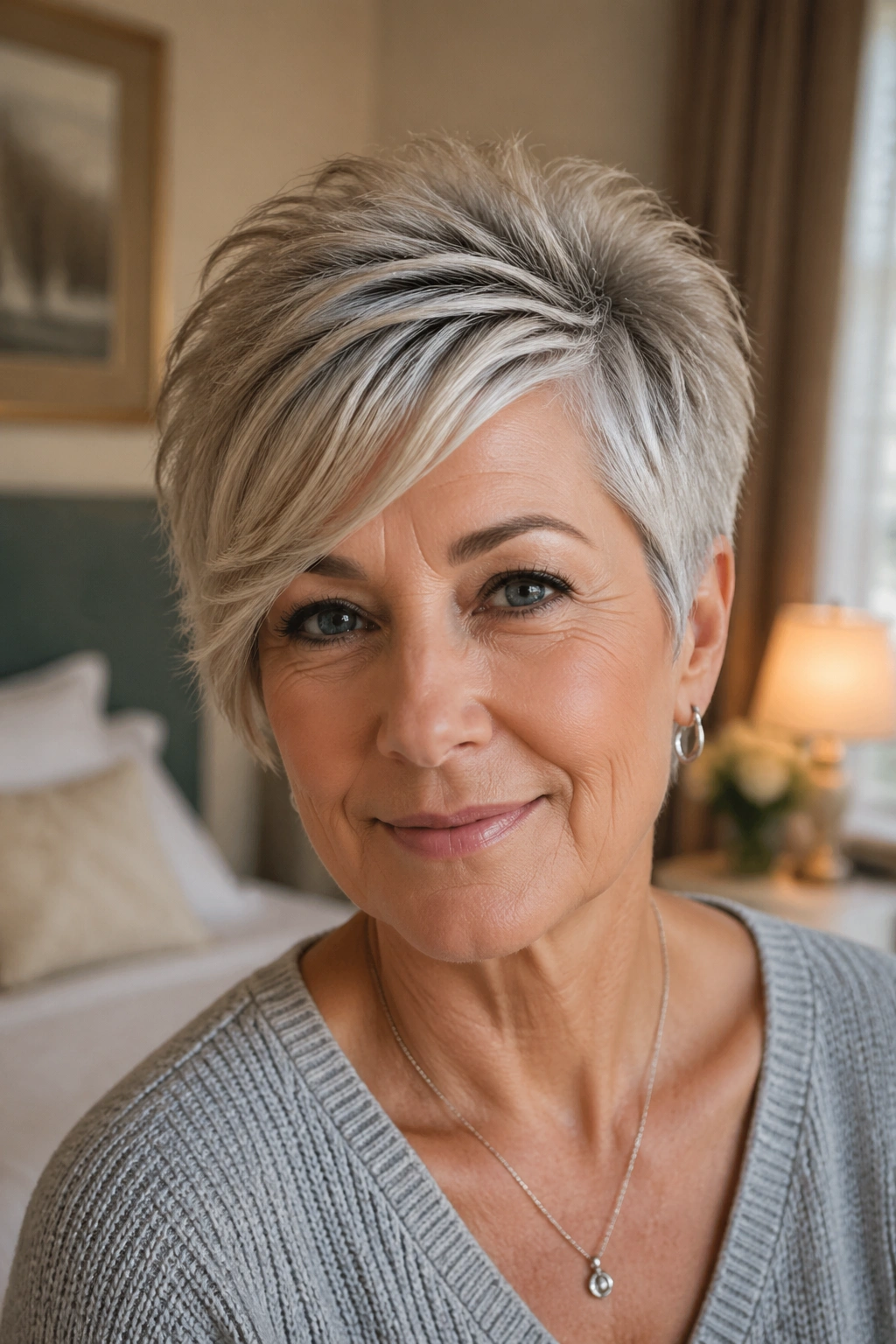
This is the cut I’d point to for anyone who wants softness first and edge second. The fringe is swept to one side, the crown is lightly layered, and the ends are feathered so the whole shape has a little air in it.
The side sweep is doing more than hiding the forehead. It breaks up the straight lines of the face and gives the haircut a more relaxed feel. If you wear glasses, this shape is especially useful because the fringe can sit above or beside the frames without getting tangled in them.
Why the fringe matters
A side-swept fringe can make a short spiky haircut feel gentler around the eyes. That helps if you like short hair but do not want every line of your face exposed. It also gives your stylist a place to build movement, which is useful if the rest of your hair is fine and a little flat.
Use a lightweight mousse on damp hair, then blow-dry the fringe in the direction you want it to fall. Finish by pinching the ends with your fingers so they separate a bit instead of lying in one smooth sheet.
7. Razor-Cut Gamine Crop
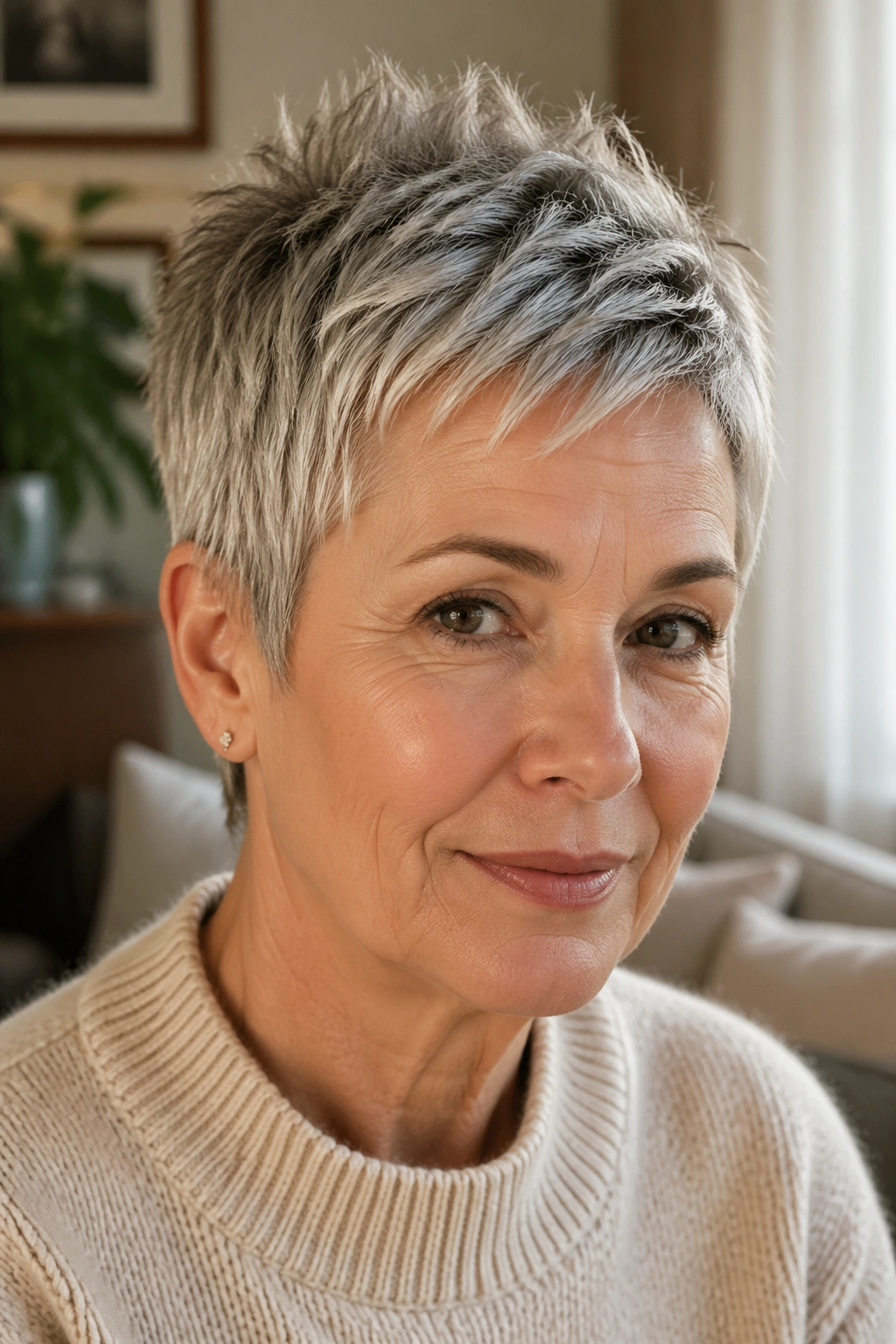
A razor-cut gamine crop has a sharper feel than a scissor-cut pixie, and that is the point. The razor leaves the ends airy and slightly broken, which keeps the cut from looking too neat or too precious.
I like this shape on straight or softly wavy hair. The ends move more easily, and the haircut gains that little bit of lift that makes short hair feel alive. On very fragile or over-processed hair, though, a razor can be a bad idea because it may make the ends feel too thin. That is a real tradeoff.
The beauty of the gamine crop is the balance between clean shape and loose texture. You can keep the sides close, leave the top piecey, and still have a haircut that feels polished. A dab of styling cream on dry hair is usually enough. Work it through the top, then twist a few pieces at the crown with your fingertips. That’s it.
8. Salt-and-Pepper Spiky Pixie
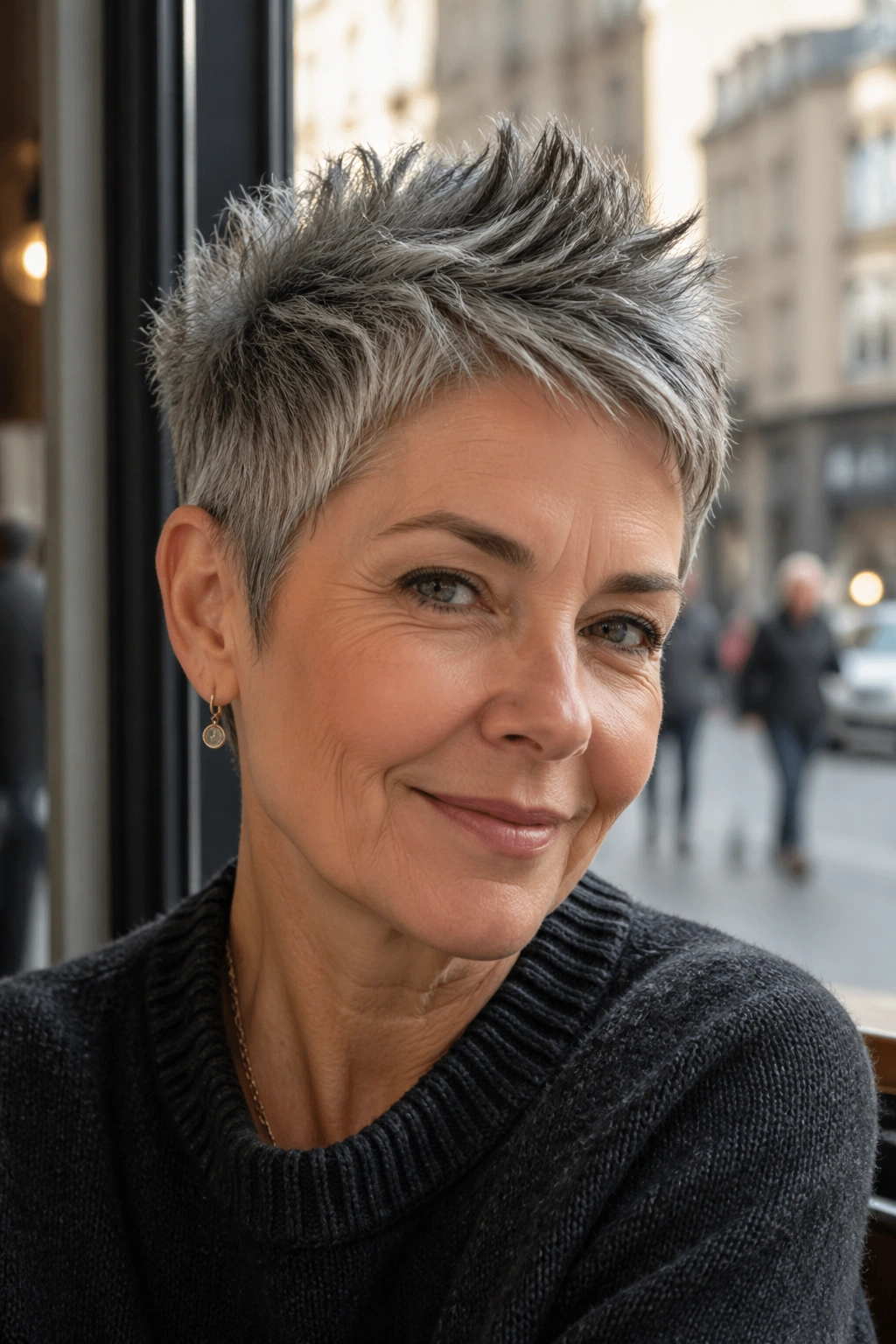
Salt-and-pepper hair has an advantage with a spiky cut: the color already has built-in dimension. The gray and darker strands catch and separate in a way that makes short texture look more visible, so the spikes read clearly without needing much product.
This style is good if you want a short haircut that feels lively but not overworked. The cut usually sits close at the sides, with a little extra length on top so the hair can be roughed up in seconds. I’d call it a practical cut with some attitude.
- Great for mixed-tone hair because the contrast shows the layers.
- Use a light texturizing spray before drying if your hair falls limp.
- Avoid heavy shine serums; they can flatten the piecey shape.
- Trim often so the spiky outline stays crisp.
A salt-and-pepper pixie looks especially nice when the color is left natural. There’s no need to fight the gray when the haircut is doing this much work.
9. Curved Nape Crop With Crown Lift
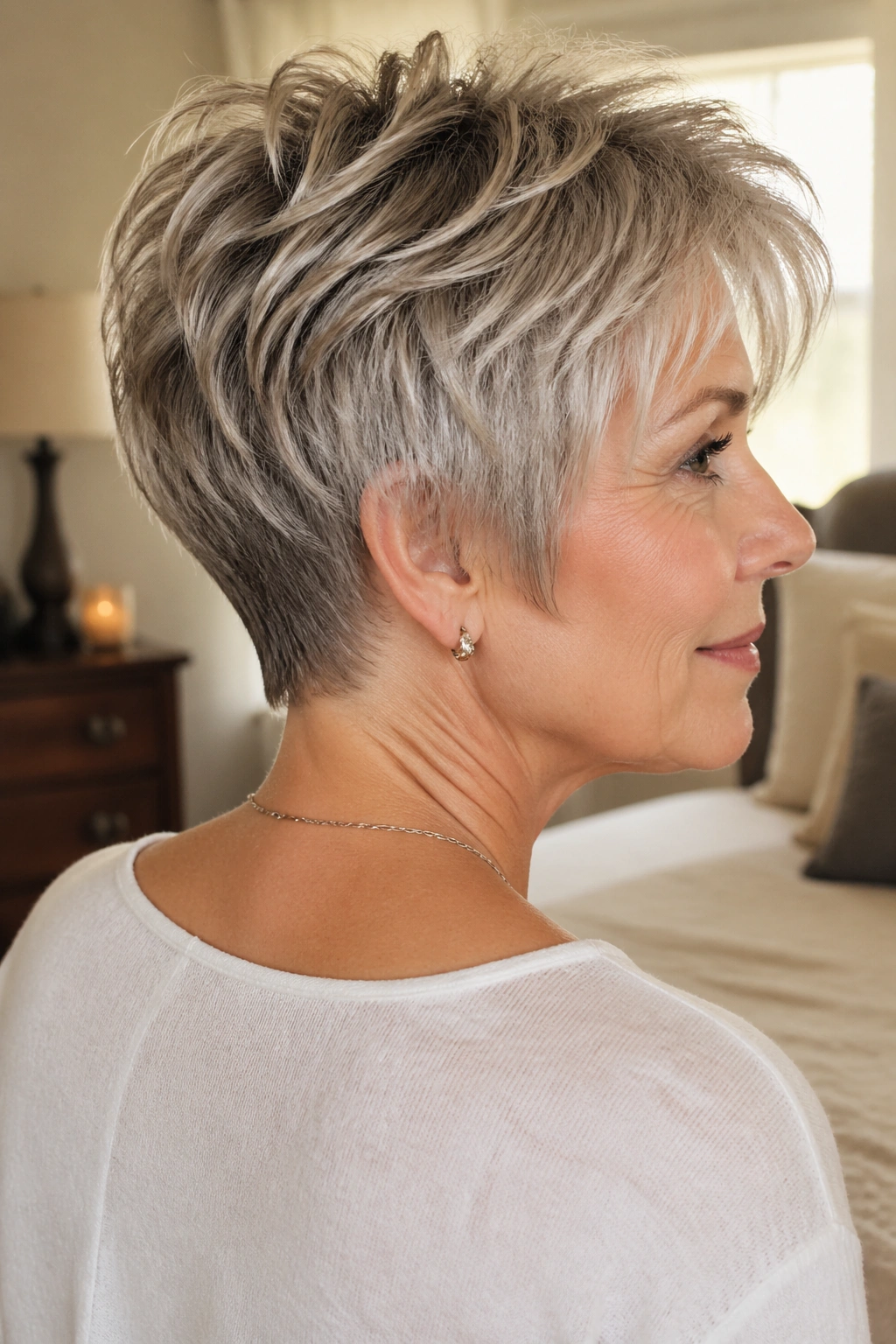
What happens when you keep the back clean and let the top rise? You get a shape that feels tidy without looking rigid. A curved nape crop follows the curve of the neckline closely, then stacks short layers at the crown so the head looks a touch taller.
That combination is useful if your hair tends to kick out at the nape or if you dislike the awkward grow-out stage that can happen with blunt cuts. The curve helps the haircut sit neatly against the neck, which also makes it look good with earrings and open collars.
A good salon request
Ask for a softly rounded nape, short stacked layers at the crown, and slightly longer pieces at the front if you want some framing. The front does not need much length to change the whole mood. Half an inch can be enough.
Use a blow dryer with a narrow nozzle and aim the air upward at the crown for a few seconds at a time. Then cool it down. That little blast gives shape without making the hair hard.
10. Asymmetrical Spiky Pixie
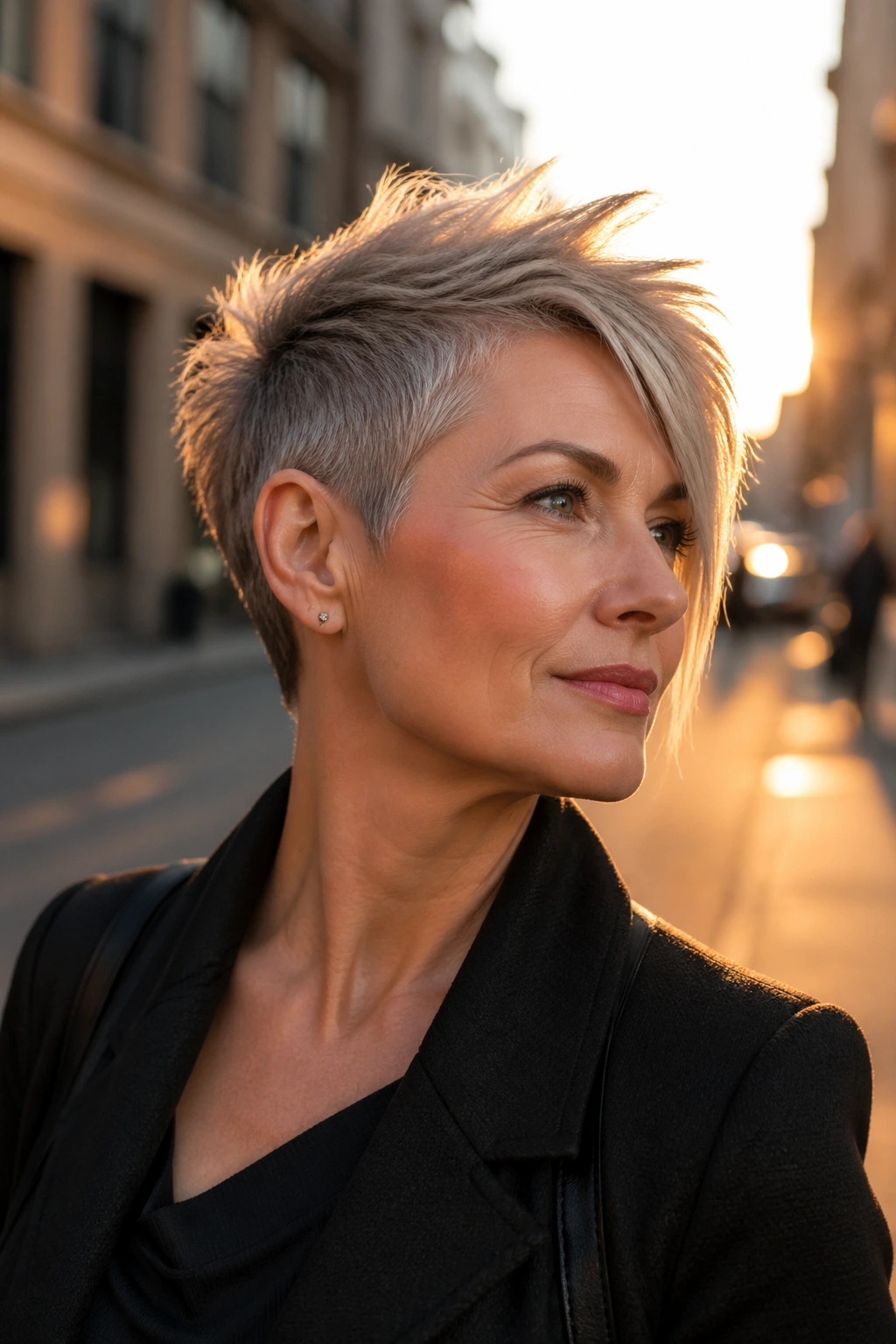
An asymmetrical pixie works because the eye likes a diagonal line. One side stays a little longer, the other side gets cropped closer, and the top joins the two with textured spikes that lean in the same direction.
This cut suits women who want a short hairstyle that doesn’t feel too symmetrical or too safe. It can lengthen a round face, soften a strong jaw, or simply make the whole style feel more deliberate. The asymmetry also gives you a built-in styling habit, because you already know which side is meant to sit longer.
I usually recommend this shape to women with straight or lightly wavy hair. Very curly hair can lose the clean diagonal unless the cut is done with care. If you want to wear it well, keep one side tucked close behind the ear and let the longer side fall in thin, separated pieces. A small amount of styling paste on the longer side is enough to keep it from collapsing.
11. Curly Short Spiky Crop
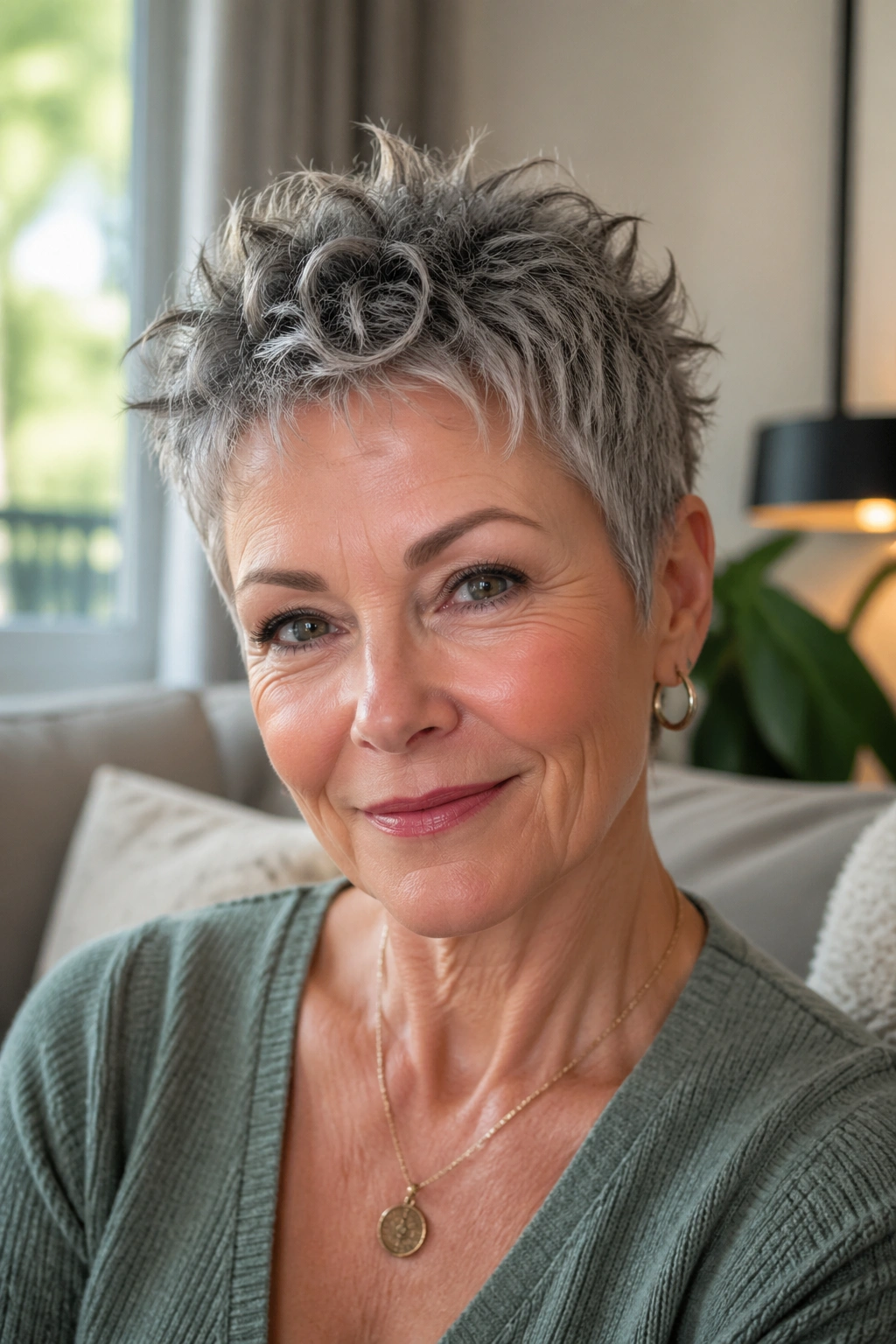
A short spiky crop on curly hair can look fantastic when the curls are kept short enough to spring instead of droop. The result is not hard spikes in the stiff sense; it’s a lifted, lively shape where the curl pattern creates texture all on its own.
The trick is restraint. If the cut is left too long, the curls will pull down and widen the shape. If it’s cut too short in the wrong places, the crown can puff up like a mushroom. A good stylist will shape it while the curl is dry enough to show how the hair really moves.
Use a curl cream about the size of a nickel, rake it through damp hair, and scrunch lightly. Then diffuse on low heat until the roots are dry and the curl clumps feel set. You want springy, not crunchy. That little difference changes everything.
12. Layered Pixie Bob With Edge
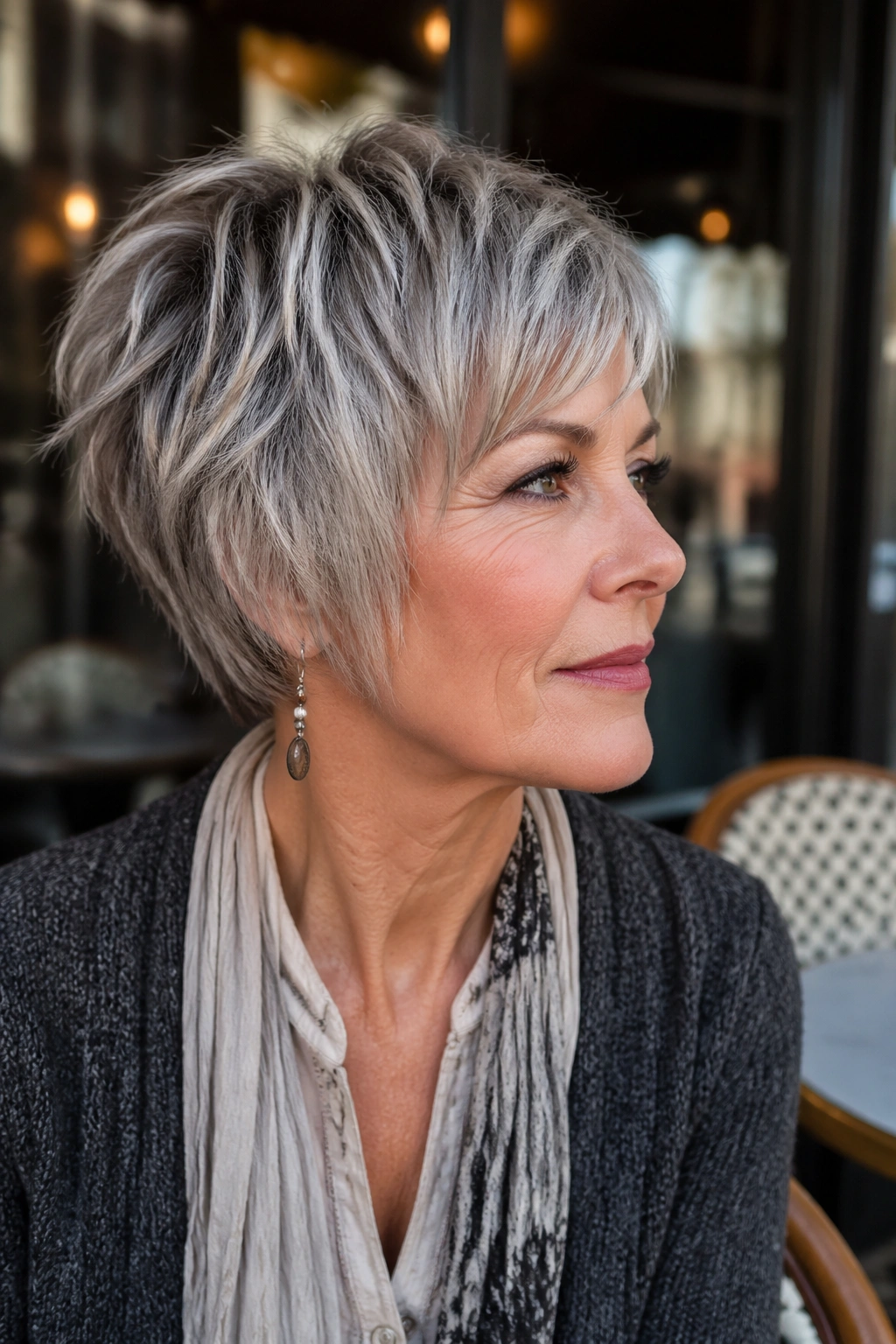
Not every spiky haircut needs to be ultra short. A pixie bob keeps a little more length around the jaw and ears, which helps if you’re easing into short hair and don’t want the shock of a close crop.
The layered shape gives you edge without losing softness. There’s enough length to tuck behind the ear, enough texture to spike the crown, and enough side volume to frame the face in a gentle way. It’s a useful cut for women who want movement but also like having a bit of hair to touch.
This is one of those styles that looks better with a little imperfection. Don’t smooth it into submission. Use a round brush only at the roots, then mess it up a little with your fingers. A small dab of texture cream through the top layer keeps the ends from looking blunt.
If your hair is medium-density and you want a short cut that still feels feminine, this one makes a lot of sense.
13. Messy Crop With Micro Fringe
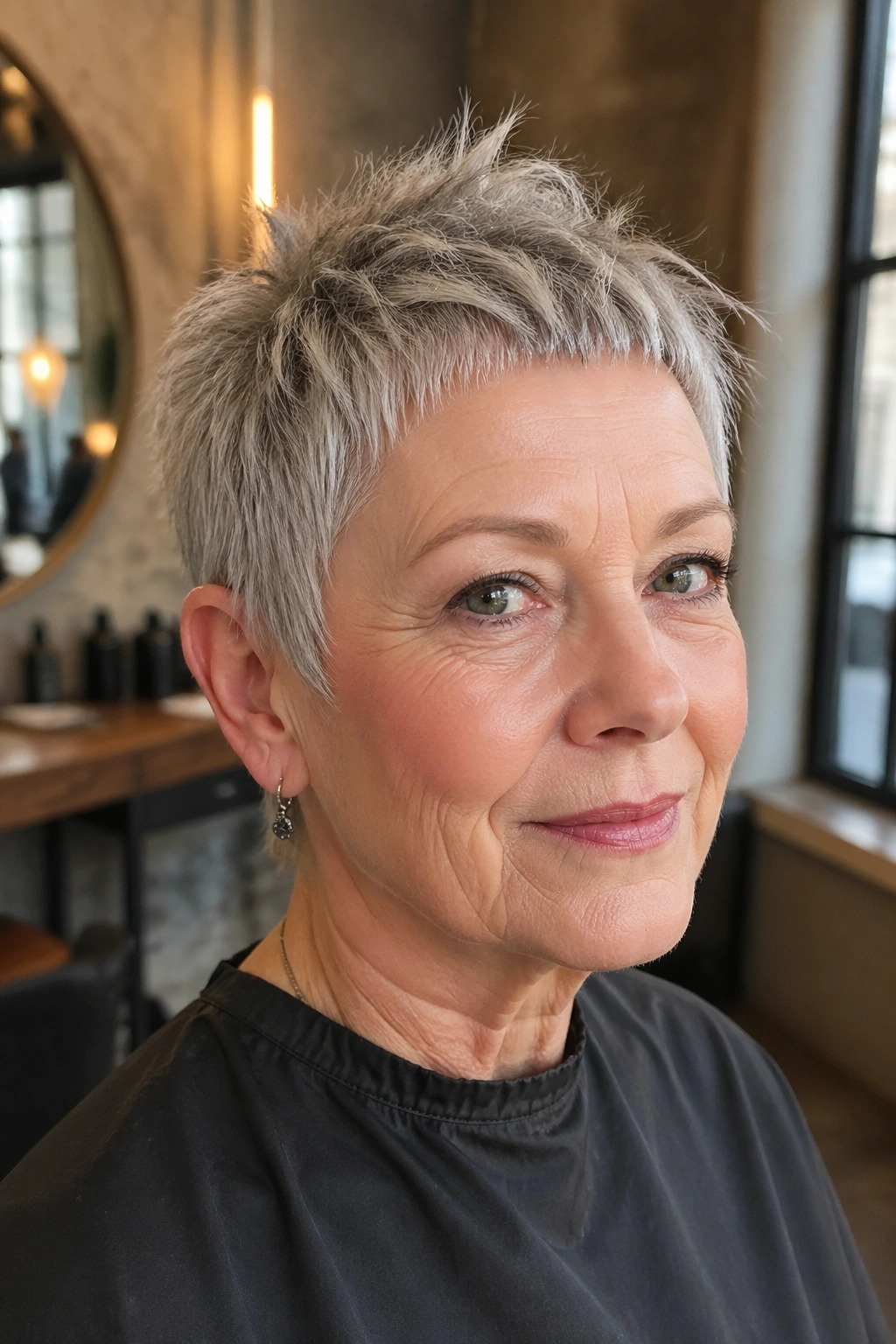
A micro fringe can look severe on its own. In a spiky crop, though, it becomes sharp in a good way because the rest of the cut stays loose and broken up.
This style is for women who like a little bite at the front. The fringe sits short, usually well above the brows, and the crown is cut in choppy pieces so the overall shape feels less rigid than a classic crop. You get a small, strong line at the face, then softer texture everywhere else.
What to ask for at the salon
Say you want a short, broken fringe, piecey crown layers, and soft edges around the temple. That keeps the cut from looking like a solid block across the forehead. If your forehead is narrow, leave a touch more length through the center. If your hairline is uneven, the broken fringe helps hide that without much effort.
A messy crop like this usually needs only a pea-size amount of paste. Work it in dry, then push a few pieces forward and a few upward. It should look like you touched it, not like you built it.
14. Side-Swept Spiky Pixie
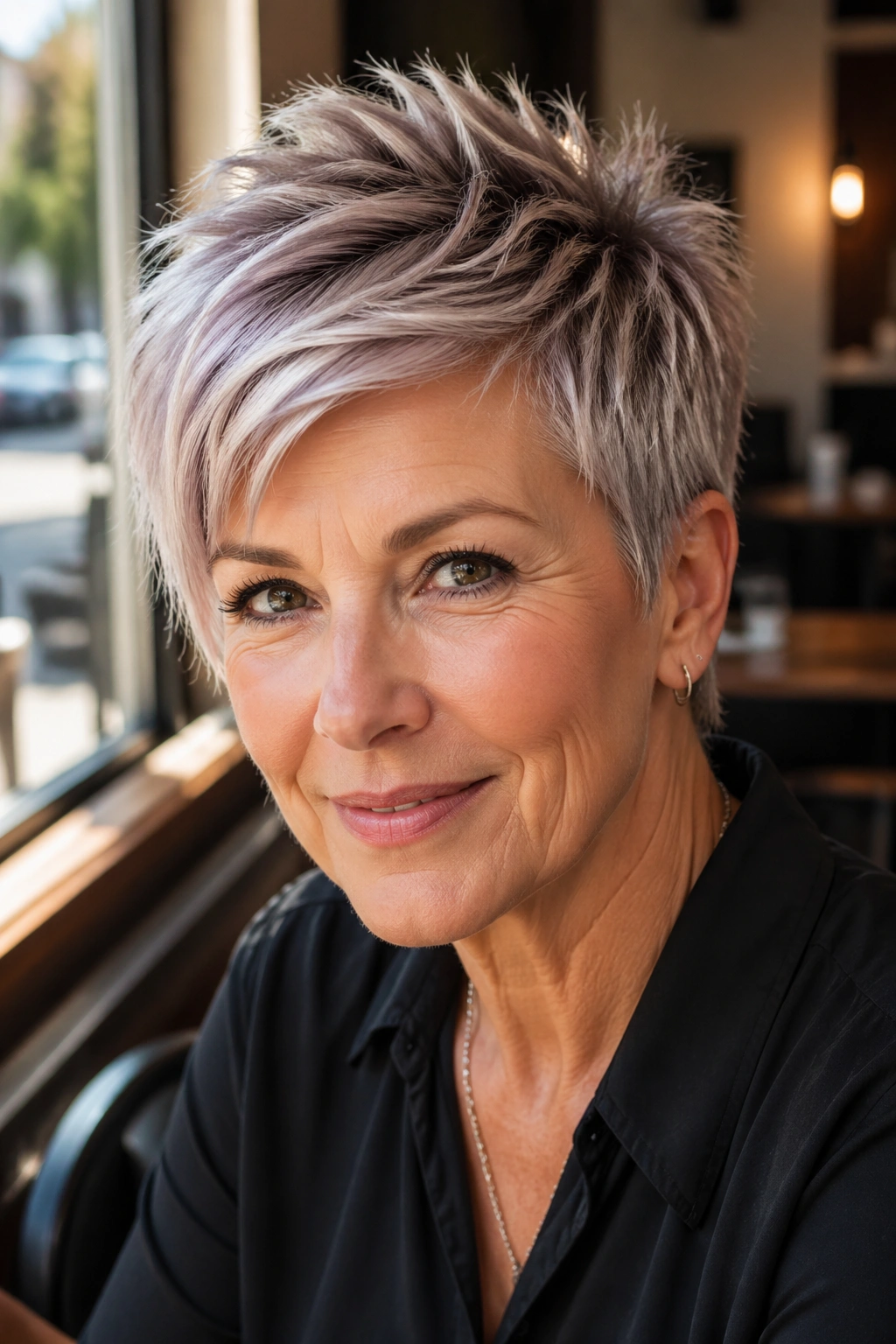
A side-swept spiky pixie has a nicer flow than people expect. The top is still textured, but instead of standing upward all over, it moves across the head in a diagonal line. That makes the haircut feel softer around the forehead and easier to wear day to day.
I like this one for women with fine hair that falls flat in the front. A side sweep creates the illusion of fullness because the hair crosses over itself. It also works well if you wear glasses, since the fringe can stop just above the frame instead of fighting it.
Use a volumizing mousse at the roots, then dry the top in the opposite direction first. Flip it back and it will keep a little lift. Once the hair is dry, use your fingertips to break up the top into small sections. Do not comb it smooth if you want the spiky effect. That will erase the shape.
This is a flexible cut. It can look polished in the morning and a little messier by dinner, which is part of the charm.
15. Nape-Tapered Boyish Crop
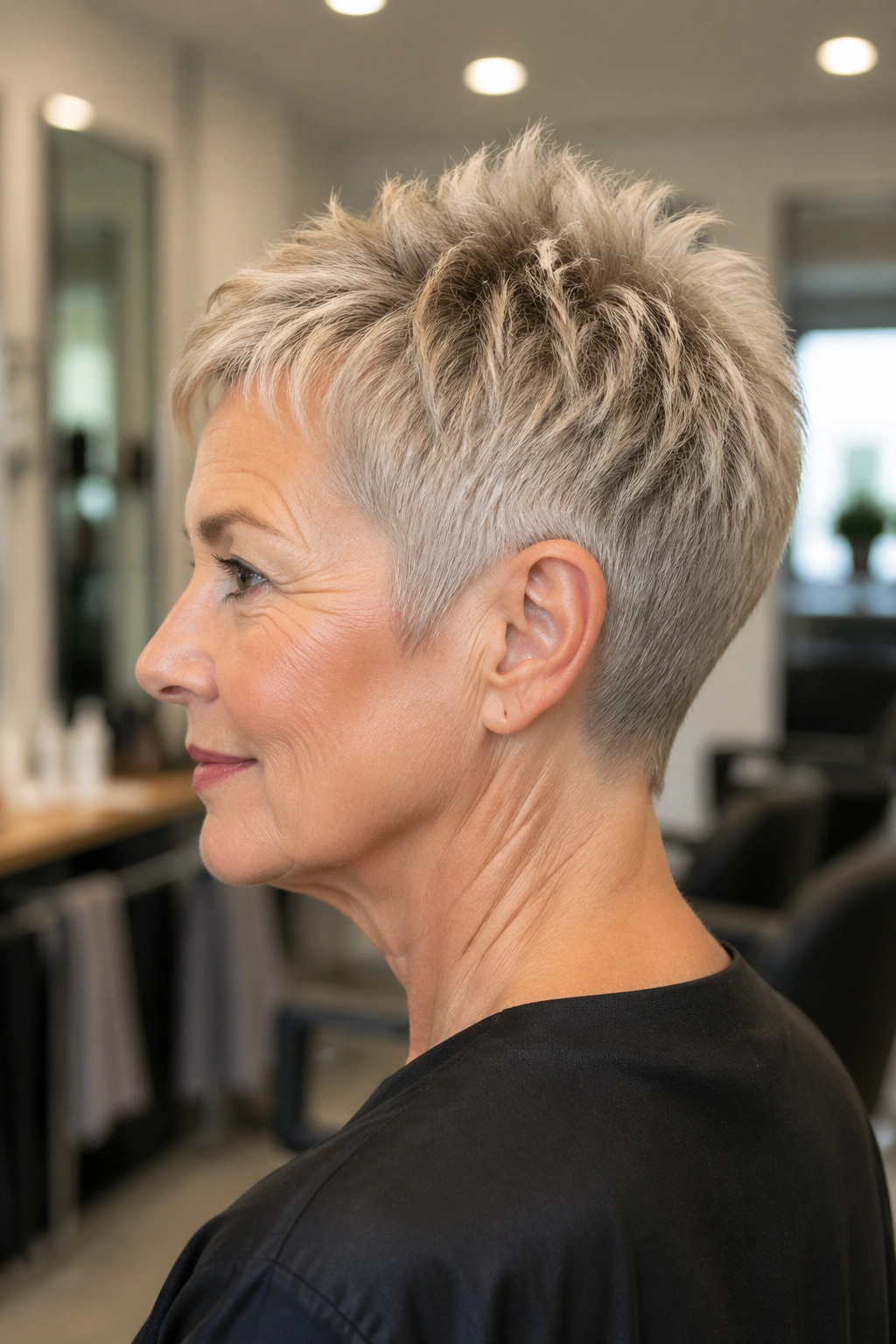
Think of a very clean neck line, then soften the top with texture. That is the feel of a nape-tapered boyish crop, and it’s one of the easiest short cuts to live with if you want low fuss and a crisp shape.
The nape taper keeps the back tight against the neck, which makes the haircut look sharp even when the top gets a little fuzzy. The top itself usually stays short enough to style in under two minutes. A small amount of paste, rubbed into the fingertips, is usually all it takes.
- Best for women who dislike bulky hair at the collar.
- Good choice for silver or white hair because the taper reads cleanly.
- Needs regular neckline cleanup every 4 to 5 weeks.
- Works with straight, wavy, or coarse hair if the top is textured well.
This is not a romantic cut. It’s cleaner than that. And that’s exactly why so many women like it.
16. Spiky Shag Pixie
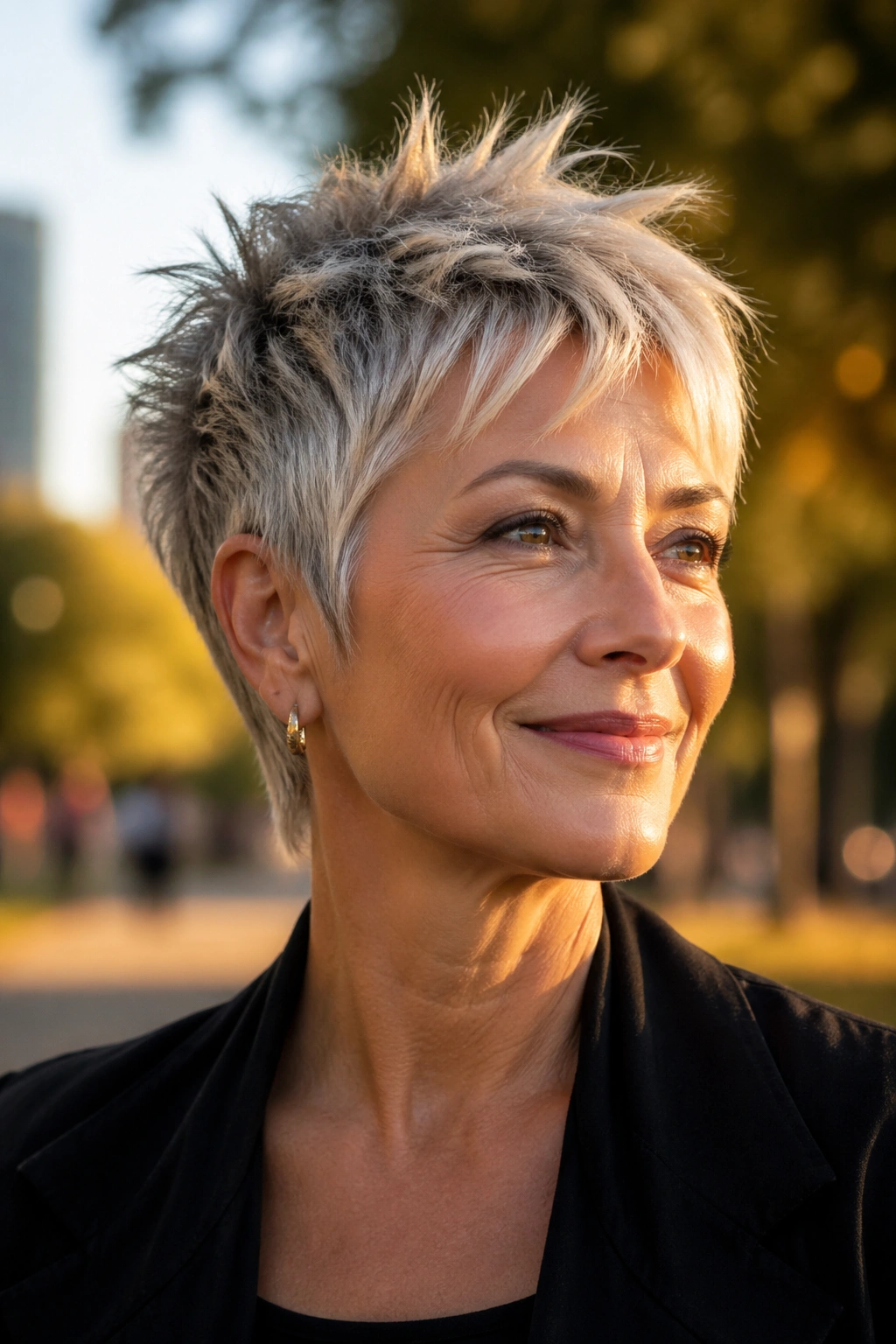
Can a shag be short enough to spike? Absolutely. The short shag pixie keeps the layered, slightly undone feeling of a shag, but compresses it into a compact shape with more lift on top and softness at the edges.
It’s a nice option for wavy hair because the layers can move without needing much coaxing. The crown gets enough texture to lift, the sides stay light, and the back doesn’t sit in one flat line. That bit of looseness is what keeps the haircut from feeling too formal.
How to wear it
Let the hair air-dry about 80 percent, then finish with a dryer only at the roots. Pinch a few crown pieces with a tiny bit of wax and leave the rest alone. The goal is separation, not control. If every strand sits in its place, the shag loses its charm.
I’d skip this cut if your hair is very thin and breaks easily. The layers can expose weak ends. But on healthy wavy hair, it has a relaxed, easy rhythm that feels fresh without trying too hard.
17. Airy Crown-Lifted Crop
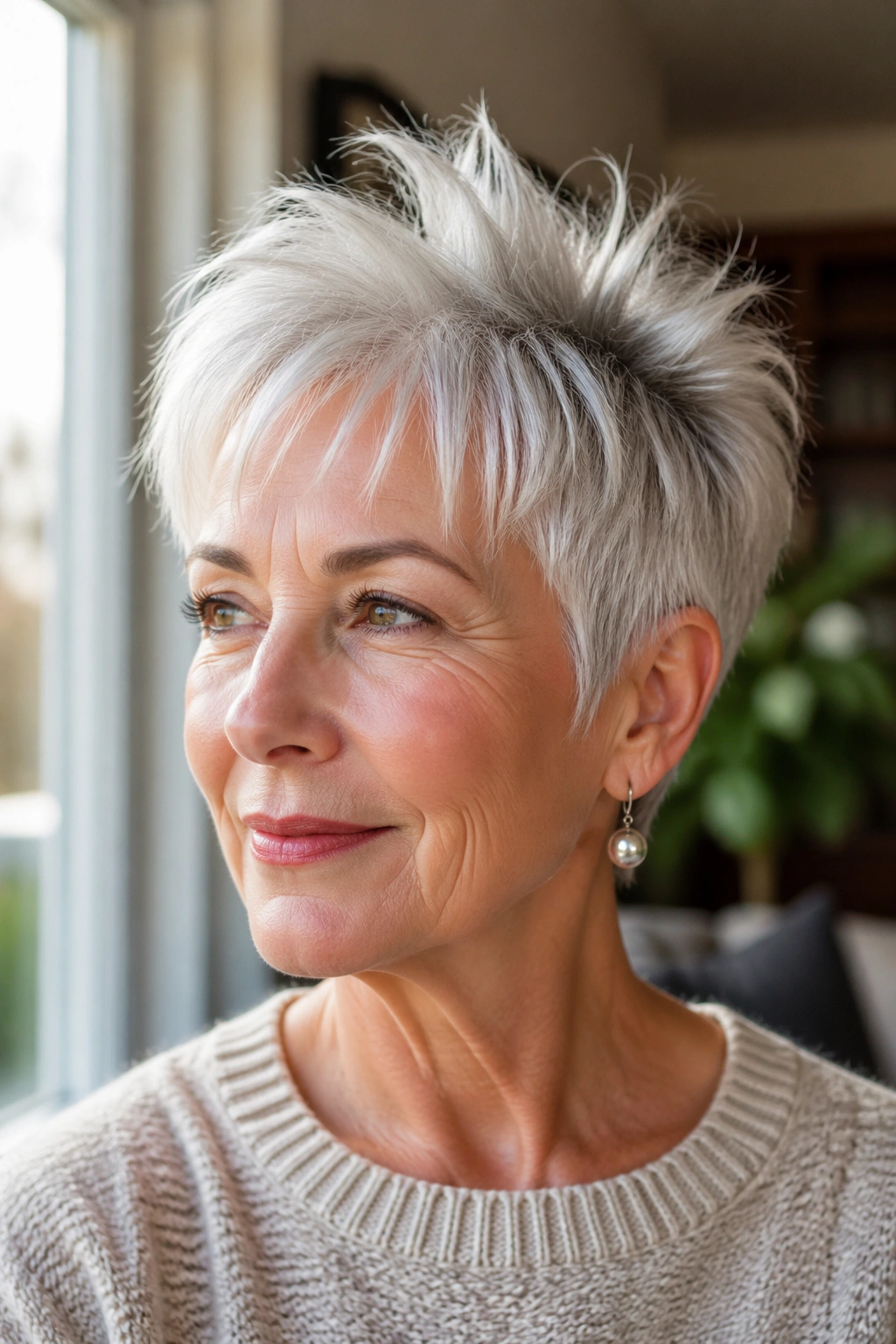
Compared with a flat crop, this one gives the crown room to breathe. The top is cut in short, airy layers that stand up a little, while the sides stay close enough to keep the silhouette neat.
That lift is useful for women with round faces or shorter necks, because it opens the profile instead of compressing it. It also helps if your hair naturally falls forward. A strong crown shape can redirect that habit and make the whole haircut look more intentional.
Use root powder if your hair is very fine. A tiny shake at the roots, massaged in with your fingertips, can hold the lift for hours without making the hair feel wet or sticky. If your hair is denser, a lightweight mousse at the scalp works better.
This style does not need much length to make an impression. It needs direction, and good layering gives you that.
18. Platinum Frosted Spike Cut
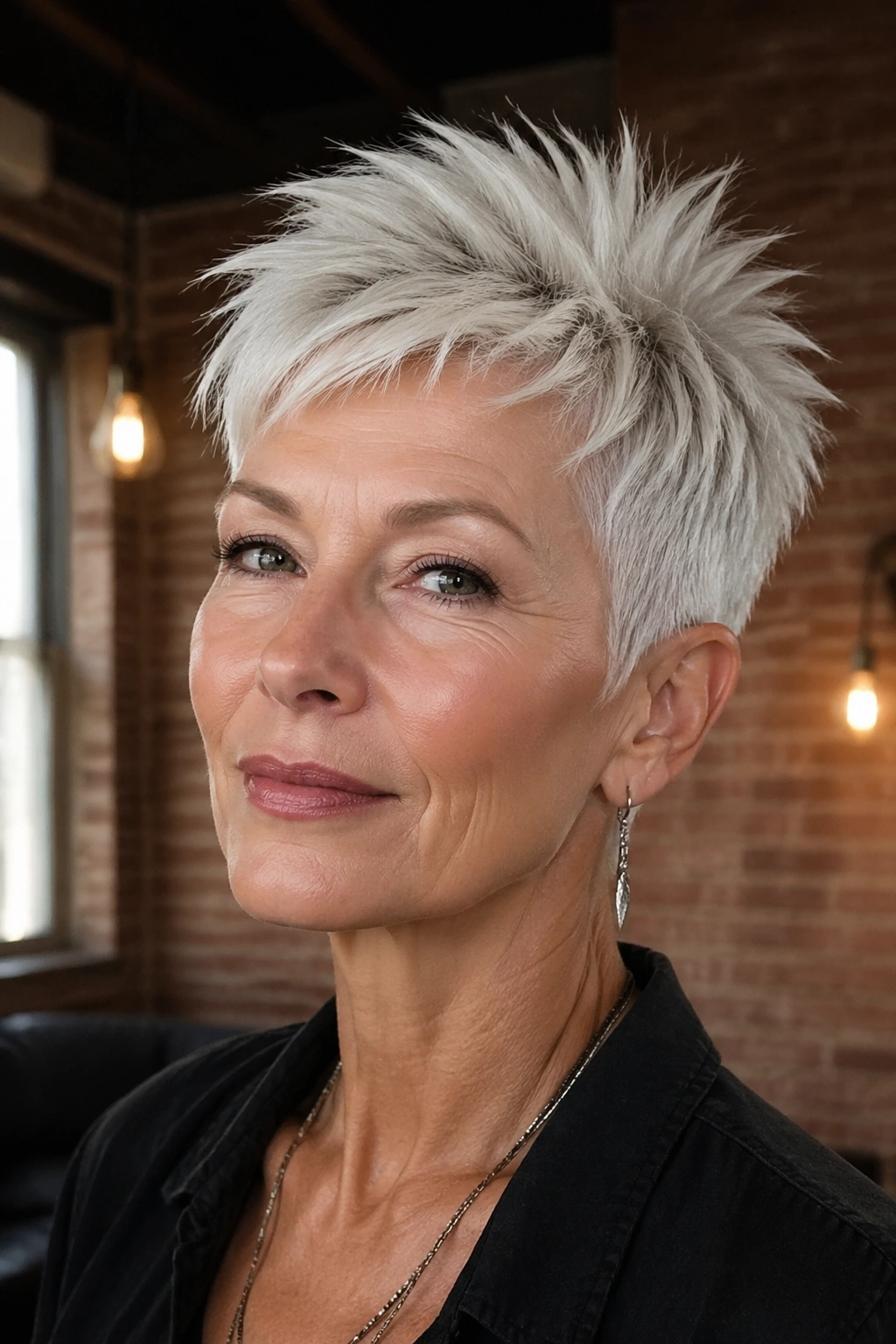
Platinum and frosted tones show short texture in a crisp way. The lighter the color, the more each little spike and separation line stands out, which is why this cut looks so sharp when it’s kept piecey.
There’s also a practical side. Short platinum hair often looks cleaner when the shape is tight through the sides and a bit messier on top. That contrast keeps the cut from feeling flat or helmet-like. If your hair is naturally gray and you want to lean into a cooler tone, this is a strong shape to pair with it.
- Use a purple shampoo every 1 to 2 weeks if the color starts to yellow.
- Keep a moisturizing mask nearby; light tones can feel dry faster.
- Ask for a soft point cut on the top so the pieces separate.
- Avoid heavy oils at the root. They flatten the height.
This is a cut that likes structure. It looks its sharpest when the lines are clean and the spikes are deliberate.
19. Ear-Skimming Textured Crop
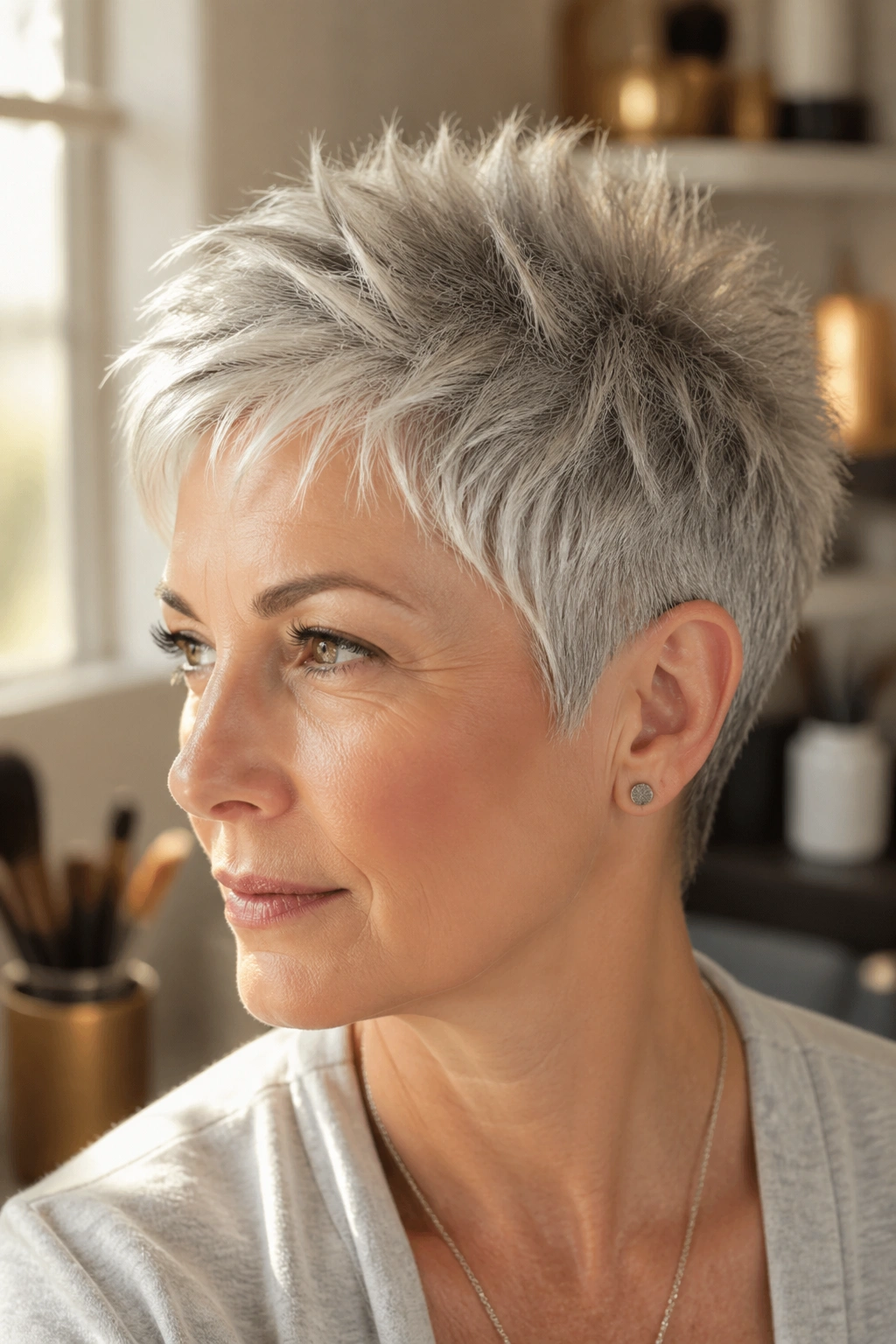
An ear-skimming crop keeps just enough length at the sides to soften the face, but not so much that the haircut starts to feel heavy. The hair barely brushes the tops of the ears, which is nice if you wear earrings or want a little movement around the cheekbone.
The top stays textured and short, so you still get that spiky feel. The difference is in the balance. The sides aren’t shaved tight, which makes the style feel more relaxed and a little less severe. I like that on women who want short hair but not a clipped-down look.
This cut is also forgiving as it grows out. The side length can blur into a softer shape, while the top still has enough texture to keep it interesting. A light styling cream is usually enough. Work it through damp hair, then scrunch the top and tuck one side behind the ear if you want a cleaner line.
Simple. Sharp. Easy to live with.
20. Soft Mullet Pixie
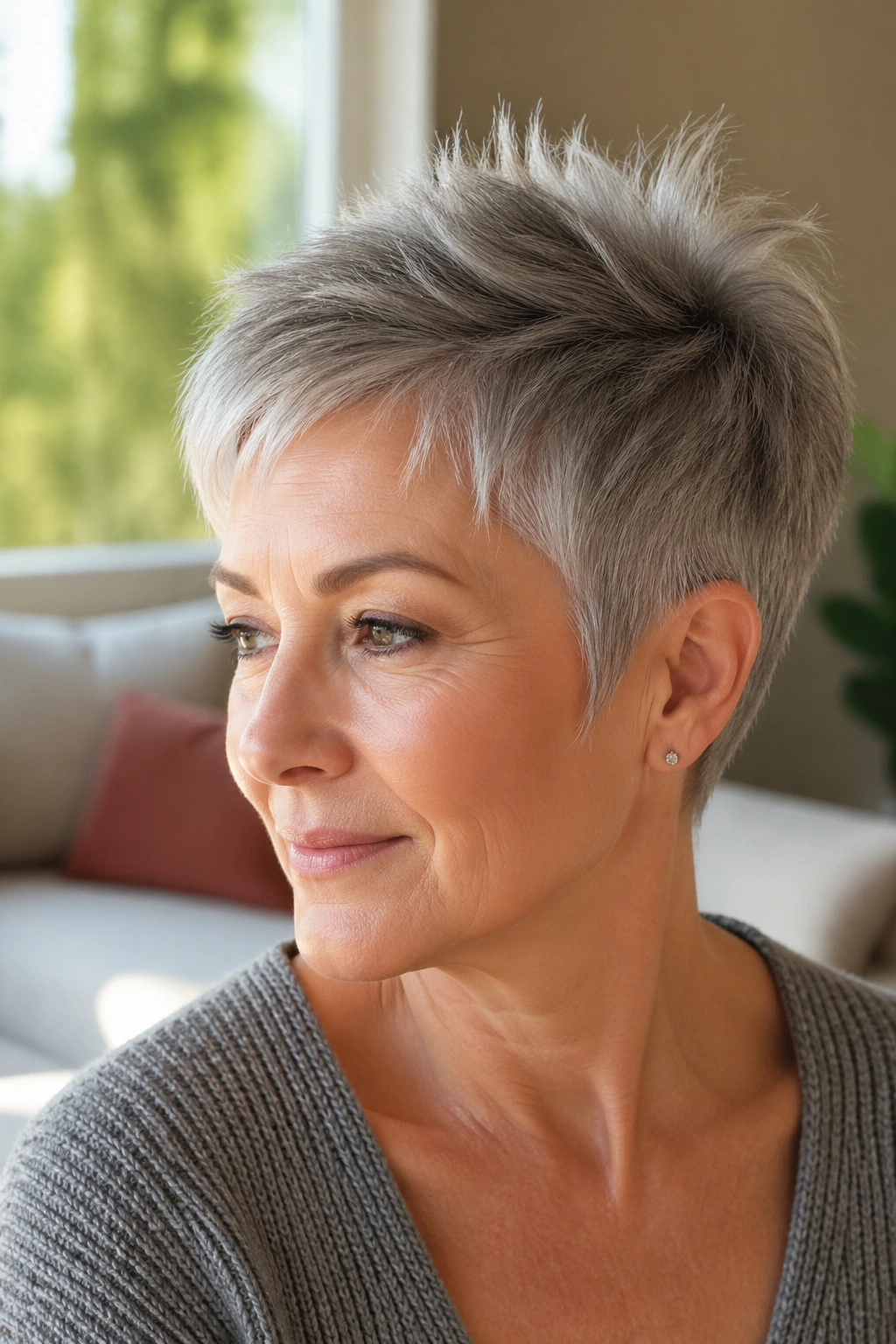
Yes, a mullet can be chic when it’s kept small and the edges are handled well. The soft mullet pixie leaves a little extra length at the nape while keeping the front and sides short and textured, so the shape feels modern instead of theatrical.
This cut suits women who want a bit of edge but do not want a full undercut or a heavy fringe. The longer nape gives the back some swing, and the cropped top keeps the whole style light. It’s especially nice on wavy hair, where the movement at the back reads as texture rather than a hard line.
The key is proportion. The back should be only slightly longer, not dragged out. Keep the top choppy, the sides narrow, and the tail soft. A dry texture spray at the crown can help the front sit up while the back stays loose. If you like clothes with collars or open necklines, this cut has a little extra interest from the side view.
It’s a bolder choice, but not a loud one.
21. Combed-Forward Spiky Fringe
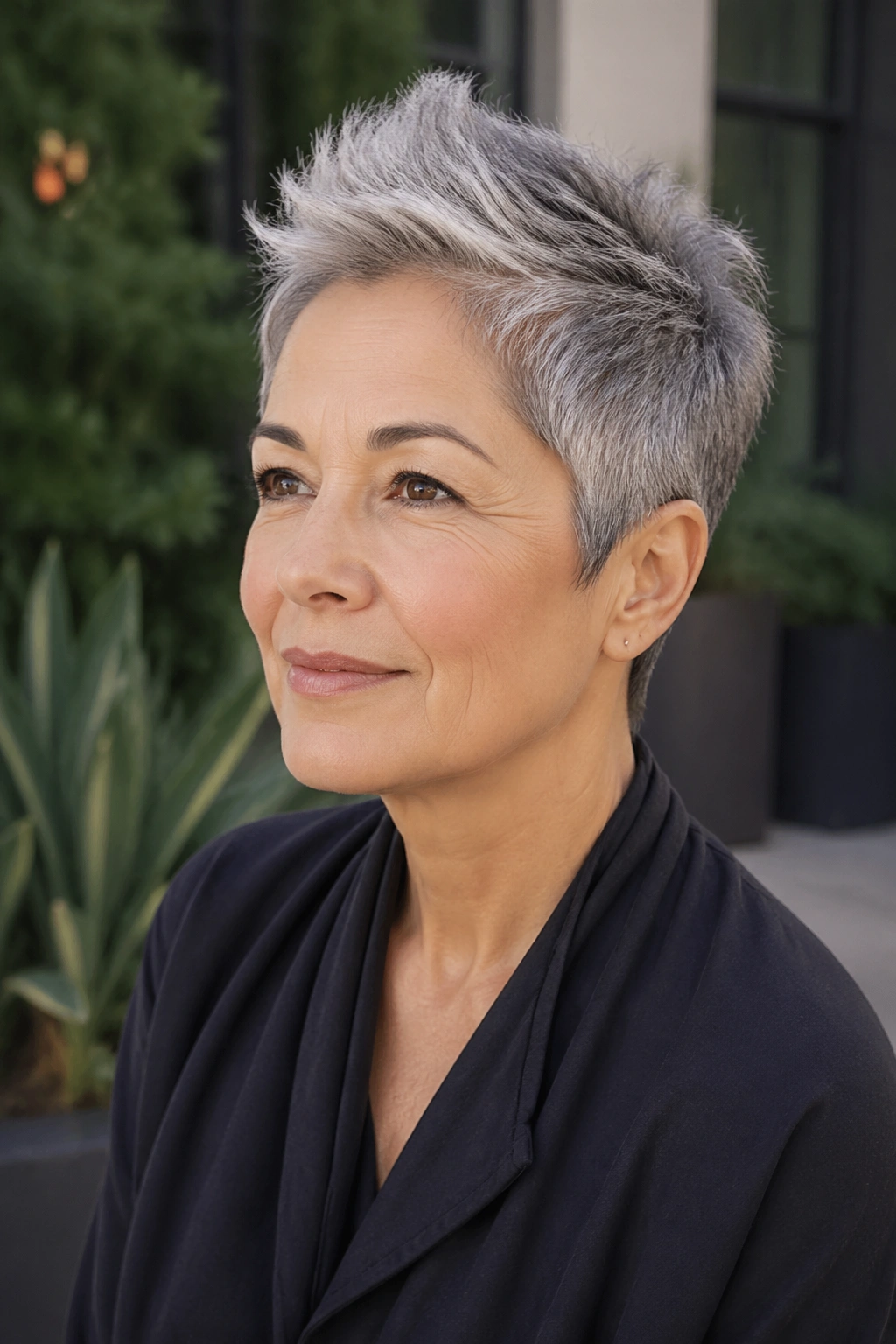
What if you want forehead coverage but still like a spiky haircut? A combed-forward fringe solves that without making the front look blunt. The hair is directed forward, then broken into small pieces so it falls in a loose, jagged way.
That makes the cut useful for women with high foreheads or growing-out bangs. It also gives the face a more modern frame than a straight, heavy fringe. The spikes are subtle here, but they keep the front from looking helmeted.
How to keep it light
Blow-dry the fringe forward first, then sweep it slightly to one side with your fingers. Work in a small amount of paste only at the ends. If you put product near the roots, the fringe will sit down and lose its texture fast.
This cut tends to look better the second it’s touched up. Pull it forward, pinch a few pieces, and stop there. If you keep fussing, you’ll flatten it.
22. Sculpted Pompadour Pixie
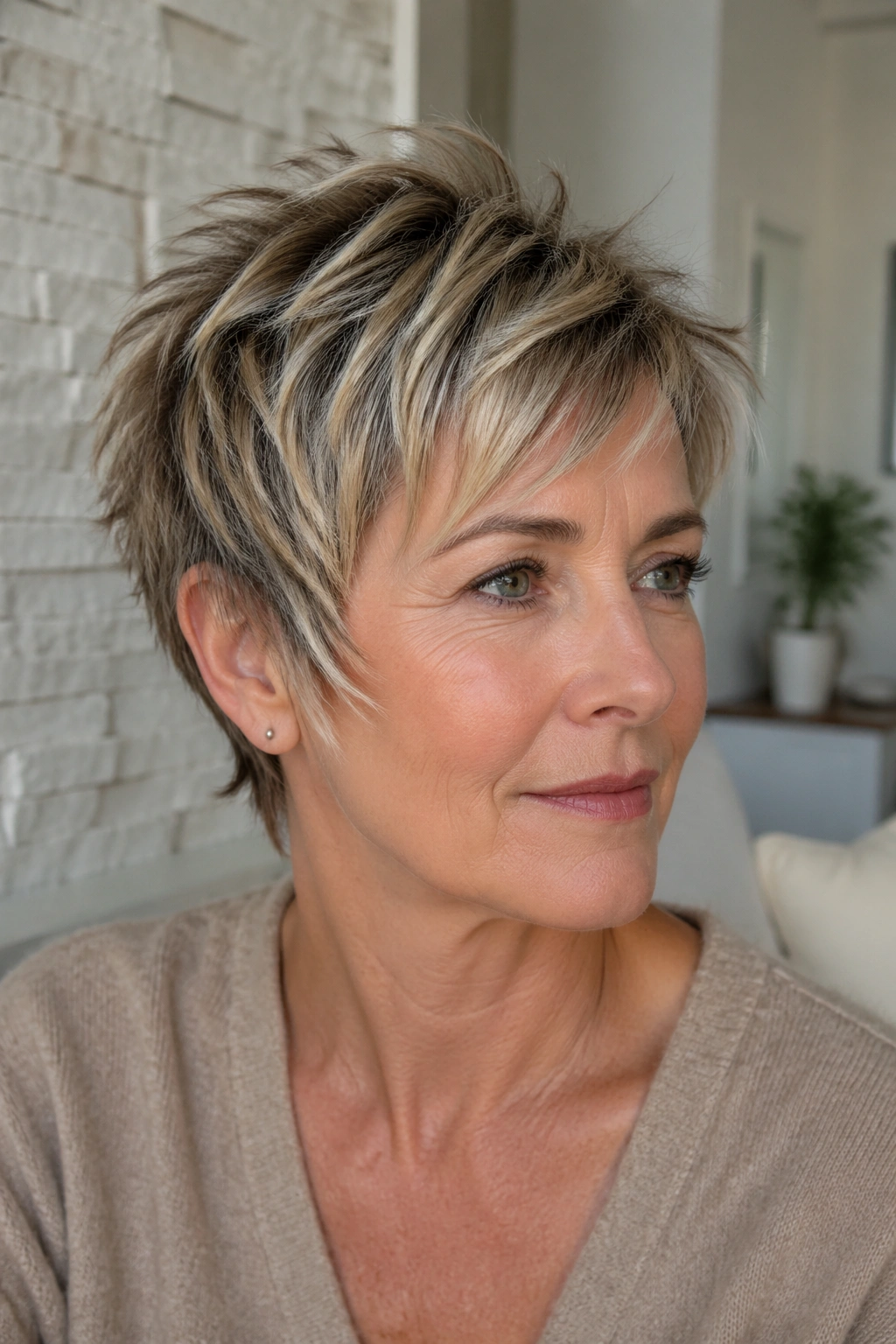
A sculpted pompadour pixie has more drama at the front than most short spiky cuts. The hair rises at the forehead, rolls back a little, and then blends into shorter sides and a tapered back. It feels dressier than a bedhead crop, which is useful when you want short hair that still reads polished.
This shape flatters strong cheekbones and longer faces because it adds height at the front without adding width on the sides. It also gives you a clean place to keep volume if your hair likes to lie flat at the hairline. The shape should feel lifted, not teased.
Use mousse at the roots, then dry the front upward with a round brush. Once the root is dry, switch to your fingers and shape the top into a soft curve. A light mist of strong-hold spray at the roots can help, but keep it off the ends so the texture stays movable.
This is one of the spikier looks that can still feel elegant with the right styling.
23. Close-Cropped Spike Cut
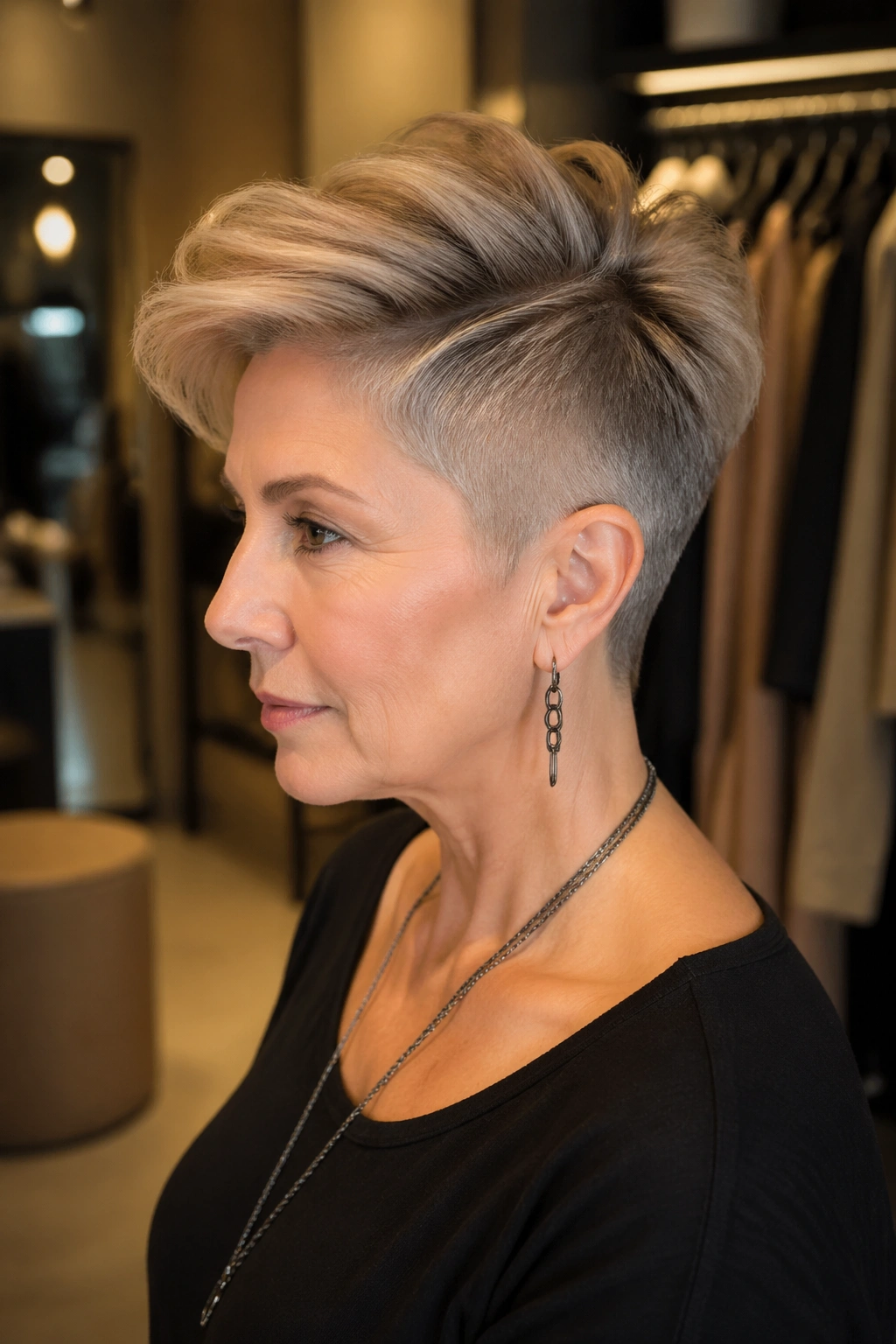
A close-cropped spike cut is the shortest, cleanest version in the bunch. The sides are tight, the nape is neat, and the top keeps just enough length to stand in small pieces instead of lying flat like a buzzed cap.
I’d call this the no-nonsense choice. It is good for women who want very little styling time, who like a sharp neckline, or who are done fighting heavy hair that never seems to sit right. It also works well if your hair is thick and coarse, because the short length removes a lot of bulk right away.
The tradeoff is obvious. This cut asks for confidence. There is nowhere for the hair to hide, so the shape and the head it sits on are the whole story. That can be freeing, though. A good close crop puts the face front and center, and a touch of matte product at the top is enough to keep the spikes soft.
If you’re choosing among short spiky haircuts for older women, this one is for the reader who likes clean lines, fast mornings, and a haircut that does not negotiate.
