



There is a specific, quiet liberation that happens once you cross into your 70s. For many of the women I talk to, that liberation starts with the mirror. We spent decades fighting our hair—straightening it, perming it, pinning it, and spending way too many Saturday mornings under a heavy plastic dryer hood. But something shifts. Maybe it’s the way silver hair reflects the light, or perhaps it’s just the realization that life is far too short to spend forty-five minutes with a round brush and a blow dryer. Curls, especially the natural ones we used to try and “tame,” suddenly feel like a gift. They have volume, they have character, and when cut correctly, they require almost zero effort to look spectacular.
The secret to a great curly style at this stage of life isn’t about chasing a specific look you saw in a magazine. It’s about understanding that mature hair has a different personality. As we age, our scalp produces fewer natural oils, which can make curls feel a bit more parched and prone to frizz. The pigment-free strands—whether you call them silver, white, or salt-and-pepper—often have a coarser, more “wiry” texture that actually holds a shape better than the silky hair of our youth. This is why short styles are such a win. They remove the weight that pulls curls flat, letting your natural pattern spring to life without the need for heavy styling products.
When I started researching the best approaches for women in this age bracket, I noticed a common theme: the most successful styles are the ones that work with the hair’s movement, not against it. You want a cut that looks just as good when you’ve just stepped out of the garden as it does when you’re headed to dinner. Low maintenance doesn’t mean “no maintenance,” but it should mean you can get ready in under ten minutes. It’s about finding that sweet spot where the cut does 90% of the work for you.
We are looking for shapes that lift the face, draw attention to the eyes, and don’t require a degree in cosmetology to style every morning. Whether you have tight coils, soft waves, or those stubborn “Z-pattern” curls, there is a way to frame your face that feels authentic and easy. Over the years, I’ve seen how a simple change in length or layering can take years off a person’s expression—not because they look “younger,” but because they look more like themselves, comfortable and unburdened.
The Science of Mature Curly Hair
Before we jump into the specific styles, we have to talk about why your curls might be acting differently than they used to. It isn’t just in your head; the biological structure of the hair fiber changes as we get older. The sebaceous glands in the scalp slow down, meaning that natural oil (sebum) doesn’t travel down the hair shaft as effectively. Since curly hair is already prone to dryness because of its twists and turns, mature silver curls can often feel like straw if they aren’t treated with a bit of extra kindness.
Understanding Porosity and Sheen
Silver hair is often more porous, meaning it absorbs moisture quickly but lets it go just as fast. This is why you might find your hair looking “dull” even after using expensive sprays. To get that healthy sheen back, the goal is to smooth the cuticle. A cool water rinse at the end of your shower sounds like an old wives’ tale, but it actually works by helping those cuticle scales lay flat, reflecting more light.
The Importance of the “Dry Cut”
If you are visiting a stylist for any of the curly looks we are about to discuss, ask if they can perform a dry cut. Curly hair shrinks significantly as it dries, and no two curls are exactly the same length when they bounce up. Cutting hair while it’s wet is a guessing game. A dry cut allows the stylist to see exactly where each curl falls, ensuring the shape stays balanced and doesn’t “mushroom” out at the sides as it dries.
1. The Tapered Pixie with Tight Coils
The tapered pixie is a classic for a reason, especially for women with smaller, tighter curl patterns. By keeping the back and sides very short—almost buzzed—and leaving two to three inches of length on top, you create a silhouette that naturally draws the eye upward. This provides an instant “lift” to the cheekbones and jawline.
Why It Works for Low Maintenance
- Minimal Product: You only need a pea-sized amount of leave-in conditioner.
- Air Dry Friendly: This style looks better when left alone to dry naturally.
- Longevity: Because the sides are so short, you can often go six to eight weeks between trims.
Pro tip: If your silver curls feel a bit wiry, use a tiny bit of lightweight hair oil on your fingertips and gently “scrunch” the top once it’s dry to break any stiffness from your styling cream.
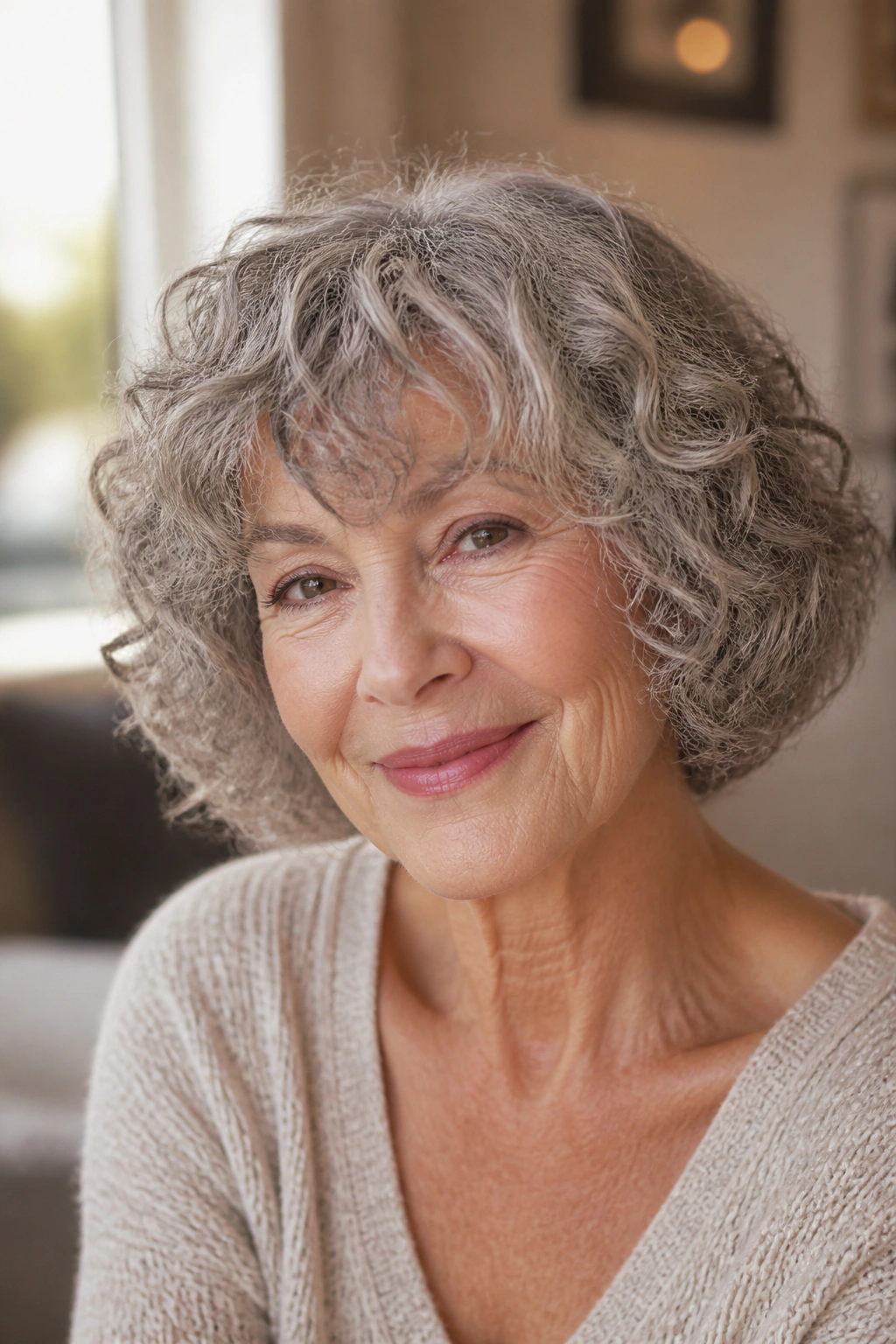
2. The Rounded Curly Bob with Soft Fringe
A rounded bob is the “goldilocks” of curly haircuts—not too long, not too short, but just right. This style usually hits right at the chin or slightly above it. Adding a soft, curly fringe (bangs) helps to frame the face and can soften the appearance of forehead lines, which is a preference many women mention to me.
How to Style the Fringe
Instead of trying to straighten your bangs, let them be curly. The key is to have the stylist cut them longer than you think you want them, as they will “jump” up once dry. A little bit of curl-defining gel applied to soaking wet hair is all you need. Do not touch them while they dry! Touching curly bangs while they’re damp is the fastest way to create frizz.
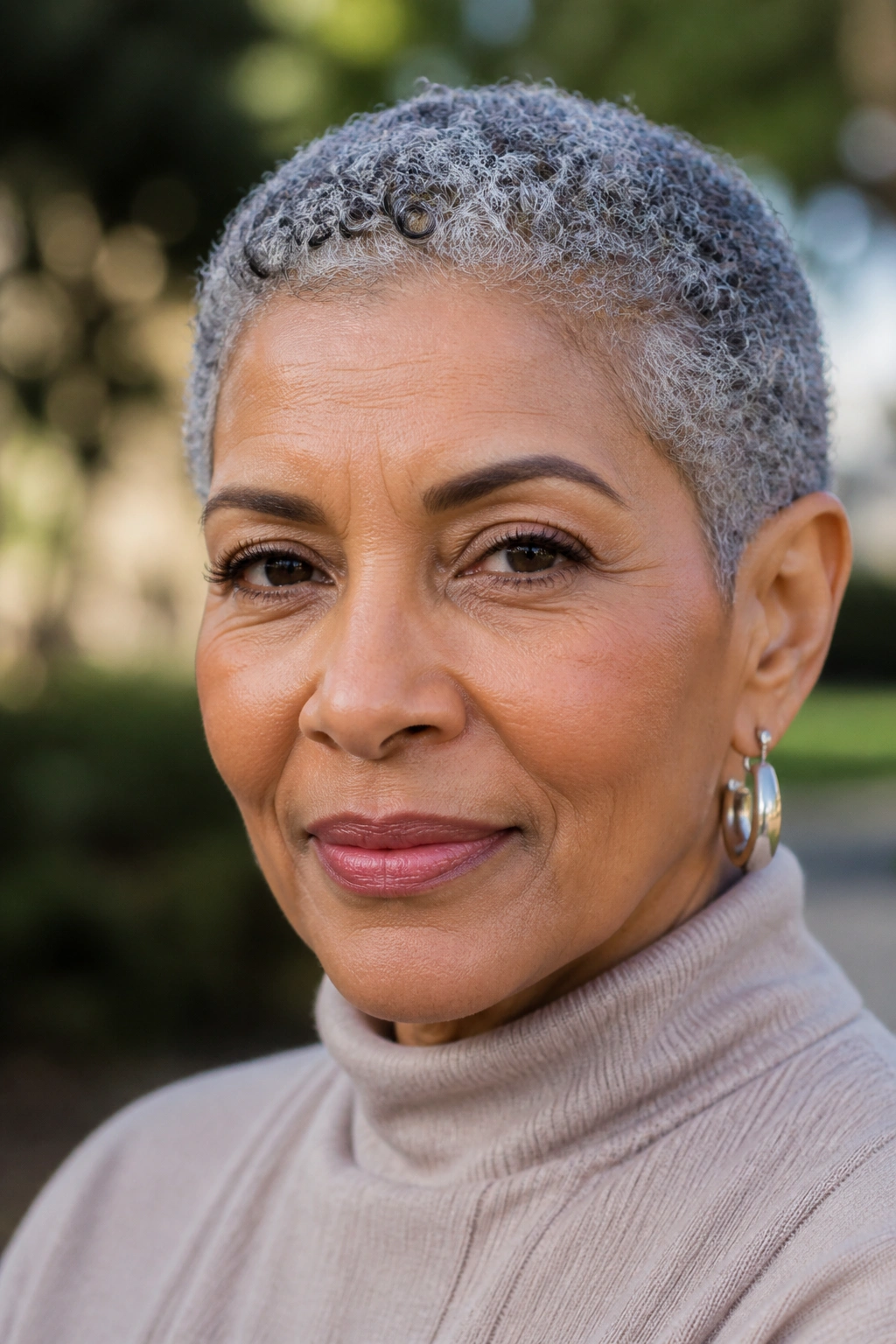
3. The Salt-and-Pepper “Wash and Go” Crop
This is perhaps the ultimate in low-maintenance styling. This cut is uniform in length all over the head, usually around two inches. It’s long enough to show your curl pattern but short enough that it never gets in your eyes or tangles. It’s a bold, confident look that highlights a beautiful salt-and-pepper color blend.
Is This Right for You?
- Face Shape: This works exceptionally well on oval or heart-shaped faces.
- Texture: Best for medium to thick hair that has a lot of natural volume.
- Lifestyle: Perfect for active women who swim, hike, or spend a lot of time outdoors.
Unlike longer styles that can look “limp” if they aren’t refreshed, a short crop like this just needs a quick spritz of water in the morning to reactivate the curls. It’s the definition of “get up and go.”
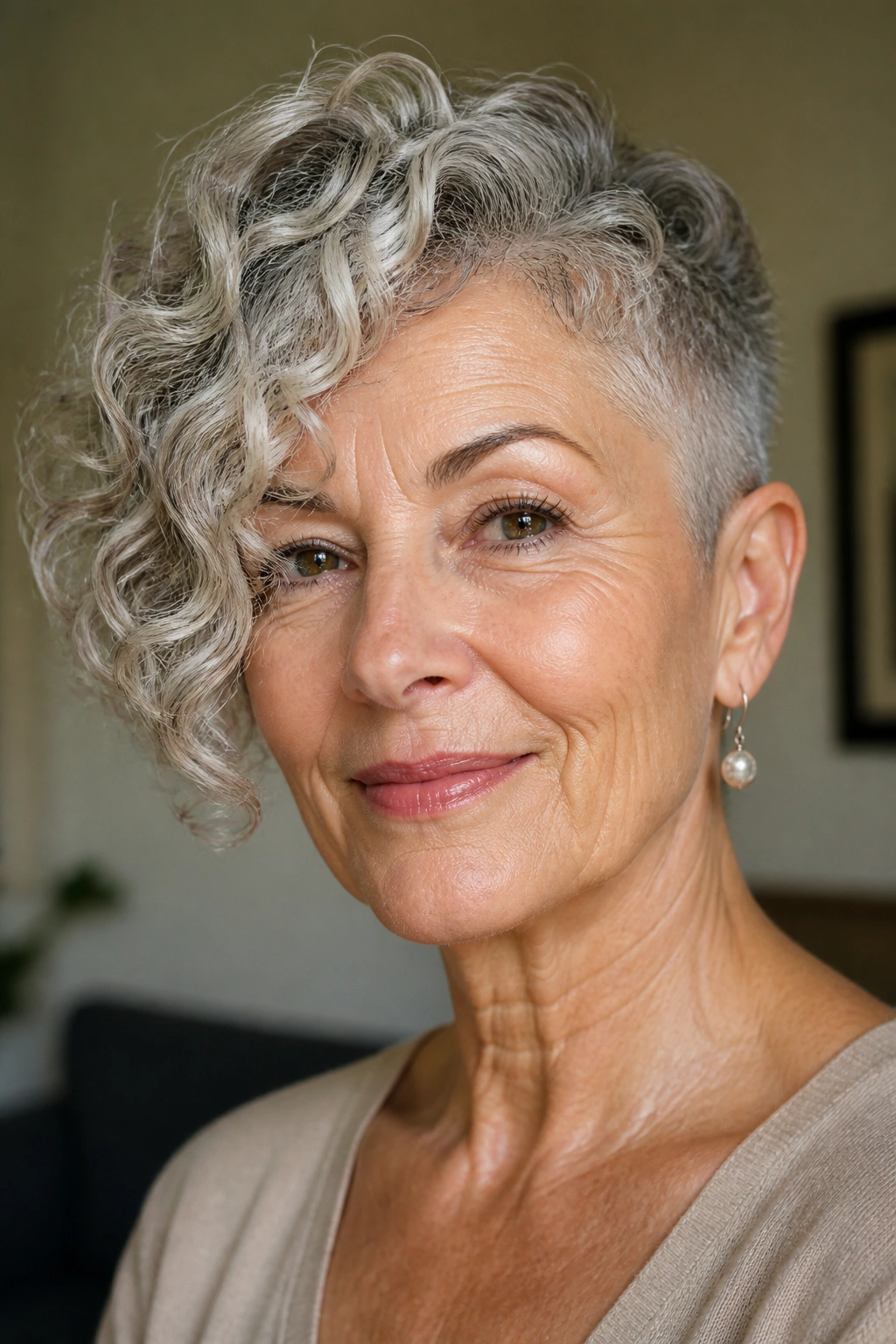
4. The Asymmetrical Curly Pixie
If you want something with a bit more “personality” but don’t want to deal with a lot of hair, the asymmetrical pixie is a fantastic choice. This involves keeping one side and the back very short, while the other side features longer, sweeping curls that graze the cheekbone.
Creating Visual Interest
- The Deep Side Part: This creates height on one side, which is great for thinning hair.
- The Layering: Shorter layers underneath support the longer curls on top, preventing them from falling flat.
- The Texture: This style thrives on “messy” curls. You don’t want it to look too perfect.
Pro tip: Use a “flexible hold” hairspray rather than a firm one. You want the curls to move when you walk, which gives the hair a more youthful, vibrant energy.
5. The Voluminous Layered Shag
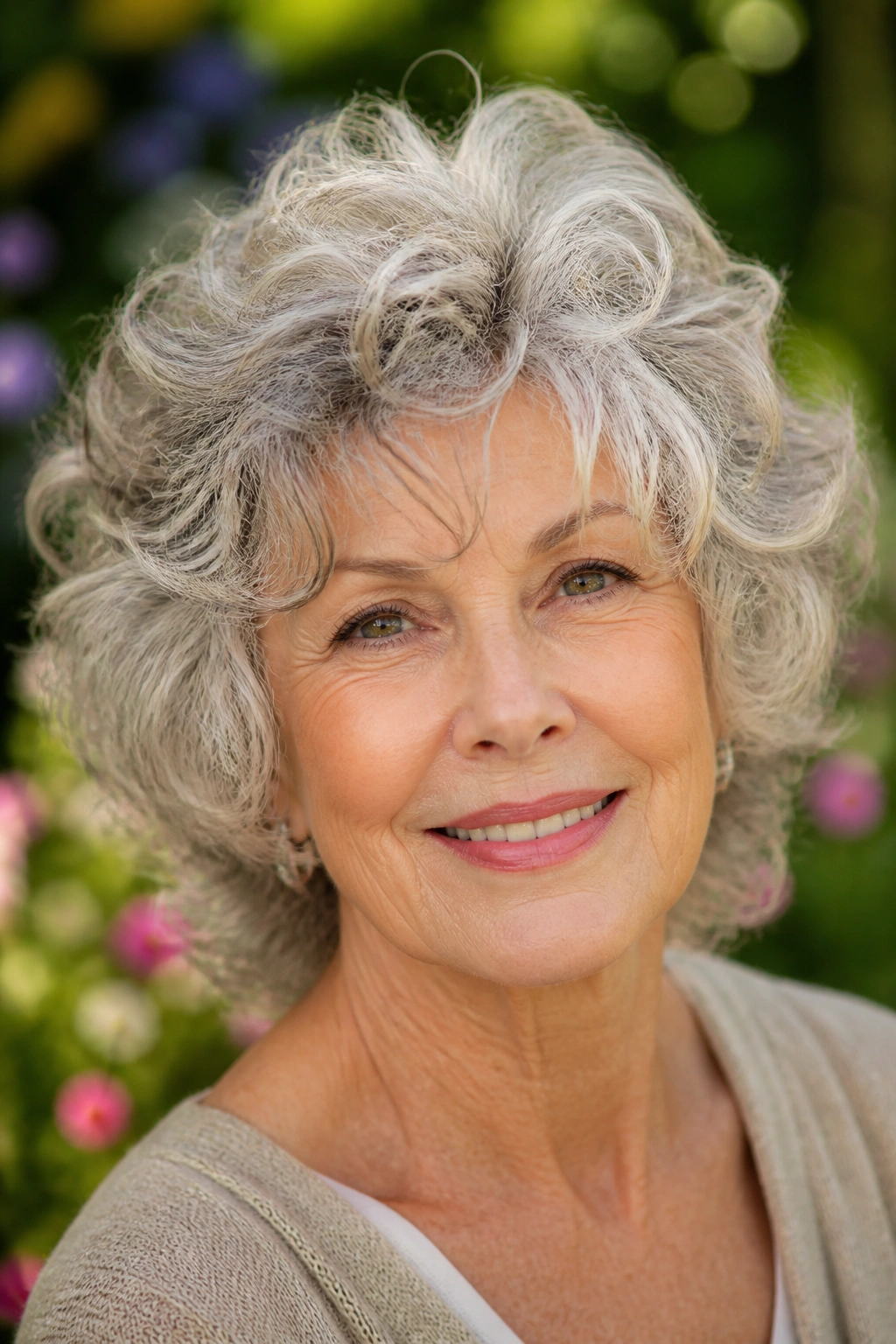
The shag has made a huge comeback over the years because it’s incredibly forgiving. For women over 70, a shorter curly shag—where the hair ends just above the shoulders—is brilliant for adding volume to the crown. The “choppy” layers are designed to look a bit undone, so you don’t have to worry about every curl being in its place.
The Science Behind the Volume
By cutting shorter layers into the top and middle sections of the hair, you remove the “weight” that often causes curly hair to look like a triangle (flat on top and wide at the bottom). This redistributed weight makes the hair feel lighter and easier to wash.
- Best for: Wavy to curly textures.
- Styling time: 5 minutes.
- Tool needed: A wide-tooth comb (only used in the shower!).
6. The Tapered Nape Bob
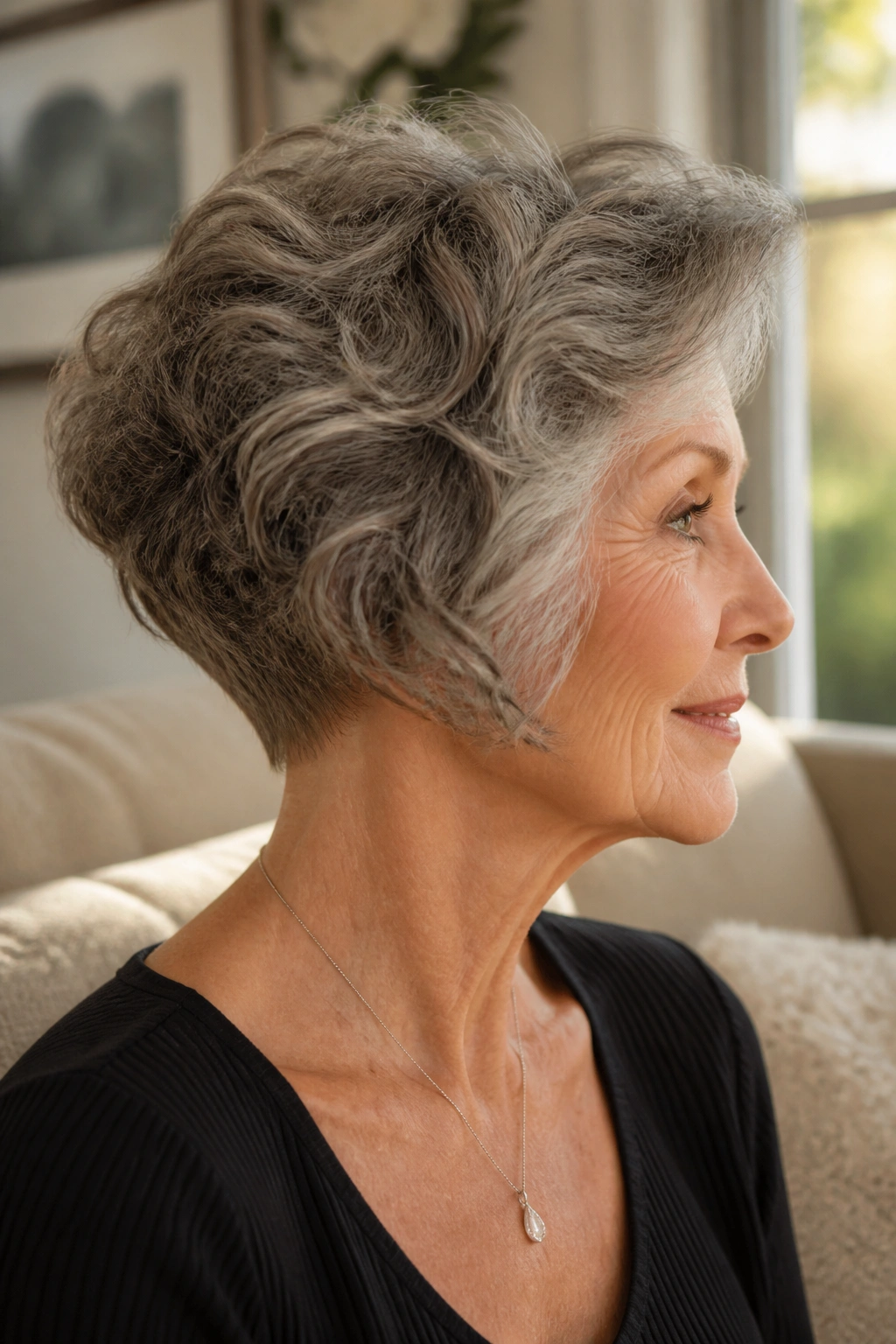
Many women find that the hair at the nape of the neck is the most frustrating—it tangles in coat collars and gets sweaty in warmer months. The tapered nape bob solves this by graduating the hair from very short at the back to slightly longer around the face. It gives you the “feel” of a bob with the ease of a pixie.
Why it’s a “Smart” Cut
This cut stays looking “fresh” longer than a standard bob because as it grows out, it maintains its shape. You won’t get that “shaggy neck” look after just three weeks. It’s also incredibly cooling, which is a major plus if you live in a warmer climate or experience frequent temperature fluctuations.
7. The Soft Sculpted “Cloud” Cut
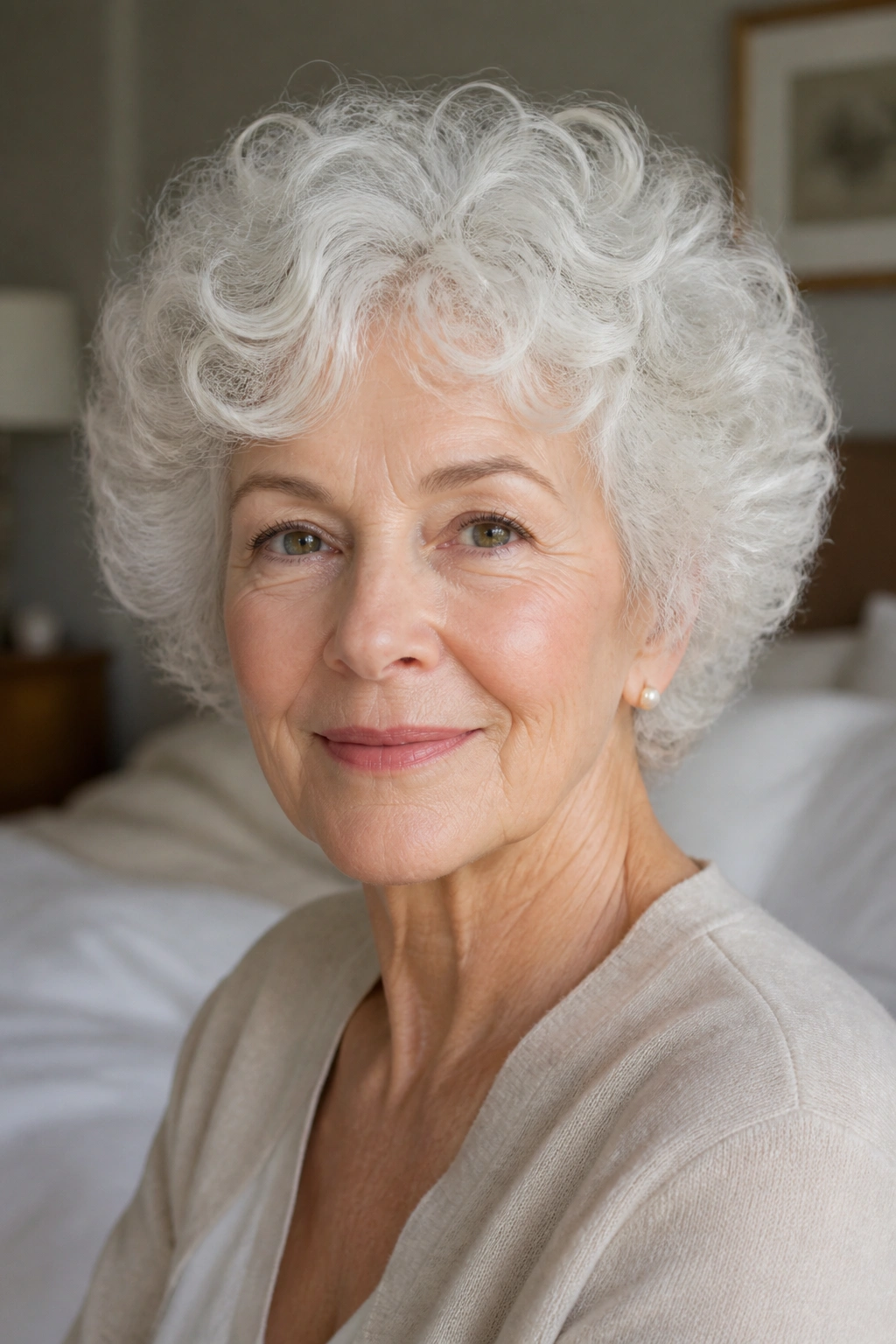
For women with very fine, white hair that has a soft curl, a “cloud” cut is stunning. This is a very soft, rounded shape that doesn’t have harsh lines. It’s meant to look airy and ethereal. It’s a very gentle look that pairs beautifully with a wardrobe of linens and soft knits.
How to Maintain the “Cloud” Look
- Avoid Heavy Oils: These will weigh down fine hair and make it look greasy.
- Use Mousse: A lightweight volumizing mousse is better than a gel for this texture.
- Diffuse on Low: If you do use a dryer, use the diffuser attachment on the lowest heat setting to “fluff” the curls without blowing them apart.
8. The Curly “Bixie” (Pixie-Bob Hybrid)
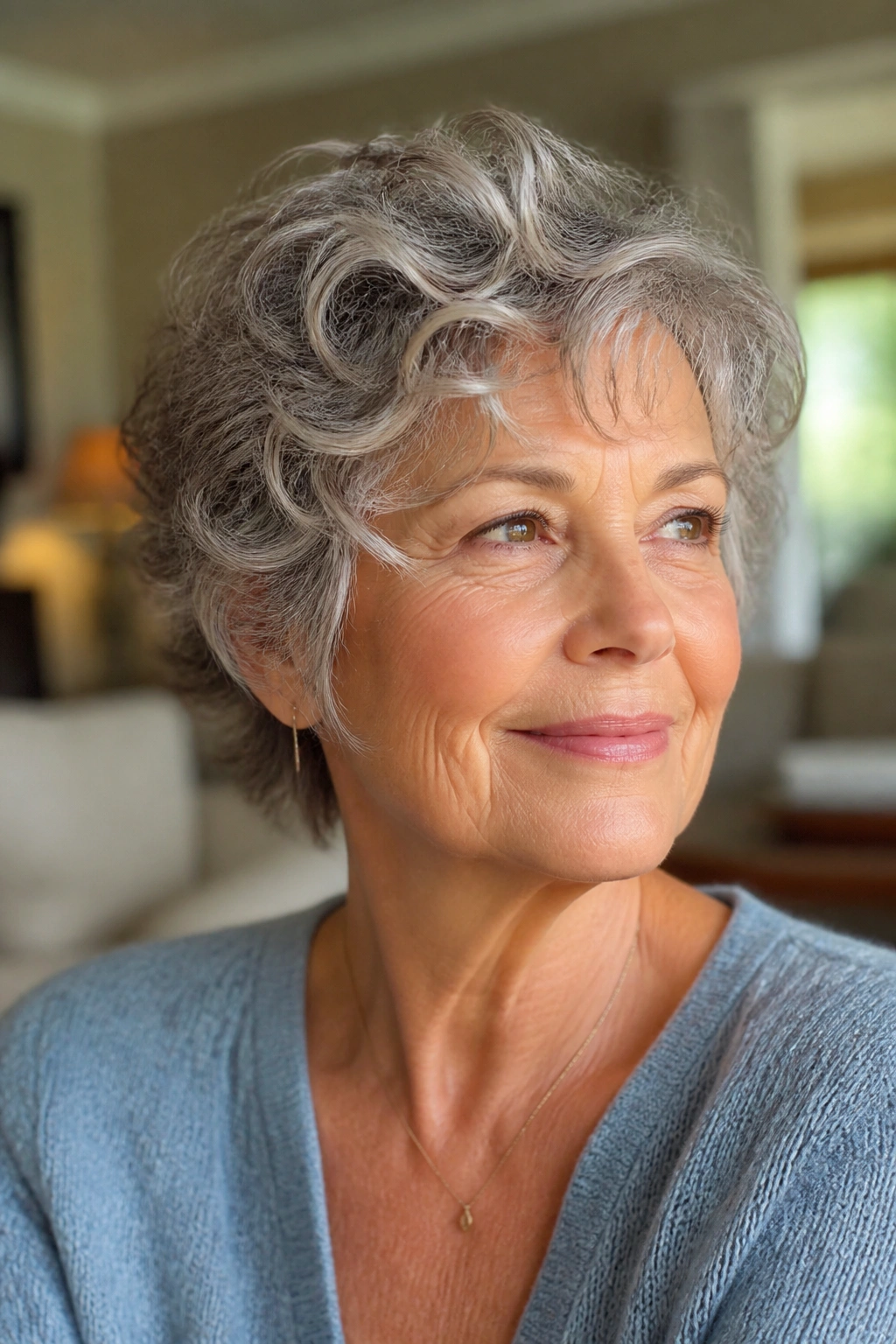
The “Bixie” is the perfect middle ground. It has the shaggy, layered feel of a pixie but the length of a bob. It usually features “wispy” ends that soften the jawline. This is a great transition cut if you’re growing out a very short style or if you’re nervous about going too short for the first time.
Stylist Communication
Ask your stylist for “shattered edges.” This means they use a technique (often with thinning shears or a razor, though be careful with razors on curls!) to make the ends look soft rather than blunt. This prevents the hair from looking like a “helmet.”
9. The Stacked Curly Wedge
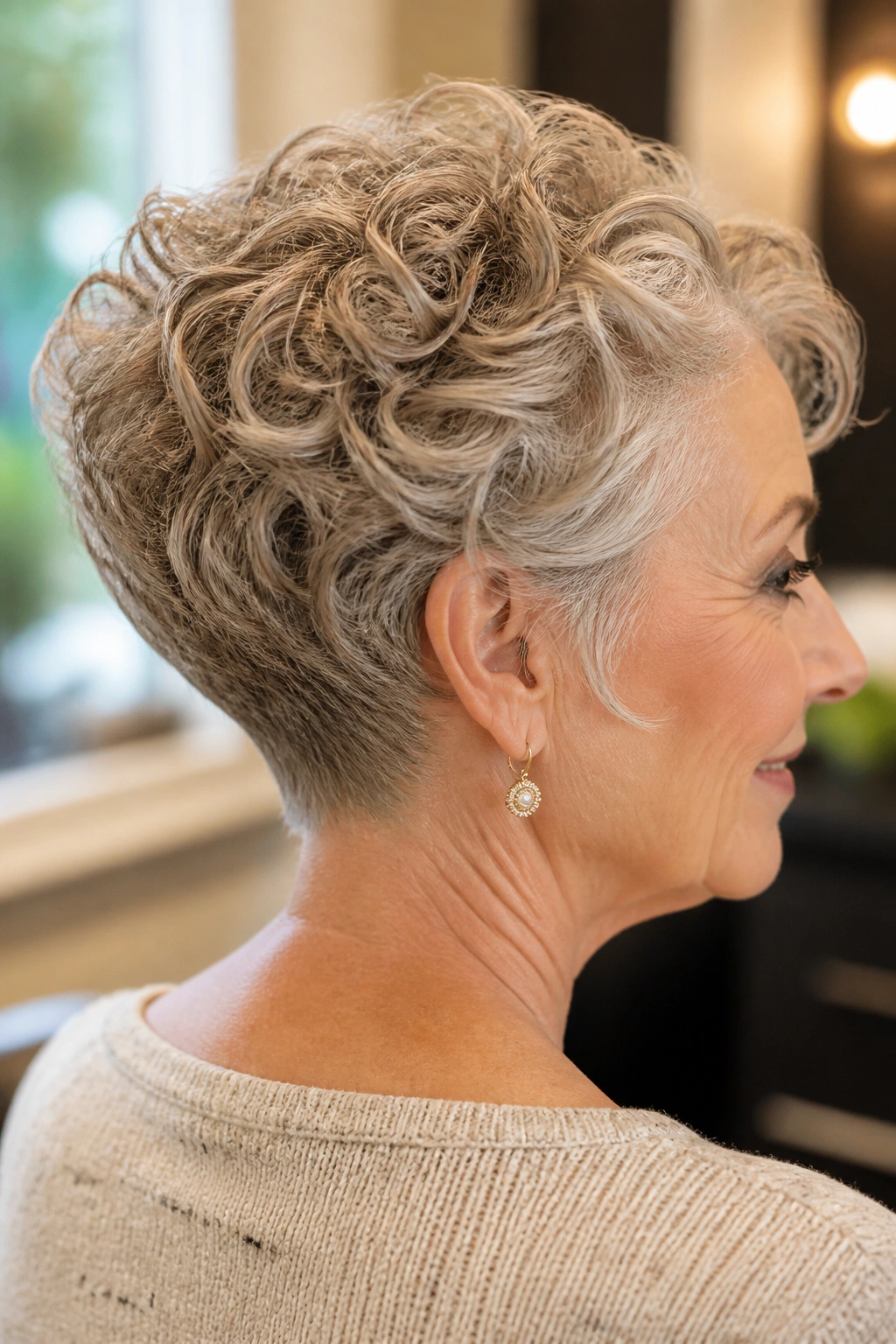
The wedge was popular decades ago, but the curly version is a whole different beast. It features short, “stacked” layers at the back that create a dramatic diagonal line toward the front. In curly hair, this creates incredible natural lift at the back of the head.
Dealing with “Flat Back” Syndrome
Many of us have a “cowlick” or a flat spot at the crown. The stacked wedge is the ultimate fix for this. The short layers underneath act like a “shelf,” pushing the top curls up and out.
Pro tip: When you wake up, don’t brush this style. Simply bend over, shake your head, and use your fingers to “pick” at the roots to restore the volume.
10. The Natural “Fro-Hawk”
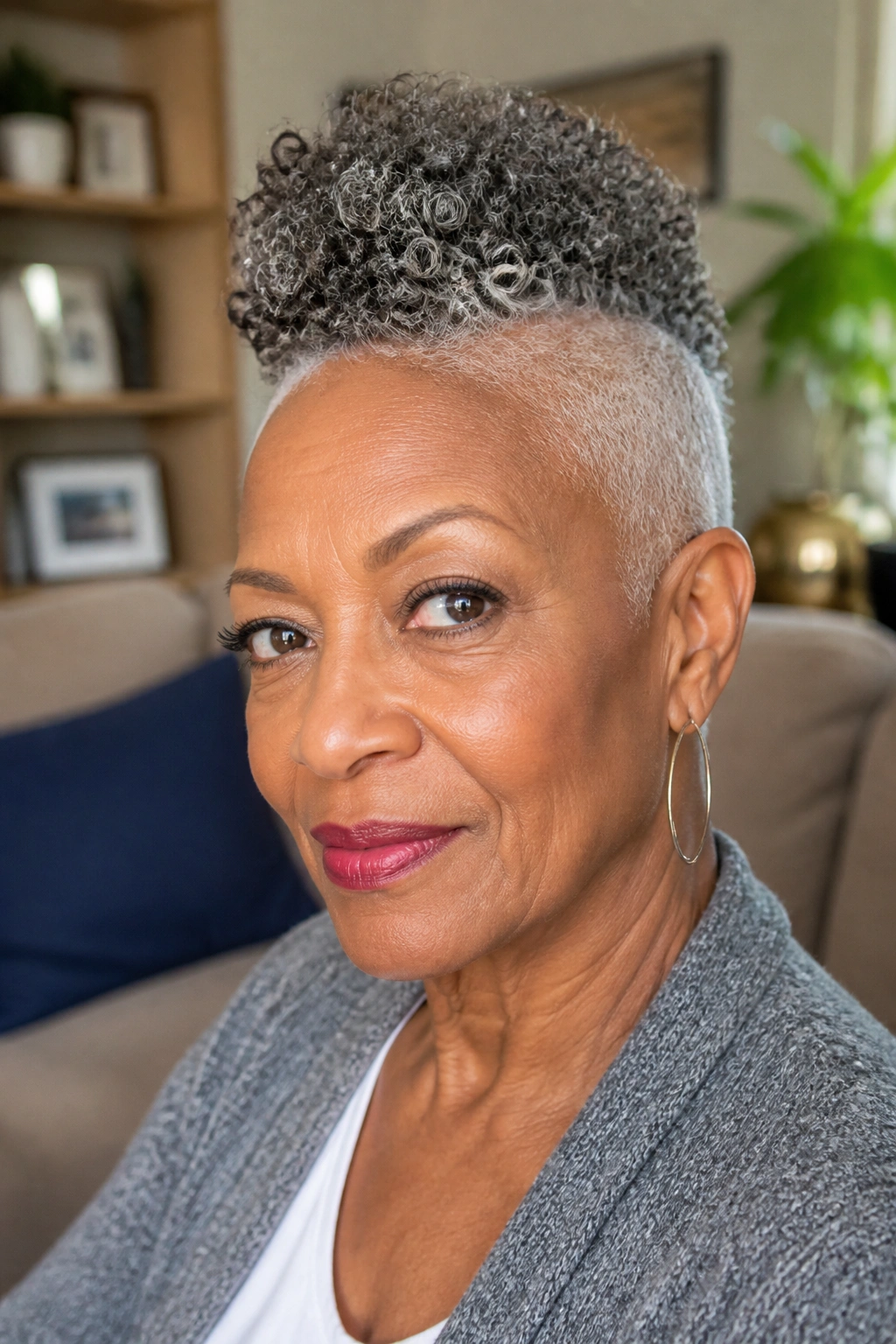
For the woman who wants to keep her edge, the “fro-hawk” is a sophisticated way to wear curls. The sides are kept very short (sometimes even faded), while the center strip from the forehead to the nape is left long and curly. It’s not a “punk” mohawk; it’s a soft, sculpted celebration of texture.
Styling the “Fro-Hawk”
- Apply Cream: Use a thick curl butter on the center section while damp.
- Smooth the Sides: Use a tiny bit of edge control or gel to keep the side hair lying flat.
- Lift the Top: Use a hair pick at the roots of the long section to create height.
This style is incredibly “low maintenance” because the sides stay neat on their own, and you only have a small “strip” of hair to worry about moisturizing and defining.
11. The Ear-Length Curly Crop with Side-Swept Bangs
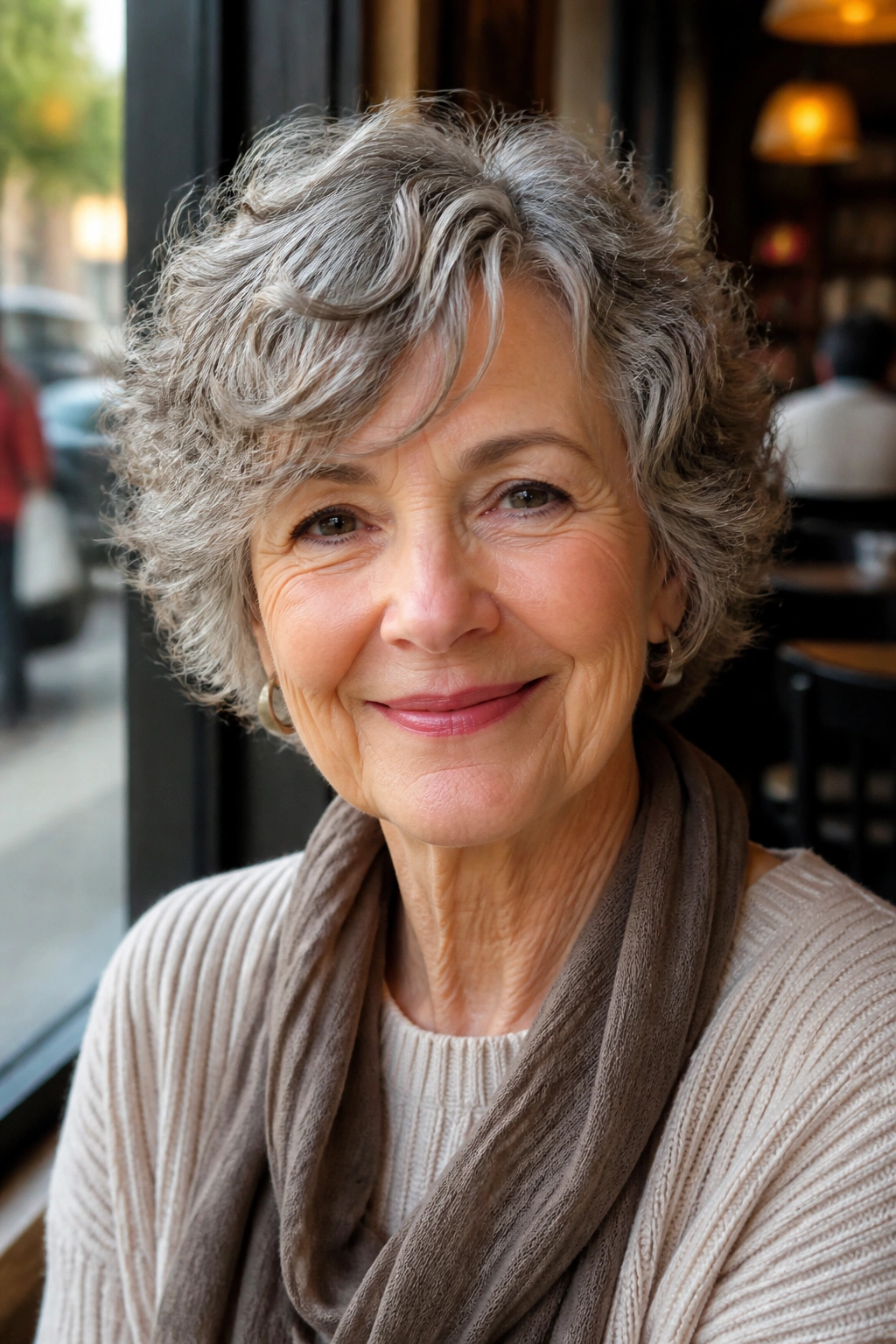
This style is about as “French chic” as it gets for the over-70 crowd. The hair is cut to the middle of the ear, allowing the curls to “hug” the cheekbones. The bangs are kept long and swept to one side, which is very flattering for those with high foreheads or rectangular face shapes.
Why the Ear Length Matters
Cutting curls to the ear level prevents the hair from interfering with earrings or glasses—a practical consideration that often gets overlooked. It keeps the “clutter” away from the face while still providing enough hair to feel feminine and soft.
12. The Tapered “Pineapple” Cut
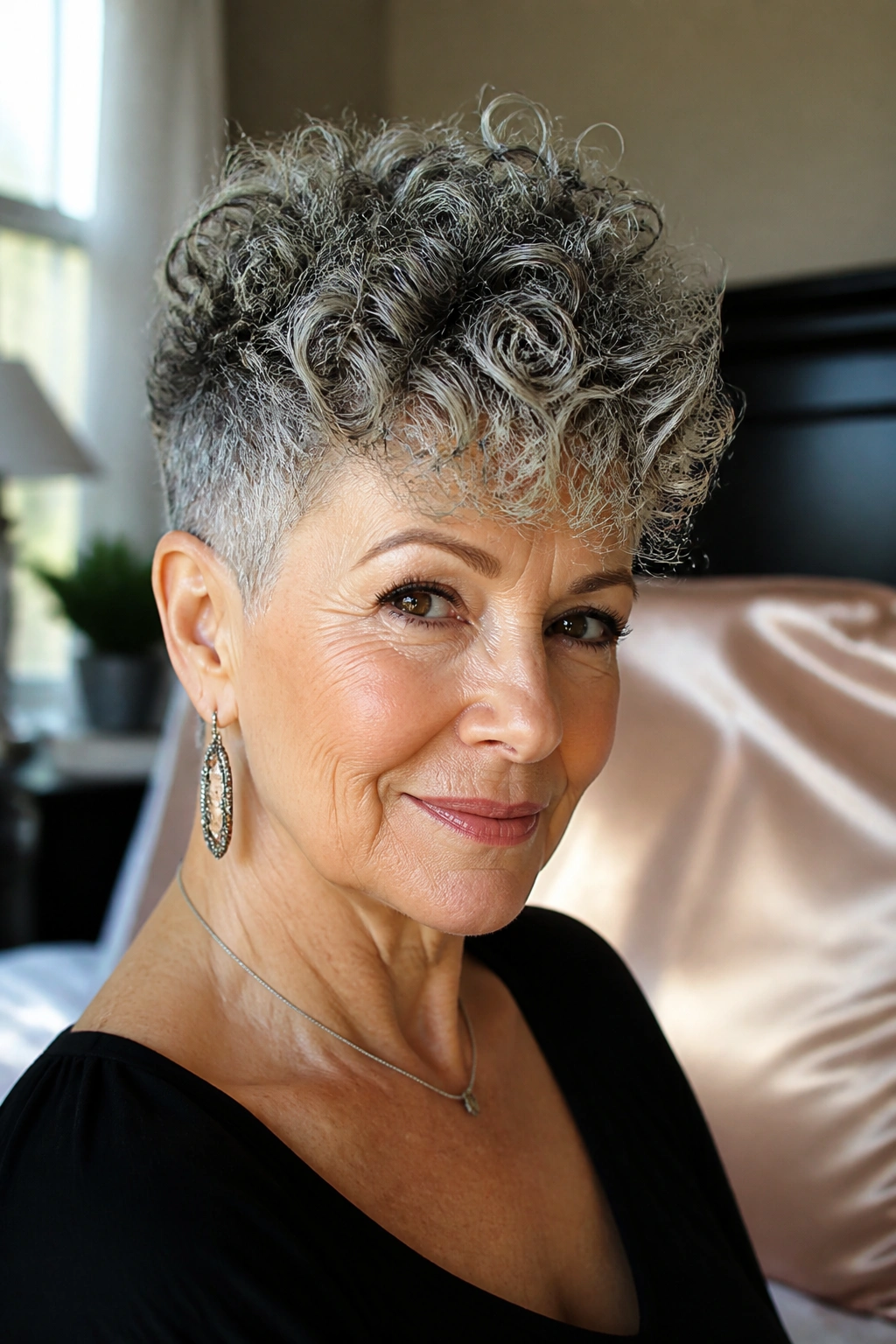
Inspired by the “pineappling” technique used to protect curls at night, this cut mimics that shape. It’s very short on the bottom half of the head and significantly longer on top. The curls on top are allowed to spill forward slightly over the forehead.
Nighttime Maintenance
The best part about this cut? You don’t have to do anything at night. Because the back and sides are so short, they won’t get “frizzy” against the pillow. Just sleep on a silk or satin pillowcase to keep the top curls from drying out, and you’ll wake up ready to go.
13. The Soft Curly Mullet (The “Modern Wolf”)
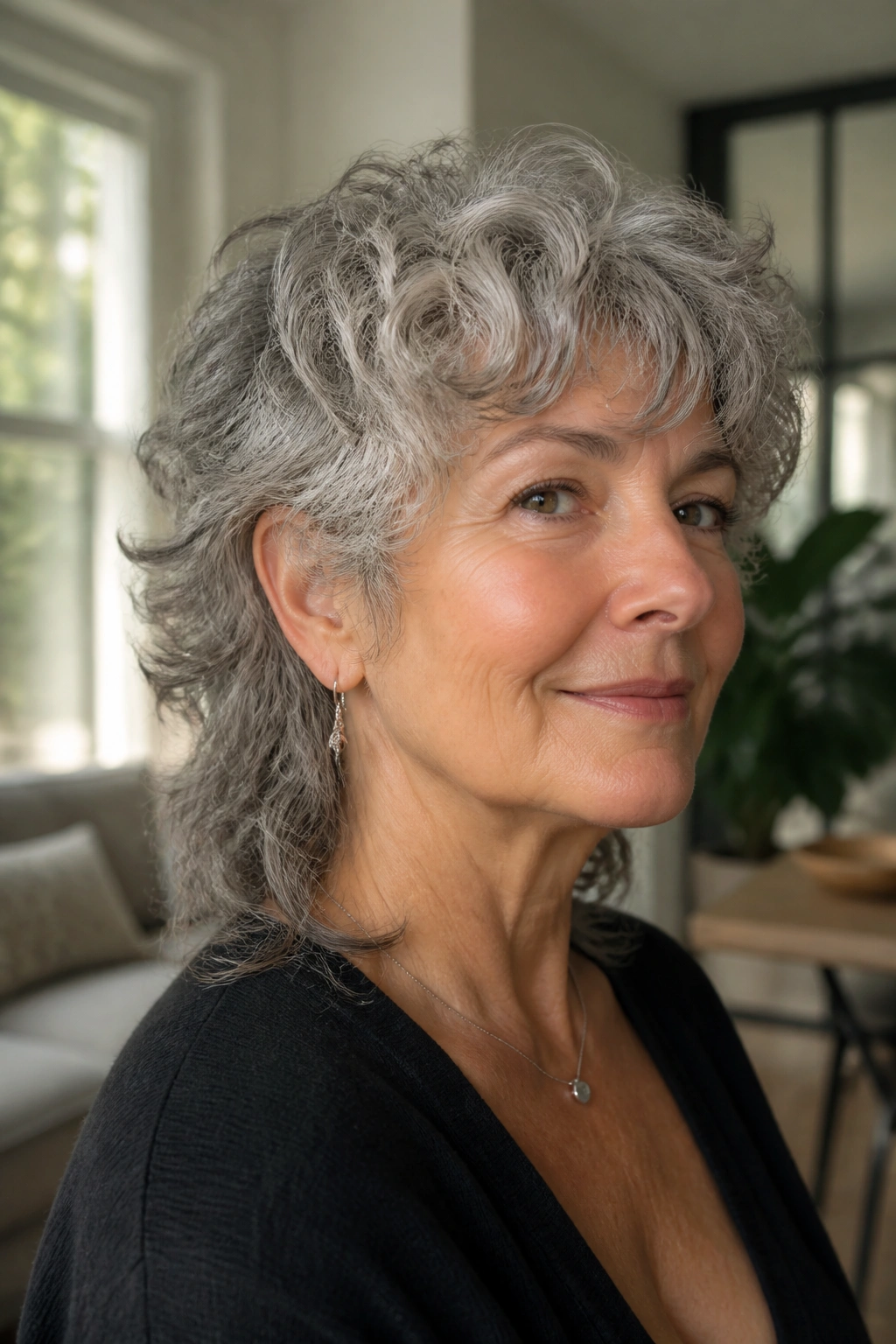
Wait, don’t let the word “mullet” scare you! In its modern form, this is just a very layered cut that is shorter in the front and slightly longer in the back. For curly hair, it creates a very “rock and roll” but sophisticated vibe. It’s fantastic for women with a lot of natural volume who find that standard bobs look too “poofy.”
Why it works for Silver Hair
The varied lengths in a “wolf” or “mullet” style allow different shades of silver and gray to pop. If you have “racing stripes” of white hair at your temples, this cut will highlight them beautifully.
14. The “Bottle” Bob (Narrower at the Top)
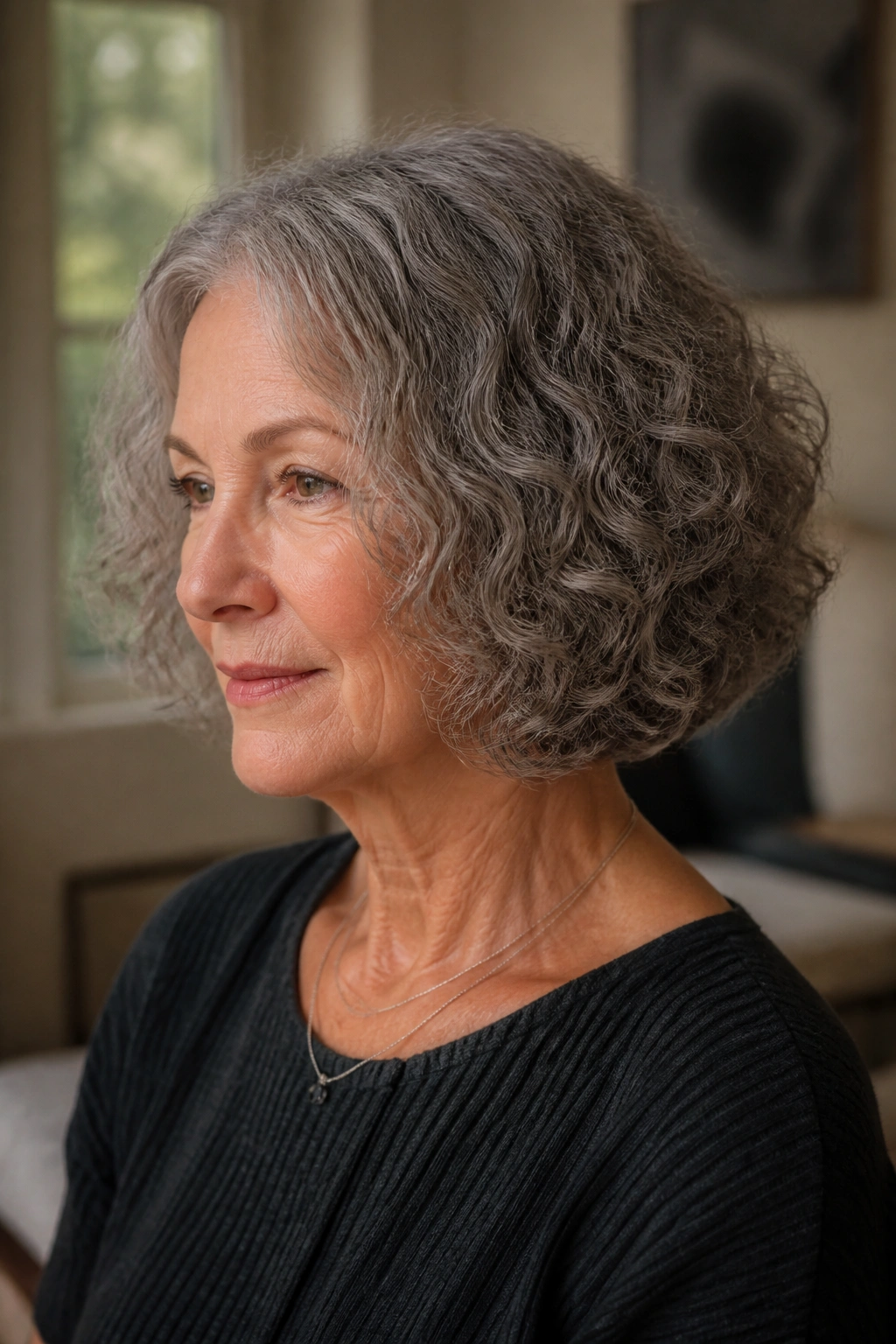
Most curly bobs get wider at the bottom. The “bottle” bob does the opposite. It’s slightly more “flat” near the roots and gets its volume in the middle, then tapers back in at the chin. It’s a very deliberate, architectural shape that looks great on women with “strong” features.
Who should choose this?
- Face Shape: Square or rectangular.
- Hair Type: Coarse, thick curls.
- Effort Level: Extremely low. Once the shape is cut in, it requires no “shaping” with a brush.
15. The “Pixie-Shag” with Temple Tendrils
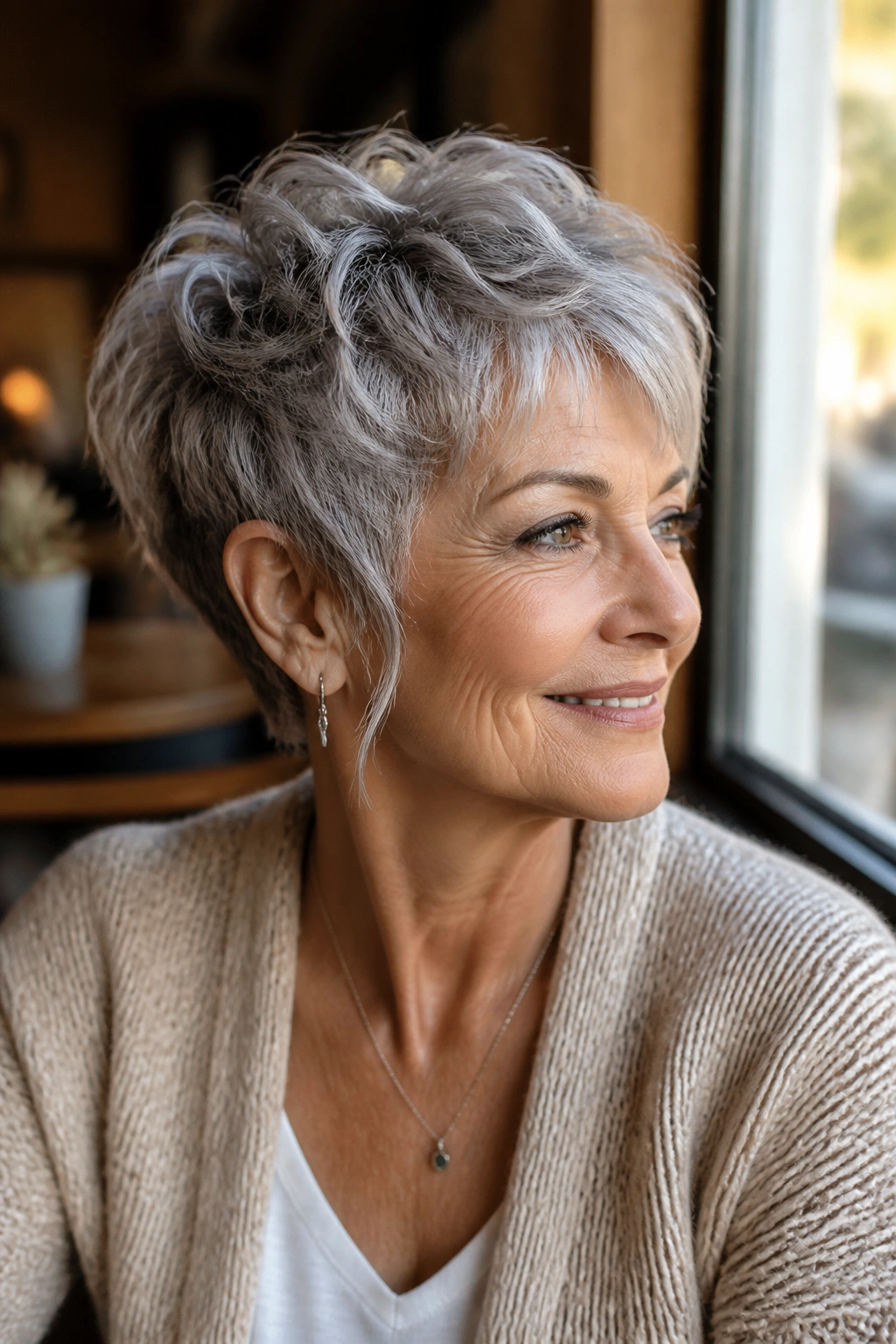
This is a very short pixie that leaves just a few longer “tendrils” of hair in front of the ears and at the nape. It’s a very “soft” look that feels less “severe” than a traditional pixie. The tendrils give a bit of movement around the face, which can be very comforting if you’ve always worn your hair long.
Styling Tip
Use a “dry texture spray” instead of a wet hairspray. This will give the hair a “wind-blown” look that stays in place but doesn’t feel sticky to the touch.
16. The Curly Bowl Cut
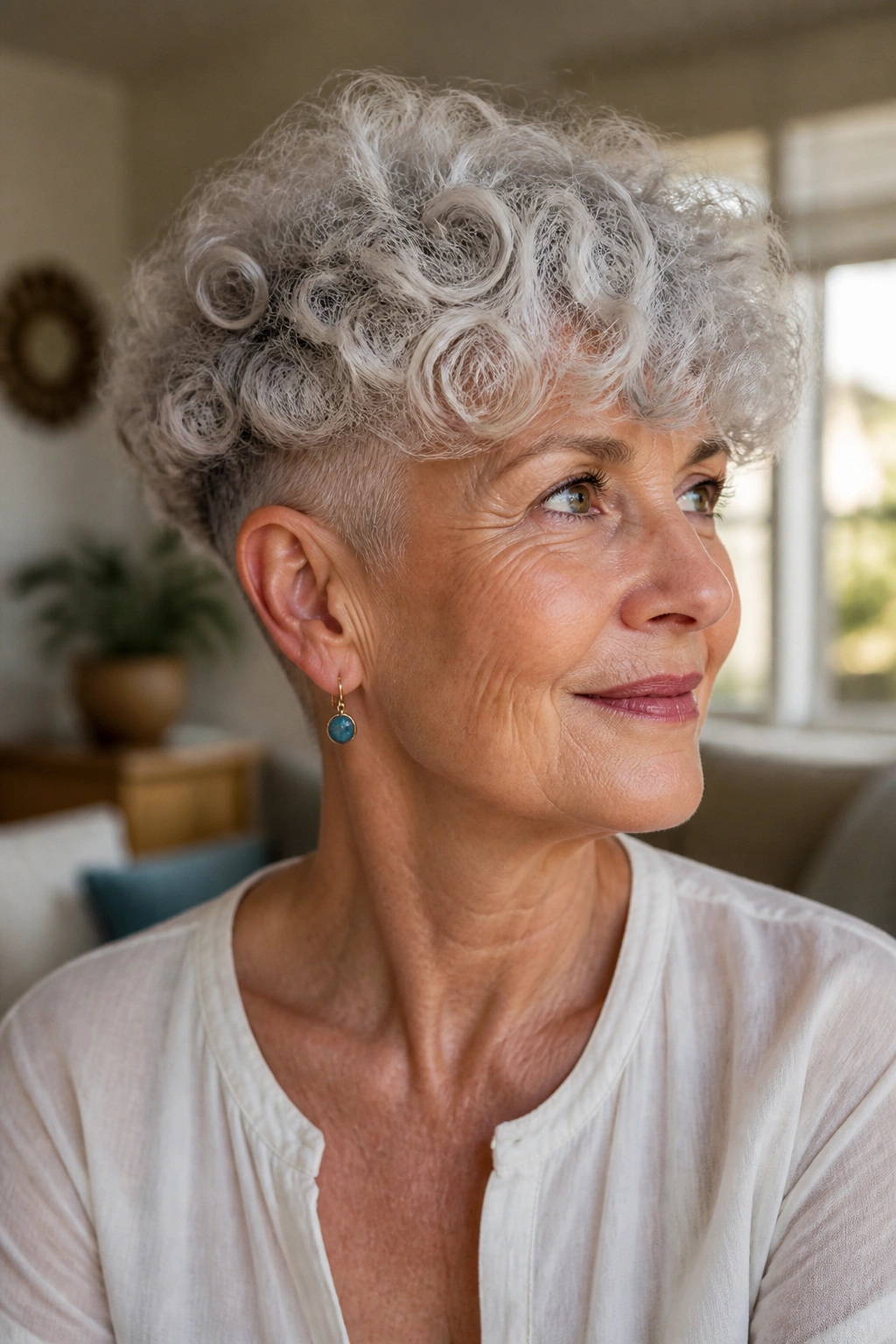
Again, don’t think of the 1970s version! The modern curly bowl cut is a heavy, rounded fringe that goes all the way around the head at the eyebrow level, with the hair underneath cut very short. In curly hair, this looks like a beautiful “halo.”
Is it hard to maintain?
Actually, no. The “heavy” top layer stays in place because of its own weight, and the “undercut” underneath means you don’t have to worry about the hair on the back of your head getting tangled or messy.
17. The Wispy Curly Taper
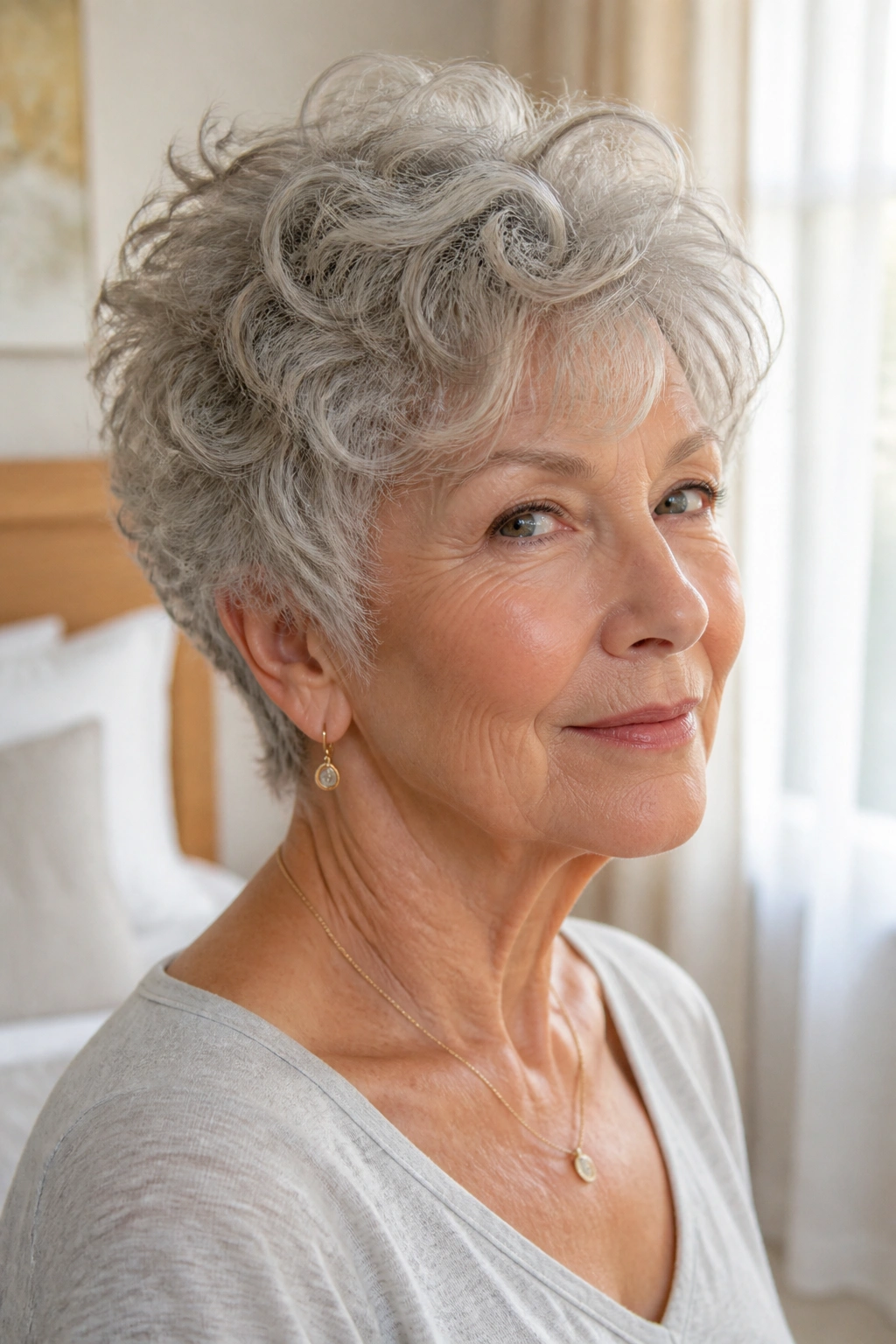
This is for the woman who has thinner hair. Instead of trying to create “big” curls, this cut embraces the wispy nature of fine silver hair. It’s a very short, tapered cut with “shattered” layers that create a soft, blurred silhouette.
The “Volume” Secret
When hair is thin, “clumping” your curls can actually make you look like you have less hair because it exposes the scalp. This wispy cut is designed to “de-clump” the hair, creating a soft “fuzz” (in a good way!) that looks like a full head of hair.
18. The “Mop-Top” Pixie
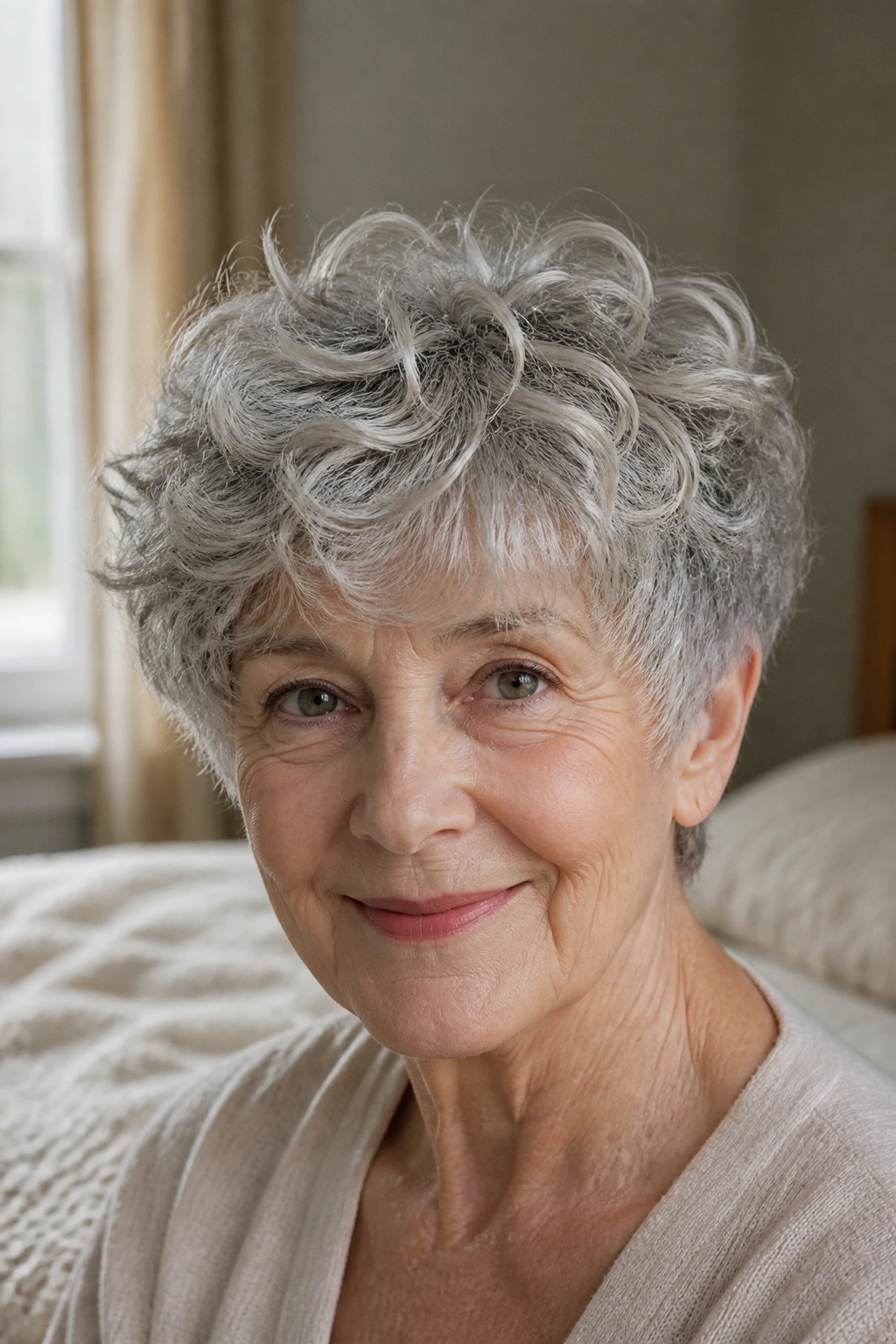
This style features long, messy curls all over the head, with the only “short” parts being right around the ears. It looks like you just rolled out of bed in the best way possible. It’s a very “youthful” spirit for a woman over 70.
How to Style
- Apply Leave-In: On soaking wet hair.
- Scrunch: Using a microfiber towel.
- Leave it: Do not touch it until it is 100% dry.
- Shake: Flip your head over and shake the roots.
19. The “Forward-Flow” Short Cut
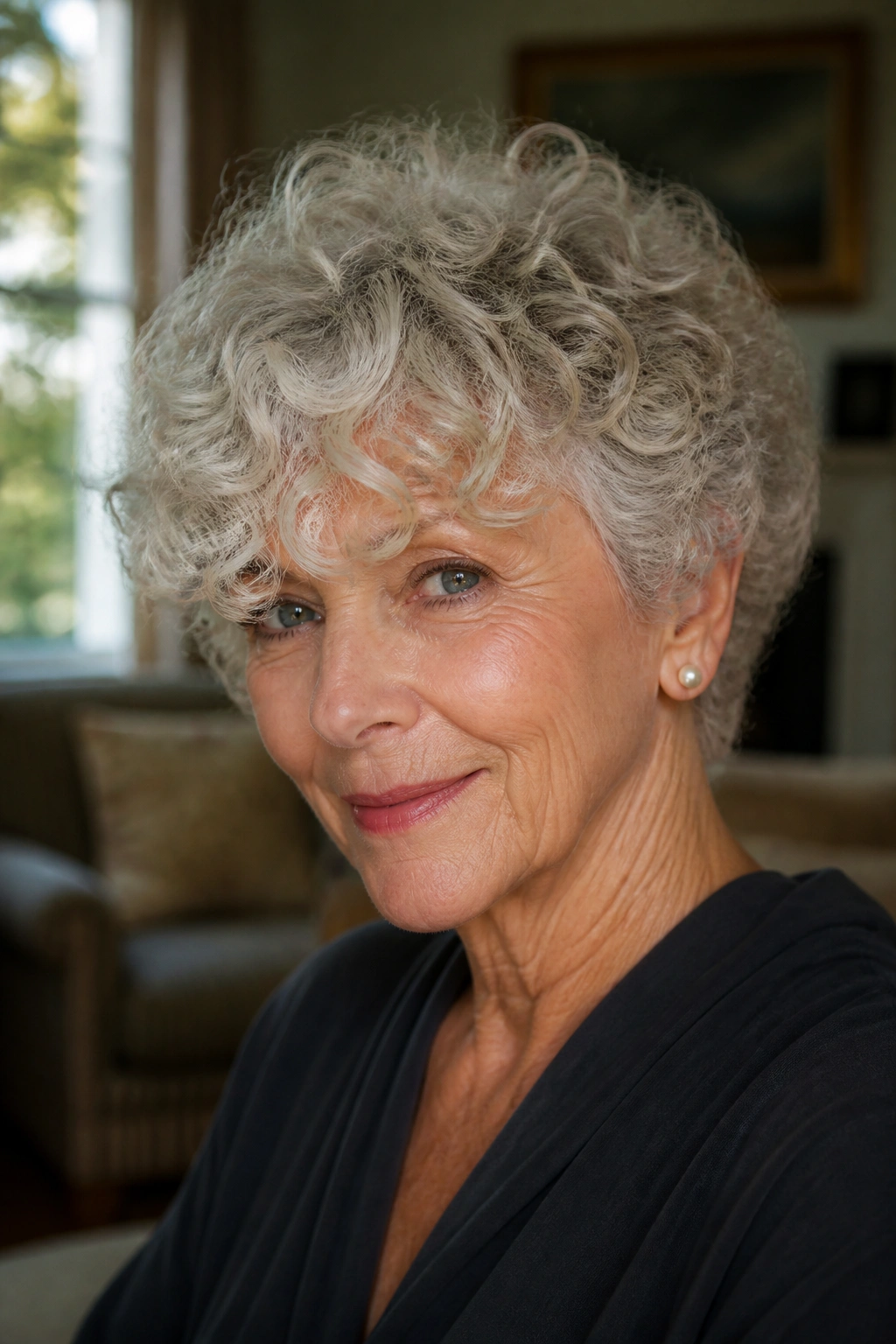
As we age, some of us experience thinning at the crown. The “Forward-Flow” cut brings the hair from the back and crown forward toward the face. It creates a thick, curly fringe that hides any thinning areas and frames the eyes.
Why it’s Low Maintenance
You aren’t fighting the natural direction of your hair. Most hair grows slightly forward anyway. By cutting it to follow that path, you eliminate the need for “training” your hair with clips or heat.
20. The Curly Bob with an Undercut
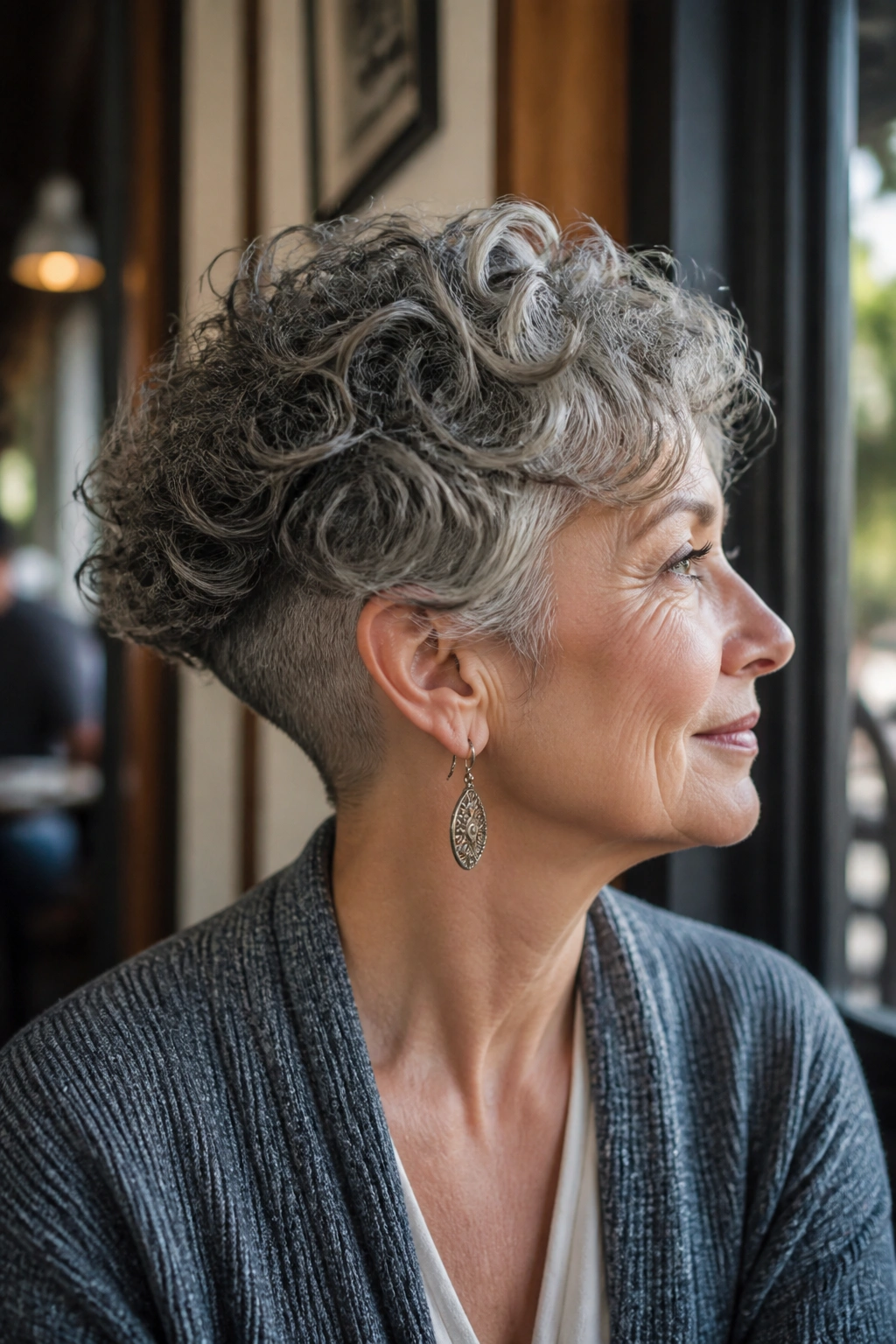
If you have too much hair, an undercut is your best friend. The stylist shaves or clips the hair from the nape of the neck up to about an inch above the hairline. The bob then sits on top of this.
The Benefits
- No Neck Frizz: The hair that usually gets frizzy is gone.
- Lighter Weight: Your head will literally feel lighter.
- Faster Drying: You’ve removed about 30% of the hair, so it dries in a fraction of the time.
21. The “Petal” Cut
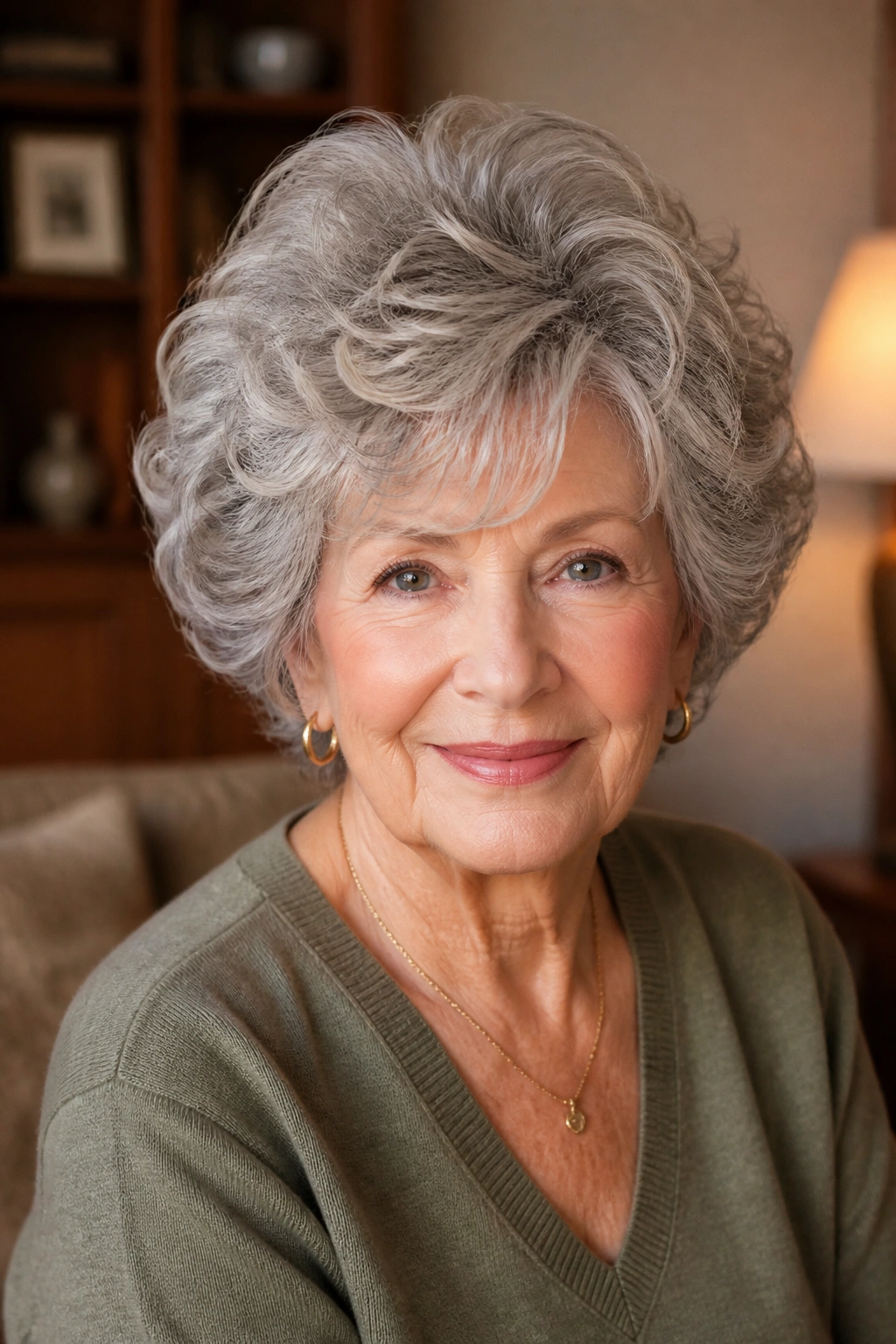
A “petal” cut is a specific curly technique where layers are cut to look like overlapping flower petals. It’s a very rounded, feminine style that works beautifully with medium-sized curls. It’s designed to be worn “big” and “fluffy.”
Caring for the “Petal” Shape
This cut relies on moisture. Use a “co-wash” (cleansing conditioner) instead of a traditional shampoo to keep the curls from getting “crispy.”
22. The Tapered Bob with Root Lift
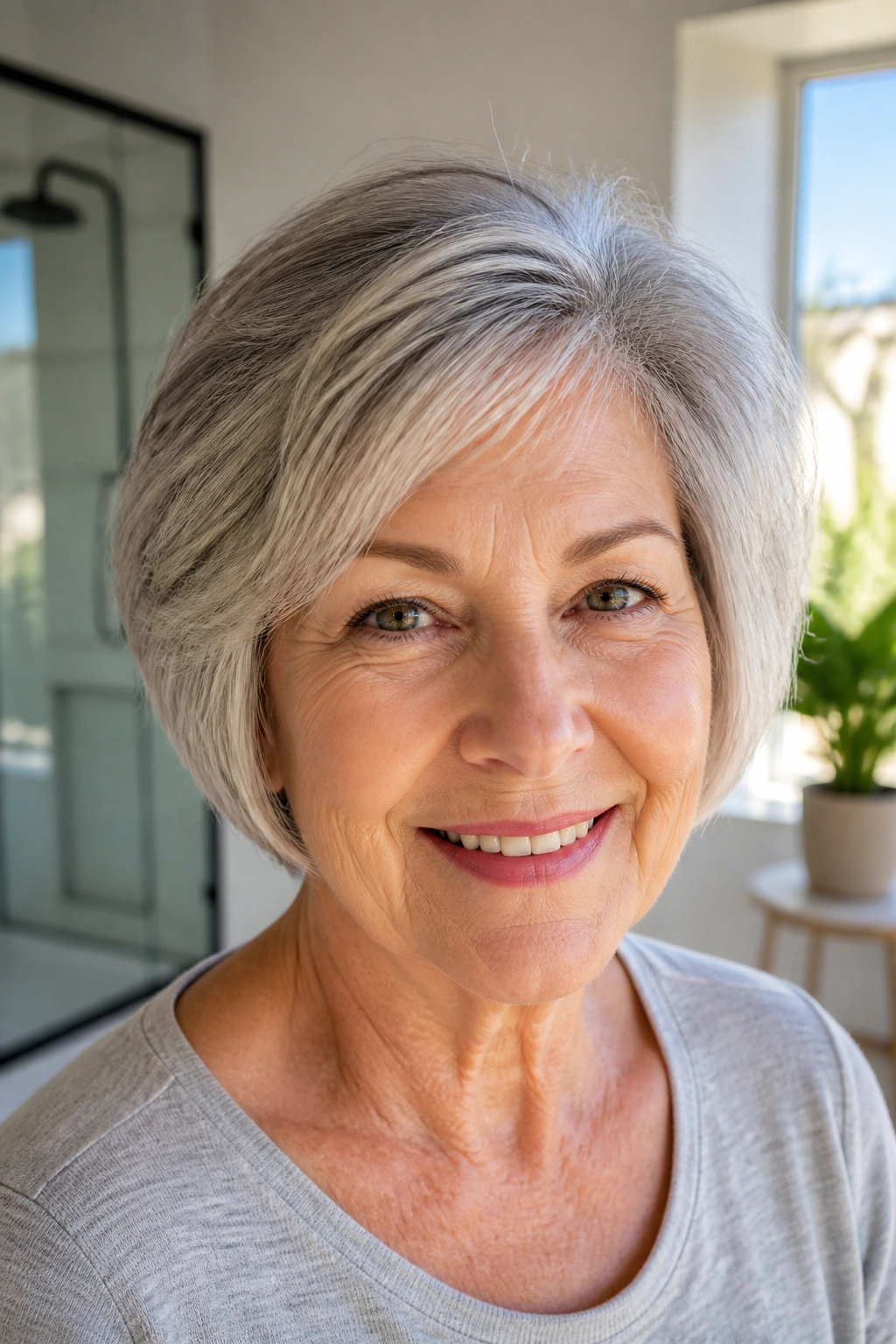
This is a standard bob, but with very short “internal” layers at the root. You can’t see them, but they act like “springs” to keep the top of the hair from falling flat against the scalp.
Pro tip: When drying, use small metal “duckbill” clips at the roots of your part to hold the hair up while it dries. Once dry, remove the clips for instant volume that lasts all day.
23. The “Sunburst” Crop
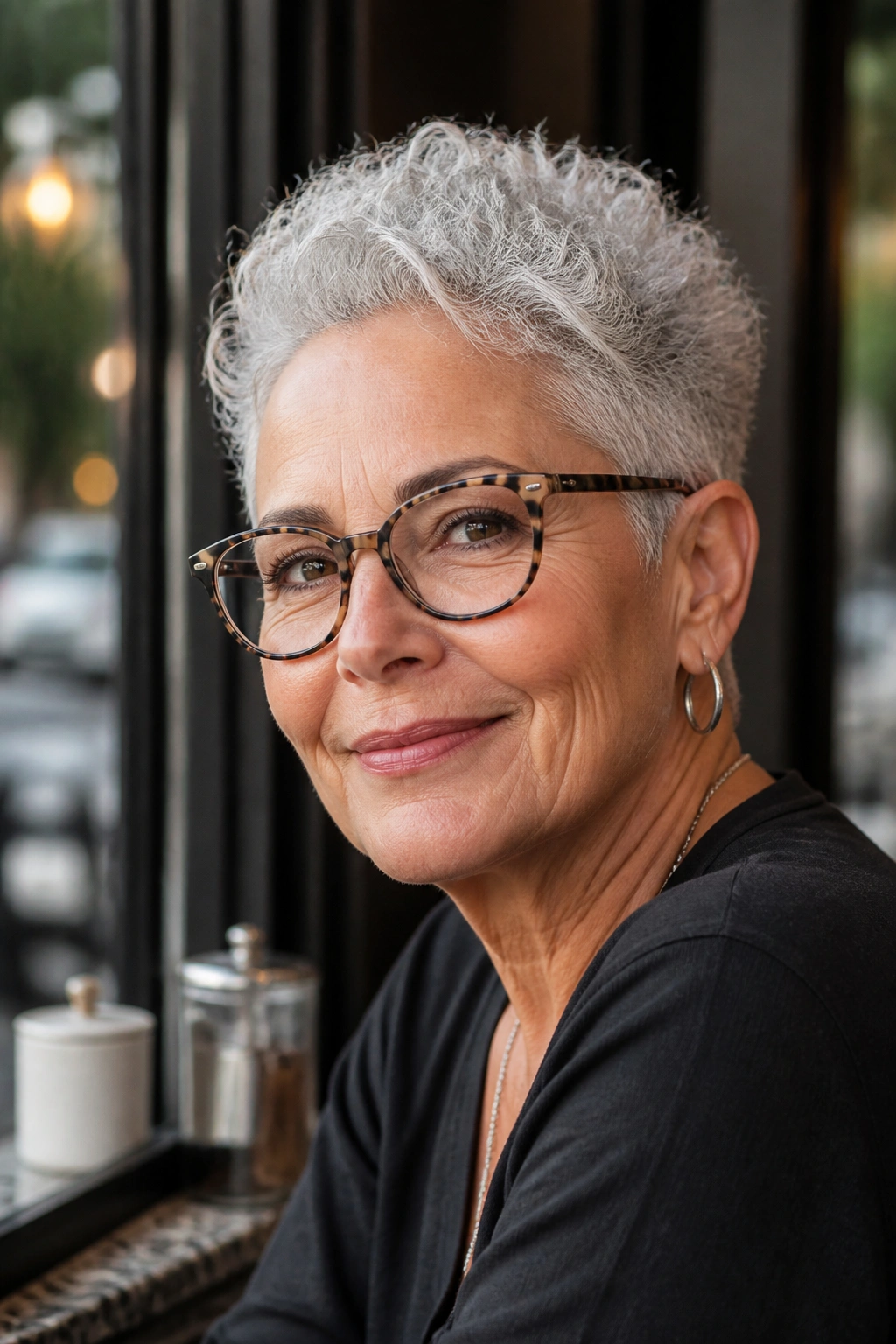
This is a very short cut where the hair is styled to “radiate” out from the center of the crown. It’s a very neat, tidy look that is perfect for women who wear a lot of statement jewelry or glasses. It’s “architectural” but soft.
Maintenance Schedule
Because this is a very “precise” shape, you’ll want to get it trimmed every 5 weeks. However, the daily styling is zero—just a quick pat with a damp hand to reset the curls.
24. The Layered “Mini” Shag
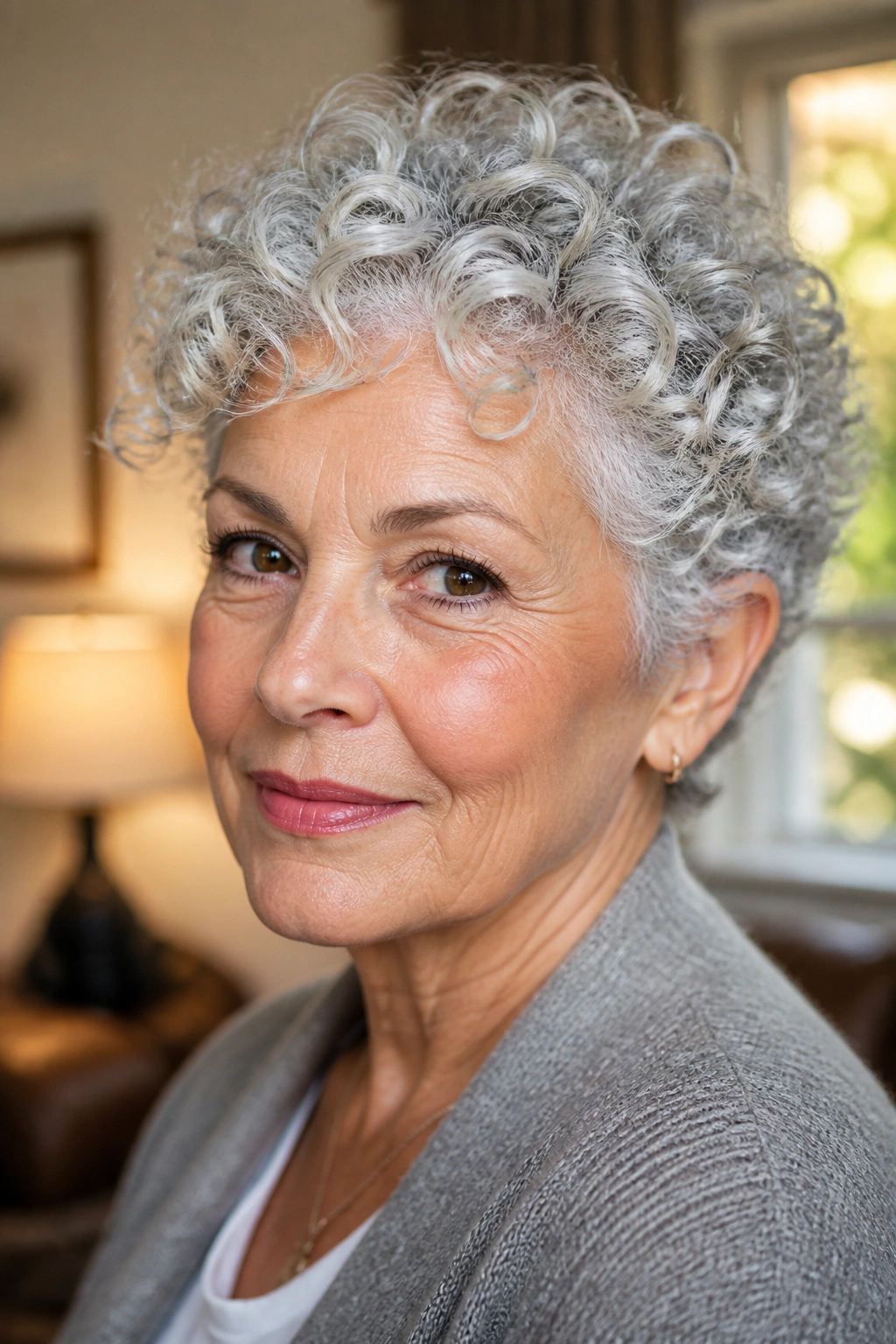
A smaller version of the shag, this cut ends at the jawline. It has a lot of “movement” and “flick” at the ends. It’s very “cheeky” and fun.
Best Products
A “curl foam” or “styling mousse” is perfect here. You want something that provides “bounce” rather than “hold.”
25. The Natural “Z-Pattern” Pixie
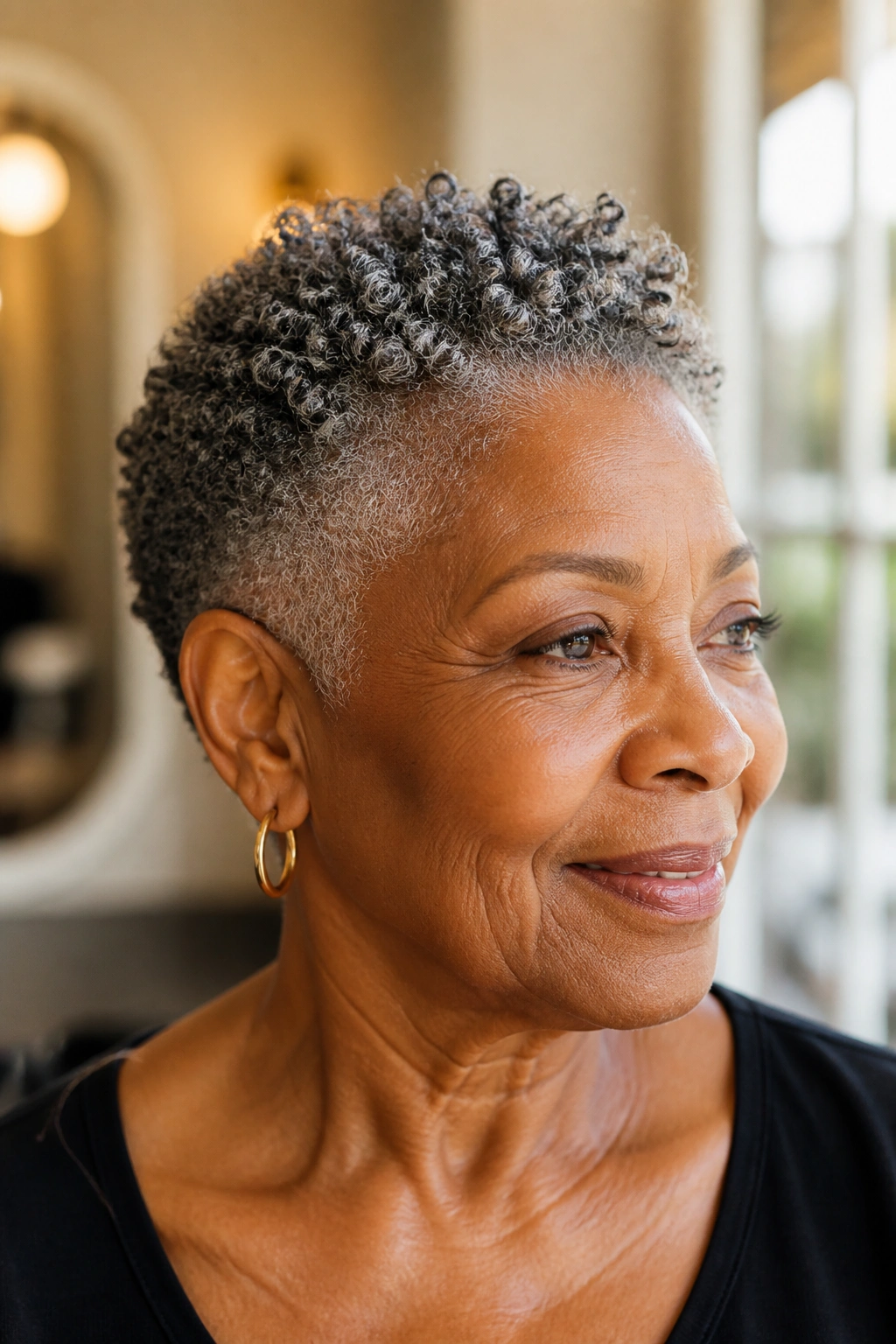
If your hair isn’t “curly” in the traditional sense but has a “Z” or “zig-zag” pattern (often seen in very coarse silver hair), a structured pixie is the best way to wear it. Trying to make Z-pattern hair “curl” is a losing battle. Instead, cut it into a sharp, geometric pixie that celebrates the unique “crimped” texture.
Why this is a “Power” Look
It’s unique. Very few people have this texture, and when it’s cut into a deliberate shape, it looks like a high-fashion choice. It requires almost no product—just a good shampoo and a light conditioner.
The Reality of Caring for Mature Curls
Choosing the right cut is only half the battle. To keep these low-maintenance styles looking their best, you have to adjust your “hair logic.” Most of us grew up in an era where “clean” meant “squeaky clean.” For curly hair—especially silver curly hair—squeaky clean is the enemy. It means you’ve stripped away every bit of moisture that keeps the curl together.
The No-Brush Rule
Once you leave the shower, your brush should stay in the drawer. Brushing curly hair when it’s dry is the quickest way to turn a beautiful “petal cut” into a giant puffball of frizz. If you must detangle, do it in the shower while you have a thick conditioner in your hair. Use your fingers or a very wide-tooth comb. Once you rinse, that’s it.
Product “Cocktailing” for Seniors
You don’t need a shelf full of bottles. For most of the styles above, a “cocktail” of two products is plenty:
- A Leave-In Conditioner: This is your foundation. It provides the moisture the silver hair is craving.
- A Light Hold Gel or Mousse: This “locks” the curl in place so it doesn’t fly away as it dries.
Mix them in your palm, scrunch them into soaking wet hair, and then stop. The most important “technique” for low-maintenance curls is simply leaving them alone until they are completely dry.
Embracing the Silver Transition
One of the biggest hurdles I see women face is the “awkward phase” of letting their natural silver grow in while also trying to manage their curls. Short cuts are the absolute best way to handle this transition. If you’ve been coloring your hair for years, the texture of the “new” silver hair is often very different from the “old” colored hair.
A short, layered cut—like the “Bixie” or the “Tapered Pixie”—allows you to gradually cut away the colored ends without ever having a “skunk stripe” look. The curls help to blend the two colors together, making the transition look like a deliberate “balayage” or “highlight” effect rather than an accident.
Longevity and Ease
The goal at 70 and beyond isn’t to look like a different person. It’s to look like the most relaxed, confident version of yourself. These styles aren’t just about “hair”; they are about reclaimed time. Every minute you aren’t spending with a curling iron is a minute you can spend in your garden, with your grandkids, or simply enjoying a quiet morning coffee.
Wrapping Up
There is no “right” way to wear your hair, but there is a “smart” way. By choosing a cut that honors your natural curl pattern and the unique texture of your silver strands, you eliminate the daily “fight” with the mirror. Whether you go for the bold “Fro-Hawk” or the classic “Rounded Bob,” the key is to prioritize moisture and minimize heat.
Your hair has been with you through every decade, and in your 70s, it deserves to be celebrated, not managed. Short, curly styles offer a unique combination of sophistication and ease that longer hair simply can’t match. So, the next time you sit in that stylist’s chair, don’t be afraid to ask for something that feels a bit more “you.” After all, you’ve earned the right to keep things simple.
