

A long bob can do a lot of heavy lifting for a face. The right cut gives you movement, a little lift near the eyes, and enough length to feel soft without drifting into heavy, dragged-down hair. The wrong one, though, can sit there like a shelf.
That’s why the best youthful long bob hairstyles for older women are rarely about chasing anything dramatic. They’re about balance: a collarbone-grazing line, a bit of bend through the ends, and shape around the face that makes everything look a touch fresher. Fine hair needs support. Thick hair needs smart removal of bulk. Silver hair needs shine and clean edges. Easy. Not simple, exactly. But doable.
I’ve always thought the lob earns its reputation because it forgives a lot. Grow-out is kinder than with a short crop. Upkeep is easier than with long layers. And if you’ve ever had a cut that looked lovely in the salon and flat by lunch, you already know why a slightly longer bob can feel like a relief.
The styles that work best here don’t fight the hair you actually have. They work with it. Some are sleek, some are airy, some lean on bangs or side parts, and a few are especially good if your hair has gone a little finer or more wiry over time. The first one is the safe place to start, and honestly, it’s a strong favorite for a reason.
1. Soft Collarbone Lob with Feathered Face-Framing Layers
This is the lob I recommend most often when someone wants movement without giving up length. The cut skims the collarbone, so it still feels feminine and easy to tuck behind the ear, but the feathered pieces around the face stop it from looking blunt or boxy.
Why It Flatters So Many Faces
The face-framing layers do the quiet work here. They soften the jaw, open up the cheek area, and keep the hair from hanging in one hard line. That matters a lot when hair has lost some fullness, because a single heavy edge can make the whole cut feel flat.
Ask for the first layers to start around the cheekbone or just below it. That’s the sweet spot. Too short and the front can flip outward in a dated way; too long and the shaping gets lost.
- Best for: fine to medium hair that needs movement
- Styling note: a medium round brush adds a gentle bend at the ends
- Upkeep: trim every 8 to 10 weeks to keep the feathering visible
- Bonus: works well with side parts or soft center parts
My favorite detail: keep the ends lightly beveled, not razor-thin. It gives the cut a softer finish and helps it fall in a more flattering way.
2. Deep Side-Part Lob with Side-Swept Bangs
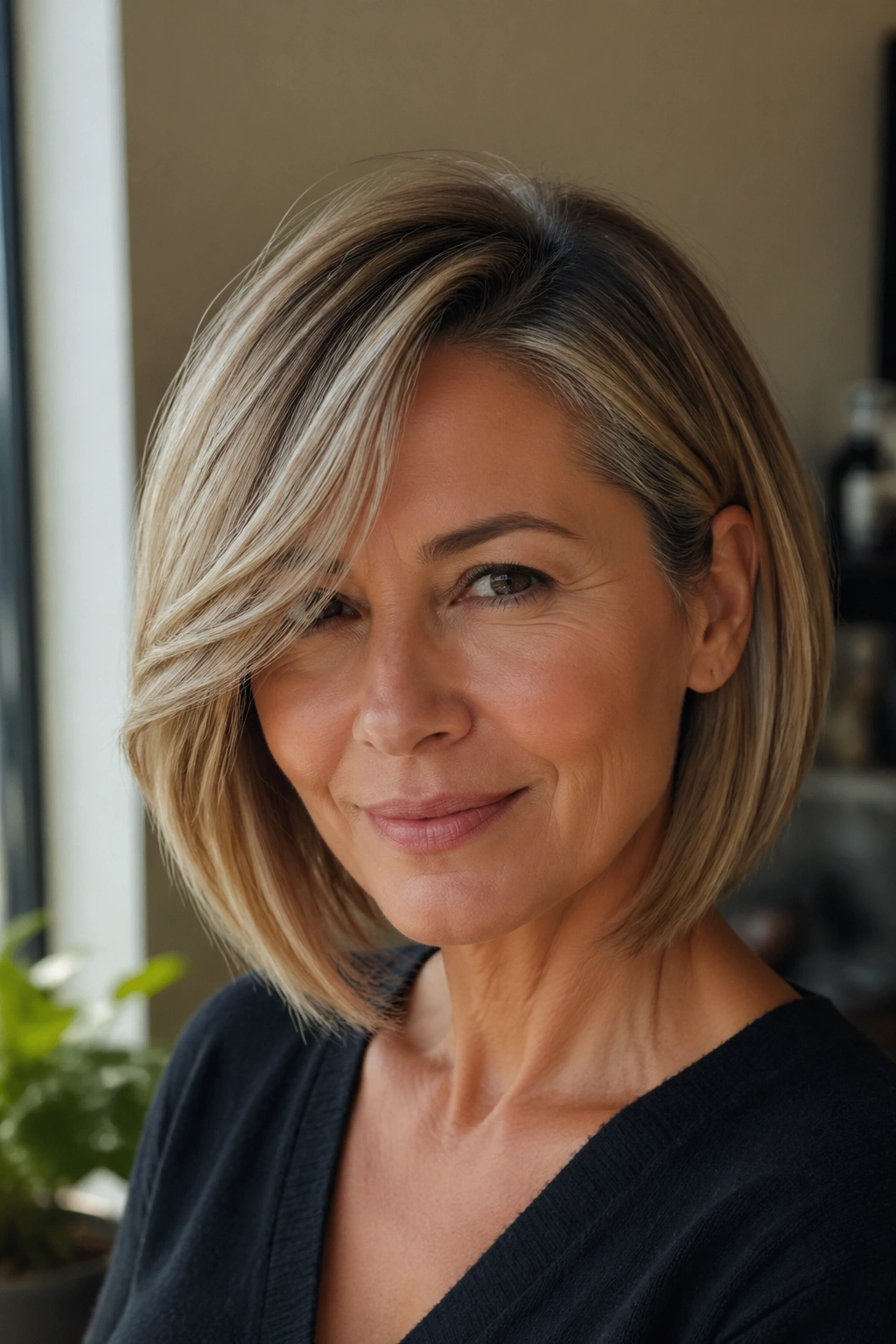
Want instant lift without changing the whole haircut? A deep side part does more than most people expect. It shifts weight off the center of the face, gives the roots a little push, and makes the whole style feel more alive.
Side-swept bangs are the useful part here. They blur the forehead a bit, skim the temples, and grow out more politely than blunt bangs. That last part matters. A lot.
How It Actually Works
The trick is to keep the bang area airy. You do not want a thick helmet of fringe. You want movement, with the bang blending into the front layers so the cut feels natural instead of chopped into pieces.
This shape is especially nice if your hair falls flat at the crown. Flip the part while the hair is damp, then dry the root in the opposite direction first. It sounds fussy, but it adds a visible lift that lasts longer than a quick tease with a comb.
A deep side part also pairs well with glasses. The fringe can sit above the frame line instead of competing with it, which makes the whole look cleaner.
3. Blunt Shoulder-Grazing Lob with a Clean Center Part
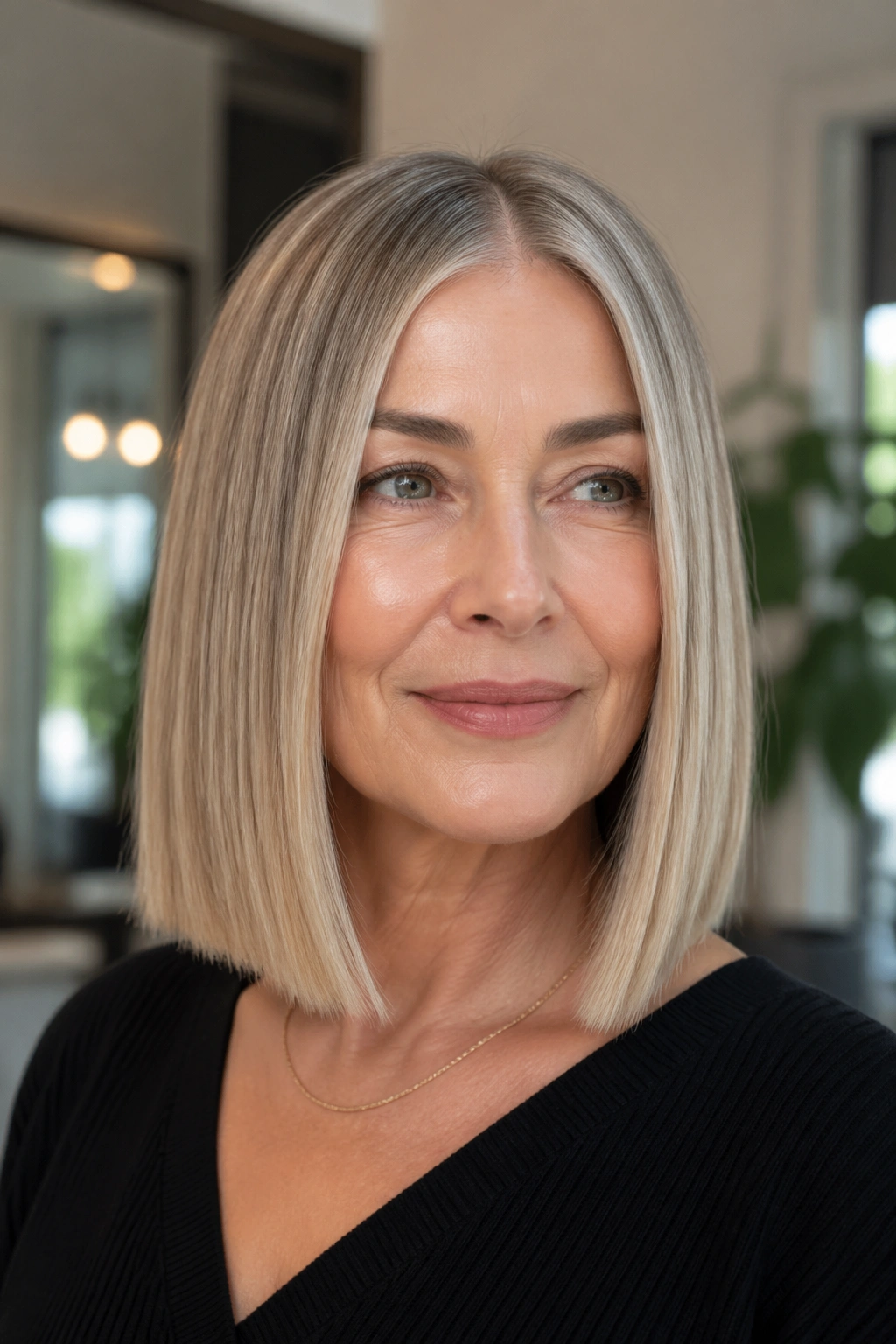
Straight hair can wear a blunt lob beautifully. In fact, the cleaner the line, the sharper it can look. A shoulder-grazing length with a center part gives the face a tidy frame and works especially well when the hair has decent density.
What keeps this from feeling severe is the finish. The ends need to be crisp, yes, but not sliced to death. A small amount of beveling keeps the shape modern, while a dead-straight edge can feel heavy and old-fashioned fast.
Best Styling Move
Blow-dry with a paddle brush or flat brush, then run a flat iron only through the mid-lengths and ends if needed. Finish with a pea-sized bit of serum on the last two inches of hair. That’s enough. More than that and the cut starts to look greasy, not polished.
This style suits women who like structure. It also flatters oval and heart-shaped faces because the line lands right where the collarbone creates a natural visual stop.
If your hair is fine, skip too much layering in the back. That’s how a blunt lob keeps its body.
4. Wavy Lob with Long Curtain Bangs
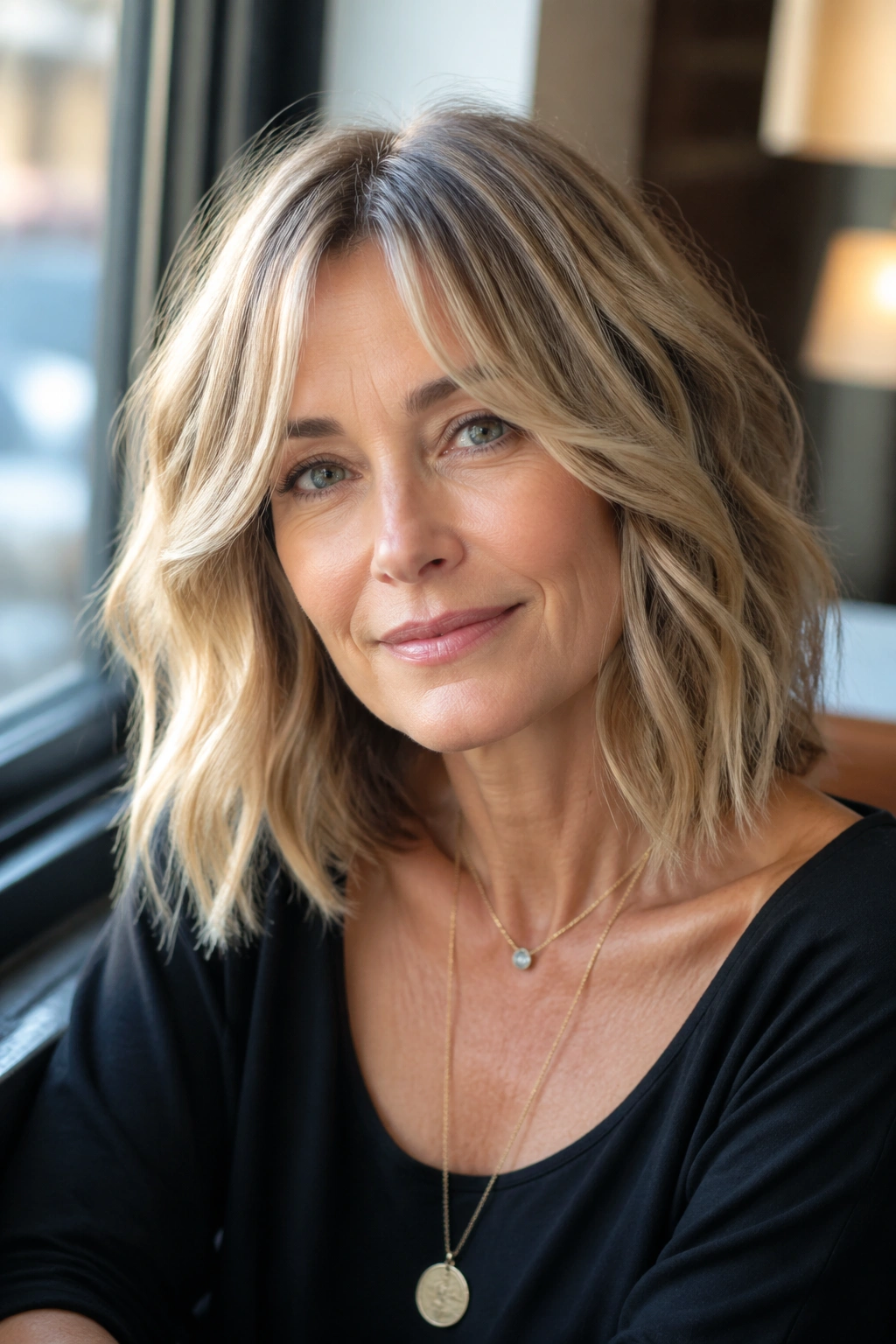
Curtain bangs are not reserved for younger faces. They’re one of the easiest ways to soften a lob without committing to a heavy fringe, and they’re especially useful if your forehead feels wider than you’d like or your face needs a little framing at the temples.
The wave matters as much as the bang. A loose bend through the mid-lengths keeps the style from looking like a flat sheet, and the longer bangs blend into that movement instead of sitting on top of it.
What Makes It Feel Soft, Not Fussy
The best version looks touched by air, not by too many tools. I like a large-barrel curling iron or a round brush used only on the front sections. Leave the ends a little imperfect. That tiny irregularity is what keeps the lob from looking too done.
Curtain bangs are also forgiving when they grow out. They slide into the side layers instead of hanging there like a mistake. That alone makes them worth considering.
- Styling products: light mousse, heat protectant, flexible hairspray
- Ideal texture: straight to wavy hair that wants shape
- Maintenance: fringe trim every 6 to 8 weeks
- Good news: works with both center and slightly off-center parts
5. Textured Air-Dry Lob with Piecey Ends
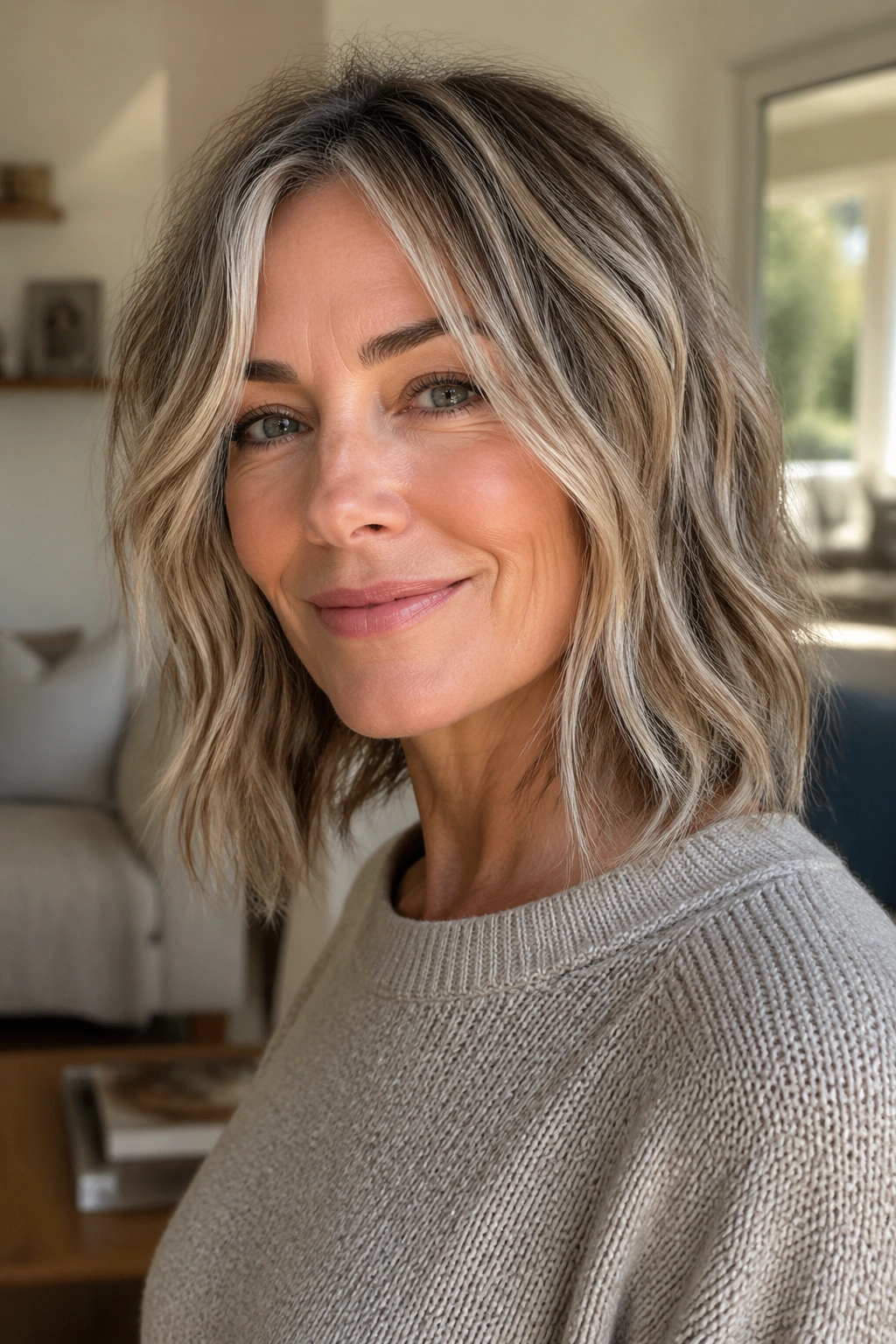
Some cuts are made for the people who want to wash, scrunch, and leave the house. This is one of them. A textured air-dry lob gives the hair enough internal shape that it can dry with movement instead of collapsing into one blunt block.
The ends are the whole story. Piecey ends stop the cut from feeling too dense, especially on hair that has become finer or a little more fragile. They also make the hair look easier, which is often the point.
Why It’s So Useful on Busy Mornings
Use a light leave-in conditioner, then a mousse or air-dry cream from roots to mid-lengths. Scrunch lightly with a towel, not a rough one, and let the hair fall where it wants. If the top dries flat, lift the roots with your fingers while it’s still damp.
I like this cut because it doesn’t demand perfection. A few bends in the wrong direction? Fine. A little natural frizz? Also fine. The texture becomes part of the style instead of a problem to hide.
One warning: don’t overload it with cream. Too much product makes the ends clump and kills the airy shape you’re trying to get.
6. Inverted Lob with Lift at the Crown
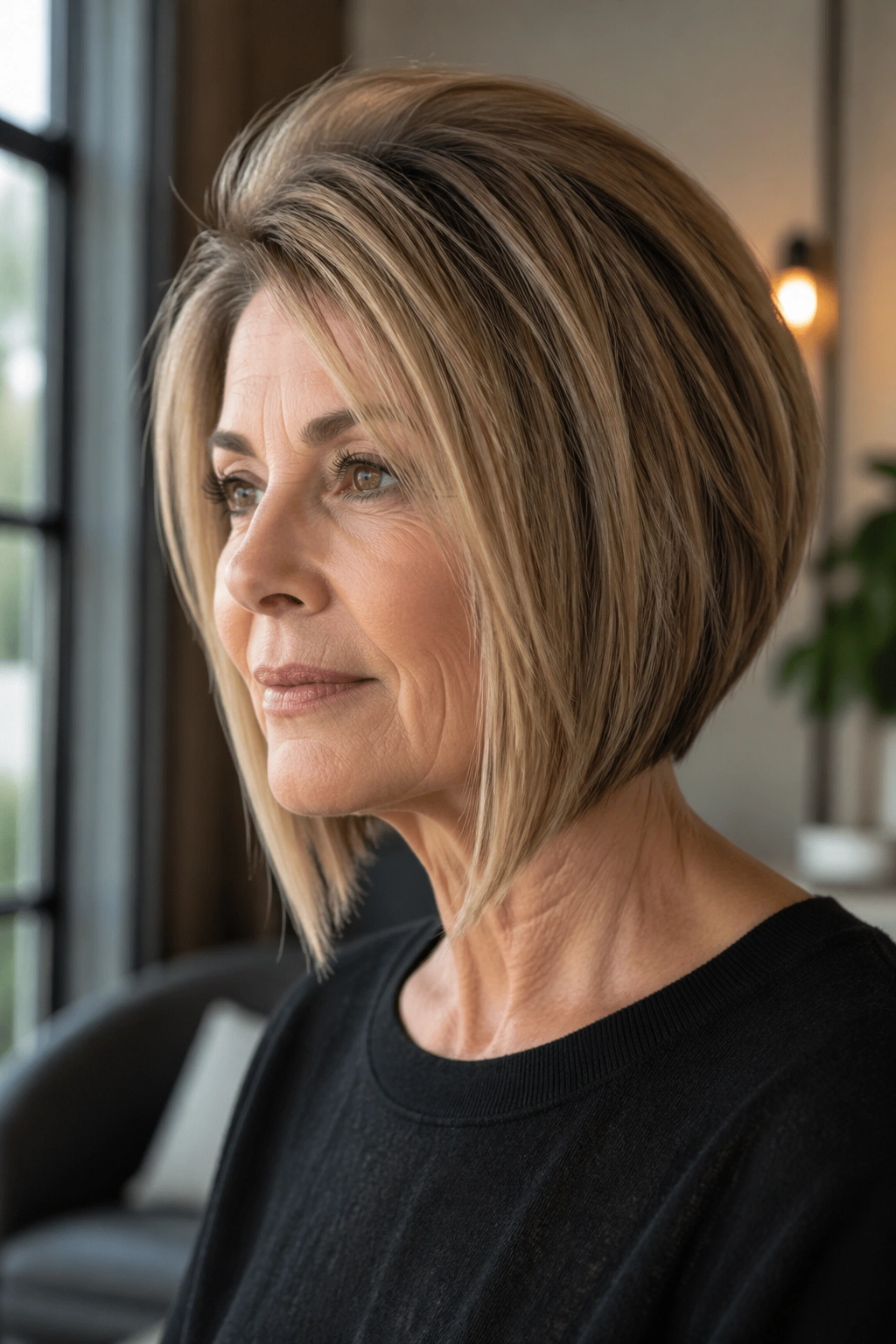
A little angle goes a long way. An inverted lob is shorter in the back and longer toward the front, which gives the neck a cleaner line and the face a touch more length.
That shape can be especially helpful if hair sits heavy at the nape or if you want a cut that looks a bit more sculpted without going full short bob. It has polish, but not stiffness.
Where It Works Best
If your hair is straight or only mildly wavy, this cut shows its shape clearly. The back stays neat, while the front pieces brush the collarbone and keep the overall effect soft. The crown gets a little more lift, too, which helps the whole head shape look fuller.
This is one of those styles that looks expensive even when it’s not fussy at all. You need clean cutting and regular trims, that’s true, but daily styling can be minimal. A round brush at the roots and a smoothing cream through the ends usually does the job.
It’s a smart cut if you like structure and want something that doesn’t collapse by noon.
7. Silver Lob with Glossy Straight Finish
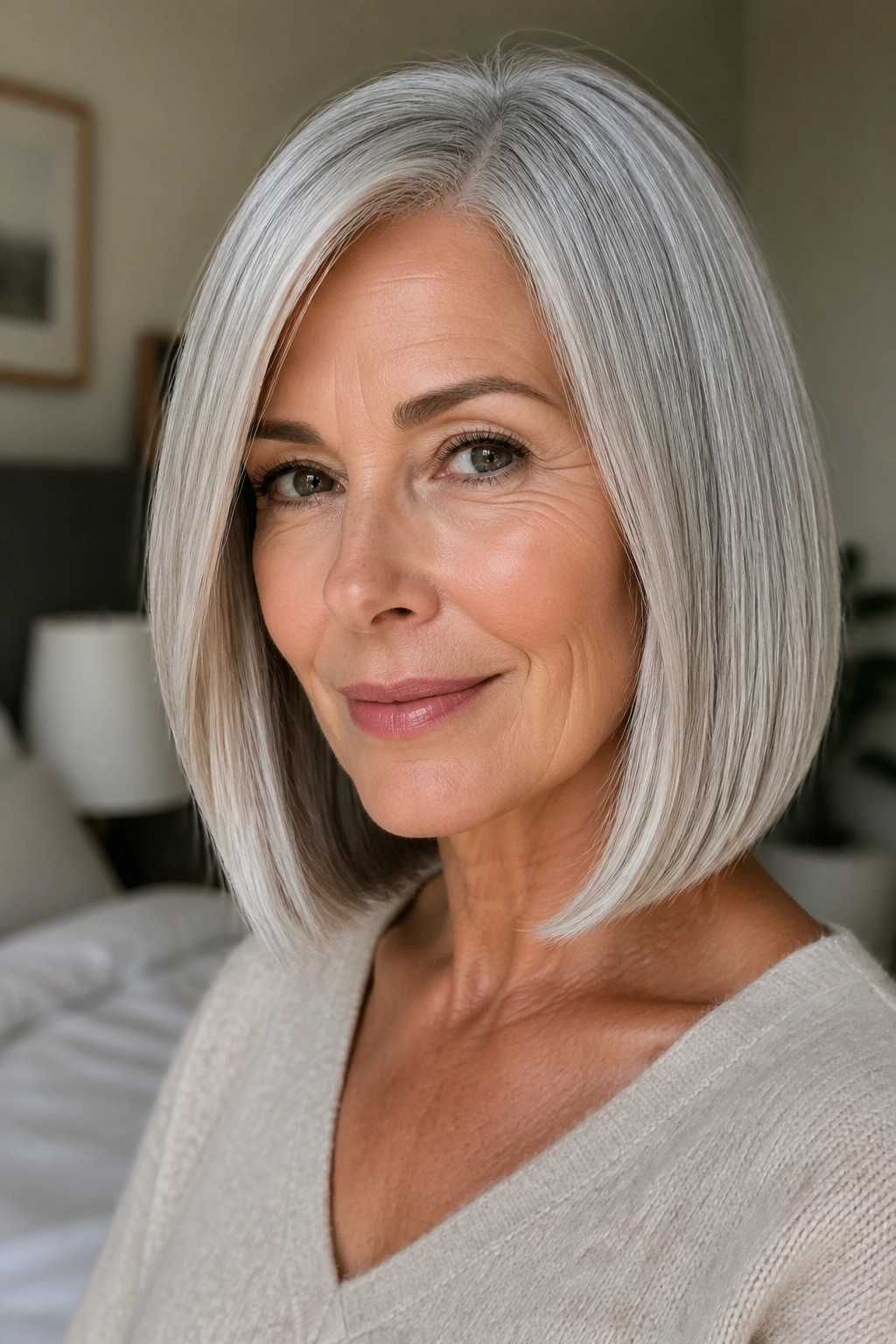
Silver hair deserves a sharp cut. If the color has gone naturally gray or white, a blunt-ish lob with a glossy finish can look striking in the best way. The clean shape makes the color look intentional, not accidental.
The reason this works so well is contrast. Silver strands often reflect light beautifully, but only if the cut gives them a clear edge. Too many choppy layers can make the hair look frayed. A smoother line keeps the color looking rich.
What to Ask For
Ask for a collarbone length with subtle layering only where the hair needs movement. Then keep the finish sleek. A smoothing blow-dry cream, a tiny drop of shine oil, and a flat brush are usually enough.
- Best product type: blue or purple shampoo if brassiness shows up
- Finish: smooth, glossy, not wet-looking
- Styling tool: flat brush or paddle brush
- Trim schedule: every 7 to 9 weeks to keep the line crisp
A silver lob like this can feel surprisingly modern because it doesn’t try to hide the gray. It lets the color do the work.
8. Choppy Lob with Razored Ends
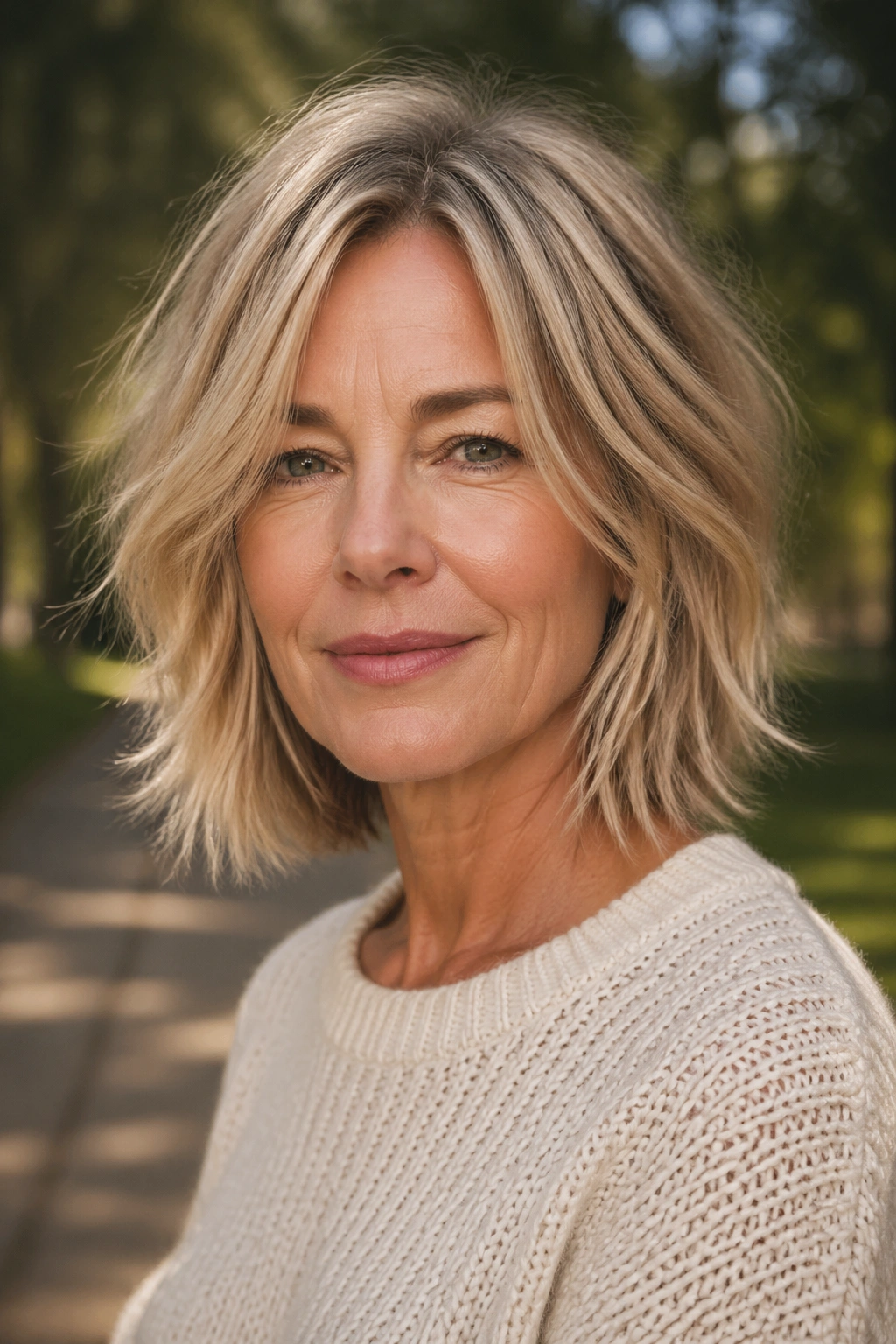
I like this cut best on thicker hair. Razor work or point-cutting takes some of the bulk out of the ends and gives the lob a lighter, more casual feel. It can make dense hair move instead of hang.
The key is restraint. Too much razoring and the ends look wispy in a bad way. A little goes a long way, especially if the hair has some natural wave or tends to puff when it’s cut too blunt.
Where It Earns Its Keep
This style is useful if your hair feels heavy around the shoulders. The choppy pieces remove that curtain effect and keep the cut from swallowing your face. It’s also a good choice if you like texture sprays, because the layers catch the product and separate in a flattering way.
A choppy lob usually looks better a day after washing than the first hour after styling. That’s not a flaw. That’s part of the charm.
Use a lightweight texturizing spray at the ends, then twist a few sections around your fingers. Stop before it gets crunchy. Crunchy hair is a hard no.
9. Polished Blowout Lob with Volume at the Sides
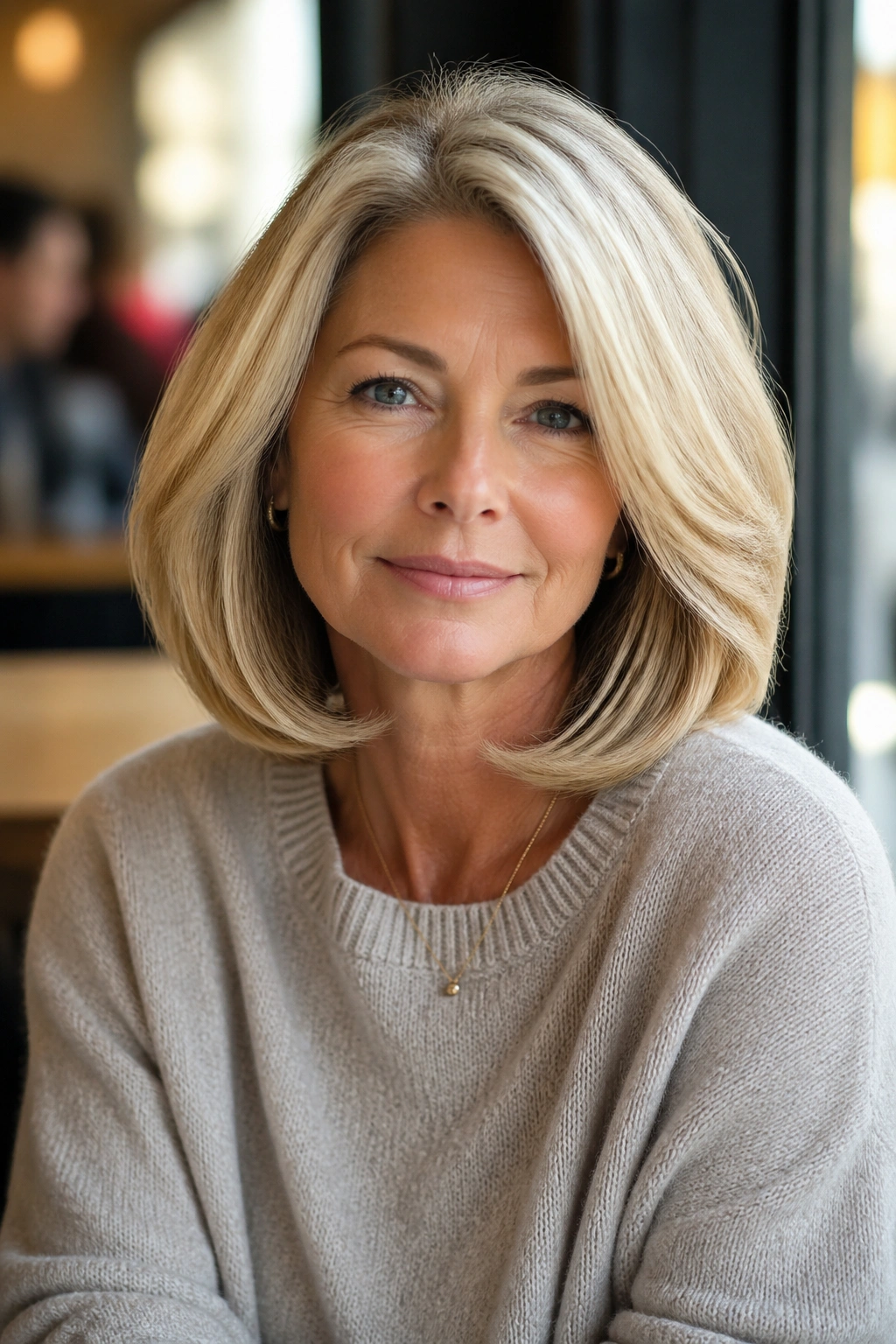
This is the lob for people who like their hair to look finished. Not stiff. Finished. The sides have a soft curve, the root gets a little lift, and the ends turn under just enough to frame the jaw and neck.
It’s a flattering choice for women whose hair has gotten flatter over time, because the side volume helps rebuild shape without teasing the crown to death. That old trick still works, but it often feels too big and a little tired.
The Blowout Details That Matter
Use a medium round brush and dry the hair in sections. Focus on lifting the roots at the temples and shaping the ends away from the face slightly before turning them under. That tiny shift makes a big difference in the mirror.
A round-brush blowout also looks good with earrings, which sounds like a small thing until you try it. The neckline stays open, and the hair doesn’t crowd the face.
This style does take more effort than an air-dry lob. No point pretending otherwise. But if you like a neat, lifted finish, it’s worth the time.
10. Curly Lob with Defined Ringlets
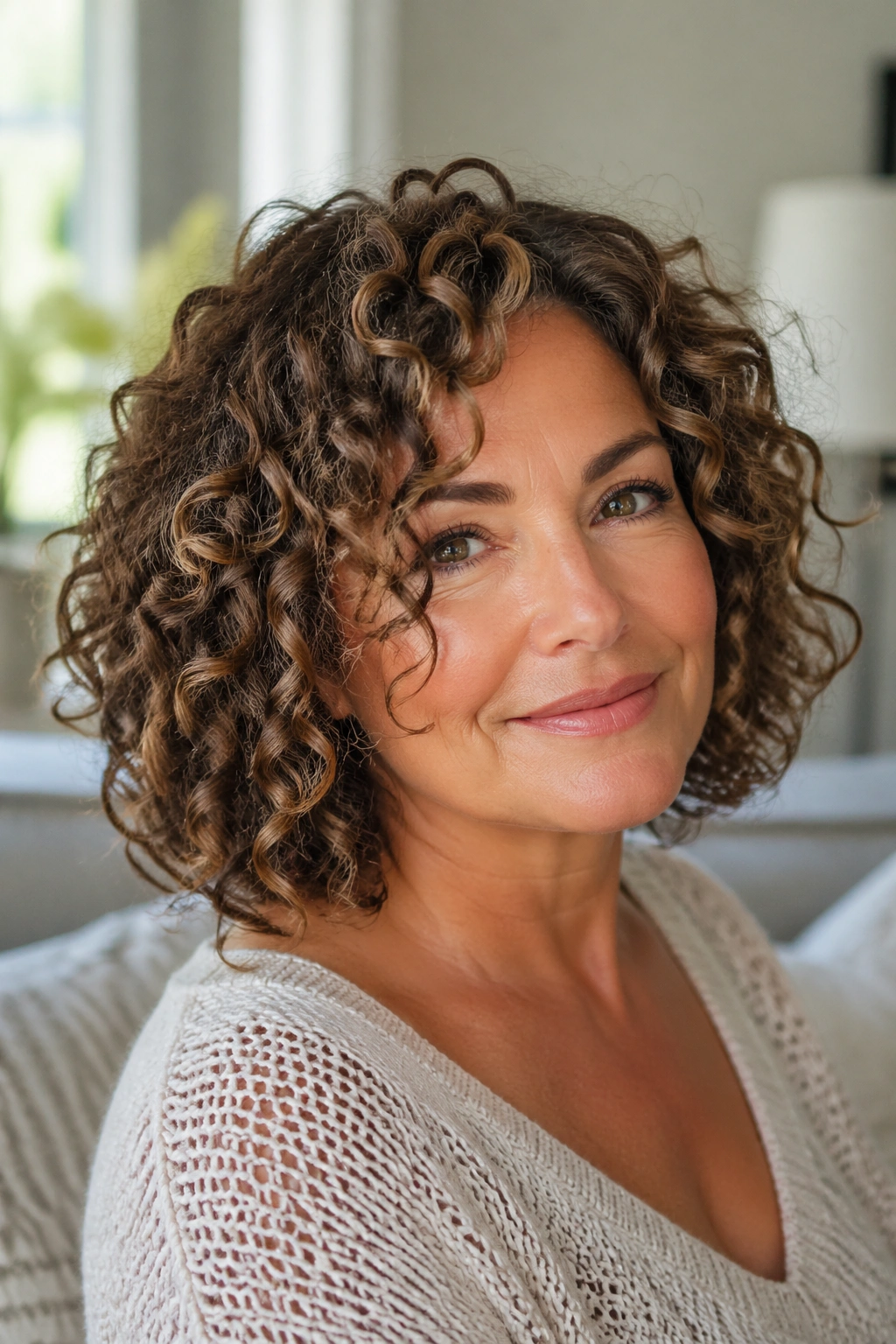
Curly hair and the lob get along better than a lot of people think. At a shoulder-grazing length, curls can spring up instead of dragging down, which keeps the shape rounded and lively.
The best version respects the curl pattern instead of forcing it into a straight-bob idea. That means cutting curl by curl, or at least shaping it while dry enough to see how the curls sit. If the cut is too blunt, curls can puff at the bottom and lose definition.
What Makes the Shape Work
The sweet spot is usually just below the jaw or at the collarbone, depending on shrinkage. Longer front pieces can keep the face open, while interior layers stop the lower half from ballooning.
A curl cream and a little gel can help ringlets keep their shape without turning stiff. Diffuse on low heat if you want more lift, or air-dry for a softer finish. Either way, keep your hands out of it once the curls start setting.
Best for: curls that need room, not weight
Avoid: over-thinning the ends, which can make curls frizzy and uneven
A curly lob can look fresh for years because it lets texture be the feature.
11. Wispy Lob with Brow-Grazing Fringe
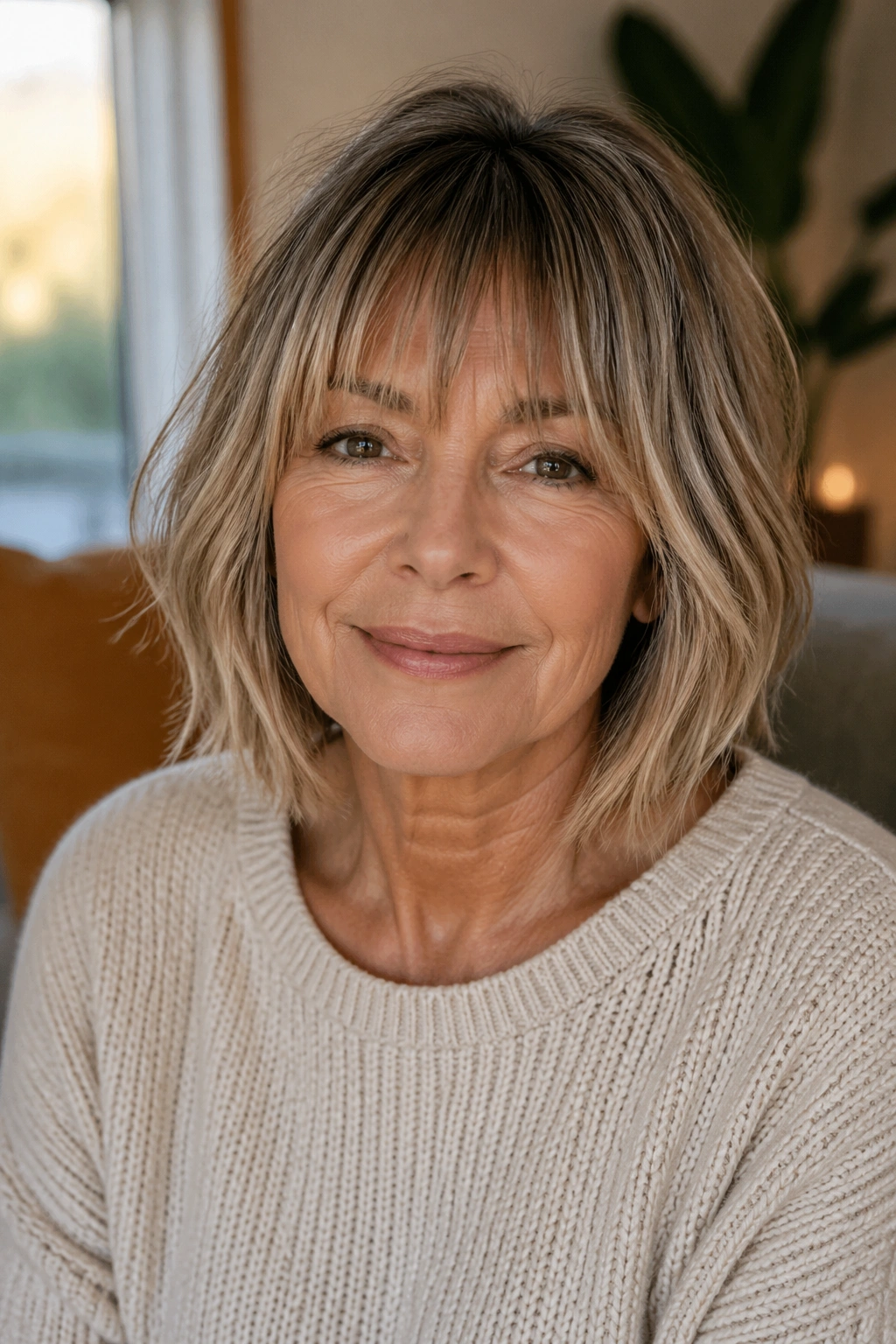
Can bangs work after 50? Yes, if they’re soft enough to move. Brow-grazing fringe can make a lob feel younger without looking like you’re trying too hard, and that word matters. Trying too hard is where bangs go wrong.
The fringe should be light, slightly see-through, and blended at the edges. Heavy blunt bangs can feel harsh on mature faces, but wispy bangs skim the brow and add softness near the eyes.
How to Wear It Well
Ask for point-cut ends and a little length at the temples so the fringe can tuck into the rest of the haircut. That keeps the shape wearable on windy days and on days when you don’t want to style much.
This look is good for women with straight or softly wavy hair. It also works nicely with glasses because the bangs can sit just above the frame line instead of falling into the lenses.
A quick blow-dry with a small round brush is enough. Hold the brush under the fringe for a second or two, then let it cool in place. That tiny bit of set keeps it from splitting right down the middle.
12. Asymmetrical Lob with One-Side Sweep
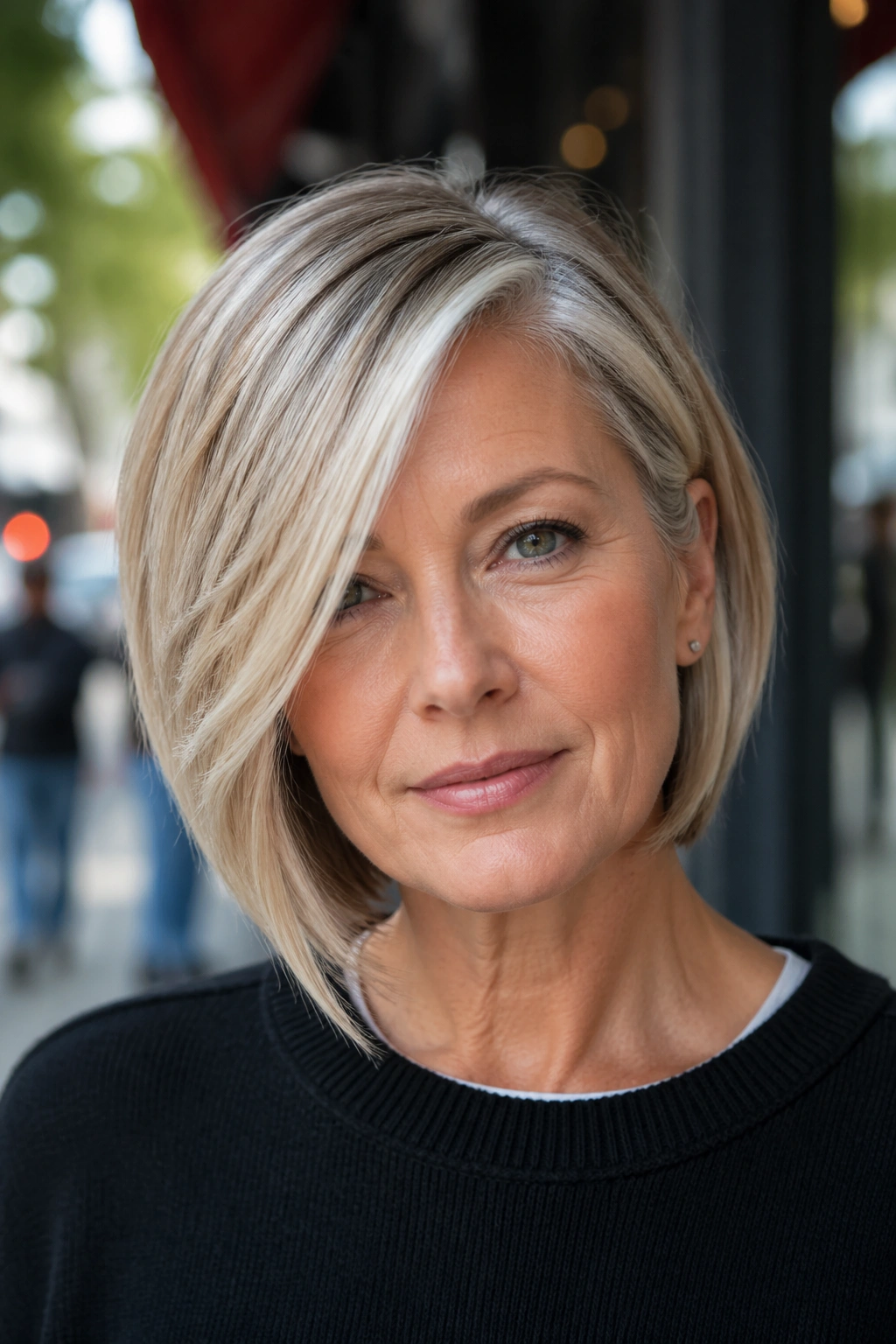
A small imbalance can make a haircut look alive. That’s the point of an asymmetrical lob. One side stays a touch longer, or the part shifts so the hair falls in a softer diagonal across the face.
The cut feels modern without shouting. You’re not trying to create drama for the sake of it. You’re just nudging the shape so it looks less expected.
Who It Suits
This is a strong pick if you like side parts and want the face to appear a little longer. The diagonal line draws the eye downward, which can soften rounder cheeks or a broader jaw.
It also works well on straight hair, where the line reads cleanly. If the texture is wavy, the asymmetry feels softer and more relaxed. Either way, it gives the lob a bit of edge.
- Good pairing: tucked one side behind the ear
- Styling trick: keep the shorter side smooth and let the longer side bend slightly
- Trim note: asymmetry needs regular shaping or it loses the point
- Best mood: polished, but not severe
This is one of those cuts that looks small in photos and more noticeable in motion. That’s the charm.
13. Warm Highlighted Lob with Soft Curls
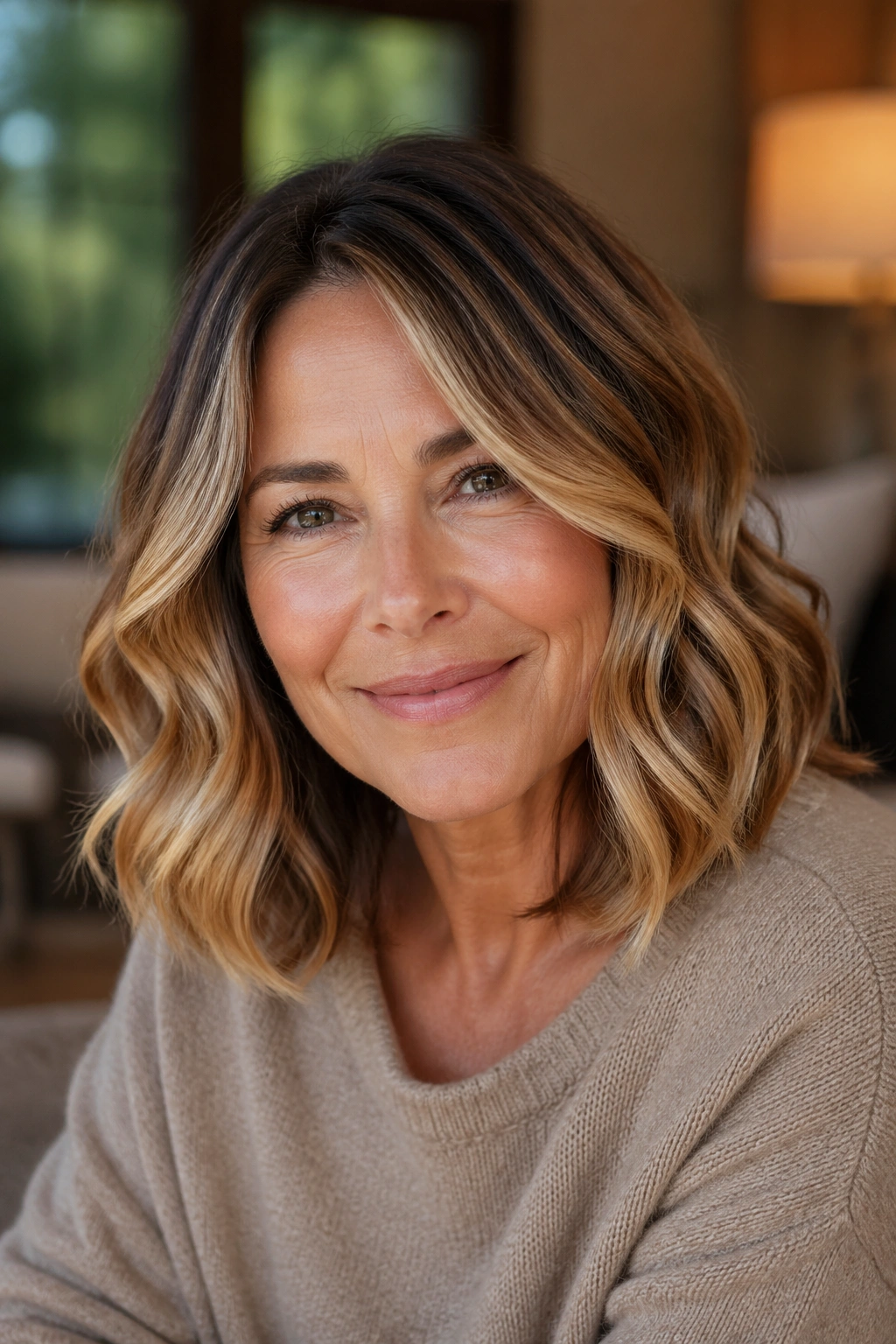
Color placement can change a lob as much as layers can. Warm highlights around the face and through the top half of the haircut add depth, and soft curls make those lighter pieces catch the eye without turning the whole style into stripes.
Caramel, honey, soft copper, and beige-blonde tones are all useful here. The point isn’t brightness for its own sake. It’s dimension.
Why It Looks Fresh
Highlights near the face act a bit like built-in light. They bring attention upward, which is part of what makes the style feel youthful. A few darker lowlights underneath stop the color from looking washed out or flat.
Soft curls help the color read better because the bends create shadow and shine. You do not need tight curls. A medium barrel or a quick bend with a flat iron is enough.
This is a nice option if your natural base color has some depth and you want a cut that feels richer without a huge color shift.
Tip: ask for painted pieces rather than chunky foils if you want a softer grow-out line.
14. Salt-and-Pepper Lob with Natural Texture
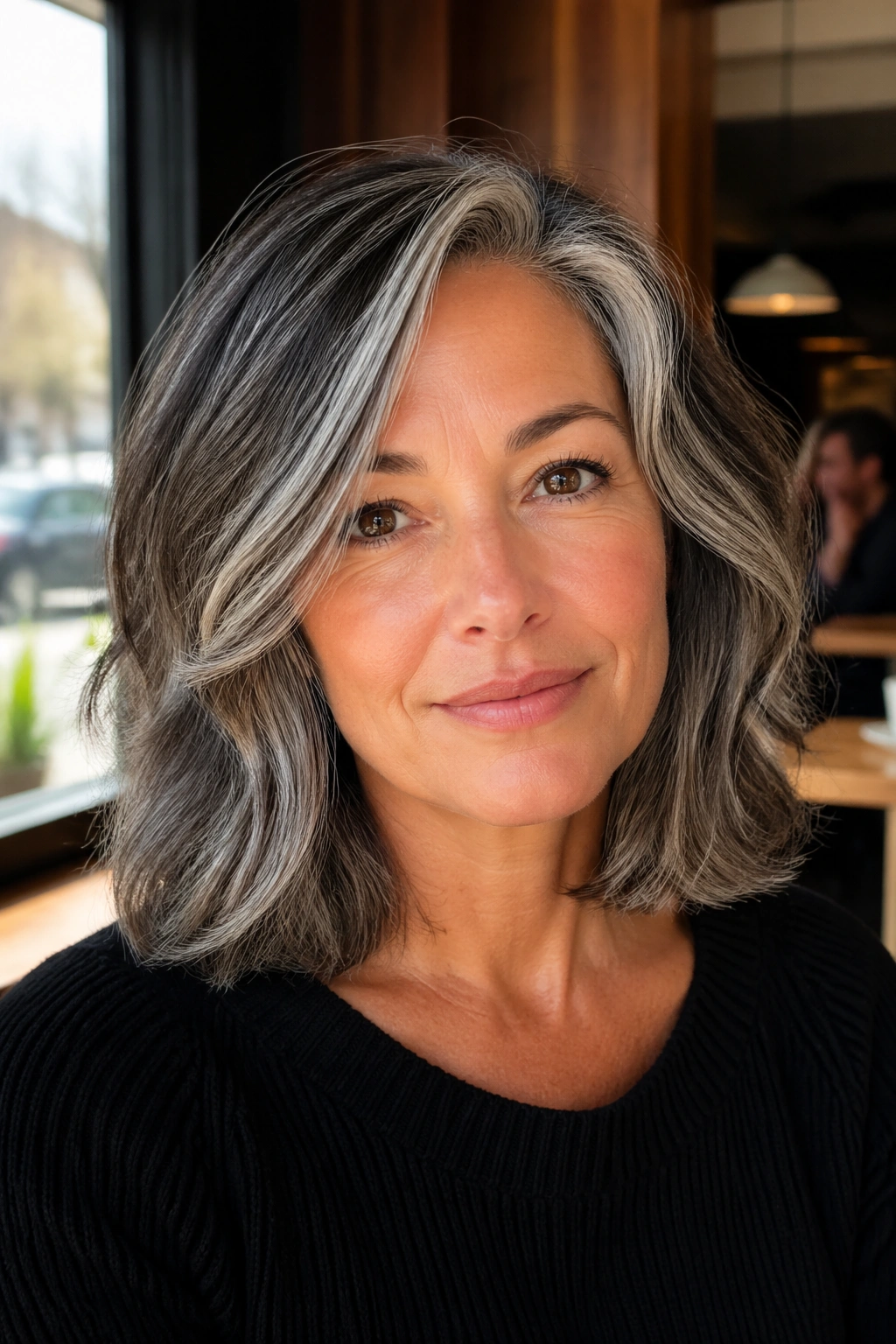
There’s something very strong about a salt-and-pepper lob that’s cut well. The color mix already gives you movement; the haircut just needs to support it.
The texture matters here. Whether your hair is straight, wavy, or a little coarse, the lob should keep some softness around the face and at the ends. Too much bluntness can make mixed-color hair look heavier than it is.
What Makes It Shine
Use a shine cream or a lightweight smoothing serum to keep the silver and dark pieces looking glossy. Hair like this can sometimes feel dry at the ends, so a small amount of leave-in conditioner goes a long way.
I like this style because it doesn’t hide anything. It lets the mix of tones do what it naturally does: create depth. If you’ve spent years coloring gray away and you’re done with that routine, a salt-and-pepper lob can be a breath of fresh air.
It looks especially good with a center part or a soft side part. Both keep the cut balanced and let the natural color pattern show.
15. Shaggy Lob with Light Jawline Shaping
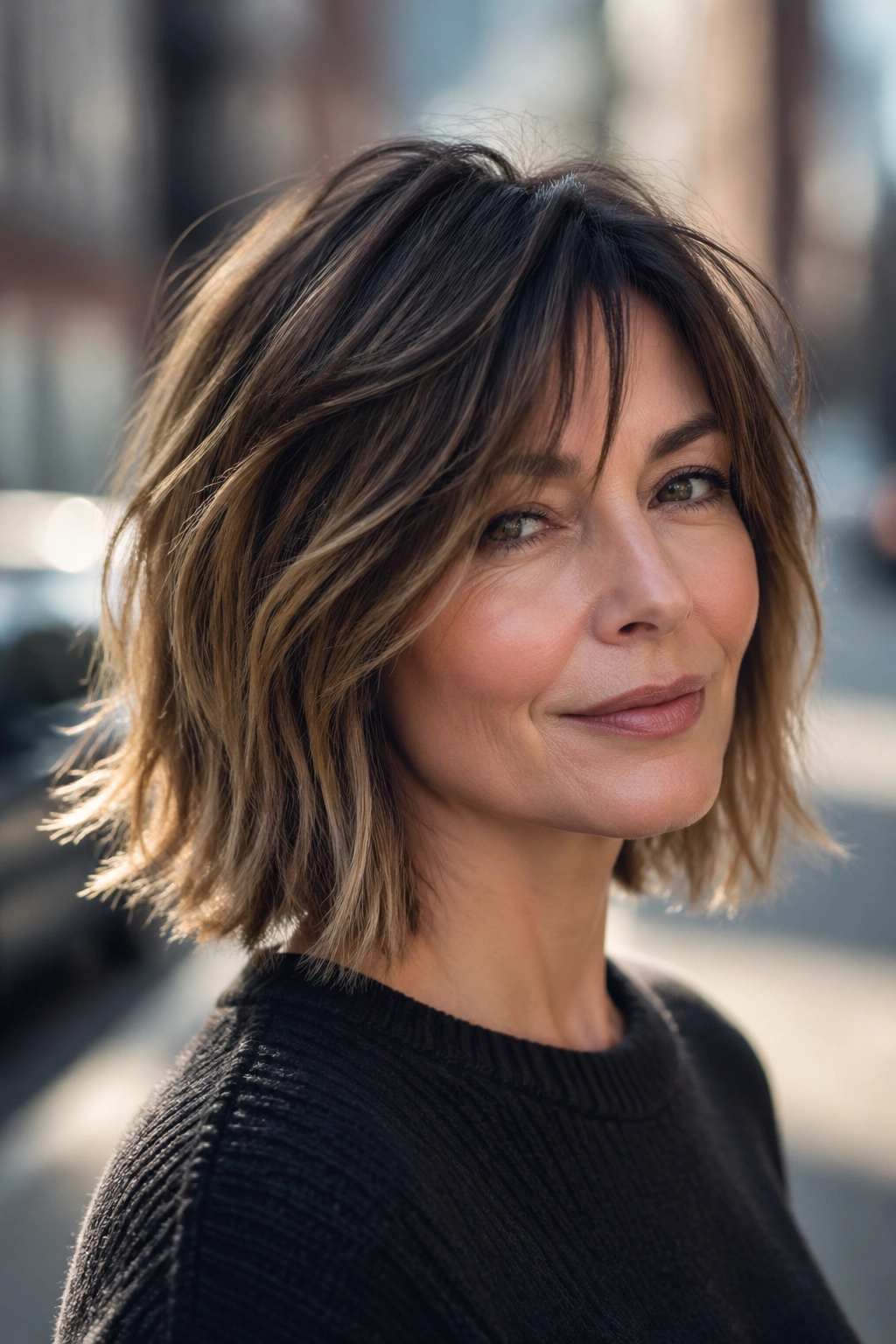
A shag doesn’t have to look messy. When it’s cut with restraint, a shaggy lob can feel airy and flattering, especially on hair that has become dense around the bottom or a little flat at the top.
The trick is light shaping near the jaw, not heavy chopping everywhere. You want movement, not a mullet in disguise. A good stylist will keep the longest pieces long enough to feel like a lob, then add texture where the hair needs it most.
Why It’s Worth Considering
This cut gives the hair a lived-in finish that suits women who don’t want their style to look too polished. It works well on wavy hair and on straight hair that refuses to stay perfectly smooth anyway.
A touch of texturizing cream on damp hair can help the layers separate. If you blow-dry, use your fingers instead of a brush for part of the drying time. That preserves the soft, slightly undone shape.
The best shaggy lob still looks intentional. That’s the whole point.
16. Low-Maintenance Lob with Minimal Layers
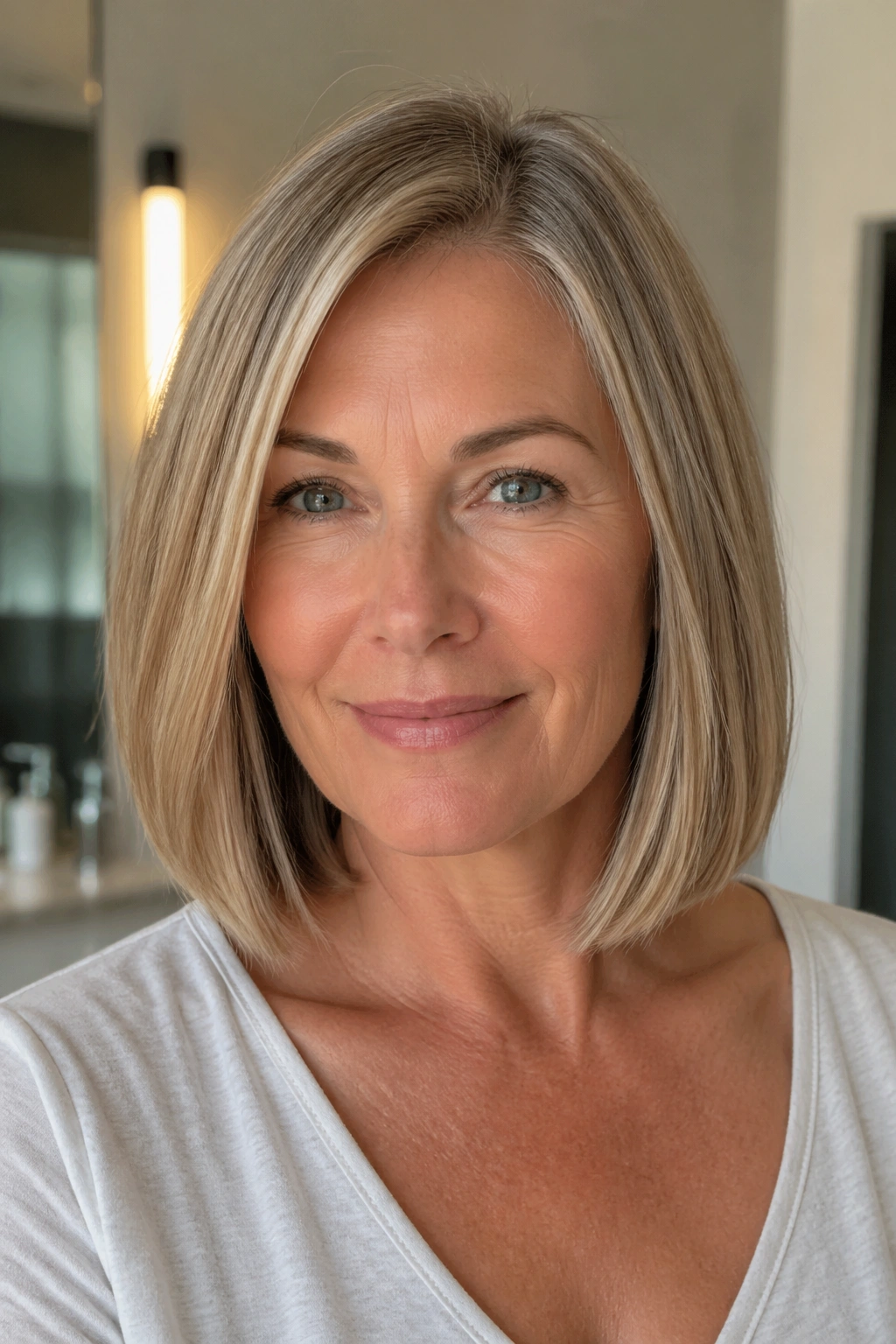
If you want a haircut that behaves, start here. A minimal-layer lob keeps the outline clean and asks less from your styling routine. It’s a smart pick for women who don’t want to spend half the morning fixing their hair.
The shape sits between blunt and layered. There’s enough movement to stop it from looking heavy, but not so much that it needs constant work with a curling iron.
Why Simplicity Can Look Better
Minimal layers are especially good if your hair already has some natural wave or if you don’t want the ends to split into too many pieces. The cut stays neat longer, and grow-out is easier to live with.
This is the one I’d suggest to someone who says, “I want to look put together, but I’m not doing a full styling session every day.” Fair enough.
- Best routine: wash, rough-dry, smooth the ends if needed
- Best product: light leave-in spray or cream
- Best finish: natural, not overworked
- Best trim cycle: every 8 to 12 weeks
Simple cuts are not boring when they’re done well. They’re practical. That’s different.
17. Rounded Lob with Side Bangs
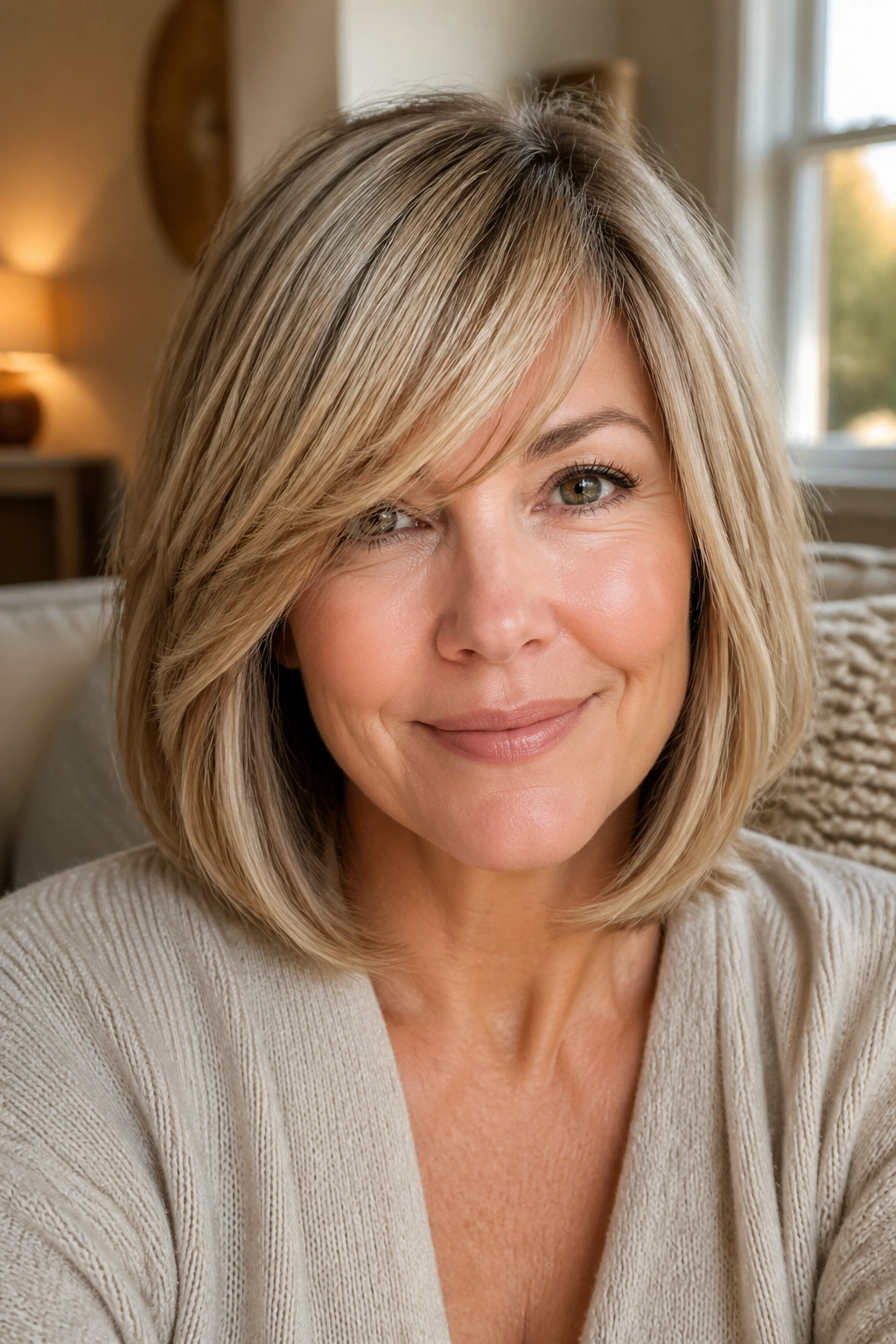
A rounded lob gives the face a softer outline, which can be useful if your jaw feels sharper than you like or your hair tends to fan outward at the ends. Side bangs help complete that shape by keeping the forehead area light and broken up.
The rounded edge is less severe than a straight line. It feels easier, calmer, and a little more feminine without becoming sweet or fussy.
Where It Flatters Most
Square and angular faces often look especially good with this cut because the rounded perimeter softens the corners. It also works for women who wear their hair behind one ear often, since the side bang helps the front stay interesting even when one side is tucked away.
You can blow-dry the ends inward with a round brush, or let them curve naturally if your hair already has a bit of movement. A dab of cream at the ends keeps the roundness from puffing out.
This style has a nice, quiet confidence. Not flashy. Just neat in a good way.
18. Straight Lob with Tucked-Behind-the-Ear Styling
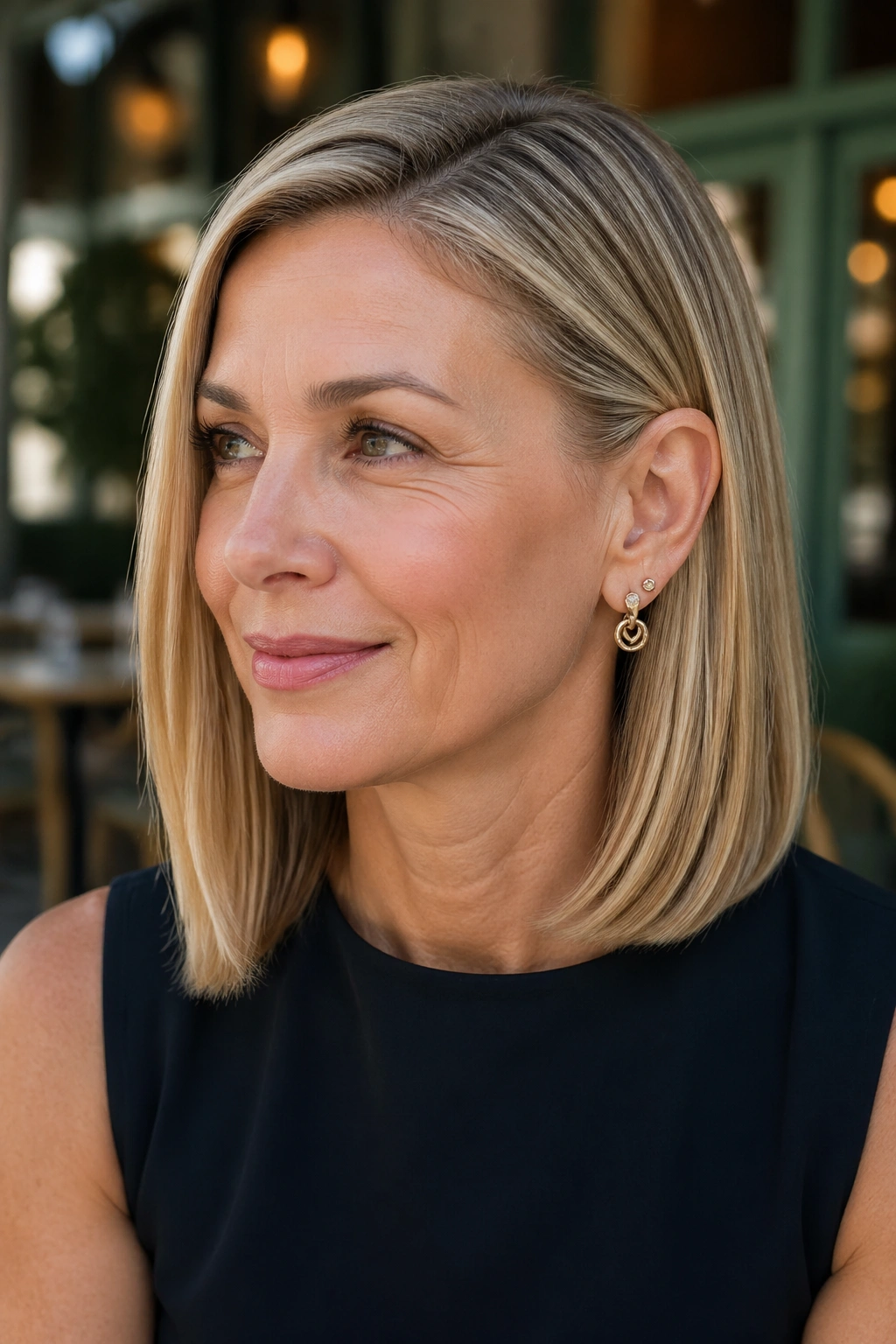
Sometimes the best styling trick is the simplest one. A straight lob that’s long enough to tuck behind the ears gives you clean lines around the face and lets your features do more of the talking.
This works especially well if you like earrings, glasses, or a collar that sits close to the neck. The hair stays controlled, but not tight. That difference matters more than people think.
Why It Feels Modern
The tucked side breaks up the shape and adds an easy asymmetry without any actual haircut trickery. The rest of the lob can stay smooth and blunt, which keeps the overall style looking neat.
This is also a strong choice if you have a little wave in your hair but want a more disciplined finish. A quick flat-iron pass through the lower half and a light serum is usually enough.
I’d avoid over-layering this one. The magic is in the clean line and the shape around the ear. Once you add too many short pieces, that tidy effect starts to disappear.
19. Face-Framing Lob with Long Internal Layers
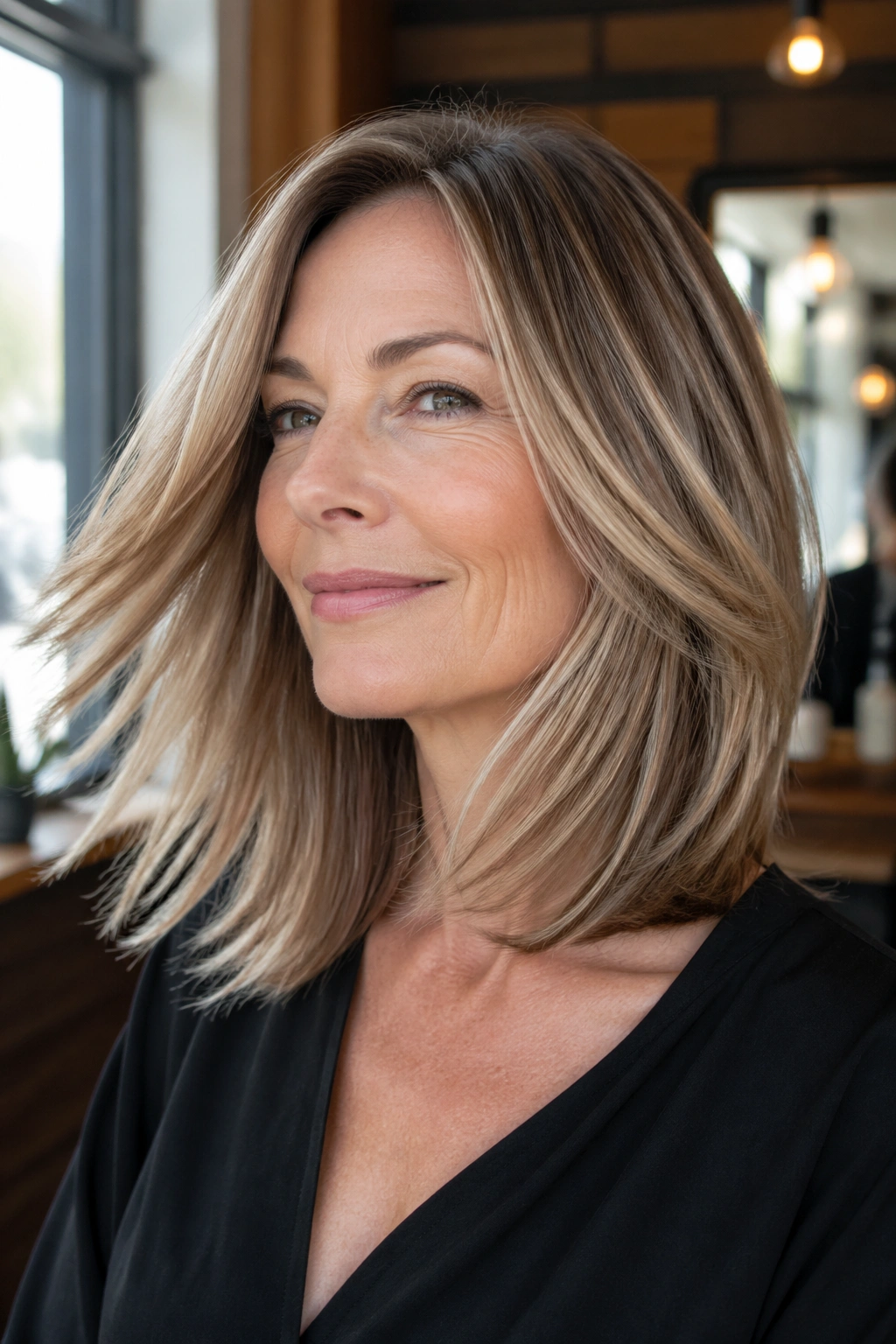
What looks like a simple lob can hide a lot of smart cutting. Long internal layers remove weight from the middle of the haircut without making the surface look choppy, so the style keeps its clean line while moving better.
That’s useful if you want a younger feel but don’t want obvious layering. The change is there, just not loud.
How to Ask for It
Ask for internal layers that start below the cheekbone and stay long enough to blend. You want movement when the hair swings, not visible steps cut into the outside edge.
This style works on thick, medium, and even finer hair if the layering is subtle. Thick hair gets shape. Fine hair gets body without looking stringy. That balance is why stylists love this kind of cut, even if clients don’t always know to ask for it by name.
- Best for: people who want movement without a shaggy finish
- Style with: a round brush or a few large Velcro rollers
- Keep in mind: the outer line still needs regular trimming
- Good result: hair that falls softly instead of hanging like one block
20. Tousled Lob with a Deep Side Bend
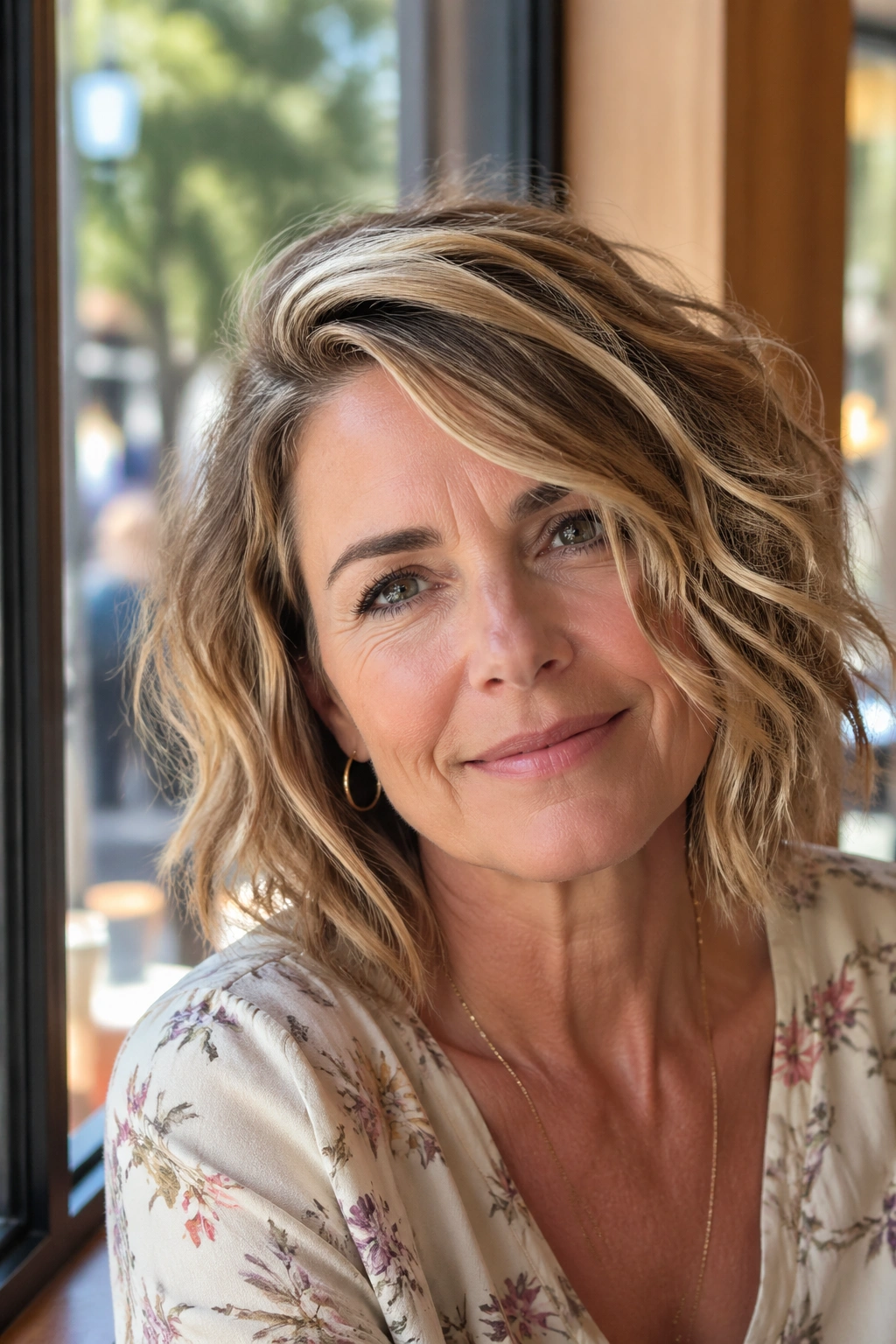
A little dishevelment can be flattering. This lob uses a deep side bend and loose texture to create a relaxed shape that feels casual but still intentional.
The side bend is what keeps it from looking flat. The tousle gives it life. Together, they make the haircut feel younger without trying to look “young,” which is a distinction I care about.
The Texture Sweet Spot
Use a curling wand or flat iron to bend just a few sections around the face and through the mid-lengths. Then break the wave up with your fingers. Don’t brush it out too much. You want separation, not fluff.
This is the lob I’d point to if someone says they want hair that looks good on day two, maybe even better than day one. A bit of dry shampoo at the roots and a light spray through the ends can wake it up fast.
It’s easy, but not lazy. There’s a difference.
21. Soft A-Line Lob with Neck-Slimming Angle
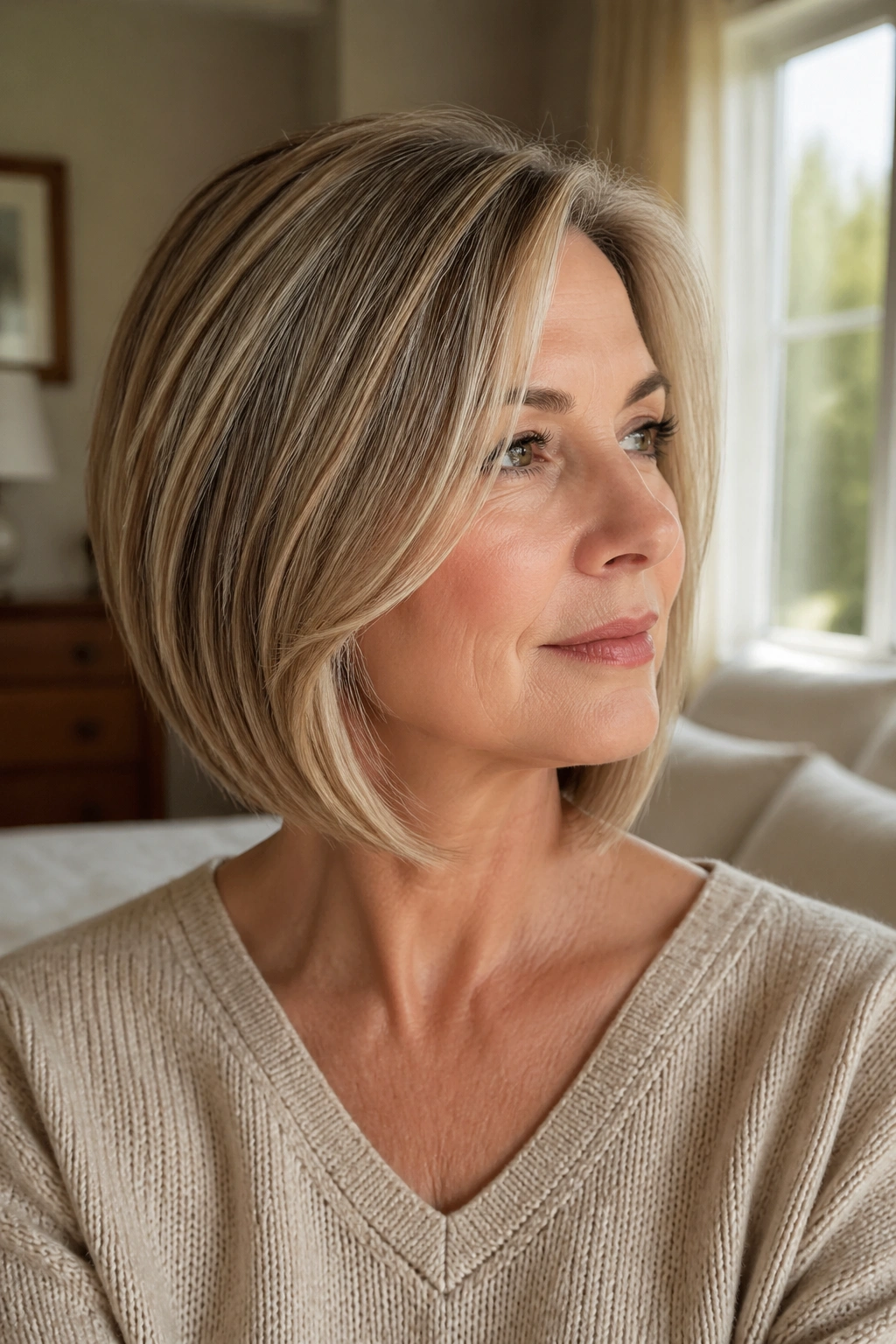
If you want shape without harshness, this is the final one to keep in mind. A soft A-line lob is slightly longer in the front than in the back, which gives the neck a longer look and keeps the face framed in a gentle diagonal.
The angle should be subtle. Too steep and the cut starts to feel dated. Too flat and you lose the benefit. The best version is calm, clean, and easy to wear.
Why It Works So Well
The front pieces brush the collarbone, while the back stays just a touch shorter. That small shift makes the haircut feel lighter around the nape and more open around the face. It also works well if you like to wear one side tucked or pinned back.
This style is especially useful for women whose hair tends to sit thick at the ends. The angle removes some of that weight visually, even if the hair itself is still full.
A soft A-line is one of those cuts that looks better with regular shape-ups than with big changes. Keep the line tidy, and it does the rest.
Final Thoughts
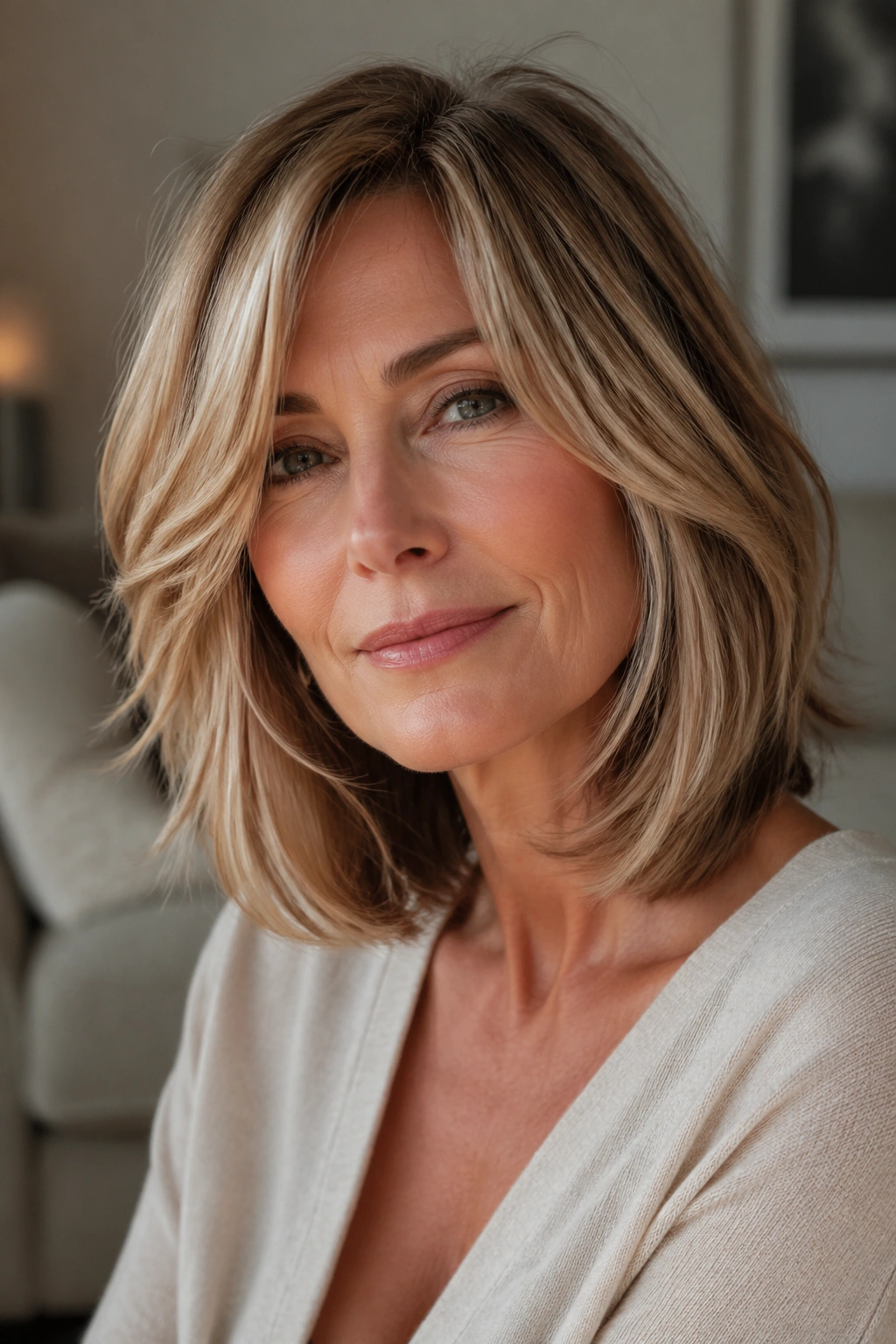
A lob works because it gives you room. Room for texture, room for silver strands, room for a part change when the mood shifts. That’s why so many of these youthful long bob hairstyles for older women feel fresh without looking forced.
The sweet spot is usually somewhere between clean and soft. Too blunt and the cut can harden the face. Too layered and it loses its shape. The best versions keep the line tidy, then add movement exactly where the hair needs it.
If you’re picking one to start with, think about what your hair already does well. Straight hair likes precision. Wavy hair likes bend. Curly hair likes space. A good long bob doesn’t fight any of that. It just makes it look better.