

The best hair color ideas to flatter Indian skin usually start closer to your natural depth than salon mood boards admit. That sounds boring until you see how often the wrong shade comes from trying to go too light, too fast, or too cool for a face that actually wants warmth and richness.
Indian skin isn’t one single color, and that matters more than people think. You’ll see warm golden undertones, olive tones, neutral beige-brown skin, and cooler complexions that can handle ash, plum, or blue-black without looking washed out. The trick is not “more color.” It’s better color.
A lot of the most flattering shades do one of two things: they echo what’s already in your skin, or they create a controlled contrast that sharpens your features. A soft chestnut can make warm skin glow. A blue-black can make cool or neutral skin look cleaner and more defined. Even on thick, dark Indian hair, dimension usually beats brightness.
Not every flattering shade needs bleach.
And not every bold shade needs to scream.
1. Soft Espresso Black
Soft espresso black is where I send people who want dark hair that still feels alive in daylight. It’s not the hard, inky black that can look flat against warm skin; it has a brown undertone that softens the edge and makes the whole face look less severe.
Why It Works on Indian Skin
Espresso black suits a wide range of Indian skin tones because it sits right on the border between black and deep brown. That little bit of brown is doing a lot of work. It keeps the shade rich without making the skin look chalky or tired.
Quick Notes
- Ask for a level 2 or level 3 espresso base, not jet black.
- A demi-permanent gloss works well if your hair is already dark and you just want more shine.
- Best on warm, neutral, and olive undertones.
- If your hair grows fast, this shade is forgiving because the regrowth line stays soft.
Pro tip: If you’re nervous about all-over black, keep the roots espresso and let the mid-lengths stay half a shade lighter. It looks more natural and less helmet-like.
2. Chocolate Brown with Chestnut Ribbons
Chocolate brown with chestnut ribbons is one of those shades that makes people look rested, even when they’ve had a rough week. The base stays deep and flattering, while the chestnut threads give the hair movement every time it catches light.
It works especially well on medium to deep Indian skin because the warmth in chestnut ties in with golden and wheatish undertones. On curls and waves, the ribbons show up even better. Straight hair can wear it too, but the color needs a little more placement around the face and crown so it does not read as one solid block.
If you want this shade to look expensive in the practical sense of the word — polished, not fussy — ask for ribbons that are only one to two levels lighter than your base. Too much contrast turns chocolate brown into a stripy mess. Too little, and you lose the point. The sweet spot is small and very wearable.
3. Caramel Balayage for Indian Skin Tones
Why does caramel balayage show up in so many good color photos? Because it brightens dark hair without forcing you into full blonde territory. That matters on Indian skin, where a little warmth around the face often does more than a huge color change through the whole head.
The magic is in the placement. Caramel works when it sits around the cheekbones, the front layers, and the mid-lengths, then fades toward the ends. On warm or neutral skin, the shade gives that sunlit look without turning orange. On deeper skin, it adds contrast and keeps the hair from disappearing into the face.
How to Ask for It
- Ask for hand-painted caramel pieces rather than chunky foils.
- Keep the roots two to three levels deeper than the lightest ends.
- If your base is black or very dark brown, request caramel beige, not pale blonde.
- Ask for a soft toner so the warmth stays rich, not brassy.
A good caramel balayage should look like the hair grew that way. If it looks loud, the placement is off.
4. Honey Highlights on Black Hair
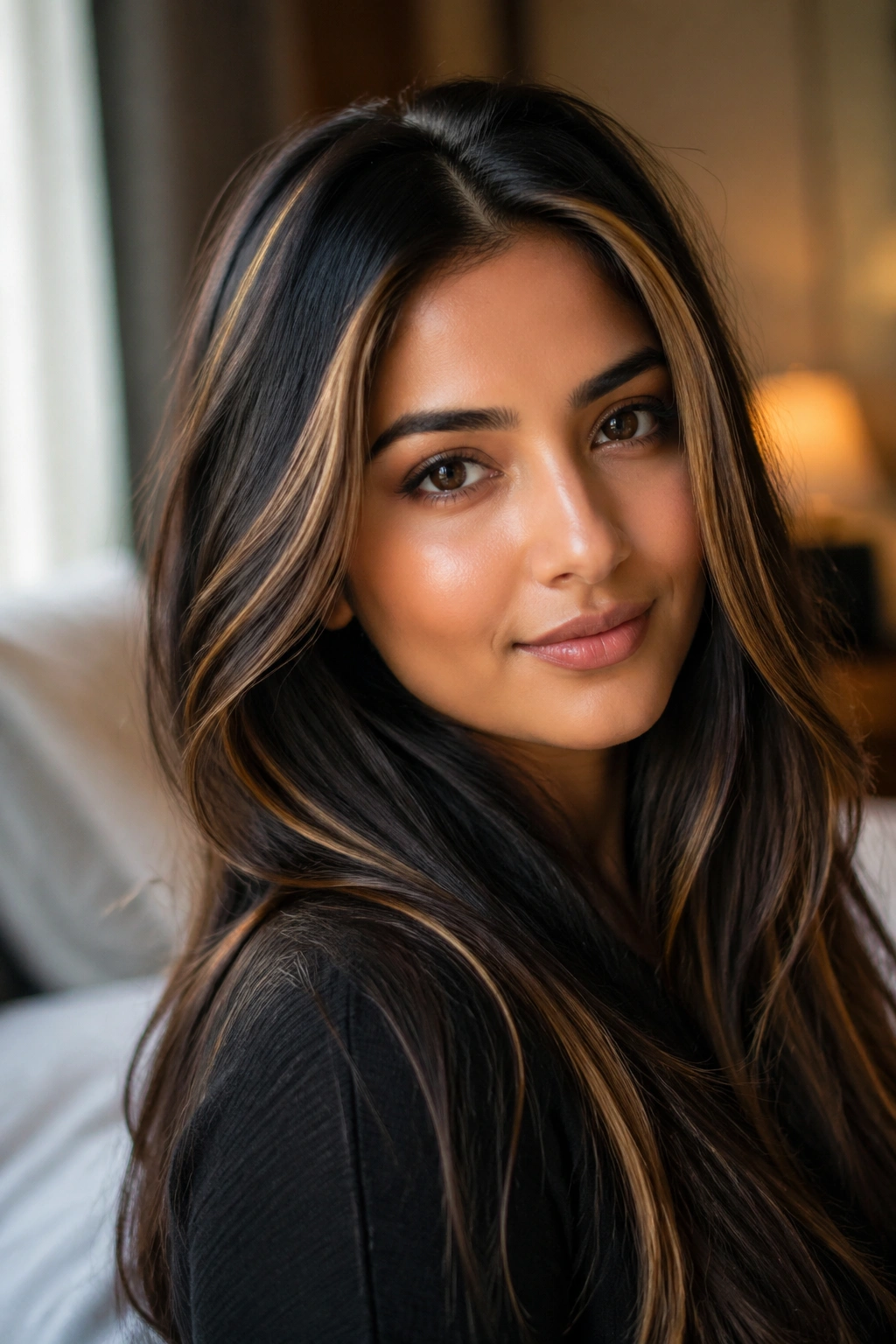
If your hair is black and you do not want to lose that depth, honey highlights are the safe brightener. Honey is warmer and slightly richer than caramel, which makes it especially nice on golden or tan Indian skin that needs glow more than drama.
The reason this works is simple: black hair can take a lot of visual weight, and a few honey pieces break that up without changing the whole mood. The contrast lifts the face. It also keeps curly or wavy hair from looking too heavy at the ends, which is a small thing until you see the difference in a mirror.
- Best placed around the front hairline and top layers
- Looks strongest when the highlights are fine, not chunky
- Needs a beige or golden toner to stay soft
- Works well with shoulder-length cuts and long layers
A clear gloss after coloring helps a lot here. Honey turns muddy fast if the tone drifts too orange, and that’s where a lot of home coloring goes sideways.
5. Cinnamon Brown
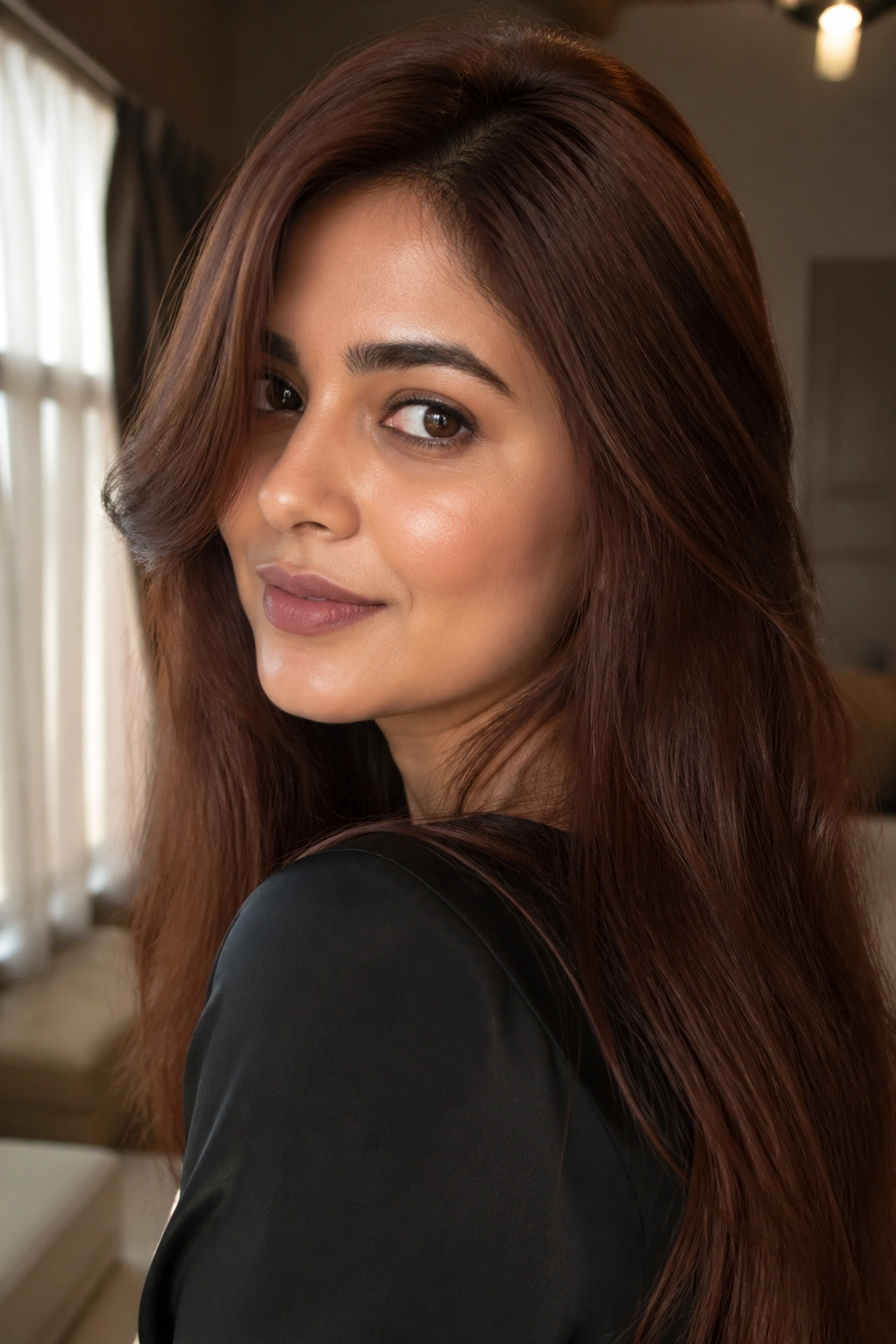
Cinnamon brown has a warm, spicy look that never feels flat. It sits between brunette and red, which is why it flatters so many Indian skin tones with golden or neutral undertones. The shade gives the face warmth without going full copper, and that balance is the whole reason it works.
It also has a nice habit of making hair look fuller. Not thicker, exactly — fuller. The reddish-brown reflect adds depth, so layers and waves show up better. On very dark hair, cinnamon brown may need some lift to read properly, but it does not need to be bright. A soft brown base with cinnamon glaze is enough for many people.
It’s a shade that forgives a little less-than-perfect styling. Even a rough ponytail still looks intentional because the color does part of the work for you. That’s useful if you want something pretty without becoming precious about it.
6. Mahogany Red-Brown
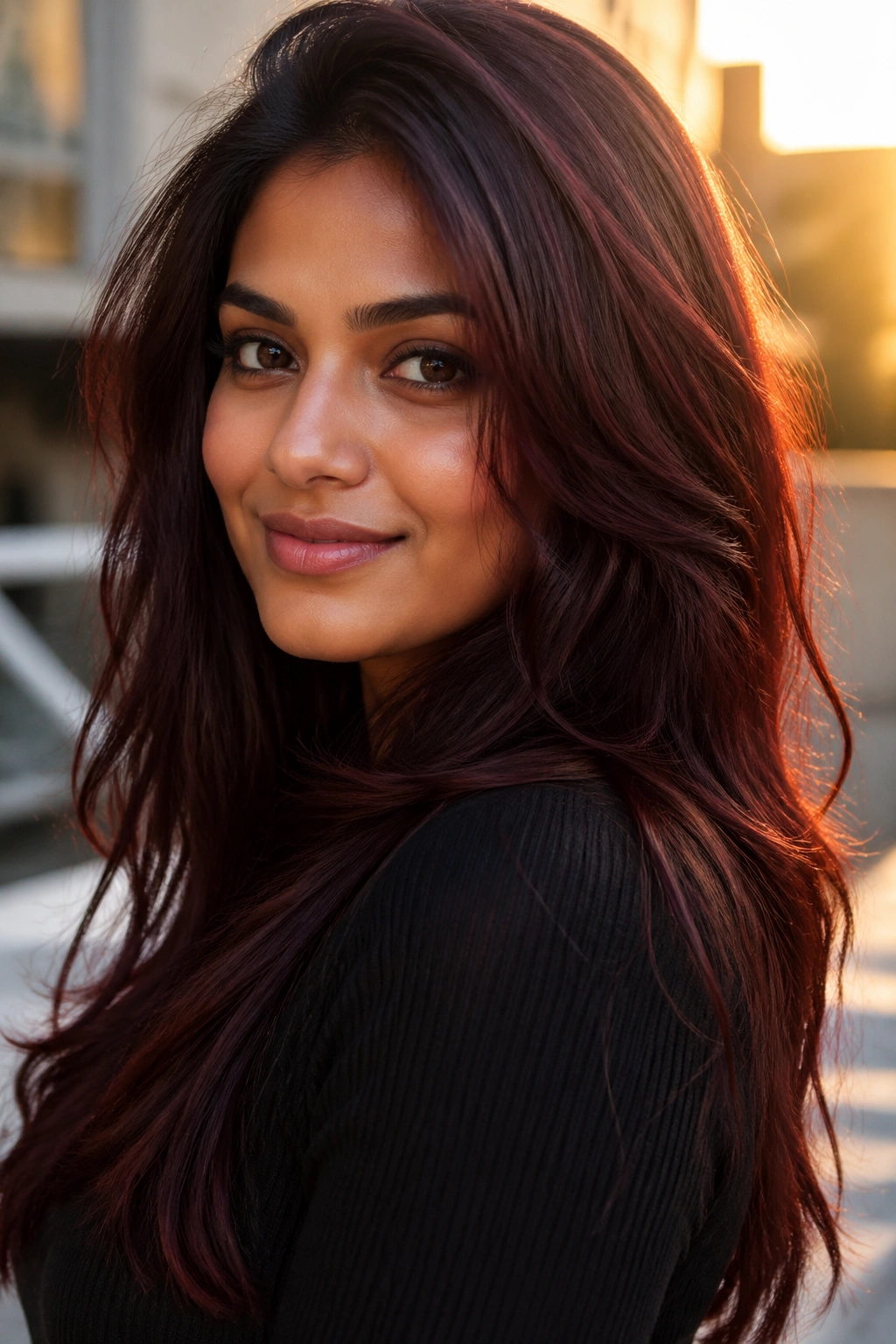
Unlike bright red, mahogany keeps one foot in brunette territory. That’s why it tends to look so good on medium to deep Indian skin, especially when the undertone leans warm or neutral. It gives a rich red-brown note without crossing into neon or cherry.
Mahogany is also easier to live with than a louder red. It fades into brown, not into nothing. That matters if you don’t want your hair to look odd between salon visits. The shade has enough depth to stay elegant indoors, and enough red in it to wake up the skin when you step outside.
If you want mahogany to flatter rather than overpower, keep the base fairly dark. Ask for a mahogany glaze or a demi-permanent overlay, not a bright all-over permanent red. On Indian hair, that approach usually looks better anyway. The shine tells the story.
7. Auburn Brown with Deeper Roots
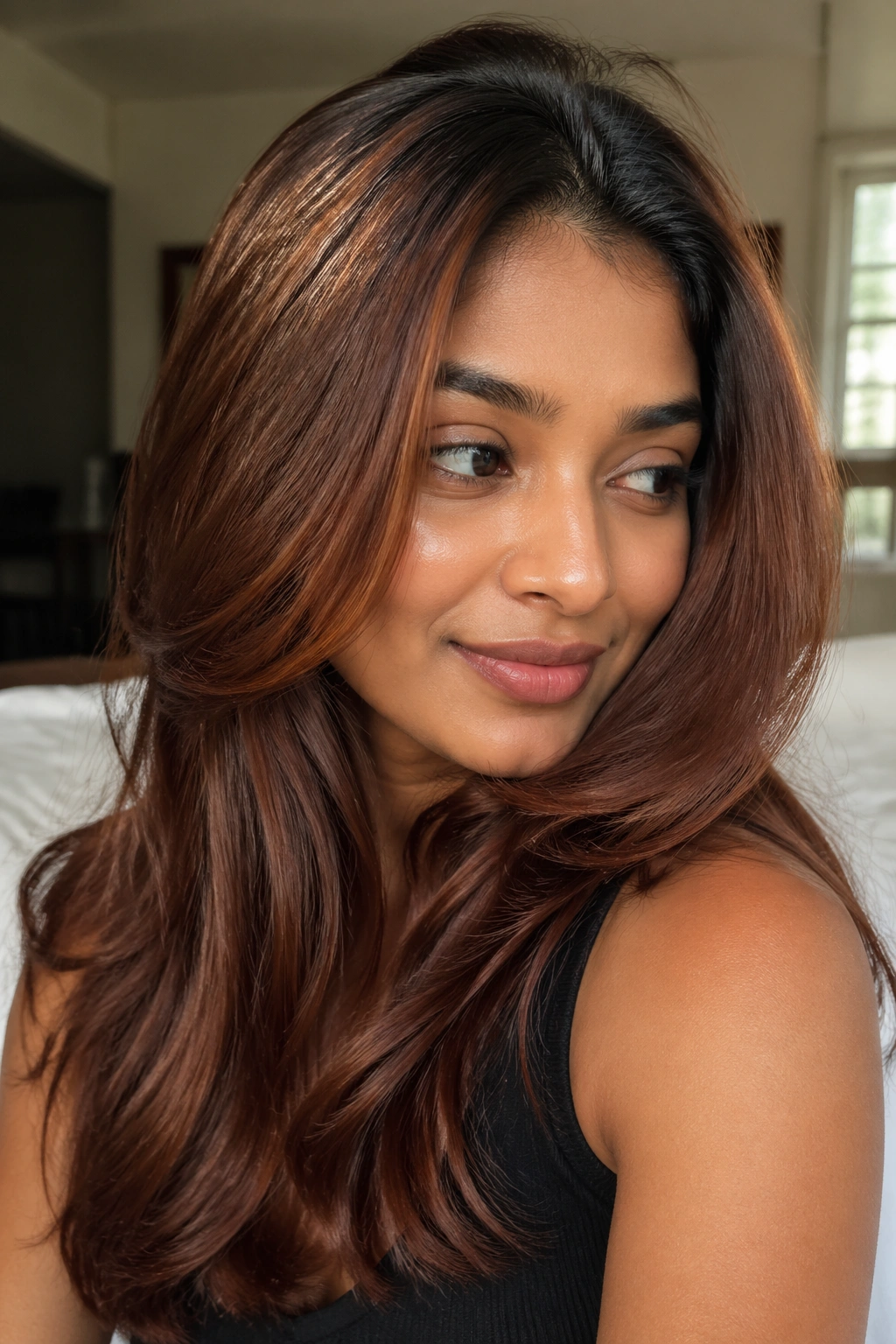
Auburn is where brown hair goes when it wants a little fire. The version that works best on Indian skin usually keeps the roots deeper and lets the warmth show in the mids and ends. That keeps the color grounded, which matters if your skin has golden or olive undertones.
What Makes It Softer
The softer auburns are the ones that lean brown first and red second. That’s the trick. If the red becomes the main event, the shade can look a bit loud against deeper skin or very warm complexions.
Small Details That Help
- Keep the root shade closer to natural brunette.
- Use copper-brown or auburn-brown toner instead of bright red dye.
- Works well on layered cuts, where the warm pieces can move.
- Needs a color-safe shampoo or it fades into a weak brown-red pretty fast.
Best tip: Ask for auburn around the front and crown, not just on the ends. That’s where the face picks up the warmth first.
8. Burgundy Wine
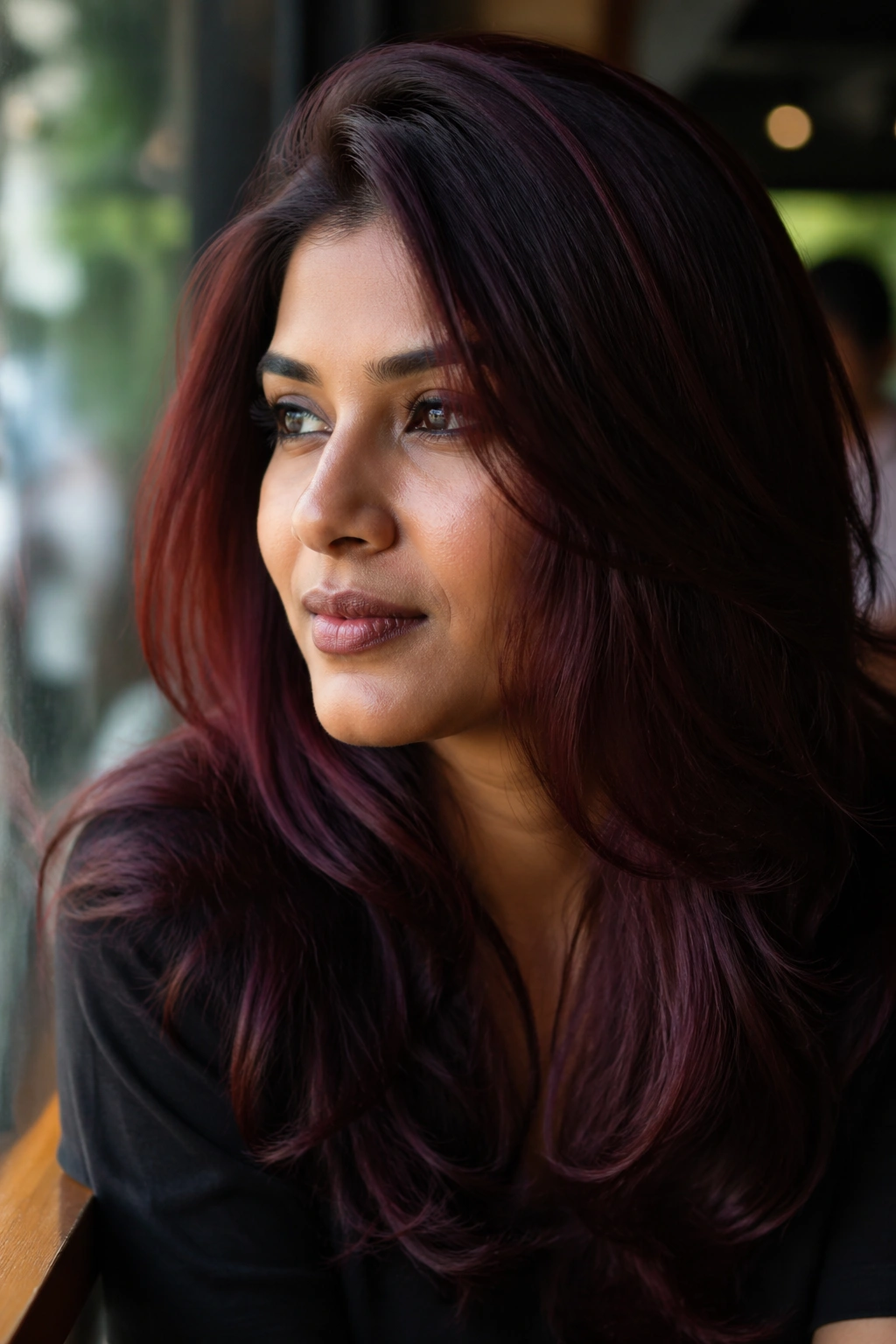
Burgundy is the easiest way to wear red without looking like you borrowed a costume. On Indian skin, it can look rich, moody, and polished, especially on medium to deep complexions that can hold strong pigment without getting washed out.
The shade works because the violet-red base gives depth. It doesn’t just sit on the surface the way a brighter red sometimes does. Instead, it reflects a darker wine tone that looks good in both artificial light and daylight. Cool undertones usually love this one. Warm undertones can wear it too, as long as the burgundy stays deep and not too pink.
If you’ve got dark hair and want the least risky version, start with a burgundy gloss over brown hair. It gives you the mood of the shade without the full commitment of pre-lightening. That’s the version I’d pick first, honestly. Cleaner grow-out. Fewer regrets.
9. Plum Brown
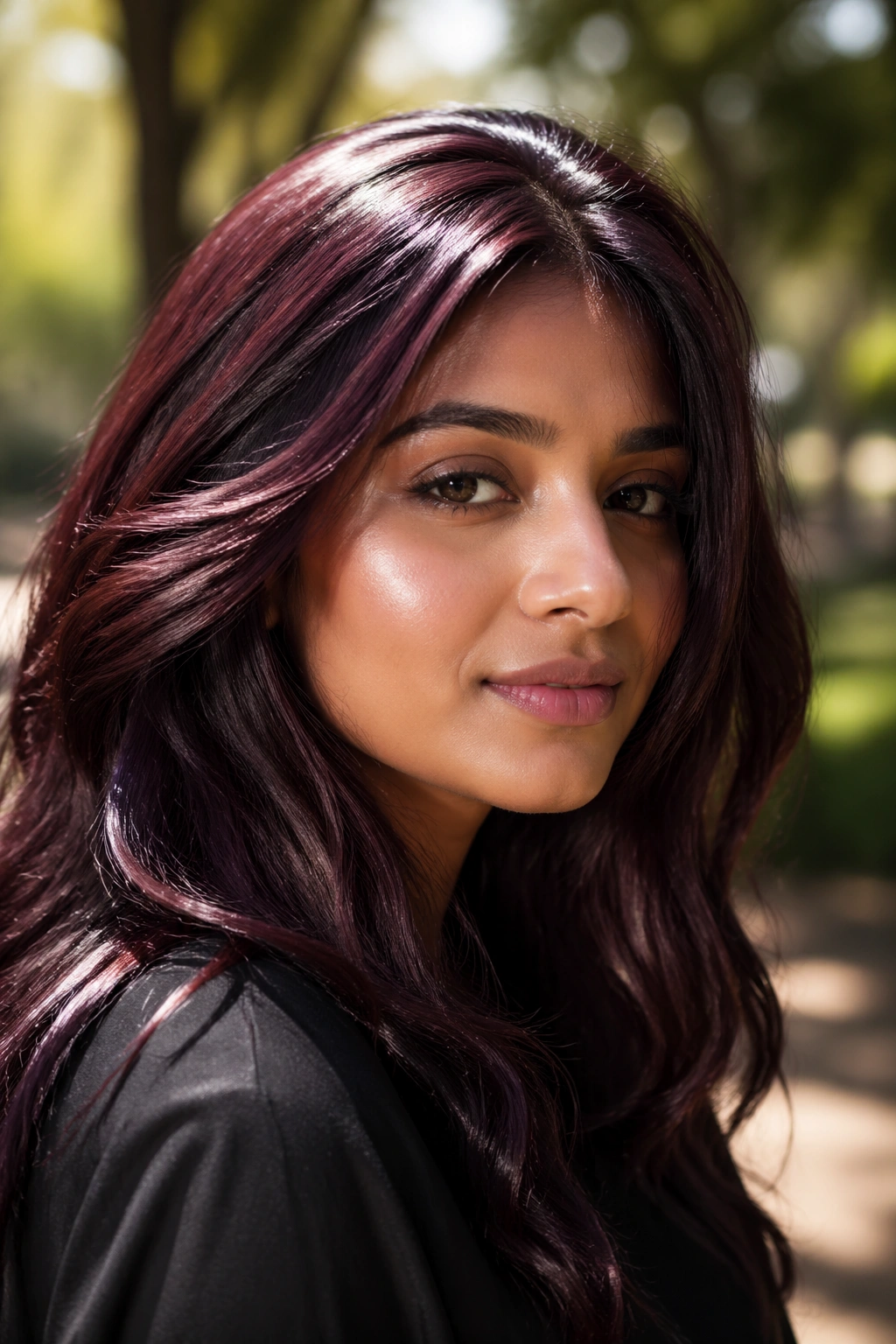
How does plum brown differ from burgundy? Plum brown is cooler, quieter, and a little more mysterious. It keeps the dark brunette base intact, then adds a plum cast that shows up best when light hits the hair at an angle.
This is a smart shade for olive and cool Indian undertones because the purple-brown balance cancels a bit of unwanted redness in the skin and sharpens the face. It can also work on neutral skin if you want something fashion-forward without going neon. The key is keeping it brown enough that the color still feels wearable.
How to Wear It Around the Face
- Put the richest plum tones around the front layers.
- Keep the roots deep brown or soft black.
- Ask for a smoky plum toner if you want less shine and more depth.
- Great on straight, wavy, and blow-dried hair, where the tone can shift in the light.
Plum brown fades in a nice way. That’s half the appeal. It softens rather than collapsing into a dull mess.
10. Copper Balayage
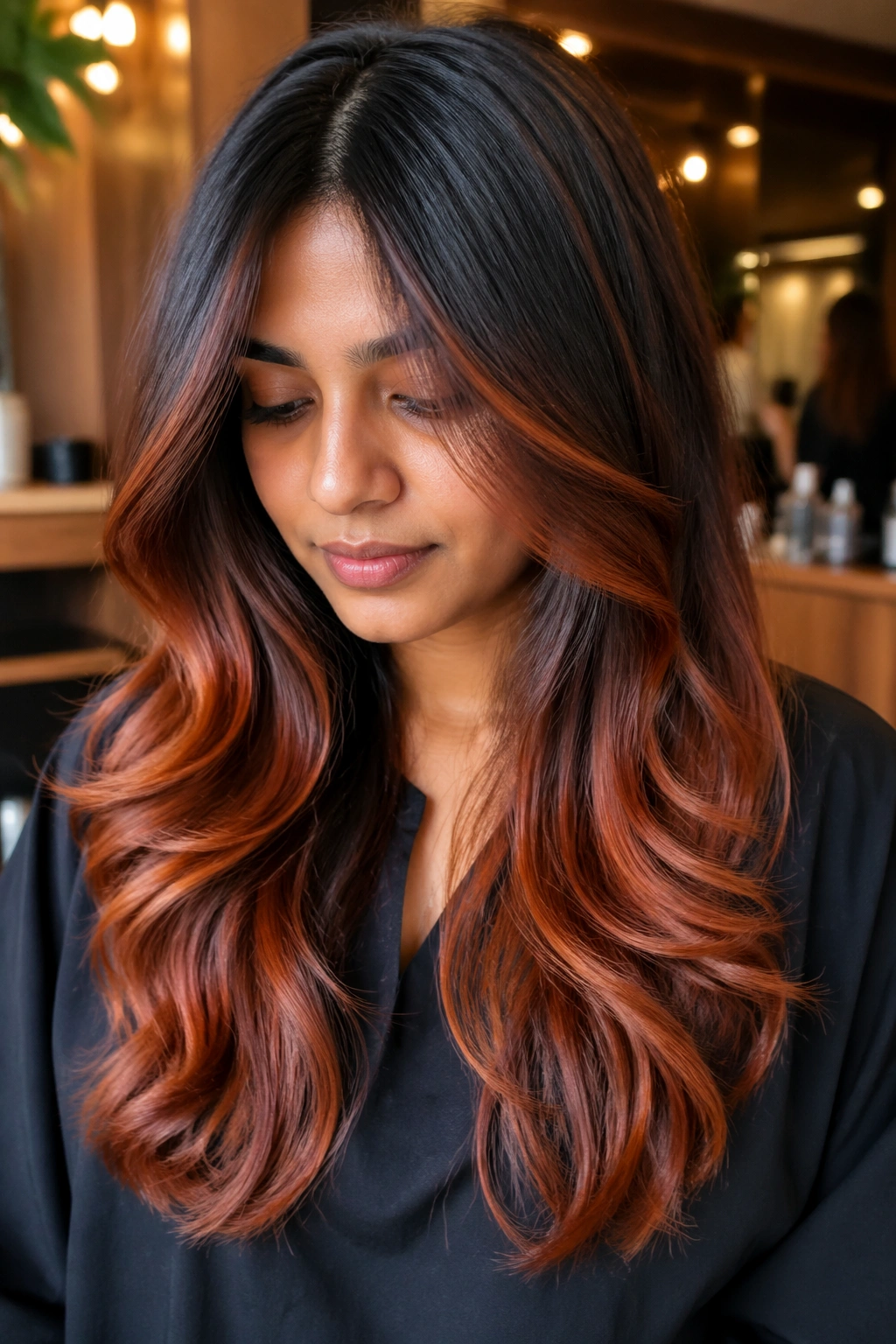
On dark Indian hair, copper works best in ribbons, not floods. A full head of copper can be a lot unless your skin has a strong warm undertone and you enjoy high-contrast color. Balayage, though? That’s where copper gets elegant.
The color gives a bright, earthy warmth that flatters golden and medium-brown skin in a way few shades can. It also makes textured hair look energetic because copper catches on curves and bends. On curls, it can look almost dimensional enough to make the pattern pop. That’s not a small thing.
- Best when painted from the mid-lengths downward
- Looks cleaner with a gold-copper toner, not a neon orange base
- Needs a trim every 8 to 10 weeks if the ends are lightened
- Works well with face-framing pieces to keep the color from feeling too scattered
Copper can go wrong fast if the tone is too raw. A soft, burnished copper is far better than a loud one.
11. Mocha Brown
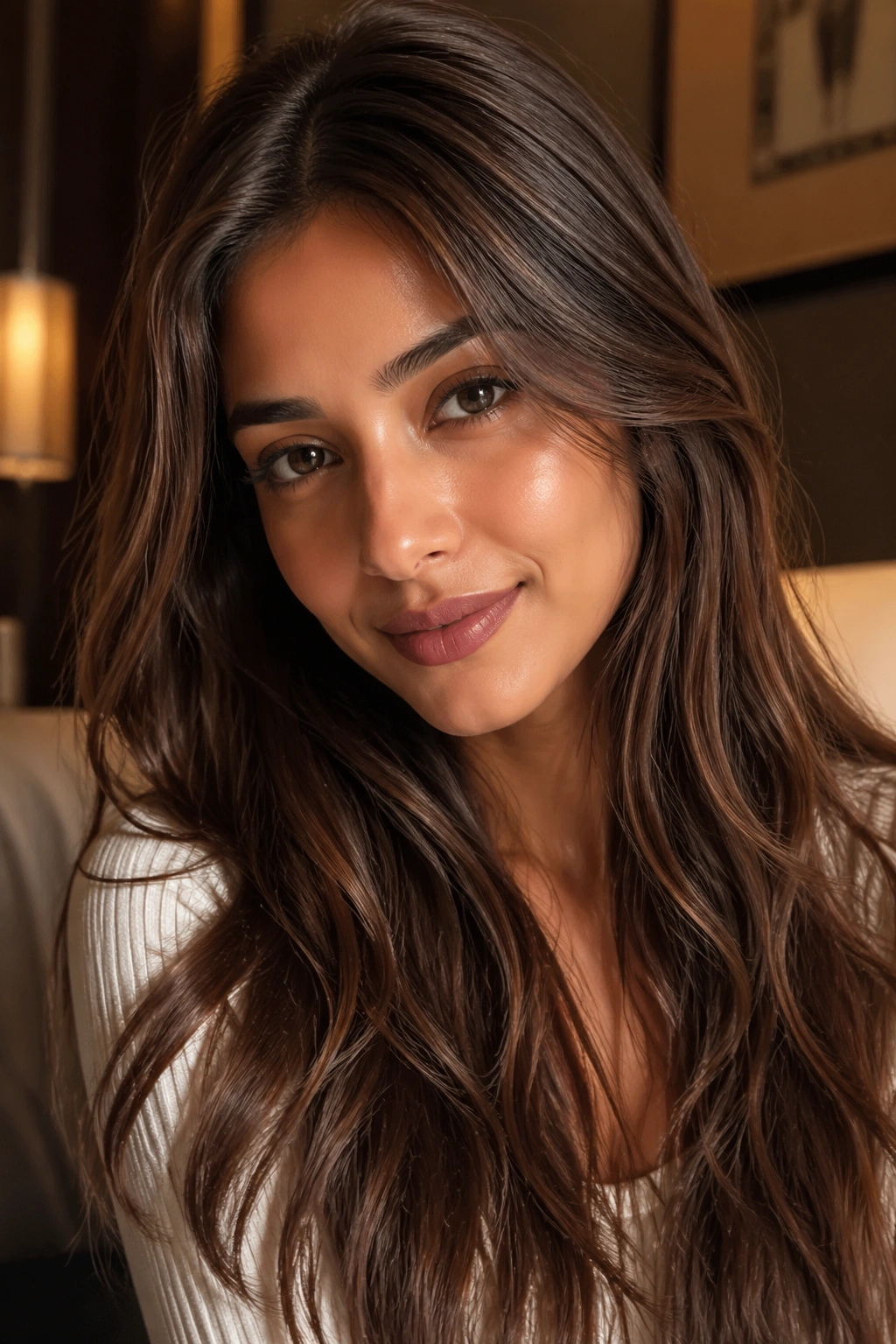
Mocha brown is the shade I recommend when someone wants a noticeable change but doesn’t want their hair doing the talking before they do. It sits in that balanced middle zone: not too warm, not too cool, not so dark that it disappears.
That balance is why it flatters so many Indian skin tones. On warm skin, mocha softens the edges. On neutral or olive skin, it adds depth without pulling red. On deeper skin, it gives a smooth, velvety finish that looks polished even when the hair is air-dried and a little messy. The color does not need a dramatic cut to work.
Mocha also ages well in the grow-out sense. The roots don’t look harsh as they come back, and the color fades into a softer brown instead of a weird orange. If you are trying hair color for the first time, this is one of the safest places to start.
12. Ash Brown
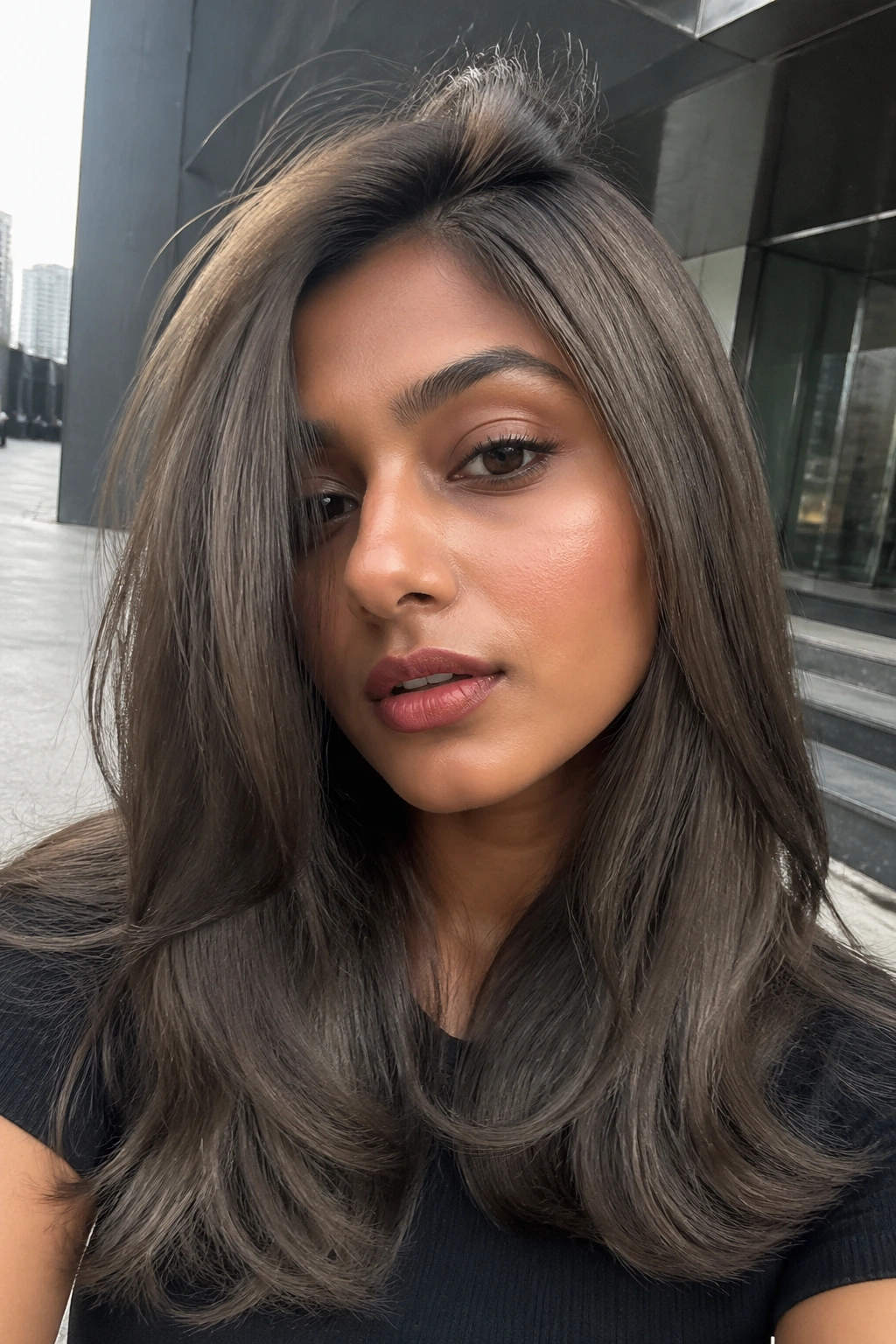
Ash brown does one job better than most shades: it cools down unwanted warmth. If your hair tends to pull orange or red after coloring, ash is the correction that keeps things looking controlled. On cool or neutral Indian undertones, it can be a clean, sharp match.
Unlike warm brown, ash brown has a grey-brown cast that takes the edge off brightness. That’s useful on hair that has been lifted before and gone brassy. It’s also useful if your skin looks better next to softer, cooler shades than golden ones. The shade can feel a little unforgiving on very warm skin if it’s too light, so depth matters.
This is the one I’d choose if your goal is a sleek, modern brunette look rather than warmth. Ask for a brown base with smoky ash pieces, not a flat grey brown. Flat ash is where things get dull. A little dimension keeps it wearable.
13. Mushroom Brown
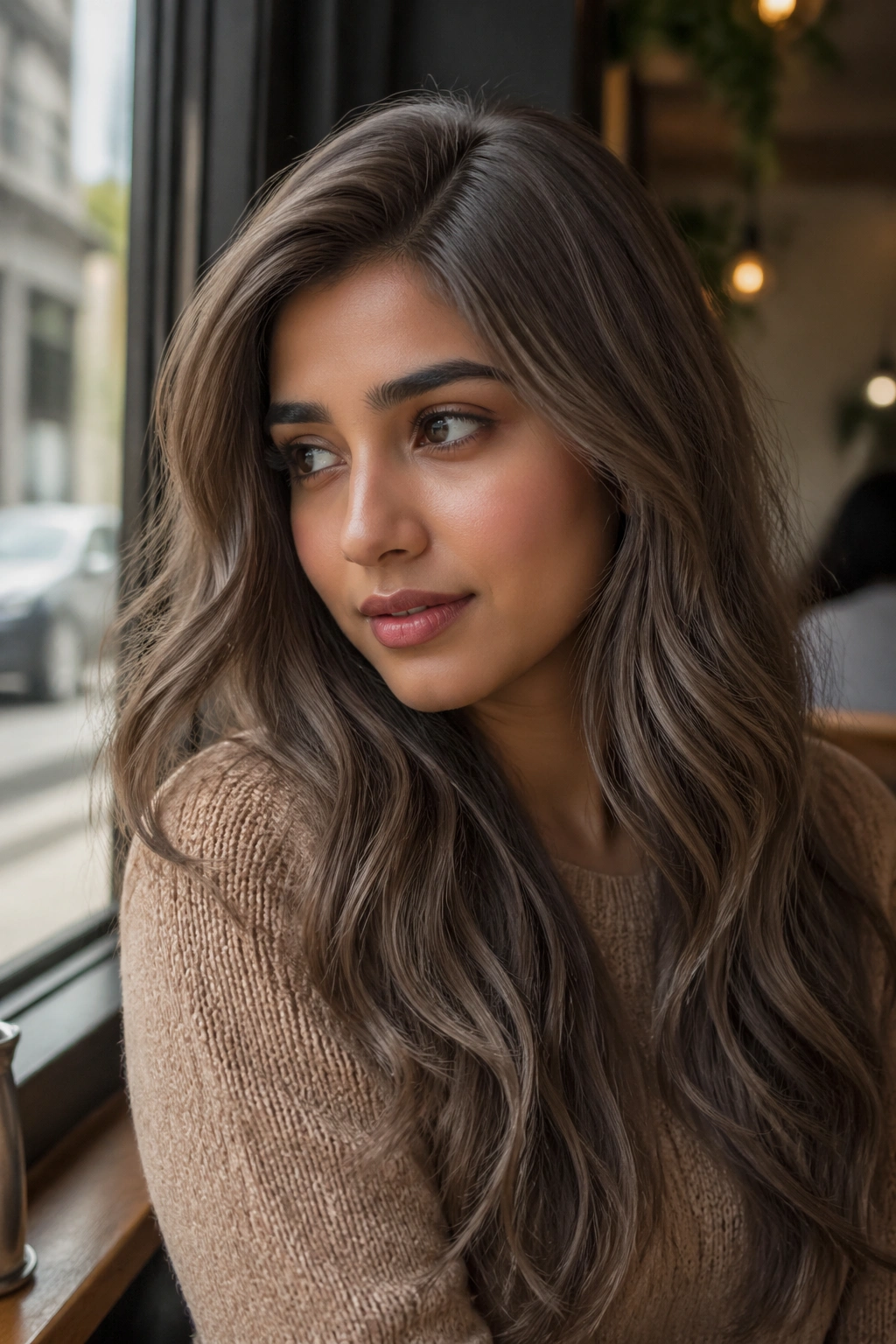
Mushroom brown sounds plain. In the chair, it is anything but. The shade mixes brown, beige, and a hint of grey so the result feels soft and cool without looking harsh. On Indian skin with olive or neutral undertones, that muted finish can be gorgeous.
Why It Works on Indian Skin
The color does not fight your face for attention. It sits beside the skin instead of competing with it. That makes it a good option for people who want a more muted, editorial kind of brunette without committing to a high-contrast light shade.
What to Ask For
- A cool beige-brown base
- A shadow root so the color does not look striped
- Soft lowlights instead of chunky highlights
- A toner that stays smoky, not golden
Best for: medium-length cuts, blunt bobs, and waves that need a bit of texture in the color itself.
Mushroom brown can look flat if it is done too evenly. Keep some depth at the roots and a slightly lighter veil through the ends.
14. Bronze Brown
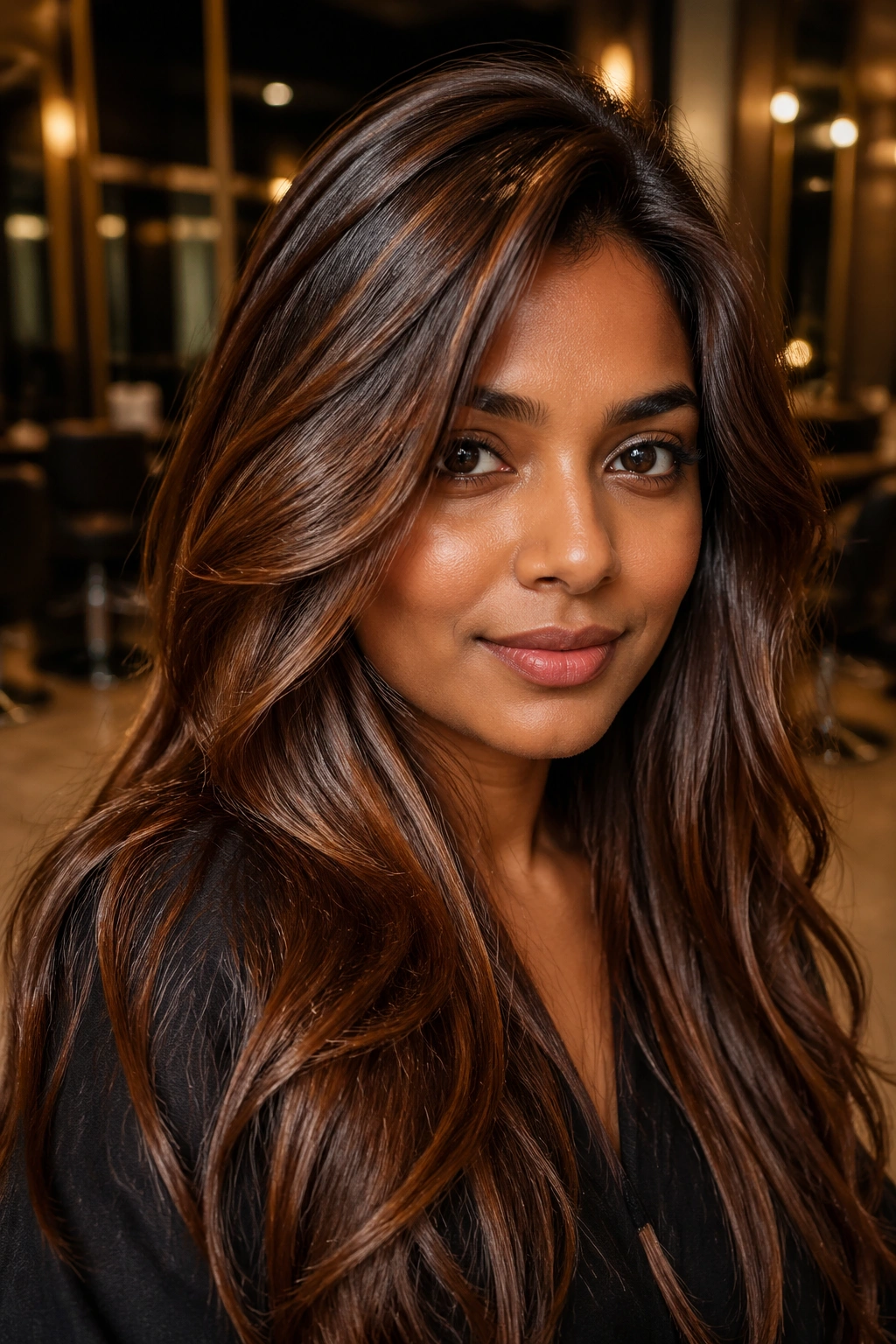
Bronze is what happens when warm brown gets a little sunlight and starts behaving itself. It has a metallic warmth that flatters medium to deep Indian skin especially well, because the shade feels rich rather than loud.
What I like about bronze is the sheen. It looks alive. The color can sit somewhere between caramel and chestnut, but with a deeper finish that feels smoother on the eye. If you wear a lot of gold jewelry, bronze brown can tie the whole look together without making the hair look yellow.
This shade works well in balayage, glosses, or soft all-over color on a medium brown base. If your hair is very dark, you may need just a little lift to show the bronze. Don’t chase pale pieces. The point is glow, not brightness for its own sake. There’s a difference, and it matters here.
15. Toffee Ombré
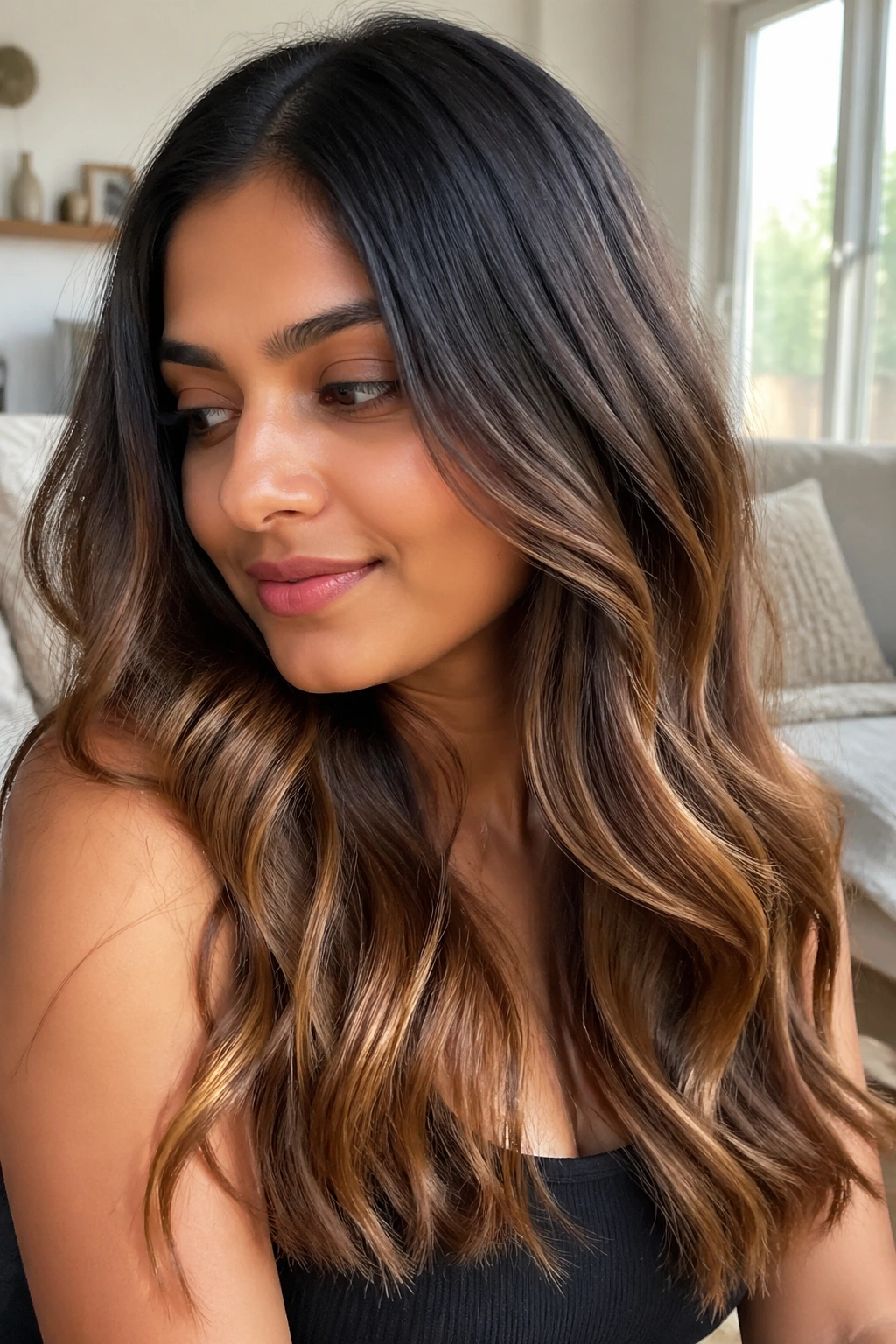
Why does toffee ombré flatter so many Indian faces? Because it keeps the root dark, where it belongs, and lets the lighter tone appear only where it helps the face and the movement of the hair. That makes the grow-out softer and the whole look easier to live with.
Toffee sits in a sweet spot between caramel and golden brown. It has enough warmth to flatter golden skin, but not so much that it turns orange or brassy after a few washes. On layered hair, the fade from deep roots to toffee ends can look smooth and expensive without being showy. On curls, the lighter ends separate the texture nicely.
How to Make the Fade Look Soft
Ask for a root melt rather than a hard ombré line. Keep the lightest pieces only on the lower third of the hair, and keep the face-framing strands a shade deeper if you want the look to stay balanced. It’s a small detail, but it stops the color from looking bulky.
16. Blue-Black
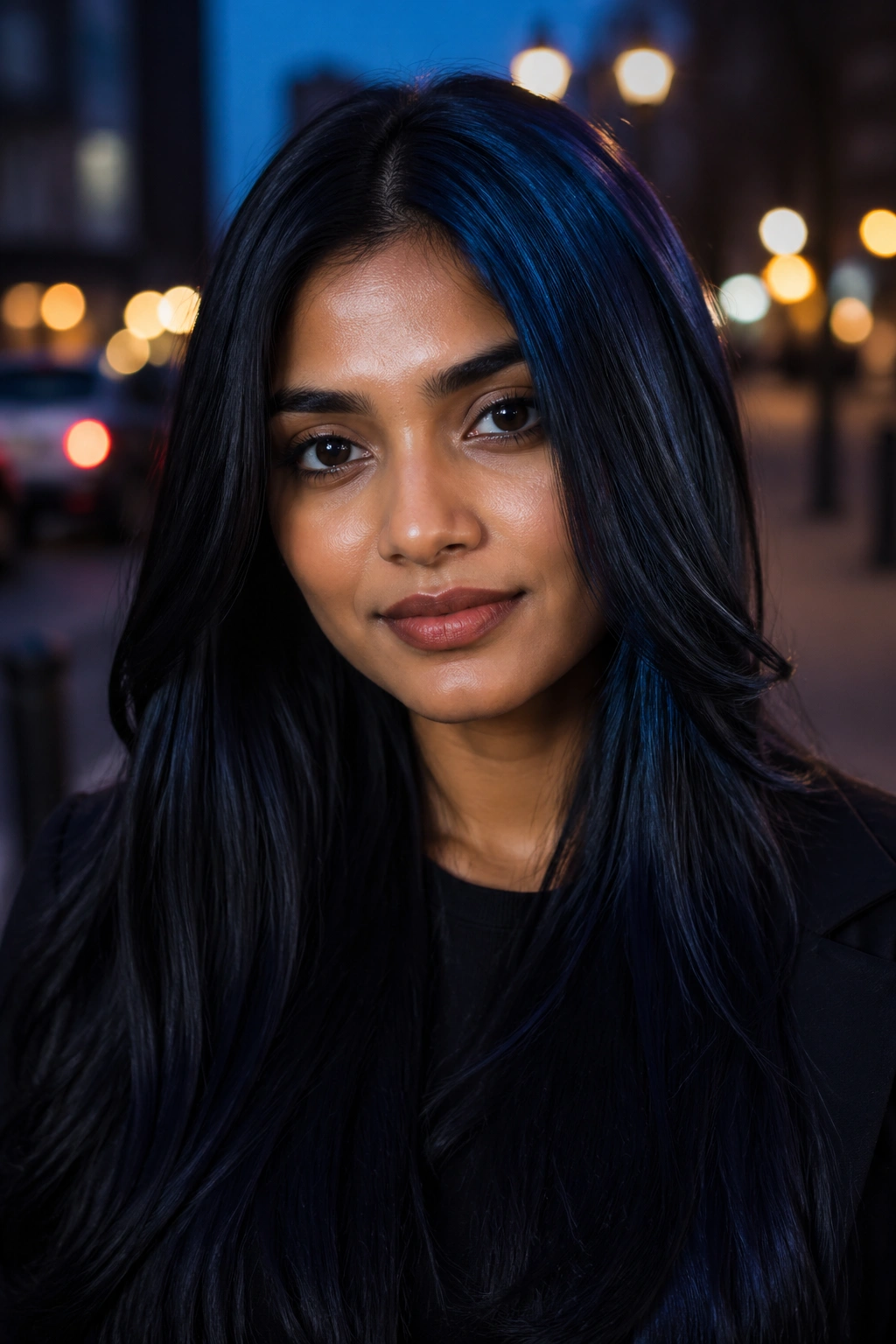
If you want black hair with attitude, blue-black gives it. The color looks deep and sleek in low light, then flashes a cool blue sheen when the light hits it at the right angle. On cool or neutral Indian undertones, that can look sharp in the best way.
The reason blue-black flatters some skin so well is contrast. The color makes the whites of the eyes look brighter and the lips look a little clearer. On very fair cool skin, it can feel dramatic. On deep skin, it can look almost jewel-like. Warm skin can wear it too, but the blue cast needs to stay subtle or the face can look a touch severe.
- Best as a gloss or deposit-only black-blue shade
- Needs shine or it can look flat
- Works well on straight hair and glossy blowouts
- Fades more gracefully if the base is already dark
Blue-black is not a casual shade. That’s part of its appeal. It has edge.
17. Rose Brown
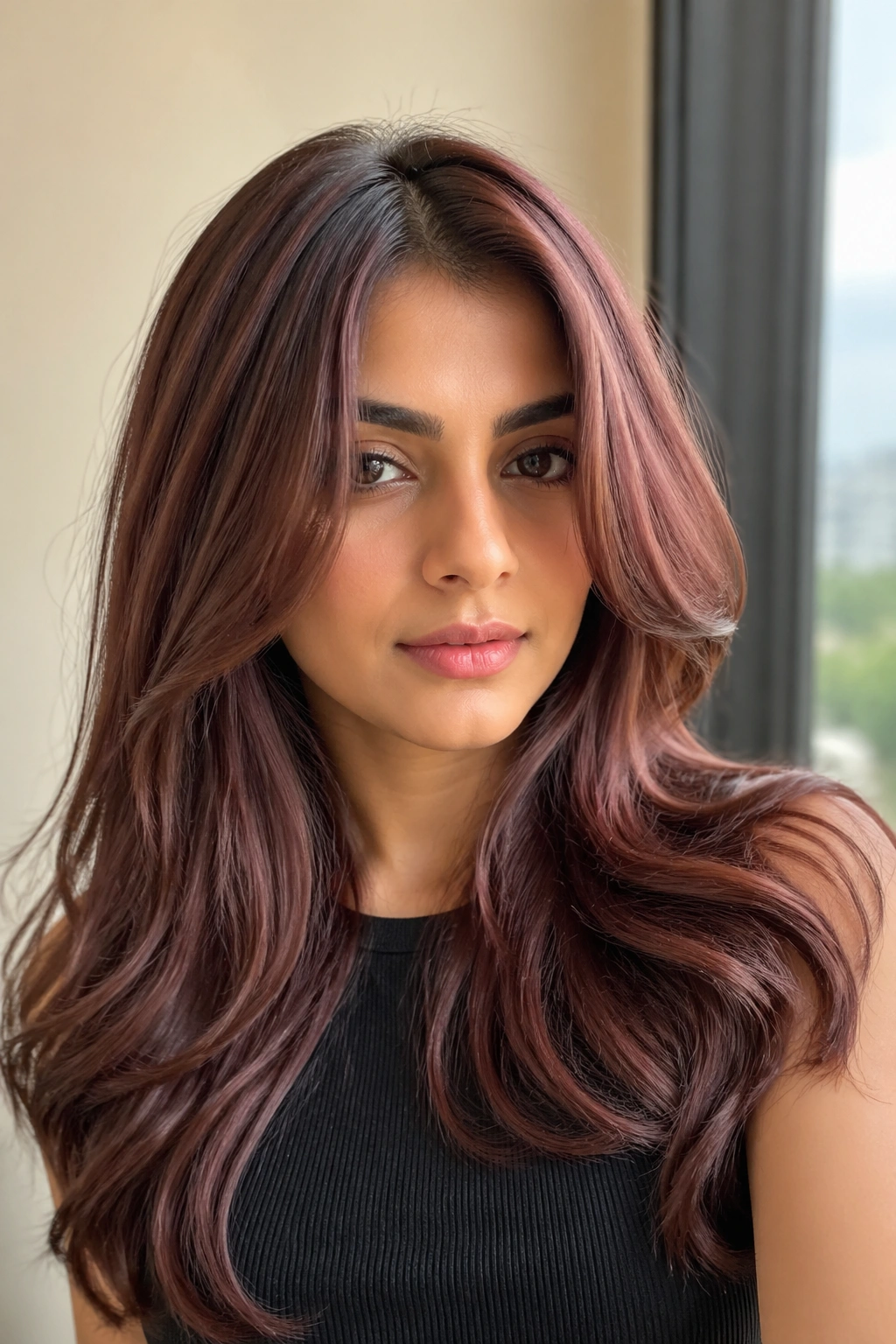
Rose brown is one of those shades people often mistake for a gimmick until they see it on dark hair with the right skin tone. Then it clicks. The pink-brown blend is soft enough to stay wearable, but unusual enough to look intentional.
It works best on fair to medium Indian skin with cool or neutral undertones. The rose note can brighten the face in a gentle way, especially if you keep the brown base deep and let the pink show mostly in the light. Indoors, it reads like a refined brunette. Outdoors, it gets a faint rosy shift that feels fresh without being sugary.
This is a good color if you want something fashion-forward but not harsh. It also suits soft waves, where the pink-brown movement can show through the shape of the hair. Straight hair can wear it too, but the finish has to be clean or the shade can disappear.
18. Cherry Cola
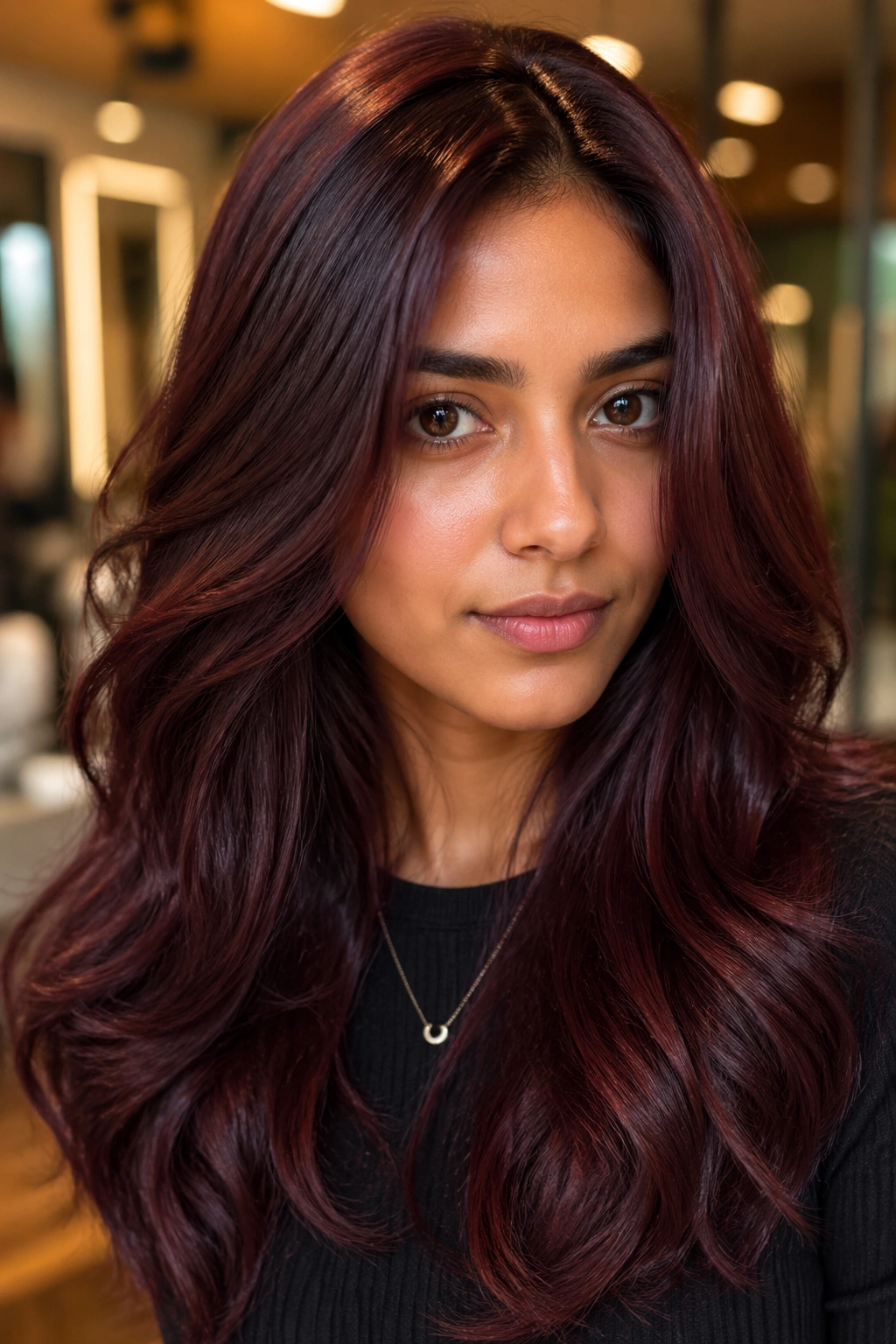
Unlike burgundy, cherry cola reads darker and more grounded. That’s why it works so well on medium and deep Indian skin. The red is there, but it sits under a brown-black base, which makes the whole color feel richer and easier to wear.
It’s a smart choice if you want a noticeable shift without bright red drama. Cherry cola usually looks best as a gloss or as a red-violet overlay on dark brown hair. On long hair, the shade creates a glossy sweep of color rather than a single flat tone. On shorter cuts, it can look sharp and clean.
The color does fade, and the fade is part of the look. It softens into a deep brown with a trace of red, which is still flattering. That makes it a nicer commitment than some lighter fashion shades that go odd after a few washes. I trust cherry cola more than I trust most reds, and that’s saying something.
19. Face-Framing Bronde
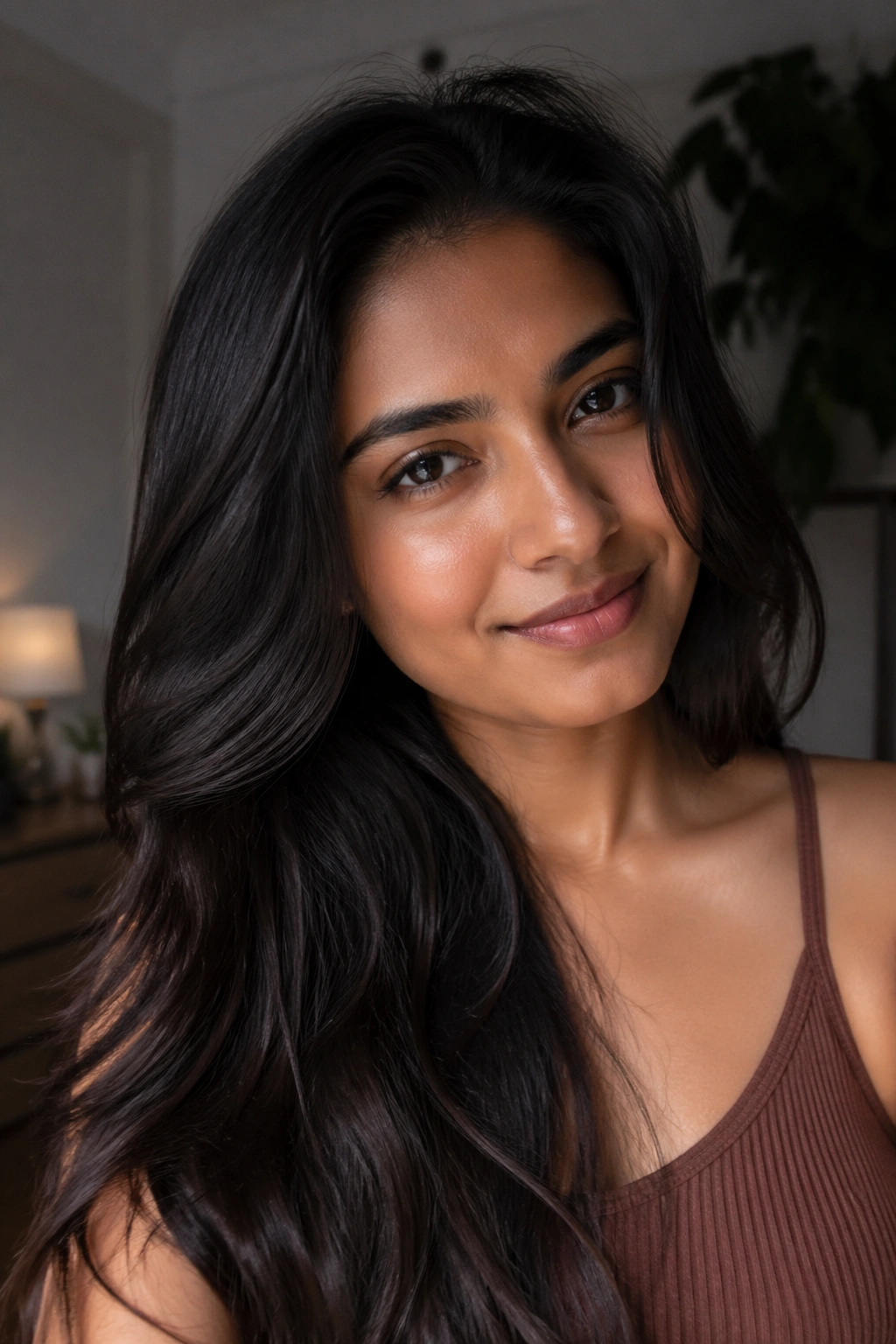
Bronde is brown-blonde territory, but on Indian skin it works best when you keep the blonde part restrained and use it only where the face needs light. Think of it as a smart frame, not a full conversion. The rest of the hair stays brunette and grounded.
Why the Front Matters
The front pieces are where people notice color first. A few lighter panels around the face can lift the whole expression, especially if the base stays dark and the blonde shade is kept warm or beige. Too pale, and the contrast turns stripey. Too dark, and you miss the point.
Small Things That Keep It Wearable
- Keep the lightest pieces just around the face and crown
- Ask for a beige-blonde or caramel-blonde, not a pale yellow blonde
- Blend the face-framing pieces into a dark root shadow
- Works best on layered cuts or curtain bangs
Best use: if you want brightness but do not want a full head of highlights. That’s the honest version.
20. Smoky Brunette with Walnut Lowlights
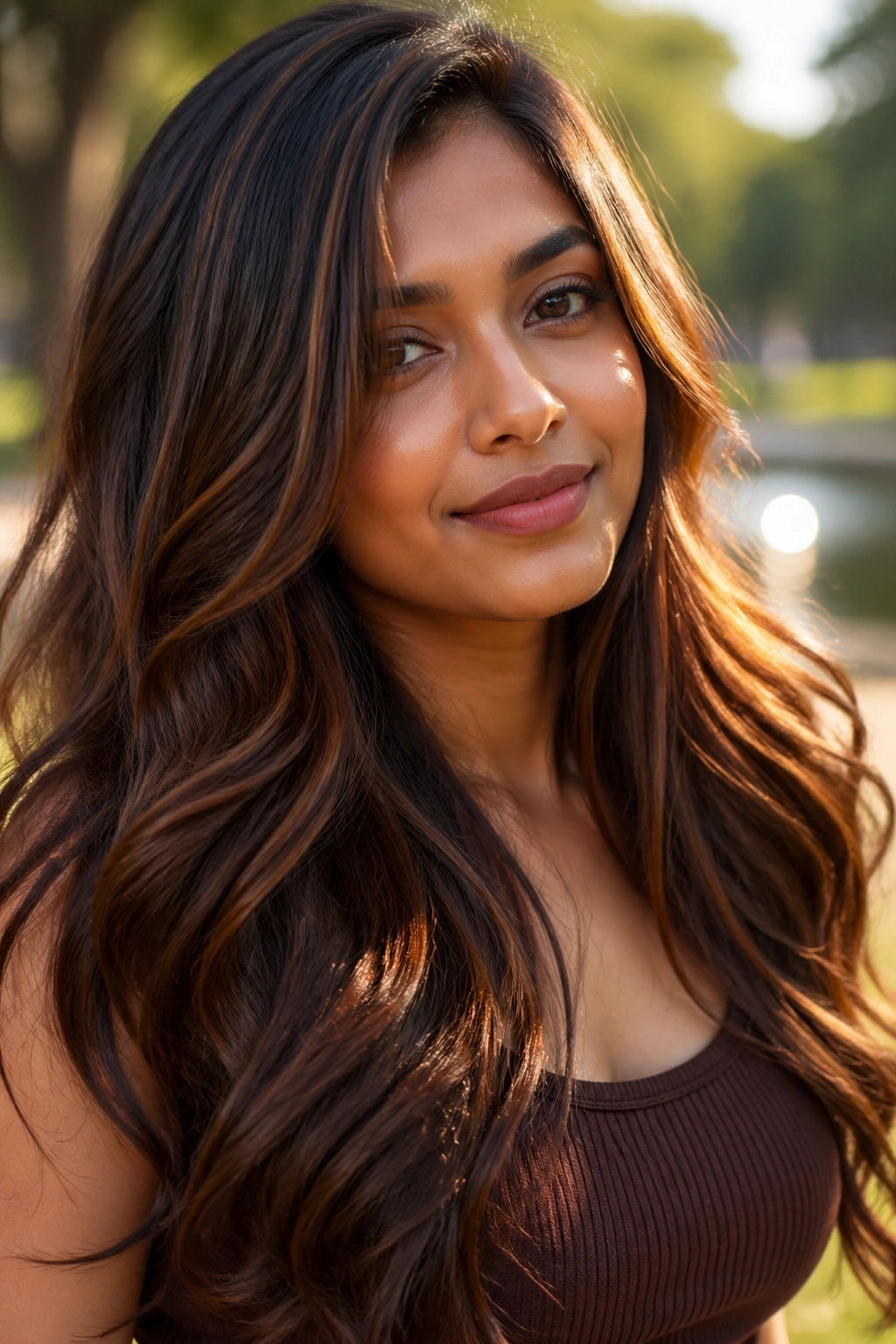
Smoky brunette is one of the smartest choices if you want depth with movement. It does not chase brightness. It builds dimension inside the brown itself, which is a much better match for many Indian skin tones than a flat all-over light brown.
Walnut lowlights add a cool-brown thread through the hair, so the base looks richer and less one-note. That can be a gift on thick hair, where the surface sometimes eats light and makes the color seem heavier than it is. A smoky brunette finish keeps that from happening. It’s refined without trying too hard.
This shade suits neutral, olive, and deeper skin especially well, because the color never fights the face. It sits in the background and makes the features feel clearer. If you wear darker clothes a lot, this one blends beautifully with your wardrobe without disappearing.
21. Soft Black with Chestnut Veils
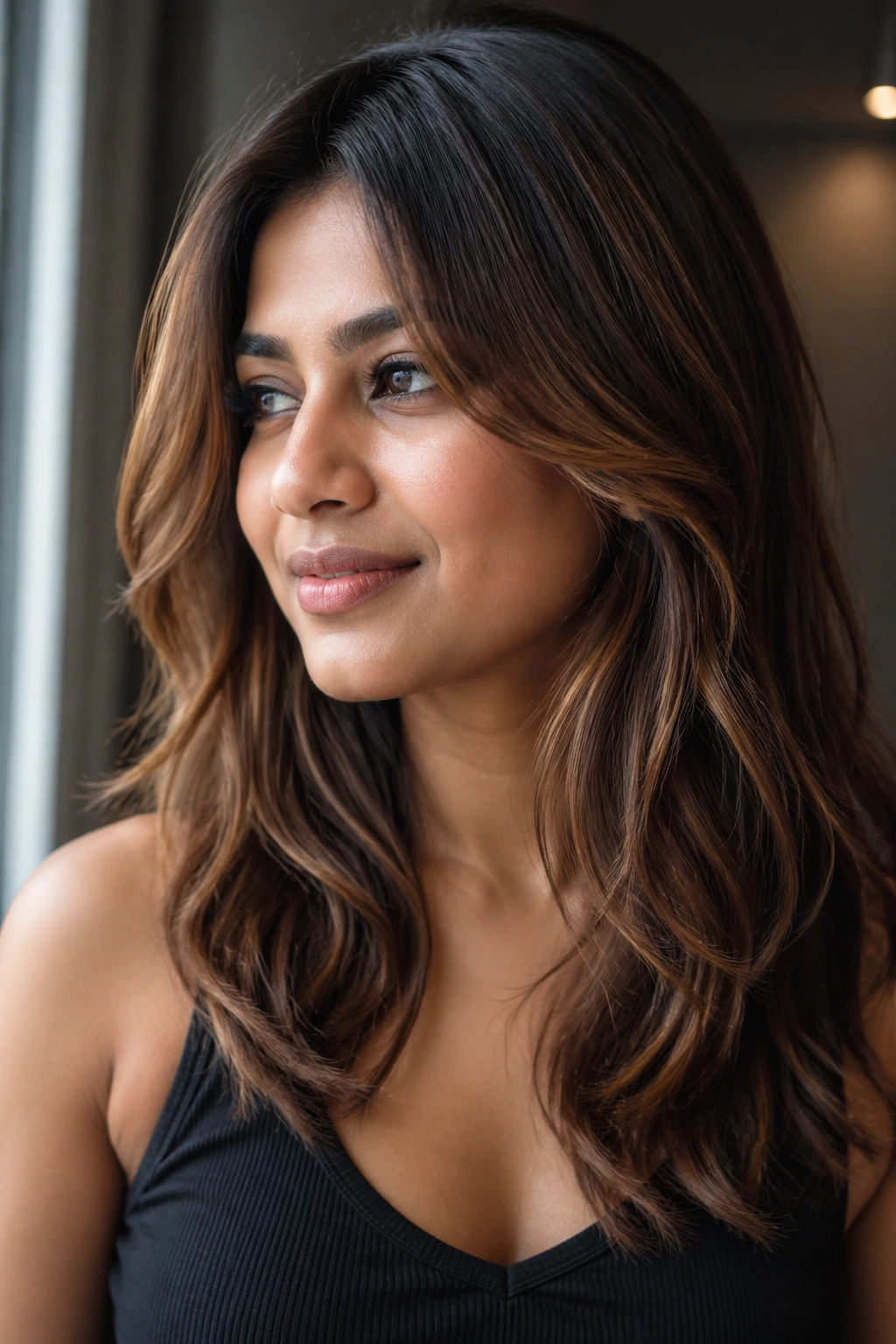
Soft black with chestnut veils is the shade I’d pick for someone torn between “do something different” and “please don’t ruin my hair.” The base stays dark, but the chestnut veils add just enough warmth to keep the color from looking hard or flat.
On Indian skin, that combination is useful because it does two jobs at once. The black gives structure. The chestnut pieces bring a little glow near the face and through the movement of the lengths. It works on straight hair, but it looks especially good on waves and long layers, where the lighter brown can catch in loose sections rather than all at once.
Ask your colorist for a soft black base with chestnut ribbons two shades lighter, then keep the ribbons fine. If they get too chunky, the whole thing loses its elegance. If they stay narrow and well blended, the result is smooth, easy, and quietly flattering.
This is the shade I’d call the safest final answer. Not dull. Not loud. Just the kind of color that makes your hair look healthier and your face look a little more awake, which is often the whole point.