



There was a time when the first sight of a silver strand in the mirror felt like a call to arms. For decades, the beauty industry operated on a “hide and seek” basis, where gray hair was the enemy and permanent dye was the weapon of choice. But the perspective has shifted significantly. We are seeing a widespread movement where silver is no longer viewed as a sign of fading, but as a deliberate, high-fashion statement. It is a color that commands attention, offering a level of sophistication and “cool factor” that traditional blondes and brunettes often struggle to match.
The transition to silver, whether you are embracing your natural growth or asking a stylist to lift your hair to a level 10, is a major commitment. It is not just a change in color; it is a change in how you approach hair health. Silver hair, by its nature, is often more porous and prone to picking up environmental tones. If you have ever seen silver hair turn slightly yellow or dull, you know the struggle. But when done right, with the correct undertones and maintenance, it looks incredibly expensive and intentional.
Achieving these looks usually requires a double process. Unless you are naturally blessed with a uniform slate of white, a stylist has to remove the existing pigment to a pale yellow stage before “toning” the hair into the desired silver shade. This process opens the cuticle, which is why the hair feels different afterward. It becomes more about managing the light that reflects off the hair than just the pigment itself.
Whether you want a metallic, mirror-like finish or a soft, pearlescent glow, the variety within the silver spectrum is vast. You can go dark with gunmetal and charcoal or as light as a crisp, arctic white. Each variation interacts differently with skin tones and eye colors. Finding the right one is about looking at the “temperature” of the silver—does it lean blue, violet, or neutral? Let’s look at the best ways to wear this striking shade.
1. Icy Platinum Silver
This is the brightest, most reflective end of the spectrum. It essentially looks like white-hot metal, providing a crispness that brightens the entire face. Because it is so light, it requires the hair to be lifted to its maximum point, meaning you need a very healthy base to start with. It is a high-maintenance look, but the payoff is a striking, futuristic aesthetic that works beautifully on shorter, architectural cuts like bobs or pixies.
The Science of Toning
To get this specific icy finish, a stylist uses a toner with a strong violet base. This neutralizes every last bit of yellow pigment left after bleaching. If any yellow remains, the silver will look muddy or greenish. The “icy” part comes from the absence of warmth, leaving only a pure, cool reflection.
Quick Facts for Icy Hair
- Lifting Level: Must reach a level 10 or 11 (pale yellow like the inside of a banana).
- Maintenance: Requires a purple shampoo every second wash to prevent brassiness.
- Root Strategy: Looks best with a “global” application (all over) or a very tight weave.
- Finish: High shine is essential; dullness makes icy silver look like unfinished blonde.
Pro tip: Use a clear gloss treatment every four weeks to keep the “ice” looking glassy rather than matte.
2. Salt and Pepper Balayage
Natural texture is the best partner for a blended gray look. For those who aren’t ready to go full “platinum” but want to stop the cycle of covering their roots every three weeks, a salt and pepper balayage is the perfect middle ground. This technique uses your natural gray as the “salt” and adds deeper, charcoal-toned lowlights as the “pepper.”
The beauty of this approach is the low-maintenance growth. By mimicking the way hair naturally grays—usually more heavily around the temples and hairline—the transition becomes seamless. Instead of a harsh line of regrowth, you get a soft, lived-in gradient. This works particularly well for those with naturally dark hair who are seeing their first significant percentage of gray.
Instead of fighting the gray, this method celebrates it. A stylist will hand-paint deeper tones into the mid-lengths and ends to create dimension. This prevents the hair from looking “flat” or “washed out,” which is a common complaint for people with thinning, graying hair. The contrast between the dark and light creates the illusion of thickness and volume.
3. Smoky Charcoal
Why go for a bright silver when you can embrace the mystery of a dark, smoky gray? Charcoal hair color sits at the intersection of brunette and silver. It is a deep, moody shade that often has hints of navy or violet hidden within the pigment. It is a fantastic option for someone who wants the silver aesthetic but has a deeper skin tone that might be washed out by very light white-silver.
Is Charcoal Harder to Maintain?
Surprisingly, yes and no. While it doesn’t require lifting the hair to a fragile level 10, the dark gray pigment can fade quickly. Because charcoal is a “cool” dark tone, any warmth underneath will want to poke through as it washes out. You might notice the hair becoming a bit “mousy” after a few weeks.
How to Keep It Rich
- Use a blue or dark-gray tinted conditioner to deposit pigment back into the strands.
- Wash with cool water; hot water opens the cuticle and lets that smoky pigment escape.
- Avoid clarifying shampoos, which act like a “reset” button on your color.
4. Oyster Gray
I remember the first time I saw this shade in a professional setting; it was breathtaking. Oyster gray is a complex, multi-tonal color that mimics the inside of a seashell. It isn’t just “gray”—it has hints of champagne, silver, and even a very faint holographic pink. It is a “warm” silver, which sounds like a contradiction, but it’s what makes it so wearable for people with peach or golden undertones in their skin.
A stylist achieves this by layering different toners. They might start with a silver base and then add a “pearl” or “sand” overlay. The result is a color that shifts when you move your head. It looks incredibly soft and romantic, especially when paired with long, loose waves. It’s the sophisticated version of the “mermaid hair” craze, traded in for something much more elegant.
The key to oyster gray is the shine. Without a high-gloss finish, the subtle color shifts get lost. I always recommend a silk-infusion serum for anyone rocking this shade. It adds that “wet look” luster that makes the pearlescent tones pop. It’s a great choice if you find that blue-based silvers make you look tired or pale.
5. Metallic Pewter
Pewter is the “heavy metal” of the hair world. It is darker than silver but lighter than charcoal, with a very strong cool-toned reflection. Think of it as a polished stainless steel finish. This shade is particularly popular because it feels edgy and modern. It doesn’t look like “naturally gray” hair—it looks like a choice.
What Makes It Different?
Unlike natural gray, which can be transparent or coarse, metallic pewter is saturated with pigment. It has a “solid” feel to it. It often looks best on straight, sleek hair where the light can bounce off a flat surface. On curly hair, pewter can look a bit matte, so you have to work harder with oils to maintain the metallic sheen.
Who It Suits Best
- Cool Skin Tones: If you have blue veins and look great in silver jewelry, this is your color.
- Short Hair: It makes a bold statement on a structured crop or a long-angled bob.
- Thick Hair: The density of the color complements a lot of hair mass.
6. Pastel Lavender Silver
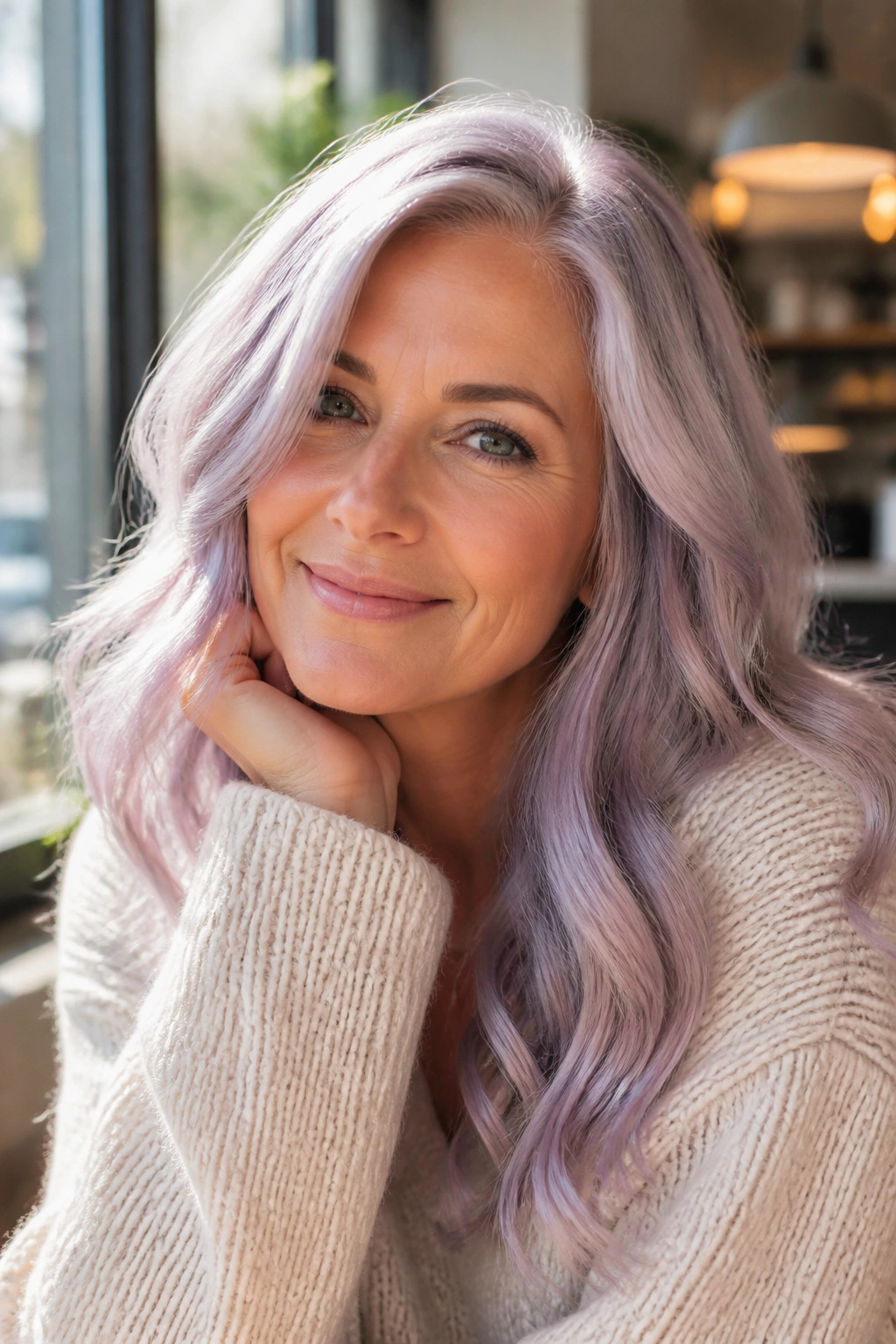
Adding a hint of violet to your silver does more than just look pretty; it’s a functional choice. Lavender and silver are essentially cousins. Since violet is the opposite of yellow on the color wheel, a lavender-toned silver is the most “anti-brass” color you can choose. Even as it fades, it will fade into a beautiful, clean white rather than an ugly yellow.
The Comparison Angle
Unlike a “true” lavender, which is a fashion color and looks very purple, a lavender silver is 90% silver and 10% lilac. It is a whisper of color. When you compare it to a standard ash silver, the lavender version looks brighter and more “awake.” It’s a great way to experiment with color without feeling like you’ve dyed your hair like a teenager.
It is particularly effective for people with green or hazel eyes. The purple undertones make the green in the eyes appear much more vivid. It’s a subtle bit of color theory that stylists use to make a client’s features stand out. It’s playful but still professional enough for a corporate environment.
7. Gunmetal Gloss
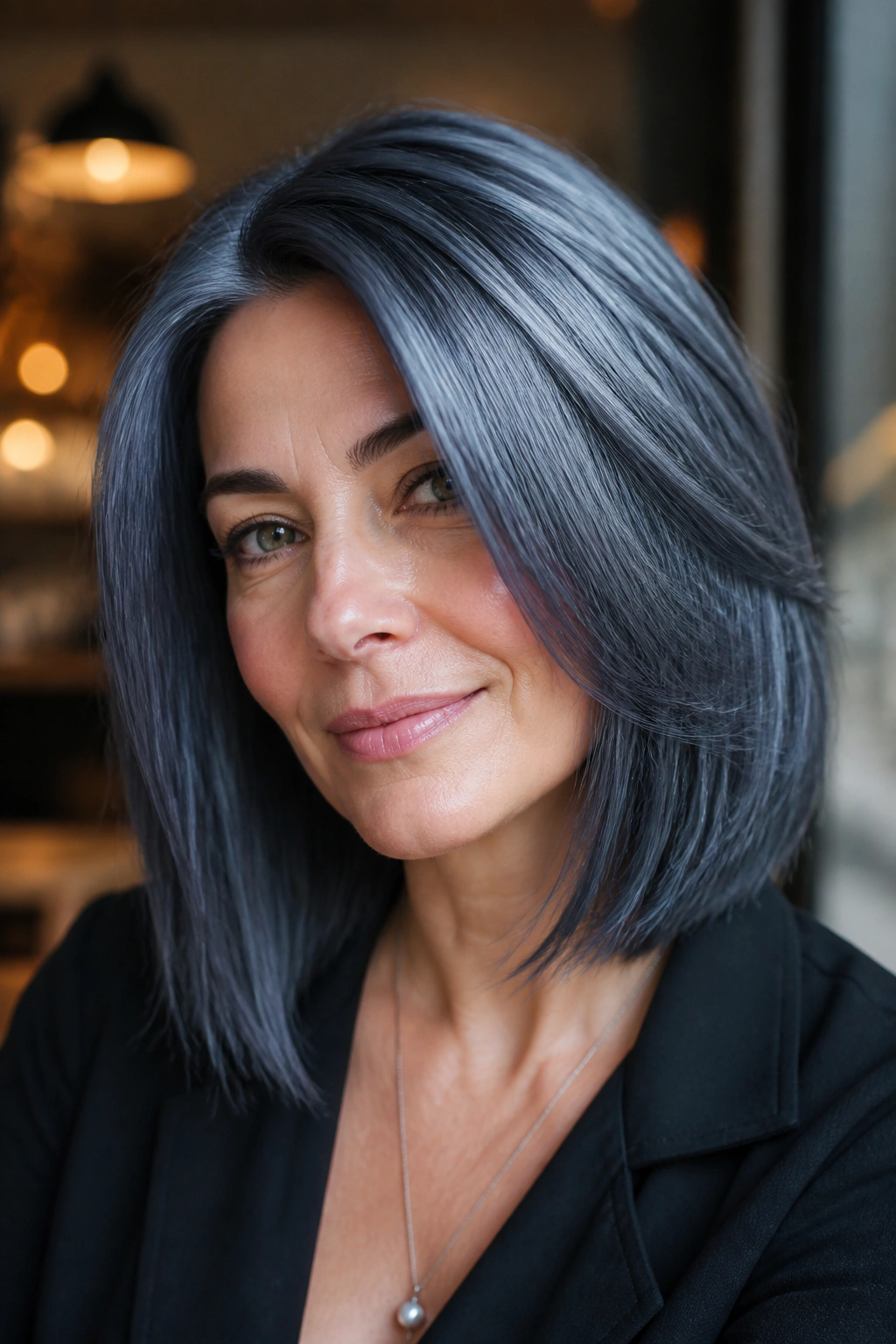
Gunmetal is a dark, intense gray with a blue-ish undertone. It is the color of a stormy sky or a sleek car. This is a high-contrast look, especially if you have light eyes. The depth of the gunmetal makes light blue or gray eyes look piercing. It’s an “expensive” looking color because it requires a perfectly even application to avoid looking blotchy.
A bold claim: Gunmetal is the new black. For people who find that jet black hair looks too harsh against their skin as they get older, gunmetal offers that same “dark and mysterious” vibe but with a softer, more reflective edge. It has more movement than black because the light catches the gray highlights within the dark base.
To keep this looking sharp, you have to be careful with sun exposure. The blue-gray pigments in gunmetal are sensitive to UV rays. If you spend a lot of time outdoors without a hat or UV-protectant spray, your gunmetal can quickly turn into a dull, muddy brown. Think of it like a high-end paint job—it needs a clear coat and protection from the elements.
8. Arctic White
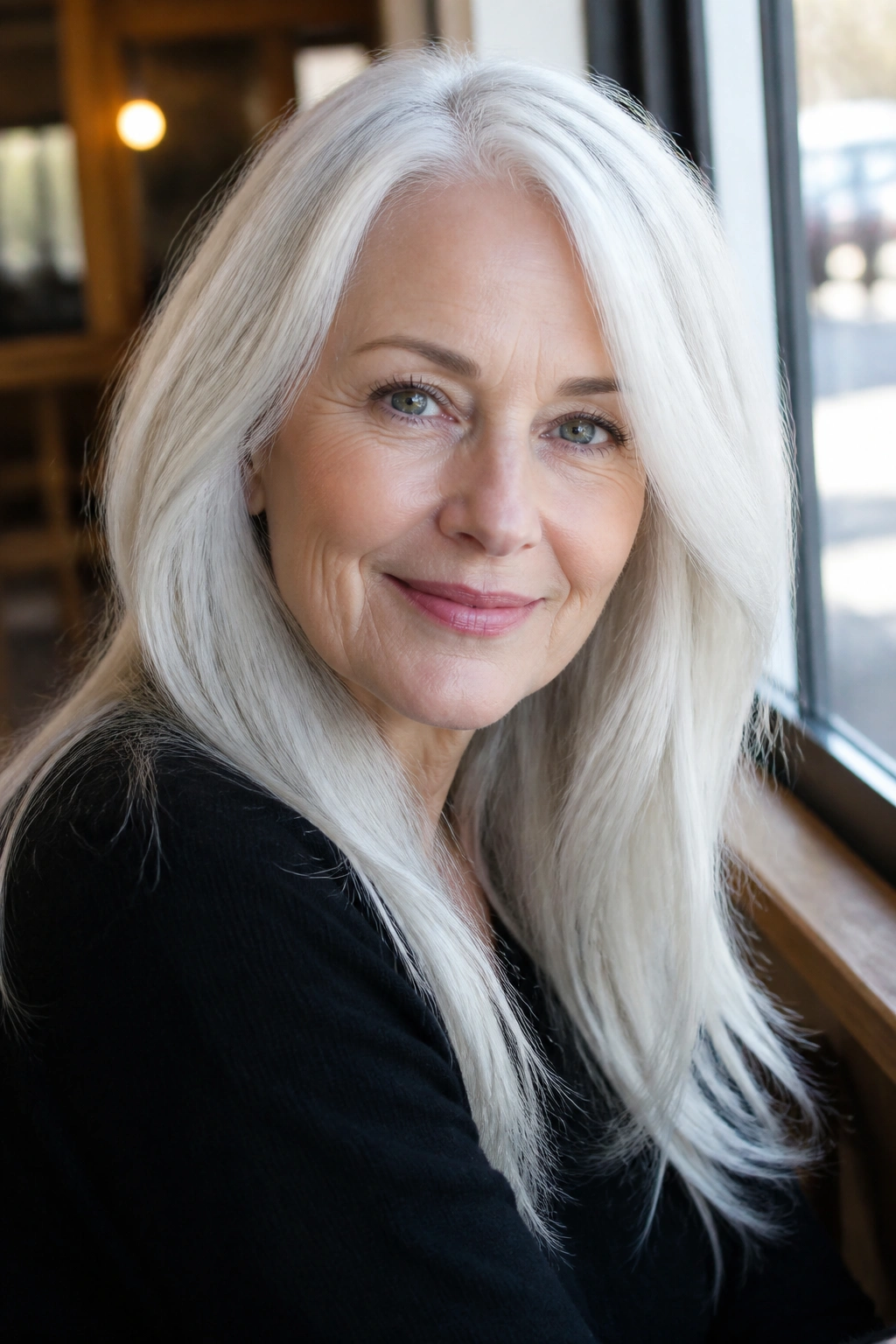
Arctic white is the purest form of silver. It is the absence of all color. It looks like fresh snow. This is often the goal for people who are naturally 100% gray and want to “brighten” their look. Instead of dyeing it back to a darker color, they use a heavy-duty purple toner to strip away any environmental yellowing, leaving behind a brilliant, glowing white.
Why It’s a Top Choice
Arctic white is incredibly flattering for older skin. Dark hair can cast shadows on the face, emphasizing fine lines. White hair, conversely, acts like a built-in reflector, bouncing light onto the skin and creating a “soft focus” effect. It’s essentially a permanent ring light.
Quick Facts
- Process: Often involves a “bleach bath” to remove yellow buildup from hard water or smoke.
- Texture: Gray/white hair can be wiry; this color looks best when the hair is smoothed with a flat iron.
- Grooming: A crisp haircut is non-negotiable. Arctic white on a shaggy, unkempt cut can look accidental rather than stylish.
9. Silver Ombré
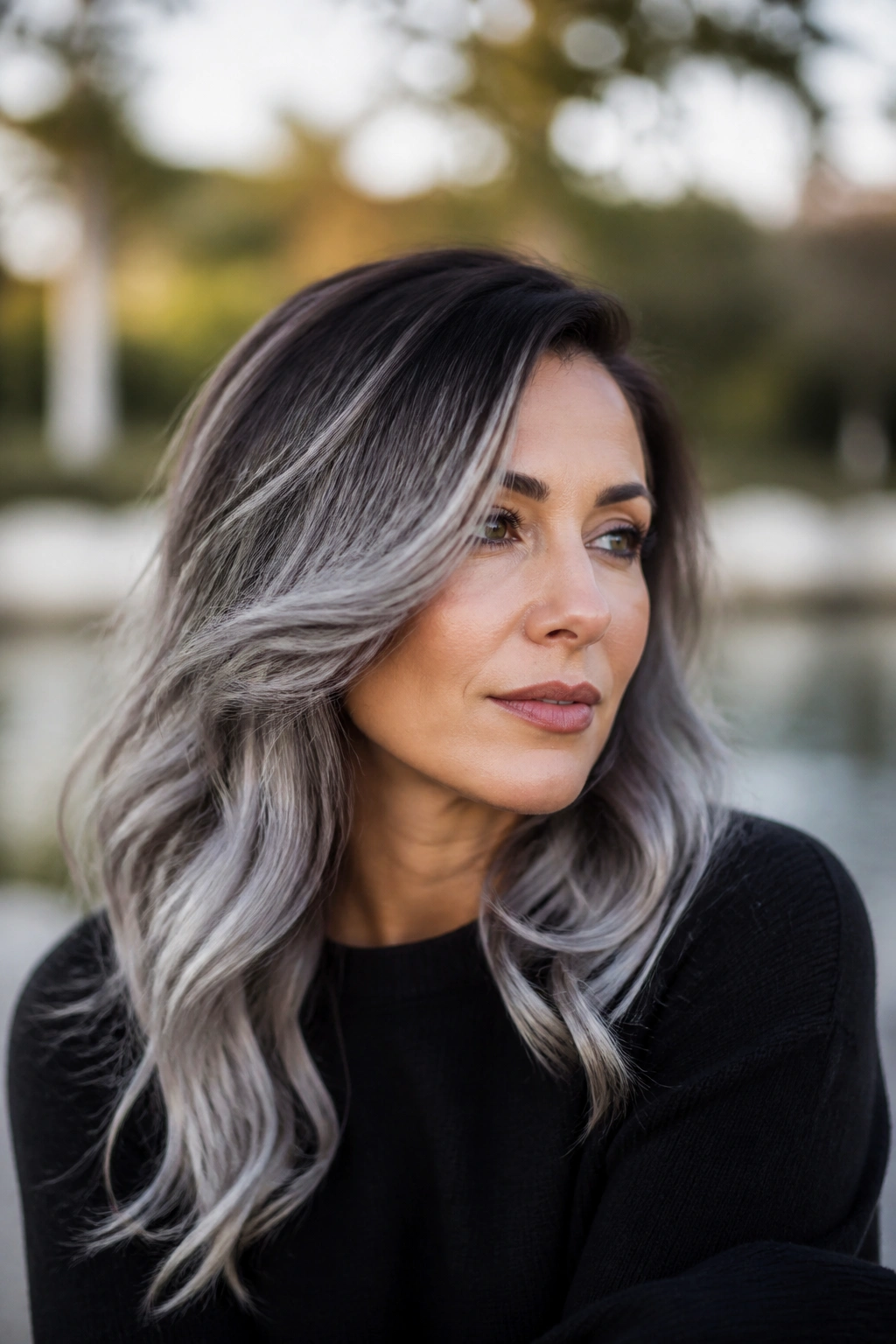
If you love your dark roots but want to dive into the silver trend, an ombré is the answer. This creates a gradient from a dark base (black or deep brown) at the roots to a shimmering silver at the ends. It’s the ultimate “cool girl” hair because it looks intentional and edgy while allowing for months of growth without a salon visit.
How to Style It
The transition point where the dark meets the silver is the most important part. A “harsh” line looks like a mistake. A good stylist will “smudge” the root color down into the silver to create a blurred effect. This looks best when styled with curls or waves, as the twisting hair fibers further blend the two contrasting colors together.
The Maintenance Benefit
Since the silver is only on the mid-lengths and ends, you aren’t constantly bleaching your scalp. This is a huge win for hair health. You get the look of silver without the risk of chemical burns or extreme scalp sensitivity. Plus, if you get tired of the silver, you can eventually just trim the ends off, and you’re back to your natural base.
10. Ashy Silver Blonde
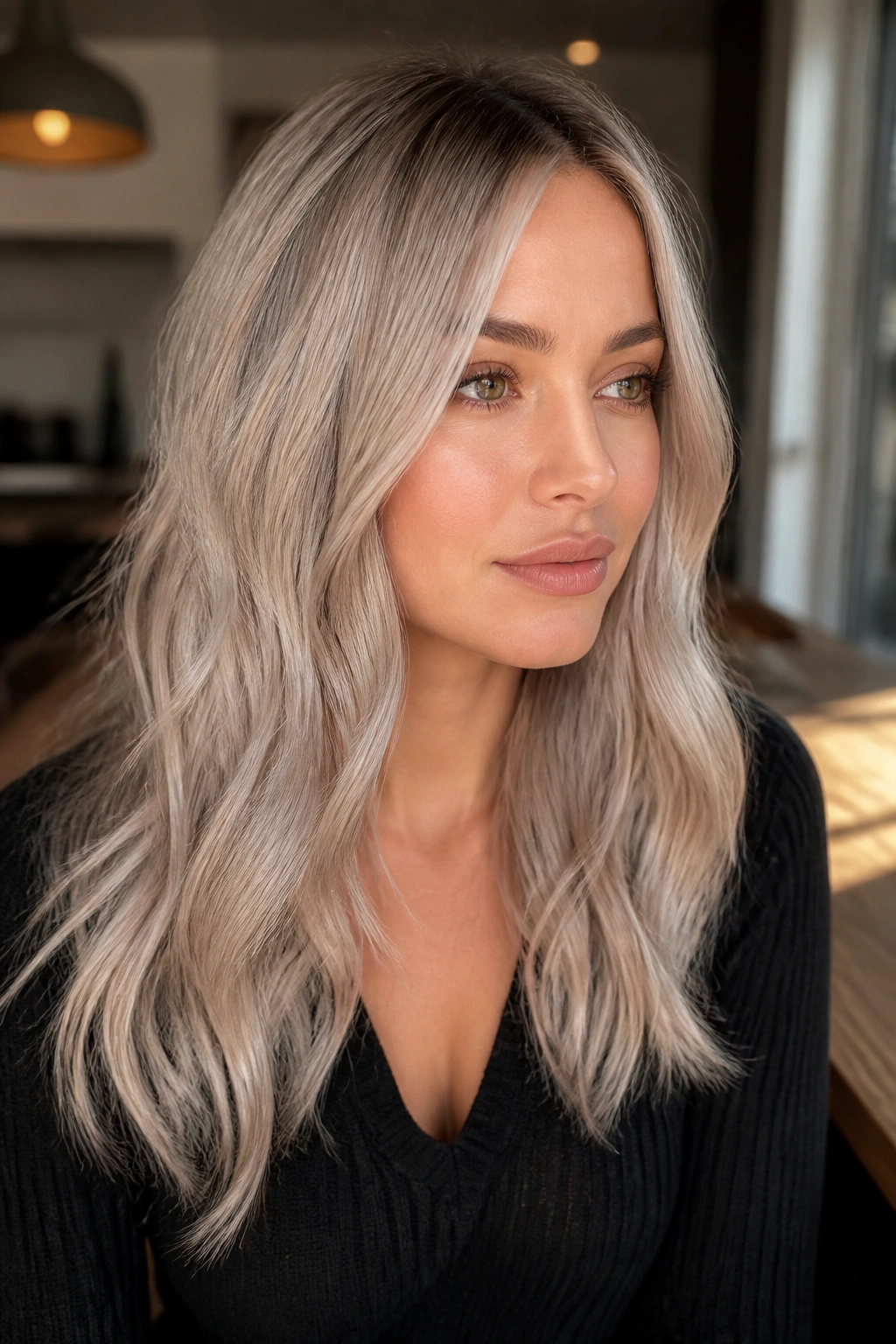
This is often called “mushroom blonde” or “silver fox” hair. It is a very muted, earthy version of silver. It doesn’t have the “flash” of a metallic pewter, but it has a sophisticated, quiet elegance. It’s perfect for someone who wants to transition into gray hair slowly and naturally.
Why It Works
It blends beige, tan, and silver. By including some “warm” ash tones, the color looks more natural against a wider range of skin tones. It’s not a “shock” to the system like a bright white might be. It’s a very safe, “stealth wealth” kind of hair color.
Quick Nutrition Facts for Your Hair
- Protein is key: Bleaching to silver removes the hair’s internal structure. Use a keratin-rich mask once a week.
- Oil balance: Silver hair lacks the natural lipids that make hair shiny. Argan oil is your friend.
- pH balance: After silvering, your hair’s pH is very high. Use an acidic rinse (like diluted apple cider vinegar or a professional sealer) to close the cuticle.
11. Blue-Silver Tones
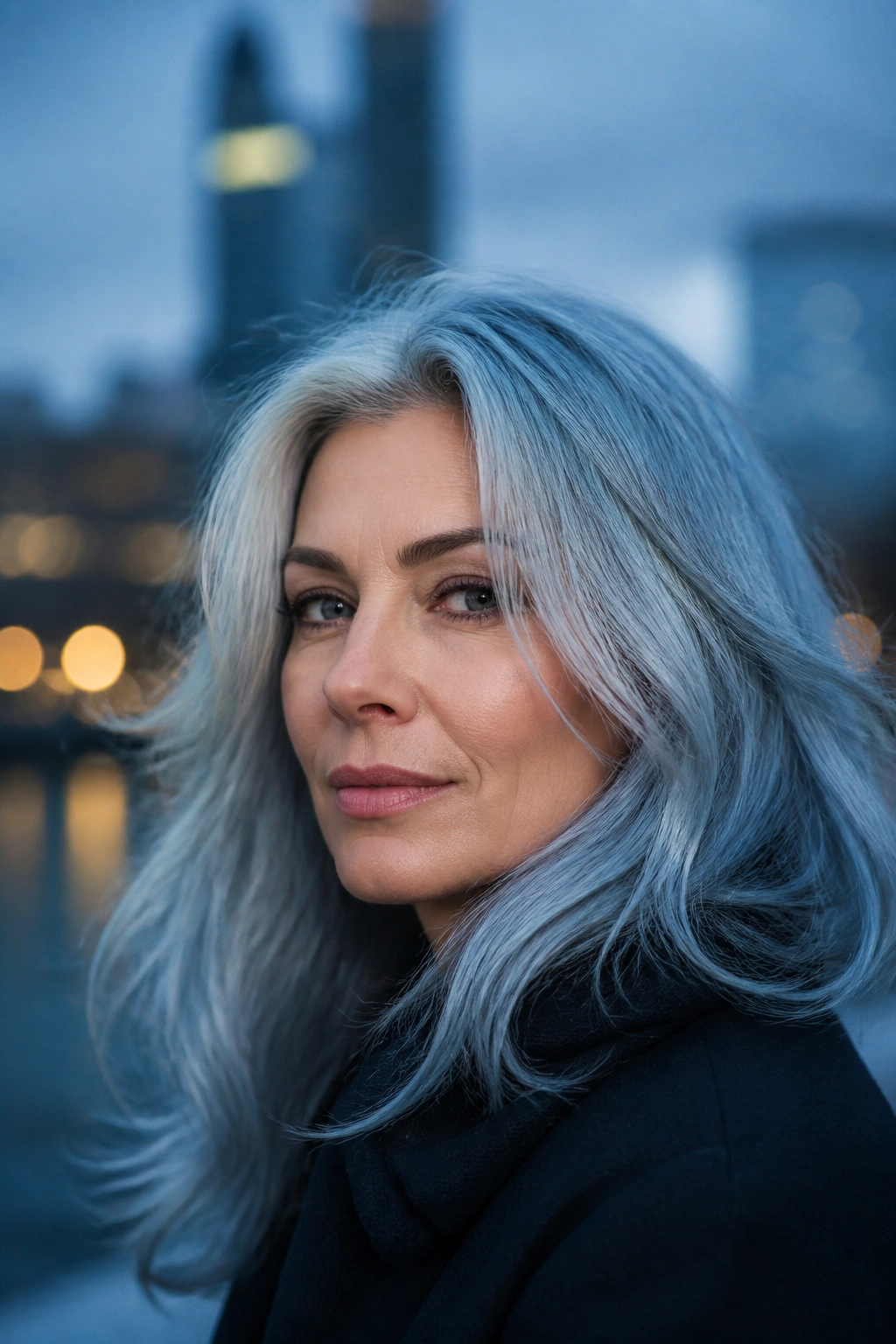
There is a specific kind of silver that looks like frozen water. It has a distinct blue cast that feels very “ice queen.” This isn’t “blue hair”—it’s silver hair that has been toned with a blue-based pigment rather than a violet one. Blue-based toners are more aggressive at neutralizing orange, making this the best choice for people who naturally have very red or warm undertones in their hair.
The Science Behind the Shade
Blue and orange are direct opposites. If your hair tends to pull “rusty” or “copper” after a few weeks of dyeing, a blue-silver will keep those warm tones at bay longer than a violet-silver would. It creates a very “cold” aesthetic.
How to Use It
I find that blue-silver looks incredible on people with very dark, nearly black eyes. The contrast between the cold hair and the warm, dark eyes is striking. It’s also a great way to hide the “yellowing” that happens if you are a smoker or live in an area with high pollution, as the blue cancels out those dingy tones perfectly.
12. Rooted Silver Shag
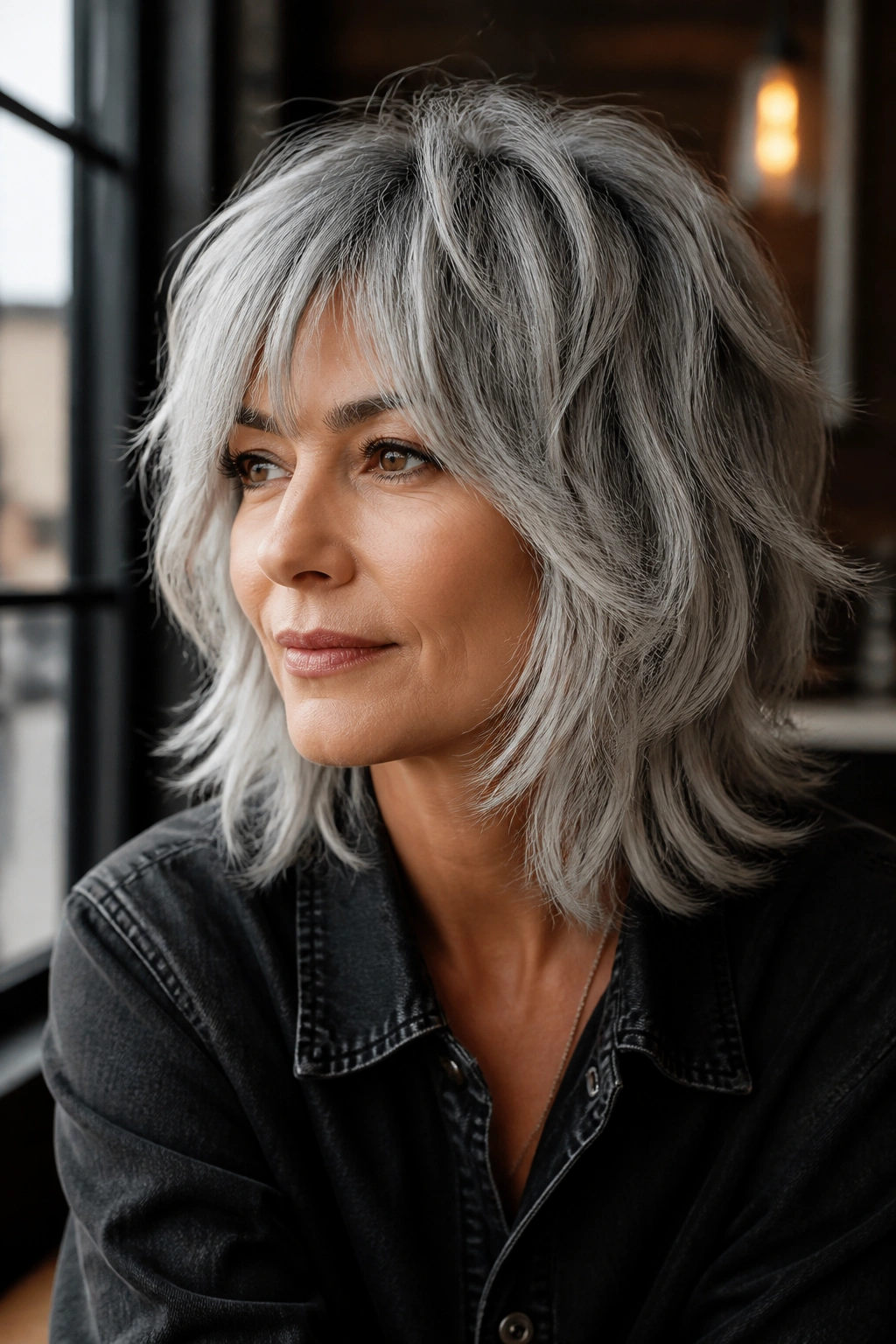
The “shag” haircut is back, and it looks phenomenal in silver. By keeping the roots a bit darker—either through a natural “shadow root” or by letting your natural dark gray grow in—you give the haircut a lot of depth. The layers of a shag can sometimes look thin if the color is too light and solid. Adding that root depth makes the hair look thicker.
This look is all about texture. Silver hair tends to be a bit more “grabby” than pigmented hair, which actually helps with a messy, shaggy style. It holds volume better. You can use a sea salt spray or a dry texturizer to really play up the “lived-in” vibe. It’s a rock-and-roll take on gray hair that proves silver isn’t just for “mature” styles.
A shadow root also saves you a lot of money. Instead of being at the salon every four weeks for a root touch-up, you can go eight or even twelve weeks. The transition from the dark root to the silver lengths is already part of the look. It’s the smart way to wear a high-maintenance color.
13. Stormy Weather Gray
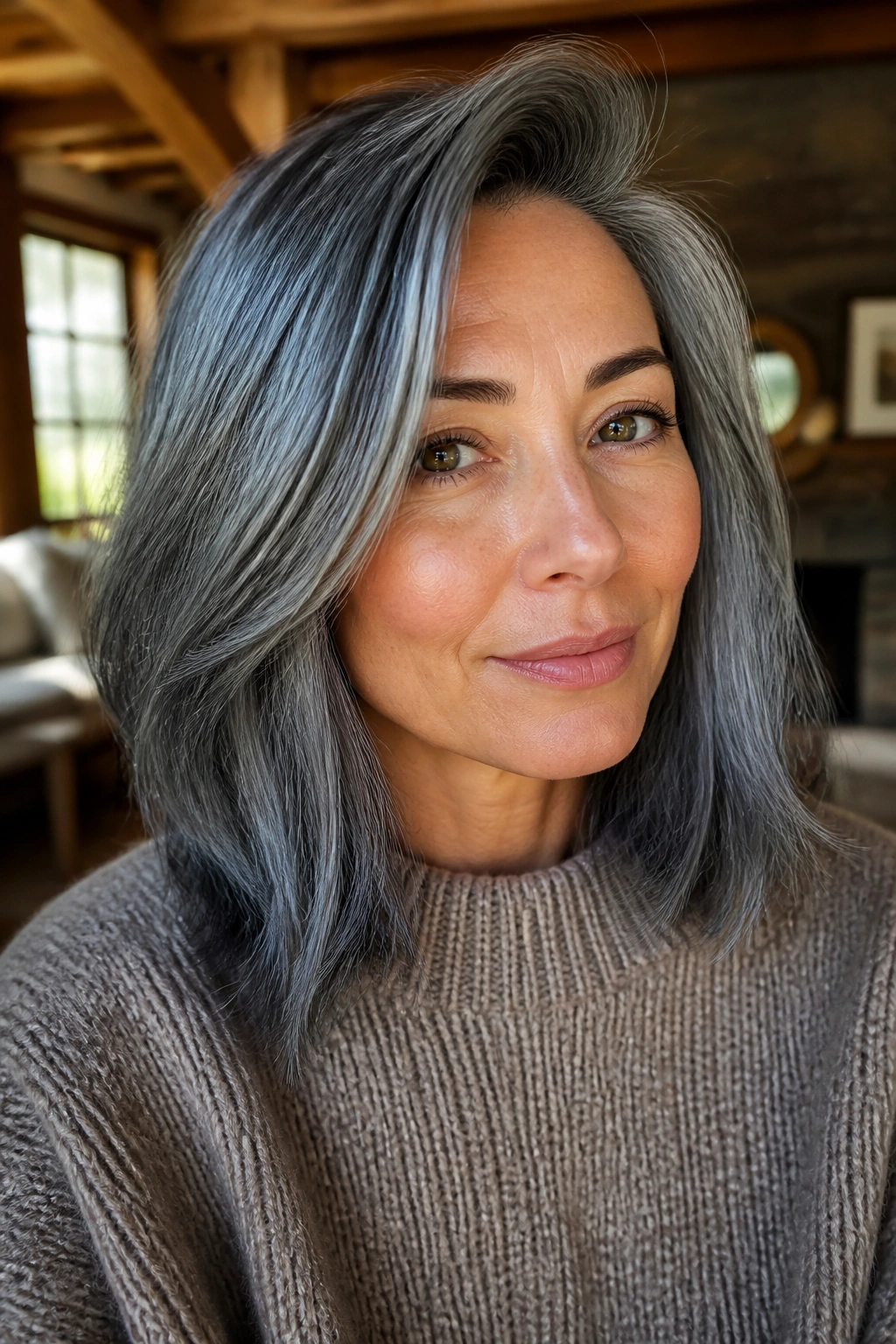
Imagine the color of the Atlantic Ocean during a thunderstorm. This is “Stormy Weather Gray.” it’s a medium-toned gray that has a lot of movement. It isn’t a flat color; it’s a mix of deep slate, light silver, and a hint of a “teal” undertone. It’s one of the most unique colors in the silver family.
What Makes It Stand Out
Most silver hair is either “white” or “black.” This sits right in the middle. It’s a true gray. Because it has that slight green/blue undertone, it’s exceptionally flattering for people with “olive” skin. Usually, silver can make olive skin look a bit “sallow” or yellow, but the “stormy” tones in this shade harmonize with those green undertones in the skin.
How to Get the Look
- The Base: Lift hair to a level 9 (not quite as light as platinum).
- The Toner: Ask for a mix of “Steel,” “Titanium,” and a drop of “Emerald.”
- The Cut: Looks best on shoulder-length hair with blunt ends.
14. Rose Gold Silver
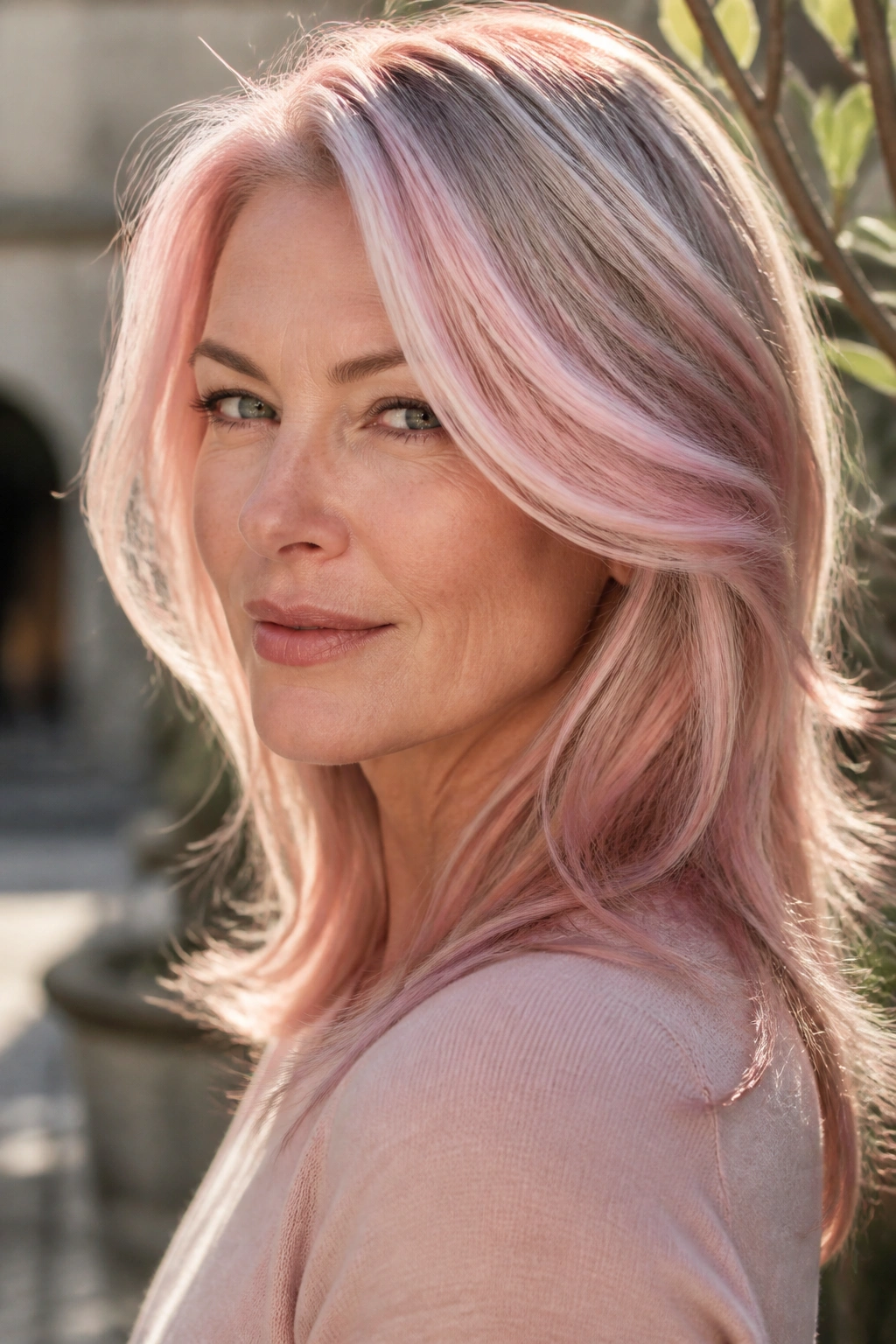
This is the “sunset” version of silver hair. By adding a tiny amount of rose or pink pigment to a silver base, you get a color that looks like glowing metal. It’s warm, inviting, and very soft. If you’re worried that gray hair will make you look “cold” or “unapproachable,” this is the solution.
Unlike a traditional rose gold, which is very pink and gold, this is mostly silver. The pink is just a “blush” on the surface. It’s particularly beautiful in the sunlight. When you’re indoors, it might look like a standard silver, but once you step outside, the rose tones catch the light and give your skin a healthy, pinkish glow.
I love this for people who are transitioning from being a redhead to being gray. The pink tones bridge the gap between their old identity and their new one. It’s a gentle transition that feels very feminine and modern. It requires a “pink” toning shampoo rather than a purple one to keep that rosy hue from fading into a standard gray.
15. Silvery Money Piece
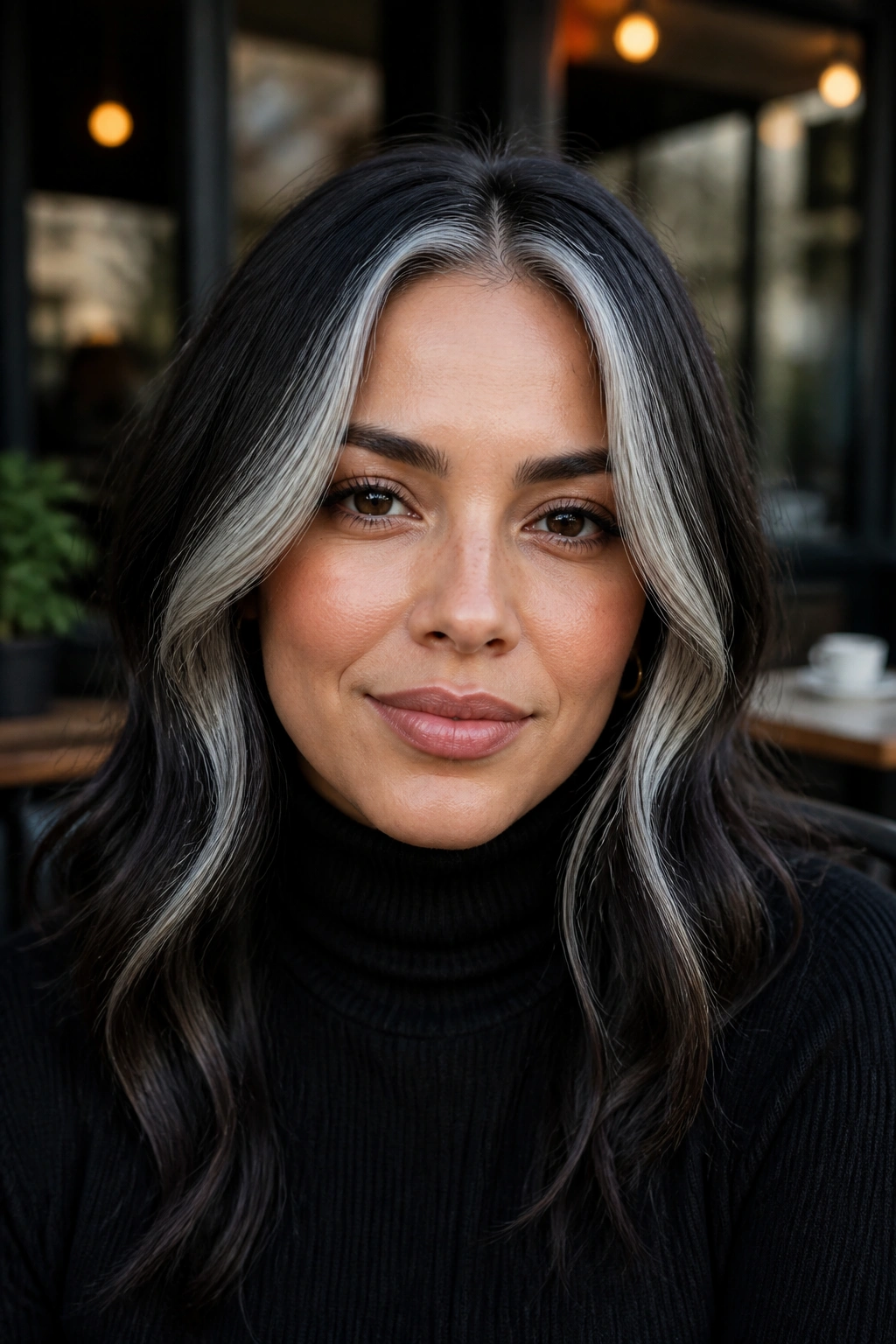
You don’t have to commit your entire head to the silver cause. A “money piece” is a technique where only the two strands of hair framing the face are lightened. This is a brilliant way to “test drive” silver. It provides all the face-brightening benefits of silver without the massive commitment of a full-head bleach.
Why This Is a Winner
It’s a high-impact, low-effort move. By lightening the hair around your face, you draw attention to your eyes and cheekbones. It’s like wearing a permanent highlighter. The rest of your hair can stay its natural dark gray or brown, which creates a stunning “halo” effect.
The How-To
- Width: Keep the strands about half an inch wide for a subtle look, or go an inch wide for a “90s-inspired” bold statement.
- Blending: Ensure the stylist “foils” the strands right up to the root for maximum impact.
- Toners: Match the silver to your eye color. Cool silver for blue eyes, “Oyster” silver for brown eyes.
16. Moonstone Silver
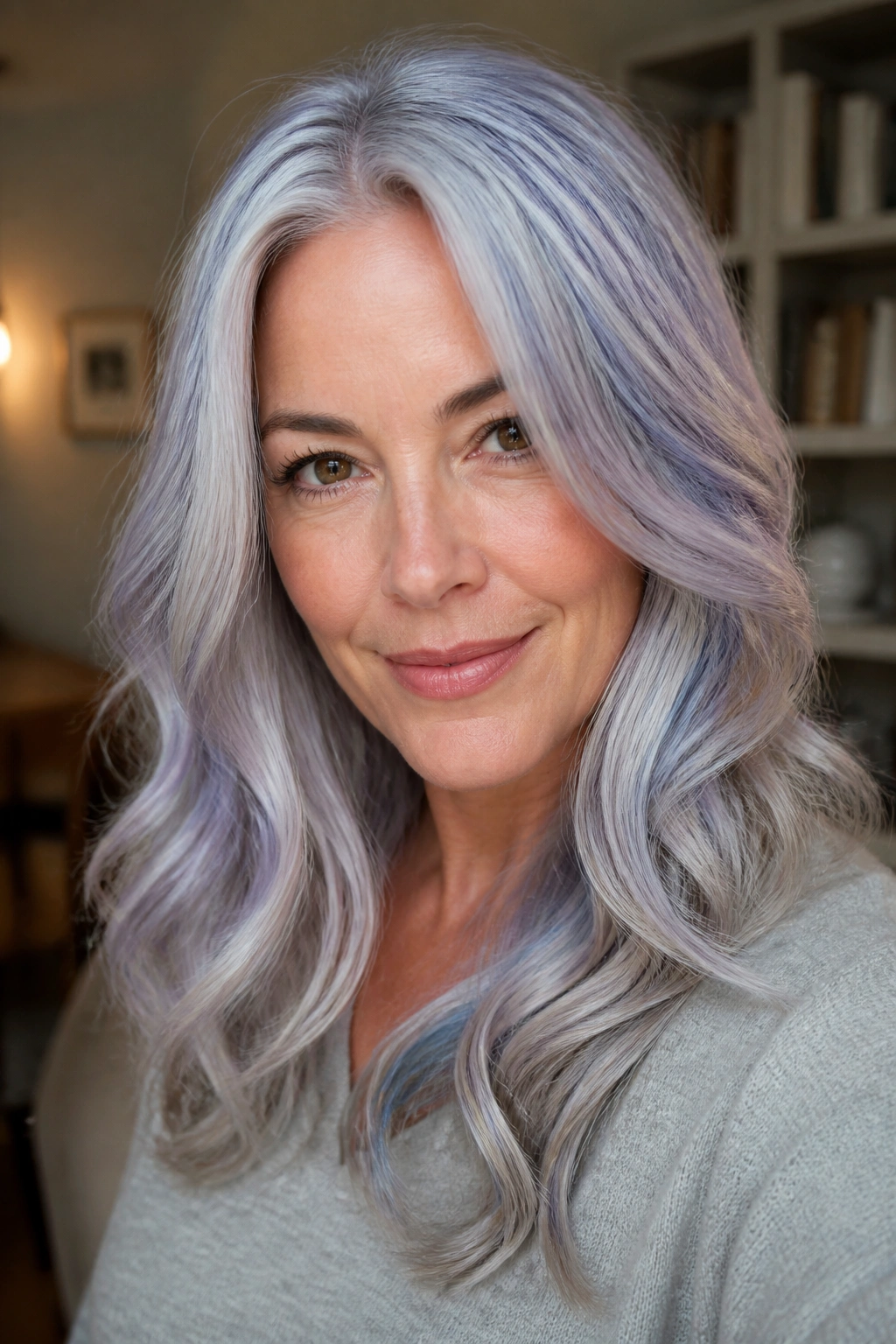
Moonstone silver is all about that ethereal, “inner glow” look. If you’ve ever looked at a moonstone gem, you know it has a milky, white base with flashes of blue and violet. Recreating this on hair requires a very skilled colorist who can do “hand-painted” highlights in slightly different silver tones.
This is not a “flat” color. It’s a dimensional masterpiece. It’s best for people with fine hair, as the different “flashes” of color create the illusion of more hair strands. It’s a very “dreamy” look that feels almost like something out of a fantasy novel, yet it’s grounded enough to look chic with a black turtleneck and minimalist jewelry.
Pro tip: To keep the “moonstone” effect, you need to use a clarifying shampoo once a month to remove mineral buildup from your water. Minerals like calcium and magnesium can create a film on the hair that kills that specific “glow.” Just be sure to follow it up with a heavy-duty moisture mask.
17. Deep Steel Gray
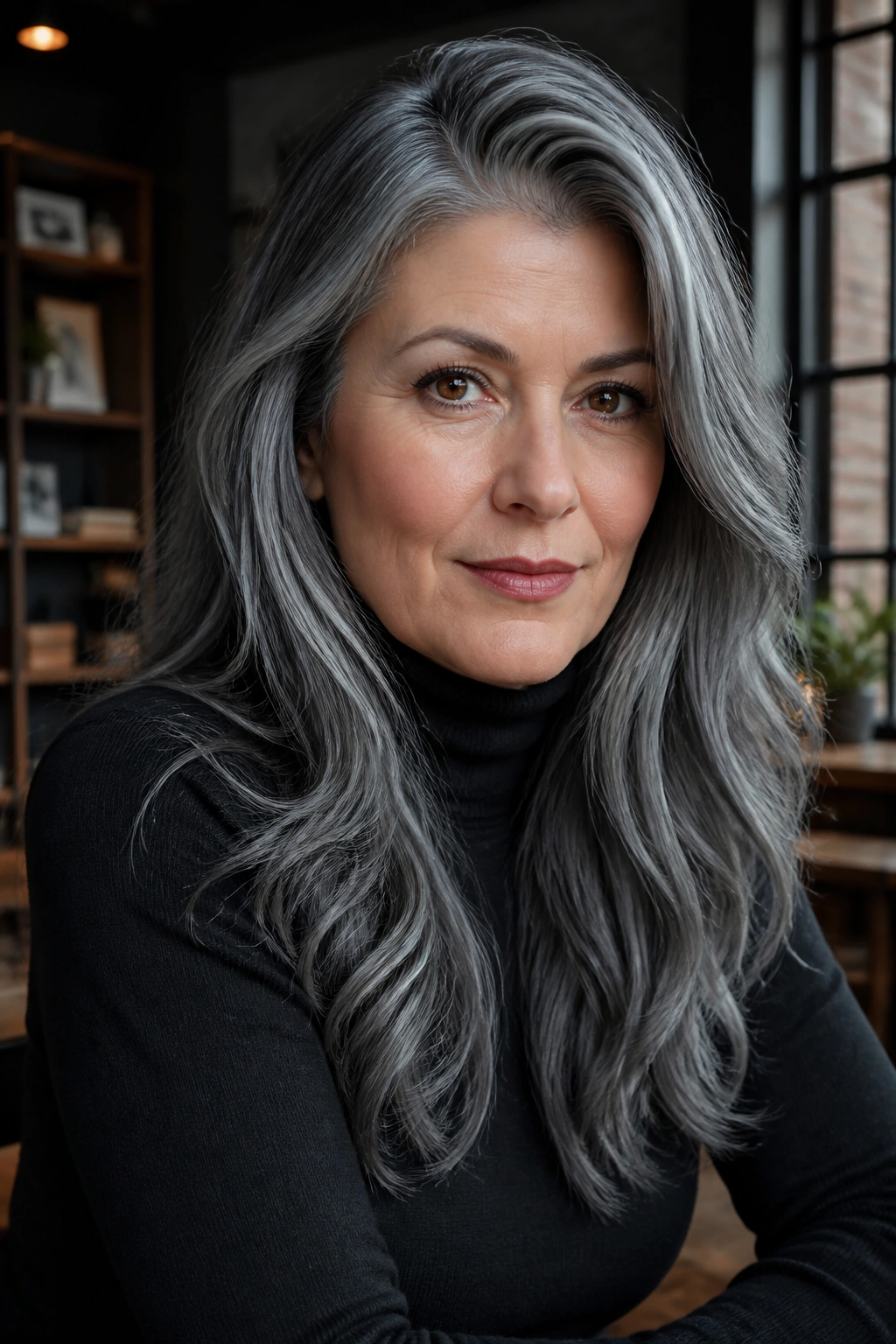
Steel gray is the more masculine, rugged brother of the silver family. It’s a heavy, dense color that looks like solid metal. It doesn’t have the “transparency” of white or platinum. It’s a very saturated gray. This is an incredible choice for people with very thick, coarse hair because the hair’s natural “weight” complements the “heavy” look of the color.
Who Should Try It?
If you have a lot of natural “texture” or “frizz,” deep steel gray can actually make your hair look more controlled. The dark pigment fills in the hair’s cuticle, making it feel smoother and more substantial. It’s also one of the best colors for “silver foxes” who want to look distinguished but modern.
Practical Application
- Style: Works best with a high-shine pomade or wax. You want it to look “greased” and reflective.
- Coloring: Often done as a “tint back,” meaning you might bleach the hair first and then dye it down to this specific gray.
- Longevity: One of the longest-lasting silver shades because the pigment is so dense.
18. Champagne Silver
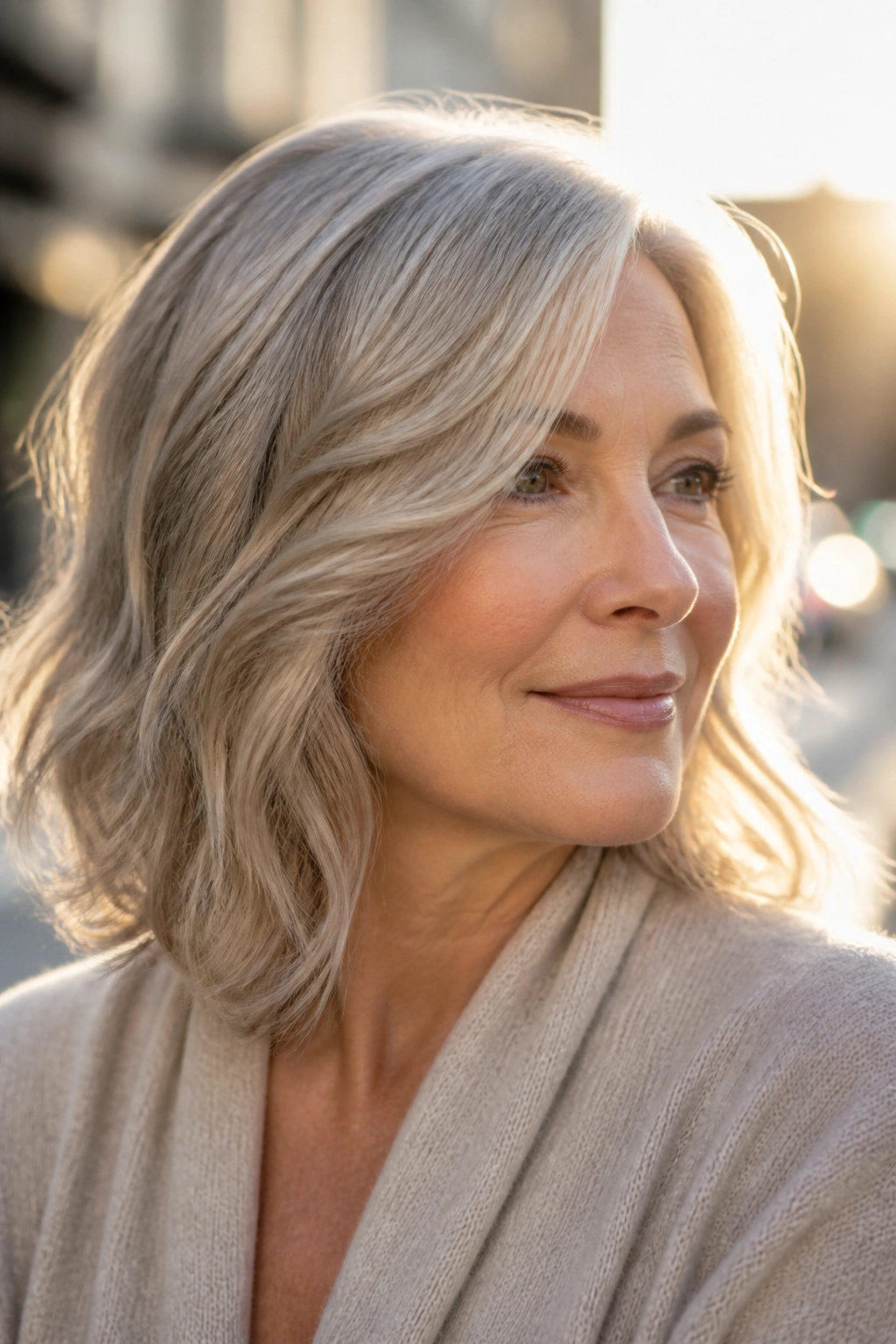
This is the “luxury” option. Champagne silver has a very slight “beige” or “gold” undertone, but it’s still firmly in the silver family. Think of it as a very, very cold blonde. It’s the perfect color for people who find that “pure” silver makes them look washed out or “ghostly.”
The champagne tones add a “skin-like” quality to the hair. It harmonizes with the warmth in human skin much better than a blue-based gunmetal. It looks very “old money”—refined, expensive, and classic. It’s a great choice for someone who wears a lot of gold jewelry, as the warmth in the hair will tie the whole look together.
Maintenance for champagne silver is actually easier than for icy silver. You don’t want to use a heavy purple shampoo every time, or you’ll kill that beautiful champagne warmth. Instead, use a “neutral” shampoo for color-treated hair and only use the purple toner once every three weeks. You want to preserve that “hint of honey” that makes the color so special.
19. Iridescent Pearl
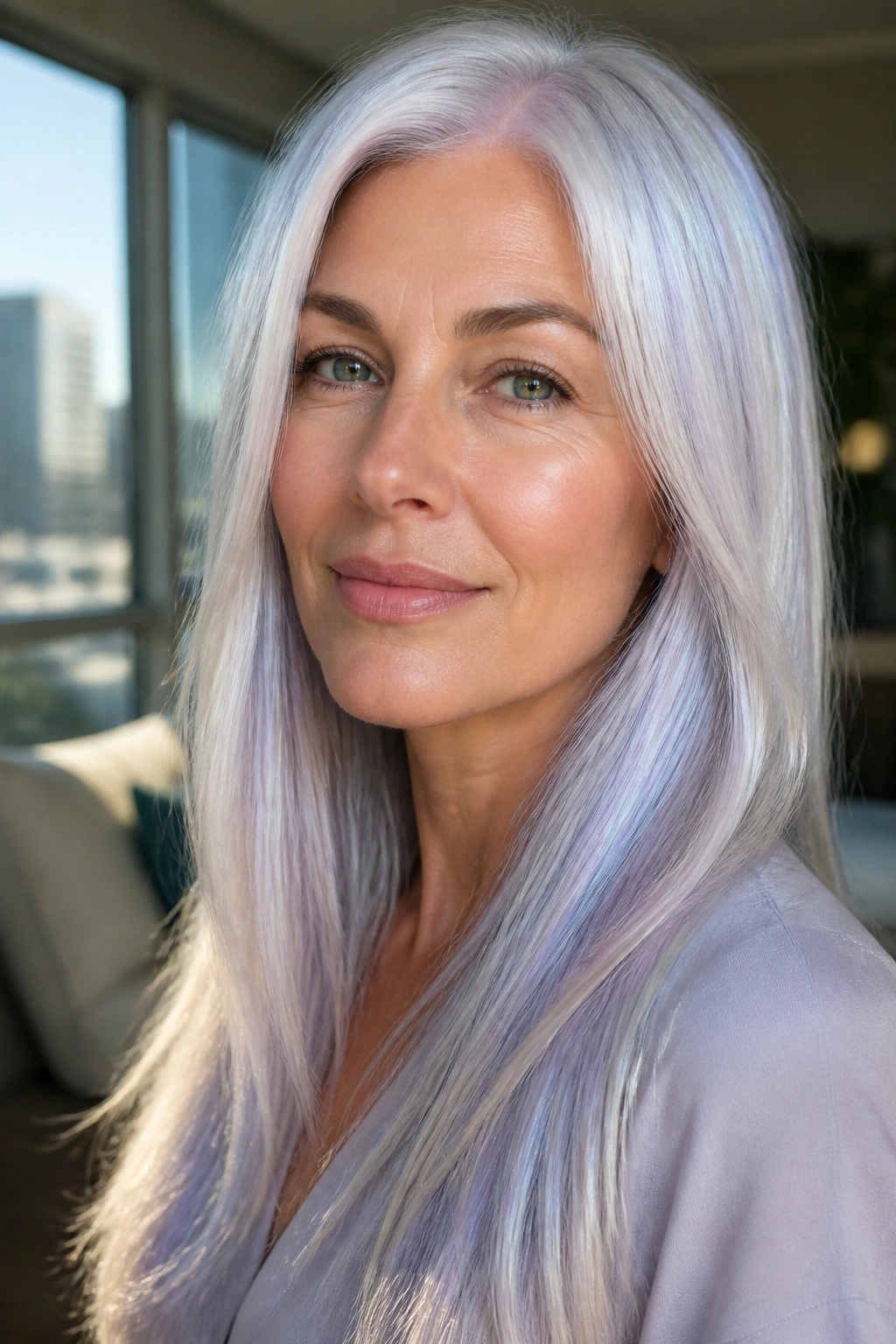
This is the “next level” of the silver trend. Iridescence is notoriously hard to achieve on hair, but when it’s done, it’s magic. It involves using “holographic” hair dyes that reflect different colors depending on the angle of the light. On a silver base, this looks like a shimmering oil slick—but in a clean, pearlescent way.
Question: Can you do this at home? Answer: Absolutely not. This is a highly technical “master-class” color. It involves “micro-layering” toners in very specific sections. If you try this at home, you’ll likely end up with a muddy, multi-colored mess. This is the kind of color you go to a specialist for, and you should expect to pay a premium for it.
How to Style It
Because the color is so complex, the hair needs to be kept very simple. A long, straight “glass hair” look is the only way to really show off the iridescence. If you curl it too tightly, the colors will “clump” together and lose that shifting, pearl-like quality. It’s a high-fashion, high-maintenance choice for someone who wants their hair to be the main event.
20. Frosted Silver Highlights
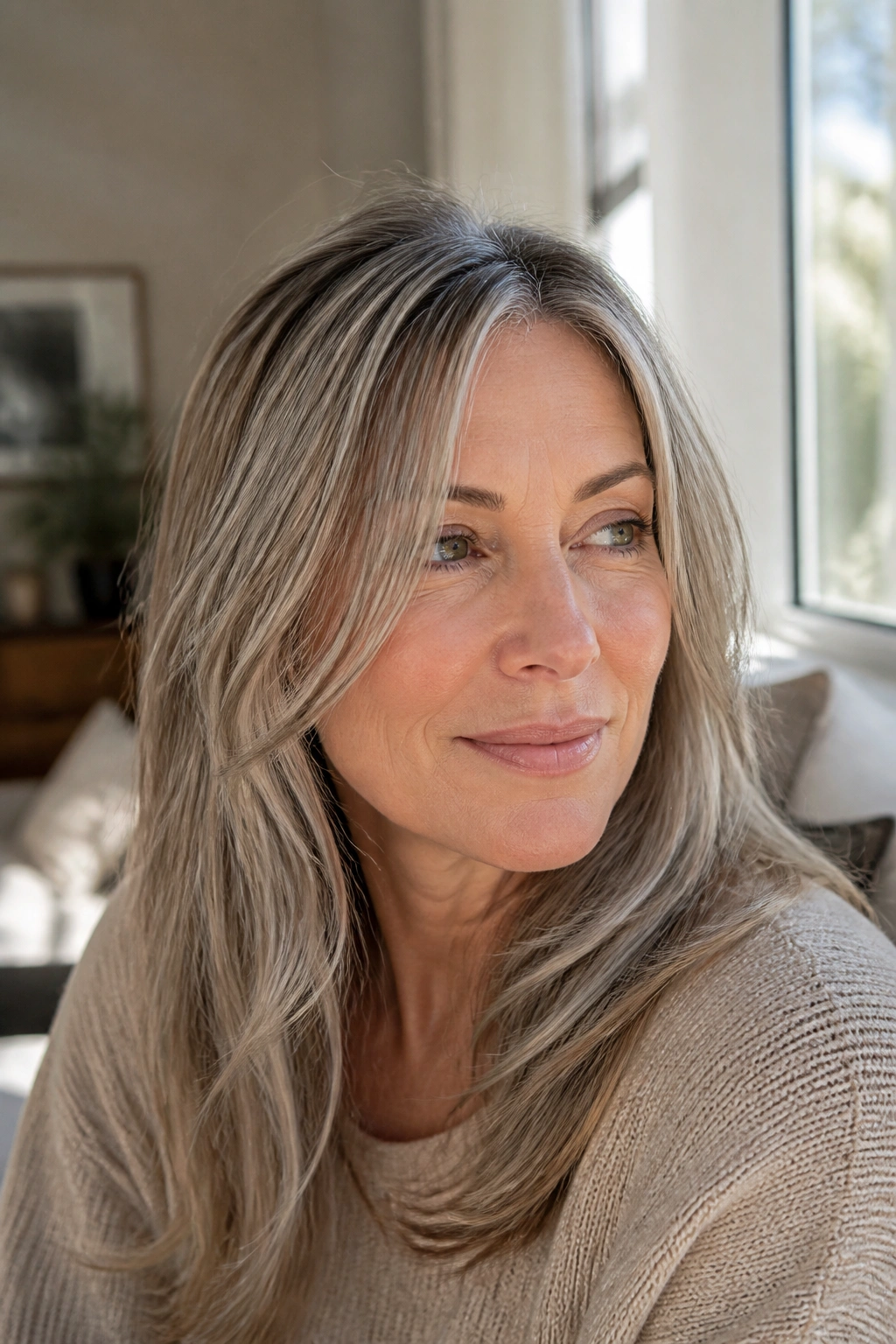
“Frosted” hair got a bad reputation in the early 2000s, but the modern version is stunning. Instead of “chunky” highlights, the modern frosted look uses “babylights”—extremely thin, woven sections of silver. This mimics the way frost looks on a windowpane. It’s a very delicate, “sparkling” look.
This is the best way to “blend away” your first few grays. By adding these tiny silver “frost” highlights throughout your natural color, the real grays just look like part of the highlights. It’s a camouflage technique that looks like a high-end salon service. It works on every base color, from blonde to deep brunette.
It’s also very “forgiving.” Because the highlights are so thin, you don’t get a “stripey” look as they grow out. It just looks like your hair is getting lighter over time. It’s a great option for someone who is busy and can’t commit to a strict salon schedule. You can go months between “frosting” sessions.
21. Solid Titanium
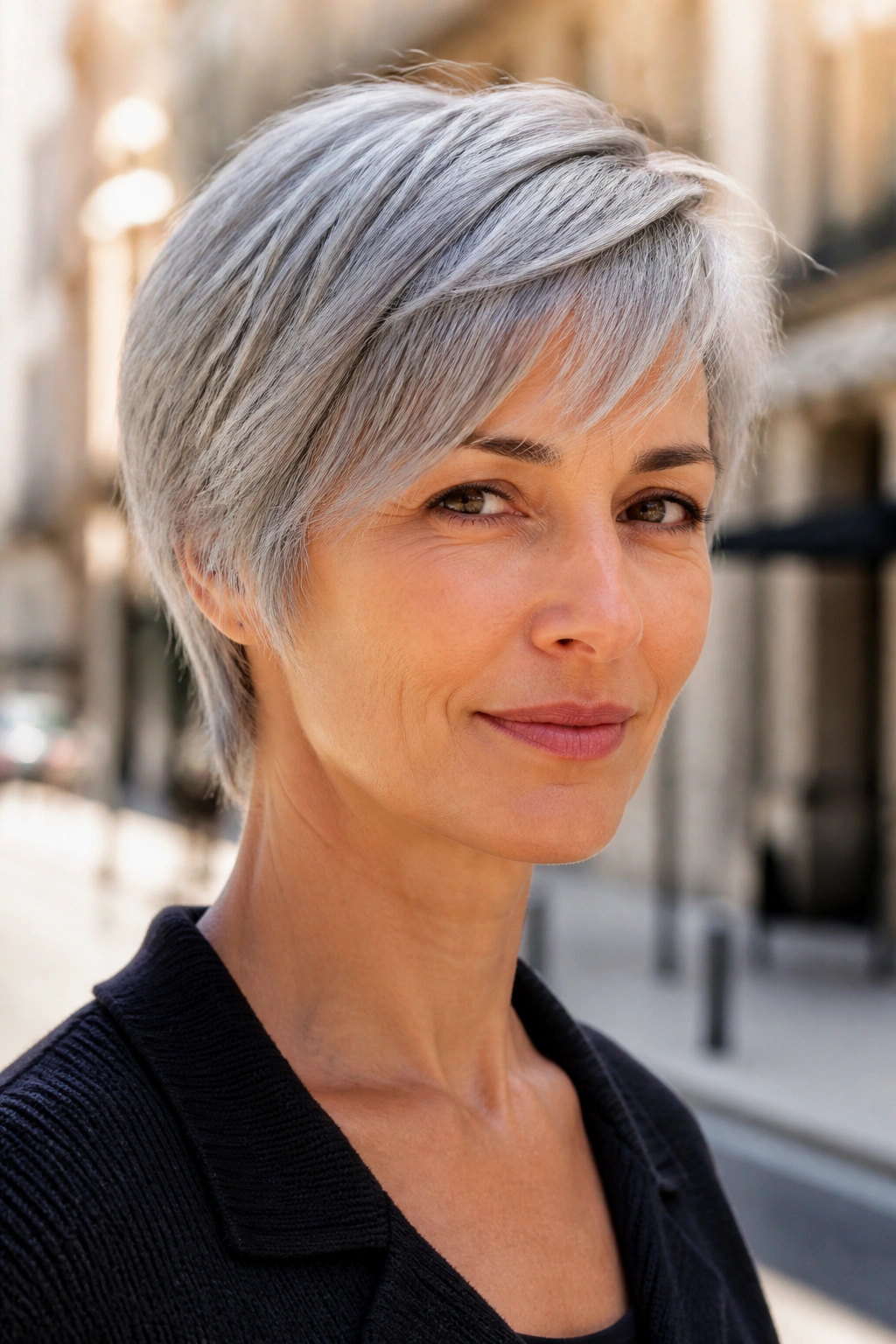
Titanium is a “medium-dark” silver with a very neutral undertone. It’s not blue, it’s not purple, and it’s not yellow. It is just… gray. This neutrality is what makes it so striking. It looks “industrial” and very modern. It’s a “solid” color, meaning there are no highlights or lowlights—just one uniform shade from root to tip.
What Makes It Stand Out
The uniformity. Most hair has natural variation, but solid titanium is a deliberate “monochrome” look. It’s very “editorial.” It looks incredible on people with sharp, angular features. If you have a strong jawline or high cheekbones, this color will emphasize them.
Quick Facts
- Skin Tone: Works on everyone because it is neutral.
- Coloring: Requires a “double process” (bleach then a high-pigment gray dye).
- Style: Looks best on short to medium lengths. Long, solid titanium hair can sometimes look like a wig because of the lack of variation.
Pro tip: Since this is a solid color, any split ends will show up immediately. Keep your ends trimmed every six weeks to maintain that “solid metal” illusion.
22. Shadow Root Silver
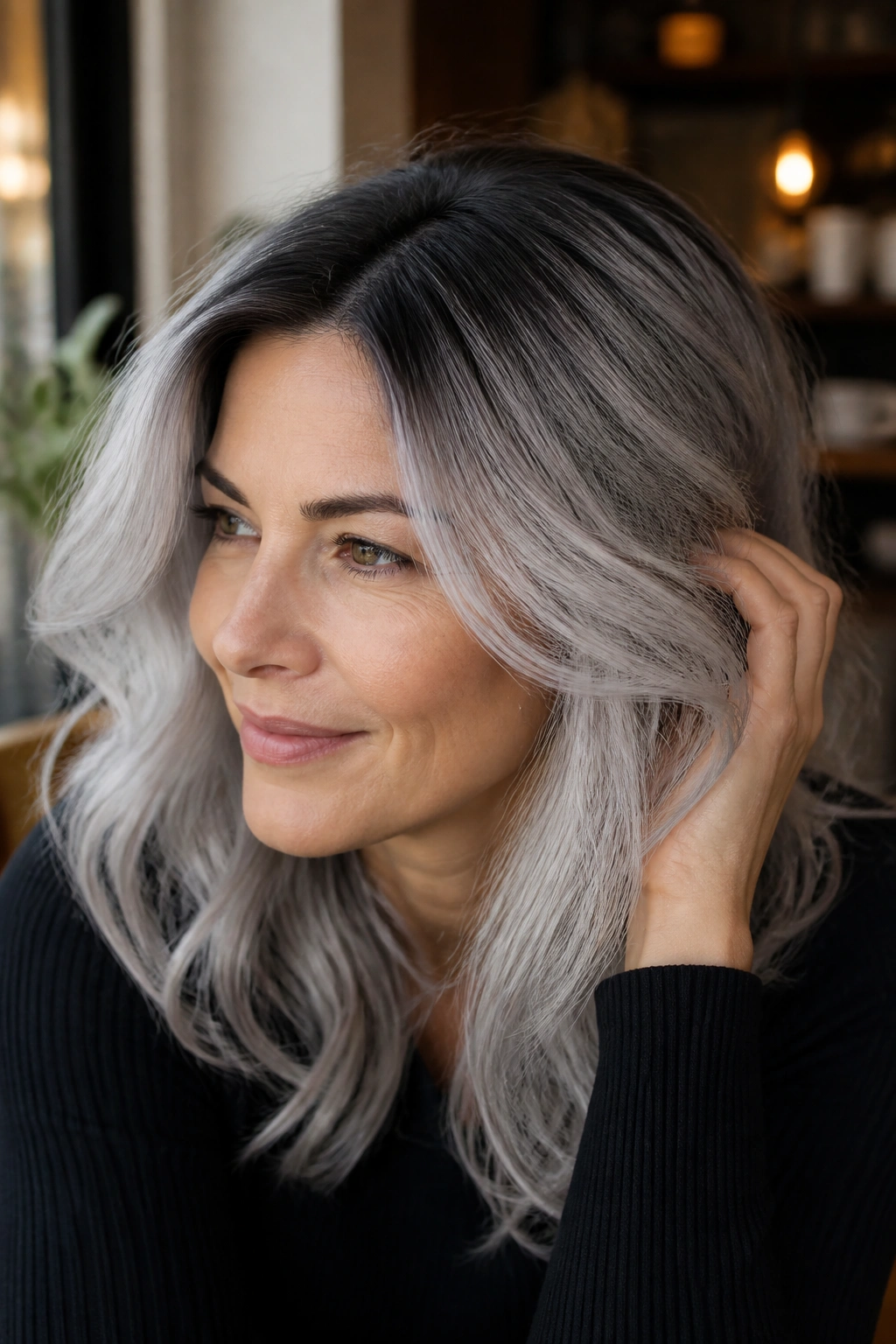
The shadow root is a lifesaver. By keeping the first inch or two of your hair its natural dark color (or dyeing it a darker gray), you create a “shadow” that gives the hair depth and makes the silver lengths pop. It also saves your scalp from the irritation of constant bleaching.
This is the most “practical” way to wear silver. It bridges the gap between your natural self and your “silver” self. It’s especially good for people with thin hair. A solid light color can make the scalp “peek through,” making hair look thinner. The dark shadow root hides the scalp and makes the hair appear much denser at the base.
When you go to the salon, ask for a “root smudge.” This is the technique where the stylist uses a brush to “pull” the dark color down into the silver, creating a soft, blurred transition. It should look like a natural shadow, not a “line” where one color stops and the other begins.
23. Silver and Lilac Melt
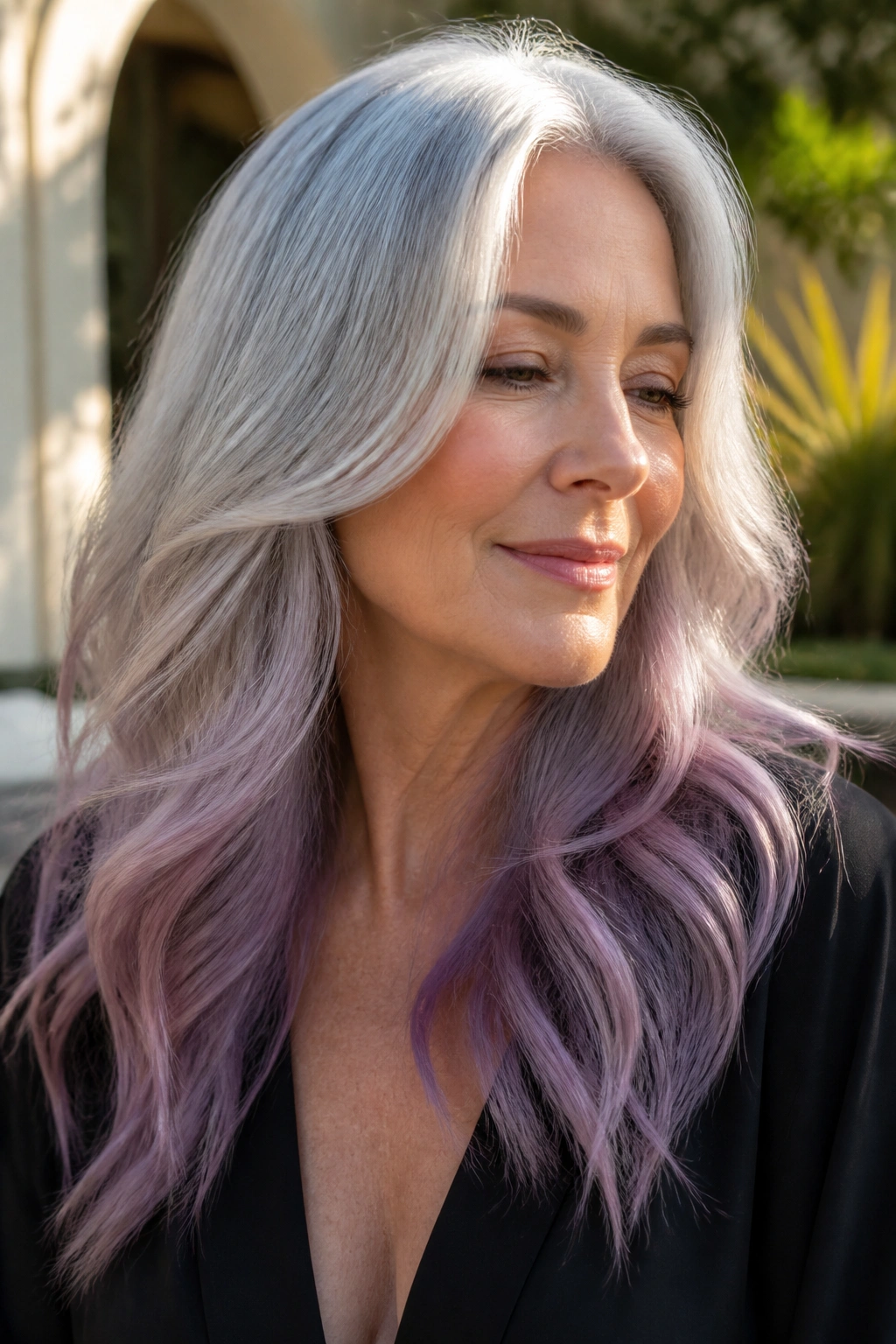
“Melting” is a technique that is even smoother than an ombré. It looks like the colors have literally “melted” into one another. A silver and lilac melt is a whimsical, beautiful choice. The top of the hair is a crisp silver, which slowly “melts” into a soft, pastel lilac at the ends.
Why This works
Silver and purple are “color wheel neighbors.” They share the same cool DNA. This makes the transition feel very natural to the eye, even though the colors themselves are “fantasy” colors. It’s a great way to add a bit of personality to your look without it feeling “loud.”
How to Maintain the “Melt”
- Wash in sections: Try to keep the silver top and the lilac bottom separate as you wash them to prevent the purple from “bleeding” into the silver.
- Cold water only: This is non-negotiable for fantasy melts.
- Avoid salt water and chlorine: These will strip the lilac in a single swim.
24. Butter-Soft Silver
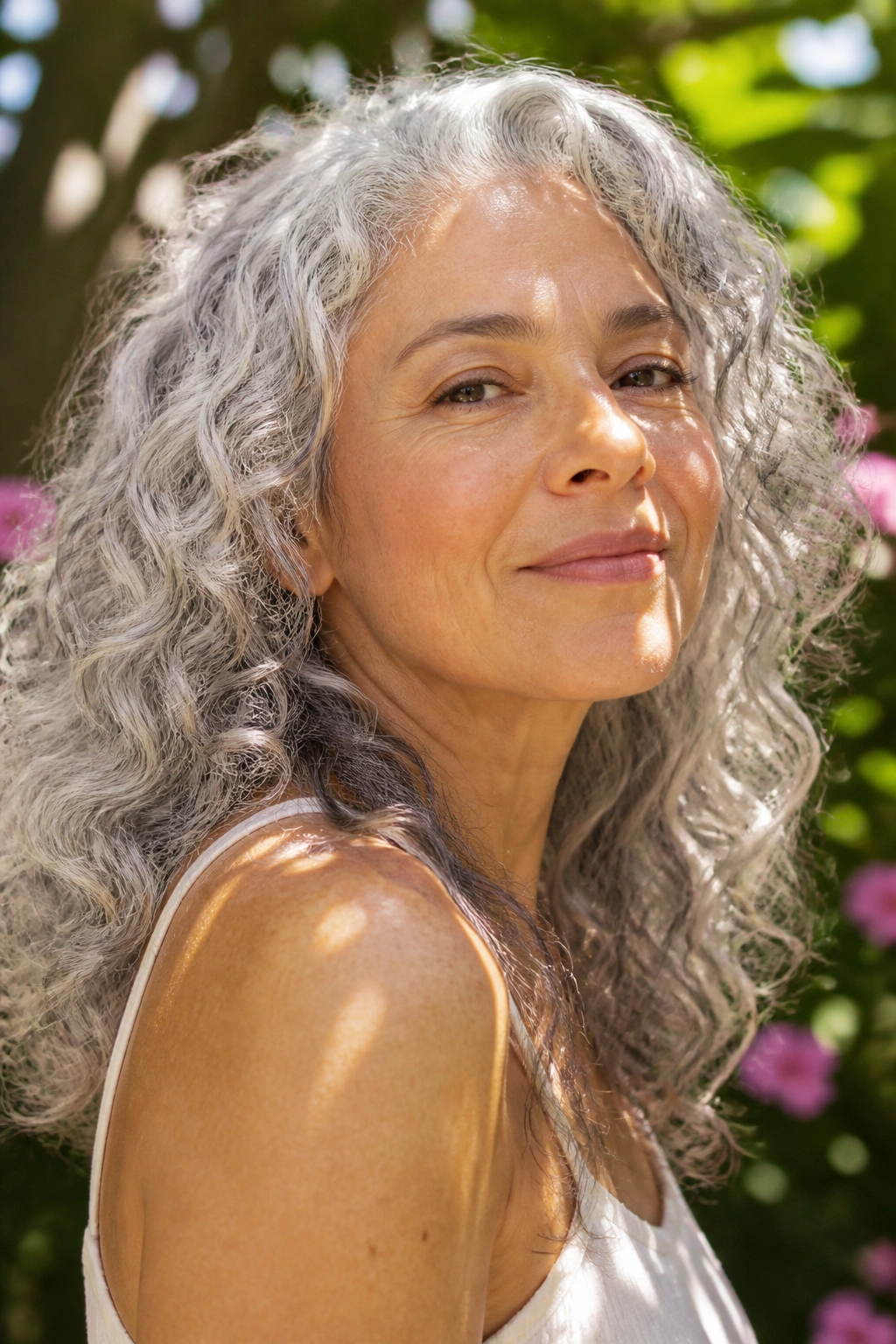
Most silver hair looks “hard”—metallic, icy, or sharp. “Butter-soft” silver is the opposite. It’s a matte, powdery silver that looks like it has been dusted with flour. It has a very “soft focus” look. It’s achieved by using a “matte” toner rather than a high-shine one.
This looks incredible on people with curly or wavy hair. Usually, silver can make curls look a bit “dry” or “frizzy” because of the way light hits the metallic pigment. The “matte” finish of butter-soft silver actually makes curls look softer and more defined. It’s a very “romantic” version of the gray trend.
Because it’s a “matte” look, you don’t need to worry as much about “glass-like” shine. You can embrace your hair’s natural texture. Use a cream-based leave-in conditioner to keep the hair looking “plump” and “soft.” It’s the “boho” version of silver hair.
25. Glimmering Slate
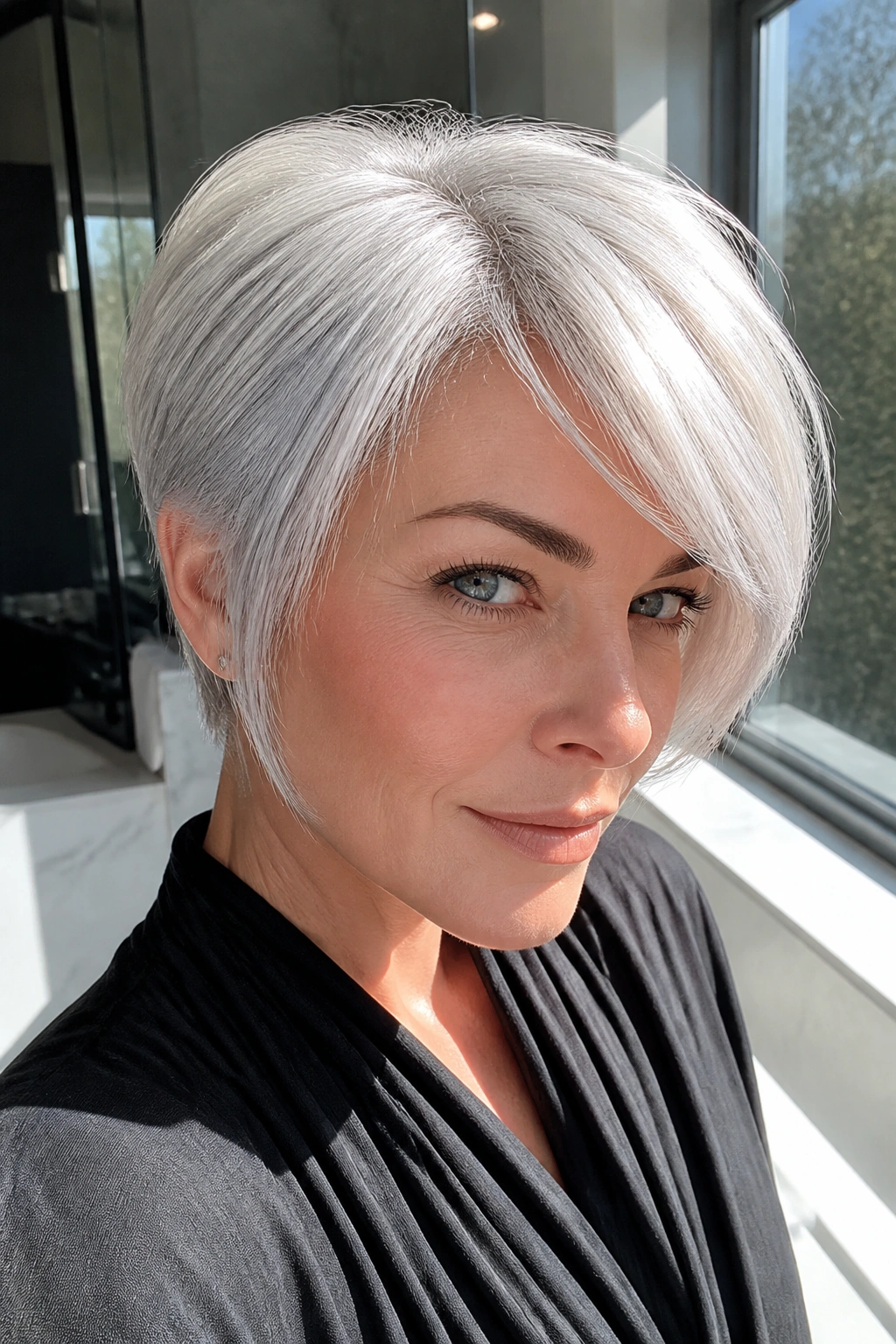
Slate is a “darker” medium gray that has a very “stone-like” quality. It’s not as dark as charcoal, but it has more “weight” than pewter. It’s a very earthy, natural-looking gray. If you were to look at a piece of slate rock after a rainstorm, that’s exactly what this color looks like.
The Science of Slate
Slate tones often have a “green” or “ash” base. This makes them exceptionally good at hiding “red” in the hair. If you have a lot of natural warmth that usually “eats” cool dyes, slate is strong enough to hold its own. It’s a “tough” color.
Who it’s Best For
- Busy People: It fades very gracefully. It just becomes a lighter gray over time rather than turning a weird color.
- Outdoor Lovers: It’s more resistant to UV fading than the lighter “icy” shades.
- Texture Lovers: Looks great on “disheveled” or messy styles.
26. High-Shine Chrome Gloss
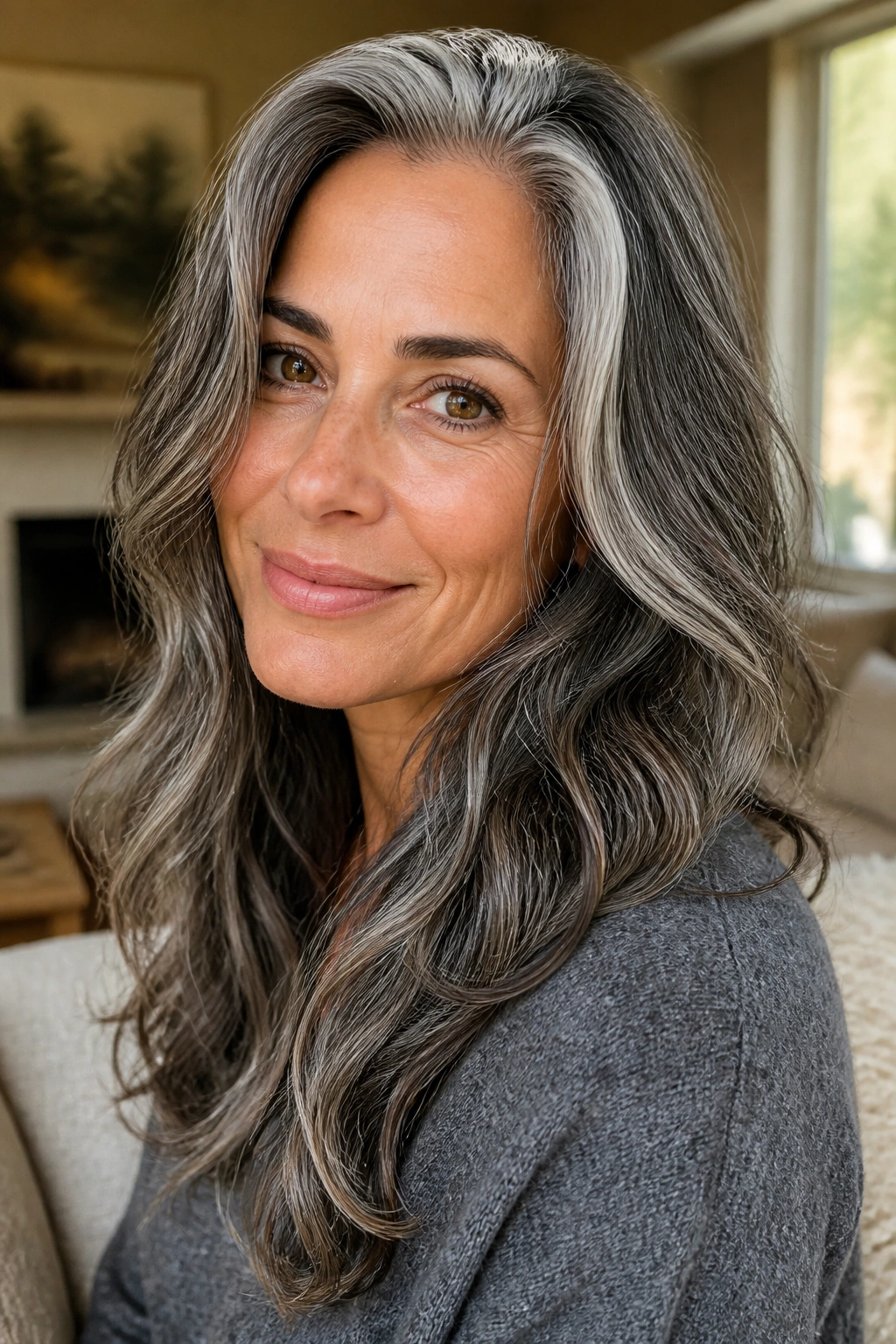
This is the “finish line” of silver hair. It’s less about a specific “color” and more about the “finish.” Chrome hair looks like a mirror. It is so reflective that it’s almost distracting. It’s achieved through a combination of a very light silver dye and a “heavyweight” clear glossing treatment.
To get this look, the hair’s cuticle must be perfectly closed. If the cuticle is open (frizzy), the light will scatter, and you’ll just have “gray” hair. When the cuticle is flat and sealed, the light bounces back in a single direction, creating that “chrome” effect. This usually requires a professional “sealant” treatment at the end of the coloring session.
The Bottom Line: Chrome is a commitment to the flat iron. You won’t get this look with a rough blow-dry. It requires the heat of a flat iron to “melt” the gloss into the hair and create that perfectly flat, reflective surface. It’s a “high-glamour” look that is perfect for special events or for someone who loves a “polished” aesthetic every single day.
Protecting Your Silver from Yellowing
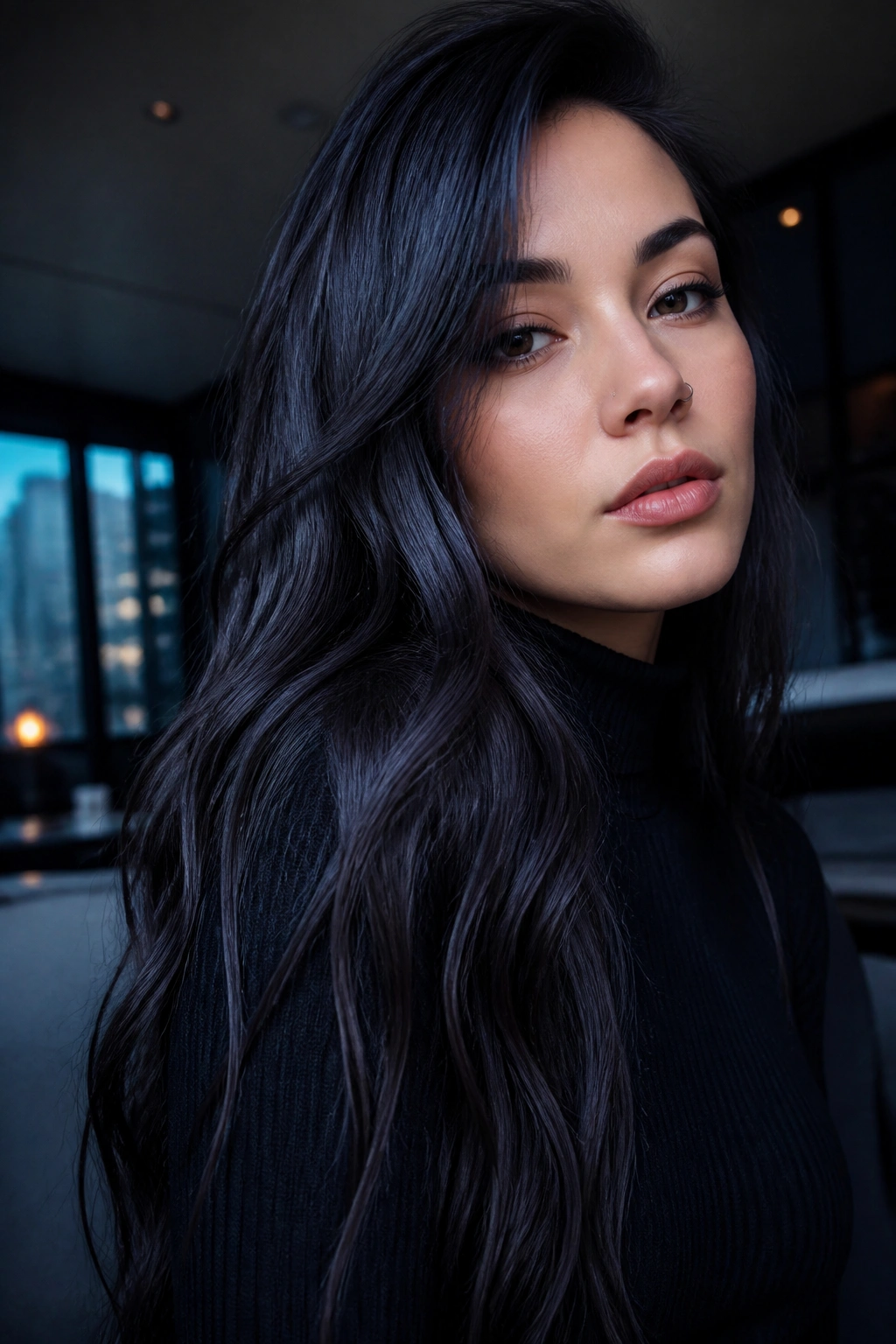
One of the most frustrating things about having silver or gray hair is how easily it can turn yellow. This isn’t usually the fault of the dye; it’s environmental. Hair is a sponge. It picks up minerals from your shower water, pollutants from the air, and even the “yellow” pigments in your regular styling products. If you’ve ever noticed your silver looking “dingy,” you’re likely dealing with mineral buildup.
The first line of defense is a high-quality purple shampoo. However, most people use it incorrectly. You shouldn’t use it every day, as it can actually make silver hair look too dark or even slightly “murky.” Instead, use it once or twice a week. Let it sit on the hair for three to five minutes—just long enough for the violet pigments to cancel out the yellow, but not so long that your hair actually turns purple.
Another “secret” is a shower filter. If you live in an area with “hard water,” you are essentially bathing your hair in rust and calcium every morning. A simple filter can remove these minerals before they ever touch your head. It is the single most effective way to keep your silver looking “icy” and “clean” for weeks longer.
The Role of Moisture and Protein
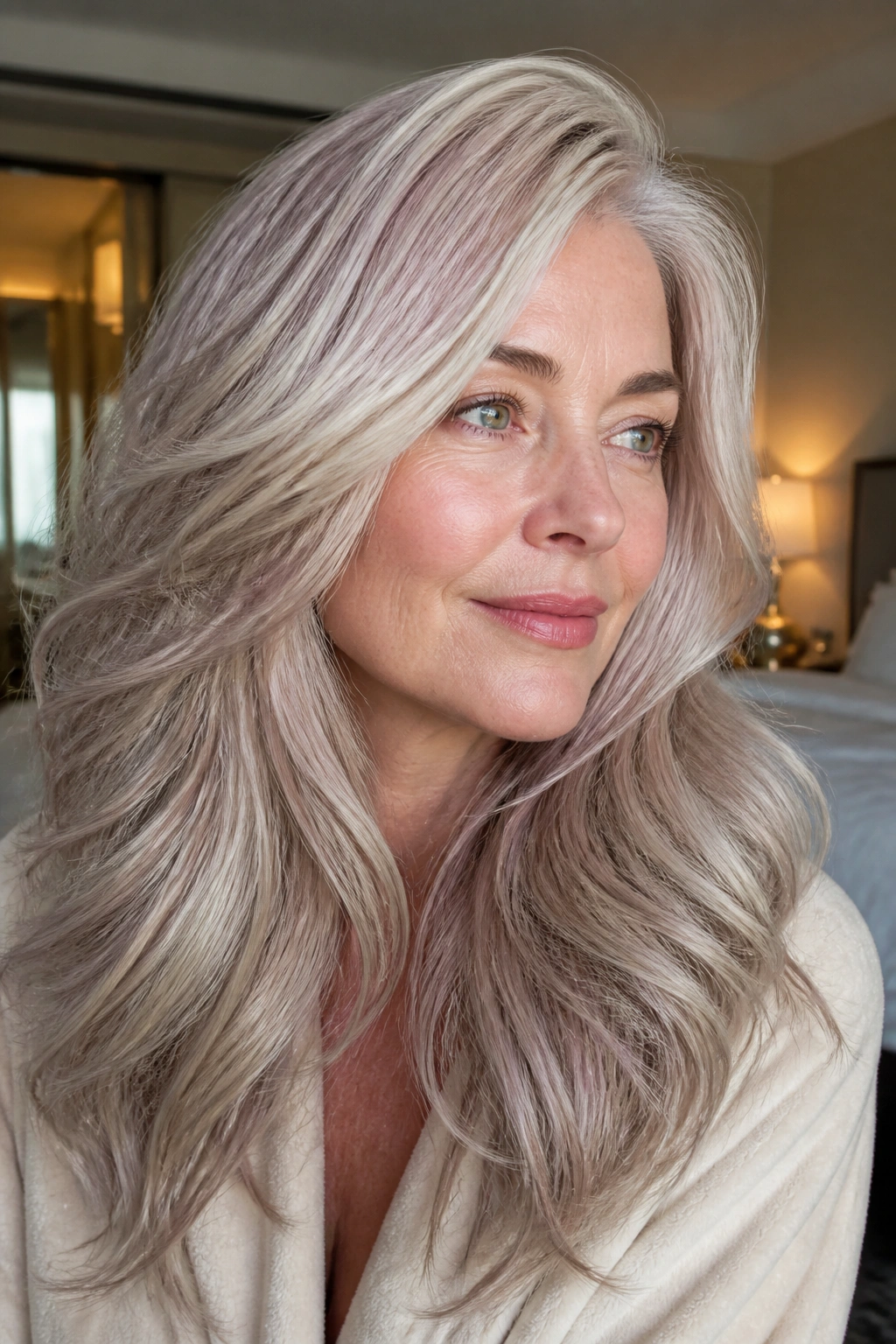
Silver hair, whether natural or dyed, is structurally different from pigmented hair. Natural gray hair is often “wiry” because it lacks the natural oils that usually accompany pigmented strands. Dyed silver hair is “porous” because of the lightening process. Both types are desperate for two things: moisture and protein.
You need to find a balance. If you use too much protein, the hair becomes “brittle” and snaps like a dry twig. If you use too much moisture, the hair becomes “mushy” and loses its shape. I recommend a “rotating” schedule. Use a deep-moisturizing mask one week, and a protein-reconstructing treatment the next. This keeps the hair “supple” but “strong.”
Also, be very careful with heat. Silver hair has no “melanin” to protect it from the sun or your curling iron. High heat will literally “scorch” the silver, turning it yellow instantly. Always use a heat protectant spray, and try to keep your tools below 350°F. If you see “steam” coming off your hair, you are cooking the color out of it.
The Bottom Line
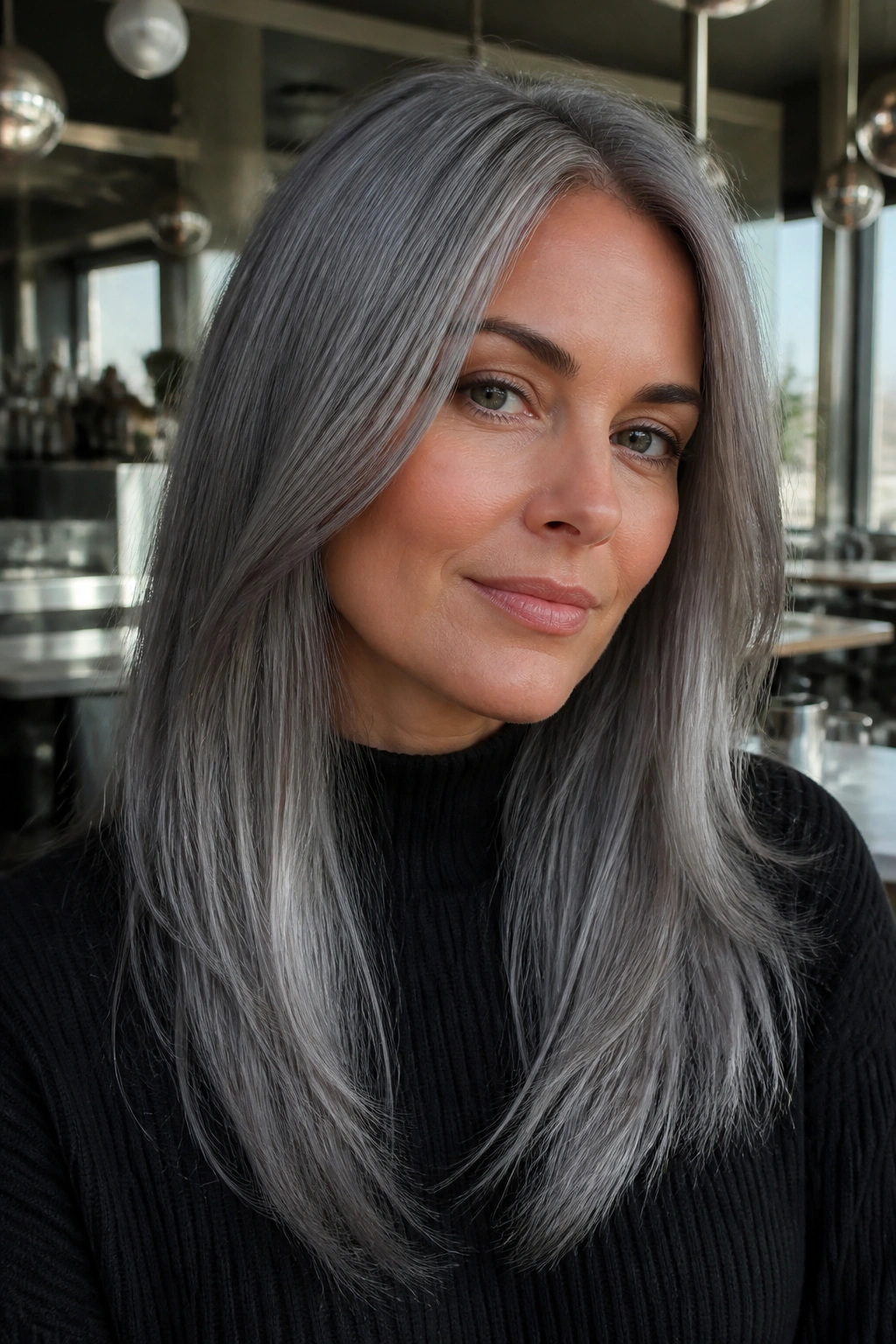
Embracing silver hair is a journey into a different kind of beauty. It moves away from the “safety” of natural tones and into something that feels more like art. Whether you choose a soft “Oyster Gray” or a bold “Gunmetal Gloss,” you are making a choice to be seen. It’s a color that requires respect and maintenance, but the result is a level of style that is truly timeless.
Don’t be afraid to experiment with the different “temperatures” of silver. Just because one shade doesn’t work for you doesn’t mean the whole category is off-limits. Work with a stylist who understands “cool” versus “warm” undertones, and don’t skip the maintenance. Silver hair isn’t just a color; it’s a lifestyle. And frankly, it’s one of the most rewarding ones in the world of beauty.
