



Most people think of “brunette” as a single, static category on a hair color chart, but that is a massive misunderstanding of what brown hair actually is. In reality, brown is a vast spectrum—a playground of depth, temperature, and light-reflecting possibilities that ranges from the inky darkness of a double-shot espresso to the translucent, honeyed glow of a sun-drenched wheat field. It is the most versatile base color in existence, yet it often gets a bad rap for being “plain” or “safe” compared to the high-maintenance flash of platinum blonde or the firecracker energy of copper red.
The truth is that finding the perfect shade of brown is an exercise in nuance. It is about understanding the subtle dance between your skin’s undertones and the pigments living inside the hair shaft. Whether you are looking for a “lived-in” look that requires a salon visit only twice a year or a high-gloss, high-impact monochromatic shade that demands attention, there is a brunette variation tailored specifically for your lifestyle.
I have spent years observing how light hits different pigments, and I can tell you that the most successful hair transformations are those that play with dimension. A flat, box-dye brown rarely does justice to a person’s features. Instead, it is the integration of “secondary” tones—violets, blues, golds, and reds—that brings the hair to life. If you have been feeling like your current shade is a bit lackluster, it is probably because it lacks these critical internal reflections.
Changing your hair color should feel like a discovery, not a chore. We aren’t just talking about “going darker” or “adding a few highlights.” We are talking about finding a signature look that makes your eyes pop and your skin glow. From the earthy, muted cool of mushroom tones to the spicy, energetic warmth of cinnamon, here is a deep exploration of the best ways to reinvent your brunette identity.
1. Mushroom Brown
The rise of mushroom brown marked a significant shift in how we view cool-toned hair. Historically, cool browns often turned “muddy” or flat, but this specific shade takes its cues from the natural, earthy gradients found in a portobello or cremini mushroom. It is a sophisticated blend of ashy brown, purple-grey, and beige that manages to look incredibly expensive without being overly shiny.
The Science of the Ash
Achieving this look requires a careful hand with toner. Because natural brown hair almost always wants to pull warm (orange or red) when lightened, a stylist must use a heavy dose of blue and violet-based pigments to neutralize those brassy tendencies. The result is a matte, “ashy” finish that looks particularly striking against cool or neutral skin tones.
Key Characteristics
- Cool Undertones: Heavily relies on grey and beige pigments.
- Low Contrast: The transition between roots and ends is usually very subtle.
- High Fashion: Pairs exceptionally well with minimalist wardrobes and silver jewelry.
- Maintenance Level: High. Ash tones are notoriously the first to fade, meaning you’ll need a blue-toning shampoo in your shower.
Pro tip: If your hair feels too “green” after an ash treatment, you’ve gone too far into the blue spectrum—ask for a pearl-based toner next time to add a hint of luminosity without the warmth.
2. Caramel Balayage
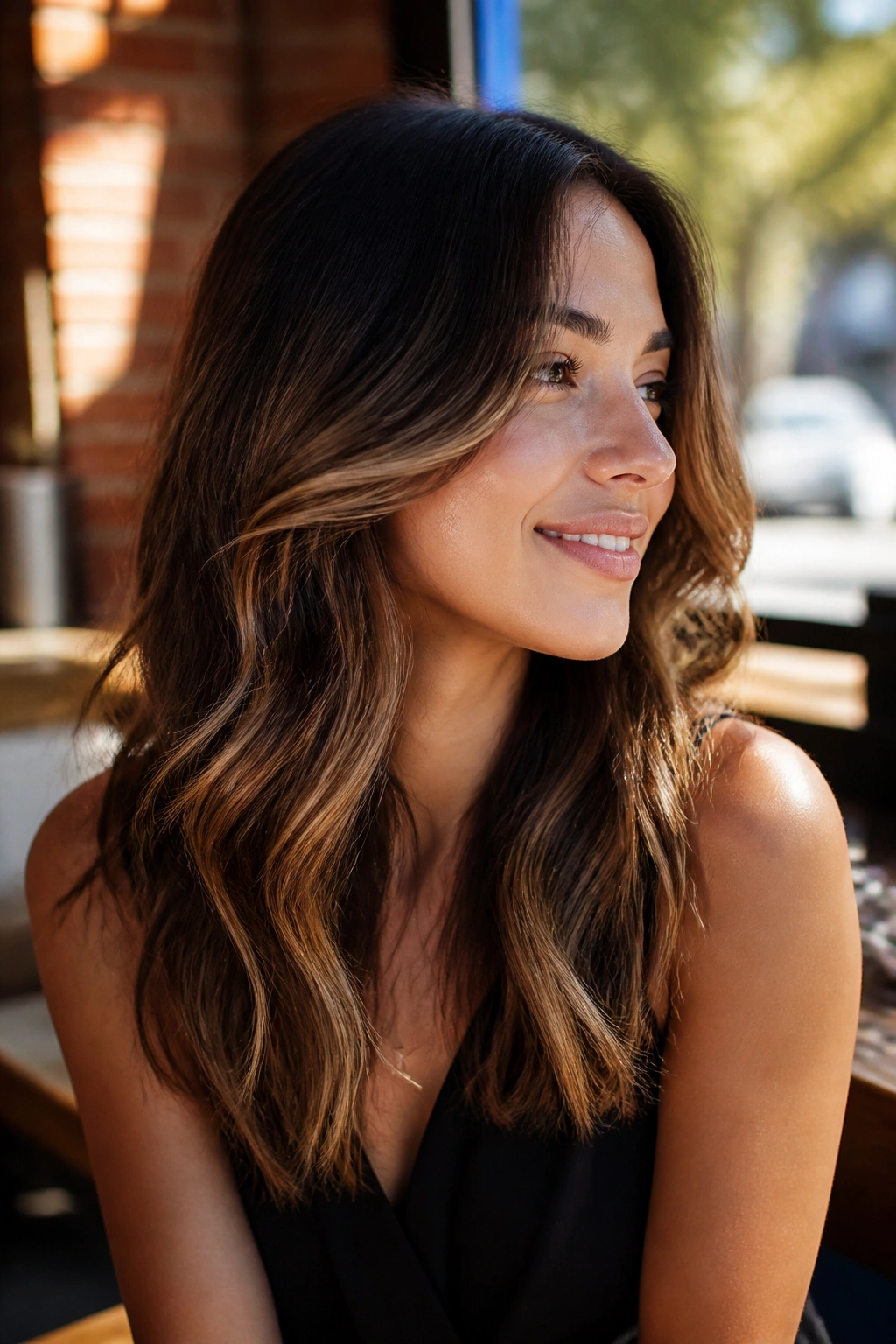
If you want to look like you’ve spent three weeks in the Mediterranean without actually leaving your house, caramel balayage is the gold standard. This technique uses hand-painted highlights to mimic the way the sun naturally lightens the hair around the face and through the mid-lengths.
Unlike traditional foil highlights that go all the way to the root, balayage allows for a “smudged” or “shadow” root. This means as your hair grows out, there is no harsh line of demarcation. It is the ultimate low-maintenance luxury. The caramel tones themselves are warm, buttery, and rich—think of the color of melted sugar.
The beauty of this approach is that it is entirely customizable. Your stylist can concentrate the “money piece” (the bright sections right in front) to highlight your cheekbones or jawline. Because the base stays your natural brunette, the hair remains healthier than it would with a full-head bleach.
3. Deep Espresso
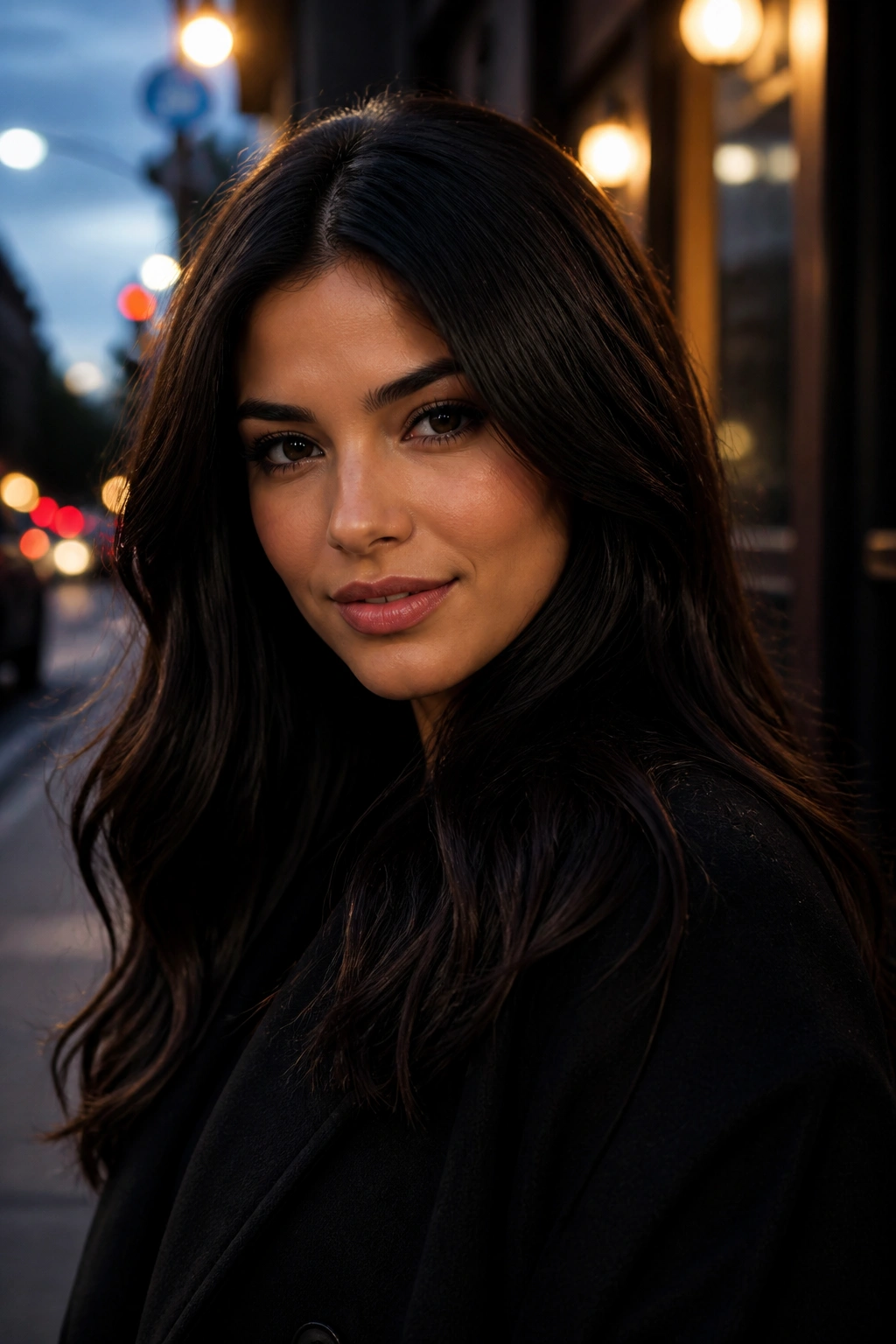
Is there anything more commanding than a monochromatic, nearly-black espresso? This isn’t just “dark brown”; it is a shade that borders on the inky, with just enough brown pigment to keep it from looking like a flat, Gothic black. It’s all about the reflection.
Why It Works
Deep espresso works because of its high-contrast nature. It provides a sharp frame for the face, making the whites of the eyes look brighter and the skin look clearer. It is particularly effective for those with olive or deep skin tones, where the richness of the brown complements the natural warmth in the complexion.
How to Maintain the Shine
- Use a clear gloss treatment every six weeks.
- Avoid hot water, which opens the cuticle and lets the dark pigment escape.
- Incorporate a lightweight hair oil to keep the “glass hair” effect alive.
Salon Secret: Ask your stylist for a “blue-black” undertone if you want a cool finish, or a “violet” undertone if you want the hair to glow with a hidden warmth when you step into the sunlight.
4. Chestnut Brown
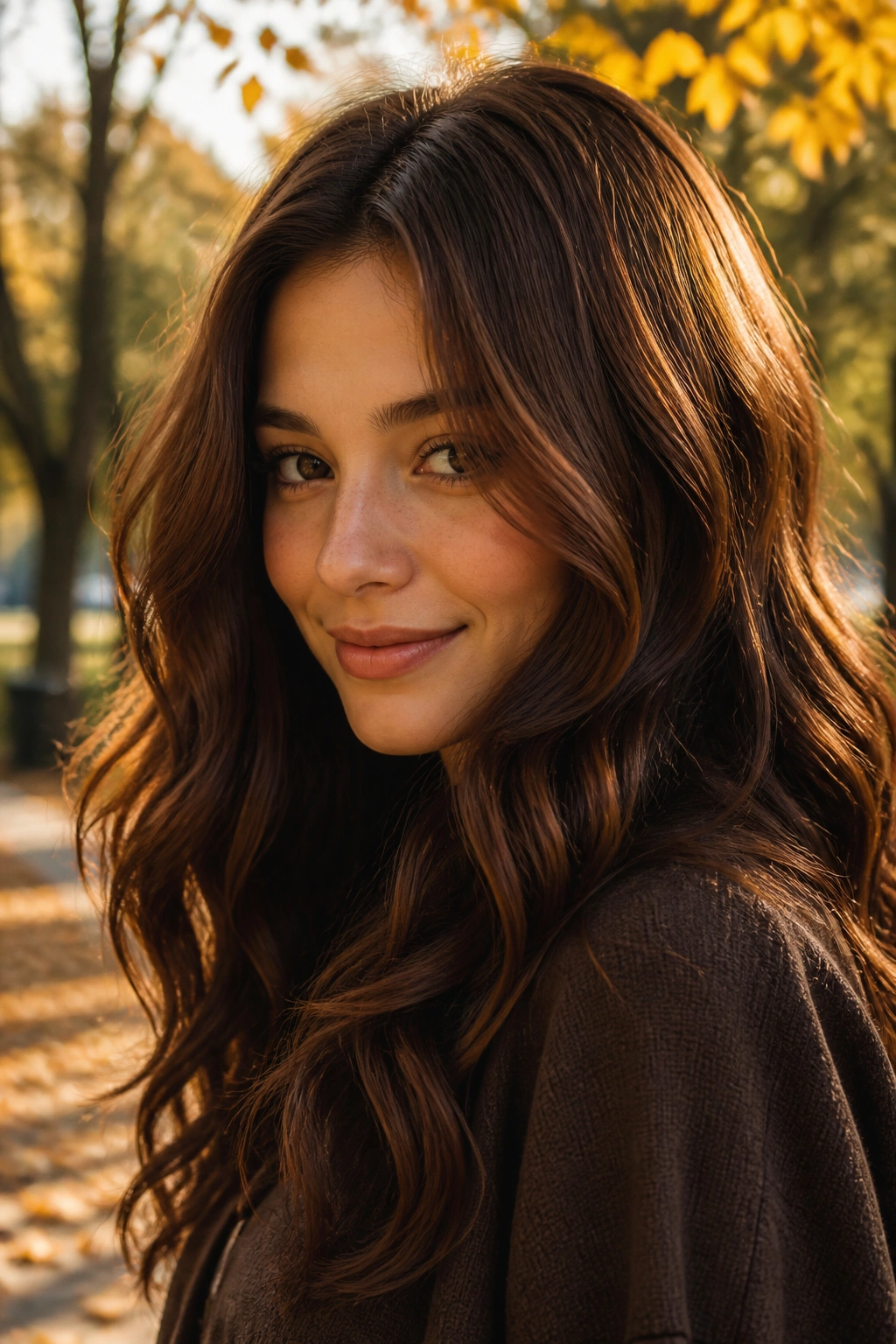
Chestnut is often the most misunderstood brunette shade. It isn’t just “red-brown”; it is a specific, earthy warmth that mimics the shell of a roasted nut. It feels traditional, classic, and incredibly healthy.
The secret to a great chestnut is the balance between cocoa and copper. If it’s too red, it becomes auburn; if it’s too brown, it loses its “glow.” It’s an ideal choice for the colder months when our skin tends to lose a bit of its natural color. The reddish-gold reflects in chestnut hair act as a built-in “filter” for the face, adding a healthy flush to the cheeks.
I’ve found that chestnut looks its best on medium-to-thick hair textures. The natural density of the hair allows the light to bounce off the warm pigments, creating a multi-dimensional look even if the color is technically “all over.”
5. Toffee Highlights
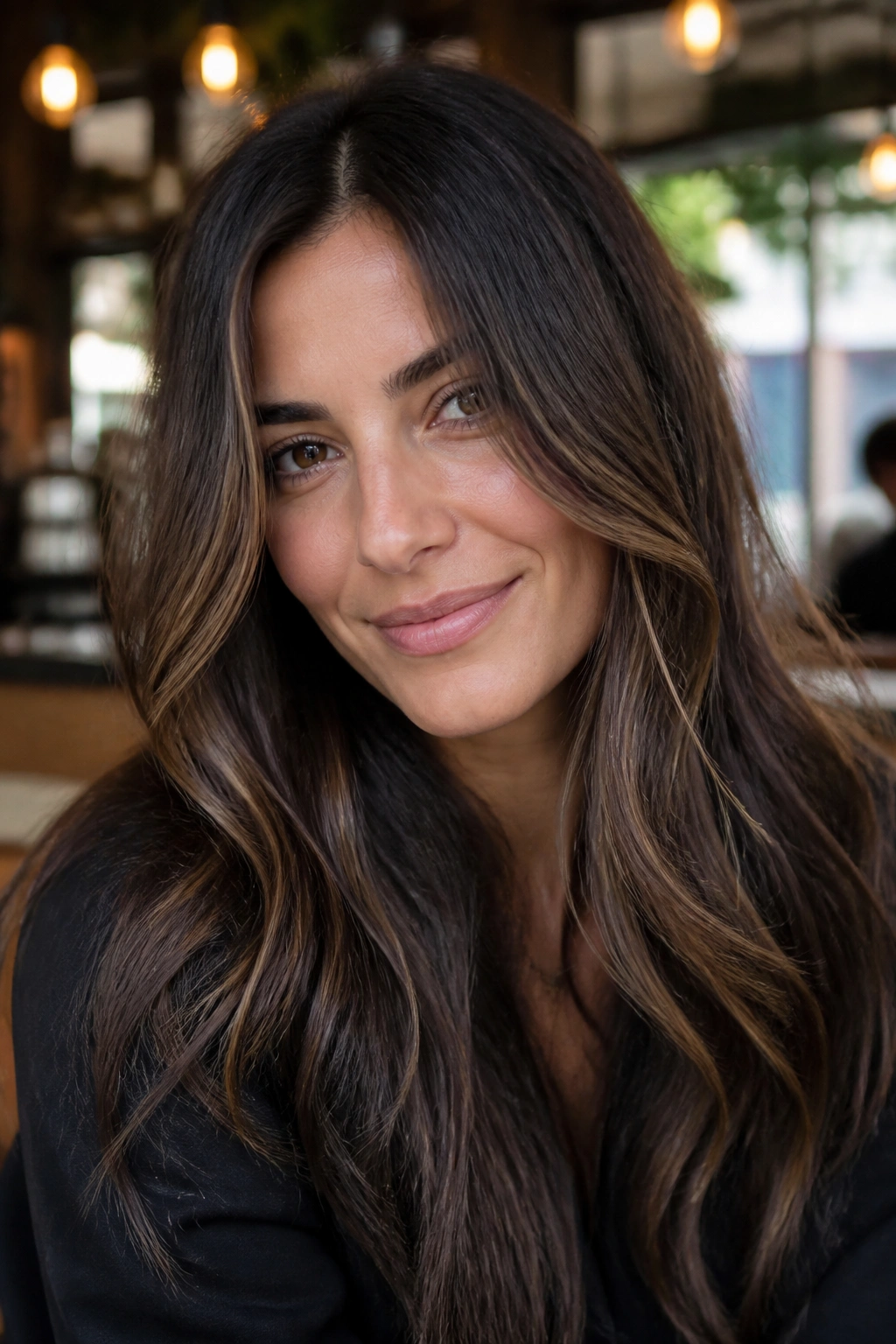
Toffee is the “cool girl” cousin of caramel. While caramel is distinctly warm and golden, toffee sits right in the middle—a creamy, neutral-to-warm beige that adds light to dark hair without looking “stripy.”
This color is best executed through very fine “babylights.” Instead of chunky sections, the stylist takes tiny slivers of hair and lifts them just two or three shades lighter than the base. This creates a shimmering effect, as if your hair is simply catching the light better than everyone else’s.
Toffee is a fantastic transitional color. If you’ve been very dark and want to move toward something lighter, starting with toffee highlights allows you to test the waters of “bronde” territory without the commitment of a full lift. It’s sophisticated, understated, and works for almost every professional environment.
6. Honey Brown
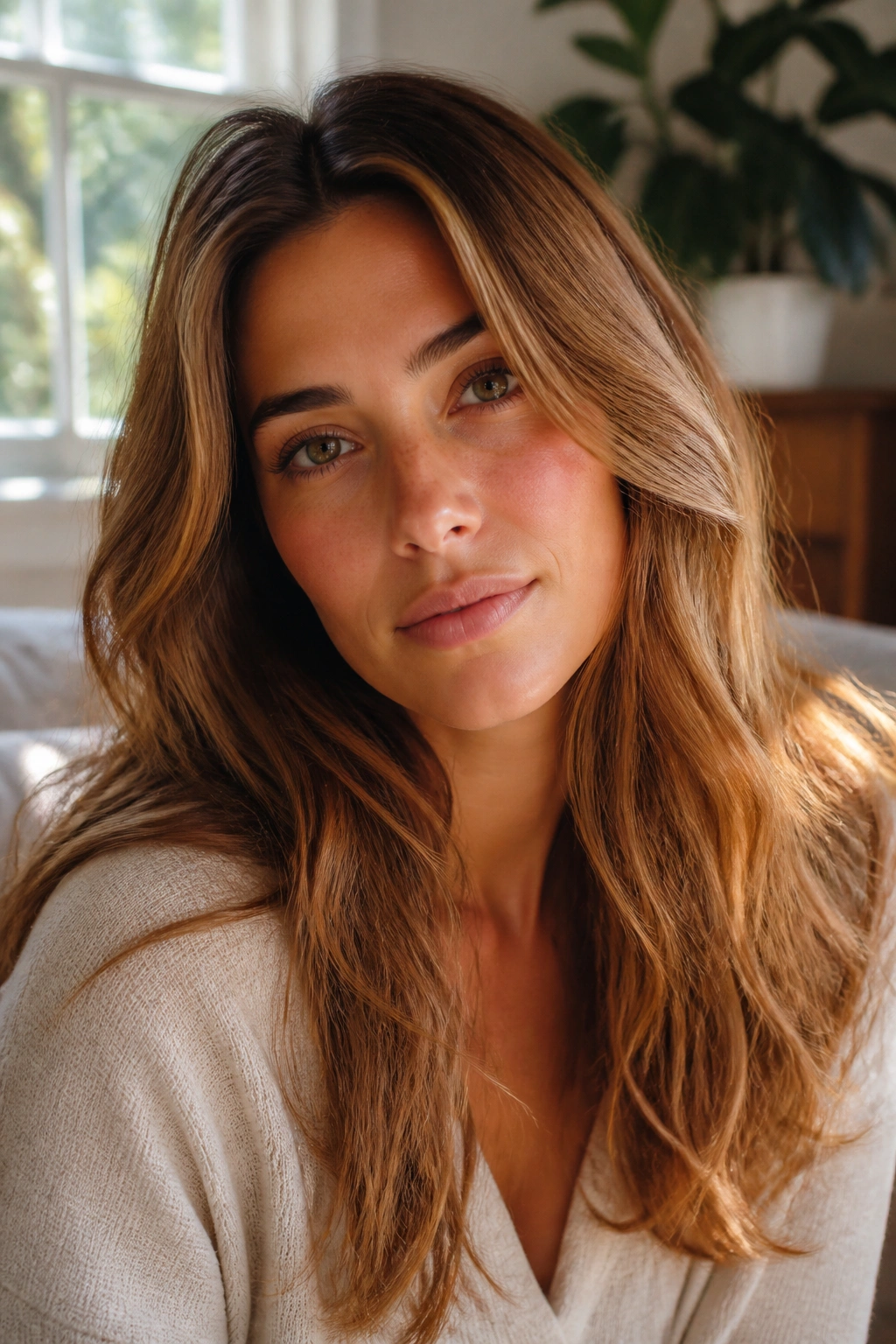
Honey brown is arguably the most “approachable” shade on this list. It is characterized by an amber-like translucency that makes the hair look soft and touchable. Unlike gold, which can sometimes look “yellow,” honey has a slight orange-red base that feels organic and sun-kissed.
The Science Behind the Glow
Honey tones reflect a tremendous amount of light. When you look at a jar of honey, it seems to glow from within; your hair can do the same. This is achieved by lifting the hair to a level 7 or 8 and then depositing a warm, golden-amber toner.
How it Differs from Golden Brown
- Saturation: Honey is more saturated and “juicy” than standard golden brown.
- Undertone: Honey includes a hint of “apricot” or amber, whereas golden brown is purely yellow-gold.
- Softness: Honey tends to look better on people with “soft” features and warm eye colors (hazel, light brown, green).
Pro Tip: If you have natural freckles, honey brown will make them pop like nothing else.
7. Rose Gold Brunette
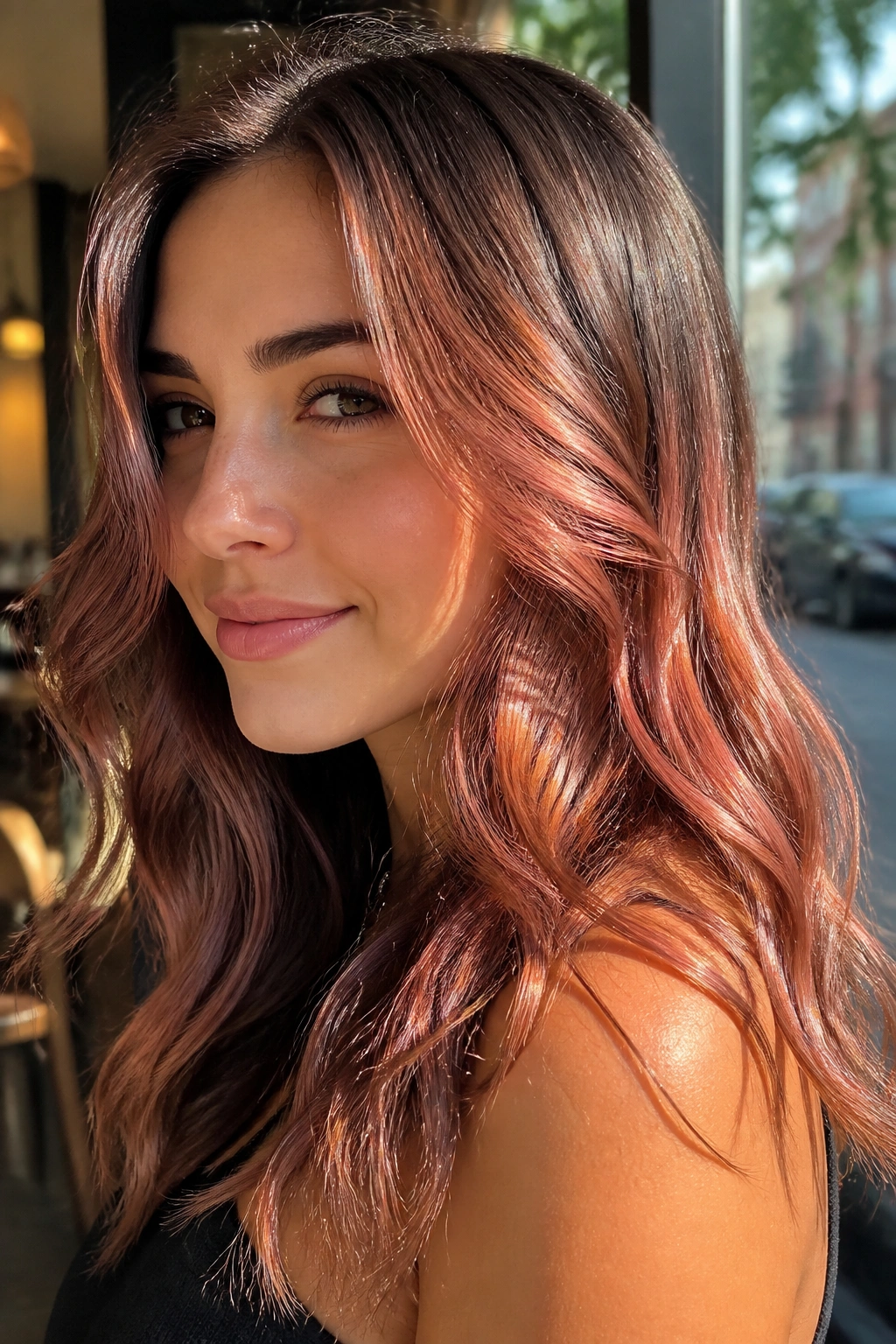
Rose gold isn’t just for blondes anymore. On a brunette base, rose gold becomes something much more interesting—a “metallic” mauve or “chocolate cherry” vibe that feels modern and artistic.
This is a “fashion” brunette shade. It involves lifting the hair to a light brown and then overlaying a pink and gold toner. The result is a color that looks like standard brown in the shade but explodes into a pinkish-bronze shimmer when you step into the sun. It’s the perfect way to experiment with “color” while still staying within the bounds of a natural-looking brunette.
Because pink pigment is the fastest to leave the hair, you’ll need to be committed to cold rinses and color-safe shampoos. It’s a high-maintenance choice, but for the person who wants to stand out, it’s worth every extra minute in the stylist’s chair.
8. Rich Mahogany
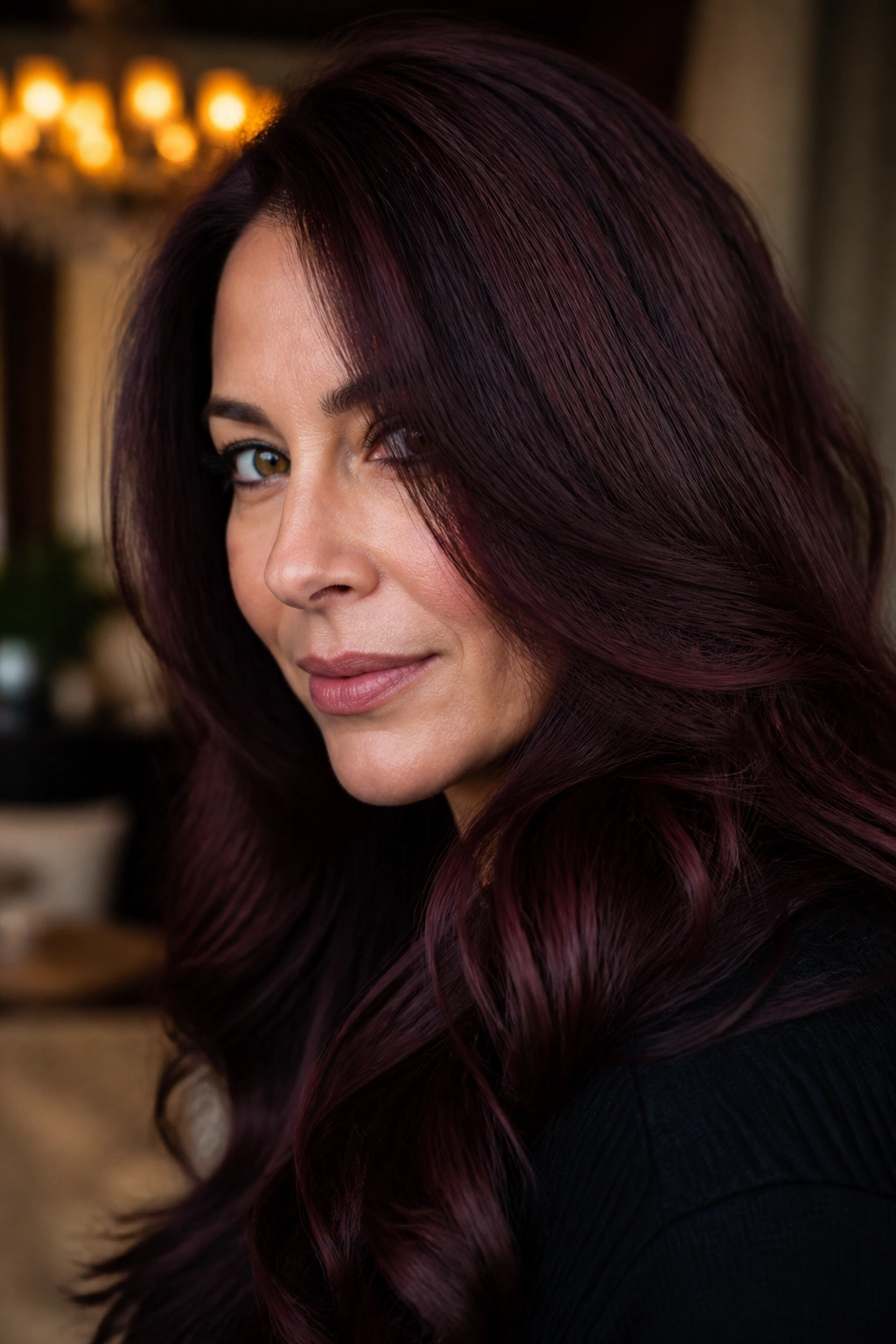
Mahogany is a deep, luxurious blend of brown and violet-red. It’s the “wine” of the brunette world—sophisticated, moody, and full-bodied. It is one of the few shades that manages to feel both “dark” and “vibrant” at the same time.
In my experience, mahogany is the ultimate “power” color. It has a certain gravity to it that demands respect. It looks particularly stunning on people with very pale, cool skin, as the purple undertones in the hair contrast beautifully with the porcelain tones in the skin.
It is also an excellent choice for anyone dealing with gray coverage. The depth of the violet-red pigments is very effective at saturating stubborn white hairs, leaving behind a rich, even finish that looks much more natural than a flat black or brown.
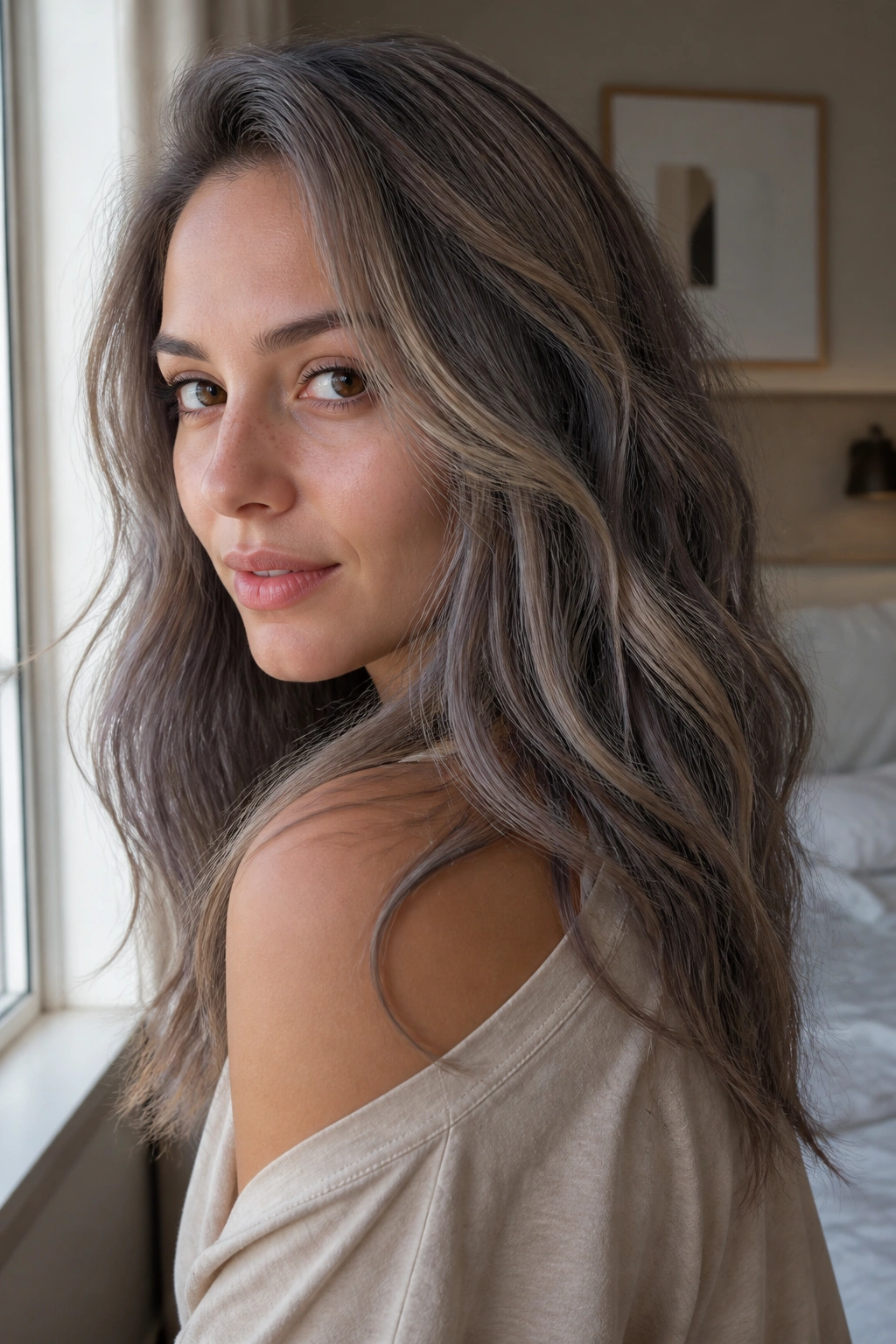
9. Ash Brown
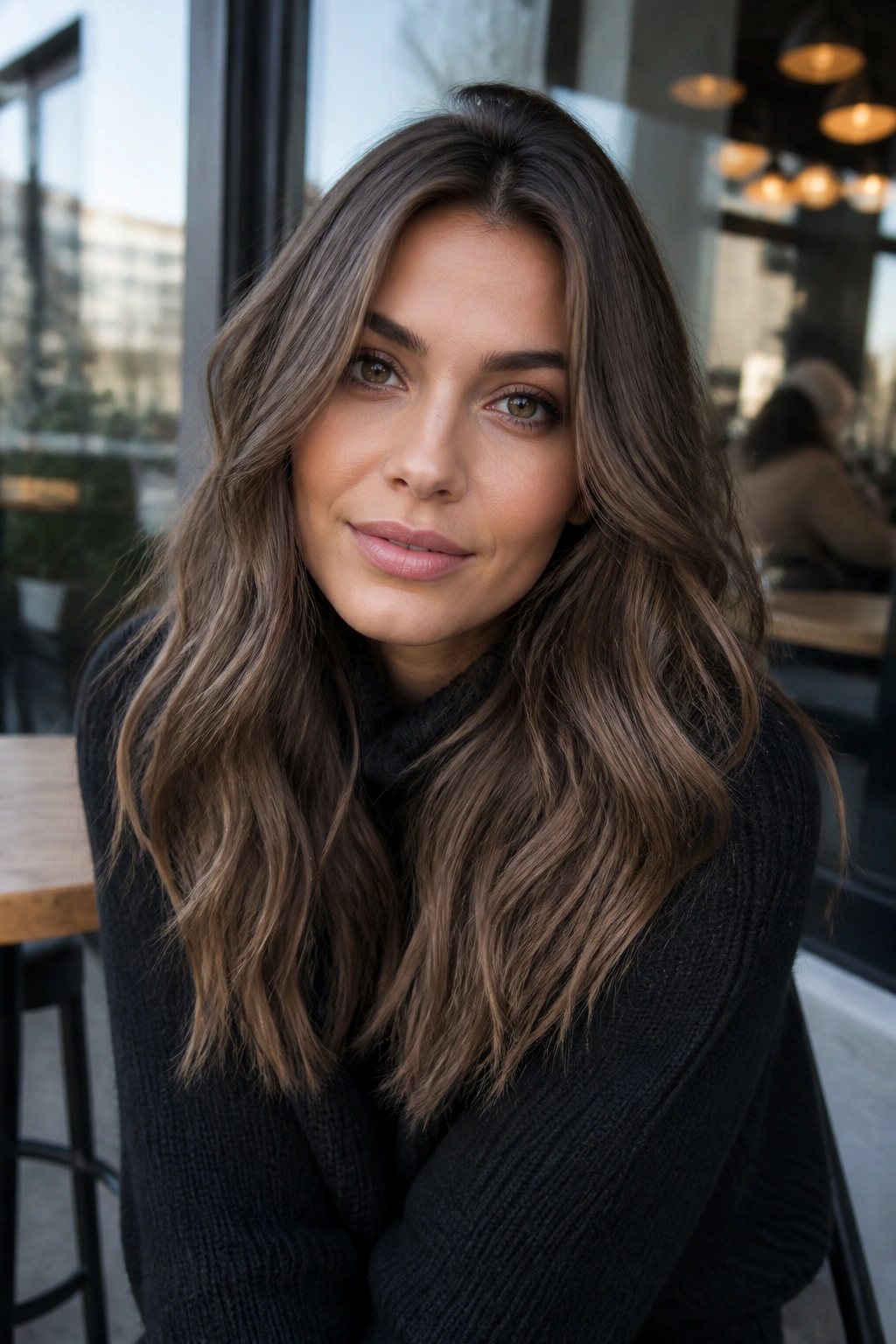
For those who despise any hint of “red” or “orange” in their hair, ash brown is the only answer. This is a matte, cool-toned brown that looks incredibly modern and edgy. It’s the color of driftwood or cold stone.
The Challenge of Ash
Ash brown is difficult to achieve and even harder to maintain. The hair naturally contains red and yellow pigments; removing them requires significant lifting and then a heavy “overlay” of green or blue pigments to neutralize the warmth. If you aren’t careful, ash brown can look a bit “dry” because cool tones don’t reflect light as easily as warm tones.
How to Style It
- Texture is Key: Because ash brown is matte, it looks best with texture. Think beachy waves or a “shag” cut.
- Avoid Heavy Silicons: You want the “cool” factor to shine, not a greasy-looking sheen.
- Silver Accessories: Lean into the cool palette with silver or white-gold jewelry.
Serious Note: If you try to do ash brown at home with a box dye, you will likely end up with muddy, swampy-green hair. This is a job for a professional who understands color theory and how to balance the green/blue ratios.
10. Copper Brown
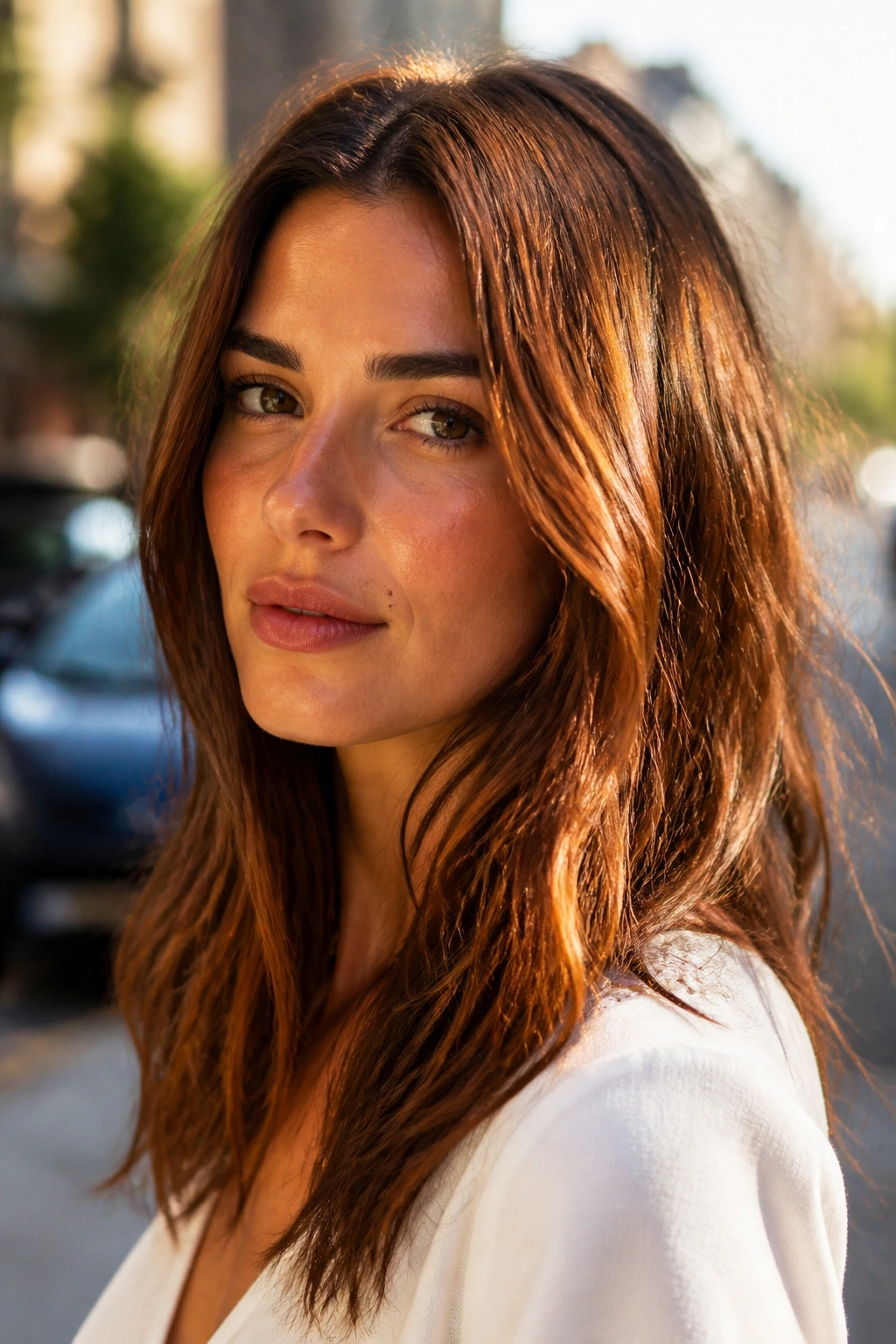
Copper brown is the perfect entry point for brunettes who have “red envy” but aren’t ready to go full ginger. It’s a spicy, energetic shade that looks like a penny caught in the sunlight. It’s much warmer than chestnut and far more vibrant than honey.
This color works by adding a “copper” glaze over a medium brown base. The brown keeps the look grounded and wearable, while the copper adds a fiery edge to the surface. It’s a “happy” color—one that brightens the face and makes you look more awake.
Copper is a high-energy pigment. It’s the first thing people notice when you walk into a room. If you have blue or green eyes, a copper-brown will make them look almost unnaturally bright. It’s a classic for a reason: it never goes out of style and it always looks expensive.
11. Dark Chocolate
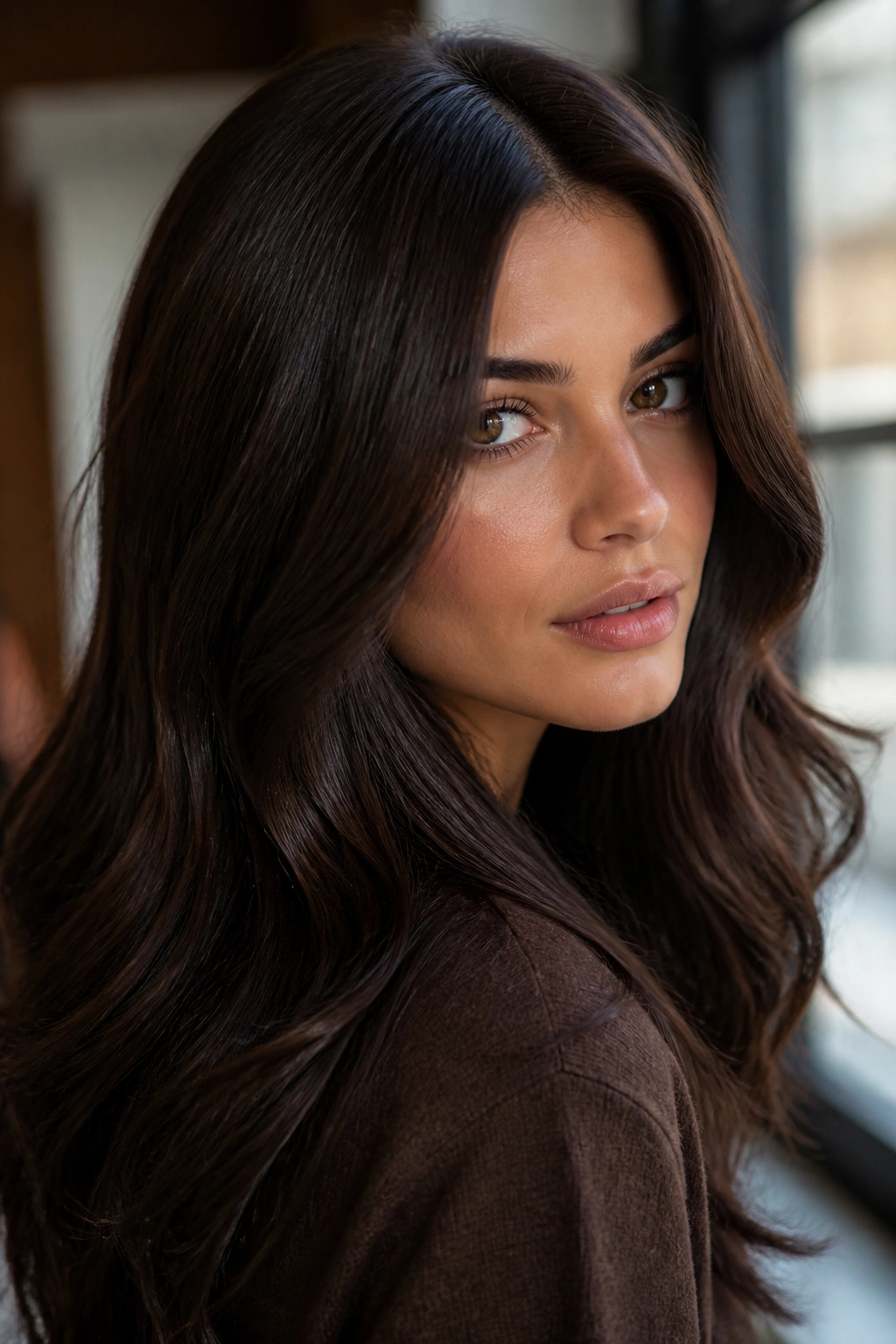
Dark chocolate is the “LBD” (Little Black Dress) of hair colors. It is a neutral-to-warm, rich, deep brown that looks healthy and timeless. It’s not as dark as espresso, but it’s darker than your average medium brown.
What makes dark chocolate so effective is its “creaminess.” It doesn’t have the harshness of a cool-toned dark brown, nor the “spiciness” of a red-toned brown. It’s just… chocolate. It looks best when it’s incredibly shiny, almost like it’s been lacquered.
This is the perfect choice for someone who wants a “reboot.” If your hair has been through too much bleaching or styling, going back to a rich dark chocolate can give the illusion of healthy, thick hair. The dark pigment fills in the “holes” in the hair cuticle, making it look smoother and more reflective.
12. Auburn Brunette
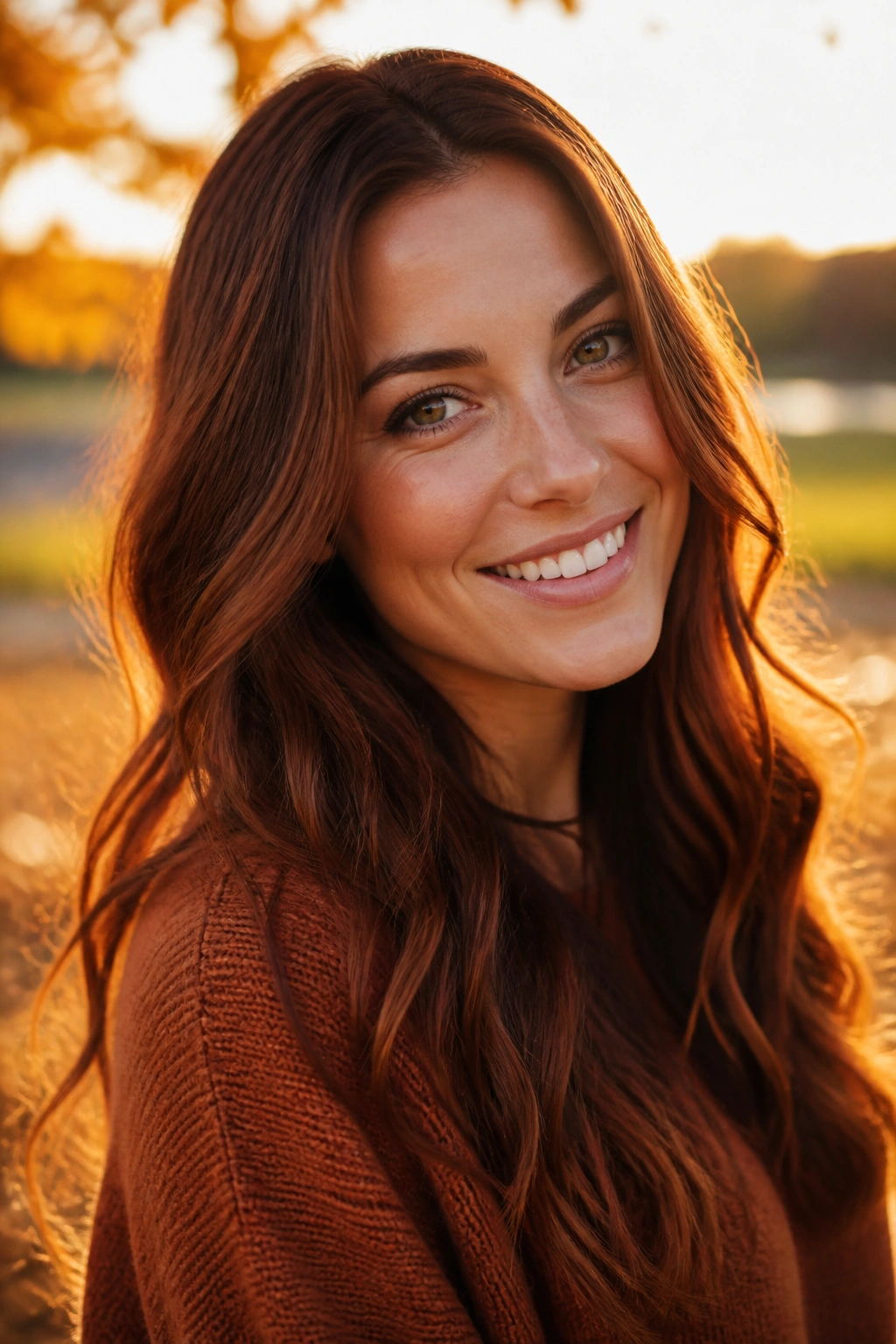
Auburn sits at the intersection of brown and red, but unlike mahogany (which is violet-based), auburn is “earth-based.” It’s the color of autumn leaves and terracotta. It’s a “warm” brunette that feels cozy and organic.
The Auburn Spectrum
- Light Auburn: More of a strawberry-brown. Great for fair skin.
- Medium Auburn: The classic “ginger-bread” brown.
- Deep Auburn: A rich chocolate base with a strong red “glow” when hit by light.
Who Should Wear It?
Auburn is a gift to those with warm or neutral skin tones. If you find that you look best in “earth tones” like olive green, mustard yellow, or cream, auburn hair will complement your wardrobe perfectly. It is also one of the most durable “red” shades; because it’s built on a strong brown base, it doesn’t fade as quickly as a pure fire-engine red.
13. Bronde
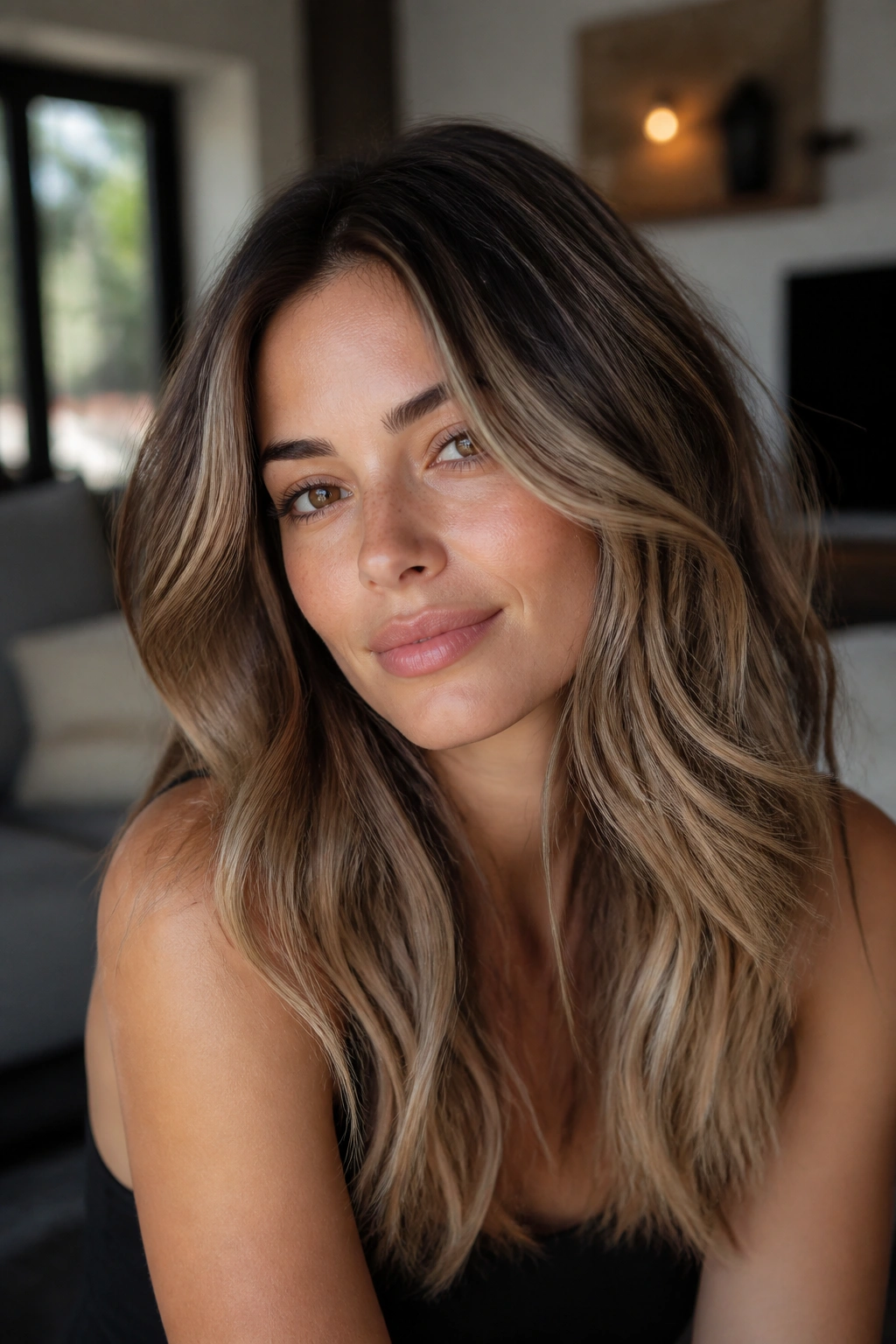
“Bronde” (Brown + Blonde) is the ultimate solution for the person who can’t decide what they want to be. It’s a technical marvel—a medium brown base with so much blonde integration that it’s hard to tell where one color ends and the other begins.
This is achieved through a mix of balayage, babylights, and a “root smudge.” The goal is to keep the depth at the roots and through the underneath sections, while the top layers and face-framing pieces are lifted to a dark blonde.
It’s the most “lived-in” look on this list. You can easily go 4 to 6 months between appointments because the regrowth is part of the aesthetic. It’s the “model off-duty” look—effortless, beachy, and incredibly flattering because it incorporates both the depth of a brunette and the brightness of a blonde.
14. Butterscotch Brown
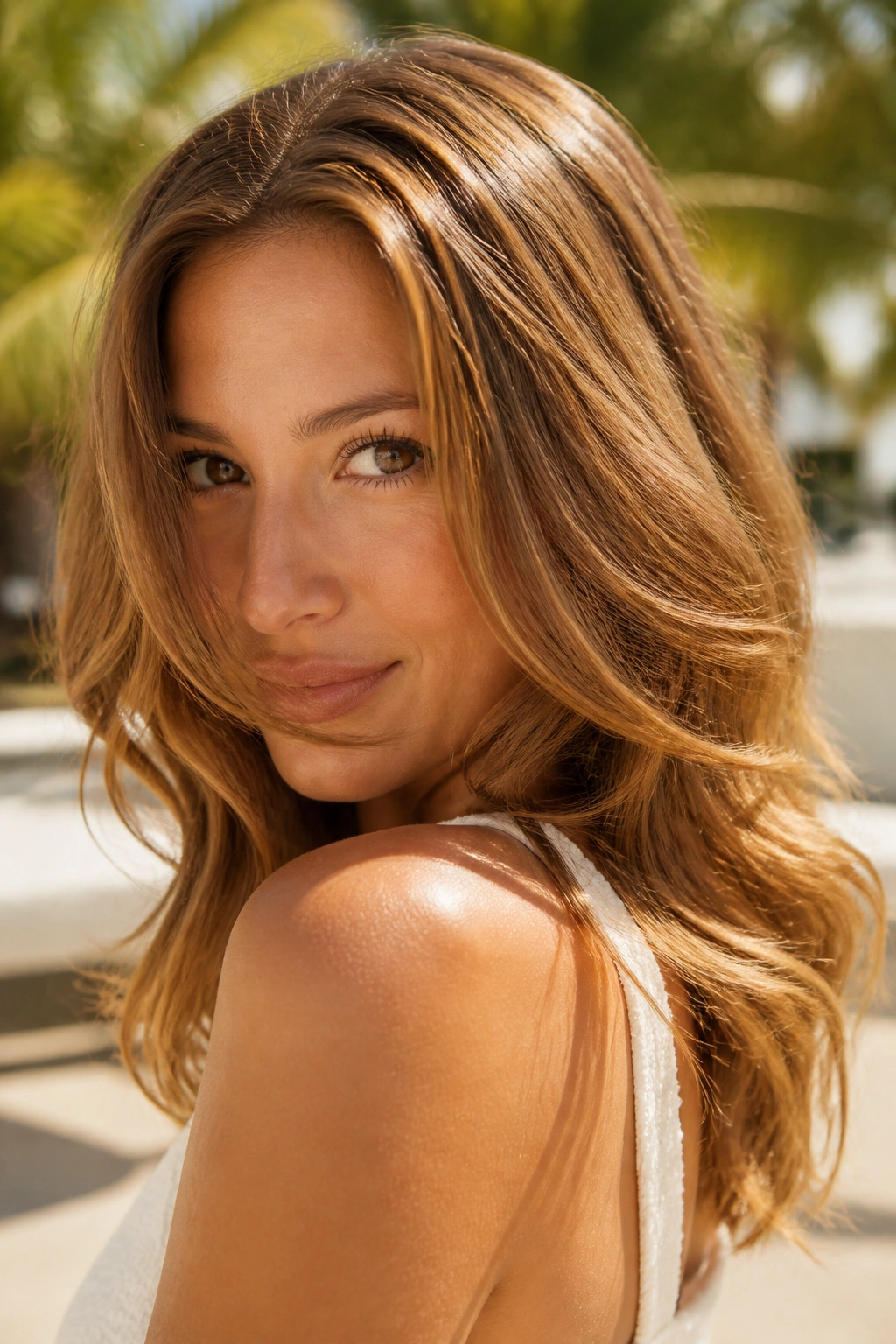
Butterscotch is a lighter, more “golden” version of caramel. It’s a medium-to-light brown that has been heavily infused with gold and yellow-orange tones. It’s bright, sunny, and very youthful.
I love butterscotch for people who feel “washed out” by dark hair. As we age, our skin can sometimes lose its vibrancy, and a very dark brown can look a bit harsh against the complexion. Butterscotch adds warmth and light back into the face, acting like a soft-focus lens.
This shade requires the hair to be lifted to a level 8, which means it’s a bit more “work” than a simple glaze. However, the result is a color that looks like a sunny afternoon. It’s cheerful, warm, and looks incredible with gold jewelry and bronzed skin.
15. Midnight Brown
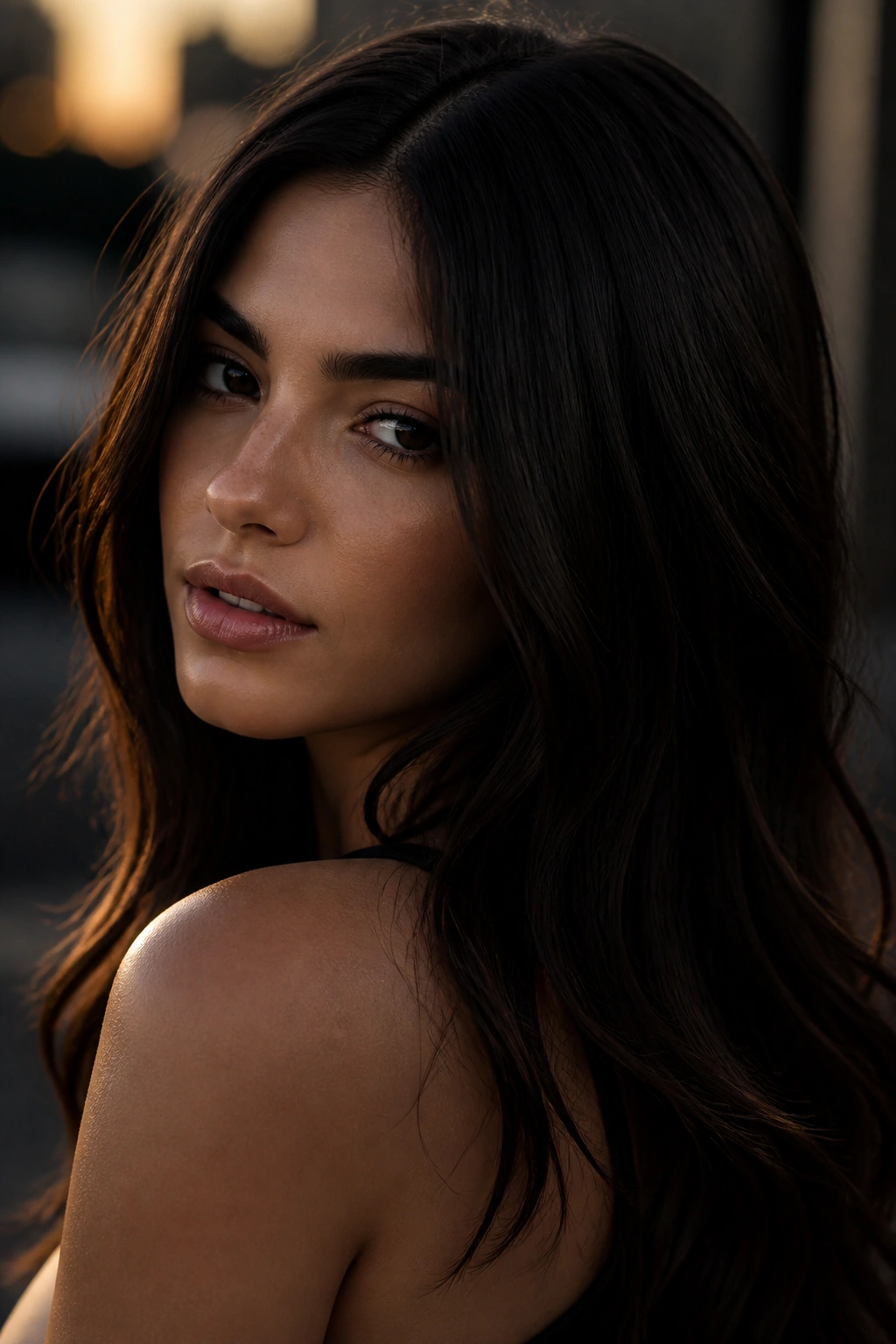
Midnight brown is for the person who wants drama. It is an inky, cool-toned dark brown that appears almost black in dim lighting but reveals its brown “soul” when the sun hits it. It’s moody, mysterious, and very chic.
Achieving the “Inky” Look
This is all about the “double-process.” You often start with a dark base and then apply a cool-toned “over-dye” to pack in as much pigment as possible. The goal is to eliminate any “red” reflect. When you look at the hair, it should look like velvet.
Style Pairings
- Sharp Lines: This color looks best on blunt bobs or long, straight “glass hair.”
- Bold Makeup: A red lip or a sharp cat-eye eyeliner looks incredible against this high-contrast backdrop.
- Dark Wardrobes: It’s the ultimate color for the “all-black-everything” enthusiast.
Warning: Midnight brown is a commitment. Once you pack that much dark pigment into the hair, it is very difficult (and damaging) to try to go blonde again. Make sure you’re ready for the dark side before you dive in.
16. Mocha Brown
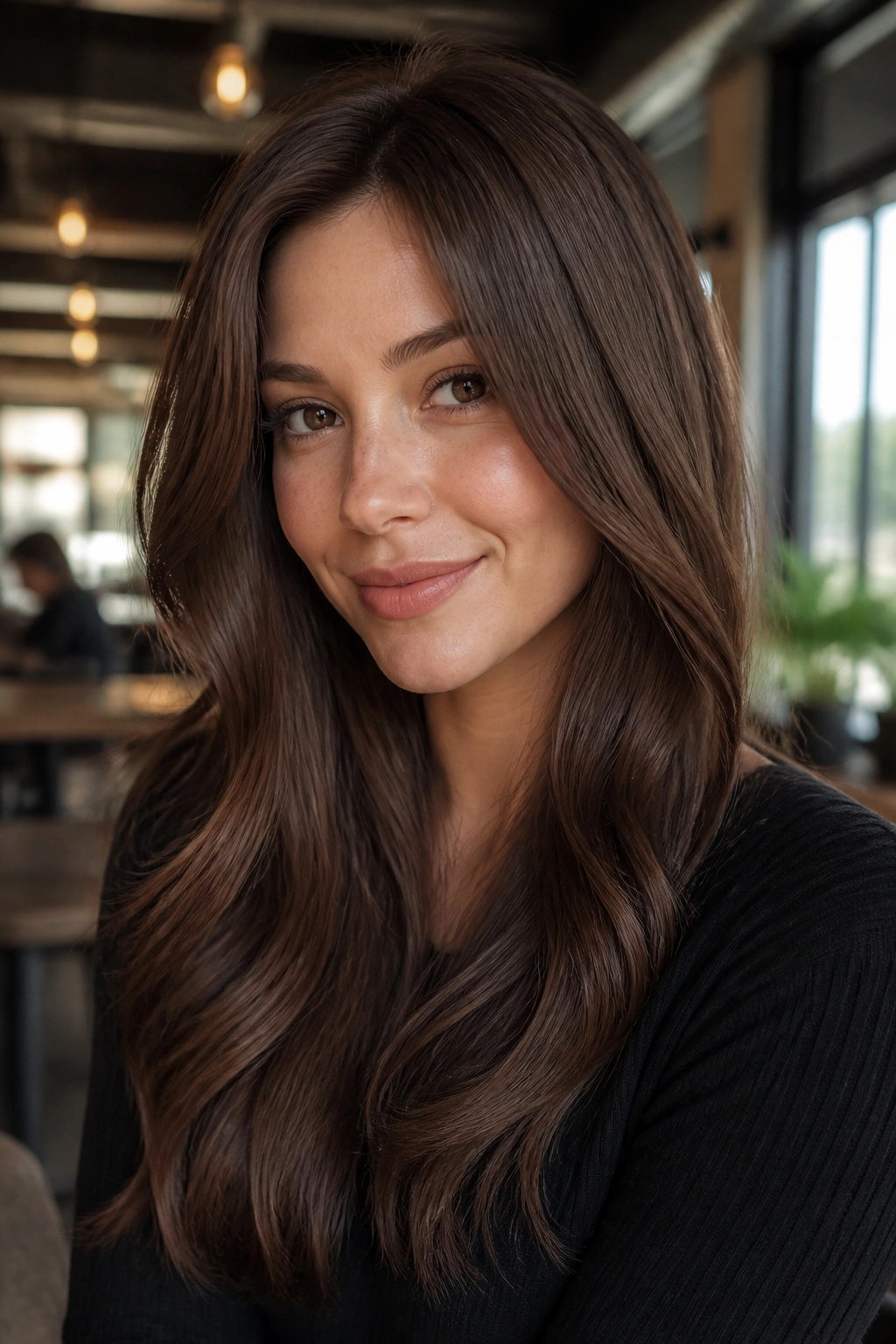
Mocha is the “neutral” champion of the brunette world. It’s a medium-to-dark brown that perfectly balances warm and cool. It’s not as “yellow” as gold, and not as “blue” as ash. It’s just a solid, dependable, beautiful brown.
Because it’s neutral, mocha works on almost everyone. If you aren’t sure what your “undertones” are, mocha is the safest bet. It has a “creamy” quality to it that looks very sophisticated. It’s the kind of color that makes people say, “Your hair looks great,” rather than “I like your new hair color.” It just looks like it belongs on you.
I often recommend mocha for people who are professional but want a bit of “richness” to their look. It looks fantastic in a corporate setting—polished, understated, and high-quality.
17. Sandstone Brown
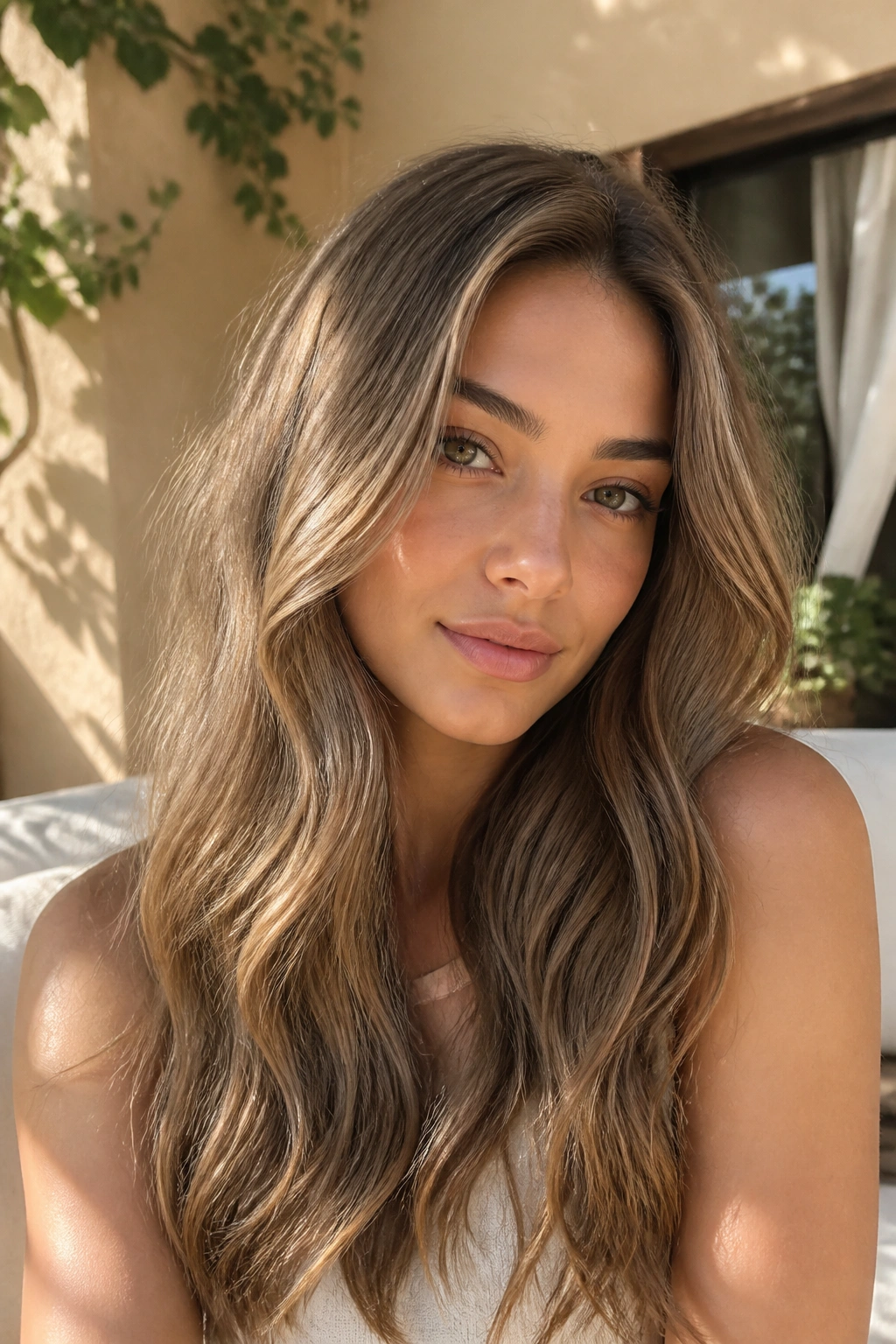
Sandstone is a muted, “beige” brown that takes inspiration from the desert. It is a light-to-medium brown that has been “diluted” with a lot of beige and cream tones. It’s the opposite of “vibrant”—it’s calm, soft, and very earthy.
This is a fantastic “natural” look. It’s the color of hair that has spent the summer outdoors and then “settled” into a soft, matte finish. It works best on people with neutral or cool skin tones who want something lighter than their natural shade but don’t want the “gold” of a honey or butterscotch.
Sandstone is also very forgiving for people with fine hair. Because it isn’t a high-contrast color, it doesn’t “reveal” the scalp as much as a very dark color might. It adds a “haze” of color that makes the hair look fuller and softer.
18. Cinnamon Brown
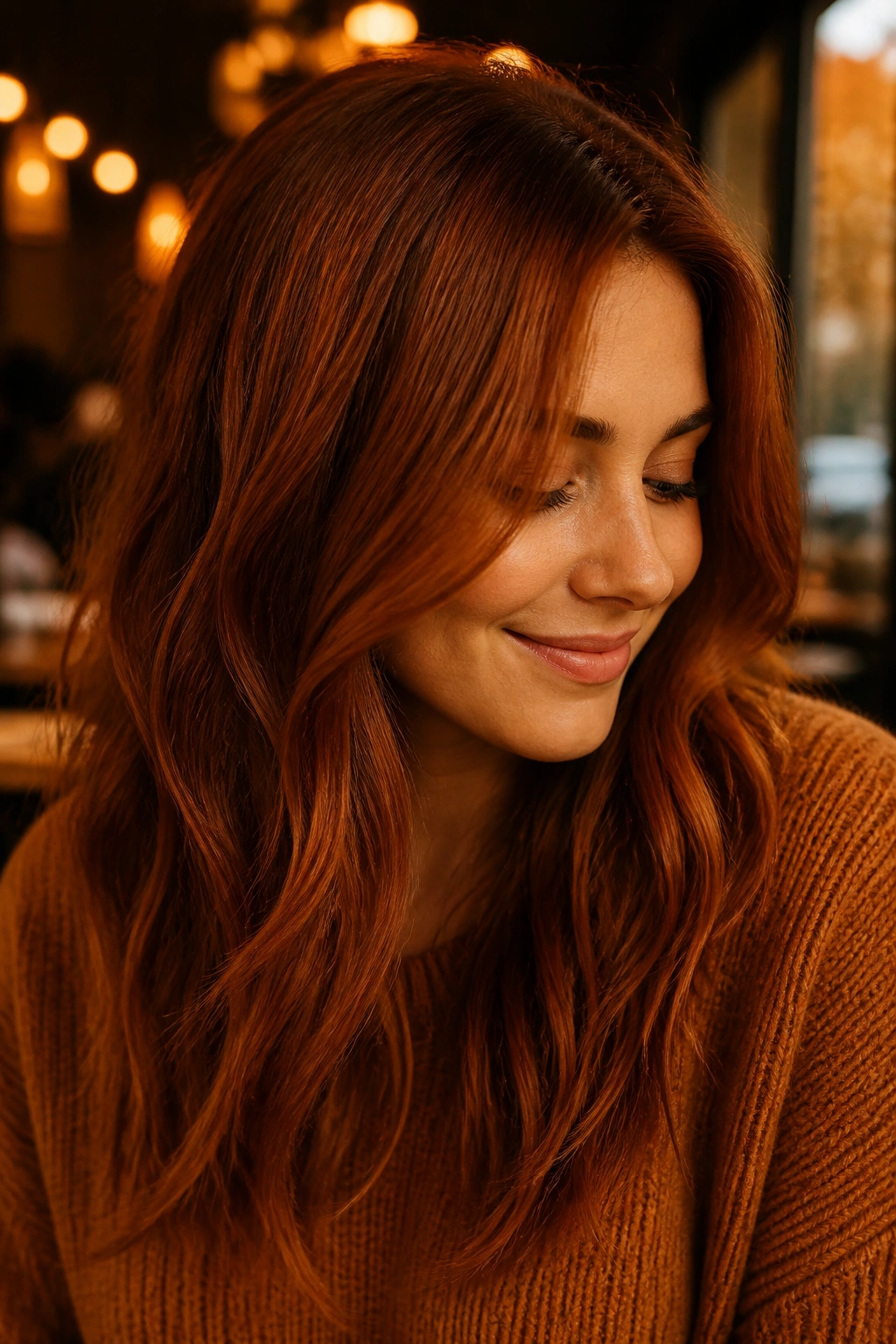
Cinnamon is a spicy, vibrant medium brown with strong orange-red undertones. It’s a “hot” color—full of energy and movement. It’s similar to copper brown but with a bit more “brown” weight to it.
Why It Stands Out
Cinnamon is unique because it feels “seasonal.” It’s the quintessential color for someone who loves the vibe of a cozy sweater and a warm drink. It has a “glow” that is more intense than chestnut but more wearable than a true red.
Maintenance Tips
- Color-Depositing Conditioners: Use a copper-tinted conditioner once a week to keep the “spice” alive.
- UV Protection: Red-based pigments are very sensitive to the sun. Use a UV spray if you’re going to be outdoors.
- Heat Protection: High heat from curling irons can “sear” the pigment and turn it brown-orange—always use a protectant.
Pro Tip: If you have green eyes, cinnamon brown is your “cheat code.” The orange-red tones are a direct opposite of green on the color wheel, making your eyes look piercingly bright.
19. Sandy Brown
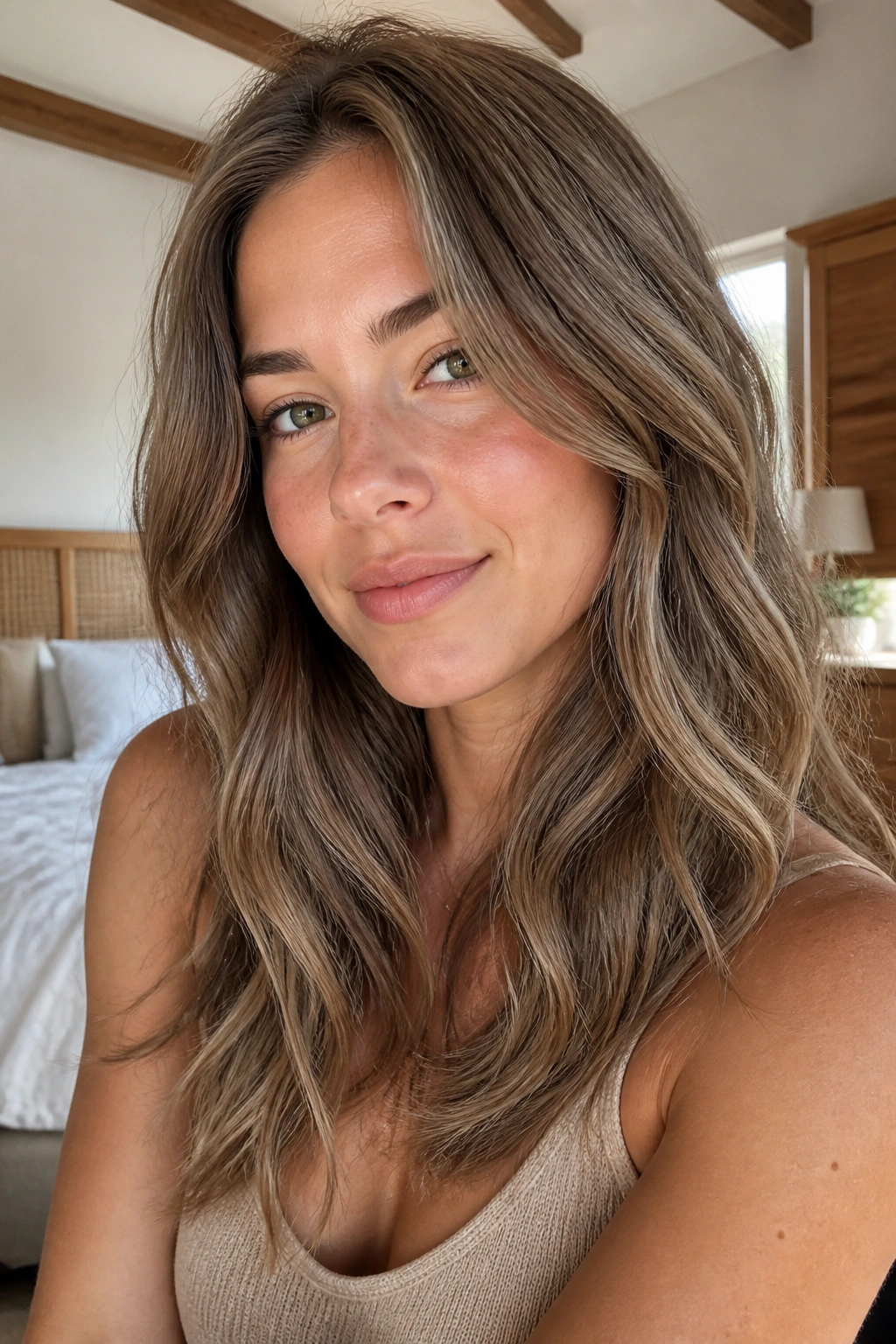
Sandy brown is the “lived-in” version of a light brunette. It’s a beige-toned brown that has been lifted by the sun (or a very good stylist). It’s the color of a beach on a cloudy day—muted, natural, and very relaxed.
This color is all about “texture.” It looks best on hair that has a bit of natural wave or “messiness.” It’s a very “young” color—it feels carefree and unstudied. It is usually achieved by doing a very light balayage over a medium brown base and then toning everything down with a beige gloss.
It’s the perfect color for the person who only wants to visit the salon three times a year. The “roots” are meant to be a bit darker, so the grow-out is completely seamless.
20. Walnut Brown
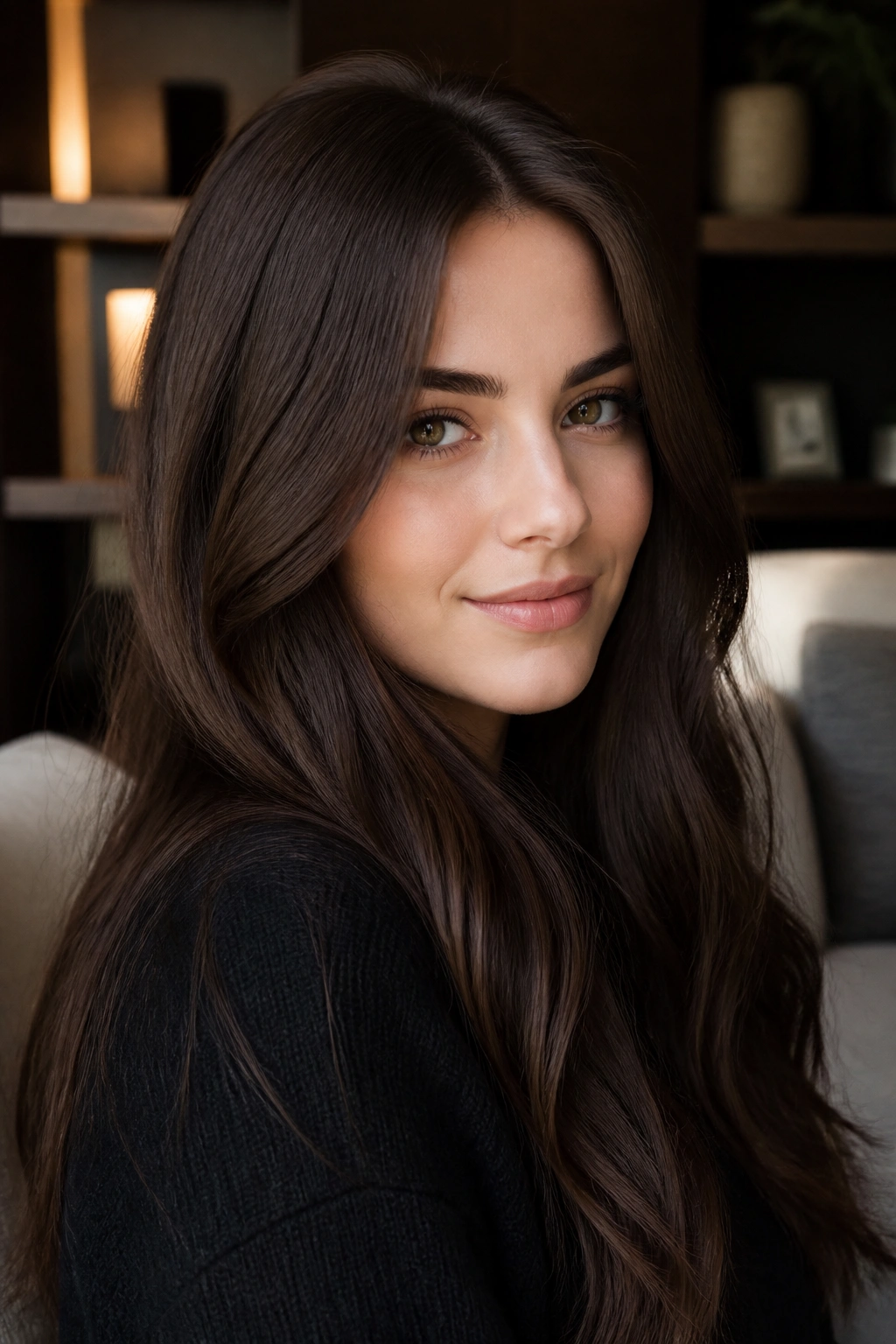
Walnut is a sophisticated, muted dark brown. It doesn’t have the “sweetness” of chocolate or the “heat” of mahogany. It is a cooler, more “stately” brown. Think of an old library with dark wood panels.
Walnut is a “matte” dark brown. It’s not meant to be super shiny; instead, it has a “velvety” finish. It’s incredibly elegant and looks best on people with cool or neutral undertones. It’s a “quiet luxury” color—it doesn’t scream for attention, but it looks undeniably expensive.
I find that walnut works best on long, thick hair. The weight of the hair carries the deep, muted color well, creating a “curtain” of sophisticated brown that looks stunning in a low ponytail or a sleek blowout.
21. Golden Brown
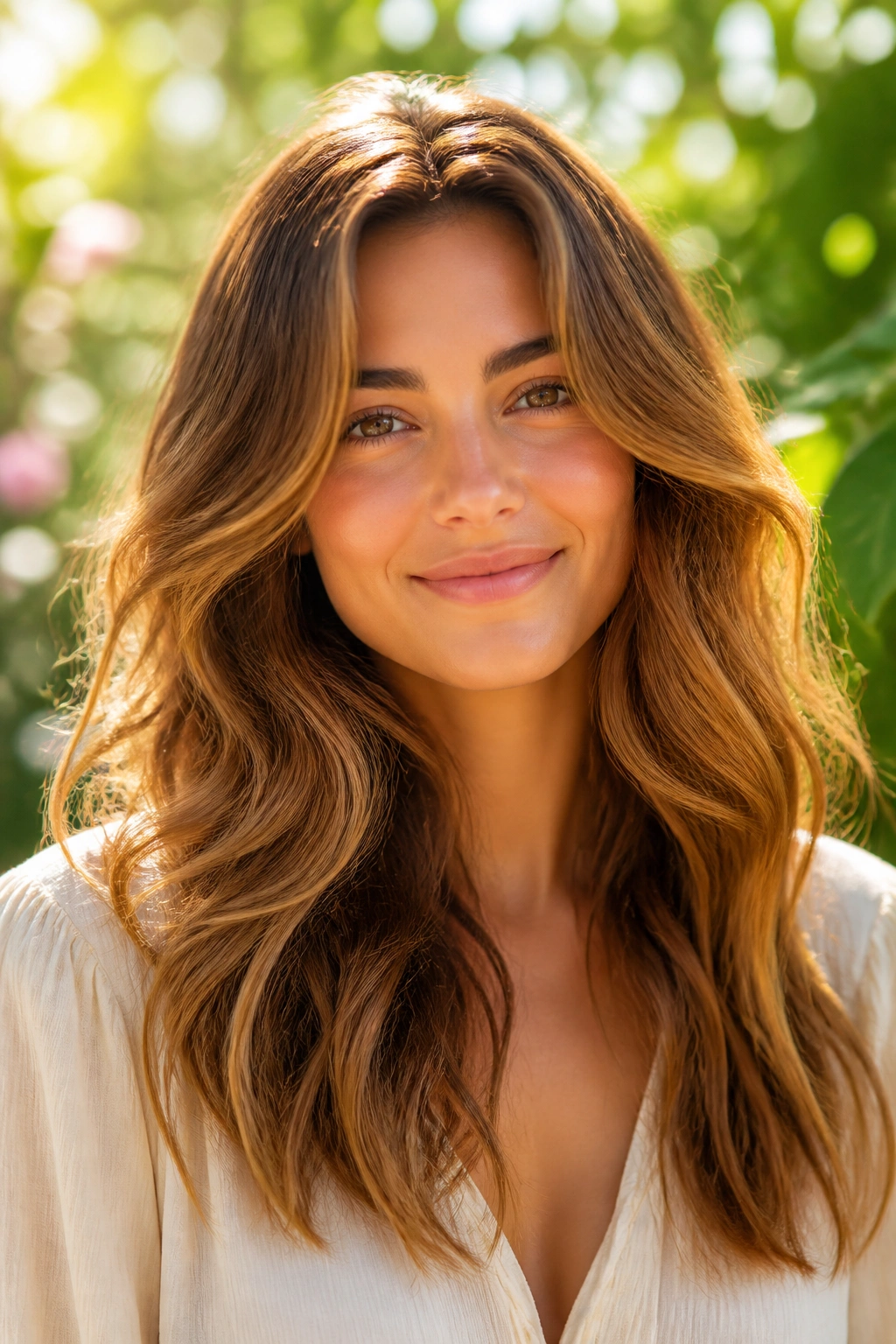
Golden brown is the classic “sun-kissed” brunette. It is a medium brown that is packed with yellow-gold pigments. It’s the color most people think of when they say “warm brown.”
Unlike honey (which has amber) or caramel (which has orange), golden brown is purely about the gold. It’s bright, reflective, and very traditional. It’s a great choice for someone who wants to lighten their hair but stay firmly within the “natural” category.
Golden brown is also very easy to achieve for most brunettes. Because the hair naturally lifts to a “golden” state, you aren’t fighting against the hair’s natural tendencies as much as you would with an ash-toned color. It’s a “happy” color that works for almost every season.
22. Burgundy Brown
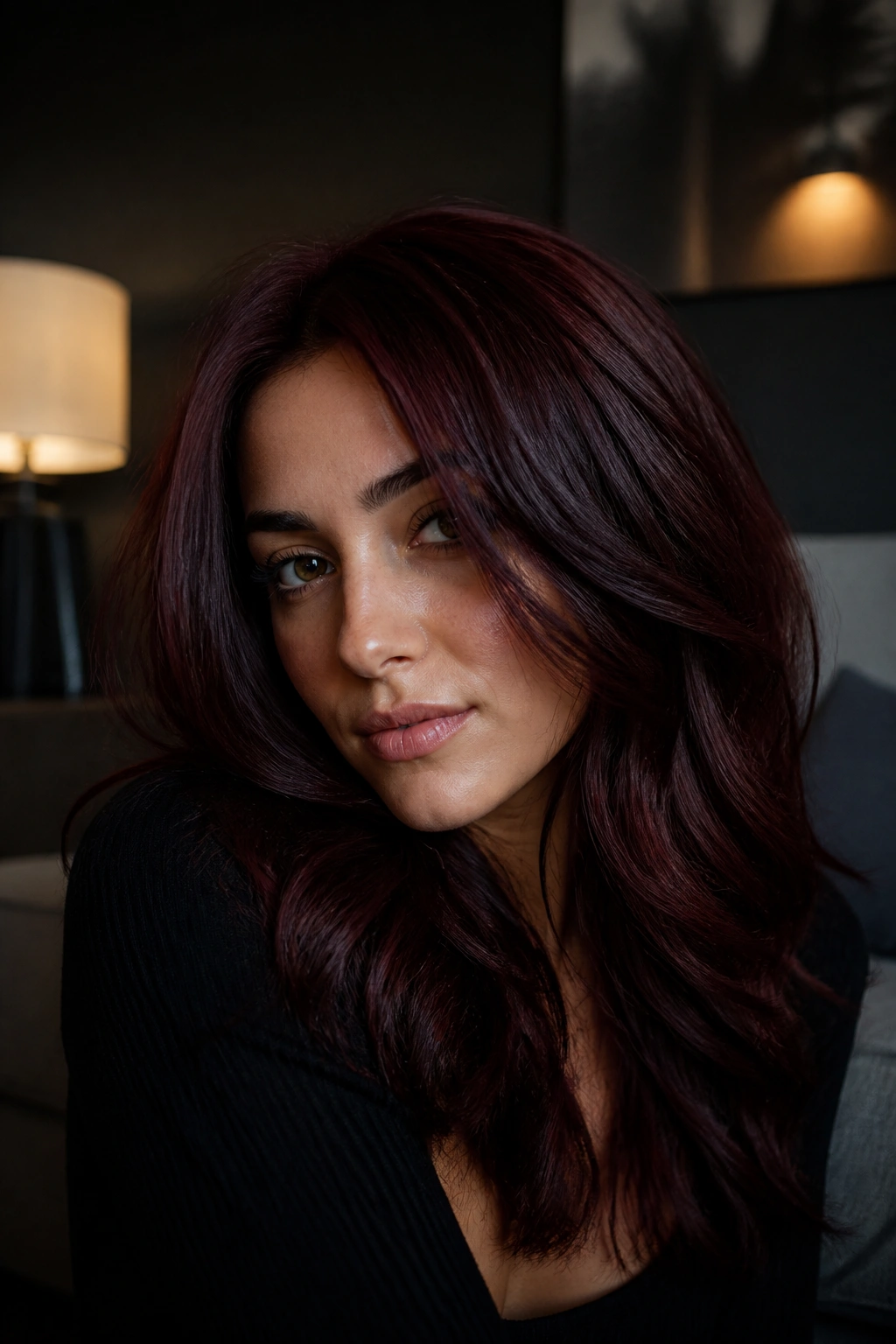
Burgundy brown is a “mood.” It is a dark chocolate base that has been heavily infused with deep purple-red tones. It’s much more “purple” than mahogany and much darker than auburn.
The Mystery of Burgundy
Burgundy is a “chameleon” color. In the shade, it looks like a very dark, almost black-brown. But the moment the light hits it, it reveals a deep, wine-red glow. It’s for the person who likes a “hidden” detail.
Who It Suits
- Cool Skin Tones: The purple base complements pink or blue undertones in the skin.
- Dark Eyes: It makes dark brown or black eyes look even deeper.
- The Bold: It’s a statement color that feels “alternative” but still professional.
Styling Note: Burgundy brown looks incredible with “vampy” makeup—deep berry lipsticks and dark nails. It’s a color that embraces the “darker side” of beauty.
23. Smoky Brown
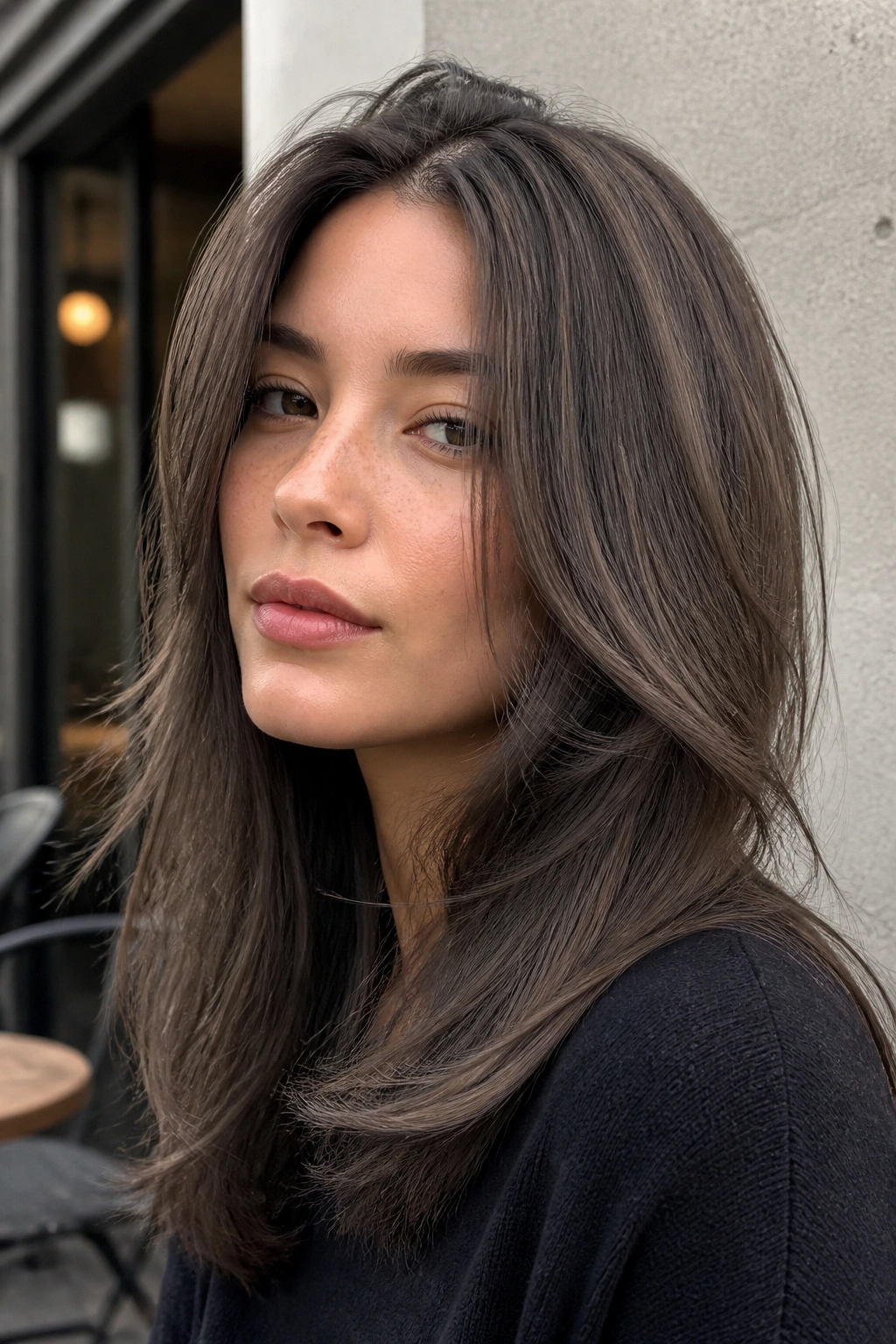
Smoky brown is a medium-to-dark brown that looks like it’s seen through a veil of smoke. It’s a “greyish-brown” that is very cool and very modern. It’s similar to ash brown but with a bit more “depth” and “moodiness.”
This is a high-fashion shade. It often requires a “charcoal” or “graphite” toner to be applied over a dark brown base. The result is a color that looks almost “misty.” It’s incredibly chic and looks best on people with very clear, cool complexions.
Smoky brown is also a great way to “blend” natural grays. If you are starting to see salt-and-pepper through your brunette, a smoky brown gloss can help “marry” the two colors together without the need for a full permanent dye.
24. Butter Pecan
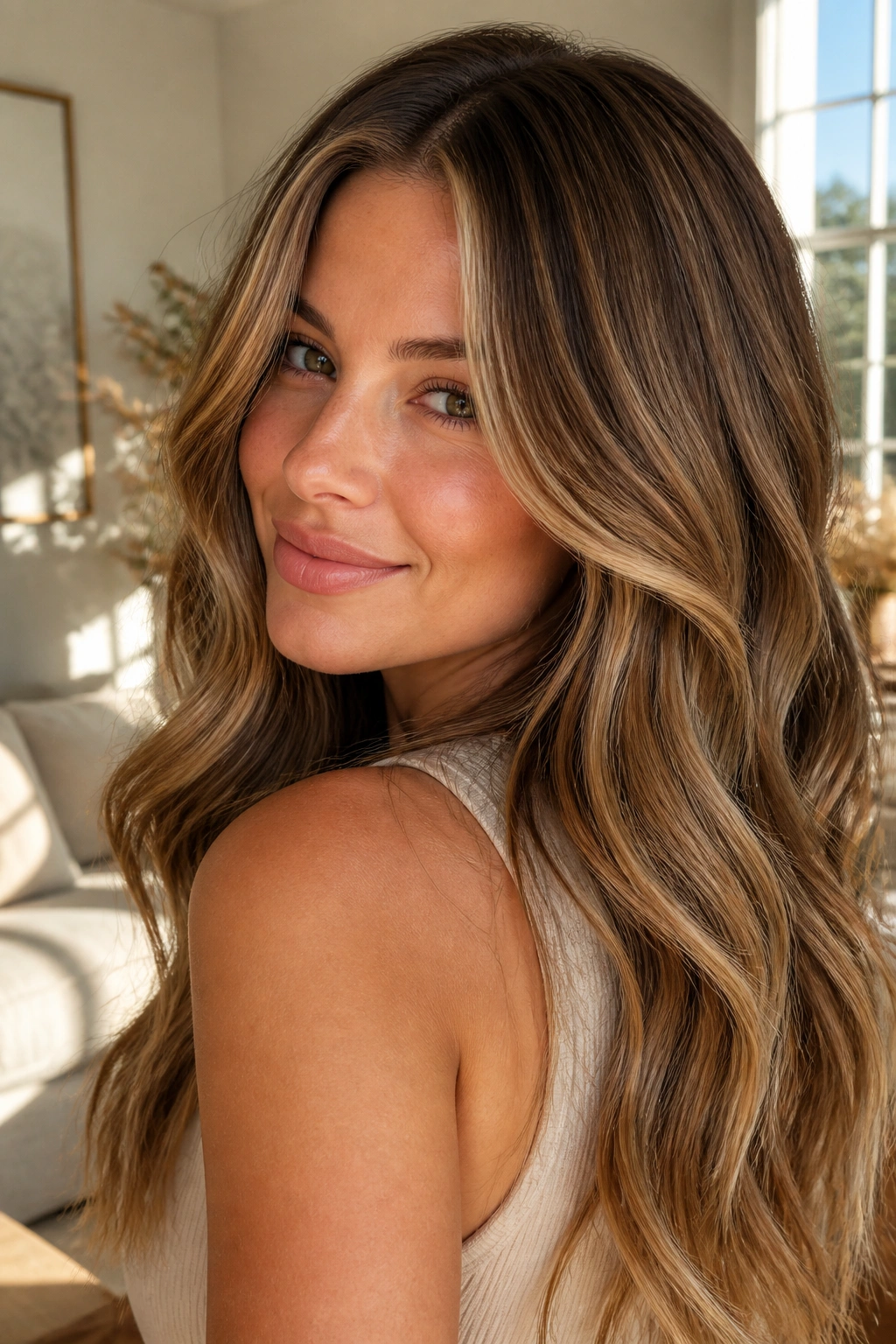
Butter pecan is a “multitonal” masterpiece. It is a medium brown base with a “swirl” of both blonde and golden-brown highlights. It’s named after the ice cream because it has that same “creamy and crunchy” contrast.
This color is all about the “mix.” You want some sections to be quite light (the “butter”) and some sections to be a rich, warm brown (the “pecan”). It creates a massive amount of movement in the hair. If you have thin hair, this “interplay” of light and dark will make your hair look much thicker.
It’s a very “warm” and “welcoming” color. It doesn’t have the “edge” of a smoky brown or the “drama” of a midnight brown. It’s just beautiful, bouncy, healthy-looking hair.
25. Plum Brown
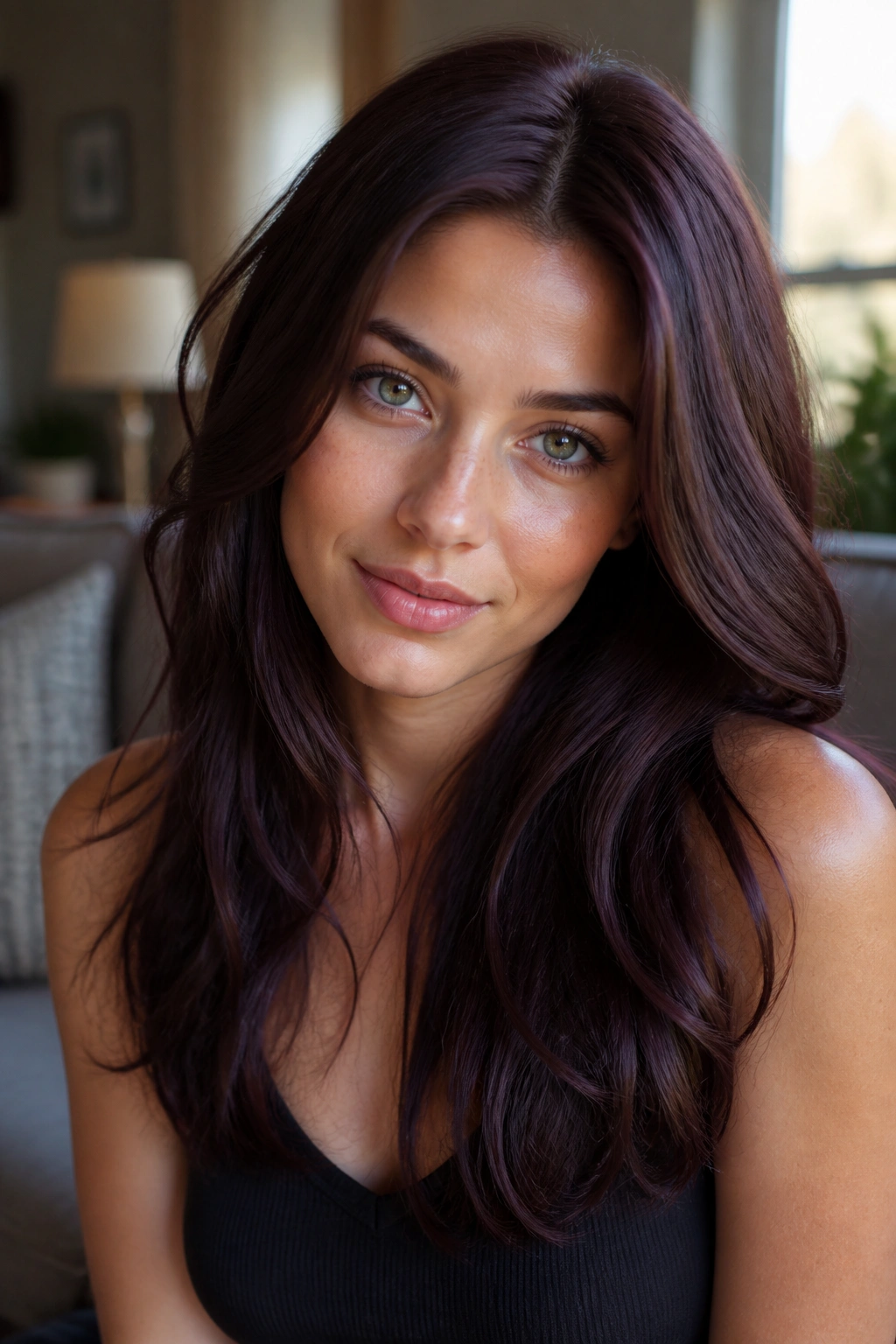
Plum brown is the “violet” version of a dark brunette. It is a deep, rich brown that has a distinct purple cast. It is cooler than mahogany and less “red” than burgundy.
I love plum brown for people who want to experiment with “cool” colors but find ash or smoky tones too “flat.” The plum adds a “vibrancy” and “juice” to the hair while still keeping it firmly in the cool-toned family.
It is particularly striking on people with green or hazel eyes, as the purple tones in the hair are the “complementary” color to the green in the eyes. It’s a sophisticated, artistic shade that feels very curated.
26. Amber Brown
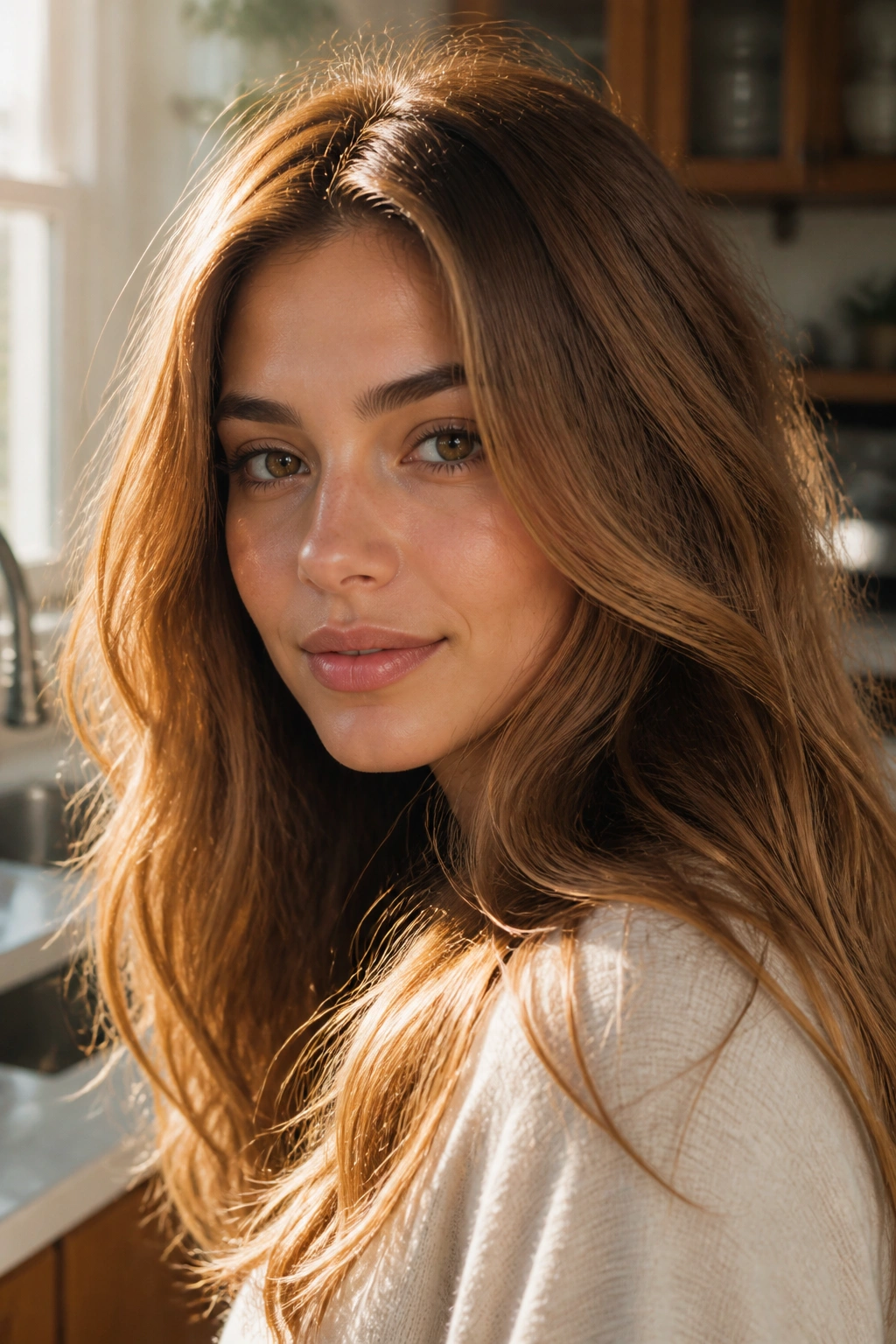
Amber brown is the “glowing” finish on this list. It is a medium-to-light brown that looks like it has been dipped in liquid gold. It is more “translucent” than golden brown and has a “clearer” tone than honey.
The Amber Effect
Amber tones are all about “transparency.” When light hits the hair, it should look like it’s passing through a gemstone. This is achieved by using “clear” toners that don’t have a lot of “brown” weight to them, allowing the gold and orange-gold pigments to shine through.
Final Thoughts on the Amber Glow
- Best for Fine Hair: The translucency adds a “lightness” that doesn’t weigh down fine strands.
- Summer Favorite: It looks like “captured sunlight.”
- Easy Transition: It’s a great way for a brunette to feel “brighter” without actually becoming a blonde.
Pro Tip: If you want your amber to look truly expensive, ask for a “high-shine” finish. The more reflective the hair, the more the “amber” effect will work.
The Bottom Line
Choosing a new hair color is often an emotional decision disguised as a logical one. We want to feel refreshed, more confident, or perhaps a bit more like the person we imagine ourselves to be. Brunette, in all its twenty-six-plus variations, offers a depth of choice that few other colors can match. Whether you are leaning into the cool, earthy mystery of a mushroom brown or the spicy, energetic warmth of cinnamon, the goal is always the same: to find a shade that feels like home.
Don’t be afraid to take photos to your stylist, but more importantly, talk about how you want the color to feel. Do you want to feel “bright”? Do you want to feel “mysterious”? Do you want to feel “low-maintenance”? These descriptions often help a professional colorist more than a single Pinterest image.
Hair is our greatest accessory—it’s the only one we wear every single day. Investing the time to find the exact right “vibe” for your brunette journey isn’t just about vanity; it’s about self-expression. So, take a look at your skin, consider your closet, and don’t be afraid to try something a little more “nuanced” than your standard box-dye brown. The spectrum is waiting.
