



Bold color works best when it has something to argue with. A two-tone cut gives the eye a place to land: a hard center split, a hidden underlayer, a money piece that frames the face, or ends that turn the whole shape upside down. That’s why two-tone hairstyle ideas keep sticking around; they are not just loud for the sake of being loud. They change the haircut itself.
Flat color can be nice. But contrast does more work. On a blunt bob, it sharpens the edge. On curls, it makes the shape read from across the room. On long layers, it keeps the length from disappearing into one big sheet of color. And if you have ever watched a bright panel appear only when hair swings over one shoulder, you already know the trick: placement matters as much as pigment.
The best part is how many directions you can take it. Some looks lean graphic and crisp, with a line so clean it almost feels architectural. Others are softer, with ribbons, underlights, or a dark root that lets the bright shade do the talking. The practical side matters too. A split dye on dark hair is a different maintenance job from a peekaboo panel or a lived-in melt, and picking the wrong one is how people end up bored or annoyed by the grow-out.
So the useful question is not whether bold color works. It does. The real question is which two colors, which placement, and which haircut will carry the contrast without fighting it. Start with the sharpest version first.
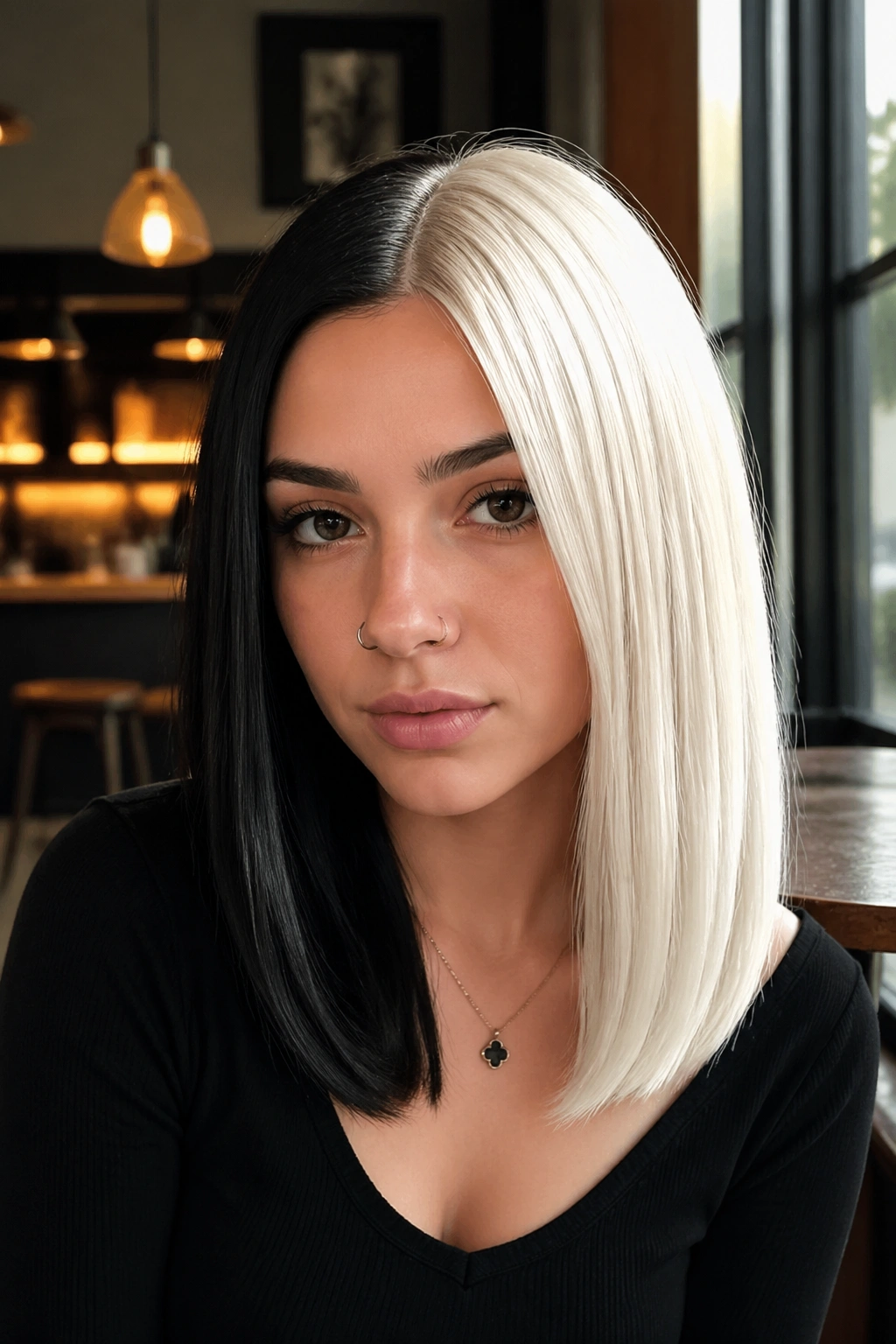
1. Center-Split Two-Tone Hairstyle in Black and Platinum
This is the look people think of first, and for good reason. A clean black-and-platinum split down the middle turns the part line into the whole point. It is blunt, graphic, and a little bit confrontational in the best way. If you want hair that announces itself before you speak, this is the version that does the heavy lifting.
Why It Works
The contrast lands hardest when the cut has a clear shape. A blunt bob, a straight lob, or long hair with a crisp edge lets the two colors stay separate instead of muddying together. Curly or highly layered hair can still wear it, but the seam gets softer and less exact.
- Best on straight, wavy, or softly curled textures
- Looks sharpest with a center part
- Needs regular toner refresh on the platinum side
- Shows regrowth fast, so root touch-ups matter
Tip: ask your colorist to keep the dividing line slightly off-center if your face is naturally asymmetrical. It sounds small. It makes the whole cut feel more deliberate.
2. Copper and Espresso Half-and-Half Lob
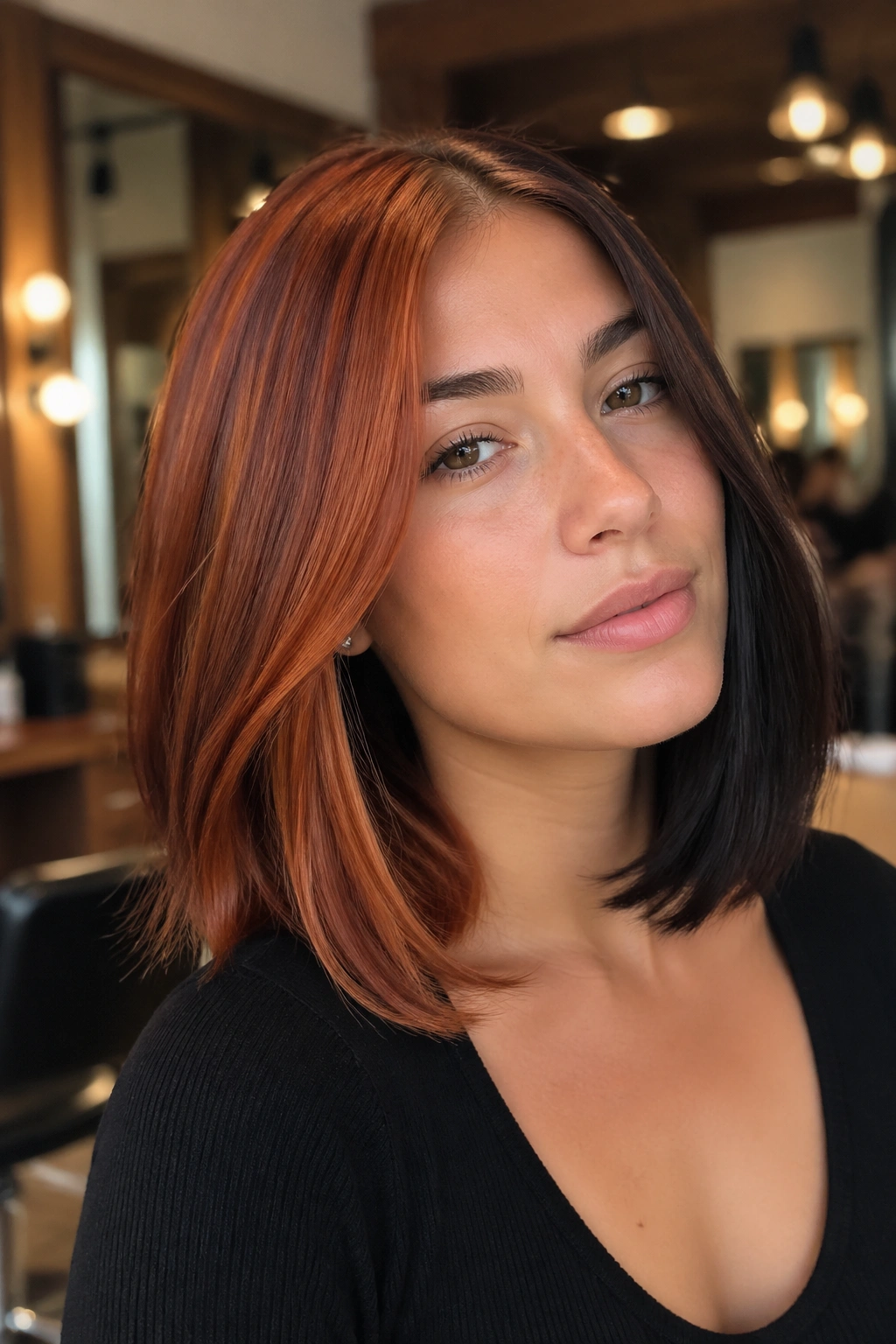
Copper next to espresso has a warmer feel than black and blonde, and that changes the mood completely. It still has contrast, but the two shades sit closer together in depth, so the result feels rich instead of stark. On a lob, that matters. The cut keeps the color visible even when you tuck one side back or bend the ends with a flat iron.
This combo works especially well if you want bold color without the icy edge of platinum. Copper reflects light in a softer way, so it flatters layered waves and loose curls. Espresso gives it something dark to lean against, which is why the whole look can feel expensive without looking fussy. That word is overused, but here it fits.
The only real catch is maintenance on the copper side. Red-orange pigments fade fast, and they fade unevenly. A color-depositing mask every week or two helps keep the warmth from going rusty. If your hair is already dark brown, this can be one of the easiest two-tone hairstyle ideas to wear because the espresso side needs almost no help at all.
3. Midnight Blue Underlayer With Silver on Top
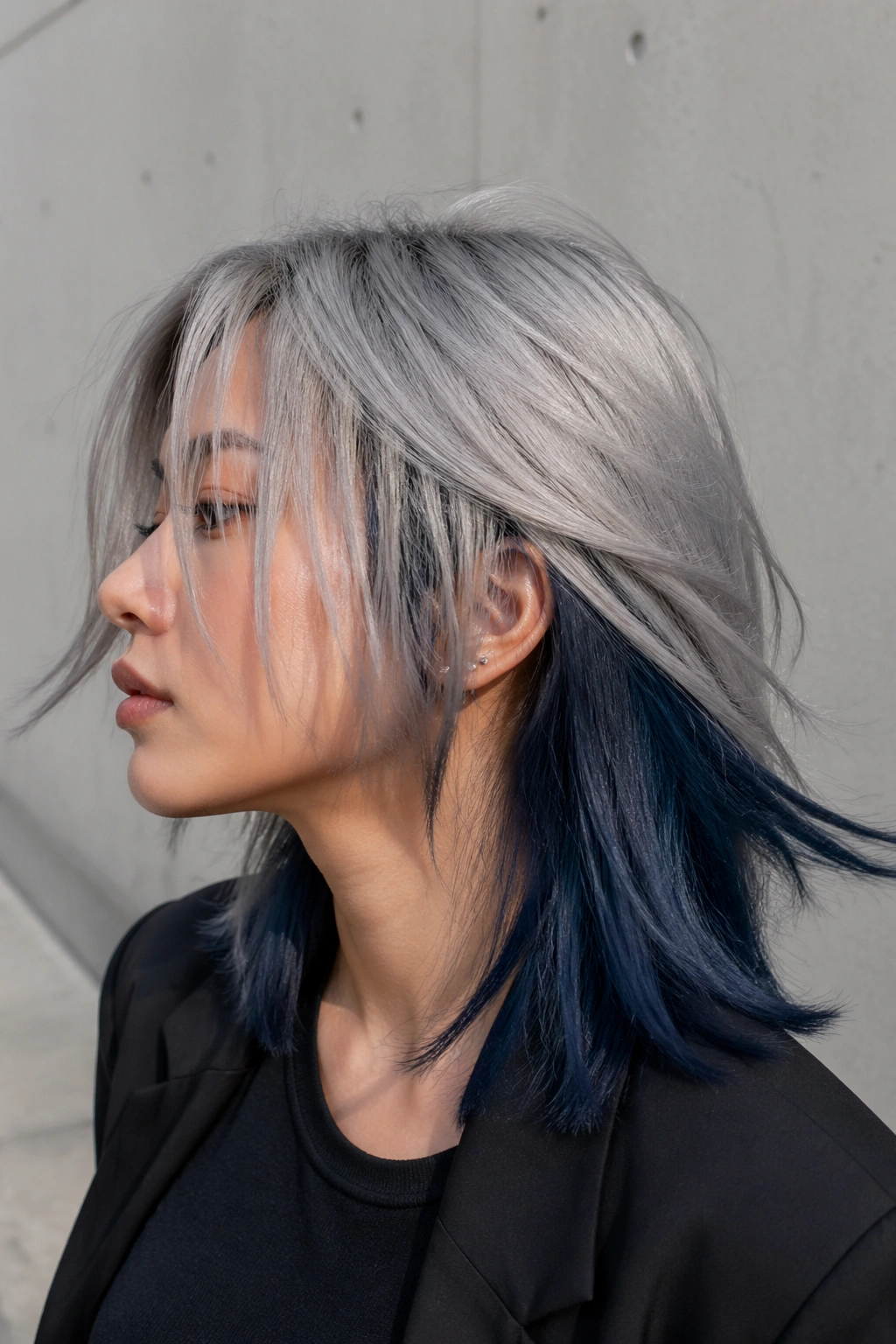
The nice thing about an underlayer is that it lets you keep the top calm. That’s the appeal here: silver on top, midnight blue underneath, and a secret flash of color that shows when hair moves, lifts, or gets pinned up. It is dramatic without being obvious from every angle.
That hidden placement makes the cut feel smarter than a simple split dye. The blue sits closest to the nape and the lower panels, where it catches light in motion. Silver on top keeps the surface bright and cool, and the whole thing shifts depending on how you part it. Indoors, the blue can look almost navy-black. Outside, it flashes cleaner and richer.
Best Cut Pairings
- Shoulder-length cuts with layers
- Long bobs with tucked ends
- Medium curls that open when shaken out
- Sleek ponytails and half-up styles
If you want the color to show more often, ask for thicker blue panels around the ears. If you want something subtler, keep the blue lower and narrower. That small decision changes the whole read of the style.
4. Cherry Red Face-Frame Pieces on Jet Black Hair
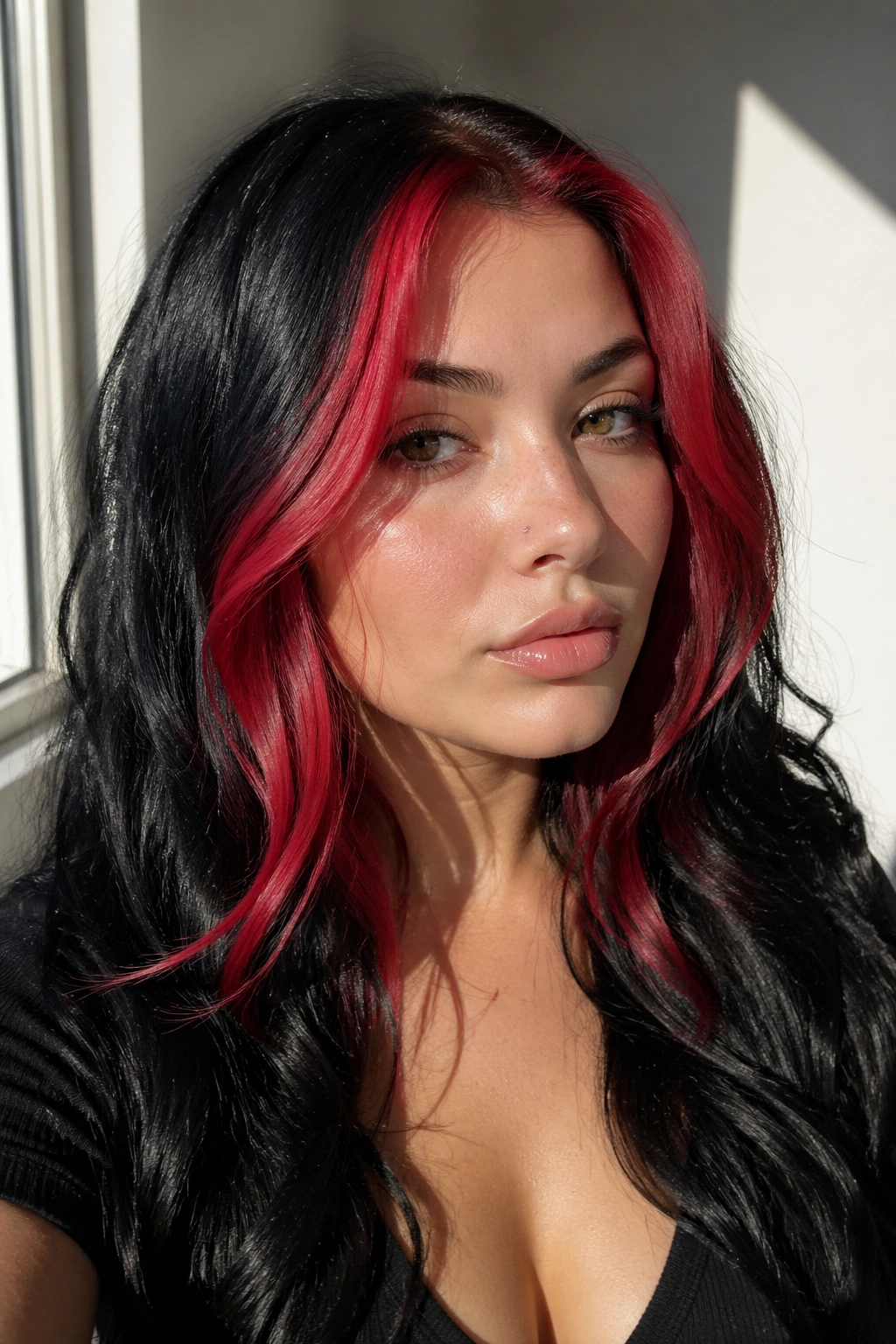
A strong face frame is the fastest way to make dark hair feel alive. Cherry red around the front opens the face, catches movement near the cheekbones, and gives you drama without committing to a full-head bleach job. It’s a sharp look, and it gets sharper when the red is kept glossy instead of matte.
This is one of those styles that looks different from room to room. In daylight, the red has that clean, bright punch. Under warm indoor light, it turns deeper and more wine-like. Jet black around the rest of the head keeps the effect focused right where you want it.
The placement matters more than the shade name. Thin red strips can look edgy and fast; thicker panels near the temples read louder and more theatrical. I prefer the thicker version on shoulder-length hair, because the color has enough room to frame the jaw instead of disappearing into the rest of the cut. If you wear glasses, this look is especially good. The red and the frames fight for attention in a way that feels intentional.
5. Neon Yellow Panel in a Dark Shag
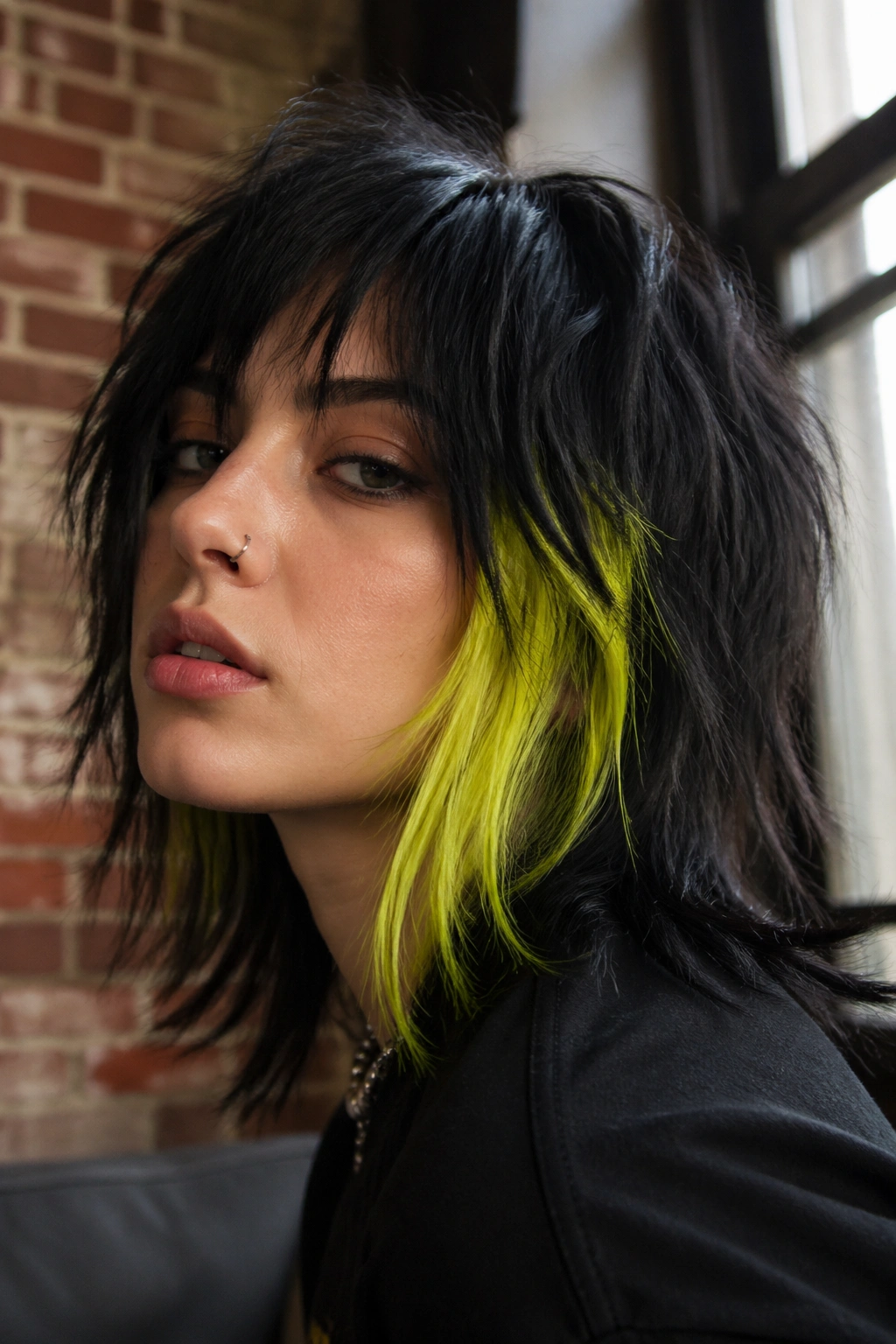
Want the loudest version without coloring every inch? Put the color in one panel and let the shag do the rest. Dark roots, choppy layers, and a neon yellow section create movement without turning the whole head into a single block of brightness. The shag matters here because the layers break up the panel and make it look sliced rather than pasted on.
How to Wear It
A side part gives the panel a chance to peek through when the hair falls forward. A center part makes it split more evenly, which feels cleaner and less punk. Both work. The better choice depends on whether you want the color to feel hidden or front and center.
This is a smart choice for people who like edge but do not want high-maintenance all-over color. The dark base grows out quietly. The yellow panel needs toning, though, because neon shades can drift toward mustard if they’re not refreshed. That’s the tradeoff.
One detail people miss: yellow looks strongest when the cut has texture at the ends. Blunt, heavy ends can make the panel feel flat. Choppy ends make it flick.
6. Auburn and Chocolate Ribbon Waves
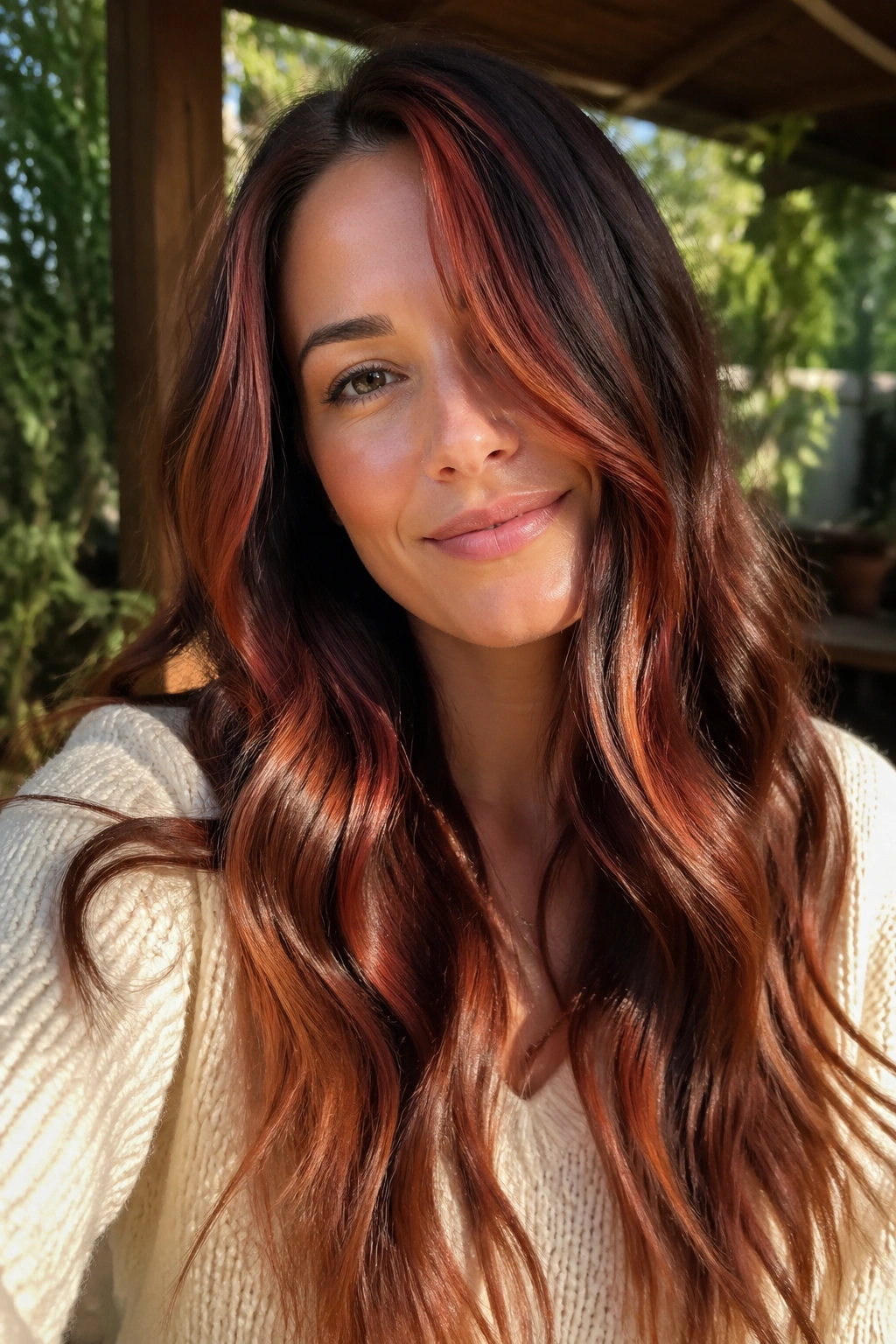
Unlike a split dye, this version moves. Auburn and chocolate get painted in ribbon-like sections through waves, so the contrast shows in streaks instead of a hard divide. That makes the style feel softer, but not quiet. It has motion, and motion is half the appeal.
The best part is how forgiving it is. If you wear your hair in loose bends, the auburn threads rise and sink through the darker brown, which keeps the color from looking too uniform. It suits medium and long hair especially well, because there is enough length for the ribbons to spread out. On shorter cuts, the effect can get busy.
This is also one of the easier bold-color looks to live with between appointments. Auburn fades into a warm brownish red, which still looks intentional against chocolate. You do not get that harsh line of regrowth that comes with a centered split. If you want your color to feel dimensional instead of graphic, this is a good place to spend your energy.
7. Pink Underlights Beneath a Blunt Bob
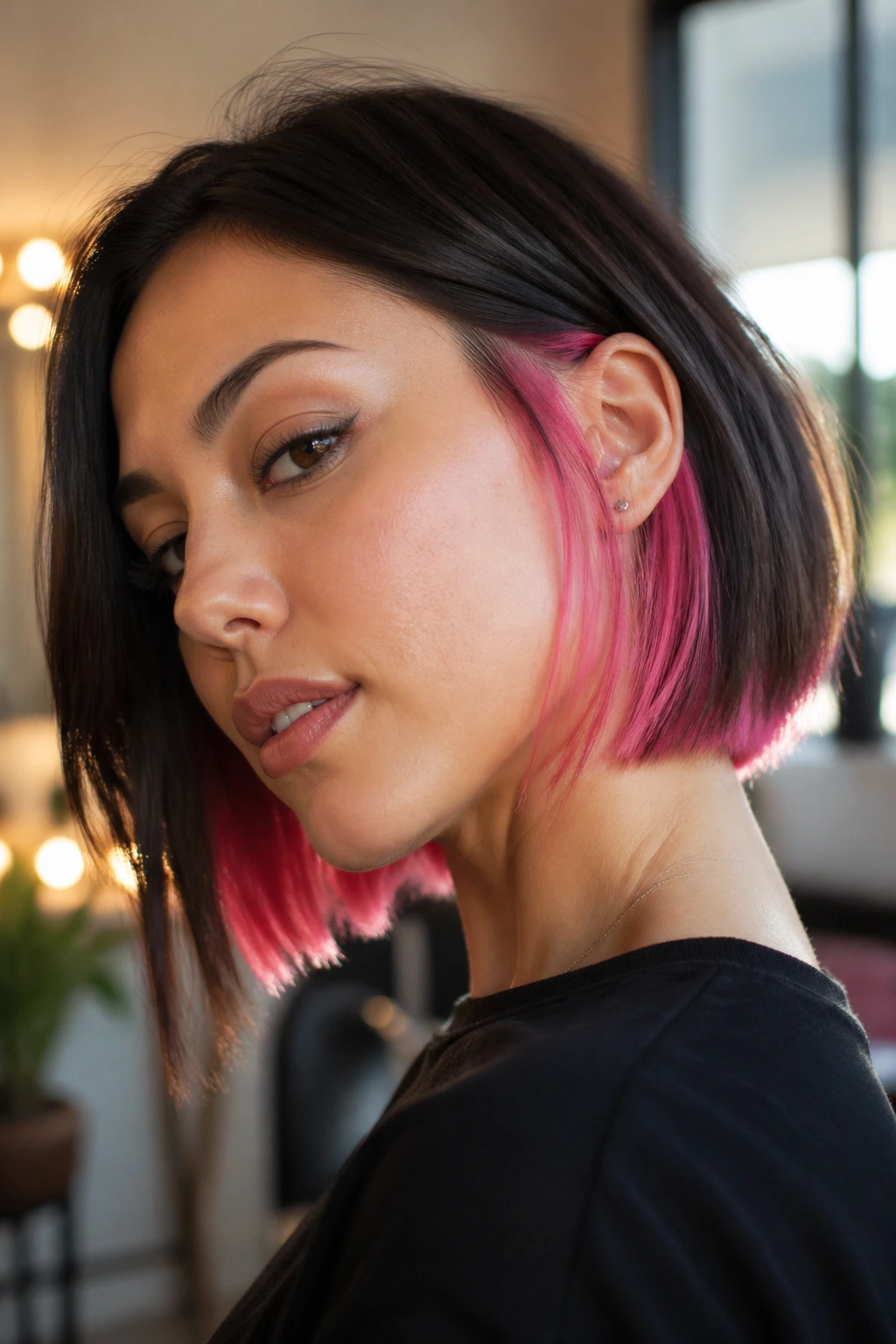
Underlights are the quiet troublemakers of hair color. Most of the time, they stay tucked away. Then you turn your head, tuck one side behind your ear, or throw your bob into a half-up clip, and the pink comes out like a surprise. That little reveal is what makes the style fun.
A blunt bob gives the underlights a clean stage. The straight edge at the bottom means the pink can sit like a bright strip beneath the darker top layer, instead of getting swallowed by too many layers. Hot pink is the obvious choice, but dusty rose or raspberry can be just as striking if you want something that feels less candy-like.
The trick is placement around the ears and nape. Too high, and the pink turns into an all-over highlight. Too low, and nobody sees it unless you pin your hair up. The sweet spot is right under the outer layer, where it flashes when the bob swings. That movement is the point. Without it, underlights can look too hidden to matter.
8. Emerald Ends With Natural Roots
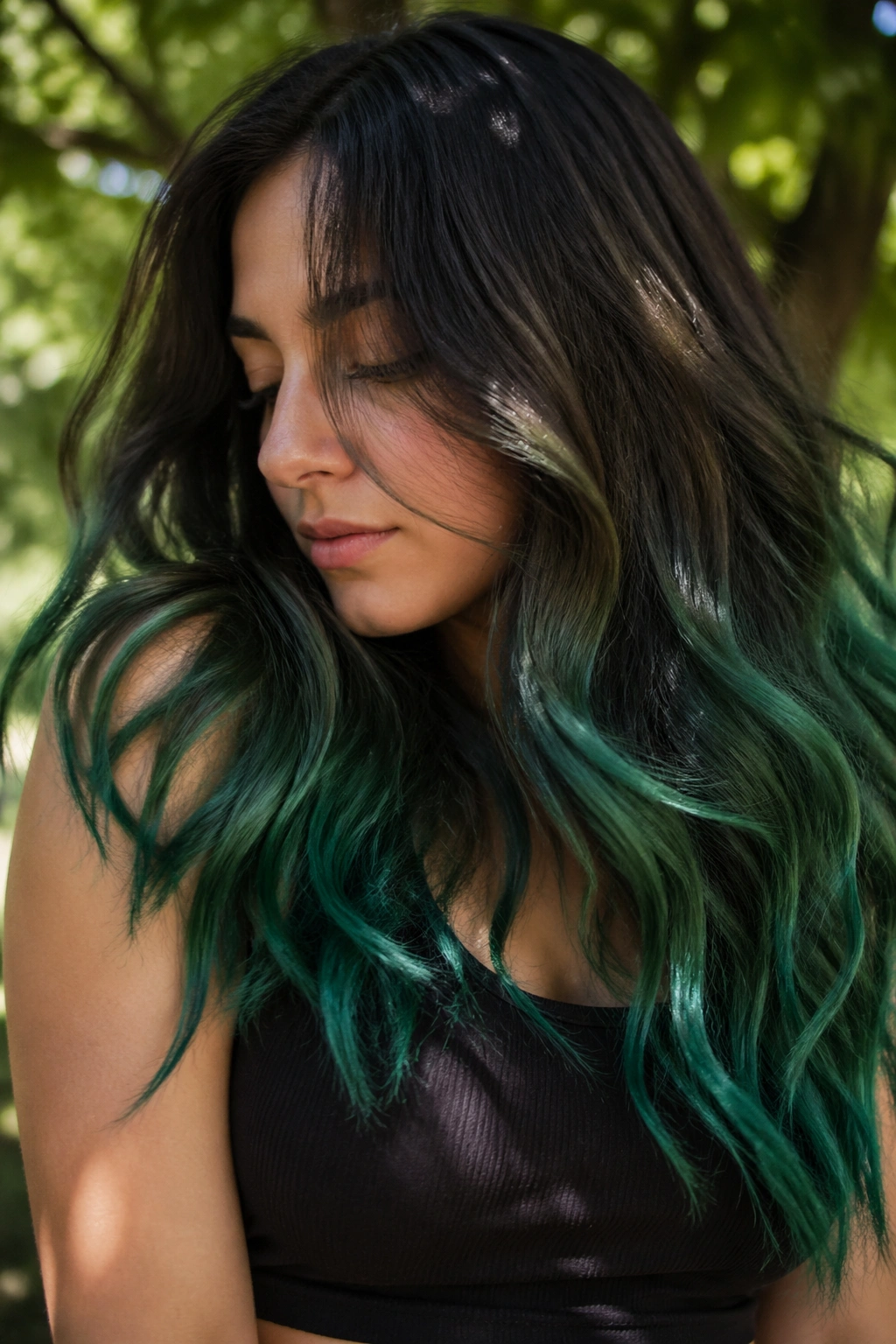
Why put the bold color at the bottom? Because ends move more than roots do. Emerald at the ends gives long hair a solid finish, and keeping the roots natural means the grow-out stays calm. You get the punch of color where the hair sways, bends, and brushes against clothing.
This works especially well on layered lengths and curls. The green sits on the tips and lower mid-lengths, so every flip of the hair shows a different amount of it. Braids pull the emerald into sharp little flashes. A high ponytail leaves more of it visible than you might expect, especially if the ends are tapered.
How to Style It
- Wear it in loose waves when you want the color to spread out
- Braid it to show mixed tones at the ends
- Use a gloss spray so the green stays deep instead of dull
- Keep heat low if the ends have been lightened
If you like color but hate seeing hard root lines, this is one of the easier bold options to keep wearing without getting annoyed.
9. Burgundy and Blonde Face-Frame Ribbons
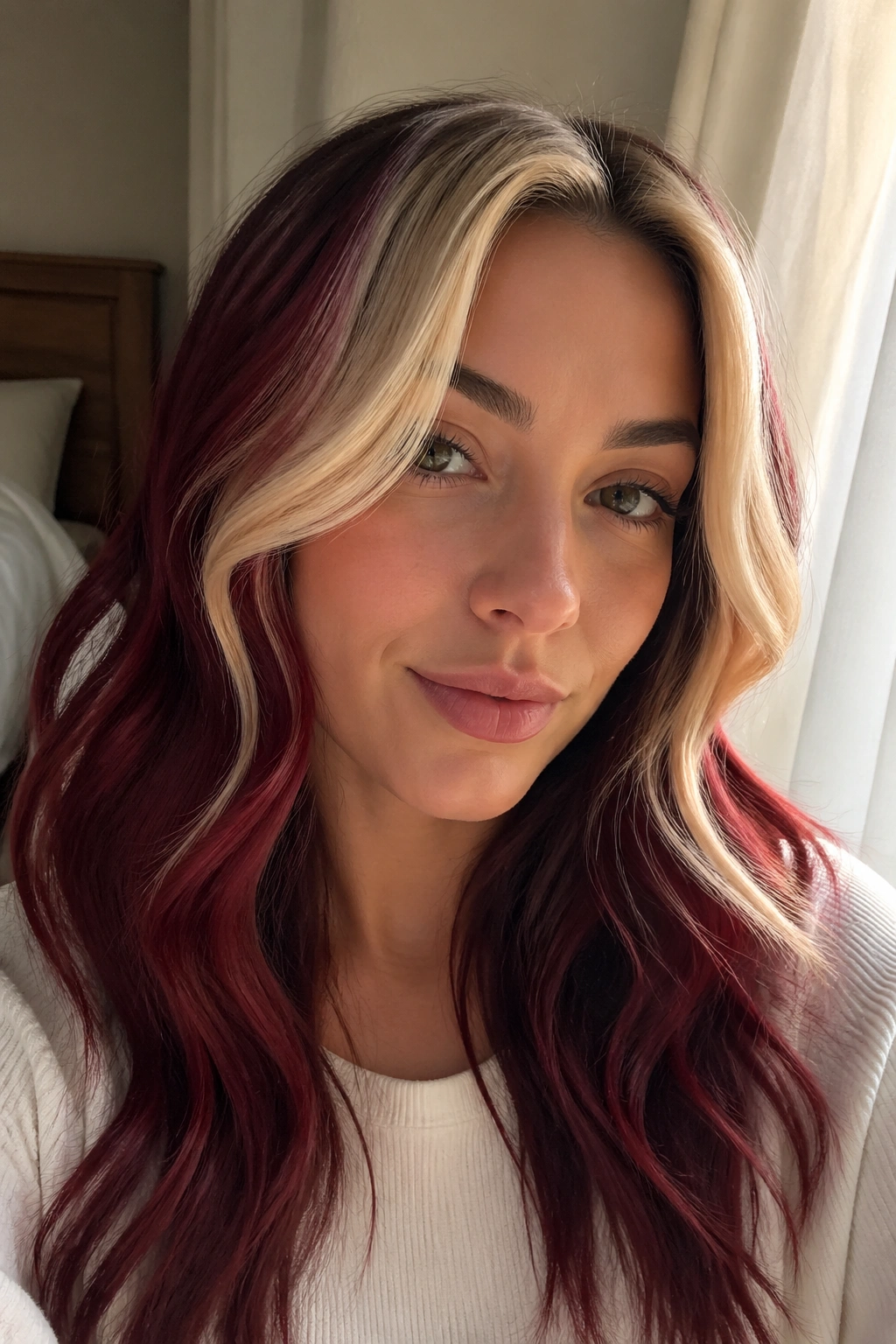
Here’s a simple truth: color around the face changes the whole haircut faster than color anywhere else. Burgundy ribbons near a blonde face frame add depth, warmth, and a little bit of shadow right where the eye looks first. It can make a layered blowout feel richer without touching the whole head.
The contrast works best when the burgundy is one or two shades deeper than your darkest blonde piece. If it’s too close, the effect disappears. If it’s too dark, the red can turn muddy. I like this look on hair that has some bend to it, because the ribbons can curve through waves instead of sitting flat like stripes.
It’s also a smart option if you want to test bold color without going full split dye. You can keep the rest of the hair soft, then let the face frame do the talking. On hair that’s already blonde, the burgundy can be placed in chunky panels near the cheekbones. On darker blondes, a softer wine tone works better and grows out with less fuss.
10. A Two-Tone Pixie With Shadow Root and Ivory Crown
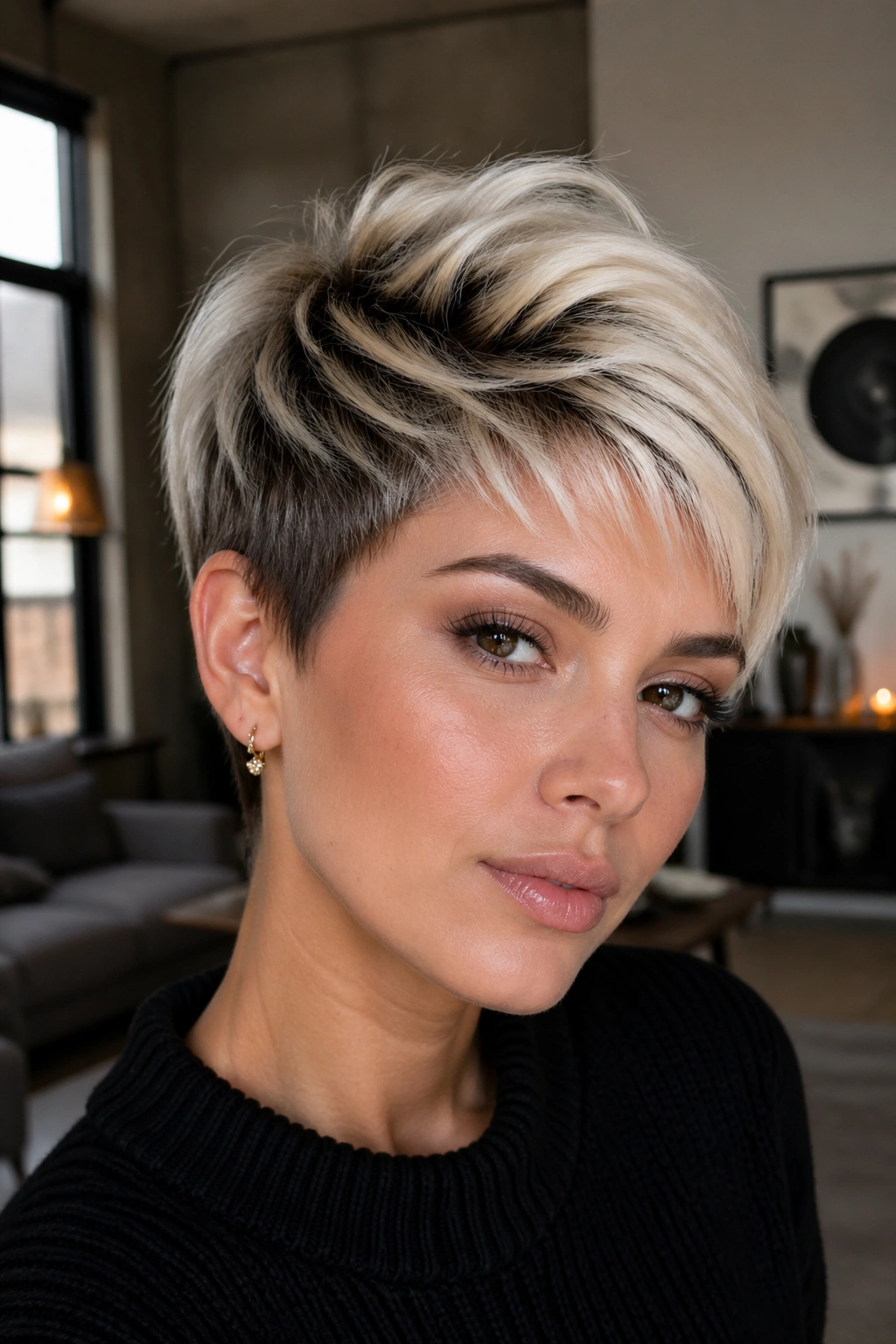
Short hair has no patience for sloppy color placement. That’s why a two-tone pixie needs a clear plan. An ivory crown with a shadow root creates shape on top, keeps the cut from looking helmet-like, and makes the short layers read from a distance. The contrast is tighter than on long hair, which is exactly why it works.
Unlike a bob or lob, a pixie does not have long panels to hide uneven color. Every section shows. So the shadow root becomes useful, not just decorative. It softens regrowth, gives the crown some depth, and keeps the ivory from looking like one solid cap. When the sides are slightly darker than the top, the cut looks lifted instead of flat.
This is a good choice if you like short hair that still feels loud. It’s also one of the easiest ways to make a pixie look expensive without piling on a lot of styling products. A little paste at the crown, a side sweep, and the color does the rest. That said, short cuts need frequent trims. There’s no hiding split ends on a pixie.
11. Peach and Lavender Cotton-Candy Bob
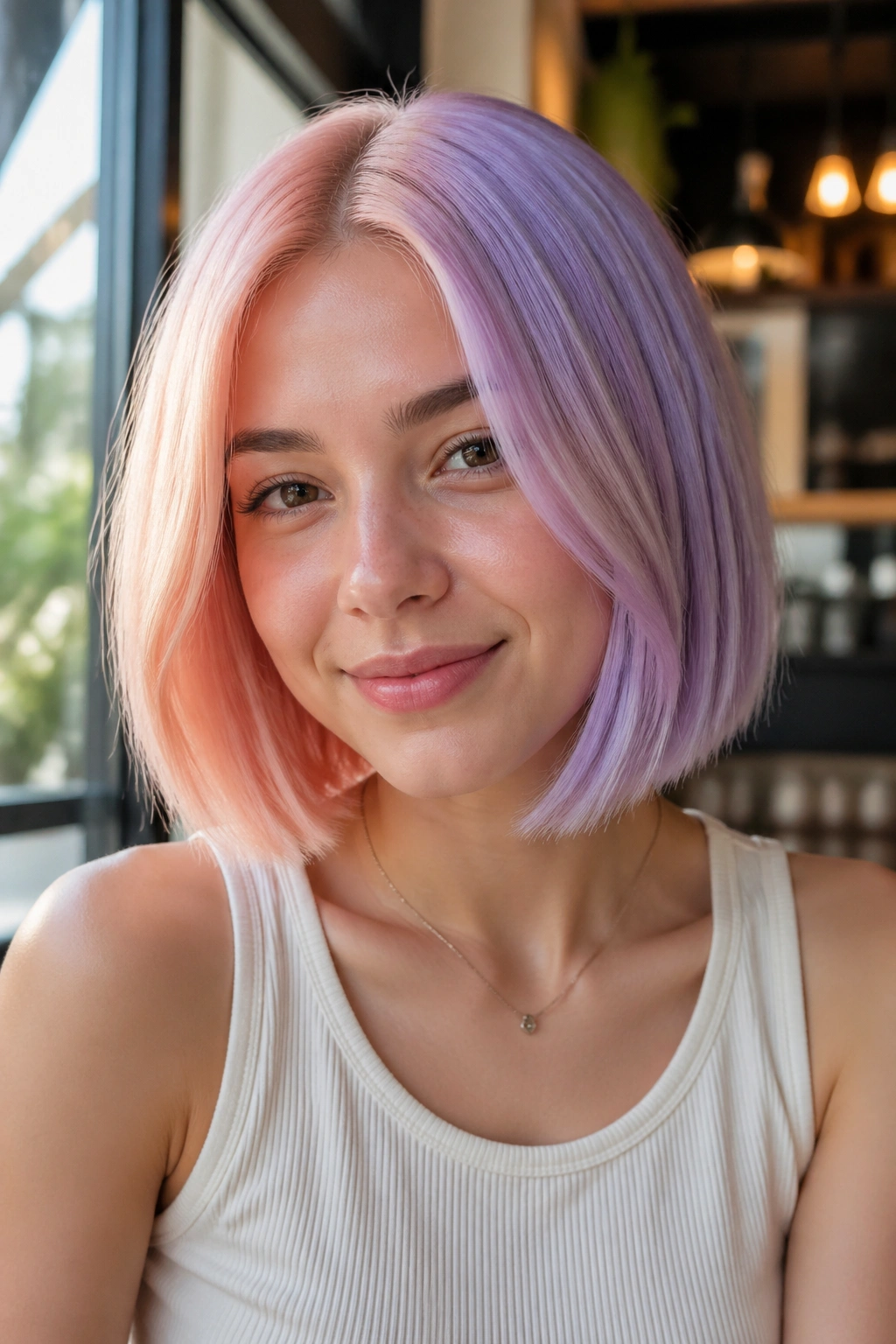
A pastel bob can look sugary in a way that feels either childish or smart, and the cut decides which direction it goes. Peach and lavender, when placed in tidy sections on a bob, lean smart. The blunt outline keeps the colors from drifting into mush. The result is soft, but not timid.
The reason this pairing works is that the two shades sit in the same lightness level. That means the contrast comes from hue, not from a dark-versus-light fight. It’s a quieter kind of bold, which can be a relief if you like color but don’t want every part of your head screaming for attention. The bob shape helps a lot here because the ends stay neat.
- Best on hair that has been lifted to a pale blonde base
- Needs gentle shampoo, or the pastels will wash out fast
- Looks sharper with a clean middle part
- Flat iron waves make both colors show at once
Pastels do not last forever, and that’s part of the charm. They fade into softer versions of themselves instead of growing out with a hard line. Not bad.
12. Red and Black Streaked Shag
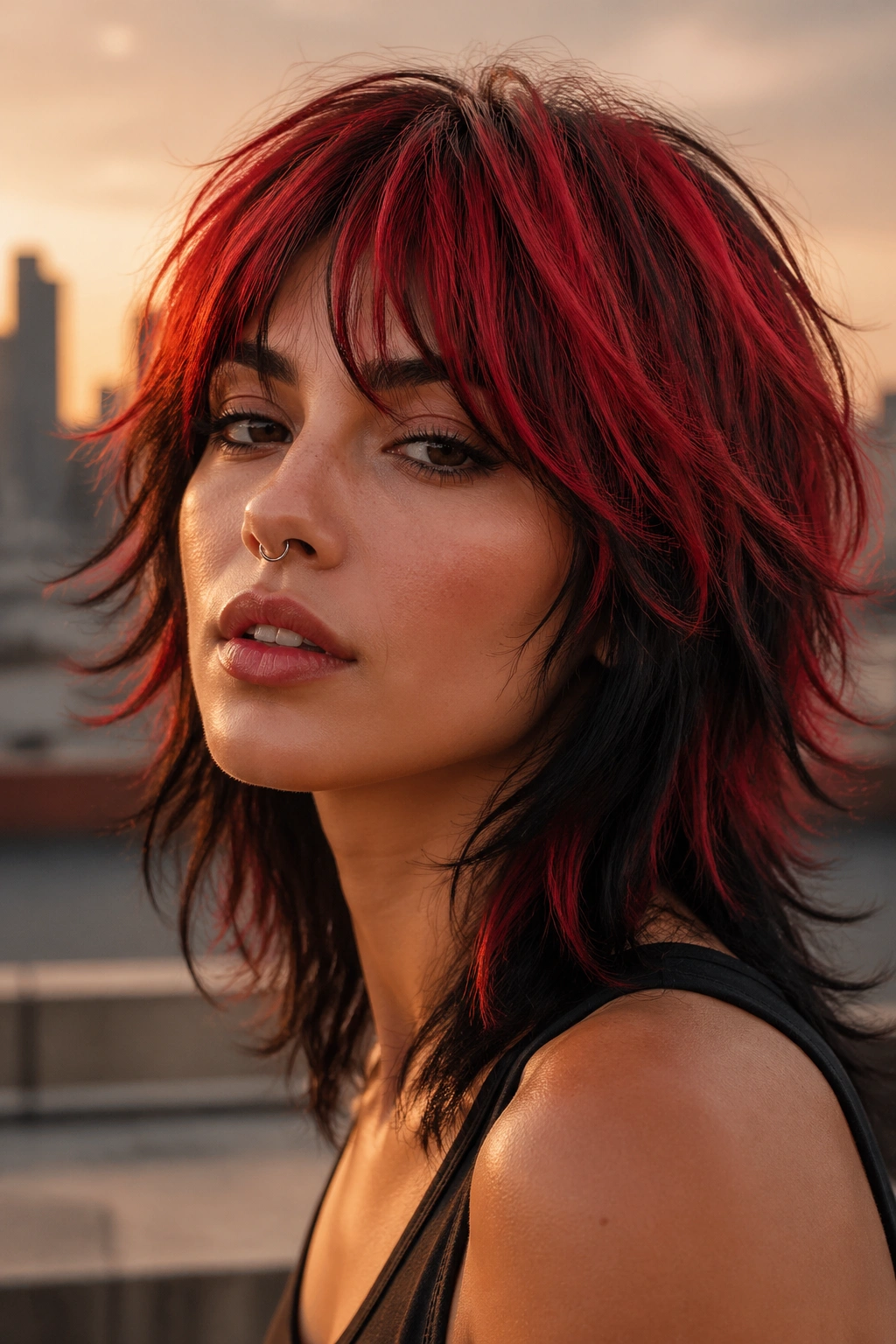
The shag is made for streaks. Its layers break color into pieces, so red and black never sit still for long. They shift when you shake your hair, and that matters. A streaked shag looks alive because the color keeps changing shape.
This is a bolder, rougher cousin to the ribbon-wave look. Instead of soft blending, you get chunkier placement through the fringe, crown, and outer layers. The red can sit near the front and around the top, while the black stays underneath or as the base. On wavy hair, the streaks separate naturally. On straighter hair, they feel more graphic and a little harder, which can be good if that’s the point.
A shag also gives you room to hide complexity. Some pieces can be bright, some can be darker, and the haircut still makes sense because it already has texture built into it. If you want a color job that looks better a little messy than perfectly arranged, this is one of the best choices on the list.
13. Ash Blonde and Mushroom Brown Melt
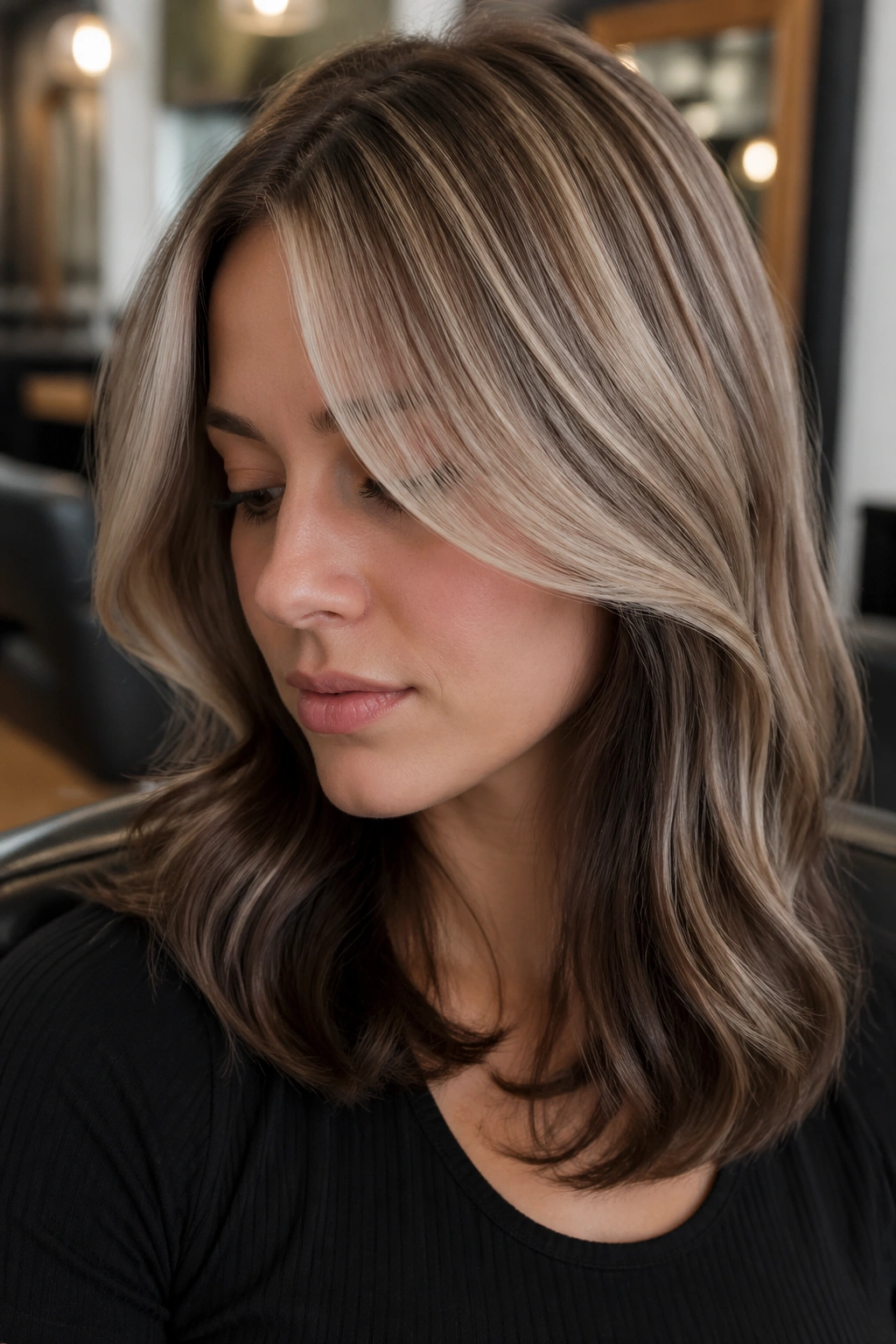
Why does this pairing hit so well? Because the contrast is quiet on purpose. Ash blonde and mushroom brown sit close enough to feel modern, but far enough apart to give the haircut shape. The melt between them keeps the line soft, which is useful if you want a two-tone look that wears more like fashion than costume.
Why It Feels Softer
The brown has a cool, earthy cast, so it does not fight the ash blonde. That shared coolness makes the color look blended even when the panels are distinct. On medium-length layers, this is especially nice because the movement exposes both shades without a sharp break.
How to Wear It
A blunt lob makes the melt look cleaner. Loose curls make it look more expensive. The best way to push the contrast is to keep the mushroom brown deeper underneath and let the ash blonde sit on the top panels and around the face. That gives the style some lift without turning it into stripes.
If you want edge but you also wear a lot of neutral clothing, this one fits easily. It has enough contrast to feel deliberate and enough softness to survive real life.
14. Teal Peekaboo Layers on Long Hair
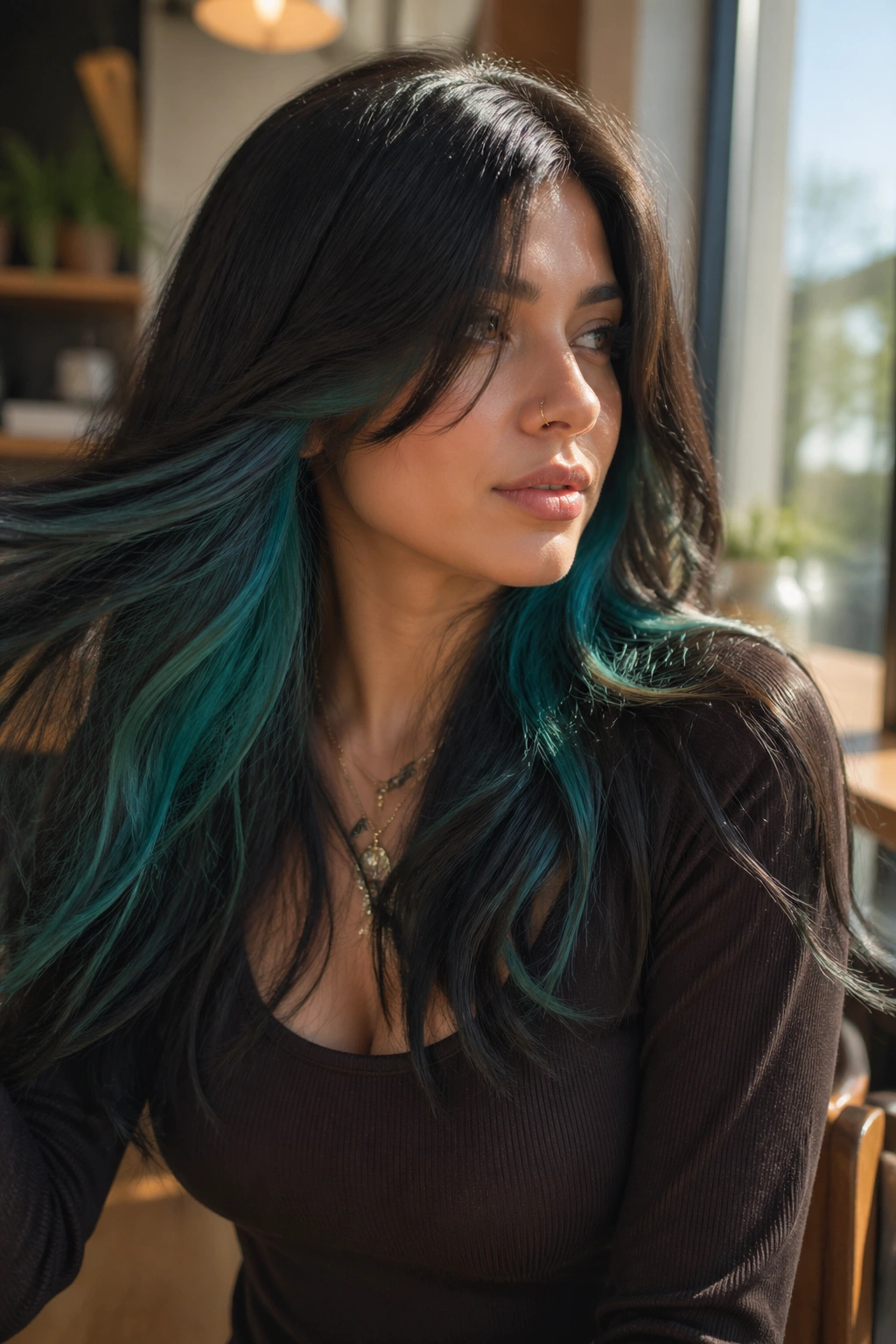
Teal peekaboo layers are for people who like a secret. The color hides inside the haircut, then flashes out when the hair moves, gets braided, or goes into a claw clip. Long hair gives the teal room to lurk underneath, which makes the reveal feel better than if the color were visible all the time.
A lot of people choose peekaboo color because it lets them keep the top layer natural or close to natural. That’s not a compromise. It’s a strategy. You can keep the visible surface calm and still have a bright panel underneath that shows up in ponytails and half-up styles. On long layers, teal catches in the different lengths and looks almost striped as it falls.
The shade itself matters too. Deep teal reads richer and holds up longer than brighter aqua, which can go pale fast. If your hair is very dark and you want the teal to show, the underlayer will need enough lift to take the pigment. If the base is already light brown or blonde, the whole job gets easier.
It’s one of those styles that rewards movement more than stillness. And hair that moves often is good hair.
15. Orange and Magenta Panel Color
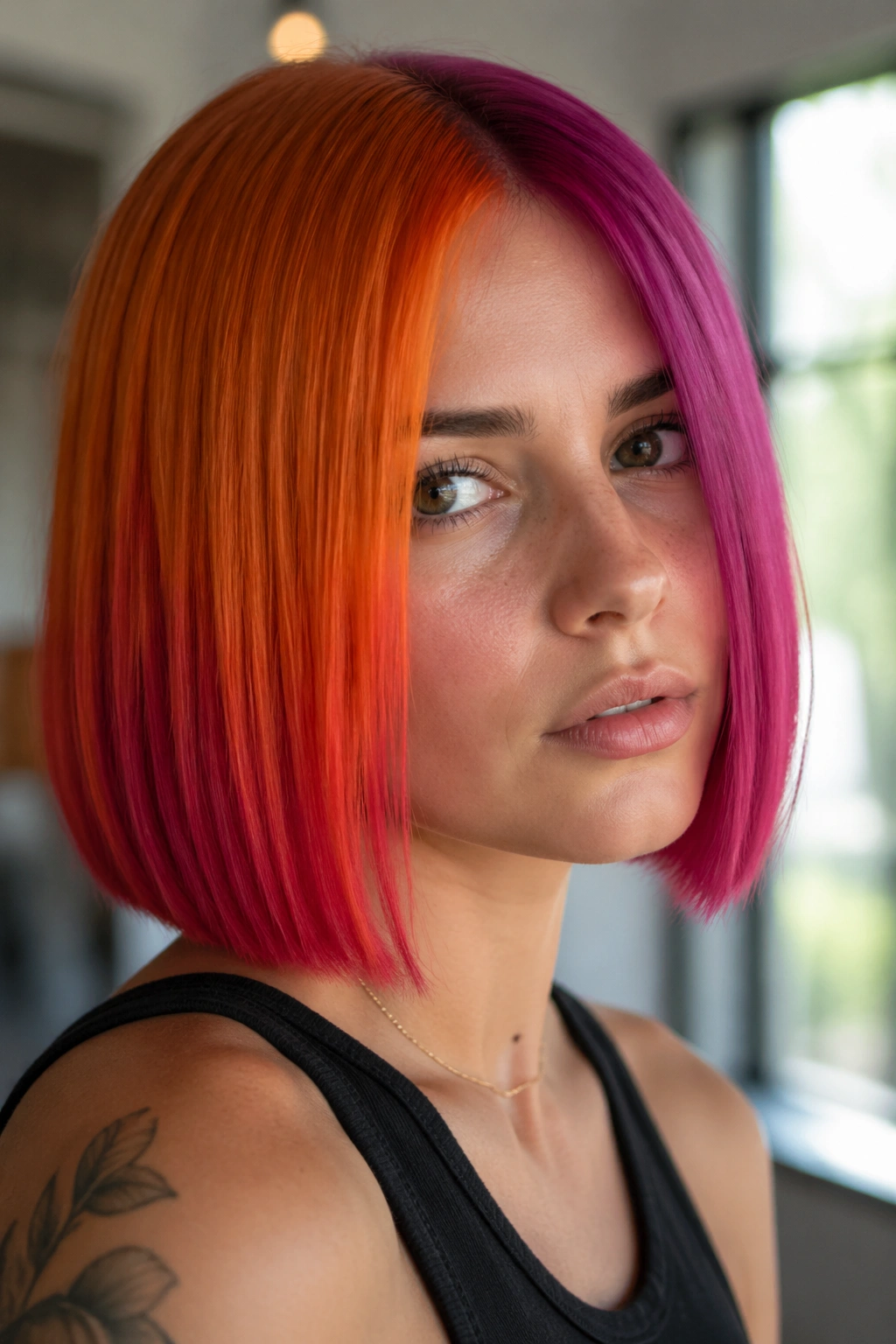
Panel color is the blunt-force cousin of ribbon highlights. Instead of tiny strands, you get clear blocks of orange and magenta placed where the hair has enough room to show them. That makes the style bolder right away. No squinting. No guessing.
This look is best on cuts with a strong shape: blunt bobs, one-length lobs, even a sharp wolf cut if the layers are controlled. Too many short layers can break the panels apart and make the colors look scattered. When the cut stays clean, the color reads like design rather than noise.
Orange next to magenta is hot and unapologetic, so the clothes around it matter more than people admit. Black, white, olive, and denim tend to let the hair stay in charge. Very busy prints can fight with it. If you want the style to feel polished, keep the root area tidy and the ends sharp. A color job this loud needs a haircut that knows how to stand up straight.
16. Icy Lilac and Charcoal Waves
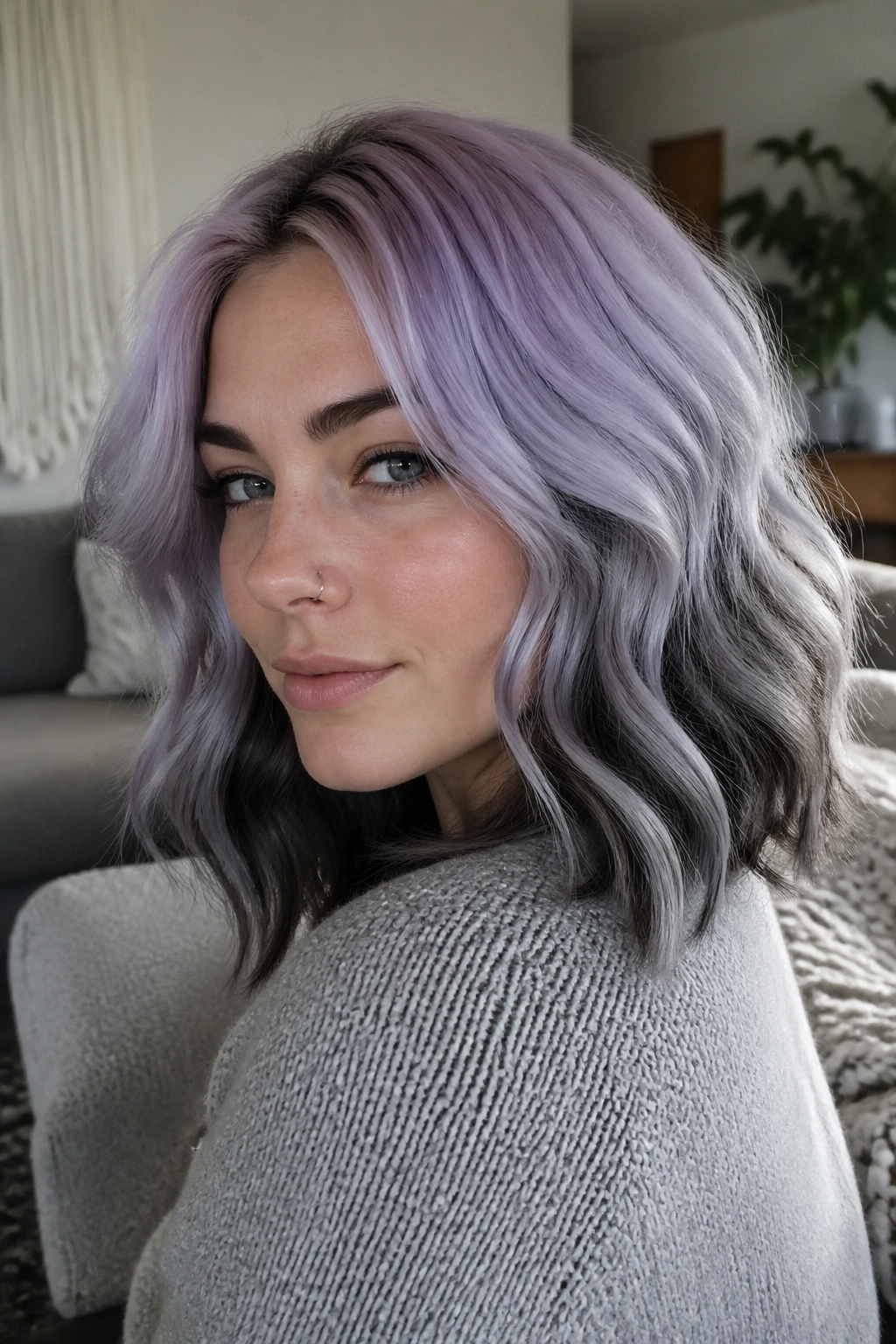
I once saw this pairing on a shoulder-length wave cut, and the thing that stuck with me was how the colors changed every time the model moved her head. The lilac was bright near the front, then the charcoal slipped through the underneath and made the whole shape look deeper. Nothing about it felt flat.
That’s the real strength of icy lilac and charcoal. The cool tones play well together, but the contrast still has bite. Lilac near the surface keeps the look light. Charcoal underneath gives it weight. On waves, the two shades fold into each other enough to feel blended, yet the eye still catches the difference.
- Works best when the lilac is lifted to a pale blonde base
- Charcoal should stay cool, not muddy
- Medium waves show the transition better than pin-straight hair
- A satin pillowcase helps preserve the softer shades longer
This style fades in a useful way. The lilac drifts toward silver, and the charcoal stays anchored. That makes the grow-out less annoying than a bright neon job, which can start feeling messy fast.
17. Honey Blonde and Espresso Block Bob
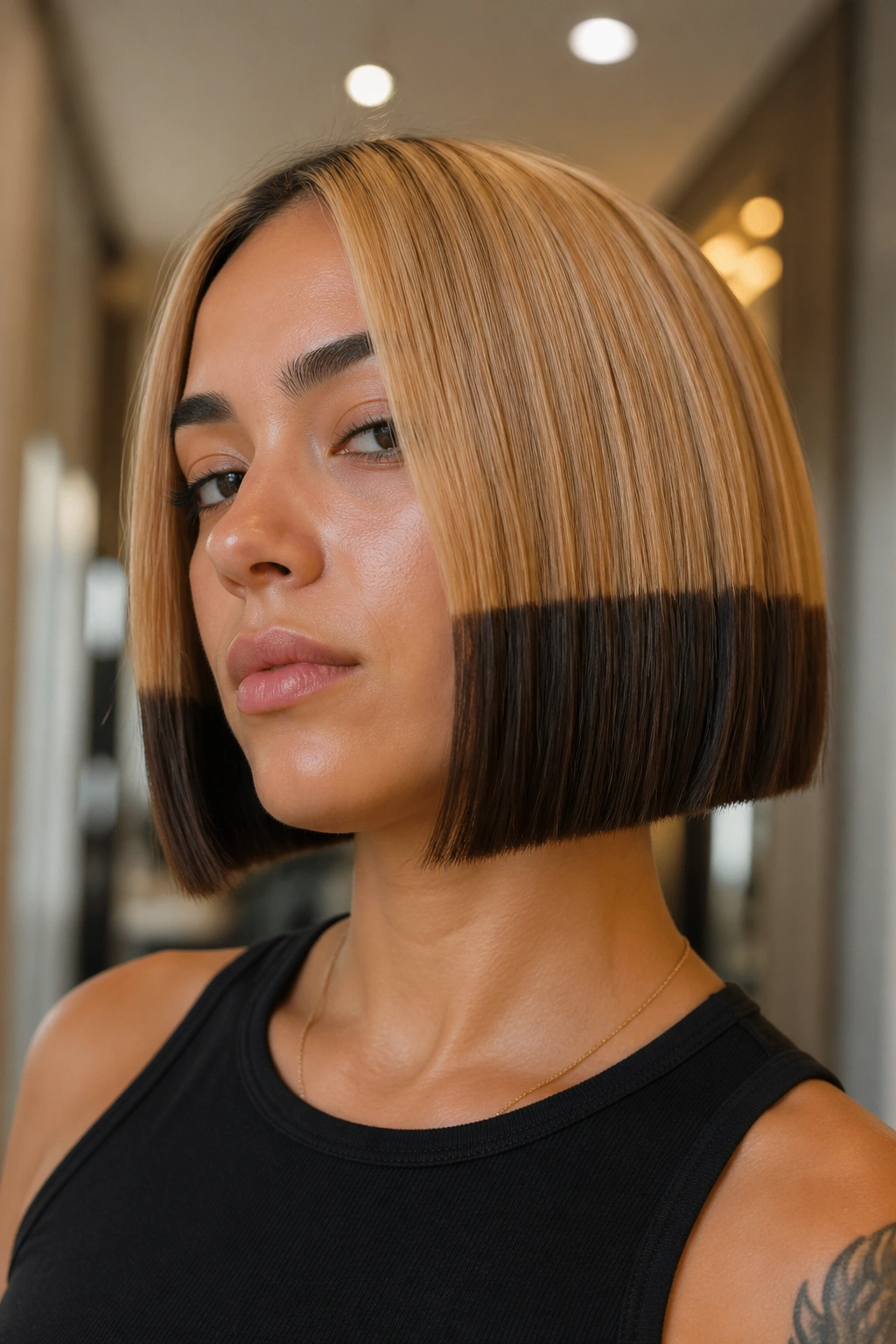
A block bob gives color a wall to sit on, and honey blonde against espresso takes advantage of that. The honey brings warmth and brightness to the surface, while the espresso gives the cut a dark frame. On a blunt bob, the contrast feels deliberate from every angle. On a wavy bob, it gets a little softer, but the block effect still holds.
This is not a delicate look. Good. It doesn’t need to be. The dark and light sections can be placed in broad panels rather than thin ribbons, which means the color stays readable even when the hair is tucked behind the ears. If you have thicker hair, that helps a lot. There’s enough density for the blocks to stay clean.
The upside of this placement is that it can make hair look fuller. Darker panels underneath create shadow, and the honey on top catches the eye first. If your hair tends to fall flat, this one gives it a stronger outline without needing a lot of styling. A straightening pass at the ends is often enough.
18. Rainbow Tips on Dark Curly Hair
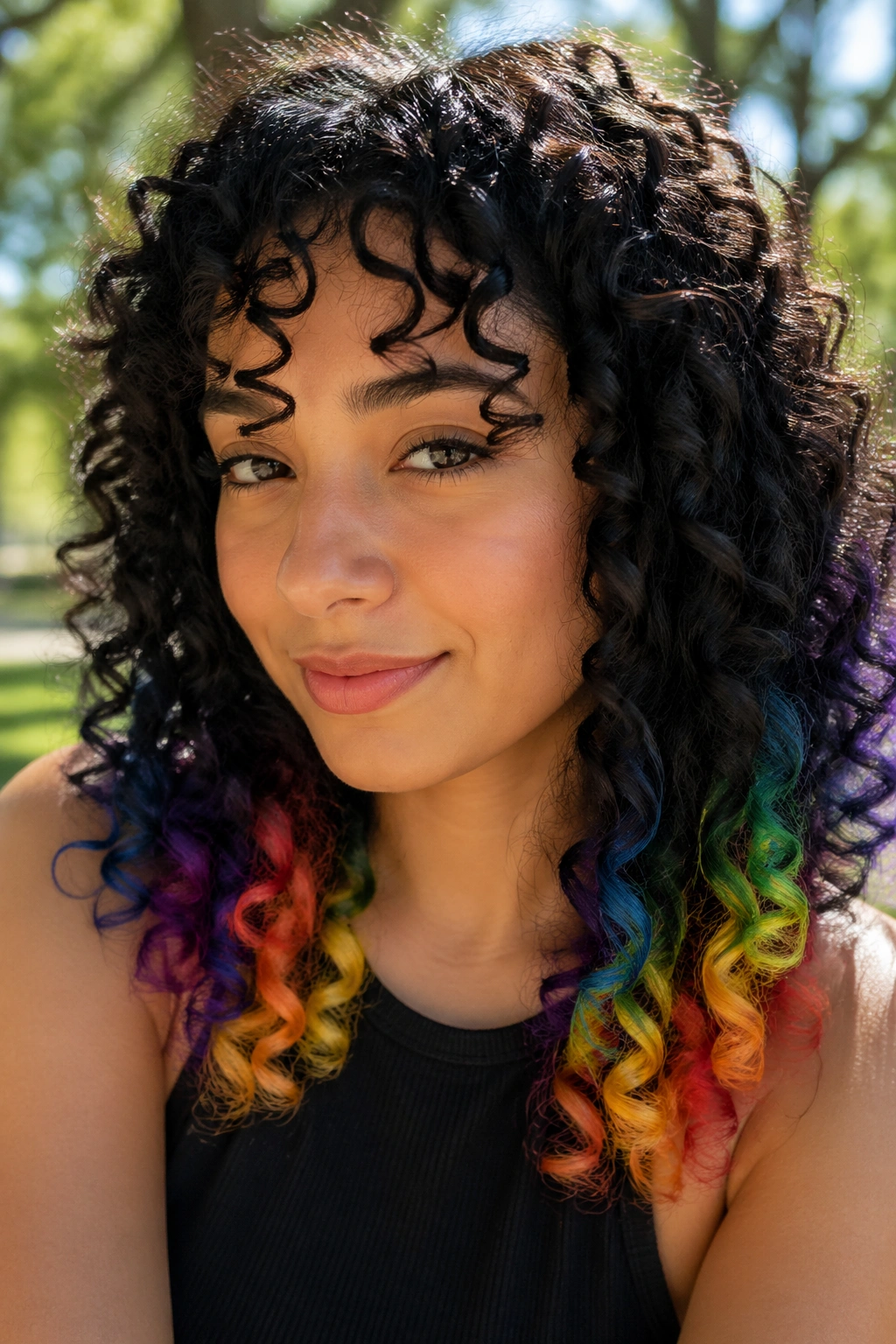
Curly hair makes a strong argument for color at the tips. The spiral shape already shows off different parts of the strand, so rainbow ends can look far richer on curls than they do on straight hair. You don’t need every section to be bright. A few inches of color at the bottom will do a lot of work once the curls spring up.
How to Get the Most From It
If the base is dark, the tips usually need to be lightened before the rainbow shades go on. That part matters. Bright dyes sit better on a pale canvas, and dark curls can swallow weak color. Once the tips are lifted, you can layer in violet, teal, coral, or yellow in chunky sections.
The best shape for this is a cut with defined layers. Too much bulk at the bottom hides the color. Enough shaping at the ends lets the rainbow flick out from each curl. Braids and twist-outs show the different shades in a completely different way, which is half the fun. This is one of the boldest two-tone hairstyle ideas if you count the tips as one color family and the dark base as the other.
19. Platinum Crown With Dark Lowlights
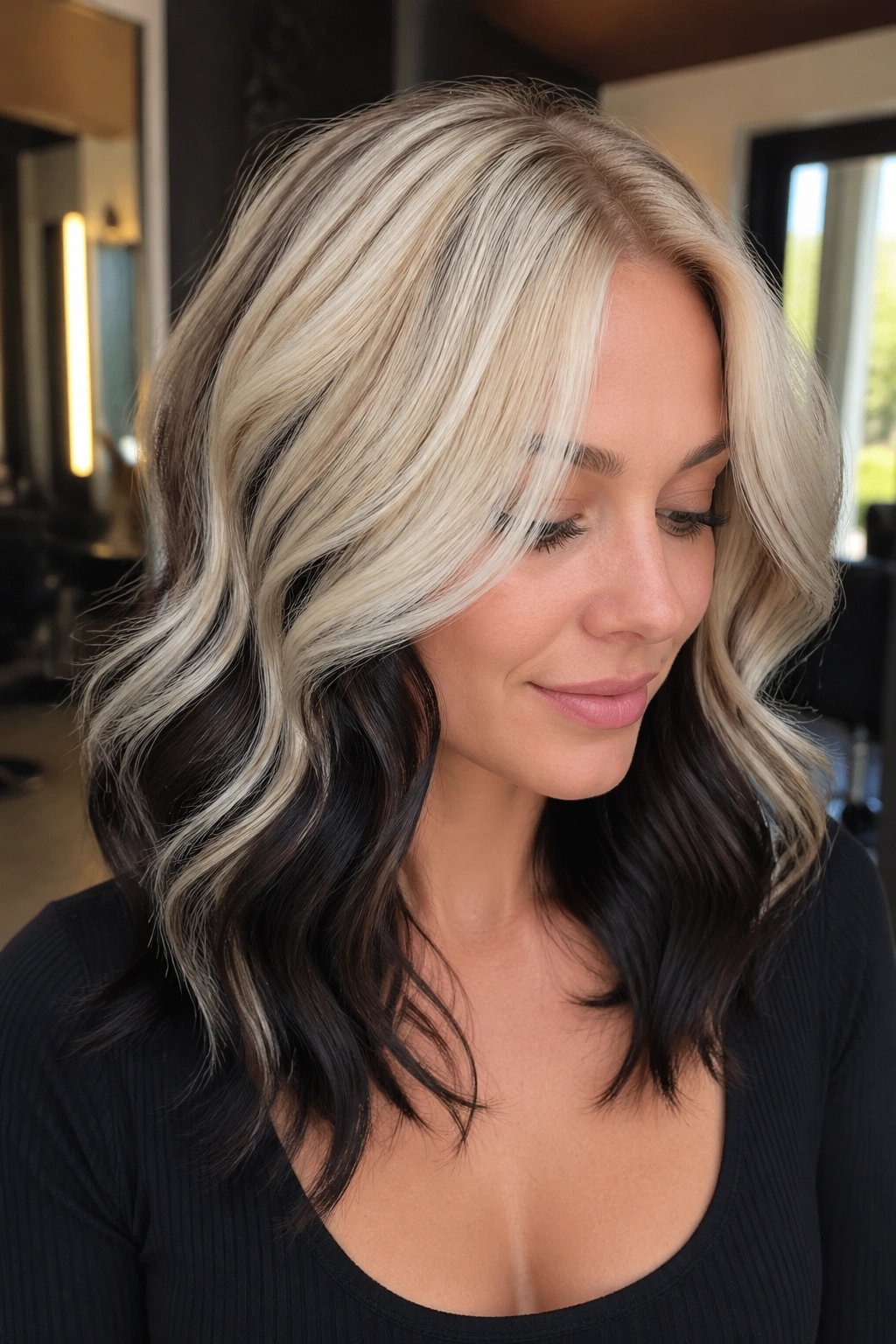
Platinum can look thin if it sits on its own, which is why dark lowlights matter so much. Put the brighter shade on top and through the crown, then thread deeper pieces underneath. The hair suddenly has more depth, more shadow, and more shape. It reads fuller.
The crown placement makes this version stand out from a regular highlight job. You’re not scattering light and dark all over the head. You’re building a bright top layer with darker structure underneath, which is why it looks especially good on waves and curls. The top catches light. The lowlights keep the underside from turning into a pale blur.
What to Watch For
- Platinum needs toning or it can go yellow
- Dark lowlights should be soft brown or deep beige, not flat black
- Root shadow keeps the transition cleaner
- Wavy styling shows the contrast better than a tight straight finish
This is a smart pick if you like light hair but want more than one note. It has the drama of blonde with the depth of darker color tucked underneath, and that combination rarely gets old.
20. Reverse Ombre for Two-Tone Hair With Ruby Roots and Onyx Ends
Reverse ombre turns the usual idea around, and that is why it feels fresh even though the technique itself is not complicated. Ruby at the roots gives you instant color near the scalp, then the shade falls into onyx ends that anchor the look. The brightest part sits where people expect darkness. That small reversal changes everything.
It also has a useful side effect: the darker ends make the grow-out feel less abrupt. As the roots soften, the whole style still keeps its shape because the base of the haircut is deep and steady. On long hair, the color looks dramatic when it’s down and even better when it’s tied up, since the ruby at the top stays visible. On layered cuts, the transition between the two colors can be placed lower or higher depending on how much contrast you want.
If you want one version that feels like a full stop rather than a half idea, this is it. Keep the division around the cheekbone or collarbone, and ask for a gloss on the ruby side so the color stays rich instead of dusty. Strong color needs shine. Always has.
