



A flat, one-note brown can make morena skin look tired in a way that surprises people. The right shade does the opposite. It pulls the face forward, sharpens the eyes, and gives the skin a cleaner glow without needing a dramatic cut or heavy makeup.
Some of the best hair color ideas for morena skin tones are not the lightest ones in the room. They are the shades that work with the undertone already there — gold, olive, neutral, or deep warm brown — instead of fighting it.
That is why caramel, chocolate, copper, chestnut, plum, and even blue-black can all be flattering on morena skin. The difference is placement, depth, and how much contrast you want around the forehead, cheeks, and jawline. A good colorist pays attention to that before mixing anything.
Hair history matters too. Porous ends grab red fast, dark virgin hair resists lift, and a gloss can change the whole result by making the shade read richer instead of flat. Start with the shades that respect your base, then build from there.
1. Caramel Balayage for Morena Skin Tones
Caramel balayage is the easy yes. It brings light to the face without forcing your whole look into high-maintenance territory, and on morena skin it tends to read warm rather than harsh.
Why It Flatters So Quickly
The magic is in the placement. Hand-painted caramel pieces sit a shade or two lighter than the base, so the contrast feels soft instead of stripey. That matters a lot on dark brown or black hair, where thick highlights can turn loud fast.
A good caramel result should look like sunlight landed on a few strands, not like you visited a marker pen. Ask for ribbons around the cheekbones, temples, and mid-lengths, then keep the roots a little deeper so the color grows out cleanly.
- Best on level 4 to 6 brunette bases.
- Looks strongest with warm, golden, or neutral undertones.
- Ask for a root shadow that is 1 shade deeper than the caramel.
- A gloss every 6 to 8 weeks keeps the tone from going flat.
Pro tip: caramel reads richer when it sits beside a deep brown base, so do not lift the whole head too high unless you want a much lighter look.
2. Rich Chocolate Brown All Over
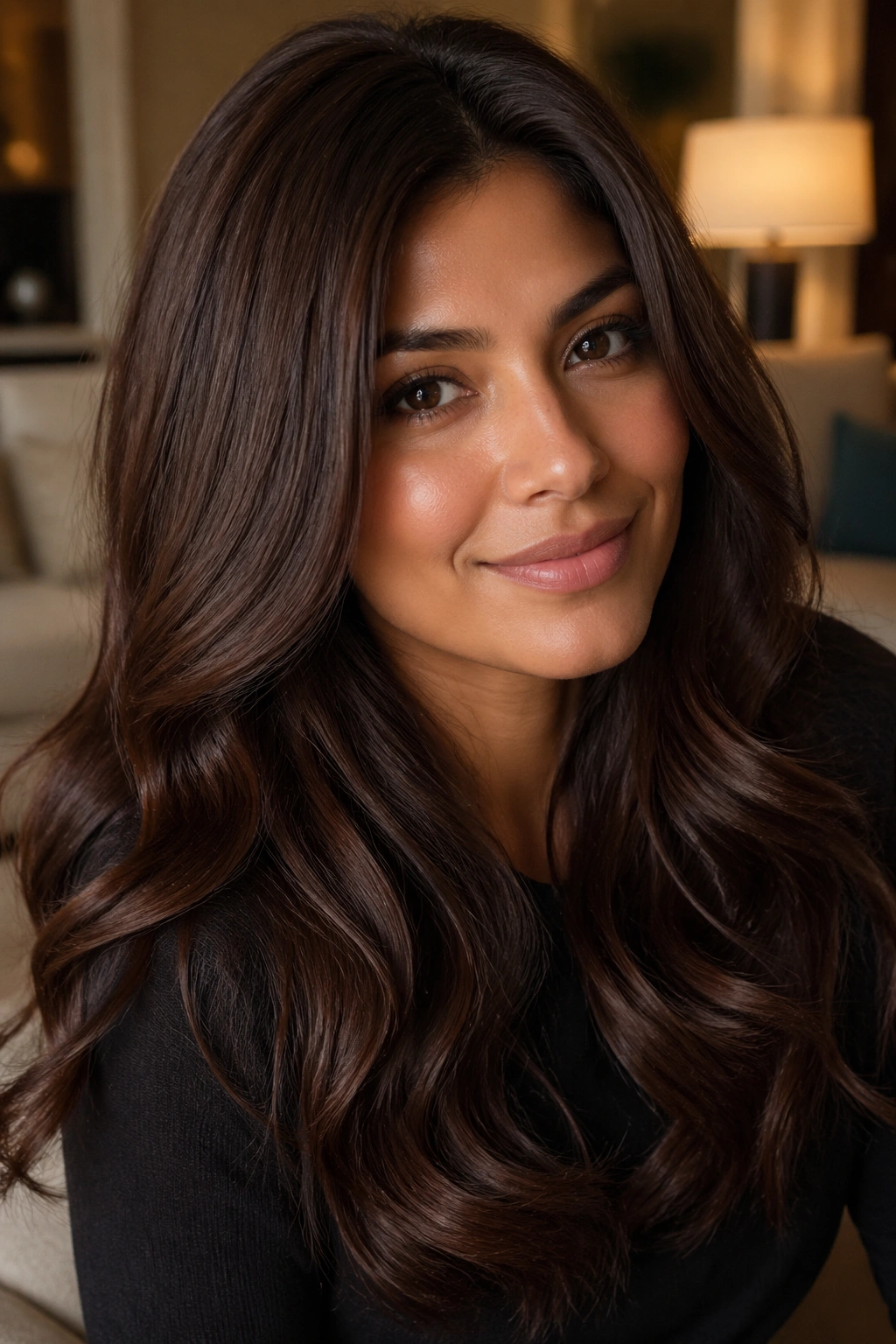
Sometimes the best answer is the one people skip because it sounds too simple. A rich chocolate brown can make morena skin look fresh, polished, and clean in a way that brighter colors cannot always match.
Chocolate works because it keeps the hair deep enough to frame the face while still showing warmth. Go for a neutral-chocolate or soft mocha brown if your skin leans golden. If your undertone is more olive or neutral, that same color can look even better when the red is kept low.
I like this shade for people who want shine more than drama. A smooth all-over brown reflects light well when the cut is healthy, and it does not ask for a constant touch-up at the roots. It is also one of the easiest colors to keep from looking messy between salon visits.
One small warning: if the brown is too flat, it can disappear against dark features. Ask for a gentle gloss or a tiny bit of lowlight variation so the color has some movement.
3. Copper Cinnamon That Glows in Natural Light
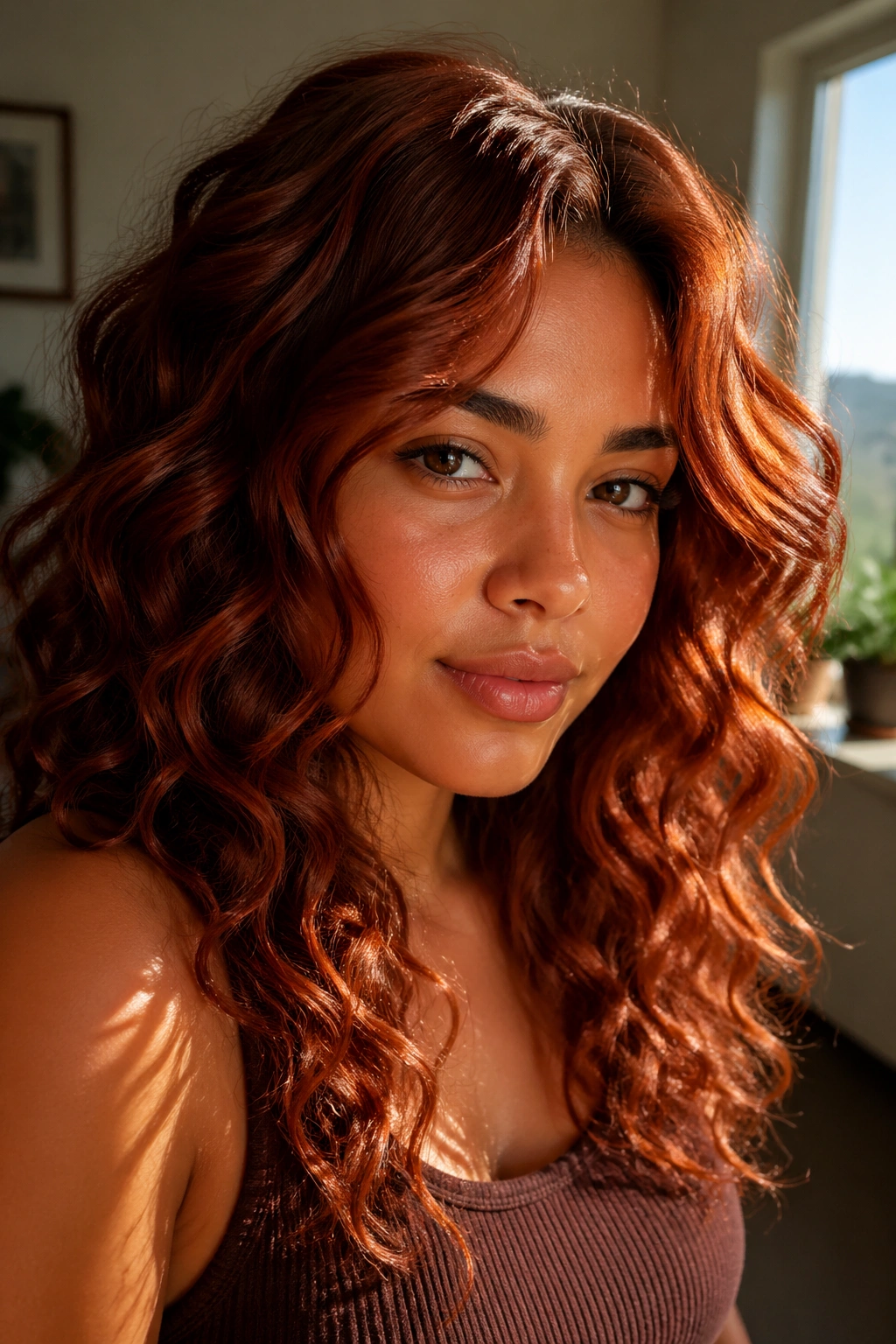
Why does copper cinnamon flatter morena skin so often? Because it sits in that sweet spot between red and brown, so it adds heat without looking loud.
A cinnamon copper shade usually looks best when it has a brown base under the red. Pure orange-copper can feel too sharp on some skin tones, but cinnamon softens the edge and keeps the result wearable. On curls and waves, it looks especially good because the bends catch the pigment in little flashes.
How to Wear It Without Going Orange
Ask for a copper-brown gloss over a medium brunette base if you want something gentle. If you want more impact, a level 5 or level 6 copper brown gives you that warm pull without turning neon. The finish matters too — a shiny, healthy surface keeps the color from reading dry.
Copper fades fast. No mystery there. A color-depositing mask once a week and cooler water when you wash can slow that down enough to keep the tone looking warm instead of washed out.
4. Honey Brown That Lifts the Face
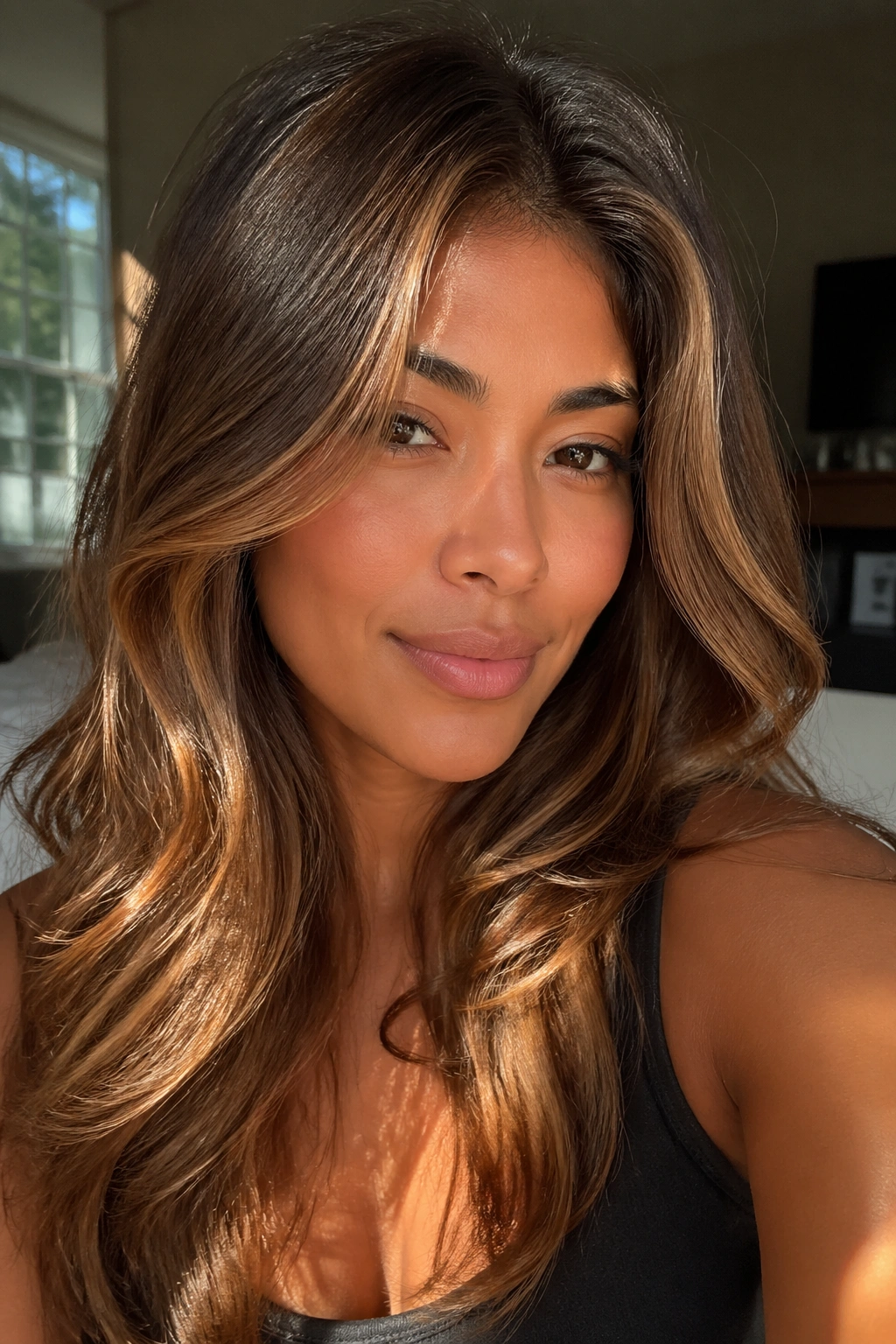
If your hair has been dark for years and you want a change that still feels believable, honey brown is the one that wakes things up without turning your whole head blonde. It has enough gold to brighten morena skin, but not so much lightness that it starts fighting your undertone.
The reason honey brown works is simple: gold reflects warmth back into the face. On skin with golden or neutral depth, that extra glow can make the cheeks look healthier and the eyes look clearer. On deeper morena skin, it also gives dimension without needing a dramatic lift.
- Ask for face-framing honey pieces if you want the smallest change.
- Keep the base at least 1 to 2 shades deeper than the highlights.
- Honey looks softer when it is mixed with beige, not bright yellow.
- Shoulder-length cuts and layers show this color best.
A lot of people go too pale with honey and end up with something that turns brassy after a few washes. The better version is warmer, softer, and a little richer. That is the one that feels natural.
5. Espresso Brown with Soft Dimension
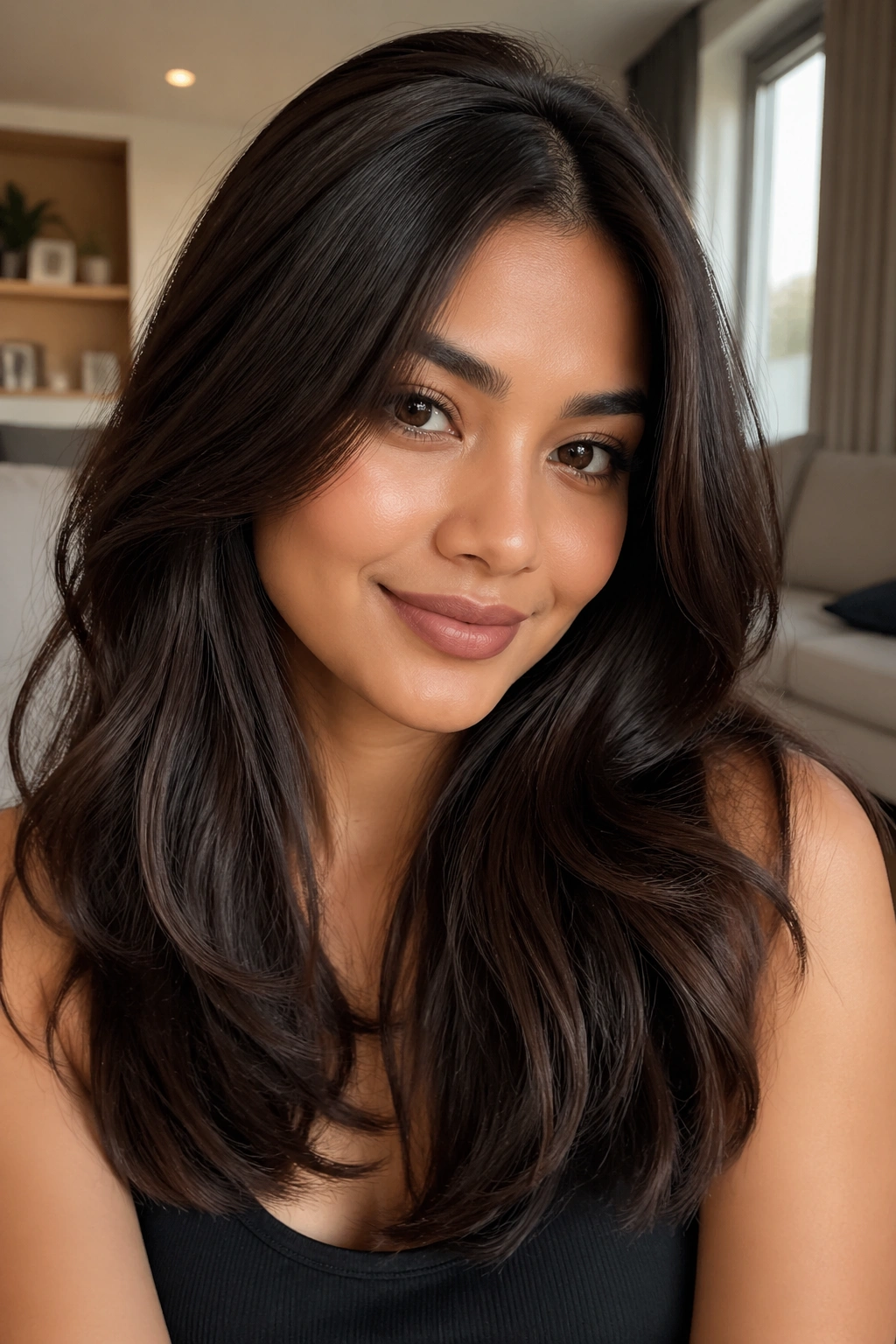
Espresso brown is for the person who wants depth more than lightness. It is dark, sleek, and clean-looking, but it does not have to be flat or severe.
I keep coming back to this color because it does so much with so little. A base that sits around level 2 or 3 gives morena skin a strong frame, and a few barely-there mocha lowlights can stop the whole thing from looking like one solid block. That tiny shift matters more than people think.
Shine is the whole point here. If the hair cuticle is smooth and the finish is glossy, espresso brown can look polished in daylight and almost inky at night. If the ends are dry, though, the color will show it fast. Dark hair has a blunt way of telling on you.
This shade is also one of the easiest to maintain. The roots blend in, the tone holds, and you can stretch appointments longer than you can with lighter colors. That is a practical win, not a small one.
6. Burgundy Wine for Deep, Rich Contrast
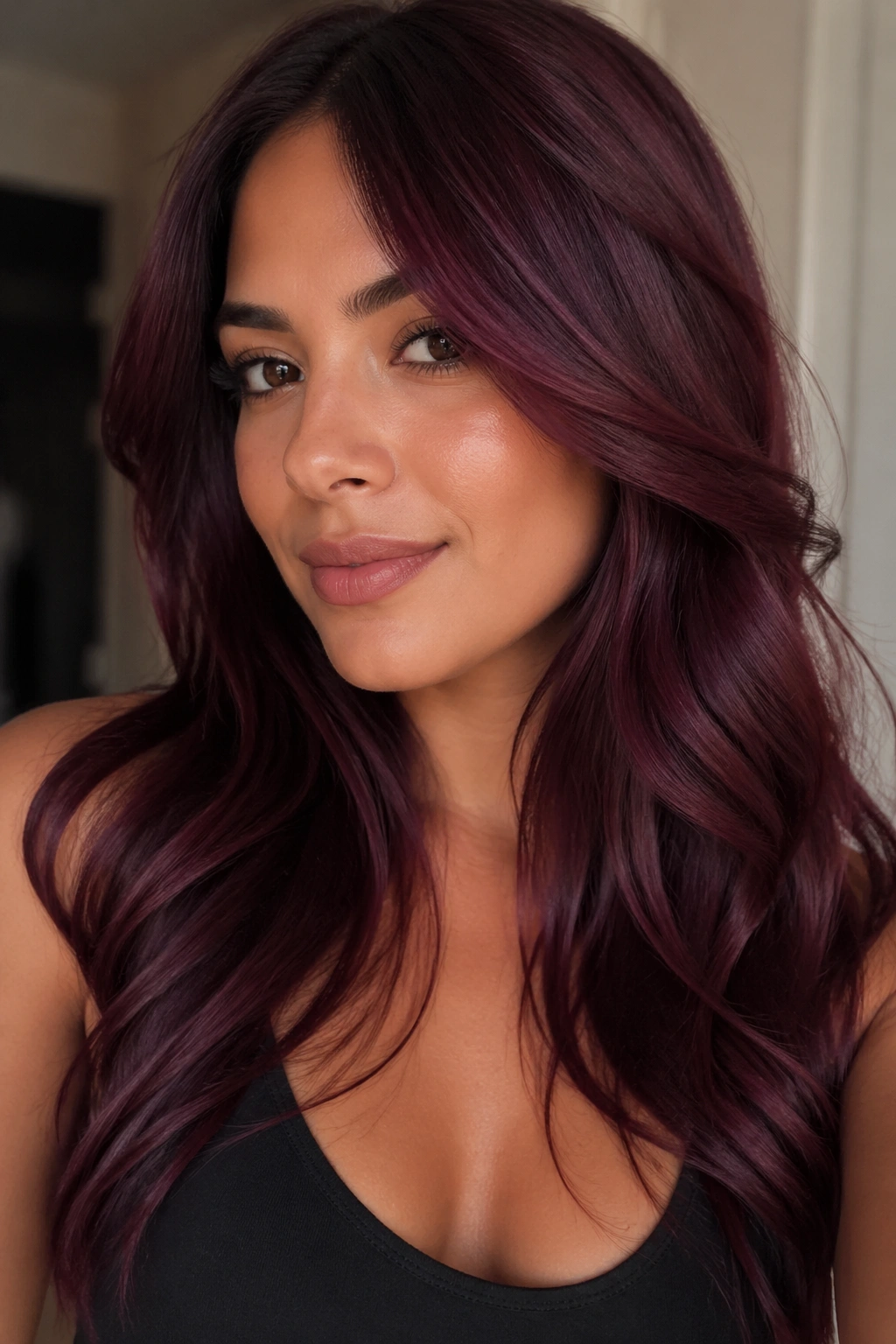
Burgundy wine sits in a different lane from cherry red. It is deeper, moodier, and easier to wear on morena skin because the brown base keeps it grounded.
Unlike a bright red that can shout from across the room, burgundy feels layered. The violet-red notes show up in daylight, while indoor light can make it read almost like a dark plum. That shift is part of the appeal. It gives you movement without needing chunky highlights or a very light base.
This color tends to flatter people who like strong lips, black eyeliner, or a wardrobe full of deep tones. It does not disappear next to darker features, and it plays well with both straight hair and waves. If your style leans bold but you still want something wearable, this is a smart middle ground.
Touch-ups matter here. Red pigments fade fast, and burgundy is no exception. A color-safe shampoo plus a monthly gloss can keep the shade from slipping into a dull brown.
7. Chestnut Brown with a Red-Brown Kiss
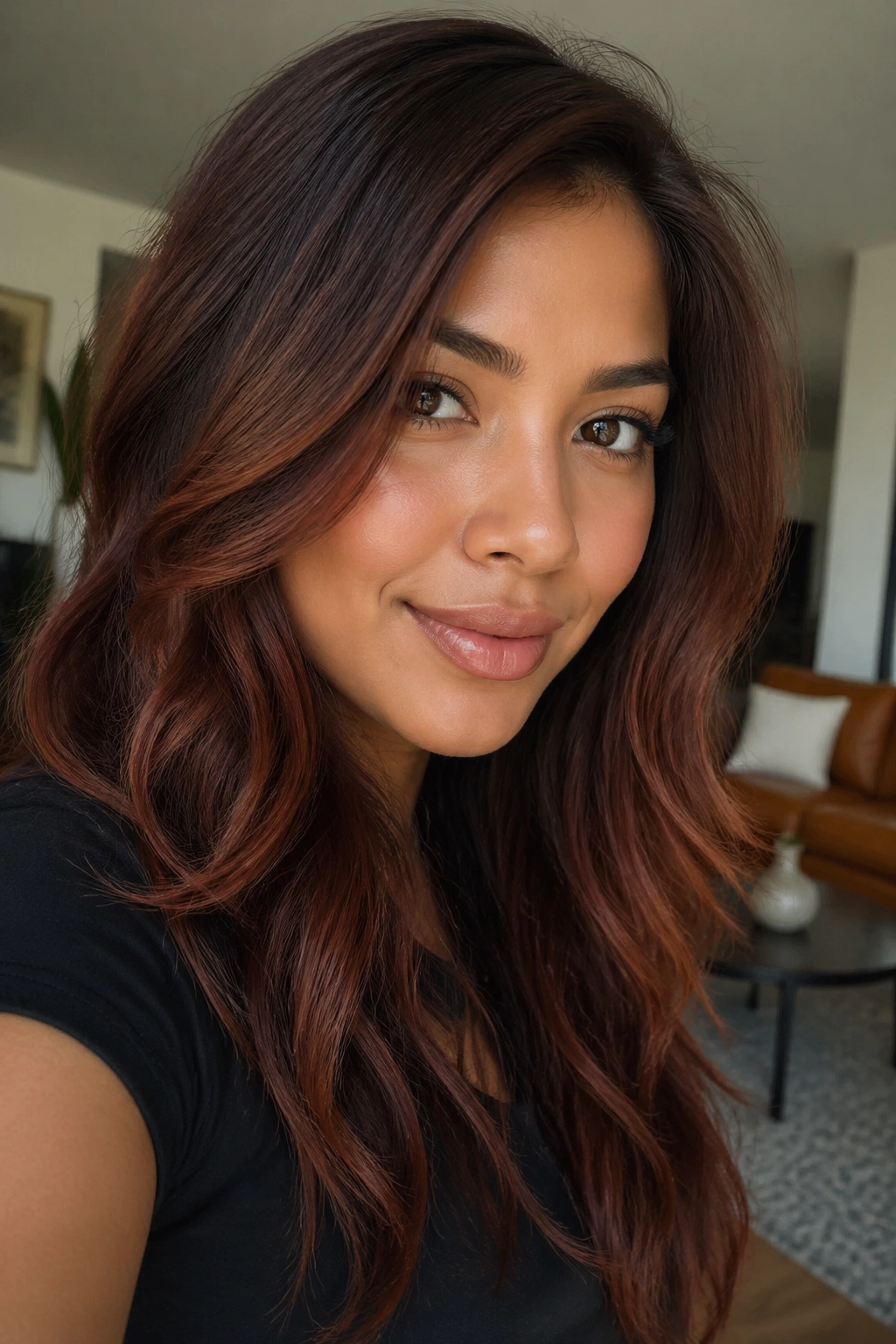
Chestnut brown is one of those shades that sounds ordinary until you see it in motion. Then it starts to make sense. It has the warmth of brown with just enough red-brown to keep it from feeling heavy.
The Shade Profile
A true chestnut should not turn orange. That is the line to watch. Think of it as a medium brown with a warm, earthy glow — more roasted nut than copper penny.
That balance makes it a strong fit for morena skin with golden or neutral undertones. It gives the face warmth, but not the kind that overwhelms. On layered cuts, the red-brown notes show up in the movement, which is where this color really earns its keep.
Who Should Ask for It
- People who want warmth without bright red.
- Anyone moving out of flat black or dark brown.
- Wavy and curly hair, because the texture shows off the tone shifts.
- Low-maintenance color clients who still want a little richness.
A chestnut gloss every 6 to 8 weeks is usually enough to keep the tone lively. It is one of those shades that looks calm in the best way.
8. Ash Mocha for Morena Skin Tones
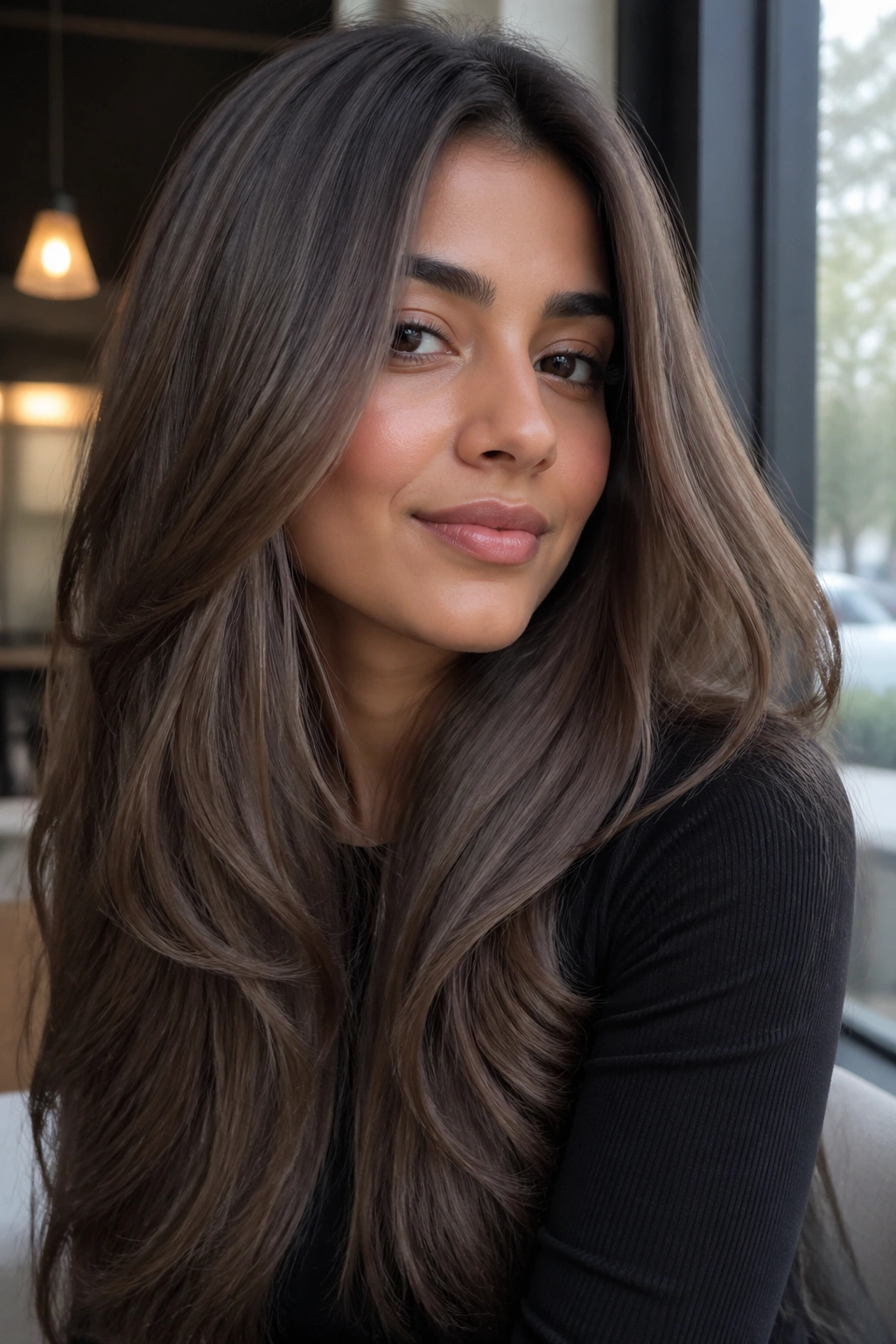
Ash does not automatically wash out morena skin. That’s the lazy rule, and it misses half the picture.
Ash mocha works when the base still has depth and the cool tone is used as a quiet overlay, not a pale wash. If your skin leans olive, ash can actually be flattering because it cuts down the redness that sometimes sits on the surface of the skin. The result feels cleaner, cooler, and a little more modern without needing a blond finish.
What to Watch For
The mistake is going too light. Pale ash brown can turn dusty fast, especially on hair that was previously warm or heavily lifted. A better move is a medium mocha brown with a cool beige or mushroom finish. That keeps the hair rich enough to hold the face.
If you like silver jewelry, charcoal clothes, or muted makeup, this shade may land even better. It pairs well with strong brows and dark eyes because the cooler tone lets those features do the work. Not every morena skin tone needs gold to shine.
9. Auburn Brown That Changes with the Light
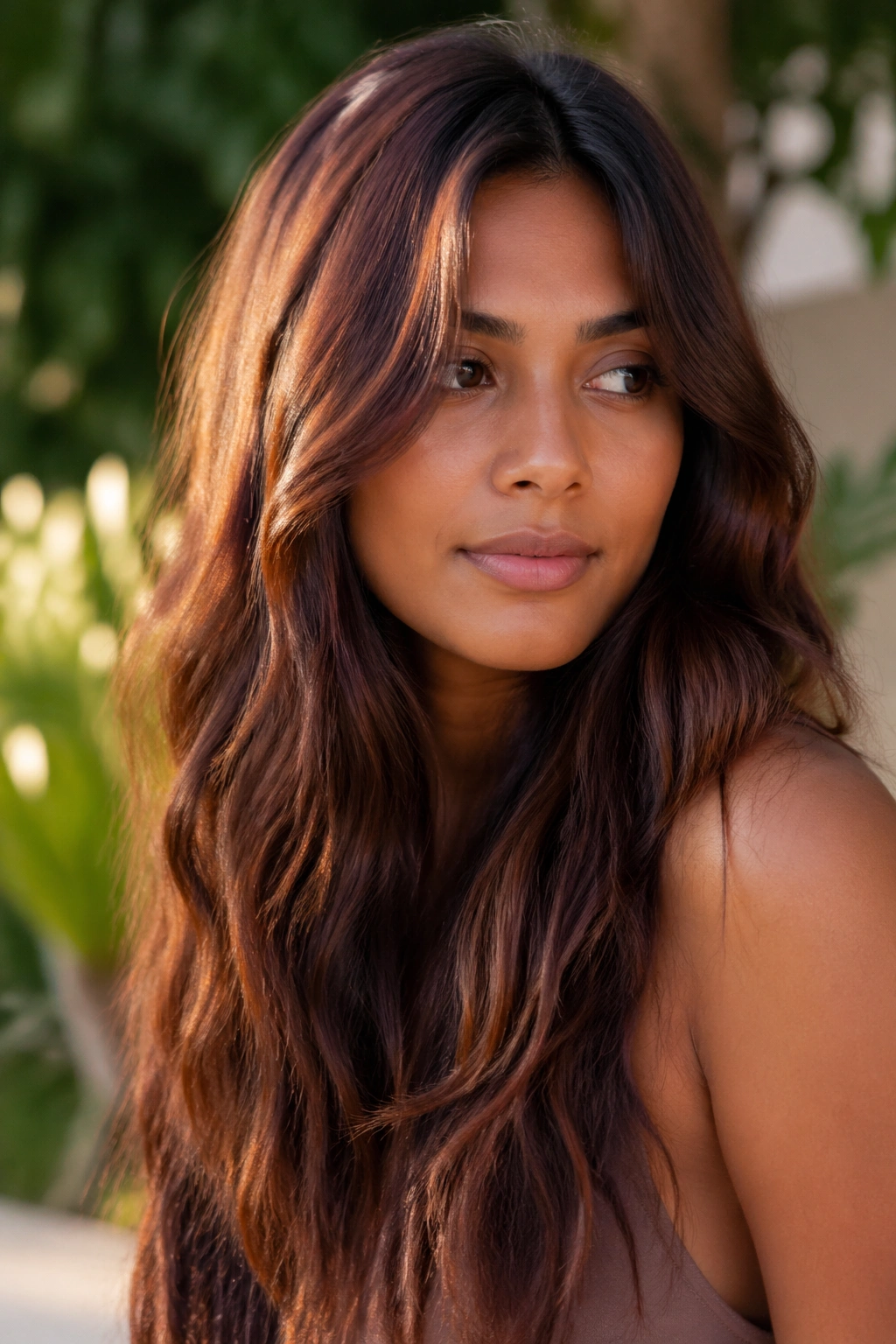
Want hair that looks brown in one room and red in another? Auburn brown does exactly that.
It is one of the most flattering hair color ideas for morena skin tones because it gives you a shift without forcing you into full red territory. The brown base keeps the color wearable, while the auburn notes bring life to the face. On medium to deep skin, that warmth can look especially good around the cheeks and nose, where a dull shade sometimes falls flat.
Auburn is also a strong choice for people who wear warm lipstick shades or gold accessories. The color picks up those same notes and ties the whole face together. It is a small thing, but it helps.
Do not let anyone talk you into a bright, fire-engine red version unless that is what you want. The sweetest spot is a brown-first auburn with enough pigment to show movement, not enough to steal the whole scene.
10. Bronde Money Pieces Around the Face
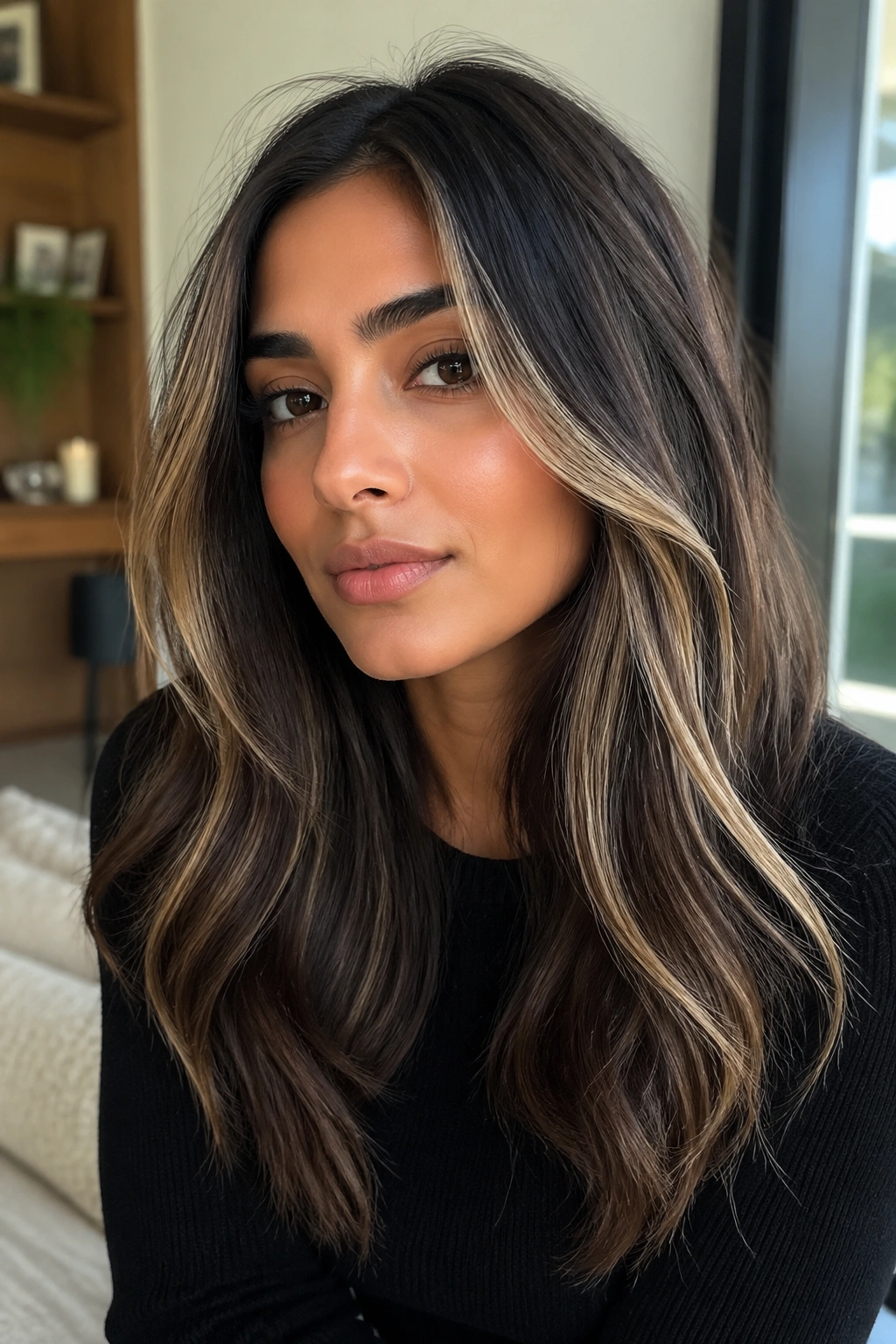
Full blonde is not the only way to get brightness. Sometimes the smarter move is a few well-placed bronde money pieces that sit around the face and stop there.
That approach works well on morena skin because it controls the contrast. You get light where people notice it first — near the eyes, cheekbones, and temples — while the rest of the hair stays deeper and easier to manage. It is also easier on the hair than a full lighten-and-tone service.
Placement Matters More Than Volume
The best money pieces are usually no wider than 1 to 1½ inches on each side. They should start near the front hairline and melt into the rest of the hair so the color does not look pasted on. A level 7 or 8 beige-bronde can be enough. You do not need to jump straight to pale blonde.
- Keep the root area darker for a softer grow-out.
- Ask for beige, not icy white.
- Wear them near layered cuts so the brightness moves.
- Tone every 6 to 10 weeks if brass shows up.
This is a good option if you want a change that shows up in photos without making the whole head high maintenance. It is bright, but not fussy.
11. Muted Rose Brown for a Soft Statement
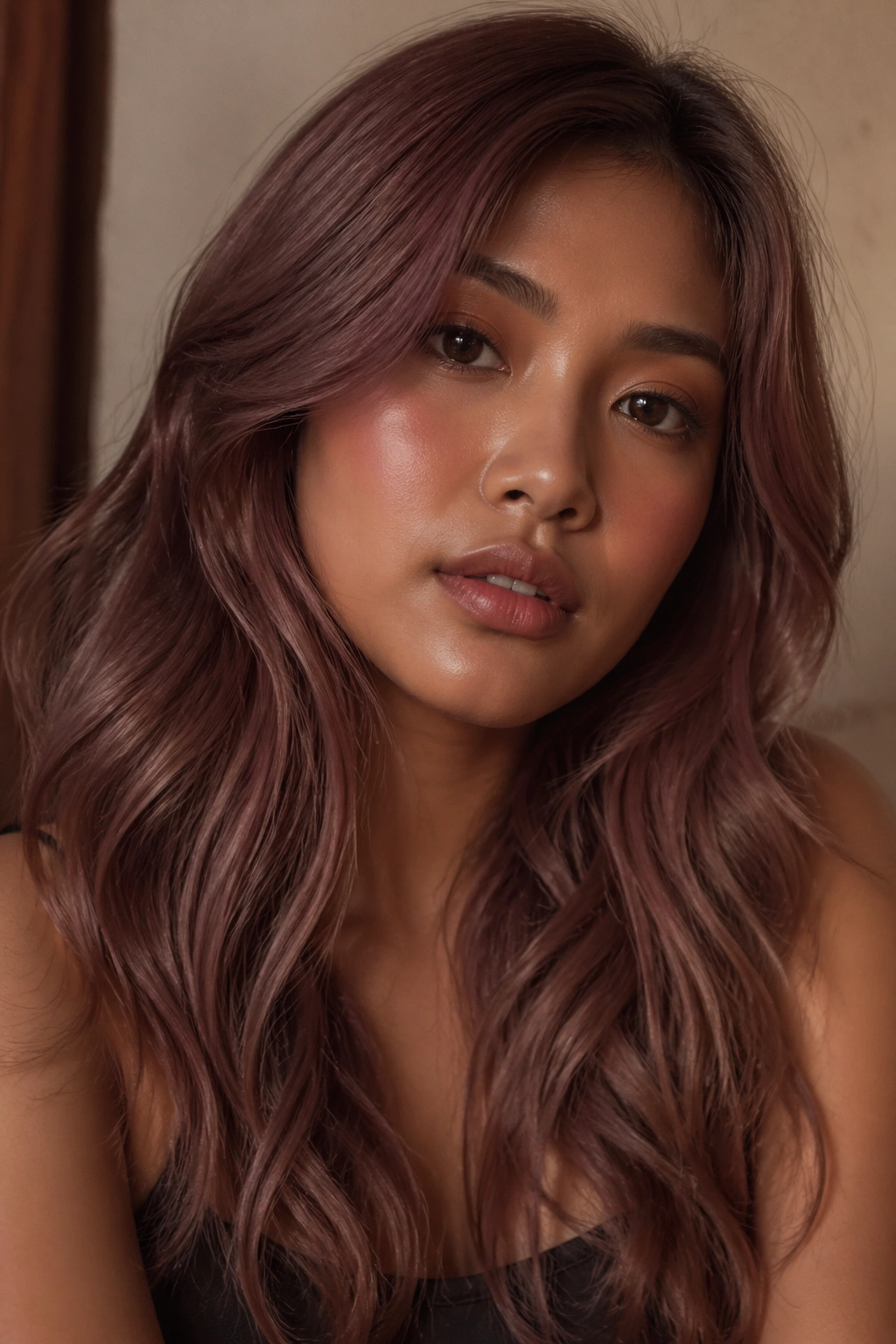
Yes, pink can work on morena skin. The trick is keeping it muted enough to feel grown-up instead of sugary.
Muted rose brown is a brown base with a dusty pink or rose glaze layered over it. That brown anchor is what keeps the shade grounded. Without it, the color can look too candy-like. With it, the tone gets this soft, moody finish that sits beautifully against warm or neutral morena skin.
I like this shade on shorter cuts, textured bobs, and glossy waves. It has a fashion feel without needing a bright red base underneath. When the light hits it, the rose tone shows up in the mid-lengths and ends first, which makes the color feel lived-in instead of painted on.
This one does fade, though. Rose tones are gentle by nature, and they will soften after a few washes. That is part of the charm, but it also means a color-depositing conditioner can be worth keeping in the shower.
12. Golden Brunette with Sunlit Ribbons
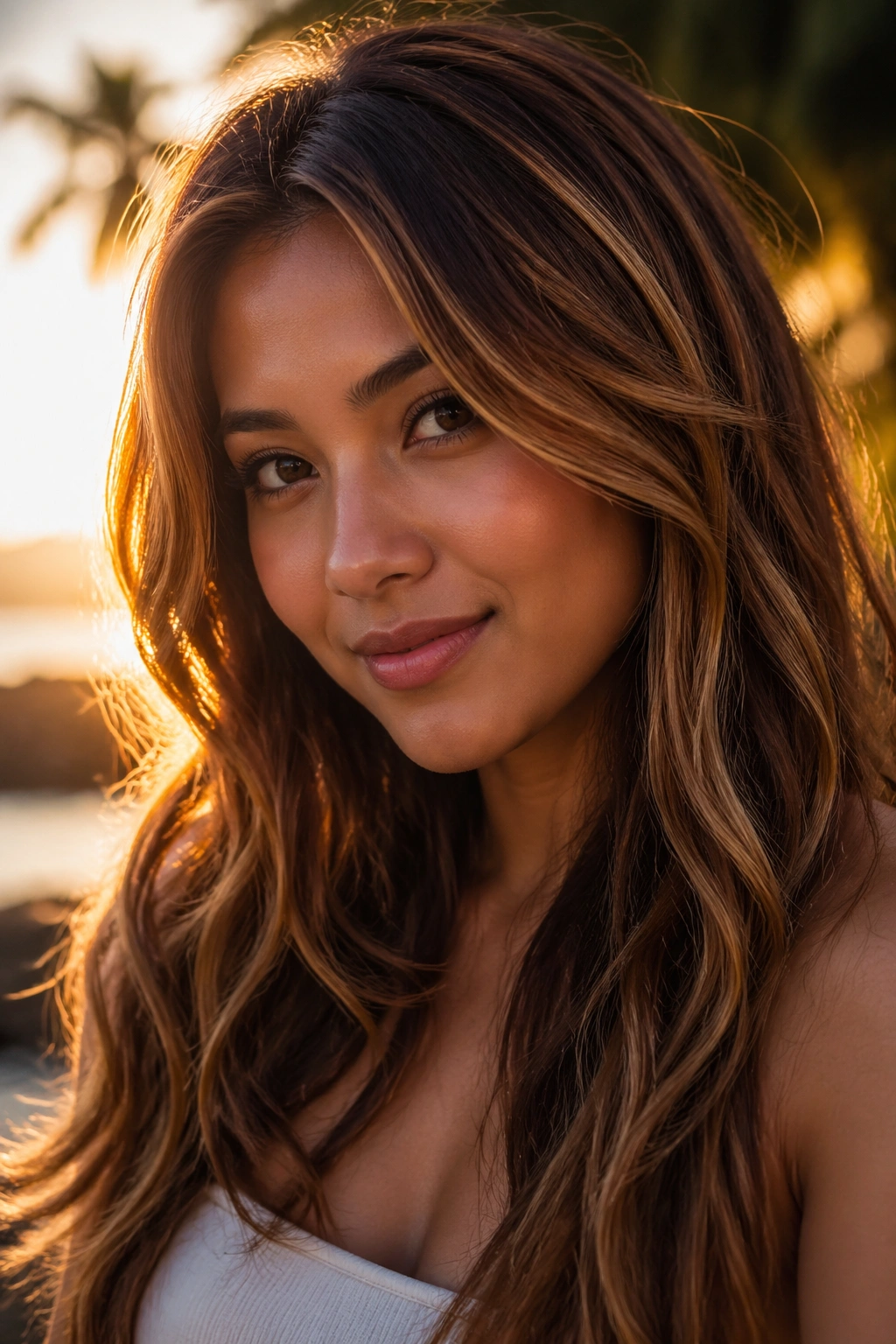
Golden brunette has a warmth that you can almost feel before you even name it. The hair looks warmed from the inside, not sprayed with color.
That is why it works so well on morena skin. Gold adds life, and life is what most people are chasing when they sit in the chair. The trick is making the gold feel beige or honey-gold, not yellow-gold. Yellow can go flat or brassy; beige-gold stays soft and flattering.
Where to Place the Gold
The easiest way to wear this shade is with ribbons through the top layers and around the face, then lighter touches at the ends. That pattern keeps the brightness from sitting in one obvious stripe. It also lets the natural base do some of the work, which makes the result look more natural.
If you have waves or loose curls, golden brunette is a gift. The movement shows the different shades, and the hair doesn’t need to be perfectly styled for the color to read well. That is a useful kind of easy.
13. Mahogany Brown with Red-Brown Depth
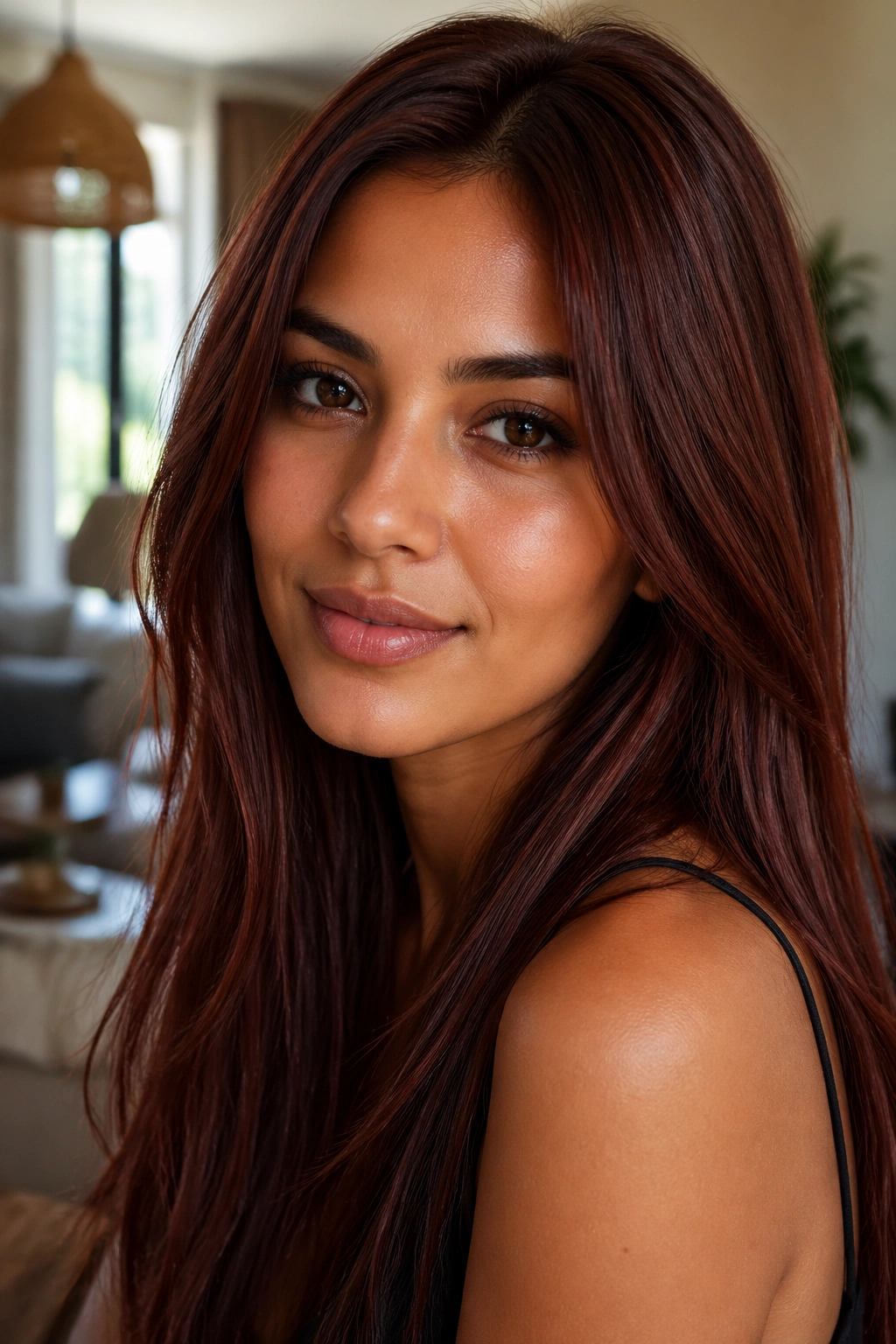
Mahogany sits between burgundy and auburn, which is exactly why it works. It has red-brown depth without leaning too purple or too copper.
On morena skin, that middle ground is often the sweet spot. The shade adds richness to the complexion without washing it out or making it look too warm. It can be especially flattering if you wear brown, bronze, or deep berry makeup, because the color story stays consistent from hair to face.
Mahogany also behaves well on straight hair. The smooth surface lets the red-brown tone show in a clean way. On curls, the shade gets a little more dramatic because the light keeps catching the bends. Either way, it does not need a huge amount of maintenance to look good.
If you want something that feels a touch more refined than copper and a little warmer than plum, this is the one to ask about. It has range.
14. Mushroom Brown for a Cool, Earthy Finish
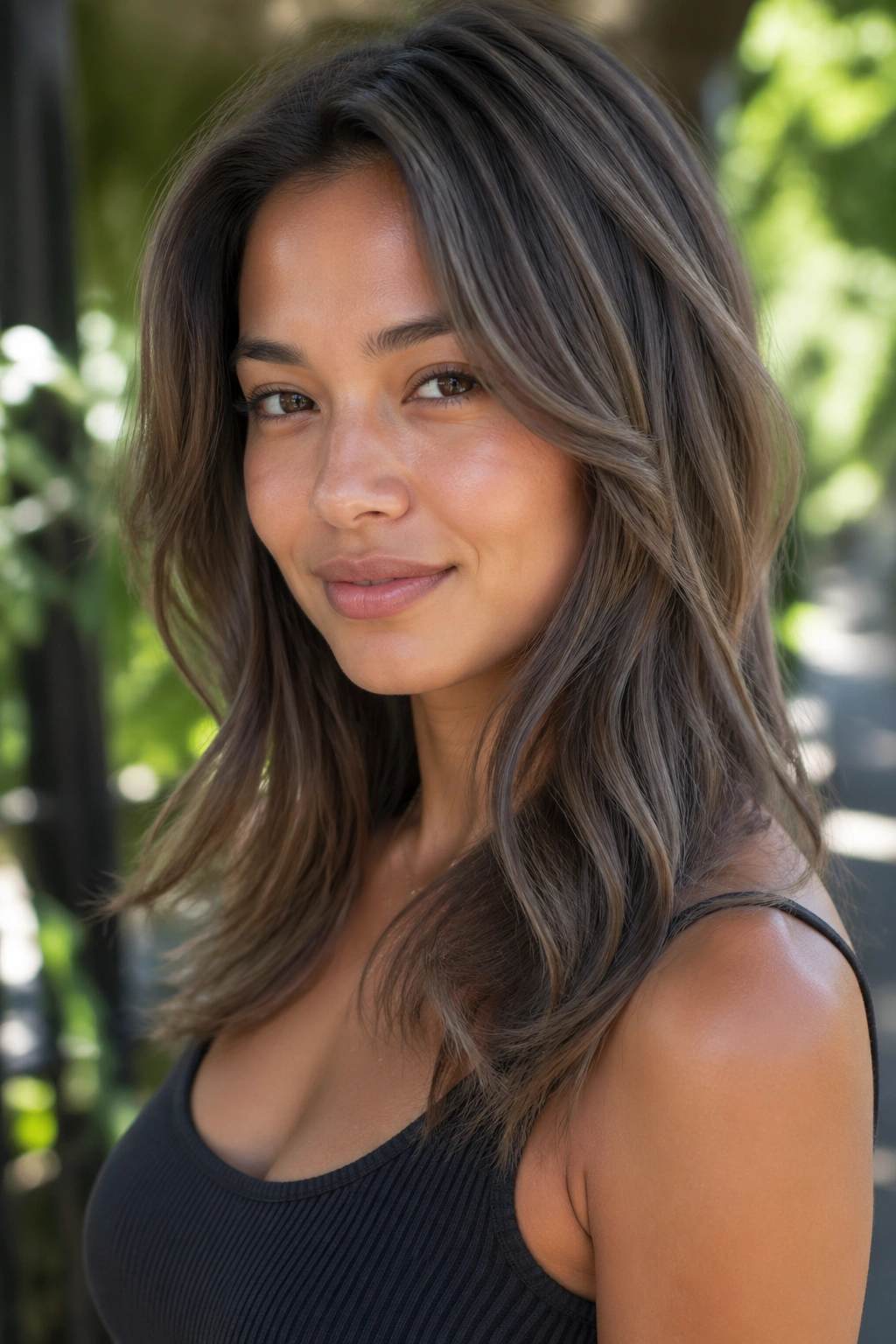
Why do so many people with morena skin think cool brown is off-limits? Because they picture dull gray hair, and mushroom brown is nothing like that.
Mushroom brown is a cool, earthy mix of taupe, soft ash, beige, and brown. It has a smoky finish without going flat, which makes it useful for olive or neutral undertones. If warm tones tend to pull too red or orange on you, mushroom brown gives the hair a calmer, more controlled look.
How to Keep It from Going Muddy
The color works best when the base stays medium, not super light. A level 5 to 6 brown with taupe lowlights tends to hold shape better than a pale beige version. Ask for a cool gloss rather than a silver-heavy toner, because too much gray can make the hair look tired.
- Best for olive or neutral undertones.
- Good choice if brass shows up fast in your hair.
- Works well on blunt cuts and sleek styles.
- Needs a cool-refresh gloss when warmth starts to creep in.
It is not the loudest shade in the room. That is the point. It reads controlled, and sometimes that is exactly what the face needs.
15. Toffee Ribbons Through Medium Brown Hair
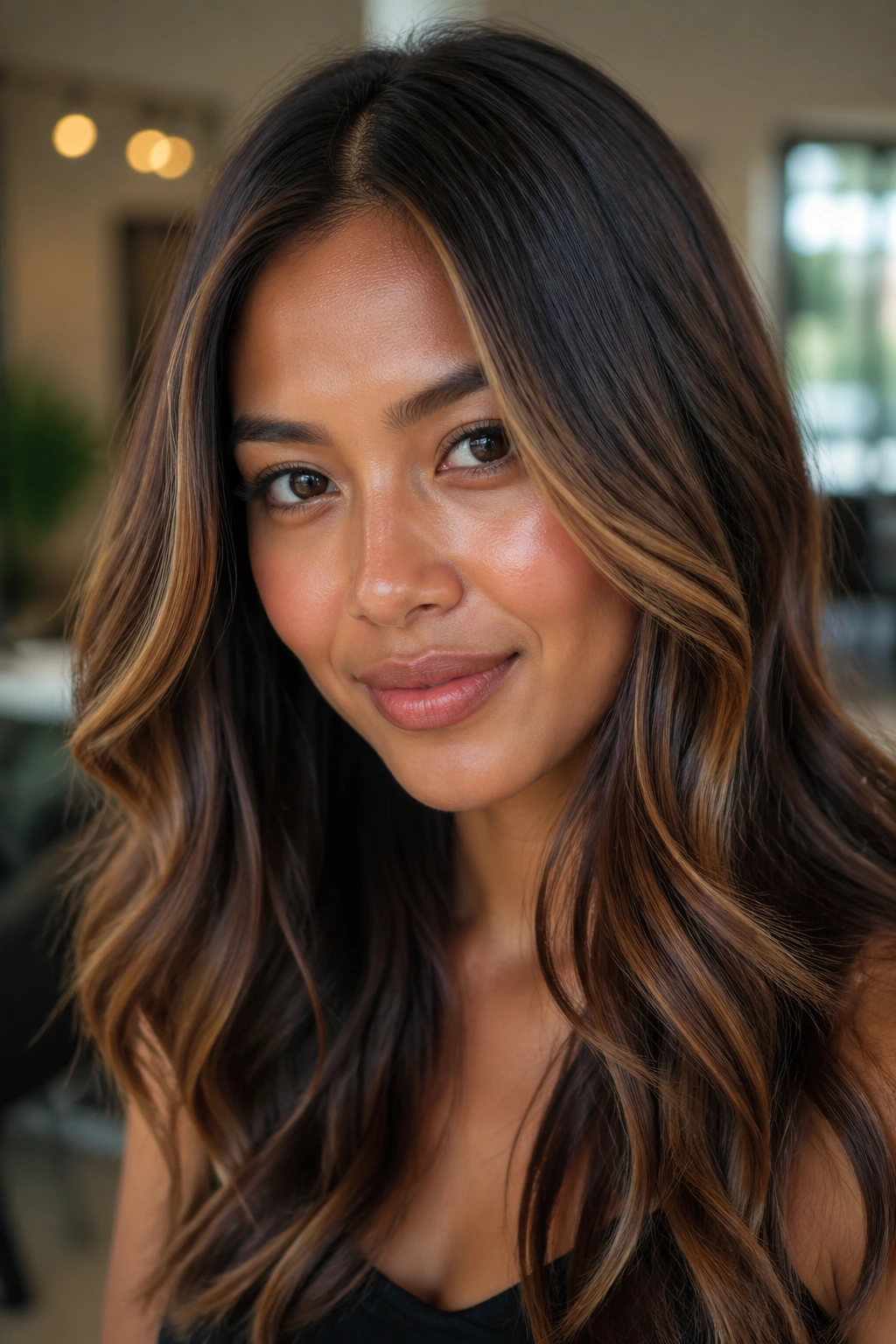
Toffee ribbons are a smart middle path between caramel and honey. They are warm, rich, and a little softer than both, which makes them easy to wear on morena skin.
The color works because toffee has brown in it. That means the lightness never feels disconnected from the base. Instead of sitting on top of the hair, it folds into it. The result looks more blended, which is especially nice if you do not want obvious stripes.
What to Ask for at the Salon
- Fine ribbons rather than chunky streaks.
- A base that stays medium brown or deep mocha.
- Toffee pieces concentrated around the front and top layers.
- A soft glaze at the end to keep the warmth even.
Toffee is a good pick if you want movement but not a dramatic shift. It gives the hair a sun-touched feel without pushing it into blonde territory. On curls, the effect is even better because the ribbons show up at different points in the coil pattern.
16. Jet Black with Glossy Mirror Finish
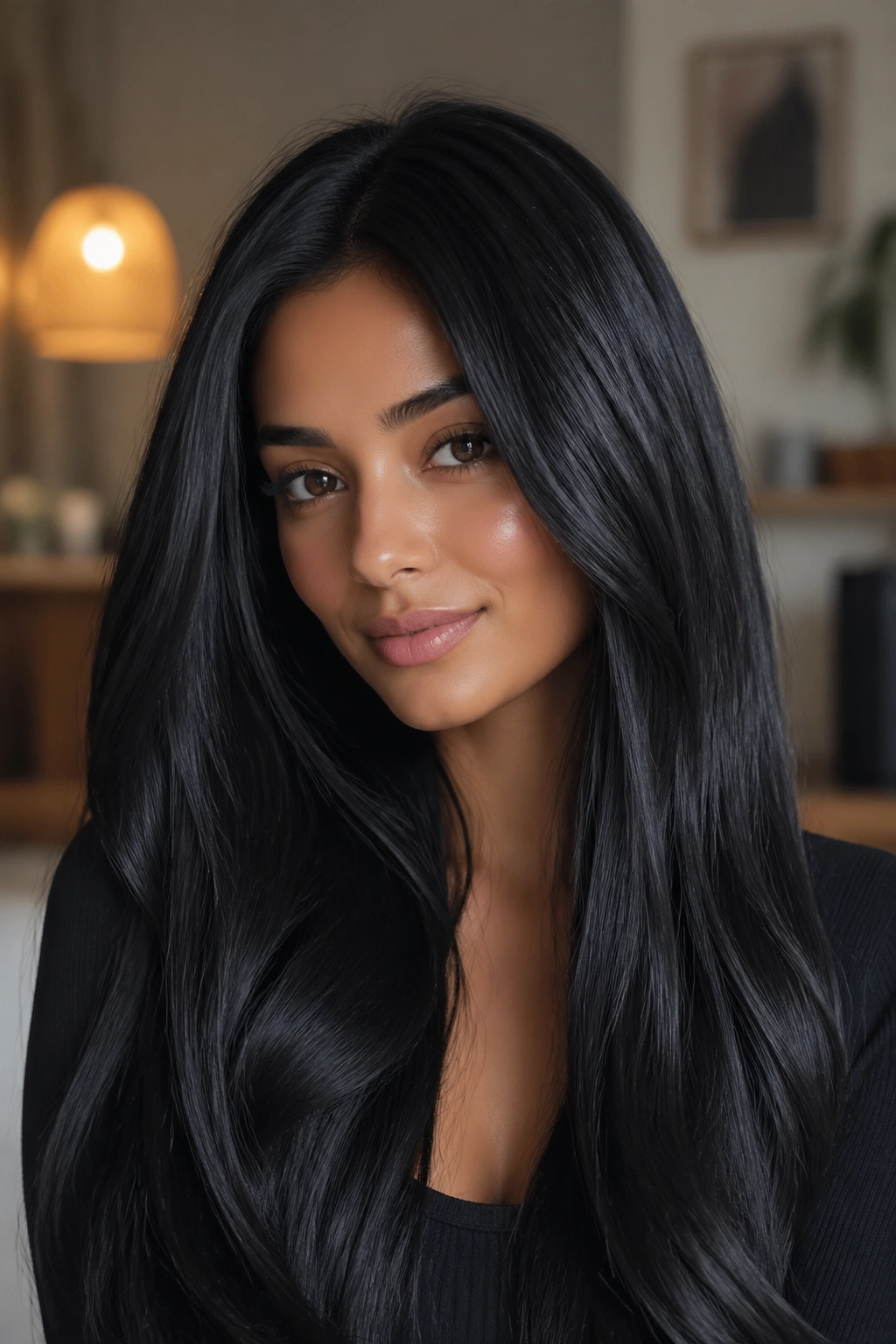
Black hair is not boring. Not when it is glossy.
Jet black on morena skin can look sharp, rich, and deliberate, especially if your brows, lashes, and eyes already have a lot of depth. The contrast can make the skin look brighter and more even, which is why this shade has stayed around for so long. It works because it is clear and confident.
Why the Finish Matters
A matte black dye job can look heavy. A glossy one looks alive. That difference comes down to shine, health, and how the light moves across the cuticle. If your hair is dry or rough, black will show it. No hiding.
That is why a trim and a smoothing gloss matter more here than people expect. Even a simple clear glaze can change the way the color sits. If you want a dramatic shade with a low-maintenance root line, jet black is one of the most practical choices on the list.
Dry ends will show.
17. Sandy Beige Balayage on Medium Brown Hair
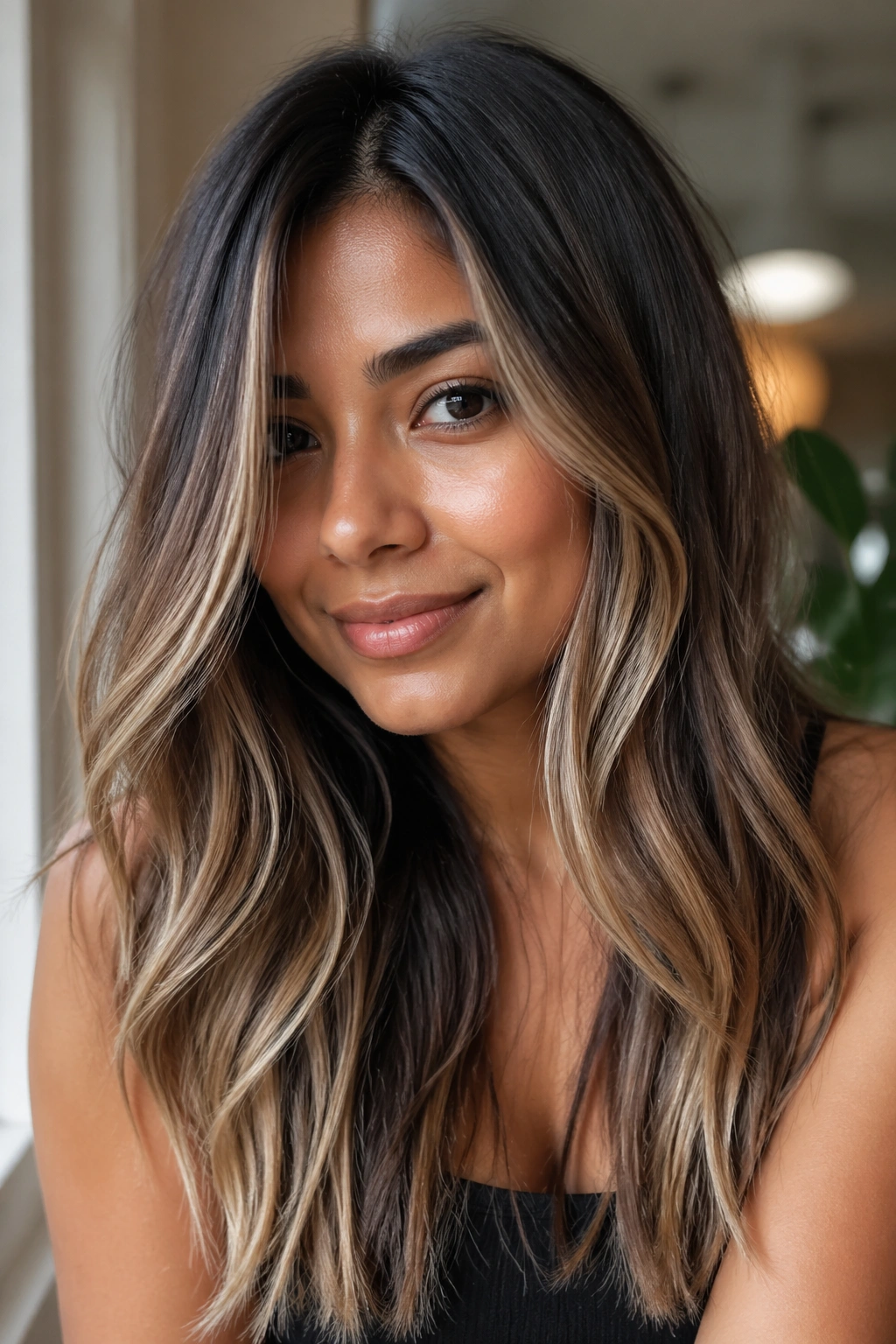
Sandy beige is the quieter cousin of blonde, and that is exactly why it flatters morena skin so well. It lifts the hair without pushing it into a harsh, icy range.
The color sits between warm gold and cool ash, so it avoids the two common problems: brass and dullness. On medium brown hair, sandy beige balayage can look airy and soft, especially when the pieces are placed through the top layer and around the face. It gives movement without making the base disappear.
A lot of people ask for blonde when what they really want is lightness. Sandy beige is usually the better answer. It keeps a natural-looking depth near the roots and gives enough brightness to change the whole mood of the hair. That balance matters when your skin already has enough warmth and contrast to carry a lighter tone.
If you wear your hair in waves, this shade shows best. The texture helps the beige and brown pieces separate just enough to read as real color, not one flat tone.
18. Soft Mocha Ombré from Root to Tip
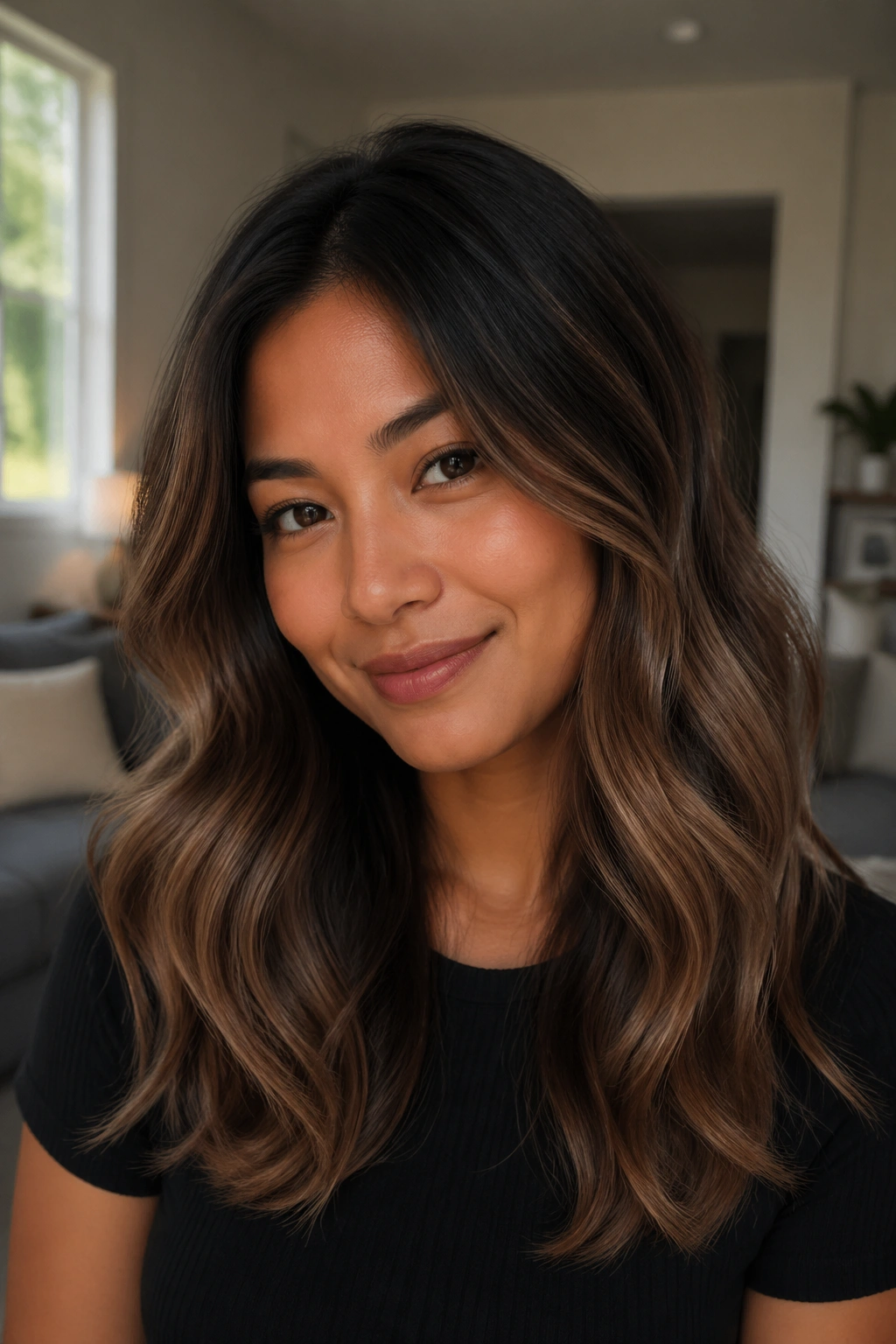
A soft mocha ombré is for the person who wants the easiest grow-out of the bunch. Dark roots, richer mids, lighter mocha ends — that gradual shift can look very natural on morena skin.
Why It Works
The eye likes movement. A slow fade from deep brown at the roots to softer mocha at the ends gives the hair shape without a hard line. On long hair, this is especially useful because the gradient has room to breathe. On curls, it looks even better since the pattern breaks up the fade.
Best Length and Texture
Shoulder-length hair can carry this well, but longer layers tend to show the color change more clearly. If your hair is straight and heavy, ask for a little face framing so the ombré does not look like one dark sheet. If it is wavy, the transition usually shows on its own.
What to Ask For
- A root area no lighter than your natural depth.
- Ends that are 2 to 3 levels lighter, not pale.
- A mocha or beige-brown tone instead of bright blonde.
- A soft blend, not a sharp horizontal line.
This is a very forgiving color if you do not want to touch up roots every few weeks.
19. Plum Brown with Violet Undertones
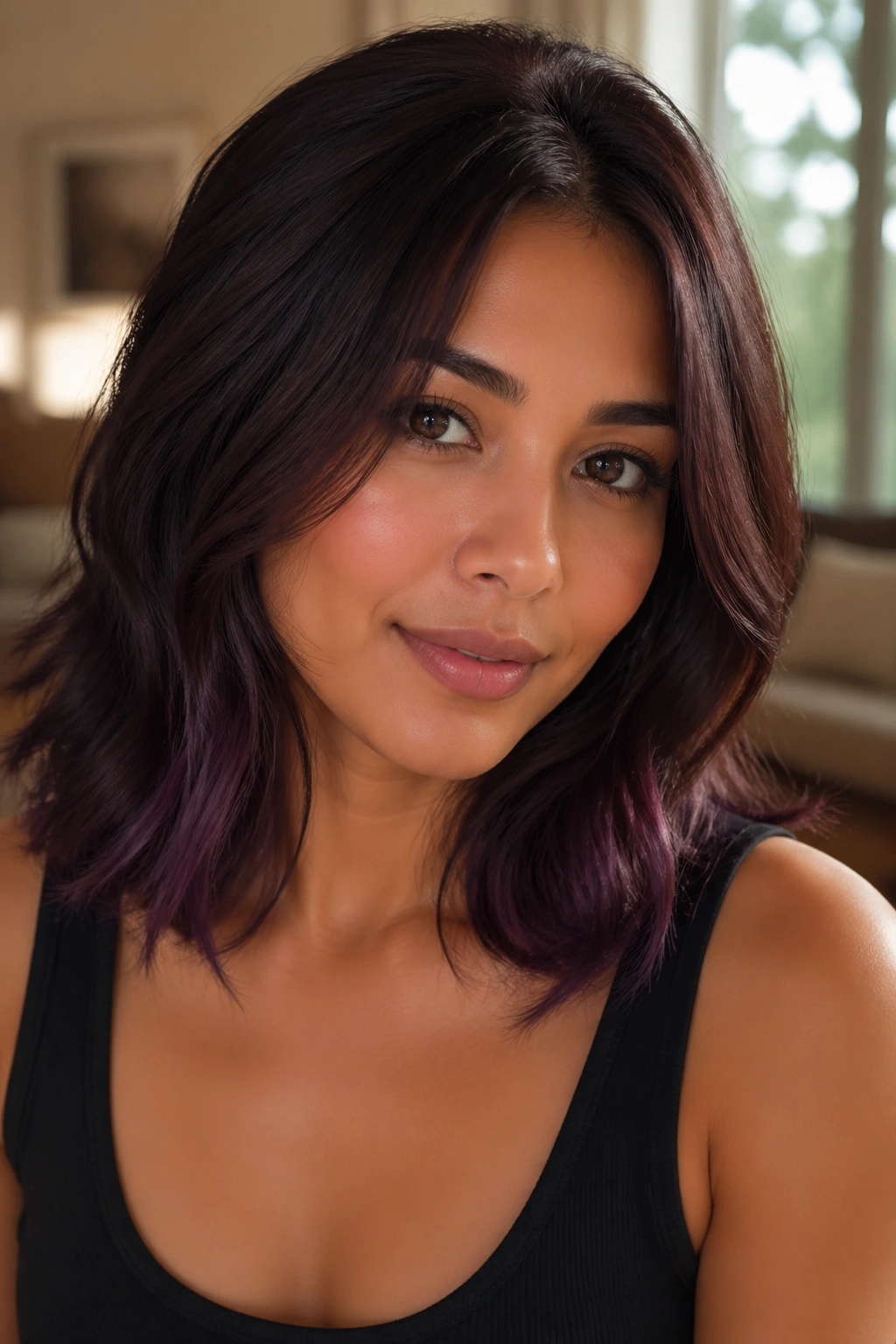
Plum brown is the shade for someone who wants color, but not the kind that announces itself from across the street. It reads as brown first, then violet sneaks in.
On morena skin, that subtle violet note can be gorgeous. The cool depth makes the skin look richer, and the brown base keeps the color from feeling too theatrical. In daylight, the plum tone shows up most clearly on the ends and around movement. Indoors, it can look almost like a deep espresso with attitude.
I like this shade on medium to deep skin with neutral or cooler undertones. It can also work on warm skin if the plum is mixed with enough brown. If the violet is too strong, the color can drift into violet-black territory faster than some people expect, so a soft hand is better than a heavy one.
A color gloss helps here, too. Plum tones fade into brown if you ignore them, and once that happens the whole point starts to disappear.
20. Blue-Black Shine with a Soft Shadow Root
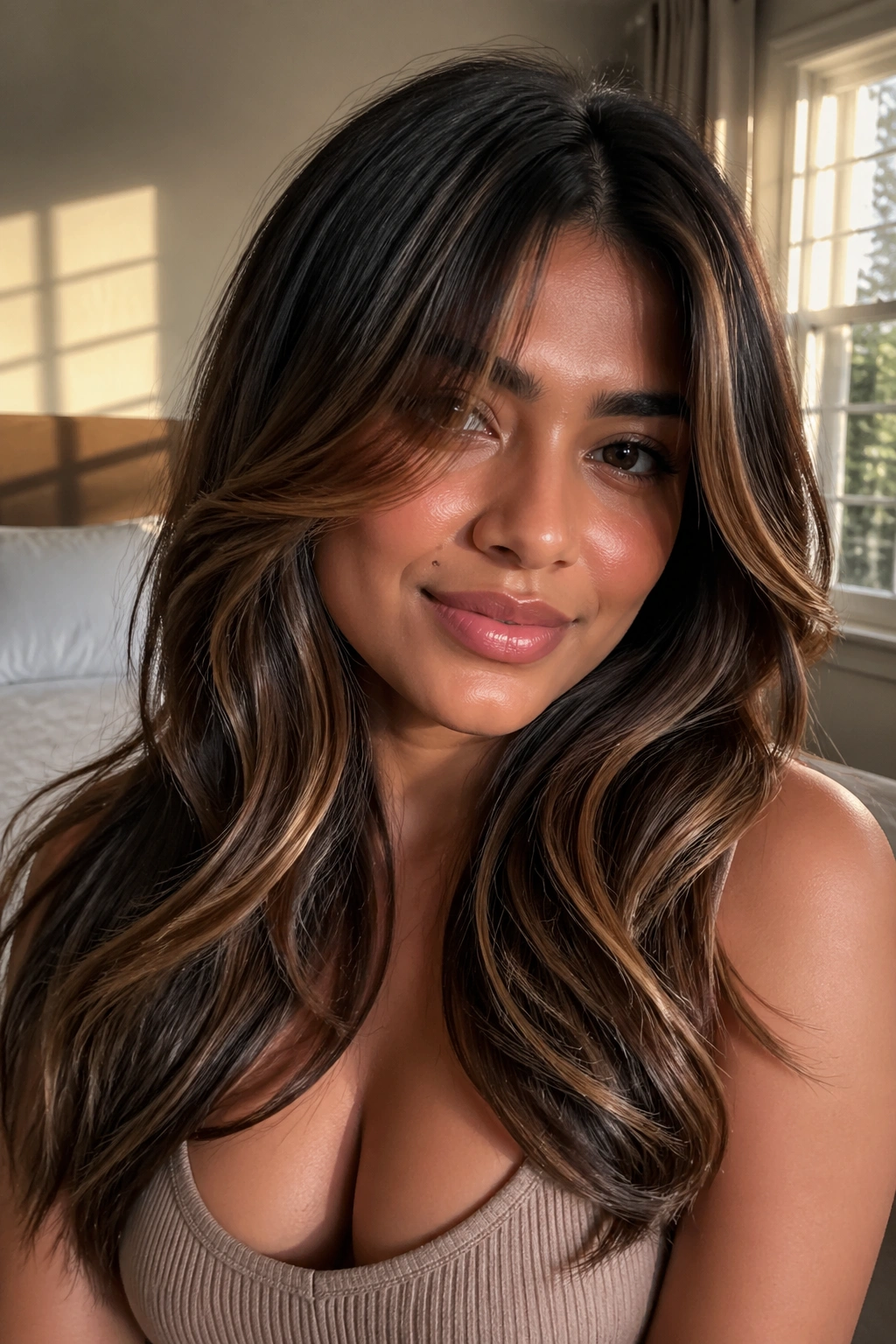
Blue-black is the most dramatic shade on this list, and it can look fantastic on morena skin when the finish is clean. The blue note gives the black a cool edge, which keeps it from reading flat or muddy.
The shadow root is what makes the color wearable. Instead of a hard line at the roots, you get a softened transition that lets the hair grow out without shouting about it. That matters if you want something bold but still sane to maintain. It also keeps the crown from looking painted on, which is a common problem with very dark box dye.
This shade works best when the haircut is sharp and the shine is real. A blunt bob, long layers, or even a sleek ponytail can show it off well. But if the hair is damaged, the dark tone will expose split ends and rough texture fast. Dark color is honest like that.
If you want a shade that feels polished without being soft or sweet, blue-black has real pull. It gives morena skin a crisp frame, and the final effect can look calm, strong, and surprisingly easy to wear when the gloss is done right.
