



If your hair starts looking too flat the moment the air turns crisp, the fix usually isn’t a dramatic chop. It’s a better color — one that adds warmth, shine, and a little depth around the face.
That’s why cozy fall hair color ideas hit harder than the usual seasonal switch. They don’t shout. They soften. A good autumn shade makes hair look richer, thicker, and a little more expensive in daylight, which is honestly the real dream. Copper, chestnut, caramel, smoked brunettes, berry reds — the best ones feel like a wool coat, a mug warming your hands, and a good window seat all at once.
Seasonal color works best when it looks lived-in. Not stripey. Not brassy. Not boxy. The smart move is usually a gloss, a root shadow, a few fine highlights, or a deeper all-over tone with just enough dimension to keep the hair from going dead-flat.
Cinnamon copper is where I’d start.
1. Cinnamon Copper
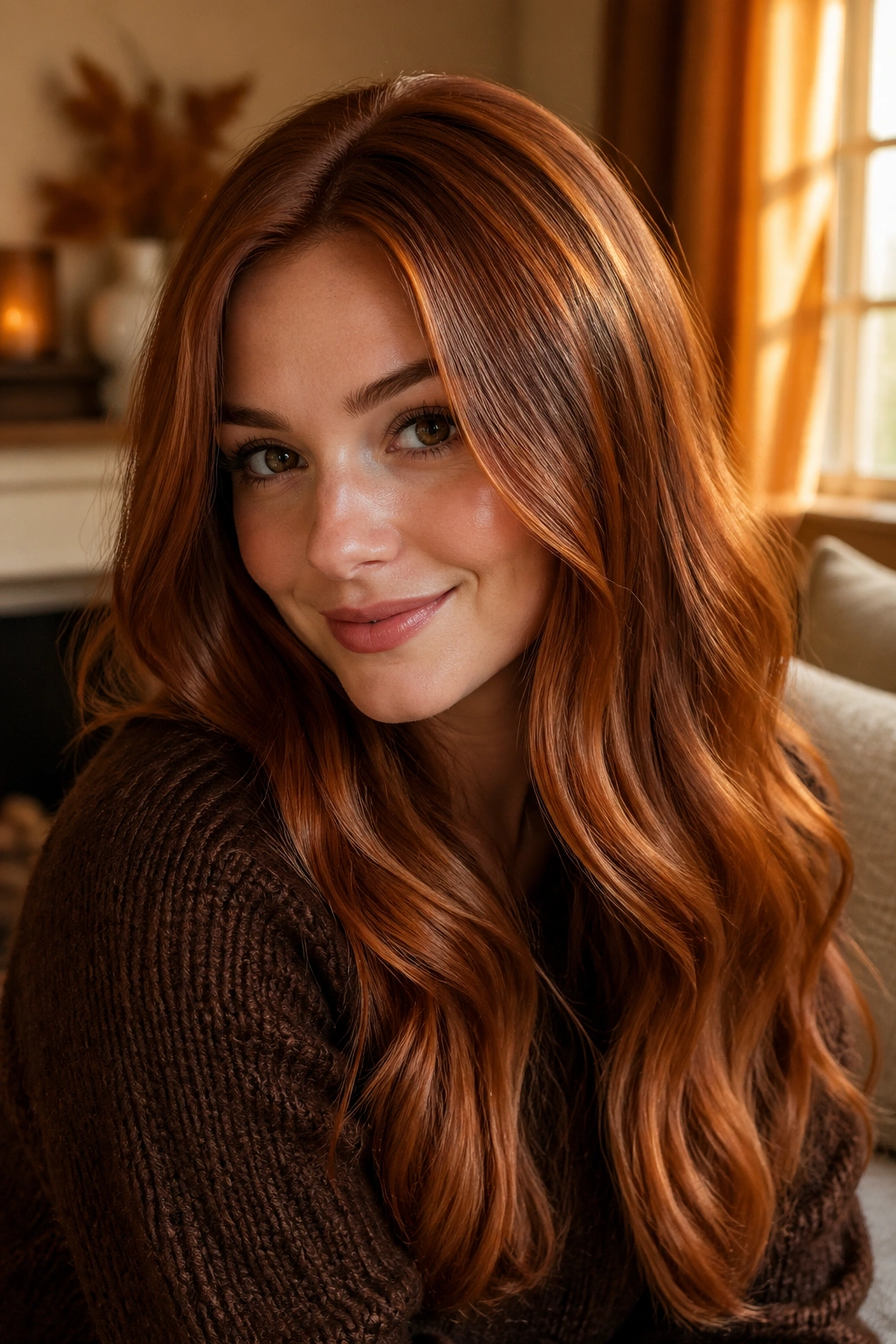
Cinnamon copper is warm without turning neon, which is exactly why it works so well when the weather cools down. It sits in that sweet spot between red and brown, so it looks soft on brunettes and bright enough to wake up pale skin without taking over your whole face.
Why It Works
A good cinnamon copper usually starts around a level 6 to 7 base with copper and gold woven through it, then finished with a glossy glaze. That glaze matters. It keeps the red tones from drying out and gives the hair that plush, shiny finish that reads cozy instead of loud.
Best on: light brunettes, dark blondes, and redheads who want a warmer twist.
Ask for: copper-gold ribbons, a soft root melt, and a demi-permanent gloss.
Watch for: too much orange at the ends. That’s where the color starts looking fake.
Pro tip: If your hair pulls brassy fast, skip heavy purple shampoo. It can mute the warmth and make the whole look lose its charm.
2. Chestnut Brown
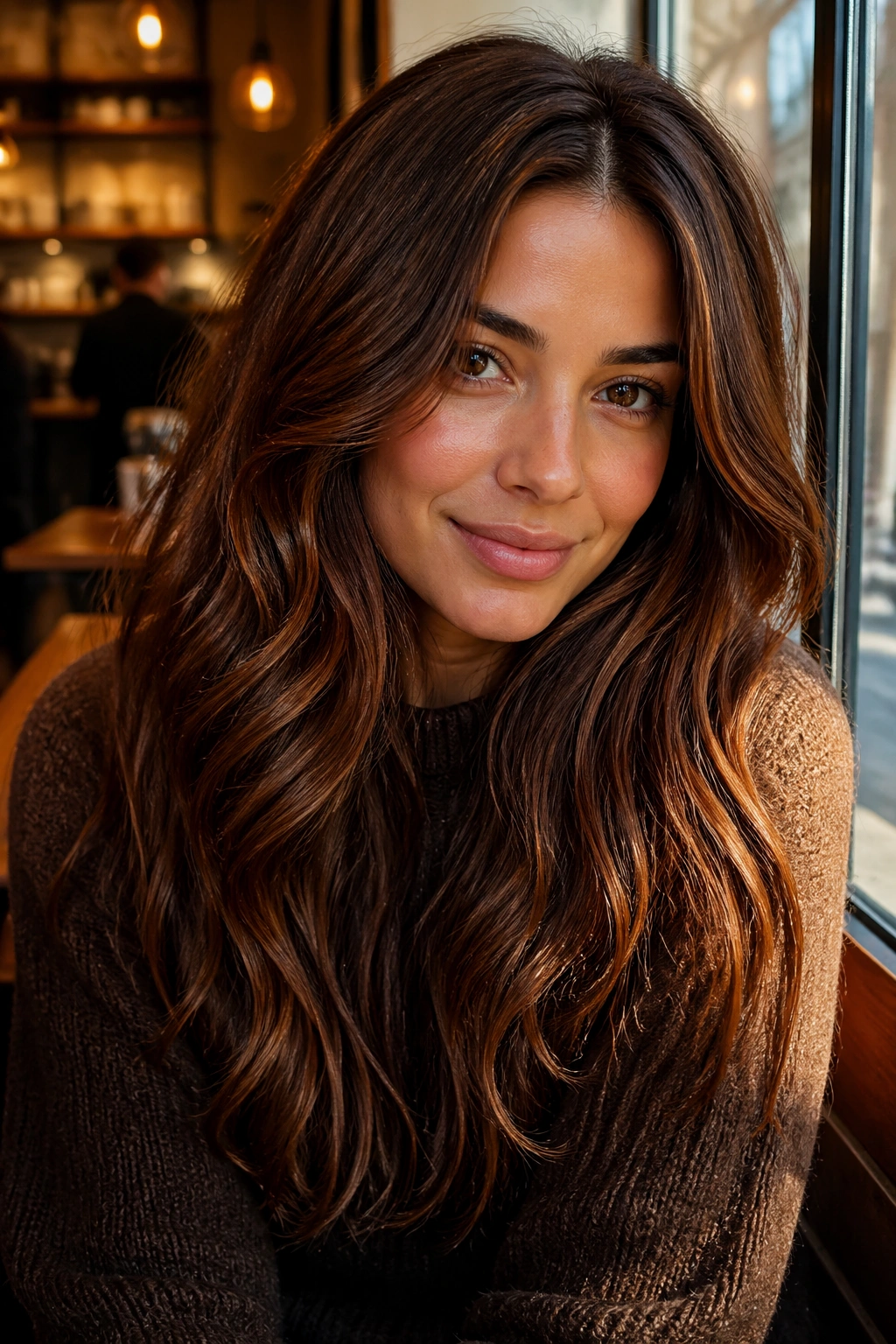
Chestnut brown is the kind of color that quietly makes everything else look better. It’s rich, soft, and a little glossy, with just enough warmth to keep the hair from looking muddy in low light. There’s a reason this shade keeps coming back every fall. It flatters nearly everyone.
The trick is restraint. Chestnut should not look like a flat chocolate slab. You want tiny shifts — a hint of mahogany here, a little gold there — so the finish has movement when you turn your head. On fine hair, that movement does more than extra volume ever could.
It also hides grow-out better than brighter shades. That’s not glamorous, but it’s useful. If you want something polished that won’t punish you every four weeks, chestnut brown is a sensible choice.
3. Pumpkin Spice Balayage
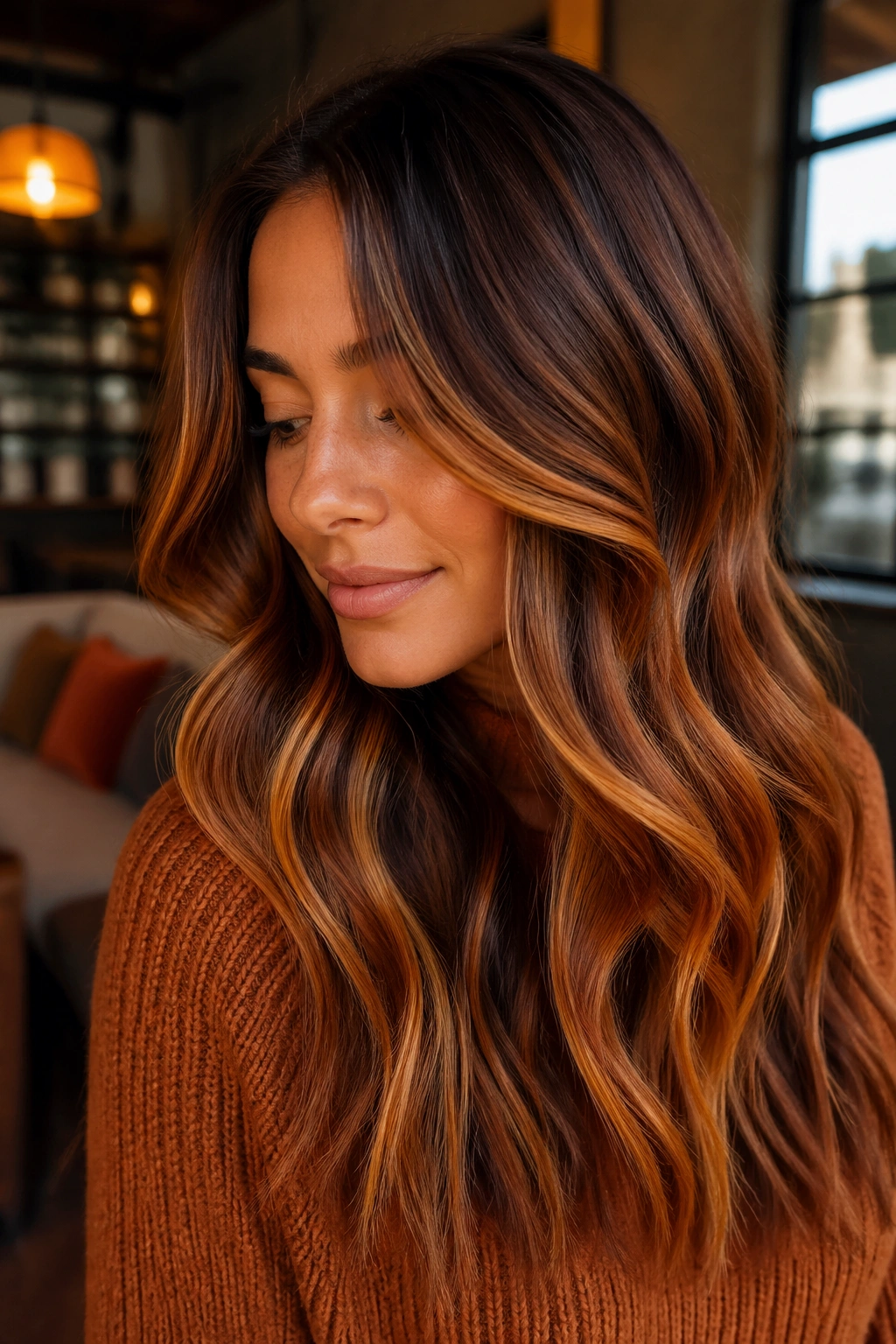
Want orange? Not exactly. That’s where this shade gets interesting.
Pumpkin spice balayage is really a mix of copper, amber, and caramel painted in soft ribbons over brunette hair. It gives the feeling of warmth without turning your whole head into one solid red block. Done well, it looks dimensional from the top and almost molten through the ends.
How to Ask For It
Tell your colorist you want warm balayage with copper and amber tones, not bright orange highlights. That wording matters a lot. If you have dark brown hair, the lift may be subtle and that’s fine — the warmth is the point, not a dramatic contrast.
On wavy hair, this color looks especially good because the bends catch each tone separately. Straight hair can wear it too, but the placement needs to be softer around the face and crown.
A tiny note people skip over: if you wear a lot of black, this shade gives your skin a nicer glow than a cooler brown usually does. Small thing. Big payoff.
4. Mushroom Brown
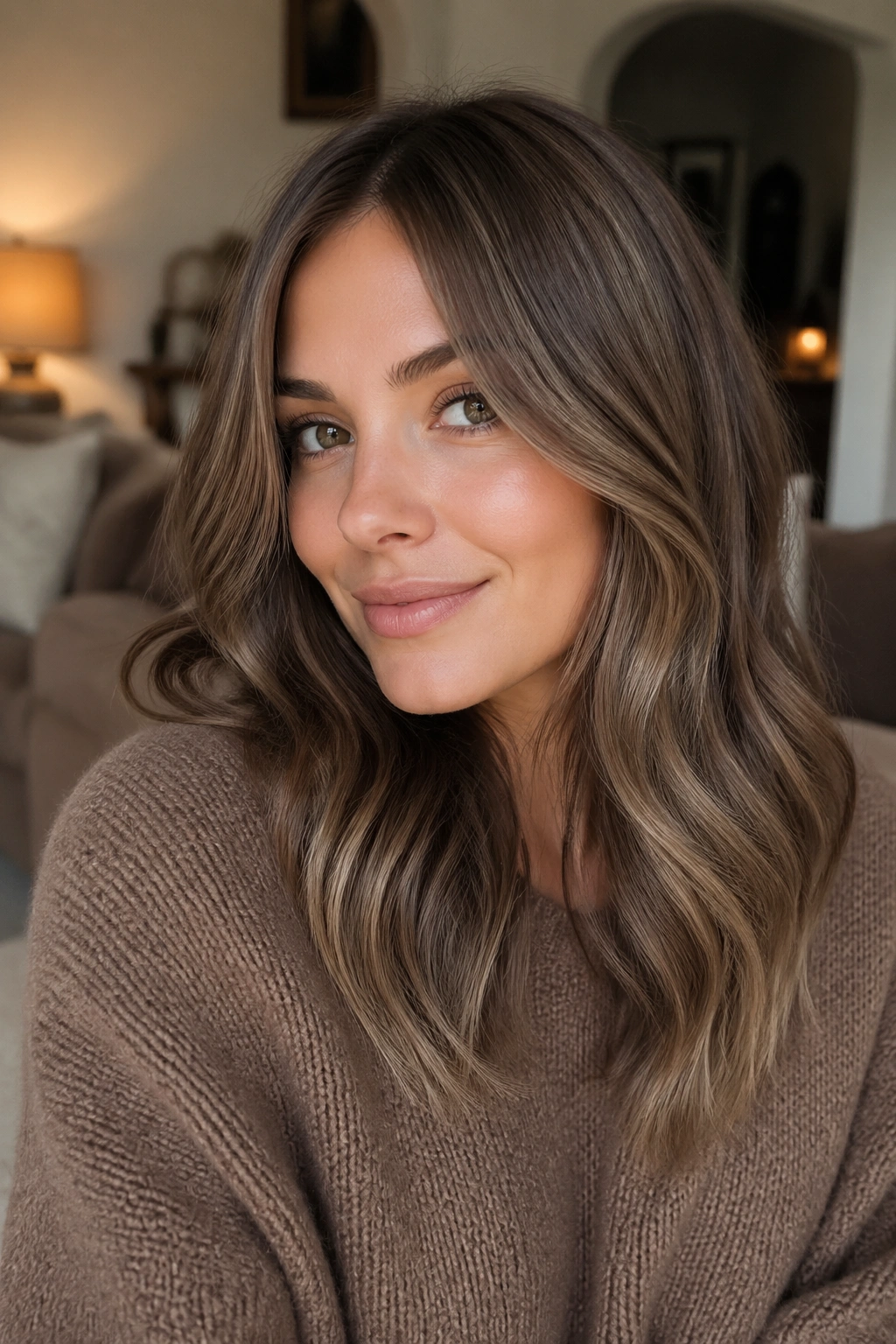
Mushroom brown is for the person who loves fall but doesn’t want to lean into obvious red or gold. It has an earthy, smoky feel — taupe, beige, soft brown, a little ash, a little warmth. The result is calm and expensive-looking, not flat or dull.
I’ve always liked mushroom brown on hair that tends to pull orange when lightened. It cools that down without making the color feel gray. The best versions usually use a shadow root and a beige gloss through the mids and ends, which gives the shade a lived-in softness that grows out cleanly.
What Makes It Different
- Works well on level 5 to 7 hair.
- Looks especially good on straight or softly waved cuts.
- Makes brassiness less obvious.
- Needs less upkeep than bright copper or red.
One warning: If your hair is already very cool-toned, this can go a little dusty. Ask for some beige instead of going full ash.
5. Maple Syrup Blonde
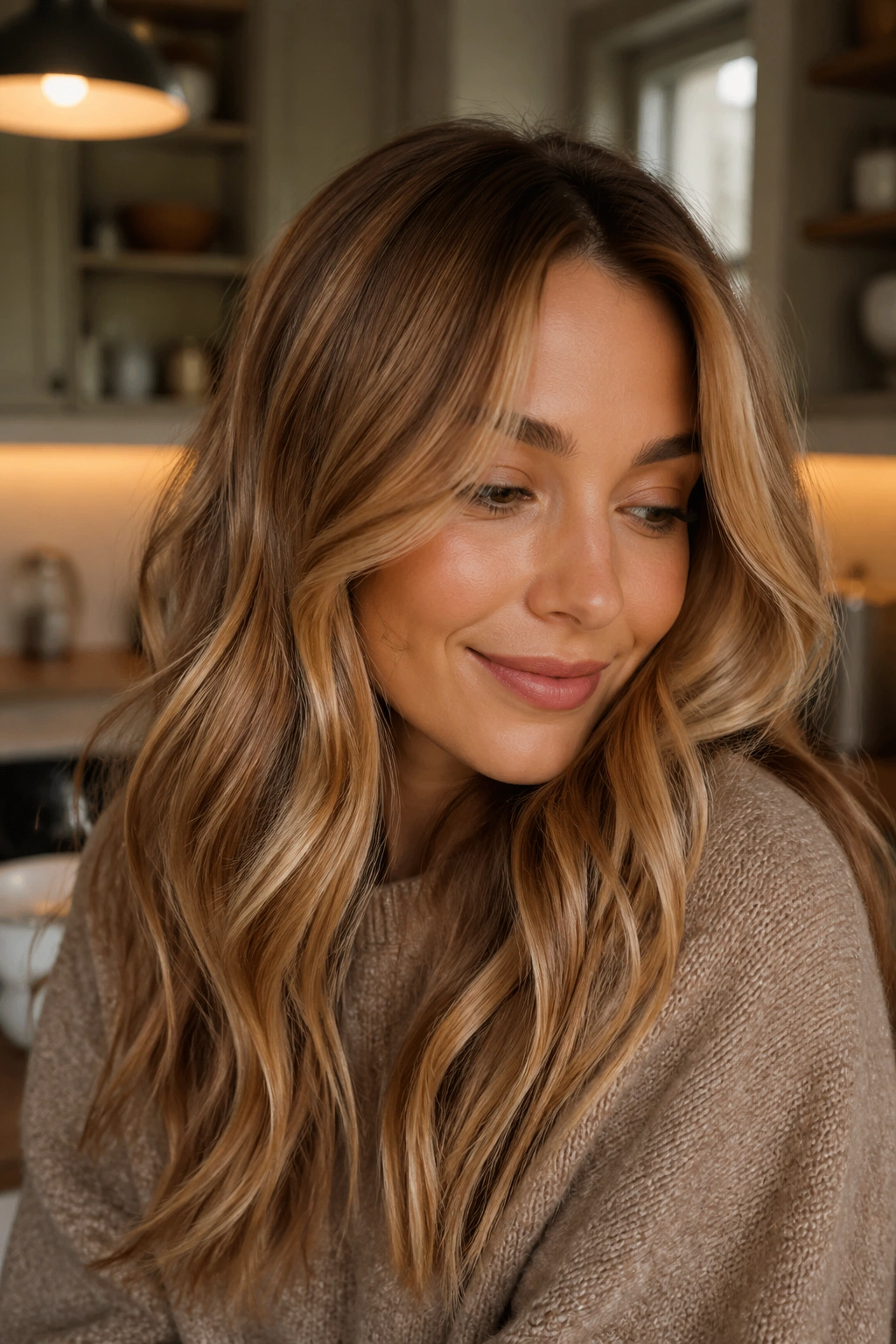
Maple syrup blonde has that warm, golden-brown sweetness that makes hair look glossy even when you haven’t styled it much. It’s not icy, and it isn’t the pale blonde people usually chase in summer. It’s deeper, richer, and better suited to softer layers, curtain bangs, and loose bends.
The key is depth at the root. If the roots are too bright, the whole thing can start feeling flimsy. A darker root smudge with honey and maple tones through the lengths gives the color a cozy finish that still catches light in the right places. It also photographs well in indoor lighting, which matters more than most people admit.
This shade is a nice fit if you want to stay blonde but lose the washed-out look that can happen after a long stretch of sun and heat. Think buttery, not bleachy.
6. Mulled Wine Red
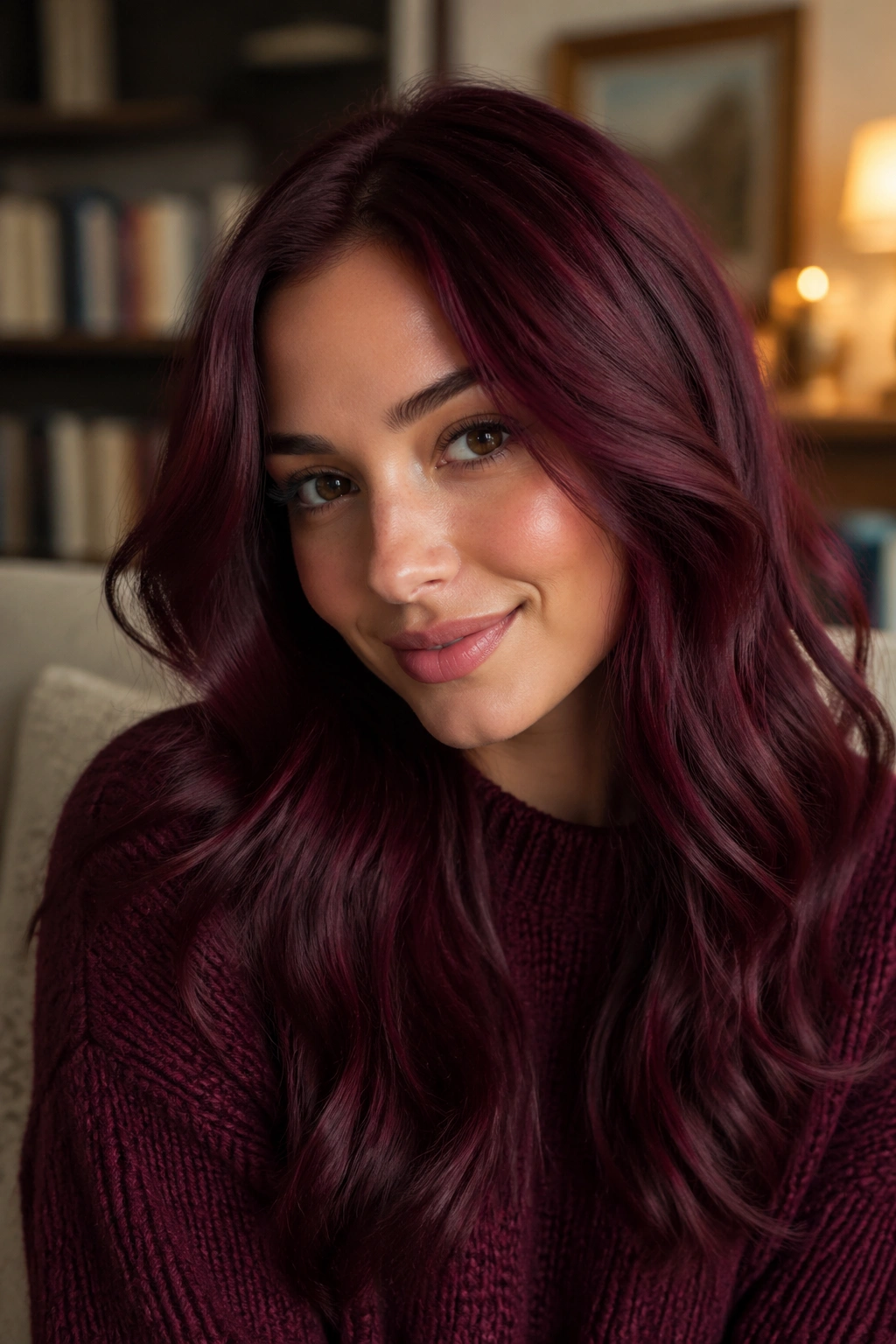
Mulled wine red is deeper than cherry and softer than burgundy. It has that spiced, dark-fruit feel — rich, moody, and a little plush around the edges. On medium to dark hair, it can look almost brunette in some light and then flash red when you move.
Unlike brighter reds, this one doesn’t scream for attention. It lingers. That makes it a good choice if you want a fall red but don’t want the maintenance nightmare that comes with a more vivid copper. The color usually holds better when it’s built on a darker base, then finished with a red-violet gloss.
Best of all, it works with simple styling. A low bun, a blunt bob, a soft wave — the color carries the mood on its own. You do not need a complicated cut to make it look expensive.
7. Honey Brunette
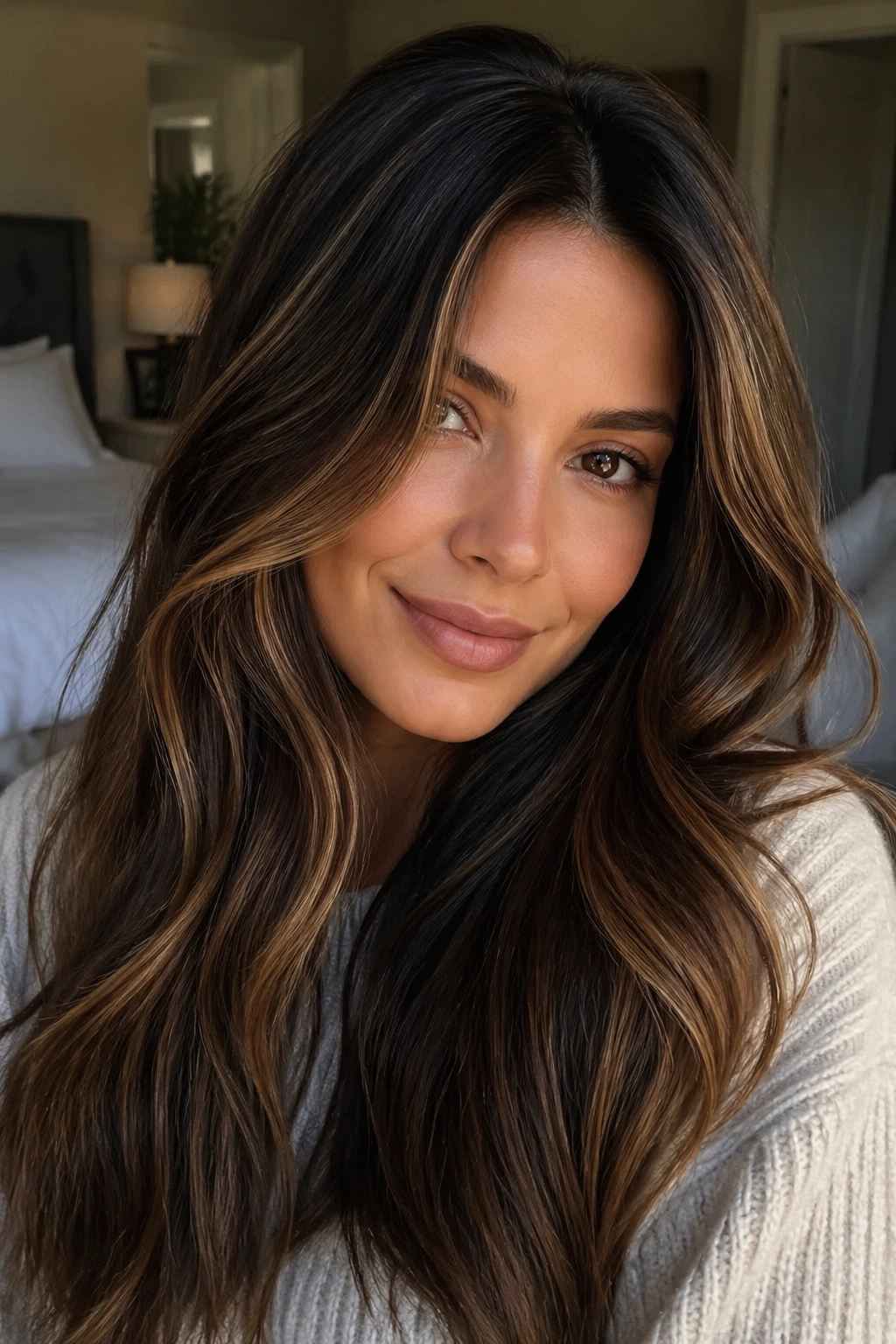
Honey brunette is one of those shades that sounds safe until you see it in motion. Then it looks warm, shiny, and far more dimensional than a plain brown. The honey pieces should be fine and deliberate, not chunky. Think soft glow, not stripe.
Why It Works on Dark Hair
A brunette base can handle honey highlights better when the lightening stays close to the surface. That’s why subtle balayage or babylights work so well here. They brighten the face without forcing the whole head into a higher maintenance color.
- Ask for fine honey ribbons around the hairline.
- Keep the root area deeper for easier grow-out.
- Use a gloss every 6 to 8 weeks if the tone starts looking dry.
- Blow-drying with a round brush makes the color pop more than air-drying.
This is a smart choice if you want warmth but hate obvious upkeep. It’s one of the easiest cozy fall color ideas to live with.
8. Toffee Balayage
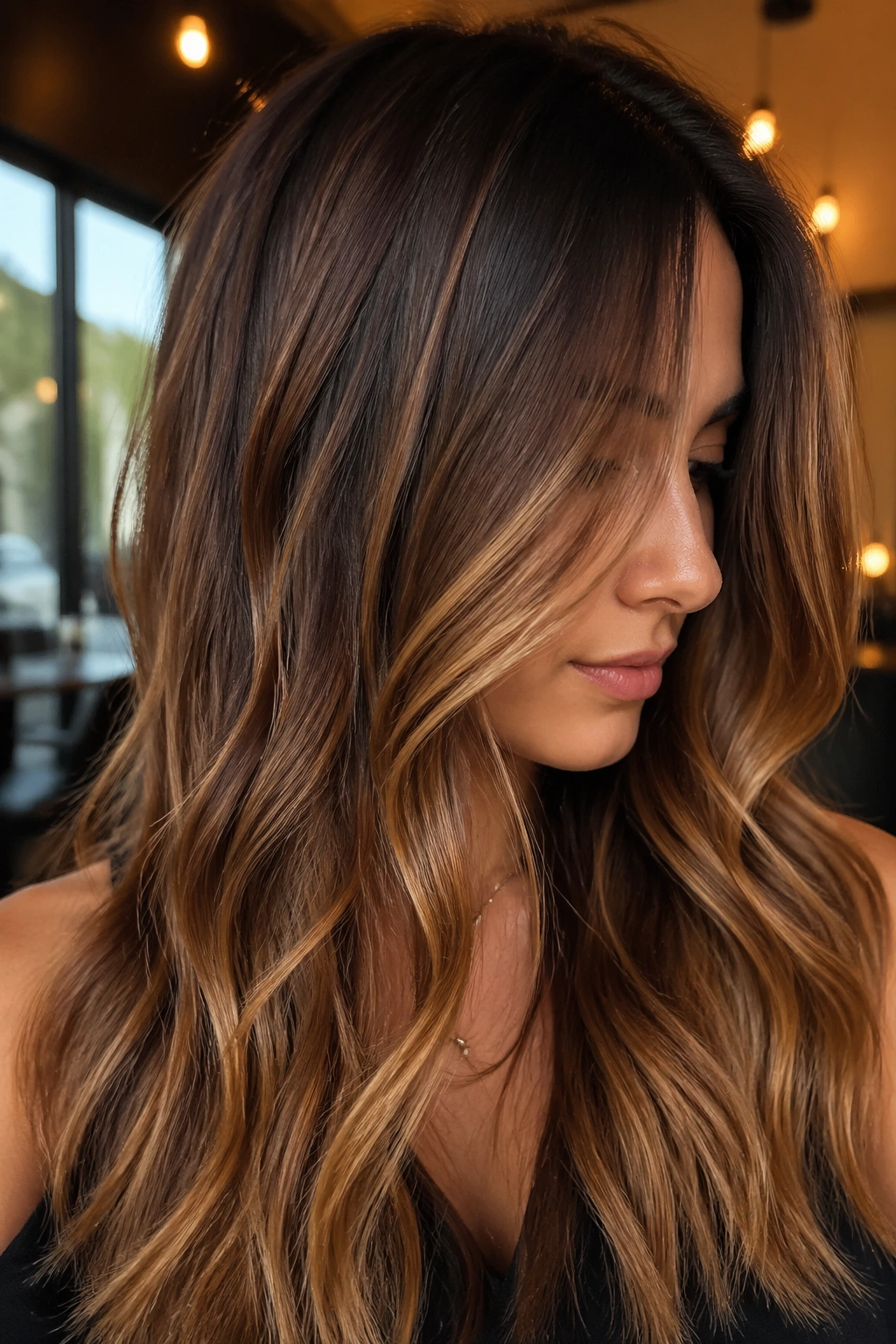
Toffee balayage has a dessert-like softness that makes brown hair feel less heavy. The shade sits between caramel and golden brown, which gives it warmth without tipping into orange. It’s especially good on layered cuts because the highlights can follow the movement of the hair instead of sitting on top of it like stickers.
Here’s the thing: the best toffee balayage is not one bright highlight pattern repeated over the whole head. It’s irregular. Some pieces are a touch lighter near the face, others melt into the mid-lengths, and the ends stay a shade or two deeper so the color has a real fade.
If your hair is naturally medium brown, this is a low-drama way to get fall warmth without going full red. If your hair is darker, ask for a soft lift and a beige-gold toner rather than a yellow one. Yellow ages fast. Toffee doesn’t.
9. Auburn Gloss
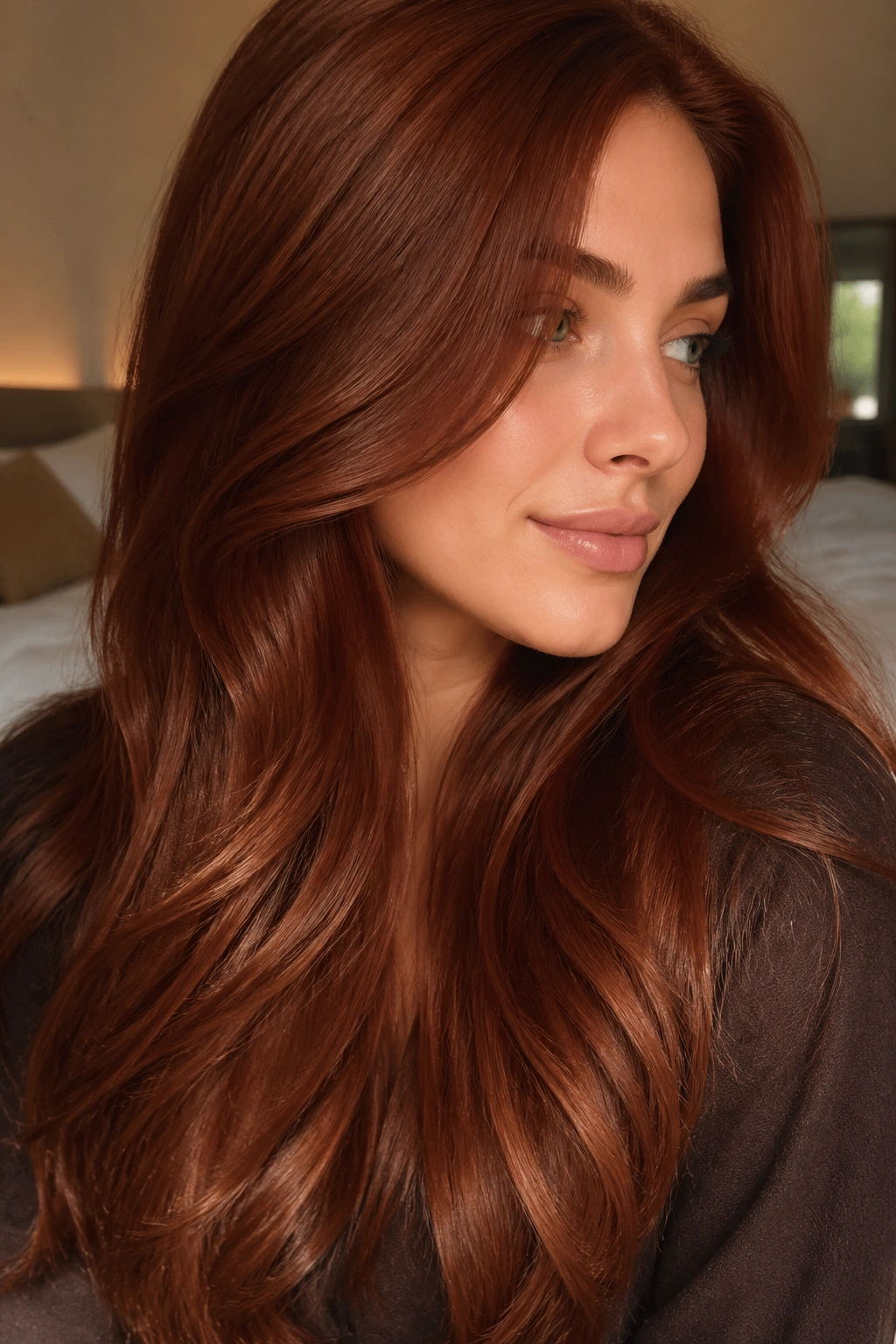
Auburn gloss is a nice answer for anyone who wants red without a full color overhaul. A gloss doesn’t have the same intensity as permanent dye, which is exactly why it looks so wearable. You get warmth, shine, and a little change — enough to feel fresh, not enough to feel trapped.
How to Use It
If your base is already brown, an auburn gloss can shift it toward red-brown in one appointment. On naturally red hair, it deepens the tone and gives it a polished finish. On blonde hair, it usually needs a bit more structure underneath, or the red can go too bright too fast.
Auburn works best when the undertone stays brown. That keeps it elegant. Too much orange and it starts looking like a costume wig, which is not the mood anyone wants in a scarf-and-boots season.
If you like wearing gold jewelry, this shade is a strong match. The warm tones play off each other without competing.
10. Smoked Caramel
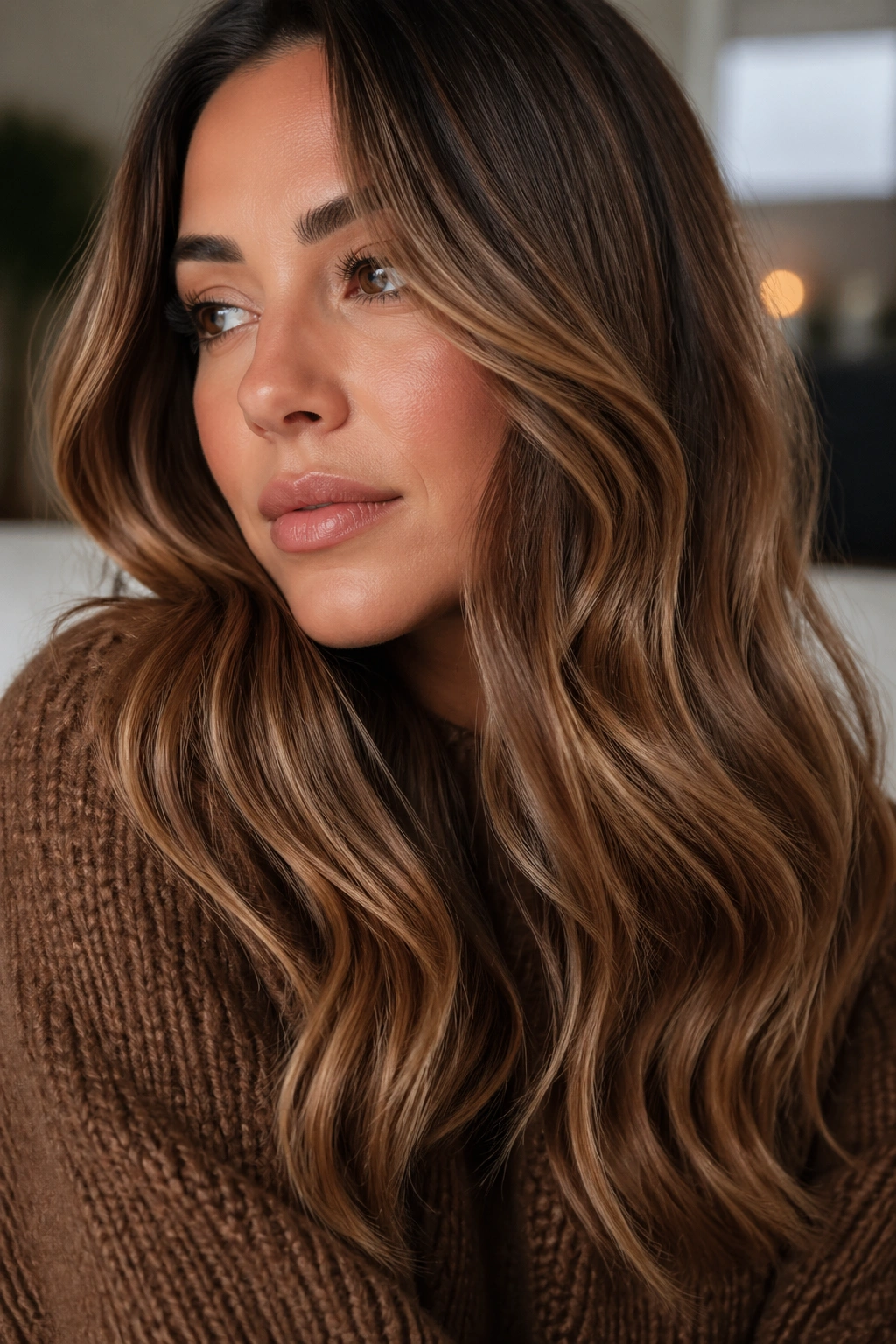
Smoked caramel is what happens when you take classic caramel highlights and mute them a little. The result feels softer, cooler, and more grown-up. It’s a good fix for overly bright blonde pieces that need to settle down without being stripped out completely.
I like this one on medium brown hair because it keeps the color looking rich. The caramel pieces are still there, but a beige-brown glaze tones down the shine so the hair doesn’t drift into summer-bright territory. That subtle dimming is the whole point. It gives the color a cozy, sweater-weather finish.
Bullet-Point Breakdown
- Best for: brunettes who want warmth without gold overload.
- Technique: caramel highlights softened with a beige gloss.
- Maintenance: every 6 to 10 weeks, depending on how fast your hair fades.
- Style note: loose waves show the contrast better than pin-straight hair.
Smoked caramel is quietly one of the easiest fall shades to wear. Not flashy. Much better for it.
11. Cocoa Espresso
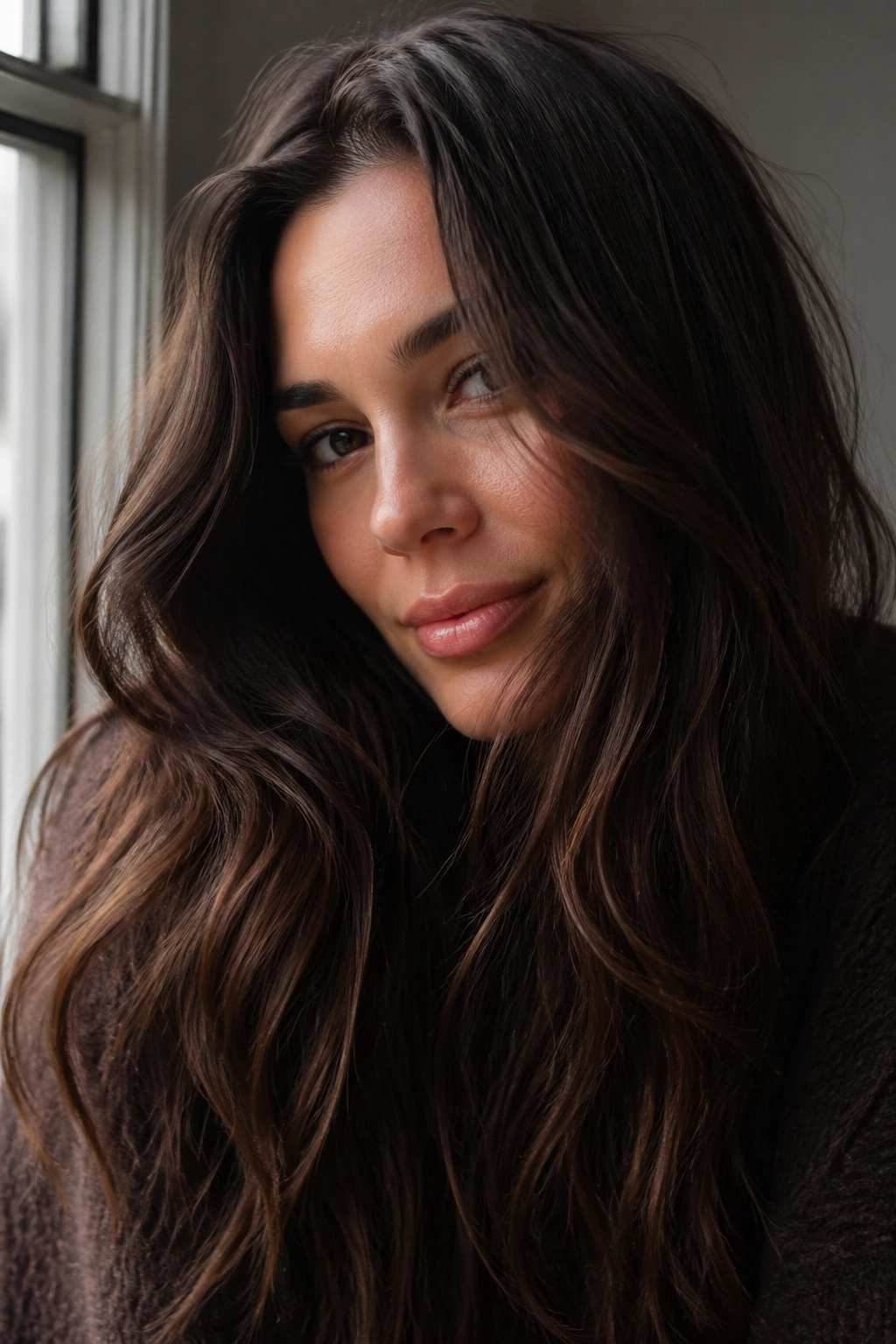
Cocoa espresso is dark, but not lifeless. That matters. You want the richness of espresso with just enough cocoa warmth to keep the hair from reading flat or inky. When light hits it, the color should reveal soft brown tones, not a harsh black sheen.
Pure prose fits this shade better than a long checklist because the appeal is so simple: healthy-looking depth. A lot of dark hair color ideas get ruined by too much blue or ash. Cocoa espresso avoids that mistake. It usually works best as an all-over gloss or a deep permanent color with a gentle brown undertone, especially on hair that naturally sits around dark brown to black-brown.
It’s also one of the best shades for shiny cuts. A blunt lob, long layers, even a neat ponytail — all of them look more polished when the color has this kind of depth. If you want low-maintenance hair that still looks intentional, this is a serious contender.
12. Golden Chestnut
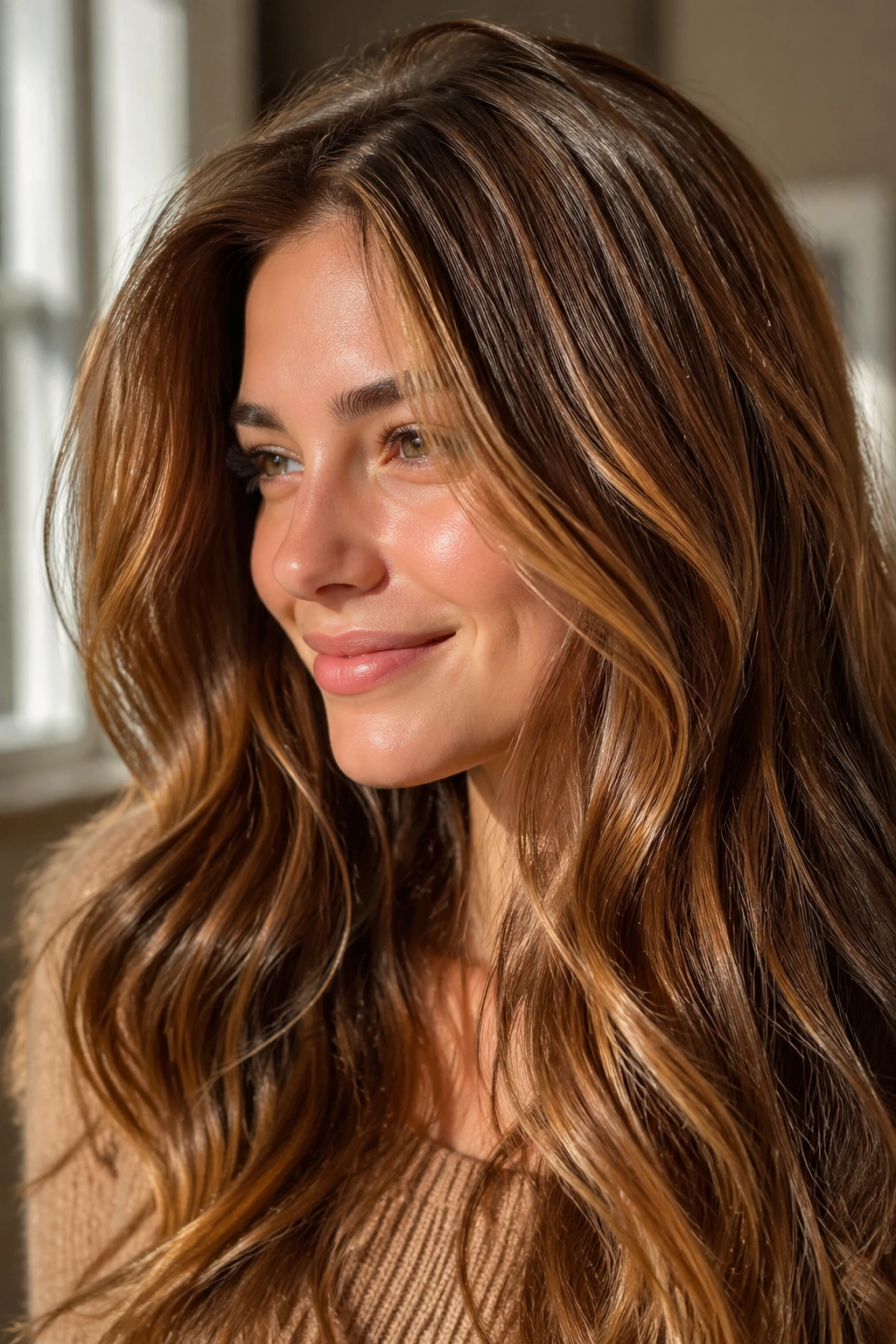
Golden chestnut is chestnut brown’s warmer, sunnier cousin. It has the same rich base, but the golden reflects make it feel softer and brighter around the face. It’s a good move if plain brown tends to look heavy on you.
What Makes It Different
Unlike chocolate brown, golden chestnut doesn’t sit still. The gold tones move in daylight and warm up the skin, which is why this shade plays so well with neutral-to-warm undertones. It can also make layered hair look fuller because the tiny variations catch on the bends.
A good version usually starts with a chestnut base and a few very fine gold babylights through the top layer. Not chunky highlights. Tiny ones. The tiny ones are what keep this from looking dated.
Best for someone who wants color that feels rich but not dark enough to steal all the light from the face. If you wear cream, rust, olive, or camel, this shade is a clean fit.
13. Rustic Rose Brown
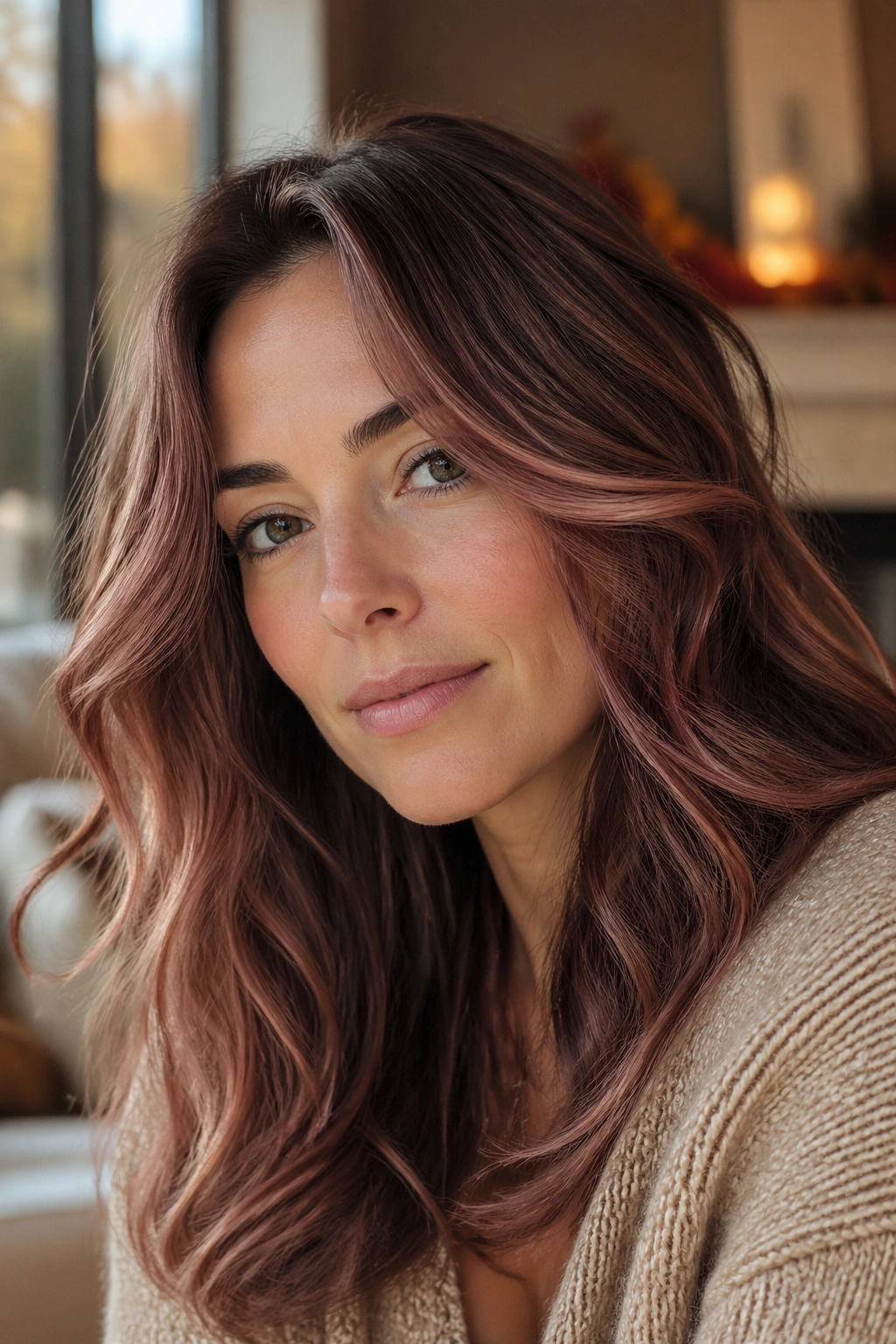
Rustic rose brown has a soft blush note running through a brunette base, and that little bit of pink makes the whole thing feel gentler. It’s not a bright rose gold. It’s more like a faded rose petal tucked into brown hair.
Why It Works
The rose tone is subtle enough to stay wearable, but it still adds warmth that a plain brown can’t give. On light brown hair, the pink shows up as a soft tint. On darker hair, it mostly reads as richness with a faint berry edge.
This color looks especially good on wavy or textured hair because the movement shows off the rose-brown shifts. If you have straight hair, a gloss with a sheen finish helps the tone feel less matte. You’ll also want to avoid over-washing. Pink-toned brunettes fade quicker than people expect.
Practical tip: ask for a rose-brown glaze rather than a full permanent pink formula unless you want maintenance every few weeks. That’s the difference between charming and annoying.
14. Bronze Babylights
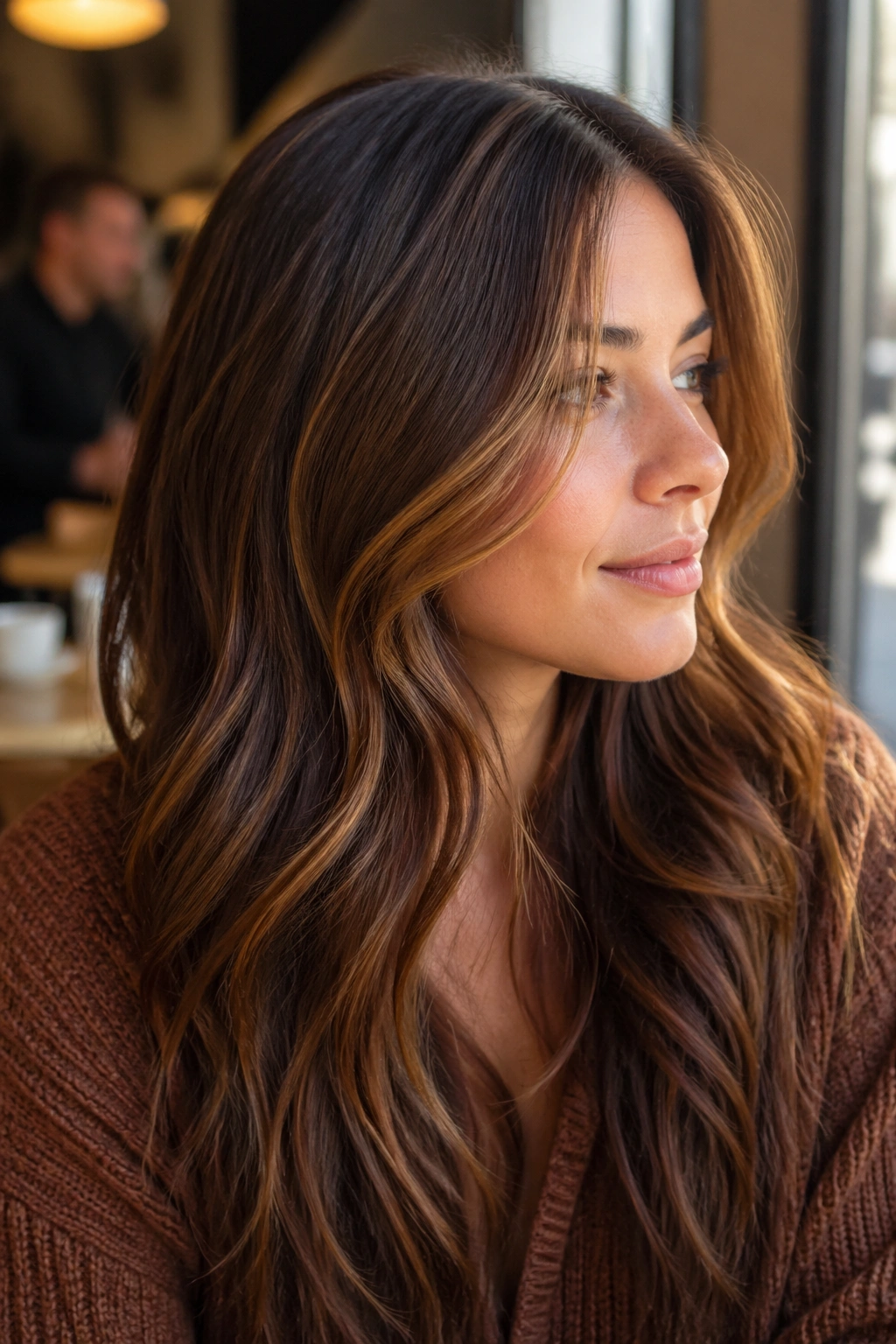
Bronze babylights are tiny, barely-there highlights that give brunette hair a bronze shimmer instead of a big contrast. The effect is subtle, and that is exactly why it looks good. You get warmth around the face and through the top layers without the obvious highlight line that can make hair feel busy.
Bronze is one of those fall colors that works on straight, curly, and coily hair because the light catches the texture in different ways. On curls, it reads as dimension. On straight hair, it reads as shine. On thick hair, it can stop the ends from looking like one heavy block.
This is also one of the easiest shades to grow out. Tiny lights disappear softly as the hair grows, so you’re not stuck with a sharp stripe at the root. If you like low-maintenance color but still want something that feels styled, bronze babylights are hard to beat.
15. Spiced Mahogany
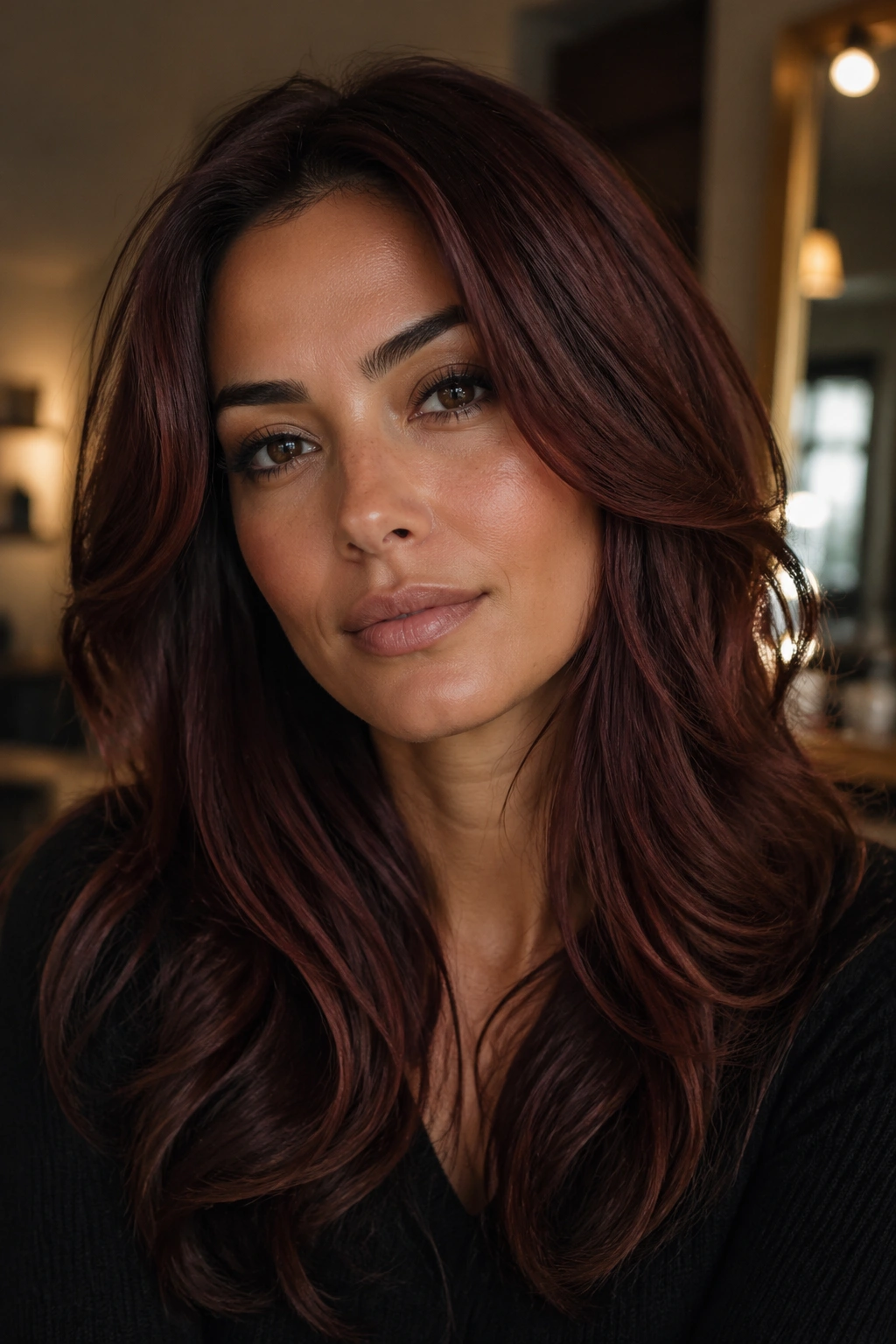
Need a red that looks rich, not costume-y? Spiced mahogany is usually the answer. It sits deep in the red-brown family, so it gives you that autumn warmth without the loud brightness of a true copper or cherry shade.
How to Use It
A mahogany base works especially well if your natural hair is already medium brown or dark blonde. The color can be built with a permanent or demi-permanent formula depending on how much change you want, but the finish should stay soft and smoky at the edges. That makes it easier to wear every day.
- Best on medium to deep skin tones, though pale skin can wear it too.
- Works well with layered cuts because the tone shifts in the movement.
- Needs a red-safe shampoo, not a clarifying one every wash.
- Looks richer after a gloss refresh.
If you want red hair that feels mature and moody, this is the lane. Not loud. Just deep.
16. Butterscotch Blonde
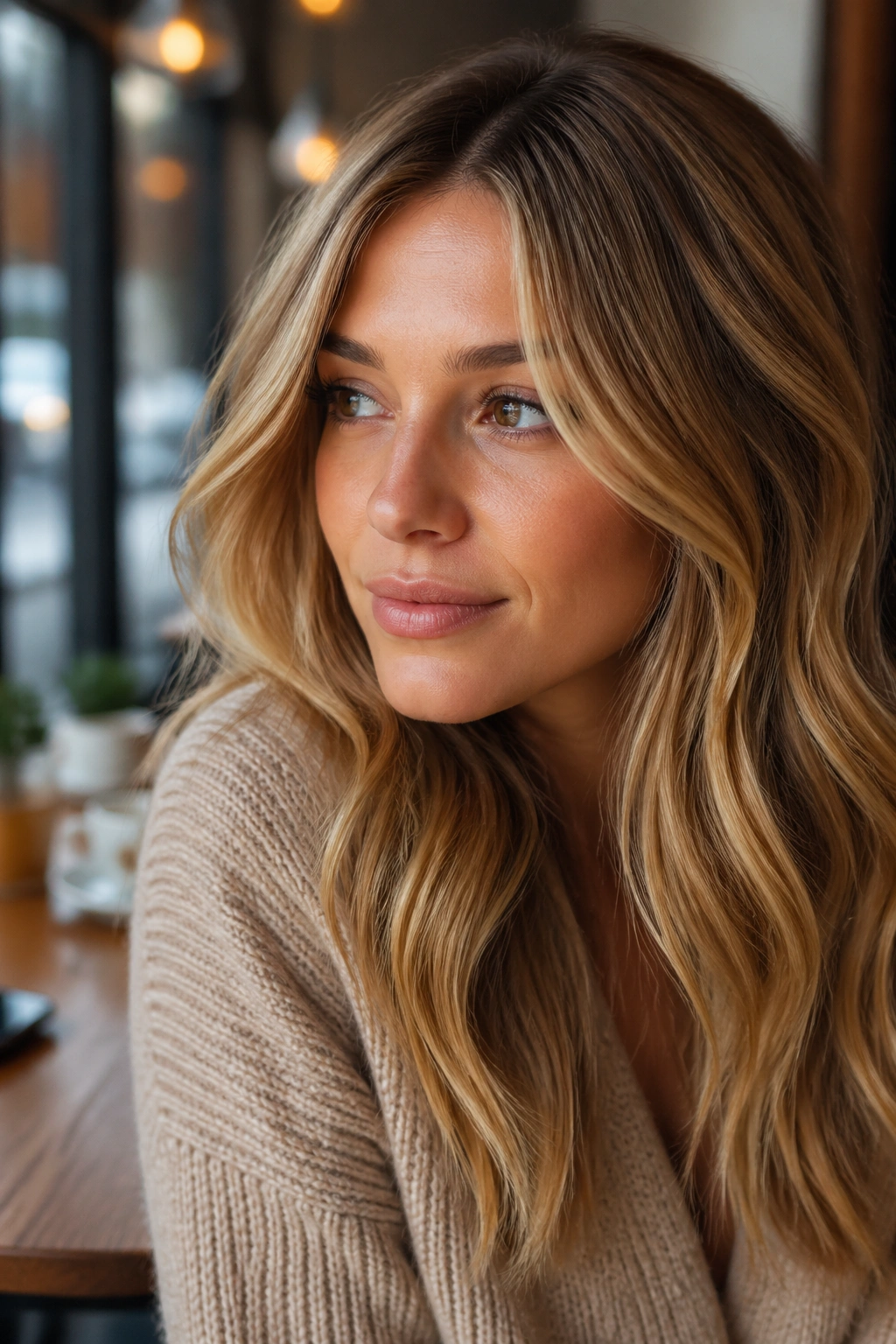
Butterscotch blonde is warm, soft, and a little creamy, which is why it feels so cozy when the weather cools down. It has more depth than pale blonde and less orange than a true gold. The shade sits in the middle, which makes it easier to wear than a lot of brighter blondes.
Imagine blonde hair after a few weeks in a sunlit café, then add a touch more caramel at the roots and around the face. That’s the mood here. A good butterscotch blonde usually includes a soft root shadow so the color doesn’t look overprocessed, especially on fine hair.
Bullet-Point Breakdown
- Best on: natural blondes and light brunettes.
- Toner family: beige-gold, not icy silver.
- Placement: face-framing pieces and soft mid-length ribbons.
- Finish: glossy, not matte.
This color can go brassy if you overdo heat styling and skip toner maintenance. Still, when it’s right, it gives that soft, rich glow people notice without knowing why.
17. Walnut Brown
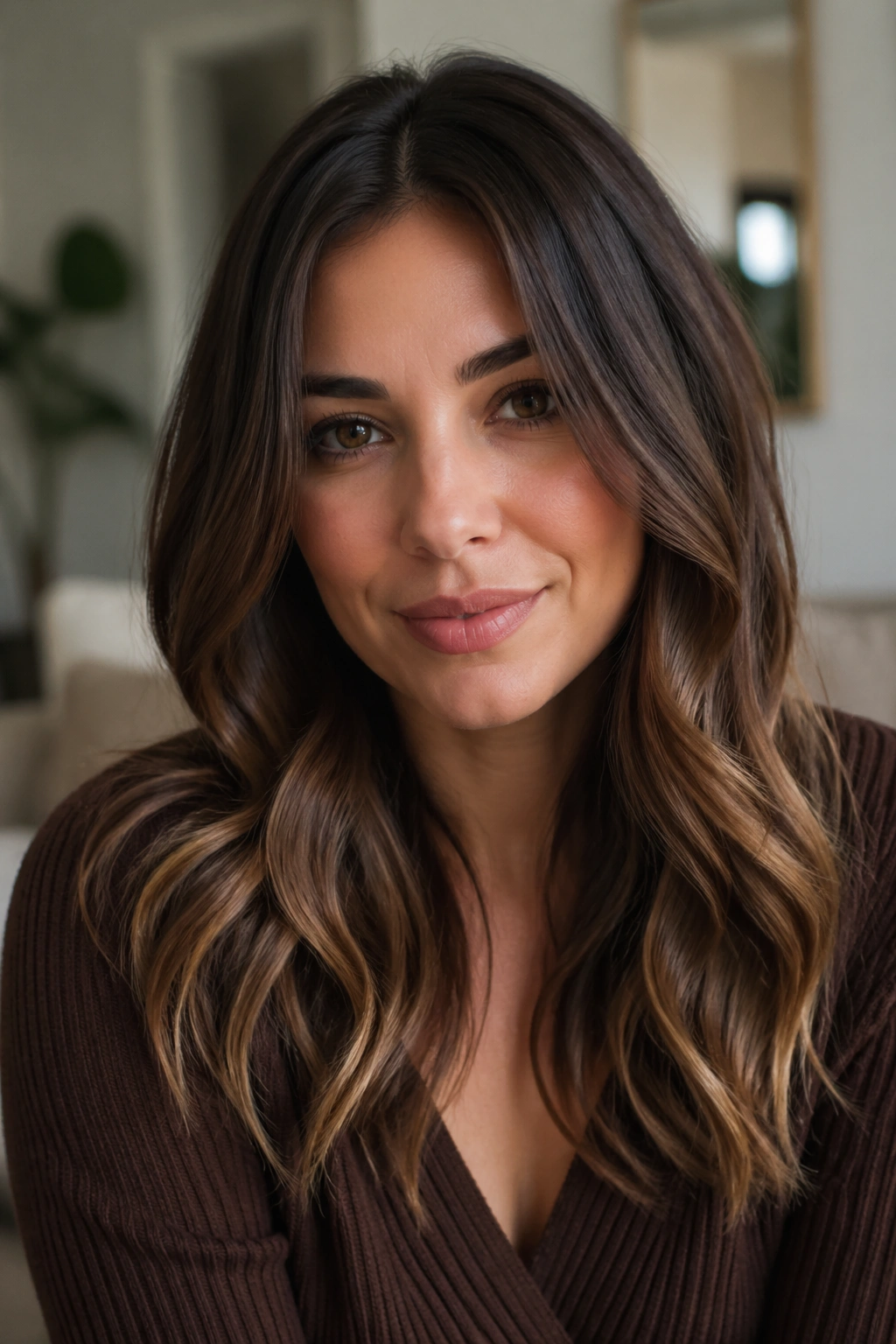
Walnut brown is a shade I like for people who want brown hair to look expensive without trying too hard. It’s neutral, but not flat. Cool enough to avoid orange, warm enough to avoid looking dull.
The best walnut brown has a quiet mix of espresso and soft chocolate with maybe a tiny bit of beige at the ends. That balance makes it flattering on a wide range of skin tones, especially if you don’t know whether you lean warm or cool. It’s a safe bet, which sounds boring until you remember how many bad color choices come from chasing something too extreme.
This is also one of the easiest colors to live with between appointments. If your hair grows fast, the root line doesn’t scream at you. If your hair is damaged, walnut brown can make it look thicker because the tone is so even and rich. Sometimes boring is the point.
18. Copper Penny
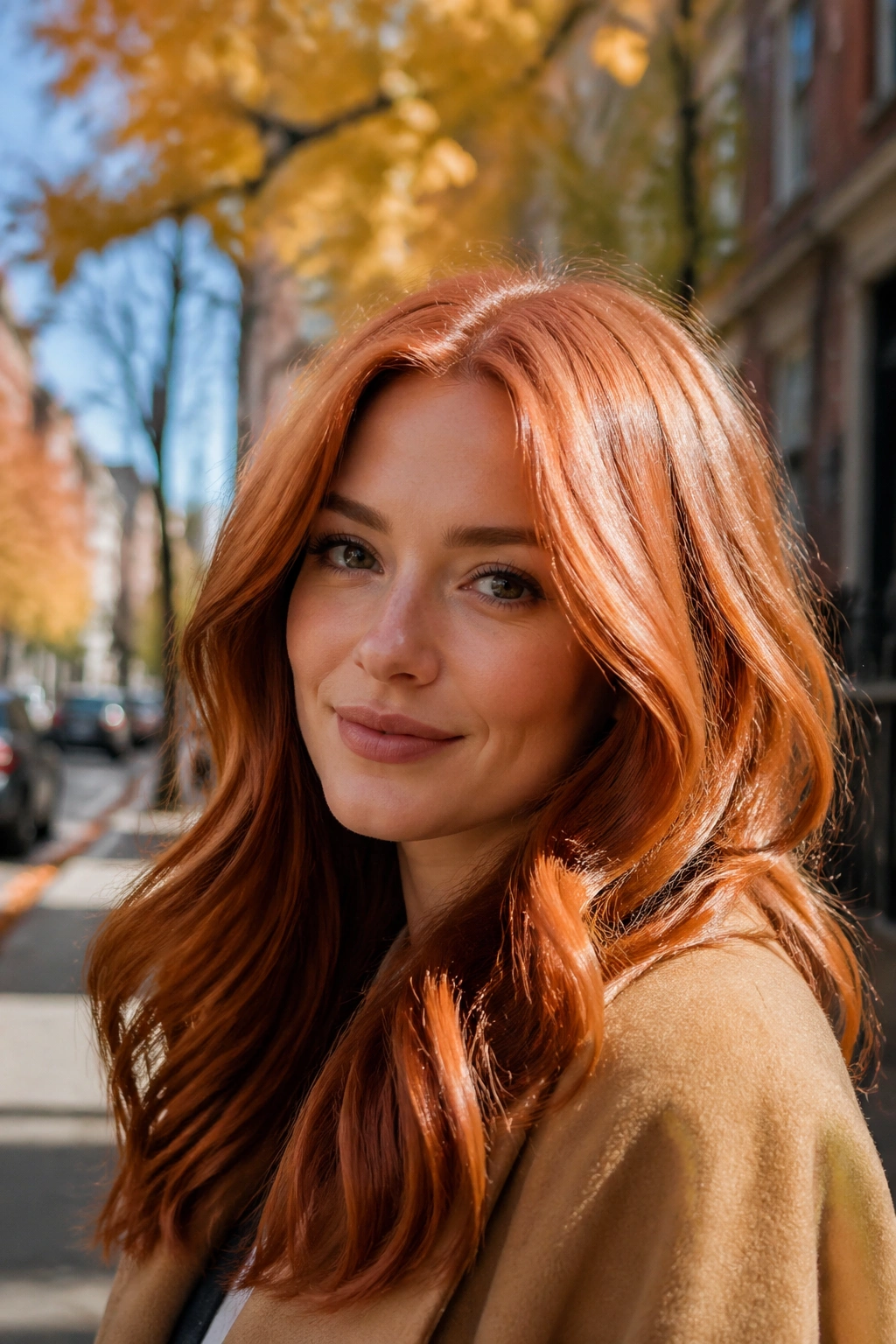
Copper penny is brighter and shinier than cinnamon copper. It has a more metallic feel, almost like a polished coin, which makes it feel bolder and more vivid in daylight. If you want a real red statement for fall, this is the one.
What It Does Better Than Cinnamon Copper
Cinnamon copper is softer. Copper penny is sharper. It has more spark, more brightness around the face, and a little more edge. That makes it a good fit for people who wear black, denim, or deep green a lot because the contrast looks intentional.
You do need to be honest about upkeep here. Copper penny fades faster than brown-based shades, especially on porous hair. A color-depositing conditioner in copper or red can help keep it from washing out to peach. Cooler water helps too. Annoying? Yes. Worth it? Also yes, if you want that high-warmth finish.
This color tends to flatter shorter cuts and layered bobs especially well. The shine gets a little louder when there’s movement.
19. Amber Face-Framing Highlights
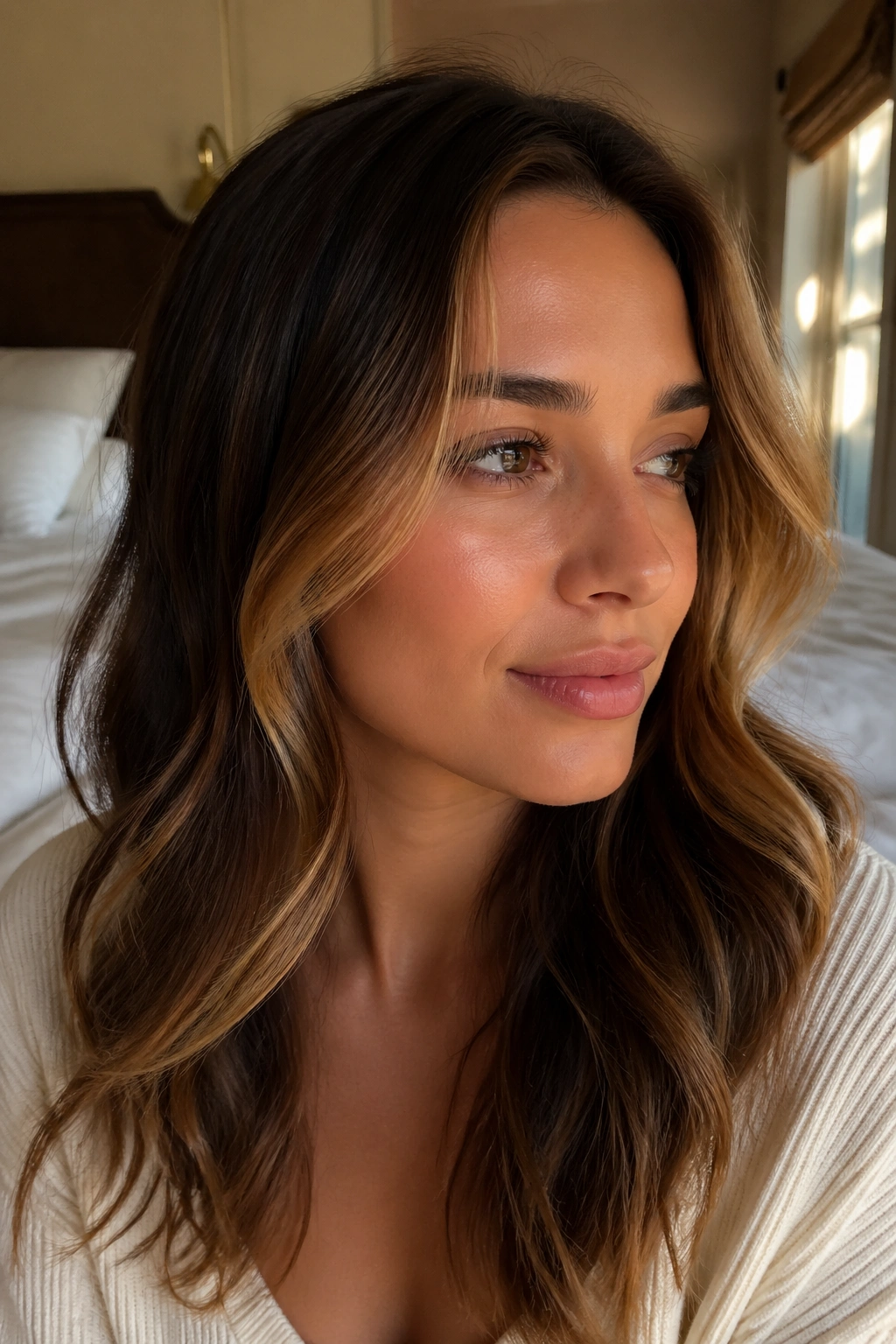
Amber face-framing highlights are the hair color equivalent of turning the lamp up near your face. They give warmth exactly where you want it, which is why they work so well if you’re nervous about doing a full color change. A few amber pieces around the front can lift the whole look.
How to Ask For It
Tell your colorist you want soft amber money pieces or fine face-framing highlights with a golden-copper tone. If the pieces are too thick, the whole effect can feel heavy. Keep them fine. Keep them blended.
- Great for brunettes who want a change without full-head lightening.
- Easy to pair with long layers or curtain bangs.
- Needs less maintenance than all-over copper.
- Can be refreshed with a gloss if the tone fades.
This one is especially good if you wear your hair up a lot. Even a messy bun looks more finished when the front pieces are warm and bright. Small adjustment. Big visual payoff.
20. Velvet Plum
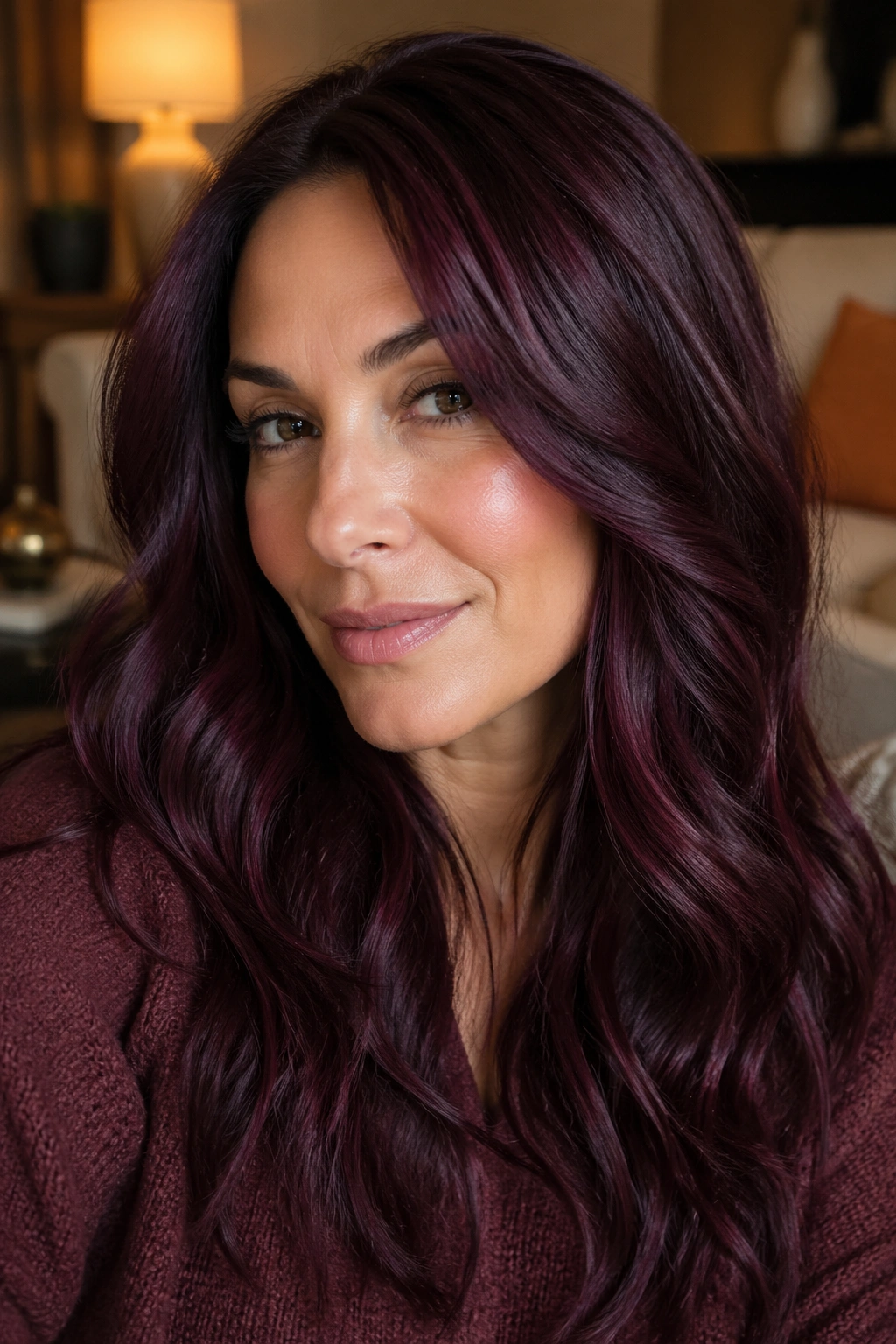
Velvet plum is deep, moody, and a little luxurious without tipping into dramatic-for-the-sake-of-it territory. The plum note sits under the brown base, so the color reads rich first and purple second, which keeps it wearable.
A lot of plum shades go wrong because they’re too blue or too violet. Velvet plum avoids that by staying dark. It works best on medium-to-dark hair and usually looks best when applied as a gloss or demi-permanent shade over a brown foundation. That gives the hair a soft sheen instead of a flat purple cast.
If you like berry lipstick, dark nail polish, or charcoal sweaters, this shade will feel natural fast. It’s one of those colors that looks different in every light — nearly brown indoors, red-purple outside, and somehow better each time. That kind of shift is the whole appeal.
21. Caramel Ribbon Lights
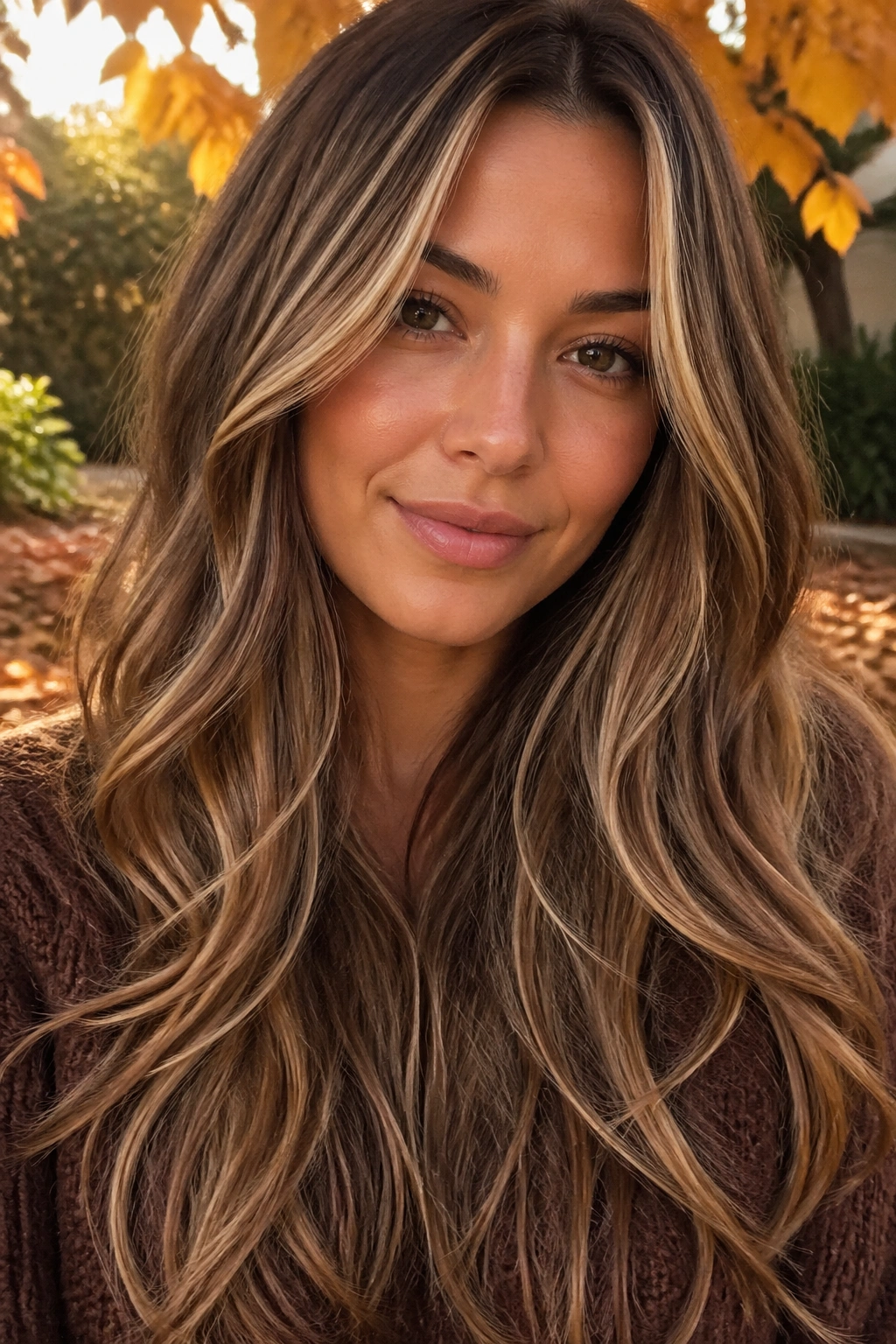
Caramel ribbon lights are thin, flowing highlights that move through the hair like narrow bands instead of big chunks. The effect is softer than traditional highlights and more visible than a single gloss. They’re a nice choice when you want dimension that looks hand-painted and not overly done.
Why They Work
A ribbon-light placement follows the haircut. On long layers, the color can run from mid-length to ends and make the shape feel fuller. On curls, the ribbons pop even more because each bend catches a different tone. That makes this shade especially friendly for textured hair.
The caramel tone itself should lean beige-gold, not orange-gold. Too much orange, and the whole thing starts fighting with the base color. The cleaner beige version is easier to wear with makeup, clothes, and different skin tones.
Best approach: ask for thin caramel pieces concentrated around the face and the top layer, then let the lower sections stay deeper. That contrast keeps the color cozy instead of noisy.
22. Smoky Mocha Melt
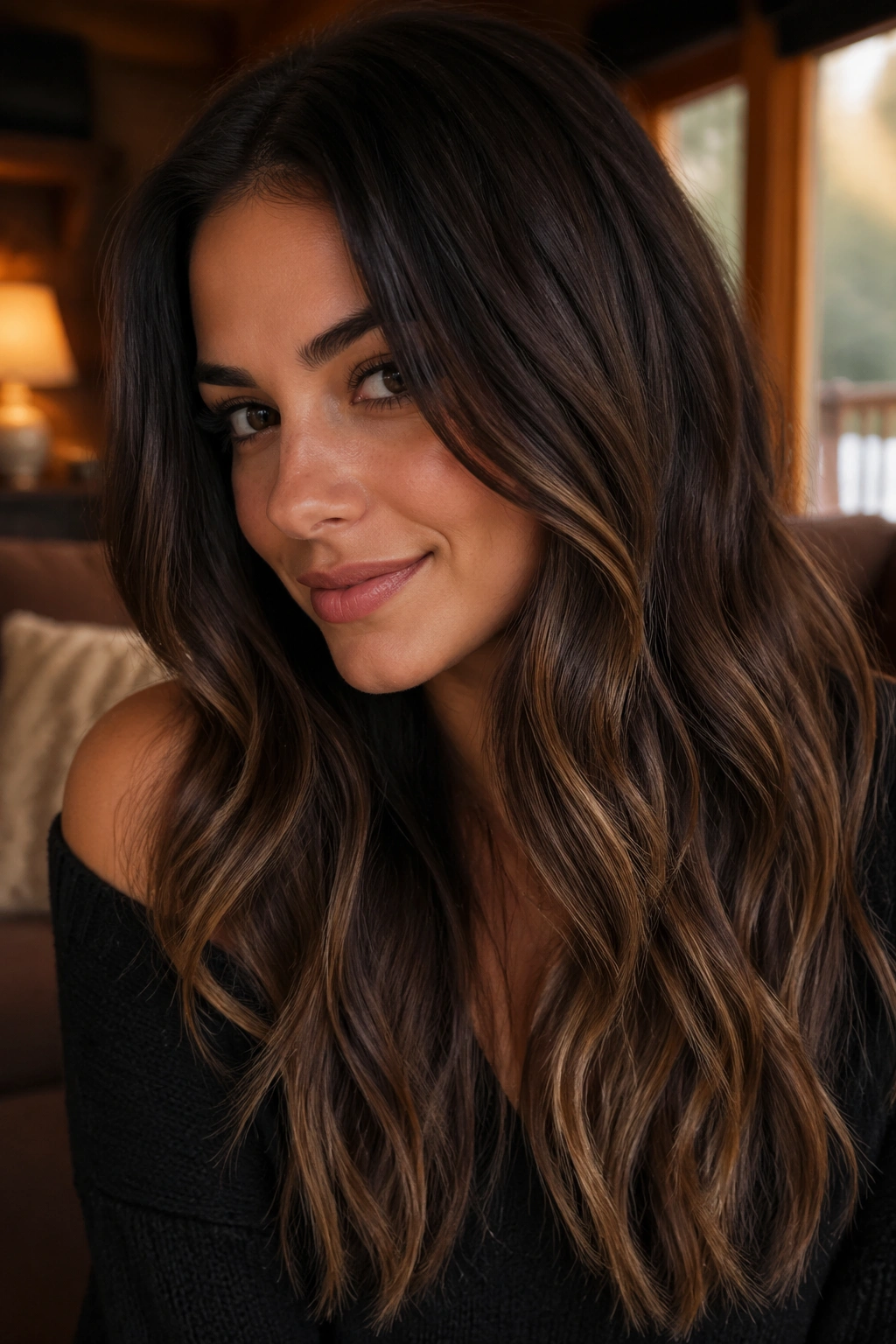
If you hate stripy balayage, smoky mocha melt is the answer. It keeps the whole color soft by blending dark brunette roots into mocha mids and slightly lighter ends with almost no harsh line. The finish feels smooth, muted, and polished.
The “melt” part is the important piece. A good colorist will blur the transition so it looks like the lighter tones naturally come out of the base. That makes it one of the most flattering fall hair color ideas for anyone with thick or dense hair, because the gradient helps break up the weight visually.
Quick Details
- Base: deep brunette or cool brown.
- Mid-tones: mocha and cocoa.
- Ends: a touch lighter, but not blonded out.
- Best styling: soft waves or a smooth blowout.
This color suits people who want depth but still want movement. It’s quieter than caramel, cooler than chestnut, and easier to maintain than anything with high contrast.
23. Honeyed Strawberry Blonde
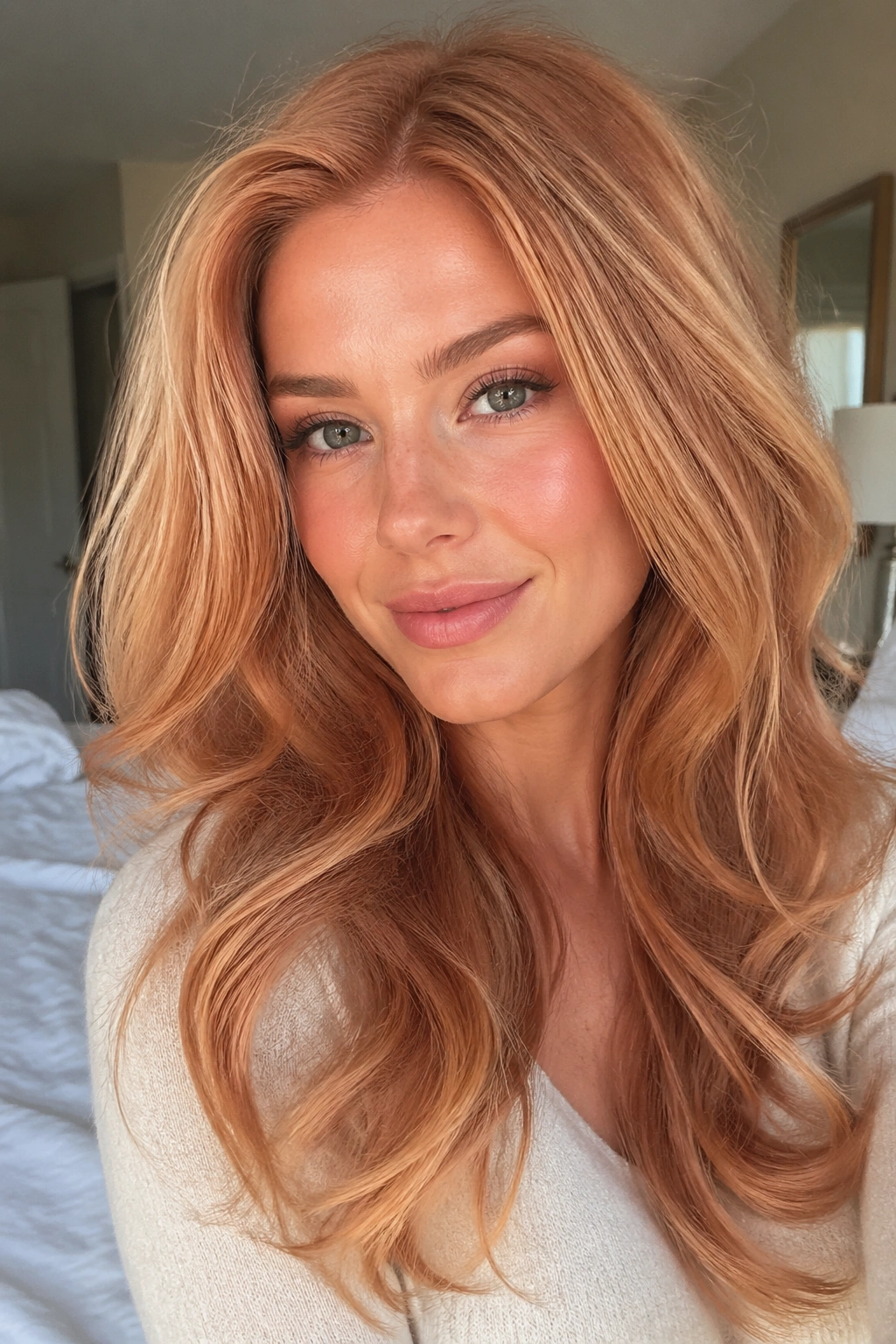
Honeyed strawberry blonde is soft, warm, and a little nostalgic in the best way. It doesn’t lean bright copper, and it doesn’t go pale gold either. The strawberry note gives it a rosy warmth, while the honey keeps it creamy and wearable.
Pure blondes often miss this shade because they go too light and lose the strawberry tone. That’s a mistake. The color needs enough depth to hold the pink-gold balance. On fair skin, it can look fresh and glowing. On neutral skin, it adds warmth without making the complexion look washed out.
It does require some care. Red-gold tones fade faster than deeper brunettes, and hard water can make the shade go dull. A tinted conditioner or a salon gloss every so often helps keep the color sweet instead of tired. If you want a softer fall red, this is a lovely lane.
24. Burnt Sienna Balayage
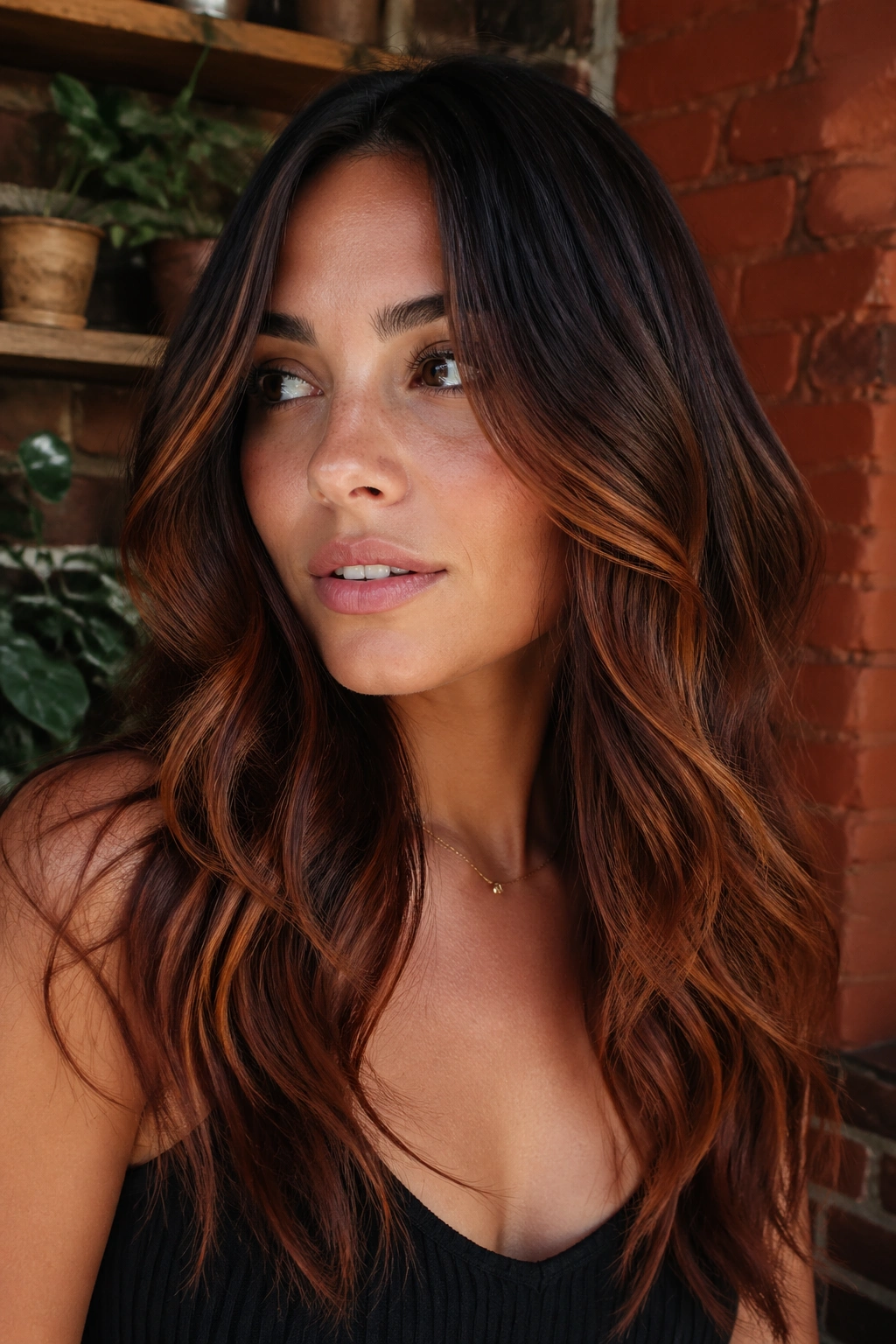
Burnt sienna balayage is what happens when red-brown hair gets a little more earth in it. It’s deeper and richer than pumpkin spice, less bright than copper, and a touch more serious in the best way. The tone feels like dried leaves, terracotta pots, and old leather boots.
How It Differs From Pumpkin Spice
Pumpkin spice balayage tends to be brighter and more golden. Burnt sienna goes browner and moodier. That makes it easier for deeper brunettes to wear, since the color doesn’t need to fight the natural base as hard. It also grows out with less obvious contrast.
If your hair is long, this shade really shines through the ends. On shorter cuts, it still works, but the placement needs to be deliberate so the warmth doesn’t bunch up in one section. A soft hand-painted finish keeps it from looking blocky.
Burnt sienna is a strong choice for anyone who wants a red-brown color that feels grounded instead of flashy. It has presence. It just doesn’t brag.
25. Dark Cherry Cola
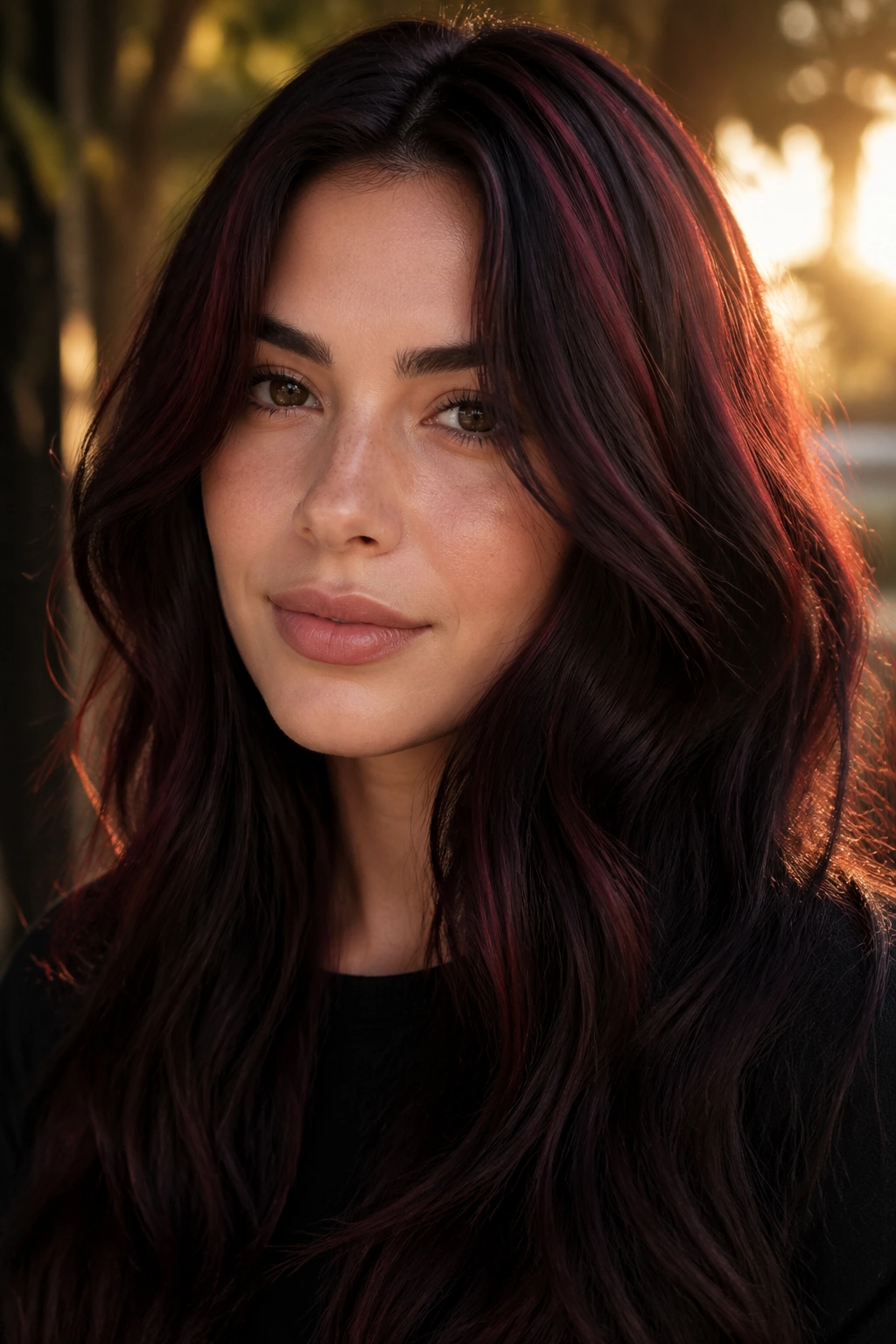
Dark cherry cola is rich, glossy, and slightly unexpected. It looks deep brown at first glance, then reveals a cherry-red shimmer when light hits it. That hidden color is what makes it fun. It’s dramatic in a quiet way.
Who It Flatters
This shade works especially well on dark bases because the cherry tone doesn’t need a huge amount of lift to show up. On warm skin, it gives a healthy flush near the face. On cool skin, the red-violet edge can look sharp and polished.
- Best for dark brown or black-brown hair.
- Looks strong in sunlight and soft indoors.
- Benefits from glosses that keep the red tone rich.
- Pairs well with blunt cuts, glossy waves, and sleek ponytails.
If you want a fall color that feels moody but still wearable at the office, this is a good pick. It’s not loud. It’s just deep enough to be interesting when you move.
26. Maple Brown Balayage
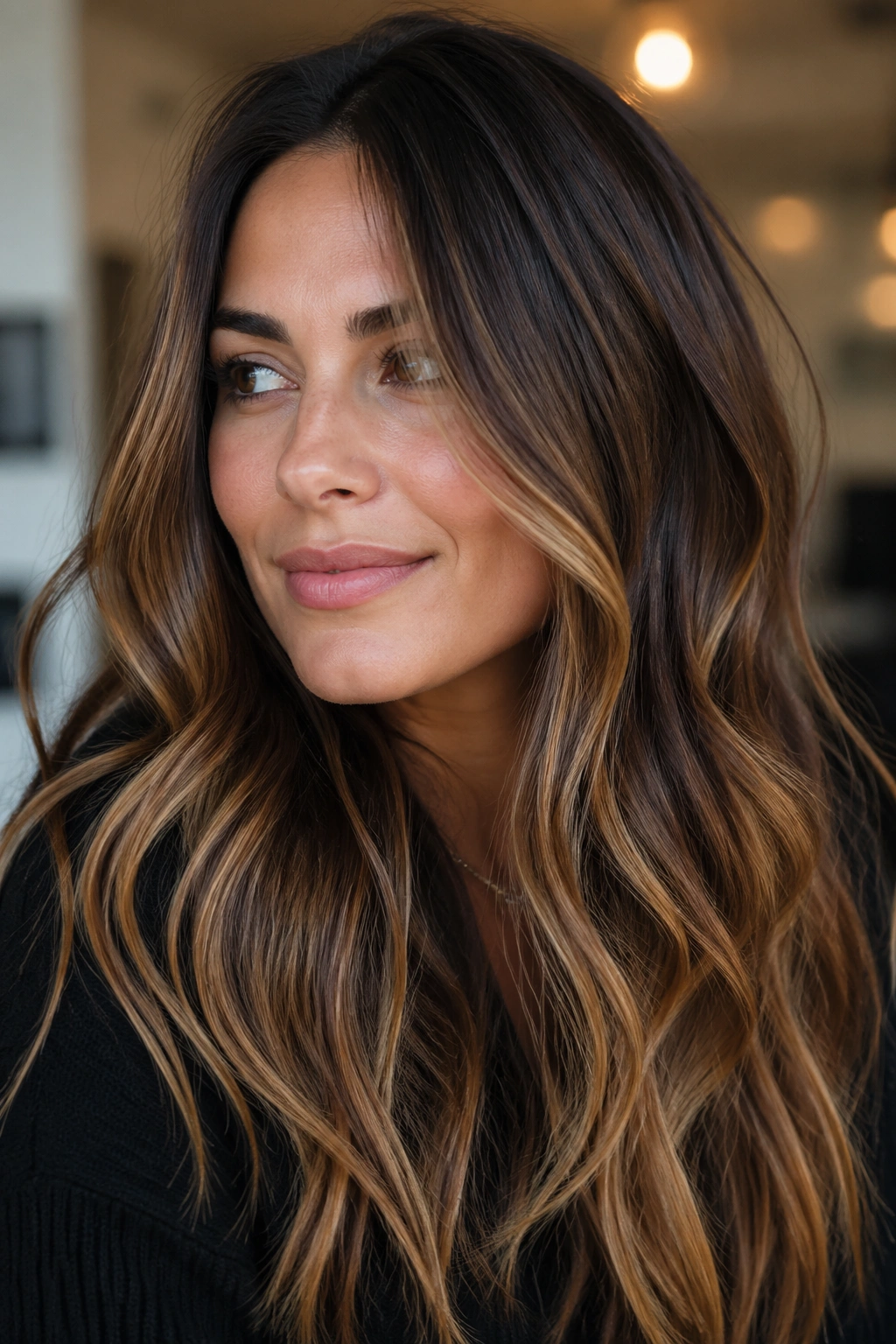
Maple brown balayage is the calmest, most wearable kind of warmth. It keeps a brunette base at the center and threads in maple-gold ribbons that show up most at the mid-lengths and ends. The result looks soft, dimensional, and easy to grow out, which is why it works so well for people who want a seasonal change without a full commitment.
A good version should not look streaky. That’s the whole point. The highlights need to be fine, brushed through the hair rather than stacked on top of it, and toned so the gold stays creamy instead of yellow. On wavy hair, the color shifts beautifully. On straight hair, it looks smoother and more polished.
If I had to hand one cozy fall shade to someone who wants warmth, shine, and low fuss, this would be high on the list. It feels like fall without forcing the issue.
