



Bridesmaid braids do a neat thing that loose curls often fail to manage: they stay in place after the bouquet toss, the hugging line, and the wind that always seems to show up right before outdoor photos. That alone earns them a spot in spring wedding parties, where hair has to look soft in the morning and still behave by dessert.
Spring gives you a little grace. The light is gentler, flowers are already doing half the decoration work, and a braid can lean romantic instead of severe. The trick is choosing a style that feels polished on purpose, not stiff, and that holds its shape through movement, heat from a packed dance floor, and a few too many bobby pins.
I’ve always liked braid-based bridesmaid hair because it forgives small differences. One person has fine hair, another has a thick wave, another needs everything tucked back for comfort — the right braid can make all of that look like part of the plan. If you’re matching a wedding party, the useful question is not which braid is prettiest in isolation; it’s which braid lets every head of hair look like it belongs in the same room.
That’s where the details matter: braid size, placement, how much you loosen the edges, and whether you leave a few front pieces loose or sweep everything back cleanly. The styles below cover the full range, from garden-soft to more formal, and the best ones are the ones that still look good after a long ceremony and a lot of photos.
1. Soft Dutch Crown Braid
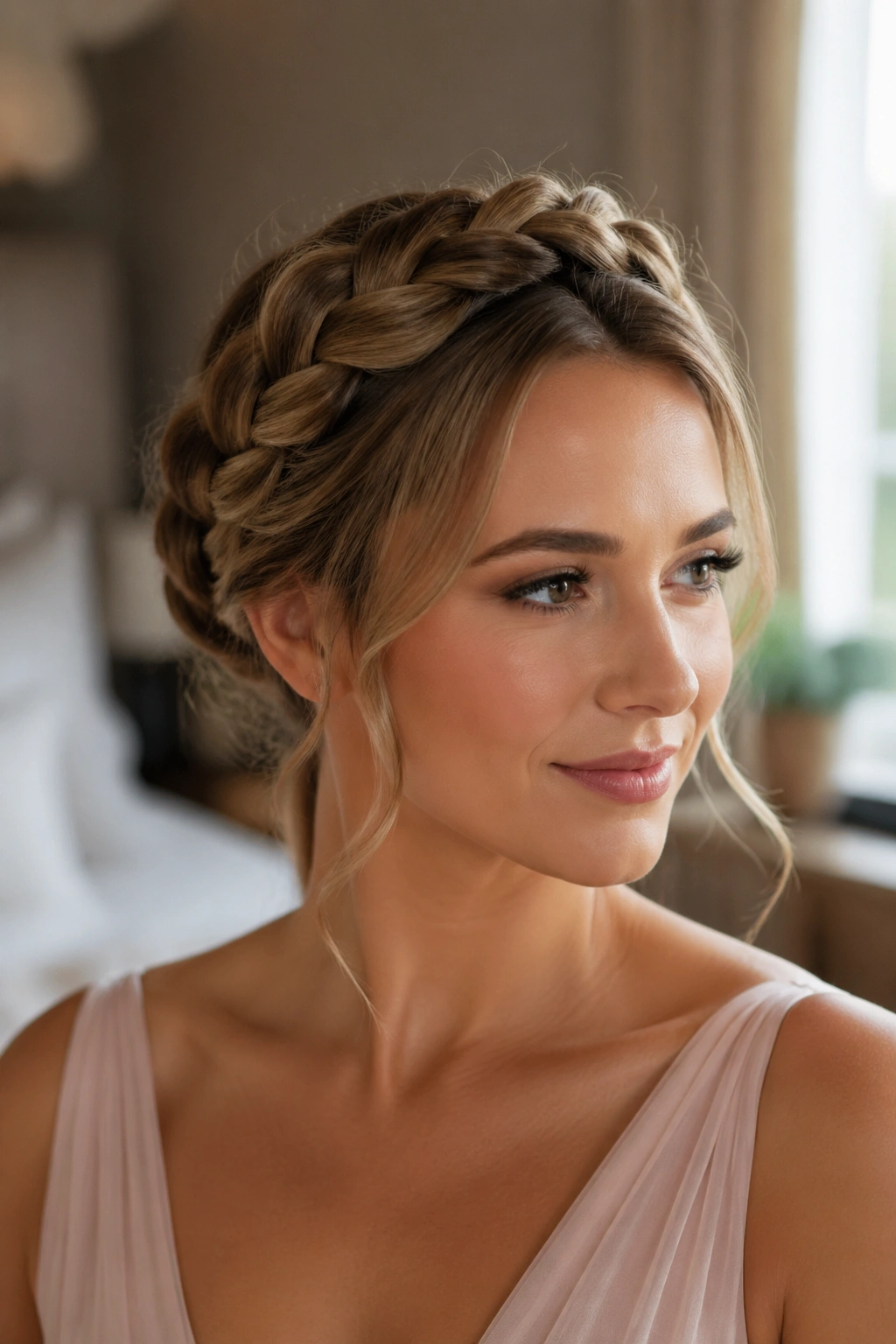
A soft Dutch crown braid is one of those styles that quietly fixes a lot of problems at once. It keeps hair off the face, gives the crown some lift, and makes even simple dresses look more finished.
Why It Flatters a Mixed Bridal Party
Because the braid sits close to the head, it works on medium and long hair without demanding the same thickness from everyone. A stylist can keep it narrow for fine hair or widen it into a fuller loop for thicker hair, and the result still reads as the same style.
- Best on hair with a little grip from mousse or dry shampoo
- Lovely with baby’s breath, pearl pins, or a small comb at the back
- Easier to keep neat than a full updo in breezy outdoor settings
Tip: Leave the braid slightly looser around the temples so the style feels soft instead of helmet-stiff.
I like this for bridesmaids in one-shoulder dresses or square necklines, because the braid frames the top of the outfit without stealing the show. If you want the whole party to look connected, keep the braid width similar across everyone and let the face-framing pieces vary a little by face shape.
2. Loose Fishtail Side Braid
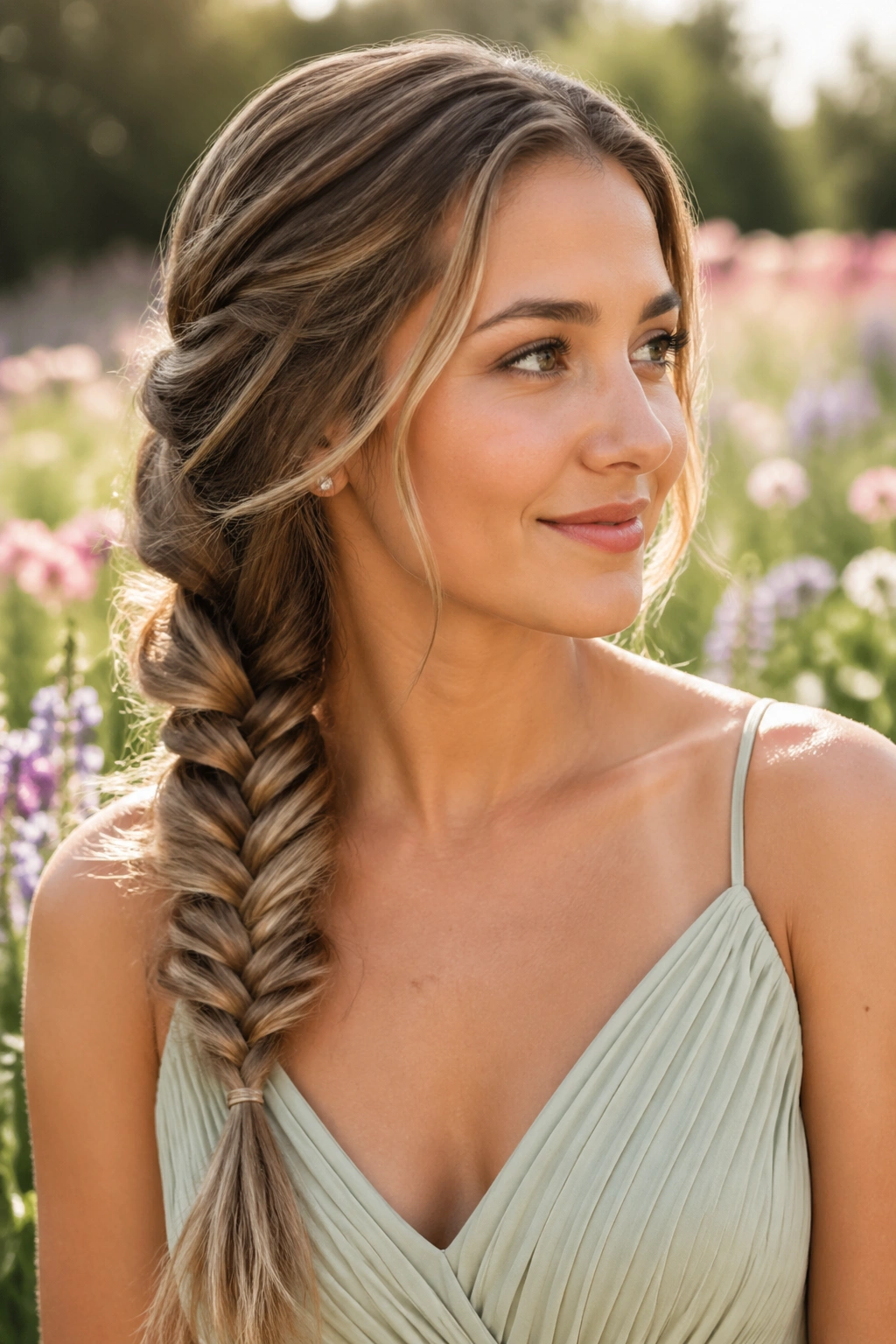
A loose fishtail side braid might be the easiest way to make a bridesmaid look dressed up fast. The pattern has enough detail to feel special, but the side placement keeps it relaxed, which matters when the setting has wildflowers, lawn chairs, or a reception that starts outside and ends under string lights.
The braid looks best when it starts just below one ear and drops over the shoulder. That keeps the neckline visible and gives earrings room to matter, which sounds small until you see the finished photos. A fishtail also holds up well when the hair has been softened with wave spray or a light curling iron pass first.
If the hair is slippery, mist it with texture spray before you start and cross the strands tighter than you think you need to. Then tug the outer loops open one by one; don’t yank the whole braid at once, or it turns fuzzy. A fishtail that’s too neat can feel hard. A fishtail with a few stray wisps at the hairline feels human in the best way.
3. Waterfall Half-Up Braid
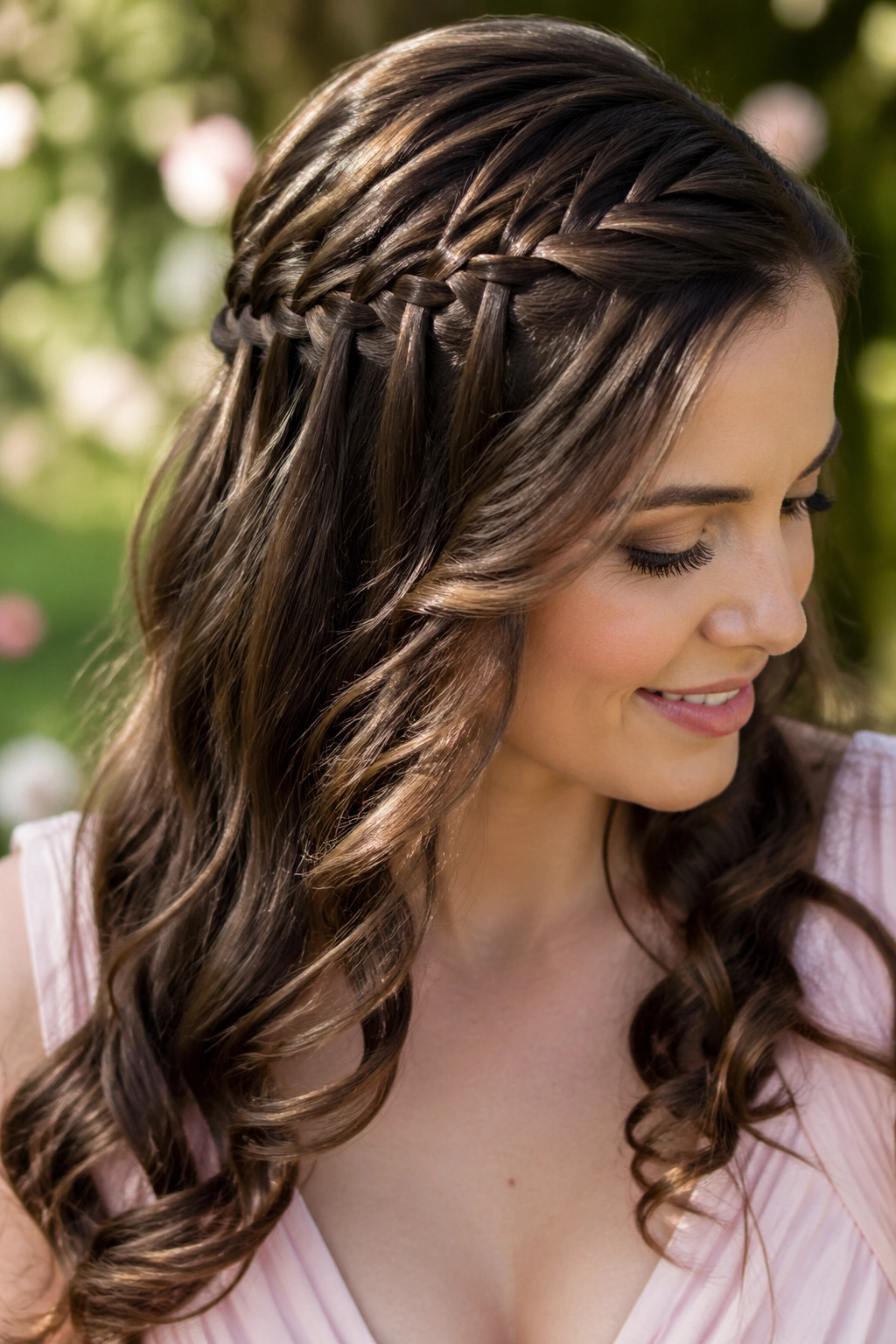
Why does a waterfall braid keep showing up in spring wedding parties? Because it lets the length stay loose while the top half stays controlled, which is a useful trick when the dress, bouquet, and veil all need room to breathe.
The braid itself is delicate, but the real value is practical. It keeps hair out of the eyes during ceremony readings and photos, and it works especially well when one bridesmaid has waist-length hair and another has a little less length to work with. Both can wear the same idea and still look like themselves.
How to Wear It
- Place the braid about 1 to 1½ inches back from the hairline.
- Keep the loose strands the same thickness so the braid does not look patchy.
- Add a soft wave to the hanging hair, or let natural curls do the work.
- Finish with 6 to 8 bobby pins hidden under a small floral clip.
If the wedding leans garden-heavy, this is one of the few styles that can handle a flower crown without turning crowded. The braid line becomes the frame, and the rest can stay soft.
4. Braided Low Bun with Face-Framing Pieces
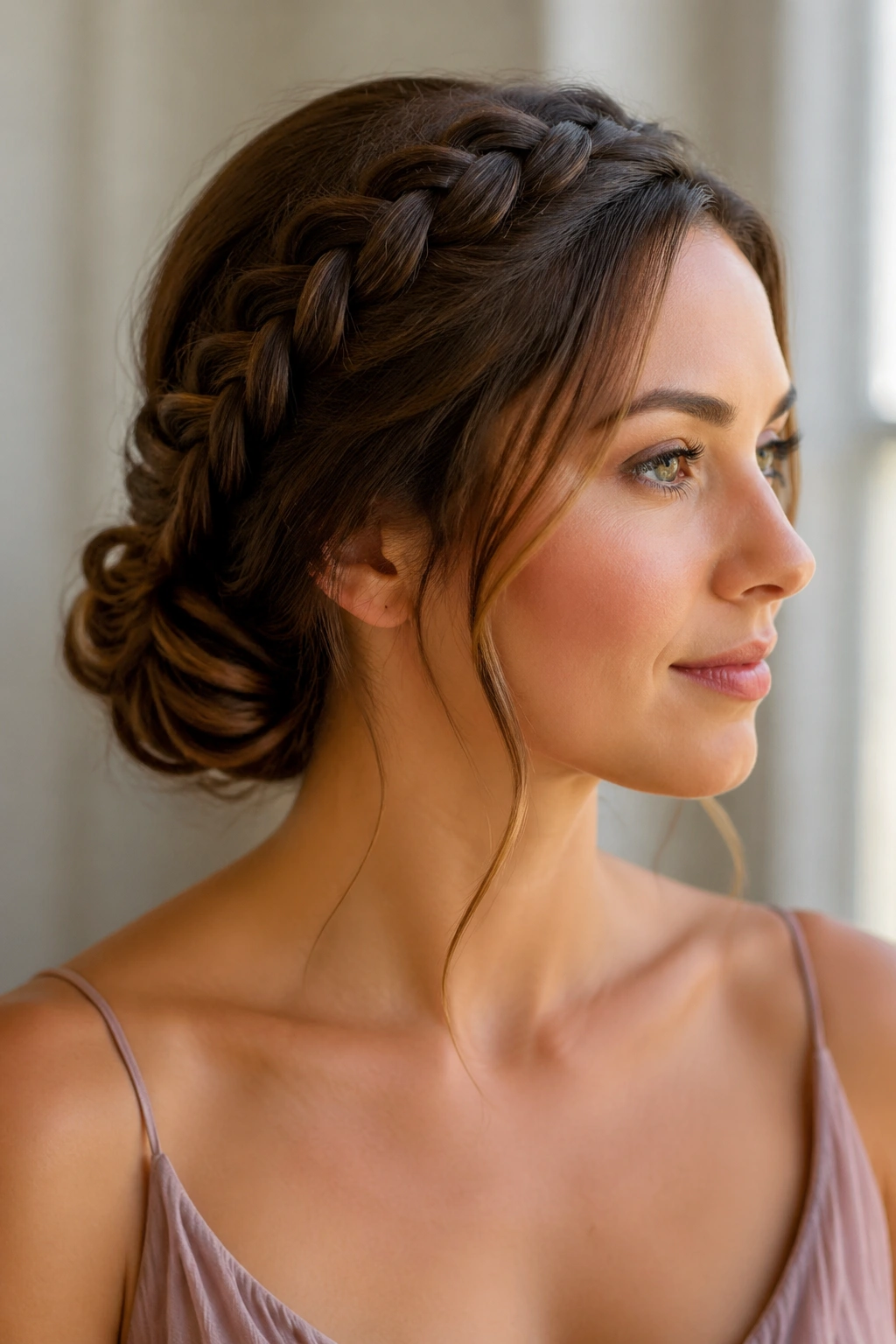
Picture the bridesmaid who needs her hair off her neck before noon and still wants it to look graceful in photos. A braided low bun solves that in one move.
The braid wraps into the bun and gives the base enough texture that the style doesn’t collapse into a plain knot. That matters on finer hair, where a slick bun can look flat by the time the first toast starts. Leave two thin pieces around the face, or one thicker bend if the dress has a higher neckline and needs a little softness near the jaw.
- Works well for warmer ceremonies or long church services
- Holds up under veils, pins, and small combs
- Keeps the back neat if the dress has detail there
A low bun like this also helps when the bridal party wants the same overall shape but different front pieces. One person can wear a deep side part, another can keep a center part, and the bun still ties the group together.
5. Halo Braid with Soft Ends
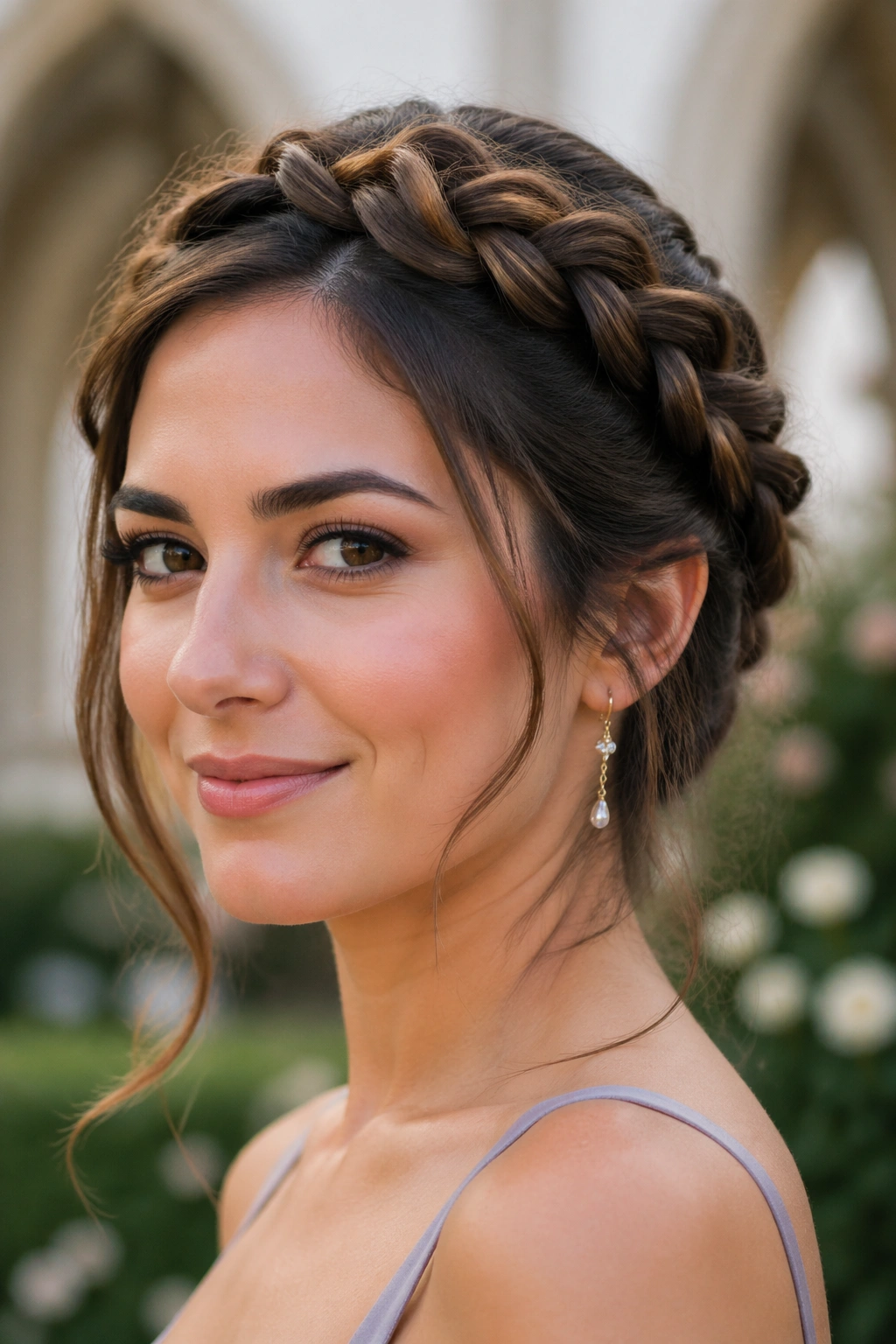
A halo braid has a way of looking formal without feeling rigid, and that’s why it keeps making sense for spring wedding hair. It circles the head like a built-in accessory, then leaves the rest of the outfit free to breathe.
What I like most is the balance between structure and softness. The braid can be tight enough to stay neat through photos, but the edges should be lightly loosened so it doesn’t sit flat against the scalp like a cap. Tiny details matter here: a little lift at the crown, a small bend at the ends, and a few face-framing strands that are tucked back just enough to keep the face open.
It works especially well with lace, satin, and dresses that have a lot going on at the bodice. The braid keeps the hair from competing with the neckline. It also makes earrings and necklines easier to see, which is one of those small things people notice in the finished album even if they can’t name why.
A halo braid is not the fastest style on the list, and that’s fair. It asks for patience. Still, when it’s done well, it has a calm, finished look that sits beautifully in a spring setting.
6. Rope Braid Chignon
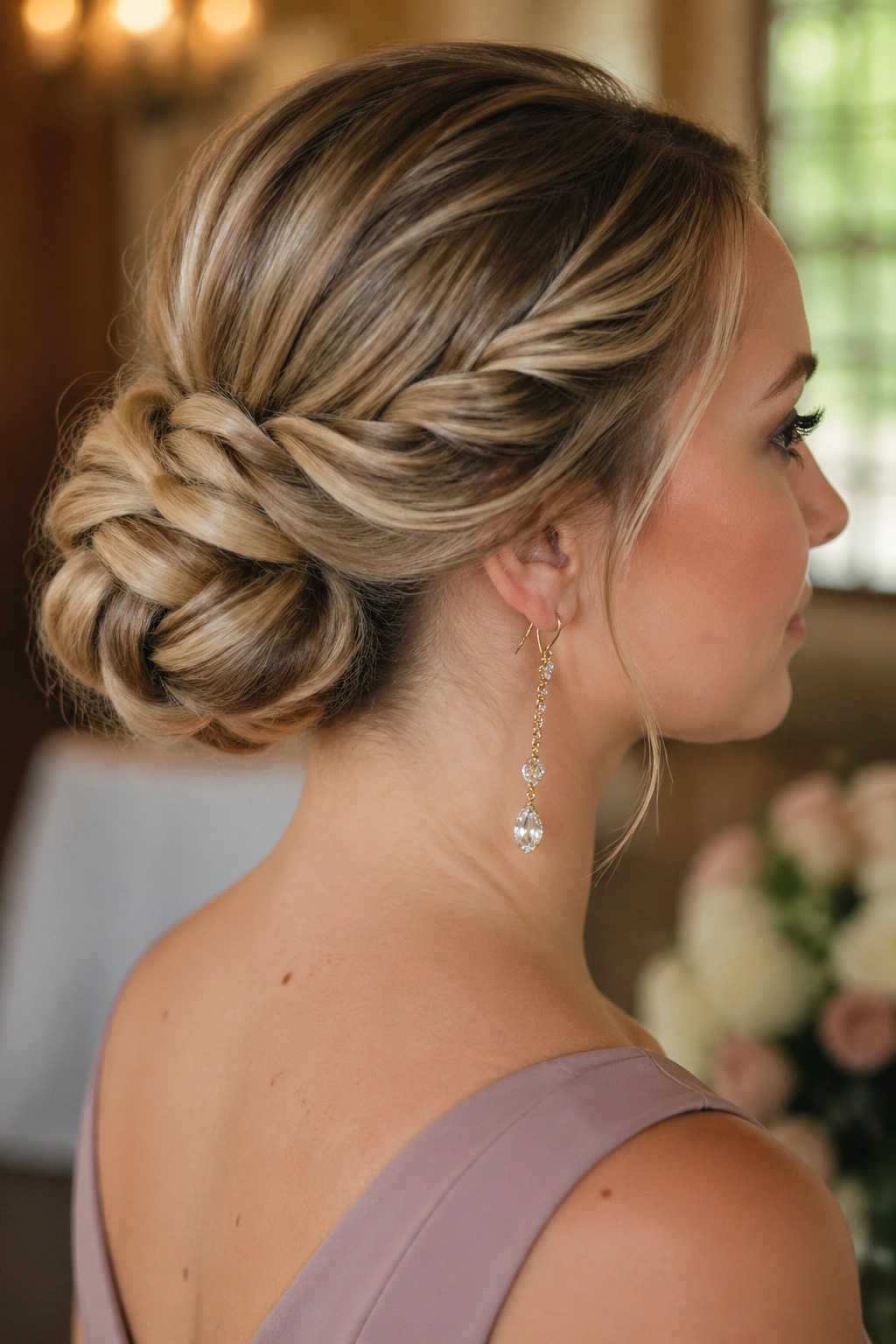
Unlike a traditional three-strand bun, a rope braid chignon looks cleaner on glossy hair and comes together faster once your hands know the motion. It twists instead of weaving, so the texture feels sleeker and a little more modern.
That makes it a strong pick for bridesmaids in high-neck dresses, tailored jumpsuits, or anything with strong lines at the shoulders. The style keeps the hair contained, but the rope twist keeps it from looking boring. I’d reach for it when the bride wants the party to look coordinated and a touch polished, not overly romantic.
This one is especially helpful on medium-thick hair that tends to puff up in humidity. The rope sections hold together better than a loose braid, and the chignon at the back can be pinned low and close to the head. If you want a softer finish, loosen just the outer twists near the ears and leave the bun a little undone at the edges.
Simple. Clean. Not fussy.
7. Double French Braids into a Low Ponytail
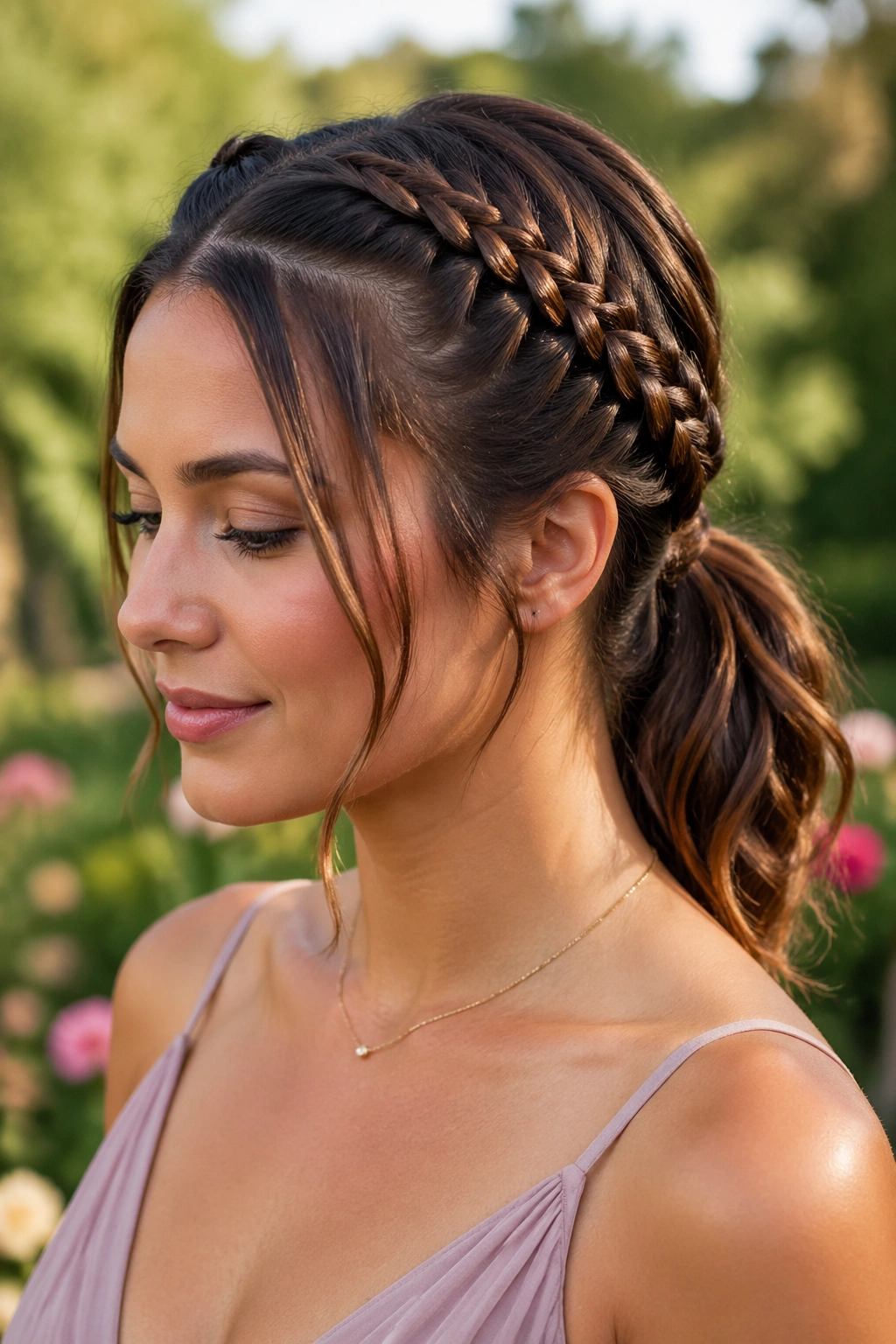
Two French braids feeding into a low ponytail give you the neatness of an updo with a little more movement at the ends. That matters if the bridal party is walking on grass, standing for a long ceremony, or dancing before the sun goes down.
Best For a More Active Wedding Day
This style works because the braids keep the top half secure while the ponytail keeps the shape from feeling too severe. On thick hair, it can look full and athletic in a good way. On finer hair, a little teasing at the crown and a soft wave in the ponytail help it feel less flat.
- Great for long hair that needs control at the roots
- Easy to match across bridesmaids with different textures
- Looks good with satin ribbons tied around the base
- Stays comfortable for a full day of wear
The ponytail doesn’t have to sit high. Keep it low and a little loose if the dresses are formal. Pull it tighter if the group needs a more modern line. Either way, the two braids give the style enough shape that it does not disappear in photos.
8. Messy Boho Braid with Ribbon
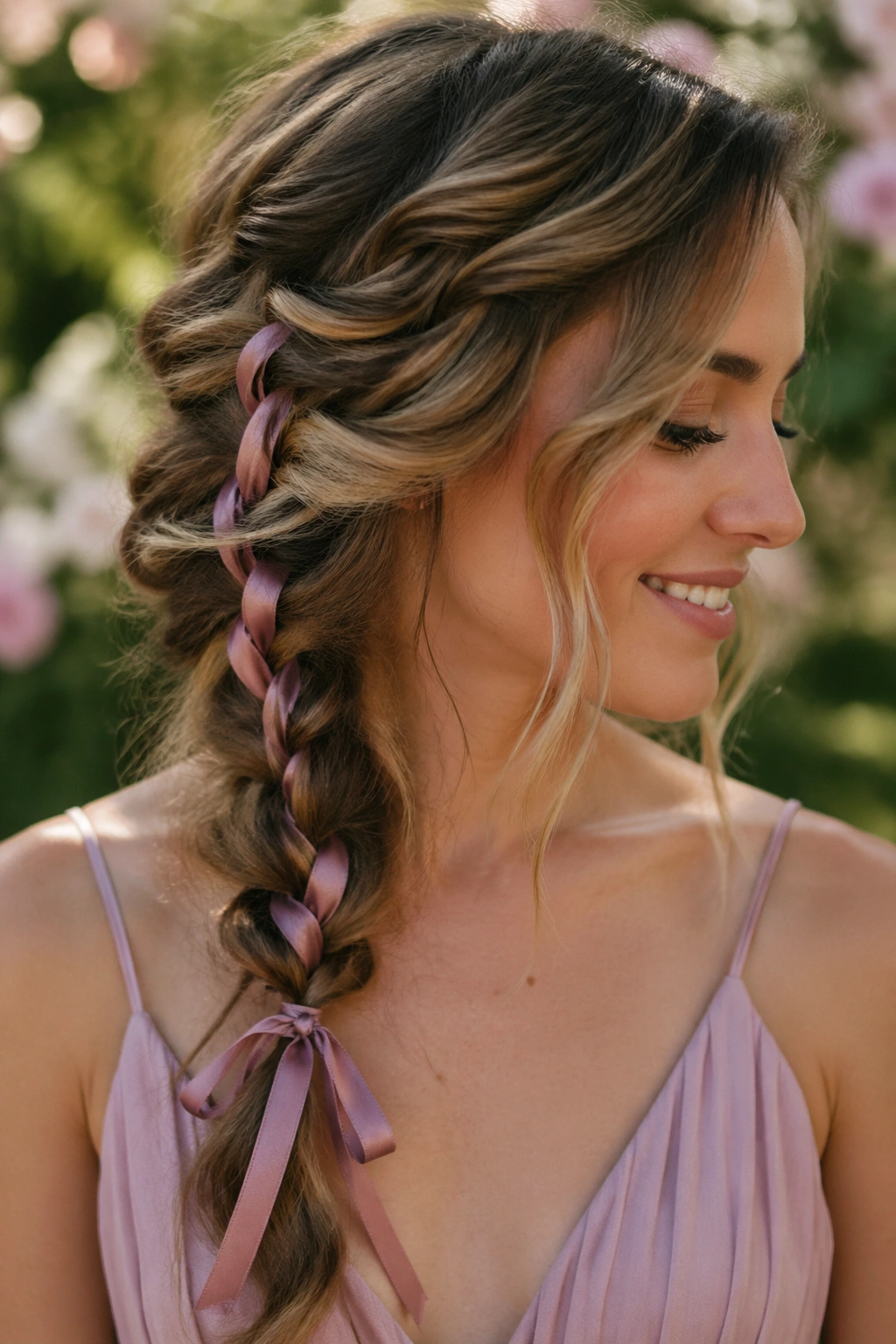
A boho braid with ribbon is one of the quickest ways to make bridesmaid hair feel spring-ready. The ribbon changes the mood immediately. It can soften a braid that might otherwise look too casual, and it gives you a color cue that ties the whole wedding party together.
The best ribbons are narrow and matte, not stiff or shiny like gift wrap. Satin works if the rest of the styling is smooth, but linen or grosgrain feels easier when the dress code leans relaxed. Thread the ribbon through a loose braid, then let the tails trail just enough to move when the bridesmaid walks. That tiny motion matters more than people think.
This style looks best when the braid is intentionally imperfect. Pull it out a little, then stop. Leave a few shorter pieces near the face. If the hair is very long, you can wrap the ribbon once around the bottom and let it hang. If it’s shoulder length, a half-braid with ribbon still gives the right idea without trying to force length that isn’t there.
9. Mermaid Braid with Soft Waves
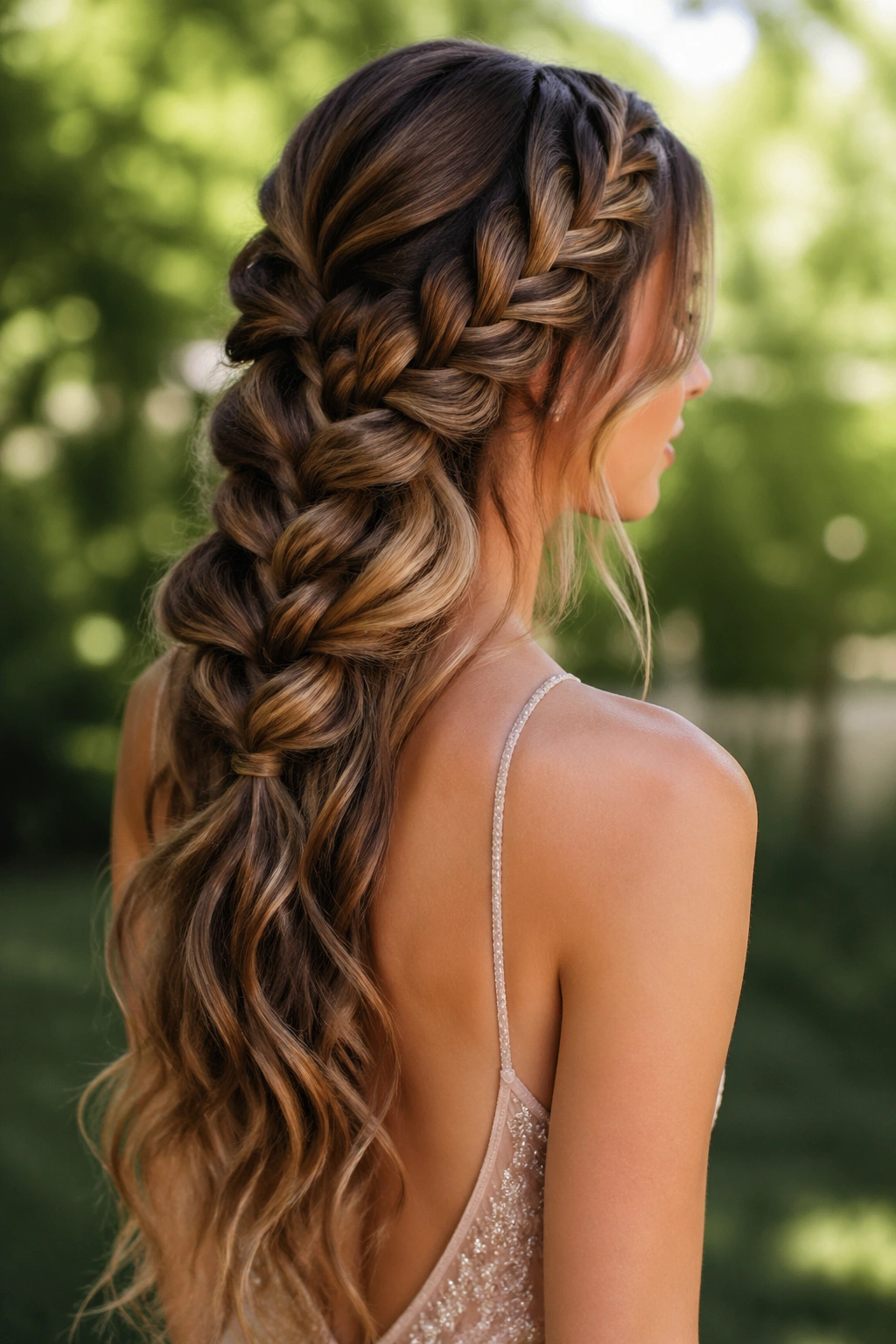
What makes a mermaid braid different from a regular loose braid? Mostly density. The sections are pulled wide and full, so the braid looks plush and soft instead of tight and tidy.
That’s why it’s such a good match for spring wedding parties. The braid looks relaxed from a distance, but up close it has enough texture to feel special. It also works well with long waves underneath, especially if the bridesmaids are wearing dresses with open backs or simple necklines that need a little hair detail to balance them.
How to Keep It From Collapsing
- Start with second-day hair or use dry shampoo at the roots.
- Curl the loose lengths first, then braid.
- Secure each elastic tightly before loosening the braid.
- Pancake the outer loops slowly, not all at once.
A mermaid braid can look too big if the sections are pulled out carelessly, so stop when the braid feels full, not fluffy in a frizzy way. The goal is soft volume. Not a cotton ball.
10. Pull-Through Braid for Extra Volume
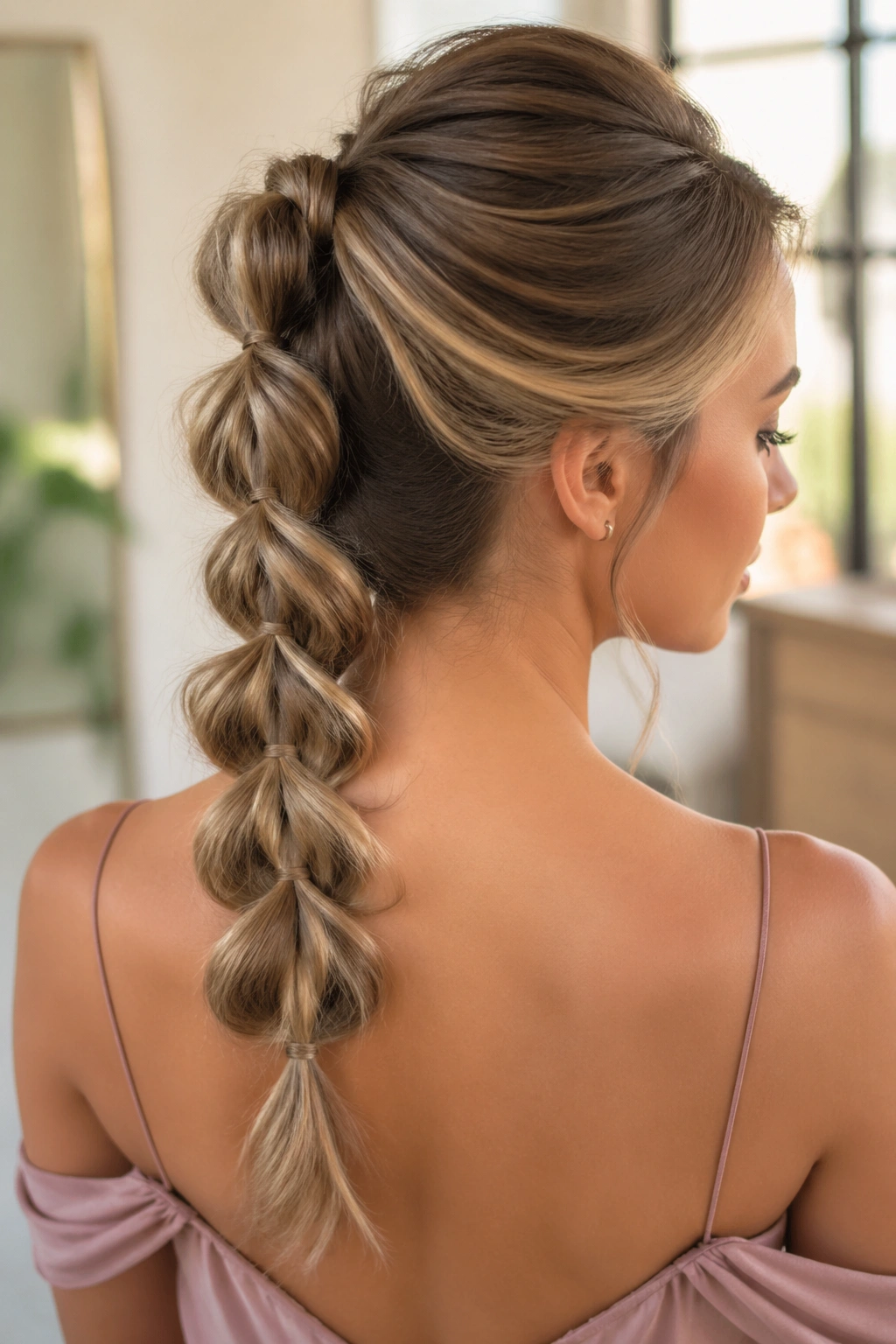
A pull-through braid is the one I’d suggest when someone says, “My hair looks too fine for braid styles.” It creates the illusion of a thick braid by stacking ponytails into a pattern that reads as full and dimensional.
That makes it a smart choice for bridesmaid hair in group settings, because it looks consistent on different hair types. Fine hair can finally look like it has some weight, and thick hair can be controlled without losing shape. It’s also one of the easier ways to get a dramatic braid without needing the hands of a competition stylist.
The ponytails should be small and even. Uneven sections make the braid wobble. Use clear elastics or ones that match the hair color, then tug gently at each loop to widen it. Once the braid is set, mist it lightly so the sections stay where you put them. A pull-through braid looks luxurious from a few feet away, but the magic is really in the tidy little elastics hidden inside.
11. Lace Braid Half-Up Style
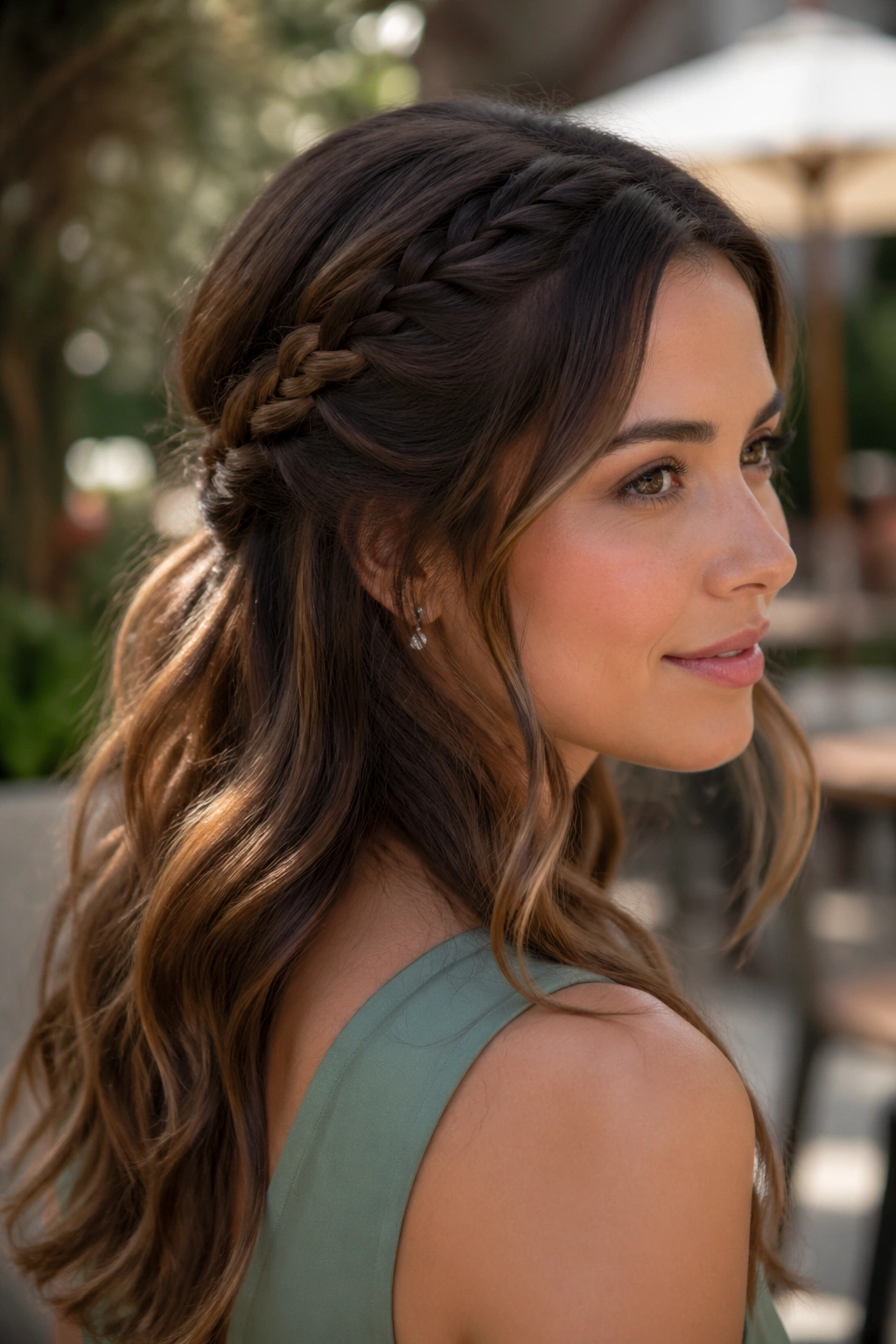
A lace braid half-up style has the kind of softness that fits a spring ceremony without asking for too much fuss. It sweeps hair back from one side, then lets the rest fall loose, which is useful when the outfit or bouquet already has a lot of visual weight.
What makes this braid worth considering is how well it frames the face. The braid line can start near the temple and curve toward the back, which gives a natural lift without needing teasing at the crown. On straight hair, it adds needed structure. On wavy hair, it works like a neat little path through the texture.
I also like it for mixed bridal parties because it can be worn on different sides and still feel coordinated. One bridesmaid can wear the braid left to right, another right to left, and the styling still looks related if the rest of the finish is kept the same. Use a small pin or flower behind the ear if you want one shared detail across the group. Tiny, not loud.
12. Wrapped-Basis Braided Ponytail
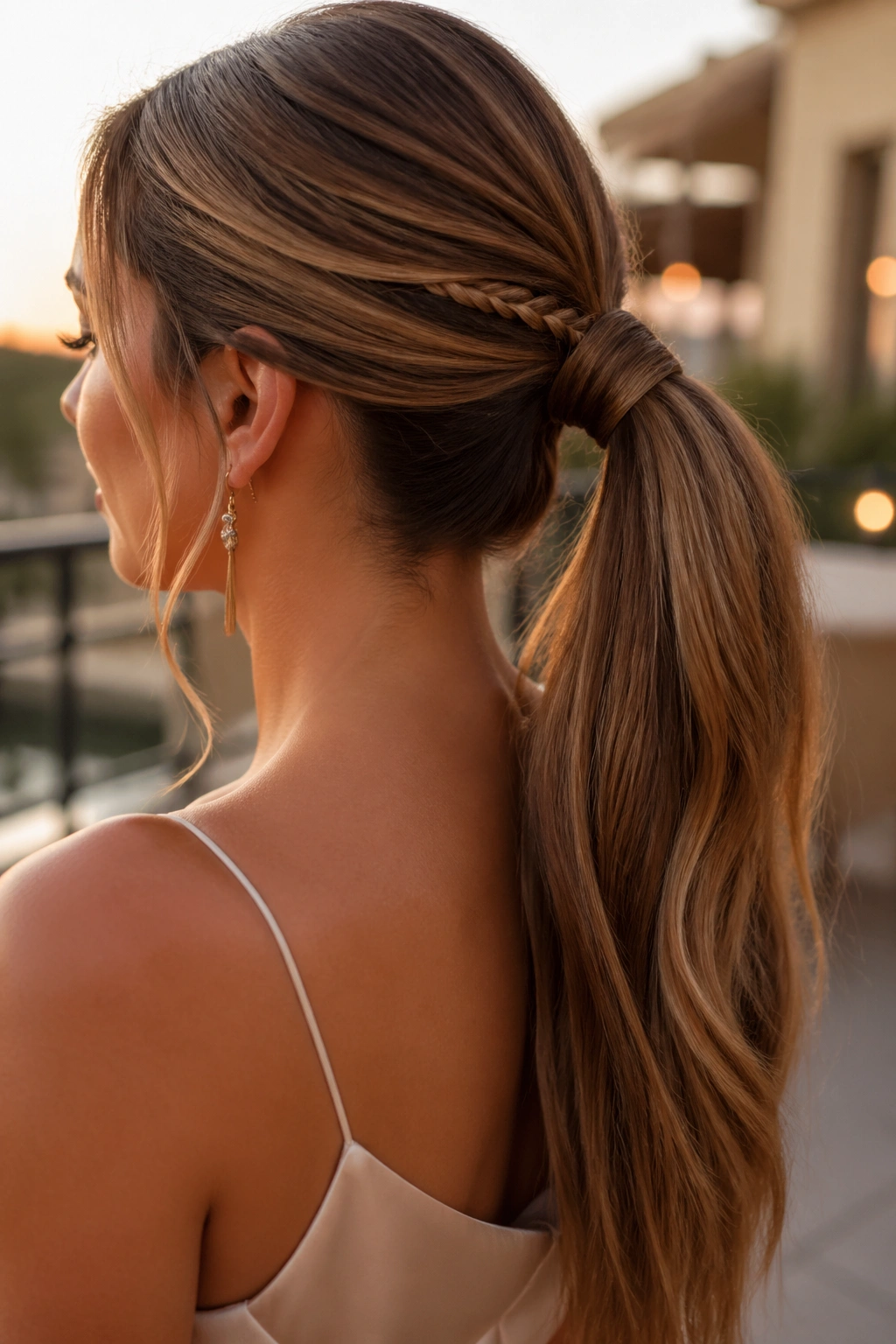
Compared with a standard ponytail, a braided ponytail with a wrapped base feels finished from every angle. The braid gives the upper section shape, and the wrapped elastic hides the part that usually looks like an afterthought.
This is a good option when the bridal party wants something clean that still moves well. It sits comfortably under veils, doesn’t crowd the shoulders, and lets the length swing without getting tangled into the dress fabric. If the bridesmaids are wearing bold earrings, this style keeps the hair back enough to let them show.
A small braid at the base of the ponytail makes the whole thing feel deliberate. I’d keep the ponytail low or mid-height rather than high, unless the dress is very simple. High ponytails can tip the mood toward sporty. A lower placement keeps it wedding-appropriate and a little softer around the neck.
Easy to wear. Easy to photograph. Hard to mess up when the elastic is hidden properly.
13. Four-Strand Braid for Extra Texture
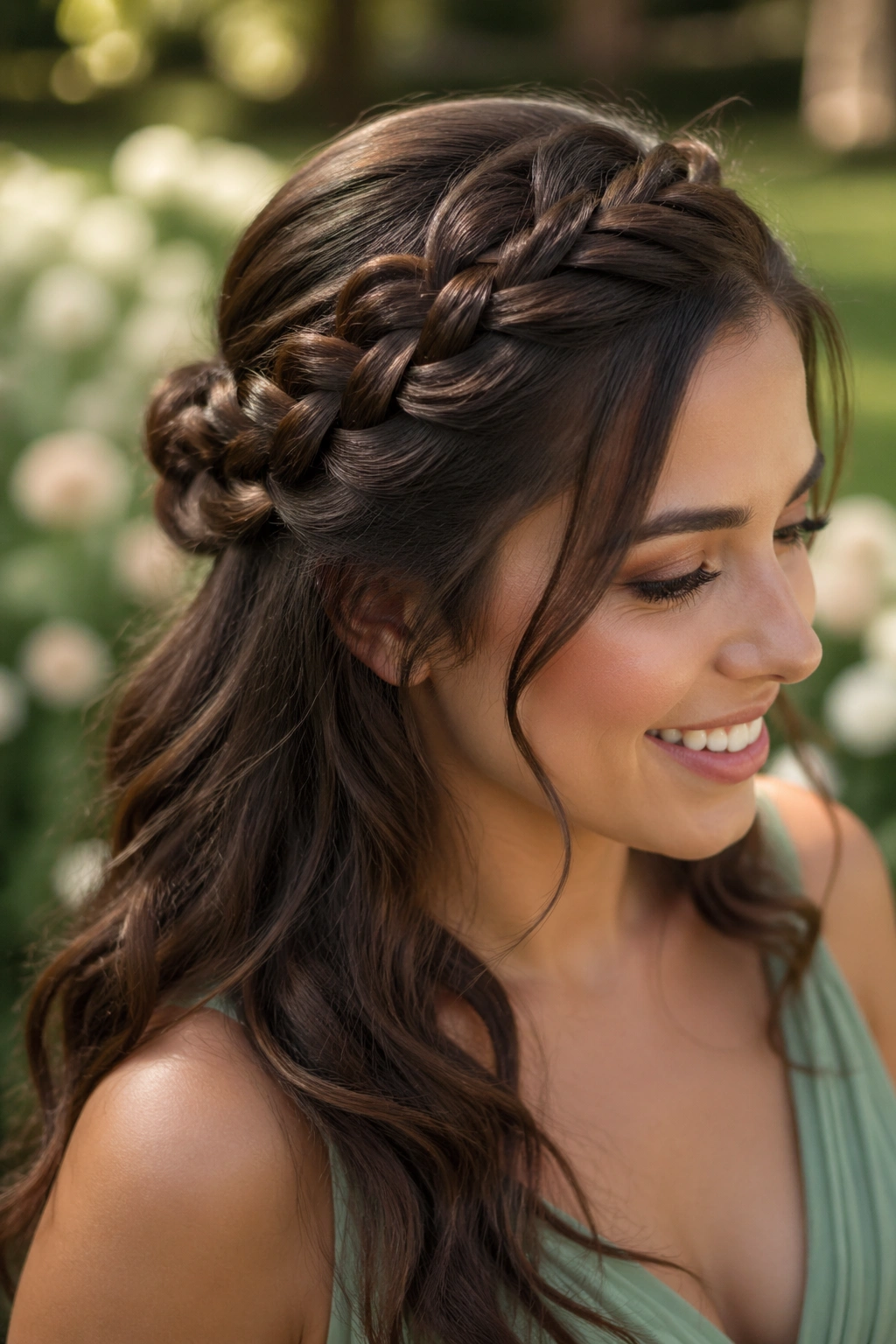
A four-strand braid gives you a richer surface than a regular three-strand braid, and that extra structure matters when the dress code asks for something more detailed. From a distance, it looks intricate. Up close, it still feels soft enough for a spring celebration.
When to Choose It
This braid shines on thick hair, especially hair that already has some natural wave or bend. The extra strand helps distribute the bulk, so the braid feels more woven than heavy. It can be worn down, over one shoulder, or tucked into a half-up shape if the bridal party wants more movement.
- Best for medium to long hair with some grip
- Looks especially nice with subtle highlights or dimension
- Needs a little patience the first time you do it
- Holds its pattern well once secured tightly at the top
The only catch is that it asks for a bit more time. Not much, but enough to matter when you’re doing several bridesmaids in a row. Still, if the stylist can keep the tension even, the four-strand braid gives a beautiful texture that a simpler braid cannot quite fake.
14. Milkmaid Braids with Loose Tendrils
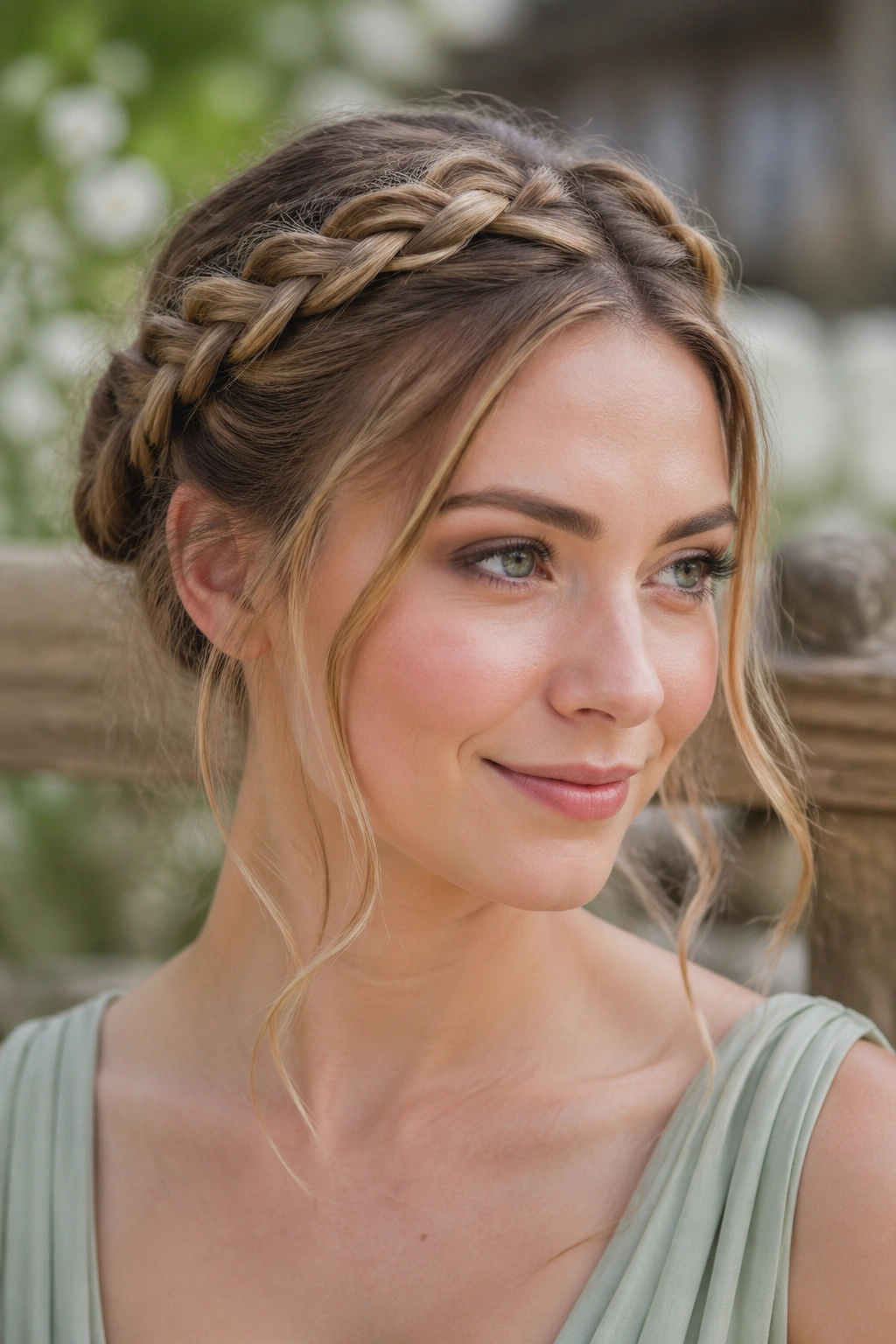
Milkmaid braids carry a sweet, old-fashioned feeling, but they don’t have to look costume-like. That’s the key. Keep them soft, and they feel right at home in a spring wedding party.
They work especially well when the bride wants a slightly rustic mood, or when the bridesmaids are wearing dresses with simple necklines and airy fabrics. The braids sit over the head like a frame, which gives the face a clear shape and keeps the hair from competing with the dress. A few loose tendrils near the temples stop the style from getting too severe.
If the hair is very long, pin the braid ends discreetly under the other side so the shape stays smooth. If the hair is only mid-length, use a bit of padding or hidden pins at the back to build the loop without making it bulky. This is one of those styles where the back matters more than people expect. The front sells the idea. The back keeps it believable.
15. Side-Swept French Braid
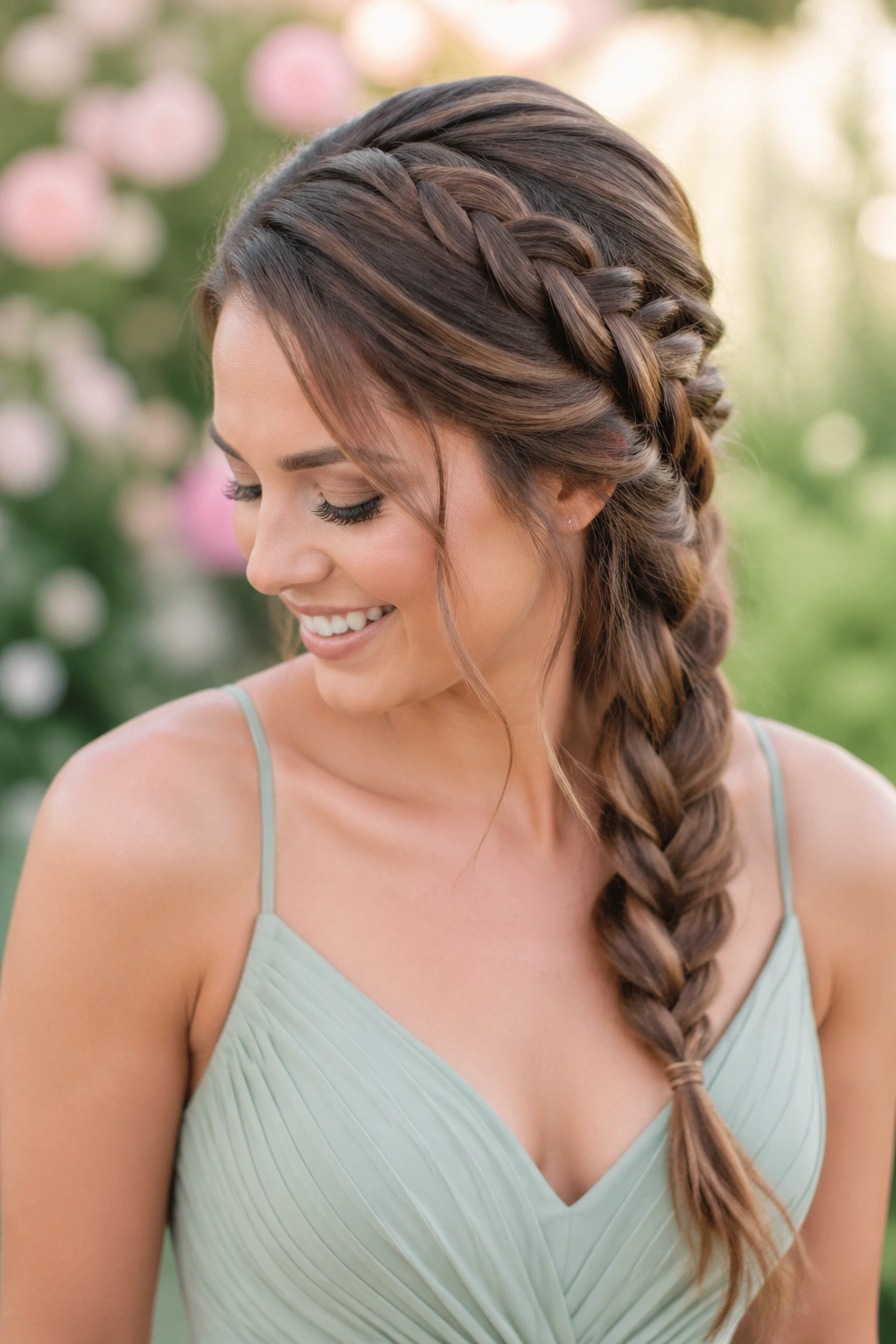
Why does a side-swept French braid look so good with spring dresses? Because it leaves the neckline open while still giving the hair real shape. That combination is hard to beat.
The braid should begin on the heavier side of the part and travel diagonally toward the opposite shoulder. That diagonal line does a lot of quiet work. It lengthens the neck, softens the face, and keeps the style from reading too severe. If the bridesmaid has a dress with straps, the braid can sit just outside the strap line and make the whole look feel balanced.
Placement Notes That Matter
- Start the braid 2 to 3 inches back from the hairline.
- Keep the first weave snug so the top doesn’t puff up later.
- Loosen only the outer edges once the braid is secured.
- Finish with one small curl at the end, or leave the tail straight for contrast.
I reach for this style when the bridal party wants a braid that looks classic but not fussy. It has enough shape to be formal, and enough softness to sit happily next to flowers.
16. Twist-Into-Braid Updo
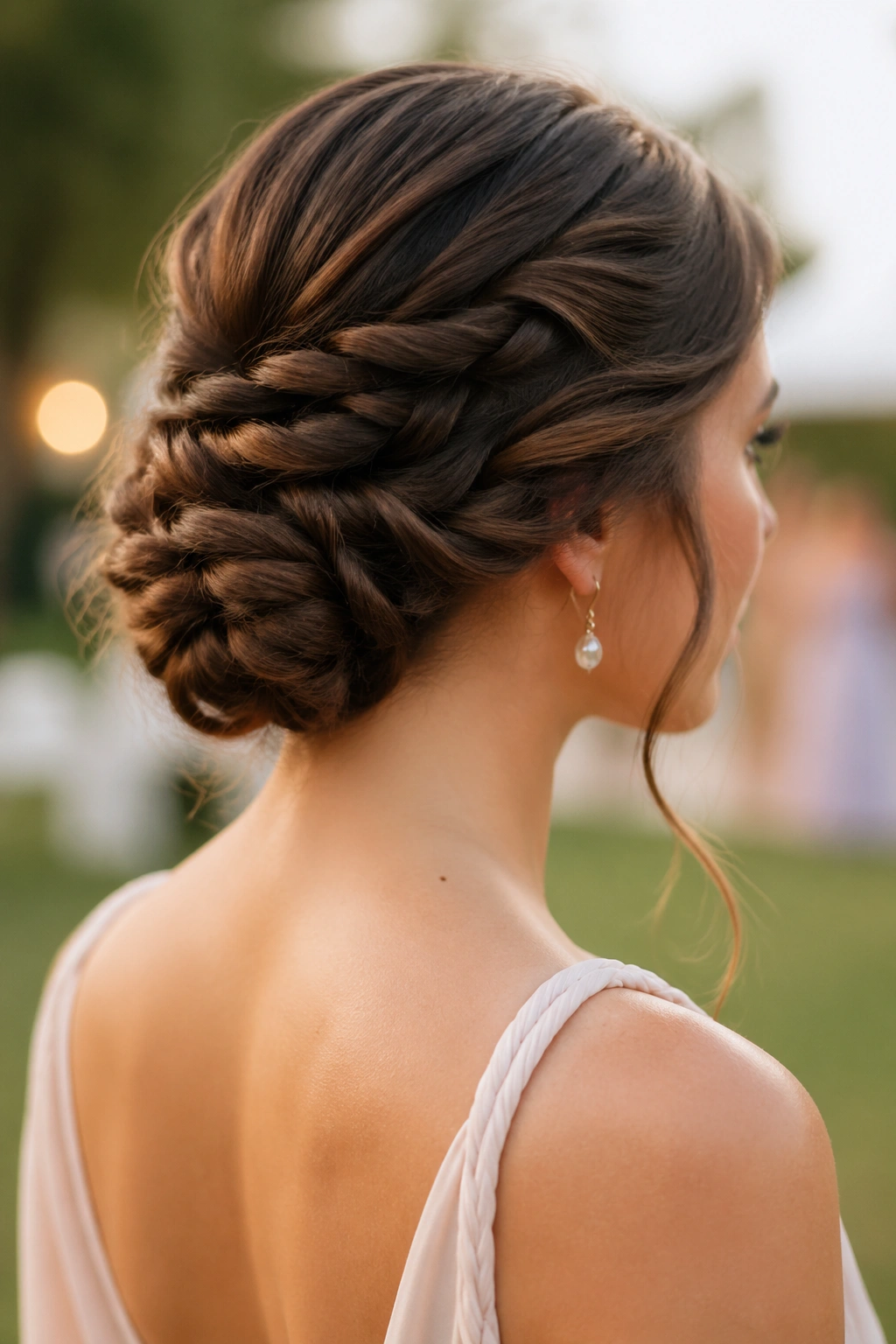
A twist-into-braid updo is what you choose when the hair needs to be pinned down but still look like it had some thought behind it. The twists build a base, and the braid finishes the shape with texture instead of a hard shell of pins.
This style behaves well on slippery hair, which is more useful than it sounds. Some textures simply resist holding a braid on their own, and the twists give the pins more to grip. I like it for bridesmaids who hate hair falling into the neck during warm outdoor vows. The hair stays up, the nape stays clear, and the style can still be softened around the hairline.
A few pieces can be left out near the ears if the group wants a gentler finish. If not, pull the twists tighter and keep the braid compact. The updo can sit low and elegant, or a little higher if the dress has volume below the shoulders. Either way, it looks sturdier than a loose bun and less expected than a plain braid tucked away at the back.
17. Braided Top Knot
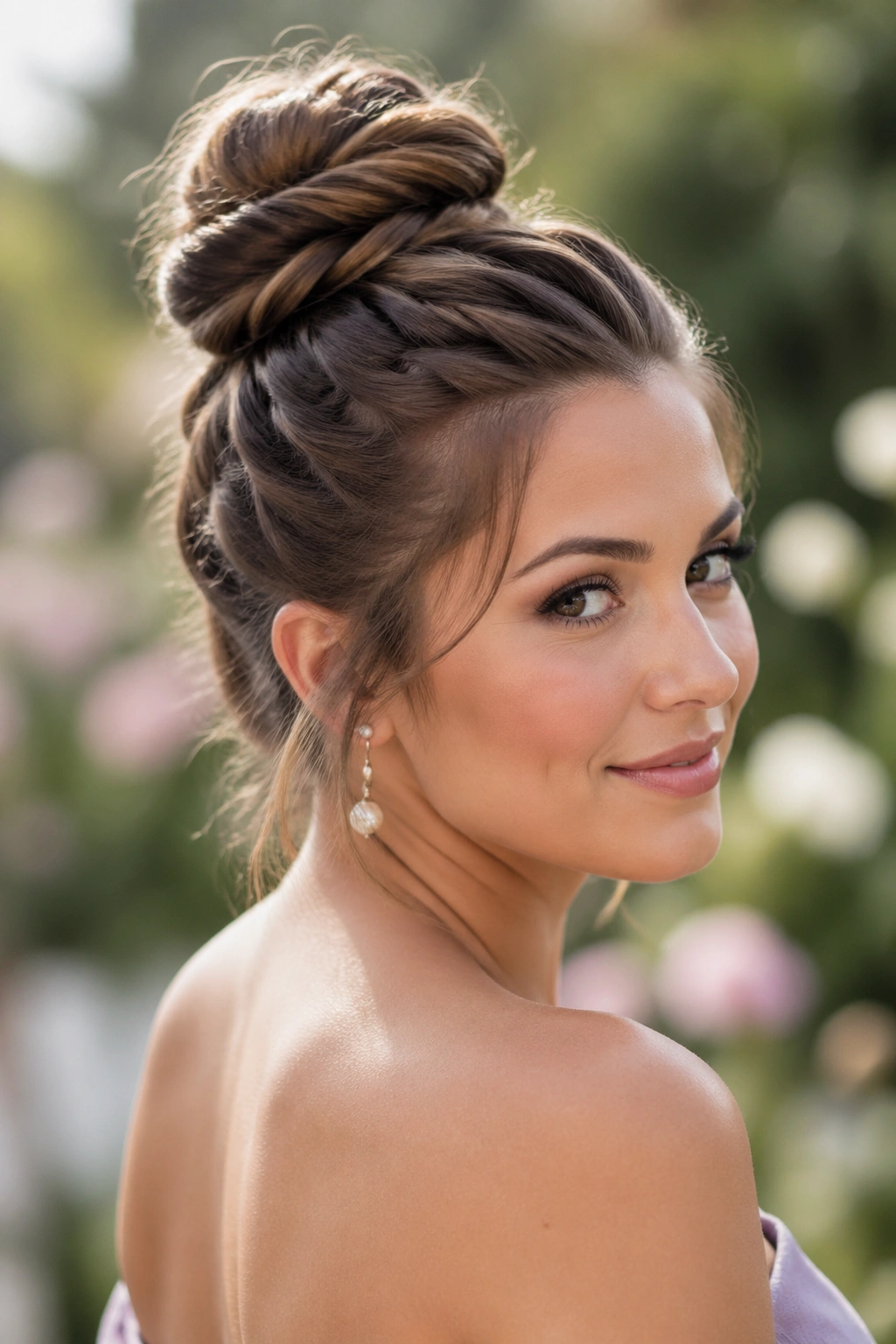
A braided top knot brings a little edge to a wedding party, which can be a good thing when the dresses are clean and the flowers are soft. The braid gives the bun more texture, and the top placement keeps everything lifted away from the neck.
This style works especially well with halter tops, high necks, or dresses with detailed backs. The hair stays out of the way, so the clothing can do its job. It also gives the face a bit of height, which is helpful in photos when the bridal party is standing shoulder to shoulder and the camera angle isn’t doing anyone favors.
What I like most is the way it shifts tone. Tight and polished can look too formal. Loose and fluffy can look unfinished. A braided top knot sits between those two moods if the braid is wrapped carefully and the bun is pinned so the edges don’t stick out. That middle ground is often where the best bridesmaid hair lives. Not stiff. Not messy. Just controlled enough.
18. Infinity Braid Accent
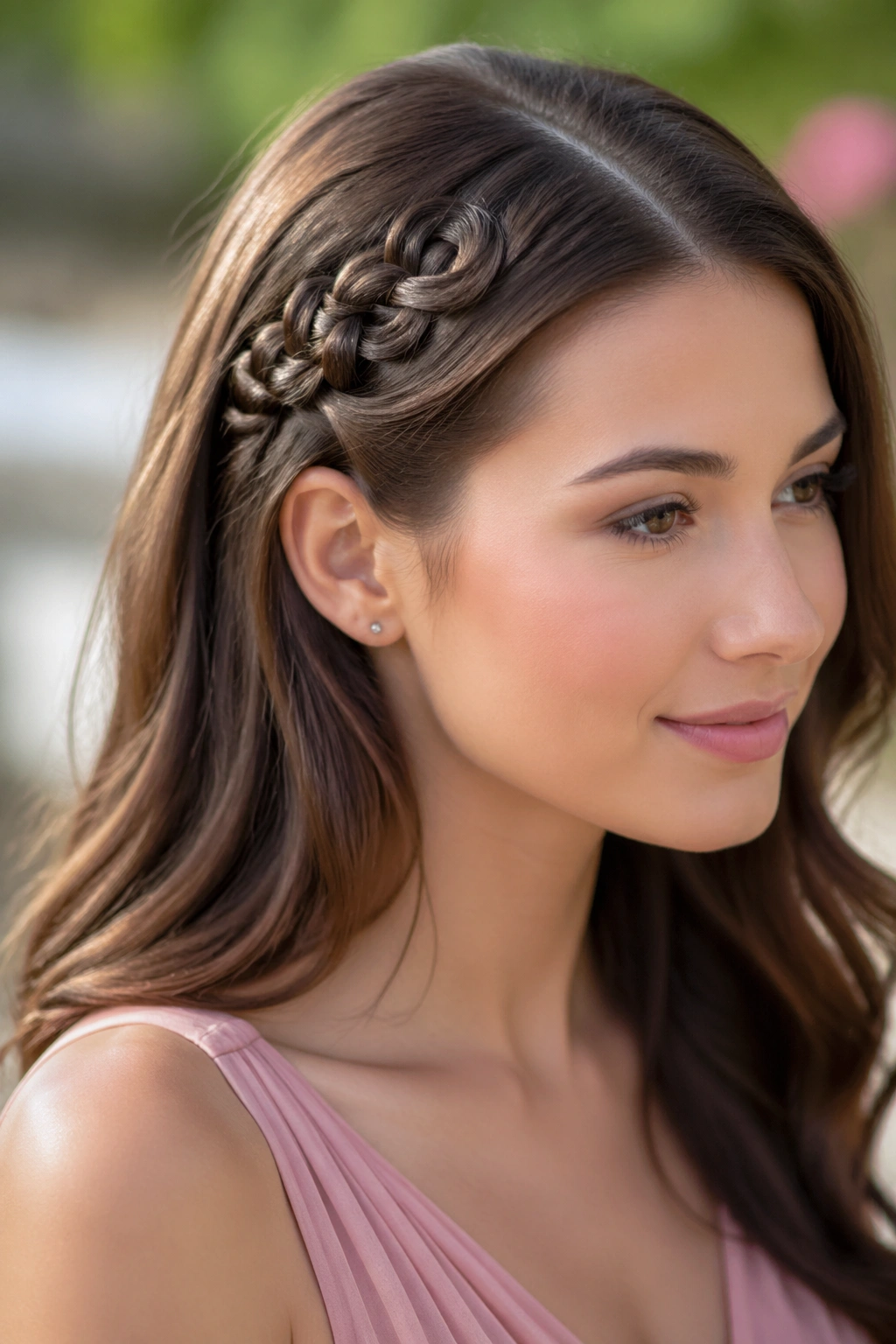
An infinity braid accent is not the biggest braid in the room, and that’s exactly why it works. It gives one section of hair a small, looping detail that people notice when they get close, then leaves the rest of the style simple.
Compared with a full braid, the infinity pattern feels more like ornament than structure. That makes it a smart choice for bridesmaids who are wearing sleek dresses or want one interesting detail without turning the whole head into a braid demo. It can sit along a side part, feed into a ponytail, or hide inside a half-up style where the back of the head needs a little more life.
This is the style I’d use when the bride wants the group to look related, but not identical. One braid accent on each bridesmaid, placed in the same zone, can create a shared thread without forcing everyone into the same haircut silhouette. It’s subtle, but not empty. And in a crowded spring wedding album, subtle often beats loud.
19. Pancaked Braid with Soft Volume
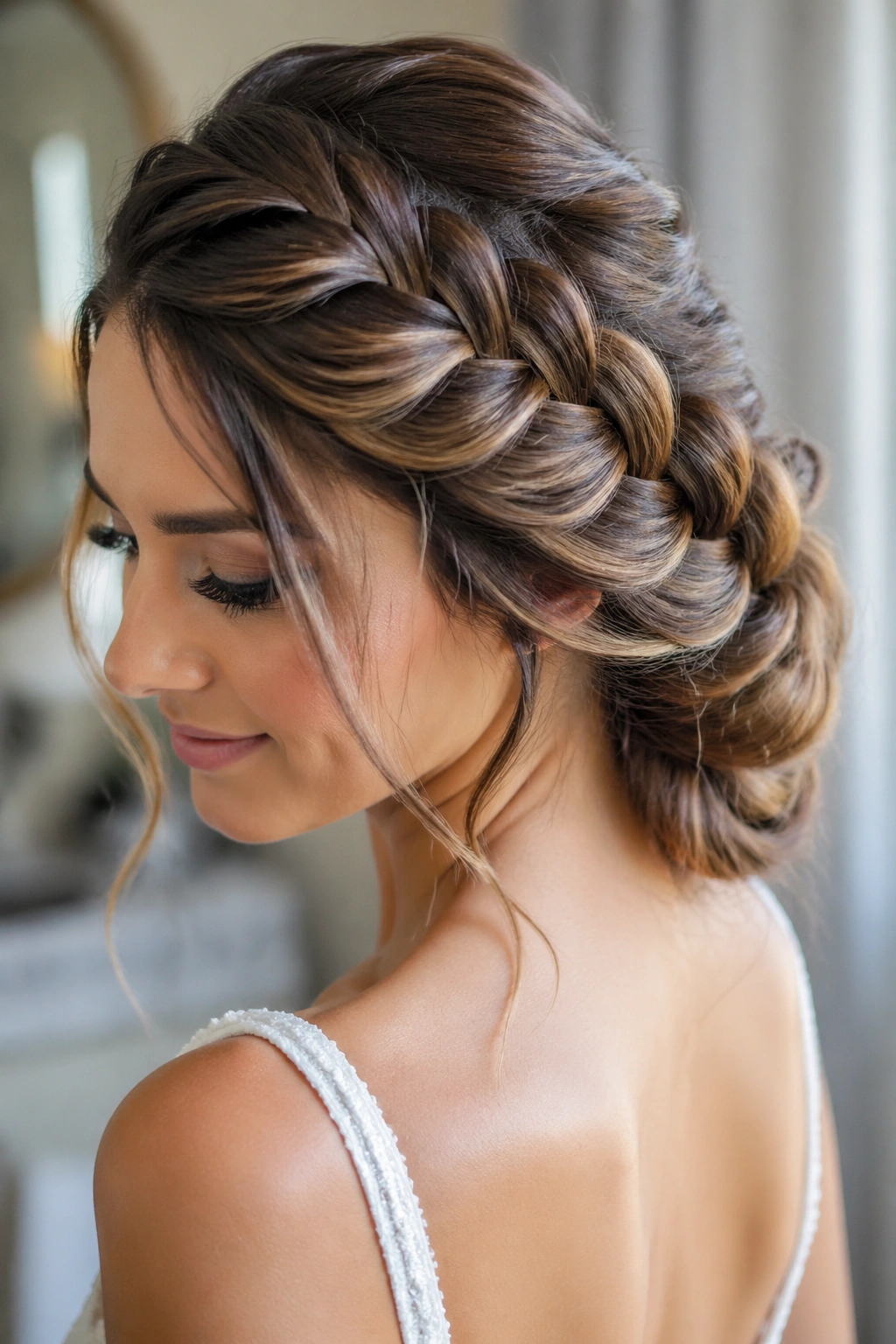
A pancaked braid is what happens when you gently pull the braid apart after it’s secured, and the result is fuller, flatter, and more relaxed. It is one of the easiest ways to make braids feel more wedding-ready without changing the braid type itself.
How to Keep It Soft, Not Sloppy
- Braid the hair tightly first.
- Secure the end before loosening any section.
- Pull from the outer edges only.
- Stop the second the braid has width and shape.
The style works on side braids, low braids, and half-up braids, which makes it useful if the bridal party wants a common finish across different cuts. Fine hair gets more body. Thick hair gets a little air. Curly hair can keep some texture while the braid shape stays readable.
I use this approach when the bride wants the group to feel romantic and relaxed, not too formal. It also helps under soft spring light, where a thicker braid reads more clearly in photos than a tight one that disappears into itself.
20. Floral Pin Braided Bun
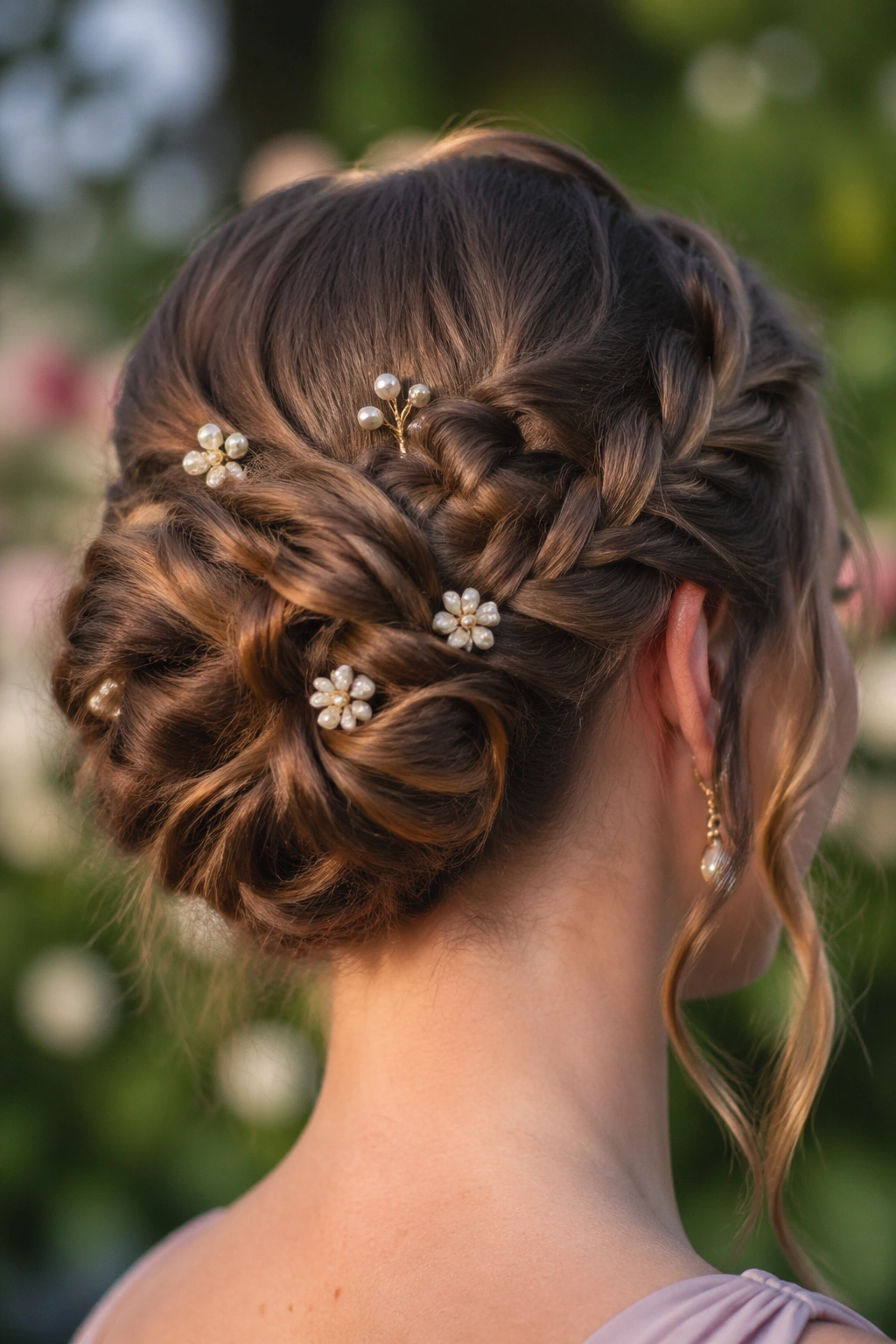
A floral pin braided bun feels made for a spring wedding. The braid provides the base, and the pins give the style that little burst of color or shine that ties it into the rest of the event.
The trick is restraint. Too many flowers and the bun starts to look crowded. Three to five small pins placed around the bun is usually enough. I prefer small blooms, pearl pins, or tiny gold leaves, because they sit neatly in the braid and don’t pull the style downward. Fresh flowers should be pinned in after the hairspray, not before, or they start to droop and stain the fabric.
This is a good style for bridesmaids in simple dresses because the bun becomes the focal point. It also works well when the bouquet is heavy on the same flowers, since the hair and florals can echo each other without matching too literally. A braided bun with a few pinned blooms looks thoughtful. That’s the word I’d use. Thoughtful, not crowded.
21. Veil-Friendly Low Crown Braid
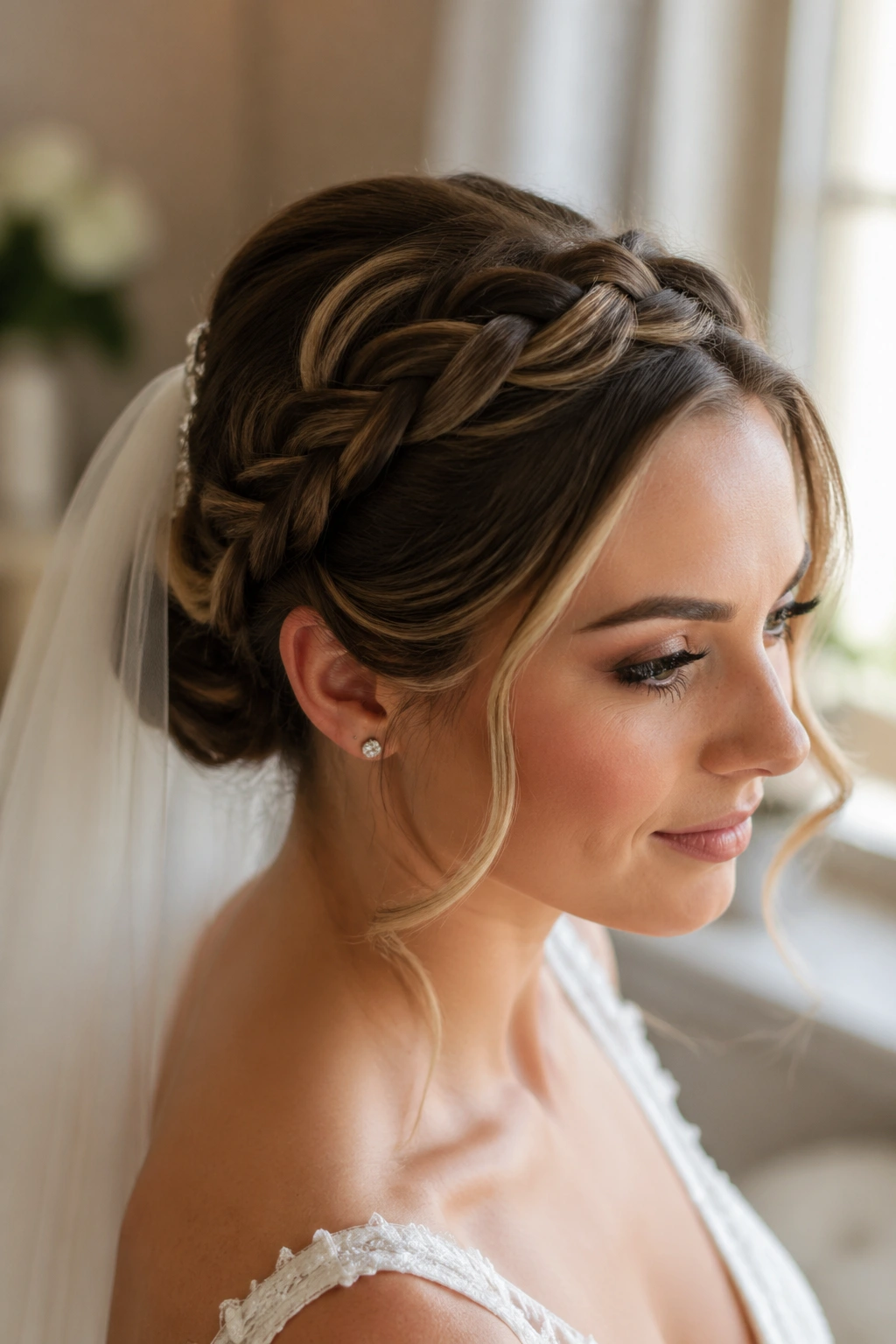
What hairstyle survives a veil, a hug line, and an outdoor breeze? A low crown braid is one of the safest bets.
The braid sits lower than a halo, which leaves room for the veil comb and keeps the top of the head from getting too bulky. That makes it especially useful when the bridal party needs a style that works before the ceremony and still looks right after the veil comes off. It also photographs well from the side, which matters more than people think when the wedding album includes a lot of profile shots and close conversations.
I’d keep the braid soft and not too tight at the temples. If it’s too snug, the style can start to feel severe. If it’s too loose, the comb slides. The middle ground is the sweet spot here: enough tension to hold the structure, enough softness that the braid still looks like hair and not architecture.
This is the style I’d choose for a bridal party that wants one shared shape across different hair types. The part can shift a little, the ends can be tucked or left to trail, and the veil still has a clean place to sit.
A good bridesmaid braid does not need to be loud to work. It needs to hold up, flatter real faces, and make the group look like they were styled with care instead of copied from a catalog. That’s the whole trick, and it’s why braid-based hair stays useful for spring weddings long after trends have moved on.
If I had to narrow the field for a real wedding day, I’d start with the crown braid, the low bun, and the side-swept French braid. They give you three different moods, but they all play nicely with flowers, veils, and whatever the weather decides to do.
