
Braids under a sports hijab have to do two jobs at once: keep hair secure and stay out of the way while you move. That sounds simple until you try it. A style that feels neat in the mirror can turn into a sweaty, lumpy mess once the fabric goes on, especially around the crown and nape where friction builds fast.
The smartest choices are usually the ones that sit flat, spread the hair out evenly, and keep the ends tucked low. Tight does not automatically mean better. In this setting, too much tension can make the hijab harder to wear, and too much bulk can push the fabric up or make it slip.
That’s why the best braid for a workout is rarely the prettiest one in the abstract. It’s the one you forget about halfway through the warm-up. No tugging, no little pins poking your scalp, no heavy lump at the back of your head when you bend forward.
Some styles are better for thick hair, some for fine hair, and some are just better when you know you’ll be moving hard and sweating more than usual. Keep that in mind as you read through the list — the right braid is the one that fits your hair, your hijab, and the kind of movement you actually do.
1. Single French Braid
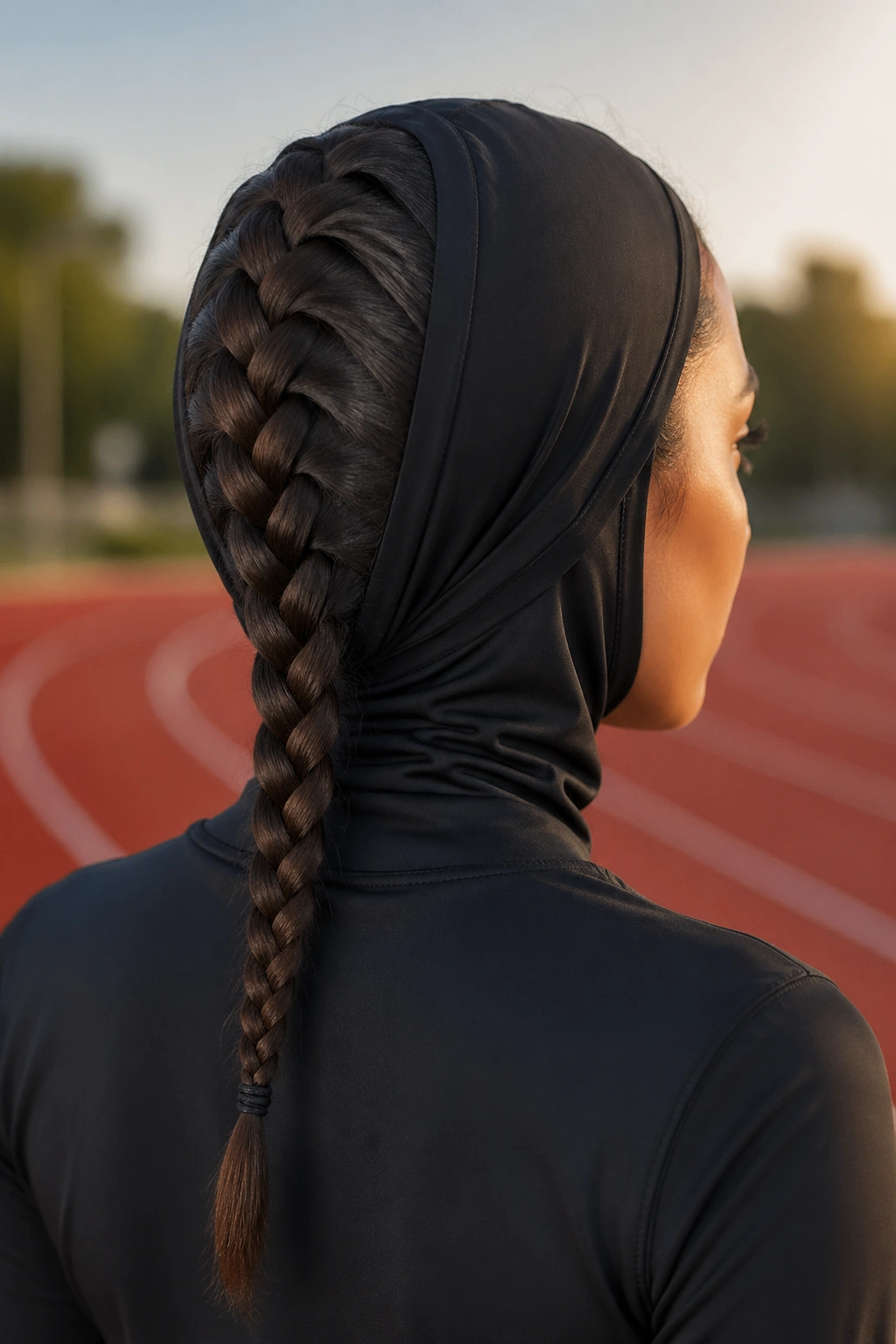
A single French braid is the workhorse of this whole group. It starts at the crown, pulls hair into one clean line down the back, and leaves you with a shape that sits neatly under a sports hijab without taking up much room.
Why It Earns a Place
It works because the braid stays centered. That matters when your hijab fabric is slick or when you’re doing anything with head movement, because a braid that drifts to one side can make the cap feel uneven.
- Best for medium to long hair
- Quick enough for busy mornings
- Sits flat at the crown
- Easy to tuck into a low bun or leave as a tail
My strongest advice: stop braiding just below the nape and secure the tail low, not mid-back. That one detail keeps the braid from bumping the fabric when you turn your head.
A French braid also gives you a little flexibility. If your hair is layered or slightly frizzy, it hides the mess better than a sleek ponytail does. And if you’re the kind of person who hates fussing with your hair between gym sets, that’s a real benefit.
2. Double Dutch Braids
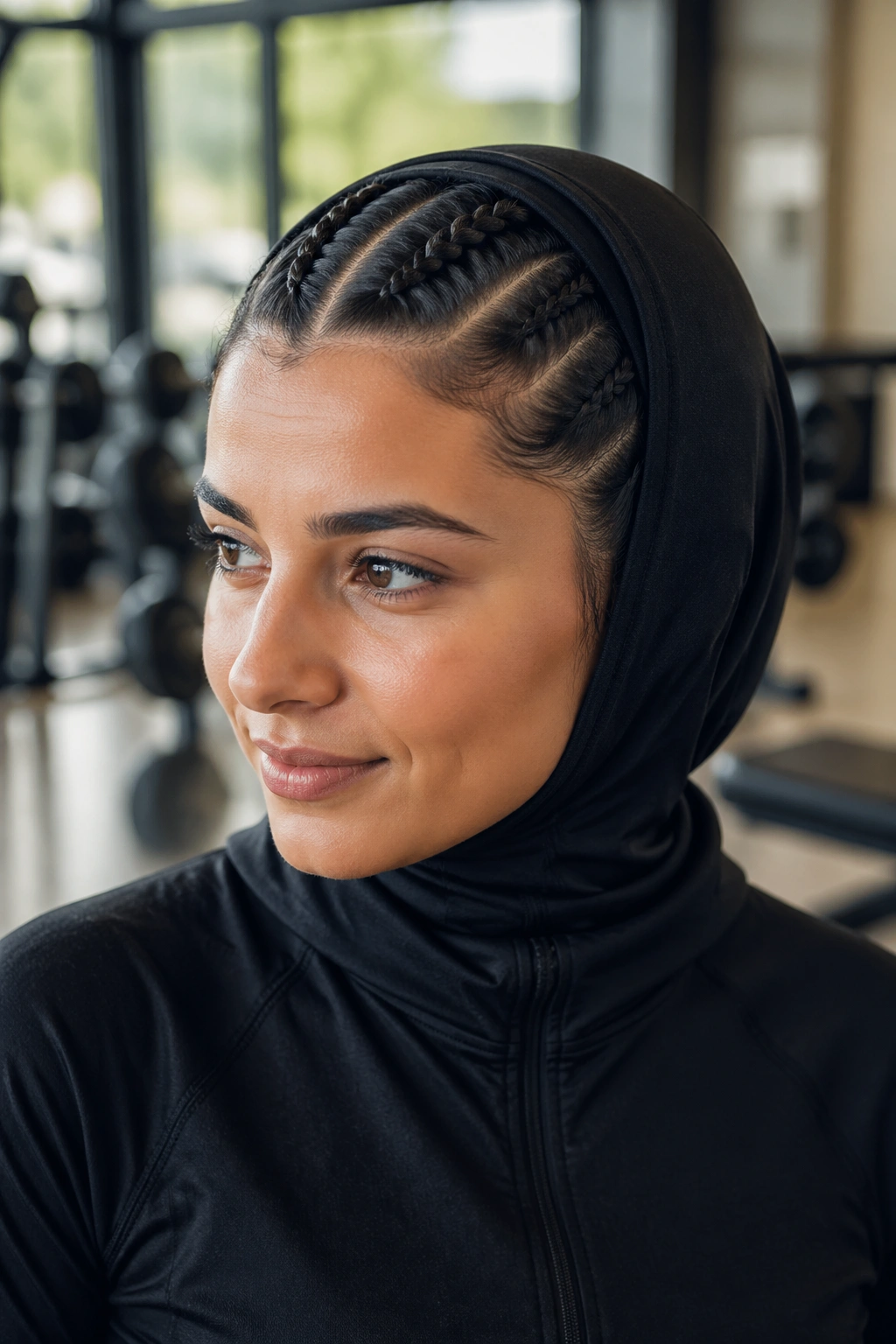
Double Dutch braids are the style I’d hand to someone who wants the braid to stay put first and look cute second. They sit close to the scalp, build a strong base, and make a pretty solid pairing with a sports hijab because the hair is divided into two narrow lanes instead of one thick rope.
That split matters. A single braid can feel dense at the back, especially if your hair is thick. Two Dutch braids spread the weight out, which makes the whole setup feel lighter on your head.
They’re especially handy if your hair tends to puff up when you sweat. Dutch braids hold the surface smoother than loose plaits, and the raised pattern gives the style enough grip that it does not unravel the minute you warm up.
A small catch: if your braids are too tight near the hairline, you’ll feel it under the cap. Keep the tension firm, not harsh. You want secure, not sore.
3. Straight-Back Cornrows
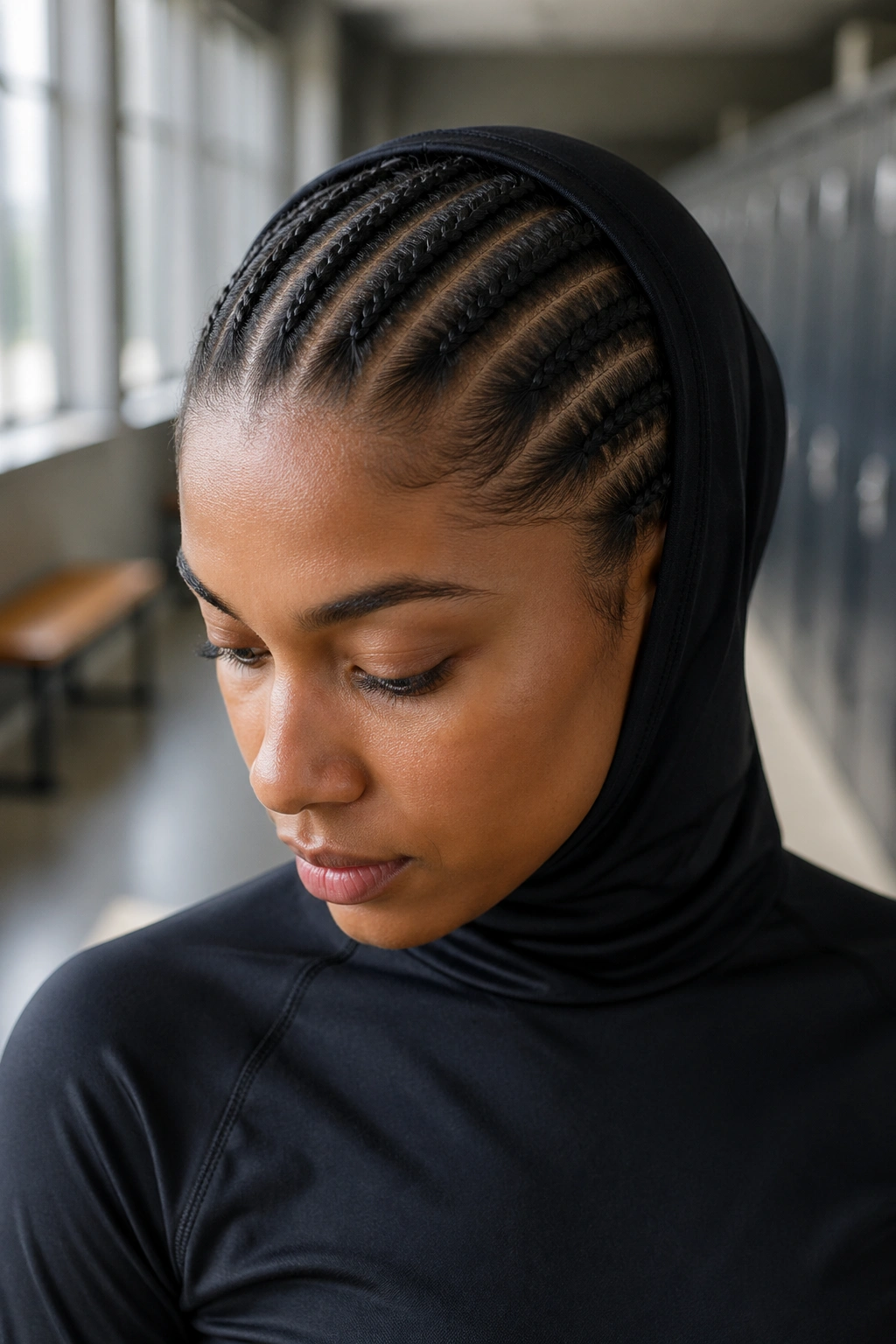
Why do straight-back cornrows work so well under a sports hijab? Because they are flat, orderly, and they keep the bulk moving in one direction instead of letting hair balloon around the crown.
That flatness is the whole reason people keep coming back to them. A sports hijab usually fits best when the surface underneath it is smooth, and straight-back cornrows give you exactly that. They also hold up well through a long workout, which is useful if you do not want to redo your hair after every wash.
How to Keep Them Comfortable
- Ask for rows that are firm, not tiny and painful
- Keep the front sections clean and even
- Avoid starting too close to the edges if your scalp is sensitive
- Finish the ends low so they do not press into the back of the hijab
If your hair is fine, four to six rows can be enough. If it’s thick, more rows may sit flatter than one chunky braid. The sweet spot is the version that feels smooth without making your scalp complain. That part matters more than people admit.
4. Feed-In Cornrows
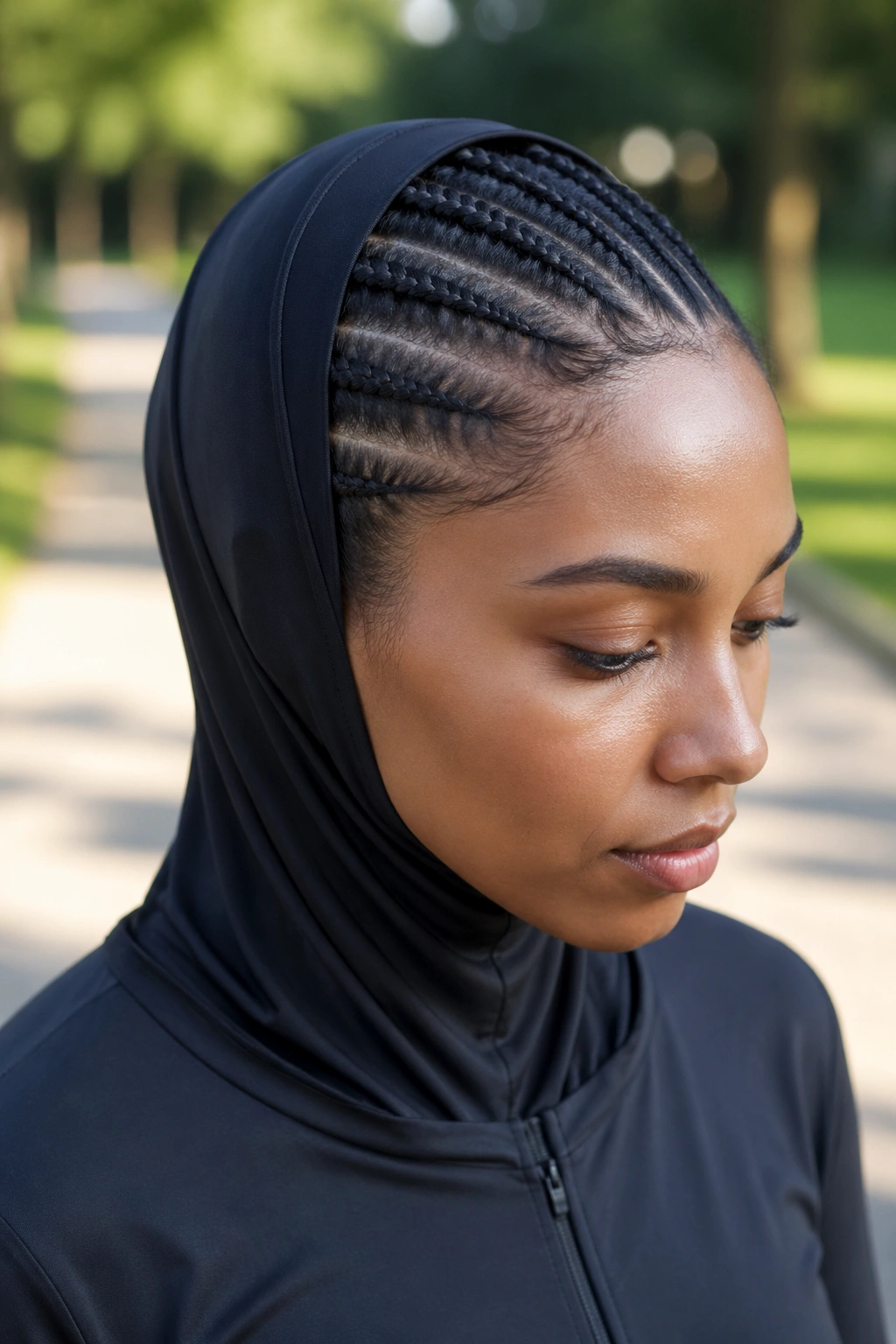
The first thing you notice about feed-in cornrows is the way they start. They usually begin with a small, neat base and build gradually, which keeps the front from looking bulky or stiff under a sports hijab.
That gradual build is the trick. Traditional braided starts can create a hard bump right at the hairline, and that bump is one of the fastest ways to make a cap sit awkwardly. Feed-in cornrows avoid that problem by tapering the braid out from the scalp in a softer way.
I like this style for long days because it stays tidy without screaming for attention. It also works well when you want the front of the head to stay smooth, since the thickness develops farther back where the hijab has a little more room.
- Good for thick or medium-thick hair
- Helps reduce front tension
- Looks polished even after a sweaty session
- Can be done in narrow or medium rows
The only real warning is this: feed-in braids look best when the parting is clean. Sloppy sections show fast.
5. Boxer Braids
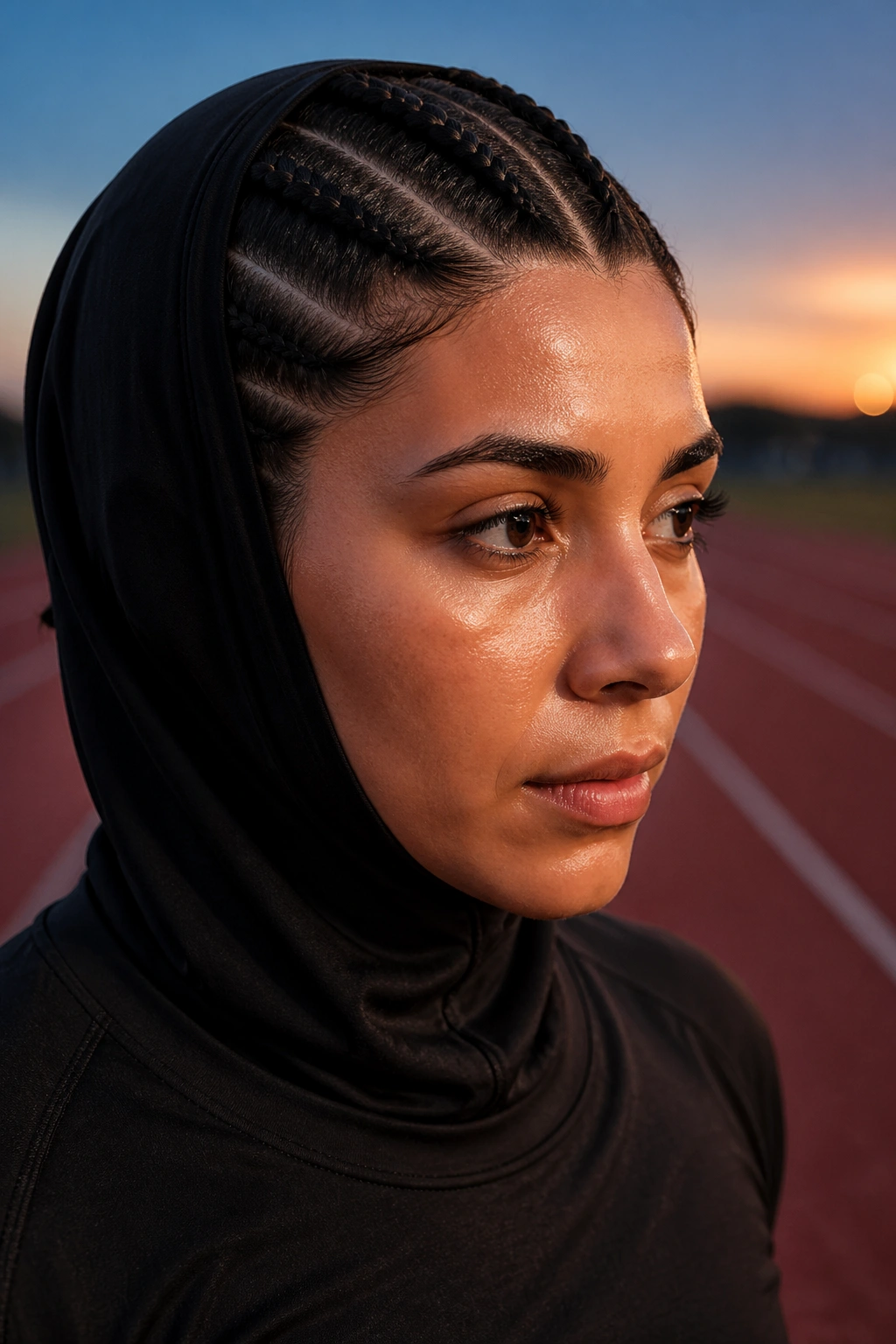
Boxer braids are basically a sports-ready version of double Dutch braids, and that is exactly why they belong here. They hug the scalp, stay centered, and give you a secure feel that works well when you know the day will involve jumping, bending, or a lot of quick movement.
Unlike a looser pair of plaits, boxer braids keep the hair pinned close from the start. That makes them especially useful under a snug sports hijab, where extra lift at the crown can turn into pressure by the time you’re halfway through a workout.
They are also one of the better choices for textured hair that likes to frizz at the first sign of sweat. The braid pattern keeps the strands grouped tightly enough to stay tidy, but not so tight that it has to feel harsh.
If you want one practical takeaway, it’s this: boxer braids are best when you need a style that stays controlled through movement. They are not the loosest, softest option. They are the dependable one.
6. Crown Braid
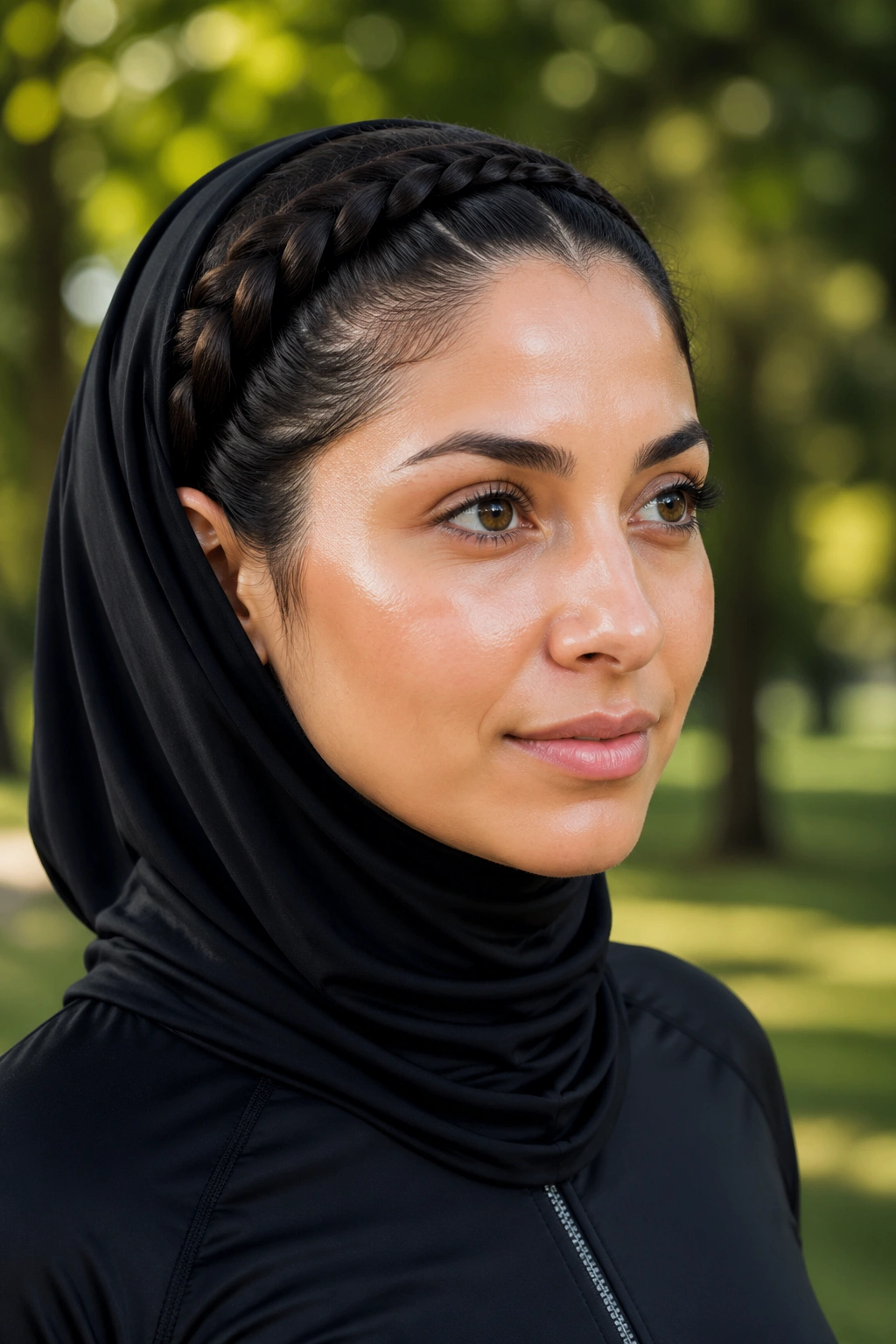
A crown braid does something nice under a sports hijab: it clears the center of the head and keeps the bulk traveling around the perimeter instead of piling up in one spot.
That can make a huge difference if you dislike pressure at the crown. The braid traces the head, then gets pinned low enough that the hijab can sit on top without feeling like it’s balancing on a knot of hair. It is a bit more involved than a plain braid, but the payoff is a cleaner shape.
The style works especially well when you want hair off your neck and away from the sides of your face. There is less chance of stray strands sticking out near the temples, and that alone can make a workout feel easier.
One thing I would not do here is make the braid too wide. A chunky crown braid looks pretty in photos, but under a sports hijab it can turn into extra pressure. Keep it flat. Keep it tidy.
7. Halo Braid
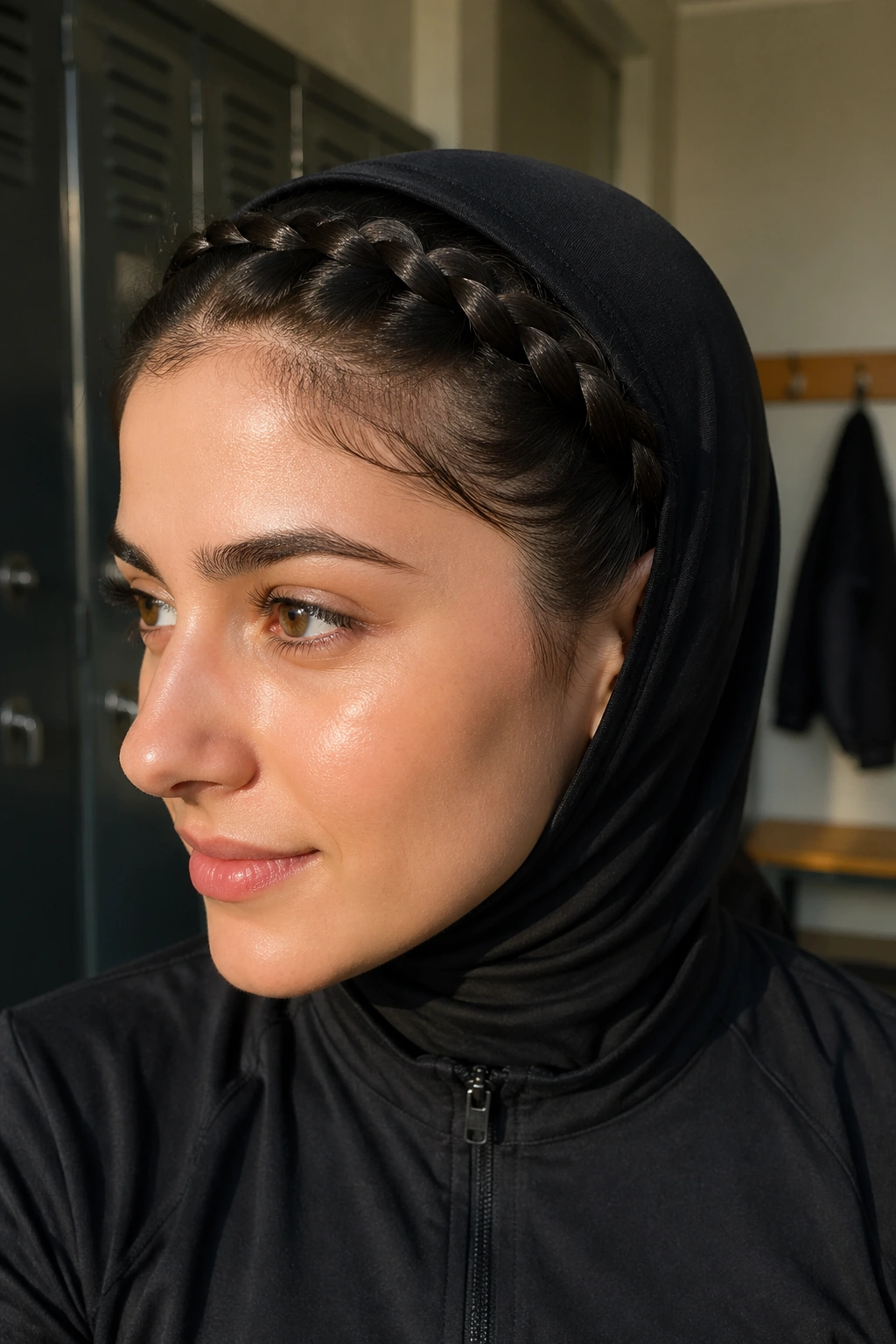
Is a halo braid the same as a crown braid? Not quite. A halo braid usually wraps in one continuous line around the head, which gives it a smoother, more circular shape.
That distinction matters when you’re wearing a sports hijab because the braid path changes how the weight lands. A halo braid can sit beautifully if it is pinned close and kept narrow, but it needs thoughtful placement so the braid does not build a ridge right where the cap wants to lie flat.
What Makes It Work Under a Hijab
- Use small sections so the braid stays low
- Pin the end flat behind the ear or at the nape
- Keep the braid snug, not bulky
- Choose it when you want the hairline clear
This is one of those styles that looks more delicate than it actually is. Once it’s secured, it can feel quite stable. The catch is that it takes a little more time than a basic braid, so it makes more sense on days when you are not rushing out the door in five minutes.
8. Fishtail Braid
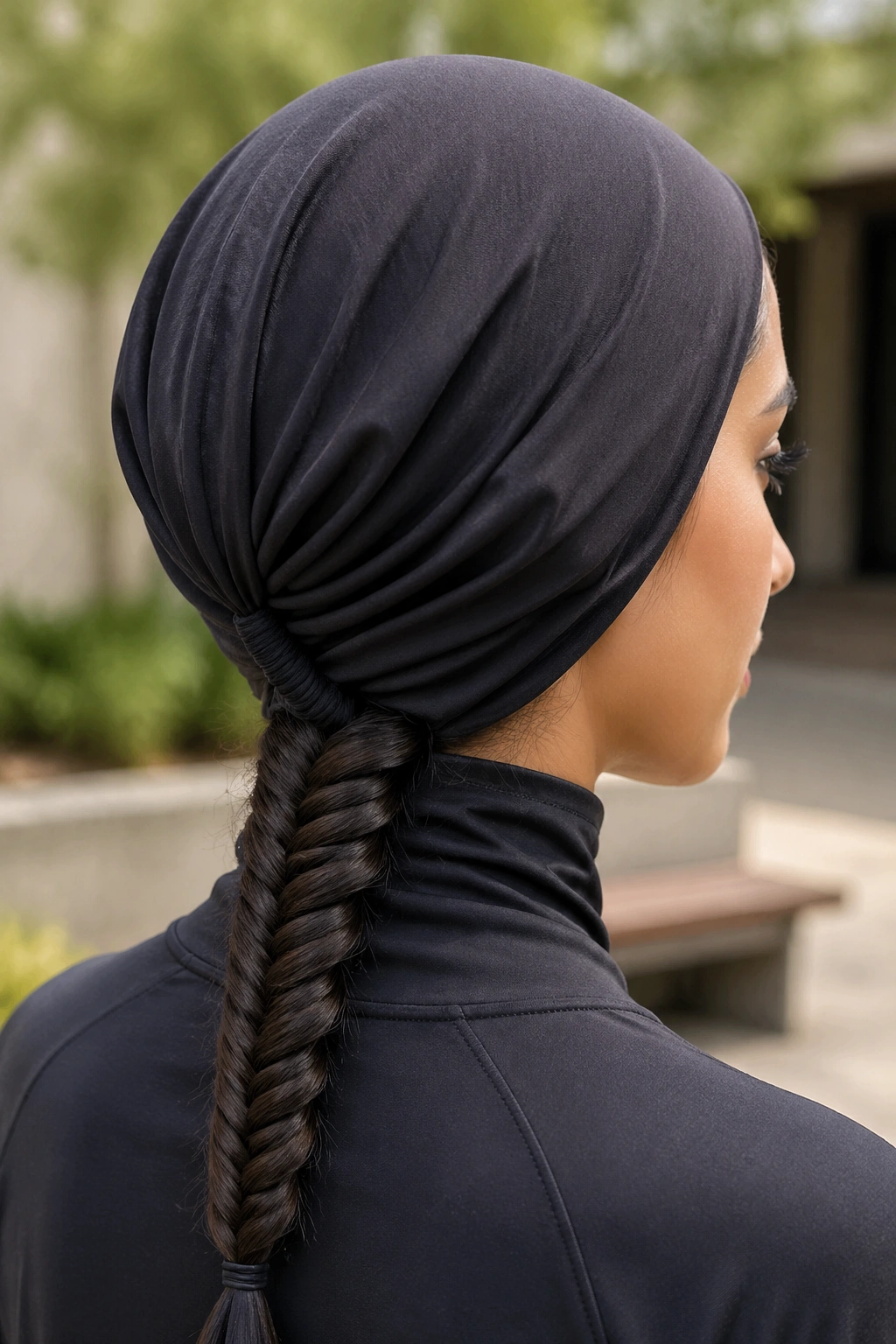
A fishtail braid is a strong choice when you want a braid that feels sleek instead of chunky. It uses tiny sections, which gives it a tighter visual line and keeps the profile narrower under a sports hijab.
That narrower shape is its biggest advantage. A fishtail braid can look substantial, but it does not need to feel thick or bulky at the back. If your hair is long and straight or only mildly wavy, it can sit very neatly once you secure the end.
Why It Works
Because the sections are small, the braid tends to hold together well even when the hair is a little slippery. It also creates less of that “rope” feeling you get from a traditional three-strand braid, which can be useful if you dislike a heavy braid swinging behind you.
The trade-off is time. Fishtails take patience, and the first few times you do one, your fingers may get a little annoyed. Worth it? Usually, yes, if you want something that sits flatter than a standard plait and still looks a bit dressed up.
9. Four-Strand Braid
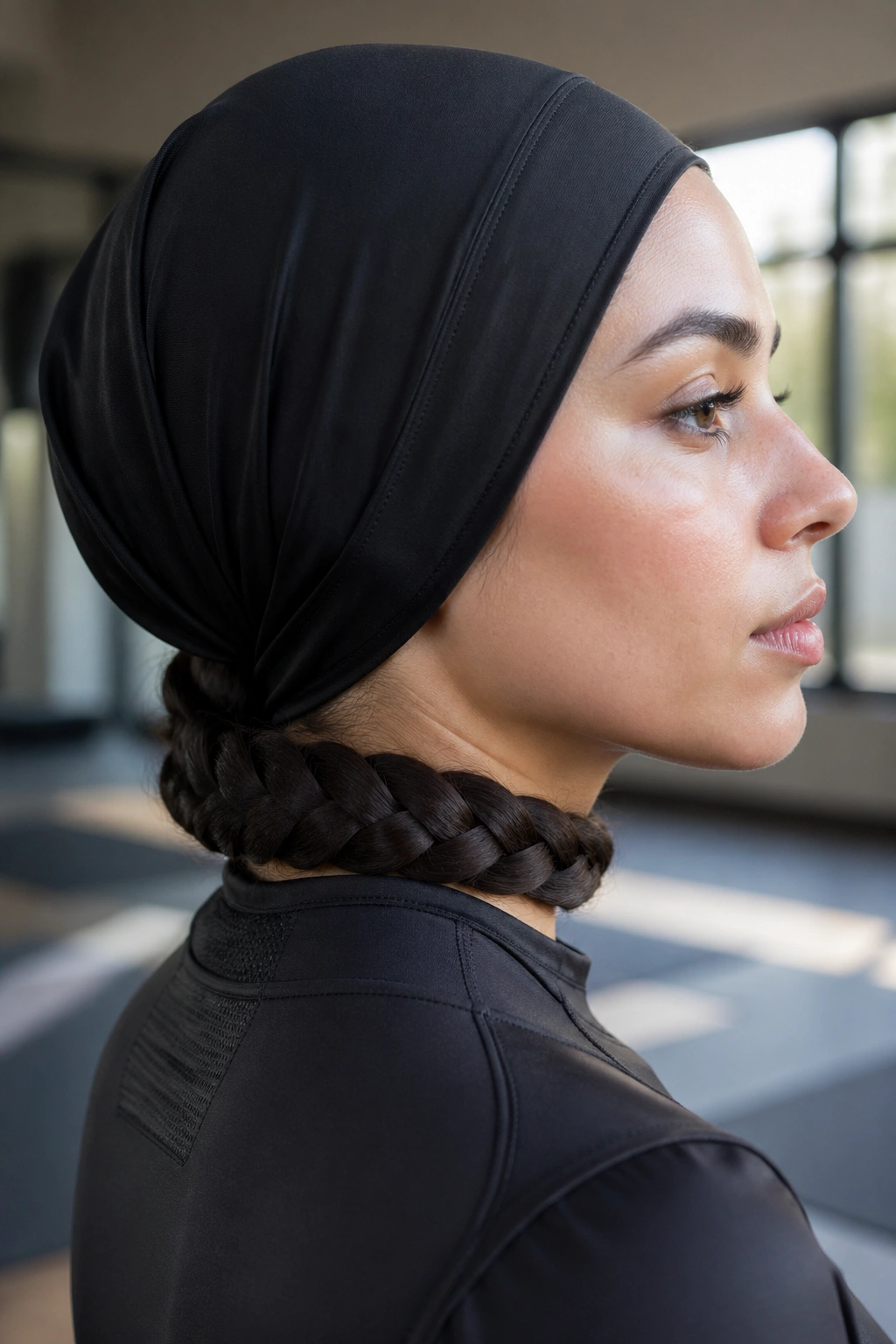
A four-strand braid gives you a denser, more locked-in feel than a standard braid, and that can be a good thing under a sports hijab. The extra strand spreads the tension out, so the braid often feels more stable and less floppy.
It also has a nice practical side: because the pattern is tighter and rounder, the braid does not unravel as quickly when you move around a lot. If your hair is silky and tends to slip out of basic braids, this one can hold better with less fuss.
The downside is obvious. It takes more attention. If you’re braiding in a hurry, your hands will probably need a minute to settle into the pattern.
Still, I like it for people who want a braid that feels a little more secure without adding a lot of bulk. It’s not as common as a French braid, which is part of the appeal. It feels a little more deliberate.
10. Pull-Through Braid
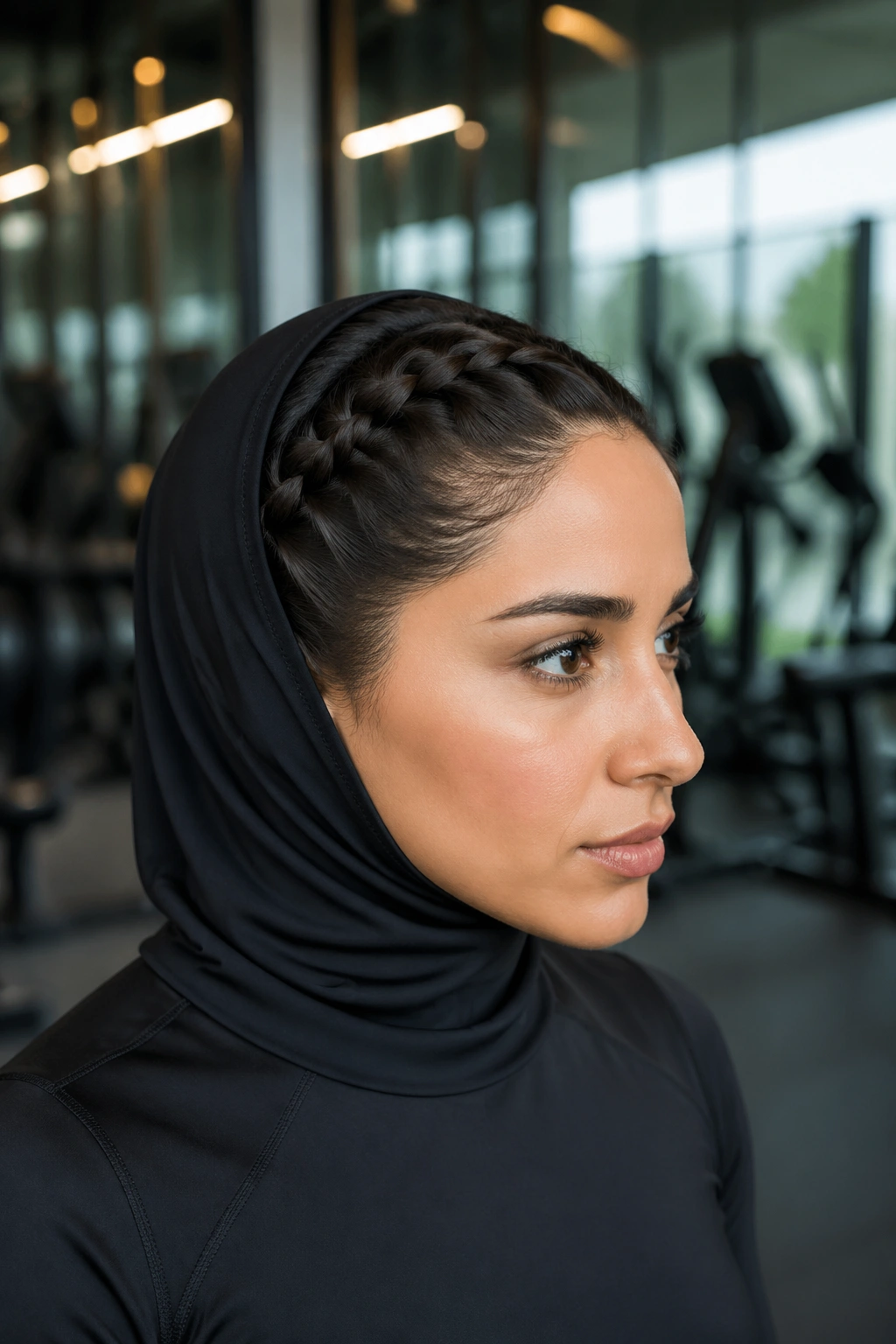
Pull-through braids are a smart option when you want the look of fullness without building one giant braid from scratch. They use a series of tied sections, so the hair stays controlled, and the shape can be adjusted to sit low under a sports hijab.
That said, bulk is the catch. A pull-through braid can look thick fast, especially if your hair is already dense or if you use large sections. Under a roomy hijab, that may be fine. Under a snug sports hijab, it can press at the back of the head.
Best Use Case
- Long hair that needs extra hold
- Workouts where you want a decorative look
- Days when you are fine with a little more volume
- Hair that slips out of standard braids
The braid is most useful when you keep the sections modest and the elastic ties flat. Use small, clear elastics and try to keep the overall shape narrow. If you want something polished but not too tight on the scalp, this one gives you a bit of breathing room.
11. Braided Low Ponytail
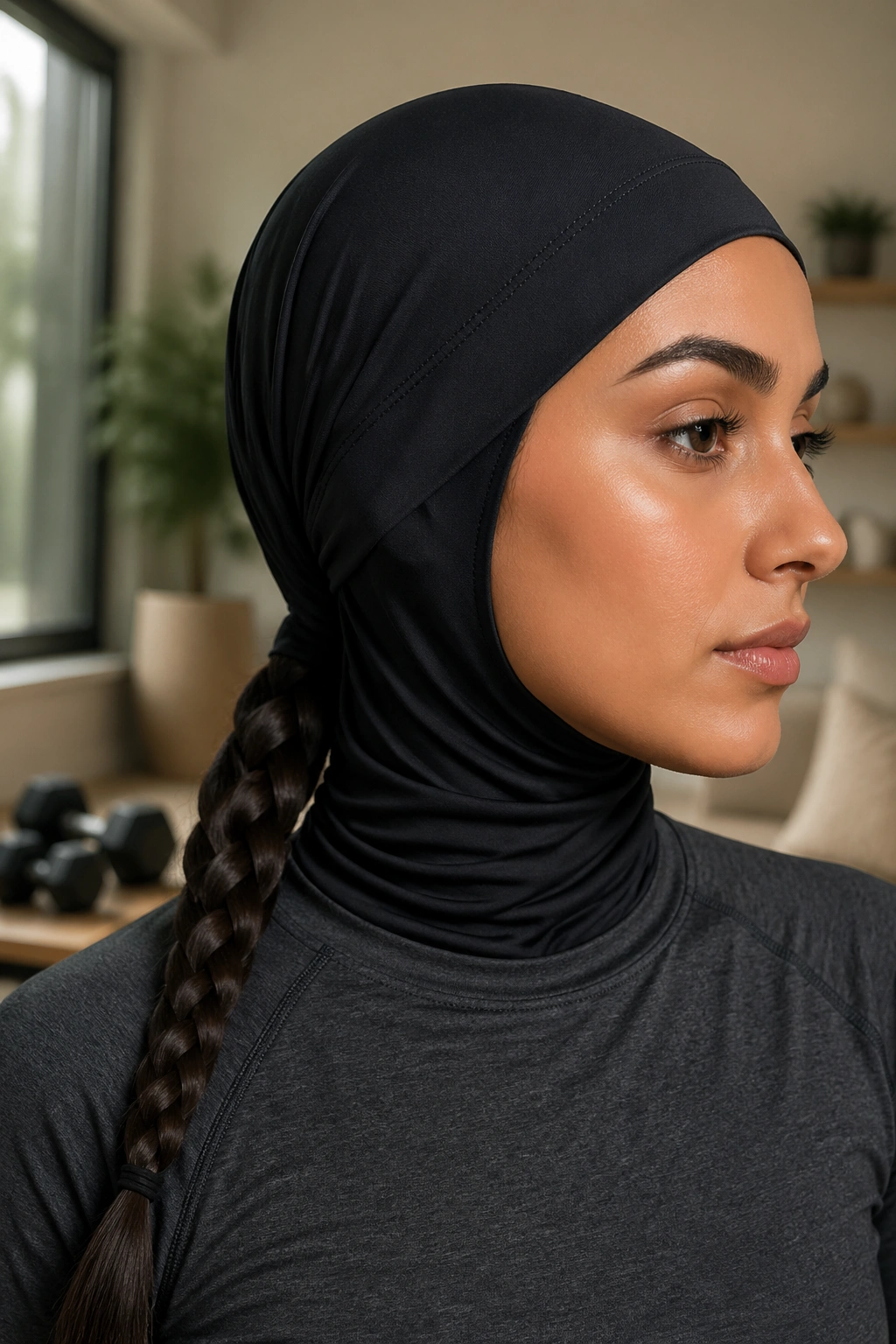
A braided low ponytail is one of the simplest styles here, and honestly, simple is often the right answer. A braid that starts at the nape and drops downward keeps the crown smooth, which is exactly what a sports hijab likes.
Unlike a high ponytail, this version does not fight the fabric at the top of the head. There is no thick knot sitting under the cap, no bouncing tail, and less chance of the style shifting when you turn quickly.
It works especially well if you want to keep the neck clear but do not want a full braid woven all the way to the ends. You can braid only the upper section, secure it low, and let the tail stay tucked or lightly tied.
That small adjustment makes the style more comfortable than people expect. The braid does not need to be elaborate. It just needs to stay low, stable, and flat.
12. Braided Bun
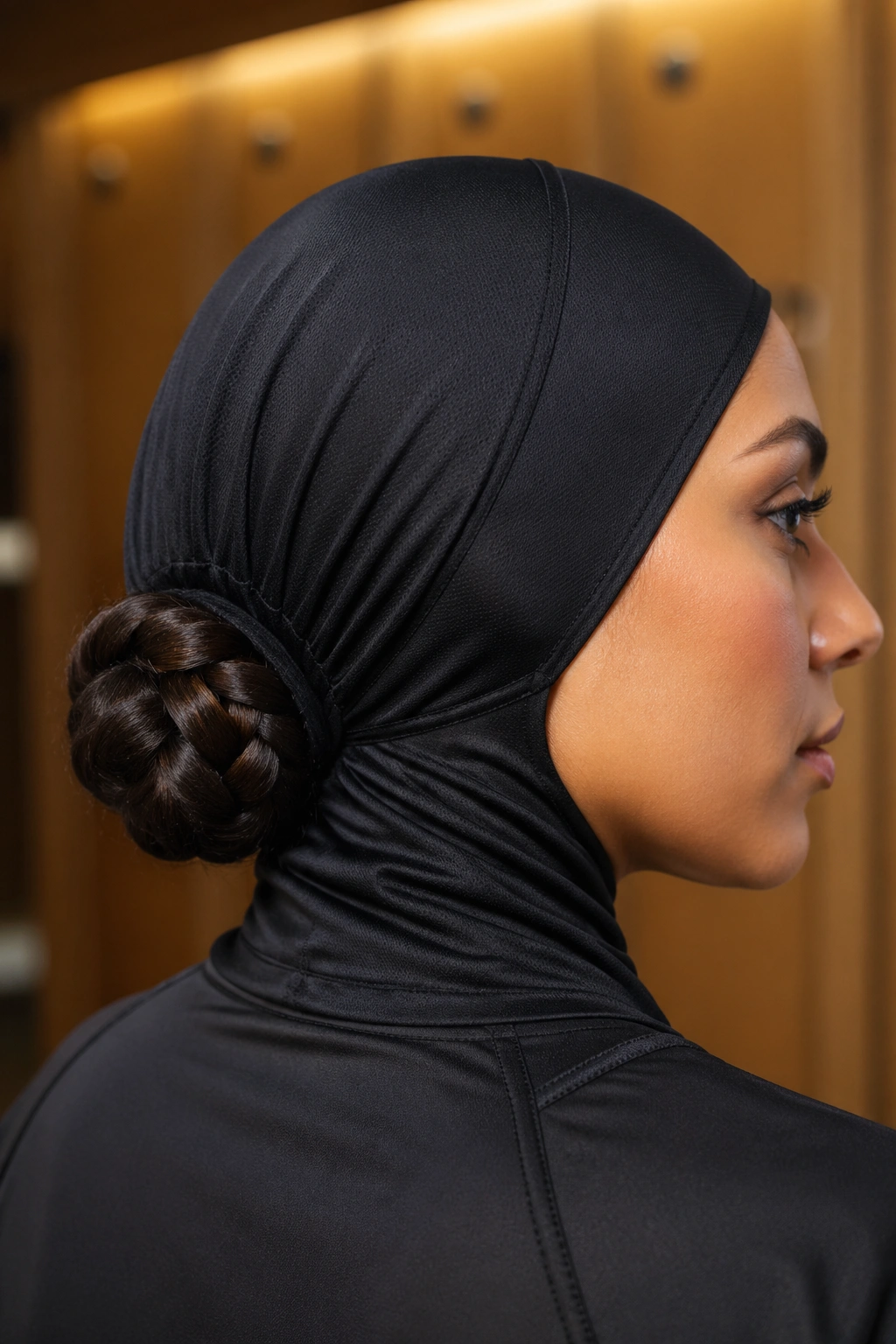
A braided bun is what I reach for when I want the hair completely out of the way and I know the hijab needs a smooth surface underneath. A loose bun can feel like a tennis ball under fabric. A braided bun sits better.
The braid gives the bun structure, so the shape does not spread as much. That matters under a sports hijab because a flattened bun is easier to cover and less likely to press into the back of the head during movement.
If your hair is long, keep the bun low and compact. If it’s medium-length, braid the tail all the way down and coil it tightly against the nape. Secure the ends with pins that lie flat, not chunky clips.
One detail people skip: the bun should feel secure before the hijab goes on. If you have to adjust it after the fabric is in place, you’re going to spend the whole workout thinking about it. Annoying. Avoidable.
13. Side Braid
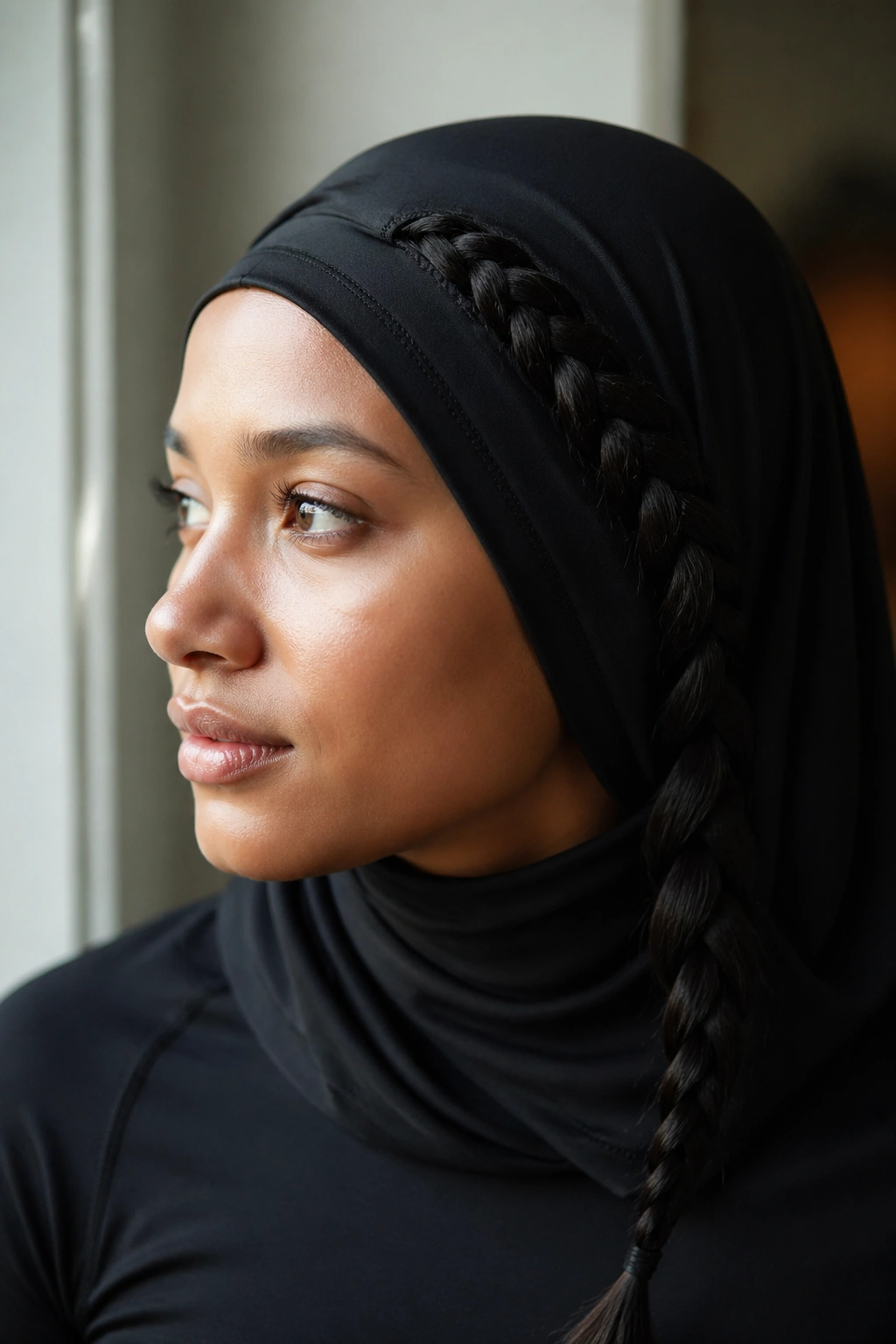
A side braid can be a small fix for a big annoyance. If the center of your head feels crowded under a sports hijab, moving the braid off to one side can make the fit feel less stacked.
That asymmetry helps when one side of your hair is longer, thicker, or more prone to puffing out. It also gives you a cleaner crown line, which is useful if your hijab fabric is slick and tends to slide over raised sections.
Why choose it over a centered style? Because not every braid needs to live down the middle. A side braid keeps some hair tension away from the same pressure points over and over, and that can make a long wear feel easier.
It is a good choice for shorter medium hair too. You do not need a waist-length mane to make it work. Just a clean side sweep, a low finish, and enough tension to stop the braid from loosening halfway through the day.
14. Knotless Box Braids
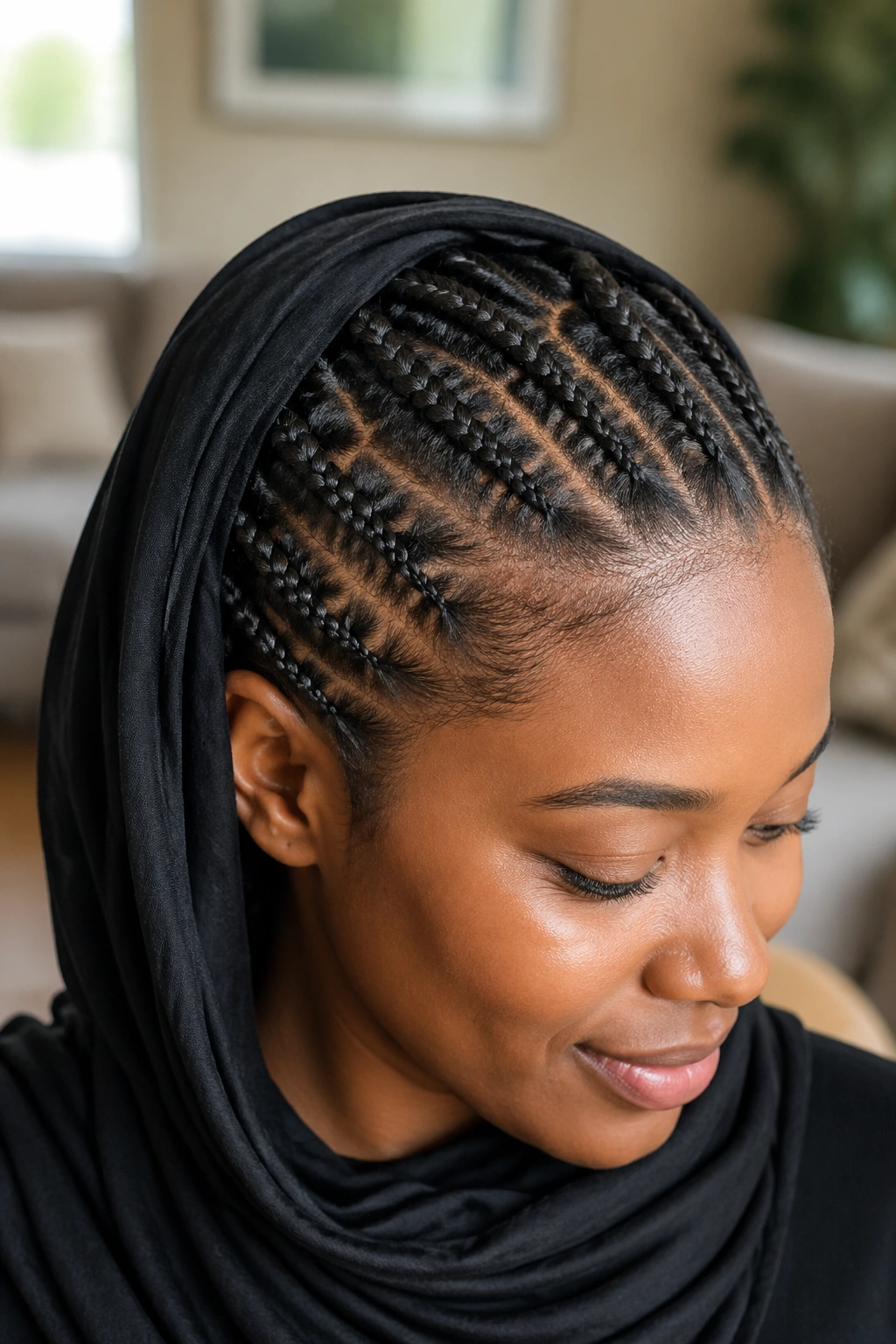
Knotless box braids are one of the best protective options if you wear a sports hijab often. The start is flatter than a traditional knot, which means less bump at the root and less pressure under the fabric.
That flat start is not a small thing. It changes how the whole style feels. Instead of a hard knot sitting right where the hijab grips, you get a smoother base that sits more comfortably during long wear.
What to Ask For
- Medium or small size for less bulk
- A neat, flat start at the scalp
- Ends trimmed evenly so they do not bunch up
- Length that stays manageable under your hijab
Knotless braids are especially useful if you want a style that lasts through many workouts with little daily styling. They do take time to install, and they need good care, but the payoff is a low-fuss routine once they’re in.
If you’ve ever taken your hijab off and felt a sore patch right at the crown, knotless braids can help with that. Not magic. Just less pressure in the right spot.
15. Micro Braids
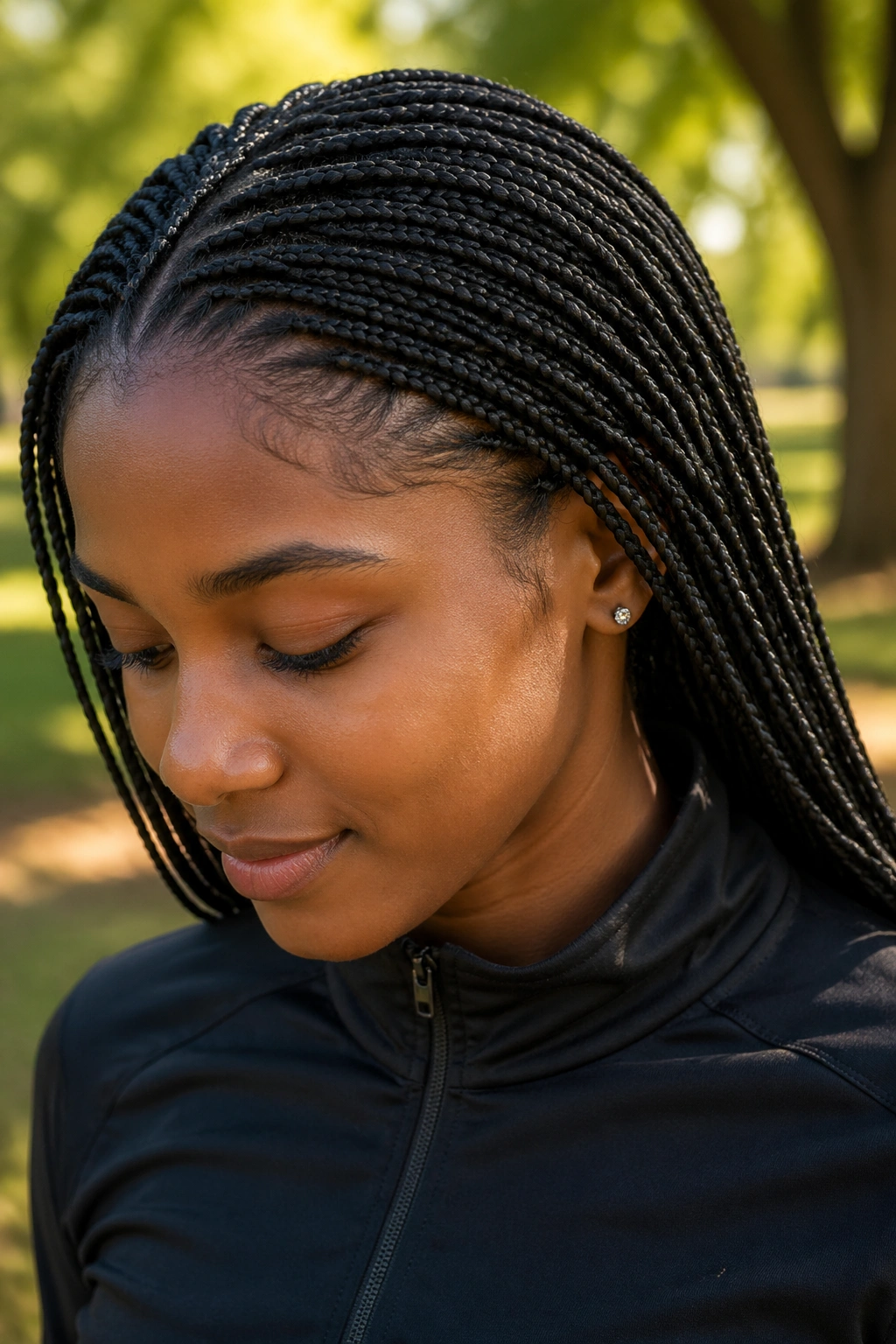
Micro braids are a very low-bulk option, which is why people with long-term wear in mind keep coming back to them. Under a sports hijab, they lie flatter than larger braids and keep the surface of the head smooth.
They’re not a quick style, though. Installing micro braids takes patience, and that is the trade-off. You spend more time at the start so you can spend less time doing your hair later.
The nice part is how evenly they distribute the weight. Instead of one heavy braid pulling in one direction, you get many small braids that move together. That can feel gentler under the cap, especially if you train often.
Just don’t overload them with heavy extensions if comfort is your main goal. Extra length is tempting, but too much weight can defeat the point. Keep them manageable, and they’ll do the job without becoming a burden.
16. Lemonade Braids
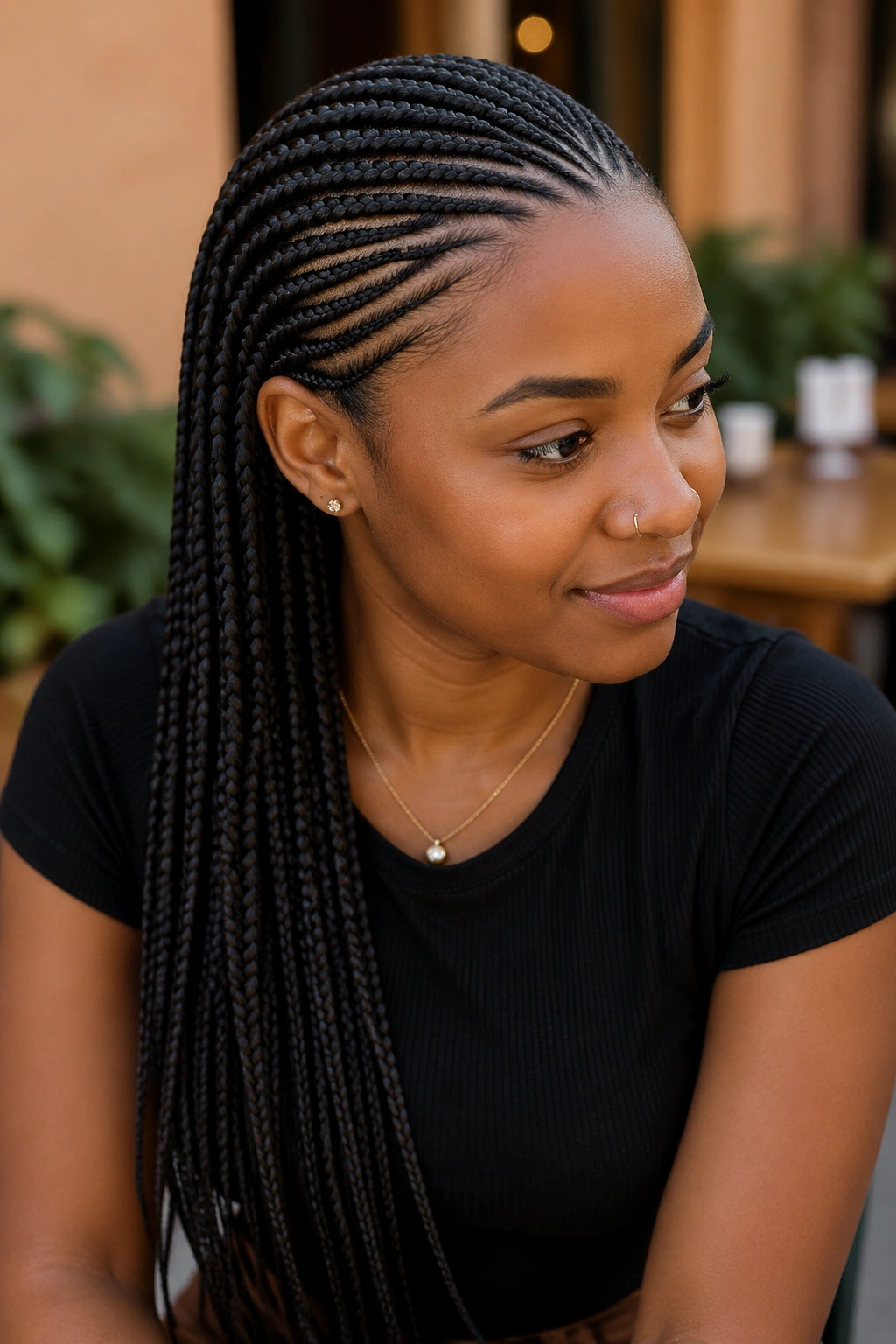
Lemonade braids are a strong choice when you want something sleek, side-swept, and practical. They angle across the scalp instead of sitting straight back, which keeps the center of the head clearer under a sports hijab.
That side sweep is useful. It means the braid line does not create as much pressure at the crown, and it also gives a nice clean shape if you dislike hair that sits straight down your back.
Compared with straight-back cornrows, lemonade braids feel a little more styled without giving up the flat profile. They work well if you want the look to be neat but not stiff.
If you go this route, ask for even parting and keep the rows narrow enough that they do not build up too much at one side. The style works best when the braid stays close to the scalp and the ends are tucked where the hijab can cover them cleanly.
17. Milkmaid Braids
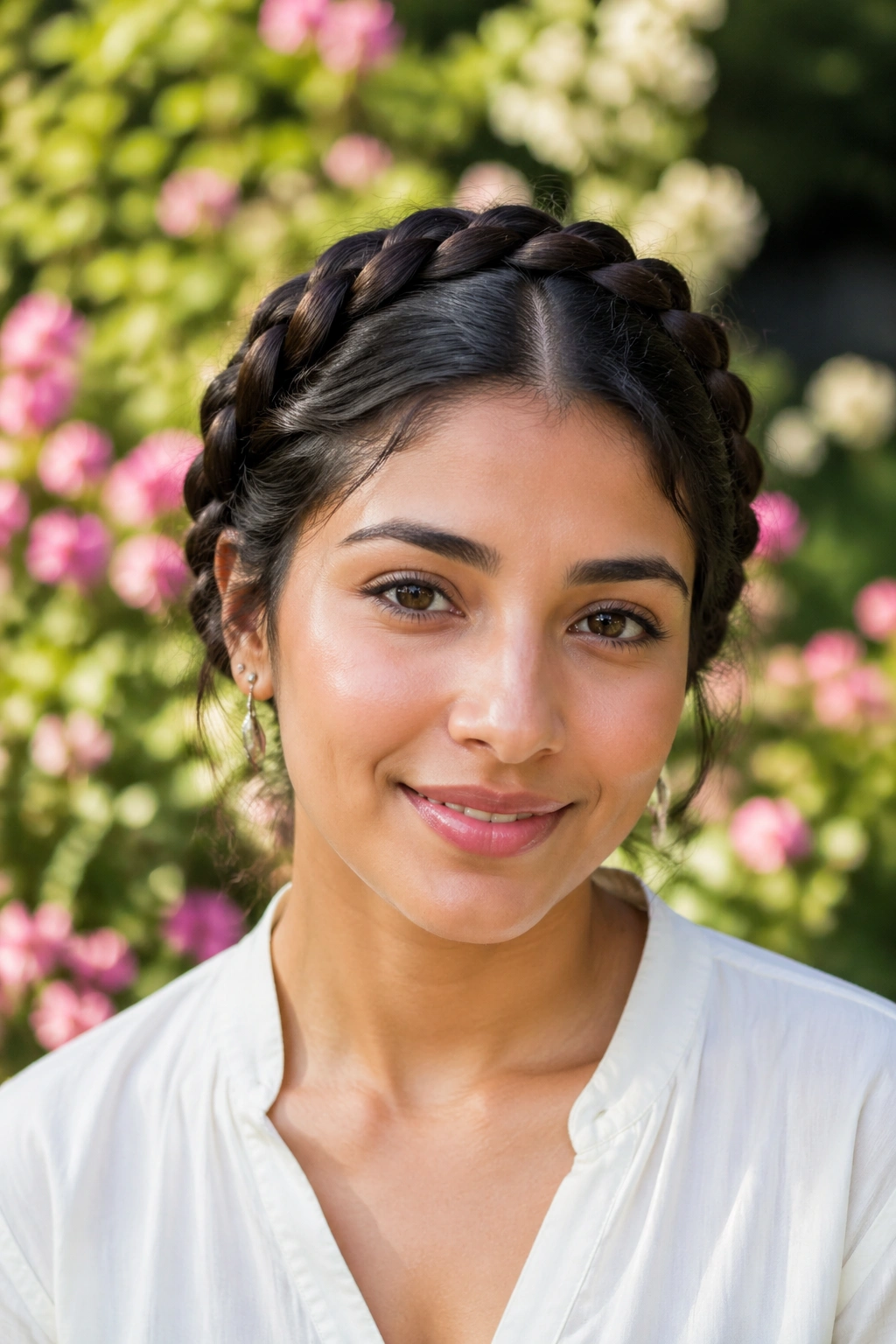
Milkmaid braids can look more decorative than the rest of this list, but they still belong under a sports hijab if you pin them flat and keep the loops tight.
The two-braid shape creates a balanced feel, which helps when you do not want all the hair weight sitting at the back of your head. It can be a good option for medium-length hair that needs more structure than a single braid but less height than a bun.
Why They’re Useful
- Balanced weight across the head
- Good for medium-length hair
- Can be pinned low for a smoother fit
- Keeps the neck clear
The main thing is placement. If you let the braids puff out too much, they’ll fight the hijab. Keep them close, use flat pins, and tuck any loose ends near the ears or nape.
This is a style I would pick on a day when I want the hair secure but still a little softer around the edges. It feels less severe than cornrows and less bulky than a full bun.
18. Infinity Braid
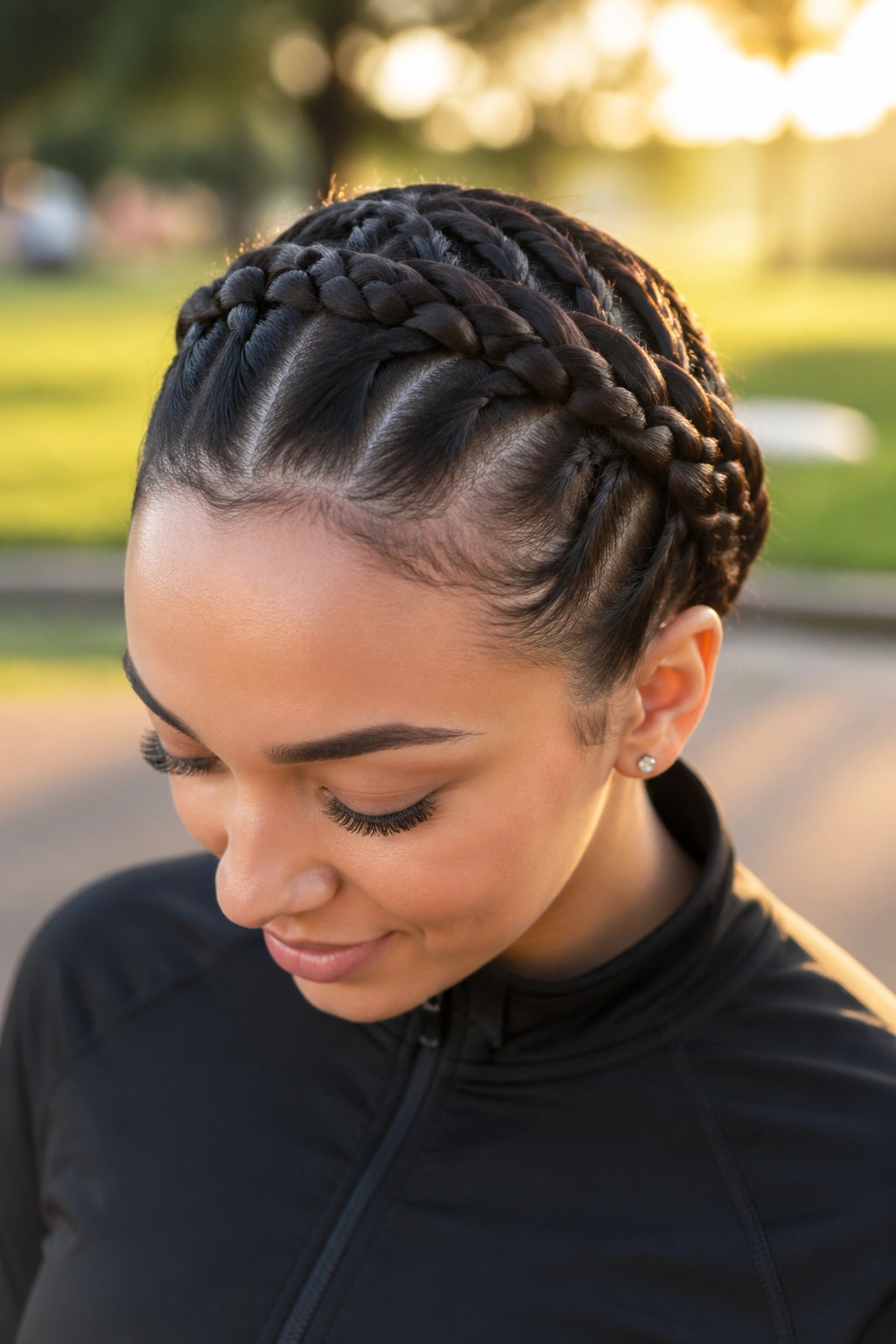
An infinity braid is a nice final option because it gives you that woven, detailed look without needing a huge amount of space under the hijab. The pattern crosses back over itself in a way that keeps the braid visually neat and physically compact.
That compactness is the part that matters. A sports hijab rewards styles that stay close to the head, and an infinity braid does that better than you might expect. It looks intricate, but the shape can sit fairly flat if you keep the tension even.
It’s also a good pick when you want something a little different from the usual three-strand braid without moving into bulky territory. The braid reads as polished, but not fussy.
If you want one style from this whole list that feels a little special and still behaves well during movement, this is a strong one to try. Keep the finish low, tuck the end cleanly, and let the hijab do the rest.