


A strapless gown gives you a lot of open space at the top of the look. That’s the whole point, really — the neckline, the shoulders, the collarbones, the earrings if you’re wearing them — all of it gets a chance to breathe. The trick is making the hair feel like part of the design instead of something that landed there by accident. That’s where braids for brides with a strapless gown do their best work.
Braids add shape without covering the dress. They can soften a sharp satin bodice, calm down heavy beading, or give a very bare neckline a little frame so it doesn’t feel unfinished. And because braided styles hold texture better than loose, polished waves, they tend to survive hugs, dancing, and a long day of being photographed from every angle. Good news. The shape usually stays put.
The part people miss is proportion. A strapless gown already creates a strong horizontal line across the chest. Hair that sits too flat can make the top half feel empty. Hair that sits too full can swallow the neckline. The sweet spot is usually a braid with some lift, some softness, and at least one intentional detail near the face or at the nape.
1. Soft Crown Braid With Loose Tendrils
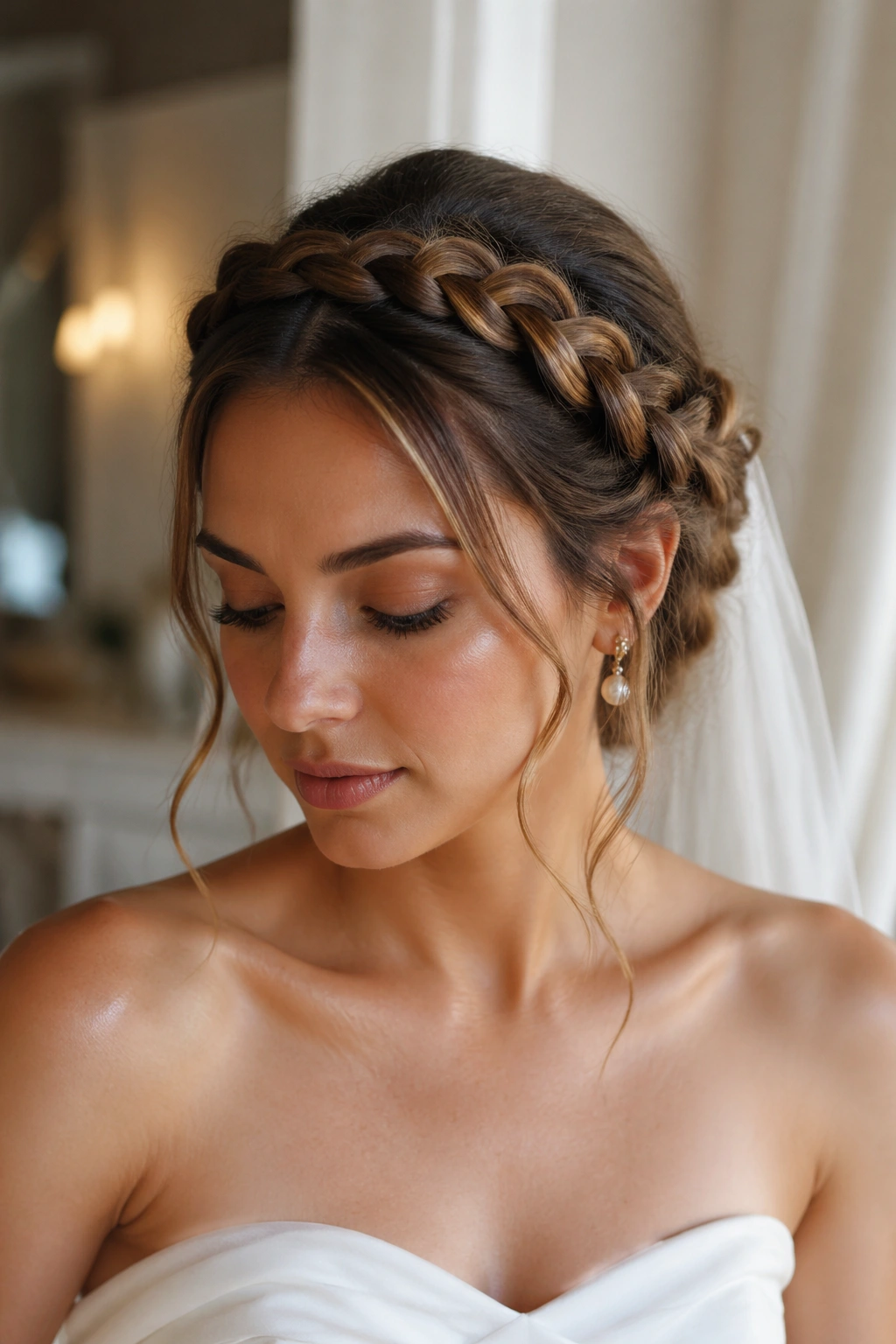
A soft crown braid is one of the safest, smartest choices for a strapless gown. It wraps the hair around the head in a way that feels romantic, but it still leaves the shoulders open so the dress can do its job. I like this look when the neckline is simple and the fabric is doing the heavy lifting.
Why It Flatters a Bare Neckline
The braid gives the eye a place to travel upward instead of stopping at the top edge of the dress. That matters more than people think. A strapless gown can look gorgeous on its own, but a little braid detail keeps the whole look from feeling too bare.
Leave two or three slim tendrils near the temples, and let them curve softly instead of curling them into little pageant spirals. The braid itself should sit close enough to the hairline to feel secure, but not so tight that it looks severe.
- Best on medium to long hair
- Works well with a fingertip veil or a comb veil
- Ask for a soft weave, not a tight plait
- Use a light mist of flexible hairspray, not helmet-level spray
My favorite part: this braid makes pearl earrings look sharper without competing with them.
2. Side-Swept Fishtail Braid
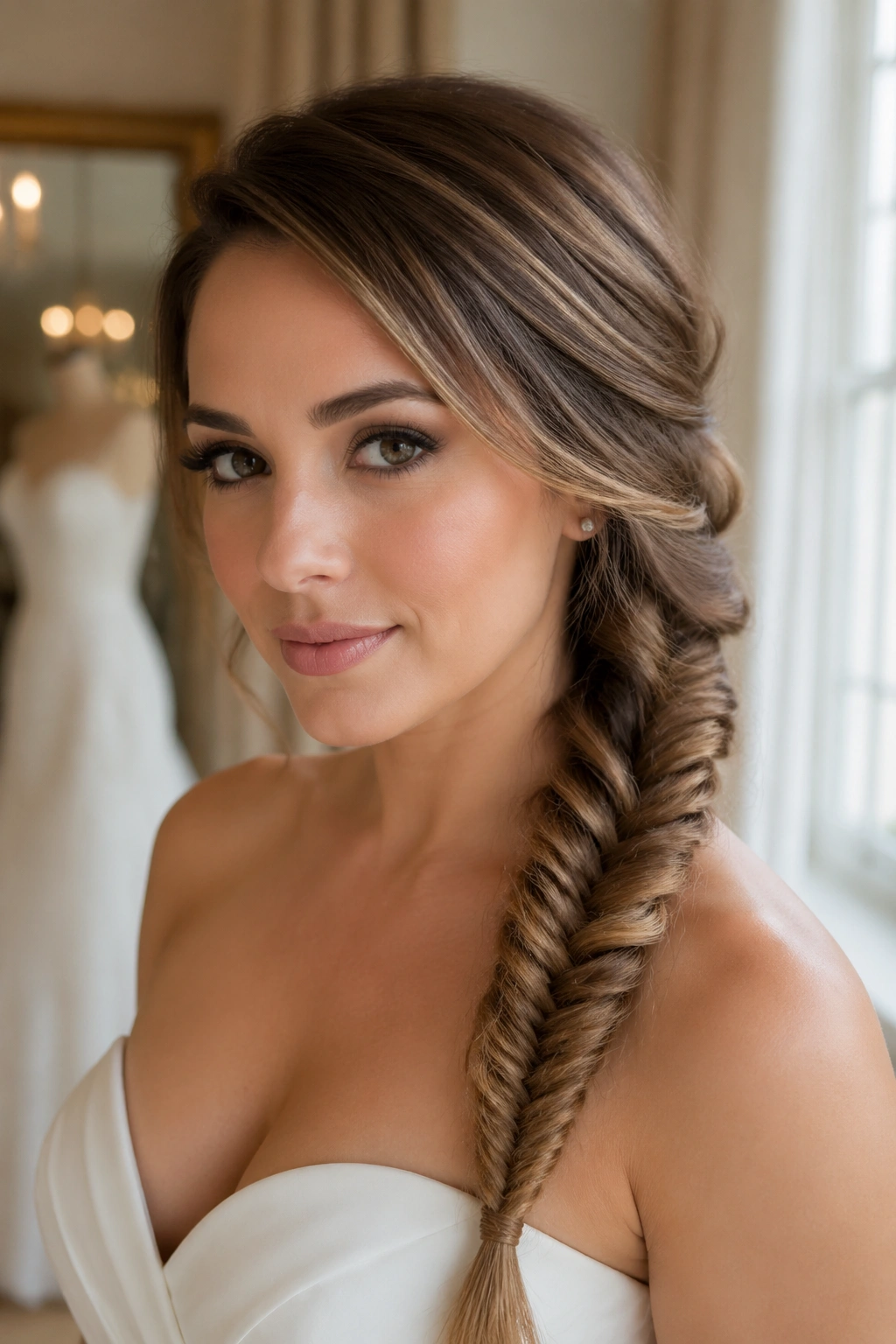
A side-swept fishtail braid is the style I’d pick when the gown has a clean bodice and you want the hair to lean a little more editorial. The texture is finer than a regular braid, so it feels detailed up close but not busy from across the room.
The side placement matters. Sweeping the braid over one shoulder leaves the opposite side of the strapless neckline fully visible, which keeps the dress from disappearing under the hair. That open space also gives you room for a necklace if you want one — though honestly, I usually think a great pair of earrings is enough.
Pull the fishtail apart gently once it’s secured. Not too much. You want soft width, not a lopsided rope. The very end can stay polished or be curled under slightly so it doesn’t look sharp or unfinished.
This one works especially well with satin and crepe, because the braid adds texture where those fabrics can feel a little plain. It’s neat. It’s flattering. It doesn’t fight the dress.
3. Halo Braid Wrapped Around the Hairline
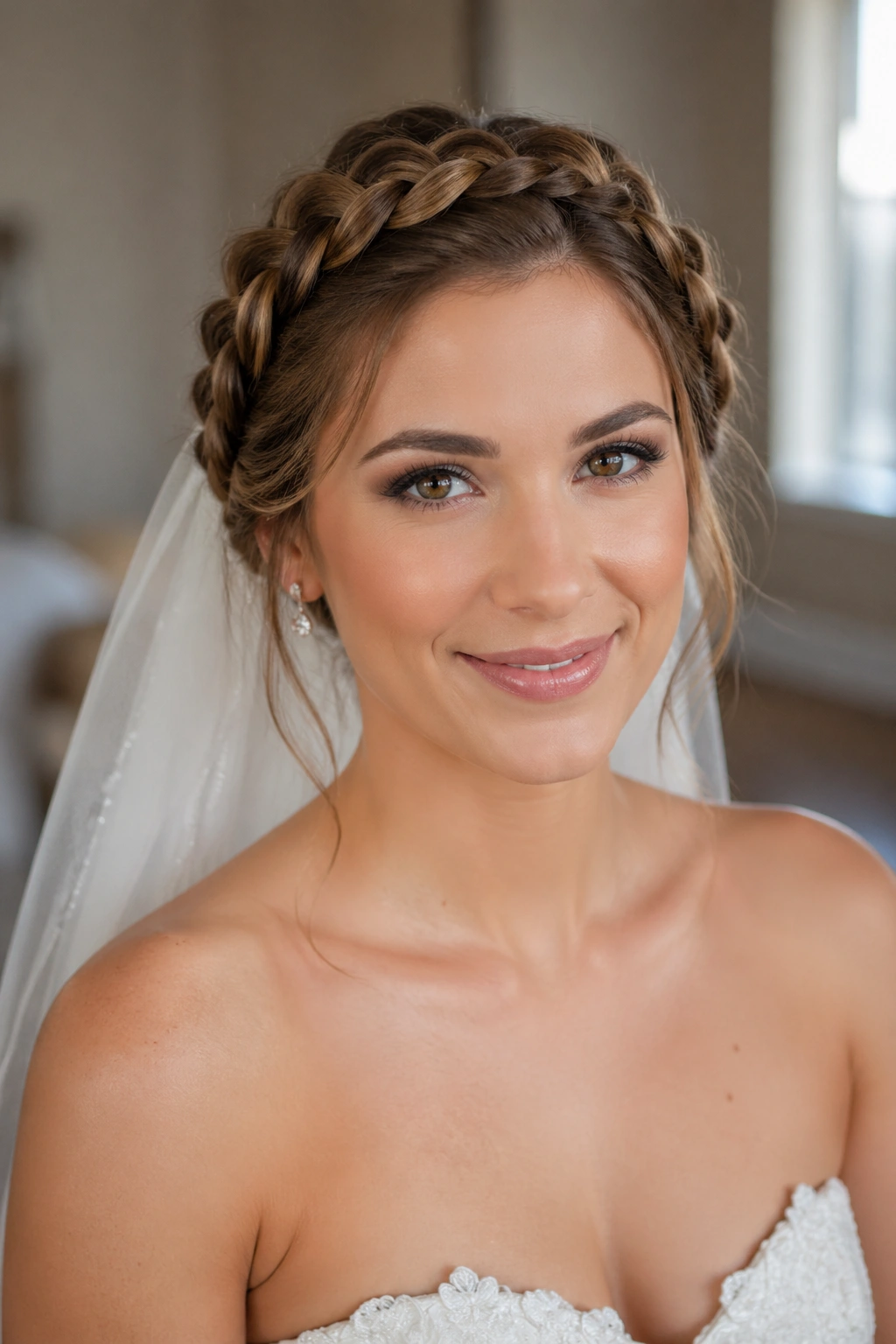
Want the face open but not stark? A halo braid solves that problem fast. It circles the head like a frame, which gives a strapless gown a little softness at the top without taking over the neckline. The effect is graceful, but not fussy.
The trick is to keep the braid airy. If the braid is pulled too tight or sits too low on the forehead, it can start to look heavy. I prefer a slightly lifted halo with a few wisps near the ears and a little texture at the crown. That gives the braid movement and keeps it from feeling rigid.
Veil or No Veil
A halo braid can work with a veil, but the veil should sit low, underneath the braid’s back edge. If it sits too high, the whole shape gets crowded. A simple comb veil does the job best because it slips in without bulldozing the braid line.
This style suits brides who want their shoulders clear, their face framed, and their hair completely off the neck. It also photographs well from the side, which is useful when the dress itself has a strong profile.
4. Braided Low Chignon
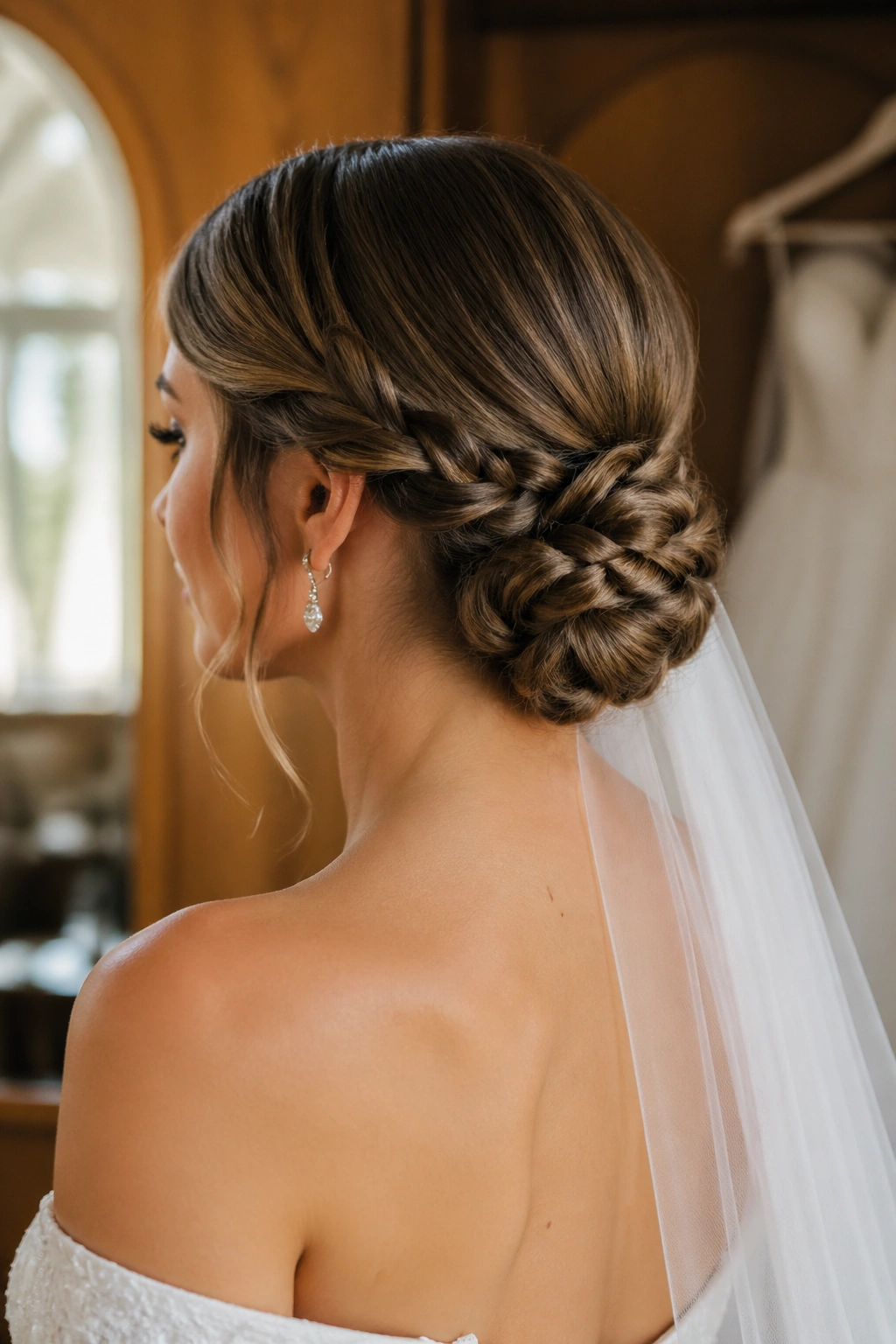
A braided low chignon is for the bride who wants polish without stiffness. The braid feeds into a knot or rolled bun at the nape, so the top half of the look stays open and the gown keeps its clean line. It’s one of those styles that looks expensive without shouting about it.
The braid element gives the bun more shape than a plain twist would. That matters with a strapless gown because the dress already gives you a big, clean shape across the chest. The hair needs to feel intentional, not like an afterthought. This does that nicely.
- Best with smooth or slightly textured hair
- Great for cathedral-length veils
- Works with statement earrings
- Ask for pins to be hidden inside the knot, not stacked on top
A little shine spray at the end helps the braid and chignon read as one piece. Skip anything too oily, though. You want glow, not slick. And if the dress has a detailed back, this is a strong choice because the bun sits low and lets the fabric show off.
5. Waterfall Braid Into Soft Waves
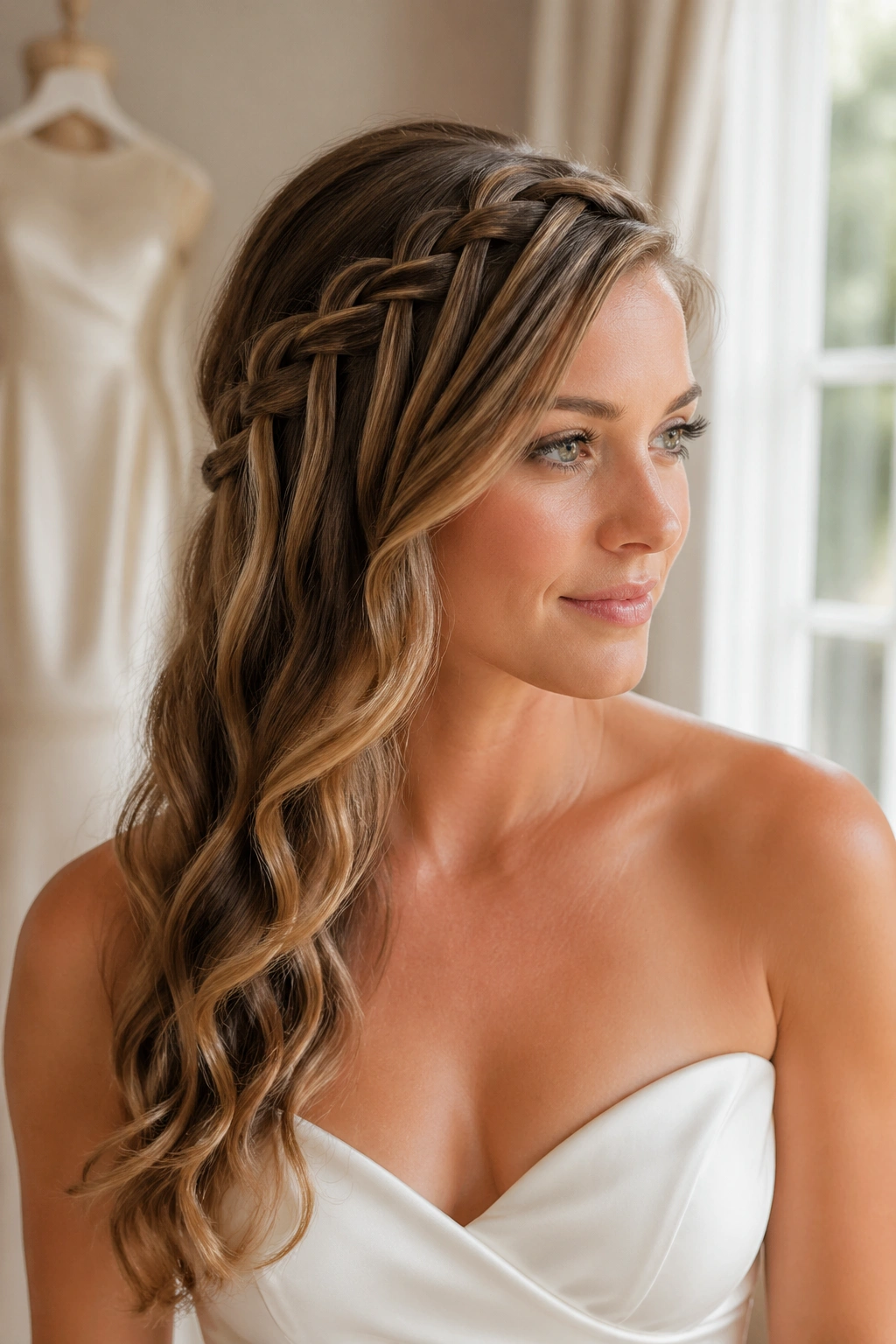
A waterfall braid is the answer when you want movement. One strand drops through the braid while the rest of the hair stays loose, so the style keeps some length around the shoulders without covering the neckline completely. For a strapless gown, that balance is gold.
The braid usually runs across one side or just behind the crown, and the loose hair spills underneath in waves. That mix keeps the look airy. It also gives the dress a little softness if the bodice is sharp, beaded, or very structured. The braid acts like a frame, but a light one.
This style works best when the waves are brushed out enough to feel relaxed. Tight curls can crowd the braid. A little bend, a little shine, and a little space between sections goes a long way. If the hair is fine, a texturizing spray at the roots helps the braid hold its shape. If the hair is thick, keep the braid smaller so it doesn’t feel bulky near the face.
It’s romantic without being sugary. That’s the appeal.
6. Dutch Crown Braid
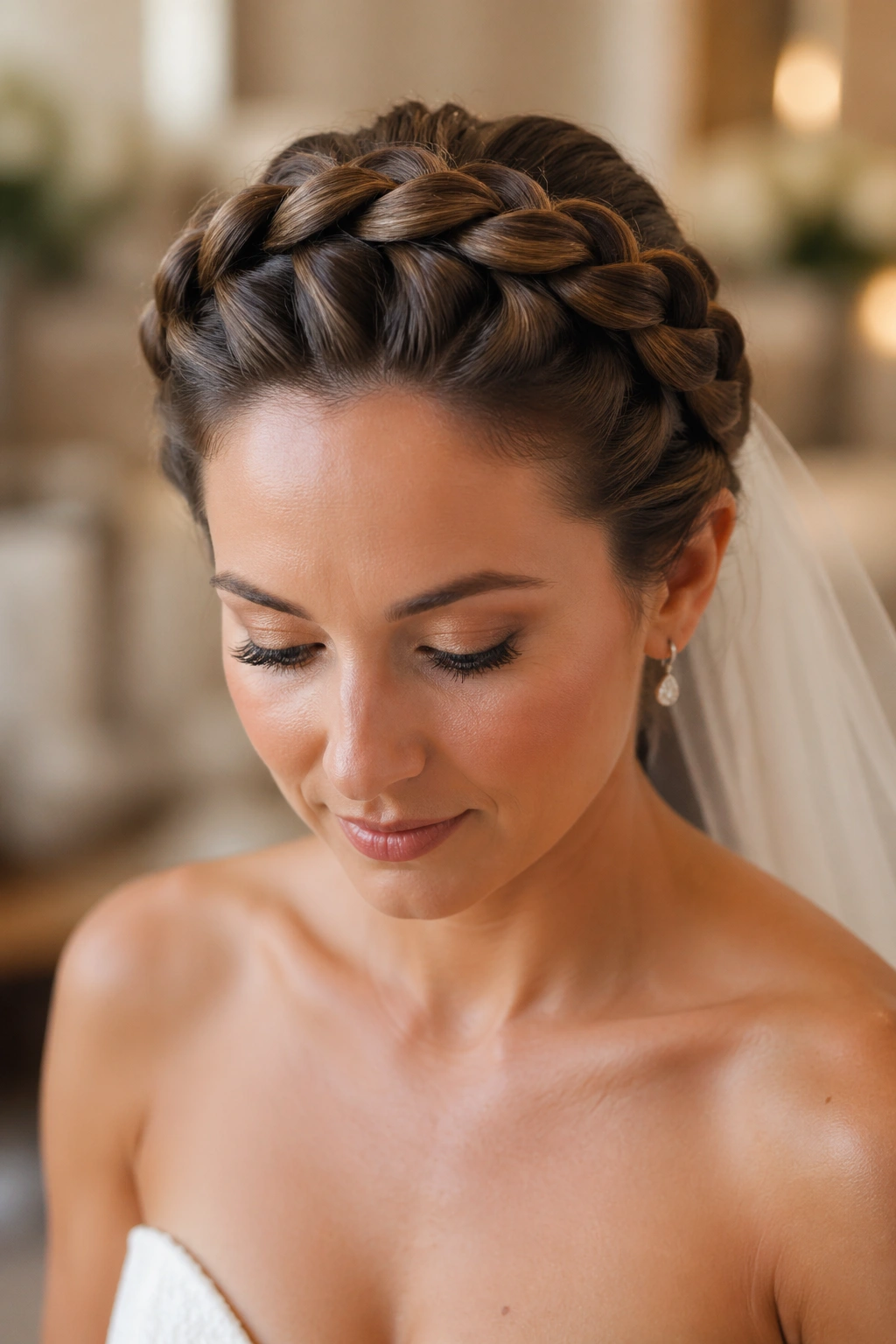
The Dutch crown braid sits higher and reads a bit bolder than a soft crown braid. That raised braid line gives a strapless gown more structure up top, which is handy when the dress itself is simple and needs the hairstyle to carry some of the visual weight.
Best When You Want Structure
Because the braid stands off the head a little, it creates shadow and depth. That sounds small, but it changes the whole look. You get a clearer outline around the face, and the open shoulders still stay visible. If the gown has a straight neckline or a clean corset shape, this braid helps the top half look finished.
Dutch braids also hold well on hair that tends to slip. The braid pattern locks better than a loose twist, so it’s a good choice for long ceremonies and a reception that runs late. Ask your stylist to keep the braid width even all the way around the crown, then soften the edges with a few pulled pieces.
A veil can tuck in just below the back curve of the braid. Don’t bury it inside the braid itself. That gets messy fast. A little lift near the crown and a clean nape line make this one feel bridal instead of sporty.
7. Milkmaid Braids With a Modern Finish
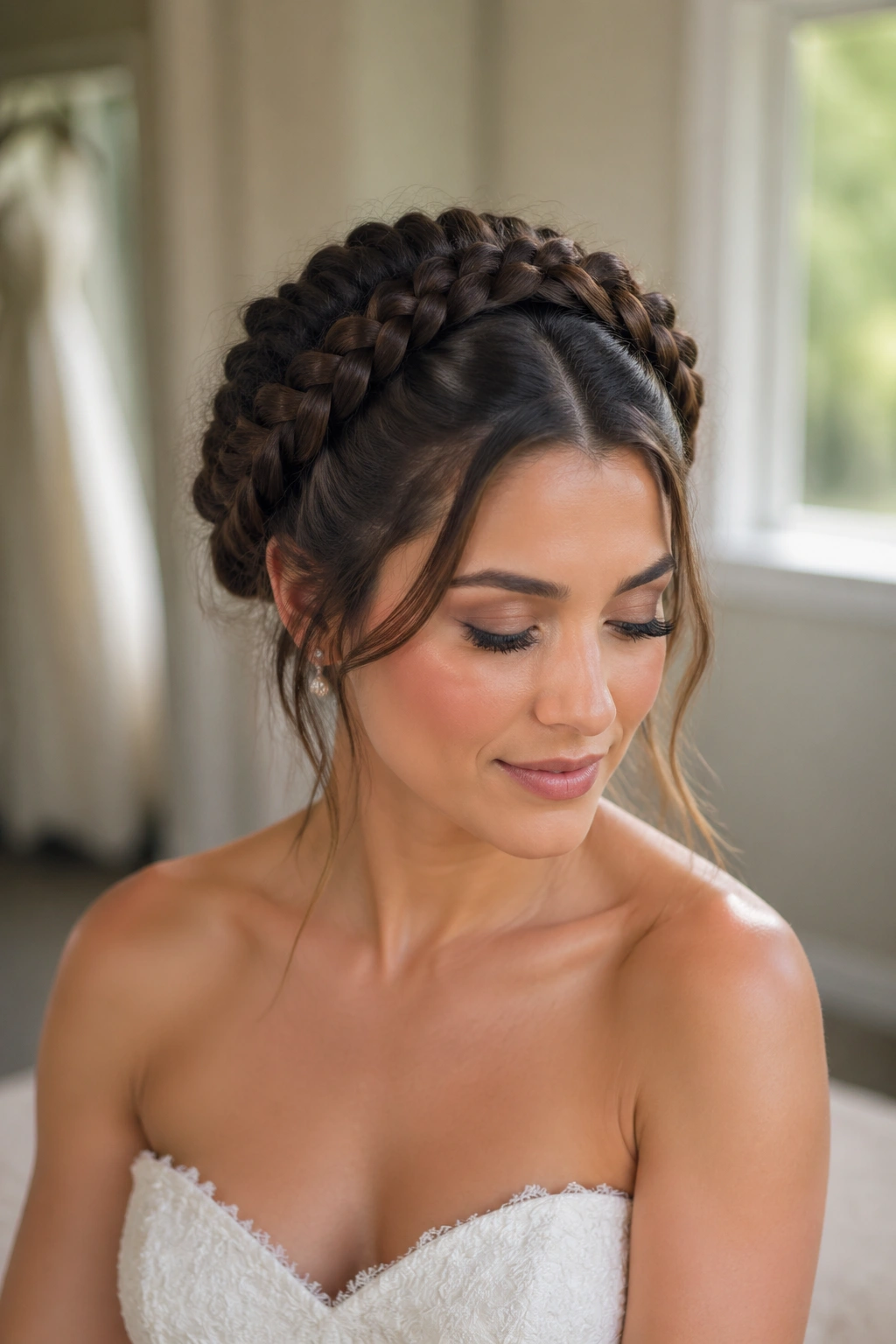
Milkmaid braids can look old-fashioned if they’re done too neatly. Done right, though, they are sharp. The modern version sits a little looser, with the braids pinned across the top of the head and a touch of volume at the crown so the strapless gown still has room to breathe.
The key is to keep the braids chunky enough to read from a distance. Thin braids can vanish, especially if the dress is elaborate. Slightly fuller braids give the hairstyle some presence, which is useful when the gown’s neckline is wide or straight across.
A middle part keeps the look from feeling too sweet. So do clean edges and well-placed pins. I’d avoid heavy curls at the front unless the dress is extremely minimal; the braids already bring enough detail.
This is a good pick for brides who want the shoulders open but don’t want hair falling down the back all night. It also plays nicely with smaller earrings and a soft lip. The whole look stays tidy without turning severe.
8. One-Shoulder Side Braid
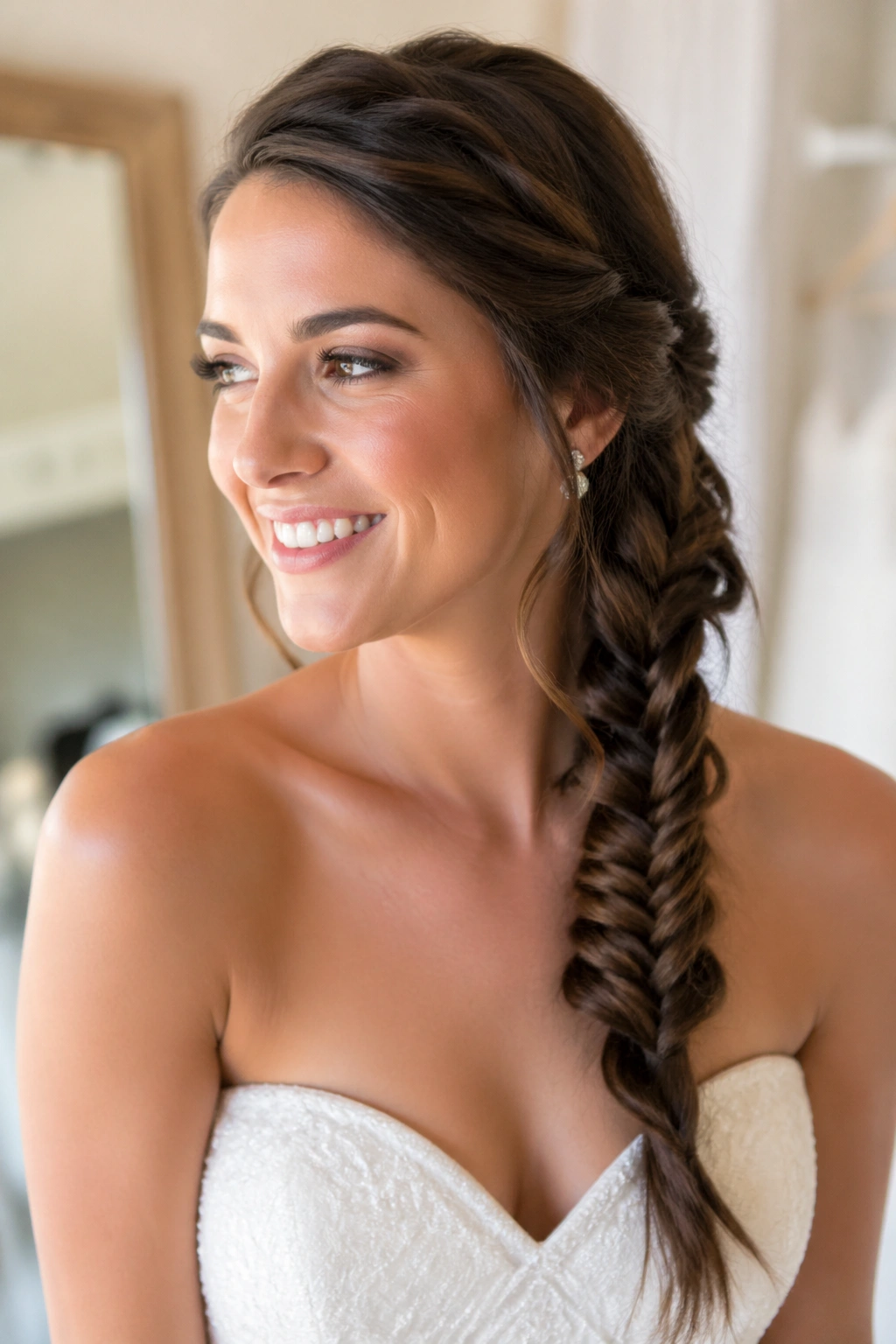
A one-shoulder side braid is one of the easiest ways to create balance with a strapless gown. The braid drapes across one side of the body while the other shoulder stays bare, so the hairstyle and dress feel like they’re talking to each other instead of competing.
If the gown has a dramatic skirt, this braid keeps the top from feeling empty. If the dress is slim and sleek, the braid adds texture without adding bulk. Either way, it gives the eye a clean line to follow from the face to the shoulder and then down the length of the braid.
Where It Sits Matters
Keep the braid anchored low enough to feel relaxed, usually just behind the ear or at the back of the jawline. Too high, and it starts to look forced. Too low, and it can drag the face down. A soft side part helps the braid fall naturally.
The end can be curled, braided all the way through, or tied off with a wrapped section of hair. I’d skip anything too shiny at the base. This style already has enough shape. It doesn’t need extra noise.
9. Pull-Through Braid Ponytail
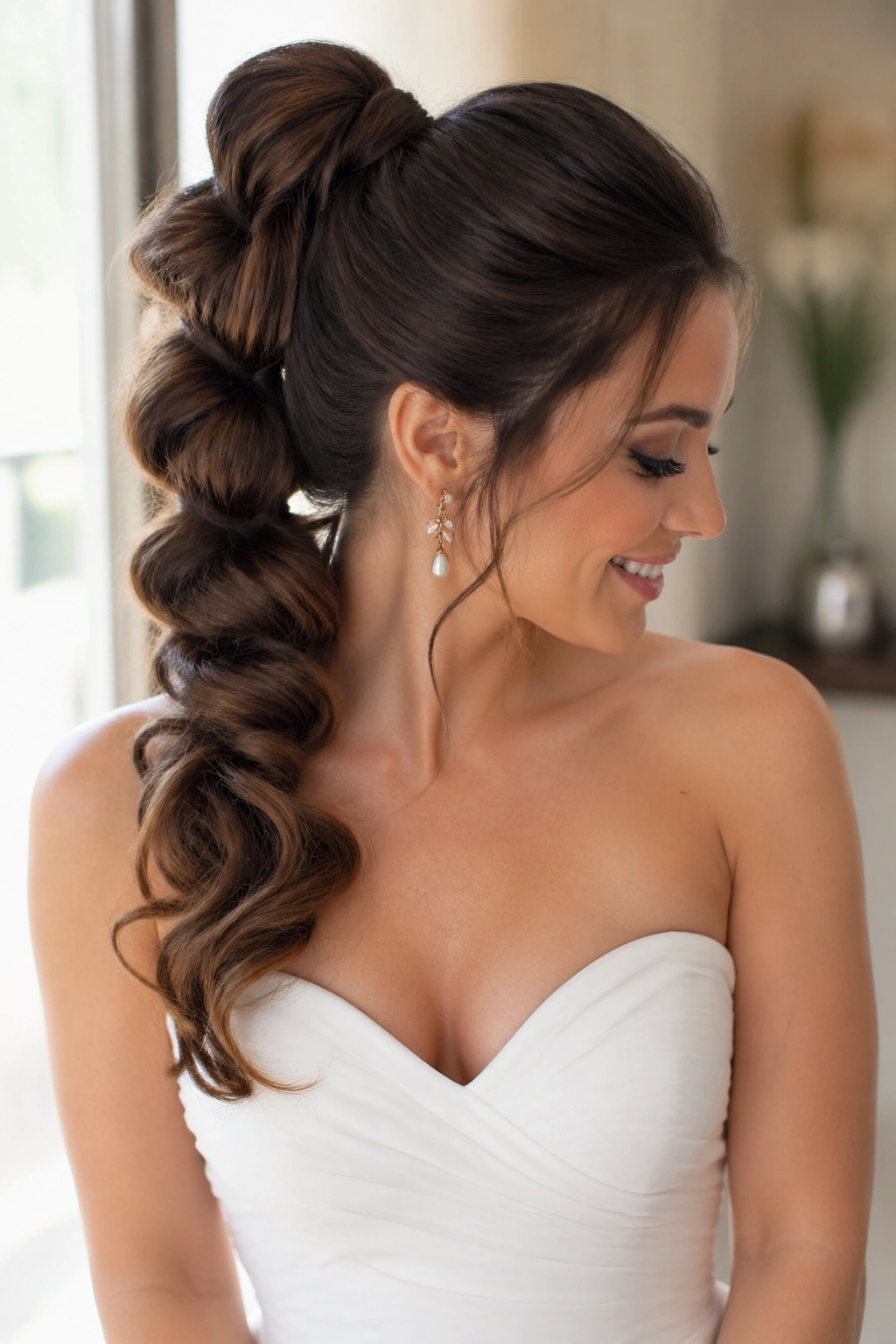
A pull-through braid ponytail has a little more height than a regular braid, which makes it a smart match for a strapless gown. That vertical lift helps counter the wide open neckline and keeps the upper half of the silhouette from feeling too flat.
It’s a strong choice for brides who want length to show. The braid sections look fuller than a standard plait, and the ponytail shape gives the style a clean, modern edge. It also works well with dresses that have a minimalist bodice or a sharp architectural cut.
A few things make or break this look. The elastics need to be hidden, the sections need to be puffed evenly, and the tail should be curled or smoothed so it doesn’t dangle like an afterthought. If the hair is very fine, a few clip-in pieces can help the braid hold its body. If the hair is thick, keep the sections a little looser so the braid doesn’t turn into a brick.
This one wears well for dancing. It stays contained, but it still has movement when you walk.
10. Messy French Braid Into a Bun
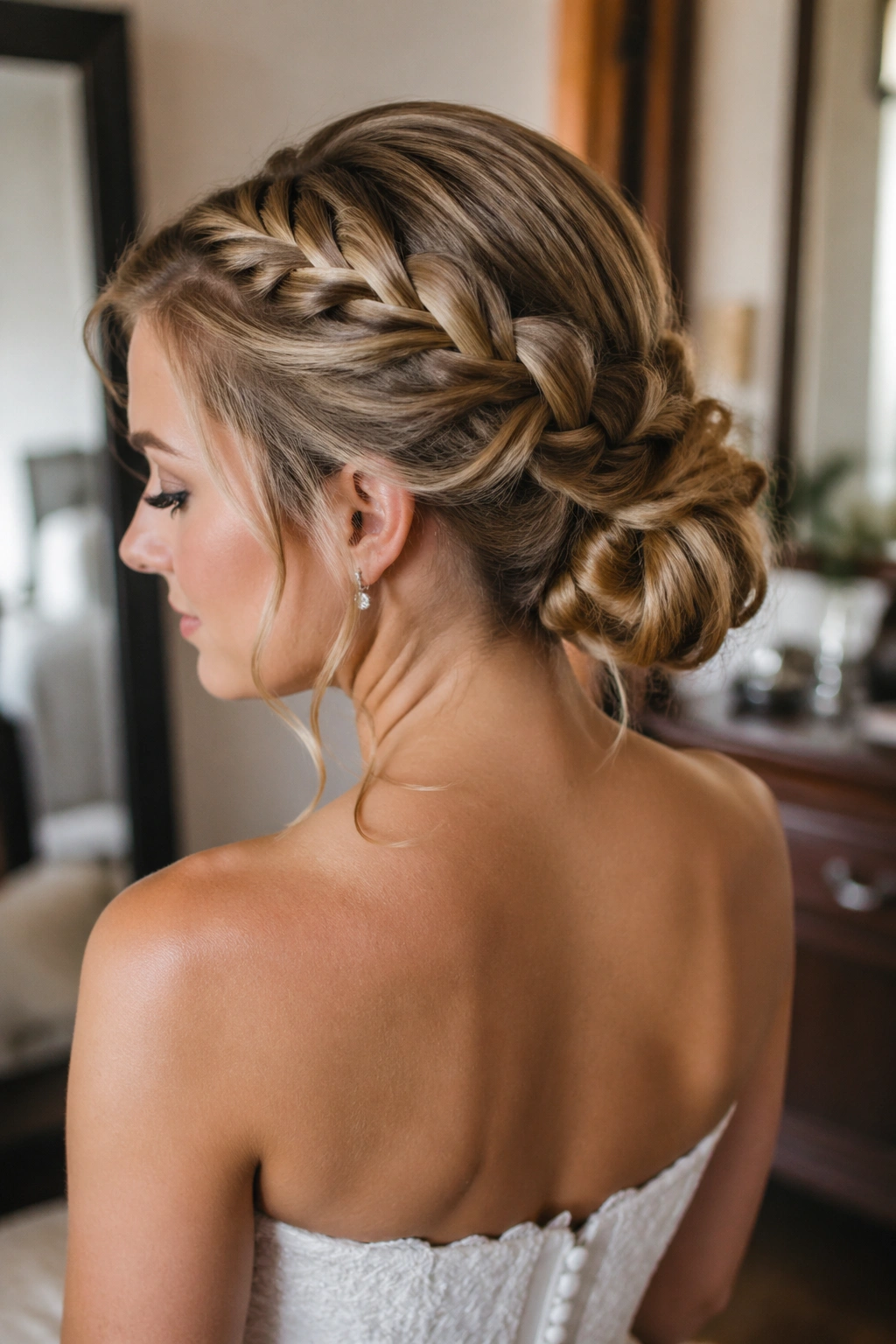
Need something that won’t fall apart halfway through the reception? A messy French braid into a bun is hard to beat. The braid starts at the crown, feeds downward, and then gathers into a knot at the nape, so the whole style stays secure without looking stiff.
What makes this work with a strapless gown is the mix of polish and looseness. The braid gives the top half shape, while the bun keeps the back clean. That leaves the neckline open and the shoulders visible, which is exactly what a strapless dress asks for.
The Loose Parts Should Be Chosen, Not Random
Pull a few face-framing pieces loose on purpose. Don’t just tug at everything and hope it looks romantic. The best version has two or three soft pieces around the ears, a little height at the crown, and a bun that sits low enough to let the dress show off.
This style is practical for humid weather, long ceremonies, and brides who do not want to think about their hair once the veil comes off. It’s a workhorse. A pretty one, but still a workhorse.
11. Rope Braid Low Bun
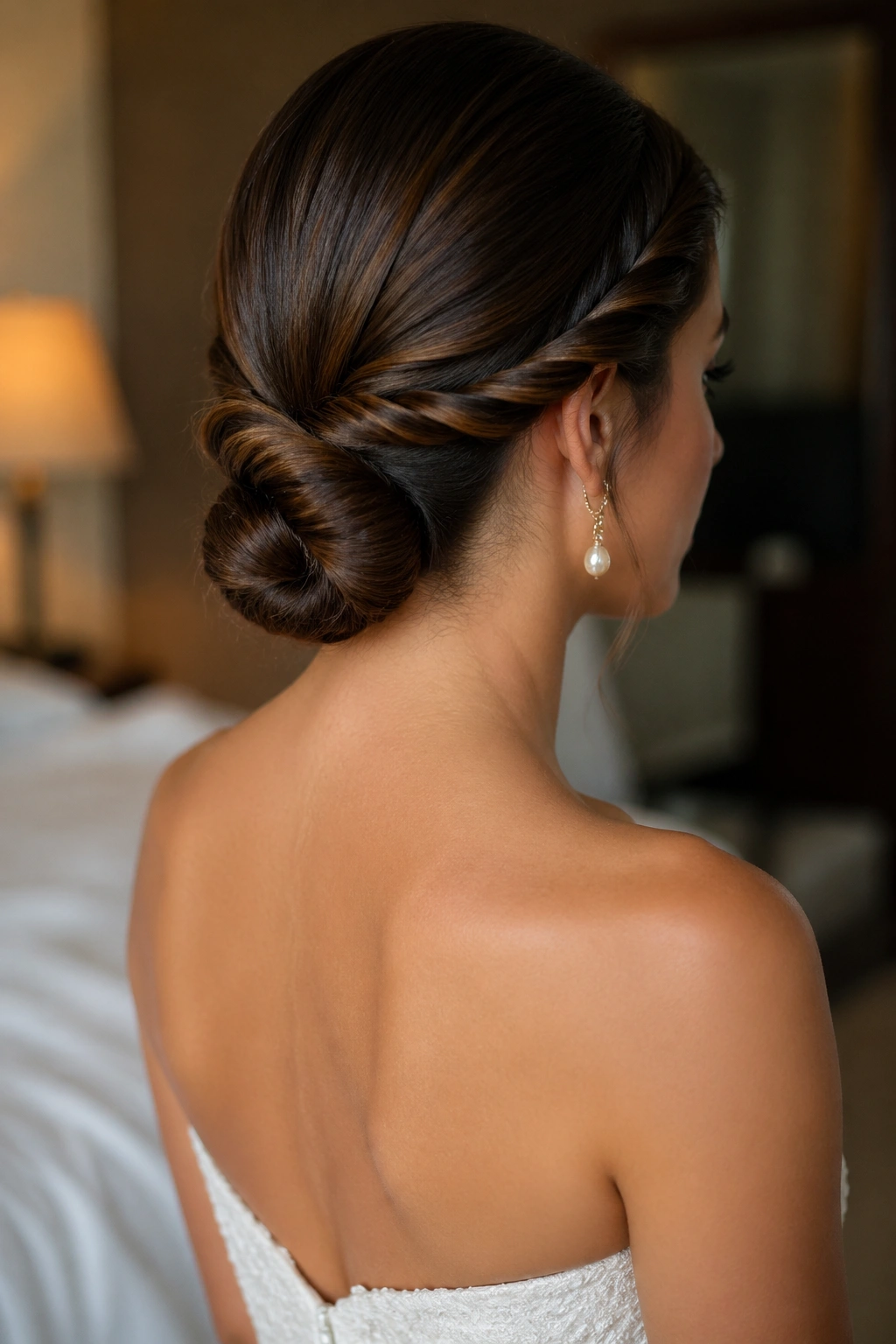
A rope braid low bun is a quieter choice, and that’s part of its charm. Instead of the woven look of a standard braid, the rope twist feels smooth and glossy, which is a nice contrast against textured lace or matte crepe. With a strapless gown, that contrast keeps the hair from fighting the dress.
The style starts with two sections twisted around each other, then pinned into a low bun or coil at the nape. It gives the back of the head a neat line and leaves the upper shoulders completely clear. That matters if the dress has a straight neckline or a lot of detail at the bodice.
This is one of my favorite options for brides who want something tidy but not plain. The rope texture catches the light differently from a regular braid, so it reads as deliberate without screaming for attention. Add a little shine serum through the ends, but keep it off the roots so the style doesn’t flatten.
It’s especially good with simple earrings and a strong makeup look. The hair behaves. That’s the point.
12. Braided Mohawk With Soft Sides
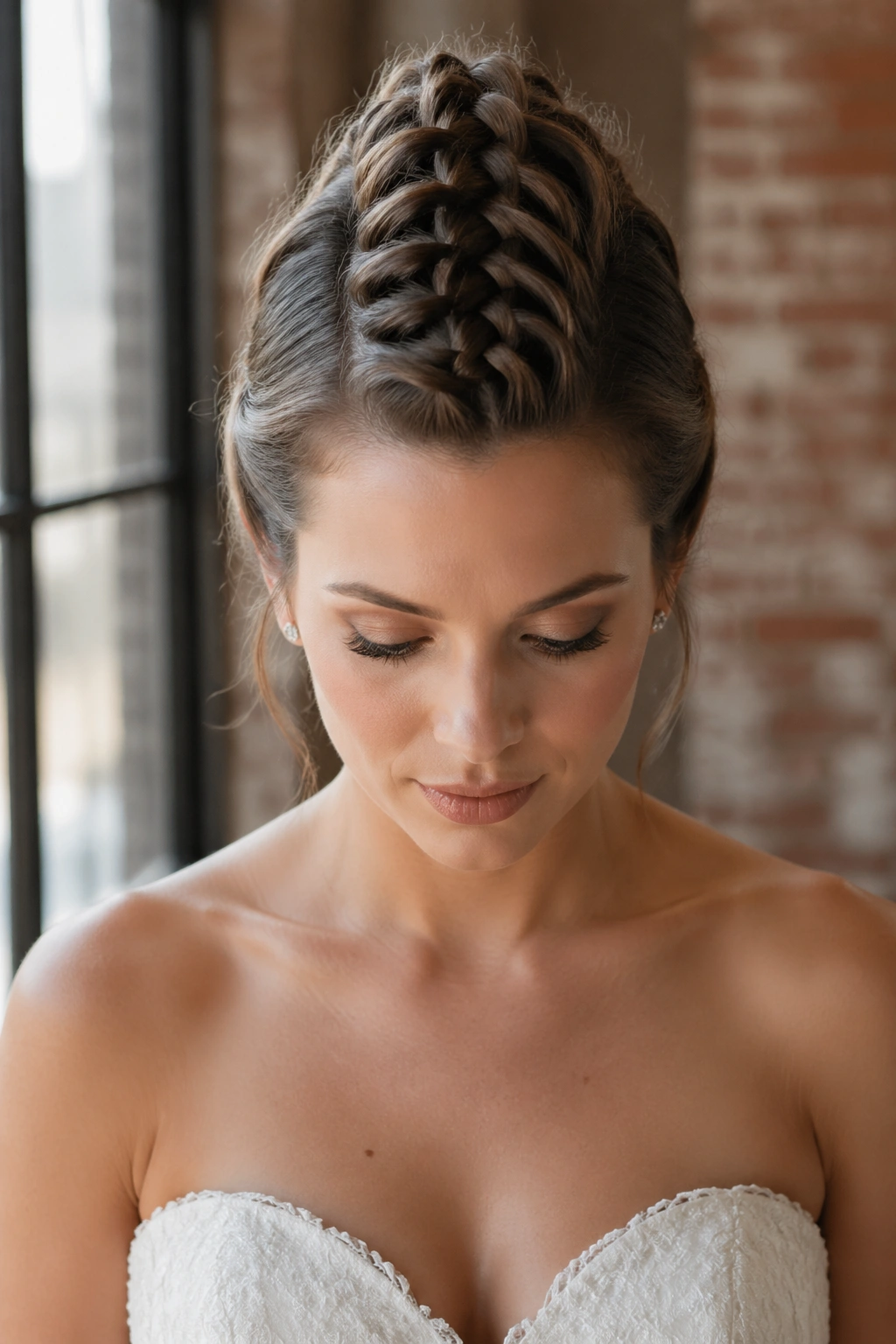
A braided mohawk sounds bolder than it usually looks on a bride. Done with soft side sections and a raised braid through the center, it can be elegant, modern, and just a little bit daring. That makes it a strong match for a strapless gown with clean lines.
The center braid pulls the eye upward, which helps balance the open neckline. The sides stay smooth or softly pinned back, so the shoulders remain visible. This kind of shape works especially well with gowns that are fitted through the bodice and then flare out, because the hair adds height where the dress is carrying width.
If your hair is fine, teasing the crown a little helps the braid sit with more body. If your hair is thick, ask for the braid to stay slightly loose through the middle so it doesn’t look too stiff. The edges around the temples should be clean but not harsh.
This is not the most traditional bridal braid. That’s okay. Some dresses ask for a little edge.
13. Accent Braids in Loose Waves
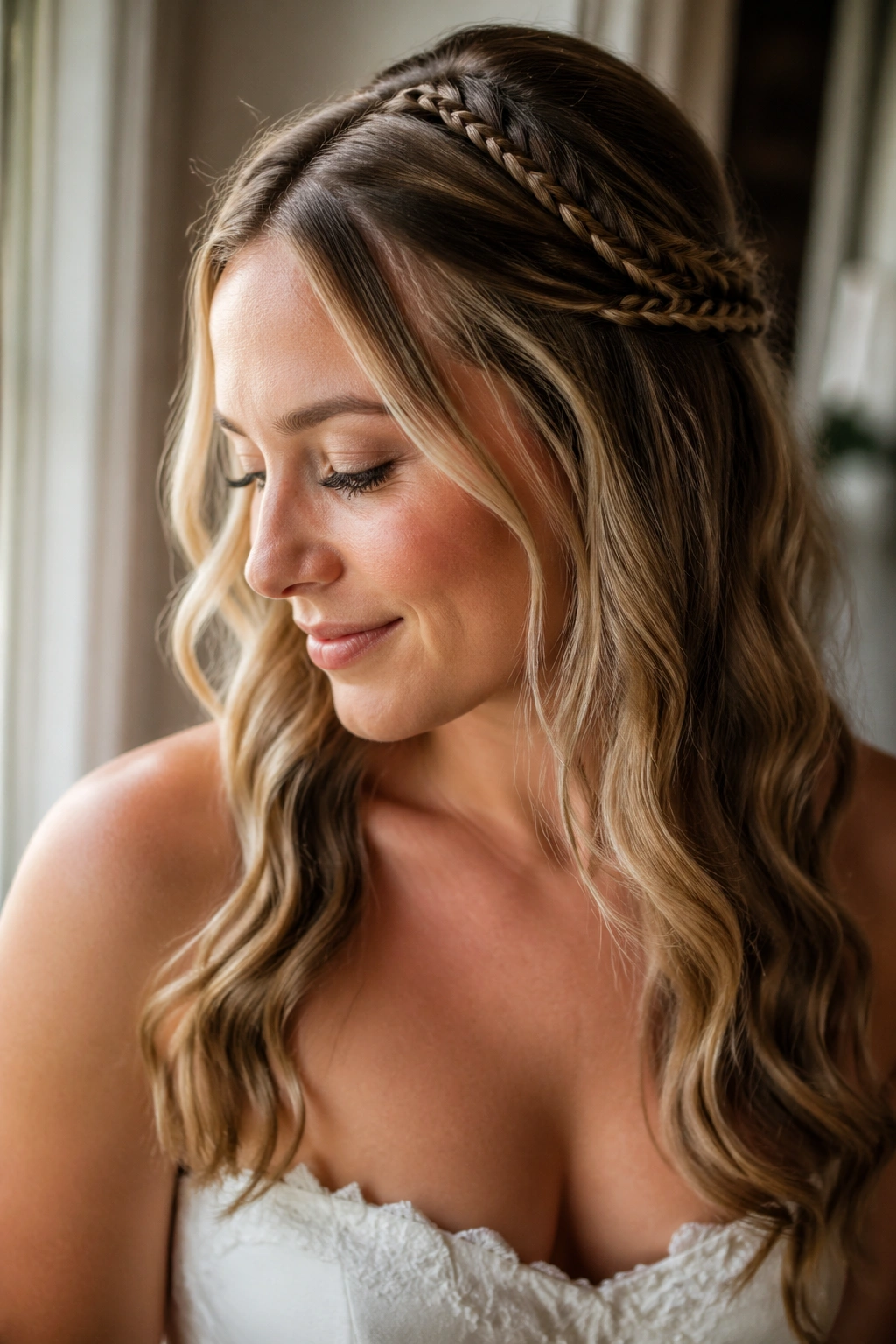
Accent braids are for brides who want a little braid detail without turning the whole hairstyle into a braid. Tiny plaits tucked into loose waves can make a strapless gown feel more finished, especially if the dress is simple and the hair needs a small design note.
Where to Place Them
- One thin braid near each temple keeps the face open
- A third braid near the crown adds texture without crowding the top
- A hidden braid near the nape can help anchor a veil or comb
- Keep each braid between 1/4 and 1/2 inch wide so the look stays soft
The charm here is restraint. A strapless gown already gives you a big visual surface. You do not need the hair to shout. A few braids woven into soft waves add interest, and the rest of the hair can stay loose, brushed, and touchable.
This works nicely for brides who want a more relaxed feel or who plan to take the veil off after the ceremony. The braids stay in place, the waves stay pretty, and the shoulders remain the focus.
14. Fishtail Low Ponytail With Wrap
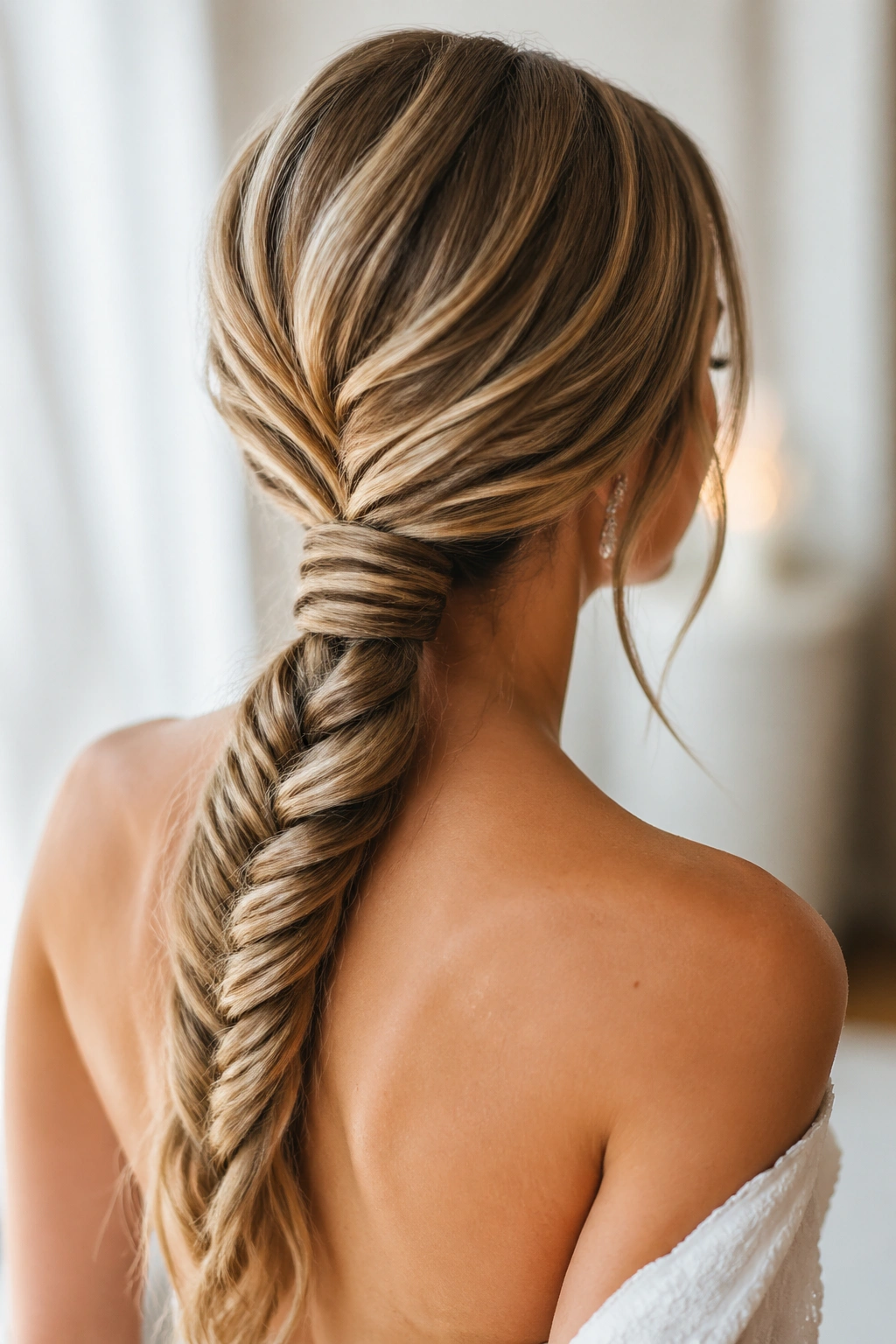
A fishtail low ponytail is one of the cleanest ways to show off a strapless neckline. The hair stays low and controlled, but the fishtail pattern gives the ponytail enough detail that it doesn’t look like a regular weekday style dressed up with hairspray.
The base should sit at the nape, not halfway up the back of the head. That lower placement keeps the dress in view and lengthens the neck. Wrap a small piece of hair around the elastic, pin it underneath, and keep the tail smooth or softly waved depending on the dress fabric.
Where It Shines
This look is especially good with modern gowns, crepe dresses, and minimal satin. It lets the dress be sleek while the braid adds texture. If you want earrings, this is a strong choice because the hair pulls away from the shoulders and the face.
The fishtail itself can be tight or softly pulled apart. I’d lean softer for bridal wear. Hard edges can feel a little sharp next to a romantic dress.
15. Braided Updo With Floral Pins
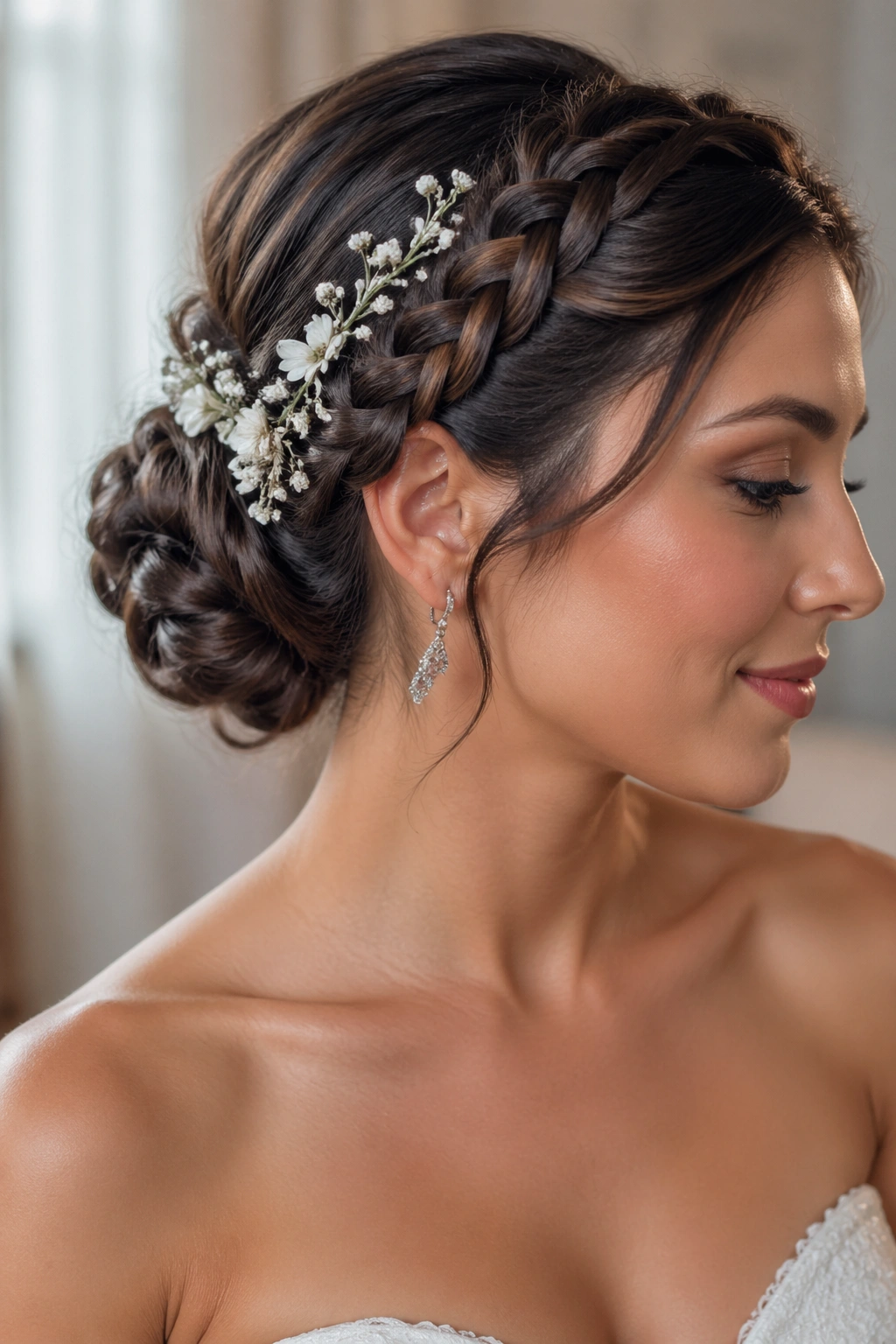
A braided updo with floral pins leans fully into the bridal moment, and there’s nothing wrong with that. The braid builds the shape, the updo keeps the shoulders clear, and the flowers add just enough detail to connect the hair to the bouquet or the ceremony space.
The flowers should be small. Tiny buds, sprigs, or a few delicate pins are usually enough. If you pack too many blooms into the style, the braid disappears, and the whole thing starts to feel like a centerpiece. That is not the goal.
This kind of braid works best when the dress has a simple neckline or a clean, sculpted bodice. The hair adds softness at the back while leaving the front open, which keeps the strapless gown from feeling naked. It also photographs nicely from behind, which matters more than people admit.
I’d place the floral accents where the braid curves into the updo, not scattered all over. One cluster is often stronger than four little ones. Less fuss. Better shape.
16. Double Side Braids Meeting at the Nape
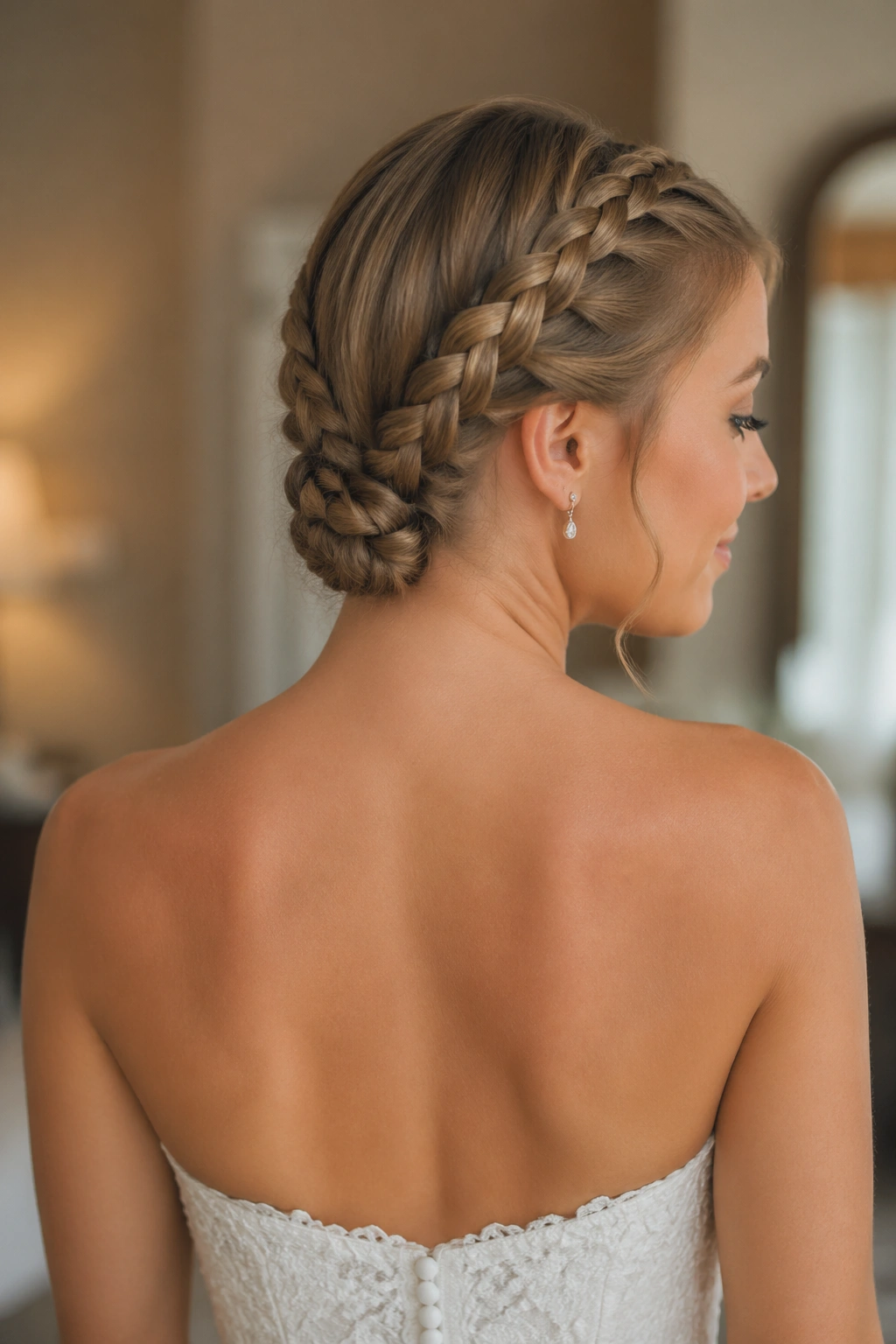
What happens when you want symmetry without stiffness? Double side braids meeting at the nape are a smart answer. The two braids start near the temples or just behind the ears, then join low in the back, which keeps the shoulders open and the neckline clear.
The look feels balanced, which is handy with a strapless gown because the dress already creates a strong horizontal line. These braids break that line in a gentle way, guiding the eye downward rather than letting it stop abruptly at the top edge of the bodice.
This style works well on medium to long hair and is especially nice if you want the hair to stay contained without going into a full bun. A few loose pieces around the face can soften the shape, but I’d keep them controlled. Too many flyaways can make the style lose its symmetry.
It’s a good option for brides who like order. Not rigid order. Just enough structure to feel calm.
17. Lace Braid Side Sweep
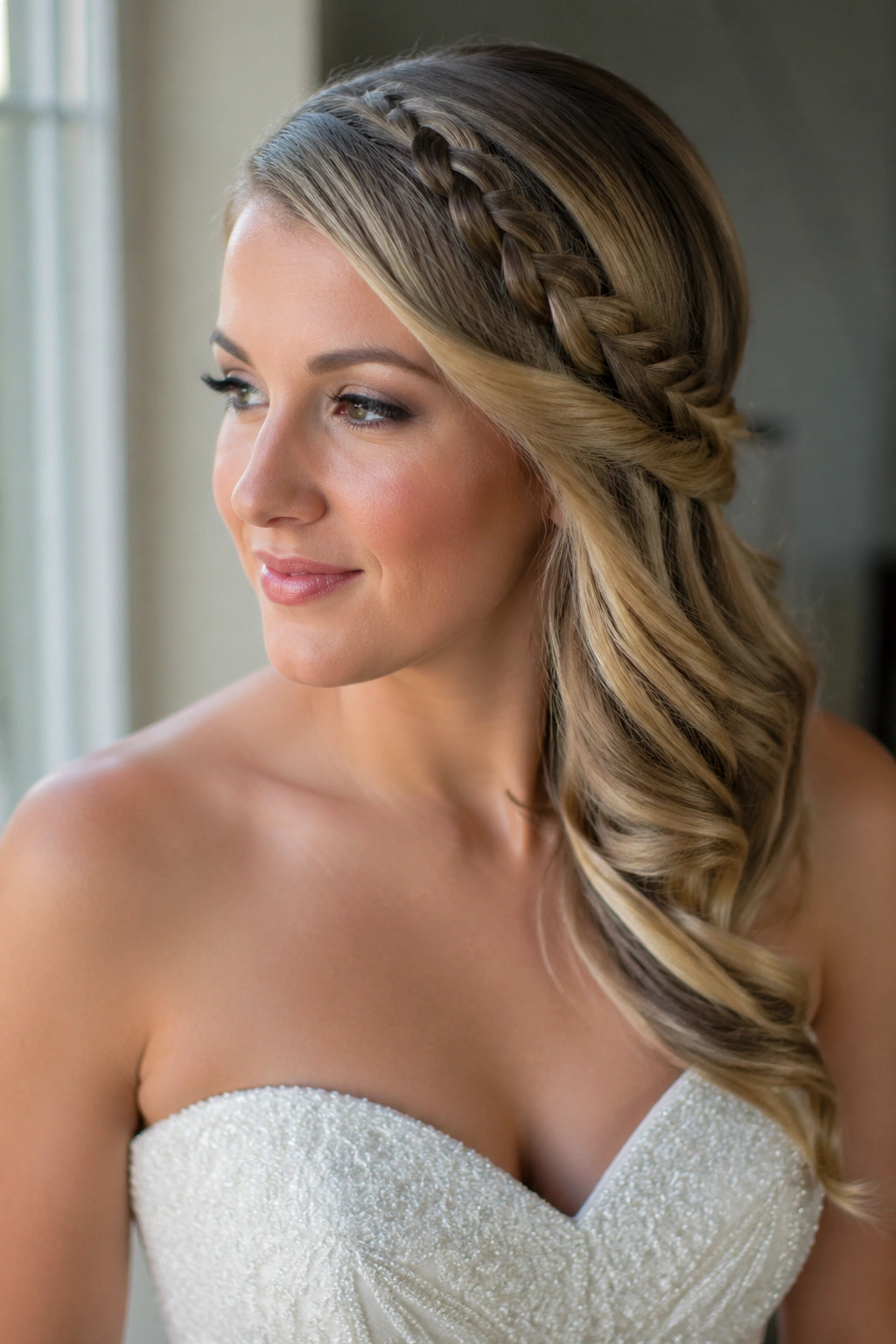
A lace braid side sweep is a close cousin of the waterfall braid, but the texture sits flatter and cleaner against the head. That makes it useful when you want the braid detail to stay elegant instead of airy. The sweep across one side also leaves the strapless neckline open, which keeps the dress in focus.
Unlike a waterfall braid, the lace braid keeps adding hair only from the top side. That makes the braid look more controlled and a bit more polished. It’s a nice middle ground for brides who want braid detail but don’t want a full crown or halo shape.
This style looks especially good with side-parted hair and statement earrings. The braid pulls the eye toward the face, then lets the rest of the hair fall softly over one shoulder or down the back. If the gown has beading near the neckline, this braid won’t fight it.
A little texture spray at the roots helps the braid grip. Without it, the section can slip, and then the whole side sweep loses its line.
18. Twisted Braid Crown With Veil Placement
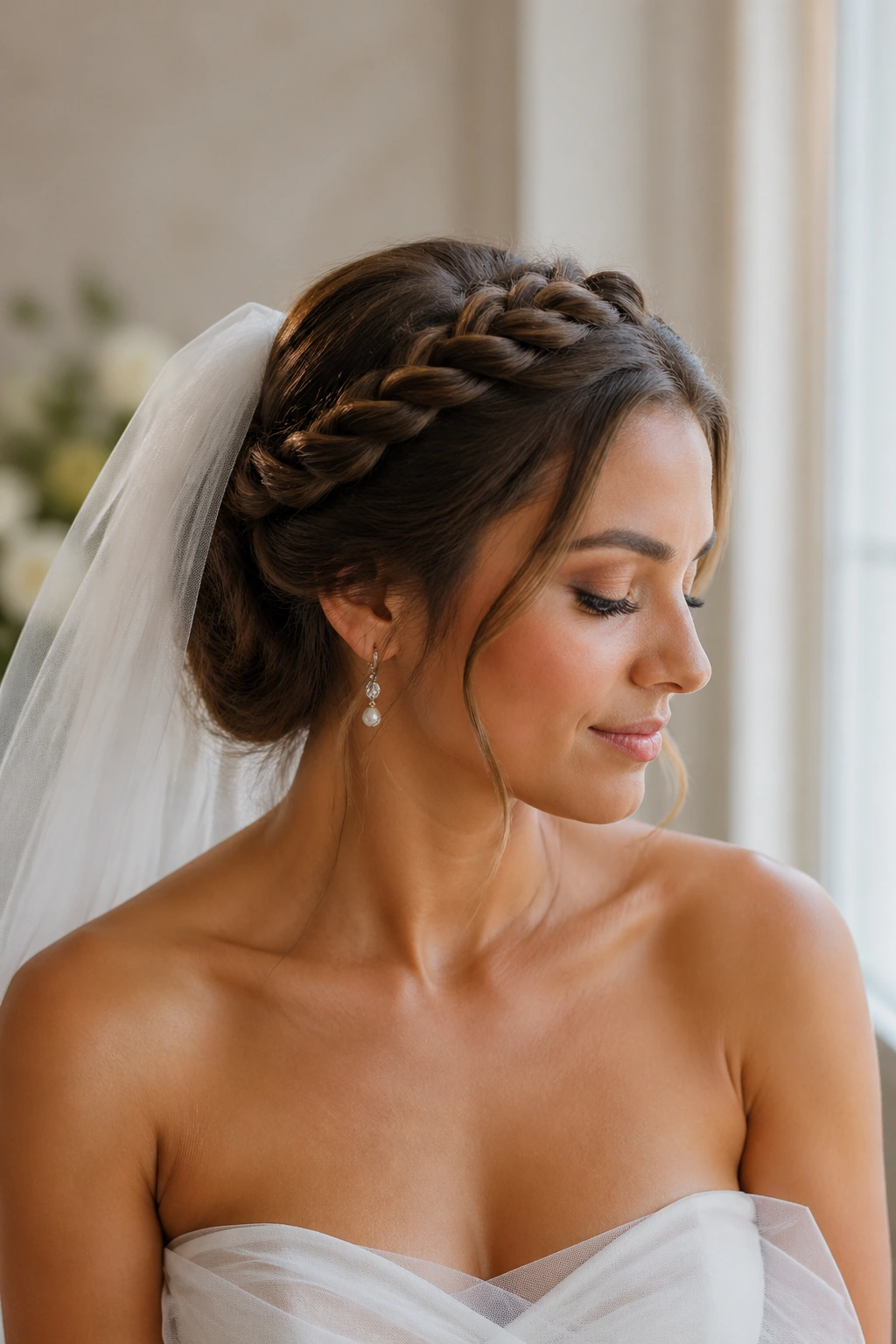
A twisted braid crown is useful when you know a veil is part of the plan. The crown creates a stable path for the comb, and the twist keeps the top of the head polished while the strapless gown remains fully visible. It’s neat without feeling too hard.
How to Place the Veil
- Set the veil comb just below the crown line, not on top of it
- Keep the braid width around 1 inch so the veil doesn’t swallow the detail
- Pin the braid ends under the twist, not outside it
- Use two hidden pins on each side if the veil feels heavy
This style is good for brides who want the veil and braid to work together instead of fighting for attention. The braid frames the head, the veil falls behind it, and the shoulders stay open. That is a good combination with a strapless gown, especially if the dress has lace or satin that already carries plenty of visual weight.
If you want the veil removed later, this braid still holds its shape on its own. That makes the transition from ceremony to reception much easier.
19. Chunky Mermaid Braid Over One Shoulder
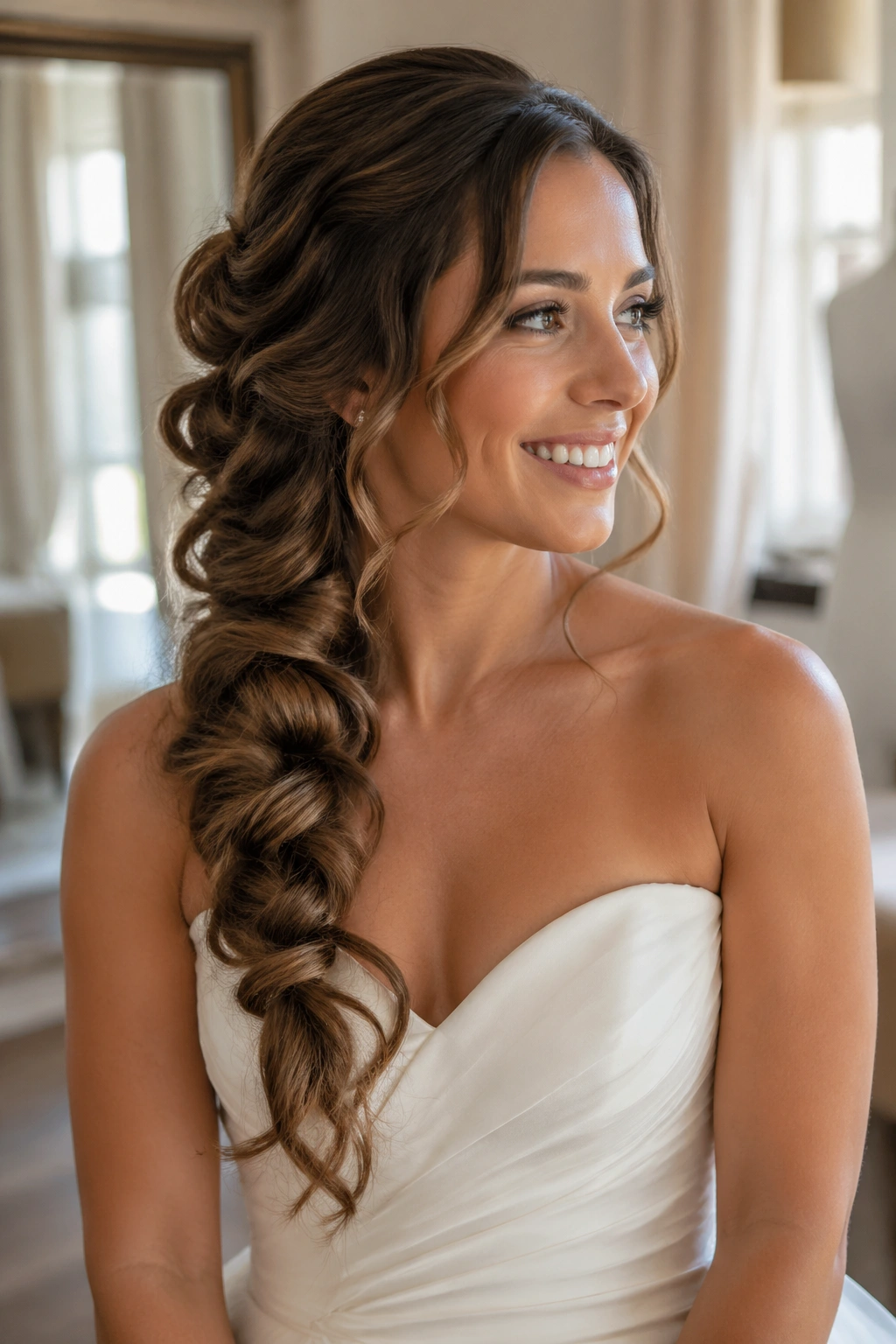
A chunky mermaid braid is made for length. It’s thick, pulled apart, and laid over one shoulder so the other side of the strapless gown stays clear. The effect is soft but strong, which is a nice place to be when the dress itself is simple.
The braid should not look stiff. Gently tug at the outer loops once it’s secured, and let the finish feel a little lived-in. The sectioning can be loose, but the base should stay neat so the braid doesn’t slide around during the day. If the hair is very long, curl the ends before braiding. That keeps the tail from hanging too straight.
This is a strong choice for column dresses, fitted gowns, or dresses with a lot of fabric in the skirt. The braid adds weight to the upper body without covering the neckline. It also gives the photographer something to work with from the back and side.
If you like a slightly softer look, leave one or two thin pieces around the face. That is enough. More than that, and the braid loses its shape.
20. Loose Woven Braid With Pearl Thread
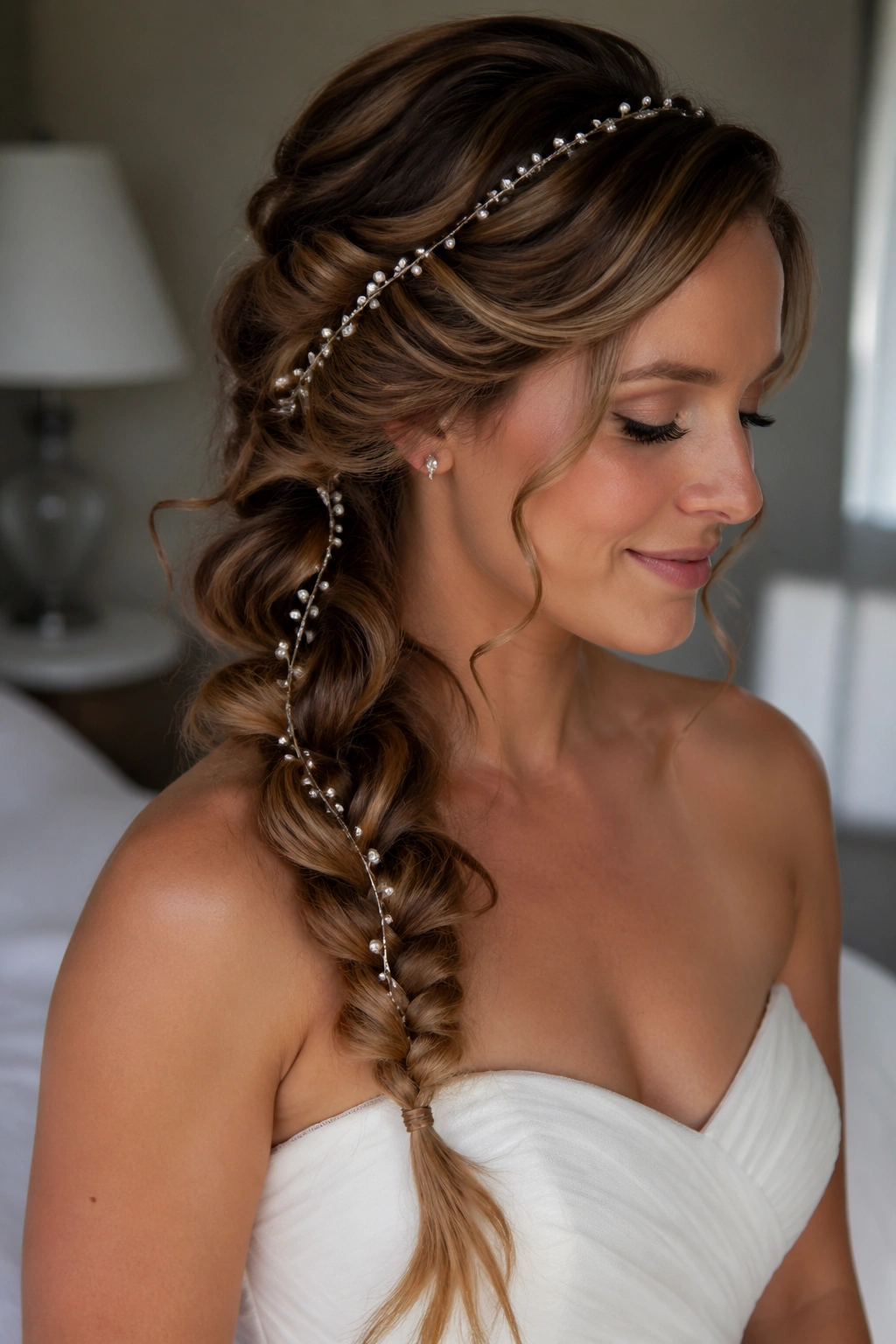
A loose woven braid with pearl thread is one of those details that can quietly make the whole bridal look feel more finished. The braid itself stays soft and relaxed, while a thin thread of pearls or a pearl pin line runs through it and picks up light in small flashes.
The important part is restraint. The pearls should act like a line, not like decoration piled on top of decoration. If the gown already has beading, keep the braid simple and use only a few pearl accents. If the dress is plain, you can let the thread do a little more work.
This braid looks best when it sits low or off to one side, so the strapless neckline stays open. It can be worn with waves, with a low knot, or as a single loose plait down the back. I’d keep the hair itself textured but not frizzy. The pearl detail stands out more when the braid has a clean base.
It’s subtle in a good way. Not invisible. Just controlled.
21. Low Braided Knot With Clean Edges
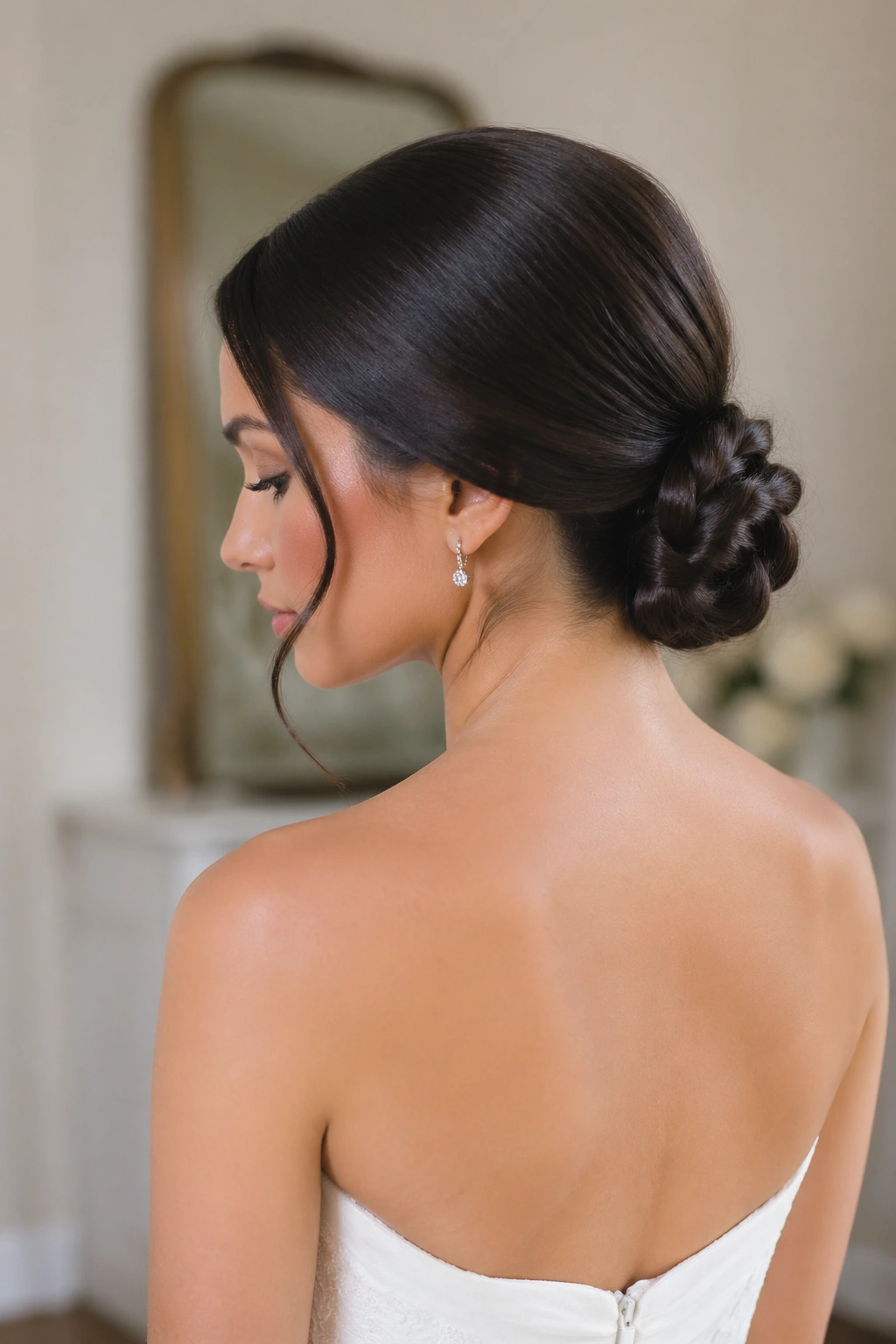
A low braided knot is the style I’d hand to a bride who wants the neckline completely clear and the shape undeniably polished. The braid starts at the nape or just above it, then folds into a knot that sits low enough to show the back of the dress if the gown has an open line there.
Clean edges matter here. Smooth the crown, tuck the sides neatly, and keep the braid compact before it turns into the knot. If the braid is too puffy, the style can feel heavy next to a strapless bodice. If it’s too tight, it loses the softness that makes braid work so well for weddings in the first place.
This look suits bold earrings, a strong lip, or a gown that already carries texture in lace, embroidery, or ruching. The hair doesn’t compete. It supports. That’s a useful distinction, and it’s why this style ends up being a quiet favorite.
If you want one last practical note: ask your stylist to test the knot with your veil or hairpiece in place before everything is sprayed down. Saves time. Saves nerves too.
A strapless gown gives you room to make a choice, not a compromise. The braids that work best are the ones that respect the neckline, keep the shoulders visible, and still bring enough shape to feel deliberate.
Pick the version that fits the dress, then let the hair support the line instead of covering it. That’s where the good bridal looks usually live.