

Thick hair changes the rules. A cut that looks airy on fine hair can turn boxy, puffy, or flat-out stubborn once you add density, and that’s exactly why bixie haircut ideas for thick hair are worth a serious look. The bixie sits in that sweet middle ground between a bob and a pixie, which means you get shape without losing all the weight you actually need for control.
The trick is in the balance. Too blunt, and thick hair can balloon at the sides. Too layered, and you can end up with a fuzzy triangle that needs a round brush every morning. A good bixie takes bulk out where it fights you most — usually through the crown, behind the ear, and at the nape — while leaving enough length on top and around the face to keep the cut from feeling too severe.
What I like about this haircut on dense hair is how adaptable it is. One version can feel soft and feminine, another can read sharp and cool, and a third can lean shaggy and undone without asking you to commit to a full short crop. That flexibility matters, because thick hair doesn’t behave like a neat little swatch in a salon photo. It has its own opinions.
So the useful question isn’t whether a bixie can work. It’s which version fits your hair texture, your styling habits, and how much volume you’re willing to manage before coffee. These 20 ideas cover the versions that tend to make thick hair look intentional instead of heavy.
1. Feathered Bixie With Airy Ends
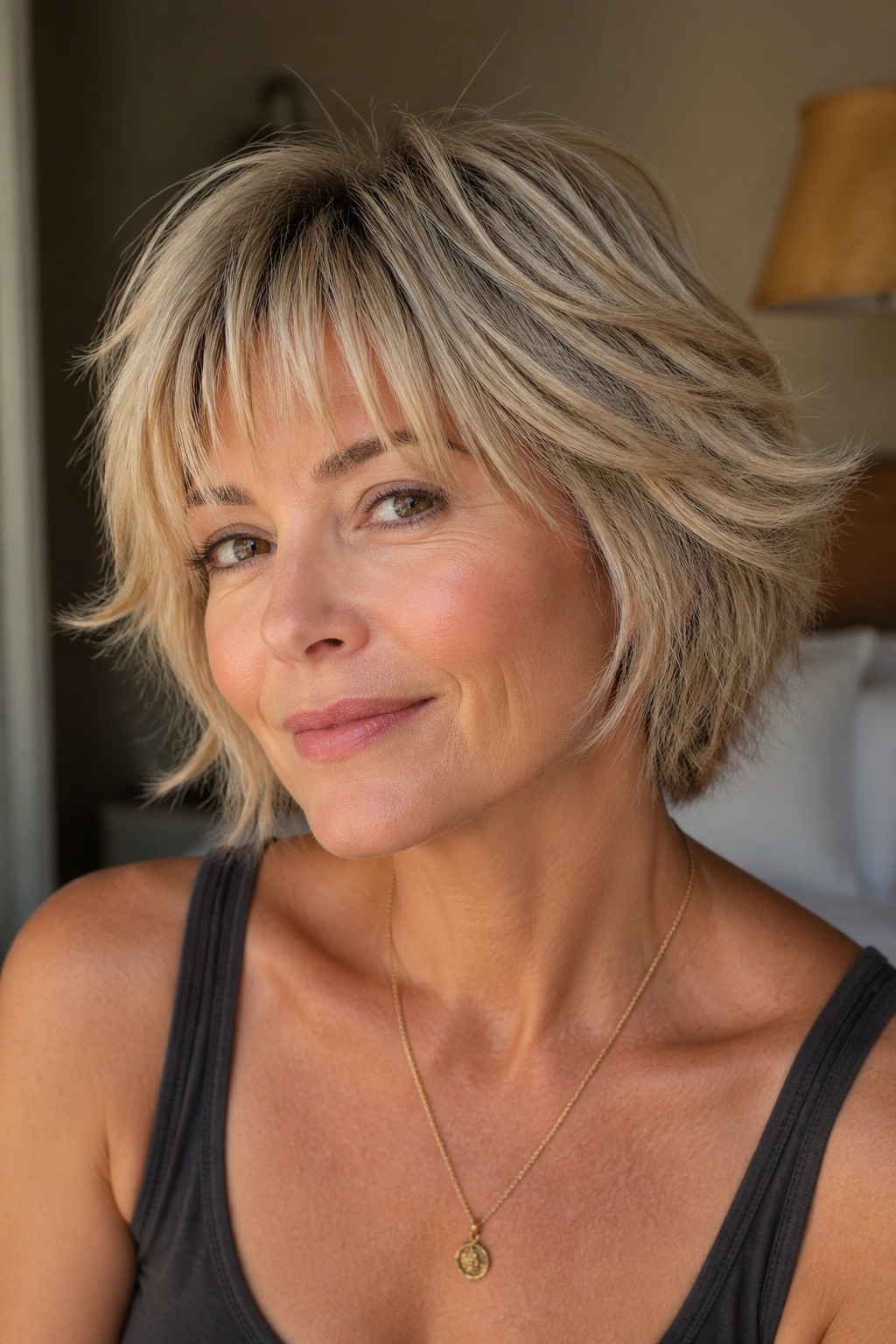
This is the bixie I reach for when thick hair needs to lighten up fast without losing movement. The cut keeps a short, bob-like outline, but the ends are feathered so they don’t sit in one solid block. That detail matters a lot on dense hair, because blunt edges can make the whole shape feel wider than it really is.
Why It Works on Thick Hair
Feathering removes that heavy shelf effect at the bottom. You still keep the body, but the perimeter feels softer and less chunky. Ask for point-cutting through the ends and some internal layering through the top so the hair doesn’t stack up around the ears.
A quick styling note: this one likes a small round brush or even a rough blow-dry with your fingers. The goal is lift, not polish. If the ends flip a little, that’s part of the charm.
- Best for thick straight or slightly wavy hair
- Keeps fullness under control without looking stripped
- Works well with side or center partings
- Needs a lightweight cream, not a heavy balm
Pro tip: ask your stylist to keep the nape a touch tighter than the crown. That keeps the shape from puffing out in the back.
2. Curly Bixie With Soft Round Shape
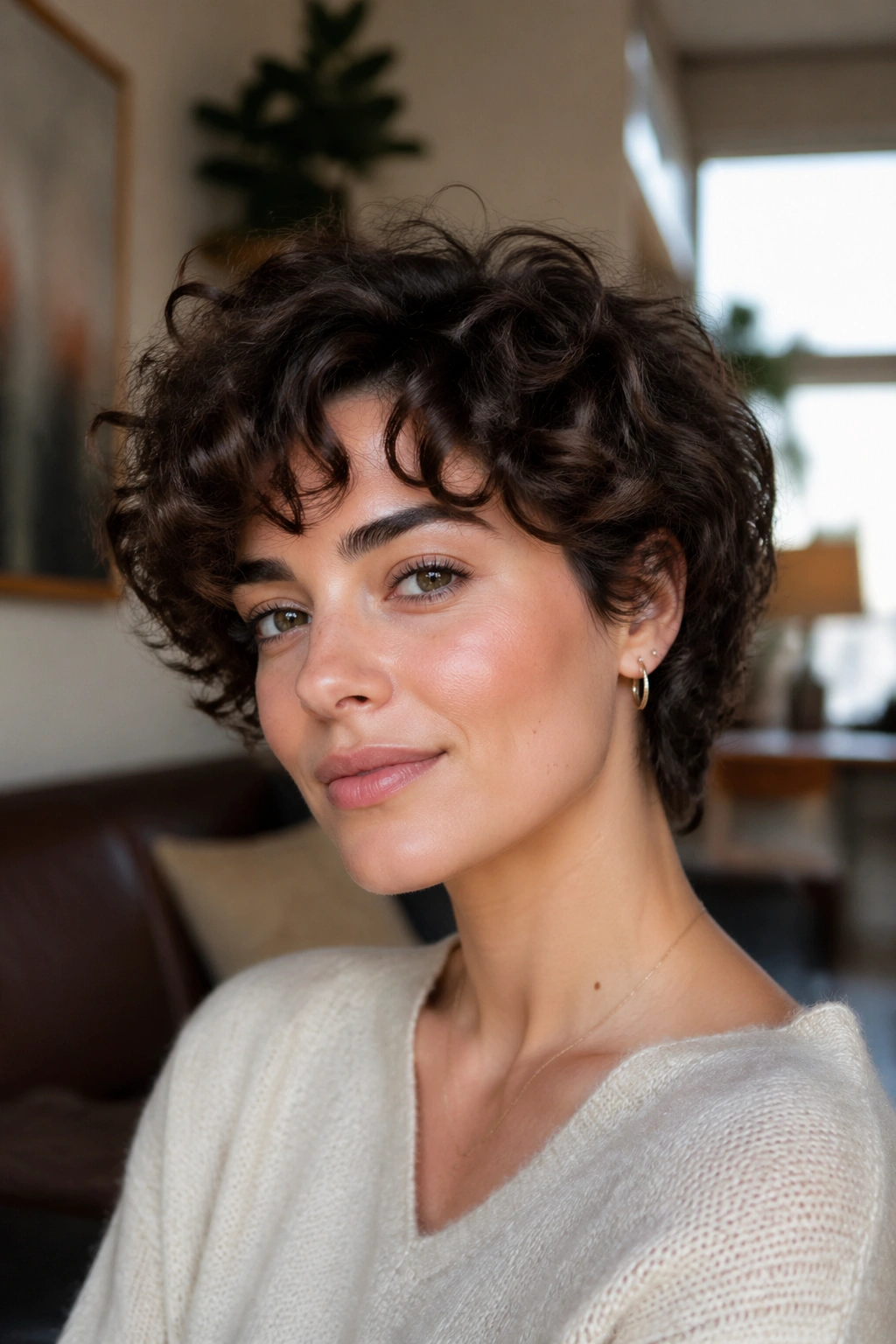
Curly thick hair and a bixie can be a lovely match, but only if the cut respects the curl pattern. The round shape keeps the silhouette from jutting out at the sides, which is a common problem when dense curls are cut too bluntly. You want enough length on top for the curl to spring, but not so much that the top collapses over the face.
A curl-friendly bixie usually needs dry cutting or at least a stylist who knows how your curl shrinks once it dries. That part is not optional. If the hair is cut too short when wet, the result can be a surprise you didn’t ask for.
I like this version because it looks lively even on low-effort days. Scrunch in a gel or mousse, diffuse for a few minutes, and stop before the hair turns crunchy. The best curl bixies keep a little softness at the ends and enough space around the temples so the face doesn’t disappear into the shape. If your curls are dense, this cut can feel lighter without feeling cropped to the bone.
3. Curtain-Bang Bixie That Opens the Face

Do curtain bangs work with thick hair? Absolutely — if the stylist controls the bulk in the fringe area. Thick bangs can turn heavy fast, so the longer, face-framing version usually makes more sense than a short blunt fringe. A bixie with curtain bangs gives you a little softness at the front and keeps the cut from feeling severe.
How to Style It
Part the bangs while they’re damp, then blow-dry them away from the face with a medium round brush. That small bit of direction keeps them from splitting in awkward places later. You do not need a perfect bend; you need enough movement that the fringe falls around the cheeks instead of hanging straight down.
The rest of the cut should stay compact through the sides, especially if your hair grows outward near the jaw. That’s where thick hair can betray you. A soft curtain bang helps redirect the eye upward and inward, which is a nice trick when you want short hair but not a hard edge.
This version is especially good if you wear glasses. The longer front pieces sit around frames better than a blunt micro fringe, and they don’t crowd the eyes. Clean, easy, a little romantic.
4. Stacked Nape Bixie for Heavy Hair
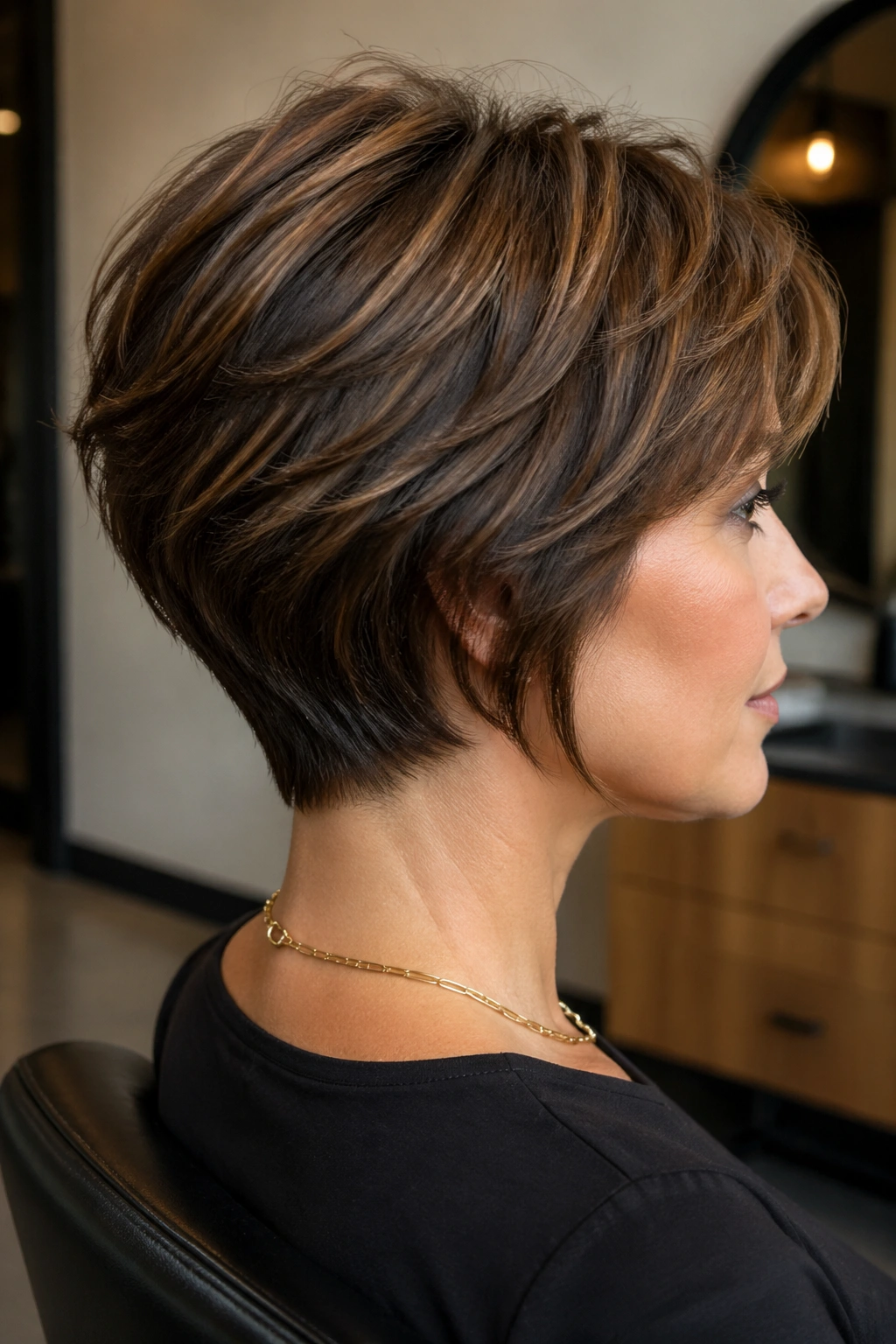
Picture a haircut that gets lighter the moment it hits the back of the head. That’s the stacked nape bixie, and on thick hair it can be a gift. The back is cut shorter and slightly layered so the hair lifts off the neckline instead of building a dense wall there. The result feels cleaner and more shaped, especially if your hair tends to swell at the nape.
A lot of people ask for short hair but don’t want it to sit flat against the neck. This solves that. The stacking creates a gentle curve, which gives thick hair a more tailored look. You’ll still have fullness, but it won’t all be hanging in the same place.
- Best when the nape area feels bulky
- Pairs well with a side-swept front
- Needs regular neckline cleanup
- Looks sharper with a blow-dried finish
The one thing to watch is over-stacking. Too much lift in the back can make the head look top-heavy. A good cut keeps the angle subtle. Think shape, not helmet. That balance is what makes this version so flattering on denser hair.
5. Razor-Cut Bixie With Piecey Layers
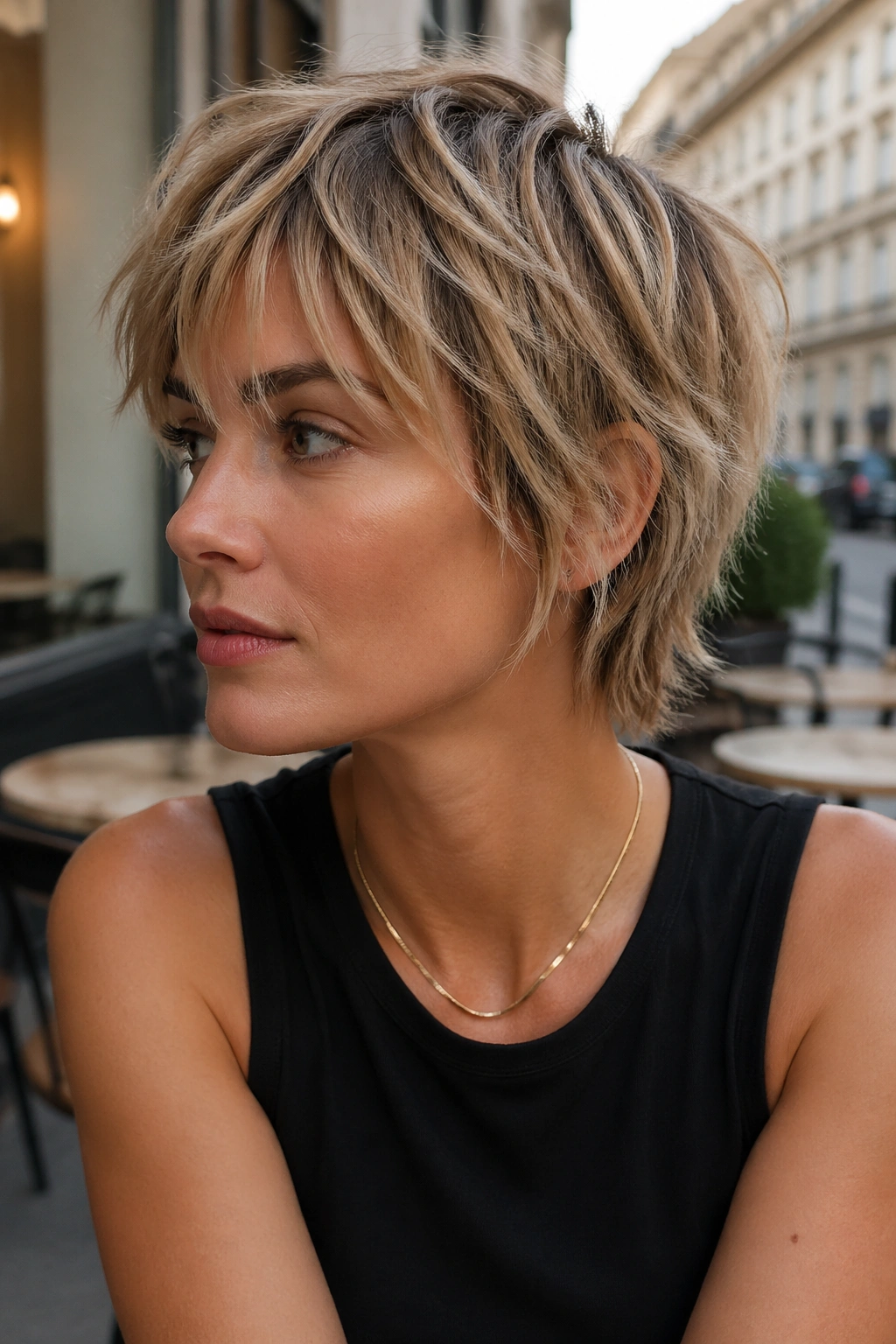
Razor cutting can be risky if it’s done carelessly, but on thick hair it can soften a boxy bixie in a way scissors sometimes can’t. The blade takes a little edge off the ends and leaves a more broken, piecey finish. That makes the cut feel lived-in instead of heavy.
I like this one best when the hair is straight to wavy and naturally full through the mid-lengths. If your hair already bends a little, the razor helps those bends separate into visible pieces rather than one solid mass. The trick is not to thin out the hair too much. You still need enough density to keep the shape from collapsing by midday.
The styling is mercifully simple. Work a pea-size amount of cream or a light paste through dry hair, then twist a few sections around your fingers. Done. The result should look a bit messy, but in a good way — like the haircut has some air in it, not like you slept on it and gave up. A razor-cut bixie has attitude. It doesn’t beg for perfect styling.
6. Side-Swept Fringe Bixie for a Softer Line
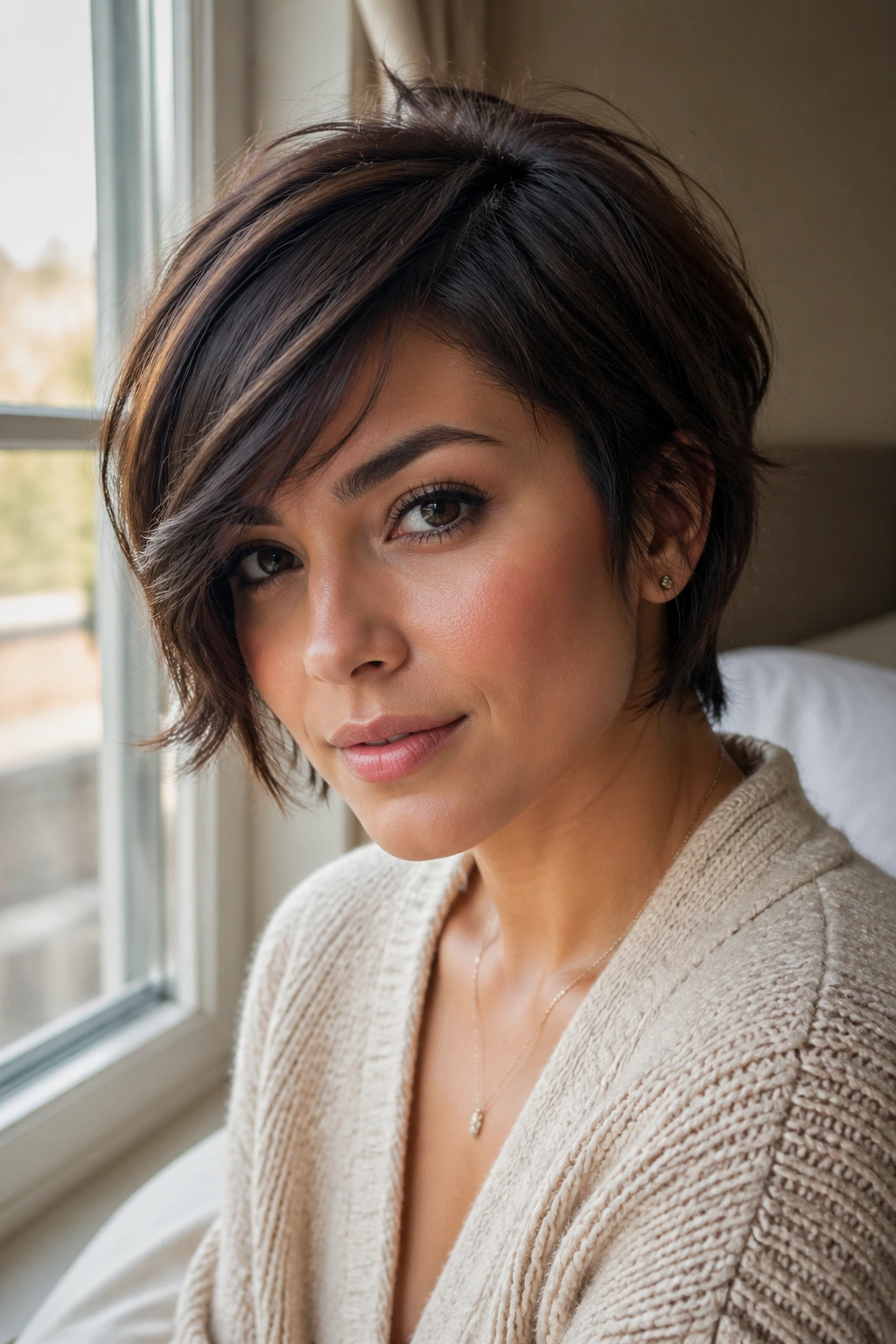
Compared with a center-parted bixie, a side-swept fringe gives thick hair a gentler front edge. That matters because a dense hairline can make a short cut feel harsh if the front is cut too square. A side sweep breaks that line and lets the weight fall diagonally across the forehead.
If your face is round, heart-shaped, or just feels a little fuller through the cheeks, this version can be especially helpful. The longer sweep pulls the eye across the face instead of stopping it right at the widest point. It’s a small shift, but it changes the whole mood of the cut.
What Makes It Different
The length doesn’t have to be dramatic. Even a subtle sweep, cut just long enough to tuck behind one ear, can soften the whole haircut. Thick hair holds that shape well, which is useful because you don’t need a ton of product to make it stay.
This is also one of the easier bixies to grow out. The fringe blends into the rest of the cut instead of sitting as a hard line. If you like changing your part from time to time, this is a smart choice. It gives you options without forcing you into one fixed look.
7. Shaggy Bixie With Choppy Crown Layers
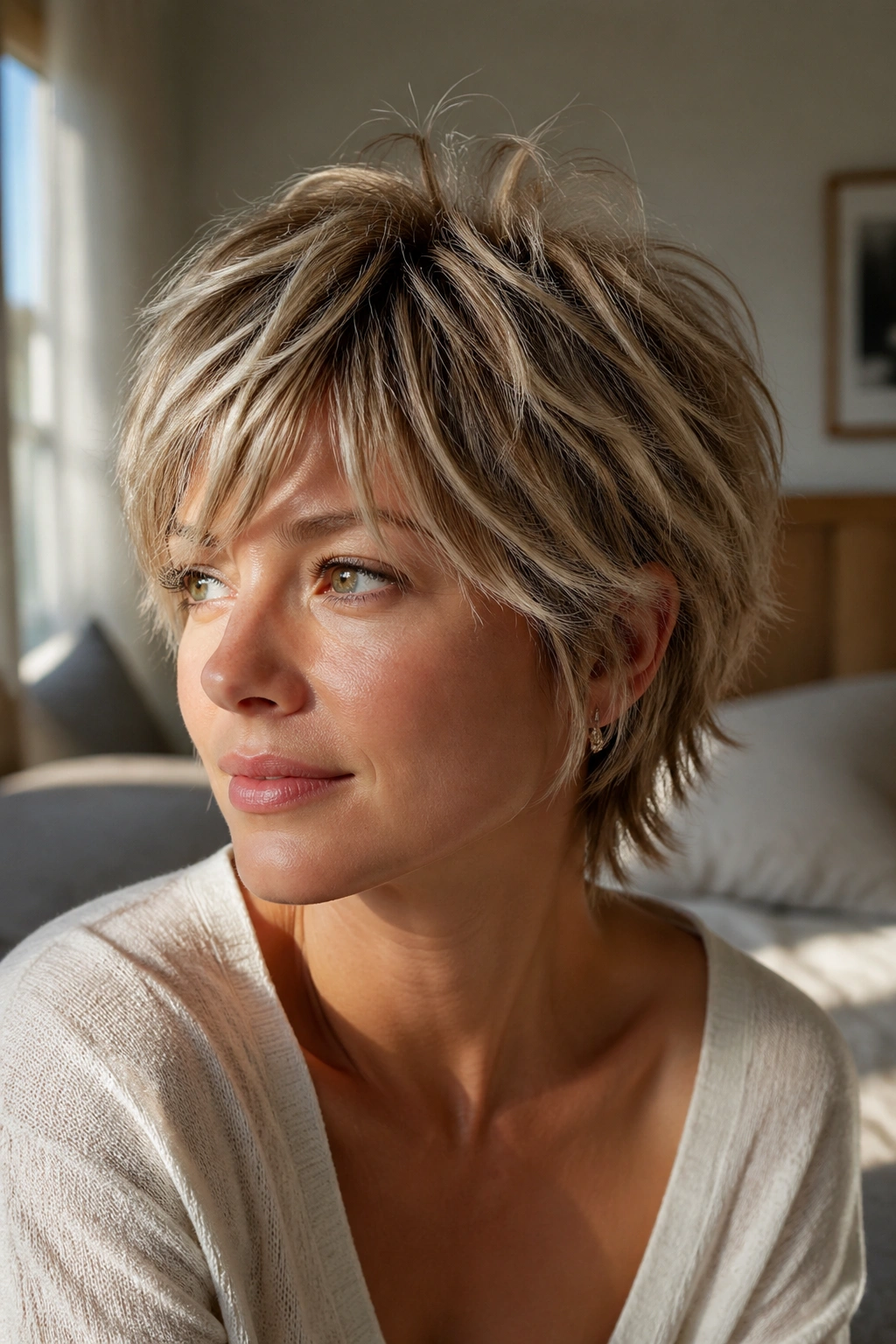
A shaggy bixie is a little louder, a little looser, and often a lot better for thick hair than a pristine, tidy version. The reason is simple: dense hair needs movement somewhere, and the crown is a smart place to remove it. Choppy layers through the top keep the cut from sitting like one big block.
This style works especially well if your hair has a natural wave or a bend that refuses to behave. Instead of fighting that texture, the shaggy bixie uses it. The top pieces can fall forward, the sides can kick out a little, and the whole cut looks deliberate rather than overcontrolled.
The one thing I’d avoid is too many short layers at once. That’s where thick hair can start to frizz out or puff at the crown. You want separation, not fluff. A matte paste or a dry texturizing spray can help define the layers, but don’t pile on product. A little grit is enough.
This cut has a lived-in energy that suits people who do not want to round-brush their hair every day. Good. That’s the point.
8. Blunt-Edged Bixie for Straight Thick Hair
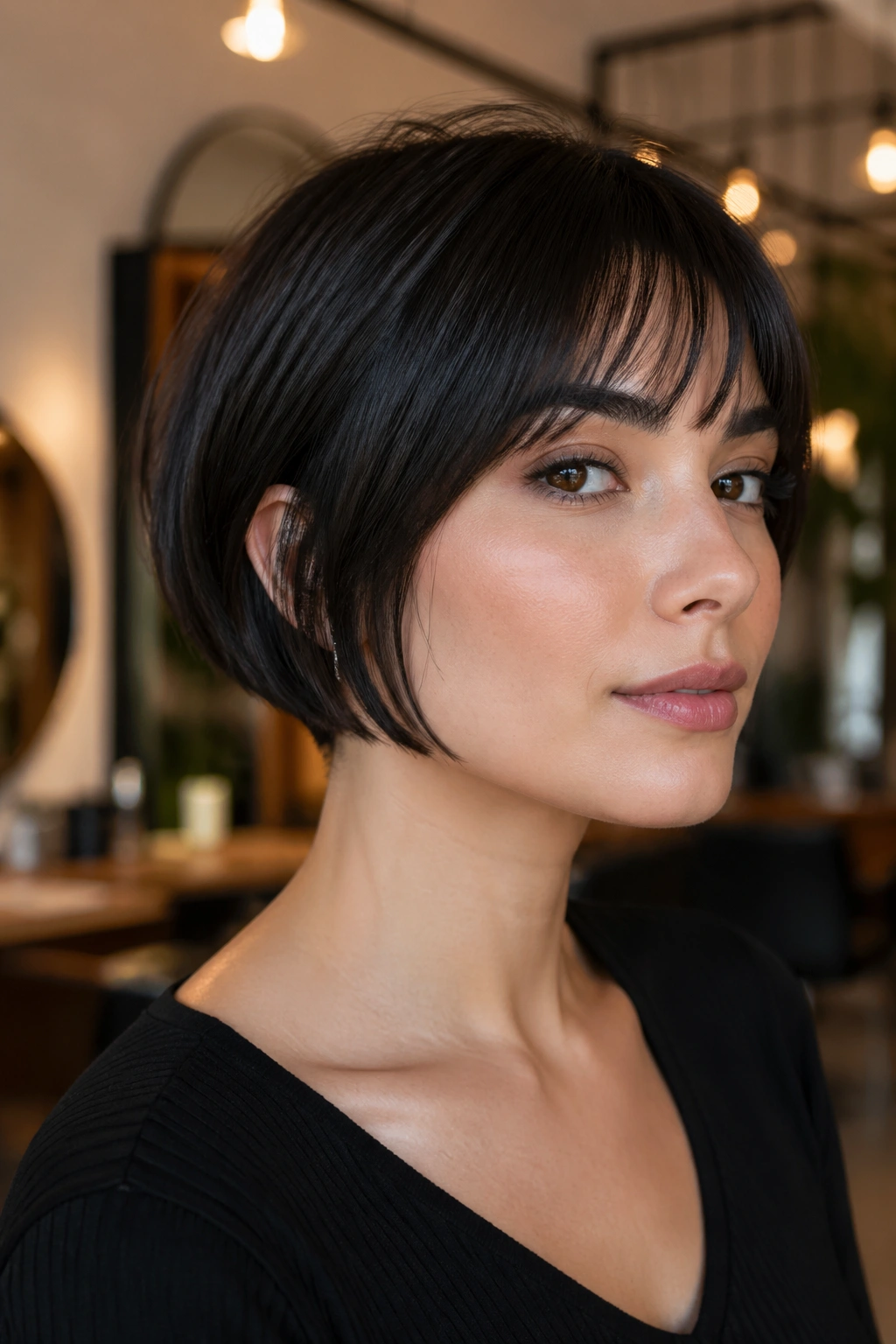
Not every thick-haired bixie needs to be shattered to pieces. Sometimes the cleanest option is the strongest one. A blunt-edged bixie keeps the perimeter tidy, which gives thick straight hair a crisp, graphic shape. The key is to reduce bulk inside the cut so the blunt edge doesn’t turn into a wide shelf.
That internal cleanup matters more than the line itself. If the interior is too dense, the cut can look heavy around the jaw and ears. Ask for weight removal beneath the surface, not from the outer edge. The ends should still read clean when you look straight at the hair.
I like this version on people who wear structured clothes, sharp earrings, or minimal makeup. The haircut has presence, so it does a lot of the visual work. You can tuck one side behind the ear, keep the other side fuller, and the whole thing still looks intentional.
It’s not the most forgiving option if you hate regular trims. Blunt edges show growth sooner. But when it’s fresh, it’s neat, modern, and a little severe in a good way.
9. Asymmetrical Bixie With One Longer Side
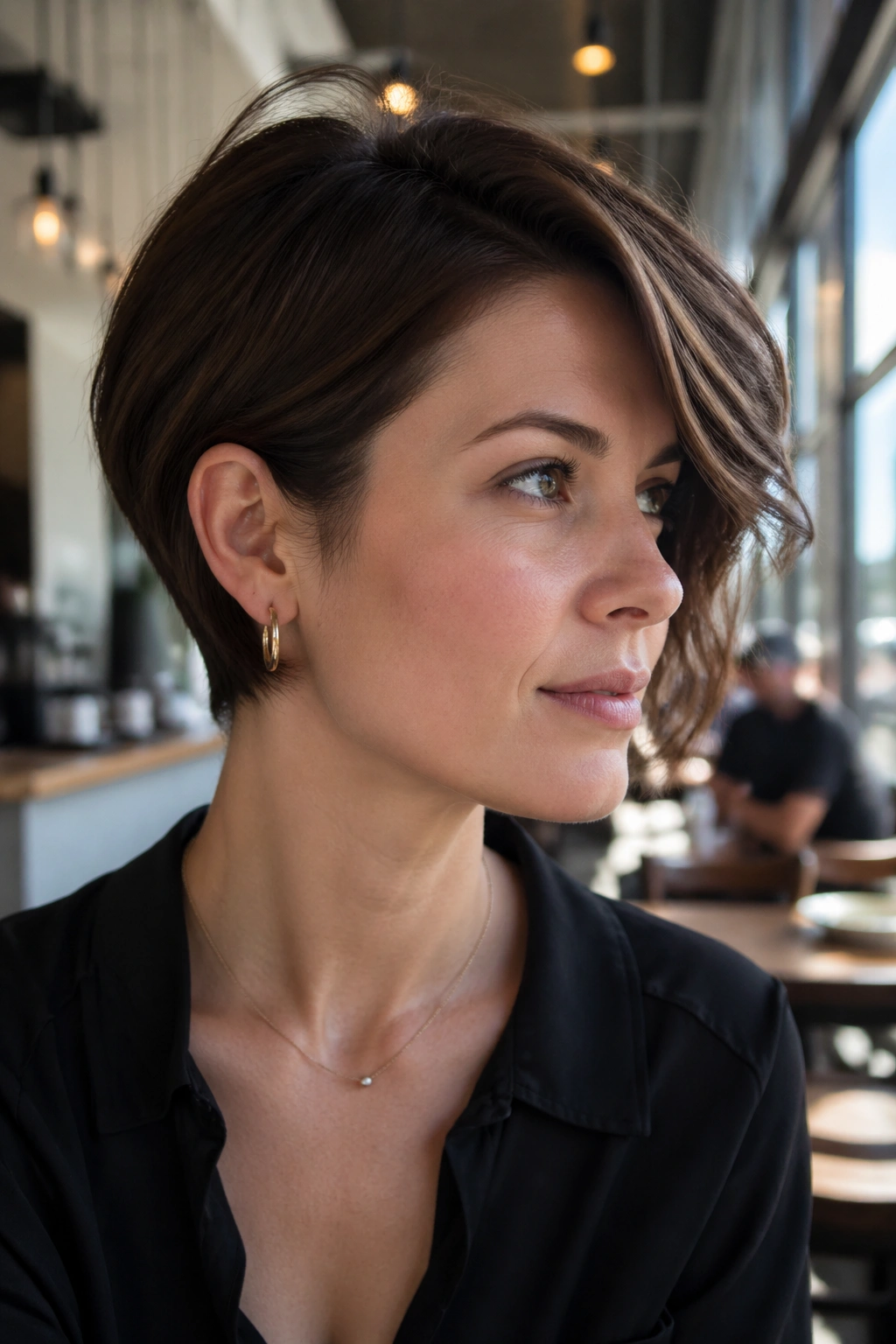
Want the haircut to feel a bit less safe? Go asymmetrical. A longer side gives thick hair a cleaner line to fall against, while the shorter side lifts the face and prevents the cut from getting bulky at the jaw. It’s a smart trick when your hair grows out wide rather than downward.
Why does asymmetry work so well here? Because thick hair likes a visual break. A small difference in length can make the cut feel lighter without removing too much density. You still get the dense, healthy look in the hair, but the shape feels more deliberate and less uniform.
How to Get the Most From It
Keep the longer side long enough to tuck behind the ear. That gives you flexibility, which is useful on days when your hair wants to do its own thing. The shorter side should be cropped enough to open the face, but not so short that it looks disconnected.
This cut plays well with straightening or a loose bend from a flat iron. The uneven line becomes the feature, not a problem to hide. If you like haircuts that feel a little editorial without being hard to live with, this one sits in a nice middle zone.
10. Tapered Bixie That Hugs the Neck
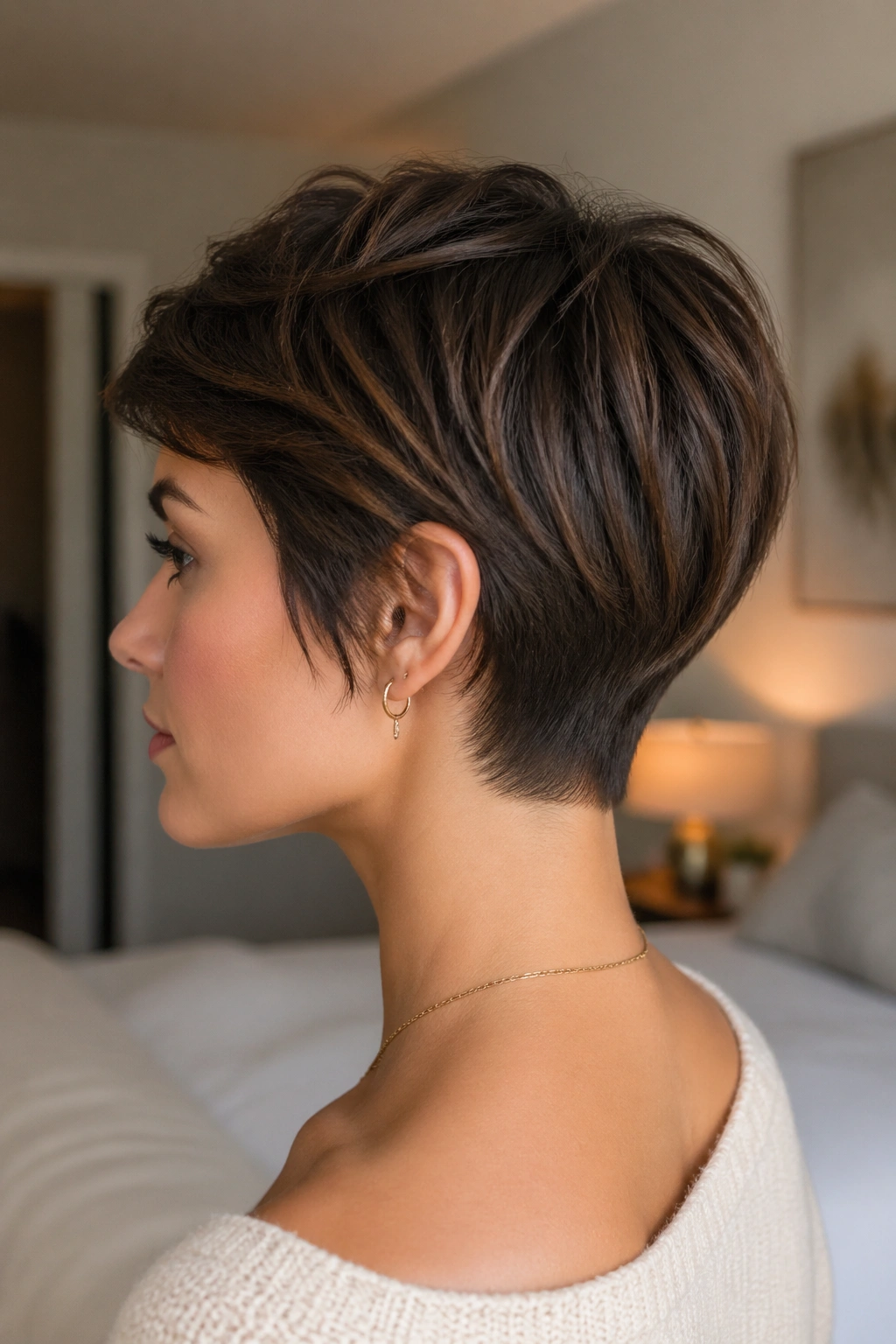
A tapered bixie is one of the most flattering shapes for thick hair because it narrows gradually toward the nape instead of dropping straight down. That taper keeps the neckline neat and stops the cut from flaring out under the ears. If your hair has a lot of mass at the back, this shape can feel like a relief.
Think of it as a soft funnel rather than a blunt crop. The top keeps enough length to move, the sides stay controlled, and the back gets tighter as it reaches the neck. That contour matters more than people realize. It changes how the head looks from the side, which is often where thick hair gets clumsiest.
This is a good choice if you want a short haircut that still looks grown-up and polished. It doesn’t have to be shiny or sleek. It just needs a clear shape. A quick blow-dry with the nozzle pointed downward can help the taper sit close to the head, especially if your hair puffs after washing.
No drama. Just clean lines.
11. Under-cut Bixie for Maximum Weight Removal
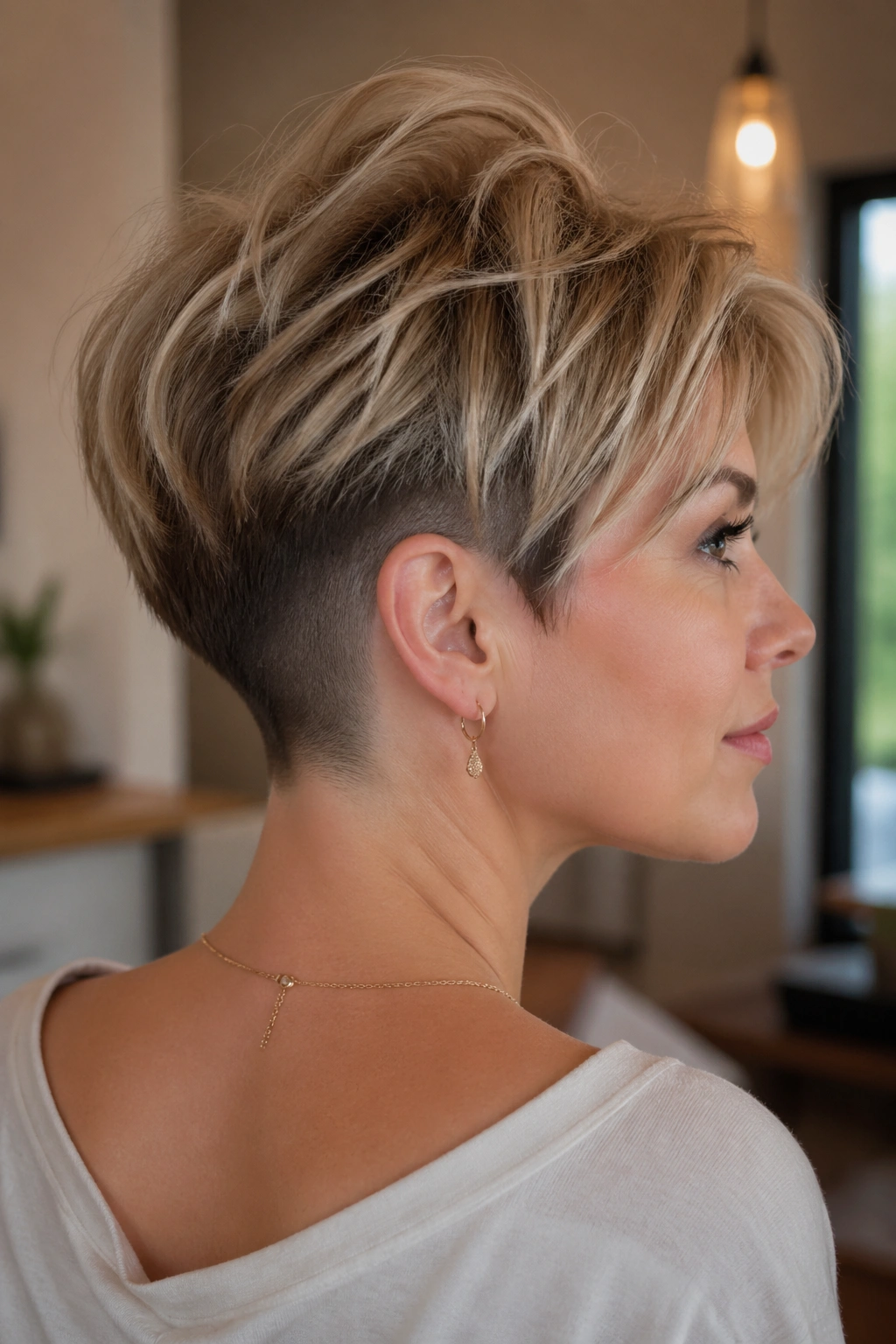
Some thick hair needs more than layering. It needs a real reduction in bulk underneath, and that’s where an under-cut bixie comes in. Shaving or clipping a hidden section at the nape or behind the ears can remove a surprising amount of weight while keeping the top long enough to style.
This is one of those cuts that sounds dramatic but often feels practical once you live with it. The hidden short section means less drying time, less swelling at the neckline, and less of that thick, sticky feeling when the hair is damp. The top still gives you shape and styling options, so it doesn’t read like a shaved haircut unless you want it to.
It’s not for everyone. If you like to pull your hair back, check how the under-cut will show. If you have a strict work dress code, you may want a version that stays hidden completely. But if your hair is heavy enough to make every short style feel like a wrestling match, this option can be a smart fix. A good stylist will blend it so the transition feels smooth, not chopped.
12. Wavy Bixie With Air-Dried Movement
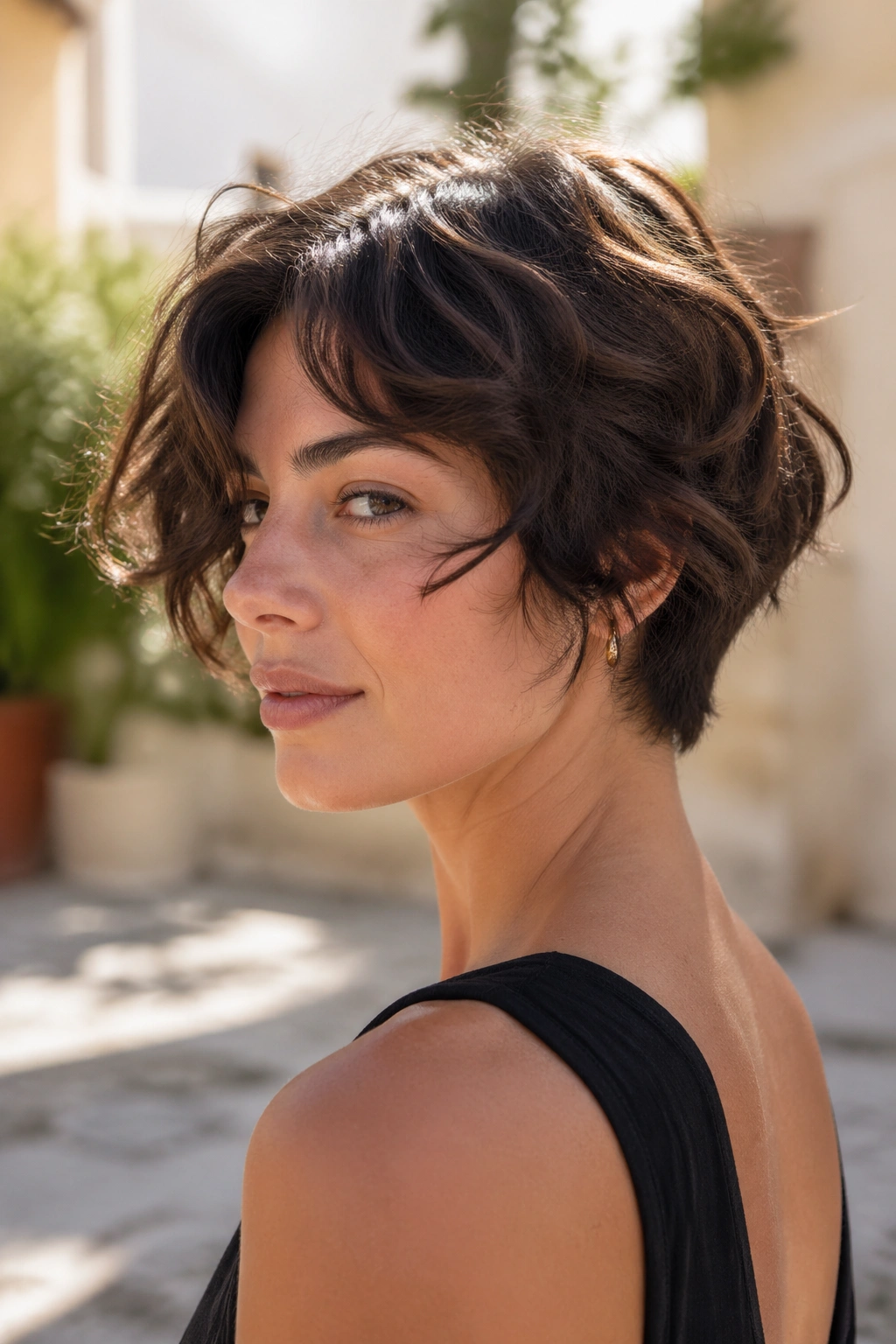
Thick hair that already bends a little doesn’t need to be overworked into submission. A wavy bixie lets the natural texture stay visible, which is half the point. The cut should be shaped so the waves stack in soft layers instead of bunching into one round mass.
Here’s why I like this version: it looks good with less effort than most short cuts. A leave-in conditioner, a touch of mousse, and some scrunching can be enough. If your hair dries with a wave pattern that’s stronger in some places than others, the bixie can actually make that unevenness look cool rather than messy.
The biggest mistake is cutting the sides too short if the hair grows outward. That can make the wave pattern flare. A better move is to leave enough length around the cheekbones so the wave can curve inward instead of sticking out. You can still keep the neckline snug.
This cut has a breezy feel, but it still needs structure underneath. Without that structure, thick waves can turn into a triangle. So yes, air-dried — but not random.
13. Micro-Bang Bixie for a Bold Brow Line
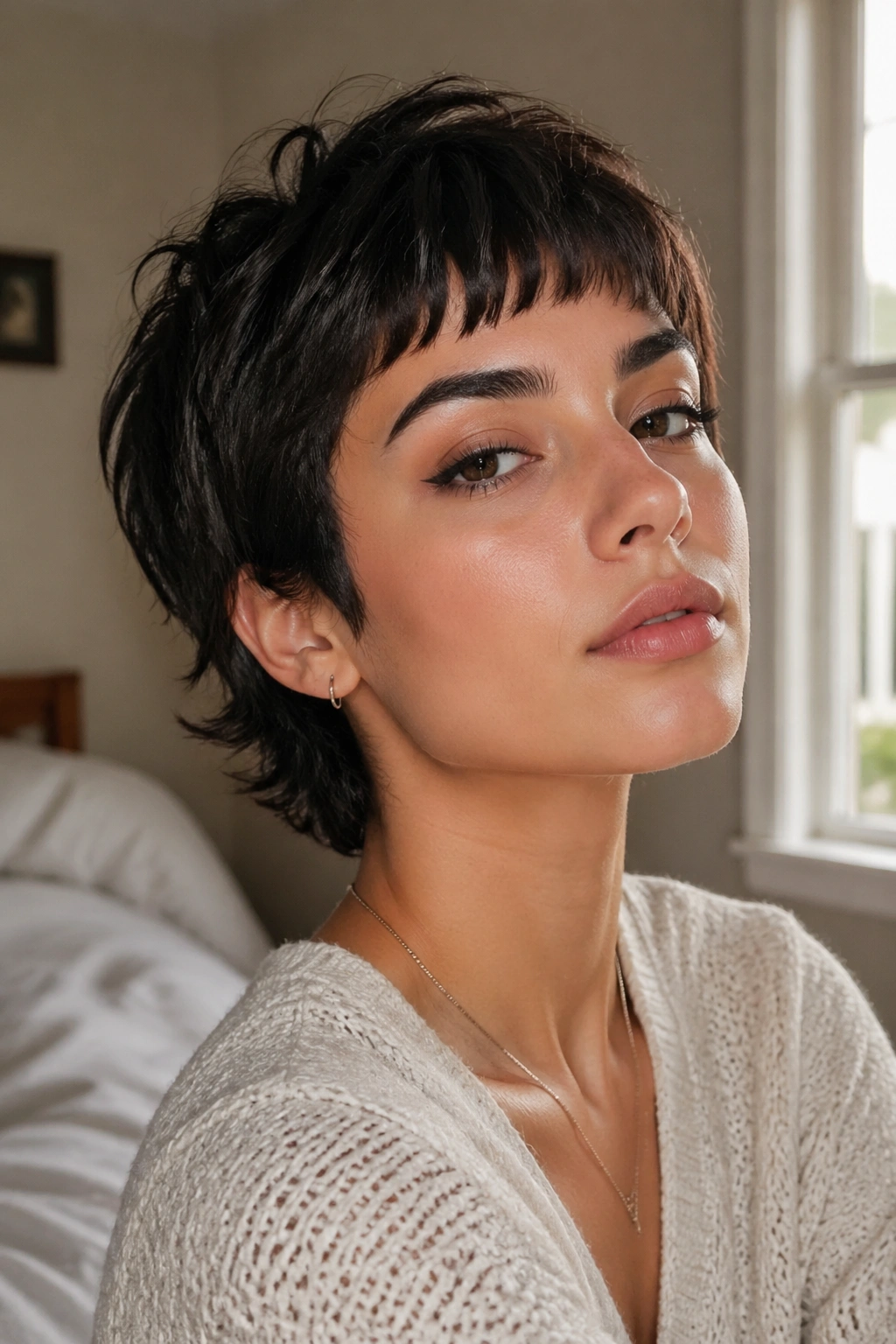
Micro bangs on thick hair are not subtle. That’s part of the appeal. A bixie with a tiny fringe draws attention upward and gives the whole cut a sharper, more graphic face line. On dense hair, the fringe needs to be thinned enough to sit cleanly, or it can look heavy and blocky across the forehead.
I like this look best when the rest of the haircut stays soft. If the bangs are blunt, the sides should be slightly feathered or the shape can get too rigid. The contrast is what makes it work. Short fringe, airy sides, full texture through the top. That mix keeps the style from feeling costume-like.
This version suits people who enjoy visible haircuts. It says something right away. It also works well if your hair tends to swell around the forehead, because the shorter fringe can sit more deliberately than a long bang that wants to separate and poof.
One warning: trims matter here. A micro fringe grows out fast and loses its point quickly. If you do not want to see scissors often, skip this one.
14. Chin-Grazing Bixie With Long Front Pieces
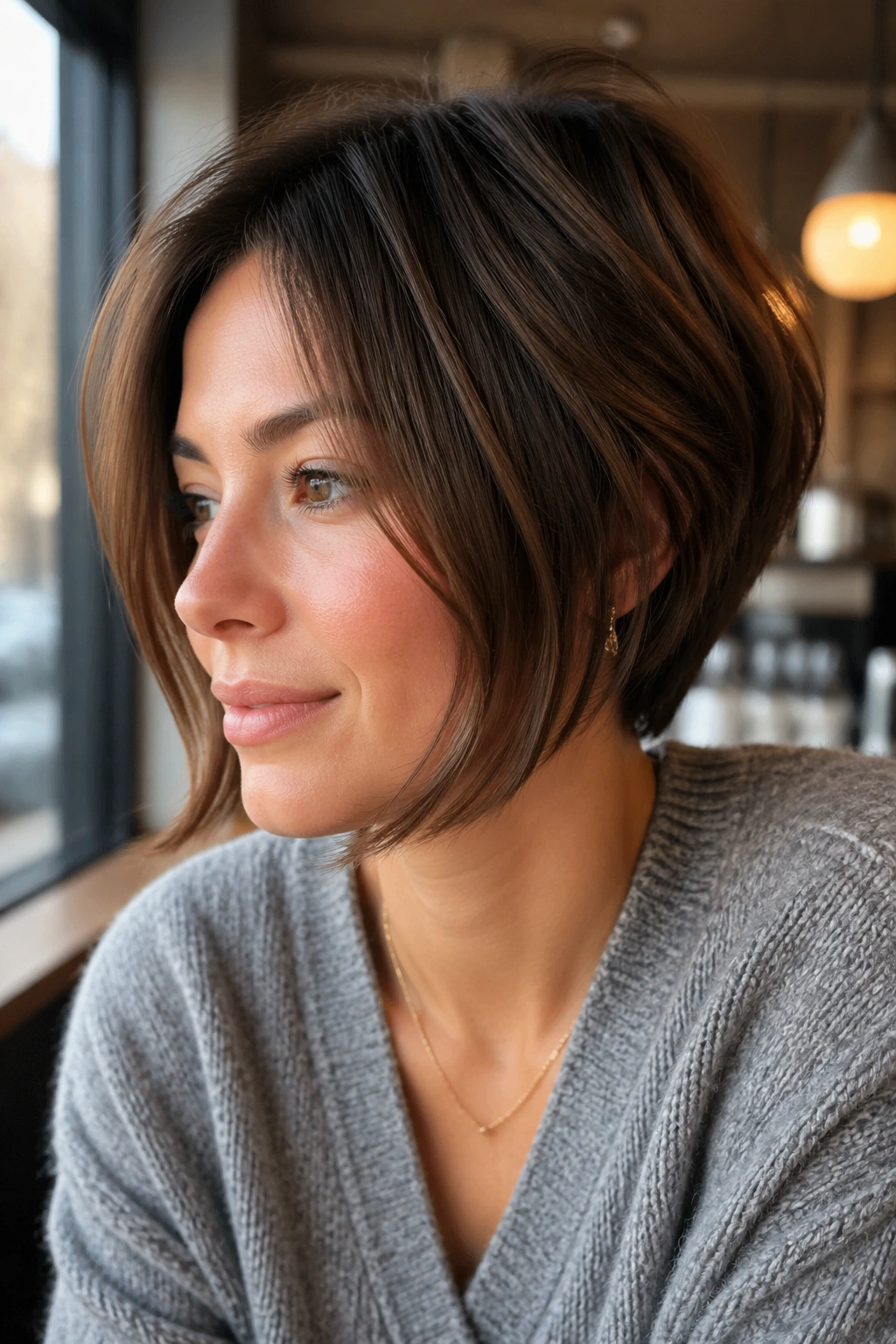
Not every bixie has to stay ultra-short around the face. A chin-grazing version gives thick hair a little extra swing in front, which helps if you want softness without moving back into full bob territory. The front pieces can skim the jawline, while the back stays cropped enough to keep the haircut clearly in bixie space.
This shape is nice on hair that is very dense through the front because it gives the weight somewhere to go. Instead of building around the cheekbones, the front length draws the eye downward in a controlled way. That can be flattering if your face is round, square, or simply needs a little length.
You can tuck those front pieces behind the ear, curl them under with a small iron, or leave them straight and sharp. The cut does not need much else. It already has enough structure to carry itself. If you want a bixie that feels a little less severe than a true pixie but shorter than a bob, this is the sweet spot.
15. Deep Side-Part Bixie With Lift at the Roots
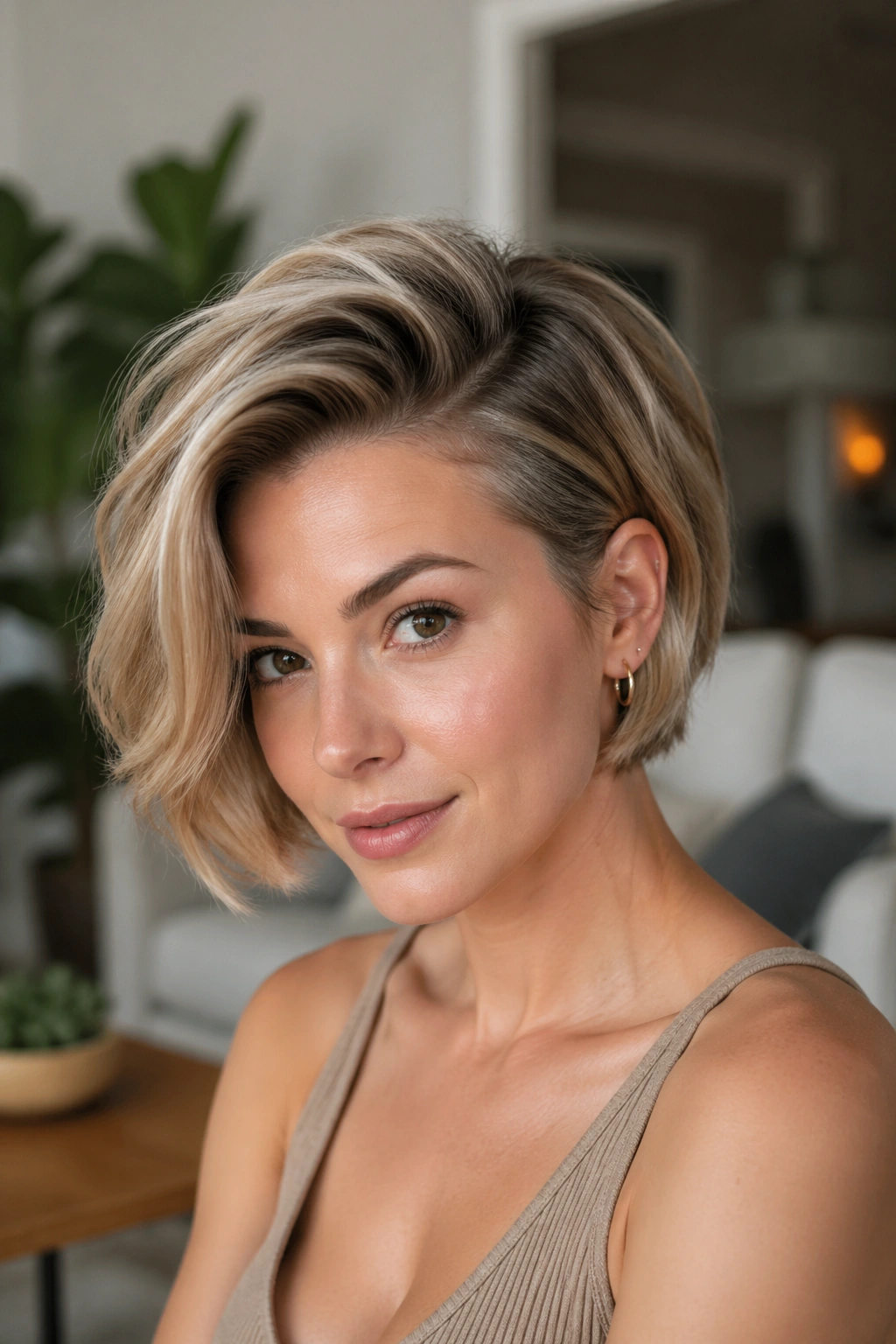
A deep side part can do more for thick hair than people expect. It instantly breaks up the bulk at the top and creates a sense of height where the hair would otherwise sit flat and wide. On a bixie, that means the cut feels more lifted and less helmet-like.
The Shape Trick
The side part should not be random. Place it where the hair naturally wants to fall, then style the shorter side close to the head while keeping the other side fuller. That contrast gives the haircut motion without requiring a lot of length.
This is a good choice if your hair has a strong cowlick or tends to split in the middle and expand outward. A deep part can redirect that pattern instead of fighting it. A root-lifting spray or mousse at the crown helps, but you don’t need much. Too much product will make thick hair feel tacky fast.
What I like here is the drama without the maintenance burden. It feels styled even when you’ve done almost nothing. And that, frankly, is the kind of thing a good short haircut should do for dense hair.
16. French-Inspired Bixie With Soft Bend
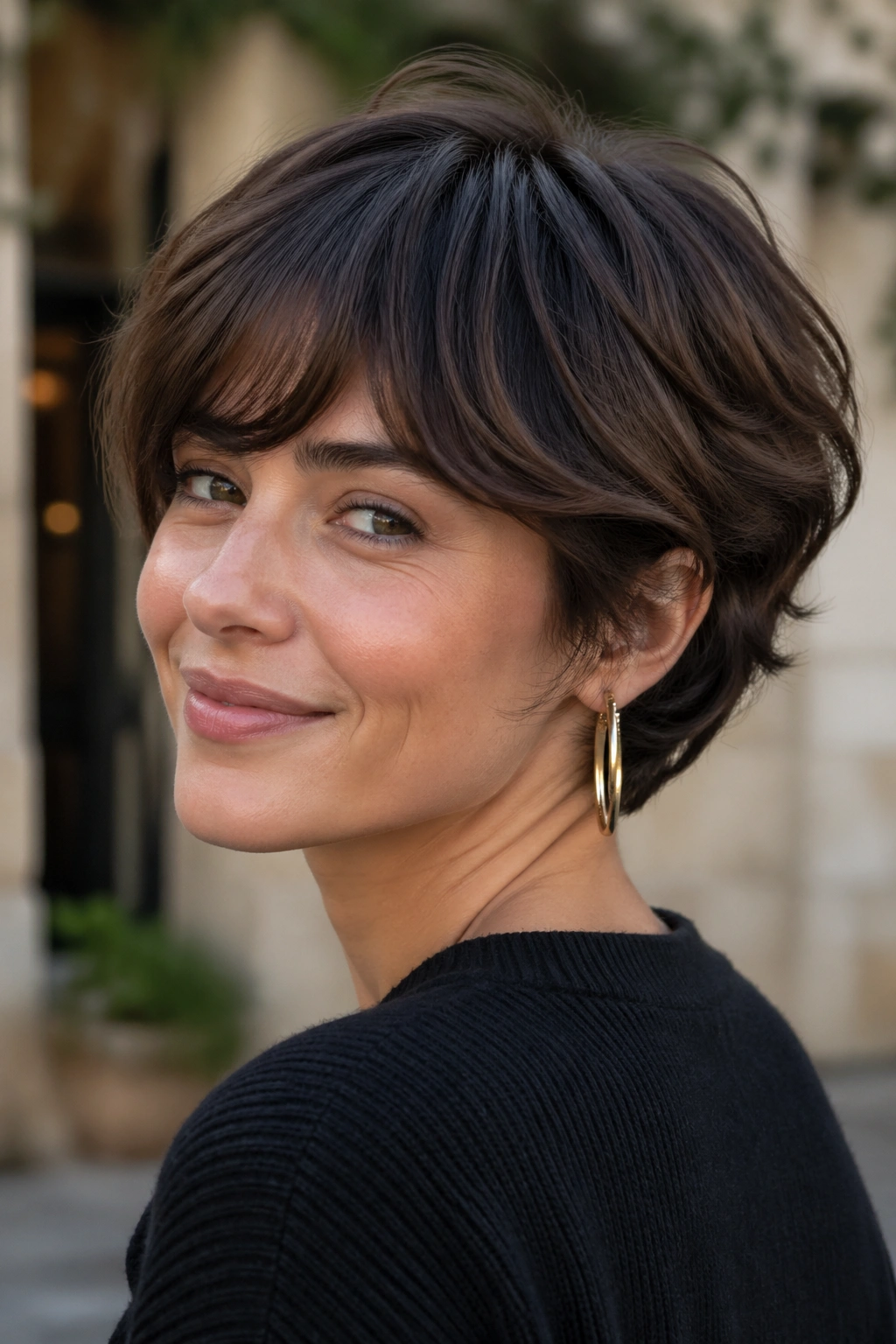
The French-inspired bixie is less about perfection and more about shape with a bit of softness around the edges. Thick hair suits it because the density gives the cut body, while the short length keeps it from becoming too puffy. The front is usually a little longer, the ends are lightly textured, and the whole thing has that relaxed bend that looks casual without falling apart.
This style is a nice middle ground if you want something polished but not stiff. It works well when the hair air-dries with a natural curve, or when you give it a few passes with a round brush and let it cool before touching it. That cooling part matters. Hot hair collapses fast.
A soft bend around the cheekbones can be more flattering than a hard curl. It lets the haircut frame the face instead of standing away from it. Thick hair tends to hold that bend well, which is why this shape shows up so often in short hair mood boards. It has presence, but it doesn’t shout.
17. Sleek Flat-Iron Bixie for Thick Hair
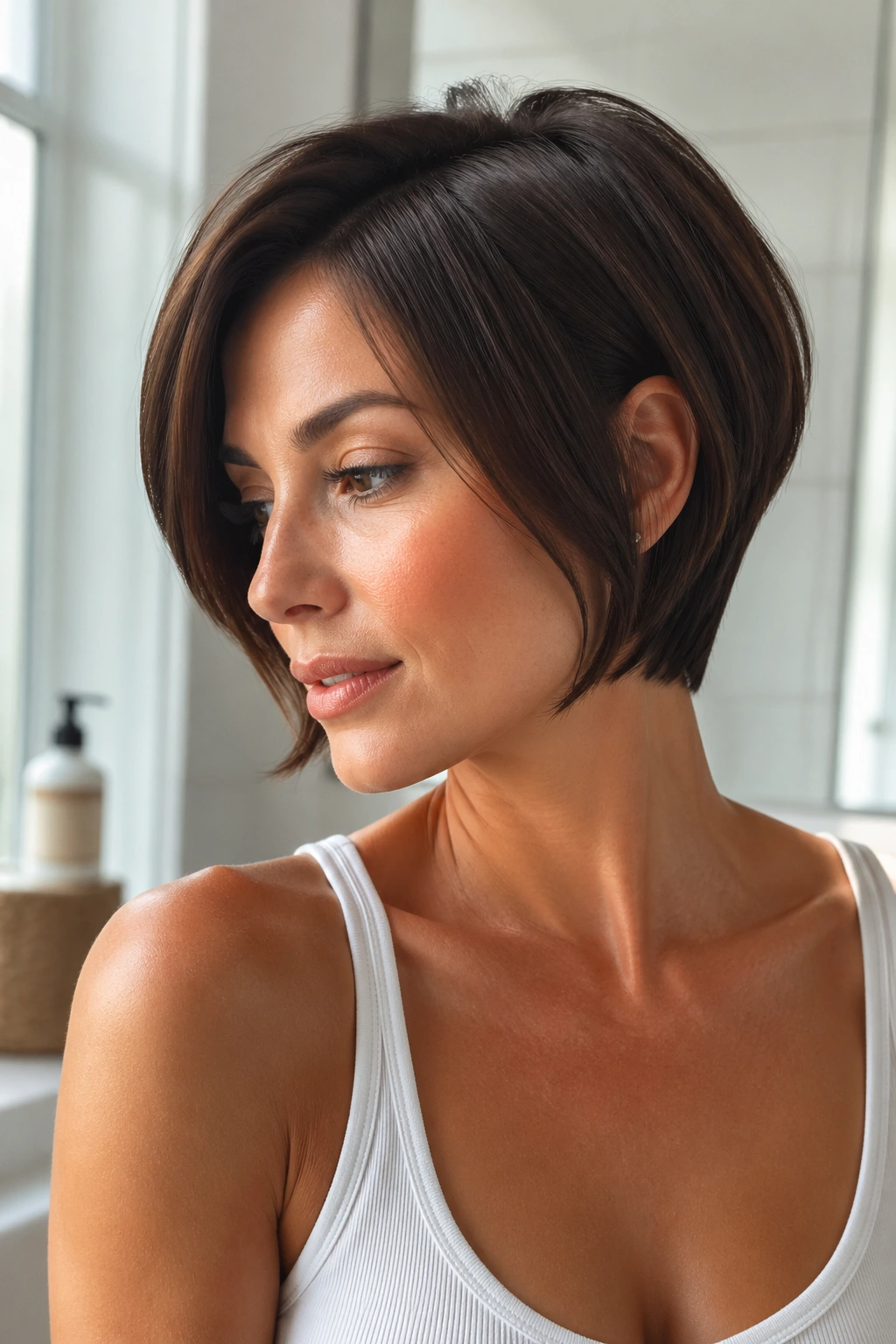
Sleek on thick hair is hard, which makes it satisfying when it works. A flat-iron bixie depends on a clean cut underneath, because if the layers are badly placed, the hair will still bulge at the sides even when straightened. The haircut should be shaped to sit close to the head, especially at the nape and behind the ears.
This version is for people who like a crisp finish and don’t mind taking a few extra minutes with heat styling. Use a heat protectant, work in small sections, and bend the ends slightly inward rather than forcing them poker-straight. That tiny bend keeps the shape modern and stops the hair from looking stiff.
What makes this cut worth considering is how different thick hair can look when it’s smoothed out properly. The density turns into shine and swing instead of bulk. Still, I would not call it low-maintenance. If your hair has strong waves or lots of volume, you’ll need discipline and a decent iron with narrow plates. Otherwise, the style fights back by noon.
18. Color-Forward Bixie That Shows Layering
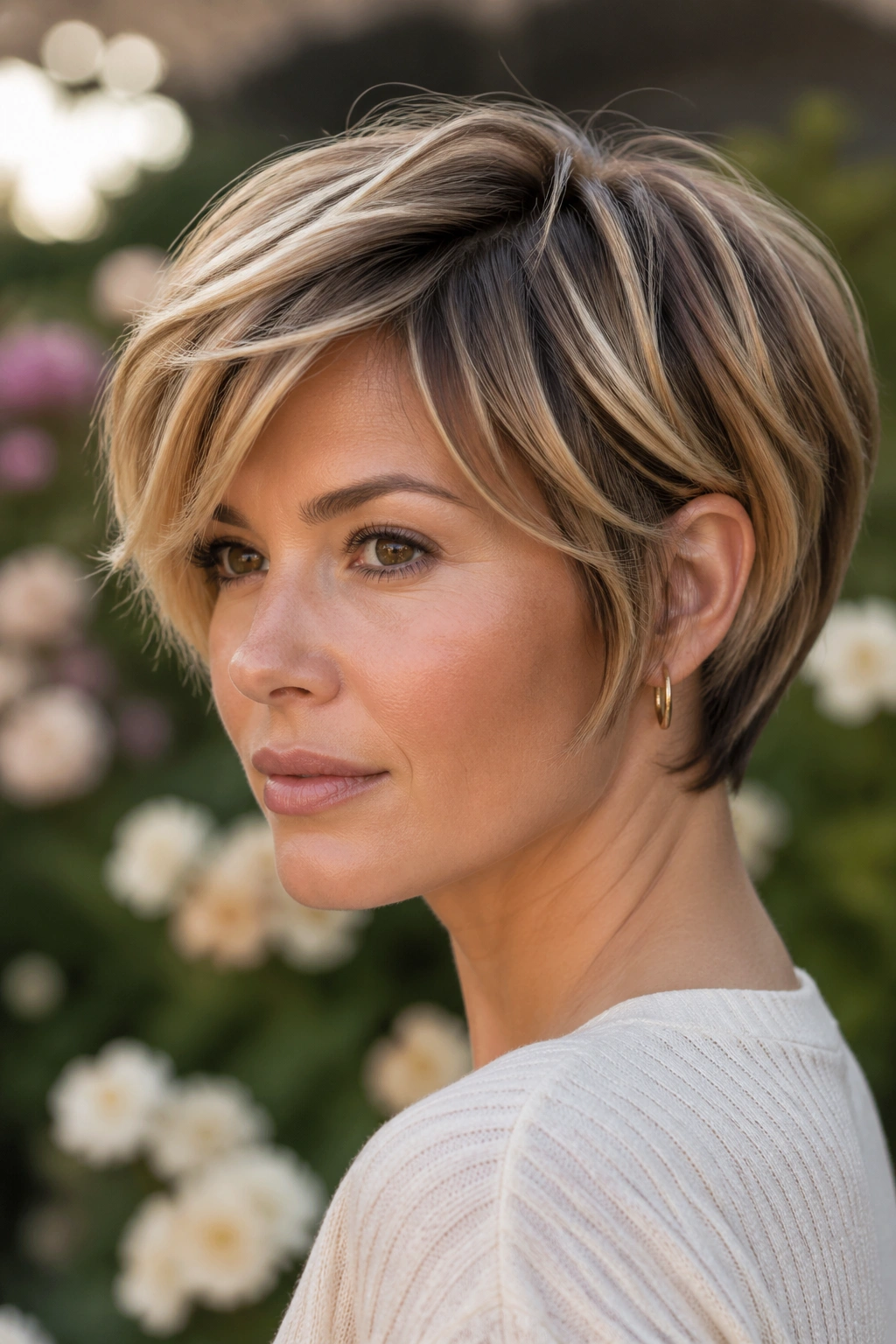
A haircut can look one way in solid color and another way entirely with dimension. Thick hair especially benefits from a bixie that uses color to show the layers, because the movement becomes easier to see. Soft highlights, lowlights, or a subtle money piece can break up the density and make the cut read lighter.
This does not mean you need dramatic contrast. A few shades of difference are often enough. When the layers catch light in different places, the haircut stops looking like one solid mass. That’s useful if your hair is so dense that the shape disappears in photos or under indoor lighting.
I like this approach because it helps the haircut do its job without needing more product or more heat. The color simply gives the eye a map. If you’re planning a bixie anyway, this is a smart time to think about tone placement too. Short hair shows color quickly, so even small changes make a visible difference.
19. Low-Maintenance Grow-Out Bixie
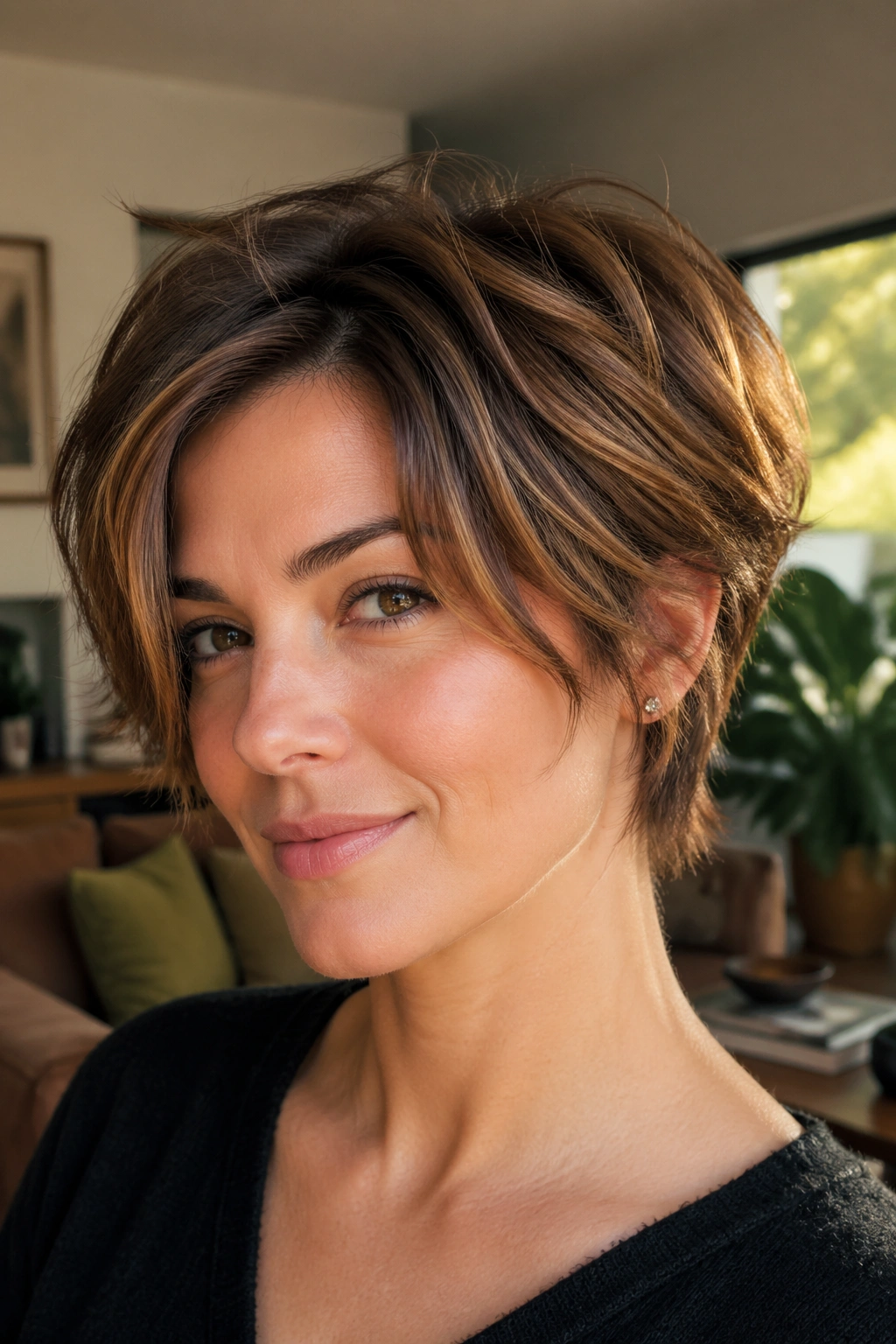
Not every bixie needs to stay perfectly sharp. Some of the smartest ones are designed to grow out with grace, which matters if you hate frequent salon visits. A good grow-out bixie keeps enough length on the sides and top so the shape doesn’t collapse once it gains half an inch.
For thick hair, this usually means softer interior layers, a slightly longer nape, and a front section that can shift between tucked and loose. That flexibility buys you time. You can wear it sleek one week, messy the next, and still feel like the haircut makes sense.
- Best if you want 6- to 10-week trim spacing
- Works with straight, wavy, and loose-curly textures
- Should keep weight off the ears
- Needs a shape that still holds when the ends get a little shaggy
The smartest part of this idea is that it accepts growth as part of the design. That’s a much more realistic approach for thick hair than trying to keep every strand in place forever. Hair grows. Life happens.
20. Face-Frame Bixie That Balances Thick Hair
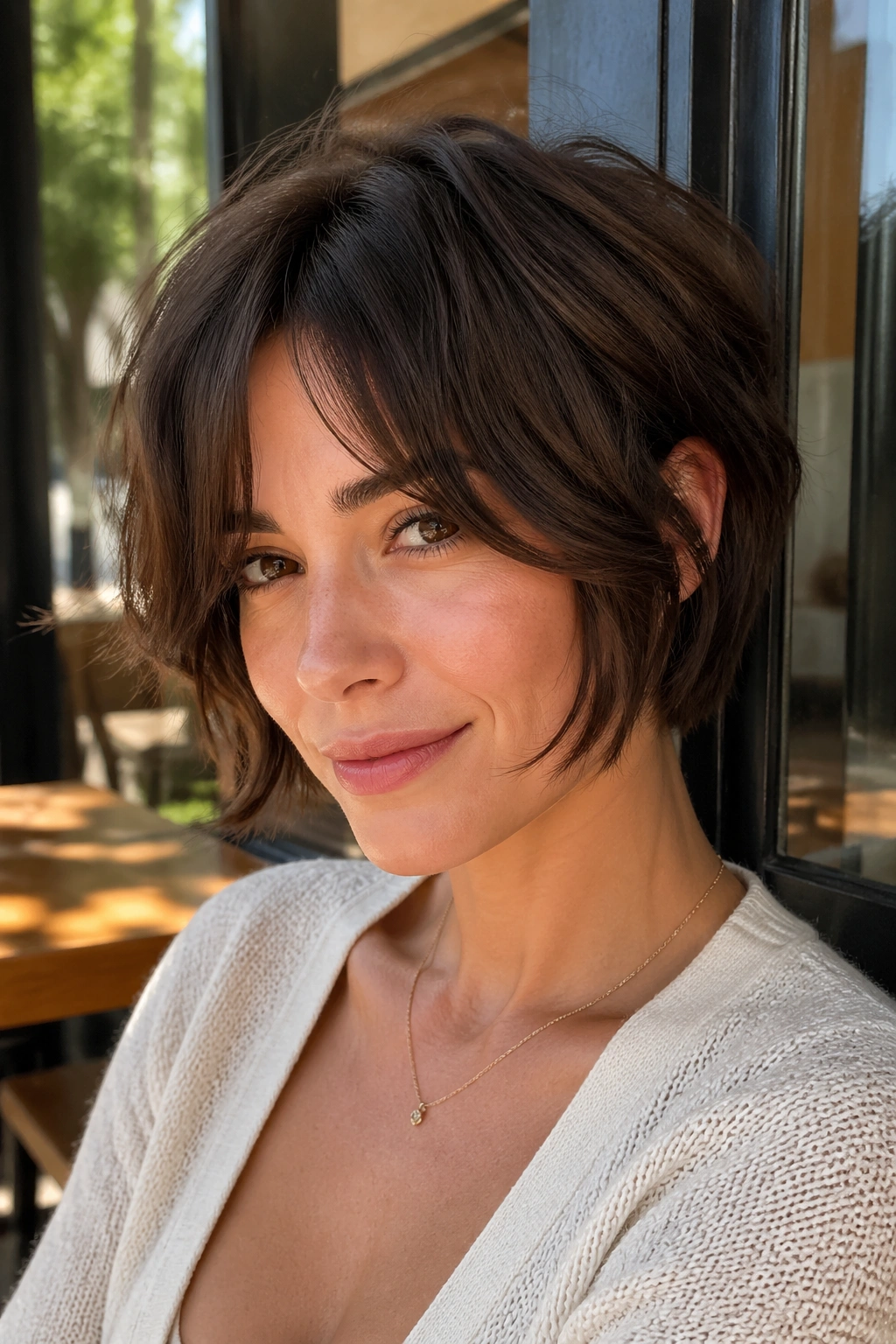
If you want one bixie idea that plays nicely with almost every face shape, this is it. Keep the back compact, keep the crown controlled, and let the front pieces fall in a way that frames the cheeks, jaw, or chin depending on what you want to soften. Thick hair is perfect for this because it gives the front enough substance to sit well instead of looking wispy.
The real advantage here is adaptability. You can make the face-framing pieces shorter if you want more lift, or longer if you want a gentler line. A little bend at the ends helps, but the cut should carry the shape on its own. That’s the mark of a good bixie on dense hair: it still looks like a haircut when you haven’t spent twenty minutes fixing it.
This is the version I’d hand to someone who says, “I want short hair, but I don’t want to regret it.” Fair. Thick hair can be demanding, and a balanced bixie respects that. It removes bulk, keeps enough softness around the face, and gives you a shape that feels finished even on a plain weekday morning.