
Medium-length hairstyles live in the sweet spot.
Not the prettiest sentence. True anyway. You get enough hair for waves, clips, braids, and a decent knot at the nape, but not so much length that every wash turns into a project. From shags to lobs, this is the range where a cut can do real work for you instead of sitting there and looking polite.
The interesting part is shape. A collarbone cut can make fine hair look fuller, while the same length with choppy layers can stop thick hair from ballooning out at the sides. That’s why medium-length hairstyles are never only about length. They’re about where the weight lands, how the ends sit, and whether the face-framing pieces are doing something useful or just hanging there.
The wrong cut at this length is easy to spot. It looks like a grow-out with intentions, not a style. The good ones have a clear outline, even when they’re messy, and they still make sense after a few days of dry shampoo and a rushed bend with a flat iron.
Somewhere between the first shag and the last lob, the whole category opens up.
1. The Soft Shag With Airy Fringe
A soft shag is the easiest way to make medium-length hair look like it has movement built into it. The layers are there, but they do not shout. They start around the cheekbones or just below the chin, then taper through the ends so the hair swings instead of hanging in one heavy sheet.
Why It Flatters Medium Length
The reason this cut works is simple: it keeps the outline full while breaking up the bulk inside. That matters a lot at shoulder length, where hair can either puff out or go flat fast. A soft shag gives you texture near the face and keeps the perimeter a little blunt, which is the part most people forget.
- Best on straight, wavy, and loose-curly hair
- Ask for layers that begin around the cheekbone, not at the jaw
- Use a light mousse or texture cream on damp hair
- Rough-dry the roots, then twist 2-inch sections around your fingers
Tip: keep the very bottom edge a touch heavier than you think you need. That’s what keeps the cut from looking wispy.
2. The Wolf Cut That Doesn’t Go Too Far
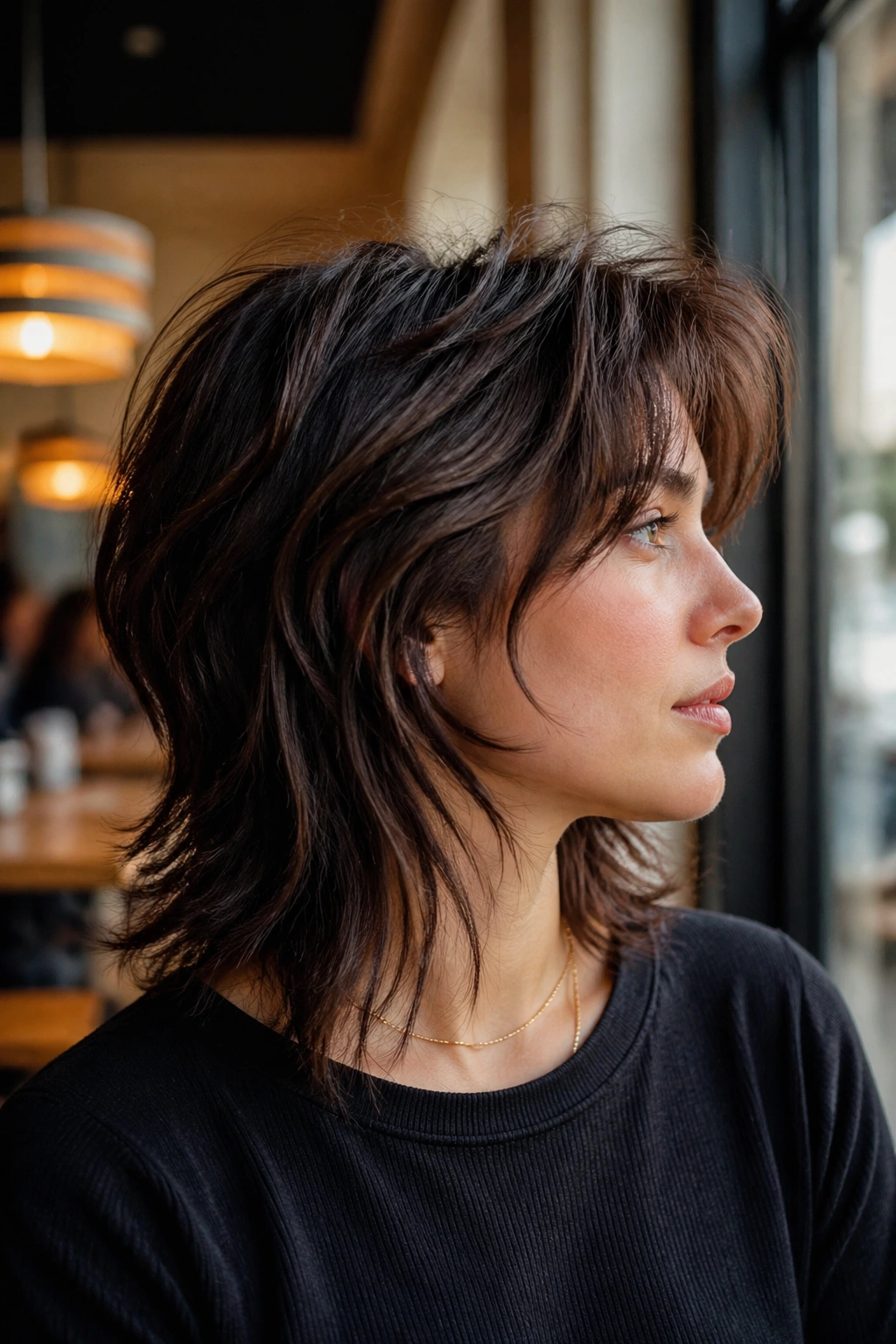
Why does the wolf cut keep showing up on medium hair? Because it gives you the edge people want from a shag, but without turning your head into a full-on mullet. The top has lift, the ends go softer and thinner, and the whole shape feels a little wild in a controlled way.
The version that works best at shoulder length stays wearable. Short crown layers create that lifted, piecey look, but they should not start so high that the back goes flat and the sides look stripped. I prefer this cut when someone wants movement and a little attitude, not a haircut that needs daily styling to make sense.
How To Keep It Wearable
The safest version keeps the top textured and the length around the collarbone. That leaves enough weight to stop the cut from fraying out. If your hair is fine, ask for less removal through the crown. If it is thick, ask for a softer taper through the nape so the shape does not sit like a triangle.
3. The Curly Shag Built For Bounce
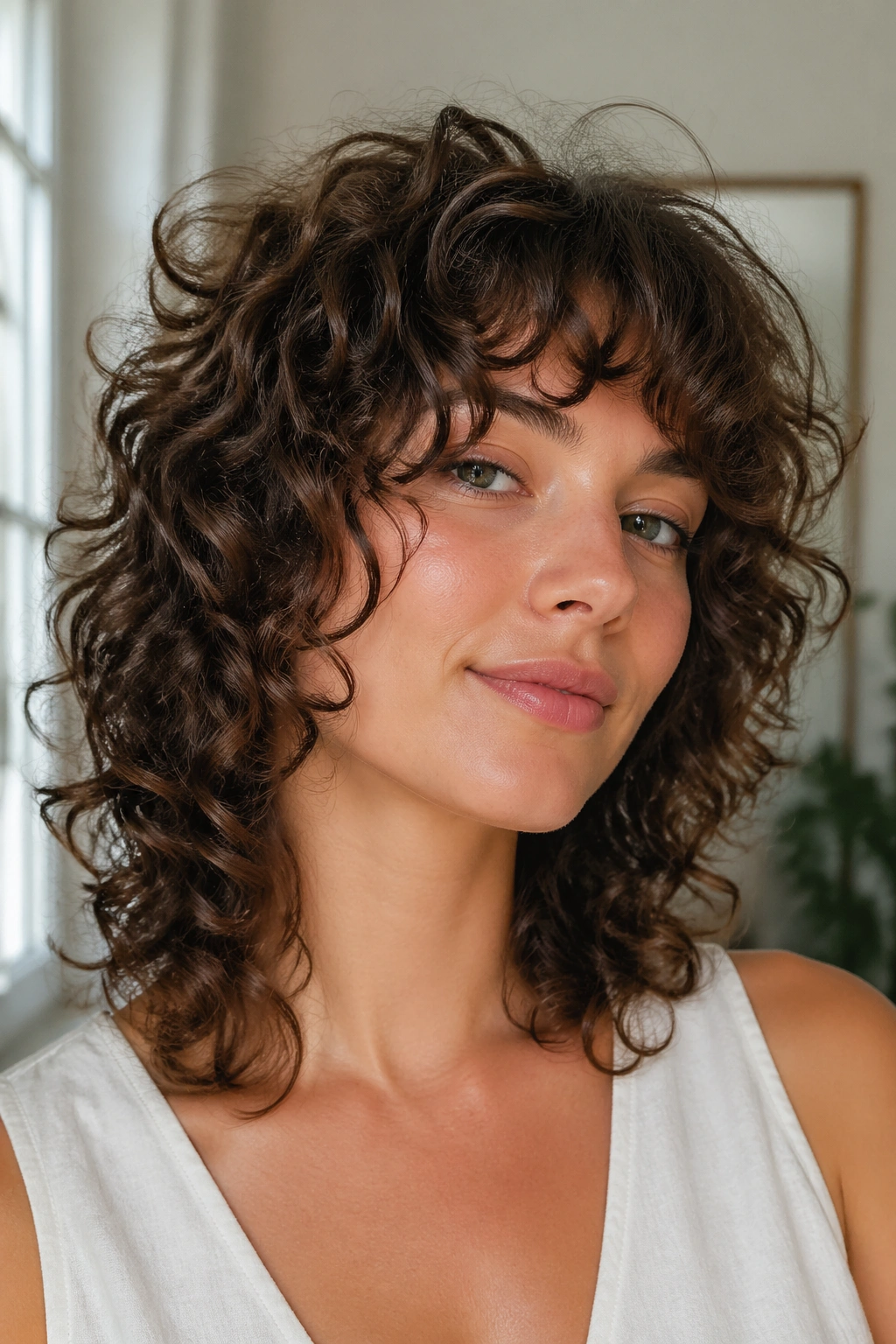
Curly hair and a blunt medium cut can fight each other. The shape gets too wide at the bottom, and the curl pattern starts stacking on itself. A curly shag fixes that by putting the right layers in the right places, so the curls can spring instead of crowding each other.
A good curly shag is cut with the curl pattern in mind, not against it. The layers should follow the shape of the curl, and the front pieces should land where your curls naturally clump. If your hair is tight-curled, the shortest layers need to be handled carefully. Too much cutting near the top can make the shape puff up faster than you can smooth it down.
What To Ask For
- Rounded layers that respect your curl pattern
- Face-framing pieces that stop around the cheekbone or lip
- Enough weight left at the ends to keep the silhouette grounded
- A dry cut if your stylist is comfortable with curls, because shrinkage matters
A diffuser helps, but the cut does most of the work. That’s the part people underestimate.
4. The Collarbone Lob That Sits Just Right
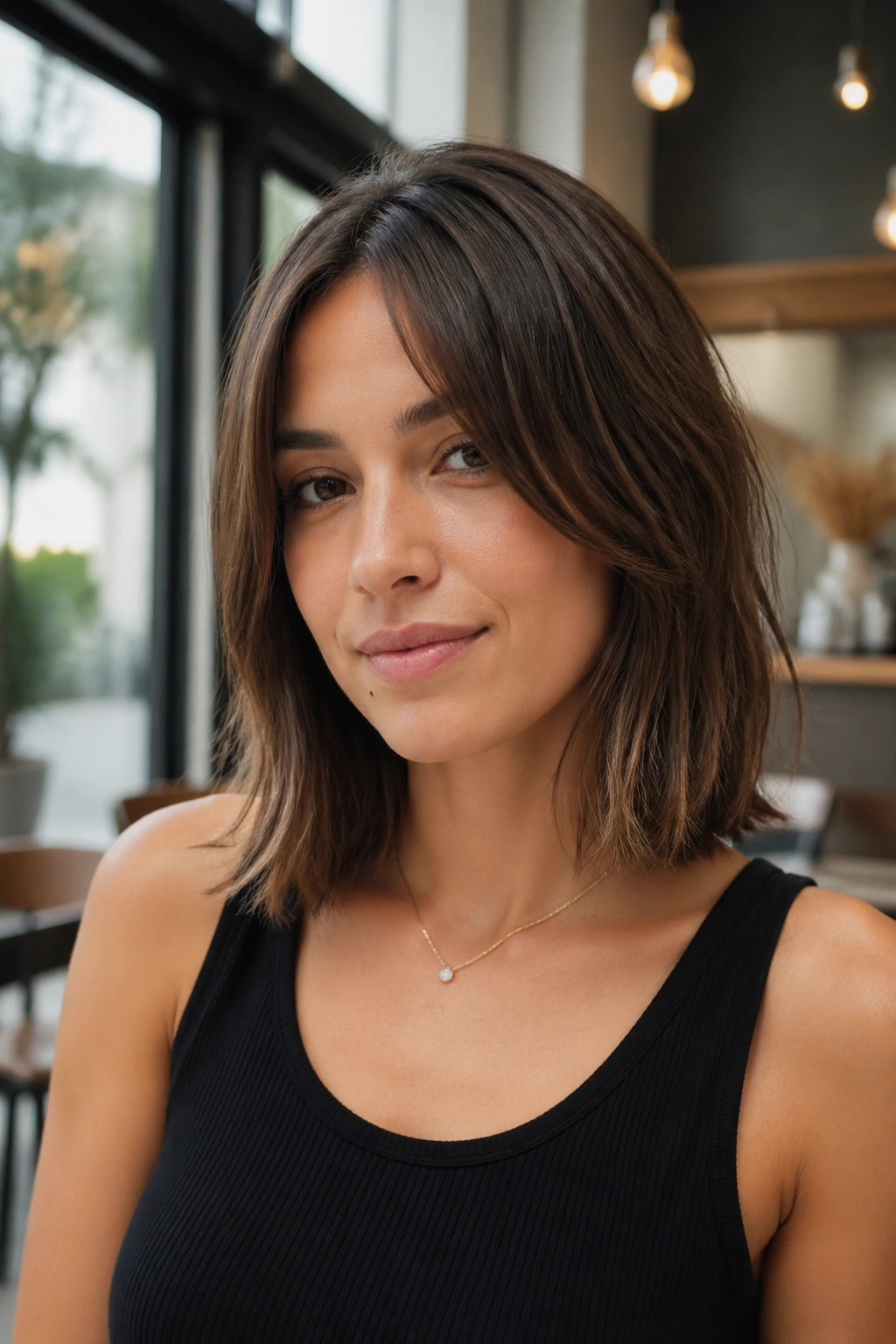
The collarbone lob is the haircut people keep coming back to when they want something easy to wear and hard to mess up. It hits right at or just below the collarbone, which means it brushes the shoulders instead of sitting on top of them like an awkward in-between cut.
It also behaves nicely. You can wear it straight, tuck it behind one ear, curl just the ends, or let it air-dry with a little bend. That flexibility is the whole point. A collarbone lob doesn’t need a dramatic finish to look finished.
I like this cut on hair that needs a reset but not a full change. It feels cleaner than long layers, but it still gives you enough length to play with. If you’re nervous about going shorter, this is the sane place to start.
5. The Blunt Lob With Clean Ends
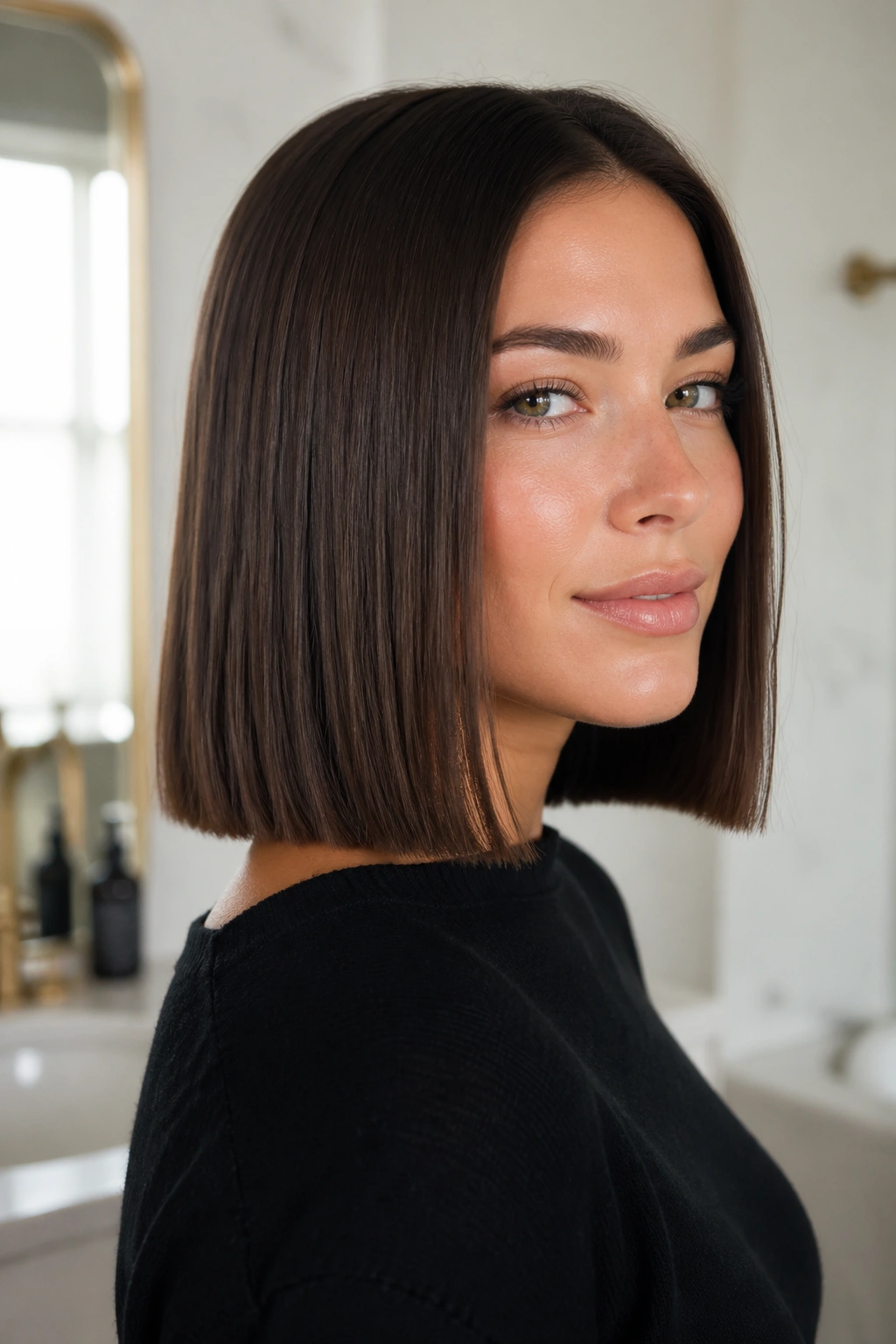
A blunt lob can look plain in a photo and gorgeous in motion. That is the difference. The cut is simple: one solid line, no obvious layers, ends that sit square and full. On fine hair, that line gives the illusion of density. On thicker hair, it creates a stronger outline that reads polished instead of fussy.
This cut is all about the ends. If the perimeter is cut cleanly, the whole style looks deliberate even when you’ve only dried it with a round brush for five minutes. If the ends are choppy or uneven, the whole thing falls apart fast.
The catch is maintenance. Blunt ends show wear faster than soft layers do, so this is the kind of cut that likes regular trims. It also looks better when the hair has a little shine, whether that comes from a serum, a smoothing cream, or just a really good blow-dry.
6. The Lob With Curtain Bangs
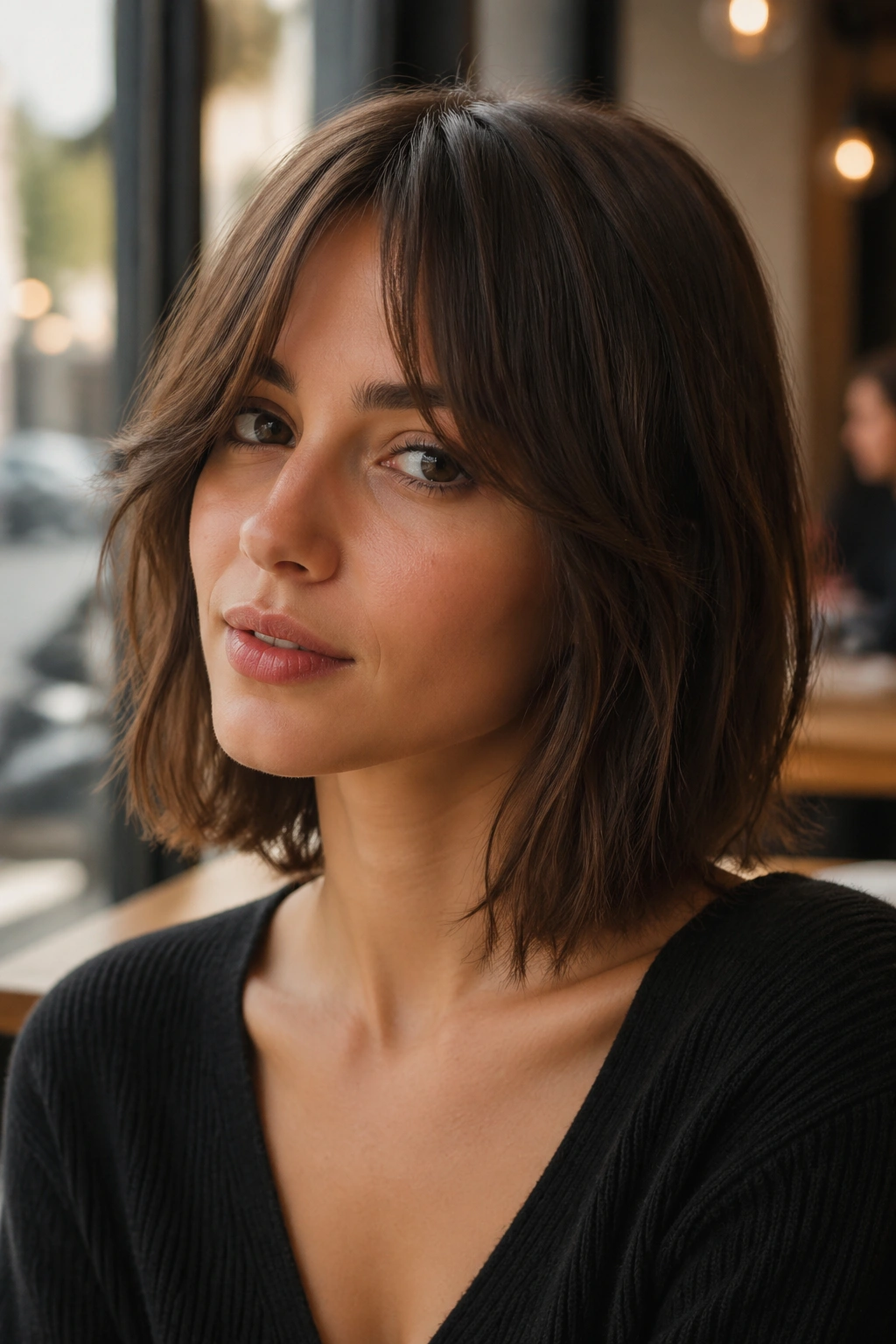
Why do curtain bangs keep showing up with medium-length hair? Because they make the front of the cut feel alive. Without them, a lob can sometimes read a little stiff. With them, the whole shape softens, and the eye moves right up to the cheekbones and eyes.
Curtain bangs work especially well when the rest of the cut stays fairly clean. You want the bangs to open from the center and fall away from the face, not collapse into the rest of the hair like they were an afterthought. The best versions are long enough to tuck, twist, or blend into the sides.
What To Ask For
Ask for the shortest point to graze around the bridge of the nose or a little below it, then length that drops toward the cheekbone. That gives the fringe room to split without looking choppy. If your hair is very dense, keep the bang section narrow. If it’s fine, a slightly wider fringe can make the cut feel fuller up top.
7. The Face-Framing Midi Cut
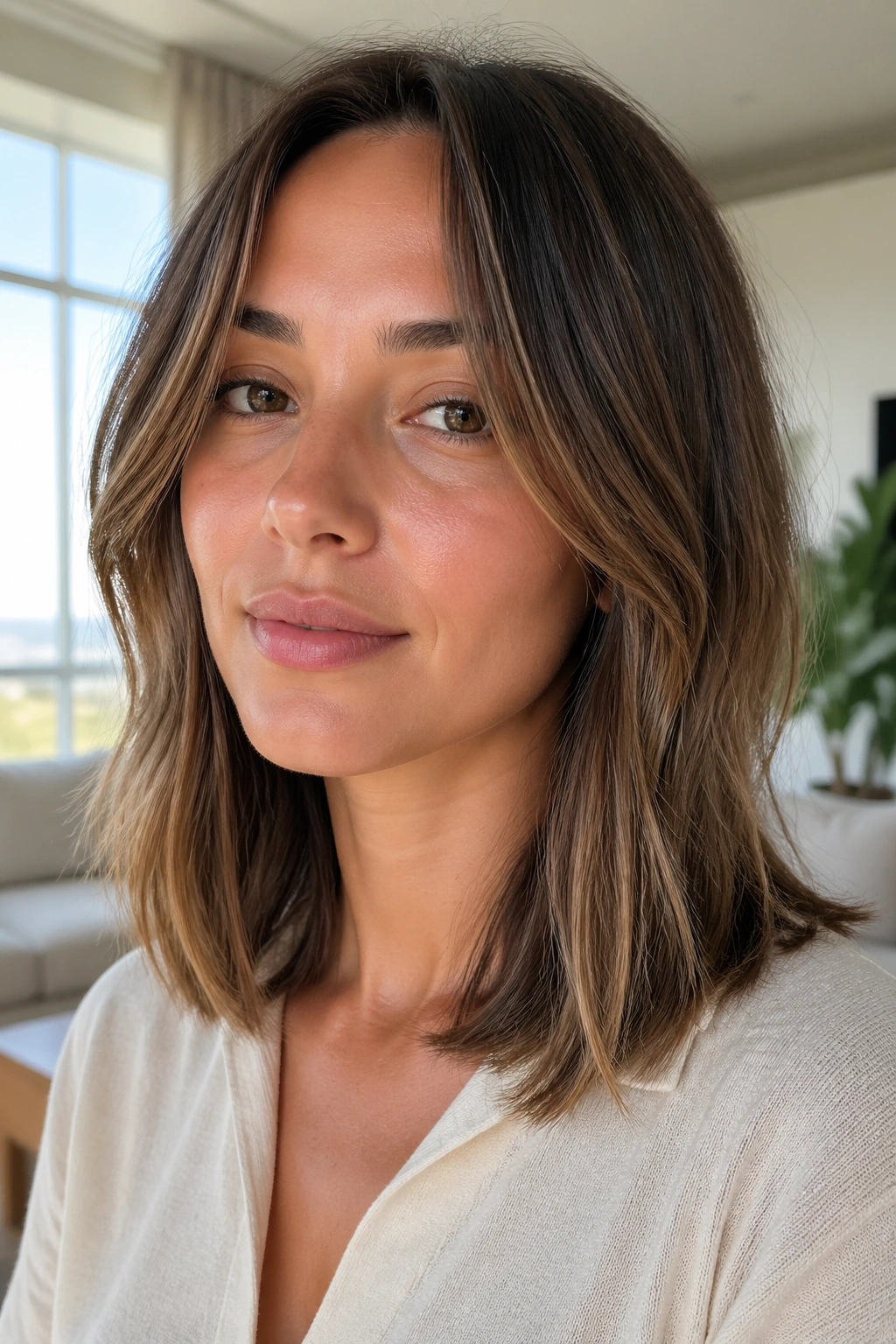
This is the haircut for anyone who wants movement near the face without losing too much length around the back. The face-framing midi cut keeps the outline fairly simple, then carves in pieces around the front that bend around the jaw, cheekbones, and collarbone.
It sounds subtle because it is. That’s why it works. A lot of medium cuts get busy when stylists pile layers everywhere. This one stays cleaner. You get shape where you see it most, and the rest of the hair can keep its weight.
Why It Feels Safer Than Heavy Layers
The back does not get thinned out to death, so the cut still has body when you wear it in a low ponytail or half-up style. The front pieces do the visual work, which is handy if you want the haircut to flatter your face without forcing you into a high-maintenance routine.
If you want the shape to stay soft, ask for front layers that start below the chin and taper into the length. Shorter than that, and the front can get a little skippy.
8. The U-Shaped Cut That Keeps Length In Back
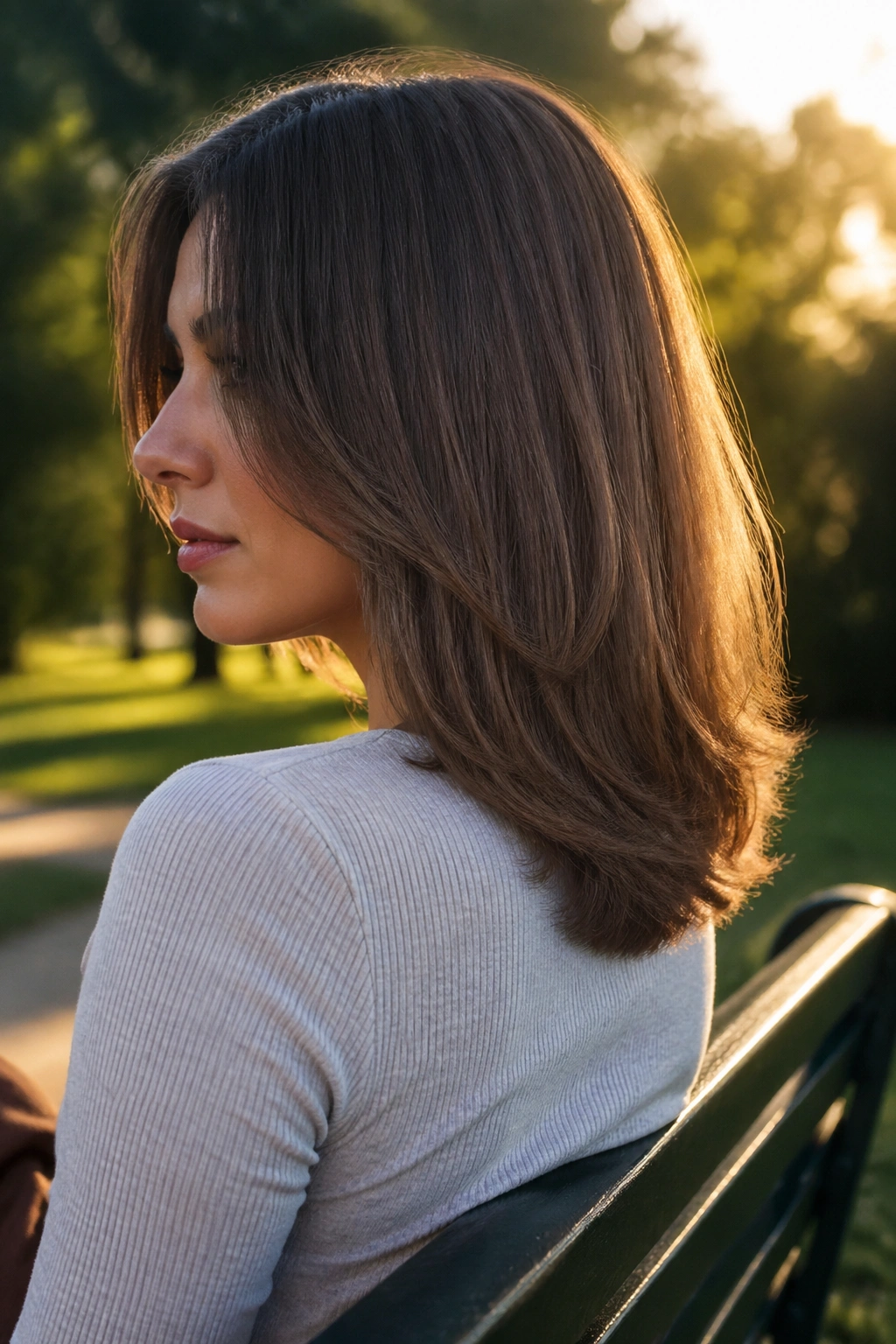
The U-shaped cut is one of those quietly smart medium-length hairstyles that never looks flashy but almost always looks good. The back keeps a little more length, the sides angle forward, and the perimeter forms a gentle curve instead of a hard straight line.
That curve matters. Straight-across cuts can feel abrupt at shoulder length, especially if your hair is thick. A U shape keeps the eye moving, which makes the cut feel softer and more natural. It also gives the ends more room to curl inward when you blow-dry or air-dry with a little cream.
I like this cut on hair that needs movement without losing the sense of fullness. It works on straight hair, wavy hair, and that in-between texture that wants shape but not too much layering. If you’re growing out long hair and don’t want to lose the feeling of length, this is a good compromise.
One note: the curve should be gentle, not dramatic. Too much shape and it starts looking like a salon demo from the early nineties.
9. The Razored Shoulder Cut For Movement
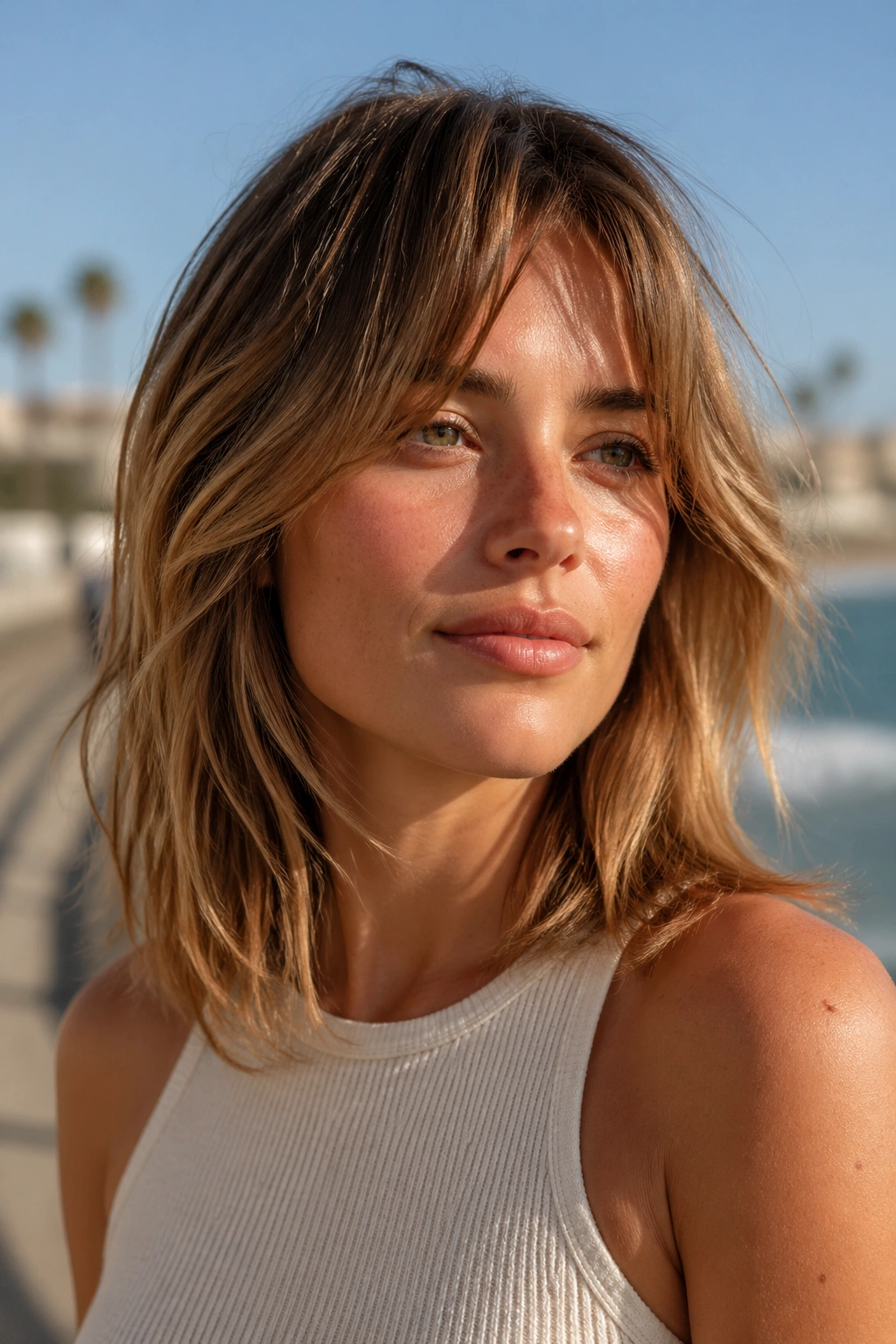
A razor cut can be brilliant on medium-length hair. It slices away some of the weight and leaves the ends soft, a little airy, and much less blocky than scissor-cut layers. On dense hair, that can be the difference between a cut that sits and a cut that moves.
But razor work is not for every head of hair. If your ends are fragile, the texture can fray faster than you want. So this is the cut I’d pick for hair that is healthy, full, and a little resistant to shape.
What Makes It Different
Unlike a blunt lob, a razored shoulder cut relies on softness at the ends. The finish looks less crisp, more piecey. That can be great if you like a lived-in look and hate the feeling of a heavy line on your shoulders.
If you go this route, ask for controlled texturing rather than aggressive thinning. A good razor cut should lighten the shape, not chew it apart.
10. The Feathered Flip-Out Cut
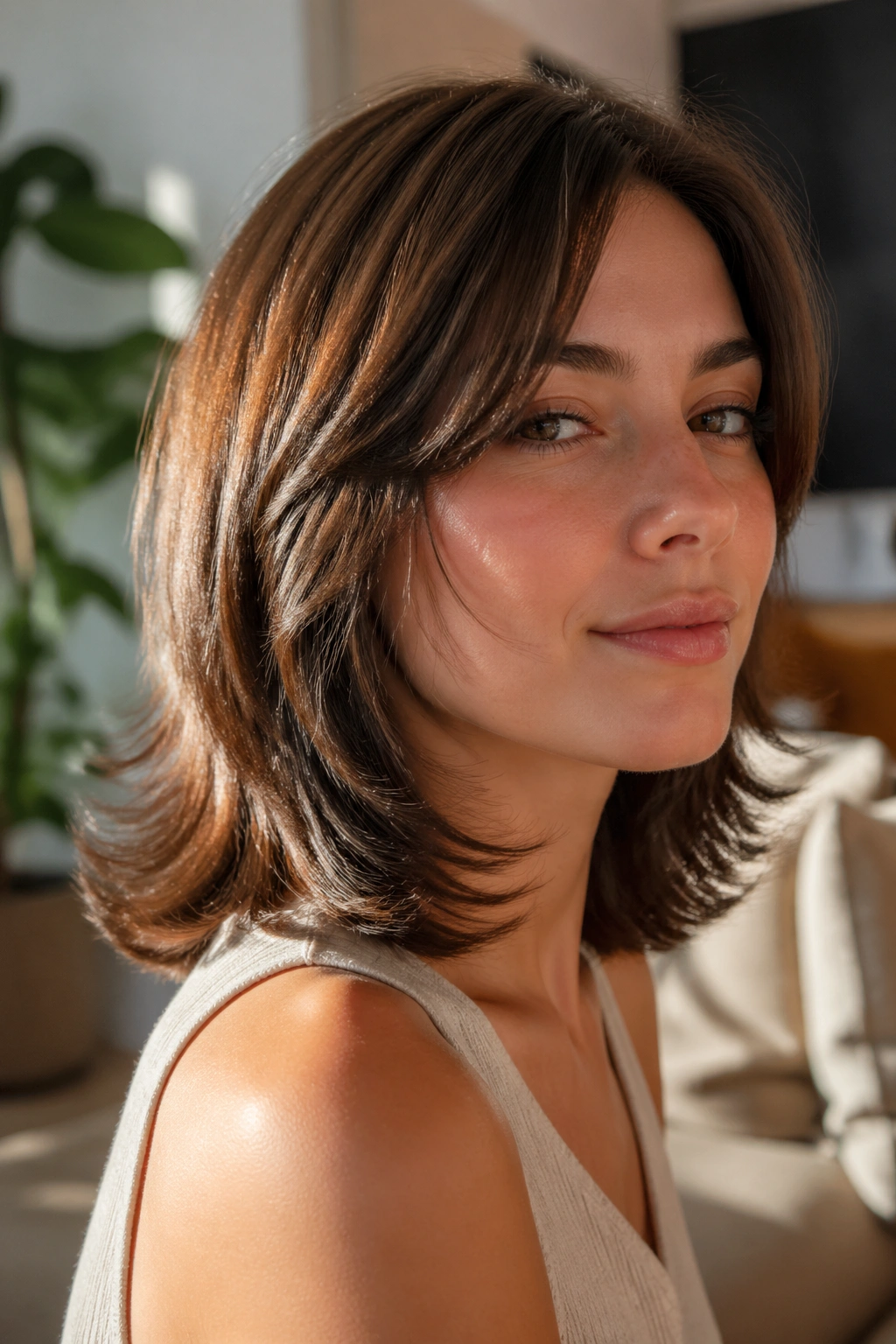
The feathered flip-out cut has a bit of retro charm, but when it is done well, it feels fresh rather than costume-y. The ends turn outward just enough to keep the shape bouncy, and the layers around the face are soft instead of chunky.
I like this cut because it does something useful on medium hair that often gets ignored: it builds movement at the ends. A lot of people spend all their energy on volume at the crown and forget that the silhouette lives at the bottom. A little flip there changes the whole read of the style.
How To Style It
- Blow-dry with a medium round brush
- Turn the brush slightly away from the face at the ends
- Finish with a light mist of flexible hairspray
- If your hair is pin-straight, set the ends with large velcro rollers for a few minutes
The flip should feel light, not like a hard curl. If it looks too polished, it loses the charm.
11. The Side-Part Layered Lob
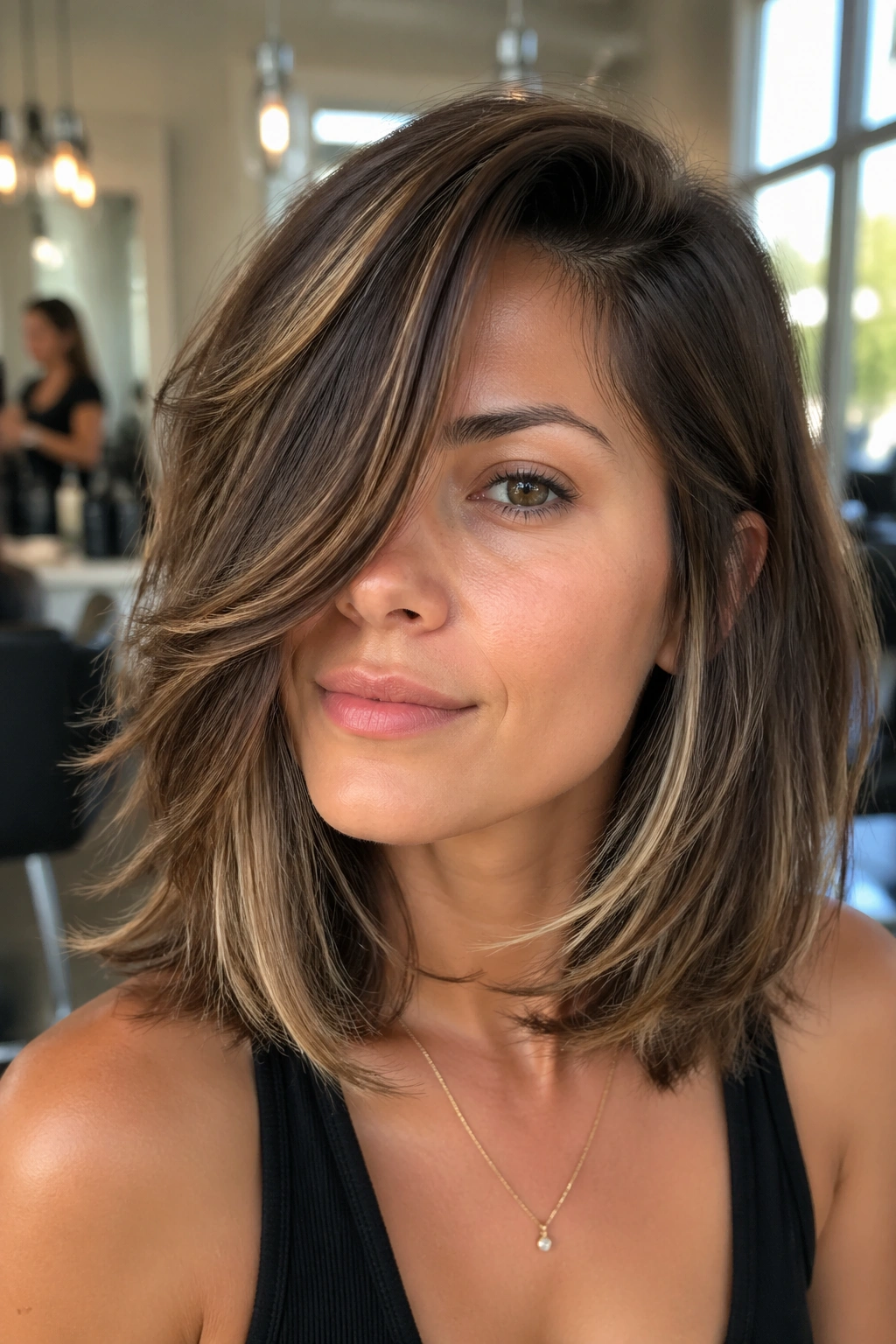
A side part can change a medium cut more than a lot of people expect. It adds lift at the root, shifts the weight, and makes layered lengths fall in a more interesting way across the face. On a lob, that simple shift gives you instant shape.
The side-part layered lob works especially well when the layers are long enough to move but not so short that they scatter everywhere. You want the hair to drape, not explode. The deeper the part, the more lift you get on one side, which can be useful if your roots tend to lie flat.
This is one of my favorite medium-length hairstyles for days when hair feels tired but a full restyle is out of the question. A side part plus a few bends with a flat iron can make the whole head look intentional again. Not fussy. Just awake.
12. The Textured Wavy Lob
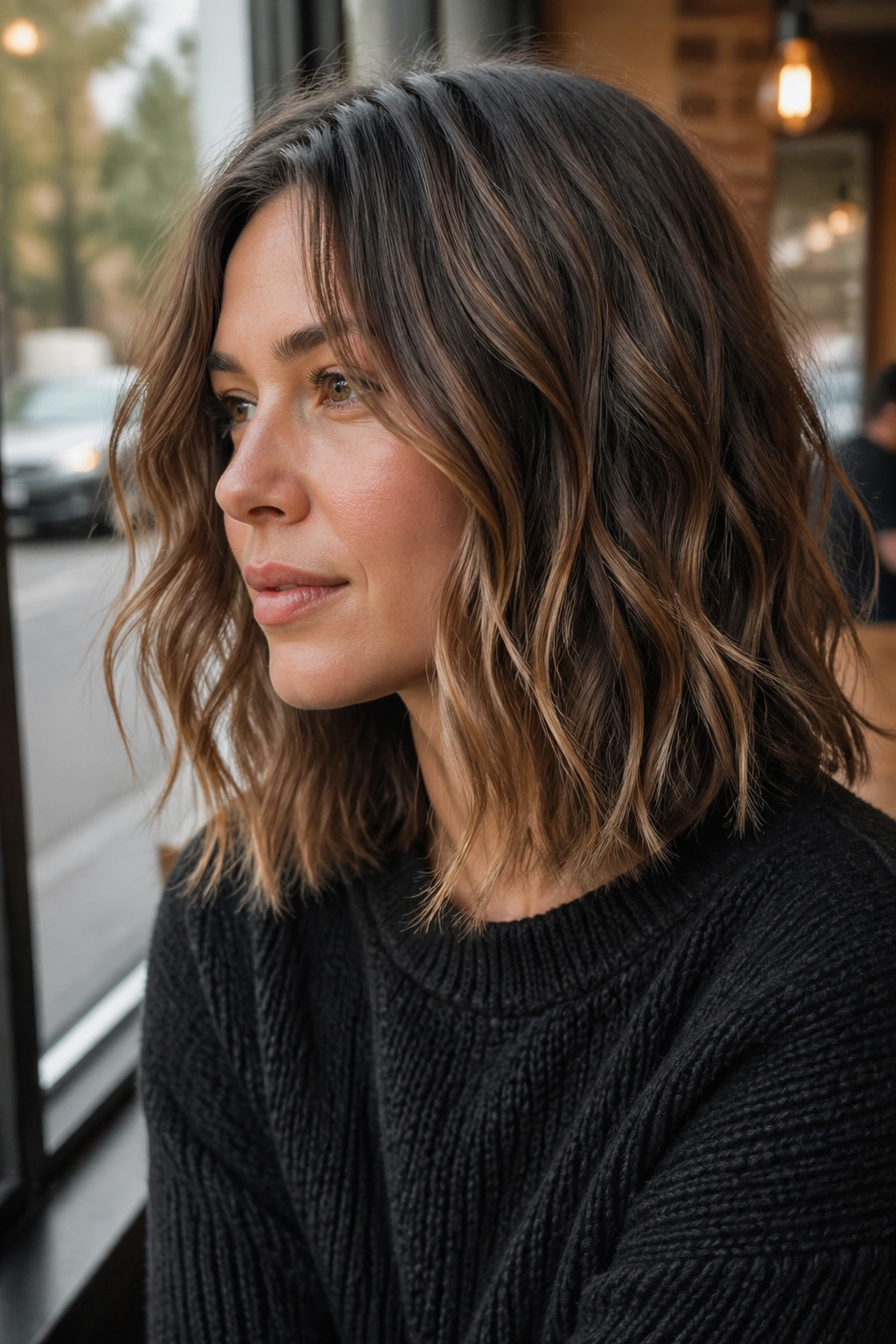
Why does a wavy lob look better than a perfectly curled one on most people? Because the texture feels less forced. Slightly uneven waves keep the cut from reading too polished, and medium length is the sweet spot where that softness actually shows up.
The trick is not to make every wave identical. Alternate direction as you wrap the hair, leave the last inch or so straighter, and break up the pattern with your fingers once the hair cools. A 1-inch or 1.25-inch iron usually gives the best bend for this length.
How To Get The Most From It
- Start the wave a few inches below the root
- Leave the ends loose for a more natural finish
- Use a texture spray or dry shampoo at the roots
- Scrunch the waves lightly once they cool
Too much curl and the cut gets busy. Too little, and the hair just looks bent in the wrong places.
13. The Air-Dried Midi Cut
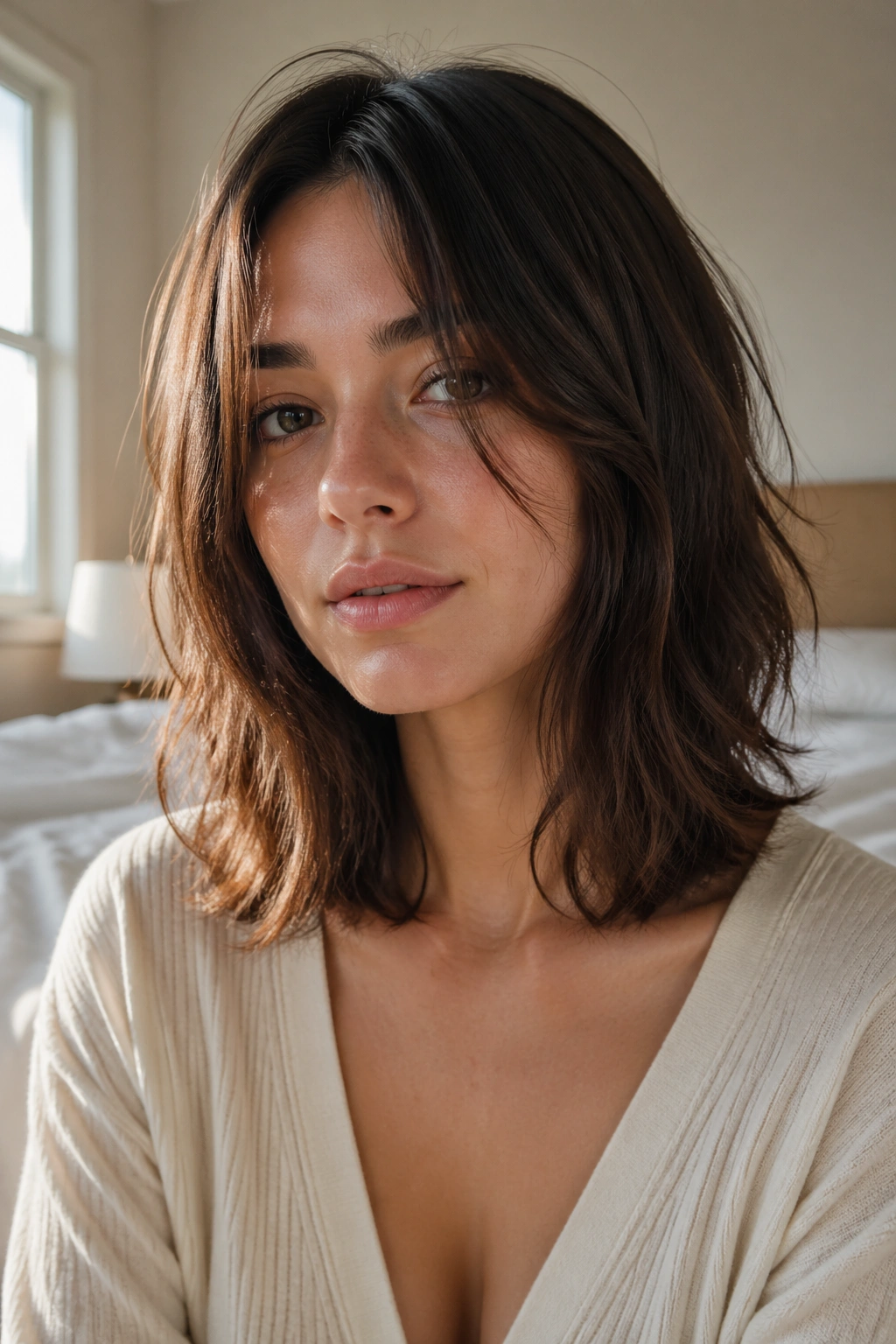
Some cuts behave beautifully with heat. Others are built for the days when you wash your hair, put on a shirt, and walk away. The air-dried midi cut belongs in the second group. It depends on shape, not styling skill.
The best version has a clean perimeter, light interior layers, and enough texture through the ends to keep the hair from drying into a blank curtain. If your hair is wavy, this cut can look especially good with a leave-in cream or a small amount of gel worked through damp strands. If it’s straighter, a tiny bend from behind the ears can give it life.
A lot of air-dry cuts fail because the layers are too random. This one needs intention. The hair should dry into a shape that looks like it was planned, not rescued.
14. The Modern Mullet-Inspired Medium Cut
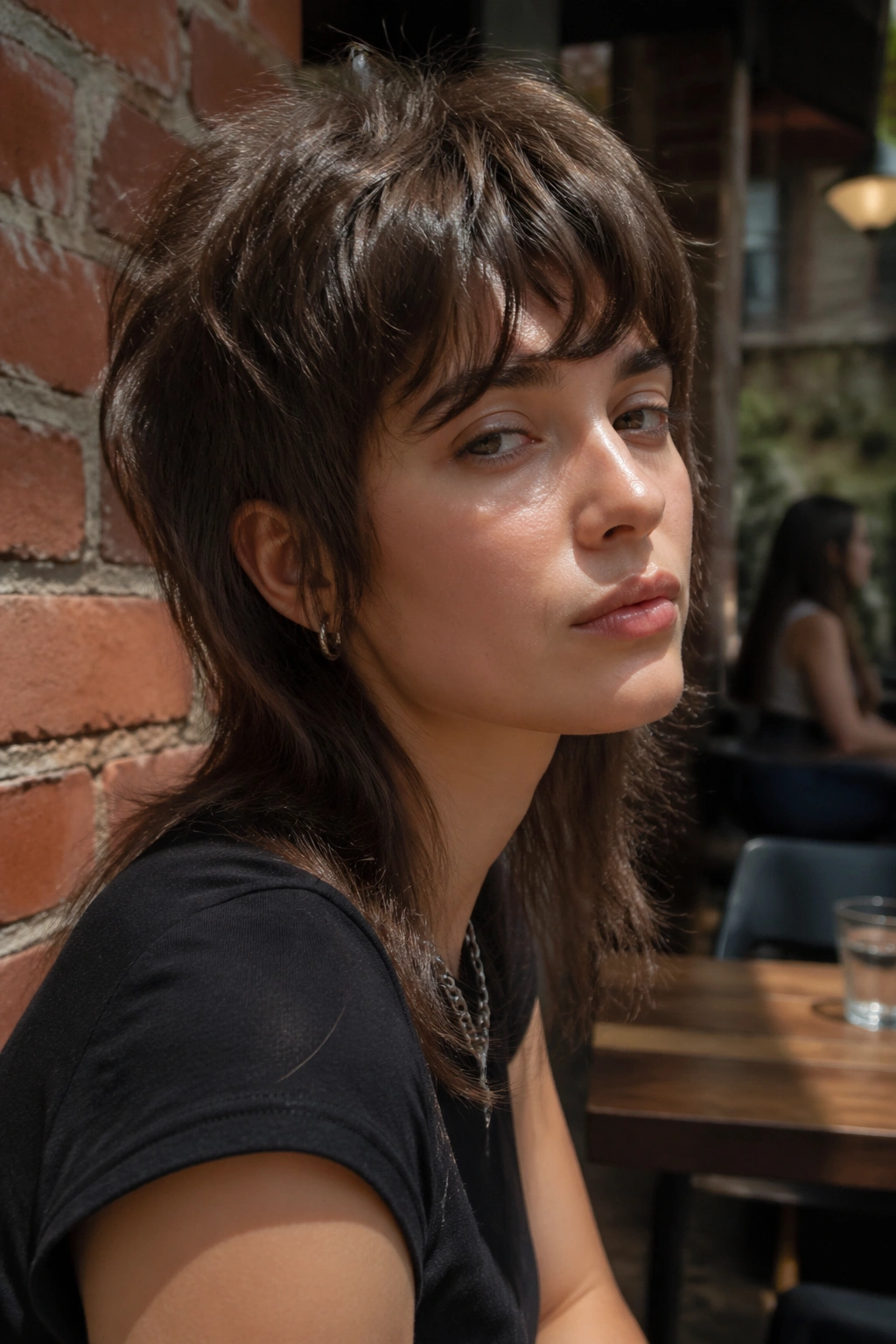
A mullet-inspired medium cut sounds more aggressive than it usually looks. The modern version keeps the top fuller, lets the back sit a little longer, and softens the transition so you get edge without the old-school sharpness.
That’s why it works. The shape has attitude, but it doesn’t depend on shock value. The crown can be lifted, the sides can taper, and the nape can stay a touch longer for movement. It’s especially good if you want a cut that feels a little rebellious without asking you to style it like you’re on a runway.
Not everyone will love it. Fine, straight hair can make the shape disappear if the layers are too subtle. Very thick hair can go too puffy if the crown is cut too high. The sweet spot is medium density, wavy texture, and someone who likes a haircut with a little bite.
15. The Clavicut
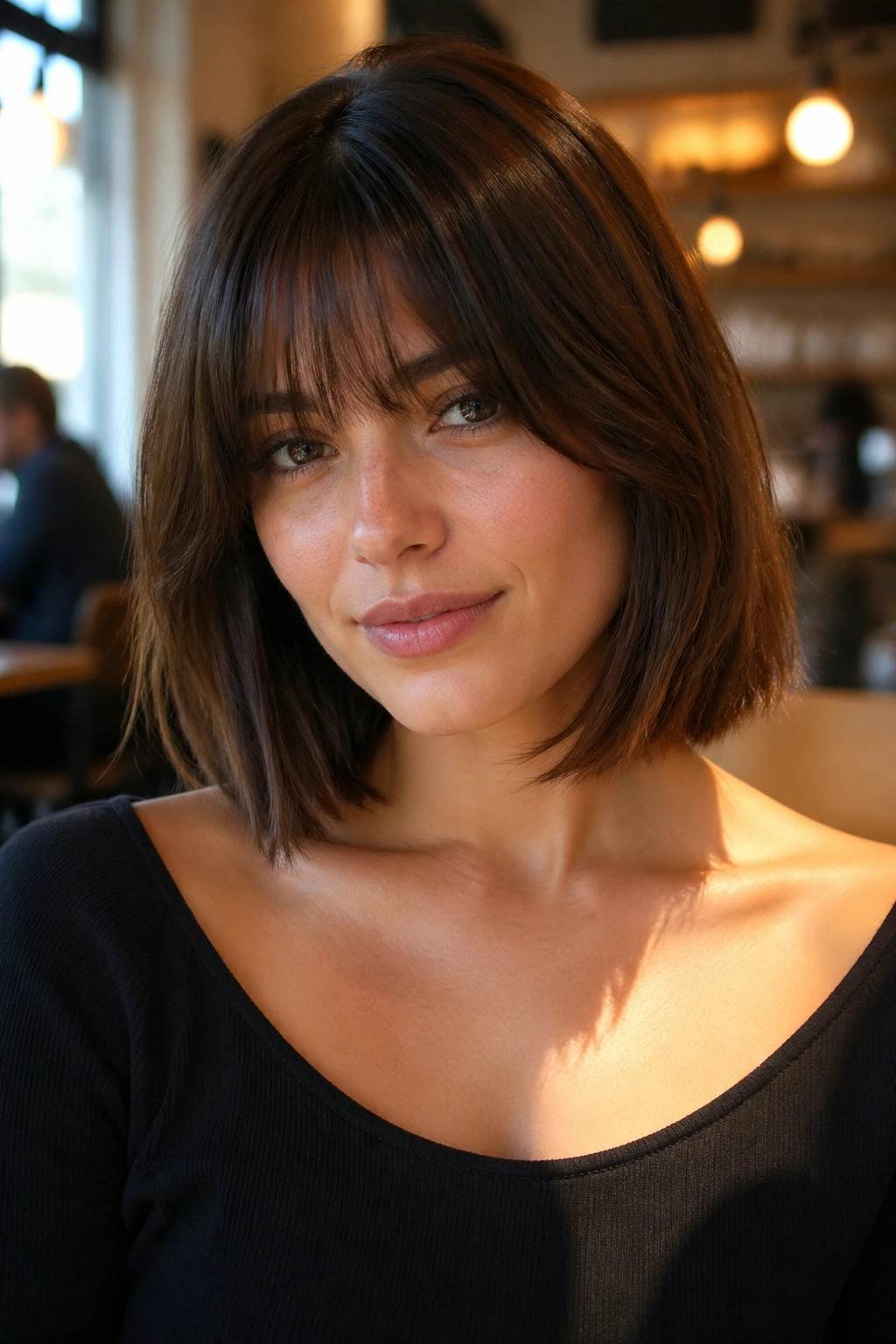
The clavicut sits right at the collarbone, which is exactly why so many people end up liking it. It splits the difference between a lob and a shoulder cut without looking like it’s trying too hard. The line feels neat, but not severe.
What I like most about it is how it plays with clothing. It does not disappear into a turtleneck, and it does not fight with a blazer collar the way some longer cuts do. You get a little movement around the neckline, which makes even a plain cut look finished.
Where It Lands Best
- On hair that needs a clean reset
- On faces that like a little length around the jaw
- On people who want ponytail length without actual long-hair weight
Ask for a perimeter that touches the collarbone when dry. Wet hair stretches, and that detail matters more than most people think.
16. The Choppy Cut With Full Fringe
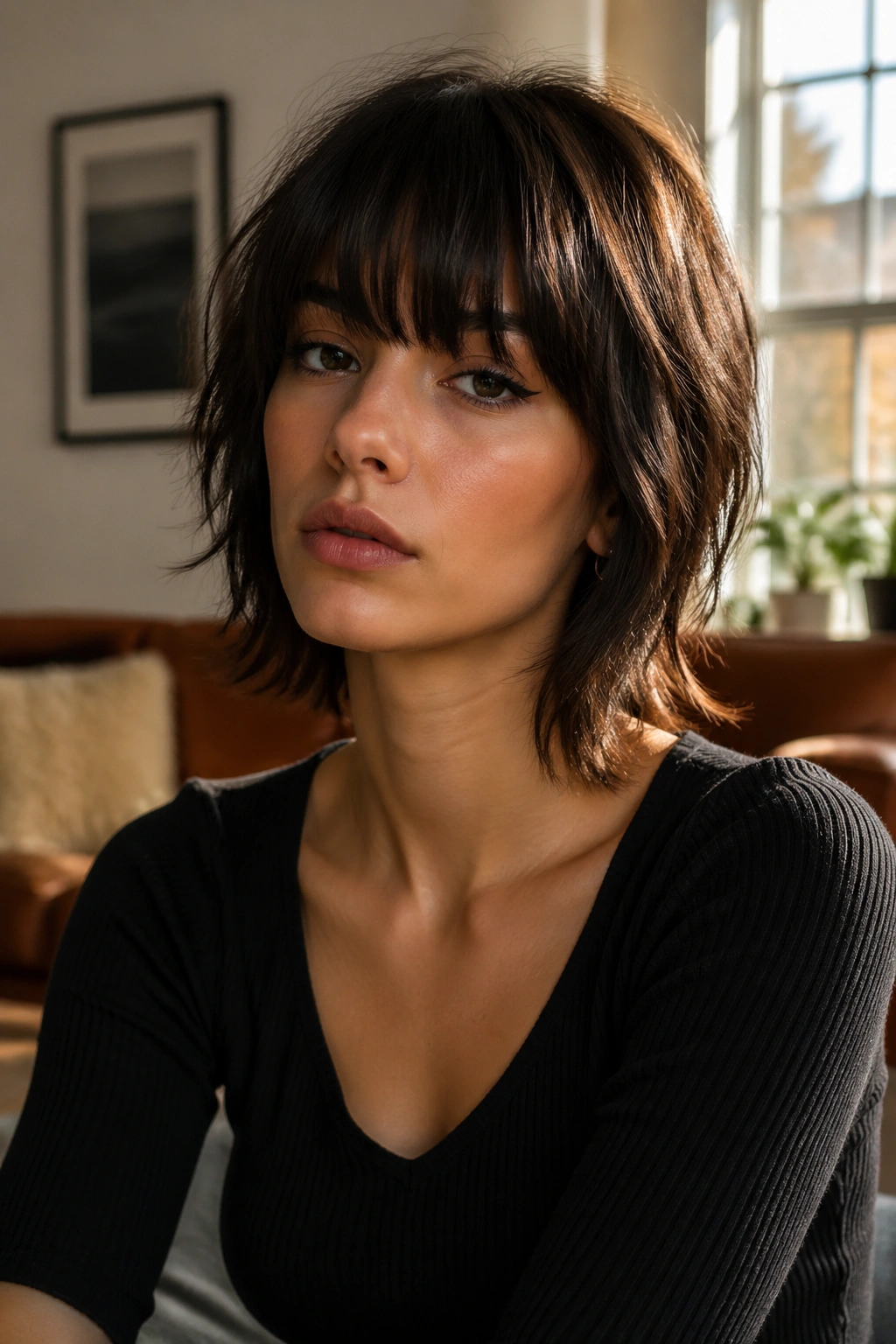
This one is not shy. The choppy cut with a full fringe gives medium-length hair an immediate point of view, and it does it fast. The fringe pulls attention up, the layers add grit through the body, and the whole cut reads a little sharper than a soft shag.
One-sentence truth: this cut has to suit your face and your lifestyle.
If you like a bit of structure around the forehead, full fringe can be fantastic with mid-length layers. If you hate bangs touching your skin when it is humid or you are running late, skip it. That honesty saves everyone time. The choppy texture works best when the fringe is cut thick enough to hold its line but soft enough to move.
It is a strong look on straight hair, and it can look great on wavy hair if you are willing to blow-dry the fringe each morning. If you want hair that can air-dry with zero effort, this is probably not the one.
17. The Sleek Straight Lob
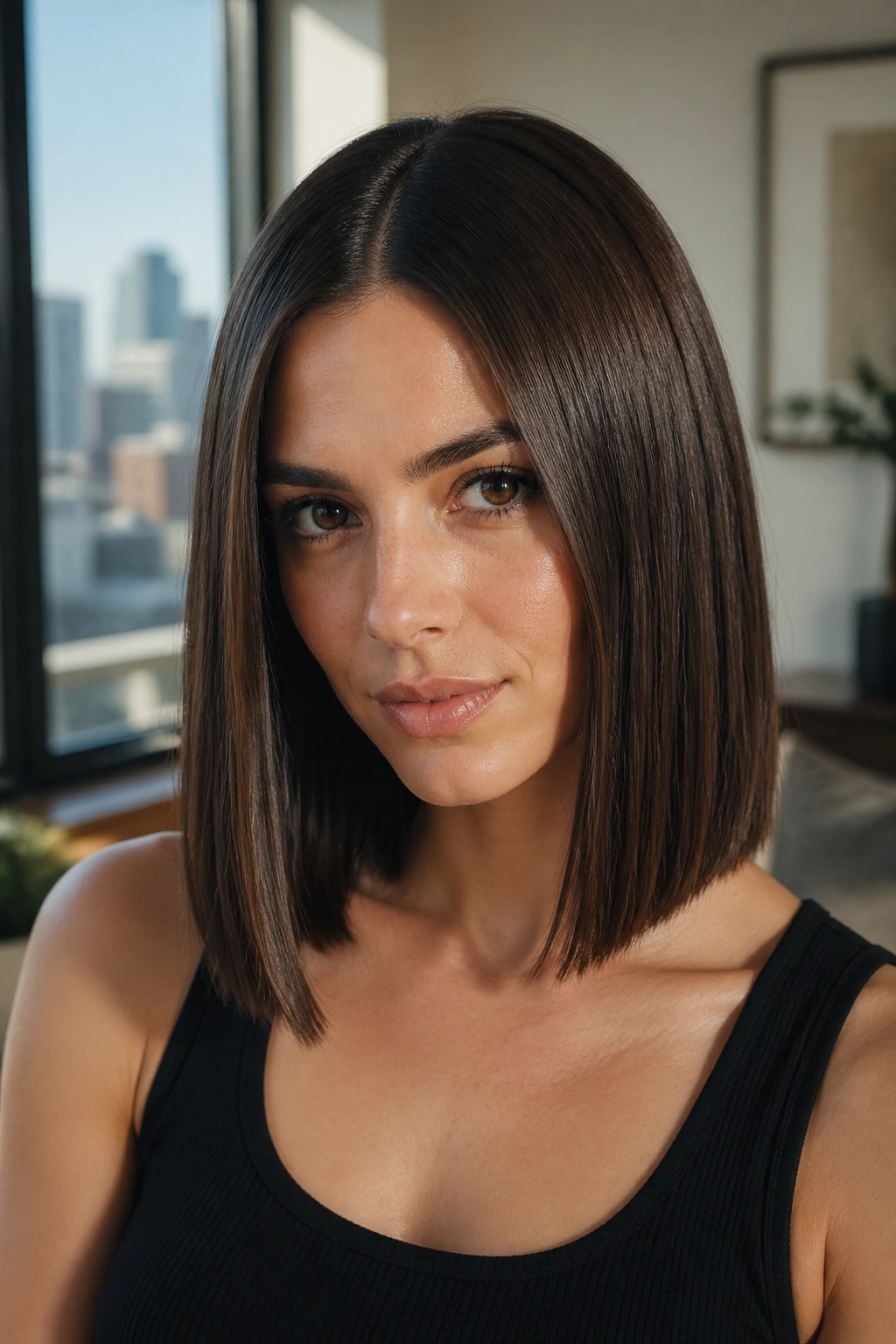
A sleek straight lob has almost no patience for sloppiness. That’s the appeal. The line is clean, the ends are deliberate, and the shine does a lot of the visual work. If your hair naturally lies straight or only bends a little, this cut can look sharp with surprisingly little effort.
What Makes It Read So Clean
The perimeter should be precise, and the part should support the shape rather than fight it. A center part gives a more modern feel. A soft off-center part feels easier and less severe. Either way, the ends need to stay blunt enough to keep the silhouette strong.
This cut pairs well with a flat iron, but only if you are careful. Too much heat and the hair goes limp and stringy. A heat protectant, one slow pass, and a touch of serum on the last inch or two is enough. You want the hair smooth, not pressed into glass.
18. The A-Line Lob
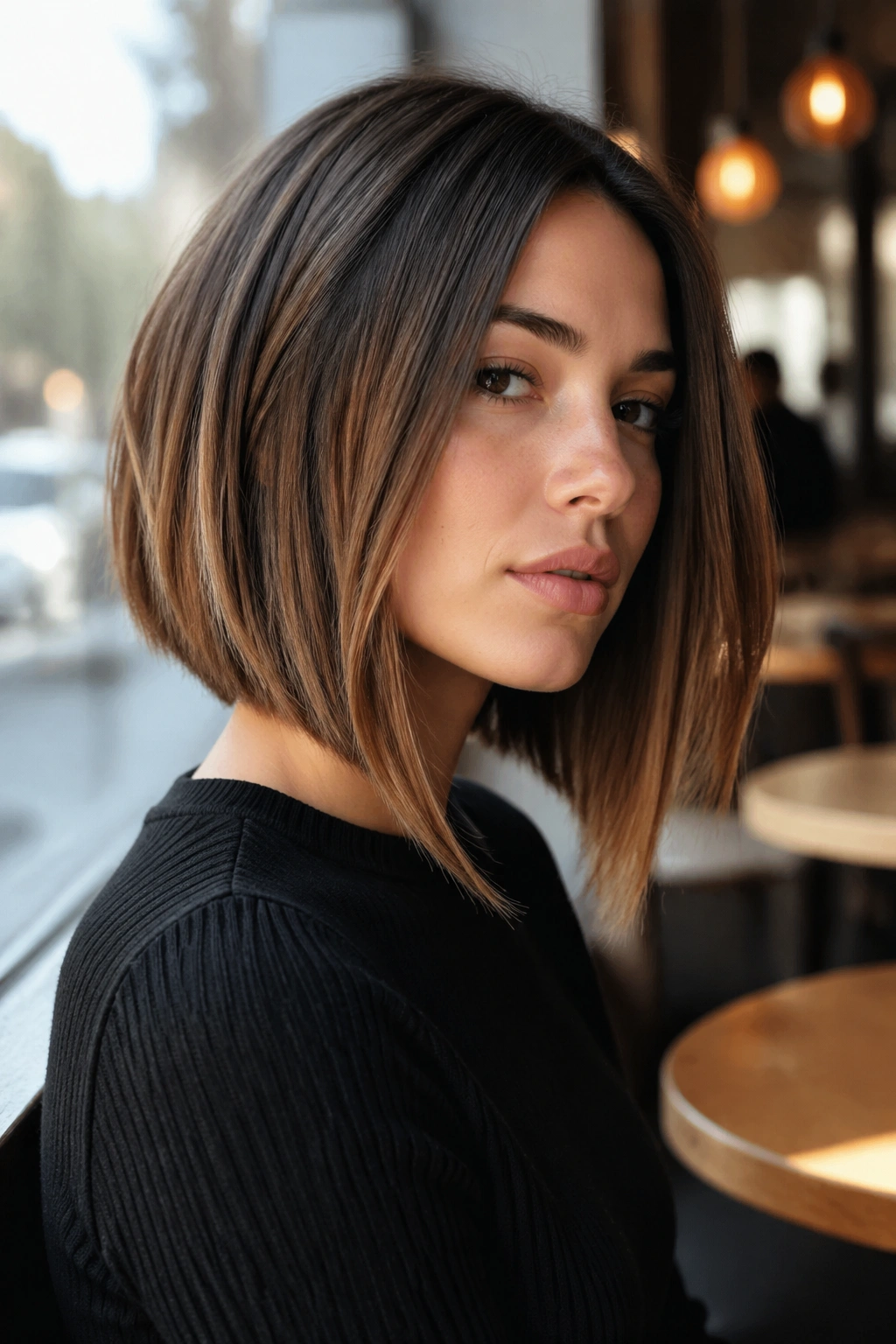
The A-line lob is shorter in back and a touch longer in front, which gives the haircut a built-in angle. That angle can sharpen the jawline, create a cleaner neck line, and make the whole cut feel more sculpted than a straight lob.
It is not a dramatic angle unless you ask for one. The best medium-length version keeps the difference subtle, maybe an inch or two from back to front. That way the hair still feels wearable on a normal day, not like a geometry lesson.
This shape is especially useful if you like tucking the front behind your ears or wearing one side behind the shoulder. The longer front pieces keep the look soft, while the shorter back removes bulk where you usually feel it most. If you want a lob with a little structure, this is a strong choice.
19. The Layered Medium Cut For Thick Hair
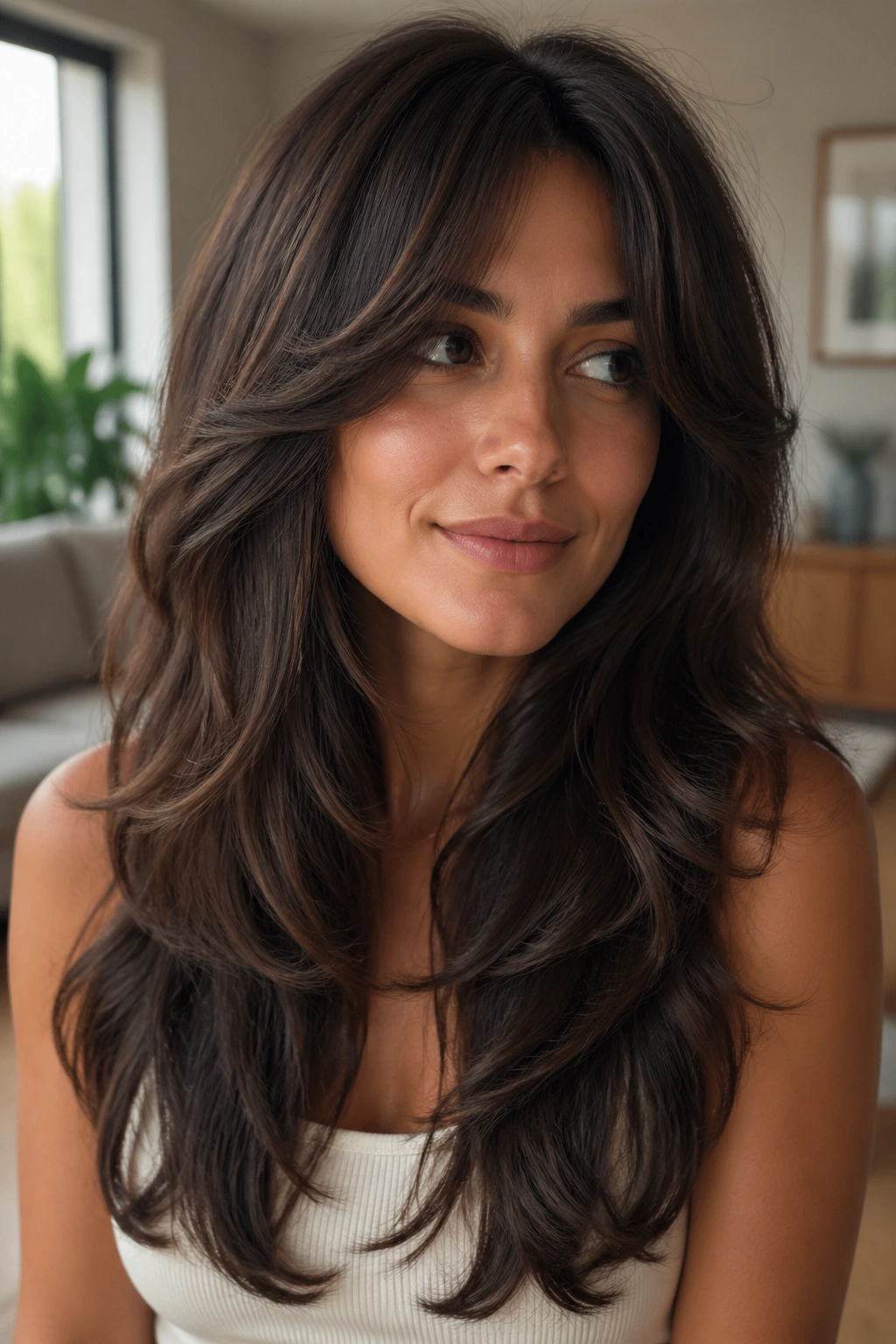
Thick hair needs a plan. Leave it one length with no thought, and it can turn into a wide block. Put in too many short layers, and it can puff up in all the wrong places. The layered medium cut for thick hair aims for the middle.
The best version removes weight from the interior while keeping the outline solid. That means long layers, controlled texturing, and enough length left at the bottom to hold the shape down. Face-framing pieces help too, but they should connect smoothly so the cut doesn’t look sliced apart.
What To Ask For
- Long layers, not short choppy ones
- Soft thinning only where the hair is bulky
- A perimeter that stays blunt or slightly rounded
- Movement around the face, not all over the head
If your hair is dense and puffs at the sides, this kind of cut can feel like a relief. It still gives you presence. It just stops the hair from taking over the room.
20. The Fine-Hair Cut That Keeps Ends Full
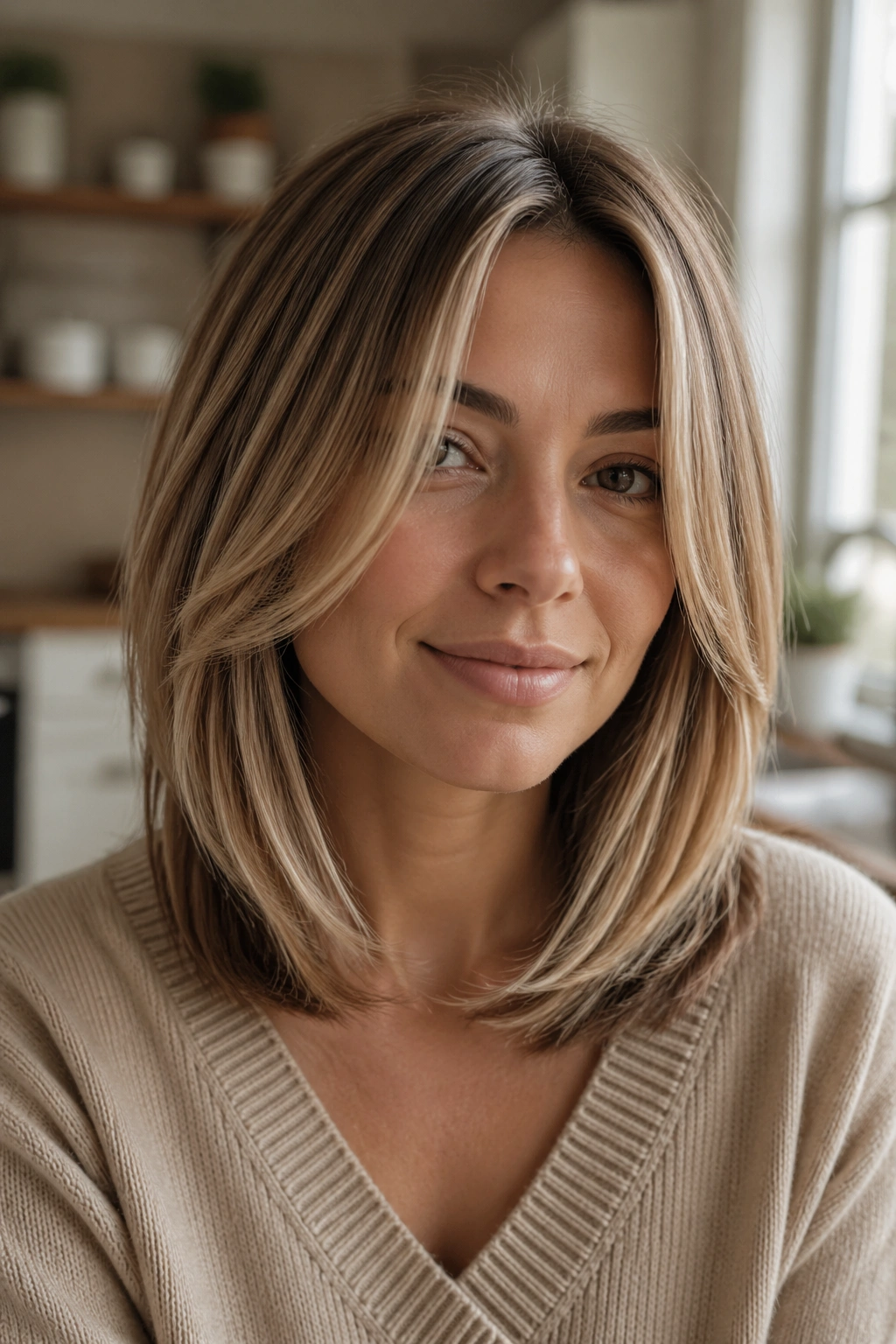
Fine hair can wear medium length beautifully, but it needs the right shape. Too many layers and the ends start to look thin. Too much thinning and the whole cut loses its body. The answer is usually a clean line with just enough softness around the face to keep it from looking helmet-like.
Can fine hair wear layers? Yes, but lightly. A few long layers can add movement without stripping the ends bare. A blunt or slightly beveled perimeter often helps the most because it gives the illusion of density where you need it.
How To Keep It Looking Full
- Use a volumizing mousse at the roots
- Blow-dry with a small round brush or a vent brush
- Keep conditioner off the last inch or two if your hair goes flat fast
- Trim before the ends start looking see-through
This kind of cut is sneaky good. It does not shout. It just makes hair look more like hair and less like a soft ribbon.
21. The Curved-End Shoulder Cut
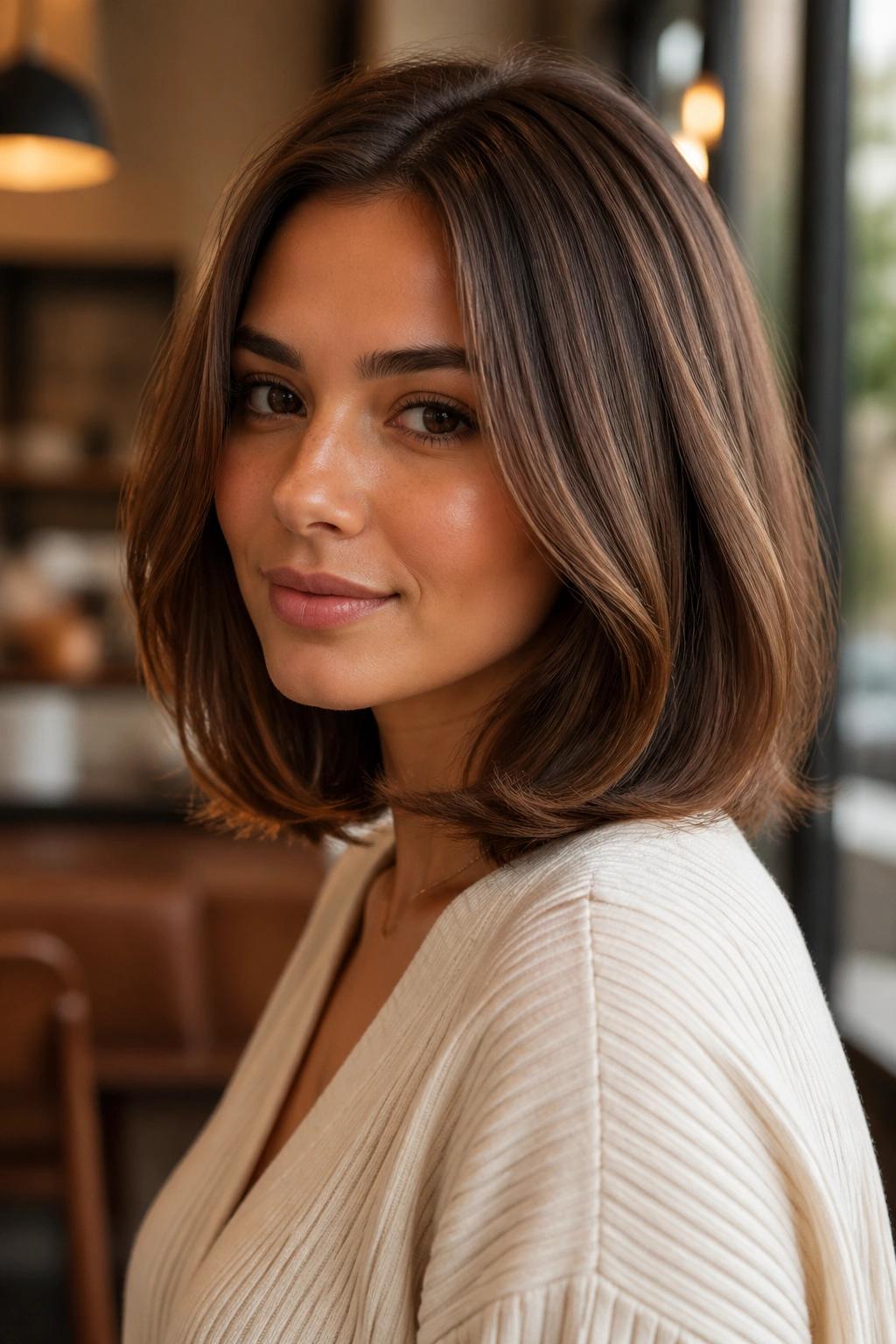
The curved-end shoulder cut is one of those quietly flattering styles that works because it finishes the job. The ends bend inward slightly, which gives the cut a soft frame around the jaw and neck instead of letting it hang straight down.
That bend can come from the cut itself, or from the way you style it with a round brush. Either way, the shape is flattering on a lot of medium-length hair because it softens strong lines. If your face is on the longer side, the curve can keep the hair from stretching things out more. If your hair is thick, the inward turn helps control width.
I like this cut when someone wants something neat but not stiff. It feels tidy enough for work, easy enough for everyday wear, and soft enough that it doesn’t scream “I spent an hour on this.” Sometimes that balance is the whole point.
22. The Polished Mid-Length Cut With Hidden Layers
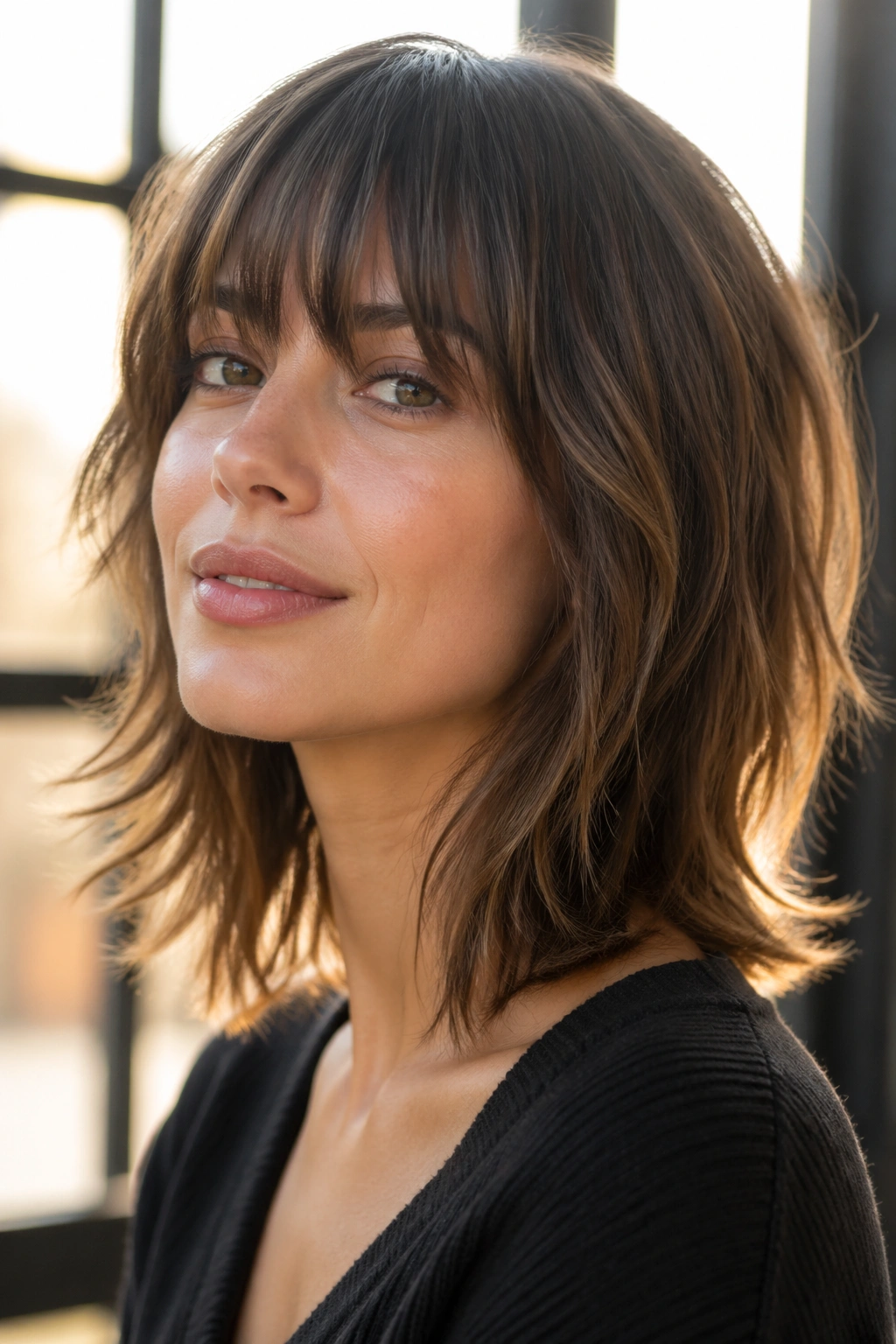
A polished mid-length cut with hidden layers is what I reach for when someone wants medium-length hair that looks finished in almost any setting. The outside line stays clean, but the inside has enough movement to keep the shape from going flat. You get polish first, texture second.
That’s a useful order. A lot of layered cuts show every piece at once, which can look busy. Hidden layers work differently. They support the hair from underneath, so the top surface still reads smooth. If you wear your hair straight one day and bent the next, this cut handles both without losing its shape.
It is also one of the easier medium-length hairstyles to live with. Put it behind your ears, clip one side back, blow it smooth, rough-dry it, or let it fall naturally. The cut should keep its outline even when the rest of your routine is a little rushed. And honestly, that’s the real charm of medium length when it is done well: it gives you structure without making every morning feel like a styling audition.