



A good bob can do more than shorten hair. It can open the face, lift the eye to the cheekbones, and make thinning ends look deliberate instead of tired.
Short bob hairstyles for women over 50 work best when the cut matches the hair’s real habits. Fine hair needs a cleaner line. Thick hair needs weight removed in the right places. Gray hair often needs a little more shape near the crown because the texture can come in wirier than it used to.
The trick is not chasing one magic bob. It’s picking the version that suits your density, your neck, your glasses, and how much morning effort you actually want to spend.
Some of these cuts are sharp and polished. Others are softer, choppier, or easier to air-dry. The good ones all do the same job: they make the haircut feel lighter, fresher, and easier to live with.
1. Chin-Length Blunt Bob for Women Over 50
A chin-length blunt bob is the cut I reach for when hair needs structure fast. The clean edge creates the look of thicker ends, which is a gift if your hair has started to feel wispy at the bottom.
What to ask for
Ask your stylist for a straight perimeter that lands right at the chin or a hair below it. That length keeps the cut crisp without feeling severe, and it gives you enough room to tuck one side behind the ear.
- Keep the ends blunt, not razor-thin.
- Ask for a slight bevel under the line if your hair flips out.
- Use a side part if you want a softer face frame.
- Dry with a 1.5-inch round brush for a smooth bend.
Best for: fine hair, straight hair, and anyone who wears glasses.
The blunt line does not have to feel rigid. A tiny bend at the ends can make it calmer and more modern. That small detail matters more than people think.
2. Soft Layered Bob with Swing
A soft layered bob is the cut for hair that keeps puffing out at the sides. The layers are tucked inside the shape, so the silhouette stays neat while the ends move instead of sitting like a block.
The beauty of this version is the balance. You get movement without choppiness, which is why it works so well on medium or thick hair that needs a little release. It also handles growing gray beautifully because the shape does not depend on perfect color depth.
Blow-dry it with a medium brush and point the nozzle downward so the cuticle lies flatter. A pea-size dab of cream through the mid-lengths is enough. More than that and the bob loses its swing.
3. Side-Part Bob with Lift at the Crown
Why does a simple side part make such a difference? Because it moves weight away from the center line and gives the roots a place to rise. That matters a lot when the crown starts lying flatter than it used to.
Why it works
A side-part bob creates a little asymmetry, and that tiny shift opens up the face. It can soften a strong forehead, add height where you want it, and keep the style from looking helmet-stiff.
How to style it
Flip the hair to the opposite side while blow-drying, then switch the part back once it cools. That trick gives the roots a memory of lift. Finish with a light mist of hairspray at the root, not the ends. The ends need movement, not glue.
This is one of those cuts that looks more expensive than it is. The shape does the work for you.
4. Stacked Bob with a Tapered Nape
I’ve seen this cut rescue hair that had gone limp at the back. A stacked bob uses graduated layers in the nape, so the back gets a built-in curve and the crown gets a bit of push.
That shape is useful if your hair grows flat against the head or if you want your neckline to feel cleaner. It also keeps thick hair from kicking out around the collar, which can make a bob feel heavy by lunch.
- Ask for a shorter nape with visible graduation.
- Keep the top layers long enough to blend, not spike.
- Plan on trimming every 5 to 6 weeks.
- Blow-dry with a round brush to emphasize the stack.
The maintenance is the trade-off. Worth it if you like a neat finish.
5. A-Line Bob with Longer Front Pieces
An A-line bob gives you a little drama without going full sharp-angle. The back sits shorter, then the front drifts down toward the jaw, which makes the neck look longer and the jawline look cleaner.
That forward sweep can be flattering on square or round faces because it draws the eye down instead of stopping it at the cheeks. It also works well if you like to tuck one side behind the ear and let the other side stay loose.
Keep the angle gentle if your hair is fine. Too much slope can make the back look thin. A subtle A-line is enough. No need to turn it into a geometry lesson.
6. French Bob with Airy Fringe
A French bob feels a little flirtier than a standard bob. The length usually sits around the mouth or cheekbones, and the fringe is soft, not heavy. That mix keeps the cut from feeling boxed in.
Unlike a severe crop, this one leaves room for expression. You can wear it tousled, brushed smooth, or tucked under with a quick pass of a small round brush. It’s especially nice if you want a cut that sits close to the face without swallowing it.
Who it suits
- Women who like shorter hair but not a pixie.
- Faces that can carry a fringe.
- Hair that has some natural bend.
- Anyone who wants fast morning styling.
A little texture cream on the fringe keeps it piece-y. Too much and the bangs separate in a greasy way. Less is better here.
7. Textured Bob with Choppy Ends
A textured bob is what happens when you want the bob shape without the polished finish. The ends are broken up a bit, which takes away stiffness and gives the haircut that lived-in feel people keep trying to fake with spray.
This cut is a smart move for thick hair. Choppy ends remove bulk and keep the line from ballooning outward. For fine hair, it can add a little edge, but only if the texture is light. Heavy choppiness on fine strands can look ragged fast.
What to watch for
A good textured bob should still have a shape. It should not look like the scissors got bored halfway through.
Use a matte paste or dry cream on the tips and scrunch the hair with your fingers. If the ends start sticking out in random little spikes, you’ve used too much product.
8. Wavy Bob with a Soft Bend
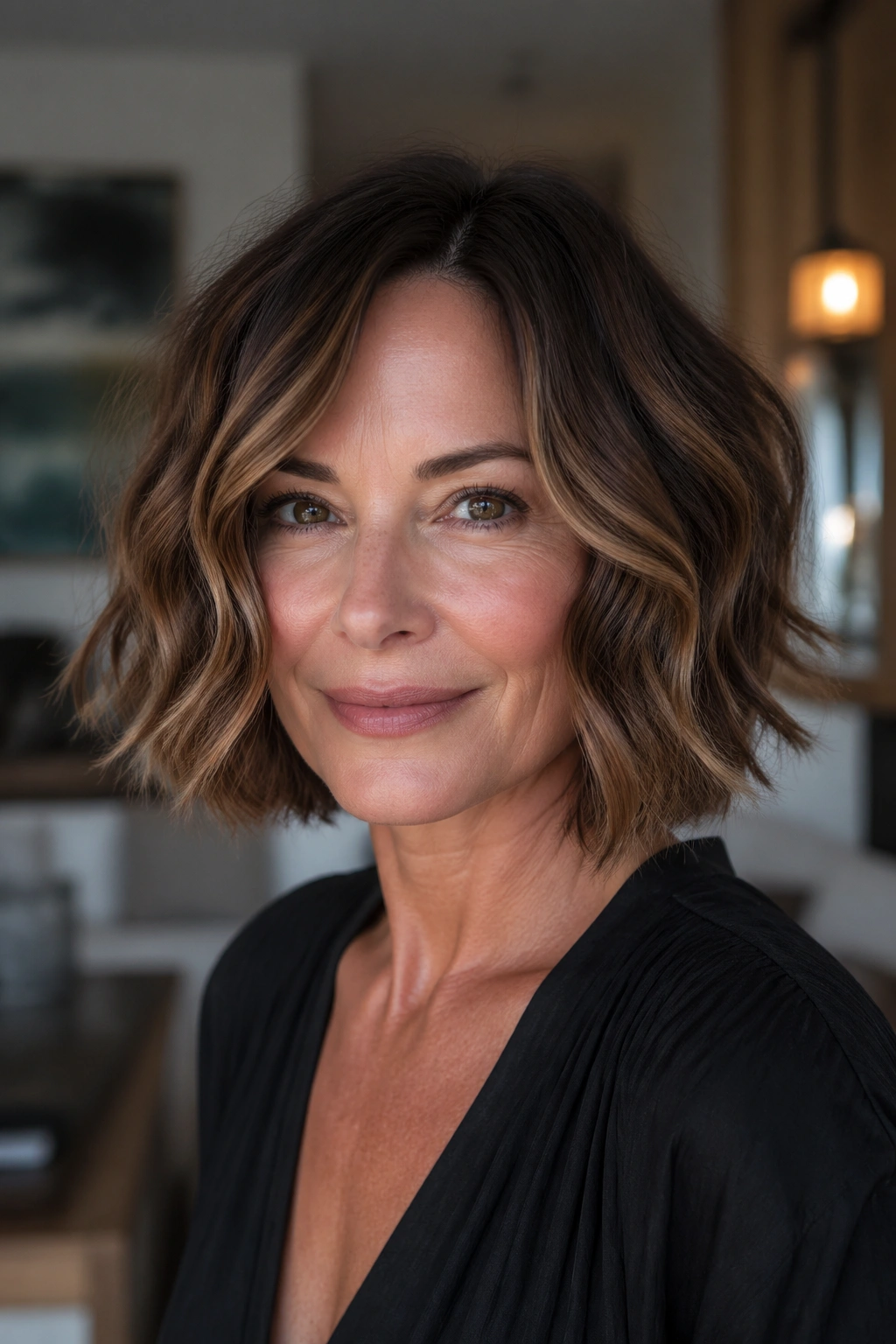
A wavy bob has that easy, slightly undone look that reads as casual without being sloppy. The bend should be soft and loose, not a row of curling-iron noodles.
Start with a 1-inch iron and wrap sections away from the face, leaving the ends out on a few pieces so the wave doesn’t get too round. Then shake it out with your fingers. That one step changes everything. The hair stops looking styled and starts looking lived in.
If your hair is naturally wavy, this cut is forgiving. If it’s straight, it still works, but it does need a little product to keep the bend from dropping out by noon. A light salt spray on damp hair can help, though dry hair may prefer a cream instead.
9. Curly Bob That Keeps Its Shape
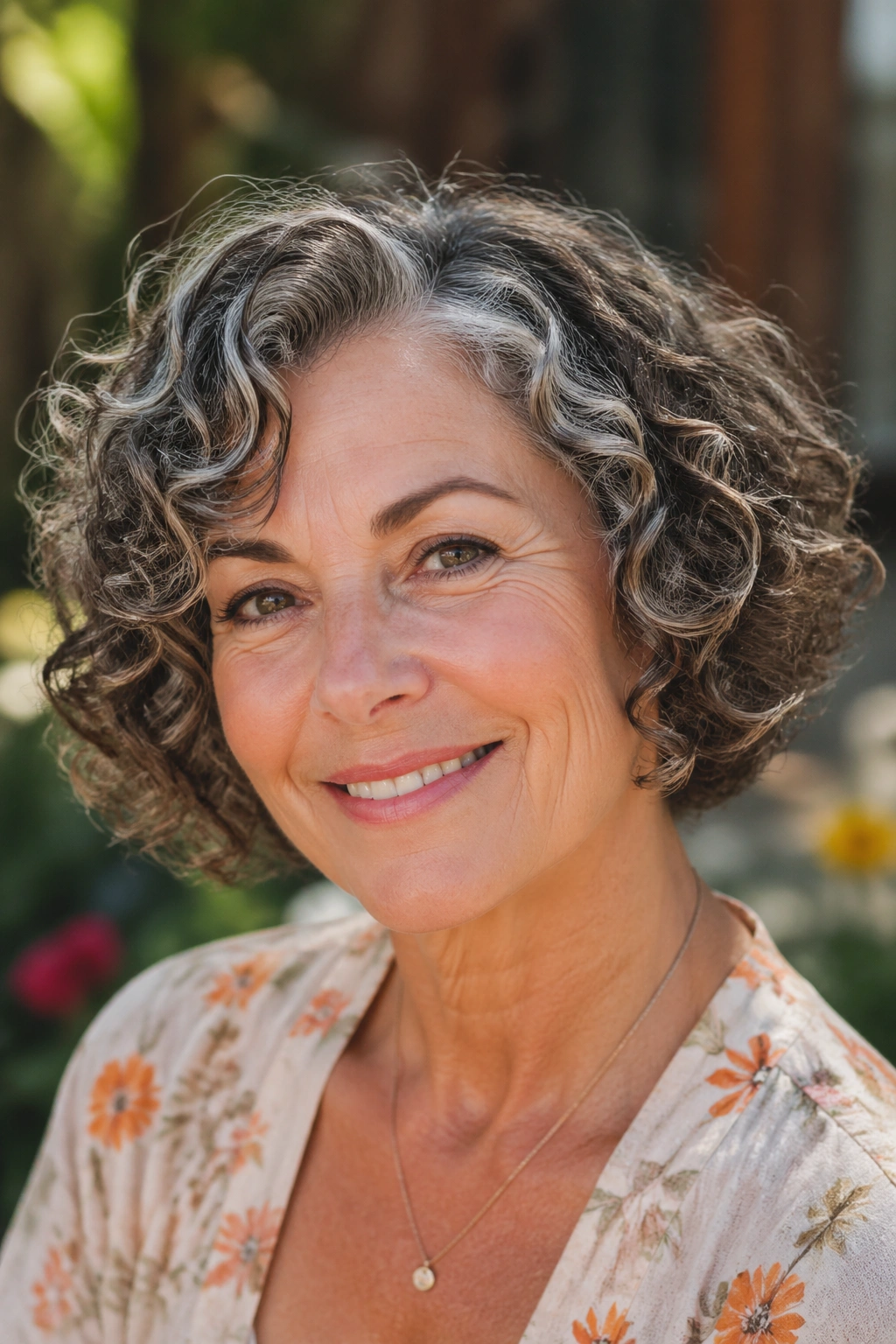
Curly hair needs a bob that respects shrinkage. Cut too short, and the shape jumps up higher than anyone planned. Cut it with curl pattern in mind, and the result can look soft, fresh, and nicely framed around the face.
How to keep the shape
Ask for the bob to be shaped dry or mostly dry, so the stylist can see where the curls actually sit. That matters more than the numbers on the ruler. A chin-length cut on wet curls can turn into a cheekbone-length cut once it dries.
A diffuser on low heat helps, but don’t hover forever. Stop when the curls feel set and touch them as little as possible. The more you rake through them, the more frizz shows up.
Curly bobs love a layered shape, but the layers should be controlled. Too many and you get a triangle. Too few and the cut turns boxy.
10. Feathered Bob for Fine Hair Over 50
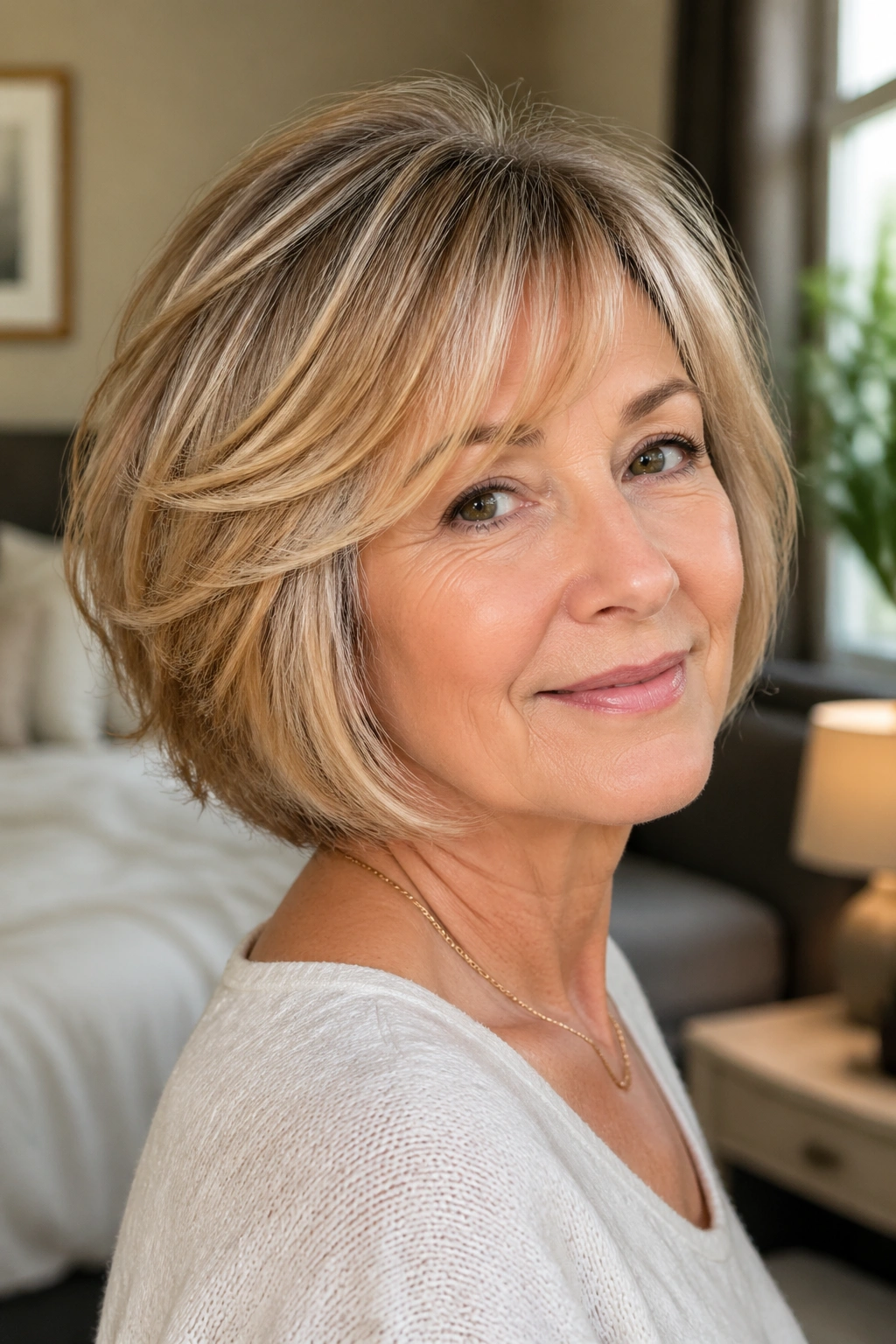
Fine hair can go flat in a hurry, and a feathered bob gives it a little lift without making it look overcut. The trick is to soften the outer layer while keeping enough weight at the bottom to hold the shape.
I like this cut because it moves. It does not sit there and announce itself. The feathery pieces around the sides make the hair feel lighter, and the crown gets a bit more air, which helps if your roots collapse by midday.
- Use a volumizing mousse at the roots.
- Blow-dry with a small round brush.
- Keep the layers light, not shredded.
- Avoid heavy oils near the top.
A feathered bob can look wispy in a good way or tired in a bad way. The difference is usually the cut, not the hair.
11. Sleek Bob Tucked Behind the Ear

A sleek bob tucked behind the ear feels clean and grown-up in the best sense. It shows off the jaw, the neck, and any earrings you’ve been saving for a better outfit than the grocery store.
This one works especially well if your hair falls naturally straight or can be smoothed with one pass of a flat iron. Keep the ends blunt enough to stay firm. If they get too thin, the whole cut starts looking sleepy.
A tiny amount of serum is enough. Warm it in your palms and smooth it from mid-length to ends, then stop. The roots should stay light. That’s what keeps the style from looking greasy instead of sleek.
12. Bob with Side-Swept Bangs
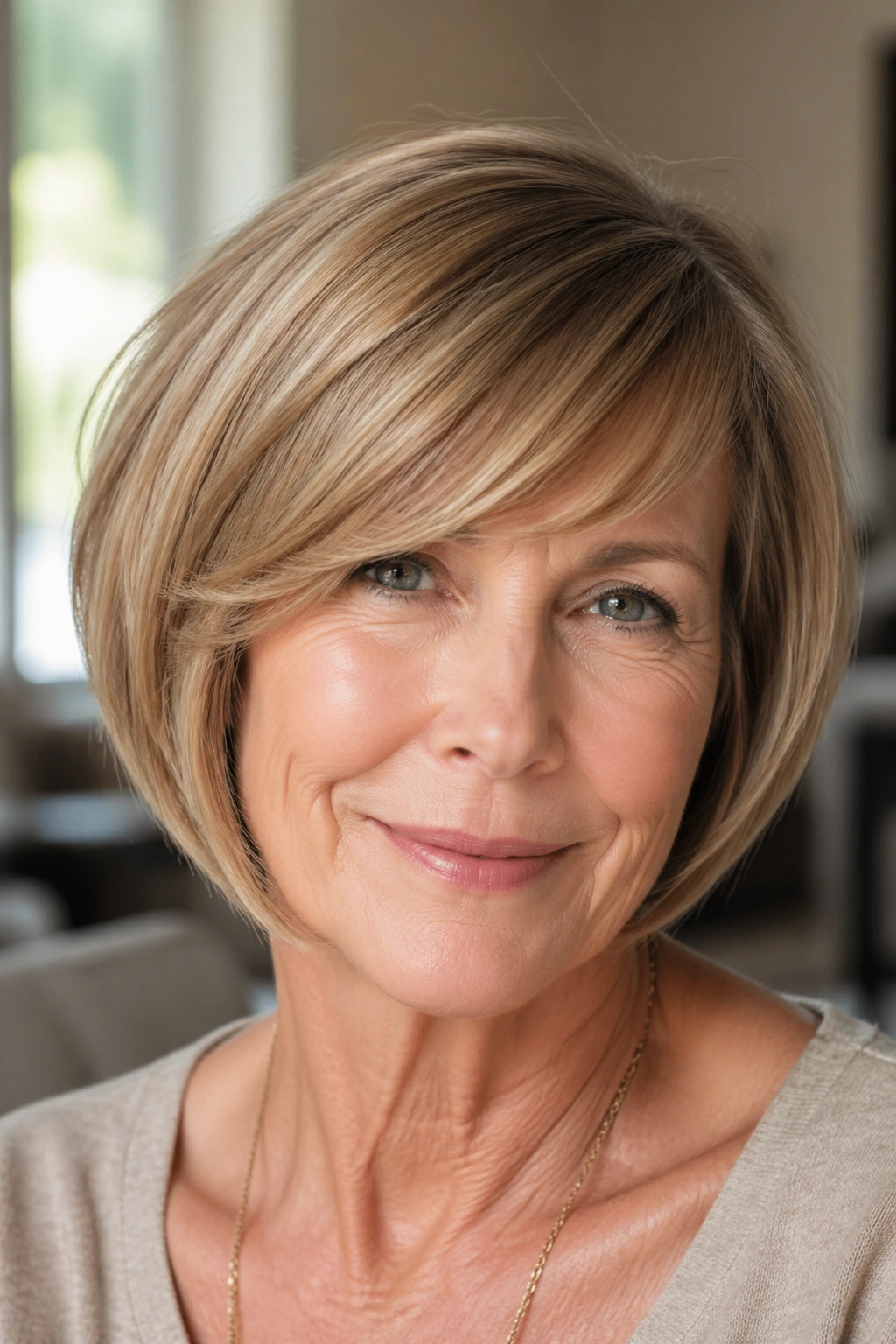
Side-swept bangs are the compromise cut for anyone who wants fringe without the full commitment of a blunt bang. They soften the forehead, blend into the bob, and grow out without that awkward two-week rebellion some fringes put up.
Compared with a straight-across fringe, this version is easier to live with. It moves to the side when you tuck hair behind the ear, and it hides uneven texture better if your hair changes a bit from one wash to the next.
Best way to wear it
Blow-dry the bangs from side to side with a small brush until they cool in the direction you want. That little bit of cross-drying keeps them from splitting down the middle.
If your face is longer, keep the sweep fuller. If your face is rounder, let the fringe start slightly higher and drift across the brow instead of sitting low.
13. Bob with Curtain Bangs
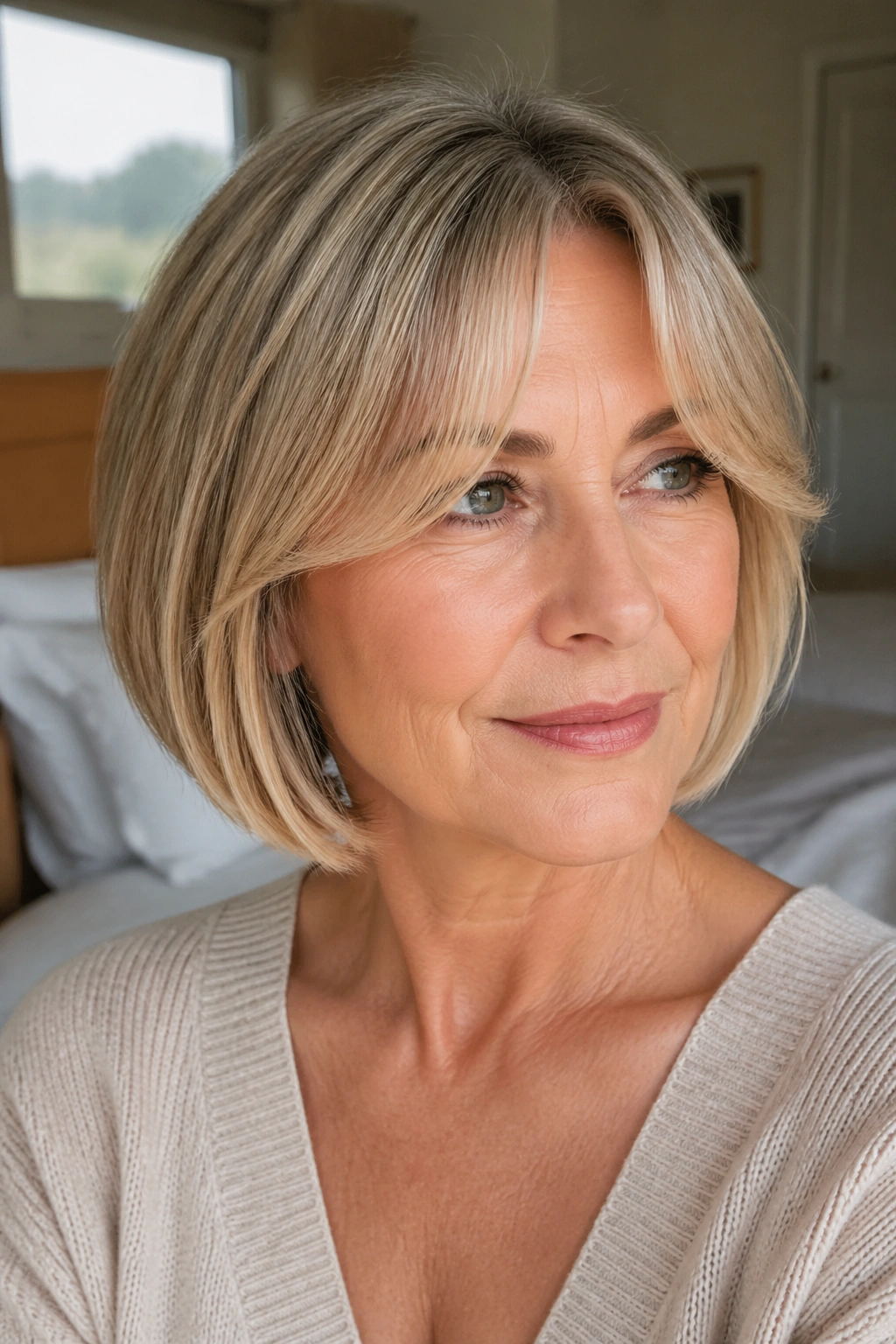
Curtain bangs can make a short bob feel softer around the face without weighing it down. They part in the middle or just off-center and fall away from the cheeks, which creates a nice opening around the eyes.
Why it flatters
The center part gives the haircut a little symmetry, while the longer outer corners brush the cheekbones. That makes the face look a touch narrower without any harsh line near the jaw.
Styling note
Dry the fringe forward first, then sweep each side away from the face with a round brush. The goal is bend, not curl. You want the bangs to move when you do, not sit in one fixed shape.
A curtain bang bob is a good choice if you like softness but hate a high-maintenance fringe. It grows out with a bit of grace, which is more than can be said for most bangs.
14. Asymmetrical Bob with a Clean Angle
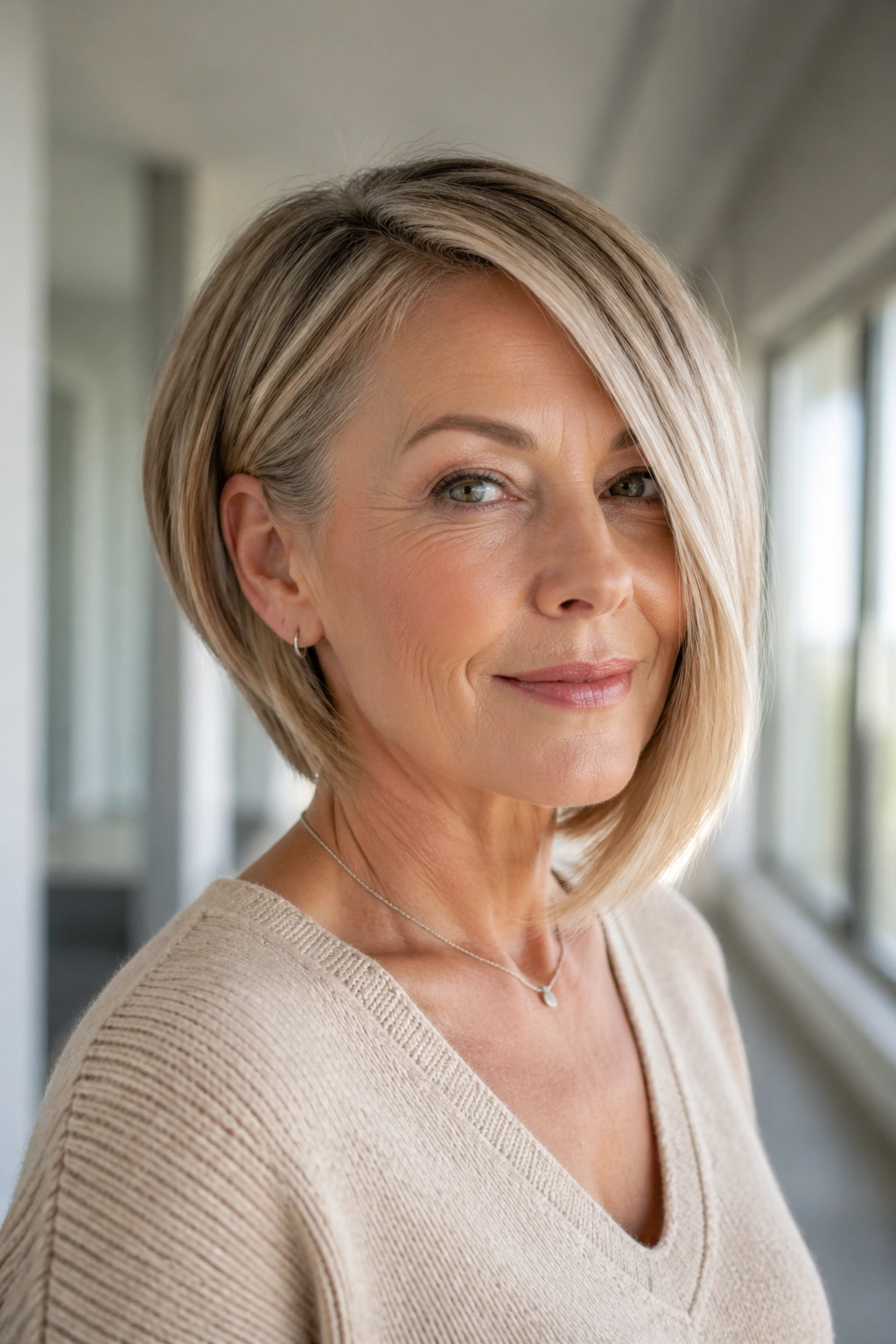
An asymmetrical bob has one side a little longer than the other, and that small difference gives the cut its edge. It is the sort of style that looks deliberate even when it’s styled with almost no effort.
What I like about it is the way it pulls attention upward. The diagonal line sharpens the profile and gives the face a little architecture. It can be very flattering on straight or lightly wavy hair, since the angle stays visible.
If you want this cut, be honest about maintenance. A strong asymmetrical line needs regular trimming to stay sharp. If you don’t want to babysit it, ask for a softer version with just a mild difference from side to side.
15. Graduated Bob for a Fuller Back
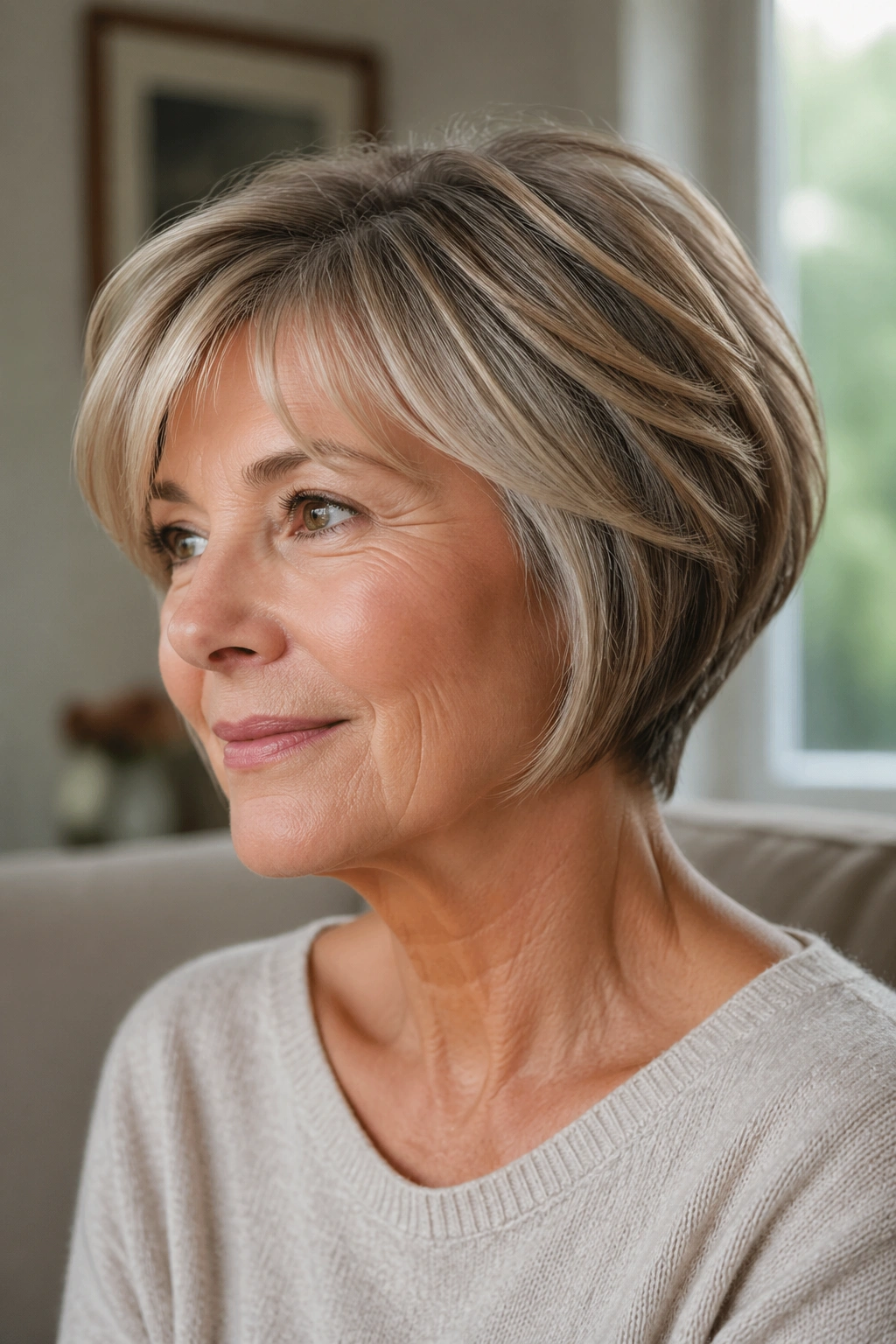
A graduated bob is stacked through the back but usually less dramatic than a full stacked cut. That makes it a nice middle ground when you want lift, not a hard-edged silhouette.
The fullness sits where the head needs it most: at the crown and upper back. For finer hair, that can make the whole haircut look denser. For thicker hair, it keeps the back from dragging on the neck.
What to ask for
- Shorter layers in the nape.
- Gradual length through the crown.
- A soft top line, not a harsh shelf.
- A blow-dry that lifts at the roots.
This is a practical cut. It holds shape, grows out decently, and does not need fancy styling to look intentional.
16. Razor-Cut Bob with Soft Edges
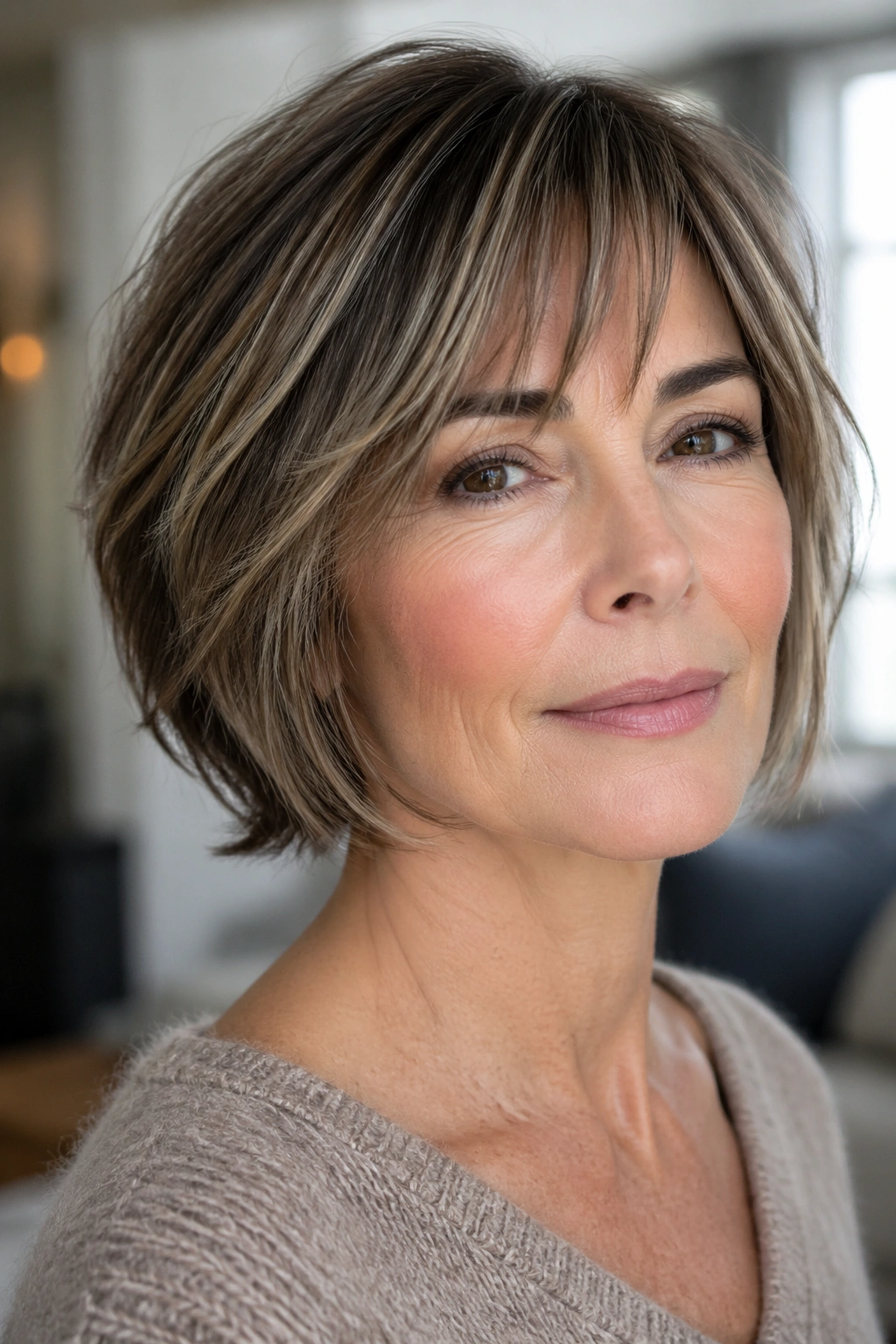
A razor-cut bob can look airy and modern when the hair can handle it. The tool feathers the ends so the haircut doesn’t land with one hard wall of weight.
That softness is useful for thick hair that wants to puff outward. It also helps wavy hair fall into a looser shape. But there’s a catch: if the hair is already dry or frayed, too much razor work can make the ends look shredded.
When it works best
- Thick hair that feels bulky at the bottom.
- Hair with a natural wave.
- Anyone who likes a softer edge.
A little leave-in cream helps the ends sit down. Skip heavy oils, though. They can make a razor-cut bob lose the airy shape that made it interesting in the first place.
17. Jaw-Skimming Bob
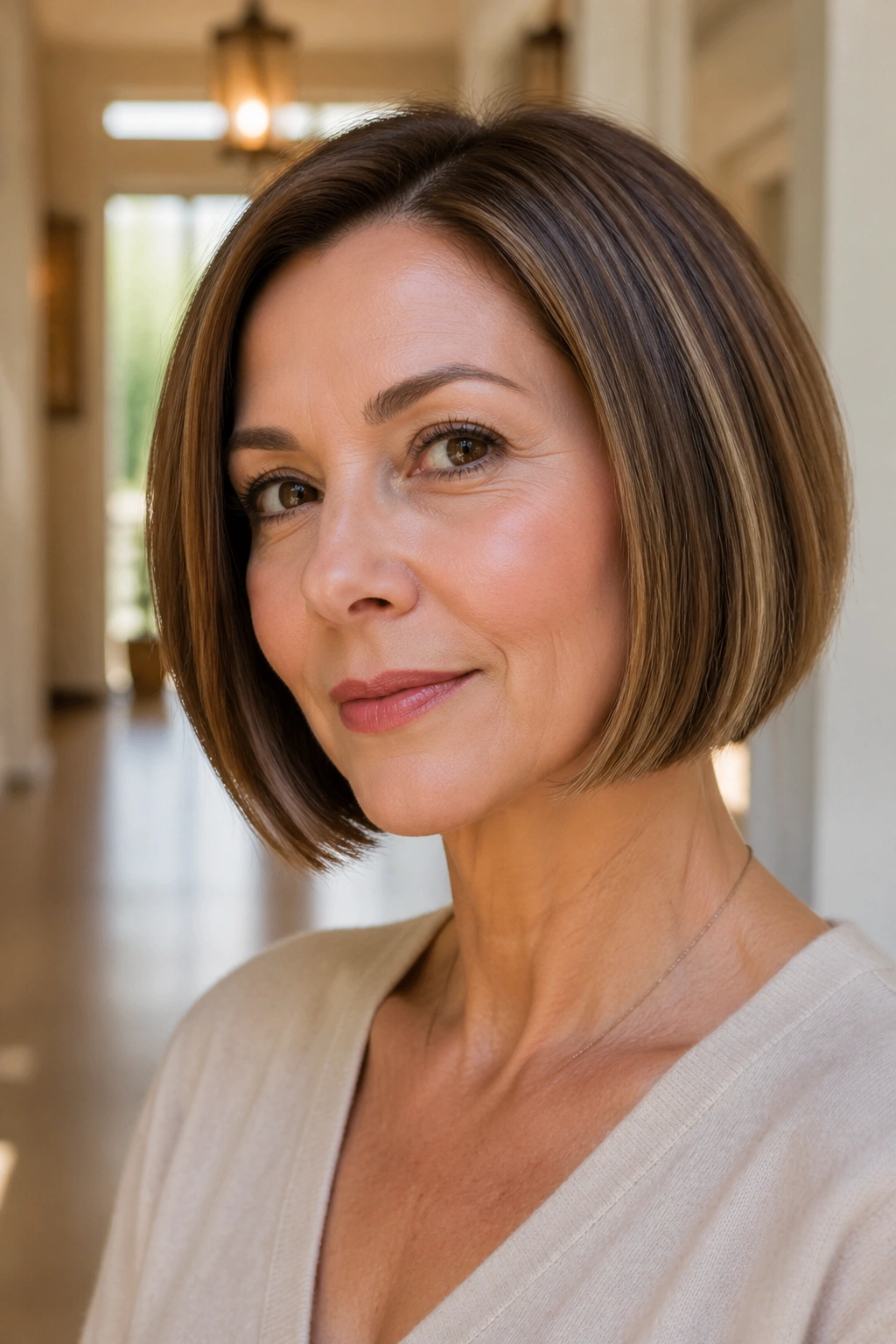
A jaw-skimming bob does exactly what the name says. It lands right at the jawline, where it can define the face without crowding the neck.
That placement is sneaky in a good way. It can sharpen softer features and make the jaw look cleaner, which is useful if hair has started to thin around the temples or if you want the lower face to feel more lifted.
The important part is precision. If the length lands too high, the cut can feel abrupt. If it drops too low, you lose the neat line that gives it power. A small adjustment of half an inch changes the whole mood.
18. Neck-Length Bob with Invisible Layers

A neck-length bob is one of the easiest lengths to live with. It is short enough to feel fresh, but long enough to tuck, pin, or rough-dry without much planning.
The invisible layers are the quiet part of the cut. You don’t see them as separate chunks, but you do feel the difference when the hair moves. That makes the style more forgiving if your hair is not perfectly straight or if it has a few stubborn bends in it.
This one grows out well, which matters more than people admit. A lot of short cuts look good for three weeks and then ask for mercy. This one usually lasts longer before it starts to feel messy.
19. Pixie Bob Hybrid
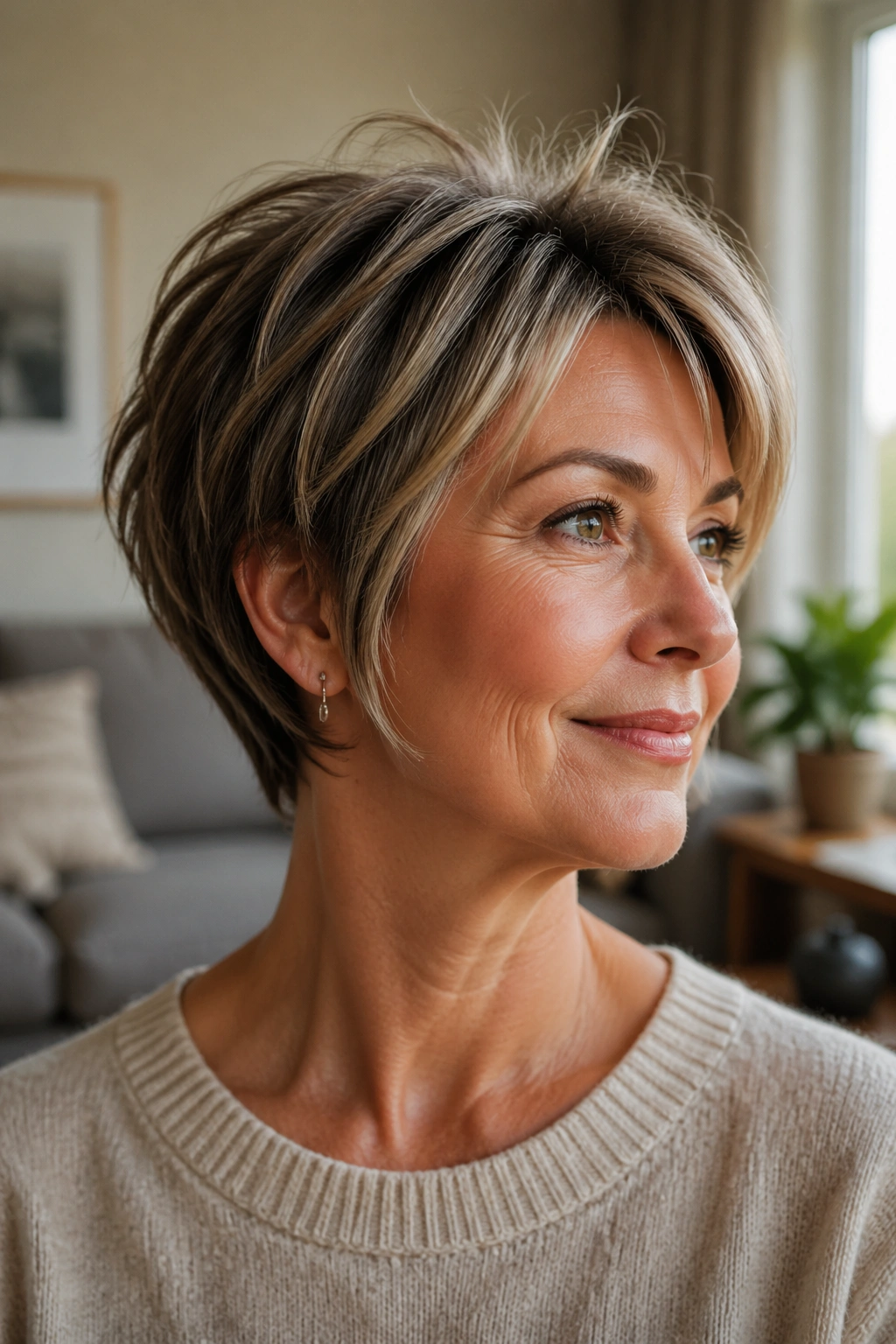
A pixie bob sits between a bob and a pixie, which is handy if you want short hair but not a crop that exposes everything at once. The back is tighter, the top has more length, and the front still reads as bob-like.
Styling note
Use a small amount of paste and work it through the top with your fingertips. Don’t smooth it down too much. The point is to keep the top a little piece-y so the shape has lift.
This cut is especially nice if you have fine hair and want more neck clearance. It can also be flattering if you’re easing out of a longer style and do not want to jump straight to very short hair. The transition feels less dramatic.
20. Inverted Bob with a Sharp Profile
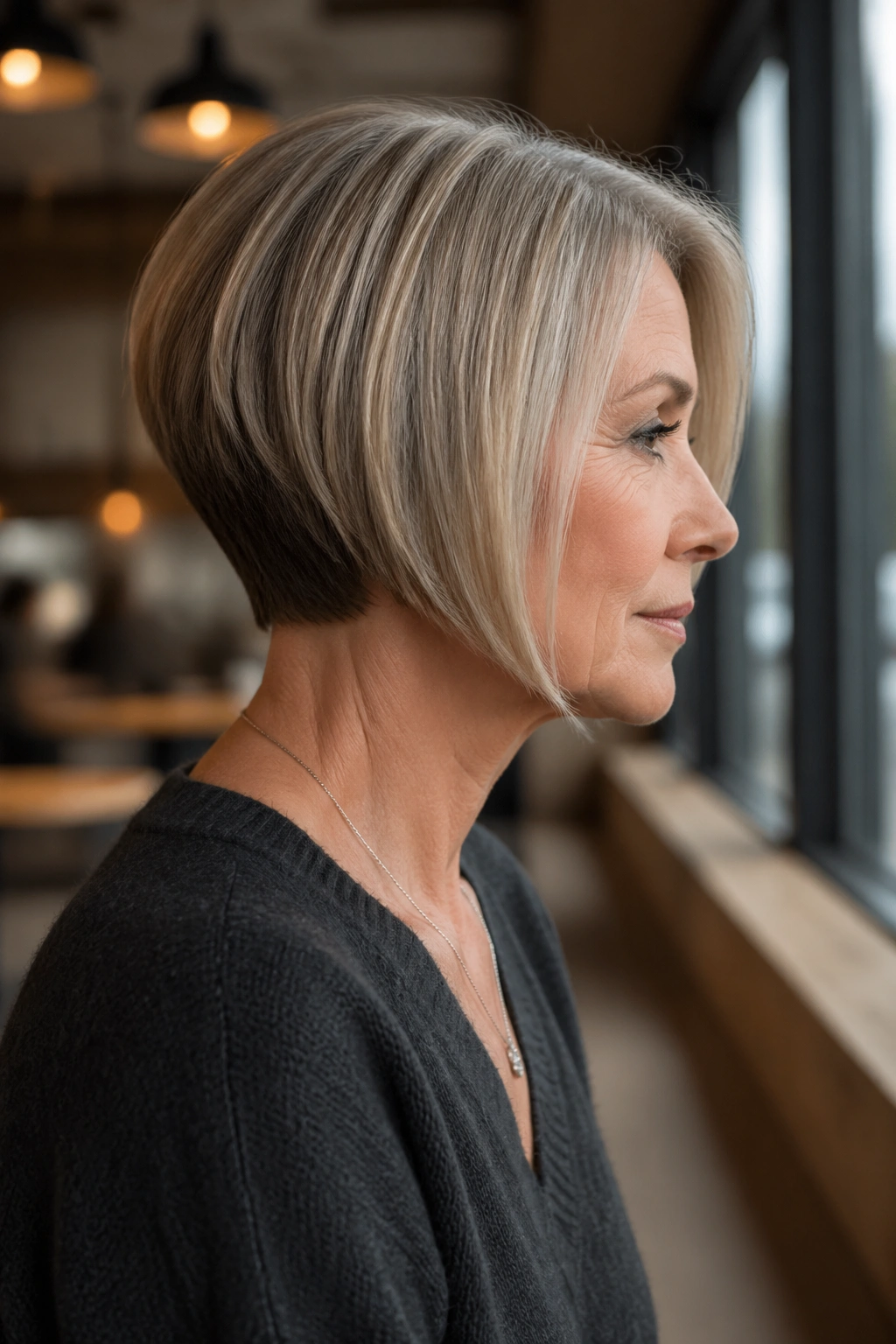
An inverted bob has a steeper angle than an A-line, so the back is noticeably shorter and the front drapes forward. That gives the haircut a strong profile from the side.
It can look sleek and polished, or it can look a little fierce, depending on how smooth you wear it. Straight hair shows the angle best. A soft wave blurs it, which may be exactly what you want if sharp lines feel too formal.
The cut does ask for upkeep. If the back grows out too fast, the balance shifts. A trim every few weeks keeps the front-to-back contrast clean.
21. Shaggy Bob with a Lived-In Finish
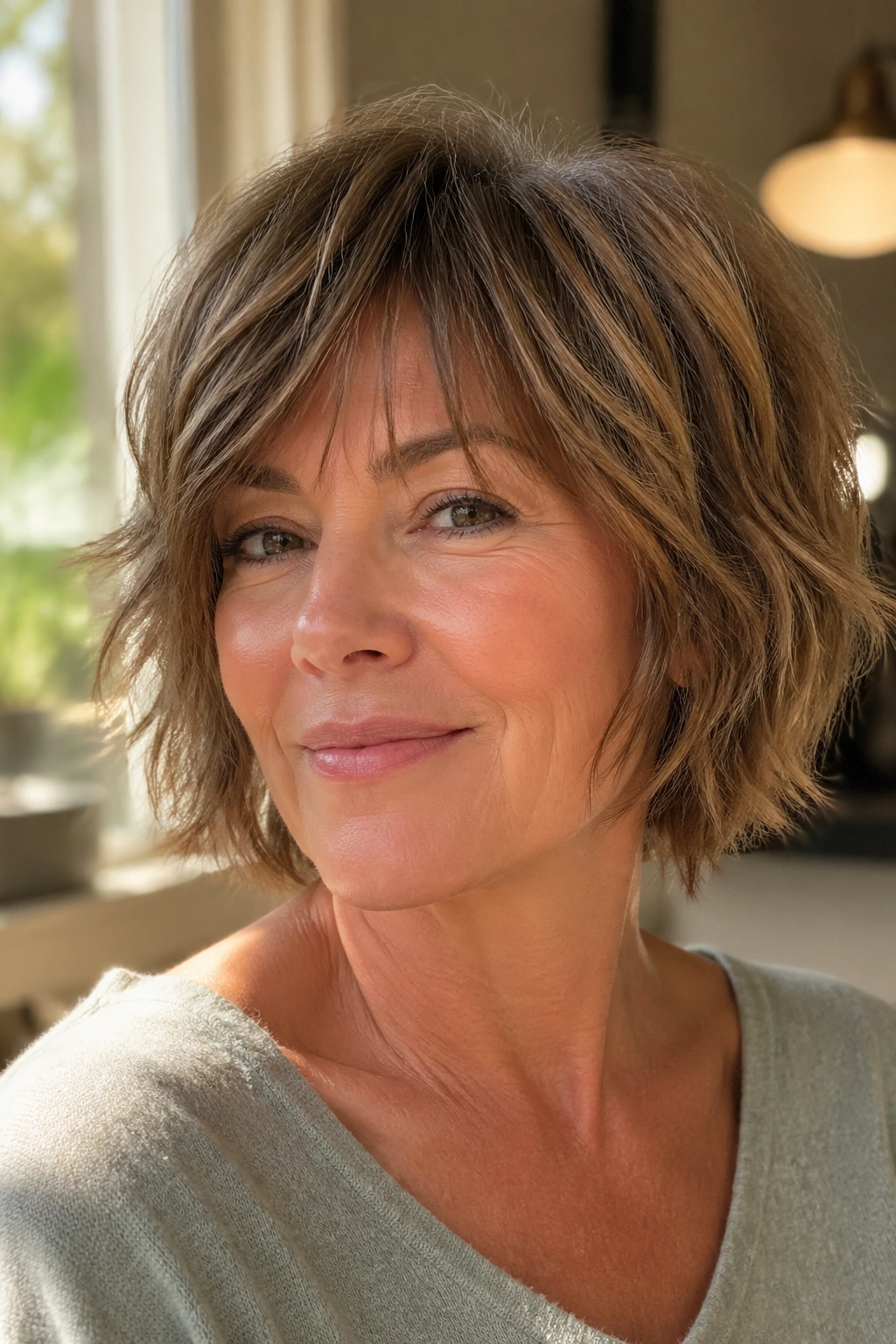
Why do some short bobs feel so stiff? Usually because every layer was cut to behave. A shaggy bob does the opposite. It lets the top move, keeps the ends broken up, and leans into texture instead of fighting it.
This style is a nice fit if you like a bit of edge and don’t want to spend ten minutes polishing every strand. The shape looks best when it’s slightly imperfect. Air-dry cream, a touch of mousse, and finger styling are enough most days.
How to wear it
- Scrunch in product on damp hair.
- Twist a few pieces while drying.
- Leave the ends soft.
- Avoid over-brushing once it’s dry.
The cut should feel casual, not messy. That difference is subtle, and it matters.
22. Rounded Bob That Curves Under
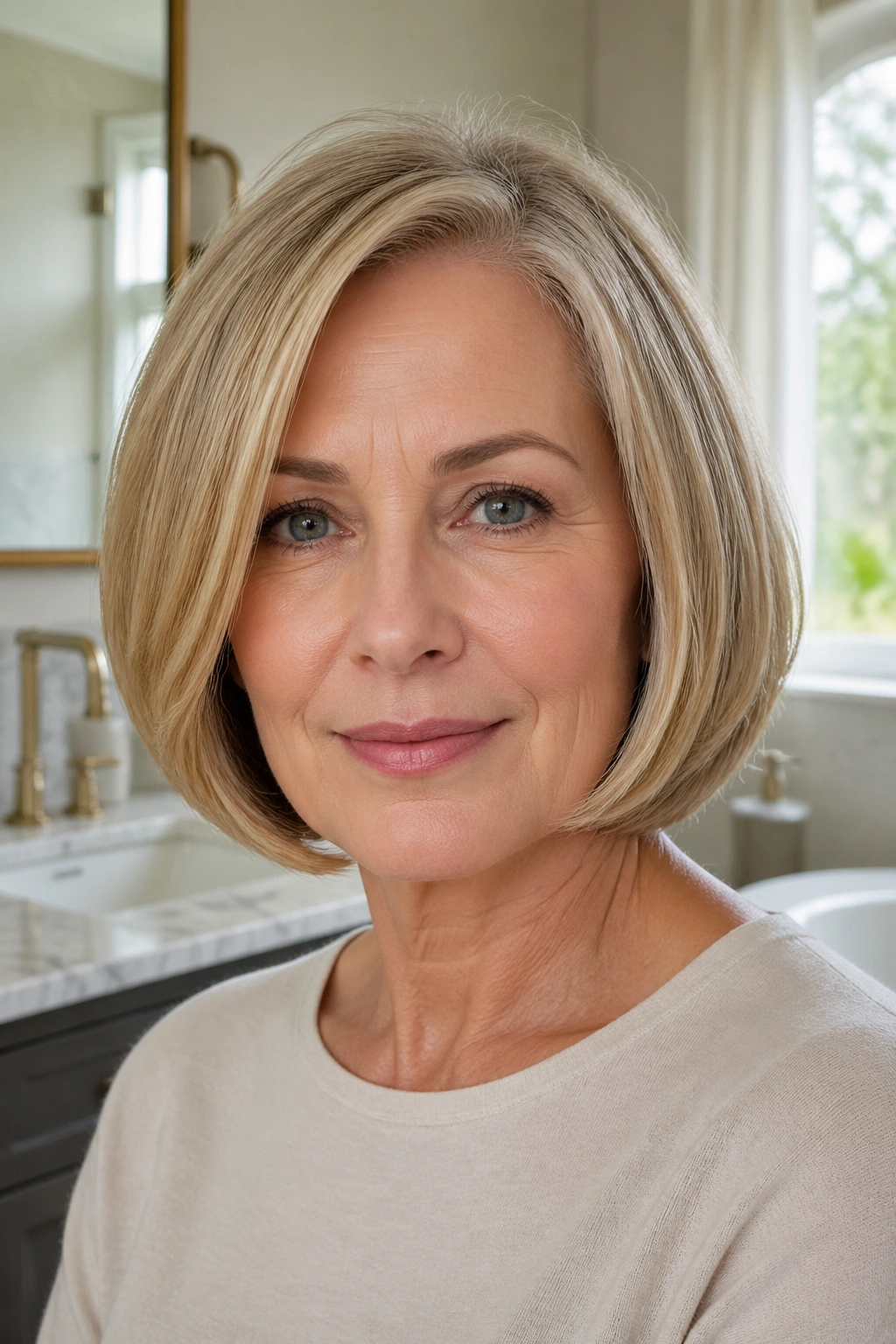
A rounded bob curves inward at the ends, which gives the haircut a neat, polished outline. It’s the kind of shape that works well when hair tends to stick out at the sides or flip up at the collar.
I like this style for women who want a clean look without a lot of fuss. The rounded finish softens the perimeter, and the curve around the chin can make the whole face feel a little more centered.
A round brush or a blow-dry brush is your friend here. Set the ends under while the hair is still warm, then let it cool in place. That cooling step is what keeps the bend from falling apart too quickly.
23. Angled Bob with Strong Front Pieces
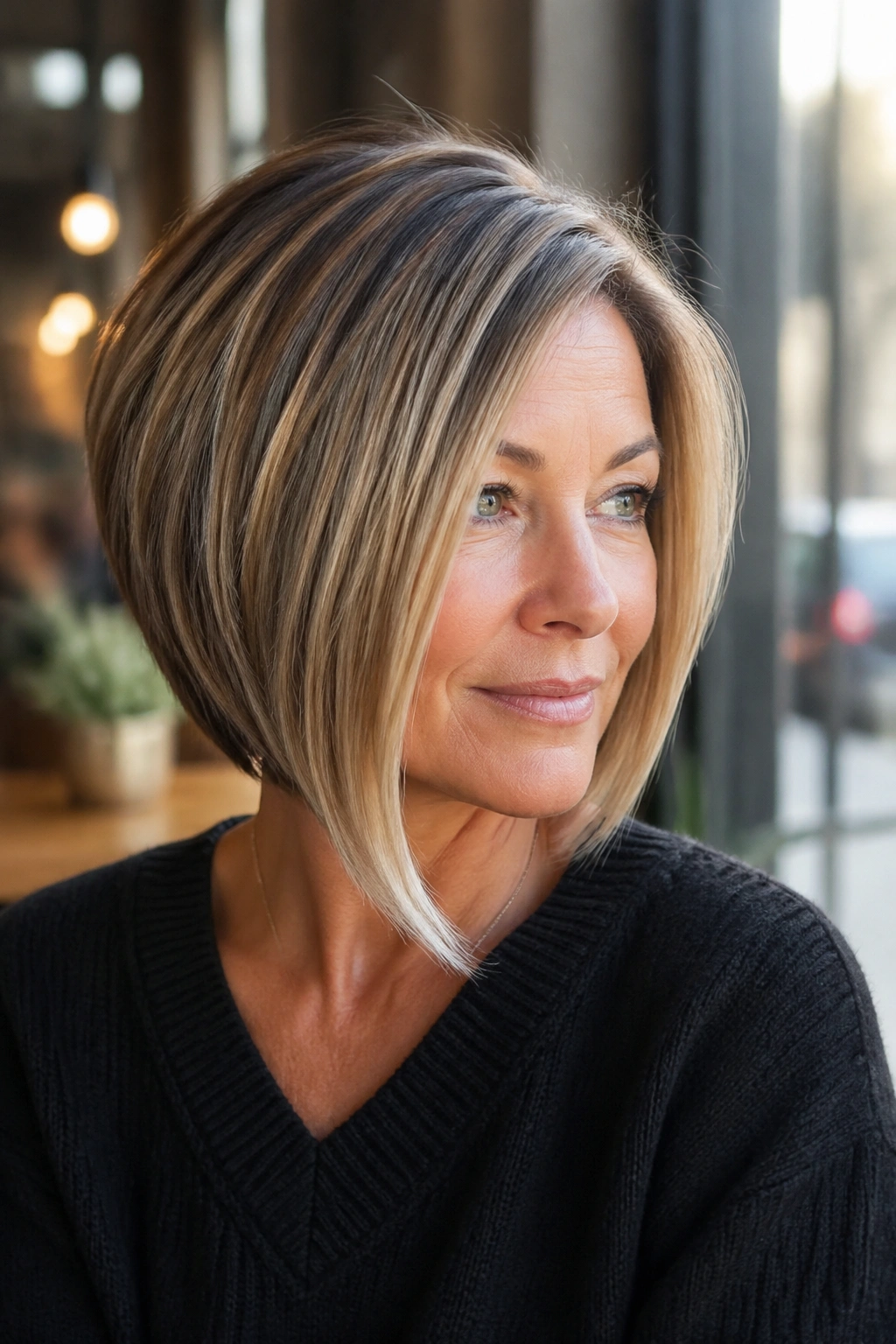
A strong angled bob is a little bolder than a gentle A-line. The front pieces are longer and more noticeable, which gives the haircut a sharp, clear line.
That shape can be a good match for coarse or dense hair because the angle helps control bulk. It also gives the face a little length, which can be useful if you want to balance fuller cheeks or a wider jaw.
The key is not to make the front too thin. Leave enough weight there so the hair still looks healthy. If the angle is too aggressive and the ends go wispy, the whole cut loses its confidence.
24. Piece-Y Bob for Thick Hair
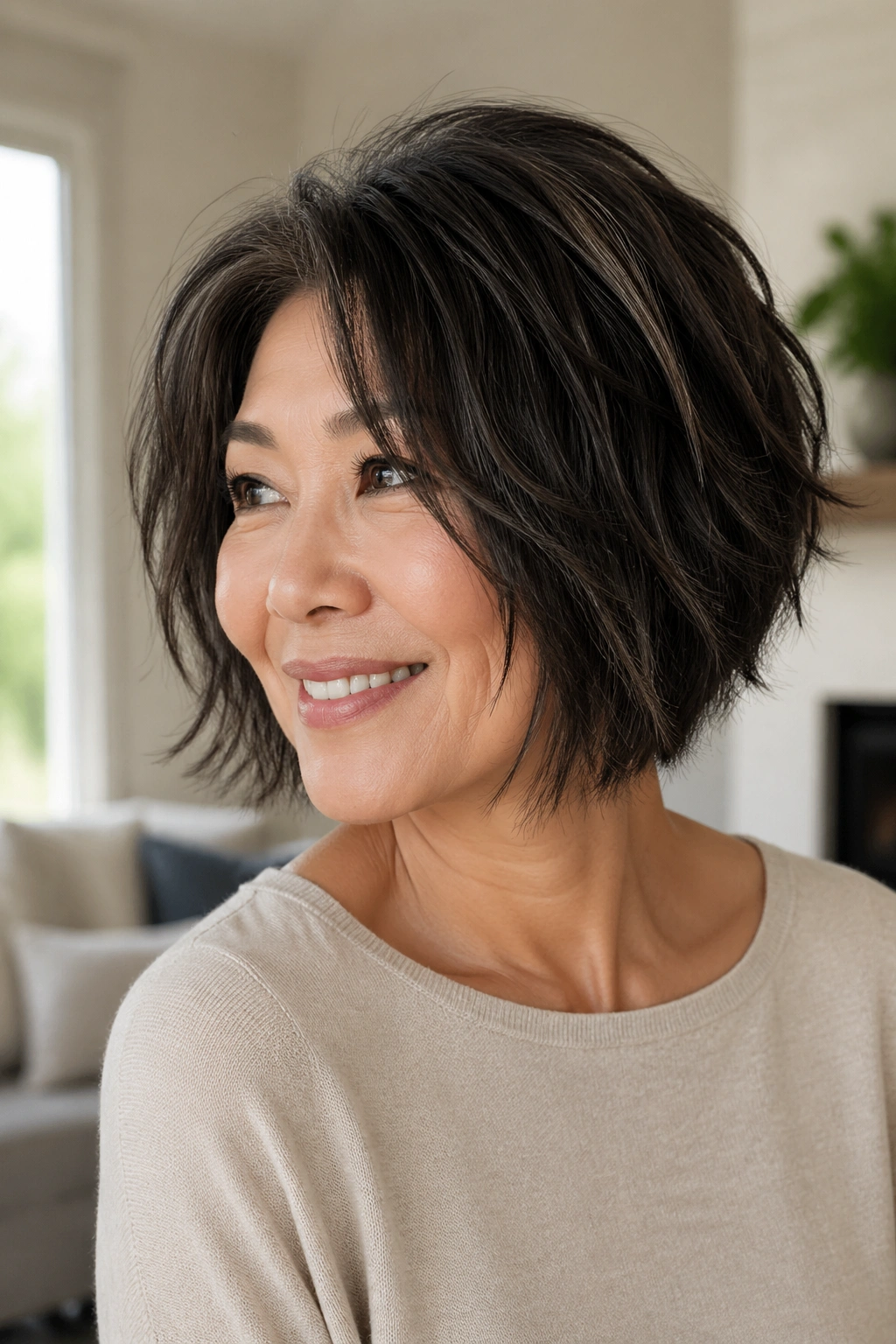
Thick hair often needs separation more than it needs cutting short. A piece-y bob handles that by removing bulk inside the shape and leaving the outer edge with some definition.
The result is less helmet, more movement. You can still get a polished bob, but the texture stays visible, which keeps heavy hair from sitting like one solid block around the head.
A light styling cream or paste works better than a glossy serum. Work it through the ends and the middle layers, then pinch a few pieces into place with your fingers. Don’t flatten it out. Thick hair looks better when it has a little air between the strands.
25. Salt-and-Pepper Bob for Women Over 50
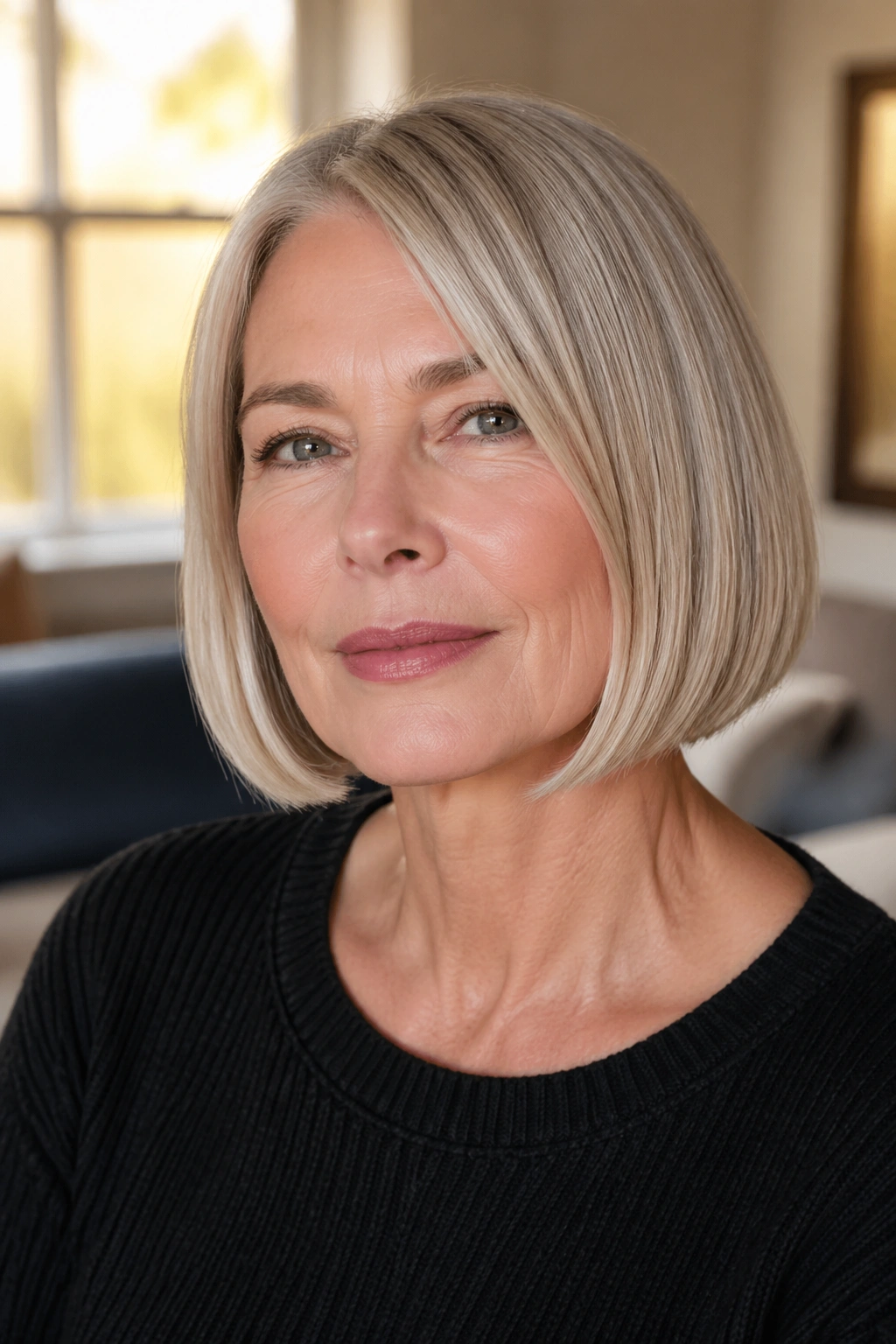
A salt-and-pepper bob has a built-in depth that colorists sometimes try to fake with highlights. Natural gray mixed with the darker strands can look rich, sharp, and a little more dimensional than flat color.
The cut matters here because the color already brings texture to the eye. A simple shape with soft layers often lets that mix shine. Too much chopping and the color can look busy. Too little shape and it can look heavy.
What helps most
- Keep the ends clean, not stringy.
- Use a glossing treatment if the gray looks dull.
- Ask for soft face-framing pieces around the cheekbones.
- Avoid yellowing shampoos if the gray pulls warm.
A salt-and-pepper bob does not need to hide anything. That’s the point.
26. Silver Bob with a Glossy Finish
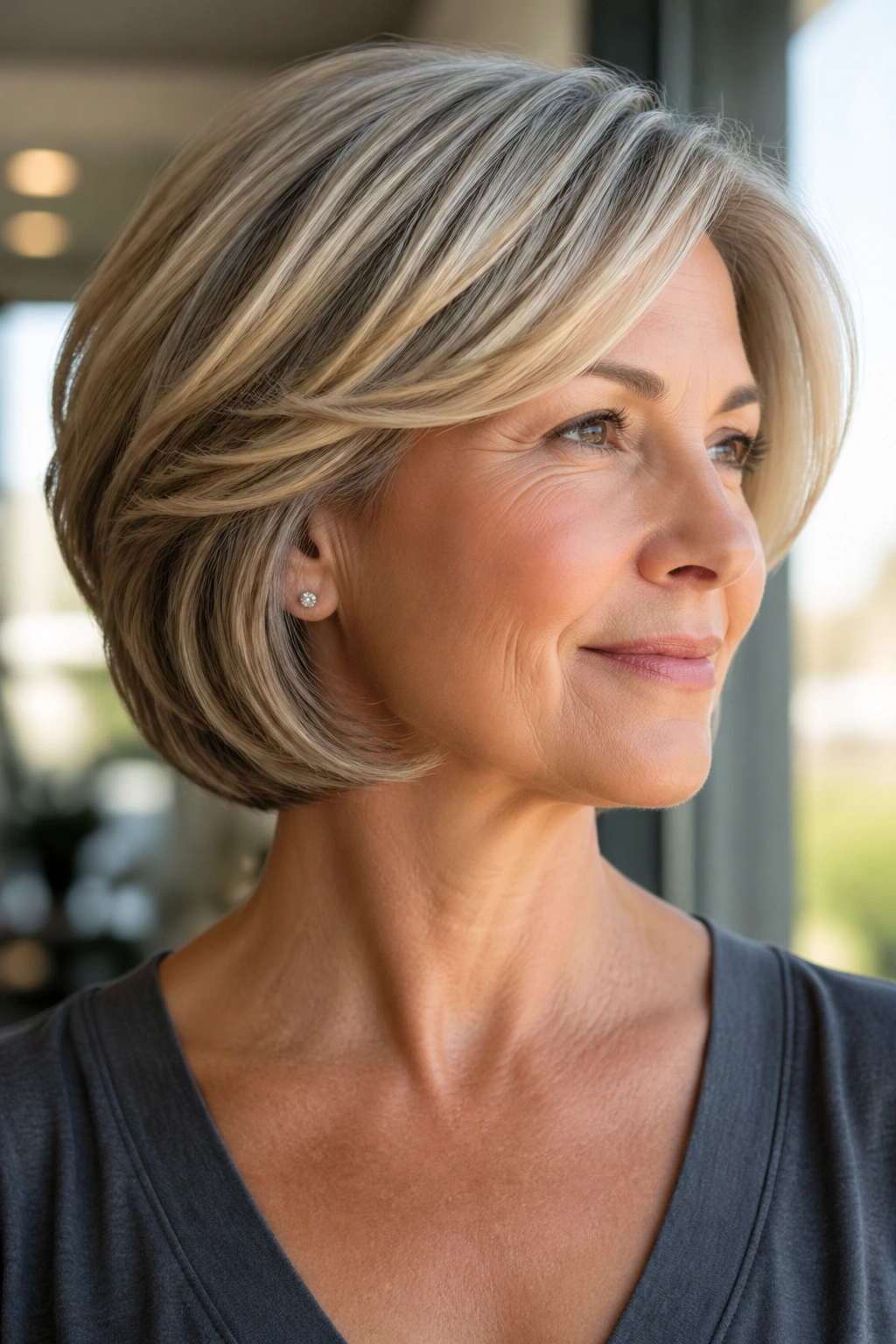
Silver hair looks strongest when the cut is clean. A blunt-ish bob with a gloss finish can make the color feel intentional instead of accidental, which is half the battle with gray transition hair.
A little shine goes a long way. Use a smoothing cream before drying, then finish with a drop of serum on the ends only. If the hair gets too coated, silver can look dull and muddy instead of bright.
One caution: purple shampoo is useful, but too much can leave a pale violet cast on porous hair. Once or twice a month is enough for many people. The goal is brightness, not lavender water.
27. Deep Side-Part Bob with Big Volume
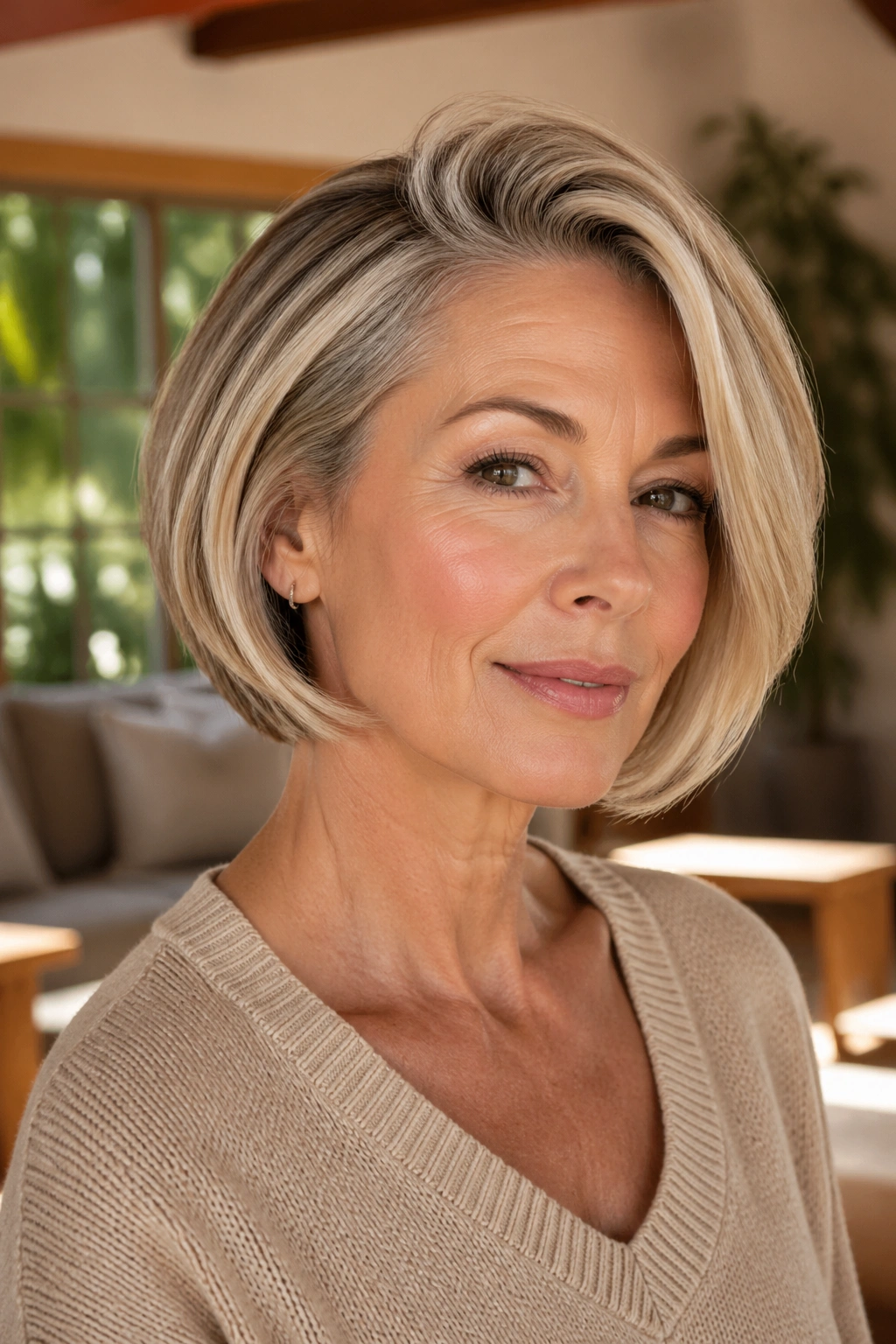
A deep side part gives the bob instant lift, and it can be a lifesaver if the top has started to flatten. The part shifts the mass of the hair, so the roots on one side rise while the other side falls into a softer frame.
How to get the lift
Blow-dry the roots in the opposite direction first. Then swing the hair over and pin the part while it cools for a few minutes. That tiny reset helps the hair stay up longer.
This style looks especially good when you want a little drama without changing the cut itself. It can be worn with a blunt bob, a layered bob, or even a soft curly bob. The part is the headline.
28. Ear-Length Bob for Bold Wearers
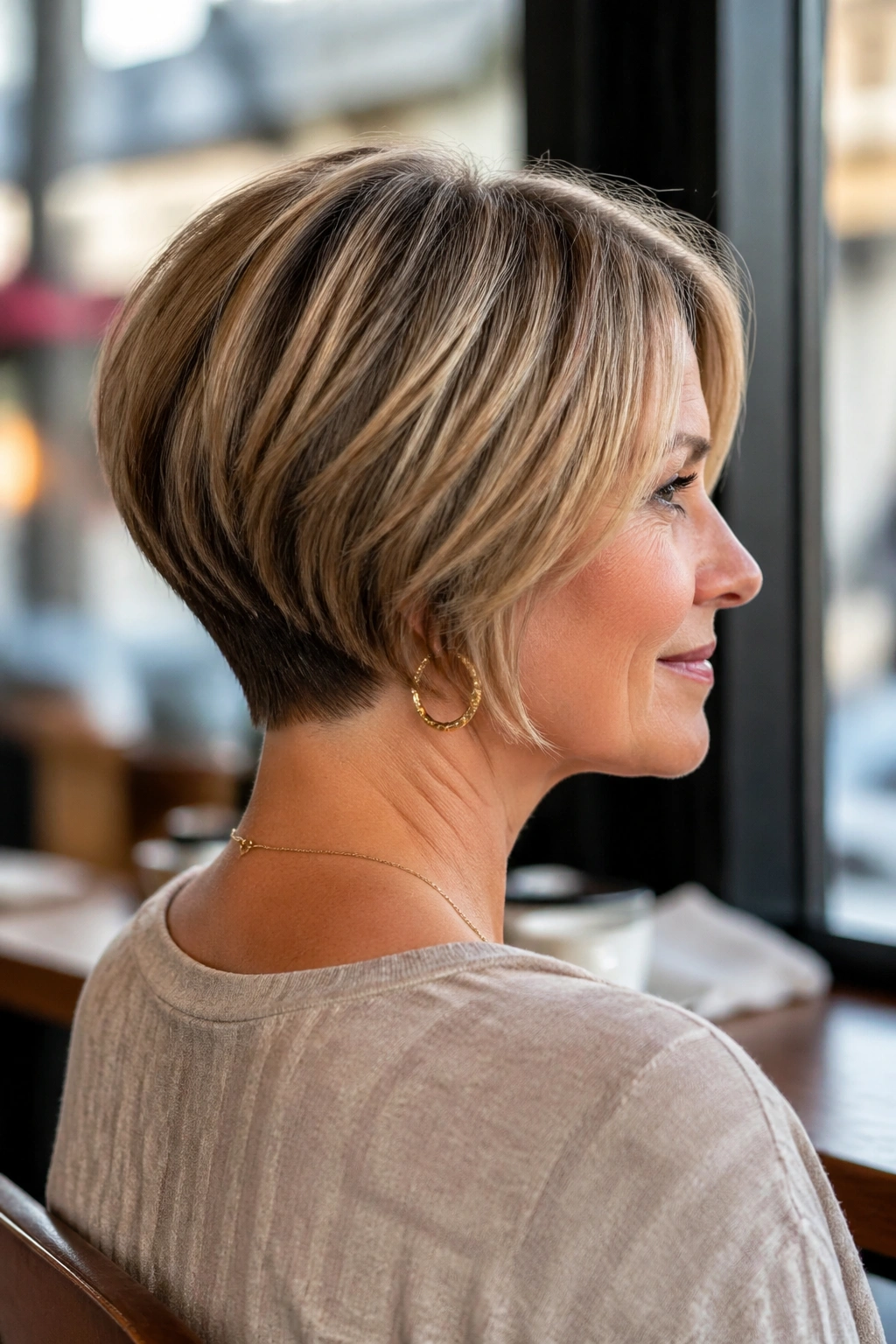
An ear-length bob is short. Not shy, not vague, short. It shows the neck, the jaw, and the ears, which is why it feels sharper than most classic bobs.
I like it on women who wear strong earrings or have a face shape that can carry more openness around the jaw. It also dries fast, which sounds boring until you’ve spent years fighting hair that takes forever.
- Ask for enough length to tuck one side if needed.
- Keep the edges soft so the cut doesn’t turn severe.
- Use a small round brush for the top.
- Wear it with statement studs or hoops if you like that look.
The cut has attitude, but it is not difficult if the perimeter is kept neat.
29. Blended Bob with Invisible Layers
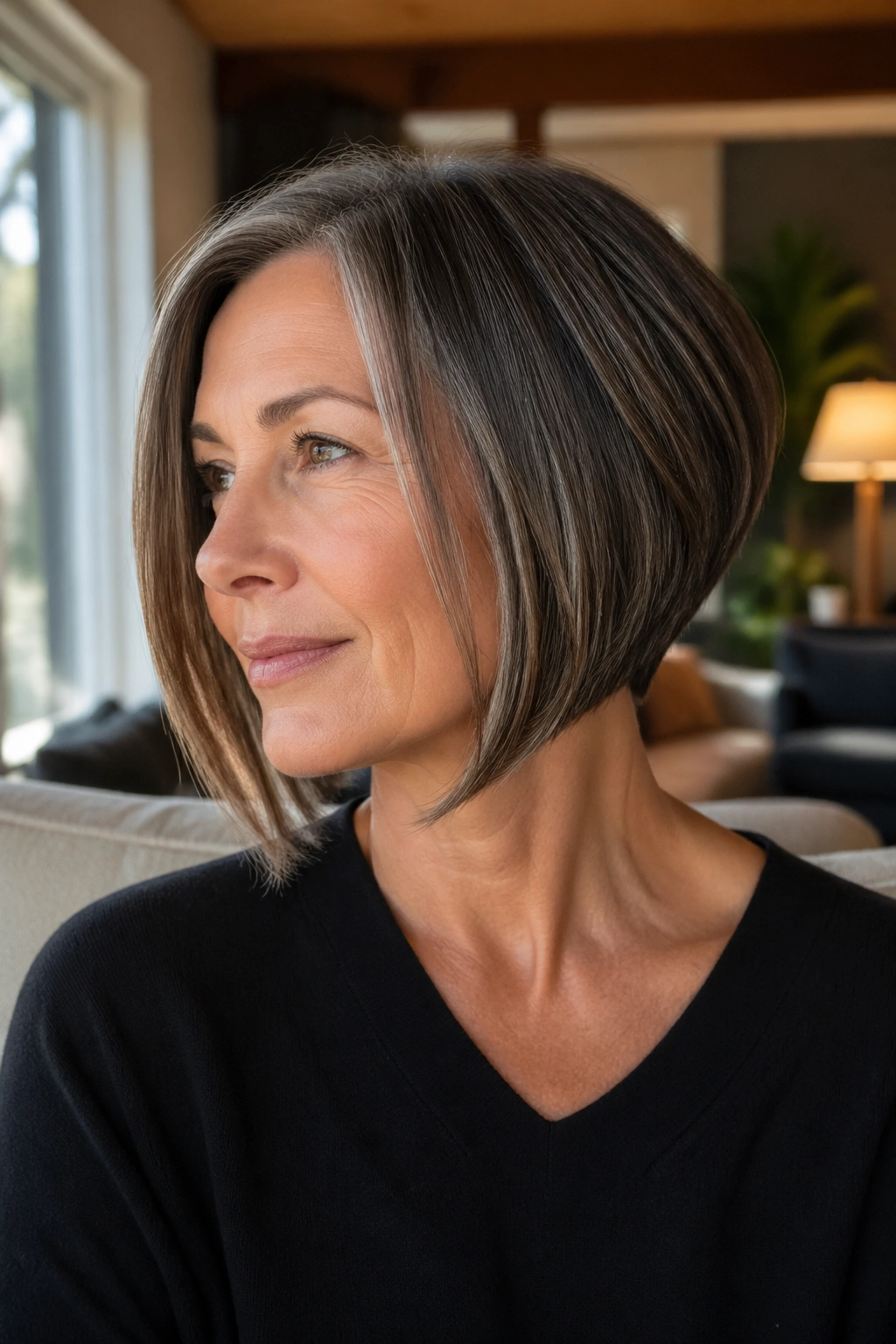
Invisible layers are the secret sauce for people who want movement without obvious chopping. They sit inside the shape, so the haircut keeps its smooth outline while the hair falls more naturally.
This is a smart choice if you like clean lines but hate the look of disconnected layers. It also grows out in a calmer way because the silhouette doesn’t fall apart all at once. That makes it useful for anyone who doesn’t want a cut that screams for attention two weeks after the salon.
A blow-dry cream and a medium brush are usually enough. The cut should do most of the work. If you need half a can of spray to keep it in place, the layering was probably too aggressive.
30. Air-Dried Bob for Low-Maintenance Styling

Not every bob wants a round brush. Some are cut to dry well on their own, which is a relief if your mornings are already full before your hair is even involved.
The best air-dried bob usually has soft internal shaping and a length that sits somewhere between the jaw and the neck. That range lets the hair settle without kicking out in every direction. Wavy hair often likes this type of cut, but straight hair can work too if the ends are kept tidy.
A curl cream or light leave-in can help the shape hold. Scrunch a little into damp hair, then leave it alone. Seriously. The more you touch it while it dries, the more likely it is to puff.
31. Grow-Out-Friendly Bob with Soft Ends
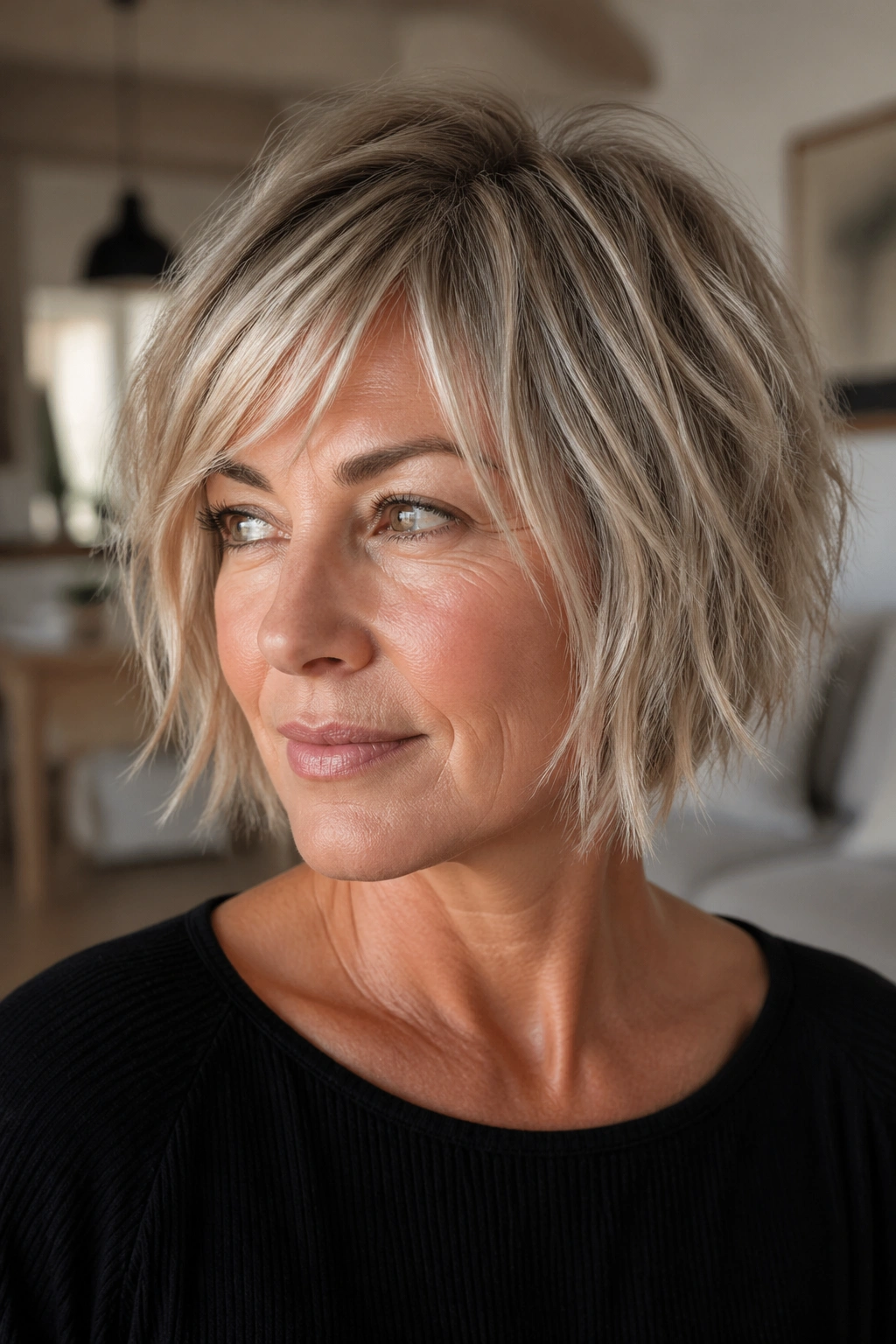
A grow-out-friendly bob is for the woman who wants a haircut to behave between appointments. The ends are softened enough to avoid a hard shelf, but the outline stays clear, so the style still looks neat after the first few weeks.
That makes a real difference if you don’t want to schedule your life around trims. The shape can stretch a little without turning sloppy, which is more useful than it sounds. Not every haircut needs to be a statement. Some just need to keep looking decent when you’re busy.
A side part, a soft bend, or a tucked-behind-the-ear finish all work here. If you want one short bob that can handle office days, errands, and a last-minute dinner without much drama, this is the one I’d hand you first.
A good short bob should earn its place by making your day easier, not by demanding a full styling routine before breakfast. The cuts above do that in different ways — some by adding lift, some by softening edges, some by making the grow-out less annoying.
Pick the one that matches your hair’s real texture, not the texture you wish it had. That is where the useful haircuts live.
