



Bangs can either make or break a hairstyle, especially when you’re working with thick, wavy hair. If you’ve got texture and volume to work with, you’re actually in a lucky position — but only if you choose the right bang style. The wrong bangs can look heavy, overwhelming, or perpetually frizzy. The right ones? They’ll frame your face beautifully, enhance your natural waves, and give your entire look a polished, intentional edge.
The challenge with thick wavy hair isn’t finding a style that’ll work — it’s finding one that’ll work with your texture instead of against it. Dense hair and natural waves create their own movement and body, which means you need bangs that respect that movement rather than trying to fight it. Blunt, heavy bangs that sit perfectly straight on someone with fine straight hair will sit differently on you. Lightweight, wispy bangs might disappear into your texture. You need something in between — bangs with personality, dimension, and enough substance to hold their shape while moving with your natural wave pattern.
This is why understanding which bang styles genuinely suit thick wavy hair matters. Some styles are specifically designed to work with your texture, while others require so much blow-drying, straightening, and styling that they become a frustrating daily chore. The best styles for your hair type will look effortless when they’re actually styled with your waves, frame your face in flattering ways, and genuinely suit the thickness and movement you already have.
1. Textured Choppy Bangs
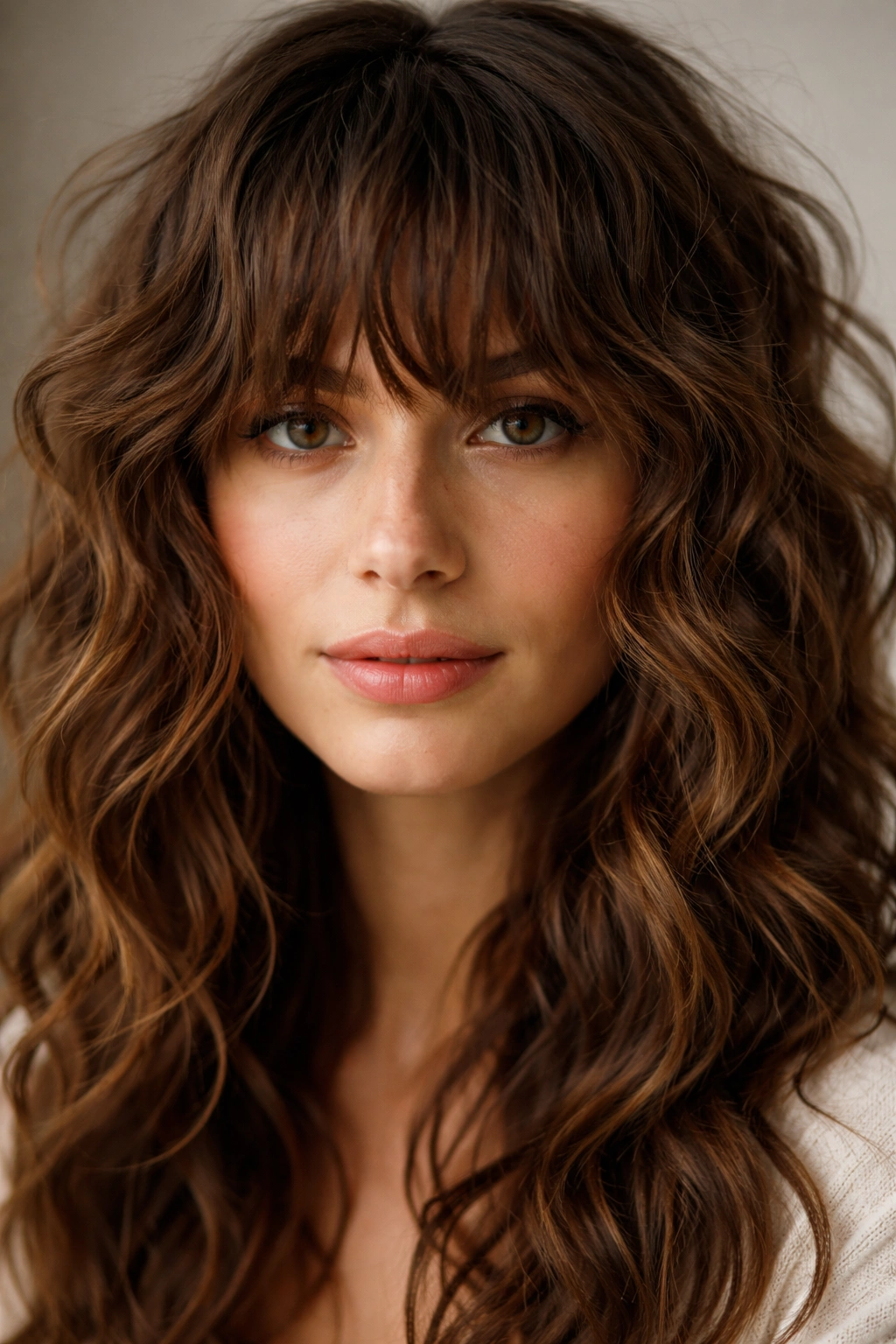
Choppy, textured bangs are basically made for thick wavy hair. Instead of fighting your natural texture, this style leans into it completely. The cut is deliberately uneven, with layers of different lengths creating movement and visual interest. When your stylist cuts choppy bangs, they’re using razor or point-cut techniques to create separated, piece-y strands rather than a blunt line. This texture works with your waves instead of against them.
Why They Work for Wavy, Thick Hair
Choppy bangs suit thick wavy hair because the layered, uneven lengths actually expect and embrace some frizz and movement. When your waves naturally separate and move, that’s exactly the effect this style is going for. The irregular line means no single hair is supposed to sit perfectly in place — your texture becomes a feature, not a flaw you’re trying to hide. Plus, because each strand is a different length, the bangs won’t look like a heavy wall across your forehead the way a blunt cut might.
How to Style and Maintain Them
- Use a texturizing spray or sea salt spray on damp hair to enhance and define the chop
- Blow-dry with your natural wave pattern, scrunching as you go — don’t try to force them flat
- A styling cream or lightweight pomade helps separate the layers and prevents them from looking matted
- The cut needs a refresh every 4-6 weeks since the chop gets blunt as hair grows, but maintenance trims are quick
- Avoid heavy serums that weigh down the individual strands; stick to light, texture-enhancing products
Pro tip: Ask your stylist to use a razor to cut the bangs, not a scissors. Razors create that separated, choppy texture naturally, while blunt scissors can look too harsh on thick hair.
2. Curtain Bangs With a Wave
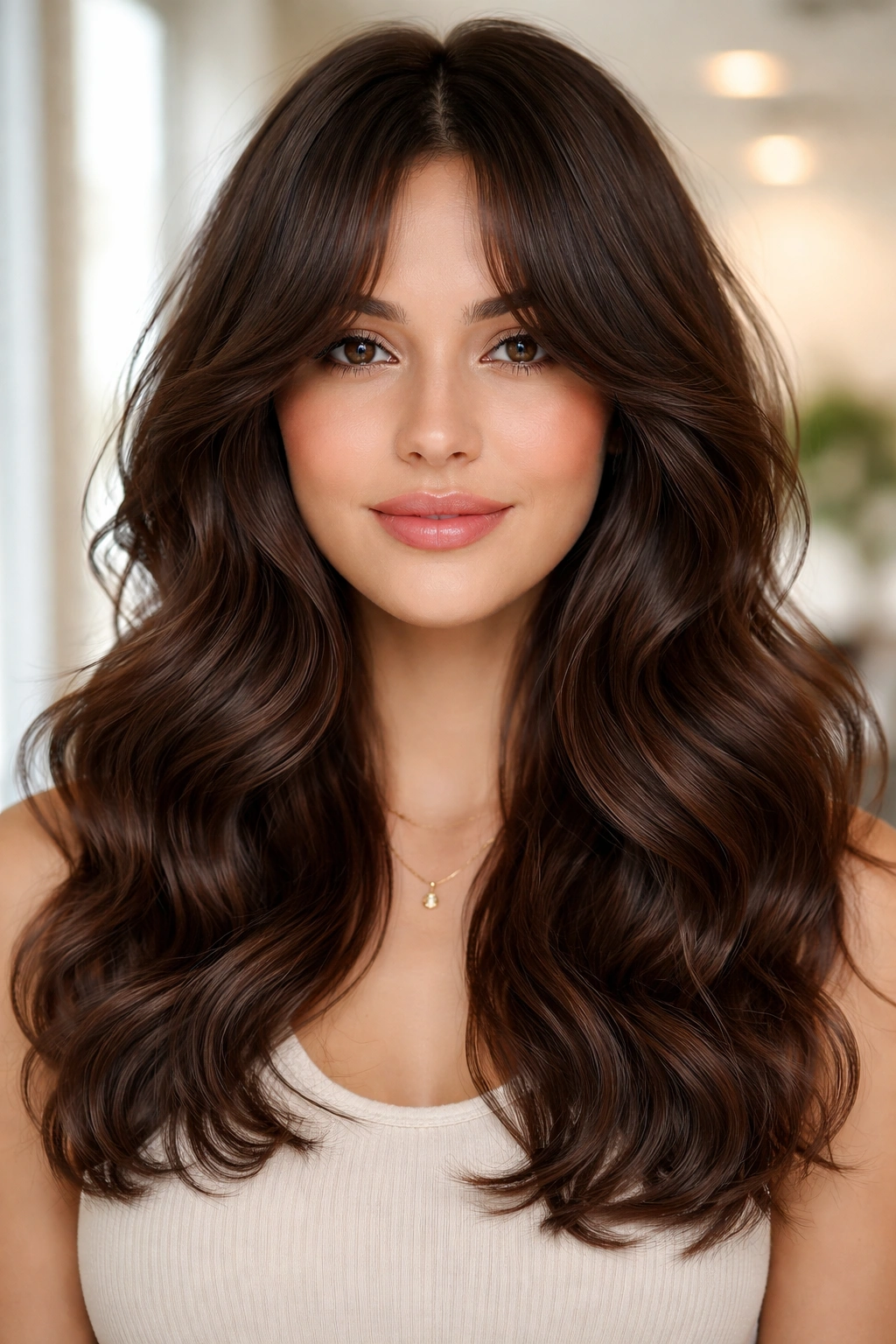
Curtain bangs parted down the middle are having a major moment, and for good reason — they’re incredibly flattering on wavy hair. Rather than hanging straight down your forehead, curtain bangs are cut longer at the center and gradually shorter toward the outer edges, then styled to flip outward, framing your face on either side. They work beautifully with natural waves because the waves actually help create the flipped-out, dimensional effect you’re going for.
Why They Work for Wavy, Thick Hair
Curtain bangs on thick wavy hair look effortlessly chic because your natural wave pattern creates exactly the movement and flip that this style needs. You’re not fighting to create waves with a flat iron — they’re already happening. The longer length at the center means the style isn’t too heavy on your forehead, and the gradual shortening toward the sides creates a flattering frame that works with most face shapes. The fact that your hair is thick means the bangs have enough body to hold their shape without looking limp.
Styling Tips and Best Practices
- Part your bangs down the center while your hair is still damp
- Use a round brush and blow-dryer to encourage the outer edges to flip outward as you dry
- A lightweight texturizing spray applied to damp bangs helps them hold the curtain shape
- These bangs actually look better when they have some wave to them — don’t try to straighten them completely
- The total bang length should sit around your cheekbones or slightly longer for the most flattering effect
- Refresh the shape by blow-drying with a round brush every 2-3 days; they don’t need daily styling
Worth knowing: Curtain bangs photograph beautifully and tend to look good in most lighting because the layers catch light differently. They’re also forgiving — a little frizz or texture actually adds to the soft, romantic aesthetic.
3. Wispy Side-Swept Bangs
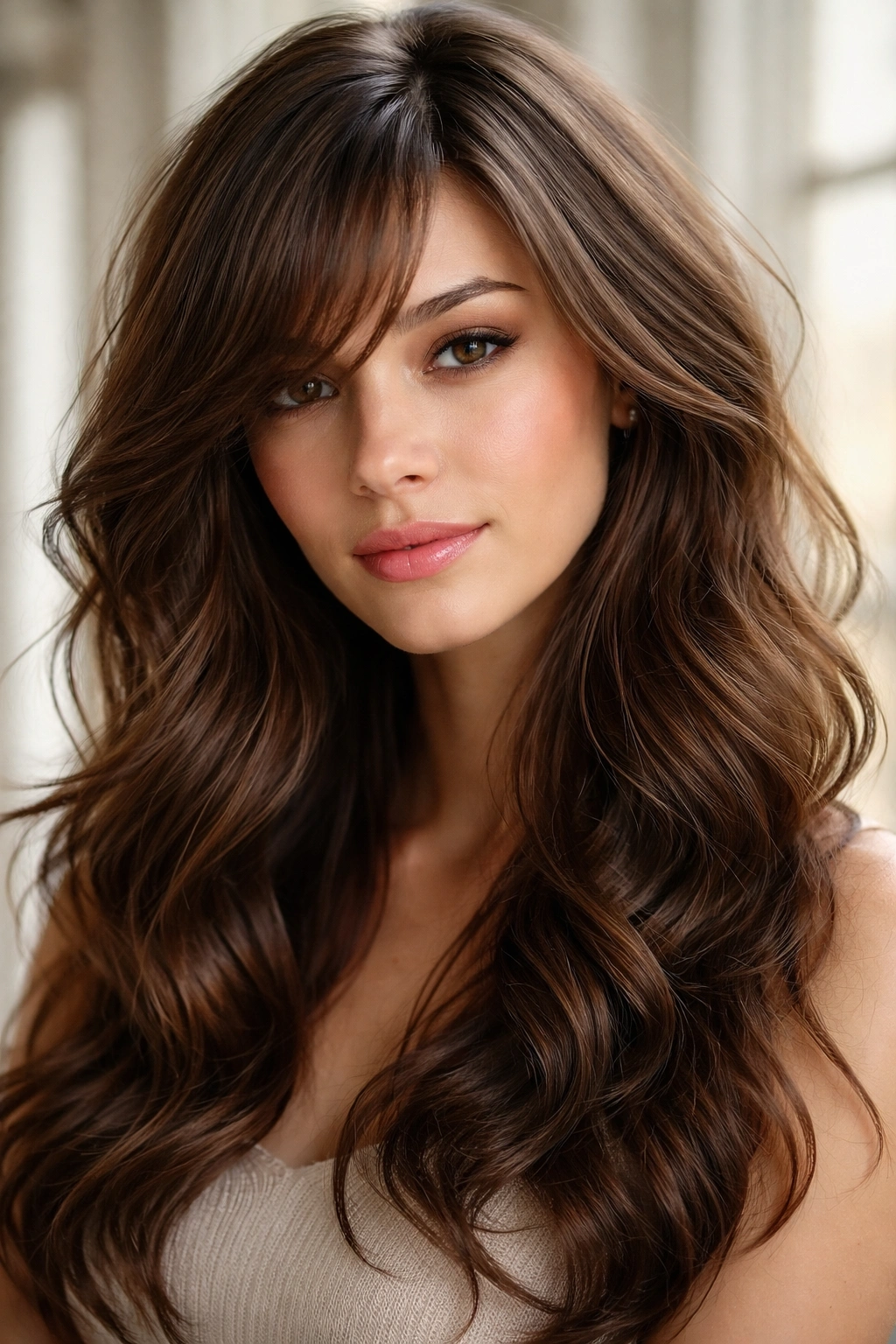
Side-swept bangs are cut longer at one side of your face and gradually shorter as they sweep toward the opposite side, creating a diagonal line. Instead of sitting heavy on your forehead, they blend into the rest of your hair, sweeping across your face with movement and lightness. For thick wavy hair, this style is particularly smart because it distributes the visual weight of bangs more evenly across your face.
Why They Complement Wavy Texture
Side-swept bangs work wonderfully on thick wavy hair because the longer length means they’re not sitting directly on your forehead creating density. Instead, they sweep across in a way that actually makes thick hair look more refined and intentional. The waves in your hair naturally enhance the swept, directional quality of this cut. Because the bangs gradually transition into your longer hair rather than creating a distinct line, the whole style feels cohesive and effortless. Thick hair has enough body to hold the sweep without looking thin or wispy.
Maintenance and Styling Approach
- Blow-dry the bangs in the direction they’re meant to sweep, using a round brush to encourage the shape
- A light styling cream or mousse applied to damp bangs helps them hold their swept position
- These bangs work great with natural waves — you can embrace your texture rather than fight it
- The cut requires a trim every 6-8 weeks to maintain the gradient from long to short
- They look good tousled and slightly undone, so perfection isn’t the goal — relaxed movement is
- Try sleeping on the side where the bangs sweep to to help them naturally hold that position
Quick fact: Side-swept bangs are one of the most universally flattering bang styles because they work with almost every face shape. The diagonal line creates visual balance whether your face is round, square, long, or heart-shaped.
4. Feathered Bangs With Layers
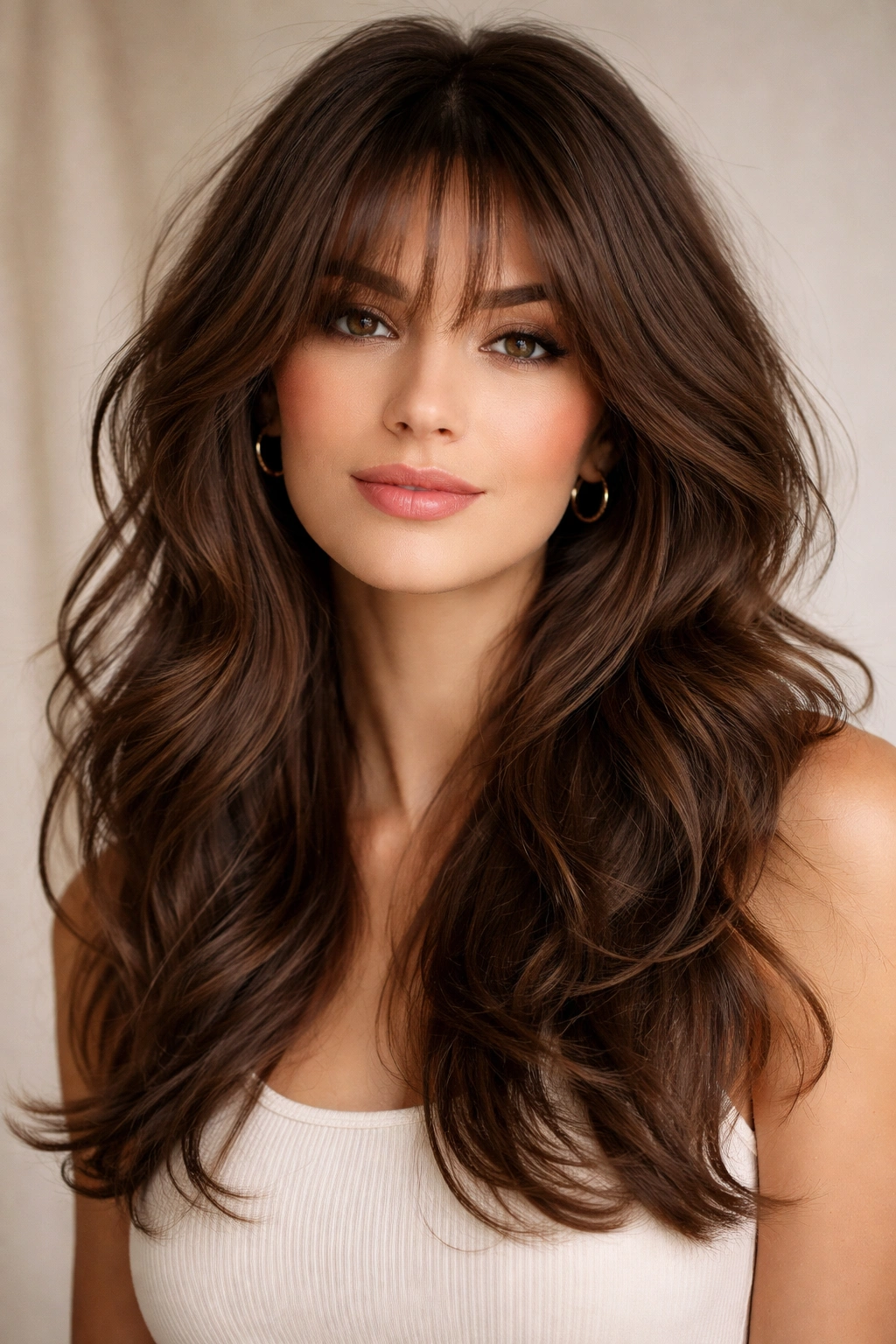
Feathered bangs are cut with layers throughout, creating a soft, feather-like texture where the pieces flip and move independently. Unlike choppy bangs which have that deliberate piece-y look, feathered bangs are more delicate and refined, with subtle layers that create movement without looking jagged. This style works beautifully on thick wavy hair because the layers prevent the bangs from looking too dense while still maintaining enough substance to frame your face.
Why This Style Suits Thick Wavy Hair
Feathered bangs solve a real problem for people with thick hair: the density. When you cut thick hair into a blunt bang, it can look heavy and overwhelming. Feathered bangs remove that density by adding layers throughout, which creates a lighter, airier appearance while your hair still has plenty of body. The layers also work with your natural waves rather than requiring you to blow-dry them straight. Each layer flips and moves independently, which looks naturally beautiful on wavy hair. The result is a sophisticated, polished frame that doesn’t look severe.
How to Style Feathered Bangs
- Use a round brush to blow-dry the bangs while they’re still damp, encouraging the layers to flip and separate
- A light texturizing spray or sea salt spray enhances the feathered effect and helps layers stay defined
- Avoid heavy products that weigh down the layers — stick to light creams or mousse instead
- These bangs look great with a bit of natural texture and wave; you don’t need to straighten them
- The layers mean you have built-in movement even if you just air-dry
- Trim every 5-6 weeks to keep the feathered layers sharp and prevent them from looking shaggy
Insider note: If you have thick waves, ask your stylist to cut the feathered layers at a slight angle rather than straight across. This creates even more movement and prevents the bangs from sitting flat against your forehead.
5. Thick Blunt Bangs (With Texture)
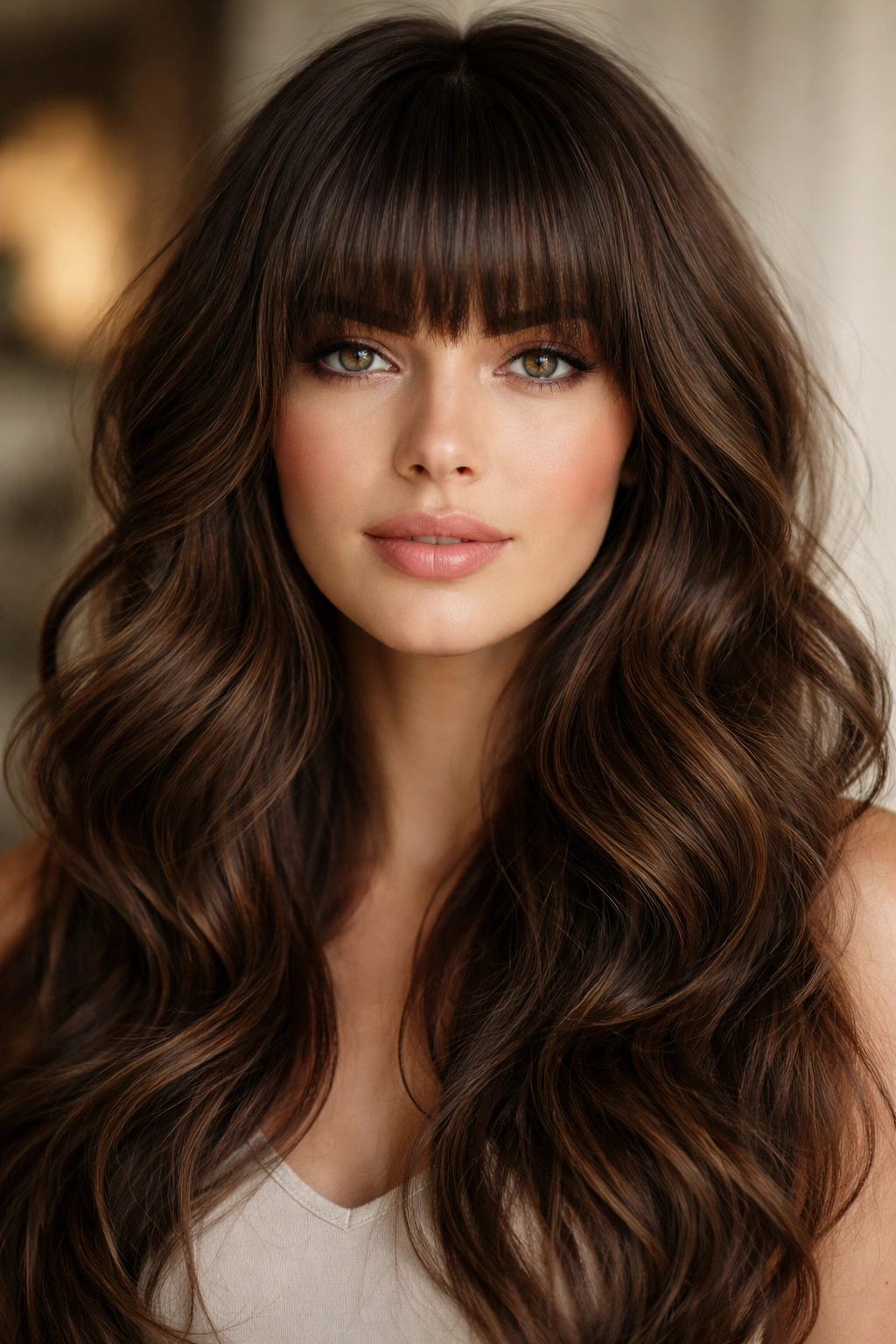
Blunt bangs are a bold choice, but they can look absolutely stunning on thick wavy hair if they’re done right. The key difference between a blunt bang that works and one that doesn’t is texture. A completely straight, perfectly blunt line will look heavy and severe on wavy hair. But a blunt bang that’s been textured and layered just enough to work with your waves? That’s a completely different story. You get the dramatic, statement-making impact of blunt bangs without the severity or the constant need to blow-dry them straight.
Why Textured Blunt Bangs Work on Thick Hair
A textured blunt bang gives you the boldness and impact of a blunt style while respecting your natural texture. Your stylist will cut a blunt line, then use point-cutting or texturizing techniques to create subtle separation and movement within that line. This means your bangs still have that clean, defined look, but they’re not fighting your waves. The bluntness also means these bangs have real visual presence — they frame your face with confidence without looking overdone. For thick hair, this style is actually more manageable than a completely straight blunt bang because you’re not constantly fighting your texture.
Styling and Care Guidelines
- Blow-dry with your natural waves for a textured, intentional look rather than fighting to make them perfectly straight
- A light styling cream applied to damp bangs helps define the line while allowing for movement
- These bangs work beautifully with some texture and even a bit of frizz at the edges — that’s part of the aesthetic
- Trim every 4-5 weeks because blunt bangs show growth quickly and can look overgrown
- You can style these with your hair down or pulled back — they frame your face either way
- On humid days when your waves are more pronounced, the bangs will have more movement; this is actually a good look for this style
Pro tip: Ask your stylist to cut the textured blunt bangs slightly longer than you think you want them. They’ll read shorter and more blunt once the texture and movement are added, and you’ll be happier with a longer length than a too-short one.
6. Long Layered Bangs That Blend
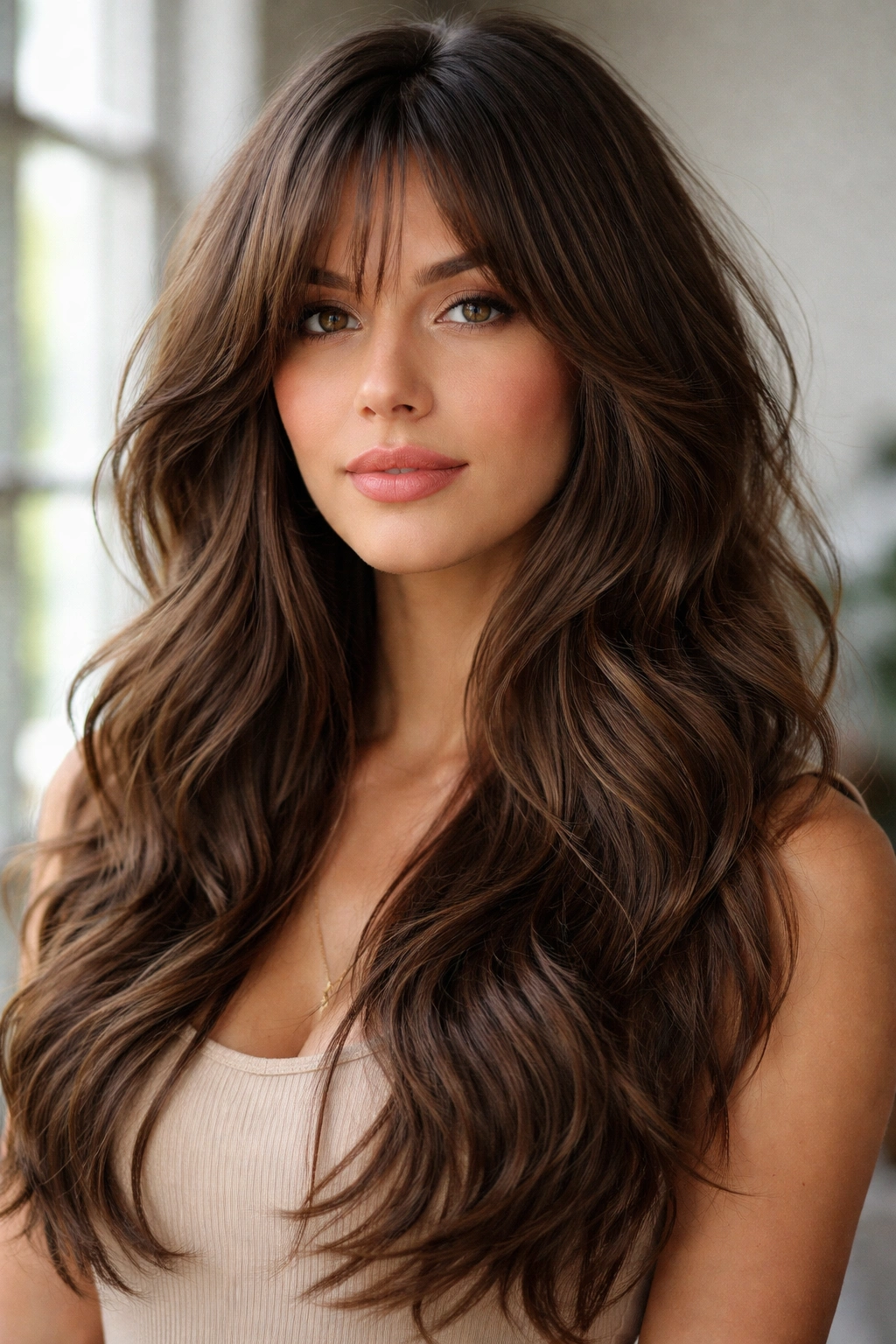
Long layered bangs are cut longer and layered throughout so they blend seamlessly into your regular hair. Instead of creating a distinct bang line, these bangs gradually transition from shorter pieces at the front to longer pieces that merge with the rest of your hair. This creates a framing effect without the definitive “bang” look. For thick wavy hair, this style is incredibly versatile because it gives you the benefits of bangs — face-framing and dimension — without the commitment or the maintenance.
Why Thick Wavy Hair Benefits From This Style
Long layered bangs work beautifully on thick wavy hair because they create softness and movement without density. The layers prevent any one section from looking too heavy, and the longer length means the bangs move with your waves rather than sitting stiffly across your forehead. You get dimensional framing around your face, which is incredibly flattering, but the style is forgiving enough that you don’t need perfect styling every day. If you like the idea of bangs but aren’t sure about committing to short bangs, long layered bangs are the perfect bridge between no bangs and full bangs.
Styling and Maintenance Tips
- These bangs can be styled with your natural waves or with a round brush for a smoother effect
- Because they blend into the rest of your hair, you don’t need specific bang products — use your regular styling products throughout
- Air-drying works great for this style if you embrace your natural texture; blow-drying with a round brush gives a smoother look
- Trim every 8 weeks to keep the layers looking fresh and prevent them from growing into undifferentiated length
- You can style your hair up in a ponytail or bun and still have nice framing pieces around your face
- These bangs look good on everyone and work with almost any face shape because they’re so soft and blended
Quick fact: Long layered bangs are sometimes called “grown-out bangs,” but that doesn’t mean they’re just old bangs you haven’t trimmed. A good stylist will intentionally cut long layered bangs with a specific shape and blend that’s completely different from simply not maintaining shorter bangs.
7. Micro Bangs With Texture
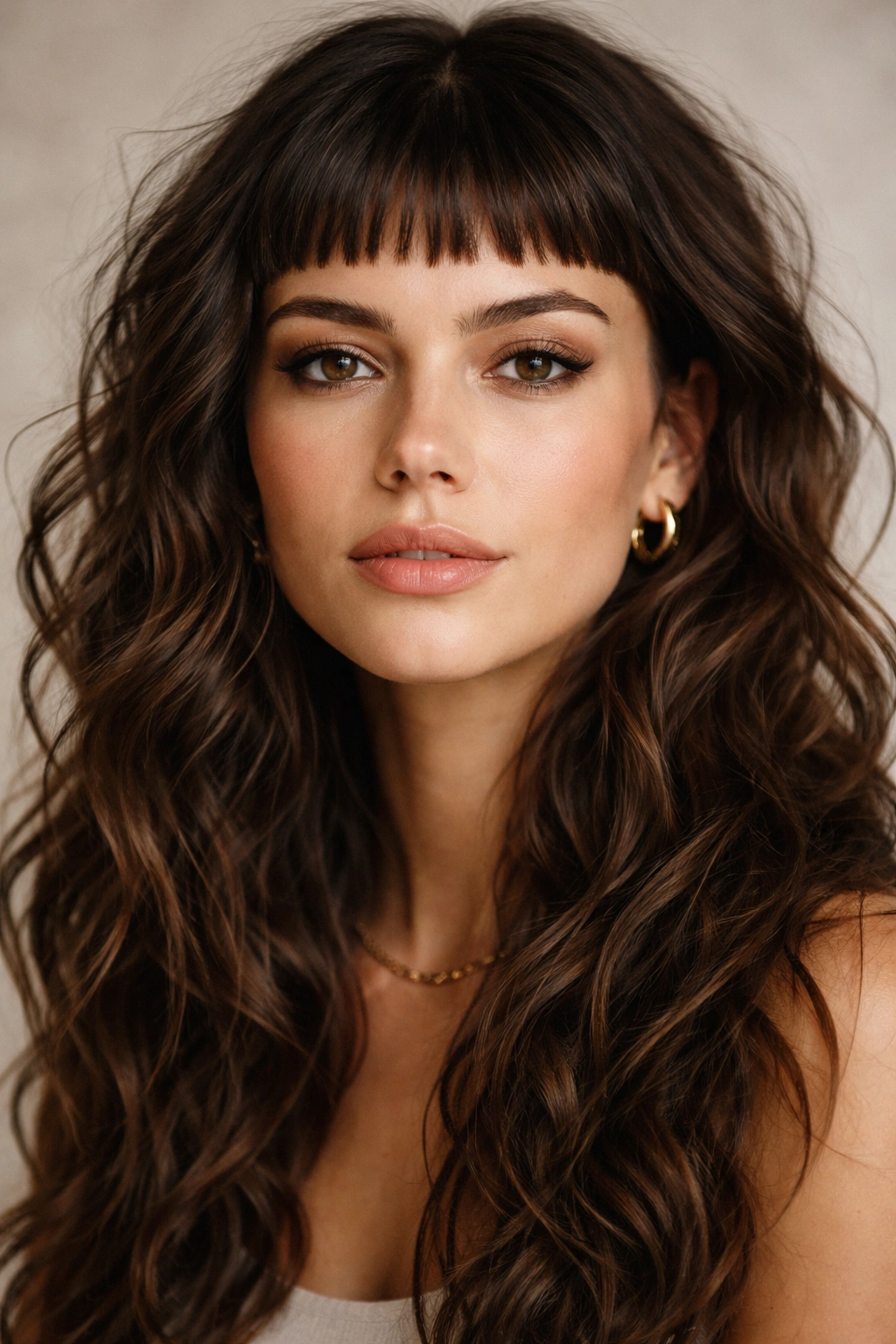
Micro bangs — sometimes called baby bangs — sit very high on your forehead, just barely grazing your eyebrows or sitting right at the brow line. They’re a bold, fashion-forward choice that creates serious visual impact. On thick wavy hair, micro bangs work because the texture of your hair fills in around them, creating a sophisticated, intentional look rather than a bare, severe one. This style shows confidence and works best on people who are willing to commit to regular trims and styling.
Why Micro Bangs Suit Thick, Wavy Hair
Micro bangs on thick hair have a completely different effect than they would on fine, straight hair. Your texture actually creates a fuller appearance around the short bangs, which makes them look more intentional and less sparse. The movement in your hair adds dimension around the bangs rather than making them look too exposed. Because your hair is thick, you can pull off this bold style without it looking wispy or weak. The bangs also create a fun juxtaposition with longer hair — the short front and longer length creates interesting visual movement.
Styling and Commitment Level
- Micro bangs require styling most days — blow-dry them in the direction your waves naturally fall or smooth them slightly with a round brush
- A texturizing spray or styling cream applied to damp bangs helps them hold their shape and prevents them from looking too thin or sparse
- These bangs need a trim every 3-4 weeks because they grow out quickly and can cover your eyes fast
- They work beautifully paired with longer length elsewhere, creating contrast and visual interest
- These bangs photograph well and make a real statement — they’re for people who want their hair to be a conversation piece
- Consider trying this style with extensions or a wig first if you’re nervous, because commitment is key
Worth knowing: Micro bangs are definitely a bolder choice than other bang styles, but they can look absolutely stunning on the right person. If you’re considering them, make sure you’re doing it because you genuinely love the style, not just because you’re following a trend.
8. Faux Bangs Created With Face-Framing Layers
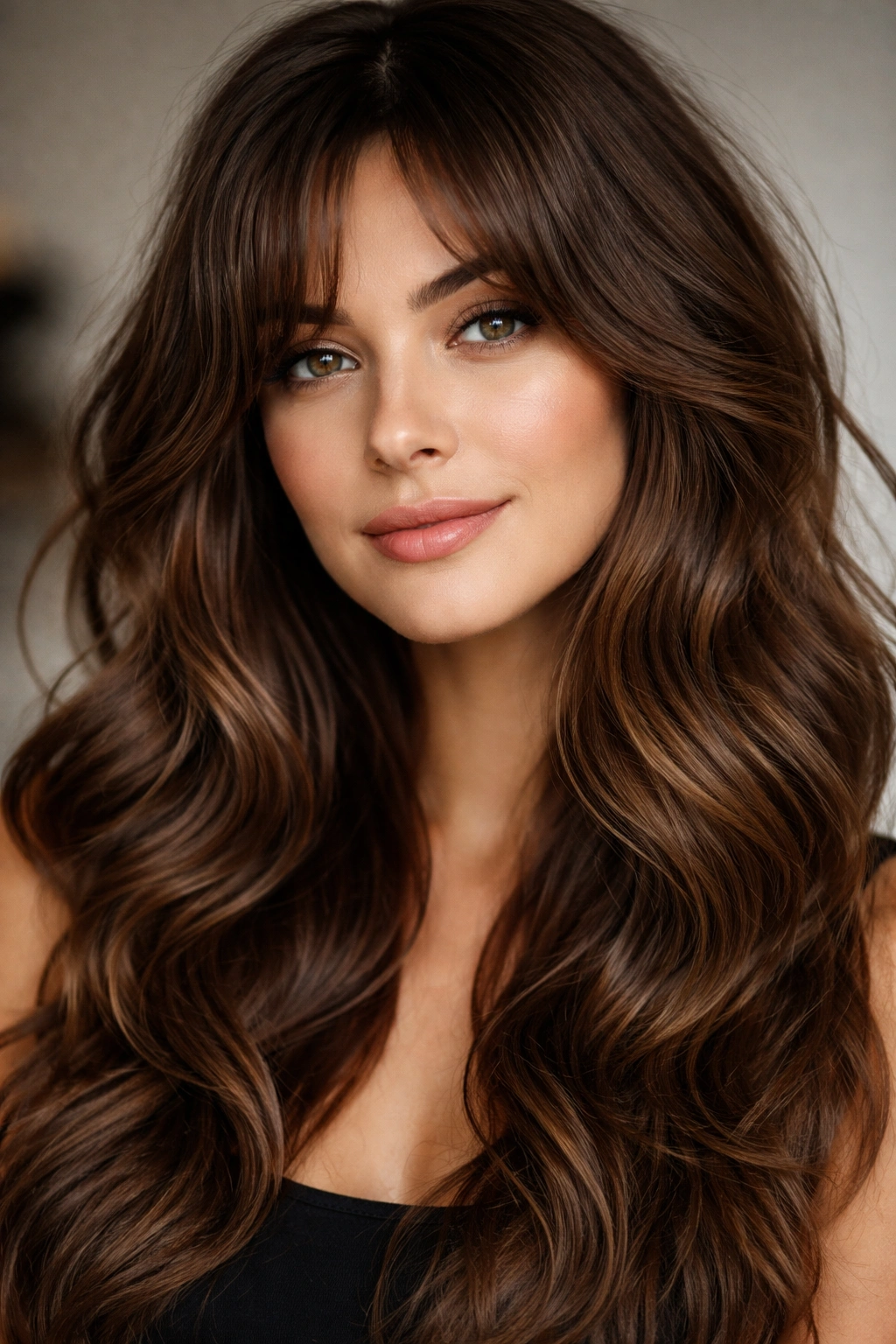
Faux bangs aren’t actually bangs at all — they’re created using face-framing layers cut throughout the front sections of your hair. Your stylist cuts shorter, layered pieces around your face while keeping your overall length longer, creating the illusion of bangs without actually cutting a true bang line. For thick wavy hair, this is a fantastic option because you get all the benefits of bangs — face-framing, dimension, softness — without the styling commitment or the definitive bang look.
Why Faux Bangs Work for Thick, Wavy Hair
Faux bangs solve multiple problems at once for people with thick wavy hair. You get face-framing without committing to actual bangs that need regular trims and styling. The layers work with your natural waves to create movement and dimension. Because there’s no blunt bang line, you have flexibility in how you style your hair — you can wear it down, pull it back, part it differently, and the style still works. Thick hair has the body to support layered styles beautifully, and the layers actually prevent your overall style from looking too heavy. You’re getting a significant style change without the maintenance or commitment of traditional bangs.
How to Style and Maintain Faux Bangs
- Style these layers with your natural waves or blow-dry with a round brush for a smoother effect
- Because the layers gradually blend into the rest of your hair, you use your regular styling products throughout rather than specific bang products
- These layers look great tousled and slightly undone — they don’t need to be perfectly styled
- Trim every 8-10 weeks to keep the layers looking defined and prevent them from blending back into your regular hair
- You can absolutely wear your hair in updos, ponytails, and buns with this style — the layers just add texture and movement
- This style actually gets better looking as it grows out slightly because the layers create more movement
- Faux bangs are one of the lowest-maintenance bang options while still giving you that face-framing benefit
Pro tip: If you’re not sure about committing to bangs, faux bangs are the perfect testing ground. You get the effect without the daily styling requirement, and if you decide you want to go shorter, your stylist can cut an actual bang line at your next appointment.
Final Thoughts
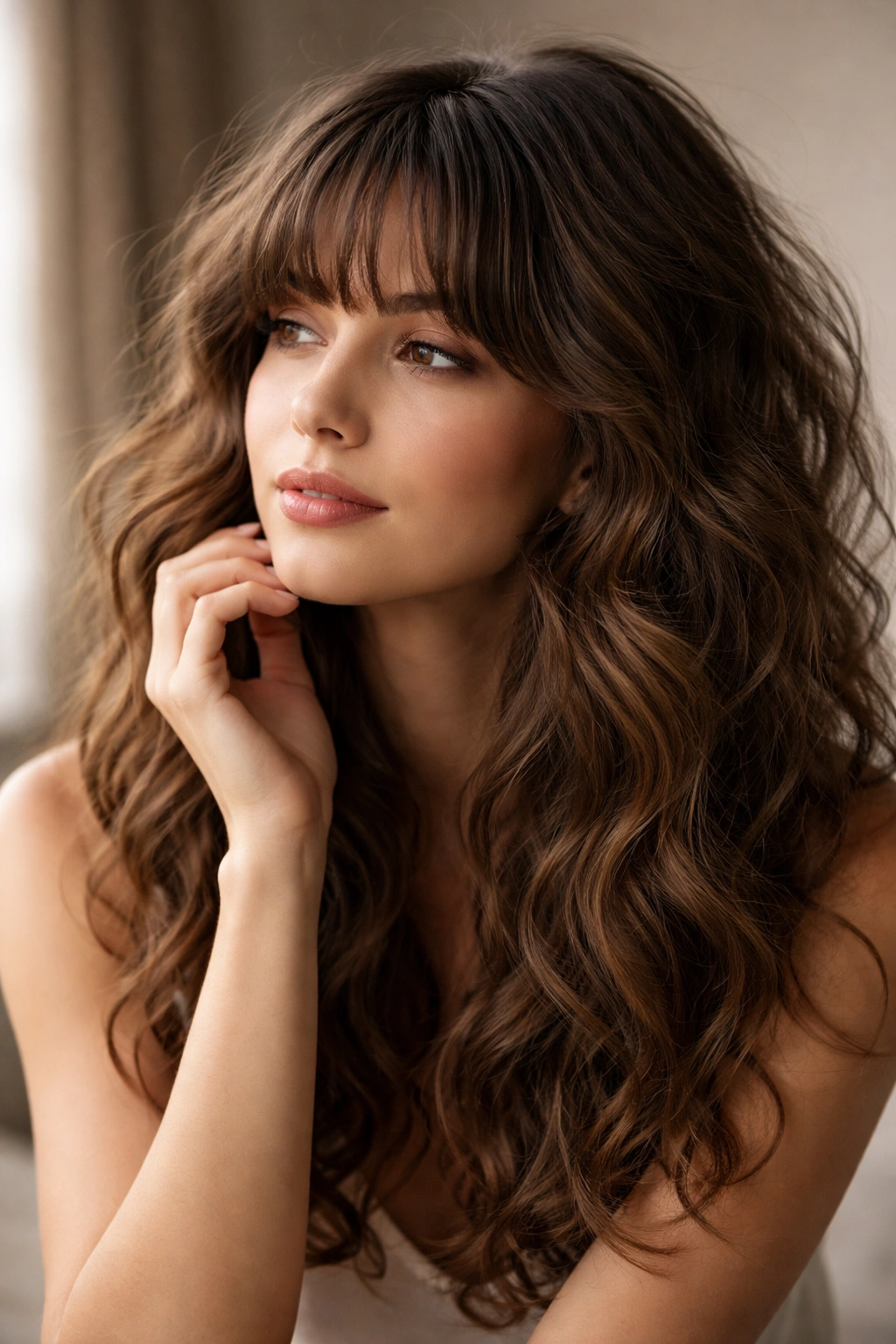
Finding the right bang style for thick wavy hair isn’t about fighting your texture — it’s about choosing a style that celebrates your texture. The eight styles in this guide all have something in common: they work with your natural waves and the density of your hair rather than against it. Whether you go for choppy texture, feathered softness, or the boldness of micro bangs, the key is choosing something that feels authentically you and that you’ll actually want to style and maintain.
The most important thing to remember is that your thick, wavy hair is an asset when it comes to bangs. Density and movement are what make these styles look effortless and beautiful. Instead of trying to blow-dry your bangs straight every single day, embrace the texture you naturally have. Talk to your stylist about your hair’s specific wave pattern and thickness so they can cut bangs that work with what you’ve got, not against it.
Start with a style that resonates with you and give it time. Bangs look different on different days depending on humidity, how you slept, and how you style them — and that’s okay. The best bang styles on thick wavy hair are the ones that still look good even when they’re not perfectly styled, because that’s real life. You’ve got the texture, the body, and the thickness to pull off any of these styles beautifully. The only question is which one makes you feel most confident.
