
If you’ve got a round face shape, you already know that not every hairstyle works equally well. Round faces are beautifully full through the cheeks and jawline, but certain cuts can either emphasize that roundness or work strategically to create the illusion of length and definition. Here’s the thing: long wavy layered haircuts are actually perfect for round faces because layers create movement and texture that breaks up the horizontal lines, while length naturally draws the eye downward and elongates your overall appearance.
Wavy hair has a natural advantage too — those soft curves and dimension make it easier to add visual interest without needing to commit to tight, high-maintenance curls. And when you layer strategically, you’re not just adding texture for texture’s sake. You’re creating angles and shape that work with your face structure, not against it. The right layered cut can shorten your face visually (by adding width at the sides) while also creating flattering frame around your features.
The challenge is finding a cut that suits your specific hair type, lifestyle, and personal style — because not all long layered cuts are created equal, especially when you’re working with a round face. Some styles work better if you have thicker hair, others shine with finer strands. Some require regular styling, while others look good air-dried. That’s why we’ve pulled together sixteen of the best options, each with the specific features that make them work for round faces and detailed guidance on how to ask your stylist for them with confidence.
1. The Long Shag with Wispy Choppy Layers
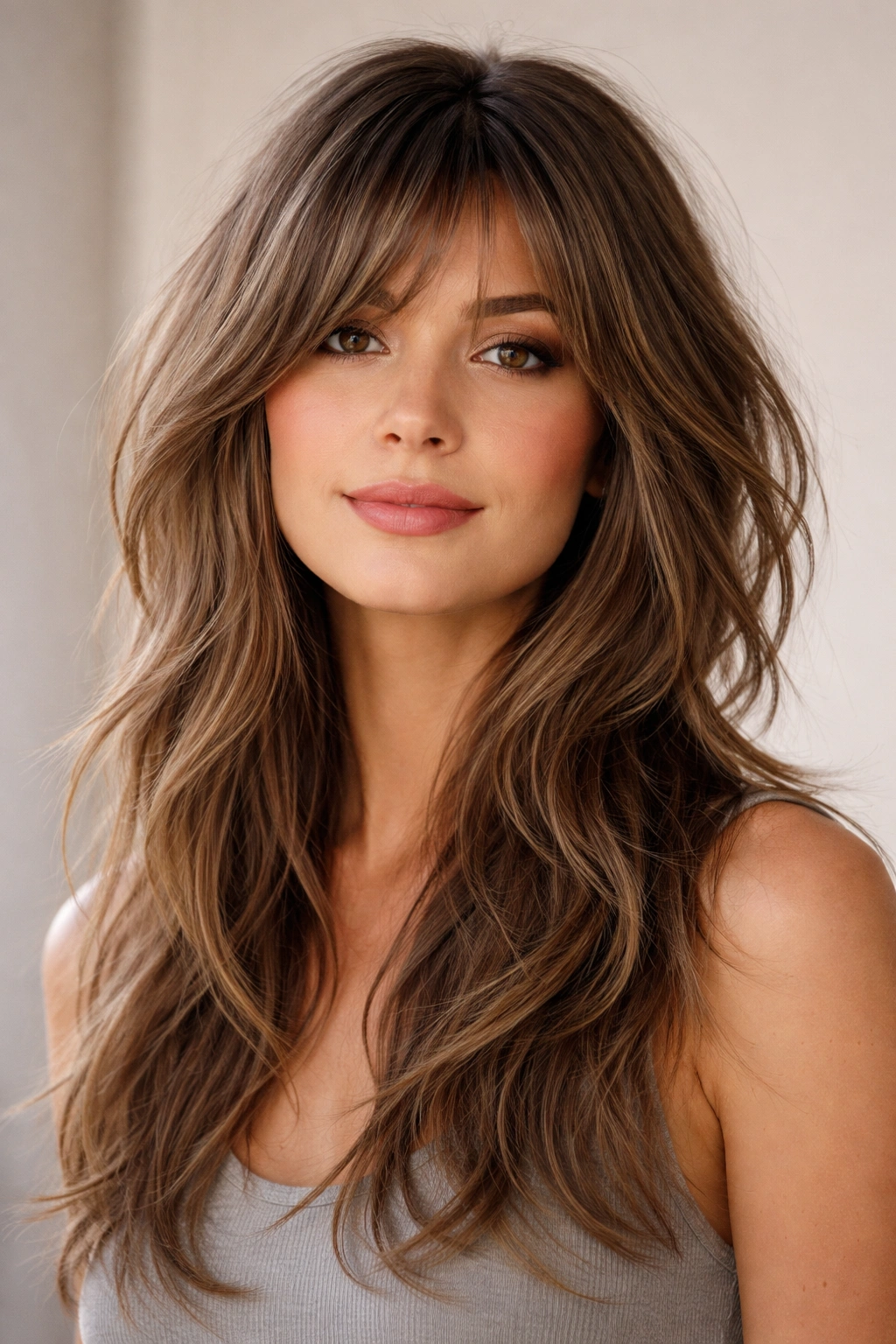
A shag cut is one of the most flattering choices for round faces because the choppy, disconnected layers create vertical movement that immediately works against that horizontal roundness. What makes this style perfect for round faces is the way layers hit at different lengths — some pieces frame your face at cheekbone level while longer pieces extend well past your shoulders, creating a stretched-out silhouette.
Why It Works for Round Faces
The choppy texture breaks up the heavy appearance of length while the shorter layers at the crown add lift and volume where you need it. This prevents your hair from looking flat and heavy against your round face — instead, the choppy layers create a lived-in, textured look that’s inherently flattering.
How to Style It
- Ask your stylist for choppy, point-cut layers throughout, shorter near the crown and gradually longer as you move down
- Blow-dry with a round brush, directing roots upward for lift at the crown
- Use a curling iron to enhance your natural waves and add more definition to the texture
- This cut actually looks great with just a sea salt spray and air-drying for a more undone vibe
2. The Long Layered Cut with Face-Framing Pieces
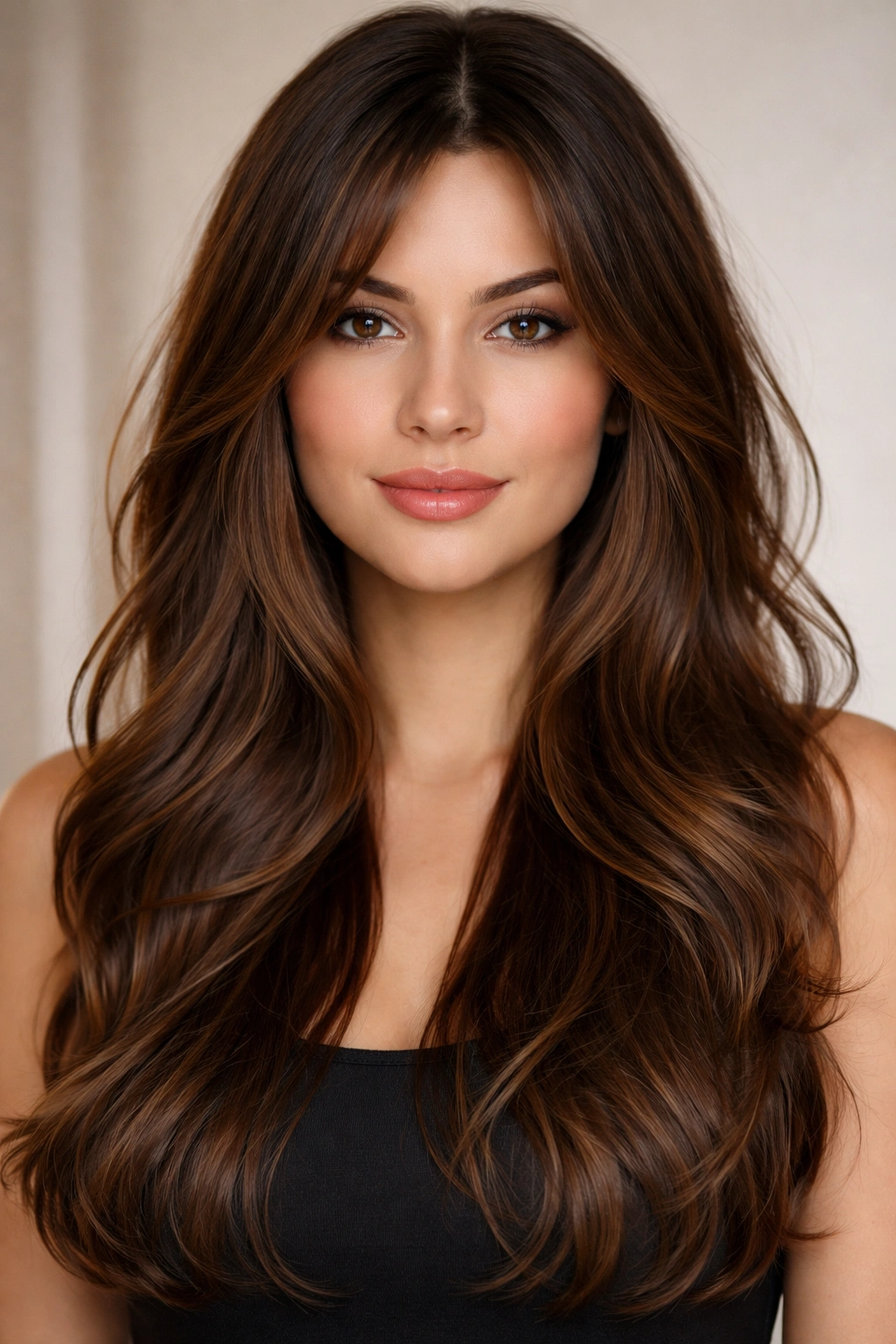
This classic approach keeps most of your length intact while strategically shortening pieces that fall right around your face. The face-framing layers start at cheekbone height and angle slightly inward, creating a subtle V-shape that draws the eye down rather than across.
Why It Works for Round Faces
Face-framing layers are the closest thing to a universally flattering element in haircutting. They interrupt the widest part of a round face and create visual interest right where you want it — on your features rather than on the width of your face.
Styling and Maintenance Tips
- Blow-dry the face-framing pieces away from your face to emphasize the angles
- These layers look best when your waves have some definition, so embrace your natural wave pattern or add gentle waves with a curling iron
- Even on lazy styling days, these layers look intentional and flattering
- Schedule a trim every 8-10 weeks to keep the face-framing layers sharp and in the right position
3. The Textured Long Shag with Disconnected Layers
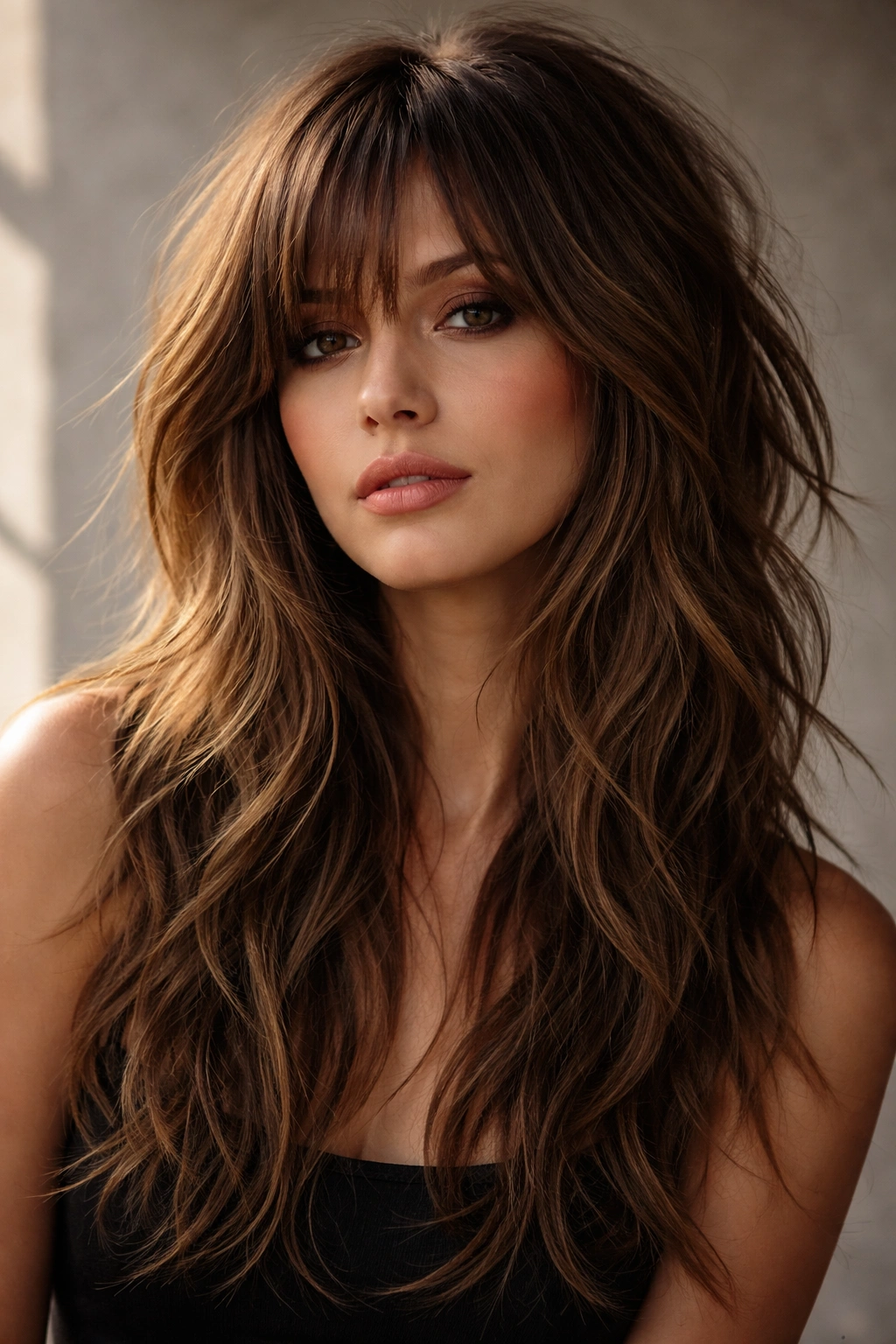
This is the shag’s edgier, more intentional cousin — the layers are more pronounced and deliberately disconnected, creating that rock-and-roll texture that works beautifully for round faces. The key difference is the attitude: this isn’t just length with layers, it’s a statement cut that’s meant to show off choppy, piecy texture.
Why It Works for Round Faces
Textured, disconnected layers create so much visual movement that they automatically elongate your face shape. The choppy pieces prevent the horizontal line of your face from feeling prominent, and the irregular layer lengths add edge and definition.
Getting the Cut Right
- Communicate to your stylist that you want disconnected layers, not blended or feathered layers — this is the difference between subtle and bold
- Shorter layers at the crown (around chin length or slightly shorter) transitioning to much longer layers below
- Point-cut or razor-cut layers that create choppy, piece-y texture
- Expect to style this regularly with a blow-dryer and products for the best effect
4. The Long Waves with Subtle Underlayers
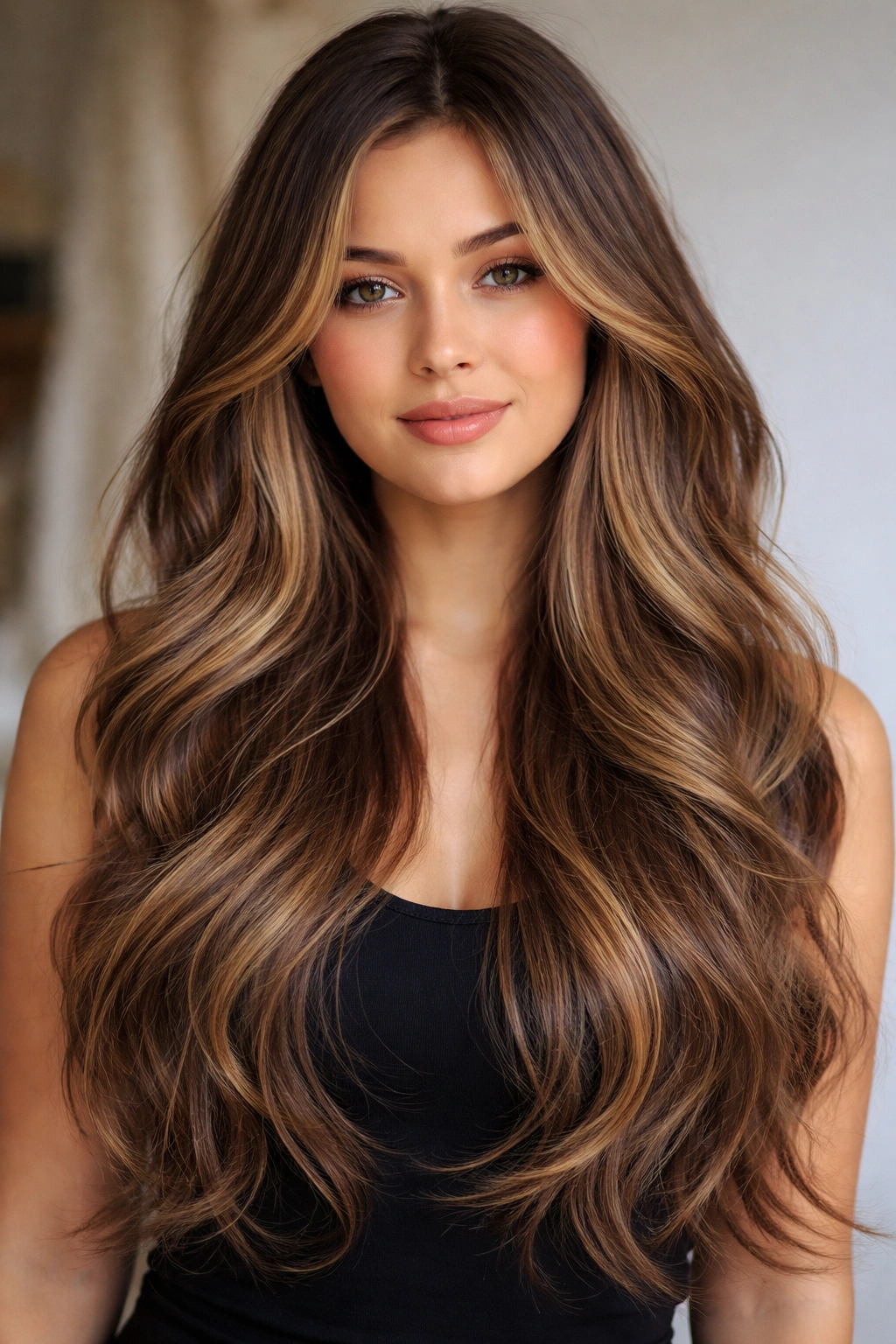
This option keeps your aesthetic soft and romantic while still incorporating the strategic layering that flatters round faces. The underlayers are hidden in the hair beneath the surface, while the top layer remains mostly blunt or subtly graduated, giving you the best of both worlds.
Why It Works for Round Faces
Subtle underlayers add movement and reduce bulk without eliminating length or changing your overall silhouette dramatically. The waves flow more naturally through the cut, and you get dimension without the choppy texture of a shag.
Styling Strategy
- Ask your stylist for longer underlayers (especially around the face and underneath sections) while keeping top layers longer and more blended
- Blow-dry with waves for maximum dimension — the underlayers create natural waves even if your hair is naturally straight
- This cut works beautifully with minimal styling on days you don’t want to blow-dry
- The soft waves elongate your face more effectively than perfectly straight hair
5. The Asymmetrical Layered Cut with One Longer Side
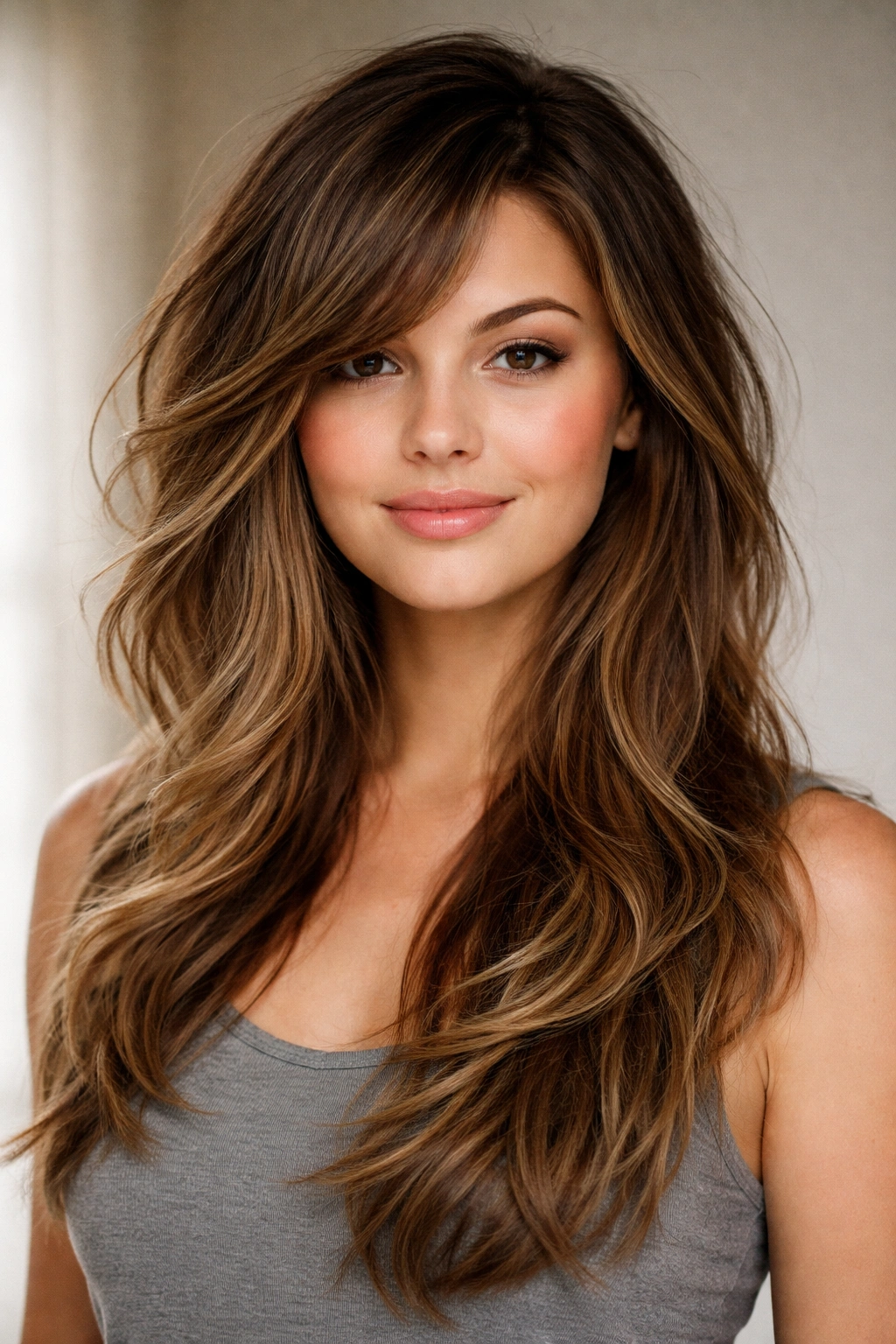
An asymmetrical cut creates an immediate diagonal line that counteracts the round shape of your face. By keeping one side longer than the other, you create a slanting line that naturally elongates and creates visual interest without feeling too trendy or extreme.
Why It Works for Round Faces
Asymmetry breaks the symmetry of your round face shape, which is exactly what you need. The longer side sweeps across and down, creating a visual line that makes your face appear narrower and longer.
Making It Wearable
- One side can be shoulder-length while the other extends well past — make sure you choose which side falls in front of your face based on your preference for coverage or width distribution
- Layer both sides, but make the longer side slightly more layered for movement
- This style requires some intentional styling to look polished, but it’s worth it for the face-flattering effect
- You can also wear it with your longer side pulled back on days you want a different look
6. The Long Layers with Micro-Bangs
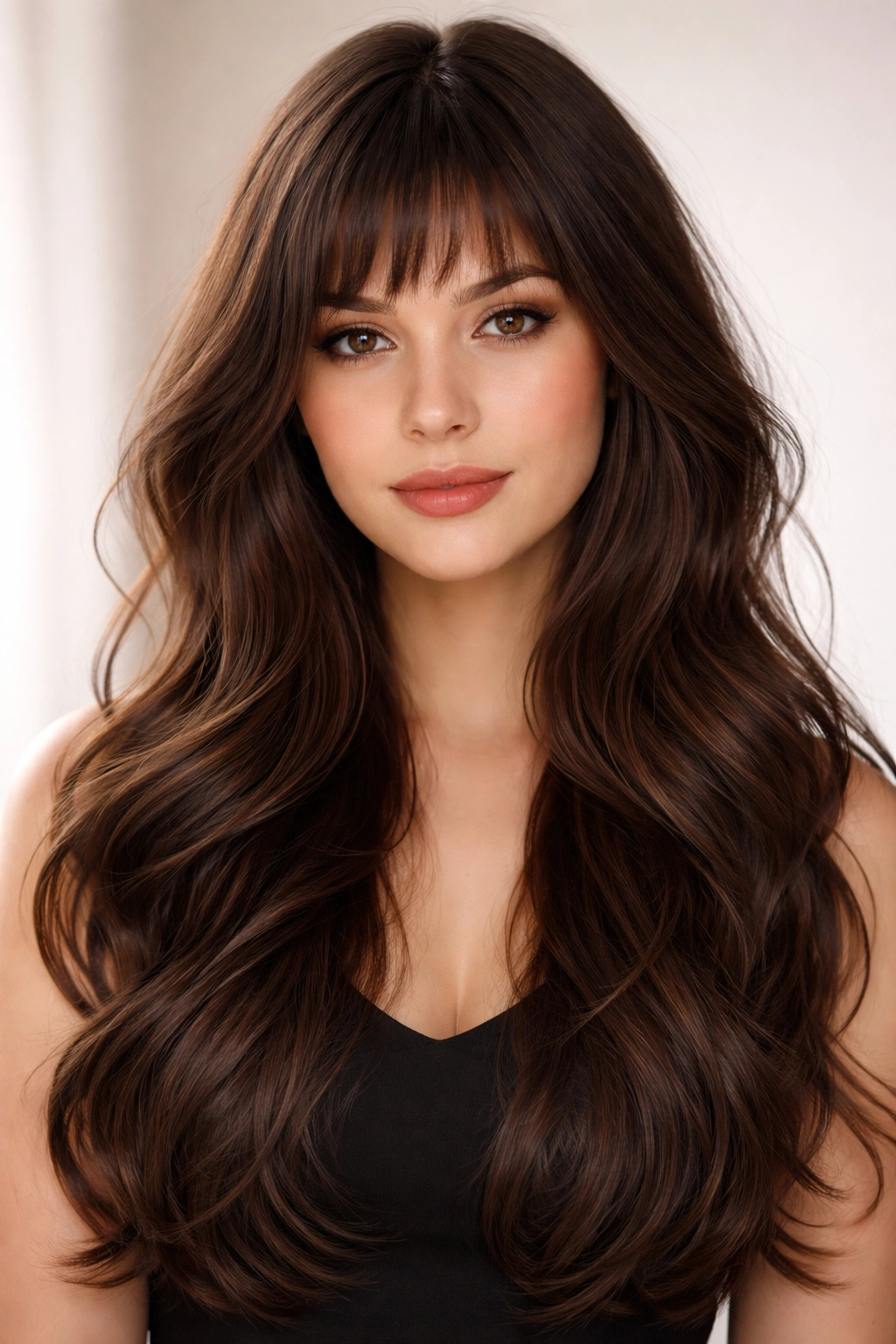
Adding wispy micro-bangs to a long layered cut might seem counterintuitive for a round face, but when they’re cut correctly (short, textured, side-swept), they actually enhance the elongating effect. The bangs draw attention upward, and the short texture creates a focal point that breaks up the horizontal roundness.
Why It Works for Round Faces
Micro-bangs are shorter and lighter than traditional bangs, so they don’t add bulk or heaviness to your forehead. They create visual interest at the top of your face, pulling focus away from round cheeks and jawline.
Styling These Layers
- Ask for extremely short, wispy, side-swept bangs that blend seamlessly into your longer layers
- Blow-dry the bangs to the side, not straight across your forehead
- Curl the bangs slightly under or away from your face for movement
- This cut requires regular trims (every 4-6 weeks) to keep bangs looking intentional
7. The Long Wavy Layers with Tapered Ends
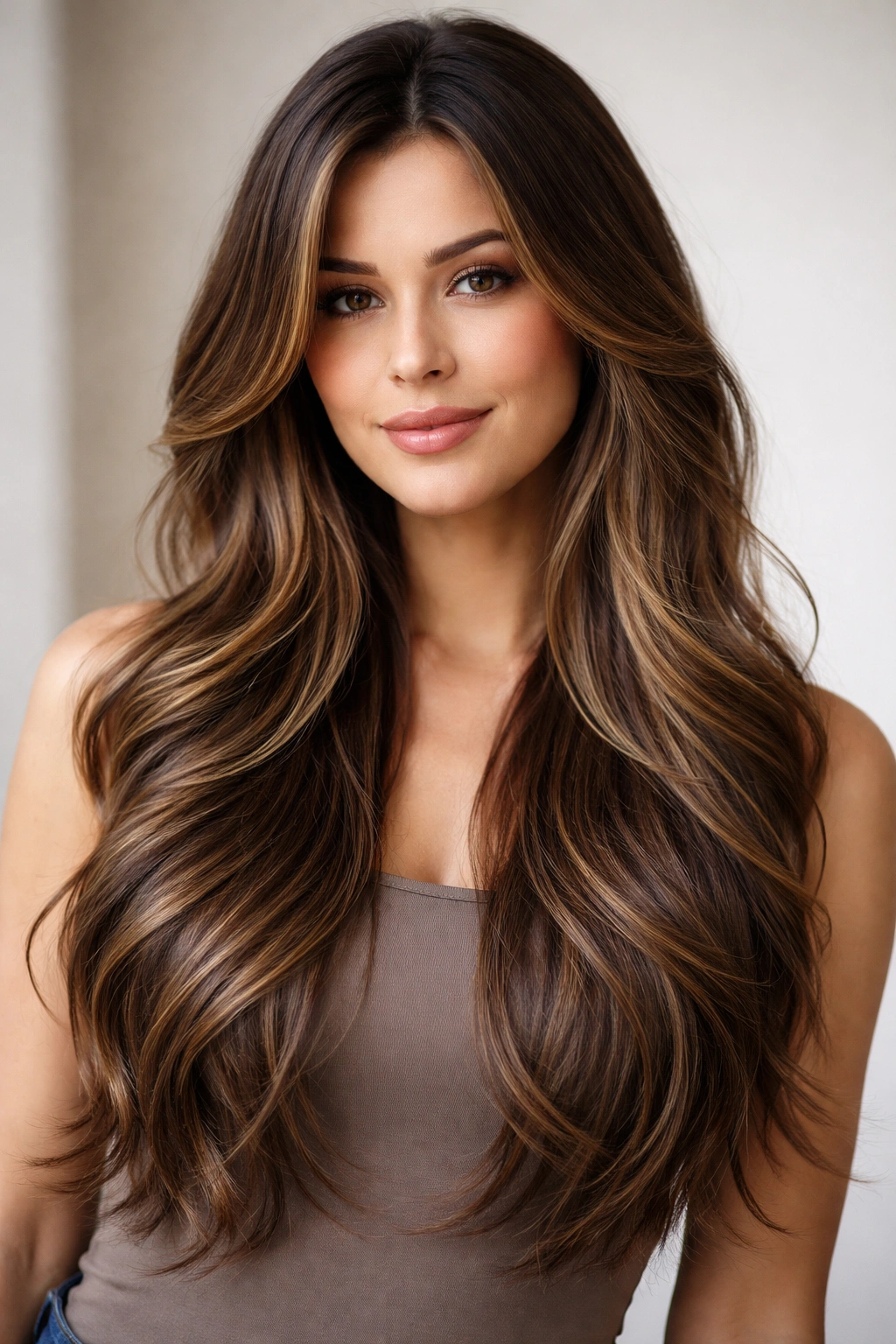
This approach keeps most of your length while creating a tapered, point-cut effect at the very ends. Rather than blunt, heavy ends, the hair thins out gradually into a more delicate point, which makes the overall length feel less heavy and more romantic.
Why It Works for Round Faces
Tapered ends create an elegant, elongated silhouette that feels less chunky than blunt ends. The thinned-out ends also move more freely, creating waves and texture that work against face roundness.
Maintaining the Look
- Ask your stylist for point-cut or razor-cut ends that gradually taper thinner, rather than blunt straight lines
- Layers should be concentrated from mid-length downward, with less dramatic layering near the face
- This style looks effortless with natural waves or enhanced wavy texture
- Schedule trims every 10-12 weeks to maintain the tapered effect
8. The Shaggy Mullet-Inspired Layered Cut
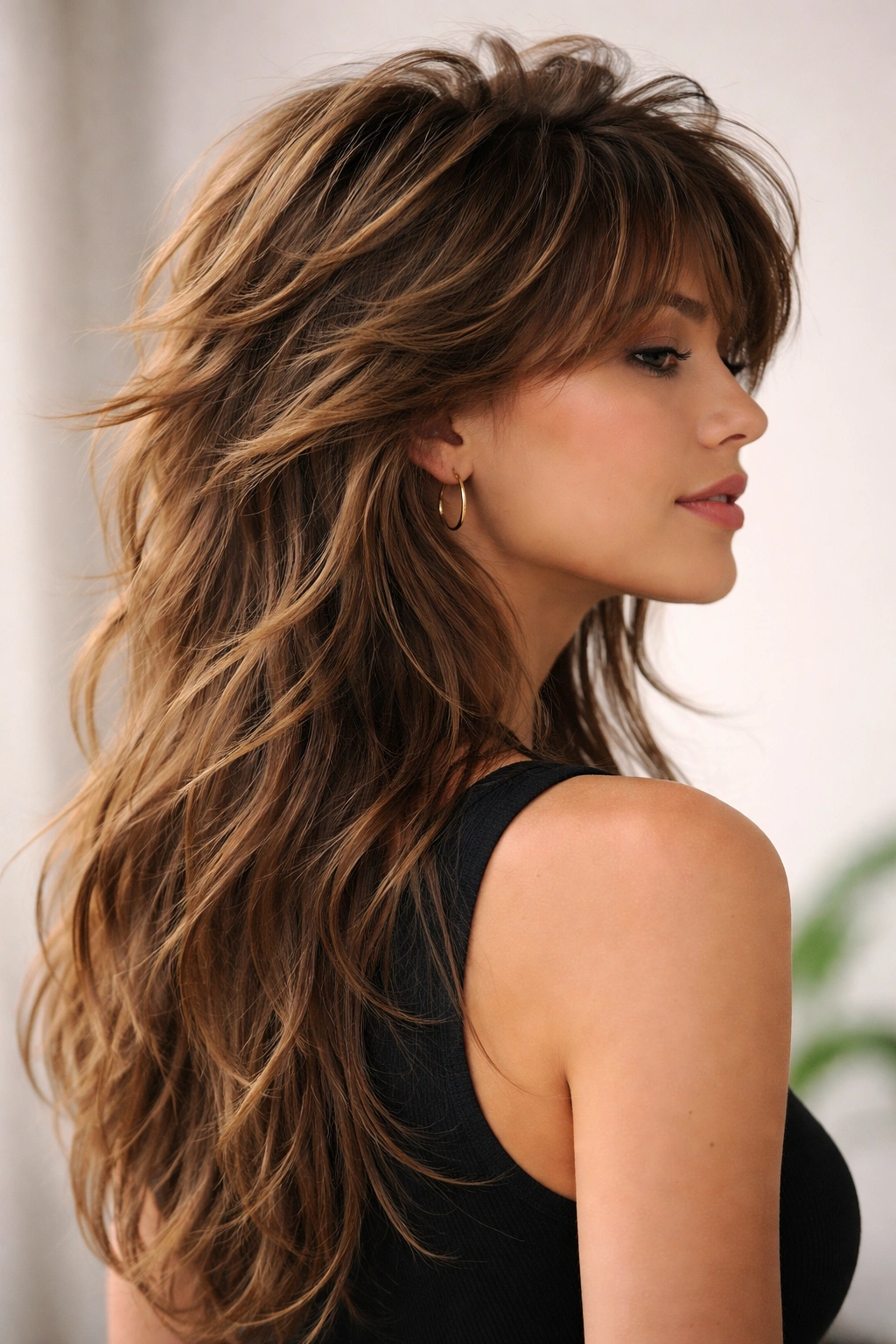
Don’t let the name fool you — this isn’t the 1980s version. Modern shaggy mullet-inspired cuts for long hair use the principle of shorter, textured layers on top and longer, wavy length in the back, creating dramatic movement and attitude while being incredibly flattering for round faces.
Why It Works for Round Faces
The shorter, textured layers at the crown create lift and prevent your face from looking flat. The longer back creates a vertical line and dramatic movement, while the choppy texture breaks up horizontal facial lines.
Getting This Cut
- Shorter choppy layers on top (starting around shoulder-length or slightly shorter)
- Gradually longer layers toward the back, with length extending well past your shoulders
- The contrast between short and long creates visual interest and movement
- Expect to blow-dry this one regularly for the best effect
9. The Long Layers with Face-Framing Baby Bangs
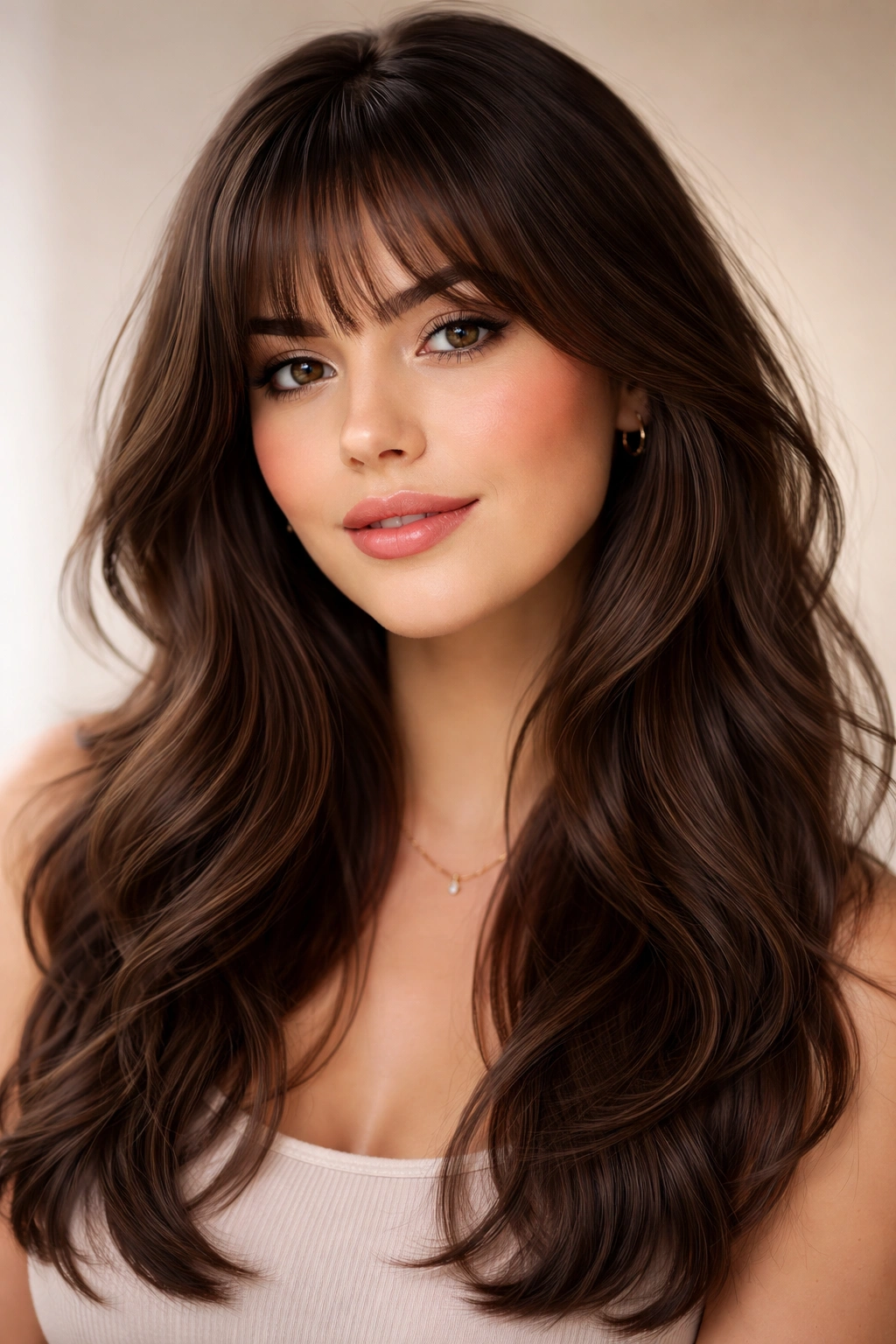
This hybrid approach combines soft, face-framing layers with subtle baby bangs (longer and lighter than micro-bangs but still creating a focal point). The result is a multidimensional cut that flatters round faces through multiple angles of visual interest.
Why It Works for Round Faces
Baby bangs draw the eye upward and inward while face-framing layers interrupt the widest part of your face. Together, they create several focal points that prevent roundness from being the dominant visual characteristic.
Styling Approach
- Baby bangs should be blended and textured, side-swept rather than blunt across the forehead
- Face-framing layers should start at cheekbone height and angle inward slightly
- Blow-dry the bangs away from your face for a sophisticated, intentional look
- Curling iron can enhance the inward angle of face-framing layers and turn bangs into defined waves
10. The Long Layers with Underlayer Curls
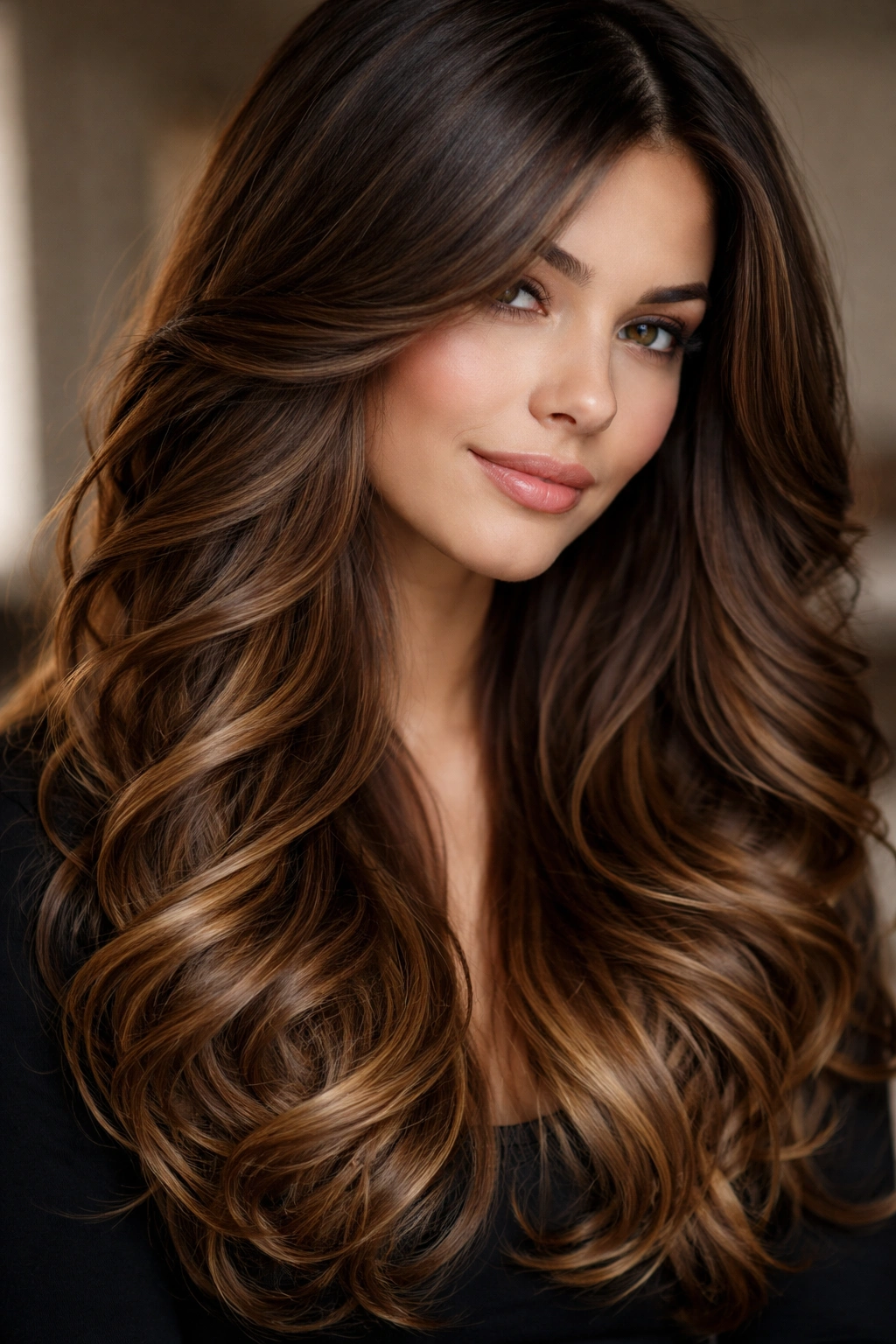
This technique uses strategic underlayers combined with intentional curl work to create volume and movement exactly where round faces need it most. The top layer can look relatively smooth while the underneath is packed with texture and curl, creating a sophisticated, multidimensional effect.
Why It Works for Round Faces
Underlayer curls create volume and dimension that elongate your face without making you look overly curled or defined. The technique adds movement that naturally counteracts facial roundness.
Achieving This Look
- Ask your stylist for longer underlayers with shorter, more textured layers above
- Use a curling iron or perm on underlayers specifically to create curl and volume throughout the cut
- Top layers can remain wavier and less defined for a softer, more blended appearance
- This style looks best with regular blow-drying and curling maintenance
11. The Long Straight-Through Layers with Peak at Crown
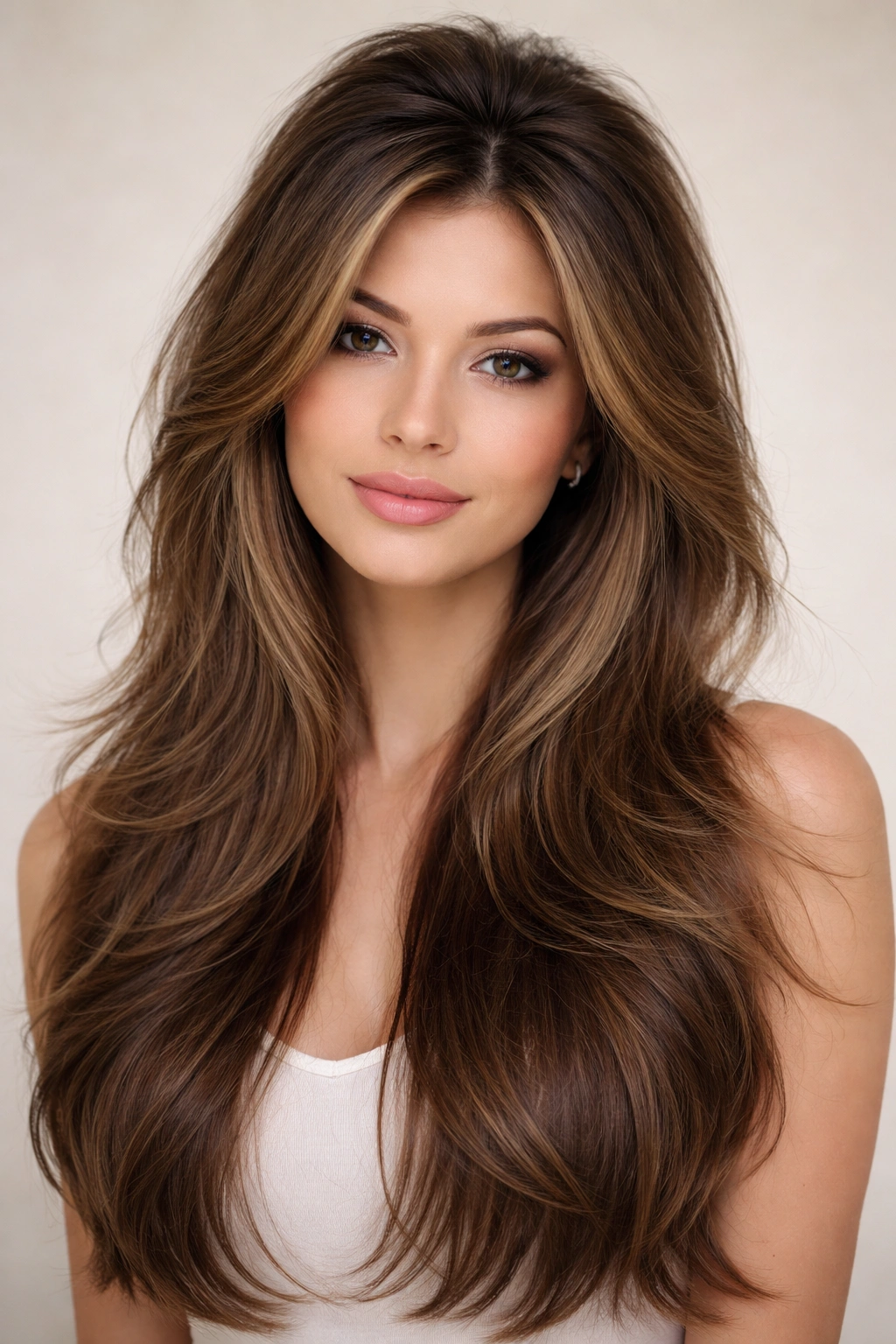
This approach uses continuous layers throughout the length while creating extra volume and lift at the very crown. The peak at the crown makes your face appear longer by creating a vertical line at the top of your head.
Why It Works for Round Faces
The peak at the crown immediately creates height, which makes your entire face appear more elongated. Layers throughout the length maintain movement and prevent heavy, flat appearance.
Styling for Impact
- Ask your stylist for layers that are graduated (longer in front, shorter in back) with extra volume at the crown
- Blow-dry roots upward and backward for maximum peak
- This cut looks sophisticated when the crown is blown out but still maintains its flattering effect with minimal styling
- Waves look particularly good with this cut structure
12. The Long Wavy Layers with Side Parting
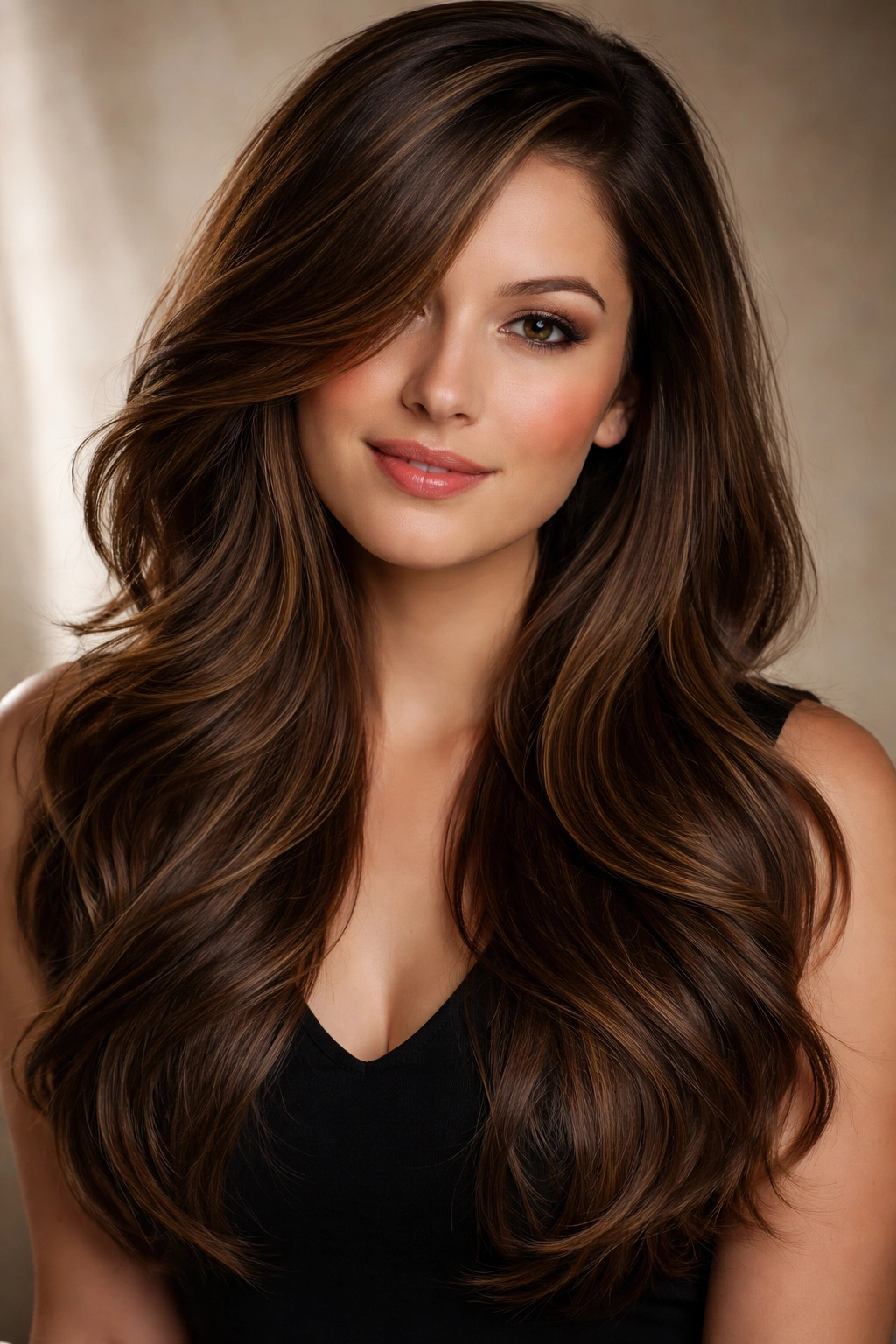
The position of your part can dramatically change how your face appears, and a deep side part combined with long wavy layers creates an immediately elongating effect. One side of your face gets more coverage (adding visual width where you want it, away from your face) while the other side opens up and creates diagonal lines.
Why It Works for Round Faces
A deep side part creates an asymmetrical line that elongates your face shape. When combined with long wavy layers, the movement of the waves follows that diagonal line and reinforces the lengthening effect.
Working with Side-Parted Layers
- Ask your stylist for layers that work with a deep side part, meaning shorter layers on the side with less coverage
- The covered side should have longer, wavier pieces that sweep across
- Blow-dry hair away from the face on your smaller side, creating more openness
- Change which side you part on occasionally to prevent permanent creases or damage
13. The Long Choppy Layers with Textured Waves
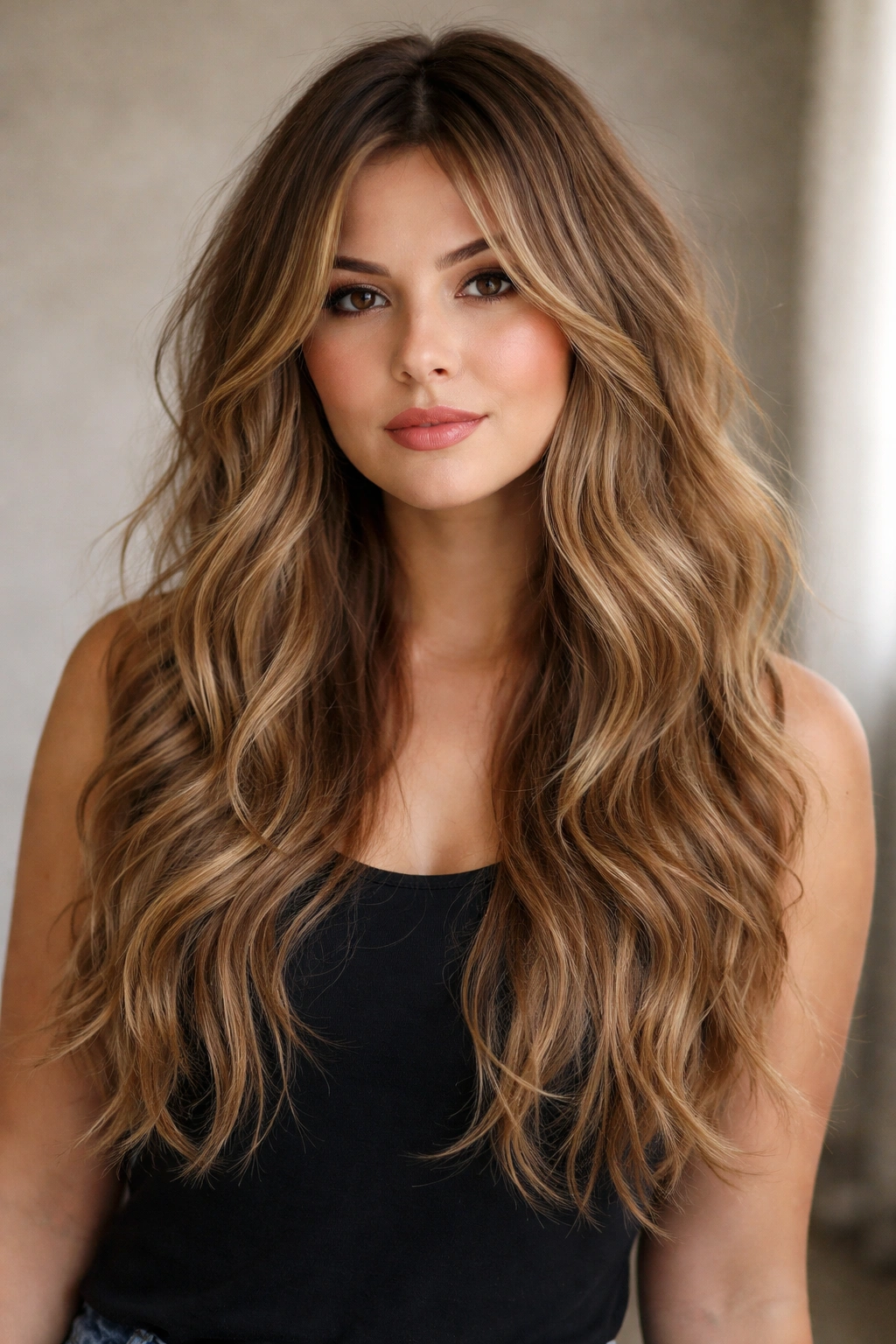
This cut emphasizes choppy, point-cut texture throughout the length while relying on natural or enhanced waves to create movement. Unlike a full shag, the choppiness is slightly more blended, creating a contemporary, polished look that still offers serious face-flattering benefits.
Why It Works for Round Faces
Choppy texture creates visual interest and movement that breaks up horizontal facial lines. The waves add another layer of dimension that elongates and flatters round faces.
Styling This Cut
- Blow-dry with a round brush or diffuser to enhance natural texture and waves
- Use a sea salt spray or texturizing spray to enhance the choppy, piecy quality
- Curling iron can add more defined waves if your natural texture is subtle
- This cut works well with minimal styling since the texture looks intentional even slightly undone
14. The Long Layers Starting Below the Shoulders
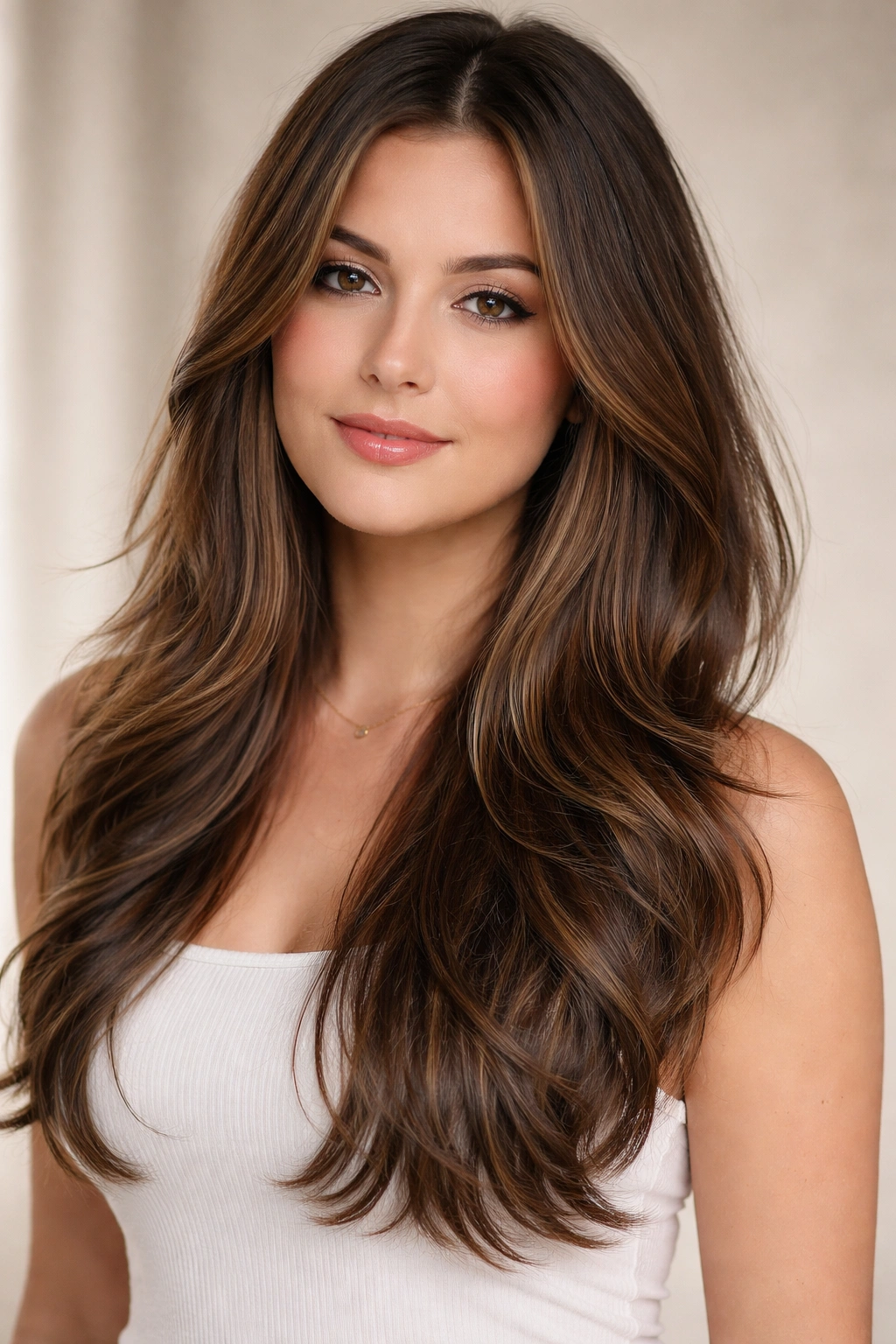
For those who love the idea of long length but need the face-flattering benefits of layers, this approach keeps most of your length intact while starting serious layering below shoulder-length. This gives you the best of both worlds: long length and movement where it matters most.
Why It Works for Round Faces
By keeping most of your length below the shoulders, you maintain the elongating effect of long hair while the layers in the lower half create movement and prevent the heavy, flat appearance that long straight hair can create.
Getting This Specific Texture
- Ask your stylist for minimal layering through the face and shoulder areas, then increase layering significantly below the shoulders
- This protects your face-flattering length while adding texture where it won’t compete with your face for visual attention
- Waves in the lower portion work particularly well with this structure
- This style is forgiving of varying hair textures
15. The Long Feathered Layers with Soft Waves
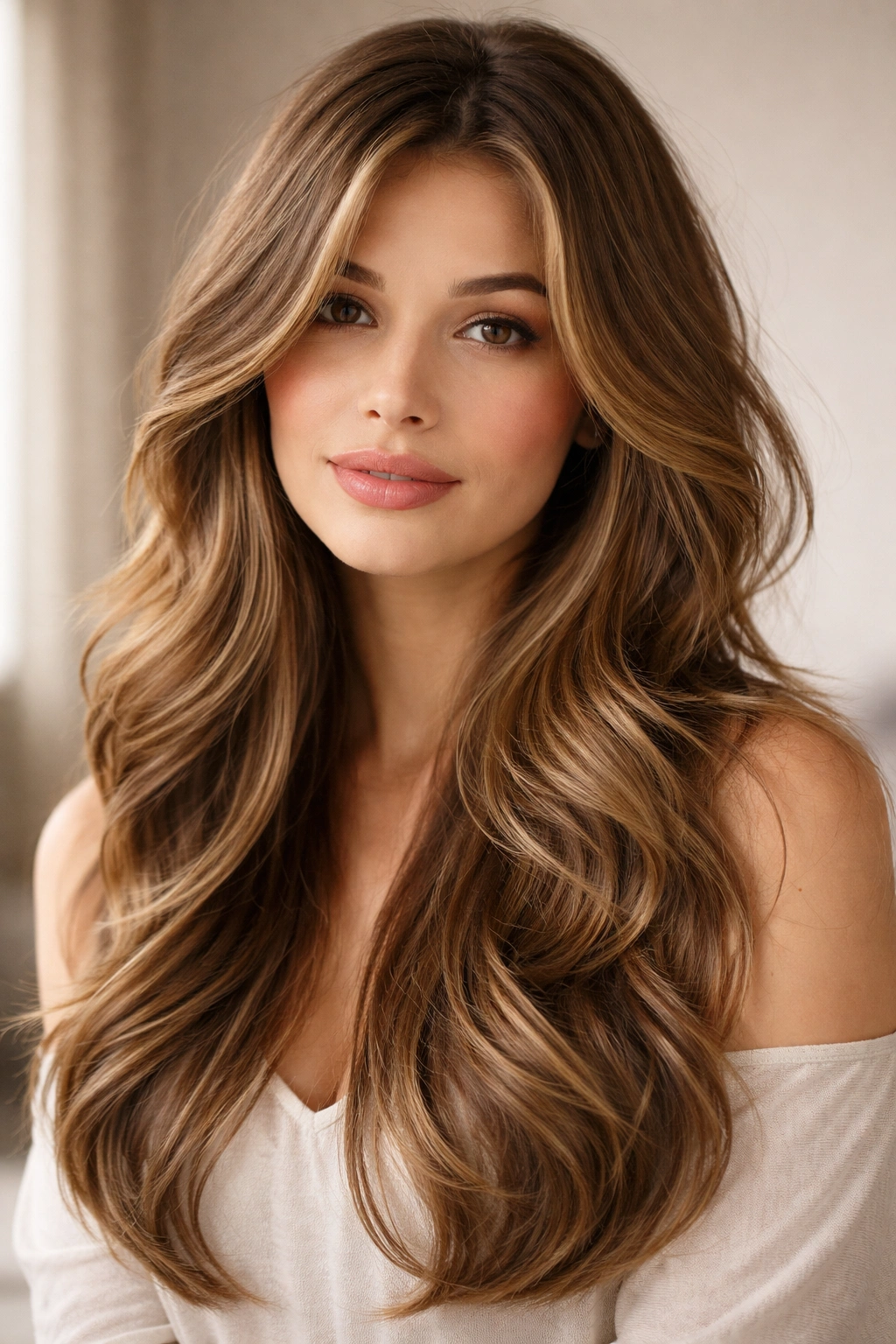
Feathering is a technique that creates soft, blended layers rather than choppy, disconnected ones. When combined with natural or enhanced waves, feathered layers create a romantic, cohesive look that flatters round faces through movement rather than texture.
Why It Works for Round Faces
Feathered layers create soft, continuous movement throughout your hair that naturally elongates your face. The blended layers give you shape without the stark texture of a shag.
Achieving Feathered Movement
- Ask your stylist for feathered (not choppy) layers throughout your length
- Layers should blend seamlessly rather than create disconnected, piecy texture
- Waves are essential to this cut — either natural waves or enhanced with a curling iron or perm
- Blow-dry with a round brush to smooth layers and enhance waves
16. The Long Layers with Graduated Length and Hidden Layers
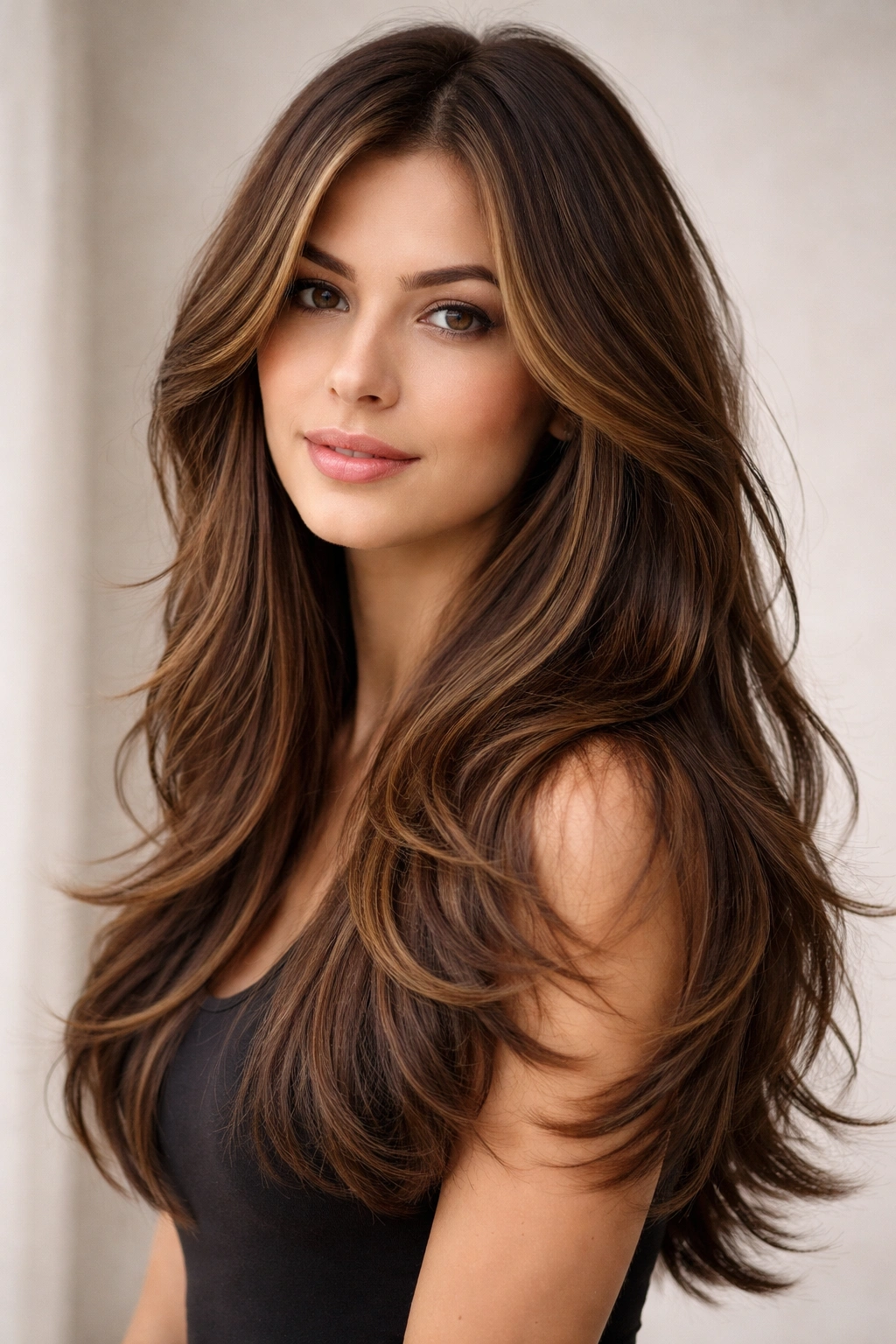
This final option uses a graduated length (longer in front, shorter in back) combined with hidden underlayers that add movement without showing obvious texture. The front stays longer for serious elongation while the back is packed with movement and dimension underneath.
Why It Works for Round Faces
The graduated length creates a continuous line that elongates your face while hidden underlayers ensure you get movement and texture without sacrificing sleekness on top.
Styling This Sophisticated Cut
- Longer front pieces (past shoulder-length) frame your face and elongate
- Back is shorter but packed with underlayers that add volume and movement
- Blow-dry smoothly on top while allowing underneath texture to show through
- This cut works beautifully with polished waves or a sleek, smooth appearance
Final Thoughts
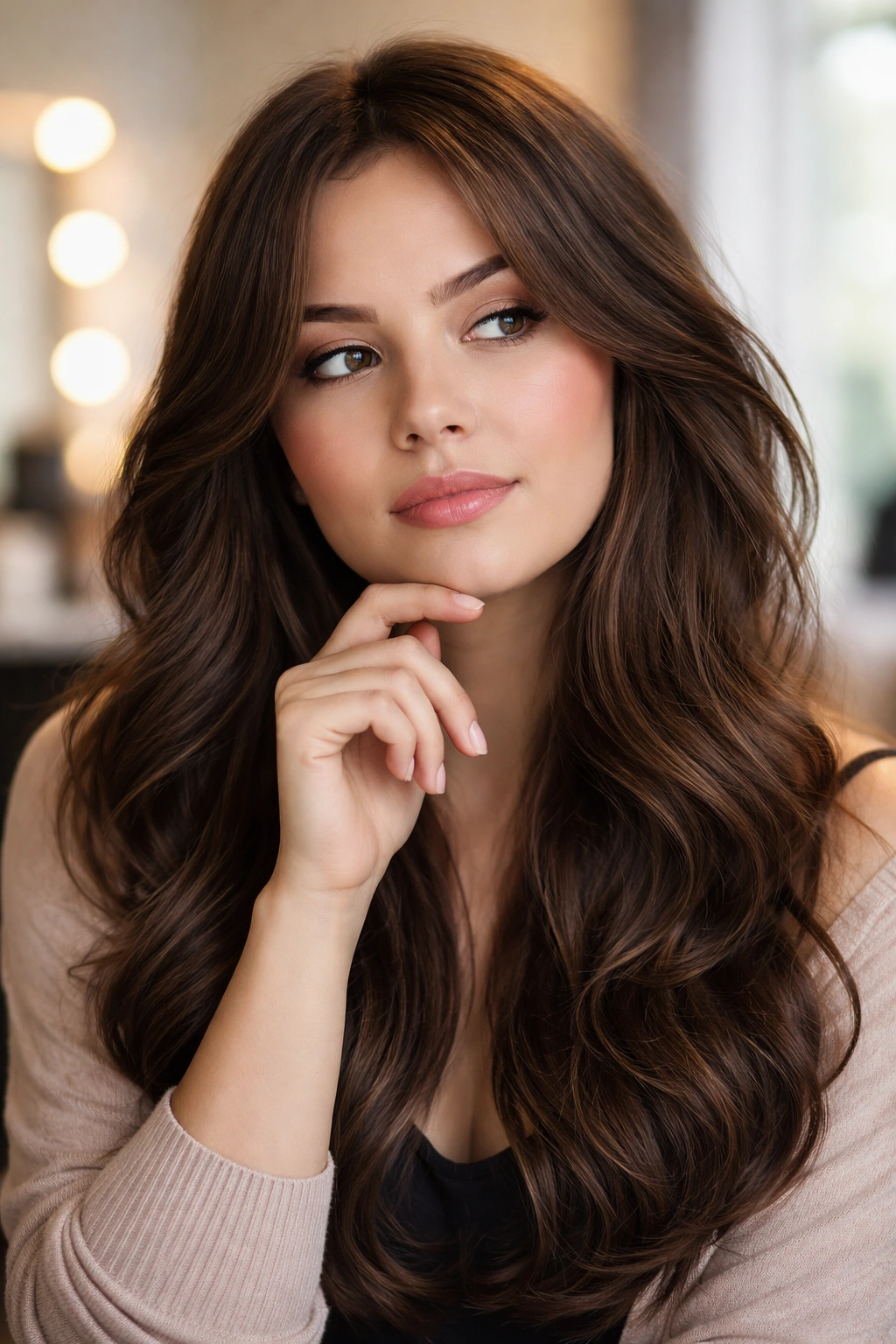
The best cut for your round face ultimately depends on your hair texture, lifestyle, and how much styling time you’re willing to invest. But the fundamental principle remains the same: layers combined with length work together to create movement and visual elongation that naturally flatters round face shapes.
When you sit down with your stylist, bring reference photos of cuts that appeal to you — this helps communicate the specific layer placement and wave pattern you’re after. Don’t be shy about discussing your concerns with roundness; a skilled stylist understands how to place layers strategically to address this. And remember, the styling matters just as much as the cut itself. A cut that looks incredible when blow-dried and waved can look completely different when air-dried or left unstyled.
Most importantly, choose a cut that makes you excited to style your hair. When you feel confident in how you look, that confidence reads in everything else. A long layered cut for a round face isn’t just about geometry and angles — it’s about feeling like the best version of yourself every time you look in the mirror.