



Long wavy bobs have become one of the most versatile and flattering haircuts available, blending the low-maintenance appeal of a bob with the softness and movement that waves provide. Unlike blunt, straight bobs that demand precision and frequent trims, wavy bobs work with your natural texture and actually improve in appearance as they grow out slightly. The beauty of this length sits right at the shoulder or just below, creating dimension without the commitment of longer hair, while waves add visual interest and volume that a straight cut simply can’t achieve.
What makes long wavy bobs so compelling is their genuine versatility across face shapes, hair types, and styling preferences. Whether you have naturally wavy hair, stick-straight strands, or thick curls, a skilled stylist can cut and style a wavy bob that enhances your features and fits your lifestyle. You can wear it sleek and polished for professional settings, tousled and textured for everyday ease, or styled with waves so defined they look almost beachy. The length is forgiving—long enough to pull back when you need it, but short enough that styling takes minutes rather than the half-hour commitment of longer hair.
The variation within wavy bob territory is genuinely extensive, which means finding the exact right version for your hair type, face shape, and personal style is absolutely possible. Some versions lean heavily into the wave texture itself, while others prioritize the shape and cut. Some work beautifully with layers, while others rely on longer, unbroken lines. The following 18 styles showcase the real range available and will help you identify which approach aligns with what you’re actually trying to achieve.
1. The Classic Shoulder-Length Wavy Bob
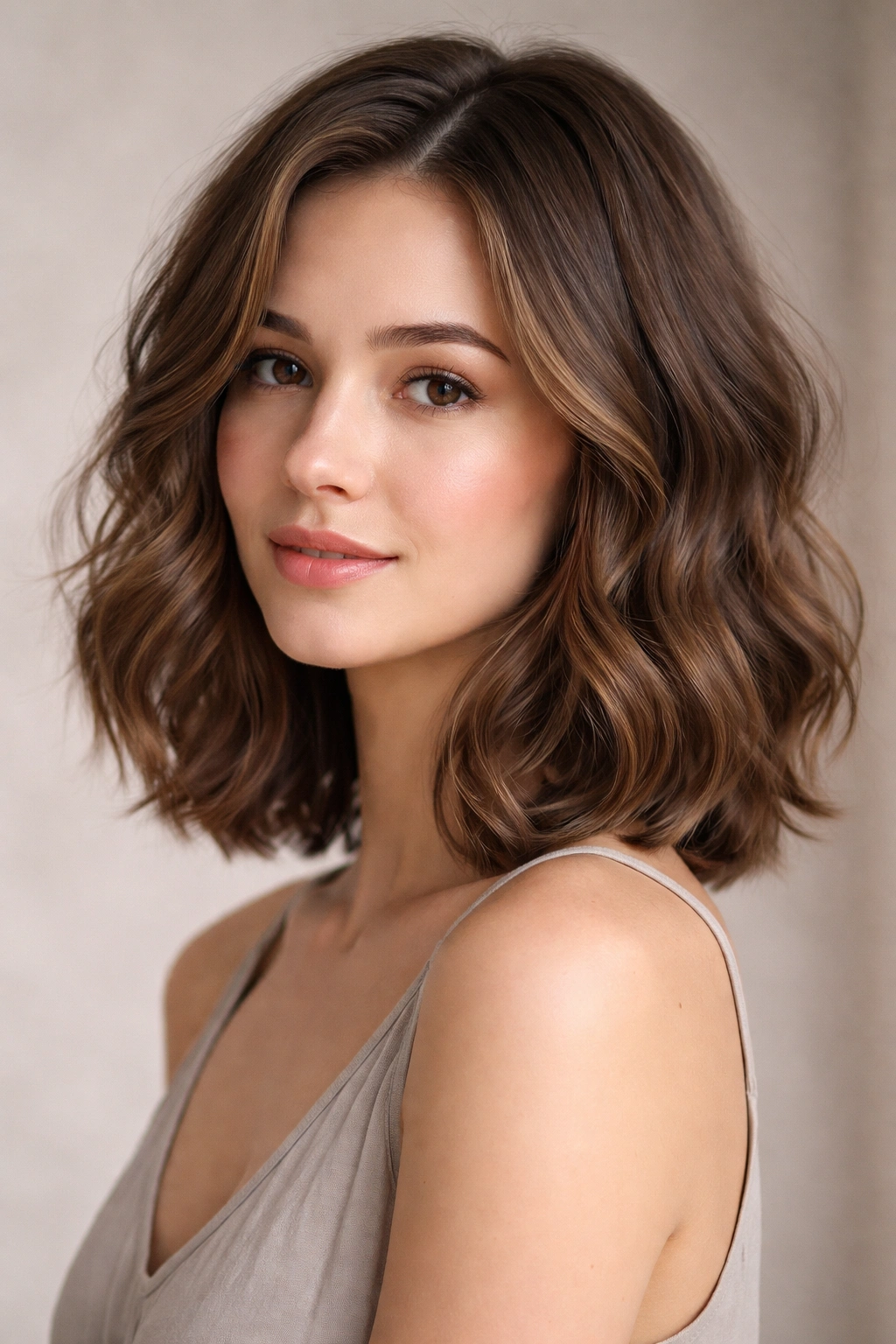
This is the foundational version—a bob that hits right at the shoulders with gentle, natural-looking waves that catch light beautifully. The cut itself is relatively straightforward, with subtle layers throughout that encourage the wave pattern without creating too much texture. Think of this as the wavy bob that works for nearly everyone because it doesn’t demand a specific hair type or intense styling commitment.
Why This Cut Works
The shoulder-length measurement is the sweet spot because it’s long enough to move and create actual wave dimension, but short enough that styling time stays minimal. The layers are placed strategically to enhance natural wave movement rather than fight against it. Because the cut isn’t dramatic, it suits most face shapes—the waves around your face can be angled to flatter cheekbones or soften a square jawline depending on how your stylist positions them.
Best For
- Naturally wavy or curly hair that needs a structured cut to look intentional rather than unkempt
- Anyone wanting low-maintenance styling that still looks polished
- People with fine or thin hair (the waves create visual density)
- Those transitioning from longer hair who want the change to feel wearable, not shocking
Pro tip: Ask your stylist to use dry-cutting or point-cutting techniques on the ends rather than blunt-cutting—this creates softer edges that enhance the wave rather than fighting it.
2. The Textured Shag Wavy Bob
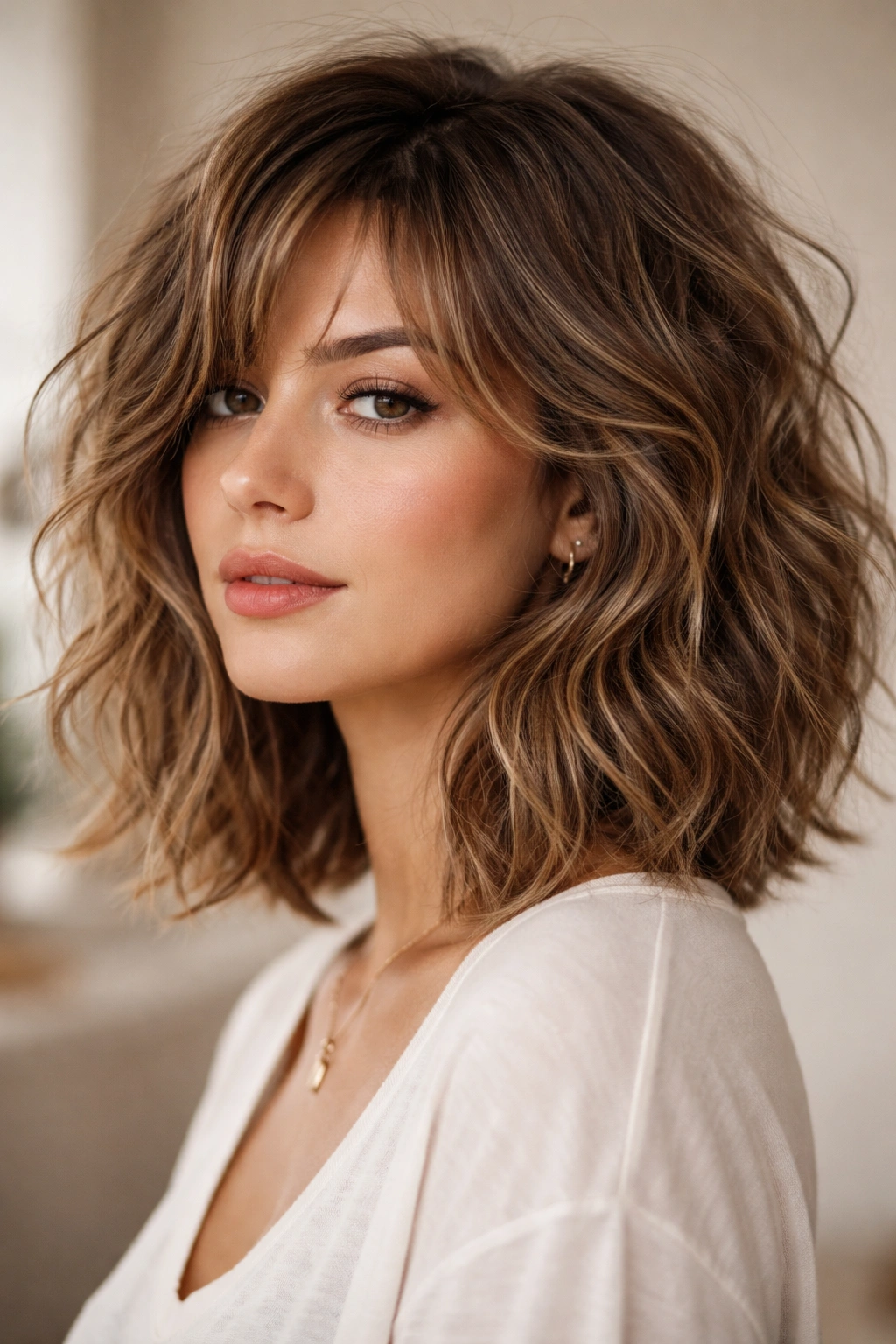
This version brings intentional choppiness and layering throughout, creating a tousled, lived-in texture that celebrates the wave pattern rather than smoothing over it. The layers are more aggressive than a classic wavy bob, with shorter pieces throughout the crown and longer sections in the back, creating real movement and dimension from every angle. It’s a bold, statement-making version that definitely shows personality.
Why This Cut Works
The layered shag approach works because it fragments the hair into sections that can wave independently, multiplying the visual movement and texture. Because the layers are shorter throughout, you get immediate volume and shape even without extensive styling. The cut is inherently forgiving—slightly grown-out pieces and imperfect waves actually enhance the vibe rather than detracting from it.
Best For
- People with naturally curly or wavy hair who want to lean into the texture rather than tame it
- Anyone with thick hair looking to reduce bulk while maintaining movement
- Those wanting an effortlessly trendy, deliberately undone aesthetic
- People comfortable restyling their hair every few days rather than daily
Worth knowing: This cut requires a stylist who understands how to cut texture rather than just cutting blunt lines. Find someone experienced with shag and wavy hair specifically.
3. The Blunt-Edge Wavy Bob with Texture
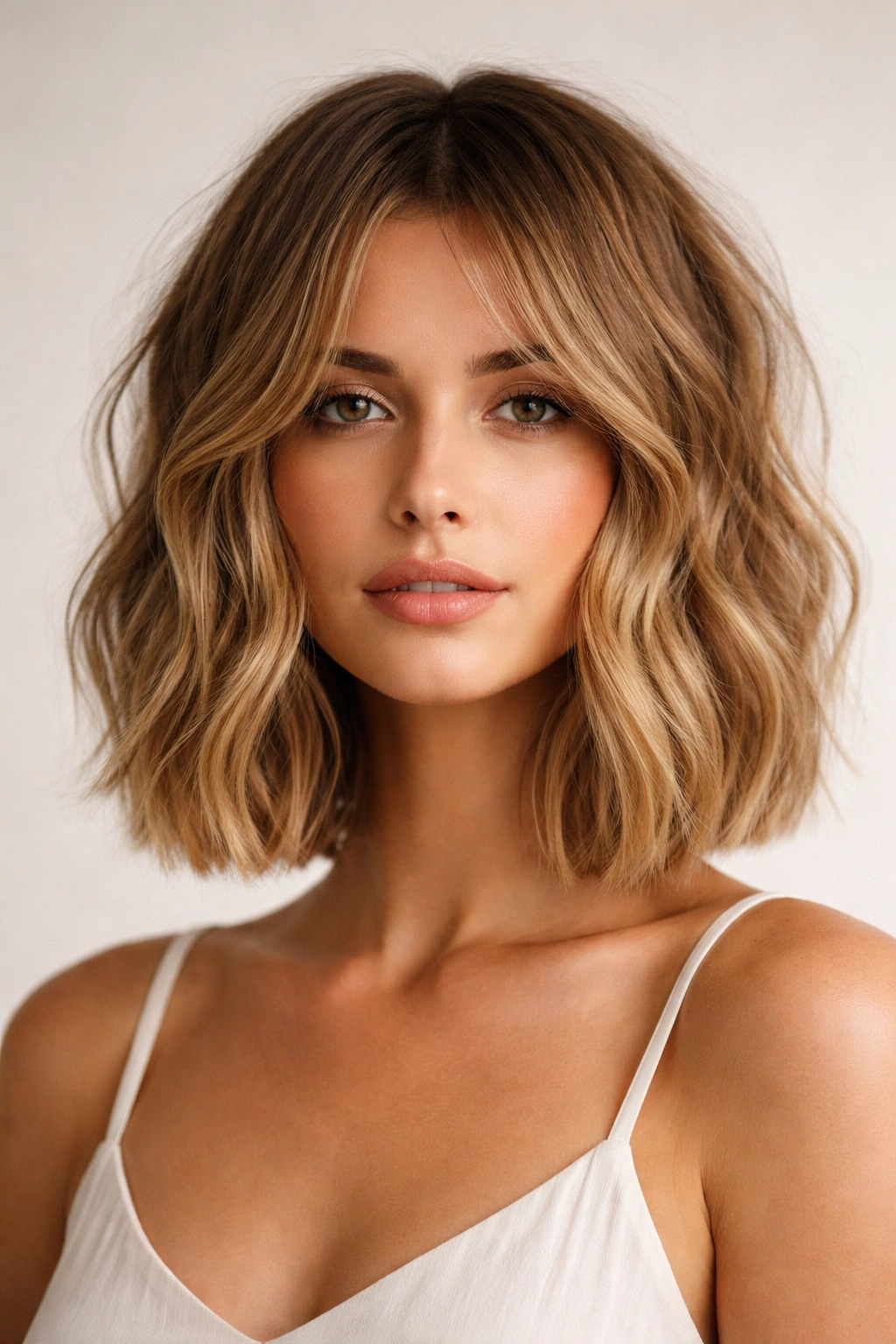
This combines a cleaner, more defined silhouette with subtle layering and waves that add softness within a structured frame. The ends are heavier and more defined than a classic wavy bob, giving it a more modern, intentional appearance, while strategic internal layers create the wave without making the overall shape feel chaotic. It’s sophisticated and structured while still feeling current and textured.
Why This Cut Works
The blunt edges give you a stronger visual line and a more polished appearance, while the interior layers and wave texture prevent it from looking severe or heavy. This approach works particularly well if you have straight or wavy hair but want your bob to feel more dynamic. The contrast between the defined perimeter and the textured interior is what makes this version visually interesting.
Best For
- Straight or naturally wavy hair (works less well with very curly texture)
- Those wanting a more modern, fashion-forward appearance
- Anyone with a strong personal style who wants their haircut to feel intentional
- People willing to style regularly with a blow dryer and round brush or curling iron
Insider note: Ask your stylist to keep the blunt edges but texturize the ends slightly with point-cutting or chipping rather than going fully blunt—this prevents that overly-stiff appearance.
4. The Soft-Curtain Wavy Bob
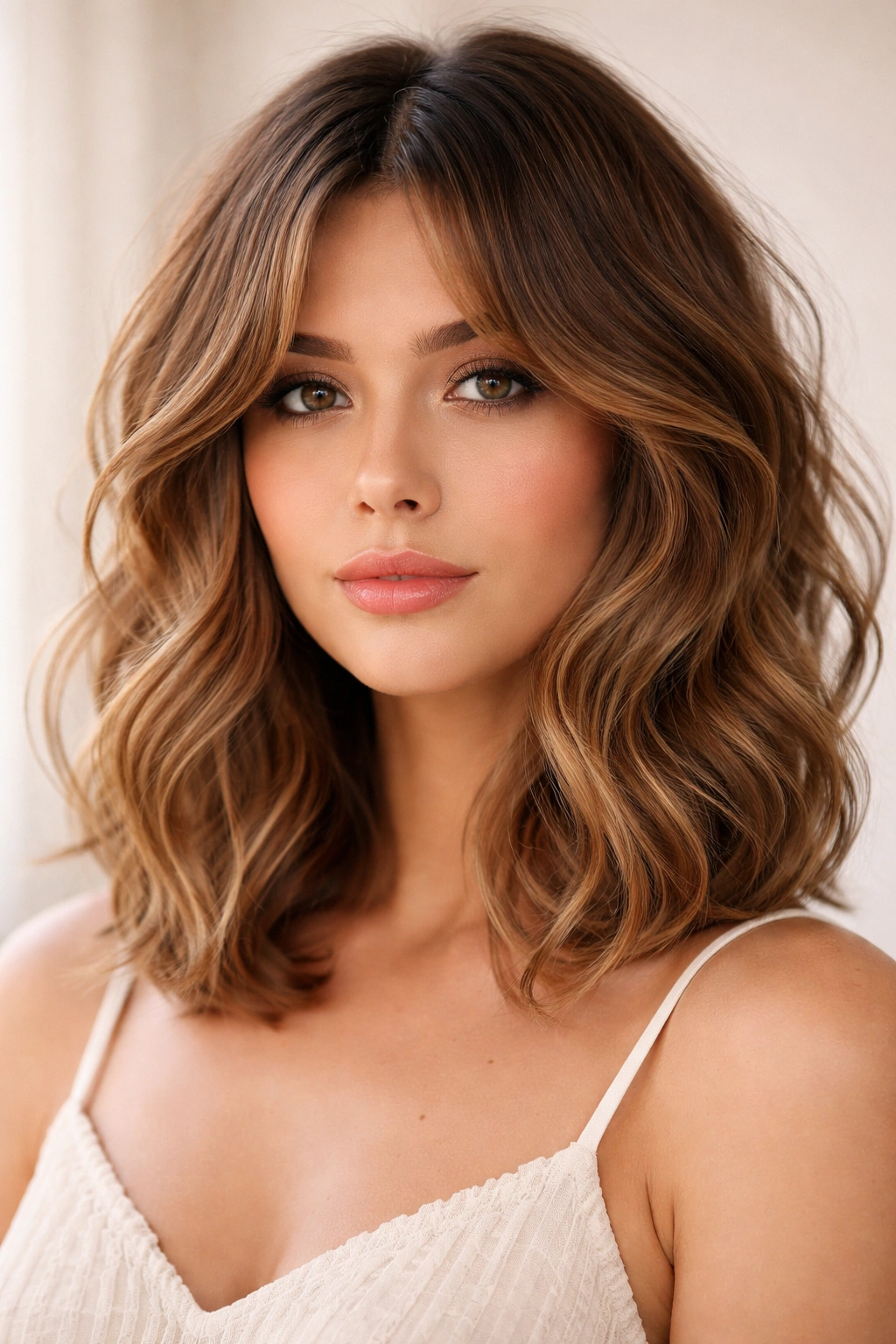
This style brings face-framing that’s intentionally soft and separated, with the longer sections opening gently around your face like a curtain. The cut is longer through the crown and back while the front pieces frame the face with a subtle bend inward. The waves are emphasized to create that feminine, flattering silhouette that draws attention upward and softens your features.
Why This Cut Works
The separated, curtain-like sections work because they create natural movement that frames your face without requiring intense styling each time. The longer front sections can be angled inward slightly, creating a subtle shaping that works across different face shapes. The waves feel deliberate because they’re encouraged in specific areas rather than throughout the entire head.
Best For
- Anyone wanting a softer, more romantic aesthetic
- Those with heart-shaped or wide foreheads (the face-framing is extremely flattering)
- People who prefer styling that feels effortless rather than precision-based
- Anyone with wavy or curly hair that naturally creates separation
Pro tip: Keep the curtain sections slightly longer than the back so they have enough weight to create that opening-around-the-face effect naturally as they dry.
5. The Asymmetrical Wavy Bob
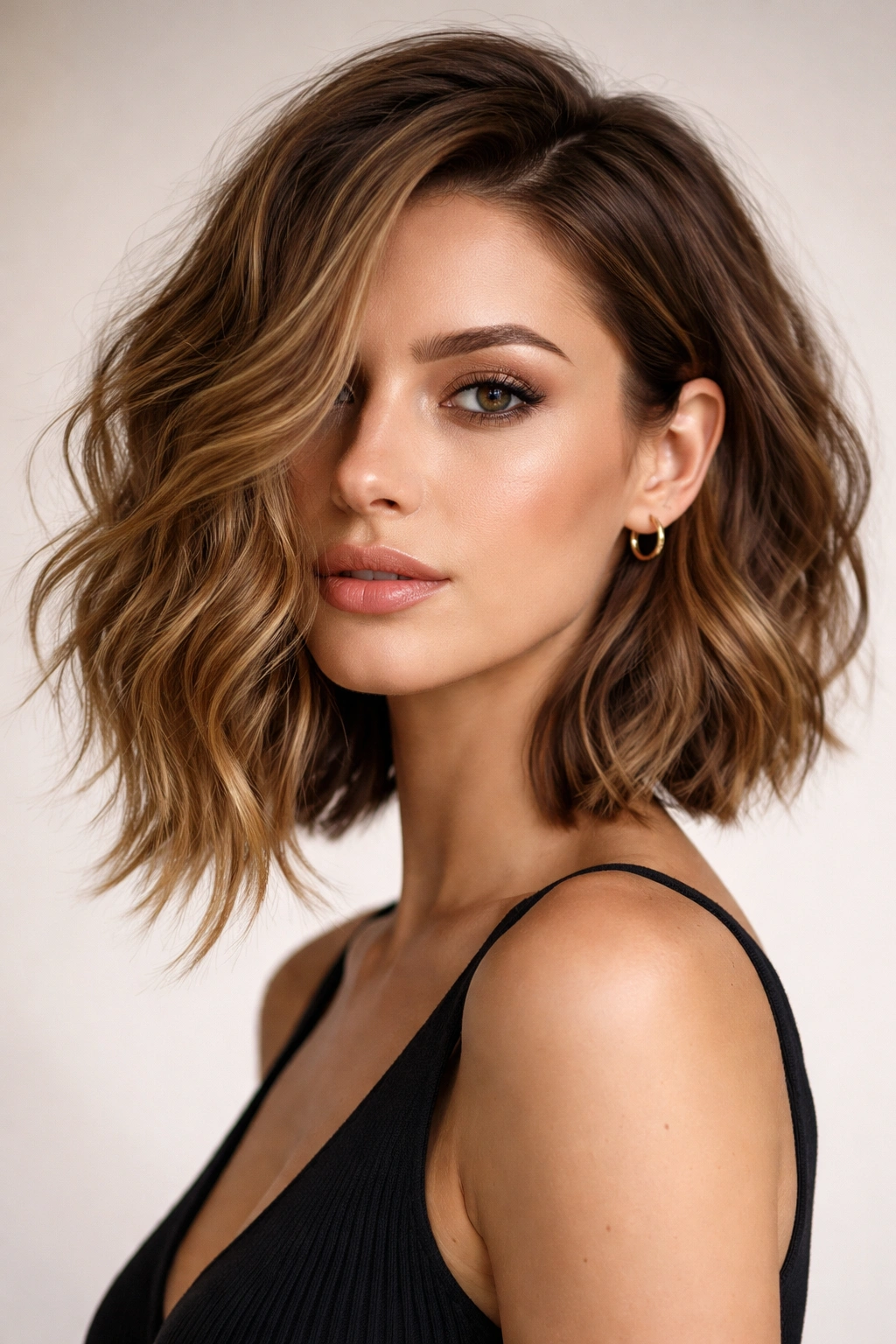
This is a more fashion-forward approach where one side is noticeably longer than the other, creating intentional imbalance and visual interest. One side might hit mid-ear while the other reaches past the shoulder, and both sides feature waves that move differently based on the length. It’s a bold choice that definitely reads as deliberate and style-conscious.
Why This Cut Works
The asymmetry makes the cut impossible to ignore—it becomes a design feature rather than just a hairstyle. The different lengths on each side create variation in how the waves move and sit, multiplying the visual interest. Because it’s asymmetrical, small imperfections actually enhance rather than detract from the overall effect.
Best For
- People with strong personal style and confidence in their appearance
- Those wanting their haircut to feel like a genuine fashion statement
- Anyone with a face shape they want to emphasize rather than balance (the longer side can draw attention)
- People comfortable with regular styling to make the asymmetry intentional rather than accidental
Worth knowing: This cut demands a skilled stylist who understands proportion and balance even within asymmetry. Not all stylists are comfortable executing this cut well.
6. The Waves-Only Wavy Bob (Minimal Layers)
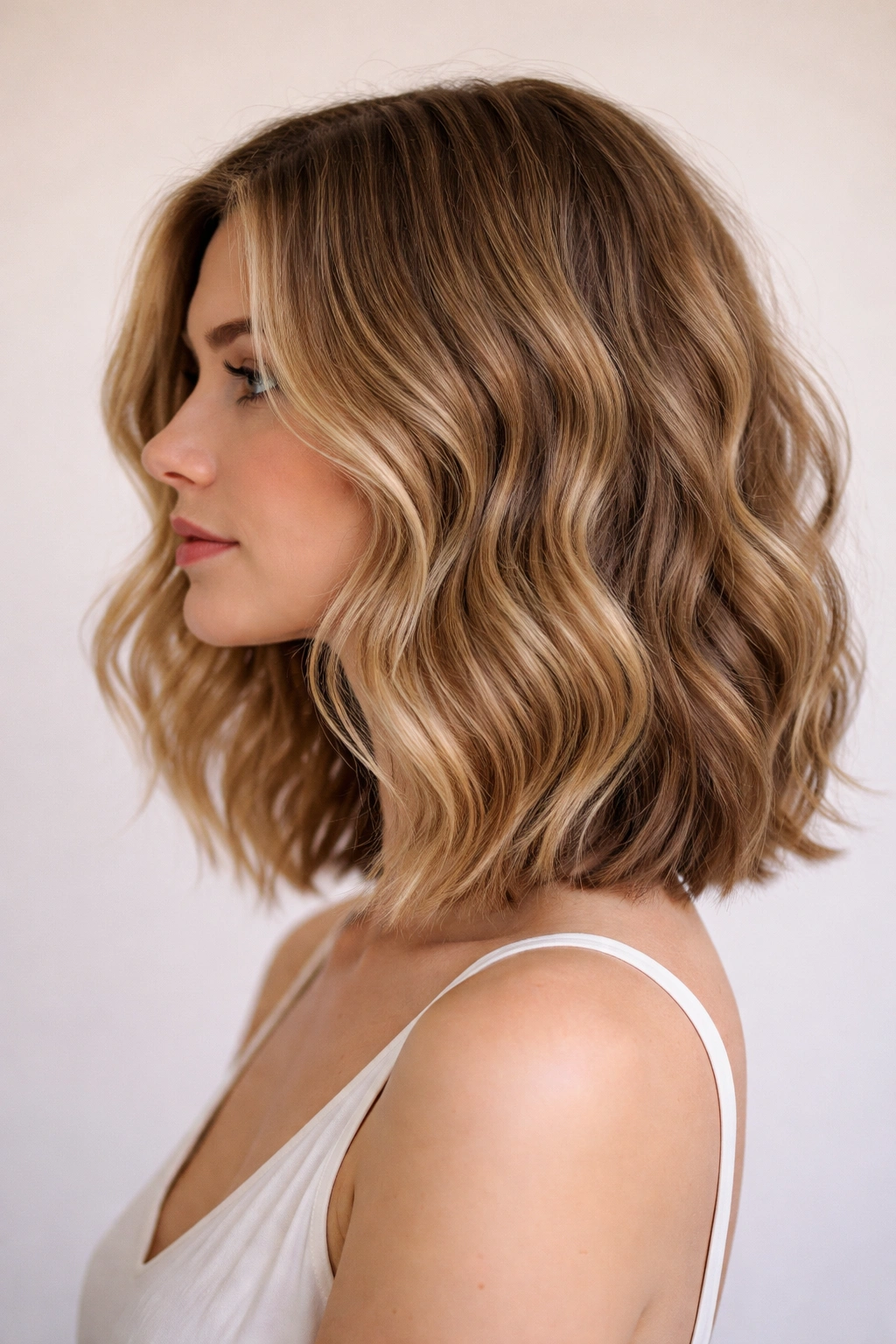
This version prioritizes long, flowing lines with minimal internal layering, allowing the waves themselves to create texture and movement. Rather than cutting layers throughout, the stylist focuses on getting the length and shape right, trusting that the wave pattern will do the work. The cut is relatively simple, but the styling matters—you’re relying on waves to create dimension rather than cut texture.
Why This Cut Works
When executed well, this approach is incredibly elegant and wearable. The longer, unbroken lines feel more refined and less trendy than a heavily layered option. Because there’s minimal layering, styling is actually faster—you’re essentially just enhancing your natural wave pattern rather than creating definition throughout the cut. It works beautifully if you have naturally wavy hair or use styling tools to create waves consistently.
Best For
- People with naturally wavy hair who don’t need layers to create wave movement
- Anyone wanting a more classic, timeless aesthetic rather than trendy
- Those who prefer longer lines over choppy, textured cuts
- People willing to use a curling iron or diffuser to enhance waves before leaving home
Insider note: This cut works best if you use a styling cream or sea salt spray to enhance waves—without product, long sections without layers can look flat by midday.
7. The Textured Pixie-Fade into Wavy Bob
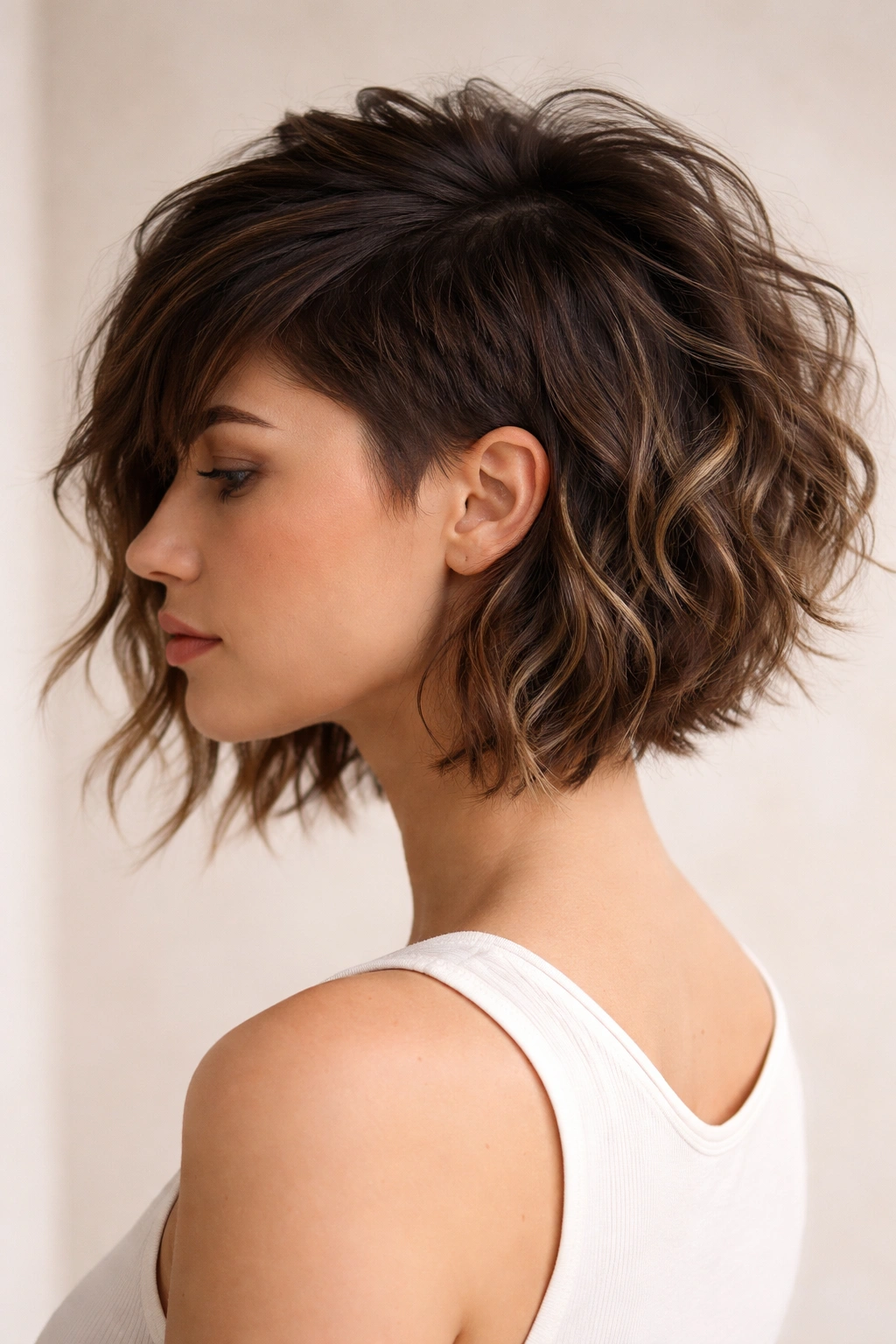
This is an unexpected mashup where shorter, textured layers near the crown transition into longer wavy sections, creating dramatic contrast and a modern silhouette. The crown has almost-pixie-length layers that create lift and movement, while the back and sides graduate into longer, wavier sections. It’s edgy and contemporary while still maintaining the wavy bob structure.
Why This Cut Works
The shorter crown layers give you immediate volume and movement without styling, while the longer, wavy sections below provide that soft, feminine contrast. This contrast is what makes the cut feel modern and intentional. The shorter layers at the crown also make styling easier because you can dry them quickly and let them fall naturally.
Best For
- Anyone with fine or thin hair wanting dramatic volume
- People comfortable with a bold, slightly edgy aesthetic
- Those with straight hair who want texture created by the cut rather than relying on natural waves
- Anyone willing to style with a round brush or diffuser regularly
Pro tip: Have your stylist add texture and point-cutting to the crown layers so they don’t look blunt, and ask about feathering the transition between the short and long sections so it feels like one cohesive cut rather than two separate styles.
8. The Beachy Wavy Bob with Highlights
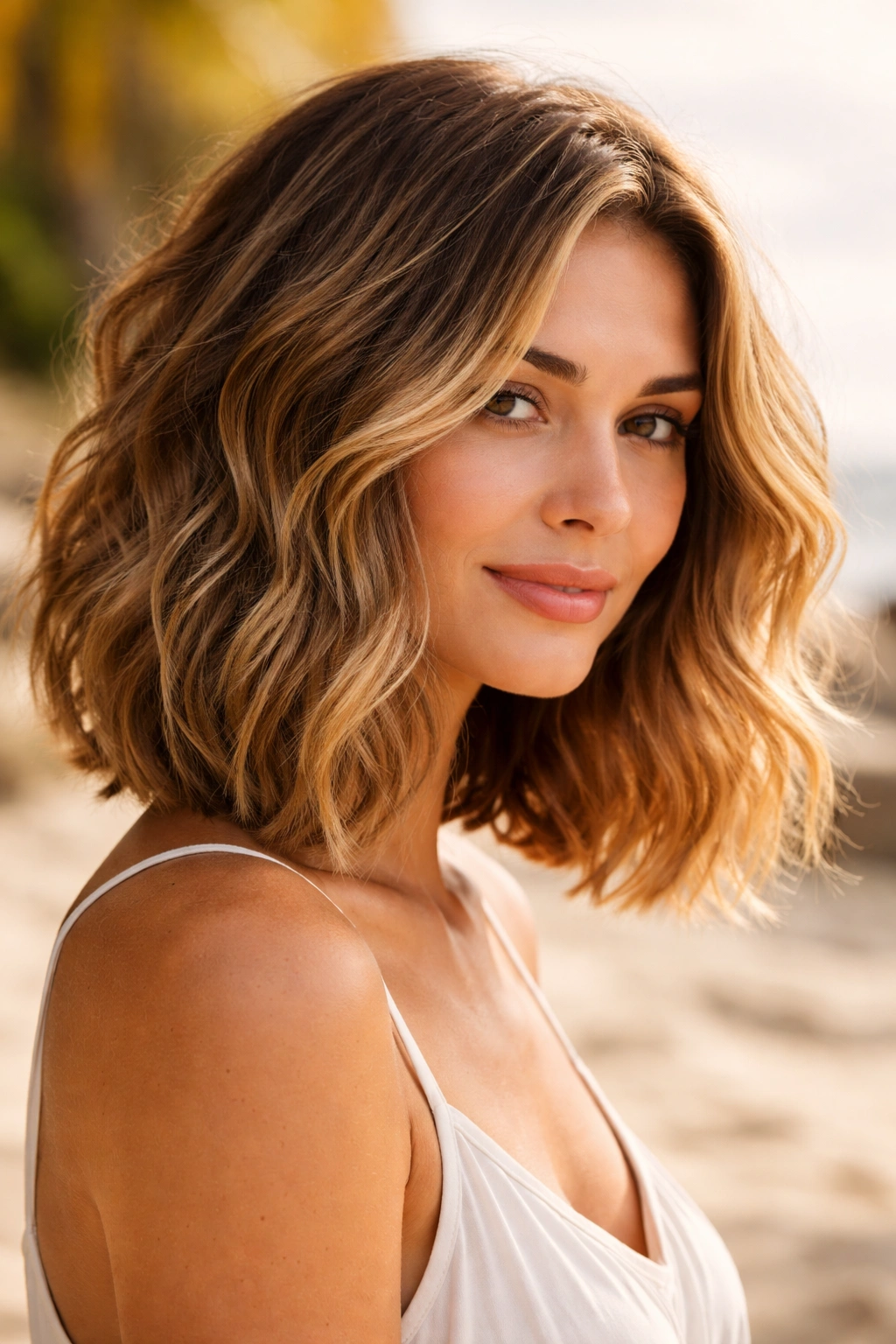
This combines the cut itself with a color approach—typically longer wavy sections with subtle layering, paired with honey, caramel, or baby blonde highlights that make the wave pattern visually pop. The waves feel more summery and dimensional because the color variation catches light and emphasizes the movement. Without the highlights, it’s a nice wavy bob; with them, it becomes genuinely beach-vacation-ready.
Why This Cut Works
Highlights add dimension that enhances the visual impact of waves—lighter pieces catch light where the hair curves, making waves appear more defined and textured. The combination of cut and color creates a cohesive, intentional look that reads as thoroughly thought-out. The beachy vibe works because both the cut and color are working toward the same effect.
Best For
- Anyone with warm or neutral undertones that can carry warm-toned highlights
- People who are willing to maintain highlights (typically every 8-10 weeks)
- Those wanting a sun-kissed, vacation-ready appearance in their everyday hair
- Anyone with naturally wavy hair or willing to style regularly to emphasize waves
Worth knowing: The styling commitment increases slightly with highlights because you need to style them intentionally to make the money you’re spending on color worth it. A plain, unstyled wavy bob with highlight investment doesn’t feel as payoff-rich.
9. The Piece-y Wavy Bob with Disconnected Layers
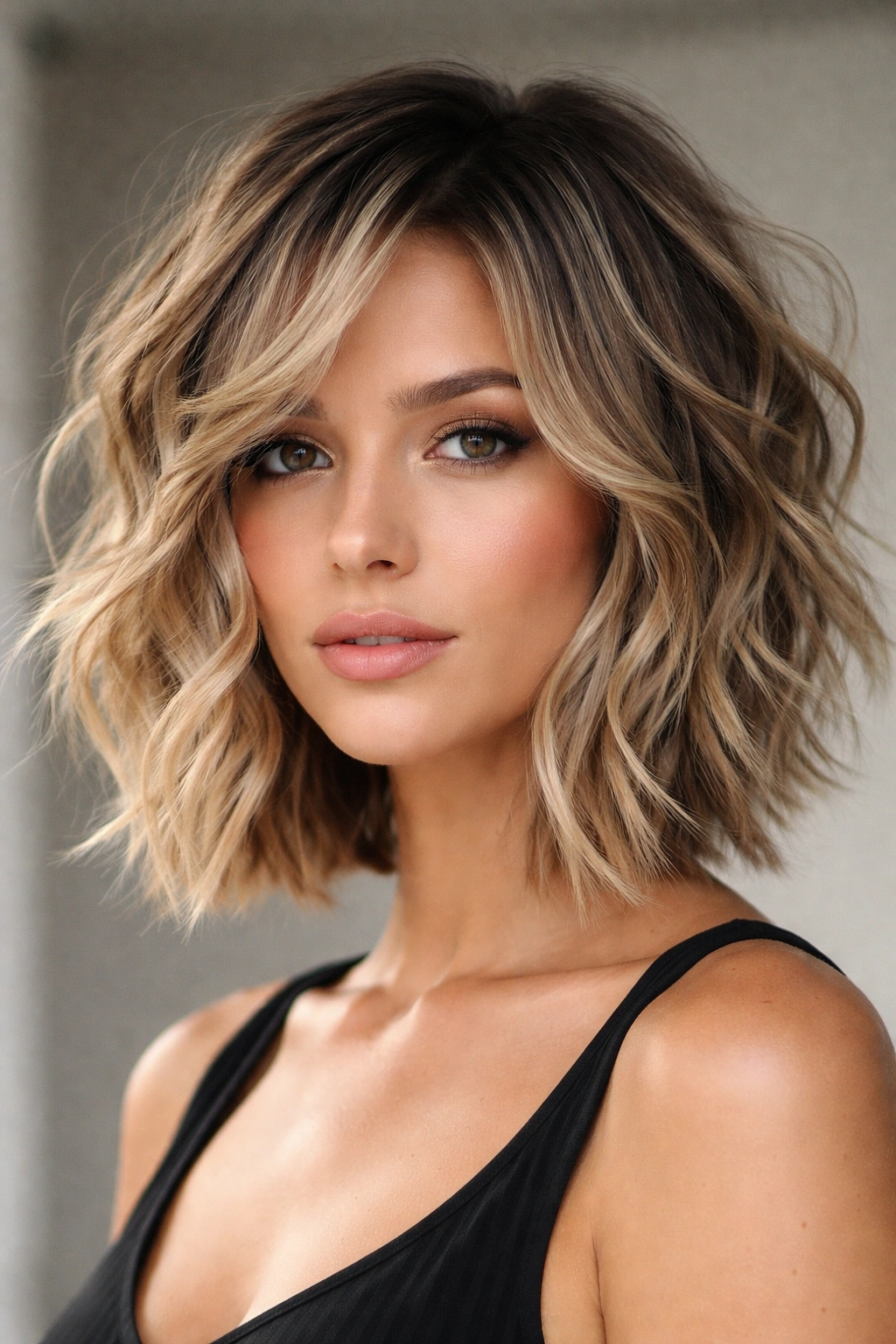
This approach uses very deliberate, separated layering where individual sections are clearly distinct rather than blended smoothly. Some pieces are shorter, some longer, and they don’t gradually transition—instead they sit separately, creating intentional movement and a modern, edgy vibe. It’s a more fashion-forward take on the layered wavy bob.
Why This Cut Works
The disconnected layers work because they fragment the hair into sections that move independently, creating maximum visual movement and texture. Because the layers aren’t blended, they read as intentional and modern rather than just layered throughout. The individual pieces also catch light differently, multiplying the visual interest.
Best For
- People with naturally curly or wavy hair that creates natural separation anyway
- Those wanting a bold, contemporary appearance
- Anyone comfortable with daily styling or having a wavy bob that looks slightly intentionally undone
- People with thick hair who need this kind of layering to prevent bulk
Insider note: This cut requires regular maintenance (every 4-6 weeks) to keep the disconnection looking intentional. As it grows, the separation becomes less obvious.
10. The Elongated Wavy Bob (Longer in Back)
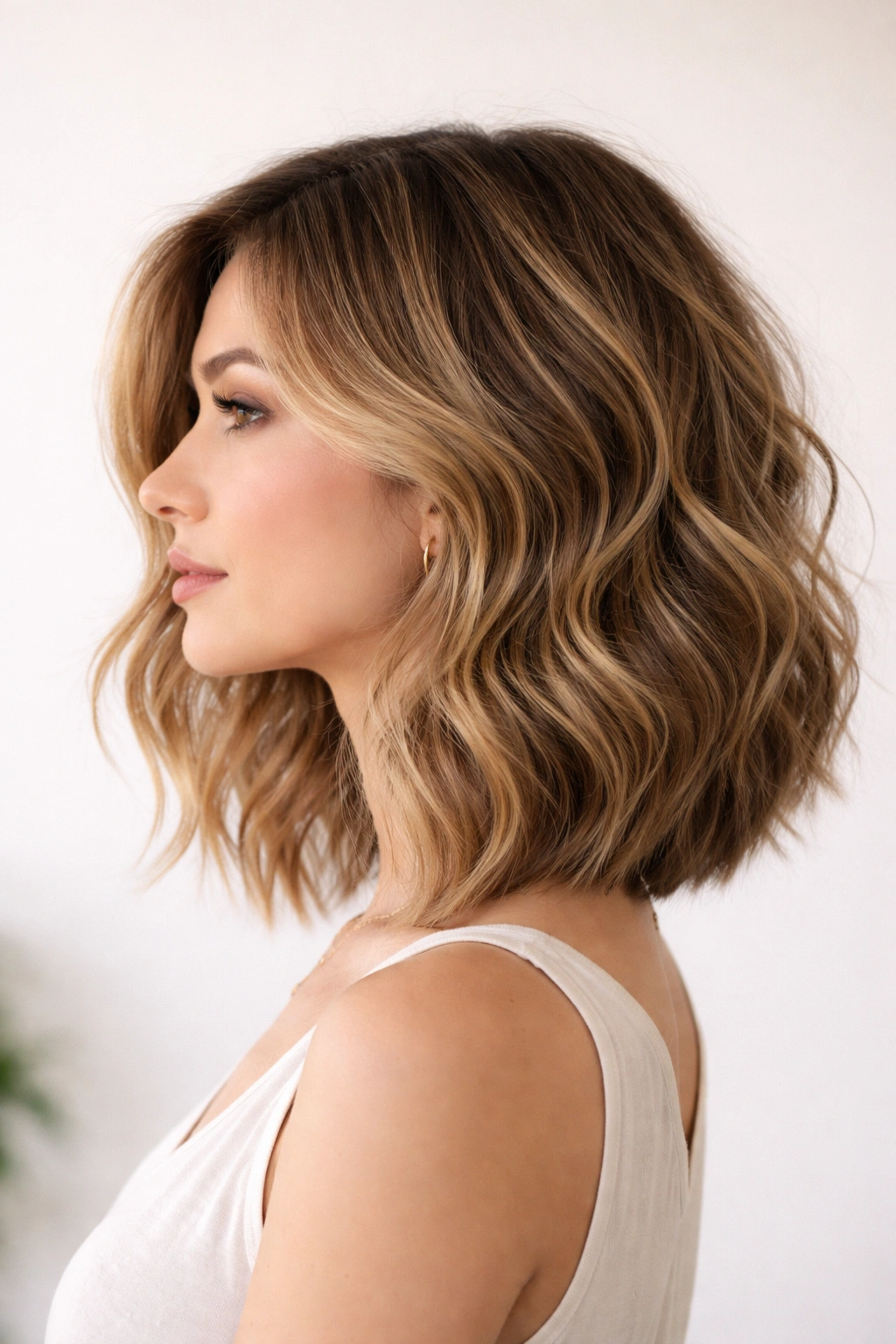
This version extends the classic wavy bob concept by maintaining the overall shoulder-length structure but making the back noticeably longer than the front, creating a subtle graduated shape. The front pieces might hit at the jaw or chin while the back reaches several inches longer, and the waves throughout make the graduation feel soft rather than severe. It’s a bridge between a bob and longer styles.
Why This Cut Works
The graduated length creates flattering dimension that works across many face shapes—the longer back adds softness, while the slightly shorter front frames the face. The wave pattern makes the graduation feel intentional and elegant rather than choppy. This approach also feels less severe than a blunt bob, which many people prefer.
Best For
- Anyone with a longer face who wants to avoid a blunt line that emphasizes length
- Those wanting to transition toward longer hair without the bulk of all-over length
- People who prefer feminine, graduated shapes to blunt lines
- Anyone with wavy or curly hair (the graduation enhances the natural texture)
Pro tip: Ask your stylist to create subtle layers throughout so the graduation feels like one flowing shape rather than distinct length changes.
11. The Textured Perm Wavy Bob
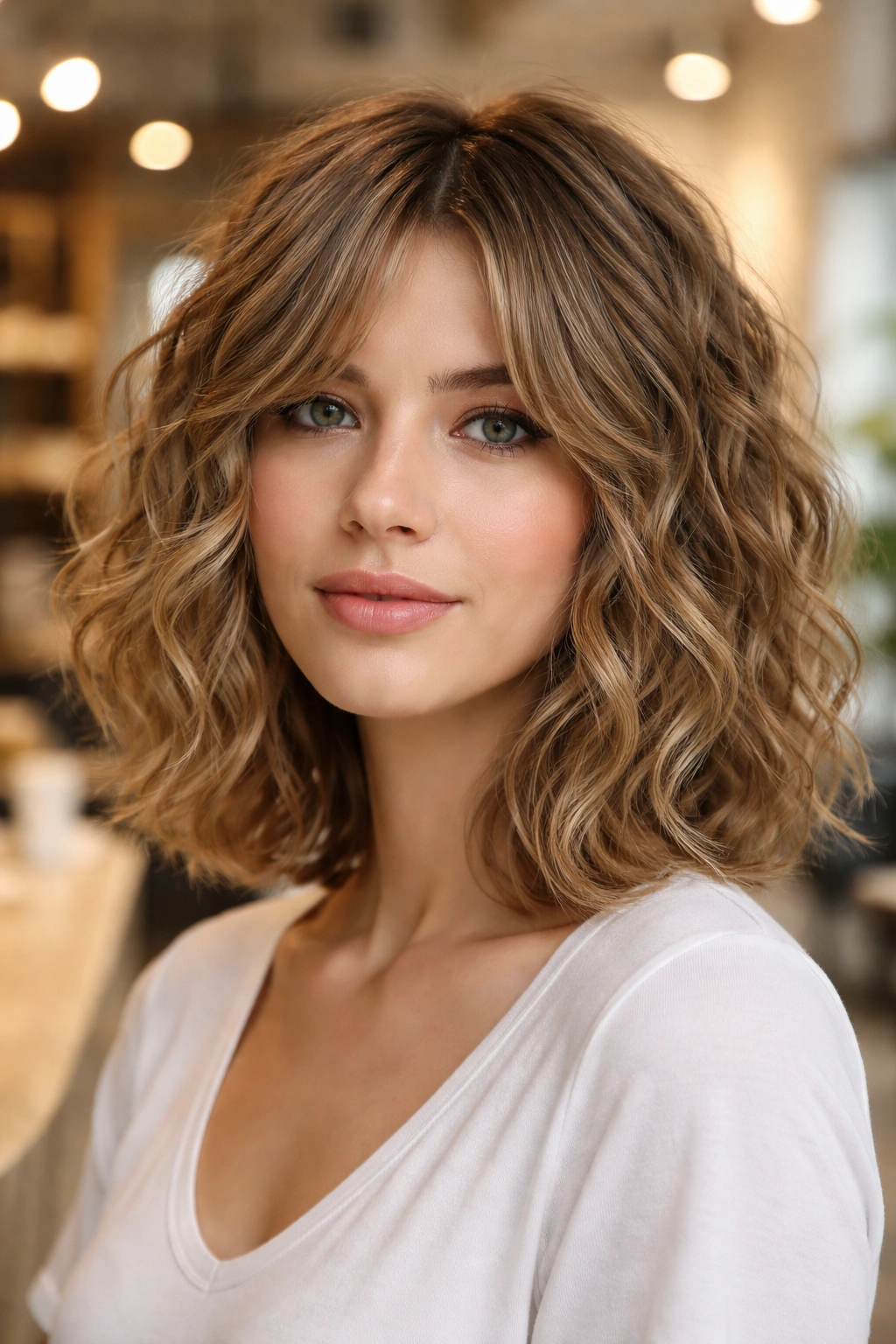
This uses a chemical wave or perm to create consistent, springy waves throughout if you don’t have naturally wavy hair. The cut is typically a classic wavy bob with layers, but the texture comes from a perm rather than natural waves or daily styling. It’s a commitment-based approach that trades styling time for semi-permanent texture.
Why This Cut Works
A perm eliminates the daily styling requirement because the waves are literally built into your hair structure. Even when you wash it and let it air dry, you have waves without touching a styling tool. For people with straight hair who love the wavy bob aesthetic but hate daily styling, this is genuinely transformative.
Best For
- People with straight hair who want the wavy bob look without daily styling
- Anyone in a climate where air drying is viable (humid climates work best)
- Those willing to commit to perm maintenance for 3-4 months between touch-ups
- People wanting to minimize heat styling damage from daily curling
Worth knowing: Perms on wavy bobs can look amazing or slightly dated depending on execution. Work with a stylist experienced in modern perms rather than old-school spiral perms.
12. The Heavily Textured Wavy Bob (Lots of Layers)
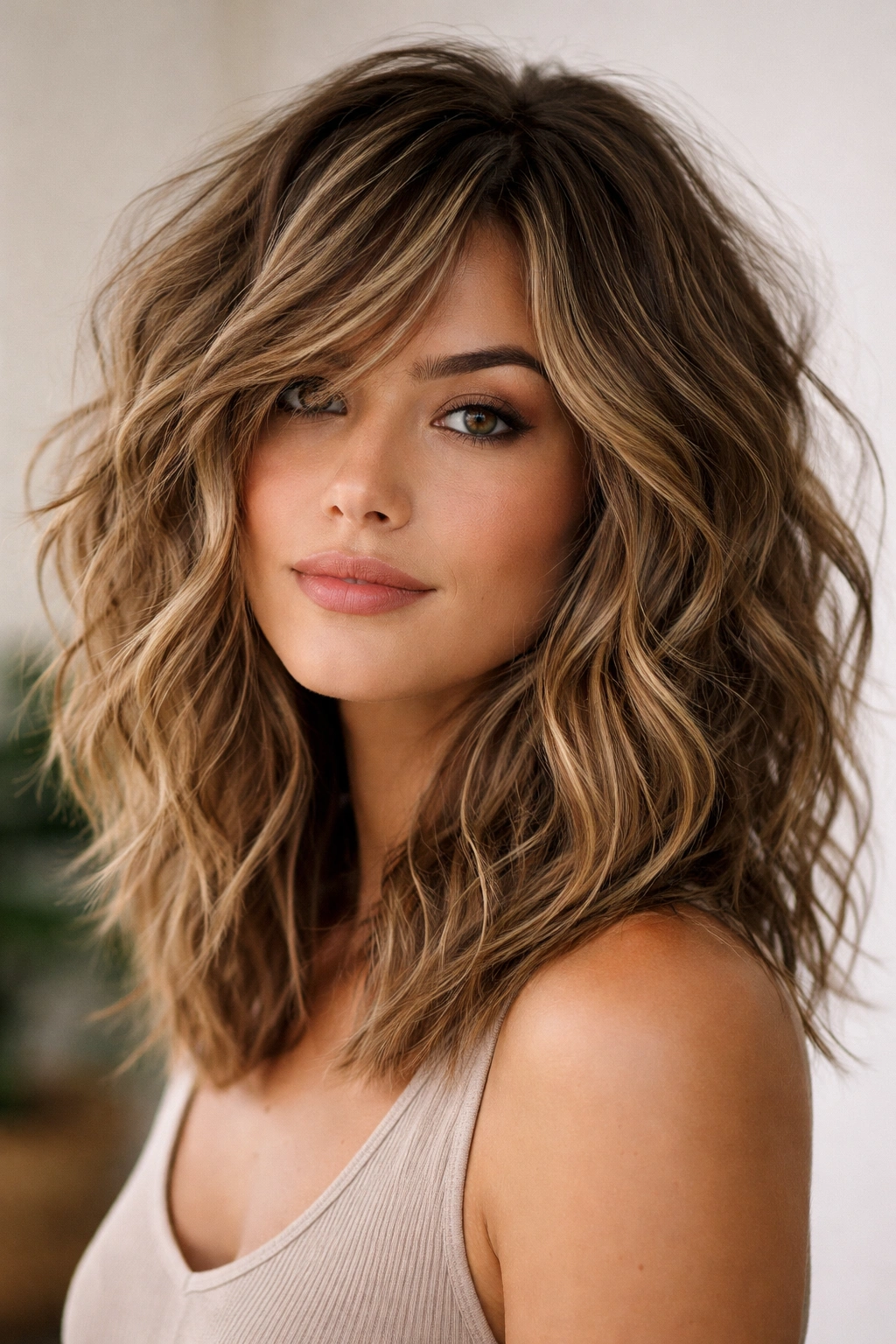
This is the maximum-texture approach, with layers placed throughout at varying lengths to create serious movement and dimension from every angle. The cut is almost shaggy in its layering intensity, but the wavy bob length keeps it structured and wearable. It’s a textured take that celebrates movement and requires some styling commitment.
Why This Cut Works
The extensive layering creates maximum volume and movement because there are so many breakpoints for hair to move independently. Each layer catches light differently, multiplying visual interest. Because the layers are throughout rather than just at the crown, you get dimension from every angle.
Best For
- People with thick hair who need serious layering to manage volume
- Anyone with naturally curly or wavy hair who wants their texture maximized
- Those wanting a bold, movement-forward aesthetic
- People comfortable styling with a diffuser or round brush regularly
Insider note: This cut needs more frequent trims (every 4-5 weeks) because the layers become unbalanced as they grow, unlike simpler cuts that maintain shape longer.
13. The Sleek Wavy Bob (Smooth Waves, Polished)
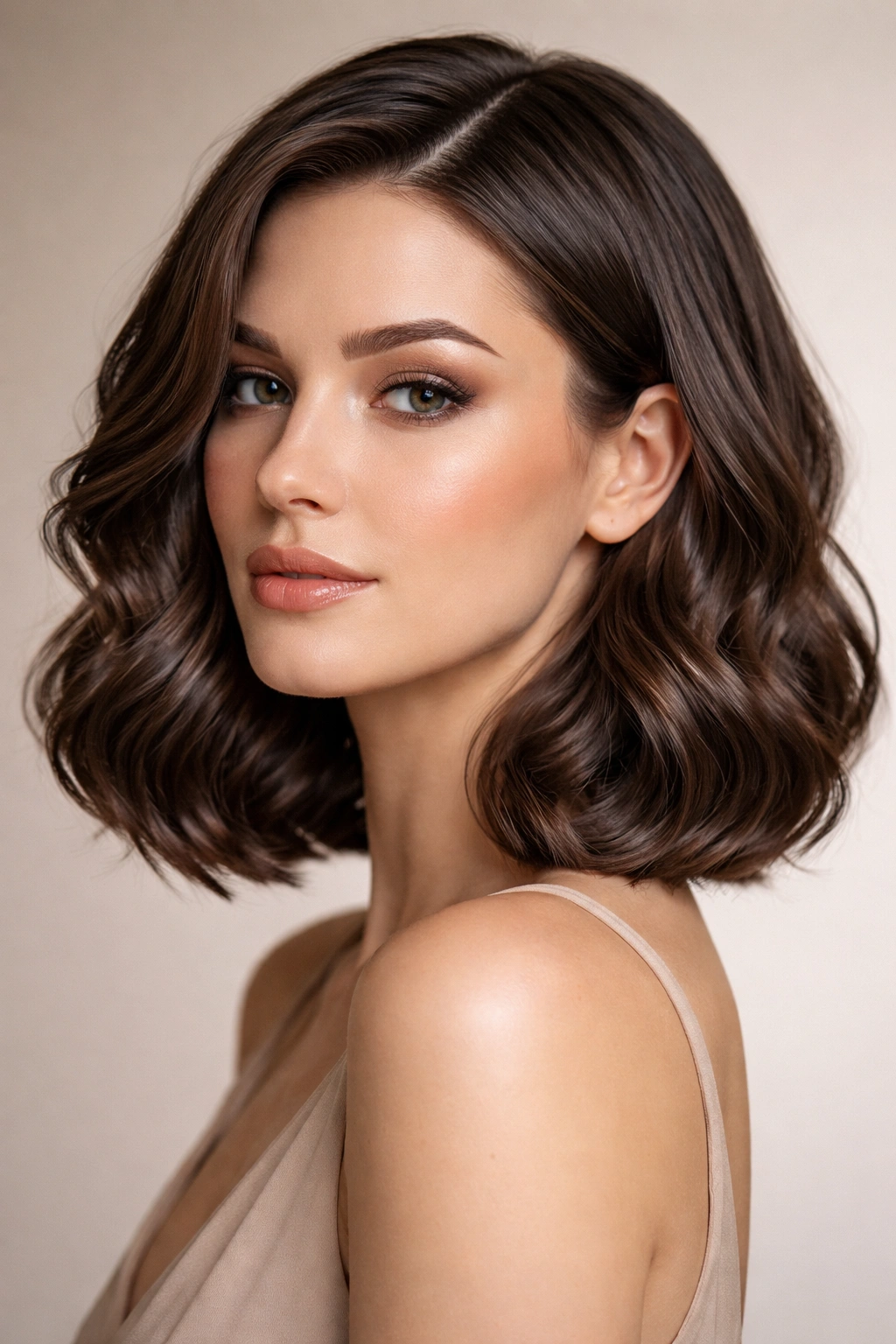
This version uses the wavy bob structure but styles it with smoother, more controlled waves—think loose, defined S-waves rather than tousled texture. The cut itself might have layers, but the styling approach prioritizes polish and refinement over that lived-in, undone aesthetic. It’s sophisticated and works in professional settings while still showing movement.
Why This Cut Works
Smooth, controlled waves read as more polished and intentional than tousled texture. This approach works if you want the dimension and movement of waves but prefer your hair to look deliberately styled rather than naturally textured. The defined wave pattern also catches light beautifully, emphasizing dimension.
Best For
- Anyone in professional or formal environments wanting waves without looking casual
- People who enjoy blow-drying and styling regularly
- Those wanting their wavy bob to feel polished and refined rather than effortless
- Anyone wanting waves that look like deliberate styling rather than natural texture
Pro tip: Invest in good styling tools and a smoothing serum or cream. The polished wavy bob requires slightly more intentional styling than textured versions.
14. The Undone Wavy Bob with Messy Styling
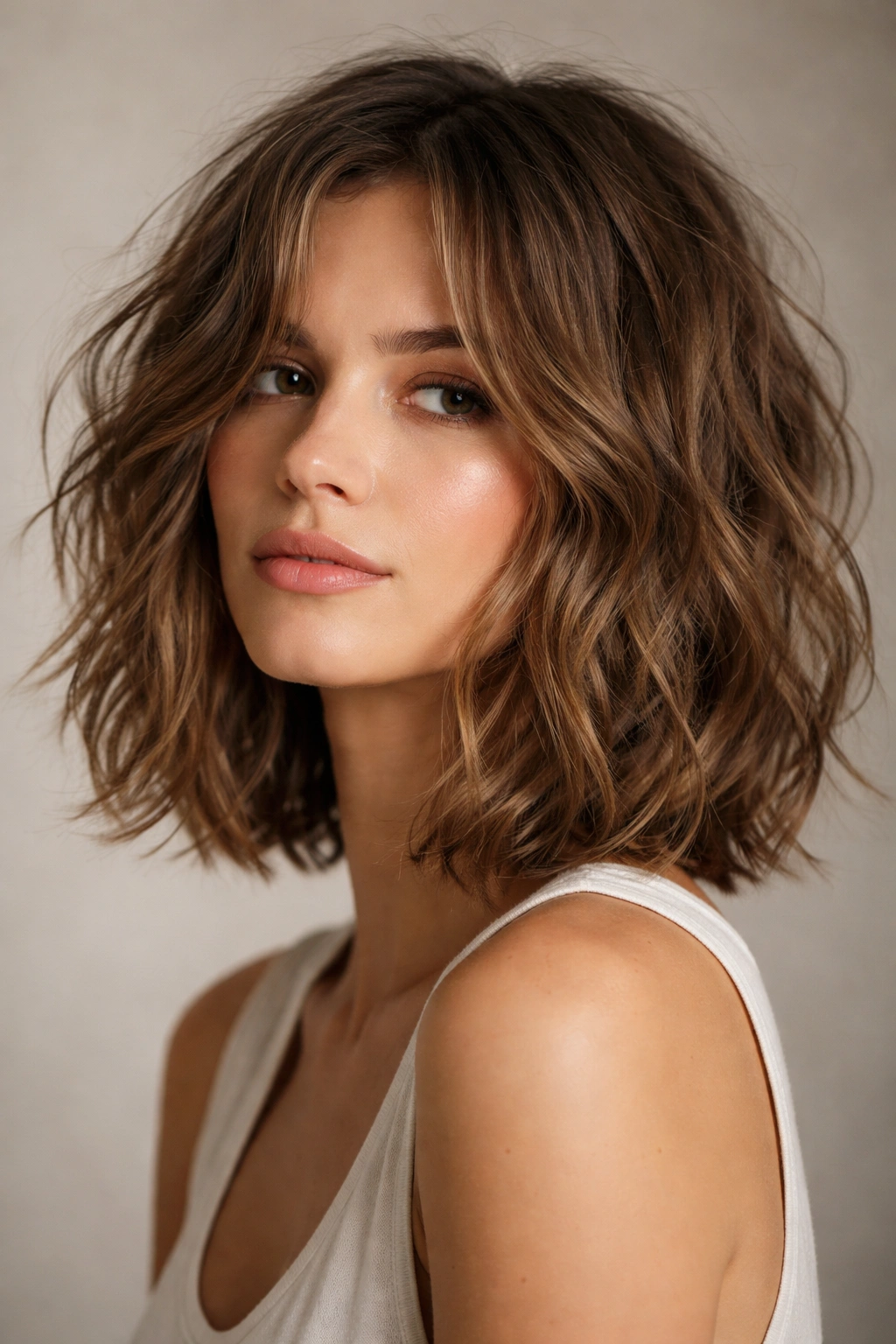
This prioritizes that deliberately undone, “I didn’t try hard but it looks good” aesthetic—waves that are clearly there but tousled and relaxed rather than defined. The cut is typically simpler (less layering) to support this approach, and the styling is fast and intentionally imperfect. It’s the opposite of the sleek, polished wavy bob.
Why This Cut Works
The undone approach works because it feels modern and relatable—nobody actually has time to perfect every wave, and this style celebrates that reality. The cut is simpler because you’re not relying on layers to create movement; the waves themselves do the work. This is genuinely low-maintenance styling compared to sleek or heavily textured versions.
Best For
- People with naturally wavy or curly hair who want to embrace it rather than fight it
- Anyone wanting the easiest possible wavy bob styling
- Those preferring a casual, approachable aesthetic
- People in creative fields or casual environments where this vibe is welcome
Worth knowing: This cut actually demands some styling to look intentional rather than just unwashed. You’re typically using a sea salt spray and your fingers or a diffuser to create that tousled effect.
15. The Colored Wavy Bob (Multi-Tone)
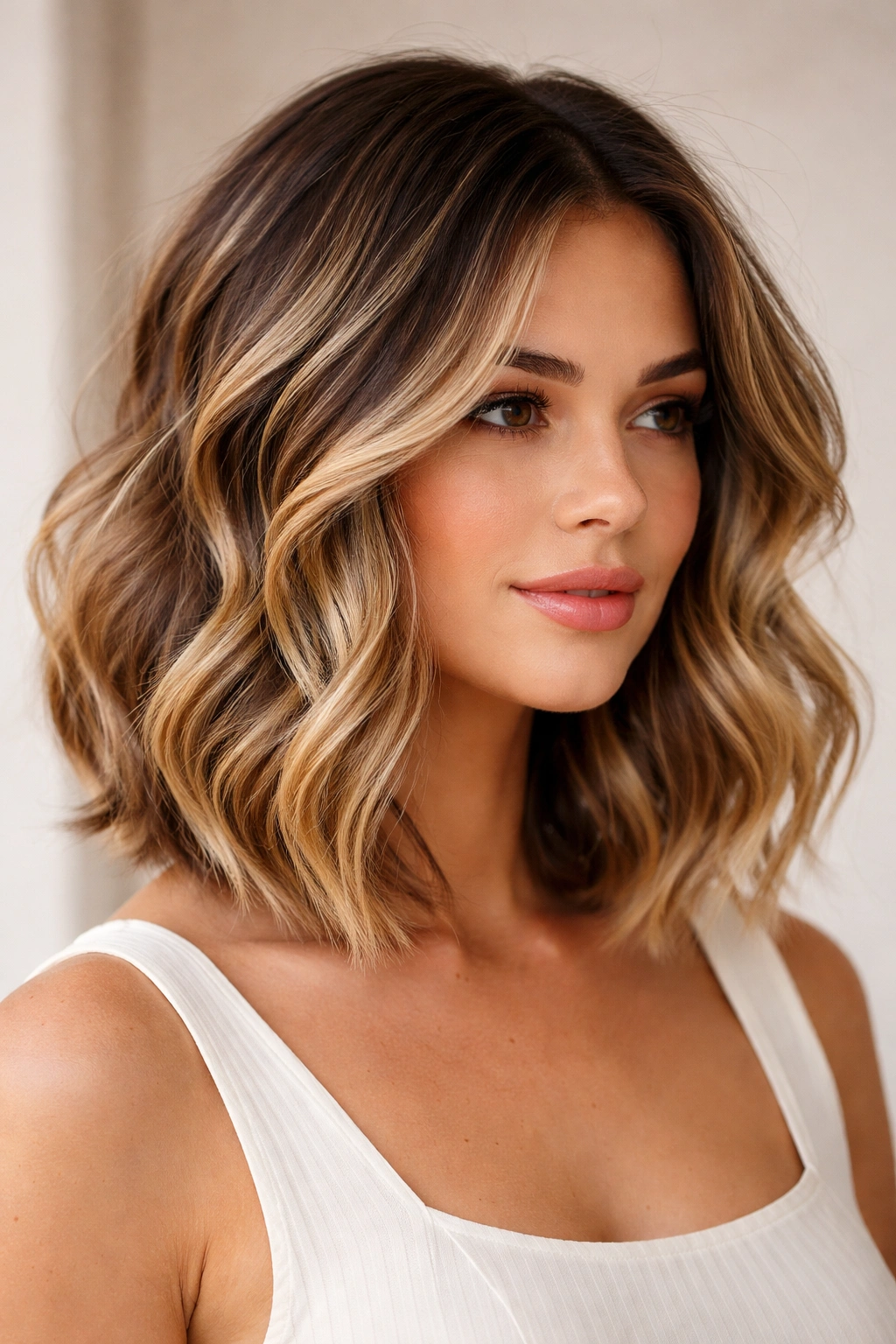
This combines the cut with a more complex color approach—perhaps a balayage with multiple tones, shadow roots, or strategic color placement that creates dimensional interest beyond just highlights. The waves make the color work harder because light hits multiple levels of color as the hair moves. It’s a color-forward approach that treats the cut and color as equally important.
Why This Cut Works
Multi-tonal color makes waves appear more dynamic because you’re seeing multiple colors in the same piece of hair as light hits it. The dimension created by color plus dimension created by waves equals genuinely eye-catching movement. The approach works because both elements are working together rather than the color being an afterthought.
Best For
- Anyone who loves color and doesn’t mind maintenance (typically every 8-12 weeks)
- Those wanting to make a bold visual statement with their hair
- People with undertones that can carry multiple tonal colors well
- Anyone willing to style regularly to make the color investment feel worthwhile
Insider note: The styling commitment increases noticeably with multi-tone color because you need to style intentionally to show off the color work. An unstyled wavy bob doesn’t display dimensional color effectively.
16. The Voluminous Wavy Bob (Crown Texture)
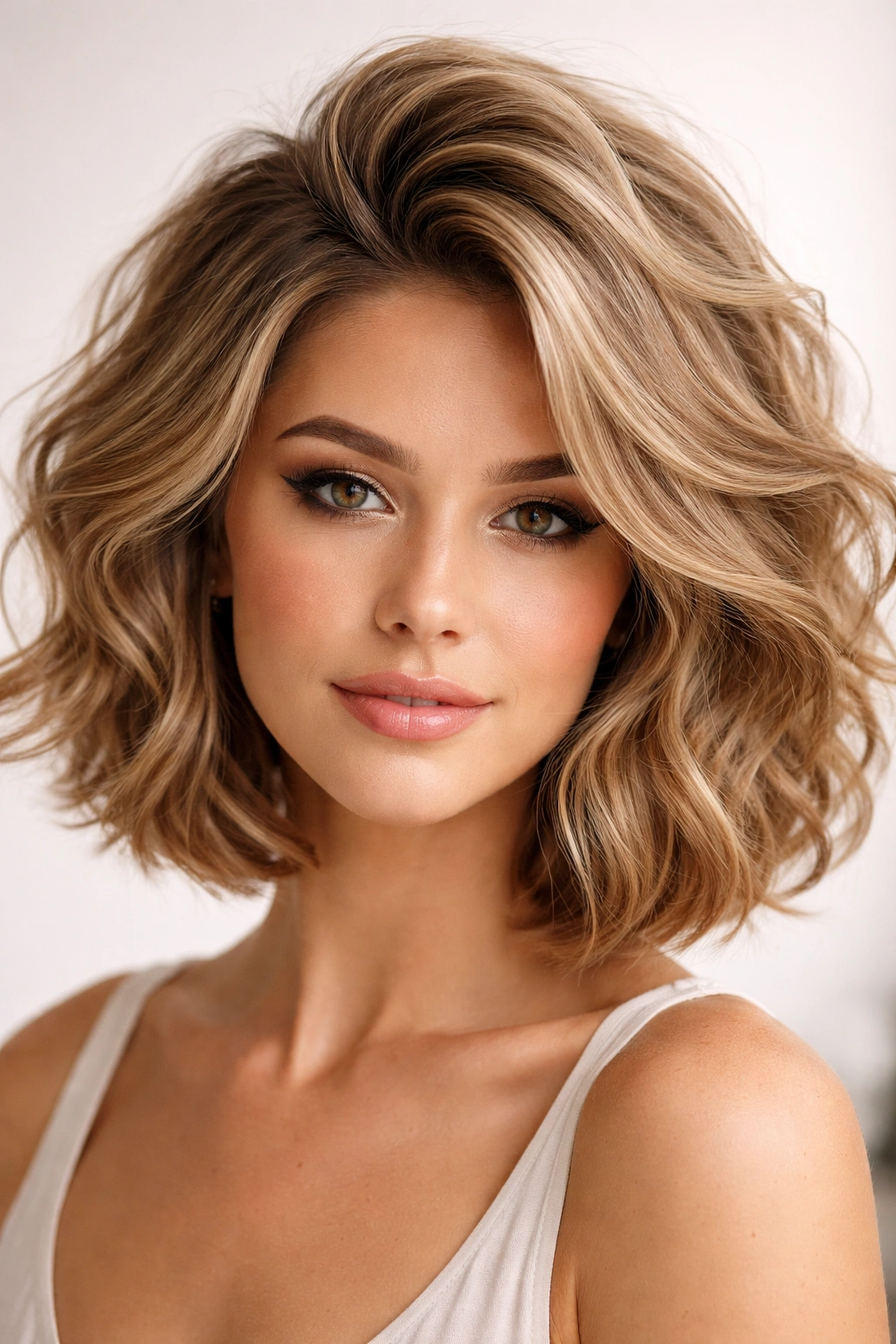
This approach creates extra volume and dimension at the crown by using strategic layering and sometimes backcombing or root-lifting techniques during styling. The sides and back maintain the classic wavy bob length, but the crown has deliberate height and movement. It’s flattering for most face shapes and particularly helpful for people with fine hair or flatness at the crown.
Why This Cut Works
Crown volume is flattering because it draws the eye upward and creates the illusion of a fuller silhouette overall. The layering at the crown catches air and creates movement even before styling. Waves throughout enhance the texture that creates that volume effect.
Best For
- People with fine or thin hair wanting to create density illusion
- Anyone with a longer face who wants to balance proportions
- Those wanting more dramatic styling that still feels wearable
- People comfortable using a blow dryer to create that crown volume
Pro tip: Ask your stylist for shorter, feathered layers specifically at the crown and ask about point-cutting or texturizing to create lightness rather than bulk.
17. The Face-Framing Wavy Bob with Layers
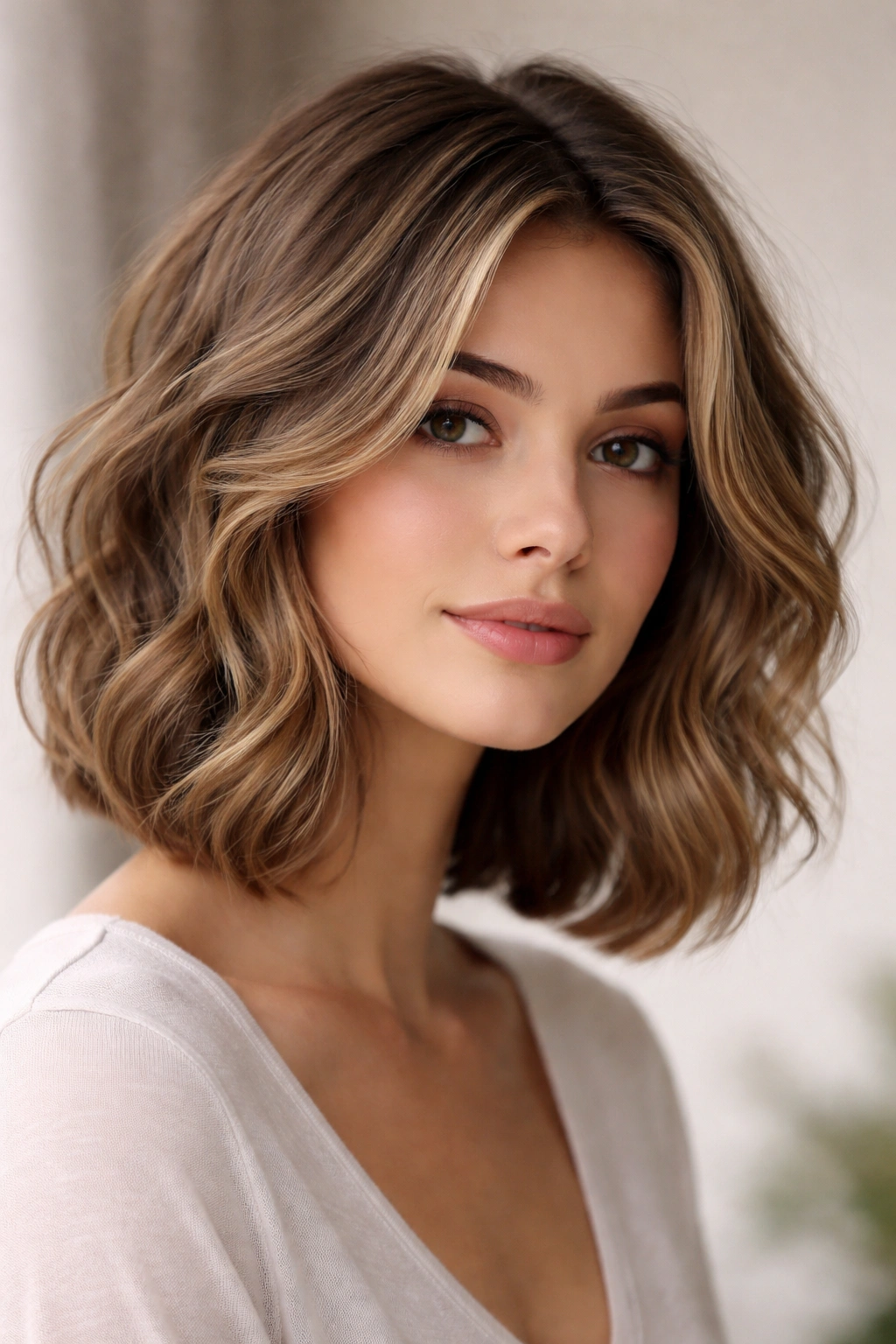
This prioritizes longer, intentional layers that frame the face and create a focal point around the eyes and cheekbones. The back and crown maintain the wavy bob length, but the face-framing pieces are deliberately longer and separated, creating an intentional frame effect. The waves make the frame soft and flattering.
Why This Cut Works
Face-framing is inherently flattering because it draws attention to your best features and softens your overall silhouette. When done with waves, the frame feels feminine and elegant rather than severe. The longer face-framing pieces create movement that curves toward the face naturally.
Best For
- Anyone wanting to emphasize eyes or cheekbones
- Those with a wider jaw or forehead who want to soften those features
- People preferring feminine, face-focused styling
- Anyone with wavy hair that naturally creates that face-framing effect
Worth knowing: Face-framing pieces need consistent styling to maintain that intentional frame effect. Without styling, they can just look like longer pieces rather than a deliberate design.
18. The Minimalist Wavy Bob (Clean Lines, Few Layers)
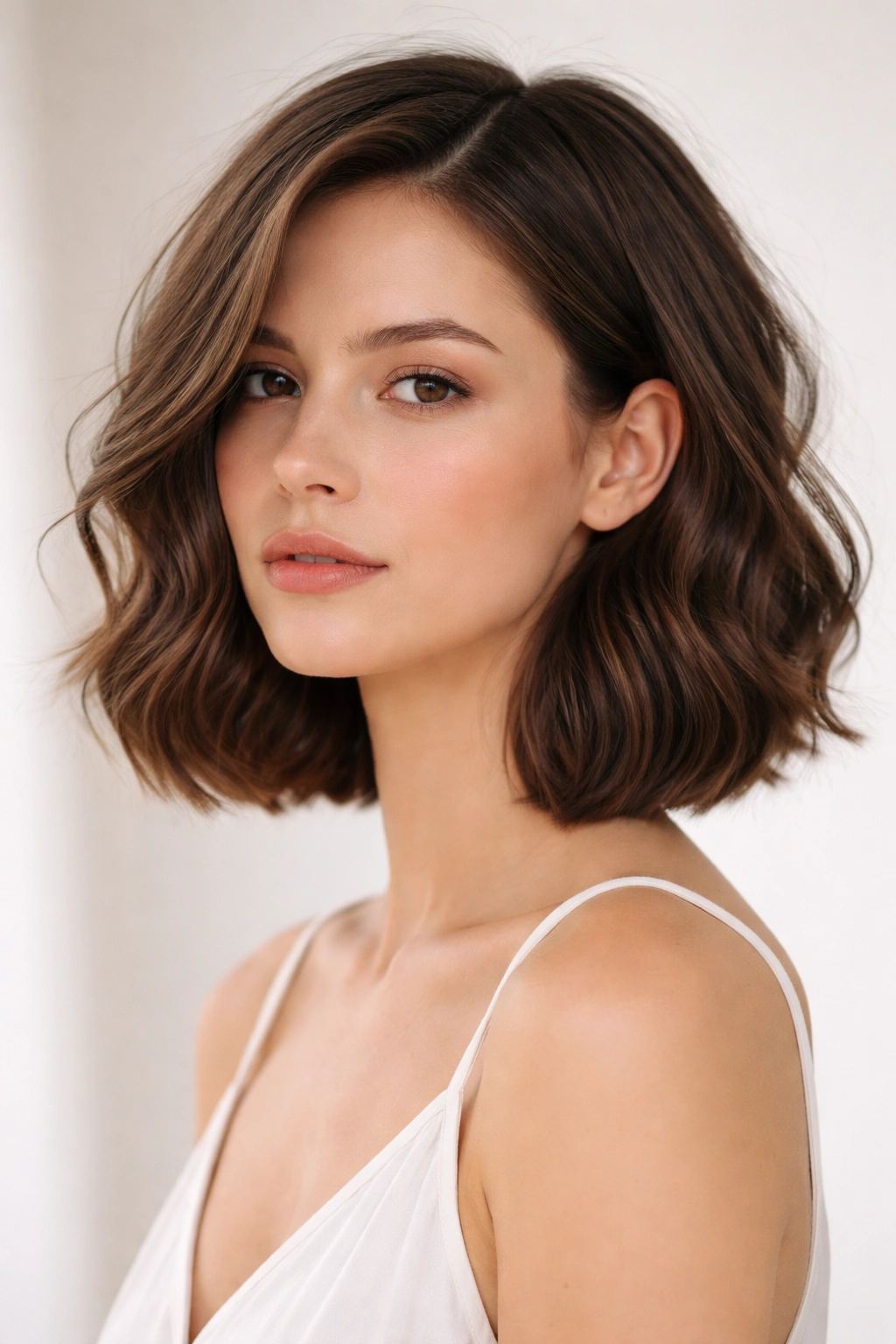
This is the simplest approach—a wavy bob with minimal layering and maximum emphasis on clean lines and shapes. The cut is almost spare in its simplicity, relying entirely on the natural wave and overall shape rather than cut texture to create interest. It’s elegant, timeless, and works across many styles and ages.
Why This Cut Works
Simplicity reads as elegant and timeless. By minimizing layers, you create a shape that’s instantly recognizable and flattering. The wave pattern is the star here rather than cut complexity. This approach also has excellent longevity—it doesn’t look dated in a few years because there’s nothing trendy about it.
Best For
- Anyone preferring understated, timeless aesthetics over trendy cuts
- People wanting the easiest possible wavy bob that requires minimal maintenance
- Those with naturally beautiful wave patterns that don’t need cut texture to shine
- Anyone in conservative professional environments or preferring classic styling
Insider note: This cut actually demands excellent technique from your stylist because there’s nowhere to hide. Every line and angle must be precise because there are no layers to add forgiving texture.
Final Thoughts
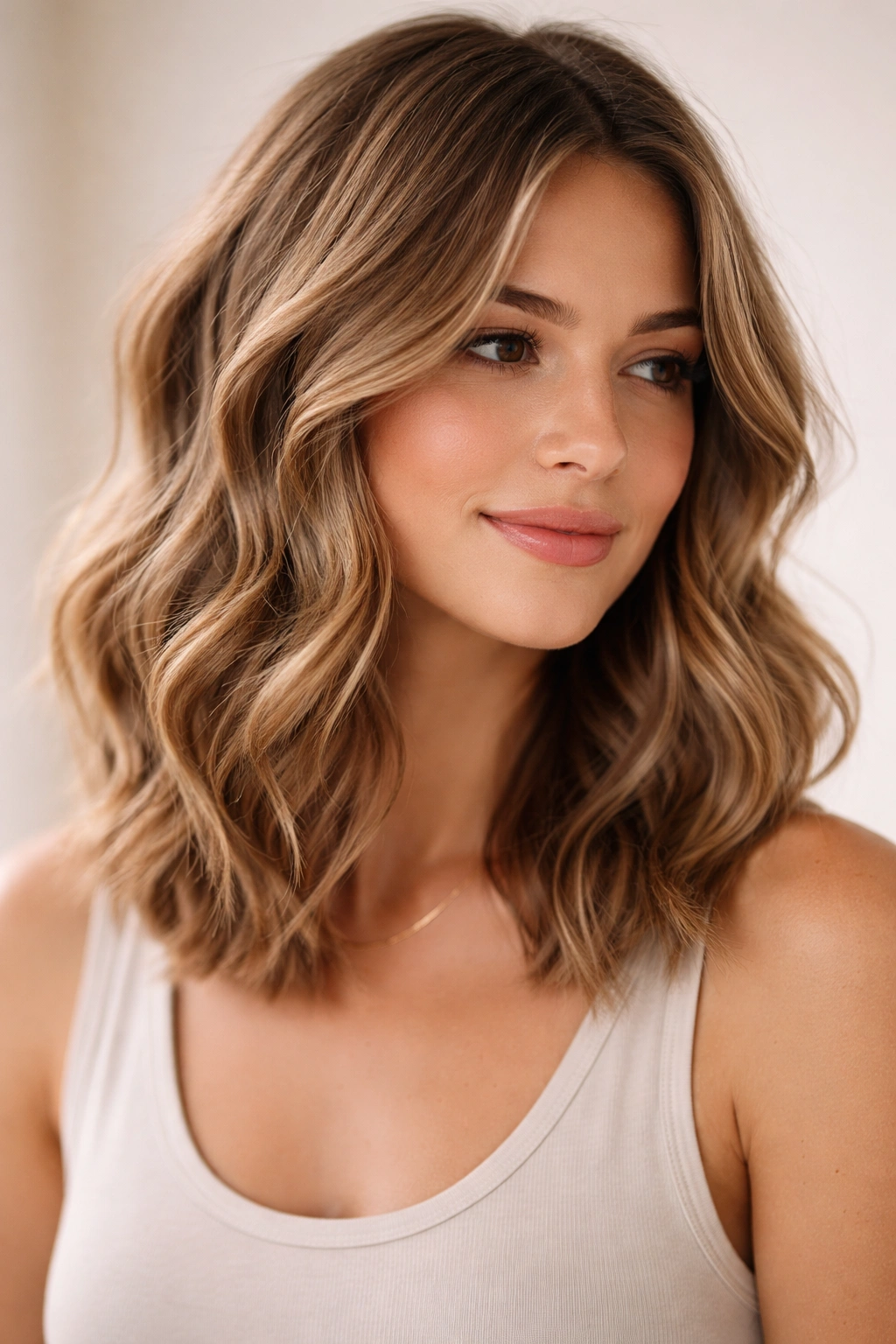
The range within long wavy bob territory is genuinely expansive—from barely-layered minimalist shapes to heavily textured shags, from polished and sleek to deliberately undone, from simple shoulder-length bobs to graduated shapes that feel like a bridge to longer hair. The right choice depends on your hair’s natural texture, how much time you want to spend styling, whether you prefer a fashion-forward or timeless aesthetic, and which face-framing approach actually flatters your features.
The most important part of getting a wavy bob you love is finding a stylist who understands both how to cut wavy hair specifically and how to style it in a way that suits your preferences. Bring reference images showing not just the cut but the styling approach you prefer—heavily styled and polished, or tousled and natural. Be honest about your styling time and willingness to use heat tools regularly. The best wavy bob in the world is only actually good if it works for your real life and your real hair, not just in a salon chair with a professional styling.
