



Boho box braid ponytails work because they do two jobs at once. They pull the hair back so the face is open, then leave enough softness — curls, tendrils, a few loose pieces — that the style still feels lived-in. When a braid set starts to feel heavy or too polished, a ponytail is often the fastest way to change the mood without changing the whole head.
Placement matters more than people think. A ponytail at the crown feels lifted and bright; one at the nape feels calm and easy; one swept to the side has a little more movement and looks better from the profile. The difference between “cute” and “ouch, my scalp” is usually only an inch or two.
The other thing that changes everything is what you leave out. A few curly pieces near the temples soften the braid grid. A wrapped base hides the elastic and makes the style look finished. Beads, cuffs, and scarves can push the same ponytail into a totally different lane, from soft everyday wear to something a little louder.
Some styles work best with medium box braids. Others need long knotless braids so the ponytail can sit without fighting the weight. A few are better when the braids are older and a bit looser at the root. That’s the real appeal of these looks: they’re flexible, and once you know which shape suits your hair and your day, the rest feels easy.
1. High Crown Boho Box Braid Ponytail With Loose Curl Pieces
A high crown ponytail is the fastest way to make braids look awake. It lifts the whole shape, opens the face, and gives box braids that clean, upbeat line people notice first.
Why the lift works
The ponytail sits high enough to show off the parting at the front, but not so high that it turns into a tight little knot on top of the head. That balance matters. Too high, and the weight pulls; too low, and the style loses its lift.
Leave a few curl pieces free around the temples and one or two near the back hairline. That small bit of mess is what makes it feel boho instead of severe. It also breaks up the straight braid pattern, which can look a little rigid on its own.
- Best with medium to long box braids.
- Use a snag-free elastic and wrap one braid around the base.
- Leave 4 to 6 curled strands loose.
- Works well with hoops, a strong brow, or a clean lip.
Pro tip: If your braids are heavy, split the pony into two elastics first, then hide both with one wrap braid. It takes 30 seconds longer. Worth it.
2. Low Nape Ponytail With a Wrapped Braid Base
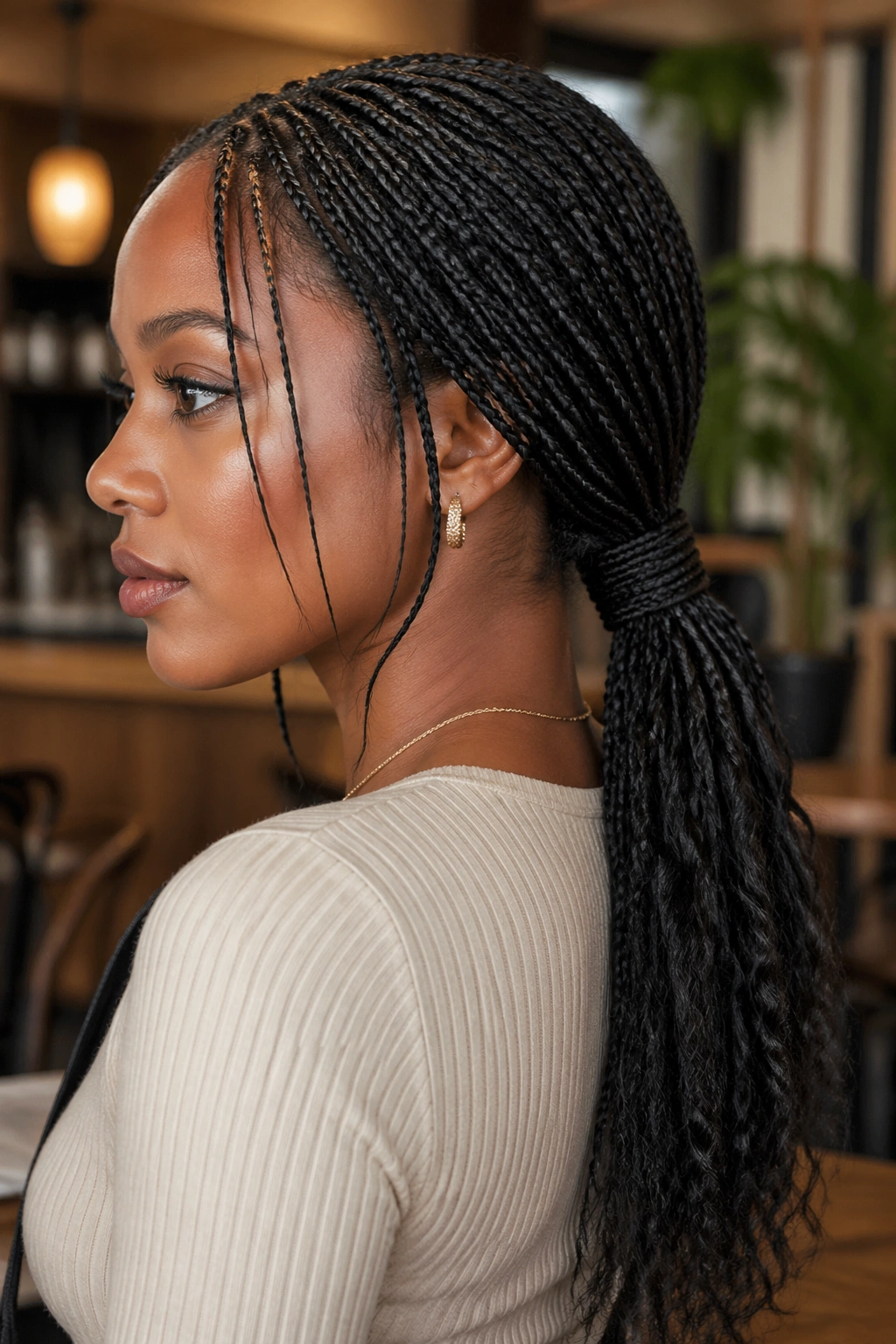
Low ponytails are the easiest ones to wear for hours without thinking about them. They sit where the neck bends, so the style feels stable instead of perched on top of your head.
That makes this version a smart choice for long braid sets, especially when the roots are fresh and you do not want extra tension. A low nape pony also looks good with a tucked neckline, a blazer, or a simple tank. It has a calmer feel than the high crown version, but it’s not plain. Not even close.
The wrap is the part that gives it polish. Take one braid from underneath, wrap it tightly around the elastic, and pin it underneath the ponytail. The result looks cleaner than a visible hair tie and keeps the base from looking thrown together.
A few soft curls at the tail end are enough. You do not need a lot. In fact, too many loose pieces can fight the quiet shape of the ponytail and make it feel cluttered.
3. Side-Swept Boho Ponytail That Falls Over One Shoulder
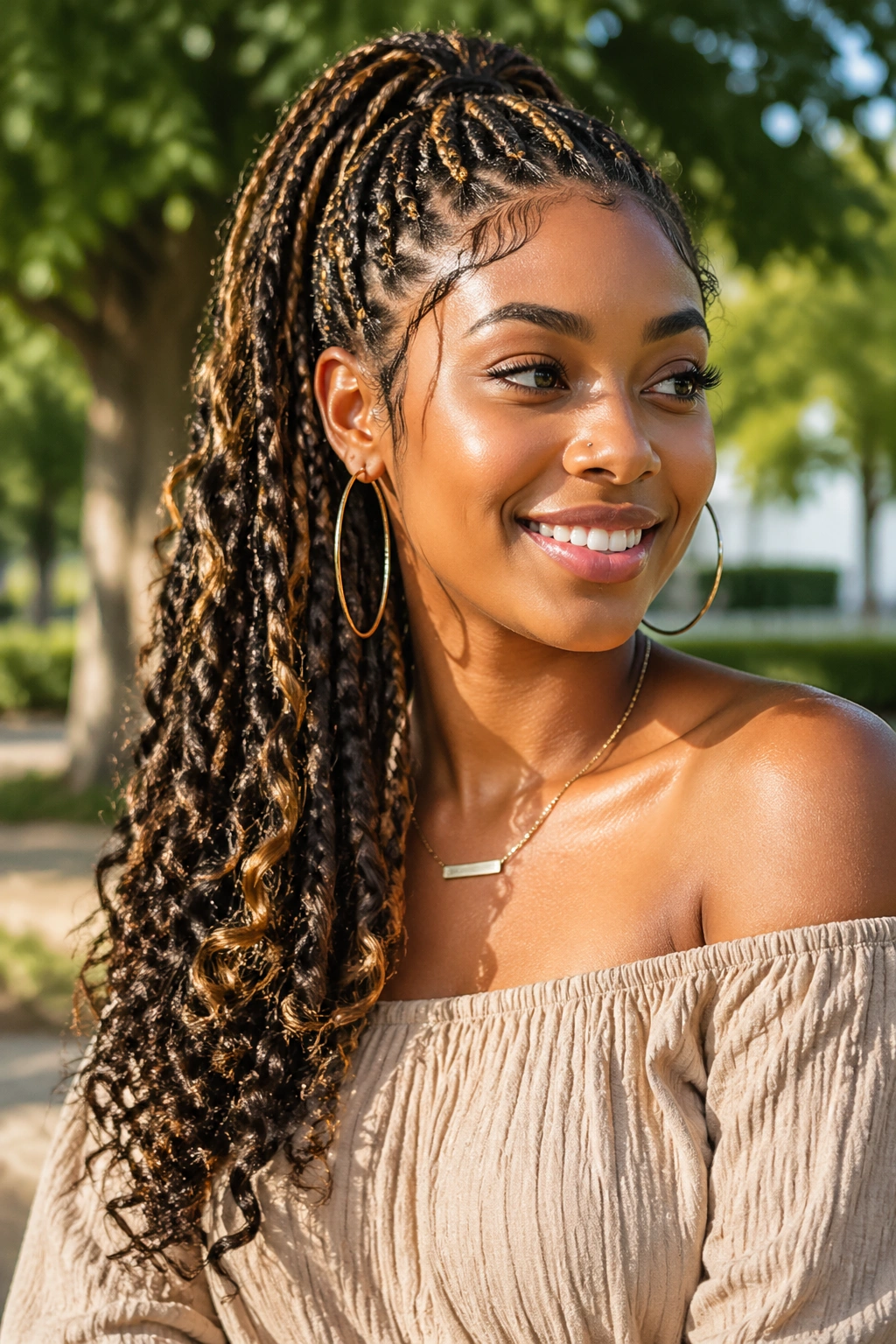
Why does a side-swept ponytail soften box braids so well? Because it breaks the symmetry. Braids are naturally neat and grid-like; moving the ponytail off center loosens that effect right away.
That shift also changes the silhouette. The hair doesn’t just hang straight down the back. It curves across one shoulder, which gives the style a little swing when you walk. It looks especially good if your braids are medium thickness and your ends have a soft curl or a tucked bend.
How to wear it
Pull the ponytail 2 to 3 inches behind one ear instead of centering it at the back of the head. Keep the opposite side flatter, but not glued down. A hard-slicked side part can make the whole style feel too sharp.
Side-swept boho box braid ponytails work well with off-shoulder tops, asymmetrical earrings, and dresses that leave one shoulder bare. They also suit rounder face shapes because the diagonal line adds length. And if your braids are a little older, the side sweep can hide the roots better than a straight-back pony.
4. Half-Up Boho Box Braid Ponytail With Cascading Length
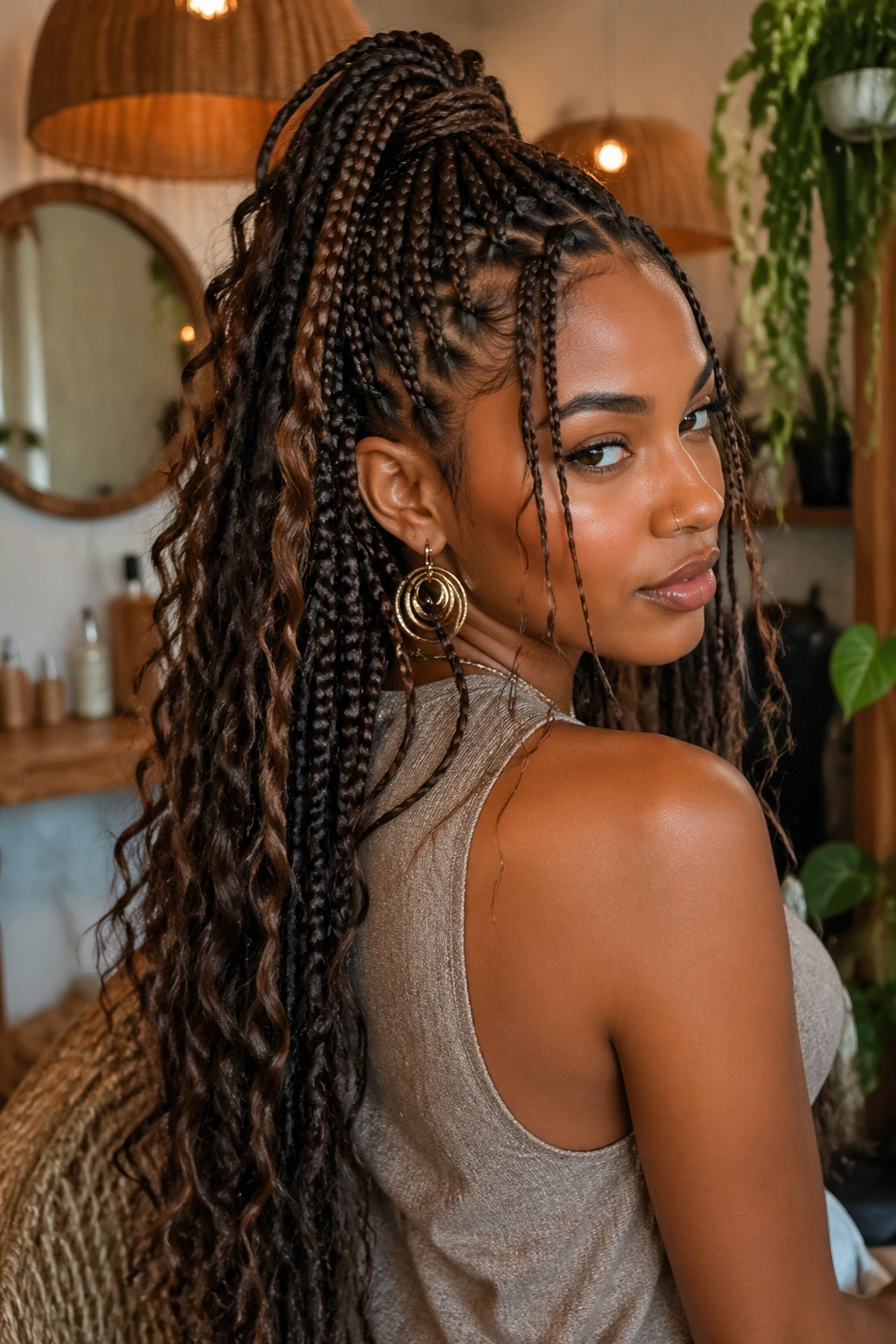
Some days you want your braids off your face and nowhere near your eyeliner. That’s where the half-up ponytail earns its keep.
You gather the top third or top half of the braids into a ponytail, then let the rest fall loose down the back. The look feels lighter than a full ponytail, and it keeps the weight off the scalp, which matters if your braids are long. It also gives the illusion of extra volume because the loose length is still visible underneath.
A small ribbon, cuff, or wrapped braid at the base helps the top section look intentional. Otherwise, half-up styles can slip into “I was in a hurry” territory. That’s not the goal here.
- Best for thick hair and heavy braid sets.
- Keeps hair out of the eyes without hiding the length.
- Nice for fresh installs because it reduces pull.
- Looks good with curled ends or small face-framing pieces.
There’s a reason this style keeps showing up in protective-style rotations. It lets the braids move while still showing off the length you paid for.
5. Bubble Ponytail With Soft Curly Gaps
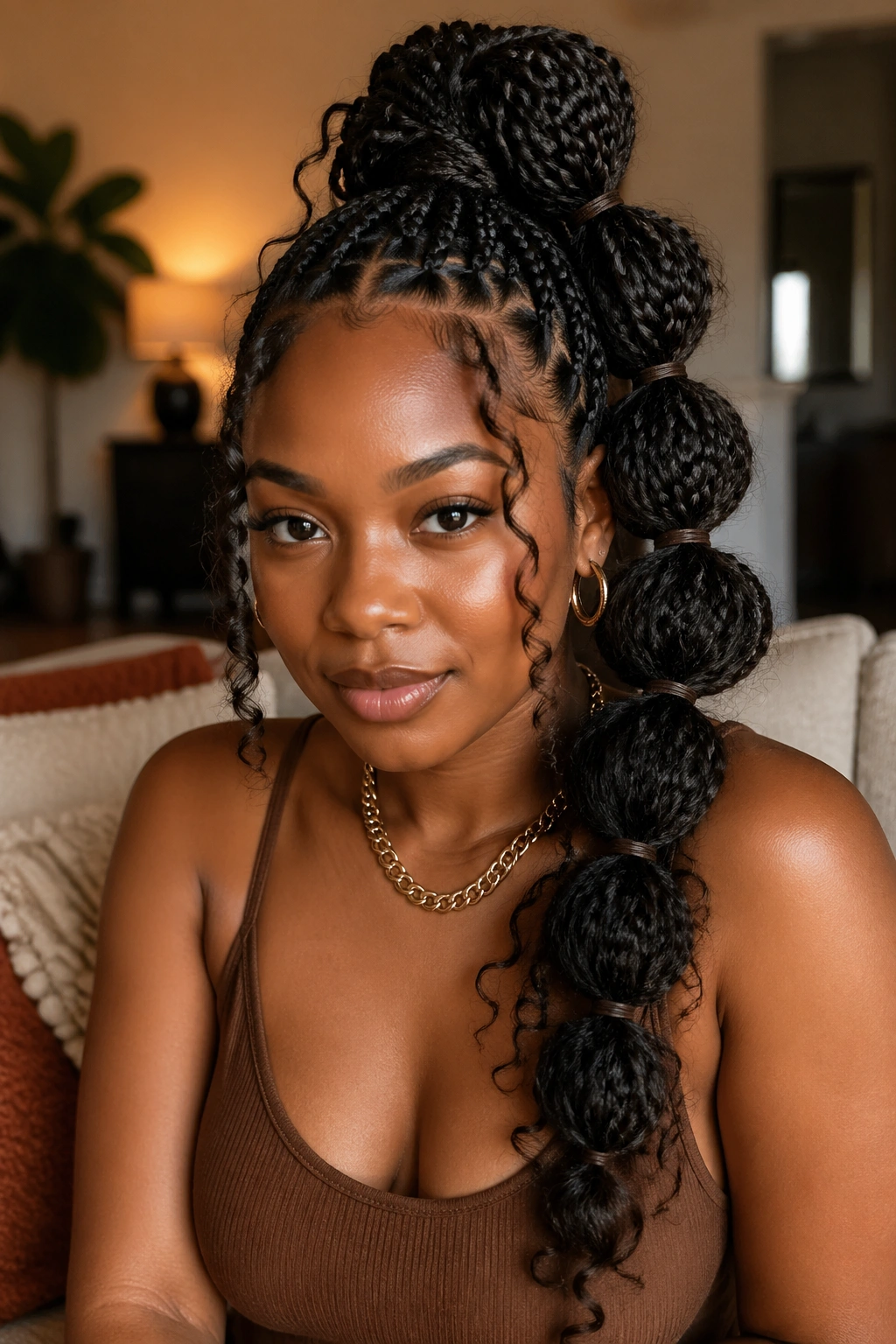
A bubble ponytail changes the whole rhythm of box braids. Instead of one long fall, the braid tail is sectioned into rounded “bubbles” with small elastics or tight wraps spaced down the length.
The boho part comes from what you leave between the bubbles. A few curly pieces peeking through each section keep the style from looking too neat. Without that softness, the bubbles can read a little costume-y. With it, the look feels playful and textured.
This style works best on long braids, because the bubbles need room to breathe. If the tail is too short, everything bunches up and the shape gets clumsy. Keep the sections even, but not stiff. A slight looseness is what gives the bubbles that soft, pillowy shape.
It’s a smart choice for days when you want the braid set to feel different without pulling it into a completely new style. You can do three large bubbles or five smaller ones. The larger ones look calmer. The smaller ones feel busier.
6. Braided Mohawk Ponytail With Soft Sides
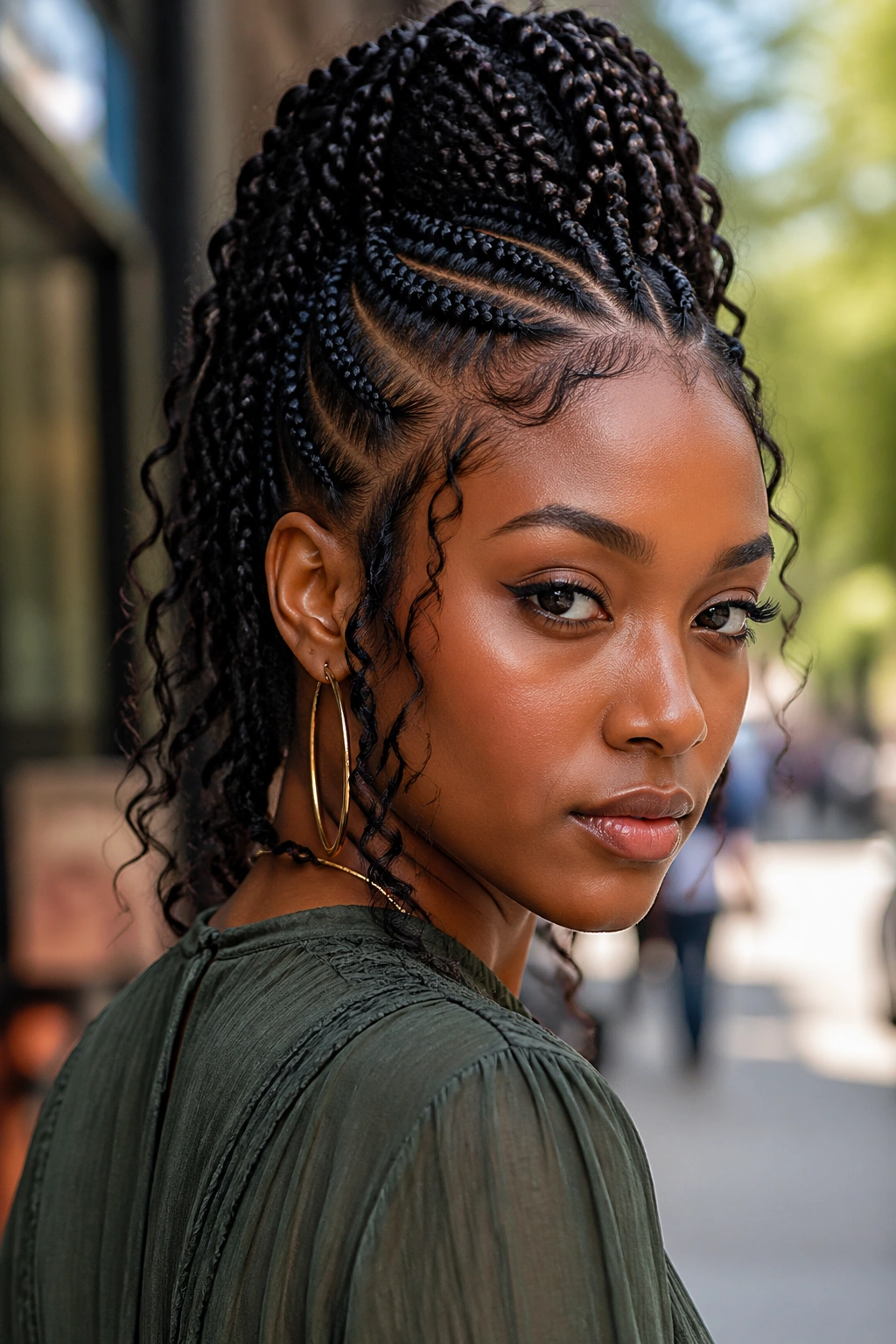
Unlike a flat low ponytail, this one builds height right through the middle. That’s the point. The center section becomes the focus, while the sides either lay softly against the head or tuck back into the main shape.
The result has more edge than a standard boho box braid ponytail, but it still keeps the curly pieces and loose ends that make the style feel wearable. It’s the kind of ponytail that looks especially good with bold earrings, a sharp lip, or a simple black top. The hair gets to be the statement.
If you like styles that show off the shape of your head and neck, this is a strong pick. It also works well when the braids are medium to long and you want to show some of the scalp parting without putting everything straight back.
One caution: the mohawk shape can feel tight if the braids are fresh. Ease up on the tension at the sides and let the center carry the height. The style should look lifted, not strained.
7. Feed-In Cornrow Ponytail That Flares Out
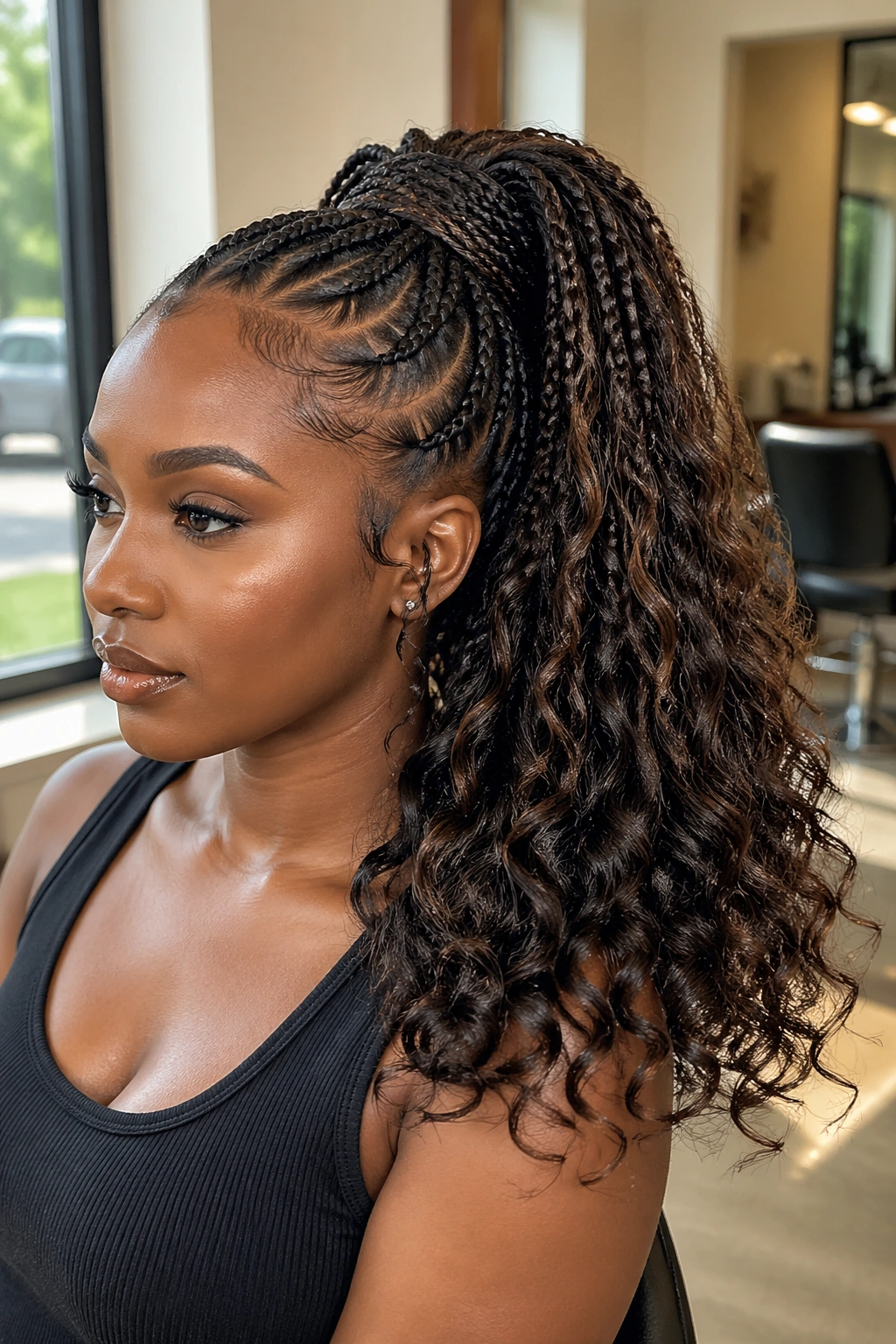
A feed-in base makes a boho box braid ponytail sit flatter at the scalp and fuller through the tail. That flat-to-full shape is what gives the style its clean finish.
The clean base matters
When the front is built with neat cornrows or feed-in braids, the ponytail does not wobble around. It stays put. That’s useful if you wear your hair out for long hours, commute a lot, or simply don’t want to think about it once it’s done.
The tail can still be soft. In fact, that contrast is what makes the style interesting — a smooth, controlled base and a more relaxed lower half. Keep the ends curled or slightly looped, and the whole thing reads as boho instead of sportsy.
- Best for medium box braids and knotless installs.
- Use mousse lightly at the roots before tying up.
- Keep the part lines clean so the front holds its shape.
- Finish with two or three loose curl pieces around the face.
Good fit for windy days. This ponytail does not move around as much as a loose, high style, which is part of the appeal.
8. Beaded Ponytail With Curly Ends
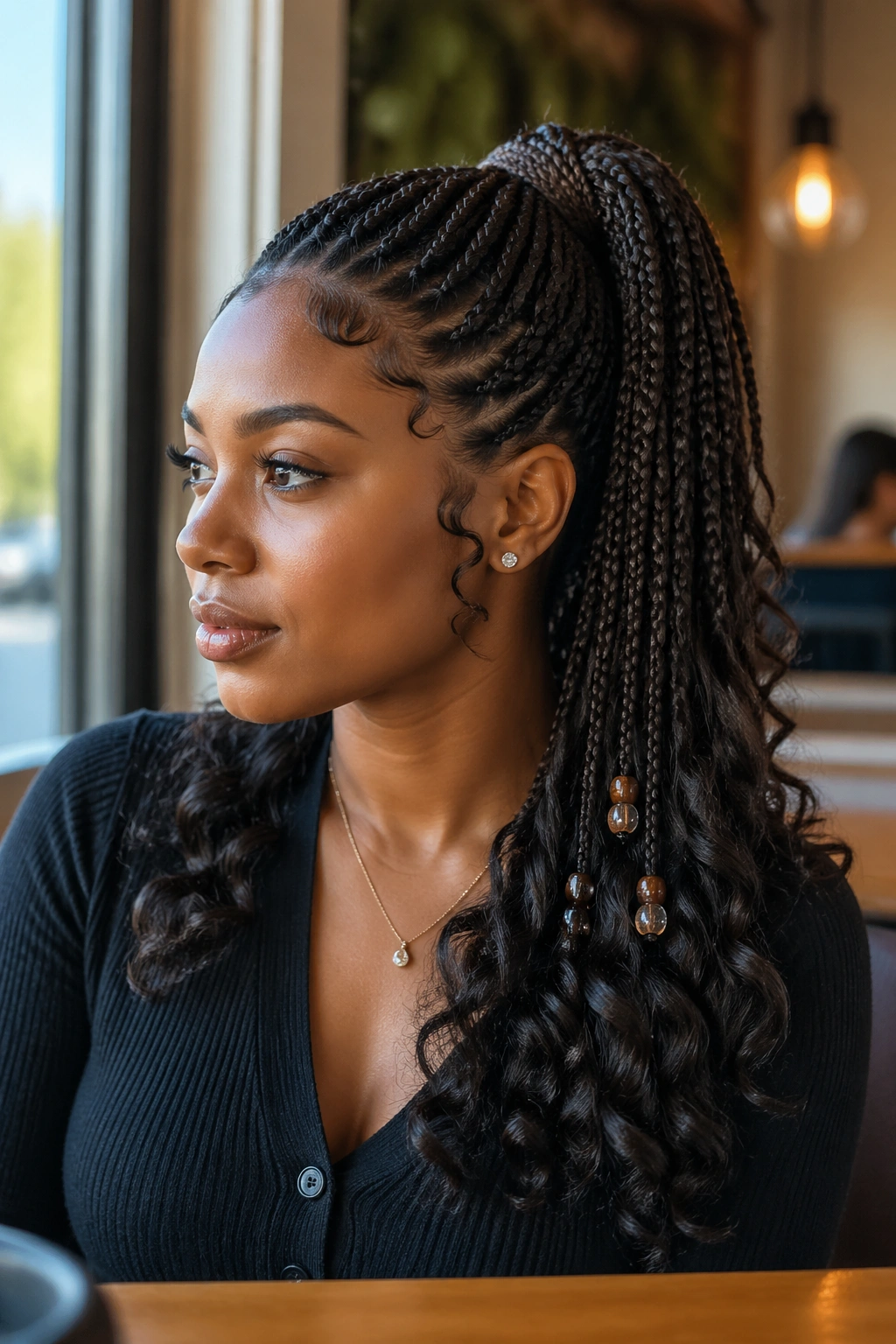
Beads change the whole mood. The same ponytail that would feel soft and easy suddenly gets a little rhythm when a few beads sit at the ends and click softly as you move.
The key is restraint. Put the beads low enough that they don’t pull at the root, and don’t overload every braid in the ponytail. Six to ten beads can be plenty. More than that, and the tail starts to feel heavy fast. Wood beads feel earthy, clear beads feel lighter, and gold-toned beads add a dressier finish.
This style works best on medium box braids because the braids are thick enough to hold the bead weight without collapsing. If the braids are small, the beads can feel fussy. If they’re jumbo-sized, the beads can look crowded.
The curly ends matter here too. They soften the line of the beads and keep the style from feeling too hard-edged. It’s a nice mix: a little sound, a little movement, and enough shape to keep the ponytail from disappearing into the back of your outfit.
9. Jumbo Box Braid Ponytail With Simple Hardware
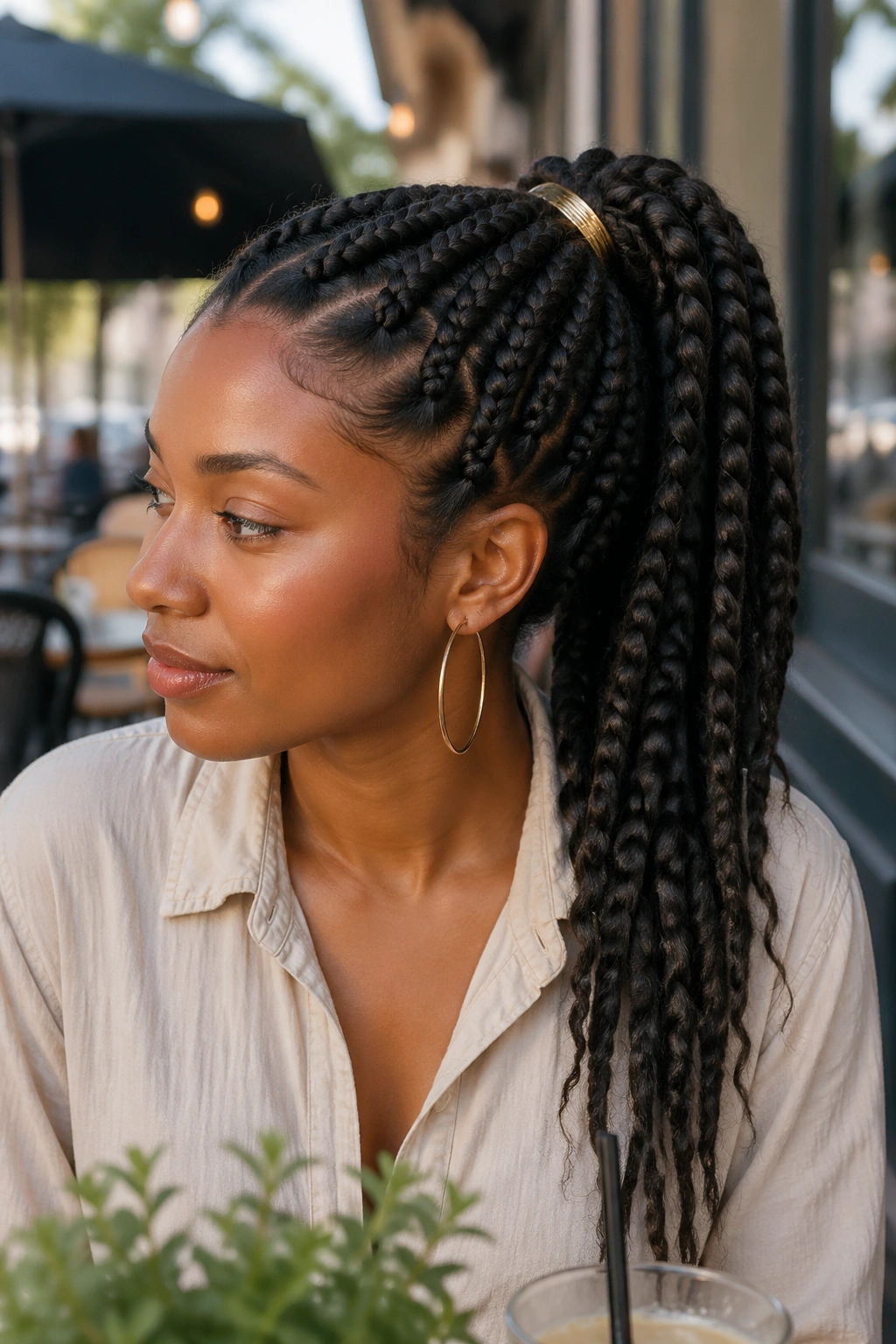
Can jumbo braids do a ponytail without feeling clunky? Yes — if you keep the shape simple and let the braid size do the talking.
What makes it different
Jumbo box braids already have a lot of presence, so the ponytail doesn’t need much decoration. A single strong elastic, a wrapped braid, and maybe one cuff at the base are usually enough. Anything more starts to fight the scale of the hair.
The best version is usually mid-height or low. A very high ponytail can feel heavy with jumbo braids, and the pull shows faster. A lower placement lets the braids drape instead of fight gravity.
When to choose it
- You want fewer braids and less overall styling time.
- You like a bold shape with less fuss around the face.
- You need something sturdy that still looks soft at the ends.
This is the ponytail for people who want the boho effect without too much detail. Let the curls at the ends soften the shape. Let the braid size do the rest. It’s clean, simple, and a little dramatic in the way jumbo braids tend to be.
10. Sleek Center-Part Ponytail With Wispy Front Pieces
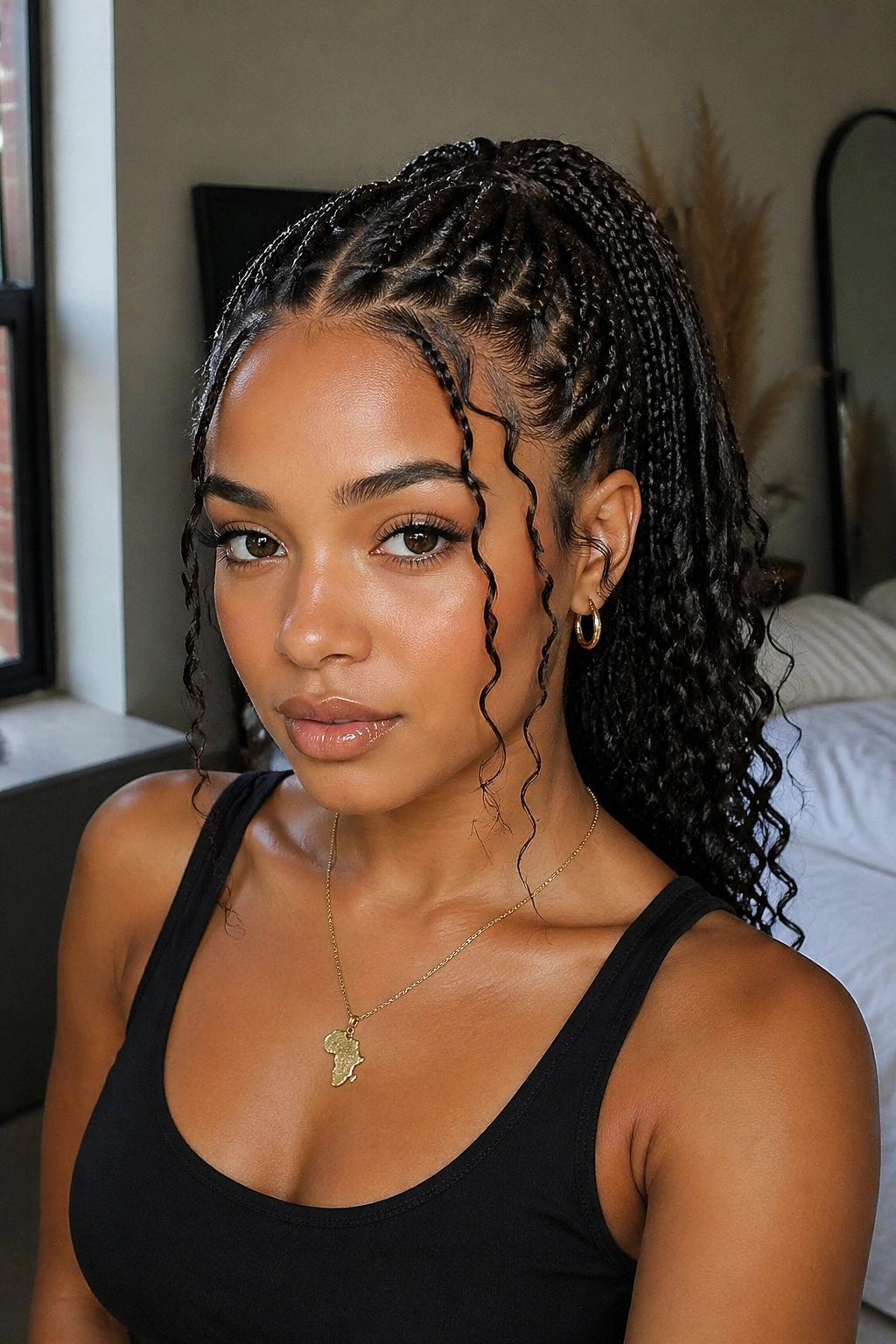
A center part gives a boho box braid ponytail a clean spine. It makes the whole style look balanced before you even deal with the tail.
Then the wispy pieces come in. Leave one narrow strand on each side of the face, or pull out a pair of small curls near the temples. That’s the softness the style needs. Without those front pieces, a center-part pony can get stern fast. With them, it feels more relaxed and a little softer around the eyes.
A mid-crown or mid-back placement works best here. Too high, and the center part can start to feel severe. Too low, and the clean line disappears. The sweet spot is where the part still shows clearly but the ponytail has enough movement to look easy.
- Good with long, neat box braids.
- Best when the edges are smooth but not frozen down.
- Works for formal outfits and low-key nights out.
- Looks especially good with clear gloss on the lips or small studs.
This is one of the most wearable versions if you like a neat front and a soft tail. It’s tidy without feeling stiff. That matters.
11. Deep Side-Part Ponytail With a Soft Flip
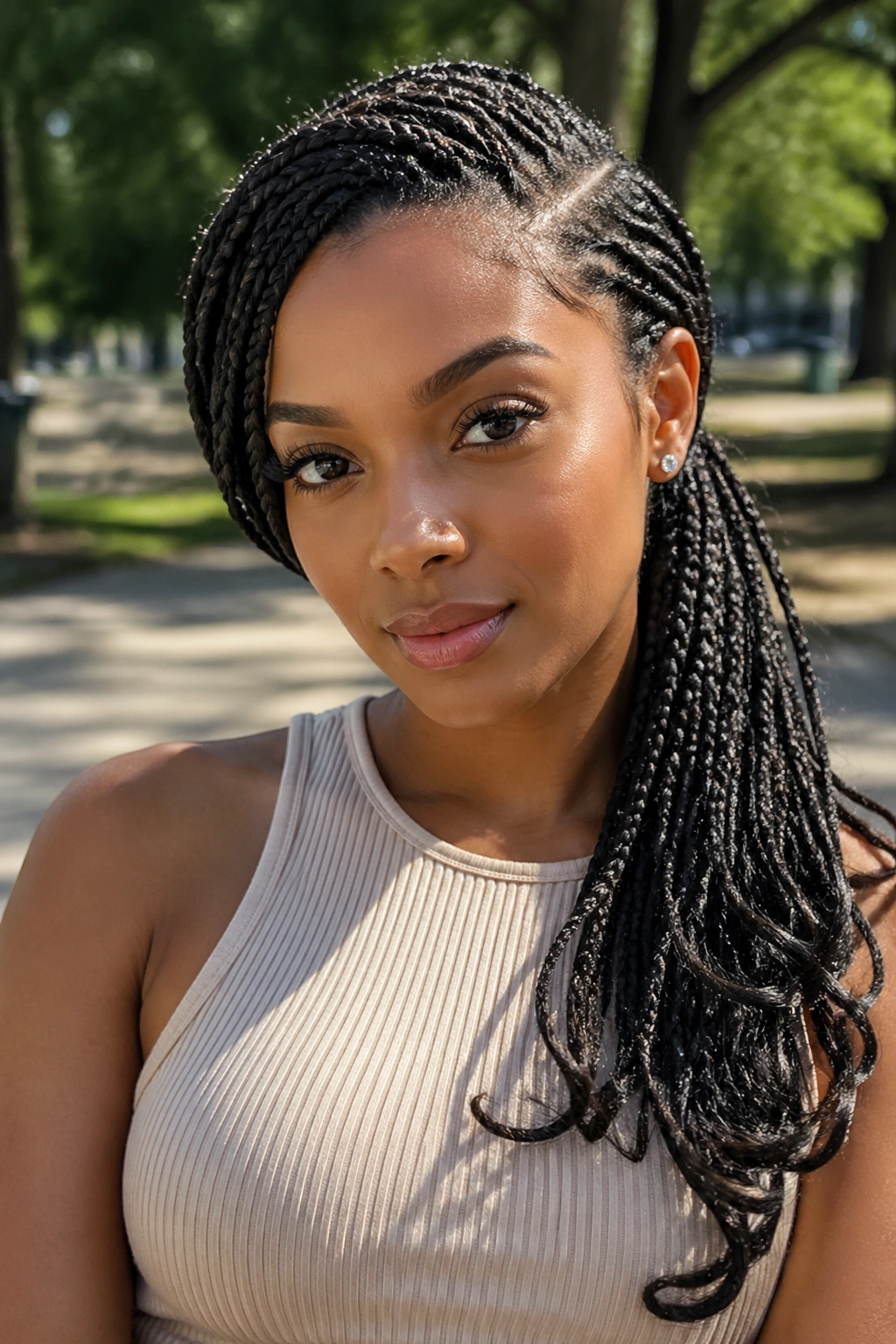
A deep side part gives a ponytail movement before the ponytail even starts. It tilts the whole shape, which is useful on braids because braids can look very straight if you let them.
The ponytail itself usually sits low or mid-level, then falls across one shoulder with a slight flip at the end. That flip can come from curled braid ends, a loose bend in the braids, or simply the way the tail rests after being gathered to one side. You don’t need perfect curls. A little curve is enough.
This style looks especially good with asymmetrical earrings and tops that leave one shoulder open. There’s a natural sense of direction to it. The eye follows the part, then the tail, then the shoulder. Easy.
One thing I like about it: it still looks good when it loosens up during the day. The side part softens, the tail settles, and the style gets better rather than worse. That is not true of every ponytail, by the way.
12. Scarf-Tied Ponytail for an Easy Finish
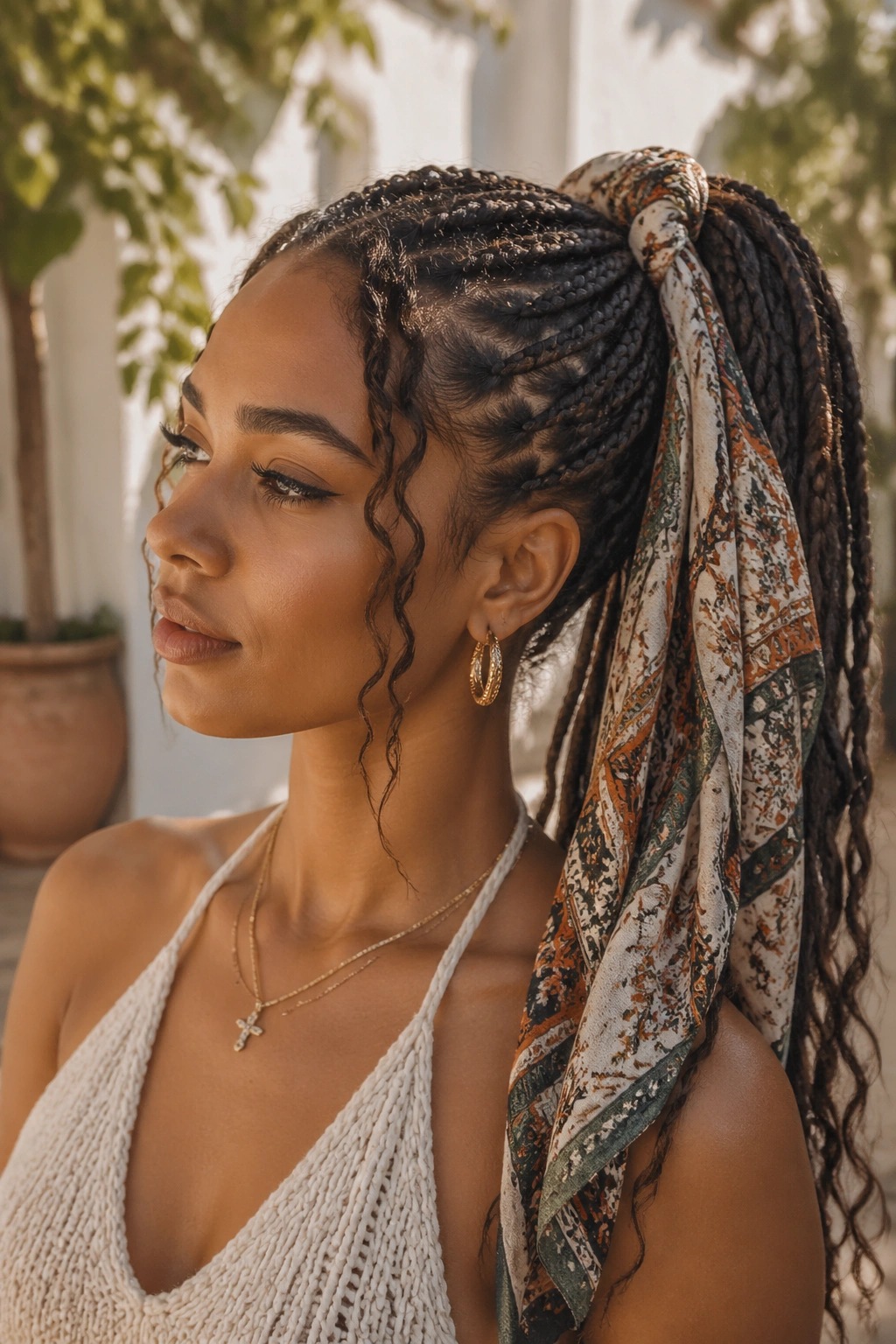
A scarf does the decorative work so the rest of the ponytail can stay simple. That’s the appeal here.
A satin or silk scarf tied around the base softens the line of the elastic and adds color without adding weight. Fold the scarf into a strip about 2 to 3 inches wide, then knot it under the ponytail so the knot hides at the back or side. Let the ends drape, or tuck them in for a neater look.
This version is useful when the braids are a few days old and you want to refresh the style without restyling the entire head. It’s also good for protecting the hairline if you’re trying to keep the front calm and smooth. The scarf gives you detail without pulling on the roots.
It works with patterned scarves, plain black satin, or a color that matches your outfit. If the braids already have beads or cuffs, keep the scarf simple. If the braids are bare, the scarf can carry more of the visual weight.
13. Accent-Braid Ponytail With Thin Plaits Mixed In
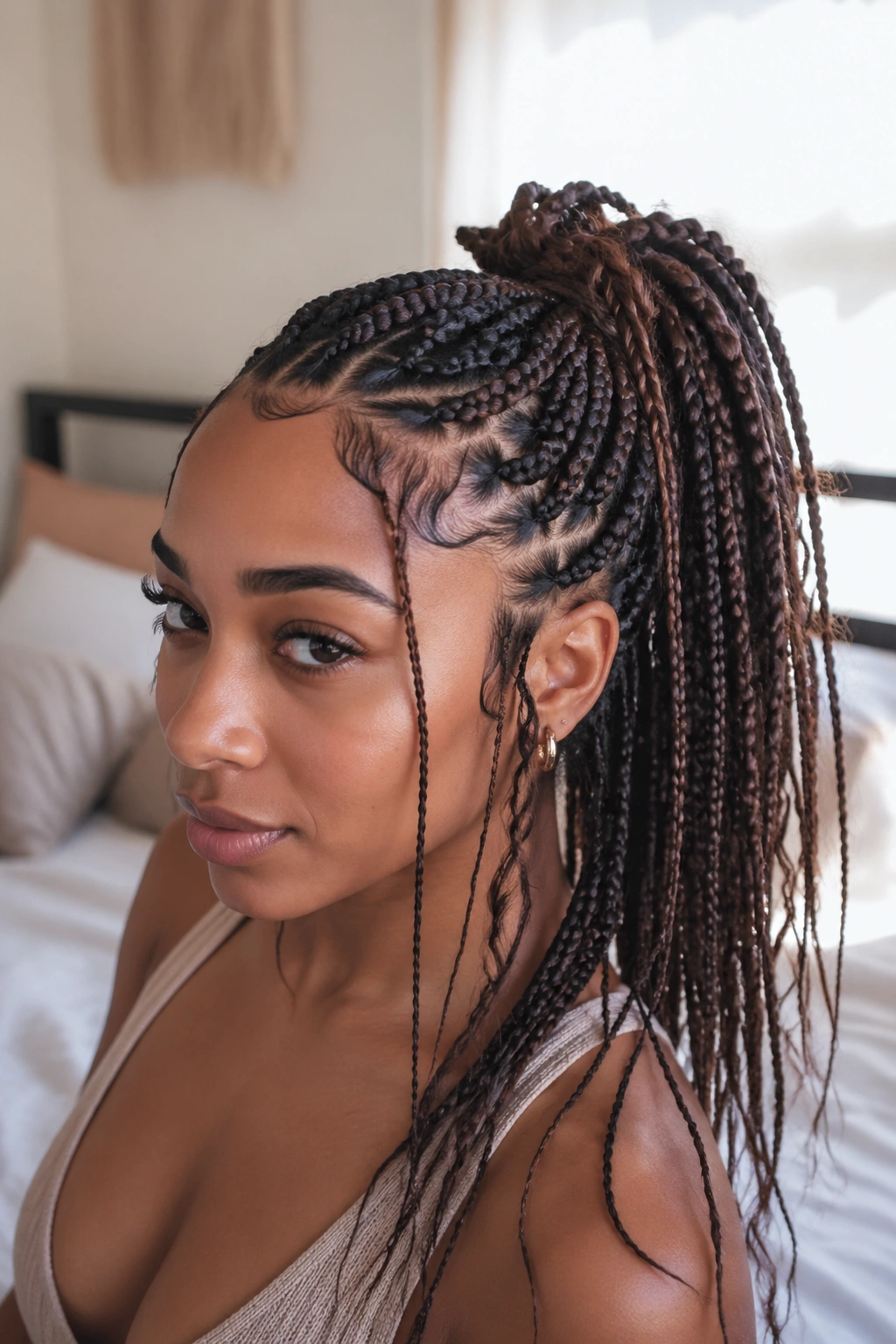
The easiest way to make a boho box braid ponytail feel more detailed is to mix in a few thin accent braids. Not a lot. Just enough to break up the main braid size and give the tail some texture.
Why it reads differently
Tiny plaits catch the eye in a different way than the main box braids. They create rhythm. That’s what makes the style feel layered instead of flat. If all the braids are the same size, the ponytail can look heavy from root to tip. A mix of sizes changes that fast.
How to use it
- Add 4 to 8 thin accent plaits near the crown or along the tail.
- Keep the thinner braids shorter than the main length if you want a tidy finish.
- Use them to frame the ponytail, not crowd it.
- Pair them with one wrap braid or a small cuff for a cleaner base.
This style is best when you want detail, not bulk. The main braids stay in charge, and the thin plaits are just there to make the shape more interesting. It’s a smart move on medium and large braid sets that need a little more movement.
14. Stacked High-and-Low Ponytail With Layered Volume
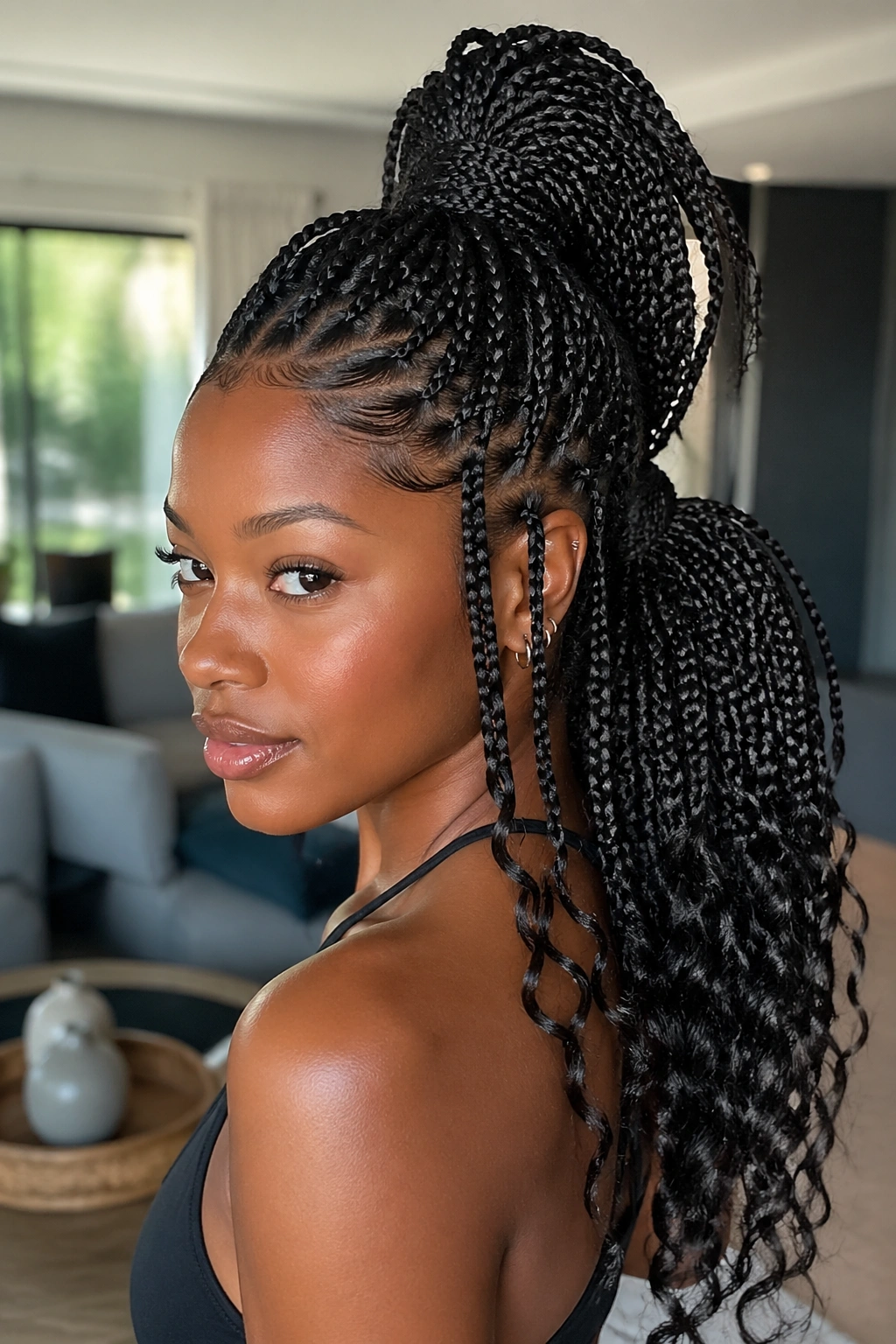
A stacked ponytail gives you two levels instead of one. One section sits high and another sits lower, so the style looks fuller without actually adding hair.
That layered setup helps with long box braids because it spreads out the weight. A single high ponytail can tug hard; a stacked version shares the load and keeps the shape from dropping too fast. It also makes the back of the head look more full, which is handy if the braid set has a lot of length but the roots need a little lift.
The style works best when the top section is neat and the lower section blends in without a hard line between them. One wrapped braid around both elastics can hide the split. The stacked look should feel intentional, not accidental.
It’s a strong choice if you like volume and structure at the same time. The ponytail still moves, but it has a little architecture behind it. That’s what makes it different from a plain high pony or a soft half-up style.
15. Messy Crown-Volume Ponytail That Loosens Up Naturally
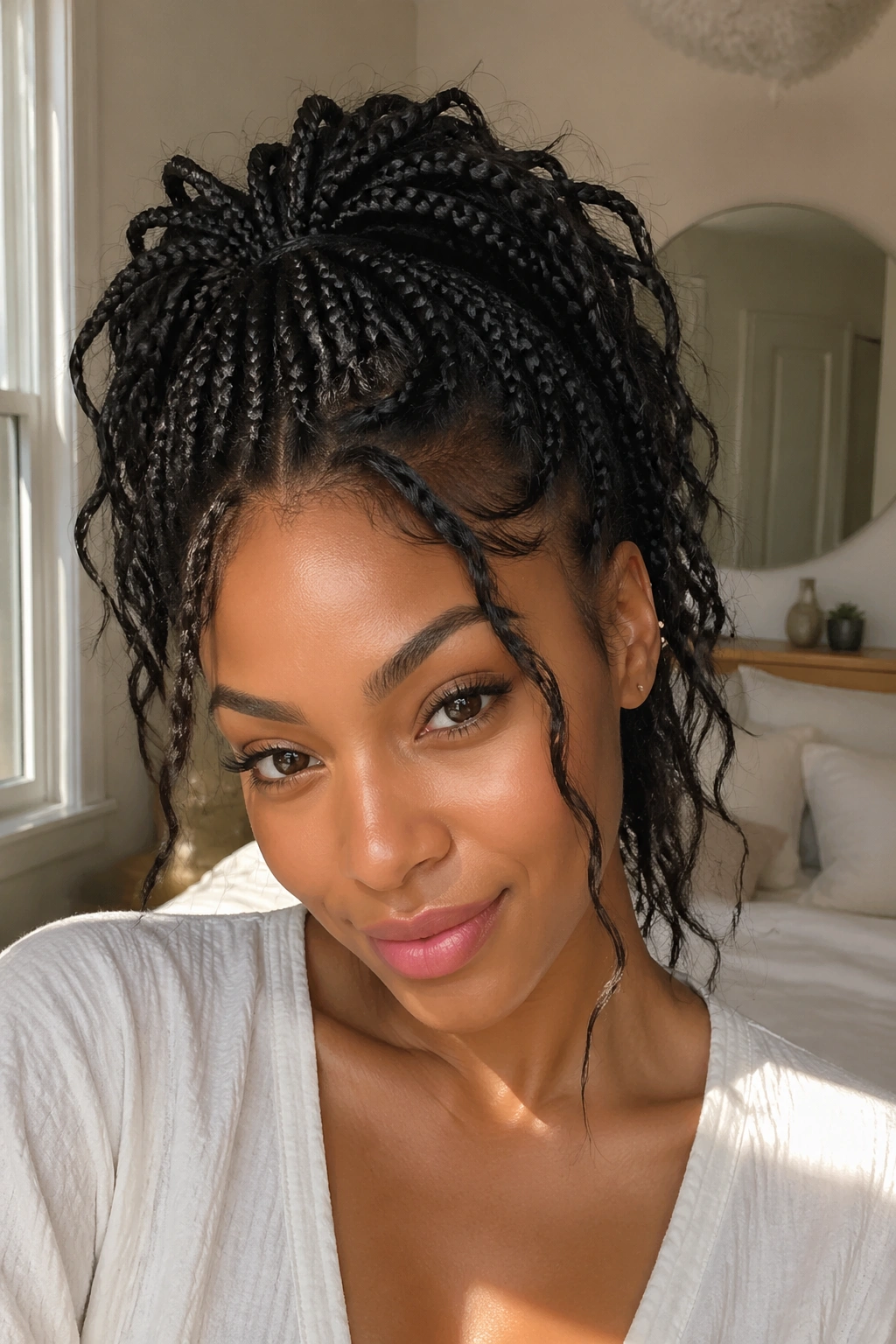
Why does a little lift at the crown matter so much? Because braids can sit flat in a way that drains the life out of the style. A small push upward fixes that fast.
The trick is not to comb everything smooth. Use your fingers to loosen the top around the crown, then gather the ponytail so it sits with a bit of air underneath. Leave a couple of temple pieces out and let the top braids stay slightly soft instead of tight to the scalp. That relaxed shape gives the whole style more shape.
How to keep it soft
- Lift the crown with your fingers, not a brush.
- Tug the top rows gently after tying the ponytail.
- Leave 2 face pieces out if the front feels too closed.
- Skip heavy gel unless your edges need it.
This is the sort of ponytail that gets better the longer you wear it. A few curls separate. A little frizz shows up. The style ends up looking more natural, which is exactly what a boho braid ponytail should do.
16. Waist-Length Ponytail With Loose Boho Ends
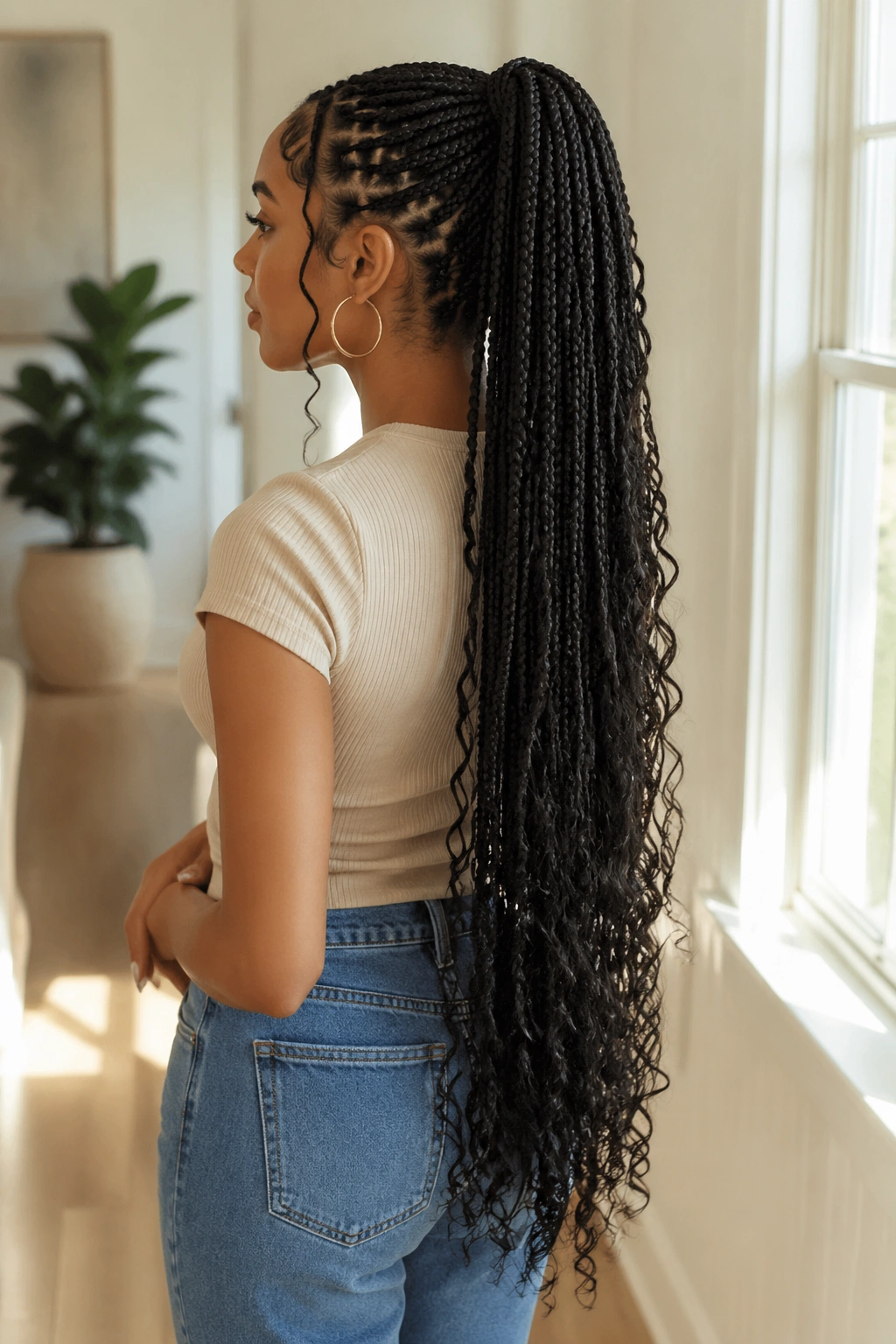
When your braids are long enough to hit the waist, the ponytail stops being a small detail and turns into a full shape down the back. That can look gorgeous, but it also means weight matters.
A waist-length ponytail usually works best at mid-head or low. Very high placement can pull too much and make the style feel tiring. Keep the base secure, then let the length fall naturally. The boho part comes from the ends — soft curls, loose bends, maybe a few wisps around the hairline.
A half-inch-to-one-inch curl zone at the bottom is often enough. You do not need to curl the entire tail. Just the last 8 to 10 inches can change the whole feel.
- Best with knotless braids or lighter-medium braid sizes.
- Use two elastics if the tail feels too heavy.
- Refresh the ends with mousse and a little water.
- Keep the neckline clean so the length can show properly.
This is a dramatic style, but not in a loud way. It moves when you walk. It falls over coats well. And it looks especially strong in photos because the line of the ponytail gives the whole back shape something to do.
17. Knot-Wrap Ponytail With Gold Cuffs
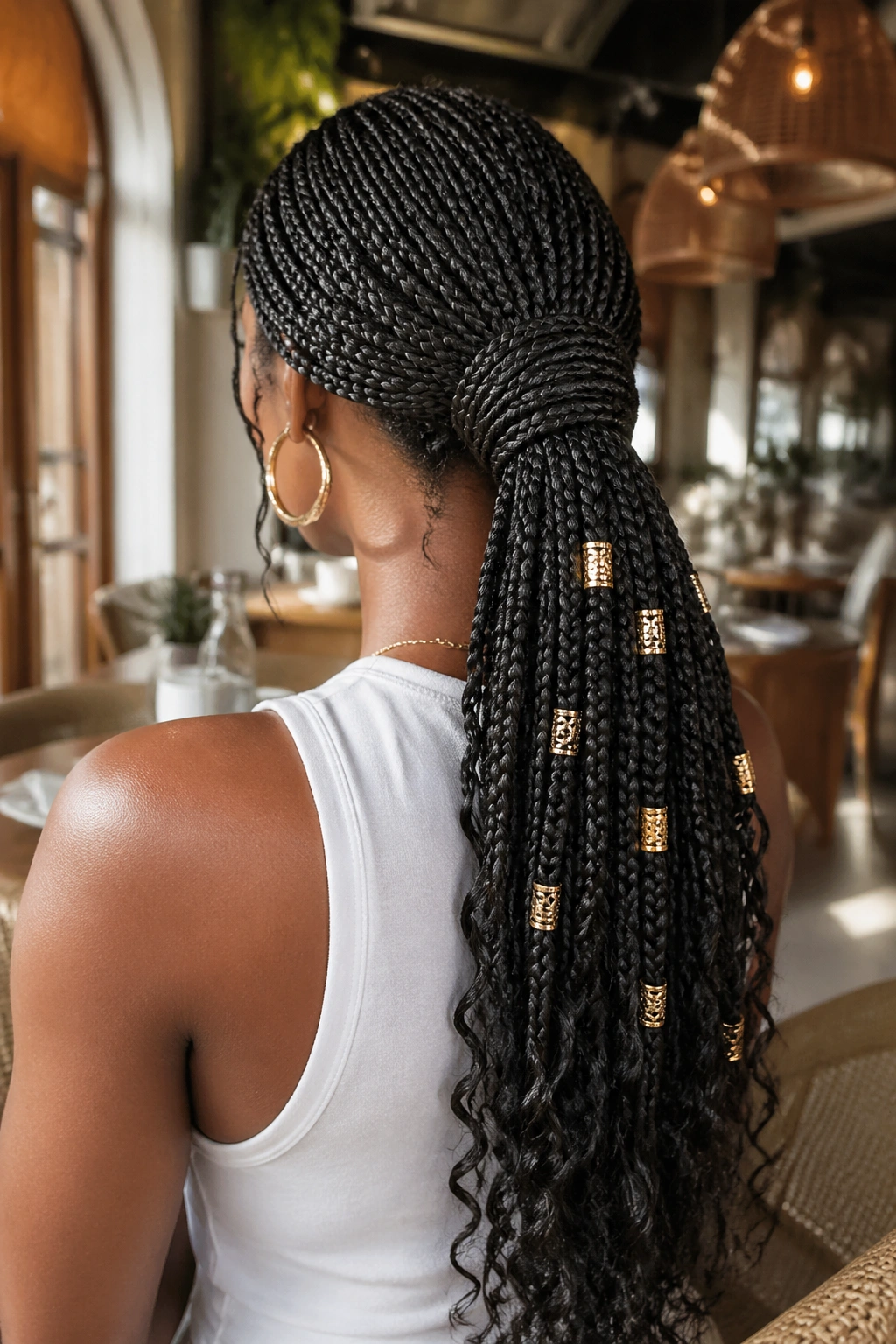
A knot-wrap ponytail is what happens when you want the elastic completely hidden and the finish to look thought through. One braid wraps around the base, cinching the ponytail into place and covering the tie at the same time.
Gold cuffs make this version stand out. Not every braid needs them, either. A few cuffs spaced along the tail are enough to catch the eye without turning the whole style into hardware overload. On dark braids, gold has a warm shine that reads clearly even in low light. Silver works too, but gold has a softer, richer feel against most braid colors.
The base should still be smooth. A knot wrap looks best when the ponytail is secure and the wrap braid lies flat against the rest. If the base is puffy, the wrap loses its clean line.
This is one of those styles that looks especially good at dinner, on a night out, or anytime you want the braids to feel a little more dressed. Nothing fussy. Just a sharp finish and a few well-placed details.
18. Festival Ponytail With Long Face-Framing Tendrils
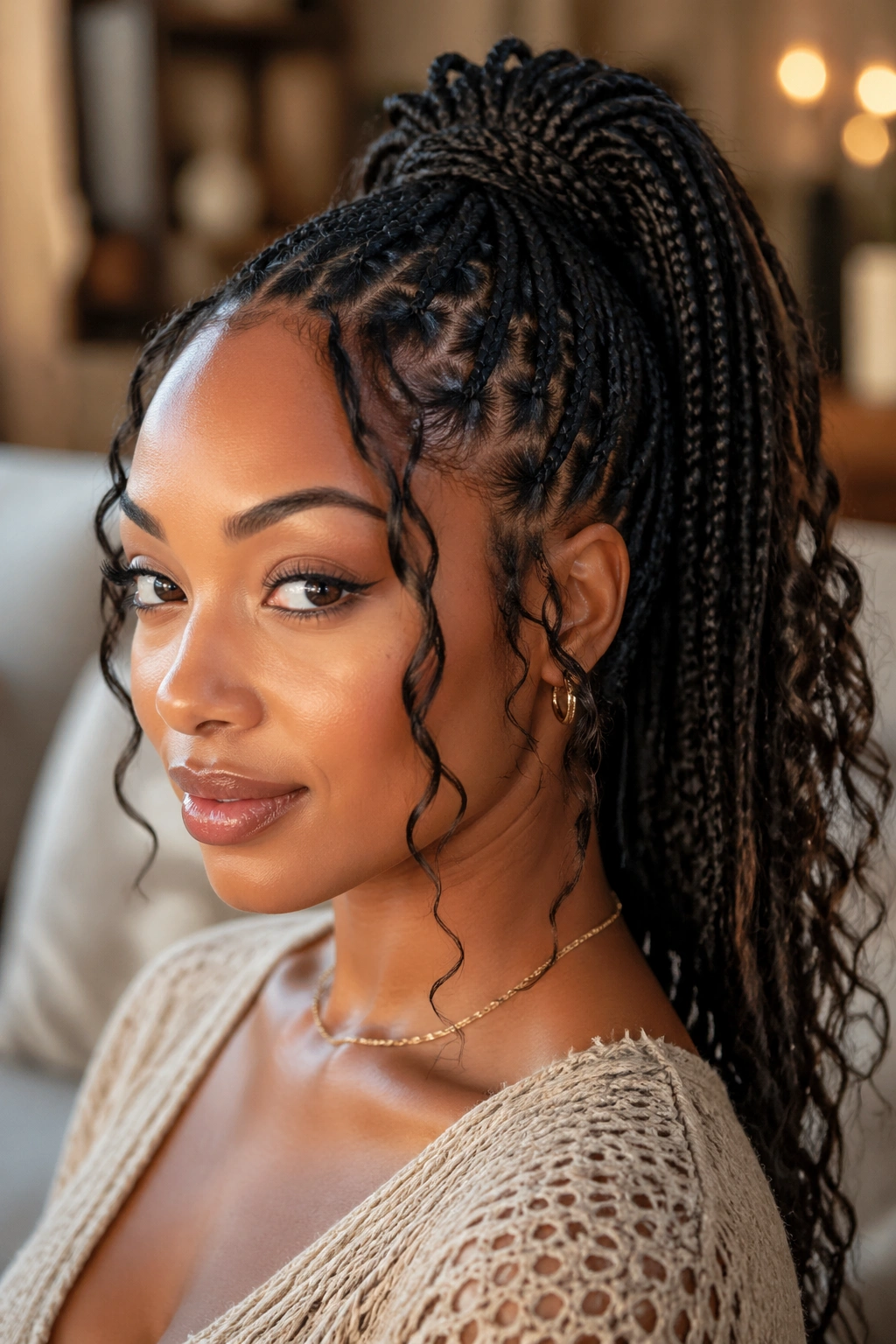
This is the most relaxed version of the bunch, and probably the most forgiving too. The whole point is movement. Long tendrils around the face, a ponytail that doesn’t sit too stiff, and enough texture that the style still looks good after a few hours of wear.
The best version usually keeps the ponytail at mid-height and lets the front curl pieces do most of the softening. You can add a few tiny braids near the base, but the real signature is the length of the face-framing strands. They should be long enough to brush the cheekbones or sit just below them. Short tendrils can look accidental. Longer ones feel deliberate.
This style plays well with denim, crochet tops, big earrings, and makeup that has a little warmth to it. It also handles a bit of frizz better than sharper styles. That matters more than people admit. A ponytail that still looks good after it loosens up is a better ponytail than the one that only behaves for the first ten minutes.
The trick is not making it perfect. The trick is letting it move.
