


Half-and-half box braids with heart designs have a sneaky advantage: they look intricate before you even add accessories. A crisp heart part at the front hairline, then braids spilling into a ponytail or down the back, gives you two moods in one style. It’s neat without feeling stiff.
The parting does most of the work. If the sections are clean and the heart is drawn with a steady tail comb, the whole style reads sharper; if the parting is fuzzy, the heart turns into a blob and the braid pattern loses its shape. That’s why braid size, tension, and placement matter more than bead count or shine spray.
I like this category because it can go polished, sporty, sweet, or a little dramatic without changing the base braid. A high half-up ponytail feels different from a low side sweep, and a tiny heart at the temple changes the whole mood. The braids do not need to be huge. They just need to be laid with intent and given enough room for the design to breathe.
A good heart design should be visible from the front first, then from the side when you move. If the curves are too tight or the braids are packed too close together, the shape disappears under weight and motion. The styles below lean on that balance: clean parting, smart placement, and enough variation to keep the look from feeling copy-pasted.
1. High Half-Up Half-and-Half Box Braids with a Tiny Heart at the Hairline
This is probably the easiest way to wear the heart idea without making the braids look crowded. Pull the top half into a ponytail high enough to lift the face, and leave the lower half loose so the length still shows. The tiny heart sits right at the front hairline, where it can actually be seen instead of getting swallowed by braid volume.
Why the Heart Reads So Clearly
The heart works here because the eye goes upward first. A high ponytail creates a clean vertical line, and the small heart softens it without fighting the shape. Keep the heart no wider than about two braid sections on each side, or it starts looking like a loop instead of a heart.
- Best with medium or small box braids.
- A wrapped ponytail base keeps the style tidy.
- Works well with one or two braid cuffs near the ends.
- A thin edge-control layer keeps the front crisp without looking heavy.
Tip: If the heart sits too low, the ponytail pulls the whole design back and you lose the shape.
2. Side-Swept Half-and-Half Braids with an Oversized Heart
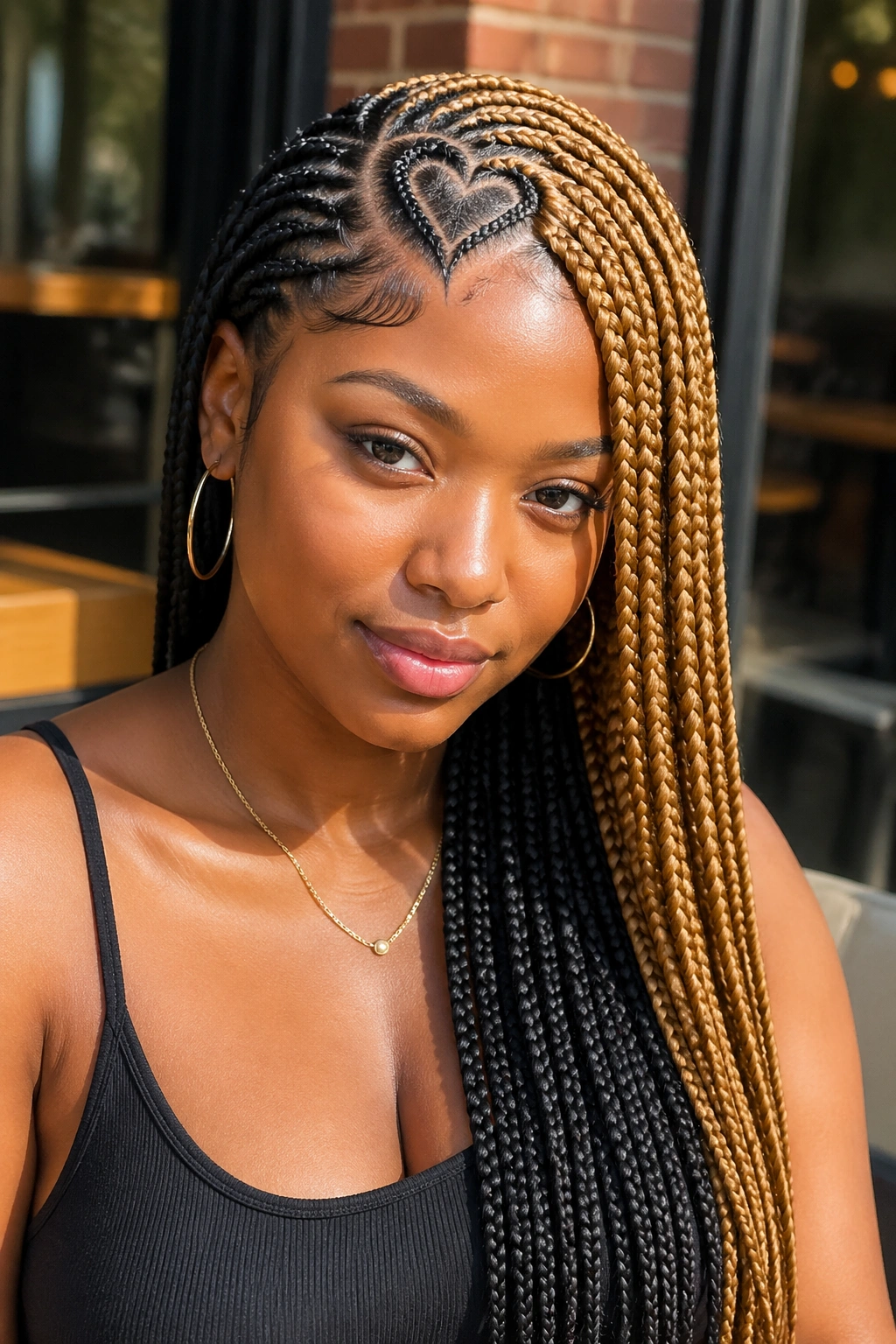
If you want the heart to look intentional, make it big and let the braids fall to one shoulder. The side sweep gives the design room, and a larger heart at the front doesn’t fight for attention. It feels bolder than a centered part, and honestly, it has more personality.
The trick is balance. One big heart is enough here. If you add extra curves, extra slashes, or too many tiny sections, the front starts to look busy instead of graphic. A deep side part keeps the shape long and clean, which makes the heart easier to read from across a room.
This version suits people who like their braids to move. When you turn your head, the loose side catches light and the heart flashes for a second, then disappears again. That little bit of motion is what makes the style feel alive.
3. Braided Top Knot with Heart Corners at the Temples
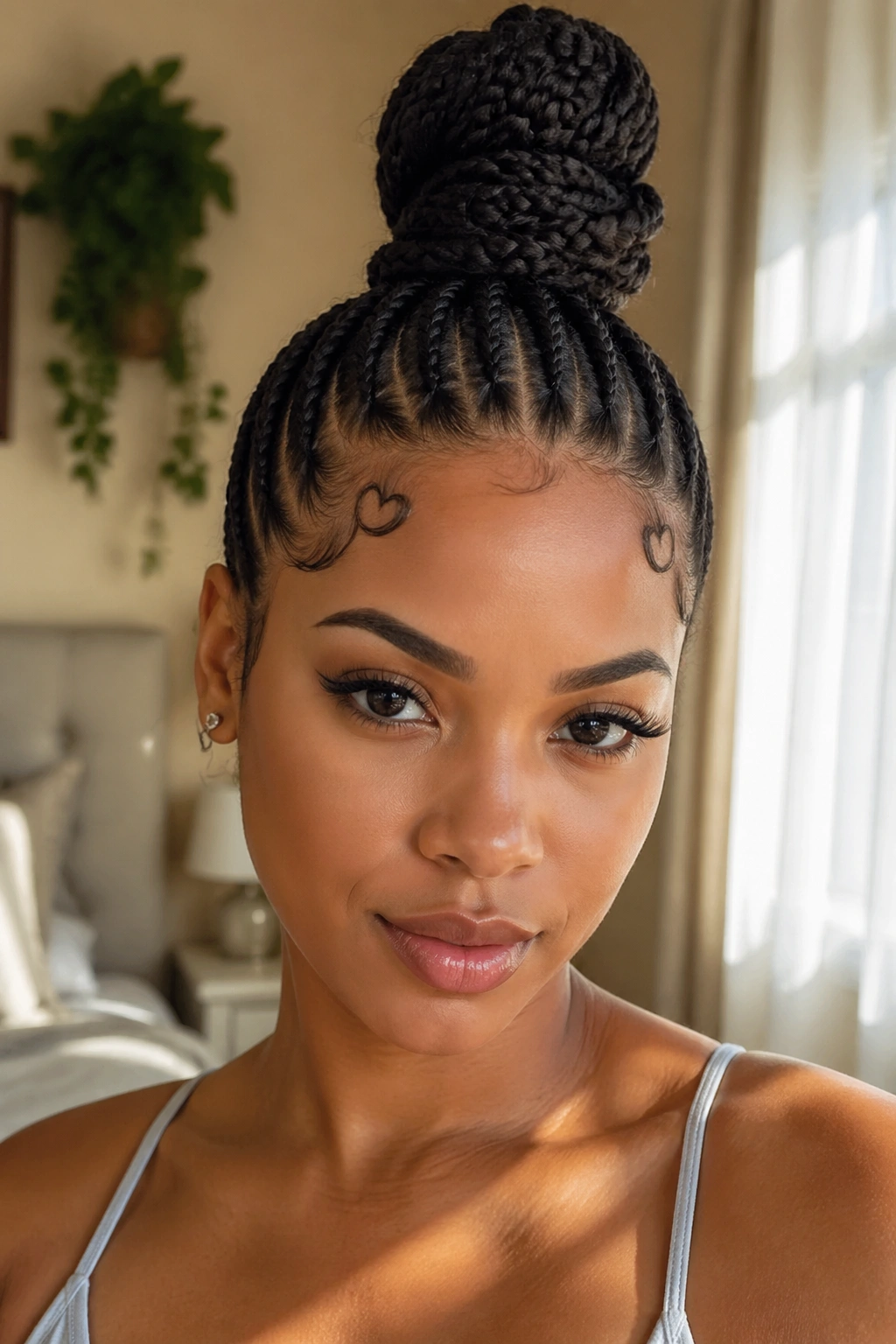
Can a top knot and a heart design share the same head without looking crowded? Yes, if the knot sits high and the heart stays near the temples. That placement keeps the face open and gives the style a real shape instead of just stacking braid elements on top of one another.
The temples matter more than people think. A small heart tucked there frames the forehead the way a good brow shape frames eyes. You do not need a huge design; in fact, a modest heart usually looks cleaner once the top knot starts adding height.
The knot itself should not be so tight that it turns the whole style into a helmet. Leave a little softness at the base. That tiny bit of slack keeps the braids from pulling hard on the scalp, and it makes the heart corners look like part of the style instead of an afterthought.
4. Center-Part Box Braids with a Stitched Heart
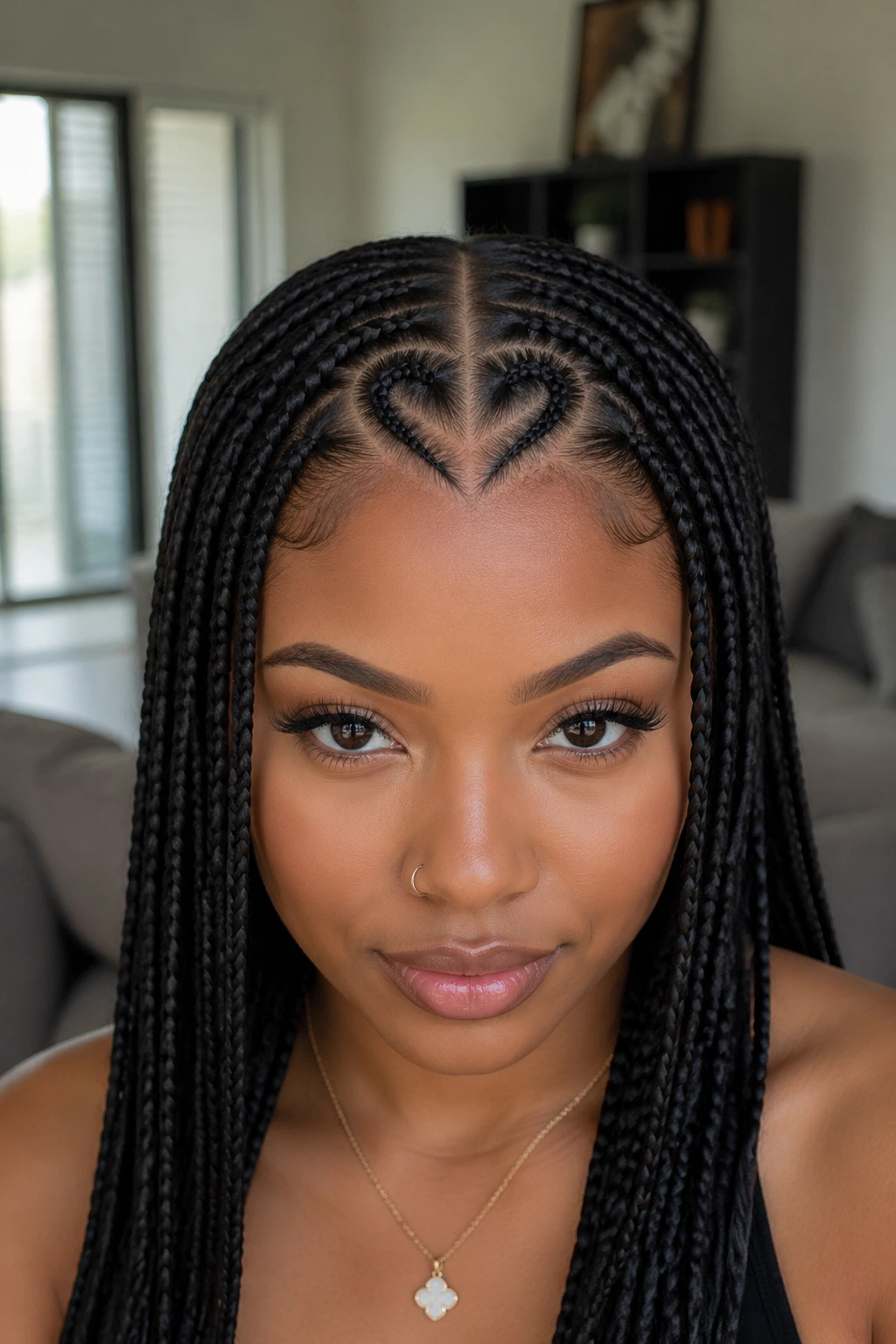
This one is for anyone who likes a neat front view. A sharp center part gives the heart a frame, and the braids on both sides create a mirror effect that makes the design feel even more deliberate. It’s one of the cleanest ways to wear heart designs with box braids.
The stitched look matters. Instead of a single deep curve, the heart can be built from short parting lines that meet in the middle. That gives the style a slightly woven feel, almost like the design was sewn into the scalp rather than traced there. It looks precise without being fussy.
I like this version with medium-size braids because they hold the shape without taking over the whole head. Tiny braids can make the heart disappear, and jumbo braids can make the center look too heavy. Medium thickness is the sweet spot here, especially if you want the style to hold its shape for more than one wear.
5. Crown Halo Braids with Heart Cutouts at the Temples
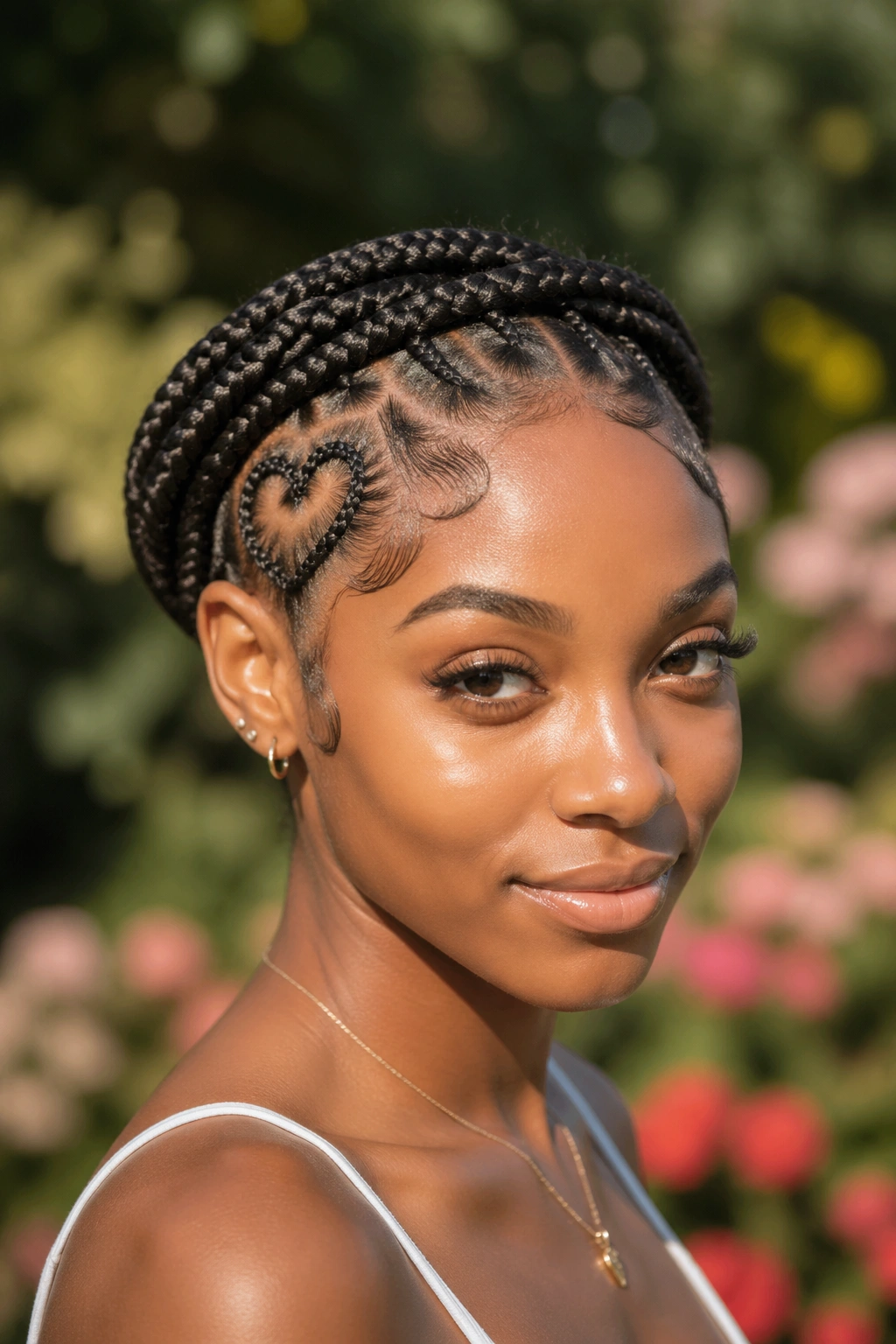
A crown braid already has a soft, dressed-up feel. Add heart cutouts at the temples, and the whole style stops being purely romantic and starts feeling a little playful too. It’s a strong choice when you want the front of the hair to look detailed before the rest of the braids even hit your shoulders.
Where the Design Should Sit
The cutouts need space. If the temple hearts sit too close to the braid line, they blur into the crown. Leave a clean strip between the heart and the halo braid so each shape can stand on its own.
What Keeps It From Getting Busy
- Keep the crown braid smooth and not too thick.
- Use small-to-medium hearts, not giant ones.
- Add one or two cuffs at the ends, not all over.
- Let the hairline stay visible so the cutouts read clearly.
The result feels balanced, which is harder to pull off than it sounds. Too many braid styles collapse into one another. This one works because each piece has a job.
6. Jumbo Box Braids with Feed-In Heart Lines
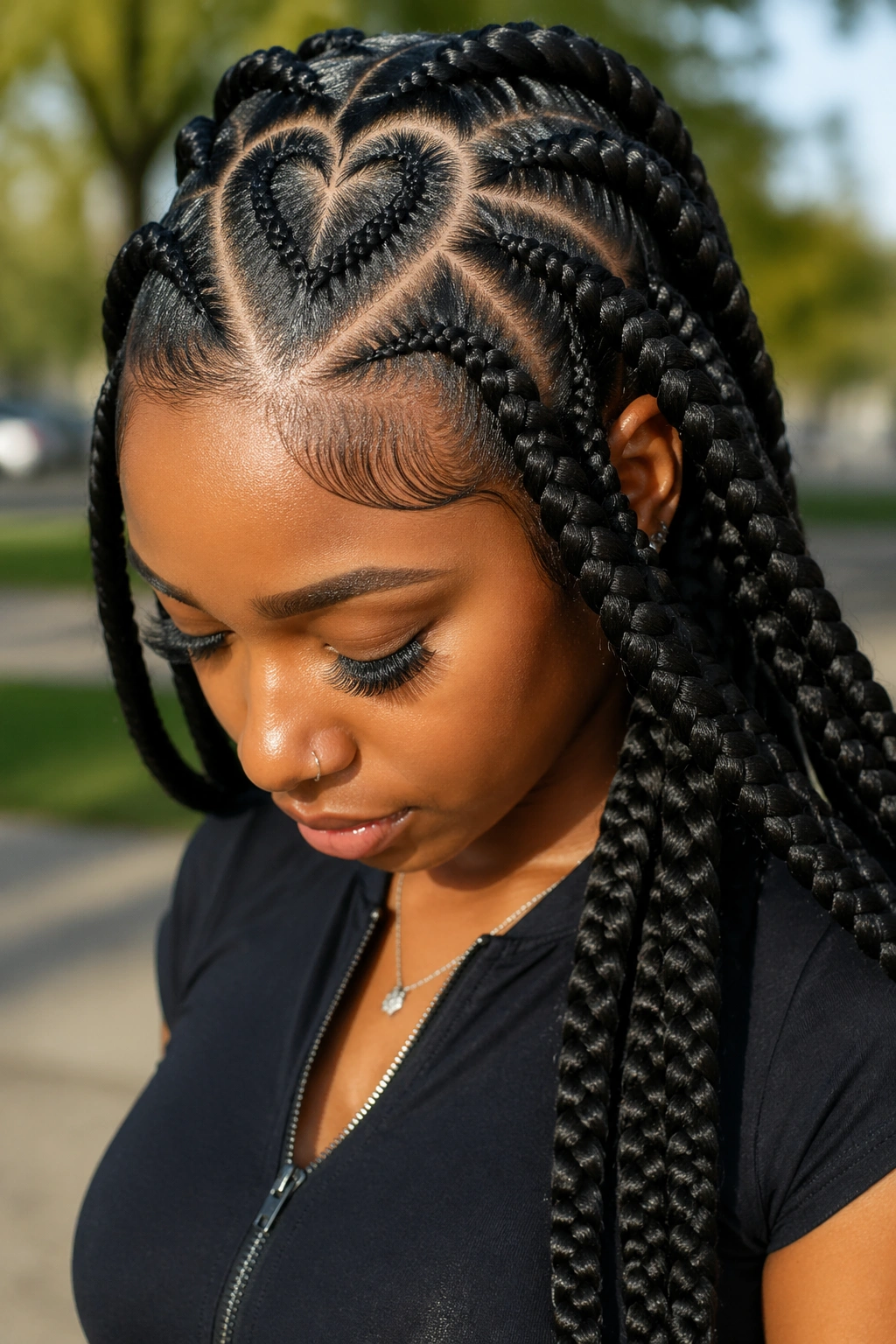
Unlike tiny braids, jumbo box braids make the heart readable from a few feet away. That matters. If the pattern is supposed to be the star, the braid size needs to support it instead of hiding it. Feed-in heart lines also help because they taper into the design instead of slamming into it all at once.
Jumbo braids have weight, so the parting needs to be broad enough to carry that shape. A tiny heart on a huge braid set can look lost. A wider heart, on the other hand, feels anchored. It gives the front of the style a strong visual center, which is exactly what you want with thicker sections.
This is a good pick if you like lower braid counts and shorter chair time. The style still looks detailed, but the bigger pieces make the heart easier to maintain. You spend less time worrying about the design and more time enjoying the shape.
7. Knotless Half-and-Half Braids with a Soft Curved Heart
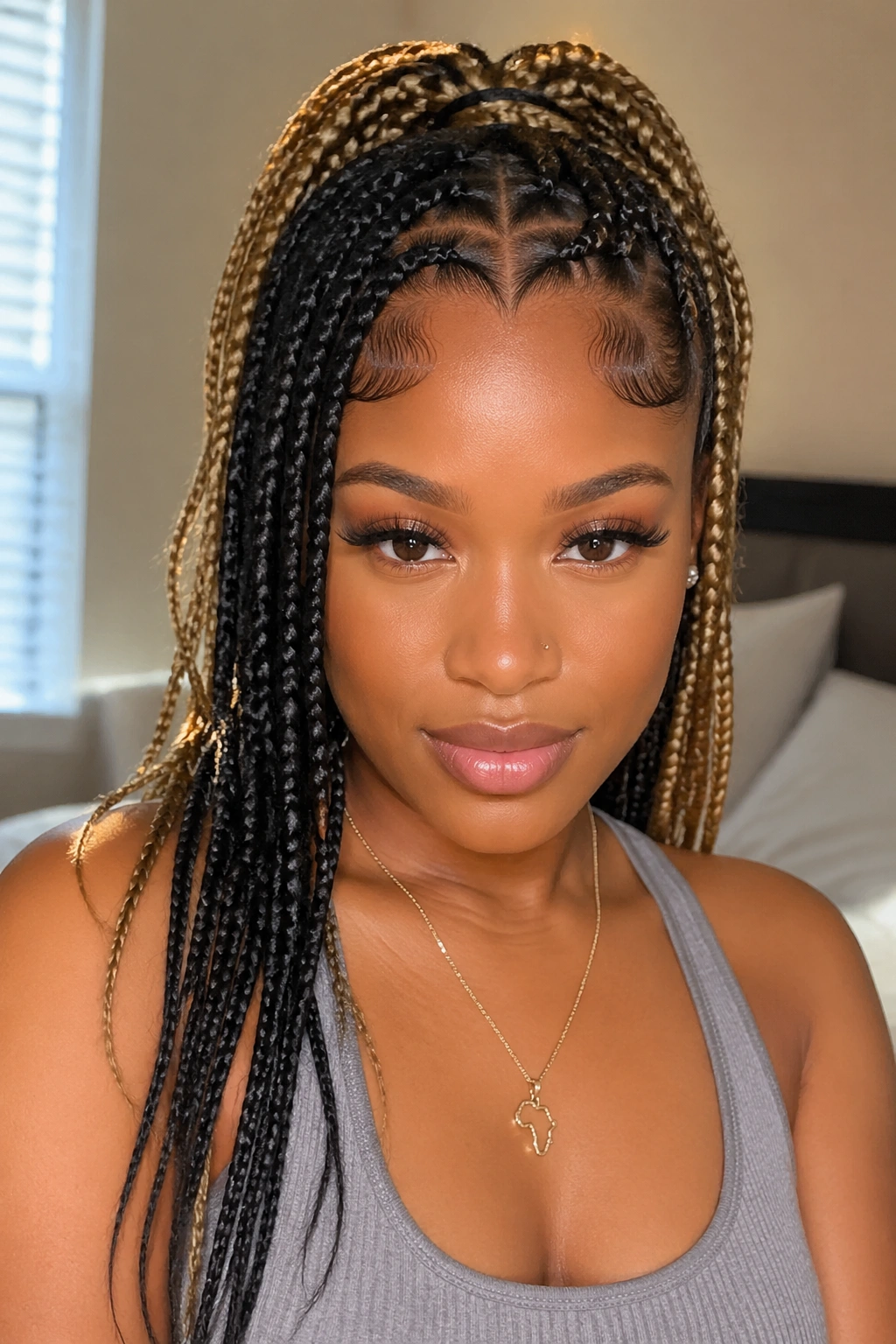
Knotless braids change the whole feel of a heart design. The start at the scalp is slimmer, so the front doesn’t look bulky, and the heart can curve more gently without fighting a heavy knot at the base. That softness matters if you want the style to feel light and easy.
Why Knotless Helps
Knotless braids let the heart sit closer to the scalp line without that dense knot pressing into the design. The result looks smoother around the hairline, and the heart usually reads more clearly because there’s less visual weight sitting on top of it.
Best Way to Wear It
- Use a soft, rounded heart instead of sharp corners.
- Keep the top half neat so the knotless start stays visible.
- Choose braid length that still lets the heart show when the hair moves.
- Skip heavy accessories near the front.
This version feels calmer than the sharper, more graphic styles. It’s the one I’d hand to someone who wants the heart detail but does not want the front of the style to look loud.
8. Waist-Length Braids with a Low Heart Accent
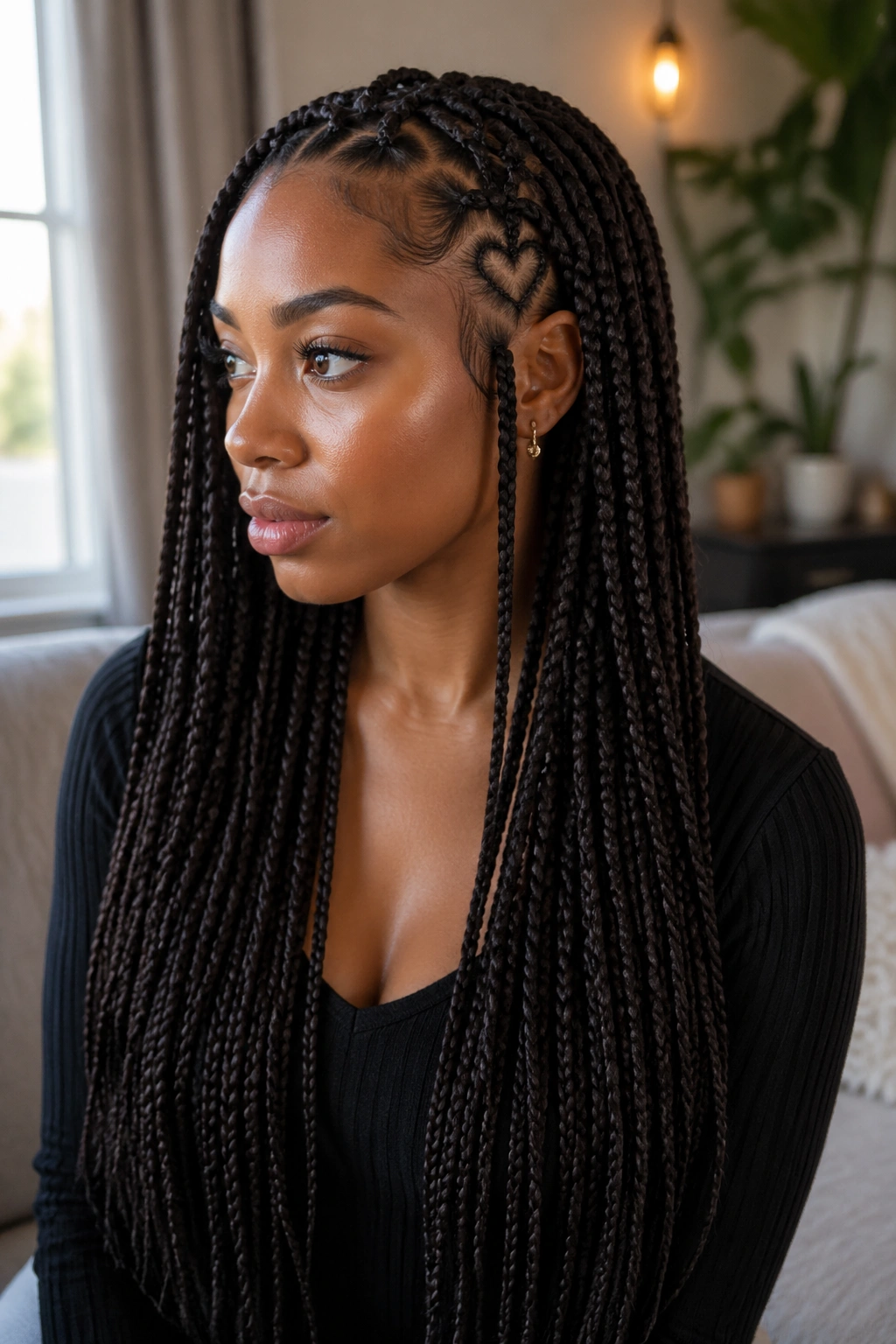
A heart doesn’t have to live at the front to matter. Put it lower, just above the ear or at the base of the half-up section, and the whole look gets softer. The long waist-length braids do the dramatic work, while the heart sits there like a quiet detail that rewards a second look.
That lower placement is smart if you wear your braids down a lot. The design stays visible when you pull the top section back, but it doesn’t scream for attention every second. It feels more relaxed than a high-heart style and a little easier to wear every day.
Long braids need strong anchoring at the base, so the heart should be broad enough to hold its shape once the length starts swinging. If the curves are too small, the motion of the braids can flatten them out fast. Give the design room, and the style reads clean even when the hair moves.
9. Double Buns with Twin Heart Parts
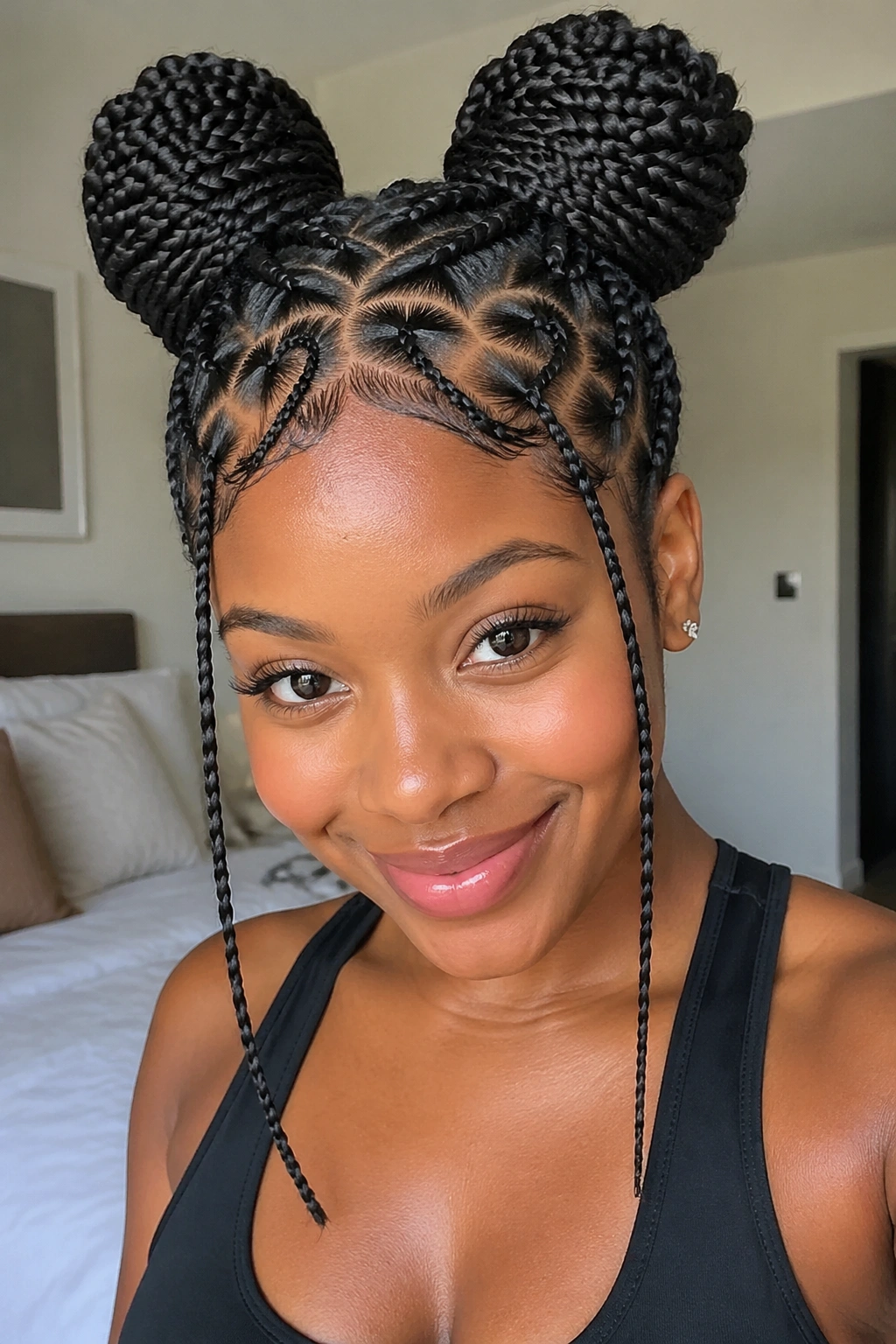
Double buns and twin hearts have a playful energy that does not need much help. The buns make the top of the head look lifted, while the hearts at the front create a neat frame around the face. It’s a style that feels intentional without acting like it’s trying too hard.
The best part is symmetry. Two small hearts can sit near each bun, or one on each side of a center part, and the whole look stays balanced. If the buns are too far back, though, the hearts lose their job. Keep them forward enough to be part of the first thing people see.
- Works well for medium-length braids.
- Keep the buns compact so they don’t sag.
- Use a soft brush only on the front sections if you want a sleek finish.
- A little mousse on the braid ends keeps the shape tidy.
This style has a younger, lighter feel, but it does not have to read childish. The difference is in how clean the parting is.
10. Straight-Back Feed-Ins with a Center Heart Stitch
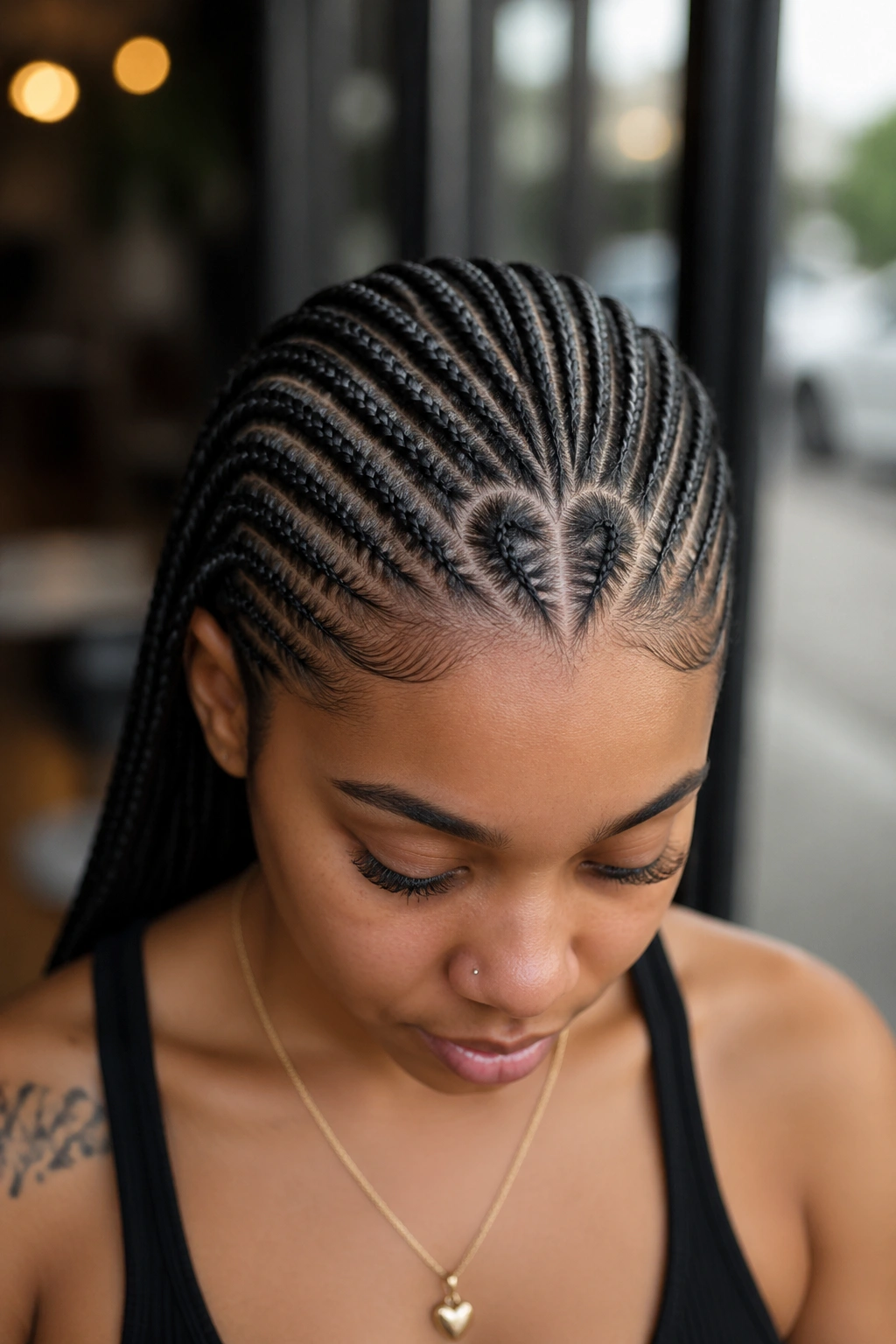
Want a heart design that still looks neat in a work setting or on a packed day? Straight-back feed-ins with a center heart stitch do that job nicely. The lines stay orderly, the front is clear, and the heart gives the style one focused detail instead of a bunch of competing ones.
The stitch effect is what makes this version interesting. Short, careful parting lines can form the heart at the center before the braids go straight back, which keeps the style from feeling too busy. It’s a sharp look, but not harsh. The straight-back direction softens the whole thing.
This one also wears well under hats and scarves if you choose to cover your hair. The center heart still makes sense when the braids are pulled back, which is more than I can say for some styles that only look good from one angle.
11. Color-Blocked Braids with a Heart Part That Pops
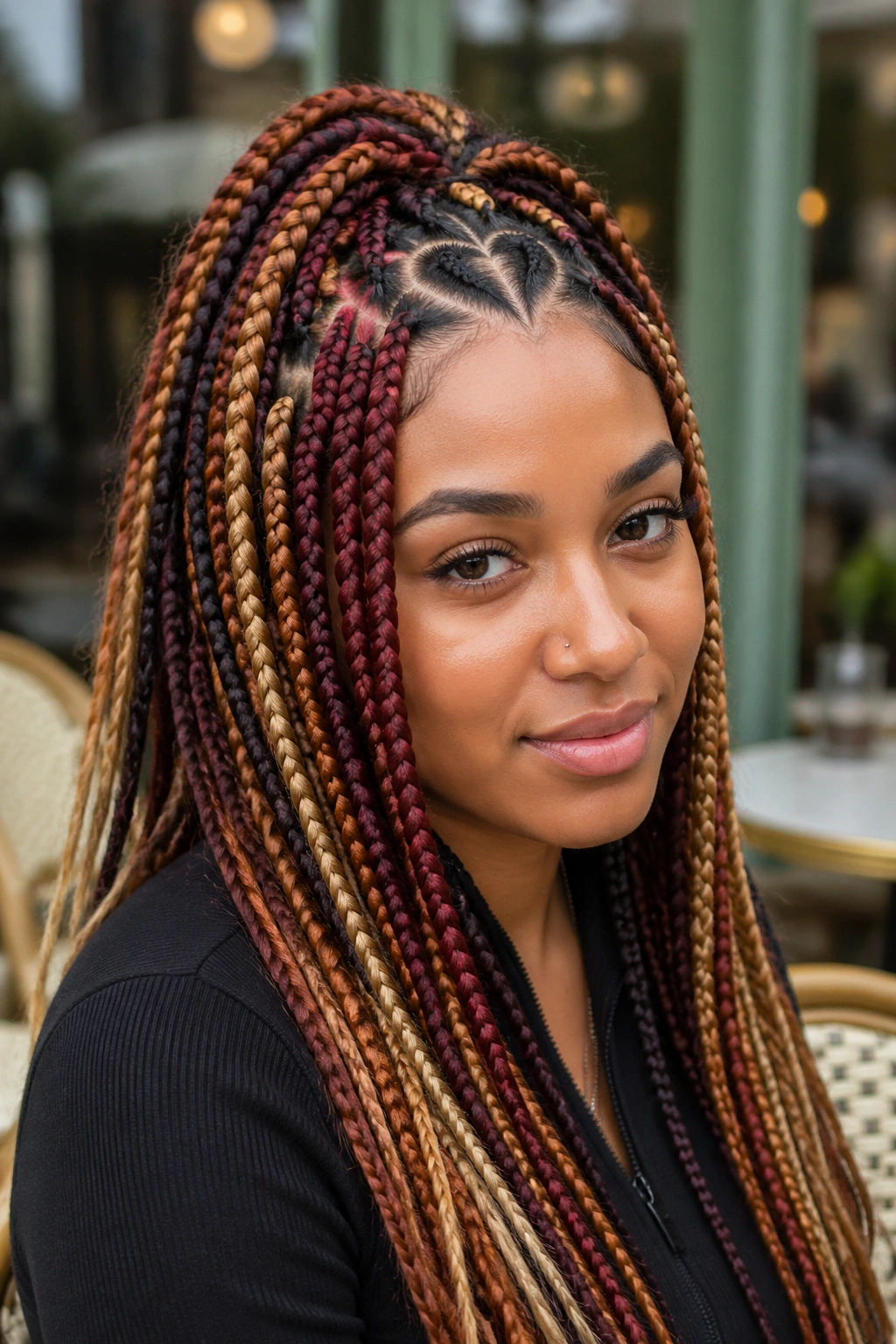
Color changes everything. Burgundy, copper, honey blonde, and deep brown can all make a heart part stand out more, but the parting still has to stay simple. If the hair color is already doing the heavy lifting, the design should stay crisp and minimal so the eye knows where to land.
A color-blocked set works especially well when the heart sits against a darker base and lighter braid pieces start at the top. That contrast makes the shape look sharper without needing extra braid patterns around it. You get movement, depth, and a little drama, all from one clean front detail.
I’d keep accessories light here. A colored braid set with too many cuffs can start to feel noisy, and the heart gets buried under all the extras. One or two small metal pieces are enough if you want to keep the focus on the parting.
12. Medium Box Braids with a Side Heart and Soft Swoop
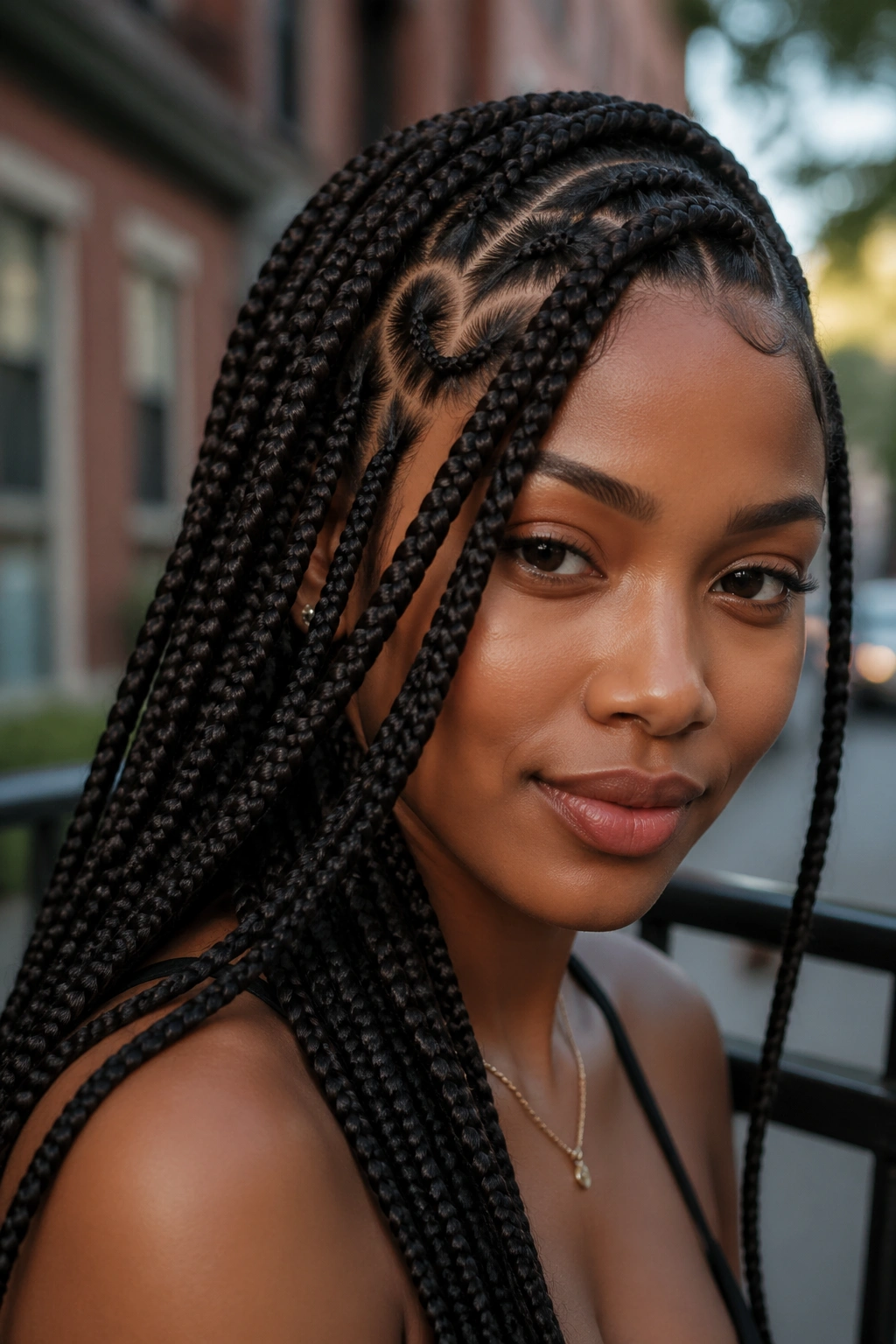
A side heart gives you movement without the full commitment of a deep side sweep. The braid direction can drift gently across the front instead of dropping hard over one shoulder, which makes the style feel easier to wear. It’s a good middle ground if you want softness but still like structure.
Compared with a center-heart design, this one has more motion. The swoop pulls the eye diagonally, and the heart sits right in that line so it does not feel pasted on. That diagonal flow flatters the front of the face because it breaks up a square braid frame.
This is one of the few styles where I’d keep the heart slightly wider than you think. A side heart can shrink visually once the braids start falling. Give it a bit more width and it keeps its shape when the hair settles.
13. Braided Bun with Loose Length and a Heart Base
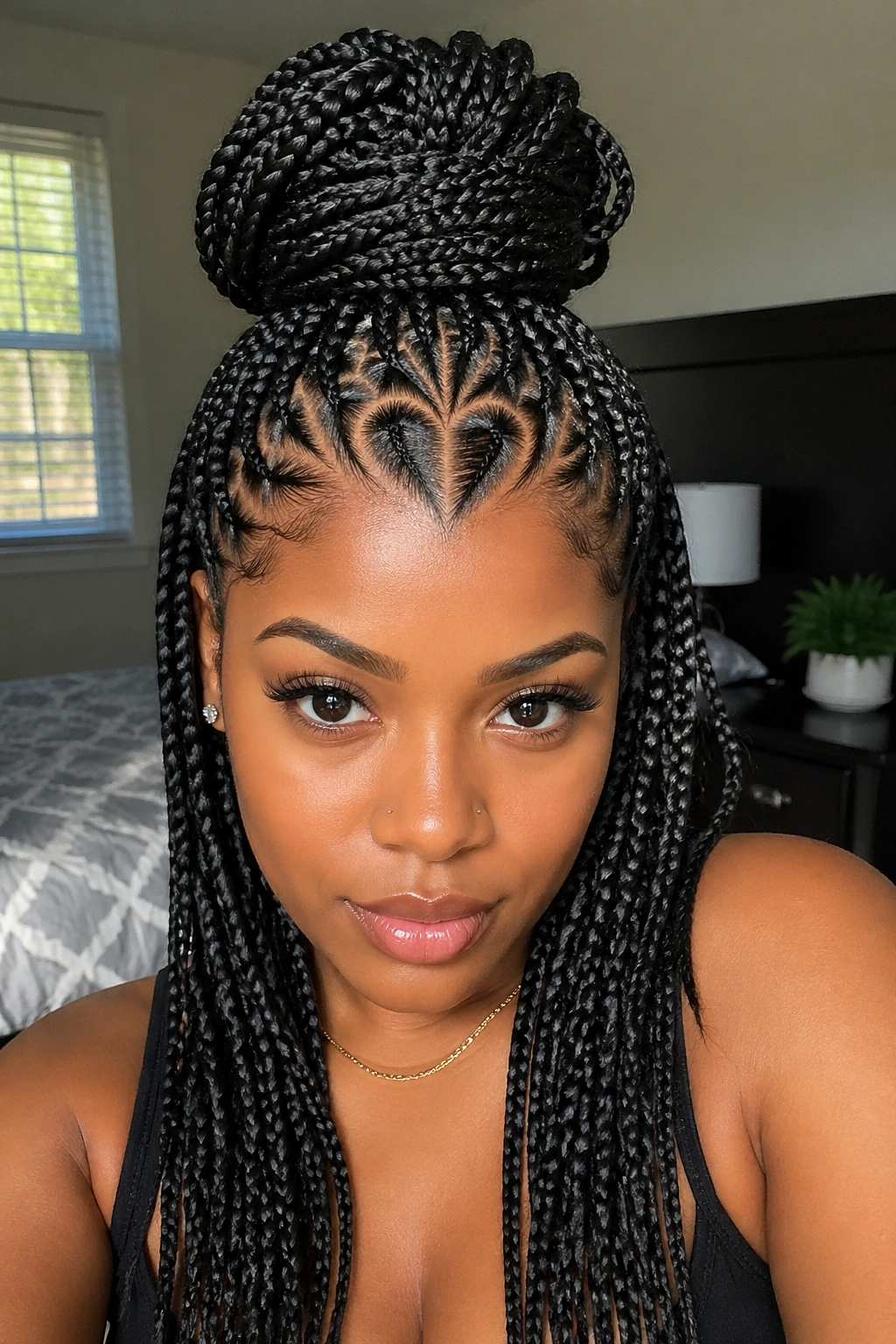
A braided bun with loose length underneath gives you two textures in one style. The bun sits up top, the back length keeps the look soft, and the heart at the base ties the whole shape together. It feels finished without looking locked down.
Where the Bun Should Sit
The bun works best when it sits just above the heart rather than directly on top of it. That tiny bit of spacing lets the design breathe. If the bun lands too low, the heart gets hidden. Too high, and the braid base looks stretched.
How to Keep the Base Smooth
- Pull the top section in with steady tension, not a yank.
- Wrap the bun once or twice only.
- Leave enough of the lower section down so the style still feels half-up.
- Use a pin or two if the bun starts to slide.
This style is a good choice when you want something that can go from casual to polished without much fuss. The heart at the base is the detail people notice when they get close.
14. Beads and Cuffs Framing a Heart Design
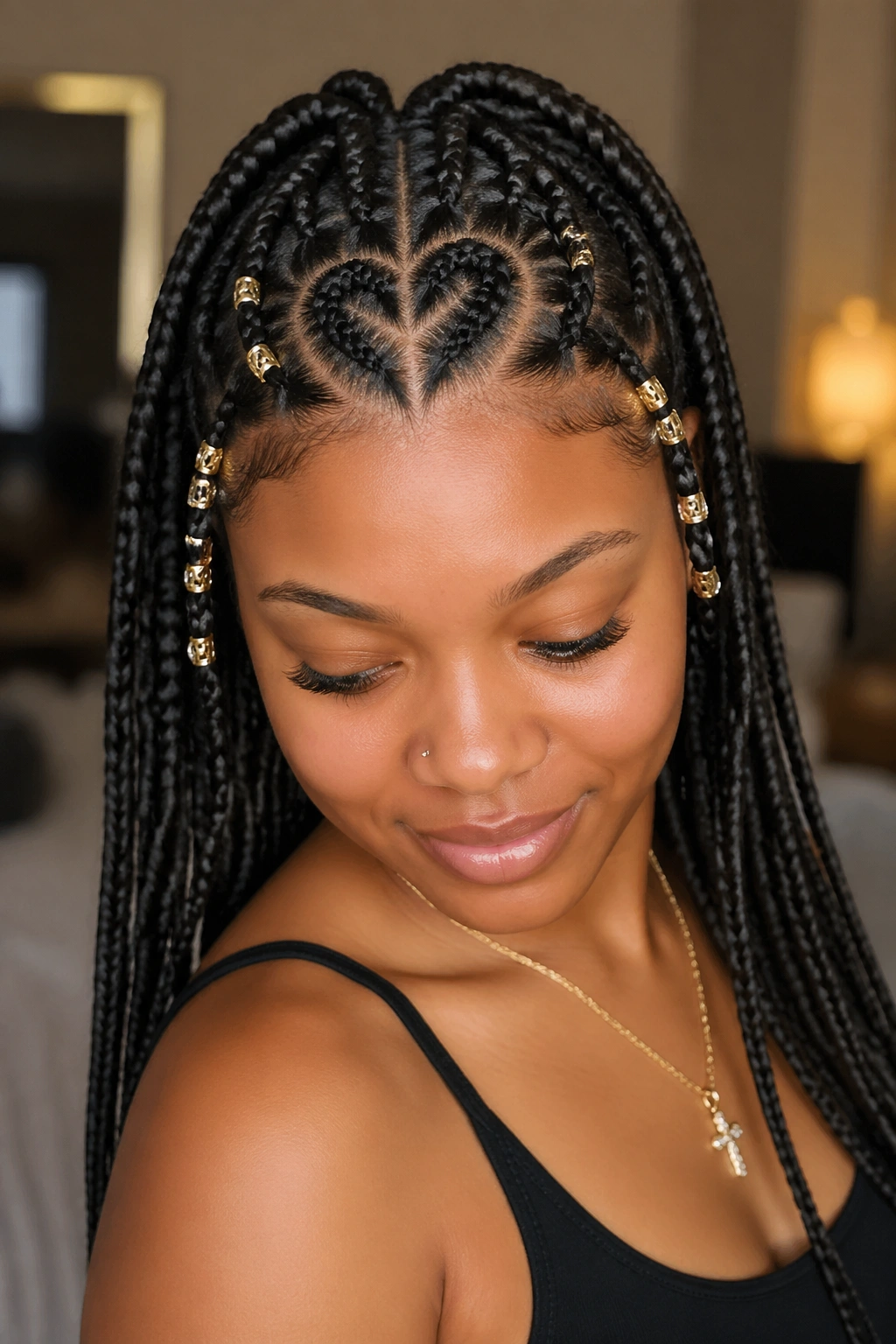
Accessories can help a heart design, but they can also ruin it fast. The smartest move is to frame the heart, not fight it. Put beads or cuffs on the braid lengths, then leave the front parting clean so the heart still reads like the main event.
I prefer smaller accessories here. Clear beads, gold cuffs, and a few matte rings keep the style from getting overloaded. Big dangling pieces near the hairline pull attention away from the heart, and that defeats the whole point. Let the braid ends carry the shine.
There’s also a practical side to this. Heavy accessories can tug on already detailed braids, especially if the heart part sits near thinner hair. Lighter pieces sit better and move more naturally, which keeps the style from feeling weighed down by its own decoration.
15. Short Bob Box Braids with a Front Heart Detail
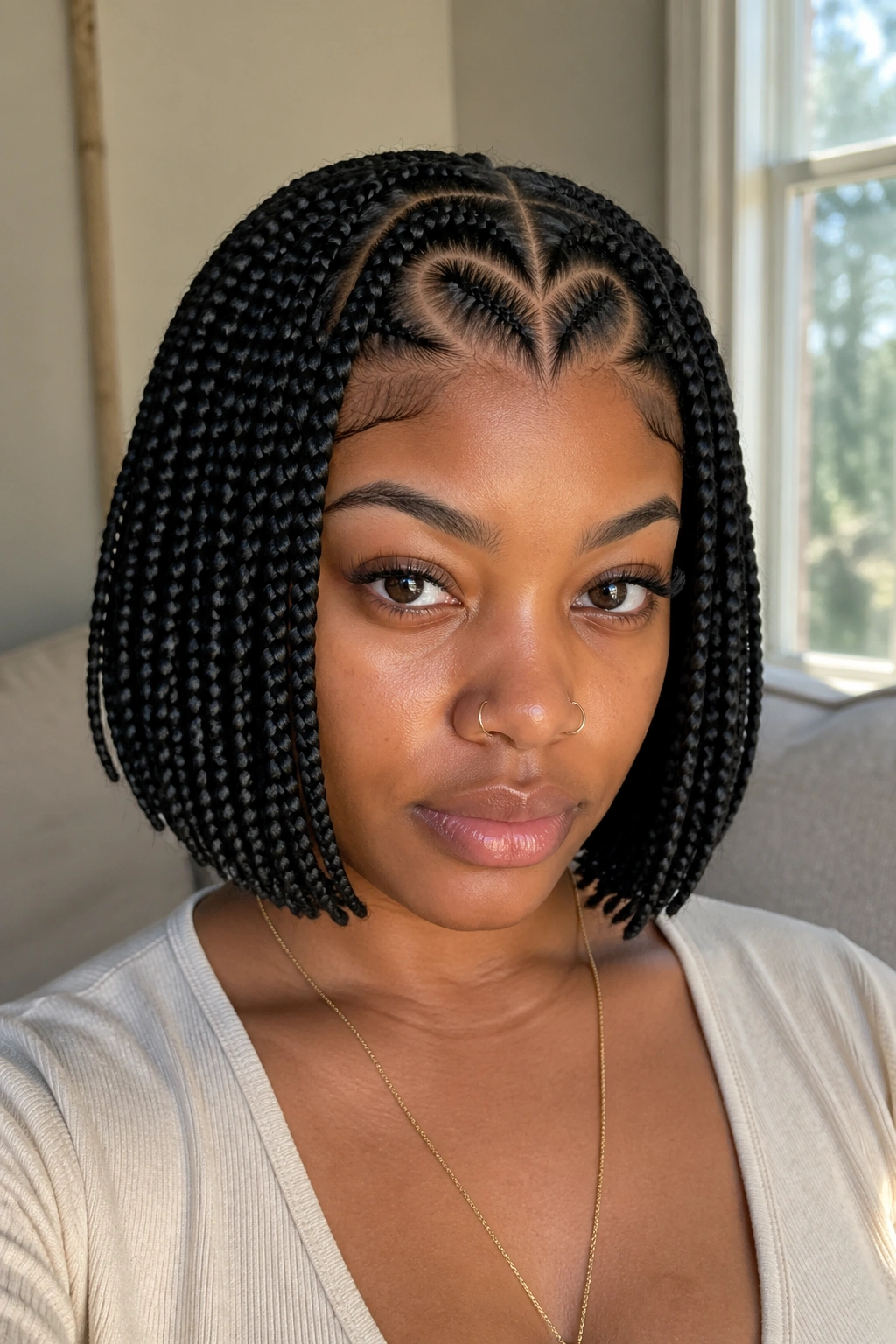
Short braids make the heart feel sharper, not smaller. That’s the part people miss. When the length stops at the chin or collarbone, the eye has less hair to scan, so the front design gets noticed faster. A front heart on a bob can look cleaner than the same design on waist-length braids.
This version is also easier on the neck and shoulders. The style still has shape, but the lighter length means the heart stays in view more often instead of getting lost in motion. If you like braids but hate feeling weighed down by them, a bob is a smart move.
The front detail should stay modest. A very large heart can dominate short braids and make the style feel cramped. A small, crisp shape looks more balanced, especially when the braids hit in a blunt line around the face.
16. Zigzag Parting with a Heart and Half-Up Ends
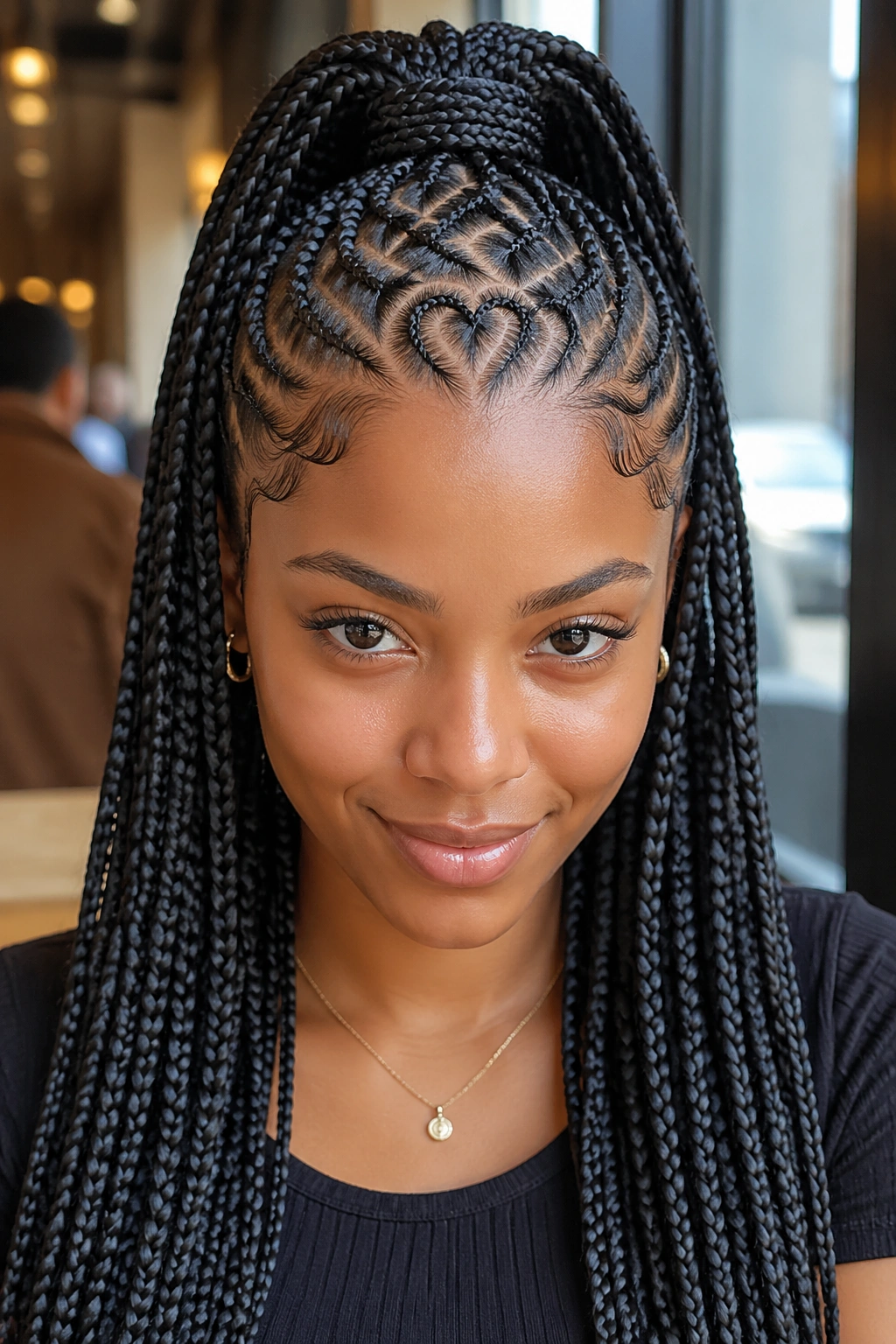
The zigzag parting gives this style some attitude right away. Add a heart near the front, and the whole thing starts to feel layered without turning messy. It’s a strong option if plain straight parts bore you and you want the pattern to do more of the talking.
What Makes the Shape Work
The zigzag should stay shallow. Deep, choppy angles can compete with the heart and make the front read busy. A soft zigzag keeps the movement going while still letting the heart stay the focus.
How to Keep It Wearable
- Use medium braids so the parting lines stay visible.
- Keep the half-up section smooth and not overly tall.
- Let the heart sit in the clearest open space.
- Avoid stacking too many accessories at the front.
This one has energy, no question. It feels fun and a little bit mischievous, which is probably why people keep asking for it after seeing it once.
17. Layered Braids with Three Small Hearts
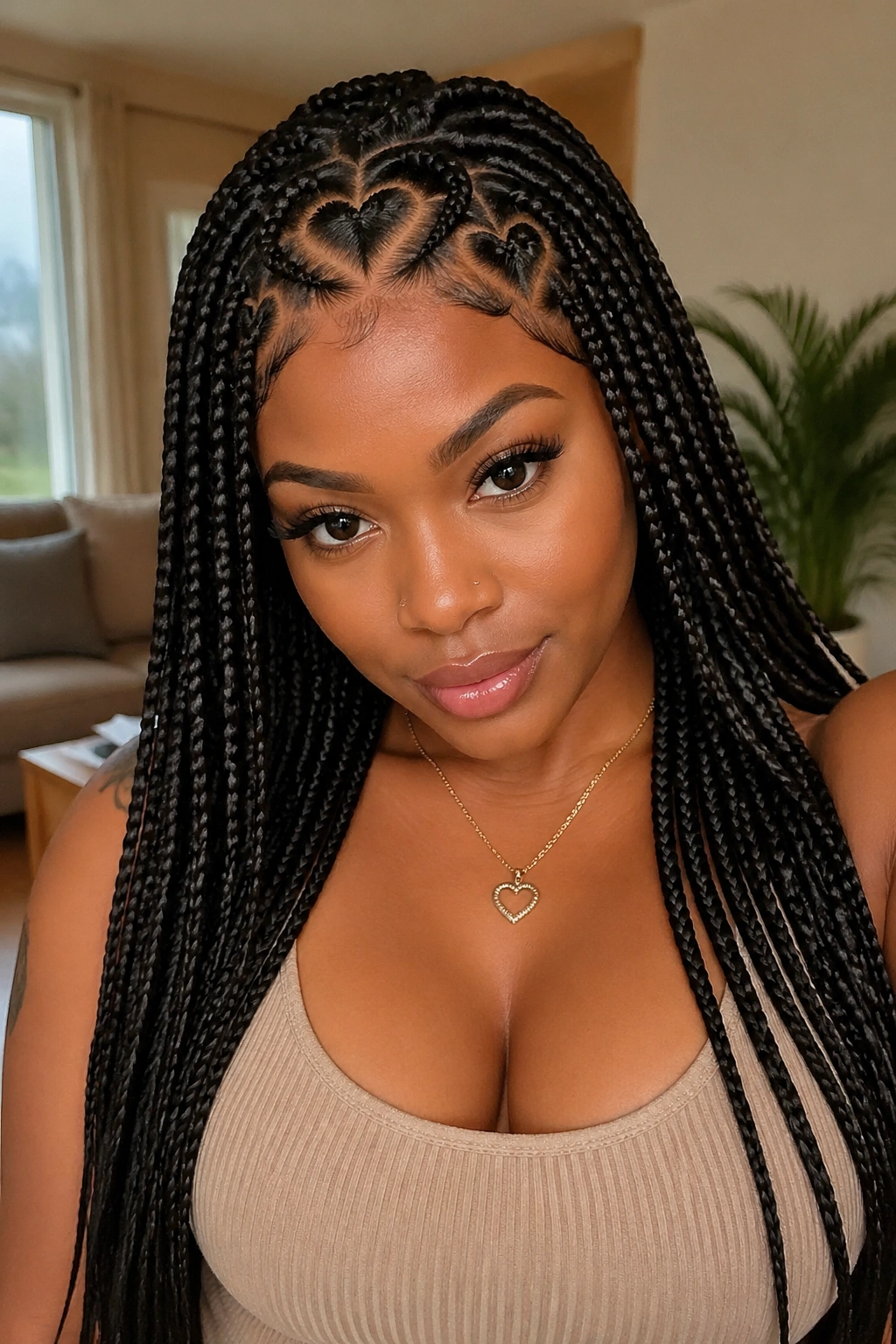
Three small hearts can be better than one large one when the braids are layered at different heights. The style feels thoughtful instead of crowded, and each heart has its own spot to breathe. That matters more than people think, especially when the front is already doing a lot.
Why three? Because one heart can look too isolated, while three creates a rhythm across the scalp. They do not need to match exactly either. One can sit near the center, one a little higher, and one closer to the side. The variation keeps the design from turning stiff.
This is a good pick if you like detail but hate anything that looks too perfect. The hearts can be slightly different sizes, and that tiny mismatch actually makes the style feel more natural. It’s not sloppy. It’s human.
18. Sleek Half-Up Braids with a Cut-Through Heart
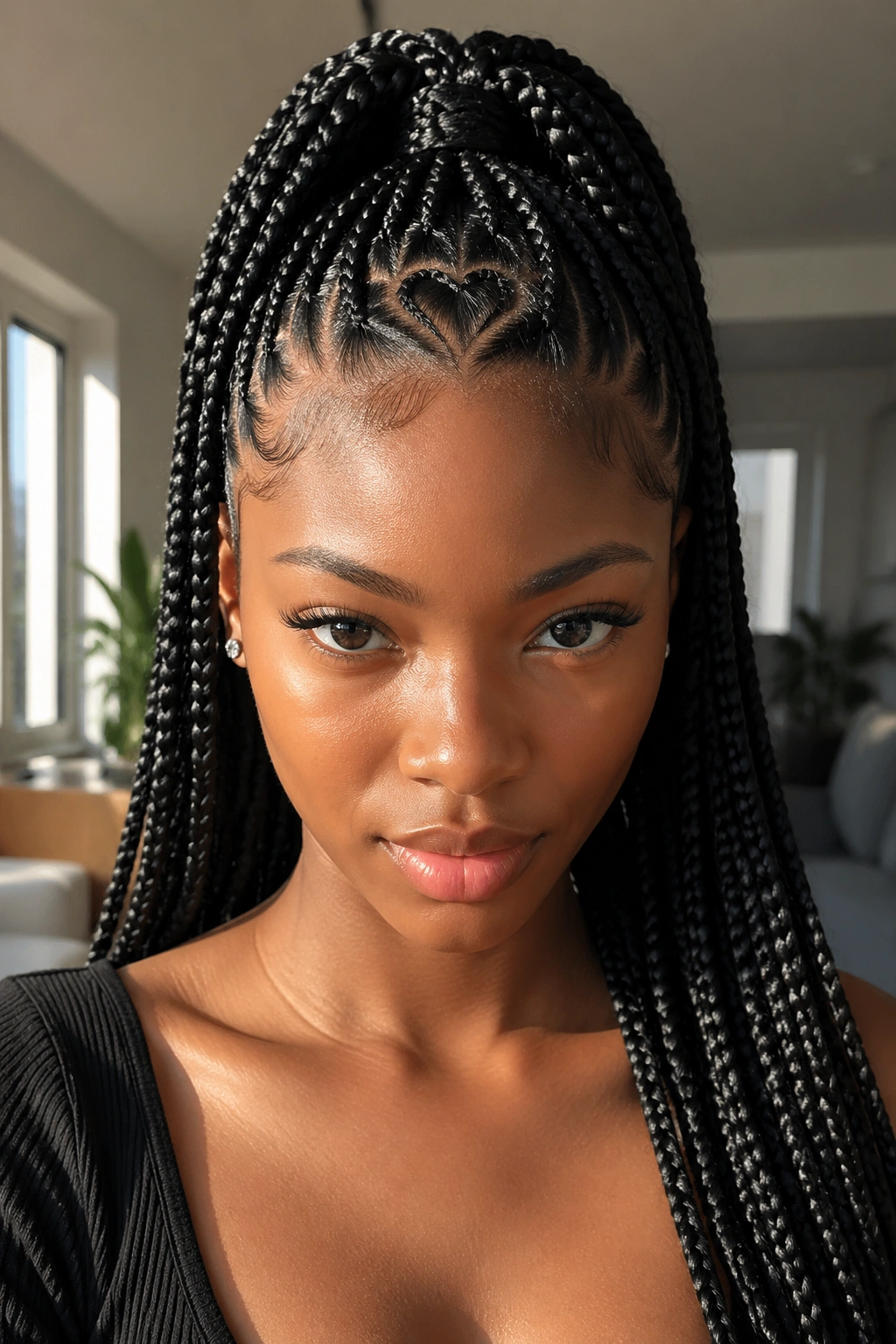
Sleek hair and heart parts go together better than people expect. When the front is smooth and the braids are laid close, the heart cut-through has room to show its shape without distraction. The whole style looks deliberate, almost architectural, but still easy enough to wear every day.
The cut-through part is the interesting piece here. Instead of drawing the heart as a separate shape, the braids carve around it, leaving negative space in the center. That makes the heart stand out without needing extra thickness or decorative add-ons. It’s a cleaner read than a heart that’s built from too many little sections.
I like this version when the scalp parting is crisp and the braids are medium size. Tiny braids can make the cut-through feel too fragile, and jumbo braids can crowd it. Medium braids give you the best shot at keeping the front clean and sharp.
19. Boho Box Braids with Heart Corners and Curly Ends
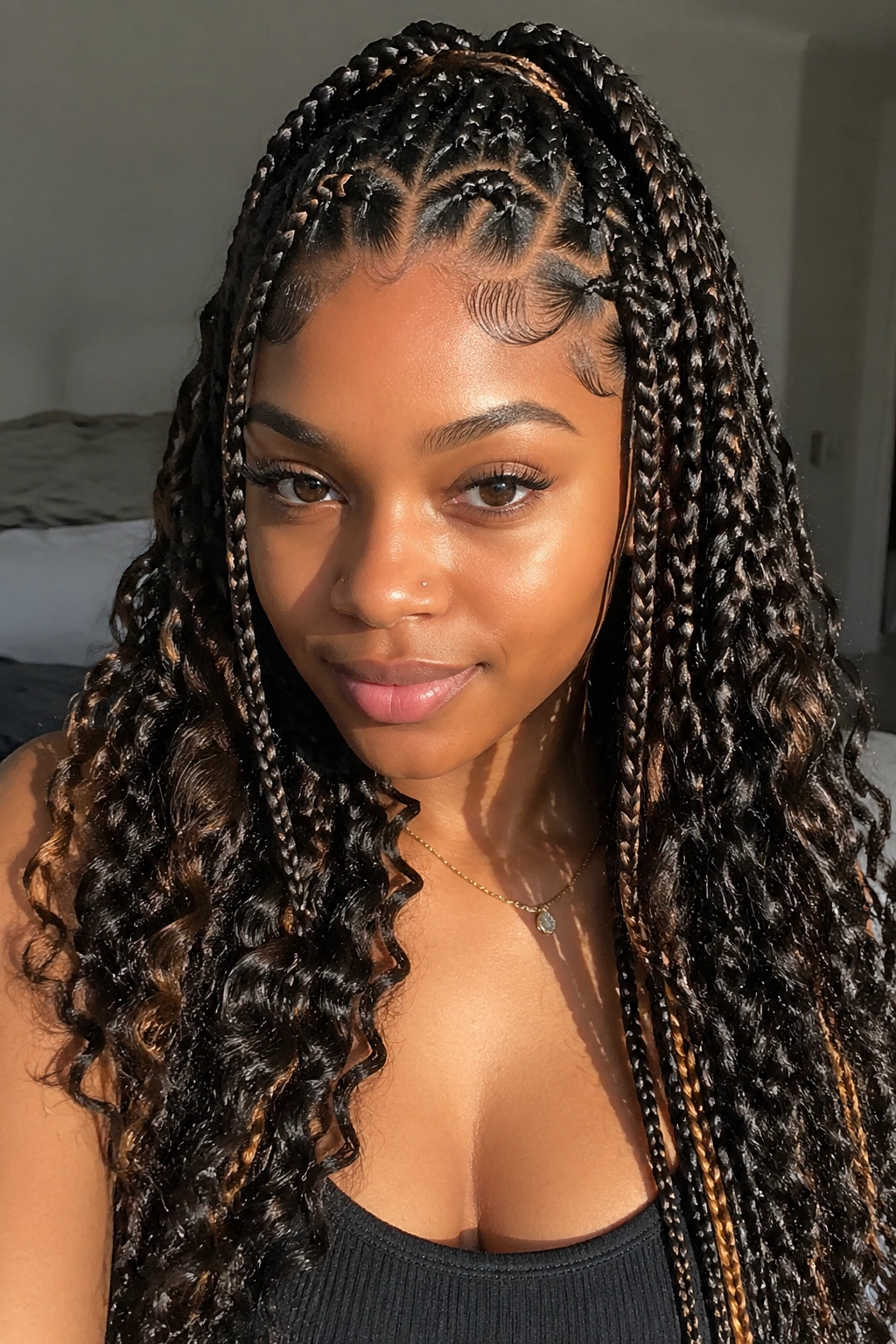
Boho box braids soften almost any design, and the heart corners are no exception. The curly ends add movement, which makes the front part feel less rigid. If you like a style that reads pretty but not overworked, this is the one to look at first.
Compared with a crisp braid-only look, boho braids make the heart feel looser. That can be a strength if you want a softer face frame, but it also means the heart should sit closer to the front hairline so it does not vanish into the texture. The curls do enough talking on their own.
Use a light mousse to keep the curls from frizzing into a cloud. You do not want the ends stealing attention from the parting. A little definition at the bottom keeps the whole style looking cared for, and the heart stays visible instead of fighting the texture.
20. Deep Side-Part Half-and-Half Braids with a Heart Fade
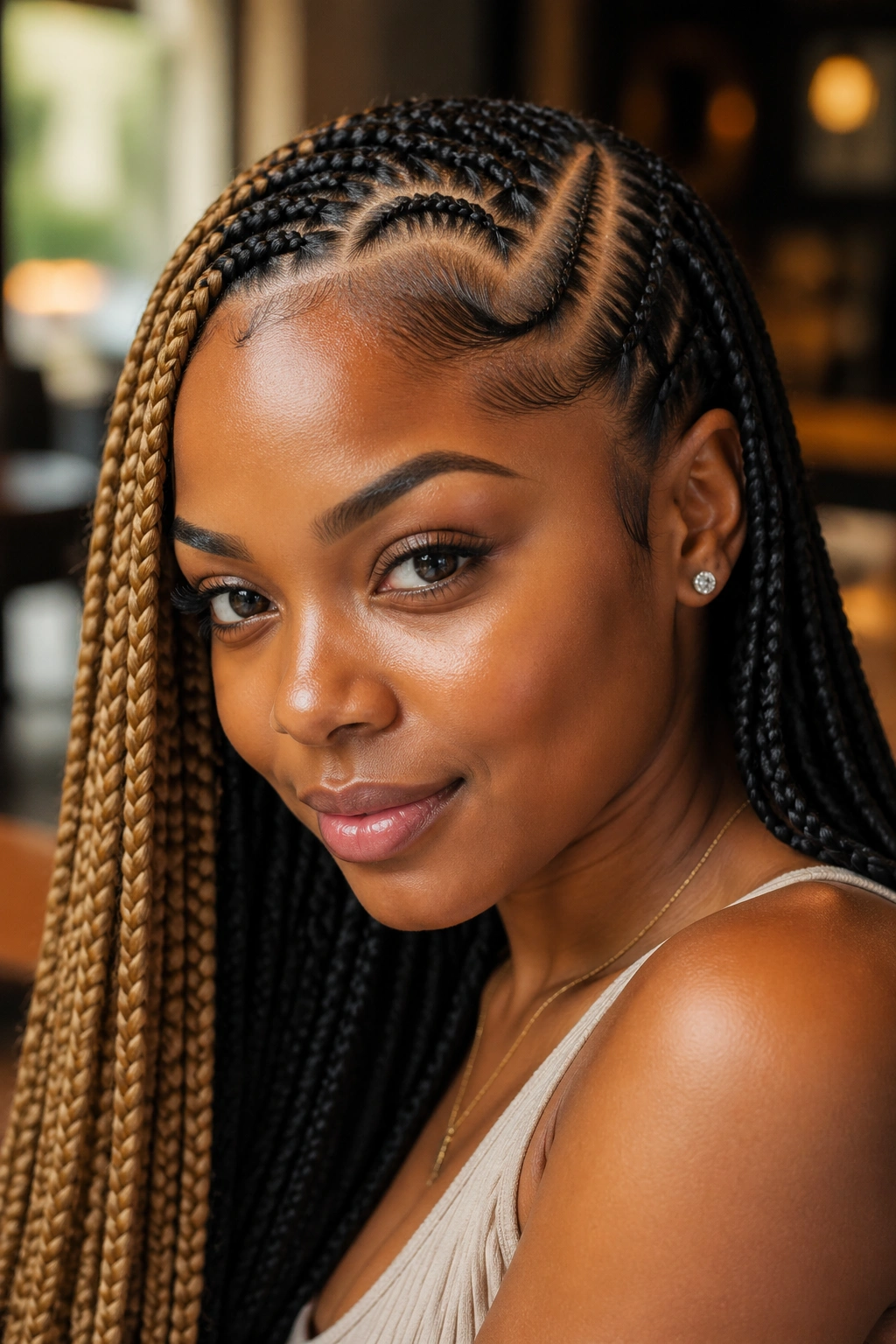
A deep side part changes the whole mood of half-and-half box braids. The heart does not need to be centered to be strong; in fact, letting it fade slightly into the side part can make the style feel softer and more expensive-looking without trying too hard. That staggered placement gives the front a little movement before the braids even start.
Why the Fade Matters
A heart fade works when one curve of the heart melts into the side part and the other side stays sharp enough to read. That contrast keeps the shape from looking stiff. It also helps the style feel less boxed in, which is useful if your braids are thick or long.
Best Details to Ask For
- Keep the side part wide enough to frame the heart.
- Ask for a soft transition, not a hard angle.
- Use medium or large braids so the fade stays visible.
- Keep the front sections neat so the side sweep stays polished.
This is the version I’d choose if I wanted the heart idea to feel a little more grown, a little less playful. It has polish without losing the braid pattern.
Final Thoughts
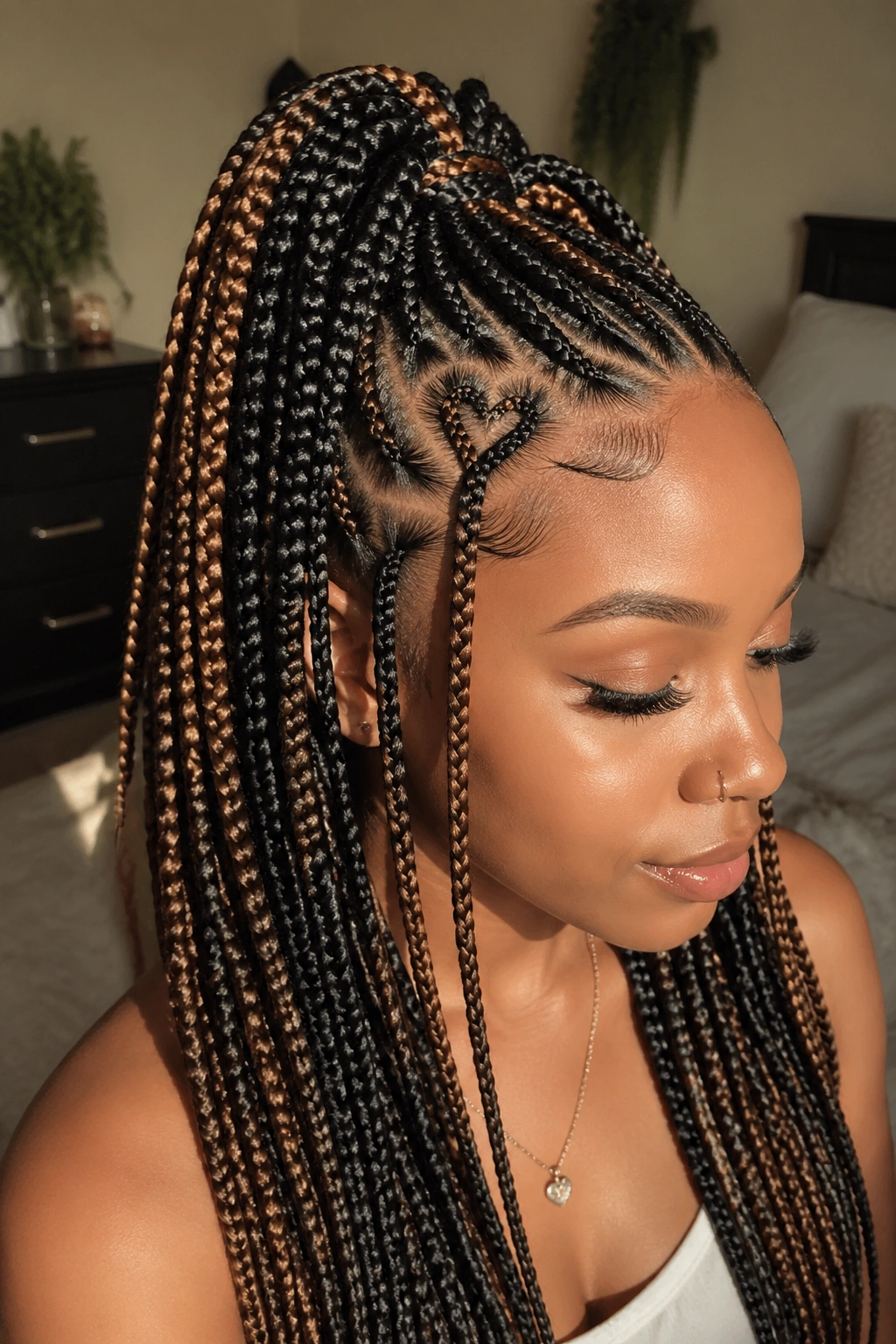
The nicest thing about half-and-half box braids with heart designs is that they are not one-note. A tiny heart at the hairline, a side sweep, a top knot, or a low accent all change the mood without changing the base style. That gives you room to match the braid look to your face shape, your braid size, and how much detail you want people to notice.
The parting is the whole game. Clean lines, enough spacing, and a heart that fits the braid scale will beat heavy accessories every time. If the shape is too small or too crowded, it gets lost. If it has room to breathe, it looks sharp from the first glance.
Bring a few reference photos, sure, but also pay attention to where the heart sits and how the braids are lifted around it. That front view tells you more than a glossy mirror shot ever will.