



Eighteen jumbo rainbow box braids don’t whisper. They show up with a plan, take over the silhouette, and make color look intentional instead of random. That’s the whole appeal: a style with enough size to feel confident and enough color to feel playful, but only if the braids are laid out cleanly and the tension is handled with some restraint.
The mistake people make is assuming the rainbow does all the work. It doesn’t. The braid size, the parting, and the way the colors repeat matter just as much as the shades themselves. If one braid is heavier than the others or the sections drift off-grid, the style starts to feel lopsided fast. If the parts are crisp and the color order is thought through, it looks polished in a way that surprises people who think bold hair has to look messy.
There’s also a practical side, which is where this style either wins or fails. Jumbo braids can be comfortable, but they can also pull if the sections are too big, the synthetic hair is too heavy, or the braid is packed too tight at the root. That balance is the trick. Get it right, and the color reads as rich and dimensional rather than loud for the sake of loud. The size has to earn the color.
1. Why 18 Jumbo Braids Feel Bold Instead of Busy
Eighteen braids is a smart number for a loud color story. It leaves enough scalp showing to keep the style airy, and it gives each braid room to stand on its own. That matters with rainbow color, because the eye needs a little structure to follow.
A style like this can look surprisingly clean when the braids are all the same thickness. The rainbow does not need extra chaos. In fact, the opposite is usually better. A neat grid and consistent braid diameter let the colors do the talking while the shape holds everything together.
One-sentence truth: big color needs clean lines. Without that, the style can tip into costume territory fast. With it, you get something that feels modern, fun, and a little bit fearless.
2. How Wide Should Each Jumbo Braid Be
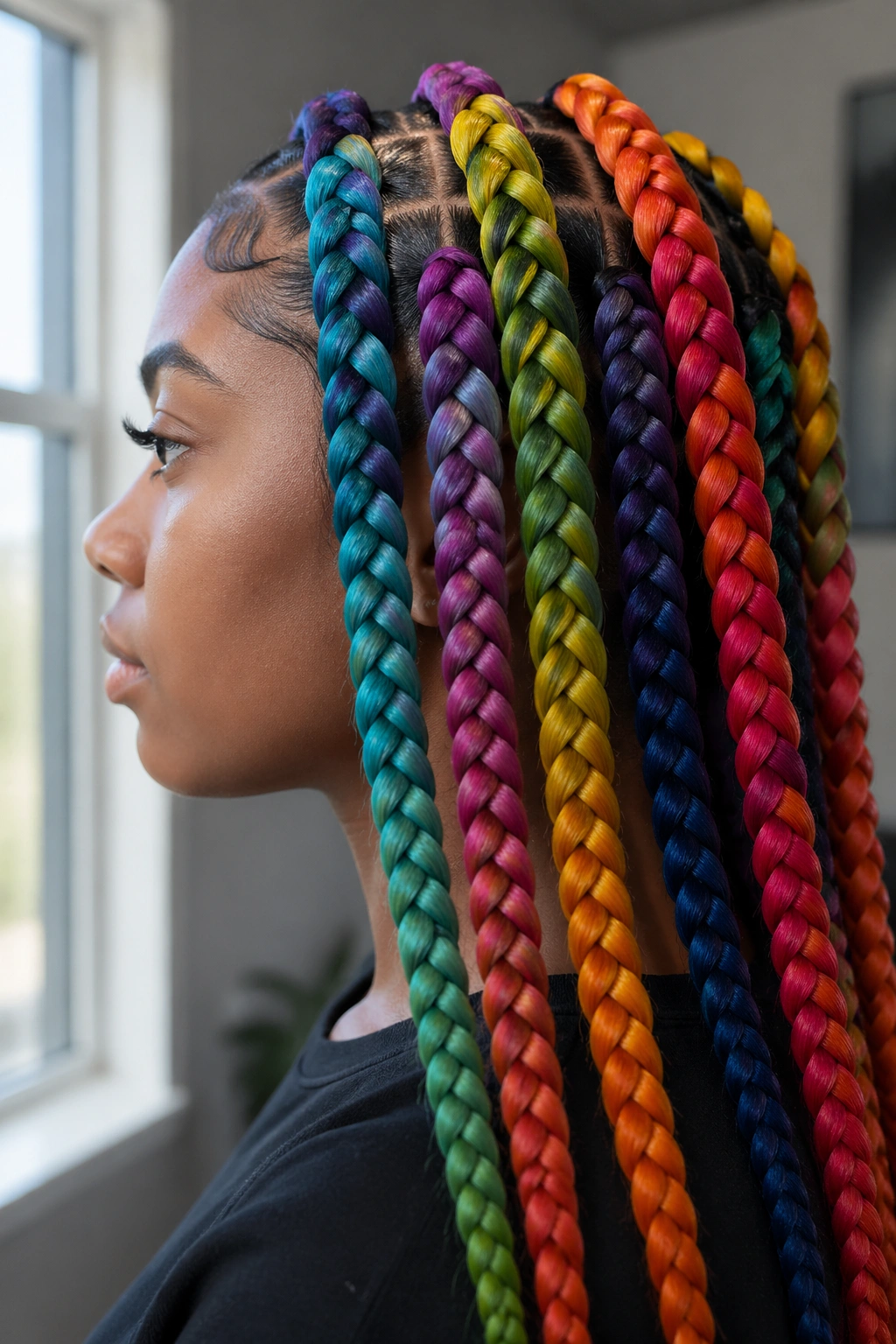
How big is “jumbo,” really? That depends on your head shape, your hair density, and how much weight you’re willing to carry around all day. A good starting point is a section that feels thick in the hand but not bulky at the root.
What Too Small Looks Like
When a braid is too small for the look, the color gets broken up into tiny pieces and the whole style loses its punch. You end up with rainbow details, sure, but not that full, chunky effect people want from jumbo box braids. The braid may also sit flatter than expected, which makes the head look more crowded.
What Too Big Does
Too much hair at the base is where the trouble starts. The braid can feel heavy by lunch, not by week three. A heavy root pulls on the scalp, and if your natural hair is fine or fragile, that tension gets old quickly.
I like to think in terms of balance: the braid should be thick enough to read from across a room, but light enough that you stop noticing it after a few minutes. If you keep adjusting it, it is too much.
3. Picking a Rainbow Palette That Looks Intentional
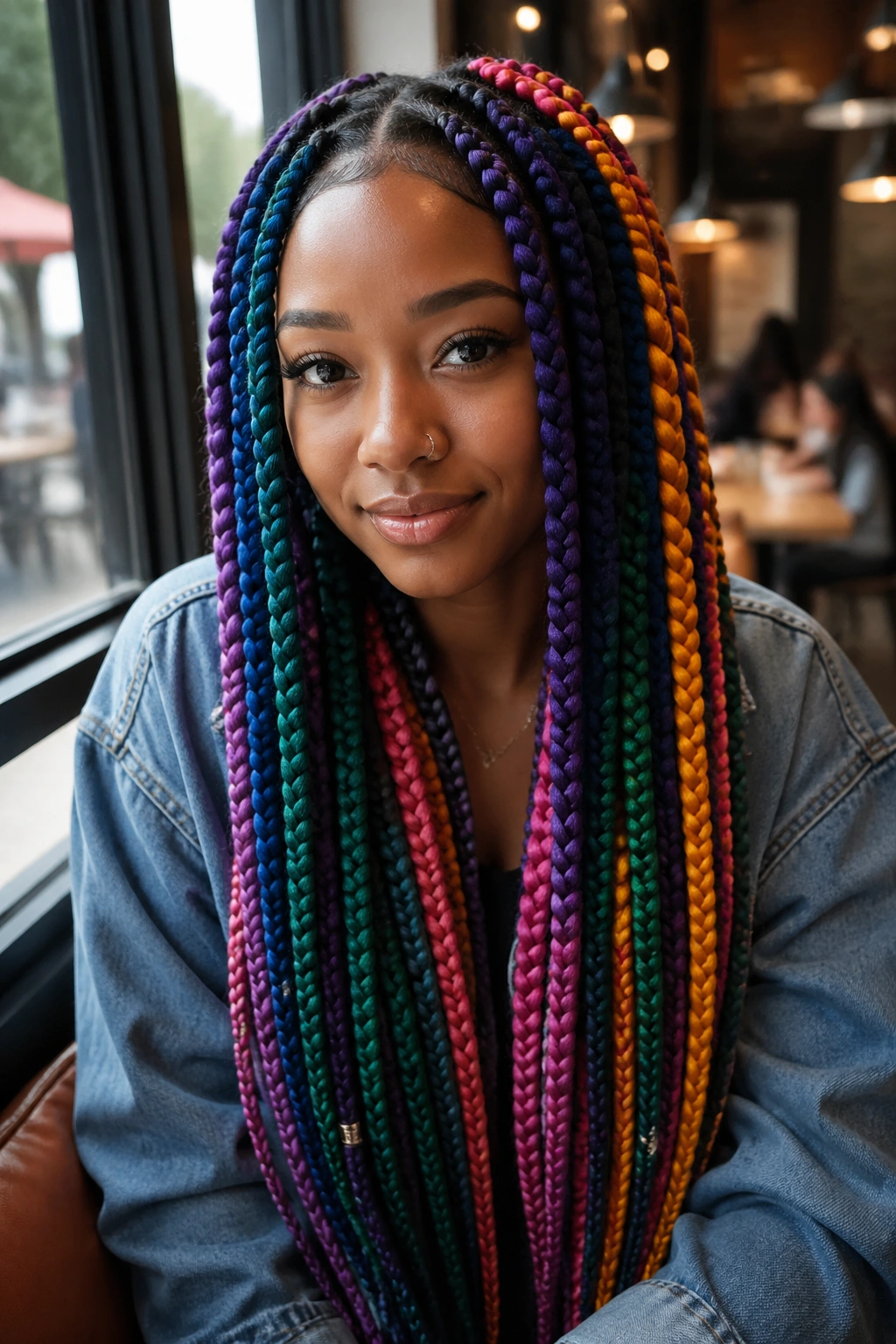
Rainbow does not have to mean every color screaming at once. Some of the prettiest jumbo rainbow box braids use only four or five shades and repeat them on purpose. That repetition keeps the style from turning into a pile of unrelated colors.
A few approaches work especially well:
- Full-spectrum rainbow: red, orange, yellow, green, blue, and violet, repeated in a steady order
- Warm rainbow: cherry red, coral, gold, lime, and teal with a dark anchor shade
- Pastel rainbow: lavender, mint, peach, pale yellow, and baby blue for a softer finish
- Jewel-tone rainbow: burgundy, emerald, sapphire, violet, and amber for a richer look
- Rainbow with an anchor: black, dark brown, or deep burgundy woven through to ground the brighter pieces
The anchor shade is doing more work than people realize. It gives the eye a resting place. Without it, the color can feel a little frantic, especially on very large braids.
If you want the style to feel cleaner, repeat the same color order in every braid. If you want it to feel more playful, shift the order slightly but keep the same color family. Don’t mix both approaches in the same head. That’s where the design starts fighting itself.
4. Parting Patterns That Change the Whole Shape
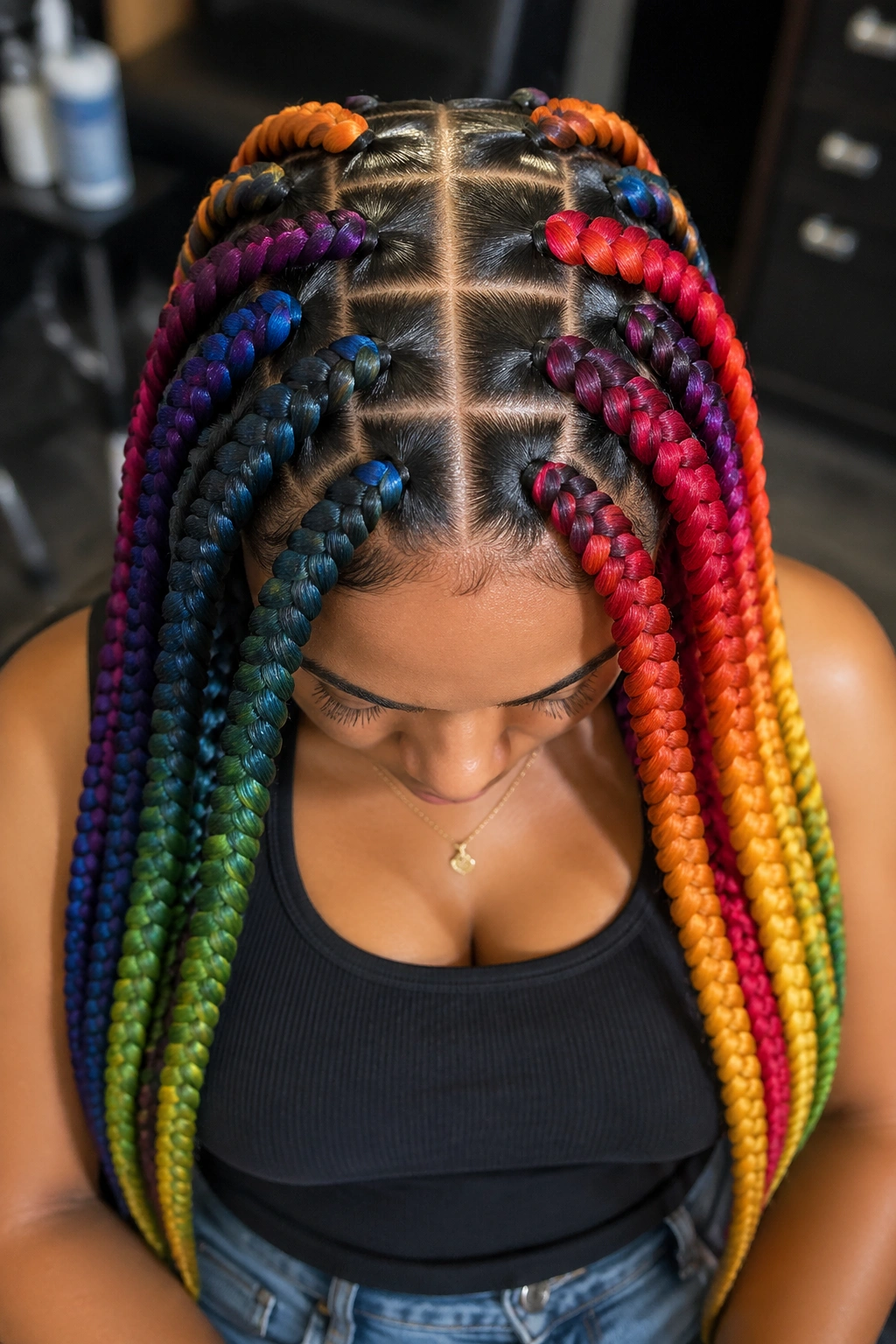
Parting is where the style gets its architecture. The rainbow is the decoration, but the part lines are the frame around it. Clean sections make jumbo braids look expensive, even when the actual hair pieces are simple synthetic fiber.
A straight center part makes the look feel symmetrical and strong. Side parts soften the face a little and work well if you don’t want the style to sit perfectly centered. Triangle parts add movement, and square parts are the classic choice when you want the grid to look neat from every angle.
The one thing I would not do is let the sections wander. Even a small drift can be obvious when the braids are jumbo, because there’s so much surface area. One uneven row can throw off the whole crown.
If you’re braiding at home, clip each section before moving on. That tiny pause saves you from the ugly surprise of finishing one side and realizing the other side is wider by half an inch.
5. Hair Length, Density, and Texture: What Works Best
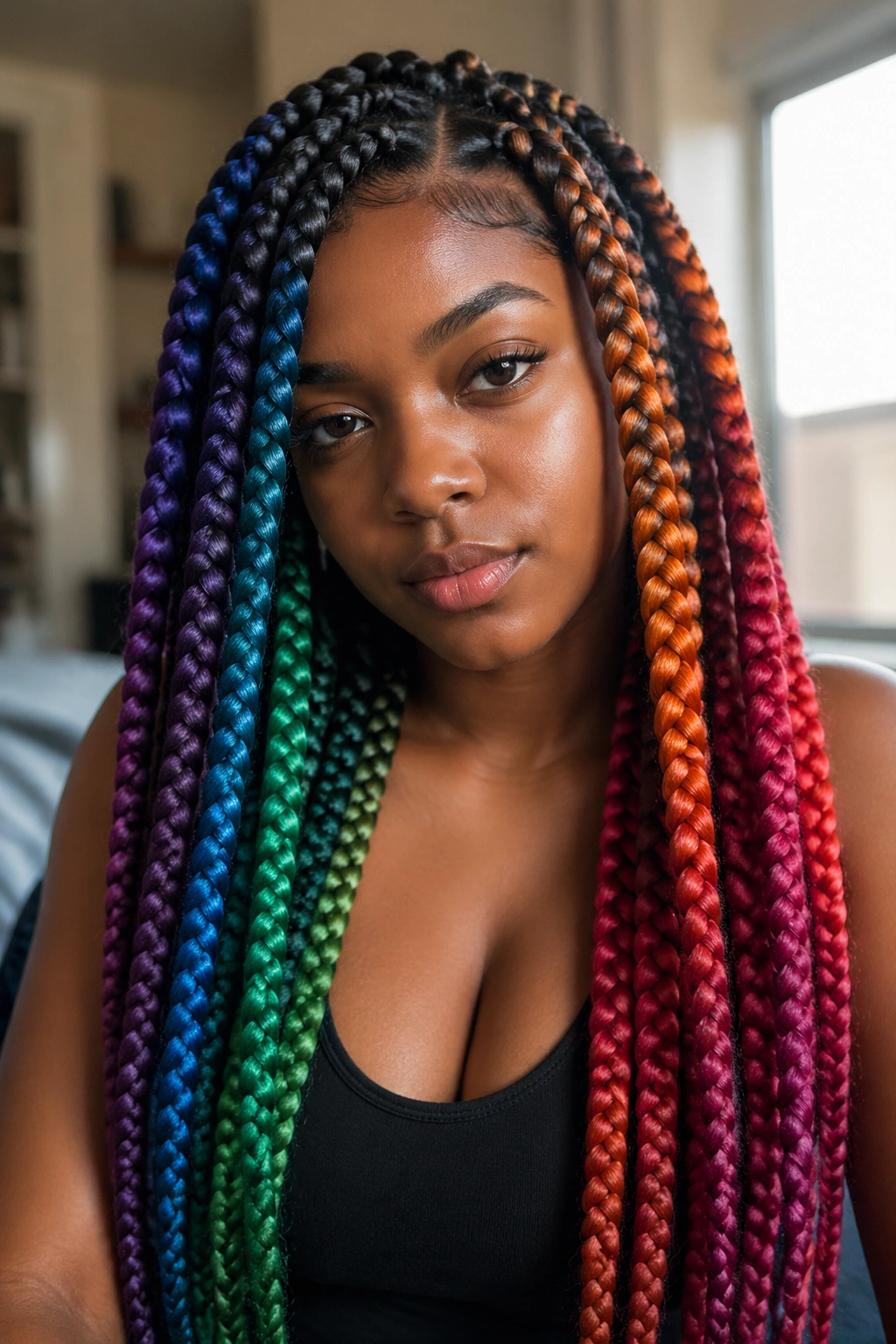
Length matters, but not in the way people think. You do not need waist-length hair to wear jumbo rainbow box braids, and shorter natural hair can work just fine if the install is secure and the extensions are added with care. The bigger question is whether your hair can handle the weight without getting cranky at the roots.
Dense hair tends to hide the base better, which can make the braids look fuller and the parts less visible. Fine hair can still wear the style, but it usually benefits from lighter sections and shorter extensions. If your strands are fragile, a big braid that looks cute on day one can feel like a bad decision by day three.
Texture also changes the result. Coily hair often holds the braid base well, which helps the style sit close to the head. Straighter or looser textures may need more prep and a firmer grip during installation so the braid does not slide.
There isn’t one perfect hair type for this look. There is, however, one hard rule: your scalp should not feel like it is bargaining for mercy.
6. The Prep Work That Saves Your Scalp Later
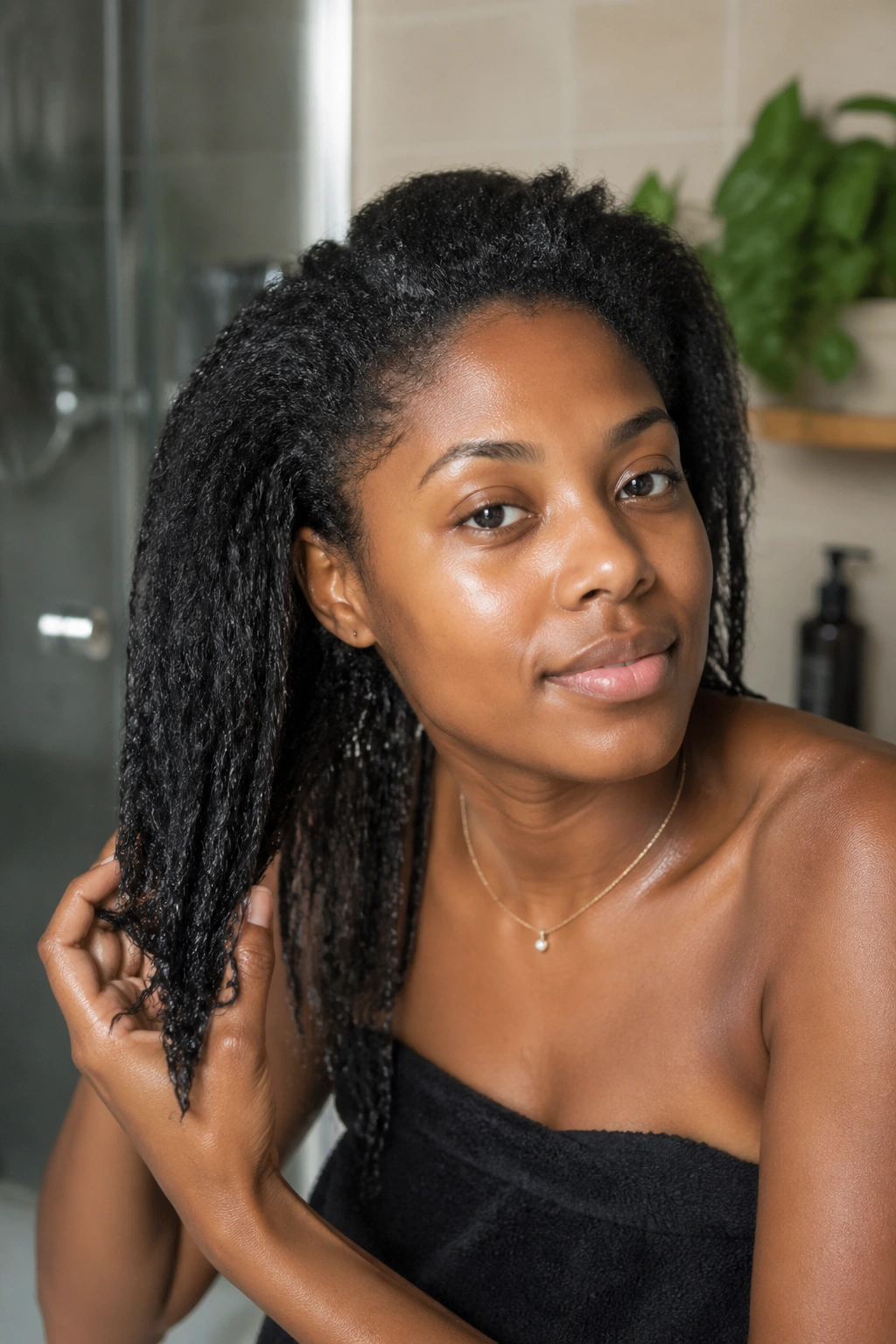
Clean hair makes a cleaner install. That sounds boring, and it is, but boring prep is what keeps braided styles from turning into itchy regret. I like to wash, condition, detangle, and fully dry the hair before the first section is touched.
Clean the Scalp First
Start with a gentle shampoo and make sure the roots are free of buildup. Heavy oils, thick creams, and leftover gel can make the scalp feel grimy faster once the braids are in. A clean base gives you a much better read on how the style is sitting.
Stretch the Hair
Stretching the natural hair helps the sections stay smoother and reduces puff at the base. You can blow-dry on low heat, band the hair overnight, or use any other stretching method that keeps the strands soft and separated. Do not braid damp hair. That is how you end up with an odor problem and a drying problem at the same time.
Moisturize With Restraint
A light leave-in on the lengths is enough for most people. I would skip the heavy grease at the root. It feels comforting for about ten minutes and then turns into a magnet for buildup.
Grease does not equal prep.
7. Which Braiding Hair Gives the Cleanest Color
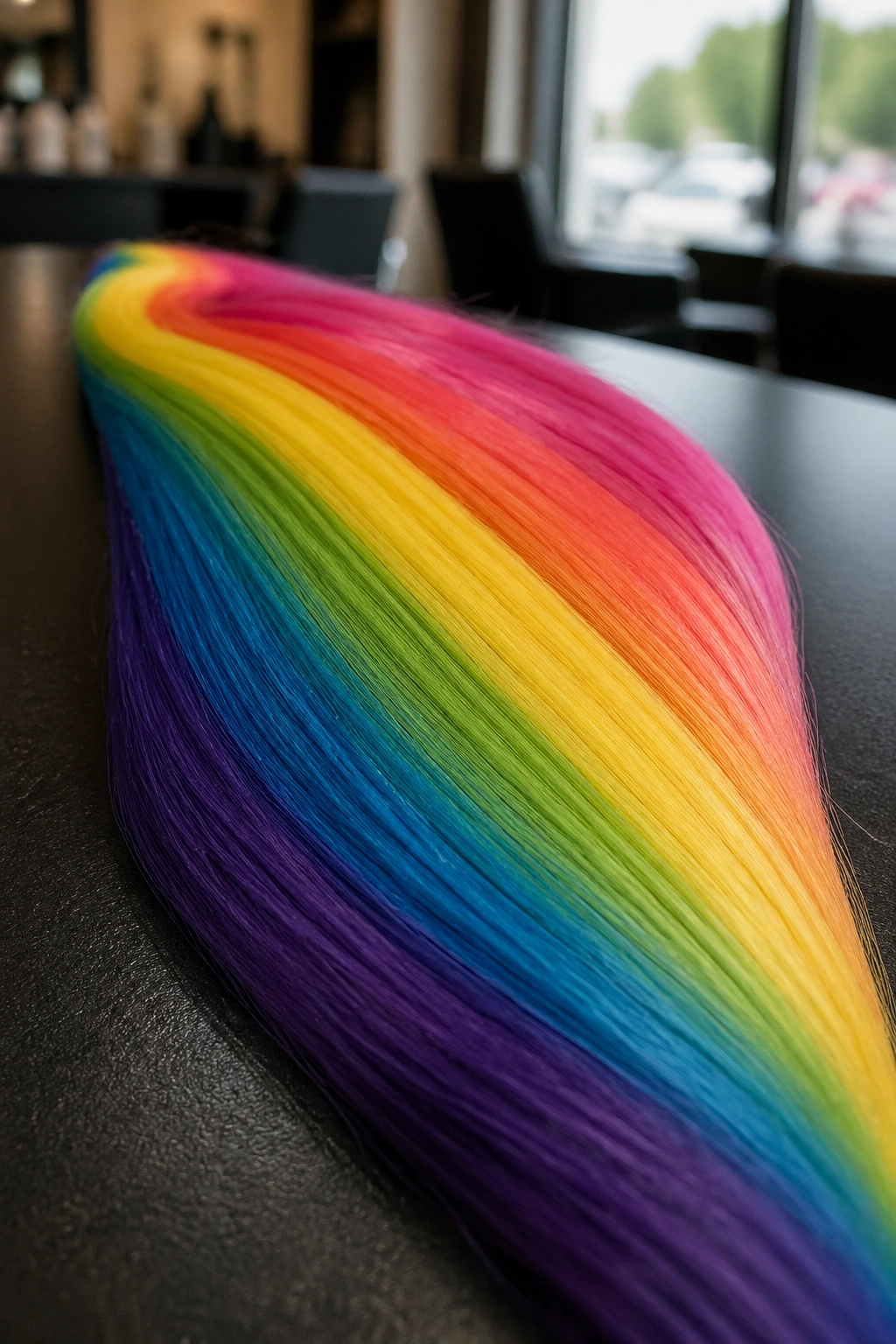
The fiber you choose changes the whole mood of rainbow braids. Some synthetic hair has a soft, matte look that lets the colors blend. Other hair has a shiny finish that makes every shade pop harder. For this style, I usually prefer a lower-shine fiber because the rainbow reads cleaner and less plastic-looking.
What to Look For
- Pre-stretched hair if you want slimmer ends and less trimming
- Low-luster synthetic fiber if you want the colors to look richer
- Enough length to reach your desired hang without forcing the braid too thick
- Consistent dye lots so one packet doesn’t look brighter than the others
- Heat-safe fiber if you plan to seal ends with hot water
Kanekalon-style hair is common for a reason: it behaves well, it comes in a lot of colors, and it usually braids smoothly. Very glossy hair can work, but it sometimes looks harsher under bright light. That effect may be fine if you want the rainbow to hit hard. It is not fine if you want the style to look soft and wearable.
One more thing: if one color feels rough before it even gets braided, it will not magically improve once it is on your head.
8. Keeping Jumbo Rainbow Box Braids Light Enough to Wear
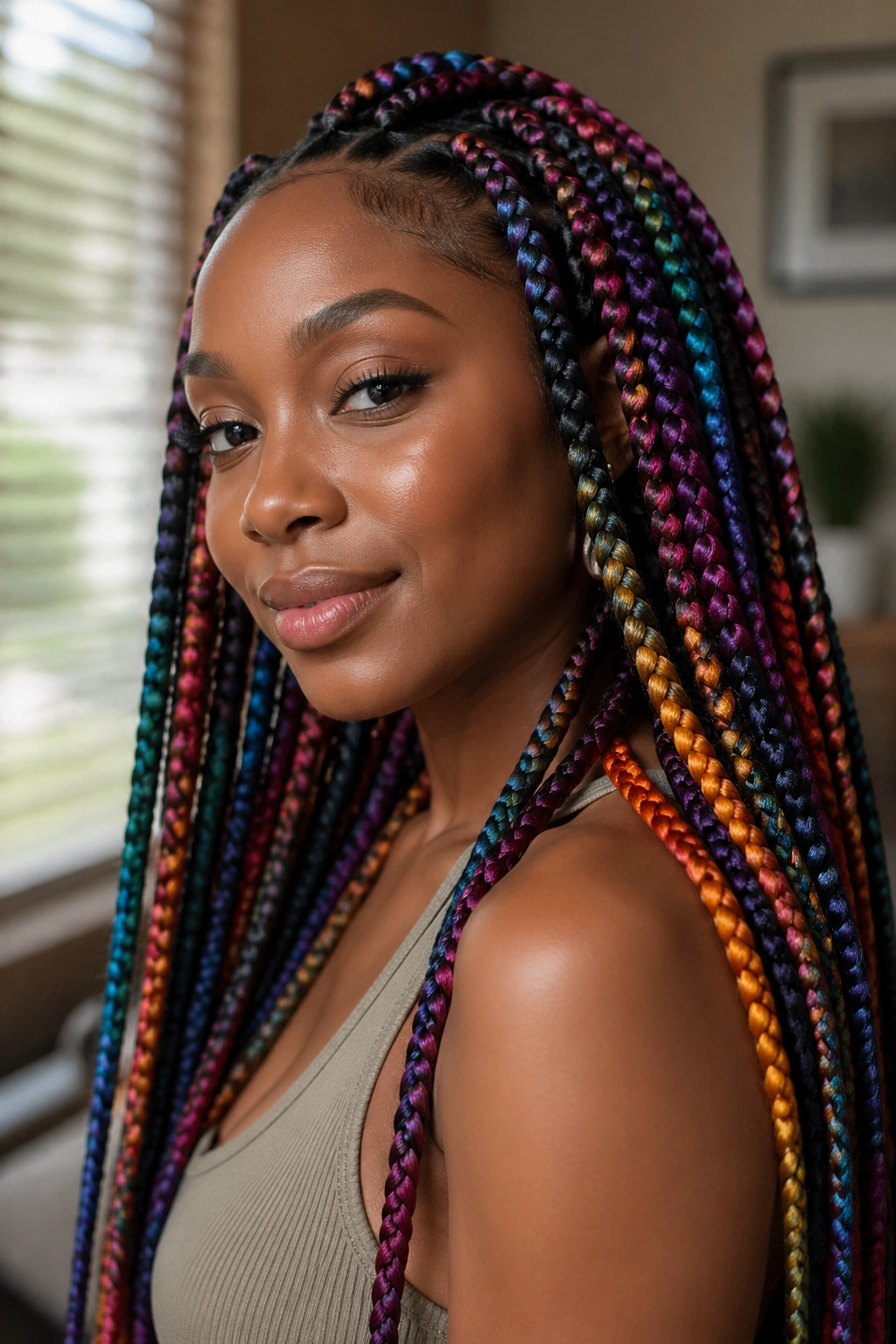
Heavy braids are annoying. That’s the honest version. A style can look gorgeous on the braiding chair and then feel like a set of handles hanging from your scalp once you start moving around.
The fix is usually not one big thing. It is a bunch of small ones. Use a reasonable amount of extension hair at the root, keep the braid diameter consistent, and resist the urge to stuff every braid with more hair just because it can take it. The style should have volume, not armor.
Signs the Style Is Too Heavy
- The scalp throbs when you tilt your head back
- The nape feels sore by the end of the day
- The braids swing with a kind of drag instead of floating
- You keep touching the roots because they feel tight
- Your hairline looks flattened or angry
If the style is already installed and feels too heavy, don’t try to tough it out for “a few more days.” That phrase ruins more hair than people admit. Pain at the root is a warning, not a challenge.
9. The Installation Details That Keep Each Braid Even
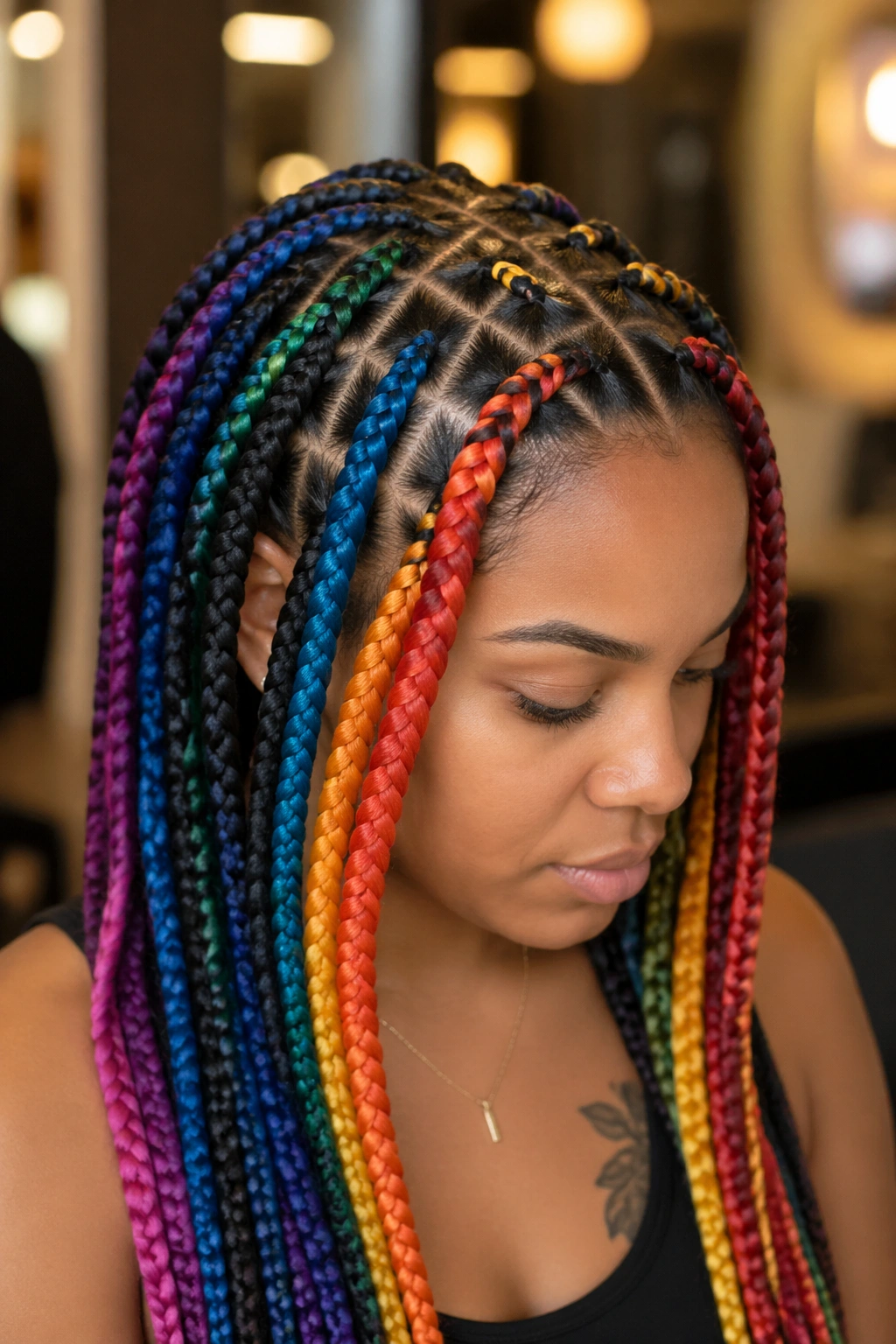
The cleanest jumbo installs start with repeatable sections, not speed. People rush the first few braids because they are excited, then wonder why the last side of the head looks different. Slow down for the first four or five. That is where the rhythm gets set.
Keep the Base Tight, Not Sharp
The base should feel secure, but it should not feel like a rubber band was hidden under the scalp. If the braid is too tight at the start, the whole style will feel stiff and uncomfortable. A controlled grip is enough. You do not need to yank.
Match the Braid Thickness
Every braid should be within a small range of size. Not identical to the millimeter — hair isn’t math homework — but close enough that no single braid steals the whole show. The visual payoff comes from consistency.
Feed the Color in the Same Order
If you want clean rainbow stripes, feed the extension hair in the same sequence each time. That gives the braid a repeatable pattern and keeps the color distribution from looking accidental. Small differences can be charming. Big ones just look unfinished.
A mirror check after every few braids is annoying. Do it anyway.
10. Edges, Hairline, and the Finish Around the Face
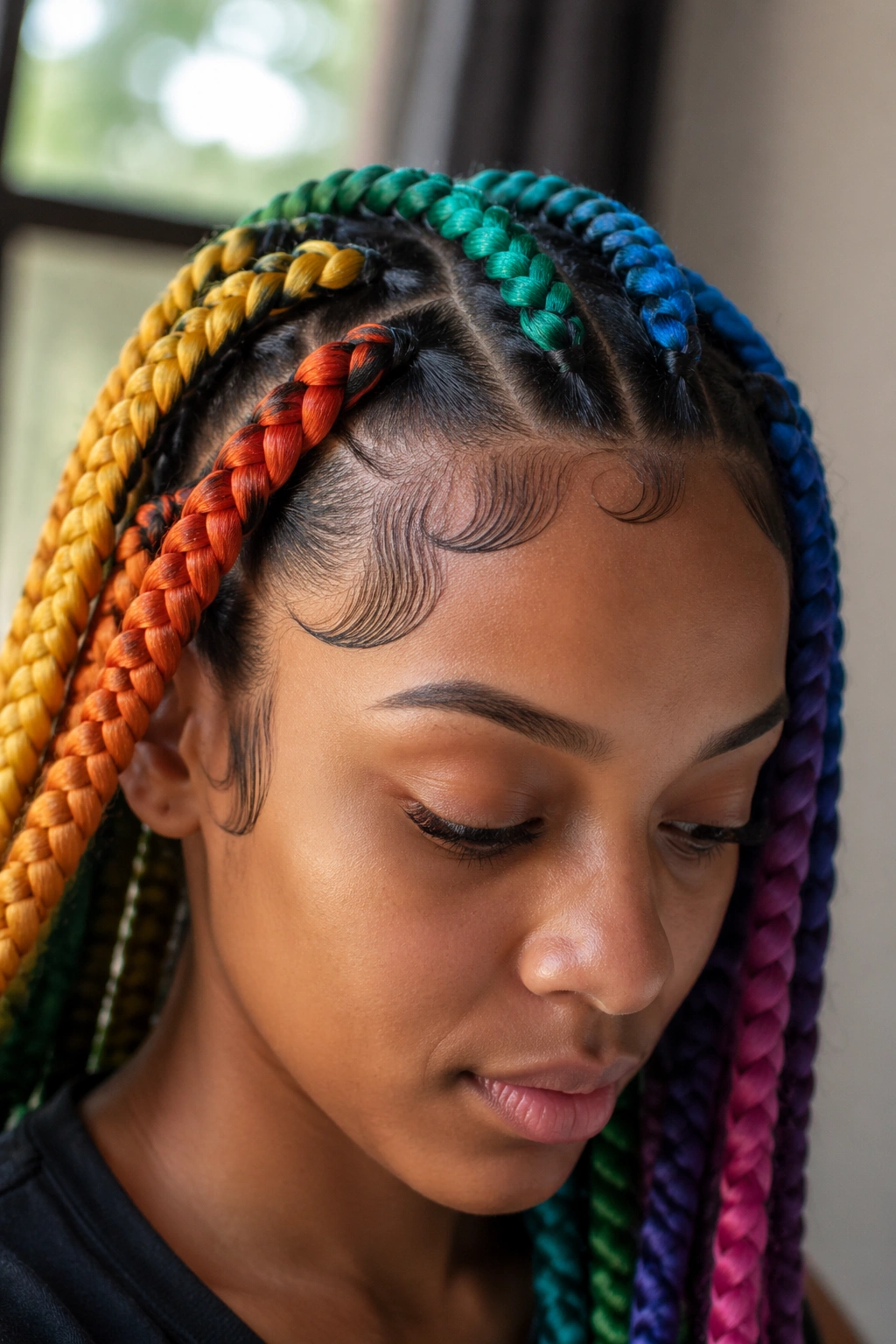
Baby hairs are optional. The braid line is not. That’s the part people forget. The front of the style is the first thing everyone sees, so the finish around the hairline needs to look deliberate, not scraped into place with half a jar of gel.
A small edge brush and a light hand are usually enough. Smooth the front if you want a polished look, but leave some softness if your hairline is tender or naturally sparse. Heavy edge control on a fragile hairline is a bad trade. You get about twenty minutes of drama and then days of flaking.
I also like a little irregularity around the face. A few tiny wisps can soften the whole look and keep the braids from feeling too severe. Rainbow braids already bring enough visual energy. You do not need to add a stiff helmet effect on top of it.
If you want a sharper finish, use a satin scarf for a few minutes after laying the front. That gives the edges shape without having to pile on more product.
11. Accessories That Belong on Rainbow Braids
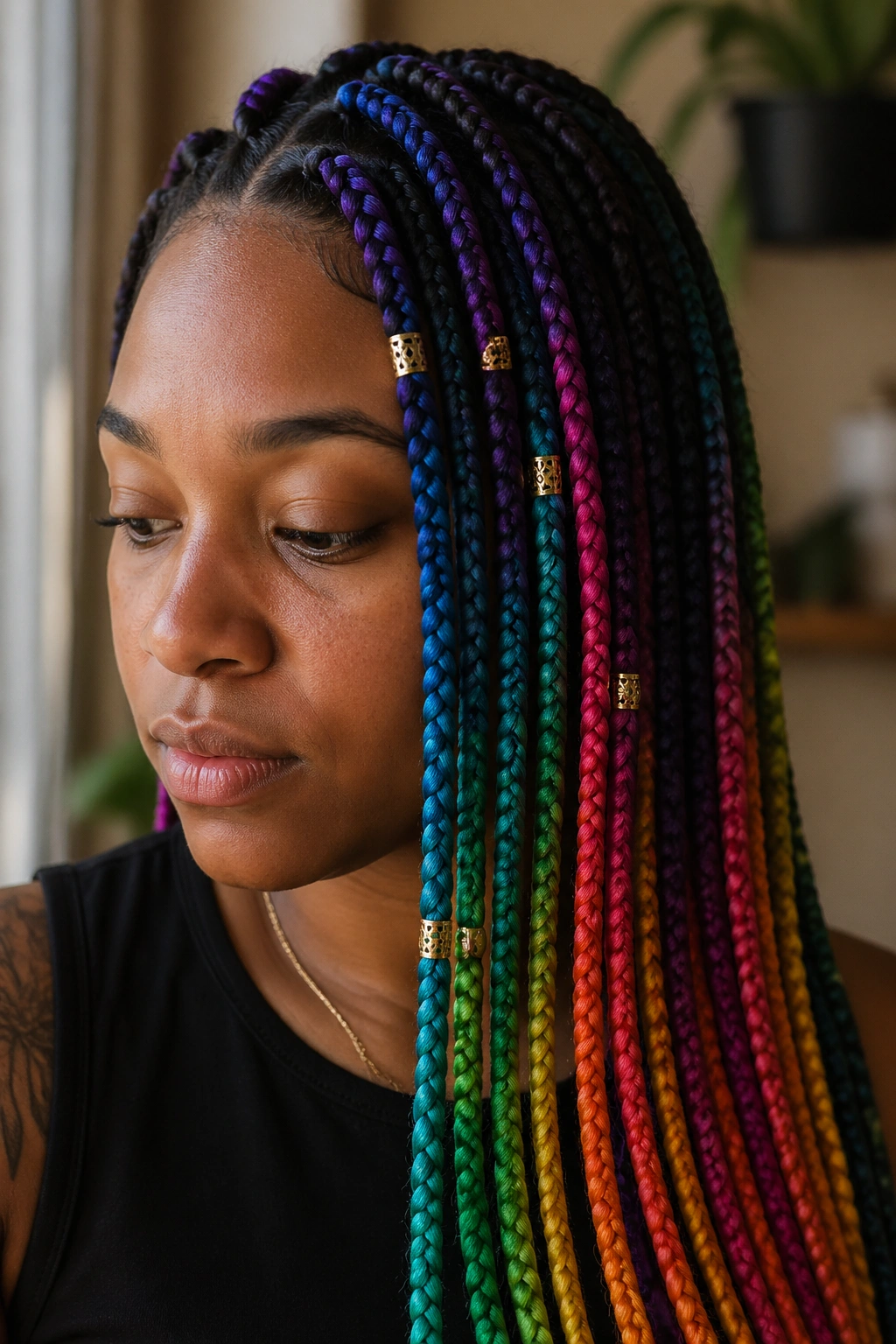
Accessories can make rainbow braids look expensive or cheap in about five seconds. The trick is to pick pieces that support the color story instead of competing with it. One metal tone, one accent texture, and a little restraint go a long way.
Good matches include:
- Gold or silver braid cuffs placed near the ends or mid-lengths
- Clear or black beads if you want the color to stay the focus
- Thread wraps in one repeated shade for a handmade look
- Slim ribbons woven through a few outer braids
- Shells or charms used sparingly, not on every braid
- Large scrunchies for ponytail styles that won’t snag the braid roots
I’m not a fan of loading every braid with an accessory. That makes the head look cluttered, and clutter is the enemy here. Pick a lane. If the braids are already bright, choose fewer add-ons.
The best accessory choice is often the simplest one. A couple of cuffs on the outer braids can be enough.
12. Styling Them Up, Down, and Half-Up
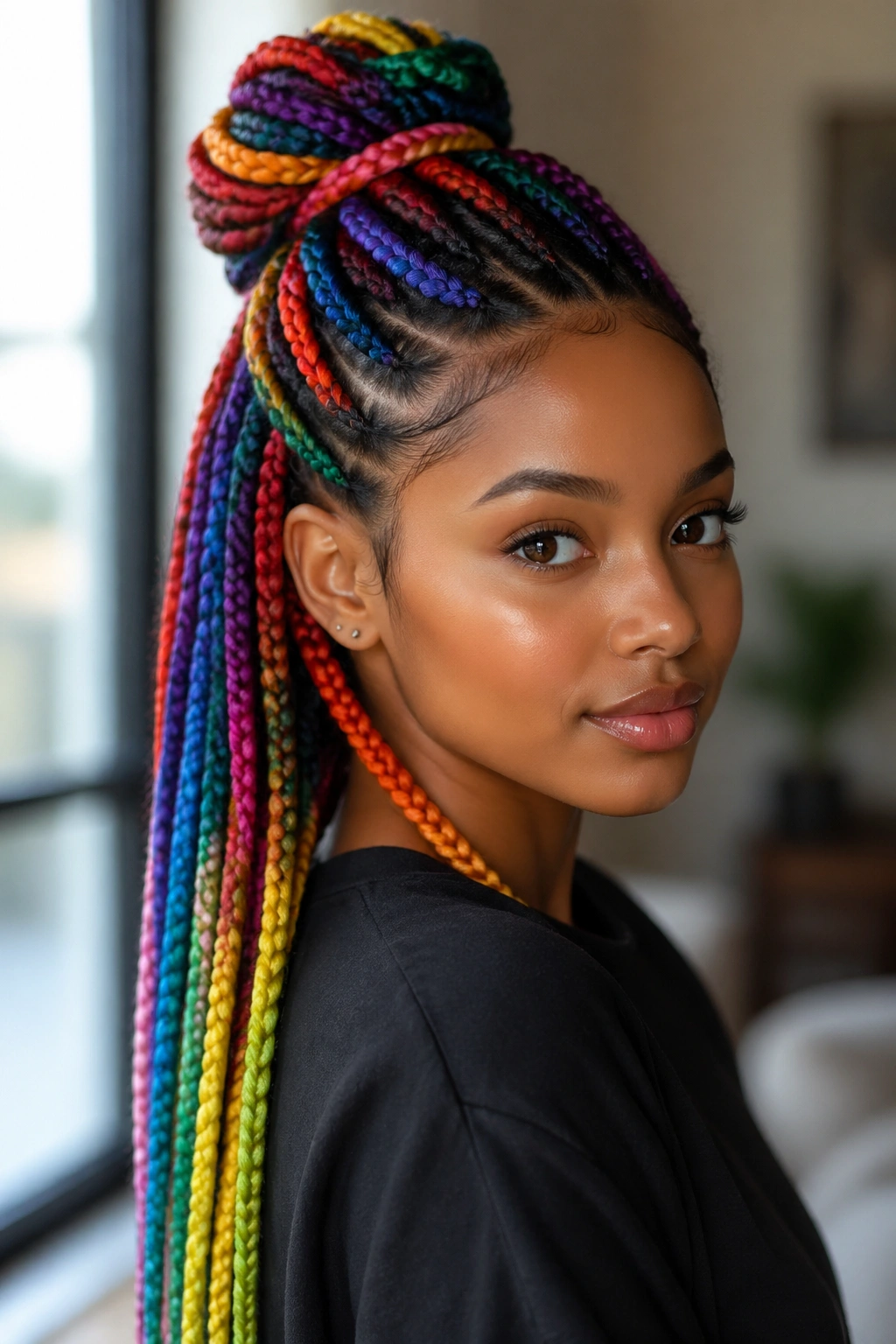
Rainbow braids are fun because they change personality depending on how you wear them. Down and loose, the colors blend into a moving ribbon effect. Pulled up, they show structure and shape. Half-up styles sit somewhere in the middle and usually feel the easiest for everyday wear.
A high ponytail exposes the color pattern and gives the crown a little lift. A low bun looks tidier, but it can hide the best parts of the rainbow if the lengths are very long. Half-up, half-down is my favorite for this kind of braiding because it keeps some of the weight off your neck while still letting the ends move.
Side sweeps work especially well if the braids are long enough to drape across one shoulder. The color bands stack visually and look richer that way. If you do a bun, use a wide, snag-free band and avoid tight elastics that bite into the braid base.
One practical note: the heavier the braids, the less you’ll want to keep them high all day. Gravity is not glamorous, but it is honest.
13. Scalp Care When the Style Stays In
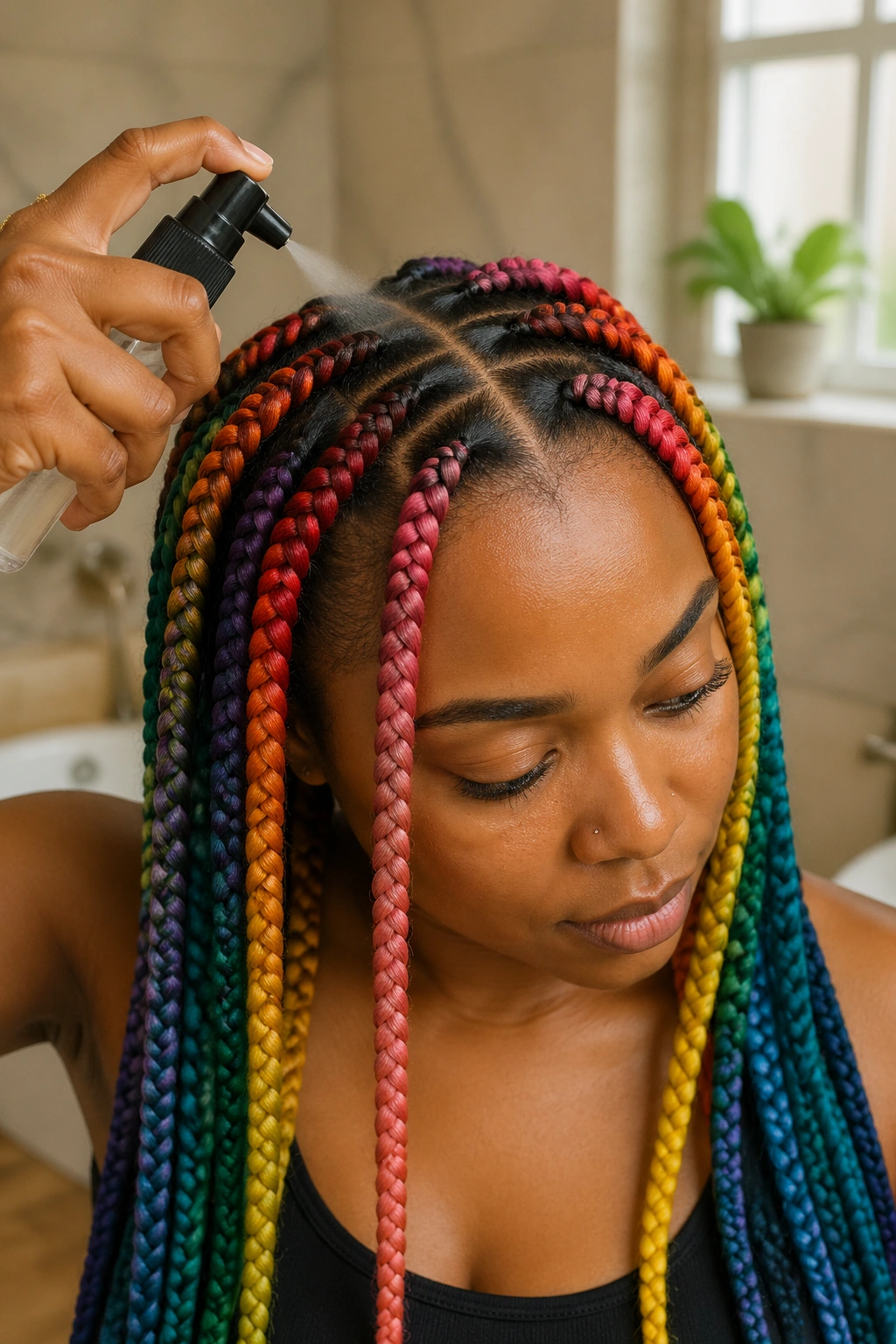
A dry, itchy scalp can ruin a beautiful install. It does not matter how perfect the color blend is if you spend all day thinking about your roots. The goal is to keep the scalp clean enough to stay calm without soaking the braids in product.
What Helps
A light scalp spray or a nozzle bottle with a diluted cleanser can help between washes. Use it at the part lines, not all over the braids. A few drops of lightweight oil on the fingertips can soothe dry spots, but you do not need much. Usually, less product means less buildup and less itch.
What Makes It Worse
Thick oils, heavy creams, and constant scratching. The scratch feels good for about three seconds and then the irritation comes back louder. If the scalp is burning, swollen, or breaking out in bumps, that is not a “push through it” situation. The style may need to come out.
How Often to Check
I’d check the scalp every couple of days, especially near the nape and around the hairline. Those areas collect sweat and product faster than people expect. A clean part line tells you more than a fancy hair photo ever will.
14. Washing Them Without Blowing Up the Pattern
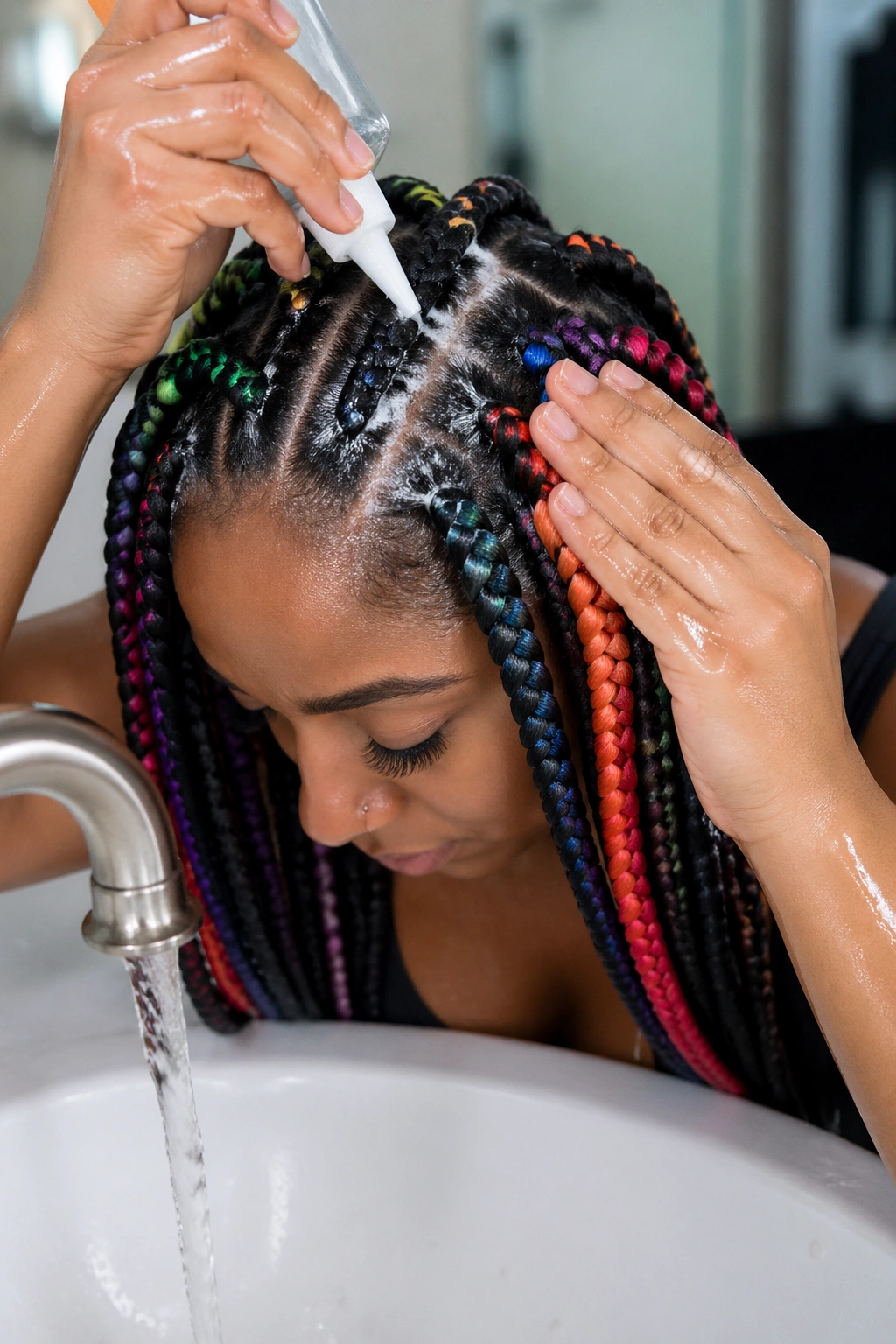
Washing jumbo braids takes more patience than skill. The biggest mistake is scrubbing the length like it’s loose hair. It isn’t. The braid body can handle some water, but the motion at the roots needs to stay gentle or the whole install starts frizzing early.
Diluted shampoo in an applicator bottle works well because it gets to the scalp without making a mess. Focus on the part lines and squeeze the suds down with your fingertips. Don’t pile the braid lengths into a ball on top of your head. That’s how you create tangles at the base.
Drying matters even more than washing. Braids that stay damp too long can smell stale fast. If you wash them, take the time to dry the roots fully. A hooded dryer is ideal. Air-drying works too, but it asks for patience and a warm, dry room.
A simple rhythm helps here:
- Clean the scalp with diluted shampoo
- Rinse until the water runs clear
- Press out water with a microfiber towel
- Dry the roots first
- Let the lengths finish drying before restyling
That last step is tedious. It is also the one that saves you from regret.
15. How Long 18 Jumbo Rainbow Box Braids Usually Last
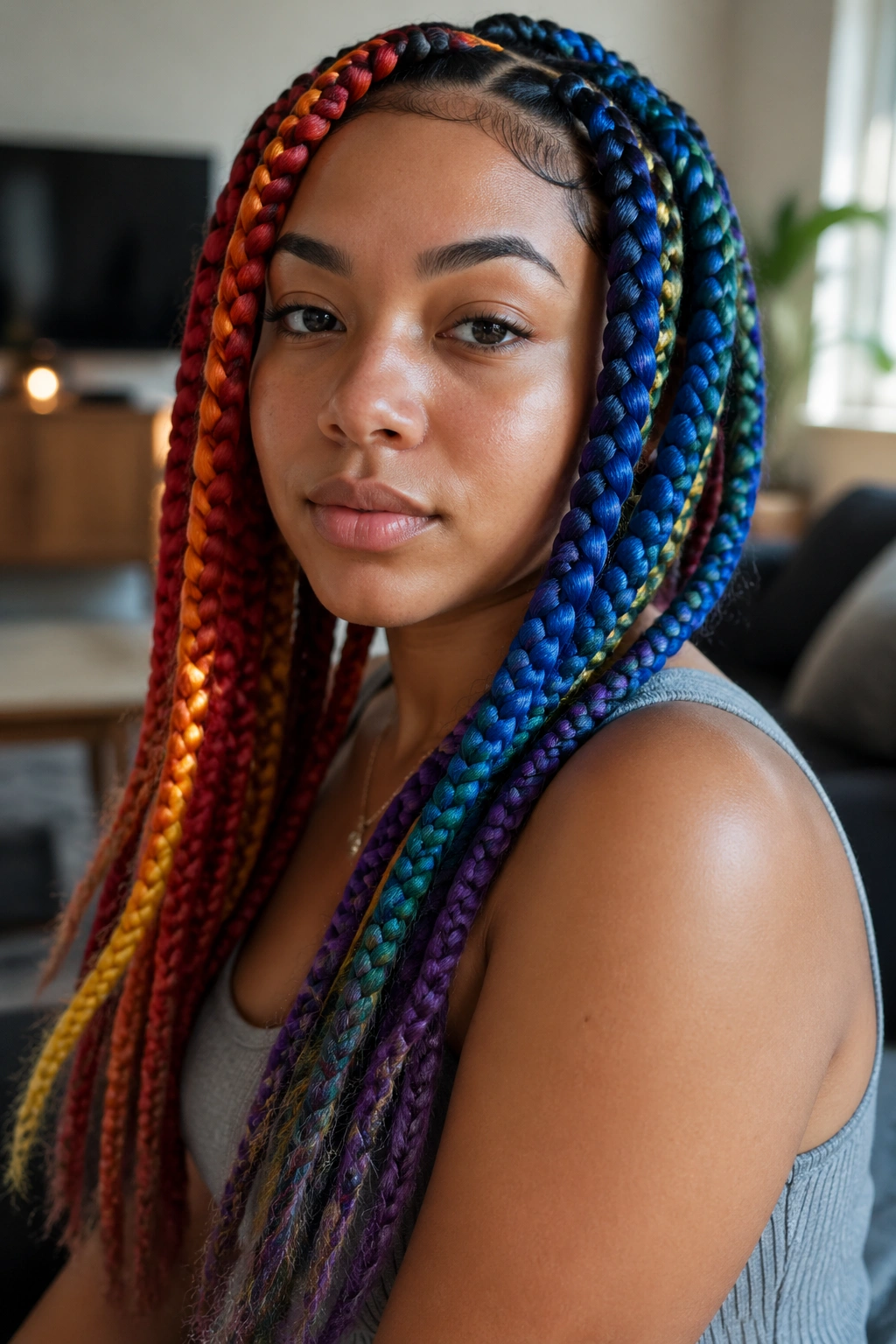
Most jumbo braids do not stay crisp forever, and rainbow braids show wear a little faster because the color makes frizz more visible. A common wear window is around four to six weeks, though some people can stretch a little longer if the scalp is calm and the parts still look neat.
What shortens the lifespan? Tight roots, too much product, sleeping rough, and constant pulling into high styles. Heavy extension hair can also loosen the base faster because the roots are carrying more weight. That is why a style that looked fine on day one may start to sag sooner than a lighter install.
Watch for these signs:
- The part lines have shifted and look fuzzy
- The roots are puffing out more than the rest
- The ends are matting or fraying
- The scalp is sore or itchy most of the time
- The style has lost its shape even after refreshing
If the front looks tired and the back still looks good, you can sometimes buy a little more time with careful edge work and a wash. But once the roots start getting uncomfortable, I’d stop trying to save it. A cute style is not worth a cranky scalp.
16. Taking Them Down Without a Tangled Mess
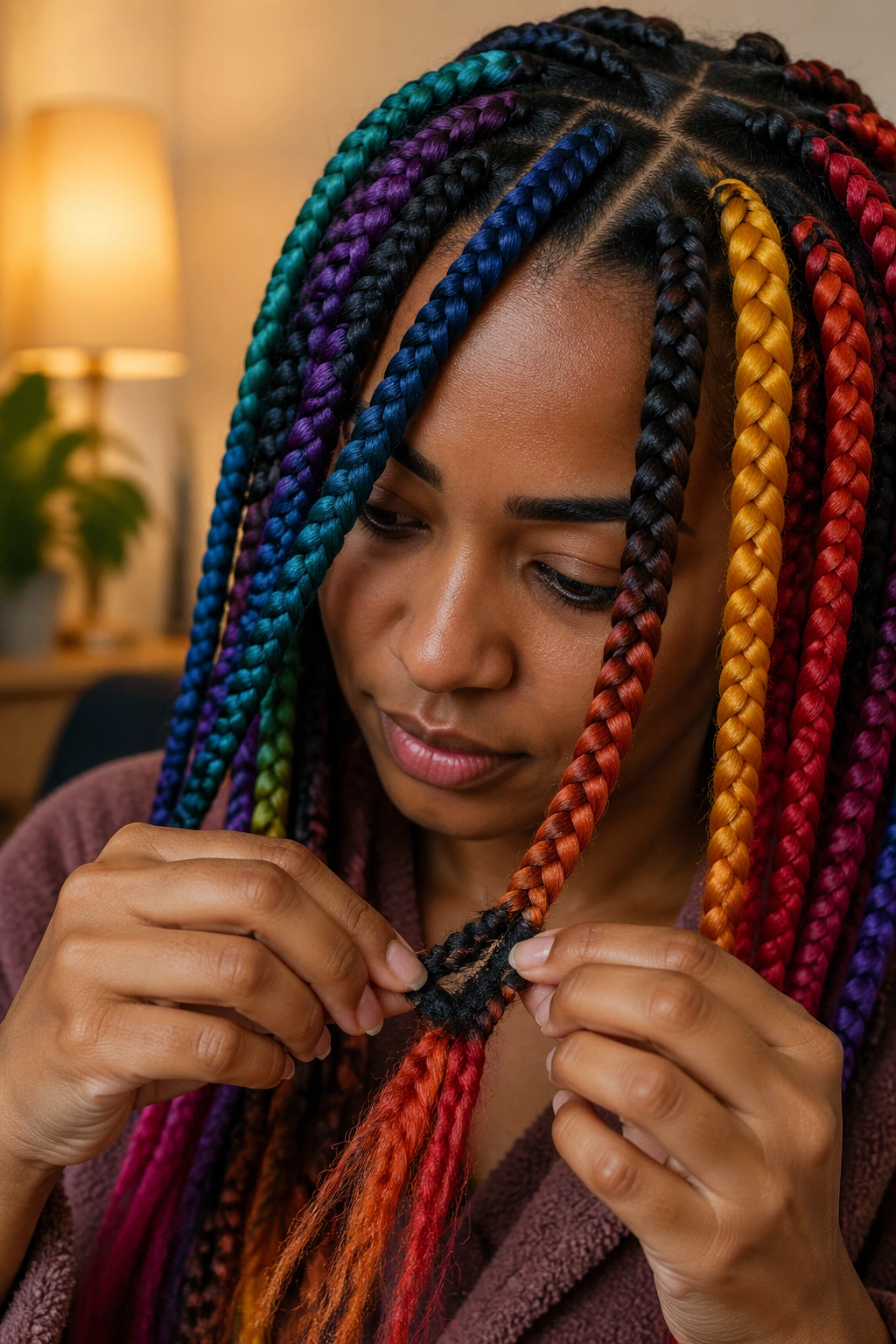
Taking down jumbo braids is slow, and rushing it is the fastest way to lose patience with your own hair. The nice thing about this style is that the sections are large enough to make removal manageable. The annoying thing is that big braids can still shed a surprising amount once they start coming apart.
Start by cutting the extension hair below the point where your natural hair ends, if the install was sealed that way. Then unbraid in small sections, keeping clips nearby so loose hair doesn’t wander into the next braid. A rat-tail comb, a detangling spray, and a little patience will save your evening.
A Few Good Habits
- Work one braid at a time
- Finger-detangle before combing
- Keep shed hair clipped away from the rest of the head
- Stop if the roots feel snagged and add a little slip
- Wash and deep condition after the takedown, not before
You do not need to wrestle the braid out. You need to unmake it. Different job.
If the hair feels dry and crunchy during takedown, pause and add a little moisture. Dry hair snaps. Soft hair slides. That difference is huge.
17. Who This Style Flatters Most
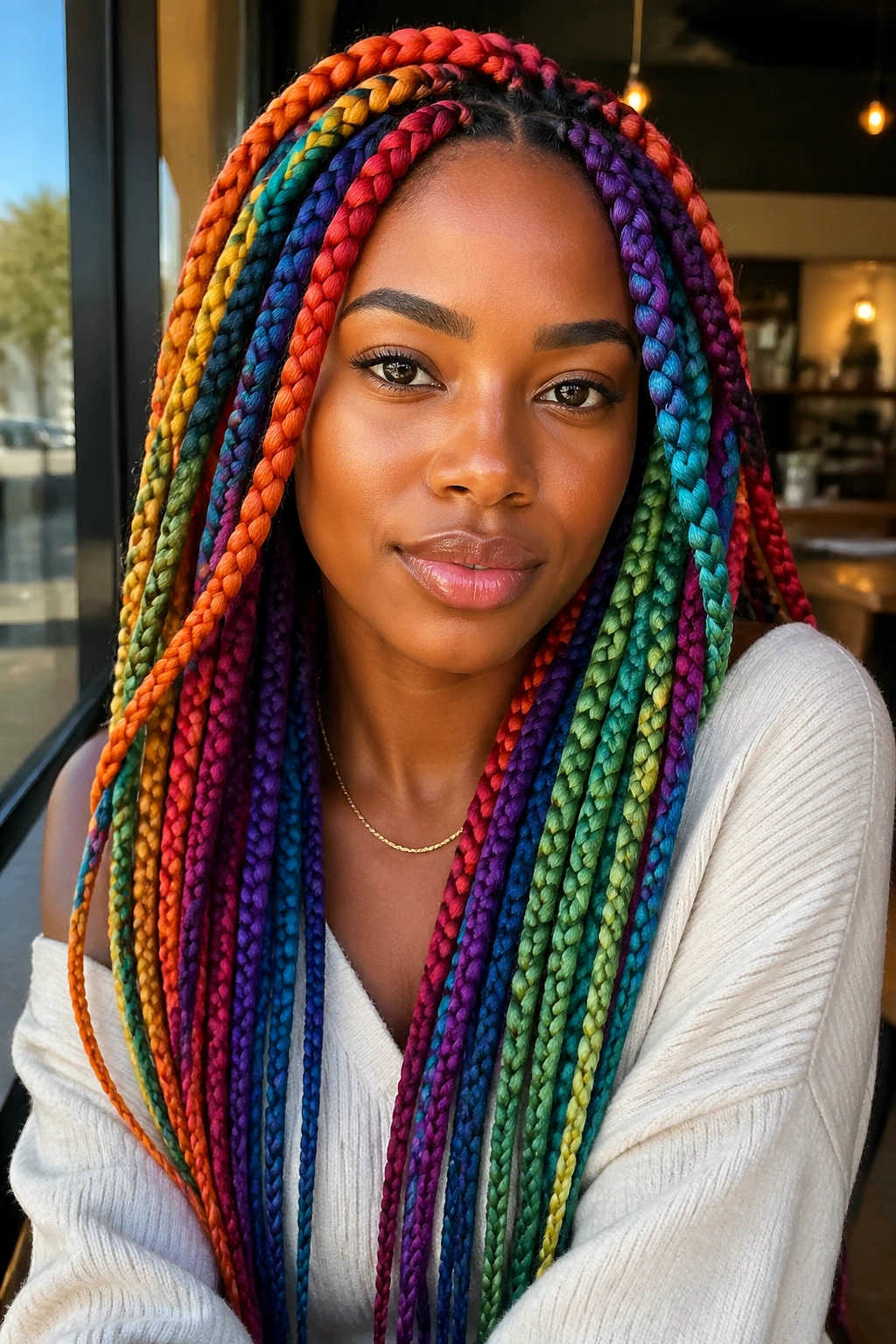
Not every braid style suits every mood, and that’s fine. Jumbo rainbow box braids are for people who like a strong visual statement and don’t mind having their hair noticed before they enter the room. If you want something quiet, this is not your lane.
Face shape matters less than people think. What matters more is balance. A fuller braid set can look great on round, oval, heart, or square faces if the parting and length are chosen well. A center part feels sleek. A side part softens the face. Longer lengths give more drama; shorter lengths feel lighter and easier to live with.
If your schedule is packed and you cannot deal with upkeep, choose a lighter version or smaller sections. If your edges are already sensitive, be cautious with any style that uses a lot of added hair. And if you love bright clothes, bold makeup, or statement earrings, these braids can pull your whole look together without much effort.
If you hate standing out, I’d skip this one.
18. Final Thoughts
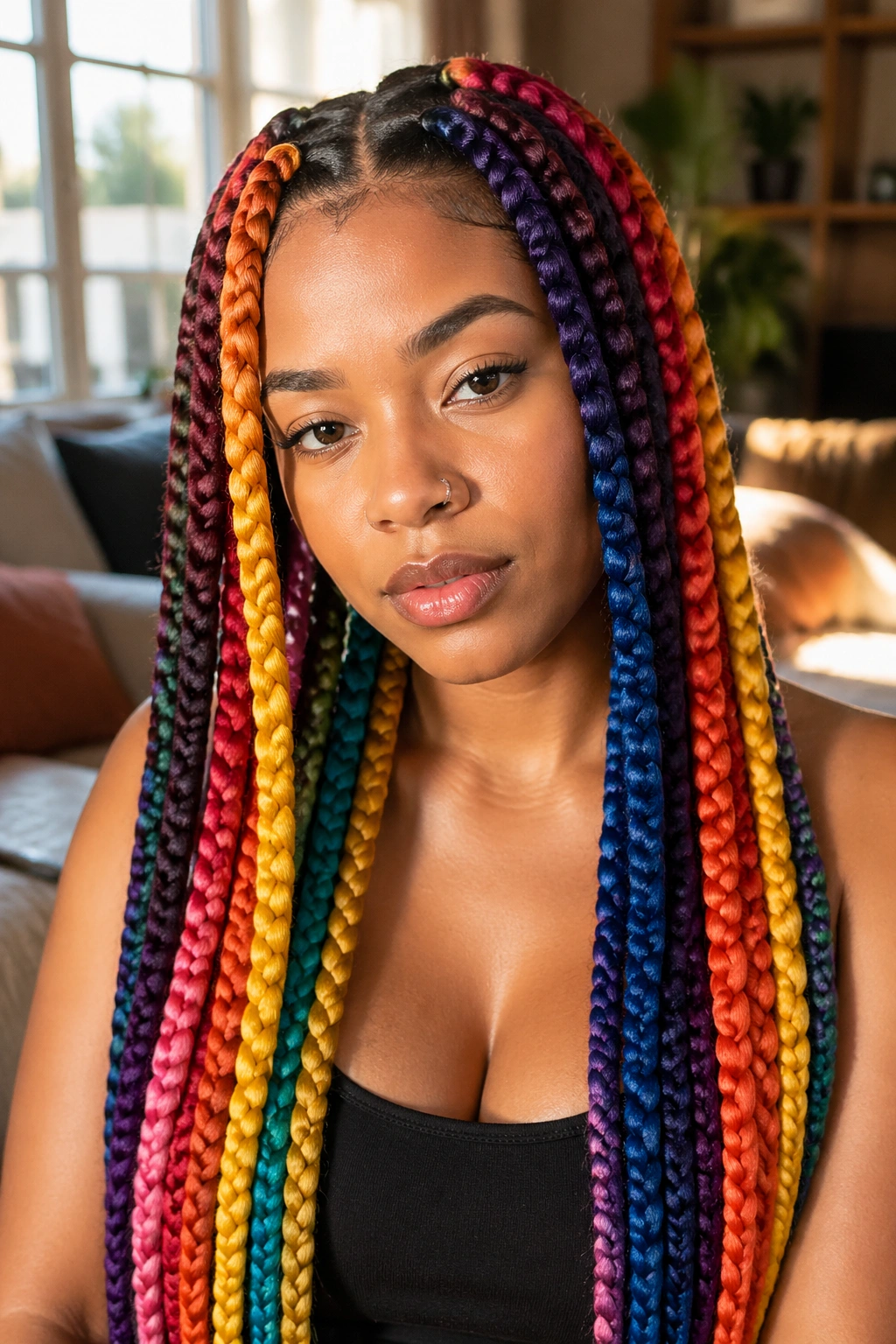
The best jumbo rainbow box braids are not the loudest ones. They’re the ones that look planned. Clean parts, even thickness, a color order that repeats on purpose, and enough lightness at the root to let you forget about them for a while — that is the sweet spot.
I also think this style works best when you respect its limits. Big color needs clean maintenance. Heavy hair needs a careful hand. And if the install starts hurting, no amount of prettiness makes that a good idea.
One habit saves more trouble than people expect: sort the braiding hair by color before the first braid goes in. It sounds fussy. It isn’t. It keeps the whole style from turning into a scramble halfway through, and it makes the final look feel calm even when the palette is bright.
That’s the real charm here. Not chaos. Control, with color.
