


Small ombré knotless box braids have a way of making color look calmer than it has any right to be. The fade softens the shift from root to tip, and the knotless base keeps the front of the braid flat instead of bulky, so the whole style sits neatly and moves with you.
That combination matters more than people think. Small sections make the color read in tiny layers, which is why a good ombré looks richer on small braids than on chunky ones. You get more braid density, more movement, and more of that gradual dark-to-light change that catches the eye without shouting for attention.
The tradeoff is time. Small braids take longer in the chair, and ombré hair needs a little more thought than a one-shade set because the blend can go muddy if the tones fight each other. Pick the wrong blonde, and the ends can look brassy. Pick the wrong red, and it turns flat. Pick the right fade, though, and the whole style looks polished from the first day to the last.
What makes this style so easy to wear is the range. It can be warm, cool, soft, dramatic, glossy, or low-key. Same braid size. Same knotless foundation. Completely different mood. And that’s where the fun starts.
1. Classic Black-to-Caramel Ends
This is the safest starting point, and I mean that in the best way. Black at the root keeps the style grounded, while caramel ends add warmth that flatters a huge range of skin tones. The fade is soft enough to look natural, but the lighter tips still give you that obvious ombré payoff when the braids swing.
Why it works so well
The trick is contrast with restraint. If the ends are only a few shades lighter than the base, the braids look smooth instead of striped. On small knotless braids, that matters even more because the tiny sections show every color change.
If you want a style that feels wearable at work, on weekends, and in photos without looking overly styled, this is the one I’d start with. It also grows out cleanly because the dark root hides that early regrowth better than a lighter base does.
Ask your braider for
- A deep black or soft off-black base with warm caramel ends, not a sharp brown-to-blonde jump.
- A fade that starts around the mid-lengths, so the braid doesn’t look chopped in half.
- Small, even parts — about ¼ to ⅜ inch wide — for a tidy finish.
- Light mousse near the ends after installation so the ombré looks smooth instead of frizzy.
Best tip: keep the caramel close to honey or toffee, not orange. Orange ends can make the whole set look like a color experiment gone wrong.
2. Espresso Roots with Honey-Blonde Tips
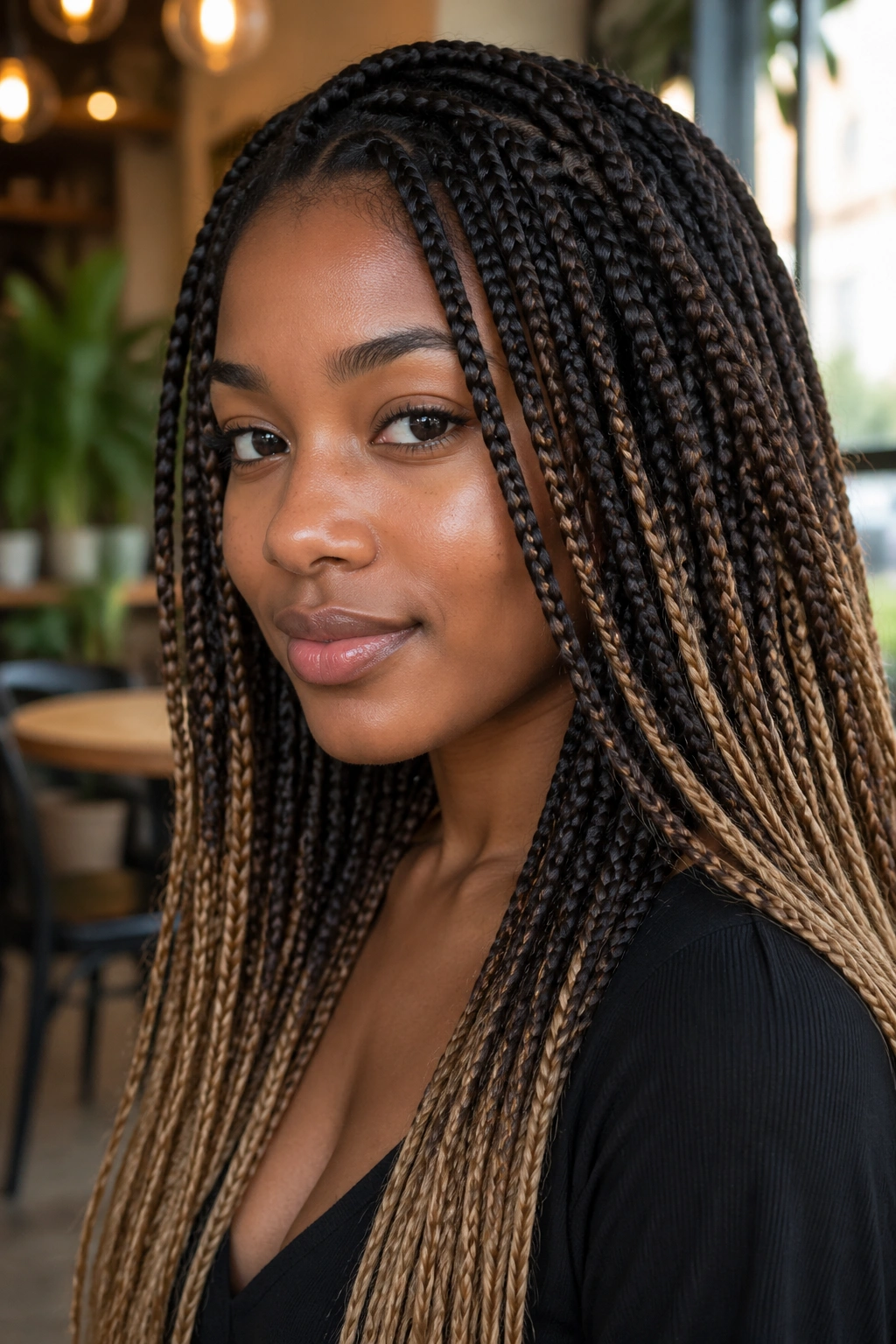
Want lighter hair without going full blonde? This is the sweet spot. The espresso base keeps the style rich, while honey-blonde tips brighten the braid line and give the style a warmer, sunnier finish.
Why the roots matter
A dark root makes the whole look feel more expensive because it gives the eye a place to rest. On small ombré knotless box braids, that dark foundation is your insurance policy. It keeps the lighter ends from taking over too soon, which is a problem with some blonde braid sets that start looking washed out after a few days.
Honey blonde is the key here. It has a soft gold tone that plays well with brown and black bases, and it tends to look gentler than icy blonde on braided hair. I prefer it for people who like bright hair but don’t want the ends screaming across the room.
How to wear it
- Pair it with neutral makeup and let the hair do the talking.
- Wear the braids half-up or in a high ponytail so the color shift shows.
- Keep the edges sleek only if you like that look; these braids also work well with a softer hairline.
The one thing I’d avoid is mixing too many blonde shades in the same install. Two tones is enough. Three starts to look busy.
3. Jet Black to Burgundy Tips
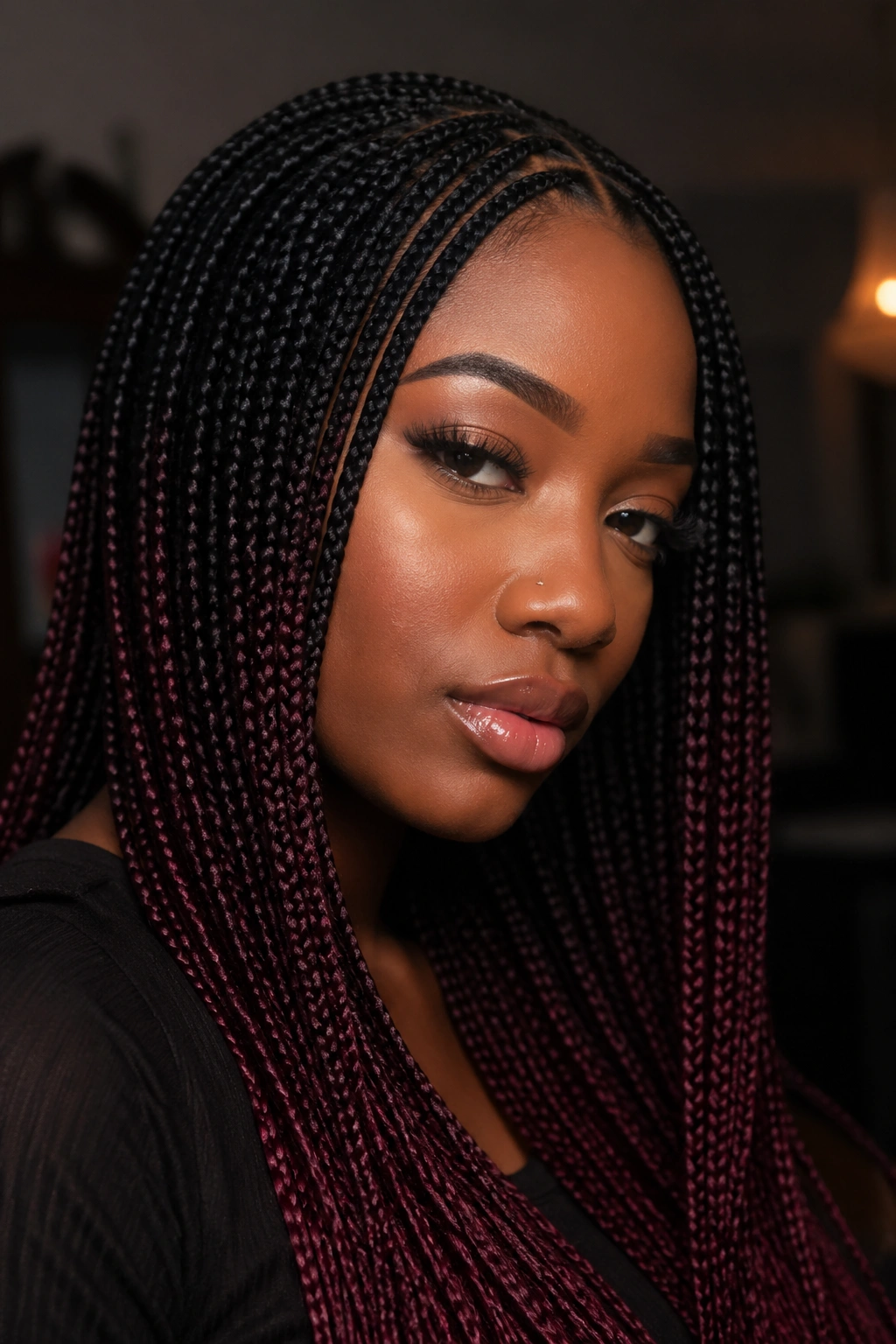
Burgundy on braids is not subtle, and that’s exactly why it works. The red tone gives the style a deeper, moodier finish than caramel or honey, but it still reads polished because burgundy sits close to the dark base in richness.
You can wear this with very little effort. A black root with burgundy tips has enough contrast to be interesting, but it does not need much else. No extra accessories. No dramatic makeup. The color already does the heavy lifting.
What makes it different
Burgundy is especially good if you want your braids to look richer in low light. Under indoor lighting, the ends read wine-colored and smooth. In daylight, they show more red. That small shift keeps the style from feeling flat.
If your natural hair leans warm, burgundy can be an easier choice than bright red because it blends into the base instead of sitting on top of it. The result is softer, not louder.
A little warning: if the red tone is too bright, the style can fight with your wardrobe fast. Deep burgundy is the safer move. It plays nicely with black clothing, denim, cream, and gold jewelry. Loud cherry red? That’s a different mood entirely.
4. Chocolate Brown to Copper Ends
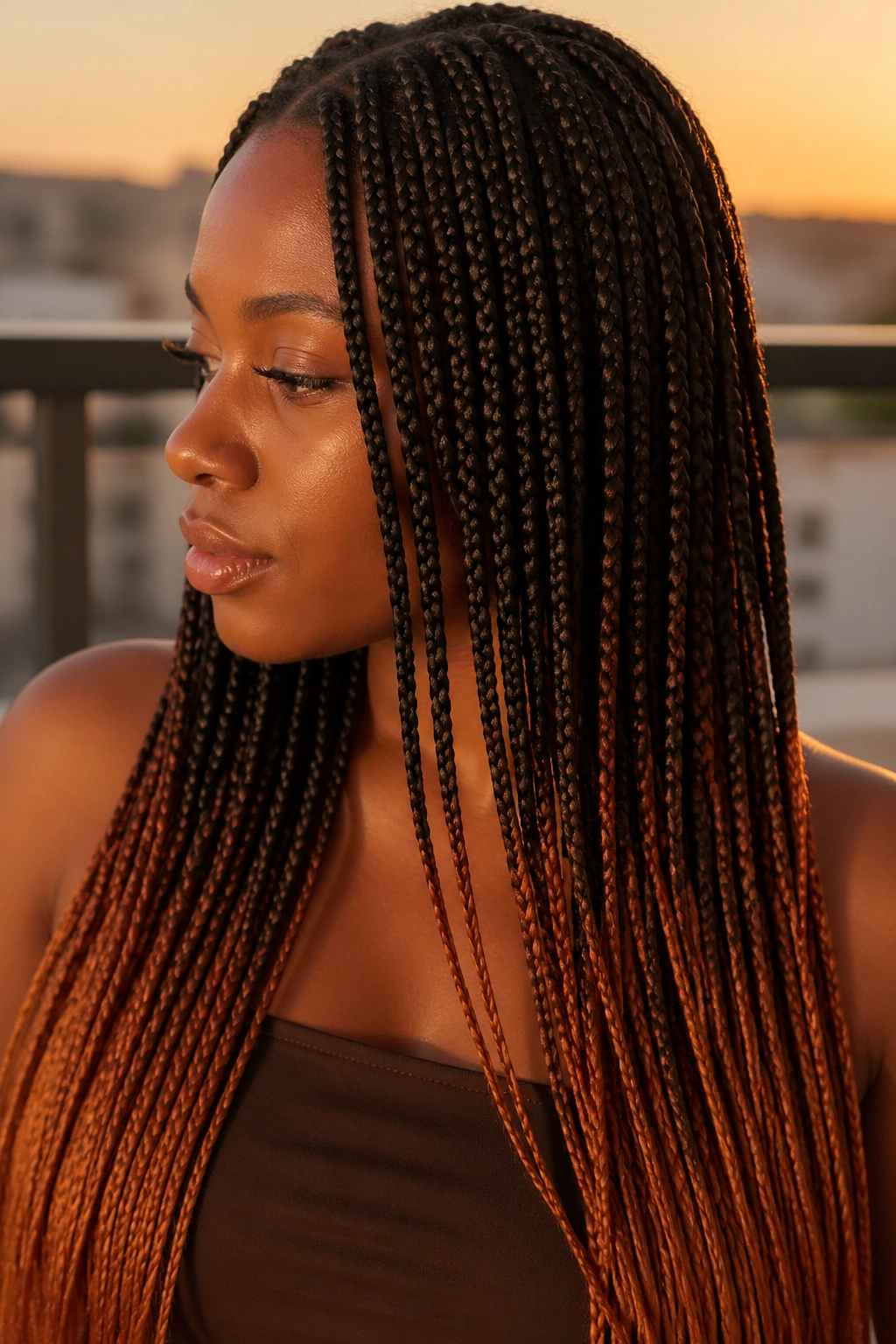
Copper ends on small knotless braids give you warmth without going straight into blonde territory. The color shift feels earthy, almost sun-baked, and that makes it a strong choice if you like rich tones that look alive rather than icy.
Picture this: chocolate roots, a little bit of copper showing at the lower half, and the ends catching light every time you turn your head. That is the whole effect. Simple. Striking. Hard to mess up if the fade is blended well.
What to ask for
- A medium or dark chocolate base with copper ends that lean burnt orange, not neon.
- A long enough fade to keep the transition soft.
- Braids that are sealed cleanly so the copper tips don’t fray and dull fast.
- A light sheen spray, used sparingly, because too much shine makes copper look greasy.
Copper works best when it’s treated like an accent, not a costume. You want warmth, not carnival orange. If you wear a lot of cream, olive, rust, or denim, this color set looks even better.
Small note: copper ends can look especially good on braids that hit at the chest or below, because there’s enough length for the color to spread out. On very short braids, the transition can feel abrupt.
5. Small Ombré Knotless Box Braids with Blonde Face-Framing Pieces
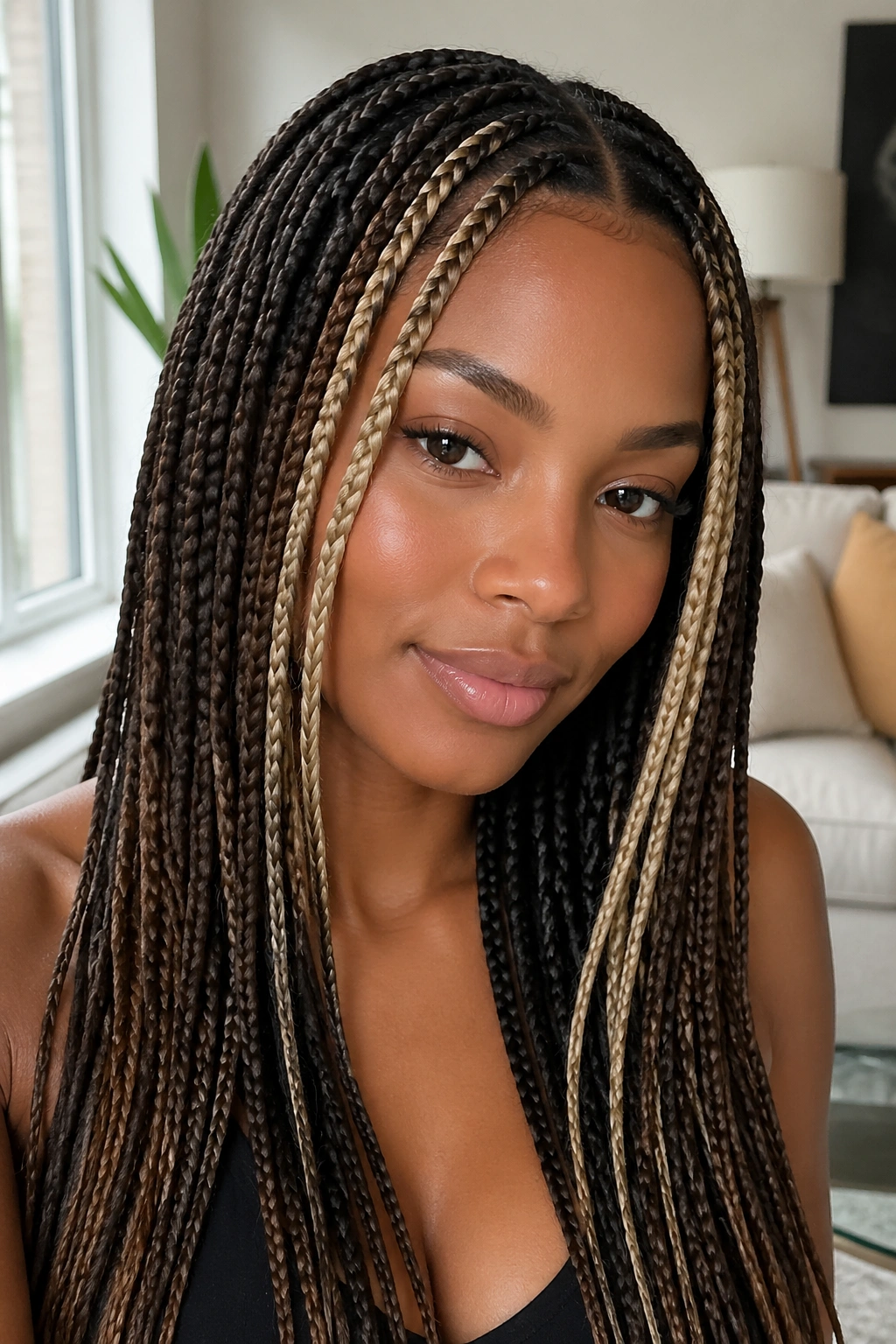
This is the version for people who want brightness near the face but do not want an all-over blonde set. The darker interior braids keep the look grounded, and the lighter front pieces pull attention upward where it counts.
Unlike full blonde ombré braids, this style gives you control. You can keep most of the head in deep brown or black, then place honey, beige blonde, or soft gold around the hairline and temple area. That little change makes a bigger difference than people expect.
Why it stands out
Face-framing pieces work because they brighten the area people see first. They also make your features pop in a way that full-head blonde sometimes misses, especially if you want the color to feel intentional instead of overwhelming.
A smart way to wear it
- Keep the front pieces one to two shades lighter than the rest.
- Use a softer blonde, not a flat yellow tone.
- Add a few lighter strands near the part, not just at the sides.
- Let the back stay darker so the grow-out stays low-maintenance.
This is the set I’d pick for someone who likes color but still wants the braids to feel grounded. It also looks great pulled back, because the contrast at the hairline becomes the whole point.
6. Ash Brown to Smoked Bronze
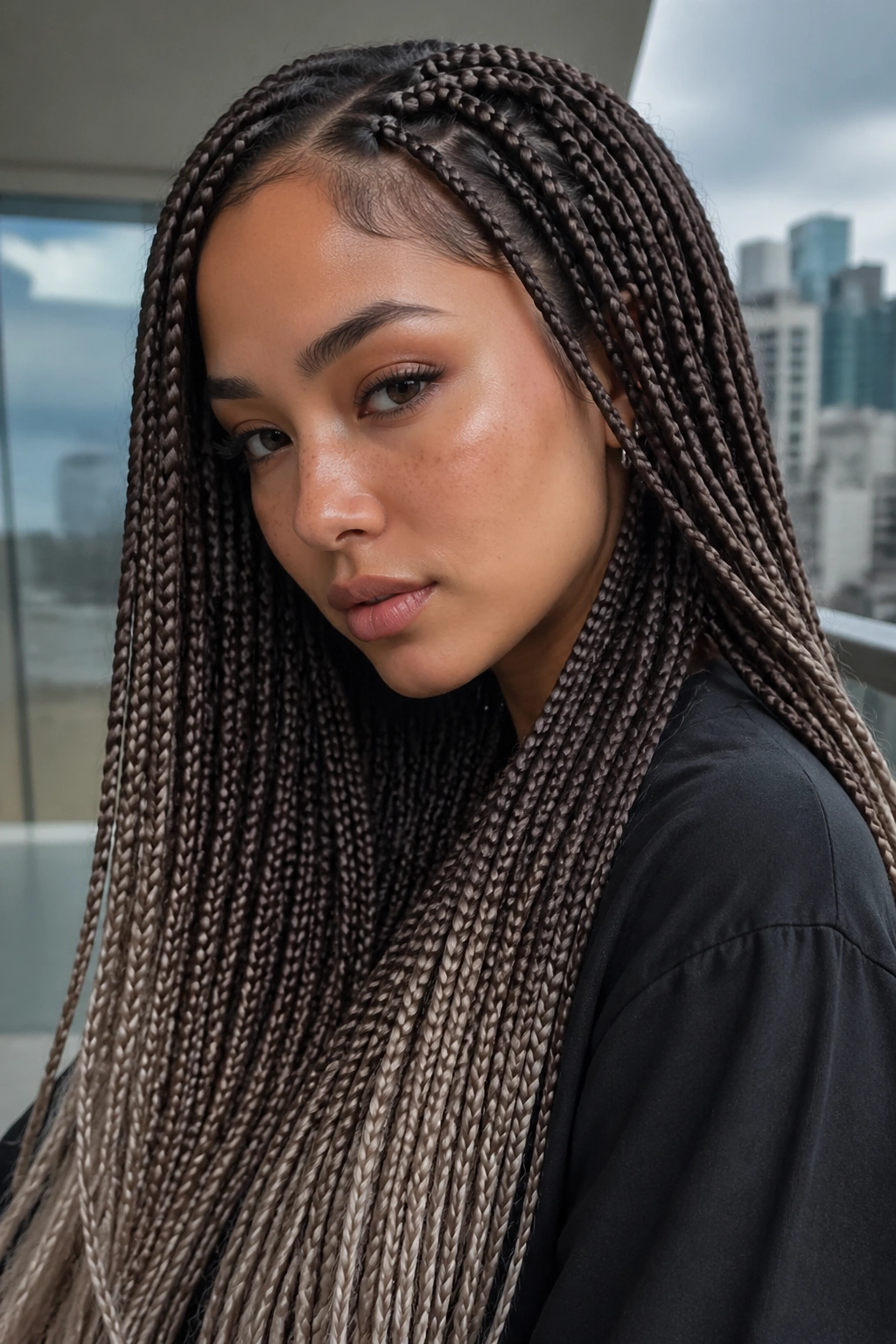
Cooler ombré braids are underrated. People rush to warm tones because they look familiar, but ash brown into smoked bronze has a cleaner, more muted finish that feels deliberate without being harsh.
The color is softer than caramel and less obvious than blonde. That makes it a strong choice if you like a quiet look with a little edge. The fade should be slow here. Too much contrast, and the ash can look muddy. Done well, though, it looks smooth and almost matte in a nice way.
What to watch for
Ash shades need a careful hand. If the tone is too gray, the braids can look flat. If the bronze end is too orange, you lose the cool balance. The sweet spot is a brown that still has some warmth in it, then a bronze tip that stays muted rather than shiny.
This set works beautifully with silver jewelry, charcoal clothing, and plain white tees. It has that clean, slightly pared-back look that doesn’t need extra noise.
A lot of people skip cooler ombré braids because they think the hair has to be blonde to feel interesting. Nope. A smoked bronze fade can look richer than blonde if the color blend is clean.
7. Waist-Length Small Ombré Knotless Box Braids
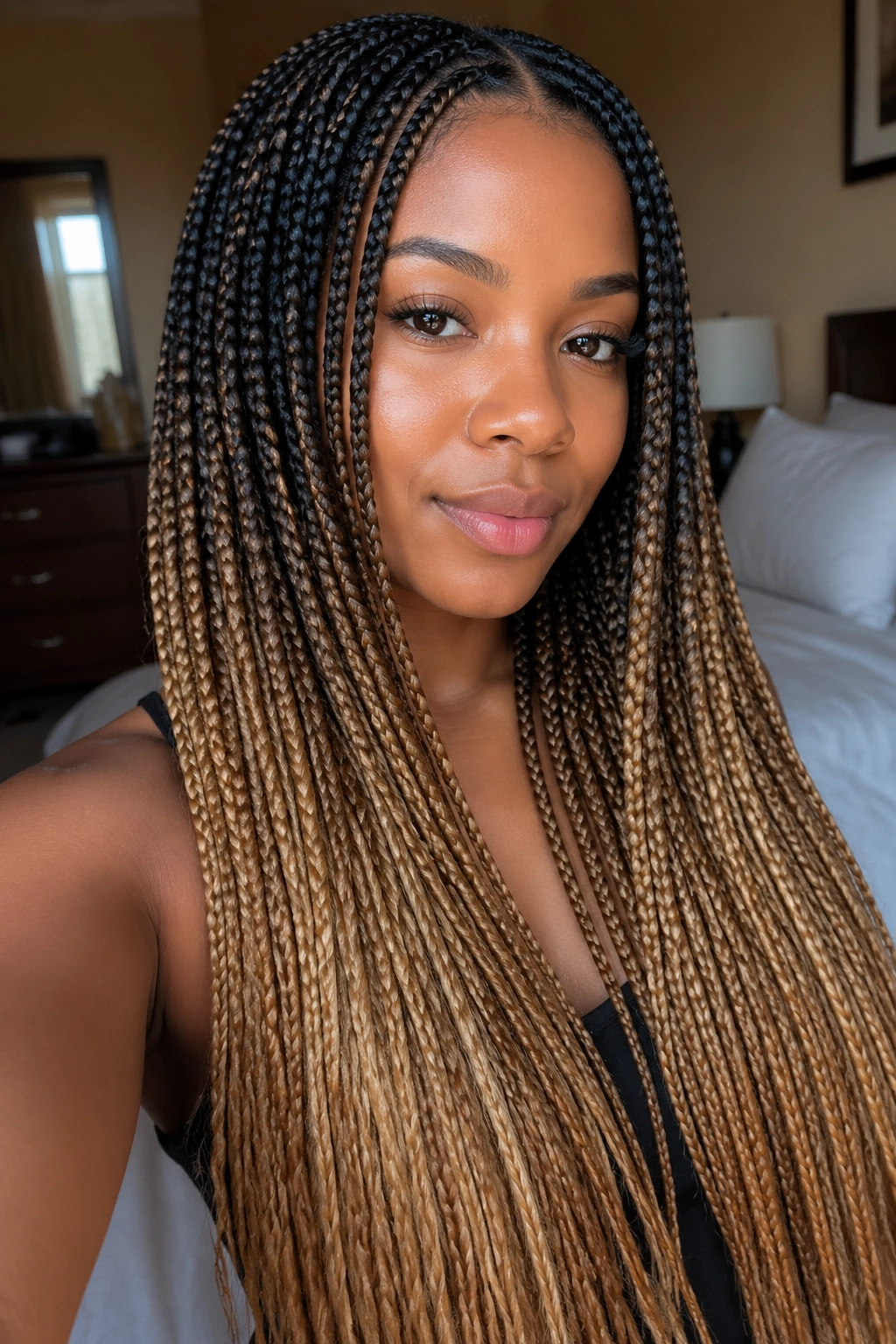
Long braids change the whole story. With waist-length small ombré knotless box braids, the color has room to breathe, which means the fade can move from dark root to mid-tone to light tip without feeling cramped.
Why length changes the color
Shorter braids show the fade fast. Longer braids let the eye travel. That creates a smoother read, especially when you use three shades instead of two. The style feels more layered because the color shift has distance to unfold.
There’s also a practical upside: a long ombré set hides small grow-out better because the light ends pull the eye downward. That makes the roots look less obvious for longer, which is useful if you don’t plan to redo braids often.
How to keep long braids from feeling heavy
- Ask for small parts, but not tiny ones, if your hairline is delicate.
- Keep the extension hair light in color and weight where possible.
- Wrap the braids at night with a long satin scarf or bonnet.
- Use mousse in thin layers, not heavy product, so the ends don’t clump.
Long small braids look beautiful when they swing, but they can tug if they’re installed too tight or overloaded with hair. That part matters more than the color choice. A clean install will always beat a fancy fade on a sore scalp.
8. Bob-Length Small Ombré Knotless Box Braids
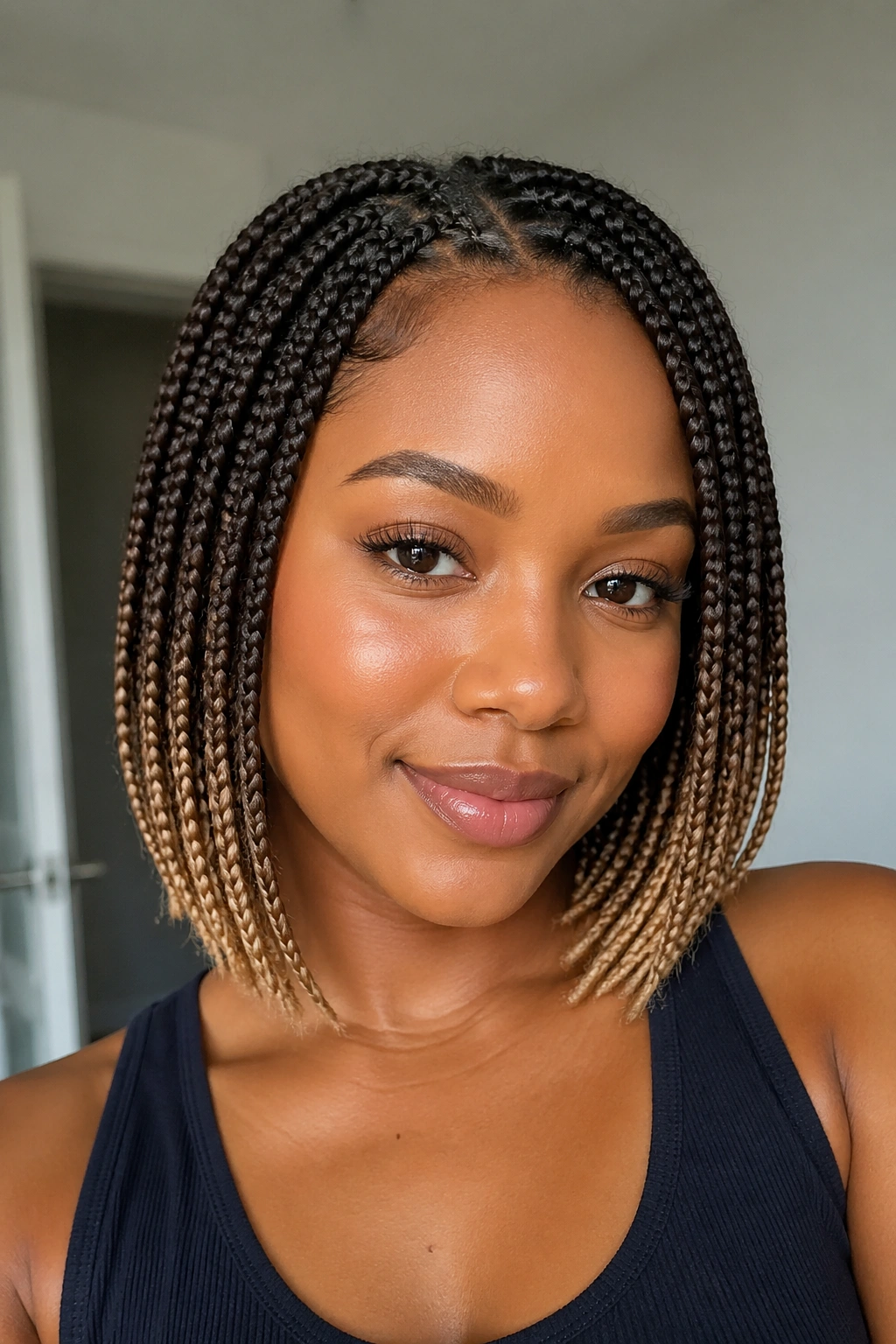
Short braids are a different mood. They look crisp, neat, and much easier to handle when you do not want hair brushing your ribs all day. A bob-length set with ombré color keeps all that practicality but still gives you the visual payoff of a fade.
Do you want color without the extra weight? This is the answer.
Why it works
A shorter length puts the ends in view fast, so the ombré reads almost like a frame around the face and jaw. That can be a good thing if you want the color to feel sharp and tidy. It can also make your features look more defined, which is why bob braids often feel more tailored than longer versions.
The key is keeping the fade subtle. Because there’s less length to show the shift, a huge jump from black to blonde can look abrupt. Brown-to-honey, black-to-caramel, or espresso-to-bronze usually lands better.
Best for
- People who want less weight on the neck
- Anyone who likes a clean shape around the jaw
- Braids that need to move easily under hats or scarves
- A style that looks polished with little daily fuss
Short ombré knotless braids also let you show off earrings more easily. That sounds minor, but it changes the whole balance of the look.
9. Auburn Fade with Warm Brunette Roots
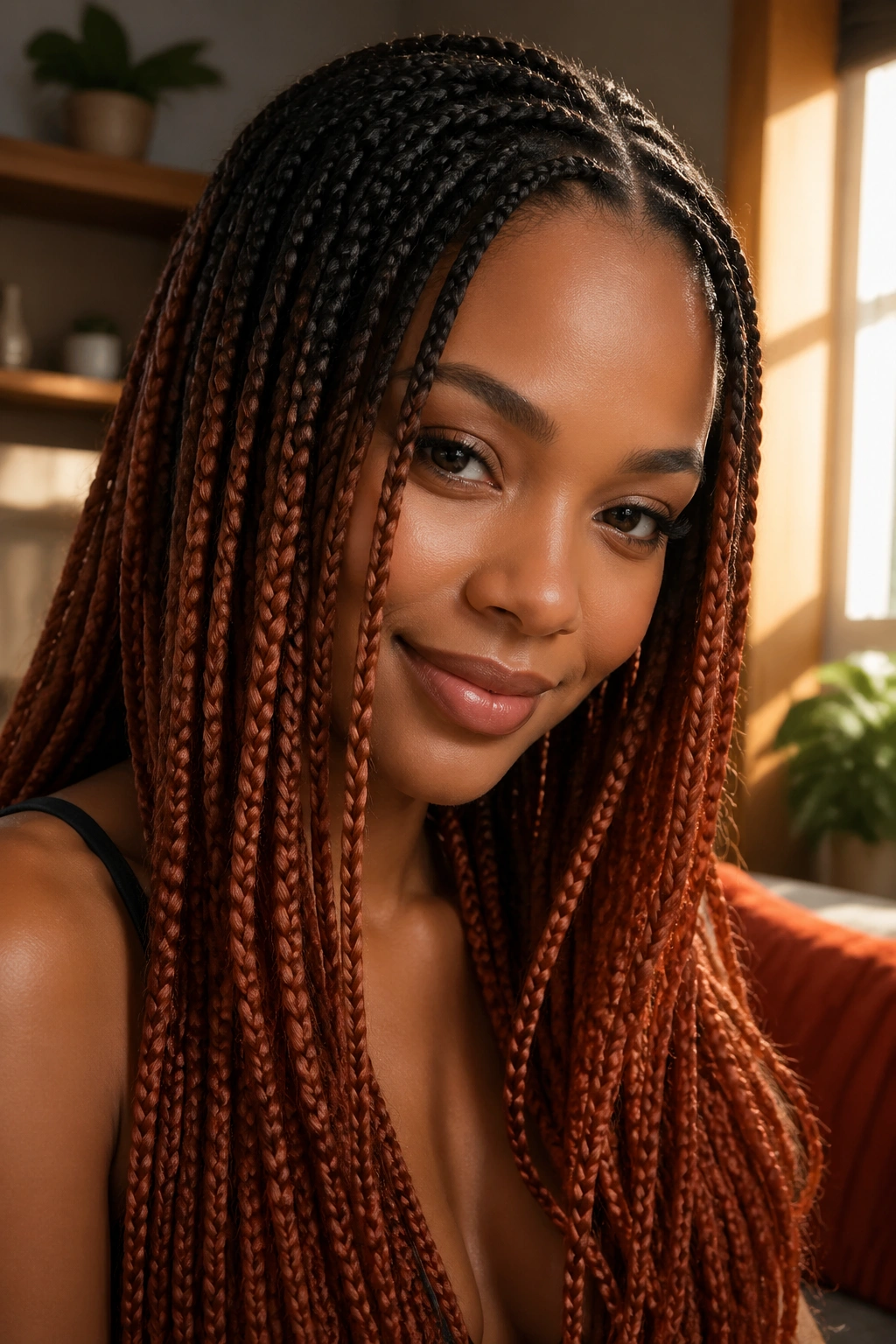
Auburn is one of those shades that looks richer in person than it does in a flat photo. The red-brown mix gives the braids depth, and the brunette root keeps the style anchored so it doesn’t drift into bright red territory.
This is the style for people who want warmth without going full copper or burgundy. It has a soft glow, not a hard flash. That matters.
The nicest thing about auburn on small knotless braids is that it gives the color texture. The braids already have lines from the plaiting pattern, and auburn plays into that by showing up a little differently on each strand. Some pieces read more red. Some lean brown. That variation keeps the set from looking stamped out.
Wear this with gold hoops, cream tops, and anything deep green or navy. The color likes rich clothing. It also flatters simple makeup because the hair itself is already doing a lot.
If you want the fade to stay elegant, skip bright orange tones. Auburn should look like a warm brown with a red whisper, not a traffic cone in disguise.
10. Triple-Tone Mocha, Chestnut, and Gold
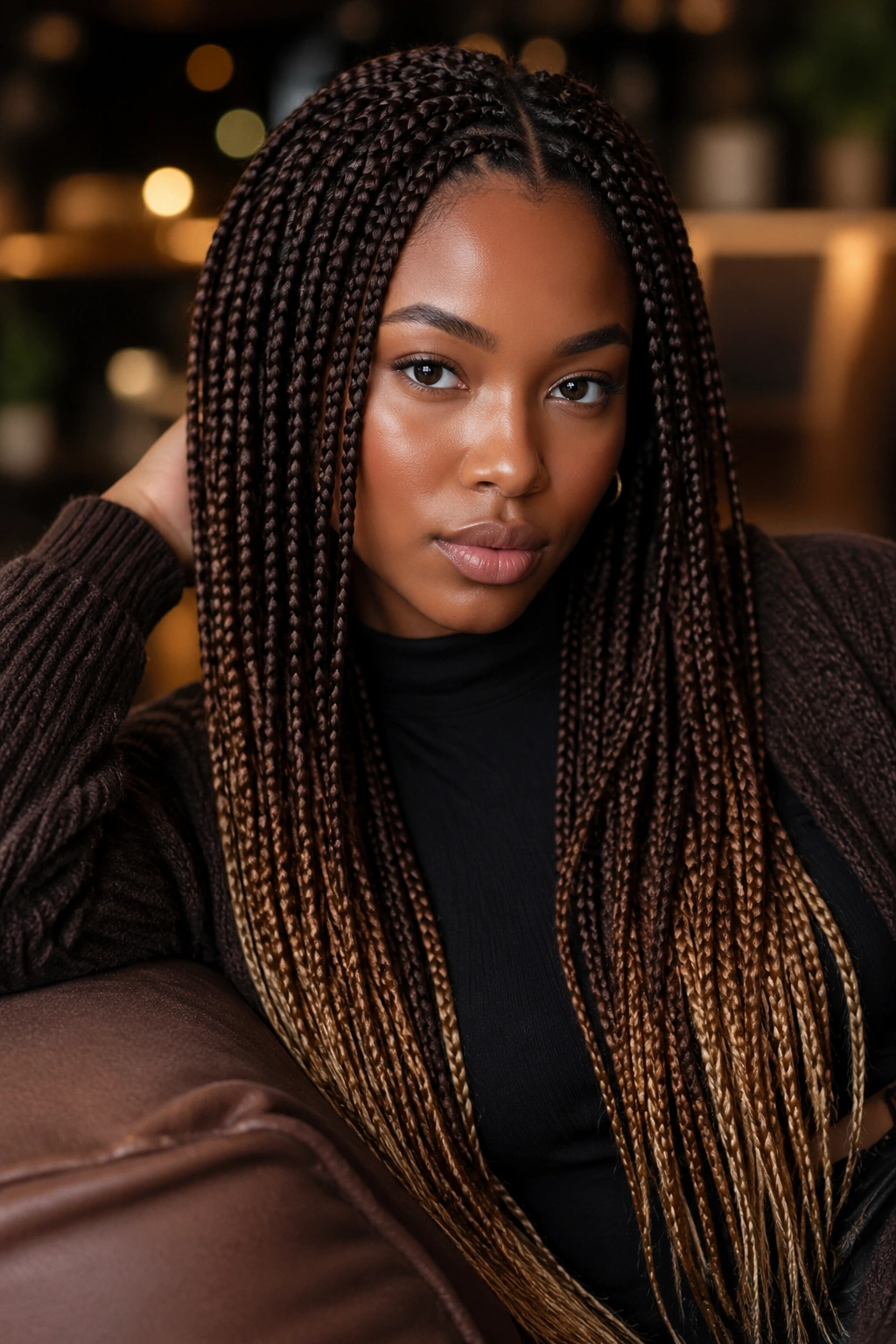
Three shades can look incredible on small ombré knotless box braids if the transition is handled with some restraint. More than that, and the style can start to look busy. Three is the sweet spot. You get depth at the root, warmth in the middle, and brightness at the ends.
The color logic
Mocha gives you the base, chestnut softens the middle, and gold wakes up the tips. That order matters because it mirrors the way natural light hits hair: dark near the scalp, warmer through the body, lighter at the end. The result feels layered instead of striped.
This set is best when the shades sit close to one another on the color wheel. If the gold is too yellow, it breaks the flow. If the chestnut is too red, the whole thing starts to look disconnected. Keep the shades adjacent, not competing.
What I’d ask for
- A dark mocha root, not pure black, if you want the middle tone to show.
- Chestnut through the mid-lengths, blended softly.
- A soft gold or light honey at the very ends.
- No harsh line where one color ends and the next begins.
This style looks especially good on braided ponytails because the color stack becomes more obvious when the hair moves. It has a little bit of drama without feeling loud.
11. Rose-Gold Ends on Small Knotless Braids
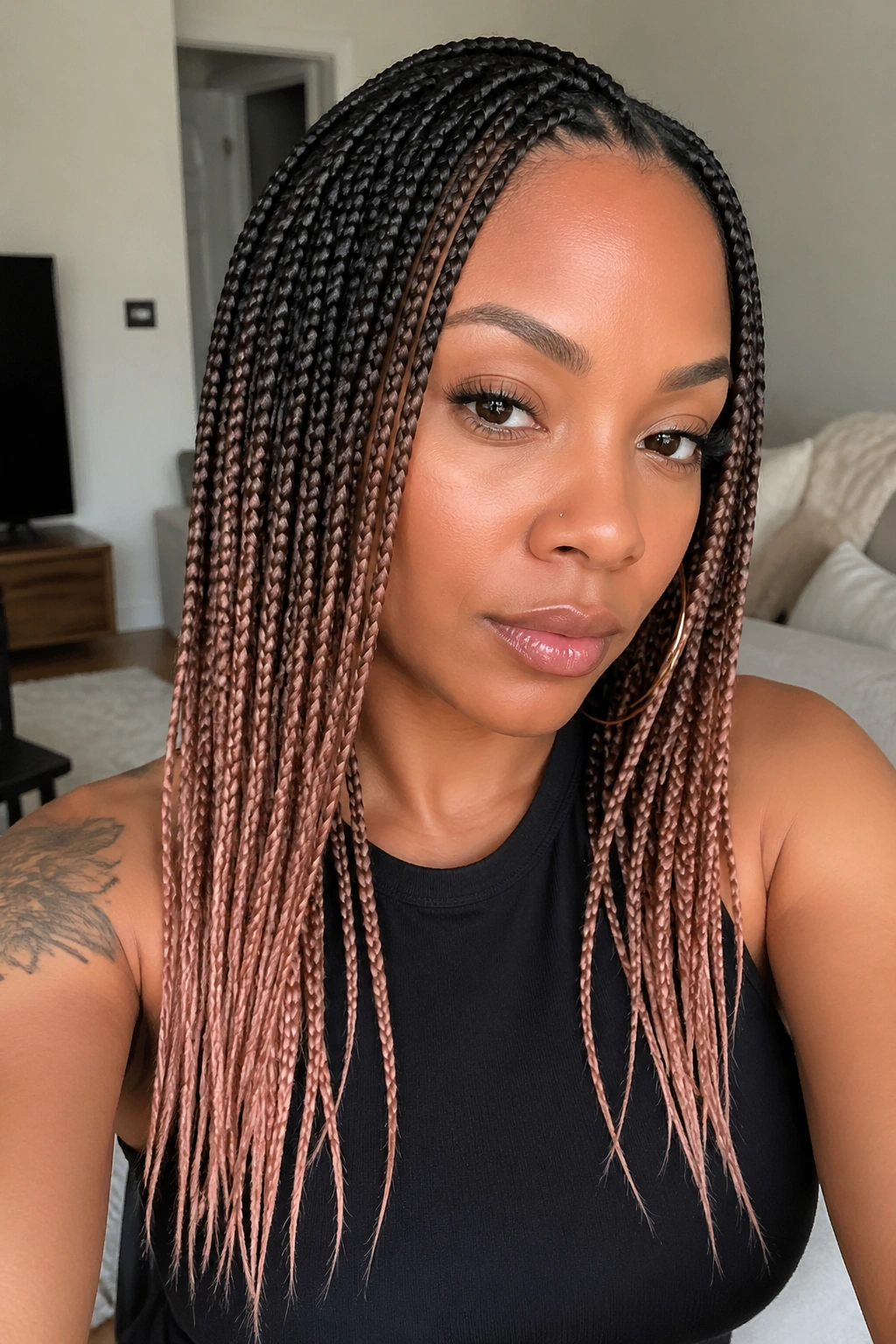
Rose-gold is one of the easiest ways to make braids feel fresh without leaning hard into blonde. The pink-gold mix softens the light ends, which keeps the style from looking harsh around the face.
The big win here is tone. Rose-gold reads gentler than yellow blonde and less moody than burgundy, so it sits in that middle space where a lot of people are happiest. It feels pretty without being sugary. That matters if you want color that still looks grown.
Why it flatters small braids
Small braids show color in thin lines, and rose-gold takes advantage of that by creating tiny flashes of warmth instead of one big bright block. The texture of the braid makes the color feel layered. The shade itself does half the styling for you.
Good pairings
- Neutral makeup with a peach or rose blush
- Gold jewelry, especially thin hoops or cuffs
- Beige, cream, taupe, and soft brown clothing
- A middle part or deep side part, depending on how much face-framing you want
One caution: rose-gold can shift pinker than expected if the synthetic hair is too reflective. Look for a muted shade, not a metallic one. The muted version stays wearable much longer.
12. Smoky Lilac Tips
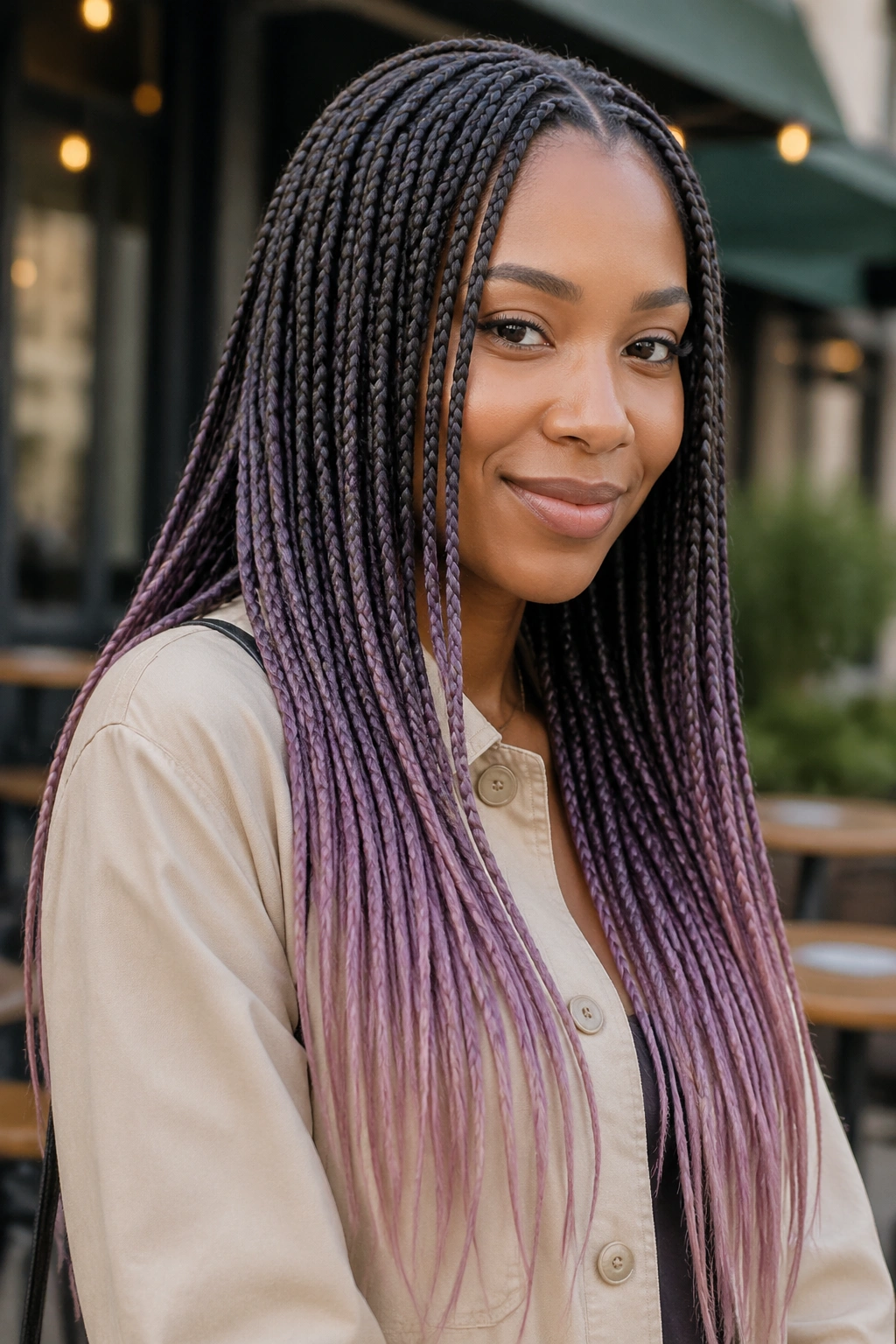
Can pastel work on knotless box braids without looking too sweet? Yes — if the color is dusty. Smoky lilac, mauve-lilac, and gray-violet tones feel much easier to wear than bright purple because they sit lower and blend into the braid texture.
What makes it work
The secret is keeping the lilac close to a muted lavender-gray. That gives you color without making the ends look like costume hair. On small braids, the shade comes through in little flashes, which is exactly what you want. It feels light, but not flimsy.
How to keep it from looking childish
- Pair it with dark roots and a slow fade.
- Keep the rest of the braid set clean and simple.
- Avoid mixing it with several other bright shades.
- Wear it with black, gray, denim, or white to ground the color.
If you like a soft, creative look, this one is worth trying. If you need something that blends into a very conservative setting, maybe not. Pastel braids ask to be noticed, even when the tone is subdued.
Still, they can be oddly elegant when the shade is quiet enough. Smoky lilac does that better than almost any other pastel.
13. Blonde-Tipped Braids with Curled Ends
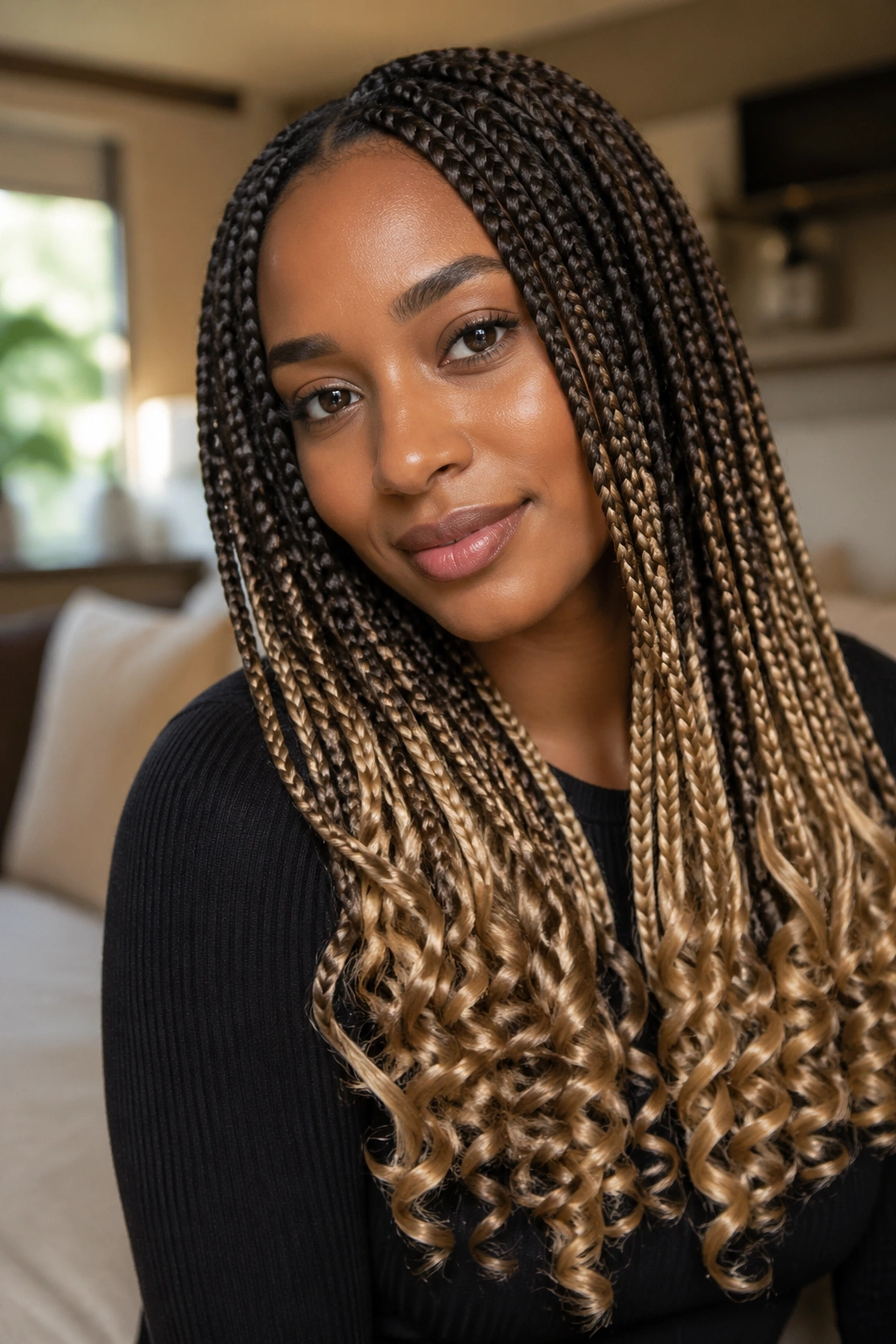
Straight ends are fine. Curled ends, though, give small ombré knotless box braids a little lift and movement that changes the whole shape. The blonding at the tips becomes less abrupt because the curl softens the visual line.
This style has a more finished feel, almost like the braids came styled instead of simply installed. That matters if you want the braids to look dressed up for an event, dinner, or a photo-heavy day.
Why curled ends change the mood
A curled tip catches the eye more gradually than a blunt one. The braid tapers, the curl bends, and the color seems to spread instead of stopping. That is especially nice with blonde tips, which can sometimes look a little sharp on very small braids if they’re left straight.
A few things to know
- Curl the ends with flexi rods or a roller set if the extension hair allows it.
- Keep the curl loose, not tight, so the set stays soft.
- Use hot water carefully if your braids were finished with heat-safe synthetic hair.
- Don’t overload the ends with mousse or gel, or the curl collapses.
Curled ends can make a long braid set look more expensive. They also hide minor frizz well, which is a real bonus once the braids have been in for a while.
14. Beaded Ombré Knotless Box Braids
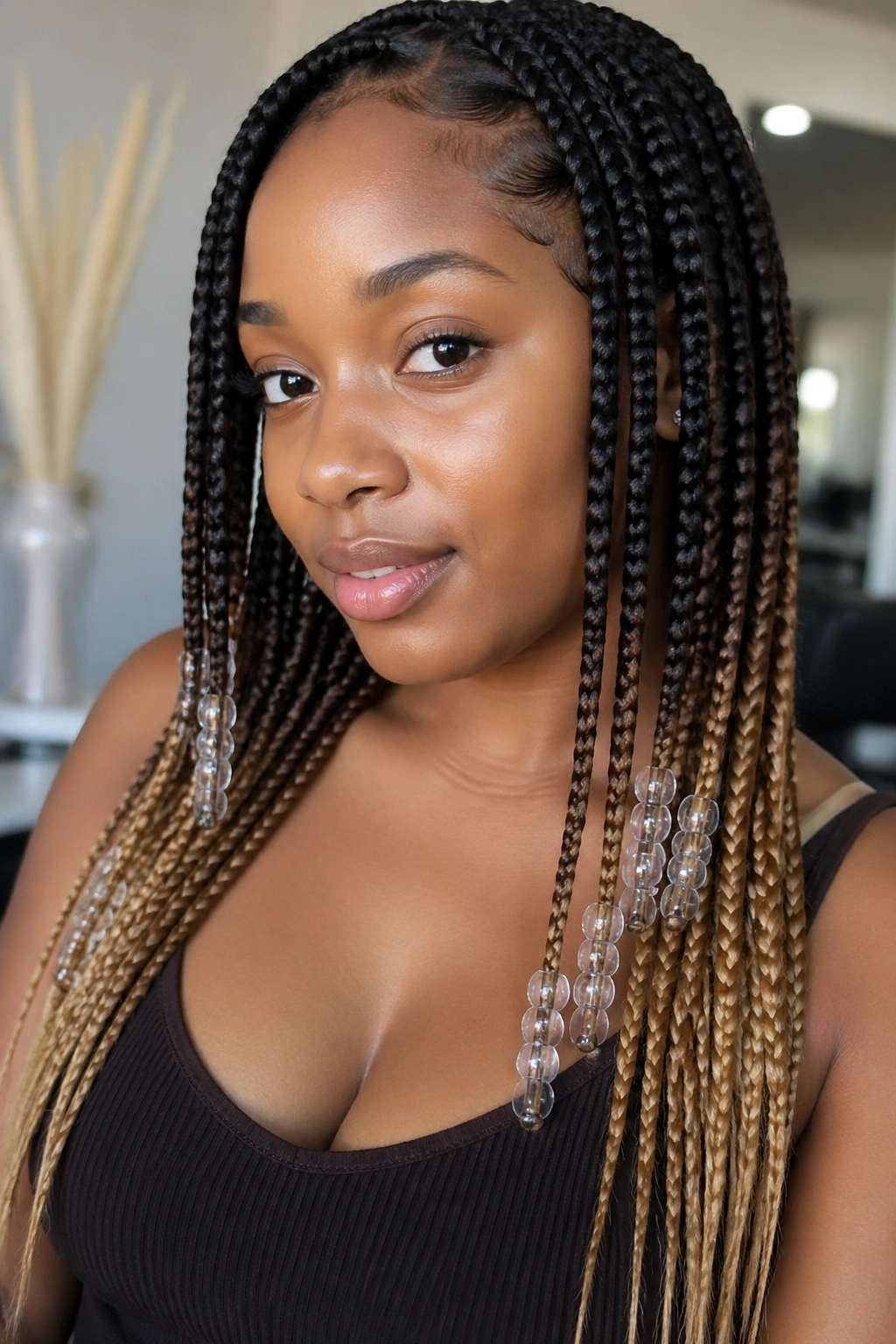
Beads change the weight and rhythm of the style fast. Add them to ombré knotless braids, and the whole look gets a little more movement, a little more sound, and a lot more personality.
The best version of this style is not bead-everywhere chaos. It’s selective. A few clear beads near the ends, or a neat cluster on the front braids, is enough. The ombré fade already gives you color; the beads give you punctuation.
What to keep in mind
- Choose lightweight beads if your braids are very small.
- Use clear, wooden, or smoke-toned beads if you want the fade to stay visible.
- Place beads on the front sections or a few accent braids, not the whole head.
- Make sure the ends are sealed well, because beads can slide around if the braid tails are fuzzy.
I like this on warmer fades — caramel, honey, auburn, rose-gold — because the beads echo the softness of those shades. But it works on darker sets too, especially if you want the lower half to feel less plain.
One blunt truth: too many heavy beads on small braids can pull. Don’t do that to your edges. A few well-placed accents go much further.
15. The Soft Fade That Grows Out Cleanly
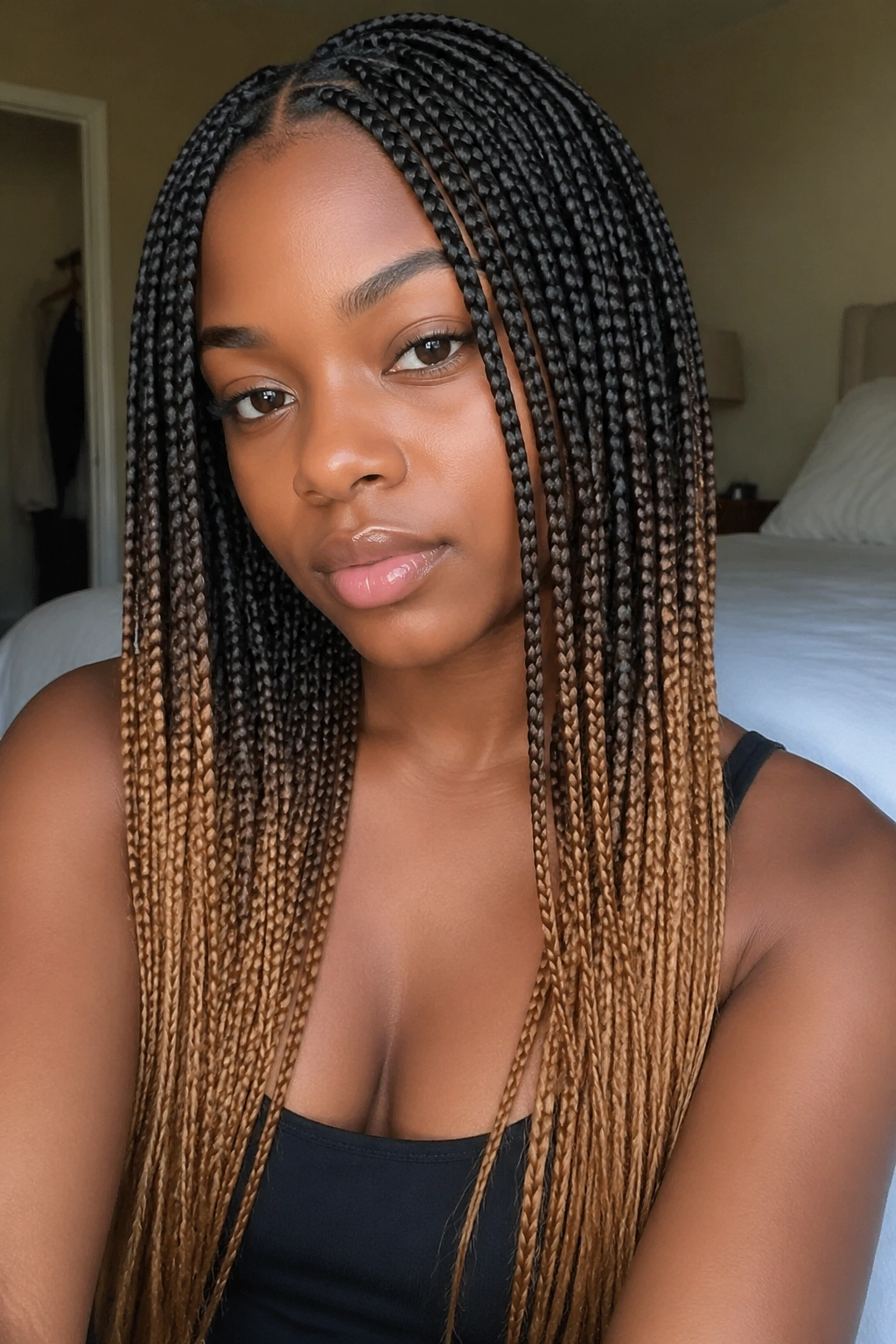
If you want small ombré knotless box braids to stay nice-looking for as long as possible, the smartest choice is a fade that never feels forced. Dark roots, a slow middle shift, and a lighter end that stays within the same color family. That is the set most likely to look good on day one and still make sense when the roots start showing.
The cleanest grow-out usually comes from tones that are only two or three steps apart. Black to caramel. Espresso to honey. Chocolate to bronze. Those combinations keep the braid line smooth, which means the style doesn’t fall apart when new growth shows up.
What makes this one worth choosing
- It hides regrowth better than high-contrast color.
- It keeps the braids looking neat between salon visits.
- It works on long or short lengths.
- It gives you color without forcing the rest of your styling to get louder.
That last part matters more than people admit. Some braid colors demand a whole wardrobe shift. A soft fade doesn’t. It lets your clothing, makeup, and accessories stay normal while the braids do the talking.
If I had to choose one version for everyday wear, this would be it. Not because it’s the flashiest. Because it behaves. And braids that behave are worth keeping around.