



Medium feed-in box braids sit in a sweet spot that a lot of styles miss. They’re neat without feeling stiff, fuller than skinny braids, and far easier to wear than a heavy waist-length set that keeps brushing your elbows, your coat zipper, and every scarf you own. The feed-in part matters too. Instead of dropping a thick braid straight from the root, the hair gets built up gradually, which makes the scalp line look smoother and the whole style sit flatter at the start.
That little detail changes everything. A medium braid can read polished or playful, formal or sporty, depending on the parting, the length, and what happens at the ends. One set can look sharp enough for a clean outfit and gold hoops. Another can feel relaxed and easy, with curly ends or beads that move when you turn your head.
I always think medium is the smartest size when someone wants shape without overload. Tiny braids take forever and can start to feel fussy. Huge braids have drama, sure, but they can also look bulky fast. Medium feed-in braids give you room to do something interesting with the scalp design and still keep the style wearable.
The fun part is how much personality you can squeeze into the same basic braid size. Straight rows. Diagonal parts. Triangle sections. A low ponytail. A side sweep. Color. Cuffs. Beads. The braid itself stays medium, but the mood changes the second the parting line changes. That’s where this style gets its range, and it’s why the details matter so much.
1. Classic Straight-Back Medium Feed-In Box Braids
Straight-back rows are the cleanest starting point, and they still work because they never look overworked. The parts run from the hairline toward the crown in even lines, then the medium braids fall straight down with a tidy, balanced shape. If you like a style that looks organized from every angle, this is the one that does the job without calling too much attention to itself.
Why It Works So Well
The straight-back layout puts the braid pattern on display, which is half the appeal. You can see the spacing, the symmetry, and the feed-in at the scalp, so the whole style reads neat before the braids even move.
- Medium sections keep the install from looking too crowded.
- Straight lines make the face shape look longer and cleaner.
- It works with cuffs, beads, or no extras at all.
- The finish stays easy to tuck behind the shoulders.
My favorite part: it looks good on day one and still makes sense when it grows out a bit.
2. Clean Center-Part Medium Feed-In Box Braids
A center part does a lot of heavy lifting. It splits the face evenly, gives the braids a calm, balanced frame, and makes medium feed-in box braids feel a little more deliberate. If your features already carry symmetry, this layout shows it off. If your face is softer, the part gives the whole look a bit of structure.
The trick is in the first few rows. A crisp center line matters more than extra accessories here, because the parting is the design. Once the braid rows begin, they can stay simple and still look finished. I like this version on medium lengths because the braids don’t compete with the face; they sit beside it and let the shape do the talking.
What to Ask For
Ask for a straight middle part with clean, narrow start sections near the forehead. If the line feels too severe, a braider can soften the front edge with slightly curved baby braids. Small change. Big difference.
3. Side-Part Medium Feed-In Box Braids
Want the braids to feel softer the second they move? Go side part. It shifts the weight of the style to one side, which gives the face a little sweep and makes medium braids feel less rigid than a center-part set. There’s a quiet ease to it that I like a lot. Not flashy. Just flattering.
The side part works especially well if you wear one side tucked behind the ear or let the front braids drape across the cheekbone. That creates a shape that feels less boxed-in, which matters when the braid size is medium and you want the style to move.
How to Wear It
- Keep the part line clean and slightly off-center.
- Let the front braid on the heavier side fall forward.
- Tuck the lighter side behind one ear for an instant shift.
- Leave a little space at the hairline so the part doesn’t look crowded.
4. Triangle-Part Medium Feed-In Box Braids
Triangle parts change the whole mood. Instead of squares or straight rows, the scalp pattern uses little triangular sections, and that gives the style a sharper, more graphic feel. It’s one of those details people notice without always knowing why. The parting looks handmade in the good sense — intentional, not fussy.
I like triangle parts on medium feed-in braids because they add visual interest right at the root, where the eye lands first. The braid body can stay classic, but the scalp design gives it some bite. This is a smart pick if you want the style to look different without adding color or accessories.
One sentence says it all: the parting is the decoration here.
5. Zigzag-Part Medium Feed-In Box Braids
Zigzag parts are for people who want the braid pattern to feel a little playful. The lines don’t run in straight tracks; they angle and shift, which makes the scalp look like part of the design instead of just a base under it. It takes more patience from the braider, and it shows. A neat zigzag can make medium feed-in box braids feel far more custom than a plain grid.
The Look
The style has movement before the braids even start. That matters. A zigzag parting line can break up a broad forehead, soften a square shape, or just make the whole install feel less expected.
What to Watch For
- The part lines should stay crisp, not wobbly.
- The zigzag should be visible but not too deep.
- Extra gel near the roots helps the lines stay sharp.
- A simple braid finish usually works better than heavy accessories.
6. Curved Feed-In Cornrows into Box Braids
Curved rows give medium feed-in box braids a sculpted feel. The braids don’t just drop straight back; they sweep around the head in arcs, which makes the style feel like it’s moving even when you’re standing still. Straight-back rows can be elegant, but curved feed-in rows have more personality right away.
This version works well when you want the front of the style to frame the face instead of flattening it. The curves can begin near the temple and bend toward the crown, then release into hanging braids. That shape looks especially good with a side profile, because the curve and the length work together instead of fighting each other.
I’d choose this one for anyone who likes a little drama without going full bold-color. It’s all in the line work.
7. Half-Up Half-Down Medium Feed-In Box Braids
Half-up, half-down is the easiest way to make medium braids feel styled without doing much. Pulling the top section up gives the face room to breathe, and leaving the rest down keeps the length in play. It’s practical. It’s also just nice to look at, which counts.
The Crown Lift
A small top knot, a folded bun, or even a simple tie at the crown changes the shape fast. The lifted top section opens the forehead and cheek area, while the lower braids keep the look relaxed.
Tiny Details That Help
- Use a snag-free elastic or a wrapped braid.
- Keep the top section centered so it doesn’t pull sideways.
- Let a few front braids fall loose if you want softness.
- Don’t yank the crown too tight; the point is lift, not tension.
8. Low Ponytail Medium Feed-In Box Braids
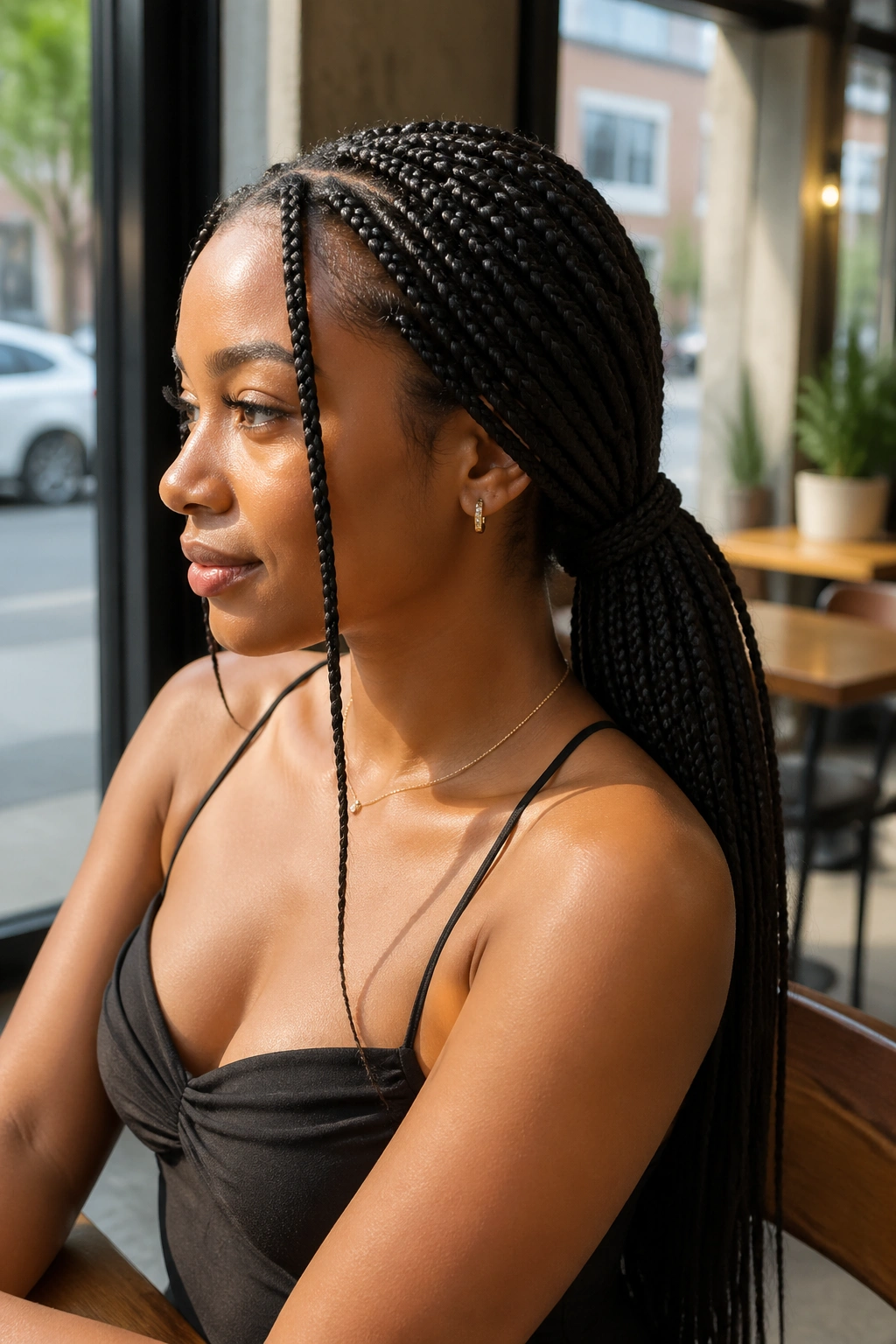
A low ponytail turns medium feed-in braids into something polished fast. Gathered at the nape, the braids look sleek and calm, and the shape works with collared shirts, hoop earrings, and anything with a clean neckline. There’s a reason this style sticks around. It doesn’t fight your outfit.
The low ponytail also shows off the braid length in a straight line, which is nice if your set has neat ends or a subtle color fade. I like this one when the braids are medium because the ponytail sits with enough weight to feel full, but not so much that it starts dragging the scalp down.
A wrapped braid around the base finishes it well. Small move. Sharp result.
9. High Ponytail Medium Feed-In Box Braids
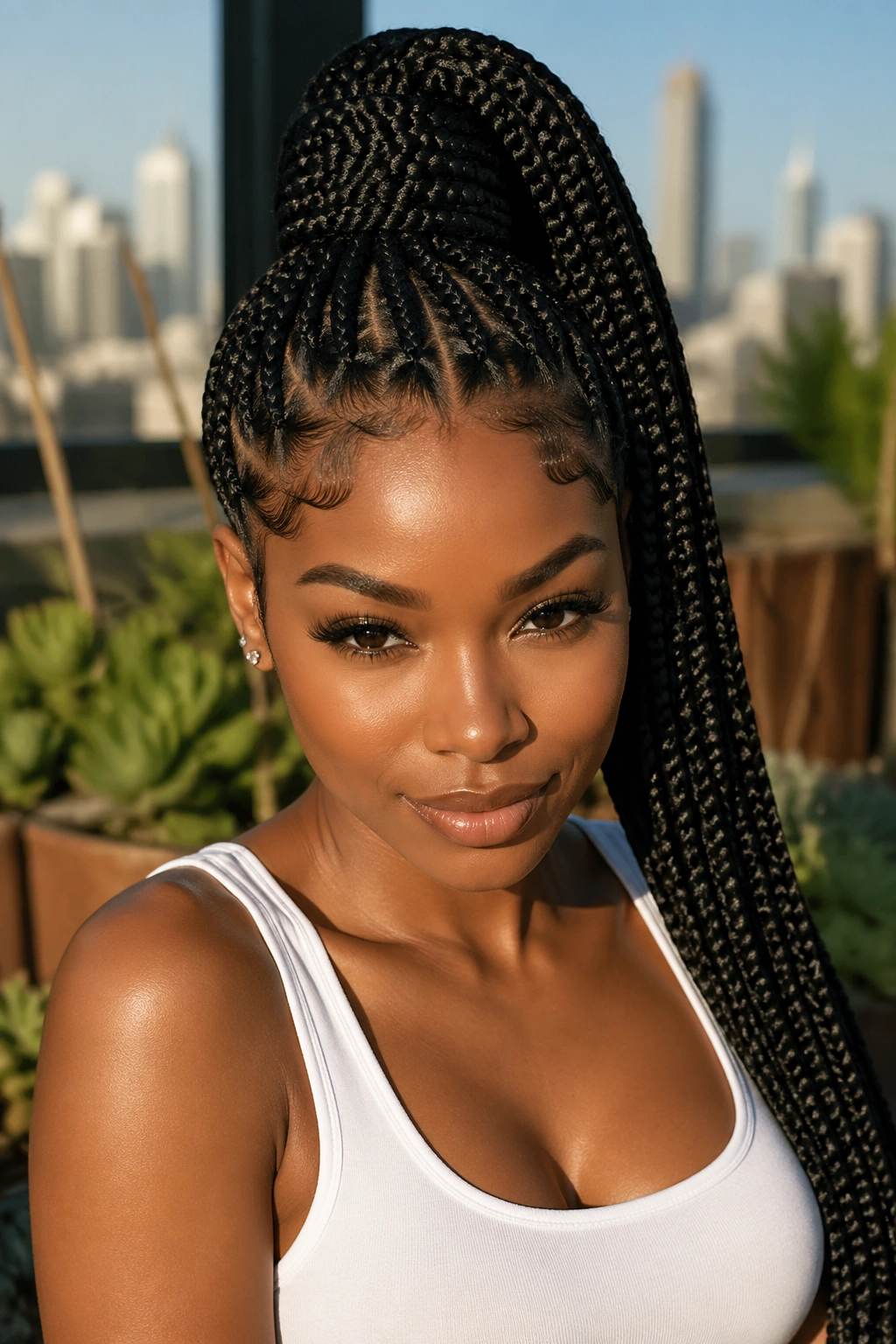
High ponytails have energy. They pull the braids up and out, which gives the whole style a lifted shape and puts the face front and center. Medium feed-in box braids are a good size for this because they’re substantial enough to make the ponytail look full, yet not so heavy that the style collapses halfway through the day.
Where It Shines
A high ponytail works when you want the braids off your neck and your shoulders. It also gives the crown a more dramatic line, especially if the first rows are clean and flat.
A Few Practical Notes
- Secure the base with a strong but gentle tie.
- Keep the front rows smooth so the lift feels intentional.
- A braid wrap around the base hides the elastic.
- If the ponytail sits too far forward, the front can feel tight.
10. Shoulder-Length Medium Feed-In Box Braids
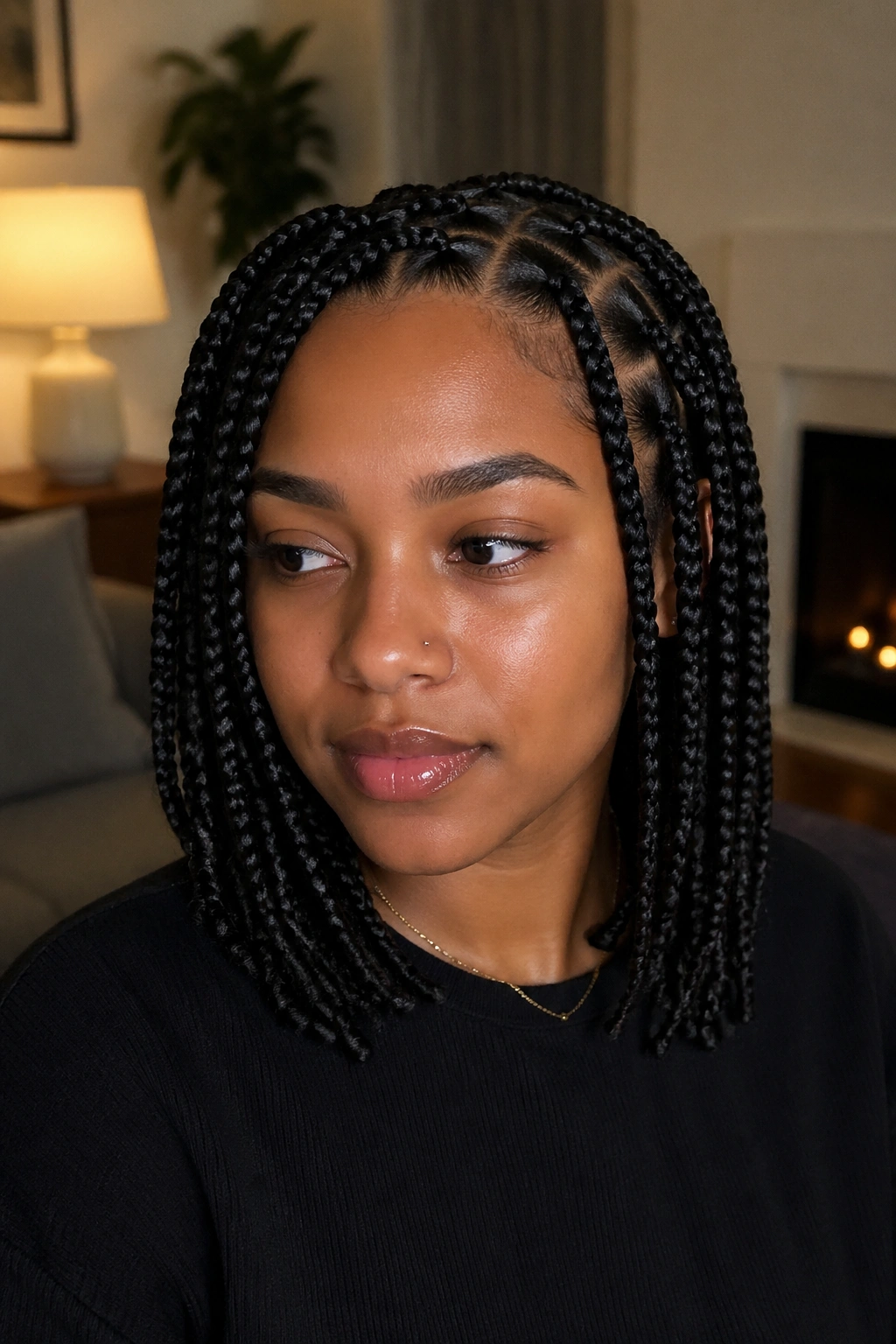
Shoulder-length braids are underrated. They don’t swing into your ribs. They don’t get trapped under a bag strap quite as badly. And they still give you enough length to work with if you want to pin one side back or toss them into a half-up style. That makes them one of the easiest medium feed-in box braid options to live with.
The shorter length also keeps the outline tidy. At shoulder level, the ends stop before the braids become visually heavy, which can happen with longer sets. If you like a style that feels finished and controlled, this length gets there fast. It’s especially good if you want the braid pattern itself to stay the star.
A blunt shoulder line can look crisp. A softly layered cut looks a little looser. Both work.
11. Waist-Length Medium Feed-In Box Braids
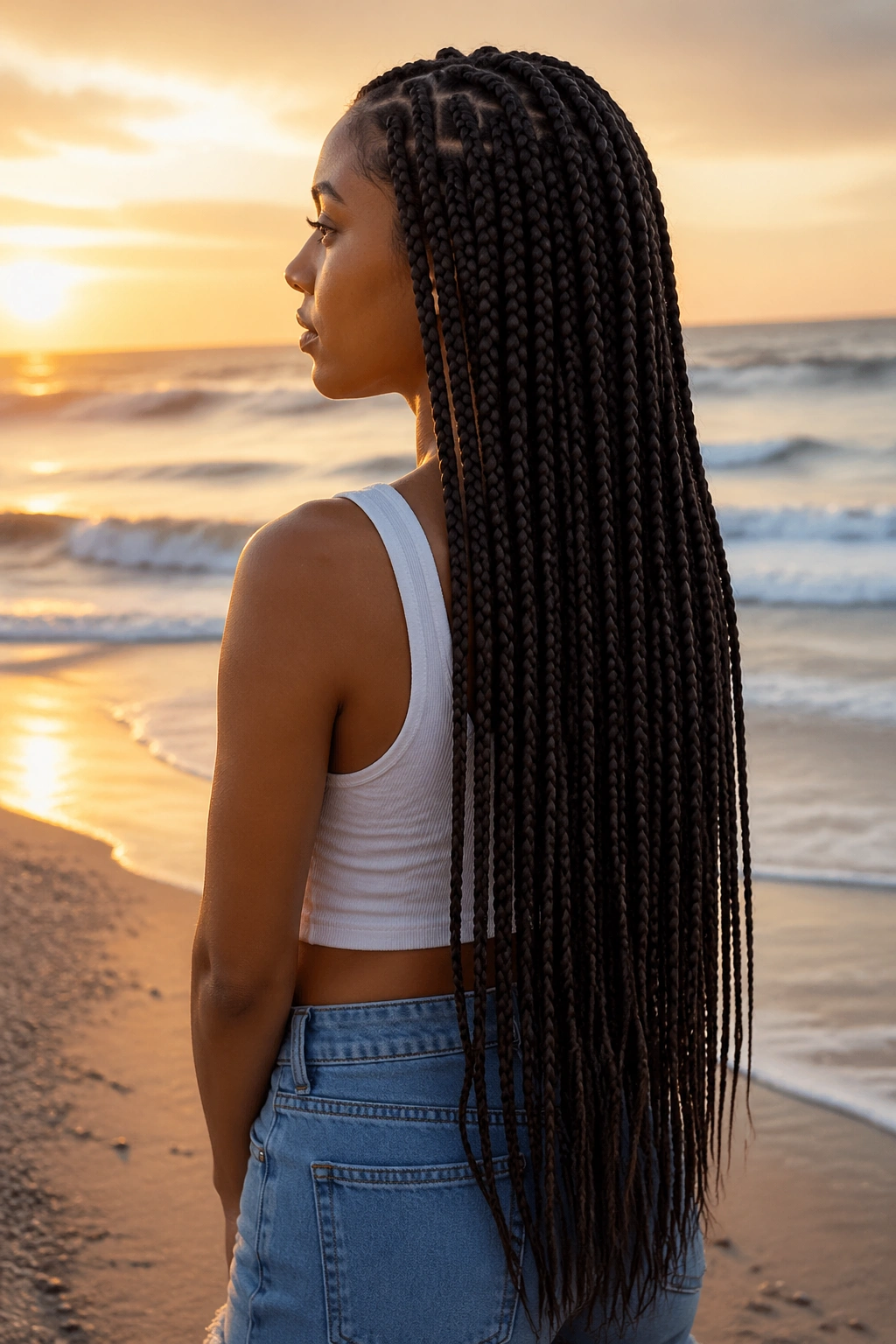
Waist-length braids bring the drama, but medium sizing keeps them from becoming a brick wall of hair. That’s the real appeal. You get the long fall and the swing, but each braid still keeps enough definition to show parting, color, and movement. If shorter braids feel too plain and tiny braids feel like too much work, this length lands in the middle.
The tradeoff is obvious: more length means more hair to handle. Yet medium braids are usually easier to manage at waist length than bigger ones, because the individual braids don’t get as chunky. The result is a long line that moves cleanly when you walk, sit, or turn your head.
I’d keep the outfit simple here. Let the hair carry the mood.
12. Medium Feed-In Box Braids with Curly Ends
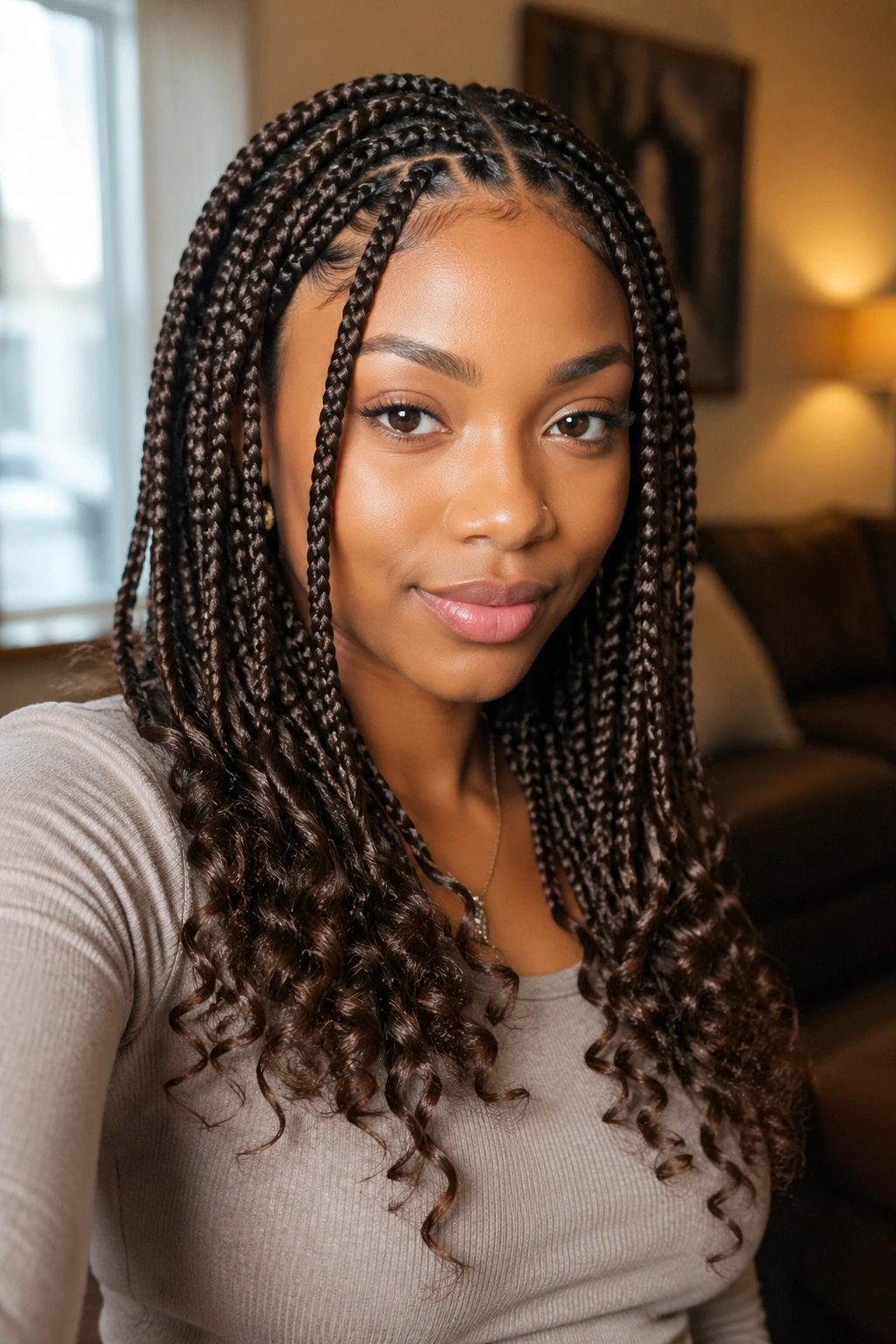
The second the ends turn curly, the whole braid set softens. Straight plaits can look crisp and structured, but curls at the bottom add a little bounce and stop the style from feeling too severe. This is one of my favorite ways to break up the shape of medium feed-in box braids because it keeps the scalp neat while giving the ends some life.
What Makes the Finish Different
Curly ends change the rhythm of the style. The braid body stays controlled, then the bottom loosens into spirals or loose waves. That contrast is the point. It makes the braids feel lighter, especially at medium length.
A Few Good Uses
- Adds softness around the shoulders.
- Works nicely with shoulder-length or waist-length sets.
- Makes the style look less blunt at the bottom.
- Helps a braid set feel a little more relaxed without losing structure.
13. Medium Feed-In Box Braids with Clear Beads
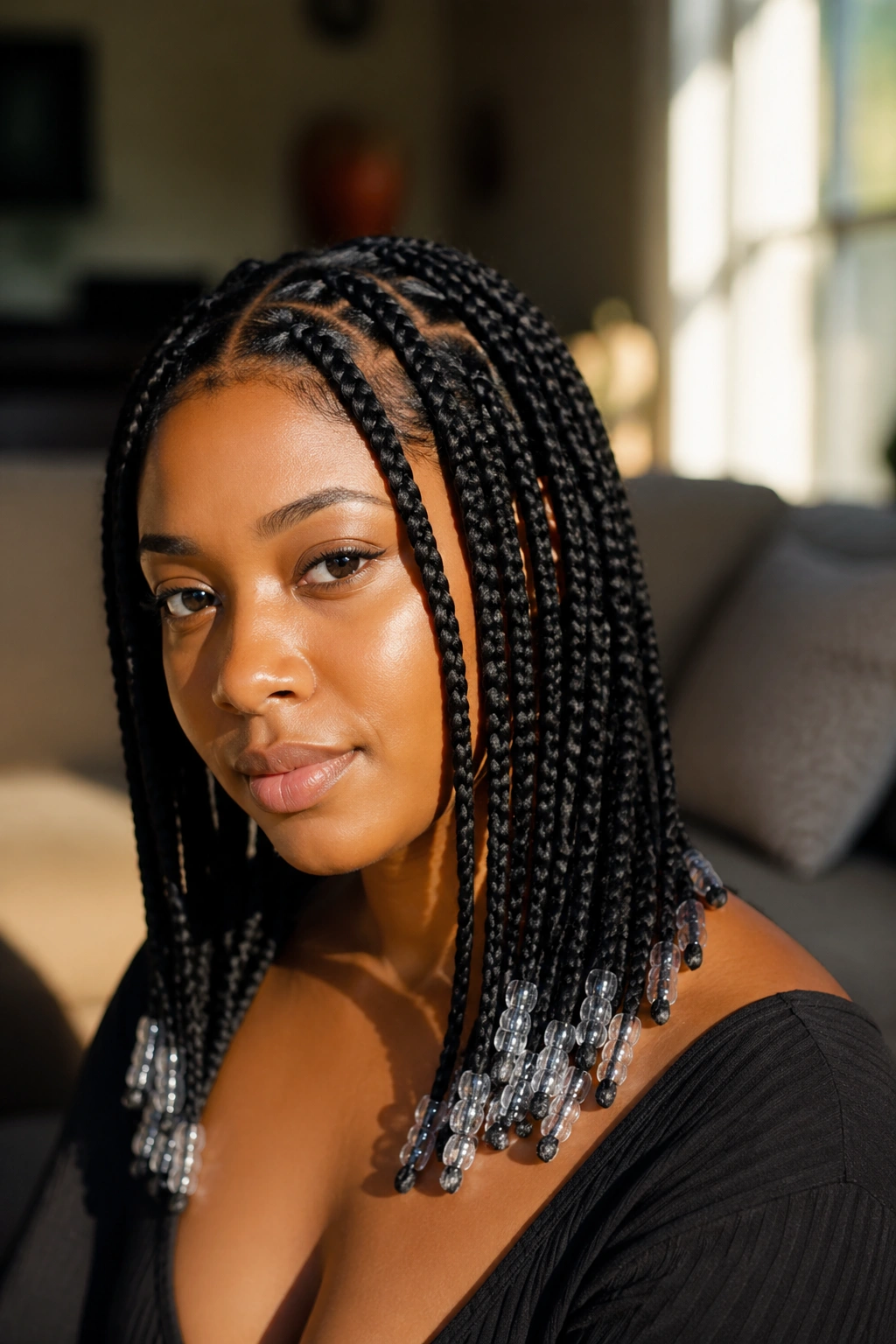
Clear beads do more than decorate. They add weight, sound, and motion at the ends, which makes the braids feel lively every time you move. On medium feed-in box braids, they’re especially nice because the braids are long enough for the beads to sit clearly, but not so long that the bead work gets lost.
I like clear or translucent beads when the goal is shine without color clutter. They catch light in a quiet way, and the look stays cleaner than a set loaded with bright plastic pieces. Put them on the front rows and a few side braids, not every single braid, unless you want the ends to feel heavy.
How to Place Them
- Use them at the bottom third of selected braids.
- Keep the rest of the set plain for balance.
- Match the bead size to the braid thickness.
- If the beads are large, use fewer of them.
14. Medium Feed-In Box Braids with Gold Cuffs
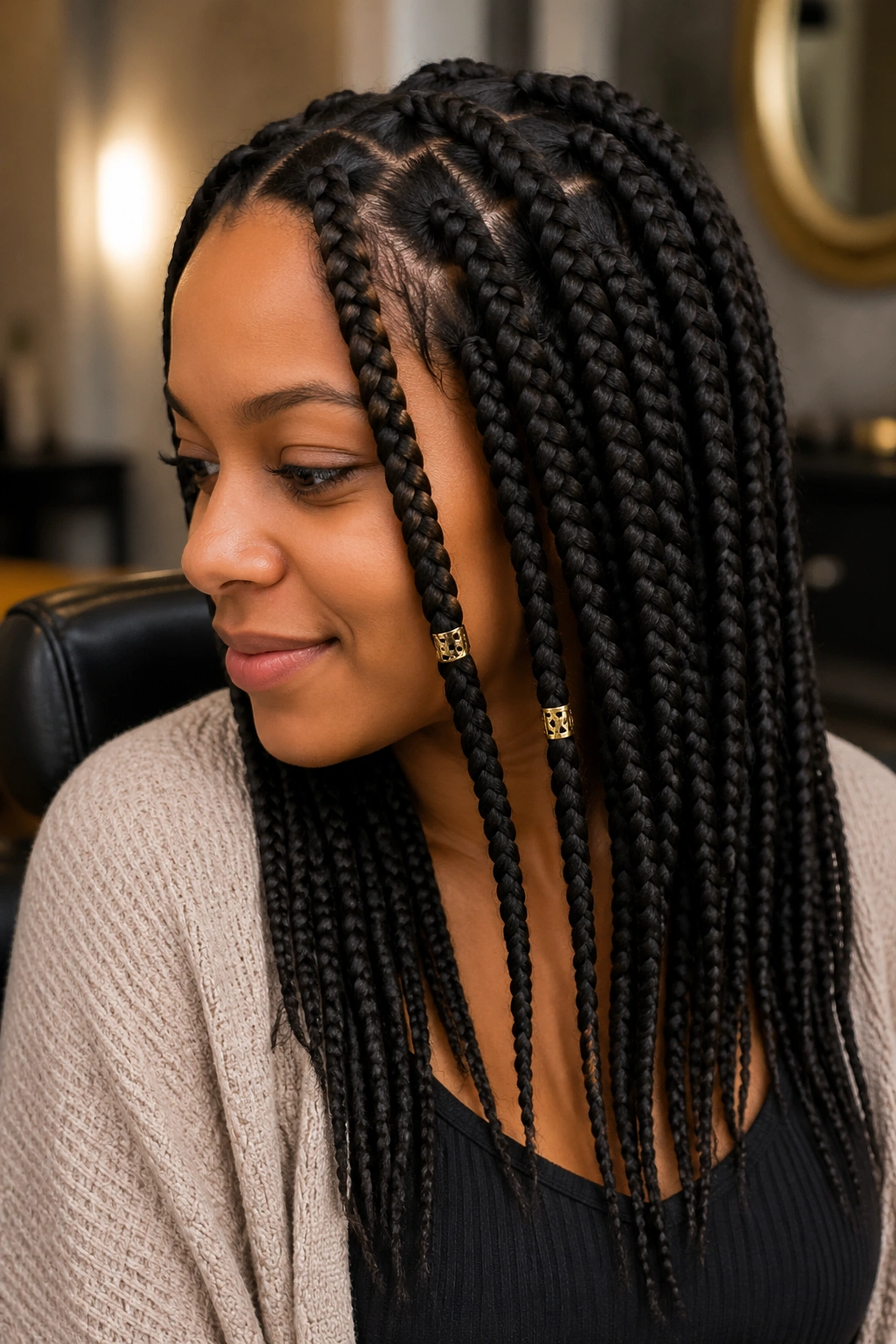
Gold cuffs are the neat little detail that can make a braid set feel finished in one move. Unlike beads, which soften the ends, cuffs sit on the braid body and give it a more structured look. They’re cleaner, quieter, and easier to control if you don’t want the style to lean playful.
The trick is restraint. A cuff every inch or two can look crowded. One or two near the front, or a few placed on braids that sit closest to the face, usually does the job. Medium feed-in box braids hold cuffs well because the braid thickness gives the metal enough grip without swallowing the detail.
Why I Prefer Cuffs Over Heavy Accessories
They don’t add much weight, and they don’t fight the braid shape. That matters more than people think.
15. Black-to-Brown Ombre Medium Feed-In Box Braids
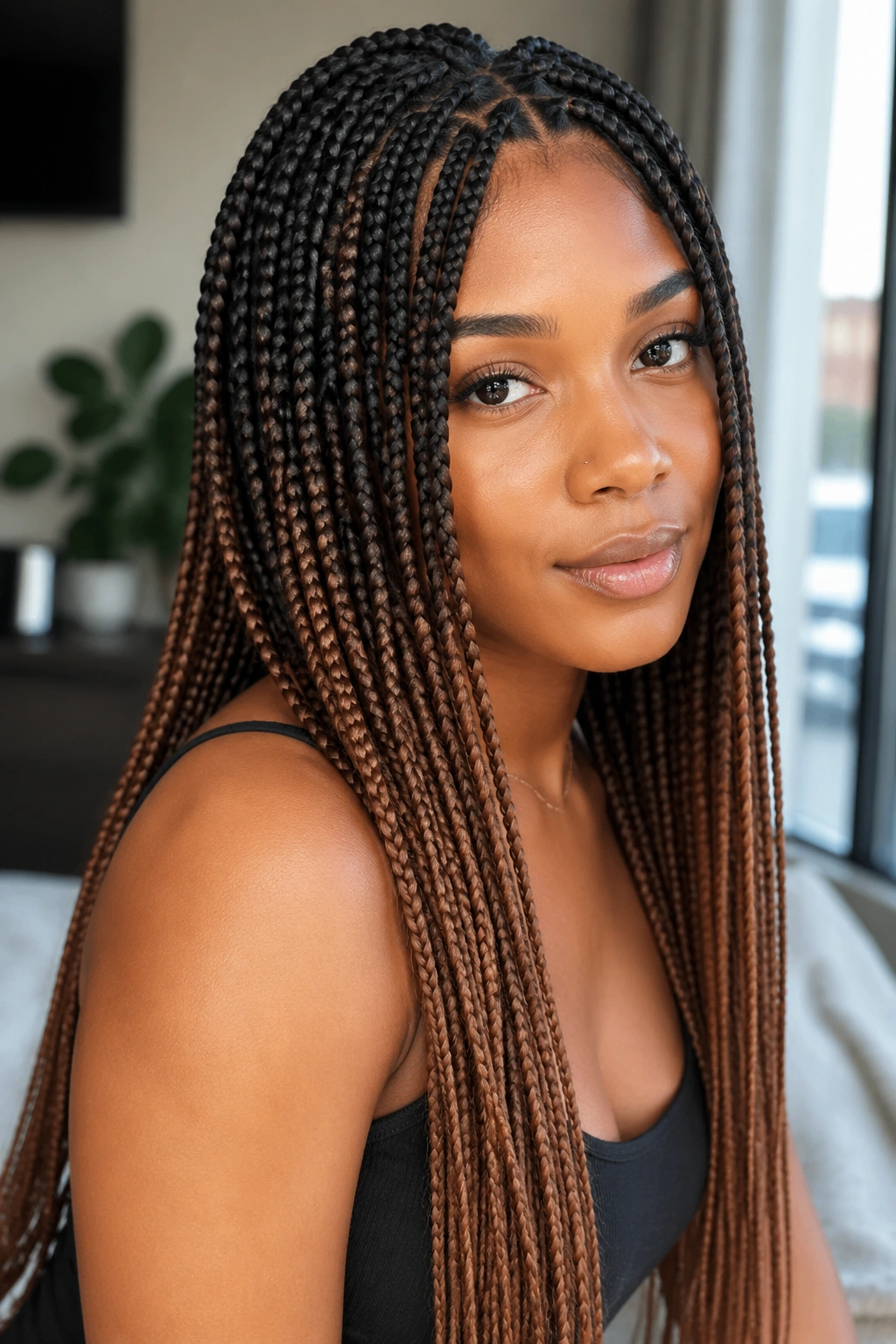
A black-to-brown fade gives medium feed-in box braids a softer edge than a flat black set. The transition can be subtle — almost espresso at the roots moving into milk-chocolate ends — or a little deeper, depending on how much contrast you want. The braid size helps here because medium plaits show the color shift clearly without turning it stripey.
This is a smart choice if you want color but don’t want the set to shout from across the room. The fade reads natural enough to wear often, and the root color stays close to the scalp, which keeps the whole style grounded. A gentle ombré also works well with gold cuffs or plain ends, since the color itself is already doing part of the visual work.
The best version is the one that looks richer, not louder.
16. Honey-Blonde Highlighted Medium Feed-In Box Braids
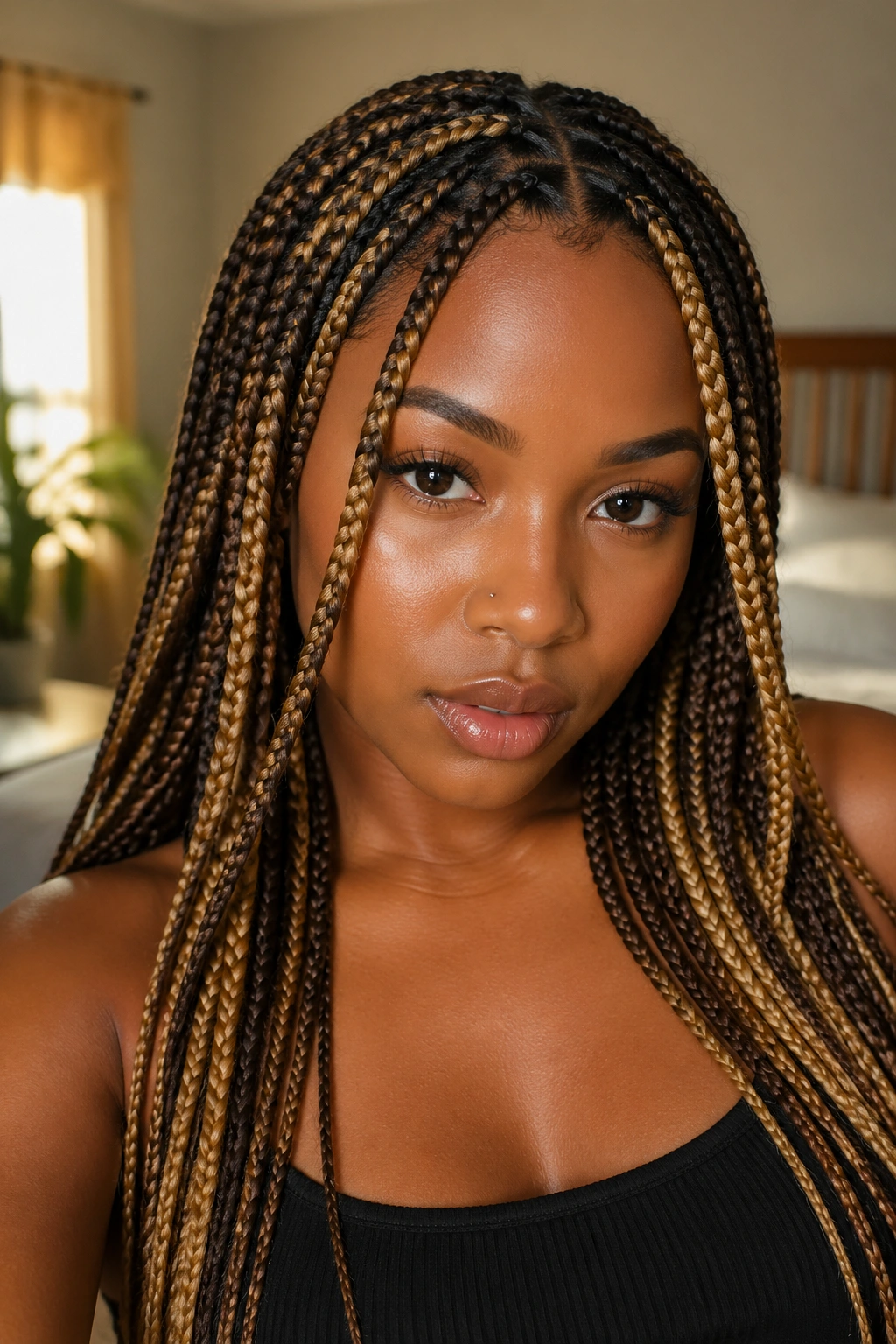
Honey-blonde pieces can brighten medium braids fast, especially when they’re placed near the face or woven through the top rows. I like this look because it keeps the base dark enough to feel rooted, but the lighter strands catch the eye and make the whole set feel less flat. You do not need to cover the entire head in blonde to get that effect.
A Smarter Way to Use the Color
Spread the lighter braiding hair through a few sections instead of stacking it all in one area. That creates movement and keeps the color from looking like a block. A warm honey shade usually feels softer than a harsh pale blonde, and it blends more easily with dark roots.
What Stands Out
- The front rows get instant brightness.
- The medium braid size shows the color mix clearly.
- A few lighter ends can do the job just as well as full highlights.
- Gold jewelry near the face ties the look together nicely.
17. Burgundy Medium Feed-In Box Braids
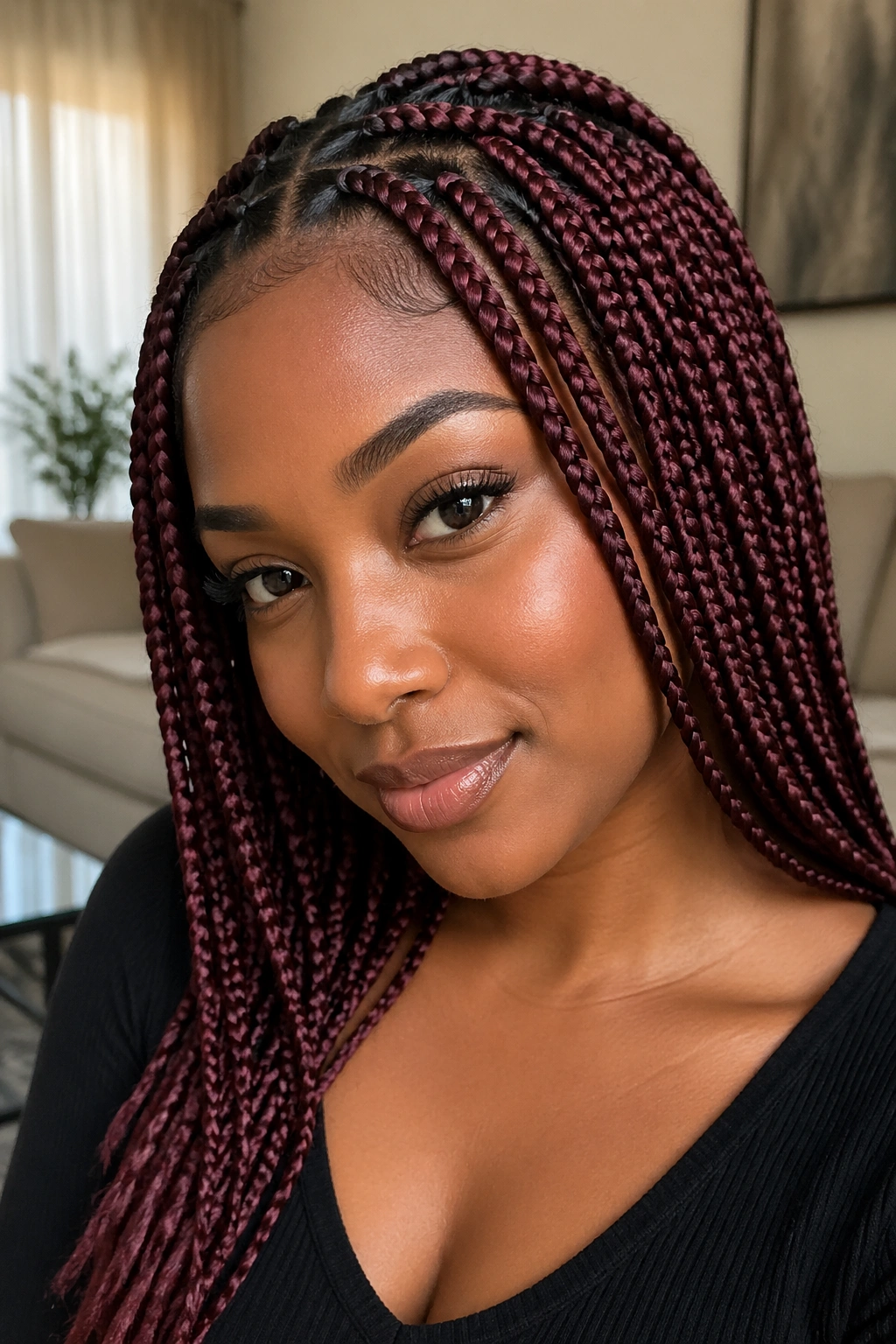
Burgundy has a different energy from blonde. It’s deeper, moodier, and a little richer on the eye, which is why medium feed-in box braids in this shade feel grounded instead of bright. In softer light, the color can look almost wine-dark. In brighter light, the red tones come forward and the braids pick up warmth.
That makes burgundy a strong choice if you want color but don’t want contrast that feels too sharp. The shade still reads bold, just not loud. It also pairs well with medium-sized braids because the thickness gives the color enough surface area to show, while the parting keeps the style from turning into one solid block.
I’d keep accessories small here. Let the color carry the mood.
18. Small-to-Medium Mixed Feed-In Box Braids
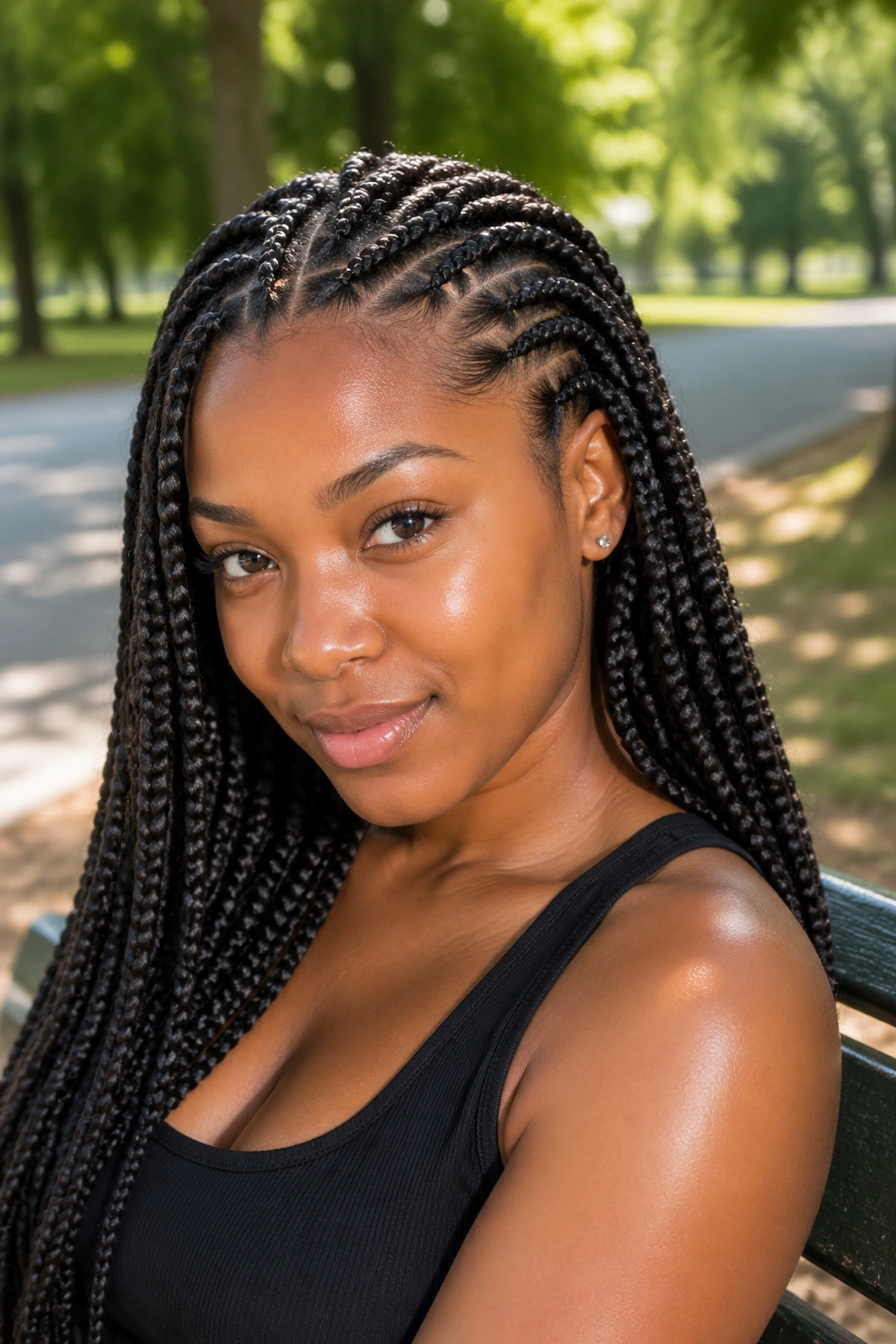
Mixing small and medium braid sizes is one of the smartest ways to keep a set looking balanced. The front rows can stay a touch slimmer, which helps the hairline sit flatter, while the back braids can hold more volume and give the style a fuller finish. That little shift makes the install feel lighter near the face and still substantial overall.
It’s a practical trick, not a flashy one. And that’s exactly why it works.
Why the Mix Matters
A uniform medium set can look heavy if the hairline is dense or the crown is flat. Smaller front braids reduce that effect. The medium sections in the back still give you the chunky, visible braid look people want from box braids, but the style sits better on the head.
Best Use
This is the version I’d pick for someone who wants the neatness of medium braids without the bulk that sometimes comes with an even all-over size.
19. Heart-Part Medium Feed-In Box Braids
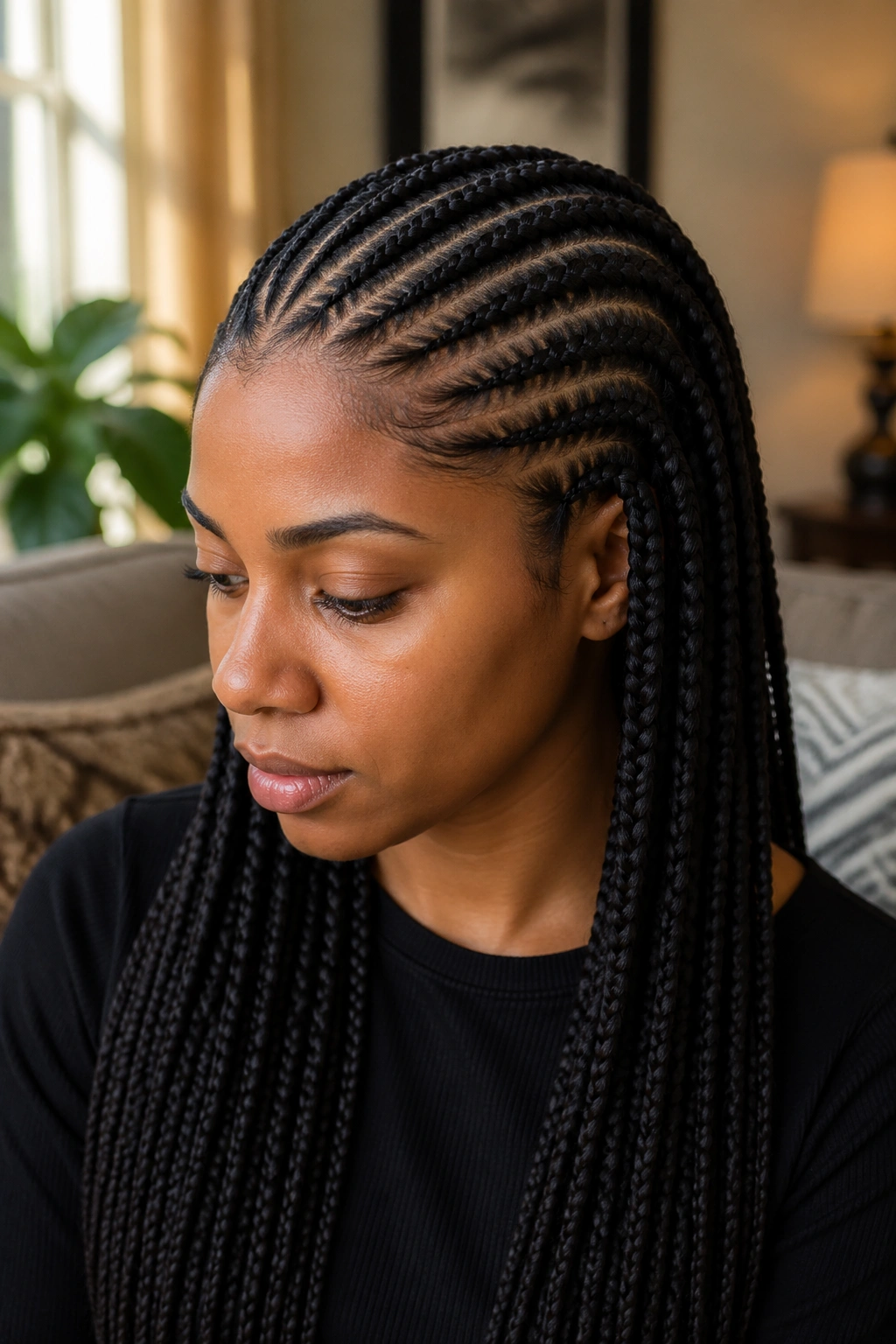
Heart parts change the braid set from simple to personal. The shape sits right at the scalp, usually near the front or one side, and it gives the style a built-in detail before the braids even start hanging. It’s a small artistic touch, but it pulls a lot of attention because the shape is easy to read.
The style works best when the rest of the parting stays clean. One heart is enough. Two can start to feel busy unless the design is very carefully spaced. Medium feed-in box braids handle heart parts well because the braid size leaves room for the scalp art to show without crowding it.
How to Keep It Clear
- Keep the heart shape wide enough to read from a few feet away.
- Pair it with simple straight-back or side rows.
- Avoid loading the front with too many extra accessories.
- Let the braid lengths stay classic so the parting stays visible.
20. Side-Swept Medium Feed-In Box Braids
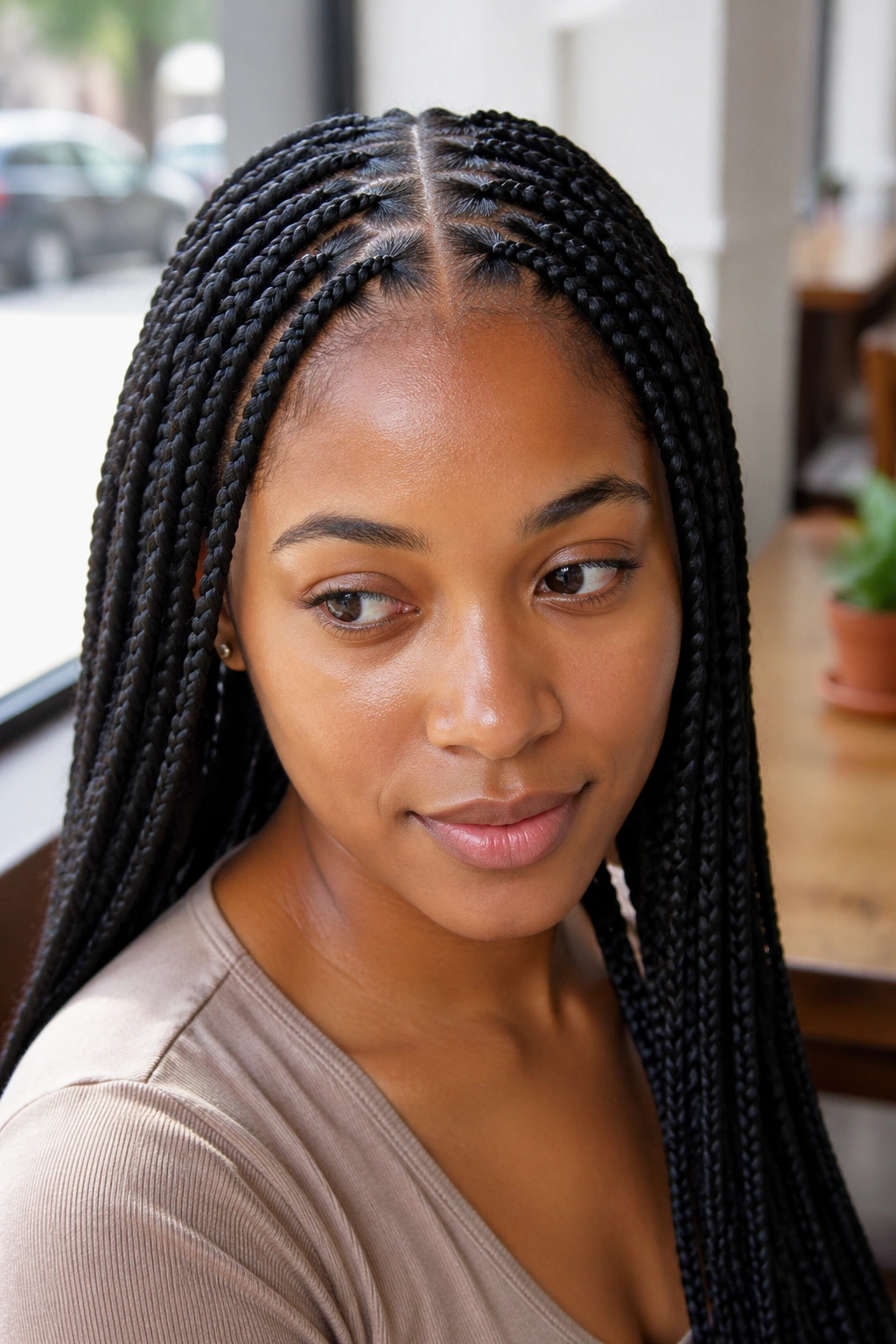
A side sweep changes the whole posture of the style. Instead of falling straight down the center, the braids move to one side and settle over one shoulder, which creates a line that feels softer and a little more dramatic. I like this when someone wants the braids to frame the neckline or show off an earring without making the style seem dressed up for no reason.
The key is weight distribution. The parting should direct the fall, not fight it. Once the braids are placed, pinning a few underneath can help the sweep stay in place without making the surface look stiff. Medium braids work well here because they have enough body to stay put, yet they’re not so heavy that the side starts pulling.
It’s a small change. It reads big.
21. Stitch-Braid Front and Box-Braid Back
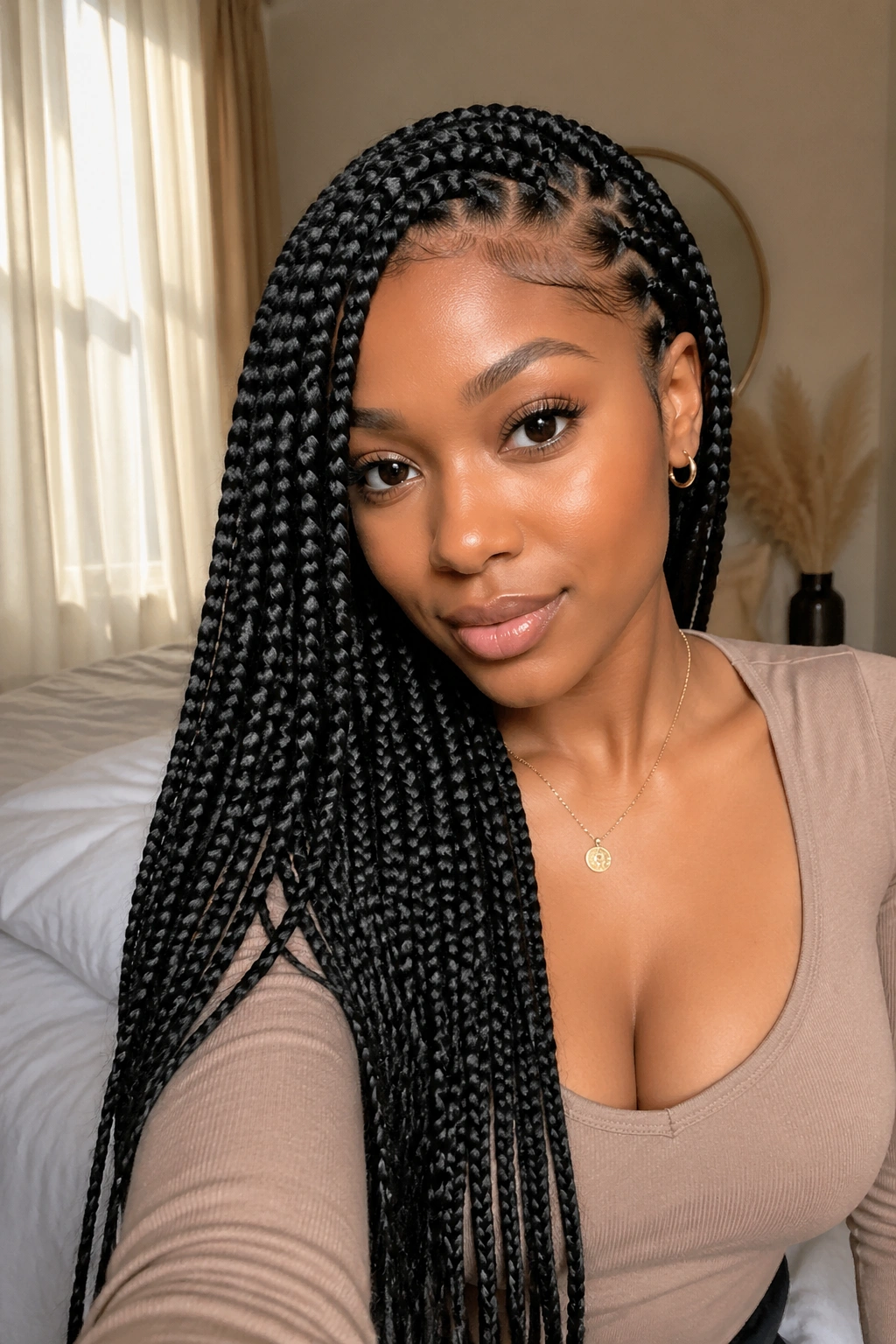
This layout gives you two textures in one set. The front rows use stitch-braid detailing — those neat little sectioned lines that make the scalp look very clean — and the back opens into medium feed-in box braids. The result feels structured near the face and freer through the length.
I like this approach because it saves the strongest visual detail for the area people see first. The front braid work frames the face almost like a border, while the back stays simpler and easier to wear day to day. It’s a smart option if you want design, but not all-over design.
Why It’s Worth It
The stitch pattern adds precision. The box braid fall adds movement. Put together, they keep the style from looking flat. If you like braid sets that show skill without getting too ornate, this one lands in a nice place.
22. Diagonal Feed-In Medium Box Braids
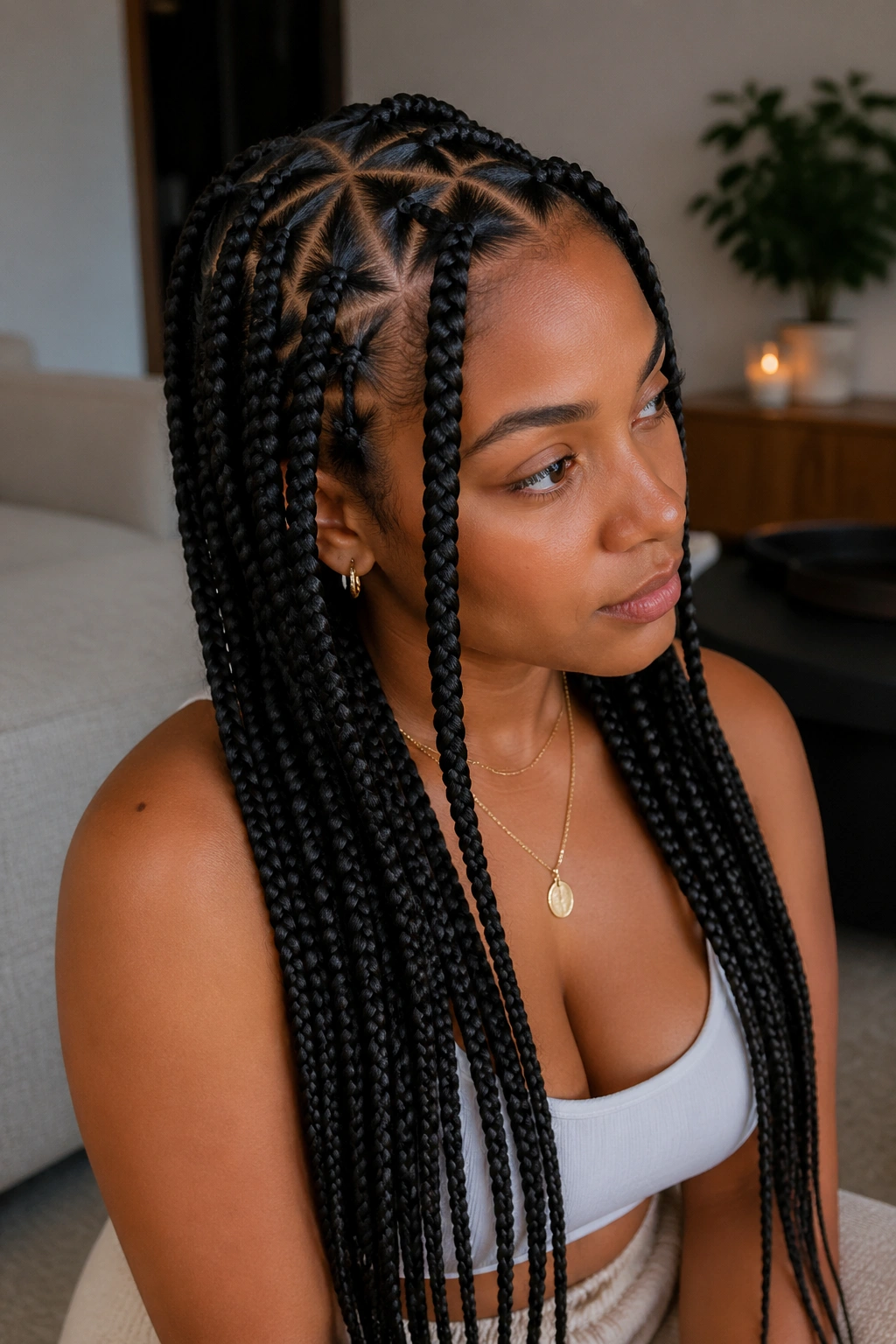
Diagonal rows are underrated. The parts angle from the temple or side hairline toward the opposite back section, which gives the style a sense of motion even before the braids start hanging. It’s a cleaner, quieter version of a design style that still changes the whole head shape.
What I like here is the visual tension. Straight-back braids are orderly. Diagonal feed-in rows feel more directional, almost like the scalp is guiding the eye toward the length. Medium braids suit this layout because the braid size is clear enough to show the direction, but not so large that the parting disappears underneath them.
This one pairs well with a side ponytail, a low bun, or plain hanging braids. It does not need much else.
23. Medium Feed-In Box Braids Wrapped with Thread
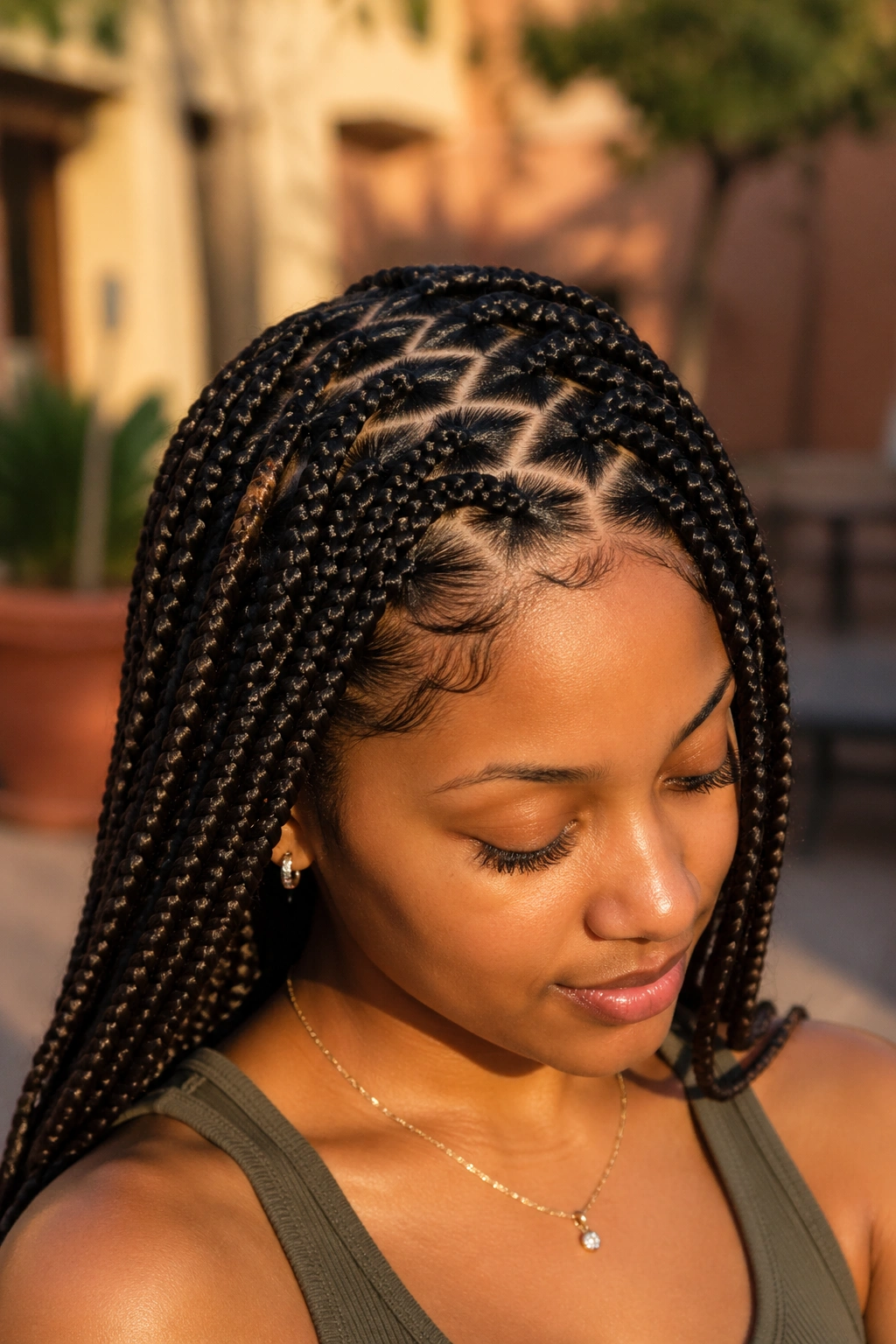
Thread-wrapped braids have a handmade feel that I keep coming back to. Thin thread, yarn, or braid string winds around one section of a braid — sometimes near the ends, sometimes closer to the middle — and the result adds a little color and texture without changing the whole set. The rest of the braids can stay plain, which keeps the look from tipping into costume territory.
The best part is how controlled it feels. One repeated thread color on a few braids looks sharper than a rainbow of random wraps. Medium feed-in box braids are a good base for this because the braid size gives the thread enough surface to show, but not so much bulk that the wrap disappears.
A few wraps near the front can be enough. Seriously.
24. Medium Feed-In Box Braids with Tapered Ends
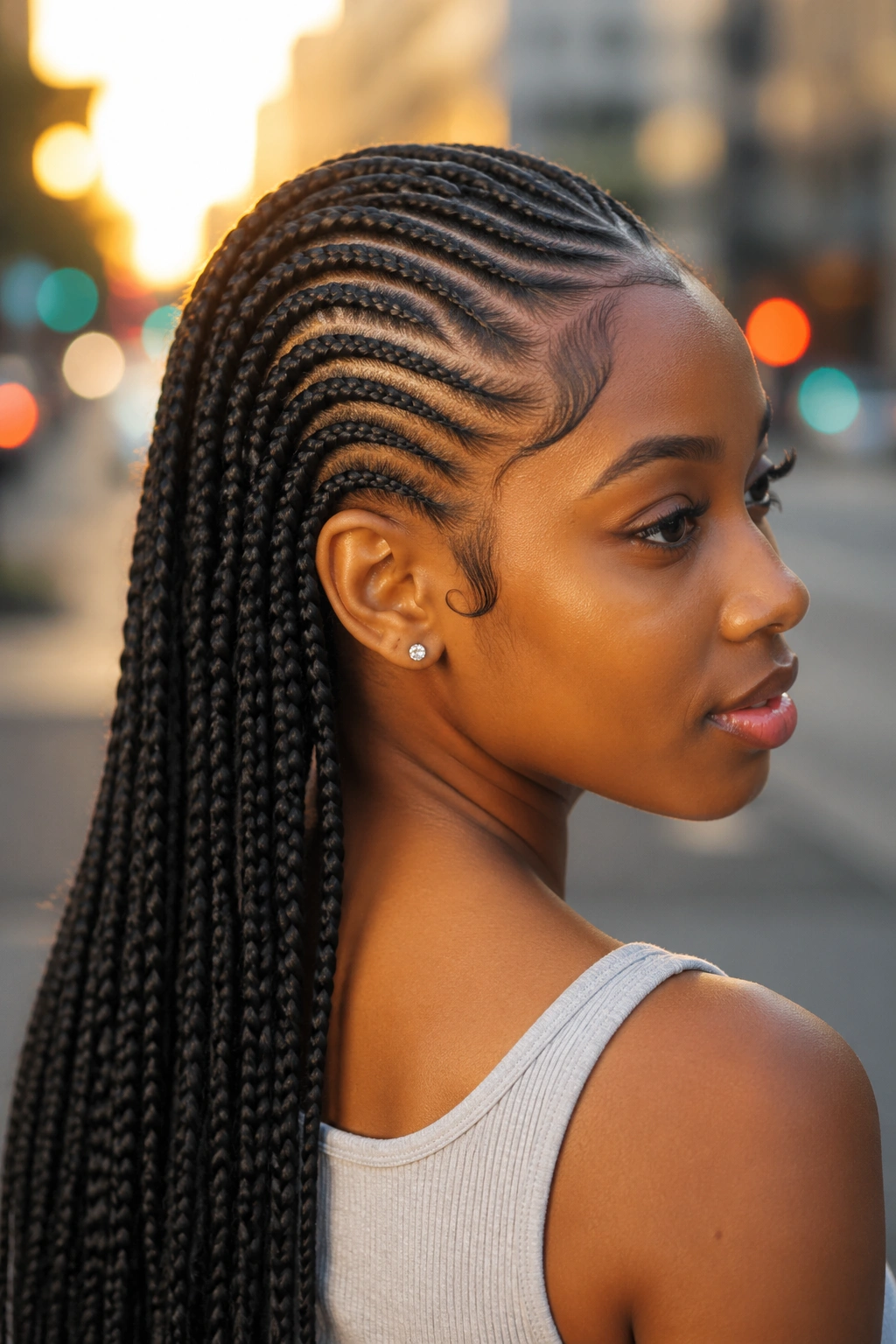
Tapered ends make the braid finish feel softer and more fluid. Instead of a blunt stop, the ends narrow a little, which helps the whole set move better and look less heavy at the bottom. On medium feed-in box braids, that shape matters because the braid body already has enough presence; you do not need extra bulk at the ends.
The finish can change the mood more than people expect. Tapered ends make the set feel lighter when you walk, and they look cleaner against the shoulders than thick cut-off tips do. If the braids are slightly longer, the taper becomes even more useful because it keeps the outline from turning boxy all the way down.
Why I Prefer It
Blunt ends can be fine. Tapered ends are nicer when you want the style to feel a little less rigid and a little more fluid.
25. Everyday Minimalist Medium Feed-In Box Braids
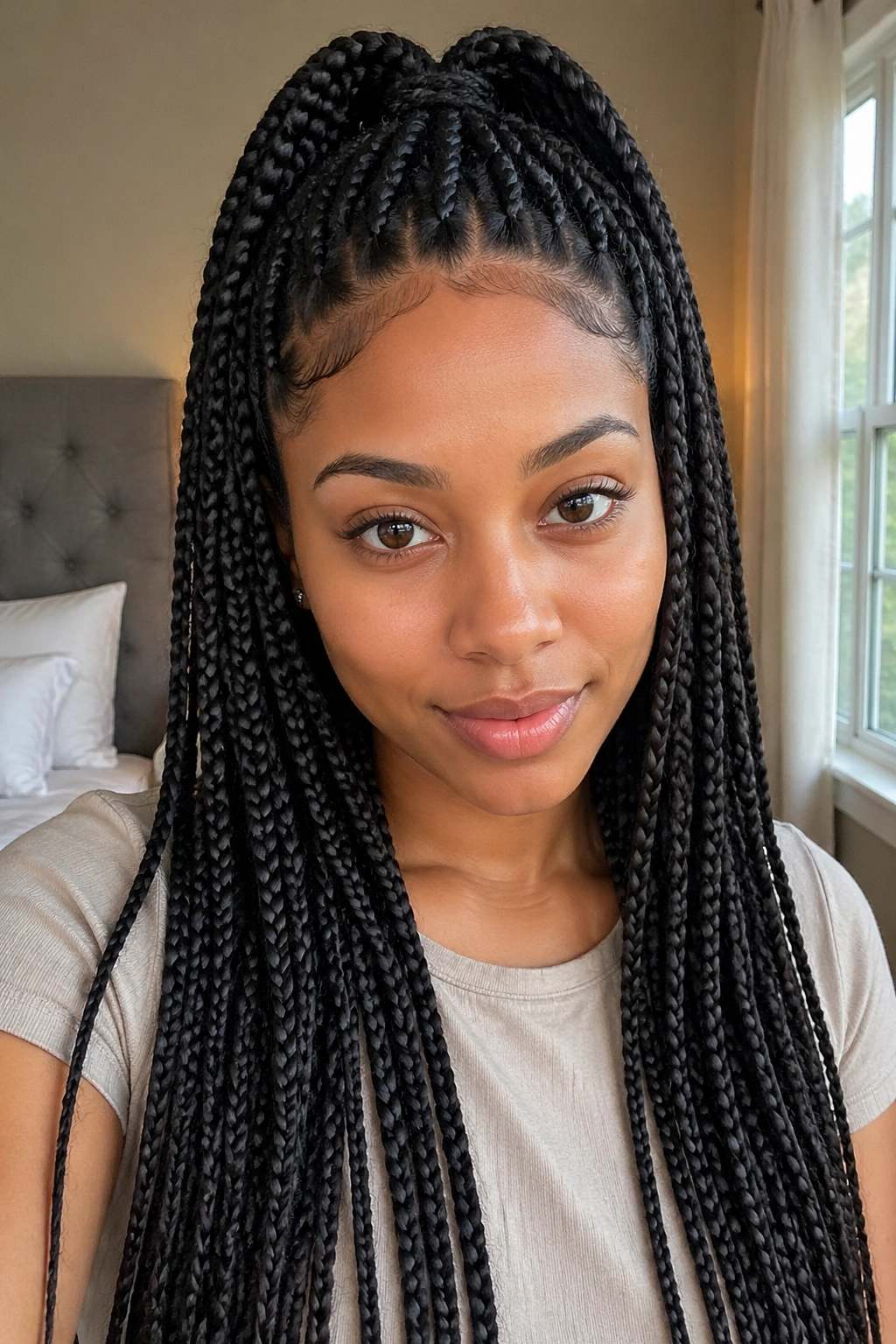
Some braid sets are made to impress. This one is made to live in. The parts are neat, the braids are medium in width, the length sits somewhere easy, and the finish stays clean without extra cuffs, beads, or color tricks. That sounds plain. It isn’t. A well-done minimal set can look more polished than a busy one because nothing is competing for attention.
I like this version when the goal is low drama and steady wear. It works for work, errands, dinners, travel, and those days when you want your hair to behave without asking anything back. Keep the rows even, keep the braids smooth, and let the simplicity do the work. Good box braids do not need decoration to look finished.
And honestly, that’s the version I trust most when someone wants medium feed-in braids that stay useful long after the first day of compliments.
