



Jumbo feed-in box braids have a specific kind of pull. They look bold from across the room, but up close the detail is in the scalp work: the braid starts small, then feeds into size instead of beginning with a clunky knot. That little shift changes everything. The hairline looks cleaner. The base sits flatter. The whole style feels more polished without losing the weight and drama that make jumbo braids fun in the first place.
That matters because big braids can go wrong fast. Too much tension near the edges and the style starts to feel heavy before you even finish getting dressed. Loose parting and the shape loses its edge. Get the balance right, though, and jumbo feed-in box braids do something I always appreciate in a protective style: they give you presence without asking you to fuss over them every hour.
The shape can be soft or strict, glossy or matte, playful or serious. A center part reads clean and symmetrical. A side part changes the whole face shape. Triangle sections add bite. Accessories change the mood in ten seconds flat. Same basic braid technique. Entirely different personalities.
What makes this style worth paying attention to is how much you can customize without making it look busy. The best versions still feel grounded, still look wearable, still move when you turn your head. That’s the sweet spot, and it shows up in a few smart variations worth knowing well.
1. Center-Part Waist-Length Jumbo Feed-In Braids
A center part gives jumbo feed-in box braids a kind of visual spine. Everything falls from that middle line, so the style reads clean before it reads dramatic.
Why the Center Part Works
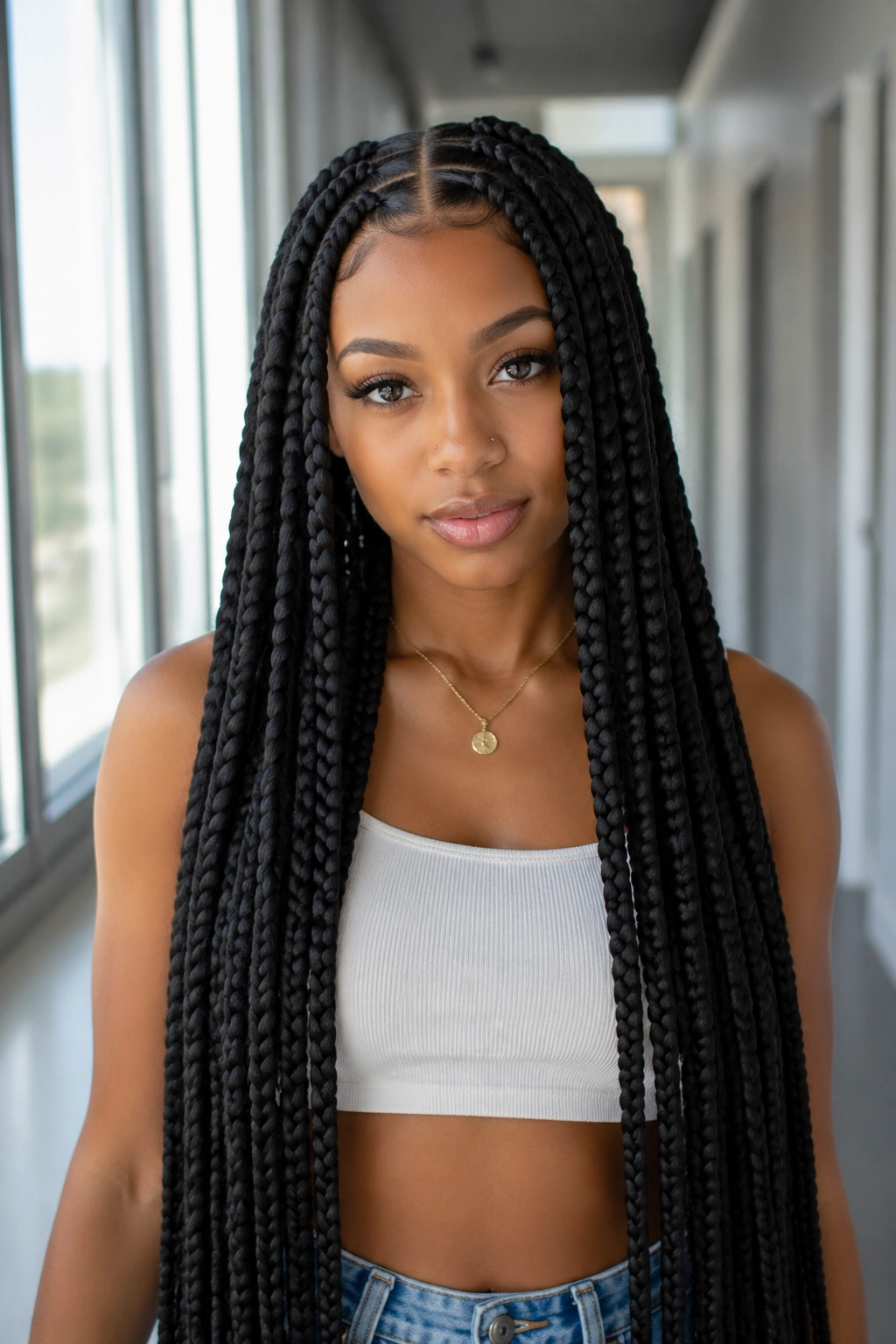
A straight middle part is the easiest way to make large braids feel balanced. It splits the volume evenly across the face, which is useful if you want the braids to frame your features instead of crowding them. I like it most on oval and heart-shaped faces, but it can work almost anywhere if the part is clean and the braid rows are even.
The waist-length version brings in motion. As you walk, the braids swing just enough to show the feed-in shape at the roots and the thickness through the lengths. If the parts are neat and the braids are not packed too tightly at the temples, the whole look feels crisp instead of stiff.
- Ask for small, clean starter sections near the hairline so the feed-in shape stays smooth.
- Keep the center part sharp with a rat-tail comb and a light gel on the part only.
- Waist length works well when you want movement without dragging the braids on your shoulders all day.
- A satin scarf at night helps the middle part stay flat.
Best tip: if the center line starts to drift, fix it before the braids are finished. A crooked middle part is hard to ignore once the set is in.
2. Side-Swept Feed-In Box Braids That Fall Over One Shoulder
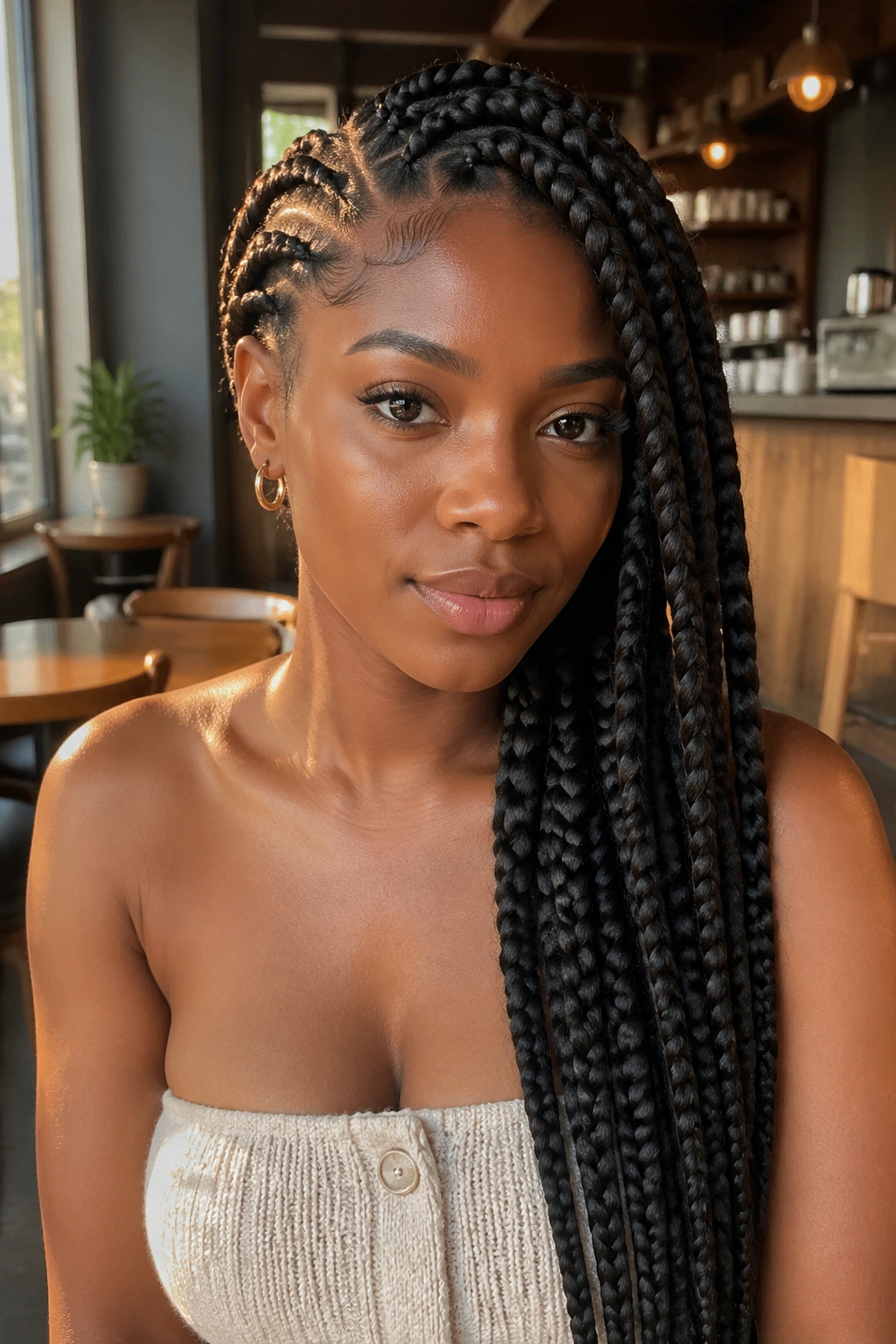
Side-swept jumbo feed-in box braids are what I suggest when someone wants the style to feel a little softer and less severe. One shoulder carries the weight. The face opens up. Earrings and necklines get more attention, which sounds small until you wear it and notice how much better it photographs in real life.
The trick is in the parting. A deeper side part creates a built-in sweep, so the braids naturally fall in one direction instead of sitting evenly on both sides. That makes the shape feel a touch more relaxed, and it also works well if your hairline is stronger on one side than the other. Not every style needs perfect symmetry. This is one of the few cases where a little imbalance looks deliberate.
I also like side-swept feed-ins for days when you want a polished look without a lot of extra styling. You do not need curls, cuffs, or color to make it work. The motion is the detail. Pull one side behind the ear, let the other side sit forward, and the whole style suddenly has personality.
3. Triangle-Part Jumbo Feed-Ins for a Sharper Pattern
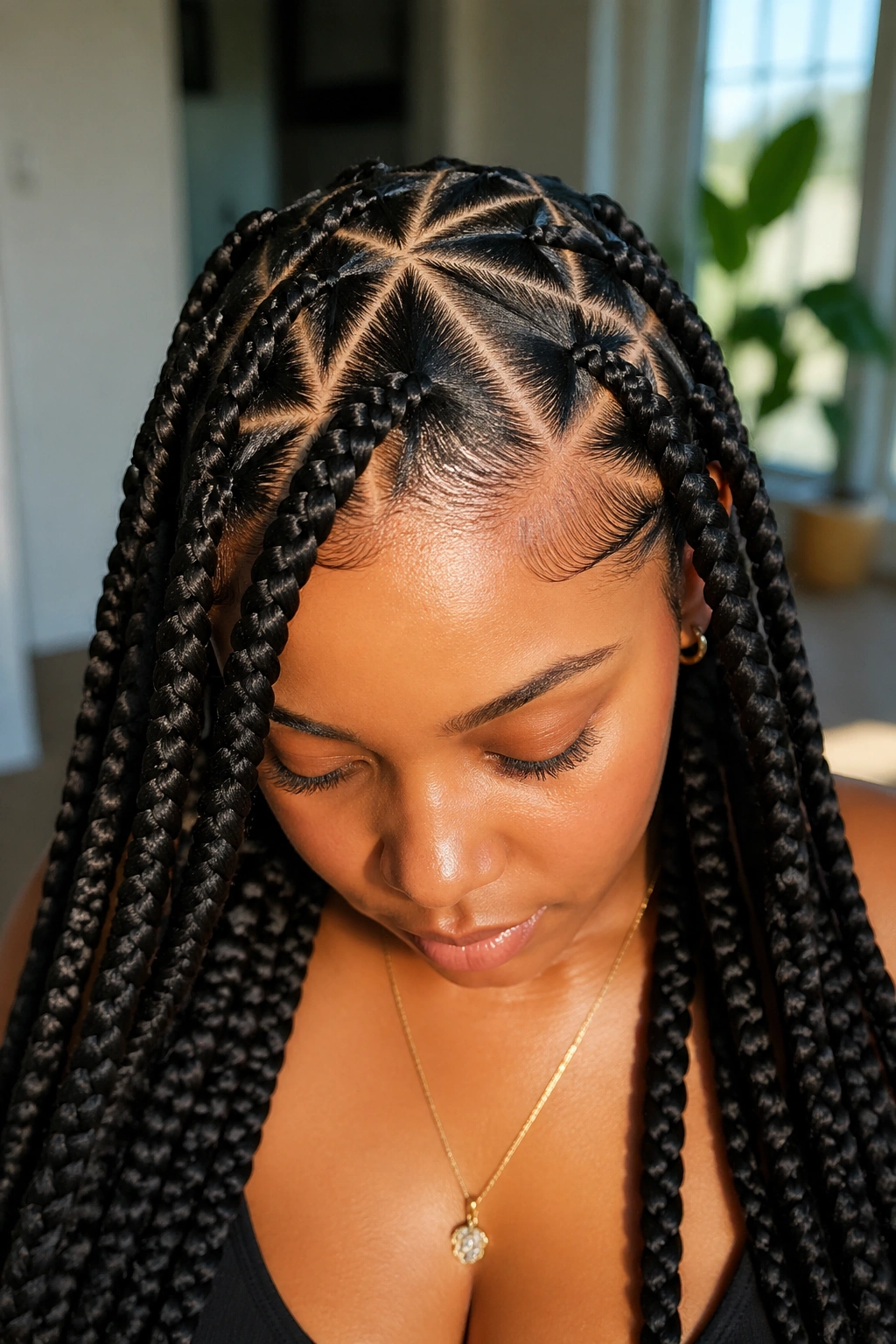
Why do triangle parts look so good with jumbo feed-in box braids? Because the shape does half the design work before the braid even begins.
The triangle gives each section a wider base, so the rows feel more graphic than square parts. That makes the scalp pattern stand out, which is useful when you want the parting to be part of the style instead of just a hidden foundation. Triangle parts also soften the look of chunky braids a little. The rows break up the grid, and that keeps the style from looking too boxy.
How to Wear It
This version works best when the triangles are kept consistent in size. If some sections are tiny and others are broad, the pattern starts to look accidental. A clean triangle around the crown, temples, and nape creates a nice rhythm.
- Best with jumbo or extra-jumbo braids because the larger braid size matches the stronger part shape.
- Looks sharp on freshly stretched hair.
- Easy to pair with a middle part or a side part.
- A good choice if you want the scalp pattern to be visible from the front.
If you like a braid style that feels a little more intentional and a little less standard, triangle parts are a solid move. They add shape without needing any added decoration.
4. Beaded Jumbo Feed-In Box Braids With a Clean Swing
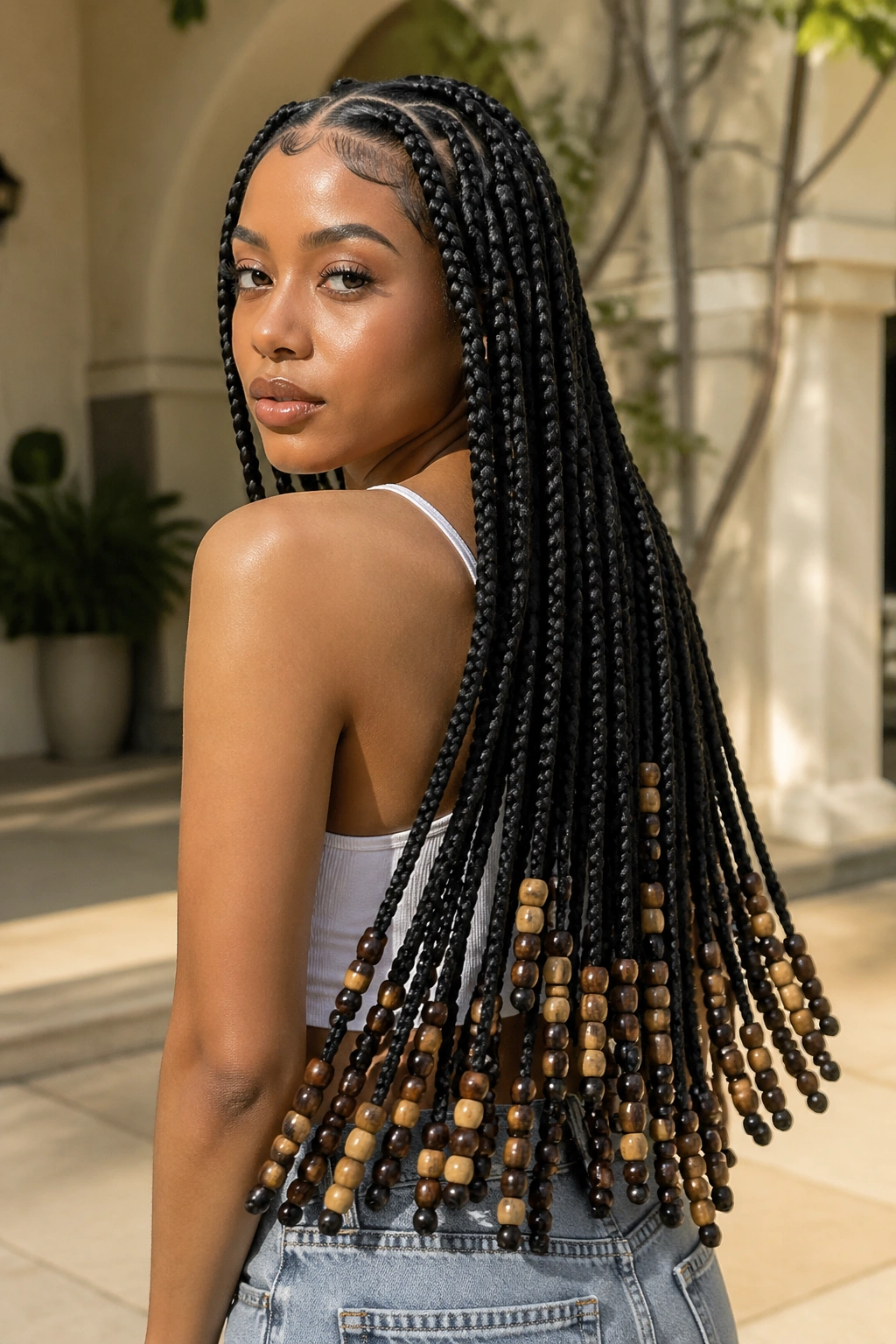
The first time I saw jumbo feed-in box braids with beads, the beads did most of the talking. The braids already had weight and movement; the beads just gave the ends a little punctuation. A few of them click softly when you move. Not all over the place. Just enough.
That’s the real advantage here. Beads add sound, shine, and a bit of old-school charm, but they also help the braid ends look finished. With jumbo feed-in box braids, especially longer ones, the ends can sometimes feel like an afterthought if they’re left plain. Beads fix that fast. Wood feels earthy. Clear acrylic looks lighter. Metal rings bring a sharper edge.
- Use two to four beads per braid end if you want a tidy finish.
- Place the heavier beads lower, near the ends, so the roots stay comfortable.
- Keep the braid length slightly longer if you want the beads to swing without bunching.
- Match bead color to your jewelry if you want the whole look to feel connected.
My take: beads work best when they’re spaced out. If every braid is loaded up, the style starts to feel noisy. A few well-placed pieces do more.
5. Shoulder-Length Jumbo Feed-Ins That Keep the Weight Down
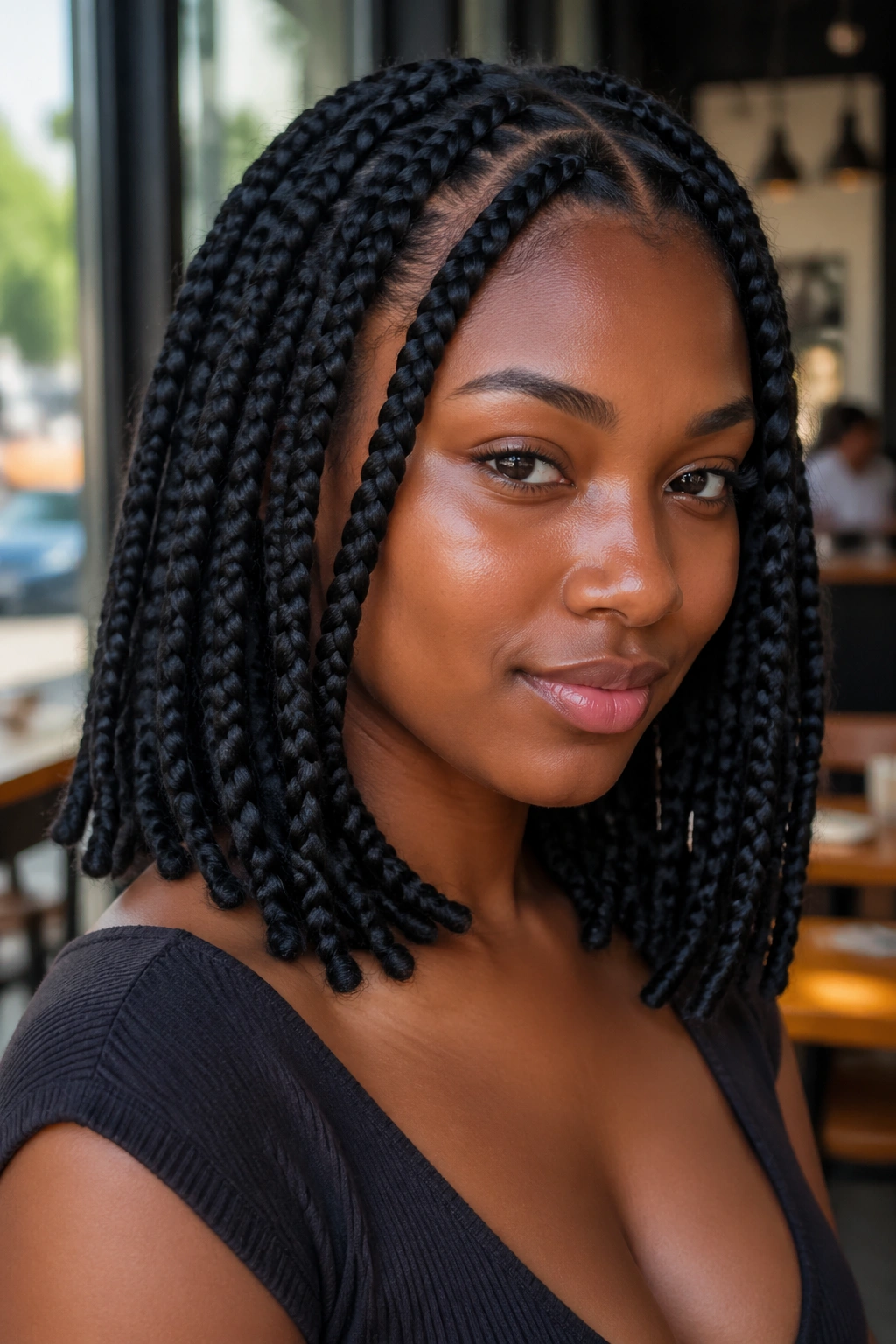
Shoulder-length jumbo feed-ins are underrated. Shorter braids can feel almost rude in a good way — no extra inches to manage, no ends brushing your ribs, no constant tugging when you put on a coat. They give you the shape of the style without the full weight of a waist-length set.
That lighter feel changes how the braids sit. The ends hover around the collarbone or the shoulders, which means you notice the parting, the thickness, and the feed-in transition more clearly. There’s nowhere to hide, and I mean that as praise. If the braid work is clean, shoulder length shows it off.
This version is also easier on people who do not want a long wash day routine or who simply dislike carrying a lot of hair. It still looks finished with a blunt cut or slightly rounded ends. A small curl at the bottom can soften it, but the blunt version has more edge. Both work. The deciding factor is usually how much movement you want when the braids land against your shirt.
Shorter does not mean basic. It just means the braid shape has to do the talking.
6. Half-Up, Half-Down Jumbo Feed-In Braids
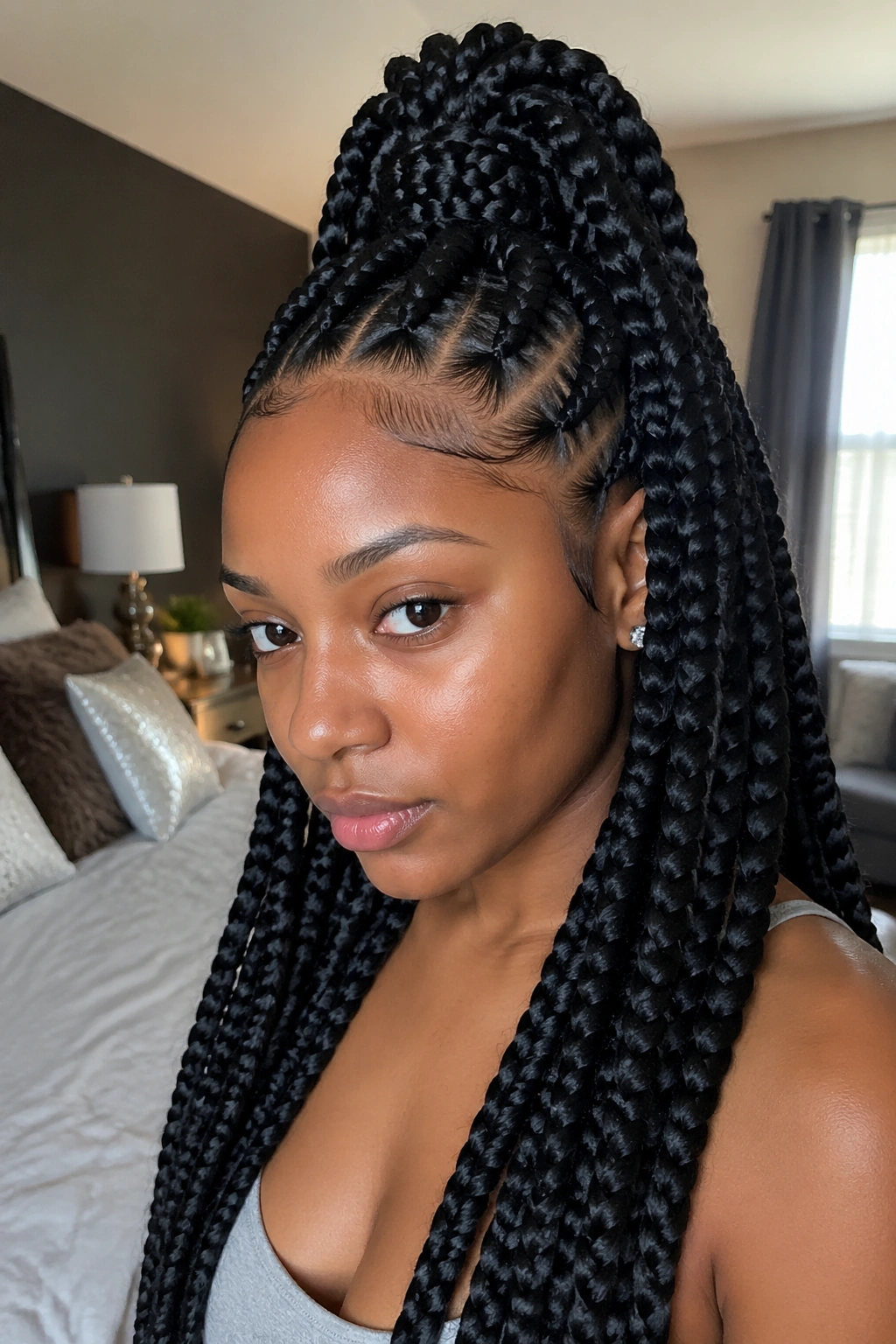
Compared with wearing every braid loose, half-up, half-down gives you two things at once: lift at the crown and movement through the lengths. That’s the appeal. Your face gets some space, but you still keep the swing that makes jumbo feed-in braids fun to wear.
The top section can be tied into a high puff, a small bun, or a simple half ponytail. Each version changes the mood. A bun feels neater. A ponytail feels younger and more casual. A puff at the top keeps the style playful and works especially well if the braids are long enough to create a strong outline from the back.
This is also one of the easiest ways to vary the style during the week without taking anything down. Wear it loose for a day, gather the top half the next day, then clip in a cuff or wrap one braid around the base when you want it to look a little more done. No drama. No extra braiding. Just a different shape.
If you like styles that give you options, half-up, half-down is hard to beat.
7. Curved-Row Feed-Ins That Follow the Hairline
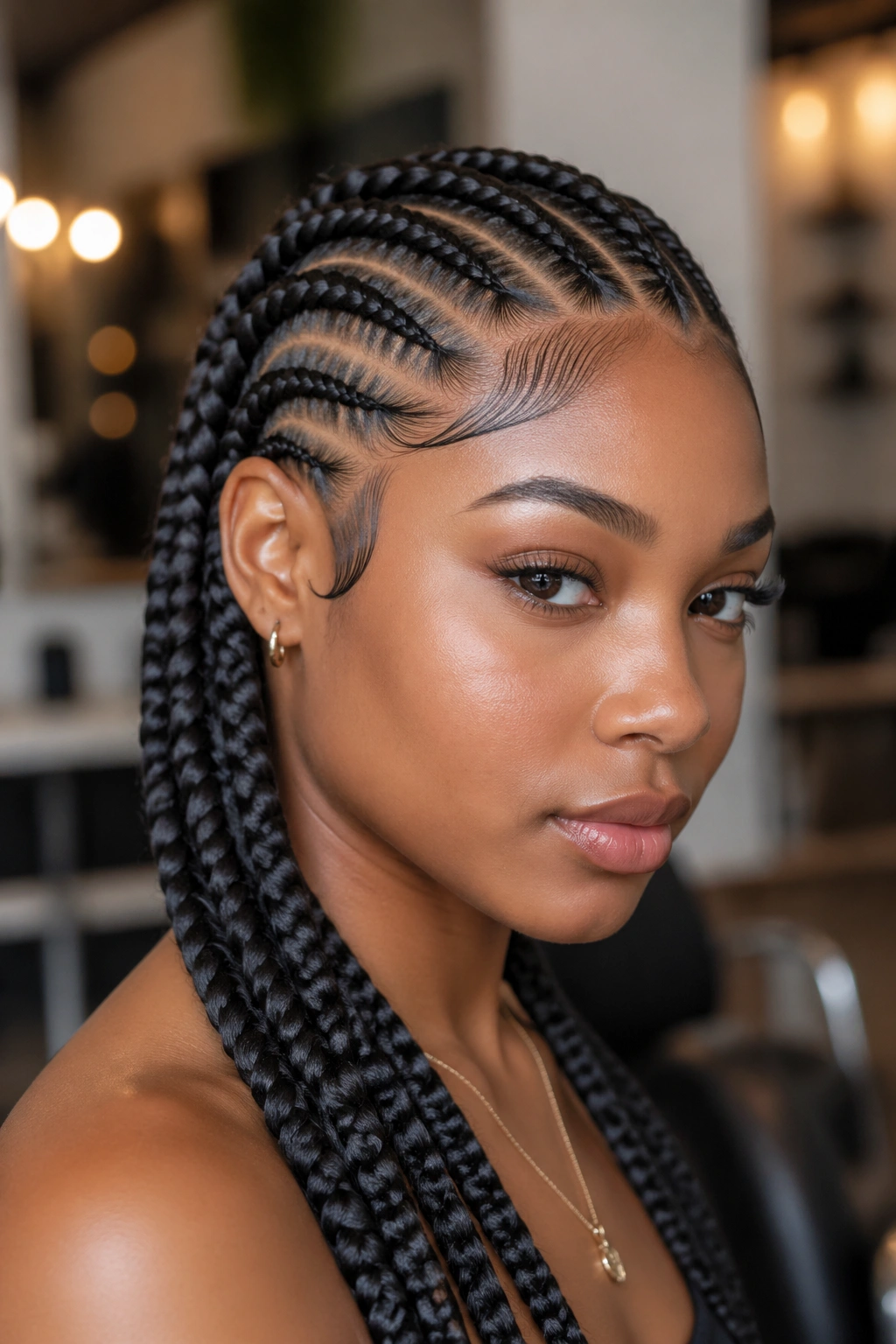
Straight rows are fine. Curved rows feel more alive.
Why the Curve Matters
Curved feed-in rows let the braids follow the shape of the head instead of cutting across it in hard lines. Around the temples, especially, that matters. A gentle swoop can soften the look and make the braids sit more naturally against the hairline. The style feels less rigid, which is useful if you find straight parts too severe.
The curve also changes how the eye moves across the style. Instead of reading one flat grid, you get a little flow from row to row. It sounds subtle, and it is, but that’s the point. Jumbo feed-in box braids already have enough weight. A curved pattern gives them some motion before the actual hair moves.
- Works well with medium-to-large braid sections.
- Looks best when the curves are mapped before any hair is added.
- A clean edge along the front line helps the swoops stand out.
- Great if you want the parting to feel softer without losing structure.
Best tip: ask for the curves to be planned with the comb first. Freehand swoops can go wrong fast if the stylist is guessing.
8. Color-Block Jumbo Feed-In Braids With Two-Tone Extensions
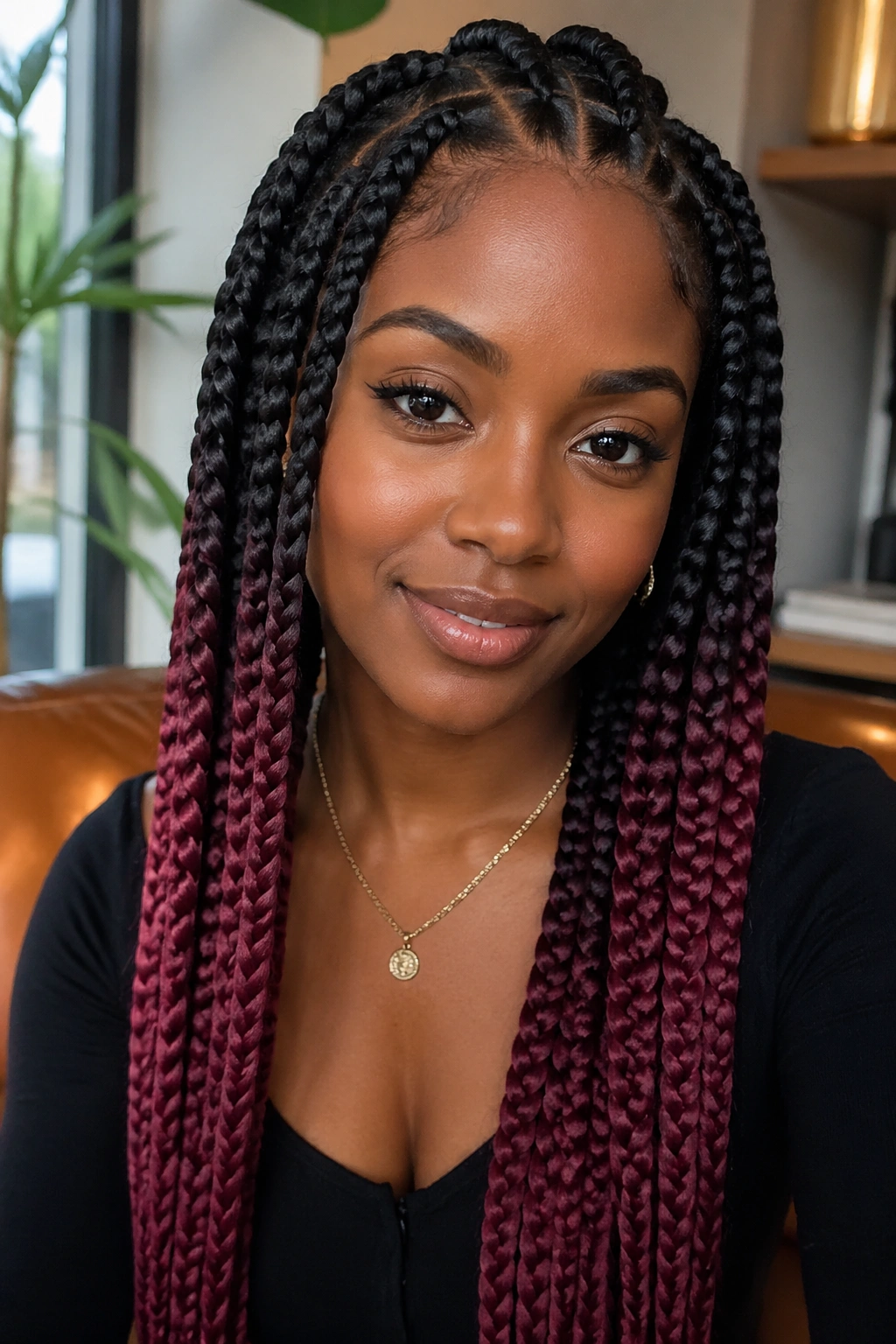
Two-tone braiding hair changes the personality of jumbo feed-ins in a big way. The thick braid size gives the color room to show up, so even a modest contrast reads clearly. That’s why this style works better on jumbo braids than on tiny ones. The color has space to breathe.
Color-blocking is not the same as ombre. Here, the color shift feels more deliberate and more graphic. You might keep the roots close to your natural shade, then feed in a second color partway down the braid. Black and burgundy. Brown and copper. Dark blonde and honey. The exact mix is less important than the contrast between the sections.
This look suits people who want a little drama without going full rainbow. It also pairs well with plain outfits, which is useful because the hair becomes the detail. Keep the rest of the styling simple and let the color do the talking. If you wear heavy makeup or strong jewelry on top of it, the style can get crowded fast.
A small amount of contrast usually goes further than people expect.
9. Knotless-Style Jumbo Feed-Ins With Invisible Starts
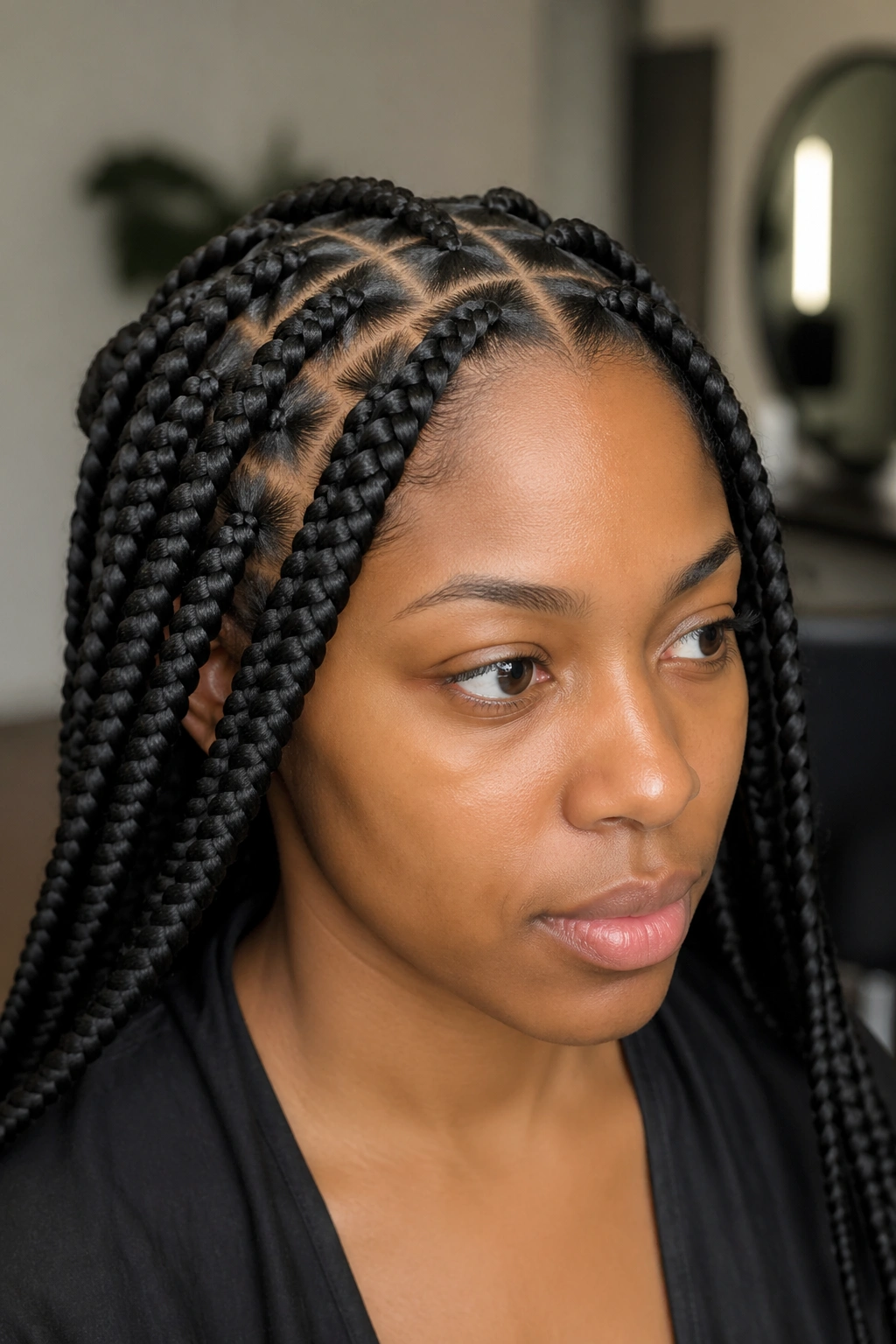
Can jumbo feed-ins look light at the roots? Yes. That’s exactly what knotless-style starts are for.
The difference is in how the extensions enter the braid. Instead of one obvious knot at the scalp, the synthetic hair is fed in gradually so the start looks smooth and almost hidden. On jumbo braids, that makes a big visual difference. The braid still has body, but the root does not have that bulky little bump that some people feel right away when they first sit down in the chair.
How to Wear It
This version is a smart choice if your scalp gets tender when braids start too sharply. It’s also useful when you want the style to lie flatter against the head. The first inch or so matters most here, so the base should be neat and tension should stay even from row to row.
- Ask for gradual feed-ins near the scalp, not one hard start.
- Keep the braid size large, but not so large that the root looks strained.
- A soft mousse after installation helps the roots settle.
- Night wrapping matters here because the smoother start shows frizz faster.
If you like jumbo braids but hate a heavy scalp, this is the version I’d point you toward first.
10. Jumbo Feed-In Box Braids Pulled Into a High Ponytail
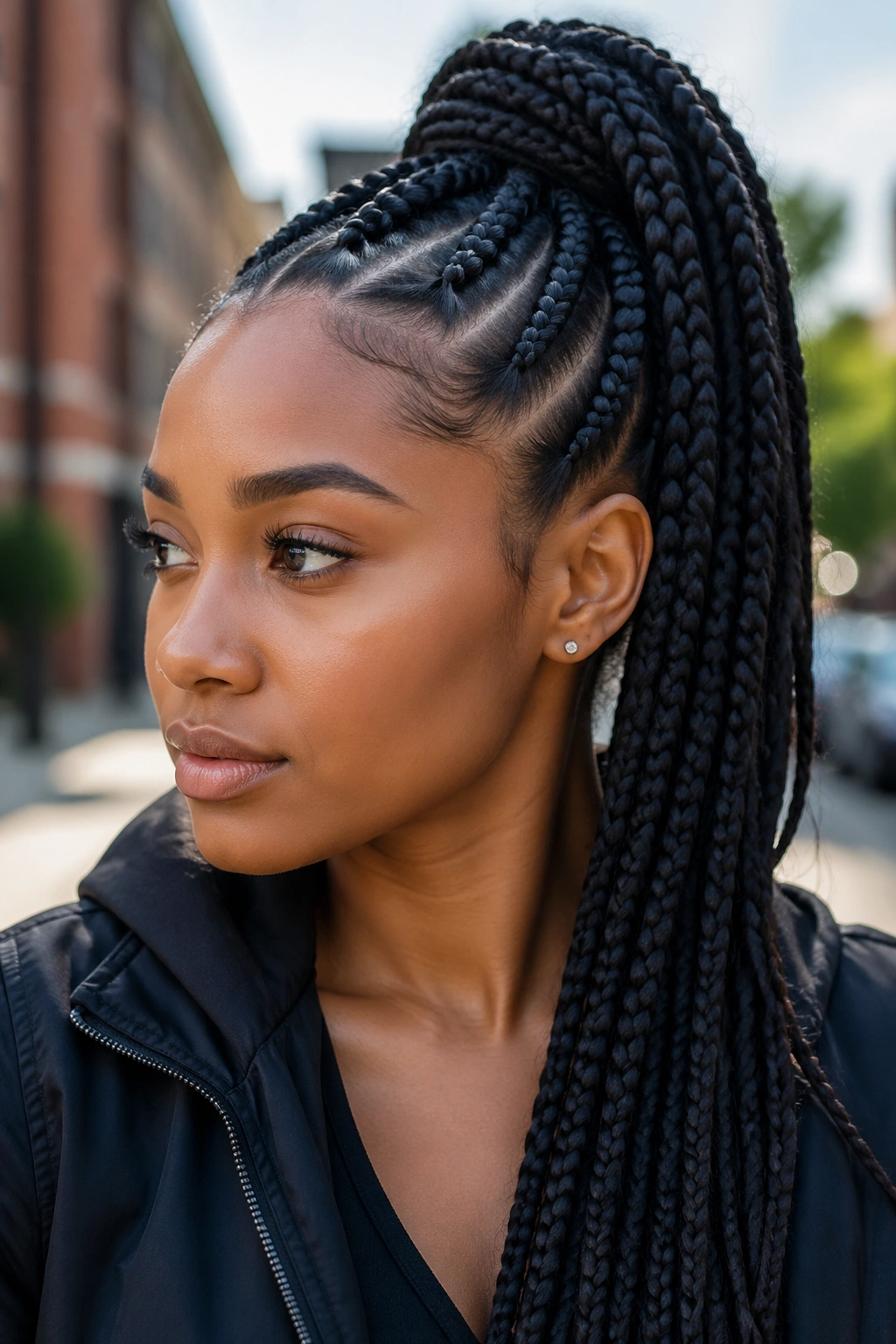
Pulling jumbo feed-in box braids into a high ponytail changes the whole mood. Suddenly the style goes from grounded and wide to lifted and sharp. The face opens up. The cheekbones show more. And the ponytail creates a clean line that feels a little more dressed up than wearing everything loose.
The important part is the base. A high ponytail with jumbo braids needs a secure foundation, but it should not feel like the scalp is being yanked back. If the parting at the crown is neat and the edges are smoothed lightly, the result looks intentional instead of tight. A wrapped braid around the elastic helps finish the base and hides the hair tie, which is always worth doing.
I like this style for busy days because it keeps the braids out of the face while still showing off the length. It also works well when the braids are long enough to swing without tangling immediately. If they’re too short, the ponytail can look stiff. Long enough, and it has movement.
One detail. Keep the ponytail high enough to lift the face, but not so high that the weight pulls at the temples.
11. Waist-Length Braids With Cuffed Ends and Clean Lines
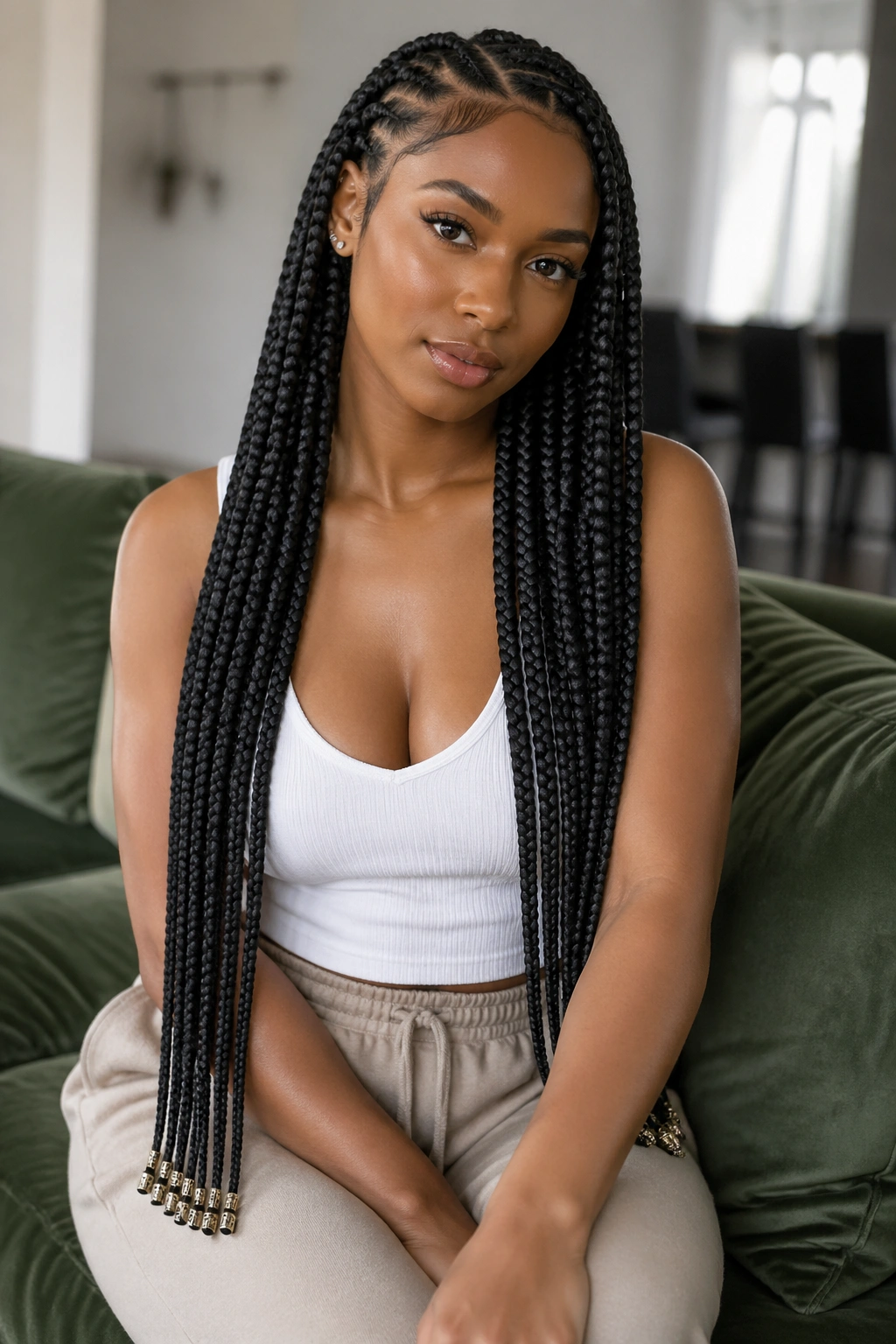
Waist length is a sweet spot. It’s long enough to feel dramatic, but not so long that every trip through a doorway becomes a small event. Add cuffs, and the style gets a bit of shine without needing color or beads.
I prefer cuffs on jumbo feed-ins when the rest of the look is clean. If the braids already have triangle parts, curved rows, or a strong center line, the metal accents can echo that structure instead of fighting it. A few cuffs near the ends are enough. Put one on every braid and the style can start looking cluttered, which is a shame because the braid pattern itself is usually the strongest part.
The other upside is movement. Cuffs catch the eye as the braids swing, so the lengths feel more animated. They work especially well on plain outfits — black shirts, white tees, denim jackets — where the hair becomes the main point of detail. That said, I would keep the cuff count moderate. More is not always better.
This is one of those versions that looks expensive when the lines are crisp and the accessories are edited down.
12. Small Face-Framing Pieces at the Front
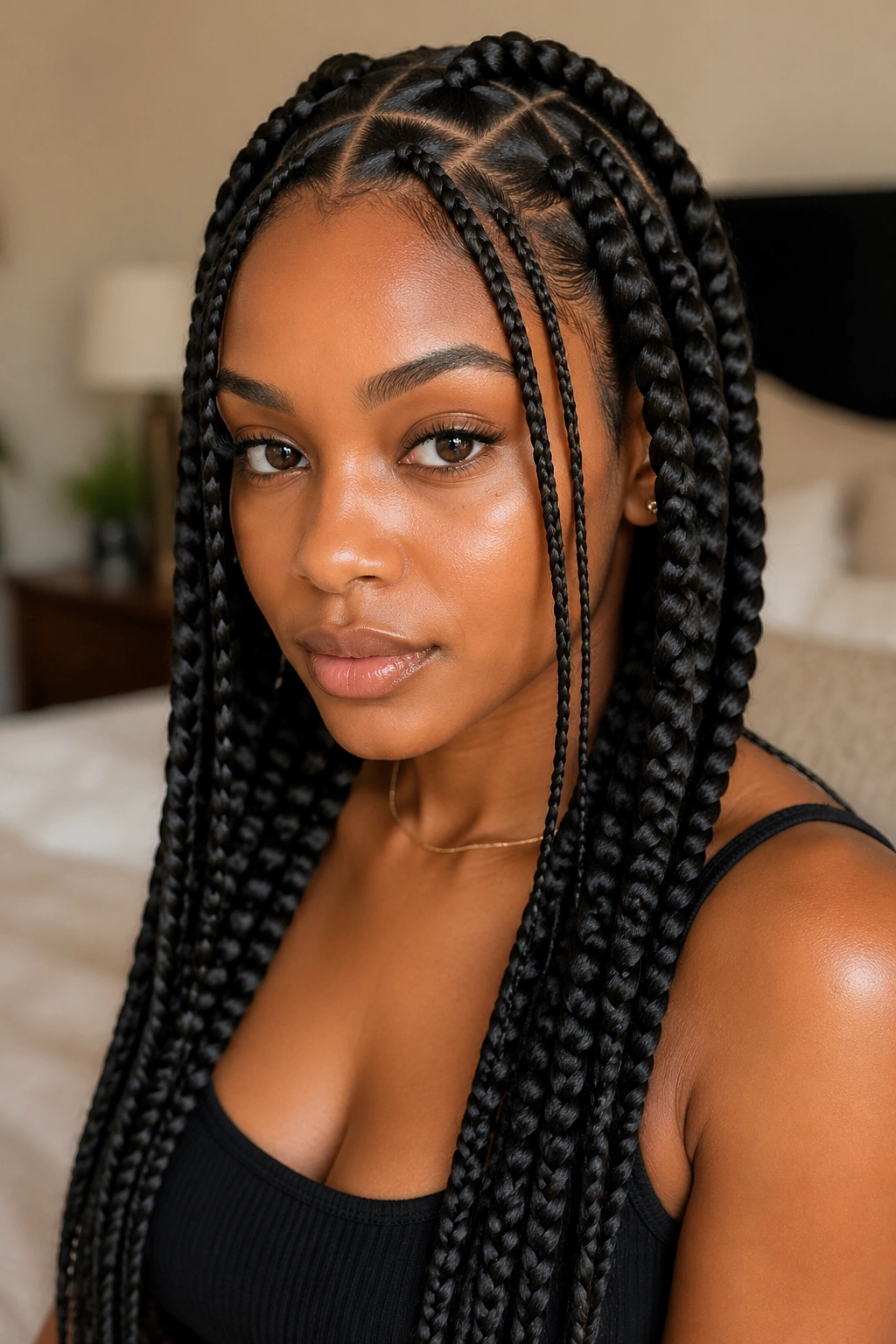
Compared with a blunt, all-one-length set, a few face-framing pieces soften jumbo feed-in box braids right where they matter most. The front line stops feeling so heavy. The cheeks get a little breathing room. The style keeps its size, but the frame around the face loosens up.
I like this variation on square and heart-shaped faces because it breaks up the strong outline near the temples. Two slimmer braids on each side can do the job, or even just one narrow piece on either side if you want the change to stay subtle. The rest of the braids can stay jumbo and full. That contrast is what makes it work.
If you wear glasses, this version is useful too. The smaller front pieces sit more neatly around the frames and keep the hair from overwhelming the face. And if you tuck one side behind the ear, the style opens up even more. Tiny adjustment. Big difference.
You do not need a full layer of loose hair to get softness. Sometimes two narrow front braids are enough.
13. Zigzag Parted Jumbo Feed-In Box Braids
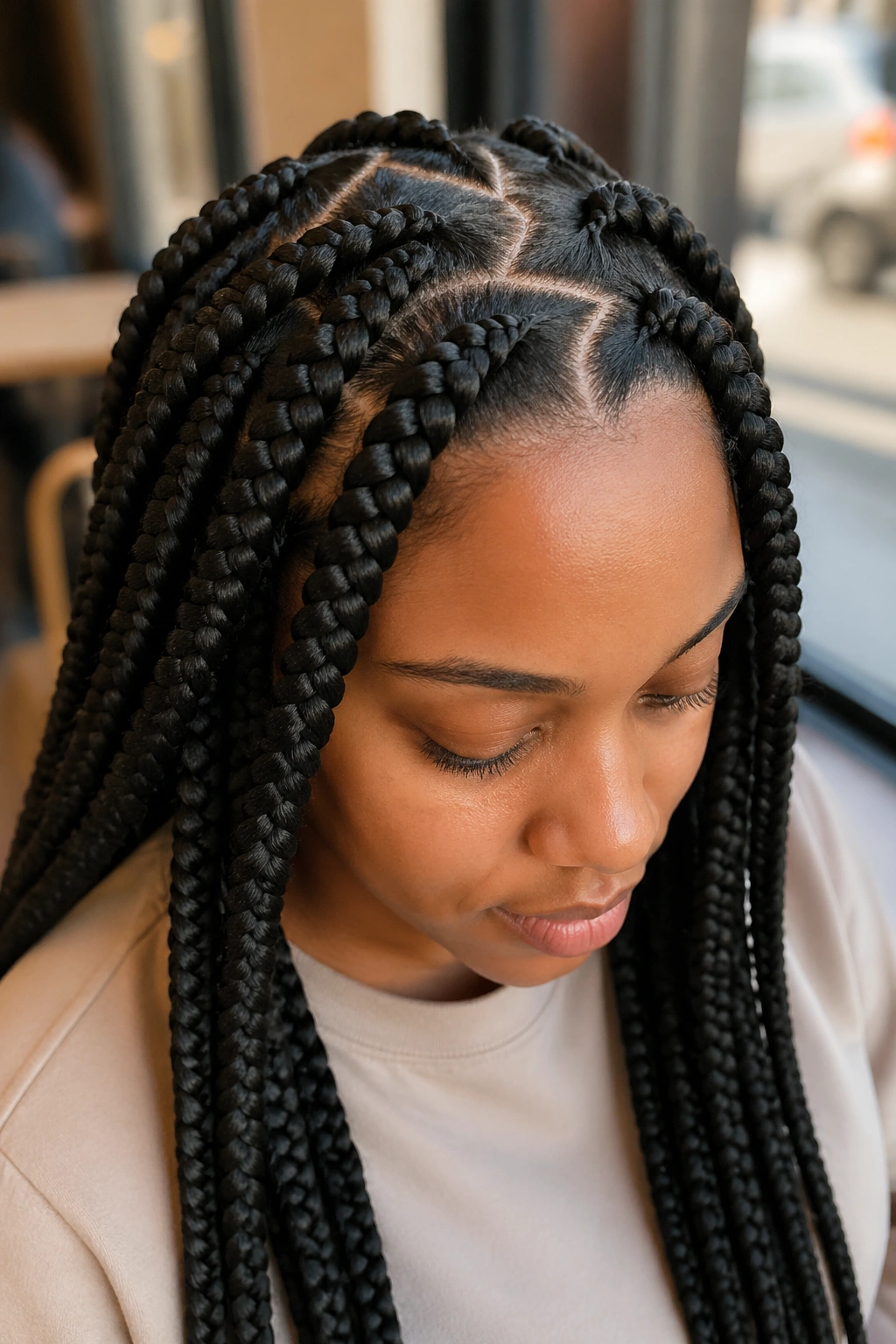
A zigzag part makes jumbo feed-in box braids feel sharper right away. The scalp pattern becomes part of the look, not just the background behind it.
Why the Zigzag Matters
The zigzag breaks the usual straight-row grid, which gives the style a little movement even before the braids start hanging. It also helps the set feel less formal. Straight parts can look severe on some faces. A zigzag line softens that edge while still giving the style some structure.
This parting works best when the braids themselves are fairly chunky. Tiny braids can make the pattern look busy. Jumbo braids balance it out. A clean gel line along the part helps the zigzag stay visible, and the style usually looks best when the teeth of the zigzag are even, not random.
- Good choice if you want the parting to feel playful.
- Works well with a middle section or a side section.
- Best when the zigzag is mapped before the first braid starts.
- Can hide small irregularities better than a dead-straight part.
One thing I’d watch: if the zigzag gets too tight, the scalp can start to look cramped. Keep it roomy. The shape should read from a few feet away, not feel crowded up close.
14. Braids Wrapped Into a Low Bun at the Nape
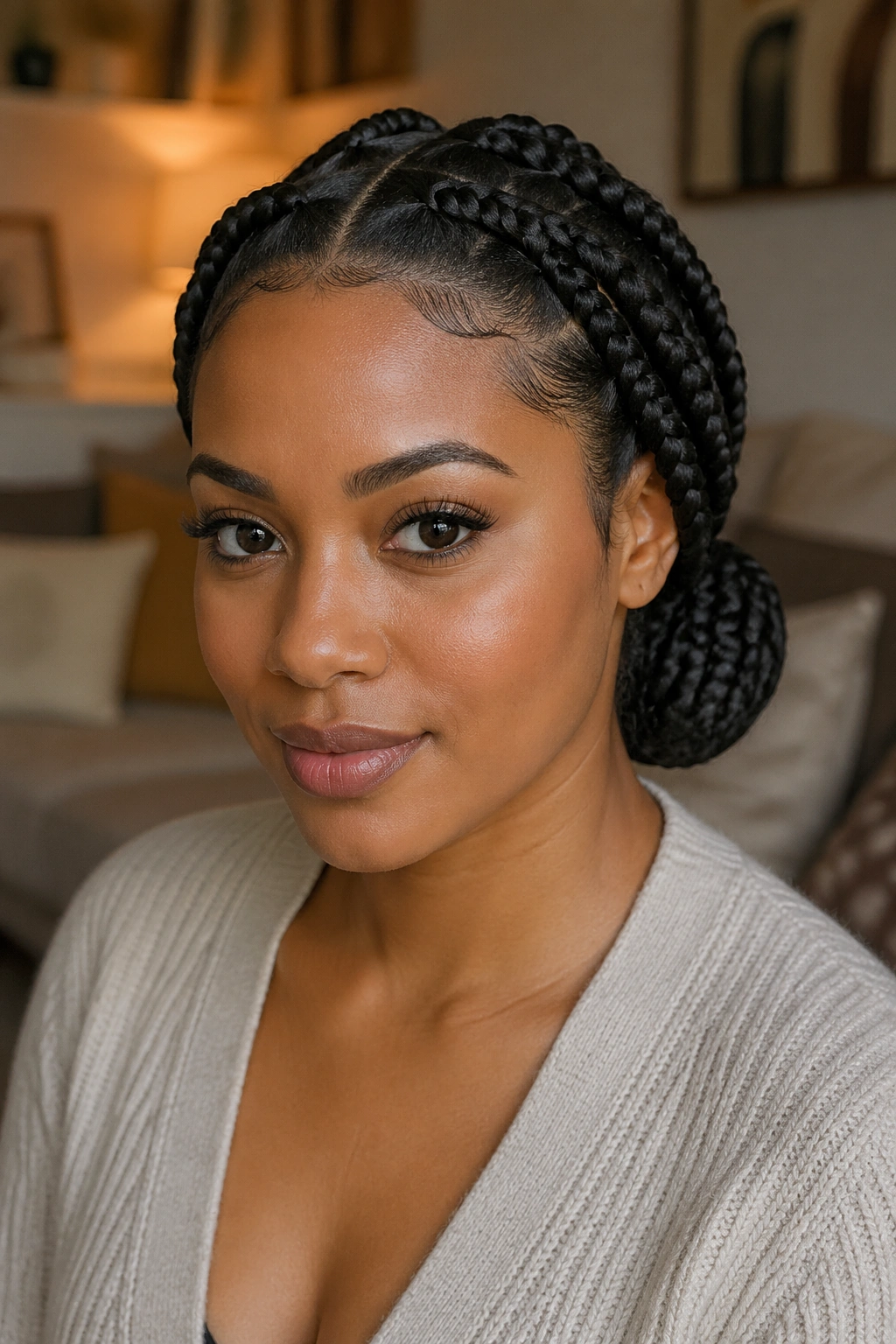
The low bun is where jumbo feed-ins stop reading casual and start reading tailored. Everything gets gathered at the nape, which leaves the front and sides smooth and makes the whole shape look more finished.
This works especially well when you need the braids out of the way but do not want a basic ponytail. A bun sits lower, feels more settled, and usually puts less visual weight on the crown. That makes it a smart move for collars, scarves, jackets, and earrings that need room to show. The base can be wrapped tight and neat, or the bun can stay a little puffed if you want a softer outline.
I like this version when the braid lengths are long enough to tuck without poking out at odd angles. A few pins help. A strong elastic helps more. And if one or two braid ends are left visible, it can give the bun a less formal look. There’s a line between polished and stiff. The low bun sits on that line if you keep the surface smooth and the bun shape controlled.
Simple. Useful. Hard to mess up.
15. Ombre Jumbo Feed-In Braids That Fade From Dark to Light
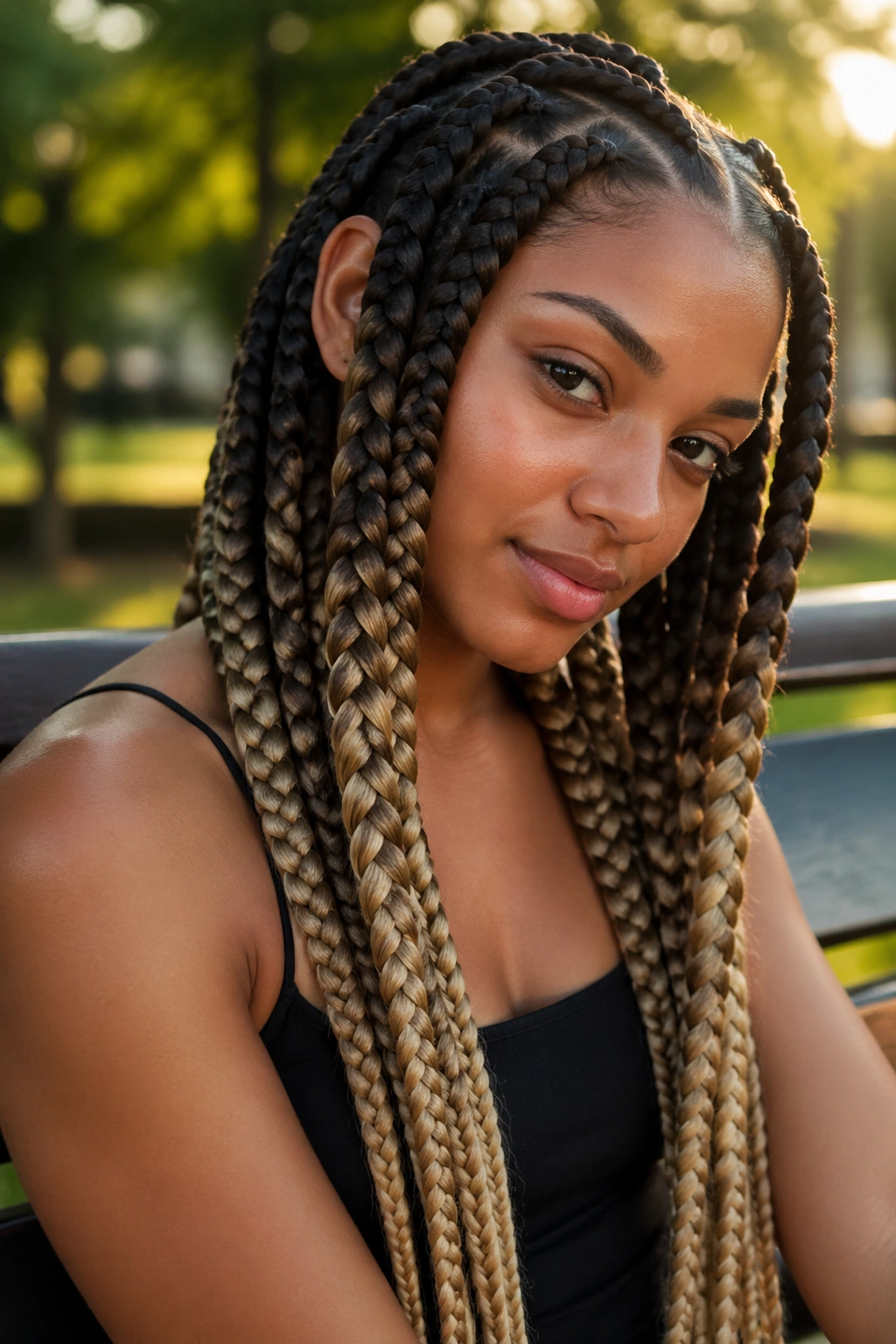
Why does ombre look so good on jumbo feed-ins? Because the braid thickness gives the fade room to show itself. On a thin braid, the transition can disappear. On a jumbo braid, the color shift has enough surface to read clearly.
How to Use It
The nicest versions usually start with a shade close to the root color, then ease into a lighter tone through the mid-lengths and ends. Dark brown into caramel. Black into honey. Auburn into copper. The fade can be subtle or high-contrast, but I think the braid shape looks best when the transition feels gradual rather than abrupt.
This version is different from color-blocking, which lands as more graphic and segmented. Ombre feels smoother. Less like separate panels, more like one color moving into another. That gives the style a softer finish, even when the colors themselves are bold.
- Pick a fade that flatters your natural root shade.
- Keep the lightest tone toward the ends so the braid movement shows it off.
- Works well on lengths that reach past the shoulders.
- A good choice when you want color without committing to a full bright set.
If you want the braids to feel rich instead of loud, ombre is the cleaner route.
16. Extra-Long Braids With a Sleek Middle Part
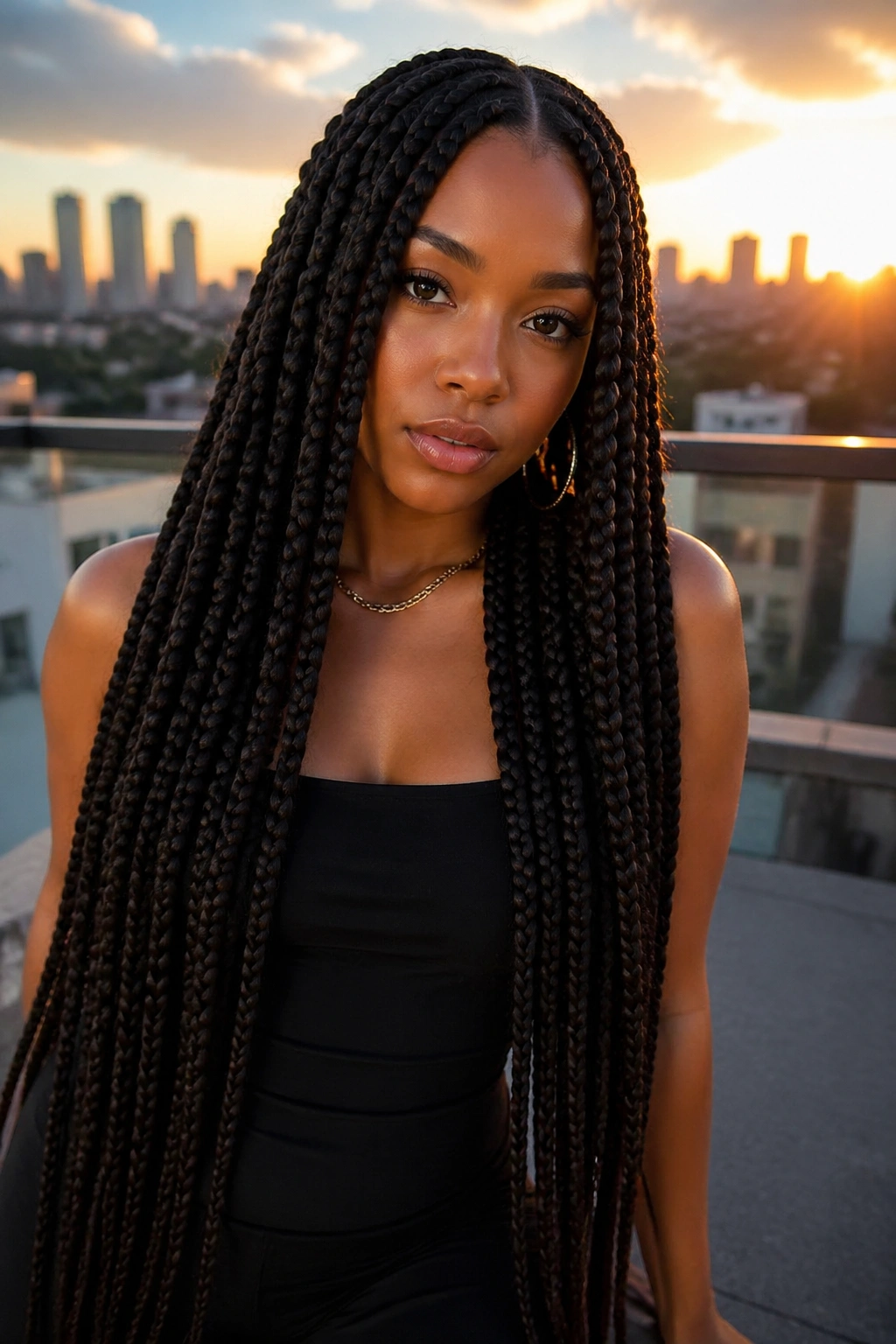
Once braids pass the waist and keep going, the movement becomes the whole point. Extra-long jumbo feed-ins swing differently, feel heavier on the head, and turn even small motions into something visible. That can be gorgeous. It can also be a lot.
The middle part helps keep the length under control visually. Without it, the long braids can take over the face and make the style feel wider than it needs to be. With it, the weight is split and the front stays open. A sleek middle part also makes the length look more intentional, which matters when the braids are this dramatic.
- Best with lighter braiding hair so the length does not feel brutal on day one.
- Works better when the braid ends are sealed and tidy.
- Sleep wrapping matters here; long ends tangle faster than people expect.
- Not ideal if you hate hair brushing your lap, your coat, and your seat belt all at once.
I’m blunt about this one: if you already know heavy hair annoys you, skip the extra-long set. Go long, sure. Just not this long.
17. Short, Blunt-Bob Jumbo Feed-Ins for Easy Wear
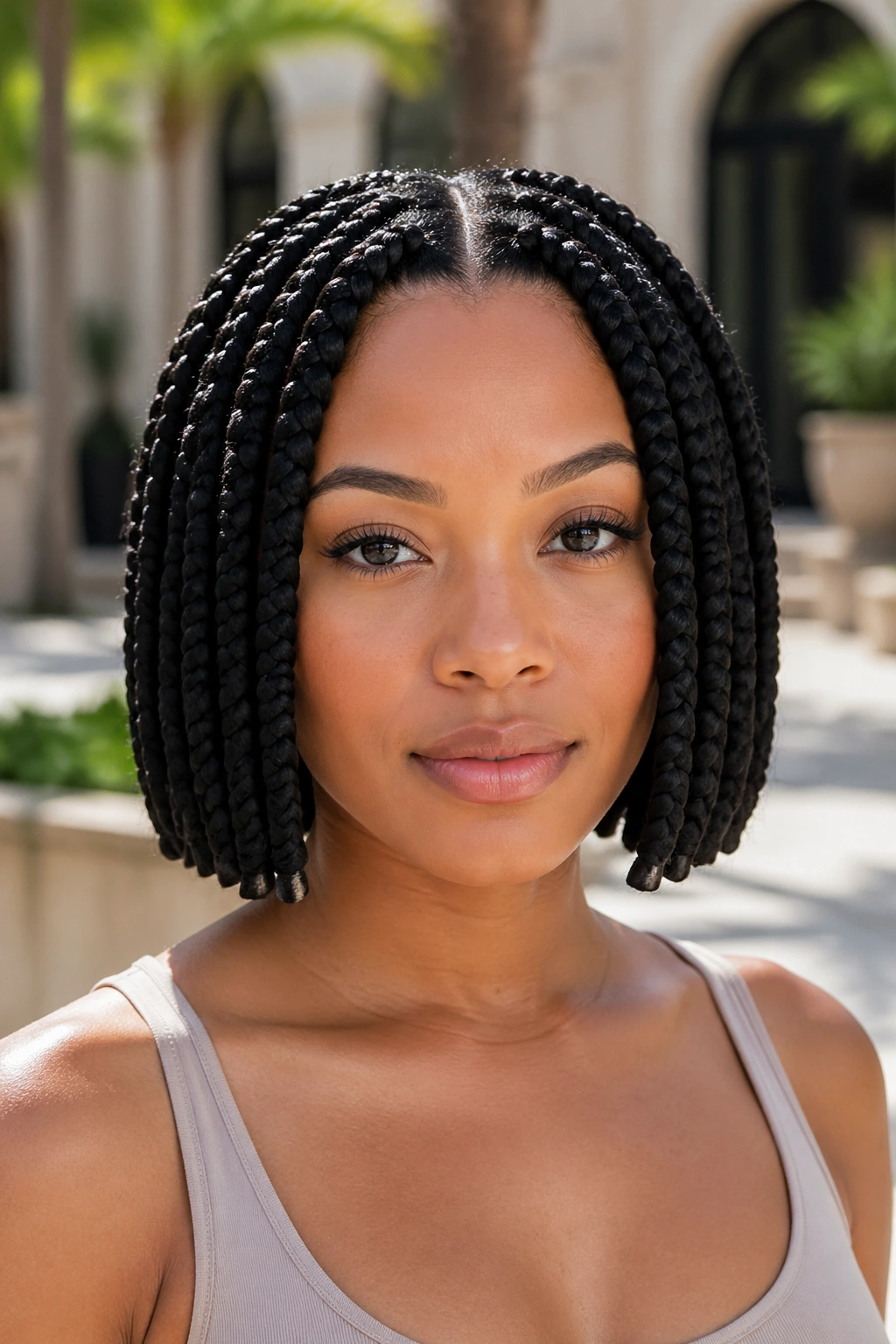
Short bob-length jumbo feed-ins have their own kind of confidence. They do not need a dramatic length story to make sense. The shape is the story. And because the ends stop around the chin or jaw, the braid pattern becomes much easier to see.
That makes the style feel clean and graphic. It also makes maintenance easier in a practical way. Less hair means less tangling, less weight, and less fuss when you are getting dressed. But there is one catch: shorter braids show mistakes faster. If the parts are crooked or the braids are lopsided, you will notice. So will everybody else.
I like this version when someone wants the jumbo feed-in look but doesn’t want the head-heavy feel that can come with longer sets. It’s also a good choice if you want the braids to frame the neck and jaw instead of resting on the chest all day. A blunt end keeps the line strong. A slight curve at the bottom softens it. Either way, the silhouette is the point.
Short braids are not the lazy option. They’re the edited one.
18. Gold-Cuff Accented Jumbo Feed-In Braids
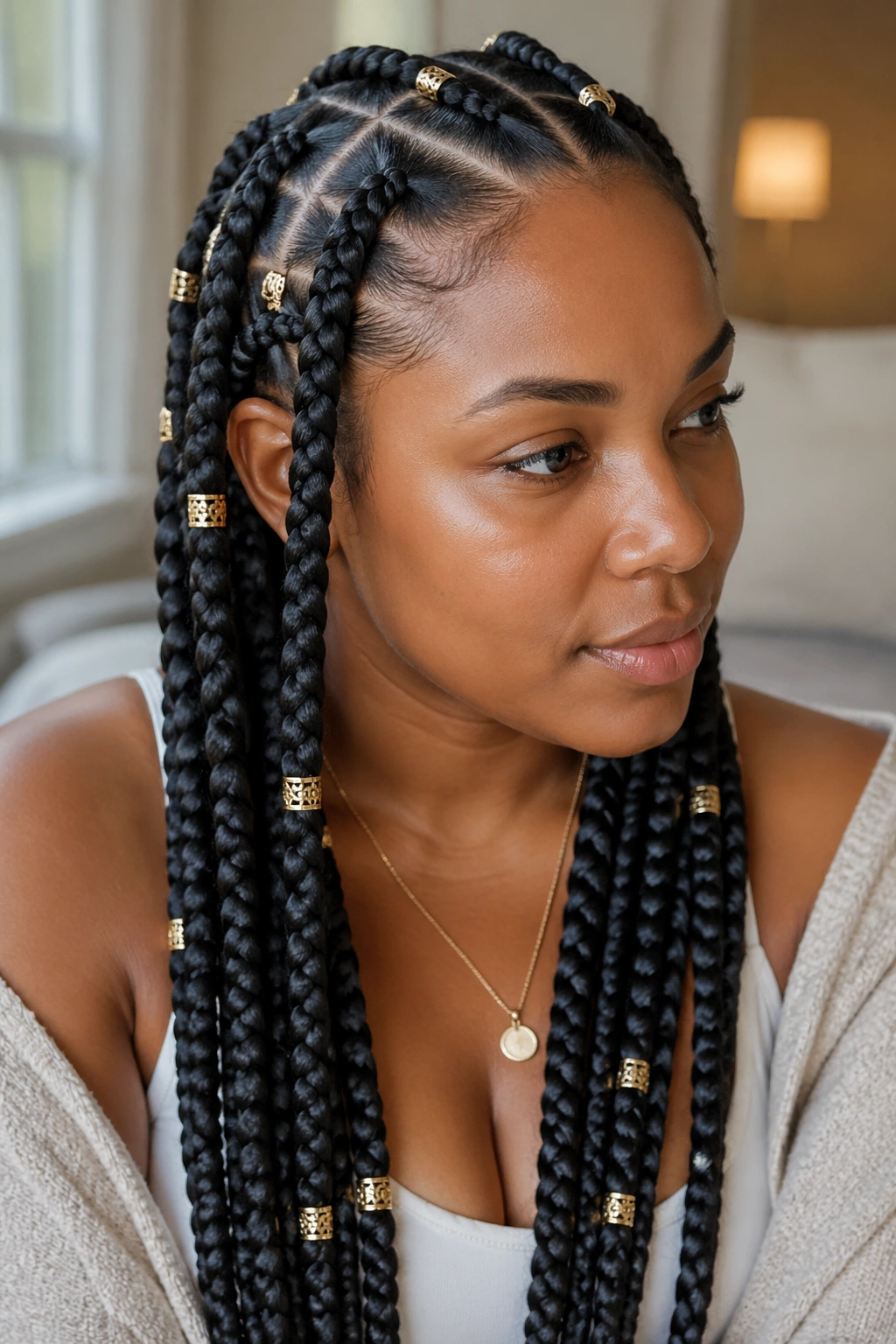
Compared with beads, gold cuffs give jumbo feed-in box braids a cleaner, more stripped-back shine. They catch the eye, but they do it without adding much weight. That makes them useful when you want detail but do not want the ends to feel loaded down.
The best placements are usually along the lower half of the braids or right near a part intersection. A few cuffs on the front pieces can also work if you want the face to feel framed. I would not scatter them everywhere. The braid shape already has enough presence. The cuffs should act like punctuation, not wallpaper.
This style is also easy to wear with plain clothes, which I appreciate. A black tank, a white tee, a tailored shirt — all of them let the gold pop without competing with it. If you have earrings on too, keep the cuff count a little lighter so the whole look doesn’t turn crowded. More shine is not always better.
Gold cuffs work because they are simple. That’s the whole appeal.
19. Side-Part Braids With a Deep Flip and Volume
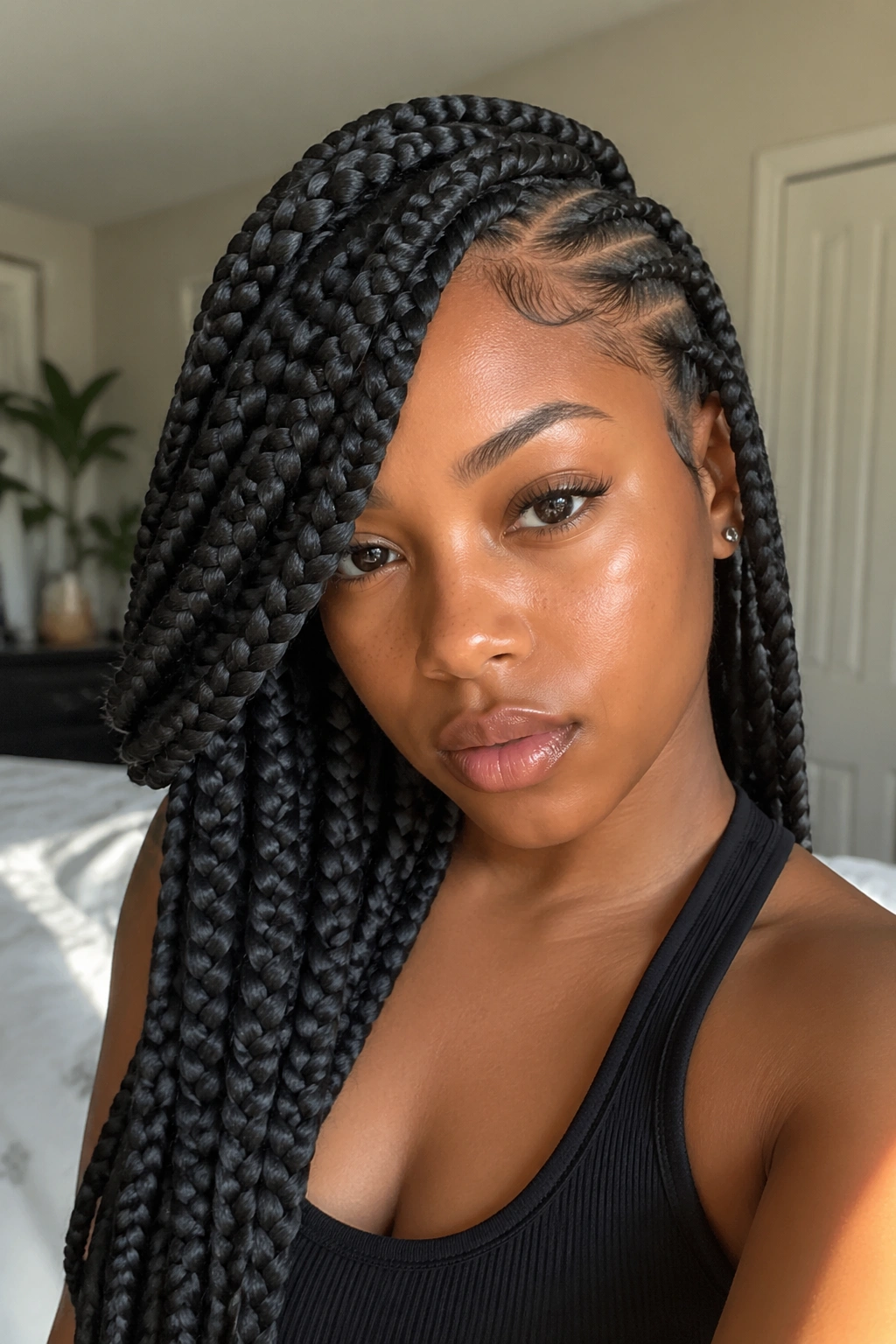
A deep side part changes the whole energy of jumbo feed-in braids. The volume shifts across the forehead, one side sits heavier than the other, and the face gets a little more drama without any extra styling.
What the Side Flip Changes
The side flip pulls attention upward and across, which can soften strong features and make the style feel more theatrical in a good way. It also gives the braids a built-in sense of motion, even when they are resting still. The front pieces can tuck behind one ear, fall forward over the cheek, or sweep across the brow depending on how you want to wear them.
This version is a nice fit if you like braids that make room for makeup, earrings, or a strong neckline. The part does a lot of work. So does the asymmetry. It takes a familiar braid shape and gives it a little attitude.
- Best when the front section is long enough to flip without fighting back.
- Works well with a mousse set so the side part stays sleek.
- Good choice if you want a softer outline than a strict middle part.
- Use a light edge finish, not a heavy one, or the front can look too stiff.
My opinion: if you only try one asymmetrical braid look, make it this one.
20. Curved Parts and a Polished Finish
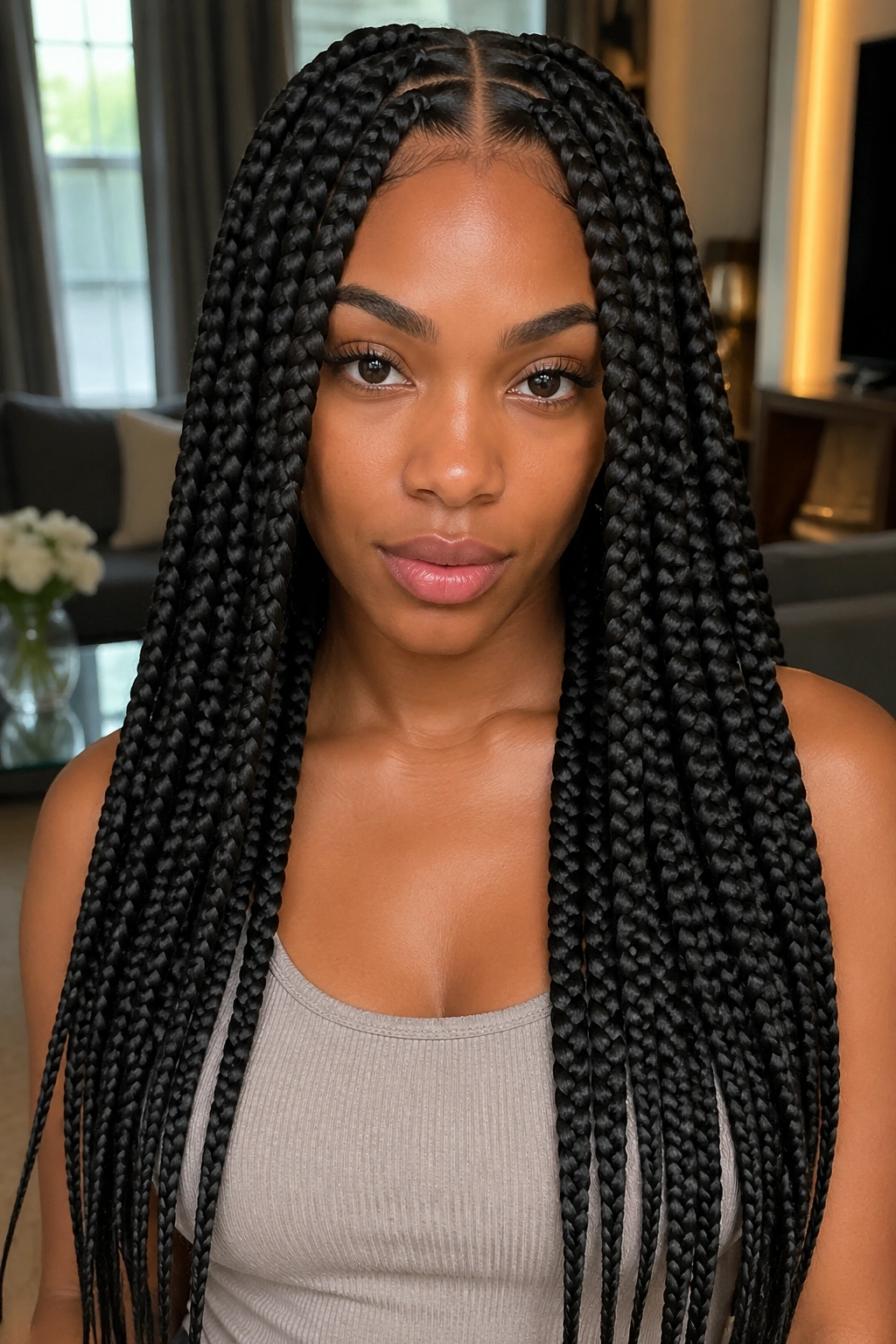
If I had to pick one jumbo feed-in box braid version that sits right between soft and sharp, this would be it. Curved parts give the scalp pattern shape. A polished finish keeps the braids from looking rough at the edges. Together, they make the style feel put together without making it feel severe.
The polished finish matters more than people expect. A little mousse, a neat part line, and clean ends can change the whole mood. Jumbo braids are large enough to show every decision, so sloppy roots or fuzzy ends stand out fast. Keep the front clean and the rows deliberate, and the style starts to look expensive even when the actual technique is simple.
This version is the easiest one to live with if you want a braid set that works in a lot of settings. Casual shirt, dressy jacket, oversized hoodie — it still fits. The curves keep it from feeling flat. The finish keeps it from feeling unfinished. That combination is hard to argue with.
And honestly, that’s why jumbo feed-in braids keep getting worn in so many different ways. The shape can change. The details can change. The style still knows how to hold a room.
