


A good set of short box braids for little girls should move, not tug. If a style looks neat but leaves the scalp sore, it’s the wrong style, no matter how tidy the parts are.
Short braids have a lot going for them. They sit lighter on a small head, dry faster after washing, and stay out of the way during school, naps, playground time, and car rides. Chin-length ends usually feel styled without turning into a heavy curtain by lunchtime. That matters. A lot.
The real difference is in the details: braid size, parting shape, bead weight, and how much hair is left around the face. A clean triangle part can make a simple style feel playful. A too-tight install can make the nicest style miserable. That’s the part people skip, and it’s the part that matters most.
Clean parts, gentle tension, and a little personality can make short box braids feel polished without being fussy. The styles below lean practical first, then pretty.
1. Chin-Length Classic Box Braids
This is the plainspoken favorite, and I mean that as a compliment. Chin-length braids are neat, easy to wear, and long enough to look finished without getting in the way.
The beauty of this style is how little it asks of the child. The braids rest lightly around the jaw and neck instead of swinging into the shoulders, so they don’t feel bulky during the day. They also work well with hair that’s thick, fine, or somewhere in between, because the style relies more on clean sectioning than dramatic length.
Clean parts matter most here. If the rows are straight and the size is even, the whole look feels calm and polished. If you want one small upgrade, add 2 or 3 lightweight cuffs near the front. That’s enough. Anything more starts to feel busy.
Short and steady. That’s the appeal.
2. Triangle-Part Short Box Braids
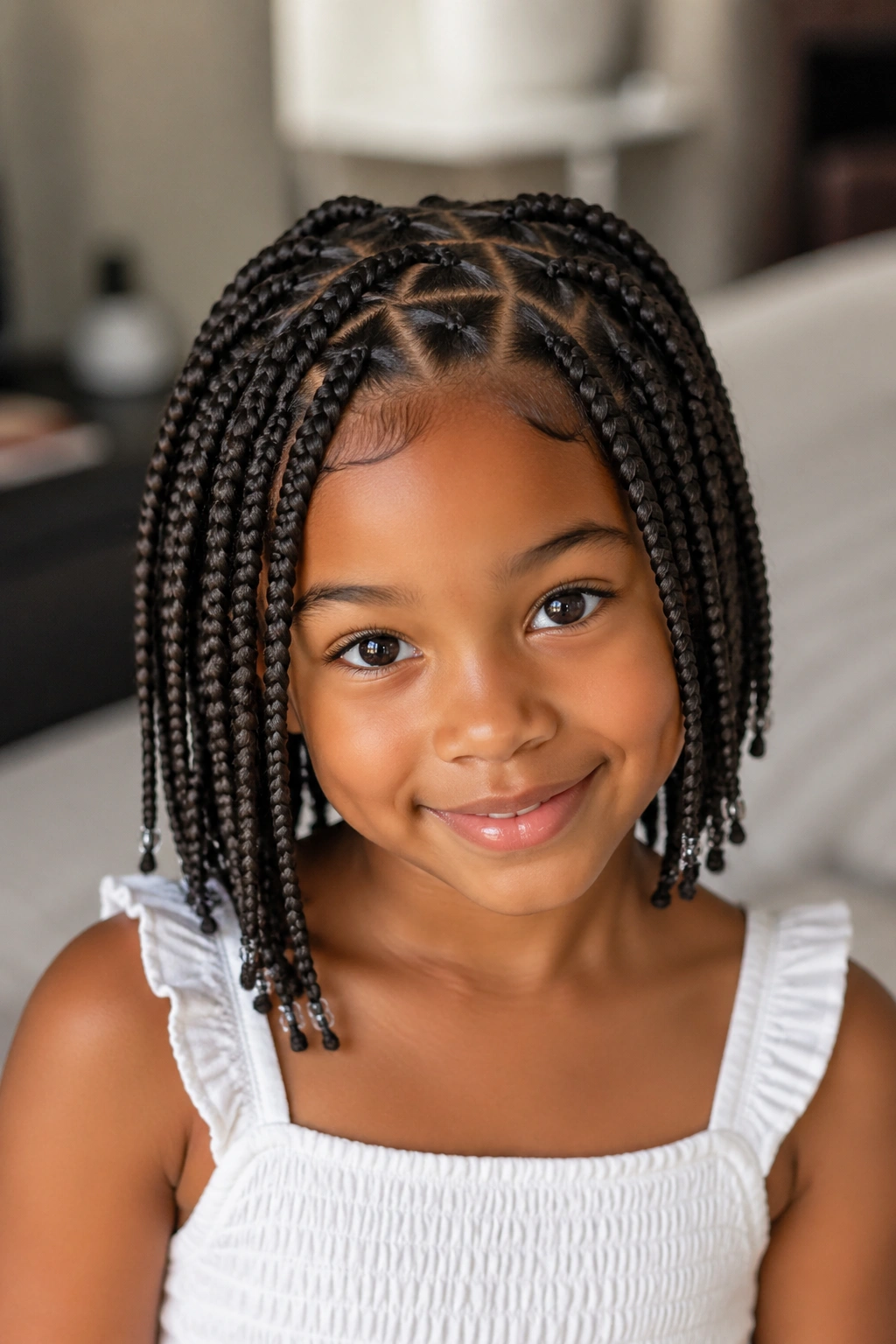
Why do triangle parts change the whole mood of the braid? Because the shape breaks up the grid and makes the style feel softer and a little more fun.
Why Triangle Parts Work So Well
Triangle parts draw the eye in a different direction than square parts do. Instead of a straight checkerboard look, you get angles that feel playful without needing extra accessories. On a little girl, that matters because the parting becomes part of the style, not just the invisible setup underneath it.
This look works especially well when the braids are small to medium in size. If the parts are too big, the triangles lose their shape fast. If they’re too tiny, the pattern disappears under the braids. The sweet spot is a section that feels clear at first glance but still leaves the scalp comfortable.
What To Ask For
- Part sizes around the width of a dime or nickel
- Clean triangle shapes at the crown and sides
- Braids that stop around the chin or just below it
- A light finish, not a heavy pile of beads
Best tip: triangle parts look sharpest when the braids are freshly done and the sections are crisp, so this is a style that rewards patience in the chair.
3. Short Box Braids with Beads at the Ends
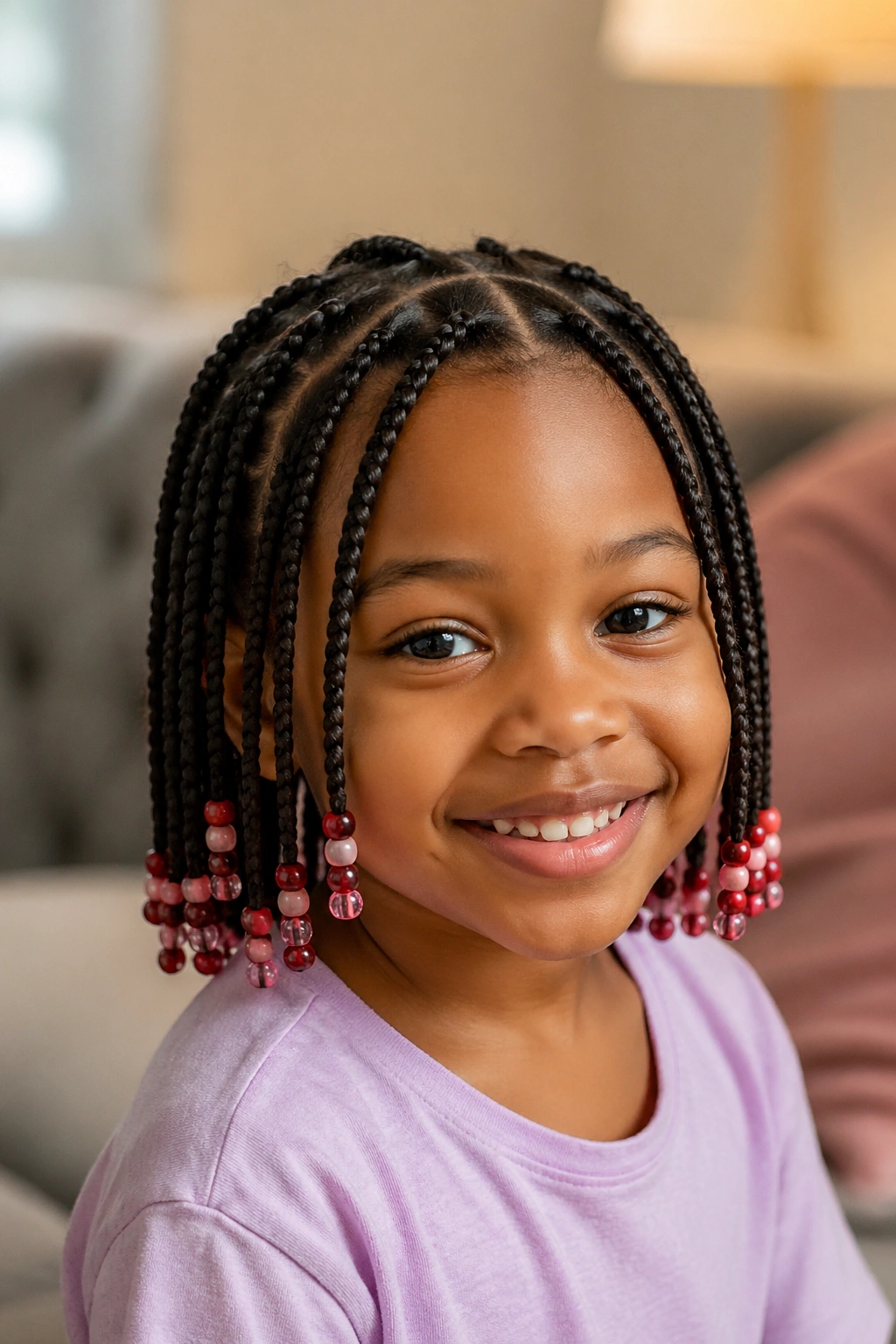
Beads change the sound, the movement, and the whole mood. One little click against another can make a simple braid feel alive.
This style works best when the braids end right around the chin or lower jaw, because the beads need enough length to sit neatly without dragging. Clear, white, amber, or wooden beads are easy choices; they catch the eye without turning the style into a costume. The key is restraint. Two or three beads per braid is usually enough. Five starts to feel heavy, and that weight adds up fast on a small head.
A lot of people load the front braids and leave the back plain, which is fine. That keeps the face framed without making every strand carry the same weight. If the child is young or tender-headed, keep the beads light and smooth, with no sharp edges on the openings.
The right bead setup should feel playful, not distracting. That line is thin.
4. Half-Up, Half-Down Short Box Braids
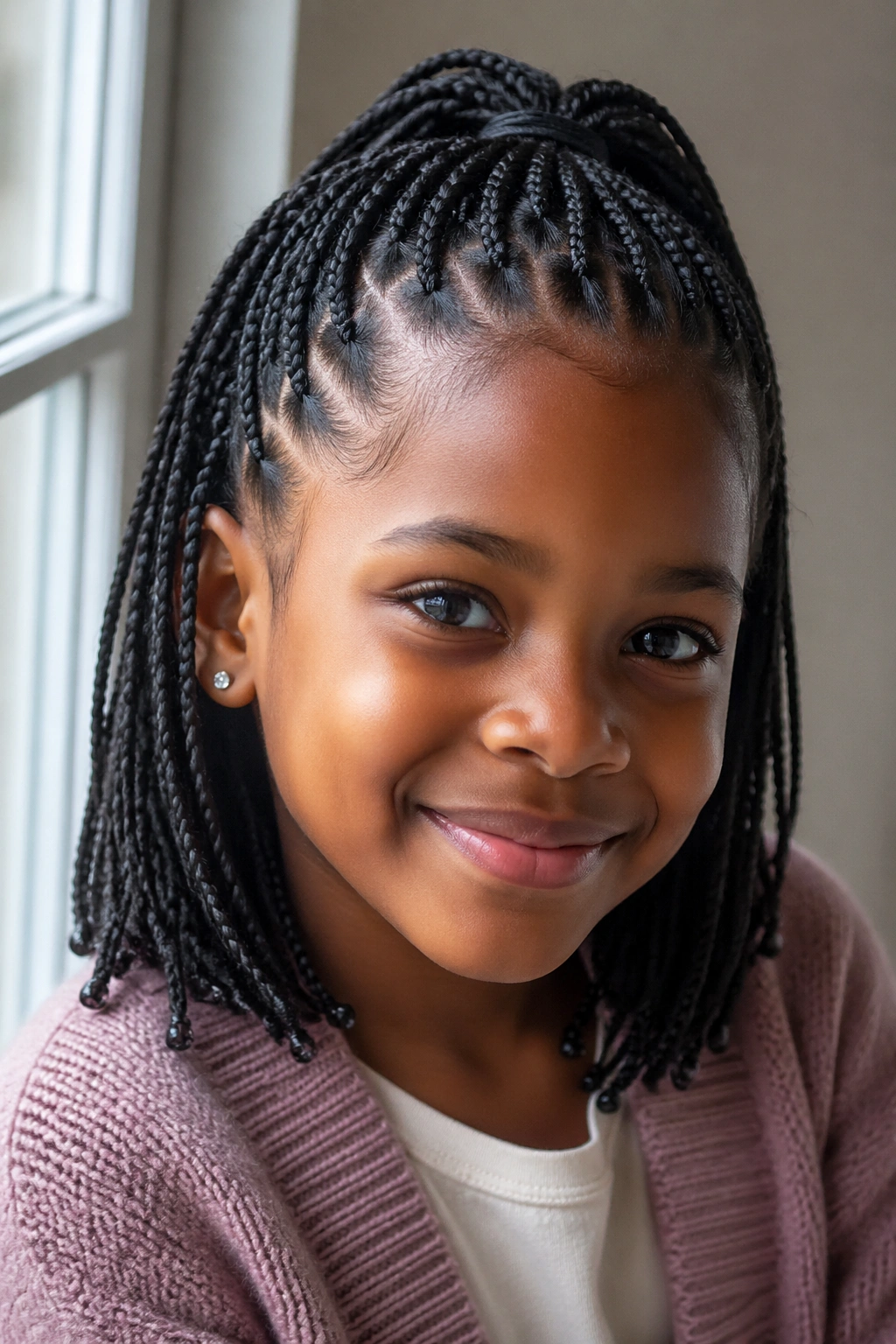
Some styles look cute because they’re complicated. This one works because it isn’t.
The half-up, half-down version keeps the front braids away from the face while letting the back ones swing freely. It’s a smart choice for little girls who touch their hair a lot, or for mornings when you want the style to look done without gathering every braid into a ponytail. A soft band, a satin scrunchie, or a small bow at the crown is enough.
The shape matters more than the accessory. If the top section sits too high, the style can feel pulled back and rigid. If it sits too low, it loses the lifted look and starts to behave like loose braids. The best placement is just above the ears, where it makes a little frame around the face.
No fuss. No tension. That’s why parents keep coming back to it.
5. Side-Swept Short Box Braids
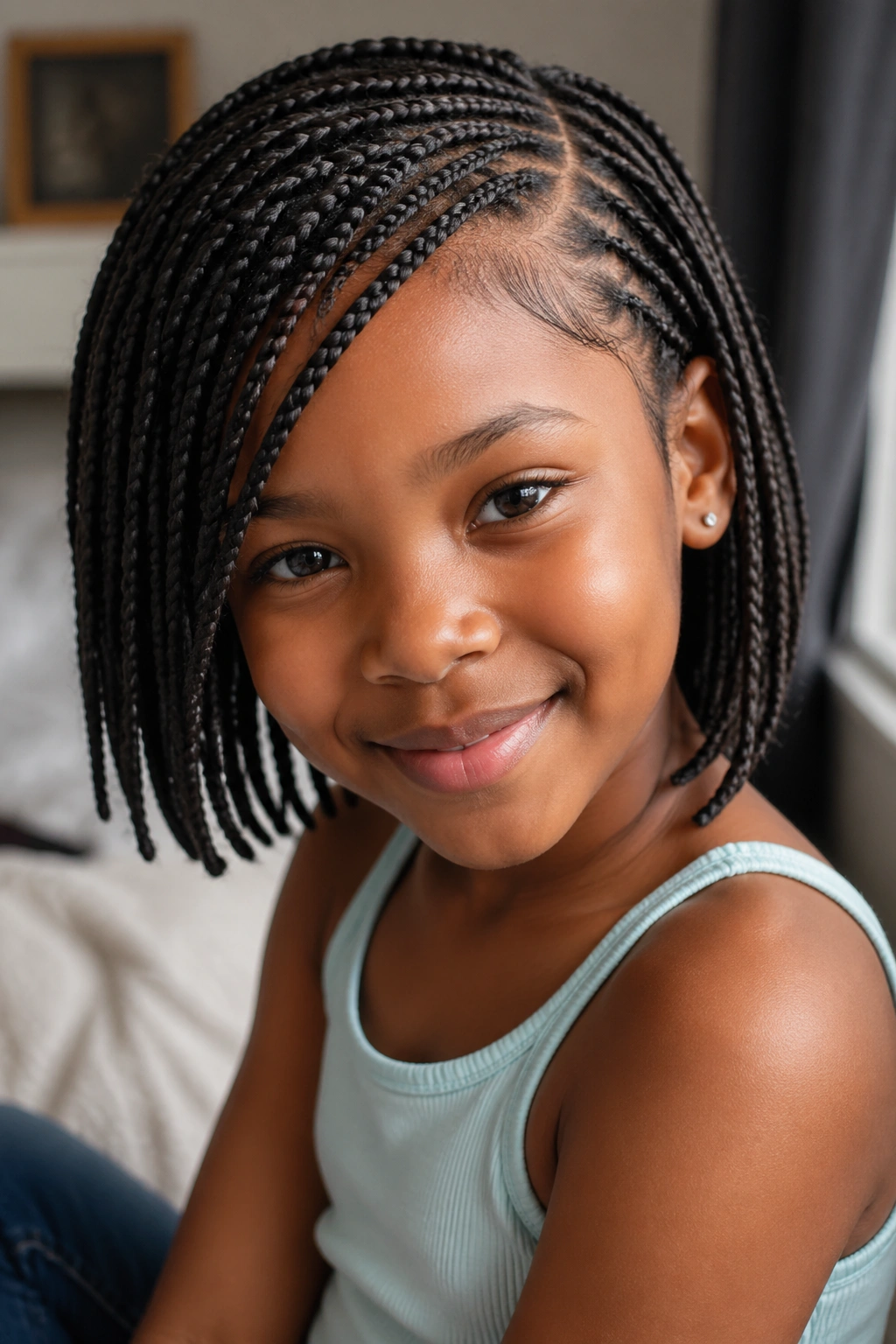
The side part gives short box braids a softer line, and on a child that can make the face look open and bright. A deep side sweep also changes how the braids move; they fall across one temple instead of splitting evenly down the middle, which feels less formal.
Where the Part Should Sit
The part should land far enough over to create a clear sweep, but not so far that one side looks packed and the other side looks thin. If the child has a round face, this can create a nice lengthening effect. If the face is narrower, the side sweep adds a little fullness around the cheek.
A small clip at the heavier side can keep the shape in place, though many braiders will simply braid the front sections in a way that supports the sweep from the start. That usually looks better than forcing the hair after the fact.
Short braids and a side part can feel grown-up in the nicest way. Not too grown. Just enough.
6. Color-Tipped Short Box Braids
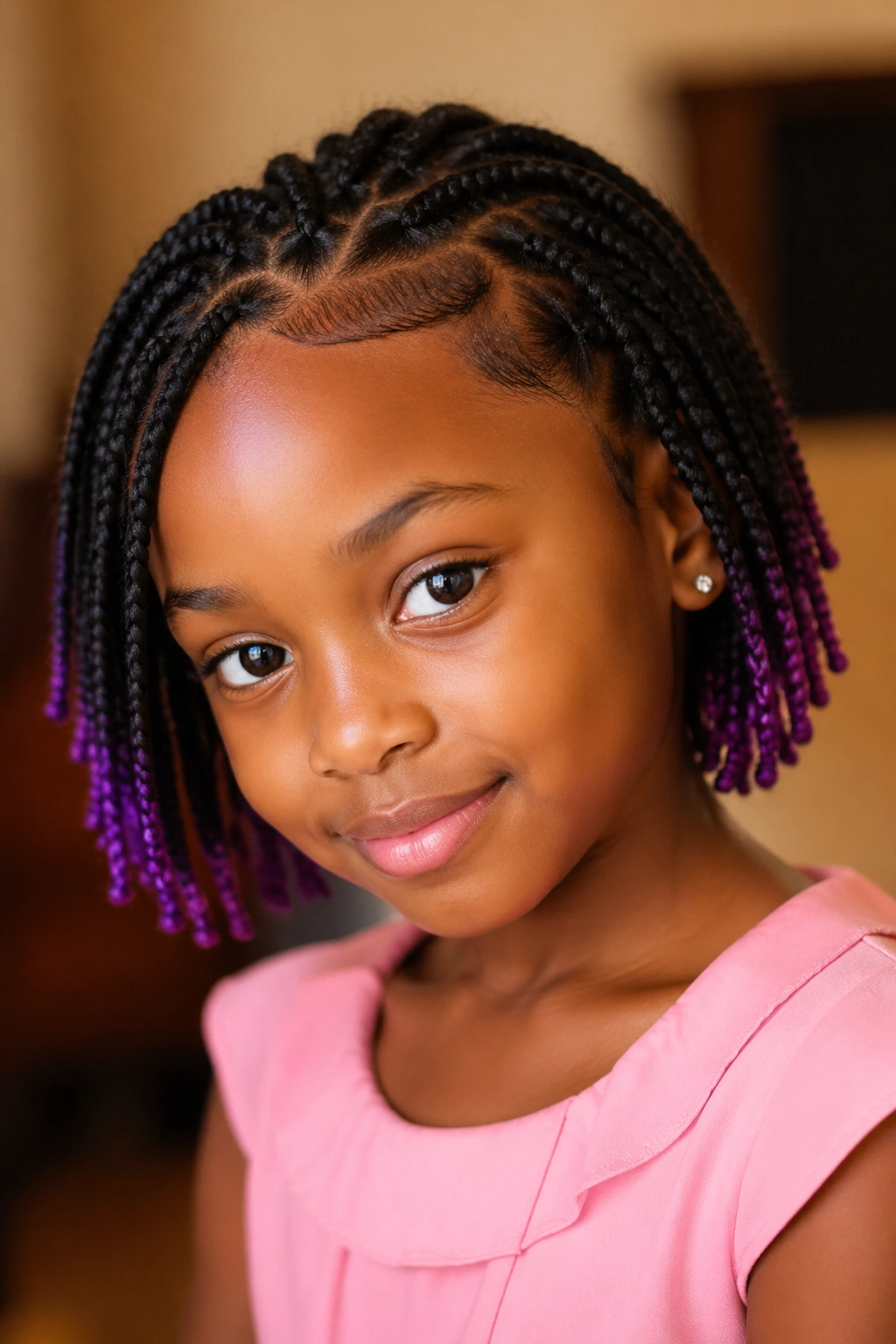
Color at the ends does a lot of work. A few inches of bright braid hair can turn a basic style into something a child actually wants to show off.
The safest and easiest route is colored extension hair rather than dye on the natural hair. That keeps the roots natural and avoids unnecessary fuss. Caramel, burgundy, honey blonde, purple, and pink are all common choices, but the best color is the one that fits the child’s skin tone and personality. Some kids want a soft ombré. Others want a loud tip that looks like a candy wrapper. Both are fine.
The trick is balance. If the ends are bright, keep the braid size simple. If the braids are already very detailed, too much color can make the head look crowded. One strong shade usually beats three mixed together.
A good color tip should look deliberate, not random.
7. Low Pigtail Box Braids
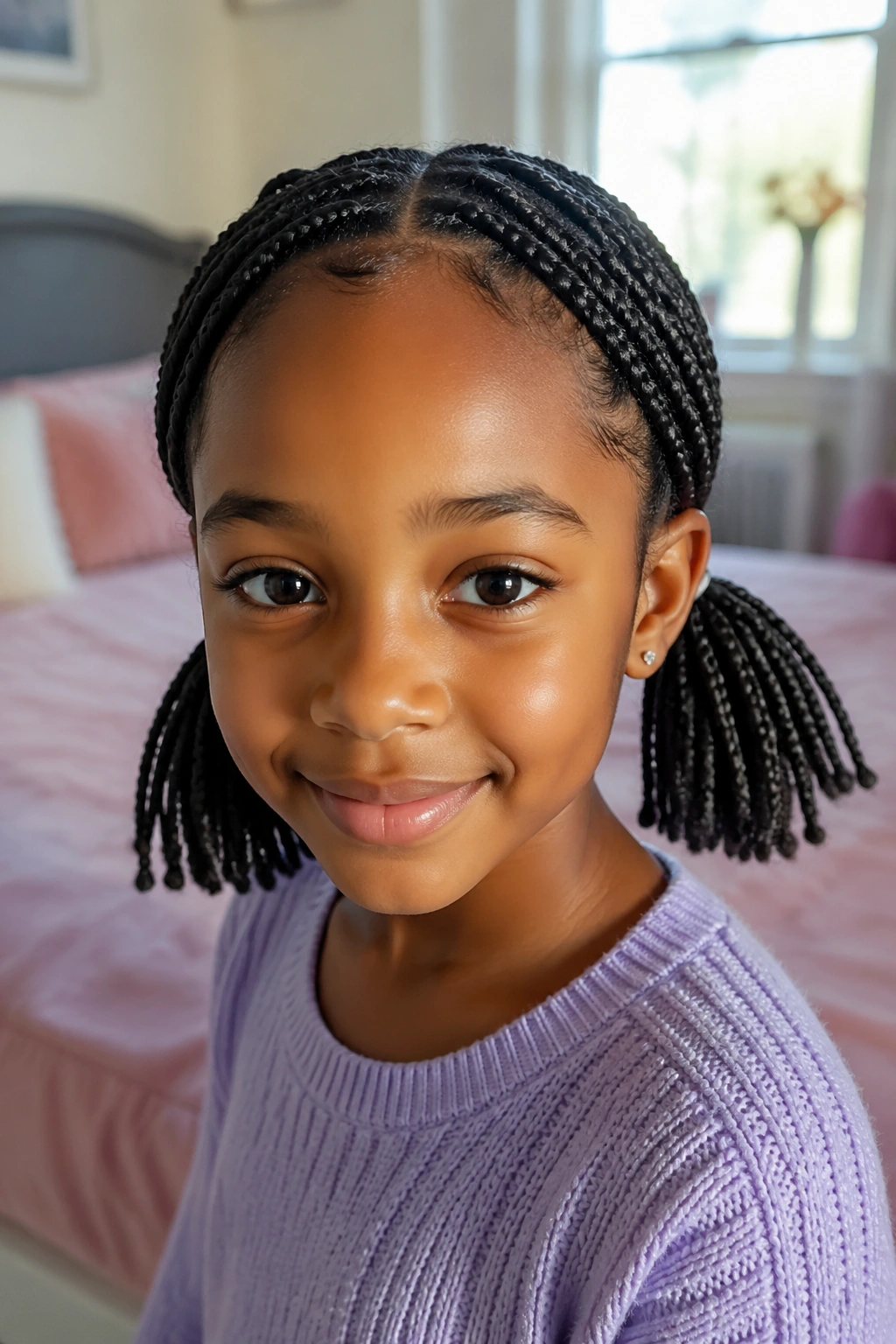
Short braids in low pigtails are one of those styles that never try too hard. They split the hair into two easy sections and keep the weight off the center of the head, which is useful for younger kids.
The part can be straight down the middle or slightly off-center. Straight parts look tidy and symmetrical. A soft off-center part can feel a little less severe if the child doesn’t like the middle line look. Either way, the pigtails should sit low enough to avoid tugging at the temples. That’s where things get sore fast.
This style is especially nice when you want the braids to stay controlled during active days. The two sections keep the movement contained, and the ends don’t all bunch up in one spot. Add matching bows if you want, but the style doesn’t need them to work.
Two bunches. Easy life.
8. Knotless Short Box Braids
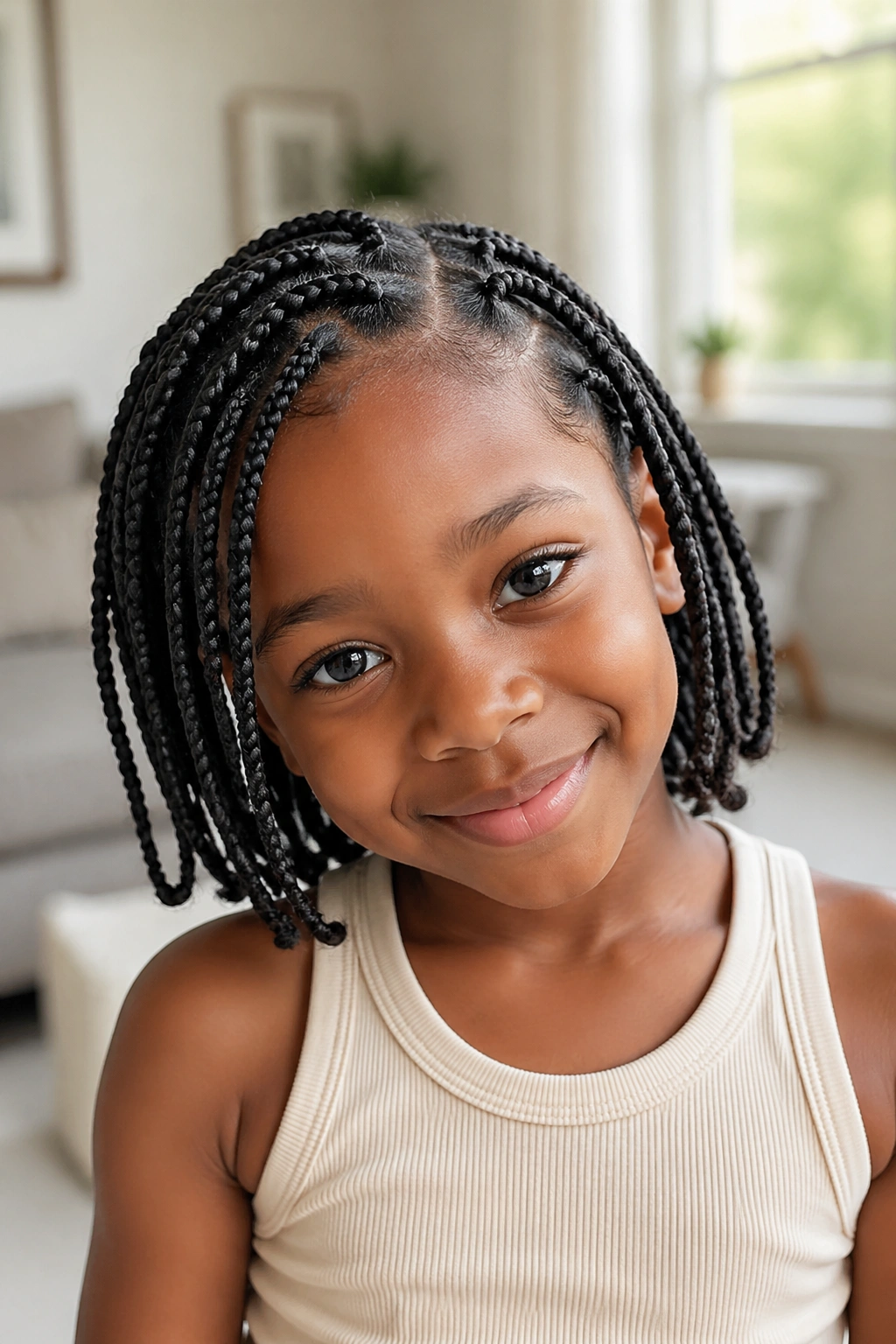
Knotless braids start softer at the root, and that changes everything for a tender scalp. Instead of a bulky knot at the base, the braid grows out of the natural hair more gradually.
What Makes Them Feel Different
The flatter root usually feels lighter and lays closer to the scalp. On little girls, that can be a big deal, especially if they complain when hair is parted or tucked. The finish also looks smoother, which makes the style feel calm even when the braid size is bold.
Knotless short box braids work well if you want a neat look without the heavy start that traditional braids can have. They’re not magic, though. If the stylist feeds in too much hair too fast, the base can still feel tight. So the issue is not the word knotless itself. It’s the hand behind it.
If comfort is high on your list, this is one of the smartest choices in the whole bunch.
9. Curved-Part Short Box Braids
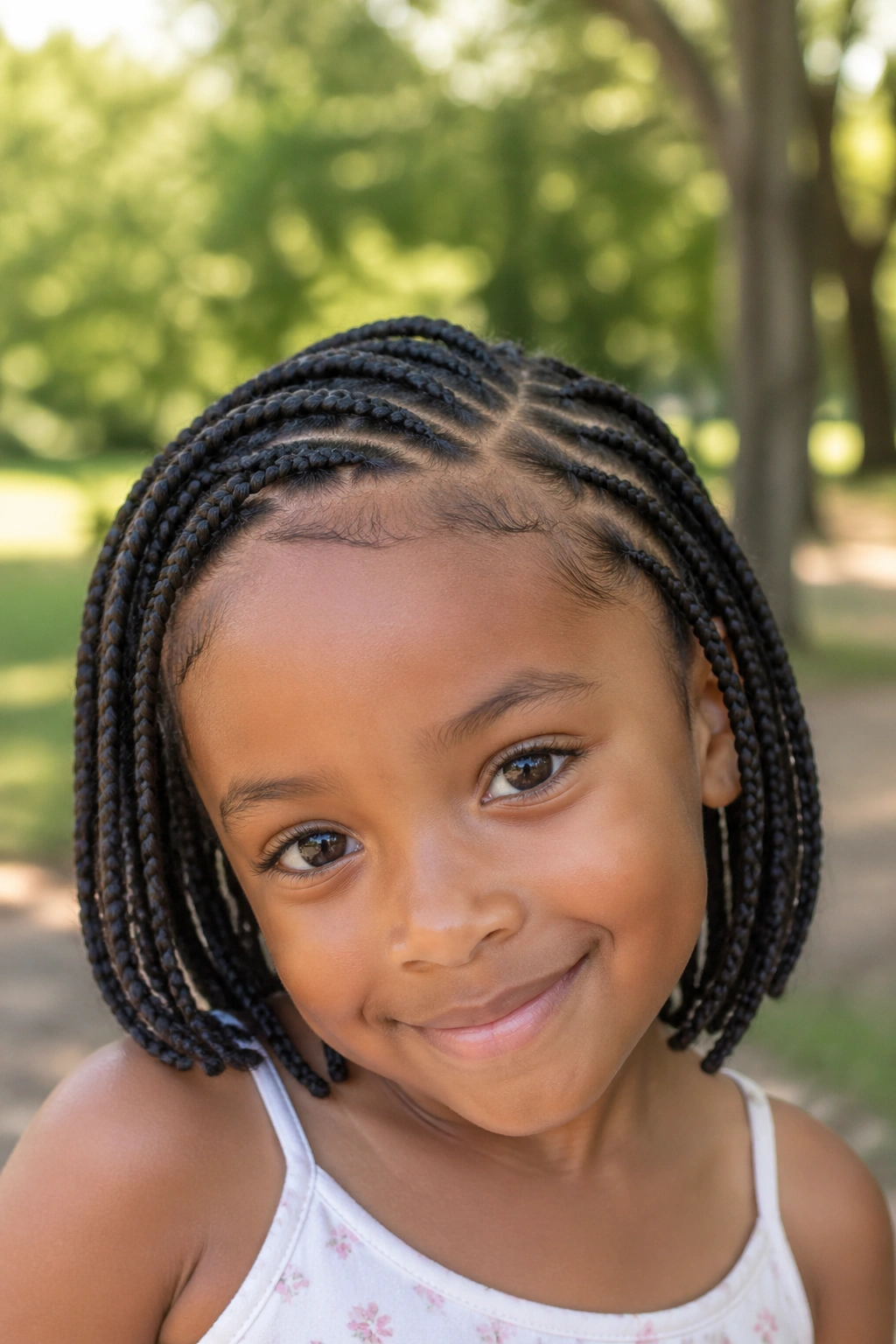
Who says parts have to be straight? Curved parting makes the scalp pattern feel playful, almost like a swirl drawn with a comb.
This style looks especially sweet around the front hairline, where a curved section can soften the face and make the braid layout feel less boxy. It works well with side parts, swoops near the temple, or a gentle curve that wraps from one side of the crown to the other. The actual braids can stay short and simple; the shape underneath is where the personality lives.
Curved parts are a nice option when you want something a little different but not loud. They still read clean. They still work for school. They just keep the eye moving.
Some styles whisper. This one does that nicely.
10. Jumbo Short Box Braids
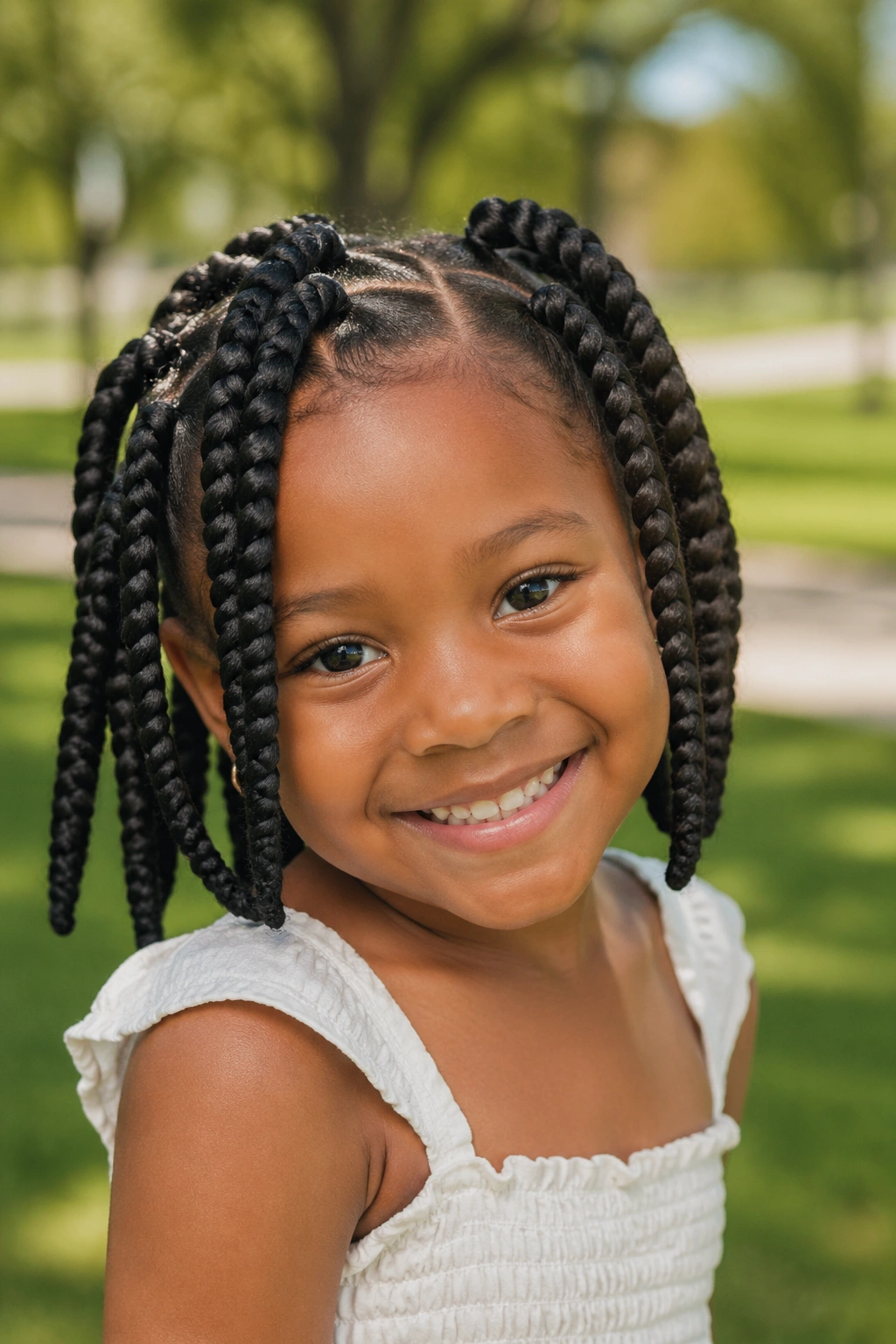
If the child hates sitting still for hours, jumbo braids are worth a serious look. Fewer sections mean a faster install, and the bigger braid size gives the head a fuller, chunkier shape that feels cheerful without needing extras.
Quick Reasons Parents Like Them
- Fewer braids usually mean less time in the chair
- The style is easier to refresh at home
- Larger sections make the shape easy to see from across the room
- A single bow or bead stands out more on a bigger braid
The downside is growth shows sooner, and the style may not last as long before it starts looking loose. That’s the tradeoff. Still, for a child with thick hair or a low tolerance for long appointments, jumbo short box braids can be the right answer.
Big braids, small commitment.
11. Micro Short Box Braids
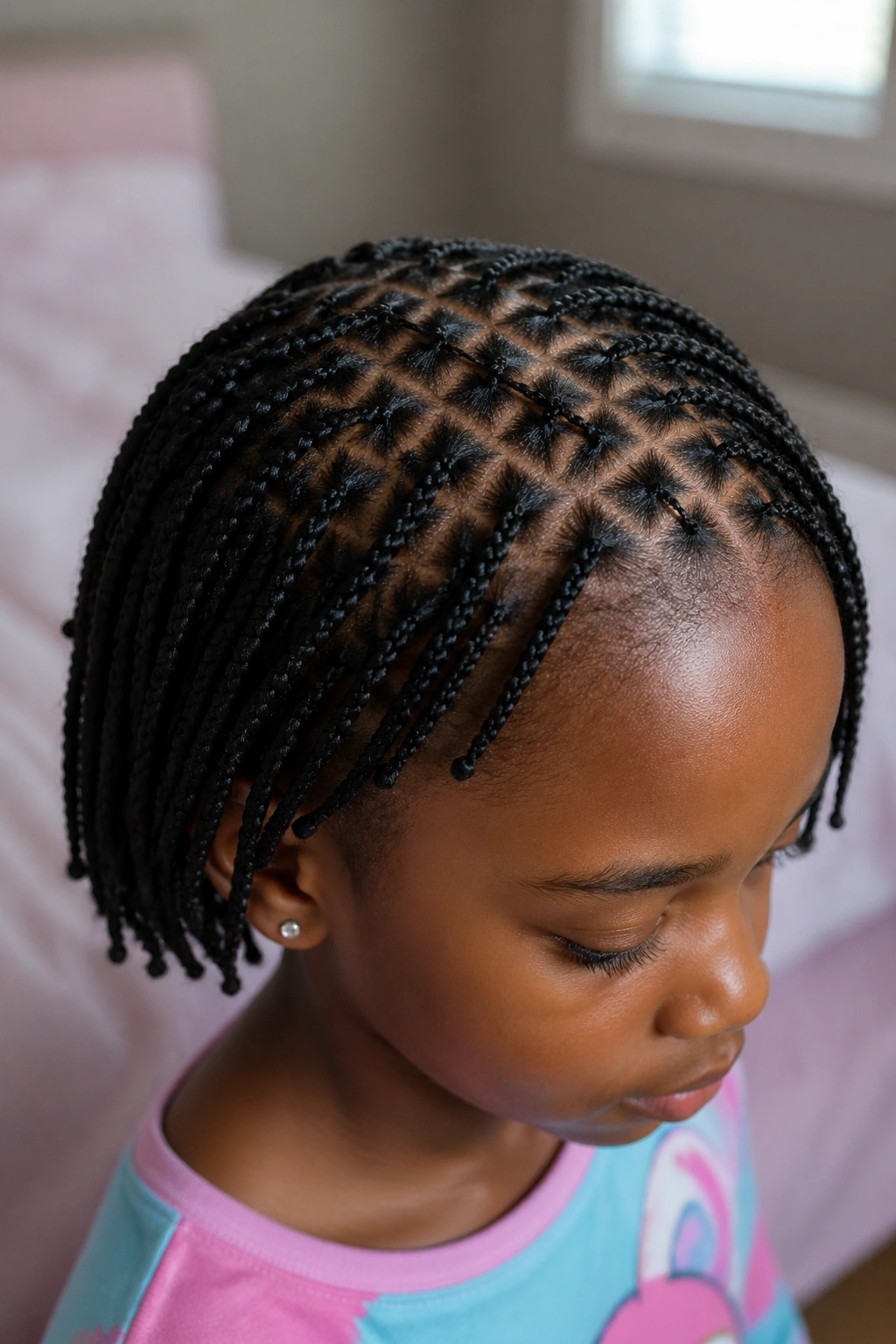
Tiny braids look delicate and full, but they ask for patience. A lot of it.
They’re the opposite of a quick fix. Micro braids take longer to install, and they can feel like a lot for a child who doesn’t like sitting still. But the payoff is a dense, detailed look that stays tidy and lets the parting work show through. On short hair, that can be beautiful in a quiet way.
The important part is not to confuse small with better. Small braids are only a good choice if the child’s scalp can take the time and the tension stays soft. For some little girls, this is the braid style that keeps its shape for longer. For others, it is too much sitting, too much handling, and too much fuss. Both reactions are normal.
This is the style to choose carefully, not casually.
12. Short Box Braids with Hair Cuffs
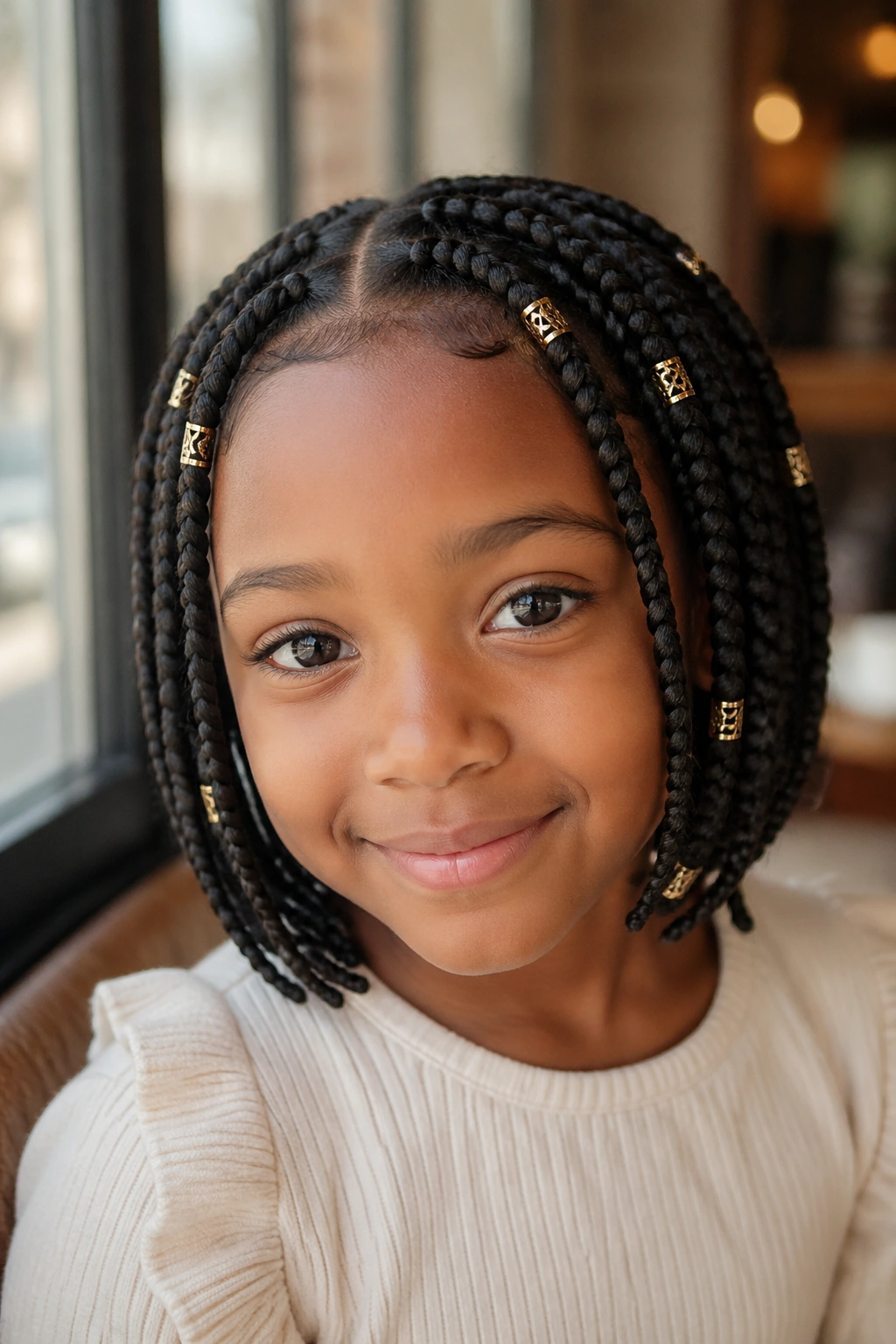
Hair cuffs are the little metal accents that snap onto the braid and catch the eye right away. Used well, they add sparkle without adding weight.
Where To Place the Cuffs
The best spots are usually the front braids, the braids near the temples, or every third braid across the crown. Too many cuffs scattered everywhere can make the head look busy, and on a child, that usually means the style starts fighting itself. A few well-placed pieces are cleaner.
Silver cuffs feel bright and classic. Gold feels warmer. Small matte cuffs can work too if you want less shine. The main thing is to keep them light and smooth so they don’t snag on clothes or pillows.
A style like this says a lot with a little. That’s the good part.
13. Ribbon-Tied Short Box Braids
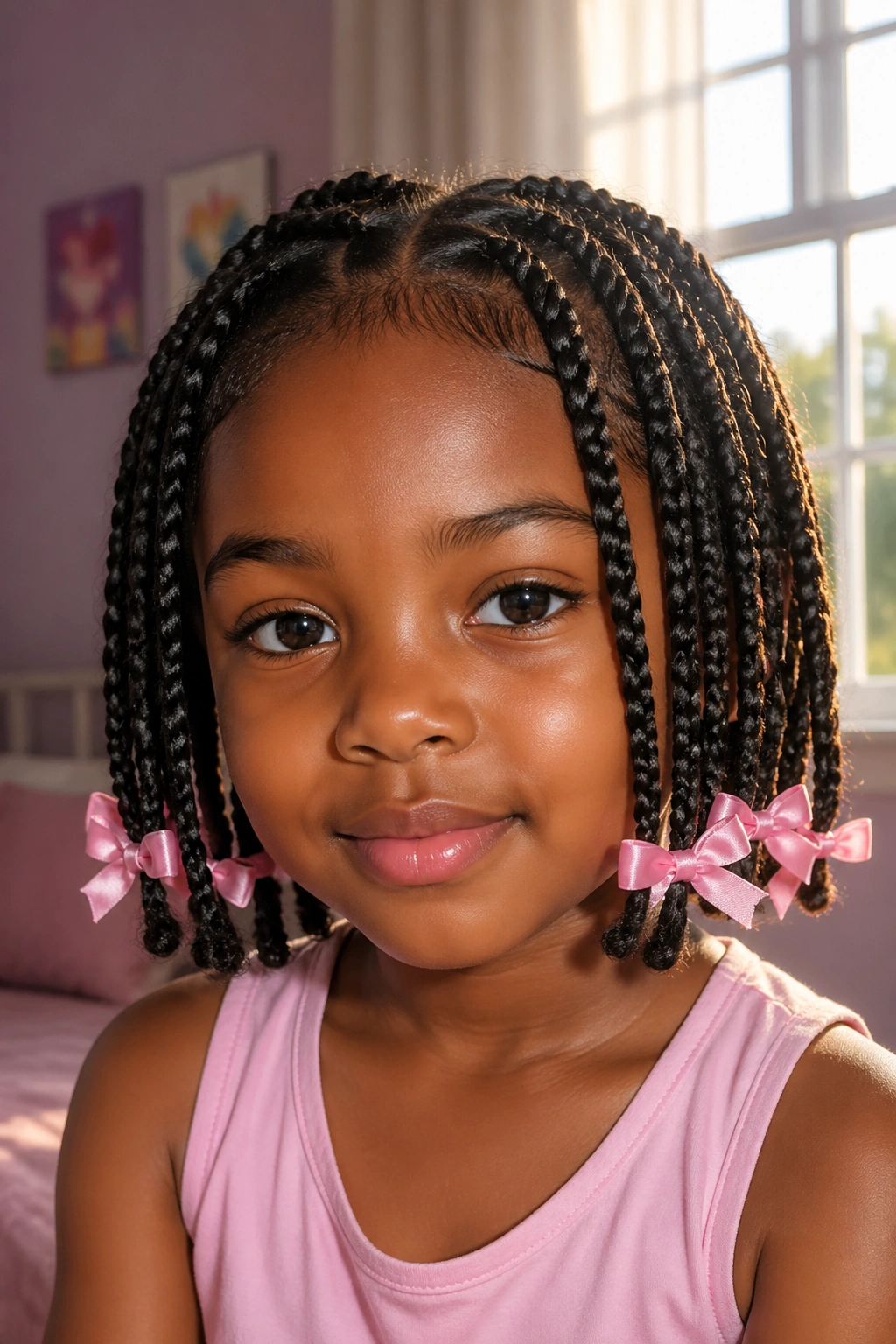
Ribbon gives short braids a softer finish than beads or cuffs. It also feels a little more personal, which is part of the charm when you’re styling a child.
A satin ribbon tied near the ends can make the braids look ready for a special day without making the style hard to wear. Thin ribbons work best because bulky bows at the braid ends can tip the whole look into clutter. If the braids are chin-length, the ribbon tails should be trimmed short or tucked so they don’t fray into a mess.
This is one of those styles that looks lovely in pictures and still behaves in real life. That’s not always true, by the way. Some “special occasion” styles are a hassle from the first hour. Ribbon-tied braids usually aren’t.
Soft, simple, and easy to match with an outfit.
14. Short Box Braids in a Low Bun
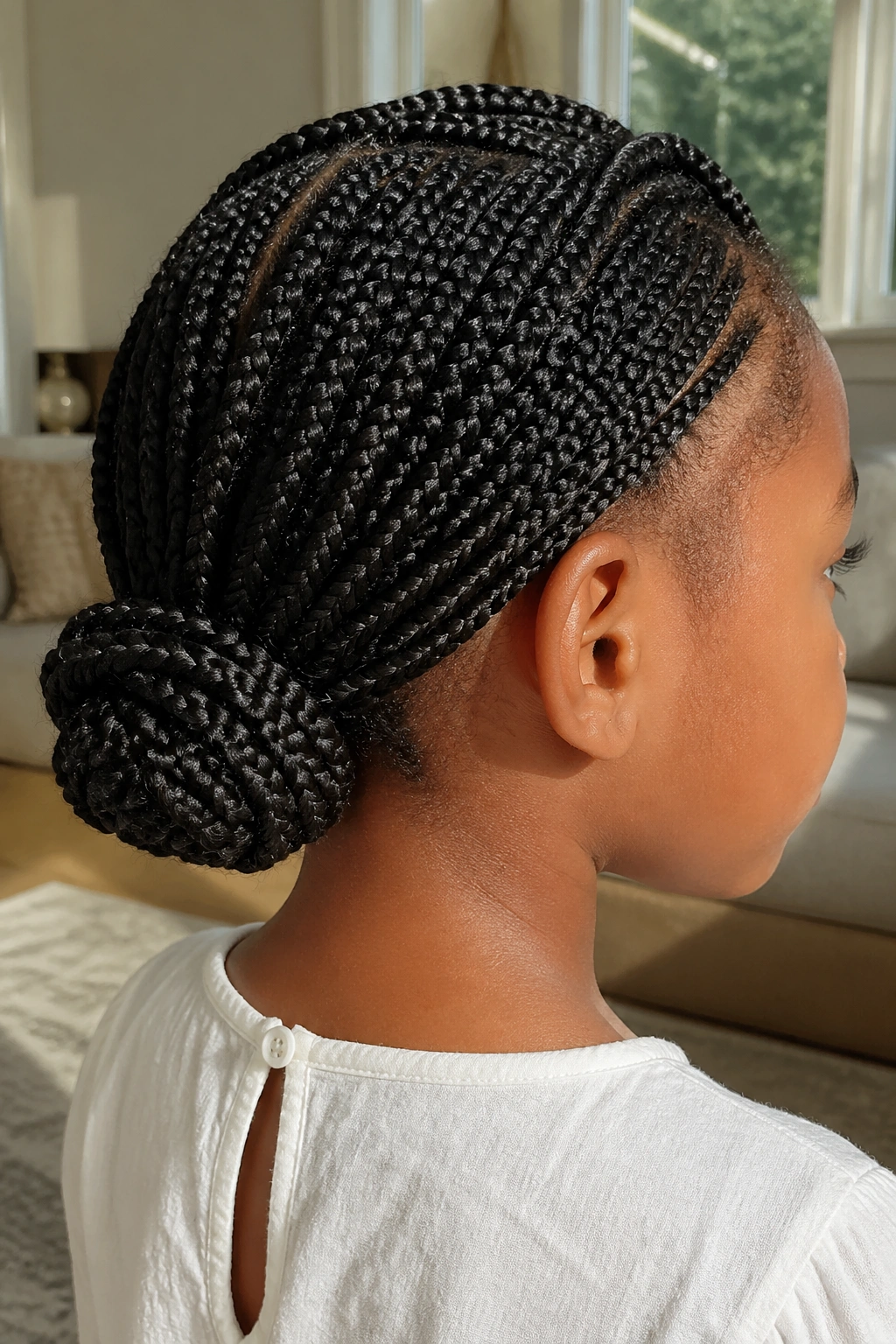
When the weather is warm or the child wants everything off the neck, a low bun makes short box braids behave. The ends tuck in close, the shape stays neat, and the style looks a little more polished than loose braids.
The bun should sit low at the nape, not high and tight like a hard knot. If the braids are very short, they may need to be pinned or wrapped loosely rather than twisted into a full bun. Forcing a bun out of braids that are too short creates tension fast, and that is not worth it.
This style also works well for events where you want the hair to look tidy all afternoon. It’s calm. It holds up. And it leaves the face open, which most children appreciate once they’re past the first ten minutes of posing.
15. Braided Ponytail Short Box Braids
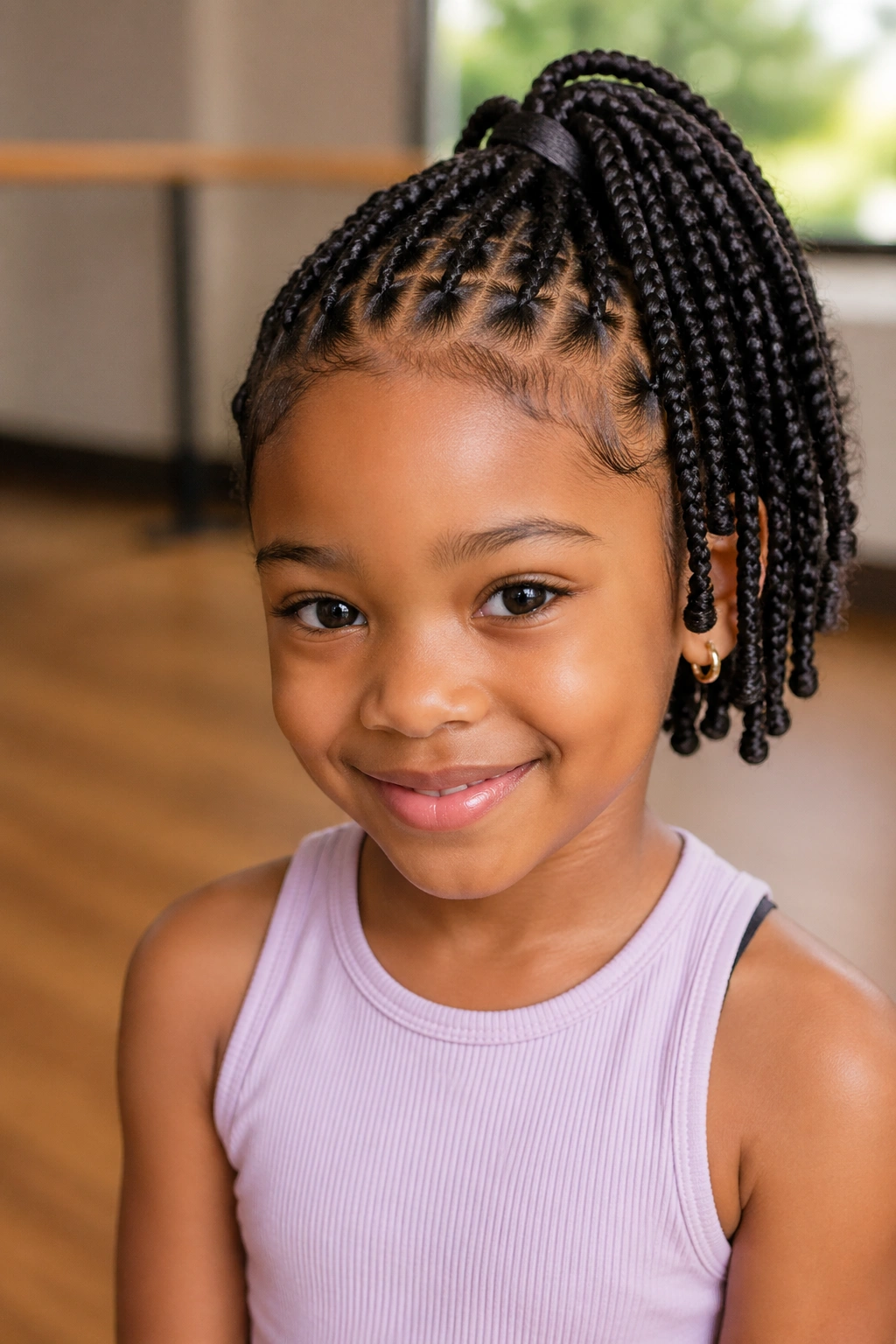
A ponytail gives short braids a sporty edge, and that can be a nice change from wearing them down all the time. Pull the braids back, secure them with a soft elastic, and the whole style moves out of the face.
This version is great for dance class, playground days, or any time the child keeps flipping hair out of her eyes. A high ponytail feels bouncy and lively. A mid-height ponytail feels softer. A low ponytail feels the most relaxed. Pick the one that fits the day, not the one that looks biggest in a mirror.
The base should never be tight enough to dent the scalp. That’s the mistake people make. A ponytail can be clean without being pulled flat against the head.
Useful, neat, and a little sporty. Hard to argue with that.
16. Heart-Part Short Box Braids
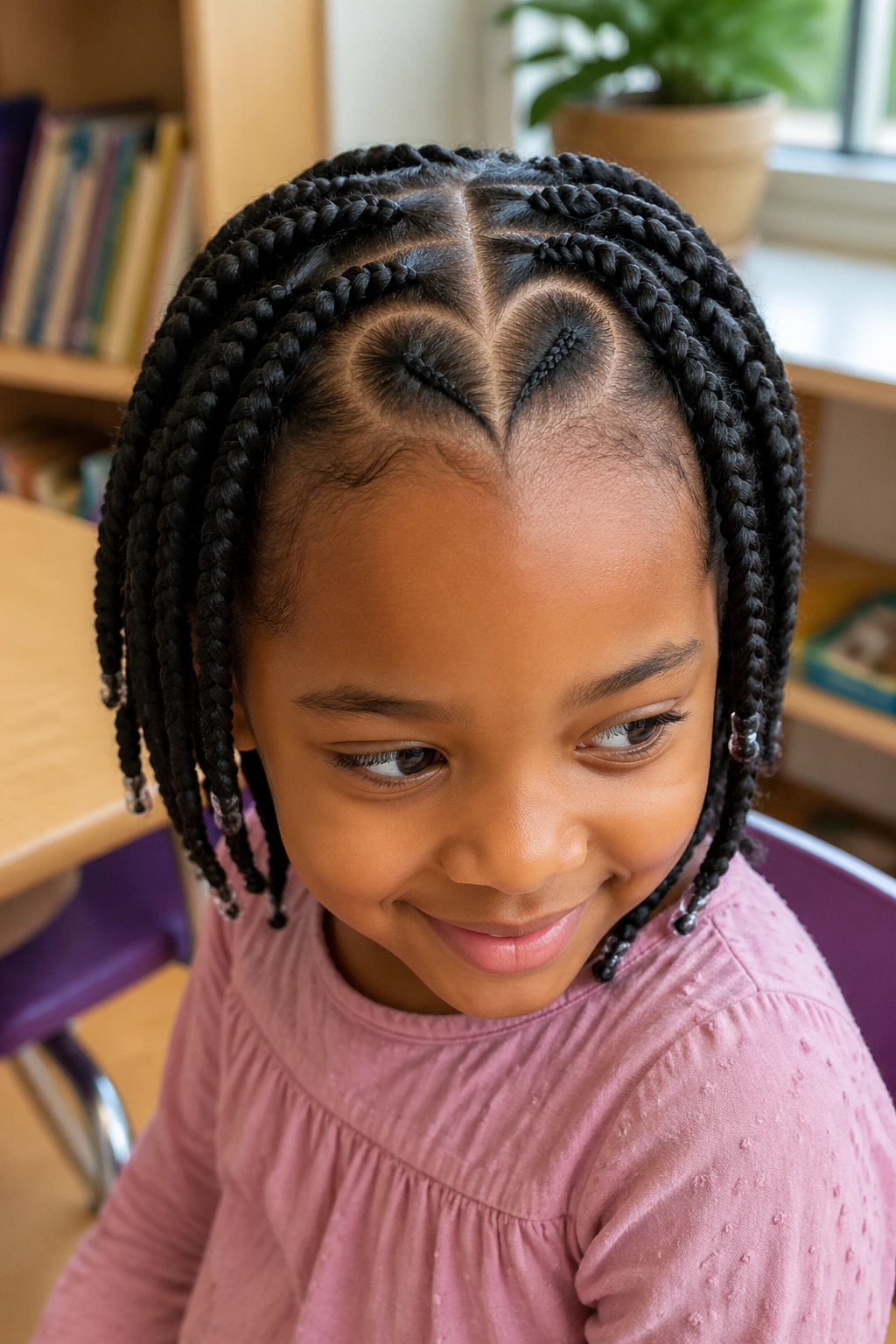
A heart part says the style was made with a little more thought. It’s especially sweet for birthdays, school pictures, or any day when the child wants to feel extra special.
The heart shape usually sits near the crown or front hairline, where it can be seen before the braids even start. Clean lines matter a lot here. If the curves are rough, the shape disappears. If the center dip is too shallow, it looks like a bent oval. The part has to be crisp enough to read from a few feet away.
This style works best when the rest of the braids stay simple. Let the heart do the talking. Too many extras can crowd the shape and make the whole thing harder to read.
Some styles are about neatness. This one is about joy.
17. Short Box Braids with Wrapped Ends
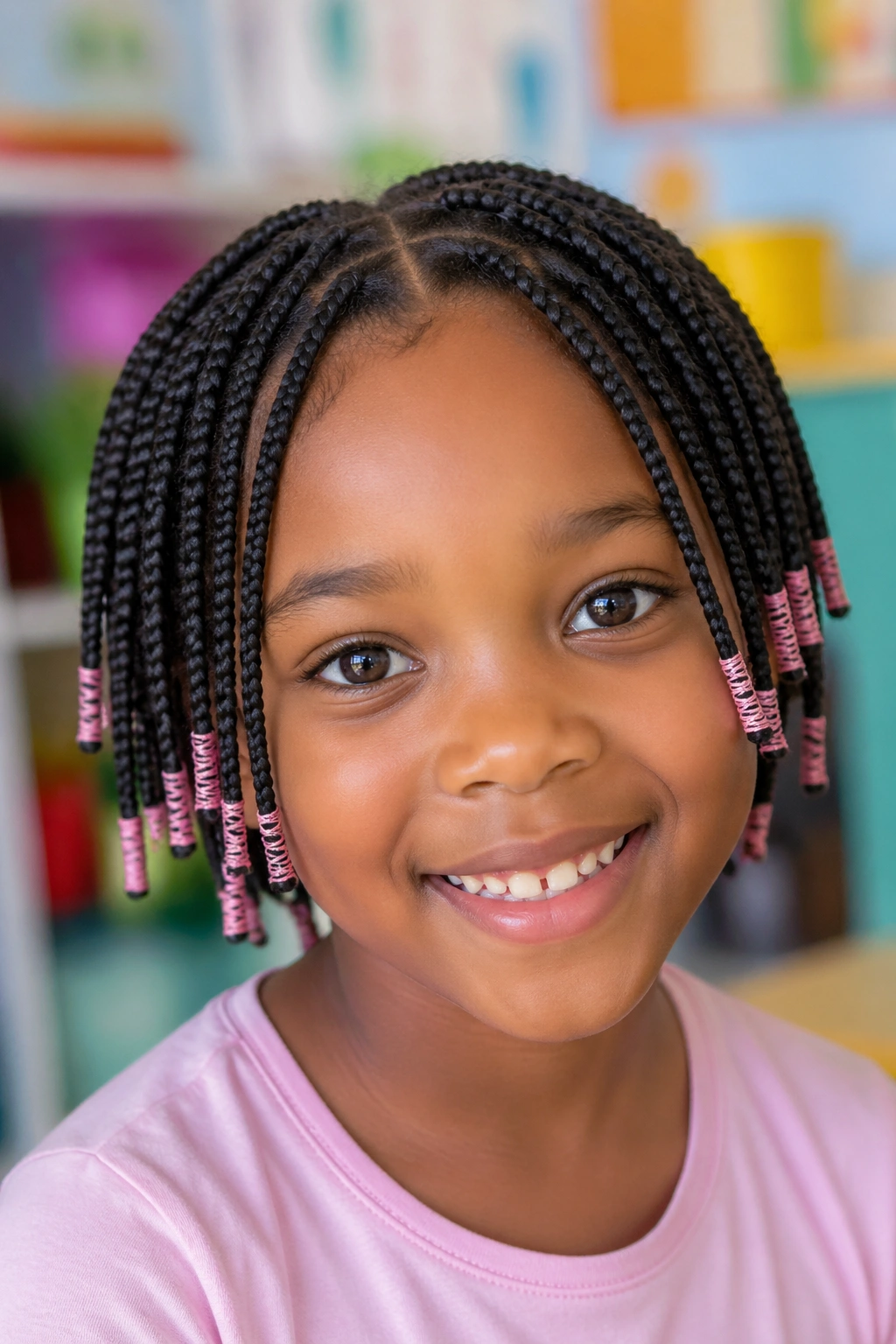
Wrapped ends give the braids a handmade finish that feels warmer than metal cuffs and softer than hard beads.
How To Keep the Wrap Neat
The wrap should be snug, not bulky. A few turns of thread or yarn near the ends can color-block the braid without making it heavy. Cotton thread works if you want a matte look. Soft yarn can add a little more texture, though it should be used sparingly so the ends don’t puff out.
This style is a good pick when you want the braid ends to match an outfit, a school color, or a holiday theme. The wrap can also hide slight frizz at the very tips, which is handy when the braids are old enough to need a little help.
The danger is overdoing it. Too much wrapping turns the ends into little clubs, and that’s the opposite of neat. Keep it slim.
18. Short Box Braids with Curly Ends
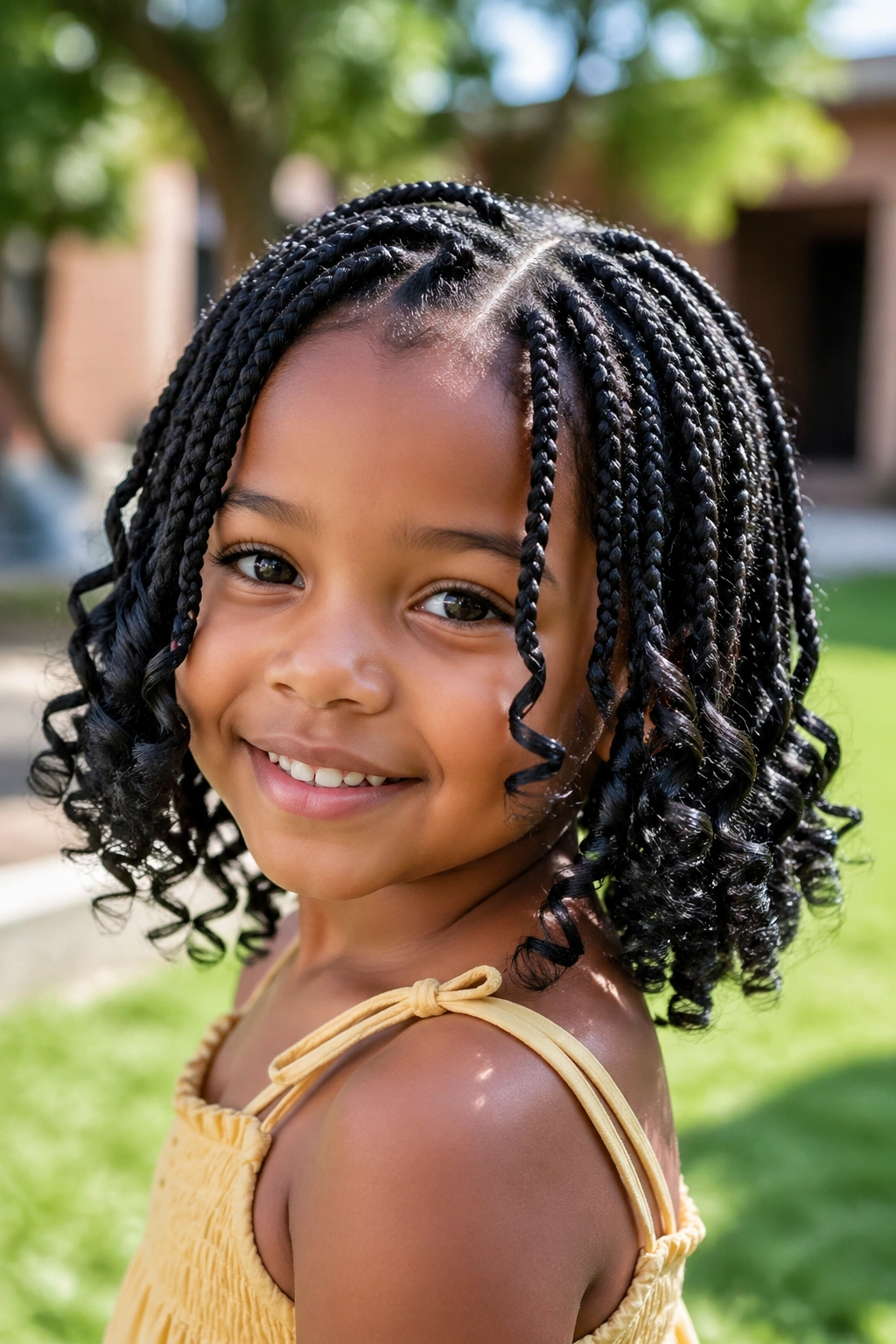
A little curl at the end changes the whole feel of the braid. It softens the lines, adds bounce, and gives the style a lighter finish than a straight cut.
This works nicely on short braids because the curl keeps the ends from feeling abrupt. A small spiral or loose wave at the bottom makes the hair move more when the child walks or turns her head. If the curls are synthetic, they may frizz over time, and that’s fine. A bit of fuzz is part of the look. You’re not trying to keep them glassy.
This style tends to suit kids who like a touch of flair but don’t want big beads or heavy accessories. It sits somewhere between plain and dressed-up. Not too much. Not too little.
Soft at the end. Easy on the eyes.
19. Crisscross Front Short Box Braids
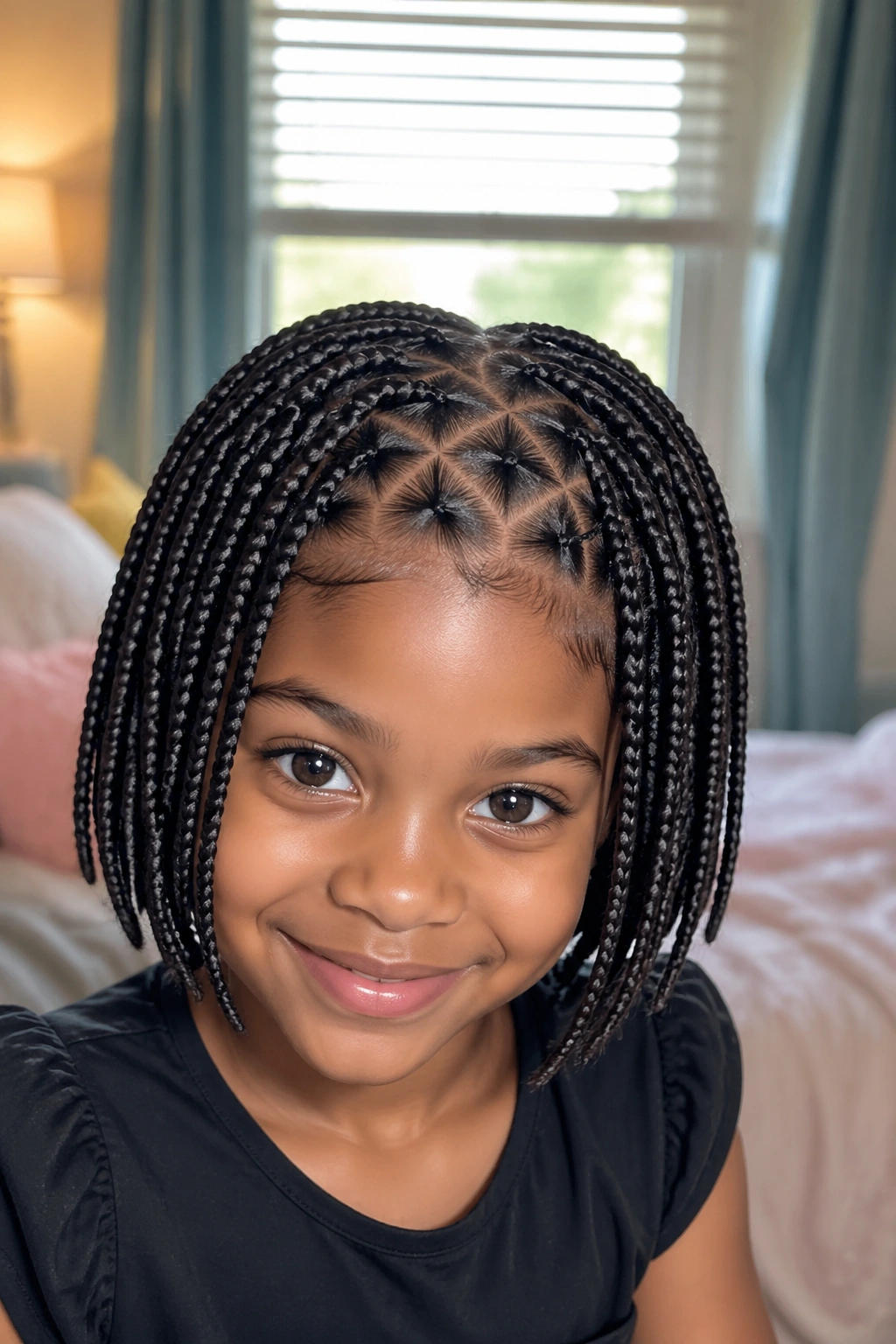
Crisscrossing the front sections gives short box braids a little visual surprise right where people look first. The back can stay simple and steady while the front does the decorative work.
That makes this a smart style for kids who want something different without a full head of extra detail. The crossed sections can form little X shapes, diagonal seams, or intersecting rows near the hairline. It looks especially good when the front braids are slightly smaller than the back ones, because the pattern shows more clearly.
This is one of those styles that reads more complicated than it really is. A clean front section and a steady hand are enough to make it work. No need for five different add-ons.
The front gets the flair. The rest stays calm.
20. Zigzag-Part Short Box Braids
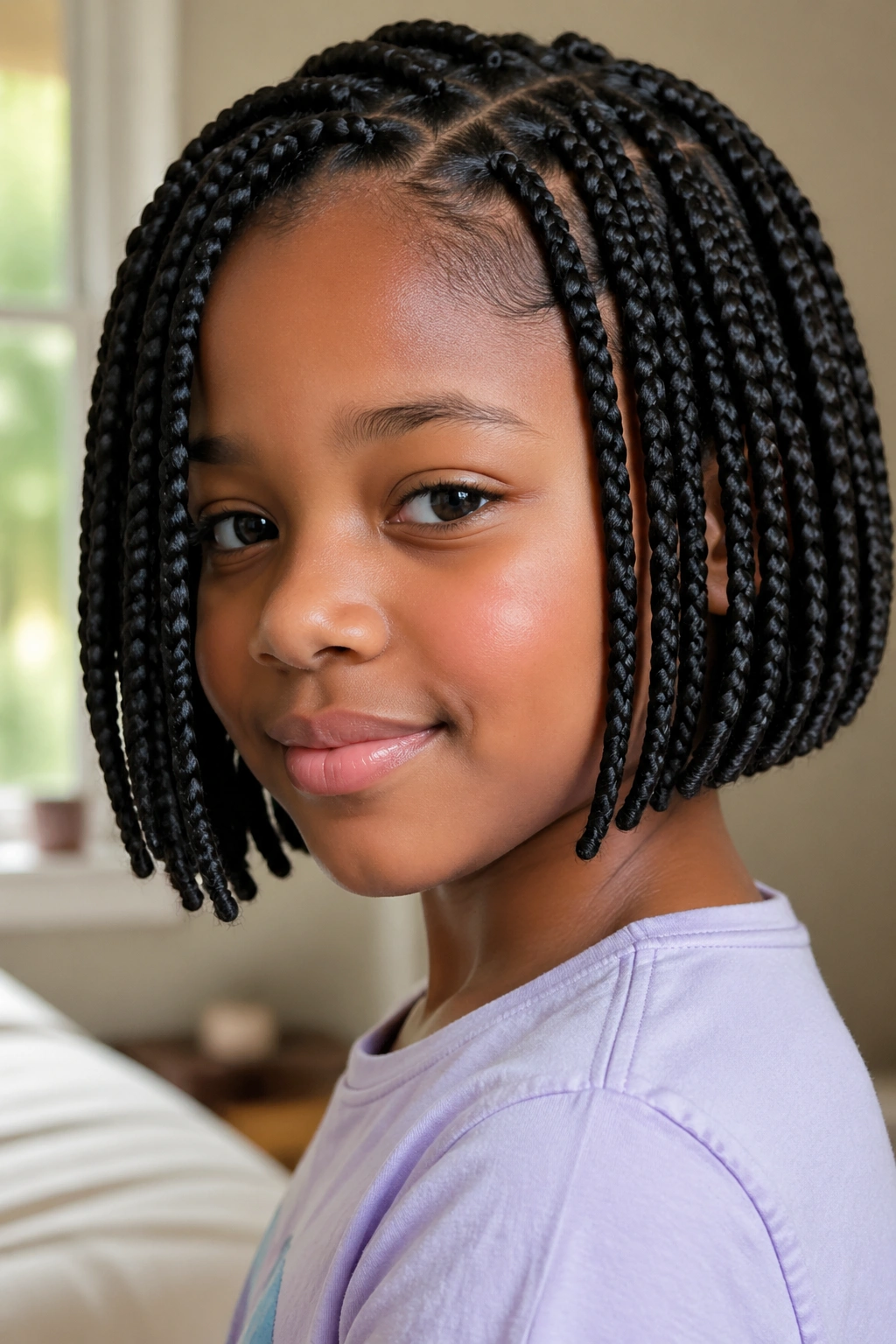
A zigzag part is the loudest line in the whole set, and that’s exactly why it works for some little girls. The shape is playful from the start, even before the braids are finished.
The parting can run across the crown, along the front hairline, or through the center of the head in a lightning-bolt line. It instantly breaks up the usual box pattern and gives the style a little energy. Pair it with beads, cuffs, or just the braids alone; the parting is strong enough to stand on its own.
This style is a good fit for a child who likes hair that feels fun, not plain. It also photographs well without needing a lot of extras, which is handy for family events and school pictures. Keep the zigzags clean, though. Wobbly lines turn the whole thing muddy fast.
Sharp parts, short braids, happy kid. That combination rarely misses.