



A long beard changes everything.
Twist braids for men with long beards work best when the hair and beard feel like they belong to the same plan, not two separate styles that met by accident. A tight set of twists with a heavy beard can look sharp, but it can also turn boxy fast if the braid size, parting, and beard shape all push in the same direction. The fix is usually simple: control one side of the face and let the other side breathe.
That balance matters more than people admit. A beard already adds visual weight along the jaw, chin, and neck. Put the wrong braid pattern on top, and the whole look can feel crowded. Put the right one there, and the beard suddenly looks fuller, cleaner, and more deliberate.
Some men need structure. Some need softness. Some need both, which is where twist braids get interesting, because the braid size, part placement, fade, bun, or loose ends can change the whole read of the style without touching the beard itself. The 22 looks below move from clean to rugged, restrained to loud, so you can match the braid to the beard instead of fighting it.
1. Clean Two-Strand Twist Braids With a Full Beard
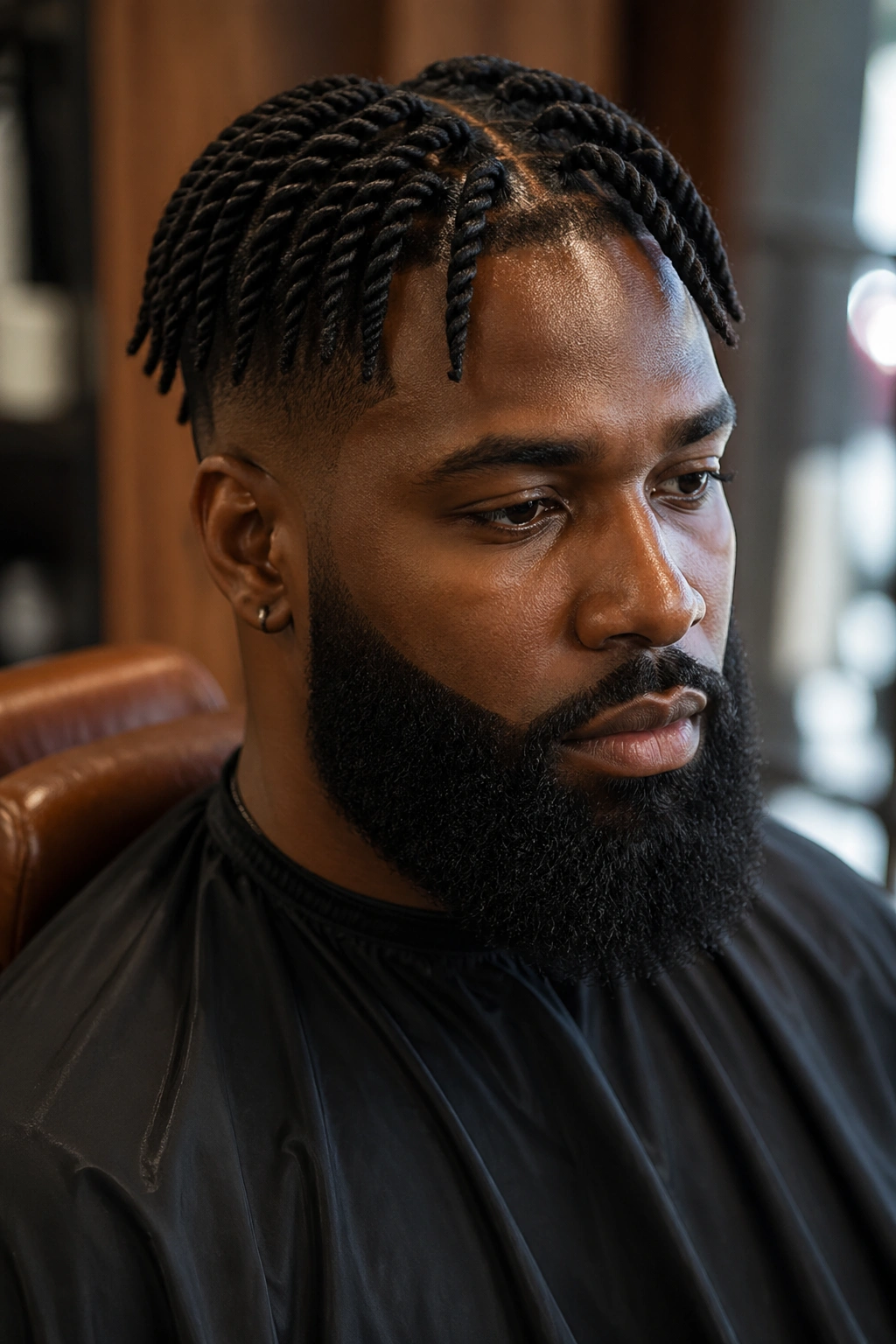
Two-strand twists are the safest place to start because they keep the look neat without flattening the personality out of it. When the beard is long, this style makes the top half feel controlled while the lower half does the heavy visual work. That contrast is the whole appeal.
Keep the parts about 1/2 inch apart if your hair is dense, or a touch wider if you want the twists to read from a distance. A beard that runs past the chin by 3 to 5 inches pairs well here, since the braid texture on top and the beard texture below echo each other instead of competing.
Simple. Clean. Hard to mess up.
If you want the cleanest version, ask for a crisp neckline and a beard edge that follows the jaw without getting too sharp under the chin. Too much box shape can make the face look square in a way that feels accidental. A soft taper at the sides keeps the beard full, but not bulky.
2. High-Top Twist Braids and a Heavy Beard
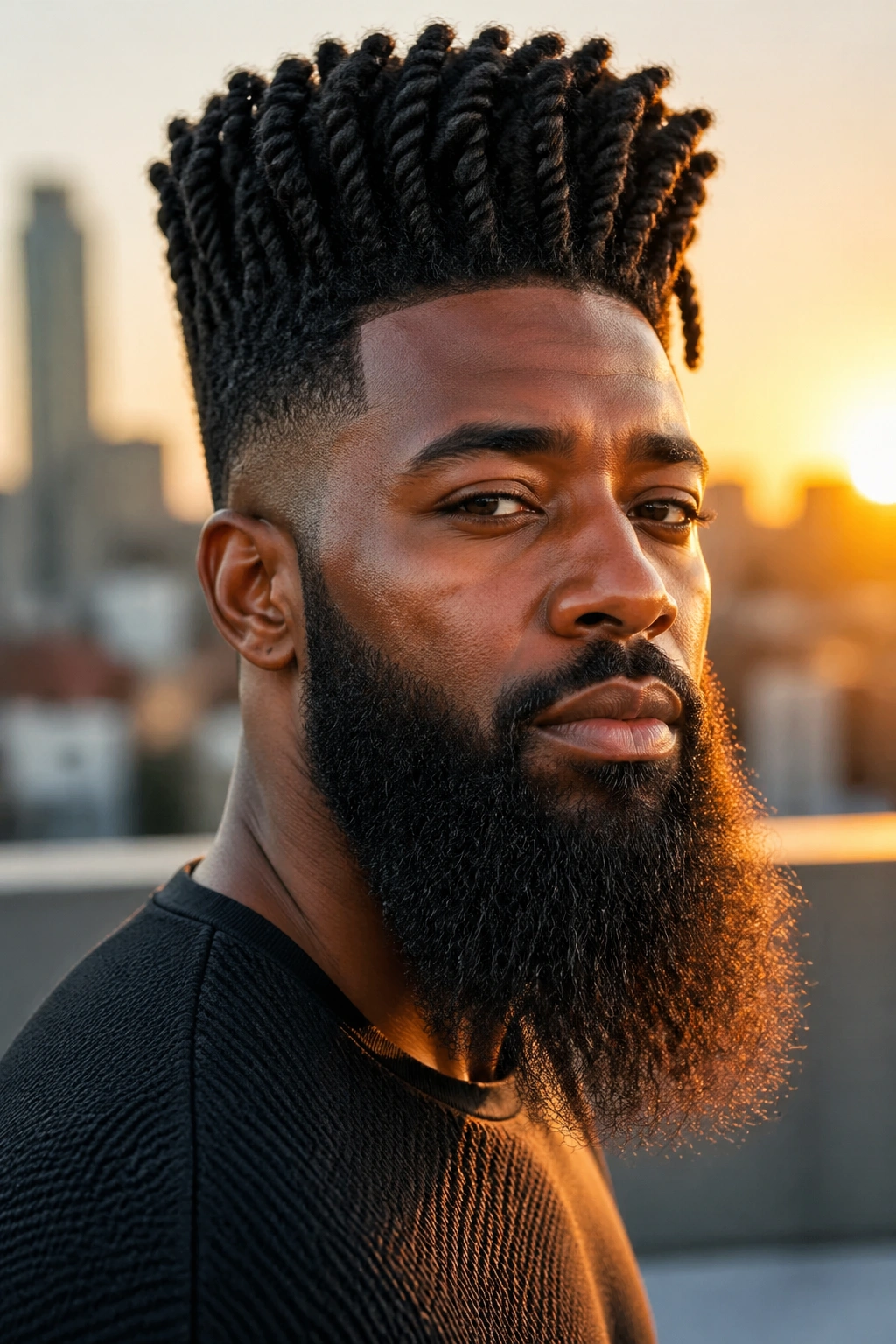
A tall twist shape changes the whole face. The extra height pulls the eye upward, which helps when the beard is thick through the chin and jaw and you do not want the lower half to take over every photo, mirror glance, or first impression.
This style works best when the sides are kept tight and the top twists are left a little longer, usually 3 to 4 inches on the braid side of things. The beard can stay full, but I’d avoid letting the sideburns puff out too much. That is the part that makes the look feel bulky instead of balanced.
Why It Works
The high top creates a clean vertical line. The beard creates mass. Those two shapes play well together when the temples are tapered and the beard is shaped with a slightly rounded lower edge rather than a hard block.
- Best for men with strong growth on top
- Good choice if your face looks wider than it is long
- Helps a thick beard feel intentional, not oversized
- Needs a fresh lineup every week or so to keep the edges crisp
Do not over-tighten the front twists. The higher the style sits, the more a pulled temple shows.
3. Mid-Length Rope Twists With a Tapered Beard
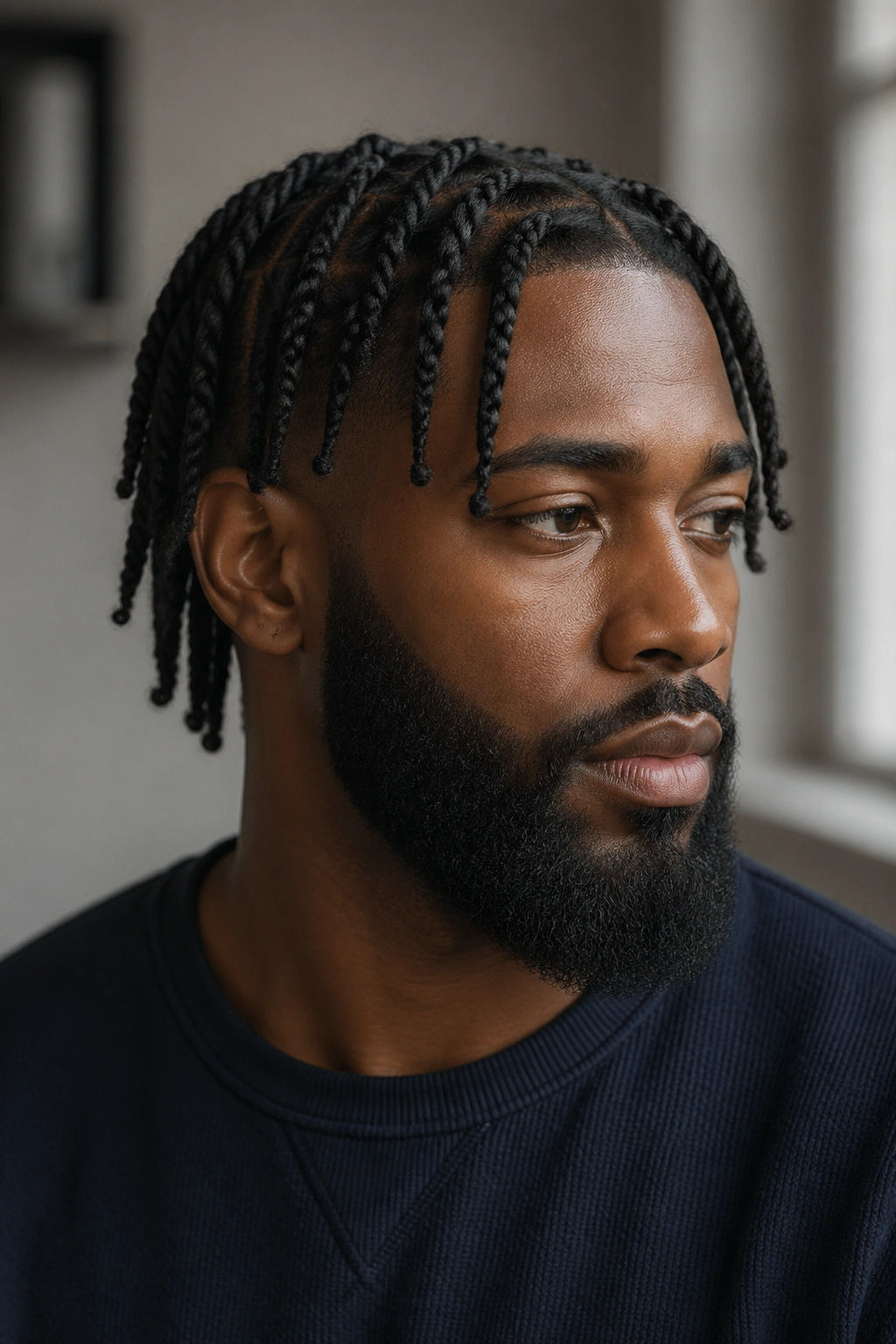
Why do rope twists look so good with a tapered beard? Because the shapes echo each other. Rope twists have that cylindrical, rolled texture, and a tapered beard follows the same logic by narrowing slightly toward the sides and the throat. The result feels smooth, not busy.
This is one of those styles that looks better when it is not trying too hard. The twist size can sit around pencil width to marker width, and the beard should keep some length under the chin without becoming square at the bottom. If the beard is too wide, the whole profile gets blunt.
What Makes It Different
The braid texture is less flat than a tight plait and less wild than a free twist. It gives the hair a little lift. The beard, meanwhile, acts like a visual anchor, especially if the neckline is cleaned just enough to show the jaw without making it look harsh.
Ask for a taper around the temples and behind the ears. That small clean-up keeps the twist pattern from spreading sideways. A lot of guys skip this and then wonder why the style looks bigger than expected. It’s the sides. Always the sides.
4. Side-Part Twist Braids With a Sharp Lineup
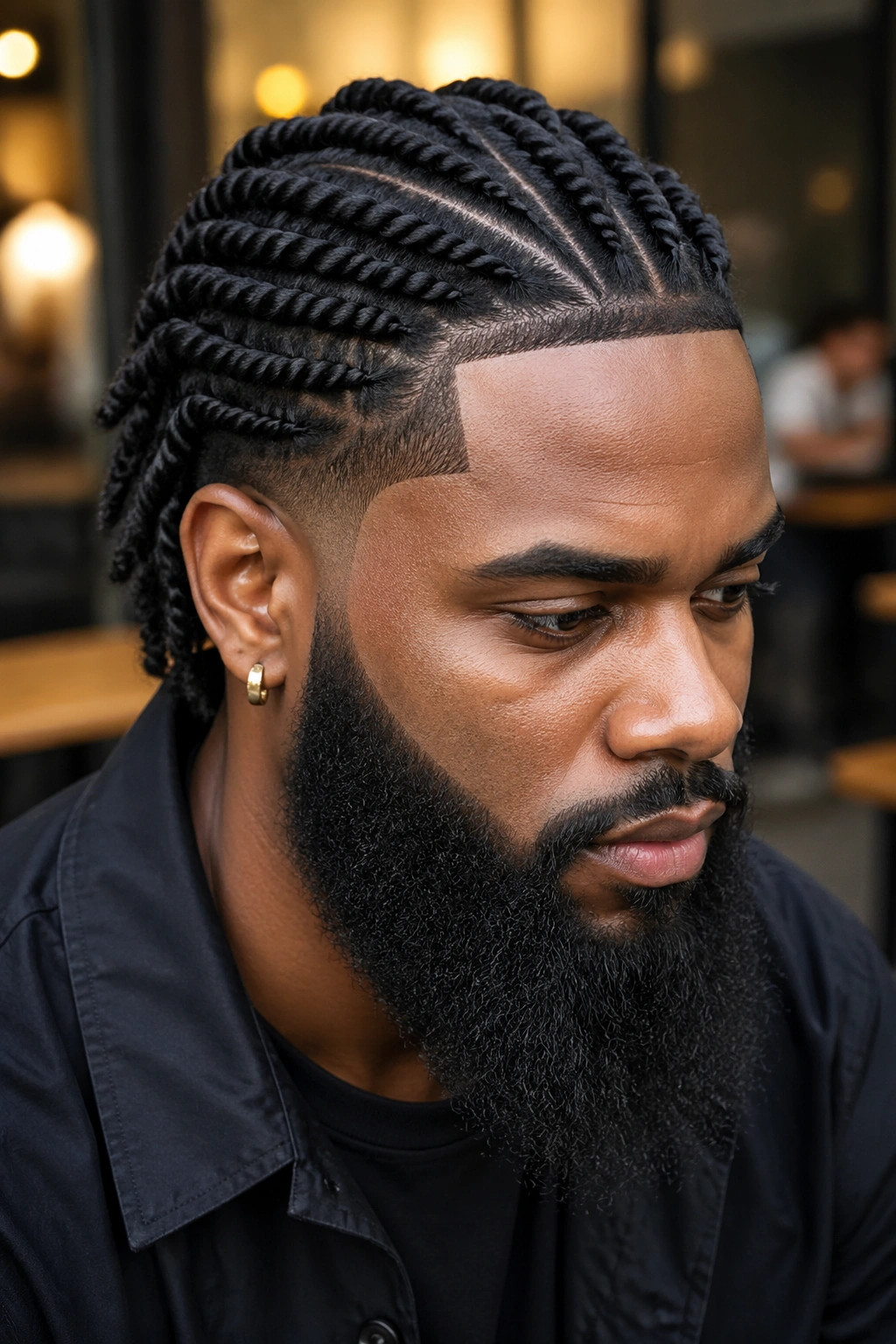
A side part changes the mood fast. Center parts can feel relaxed, but a side part gives twist braids a bit of precision, almost like a tailored jacket compared with a hoodie. With a long beard, that sharper top line keeps the face from looking too soft.
The part itself does not need to be dramatic. A clean line about 1/4 to 1/2 inch wide is enough. The beard can stay long and full, but the lineup should be sharp at the cheeks and tidy near the sideburns so the eye understands where the braid ends and the beard begins.
This is the kind of style that works well if you wear button-downs, structured jackets, or anything that sits on the body cleanly. The beard can still be rugged. It just needs edges.
And honestly, that is where a lot of men get it wrong. They keep the beard wild, the hair sharp, and then wonder why the two halves feel disconnected. The side part fixes that by giving the top a clear direction.
5. Chunky Twist Braids Pulled Into a Low Bun
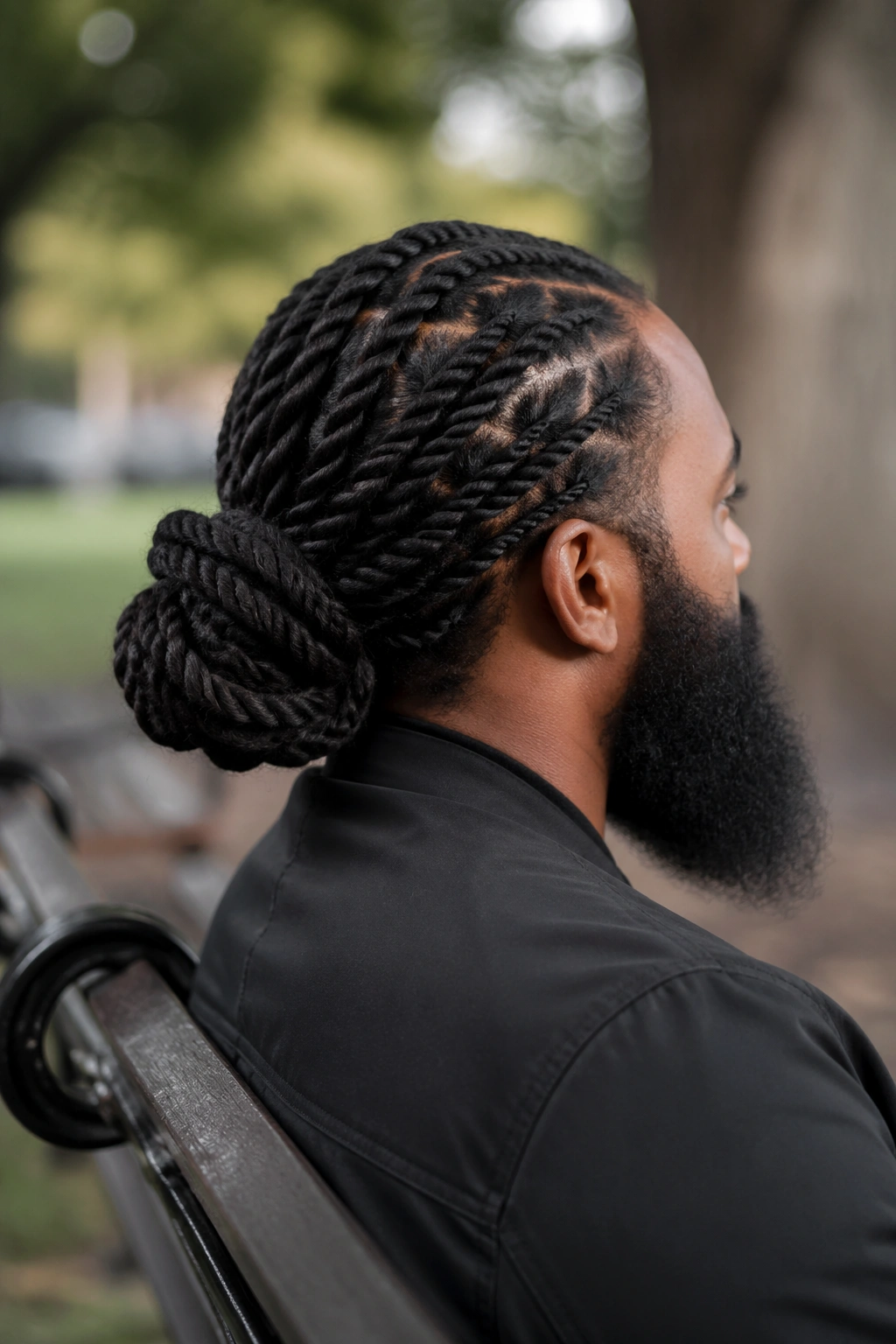
Chunky twists are blunt in the best way. Fewer sections mean more weight in each twist, which gives the style a stronger outline and makes the beard feel like part of a bigger shape instead of the only thing people notice.
Pulling the twists into a low bun is useful when the hair has enough length to sit at the nape without slipping apart. Usually, that means twists long enough to gather at the back with 2 to 3 inches of extra length after twisting. The bun keeps the shoulders clear, which helps a long beard stand out instead of getting lost in a wall of hair.
A Few Things to Watch
- Keep the bun low, not high, or the look turns top-heavy fast
- Leave a little slack at the crown so the twists do not tug all day
- Clean up the beard at the neck so the back of the style feels deliberate
- Use a soft tie, not a tight elastic that snaps the twist ends
The best part is how practical it feels. You get the weight of the beard, the neatness of tied hair, and none of the mess that comes from loose ends rubbing on collars all day.
6. Shorter Twist Braids With a Long, Rounded Beard
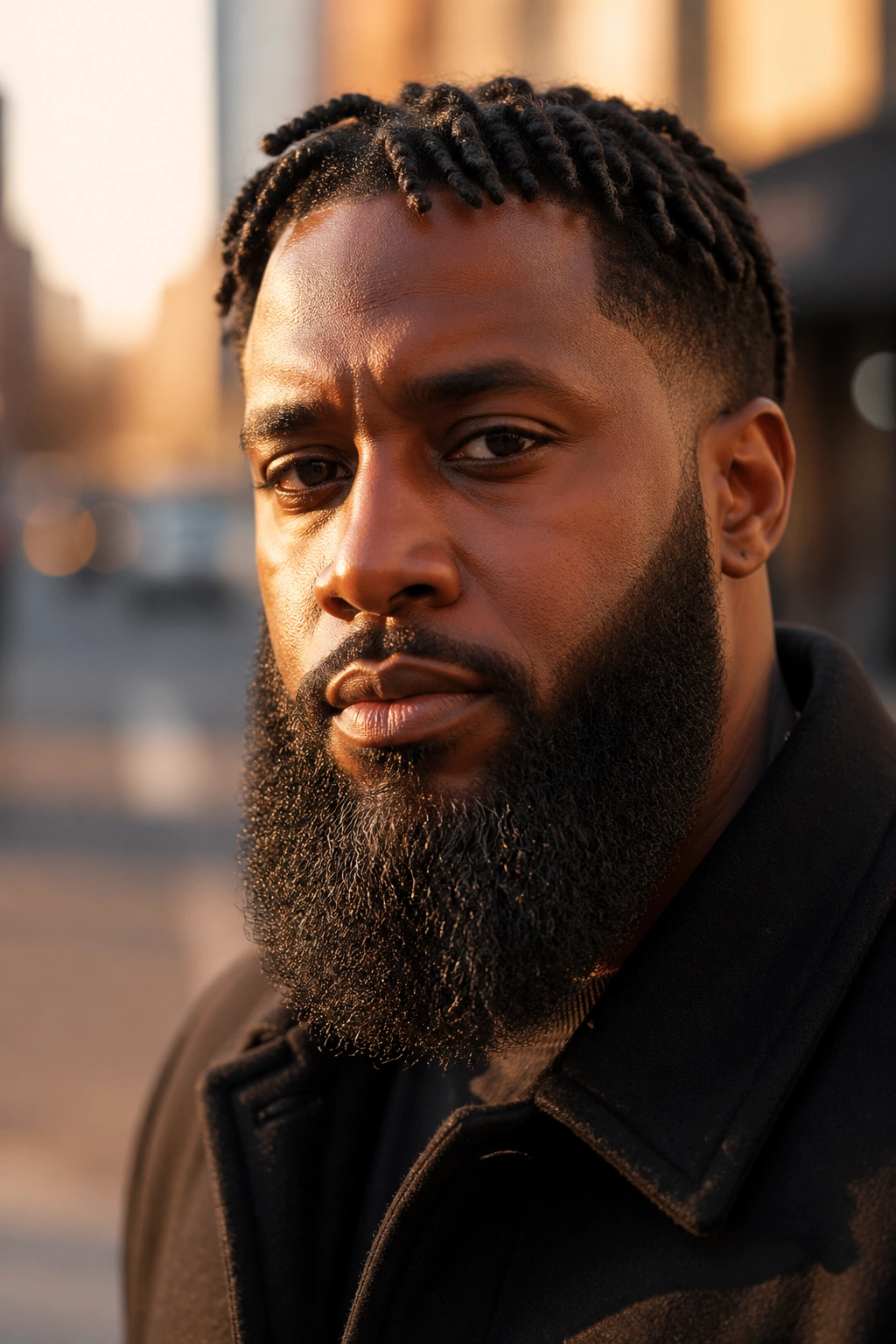
Short twists and a long beard create a nice bit of tension. The top reads controlled and compact, while the beard brings the drama. That contrast is useful if you want your face to look longer without stacking too much volume on the head.
A rounded beard shape fits this style better than a squared one. The rounder line softens the transition from braid to chin, and it keeps the look from turning into a sharp rectangle. If your beard is thick, letting the sides curve slightly inward at the jaw can save you a lot of trouble.
This style also works well when you do not want to spend forever on braid length. Shorter twists are faster to install and easier to keep tidy. The beard can still be the star, which is the point here. You are not hiding it. You are giving it room.
A lot of men like this because it feels mature without being stiff. That’s the sweet spot.
7. Twist Braids With Loose Ends and a Natural Beard
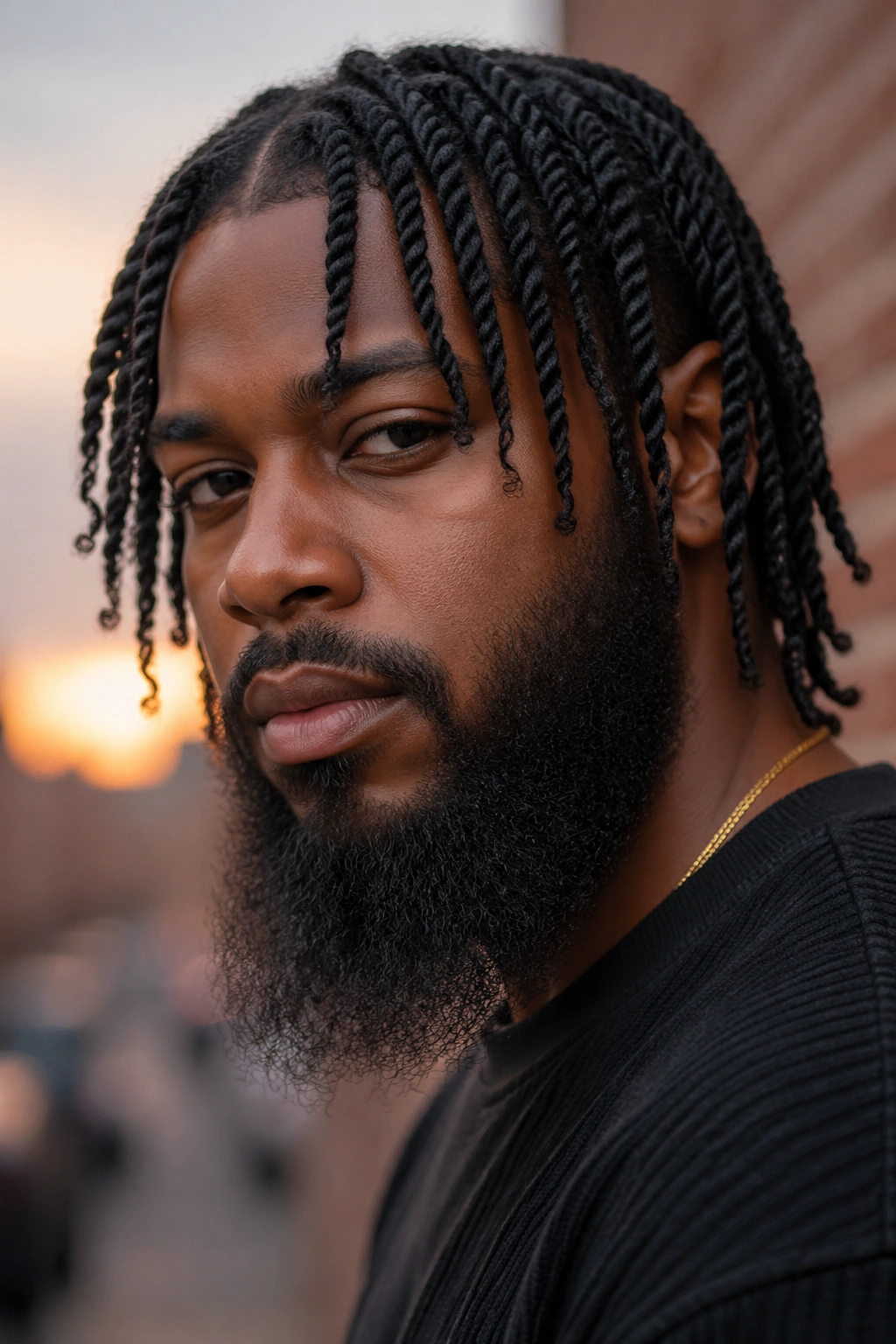
Loose ends change the whole feel of twist braids. Tight finishing gives a polished look. Loose ends make the style breathe a little, which pairs nicely with a beard that is full but not sculpted into a hard shape.
Why the Soft Finish Matters
When the ends hang a bit free, the eye reads the style as relaxed. That matters if your beard is already dense through the chin and moustache, because too much sharpness top and bottom can feel overworked. The softer finish gives the beard some room to look textured instead of forced.
It also helps if your hair is on the drier side. A small amount of leave-in or twist cream on the ends keeps them from fraying into a fuzzy halo. You want them to separate, not puff out.
One practical detail: leave the beard mostly natural, then clean the neckline and the upper cheeks. That combination keeps the softness from slipping into sloppiness. Loose ends can look careless if the beard is left unchecked. With a tidy base, though, the style has a nice loose confidence to it.
8. Twist Braids With Beads and a Sculpted Beard
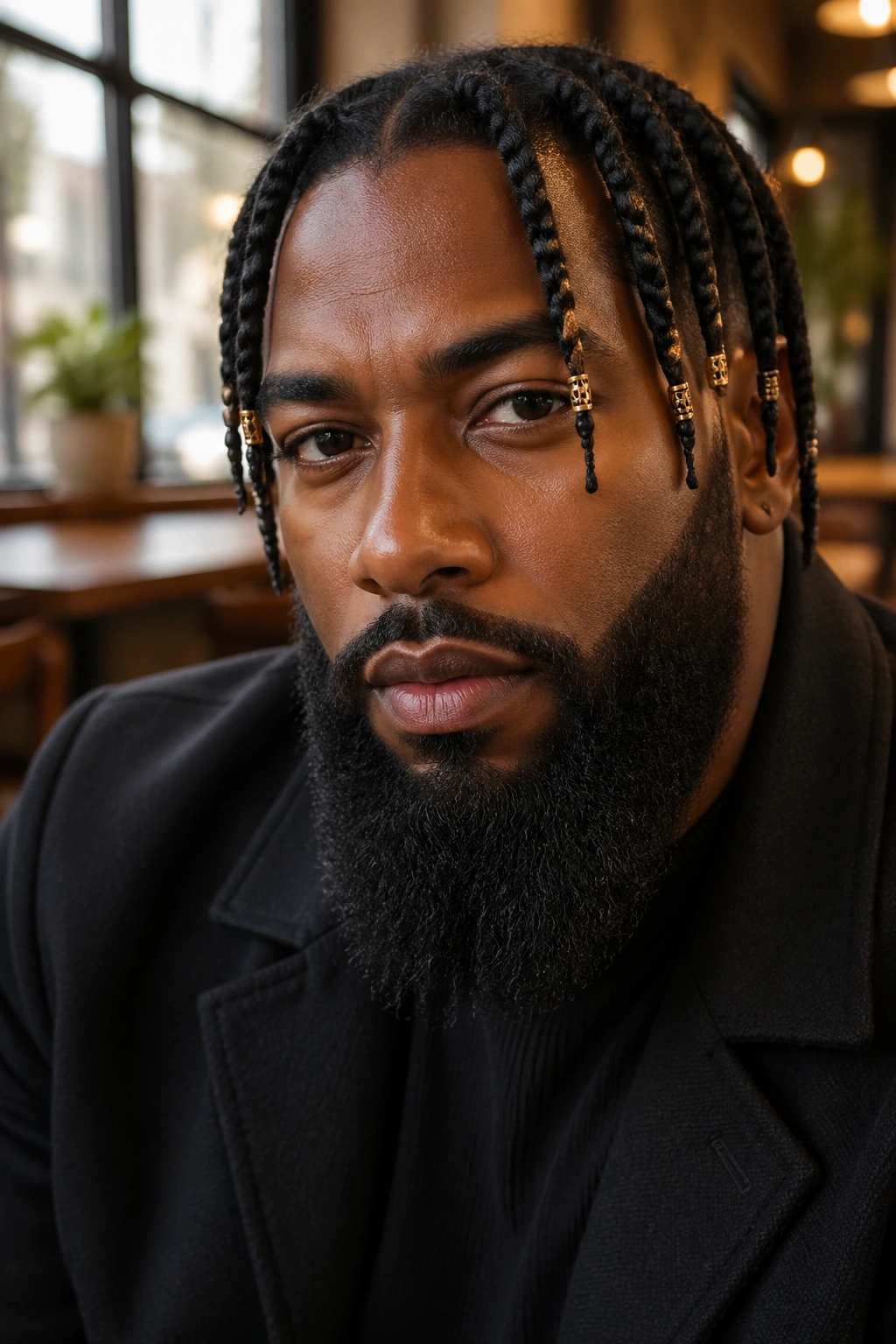
Beads are not for everybody. That said, a few well-placed beads can make twist braids feel finished without loading the whole style down with decoration. They work best when they sit near the front or on the outer rows, not scattered everywhere like a craft project.
The beard should be shaped with a little more precision if you go this route. A sculpted beard—clean cheeks, straightish neckline, and a solid chin shape—keeps the style from getting too busy. The beads bring the detail. The beard brings the weight.
Good Places to Put Them
- One bead on each front twist
- Two beads on the side that gets more light
- A single accent bead near the temple braid
- Nothing near the ends if your beard is already thick and textured
There is a fine line here. Too many beads and the whole thing starts looking costume-like. Two or three is enough. The goal is a small flash of personality, not a pile of hardware.
If your beard is long and dense, this style can look surprisingly sharp in close-up. The little metallic or wooden accents catch the eye, then the beard grounds everything back down.
9. Small Micro Twists and a Dense Beard
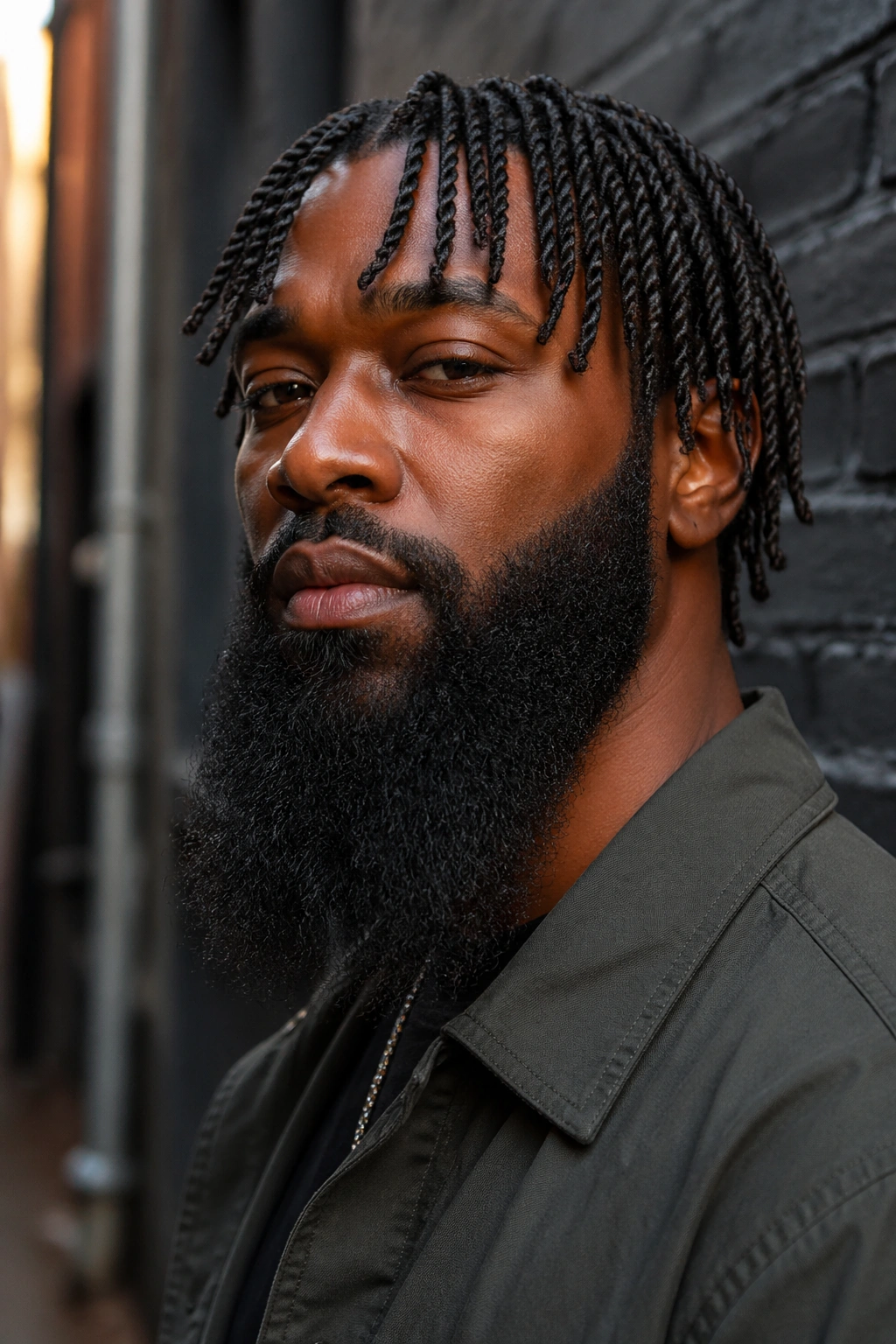
Micro twists are for men who do not mind spending time in the chair. They take longer to install, they take longer to dry, and they need more patience at the start. The payoff is texture—lots of it.
With a dense beard, micro twists help the top keep up visually. Big, loose twists can get swallowed by a heavy beard. Micro twists hold their own because there are more of them, and they create a tighter, more intricate pattern across the scalp.
What to Watch For
- Dry the roots well before tying anything down
- Avoid twisting too tightly around the hairline
- Use a light cream, not a heavy grease, or the style will collapse
- Plan for a refresh every couple of weeks if your hair grows fast
The beard should stay full, but I would keep the edges neat. Micro twists already bring enough detail. A beard with a crisp cheek line and a smooth throat area gives the style a place to land. Otherwise the face gets noisy. And noisy is not the same as stylish.
10. Thick Jumbo Twists and a Boxed Beard
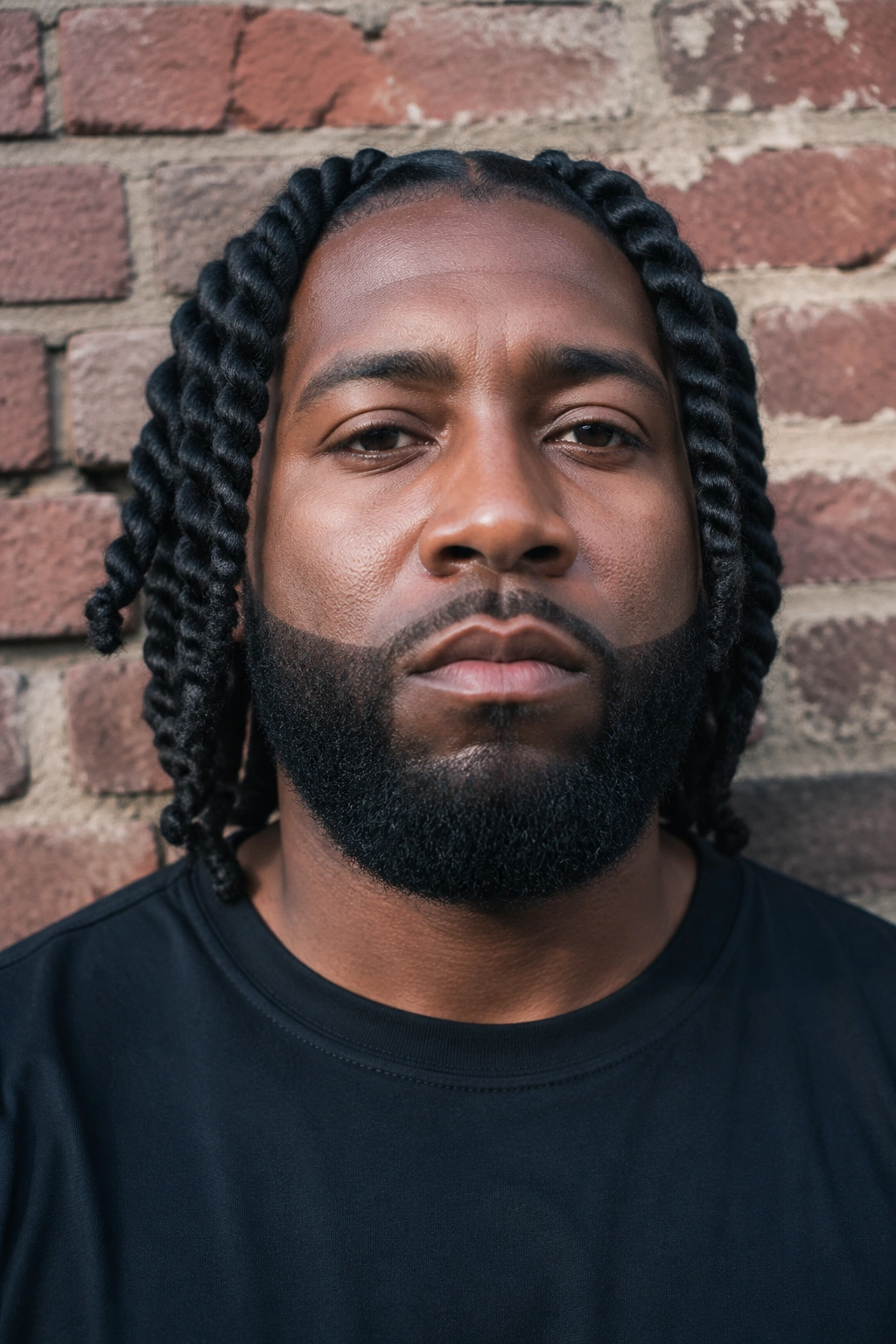
Thick jumbo twists are bold. There’s no hiding that. They read from across the room, which is either the point or the problem, depending on your taste. When a long beard is boxed cleanly under the chin, the two shapes can look deliberate and strong together.
This style wants fewer sections and stronger part lines. Think large, even twist groups rather than tiny divisions. If the twists are too skinny, they lose the punch. If the beard is too rounded, the whole look softens too much and the contrast disappears.
A boxed beard works here because it mirrors the straight sides of the twist pattern. The lower edge can be squared off, but not with a blunt, helmet-like line. Keep some shape under the chin so the beard still moves. Stiff is the enemy.
This is one of those looks that does not need much decoration. No beads, no extra color, no messy edge work. The size of the twists and the shape of the beard do all the talking.
11. Twist Braids With a Fade at the Temples
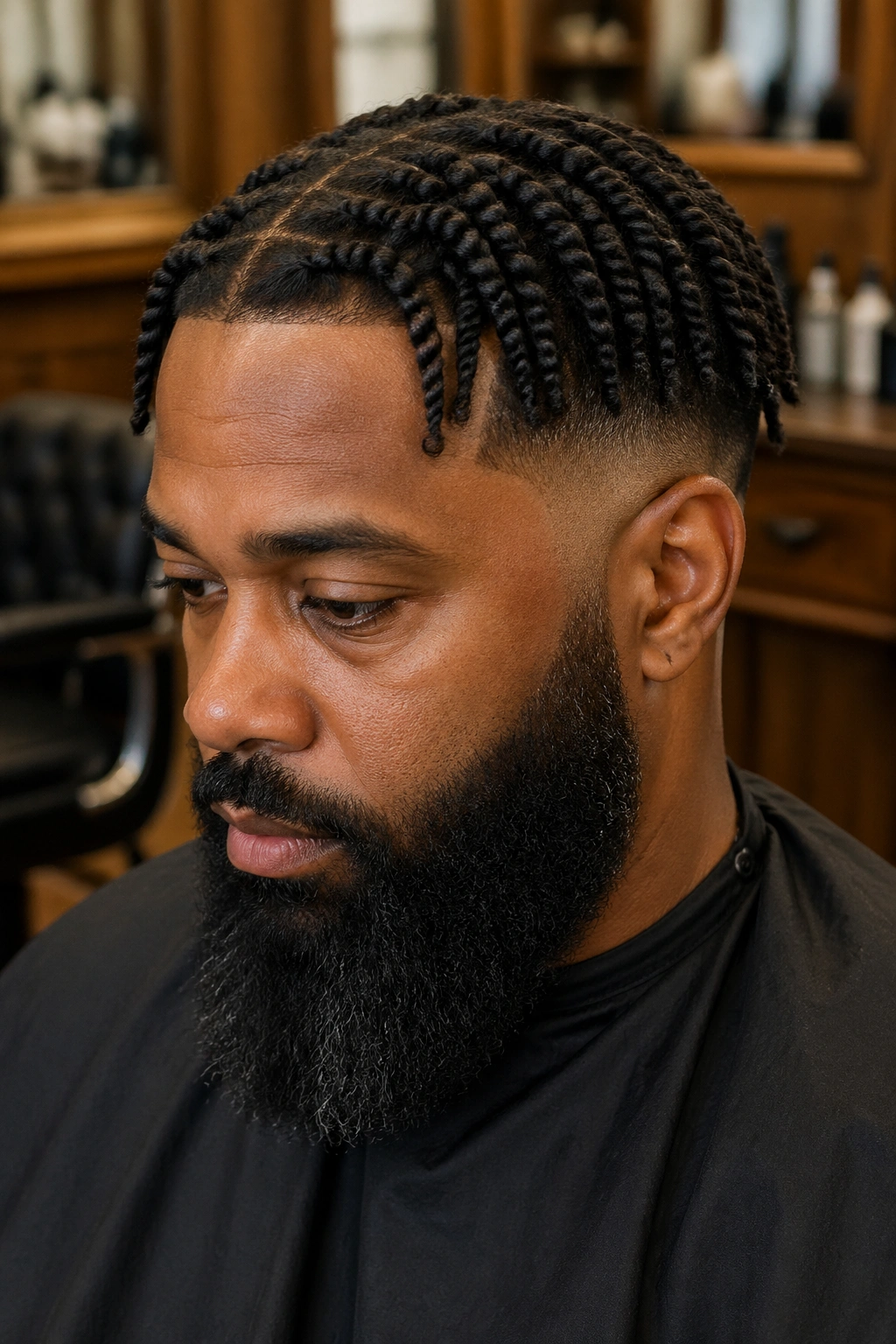
Not every twist style needs a full undercut. A temple fade gives you a cleaner frame without taking too much hair off the sides. That matters when the beard is long, because the fade helps the face stay open while the beard keeps its depth.
A low or mid fade usually works best. A skin fade can look sharp, but it can also make the beard feel heavier if the transition is too abrupt. The temple area is the important part. Clean that up, and the twists sit better on top.
The beard should follow the same rule: neat edges, but not over-sliced. Let the moustache and chin keep their density. The fade is there to clear space, not to strip the style of character.
This is a good pick if your hairline wants a little help. A faded temple can soften a rough edge and make the twist pattern look more finished. It also grows out more kindly than a hard line, which is useful if you do not want to visit the barber every week.
12. Half-Up Twist Braids and a Free-Hanging Beard
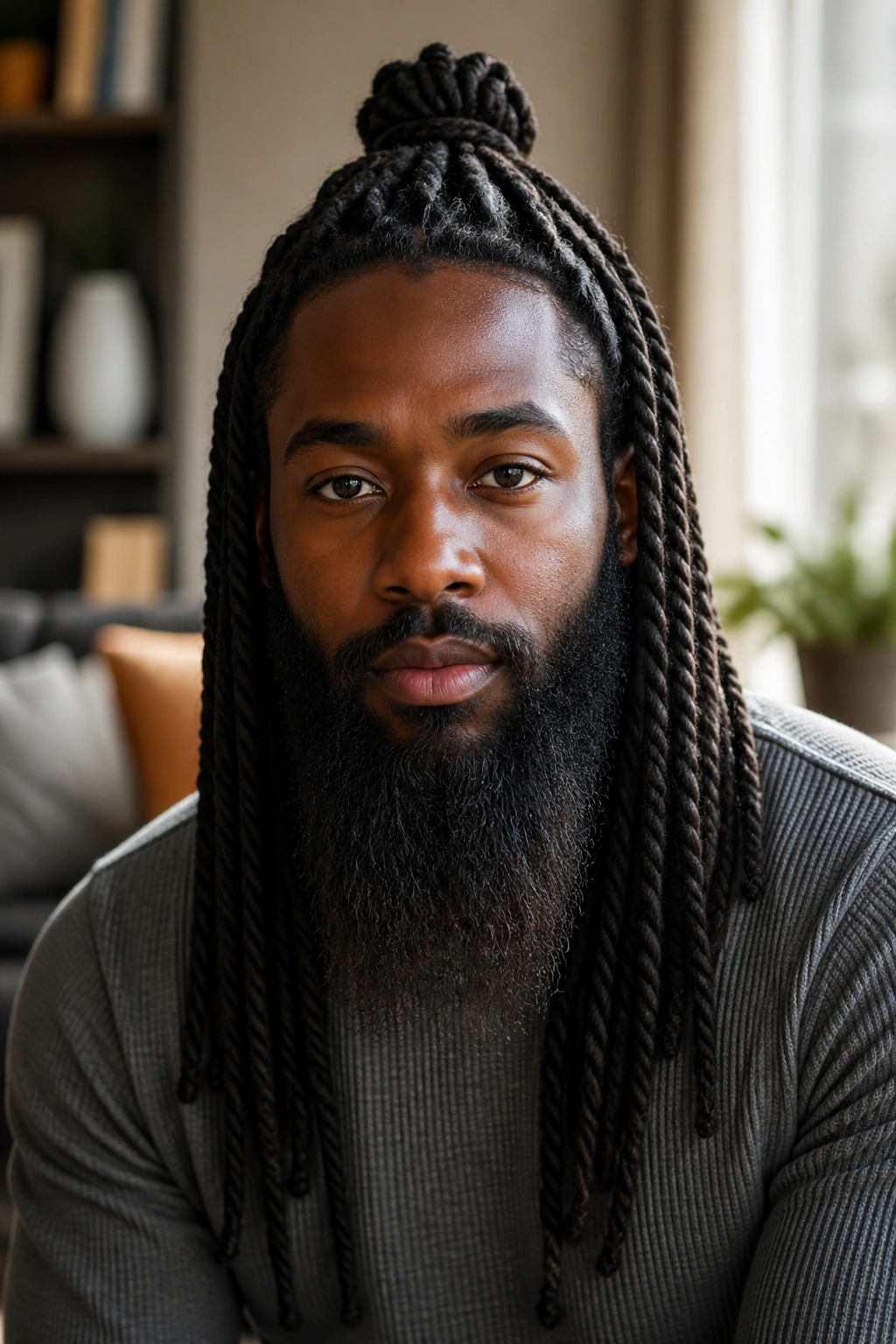
Half-up twists solve a practical problem: long hair gets in your face, but you still want the length to show. Pull the top half back, leave the rest to hang, and the beard gets a clean stage all its own.
Where This Style Works Best
It works best when the twists are long enough to gather without pulling the roots into a tight knot. If the hair is too short, the top half-up section will fight you all day. Aim for enough length that the tied section sits comfortably about 1 to 2 inches above the crown.
The beard can stay free-hanging, which is part of the appeal. Long beards look good when they move. They do not need to be tucked and tucked and tucked until they look like a napkin fold. Let it fall naturally, then clean the neckline so the shape stays intentional.
A half-up style can also make your face look a little longer, especially if the beard has good length under the chin. That stretch is flattering on rounder faces and useful when you want the beard to feel strong without the hair overwhelming it.
13. Twist Braids With a Hard Part and Edge-Up
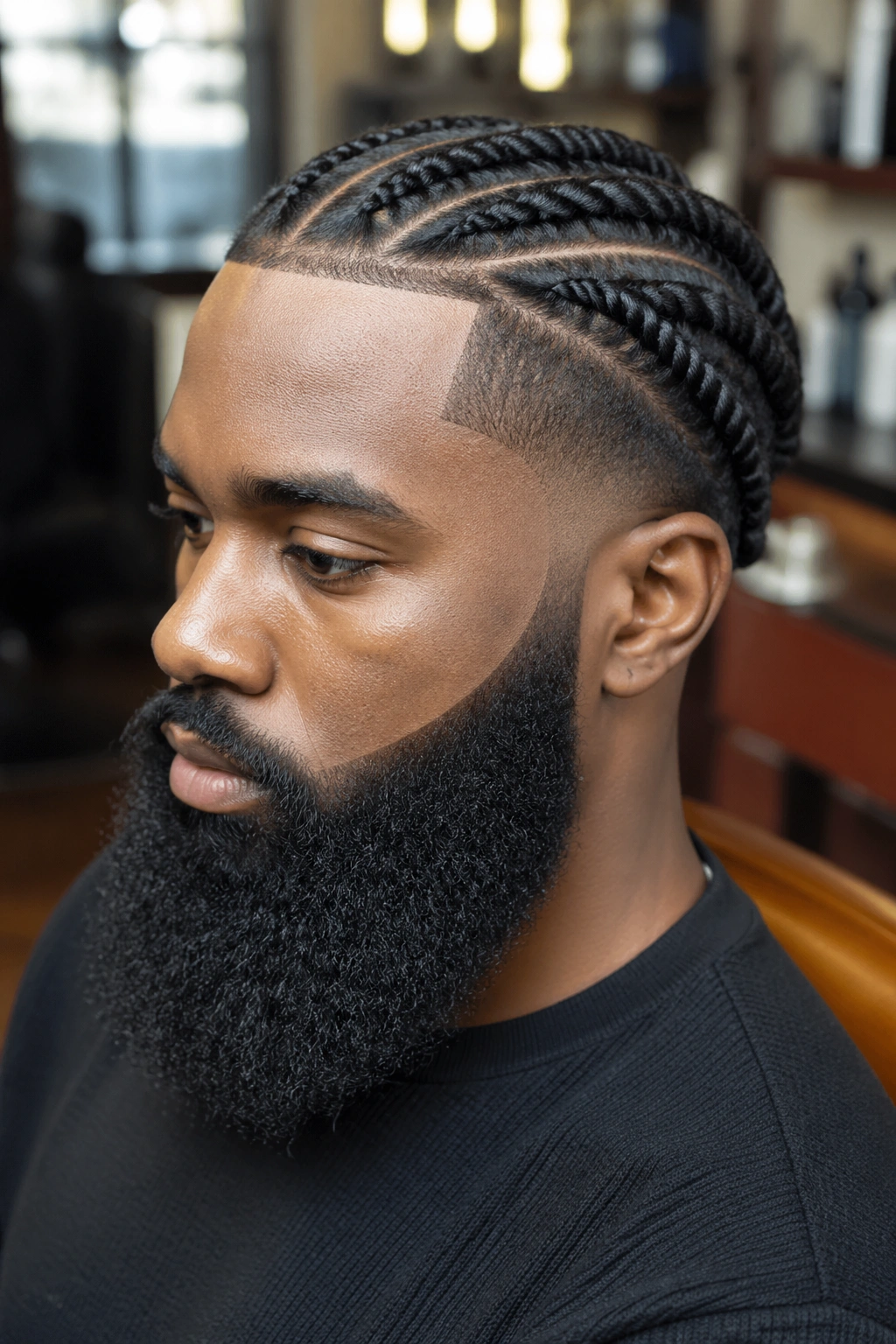
A hard part is a loud little line. It cuts through the texture and makes the whole style look more exact, which is useful if you like your beard neat and your braids precise. The edge-up around the forehead and temples finishes the effect.
The part does not need to be wide. A narrow shaved line is enough, usually about 1/4 inch. Wider than that and it starts to dominate the style. Keep the beard lines clean too, especially along the cheeks, because a hard part paired with a fuzzy beard can look like two different moods in one mirror.
This is the style for men who like order. It can work for office settings, formal events, or any day when you want your hair and beard to look like they were planned instead of stumbled into. The sharpness is the point.
You do have to keep up with it. A hard part grows out fast. When it starts blurring, the whole face loses that crisp edge. The beard can stay long, but the outline needs maintenance.
14. Shoulder-Length Twist Braids and a Wide Beard
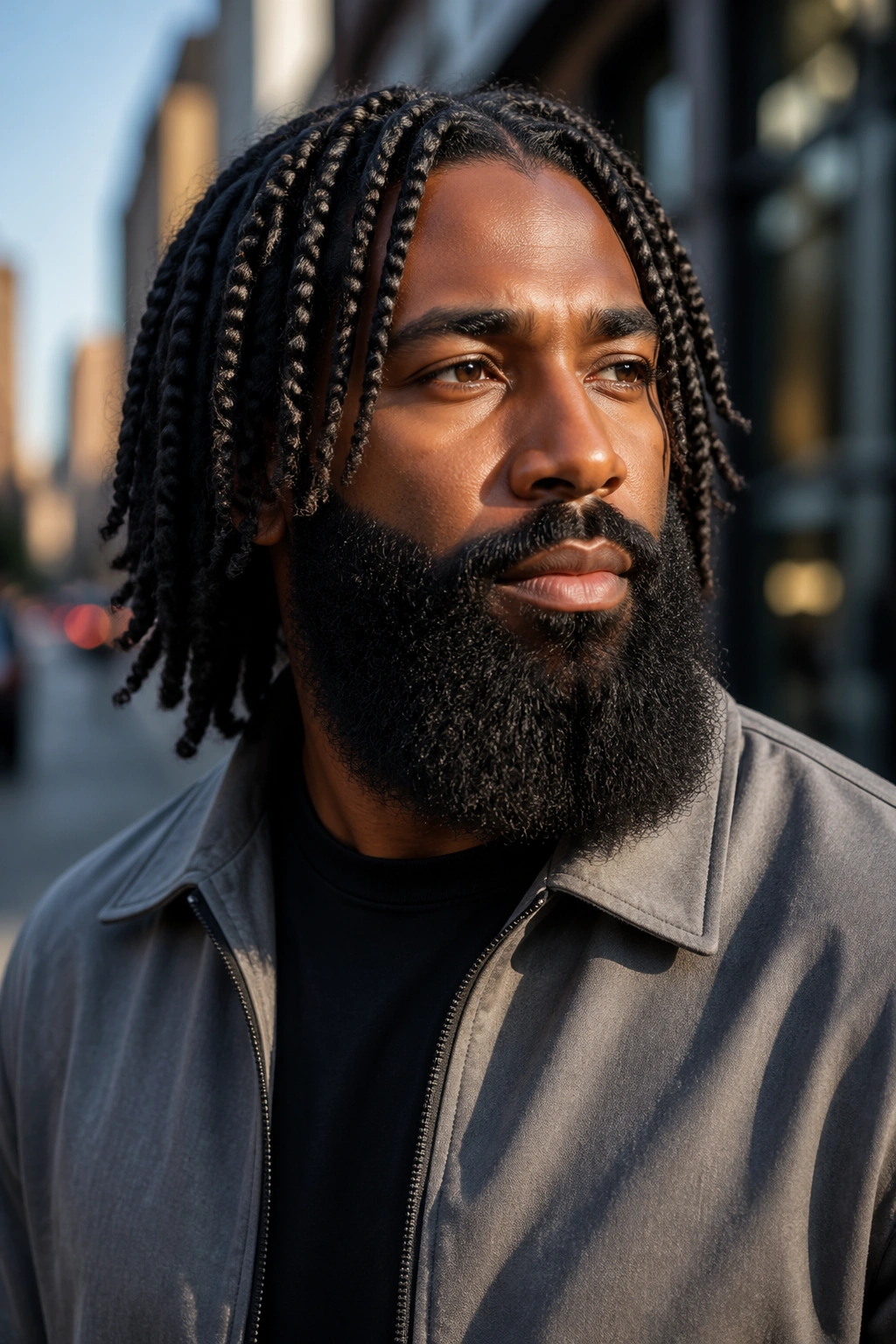
Shoulder-length twist braids bring a lot of movement, and a wide beard can balance that if the beard is shaped with some care. The trick is to keep both sides full without making the head look like one giant mass of texture.
The beard should not flare too far at the cheeks. Let it build through the chin and lower jaw instead. That keeps the face from widening too much. Shoulder-length twists, especially when they brush the collar, already carry enough bulk. The beard needs structure, not extra puff.
There is something easy to like about this look. It feels lived-in. It also works well with heavier clothing—hoodies, coats, flannels—because the hair has room to move without getting trapped at the neck.
A small detail that matters: oil the ends of the twists, not the whole shaft. Too much product can make shoulder-length hair stick to the beard in a way that feels greasy by mid-day. A little sheen is enough. More is not better here.
15. Zigzag Part Twist Braids and a Clean Beard Line
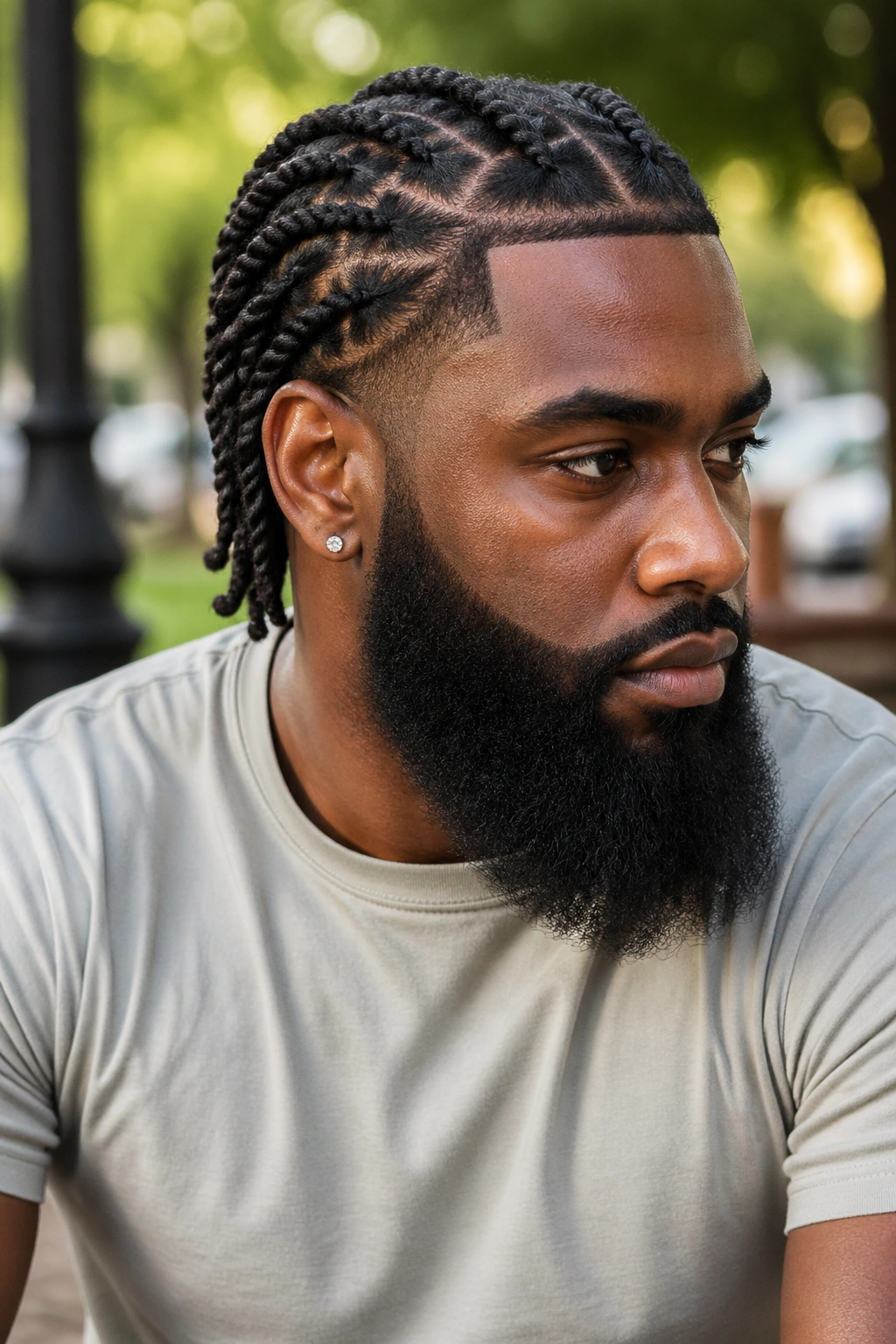
Zigzag parts add a little edge without needing dye or shaved artwork. They turn the scalp into part of the design, which is useful when the beard is long and you want the top to carry some visual weight of its own.
The parting pattern should stay regular enough to read cleanly. If the zigzags get messy, the style just looks uneven. Aim for part lines that change direction on purpose, not because the comb slipped. A neat beard line is the counterweight. Keep the cheeks smooth and the neck clean so the twist pattern has a calm place to land.
What Makes It Stand Out
- Works well with thick hair that holds part lines
- Gives the style some movement even when the twists are still
- Feels fresher than a straight grid without needing more length
- Looks strongest when the beard outline stays simple
The beard itself does not need extra styling tricks here. The part pattern already does enough. A clean line at the cheek and a slightly rounded chin beard are usually enough to keep the whole thing grounded.
16. Twist Braids Into a Ponytail With a Long Beard
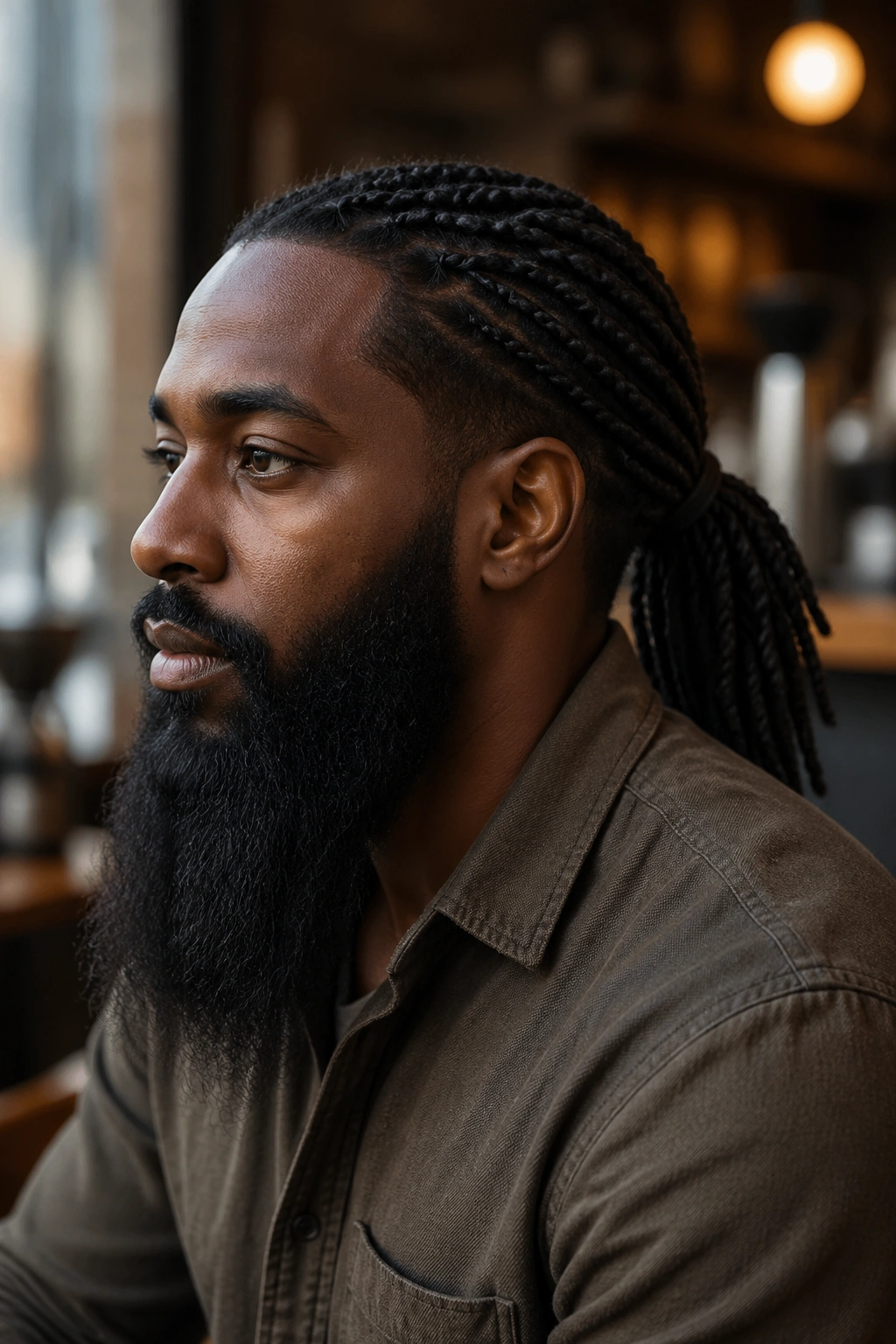
A ponytail is the practical answer when long twist braids start brushing everything—collars, shoulders, jacket hoods, your beard, your coffee, all of it. Pull them back, keep the tie soft, and the face opens up.
The tie should sit low enough that it does not tug the roots. Somewhere near the back of the head works best, usually at or just below the crown. A beard like this can stay loose, which keeps the lower half from feeling trapped.
A Clean Way to Wear It
Use a fabric tie or a snag-free band. Keep the sides tight enough that stray pieces do not flare out. Let the beard keep its natural shape, but trim the neckline so it does not merge into the shirt collar. If the beard has a lot of length at the chin, brush it downward before you tie the hair back.
The ponytail version is not flashy. That is why it works. It lets the beard look long and healthy without competing with a wall of hanging twists. And on busy days, honestly, that matters more than style points.
17. Front-Only Twist Braids and Natural Curls at the Back
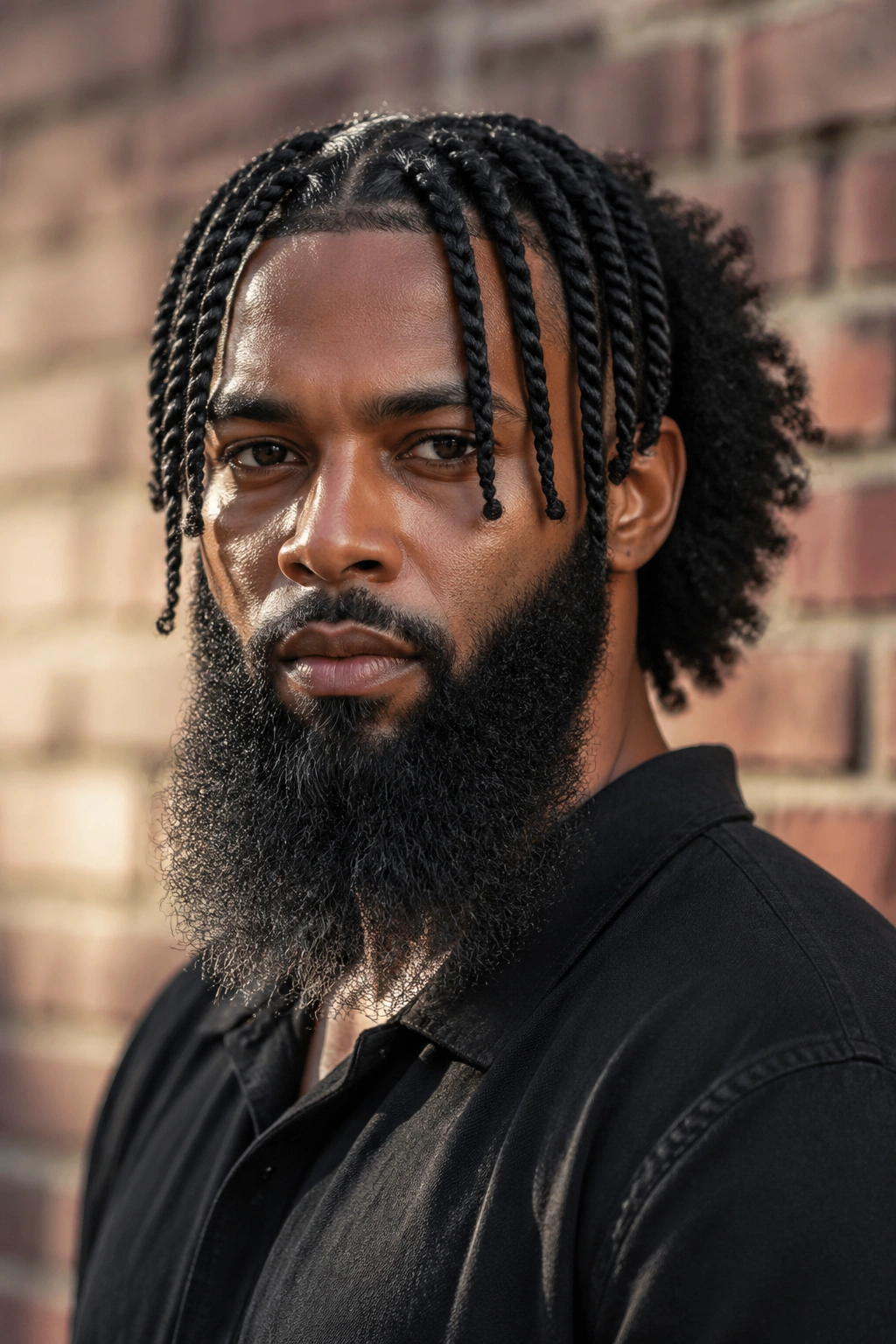
Not every man needs braids across the whole head. Front-only twist braids control the hairline and frame the face, while the back stays curly, loose, or textured. That split can look especially good with a long beard because the beard becomes the bottom anchor of the style.
This option works when the front hair is long enough to twist cleanly but the back is still growing into place. It also suits men who want braid detail without committing to full coverage. The front rows do the talking. The rest fades into the background.
Why It Works
The eye goes first to the face, then to the beard, then to the texture at the back. That sequence feels natural. A full-head braid can sometimes pull attention everywhere at once. Front-only twists keep it focused.
The beard should stay tidy around the sides so the different textures do not fight. If the back curls are loose and the beard is dense, a clean neckline and a soft edge above the ear keep the whole thing readable. That’s the difference between a style and a pile of textures.
18. Twist Braids Wrapped With Rings and a Single Beard Braid
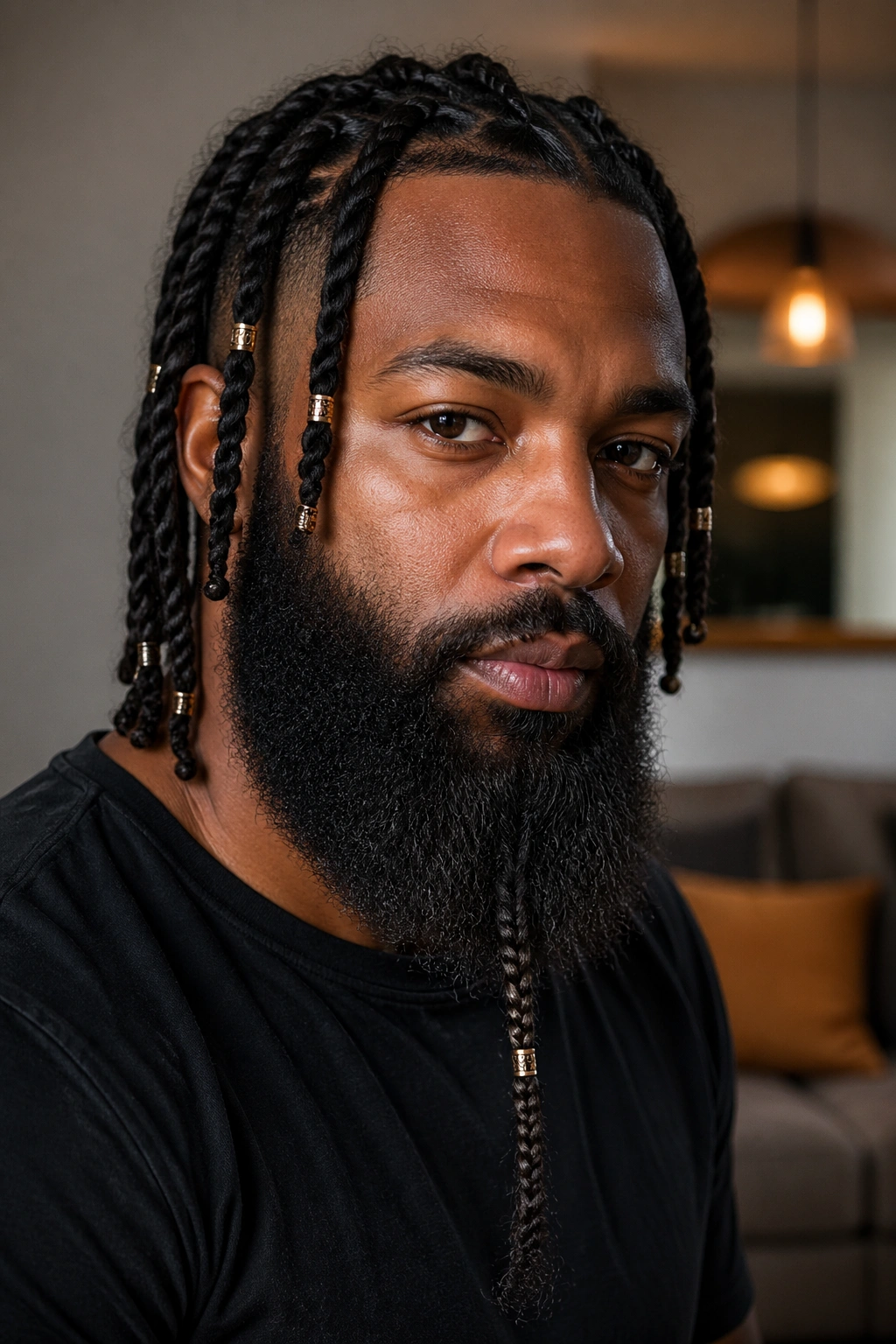
A few rings on the braids can look sharp if you keep them sparse. One or two silver cuffs, maybe three if the hair is long enough, is plenty. The mistake is loading the whole head with metal and then adding a heavily decorated beard on top. That turns into clutter fast.
A single beard braid can work as a matching detail, but only if the beard is long enough to hold it without slipping apart. Keep it narrow and simple. A small braid down the chin or one twisted strand near the front is enough to echo the head style without stealing the show.
Keep the Balance
- Use light rings, not bulky ones
- Place them near the front where they show without bouncing on the neck
- Tie the beard braid loosely enough to avoid breakage
- Leave most of the beard natural so the accent stays special
This style has attitude, but it needs restraint. The rings should feel like a detail, not a theme. The same goes for the beard braid. One accent is memorable. Five accents start looking like a costume.
19. Twists With Undercut Sides and a Full Chin Beard
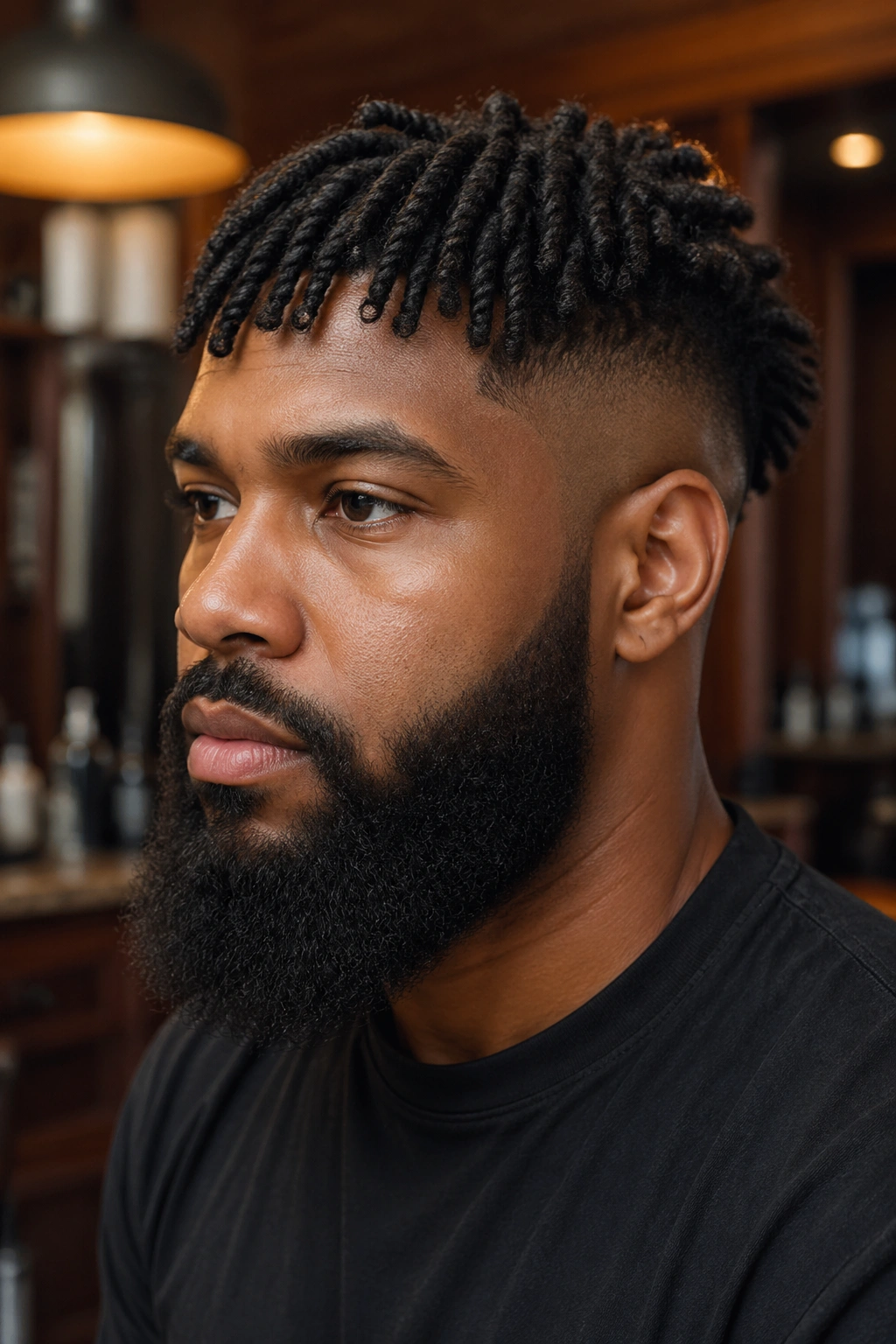
Undercut sides make the top feel heavier, which sounds backwards until you see it in a mirror. When the sides are cut short, the twists sit on a cleaner base, and the beard gets a stronger frame. The whole style feels more vertical and less spread out.
The chin beard should stay full here. That’s the point. The undercut strips visual weight from the sides, so the chin can do more of the work. Keep the cheeks tidy and let the lower beard grow into a strong point under the mouth and jaw.
This look suits men who like clear lines. It is bolder than a taper and less polished than a full fade. There’s a roughness to it that works well with long beards because the beard can keep some edge without needing every line to be perfect.
I’d avoid this if your face is already very narrow. The undercut can make it feel even longer. But on a square or round face, it can look balanced and strong.
20. Freeform Twist Braids With a Wild Beard Shape
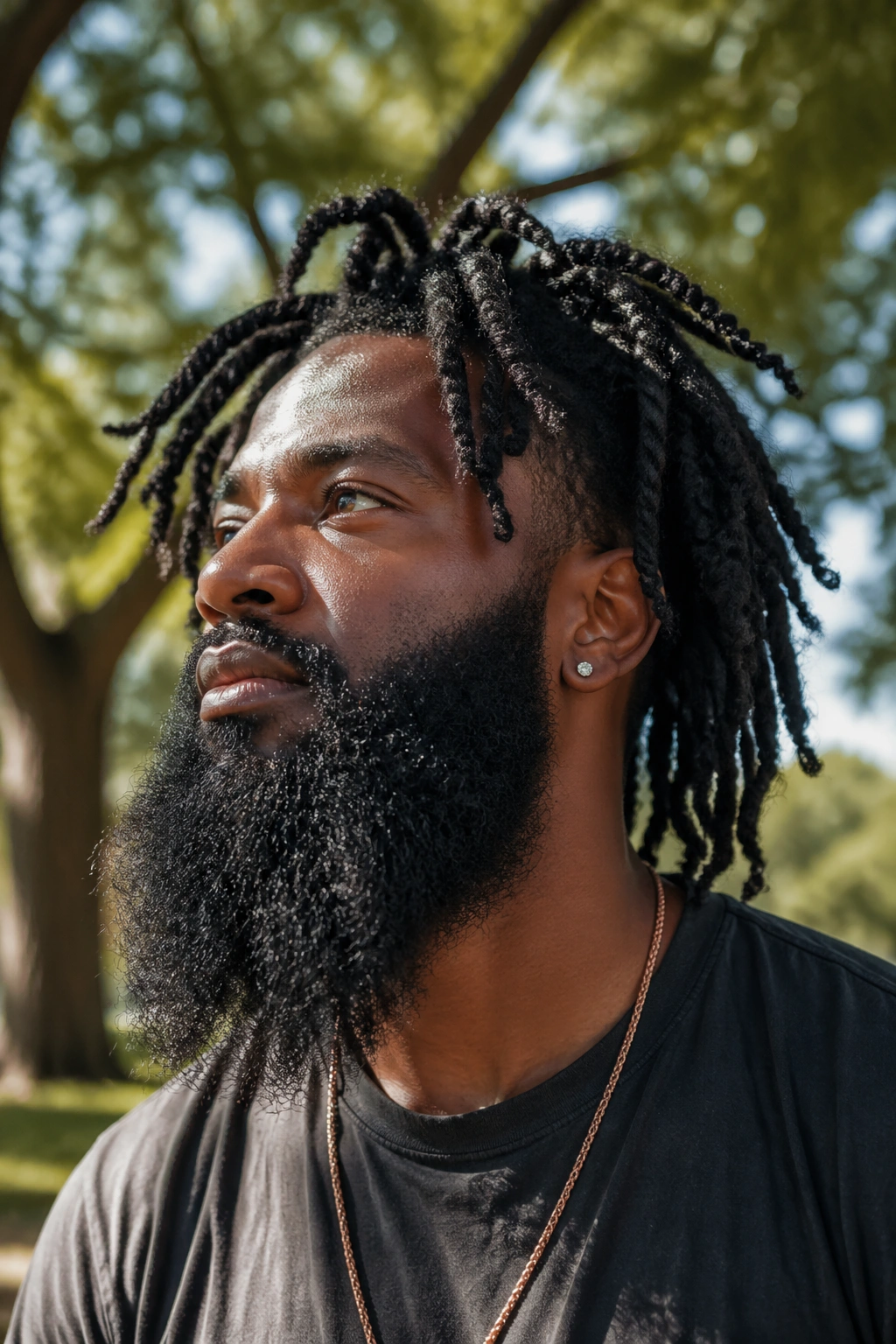
Freeform twists are for men who do not want the whole head to look measured with a ruler. The parts can vary a little, the sections can shift, and the beard can stay less sculpted. It is a more natural, lived-in look.
That does not mean careless. The difference matters. Freeform styles still need clean hair and a beard that is brushed out, oiled, and shaped enough to show its outline. The neckline should be handled. The cheeks should be checked. But the overall feel stays looser than a strict grid of neat twists.
Where It Fits
This style works when your beard has personality on its own—thick, wiry, or split into different growth patterns that look awkward when forced into a box. It also fits guys who prefer a little movement and do not mind that the style changes shape through the day.
You do sacrifice sharpness. That is the trade. If you want polished edges, skip this one. If you want a style that looks like it belongs on you instead of on a poster, it makes more sense.
21. Two-Tone Twist Braids With a Salt-and-Pepper Beard
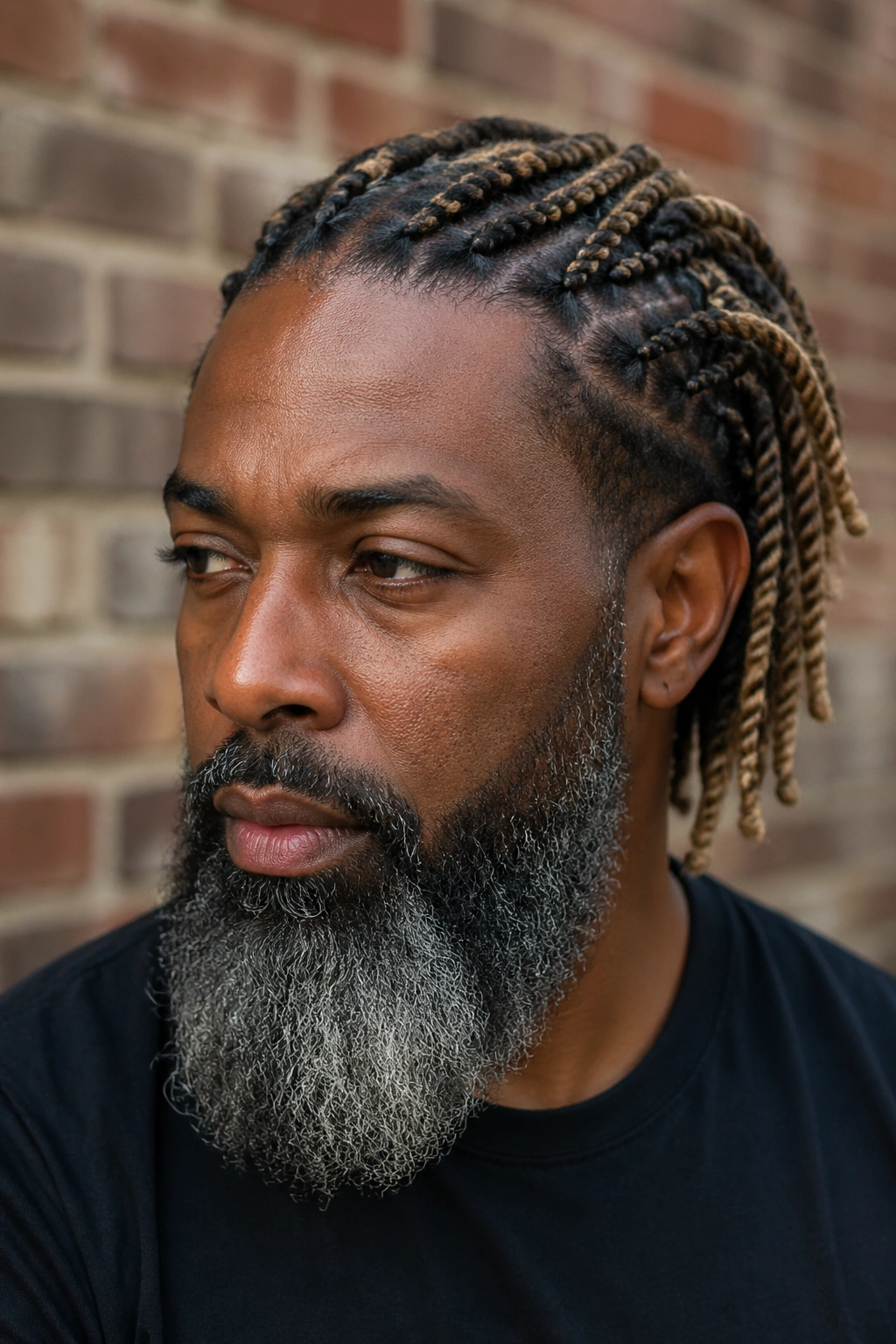
Color contrast can do a lot of work before anyone notices the cut itself. Two-tone twist braids—whether the contrast comes from natural sun-lightened ends, dyed tips, or a subtle dark-to-light shift—bring out the texture in a way that plain black twists sometimes do not.
A salt-and-pepper beard makes the contrast even better. The gray strands add depth, and the braid color can either match that cool tone or stand against it. A warmer braid tone next to a gray beard feels lively. A cool tone feels sharper. Neither is wrong. The effect just changes.
A style like this needs the beard to stay shaped cleanly, because the color contrast already gives the eye plenty to look at. If the beard is wild and the braids are two-tone, the face can feel overloaded. Keep one side calm.
This is a good choice when you want the beard to look mature rather than old. Gray stops reading as an issue once the whole style looks considered.
22. Tapered Twist Braids That Keep the Beard as the Star
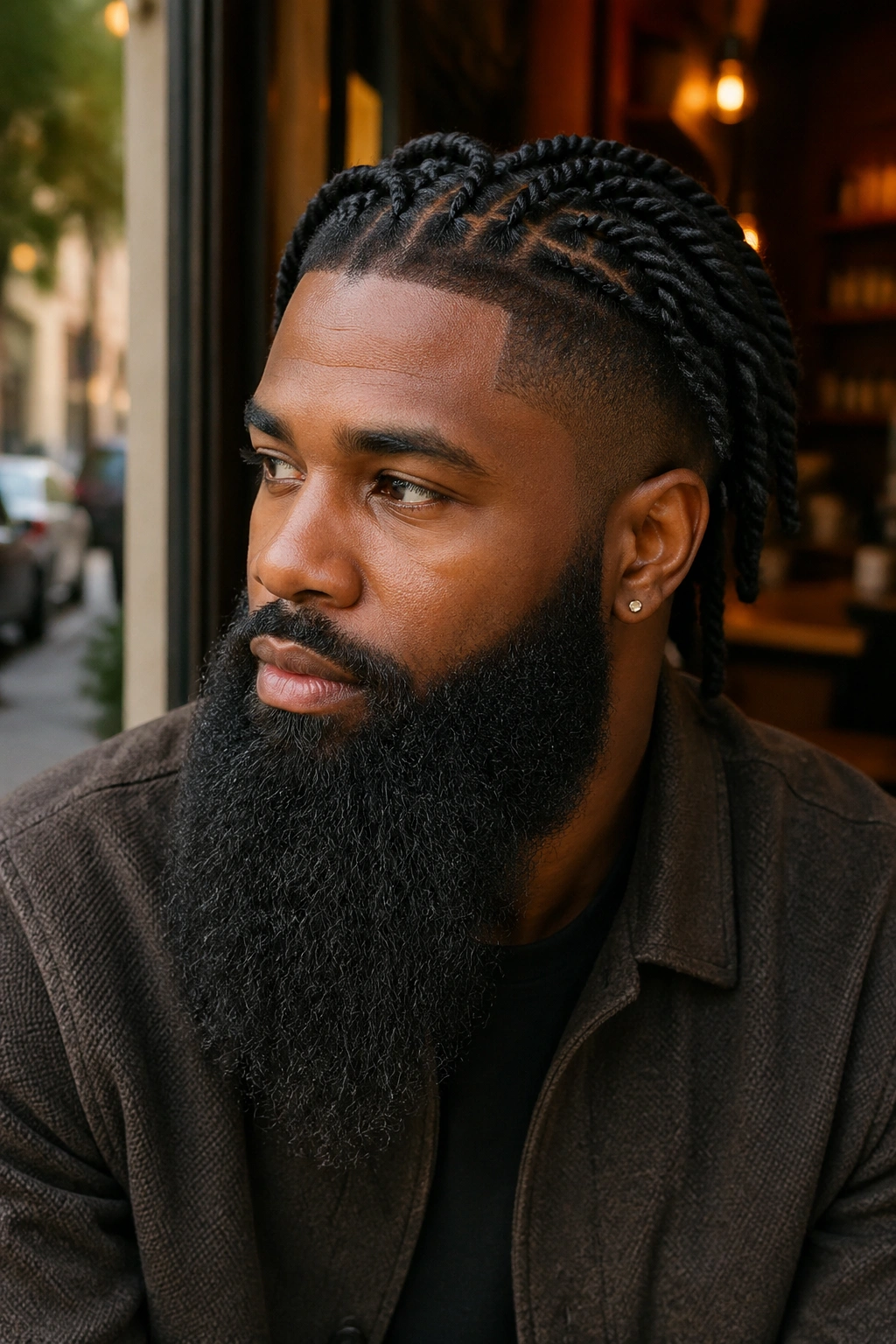
Tapered sides are the quiet move, and I mean that as a compliment. They give the twists a smooth base without stealing room from the beard, which is exactly what you want if the beard is the part you care about most.
Keep the top twists medium in size, not tiny, and let the taper clean up the edges around the ears and temples. The beard can stay long through the chin, with a softer shape at the sides so the face does not balloon outward. That combination feels balanced in a way that never gets old.
This is the style I’d point someone toward if they want the safest long-term wear. It grows out well. It sits well under hats and collars. It does not scream for attention, but it still looks finished when you catch it in a mirror or in bad lighting, which is the real test.
If you want the cleanest result, ask for medium twists, a low taper, and a beard line that follows the jaw rather than boxing it off too hard. That three-part request covers most of the mistakes men make with twist braids and long beards. The rest is upkeep, and that part is boring, but it matters.
A good style should make the beard look like a feature, not a complication. This one does that.
