



Lace braids for Black women on Type 4 hair work best when the braid respects the coil pattern instead of trying to flatten it into submission. That sounds obvious, but a lot of braid advice still acts like dense curls are a problem to solve rather than the thing that makes the style look rich in the first place. They need stretching, clean parting, and enough tension to hold shape without making your scalp feel tight by the second day.
Type 4 hair gives lace braids a fullness that straighter textures can’t fake. A single braid can look soft and sculpted, or bold and dramatic, depending on where it starts, how the parts are drawn, and whether the ends are tucked, curled, or left with some texture. The braid itself matters, yes. The finish matters more.
Shrinkage is not the enemy. Uncontrolled shrinkage is. That’s why the best lace braid styles start with a clear plan: where the braid lands on the head, how much hair you’re feeding into it, and how much of your own texture you want to keep visible. If you’ve ever had a braid look polished in the chair and fuzzy an hour later, you already know the problem. It was never the style. It was the setup.
1. Side-Swept Lace Braid with Soft Ends
A side-swept lace braid is one of those styles that looks calm from the front and quietly impressive from every other angle. It pulls the eye across the face, which works beautifully on Type 4 hair because the density gives the braid a thicker, more deliberate shape.
Why It Sits So Well on Coily Hair
The braid starts near the hairline on one side and follows the curve of the head instead of fighting it. That makes it especially good if your edges are delicate or if you hate the look of a braid sitting too high and stiff at the crown.
A stretched base helps here. Blow-dried on low heat, banded overnight, or gently stretched in twists — any of those beats trying to braid freshly shrunken hair into submission.
- Best with 4b and 4c hair that’s been stretched
- Flattering for round, oval, and heart-shaped faces
- Works with loose ends, a tucked bun, or a curly finish
My favorite part: the braid can look polished without reading formal. That’s rare.
If you want it to last, ask for the braid to be anchored with light tension at the root and a softer hand as it moves across the head. Tight braids don’t look cleaner. They just ache sooner.
2. Crown Lace Braid That Wraps the Hairline
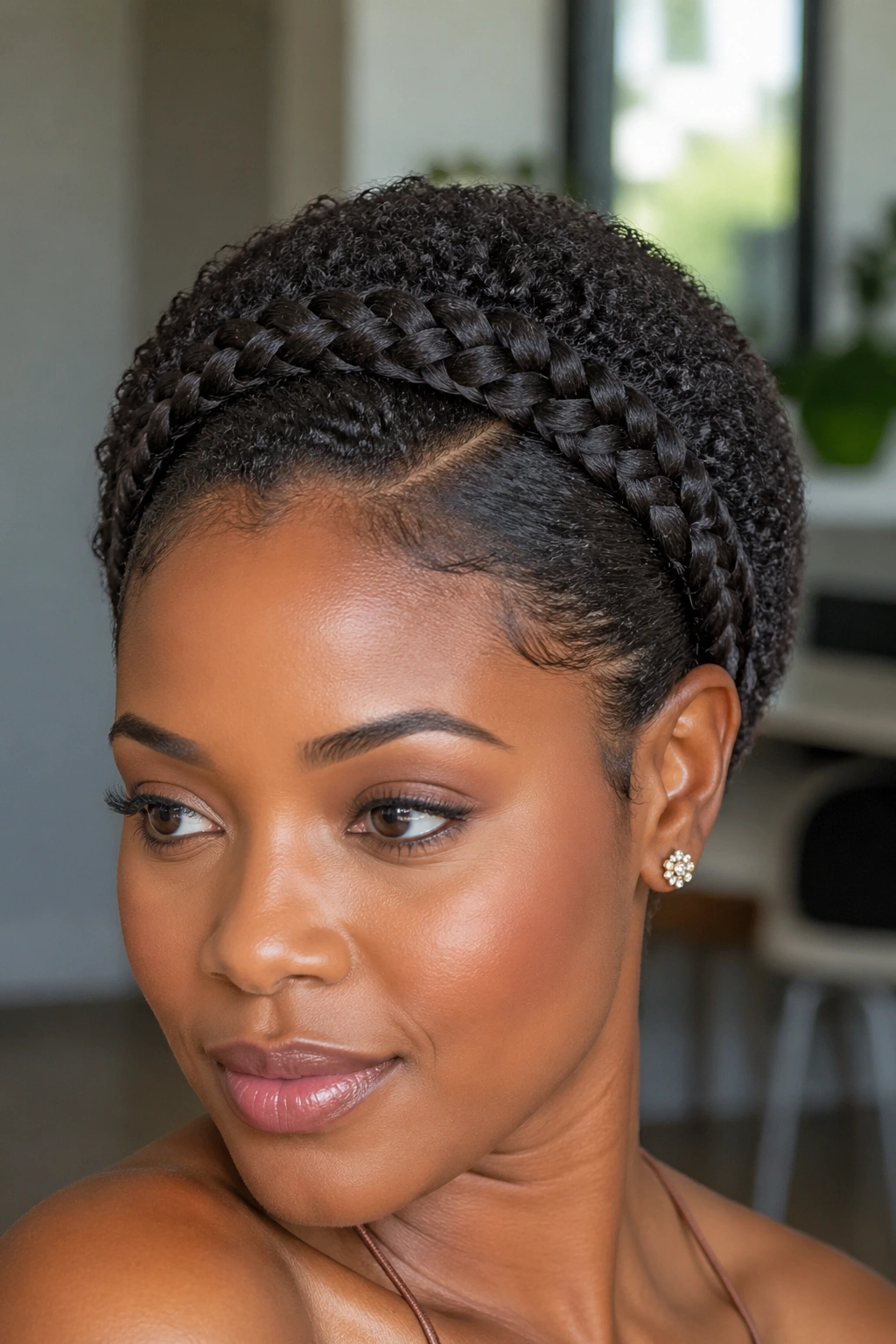
Can a crown braid sit well on dense Type 4 hair without puffing into a halo by lunchtime? Yes, if the braid follows the head shape instead of floating on top of it like a headband.
The crown lace braid is a strong pick when you want something that feels dressy but still natural. It sweeps around the perimeter of the head, which makes it a nice option for events, church, bridal looks, or any day you want your hair to feel put together without a full updo.
What Makes It Different
The braid should hug the head. Not clamp down. If the style is built too tightly, the whole thing starts to look rigid and can put too much pull around the temples. That’s where Type 4 hair needs care most.
A soft edge brush and a little mousse on the braid’s surface can help calm flyaways, but don’t drown the hair in gel. Heavy product makes the braid look wet for a minute and then flaky later. No one wants that.
This style also benefits from a small side part at the start. It breaks up the symmetry just enough to keep the braid from feeling costume-like. If you like accessories, a few gold cuffs tucked into one side are enough. More than that, and the braid starts competing with itself.
3. Diagonal Lace Braid Into a Low Bun
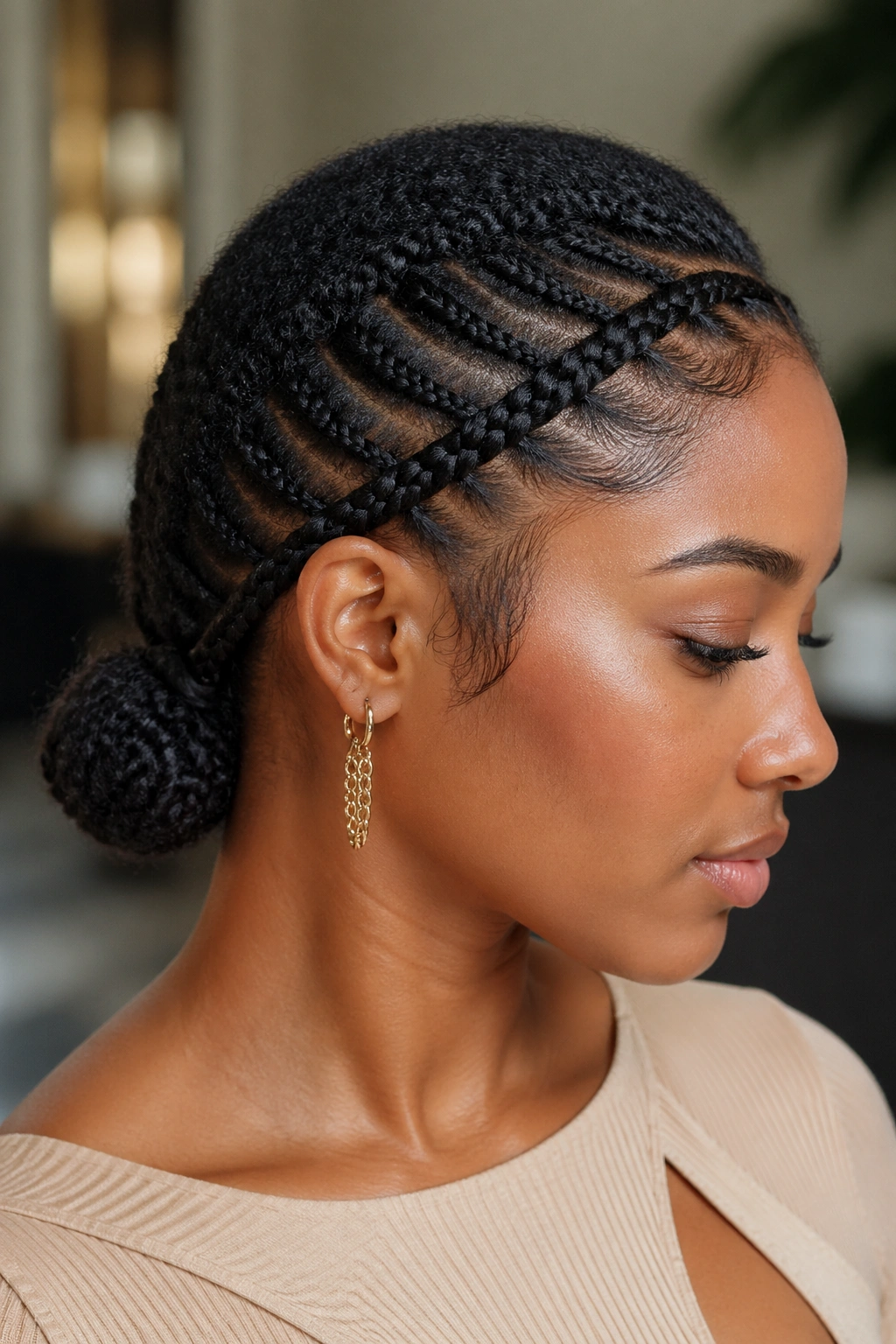
The diagonal lace braid into a low bun is the kind of style that looks neat from a distance and richer up close. It starts at one temple, travels across the head at an angle, and ends in a bun near the nape. On Type 4 hair, that diagonal line does a lot of work. It stretches the silhouette and keeps the shape from feeling boxy.
I like this one for days when you need your hair out of the way but still want movement at the front. A straight-back braid can look a little severe on textured hair. The diagonal version softens that edge. It also gives you a nice place to show off your parting skills, which, honestly, are half the style.
If your hair is thick, keep the bun low and compact. A giant bun can tip the balance and make the braid look like it’s being dragged backward. If your hair is fine but densely coiled, a small amount of added hair at the bun base can help fill it out without making the front too heavy.
One thing people skip: pin the bun from underneath first, then from the sides. That keeps the shape from sagging after a few hours. Simple. Effective.
4. Double Lace Braids Meeting in a Puff
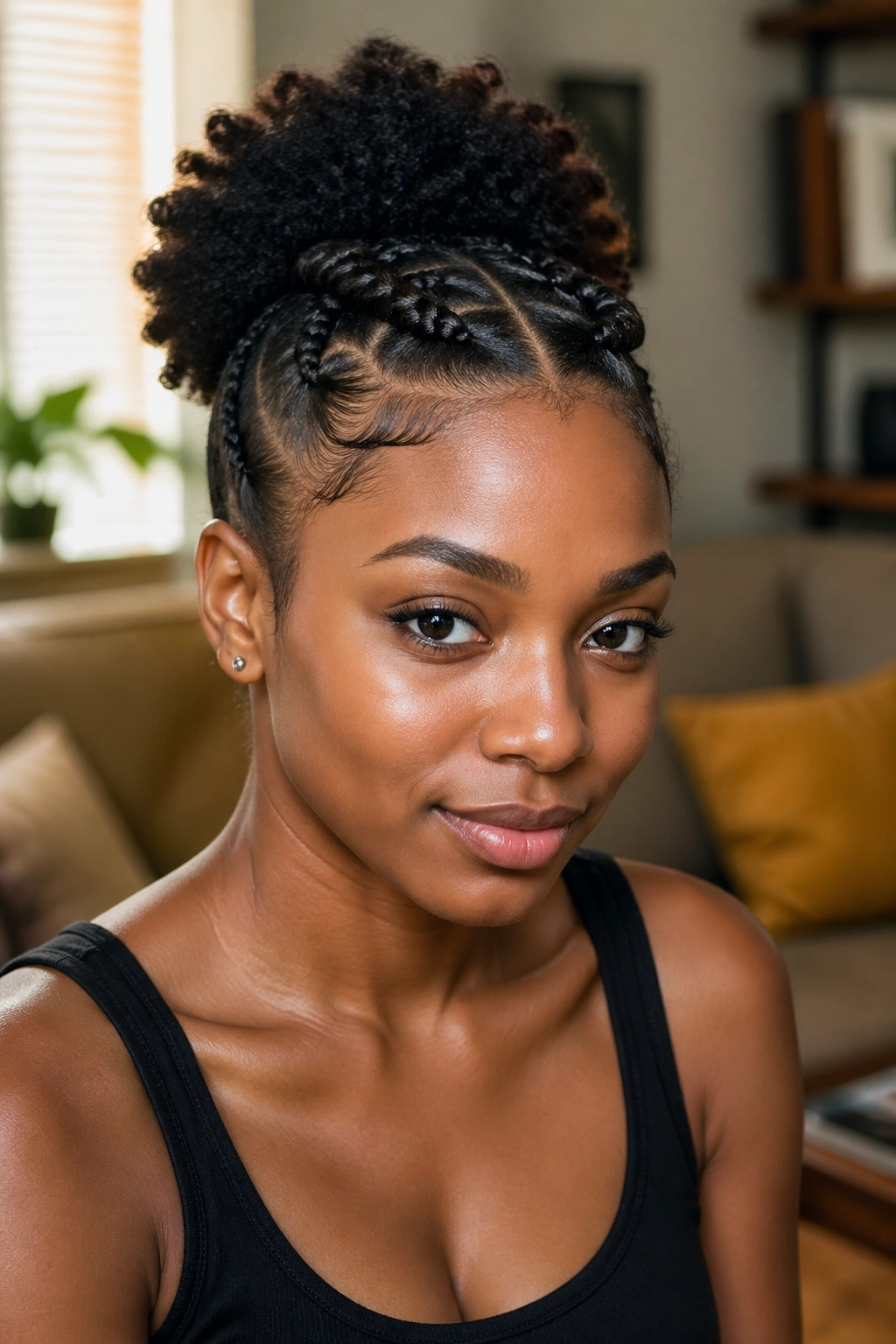
Two lace braids can do what one big braid sometimes can’t — they let Type 4 hair stay soft and full while still giving the front a clean frame. This style works especially well if you like your hair to keep some personality instead of being pulled into one long line.
Why It Works
The braids usually start near the front hairline on each side and travel back toward the crown, where they meet a puff, ponytail, or tucked section. That middle point matters. It gives the style a natural pause and keeps the look from turning too busy.
This is one of my favorite options for hair that shrinks fast. The puff at the back can hold a lot of volume, and the lace braids at the front keep the face open. You get both control and softness. That’s a nice balance.
- Great for 4a, 4b, and 4c hair
- Good for stretched curls, twist-outs, or blow-dried roots
- Easy to dress up with cuffs, beads, or a satin scarf wrap at night
Watch the tension at the temples. Two braids can feel harmless, but if both sides are pulled too tight, the discomfort shows up fast.
5. Lace Braid Mohawk with Twisted Sides
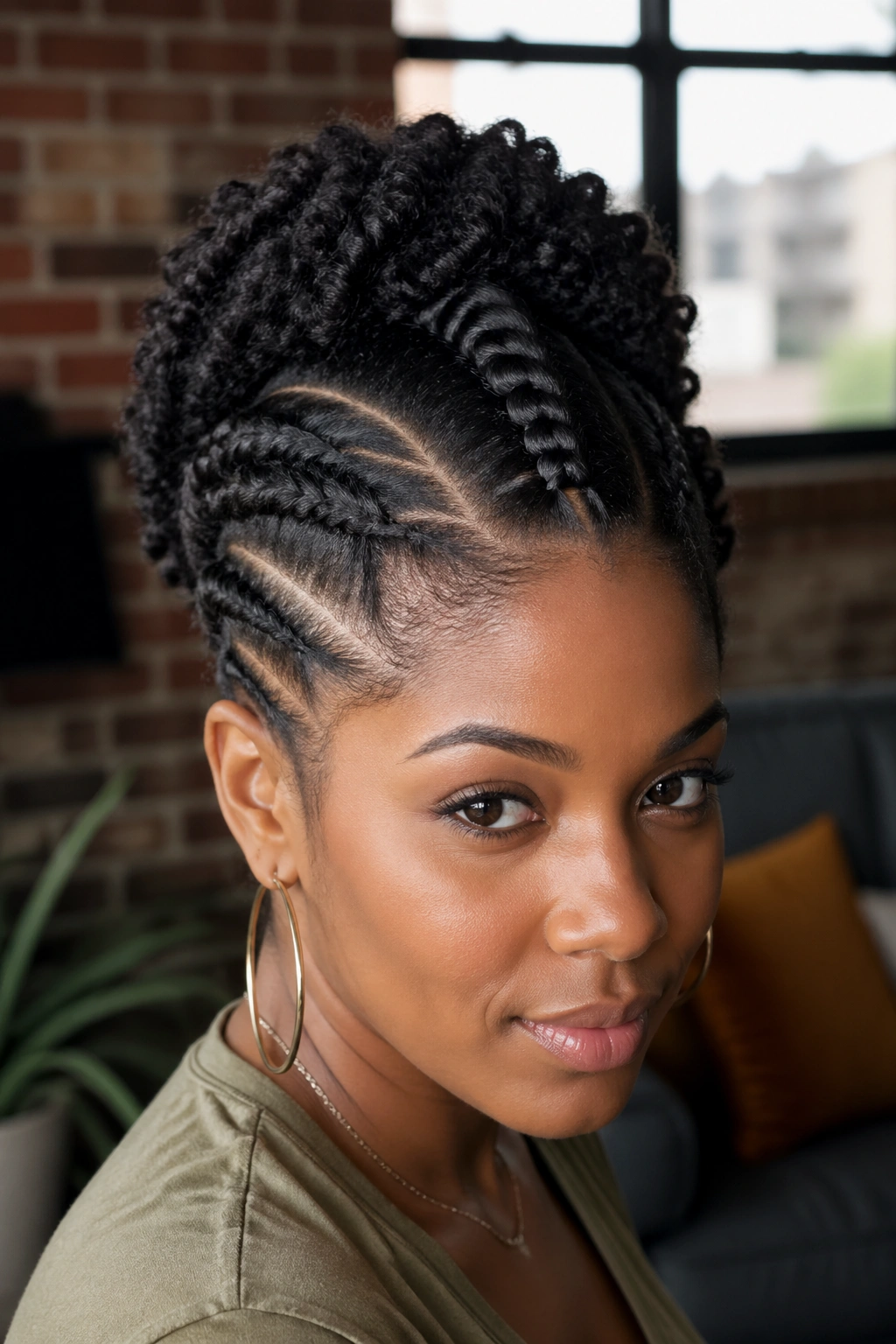
A lace braid mohawk is for the days when plain and polite are not the mood. The braid runs through the center or slightly off-center of the head, while the sides are twisted, slicked, or tucked close to the scalp. On Type 4 hair, this shape looks strong because the texture adds height without needing much product.
The style has real range. Keep the braid narrow and the sides flat for something sharp. Make the braid thicker and the side sections puffier if you want a softer, more playful look. Either way, the contrast is the point.
This one usually holds best when the hair has some stretch. Not bone-straight, not loose and fluffy — just stretched enough that the parts stay visible and the braid doesn’t disappear into shrinkage. If your stylist is braiding while the hair is still very wet, ask them to let the roots dry first. A damp base can make the whole style frizz sooner than it should.
I also like this style because it lets you keep some edge detail if that’s your thing. A clean side part, a tiny braid on one temple, or a few curls left at the nape can change the whole feel.
6. Zigzag-Part Lace Braid with Crisp Scalp Lines
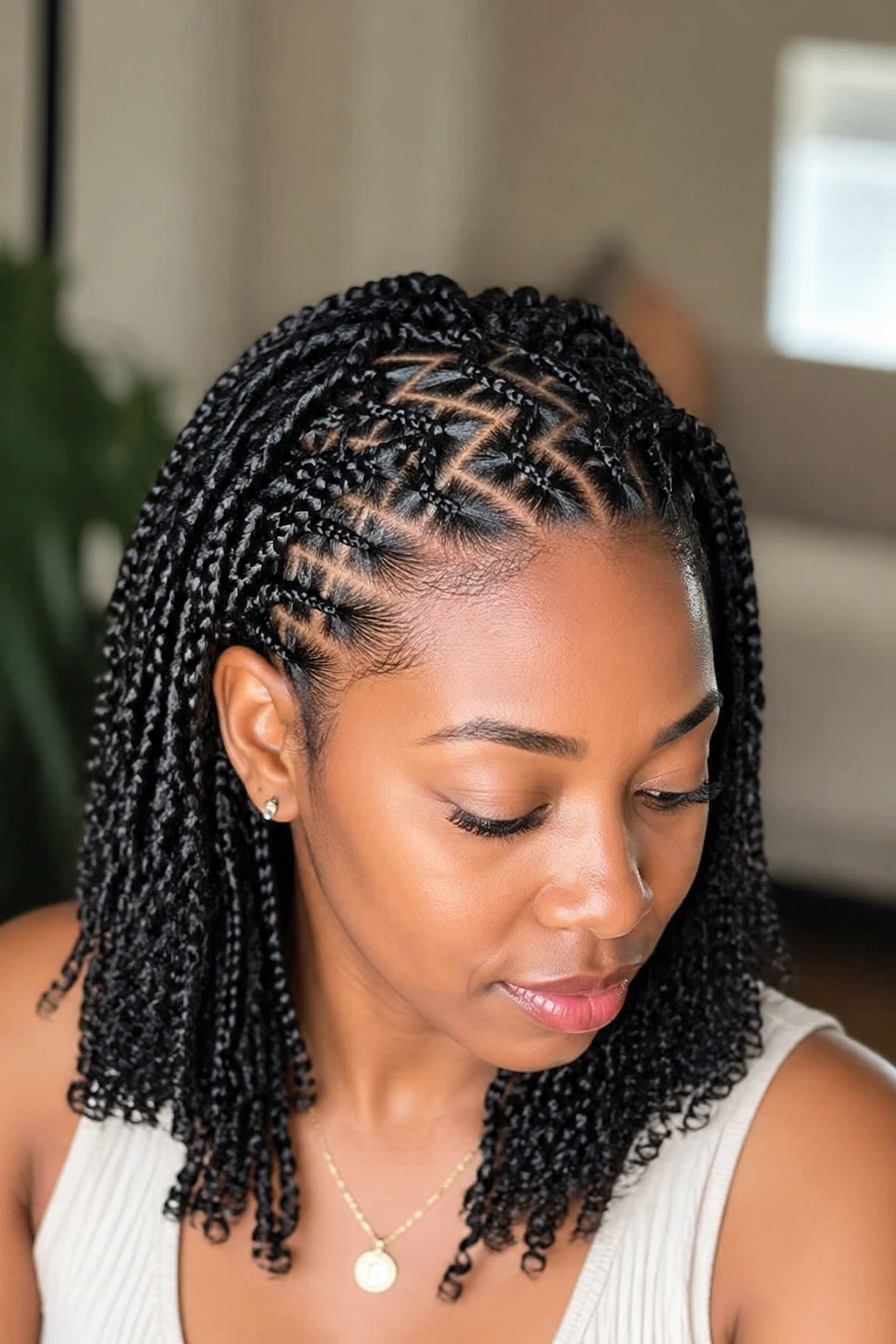
Zigzag parts can look theatrical on the wrong hair texture. On Type 4 hair, though, they can be excellent — if the lines are clean and the braid itself stays modest in size. That contrast is what makes the style work.
The zigzag part gives the lace braid a built-in design element before the braid even starts moving. It’s especially useful when you want your style to look intricate without asking for a full head of micro-braids. The part becomes the visual hook. The braid does the rest.
What to Ask For
Ask for narrow, even sections and a sharp tail-comb part. If the parts are too wide, the zigzag turns into a wavy mess instead of a deliberate pattern. And don’t let the braid get too chunky at the start, or it will swallow the part design.
This style loves shine spray used lightly on the finished braid, not on the scalp. The scalp should look neat, not greasy. There’s a difference, and it shows in photos.
One more thing: this is not the style for a rushed braider. The parting is the whole point. If someone is moving too fast through the sections, you’ll see it right away. The result looks more expensive when the lines are thoughtful.
7. Half-Up Lace Braid with Twist-Out Lengths
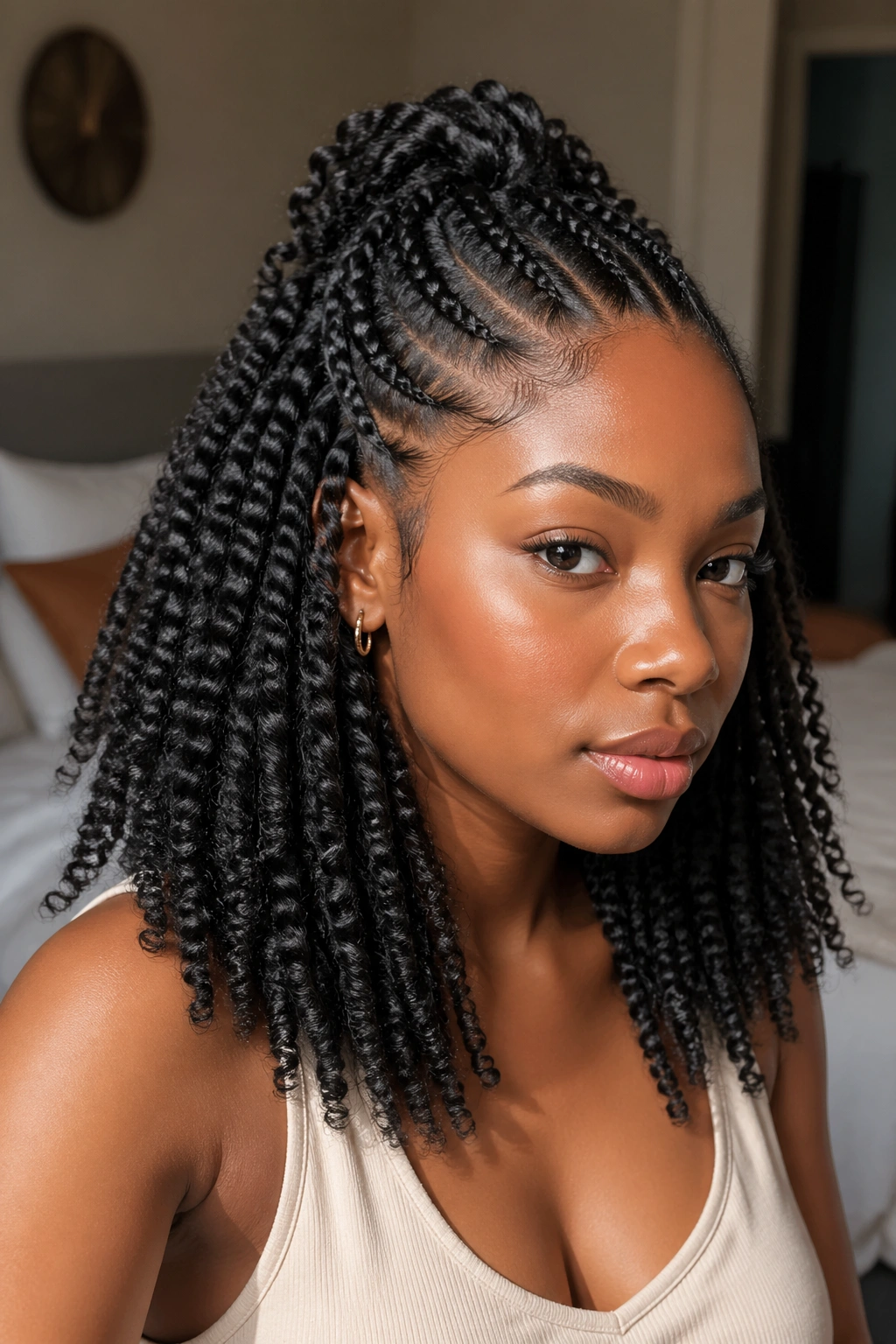
A half-up lace braid gives you the neatness of a braided front and the movement of a twist-out or braid-out below it. That combination feels especially right for Type 4 hair because it lets the texture stay visible instead of hiding everything under one uniform braid.
It’s a friendly style. Not lazy, just friendly. The top section gets braided from the front hairline back toward the crown, and the rest stays loose, stretched, or defined in curls. You get lift at the top and fullness at the bottom without having to commit to a full updo.
How to Get the Shape Right
The top braid should not be too thick. If it is, the style starts looking heavy and drags the face down. A medium-width braid usually gives the best balance.
The loose section matters too. If your twist-out is still damp or undefined, the style can look unfinished. Give the loose hair enough time to dry fully and separate it with a light oil or a cream that doesn’t leave a greasy cast.
This is a good style for people who like options. You can clip the loose section up at work, wear it down later, and refresh only the front braid with a little mousse if needed. That kind of flexibility is hard to beat.
8. Lace Braid Ponytail with a Wrapped Base
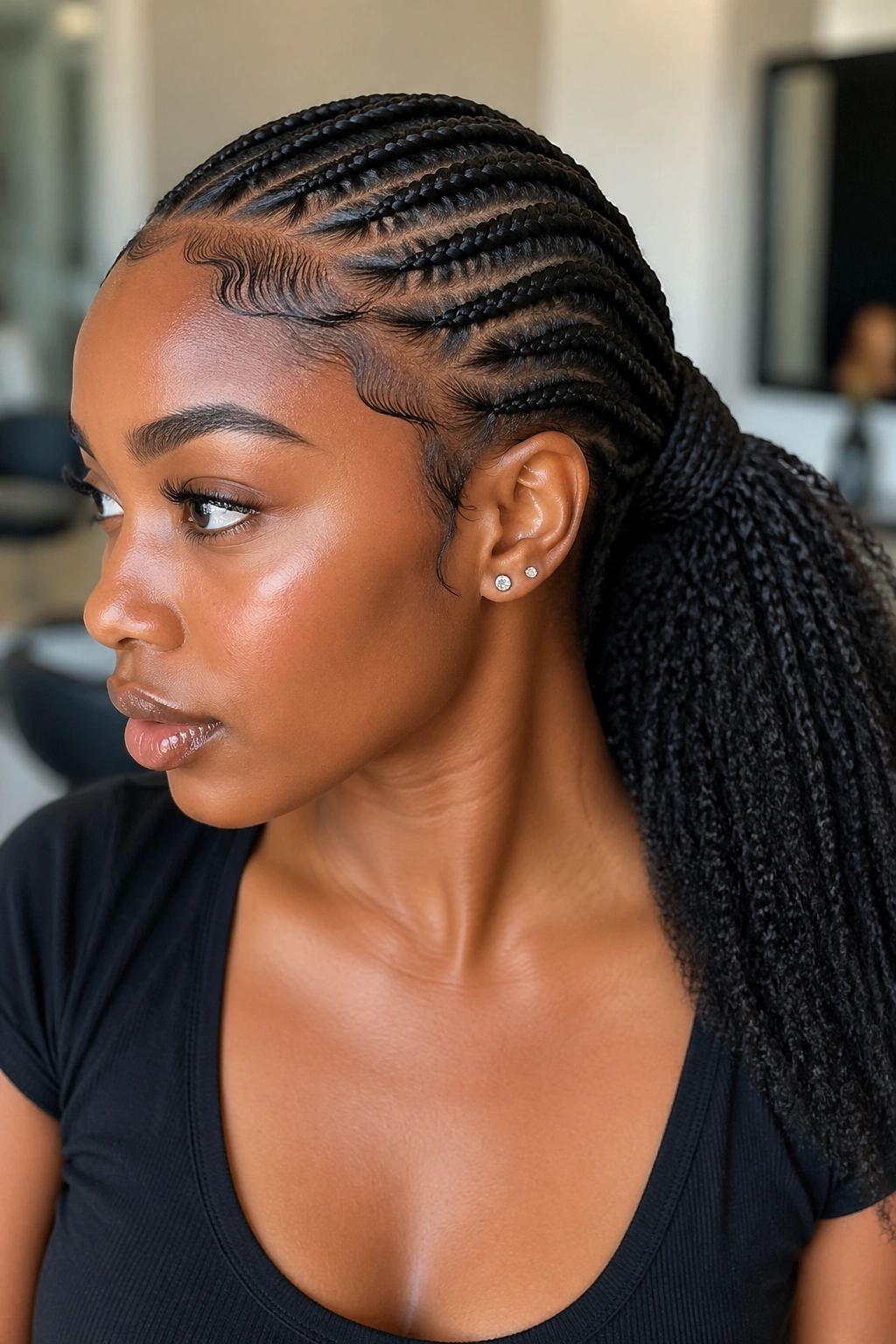
The lace braid ponytail is one of the cleanest ways to wear Type 4 hair when you want the front to stay smooth and the rest to look long and tidy. The braid travels along the hairline or across one side, then feeds into a ponytail that can sit high, mid-level, or low.
What I love here is the control. The wrapped base hides the hair tie, so the finish looks intentional rather than practical. A flat ponytail base also helps the braid blend into the rest of the style instead of ending abruptly at a rubber band.
If your hair is very dense, don’t force the ponytail too high unless you enjoy that pulled feeling. A mid-height ponytail is often better for long wear. It sits easier on the scalp and keeps the silhouette elegant without losing volume.
A small strip of braided hair wrapped around the base makes a bigger difference than people think. It hides bulk and gives the style a cleaner line. That little detail is the reason some ponytails look finished and others look like they were tied in five minutes.
9. Center-Part Twin Lace Braids
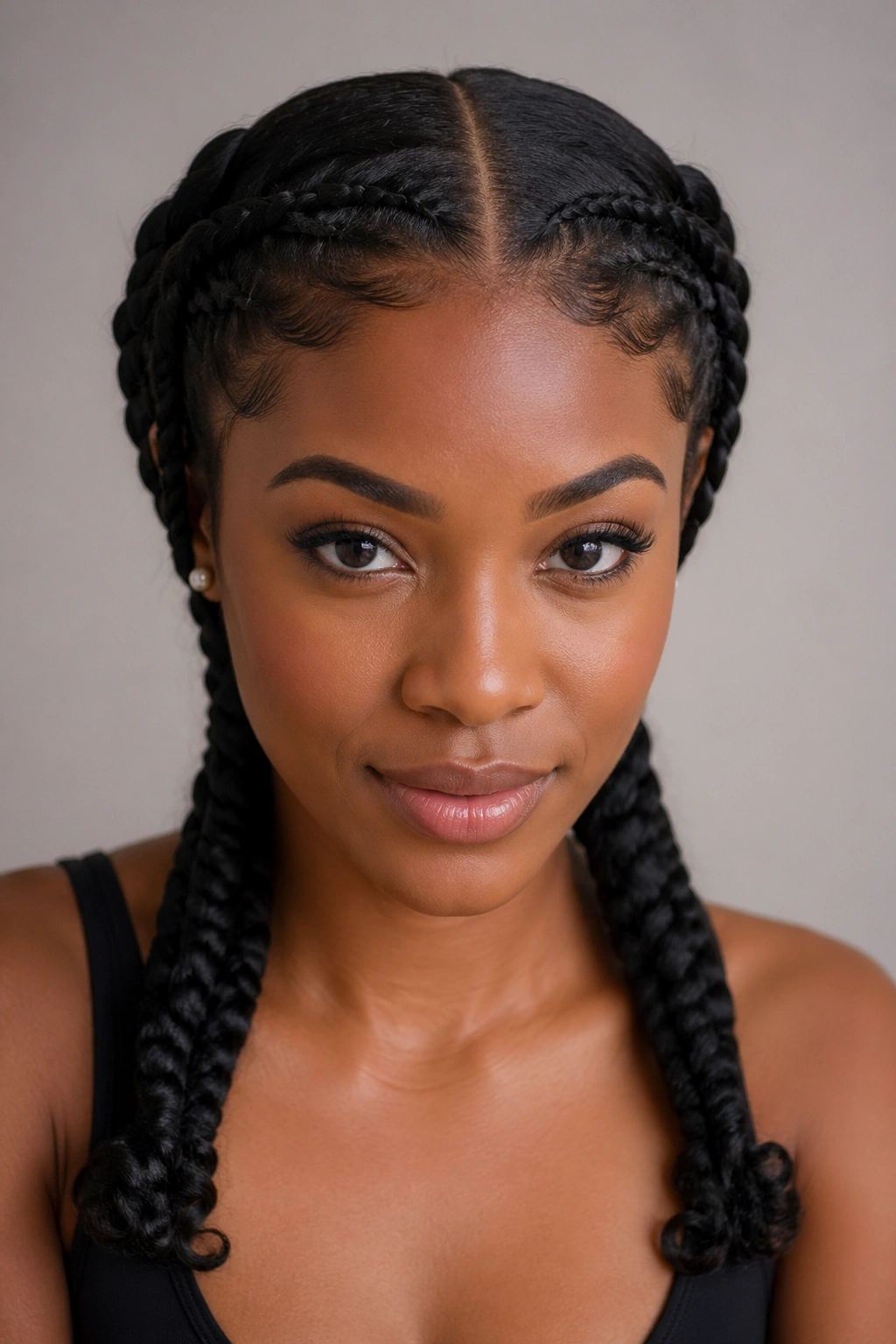
Two lace braids with a center part can look very symmetrical, very crisp, and very good on Type 4 hair when the parts are straight and the braids are sized to match. There’s nothing fussy about this style. It’s tidy, balanced, and easy to read from across a room.
The center part is doing a lot of the visual work, so it has to be clean. A crooked line throws the whole style off. I’d rather see a slightly thicker braid with a perfect part than a tiny braid with a wobbly one. Shape beats overthinking every time.
This style also gives your face some framing without crowding it. If you have a wider forehead, the braids can soften the upper half of the face. If your features are more angular, the symmetry keeps everything balanced.
For added texture, some people leave the ends as small curls or mini two-strand twists. That keeps the style from feeling too severe. Straight, tucked ends work too. Just decide the mood before you start, because halfway choices tend to look half-done.
One sentence can change the whole read. A neat one.
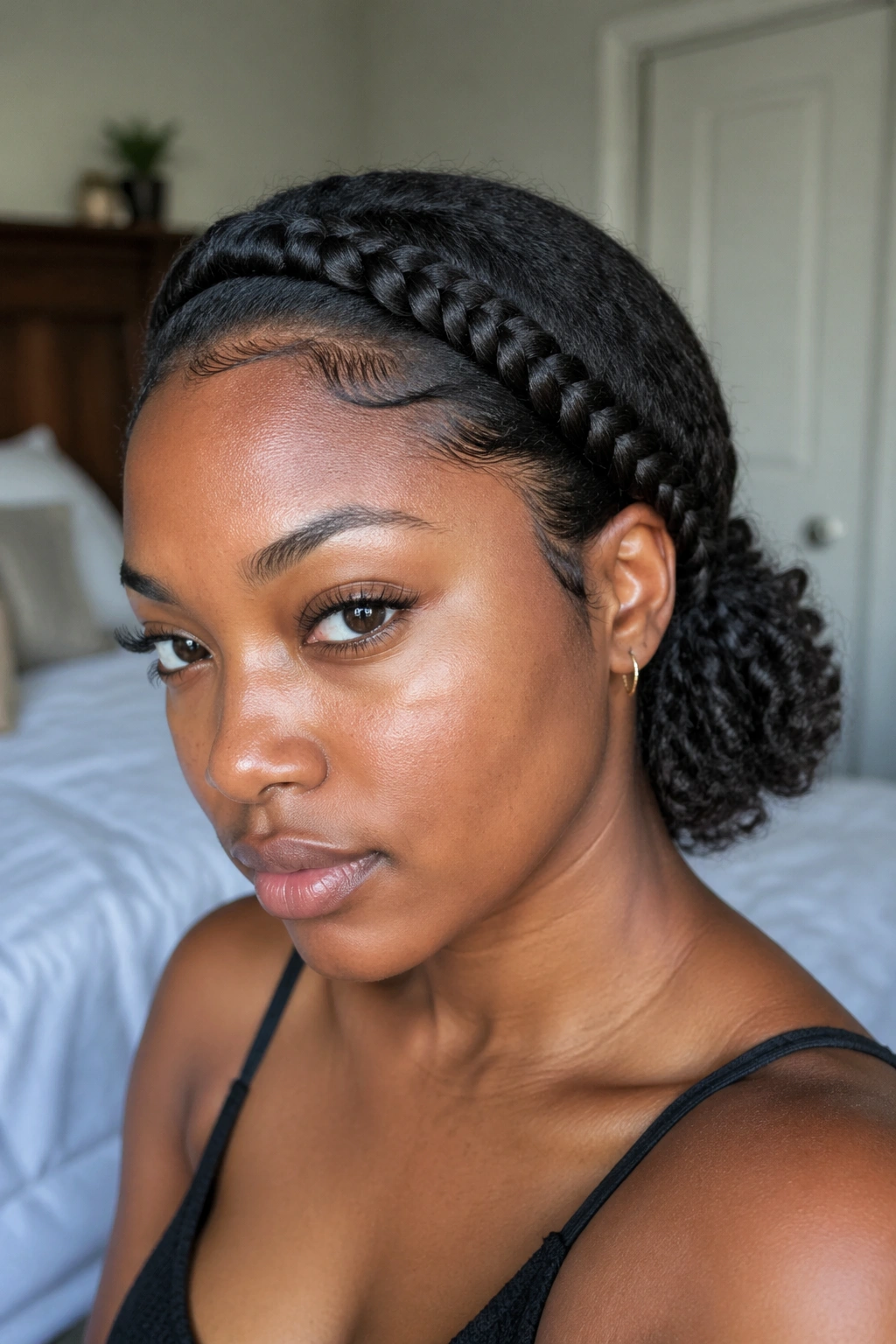
10. Side Lace Braid Into a Flat Bun
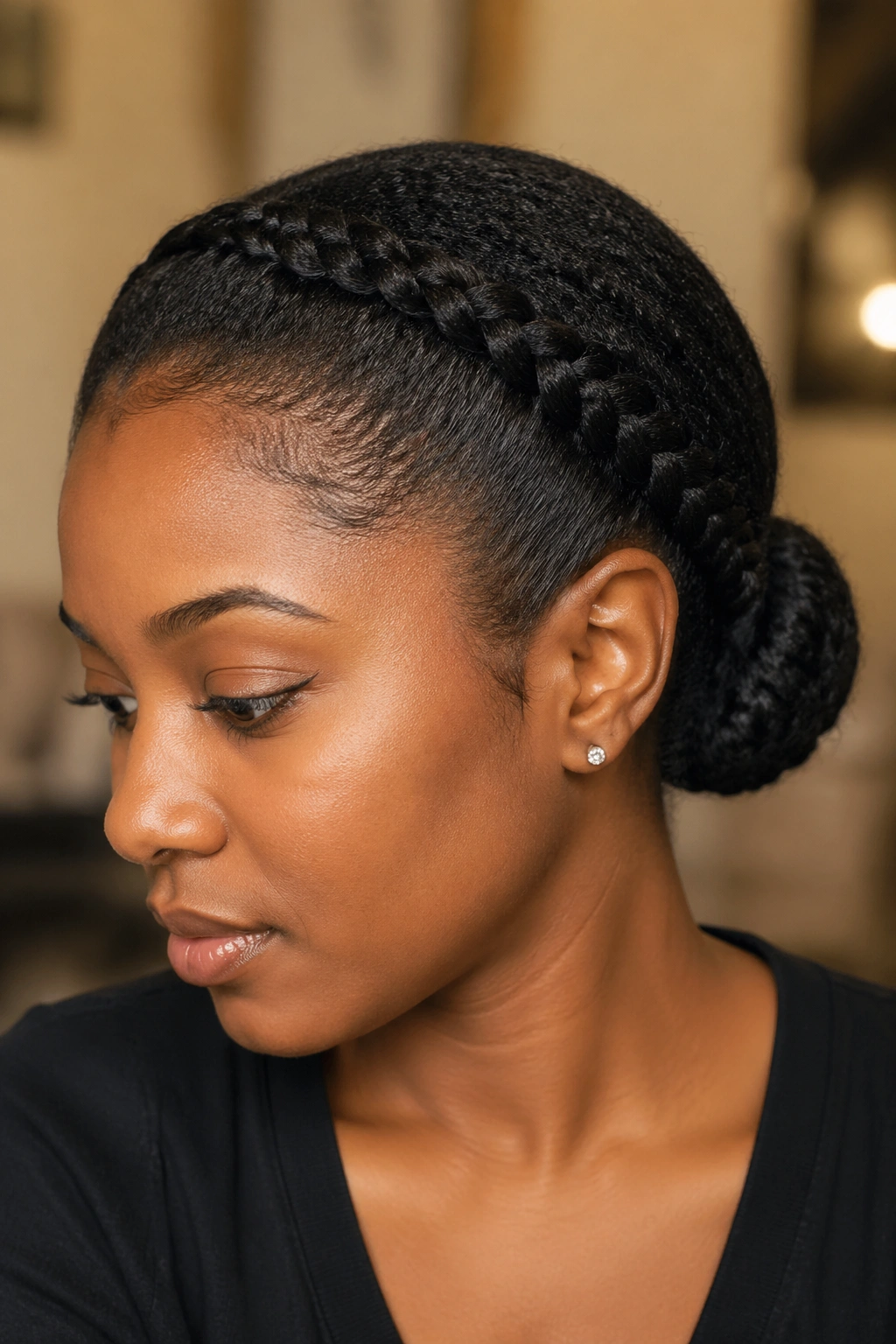
A side lace braid into a flat bun is the grown-up option that still knows how to have a little style. The braid starts on one side, sweeps across the head, and disappears into a low bun that sits close to the neck.
Unlike a high bun, this one keeps the silhouette grounded. That matters on Type 4 hair, where too much height can make the style feel top-heavy. A flat bun looks calm, sleek, and deliberate. It also tends to last better because the weight is distributed more evenly.
Why It’s a Smart Everyday Choice
The bun should be pinned flat and tucked in close, not stacked up like a donut. If you can see too much bulk from the side, the line of the braid gets lost.
This style is excellent for work, events, or long days when you want your hair to stay put. It also plays well with accessories. One slim pin, a pearl comb, or a single metal cuff is enough. Don’t overload it.
If your hair is thick at the nape, smooth that section with a light styling cream before you pin it. Just a little. Too much product back there creates a soft, puffy base that defeats the clean look you were probably trying to get in the first place.
11. Beaded Lace Braid for a Dressier Finish
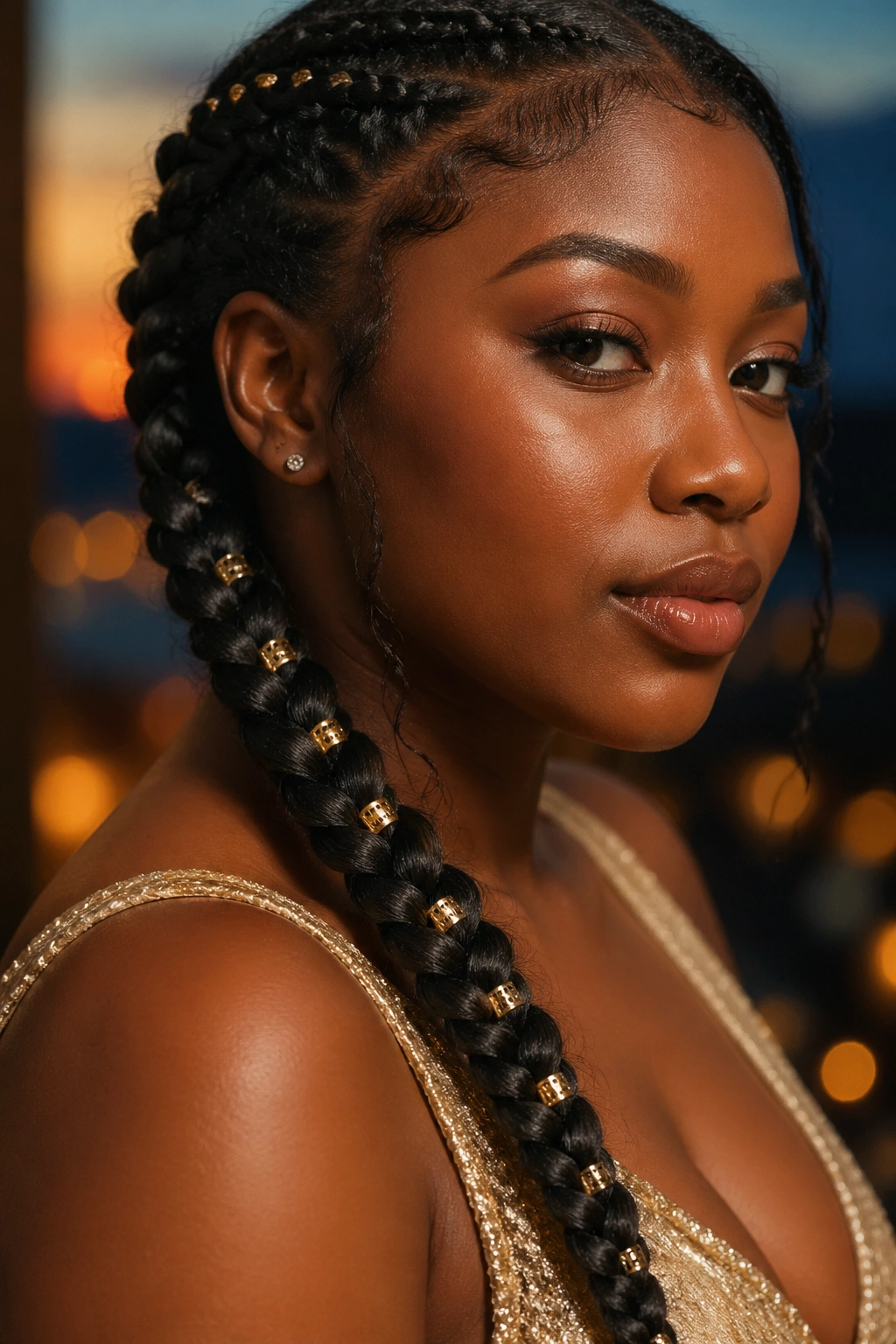
Beads on a lace braid can feel playful, formal, or both, depending on the size and placement. On Type 4 hair, they add weight and sound — that little click when you move your head — which changes the whole mood of the style.
I like beads most when the braid itself is simple. If the braid is already doing a lot of twisting and feeding, the beads can become too much. A cleaner braid gives the accessories room to matter.
A Few Details That Help
- Use lightweight beads near the ends if the hair is fine or the braid is long
- Place heavier beads higher up only if the braid is secure and the base is strong
- Match the bead color to your outfit when you want the style to read polished
- Use just a few beads if you want the braid to stay the main event
The biggest mistake is loading the ends until the braid starts sagging. That looks cute for about ten minutes and then gets annoying fast. Less weight usually looks better and feels better.
Beaded lace braids are lovely for birthdays, special dinners, and any day you want your hair to sound as good as it looks. Small detail. Big personality.
12. Feed-In Lace Braid Mixed with Small Cornrows
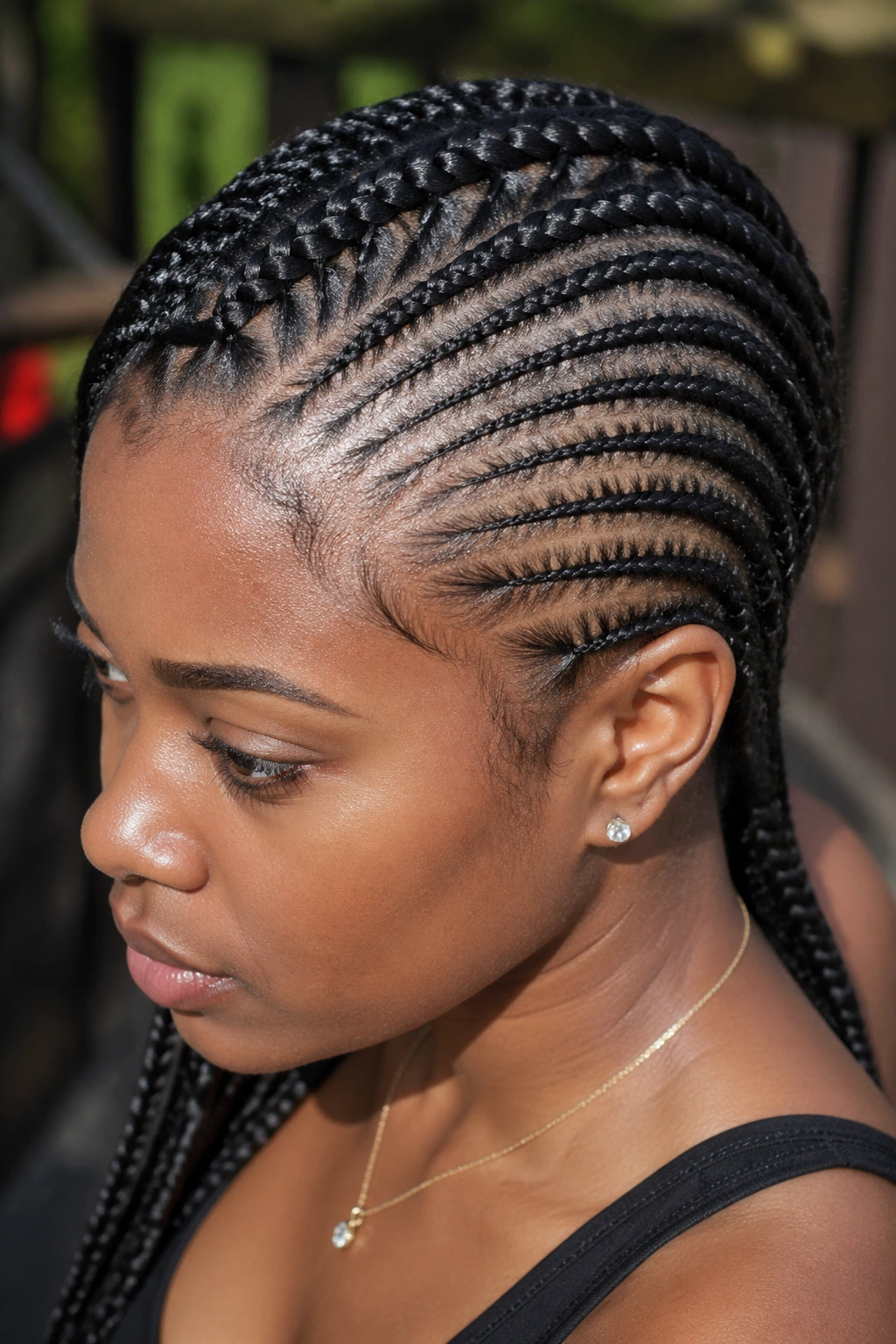
This style is for the person who likes structure. A lace braid can flow into small feed-in cornrows or sit between them, and that mix gives Type 4 hair a very clean, braided canvas without flattening the whole head into one pattern.
The trick is keeping the braid sizes related. If one section is huge and the next is tiny, the eye catches the mismatch immediately. A good braider will taper the feed-in sections so they grow or shrink in a way that feels natural.
This style usually lasts longer than a looser half-up look because the braid pattern is more anchored. That makes it a smart choice for travel, busy weeks, or any stretch where you don’t want to fuss with your hair every day.
It’s also one of the best ways to show off parting skill. Clean lines, even spacing, and steady tension matter here. Messy parting will ruin the effect. Sharp parting will carry it.
If you’re the kind of person who likes your braids to look crisp from every angle, this one is worth the time. It has presence. It also behaves.
13. Lace Braid with Curly or Stretched Leave-Out at the Nape
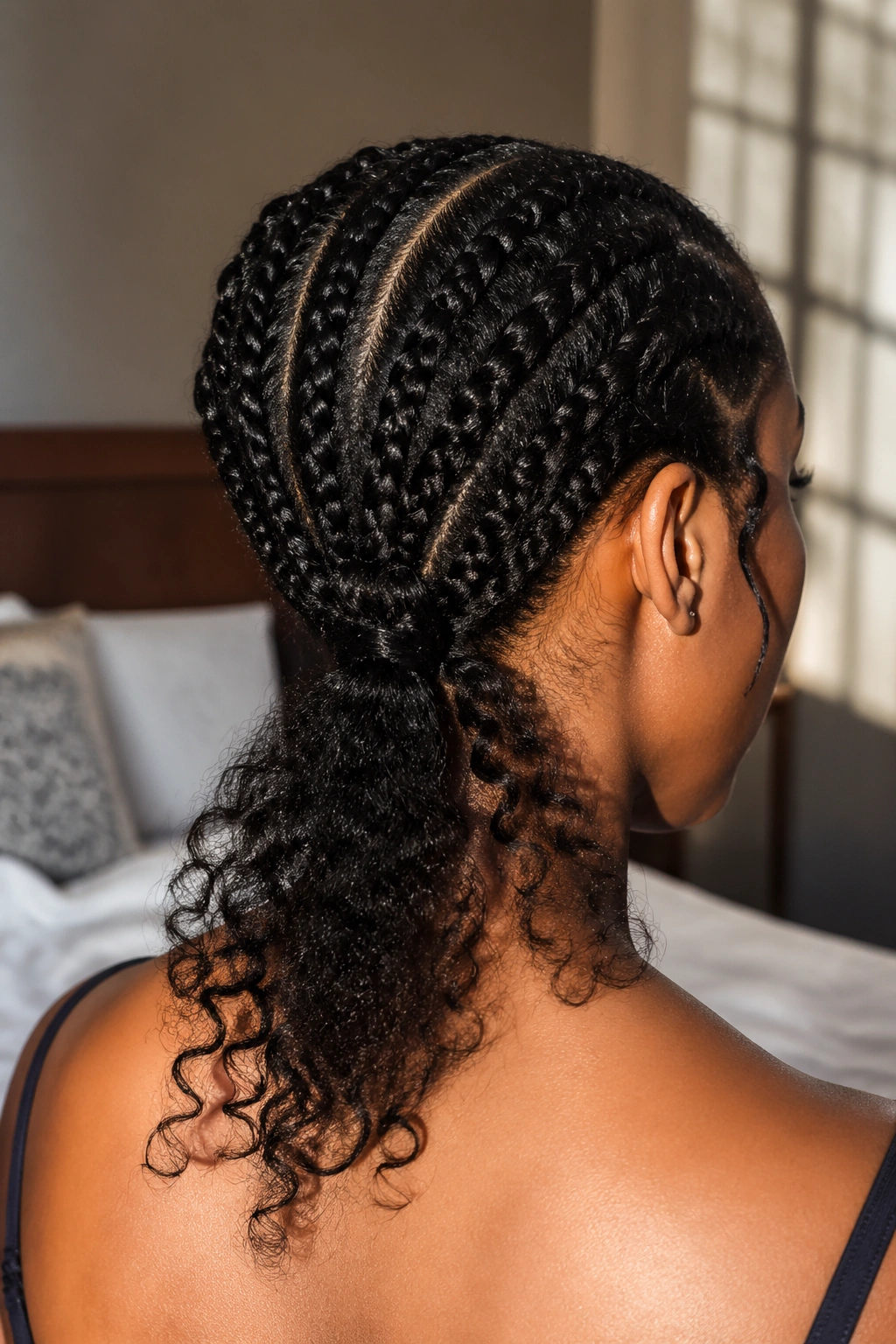
A lace braid with leave-out at the nape gives Type 4 hair a softer ending point. Instead of tucking every last strand into a bun or ponytail, you leave a section loose — stretched, curled, or lightly defined — so the braid ends with movement.
That little bit of leave-out changes the whole energy of the style. The top stays neat. The bottom feels airy. If you have dense hair, this is a good way to keep the style from looking too heavy from front to back.
How I’d Wear It
I’d keep the braid clean and medium-sized, then let the leave-out do the styling work. If the loose section is curly, define it with a light foam or setting lotion and let it dry fully before touching it. If it’s stretched, smooth it with a little cream and wrap it at night so it stays elongated.
This style is a nice bridge between braided and loose looks. It works for people who like movement but don’t want a full wash-and-go. And because the braid frames the front while the nape stays soft, the shape feels balanced instead of strict.
One warning: if the leave-out is too short, it can look accidental. Give it enough length to read as part of the design, not a mistake.
Final Thoughts
The best lace braids on Type 4 hair usually share the same quiet strengths: clean parts, controlled tension, and a finish that matches the mood of the rest of the style. If the braid is doing too much, the whole look starts to feel busy. If it’s too tight, you’ll feel that mistake before anyone sees it.
What works most consistently is a braid that follows the head shape and leaves room for your texture to show up somewhere — at the ends, in the puff, in the loose lengths, or in the way the style moves when you turn your head. That texture is the point. Don’t hide it unless you truly want to.
Pick the style that matches your patience, your week, and how much upkeep you’re willing to handle. A lace braid can be soft and romantic, sharp and polished, or a little loud in the best way. The good ones feel like they belong on your head, not in a salon photo.
