



Snake braid ponytails do something a plain braid rarely manages: they make long hair look intentional without making it feel stiff. If your hair falls past your shoulders, you already have enough length for the braid to bend, curve, and snake into the ponytail instead of stopping awkwardly halfway down your head.
That extra length matters. A snake braid needs room to move, and hair that grazes the collarbone or hangs lower gives you that movement without fighting the shape. Too short, and the braid looks clipped. Long hair lets the curves breathe.
The trick is not perfect symmetry. Tight braids fight the style, and roots that are brushed too flat can make the whole thing look tired. A little grip at the scalp, a clean elastic, and a few bobby pins where the braid wants to lift — that usually does the job.
I like this family of ponytails because it gives you range. Some versions read sleek and controlled, some feel a little sporty, and a few look like they took half an hour when the real answer was closer to ten minutes with a decent comb and a steady hand. The styles below lean into that range, so you can pick one that matches your hair texture, your outfit, and how much patience you have that day.
1. Low Snake Braid Ponytail
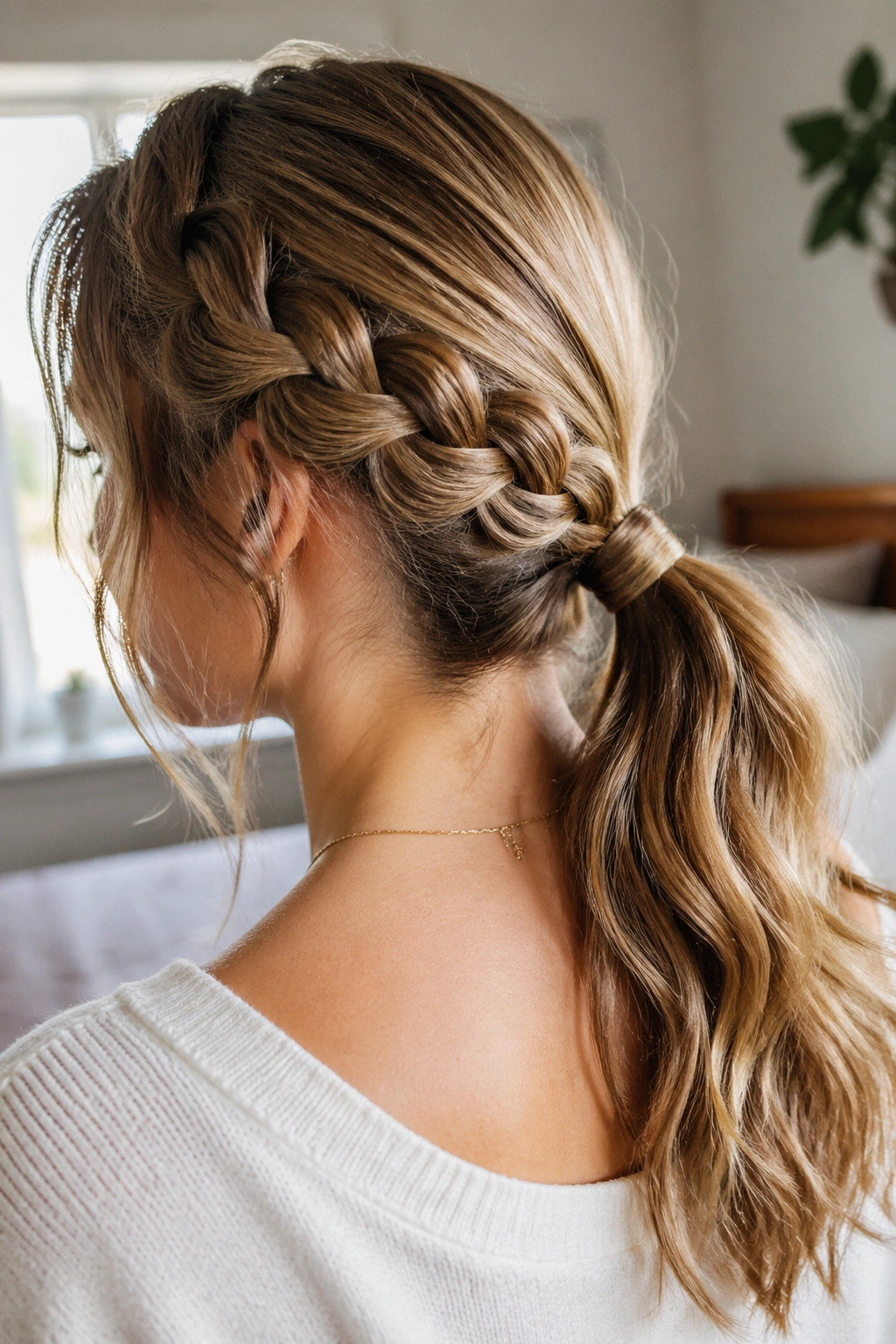
Start here if you want the style to behave.
A low snake braid ponytail is the easiest place to get comfortable with the shape, because the braid sits close to the head and has less chance to spring loose. I like this version on long hair that has a little natural wave, though straight hair works too if you rough it up with a touch of texture spray first. The braid can begin near one temple, travel along the back of the head, then disappear into a low ponytail at the nape.
Why it holds so well
The low placement gives the braid weight. That weight matters. Hair past the shoulders has enough length to pull the curve downward, so the snake shape stays visible instead of puffing out into a random bump.
- Keep the braid section between 1 and 1½ inches wide so it stays neat without getting bulky.
- Anchor the braid with clear elastics if your hair slips a lot.
- Hide the ponytail base with a small wrapped strand of hair for a cleaner finish.
- Use a pea-sized dab of styling cream on the surface hairs if flyaways are a problem.
Tip: Keep the braid slightly loose. A braid that is too tight will not bend well, and the snake effect loses its shape fast.
The look works for days when you want your hair off your neck but still want more personality than a basic low ponytail. It is also a good “first snake braid” because mistakes are less obvious when the style sits low. If one curve goes a little crooked, it just reads as texture. That is a gift.
2. High Snake Braid Ponytail with a Wrapped Base
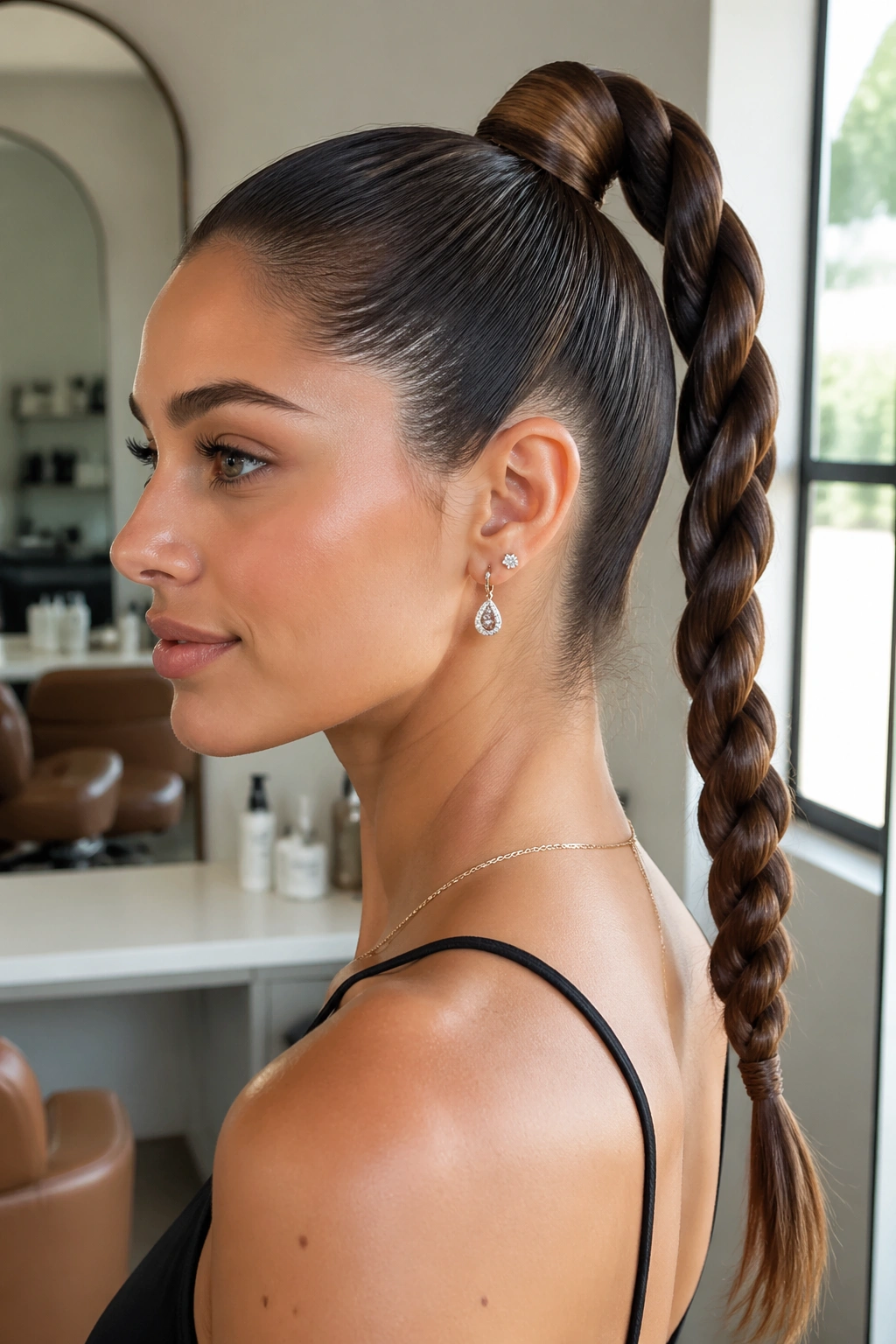
A high snake braid ponytail looks sharper than a standard high ponytail the second you add the braid.
The lift changes everything. Hair pulled up toward the crown opens the face, stretches the profile, and gives the snake braid a more dramatic line, especially when long hair trails down the back in a thick tail. This one looks best when the roots are smooth and the ponytail sits high enough that the braid can curve without getting lost under the base.
A clean wrapped base keeps the style from looking busy. I usually smooth the front with a boar-bristle brush, gather the ponytail at the highest comfortable point, and then wrap a narrow strand around the elastic. That little move matters more than people think. It makes the whole style read finished, not improvised.
If your hair is thick, this is a good place to lean into it. Thick hair gives the ponytail body, and the braid has enough support to keep its shape. Fine hair can wear it too, but you will want a little dry shampoo at the roots or a light backcomb under the crown for lift. Otherwise the ponytail can sag faster than you’d like.
This version is the one I reach for when I want a style that feels energetic without turning into a messy topknot. It works with a fitted tee and jeans, but it also holds up with sharper clothes. Clean lines. Strong shape. No fluff.
3. Side-Swept Snake Braid Ponytail
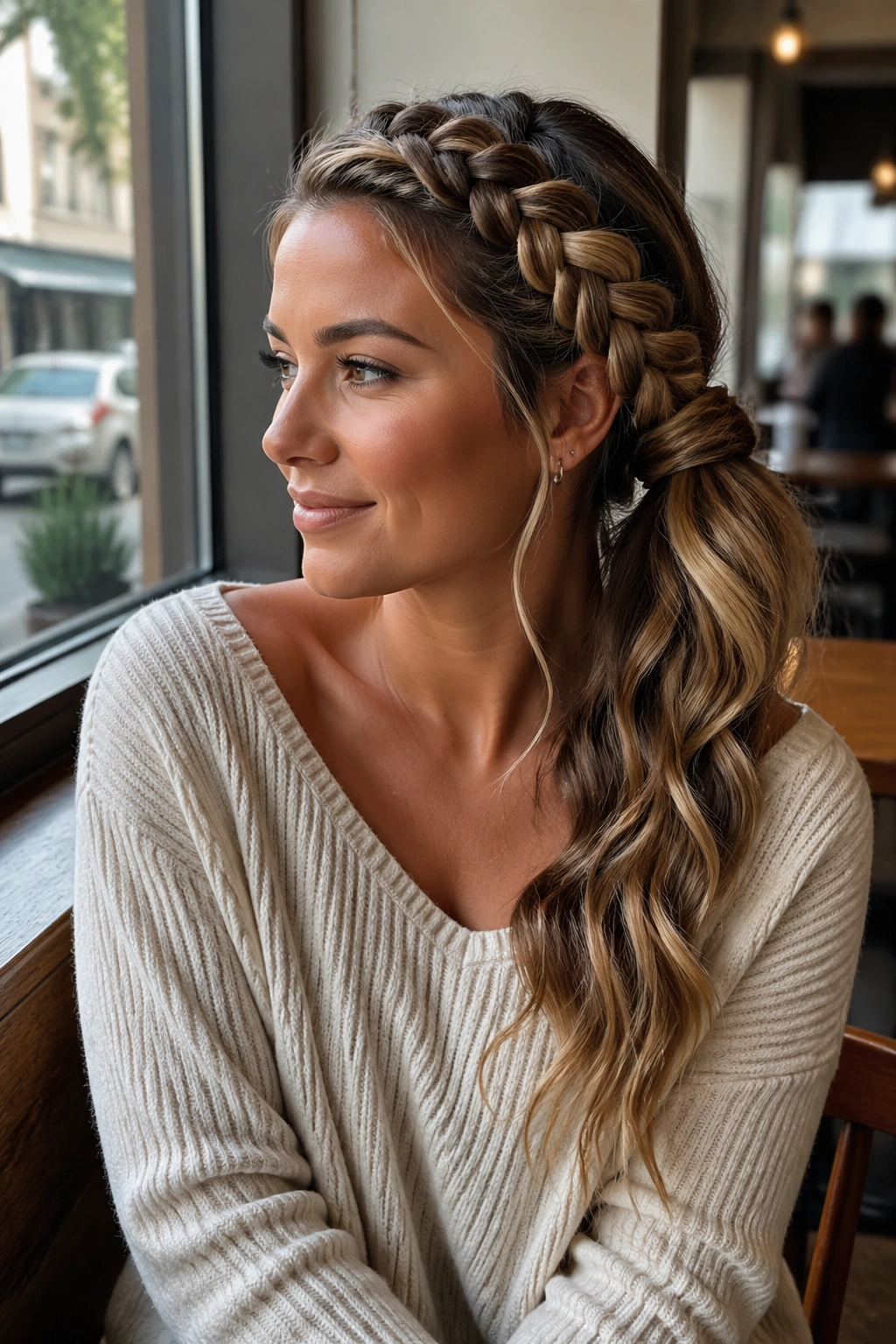
Why does a side-swept snake braid ponytail look so put together? Because the diagonal line does half the styling for you.
A deep side part shifts the braid off-center and gives the ponytail a softer fall over one shoulder. On long hair, that angle is the whole point. The curve of the snake braid can travel from the heavier side of the part, slip behind the ear, and land in a side ponytail that hangs with real movement instead of sitting stiffly down the back.
How to style it
- Start your part on the side that gives you the most hair to work with.
- Take a 2-inch section near the front hairline and braid it back toward the ear.
- Keep the braid loose enough to bend, but not so loose that it collapses.
- Gather the rest of the hair into a ponytail just behind the opposite shoulder.
- Curl the tail lightly if you want more swing and less stick-straight weight.
This style flatters long layers because the side sweep shows them off instead of hiding them. It also helps if your hair naturally falls flat at the crown. The diagonal path creates interest where there usually is none.
Best move: Leave the ponytail low enough that it rests on one shoulder. If it sits too high, the side sweep starts to look accidental, and that is not the point.
4. Half-Up Snake Braid Ponytail
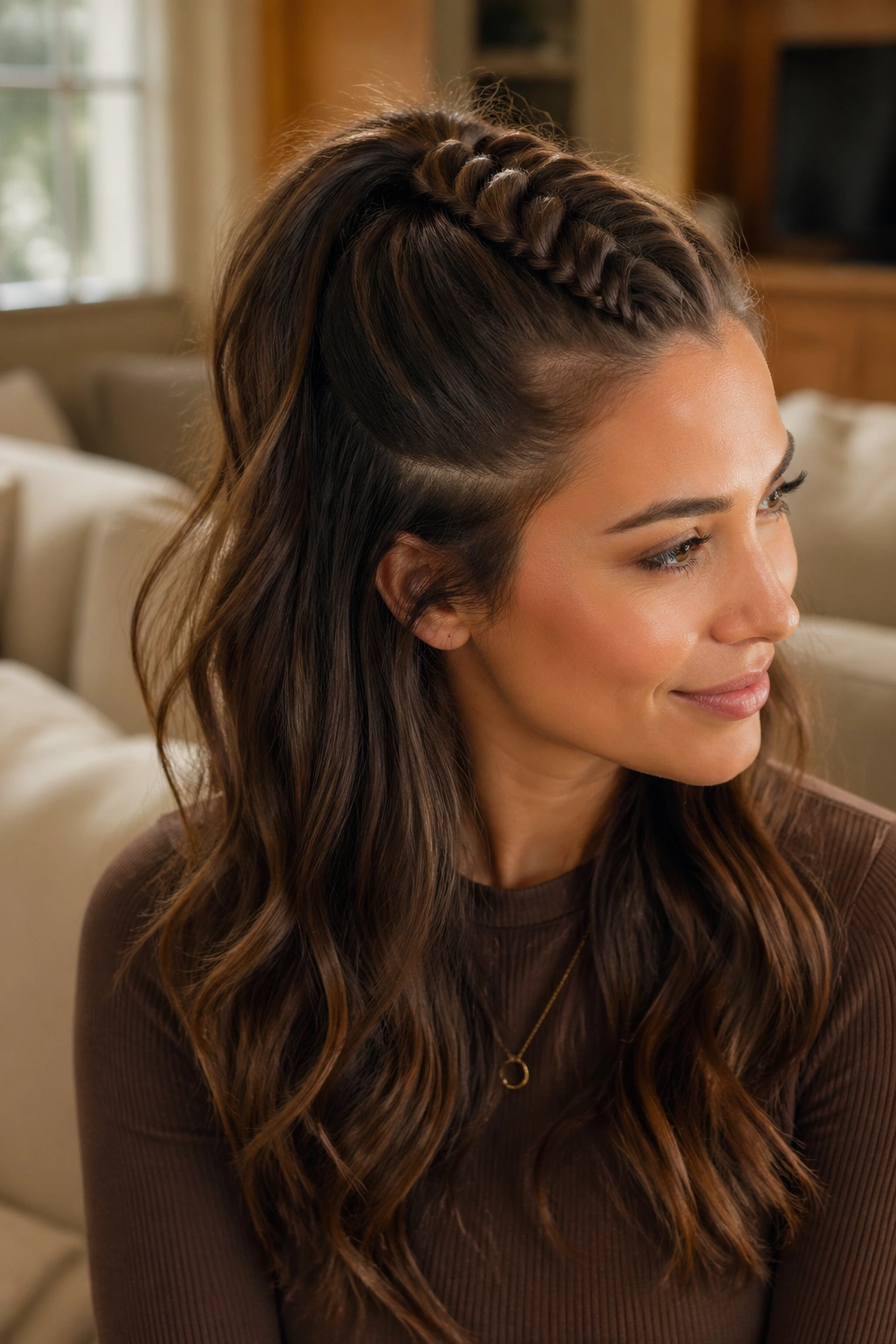
Some days you want the braid drama without putting every strand away.
That is where the half-up snake braid ponytail earns its keep. The top section gets all the detail, while the lower half stays loose and full. On hair past the shoulders, the contrast is the charm: tight braiding above, soft length below. It gives the style a bit of movement that a full ponytail sometimes lacks.
The braid usually starts at one side of the crown, snakes across the top, and lands in a half-up ponytail or a small knot at the back. The rest of the hair can stay straight, waved, or curled. I prefer a soft bend in the lower half, because a pin-straight bottom can make the contrast feel too harsh.
This one is nice when you want to show off your length without pulling everything back. It also saves you from the problem of flattening the entire head. A half-up style leaves some lift near the roots and keeps the ends visible, which is useful if your hair is layered or has a blunt perimeter that you actually want people to see.
A few face-framing pieces make this better, not worse. Leave them a little bent, not curled to death. The style feels lighter that way, and the top braid gets to be the star without the whole look turning severe.
5. Twin Snake Braid Pigtail Ponytails
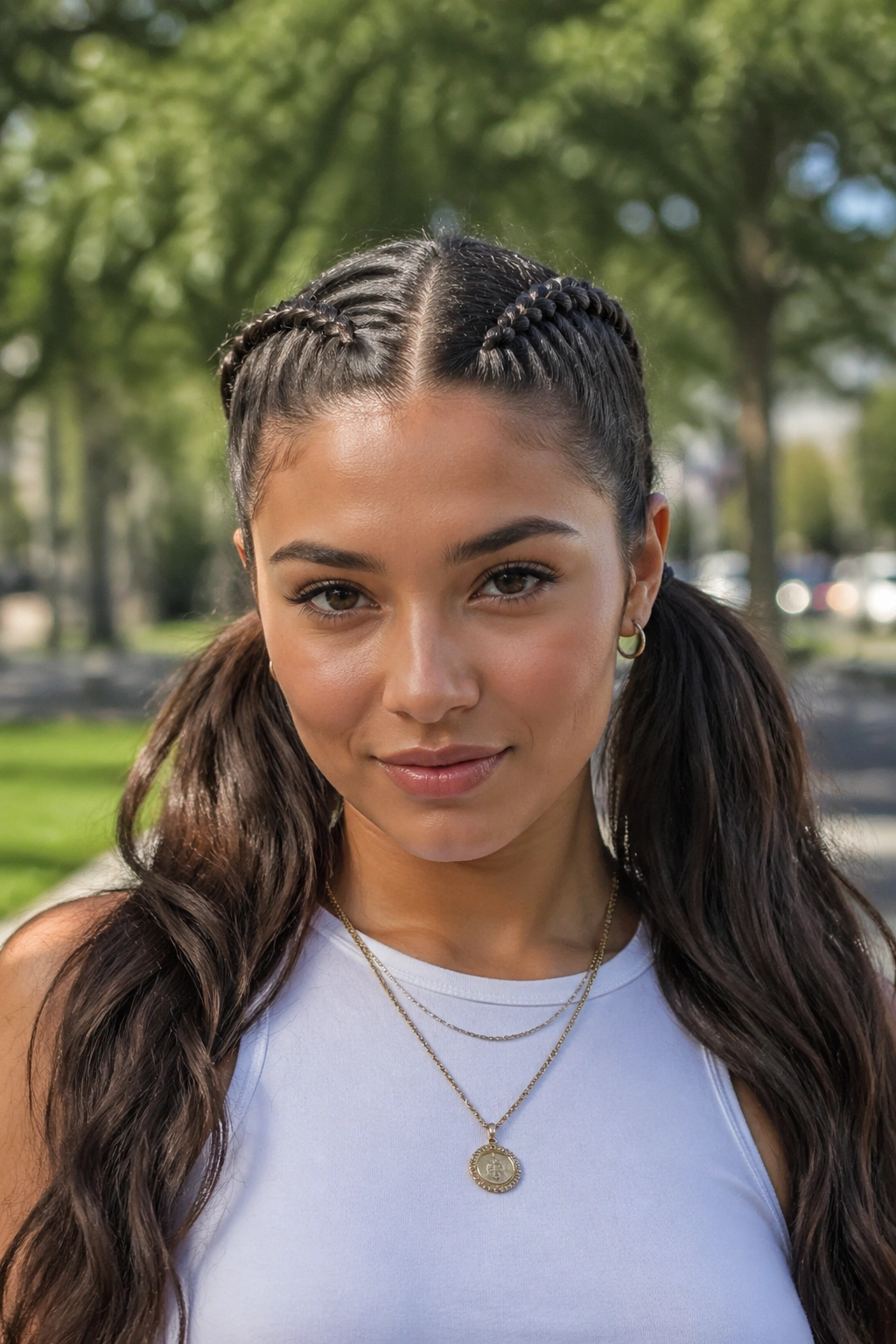
Twin snake braid pigtails have attitude. Real attitude.
They are not cute in a childish way unless you make them that way. Keep the braids slim, the parts clean, and the ponytails a little low or mid-height, and the whole thing reads sharp instead of sugary. Long hair past the shoulders helps here because the tails have room to hang, swing, and show off the shape after the braids end.
A center part gives the style structure. From there, each side gets its own snake braid feeding into a ponytail behind the ear or closer to the jawline. The two braids do not have to mirror each other perfectly, and honestly, I prefer them slightly imperfect. A tiny difference in curve keeps the style from looking stamped out.
This version works well on thick hair because the pigtails have enough body to feel balanced. Fine hair can wear it too, though you may want to keep the braids narrow so the style does not start feeling sparse. If your hair has layers that fall out of everything, this is a style where a little extra gel at the hairline pays off.
There is also a practical upside. Two smaller ponytails are often easier to manage than one heavy one, especially if your hair tends to pull at the scalp. The style feels playful, yes, but it also feels stable. That combination is rare enough that I make use of it whenever I can.
6. Sleek Snake Braid Ponytail with a Wrapped Base
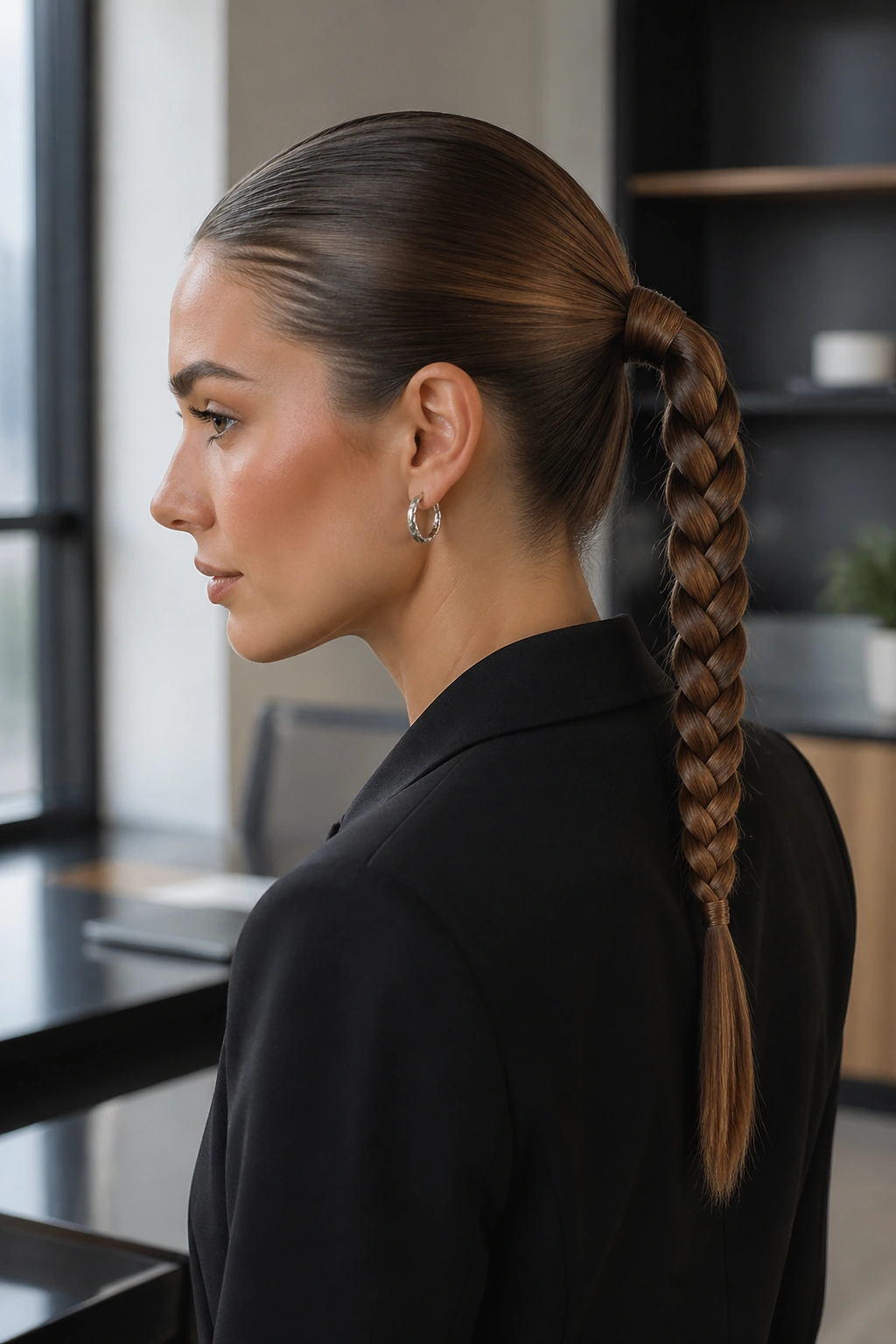
Unlike the messier versions, this one is all about clean lines.
A sleek snake braid ponytail with a wrapped base is the version to wear when you want the style to look controlled from every angle. The hairline is brushed smooth, the braid is neat, and the ponytail base gets hidden under a narrow wrap of hair so there is no obvious elastic staring back at you. It is a good choice for long, straight hair, though wavy hair can do it too if you use smoothing cream and a firm brush.
The slicked finish changes the whole mood. Instead of looking playful, the braid reads tailored. You can wear it with a sharp jacket, a plain tank, or a dress with a strong neckline, and it will hold its own. If your hair frizzes fast, use a light gel or edge control at the front and a tiny bit of serum on the tail ends. A greasy root ruins the line, so keep product low and even.
I would not do this on wet hair unless you have time to let it dry fully. Wet roots slump. They also make the braid heavier than it should be. Dry, smooth, and lightly set is the sweet spot.
Who does this suit best? People who like a neat finish and hate stray pieces. People who want their hair to look deliberate in bright light. People who can’t stand a ponytail that sags halfway through the day.
7. Curved Crown-to-Tail Snake Braid Ponytail
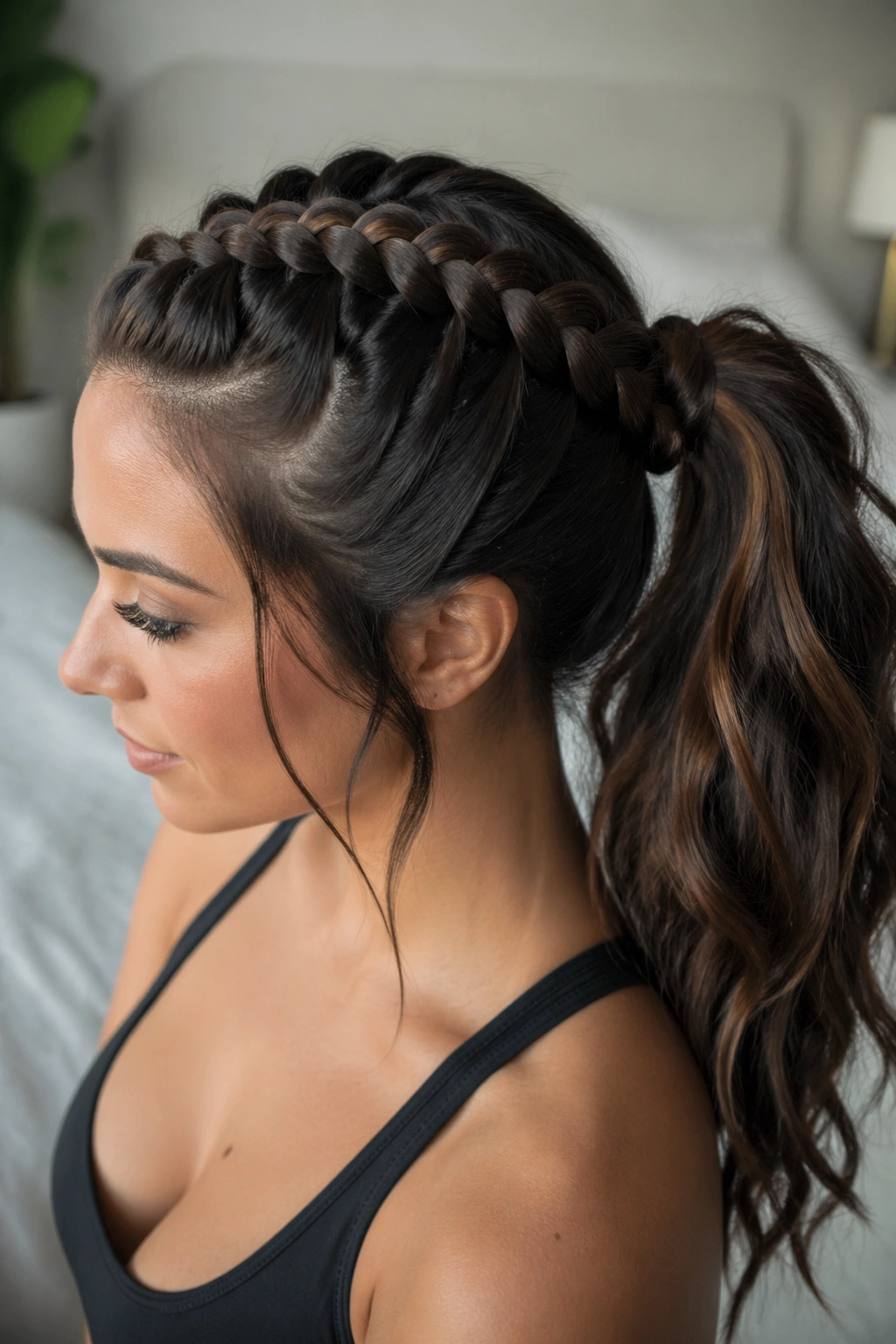
This is the one that looks harder than it is.
A curved crown-to-tail snake braid ponytail starts with a braid that travels across the top of the head in a soft arc before dropping into the ponytail. The line is the whole appeal. On hair past the shoulders, the curve has room to show up, and once the ponytail falls below it, the style gets a layered look that feels much more complex than a straight-back braid.
What makes the curve work
The shape depends on anchor points.
- Map out the braid path first so the curve does not drift too low.
- Use 2 or 3 small clear elastics to hold spots where the braid wants to slide.
- Keep the top section smooth, but not glassy.
- Pin the curve from underneath so the pins stay hidden.
- Leave the ponytail loose enough to swing.
The braid should not cling to the scalp like tape. It needs a little lift. That lift gives the snake shape depth, and it also helps the braid sit above the crown instead of flattening into it.
The style is a nice choice for long layers because the curve frames the top of the head while the ponytail shows off the length below. If you have a strong side part, this can look even better. The arc and the part play off each other in a way that feels deliberate without becoming fussy.
8. Textured Messy Snake Braid Ponytail
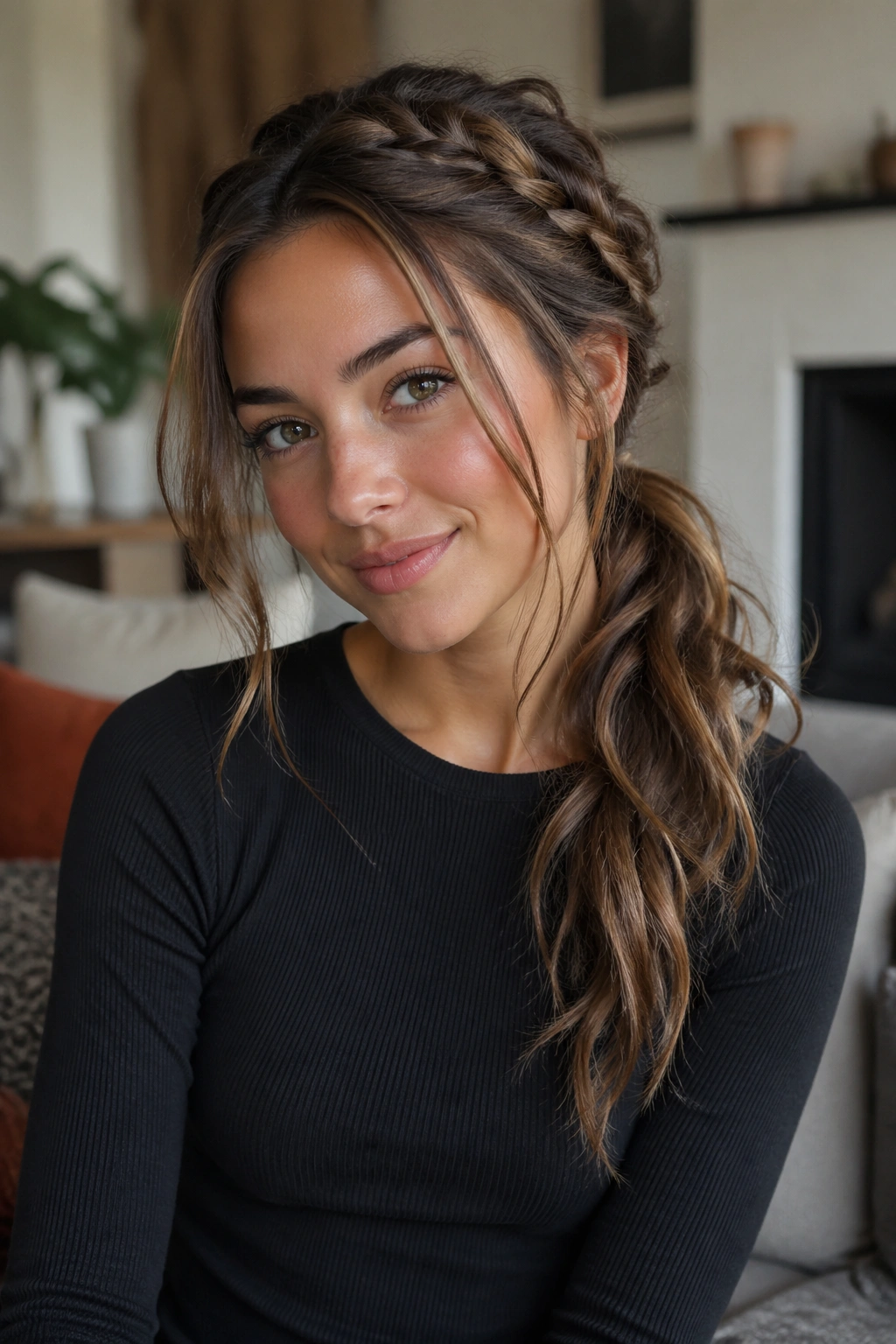
A little roughness helps here.
The textured messy snake braid ponytail is the one I reach for when clean hair feels too formal and I want the braid to have some life in it. Second-day hair is ideal. A little dry shampoo at the roots, a touch of grit through the mid-lengths, and you are halfway there before you even pick up the elastic. The braid should still be readable, but it does not need to be sharp.
Do not smooth this one to death. That is the trap. If you brush every strand flat and then try to rough it up later, the style often ends up puffy in the wrong places. Start with texture. Add a small amount of mousse or sea salt spray, scrunch the lengths, then braid loosely enough that the snake shape can bend.
A few tugged-out pieces around the braid help, but keep them controlled. You want separation, not chaos. When the ponytail is secured, twist the tail once or twice with your fingers and loosen the outer edges of the braid just a bit. That small pull makes the style look fuller without turning it into a nest.
This version suits casual outfits, sure, but it also works when you want a slightly undone finish with a little edge. Hair past the shoulders gives the tail enough weight to stay soft, which is part of why this style looks better on long hair than on shorter cuts.
9. Braided Mohawk Snake Ponytail
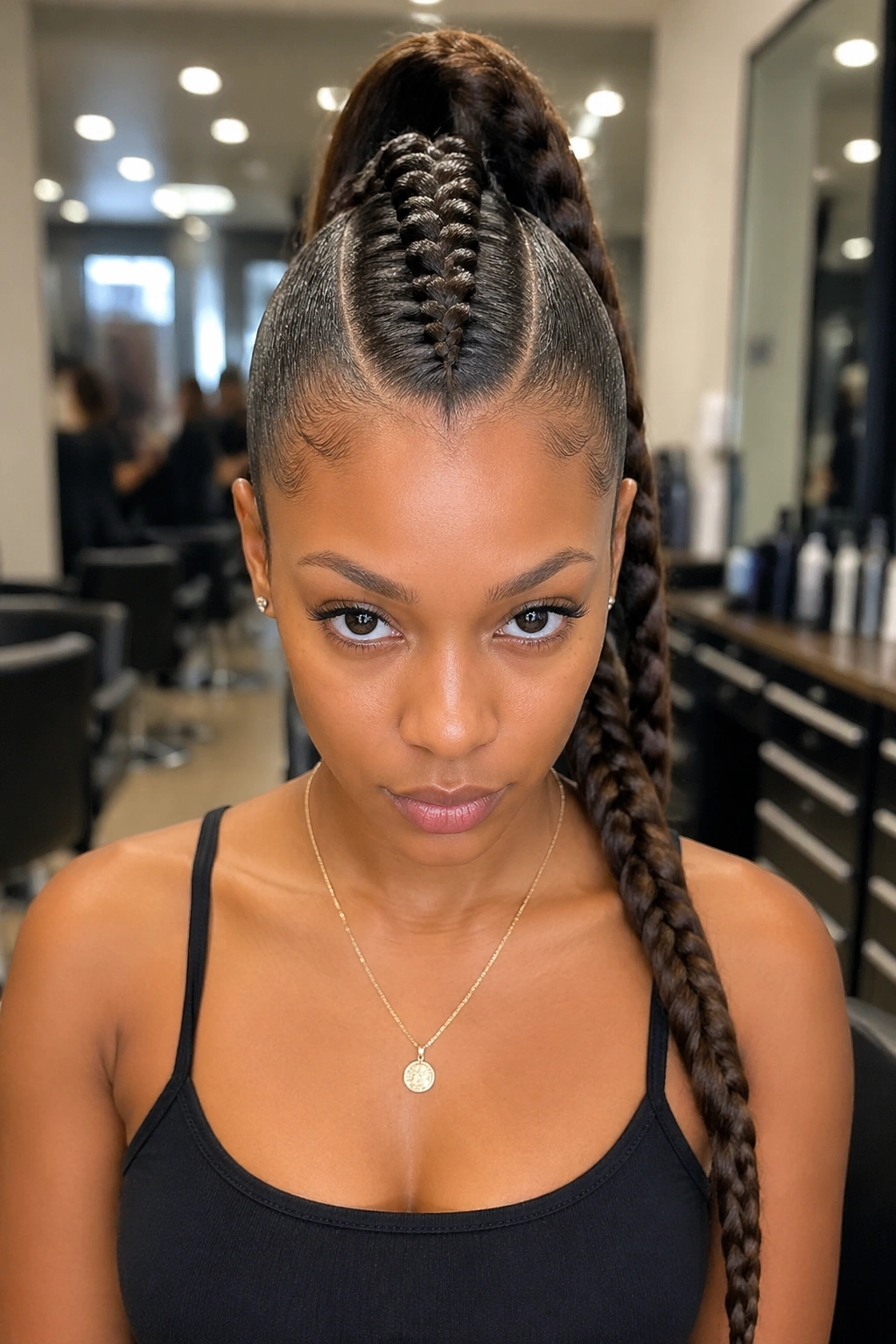
Want something sharper? Go down the center.
The braided mohawk snake ponytail takes the braid and puts it on a ridge through the middle of the head, with the sides slicked back or pinned close. The result is bolder than a side braid and cleaner than a full messy ponytail. On long hair, the snake effect stands out because the top section can travel from the front hairline back toward the crown before joining the tail.
How to get the lift
You need section control first.
- Clip both sides away before you braid.
- Keep the center strip about 2 to 3 inches wide.
- Use a comb, not your fingers, for the parting if you want a crisp line.
- Smooth the sides with a light styling gel so they stay flat.
- Secure the braid just before the ponytail base so the ridge stays visible.
This style has a strong shape, and that is exactly why it works. The mohawk line gives the snake braid a stage. Without it, the braid can get visually lost in very thick hair. With it, the braid becomes the whole point.
I like this version for thick, long hair because the structure can handle the weight. If your hair is fine, you can still wear it, but the sides need more grip. A bit of mousse at the roots and a tight initial part help a lot. If your hair is curly, stretching the top section first makes the ridge cleaner. No need to flatten the texture everywhere, though. That usually makes the style feel too severe.
10. Scarf-Woven Snake Braid Ponytail
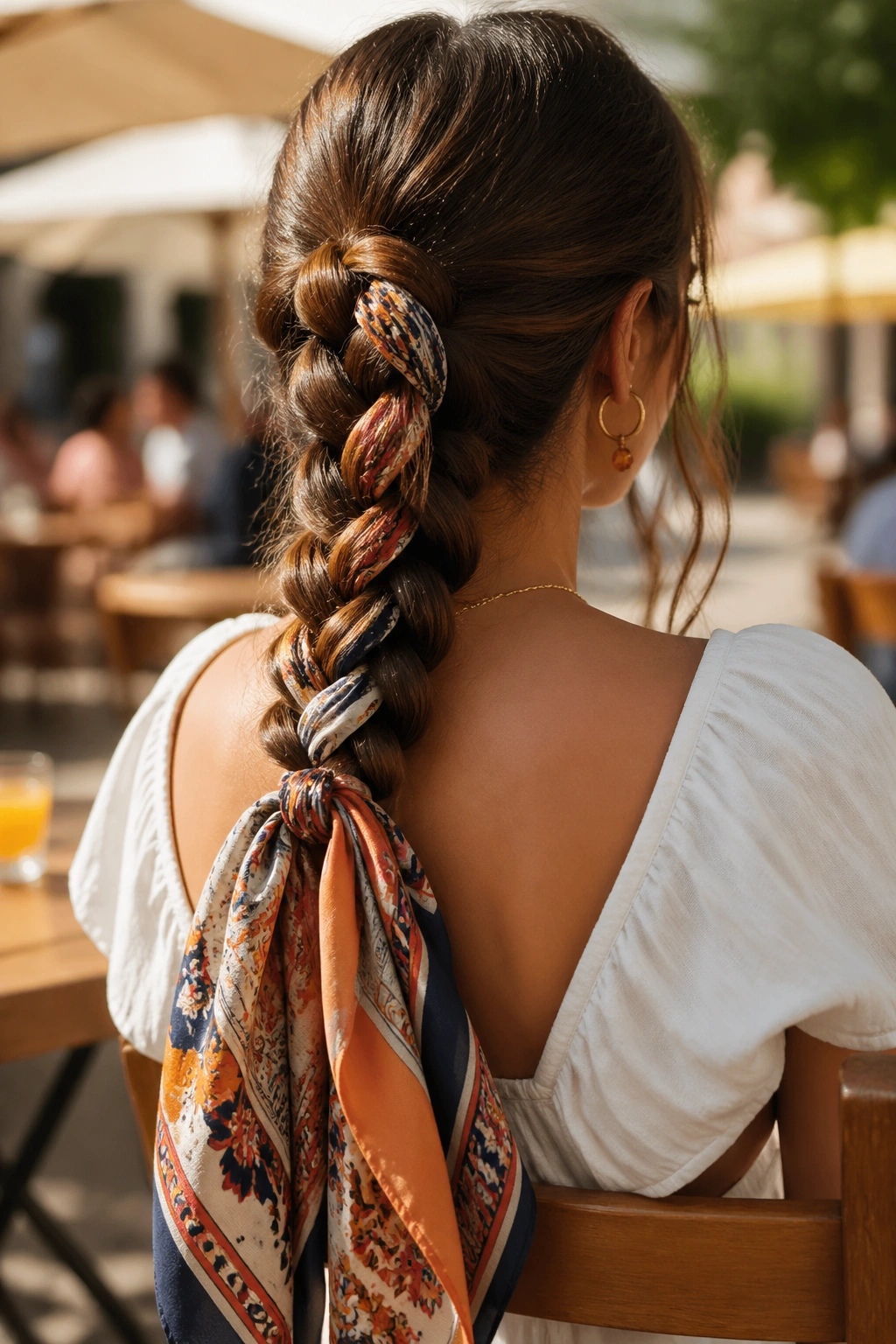
I reach for this when plain hair feels too plain but a full updo sounds annoying.
A scarf-woven snake braid ponytail gives you color and movement in one shot. The scarf can be threaded through the braid itself or tied around the base of the ponytail so the ends trail down the back. A narrow silk or satin scarf works better than a thick winter scarf, which can make the braid bulky and awkward. Long hair past the shoulders helps because the scarf has room to hang instead of bunching up.
A few practical details
- Choose a scarf that is about 24 to 30 inches long if you want the ends to trail.
- Keep the print small if your outfit is already busy.
- Tie the scarf under the elastic first so it stays put.
- Use a small clear elastic to secure the braid before threading the scarf.
- Let the scarf sit slightly off-center if you want the style to feel looser.
The snake braid and the scarf should not compete. One should support the other. If the scarf is loud, keep the braid simple. If the braid has a strong curve, let the scarf be quiet.
This is also one of the easiest ways to make a ponytail feel finished without adding a lot of heat styling. The braid gives the shape, the scarf gives the visual interest, and the ponytail itself stays easy to wear all day. That is a solid trade.
11. Face-Framing Snake Braid Ponytail with Loose Ends
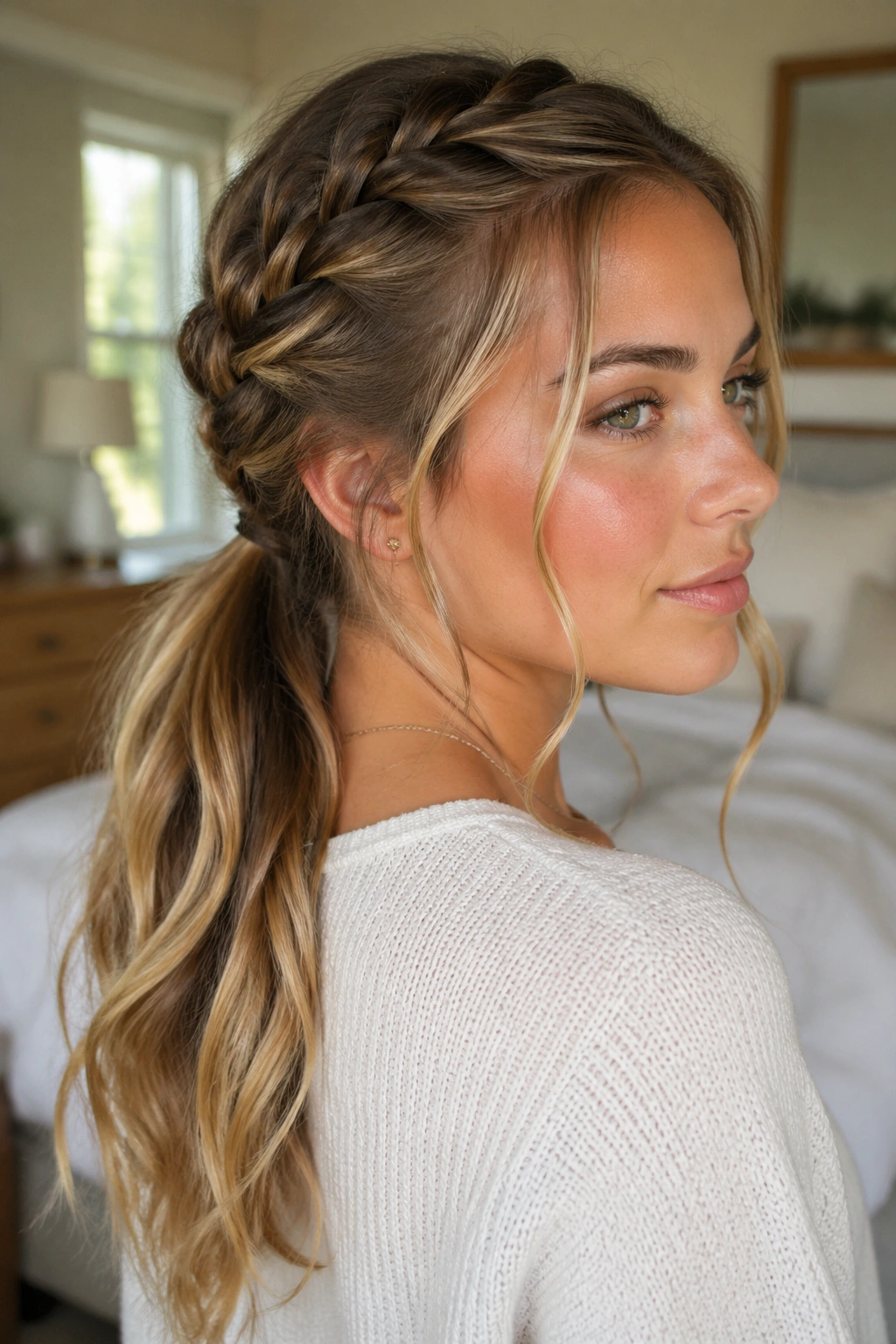
A face-framing snake braid ponytail works because it leaves you a little softness on purpose.
The braid itself can be clean or slightly loosened, but the front pieces are what change the mood. Leave two slim sections out near the temples, let them fall beside the face, and keep the ponytail a little lower than crown height. On hair past the shoulders, that combo keeps the style from feeling too pulled back. It gives the hair movement where you need it most.
I like this on layered cuts. The loose front pieces blend into the rest of the hair, so the style feels natural even when the braid is very neat. If your layers are short, you may need a little curling iron work on those front pieces so they do not stick straight out. A 1-inch iron and a five-second bend is usually enough. You want shape, not ringlets.
The tail can stay straight, waved, or curled under. I prefer soft waves here because they echo the braid without making the look too rigid. Straight ends can work too, especially if the braid is full and the roots have a bit of lift. The important part is keeping the front soft enough to frame the face without falling into your eyes.
There is something nice about this style in motion. The braid stays anchored, the loose pieces shift, and the tail moves as you walk. It feels less frozen than a lot of braided ponytails. That matters.
12. Rope-Detail Snake Braid Ponytail
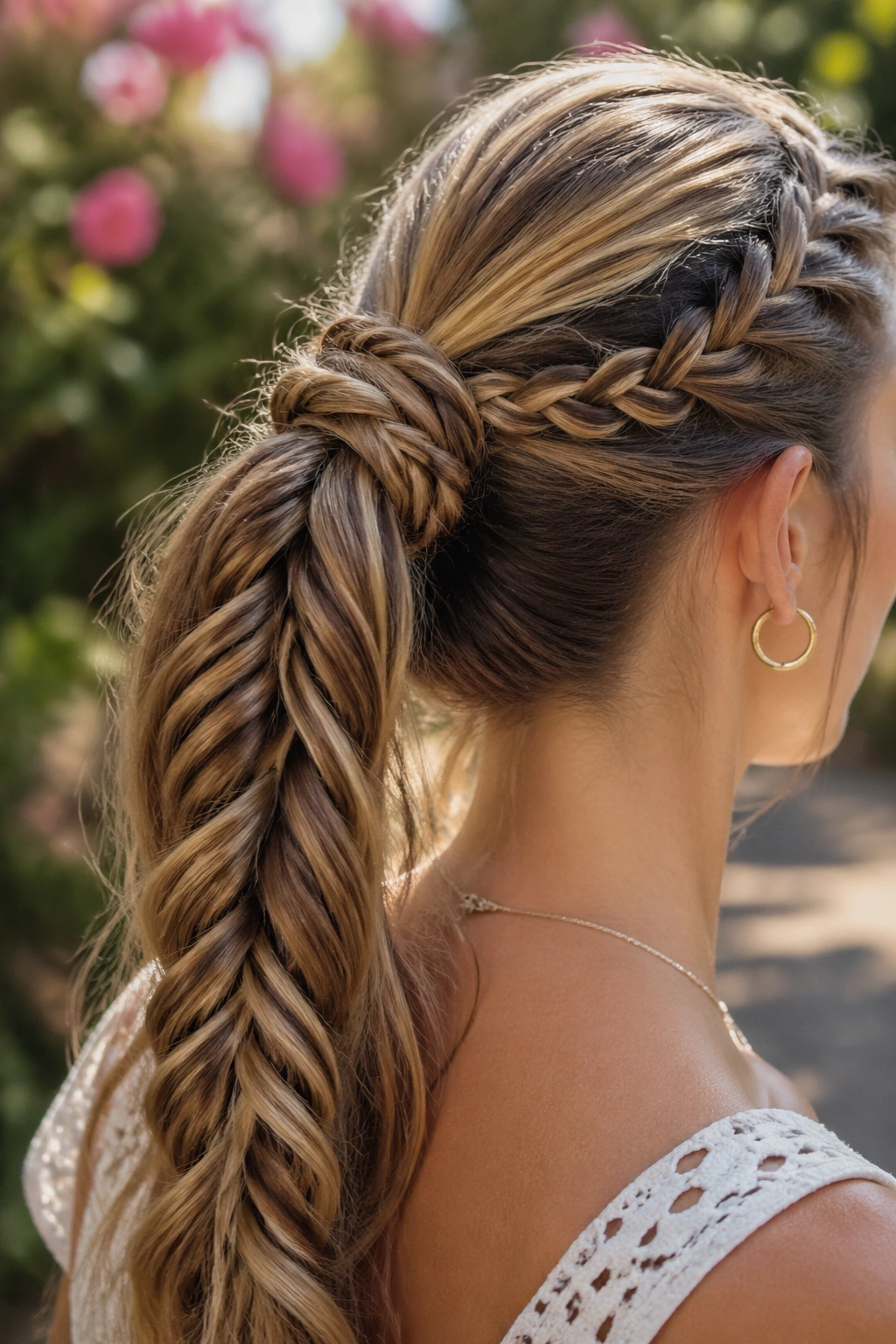
Unlike a lone snake braid, this version stacks textures.
A rope-detail snake braid ponytail mixes a snake braid with a rope twist somewhere in the same style, usually along the base or as one side of the ponytail. The rope twist gives a tighter, more corded look, while the snake braid brings the curve. Together they make the ponytail feel fuller without needing extra teasing. On long hair, that combination can be especially good because the length shows both patterns instead of hiding one under the other.
This is a smart choice if your hair is medium-thick and tends to fall flat at the ends. The rope twist adds body, so the ponytail does not just drop straight down. If your hair is very thick, keep the rope twist narrow or it can take over the whole style. If your hair is fine, a small twist paired with a loose snake braid is usually enough.
Who should try it? Someone who likes braid detail but does not want a complicated updo. Someone who wants the braid to look fuller from the side. Someone who gets bored with one texture and wants two in the same ponytail.
My recommendation is to keep the rope twist close to the base and let the snake braid be the visible feature. That way the style still reads as a snake braid ponytail, not as a mixed braid experiment. Subtle is smarter here. Too many competing patterns start to look busy fast.
13. Bubble-Snake Ponytail for Extra Long Hair
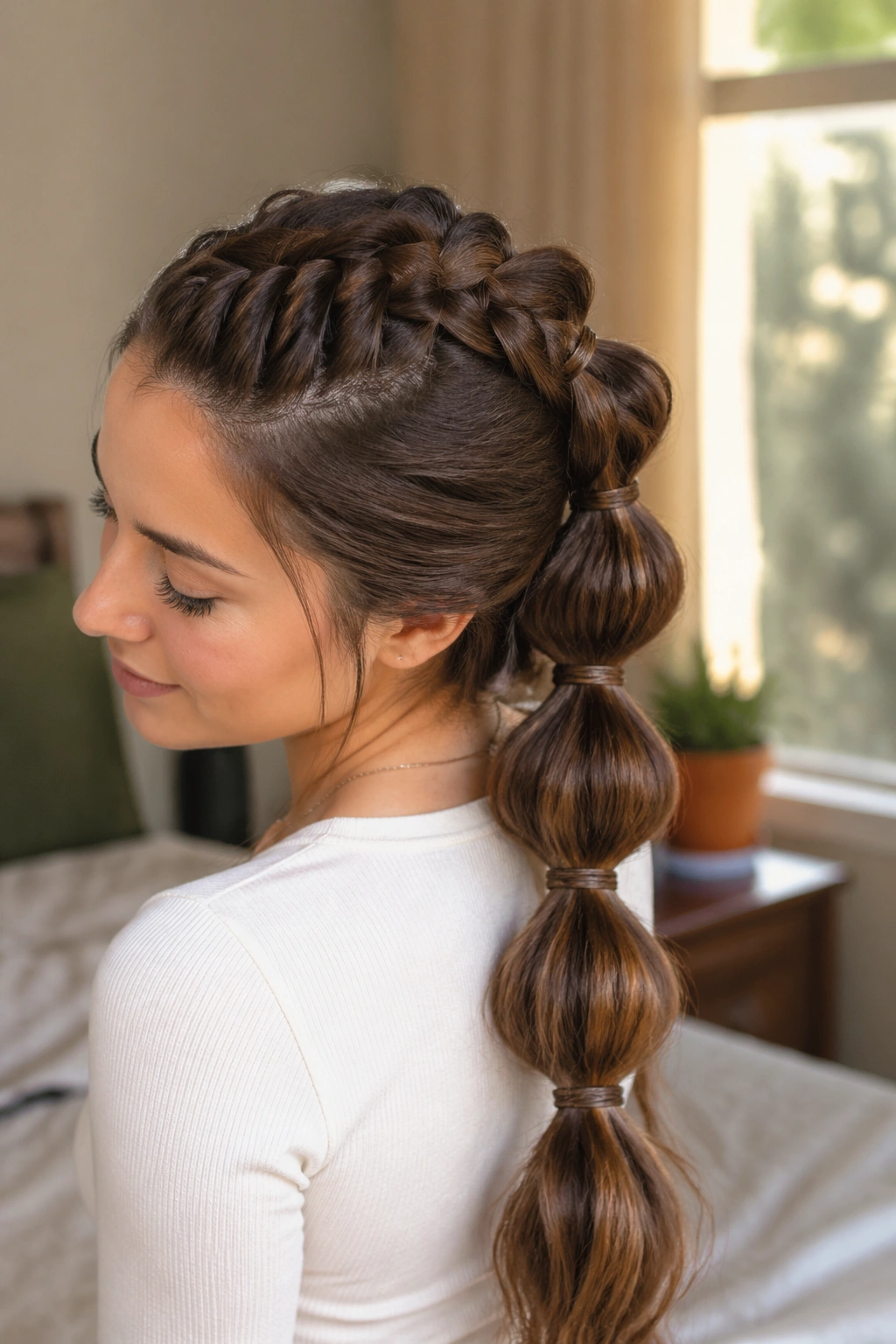
This is the one I keep coming back to when the hair needs to stay put and still look interesting at the end of the day.
A bubble-snake ponytail combines the visual bend of a snake braid with the segmented shape of bubble sections down the tail. Hair past the shoulders is ideal here because the extra length makes each bubble read clearly. Shorter hair can do it too, but the effect is much better when there is enough tail to space the sections out by a few inches.
How to keep the bubbles even
- Place the first elastic about 2 inches below the ponytail base.
- Add the next elastic every 2 to 3 inches down the tail.
- Gently pull each section outward with your fingertips until it puffs.
- Keep the spaces consistent, or the bubbles start to look accidental.
- Wrap a thin strand of hair around the top elastic if you want a cleaner finish.
The snake braid usually sits near the crown or along one side, then feeds into the bubble tail. That mix gives the style movement at the top and structure below. It is one of the few ponytails that can handle a full day without losing its shape, which makes it a strong pick for long hair that gets dragged through a lot of weather, errands, or plain old life.
If your hair is very silky, the bubbles may slip unless you rough up the lengths a little first. A touch of texturizing spray at each section solves that faster than extra teasing. Use enough to grip. Not so much that the tail feels crunchy.
The style ends up looking energetic, practical, and a little playful. That is a decent place for hair to be.
