


Pigtail braids have spent years getting blamed for the wrong version of themselves. Put them high on the head, pull them tight, add a giant bow, and yes, they can look like a throwback to a classroom chair. Change the placement, soften the part, and keep the braid at the nape, and the whole mood shifts.
The braid type matters less than people think. Where the braids sit, how much tension you use, and how clean the finish looks do most of the heavy lifting. That is why the same twin-braid shape can feel sporty, polished, or almost evening-ready depending on the details.
I like pigtail braids for grown women because they solve a very real problem: you get symmetry and control without flattening all the personality out of the style. They work on straight hair, waves, curls, and coils, but each texture needs a slightly different hand. A center part can sharpen the face. A side part can soften it. A few loose pieces around the cheekbones can keep the whole thing from feeling stiff.
Some versions are good for the office. Some are good for brunch, travel, or a long day when you want your hair out of the way but still want to look put together. Start with the low, clean version, because that one sets the tone for everything else.
1. Sleek Low Center-Part Pigtail Braids
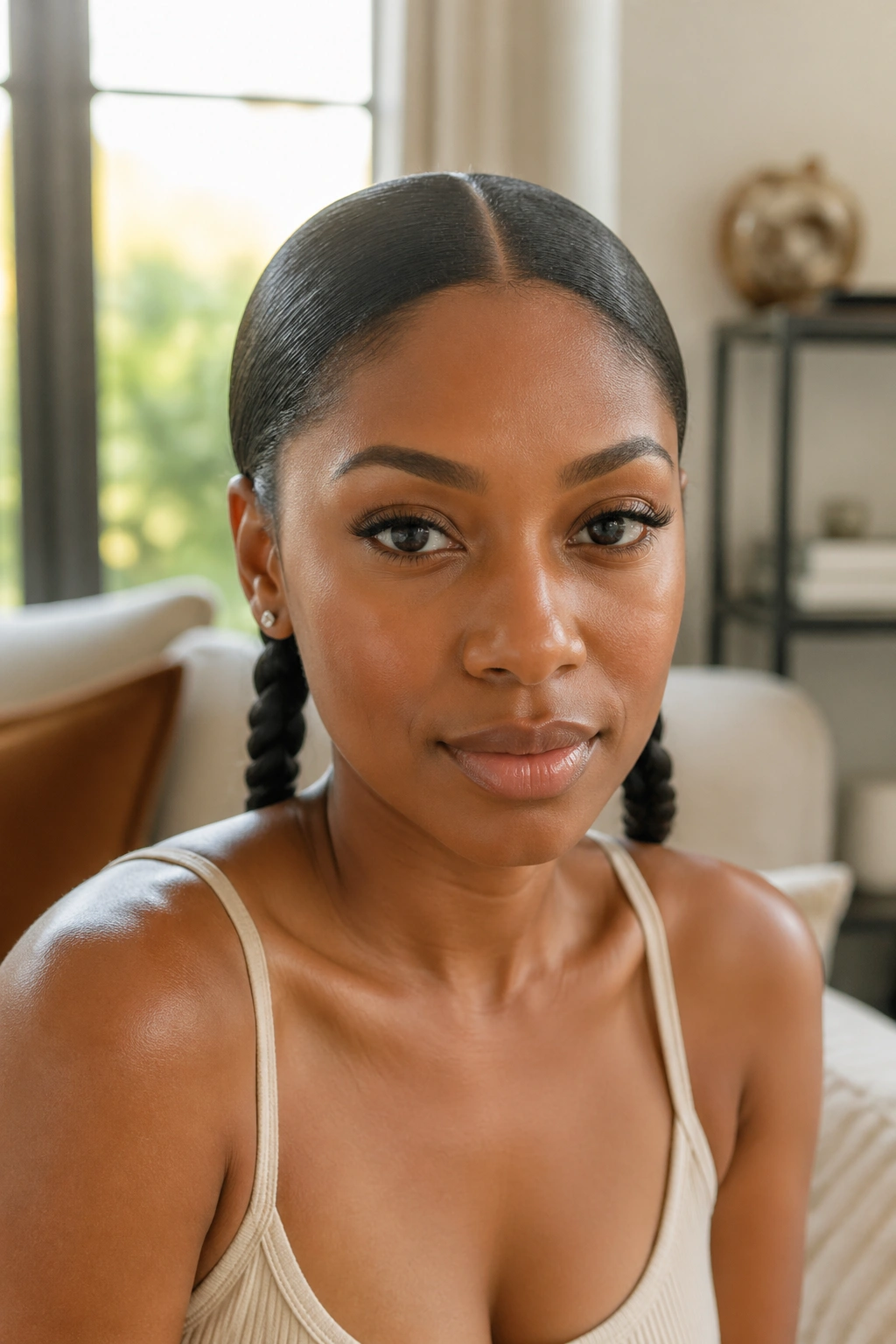
If you want pigtail braids to read grown, start low and keep the part clean. That one choice changes everything. A braid that sits near the nape feels more tailored, while a braid that starts too high can drift back into school-day territory fast.
Why the Shape Works
The center part gives the style symmetry, and symmetry tends to look intentional. Low placement does something else: it keeps the eye moving along the jaw and neck instead of straight up to the scalp. That matters more than people expect.
A little shine goes a long way here. On straight hair or hair that has been blown out smooth, the style can look crisp without looking severe. Keep the braid itself simple. The polish lives in the part and the placement, not in a dozen extra tricks.
- Use a fine-tooth comb and draw the part from forehead to crown in one clean line.
- Start each braid about 1 to 2 inches above the nape.
- Secure with small clear elastics, then wrap a thin strand of hair around each base.
- Finish with a pea-sized drop of lightweight serum on the mids and ends.
Skip heavy hairspray at the crown. A soft hold is enough, and too much product will make the part look dusty by lunchtime.
2. Loose Dutch Pigtail Braids with a Soft Finish
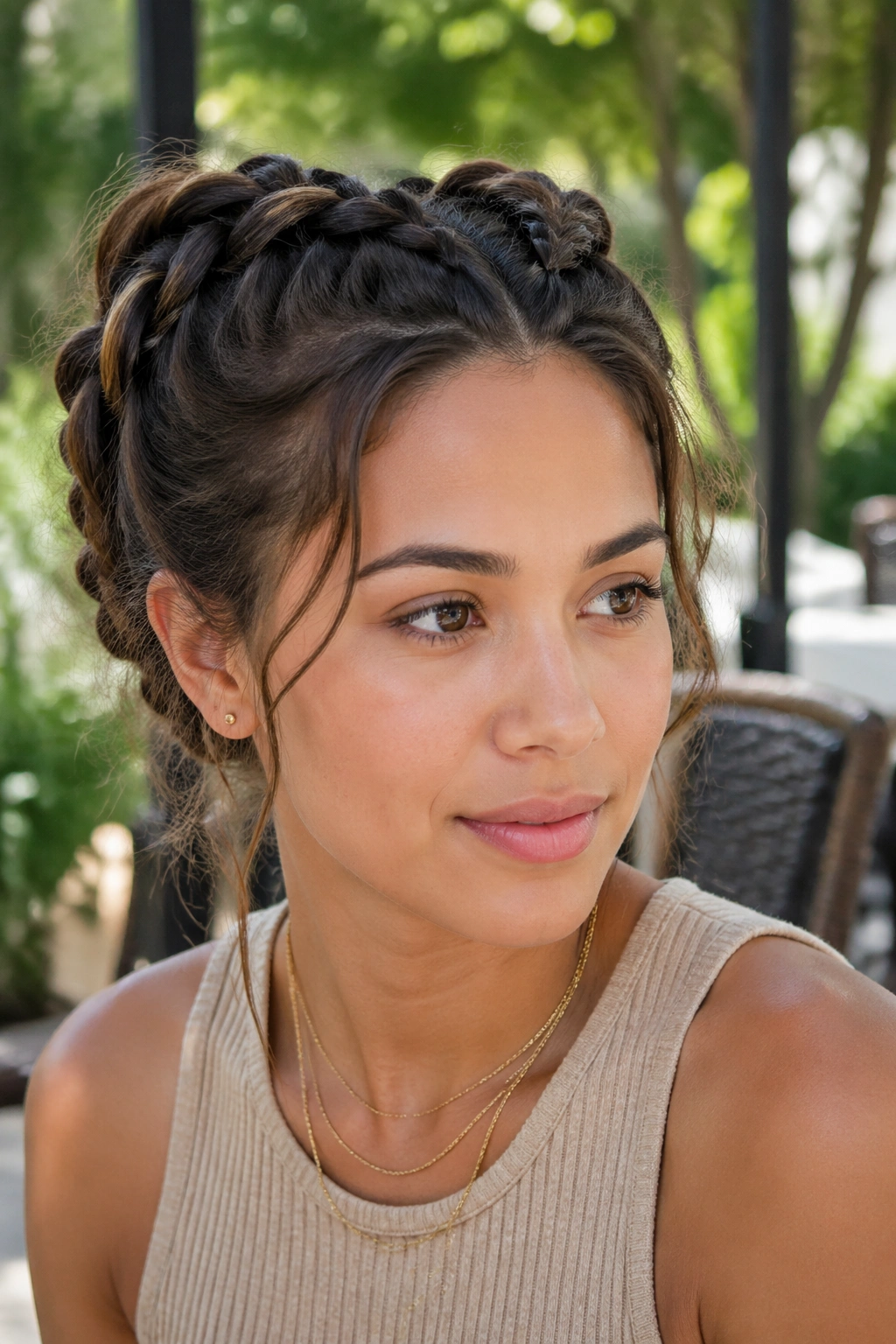
Dutch pigtail braids have a lot of range. Tight and shiny, they can feel sporty. A little loose, with the braid links gently pulled open, they look calm and grown.
That’s why this version works so well on days when you want structure but do not want a stiff shape. The braid sits on top of the hair instead of sinking into it, so the detail shows from the front and the side. On hair with some texture, that raised braid has a nice weight to it.
The trick is tension. Keep the first few passes snug enough to hold, then relax your hands as you move down. If you pancake the braid too much, it gets wide in a way that can feel fussy. If you keep it too tight, it starts to look hard.
I like this one with a blazer, a knit dress, or even a plain tee and hoops. It also handles layered hair better than a loose three-strand braid, which is part of the appeal. The braid has enough structure to keep shorter layers from springing free, but it still moves.
3. Fishtail Pigtail Braids for Extra Texture
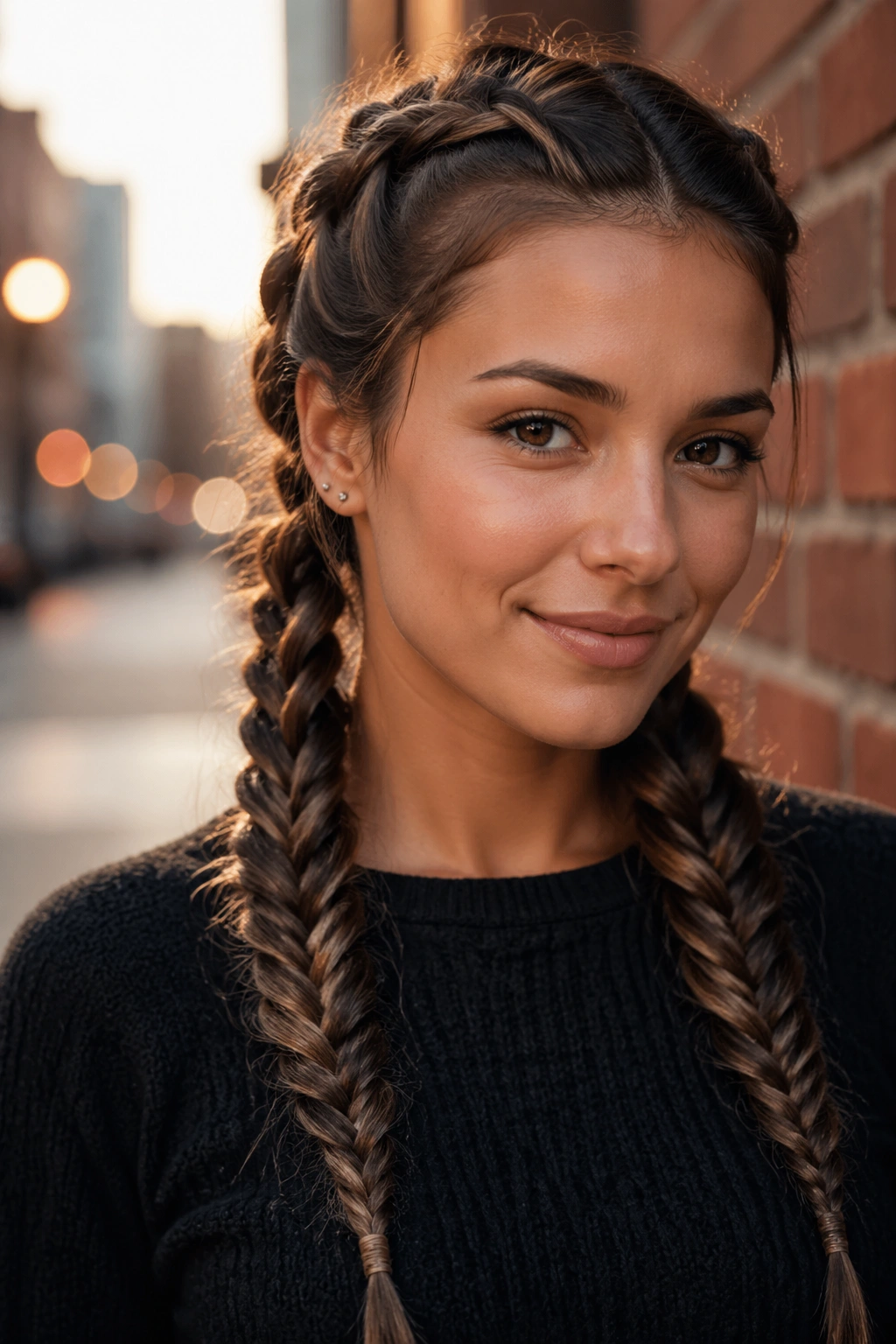
Why do fishtail pigtails look more polished than a standard braid, even when the hair is nothing special? The answer is in the weave. The smaller pattern creates a fine, almost woven texture that reads deliberate right away.
On long hair, that texture drapes well. It has a softer edge than a classic braid, and it does not lean as hard into the usual pigtail look. That makes it useful when you want the twin-braid shape without the obvious “cute” energy people tend to assume comes with it.
The braid works best when you keep it a little wide and stop before the tail gets thin and wispy. That ending matters. A fishtail that goes too far down the shaft can start to look stringy, especially if the hair is layered or freshly washed.
How I Wear It
- Start with second-day hair or a light mist of dry shampoo for grip.
- Leave the front pieces soft instead of pulling everything straight back.
- Loosen the braid with your fingers only after it’s tied off.
- Tuck the ends under a coat collar or scarf if they start to fray.
A fishtail braid is not trying to be loud. It just has enough detail to hold attention.
4. Side-Part Low Pigtail Braids
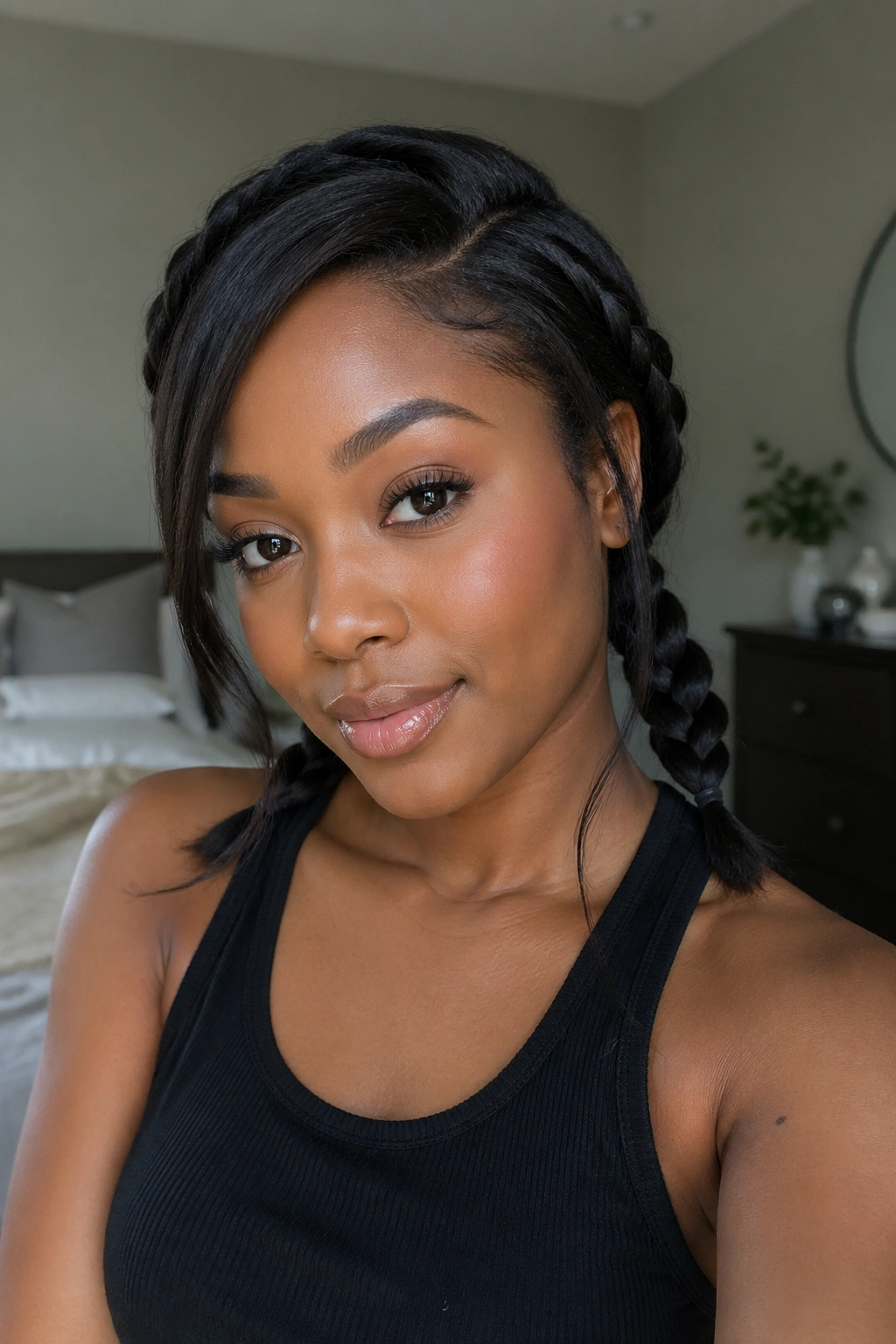
If a center part makes your face look longer than you like, a side part is the easiest fix. It shifts the frame, softens the front, and gives the braids a little movement before the hair even starts weaving.
That asymmetry does a lot of work. It breaks up the twin-braid shape, which can otherwise feel too exact. A slight side part also helps if one temple has more breakage or a stubborn cowlick, because you are not forcing both sides into a perfectly mirrored setup.
- Part one to two inches off center.
- Start the fuller side at the temple.
- Keep both braids low, not high.
- Let a few short pieces fall near the cheekbone.
The style works especially well when you want the braids to blend into the rest of the outfit rather than become the whole point. It feels less formal than a hard center part, which is why I reach for it when I want pigtails to look like part of the day, not the headline of it. Small shift. Big payoff.
5. Rope-Twist Pigtails for a Fast, Clean Look
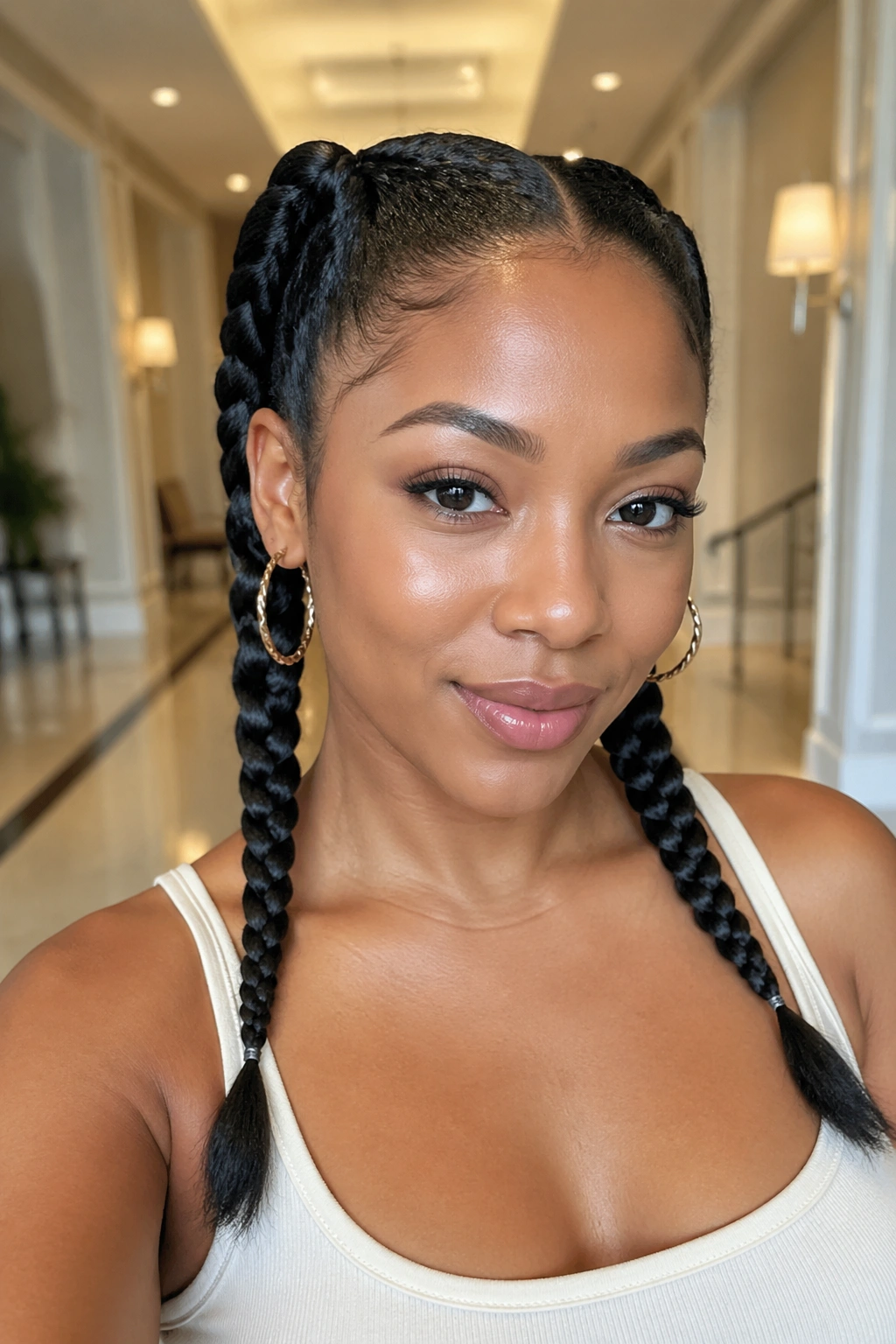
A rope-twist is not a braid in the strictest sense. That is exactly why it works. It gives you the same twin-tail shape, but the twist pattern feels softer and a little quicker, which can be a relief on mornings when your hands are already tired before you start.
The style looks especially good on longer hair because the twist creates a clean line that moves as you walk. It does not fray at the edges the way a loosely woven braid sometimes can, and it has a neat shape that reads tidy without looking precious.
The catch is grip. Slippery hair needs a little help here. A dusting of dry shampoo or a bit of mousse through the mids will keep the sections from slipping apart while you twist. You do not need much. Too much product makes the twist stiff and dull.
I also like rope-twist pigtails for travel days. They hold up, they are easy to redo, and they still look finished when the rest of your outfit is doing the heavy lifting. That is a useful trait. Not glamorous. Useful.
6. Half-Up Pigtail Braids with Loose Length
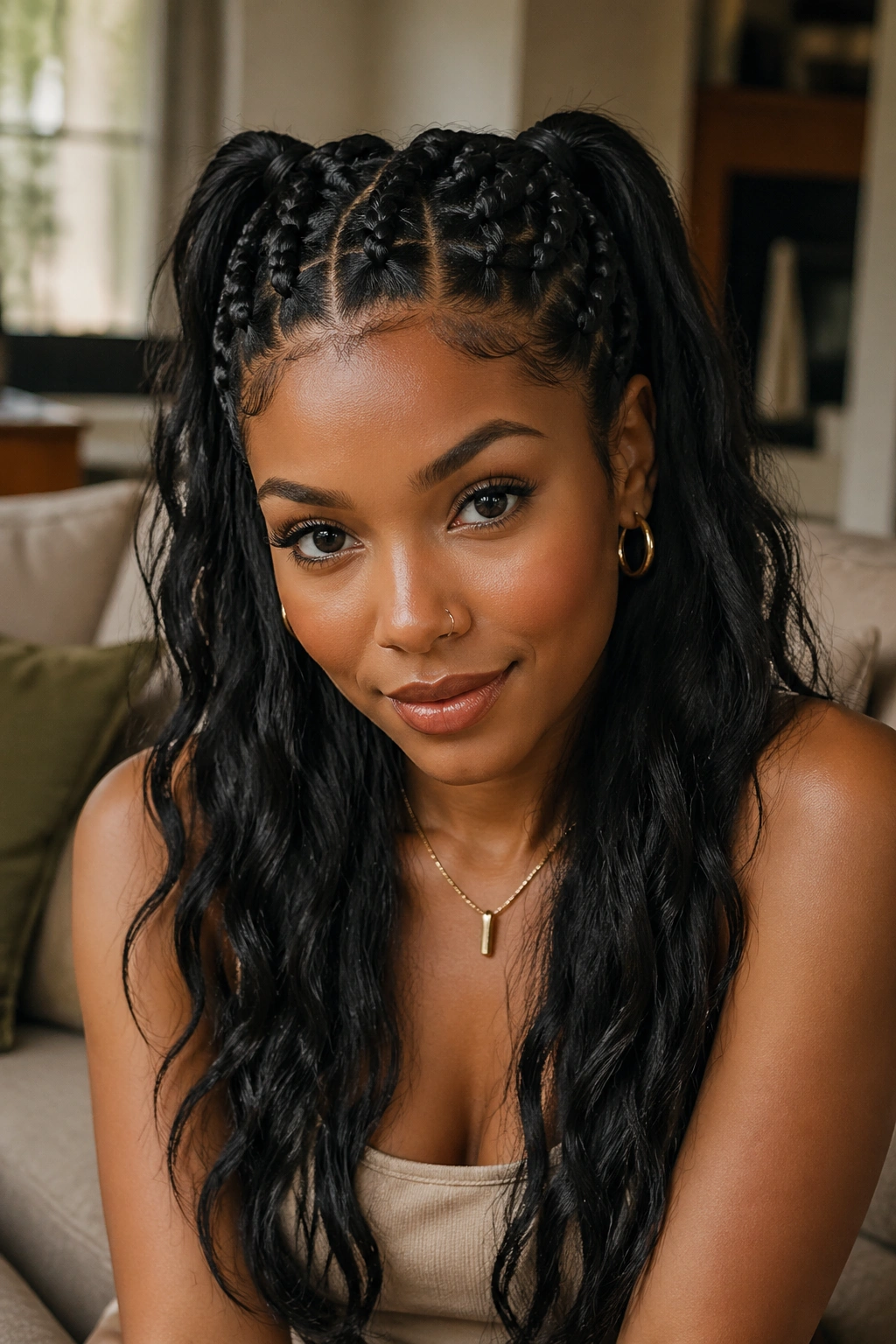
Half-up pigtail braids sit in a different lane than full pigtails. They leave the bottom half of the hair loose, which makes the style feel lighter and less boxed in. That matters if your hair is medium-long or heavily layered.
A full pigtail can swallow volume at the nape. Half-up keeps the braids near the crown and lets waves, curls, or straight lengths do their own thing below. The shape looks especially good when you want the front of your hair controlled but still want movement around your shoulders.
I like this version when earrings need room to show. It also behaves better under collars and jackets, because the loose length moves away from the neck instead of stacking there. That sounds minor. It is not. Comfort changes how often you actually wear a style.
Pull the top section from temple to temple, braid only that upper layer, and leave the rest alone. If you want more polish, give the loose ends one quick bend with a 1-inch iron so they do not lie flat and sleepy. That little bend keeps the whole style from looking unfinished.
7. Boxer Braids with a Softer Width
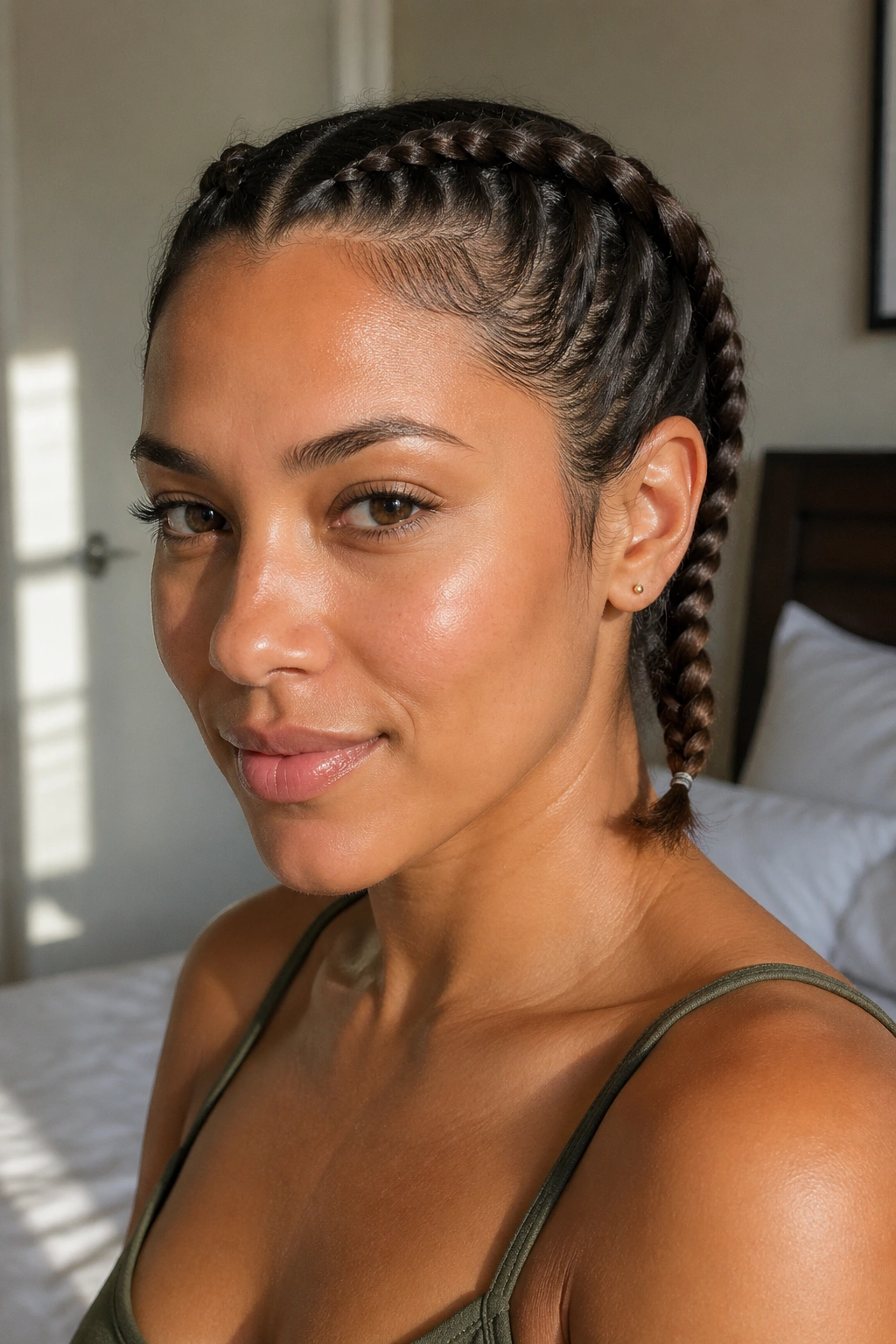
Boxer braids are not the problem. The version pulled tight enough to wrinkle your forehead is the problem.
What Makes Them Work
When the braid starts at the hairline but does not drag the front pieces backward, the style reads strong without turning severe. A clean part helps, yes, but the real difference is width. Keep both braids even, then stop the braid at the nape before switching into a simple plait if your hair is very long.
The result feels athletic, but not harsh. On thick hair, this version holds shape well and can stay neat through a long day without needing constant fixing. On finer hair, it gives the illusion of density, which is a nice bonus.
- Start with a straight part and brush the surface smooth.
- Add edge control only on the flyaways near the hairline.
- Keep the first inch of braid snug, not tight.
- If your scalp starts to ache, the tension is too much.
A sore scalp is your warning sign. Tension should hold the braid, not punish the skin under it.
8. Ribbon-Wrapped Pigtail Braids

A slim ribbon can do more for pigtail braids than another round of teasing ever will. It gives the style a clear finish and makes even a simple braid feel considered.
The ribbon matters more than the bow. A satin strip tied close to the base looks sleek; a giant loop can swing the style back toward playful if that is not what you want. I like black, cream, navy, oxblood, and deep green because they sit quietly against the hair instead of shouting over it.
There is also a nice practical side to this. If the ends of the braid are a little rough, the ribbon draws the eye upward. If the braid itself is plain, the ribbon keeps it from feeling bare. It is a small fix, but small fixes are often the ones that make a style wearable outside the house.
For daytime, tie the ribbon once and keep it close to the braid base. For dinner or a dressier event, let the tails hang longer and keep the rest of the hair smooth. That is enough. You do not need glitter, sequins, or anything that looks like it came from a gift wrap aisle.
9. Chunky Pigtail Braids with Face-Framing Pieces
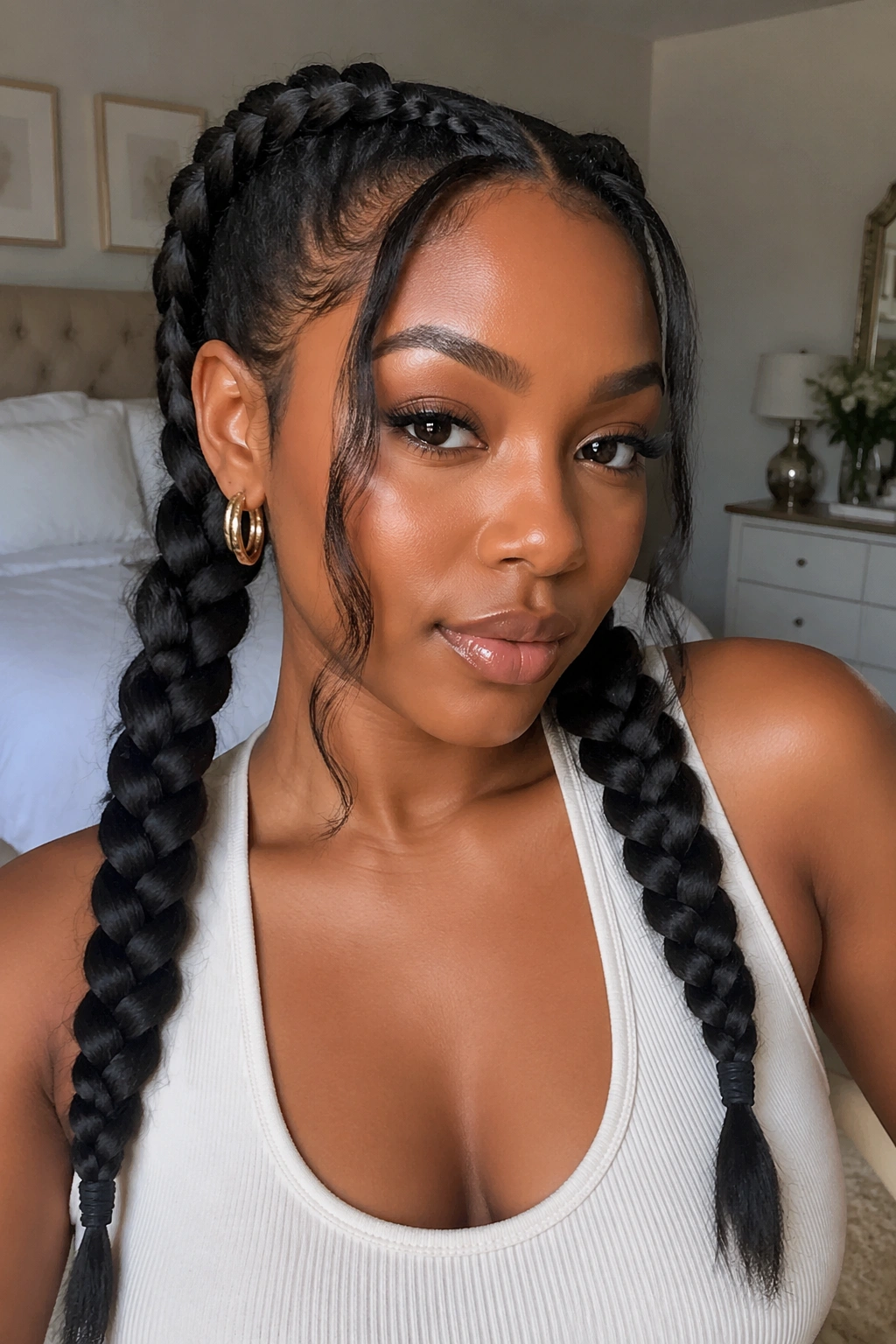
Can chunky pigtail braids look polished instead of playful? Absolutely, if the crown stays smooth and the front pieces stay soft.
The braid itself needs to be thick enough to show texture from a distance. That means larger sections and a gentler weave, not tiny, tight passes that disappear into the hair. The shape should feel full, but the top of the head should still lie flat. That contrast is what keeps the style from turning messy.
How to Keep the Volume in Check
- Start with a clean center part.
- Use 1.5- to 2-inch sections for the braid.
- Pull the braid outward a little only after it is secured.
- Leave two thin pieces near the cheekbones.
Those face-framing pieces matter more than people think. They soften the whole style and keep it from looking like a costume from the neck up. If your hair is long and thick, this version is one of the easiest ways to make the braid feel current without changing the braid pattern itself.
10. Mini Pigtail Braids for Shorter Hair
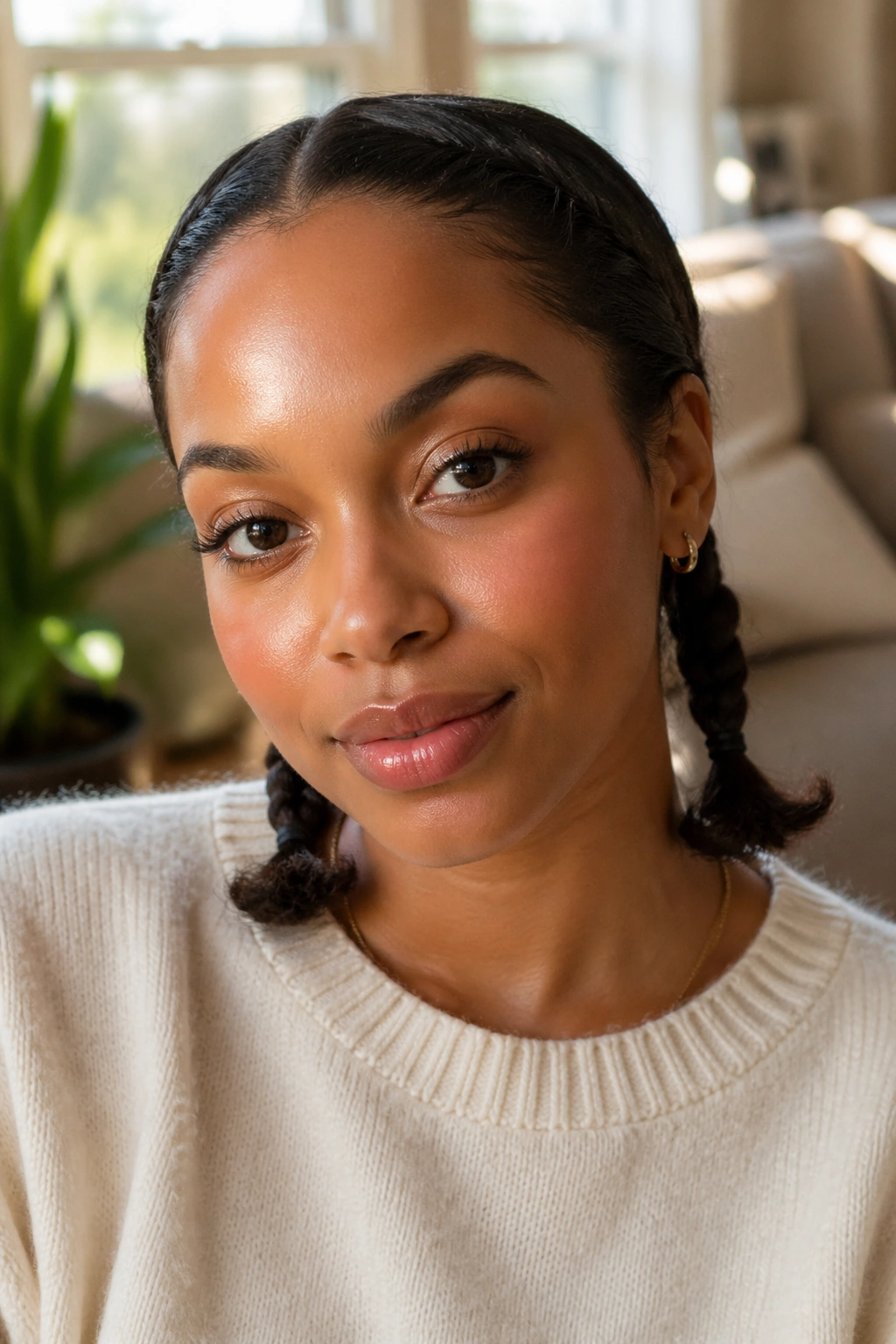
If your hair barely reaches your shoulders, forcing long, loose pigtails is a losing game. Smaller braids solve that problem neatly.
The trick is to work with shorter sections and accept that the ends may not swing past your collarbone. That is fine. On shorter hair, the braid shape matters more than the length of the tail. A tidy finish at the ear line can look cleaner than a longer braid that falls apart at the ends.
- Take 1-inch sections and braid only as far as the length allows.
- Start just behind the ear if the hair at the front is layered.
- Secure with tiny clear elastics every few inches if needed.
- Let the ends curl naturally, or tie them with a slim ribbon.
The style works because it respects the haircut you actually have. No fight. No forcing. If you have a blunt bob or lob, the braids land with a sharper edge; if you have layers, they pick up a little movement and break up the shape in a nice way. Neatness matters more than length here.
11. Pull-Through Pigtail Braids for Fuller Hair
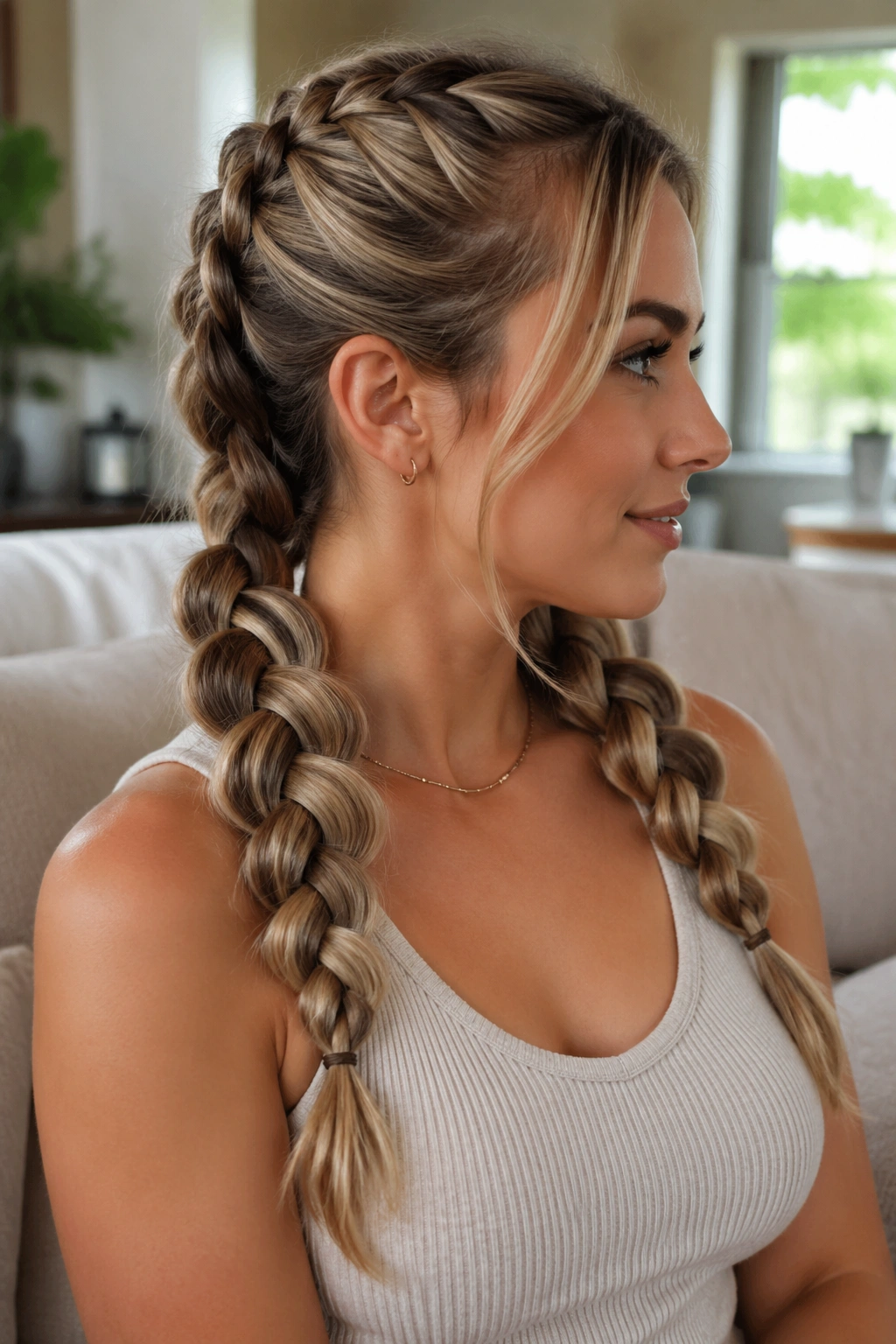
Pull-through pigtail braids look fuller than they have any right to. They build a braid shape out of small ponytails, so the finished style has that stacked, woven look without needing tiny fingers or complicated crossing.
That makes them useful for fine hair that needs a little more presence. It also helps on thick hair, though you need to keep the sections even or the whole thing gets bulky fast. The structure is the point. Every loop has to look like it belongs there.
I like this braid when a standard three-strand braid feels too plain but a tight Dutch braid feels too heavy. Pull-through braids split the difference. They have enough shape to feel dressed up, and enough looseness to stay friendly. That balance is rare.
Patience helps. So does a pile of small elastics. If you make the sections the same size all the way down, the braid looks cleaner from every angle, not just from the front. It is one of those styles that rewards a careful hand, and it pays that effort back with a lot of visual weight.
12. Braided Pigtail Buns That Stay Neat
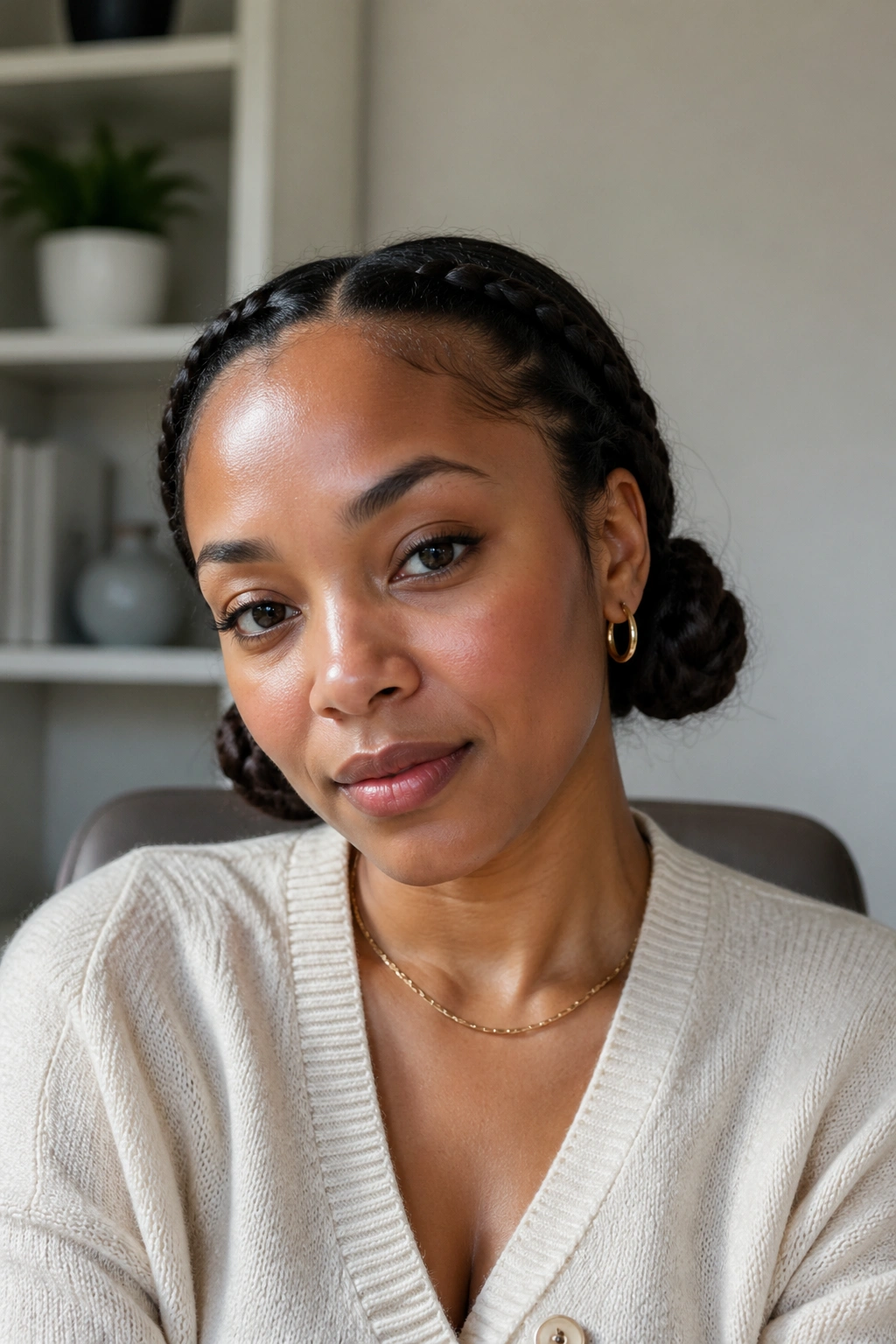
Braided pigtail buns keep the playful symmetry but hide the ends, which instantly makes the look feel neater. That one change shifts the whole mood.
Unlike long tails, the buns stay out of the way on packed days. Unlike a single bun, they still give you that twin frame around the face. The style sits somewhere between casual and polished, and that is why it works for a lot of different settings.
The placement matters. Low buns behind the ears feel calmer and more adult than high ones perched near the crown. A center part keeps the whole thing tidy, while a side part softens it. If your hair is slippery, braid each side first, then coil the braid into a flat bun and pin it in place with two or three U-pins.
I reach for this version when I want the shape of pigtails but do not want hair brushing the neck all day. That sounds like a small thing. It isn’t. Comfort decides whether a style gets repeated or abandoned after one wear.
13. Crisscross Feed-In Pigtail Braids
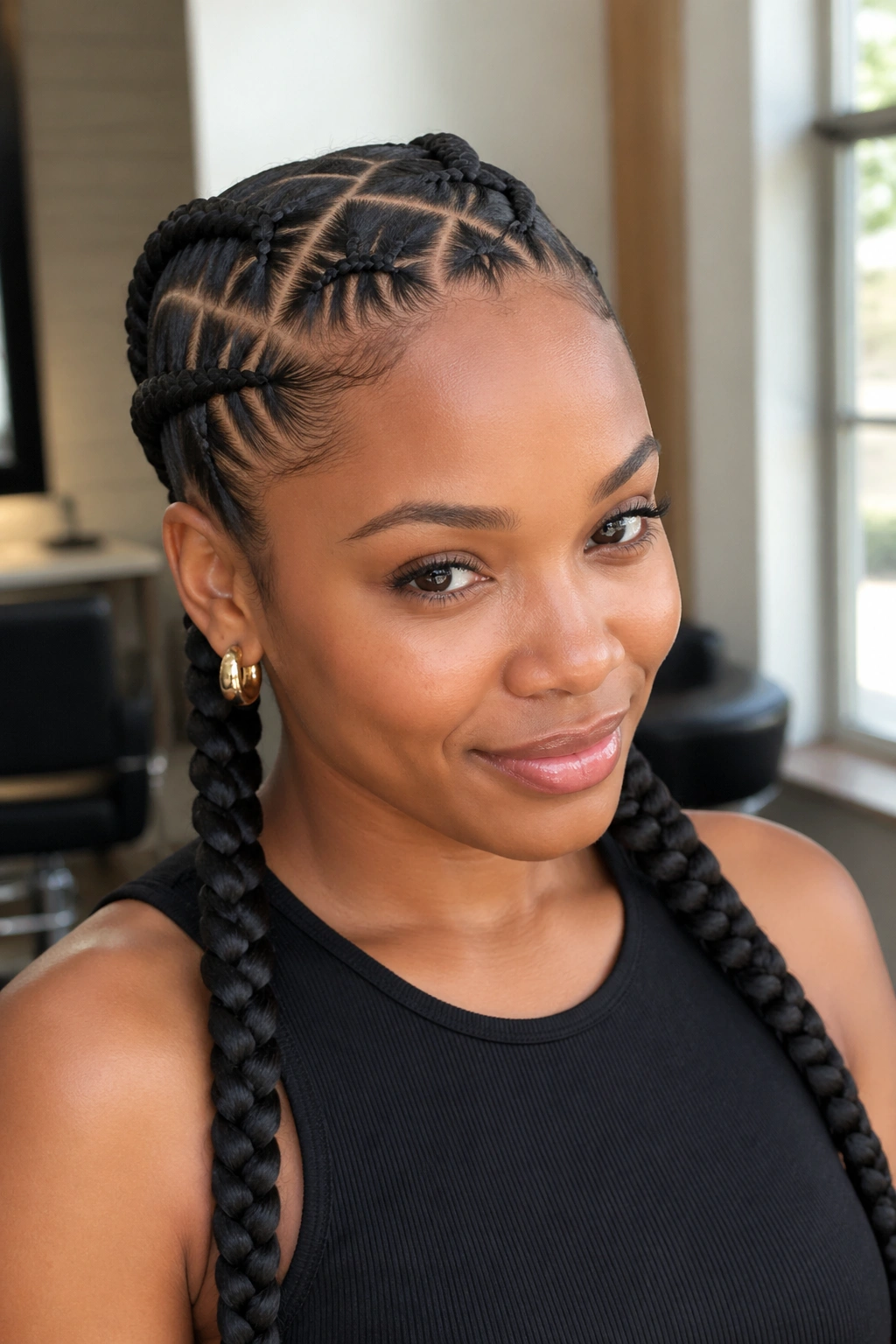
Crisscross feed-in pigtail braids are the most refined option if you wear braids often. The gradual buildup at the scalp gives the style a smooth, controlled look, and the feed-in method helps the braid sit close without looking bulky at the root.
Why the Feed-In Pattern Matters
Starting with very small rows and adding hair a little at a time keeps the braid even from top to bottom. That matters for the visual line, but it also matters for comfort. Uneven sections tug in odd places, and you feel that by the end of the day.
This style works especially well on natural hair and on anyone who wants a more protective approach with a neat finish. The crisscross detail at the part gives the top of the style some interest without needing accessories. It looks intentional in a quiet way.
- Keep the sections the same width on both sides.
- Add hair gradually so the braid grows evenly.
- Hold the tension steady near the scalp.
- Finish with plain ends or a small cuff if you want a little shine.
If your scalp feels tender, loosen the first inch. That is the part that tends to get overdone, and it does not need to be.
14. Soft Undone Pigtail Braids for Everyday Wear
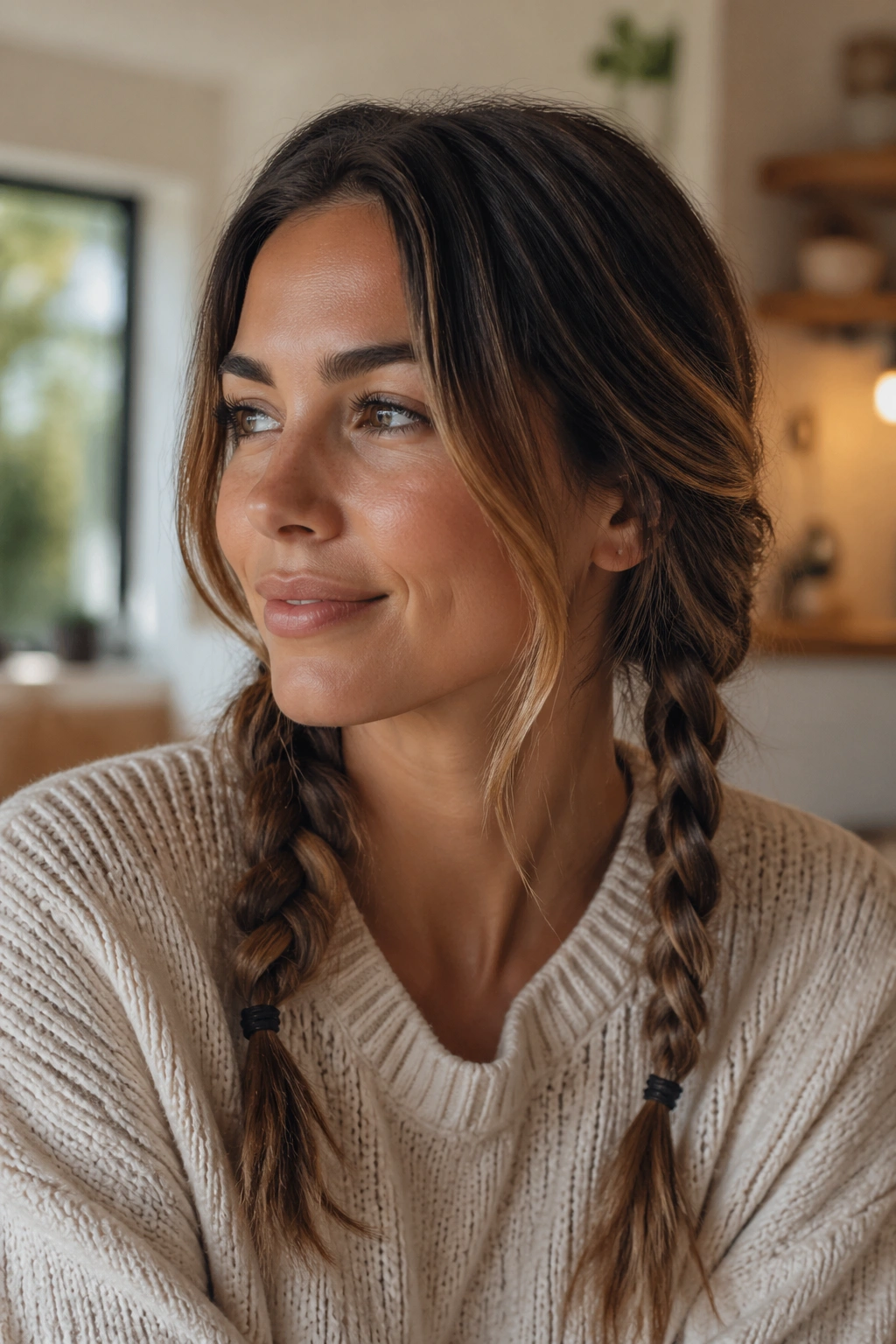
The pigtail braid that works hardest is usually the one that looks the least stiff. Soft undone braids are good at that. They hold the twin shape, but they let texture, frizz, and a few loose strands stay in the picture.
That is why I keep coming back to them for real life. They work on hair that is not freshly washed. They forgive a little flyaway at the crown. They can be low and neat or a little fuller and looser, depending on how much you pull the braid apart at the end.
The key is to stop chasing perfect symmetry. Keep the parts close to even, sure, but let the braid links breathe a bit. A few shorter pieces around the temples help, and so does a light mist of flexible-hold spray at the ends. You want movement, not crunch.
This version also travels well from errands to dinner because it does not need to look polished in the rigid sense to make sense. If the braid has a little bend, a little lift, and a little softness, it feels lived in rather than forced. That is usually the sweet spot for grown women anyway: hair that looks like it belongs to a real day, not a styling demo.