


The hime cut has evolved far beyond its anime-inspired origins to become a versatile, real-world hairstyle that flatters a wide range of face shapes and hair types. What started as a distinctive fictional look—characterized by long side locks and a blunt fringe—has been adapted and reimagined by stylists and hair enthusiasts worldwide. When you add waves and texture to the classic hime structure, something magical happens: the sharp, angular geometry softens into something more wearable and movement-friendly while retaining that signature elegant appeal. The combination of wavy texture with hime proportions creates a look that feels both intentional and effortlessly romantic.
The beauty of wavy hime cuts lies in their remarkable versatility. Whether you’re drawn to soft, beachy waves or more defined, voluminous curls, there’s a wavy hime variation that can work with your natural texture, styling preferences, and lifestyle. Some versions lean heavily anime-inspired, while others feel like they belong in a modern editorial shoot. The side locks that define a hime cut become stunning frame-shaping elements when they’re wavy, adding dimension and movement that photographs beautifully and feels incredible when you run your fingers through your hair.
Finding the right wavy hime cut depends on understanding what elements matter most to you—the length of your side locks, the intensity of your waves, the style of your fringe, and how much styling commitment you’re willing to embrace. Some wavy hime cuts are surprisingly low-maintenance, while others require intentional wave-setting and styling. The following fifteen variations showcase the full spectrum of possibilities, from subtle wave-enhanced takes on the classic hime to bold, textured interpretations that feel completely modern.
1. Classic Hime Cut with Gentle Waves
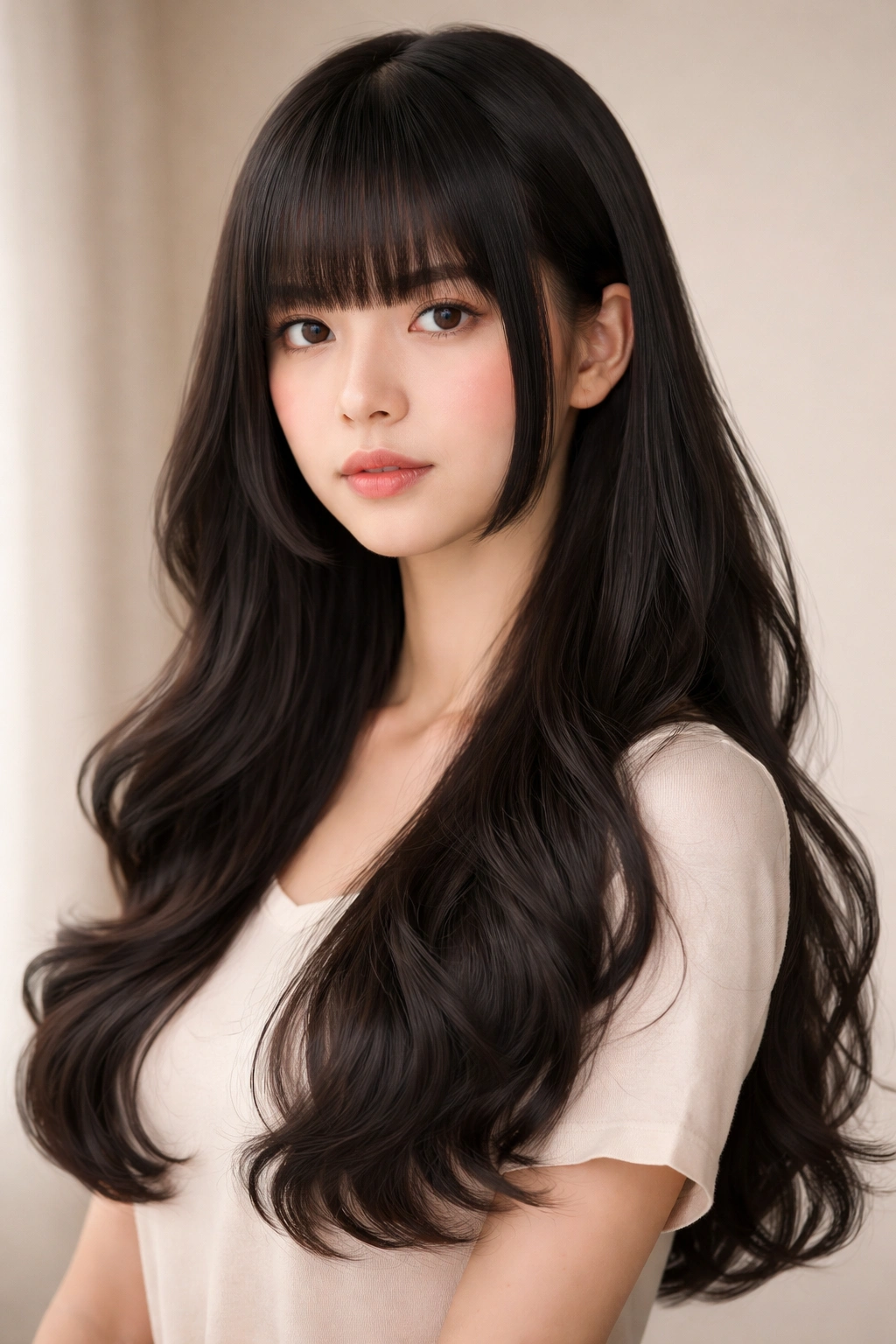
This is the foundation style—a true hime cut structure enhanced with soft, flowing waves throughout. The defining features are long side locks that frame the face, a blunt fringe (typically chin-length or slightly shorter), and center-parted longer length in back that creates that signature hime silhouette. When you introduce gentle waves across all sections, the look gains movement and texture without abandoning the precise geometry that makes a hime cut recognizable.
Why It Works for Most Hair Types
Gentle waves work beautifully on fine to medium hair because they create the illusion of fuller volume without requiring heavy styling. The waves catch light differently at each layer, making even naturally thin hair appear thicker and more textured. The side locks hold their wave shape beautifully because of their length and the naturally occurring curl from being styled regularly around the face.
How to Style and Maintain It
- Use a curling iron set to medium heat (around 350°F / 175°C) to create waves, starting from mid-length and working toward the ends
- Apply a lightweight wave-enhancing spray before curling to help waves hold longer throughout the day
- The fringe stays straight or nearly straight, creating intentional contrast with the wavy sections
- Refresh waves on day two using a wave spray and a flat iron set to a very low heat, pressing gently upward
- Sleep on a silk pillowcase to minimize frizz and help waves maintain their shape overnight
Pro tip: This style photographs exceptionally well because the gentle waves catch light in a way that reads as intentional and polished, making it a favorite for those who frequently update their Instagram or TikTok.
2. Curtain-Style Wavy Hime Fringe
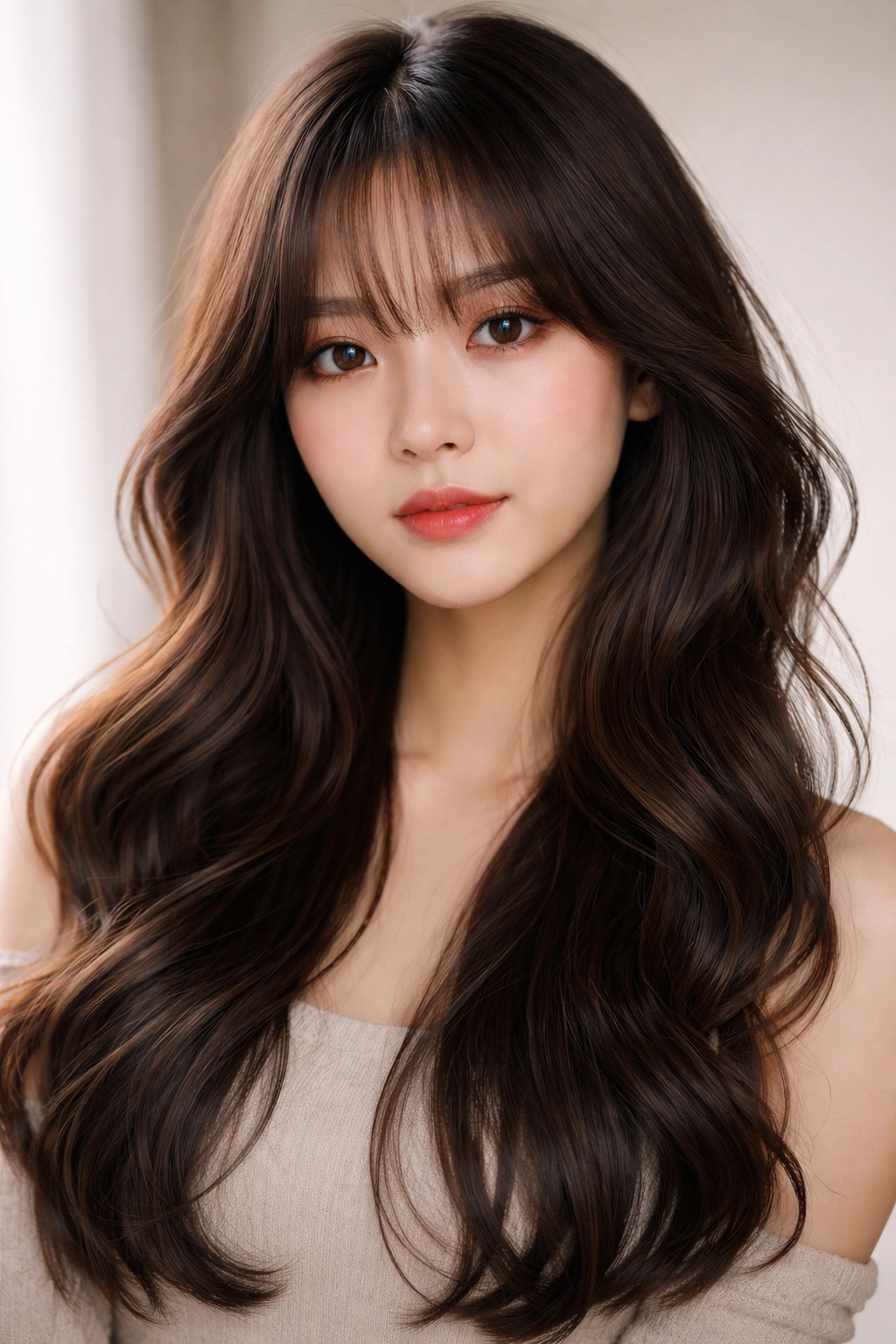
Instead of a traditional blunt hime fringe, this variation features a soft, parted curtain-style fringe that waves gently outward, creating a softer frame around the forehead and face. The side locks remain present and wavy, but the overall effect feels less anime-strict and more contemporary. The curtain fringe waves away from the center part, adding width to the face and creating a cascading, romantic aesthetic.
What Makes This Different from Classic Hime
The curtain fringe removes the hard-line bluntness that defines traditional himes, making this variation ideal if you find standard hime fringes too dramatic or restrictive. You get the elegant side-lock framing and the distinctive proportions of a hime cut while gaining flexibility in styling the front. This version suits those who want hime recognition without the commitment to a precise blunt line.
Styling Tips for the Curtain Fringe
- Create the wave in your fringe by curling each section away from the center part with a half-inch curling iron
- The curtain works best when the fringe reaches approximately cheekbone length, allowing it to curve naturally around your face
- Use a light hairspray rather than heavy products—too much hold makes the curtain fringe look stiff and defeats the purpose of the soft, flowing effect
- On days when your curtain fringe needs refreshing, use a flat iron with a slight twist motion to recreate the wave direction
- The longer your center section in the back, the more dramatic the contrast between the shorter curtain fringe and the length becomes
Insider note: Curtain-style wavy hime fringes are particularly flattering if you have a wider or square face because the soft waves that curve outward at cheekbone level add gentle fullness without the severity of a straight fringe.
3. Shaggy Wavy Hime Layers
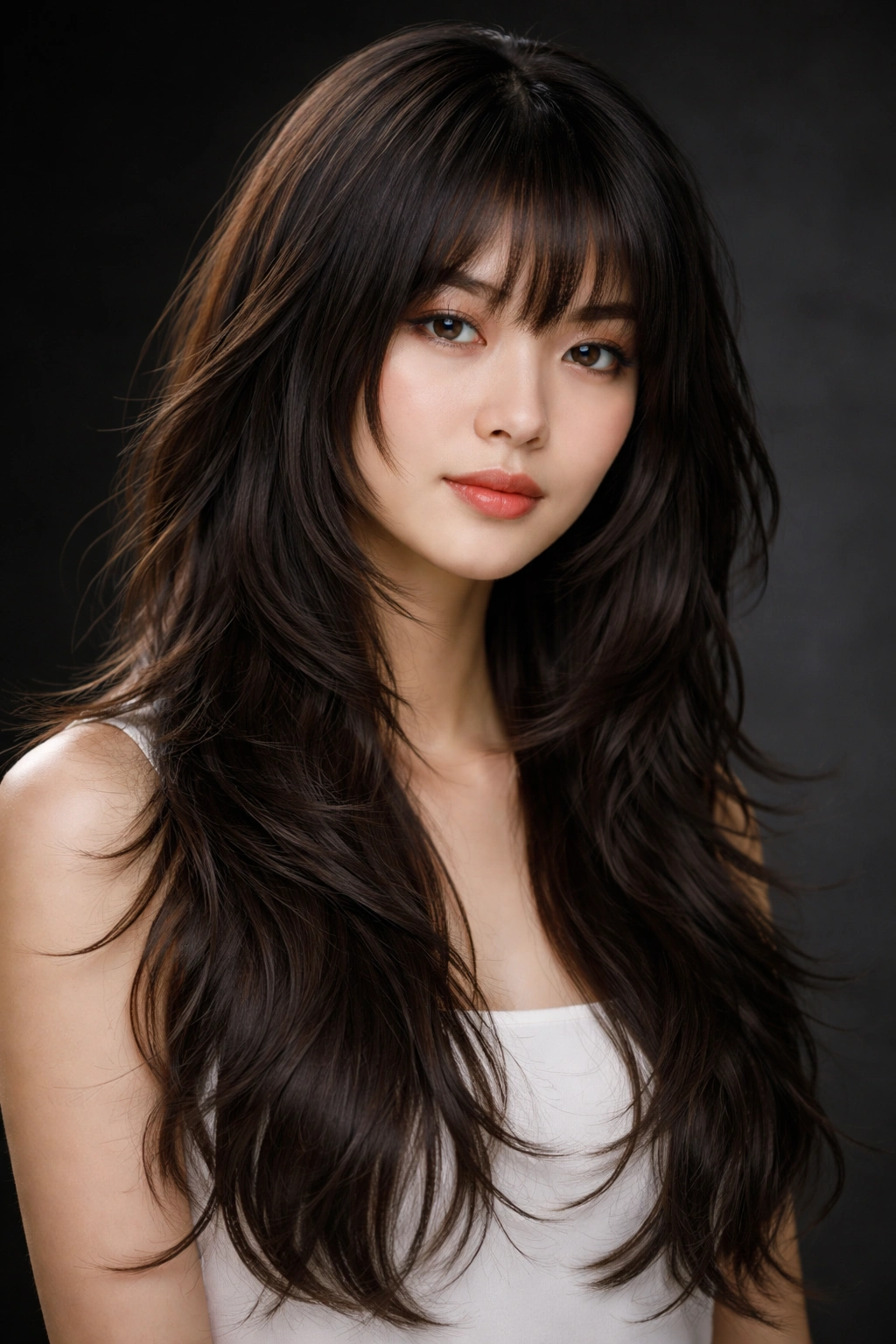
This interpretation layers the classic hime structure, creating choppy texture and movement throughout while maintaining the essential side-lock framing and overall proportions. Instead of blunt lines, each section features layered, feathered edges that blend together and create a lived-in, tousled aesthetic. Waves move through layered sections more dynamically than they do through blunt-cut hair, creating dimension and visual interest from every angle.
Why Layers Amplify Wavy Texture
Layered hair is naturally better at holding waves because each shorter layer has its own curl memory, and the overall reduction in weight makes wave-setting more effective. A shaggy wavy hime cut feels effortlessly textured because the layers themselves create movement even without perfect waves—your natural texture shows through more visibly. The side locks in a layered hime cut taper gradually rather than ending bluntly, which changes how they frame the face.
Creating and Maintaining Shaggy Waves
- Use a medium-barrel curling iron (around 1.25 inches) to create waves, working in smaller sections because layered hair requires less heat to hold texture
- Avoid over-styling—layered hair holds waves more easily, so you may need fewer passes with the curling iron than you would with blunt-cut hair
- Embrace some frizz and texture; the imperfection is part of what makes shaggy waves work visually
- Refresh tired waves by spritzing with a texture spray and roughing your hair with your fingers to reactivate the natural wave pattern
- Get trims every 6-8 weeks to maintain the layered structure; layers grow out and lose their purpose quickly if not regularly shaped
Worth knowing: The messier, more textured your waves appear, the better this style reads visually. Trying to make shaggy wavy hime cuts look too polished actually defeats the purpose—they’re meant to feel artfully undone.
4. Long Wavy Hime with Deep Side Part
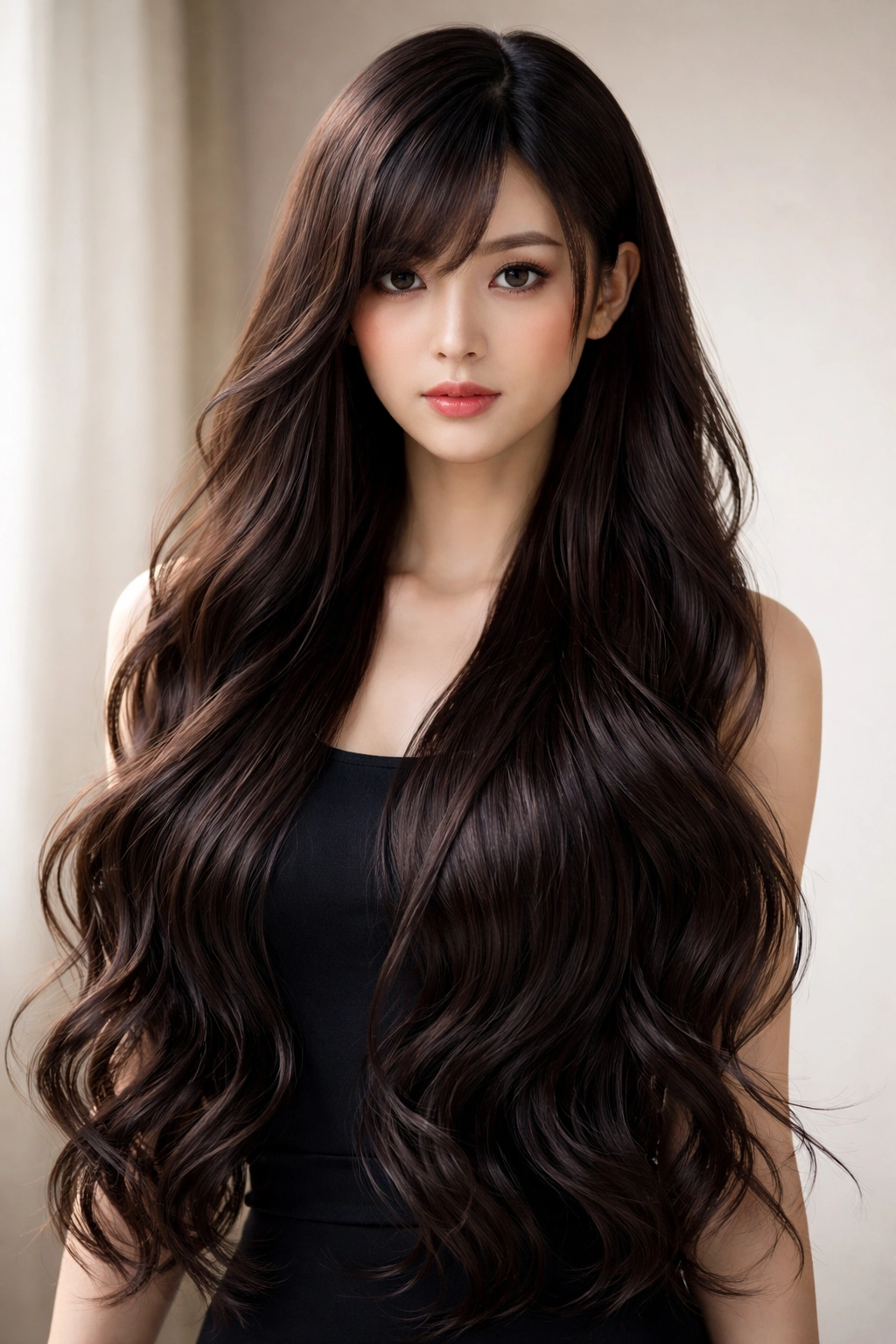
This variation emphasizes length dramatically—the center-back section extends well past the shoulders, sometimes reaching the lower back—while maintaining the characteristic hime side locks and fringe structure. Instead of a center part, this style features a deep side part that creates asymmetry and adds visual intrigue. Waves flow through all sections, becoming more pronounced as they travel down the longer lengths.
How Length Changes the Hime Proportion
Extending the length in back creates a stronger triangle silhouette when viewed from above, with the longest point at the very back and progressively shorter lengths as you move toward the front. This elongates the face and creates an elegant, almost regal quality that the original hime cut sometimes lacks. The side locks gain even more prominence because of the contrast with the much-longer center section.
Styling Long Wavy Sections
- Long hair holds waves beautifully because the weight naturally encourages wave formation, but you’ll need sufficient hair density to avoid the waves looking limp
- Set waves with a 1.5-inch barrel curling iron, curling sections away from the face on one side and toward the face on the other to create movement rather than uniform ringlets
- Use a heat protectant and a light texture spray before curling to help waves hold through the day and night
- Sleeping with waves in long hair requires either a loose braid (which adds extra texture) or sleeping upright or on your side to minimize flattening
- Long hair may require more frequent trims (every 8-10 weeks) because length makes split ends more visible and compromises overall texture
Pro tip: The deep side part becomes a styling tool in itself—switching which side you part your hair on changes the entire silhouette and allows you to customize the look day to day without restyling your waves.
5. Shoulder-Length Wavy Hime Cut
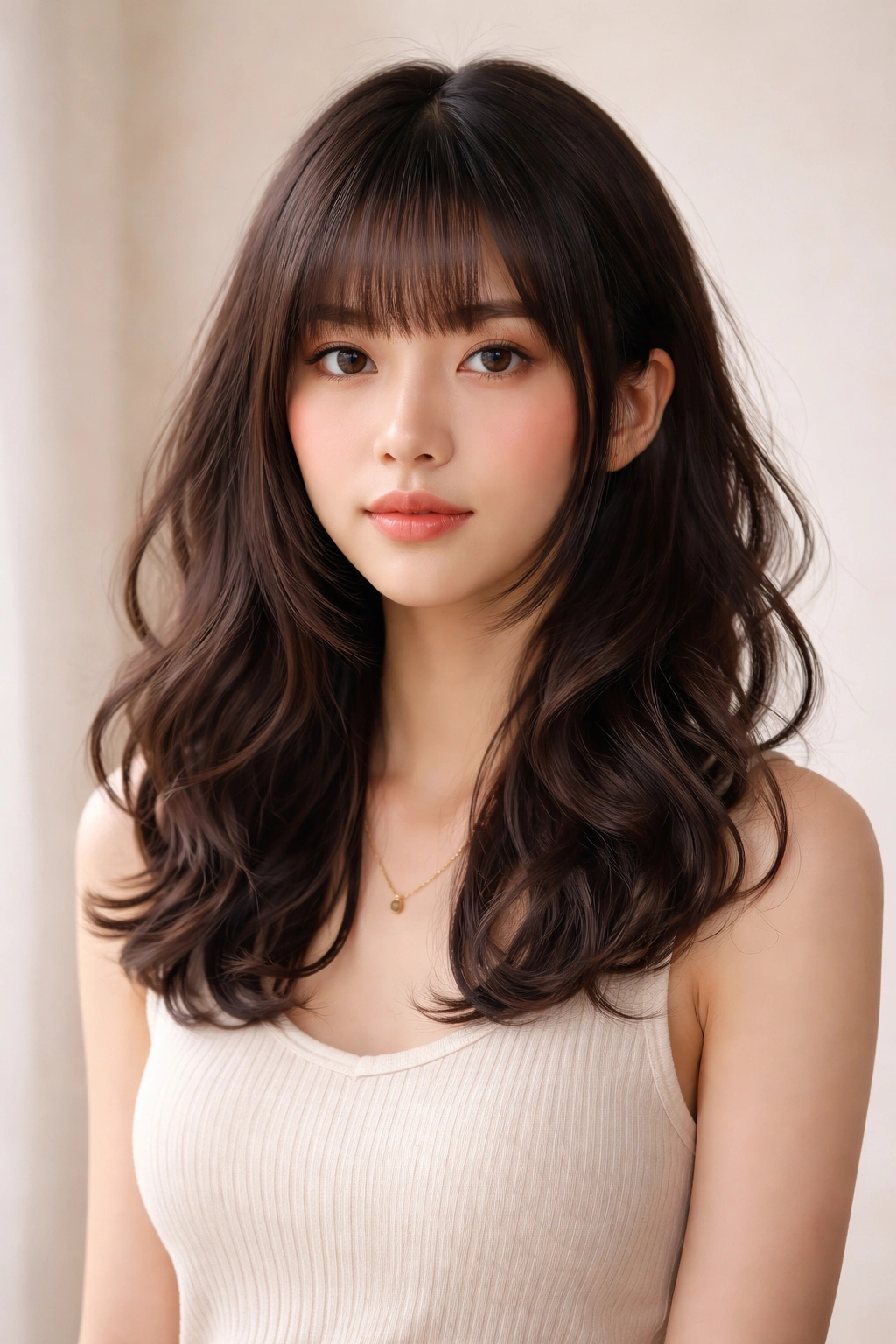
This is the practical, everyday version of the wavy hime cut—a mid-length style that hits approximately at the shoulders or just below, maintaining all the defining hime elements while being far more manageable than longer interpretations. The side locks remain prominent and wavy, the fringe stays distinctive, and the overall proportions scream hime cut, but the length makes it genuinely wearable for work, school, or daily life without extensive styling.
Why Shoulder-Length Is the Sweet Spot
At shoulder length, waves hold reasonably well without requiring heat-setting every single day. You get enough length for the hime proportions to read clearly, but not so much that styling becomes a daily commitment. The style suits nearly all face shapes better than very long himes because it’s less overwhelming and creates better facial balance. Shoulder-length also photographs beautifully and reads as intentional and polished without feeling costume-like.
Everyday Styling for Shoulder-Length Wavy Hime
- Use a medium-barrel curling iron or flat iron to create waves on days you want defined texture, but the style still looks intentional with second-day texture
- Apply dry shampoo or texture spray before styling to help waves grip and hold without feeling product-heavy
- The fringe can be worn straight or with a slight wave for variety; shoulder-length styles are forgiving enough to allow styling flexibility
- Refresh waves by misting with water and running a flat iron through sections with a slight twisting motion—no need to re-curl with heat every time
- This length works well with gentle layers that add texture without compromising the hime structure
Honest note: Shoulder-length wavy himes are the version most people actually maintain long-term because they balance the distinctive hime aesthetic with real-world wearability. Longer versions are gorgeous but require more commitment.
6. Wavy Hime with Blonde Highlights
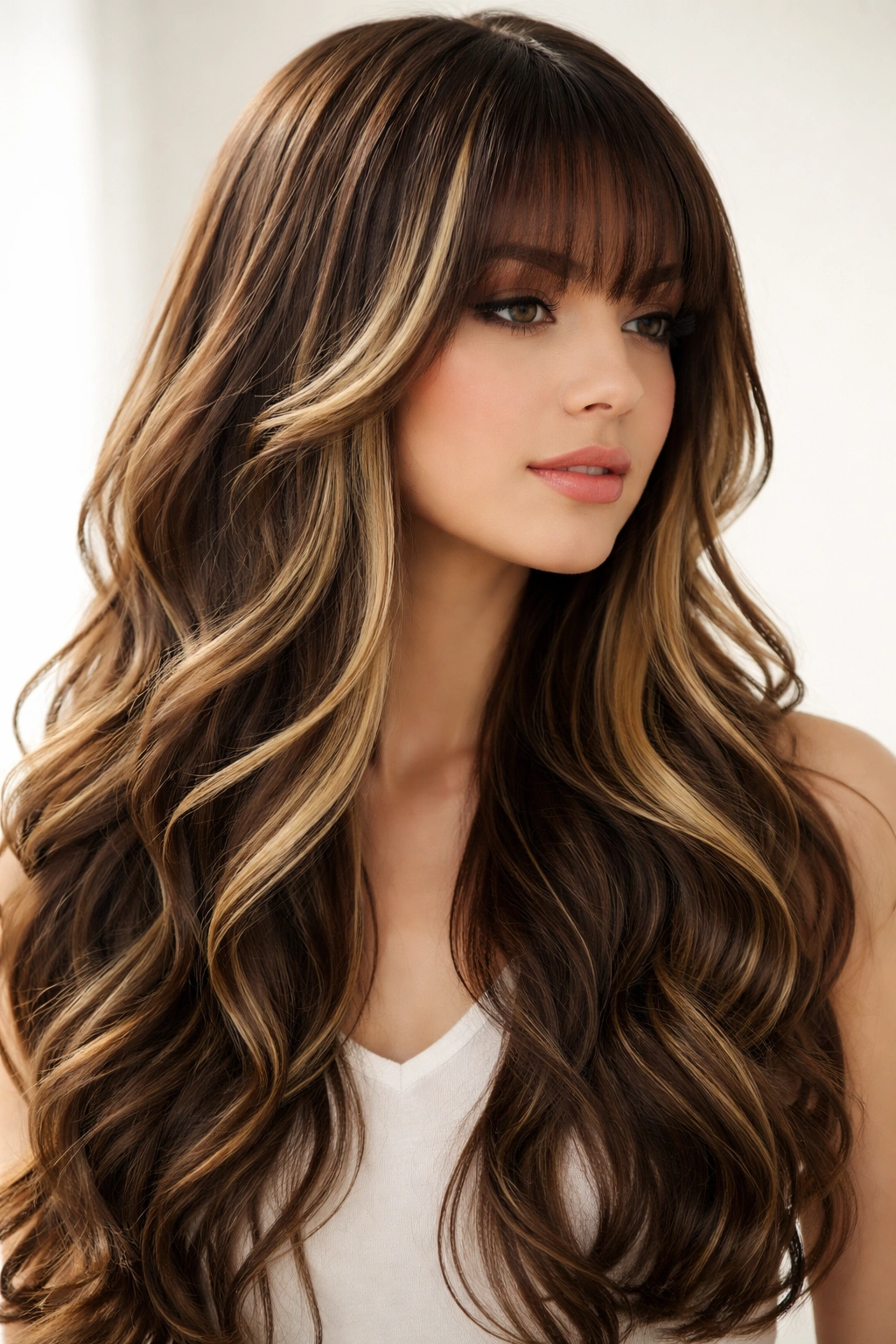
This variation focuses on how color enhances wavy texture. By adding blonde highlights—especially in the side locks, around the face, and throughout the lengths where waves catch light—you amplify the dimension created by the waves themselves. The highlights can be subtle (just a few babylights around the face) or bold (a full balayage or dimensional blonde throughout), but the principle remains: lighter tones make waves appear more defined and three-dimensional.
How Color Affects Wave Perception
Waves naturally create shadows and highlights through movement, and when you add actual color dimension, those shadows and highlights become even more pronounced. Blonde highlights catch light at different angles than darker roots, creating an optical illusion of extra texture and movement. Even subtle highlights transform how wavy sections read visually, making the style feel more intentional and fashion-forward.
Coloring Strategies for Wavy Hime Cuts
- Place highlights strategically in the side locks and around the face to frame features and enhance the hime structure
- Babylights (very fine, subtle highlights) work beautifully on wavy hime cuts because they mimic how natural light hits textured hair
- Consider warmer blondes (honey, golden, champagne) over cool blondes if you have warm undertones, as they enhance the dimensional effect of waves
- A darker root (using balayage or shadow-root technique) keeps blonde highlights from looking flat while also being more practical to maintain
- Blonde-highlighted hair requires more intentional moisture and care to keep waves looking healthy and not dry or fried
Worth knowing: If you have naturally dark hair but want the dimensional effect of highlights, even just 6-8 subtle blonde pieces around the face and in the side locks create a dramatic visual impact without committing to full color.
7. Textured Wavy Hime Fringe Variation
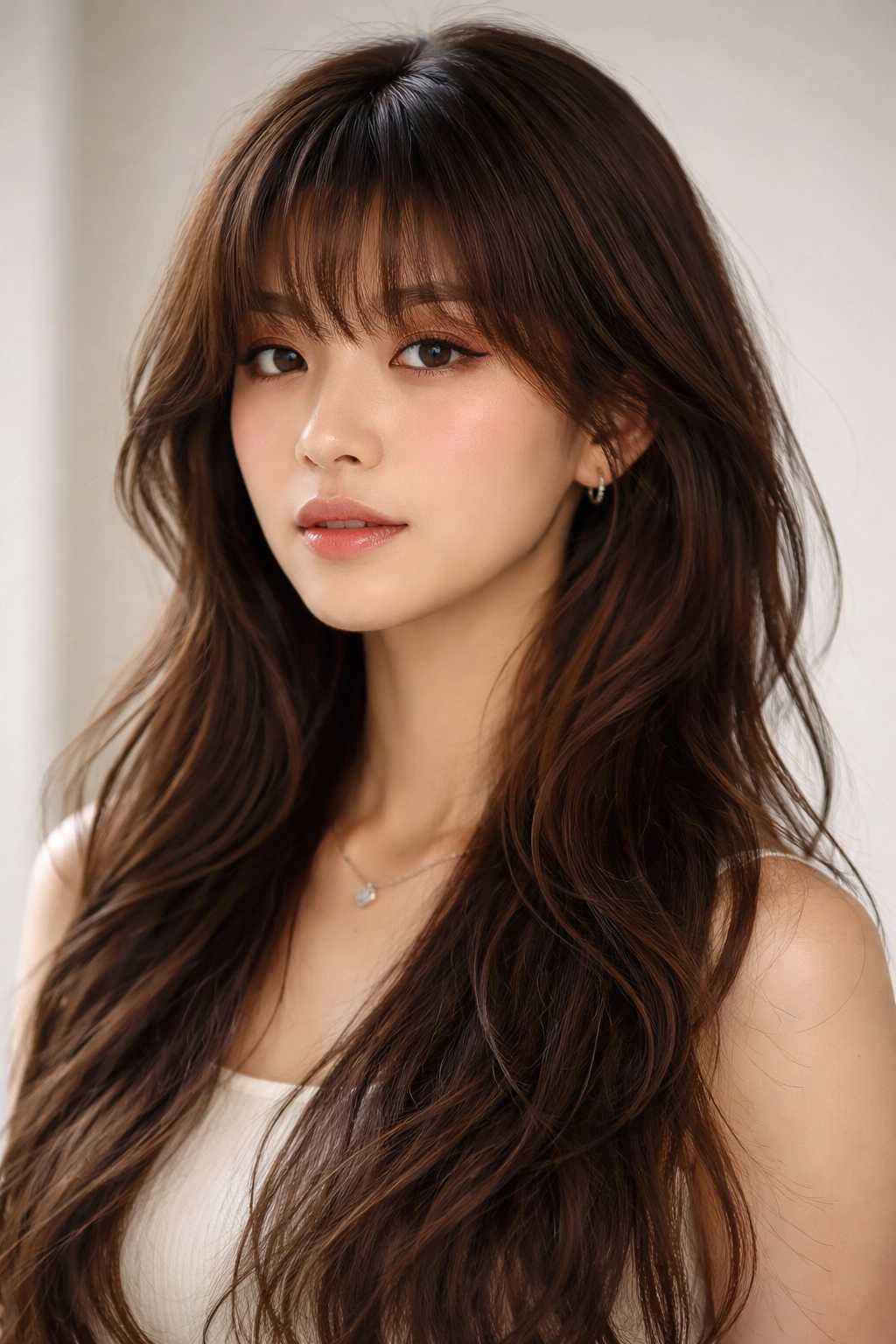
This style makes the fringe itself a textured, wavy statement rather than the blunt, straight line of a classic hime. The fringe features choppy, feathered layers that wave across the forehead, creating movement that frames the upper face beautifully. The side locks and back sections remain long and wavy as in traditional hime cuts, but the textured fringe becomes the focal point that distinguishes this version.
Why Textured Fringes Suit Wavy Hair
A textured fringe that waves and moves harmonizes visually with the waves in the rest of your hair, creating cohesion that a blunt straight fringe disrupts. The texture adds personality and prevents the hime cut from reading as too costume-like or anime-literal. A textured fringe also tends to be more forgiving on days when you haven’t freshly styled your waves, because the inherent choppy texture still looks intentional.
Creating Textured Fringe Waves
- Ask your stylist to create choppy, point-cut layers in your fringe section, each layer approximately half an inch shorter than the one beneath it
- Styling a textured fringe requires a small curling iron (around 0.75-1 inch barrel) to create waves in each choppy layer separately
- Point each section of your textured fringe away from the face at a slight angle for a more dynamic, less uniform appearance
- The textured fringe typically requires restyling every 2-3 days, as the shorter layers don’t hold waves as long as longer sections
- A dry texture spray applied to the textured fringe before curl-setting helps individual layers hold their wave shape independently
Pro tip: A textured fringe works especially well if you have some natural wave or curl pattern, because you can enhance your natural texture rather than working against it to create perfect waves from scratch.
8. Modern Wavy Hime with Wolf Cut Elements
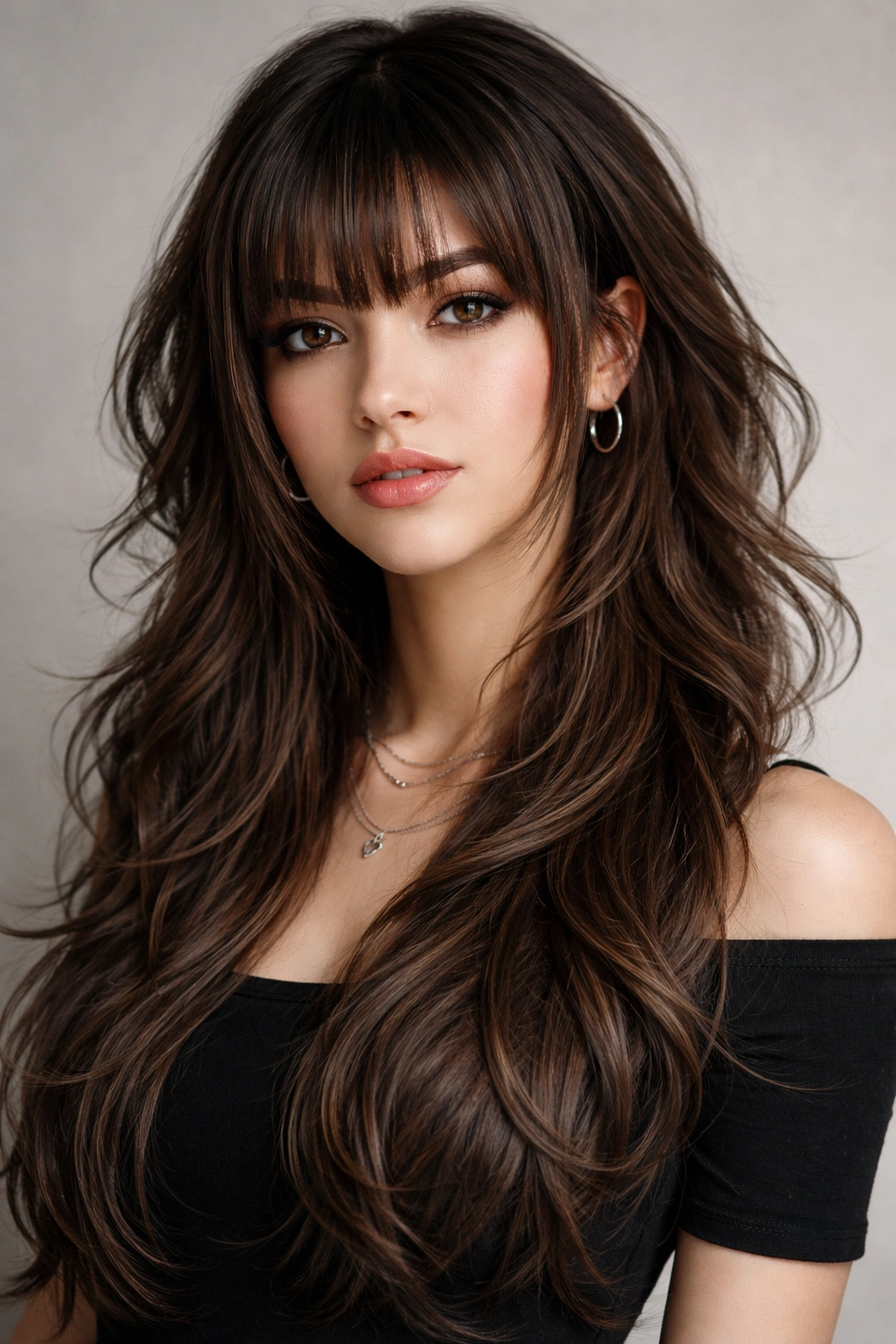
This is a contemporary take that merges hime proportions with the layering and texture philosophy of a wolf cut. You maintain the signature side locks and distinctive fringe structure of a hime cut, but the layers are more aggressive and wolf-like throughout the longer sections, creating maximum volume, movement, and texture. The resulting style feels avant-garde and very current while retaining recognizable hime elements.
Blending Hime and Wolf Cut Aesthetics
A wolf cut emphasizes choppy layers, facial framing, and a shag-like texture throughout, while a hime cut prioritizes side locks and specific proportions. When combined, you get a cut that feels artfully layered and modern rather than costume-inspired. The wolf-hime hybrid works particularly well with wavy hair because each layer can hold its own wave definition, creating an exceptionally textured, dimensional appearance.
Styling the Wolf-Hime Hybrid
- Use a curling iron to create intentional waves that work with your layered cut, not against it
- Embrace the shaggy texture rather than trying to smooth it into uniform waves—the best wolf-hime hybrids look slightly undone
- Style your side locks to have as much movement and flip as the rest of your hair; they shouldn’t read as separate structured elements
- This cut benefits from texturizing products like sea salt spray or mousse applied to damp hair before blow-drying for natural-looking waves
- Refresh waves by spritzing with texture spray and scrunching your hair rather than re-curling with heat; the shaggy layers already have movement built in
Insider note: Wolf-hime hybrids appeal to people who love the hime cut aesthetic but find strict anime-accurate proportions too restrictive or unwearable for their lifestyle.
9. Short Wavy Hime Cut (Pixie-Hime Hybrid)
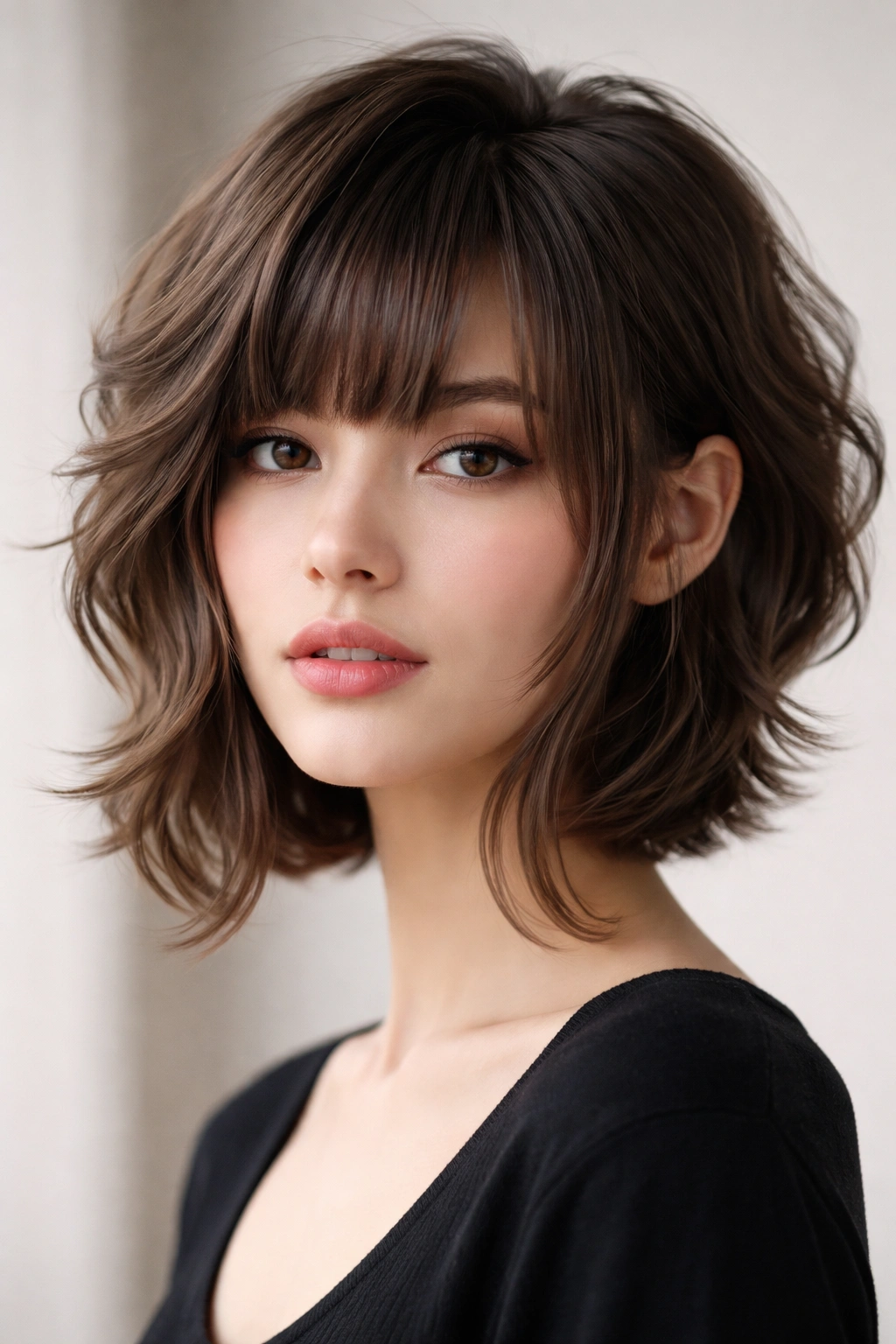
This audacious variation takes the hime cut extremely short—cutting the back to chin length or shorter while maintaining the side locks and fringe structure that define a hime. The result is somewhere between a pixie cut and a hime cut, with the side locks providing most of the length and visual interest. Waves throughout the short sections create texture and movement that makes the style feel intentional rather than simply “a short hike.”
The Appeal of Short Hime Cuts
Short wavy hime cuts are dramatically different from longer versions, offering a way to embrace the hime aesthetic while keeping hair much more manageable. The shorter length means less daily styling, faster drying time, and less frequent trims required to maintain the shape. The side locks become the star of this version—they’re what creates the hime silhouette, and their wavy texture becomes essential to the overall look.
Styling Short Wavy Sections
- A pixie-hime hybrid requires precise cutting to maintain proportions; grow-out phase can be awkward unless you stay on top of trims every 4-6 weeks
- Style the short back sections with a small curling iron or flat iron to create subtle waves or texture
- The side locks should be significantly longer than the back sections (often extending past the shoulders while the back is very short) to maintain the hime proportions
- This style looks best with a defined wave pattern rather than gentle waves—the shorter length requires more obvious texture to read as intentional styling rather than bad haircut
- Use texturizing products and leave-in spray rather than slicking everything smooth; short hair can look flat without intentional texture
Real talk: This version is bold and fashion-forward. It’s a commitment to a very specific look and requires either confidence in your styling ability or regular visits to your stylist for shaping and restyling.
10. Wavy Hime with Colored Bangs
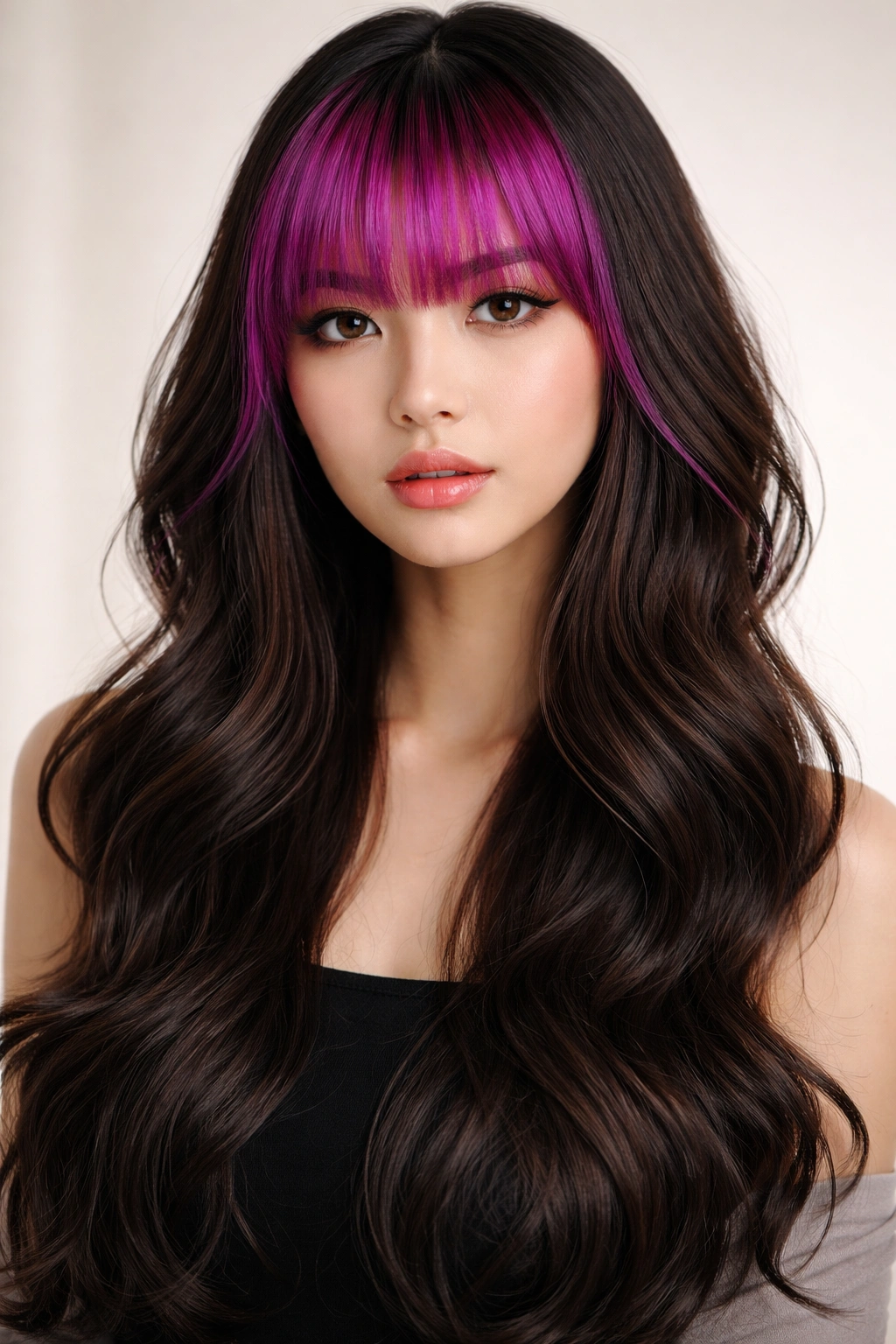
This variation uses color in the fringe area as a statement-making element. The bangs might be a contrasting color (bright blue, purple, pink, or any bold shade) while the rest of your hair is a natural or neutral tone, or you might use a subtle color contrast (honey highlights in the bangs against darker lengths). The colored bangs become a focal point that catches attention and adds personality to an otherwise classic wavy hime structure.
Design Principles for Colored Bangs
Colored bangs work best when the fringe is substantial enough to show color clearly—thin, wispy fringes don’t display color as dramatically. The contrast between the colored fringe and the rest of your hair creates visual interest and prevents the hime cut from feeling one-dimensional. Bold colors in the fringe make a strong personal statement, while subtle color variation (like highlights just in the bangs) offers a more wearable compromise.
Maintaining Colored Bangs
- Semi-permanent color works better for bangs than permanent color because you can refresh or change the shade without permanent damage
- Colored bangs fade more quickly than longer sections because you wash and touch them more frequently, so plan for more frequent color maintenance
- Use a color-safe shampoo and conditioner to extend the life of your bang color
- Wave-setting colored bangs may require a slightly heavier styling spray to help both the color and the waves stay visible and vibrant
- If you’re using bold unnatural colors, discuss potential damage with your stylist beforehand and plan a toning and deep-conditioning routine
Pro tip: If you’re hesitant about committing to colored bangs, try temporary hair chalk, wax, or spray-in color first to test how the look feels and photographs on your face specifically.
11. Wavy Hime with Undercut Detail
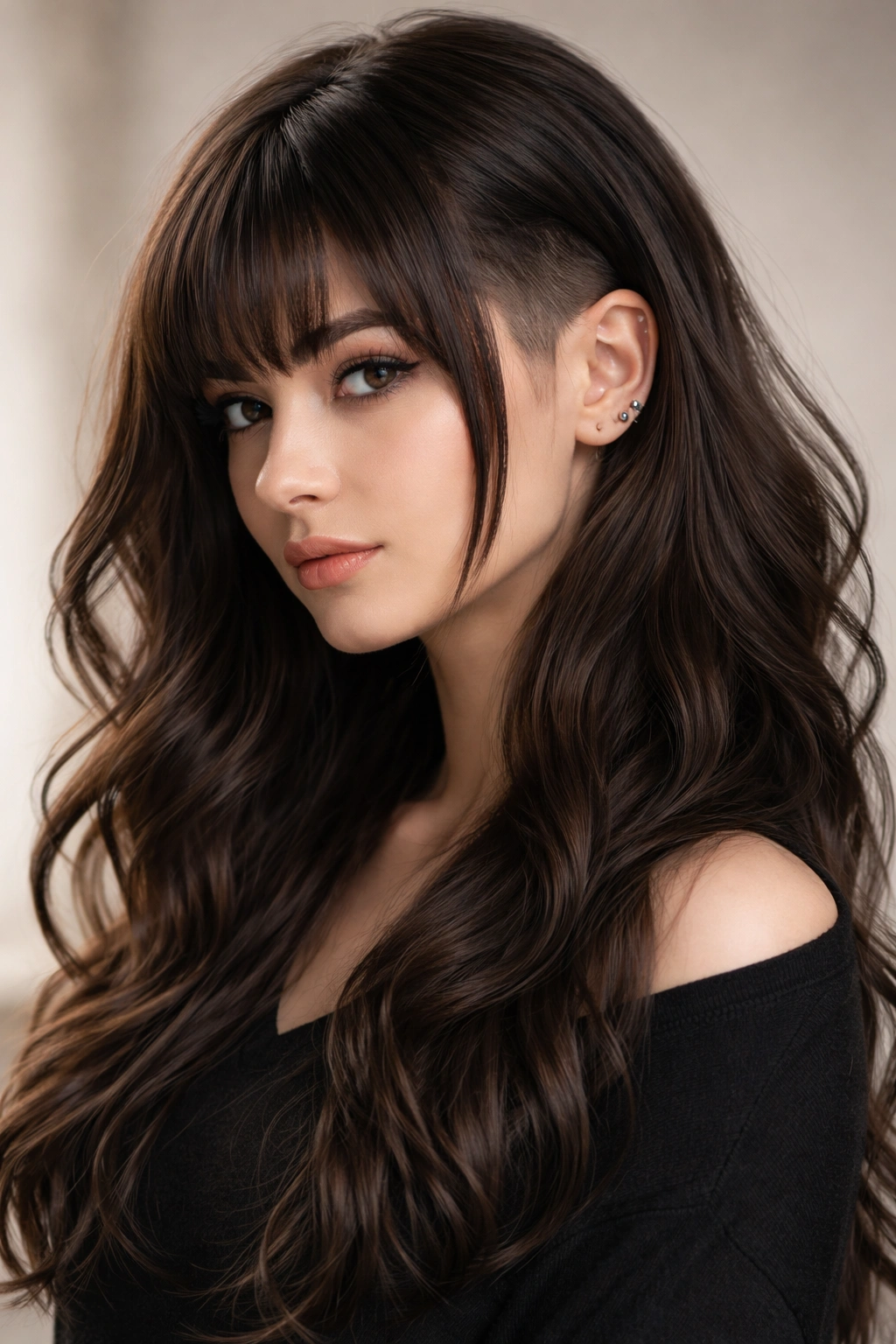
An undercut—shaved or very closely cropped sections hidden beneath longer hair—adds an unexpected contemporary edge to a classic wavy hime cut. The undercut might run beneath the side locks (revealed when you pull them back), along the nape of the neck, or in a pattern along the back section. When you style normally, the undercut isn’t visible, but it creates options for showing unexpected texture and personality.
How Undercuts Transform Hime Proportions
Removing weight through an undercut makes waves in the longer sections more pronounced because the underlying layers provide less bulk to weigh down waves. An undercut along the back creates visual interest when you move, flip your hair, or style your side locks differently. The contrast between the hidden undercut and the longer wavy sections creates an element of surprise and modernity that pure traditional himes lack.
Styling with Hidden Undercut Details
- If your undercut is beneath side locks, you can style the locks down for a classic look or pull them back to reveal the undercut for variation
- Undercuts require a trip to the salon every 4-6 weeks because the growth is very visible as the shaved sections regrow
- Consider your job, school, or social situation before committing to an undercut that might be visible depending on how you style your hair
- Waves in the longer sections appear bouncier and more pronounced when weight is removed through an undercut
- Texturizing products work particularly well with undercut-enhanced himes because they amplify the movement the undercut already provides
Worth knowing: Undercuts are trendy and stylish, but they’re also a significant styling commitment in terms of maintenance and social acceptability depending on your environment. Make sure it genuinely aligns with your lifestyle before committing.
12. Romantic Soft-Wave Hime Cut
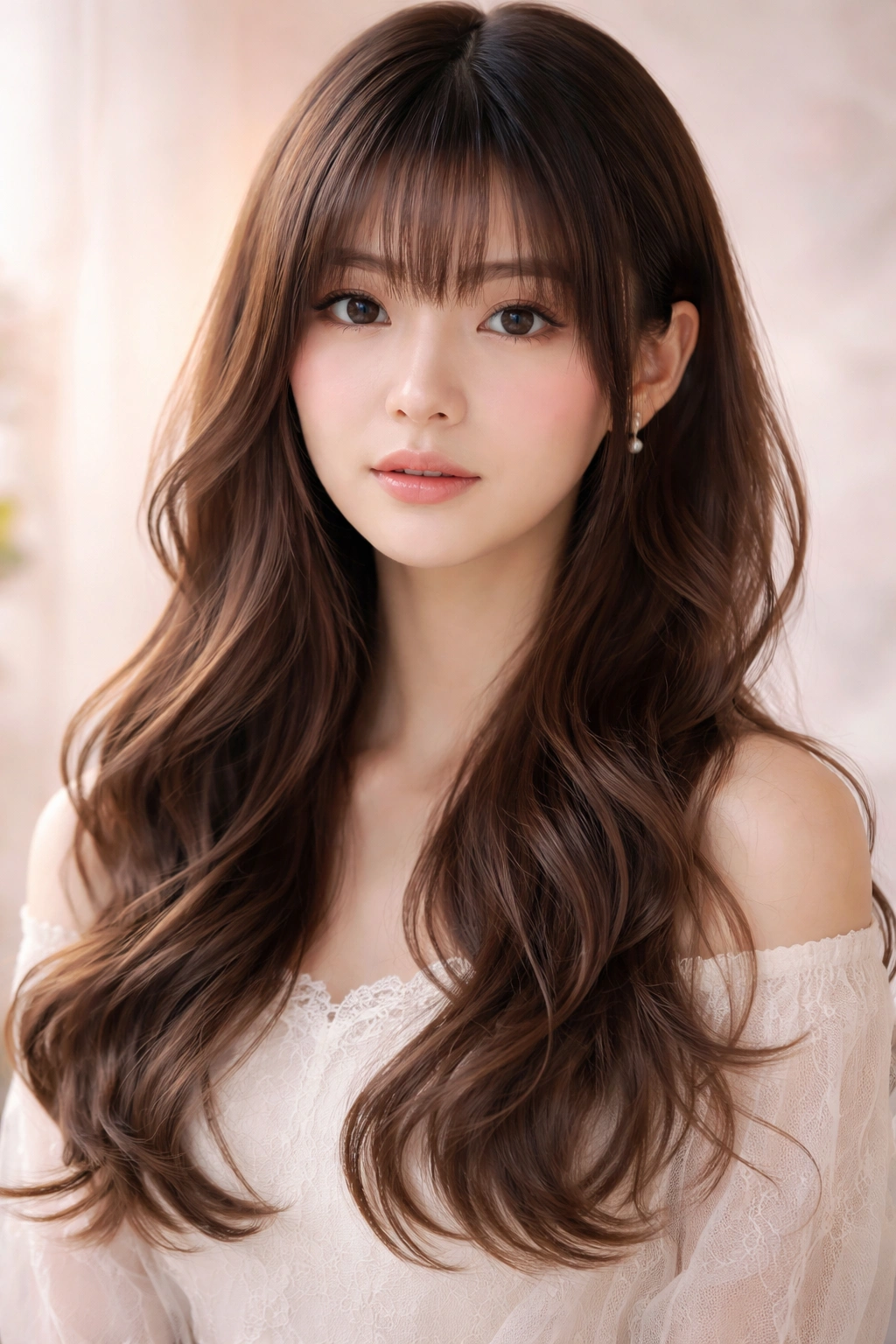
This version emphasizes soft, romantic waves throughout—the kind that look like they came naturally from ocean water or a night of braiding. The waves are loose, flowing, and intentionally imperfect, creating a dreamy aesthetic that feels elegant and feminine. The classic hime proportions—side locks and distinctive fringe—remain, but the soft waves soften any severity the structure might otherwise have.
Creating Romantic Soft Waves
Soft waves require a larger curling barrel (1.5-2 inches) and less-defined curl placement to achieve that romantic, imperfect appearance. You’re not aiming for uniform ringlets but rather for gentle S-curves that flow through your hair. The key is using enough product to hold waves without making them appear stiff or over-styled—they should read as effortlessly textured.
Styling Techniques for Soft Romance
- Use a large-barrel curling iron and curl each section loosely, wrapping hair around the barrel rather than clamping it tightly
- Apply curls when hair is nearly dry (around 90% dry) rather than soaking wet; this creates softer, more natural-looking waves
- Don’t comb or brush through your waves immediately after heat-setting; instead, wait 5-10 minutes for waves to cool and set, then gently finger-comb if needed
- A light hairspray or wave-setting spray helps soft waves hold, but heavy products make them look artificially constructed
- Refresh soft waves by misting with a texture spray and gently scrunching—you shouldn’t need to re-curl daily
Insider note: Soft-wave hime cuts are exceptionally flattering for photos and videos because they create a soft, romantic frame around the face without reading as overly styled or costume-like.
13. Sleek Wavy Hime with Thin Fringe
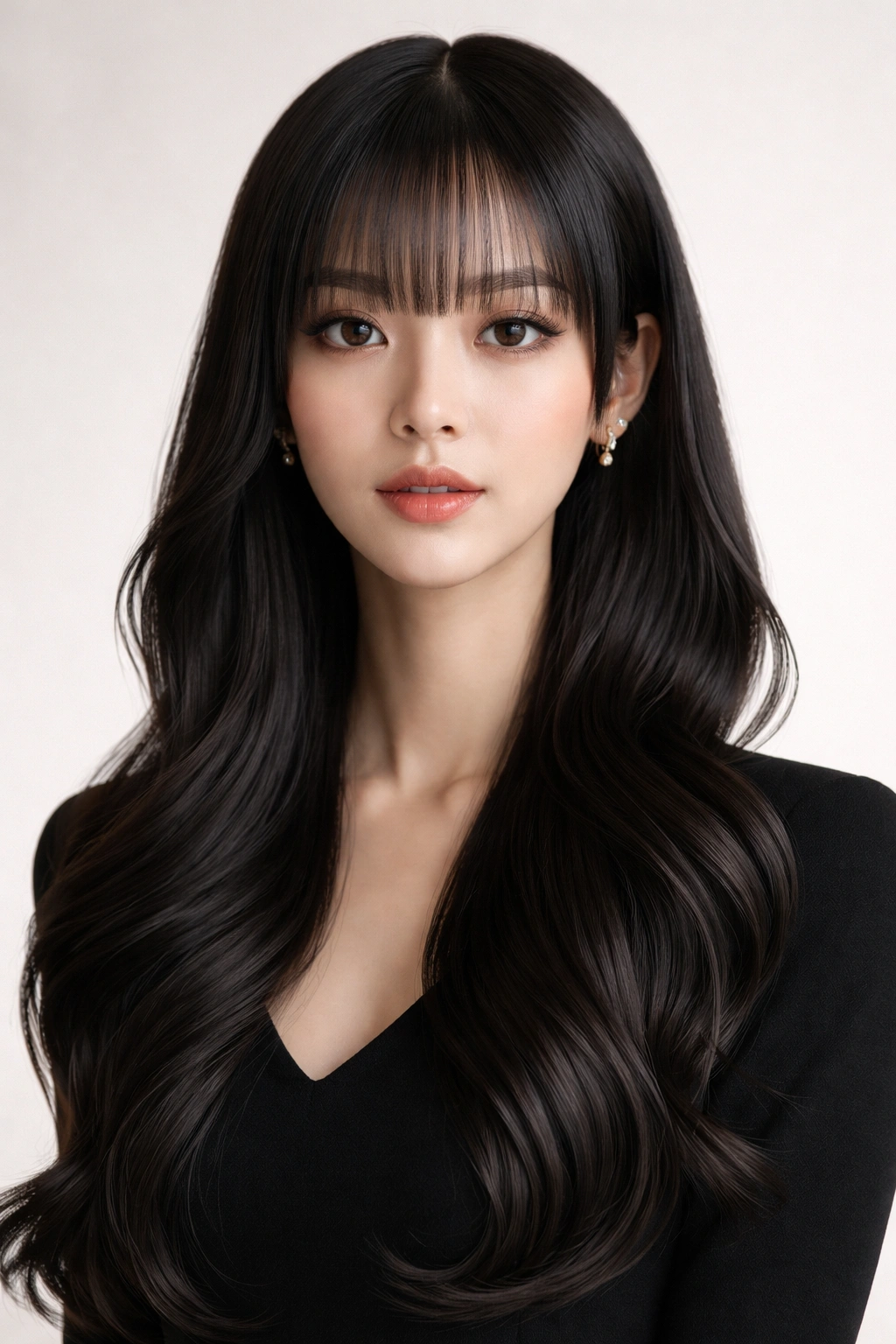
This variation uses a very thin, precise fringe—sometimes just an inch or two of hair across the forehead—paired with sleek, refined waves in the side locks and longer sections. The thin fringe creates an elegant, almost minimalist approach to the hime structure, while the waves provide dimension and softness. This combination appeals to those who want a hime cut that reads as high-fashion and refined rather than anime-inspired.
Why Thin Fringes Change the Aesthetic
A thin fringe requires precision cutting but creates an incredibly elegant, contemporary look. It’s barely noticeable when styled down but creates definition and polish that broader fringes sometimes lack. Paired with sleek waves, a thin fringe reads as intentional styling choice rather than structured costume element, making the overall hime cut feel wearable in professional and fashion-forward settings.
Maintaining Thin Fringe Precision
- Thin fringes require very regular trims (every 3-4 weeks) because any growth becomes immediately visible
- Style your thin fringe with a straightening iron rather than curling; the precision works better with sleek styling
- A thin fringe works best on straight-to-slightly-wavy hair; thick, heavily curly hair makes thin fringes difficult to style and maintain
- Consider asking your stylist to slightly angle your thin fringe rather than cutting it perfectly horizontal; an angled thin fringe is more forgiving and looks less stark
- This version requires daily styling of the fringe (straightening, smoothing with serum) to maintain the polished appearance
Pro tip: If you love the idea of a thin fringe but worry about maintenance, ask your stylist to cut it slightly longer initially so you can test how it photographs and feels on your specific face before committing to the thinnest possible version.
14. Voluminous Curly Hime Cut
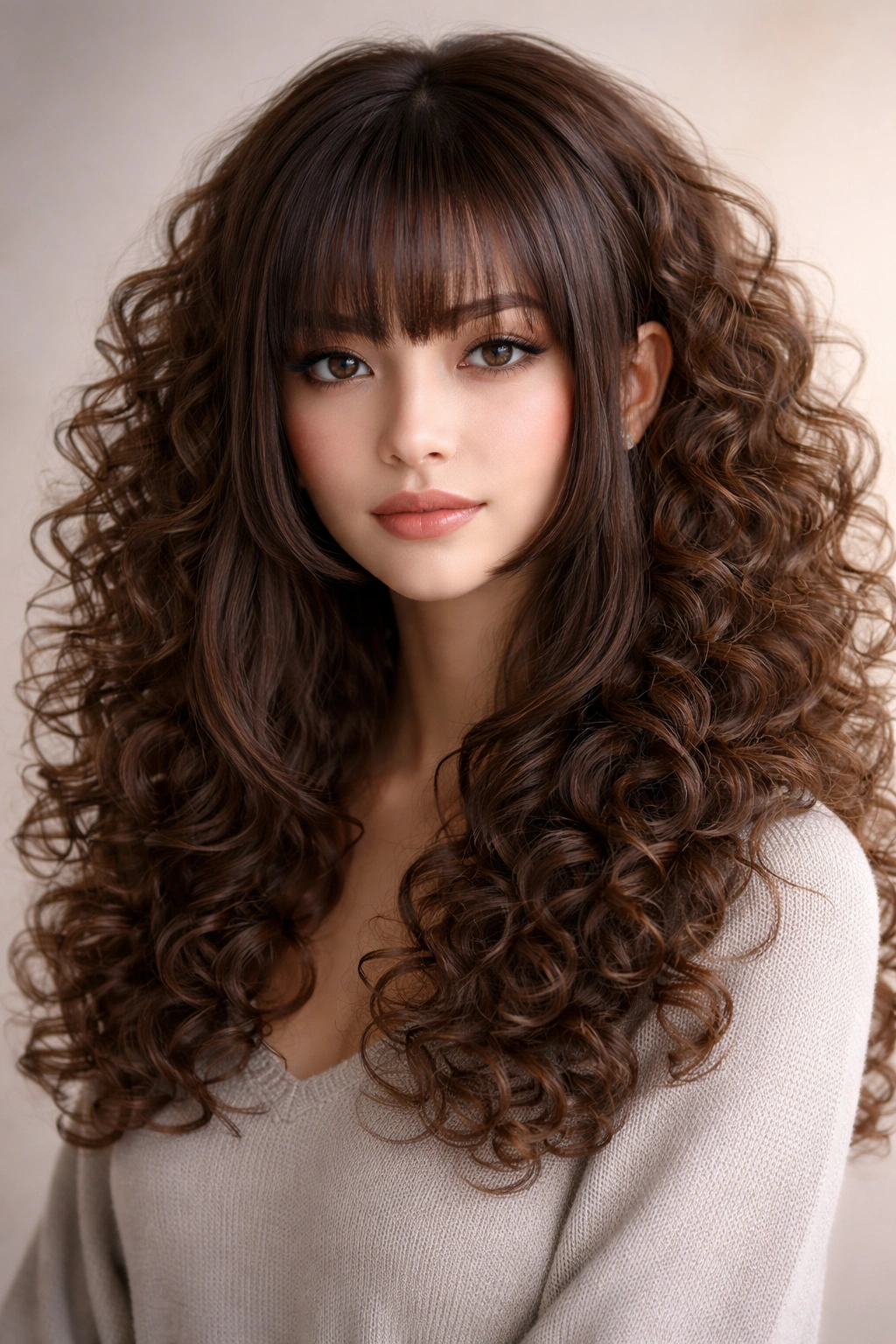
This is the maximum-texture interpretation—tight curls or spiraling coils throughout the entire cut, maintaining hime proportions but prioritizing maximum volume and curl definition. This version works beautifully if you have naturally curly or coily hair and want to embrace your texture while enjoying the hime cut structure. The side locks and fringe remain distinctive, but the emphasis is on celebrating your hair’s natural curl pattern.
Working with Natural Curls in Hime Structure
Curly and coily hair naturally wants to shrink and compact, which can make hime proportions less visible. The side locks might appear shorter than they actually are when curled. This requires strategic cutting that accounts for curl shrinkage and creates defined layers that enhance rather than fight your natural texture. The fringe on naturally curly hair is often better served by a textured, layered approach rather than a blunt line.
Styling Curly Hime Cuts
- Use a curl-defining cream or gel on damp hair, applied with a prayer-hands method (hands together, then releasing through hair) rather than brushing
- Encourage curl clumping by allowing sections of curly hair to form their own curl clusters rather than separating every curl
- Diffuse dry curly hair on low heat rather than blow-drying straight, which disrupts your natural curl pattern
- Refresh curls between wash days with a curl-refreshing spray rather than re-wetting and re-applying products, which can cause buildup
- Curly hime cuts often look best when embracing the slightly fuller, rounder shape that curls naturally create, rather than trying to sculpt them into perfect hime proportions
Real talk: Voluminous curly hime cuts read less like traditional anime-inspired himes and more like a naturally curly person wearing hime-proportioned cut. The effect is modern and fashion-forward rather than costume-accurate, which many people prefer.
15. Wavy Hime Cut with Asymmetrical Sides
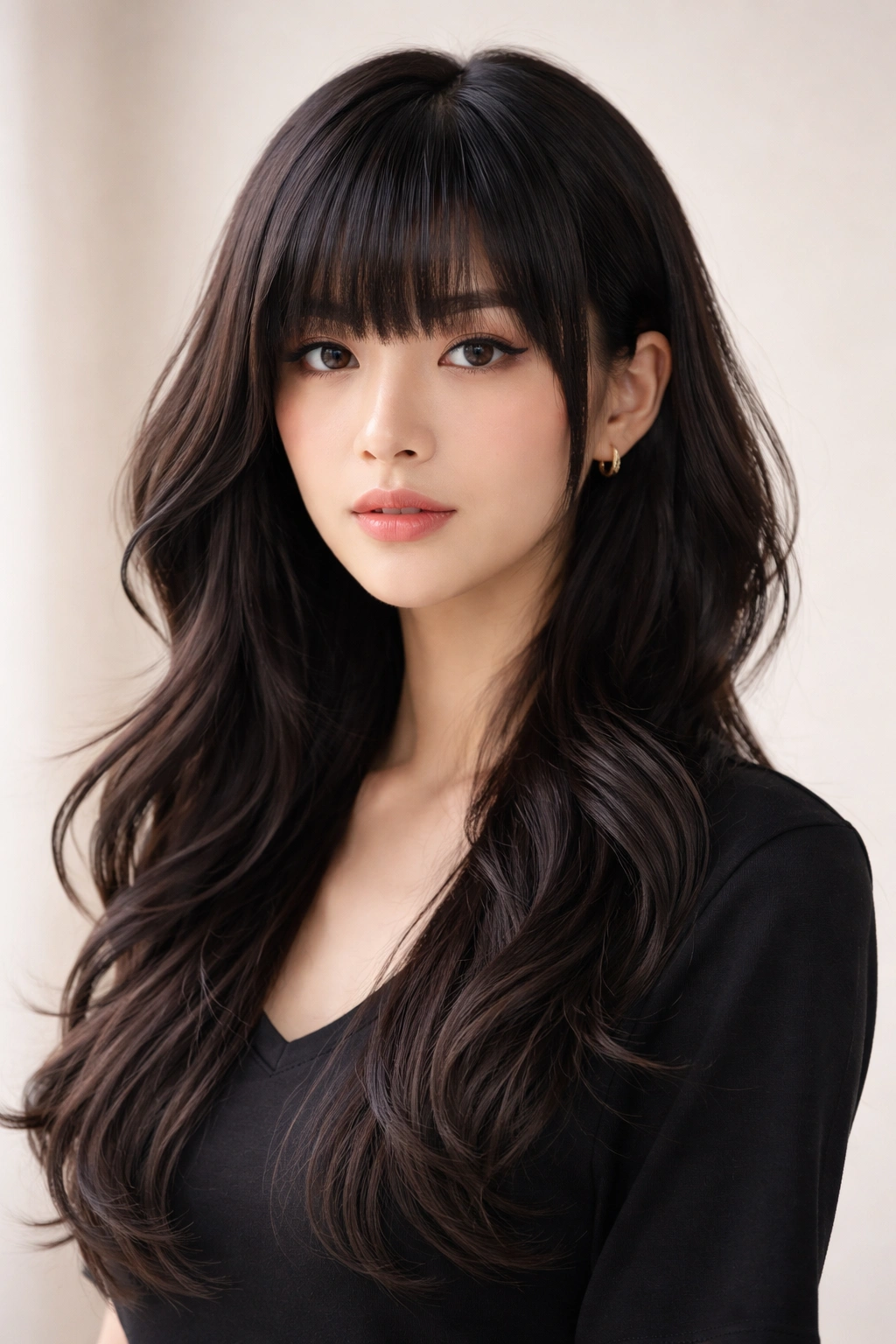
This final variation breaks symmetry by making one side lock significantly longer or styled differently than the other, creating an asymmetrical frame around the face. You maintain the hime cut structure—distinctive fringe and overall proportions—but introduce imbalance intentionally. One side might be longer, curlier, or styled in a different direction than the other, creating visual interest and movement.
Design Impact of Asymmetry
Asymmetrical styling makes a hime cut feel less structured and more artfully personal. Instead of reading as a precise, geometrically-defined cut, it feels like a styling choice that can change day to day. Asymmetry also works beautifully for addressing face-shape concerns—if you have one side of your face you prefer to emphasize, you can adjust which side has the longer or more textured lock.
Styling Asymmetrical Side Locks
- Style one lock with more pronounced waves or volume than the other, creating visual hierarchy
- You might keep one side lock perfectly straight while curling the other, for maximum contrast
- Asymmetrical styling requires intentional daily styling to maintain; it doesn’t look accidentally asymmetrical
- Consider your natural part direction when planning asymmetry—styling with your natural texture always looks easier and more effortless
- Pin one side lock back on certain days for variation, while wearing both down on others for flexibility
Worth knowing: Asymmetrical hime cuts appeal to creative types who want the hime silhouette but prefer styling that feels personal and changeable rather than strictly defined.
Final Thoughts
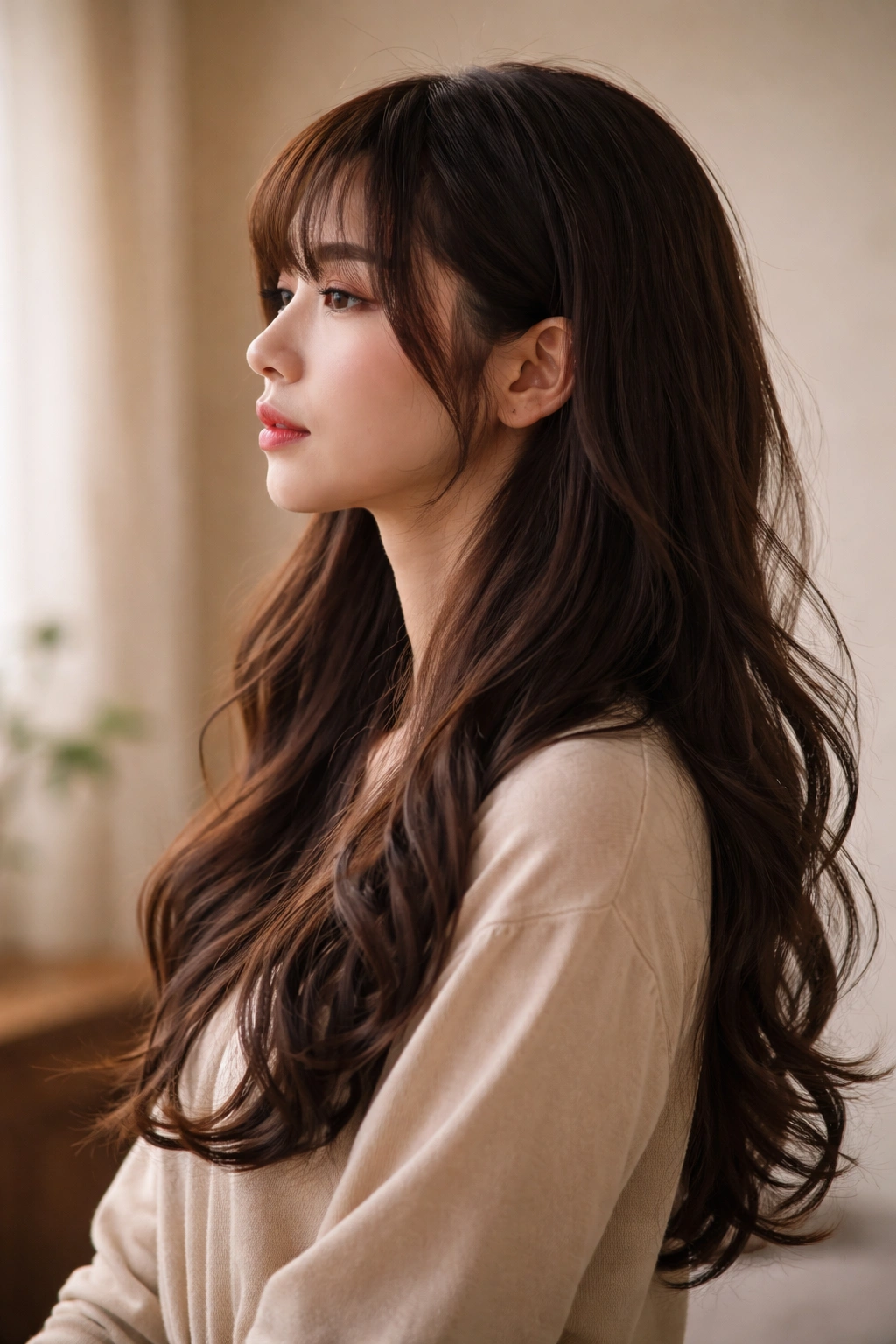
Wavy hime cuts offer remarkable range—from soft and romantic to bold and fashion-forward, from anime-accurate to barely recognizable as hime cuts at all. The best version for you depends on your hair texture, styling commitment level, face shape, and personal style. Some of these cuts work beautifully with naturally wavy hair and minimal daily styling, while others require heat tools and product commitment.
The most important factor in choosing a wavy hime cut is finding a stylist who understands both hime proportions and your specific hair texture. A skilled stylist can adapt the basic hime structure to work with your waves rather than against them, creating something uniquely wearable for your life. Book a consultation, bring photos of several versions you love, and be honest about how much time you want to spend styling daily.
Once you find your version, lean into it fully. Wavy hime cuts are striking precisely because they’re intentional and considered—they announce that you’ve made a choice about your appearance. That confidence is what makes them genuinely beautiful, whether you’re aiming for soft romanticism or bold avant-garde styling.