



Round faces have a reputation for needing certain styles to look their best, but here’s what most people get wrong: pixie haircuts can be absolutely stunning on round face shapes when you choose the right variation. The key isn’t avoiding short hair — it’s understanding how texture, length, and placement of waves can actually create definition and visual balance where you want it.
A well-executed wavy pixie on a round face doesn’t fight your face shape; it works with it. The texture breaks up the softness of round features, adding dimension and movement that draws the eye in flattering directions. Whether you’re looking for something sleek and polished or textured and playful, there’s a wavy pixie cut that’ll make your features pop and give you way more style impact than you’d get from playing it safe with longer lengths.
The real secret is understanding how wave placement, side length, and top texture all work together to create visual angles. A pixie that’s too uniform in length can actually emphasize roundness, but one with strategic layering, longer sides, or directional waves creates movement that visually lengthens your face. That’s where the magic happens — when the cut itself becomes a flattering frame rather than just a shorter hairstyle.
1. The Side-Swept Textured Pixie
A side-swept textured pixie works beautifully on round faces because the directional bias of the cut creates an immediate angle that elongates your features. This style keeps the top textured and piece-y while sweeping one side longer — usually falling to about ear length — which creates a slimming effect along the jawline.
Why This Works for Round Faces
The asymmetrical length is the real power move here. By keeping one side considerably longer than the other, you break the circular line of your face and create vertical visual interest. The texture on top adds volume without bulk, and the longer swept-over portion masks the fullness of your cheeks and softens your jawline.
What Makes This Style Stand Out
- Longer side piece reaches approximately ear-length or slightly below, creating a directional line
- Top is heavily textured with choppy layers that encourage natural wave formation
- Back remains short and tapered for a clean finish
- Works beautifully with loose, natural waves or tighter texture depending on your hair type
- Requires regular styling with a blow dryer and texture cream to maintain the dimensional wave pattern
Pro tip: Ask your stylist to razor-cut the longer side piece rather than scissor-cut it — the sharp lines help your waves catch light and look more intentional.
2. The Tousled Crop with Longer Fringe
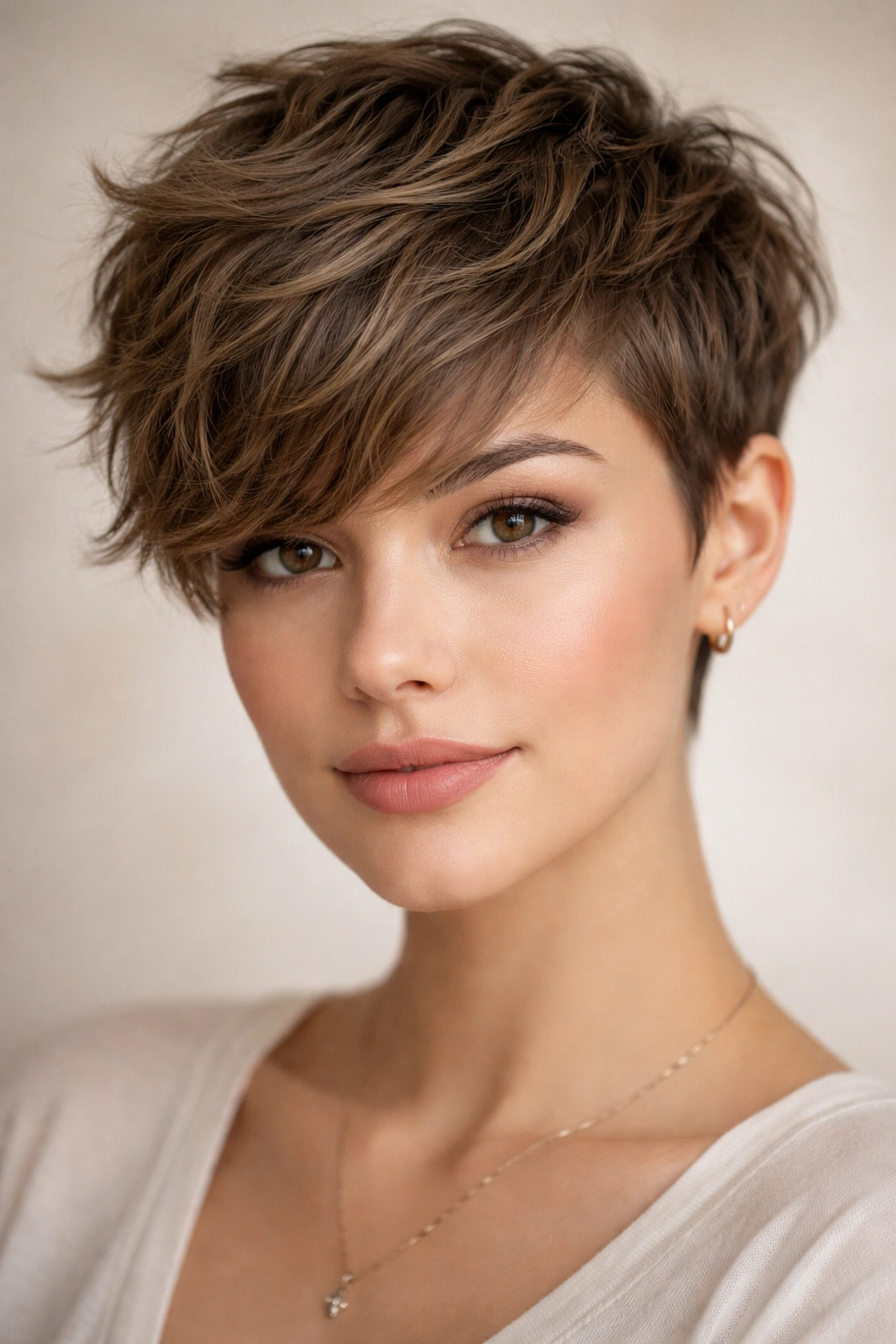
This pixie variation keeps the sides and back quite short while letting the fringe area grow longer and fuller, creating a tousled, lived-in wave pattern across the front and top. It’s the kind of cut that looks best when it’s slightly undone and textured, which actually works in your favor for round face shapes.
Why This Works for Round Faces
Longer fringe hair that waves across your forehead and falls toward your eyes creates a shadow that makes your face appear narrower. The tousled texture breaks up any flat lines, and the extra volume at the crown helps elongate your overall face proportions.
What Makes This Style Stand Out
- Fringe area grows to approximately 2-3 inches, long enough to wave across forehead
- Sides stay very close to the scalp, usually 1/4 inch or shorter
- Top texture is deliberately choppy and inconsistent for that tousled appearance
- Waves work best when somewhat undone, which gives the cut natural-looking dimension
- Best styled with a mousse or texture spray rather than heavy product
Worth knowing: This style actually looks better slightly disheveled than it does perfectly smooth — which means less styling time and more forgiving maintenance.
3. The Undercut Pixie with Soft Waves
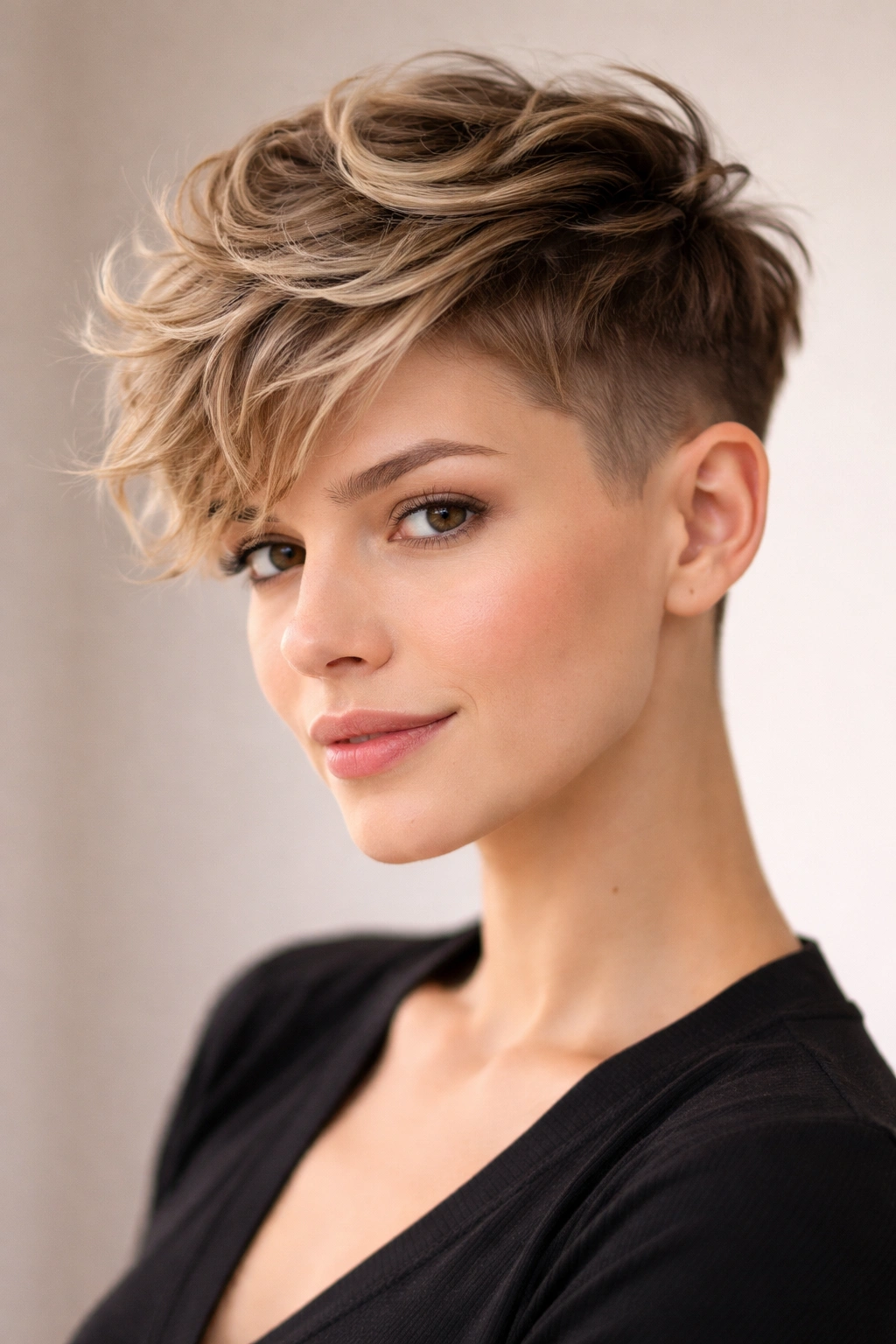
An undercut pixie gives you contrast between the very short, almost shaved sides and back, versus longer textured waves on top. The cut creates an optical illusion where the dramatically shorter sides make the top appear fuller and longer, which visually narrows a round face.
Why This Works for Round Faces
The stark contrast between short and long is intensely flattering on round faces. While it might sound like a bold choice, the juxtaposition actually helps your features look more defined. The waves on top catch light differently because of the contrast, creating the impression of more facial definition.
What Makes This Style Stand Out
- Sides are cut very short — 1/8 inch or shorter — creating maximum contrast
- Top waves are 2-3 inches longer, giving visible texture and dimension
- Back can be slightly longer than sides, blending into the longer top
- The undercut itself needs touch-ups every 4-6 weeks as it grows
- Waves show beautifully because the contrast creates visual emphasis on textured areas
Insider note: Undercuts photograph incredibly well and tend to look more striking than other pixie variations in photos.
4. The Textured Pixie Bob
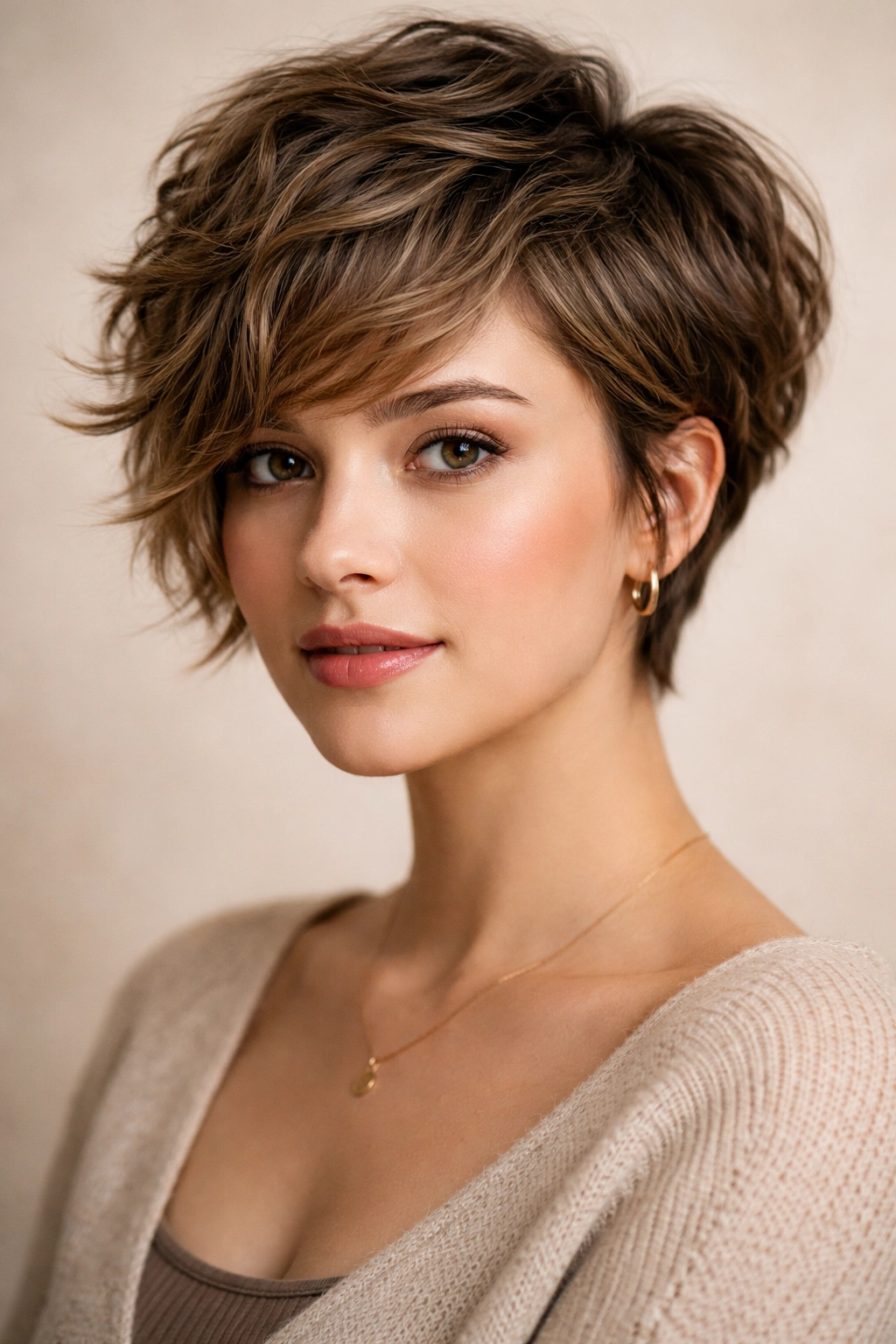
This hybrid style sits right between a pixie and a bob, keeping enough length around the face that it softly frames your features while maintaining the short, textured crown of a pixie. The wave pattern here is key — it prevents the style from reading as too blunt or severe.
Why This Works for Round Faces
The longer sides and back create vertical lines that soften round features, while the textured crown prevents the overall shape from looking too boxy. This is ideal if you love the idea of a pixie but worry a traditional pixie might be too revealing of your face shape.
What Makes This Style Stand Out
- Sides and back grow to 2-4 inches, creating a blended, soft frame around the face
- Crown remains short and textured, usually 1.5-2 inches
- Waves naturally form throughout the longer sections
- Creates a more romantic, less architectural look than a traditional pixie
- Relatively easy to maintain while still offering pixie-cut impact
Pro tip: Blow-dry with your fingers or a round brush to encourage the waves to follow your natural texture rather than fighting against it.
5. The Angled Pixie with Soft Side Waves
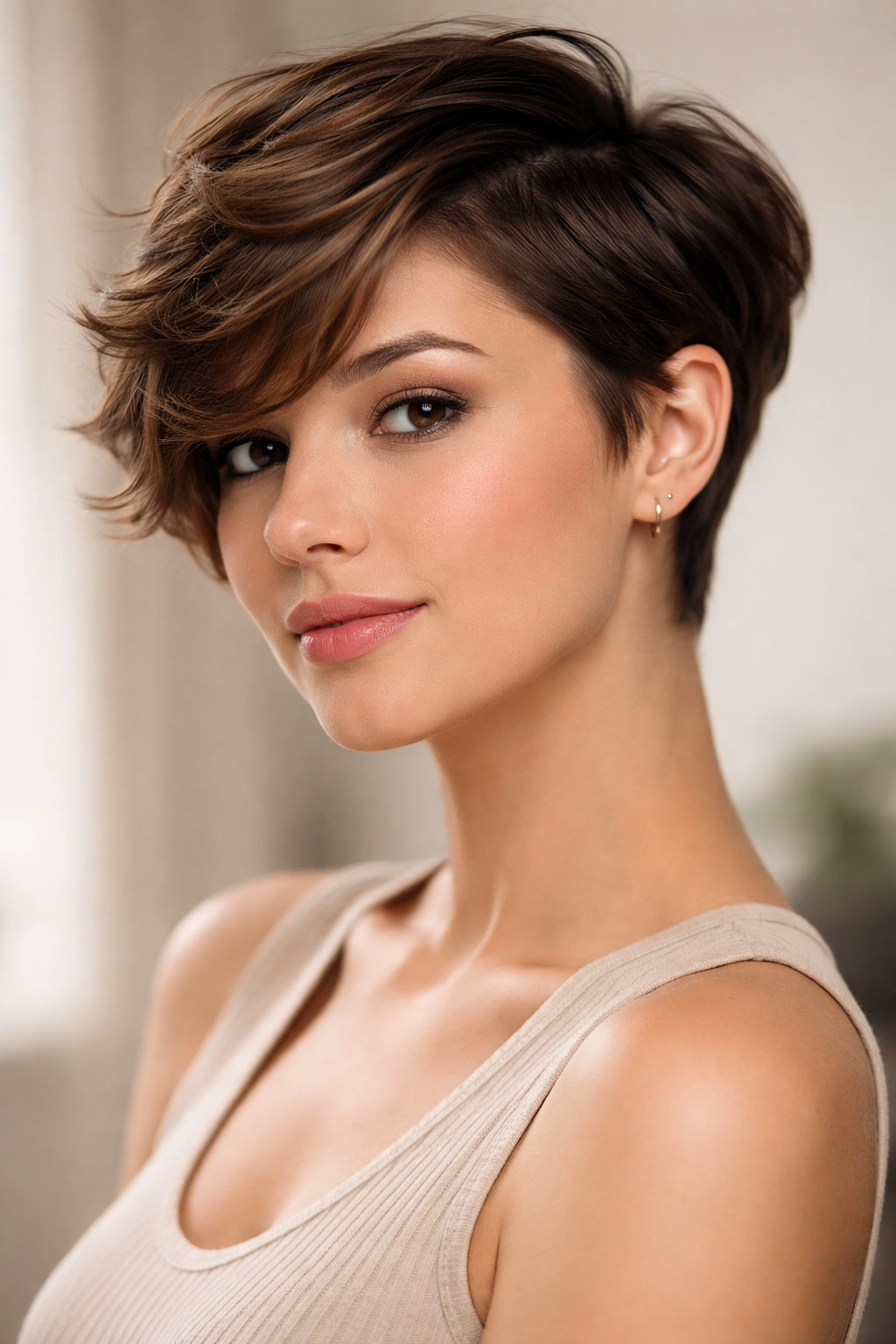
An angled pixie cuts longer on one side, gradually getting shorter as it moves to the back. The longer side falls toward your face, and when styled with soft waves, this creates a framing effect that’s incredibly flattering on round faces.
Why This Works for Round Faces
The angle naturally falls along the jawline, creating a vertical line that breaks up the roundness of your face. Soft waves in the longer section create movement rather than a blunt line, which keeps the look modern and flattering without being severe.
What Makes This Style Stand Out
- One side grows to approximately 3-4 inches while the opposite side is much shorter
- Back gradually tapers, creating a seamless blend of length
- Soft, subtle waves rather than tight texture create a more graceful look
- Front layers encourage the longer side to wave naturally away from the face
- Works beautifully with all hair types and textures
Worth knowing: This style actually elongates your face more than symmetric pixies because of the directional angle, making it one of the safest pixie choices for round face shapes.
6. The Messy Textured Pixie with Volume on Top
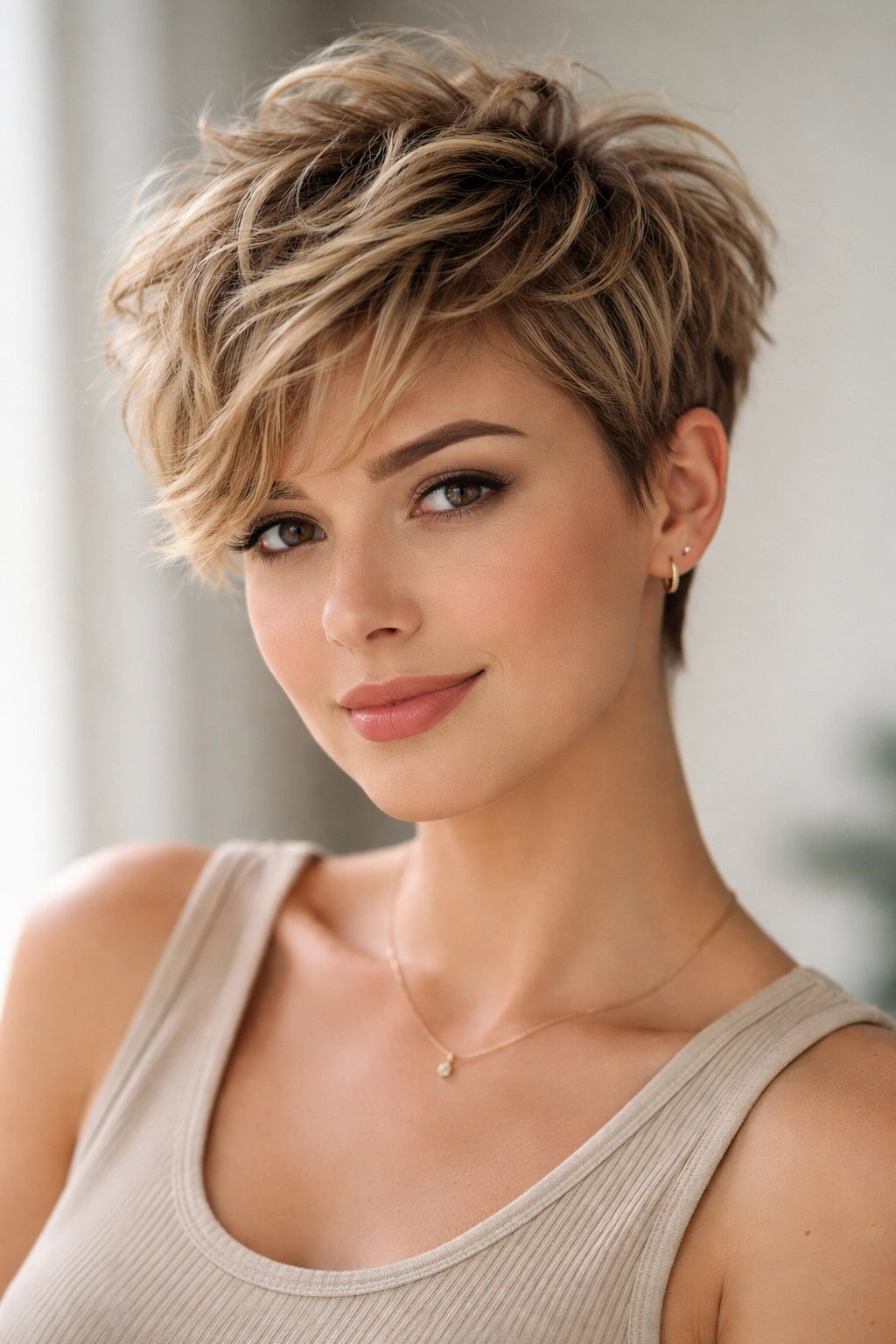
This pixie prioritizes maximum texture and volume on top of the head while keeping the sides relatively short and clean. The wave pattern is deliberately irregular and piece-y, creating a tousled, effortlessly chic appearance.
Why This Works for Round Faces
Volume at the crown naturally draws the eye upward, making your face appear longer. The texture breaks up any smooth lines, and the messiness of the cut means you’re not creating a blunt shape that emphasizes your round features.
What Makes This Style Stand Out
- Top is cut with multiple lengths, all falling between 1.5 and 3 inches
- Heavy texturizing and choppy layers create natural-looking waves
- Sides are kept very short, usually less than 1 inch
- Best worn tousled and slightly undone rather than perfectly smooth
- Requires regular texturizing appointments (every 4-6 weeks) to maintain the choppy effect
Pro tip: Use a lightweight styling cream or sea salt spray rather than heavy pomade — it’ll let your waves breathe and maintain that effortless texture.
7. The Blunt Pixie with Feathered Waves
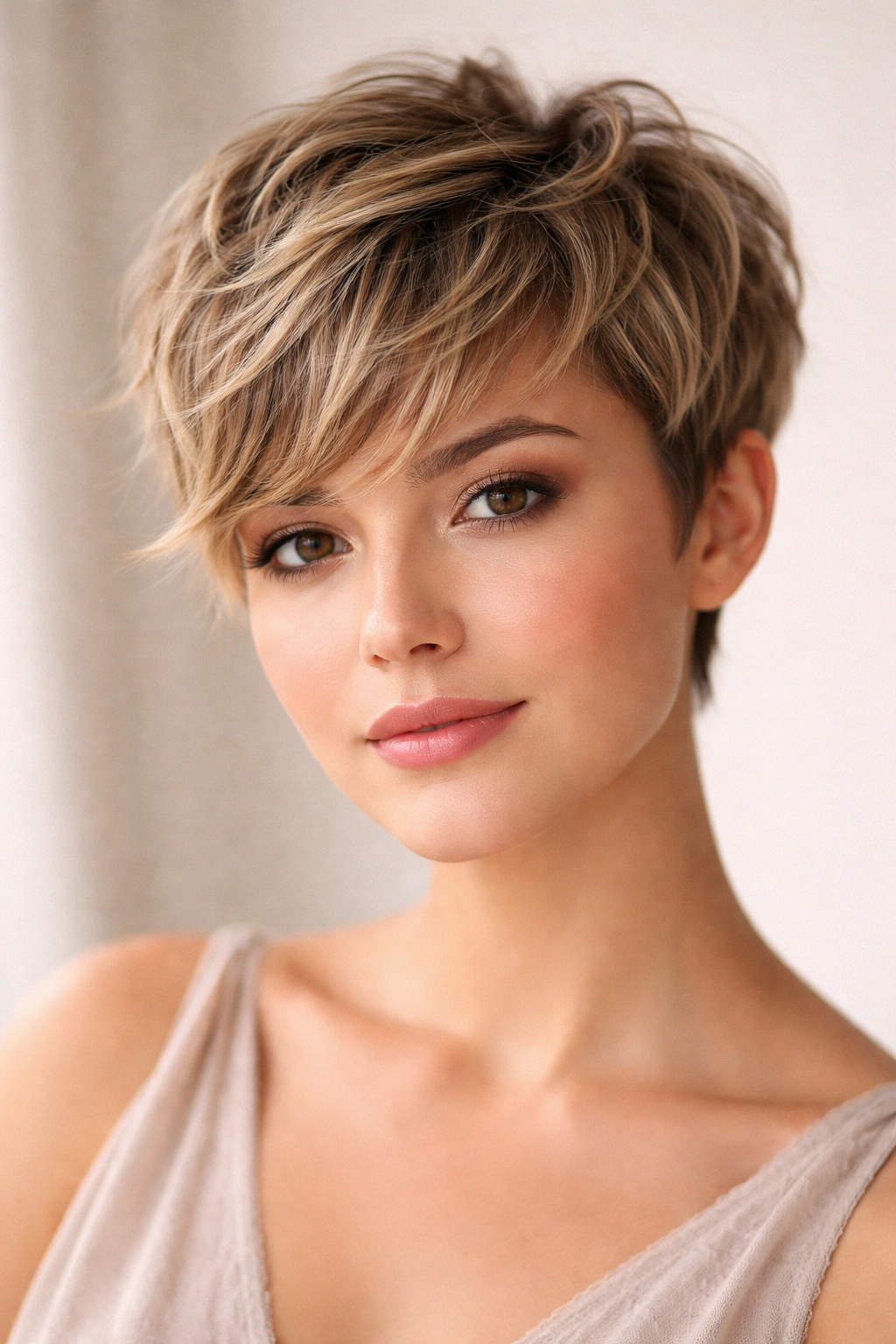
A blunt pixie seems like it might be severe on a round face, but when the blunt line is softened with feathered, choppy waves throughout, it becomes incredibly flattering. The feathering creates the illusion of narrower proportions while the blunt overall shape reads as modern and intentional.
Why This Works for Round Faces
Feathering breaks up the bluntness that could otherwise emphasize roundness, and the way feathered waves catch light creates dimension that makes your face look less flat. The cut requires precision but delivers high-impact style that looks expensive and intentional.
What Makes This Style Stand Out
- Overall shape is cleanly blunt and geometric
- Throughout the cut, individual layers are feathered and choppy
- Creates waves that move in different directions rather than one uniform pattern
- Requires a skilled stylist who understands feathering technique
- Best maintained with regular 4-week trims to keep feathering crisp
Insider note: Feathered pixies were hugely popular for good reason — they’re flattering on almost every face shape when done well.
8. The Taper Fade Pixie with Textured Top
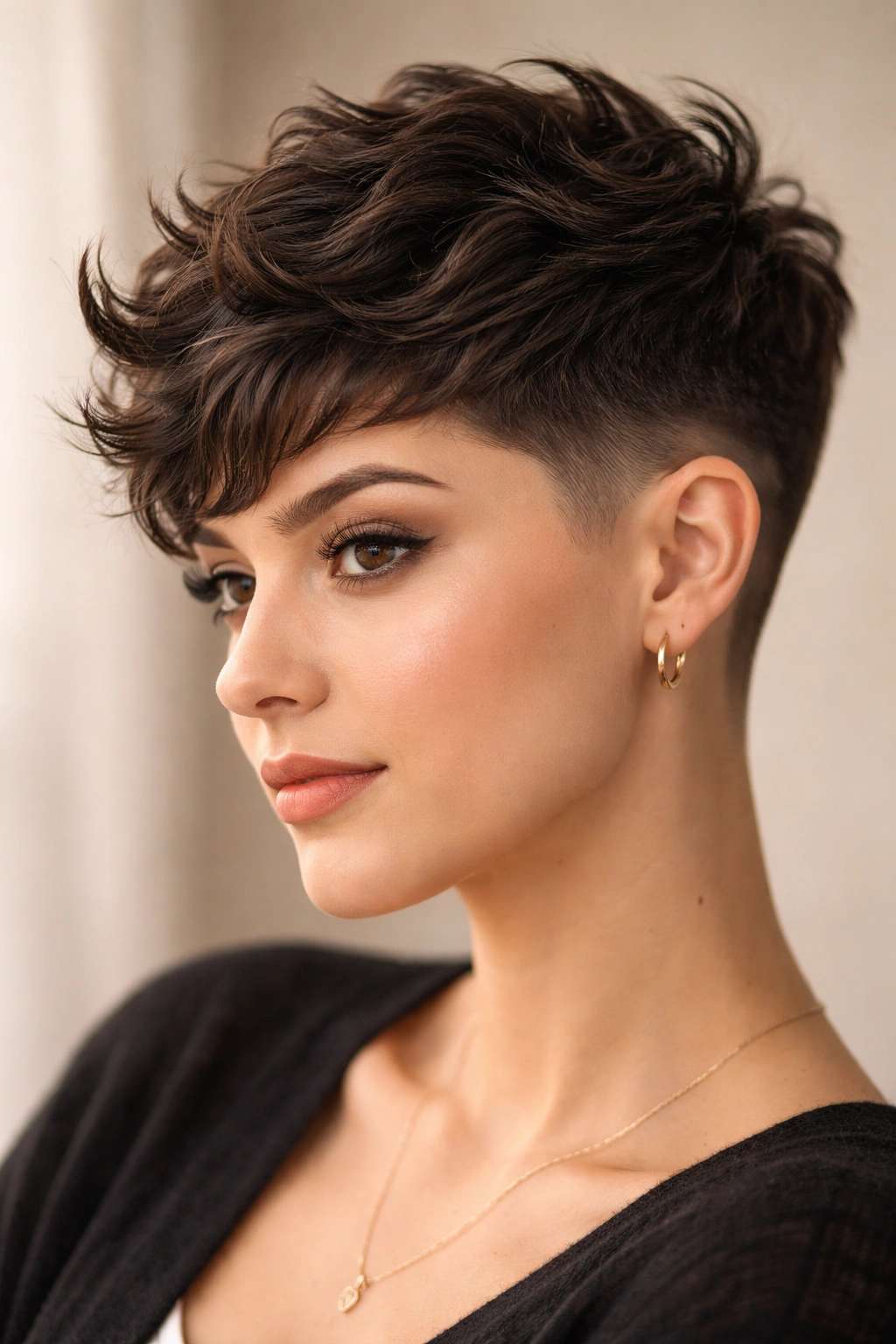
A fade pixie gradually transitions from very short on the sides to longer on top, creating a sculptural shape. When the top is textured with waves rather than kept smooth, this creates a look that’s both modern and incredibly flattering on round faces.
Why This Works for Round Faces
The fade emphasizes the longer top, which naturally elongates your face. The contrast between the faded sides and textured top creates visual interest, and the textured waves prevent the longer top from looking too heavy or puffed up.
What Makes This Style Stand Out
- Sides fade from 1/8 inch at the very bottom to about 1.5 inches at the top
- Top is textured and wavy, usually 2-3 inches in length
- Creates a sculptural, deliberately styled appearance
- Requires touch-ups every 3-4 weeks to maintain the fade line
- Works beautifully with natural curl or wave patterns in your hair
Worth knowing: If you have naturally wavy or curly hair, a fade pixie with textured top basically styles itself and looks better the less you manipulate it.
9. The Choppy Pixie Shag
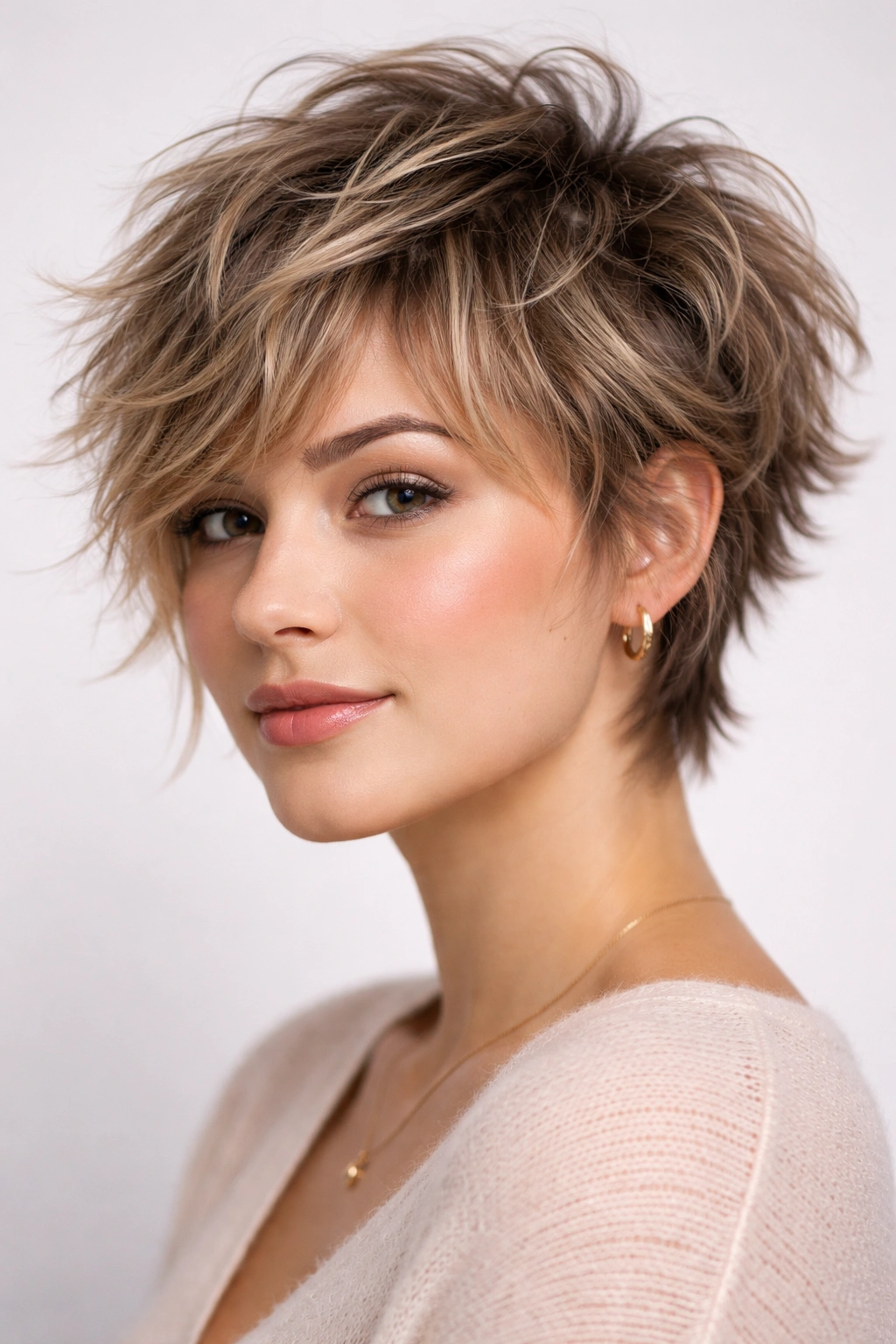
A shag pixie combines short pixie proportions with choppy, heavily layered texture throughout that creates movement and wave definition. This style celebrates texture and creates a playful, youthful vibe while being incredibly flattering on round faces.
Why This Works for Round Faces
Choppy layers create visual interest and movement that moves the eye away from the roundness of your face. The multiple lengths throughout the cut prevent any one line from emphasizing your face shape, and the wave pattern becomes the focal point rather than your face’s geometry.
What Makes This Style Stand Out
- Multiple choppy layers throughout, ranging from 1 to 3 inches
- Heavier texture creates natural-looking waves without needing intense styling
- Often includes longer pieces around the face that can be styled to frame your features
- Very forgiving haircut — it looks good slightly grown out and undone
- Works especially well if you have naturally wavy hair that the choppy layers can emphasize
Pro tip: This cut is one of the easiest pixies to style because the built-in texture does most of the work for you.
10. The Swept-Back Pixie with Longer Crown
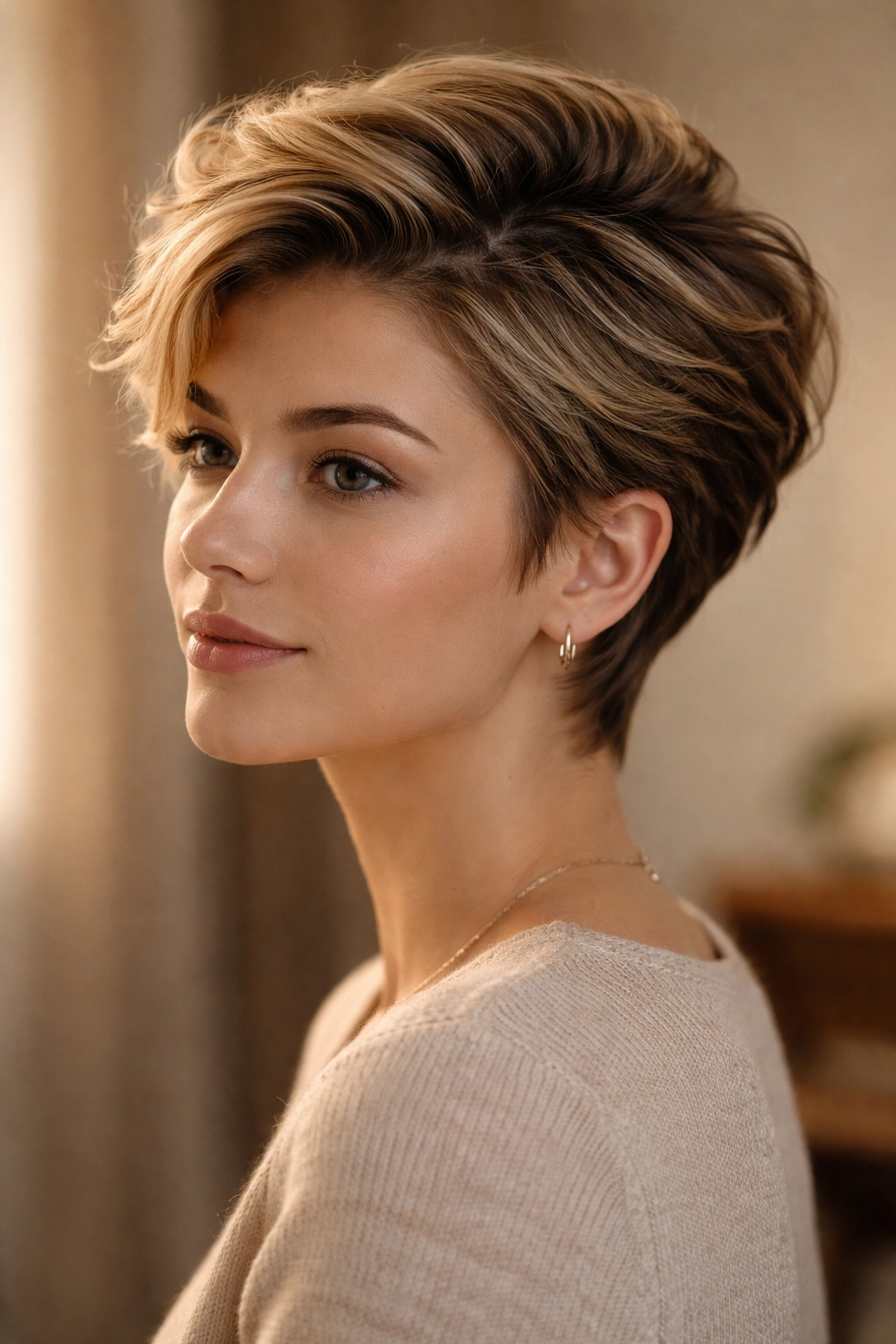
This pixie keeps the sides relatively short while the back and crown grow longer, creating a shape where all your hair is essentially swept back and away from your face. When styled with soft waves, this creates maximum face-framing space.
Why This Works for Round Faces
By completely clearing your face and sweeping everything back, you create an open, elongated appearance. The longer crown provides volume without weight, and the soft waves in the back section create movement that makes your face appear more defined.
What Makes This Style Stand Out
- Sides stay quite short, usually less than 1 inch
- Back and crown grow to 2.5-4 inches, creating a longer shape
- All hair sweeps back and away from the face when styled
- Can be worn tousled or sleek depending on your mood
- Requires regular blow-drying to maintain the swept-back styling
Worth knowing: If you have any texture in your hair at all, this cut will emphasize it beautifully and requires minimal product to look polished.
11. The Pixie with Long Sideswept Bang
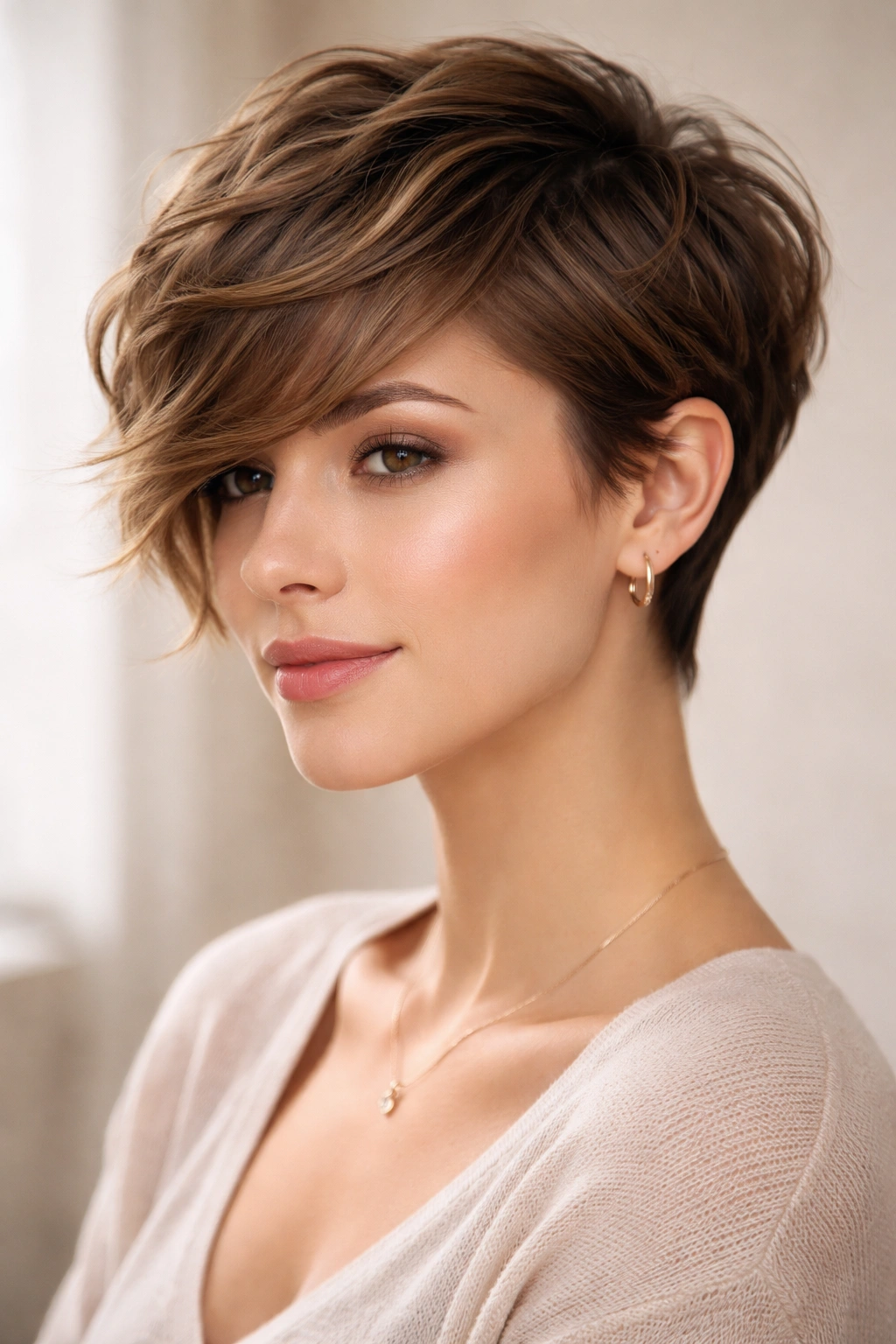
This variation keeps your traditional short pixie structure in the back and sides, but allows the front section to grow long enough to become a substantial sideswept bang that reaches toward your ear or beyond. The longer front section waves naturally and frames your face beautifully.
Why This Works for Round Faces
The longer bang section creates a vertical line along your face that slims and defines your features. The wave pattern in the longer section catches light and creates shadow, which adds dimension to your face. You get the best of both worlds — the practicality of a pixie with the face-framing softness of longer hair.
What Makes This Style Stand Out
- Front bang section grows to 3-5 inches, reaching toward or past the ear
- Back and sides remain short and tidy, usually 1 inch or less
- Bang waves naturally and can be styled in multiple directions
- Creates an asymmetrical, romantic appearance while maintaining pixie practicality
- Requires regular styling with a blow dryer to maintain the sideswept shape
Insider note: This is an excellent transition cut if you’re nervous about committing to a full pixie but want to try one.
12. The Textured Pixie with Grown-Out Taper
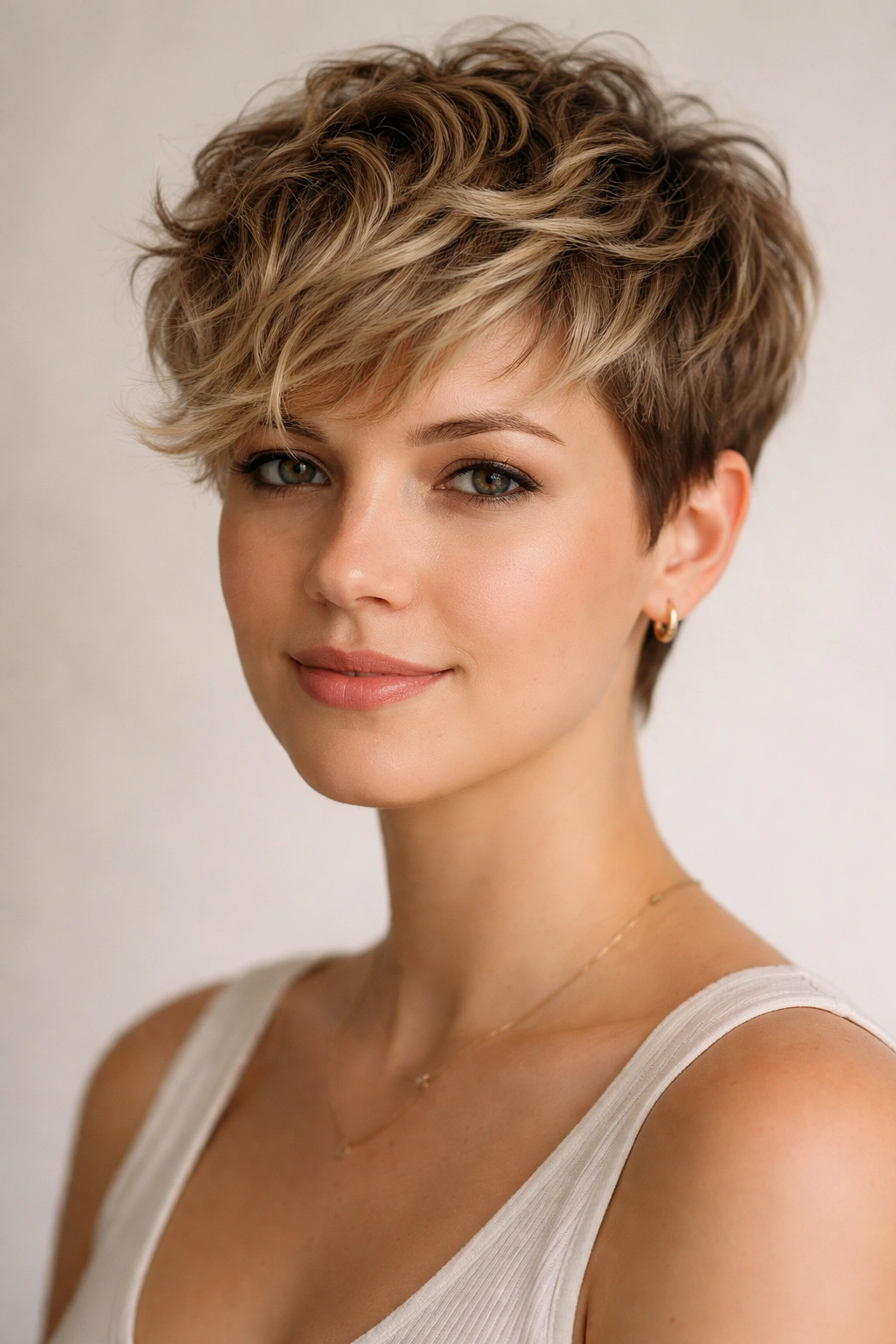
This final variation keeps your pixie short overall but with a subtle taper rather than a dramatic fade. The entire cut is heavily textured with waves, creating a look that becomes more interesting as it grows out. It’s forgiving, easy to maintain, and incredibly flattering on round faces.
Why This Works for Round Faces
Consistent texture throughout the cut creates visual interest that prevents your face shape from being the focal point. The waves catch light differently depending on how the cut is styled, creating dimension that makes your face appear more sculpted. As the cut grows out slightly, the texture becomes even more pronounced.
What Makes This Style Stand Out
- Overall length ranges from 1 to 2.5 inches with no sharp lines
- Heavy texturizing throughout creates natural-looking waves from the start
- Sides taper gradually rather than fading dramatically
- Looks great at any stage of growth (which is convenient since you can stretch out appointments)
- Works beautifully on all hair types and textures
Pro tip: Wait until your pixie is about 6-8 weeks grown out before getting your next cut if you have this style — the texture becomes even more beautiful with a bit more length.
Final Thoughts
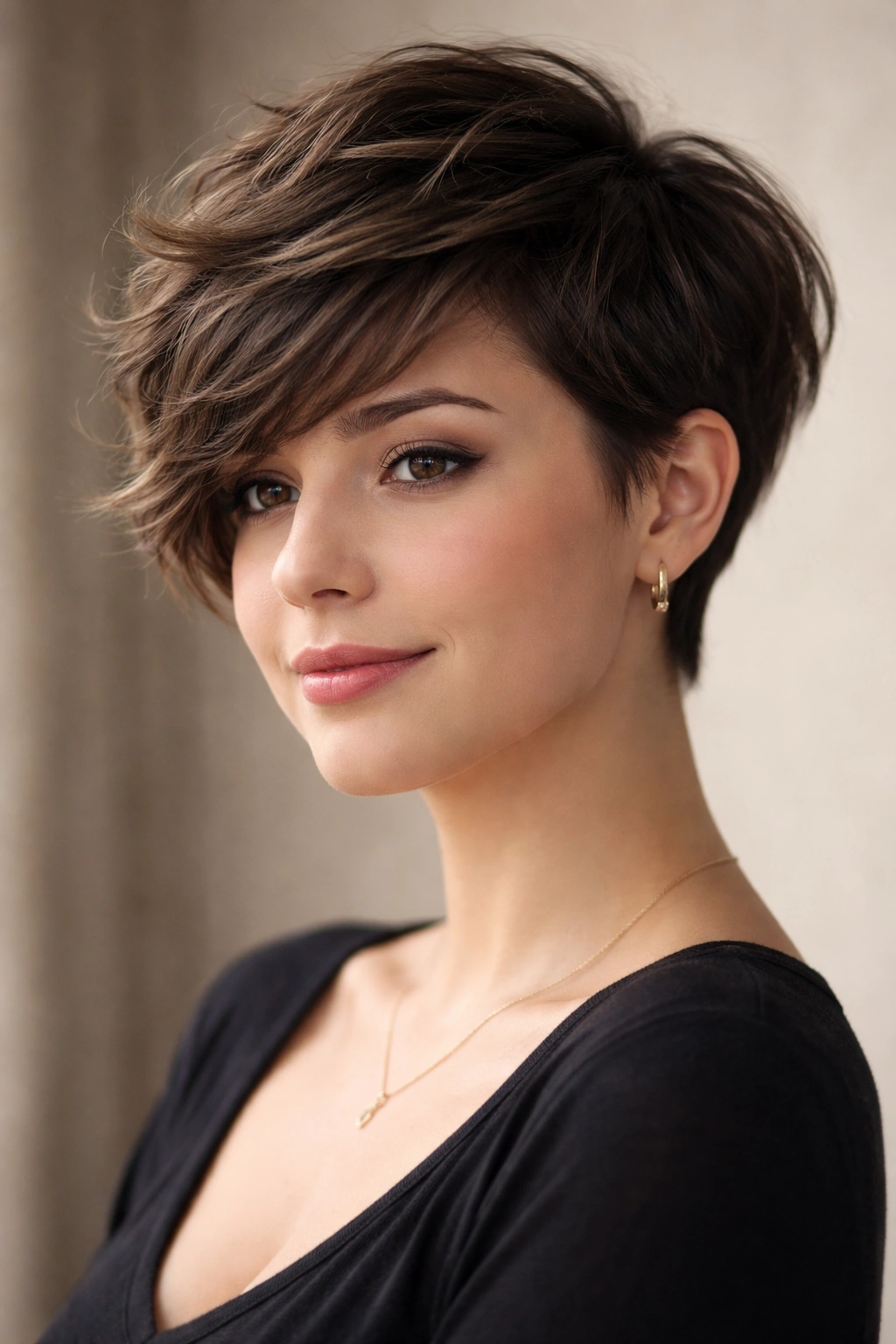
The real takeaway here is that round faces actually have tons of options when it comes to wavy pixie cuts — you’re not limited to one “safe” choice. What matters is understanding which specific elements (the length distribution, the placement of texture, the angle of your cut) work together to flatter your face shape. Every single variation above uses texture and strategic length to create visual balance, but they do it in different ways.
The pixie that’ll feel right for you depends on how much texture you naturally have in your hair, how much styling time you’re willing to invest, and whether you want something that reads as edgy or softer and more romantic. A heavily textured pixie shag is going to look very different in terms of vibe from a clean taper fade pixie, even though both are incredibly flattering on round faces.
Start by having a real conversation with your stylist about your face shape, your hair texture, and how much maintenance you’re willing to do. Bring pictures of specific cuts that appeal to you — not just because they’re pretty, but because something about how the texture and length are distributed resonates with you. The best pixie cut is ultimately the one you’ll actually style regularly and feel confident wearing, and that’s different for every person. Trust your instincts, commit to the cut, and give yourself a few weeks of styling practice before deciding whether it’s working for you.
